« Doubt is not a pleasant condition, but certainty is absurd. » — François-Marie Arouet
Going back to 1975: for a few years, I’d been buying Vaillant’s Pif poche (and sometimes its companion titles, Pifou, Arthur, Placid et Muzo, Totoche, and Gai-Luron… poche) as well. However, since the 1973 putsch by the raging primitives* and sundry bean counters, the publisher’s output had largely gone to seed.
I was still picking up, when faced with a dismal crop at the newsstand, the occasional ‘poche’, mostly for the games and puzzles, which comprised half of the editorial content. I was intrigued by an oddly-named stylist, one ‘Rik Cursat’ (unusual name for a Frenchman, I thought… still, nice of him to sign his work!), whose assured line and friendly absurdity had caught my eye.
A game page from Placid et Muzo Poche no. 80 (Aug. 1975, Éditions de Vaillant). Sometimes he used his initials, sometimes he signed in full. « Using all letters above the drawing, find the names of two fruits. » The answers: PÊCHE and CITRON. This one appeared in Pifou Poche no. 63 (Sept. 1975, Éditions de Vaillant). « Using all the letters above the drawing, put together the names of two animals. » The answers: CANE and CHIEN.
It was only decades later that I thought to dig a little deeper. To my delight, it turns out that Cursat had a long and prolific, award-festooned career. Given his international success, it’s a bit of a mystery why he would have slummed it in the (presumably) low-paying back pages of frankly disposable kids’ publications. My guess is that his output was continuous and downright profligate, but he was reluctant to let a good drawing go to waste.
Henri ‘Rik’ Cursat** (1928-2006) was born and died in France’s third-largest city, Lyon. Deeply attached to his hometown, he reportedly produced over the course of his career some 20,000 drawings for its various daily newspapers, especially Le Progrès de Lyon, in whose employ he remained for some thirty-two years.
And since his body of work was so gargantuan and diverse, I’ll keep my focus narrow, borrowing from Absurdement vôtre, a 1977 selection of his cartoons published in Éclats de rire, a gags ‘n’ gals rag not unlike the American ‘Humorama‘ digests. He was, in fact, Éclats’ editor-in-chief for nearly a decade. Yet somehow his own cartoons are anything but crass or lowbrow.
Cursat had some pet recurring themes. One was literal gallows humour.
.
« He’s a repeat offender! »« It’s the downstairs neighbour; he claims that our fish is bothering him! »« Garçon, I don’t have a knife! »« Watch out for his left hook! ». Hooks were another of Cursat’s pet motifs.
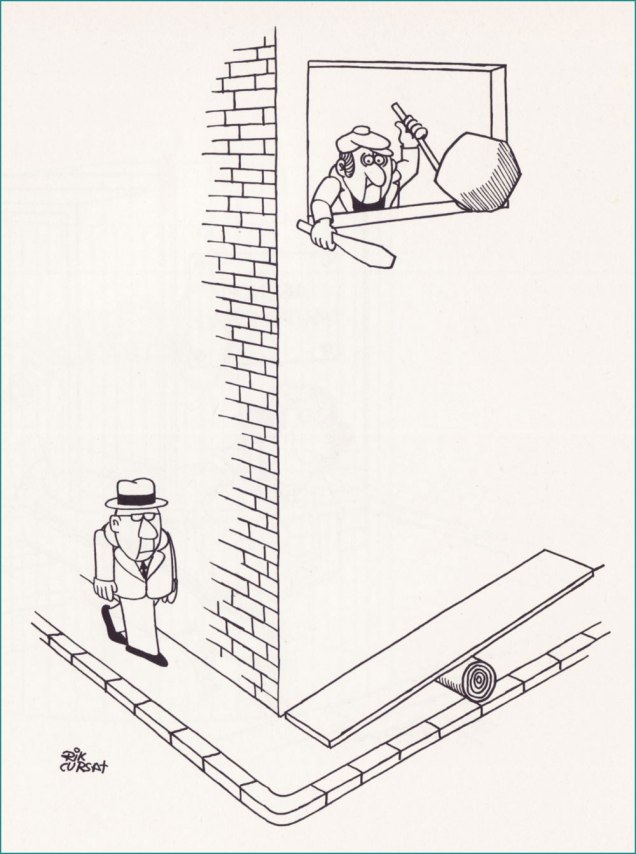
Another frequent theme was the mugger lying in wait just around the corner. Here’s a trio of variations:
.
.
.
.
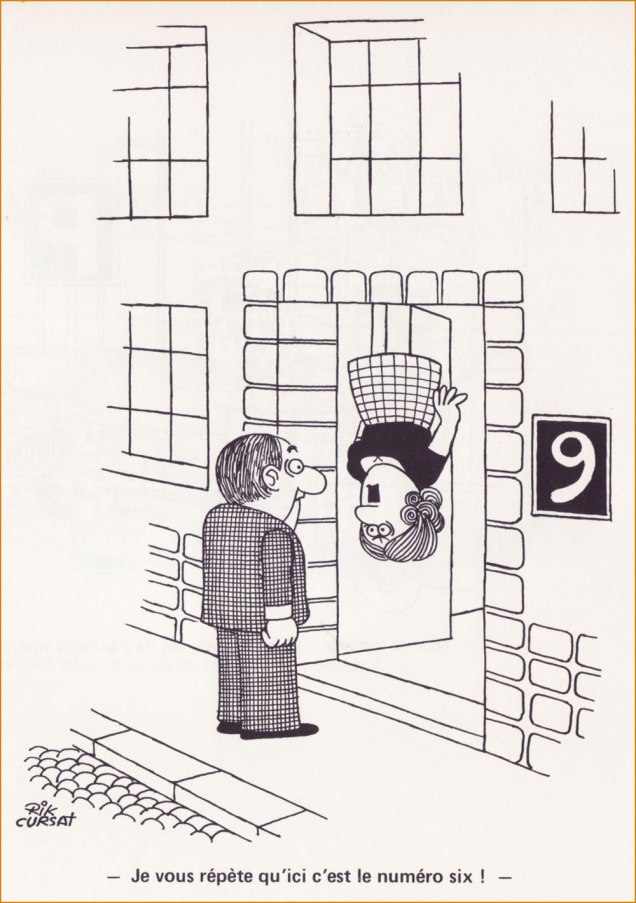
« Are you the architect? »« I keep telling you: this is number six! ». Another inspired riff on the same basic idea.
.
« Garçon, there isn’t a single fly in my soup! »Impishly looking at you, plotting a gag. The artist in the late 1970s.
« My collection of criminal creeps will get a real charge of hokey hassle of heroes! » — The Collector
Just last week, I read the bittersweet news that after half a century or so*, the evergreen, once-ubiquitous Archie Comics Digests are kaput… which brings us, in the usual roundabout fashion, to today’s post.
Though it’s been nearly three years since our big move, I expect to carry on practicing box archeology for a good long while, if not indefinitely. A couple of months ago, I dug out an Archie Digest I had picked up at my local newsstand back in 1981… and quite possibly never read. Until this year.
I’ve mentioned before that comics distribution was extremely spotty in my neck of the woods, so I often found myself glaring and wincing at the racks in desperation and taking home some ungainly specimen*. This was such a case, obviously.
This is Captain Hero Comics Digest Magazine no. 1 (1981, Archie). Stan Goldberg’s cover is unspectacular, but better than his usual. Earlier this week, I got a good chuckle out of someone stating online that Goldberg “could do a damn good Dan DeCarlo“. I’d have to agree: Goldberg, at his peak, was nearly on the level of DeCarlo at his worst. Think I’m kidding? Here’s an example.
The Riverdale-Gang-as-Superheroes of the mid-1960s, just another bit of trend chasing** by the Archie brass, has never elicited much beyond a shrug from me. It certainly was intended as a cynical, junky cash grab by the higher-ups, but… sometimes it rose above the brief.
Bart Beaty wrote, in his 12 Cent Archie (2015, Rutgers University Press), that « On the whole, while the Pureheart material is remembered — and collected in contemporary trade editions — for its novelty within the Archie universe, it is clear that the innovation was not a particular success. The combination of Archie sensibilities and superheroes paid few dividends. »
Well, innovation wouldn’t quite be the term I’d opt for, but while the Pureheart stories are as underwhelming as surmised, but since Jughead, Reggie (as Evilheart) and Betty (as Superteen) are more interesting characters than plain ol’ Arch, it is fitting that their exploits are more compelling.
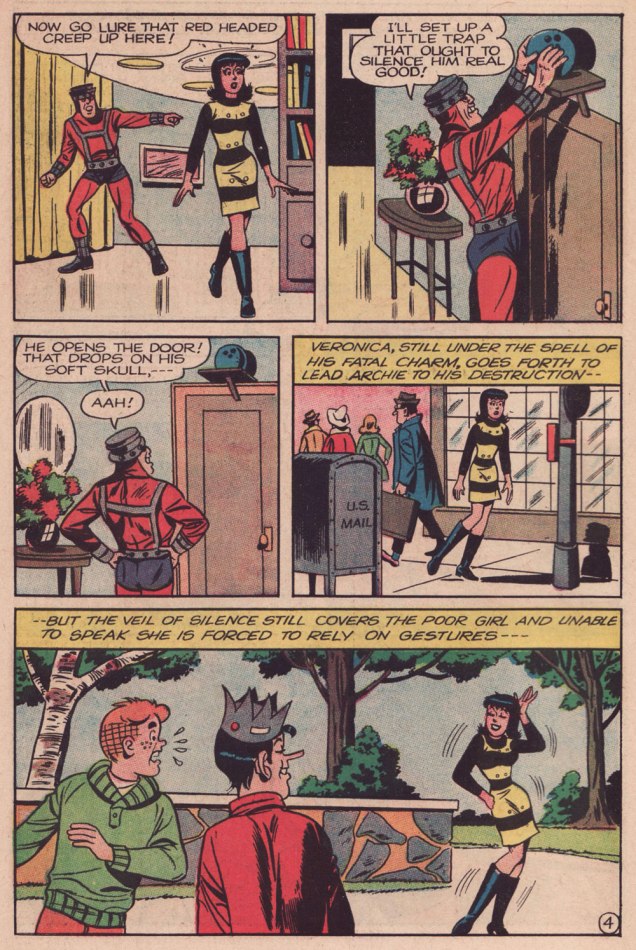
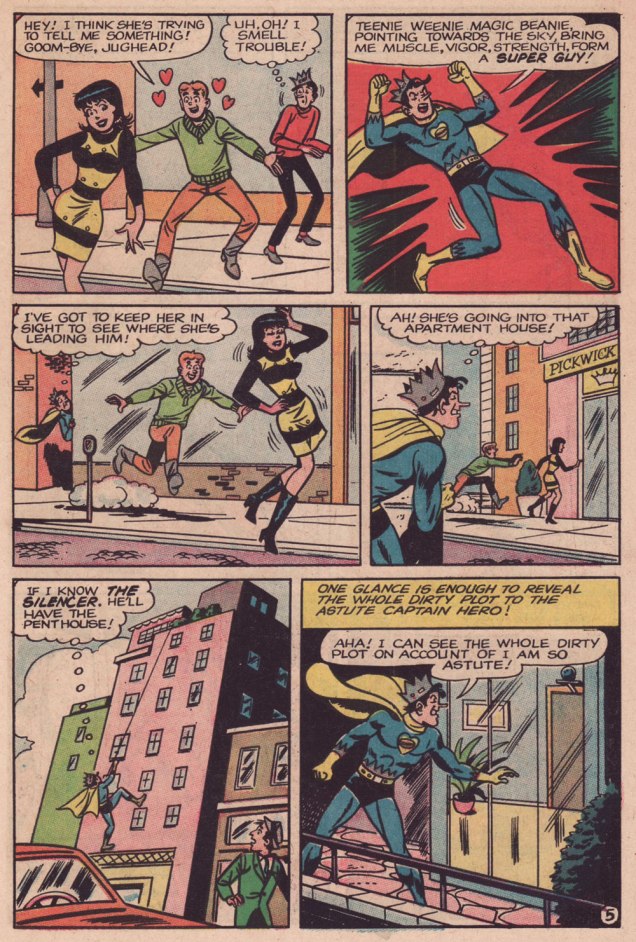
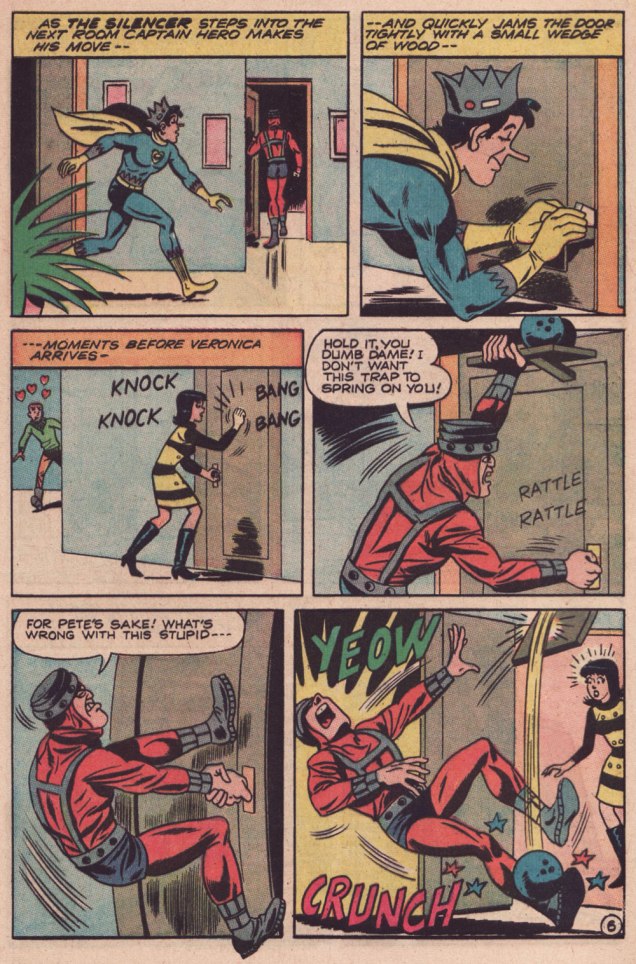
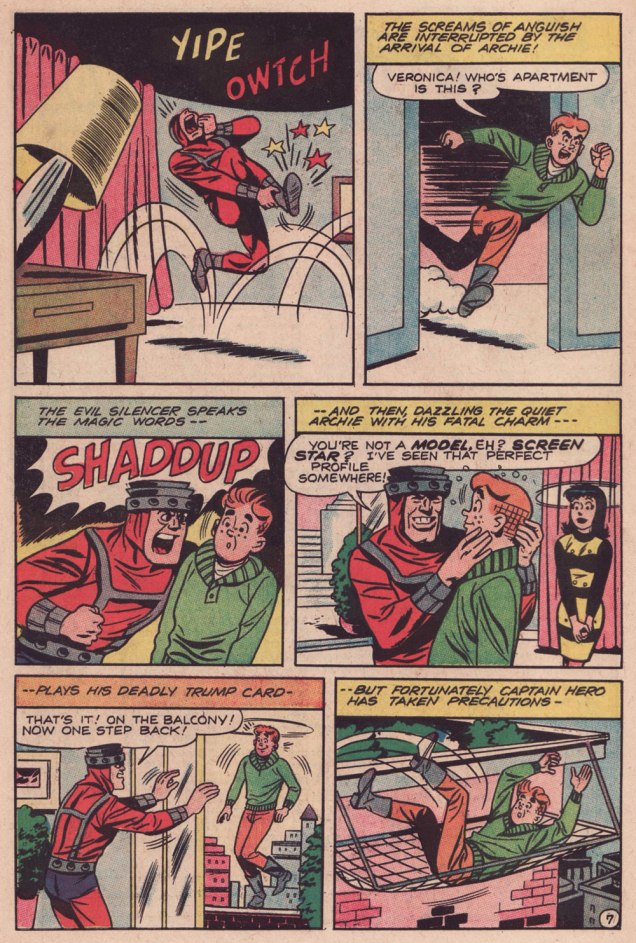
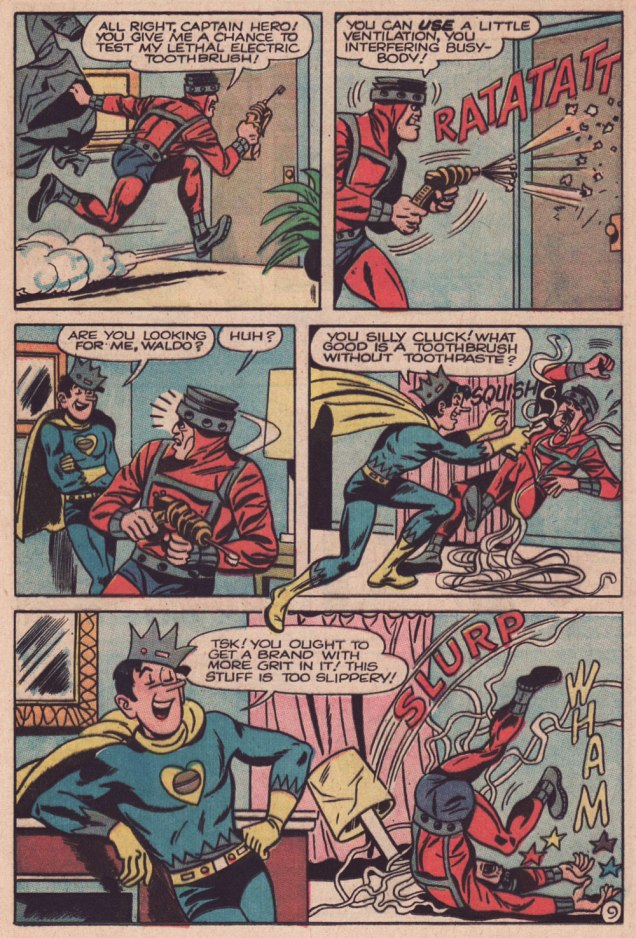
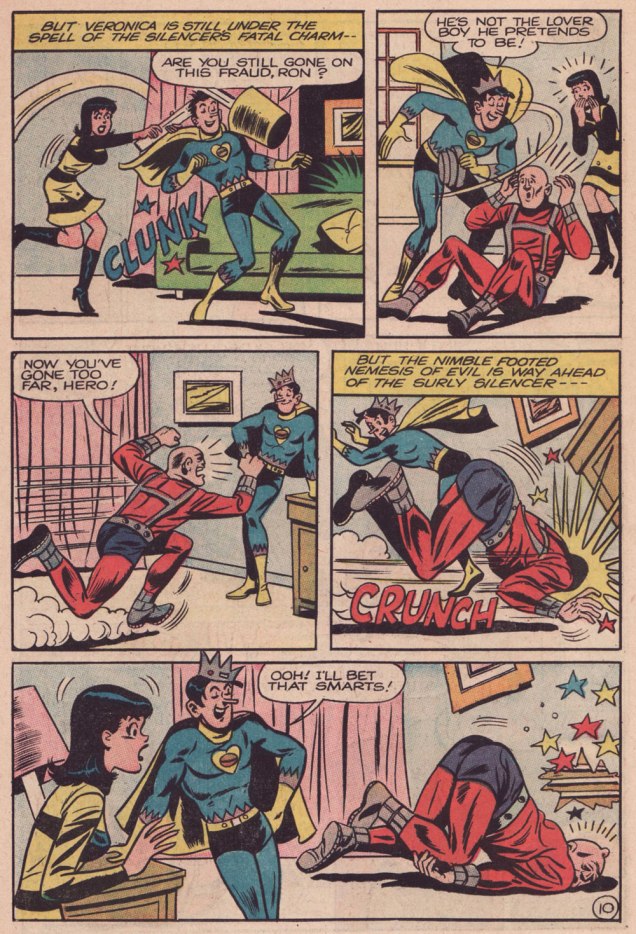
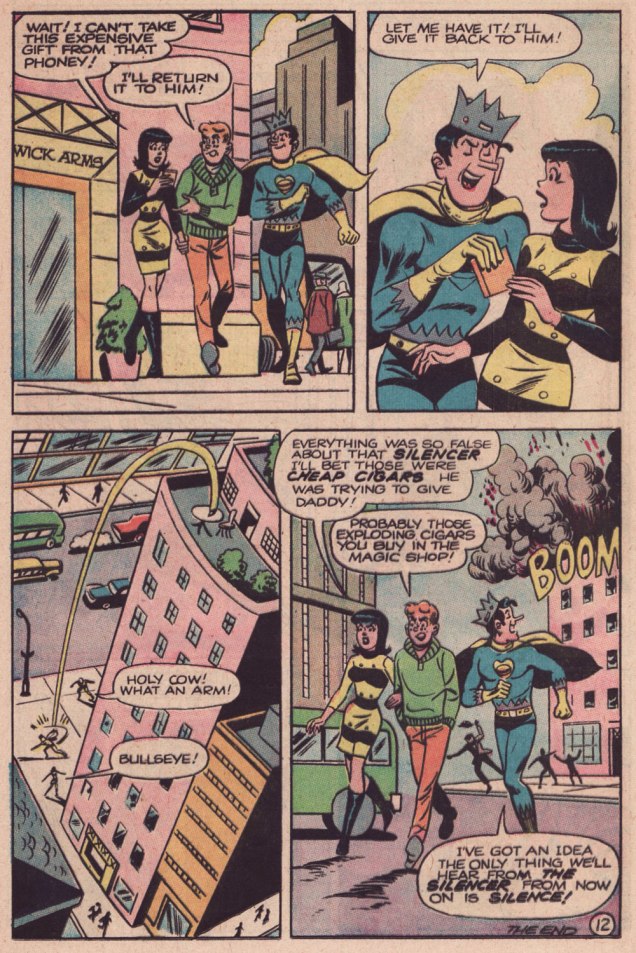
Here’s The Silencer Strikes, originally presented in Jughead as Captain Hero no. 5 (June 1967, Archie). The uncredited creators are presumably Frank Doyle, scripter; Bill Vigoda, pencils.
.
.
.
.
.
.
.
.
.
.
.
While Bill Vigoda (1920-1973) is hardly anyone’s favourite Archie artist, he does a creditable job here; he’s having more fun with this material than he did on the regular Jughead title, where he had the unenviable task of replacing (ha!) Samm Schwartz.
I certainly wasn’t going to use the digest for scanning, as the format’s production values weren’t much of a consideration: this was disposable entertainment, period. But I found an affordable — and in glorious condition — copy of the issue I wanted, and the printing didn’t let me down. My thanks to Keith for bringing it home!
**namely the rise of Marvel’s superheroes and the success of the campy Batman tv show, if you must know.
***Though they reaped the most bountiful rewards from the format, Archie were tardy — as usual — in adopting the digest: for instance, Gold Key had tried it out in 1968 with some Disney reprints, followed by collections of their mystery titles. DC had issued a one-shot Tarzan Digest in 1972. Marvel issued its own — slightly larger — digest in 1973, The Haunt of Horror, but it wasn’t comics, but a doomed attempt at reviving the moribund ‘Pulp’ format; finally, Archie entered the fray two months later, with Archie Comics Digest no. 1. Only Harvey lagged behind; unless I’m mistaken, it wasn’t until 1977 that some Richie Rich digests hit the glutted market.
« In man’s struggle against the world, bet on the world. » – Franz Kafka
Time for another entry in our leisurely, unsystematic and subjective survey of Europe’s most significant panel cartoonists. Today, we examine the life and work of Jean-Maurice Bosc (1924-1973).
His is a familiar story: guy goes to war, comes home changed (likely suffering from what was once called ‘shell shock’, then ‘battle fatigue’, and nowadays ‘post-traumatic stress disorder’ — “burying the pain under jargon“, as George Carlin put it), can’t return to old routine in the family vineyard, tries other tacks, decides on drawing; looks for gainful employment, starting at the very top, miraculously gets in. Thrives for several years, producing well over 3000 drawings, seeing print in countless magazines all over the globe. Then it turns sour.
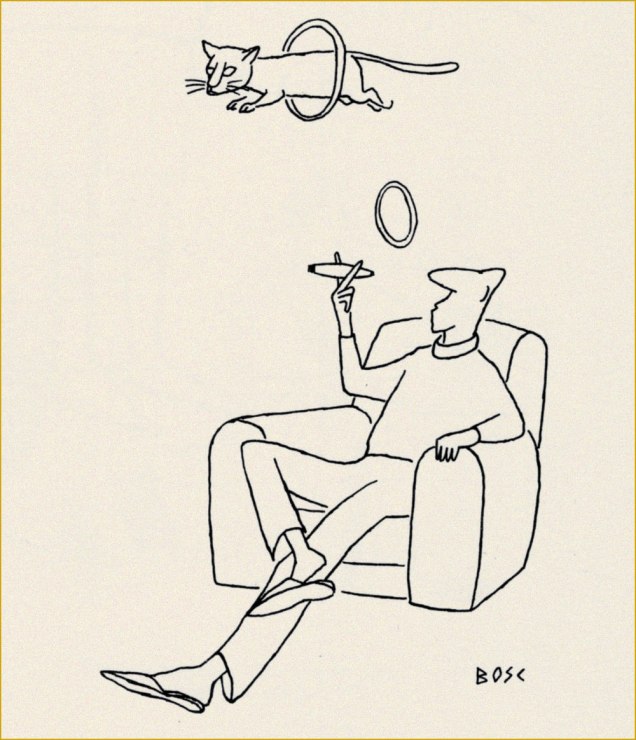
Originally published in Paris-Match, this one landed successfully in Best Cartoons From Abroad 1955 (Crown, 1955; Lawrence Lariar and Ben Roth, editors).Another Paris-Match cartoon, it was reprinted in Best Cartoons From Abroad 1958 (Crown, 1958; Lariar and Roth, editors). Sometimes gallantry just isn’t enough.
Jacques Sternberg wrote, in Les chefs-d’œuvre du dessin d’humour (1968, Éditions Planète):
« Returned in a highly weakened state from Over There, Bosc, resigned to forced rest, began to draw after falling in love with the drawings of Mose and Chaval. Over a few months, he produced hundreds of drawings, giving the humorous arts, without even realising it, a most singular starkness, a particular line that belongs quite exclusively to Bosc, though it’s been much and often mimicked since.
It was in 1952 that Bosc went up to Paris. Eight days later, a stroke of luck: he lands a whole page in Paris Match, which was to turn him into one of the magazine’s stars. »
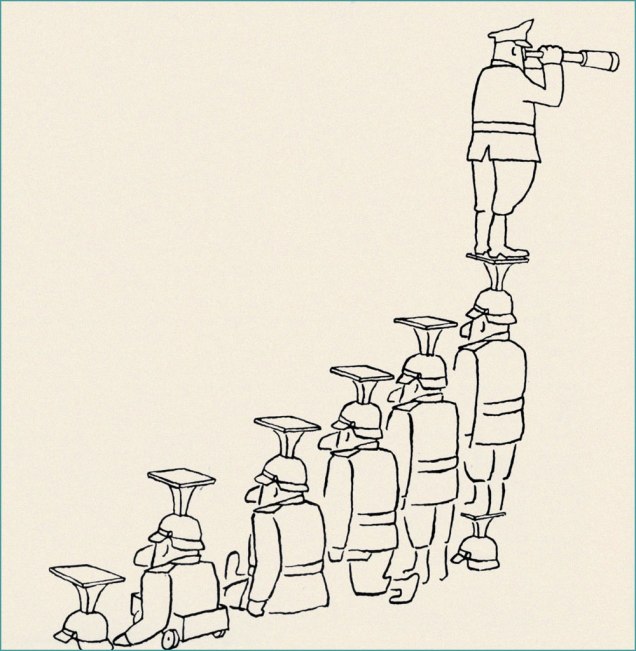
Hierarchy explained in one picture.The Touring Club de France (1890-1983) was a French social club devoted to travel, founded by enthusiasts of the vélocipède. We are told to « Please leave this place as clean on leaving as you would like to find it on entering », although ‘en vous retirant‘ might be more faithfully translated as ‘upon pulling out‘.
« After spending three years mindlessly obeying orders, two of which in the Vietnamese jungle, Bosc was severely traumatized. “After what I’ve witnessed in Indo-China“, he wrote, “I could no longer eat or sleep, ever.” He later told his sister that he had shot dozens of fellow soldiers, saw gruesome fights and, while imprisoned, heard prisoners being tortured. She recalled that he could no longer stand loud noises and got furious whenever she wanted to kill a mere spider. Bosc became a lifelong opponent of war and militarism. »
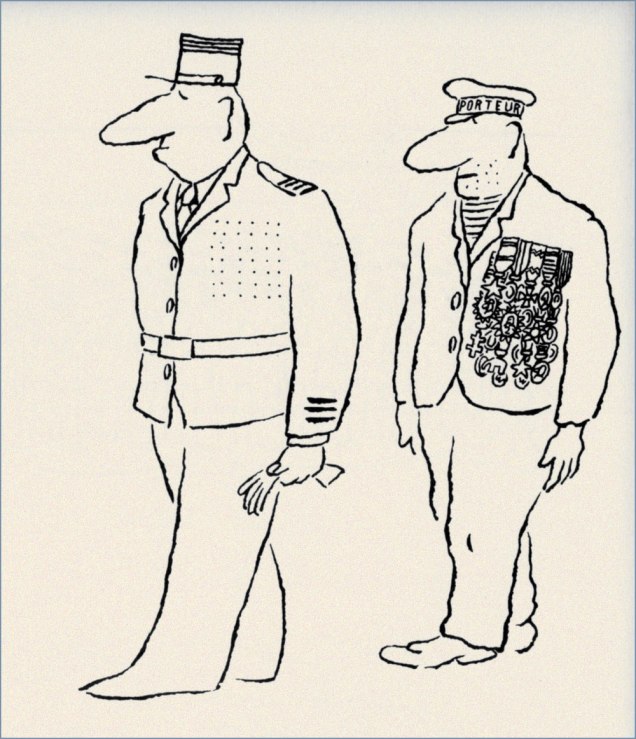
Just in case anyone’s not yet familiar with the Venus de Milo…The feat of walking on water is actually not strictly associated with Christian myth: ninjas also reportedly do it. « Porteur », as you’ve surely surmised, means ‘porter’ or ‘carrier’.
Like most of his friends and colleagues, « … Bosc had lived through the Nazi occupation in World War II. After the Liberation, he felt disgusted by his country’s attempts to keep subjugating their overseas colonies to similar oppression and exploitation. President Charles de Gaulle was the sum of everything they hated: a conservative politician who didn’t agree with the growing sentiment of anti-colonialism, the sexual revolution and disregard for Church, army and family values. Bosc often ridiculed De Gaulle in his work. Once, the cartoonist was fined 3,000 francs, with a month’s probation, for daring to mock the army in a magazine. Bosc’s work revealed he had no respect for politicians. Interviewed by Paris Match in 1965, Bosc claimed that Alexander the Great was his “favorite great statesman, since he died at age 33.” » [ source ]
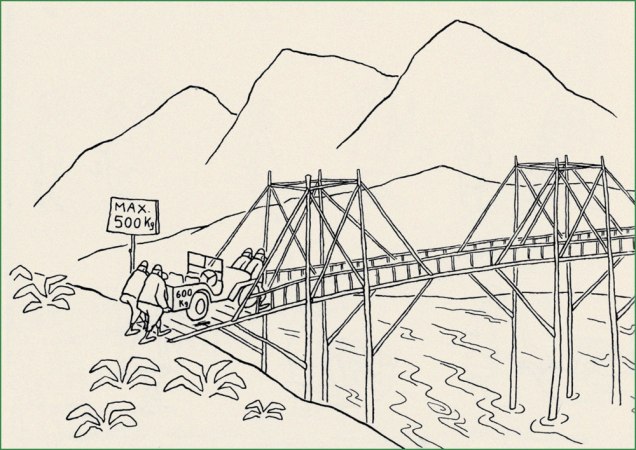
A stellar example of military logic.
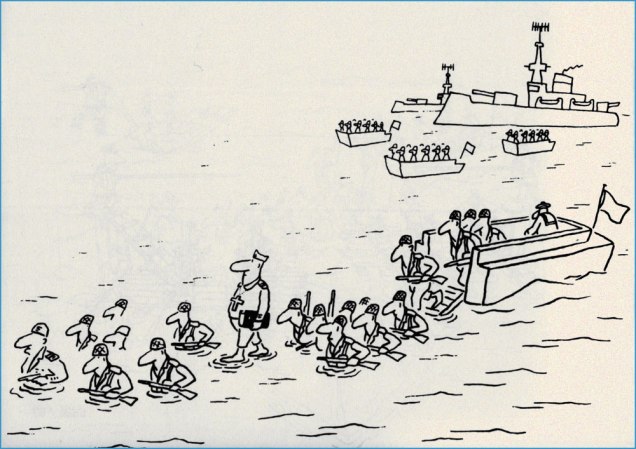
This way, at least *everyone* gets to keep dry.
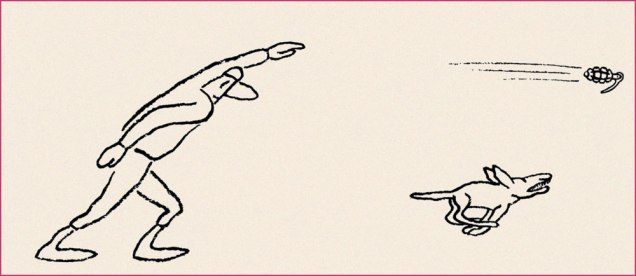
Here’s a video of a guy launching a hand grenade into a frozen lake. This one just might be Bosc’s single best-known cartoon. It goes: “My castle”; “My mill”; “My dog”; “My car”; “My farmer”; “My wheat”; “My bull”; “My wife”; “My guard”; “My pool”; “My garden”… “My ass!”.
I won’t gloss over the tragedy of his final years:
« Tragedy struck in 1968, when his good friend and colleague Chaval committed suicide. In June 1969, Bosc had a mental breakdown and was hospitalized. Suffering from an illness depigmenting his skin, he weakened more and more, often to the point of no longer being able to stand on his own two feet. He went in and out of clinics, even tried electroshock therapy, but nothing helped. As his health deteriorated, so did his mood. From 1970 on, he basically quit drawing cartoons. In 1973, the depressed cartoonist went to his garage and shot himself. He was 48 years old. »
Despite his having left us over half a century ago, Bosc is remarkably well-remembered. His Lambiek biography, written by Belgian cartoonist Kjell Knudde, is richly detailed and informative. His official website, hosted by Bosc’s devoted nieces and nephews, is a marvel of commemoration.
« Whoever digs Stine is out of his mind! Just how disturbed can Stine be? And who the heck understands his stuff? Not me. » — H.C., Hollywood (not an understanding sort)
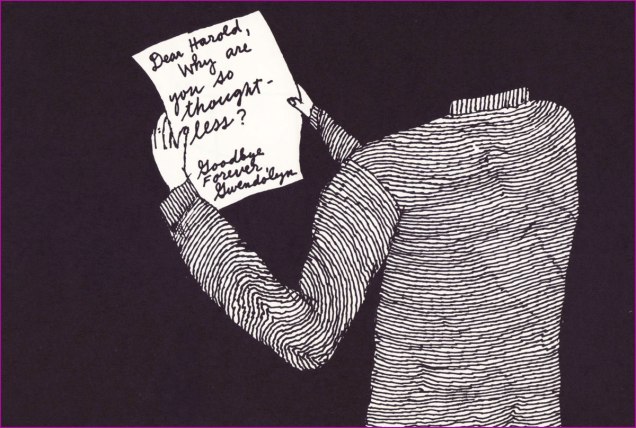
I must open this post with a thank-you note to my past self, for picking up, decades ago and who knows where and on a whim, a somewhat pricey book by a cartoonist I’d never heard of, Richard Stine. Obviously, just because he was unknown to me doesn’t mean he’s not a known quantity. Let’s just say he has his devoted fans, and I quite understand their passion.
This is the book in question, Sparks by Stine (1982). It seems to have been intended for self-promotion (in the sense of seeking assignments, that is), given the inscription it bears: « THIS PORTFOLIO IS NUMBER ___ OF A SPECIAL FIRST EDITION PUBLISHED BY THE ARTIST ». Mine’s number 433, and the date of November 15, 1982 appears below Mr. Stine’s signature. I believe a paperback edition of Sparks — with a different, full-colour cover — was published a few years later. That one’s easier to get.Excerpts from letters to the Los Angeles Herald Examiner, where most of the drawings in this book first appeared: « … just wonder in what kindergarten “Stine” studied drawing? And how much marijuana he smokes before dreaming up his alleged “cartoons”? » — R.K., ArkadiaA zinger of a riposte: « Even my children, aged five and three, understand Stine. Their reactions aren’t vehement, they enjoy the simple drawings. And they don’t even smoke marijuana! » — M.H., San Diego« … it is stupid, insipid, has no rhyme nor reason, and so very disgusting. His humor is indicative of a thoughtless mind. By the way — what DOES he use for brains? » — Ms. R., Los Angeles « … Stine’s drawings do mean something — he shouldn’t have dropped out of art school in his first year. » — P.H., Hollywood« I demand you review Stine’s employment, comparing his productivity with the detrimental effects of his abusive creations. » — R.W., staff writer, UCLA Daily Bruin« … while you have one of the best, if not THE best cartoonist in the country, namely Karl Hubenthal, you also have one of the lousiest, if not THE lousiest cartoonist in the country, namely Stine. » — C.H., Glendale« … will you PLEASE provide us with ” A key to the understanding of Stine” in the same way that the Rosetta Stone enabled us to “read” the Egyptian hieroglyphics. » — Mr. and Mrs. L.C., Los Angeles « You’re wonderful! Only those living in ignorance fear your “message.” It’s like getting nasty for the first time: once you go through the one-way door, you’ll never be “nasty” again! I adore you. » — K.I., Venice
I won’t try to dig too deep into Stine’s oeuvre, as others — fellow blogger Ann Canright, for one — have already done a splendid job of it. What I have learned by now is that he was, circa « … a former cartoonist for the now-defunct Los Angeles Herald Examiner*, publisher of cards and author of two books… [ then ] became a full-time painter. »
And thereby hangs a tale, as the saying goes:
« Five years ago I decided to go back to painting. I started really small because I was used to working that way for publishing », Stine said. « I was working with magnifying glasses on my head and thought, ‘I need to get up and breathe and walk.‘ »
He pushed away the 3-inch-by-3-inch canvases and liberated himself size-wise, design-wise and attitude-wise. He stretched a canvas that « was bigger and taller than me », he said, and immediately felt free. [ source ]
He had by then moved from California to Bainbridge Island, in Washington state. And then… on to New Zealand, homeland of his wife Margaret. « Richard, now in his 80’s is still experimenting, exploring and creating and boy does it show in his playful spirit. » [ source ]
-RG
*Do read the history of the LA Herald Examiner if you get the chance… gripping stuff, imho.
« Well, that was the silliest tea party I ever went to! I am never going back there again! » — Lewis Carroll
One more item unearthed while rummaging through my unsorted boxes: a couple of back issues of The Funny Times, one from 2010, the other 2013. The former held a fascinating exercice by Herblock prize winning cartoonist Ward Sutton, skewering and subverting the conservative ‘mindset’ from within. Not an easy trick to pull off convincingly, I would think; yet it’s one of Sutton’s specialties, having honed it to perfection — of a sort — as The Onion‘s longtime political cartoonist (since 2006), fictive curmudgeon “Stan Kelly”. Here’s a trove of Kelly pieces, which The New Yorker deemed “brilliantly terrible”.
Remember the Tea Party? Of course, B.P. barely feels like parody, given B.C. creator’s Johnny Hart mesolithic views. A couple of samples from a 1999 interview: « Jews and Muslims who don’t accept Jesus will burn in hell », « Homosexuality is the handiwork of Satan ». [ source ]Ah, yes — that nonsense about Obama’s birth certificate, another MacGuffin in a seemingly endless parade of conservative bugaboos.By most accounts, Herbert Hoover was a pretty lousy president, though everything’s relative. Another fine myth, that of a liberally-biased media. Teanuts goes right back to the first Peanuts strip (Oct. 2, 1950) for its inspiration (though not its aspect ratio, for some reason).Here’s a pearl: « simply, homosexuality can be healed. That is, a homosexual can become a heterosexual; the homosexual orientation can be changed through prayer for inner healing and the power of the Holy Spirit. ». [ source ]Again, Diligent-Bert hews so close to its model that it might easily pass for an actual Dilbert strip.
The feature was accompanied by this deadpan caveat: « EDITOR’S NOTE: Ward Sutton, an elitist who lives in the elitist New York area, is a cartoonist, illustrator, animator and painter who has recently been lurking about the back of Tea Party gatherings, stuffing his pockets with American flag cookies, and brochures for camouflage underwear and mail-order ammo. Superpatriot and regular guy cartoonist Joe Smith disavows any knowledge of Mr. Sutton and his ilk. Need I say more? »
Given the context of pointless and (self-) destructive trade wars currently raging, I thought I’d focus on a topic closer to home, and befitting the season: we’ve received some 85 cm (33 inches) of snow in the past week or so, which makes it ideal snowmobile weather, as these things go.
While there’s been a vibrant comics scene in Québec for just about as long as there have been comics, financial viability has always been a problem. Magazines would pop up like mushrooms after a rain, only to vanish just as suddenly after a few issues. It probably didn’t help that Québécois bédéistes were generally far less interested in producing the next Blondie than they were longing to be the next Crumb.
And so, the best gig around turned out to be Perspectives, a general interest magazine (1959-1982) bundled into weekend editions of several of Québec’s major newspapers (La Presse, Le Soleil, Dimanche-Matin…) in largely distinct versions, which makes collecting them a most daunting task. It’s worth noting that the editorial content, not merely the cartoons and comic strips, were of a very high calibre. After profiling his colleague and predecessor André Montpetit a while back, it’s now time to turn the spotlight upon Gité, born Jean Turgeon (1952-2014).
Do you Snowmobile? « I snowmobile! »; If this traditional wintery scene evokes for you peace and serenity, then you’ve never seen… a snowmobile! This simple machine possesses the gift of turning the quietest of areas into a noisy corner of hell. Unless you can’t bear the silence of our countryside…; In that case, become a snowmobiler… you only need a little snow… not *too* much, though!
You have chosen your snowmobile… and your outfit… think of the essentials.; Stop, listen, look.; Don’t neglect the comfort of your passagers: « Darling, I’m falling! Hiiiik! »; Have you properly read the repair manual?
Beware of the frost. « Say, daddy! How come it’s frozen solid in mid-air… it defies the law of gravity! » « The law of gravity? That must also be frozen! »; … and of the thaw. « Where am I? »; Especially if you’re an inveterate daredevil!; while the more sedentary type…; And if it breaks your heart to put away your snowmobile for the summer…; « And so long live the snowmobile! As for me, I’m off to Miami... »
It seems to me that making a lot of noise and hitting absurdly excessive speeds are the prime draws of their ‘sport’ to a significant portion of fervent snowmobilers. Back in the 1970s, these vehicles were rather comically wheezy, but now can reach speeds far in excess of what a regular automobile can legally — or otherwise — hit on the highway, never mind the Autobahn. I remember one holiday season, not so long ago, when one of my clients topped himself on his snowmobile, leaving behind a tearful wife, three young children, and a couple of rudderless businesses. While someone *did* think of electric — and therefore quieter — snowmobiles (and Jet-skis), they pulled the now-usual arrogant move (think OceanGate and SpaceX) of paying plenty of attention to investors and waving off due process, the scientific method and their engineers, leading to a predictable fiasco.
A note on Gité’s technique, as he recounts it in an interview conducted — in the nick of time! — for Jean-Dominic Leduc and Michel Viau‘s Les années Croc (2013):
« I had developed a technique, during the Perspectives era, that I was probably the only illustrator to use. I first created an illustration in pencil, which I then photographed on a giant machine, as a photostat. I then applied colours in markers with my fingertips, which created a sort of stained glass effect in terms of luminosity. Sometimes you can even see my fingerprints… That technique was not only arduous, but also dangerous. It was really toxic, I was literally ripping off the skin of my fingers. No wonder I got sick a few years later! That method left no room for error. »
Here are a couple more Gité strips from the pages of Perspectives:
« Not so Dumb », from Perspectives vol. 16 no. 37 (Sept. 14, 1974); the sign reads “Mean Dog”.
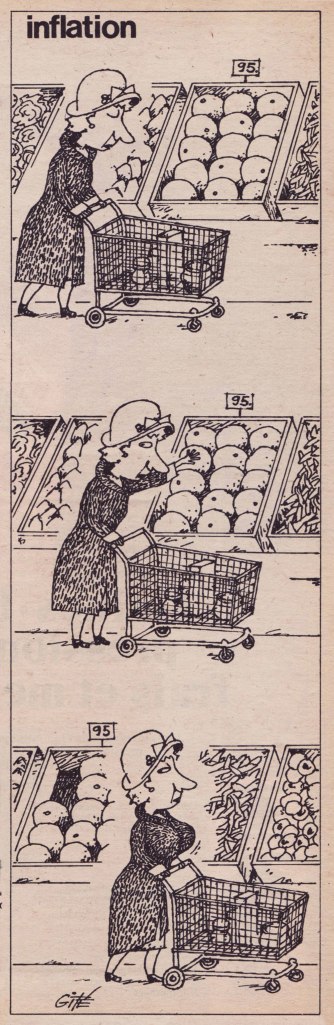
« Inflation », a forever relevant strip that appeared in Perspectives vol. 17 no. 7 (Feb. 15, 1975).
A sample Perspectives cover, this one featuring national treasure Robert Charlebois, at the time but a single decade into his spirited musical career.
Then came Croc, handily Québec’s most accomplished and successful humour mag (1979-1995, 189 issues), more National Lampoon than Mad, at least in the beginning. Gité produced quite a score of tremendous Croc covers — possibly the epitome of his œuvre — and I was planning on devoting a post to that lovely lot… but discovered that Gité’s colleague and close friend Guy Badeaux, aka Bado, had beaten me to the idea by over a decade. Feast your peepers on his savvy selections!
Ah, but he missed this one, Gité’s first! This is Croc no. 4 (Jan. 1980); despair not, doomsayer: the end may *yet* be nigh!
« If Freud had worn a kilt in the prescribed Highland manner he might have had a very different attitude to genitals. » — Woodrow Wilson
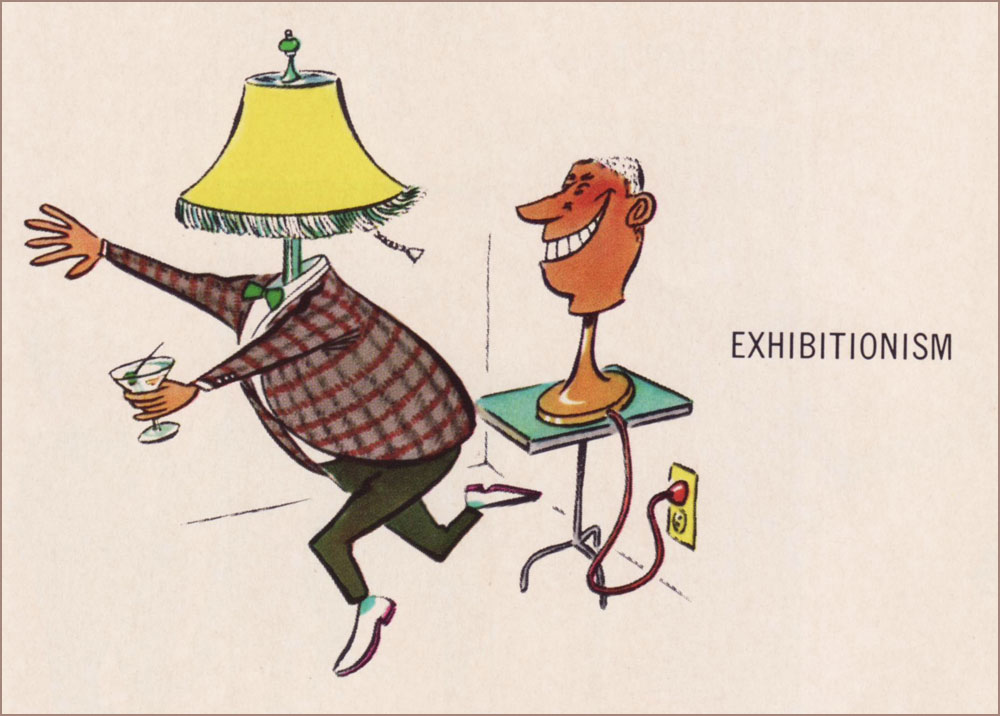
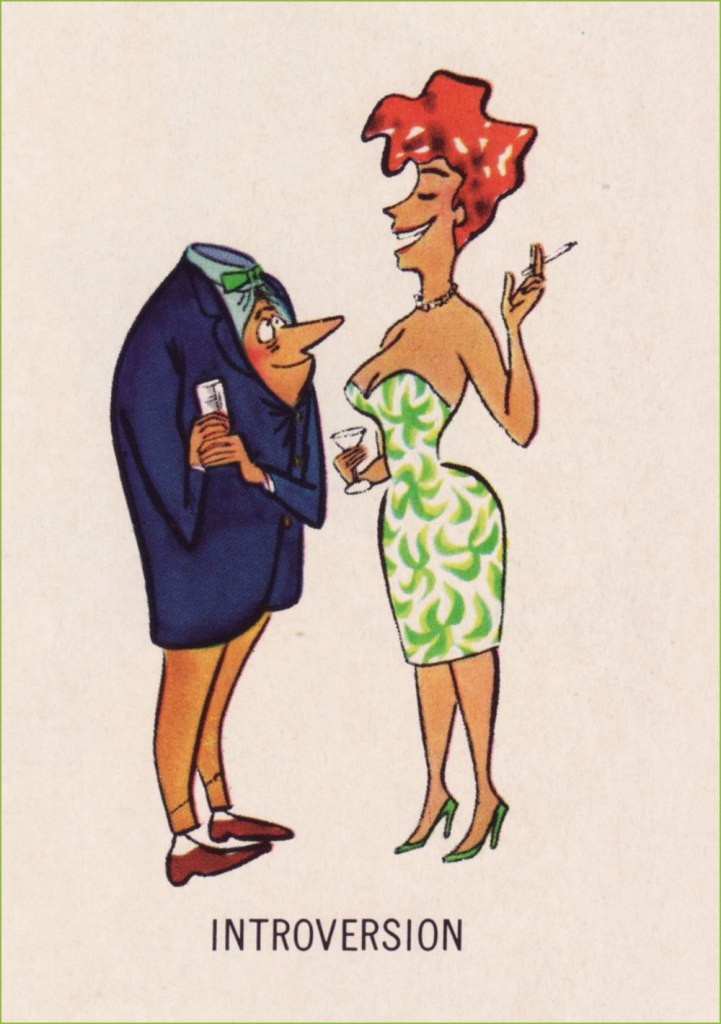
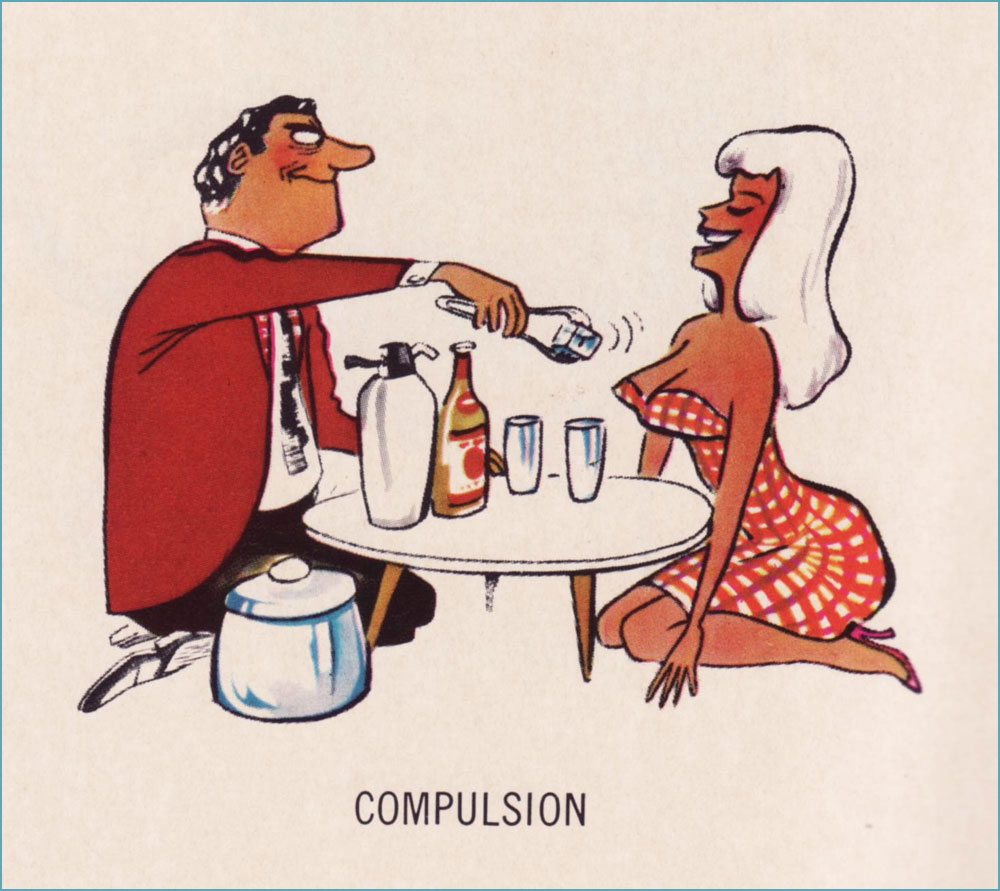
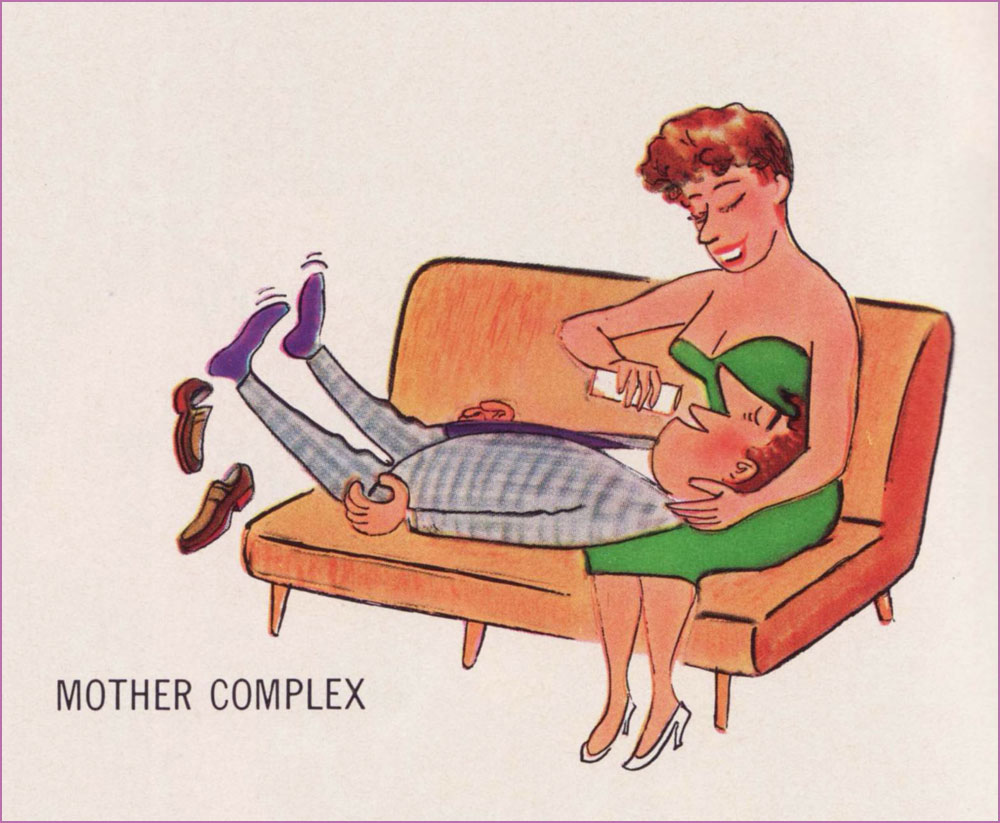
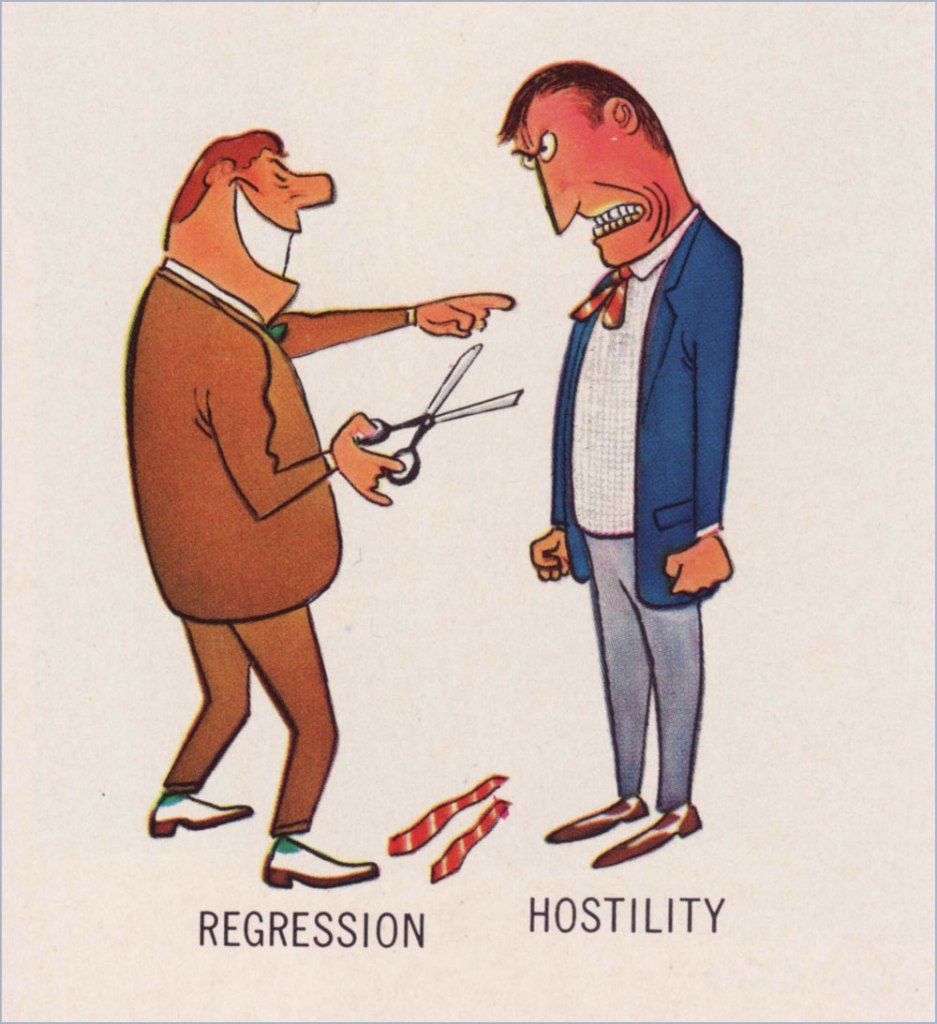
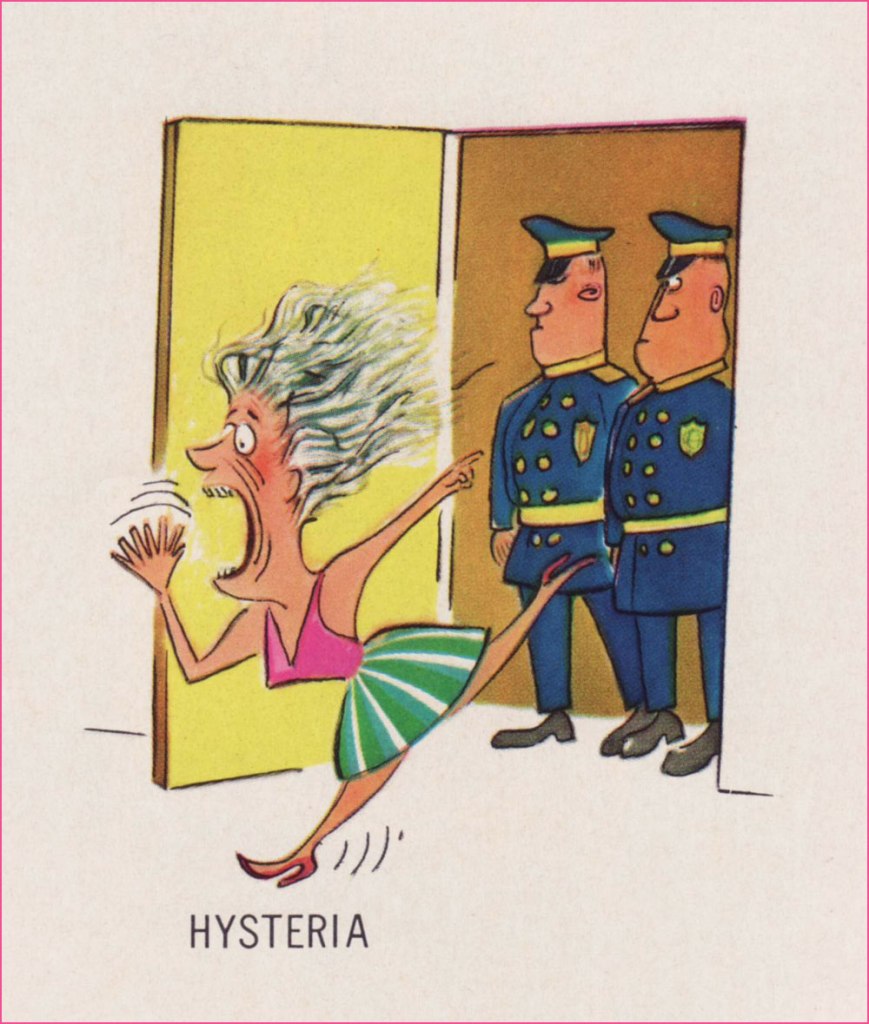
Let’s talk about your drinking.
Aw, just kidding: that’s your business and none of mine. There’s certainly no shortage of reasons — or might these be excuses? — for it nowadays. Speaking of which, here’s the recipe for the Freudian Slip Cocktail, which is presumably what ol’ Sigmund is shown energetically mixing up below. Cul sec, friends!
Virgil Partch‘s « Sigmund Freud’s Cocktail Party » originally appeared in Playboy Magazine’s August, 1962 issue.
« A gentleman does not boast about his junk. » — Emily Post*
Good manners… where have they gone, along with the other social niceties?
To prepare some of you for this satire, you need to be aware of who 19th century débutante and eventual étiquette authority Emily Post (1872-1960) was. The author of Etiquette in Society, in Business, in Politics, and at Home (1922… and updated to this day) was among the earliest American self-proclaimed experts on good manners. « Today, of course, you can barely dig up a débutante, let alone a ladies’ maid. And yet from the great beyond Emily Post continues to offer counsel. “Etiquette,” revised and edited by her great-granddaughter-in-law, a former flight attendant, is now in its seventeenth edition. » [ source ]
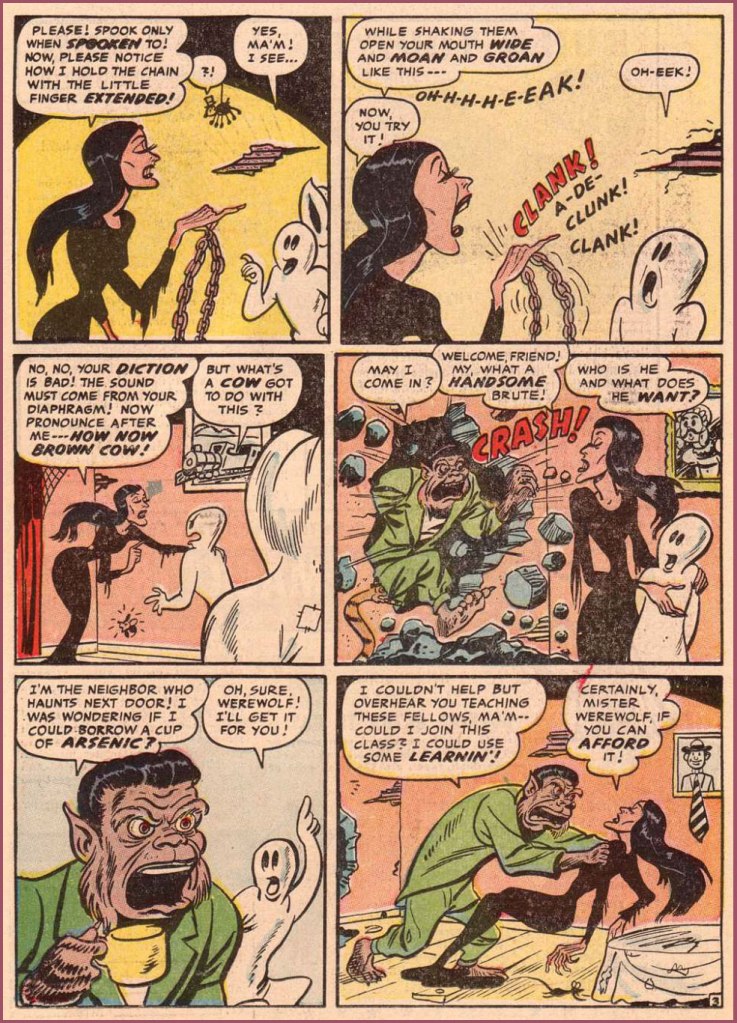
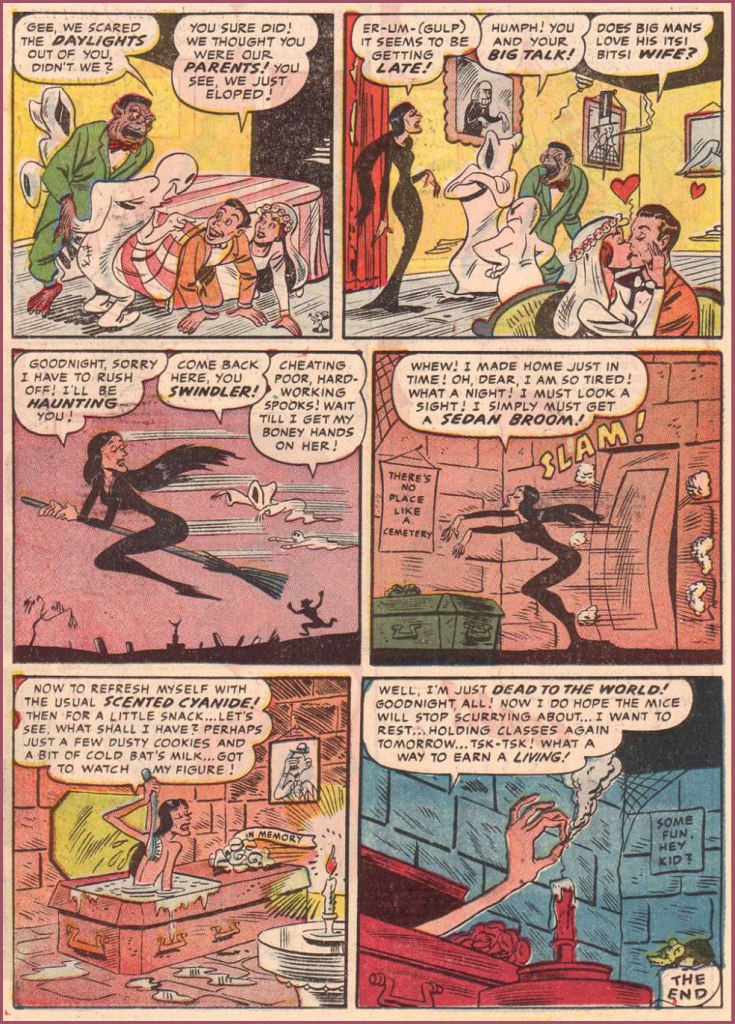
Well, that should suffice. Here’s a fun little parody from the early Silver Age. Both writer and artist are unknown, appropriately enough — it would be gauche to draw attention to oneself, don’t you know?
Don’t Be a Stumbling Spook! originally appeared — well concealed — in the back pages of Dark Shadows no. 2 (Jan. 1958, Farrell). An obscure story from an obscure title from an obscure publisher — the trifecta!
This is the one! The entire issue is available for free perusal right here.
I leave the esteemed Ms. Post to deliver the closing words, as I presume a gentleman should: « The only occasion when the traditions of courtesy permit a hostess to help herself before a woman guest is when she has reason to believe the food is poisoned. »
-RG
* That purported quote was too cute to pass up, apocryphal as it may be. Or is it a case of meaning drift? MIght ‘junk’ actually refer to bric-a-brac or — miraculously — a Chinese ship?
« I’ve had great success being a total idiot. » — Jerry Lewis
Hey, it’s Bob Oksner‘s birthday! I hope you’ll forgive me for double-dipping into that particular well — he also illustrated our earlier Mary Marvel entry — but I still wanted to highlight the occasion, incorrigible Oksner booster that I am.
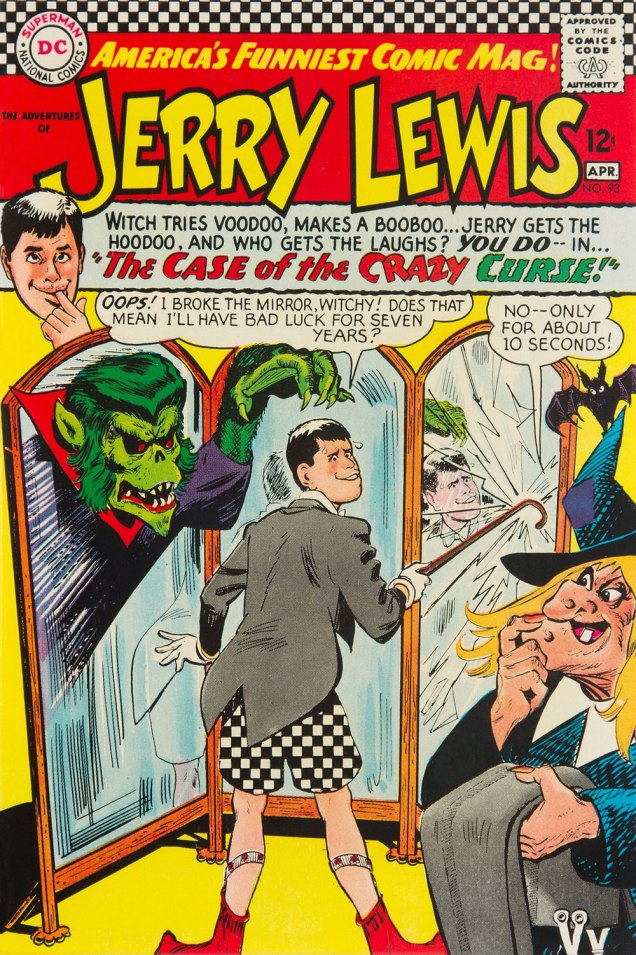
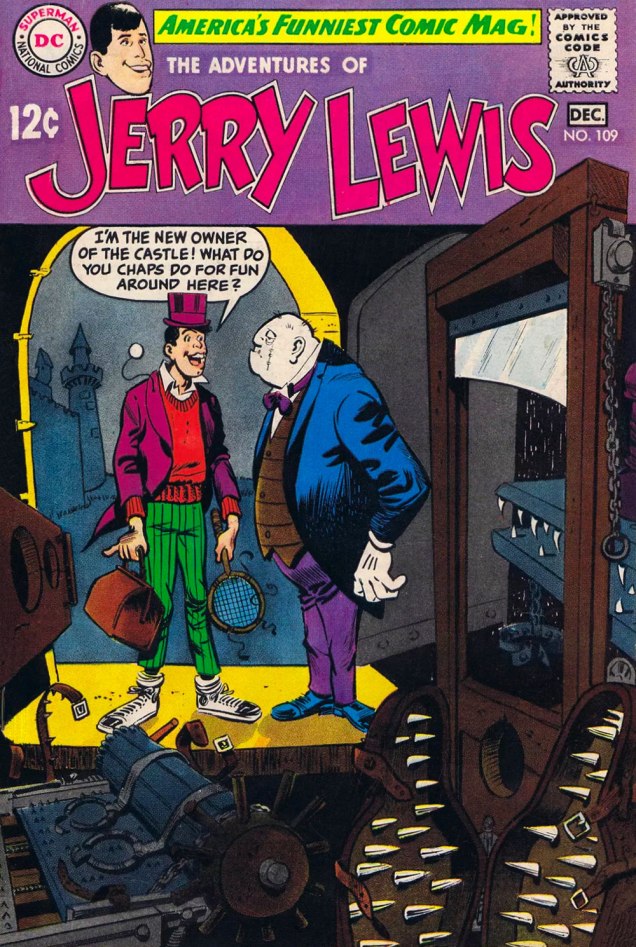
DC’s Jerry Lewis (or Bob Hope, or Dobie Gillis…) comics weren’t even remotely funny, but they sure boasted some spiffy covers. Here’s a gallery of the most Hallowe’en-appropriate, from the pencil and pen of Mr. Oksner.
This is The Adventures of Jerry Lewis no. 87 (Mar.-Apr. 1965, DC).This is The Adventures of Jerry Lewis no. 88 (May-June 1965, DC).
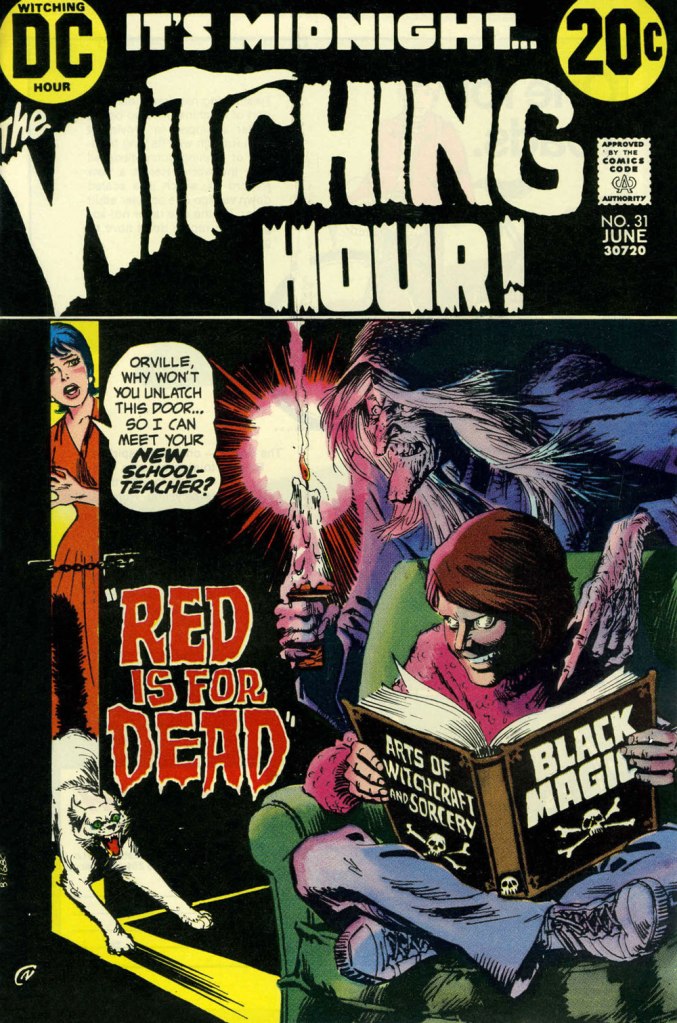
TAoJL editor Murray Boltinoff (1911-1994) had a soft sport for that particular cover concept, since he recycled it, eight years later and with a different tone, for another title he was overseeing:
Here, for comparison, is It’s Midnight… the Witching Hour no. 31 (June 1973, DC). Art by Nick Cardy.This is The Adventures of Jerry Lewis no. 93 (Mar.-Apr. 1966, DC).This is The Adventures of Jerry Lewis no. 94 (May-June 1966, DC).This is The Adventures of Jerry Lewis no. 98 (Jan.-Feb. 1967, DC).And finally, The Adventures of Jerry Lewis no. 109 (Nov.-Dec. 1968, DC). This one’s another riff on a rather hoary theme.
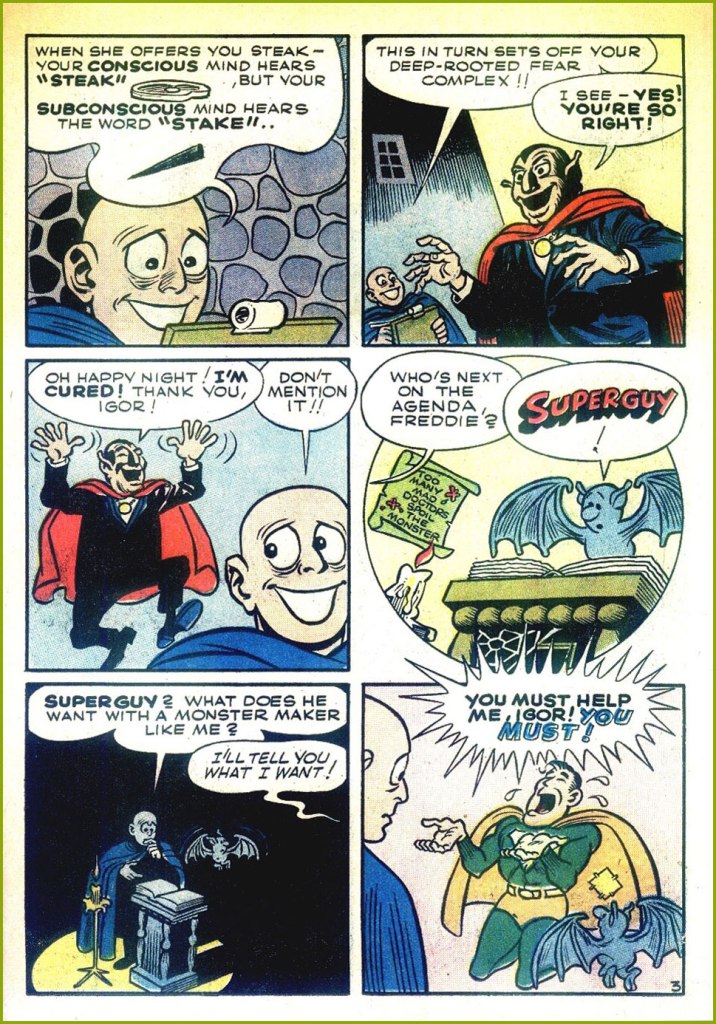
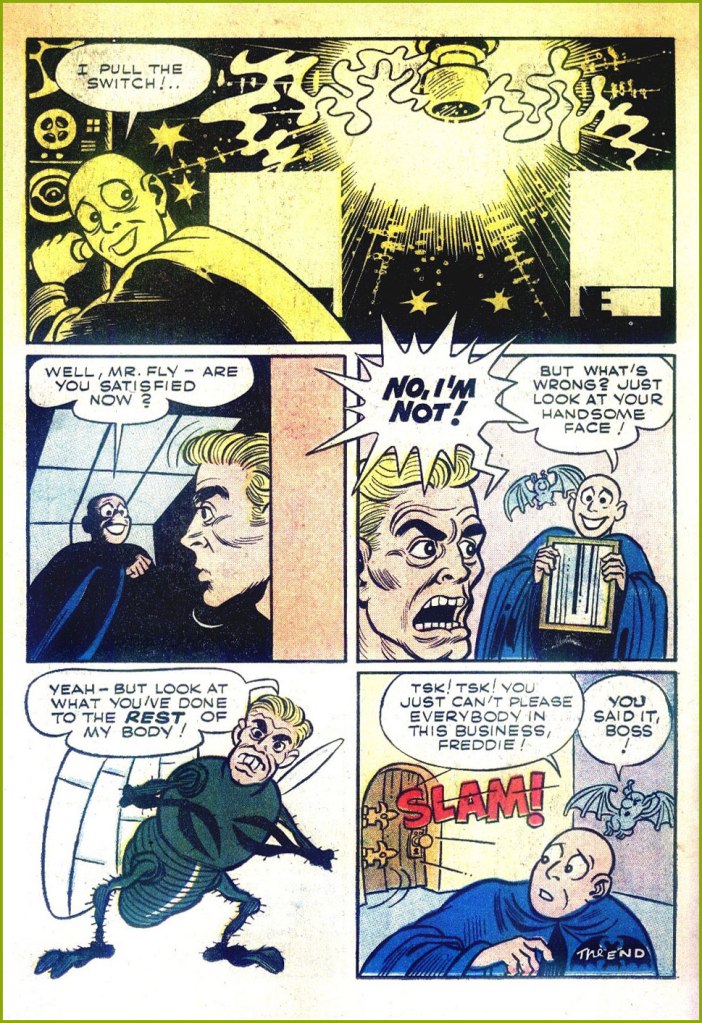
I was recently asked to feature some more Archie artists (other, that is, than my perpetual favourites Samm Schwartz and Bobs Montana and White); while I suppose Orlando Busino (1926-2022) is perhaps an oddball choice to fulfill such a request, it’s his birthday today — he would be ninety-eight years old… but hey, ninety-five is still a pretty good run.
Mr. Busino passed but briefly — but oh so memorably — through the halls of Archie: from 1960 to 1962, before he understandably went off to greater success and better-paying gigs: The Saturday Evening Post, Reader’s Digest (I can confirm that they paid really good rates), McCalls, Good Housekeeping, Boys’ Life… you name it.
Mark Evanier recalls fondly that short Archie stint, where Busino was among the few artists allowed to work outside of the house style and march to his own tune: « I first became familiar with his work, as did my pal Scott Shaw!, during a brief period when Busino worked for the Archie people. His work appeared in Archie’s Madhouse and a wonderful, not-sufficiently-recognized comic book called Tales Calculated to Drive You…BATS. It was kind of like “What if Charles Addams had produced MAD?” Scott and I both remember exactly which newsstand we were patronizing in December of 1961 when we glimpsed the cover of Bats #3 and grabbed up our respective copies. » [ source ]
Signor Busino’s lovely cover for the first issue of Tales Calculated to Drive You Bats (Nov. 1961, Archie).
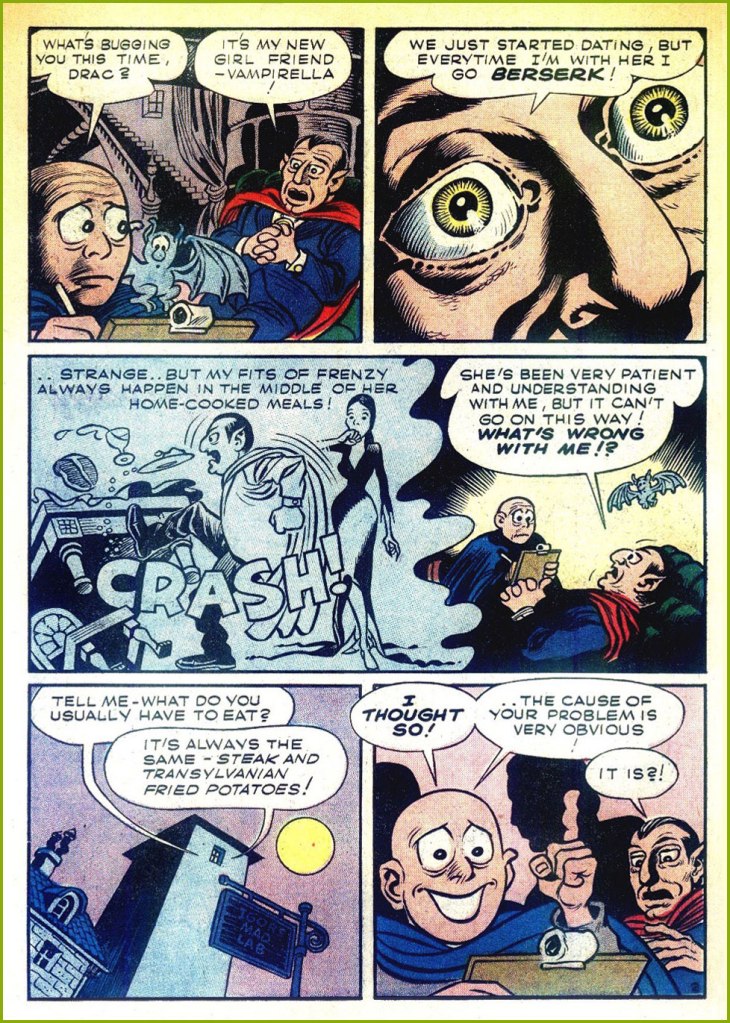
However, our featured tales hails from Tales Calculated to Drive You Bats no. 3 (Mar. 1962, Archie):
And here’s a little something extra from Archie’s Madhouse no. 14 (Aug. 1961, Archie).
Painting your nose the right shade of dill pickle green would also work.






































 Who's Out There?