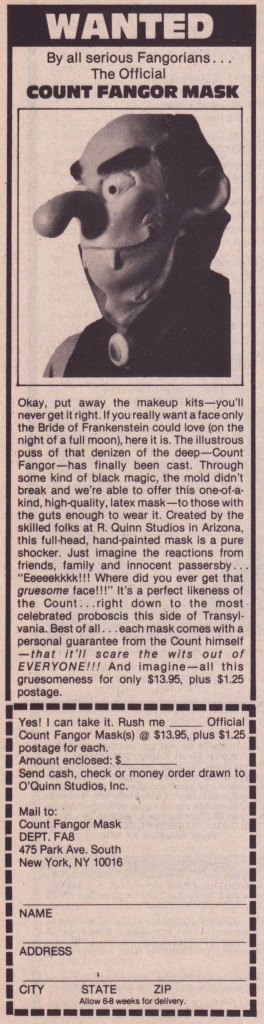
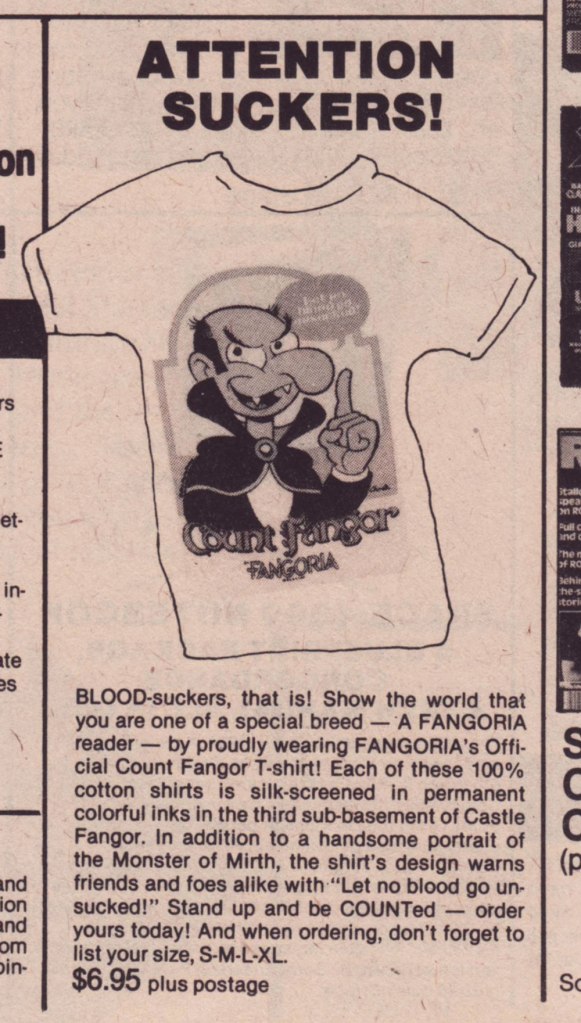
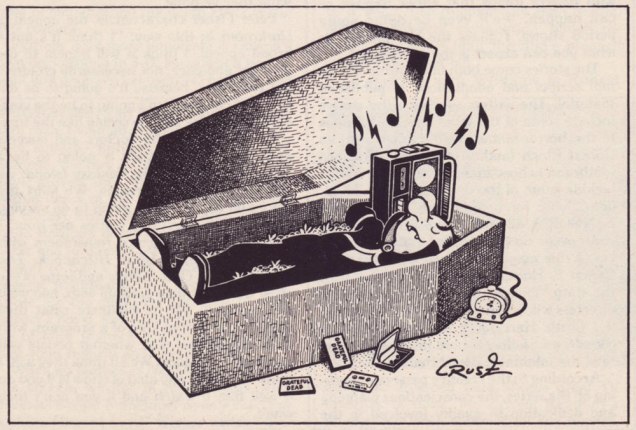
« It’s a perfect likeness of the Count… right down to the most celebrated proboscis this side of Transylvania. »
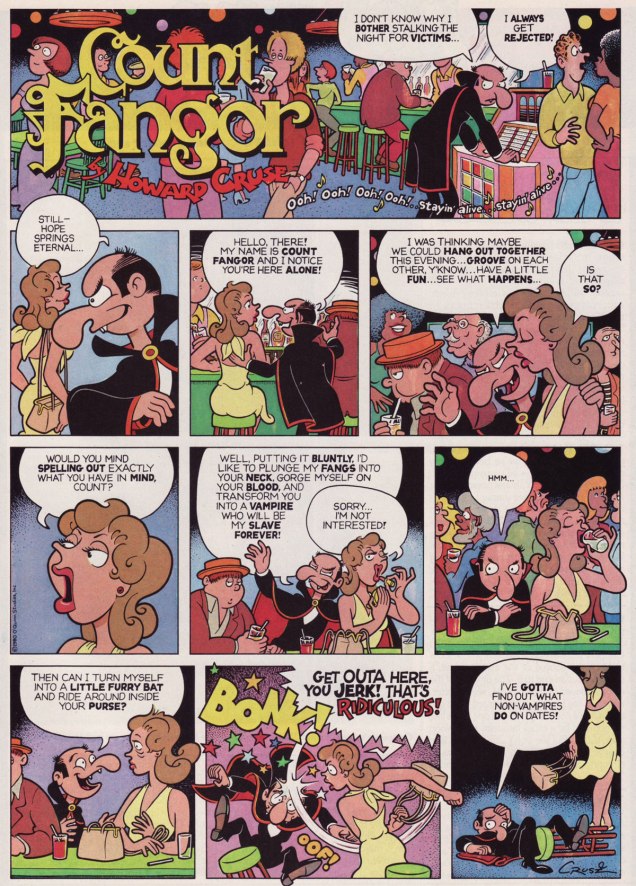
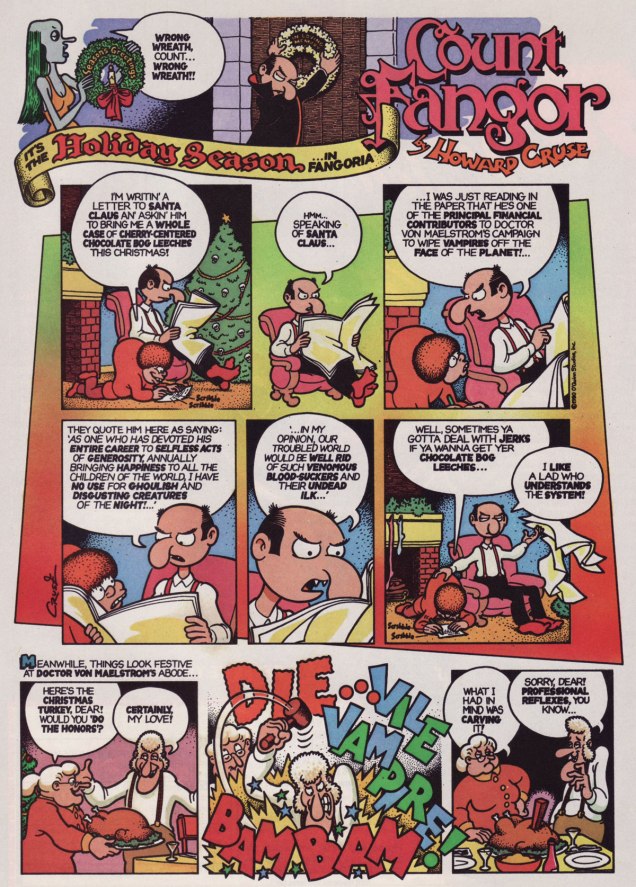
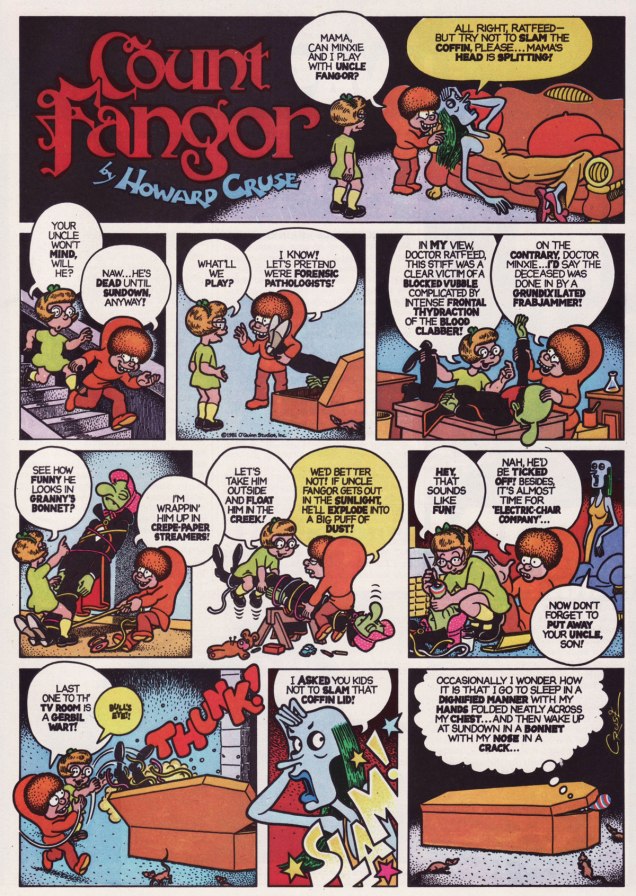
A few months back, while sorting some old magazines, I came across a stack of early issues of Fangoria. Therein, I rediscovered a strip I’d just about entirely forgotten: WOT favourite Howard Cruse‘s short-lived (as a strip, not a bloodsucker) Count Fangor. A fitting topic for a Hallowe’en post, I thought… and so it is!
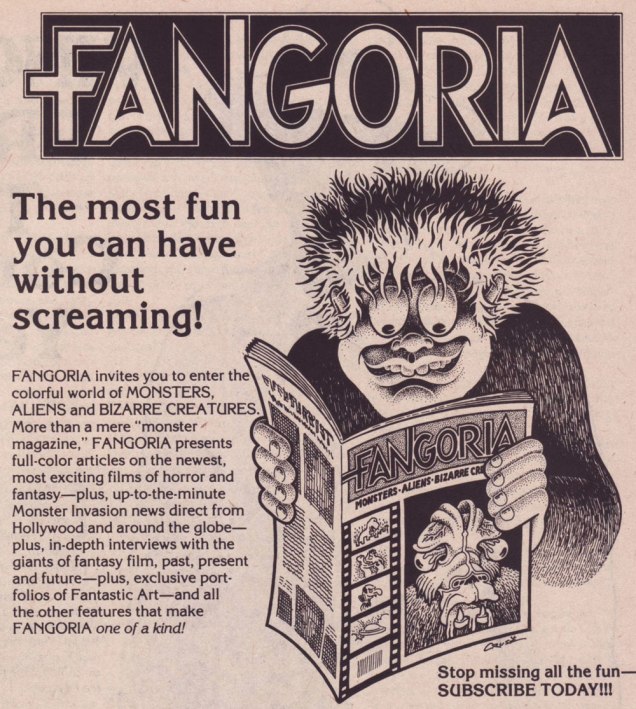
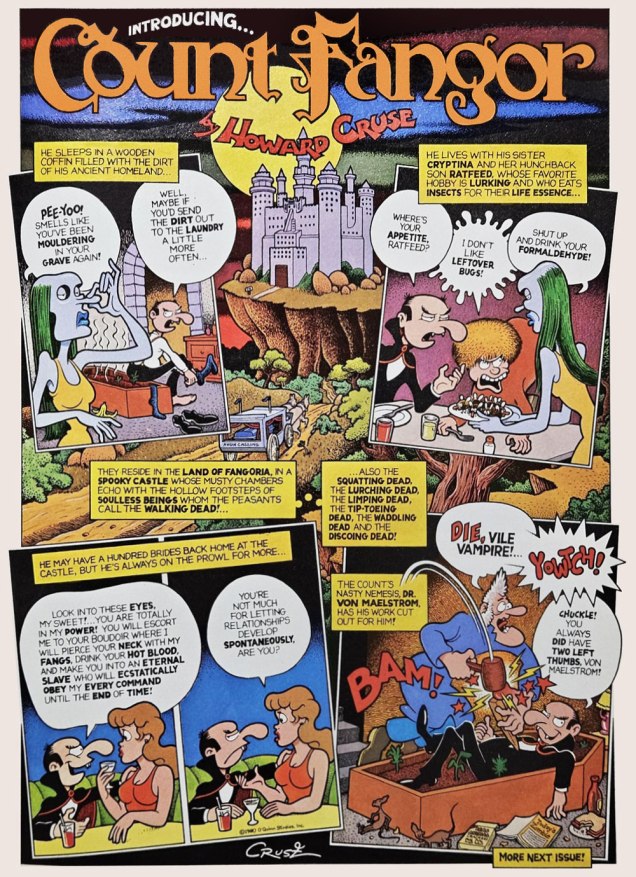
I haven’t seen issue one, but Howard Cruse was listed among Fangoria’s contributors from at least issue two. Truly a complete artist, Cruse provided lovely headings for various review columns in his distinctive lettering, as well as this subscription advert.The Count’s — and his family’s — introduction, from Fangoria no. 6 (June, 1980), reportedly the first issue of the magazine to turn a profit though, I hasten to say, not through the strip’s intercession.
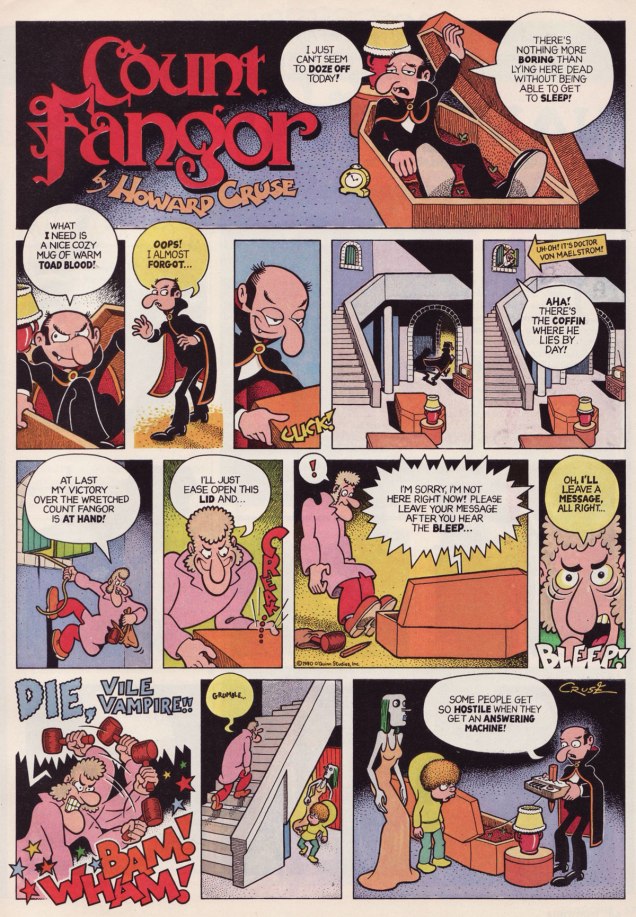
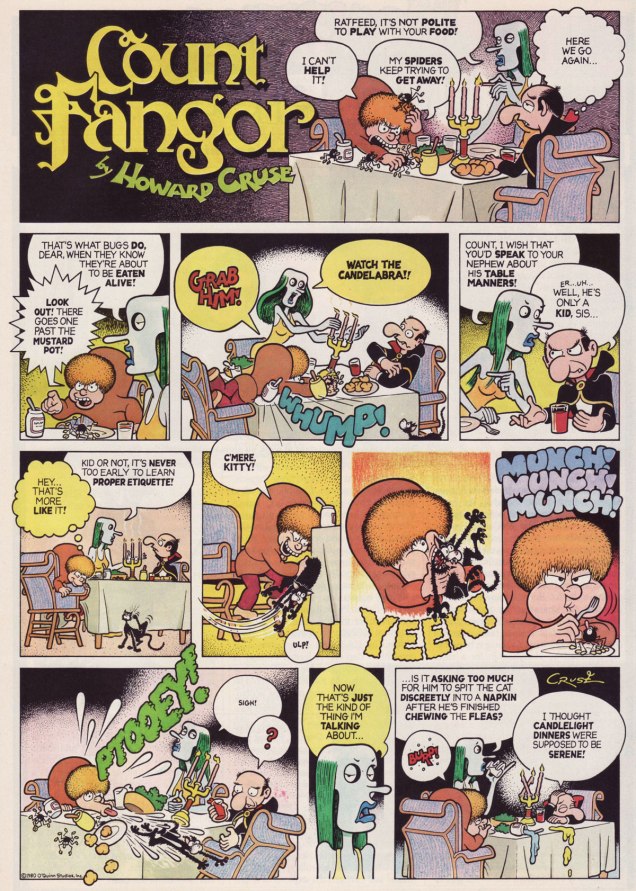
At first, Fangoria’s brass got behind the Count, but after a few full colour page appearances, he began his slow fade, his tee-shirt going out of print, his strip losing its full page *and* colour privileges.
In the tried-and-true Warren Magazines fashion, a Count Fangor mask even made the rounds. I wonder how scarce these are.
This vestment is apparently quite a collector’s item nowadays. The difficulty of landing the right size only adds to the thrill of the chase. Dixit the Count, « Let No Blood Go Unsucked! »
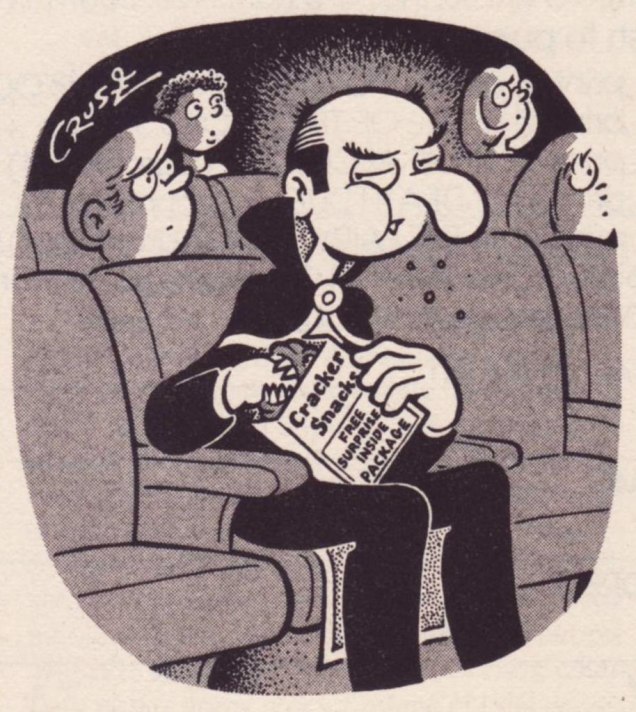
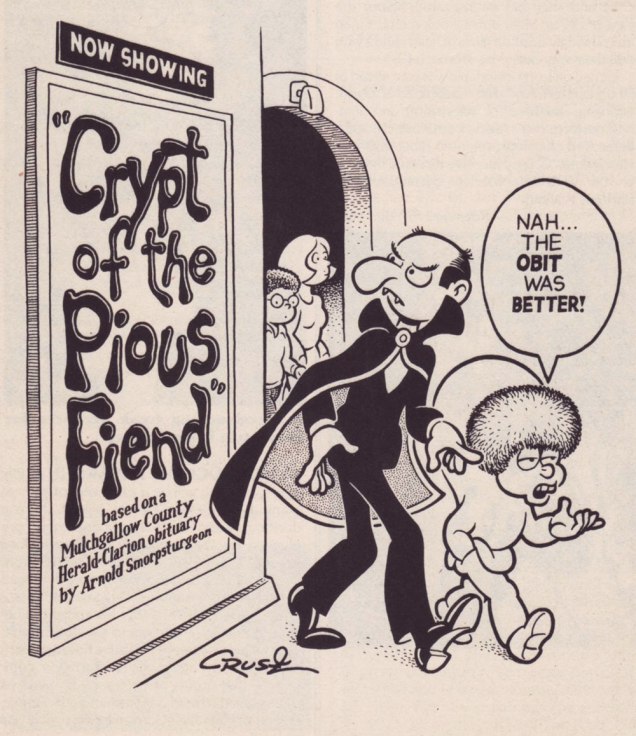
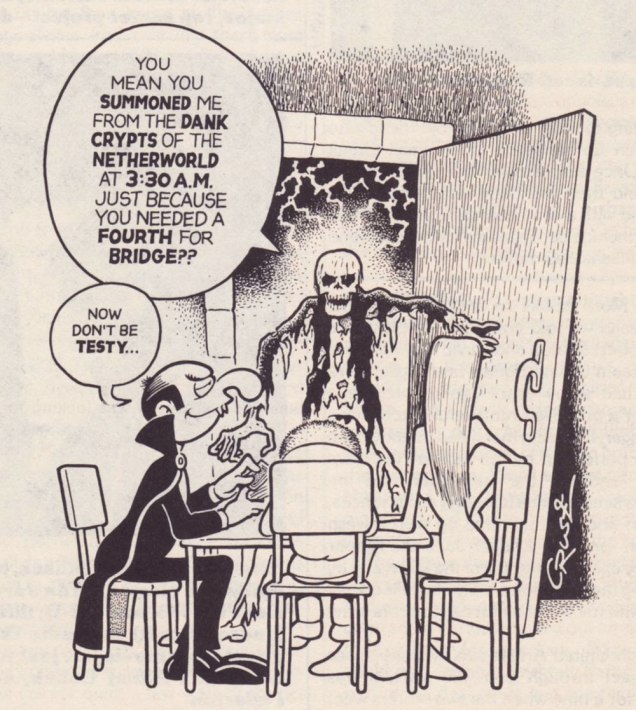
I suppose Cruse’s bon enfantapproach was at odds with the magazine’s ambitions. All too soon, poor Fangor was reduced to page filler panel cartoons, fine as they were.
« Fangoria was a magazine series that ran for 344 issues, from 1979 through 2015. »
Despite my being a small-town teenager, Fangoria’s editorial direction and my interests soon went separate ways. I was more attuned to mood and mystery than the magazine’s average reader, who craved unlimited gore and grue. As slasher films came to predominate the genre’s cinematic palette, I retreated into other interests — à chacun son goût! — and, judging from my collection, the last issue I picked up was no. 23 (November, 1982). In the end, the far subtler Twilight Zone magazine was more my speed.
“Now I know what a ghost is. Unfinished business, that’s what.” ― Salman Rushdie,The Satanic Verses
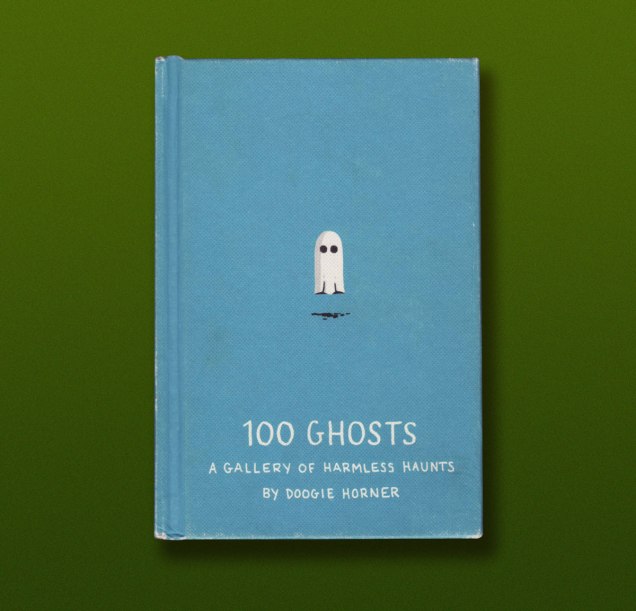
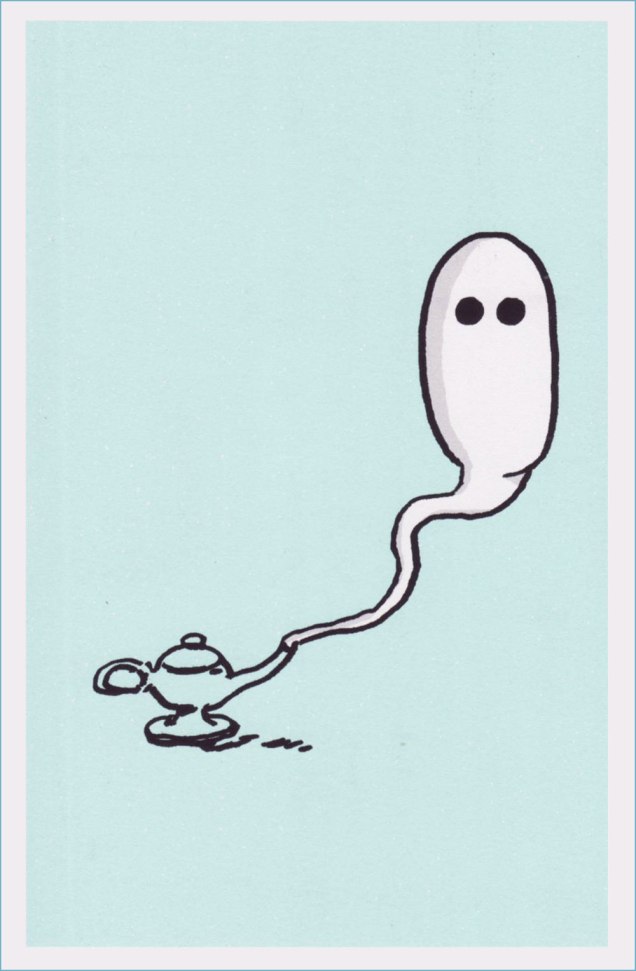
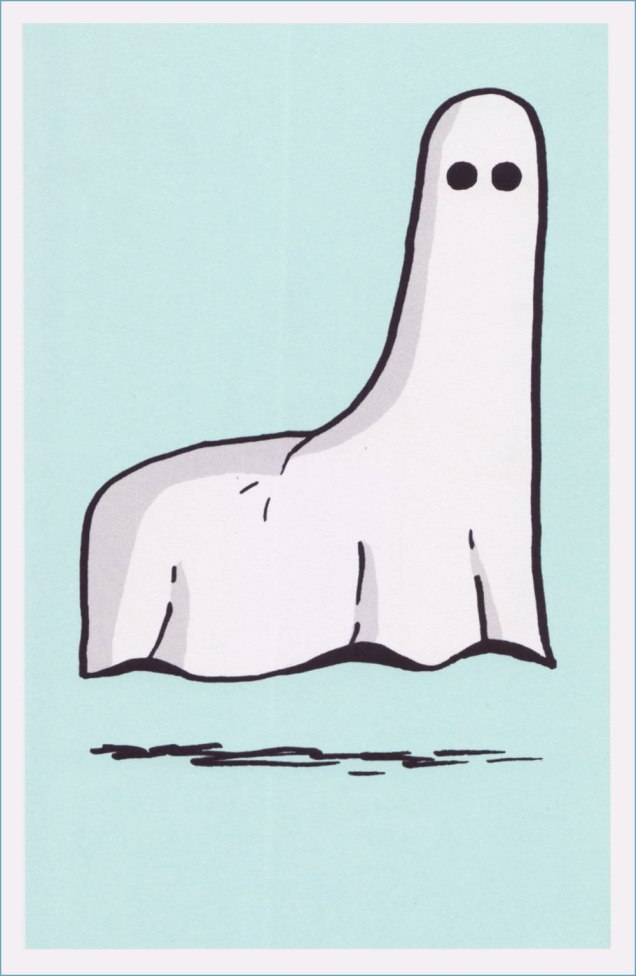
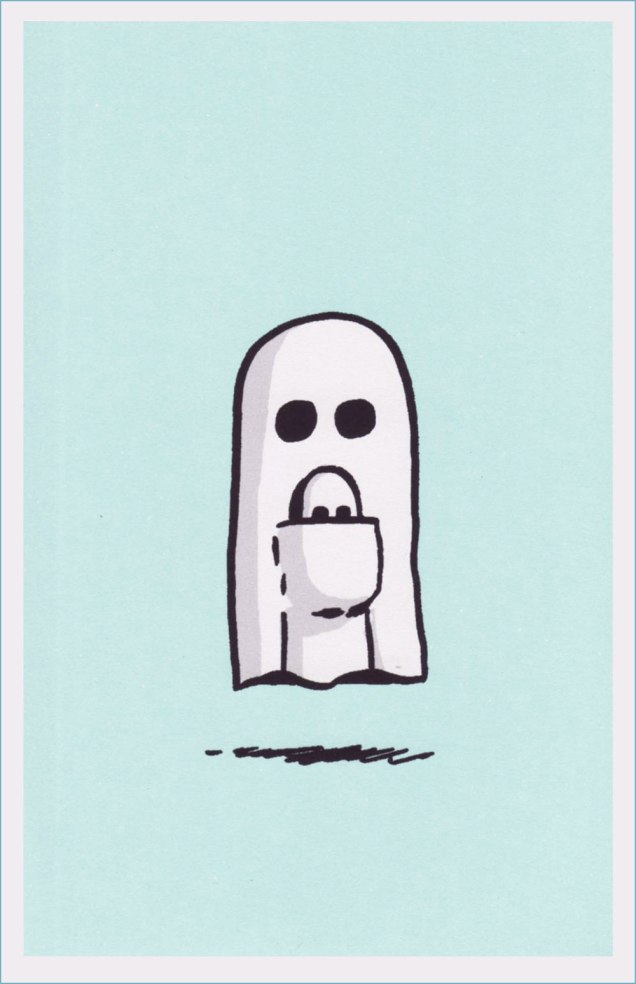
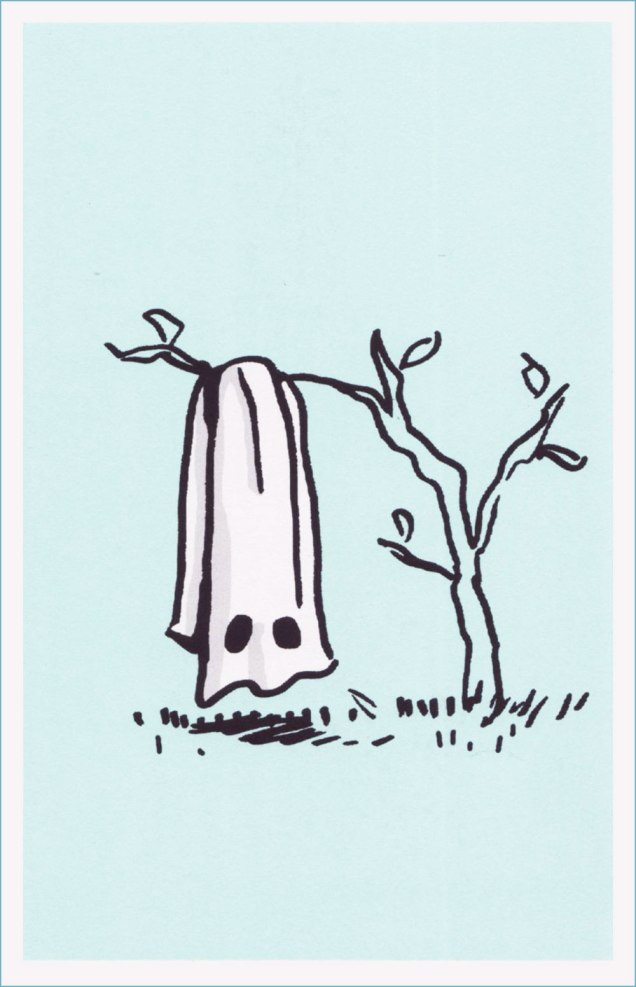
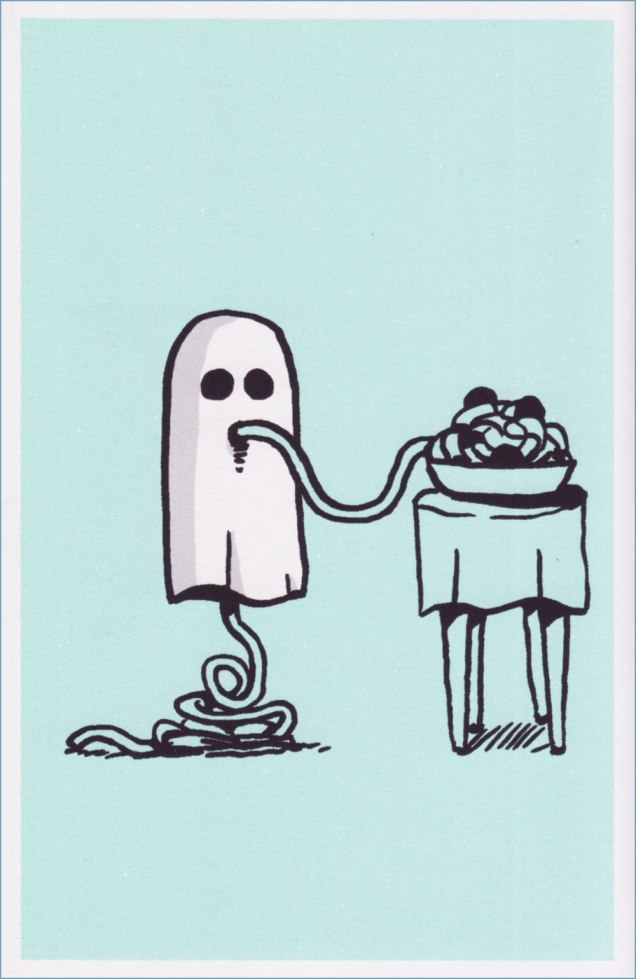
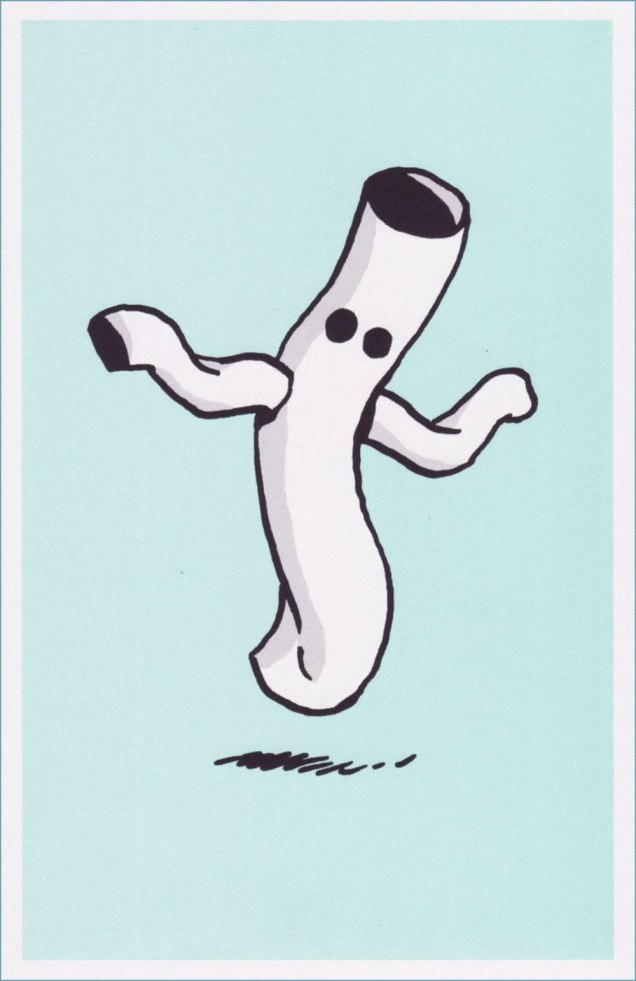
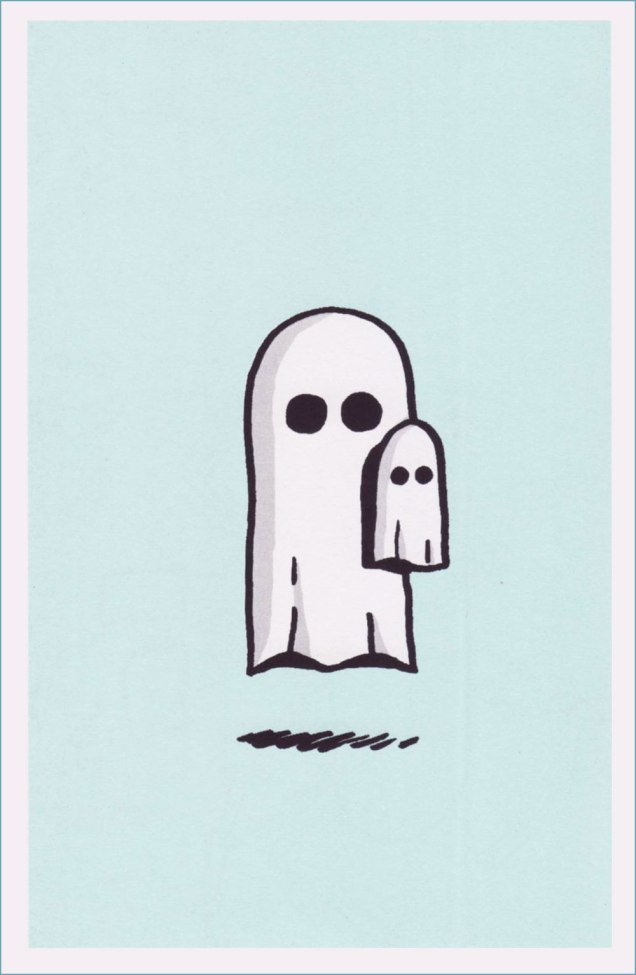
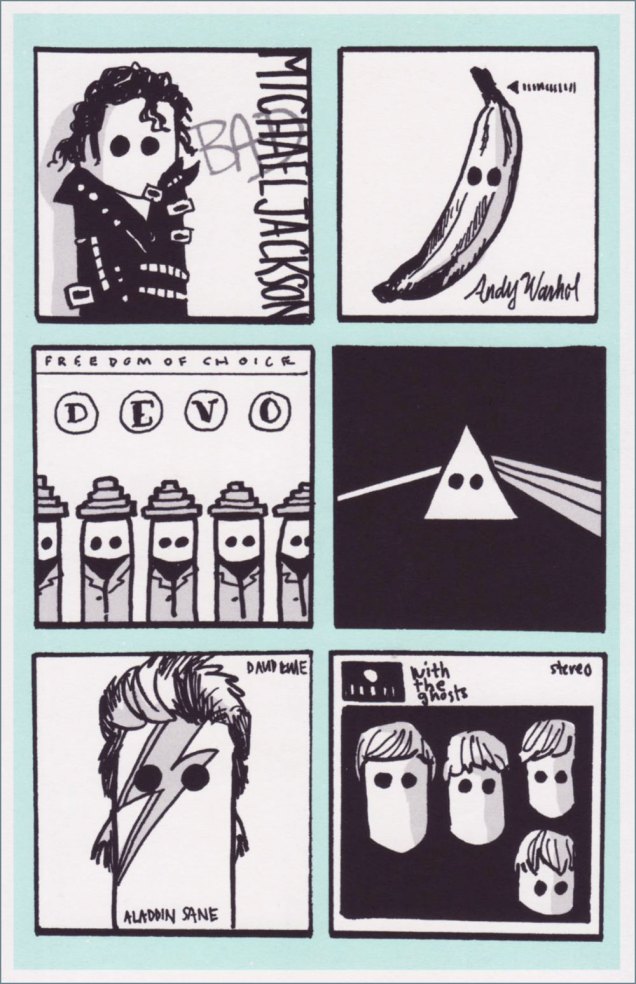
When I was once again cornered into producing a Hallowe’en-adjacent post, I naturally opted for ghosts as a topic, probably my second favourite mainstay of the season (the first being black cats, naturally). I received 100 Ghosts: A Gallery of Harmless Haunts as a gift sometime last year, and this cute little book was just biding its time until now.
“Doogie Horner” is a heck of a name, so you won’t be too surprised to find out that the author of all these ghosts is a comedian on top of being an illustrator/cartoonist. Go check his Instagram account here.
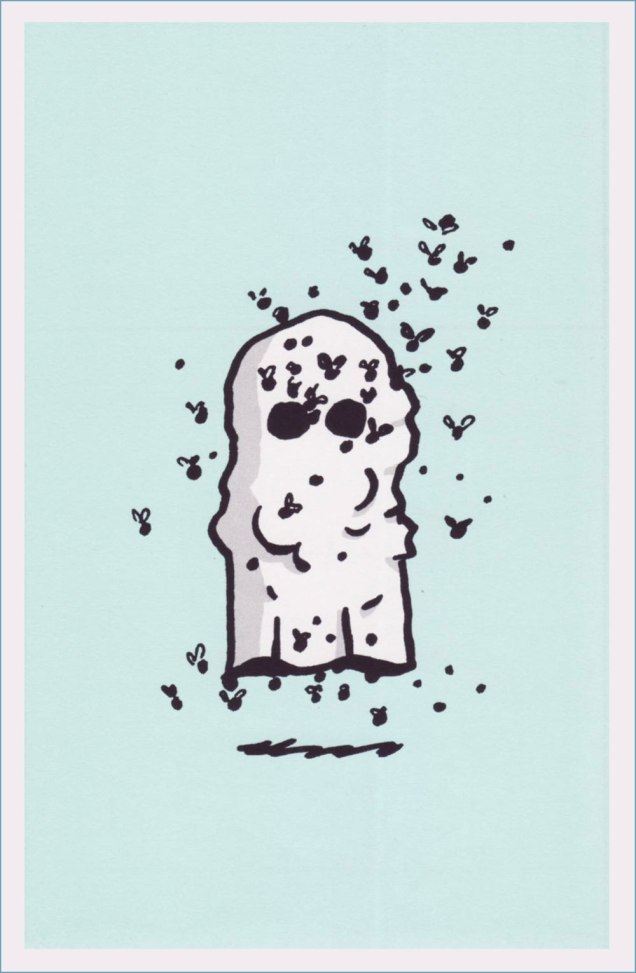
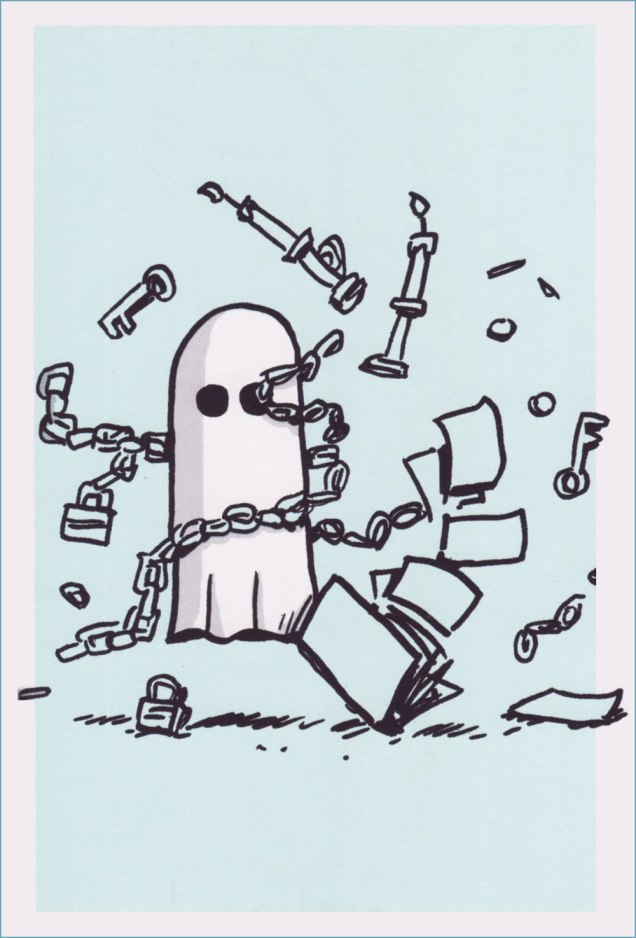
I won’t include the captions under each image so you can try guessing what kind of ghost is pictured — answers are at the bottom of this post!
Answers, as promised: clumsy ghost, ghost full of bees, genie ghost, nudist ghost, llama ghost, marsupial ghost, ghost eating spaghetti, used car lot ghost, and last but not least, ventriloquist ghost. If you guessed them all, I owe you a ghost cookie (which is either a cookie shaped like a ghost, or one that’s actually the lingering memory of a cookie eaten last year).
Here we are back in October already. I’m afraid there won’t be a full Hallowe’en Countdown this year. However, as this remains — no controversy there — our favourite period of the year, we’ll still be indulging our undying passion for all things moody, creepy and spooky.
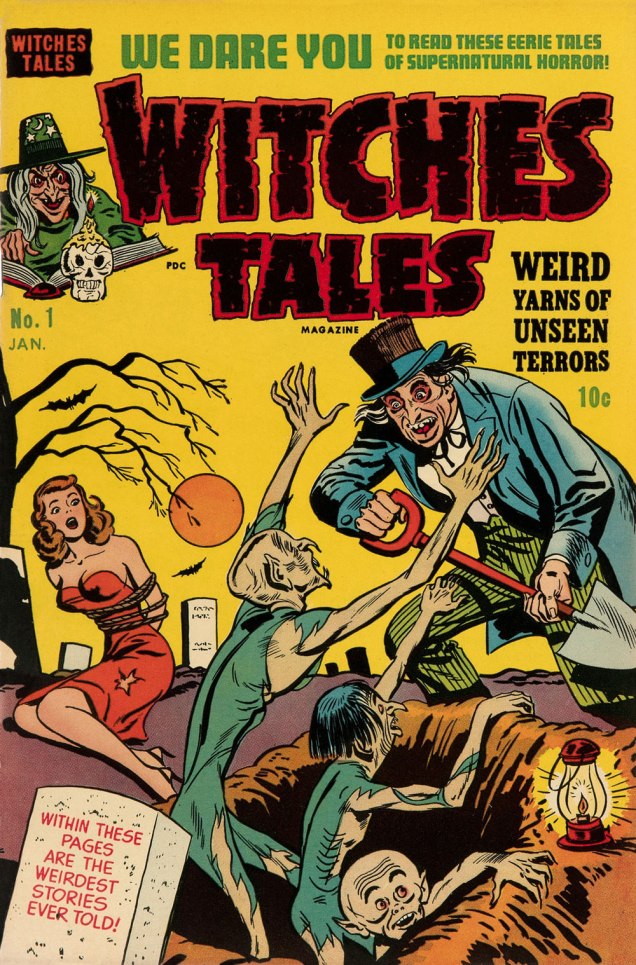
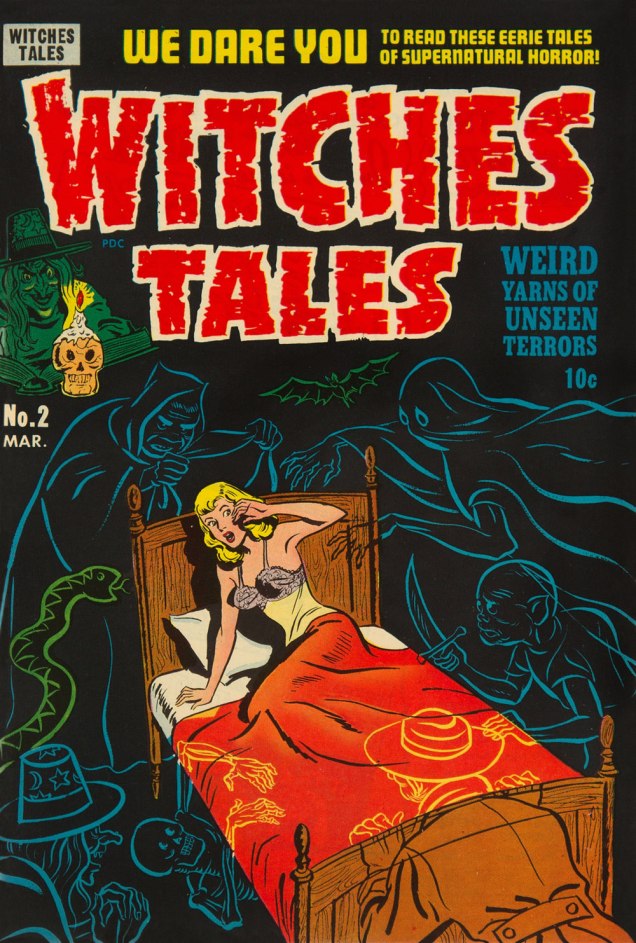
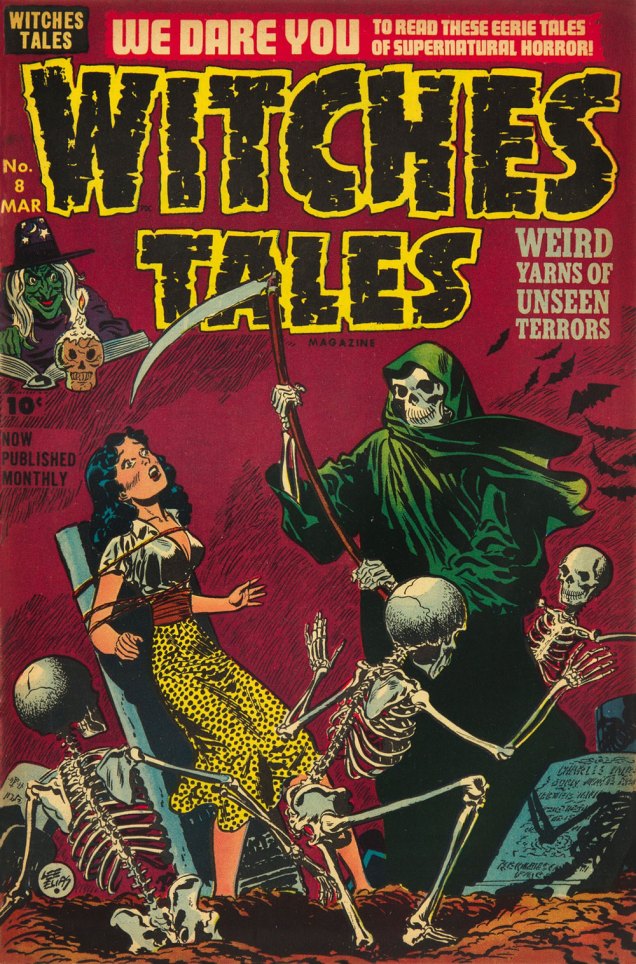
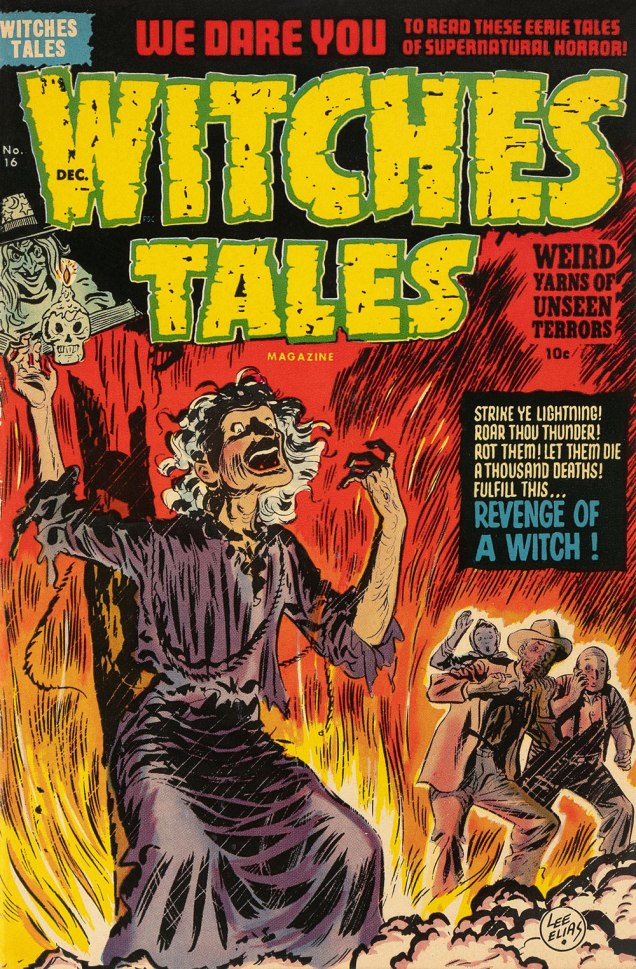
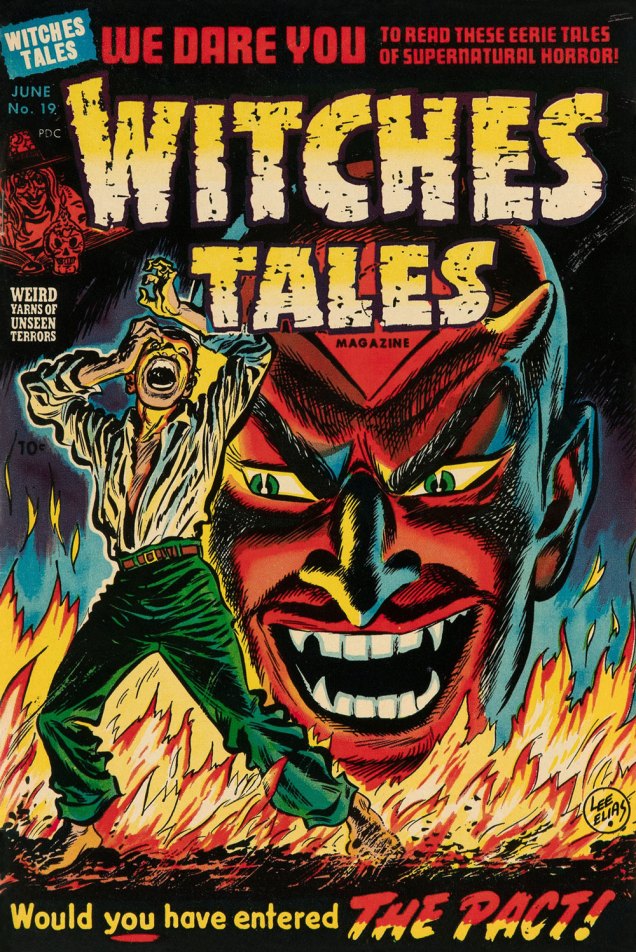
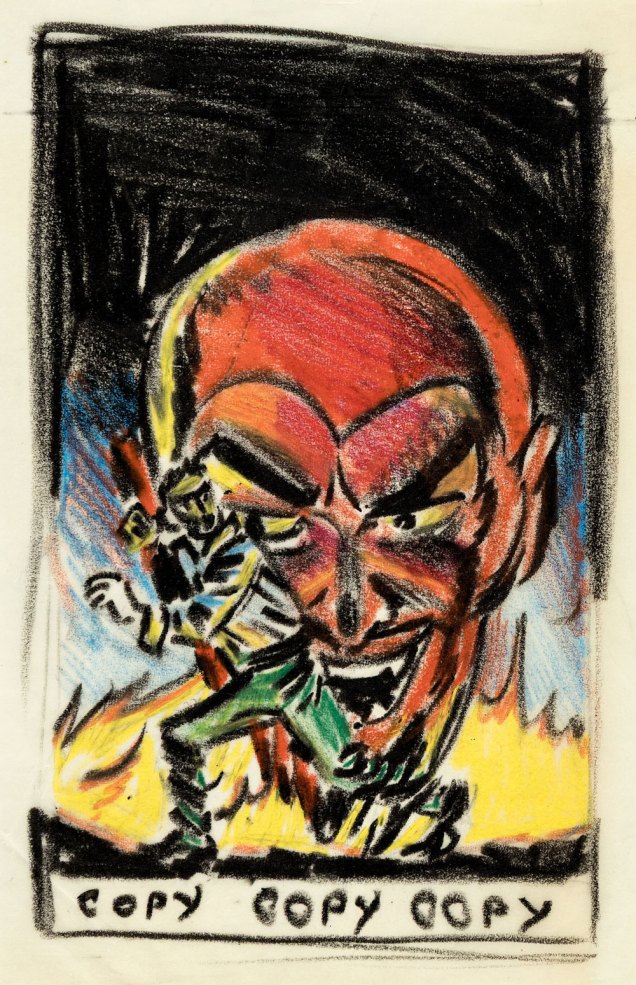
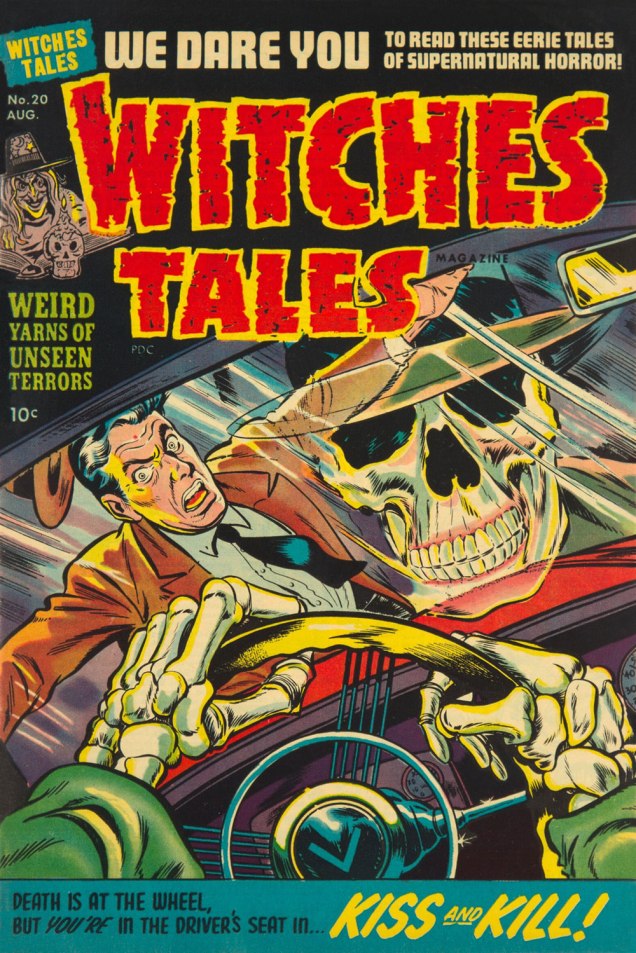
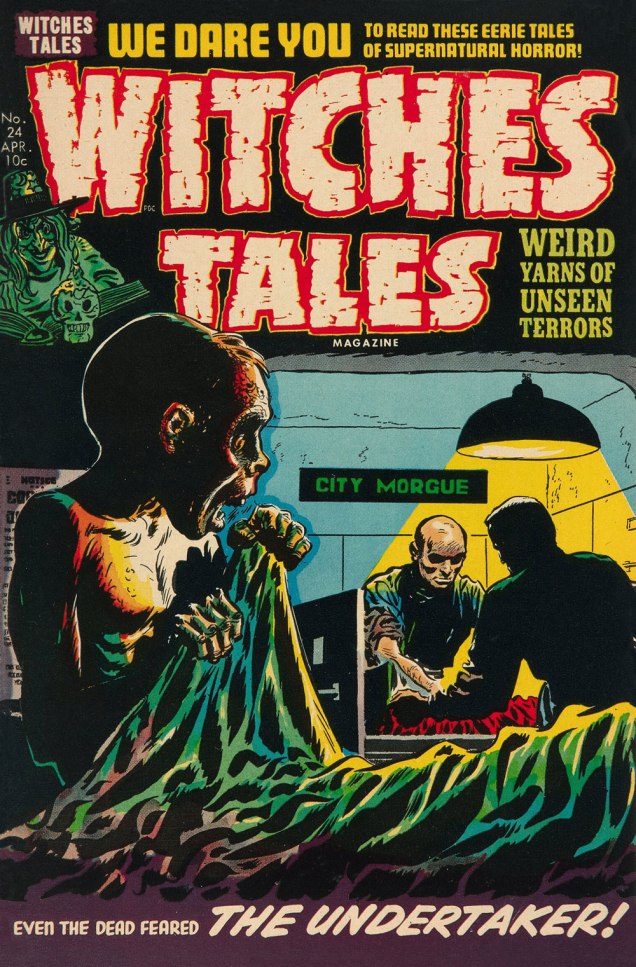
For my opening salvo, I’ve chosen to spotlight the striking cover art of a particular horror title of comics’ Golden Age, namely Harvey’s Witches’ Tales (28 issues, 1951-1954).
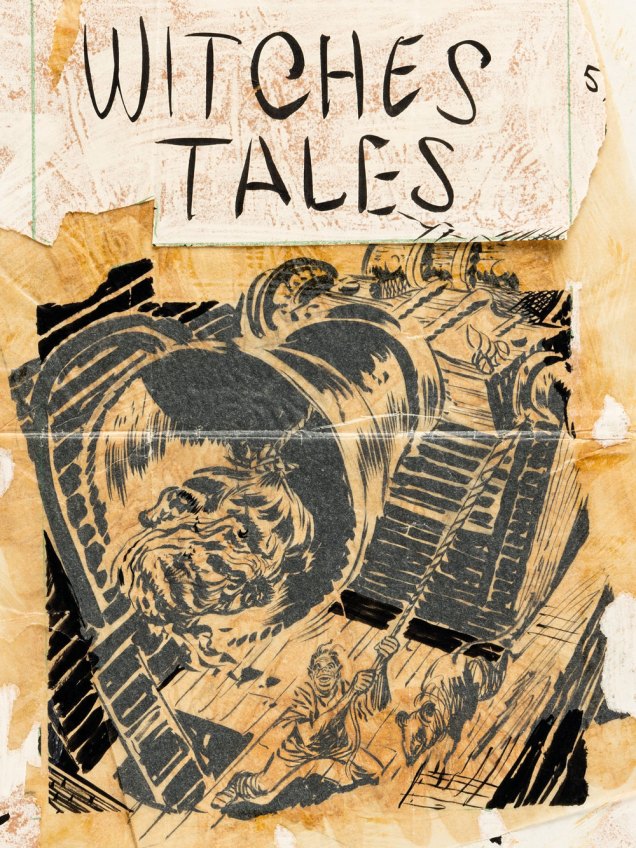
This is Witches’ Tales no. 1 (January 1951, Harvey). Cover by Al Avison. Read this issue here!This is Witches’ Tales no. 2 (March 1951, Harvey). Cover by Al Avison. Read this issue here!This is Witches’ Tales no. 8 (March 1952, Harvey). Cover by Lee Elias. Read this issue here!This is Witches’ Tales no. 16 (December 1952, Harvey). Cover by Lee Elias. Read this issue here!This is Witches’ Tales no. 19 (June 1953, Harvey). Cover by Lee Elias. Read this issue here!Here we have the miraculously surviving layout sketch by MVP art director Warren Kremer, who designed each of these dark gems, and indeed thousands more, for Harvey Comics. Since it’s preferable to show, not merely tell, here’s a nice brace of them.This is Witches’ Tales no. 20 (August 1953, Harvey). Cover by Bob Powell, né Stanley Robert Pawlowski. Read this issue here!
I now skip over two of my very favourite covers in the series, nos. 21 and 22, having featured them in an earlier post. Do check them out!
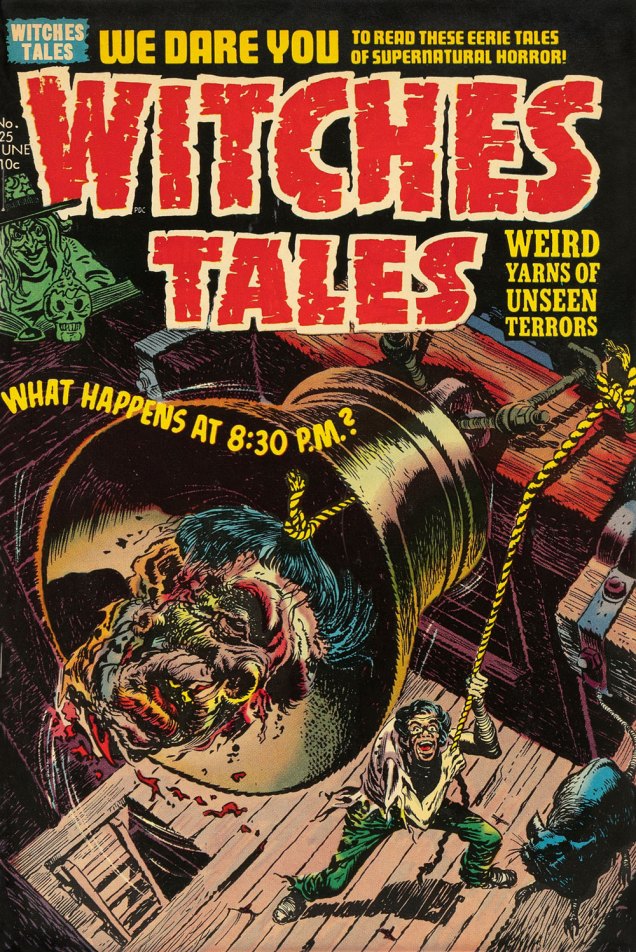
This is Witches’ Tales no. 24 (April 1954, Harvey). Cover by Elias. Read this issue here!This is Witches’ Tales no. 25 (June 1954, Harvey). Cover by Howard Nostrand (he always comes to mind when I take the subway in Brooklyn), doing his best Jack Davis impression. Read the issue here, and while you’re at it, Bhob Stewart‘s insightful article about Nostrand and his œuvre.Another surviving layout by the estimable Mr. Kremer.
As far as I’m aware, Harvey horror is renowned for exactly two classic stories: one of them is the innovative Bob Powell tour de force Colorama, originally published in Black Cat Comics no. 45, (August 1953), and widely reprinted since. Read it here, and check out the excellent Kremer-Nostrand cover it bears. And the other? Why, it’s WT no. 25’s cover story, actually entitled What’s Happening at — 8:30 P.M... and having nothing to do with the striking (sorry!) situation depicted above, though also illustrated by Mr. Nostrand.
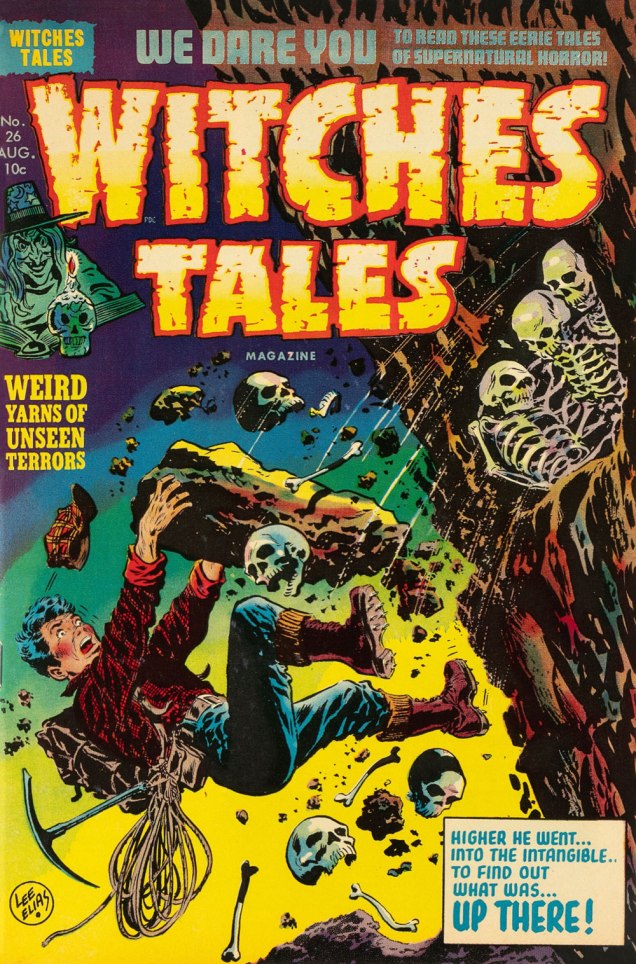
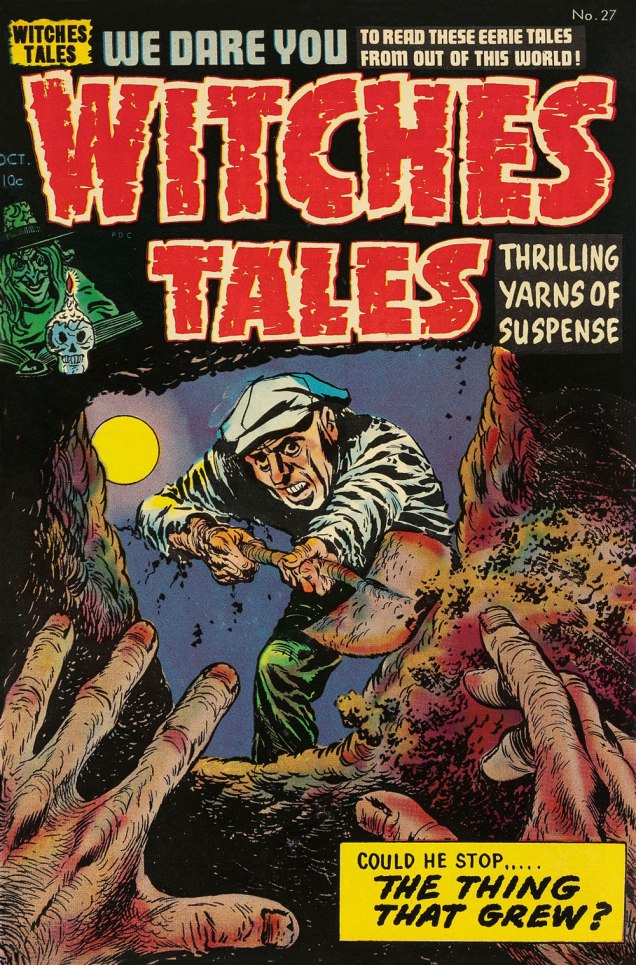
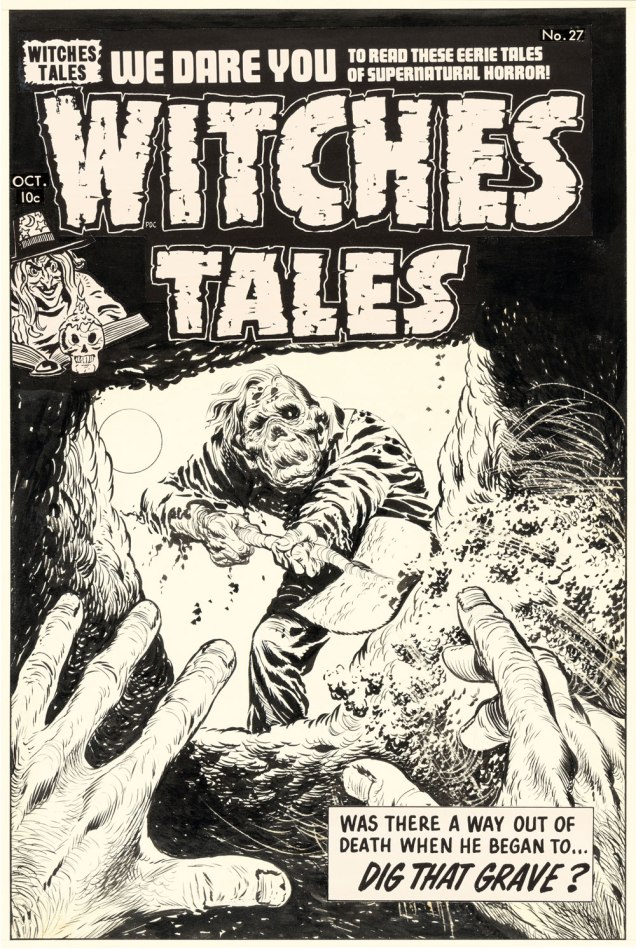
This is Witches’ Tales no. 26 (August 1954, Harvey). Cover by Lee Elias. Read this issue here!This is Witches’ Tales no. 27 (October 1954, Harvey), another Elias cover. Read this issue here! It’s a competent but disappointing image, and it turned out that there was a good reason for its relative restraint.… and that reason was self-censorship. The writing was on the wall, the dreaded Comics Code was about to come into force, and the Harvey brass — devoid of anything to match EC honcho Bill Gaines‘ brass balls — had opted, to ensure its survival, to preemptively play the squeaky-clean card for the duration. Gone is the soon-to-be verboten term ‘horror’, swapped with the gentler ‘suspense’. The censored cover aside, the issue consisted of timorous reprints from the title’s milder days. No story entitled ‘Dig That Grave’ appears to have been published by Harvey, though it would have been nice to recycle the script with, say, Richie Rich buried alive… which would explain how he became Casper.
It’s interesting, I think, to see how the tone of these covers reflected the industry’s moods: the earliest ones are light and goofy, then things get darker and darker, reaching a zenith of sorts with issue 25’s notoriously gruesome scenario. Then, under the cloud of censorship and public opprobrium, they threw up their hands and eased off the accelerator.
-RG
P.S. While I’m resting on my laurels out here, should you crave more, always more, here’s a most convenient stack of links leading to the only slightly mouldy archive of our past Hallowe’en-themed efforts. Those of you yet blessed with a functioning attention span should find plenty therein to while away the long autumn nights :