Here we are back in October already. I’m afraid there won’t be a full Hallowe’en Countdown this year. However, as this remains — no controversy there — our favourite period of the year, we’ll still be indulging our undying passion for all things moody, creepy and spooky.
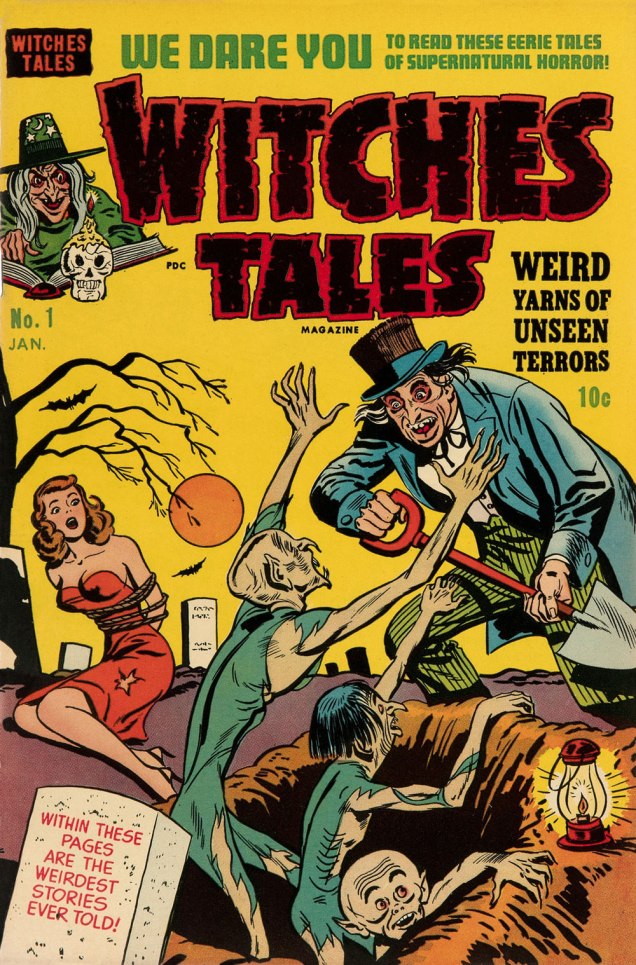
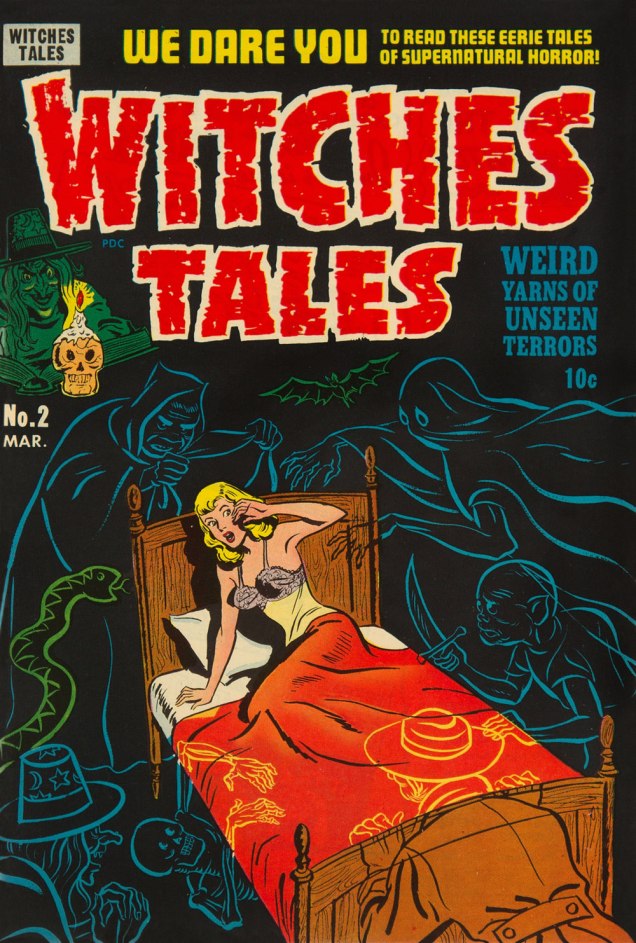
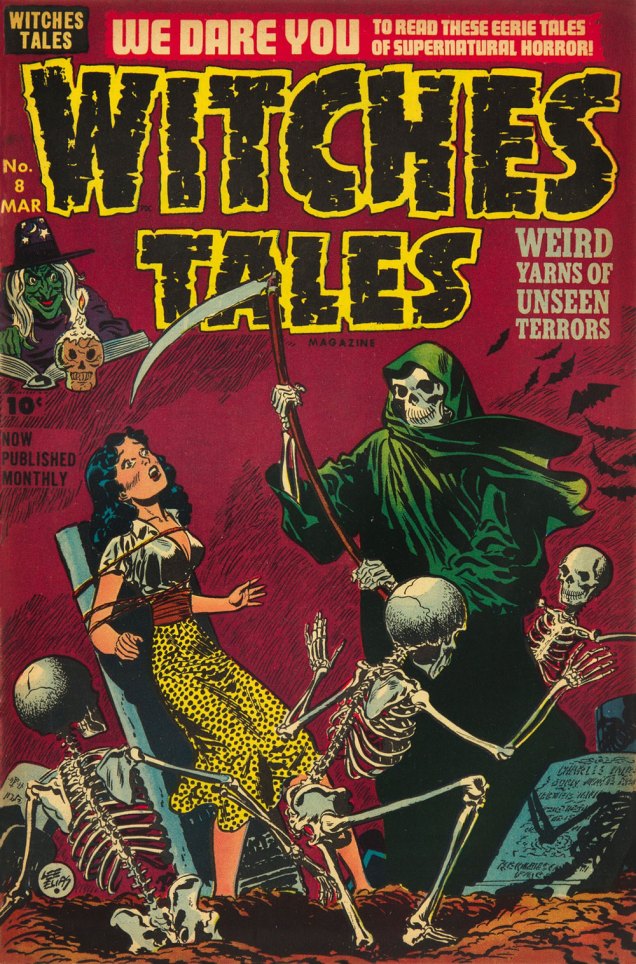
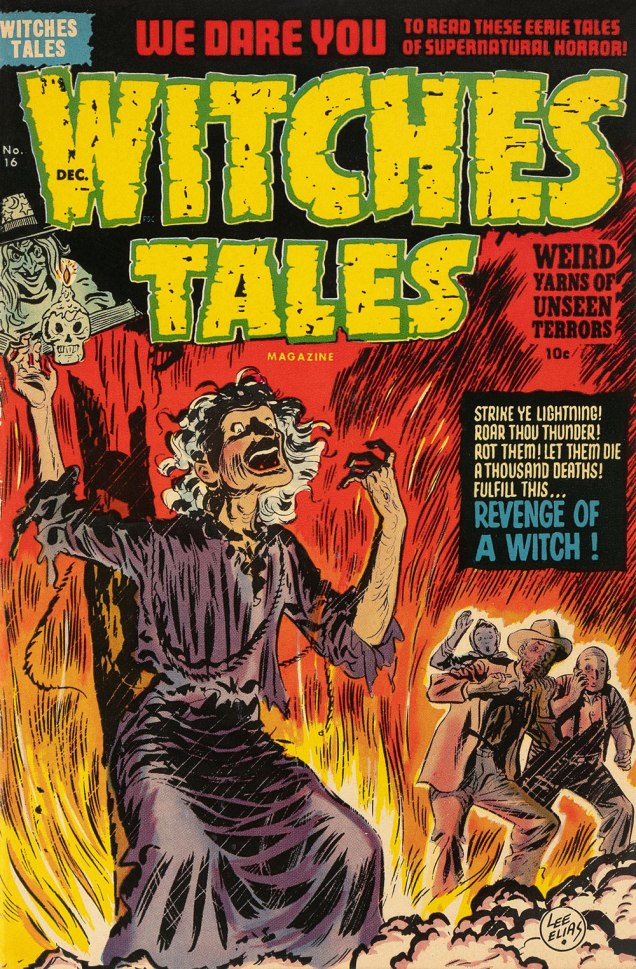
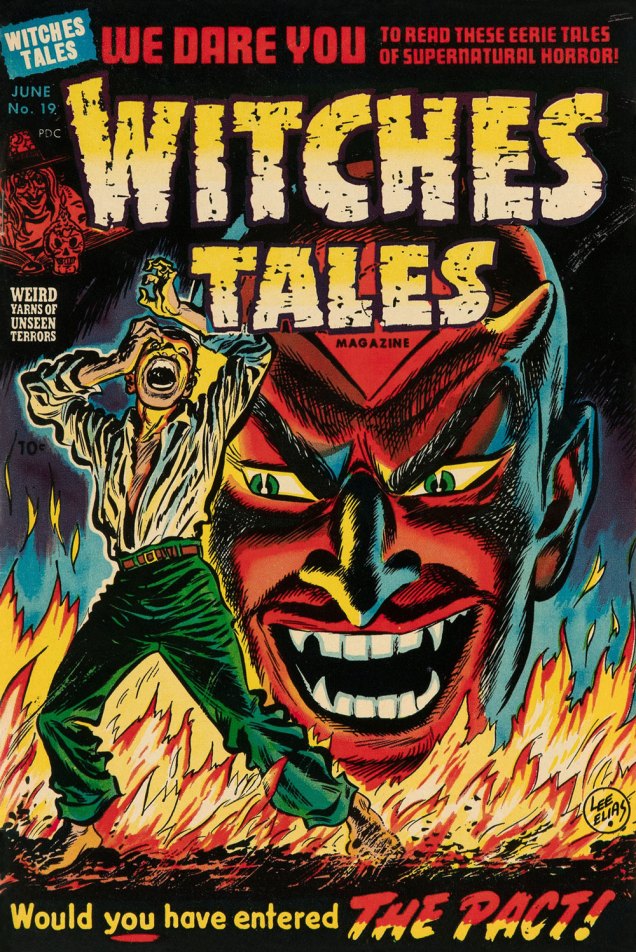
For my opening salvo, I’ve chosen to spotlight the striking cover art of a particular horror title of comics’ Golden Age, namely Harvey’s Witches’ Tales (28 issues, 1951-1954).
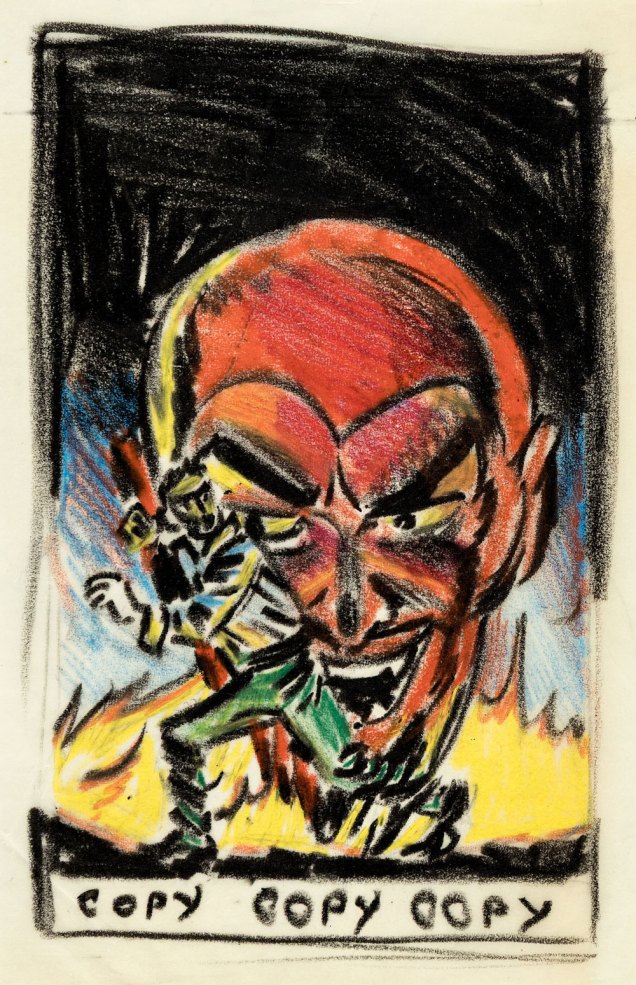
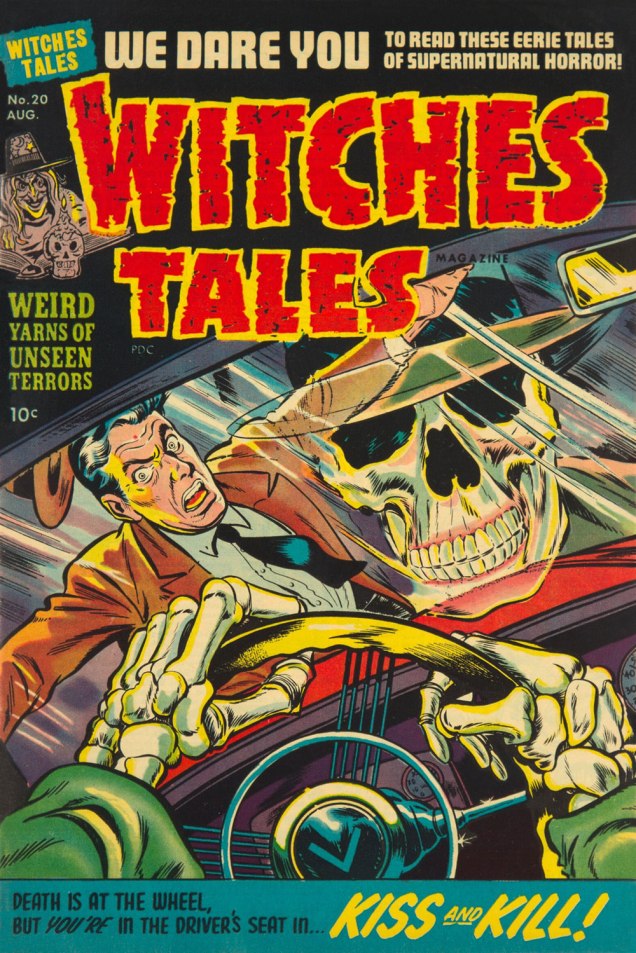
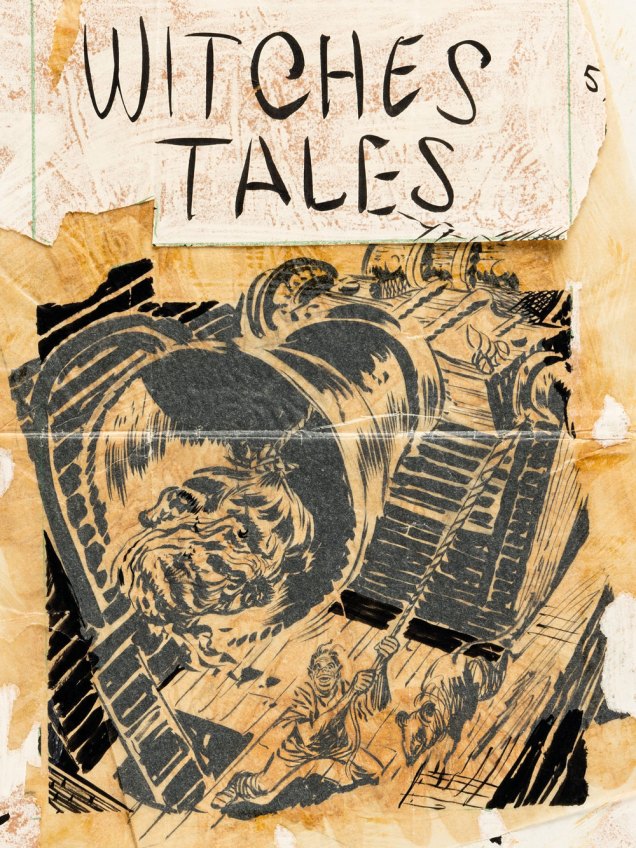
This is Witches’ Tales no. 1 (January 1951, Harvey). Cover by Al Avison. Read this issue here!This is Witches’ Tales no. 2 (March 1951, Harvey). Cover by Al Avison. Read this issue here!This is Witches’ Tales no. 8 (March 1952, Harvey). Cover by Lee Elias. Read this issue here!This is Witches’ Tales no. 16 (December 1952, Harvey). Cover by Lee Elias. Read this issue here!This is Witches’ Tales no. 19 (June 1953, Harvey). Cover by Lee Elias. Read this issue here!Here we have the miraculously surviving layout sketch by MVP art director Warren Kremer, who designed each of these dark gems, and indeed thousands more, for Harvey Comics. Since it’s preferable to show, not merely tell, here’s a nice brace of them.This is Witches’ Tales no. 20 (August 1953, Harvey). Cover by Bob Powell, né Stanley Robert Pawlowski. Read this issue here!
I now skip over two of my very favourite covers in the series, nos. 21 and 22, having featured them in an earlier post. Do check them out!
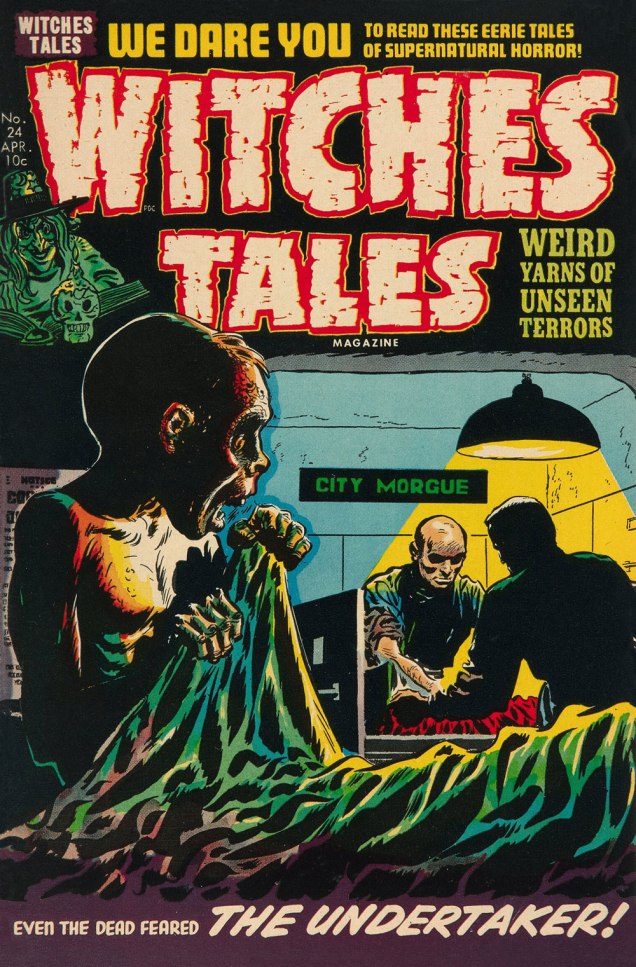
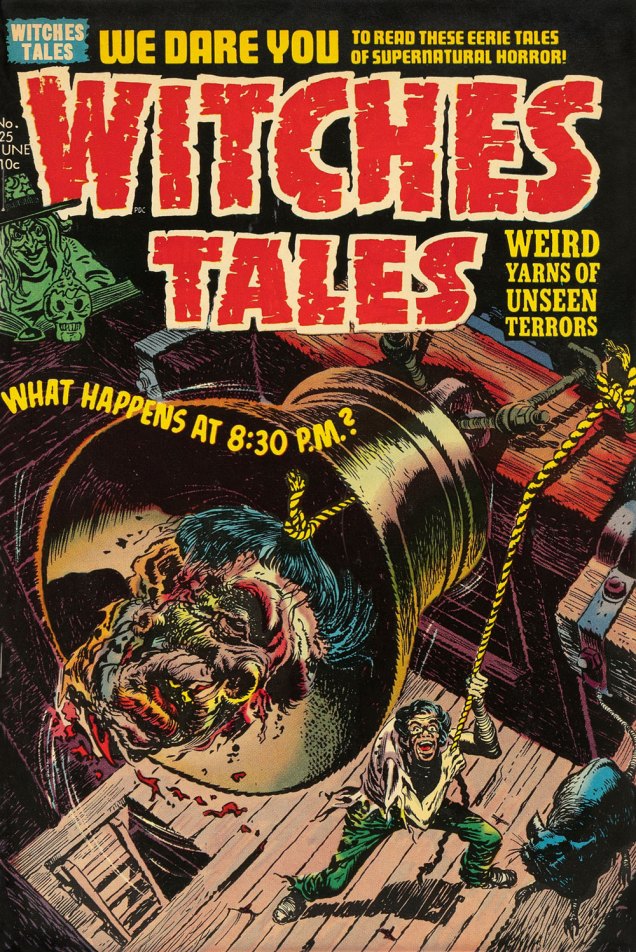
This is Witches’ Tales no. 24 (April 1954, Harvey). Cover by Elias. Read this issue here!This is Witches’ Tales no. 25 (June 1954, Harvey). Cover by Howard Nostrand (he always comes to mind when I take the subway in Brooklyn), doing his best Jack Davis impression. Read the issue here, and while you’re at it, Bhob Stewart‘s insightful article about Nostrand and his œuvre.Another surviving layout by the estimable Mr. Kremer.
As far as I’m aware, Harvey horror is renowned for exactly two classic stories: one of them is the innovative Bob Powell tour de force Colorama, originally published in Black Cat Comics no. 45, (August 1953), and widely reprinted since. Read it here, and check out the excellent Kremer-Nostrand cover it bears. And the other? Why, it’s WT no. 25’s cover story, actually entitled What’s Happening at — 8:30 P.M... and having nothing to do with the striking (sorry!) situation depicted above, though also illustrated by Mr. Nostrand.
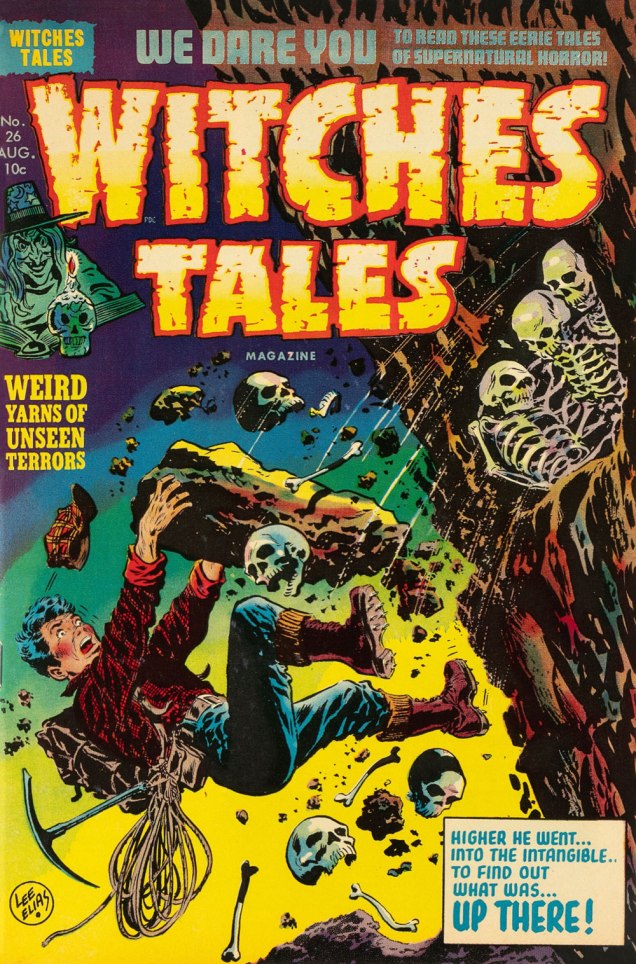
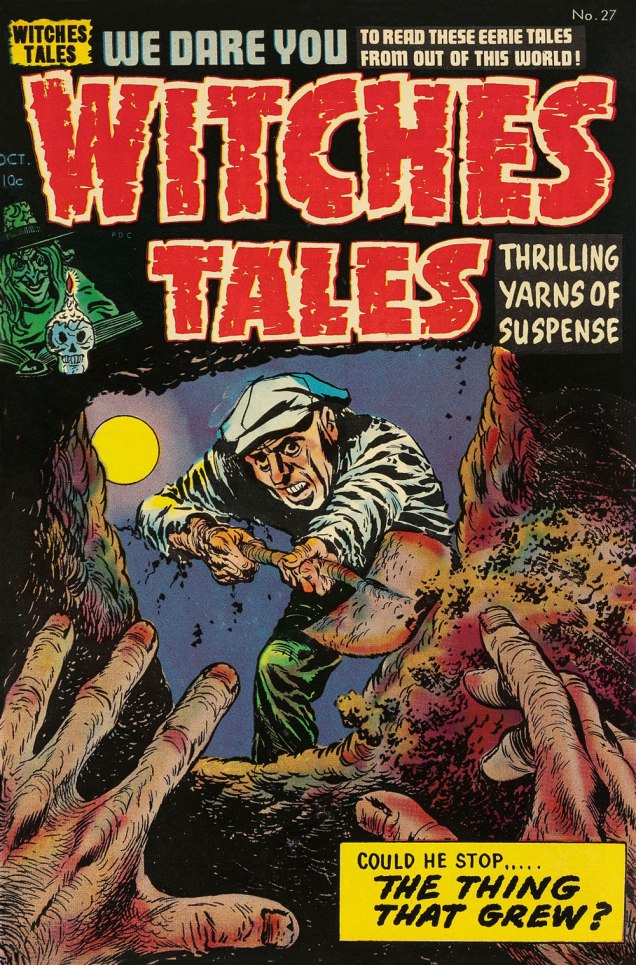
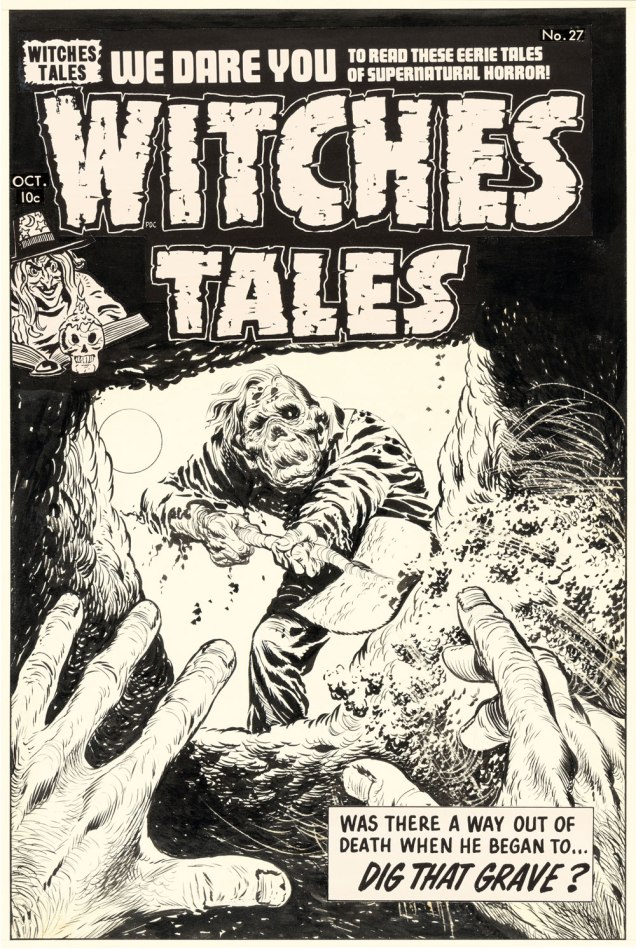
This is Witches’ Tales no. 26 (August 1954, Harvey). Cover by Lee Elias. Read this issue here!This is Witches’ Tales no. 27 (October 1954, Harvey), another Elias cover. Read this issue here! It’s a competent but disappointing image, and it turned out that there was a good reason for its relative restraint.… and that reason was self-censorship. The writing was on the wall, the dreaded Comics Code was about to come into force, and the Harvey brass — devoid of anything to match EC honcho Bill Gaines‘ brass balls — had opted, to ensure its survival, to preemptively play the squeaky-clean card for the duration. Gone is the soon-to-be verboten term ‘horror’, swapped with the gentler ‘suspense’. The censored cover aside, the issue consisted of timorous reprints from the title’s milder days. No story entitled ‘Dig That Grave’ appears to have been published by Harvey, though it would have been nice to recycle the script with, say, Richie Rich buried alive… which would explain how he became Casper.
It’s interesting, I think, to see how the tone of these covers reflected the industry’s moods: the earliest ones are light and goofy, then things get darker and darker, reaching a zenith of sorts with issue 25’s notoriously gruesome scenario. Then, under the cloud of censorship and public opprobrium, they threw up their hands and eased off the accelerator.
-RG
P.S. While I’m resting on my laurels out here, should you crave more, always more, here’s a most convenient stack of links leading to the only slightly mouldy archive of our past Hallowe’en-themed efforts. Those of you yet blessed with a functioning attention span should find plenty therein to while away the long autumn nights :
I can’t help returning to Warren Kremer (today’s his birthday, not coincidentally; he was born on June 26, 1921, passing away on July 23, 2003), first because I adore his work, and second because I quite concur with Jon B. Cooke‘s bold but sensible assertion that Kremer…
« … is an extraordinarily talented artist. A master of design, character nuance and just plain exquisite drawing ability, he is perhaps the most underrated – or even worse, ignored – comic book creator of significance in the industry’s history. »
And why is that? A combination of working outside the superhero genre and of doing it, uncredited and for decades, on the ole Harvey Family Plantation.
This blog’sIt’s a Harvey World category might as well be called It’s a Kremer World, since he’s pretty much had the spotlight to himself.
But Kremer’s comics career precedes his arrival at Harvey; after working for the pulps in the late 1930s, he entered the comic book field, and a sizeable chunk of his early work was done for Ace Magazines (1940-56), and this is the area we’ll be exploring today.
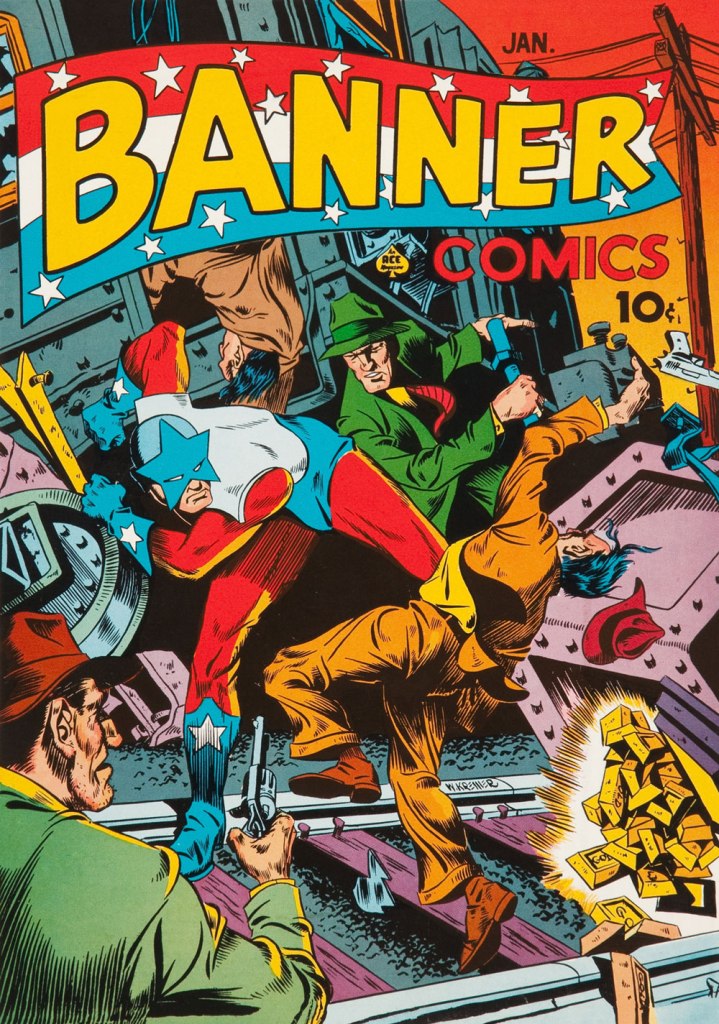
A rare foray into super-heroics, this is Banner Comics no. 5 (Jan. 1942, Ace); the guy with the star mask is ‘Captain Courageous’.
This is Super-Mystery Comics vol. 5 no. 6 (June 1946, Ace), featuring Mr. Risk in Riddle of the Revolutionary Portrait. Read it here! Kremer was signing as ‘Doc’ at the time.
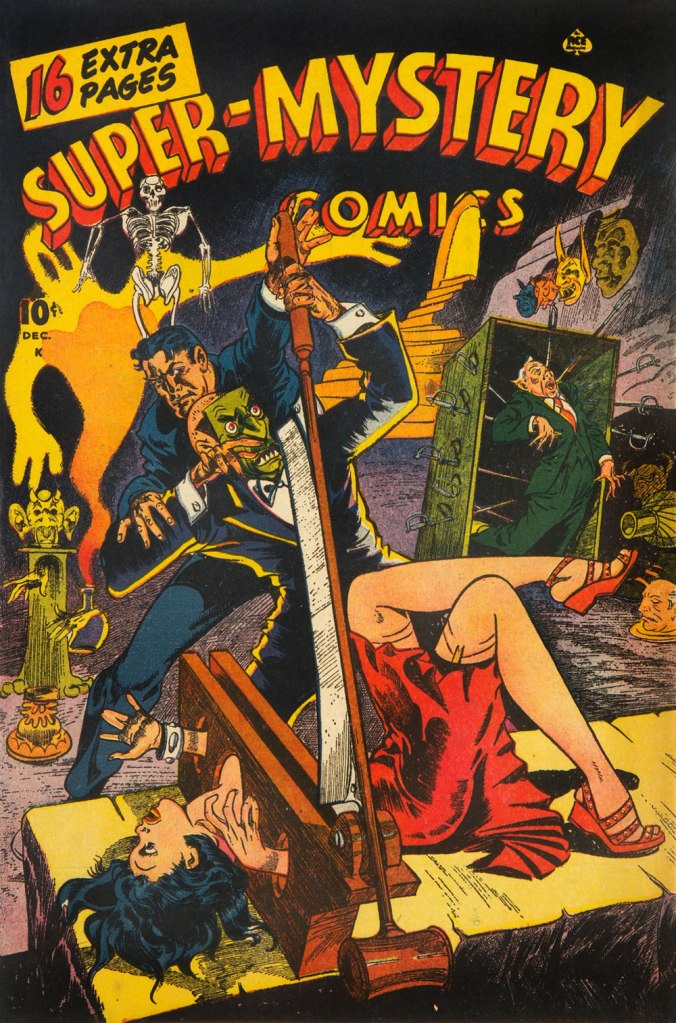
Dig all that detail! This is Super-Mystery Comics vol. 6 no. 3 (Dec. 1946, Ace), featuring Bert and Sue in The Adventure of the Murdered Medium; read it here!
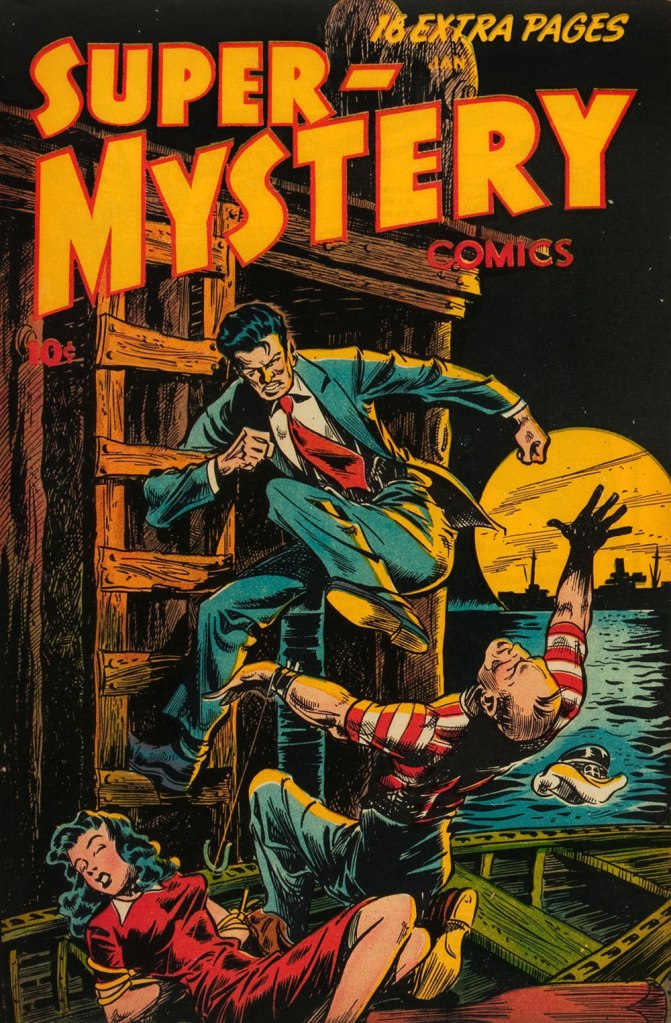
Boasting a snazzy new logo, this is Super-Mystery Comics vol. 7 no. 3 (Jan. 1948, Ace), featuring Bert and Sue (Ace’s Nick and Nora?) in Hell Bent for Election!. Read it here!
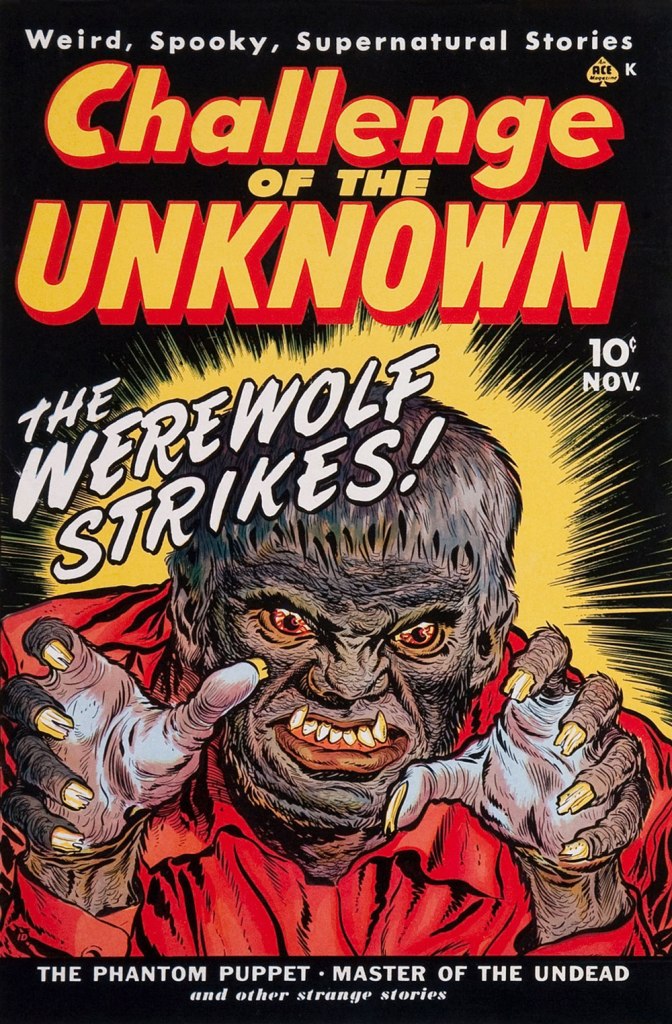
Eight years before DC’s Challengers of the Unknown, Ace came up with Challenge of the Unknown… àchacun son tour. This is the first of its two-issue run, no. 6 — but of course! (Sept. 1950, Ace); pencils by Kremer, inks possibly by Al Avison. Read it here!
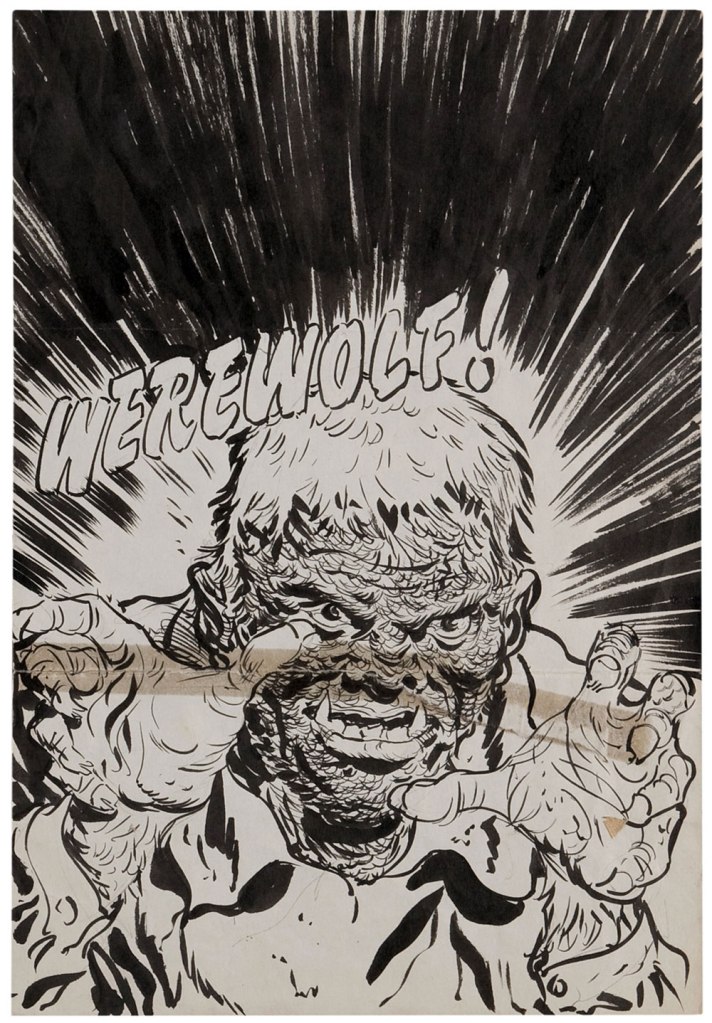
Three steps to a Werewolf. Kremer’s rough cover design…
The printer’s cover proof…
… and final publication switcheroo! One might surmise that someone got cold feet about CotU. This is The Beyond no. 1 (Nov. 1950, Ace). Read it here!
This is The Beyond no. 2 (Jan. 1951, Ace). A solid demonstration of dramatic perspective.
Here’s Mr. Risk again, in the first and penultimate issue of his own series — no. 2 (Dec. 1950, Ace) featuring The Case of the Psychopathic Lady and The Case of the Jinxed Air Line — the next issue was number 7! Read this one here.
Again, all that beautifully-rendered detail. This is The Beyond no. 3 (Mar. 1951, Ace), featuring The Keeper of the Flames. Read it here (preferably by candlelight)!
One of the most rewarding things for the Kremer fan is that the man thoroughly documented his creative process. In other words, he saved a lot of his art, including sketches, notes and preliminaries.
And the final version, from The Beyond no. 30 (Jan. 1955, Ace). See how Kremer had it all worked out, down to the colouring? Amazing. Oh — and read it here!
Happy birthday, Mr. Kremer — wherever it is you may roam!
« Adults are just outdated children. » — Dr. Seuss
While some are of the opinion that children should be seen but not heard (and preferably not seen), others coo mindlessly over every mollycoddled tot. I think the truth lies somewhere in the middle, and today I’ll concentrate on courageous, plucky children who are not afraid of diving head first into adventure.
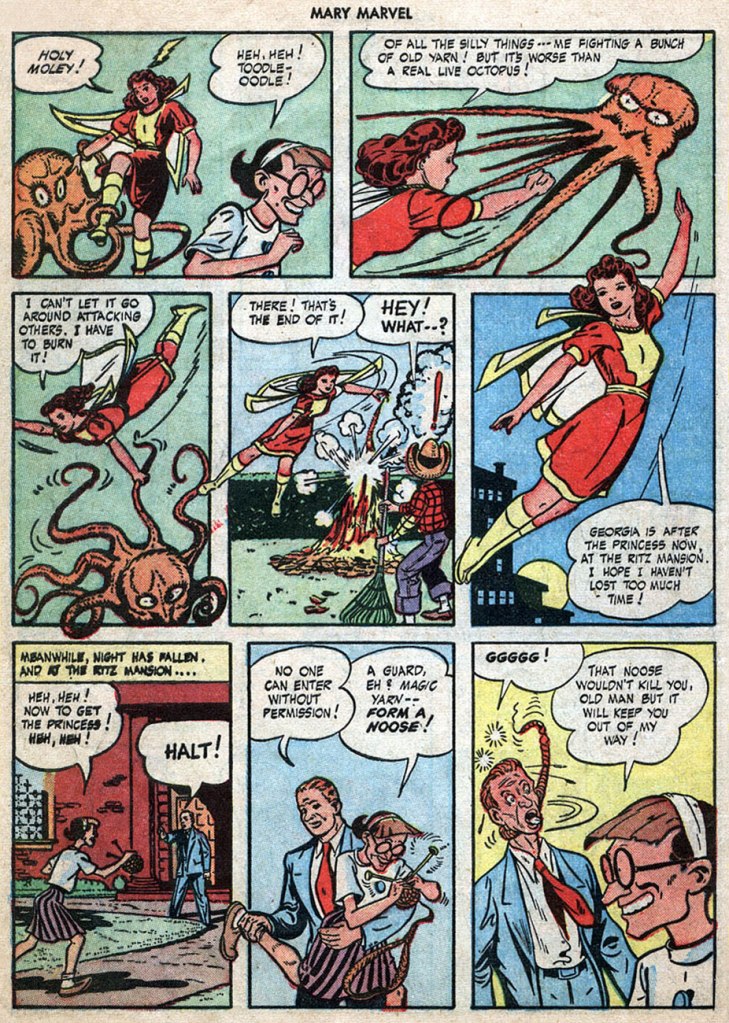
The Magic Yarn, published in Mary Marvel no. 2 (June 1946, Fawcett), was scripted by Otto Binder and drawn by Jack Binder. This immensely entertaining story about an old bat with dreams of world domination involves an octopus, some bondage (of course!), and lots of knitting. (Read it here)
Moving on to actual (rather than knitted) octopuses, here’s the original art from On the Bottom of the Sea, published in Little Max no. 16 (Harvey, April 1952). The story artist may be uncredited on GCD, but we know that it’s Al Avison 😉
The Little Wise Guys tangle with an ornery cephalopod. Giggles ensue! This is Daredevil Comics no. 111 (June 1954, Lev Gleason), with a cover is by Charles Biro. The cover story is Scarecrow’s Lucky Blunder, scripted by Charles Biro and illustrated by Ralph Mayo.
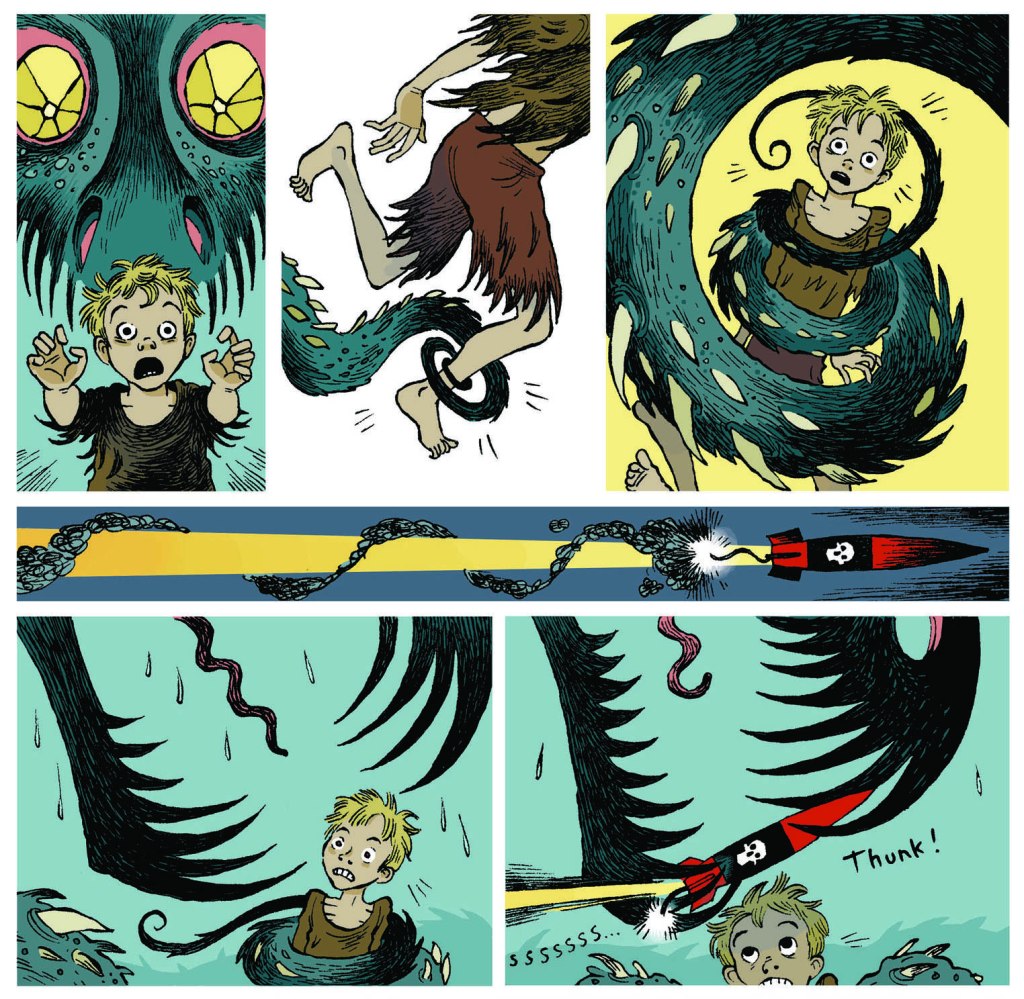
Finally, making an epic effort to wrench myself away from the tender embrace of the Golden Age, I’ll accelerate a little too much and end up in all the way in 2015. Here’s a page from Scarlett Hart: The Tentacles of Terror by Thomas Taylor and Marcus Sedgwick.