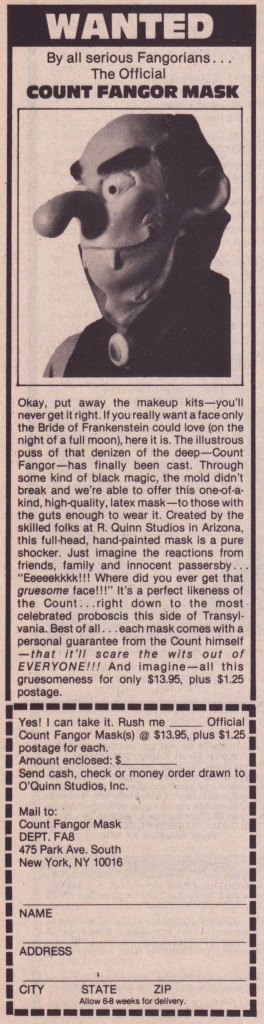
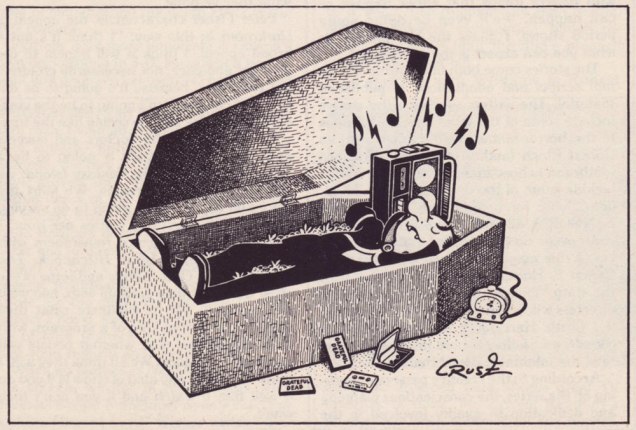
« It’s a perfect likeness of the Count… right down to the most celebrated proboscis this side of Transylvania. »
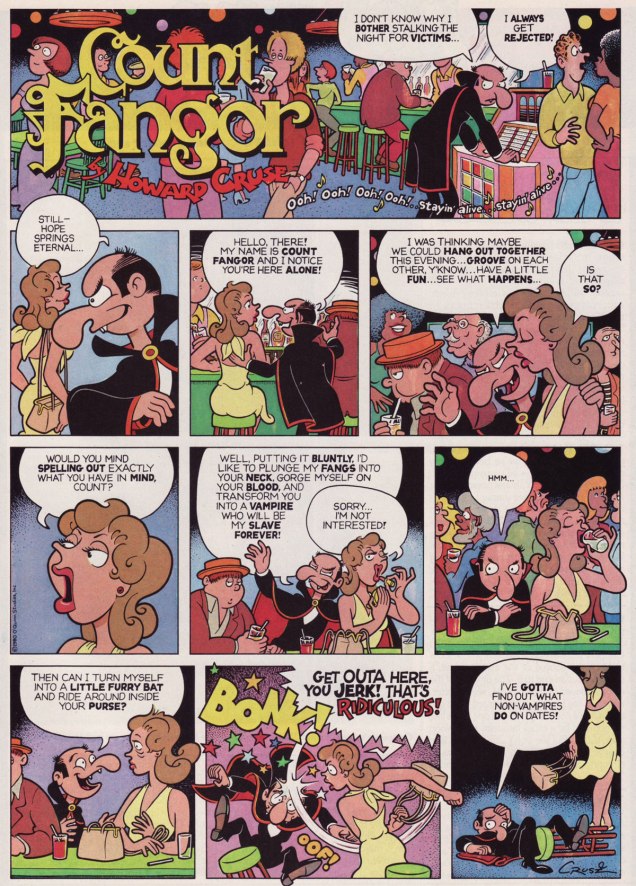
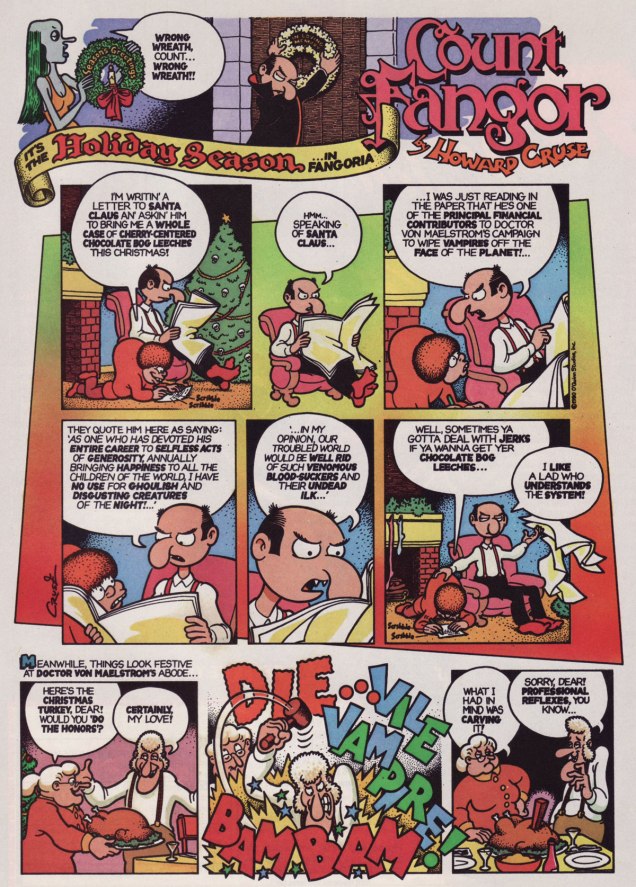
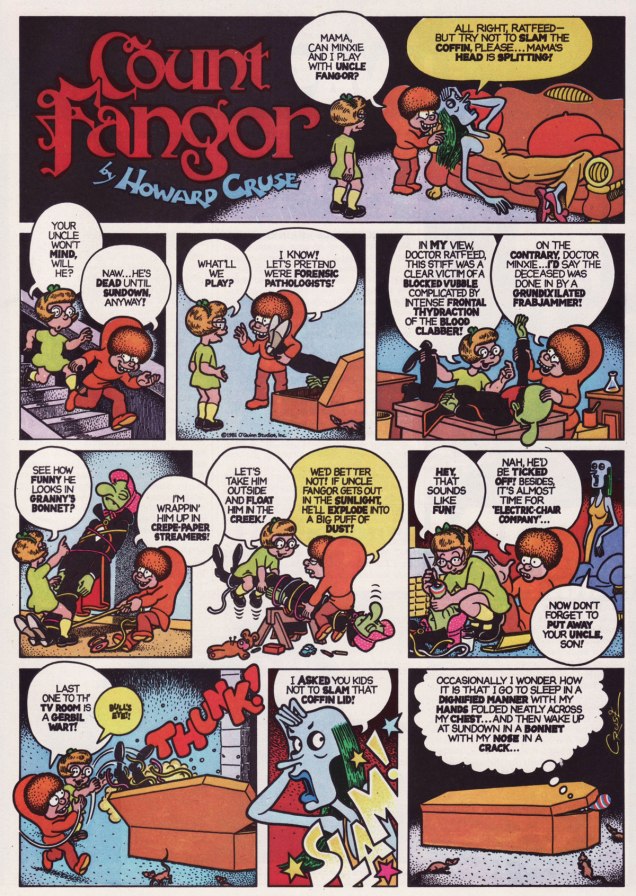
A few months back, while sorting some old magazines, I came across a stack of early issues of Fangoria. Therein, I rediscovered a strip I’d just about entirely forgotten: WOT favourite Howard Cruse‘s short-lived (as a strip, not a bloodsucker) Count Fangor. A fitting topic for a Hallowe’en post, I thought… and so it is!
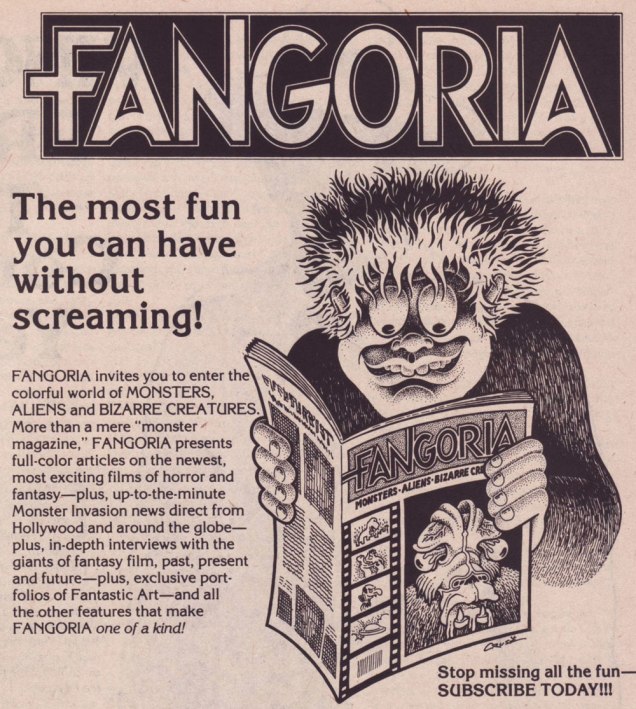
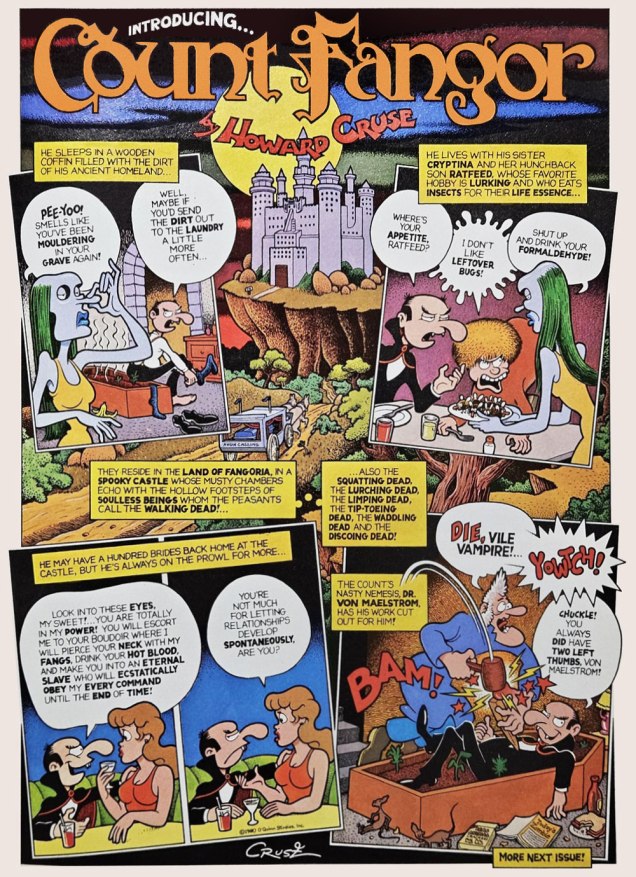
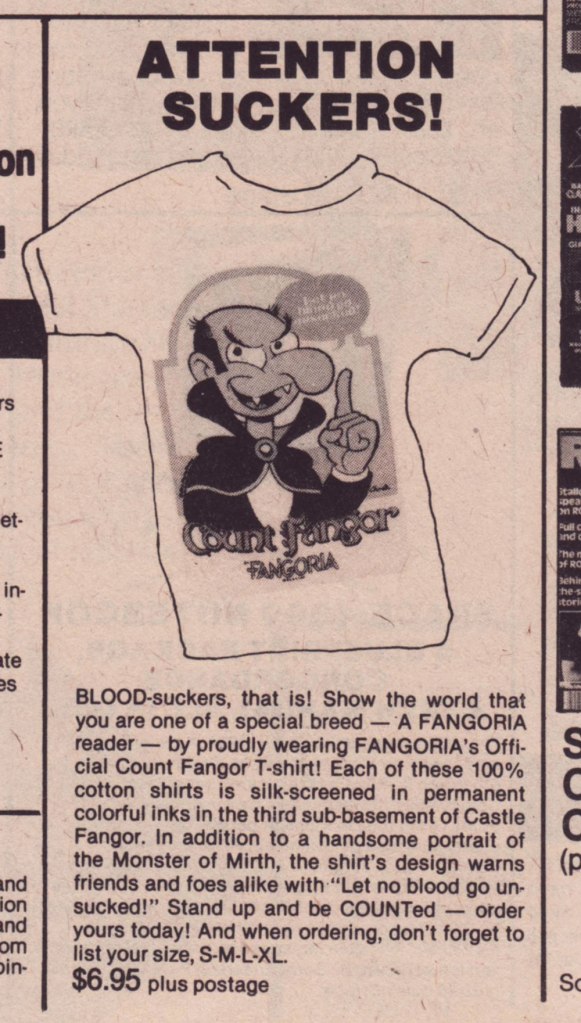
I haven’t seen issue one, but Howard Cruse was listed among Fangoria’s contributors from at least issue two. Truly a complete artist, Cruse provided lovely headings for various review columns in his distinctive lettering, as well as this subscription advert.The Count’s — and his family’s — introduction, from Fangoria no. 6 (June, 1980), reportedly the first issue of the magazine to turn a profit though, I hasten to say, not through the strip’s intercession.
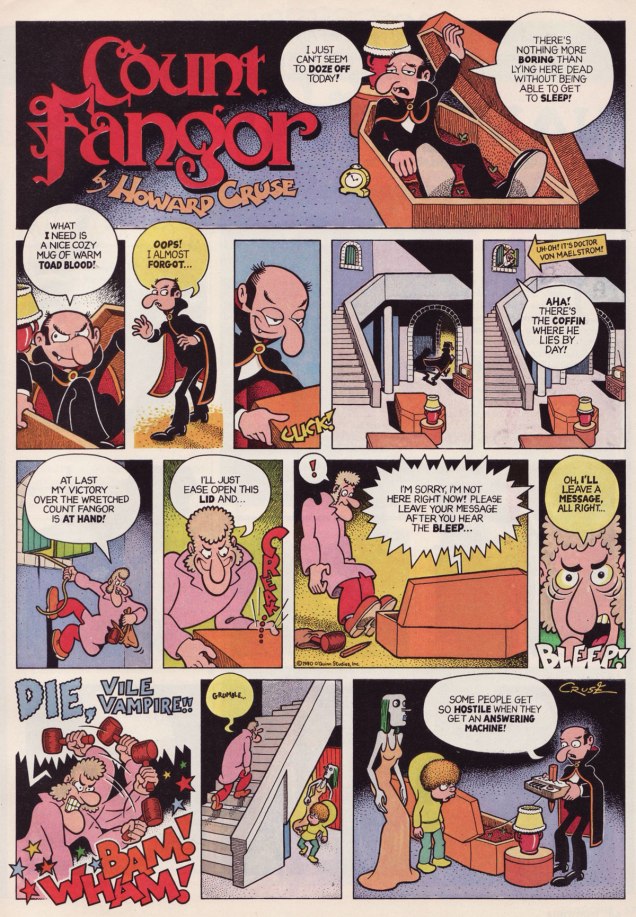
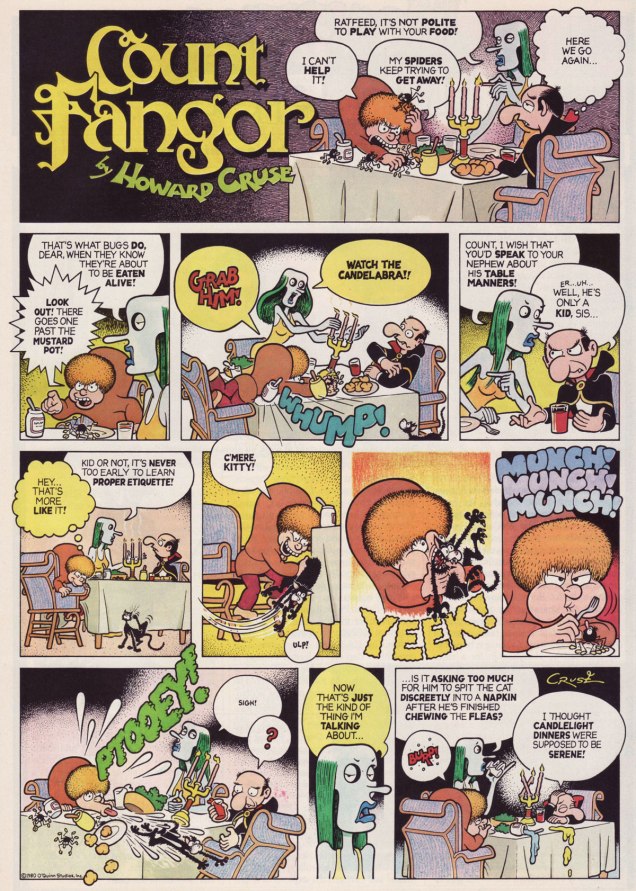
At first, Fangoria’s brass got behind the Count, but after a few full colour page appearances, he began his slow fade, his tee-shirt going out of print, his strip losing its full page *and* colour privileges.
In the tried-and-true Warren Magazines fashion, a Count Fangor mask even made the rounds. I wonder how scarce these are.
This vestment is apparently quite a collector’s item nowadays. The difficulty of landing the right size only adds to the thrill of the chase. Dixit the Count, « Let No Blood Go Unsucked! »
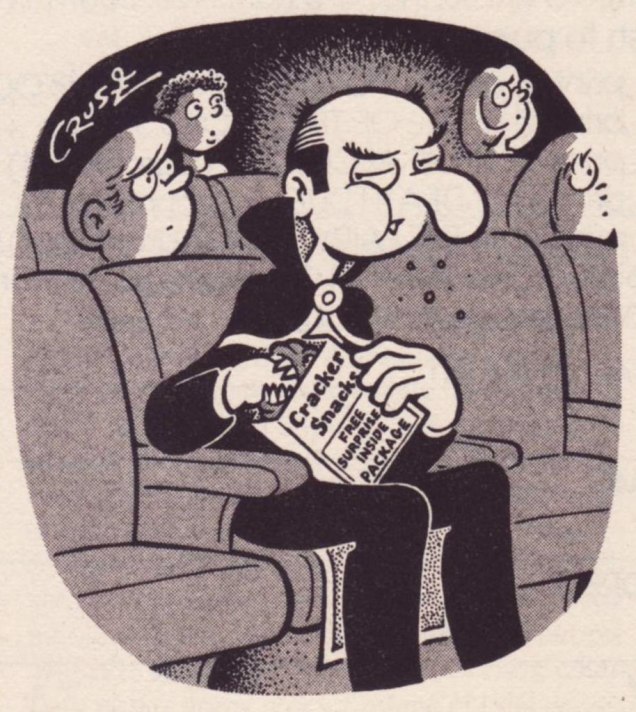
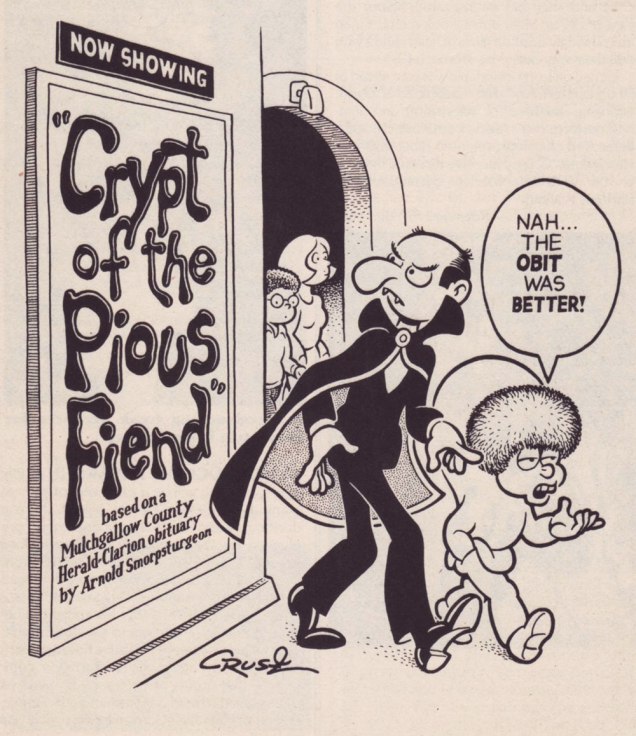
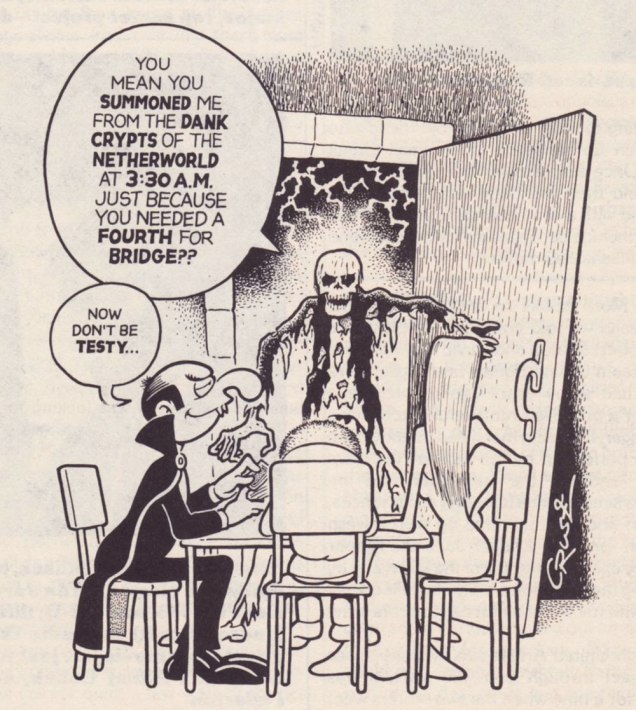
I suppose Cruse’s bon enfantapproach was at odds with the magazine’s ambitions. All too soon, poor Fangor was reduced to page filler panel cartoons, fine as they were.
« Fangoria was a magazine series that ran for 344 issues, from 1979 through 2015. »
Despite my being a small-town teenager, Fangoria’s editorial direction and my interests soon went separate ways. I was more attuned to mood and mystery than the magazine’s average reader, who craved unlimited gore and grue. As slasher films came to predominate the genre’s cinematic palette, I retreated into other interests — à chacun son goût! — and, judging from my collection, the last issue I picked up was no. 23 (November, 1982). In the end, the far subtler Twilight Zone magazine was more my speed.
« Before he can become a wolf, the lycanthrope strips naked. If you spy a naked man among the pines, you must run as if the Devil were after you. » — Angela Carter (1940-1992)
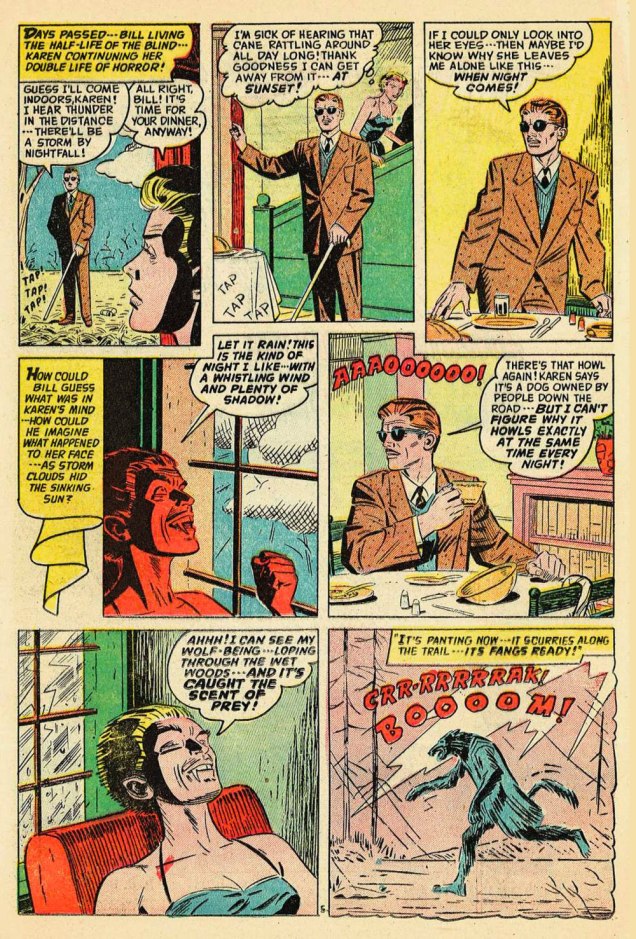
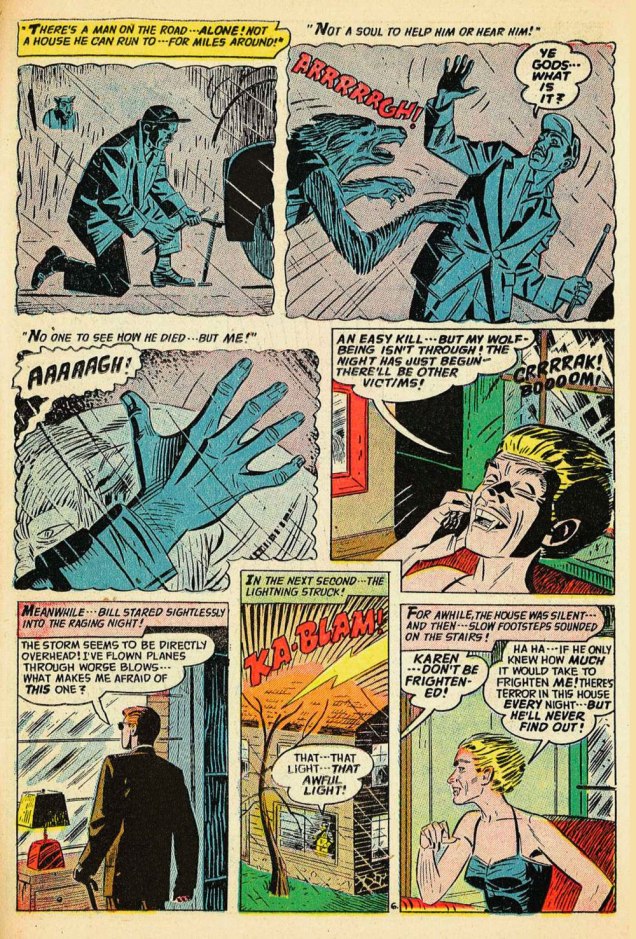
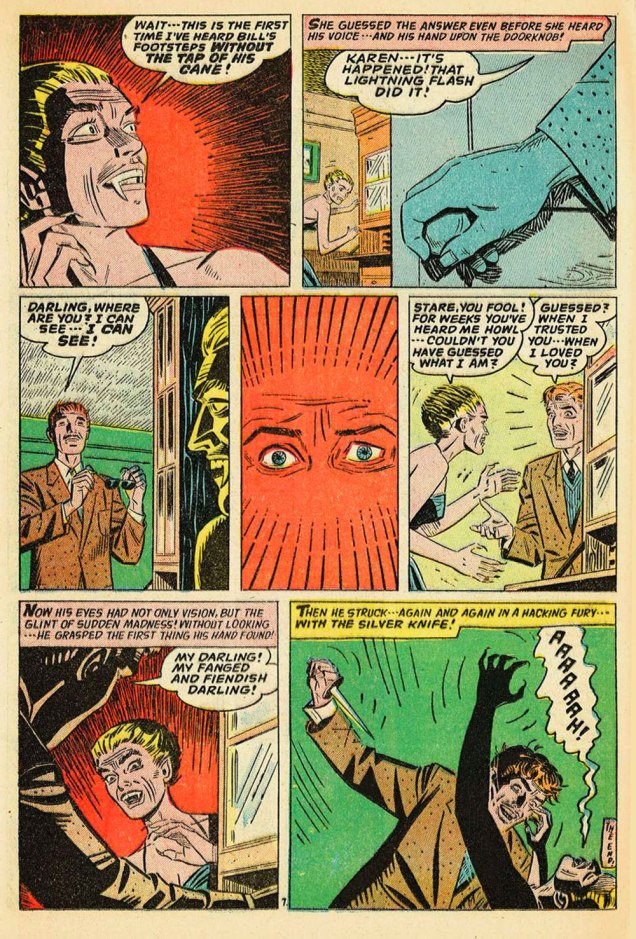
First of all, Happy Hallowe’en! On this finest of occasions, I bring you a wonderfully novel take on the hoary theme of the werewolf, handled by one of the truly unsung — save, it would seem, but some of his most distinguished peers* — draughtsmen of the Golden Age, namely Emil Gerswhin (1922-1999).
And yes, *that* George. Just like, say… the Partches, Virgil and Harry, genius clearly ran rich throughout the Gershwin line.
.
.
.
.
.
.
I wasn’t alone (Steve Bissette saw it too) in concluding that the terrific Mitch O’Connell just has to be Mr. Gershwin’s most direct — and worthiest — artistic progeny.
*By « distinguished peers », I mean the likes of Alex Toth, Al Williamson and Stephen Bissette. The latter wrote, in his introduction (essential reading alert!) to PS Artbooks’ Adventures Into the Unknown Volume 4 (March 2013, PS Artbooks): « Like almost all of the ACG horror comics, Gershwin’s work was the antithesis of the festering, tactile rot that made celebrated Pre-Code genre artists like Graham Ingels, Jack Davis, and Basil Wolverton so indelibly iconic: horror comics you could almost smell. Gershwin’s imagery is comparably sterile, even antiseptic, but his storytelling is as direct and no-nonsense noir as the best of Johnny Craig, his energetic pen-and-brush work as crisp and razor-sharp as Jack Davis‘ (sans the grit and grue and bits of meat and dirt spattering every motion), his staging as audacious as that of any cartoonist of his day. »
Bissette goes on to quote Williamson on Gershwin: « Oh, God, Gershwin was good. … he and [Ogden]Whitney were their best ever! A real draftsman, a solid cartoonist all-around. You should look him up, you could learn a few things. »
As for Toth, check out — his handwriting’s always a treat to see — what he wrote to Emil’s daughter Nancy over the course of their correspondance.
Again, our spotlighted tale isn’t the cover feature, but I nonetheless felt it my sacred duty to share this unusual beauty by Ken Bald (1920-2019). This is Forbidden Worlds no. 34 (Nov.-Dec. 1954, ACG), the title’s final Pre-Code issue. In 1955, FW would return to the stands after nine-month hiatus and take its final bow in 1967 after a sprightly run of 145 issues.
-RG
P.s. And while I dodged the headache of our traditional countdown this year, nothing — least of all me — is preventing you from raiding the boneyard of our past efforts, shameless ghouls that you are. Here are some handy links to put you into Hallowe’en orbit for a good long while :
« The sacred is found boring by many who find the uncanny fascinating. » — Mason Cooley
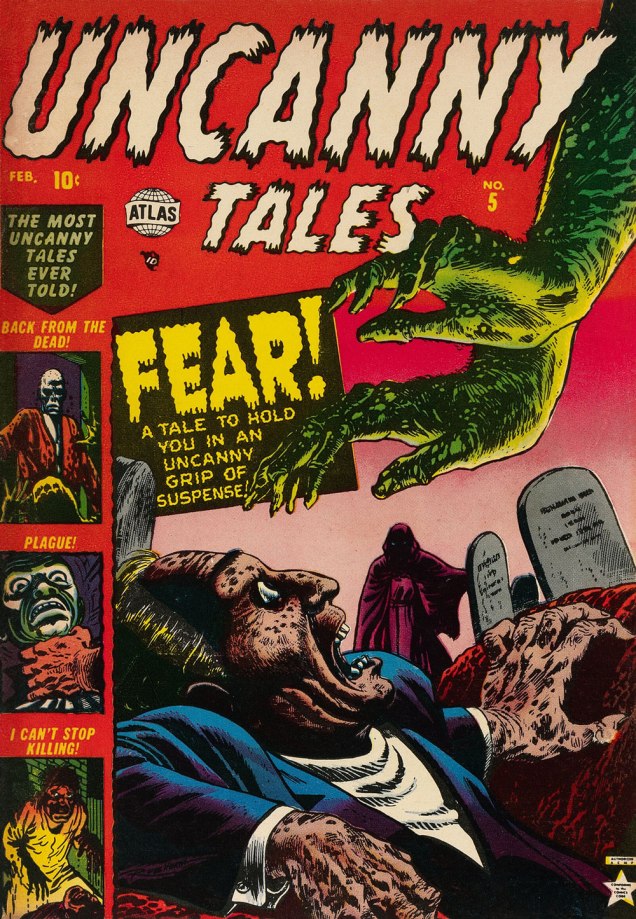
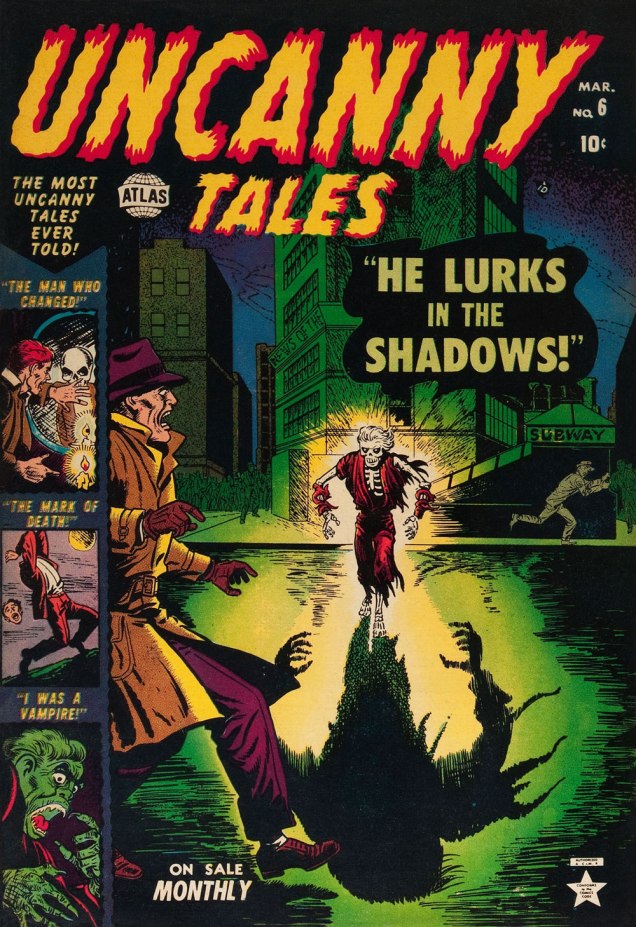
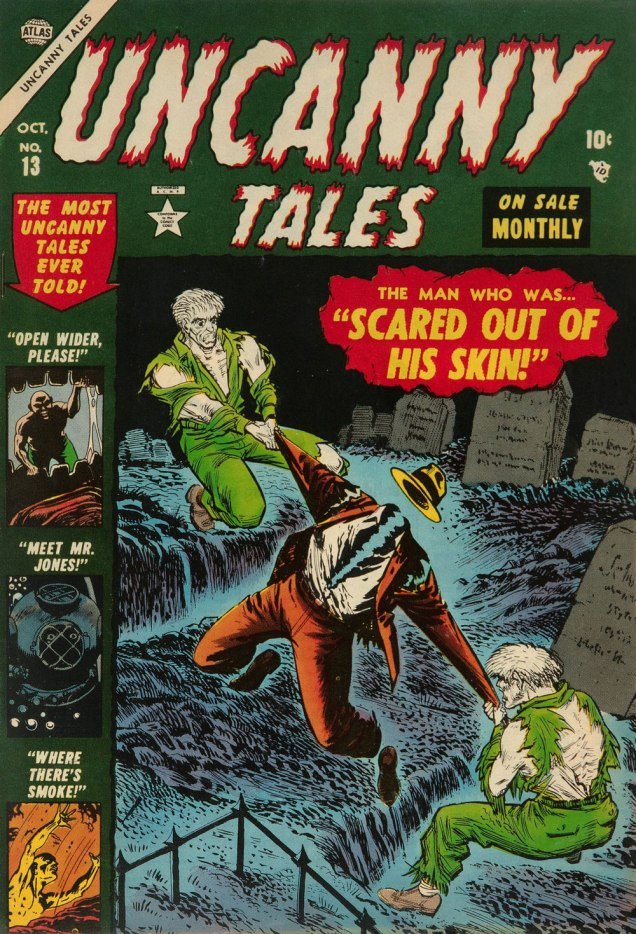
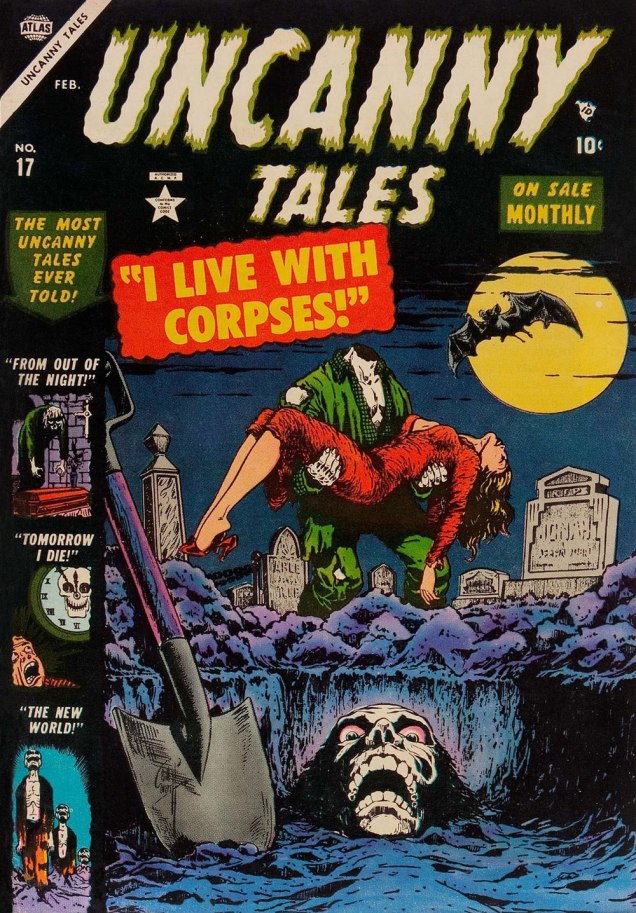
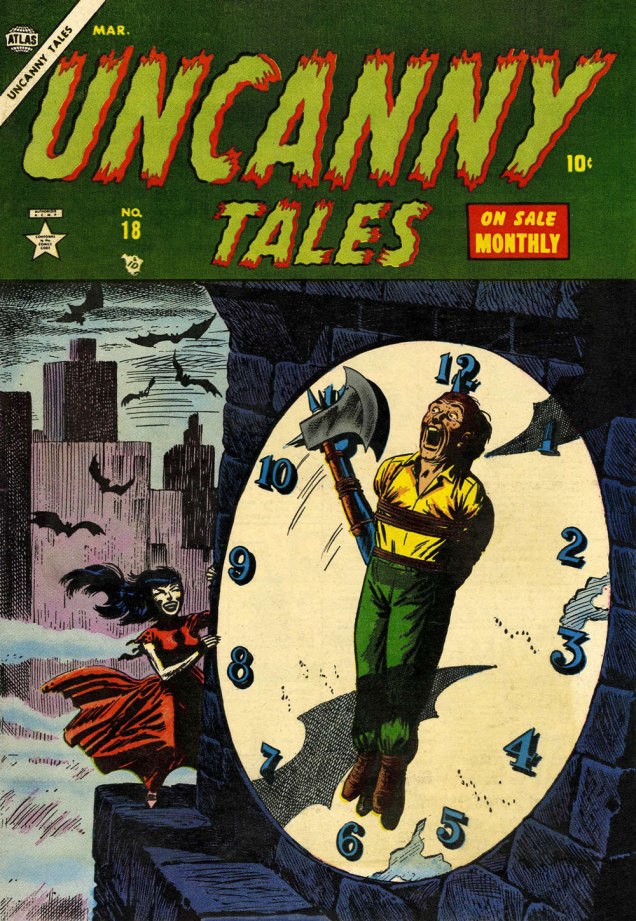
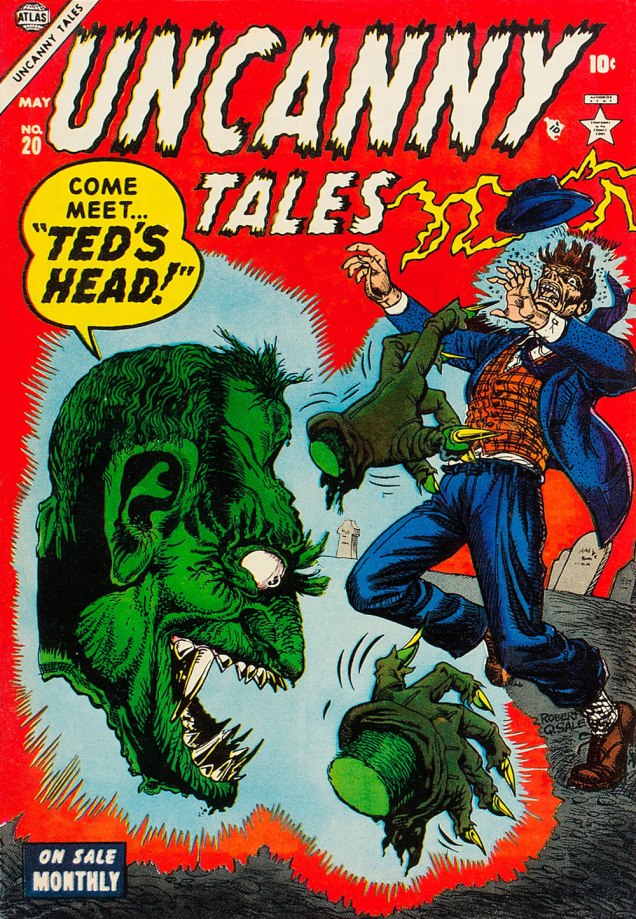
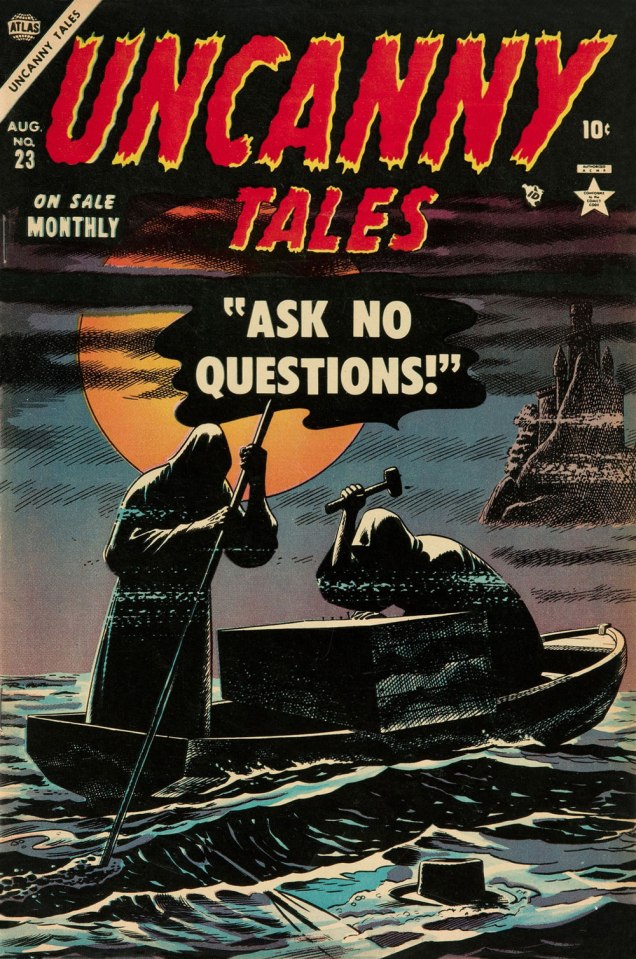
I’ve expressed many a time my ambivalent affection for Golden Age Atlas horror comics: in short, despite their slapdash, often incoherent writing, they had a solid stable of artists (which makes the thin writing all the more disappointing); but most of all, they generally had eye-catching covers, splendidly coloured (easy a task to underestimate!) and blessed with a light touch absent on the insides.
Today, I’ve picked out my favourite covers from Uncanny Tales (fifty-six issues, 1952-57). Enjoy!
This is Uncanny Tales n. 5 (Feb. 1953, Atlas), cover art by Bill Everett, colours — consistently fine! — presumably by Stan Goldberg in all cases.This is Uncanny Tales n. 6 (Mar. 1953, Atlas), cover art by Bill Everett.This is Uncanny Tales n. 13 (Oct. 1953, Atlas), cover art likely a collaboration by Sol Brodsky and Carl Burgos.This is Uncanny Tales n. 17 (Feb. 1954, Atlas), cover art by Bill Everett.This is Uncanny Tales n. 18 (Mar. 1954, Atlas), cover art by Russ Heath. For a gallery of further Heath spookies, check out this entry from last year. This endearingly goofy one is Uncanny Tales n. 20 (May 1954, Atlas), with cover artist Robert Q. Sale giving it his best Joe Maneely imitation.Surely the leading candidate for “Most understated Marvel cover of the 1950s”… if not of all time. Stan must have been away from the office. This is Uncanny Tales no. 23 (Aug. 1953, Atlas); Art by Russ Heath. I’m understandably reminded of that old-timey jibe, « Walk East until your hat floats ».This is Uncanny Tales n. 27 (Dec. 1954, Atlas), cover art by Max ‘Carl Burgos‘ Finkelstein.And one post-Code entry, since it’s so outstanding. This is Uncanny Tales no. 48 (Oct. 1956, Atlas), Another subtle one by Russ Heath, but in a totally different register. Kudos!
« True friends stab you in the front! » — Oscar Wilde
First, the update: we’re off to Belgium for a much-needed vacation… which is frankly incompatible with our usual Hallowe’en Countdown.
Surely you can still get into the spirit of the season by revisiting any of the eight previous editions.
We’ll still try to post as often as possible, and I promise you that the topics all will honour the mischievous spirit of All Hallows’ Eve.
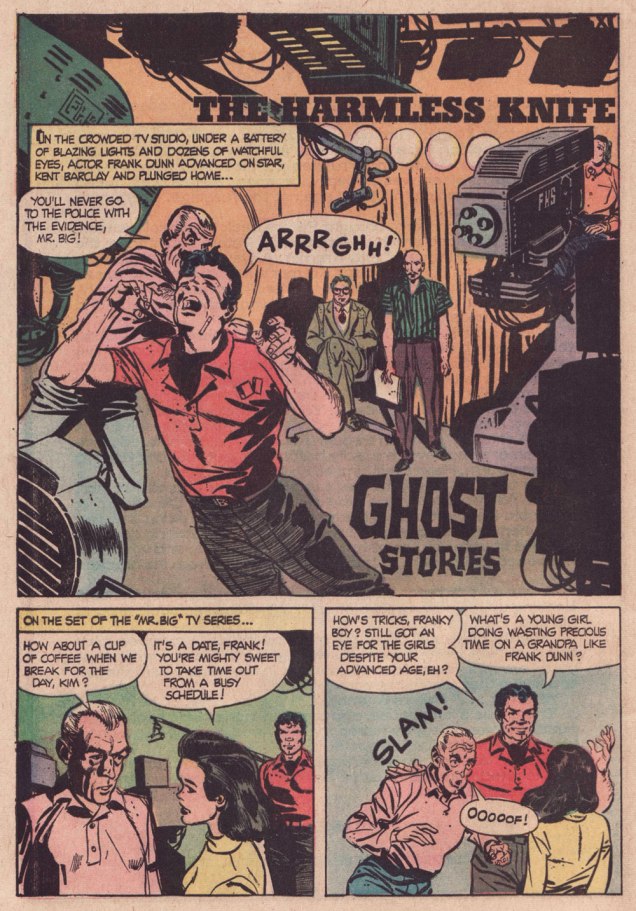
To wit: a few years ago, George, exalted founder of trefology… and assiduous friend of WOT?, asked me to track down — and hopefully feature — an elusive story he recalled from his callow youth. He described the plot, which rang a bell… at least that’s what I said at the time. Last month, he gently reminded me of my mission and, this time, I’m seeing it through.
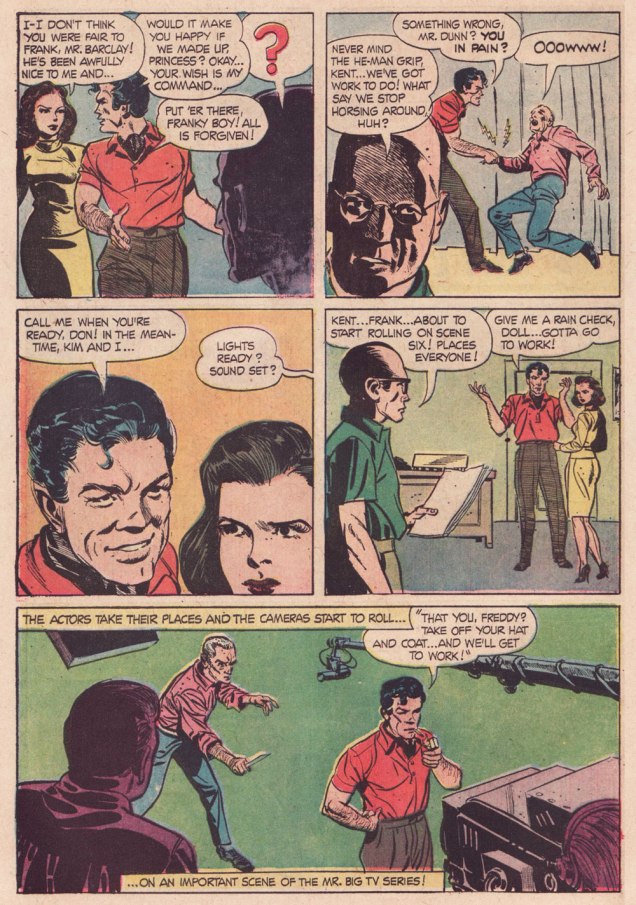
And so here’s The Harmless Knife from Ghost Stories no. 14 (June 1966, Dell), later reprinted in Ghost Stories no. 34 (Oct. 1972, Dell)… which is where George encountered it.
Here’s his reaction:
THAT’S IT! Ah, I remember it well.
I’m pretty sure I bought that comic at a little roadside grocery near Strawberry, CA. We usually spent most of the summer on the beach, and comic books were an essential part of my day.
My mom loved the area so much she eventually moved there (with all my comics in tow—so, in a manner of speaking, my Dell horror comic returned home).
As was generally the deplorable case with Dell, no credits. Therefore… writer unknown, but pencils and inks by Frank Springer (1929-2009).
.
.
.
.
.
Amusingly, I’d featured another story, A Room With a Dreadful Secret — from the very same issue! — a few years ago. Read it so I won’t have to repeat myself needlessly… thanks!