Treasured Stories: “Awakening!” (1971)

« I know what romance is, I’ve written more romance probably than anyone alive. » — noted feminist Bob Kanigher*

Ready for another foray into that most neglected, dismissed and maligned of comics genres, the romance?

If I open with a quote from Mr. Kanigher, it’s because of the preposterous and ironic nature of his boast (here’s some useful — and entertaining — background from my partner ds, a post we simply had to call « Don’t Let a Mysogynist Plan Your Wedding: Robert Kanigher and Wonder Woman’s Utterly Unsuitable Suitors » ).

While I’m a late-blooming romance comics fan — the flamboyant Enrique Nieto drew me in, and I stuck around — I’m strictly a Charlton man: with precious few exceptions, DC’s take on the genre is histrionic and insincere. These were the books no-one at National wanted to be stuck editing. Also, and it’s always worth noting: wayyyy too much Vince Colletta. As for Marvel: Stanley Lieber was, not to put too fine a point on it, relentlessly sexist… ’nuff said?**

It’s not for nothing that Charlton was tops in romance, publishing a dozen or so titles at a time when the Big Two put forth a third of that number at most… with plenty of reprints tossed into the mix. Obviously, given Charlton’s tremendous romance output, it wasn’t all gold… but nuggets turned up with sufficient frequency to justify one’s continued interest.

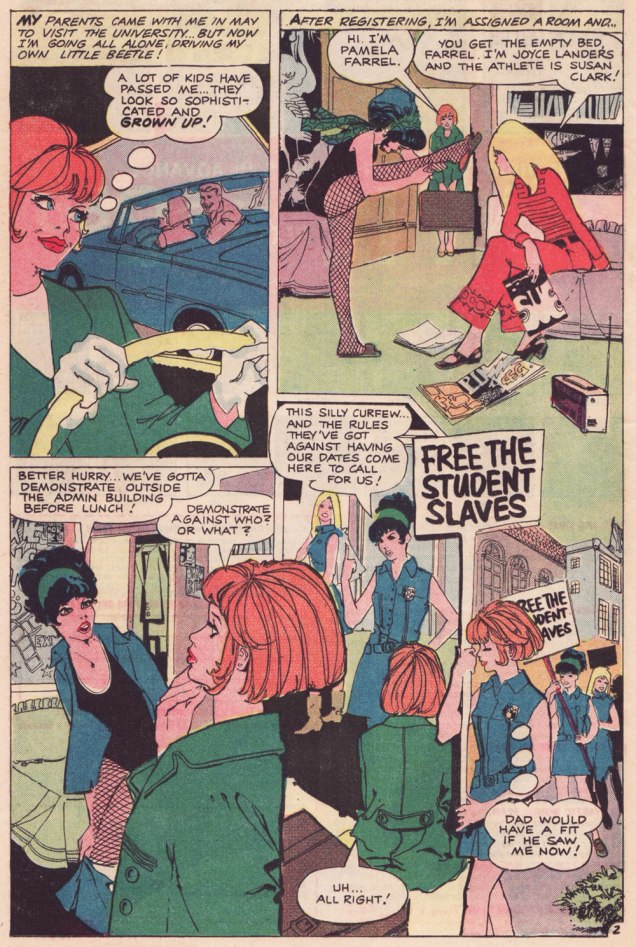
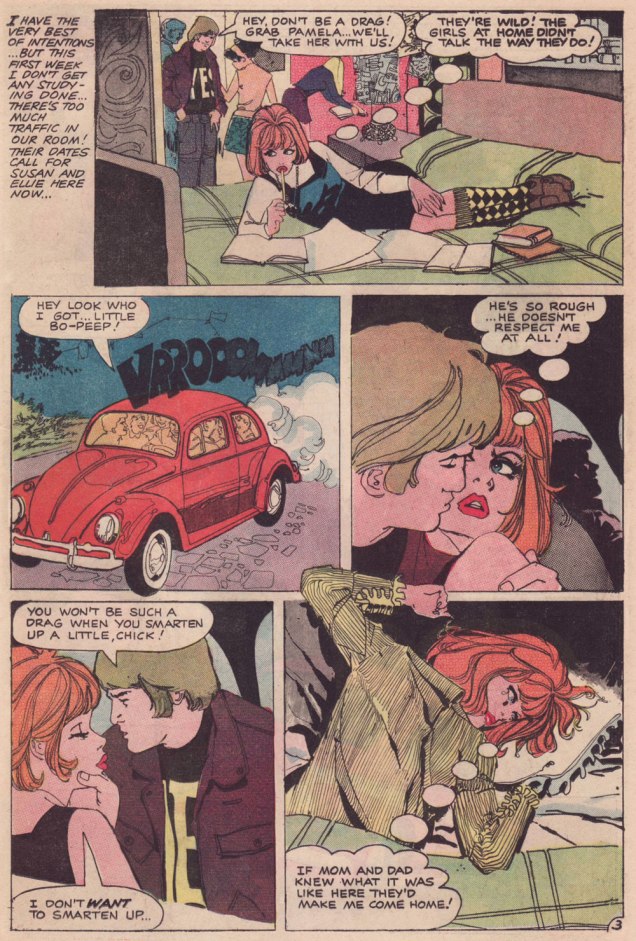
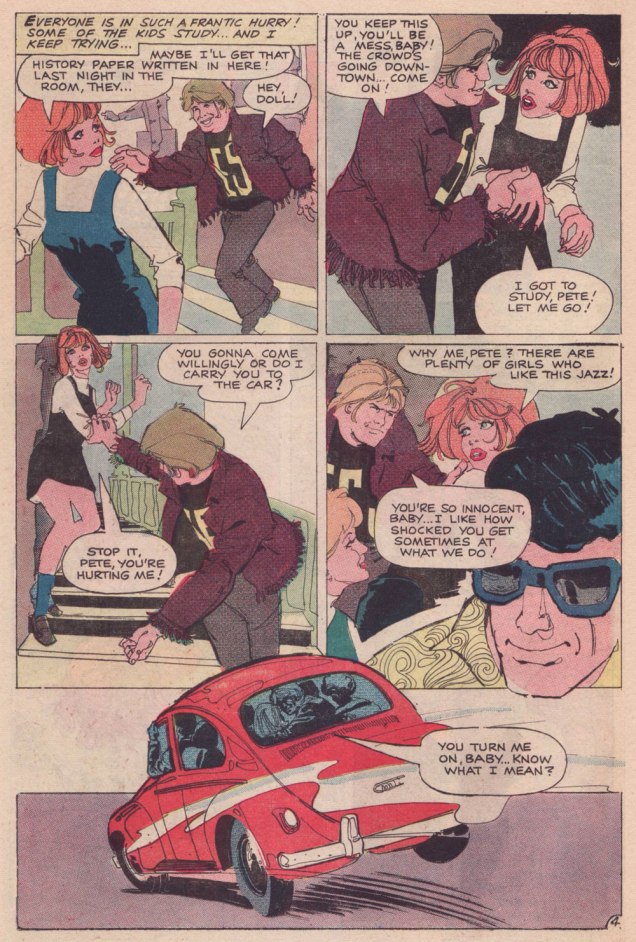
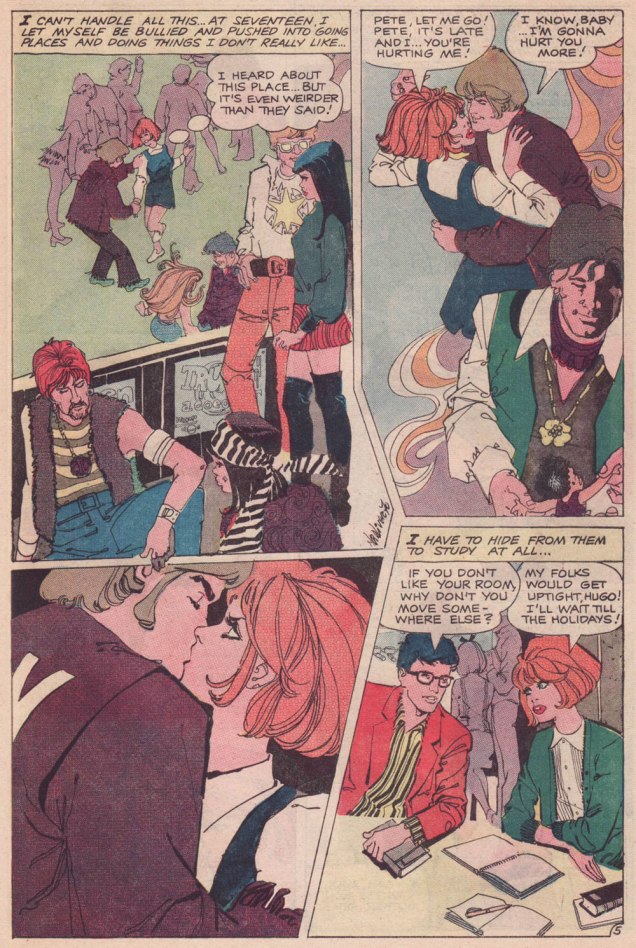
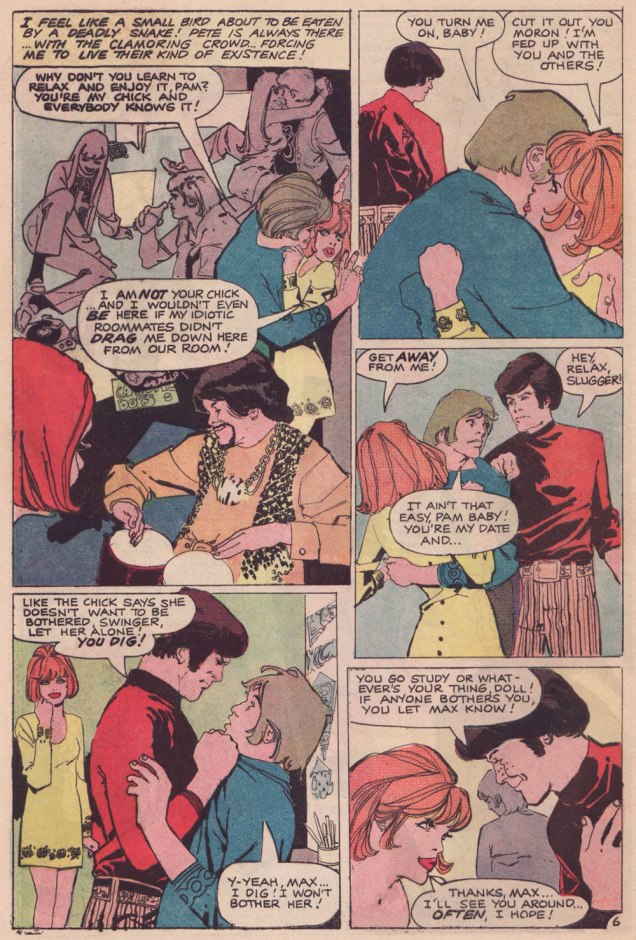
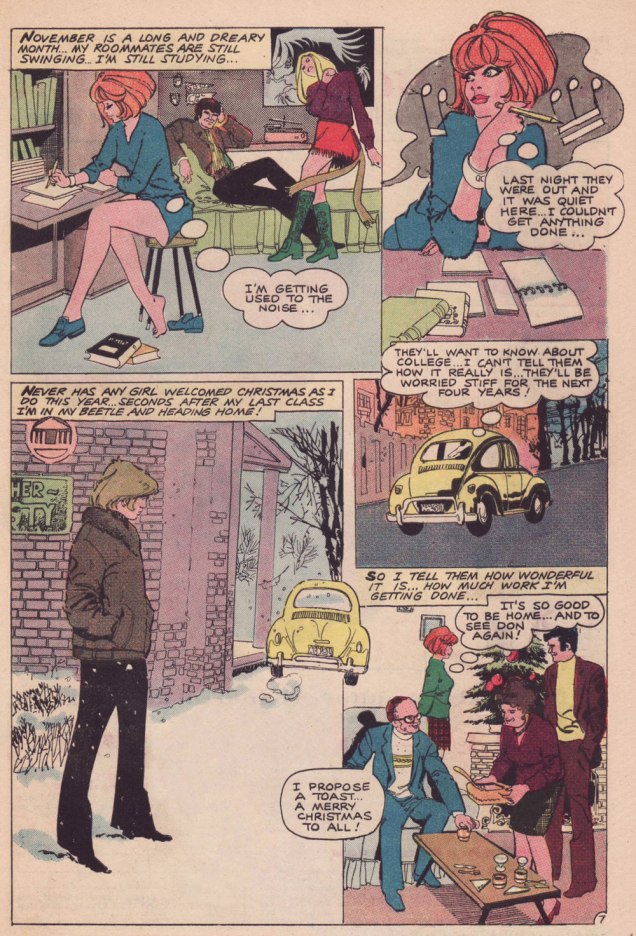
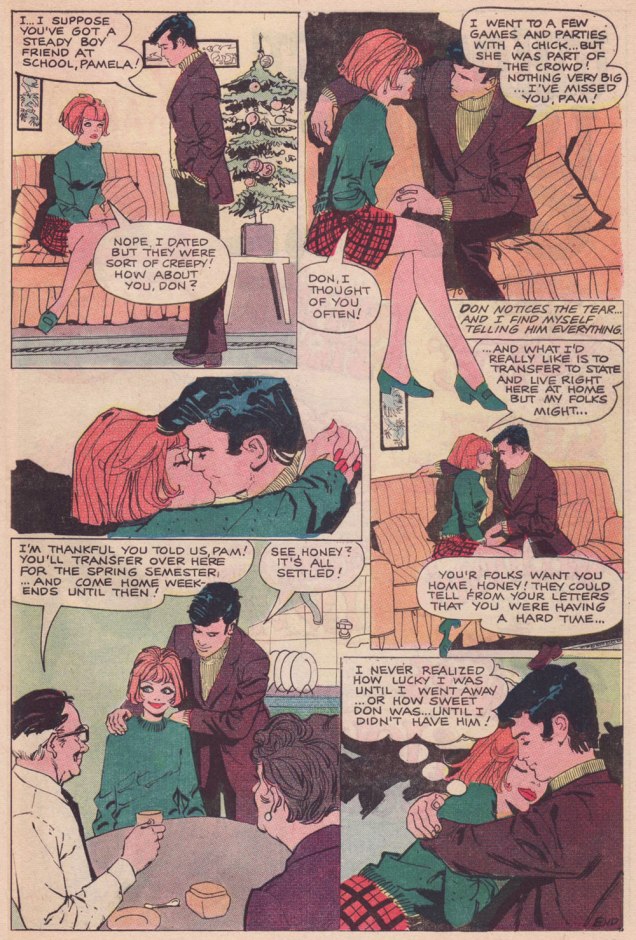
Let us then flash back to 1971, and a nugget from Teen Confessions no. 69 (Aug. 1971, Charlton). Almost certainly written by Joe Gill and definitely pencilled and inked by yet another talented Argentine, Nestor Olivera.***
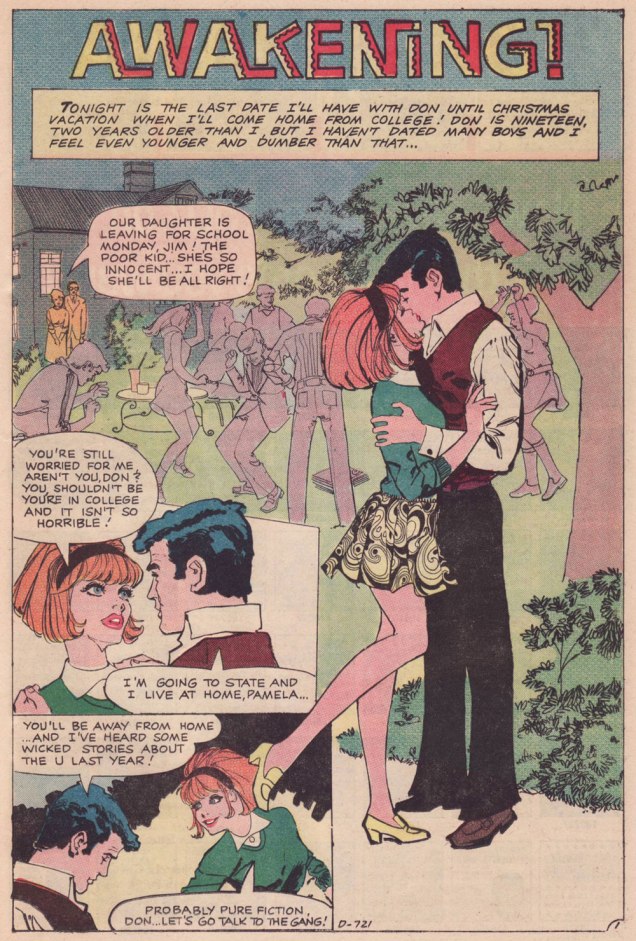
Having the bully/sexual predator wear a big YES on his shirt — though never quite show it — is a cleverly appropriate touch on the part of the artist.
A typical Joe Gill touch: a character may be introduced, speak one line, advance the story, reinforce its logic… and never reappear. Take a bow, Hugo.
Max makes the most of his chivalrous four-panel rôle; in a refreshing twist, there are no strings attached to his gallant turn.
Parents who aren’t utter dimwits also frequently feature in Joe Gill’s romances.
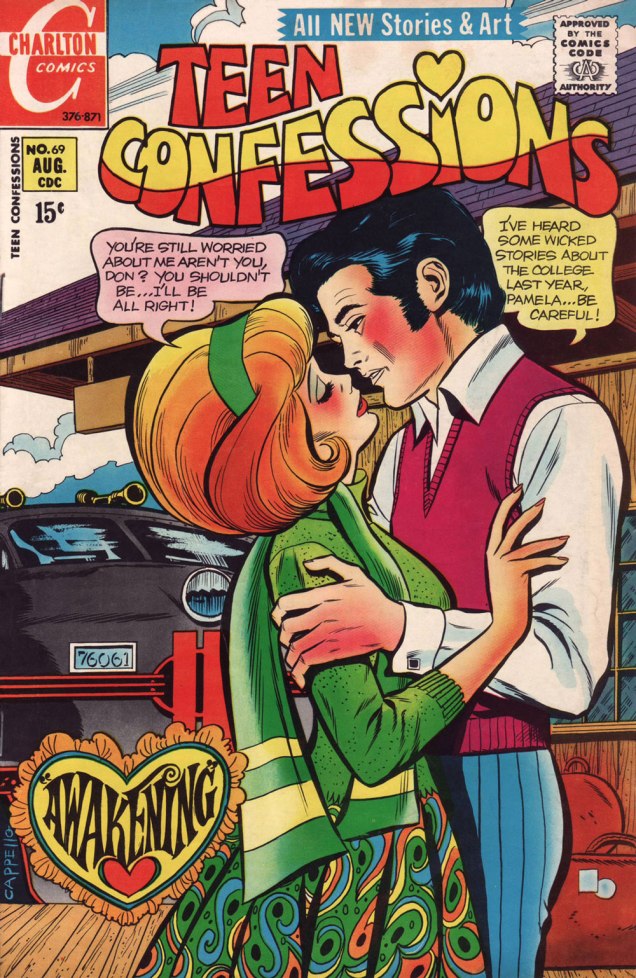
Awakening was the cover story. While former Colletta assistant Art Capello is credited — and he signed it, too — I strongly suspect the heavy hand of editor Sal Gentile in the layout and finishes. Why? Because Gentile’s leading men always tended to resemble actor George Chakiris.
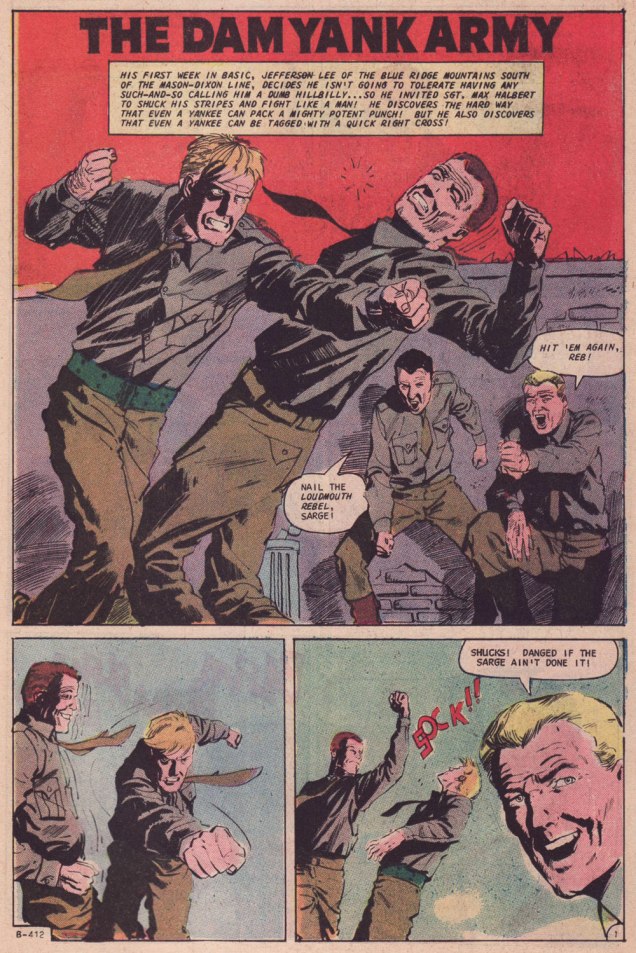
Compare and contrast: other than romance, the versatile Olivera demonstrated his chops in Charlton’s war titles. This is the opener of The Dam Yank Army, another Joe Gill yarn, cover-featured in Fightin’ Army no. 74 (June 1967; Dick Giordano, editor).

-RG

*By all means read the full interview for some insight (beware!) into Kanigher’s thinking. He continually caroms from insight to delusion, from sagacity to madness… just like his work, one might say.

**Re: Marvel… I may someday devote a post to the question of why early 70s Marvel romance’s dream man was presented as a dead ringer to the, er… controversial Jim Shooter. Probably mere coincidence.

***By ‘talented Argentine’ (Spanish-Argentine, technically), I refer to none other than José Luis García-López. Also from ’71, and in a totally different style, check out his Emancipated Amanda.
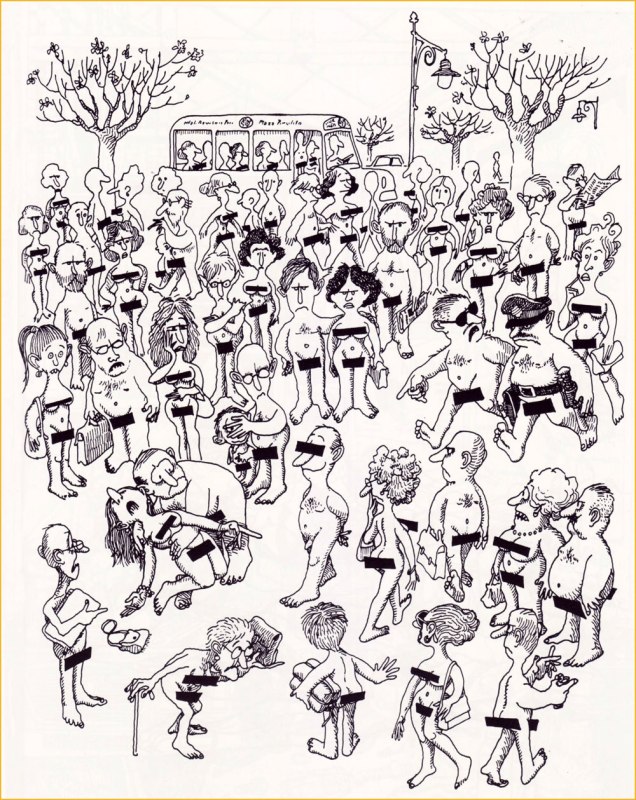
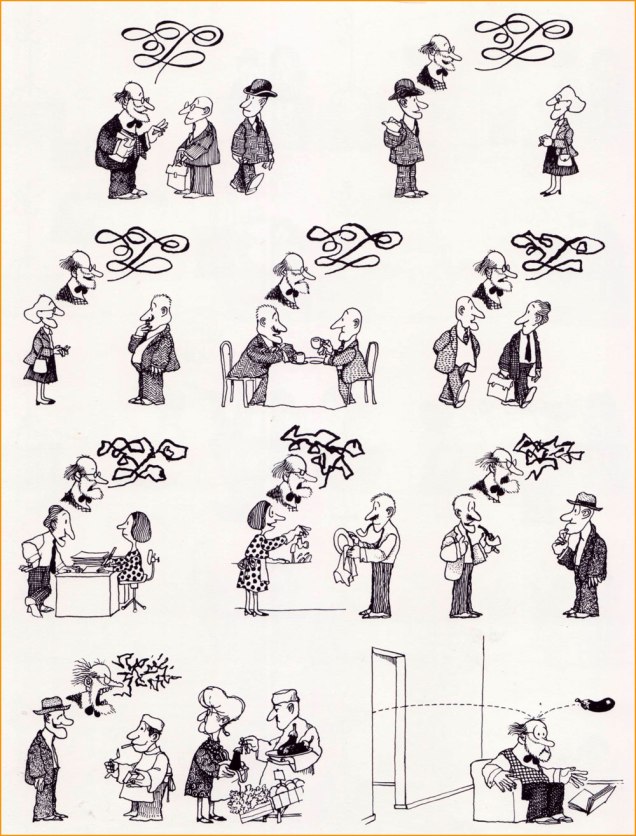
‘It’s not that big of a deal’: Quino

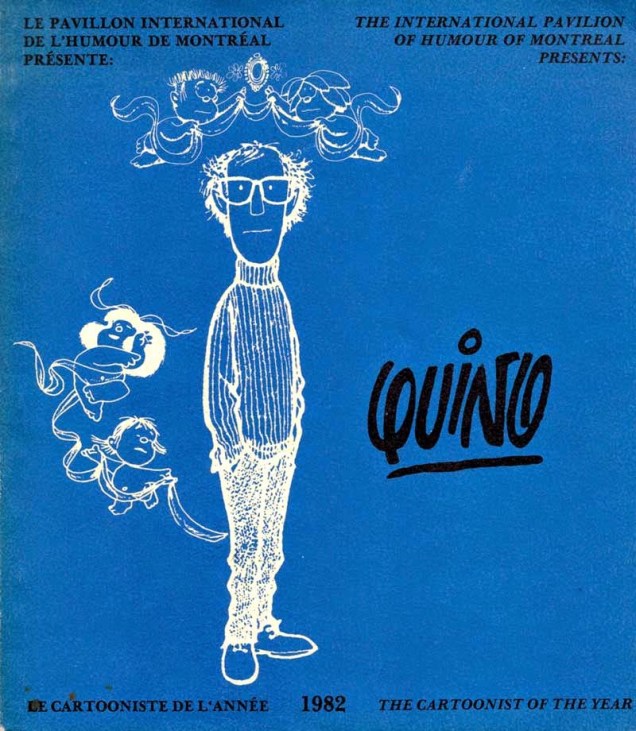
In the early days of WOT, before I got used to the blog format (as opposed to posting-on-Facebook format), sometimes my posts only contained a few images. Idly looking through my library the other day, I concluded that it’s a pity Argentine cartoonist Quino is only represented by three selections from a collection specifically about food (the aforementioned post — from 2017, what children we were then! –is (27178) Quino*).

Joaquín Salvador Lavado Tejón was alive in 2017, but now he is dead. He died in 2020 in Argentina, having returned to his place of birth after a long exile, after the National Reorganization Process was dismantled and democracy restored, in 1983. He did not live to see the election of bedlamite right-wing Javier Milei in 2023, which is probably just as well.

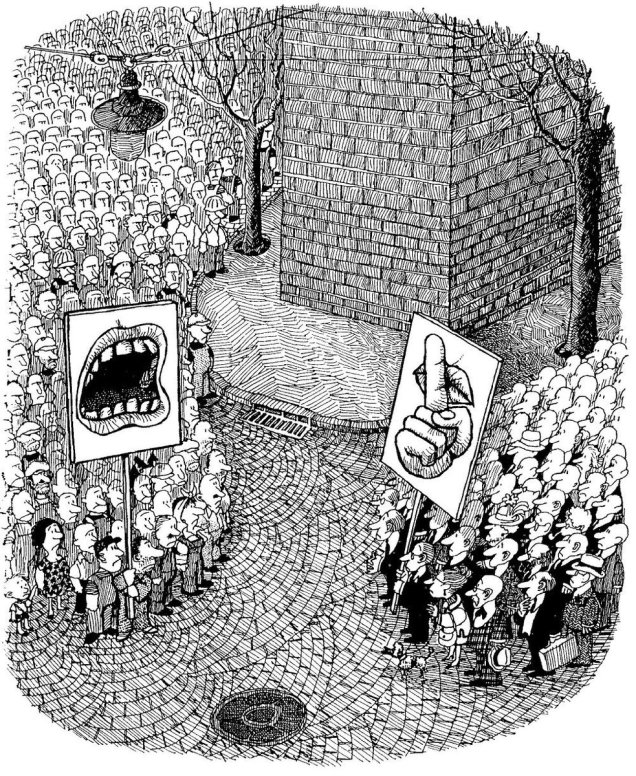
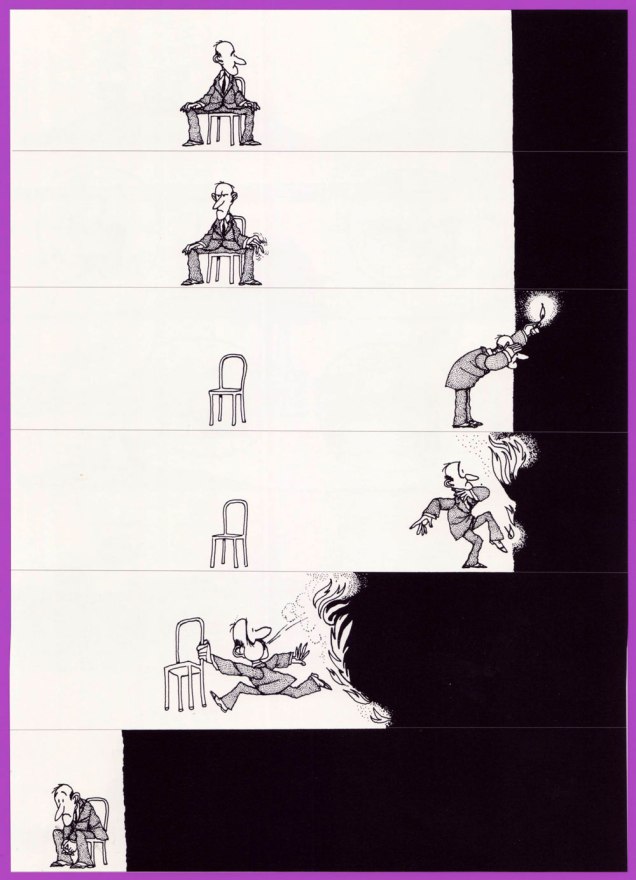
This is definitely not the place for provocative political discussions, but how offensive can a few smooth ink lines on paper be? Interpret the following as you will.

For a fervently written eulogy, head over to TCJ: QUINO: 1932 – 2020

« “Violence is everywhere,” stated Quino, in Pergolini’s 2014 interview. He was talking about ants. The ants he used to watch and move around in his childhood home. His cartooning, adored even by his always-quoted Umberto Eco, feels like an echo of that idea: Violence is everywhere. But, at least in his work, genius is also everywhere, as well as his heartfelt indignation, fueling one of the brightest of 20th-century takes on humanity. »

~ ds

P.S. While looking up stuff for this post, I stumbled across a « Quino AI Art Style Inspiration » (which has very little to do with Quino’s style or raison d’être). No comment needed.