« I know what romance is, I’ve written more romance probably than anyone alive. » — noted feminist Bob Kanigher*
Ready for another foray into that most neglected, dismissed and maligned of comics genres, the romance?
If I open with a quote from Mr. Kanigher, it’s because of the preposterous and ironic nature of his boast (here’s some useful — and entertaining — background from my partner ds, a post we simply had to call « Don’t Let a Mysogynist Plan Your Wedding: Robert Kanigher and Wonder Woman’s Utterly Unsuitable Suitors » ).
While I’m a late-blooming romance comics fan — the flamboyant Enrique Nieto drew me in, and I stuck around — I’m strictly a Charlton man: with precious few exceptions, DC’s take on the genre is histrionic and insincere. These were the books no-one at National wanted to be stuck editing. Also, and it’s always worth noting: wayyyy too much Vince Colletta. As for Marvel: Stanley Lieber was, not to put too fine a point on it, relentlessly sexist… ’nuff said?**
It’s not for nothing that Charlton was tops in romance, publishing a dozen or so titles at a time when the Big Two put forth a third of that number at most… with plenty of reprints tossed into the mix. Obviously, given Charlton’s tremendous romance output, it wasn’t all gold… but nuggets turned up with sufficient frequency to justify one’s continued interest.
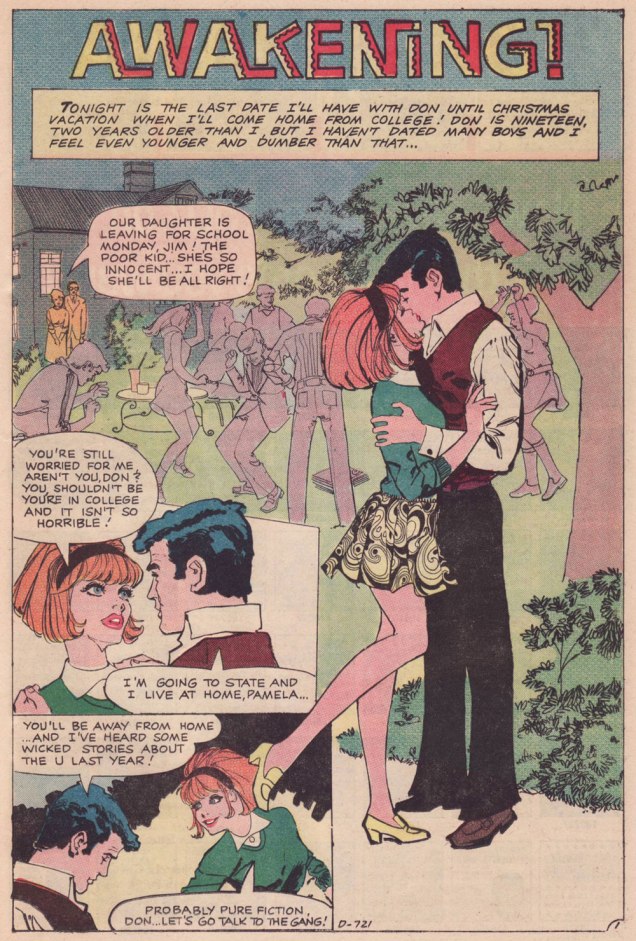
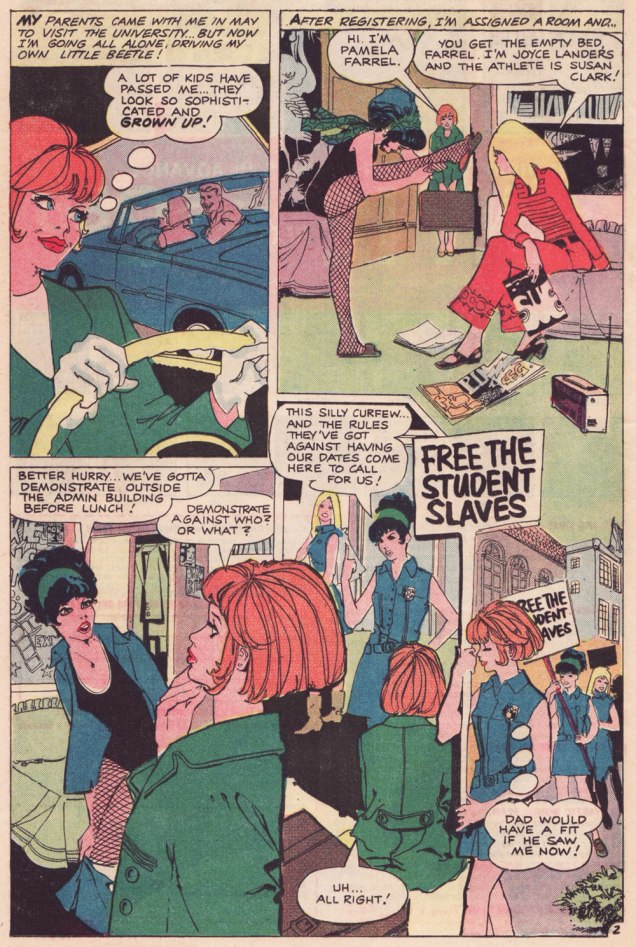
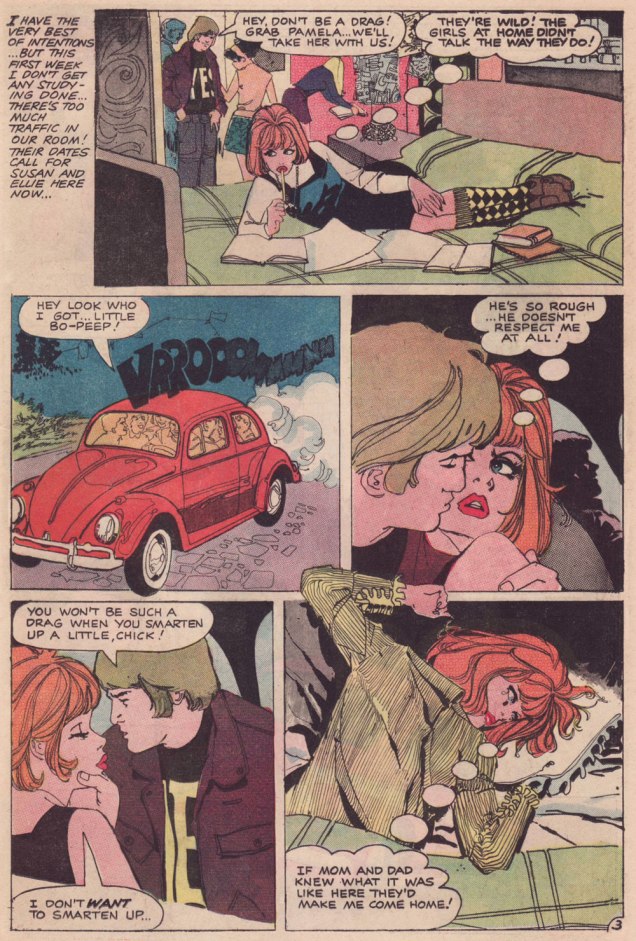
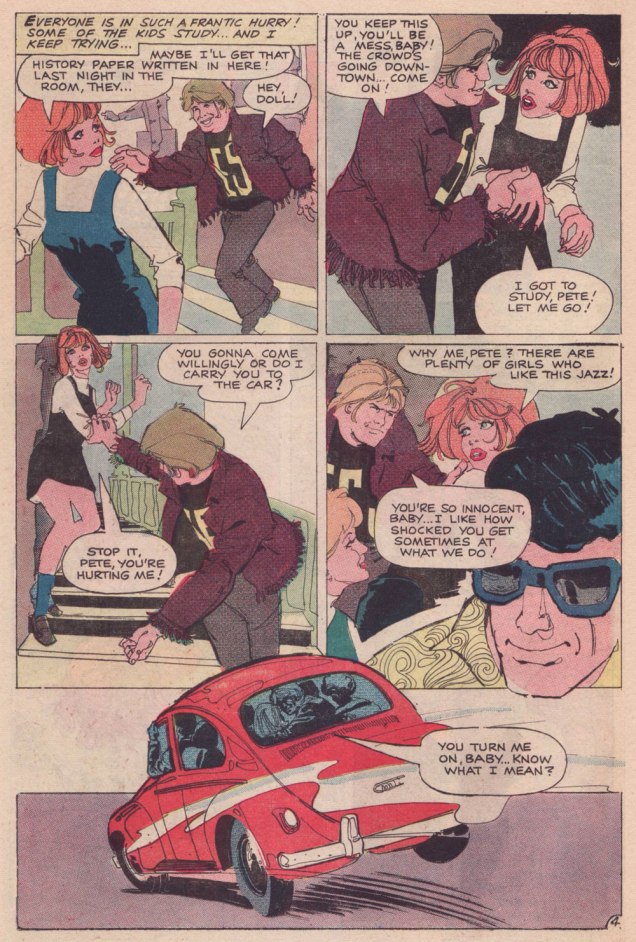
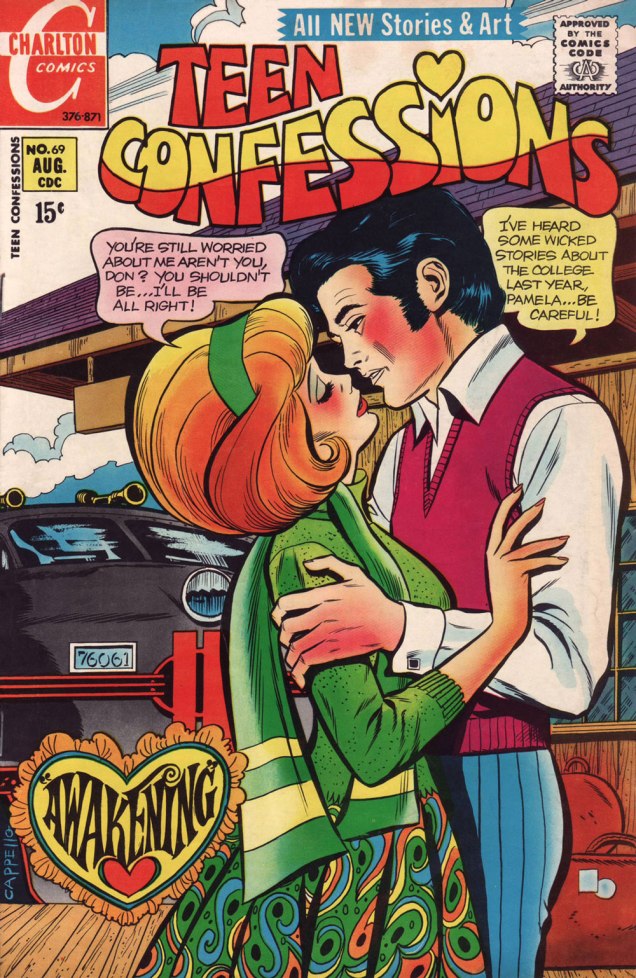
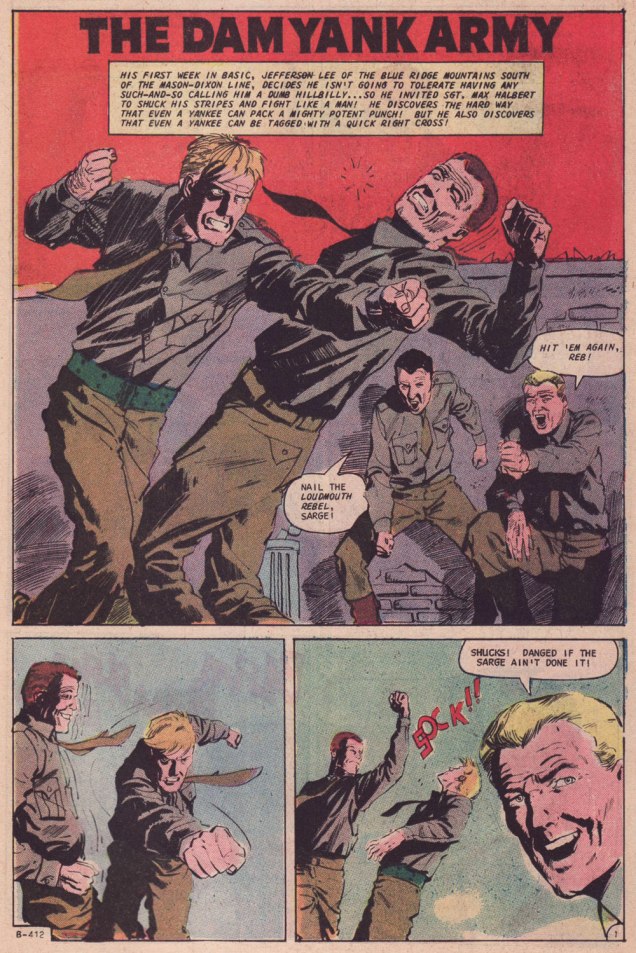
Let us then flash back to 1971, and a nugget from Teen Confessions no. 69 (Aug. 1971, Charlton). Almost certainly written by Joe Gill and definitely pencilled and inked by yet another talented Argentine, Nestor Olivera.***
.
.
.
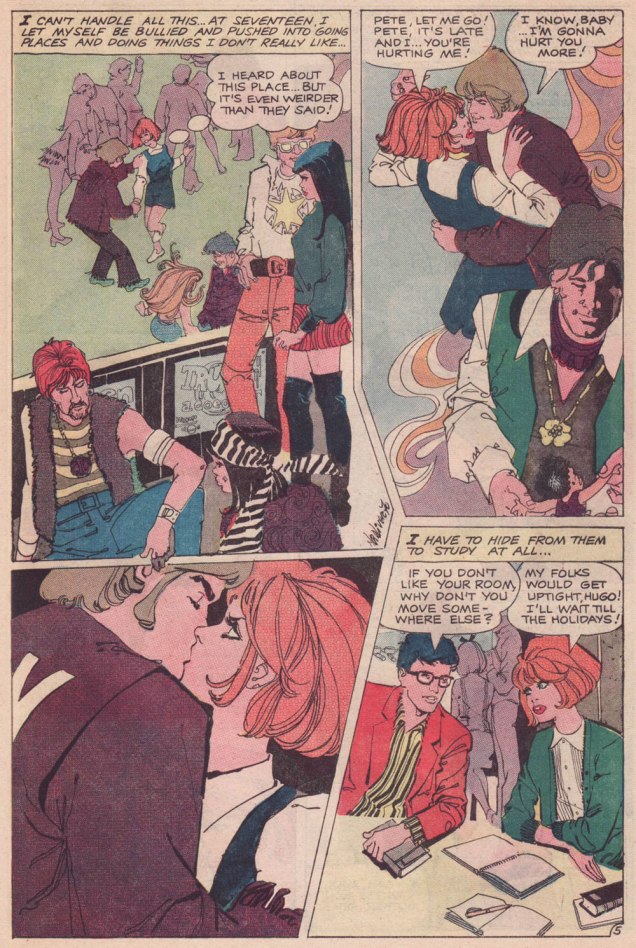
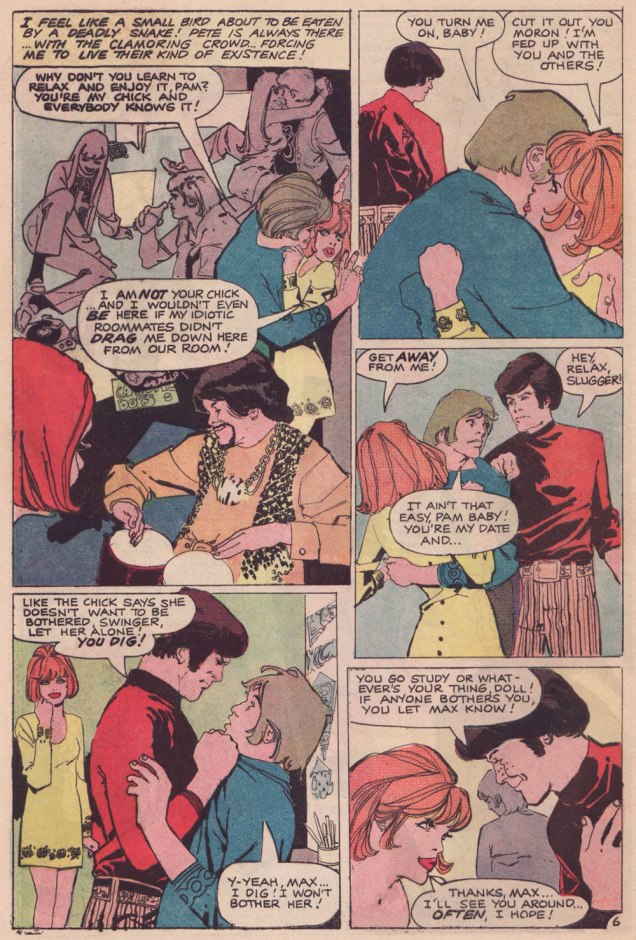
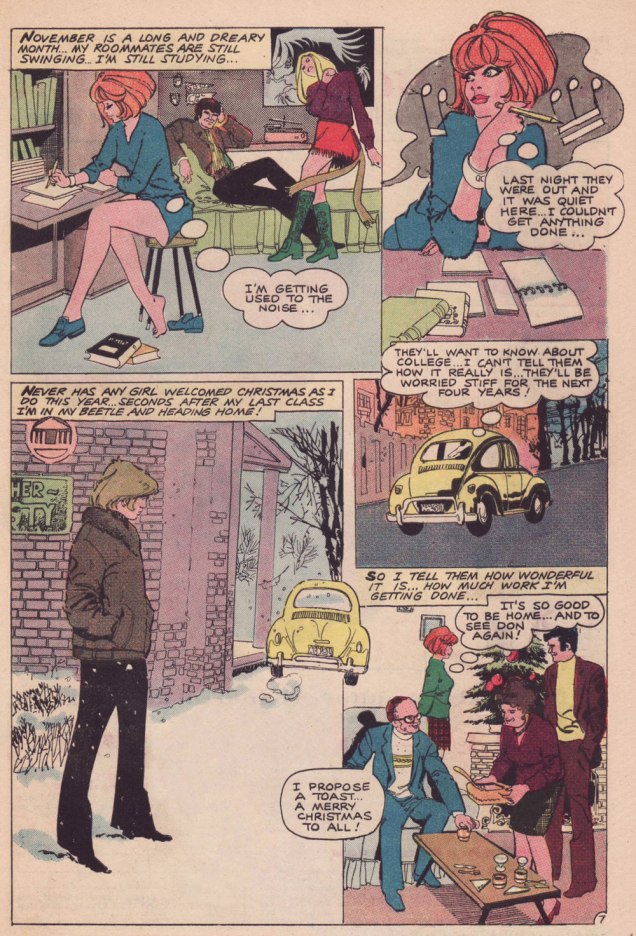
.
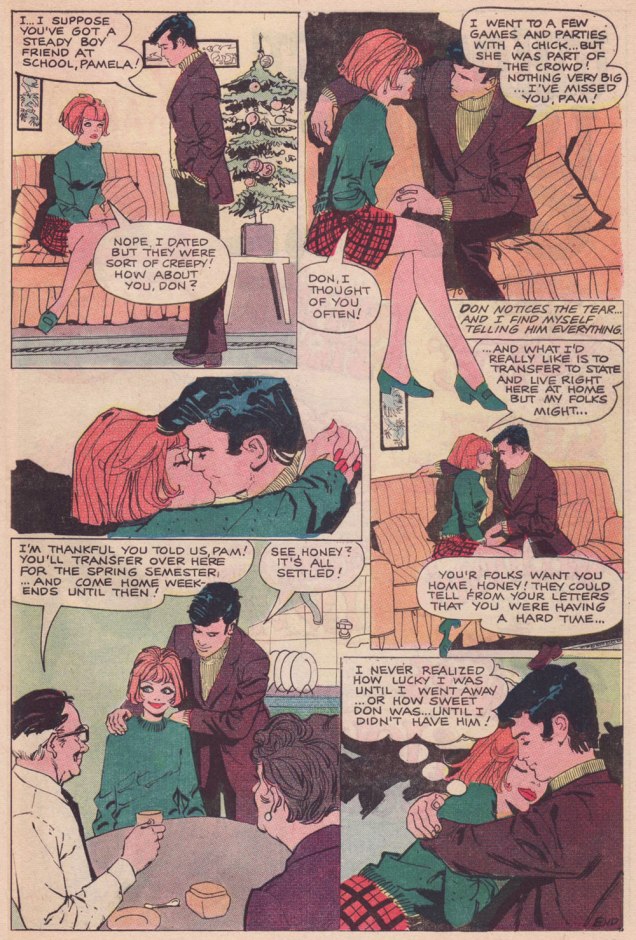
-RG
*By all means read the full interview for some insight (beware!) into Kanigher’s thinking. He continually caroms from insight to delusion, from sagacity to madness… just like his work, one might say.
**Re: Marvel… I may someday devote a post to the question of why early 70s Marvel romance’s dream man was presented as a dead ringer to the, er… controversial Jim Shooter. Probably mere coincidence.
***By ‘talented Argentine’ (Spanish-Argentine, technically), I refer to none other than José Luis García-López. Also from ’71, and in a totally different style, check out his Emancipated Amanda.


Not sure what you were looking at Mr. gasp. Vince Colletta, even his later DC work, was the best romance illustrator of them all. The top four are considered to be Colletta, Baker, Pike and Romita Sr. Check out his old Timely Atlas work. Why do you think that Stan Lee gave almost every cover and most of the romance stories to Vinnie?
LikeLike
Hi Ed! Thanks for dropping by! I’ve little issue with your top four — though I wouldn’t deign to assign a particular order — although I’d switch out Romita (those ridiculous cheekbones on everyone, male or female!) for Rosenberger, Abruzzo, or Ogden Whitney. As an illustrator, I’ve no issue with Vinnie… don’t worry, I’ve seen his peak mid-50s work, and it’s lovely. It’s his inking I object to. Poor Ric Estrada…
« Why do you think that Stan Lee gave almost every cover and most of the romance stories to Vinnie? » I don’t know… because Vinnie was fast and reliable? That’s the most innocent interpretation we can give it, honestly. Cheers!
LikeLike
At his very best – a few solo romance strips – Colletta was tolerable. At his worst – inking Kirby at Marvel, issue after issue after issue – he was plain awful. I thought everybody knew this.
LikeLike
Thanks for the romance story.
It would be my contention that Joe Gill was at his best with the love story. His best work on the ghost stuff tended to be with artists who were also writers like Steve Ditko, Pat Boyette, Sanho Kim and Tom Sutton. But when you look at the work of Nicholas/Alascia, their ghost work doesn’t flow as well because I don’t think they were shaping it the way I believe the aforementioned artists were. However, I find their romance work much more readable and that I take as Gill bringing more to the table for them. In fact, I think it’s a bit of a misnomer to call stories like the one you’ve posted ‘romance’ since a lot of his female protagonists from the sixties onward are more about achieving self-actualization than about catching their man. And this despite Joe Gill not really seeming like much of a feminist or liberal. Gill could seemingly see beyond himself and respect the perspective of the characters he was writing as well as the readers he was writing for.
Circling back to the ghost material–and the sci-fi–it’s interesting to note that Gill could successfully include romance in those genres and when doing so often had more typical boyfriend/girlfriend endings, ‘The Imitation People’ being a good example.
LikeLiked by 1 person