Tentacle Tuesday: Wrap Your Brain Around This!

The brain-with-tentacles is curled up at the comfy intersection of two beloved tropes, the Brain Monster and the Tentacled Terror. Through some clever combining, one is guaranteed a truly horrendous creature that’s at least 25% more appalling than either of its step-parents. It’s the favourite of many a filmmaker and comic artist, and the toast of this particular post!

It may be a little too early to wrap yourself around a drink (at least in this part of the world), so you’ll have to enjoy this Tentacle Tuesday sober.
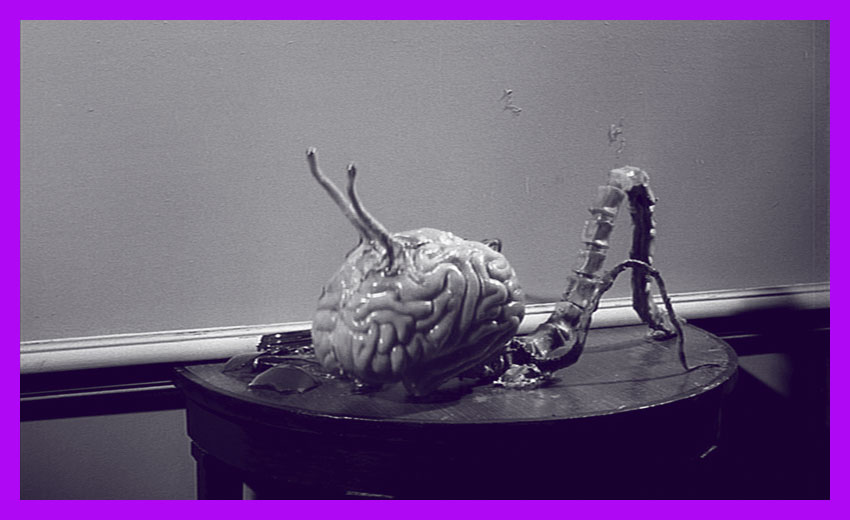
A friendly critter from Fiend Without a Face, a British movie from 1958.

One has to pay one’s dues to the classics: Basil Wolverton‘s The Brain Bats of Venus, originally published in Mister Mystery no. 7 (September 1952), is unquestionably indispensable, so I could hardly turn a blind eye to it. In case you were out that night and missed it, you can read the whole story at The Horrors of It All blog.

WolvertonBrainBatsA

The tentacled brain has several means of locomotion at its disposal, and while crawling around spasmodically is a great mood-setter, floating around gives one much better scope of movement. The following is one of those floaters, aided by some mechanical gizmos.
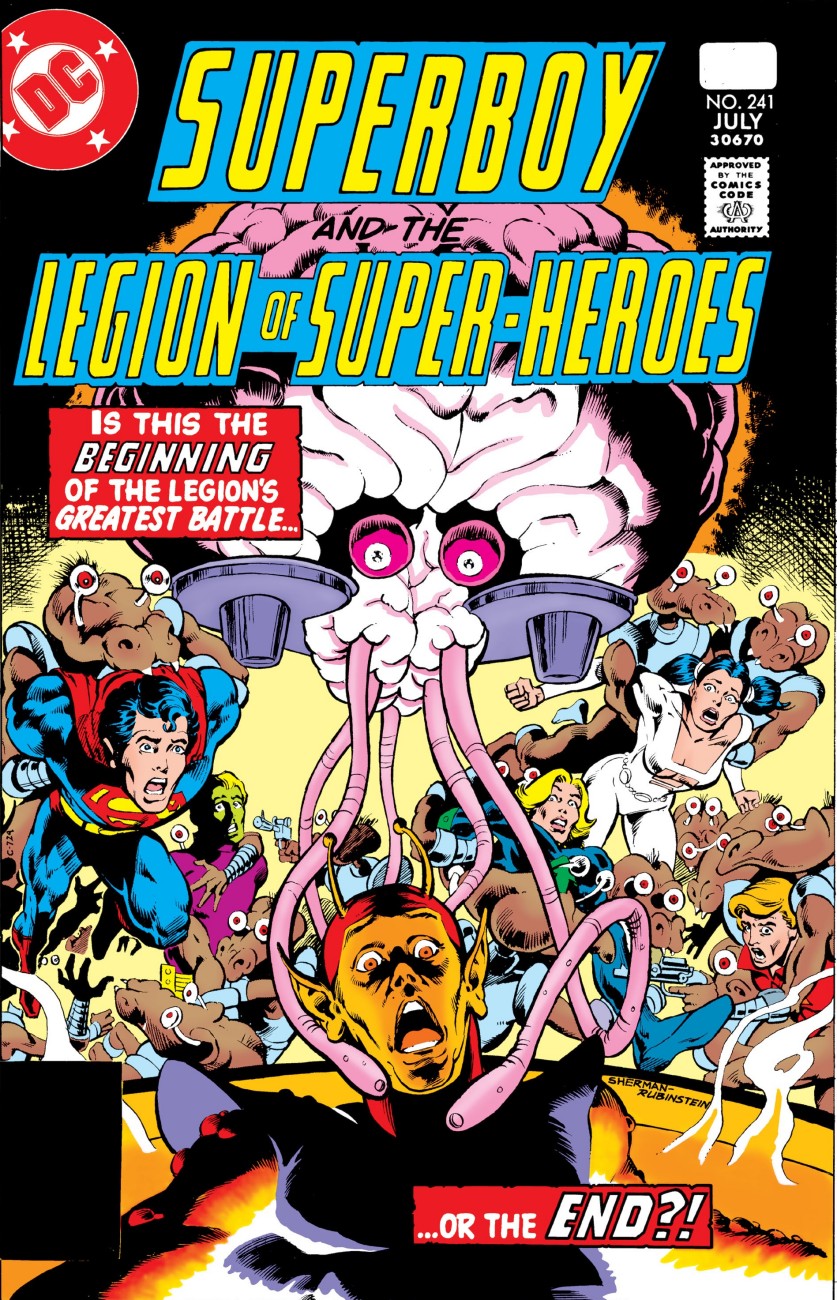
Superboy-LegionoftheSuperheroes241-JamesSherman-JoeRubinstein

Superboy & the Legion of Super Heroes no. 241 (July 1978). Cover pencilled by James Sherman and inked by Joe Rubinstein.

The cover story, Prologue to Earthwar is scripted by Paul Levitz, pencilled by James Sherman and inked by Bob McLeod:

Superboy241-3
It’s just the worst when a brain launches into a tedious monologue after attacking you.

Superboy241--prologuetoearthwar.jpg

As implicitly suggested earlier by that panel from Brain Bats of Venus, some brain-monsters latch onto their victims’ brains, either sucking them out like you’d do with a coconut and a straw, or taking over people’s minds by puncturing some unsavoury holes I’d rather not think about too closely. A character in the following issue of World Below, when it is kindly suggested to her that perhaps it would be a sound idea to sever her ties with the tentacled thing on her head, mentions that « it hurts them to release — terribly. And it’s hard to reconnect, too. Like surgery without anaesthesia.» The implications are… unpleasant.

PaulChadwick-WorldBelow2-Deeper-Stranger
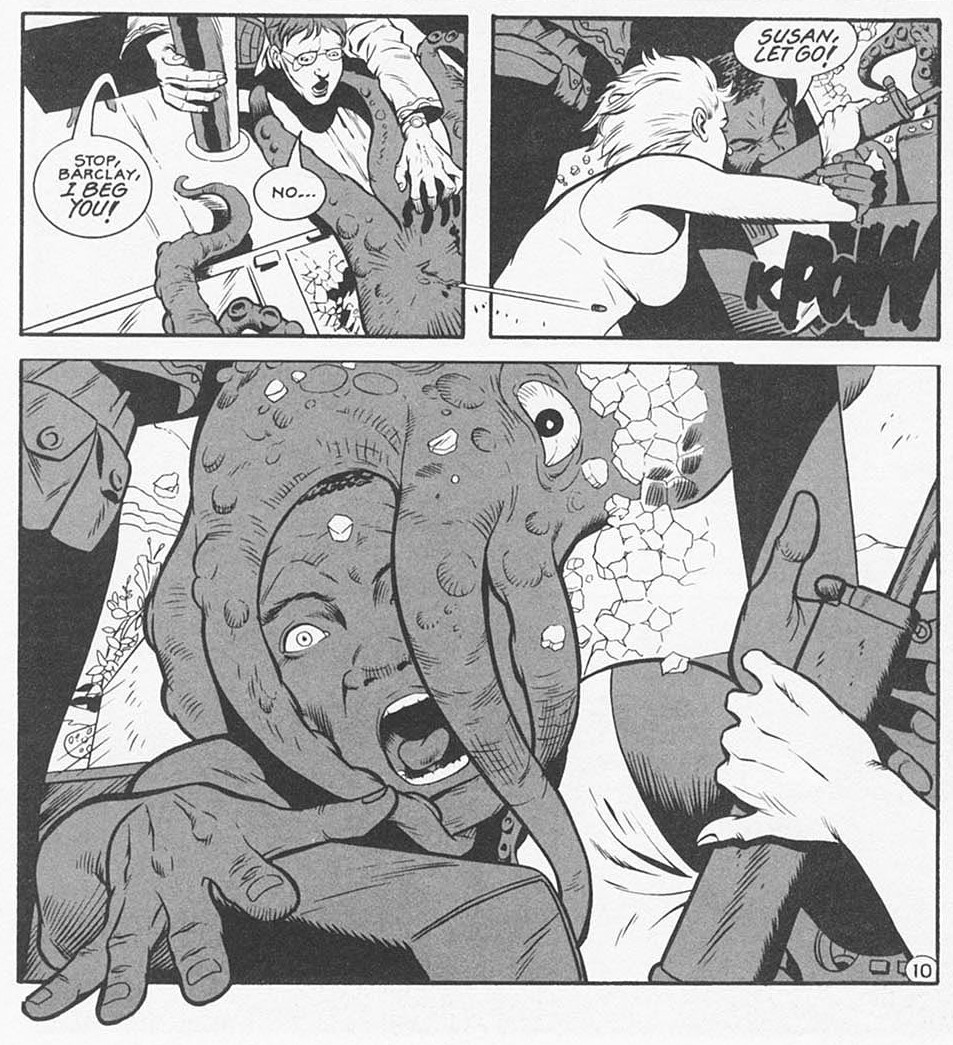
The World Below: Deeper and Stranger no. 2 (January 2000), cover by Paul Chadwick. Say, that’s a stylish hat you’ve got there, fella!

Zombies! is scripted and pencilled by Paul Chadwick and inked by Ron Randall, with grey tone separations by Jason Hvam:
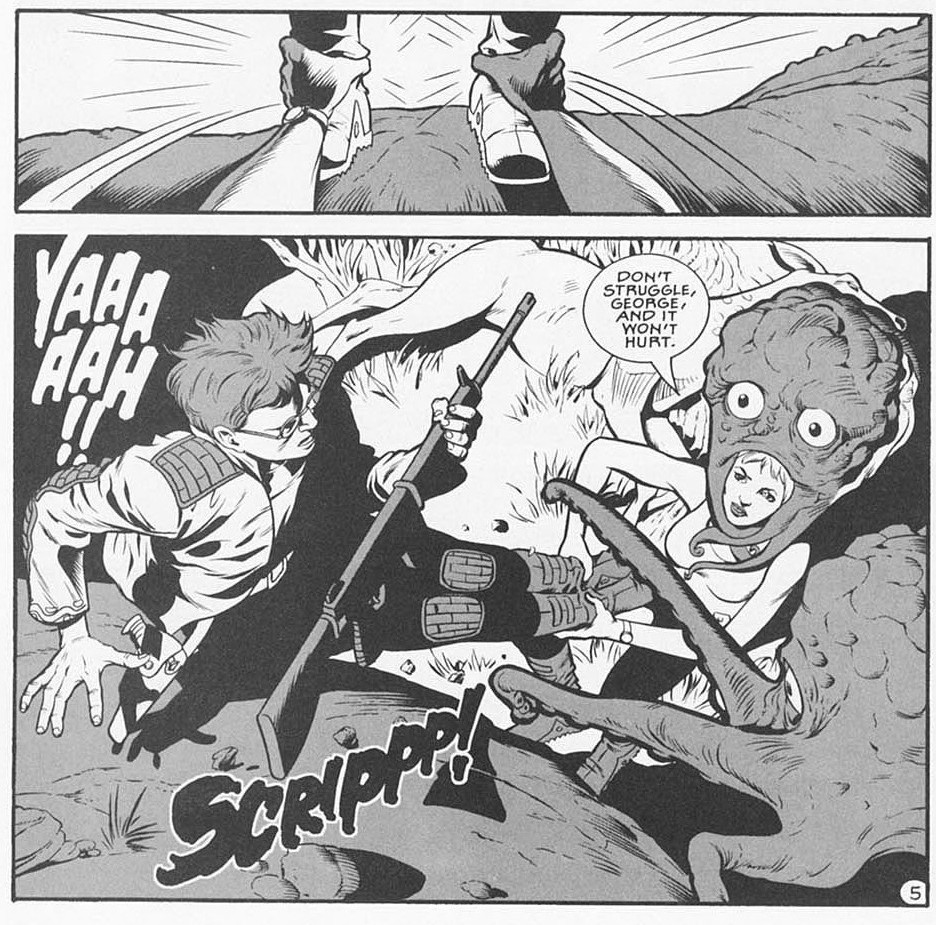
PaulChadwick-WorldBelow2-Deeper-Stranger-Zombies
I would recommend not taking advice from women with a cephalopod on their heads.


PaulChadwick-WorldBelow2-Deeper-Stranger-Zombies2.jpg
The headaches this hat must cause… just think of the neck pressure from having to support 40 pounds of octopus-flesh.


PaulChadwick-WorldBelow2-Deeper-Stranger-Zombies4
Oops, that doesn’t look like it’s going to end well.

Moving along to goofier pastures…

SpongeBob49-Comics
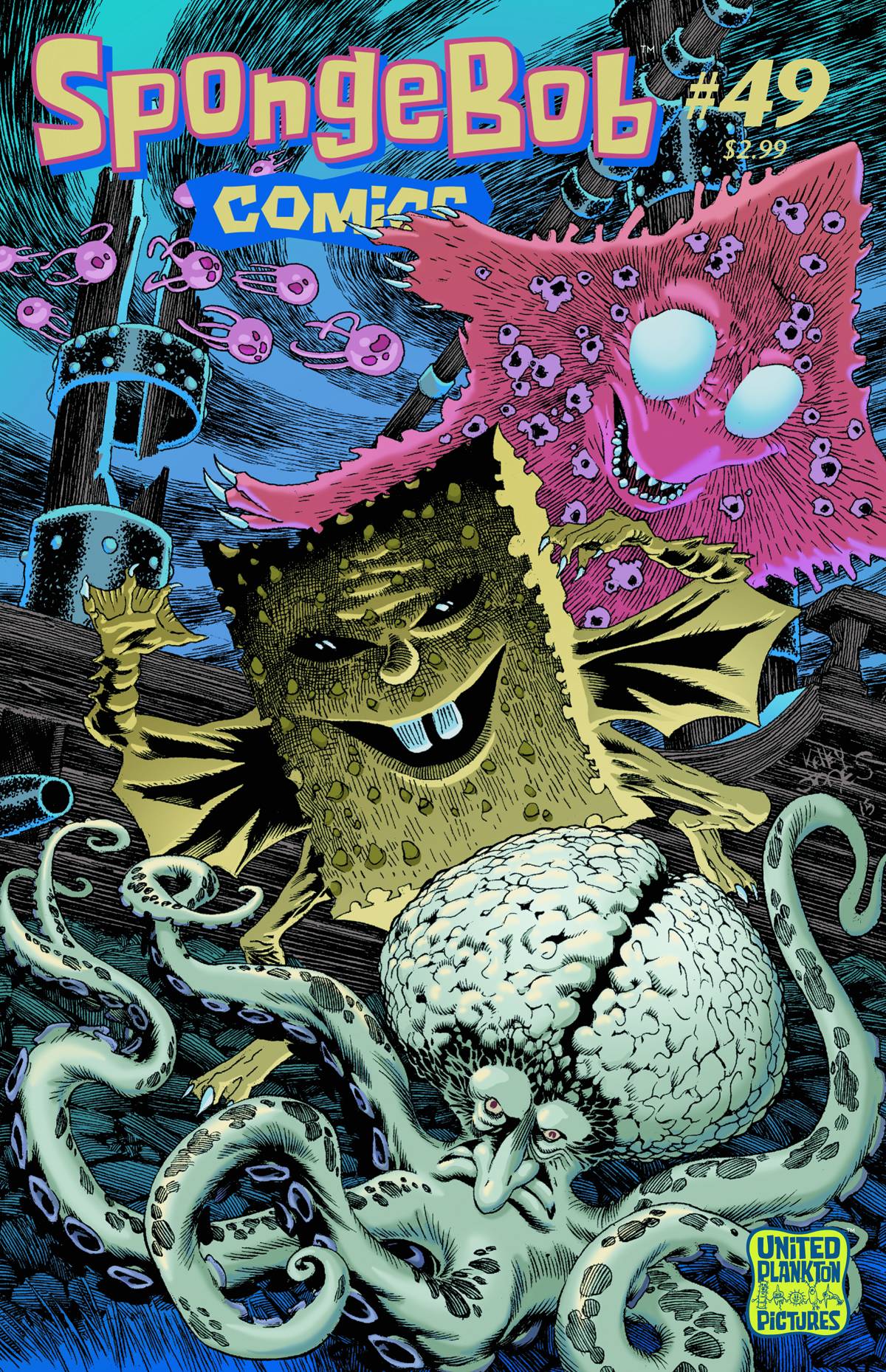
SpongeBob Comics no. 49 (October 2015). Cover by Kelley Jones.

This is perhaps getting ever-so-slightly beyond the parameters of today’s brain theme, but the inside of this issue hides a gem in its otherwise dull pages (although I have to be fair: the stuff is much better than I expected). Behold: Spongebob in Monster Canyon, written by Kaz and drawn by Tony Millionaire, both favourites of this blog. With such excellent parentage, one expects something wonderful, and one is not disappointed.
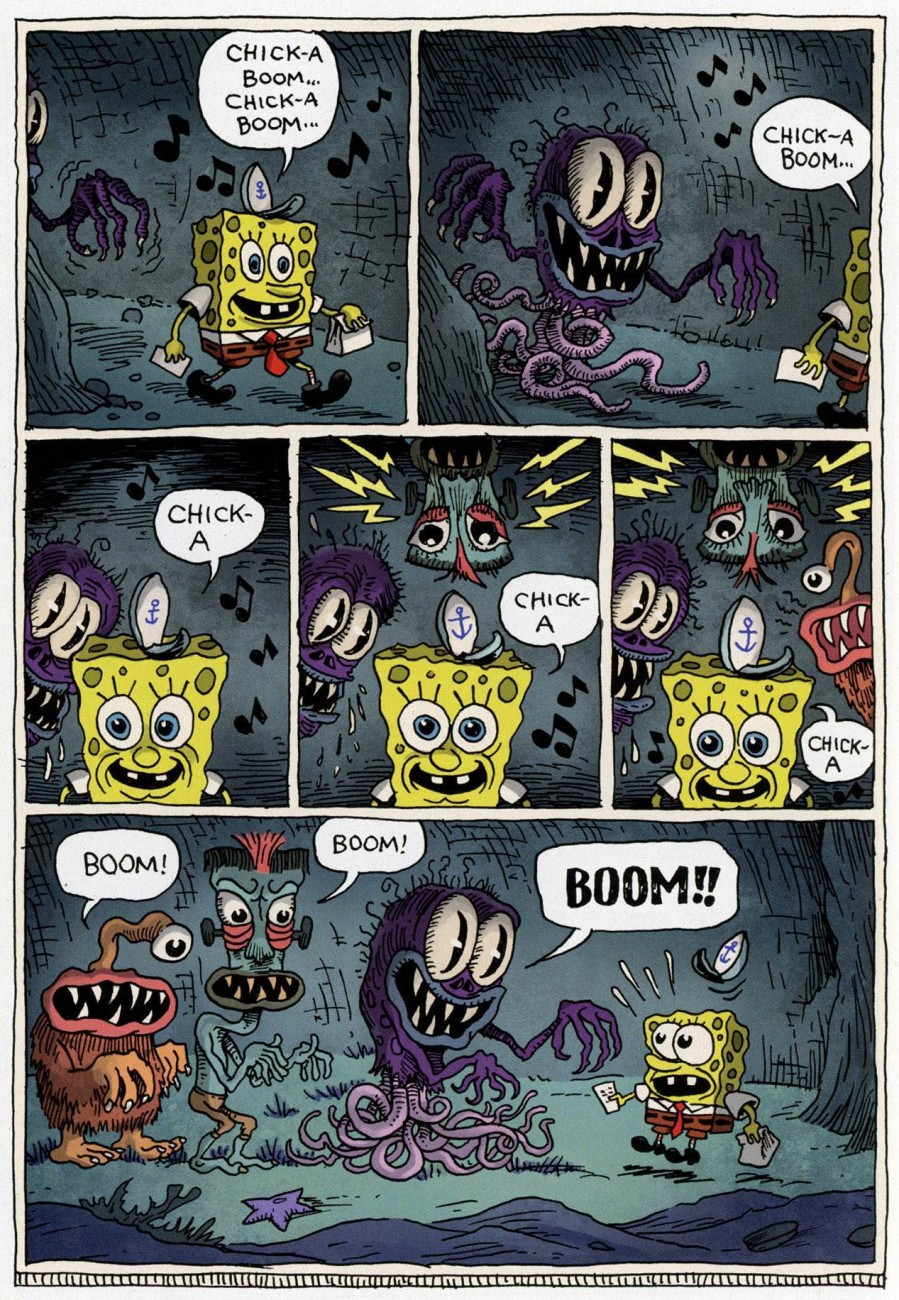
spongebob49-story1.jpg

spongebob49-story2

Keep a close eye on your brains, folks, lest they be transformed into mindless mush by brainy aliens with tentacles with a taste for grey matter. I’d also stay away from TV, just in case… 

∋∈ ds

Tentacle Tuesday: The Menace of the Mechanical Octopus

« The tentacles of  my followers shall seek you out and destroy your swiftly! »

If you like joyous nonsense, this post is for you! As if humanity wasn’t besieged enough by actual cephalopods, evil-but-brilliant minds insist on creating machines with tentacles to horrify and maim. Pain to some, amusement for us!

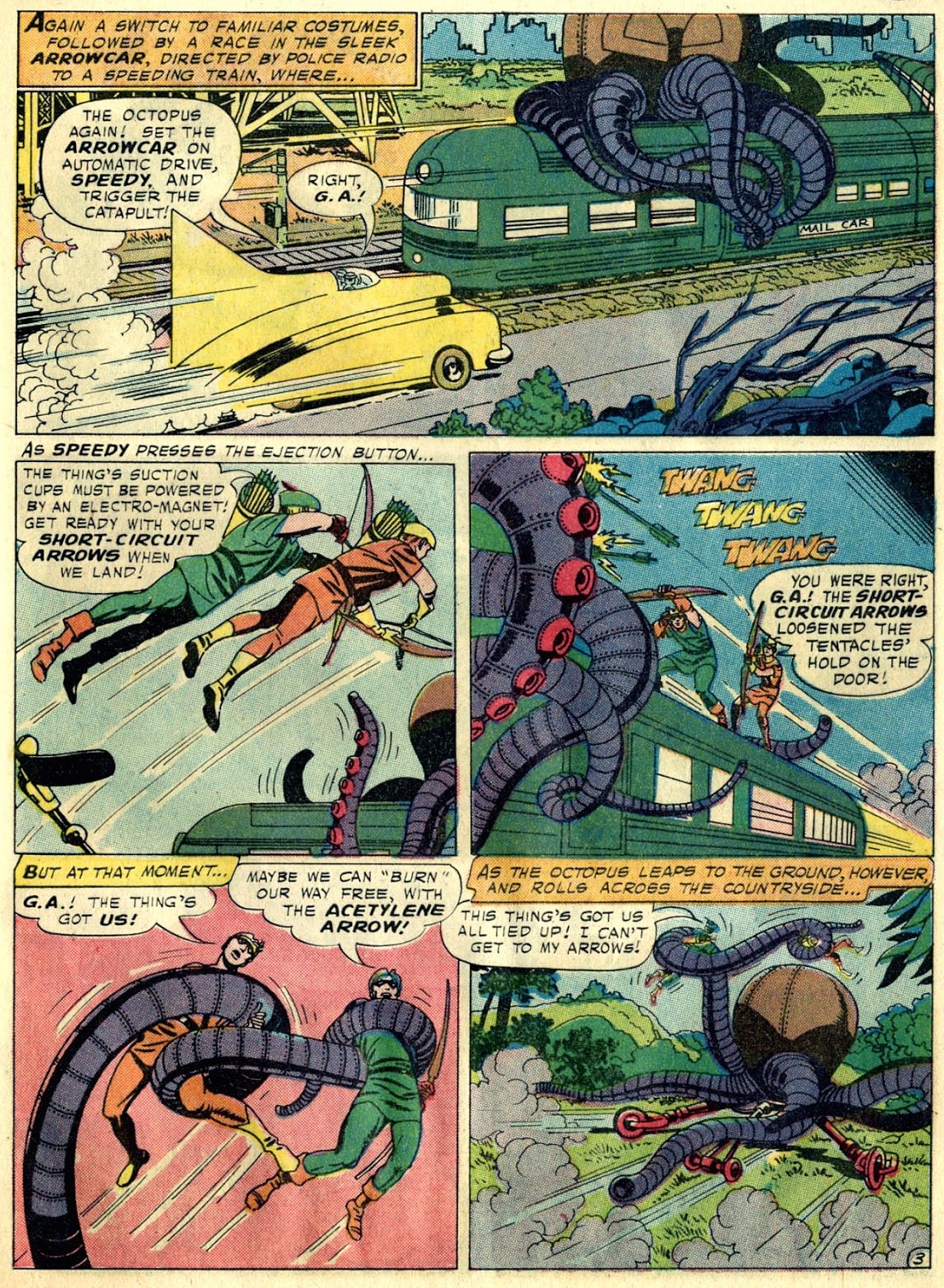
First, some definite eye candy. The following story is not only convincingly illustrated, but also makes some sense on a scientific basis. The Menace of the Mechanical Octopus was scripted by Ed Herron, and pencilled and inked by Jack Kirby. It was published in Word’s Finest Comics no. 97 (October 1958).

World'sFinestComics97-JackKirby-TheMenaceoftheMechanicalOctopus

World'sFinestComics97-JackKirby-TheMenaceoftheMechanicalOctopus2

World'sFinestComics97-JackKirby-TheMenaceoftheMechanicalOctopus3

Now we move on to that goofy-yet-fun series, DC’s House of Mystery.  I will readily admit that I’m not always a fan. At worst, some of the stories published within its pages have plots so random that amusement becomes irritated incredulity. But keep an open mind, and there are also very creative (sometimes “were these people on drugs?” creative) plots to be enjoyed and great art to be relished.

House-of-mystery-96
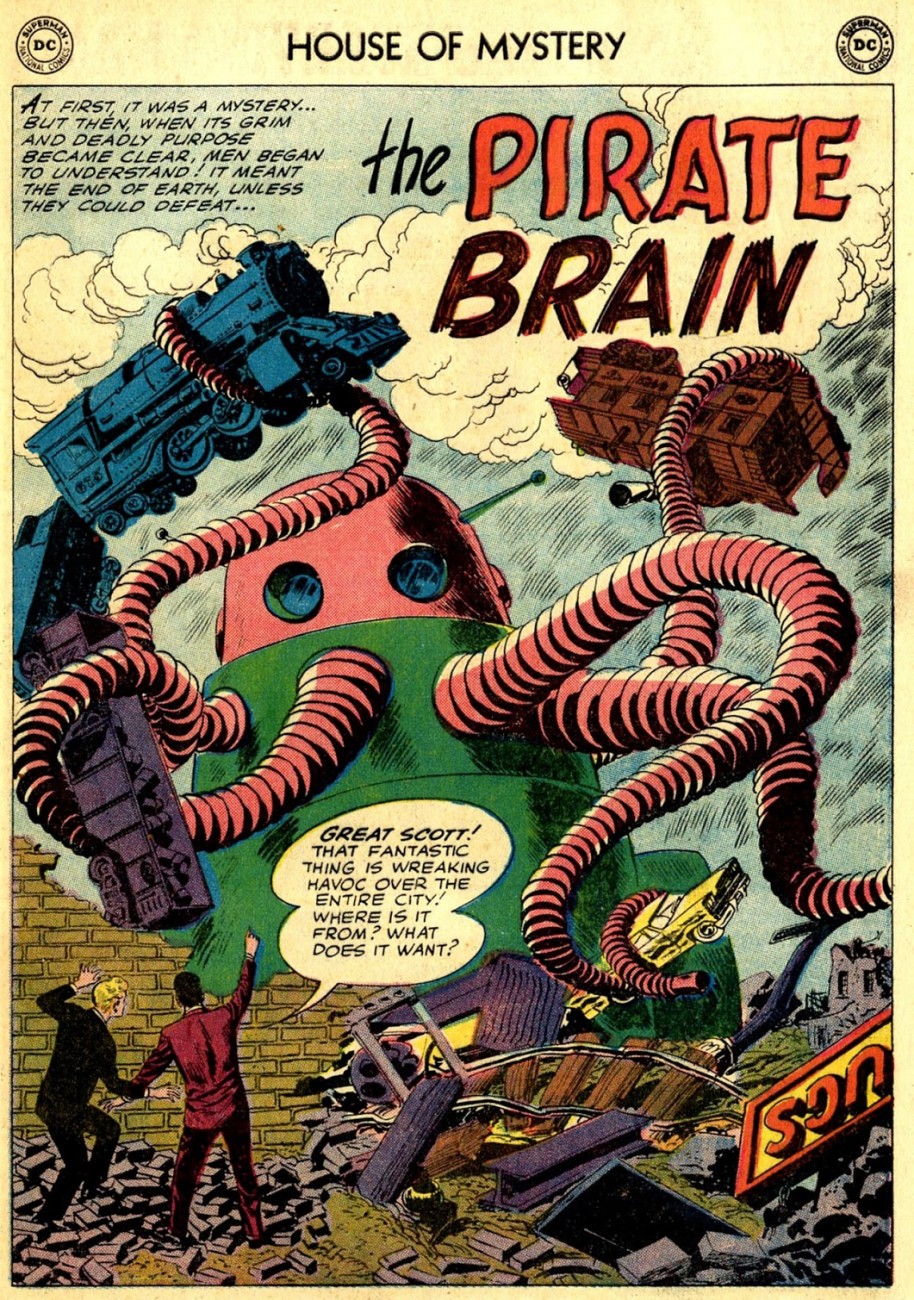
House of Mystery no. 96 (March 1960), cover is pencilled by Dick Dillin and inked by Sheldon Moldoff.

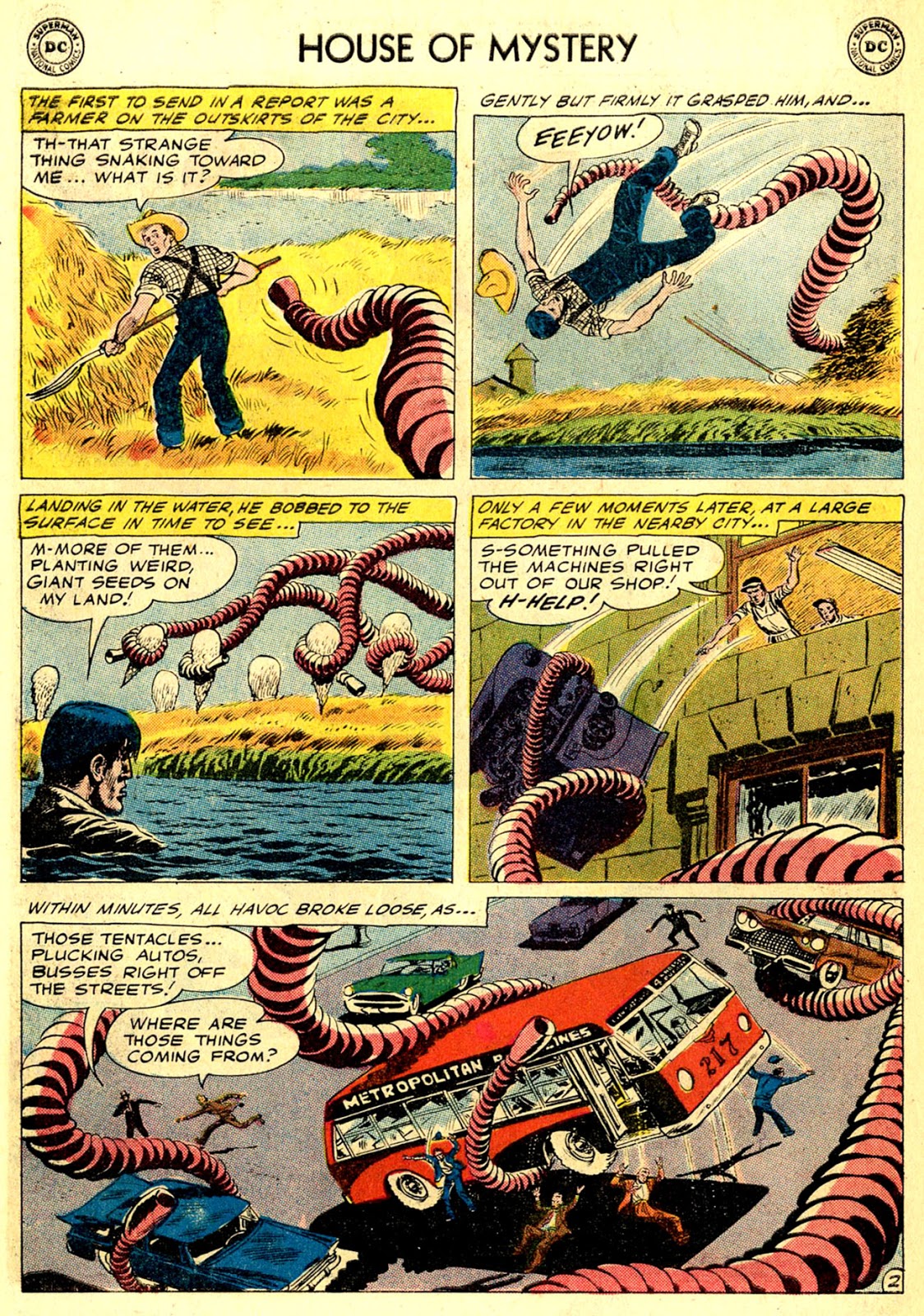
The cover story, The Pirate Brain, was illustrated by Lee Elias:

House-of-mystery-96-thepiratebrain

House-of-mystery-96-thepiratebrain-2
The ‘weird, giant seeds’ look remarkably like ice cream cones.

House-of-mystery-96-thepiratebrain-3

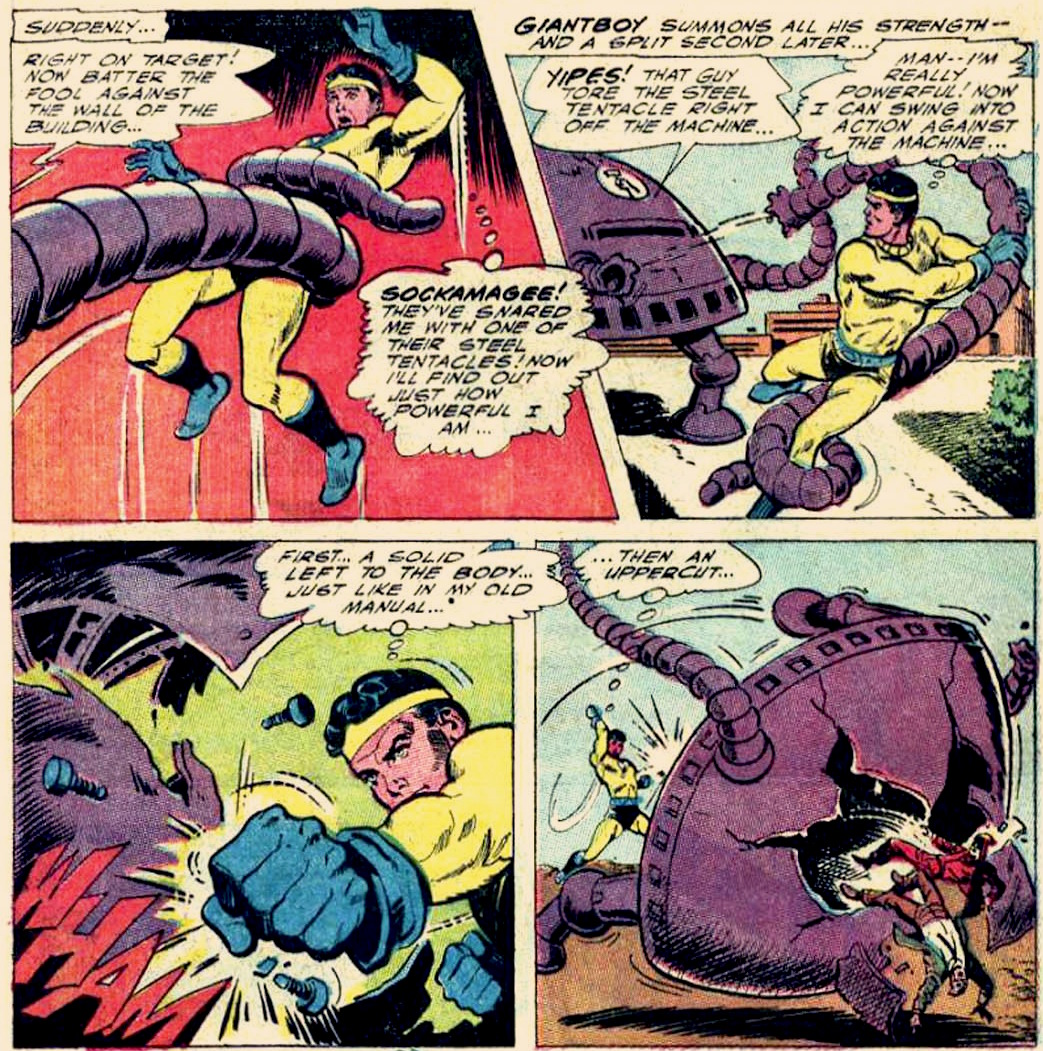
Our next stop concerns Robby Reed, the original owner of the Dial H for Hero gizmo, and his epic (of course) battle with… well, a whole bunch of villains. House of Mystery no. 156 (January 1966) is where he made his début, transforming into the Cometeer, Giantboy and the Mole. So many adventures, all in one (half) issue! This story was scripted by Dan Wood and illustrated by Jim Mooney:

House-of-mystery-156-Giantboy-comeeter-andthe-mole

HouseofMystery156-Giantboy-comeeter-andthemole2

From Giantboy we move on to Colossal Boy, more precisely to Colossal Boy’s One-Man War, scripted by Jerry Siegel, pencilled by Curt Swan, and inked by Sheldon Moldoff. It was published in Adventure Comics no. 341 (February 1966).

Adventures_341-theWeirdoLegionnaire

Adventures_341-theWeirdoLegionnaire2
A story in which everybody talks way too much, and only in clichés.

Skipping ten years ahead, we end up in Marvel territory –

Amazing_Adventures_31-Killraven
Amazing Adventures no. 31 (July 1975). The cover is by Philip Craig Russell with modifications by John Romita; lettering by Gaspar Saladino.

The cover story, The Day the Monuments Shattered, is scripted by Don McGregor and illustrated by Russell:

Amazing_Adventures_31-TheDaytheMonumentsShattered-CraigRussell
Not Russell’s best work, I think we can safely say.

As a final note, here are some indubitably mechanical, yet not-quite-tentacles – a worthy addition to this post, as far as I’m concerned.

Challengers11A
Challengers of the Unknown no. 11 (Dec 1959 – Jan 1960). Cover by Bob Brown, with colours and grey tones by Jack Adler. I love the perturbed flying dinosaur, whose hooves suggest that he has some cow ancestors.

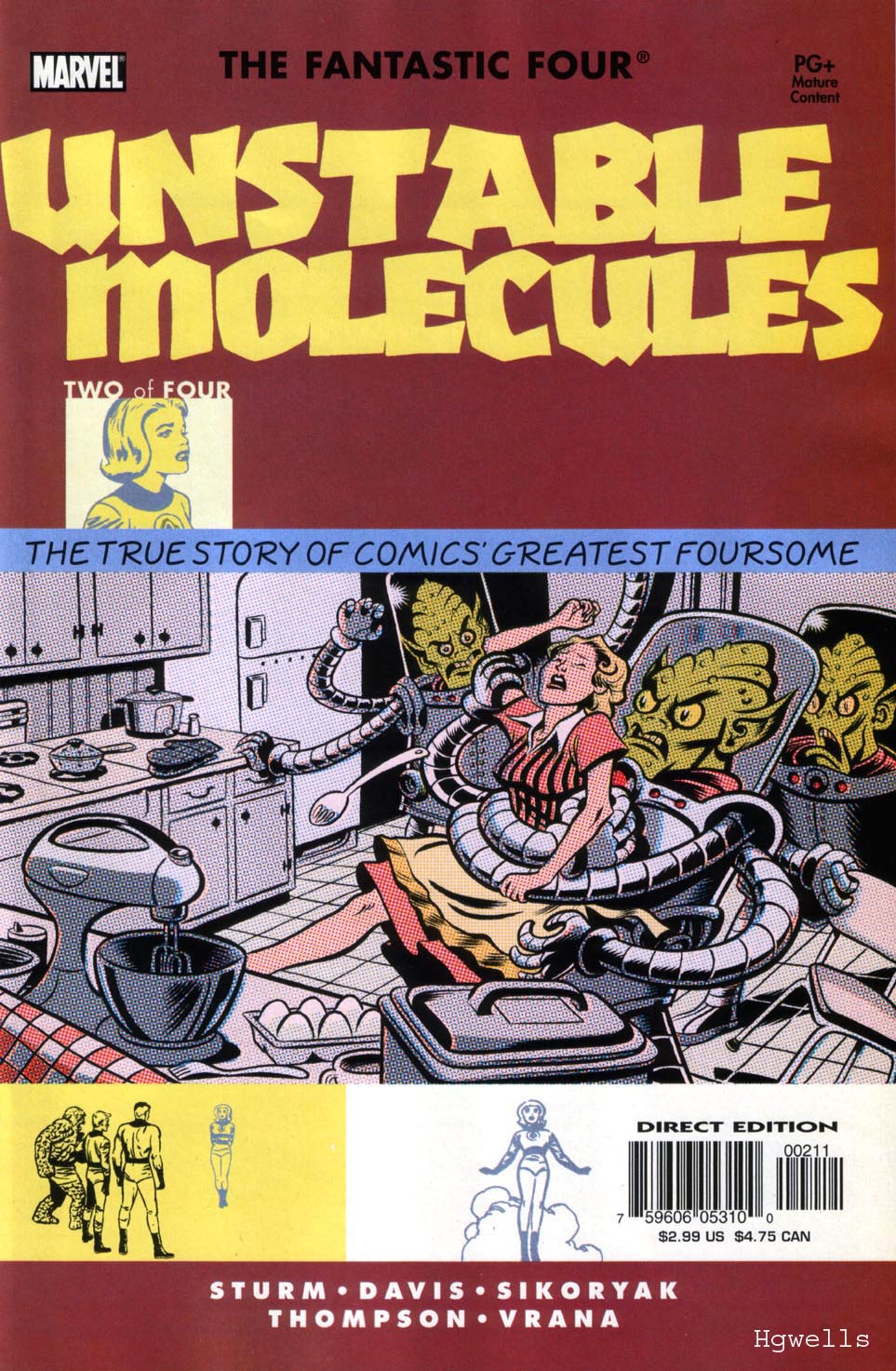
FantasticFour-Unstable_Molecules2
Startling Stories: Fantastic Four – Unstable Molecules no. 2 (April 2003). The cover is by Craig Thompson.

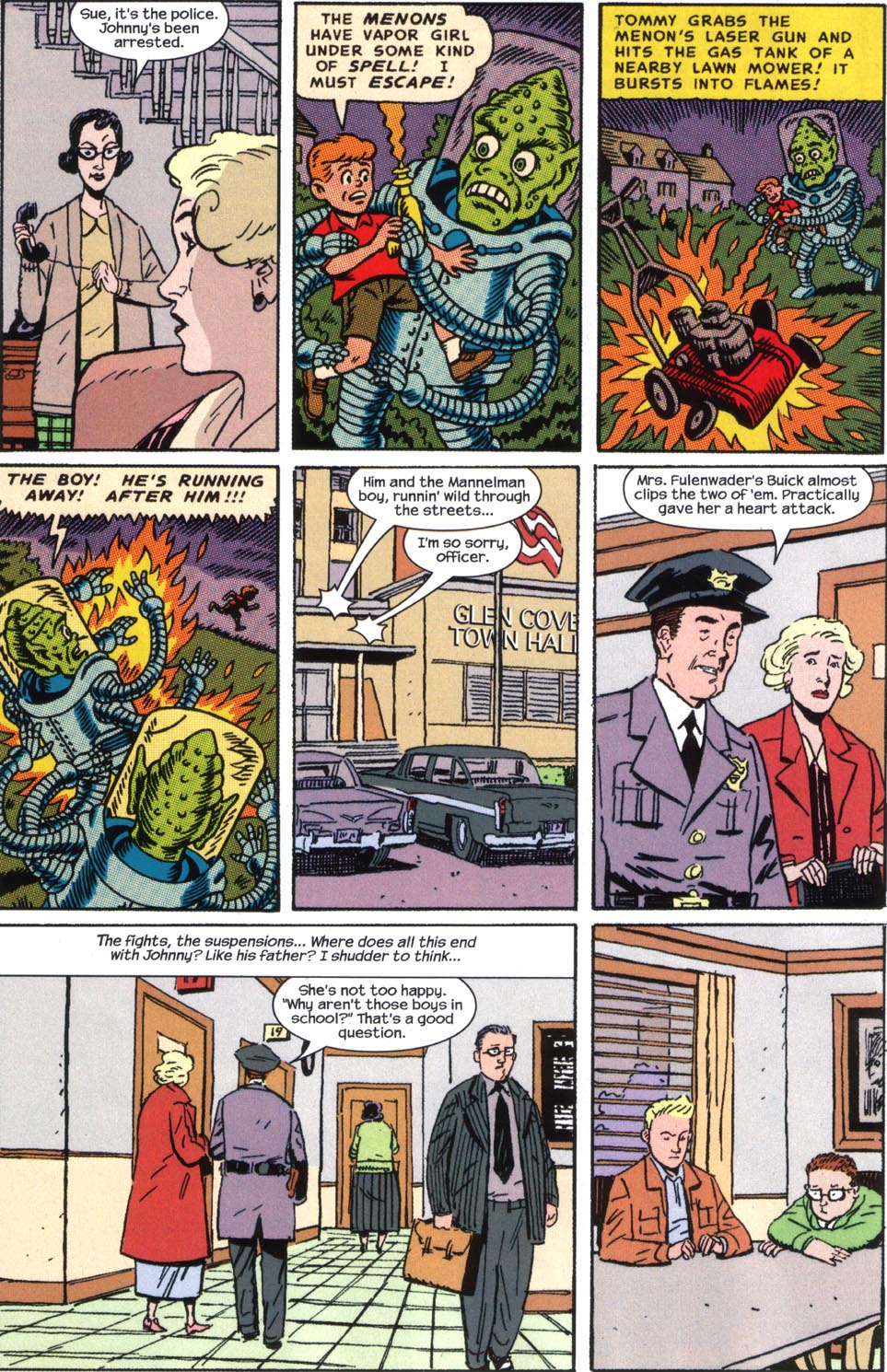
FantasticFour-Unstable_Molecules2-2
Disappearing Acts is scripted by James Sturm and illustrated by Guy Davis with assistance from James Sturm. The Vapor Girl insertions (imaginary alien escapades) are by Robert Sikoryak.

If you liked this post, don’t forget to visit Tentacle Tuesday: Mechanical Tentacles, too!

≈ ds

Tentacle Tuesday: C’est du méli-mélo

Tentacle Tuesdays have been a fixture of this blog since the very beginning (which is to say September, 2017). I am not about to run out of material, but over the years I do tend to accumulate odd and ends that don’t neatly fit into a theme. Though I know of at least one faithful reader of this blog who doesn’t like it much when a TT entry is all over the place, hopefully there’s something in here for everyone. Just consider it the equivalent of spring cleaning in my archives!

TC_SubmarineMateraA
Panel from Treasure Chest Vol. 19 no. 6 (Nov. 21, 1963). Written by Dave Hill and illustrated by Fran Matera. Everybody in this panel is adorable, but the octopus is especially fetching, I think.

TentacleMischief
A cartoon by Rowland Wilson, from Playboy‘s June, 1980 issue. Several tons of meat are going to need a lot of butter. It would be much more economical for the creature to eat the astronaut!

MarvinSewerDeptA
The author of this charming cartoon is Marvin Townsend, the subject of a whole Halloween Countdown post by co-admin RG. That’s a bigger honour in this parts than being a Tentacle Tueday master, as TTs come around once a week, and the Halloween count-down takes place once a year (to be more precise, for 31 consecutive days and not one day more).

potholes-richard-thompson
This tentacled-monster-pothole was dreamed up by Richard Thompson and appeared in his Poor Richard’s Almanac. It would make being stuck in traffic jams a lot more entertaining, don’t you think?

Service_Wolf_KrakenA
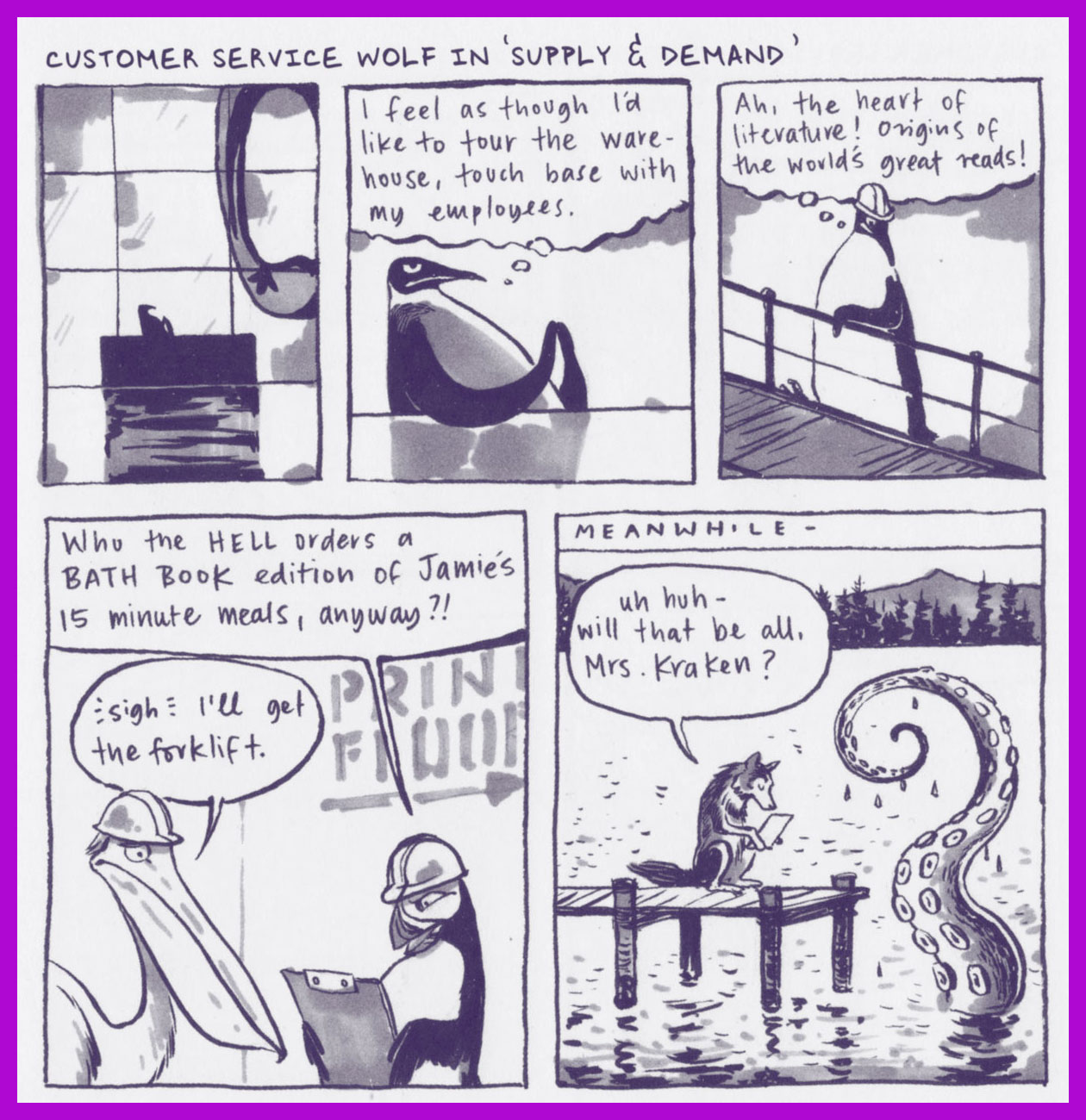
Customer Service Wolf is a hilarious comic strip by Australian illustrator Anne Barnetson, who has worked in a bookstore for long enough for have encountered all kinds of annoying customers. Anyone who has toiled in retail will know that most people are insane, but a bookstore is a backdrop for a very special kind of lunacy.

Tom-the-dancing-bug-octopus
Ruben Bollings Tom the Dancing Bug can be pleasantly surreal. If there are tentacles involved, so much the better!

TallTalesWitchA
I’ve been following British sculptress Caroline McFarlane-Watts and her company Tall Tales Productions for a while. She makes incredibly detailed sculptures of all sorts of things, most notably of witches and their ménage (take a discreet peek at their activities on her website, but  be careful, they’re cantankerous old bats). McFarlane-Watts also draws, sometimes comics. This pink (take my word for it) octopus is a witch’s best pal!

Thanks for sticking around while I got things off my chest!

∼ ds
Tentacle Tuesday: Paging Doctor Strange

It’s difficult to impress me with a magician, unless we’re talking real-life magicians with a strong skeptical streak, like James Randi or Ricky Jay. Given that the concept of a person who has access to ‘mystical’ forces and who can manipulate beings (supernatural or otherwise) has been around for as long as humans have been able to communicate with one another, be it through grunts and squeals, it’s pretty damn difficult to come up with a new wrinkle to this old tired nag. Having no previous experience with the series, I had no high expectations for Steve Ditko‘s Doctor Strange, but I was pleasantly surprised. I liked the earnest, solemn Dr. Strange from the beginning, but it’s Ditko’s mind-boggling, soaring surrealistic landscapes that bloomed over time that really impressed me. It’s not an easy feat to make the reader feel like he’s being transported into another dimension, but Ditko pulled it off beautifully, making us feel Dr. Strange’s disorientation as he gets sucked into yet another psychedelic terrain.

To quote comics historian Mike Benton:

The Dr. Strange stories of the 1960s constructed a cohesive cosmology that would have thrilled any self-respecting theosophist. College students, minds freshly opened by psychedelic experiences and Eastern mysticism, read Ditko’s Dr. Strange stories with the belief of a recent Hare Krishna convert. Meaning was everywhere, and readers analyzed the Dr. Strange stories for their relationship to Egyptian myths, Sumerian gods, and Jungian archetypes.
What does this have to do with the current post? Precious little, actually. I’m a firm believer of not recycling dramatis personae past their due by date (defined, of course, as that time when their creator/author moves on to greener pastures, by design or because he has to). Doctor Strange moulded by other hands loses his raison d’être and becomes just another Joe in a funny cape, uttering ineffable, paranormal gobbledygook. Oh, sure, he’s aided by more mystical artifacts than before. How exciting… if you are excited by gadgets and gimmicks, that is.

He also encounters a lot of tentacles, apparently the most mystical, otherworldly apparitions *this* crew could think of. Welcome to 70’s (for the most part) Doctor Strange!

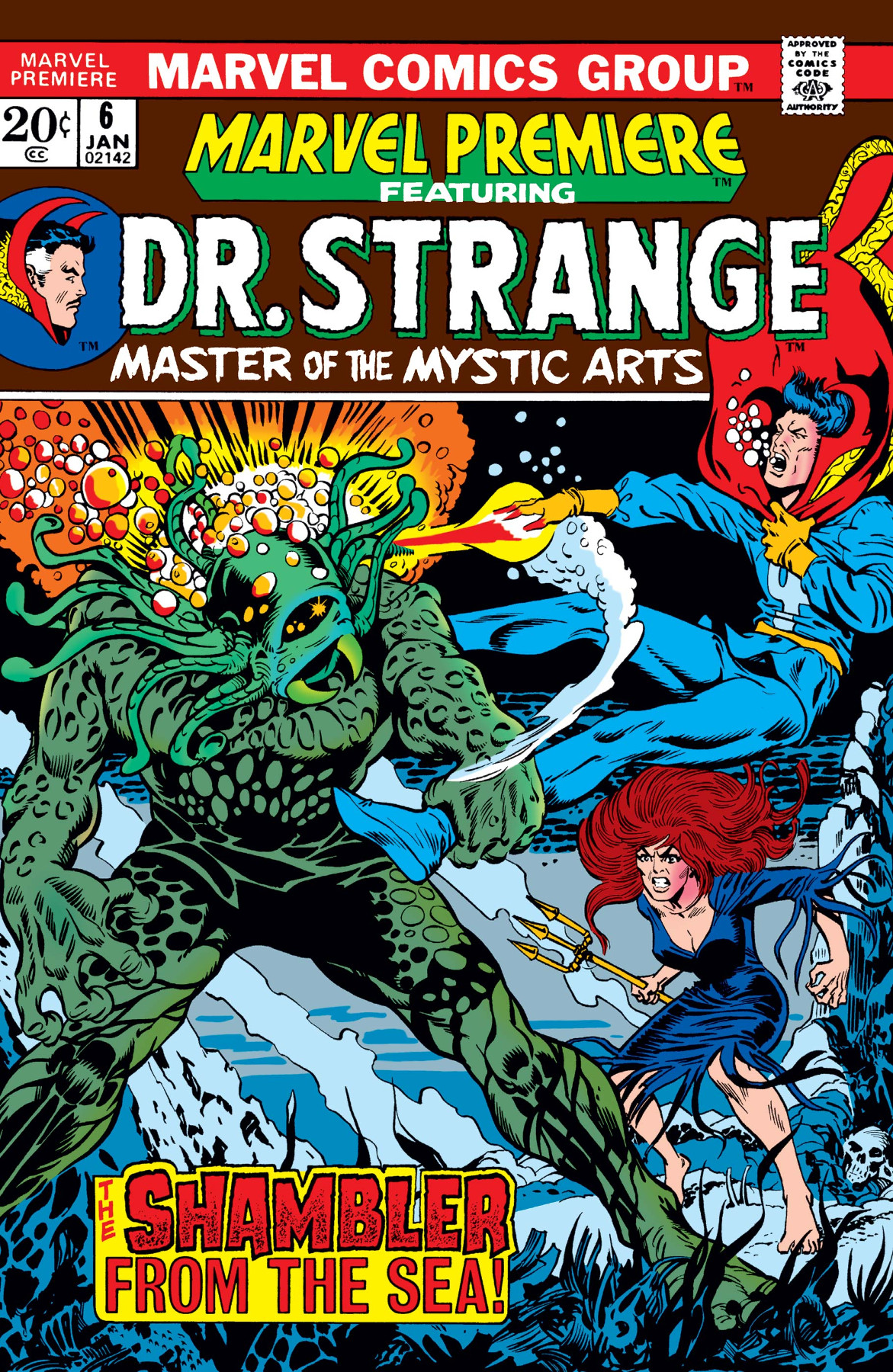
MarvelPremiere6
Marvel Premiere no. 6 (January 1973). Cover by Mike Ploog and Frank Giacoia.

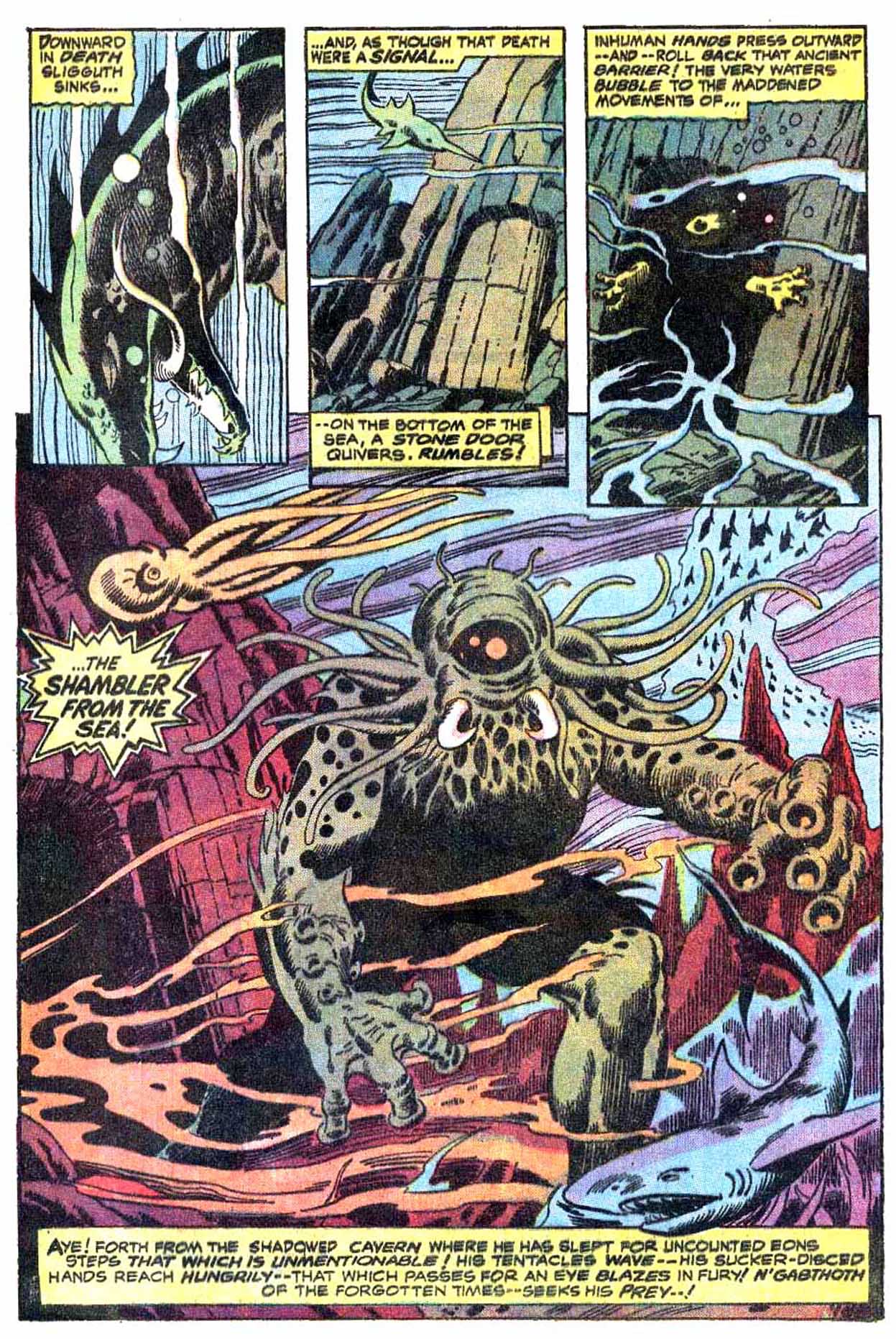
The Shambler from the Sea is scripted by Gardner Fox, pencilled by Frank Brunner, and inked by Sal Buscema and Ralph Reese:

MarvelPremiere6-The ShamblerFromTheSea

MarvelPremiere6-The ShamblerFromTheSea-2

DoctorStrange1
Dr. Strange no. 1 (June 1974). Cover by Frank Brunner.

Through an Orb Darkly is scripted by Steve Englehart and Frank Brunner, pencilled by Frank Brunner and inked by Dick Giordano:

DoctorStrange1-ThroughanOrbDarkly

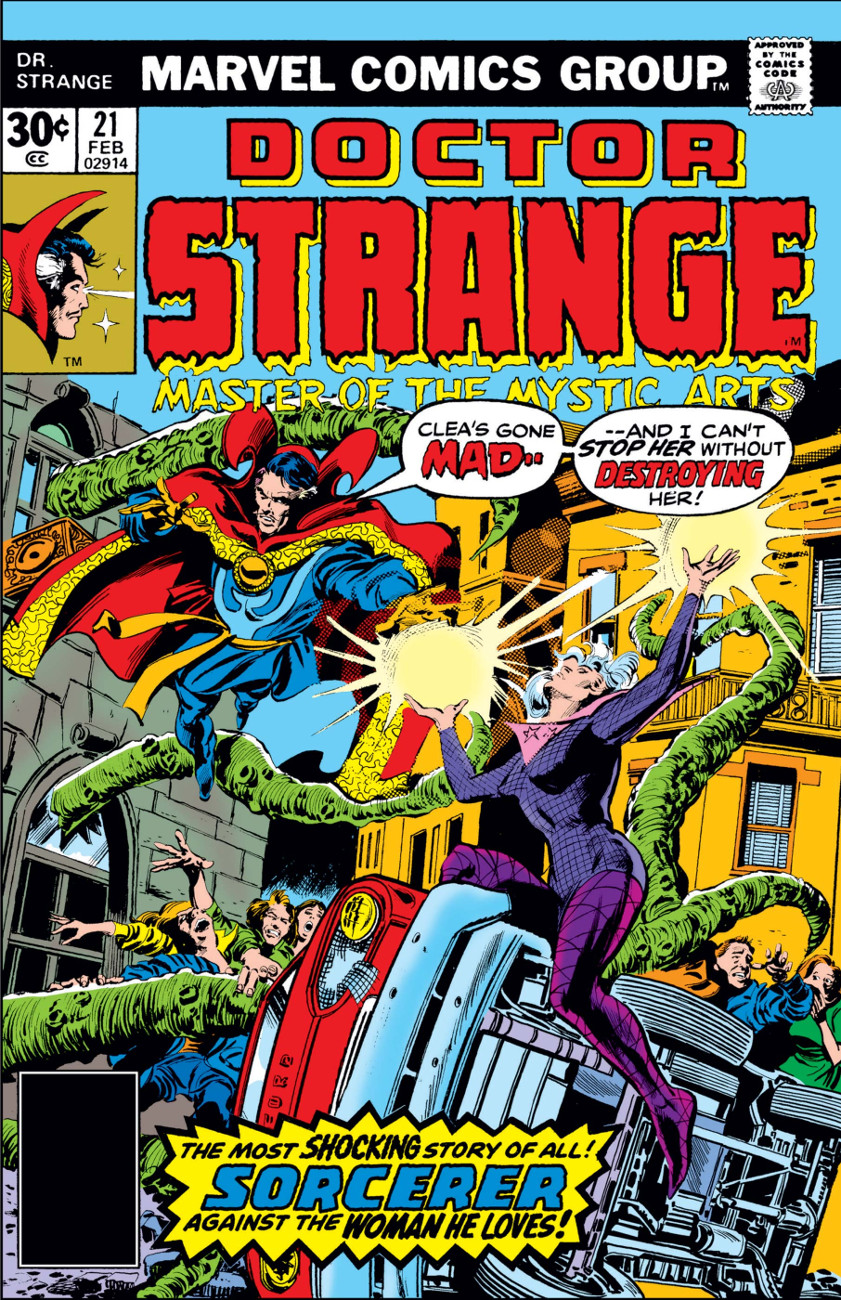
DoctorStrange21
Doctor Strange no. 21 (February 1977). Cover pencilled by Gene Colan and inked by Tom Palmer. Is Clea basically humping the (impeccably, gleaming clean) side of the car, basically?

Mind Trip!, scripted by Marv Wolfman and drawn by Rudy Nebres, was published in Doctor Strange no. 22 (April 1977):

DoctorStrange22-MindTrip
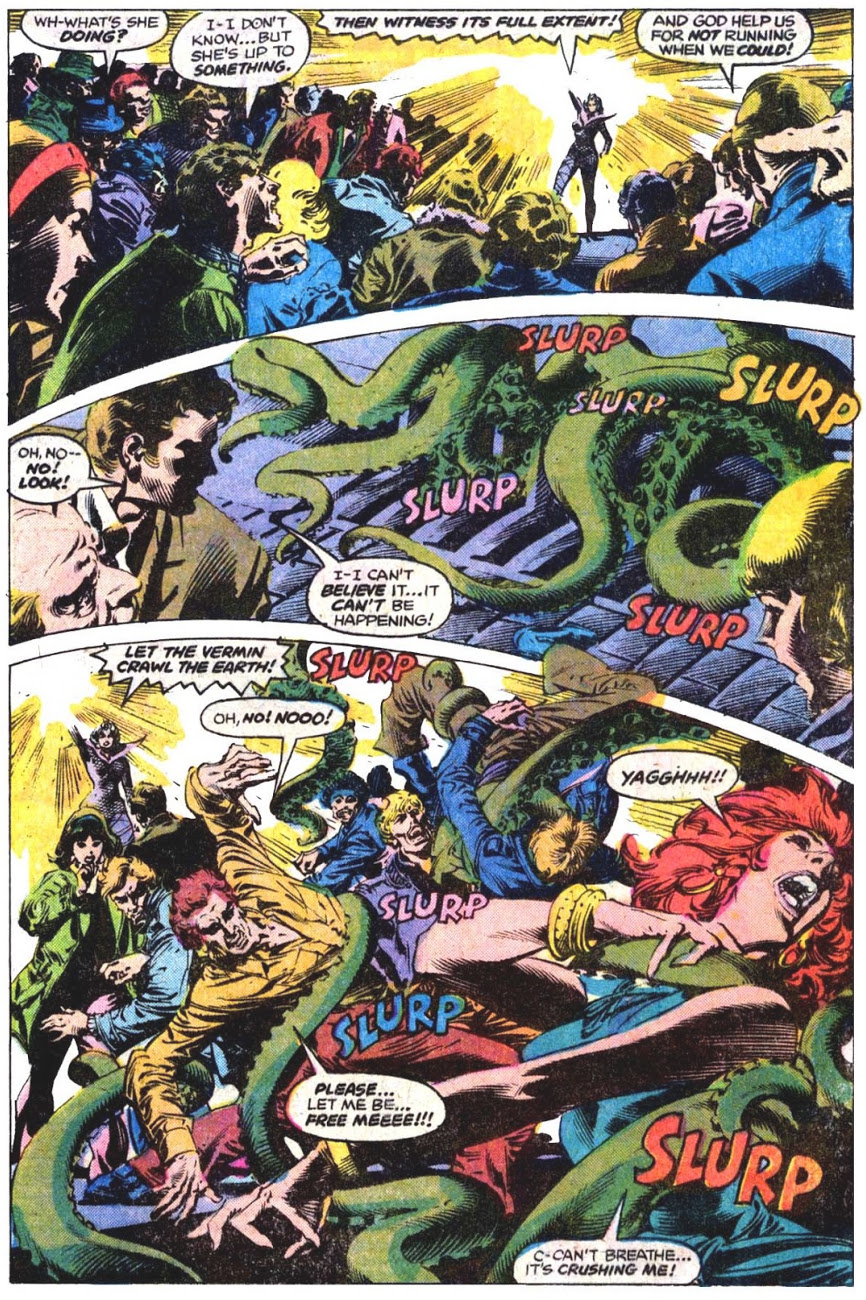
That’s quite a group scene *slurp slurp slurp*

DoctorStrange22-MindTrip-2
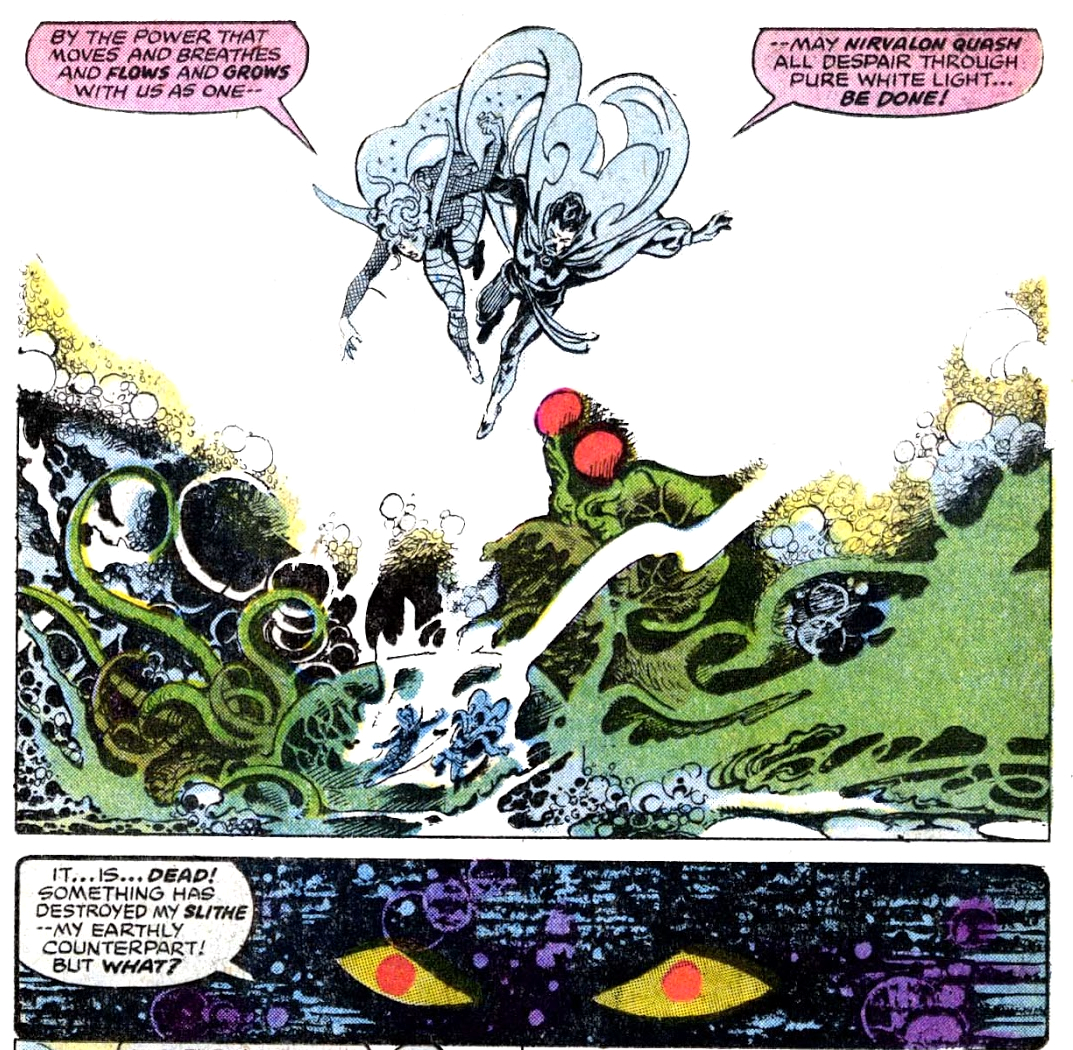
Why does your image haunt me? Why are my boobs perkily gravitating towards the light?” I can’t even muster a passing interest in figuring out what’s happening in this mess.

DoctorStrange23
Doctor Strange no. 23 (June 1977). Cover pencilled by Gene Colan and inked by Tom Palmer.

DoctorStrange30
Doctor Strange no. 30 (August 1978). Cover by Frank Brunner.

A Gathering of Fear! is scripted by Roger Stern and illustrated by Tom Sutton:

DoctorStrange30-AGatheringofFear-TomSutton

DoctorStrange30-AGatheringofFear-TomSutton-2
I like Tom Sutton, a Tentacle Tuesday master on this blog.

doctorstrange45
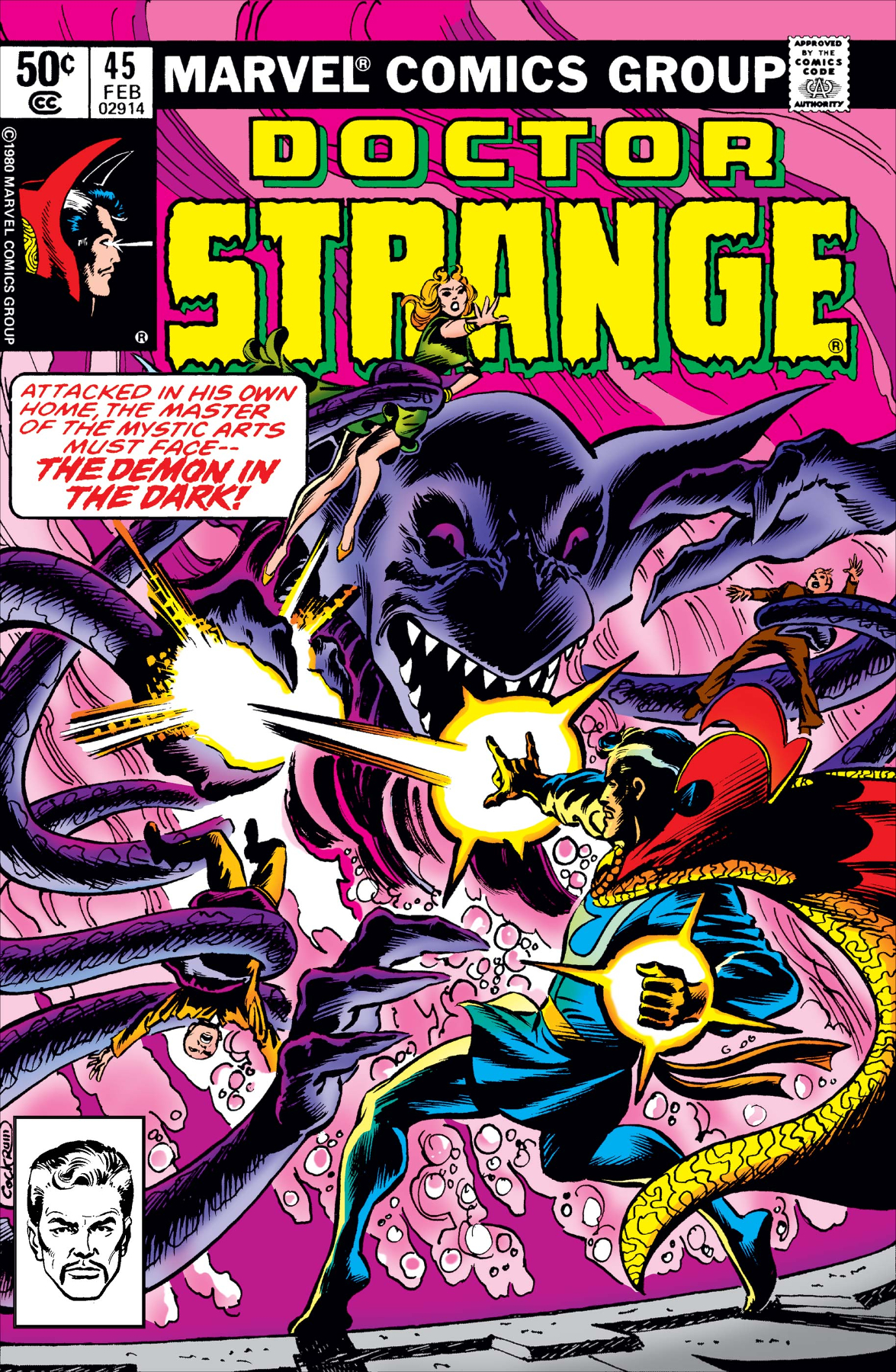
Doctor Strange no. 45 (February 1981). Cover by Dave Cockrum and Steve Leialoha.

Wizard of the West Village is scripted by Chris Claremont and pencilled/inked… by a whole bunch of people:

doctorstrange45-WizardoftheWestVillage

doctorstrange45-WizardoftheWestVillage-2

… and there you have it!

∼ ds

Tentacle Tuesday: Get Yer Wellies On!

British comic weeklies are a world unto themselves, with their own styles and jargon. A few books have been written on the subject, and a handful of dedicated bloggers have endeavoured to provide interested readers with cover and story scans, as well as historical information, but overall this is largely an unmined field. I don’t know if this situation is caused by a relative lack of interest, or simply because there is just so much material to cover (the most popular of weeklies have thousands of issues). The other problem is that for reasons of mercantile interests (i.e. sales), a lot of these weeklies would be merged with other weeklies, sometimes keeping a double name and occasionally getting renamed altogether, every so often de-merging to continue under the original name to be cancelled altogether or perhaps merge again. Short of being a scholar specialising in this field, keeping track of all this is about as daunting as attempting to interpret this extremely confusing roadway sign.

I’m just a dabbler, tentatively poking a toe into these somewhat intimidating waters once in a while. So far, tentacle-wise, we’ve talked about Eagle’s Dan Dare, the forgotten British master Roy Wilson, and 2000 A.D., among other things… you can see all our British posts here.

The two most popular British comics are deemed to be The Beano and The Dandy, both weeklies for children published by D.C. Thomson (I really have to force myself to not add a p to that) starting in the 1930s. The former reached its four thousandth (!) issue in August 2019, and the latter counts as the world’s third-longest running comic (spot number on is taken by Italian Il Giornalino, and spot number two belongs to Detective Comics).

It’s pretty difficult to find high-res scans of most issues of any of the weeklies discussed in this post, so I was definitely limited by that. However, I believe I still managed to cobble together a fairly representative selection, with the help of co-admin RG who had to unwarp, re-colour and trim the heck out of some of these covers. Thanks, partner!

Hotspur751
The weekly The Hotspur was published by D.C. Thomson. From its inception in 1933 up until 1959, it was a boys’ story paper, containing text stories and illustrations but no comic strips. It became a comic magazine in October 1959, with the last issue published in January 1981. This is The Hotspur no. 751 (March 9th, 1974).

Hotspur778
Hotspur no. 778 (September 14th, 1974).

Hotspur826
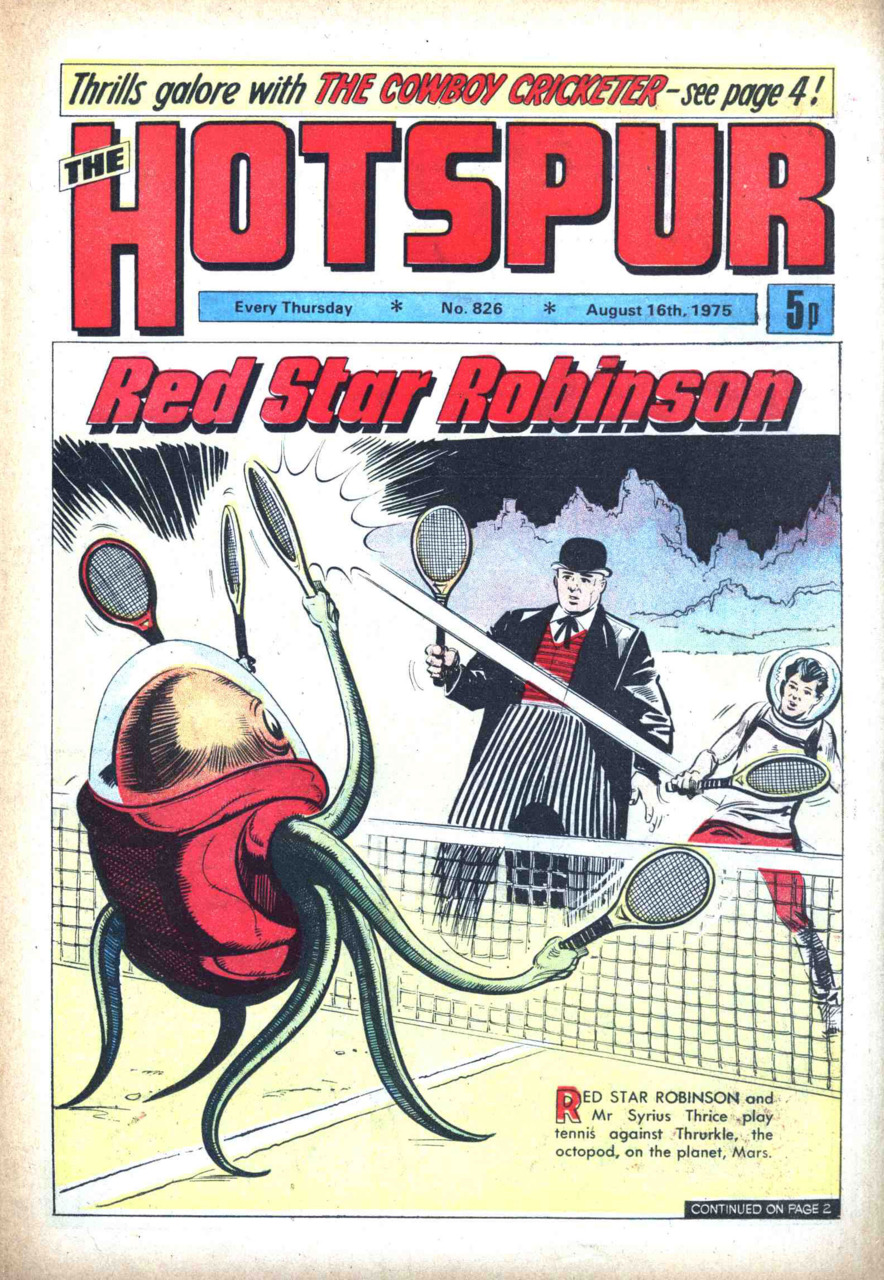
The Hotspur no. 826 (16th August, 1975).

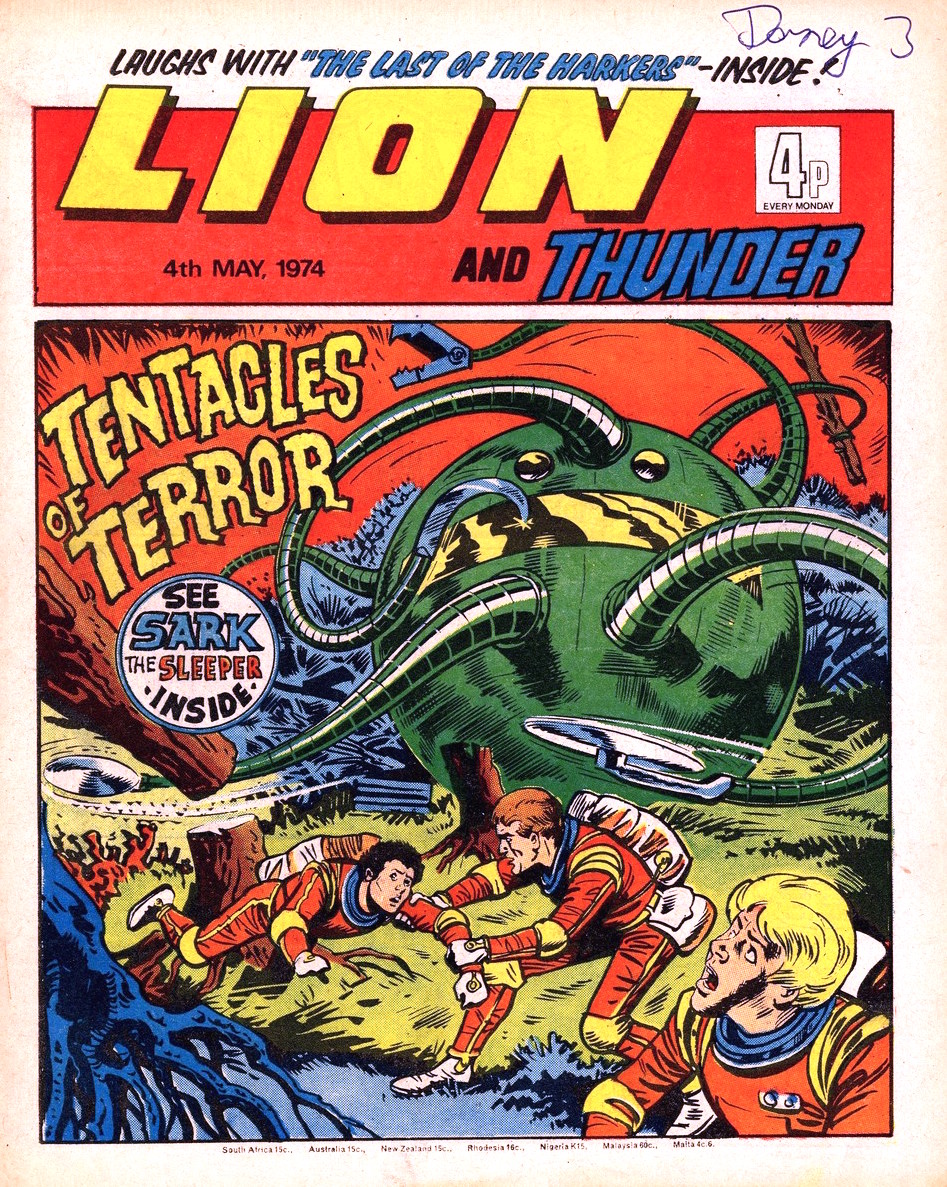
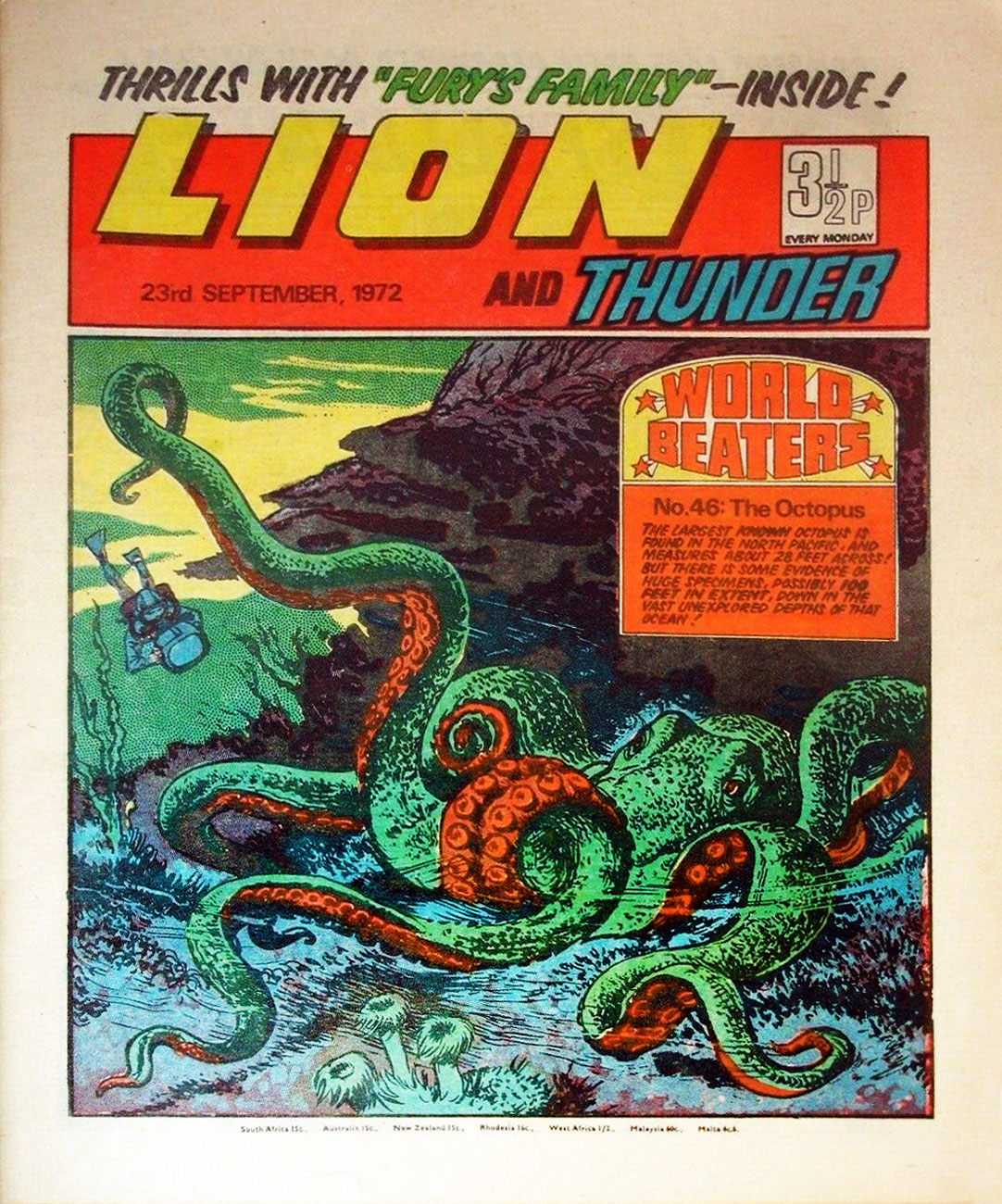
Lion, published by IPC, was brought to life to compete with the Eagle periodical, which was the home of ever-popular Dan Dare. For proper competition, this new weekly publication needed a science-fiction romp, too, and that’s how Captain Condor – Space Ship Pilot got started.  In 1969, the Lion gobbled up its rival Eagle (yum) and they merged into Lion & Eagle (sounds like a pub, not a publication! – RG). As for Lion and Thunder, that was the result of the periodical Thunder (also published by IPC) getting incorporated into Lion in 1972, after only 22 issues. I guess “Thunder Lion” would have put the cart before the horse, or the minor, unsuccessful periodical ahead of the major one.

LionandThunder1974-May4
Lion and Thunder no. 4 (4th May 1974). Take a look inside this issue at the Great News for All Readers! blog.

Lion_and_thunder27A
Lion and Thunder ( 27th November 1971).

Lion_and_Thunder23A
Lion and Thunder no. 23rd September 1972.

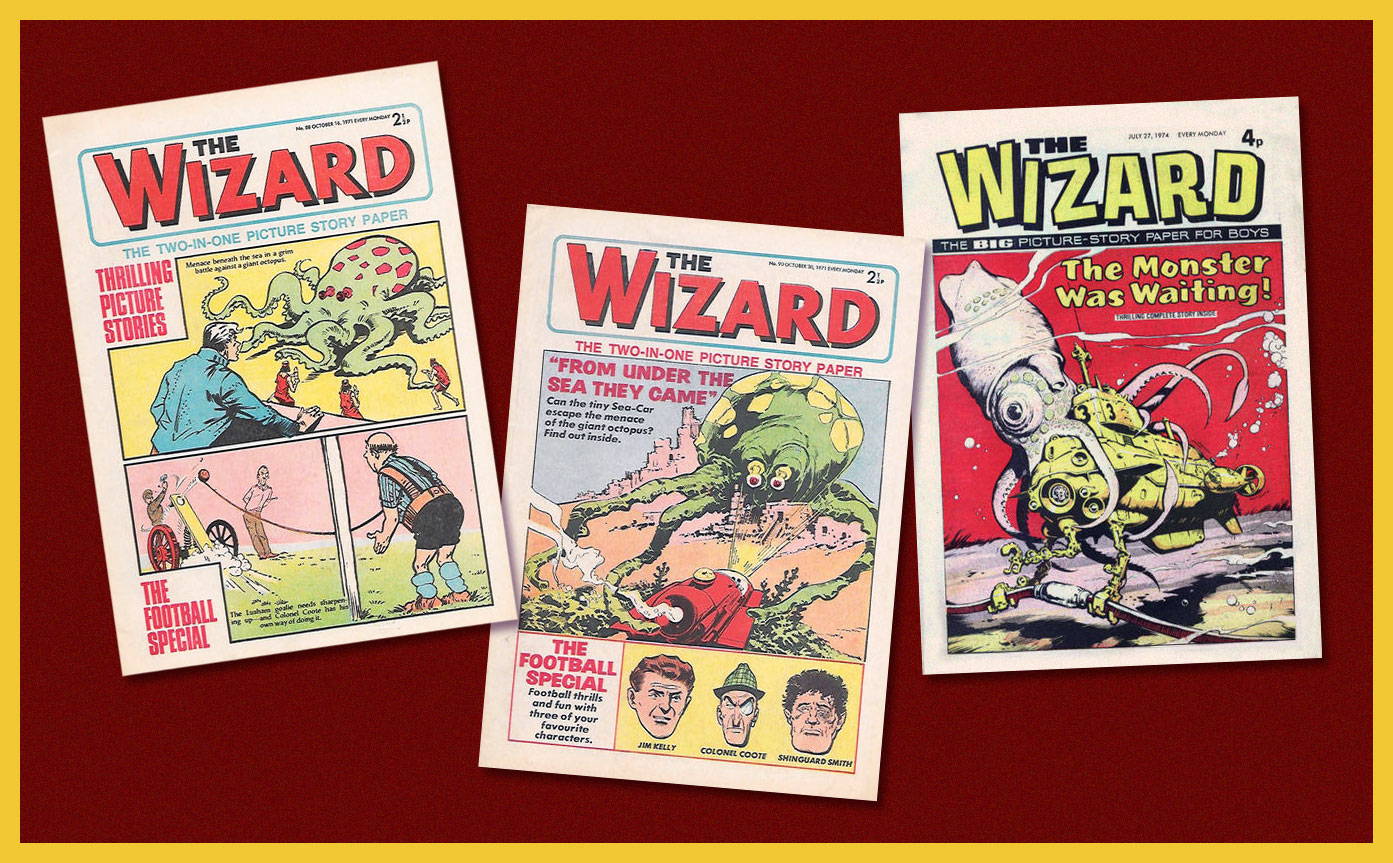
The Wizard was a weekly “story paper” launched in September 1922, published by D.C. Thomson. It got as far as issue no. 1970, merging with The Rover in 1963 and continuing under Rover and Wizard for a while. The Wizard was relaunched in 1970, and endured until 1978.a while. The Wizard was relaunched in 1970, and.

TheWizardCollageA
 The Wizard no. 88 (16th October 1971), The Wizard no. 90 (30th October 1971) and The Wizard no. 233 (27th July 1974). I was only able to find these covers in low resolution, sorry!

Last (but not least, as they say), no post of this type would be complete without a couple of issues of the aforementioned Dandy!

TheDandyCollageA
The Dandy no. 2109 and The Dandy no. 2138.

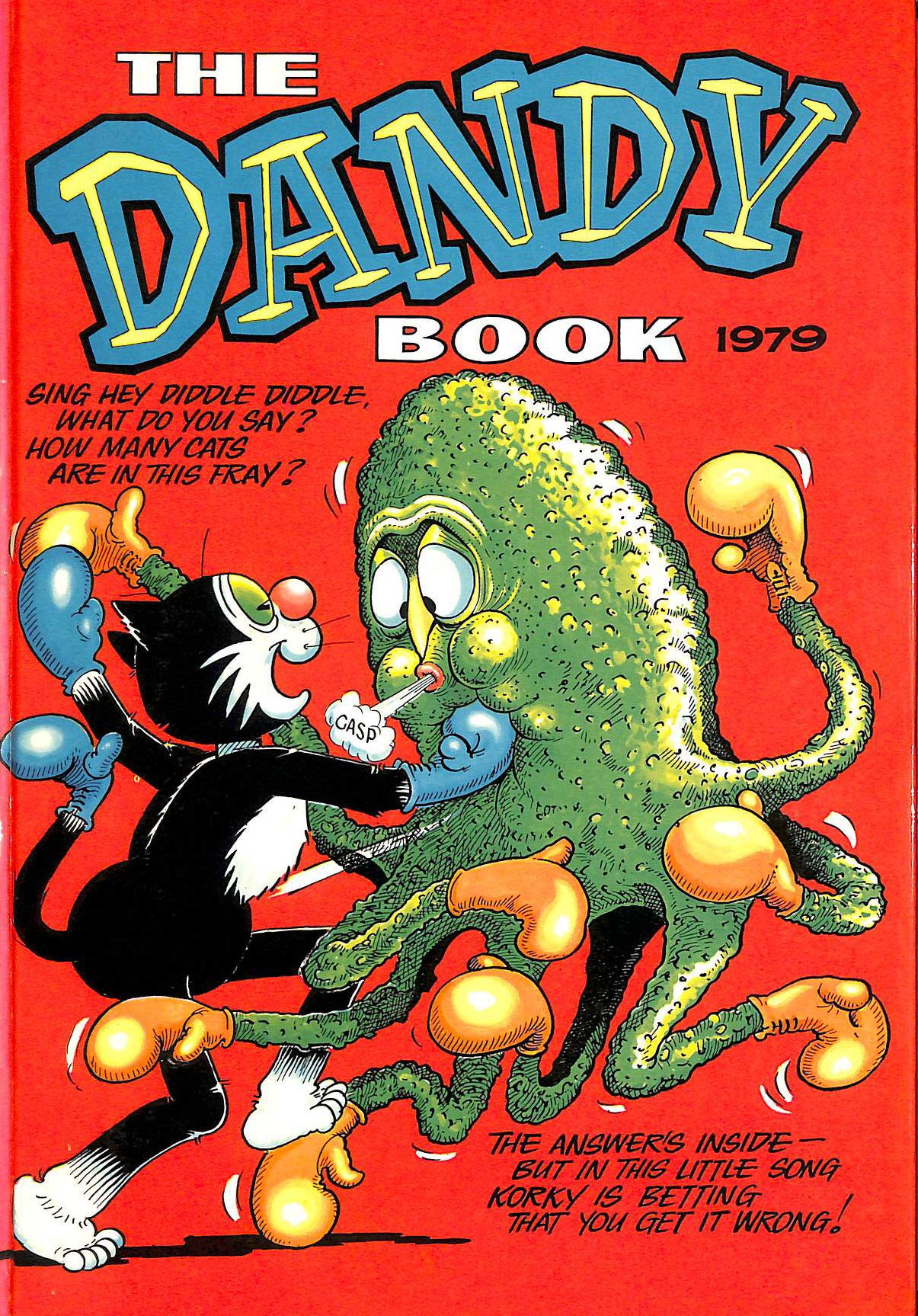
TheDandyBook1979
Good old Korky!

Should your organism require more British weeklies, give Great News for All Readers a shot, or a-fix your peepers on Blimey! The Blog of British Comics, both excellent sources of the stuff.

∼ ds

Tentacle Tuesday: Chanoc, on Land and (Mostly) Sea

« Chanoc was set in the fictional Mayan fishing village of Ixtac somewhere near Veracruz. The heroes struggled against corrupt foreigner and larger-than-life sea and jungle animals, especially sharks and octopi. An important feature of the comic book was its use of local colour and coastal lore… »

I’m always unpleasantly amazed when I stumble upon a comic series that ran over a thousand issues… and that I’ve never heard of until now. The sting of it is only slightly alleviated by the fact that it was published in a language I don’t speak. I have already written about long-running (and abounding with tentacles) German series Spuk Geschichten; today it’s the turn of Mexican Chanoc. We may be unable to travel right now, but at least we can accompany pearl diver and fisherman Chanoc and his goofily-mustachioed grandfather Tsekub Baloyán in Aventuras de Mar y Selva (adventures on land and sea – in the context of this post, mostly the sea).

Chanoc actually started out as a rejected screenplay by Dr. Ángel Martín de Lucenay, who, undeterred by this failure, cobbled the story into a proposal for a comic strip and brought it to publishing house Publicaciones Herrerías (taken over at a later junction by Novedades Editores). Ángel Mora was recruited to provide the art, and the first issue (32 pages in full colour!) came out in October 1959. Martín died after having written only 20 episodes, and young writer Pedro Zapiain Fernández was hired. He plotted Chanoc for the next eleven years until 1971, at which point his services were dismissed for a variety of reasons. 

In Not Just for Children: The Mexican Comic Book in the Late 1960s and 1970s, author Harold E. Hinds argues that it’s Fernández’s involvement that made Chanoc a best-seller.

« In order to continue to improve the characterization of Veracruz culture, Zapiain immersed himself in the coastal environment. He fished, sailed, deep-sea dived, hunted sharks, and was even shipwrecked in a hurricane.

Many of the scenes and characters in the comic book are modeled on real Veracruz vistas and people. Zapiain slowly transformed Chanoc. Adventure faded in importance, although many issues still contained at least one adventure subplot. Comedy became Chanoc’s trademark, the humour ranging from wit and repartee to parody and slapstick comedy. Mild polictal satire and social ciriticism were intoducted and sports themes became a staple. » /source/

Conrado de la Torre took over the writing when Zapiain (who, incidentally, died in 1979, at 48) was fired, but by most accounts Chanoc’s heyday was over, though I’ve seen mentions of the strip still being published as late as mid-90s. Many artists have contributed to Chanoc during the golden years: «painters Landa and José Luis Gutiérrez (both as cover artists ); Guillermo Vigil , who later created the comic El PayoAntonio Morales, the screenwriter for Viruta y Capulina , and Antonio Salazar Berber, the first sports cartoonist and creator of mascots for Mexican soccer teams. » /source/

Thanks for Chanoc’s popularity, he did make it into movies, after all, and many of them: Chanoc (1967), directed by Rogelio A. González; four directed by Gilberto Martínez Solares, Chanoc en las garras de las fieras (1970), Chanoc contra el tigre y el vampiro (1972), Las tarántulas (1973), Chanoc en el foso de las serpientes (1975); and three directed by Rafael Pérez Grovas, Chanoc en la isla de los muertos (1977), Chanoc in the circus union (1979) and Chanoc y el hijo del Santo contra los vampiros asesinos (1981).

My (rather lengthy, sorry) introduction is now done, and we can move onto the octopuses I promised you!

Chanoc03A
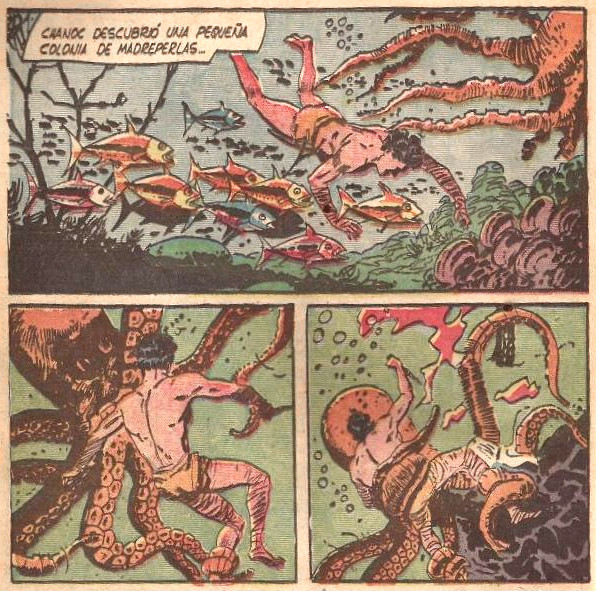
Chanoc no. 3 (October 1959). You can read the issue here (in Spanish!)

Chanoc3-inside
Some panels from the insides of Chanoc no. 3.

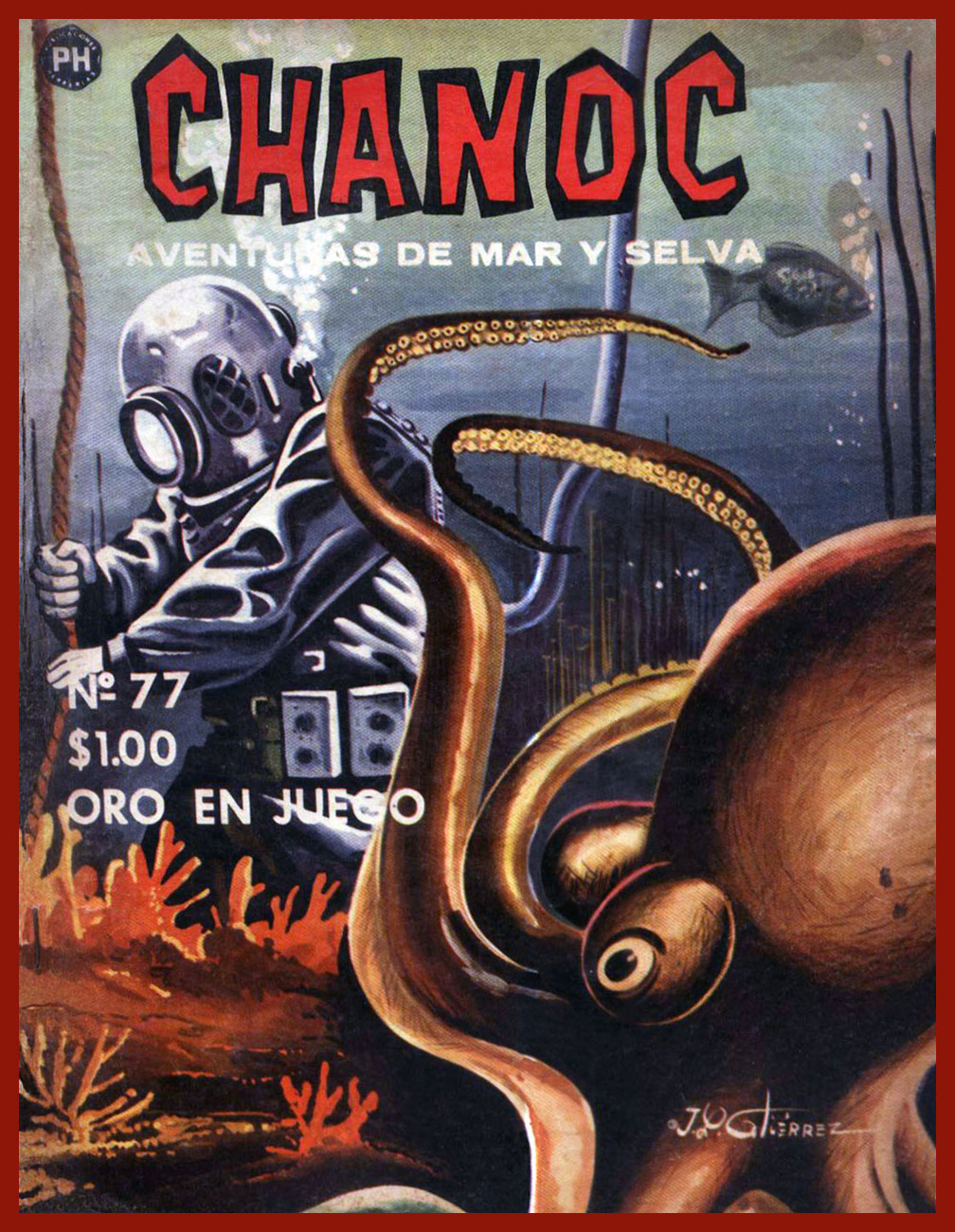
Chanoc77A
Chanoc no. 77

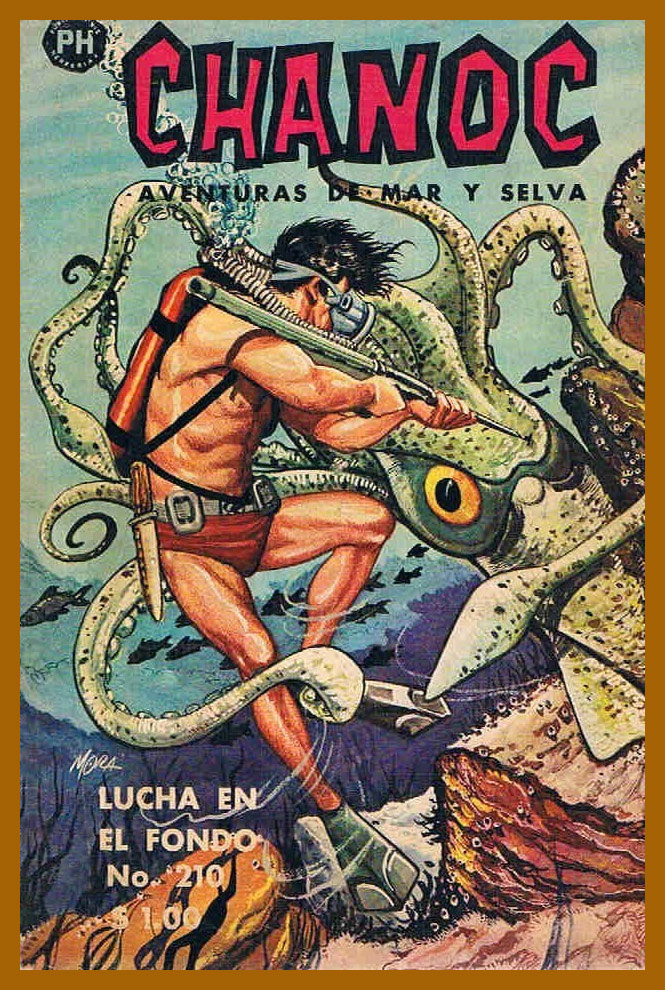
Chanoc210A
Chanoc no. 210

Chanoc379A
Chanoc no. 379

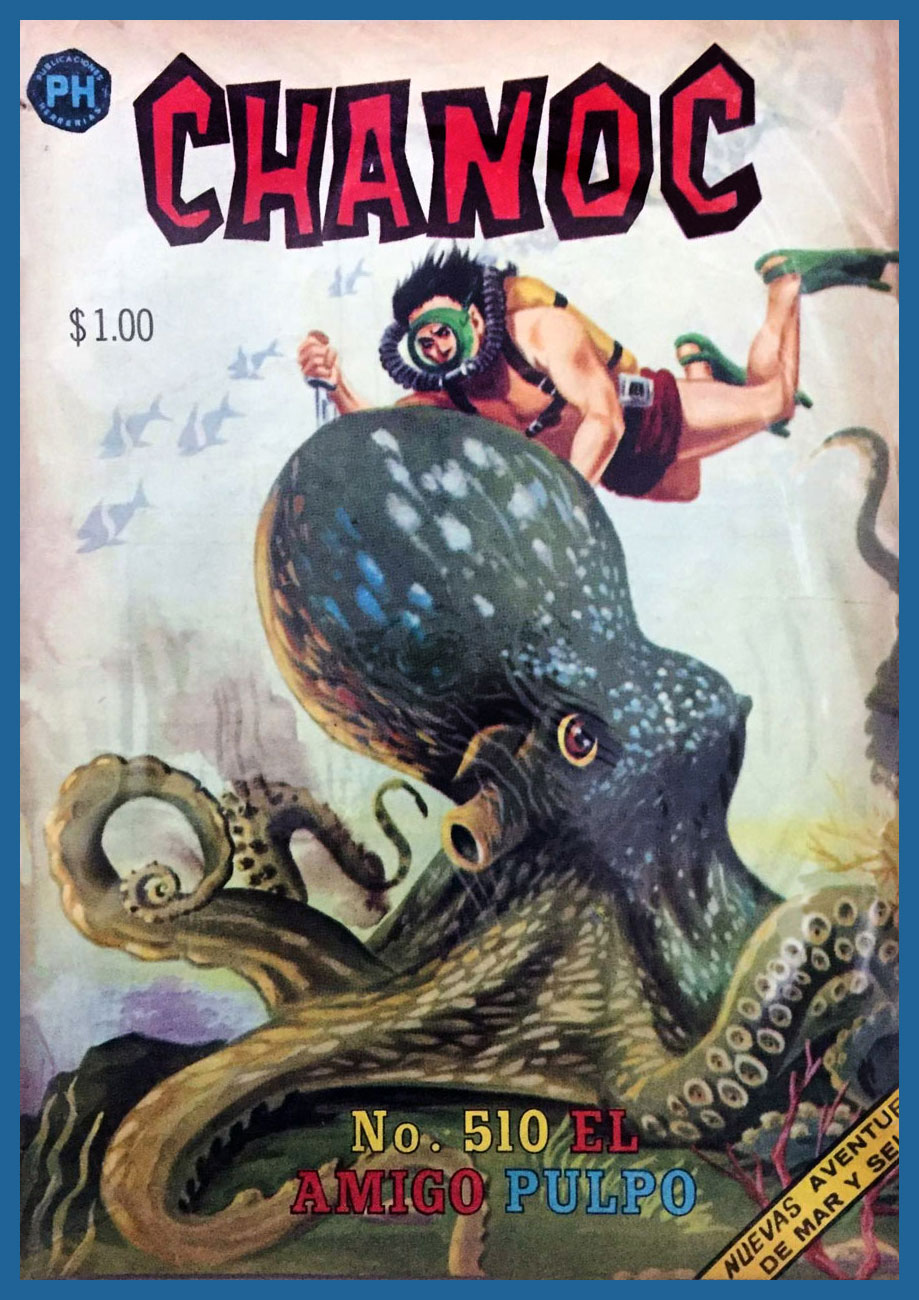
Chanoc510A
Chanoc no. 510

Chanoc986A
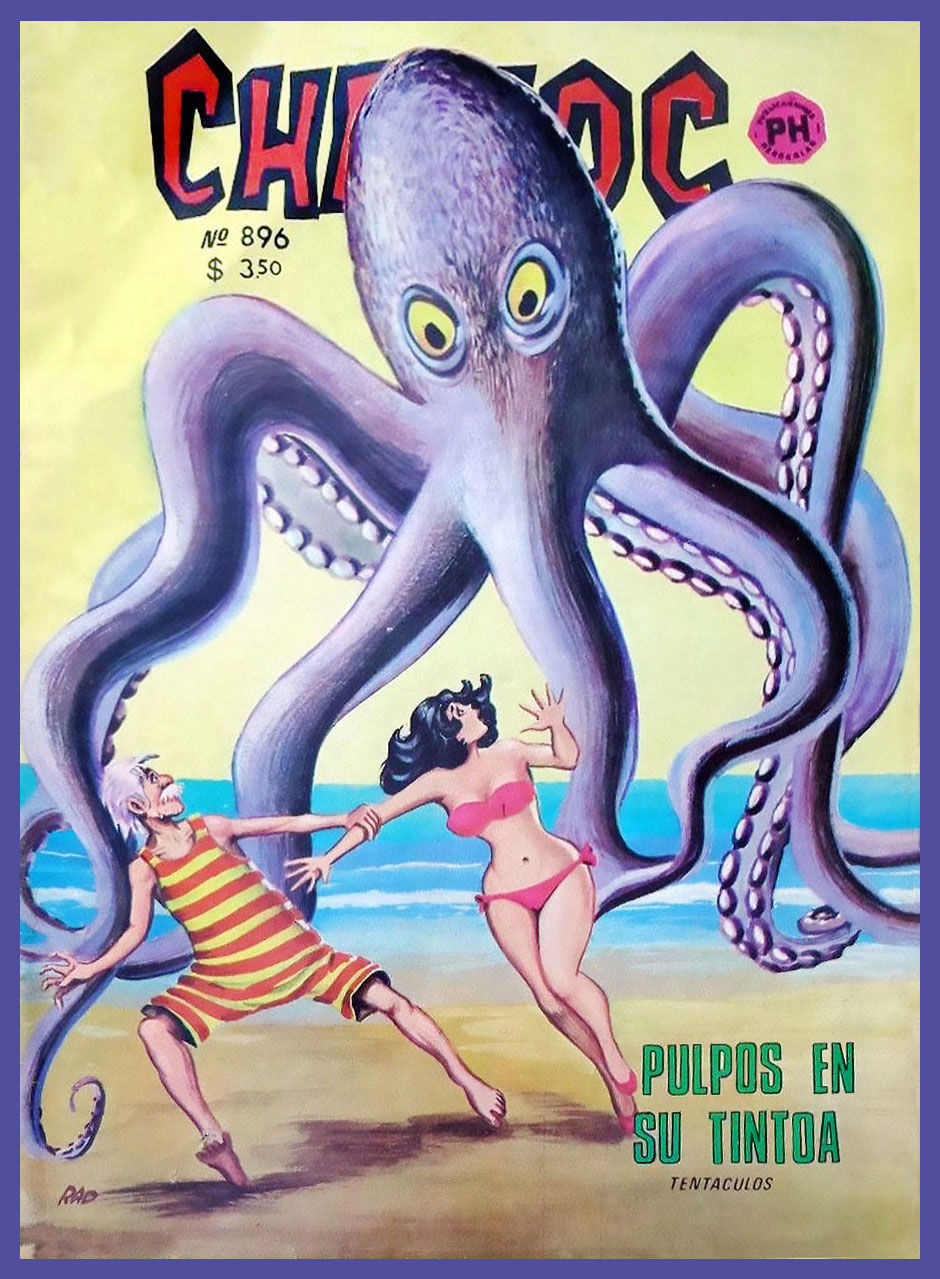
Chanoc no. 896

Chanoc1005A
Chanoc no. 1005 (1978). Nice shorts, grandpa!

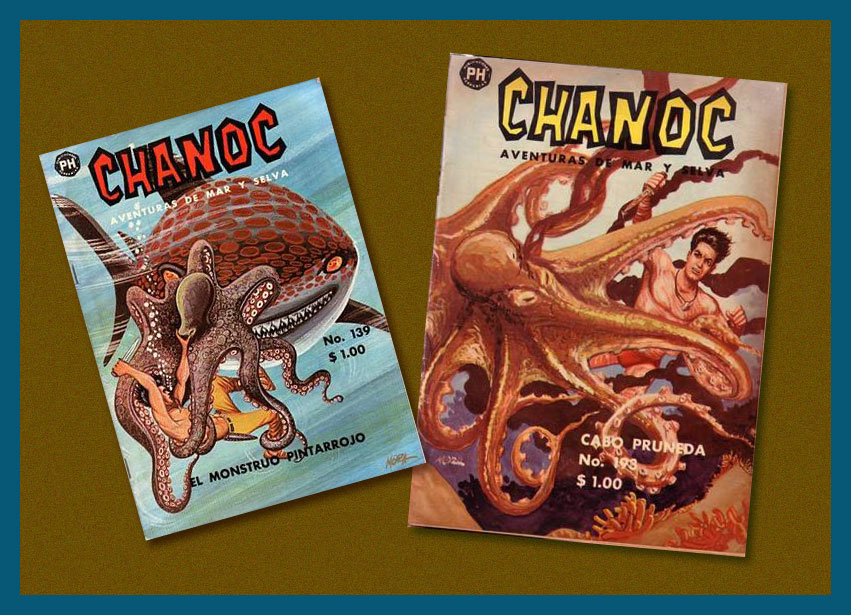
Some covers are, sadly, only available online in extremely poor resolution, so here are two more:

ChanocDuoA
Chanoc no. 139 and Chanoc no. 193 (1963).

« The comic book may be more popular in Mexico than in any other Latin American country. In this essay, Harold Hinds speculates that its decline was due to a number of factors, including the degeneration of one of its main characters, Tsekub, into a mere clown, the inaccessibility of its increasingly “slangy” language, and its tendency towards cuteness rather than meaningful satire. He then examines the main characters. Chanoc is a kind of highly moral Tarzan‐figure who protects the defenseless against villainous exploiters. Tsekub, Chanoc’s sidekick and antithesis, is an old man with a young spirit whose zest for life provides much comedy. Hinds points out that in addition to adventure and humour, Chanoc’s main components, the comic book also deals with foreign, particularly U.S., interference, in Mexico and elsewhere. He also considers a variety of ways in which Chanoc reflects, at times quite subtly, Mexican culture and society; e.g., aspects of regionalism, nationalism, mestizo character, machismo, and modernisation are briefly explored. » (excerpt from Harold E. Hinds’ Chanoc : Adventure and Slapstick on Mexico’s Southeast Coast)

∼ ds

Tentacle Tuesday: Dracula Drops In

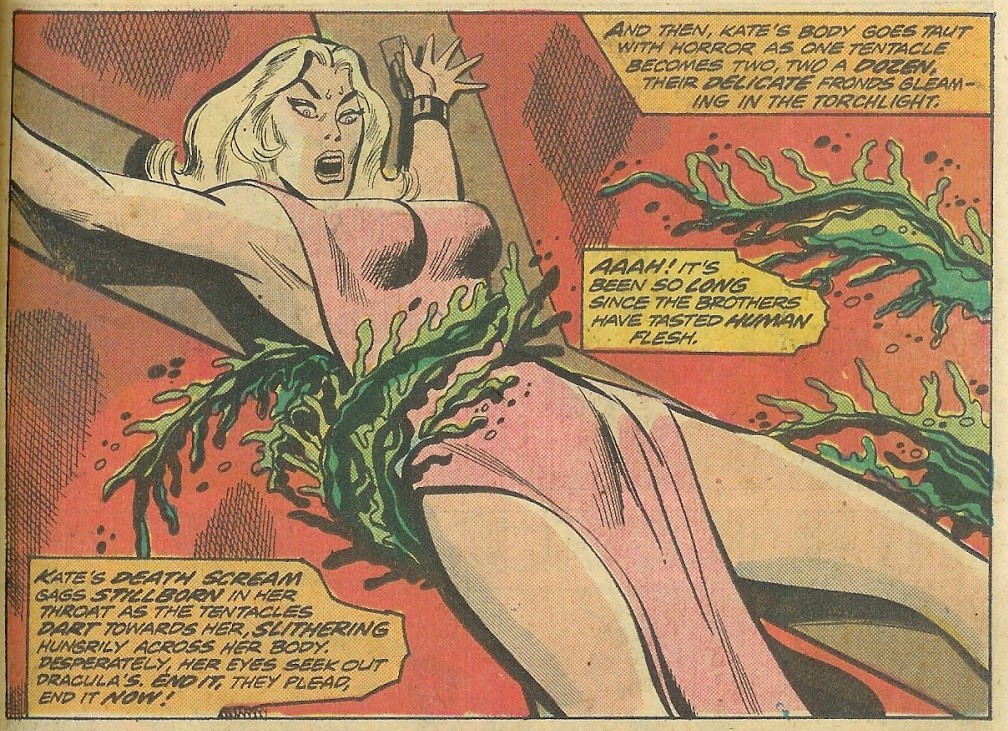
« Kate’s death scream gags stillborn in her throat as the tentacles dart toward her, slithering hungrily across her body. »

Here’s a quick association exercise: as fast as you can, name words that come to mind when somebody says “Dracula”. Um, fangs! Stake! Blood, cape, biting! … Tentacles? Say what?

It would have never occurred to me to look for tentacles in Dracula, giant-size or otherwise, so thanks to admin RG for this splendid suggestion.

GiantSizeDracula-2-PabloMarcus
Giant-Size Dracula no. 2 (September 1974). Cover by Pablo Marcos.

You’re not sure those green things were tentacles? If it quacks like a duck, it may well be an aquatic bird – and if it slithers towards female “human flesh”, count it as tentacles! Call Them Triad… Call Them Death! is scripted by Chris Claremont, pencilled by Don Heck and inked by Frank McLaughlin. I have to say that the art is distinctly subpar, as far as I’m concerned.

Giant-Size-Dracula-Issue-2-3-DonHeck
The writing isn’t brilliant, either.

Words are inadequate”.

Giant-Size-Dracula-Issue-2-4-DonHeck

Perhaps it’s the drab colours that weigh this down, and the original art would be a considerable improvement? Nope, sorry.

Giant-Size Dracula2-Don_Heck

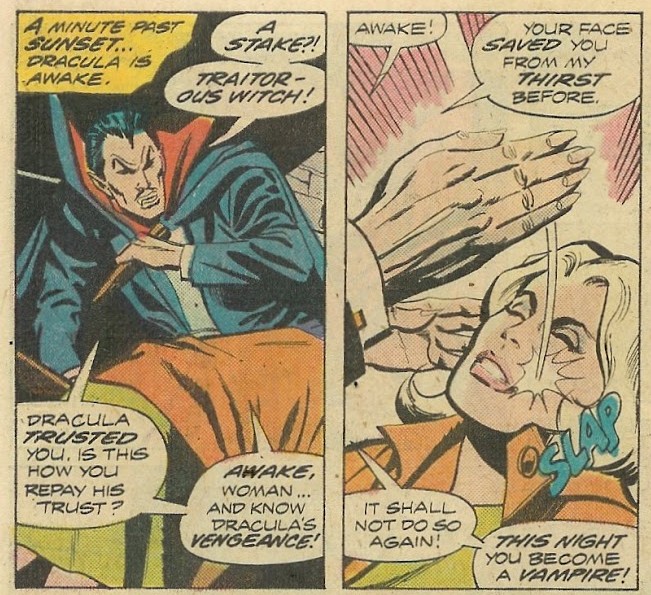
As further example of the ineptitude of this art team, a quick question: does this look like he’s slapping her?

Giant-Size-Dracula-Issue-2-2-DonHeck
She was lying face down, but she somehow manages to flip over instantly.

However, I have no wish to engage in Don Heck bashing – he had his moments, it’s just that this story wasn’t one of them. Instead, I will direct you to this article explaining how Harlan Ellison mocked Heck once upon a time, several lifetimes ago. Also, ouch.

Harlan Ellison: There are guys who’ve got very minimal talents and it doesn’t matter whether they corrupt it or not. I could name them and would happily name them, but why bother? There’s no sense kicking cripples. I mean, all you have to do is open up comic books from Marvel and DC and take a look at them. You see these guys have a very minor-league talent and, to say, “Well, these people are wasting their talent” is ridiculous. I mean, they’re never going to be any better. What’s the name of the guy who used to do… over at Marvel… he use to do… [Pause]… the worst artist in the field.

Continuing our foray into Draculas of colossal proportions tangling with tentacles…

GiantSizeDracula4
Giant Size Dracula no. 4 (March 1975). Cover pencilled by Gil Kane and inked by Tom Palmer.

Sadly, the tentacles promised on the cover don’t really appear in the cover story. Time to move to another series —

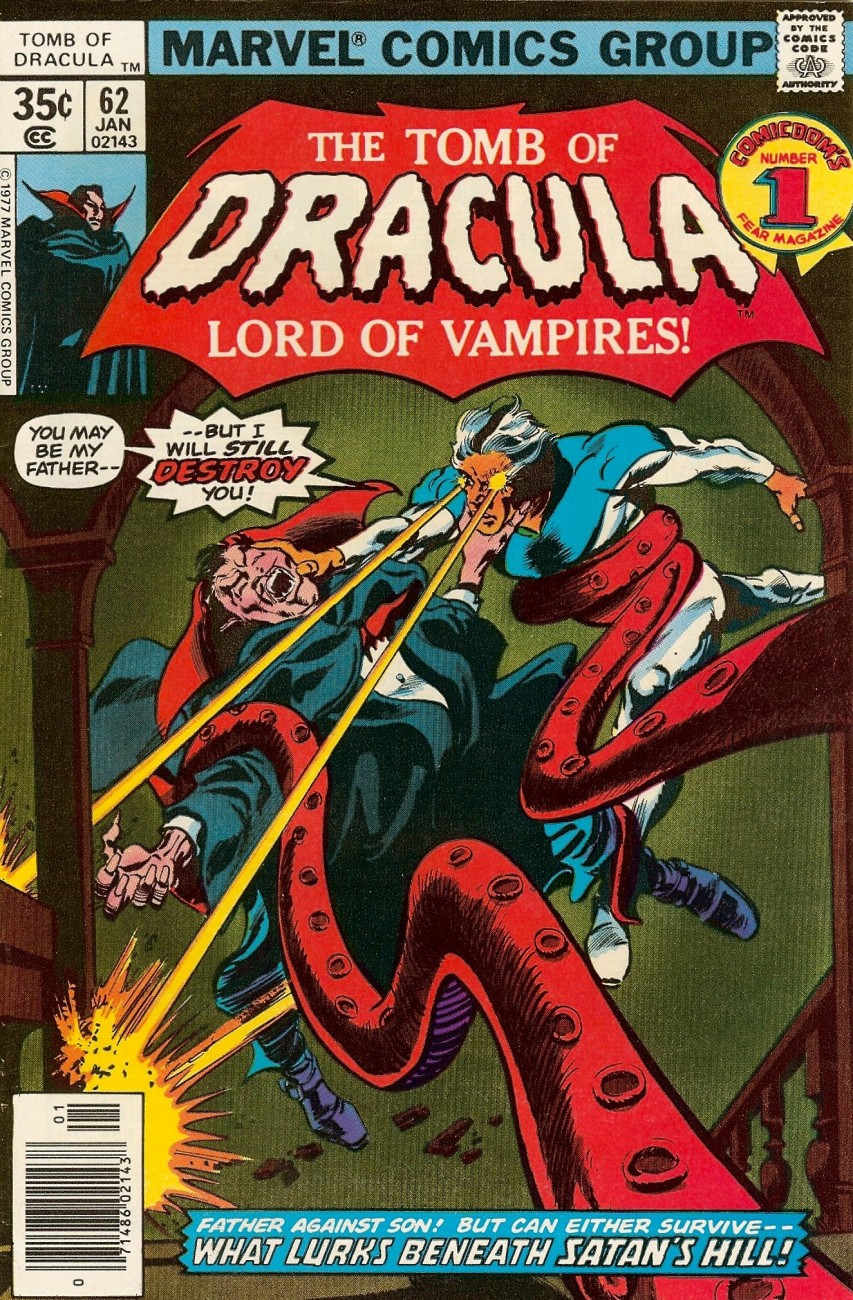
TOMB-OF-DRACULA-62-GeneColan-TomPalmer
Tomb of Dracula no. 62 (January 1978), pencilled by Gene Colan and inked by Tom Palmer.

What Lurks Beneath Satan’s Hill? (tentacles, obviously) is scripted by Marv Wolfman, pencilled by Gene Colan and inked by Tom Palmer.

TombofDracula62-Marv-Wolman-Tom-Palmer
This has been scanned from the reprint, which in my opinion looks worse, not better.

The story continues in number 63 –

TombofDracula63-GeneColan-TomPalmer
Tomb of Dracula no. 63 (March 1978). Cover pencilled by Gene Colan and inked by Tom Palmer.

The Road to Hell! is scripted by Marv Wolfman, pencilled by Gene Colan and inked by Tom Palmer:

Tomb-of-Dracula-1972-Issue-63-2

Tomb-of-Dracula-1972-Issue-63-3
« All-you-can-eat-calamari — dive in! »

Next up (eventually), an equally random concept: Werewolf VS tentacles!

∼ ds

Tentacle Tuesday: Secrets, Both Sinister and Domestic

Random fact of the day: in Mandarin Chinese, secret is “mimi”, whereas in French “mimi” means something like “cute”. Today’s post is not cute, but it is very much about secrets – DC secrets, to be more precise.

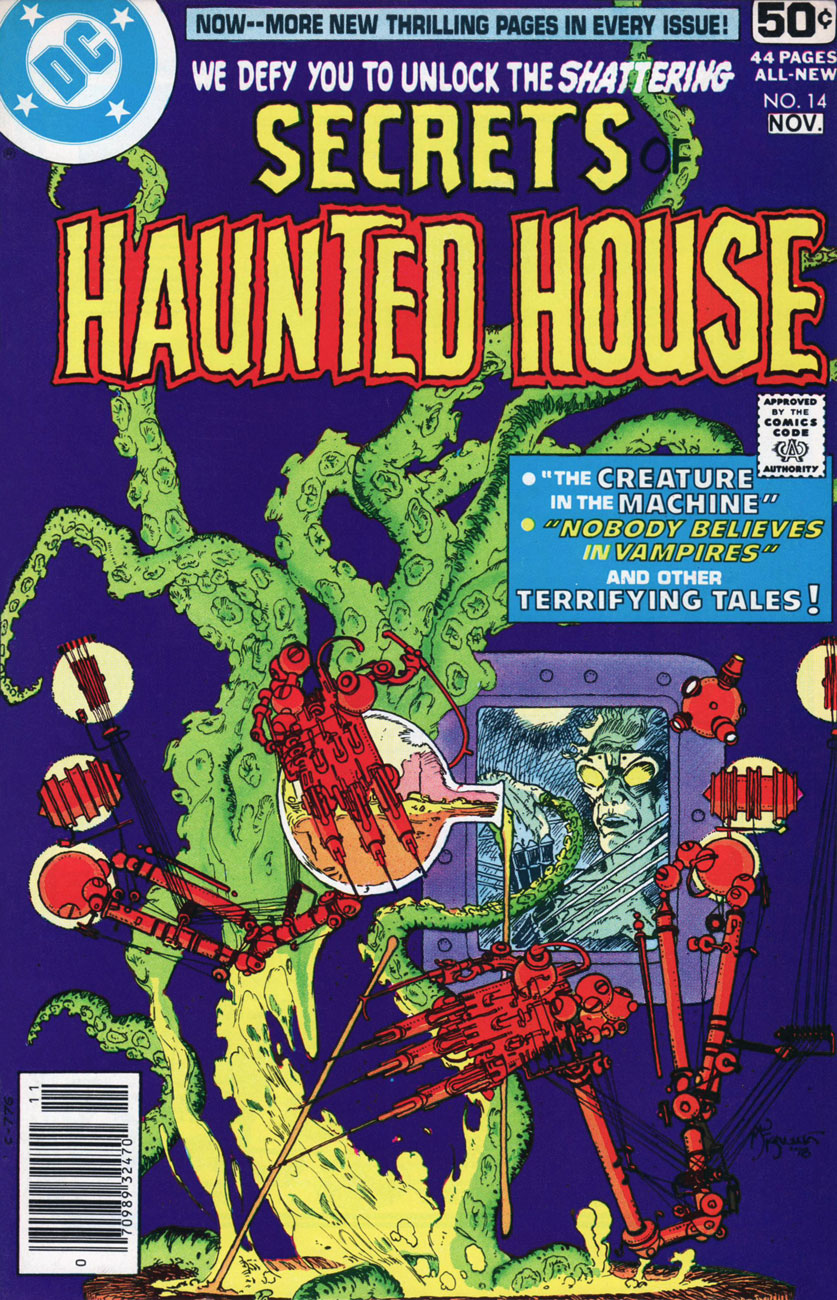
KalutaSOHH14A
Secrets of Haunted House no. 14 (Oct-Nov 1978). Cover by Mike Kaluta.

The original art for this cover feels a little less cluttered:

SOHH_ORIG_A

Taking a peek at the insides, we will find that they have little to do with the cover, but tentacles are still present. The Discovery is scripted by Jay L. Zilber, pencilled by Juan Ortiz, and inked by Vince Colletta:

SecretsofHauntedHouse14-mechanical

Tentacles also rudely intrude in Selina, a story scripted by Nicola Cuti and elegantly illustrated by Ramona Fradon and Bob Smith

Selina-SecretsofHauntedHouse14

Selina-SecretsofHauntedHouse14-2
The thing about masks was too topical to not include.

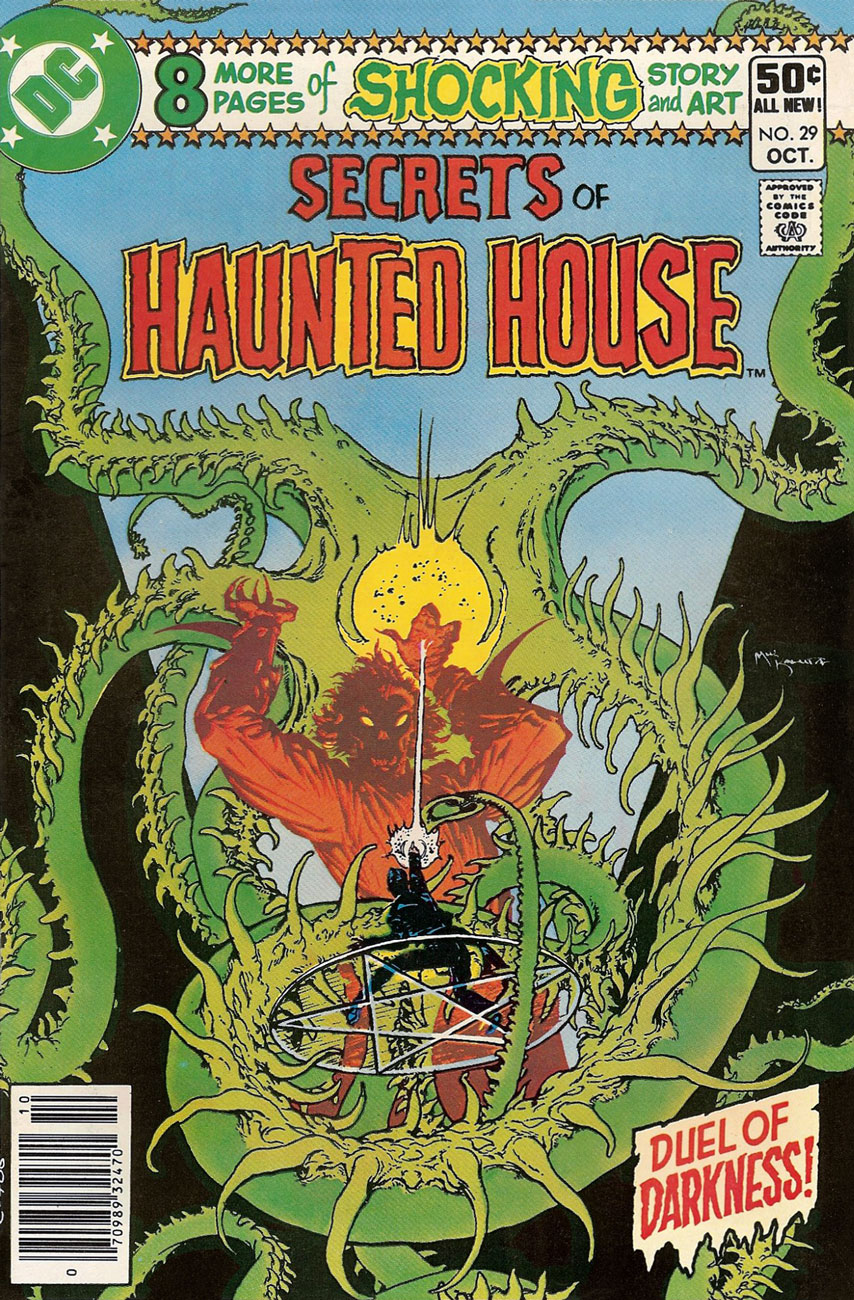
KalutaSOHH29A
Secrets of Haunted House no. 29 (October 1980), cover by Mike Kaluta.

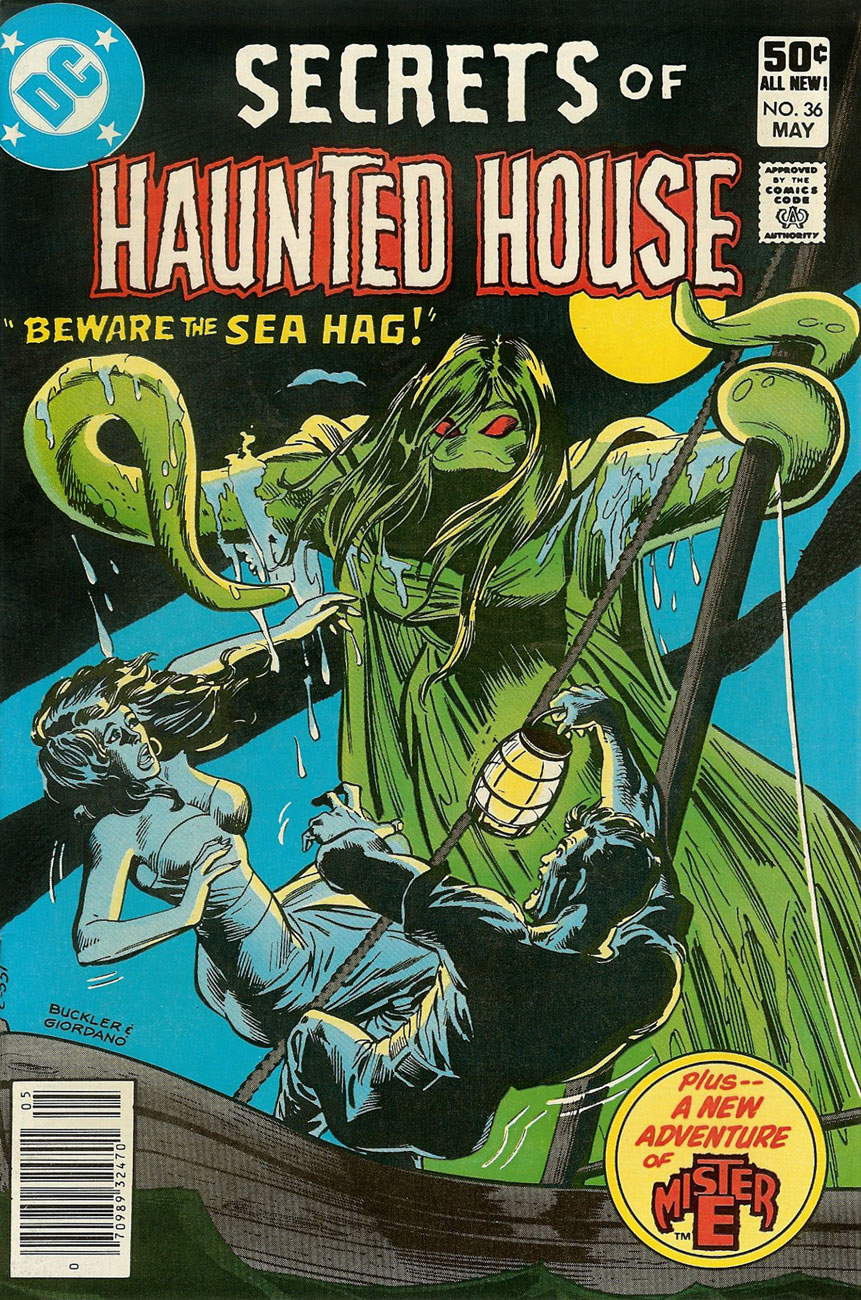
SecretsofHauntedHouse36A
Secrets of Haunted House no. 36 (May 1981), cover pencilled by Rich Buckler and inked by Dick Giordano.

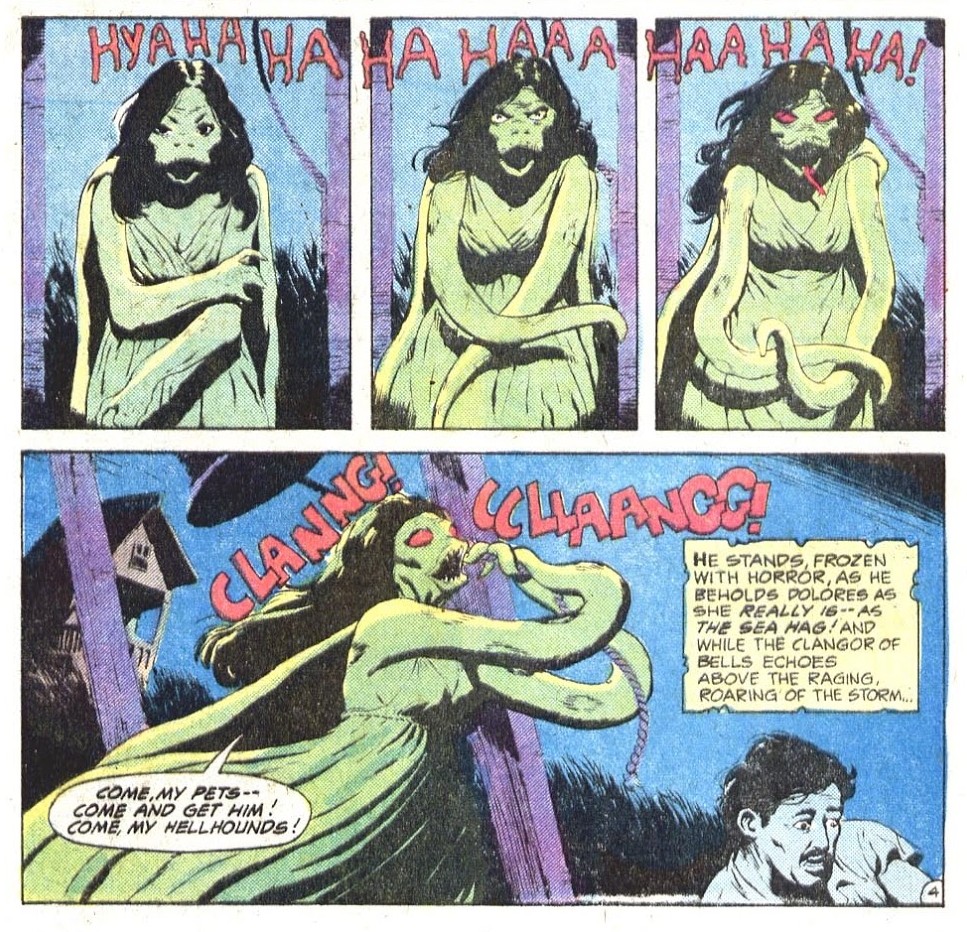
Beware the Sea Hag, the cover story,  is scripted by Carl Wessler and drawn by Wade Hampton:SecretsofHauntedHouse36-bewareoftheseahag

SecretsofHauntedHouse36-bewareoftheseahag2

But, wait, this is not what the Sea Hag normally looks like! This is more like it:

SagendorfPopeye73A
Popeye the Sailor no. 73 (August 1964), cover by Bud Sagendorf. I wonder if the Sea Hag realises how much spinach reduces under heat.

Shifting to another sort of secrets (these are sinister rather than haunted), we have another tentacle apparition —

SecretsofSinisterHouse11-MonsterofDeathIsland
The Monster of Death Island is scripted by Maxene Fabe and drawn by Ruben Yandoc (i.e. Rubeny). It was published in Secrets of Sinister House no. 11 (April 1973).

This story, a sort of take on Bluebeard, is well worth reading, for the plot as well as the stunning art. I don’t want to reveal spoilers – you can read it here.

SecretsofSinisterHouse11-MonsterofDeathIsland-2-Rubeny

Since we’re discussing secrets, I might as well throw in The House of Secrets… I will willingly admit that I have the hardest time keeping track of which is which.

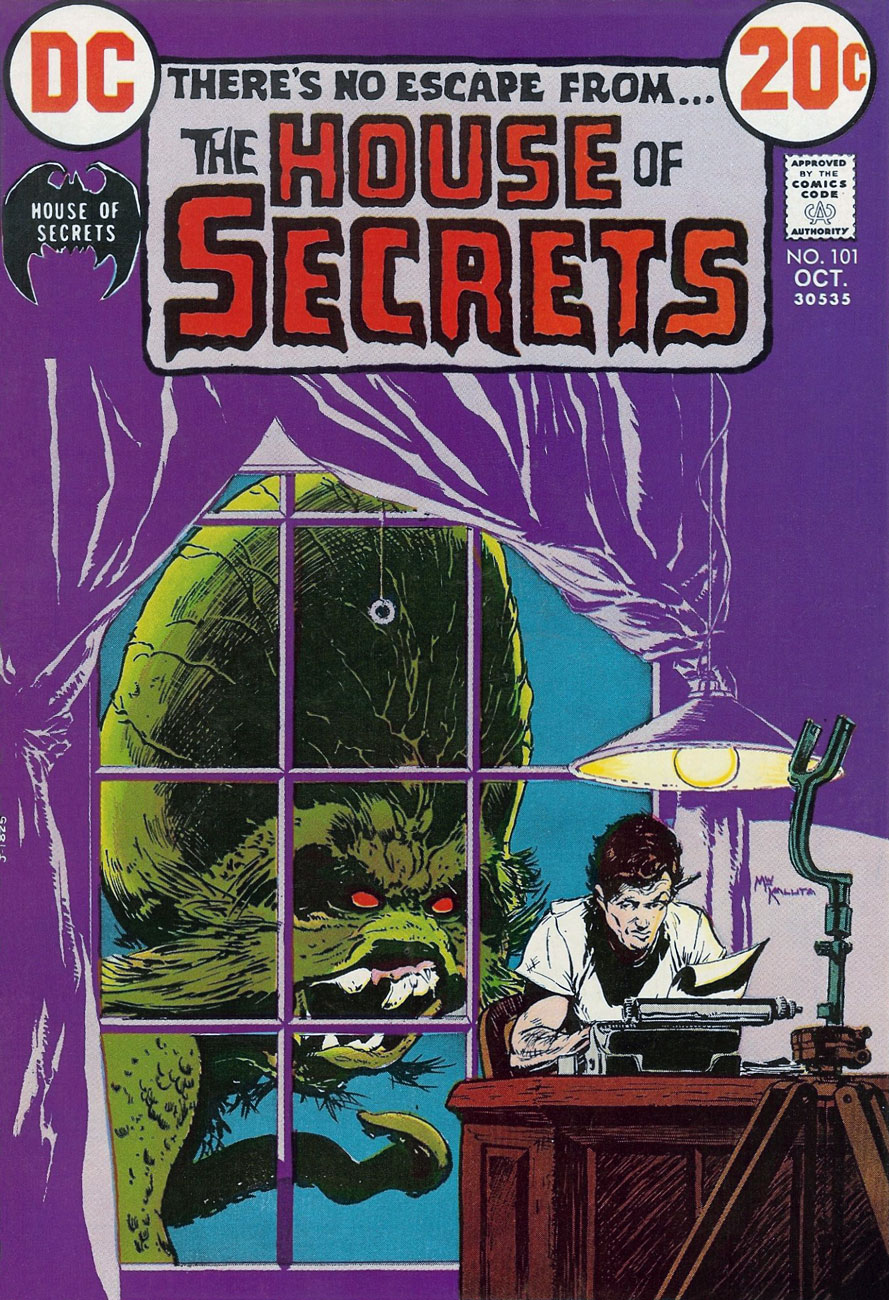
HouseOfSecrets101A
House of Secrets no. 101 (October 1972), cover by Mike Kaluta. This could have been a Mike Kaluta Tentacle Tuesday!

HouseofSecrets100-Abel'sFables
From House of Secrets no. 100 (September 1972). This page of Abel’s Fables is by Lore Shoberg.

house of secrets 103
Cain & Abel by Sergio Aragonés, printed in House of Secrets no. 103 (December 1972).

∼ ds

Tentacle Tuesday Masters: Tom Gauld

It’s lovely to enthusiastically anticipate new oeuvres from a present-day cartoonist, or to have the opportunity to praise his work knowing that, perhaps, some of this praise will eventually reach him. I spend much time reading books written and drawn by people long gone, so it’s truly a pleasure to endorse cartoons by a contemporary artist.

In this case, this post was prompted by getting my hands on Department of Mind-Blowing Theories, which came out in April 2020. It took me a few months to get my hands on it, yes, but get to it I did.

Tom Gauld, hailing from a Scottish county with the romantic name of Aberdeenshire, is a self-declared SF/F nerd with a scientific bent, the latter proclivity acquired thanks to his grandfather, who was a marine biologist. To quote Gault, « he was a quiet and thoughtful man and I think because of him, the whole family had a respect for science and scientists. He subscribed to New Scientist and would give them to my Dad after he’d read them, so there were always copies around our house as I was growing up. » The first time I encountered Gauld’s strips, I thought he was a scientist, so accurate were his depictions of the struggles of the scientific community. As it turns out, this is a somewhat new and recent direction for him – he’s only been contributing to the New Scientist since 2014. His more literary-minded work has been published by The Guardian since 2005, and he has also created some lovely covers for The New Yorker (eight, to be more precise).

All material (except the first image) in this post has been scanned from You’re All Just Jealous of My Jetpack (2013, Drawn & Quarterly), a collection of selected strips published in The Guardian, and the aforementioned Department of Mind-Blowing Theories (2020, Drawn & Quarterly), his fifth book with this Montreal publishing company.

gauld_tom_barts_02
A print from a series of twenty four commissioned by Bart’s Hospital. These prints are installed throughout its Cystic Fibrosis Unit. « As part of Tom’s commission, he met with patients to gain insight into the particular circumstances of their condition, the hurdles they encounter, their hopes and fears in order to create a project that is relevant to their reality. The outcome is an urban park featuring humorous vignettes and unexpected elements. Each isolation room in the Unit displays a selection of prints from Tom’s Imaginary London Park series. Embedded within each image are an array of symbols that relate to an explanatory key, included in the rooms. Patients can imagine the variations in their own, as well as adjacent rooms. Due to frequent re-admission, patients can explore more of the work, and discover new vistas, when they return to the Unit and occupy a different room. »

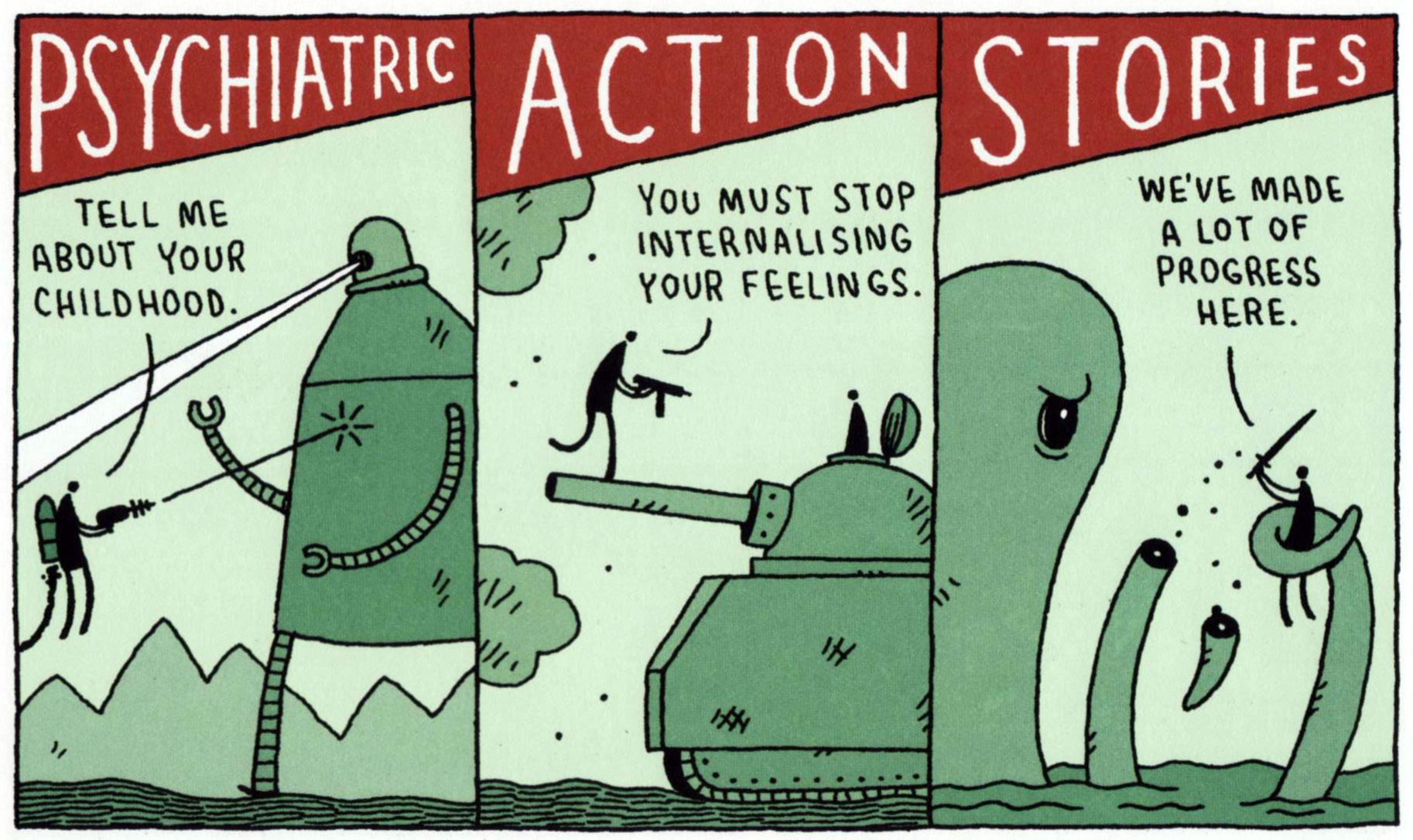
GauldPsychActionA

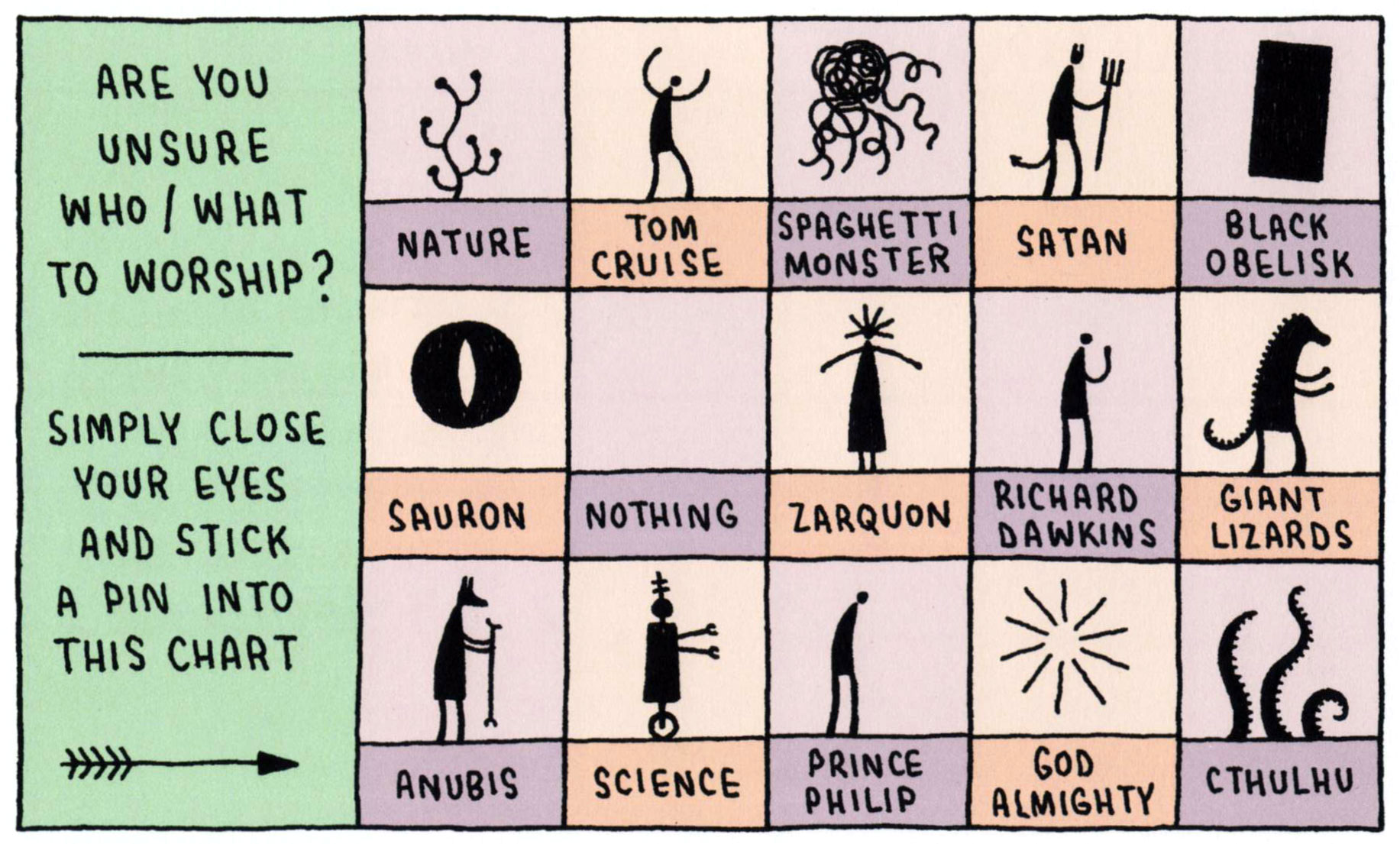
GauldWhatToWorshipA
Gauld’s tentacles aren’t always front-and-centre, occasionally occupying a humble corner. I got Richard Dawkins, by the way.

« There sometimes seems to be an idea that in order to be a scientist you have to put aside your humanity and become an emotionless logic-machine. I think that’s wrong, but some people (even some scientists) seem to believe it. There’s a thread running through the book of cartoons that depict scientists being human: Being unsure, bickering, misunderstanding, and messing things up. It’s much more fun (and realistic, I think) to depict flawed, klutzy humans than idealised successes. » |source|

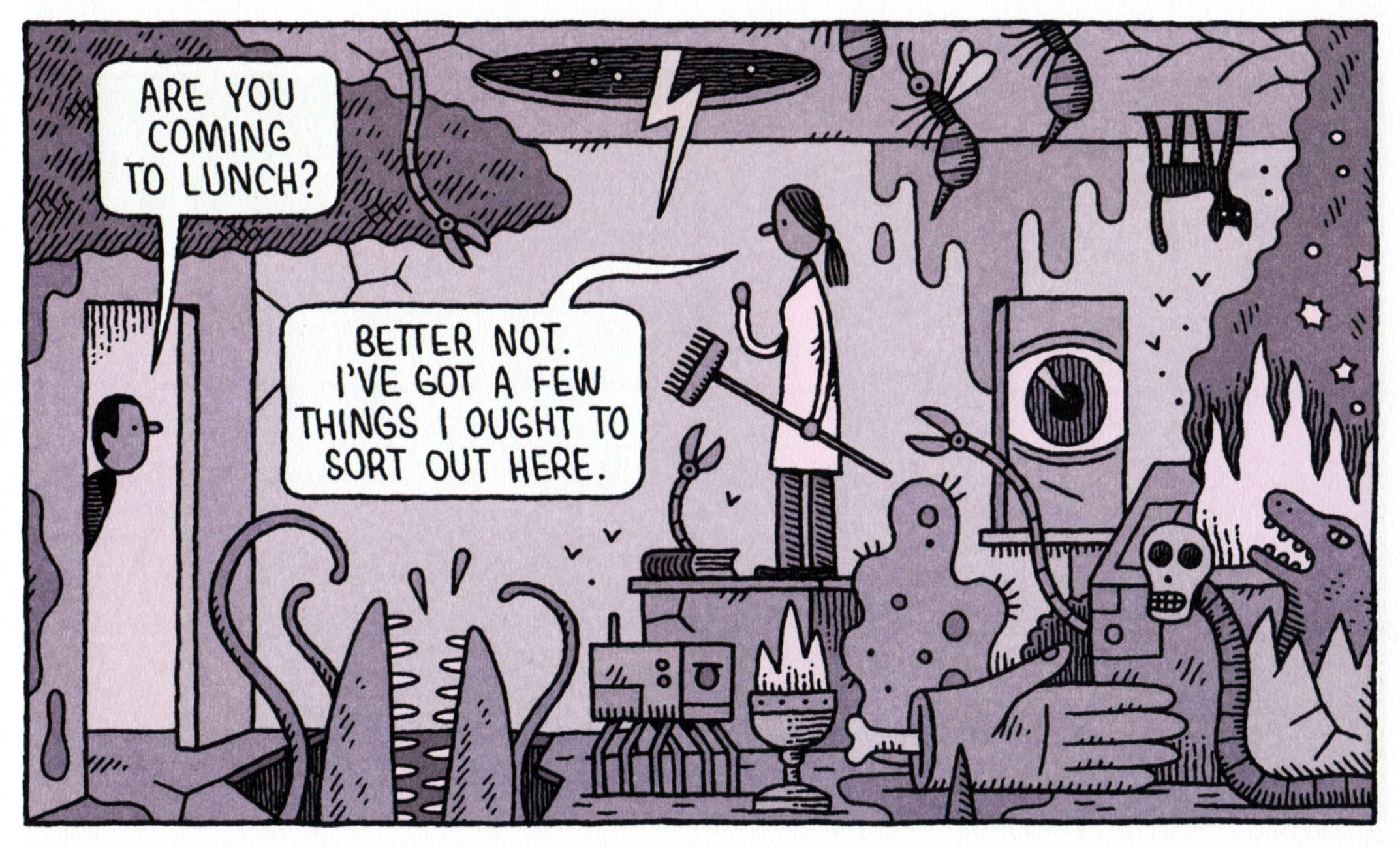
GauldAFewThingsA
I’d worry most about the black cat on the ceiling – black cats are evil!

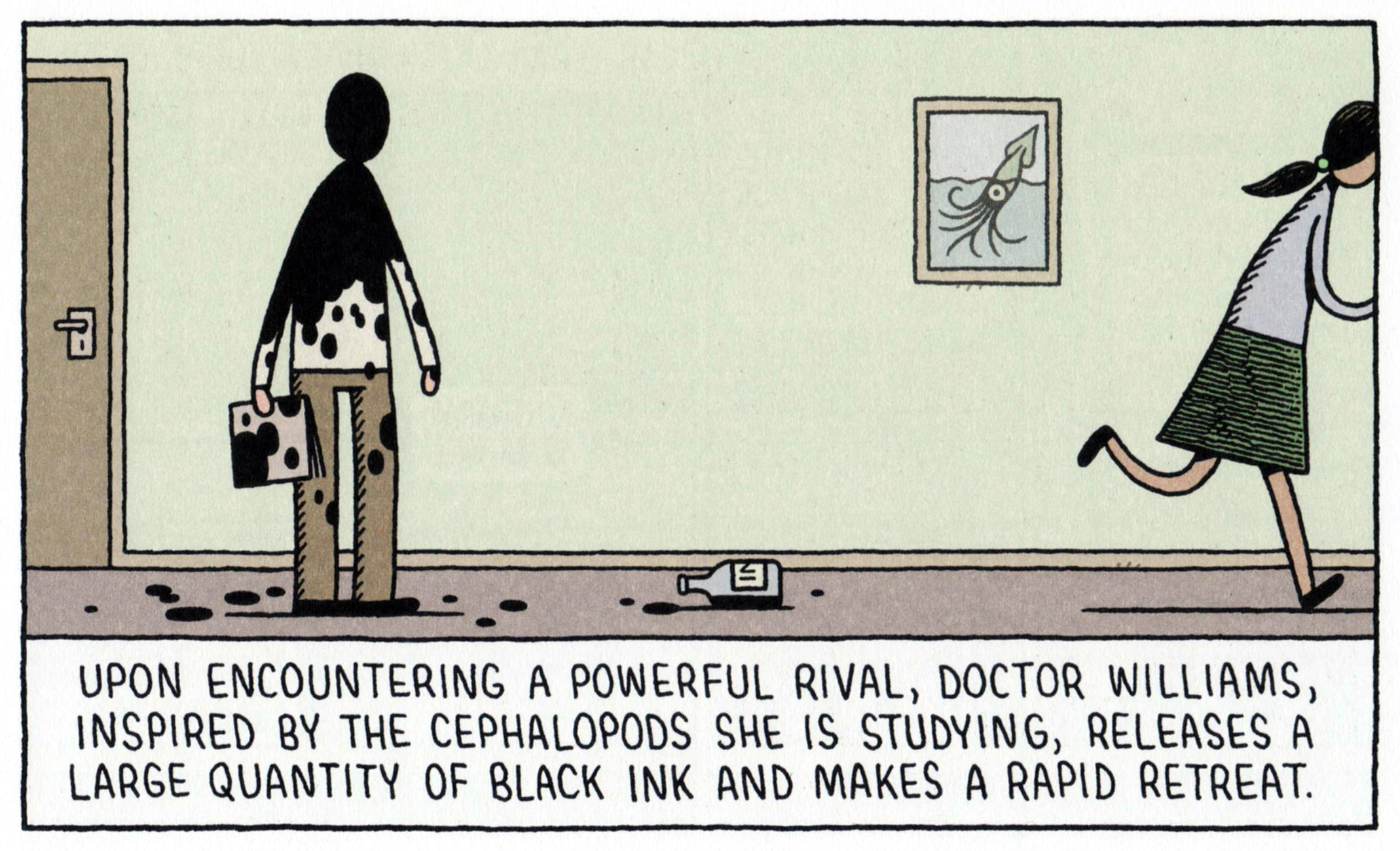
GauldBlackInkA

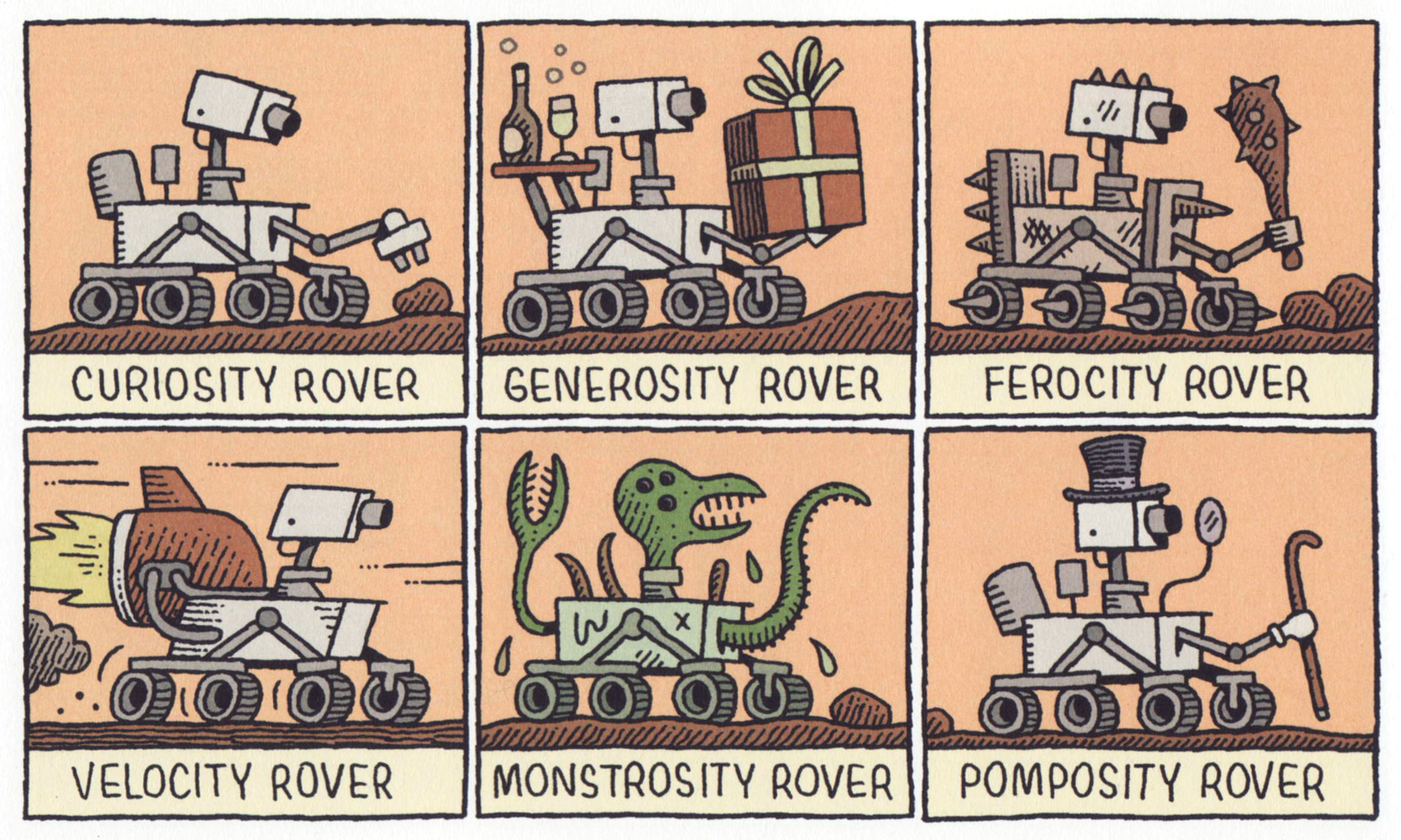
GauldRoversA

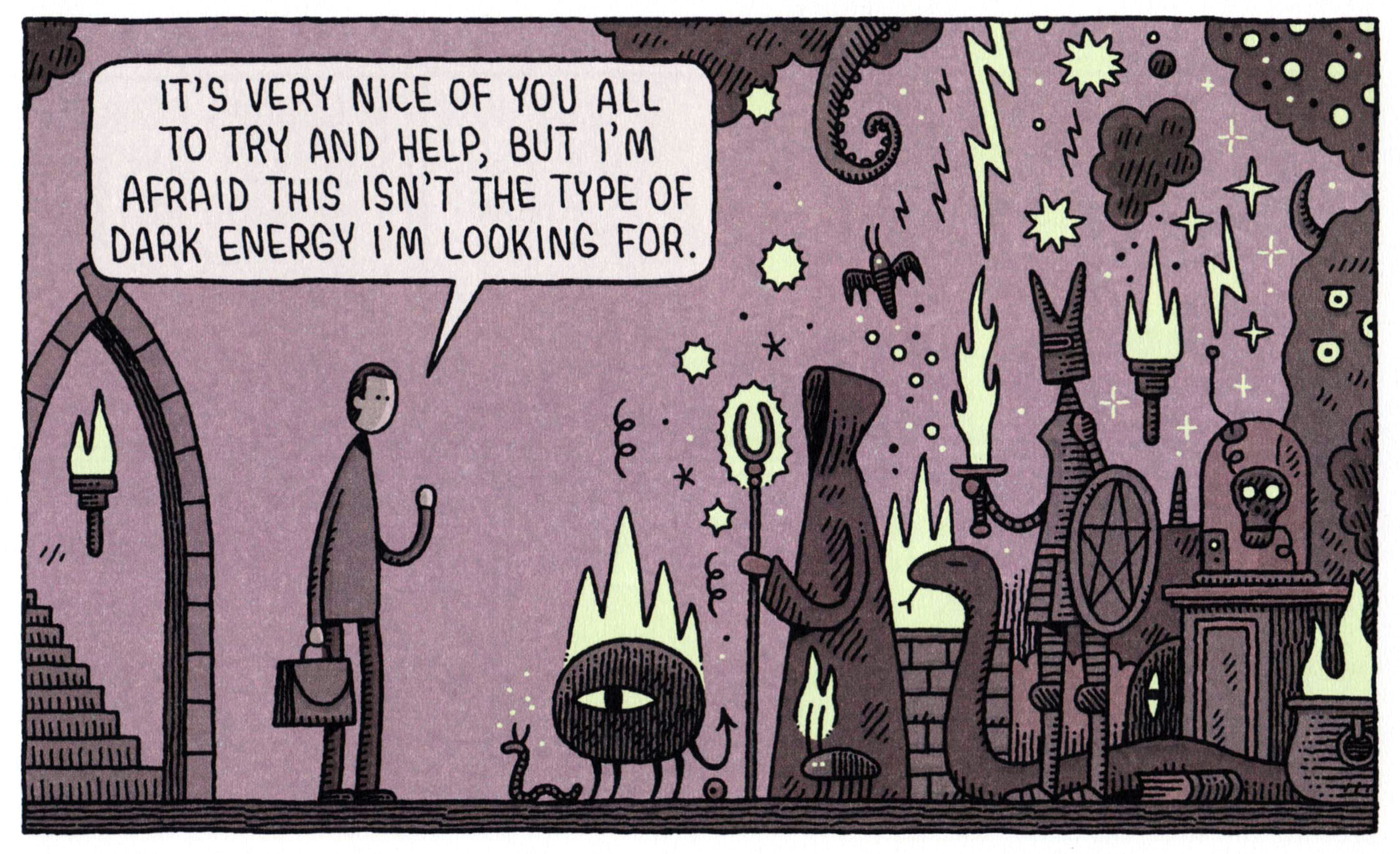
GauldDarkEnergyA

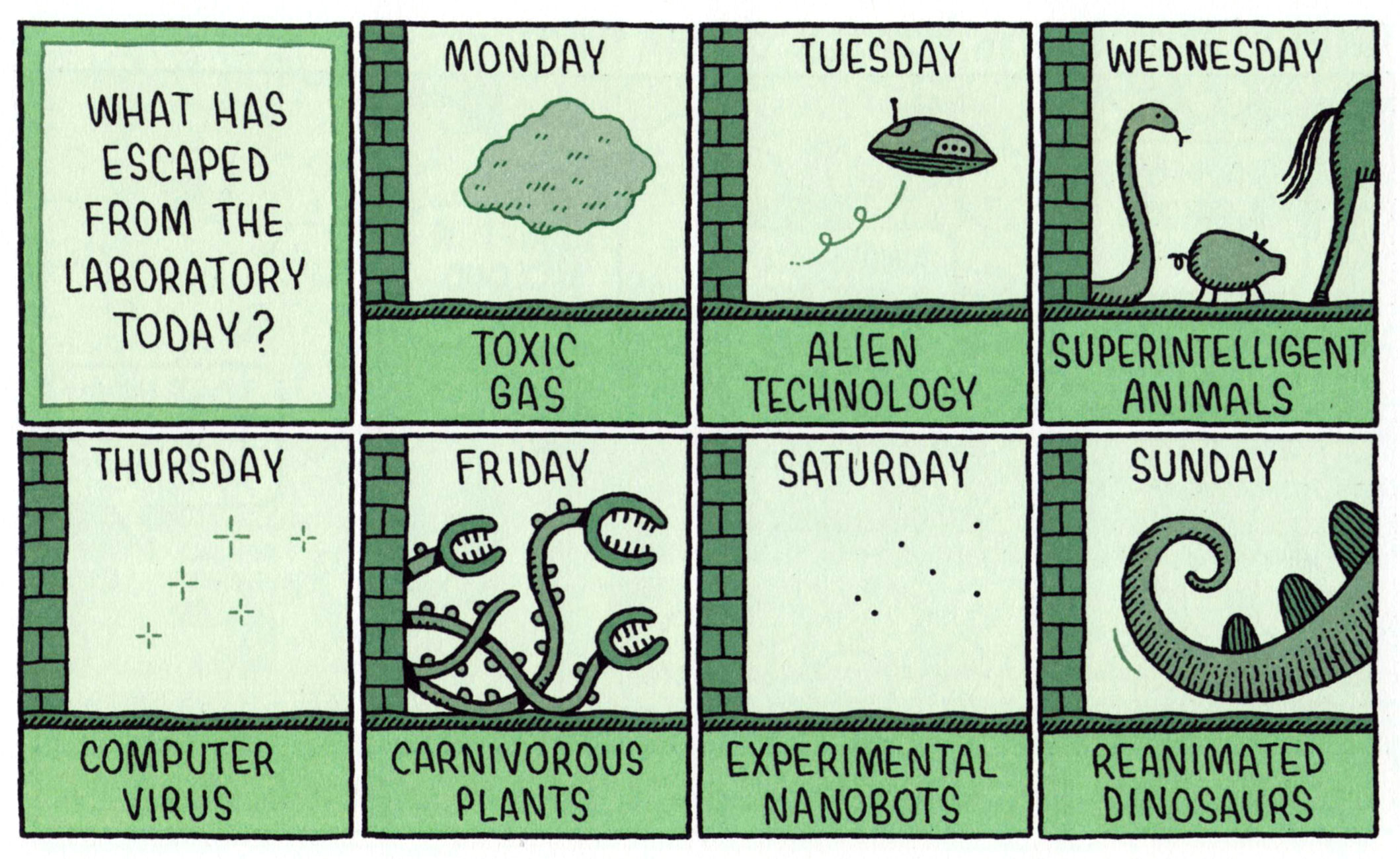
GauldEscapedA

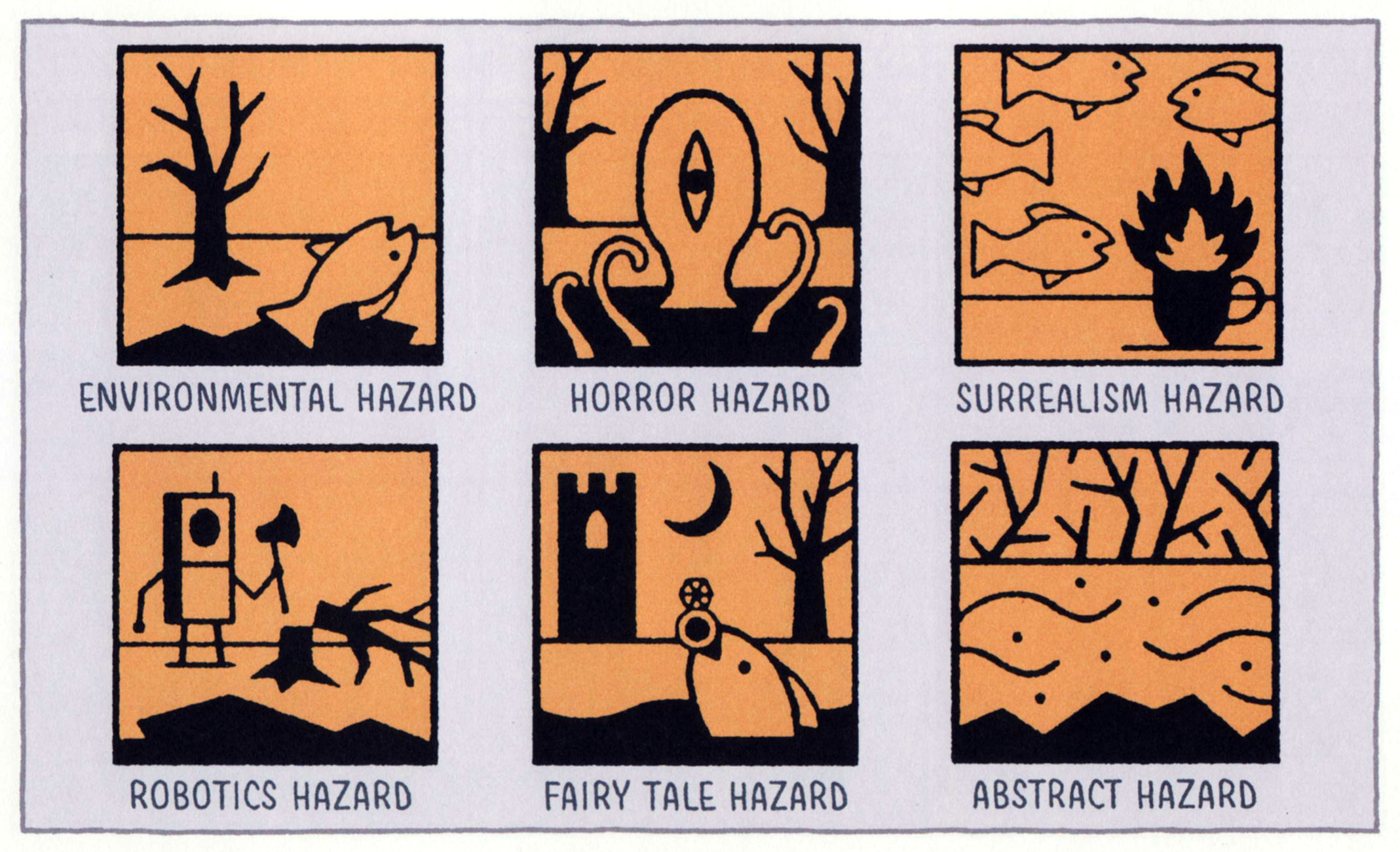
GauldHazardsA

« I spent seven years at art school and tried all sorts of drawing styles, but when I got into drawing comics I found that a simple style worked best. I gave up trying to be “artistic” and just used the type of drawing I’d naturally revert to when I wasn’t thinking too much: the style I’d use for a silly cartoon to amuse a friend, or to draw a map or an idle telephone doodle. I’ve tried to improve as I’ve gone along, and I hope I’ll never be stuck with a fixed, unchanging style. I want the images to be simple and clear, but with a bit of human warmth, a bit of handmade wobble in the lines, to stop it seeming completely diagrammatic and cold. » |source|
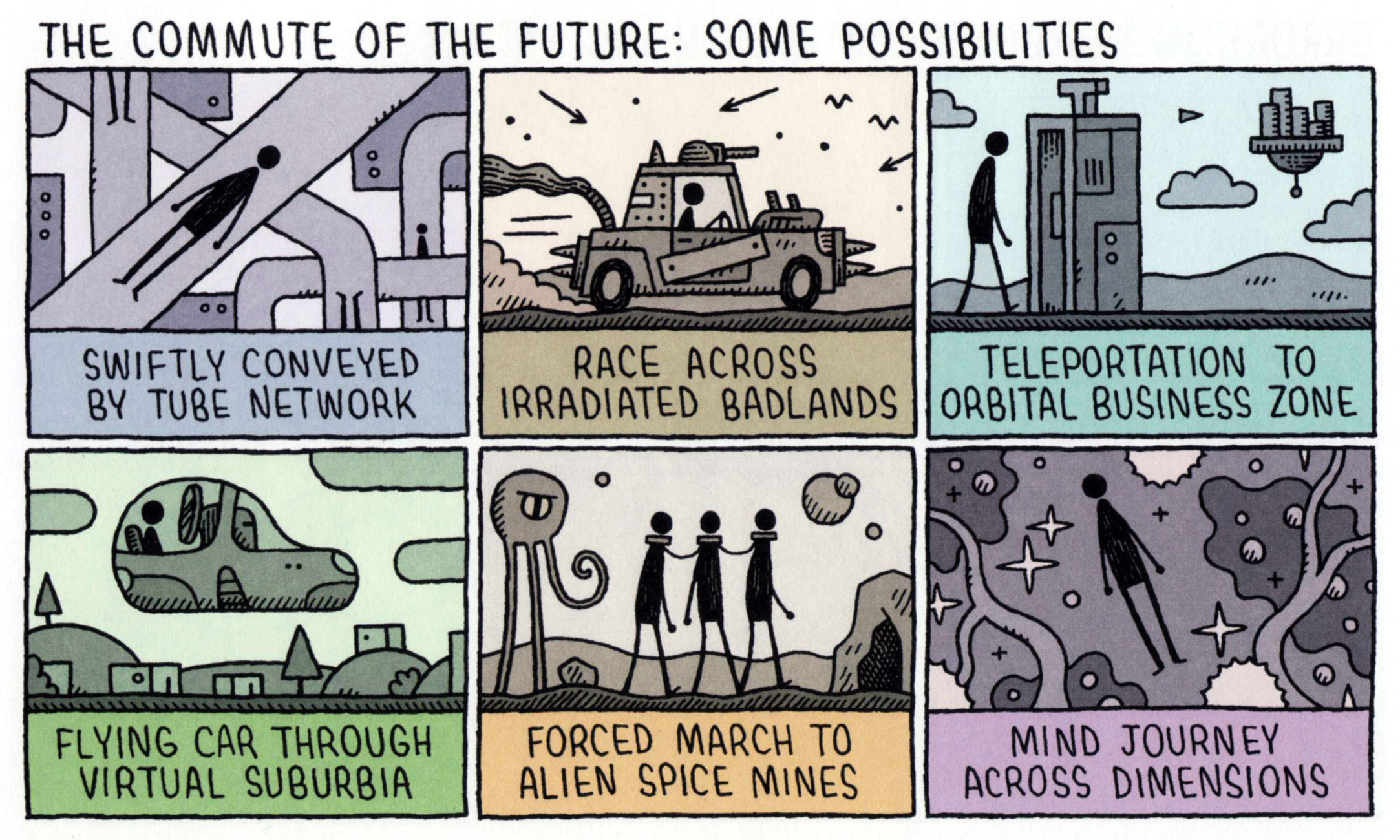
GauldFutureCommuteA

And (arguably), the best for last…

GauldProjectGoalA

∼ ds

Tentacle Tuesday: Azpiri’s Unflappable Lorna

I recently stumbled upon a comic story that I really liked, posted on one of those websites of dubious legality bestrewed with ads. Oh, the plot didn’t make all that much sense, nor was it original… but I liked the art, bright and stylish. Lorna, the heroine, was drawn a bit like a fashion sketch from the 80s: big hair, blue eyeshadow, lots of leather and studs wrapped haphazardly over her sumptuous form.

I’m late to the party, for Spanish artist Alfonso Azpiri (1947-2017) has been around for a while. He was a frequent contributor to Heavy Metal Magazine – which explains why I haven’t come across his art before. I’ve never read it; I also haven’t seen the magazine-inspired movie Heavy Metal (from 1981), nor its follow-up, Heavy Metal 2000 (2000). My first glimpse of an exposure, oddly enough, to “the world’s greatest illustrated magazine” came by way of the video-game Heavy Metal: F.A.K.K. 2 (also from 2000), which I adored at the time, and have played several times. I’ve of course seen second-hand copies of the magazine lying around comic book stores, but they never seem interesting enough to pick up.

heavy-metal-f-a-k-k-2_6
Heavy Metal: F.A.K.K. 2  also had tentacles!

To get back to the topic at hand, Lorna is Azpiri’s most enduring character. She’s been compared to Barbarella, though I believe Jean-Claude Forest’s heroïne was a much more original and fresh creation. Still, Lorna has redeeming features, aside from the fact that it’s fun to follow the adventures of an almost-always naked buxom blonde with an attitude.

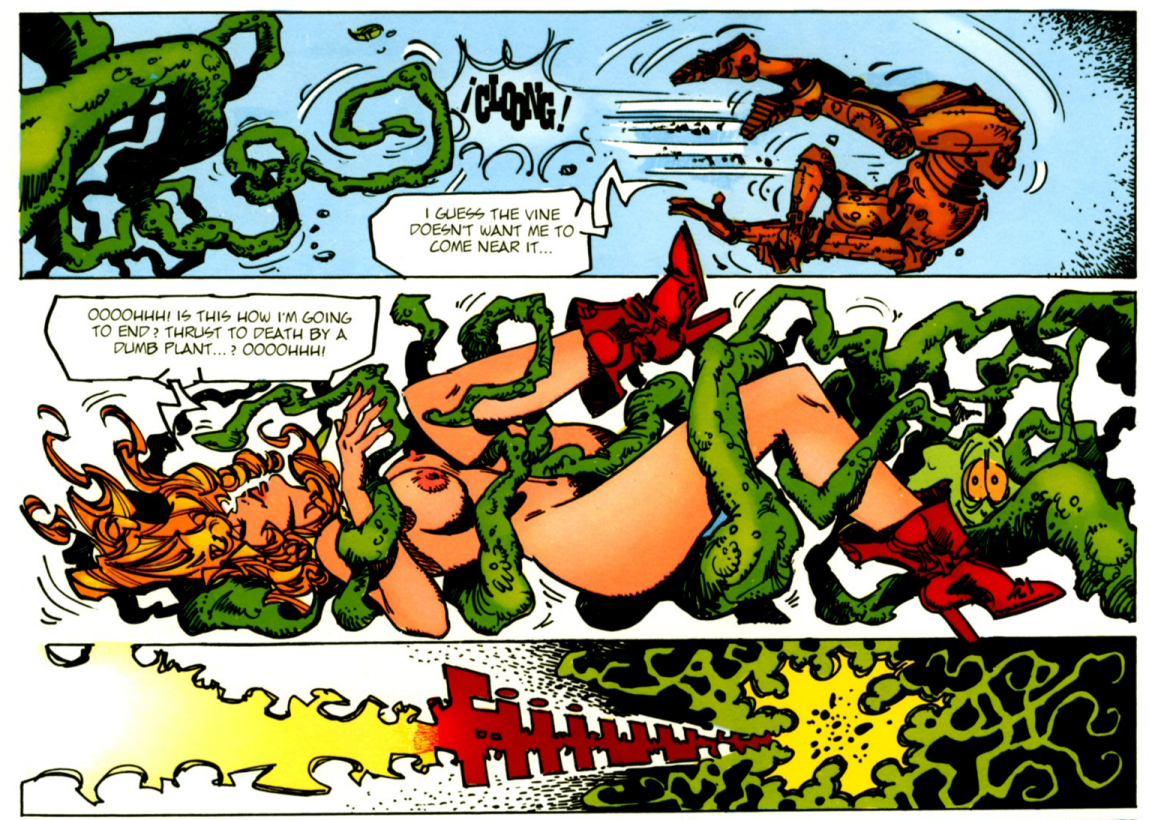
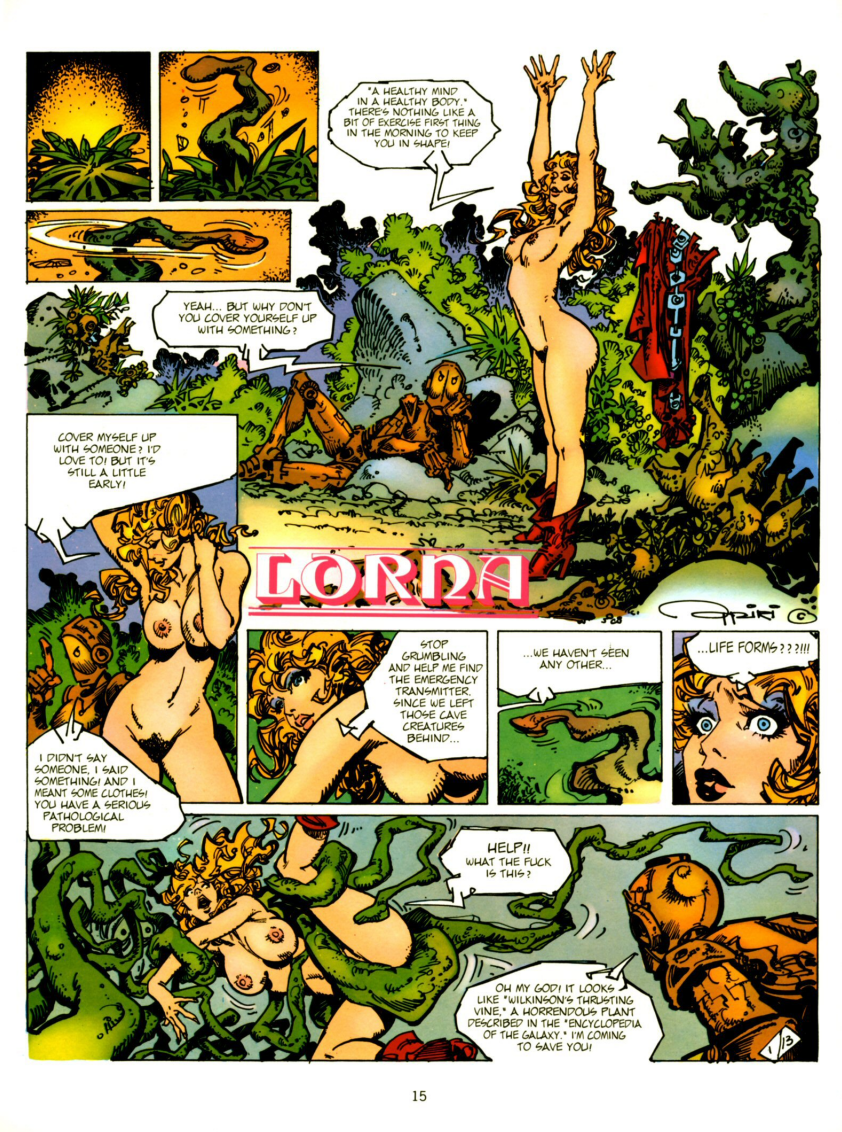
What I like about Lorna is her resilience – her enjoyment of trysts with animal, mineral and vegetal never stop her from looking for a way out and turning the tables on her various captors at the first opportunity. And speaking of doing squat thrusts in the cucumber patch, Lorna gets it on with everybody, independently of their species, origin, or chemical composition, organic or inorganic. I fail to see why a sack-like creature from another planet, a giant crustacean or a beetle-sized lizard would want to get it on with a human female, but oh, they do. A lot of stories from other authors balk at such unholy pairings*, setting them up only to have the damsel rescued at the last second, but Lorna is usually her own guardian angel, managing to escape…. after properly enjoying herself.

*Although Italian artist Paolo Serpieri‘s Druuna (also from Heavy Metal Magazine) comes to mind – she also gets assaulted by all manner of yucky things, but where Lorna has colourful fun, Druuna is getting painfully raped, so I by far prefer Lorna’s adventures.

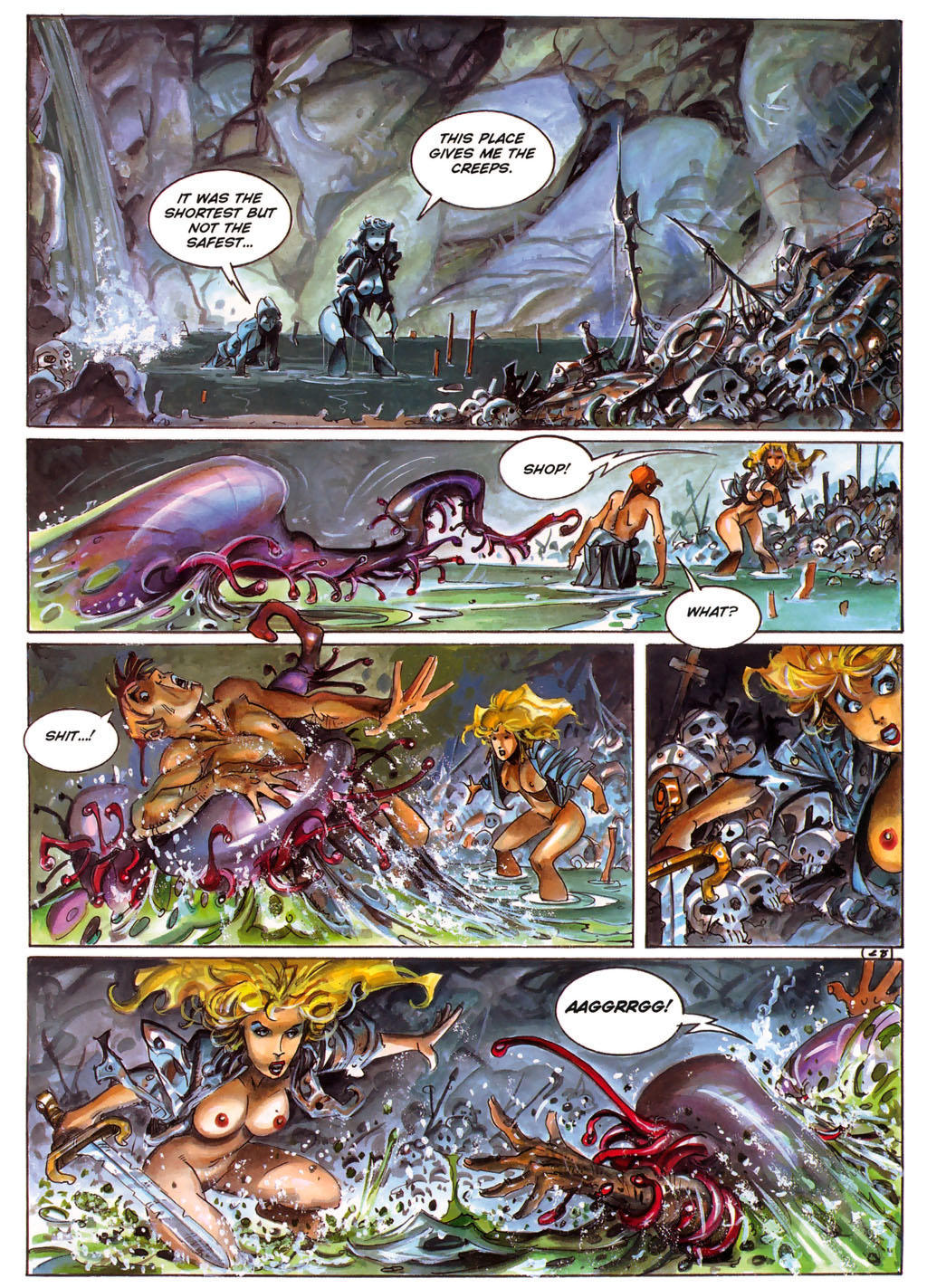
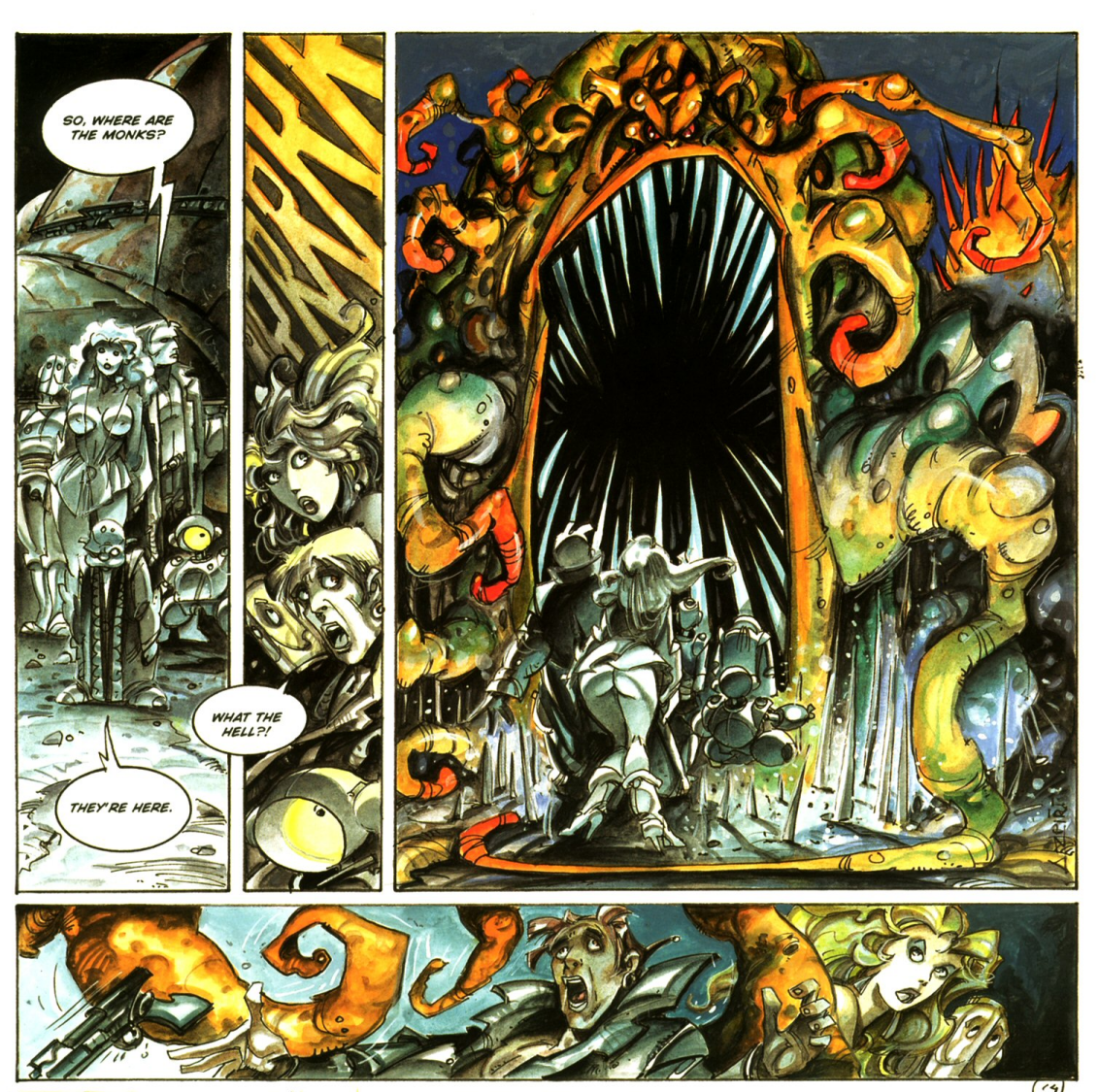
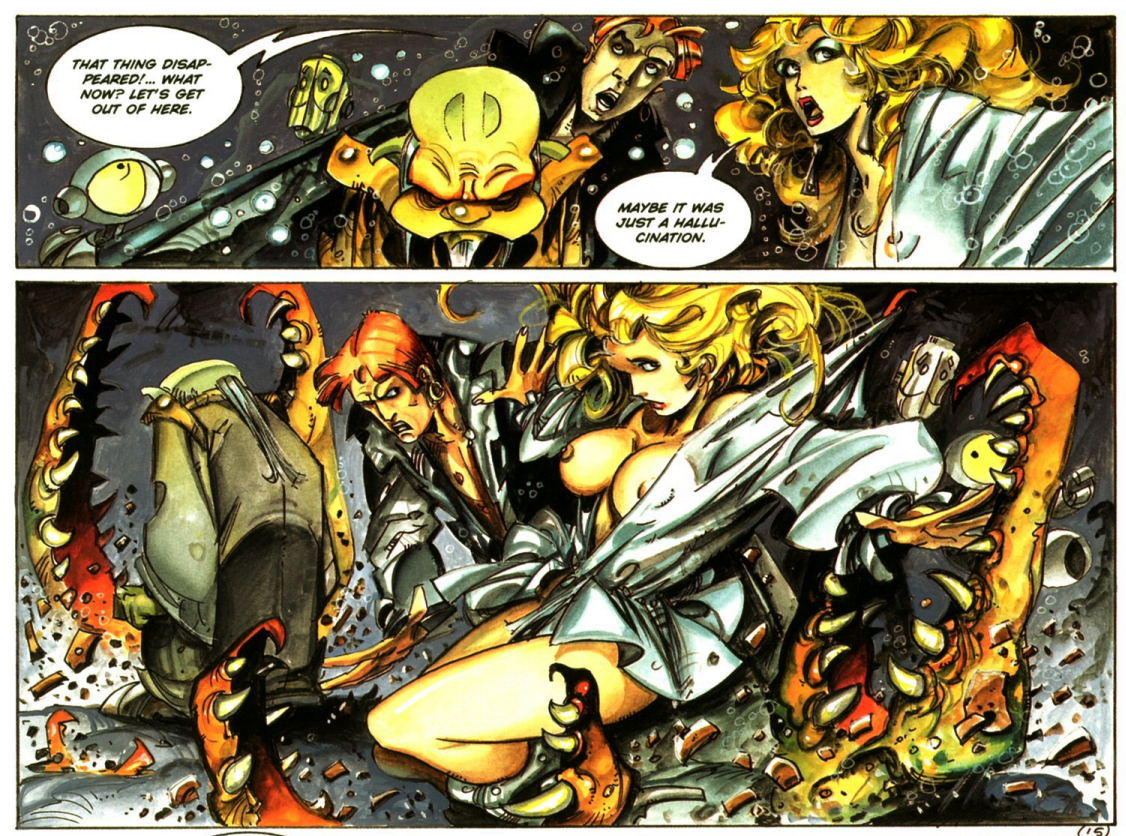
So here are the adventures Lorna had with tentacles. If you want more Azpiri, this art portfolio is a good place to start; and if you want to sample Lorna’s adventures, you can read pretty much all of this stuff online here.

The following pages are from Lorna: Lost Shadows (2006). The original title is Sombras perdidas (2005). Both were published in Heavy Metal Magazine.

Alfonso-Azpiri-Lorna-Lost-Shadow

Alfonso-Azpiri-Lorna-Lost_Shadow2

« Azpiri’s earliest published work was done for Italian horror titles in the ’70s, but he expanded into fantasy and science fiction, with erotic themes a constant across all his work. He made his Heavy Metal debut in the July 1984 issue with a story called “Daymares/Nightdreams.” In all, his work appeared in over 30 issues of Heavy Metal; on three occasions, major chunks of issues were given over to Lorna stories (September 1998, March 2002, and March 2006). Heavy Metal also published hardcover English-language versions of his Lorna stories, as well as sketchbooks and portfolios. » |source|

The following is from The Eye of Dart-An-Gor (2005). In Spanish, this came out as Ojo de Dart-An-Gor in 2003. Both were published by Heavy Metal.

Alfonso-Azpiri-The Eye of Dart-An-Gor

Alfonso-Azpiri-The Eye of Dart-An-Gor-2

Two following page-and-a-half is from Lorna and Her Robot (2000). The original title was Lorna y su robot (1999). Both were published by Heavy Metal. I prefer Azpiri’s later style.

Alfonso-Azpiri-Lorna and Her Robot
Speaking of making it with a robot, I recommend taking a gander at Nuts And Bolts: 15 Times A Robot Got Lucky. Lorna is #10 of that list, and I highly recommend the comic at #2.

Alfonso-Azpiri-Lorna and Her Robot2

∼ ds