« Polar exploration is at once the cleanest and most isolated way of having a bad time which has been devised. » ― Apsley Cherry-Garrard, The Worst Journey in the World (1922)
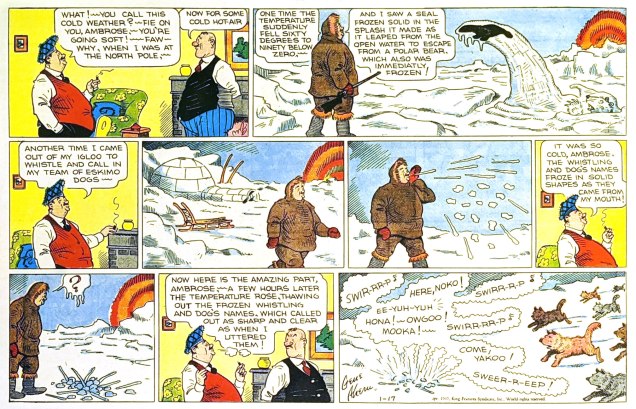
Gene Ahern‘s Room and Board (March 17, 1937, King Features).
Of course, it’s all piffle and bunk, but it brought to mind a passage from a favourite article on weather peculiarities in Siberia, Marcel Theroux‘s The Very, Very, Very Big Chill(published in Travel & Leisure in 2000):
« Local people told me that at minus 60 and below, a dense fog settles in the streets, and pedestrians leave recognizable outlines bored into the mist behind them. A drunkard’s tunnel will meander and then end abruptly over a prone body. At minus 72, the vapor in your breath freezes instantly and makes a tinkling sound called ‘the whisper of angels.’ »
Then I thought: « all very nice, but that makes for a rather meagre post »… so I decided to toss in a few bonus images featuring that venerable recurring motif… and got carried away.
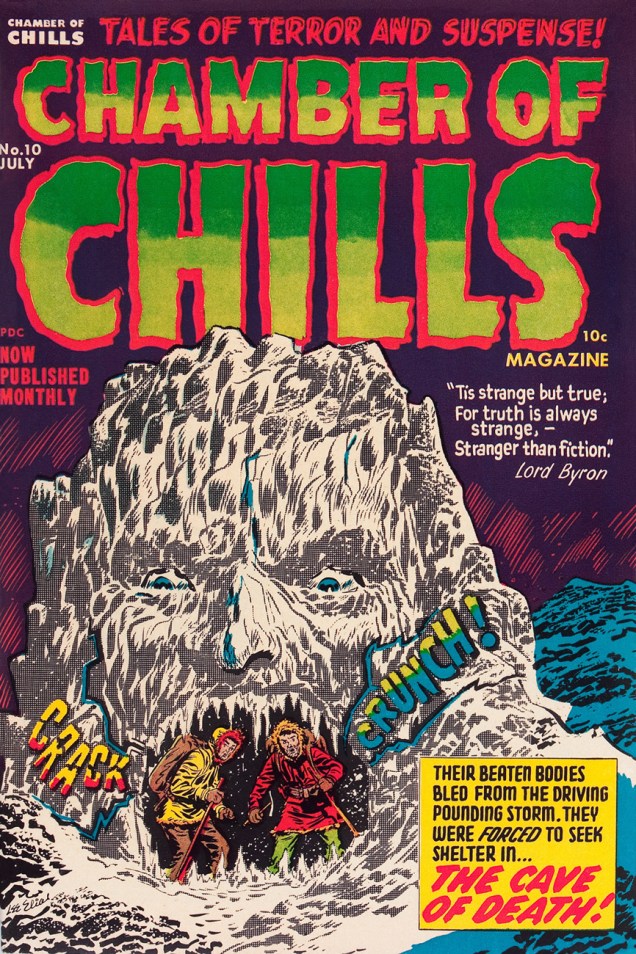
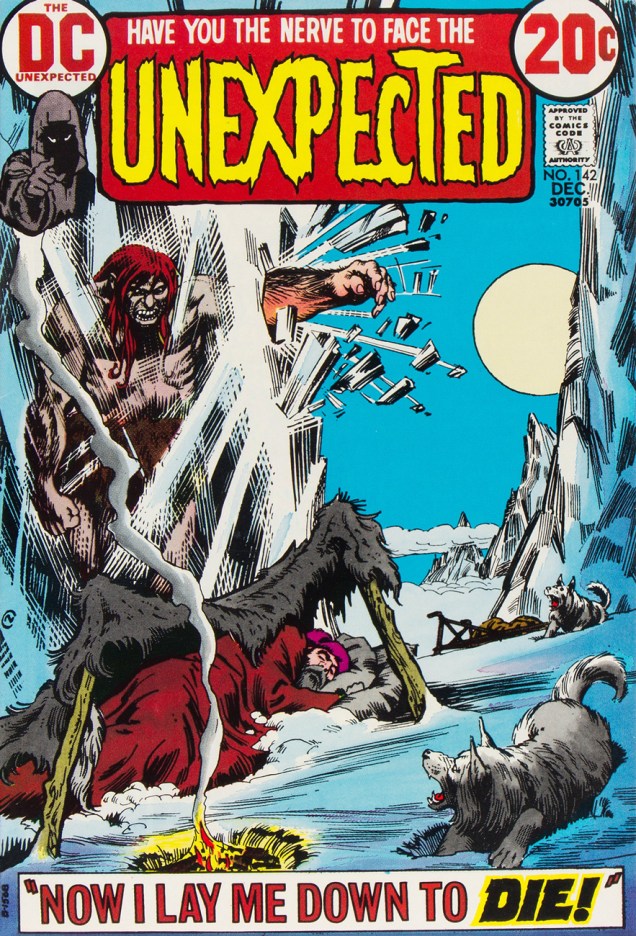
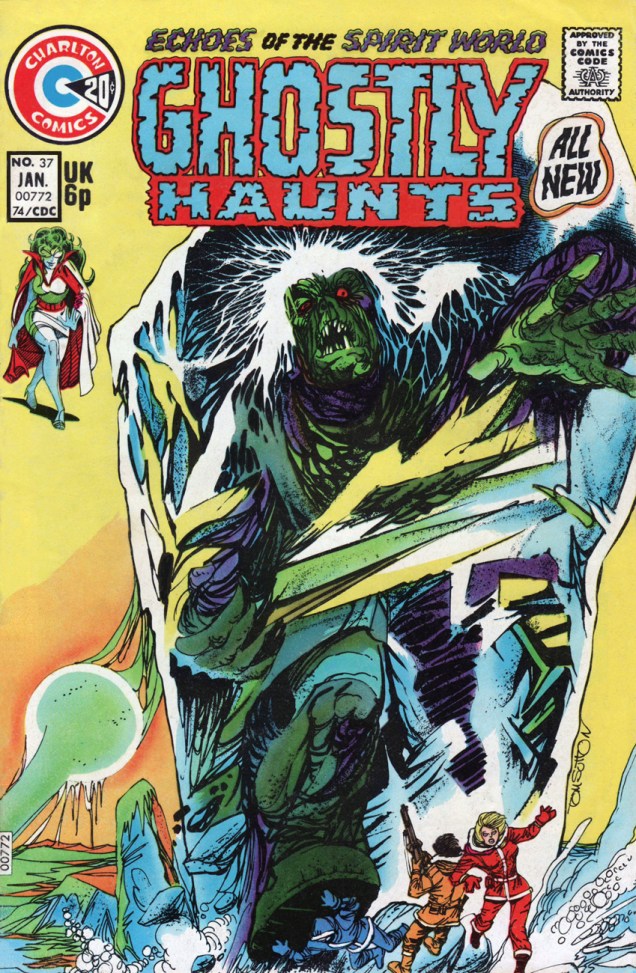
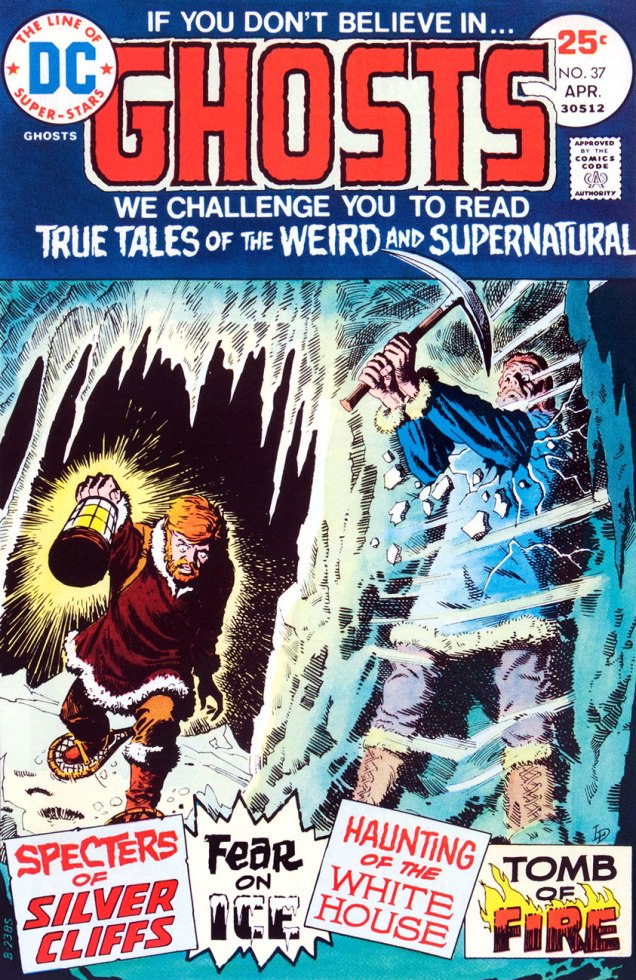
This is Astonishing no. 36 (Dec. 1954, Atlas), the title’s penultimate pre-Code issue… not that Atlas ever crossed the line into gruesome. The cover-featured yarn is The Man Who Melted!, an amusing load of utter rubbish you can read here. Cover art by Carl Burgos.This is Chamber of Chills no. 10 (May, 1974, Marvel), and most everything’s the same, save for the colour palette and the now-hostile expression on the caveman’s mug.And this is alsoChamber of Chills no. 10 (July, 1952, Harvey)… the original, whose title Harvey Comics left curbside for Marvel to recycle when they went all kid-friendly in the Comics-code-ruled Silver Age. Cover designed and art-directed by Warren Kremer and illustrated by Lee Elias. For some insight into these collaborators’ working methods on the horror titles, here’s our post on that very topic. Incidentally, what’s up with the hifalutin Lord Byron quote, Harvey folks? This wacky fare is quite plainly fiction… what’s your point? [Read it here.]This is Tales of The Unexpected no. 101 (June-July 1968, DC). Layout and pencils by Carmine Infantino, inks by George Roussos. Infantino, promoted the previous year to editorial director (he would soon rise to the rank of publisher), brought in the versatile Nick Cardy to serve as his right-hand man on the artistic front; together, they designed all of DC’s covers until both men stepped down in 1975.This is House of Mystery no. 199 (February, 1972, DC), illustrating Sno’ Fun! a rare (possibly unique, really) collaboration between Sergio Aragonés (script) and Wally Wood (pencils and inks). Cover designed by Infantino and Nick Cardy, pencilled and inked by Neal Adams and coloured by Jack Adler.This is Unexpected no. 142 (Dec. 1972, DC); cover art by Nick Cardy.This is Unexpected no. 147 (June, 1973, DC); cover art by Nick Cardy.This is Unexpected no. 150 (Sept., 1973, DC); cover art by Nick Cardy.« Hey, look! The critter is frozen whole… it’s in pretty good shape! » Tom Sutton vibrantly sells Joe Gill and Steve Ditko‘s cautionary tale of arctic drilling gone awry, The Ancient Mine. Also in this issue: Steve and Pete Morisi‘s Surprise!, and Gill and Fred Himes’ touching Pipe Dream. This is Haunted no. 37, (Jan., 1974, Charlton), presented by the publisher’s blue-skinned, green-haired answer to Nana Mouskouri, Winnie the Witch.« … that face haunts me… was it a man or a beast? » Ah, the Seventies. Left dazed and frazzled by his whirlwind life of slow-mo violence, glamorous excess and substance abuse, not to mention radiation poisoning, the inevitable occurs: The Hulk wanders onto the wrong set, as well as the wrong publisher’s! Against all odds, he handles the rôle with aplomb and commendable gravitas. A page from Gill and Ditko’s The Ancient Mine. Read it here!This is Ghosts no. 37 (April, 1975, DC), featuring Luis Dominguez‘s first (or many) cover for the title, a passing of the torch from Nick Cardy, who’d handled nearly every one of the preceding three dozen…. minus two: number 7’s cover was the work of Michael Kaluta and number 16‘s that of Jack Sparling.
Oh, and since I wouldn’t want any of you superhero aficionados to think I’m freezing you out, here’s another demonstration of Mr. Infantino‘s “encased in ice” idée fixe.
Mr. Freeze, who first popped up in Batman no. 121 in 1959, initially known as, er… Mr. Zero (Celsius, Fahrenheit or Kelvin?) before being revamped and renamed for the mid-60s Batman TV show, a makeover that carried over to the comics, but tragically didn’t include his outfit. This is Detective Comics no. 373 (March, 1968, DC); layout by Infantino, finishes by Irv Novick. [ read it here!]… and I can just about hear the « but what about Cap? » troops tromping down the hall, so…
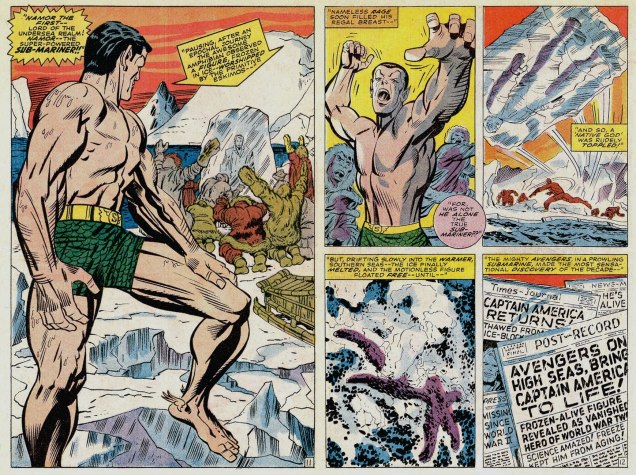
Namor goes all First Commandment on some poor Inuits (surely they’ve seen frozen bodies before?), displaying an unseemly level of insecurity for someone of his standing. This recap hails from King Kirby’s sensational feat of deadline rescue on the behalf of a tardy Jim Steranko (to be fair, it was worth the wait). George Tuska‘s inks are a surprisingly good fit! This is Captain America no. 112, Lest We Forget! (April 1969, Marvel). [ read it here!]My co-admin ds was just telling me yesterday about a client who, upon remarking to a succession of winter-kvetchers that actually, we’d had a pretty mild January, was invariably met with goggling bafflement, as if he’d just then grown a second head. In related news, it was just announced that said month of January was, indeed, the planet’s warmest on record. There is, naturally, an xkcd strip about this sort of circular denialism.
« It is a mistake to fancy that horror is associated inextricably with darkness, silence, and solitude. » ― H.P. Lovecraft
I’ve actually had a friend tell me that he sees tentacles wherever he goes because of my Tentacle Tuesdays. Hey, I’m not making this up – tentacles *are* everywhere. Whether you’re in a well-lit room, with reassuring noises of the city filtering through the windows, or in a city centre, cushioned from harm by the comforting presence of a crowd… repairing a TV set, kissing a date, heading over to the pub for a well-deserved drink… some cephalopod horror is but a blink away. Fie, fie, foul apparition!
What better beginning to this post than… TERROR VISION!!! (“Aiiieeee!“, to quote the man.)
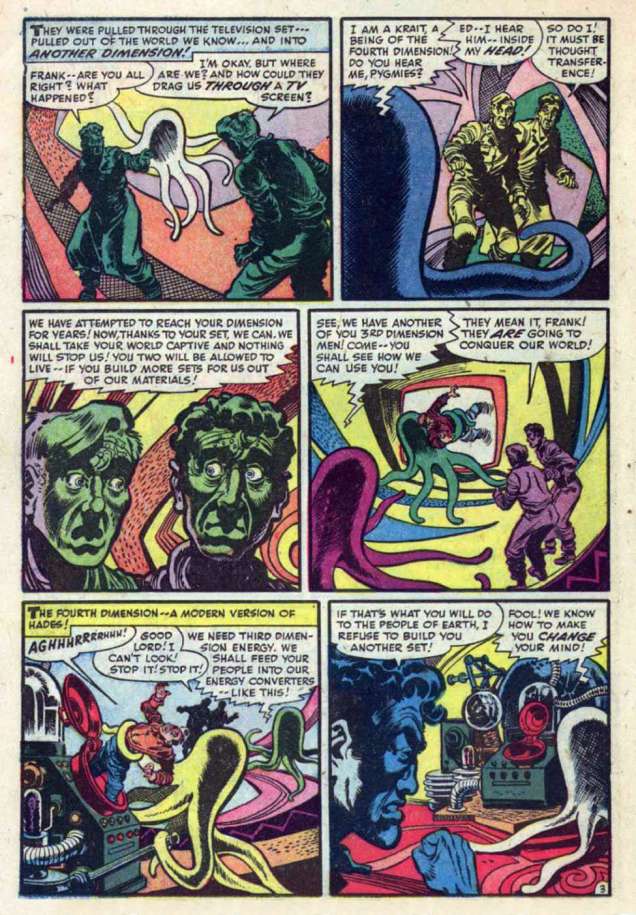
A page from Terrorvision, with very nice art (and possibly plot) by Howard Nostrand, printed in Chamber of Chills Magazine no. 19 (September 1953, Harvey).
Things go from bad to worse for our repairman…
Normally I wouldn’t post yet another page from the same story, but I like the art so much that I have to share.
I’ve already mentioned German horror comics in the shape Spuk Geschichten (see Tentacle Tuesday: A Torrent of Teutonic Tentacles). Its mother publication, Gespenster Geschichten, also has its share of tentacles. For now, I will limit myself to this one cover:
It’s a cruel thing to do to a man who was just thirsting for one piddling stein of cool beer. I hope they all got better acquainted and are clinking glasses together in the next scene… but I doubt it. Gespenster Geschichten no. 545.
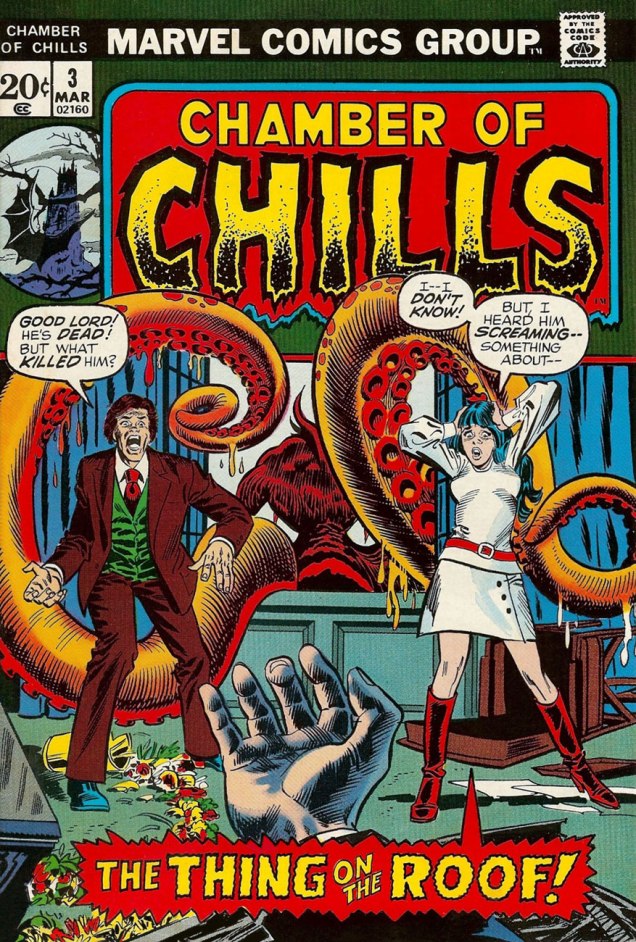
One would be justified in thinking that roofs are generally quite octopus-proof, but nope, this one is either a talented climber or just unimaginably huge.
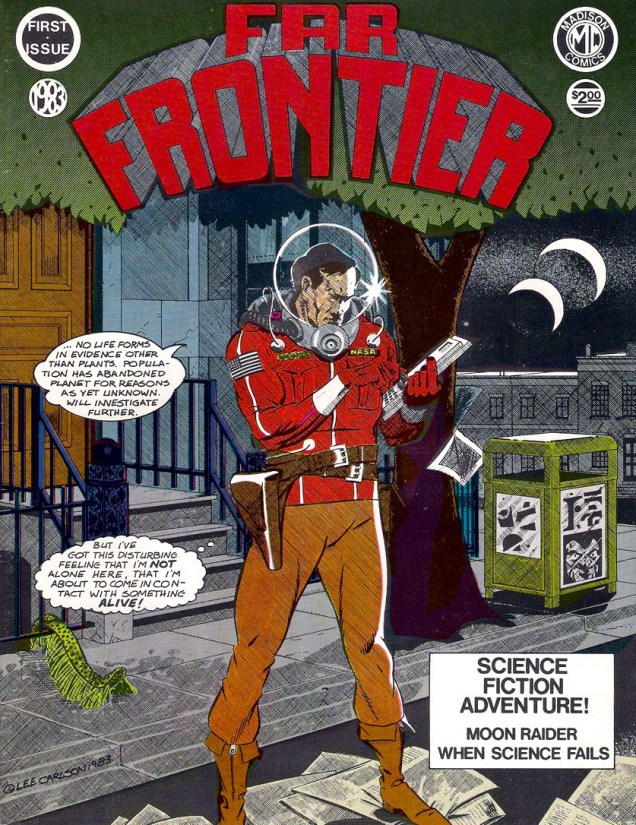
Chamber of Chills no. 3 (March 1973), pencilled by Alan Weiss and inked by Frank Giacoia.A street may look peaceful and quiet, but that doesn’t mean a shag rug tentacle isn’t stealthily creeping towards your leg. Far Frontier no. 1 (1984), drawn by Lee Carlson.
As a bit of an aside, there’s a really fun account of one collector’s quest for John Jacobs stories written for Madison Comics over at Kirby Your Enthusiasm (link: Finding John Jacobs). Far Frontier no. 1 has a few of those, and apparently they’re quite perverse and brain-melting. An excerpt of the essay in question to whet your appetite:
« I first became aware of [John Jacobs] through a review by noted comics writer Jan Strnad in The Comics Journal #94 of Dr Peculiar #1. I read and re-read it dozens of times and marveled at the samples of his primitive pencilled art. My mind tried to absorb a comic that had heavy religious overtones plus a healthy dose of T&A (with a monster rape/cannibal fetish). The reviewer theorized that John Jacobs’ mind must be like a bowl of maggots. »
As an editorial aside, I am inclined to trust Strnad on this, both because I really like his writing and because Kirby Your Enthusiasm‘s summary of Jacobs’ plots confirms the maggots theory.
« Mirrors toins things in revoise! Everything in Mirrorland is opposite! So naturally I’m a tough ghost and you’re a sissy spook! » — Poil in Through the Looking Glass (Spooky no. 121, 1970… read it here)
The Harvey Comics line, in its peak years (from the late Fifties to the mid-seventies, say) was essentially a collection of monomaniacal characters. As Daniel Clowes deemed in his classic lampoon of the Harvey cast, theirs is a Playful Obsession (read it here.)
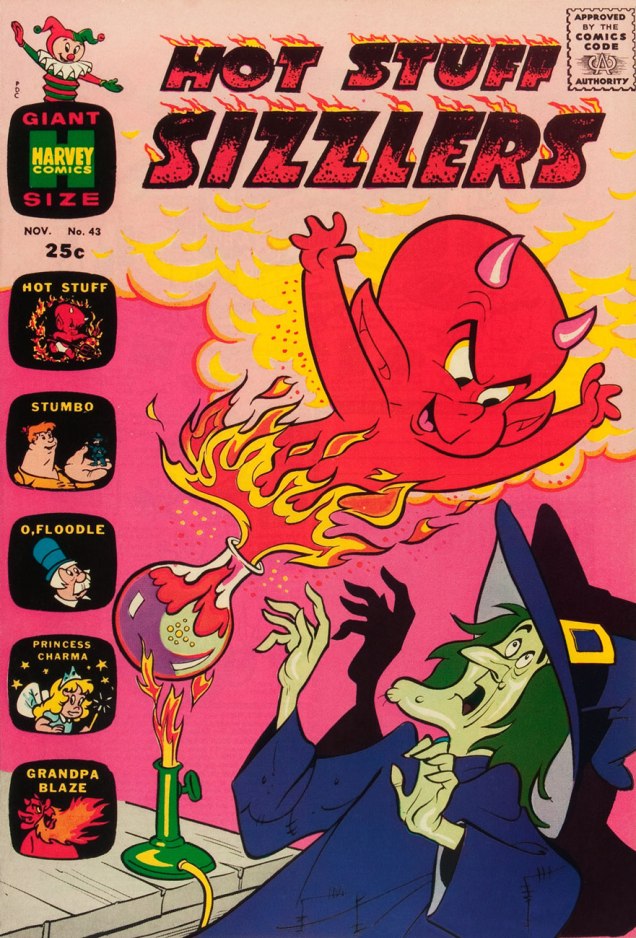
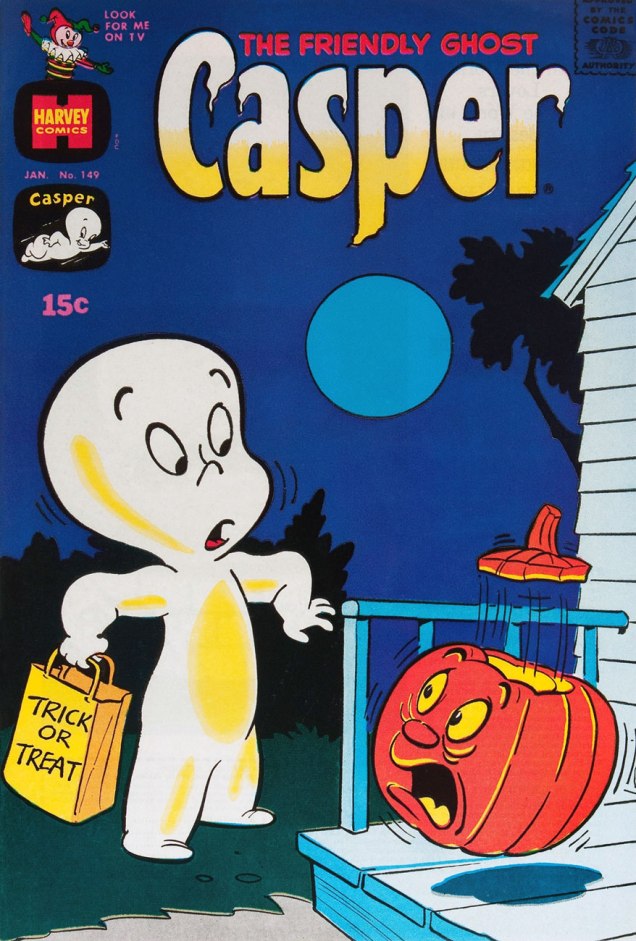
Richie Rich had his moolah, Little Lotta wolfed down everything in sight, Little Dot found stimulation in… dots, and so on. Casper the Friendly Ghost’s uncouth counterpart, the 30s kid gang-inspired Spooky (complete with Brooklyn accent and « doiby» hat), loved to, well, scare people (and things!) with a hearty « Boo! », Hot Stuff raised the temperature wherever he went. On the other hand, Casper and Little Audrey’s adventures didn’t rely on such gimmicks, possibly from predating the rest of the Harvey gang, originating in animation in Casper’s case, and… folklore in Audrey’s:
« One day, Li’l Audrey was playing with matches. Her mother told her she’d better stop before someone got hurt. But Li’l Audrey was awfully hard-headed and kept playing with matches, and eventually she burned their house down.
“Oh, Li’l Audrey, you are sure gonna catch it when your father comes home!” said her mother.
But Li’l Audrey just laughed and laughed, because she knew her father had come home early to take a nap. »
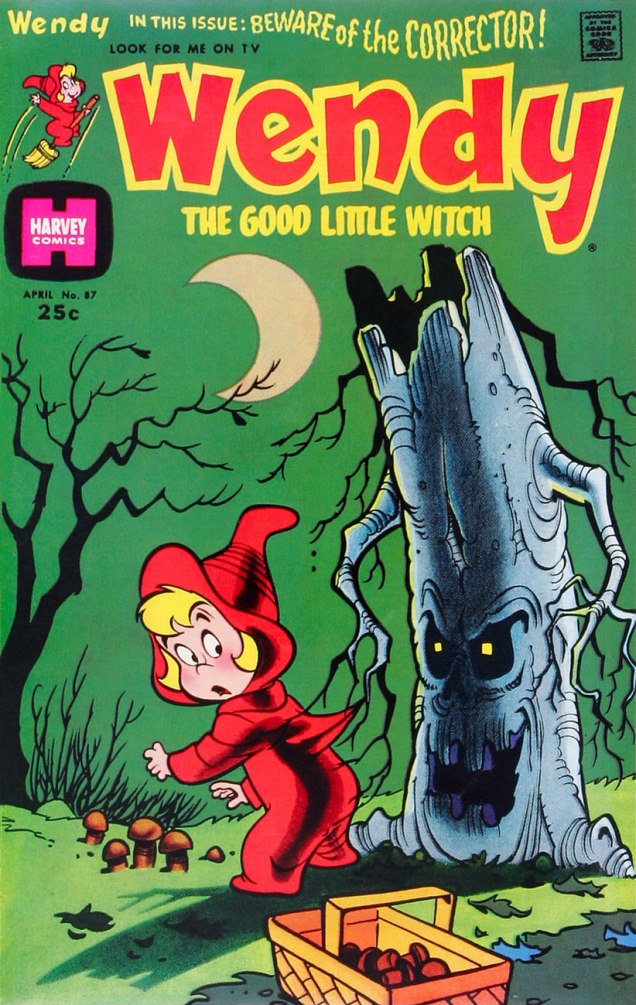
The Harvey line’s covers were by far its most precious asset: endless riffs on a character’s particular motif, granted, but spun out in well-designed, nimbly-executed and brightly-coloured scenes… virtually the work of a single creative whirlwind, art director-illustrator Warren Kremer (1921-2003).
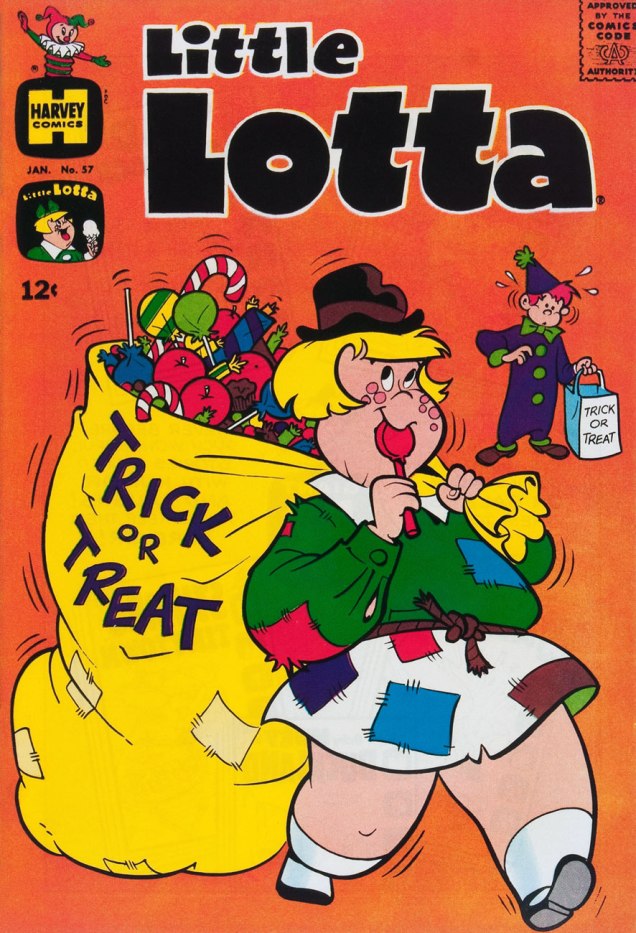
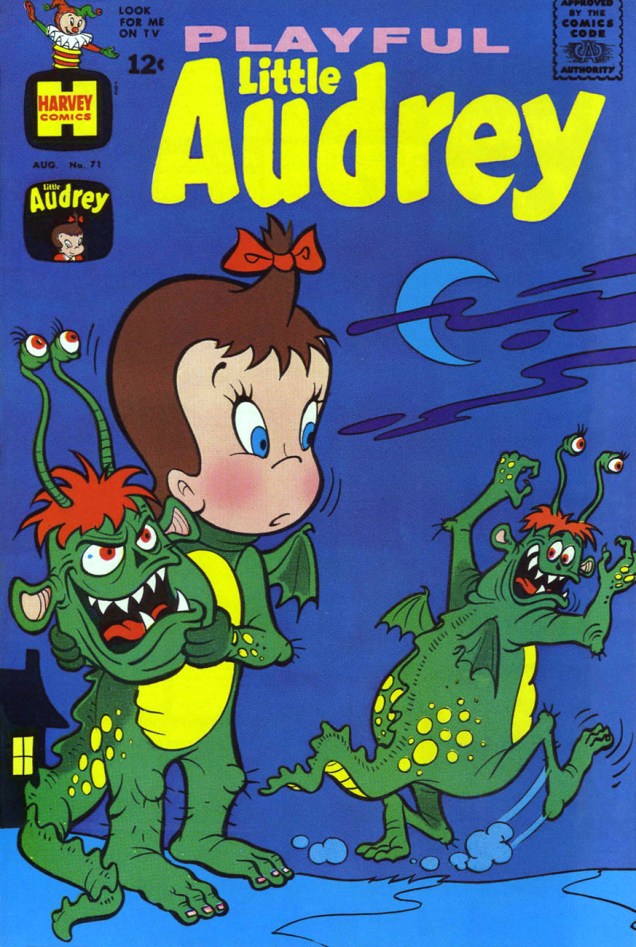
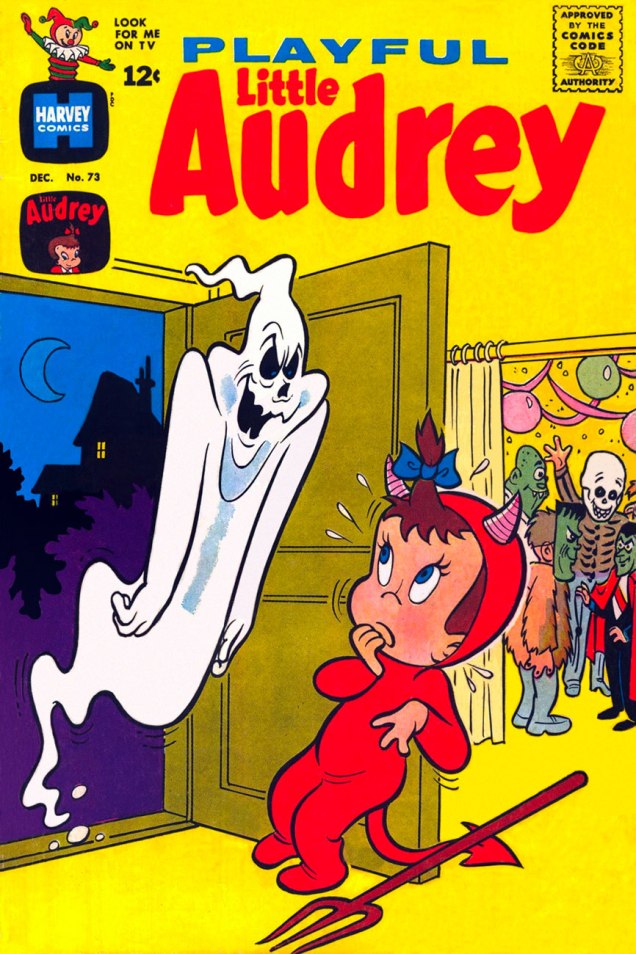
This is Little Lotta no. 57 (Jan. 1965). Lotta may have been a glutton, but she was also super-strong.This is Playful Little Audrey no. 71 (Aug. 1967).This is Playful Little Audrey no. 73 (Dec. 1967).This is Hot Stuff Sizzlers no. 43 (Nov. 1970).This is Casper the Friendly Ghost no. 149 (Jan. 1971).This is Spooky Haunted House no. 9 (Feb. 1974). Note that Spooky’s girlfriend’s actual name is ‘Pearl’… he just pronounces it ‘Poil’. Upon occasion, the ‘tuff little ghost’ essays the rôle of the spookee rather than his usual spooker (or is that “spookist”?)This is Little Dot no. 156 (Dec. 1974). I’m not sure what the kid’s so terrified of… maybe he’s never had the measles?
This is Wendy, the Good Little Witch no. 87 (Apr. 1975). [ds: these just might be edible mushrooms.]In all cases, artwork by the legendarily prolific Warren Kremer. As we demonstrated last year, the Harvey house style hardly was the only range he could draw in.
Has this ever happened to you? You’re sailing along, just minding your business, concentrating on fishing or just taking a pleasure cruise, when suddenly you’re abruptly attacked by shifty tentacles. What do you do? Defend yourself with a tickle assault!
Page from “Little Dot Meets Uncle Gill”, printed in Little Dot no. 5 (Harvey, 1954). Art is by Steve Muffatti. Little Dot is never at loss in any situation, but I’m surprised the octopus isn’t covered in polka dots.Panel from “Little Dot Meets Uncle Gill”, printed in Little Dot no. 5 (Harvey, 1954). Art by Steve Muffatti. No harm done!
Some octopuses sneak onboard to be helpful…
Original art for a Felix the Cat Sunday comic strip from July, 1934. Art by Otto Messmer.
… And some are just pissed off about their dwindling food supply. (Or perhaps that fish was a personal friend.)
Marmaduke Mouse no. 2 (Summer 1946). Artist unknown.
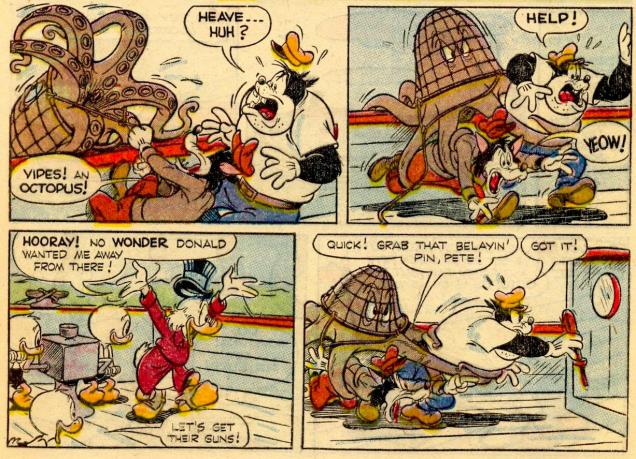
If there’s any moral to these tales, it’s that fishing is hazardous business.
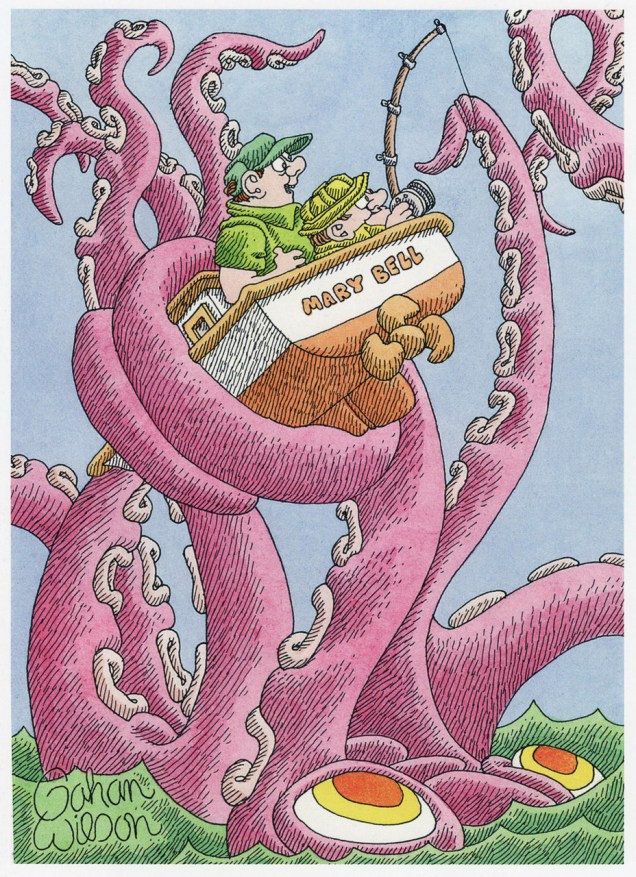
Walt Disney’s Donald Duck Beach Party no. 1 (July 1955). The story is “Sea Breeze Sailors”, scripted and drawn by Dick Moores.« Don’t let it get away! » Cartoon by Gahan Wilson.
« Y’gotta develop an annoying compulsion if y’wanta get anywhere in this world! » — Dan Clowes’ Willy Willions (Eightball No. 5, Feb. 1991)
Dorothy Polka, known to the world at large as « Little Dot », made her first appearance in Harvey’s Sad Sack Comics no. 1 (Sept. 1949). All you need to know is that she’s inordinately fond of dots and circles, and that she has an absurdly large extended family. That raises a few choice questions, but we’ll leave them for someone else to tackle.
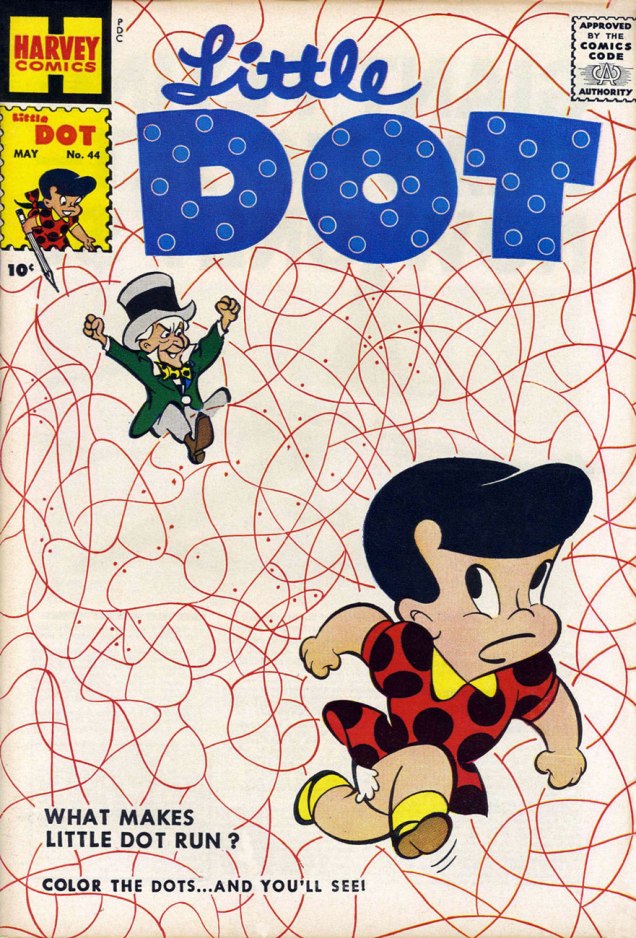
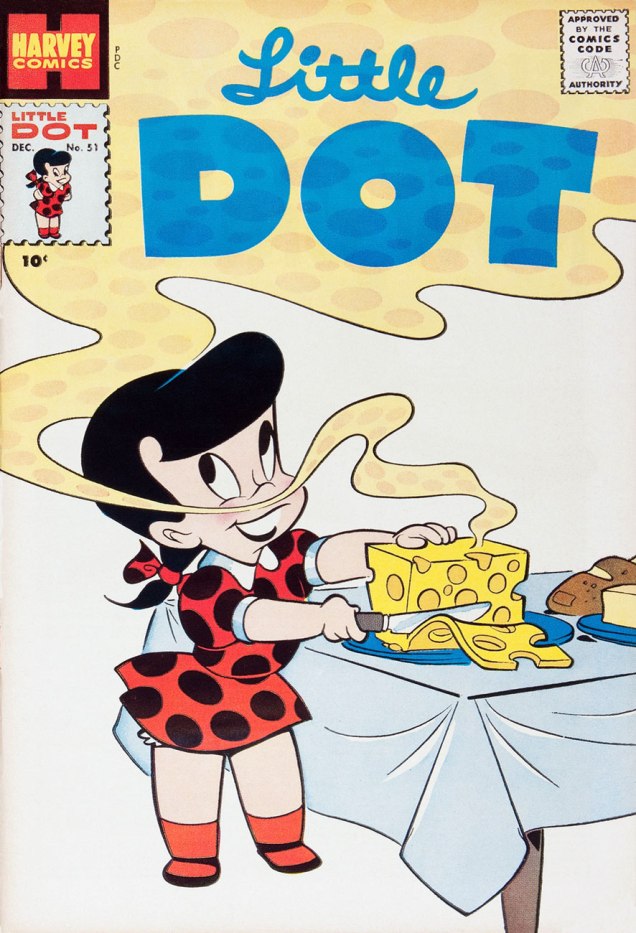
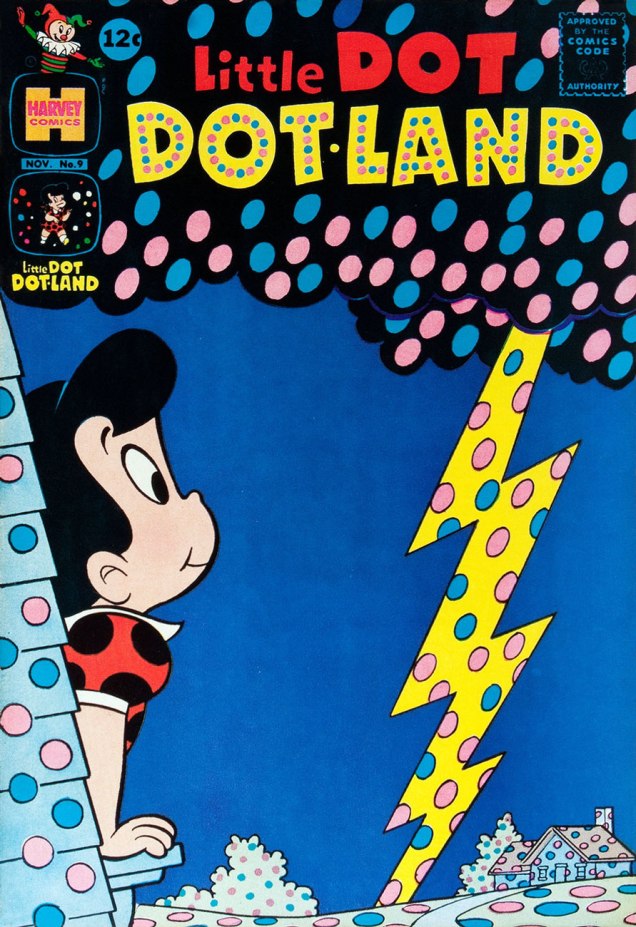
While I cheerily dismiss the bulk of Harvey Comics’ post-Code output as at best charming in a decidedly minor way, I opt to focus on the line’s most singular highlight: art director/chief artist Warren Kremer‘s endlessly inventive and escalatingly bonkers cover variations on the Harvey stable’s absurdly formulaic monomanias. Kremer clearly viewed the preposterous task he’d been handed as an opportunity to continually challenge himself with elegant design exercices and experiments. While I see little point in collecting, nor even reading most Harvey Comics, my admiration for Mr. Kremer just grows and grows. Perhaps these examples will give you a sense of what I see in them.
Oh, and bonus points to Kremer for his increasingly callous treatment of that omnipresent visual blight, the Comics Code Authority stamp. Clearly, he judged the censorious seal de trop.
Little Dotno. 29 (January, 1958)Little Dotno. 38 (October, 1958)Little Dotno. 44 (May, 1958)Little Dotno. 51 (December, 1959) Gruyère? Impressive refinement for a little kid. Perhaps there’s more to the little lady than meets the eye…Little Dotno. 52 (January, 1959)Little Dotno. 97 (January, 1965)Little Dotno. 119 (October, 1968)Little Dot Dotlandno. 9 (November, 1963)A timely one: Little Dot Dotlandno. 38 (March, 1969)Little Dot’s Uncle$ and Aunt$ (they’re loaded, I guess) no. 21 (November, 1967)
« It was long past midnight on a hot, wet June night many years ago… Central City lay choking for breath in an eerie fog… »
In this, part three of our chronicle following as we can the meandering and sometimes mystifying odyssey of Will Eisner’s The Spirit, we reach the most outré segments of the former Denny Colt’s road.
In a unique twist, The Spirit’s next residence, nearly a decade after his Fiction House run, had nothing at all to do with Will Eisner… in terms of securing his assent, that is.
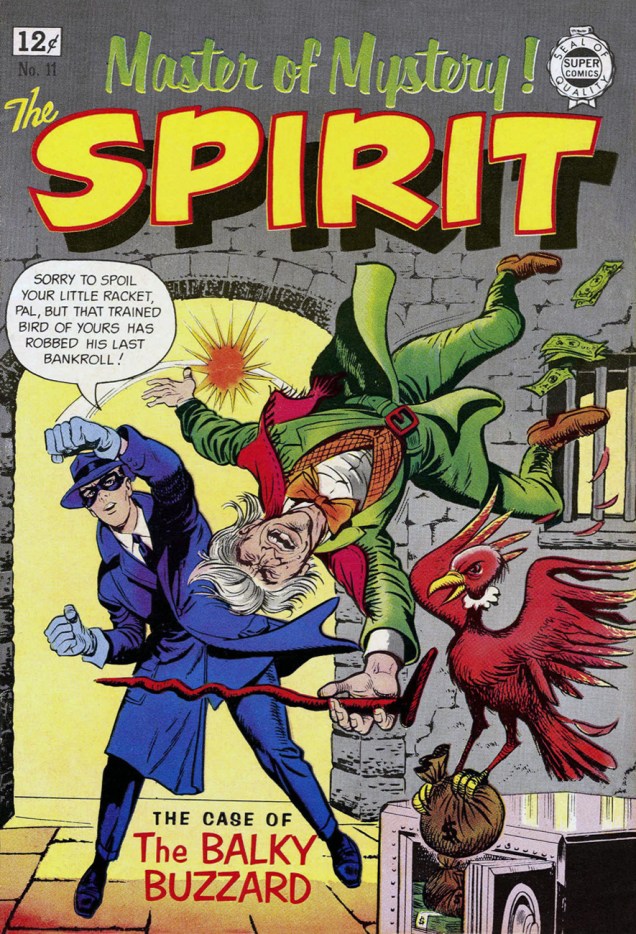
It was down to the fabulously sketchy Israel Waldman, one of those fringe-dwelling characters who made the comics industry such a colourful snake pit. To quote the Grand Comics Database: « I.W. Publications (1958-1964) was part of I.W. Enterprises, and named for the company’s owner, Israel Waldman. Reportedly, Waldman came into possession of a printing company and among the assets were the production materials for several hundred comic books previously published by various publishers as well as a limited amount of previously unpublished material. Waldman equated possession of production materials as the right to reprint and I.W. became notable for publishing unauthorized reprints of other companies’ comics, often with new covers, as Waldman’s windfall did not often include the production materials for covers. The later half of the company’s existence, it published comics under the Super Comics name. Usually these companies were out of business, but not always. »
This is The Spiritno. 11 (1963), featuring The Man Who Killed The Spirit(Mar. 24, 1946), cover-featured The Case of the Balky Buzzard (Apr. 21, 1946), Carrion’s Rock (May 19, 1946), all scripted by Eisner, as well as Honeybun and Flatfoot Burns shorts. Cover by Joe Simon (“Joe, did you even read the story you’re depicting?“). This one was well worth one’s hard-earned twelve pennies. Read it here.This is The Spiritno. 12 (1964), featuring, this time, a trio of WWII-era Spirit stories scripted by Manly Wade Wellman and Bill Woolfolk and illustrated by Lou Fine, rounded off with a pair of Flatfoot Burns shorts by Al Stahl . Cover again by Joe Simon. Read it here.
If memory serves, Waldman’s comics craftily bypassed the Comics Code (another exception!) and the newsstands, being exclusively sold in sealed bags of three in bargain-basement department stores. To bait the hook, Waldman paid top dollar for new cover artwork, approaching established pros like Ross Andru (who actually delivered some fun stuff, unlike his unforgivably atrocious turn as DC’s main cover artist in the late 1970s), John Severin, Jack Abel, and in these two cases, Jacob Kurtzberg‘s old partner, Joe Simon.
Unsurprisingly, Waldman skimped on all other materials, particularly the paper his comics were printed on, which means that I.W./Super Comics are pretty hard to come by these days in any kind of decent state, so they’re ironically pricey.
A few years later, Eisner struck a deal with another rascal (albeit one with cleaner fingernails), Alfred Harvey of Harvey Comics, Stan Lee‘s only credible competition in the credit-usurping, I created-the-Universe stakes. Again, two issues, but this time with some new Eisner material, including origin stories for The Spirit (his third, but definitive one), and his arch-nemesis Zitzbath Zark, which you may know as purple glove enthusiast The Octopus.
Harvey’s The Spiritno. 1 (Oct. 1966), featuring the new Origin of the Spirit by Eisner, and classics Lorelei Rox (Sept. 19, 1948), Two Lives (Dec. 12, 1948), Agent Cosmek/Visitor (Feb. 13, 1949), The Story of Rat-Tat the Toy Machine Gun (Sept. 4, 1949), Ten Minutes (Sept. 11, 1949), Thorne Strand (Jan. 23, 1949), Gerhard Shnobble (Sept. 5, 1948), all scripted by Eisner, save Ten Minutes, which hails from the mind of Jules Feiffer.Harvey’s The Spiritno. 2 (March, 1967) features the brand-new Octopus: The Life Story of the King of Crime and 2-pager The Spirit Lab, plus a generous helping of fine oldies, namely Plaster of Paris (Nov. 7, 1948), The Deadly Comic Book (Feb. 27, 1949), Rudy the Barber (Oct. 22, 1950), The Story of Sam, the Saucer That Wanted to Fly (Sept. 17, 1950), Sam Chapparell (Oct. 10, 1948), La Cucaracha (Nov. 19, 1950), The Halloween Spirit of 1948–Ellen Meets Hazel (Oct. 31, 1948), all scripted by Eisner… the book wraps up with a preview of the next issue, which never saw print. And so it goes…
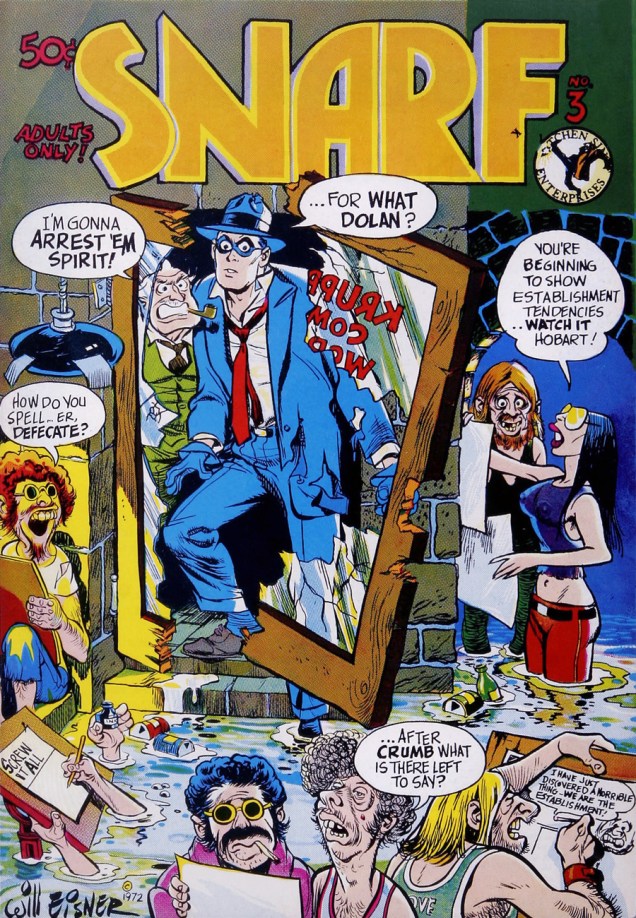
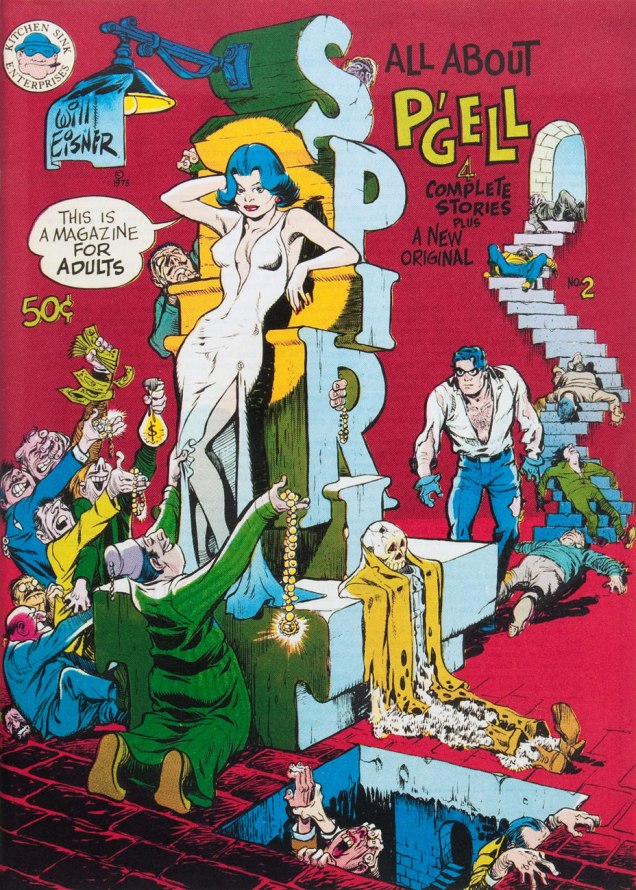
Mr. Eisner then finally had the good fortune to run into an honest man, who would prove in time to be his most steadfast ally: Mr. Denis Kitchen. Their first collaborations were a bit tentative, but quite sympathiques, with Eisner kind of slouching towards the Underground, his creation even cover-featured on Kitchen’s long-running humour anthology Snarf.
This is Kitchen Sink Enterprises’ Snarfno. 3 (Nov. 1972), featuring an original Eisner cover.Another two-issue run! Kitchen Sink’s The Spiritno. 1 (Jan. 1973), featuring a new cover by Eisner, and precious relics Max Scarr’s Map (Apr. 14, 1946), Caramba (Nov. 10, 1946), Return to Caramba (Nov. 17, 1946), The Rubber Band (June 23, 1946), plus a few brand-new short pieces.Kitchen Sink’s The Spiritno. 2 (Nov. 1973), featuring a new Eisner cover, an original four-pager, The Capistrano Jewels, and, as boasts the cover, all about P’Gell, with Meet P’Gell (Oct. 6, 1946), The School for Girls?? (Jan. 19, 1947), Competition (Aug. 3, 1947) and The Duce’s Locket (May 25, 1947).
Next time out: some interesting times with Warren.
« It was the town dandy! That spiffy cigar-store indian! Within the impact of a second I knew what I had to do! » – Ron gets it wrong.
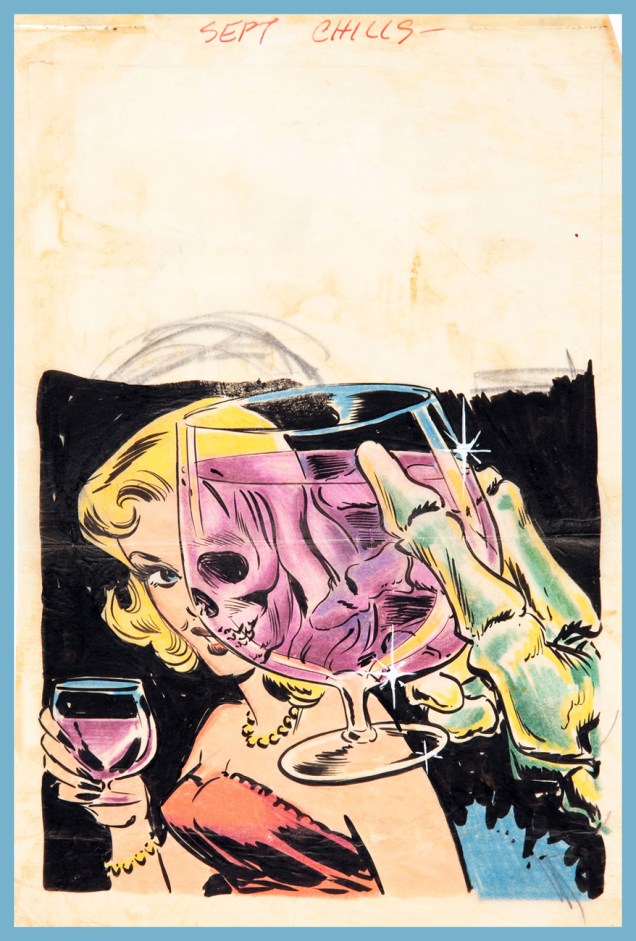
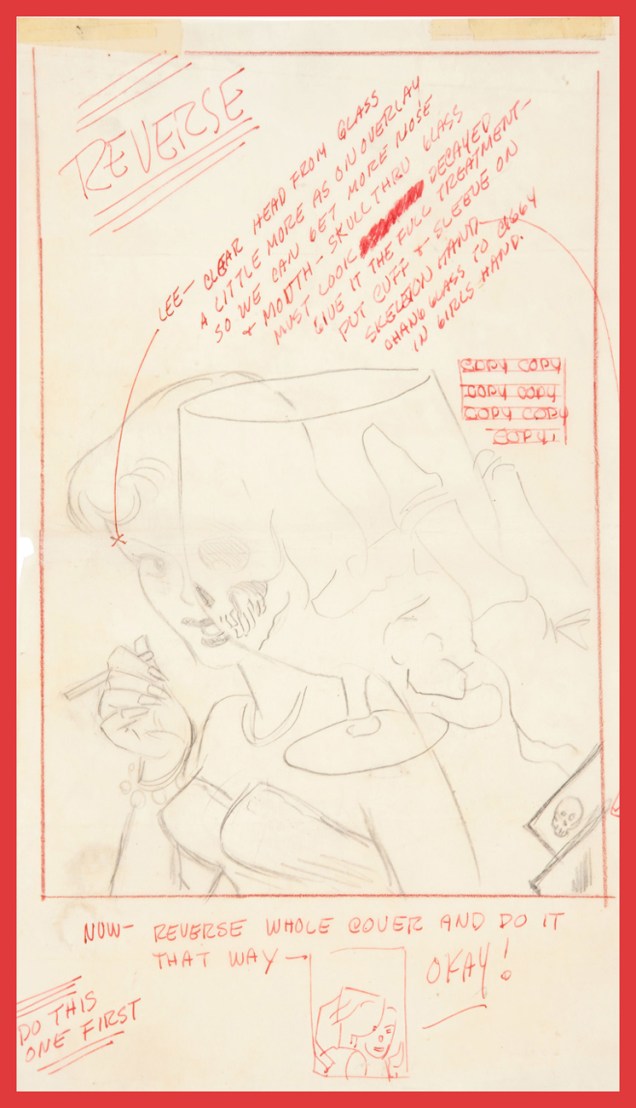
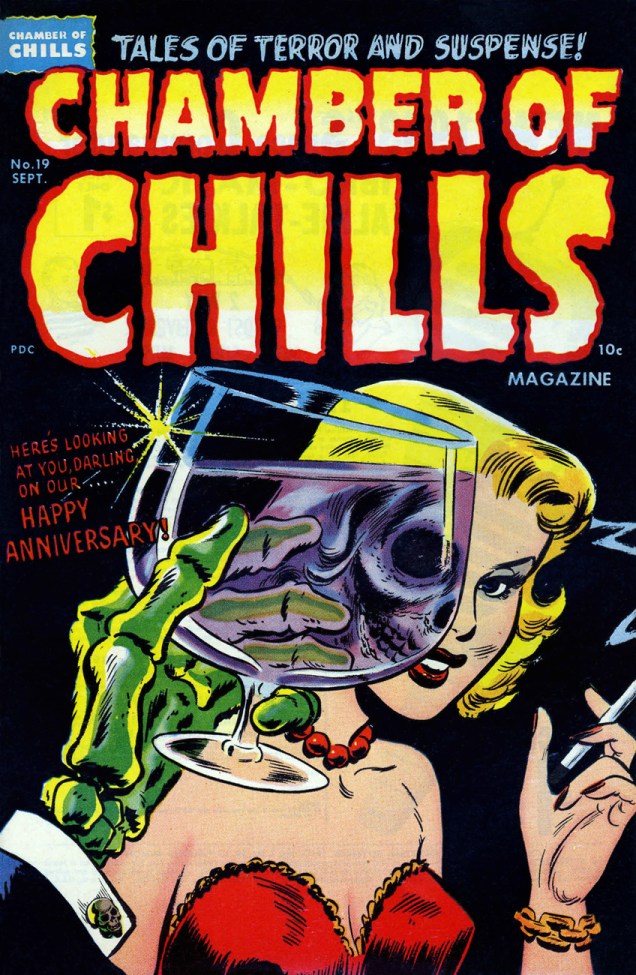
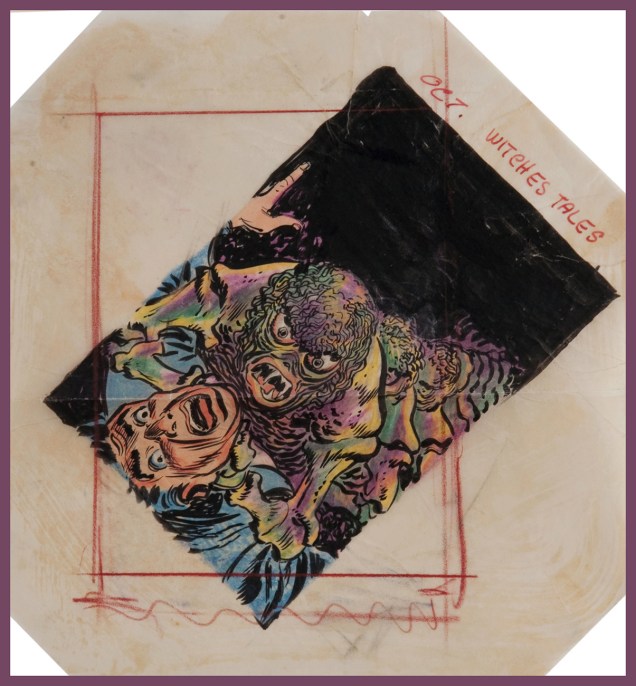
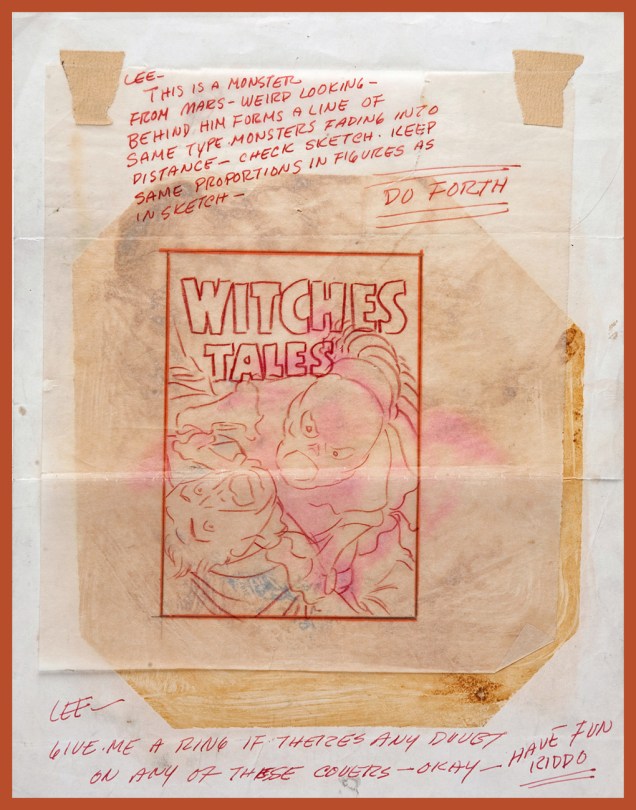
It’s become a historical footnote that, before fully settling into their (for a time) winning formula of lighthearted, cartoony monomania with Casper, Richie Rich, Little Dot and their ilk, Harvey Comics had published, pre-Code, some of the most, er… transgressive horror comics in the field. And before he settled down to designing and pencilling the lion’s share of Harvey Comics‘ admittedly inventive and arresting covers, art director Warren Kremer had fulfilled many of the same in-house duties in the more daring and diverse pre-Code years. A remarkably inventive and versatile artist, Kremer’s true worth has historically been obscured by his retiring, behind-the-scenes status, as well as the Harvey family’s plantation mentality. Today, let’s take a peek at the nuts and bolts of his collaborative partnership with cover artist Lee Elias, who would go on to become one of DC’s most straight-laced artists (though his talent remained undimmed.) It would seem, and it’s quite understandable, that a lot of artists who’d merrily produced horror comics in the early 1950s got burned by the ensuing censorious witch hunt / backlash… and became quite timid thereafter.
Warren Kremer’s original cover sketch and colour guide.… and his instructions to the final artist, in this case Lee Elias.As it appeared in print, this is Chamber of Chills Magazine no. 19 (Sept. 1953.) Marvel borrowed the title in the 1970s… Harvey clearly had no further use for it.
Another one? But of course!
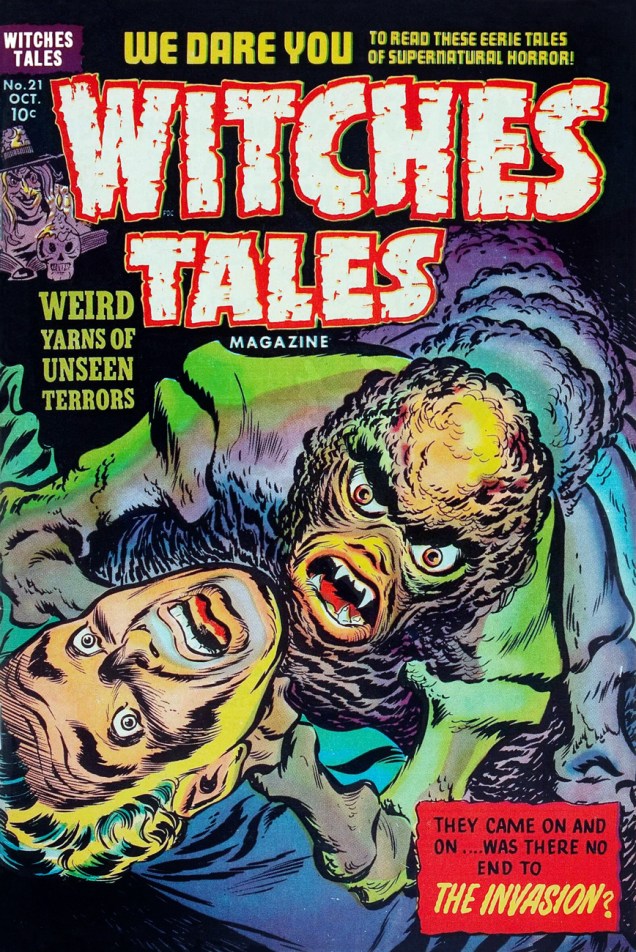
Kremer was evidently a believer in the « tilt the drawing to make it more dynamic » rule of layout (as DC’s Carmine Infantinonotoriously was)Kremer to Elias, again. An illustrator is quite blessed indeed when he gets to work with such a talented, insightful and friendly art director.Elias’ finished version, as it appeared on the stands. This is Witches’ Tales Magazine no. 21 (Oct. 1953).
It’s boiling hot in this part of the world, so I’d like to concentrate on soothingly cool covers for this Tentacle Tuesday. If we end up taking a dip in refreshing waters in our quest for relief from balmy temperatures, so much the better. Today’s roster brings us fashionable dames and their splashy encounters with octopuses!
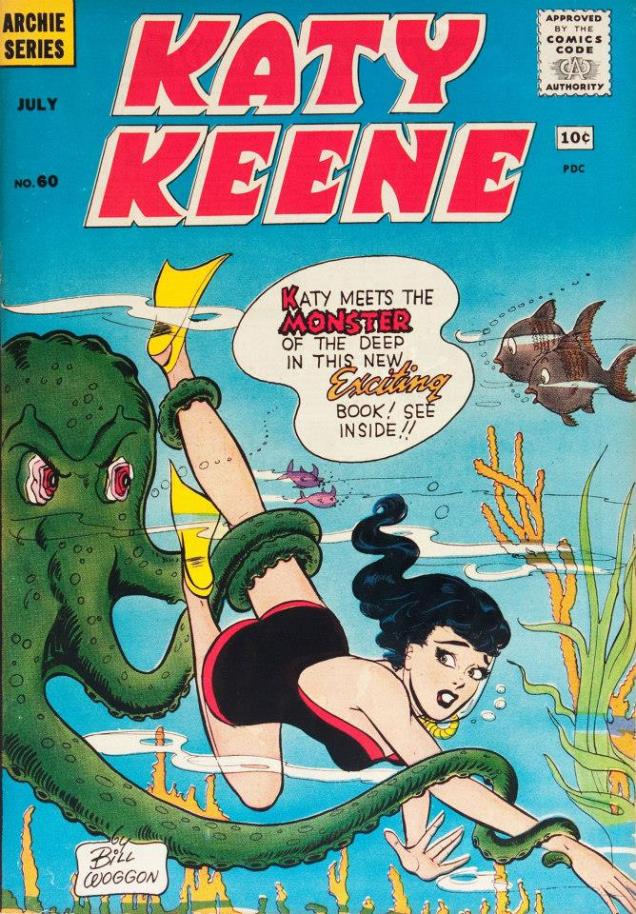
Here’s the Queen of Fashions (and right now, queen of tentacles), and for once the cover doesn’t focus on her outfit – I understand it’s hard to wriggle out of a swimsuit while an octopus is holding your leg.
Katy Keene was created by Bill Woggon, and introduced in Wilbur Comics no. 5 (1945). She was “America’s Queen of Pin-Ups and Fashions”, and readers were encouraged to submit drawings of outfits and other tralala such as designs for automobiles, boats, and whatever other method of transport Katy could glitter in. This is Katy Keene no. 60, July 1961, cover by Bill Woggon.
Mockery aside, I have nothing against Bill Woggon-era Katy – I like Woggon’s art, and the gentle humour of the stories is hard to dislike. After Katy Keene’s demise in 1961, she was eventually revived by Archie Comics in 1983. They should have let the dead rest in peace! Though several people were considered for the role of regular artist, that position went to John Lucas, whose style I abhor, recoil from and spit upon. I first saw his take on KK in those huge Archie digests you can get for pennies that reprint a bit of everything, giving readers a total pêle-mêle of different decades and different artists. I didn’t know who drew what at the time, but I quickly developed a preference for certain styles while finding others repellent… and John Lucas’ puerile art was top of my hated list, along with the half-arsed, anatomically asinine line-work of Al Hartley.
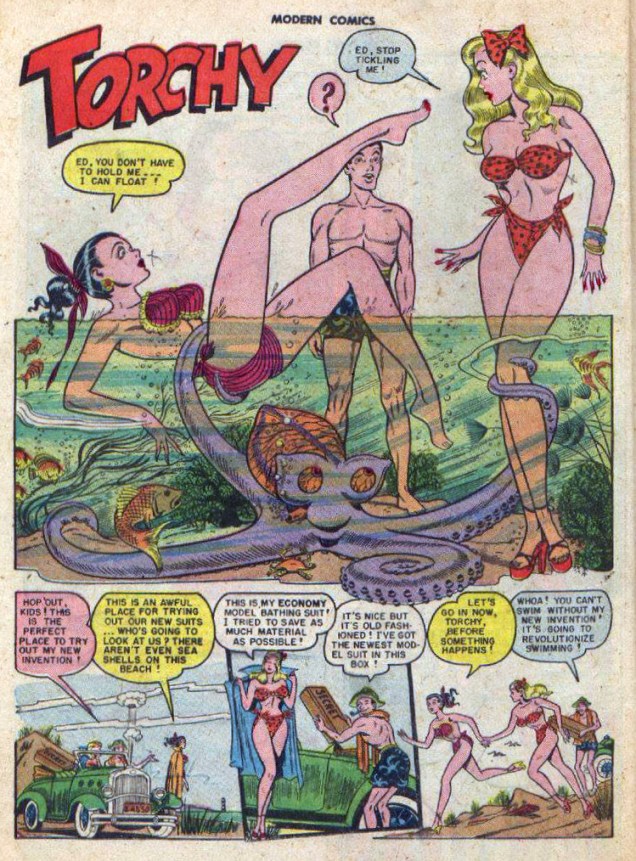
Next, we have another beauty queen, although this time the stuff is quite a bit more risqué. It’s not for nothing that cataloguing websites classify Torchy as “adult” material. As for the octopus, it has impeccable taste, having determined that there’s no need to decide between blonde or brunette when you can have both.
But Torchy, why are you wearing high-heel sandals in water? Modern Comics no. 97 (Quality Comics, May 1950). This is a page from « The Mermaid Gig », with scripted and art by Gill Fox. Fox took over from Bill Ward (Torchy Todd’s creator and writer) five years after her introduction, starting with Modern Comics #89 (1949). As far as replacement of Bill Ward, Fox did a truly excellent job, managing to preserve the mood and style of Ward’s stories. Read the mermaid tale (no more tentacles, sadly) here.
Sometimes octopuses catch little girls, but occasionally a feisty little girl captures an octopus. Little Dot is going to be a handful when she grows up… but of course she never will.
This polka-dotted octopus is a perfect catch for Little Dot in this soothingly green sea. Too bad the cephalopod fellow looks so disgruntled. He was probably in the middle of lunch or something. Little Dot no. 105 (June 1966); cover by Warren Kremer.
Those of you also inhabiting parts of the world where the weather has gone bananas (because it’s certainly hot enough for growing them in here), stay cool!
You might think that tentacles are just something that happens to other people, to the intrepid swashbucklers and globetrotters of this world. But watch out! No matter how dull your job and how stodgy your lifestyle, no-one is safe on a Tentacle Tuesday.
Let’s say you’ve embarked on a normal working day in a bustling city. No ravenous tentacle will be able to reach you as long as you stick to main streets, you think. Right? Wrong.
One would think New Yorkers would be immune to being fazed by *anything* found in NYC sewers. Cartoon by Charles Addams.
All right, let’s play it safe, call in sick and stay home.
Mother Goose and Grimm is a syndicated comic strip written and drawn by Mike Peters, published both in newspapers and online. Syndicated in 1984, it’s still going strong. Spoofs of modern culture, screwball comedy and dogs on blind dates, it’s all in there. Jan. 23, 2015.
Dang! How about going to a conference, instead?
Comic habitués will easily recognize the talented pen of Gary Larson, and identify this as a Far Side strip.
Sigh, I give up.
As today’s Tentacle Tuesday happens to coincide with Halloween (can this day get any better?), I’ll leave you with an image that gleefully combines both:
I don’t know how Little Lotta manages to control all these tentacles when she only has two hands – maybe she’s in symbiosis with an octopus? This is Little Lotta in Foodland no. 27, August 1971 (okay, so it’s a masquerade party, not a Halloween one – cut me a little slack!), cover (as usual) by Warren Kremer.
~ ds
Some content on this page was disabled on June 30, 2022 as a result of a DMCA takedown notice from Gary Larson. You can learn more about the DMCA here:
« That should teach you not to tangle with a tuff little ghost! »
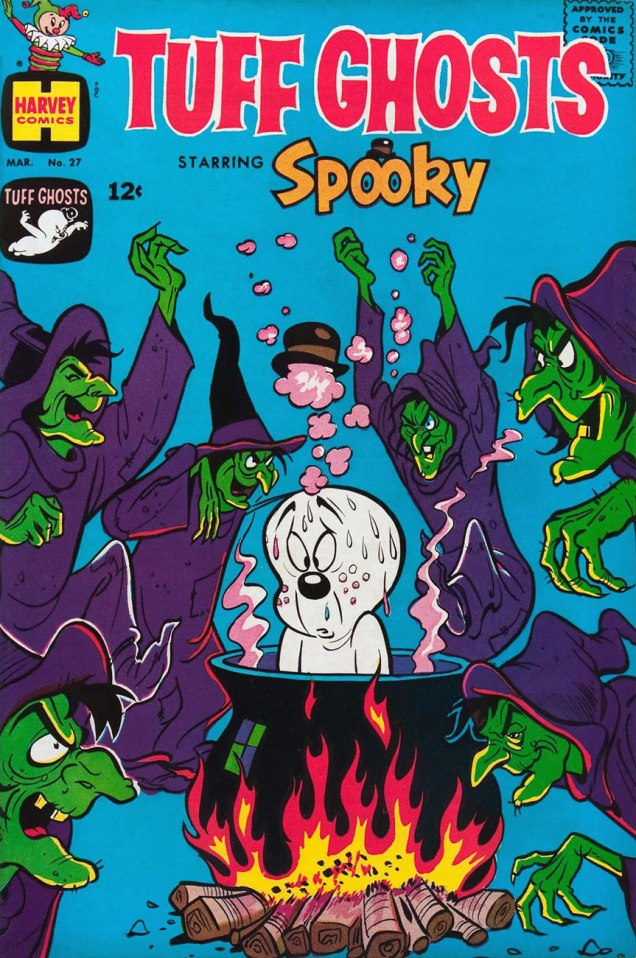
Amongst Harvey Comics’ cast of monomaniacal characters, Spooky the Tuff Little Ghost’s propensity for trying to scare folks out of their skin with a hearty « Boo! » seemed sanest. After all, that’s what ghosts are s’posed to do, even if they’re from Brooklyn.
Here’s a tiny sample of some of Spooky’s spookiest covers, from the incredibly fertile mind and pen of unsung conceptual genius Warren Kremer.
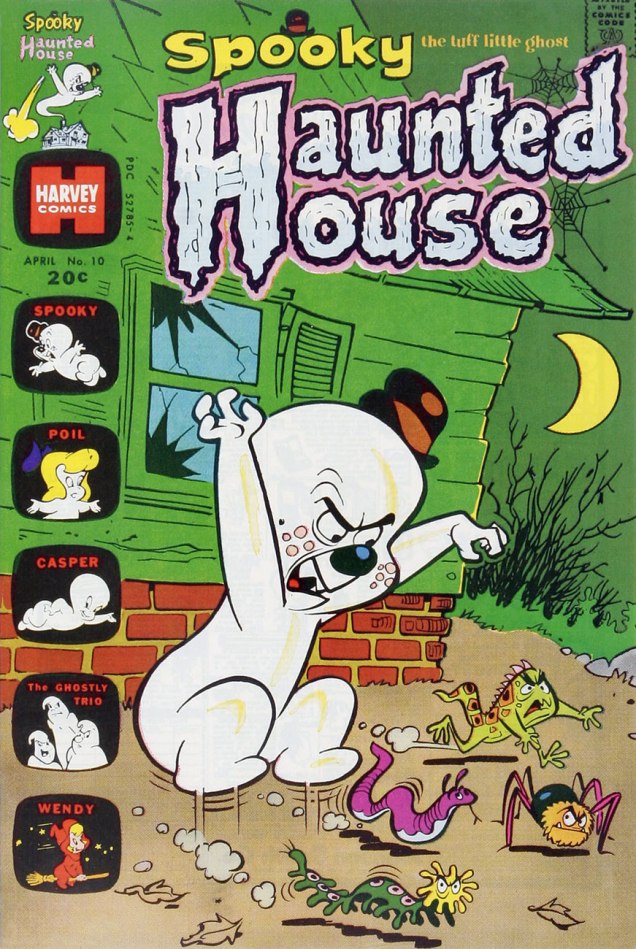
Spooky no. 77 (Dec. 1963, Harvey). Say, is that Mrs. Rich getting hit up for some treats?Spooky Haunted House no. 10 (Apr. 1974, Harvey)Spooky Haunted House no. 12 (Aug. 1974, Harvey)Spooky Haunted House no. 13 (Oct. 1974, Harvey)Tuff Ghosts Starring Spooky no. 27 (March 1967, Harvey)
As reading material, the Harvey books were mush for the mind, but they sure had purty covers. Note how Harvey was the only comics company that treated the Comics Code Authority stamp with such contempt: if it doesn’t get half cropped off, it’s coloured as to be barely visible. The damn thing, even at its smallest, *was* a visual blight. Bless that art director! Then came barcodes… and the battle wasn’t even worth waging anymore.






























 Who's Out There?