Like Hawkeye Pierce, Bob Oksner (1916-2007) was a gentleman who appreciated a cute overbite.
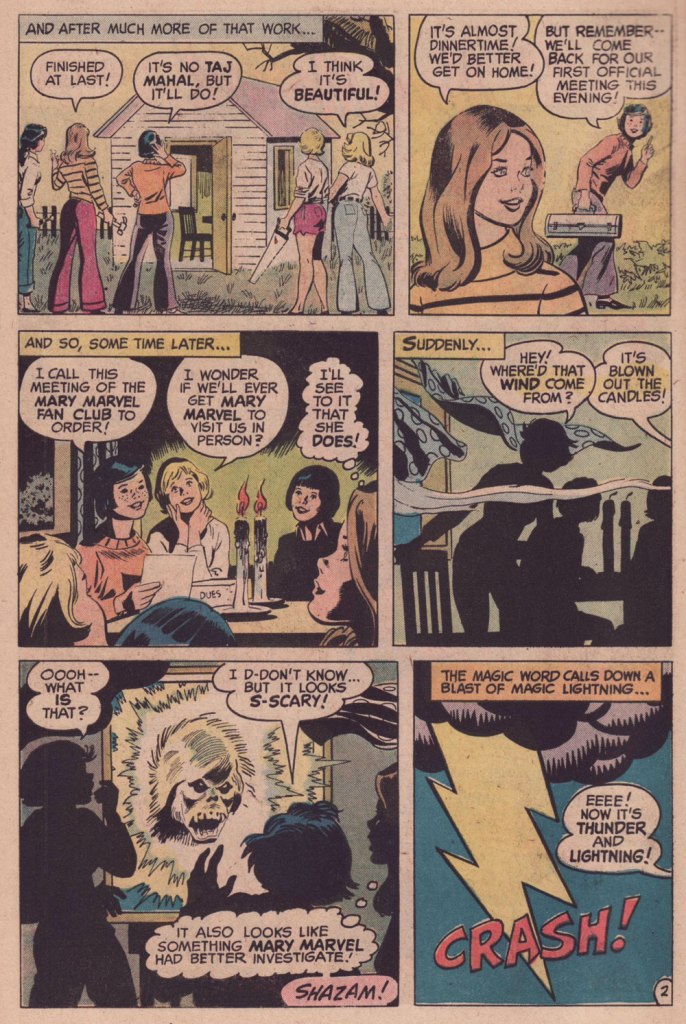
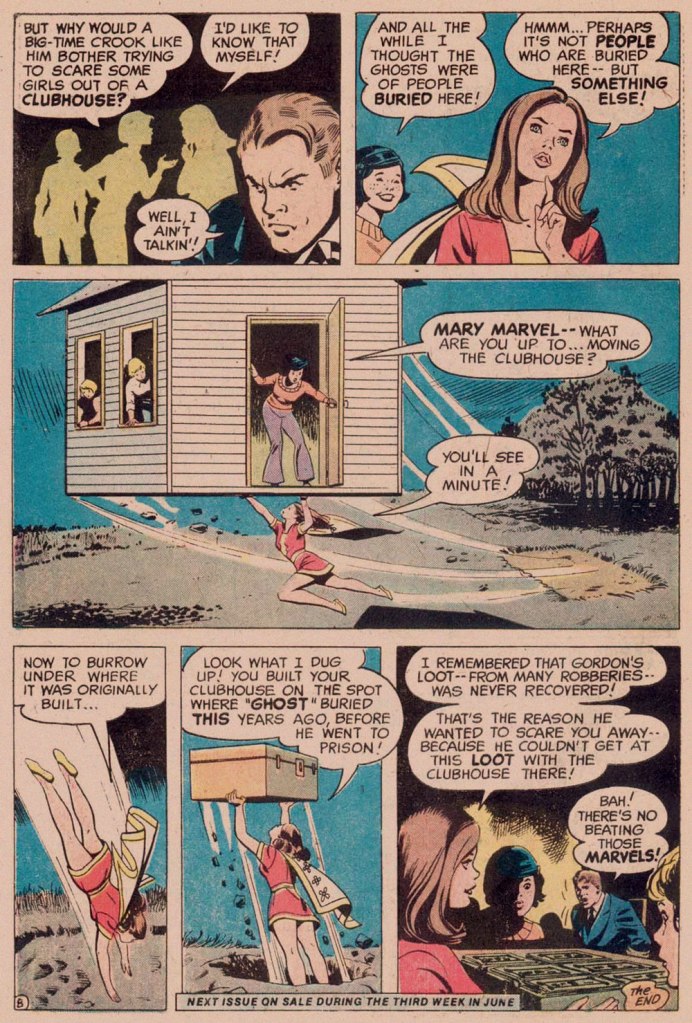
Here’s a seasonal Mary Marvel solo tale that originally saw print in the thirteenth issue of DC’s Shazam!, back in 1974. It was scripted by the erudite Edward Nelson Bridwell (1931-1987).
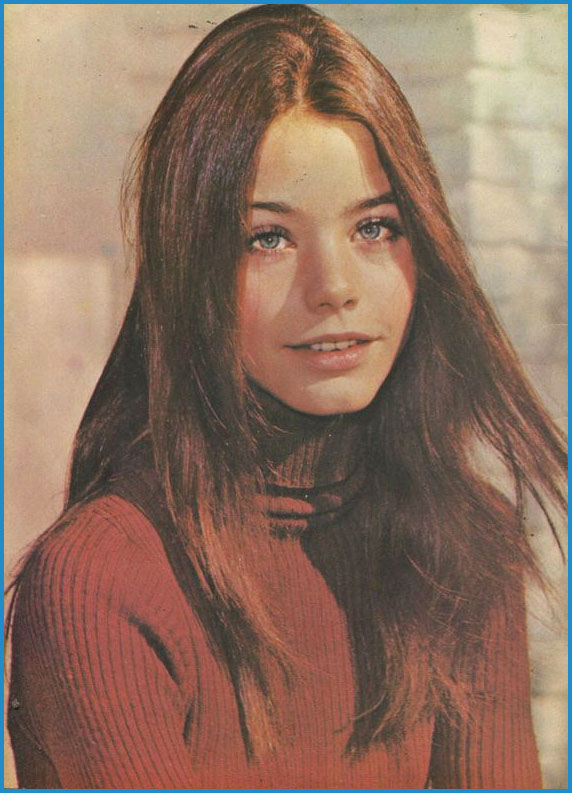
I can’t help but believe that Mr. Oksner might have modeled his Mary Marvel after model-actress and air harpsichordist Susan Dey. The flaw in that theory is that his girls had always looked like her — so it’s more of a case of Susan looking like an Oksner girl than the other way around.
« I fell in love with Laurie on the Partridge Family Yeah I stay up watching 70’s TV And I get off on 70’s TV » — John Easdale / Dramarama
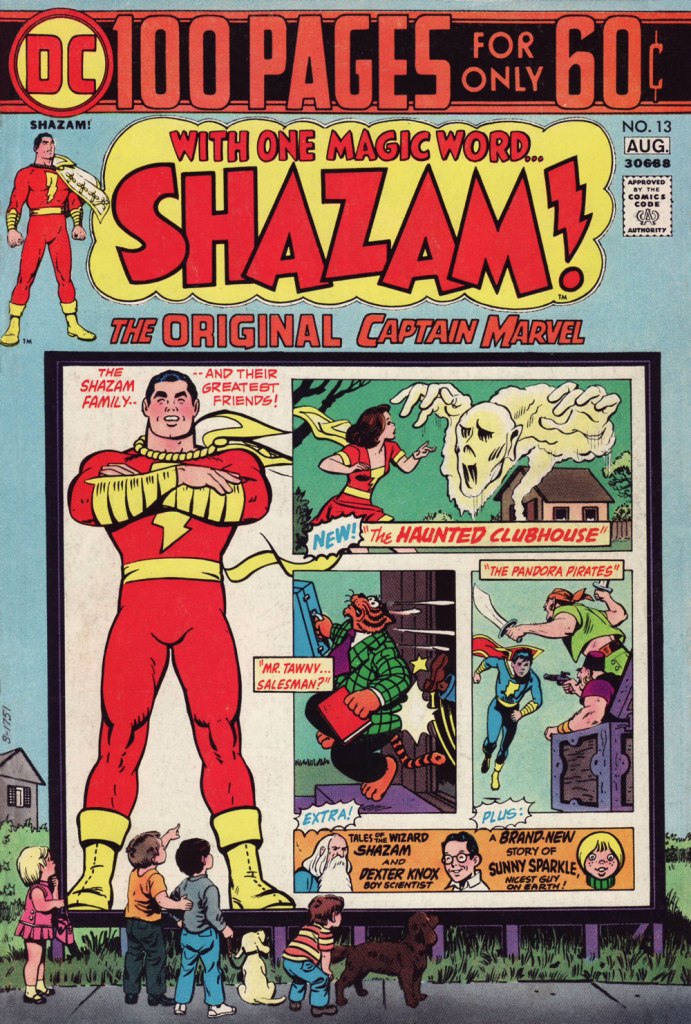
This is Shazam! no. 13 (Jul.-Aug. 1974, DC). Cover art by Mr. Oksner.
« Daddy had an argument on Friday night, with a man from outer space. Daddy said, ‘I don’t care where you’re from, you’re in my parking space!’ » — Colin McNaughton
Here we are, against all odds, at the beginning of yet another edition of WOT?’s annual Hallowe’en Countdown… hope you enjoy the bumpy — that’s the spirit! — ride.
This time, our opening salvo comes courtesy of British illustrator-poet Colin McNaughton (born 1951). Though I’ve been known to haunt used bookstores whenever the occasion arises, I’ve but once encountered a single one of Mr. McNaughton’s productions, a couple of decades ago at that… which is odd, given his rather prodigious output: over seventy books! That said, my mama having raised no fool (my brother notwithstanding), I unerringly grabbed it.
As it happens, Wikipedia claims — though without any context or evidence — that « His most notable book is perhaps There’s an Awful Lot of Weirdos in Our Neighbourhood »… but I’ll accept it unless a stronger claim comes along. It’s a truly splendid tome.
Oh, and here’s the requisite snatch of (auto?) biography: « Growing up in his native England, the young Colin McNaughton had little indication that he would one day become an author-illustrator. There were no books at all in his parents’ home, he recalls, but there were always comics. These were his formative literature, and their slapstick humor has been a lasting influence. “I’ve been talking about the comic format for years,” he says. “It’s the modern way of telling stories for today’s children; it’s about movement, the step between film and the book.” »
I can live with that. enjoy!
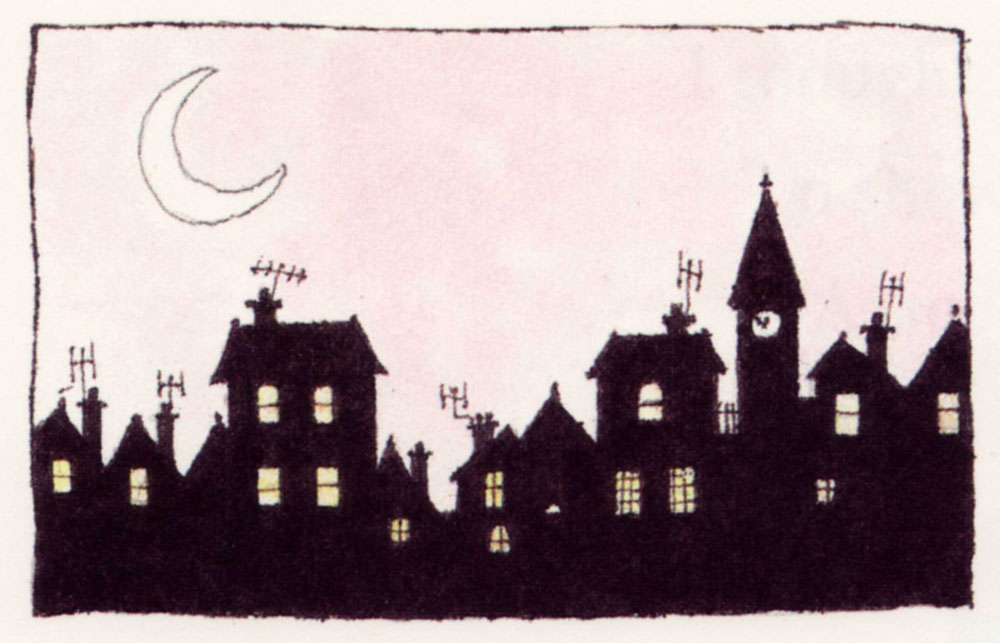
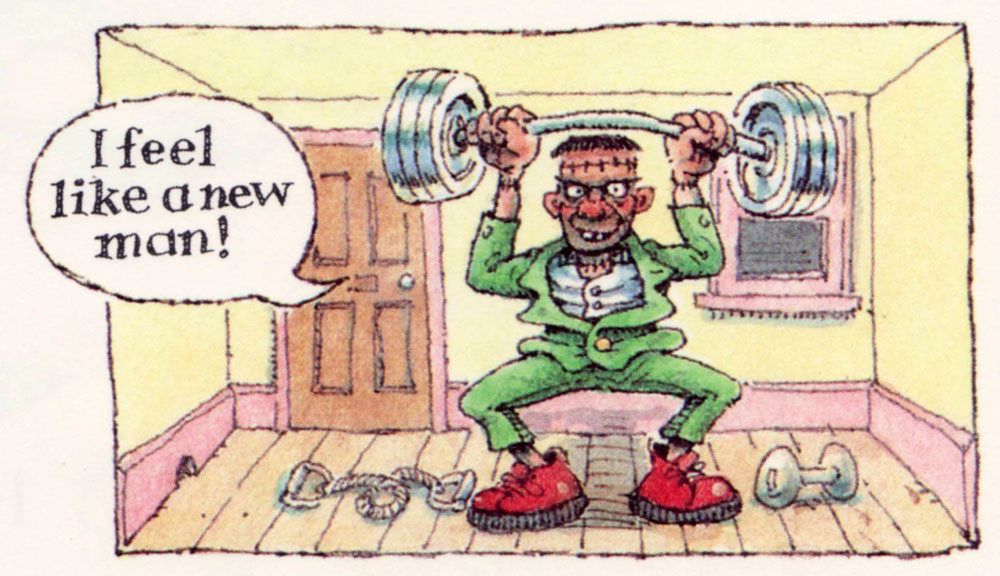
There’s an awful lot of weirdos in our neighbourhood! Yes, there’s an awful lot of weirdos in our neighbourhood!I know this physical wreck, who has a bolt through his neck! There’s an awful lot of weirdos in our neighbourhood!And in an upstairs room, an old lady rides a broom! There’s an awful lot of weirdos in our neighbourhood.A man lives on the square, when he’s in he isn’t there! There’s an awful lot of weirdos in our neighbourhood.And that woman down the block, whose snaky hair’s a shock! There’s an awful lot of weirdos in our neighbourhood.We’ve a strange old feller, with horns, down in the cellar! There’s an awful lot of weirdos in our neighbourhood.There’s a guy who’s green and scaly, has webbed feet and sells fish daily! There’s an awful lot of weirdos in our neighbourhood.And someone near the dairy, when the moon is out gets hairy! There’s an awful lot of weirdos in our neighbourhood.Think I’ll leave this miscellanea, and return to Transylvania, ’cause there’s an awful lot of weirdos in our neighbourhood!
How about one more? One more it is!
Mum! The garden’s full of witches! Come quick and see the witches. There’s a full moon out, and they’re flying about, come on! You’ll miss the witches.
Oh, Mum! You’re missing the witches. You have never seen so many witches. They are casting spells! There are horrible smells! Come on! You’ll miss the witches.
Mum, hurry! Come look at the witches. The shrubbery’s bursting with witches. They’ve turned our Joan into a garden gnome. Come on! You’ll miss the witches.
Oh no! You’ll miss the witches. The garden’s black with witches. Come on! Come on! Too late! They’ve gone. Oh, you always miss the witches.
This is a post I didn’t want to write — or rather, a post I didn’t want to write under the present circumstances. While I’ve known Bernie Mireault (June 27, 1961 – September 2, 2024) for a long time, I couldn’t presume to call him my friend. We were never particularly close, but we ran in similar circles for a time. Then our paths split, many years ago. But I always liked him and greatly admired and followed his work.
I remember him as a kind, generous, humble man, with a soothing voice and manner. And blessed — and cursed, I suppose — with massive, multifaceted talent. Now that he’s left this world, his memory and his work linger. Allow me to showcase a couple of my most treasured Mireaults.
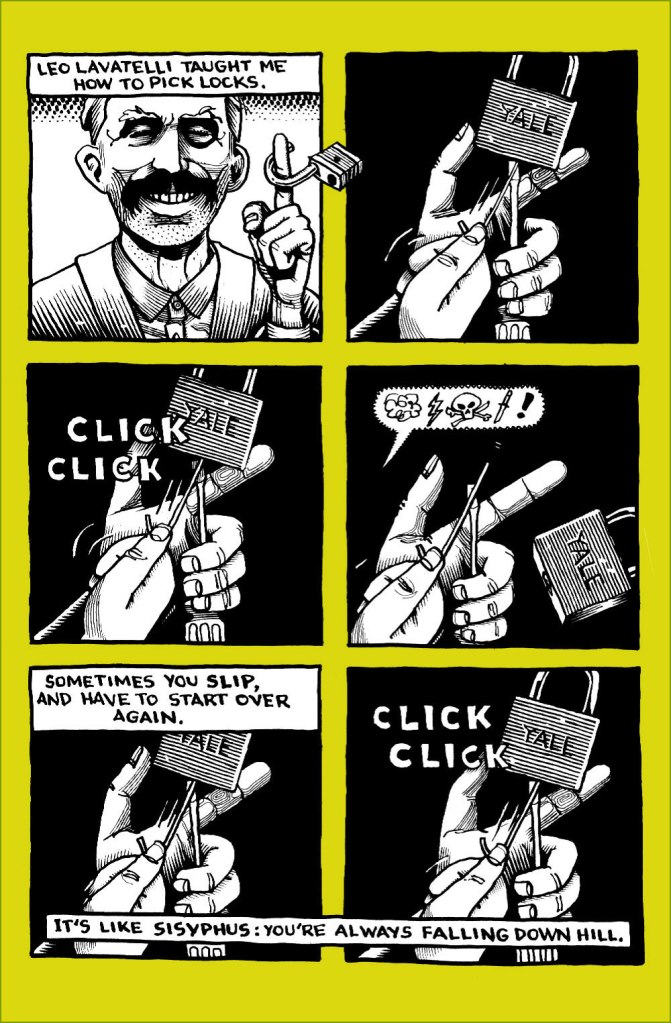
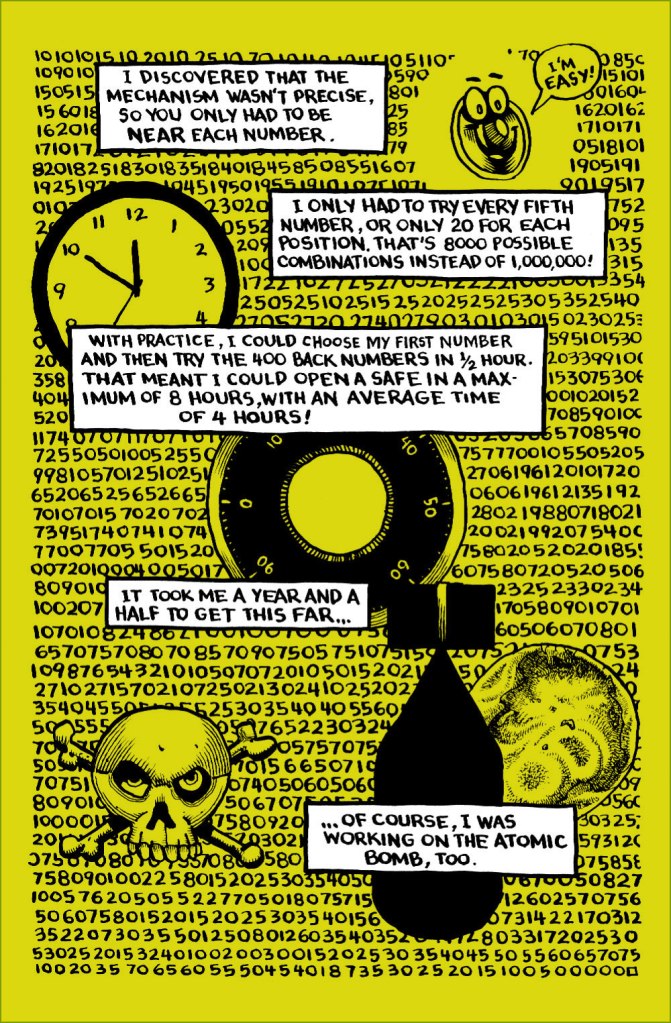
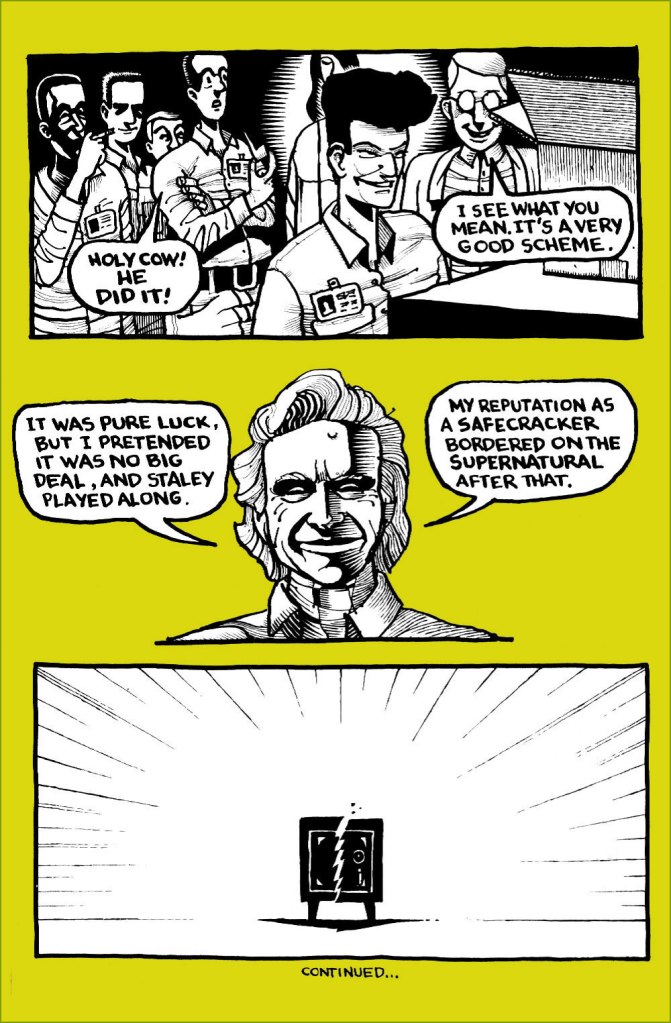
« Though this is fictionalized science, it’s not science fiction. We’ve imagined some of the details, but the characters existed, and did and said (most of) the things you’ll read. » Two-Fisted Science: Safecracker (1997, General Tektronics Labs). Published in advance of the Two-Fisted Science anthology, in order to promote it. However, Bernie’s piece outshines everything else, if you ask me. For good or ill, cheap copies of the comic book are still handily acquired.
This is only (most of) a single chapter of Bernie’s contribution — which totals 30 pages! — but it’s fully enjoyable on its own. Script by Jim Ottaviani, pencils, inks and lettering by Mr. Mireault.
A bit of background about Mr. Lavatelli (1917-1998)…Pray note Bernie’s clever nod to the great Harvey Kurtzman (top left). Of course, working on a story starring genial genius Dr. Richard Feynman already gives you an edge, but Bernie was one of the few cartoonists who could breathe life into the drabbest of narratives. Non-fiction seems especially daunting for today’s cartoonists, for some reason.
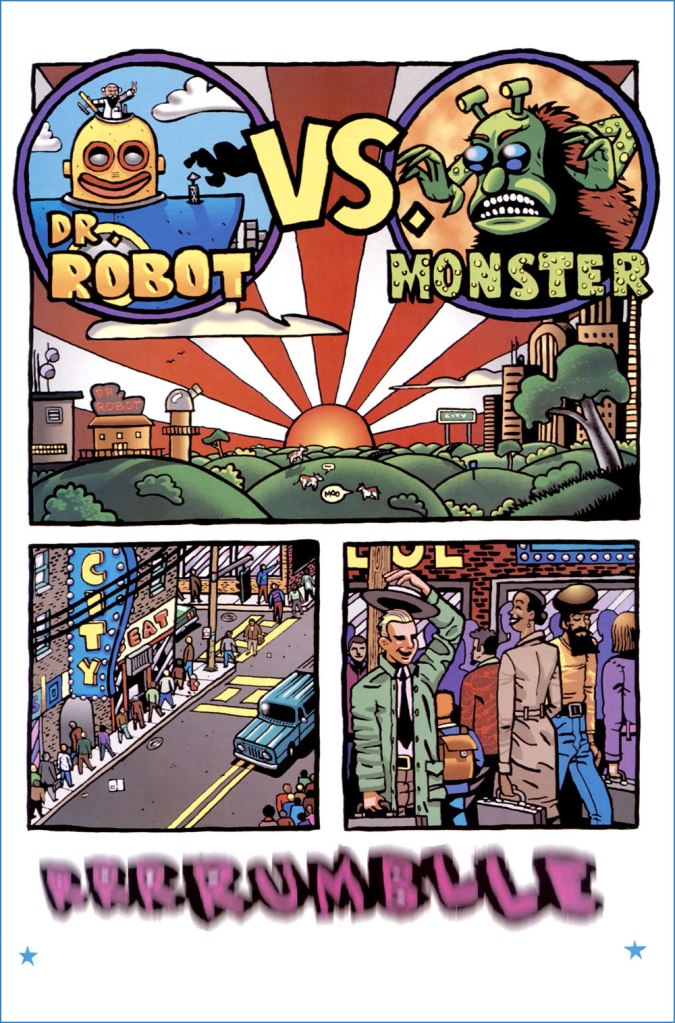
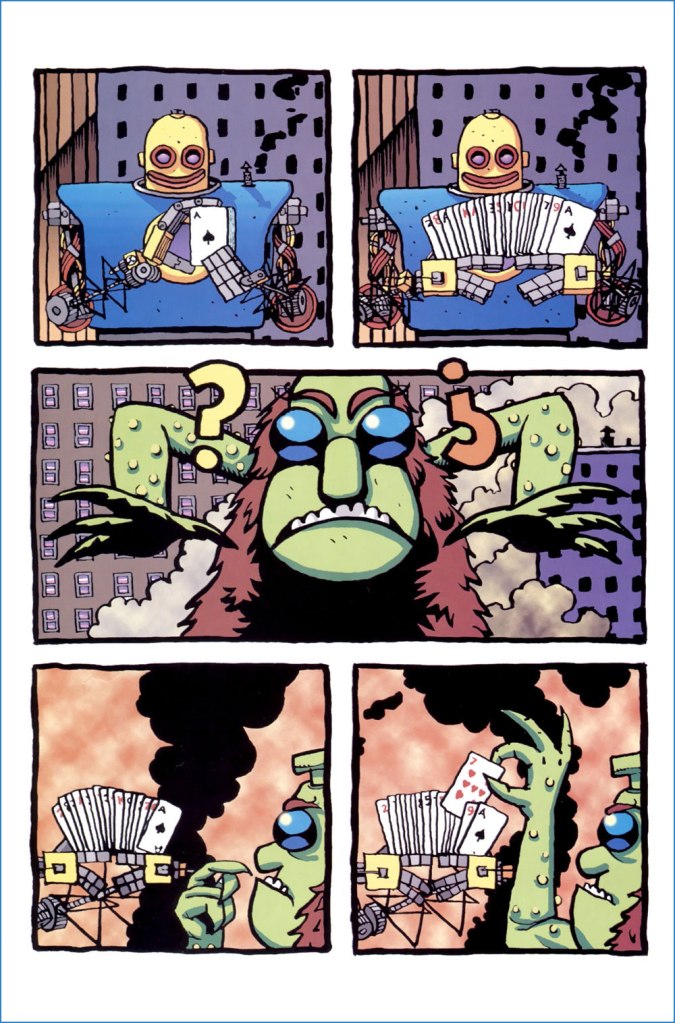
For another facet of Mireault’s talent, and to highlight his peerless colouring chops, here’s my favourite of his too-few Dr. Robot stories, written, pencilled, inked, lettered *and* coloured by Mireault. To this day, insultingly cheap copies are plentiful. Less than the original cover price, for Pete’s sake.
Thanks, Bernie. I’m truly sorry things didn’t work out for you.
I was going to post something very brief this month, telling you what to expect from us in September, which is… nothing else. We’re busily preparing this year’s edition of our Hallowe’en Countdown — which will include some more Mireault, that’s all I can tell you for now. See you soon!
« Better to have a lousy character than no character at all. » — Alain Delon (Nov. 8, 1935 – Aug. 18, 2024)
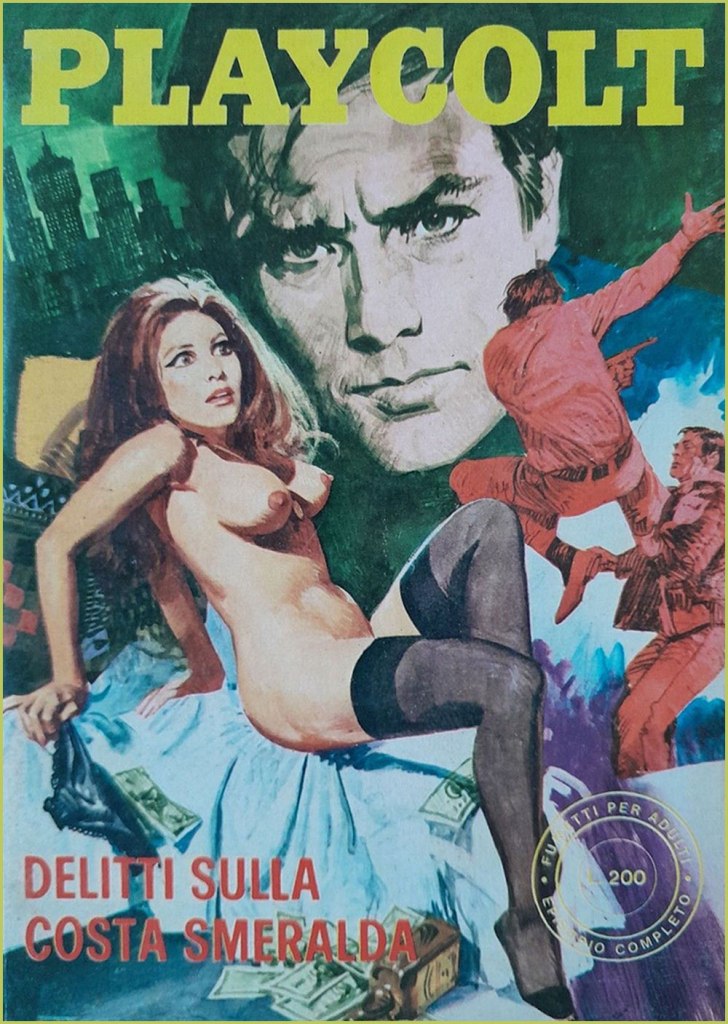
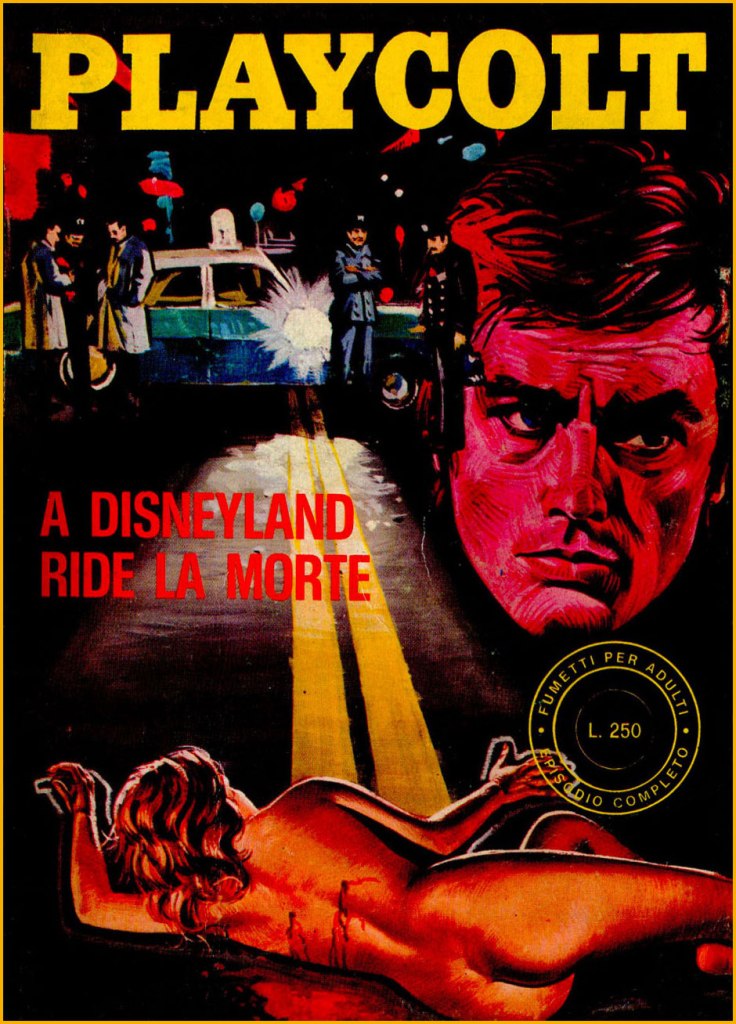
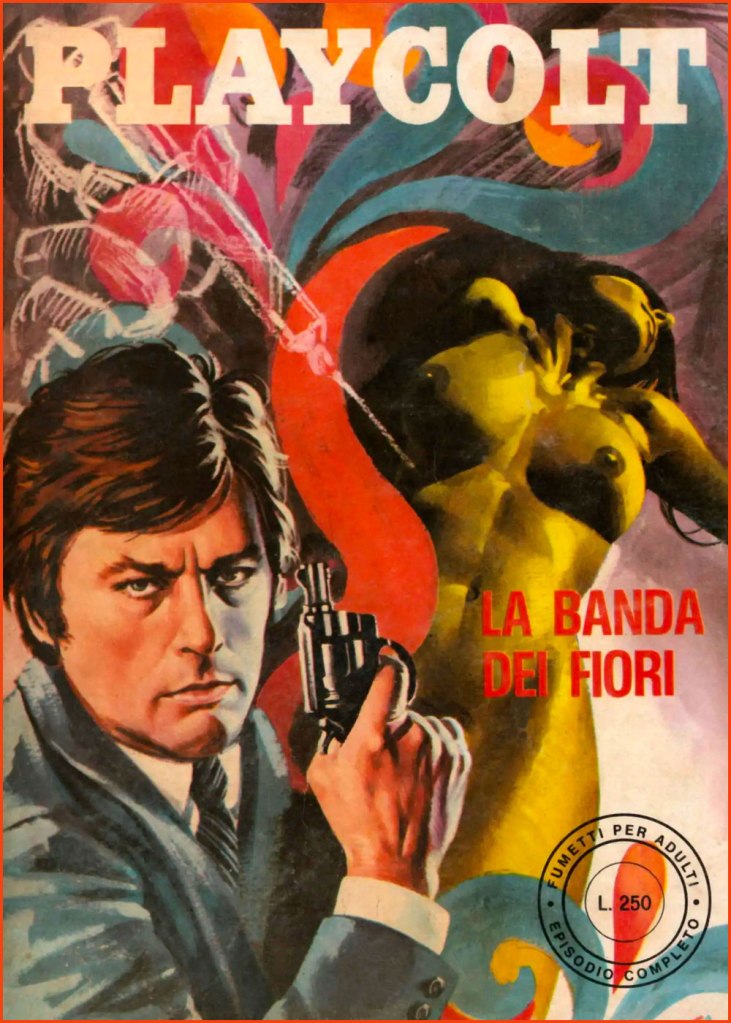
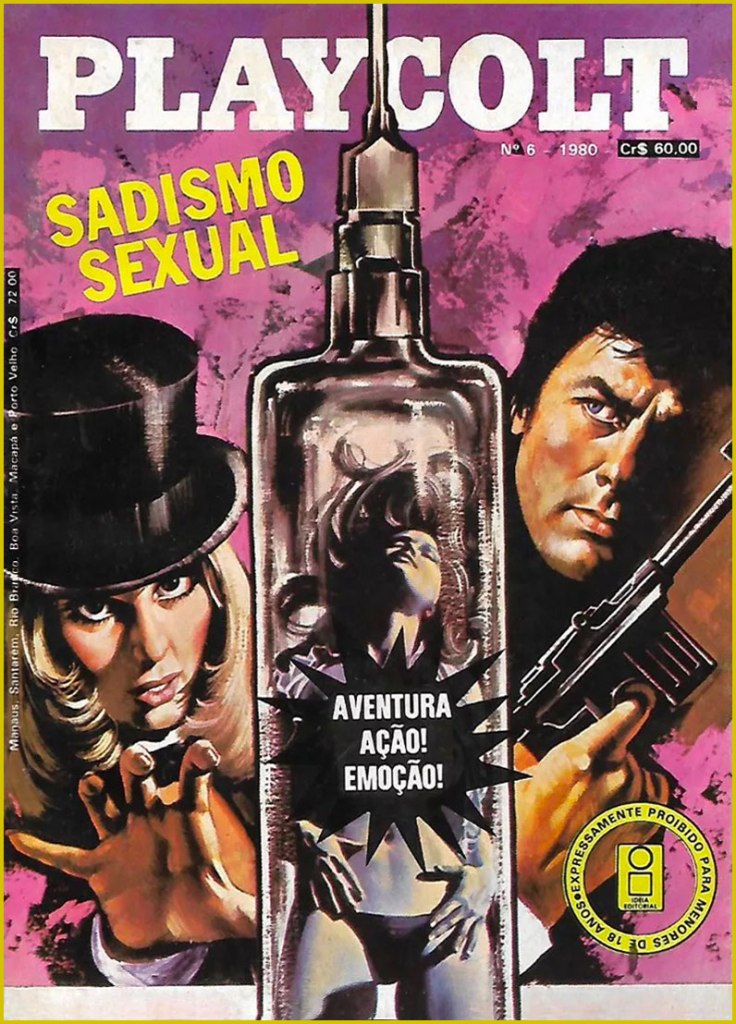
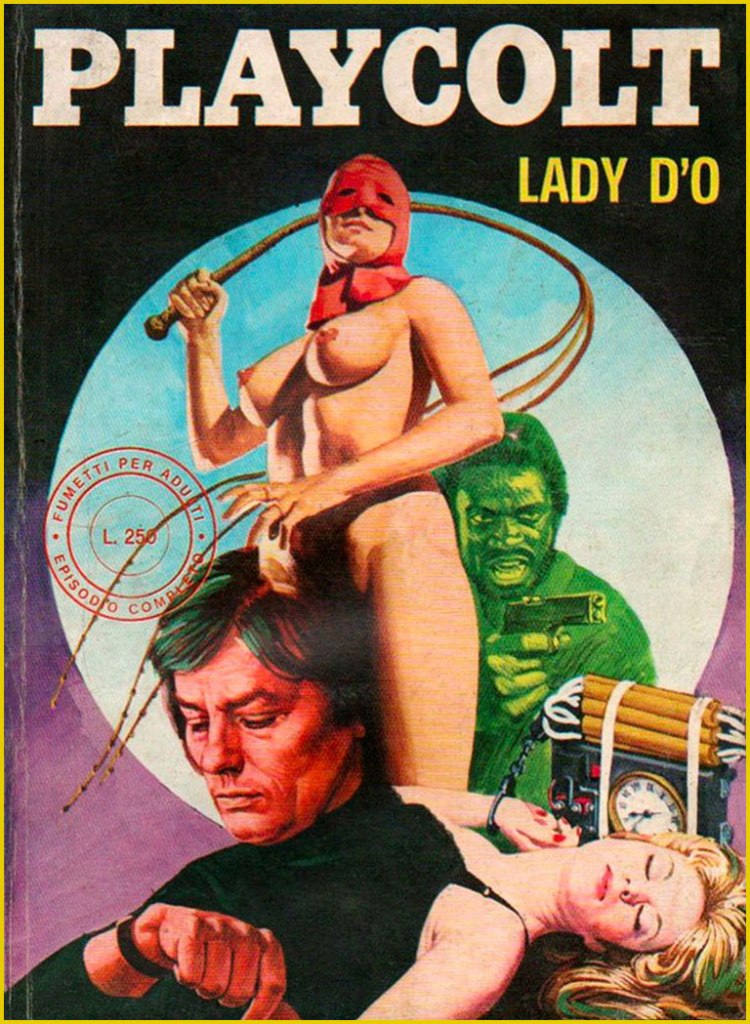
Quite recently, we lost monstre sacréAlain Delon. He was a complicated man, a bit of a prickly bastard, but he sure made a lot of great movies*. But comics, you ask? Well, I’m sure he never asked for it, but like many a celebrity (Jean-Paul Belmondo, Ornella Muti…) his famous countenance was appropriated by those incorrigible rascals at Edifumetto and Ediperiodici.
So Alain Delon became… « Alain Velon, a billionaire playboy who lives on an island “a 3-hour flight from New York“. He spends his private life conquering women in a continuous stream even if he is already engaged to the film actress Lizzy Scarlett, but “due to his innate sense of justice” he periodically transforms into Playcolt, a sort of superhero. His enemy is Linda Darnel, also a billionaire: sadistic and fetishist, she turns into the anti-heroine Za the Dead. Another historical rival is the always sadistic but lesbian Mandrakka. »
Now don’t get me wrong: these are virtually unreadable, poorly drawn, sadistic, illogical, reactionary misogynistic claptrap. But the covers are fascinating in their gonzo way, randomly cobbling together purloined bits from famous likenesses to established logos. You’d think this brazen wave of wholesale filching would have led to swift and decisive legal action from several stars’ solicitors, not to mention Hugh Hefner’s… but it seems not. This was, after all, the Italy that gave us Silvio Berlusconi.
« To the Sound of Punches »; this is Playcolt Series II no. 9 (Nov. 1973, Edifumetto). Cover art by Carlo Jacono, a nice piece, but celebrity likenesses evidently weren’t among his strong suits.« Crimes on the Emerald Coast »; this is Playcolt Series II no. 14 (Aug. 1973, Edifumetto). This one’s *possibly* the work of Alessandro Biffignandi… or his studio.« The Golden Rain » (ahem); this is Playcolt Series II no. 23 (Dec. 1973, Edifumetto). Another Jacono, another botched likeness.« The Divine Sadist »; this is Playcolt Series III no. 1 (July 1974, Edifumetto). « Death laughs in Disneyland »; this is Playcolt Series III no. 11 (June 1974, Edifumetto). « There’s a mess in the middle of the sea »; a 1980 Brazilian edition reprinting Playcolt Series III no. 18 (Sept. 1974) in Portuguese. « The Flower Gang »; this is Playcolt Series III no. 22 (Nov. 1974, Edifumetto). I have no concrete evidence, but the technique displayed here reminds me strongly of British illustrator-cartoonist Ron Embleton (1930-1988), co-creator of Oh, Wicked Wanda! and illustrator of the immortal Captain Scarlet closing credits.No need for a translation, is there? A 1980 Brazilian edition reprinting Playcolt Series IV no. 1 (Jan. 1975) in Portuguese. « Operation Puzzle »; this is Playcolt Series IV no. 12 (Nov. 1975, Edifumetto). Cover painted by the prolific Emanuele Taglietti, who handled quite a few covers in this series. Here’s an impressive gallery of these.« The White Shark »; this is Playcolt Series IV no. 35 (May 1976, Edifumetto). Sharks were all the rage that year.« To Love a Hole »; a 1980 Brazilian edition reprinting Playcolt Series IV no. 2 (Jan. 1975). Dig that strategic blurb placement; the Italian edition was not so coy. Clearly a reference to the previous year’s hit ‘erotic’ film, L’histoire d’O; this is Playcolt Series IV no. 27 (Jan. 1976, Edifumetto). It’s funny how the Delon photos used span his career up to that point, which yields visual whiplash when you go from the Delon of Plein Soleil to the jaded, grizzled one of, say, Monsieur Klein or La mort d’un pourri from one issue to the next.« Terror in California »; this is Playcolt Series IV no. 44 (Oct. 1976, Edifumetto). The obligatory Jaws cash-in. Say what you will, those Italians didn’t miss a trick.
There was, concurrently, another Delon homage in Jean Ollivier and Raffaele Carlo Marcello‘s successful Docteur Justice, a humane but hard-hitting series about a physician and expert judoka who roams the globe’s trouble spots for the World Health Organization. There was even a film adaptation in 1975, with John Phillip Law essaying the title role… and co-starring Delon’s ex — and only — wife, Nathalie. Among Pif Gadget’s adventure series, it was only bested in popularity by the prehistoric blond heartthrob Rahan. I’ll tell you more about it one of these days.
-RG
*So claims the Russian pop song entitled Взгляд с экрана, and who are we to doubt it?
Back of Bob Foster’s Myron Moose no. 1 (Myron Moose Comic Book Works, 1971); this art print was also released years later, as can be seen by the date on it.
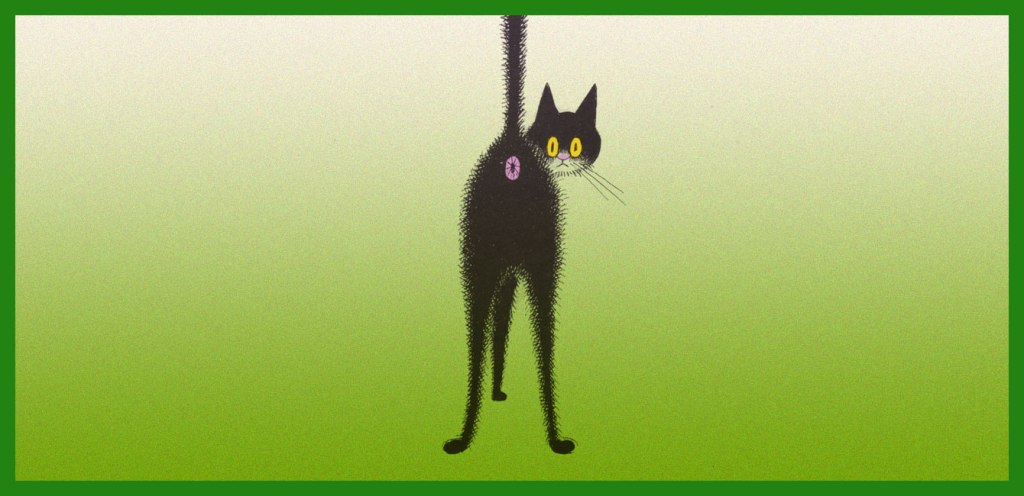
We are technically a three-cat household — that’s how many cats we had decided we could comfortably handle. For a while we stuck to this number, and when one cat departed, another one would come to take his place. Then number four walked through the door — he was sort of a part-time cat, until he became decidedly one of ours. Well, four isn’t that much more work than three. When number five appeared, bedraggled, underfed and with a perpetually sad expression (‘he had that look you very rarely find — the haunting, hunted kind‘, to quote Tim Rice), we wanted to give him to a rescue society… and of course ended up keeping him.
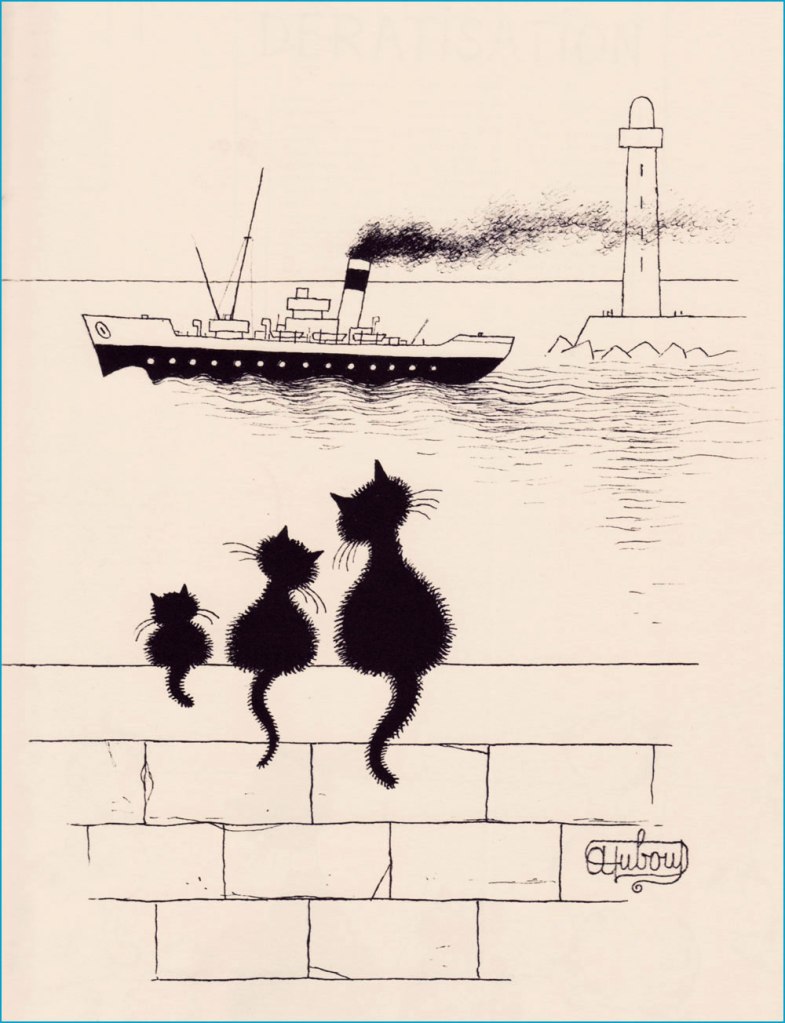
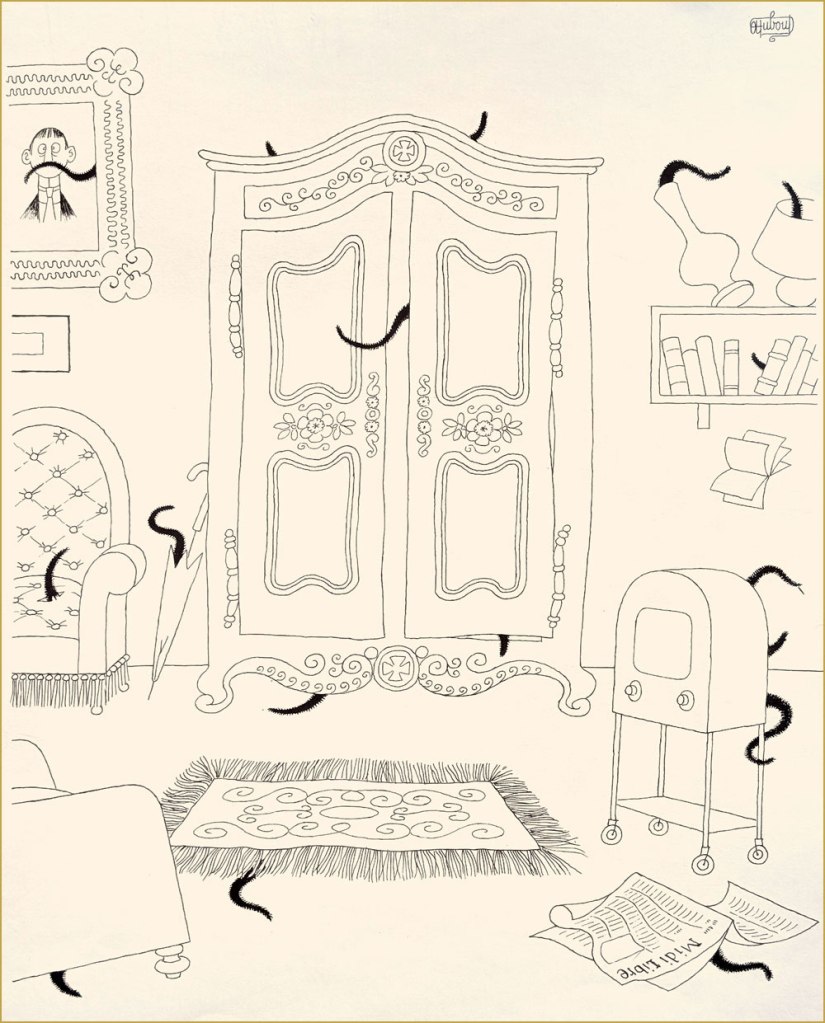
Albert Dubout (born as lbert Dubout, 1905-1976), was primarily an illustrator of books (notably, his amical collaboration with French writer San-Antonio, many of whose novels proudly bore Dubout’s covers and inside illustrations), and, with equal talent, a cartoonist and poster designer (check out some of his film posters here), not to mention a calligrapher with a number of delightfully mellifluous signatures. His official website can be found here, in case you want to take a peek.
The following excerpts have been scanned from Les chats (Editions Hoebeke, 1999).
*I don’t like Hemingway at all, but I do have a certain grudging respect for a man who kept some 40+ cats. Rhetorical question: are cats living at that high a density within one house really having a good time?
« Looking for love is tricky business, like whipping a carousel horse. » — George Cukor
As I’ve noticed that we’ve been dwelling strictly in the cartoonier suburbs of late, allow me to gently nudge us into the realm of high-end draftsmanship and bravura technique for a change. In so doing, let us turn the clock back a century or thereabouts.
French cartoonist-illustrator Chéri Hérouard, né Chéri-Louis-Marie-Aimé Haumé (1881-1961) is mostly renowned for his lengthy and fruitful (1910-1940) association with the ‘mildly risqué’ weekly La Vie parisienne. It is said that « During World War I, General Pershing personally warned American servicemen against purchasing the magazine, which boosted its popularity in the United States. » There always was — and let’s hope there always shall be! — considerable difference between the French and American mindsets.
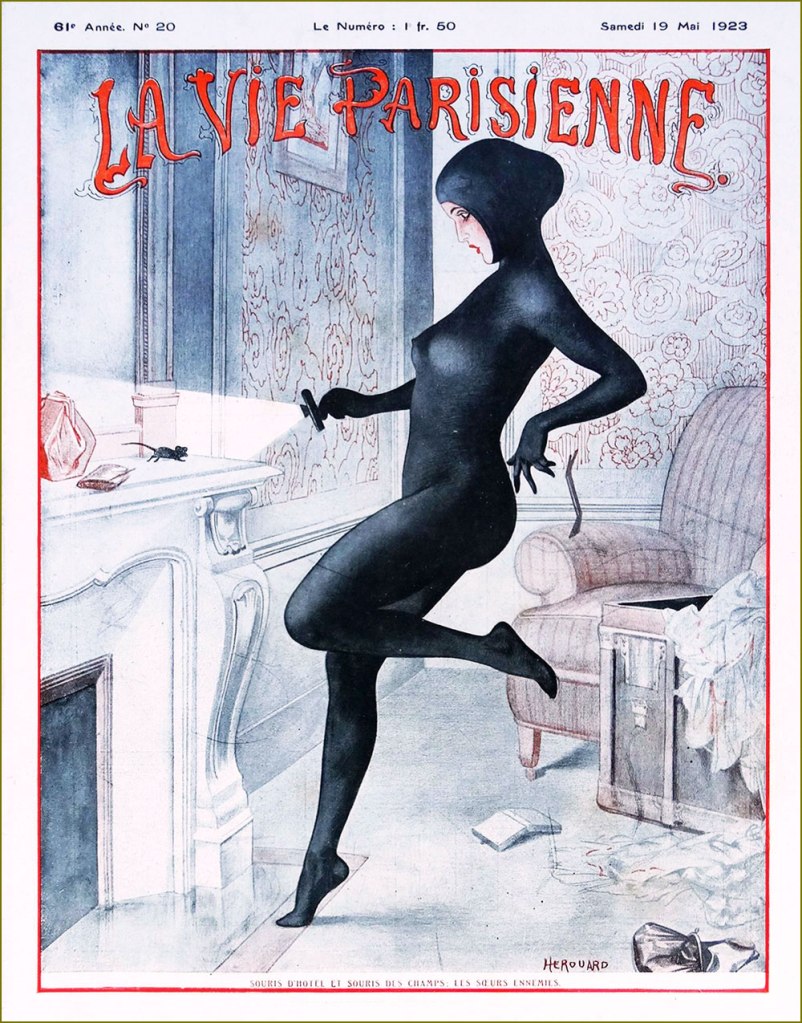
« The Nightmare of Coal », Hérouard’s cover for La vie parisienne’s November 1st, 1919 edition. For those interested, there’s a classy hardcover collection entitled La vie parisienne: Covers & Cartoons 1917-1922 (Dover/Calla Editions, 2018). The art restoration is flawlessly executed and the translation is often hilariously botched. La vie parisienne’s May 19, 1923 issue. « The hotel mouse and the field mouse: enemy sisters ». A ‘souris d’hôtel’ was a thief that plied her trade in chic hotels. A cat burglar of a sort. This sleekly sexy look is clearly based on Musidora‘s legendary turn as Irma Vep in pioneering cinéaste Louis Feuillade‘s epic 1915 serial Les Vampires.
Like many of the best and most free-spirited cartoonists, Hérouard illustrated books and magazines aimed at both innocent and decidedly roué readerships…
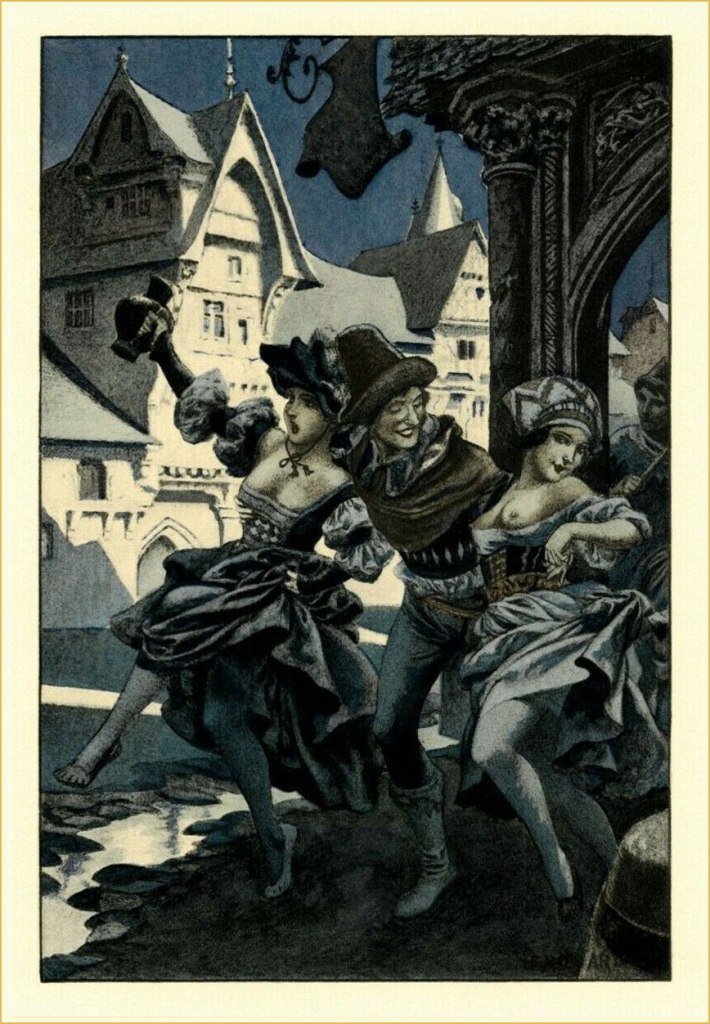
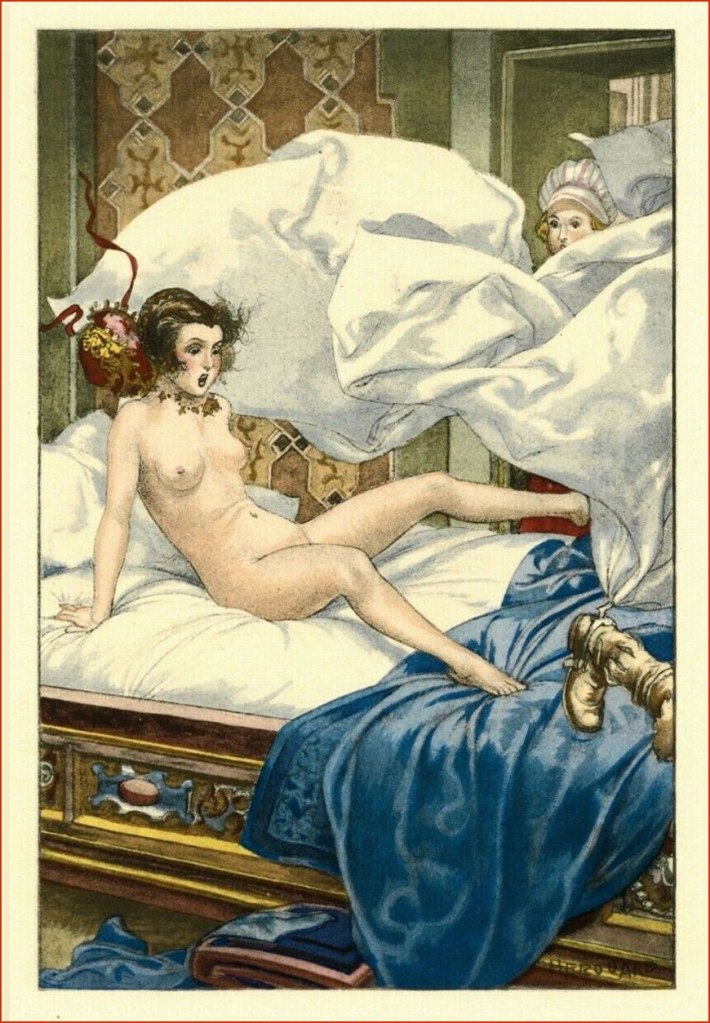
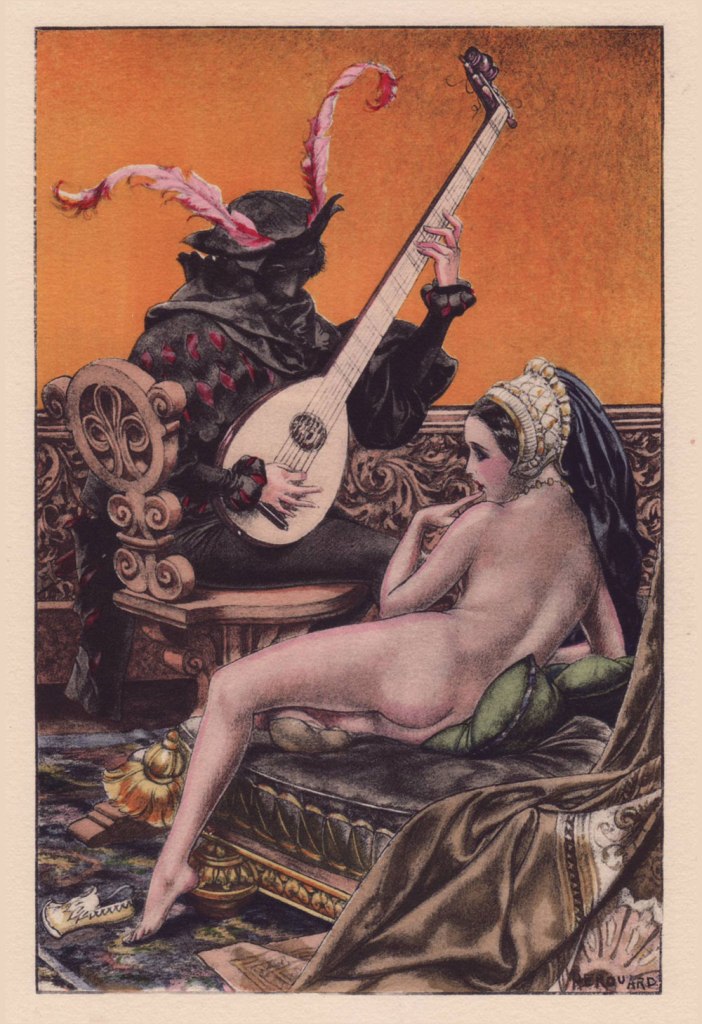
To wit, Hérouard produced sixty-four illustrations for a four-volume set of ribald historical tales entitled L’Heptaméron des Nouvelles de la Reine de Navarre — which is to say Marguerite de Navarre (1492–1549) — in a rather exclusive print run of 1540 copies (Javal et Bourdeaux, Paris, 1932). It was quite a challenge to pick just a handful. If you want them all, here’s a copy for sale while it lasts!
.
Even with a limited colour palette, Hérouard was a master of light and shadow.
.
.
.
.
.
Admire the depth of field in this image… so many planes, and yet it never feels cluttered. That’s composition (among other things).
In addition to the book, hand-coloured engravings of the illustrations were produced in a run of five hundred. I recently acquired my very favourite of the lot, and the kind seller graciously included an uncoloured version for comparison. And so, before:
… and after!
Some background on the technique of stencil colouring: the stencil is created using a zinc sheet one-tenth of a millimetre thick. Using a very sharp metal blade, previously traced openings are cut into the zinc sheet, according to the drawing and colour required. The stencil is then applied upon the printed proof (e.g. engraving, lithograph or phototype). For faithful reproduction, the necessary number of stencils must be traced and cut (an average of fifteen to forty stencils, sometimes up to sixty for more delicate works). In the course of the tracing, one must determine the range of values of each colour, beginning with the lightest, and define with precision the shape and location of the gradations, keeping in mind the effects of superposition. For each stencil, the colour must be prepared, taking care to maintain its tonal intensity throughout the printing process. This colour — be it gouache, watercolour, India ink or wash — will be applied using a special round hog bristle brush. In the case of certain stencils, the colour will be softened after its application, mixed and blended using a small softening brush.
Oof! Given the immensity and delicateness of the task, it must be noted that the colourist in question was one ‘Jacomet’, presumably Daniel Jacomet (1894-1966). Bravo!
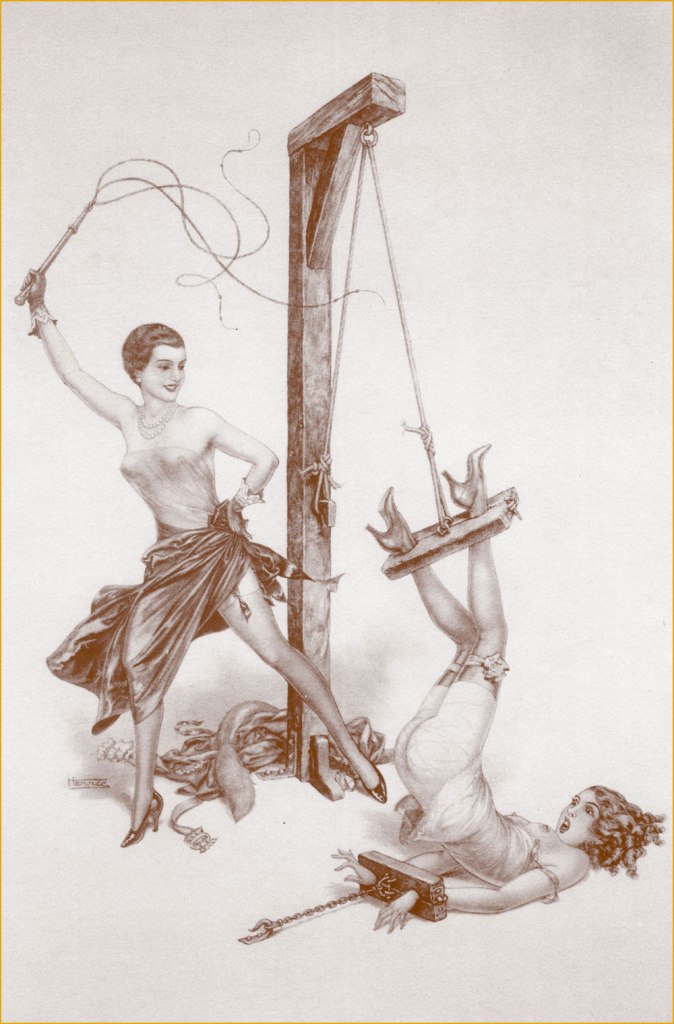
And finally, here’s a… striking quartet of sepia rotogravure etchings, which were discreetly sold as a set in the years just preceding the second world war. For these, Hérouard adopted the transparent pseudonym of ‘Herric’… but the style is unmistakable.
« After the horrors of 14-18, the healthy pleasures of peace. »
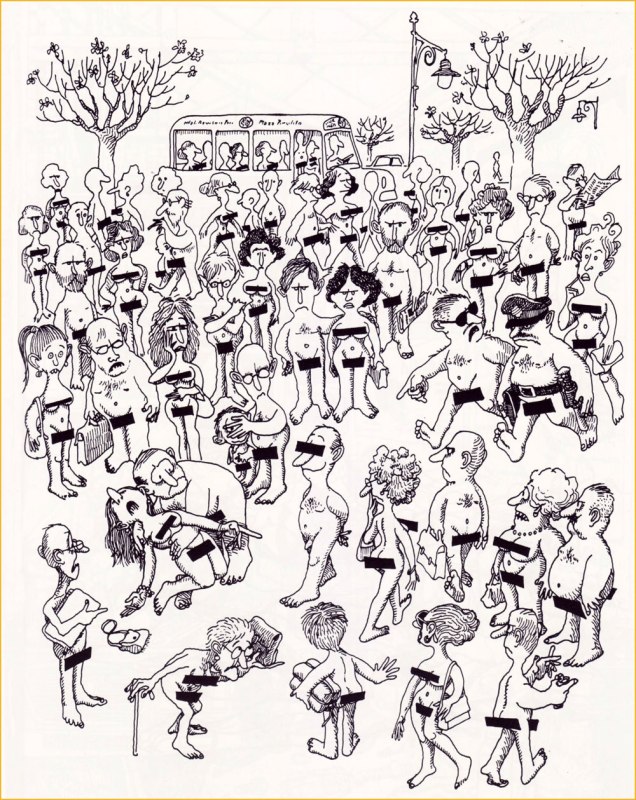
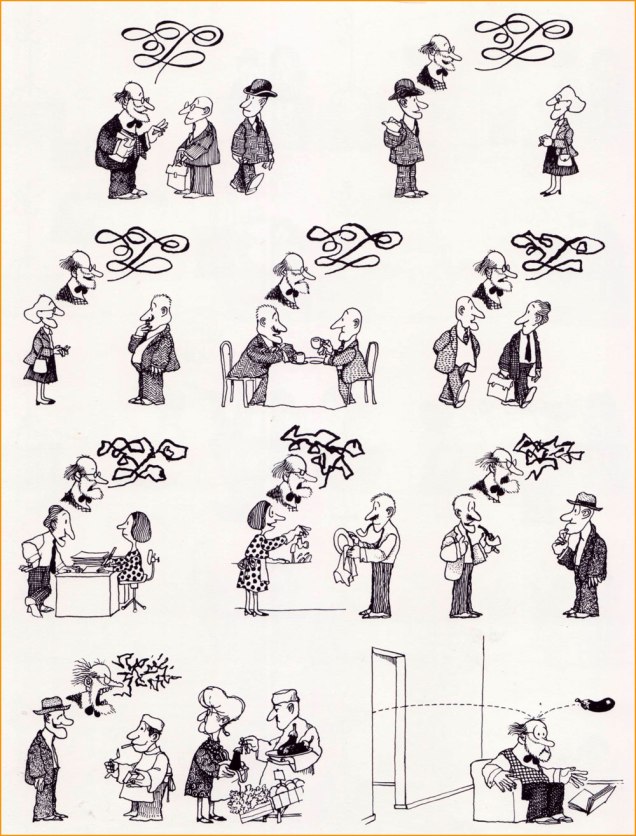
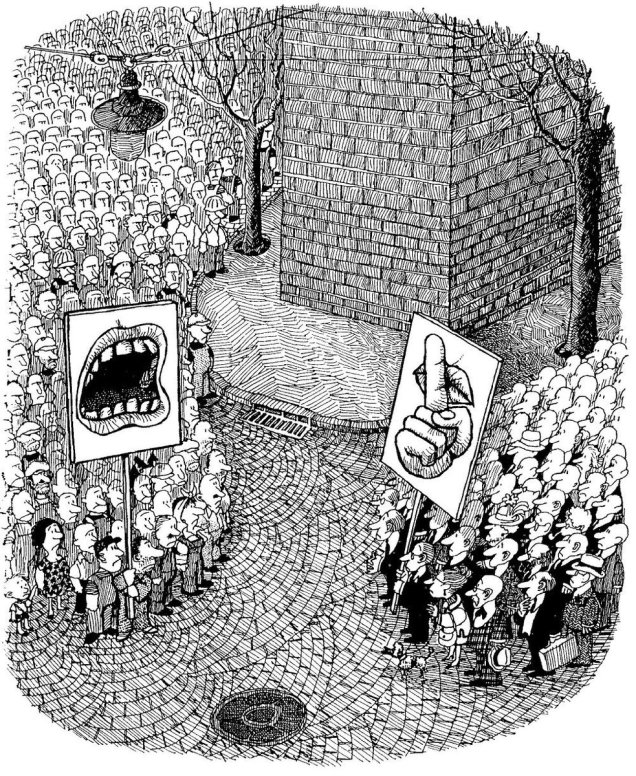
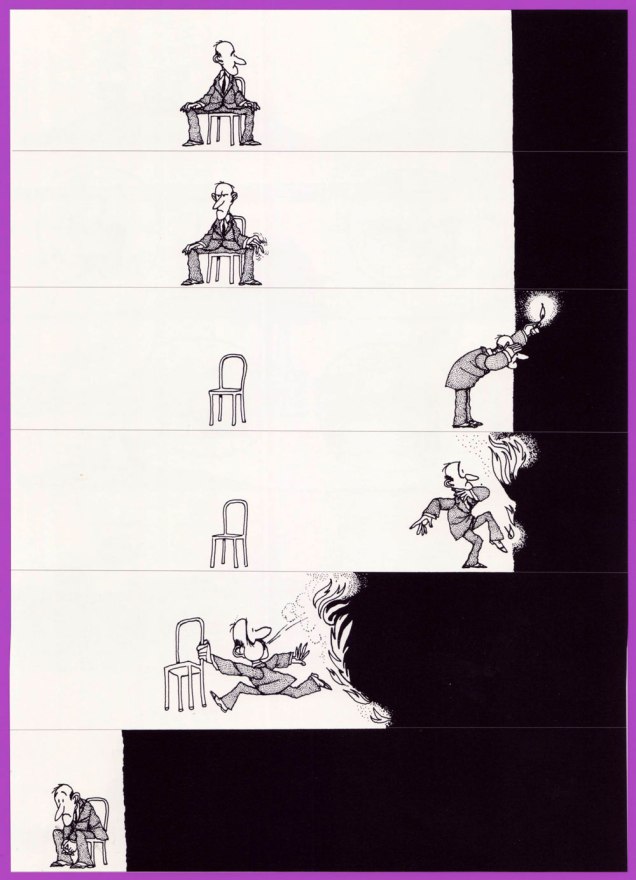
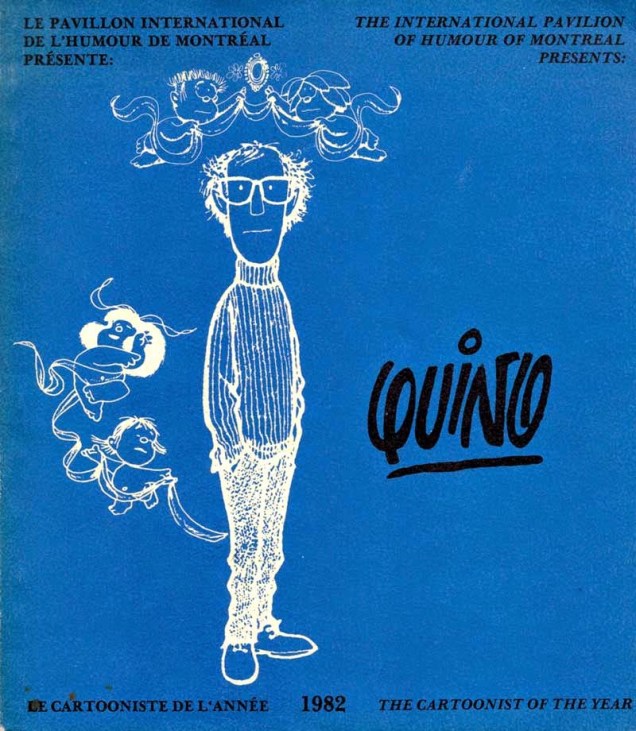
«When searching for a parallel in the pantheon of movie comedy or for a quick way to understand Quino’s work without Googling a single panel, you should think of him as a more disappointed Jacques Tati, the French director of Playtime and Mon Oncle, who was, like Quino, fascinated by architecture. »
In the early days of WOT, before I got used to the blog format (as opposed to posting-on-Facebook format), sometimes my posts only contained a few images. Idly looking through my library the other day, I concluded that it’s a pity Argentine cartoonist Quino is only represented by three selections from a collection specifically about food (the aforementioned post — from 2017, what children we were then! –is (27178) Quino*).
Joaquín Salvador Lavado Tejón was alive in 2017, but now he is dead. He died in 2020 in Argentina, having returned to his place of birth after a long exile, after the National Reorganization Process was dismantled and democracy restored, in 1983. He did not live to see the election of bedlamite right-wing Javier Milei in 2023, which is probably just as well.
This is definitely not the place for provocative political discussions, but how offensive can a few smooth ink lines on paper be? Interpret the following as you will.
« “Violence is everywhere,” stated Quino, in Pergolini’s 2014 interview. He was talking about ants. The ants he used to watch and move around in his childhood home. His cartooning, adored even by his always-quoted Umberto Eco, feels like an echo of that idea: Violence is everywhere. But, at least in his work, genius is also everywhere, as well as his heartfelt indignation, fueling one of the brightest of 20th-century takes on humanity. »
~ ds
P.S. While looking up stuff for this post, I stumbled across a « Quino AI Art Style Inspiration » (which has very little to do with Quino’s style or raison d’être). No comment needed.
« If you saw a heat wave, would you wave back? » — Stephen Wright
Time to carry on with one of my pet quixotic missions, that of advocating the glory of Samm Schwartz (1920-1997), my very favourite Archie artist… and one of my favourite cartoonists, period.
Having acquired over the years most of the Jughead issues I could afford — for the most part cheap, but thankfully numerous — I’ve now reached the stage of acquiring scattered issues of assorted Archie titles featuring one or two Schwartz stories… along with often appalling page fillers by painfully lesser lights. To lessen the blow, I usually skip the Schwartz story — which usually opens the book… savvy thinking on their part, I’ll admit — then return to it so as to end on a high note.
I was hesitating between two stories, but since they’re both quite short, why choose? Hence the programme double.
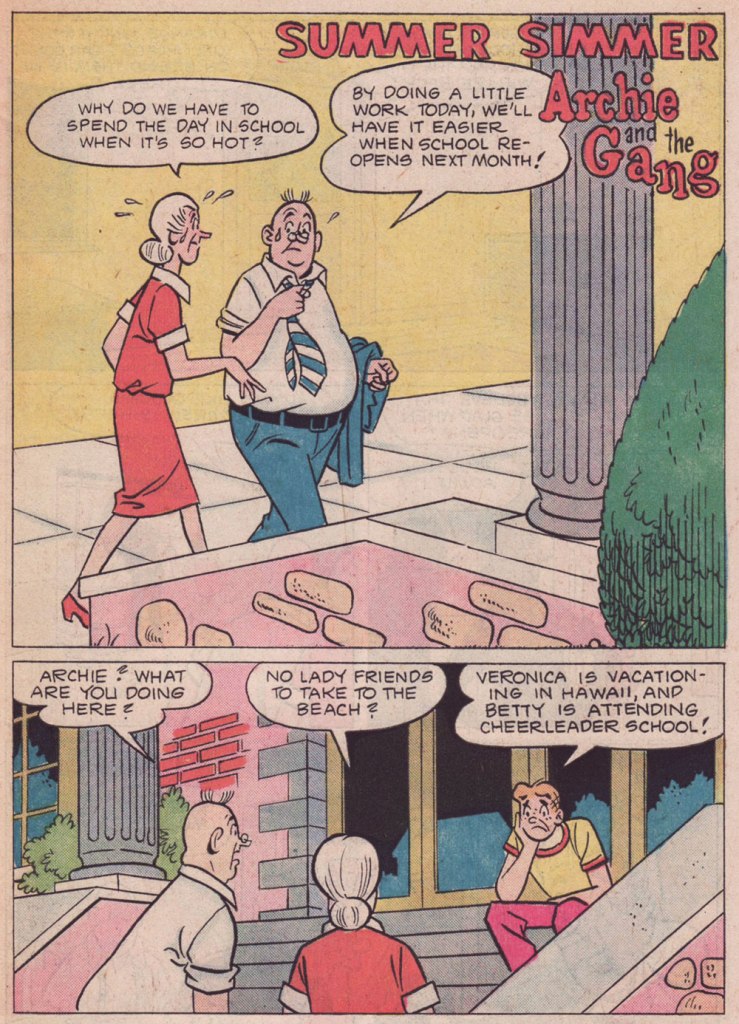
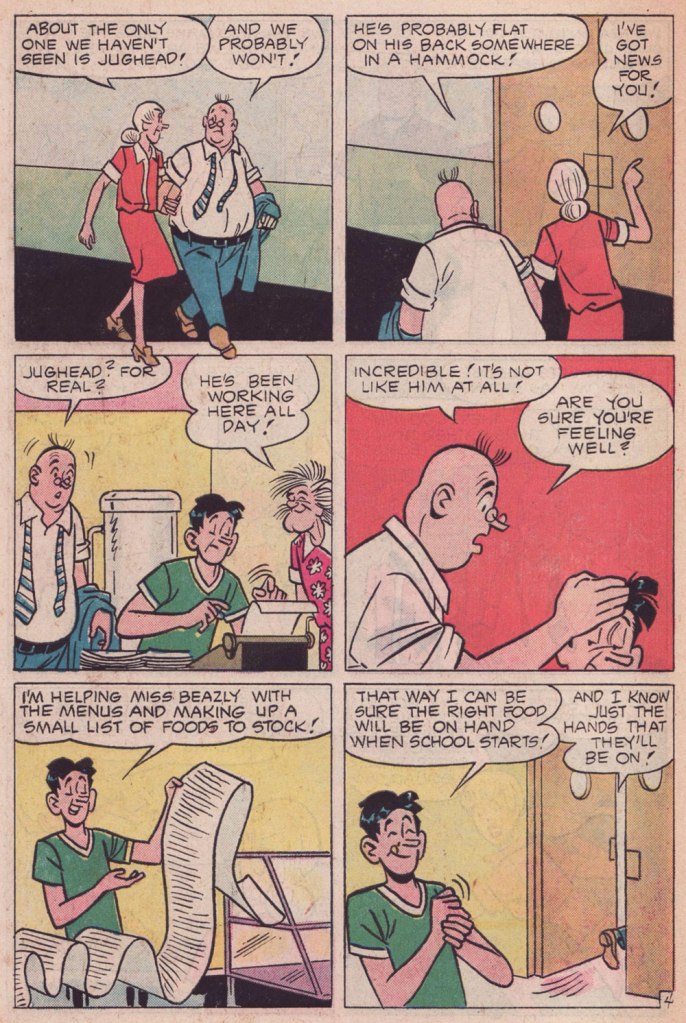
« Summer Simmer » first appeared in Archie’s TV Laugh-Out no. 35 (Nov. 1975, Archie). Scripted by George Gladir, this story has the distinction of not particularly striving to be funny, instead focusing on character and situation.. which is totally distinct from the all-too-frequent straining for laughs and failing Archie blueprint. This sort of outlier is what makes the search worth the bother.
« The Defender » originally saw print in Pep no. 235 (Nov. 1969, Archie). Not only does Marmaduke “Moose” Mason get a rare turn in the spotlight, but it’s an unusually favourable depiction. It was most likely scripted by Frank Doyle.
It must be mentioned that Schwartz often tweaked the scripts he was assigned, but incognito. His collaborators trusted him, giving him free rein. Besides, let’s face it, the stakes were depressingly low.
« You can bring Pearl, she’s a darn nice girl, But don’t bring Lulu! You can bring Rose with the turned-up nose, But don’t bring Lulu! She’s the kind of smarty who breaks up every party, Hullabaloo loo, don’t bring Lulu, I’ll bring her myself! »
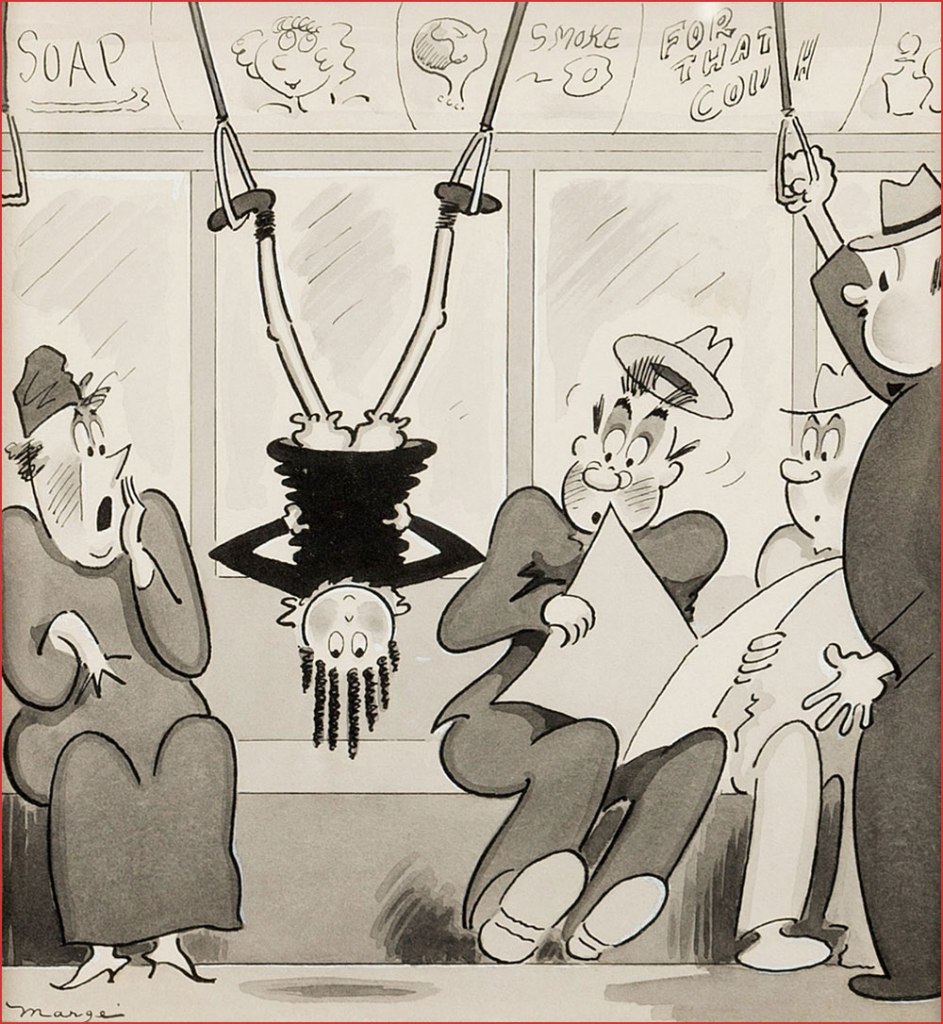
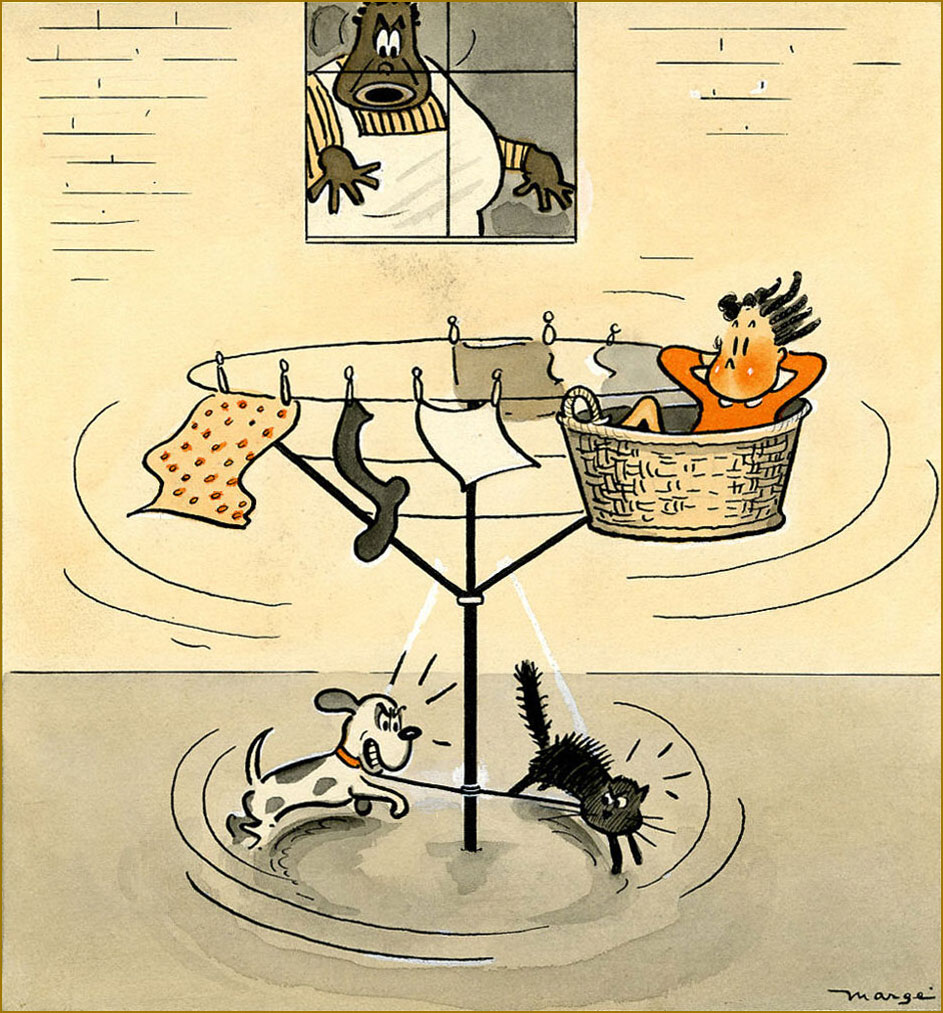
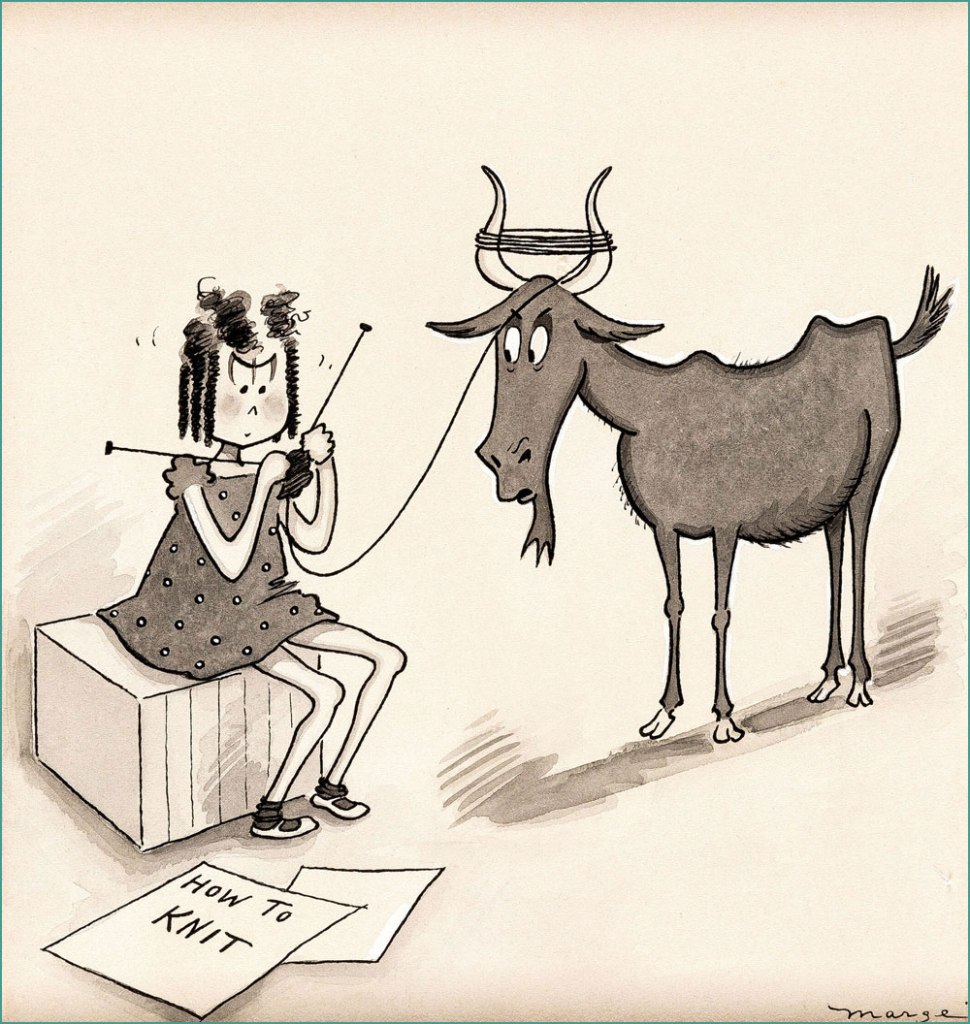
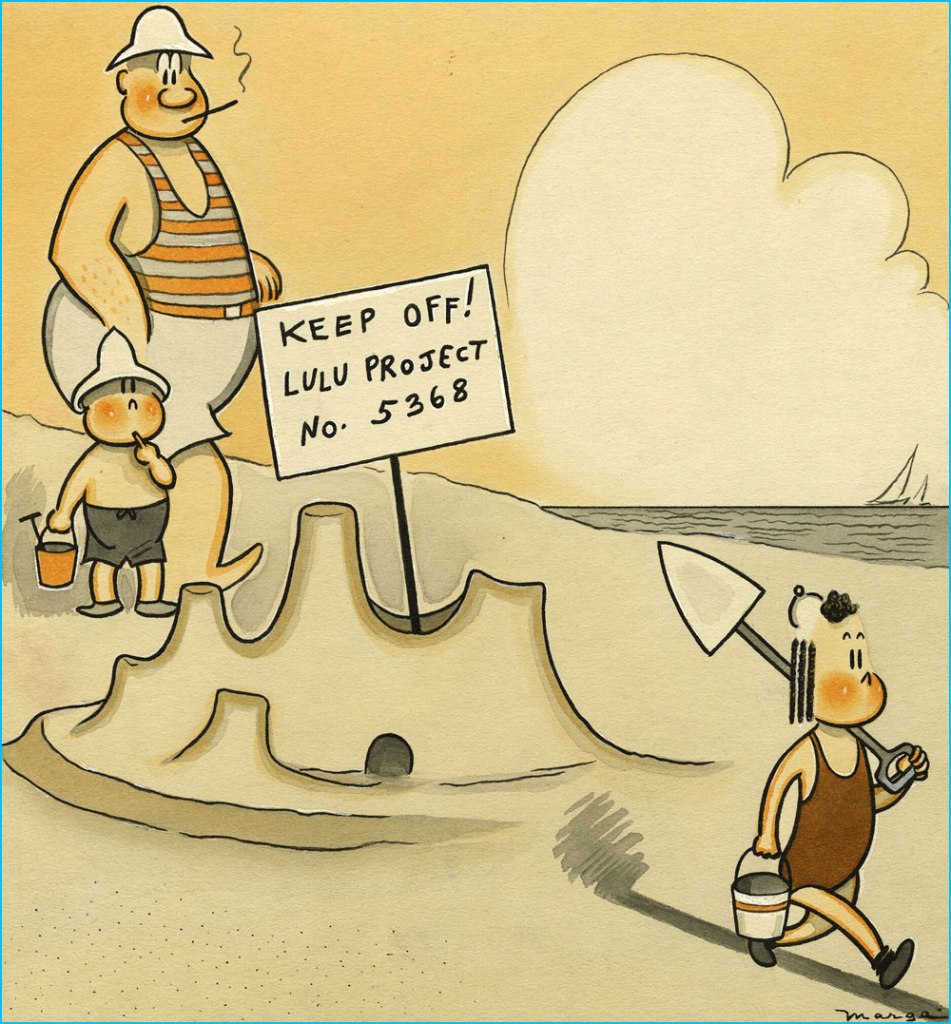
À propos of the comic strip Little Lulu (running from 1935 to 1944 in The Saturday Evening Post), co-admin RG indicated in his Hallowe’en Countdown V, Day 30 that he ‘just happens to dislike Lulu creator Marjorie ‘Marge’ Henderson Buell‘s visual conception of her characters‘. Entirely fair enough, but I happen to appreciate Little Lulu for her unremitting dedication to horsing around (and Buell for her subtle use of watercolours).
Going through a bunch of strips in search of ones to feature here confirmed my previous impression that Lulu can be quite the brat, à laDennis The Menace. It can be argued that all kids have the capacity to be destructive with a considerable amount of enthusiasm, though from my current adult perspective, destroying plants (something Lulu seems to do a fair bit of) is an idiotic act, whoever one is trying to piss off. While sharing a doigté for outfoxing (and occasionally literally thwacking) boys, Lulu was wilder and meaner than Bushmiller’s Nancy, the latter tending to be a helpful, earnest kid despite her share of shenanigans. You won’t really notice this from this post, as I distinctly prefer sweet over abrasive.
From a modern perspective one would be tempted to lump Lulu in with other feminist cartoon icons, given that Buell clearly enjoyed depicting her independent streak. John Harvith (involved in a retrospective of Buell’s work in 1982) is quoted as saying ‘[Lulu] was a pioneer in presenting a girl cartoon character who was resourceful, courageous and who regularly beat out the boys‘. As to her creator, Buell is credited as ‘the first female cartoonist in the United States to achieve worldwide success‘ (source: Little Lulu comes to Harvard). *
While she is cited as resisting the ‘feminist’ label when it came to her work, I think it was more out of a dislike for pigeonholing her material. ‘Marge [did not] welcome the idea of introducing feminist themes into the cartoon. She preferred to let the character’s actions speak for themselves. She created this feisty little girl character who held her own against the guys and frequently outwitted them, but she didn’t want to turn the cartoon into a message. She agreed with Samuel Goldwyn’s slogan, ‘If you want to send a message, try Western Union.'”
In her personal life, Buell demonstrated an enviable degree of wisdom in her marriage to ensure that both their careers would progress without breaking the family apart (her husband agreed to turn down promotions that would force them to relocate, and she agreed to keep Lulu in check in order to spend time with her children).
If you need another reason to like Little Lulu, The Little Lulu Show, running from 1995 to 1999, featured the voice of Tracey Ullman as the protagonist during the first season.
~ ds
* These days it’s mostly John Stanley’s Little Lulu that grabs the affection spotlight in people’s memories.
« The majority has no right to impose its stupidity on the minority. » — George Wolinski (1934-2015)
I realised this morning that yesterday was Mr. Wolinski’s birthday, so here’s a quick post. Despite what one might expect from the name, Wolinski was born in Tunisia; aged eighty, he perished in the terrorist attack on the Parisian offices of Charlie-Hebdo on that grim Wednesday of January 2015. For more context, see last year’s related post Never Forget: Cabu, le grand Duduche.
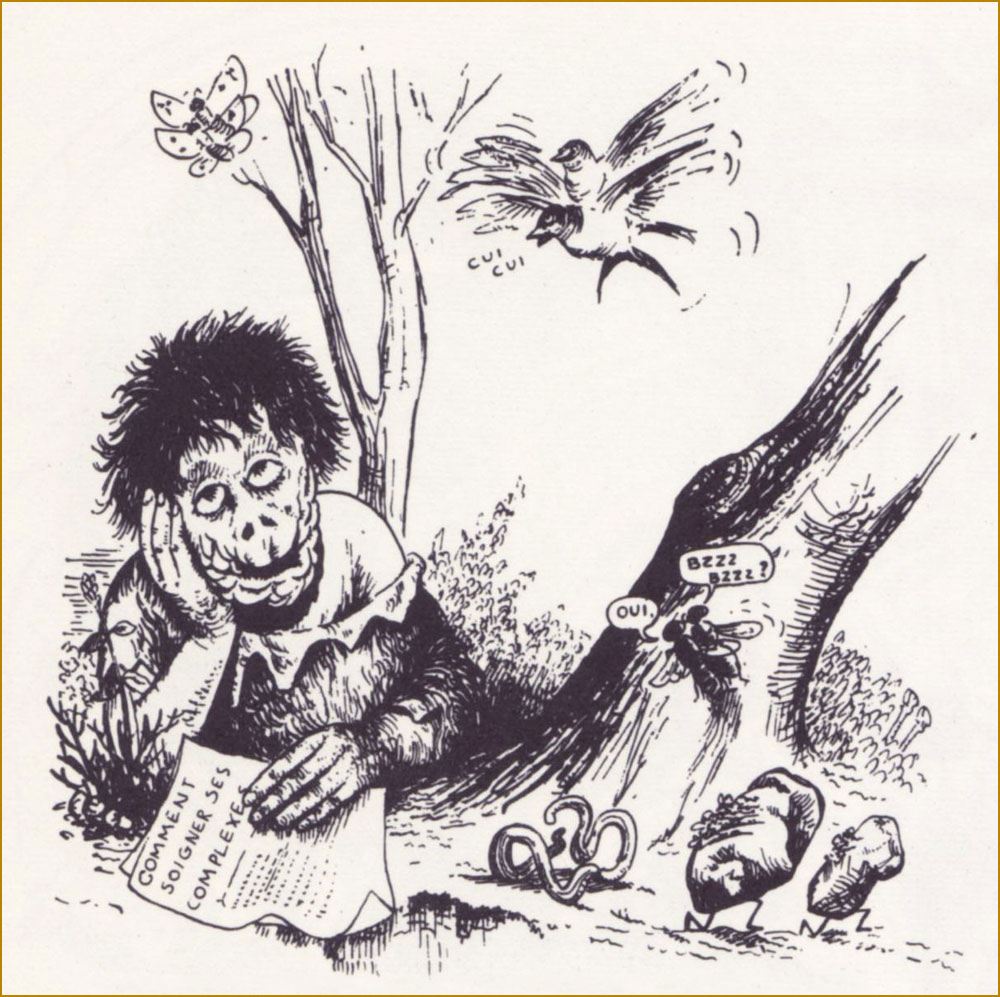
It would be futile to attempt to do justice to a brilliant, prolific and varied career spanning seven decades, so I won’t waste anyone’s time with such foolishness. Here’s Lambiek’s biographical essay, and here’s a conte cruel from Wolinski’s first solo collection, Histoires lamentables (1965, Hara-Kiri).
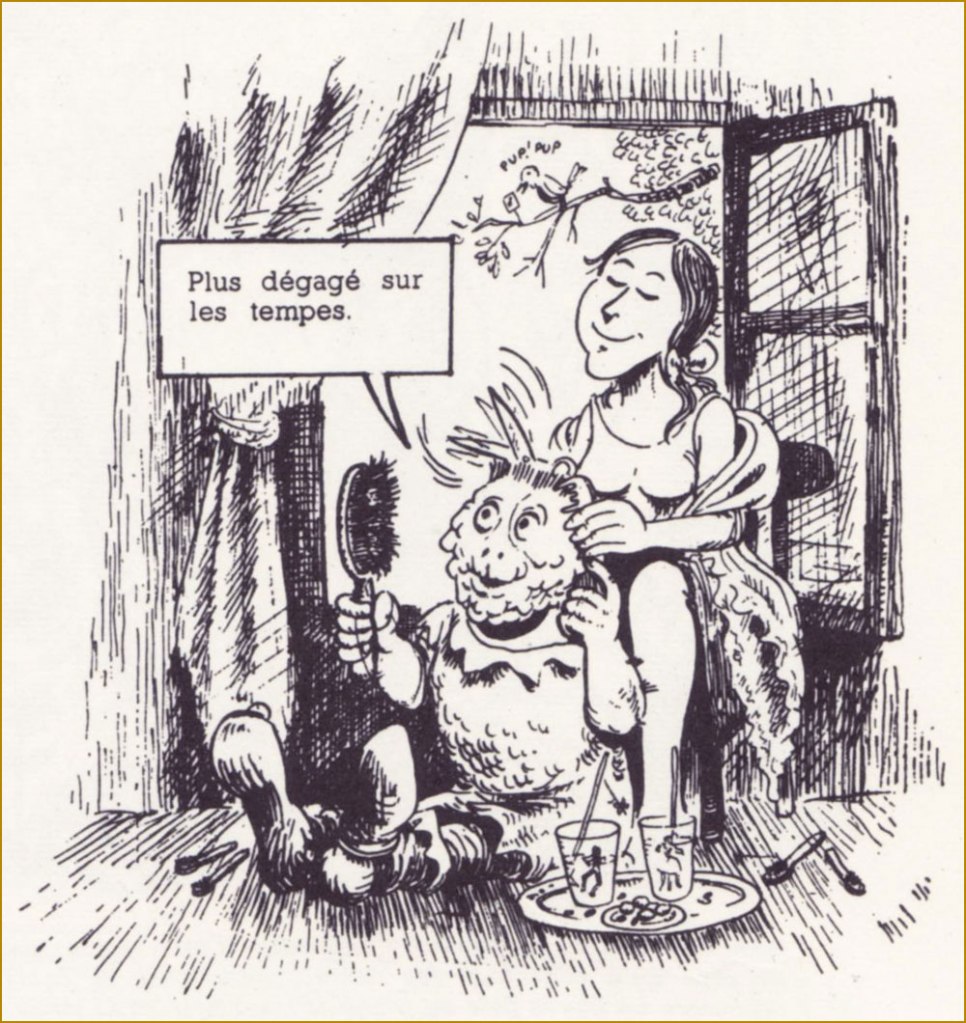
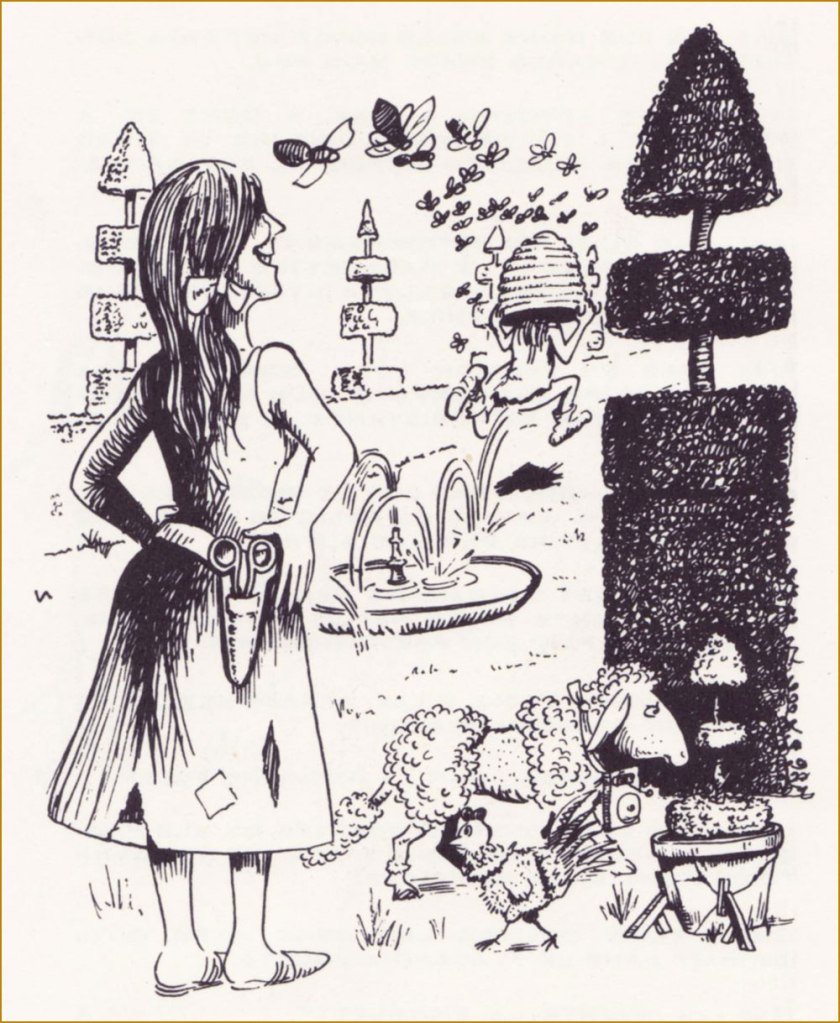
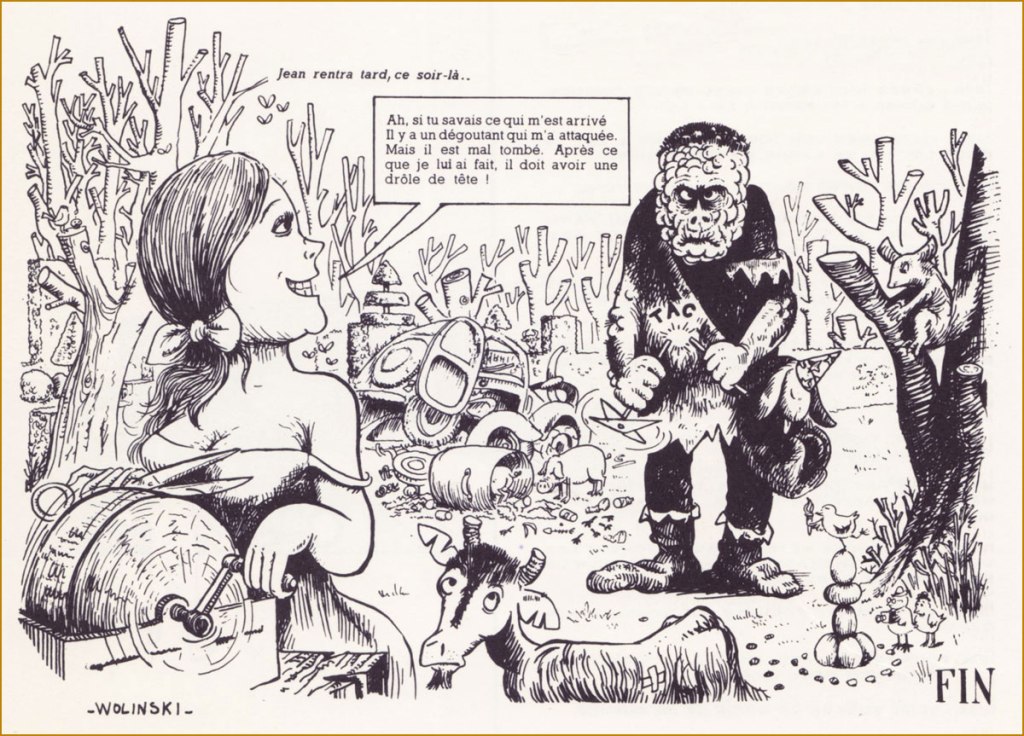
« Jean was the lone survivor of a fire that claimed his entire family. Having suffered atrocious burns to the face, he was as hideous as one could imagine. In order to avoid exposing others to that grim spectacle, he went to live deep in the woods with the wild beasts. However, each year, the returning Spring invoked in him strange reveries. » A PATHETIC TALE. « He then could not refrain from lurking about the homes of men. And so it was, one day, that he heard Isabelle’s song. Her voice made him forget his usual caution. » « Isabelle was blind. At the idea that she could not witness his ugliness, Jean felt an extraordinary emotion. He found the courage to speak to her. She responded with kindness, and he dared return. » « Soon, they became inseparable, and at last Isabelle agreed to follow him into the forest. »« Long months of happiness ensued. And then, Isabelle realised that, little by little, her sight was returning. When Jean learned the wonderful news, he was at once happy and desperate. Because he could no believe that Isabelle would remain by his side, now that she saw his ugliness. But Isabelle told him that his physical appearance mattered little to her, and that she would always love him. »« Jean, however, could not help but be miserable. One day, as he was hunting for mushrooms in the forest, he came upon a hare caught in a snare, pitied him and set him free. As it happened, that hare was a powerful genie who, in gratitude, transformed him into a handsome young man. »« Jean, delirious with joy, ran to meet Isabelle. The young girl was working at the beehive. Jean took her in his arms. »« Sweet Isabelle, assailed by this young stranger and fearing for her virtue, crowned him with the hive. »« Panicked with suffering, poor Jean fled like a madman. »« That evening, Jean returned late… » « Ah, if you only knew what happened to me. Some horrid masher attacked me. But I gave him a bad time. After what I’ve done to him, he must look quite a fright! »
from the look of this early style, I get the sense that young Wolinski was under the artistic sway of, say, Will Elder and Al Jaffee…. not a bad place to start!
Here’s a trio of his early gag cartoons (circa the early 1960s), working in a more natural, more direct style:
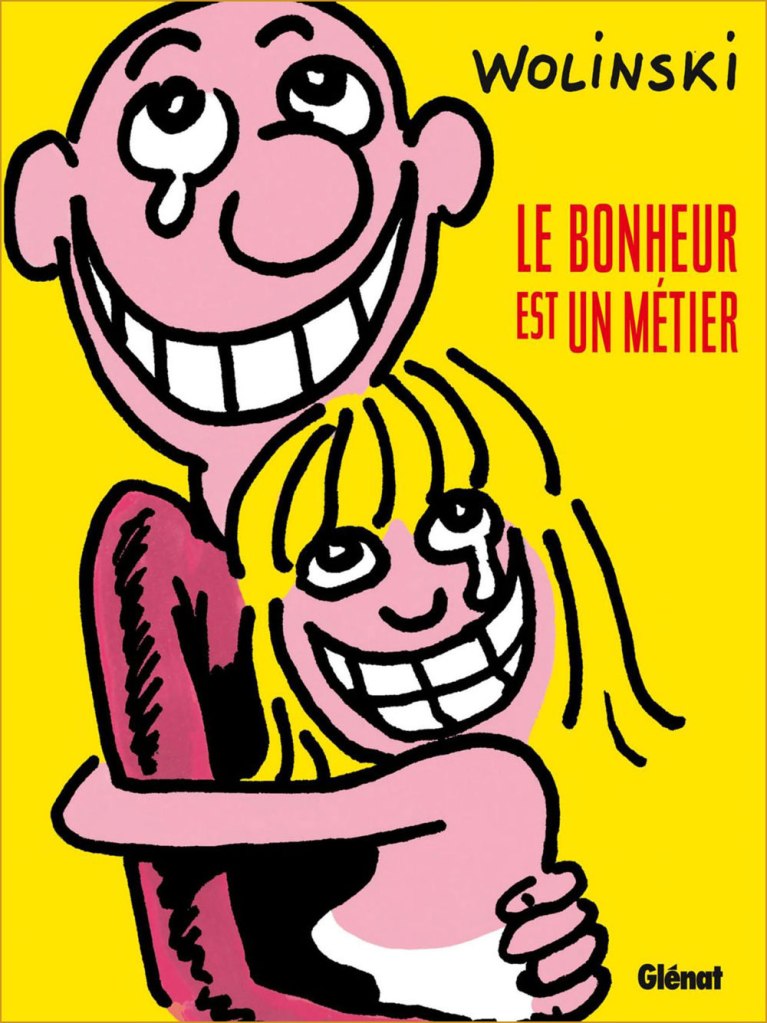
« Working in collaboration means spending half of one’s time explaining to the other that his ideas are stupid. » Wolinski served as the editor-in-chief of Charlie Mensuel from 1970 to 1981. His chief non-editorial contribution was his scripting, for his friend — and fellow Georges — Pichard, the adventures of Paulette, which ran in the magazine from 1970 to 1976. For more Pichard (and Paulette!), check out ds’ post Georges Pichard’s Distressing Damsels. This is Charlie Mensuel no. 80 (Sept. 1975), art — naturally — by Georges Pichard.« Happiness is an occupation » (2016, Glénat). Here’s an example of Wolinski’s fully evolved, more streamlined visual style, from the cover of a posthumous autobiographical collection. Wolinski was interred in Paris’ Cimetière du Montparnasse. Photo by Stéphane X. « Murdered on January 7 during the attack against Charlie-Hebdo. »




















































 Who's Out There?