Tentacle Tuesday: Ugly Stickers Uglify the World

I say, the year’s first Tentacle Tuesday is a big responsibility! That’s why I’d like to start with some slimy or furry,  squirming or pitter-pattering, whimsical or gnarled, skittish or spine-chilling, drooly woolly creepy crawlies with toupees and bloodshot eyes. After all, the 2020s decade is sadly guaranteed to be full of ’em… but  of a significantly less cute variety than the lot that I’m featuring today.

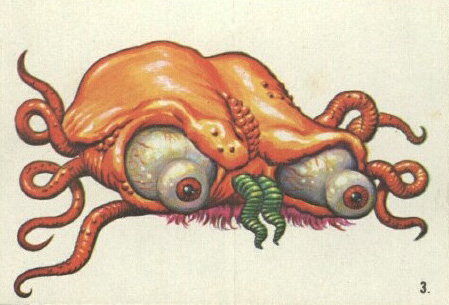
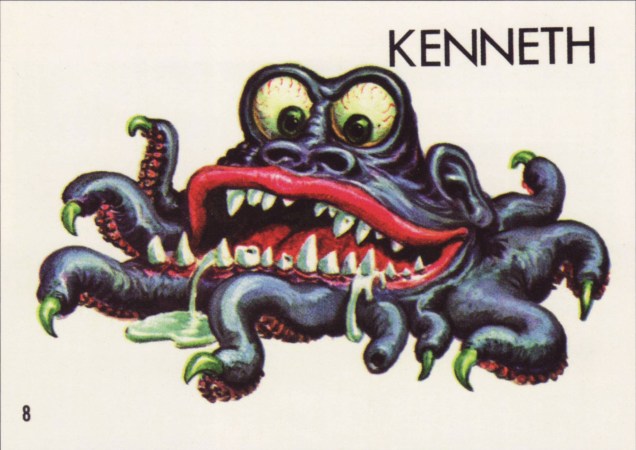
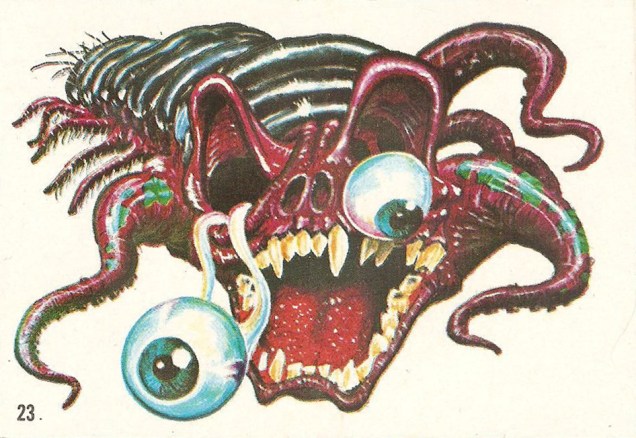
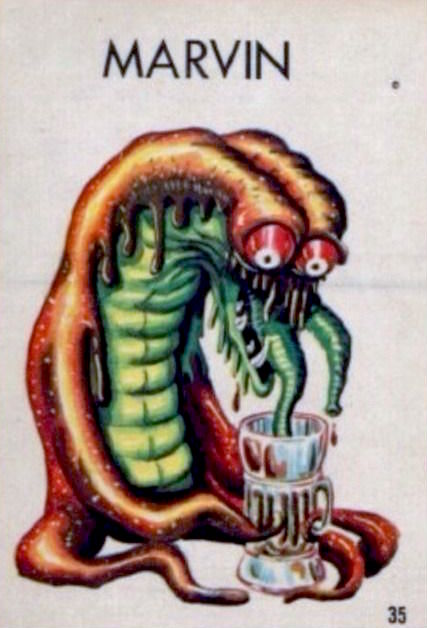
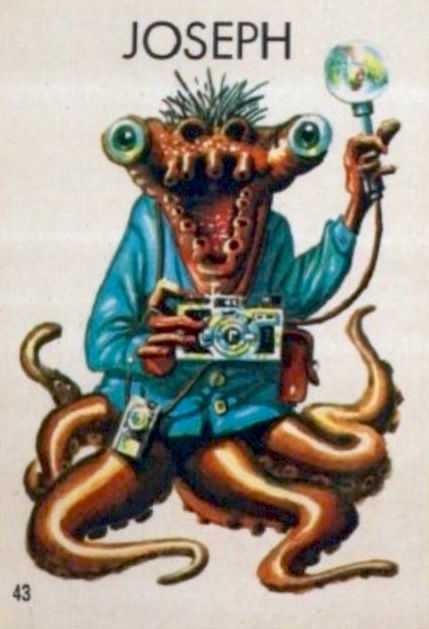
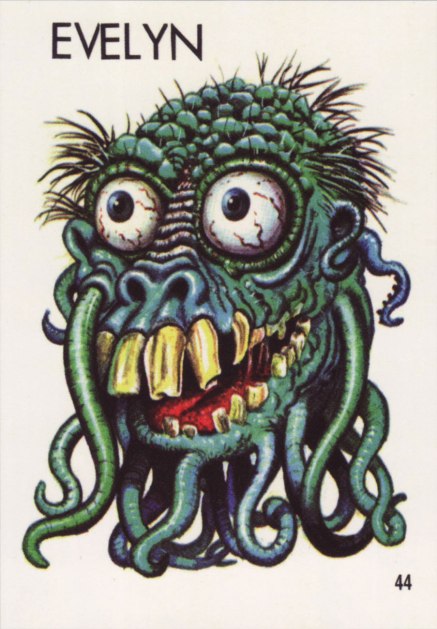
ToppsUgly Stickers have a lot going for them: excellently drawn, tongue-in-cheek monsters in various states of putrefaction. If there’s one commonality between them, it’s that most of them showcase teeth any dentist would be thrilled to drill through. Many of them have far more appendages that a regular creature needs… and a lot of these appendages are distinctly tentacular, which is of course where we come in! And they’re all cute as a button.

David Saunders, Norman Saunders’ son, explains in the latter’s biography (Illustrated, 2009):

«In 1965 Topps released Ugly Stickers. This set was initially based on the grotesque drawings of Basil Wolverton, but when he demanded copyright control, he was paid off for his first twelve images and then fired. The rest of the creatures in the set were designed by Norman Saunders and Wally Wood.

The creatures that appear on the display box, the wax wrapper, and the giant twelve-piece puzzle were all designed by Saunders. He also painted all 44 Ugly Stickers. These were so popular they were reissued in four later versions and even spawned a line of rubbery toys called Teacher’s Pets.»

So what’s the break-down? Out of the original 44 stickers, Wolverton designed 10. The rest were the handiwork of Wally Wood and Norman Saunders. The total set numbers 164. Not all cards were repeated in the re-runs, which is why the numbers don’t compute, for those of you who multiplied 44 cards by 4 versions and obtained 176, not 164; there were 4 groups of 40 cards + 4 non-repeated cards.

Monster Mash- The Creepy, Kooky Monster Craze In America
A page from Monster Mash: The Creepy, Kooky Monster Craze In America, 1957-1972 (Two Morrows Publishing, 2015), which you can read here.

In some print runs, the creatures did not have names, doubtlessly leaving that part to the reader’s imagination. Most cards, however, do have names, with genders shamelessly swapped, making guys into gals and back into guys again. Take a peek at the full list of name changes over at this very instructive website, Bubble Gum Cards.

ToppsUglyStickers3

Does s/he look like a Jacqueline to you? Or maybe an Edward? I vote for the former; such an elegant name for a bug-eyed, displeased brain-thing, Just look at the flair with which she wears that pink tuft of fur underneath.

Number3-UglyStickers-NamesA

SaundersWoodKennethA

ToppsUglyStickersIris

ToppsUglyStickersJames

ToppsUglyStickersMarvin

Joseph and Evelyn (or Stanley and Renée, or…) were previously used by my co-admin RG in his Hallowe’en Countdown III, Day 24 post, but they distinctly have tentacles, so I believe it’s worth running them again.

ToppsUglyStickersJoseph

SaundersWoodEvelynA

As a little bonus, here’s a lady from Topps’ 1966 Ugly Name Stickers series who asked to be included. Her name was… Donald, Sylvia, Angelo, Phyllis, Barney, or Rosemary. “Barney” is really pushing it!

Toppsno6uglystickers

Teacher'sPet-UglyStickers
A little friendly critter from the Teacher’s Pets series (probably…. these things are veiled in a shroud of mystery), which was a rubbery spin-off from Ugly Stickers.

~ ds
Hot Streak: Bill Everett’s Menace

« I have learned to live each day as it comes, and not to borrow trouble by dreading tomorrow. It is the dark menace of the future that makes cowards of us. » — Dorothy Dix

Menace was a short-lived (11 issues, 1953-54, Atlas) horror anthology title that’s mostly remembered*, if at all, for its one-shot introduction of a zombi by the name of Simon Garth. Because Atlas never really played the gore card, its successor Marvel was able to mine most of its Pre-code material as cheap filler in their 1970s bid to flood the market. Don’t get me wrong, though; these titles were still a lot of primitive fun, and in most cases, I’d pick an issue of Weird Wonder Tales, Where Monsters Dwell or Uncanny Tales From the Grave over the latest Fantastic Four or Spider-Man.

The writing was by no means daring or even coherent, but the artwork was frequently rather fine, with none quite finer than Bill Everett‘s, particularly his covers, which elegantly straddled the line between fearsome and goofy.

I’d be tempted to say that Everett (1917-1973) was at his peak when he created these, but the bittersweet fact of it is that Everett was still at the height of his artistic powers, even as he was slowly dying in the early 1970s.

This particular hot streak ends not because Everett turned in a lesser job, but because other hands provided covers for the rest of the run. Talented hands, at that (Carl Burgos, Gene Colan, Russ Heath, Harry Anderson), but none of the other Menace covers are a patch on Everett’s mighty half-dozen.

Menace01A
These monsters look kind of playful and kooky, don’t they? This is Menace no. 1 (March 1953, Atlas). Inside we find Everett, George Tuska, Russ Heath and Werner Roth art. Oh, and Stan Lee stories. Colours by Stan Goldberg.
Menace02A
This is Menace no. 2 (April 1953, Atlas). Colours by Stan Goldberg.
Menace03A
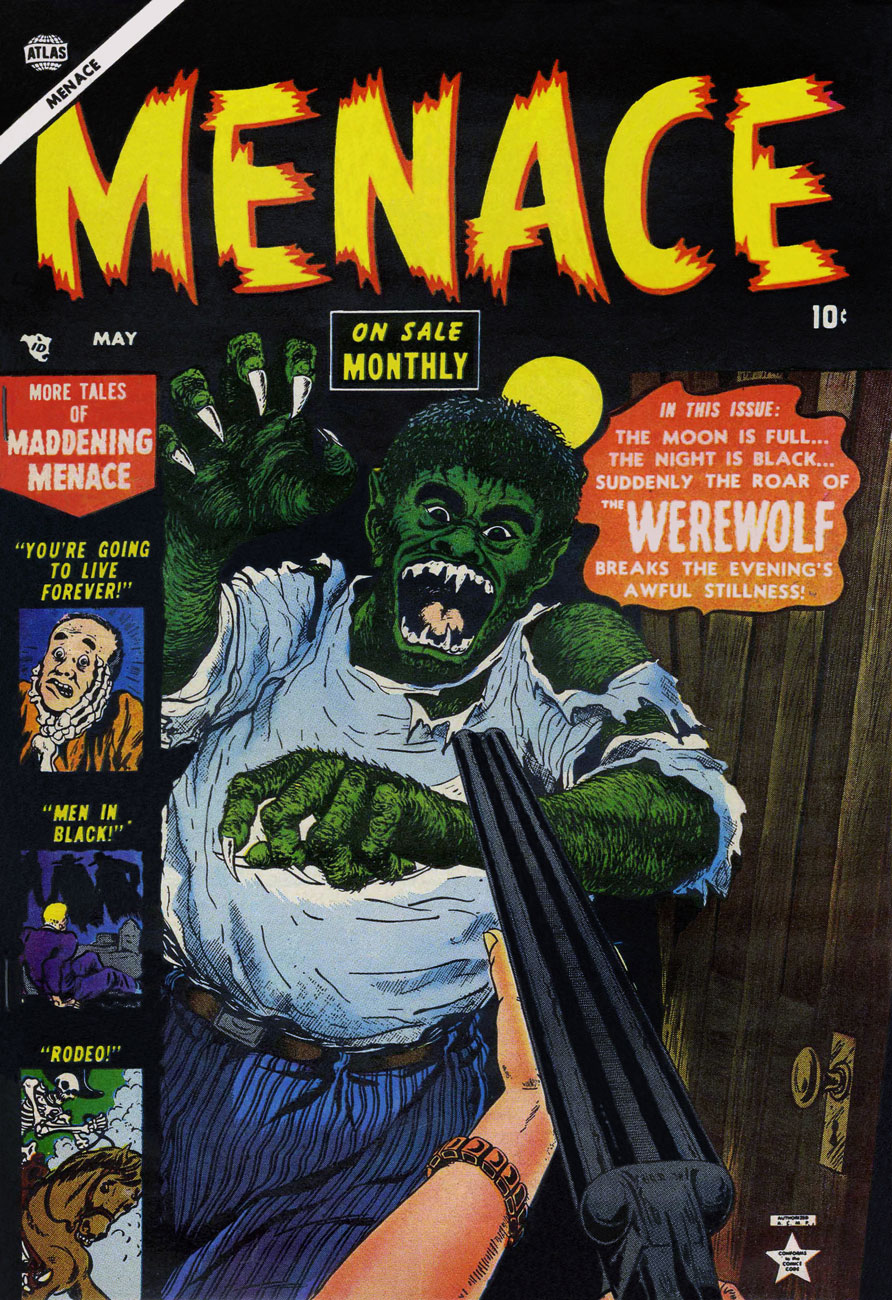
This is Menace no. 3 (May 1953, Atlas). Colours by Stan Goldberg. Was the title’s monthly schedule truly supposed to be a selling point?
Menace04A
This is Menace no. 4 (June 1953, Atlas). Colours by Stan Goldberg.
Menace05A
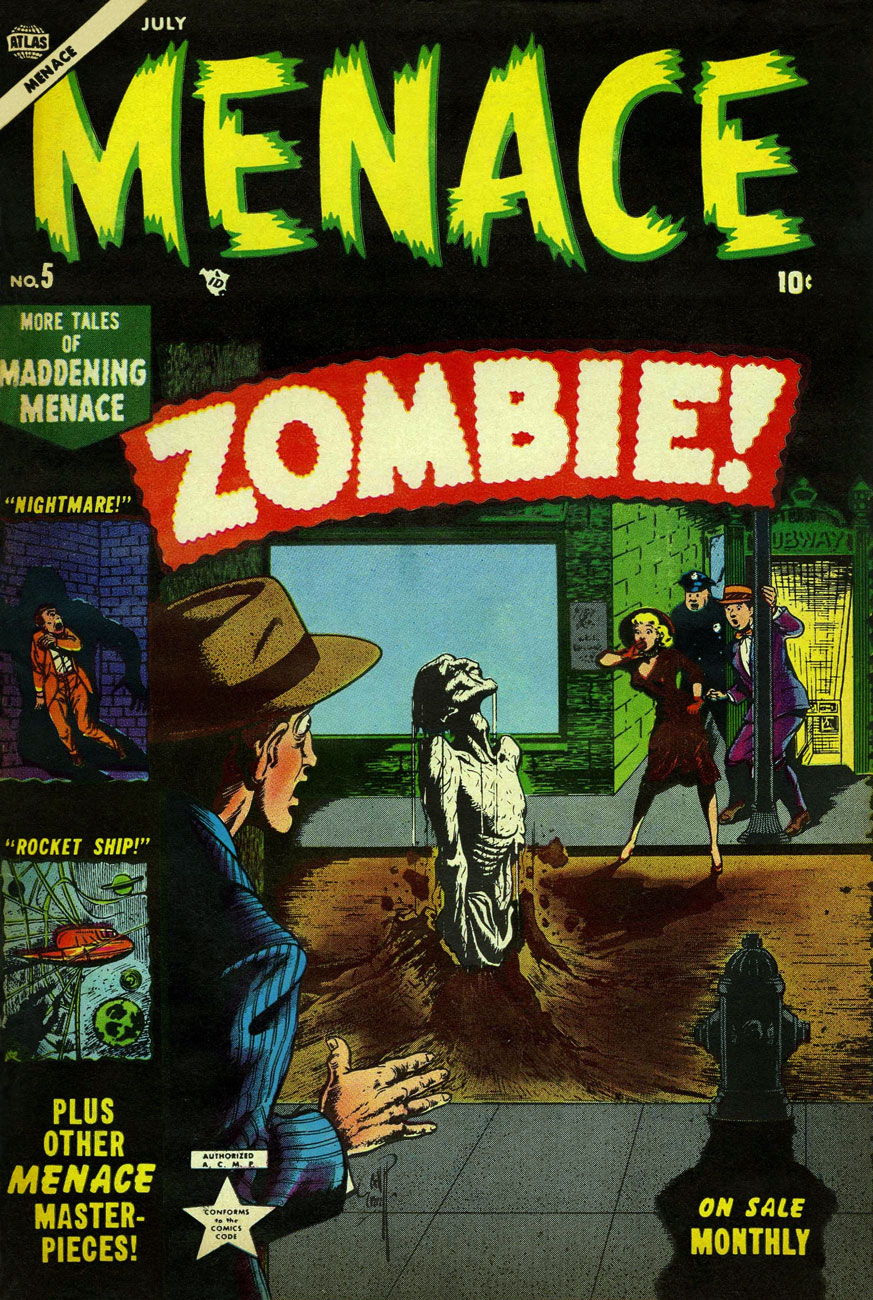
If you think that’s impressive, you should see what mushrooms can do to asphalt!** This is Menace no. 5 (July 1953, Atlas). Simon Garth was dug up (sorry) in 1973, likely at the behest of continuity addict Roy Thomas, to star (if you can call it that) in his own black & white magazine, Tales of the Zombie (10 issues, 1973-75). Like The Man-Thing, he was essentially mindless and shambling, and so mostly a pawn or an uncomprehending witness to others’ tragedies. The best of the mangy lot is, imho, The Blood-Testament of Brian Collier (TotZ no.7… read it here.) It’s not great, but it sure looks pretty, thanks to the sublime Alfredo Alcala, who’s quite in his element here.
BugEyedPair
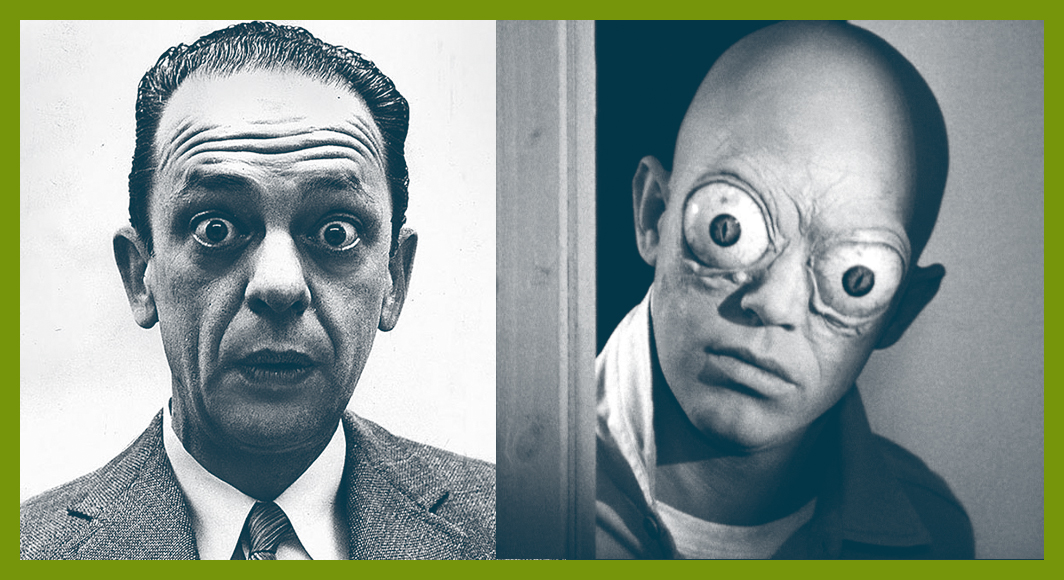
Don and Warren also met Simon. Read Lee and Everett’s 1953 Zombie!
Menace06A
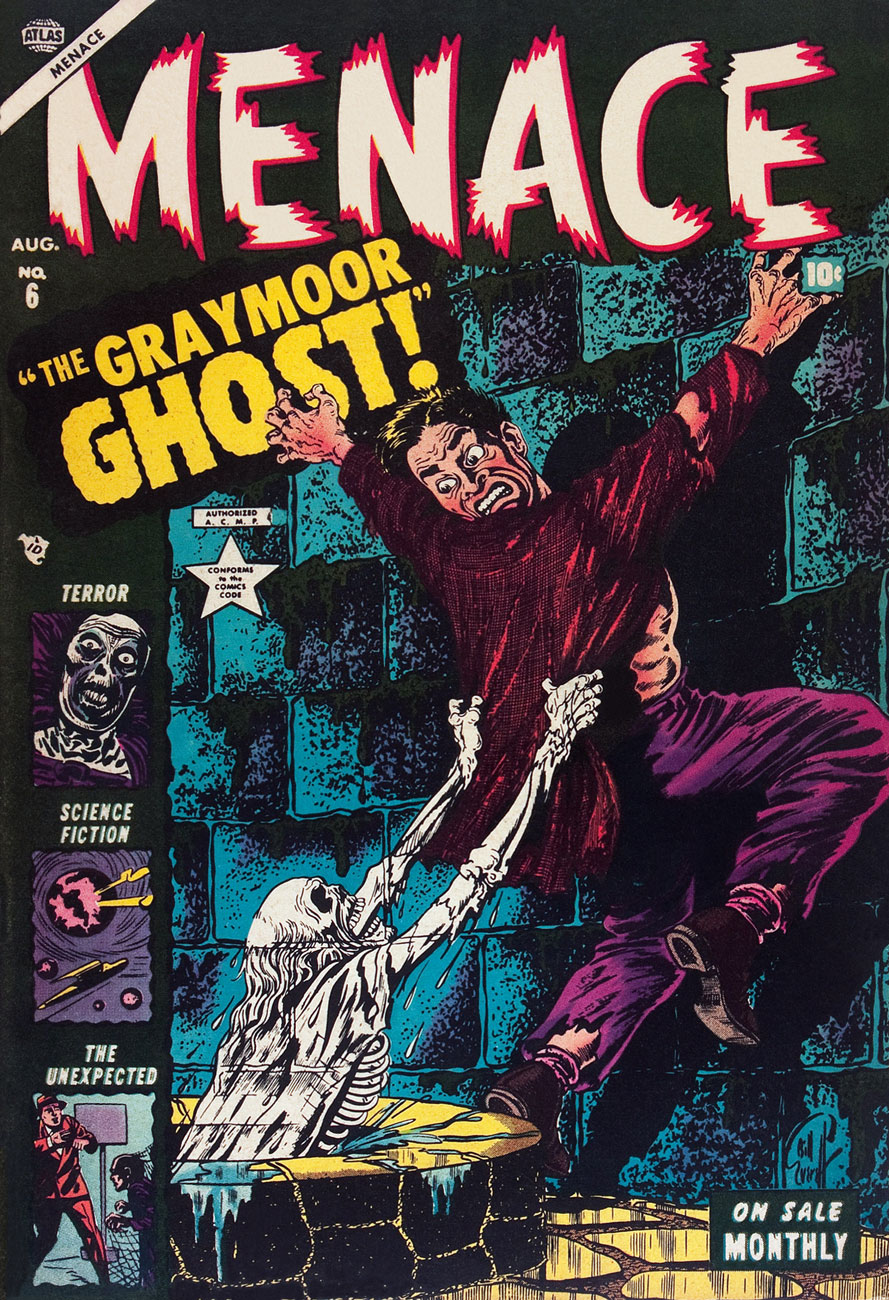
This is Menace no. 6 (August 1953, Atlas). Colours by Stan Goldberg.

That strange compulsion that’s creeping over you, that ungodly craving for more Bill Everett, cannot quite be slaked without incurring a terrible cost, be it in human lives, the forfeiting of your immortal soul, or both. But do check out my co-admin ds’ earlier tribute to Mr. Everett’s nightmares, Bill Everett’s Restless Nights of Dread, it might tide you over until dawn.

-RG

*these babies are rare, in any condition.

**Here’s an example:

« A bump in the garage floor turned into a half meter of mushrooms in little more than three days. It crushed its way through five centimetres of asphalt in Åge Reppes garage in Stord, western Norway. It is the water pressure in the cells of the fungus that makes it able to crack the asphalt, says a biologist at the local university. » [ source ]. These are inky caps. Edible, but some species are toxic when consumed with alcohol. These are commonly known as ‘tippler’s bane‘.

Tentacle Tuesday: Goodbye, 2019

This feels like a portentous occasion: the last Tentacle Tuesday of 2019. The mind boggles at the sheer number of tentacles we have released into the wild this year! As far as the splendour of this moment is concerned, there’s no reason for me to fight this feeling. Yet my general tendency at the year’s end – to throw in a lot of women fighting off tentacles (witness last year’s TT – “Foul as Sewer Slime!”) – is slightly one-track-minded, and it’s probably going to be my new year resolution to curtail that. Nah, just kidding.

Still: what *is* good is saying goodbye to the year in colour. So enjoy these not-quite-good, garishly coloured tentacle fiestas, and Happy New Year!

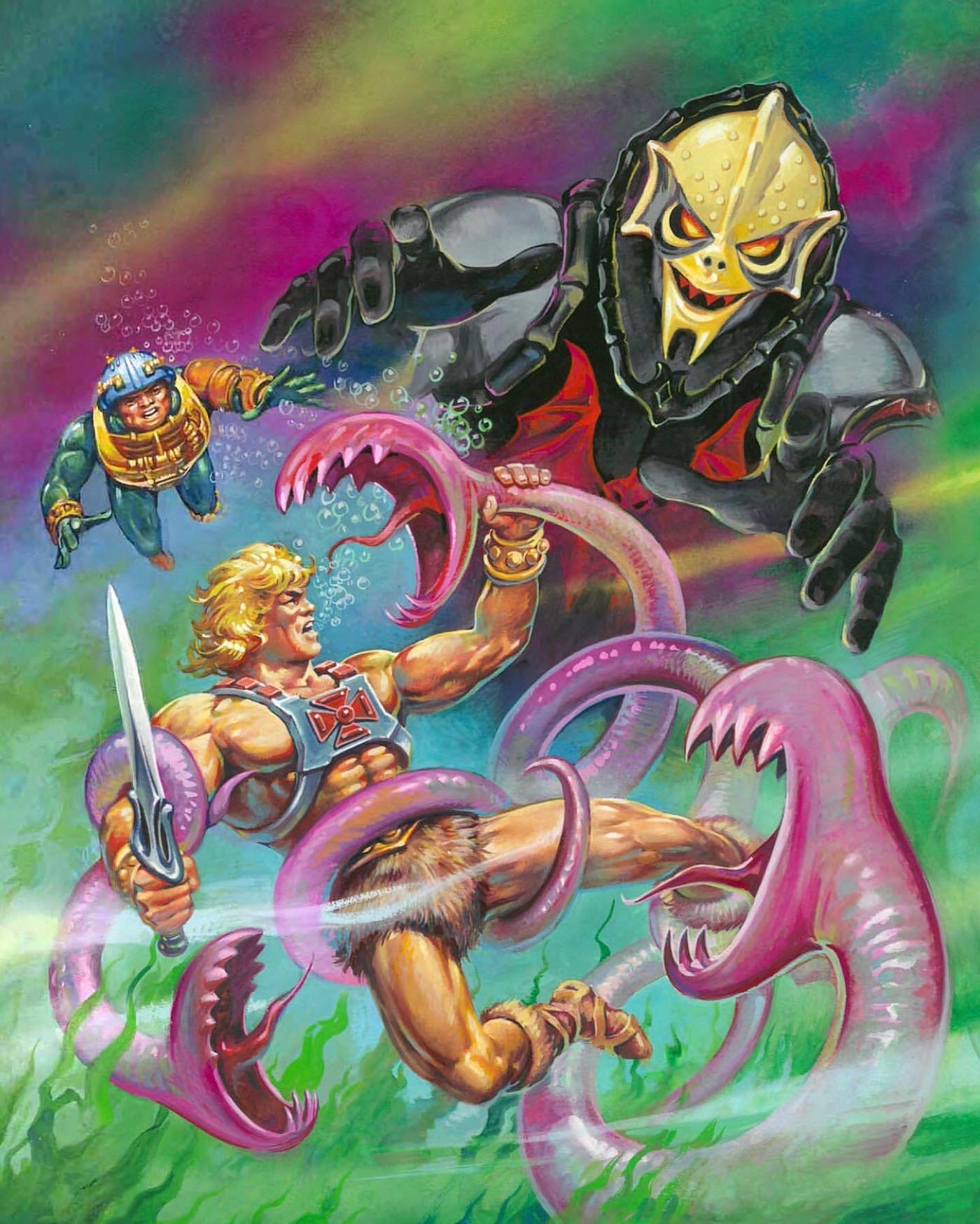
paintedEstebanMaroto-german Ehapa MOTU comic (
A painting by Esteban Maroto, a Spanish comic book artist whom you might know for his large body of work for Warren Publishing. He drew a hundred-and-one (presumably because that sounded good!) stories for Creepy, Eerie and Vampirella, which is a record only beaten by José Ortiz, another Spanish illustrator.

paintedEstebanMaroto-thing
Another one by Esteban Maroto. Are either of these fetching lads Dax the Warrior? I honestly have no clue. Anyone? (I’m told it’s the Masters of the Universe’s He-Man)

You know how I said, earlier, that I was one-track-minded? I’m not the only one. Yikes. This is a tame image, but the… wilder… ones were in black and white, and I had to stick to my theme. See the sacrifices I make?

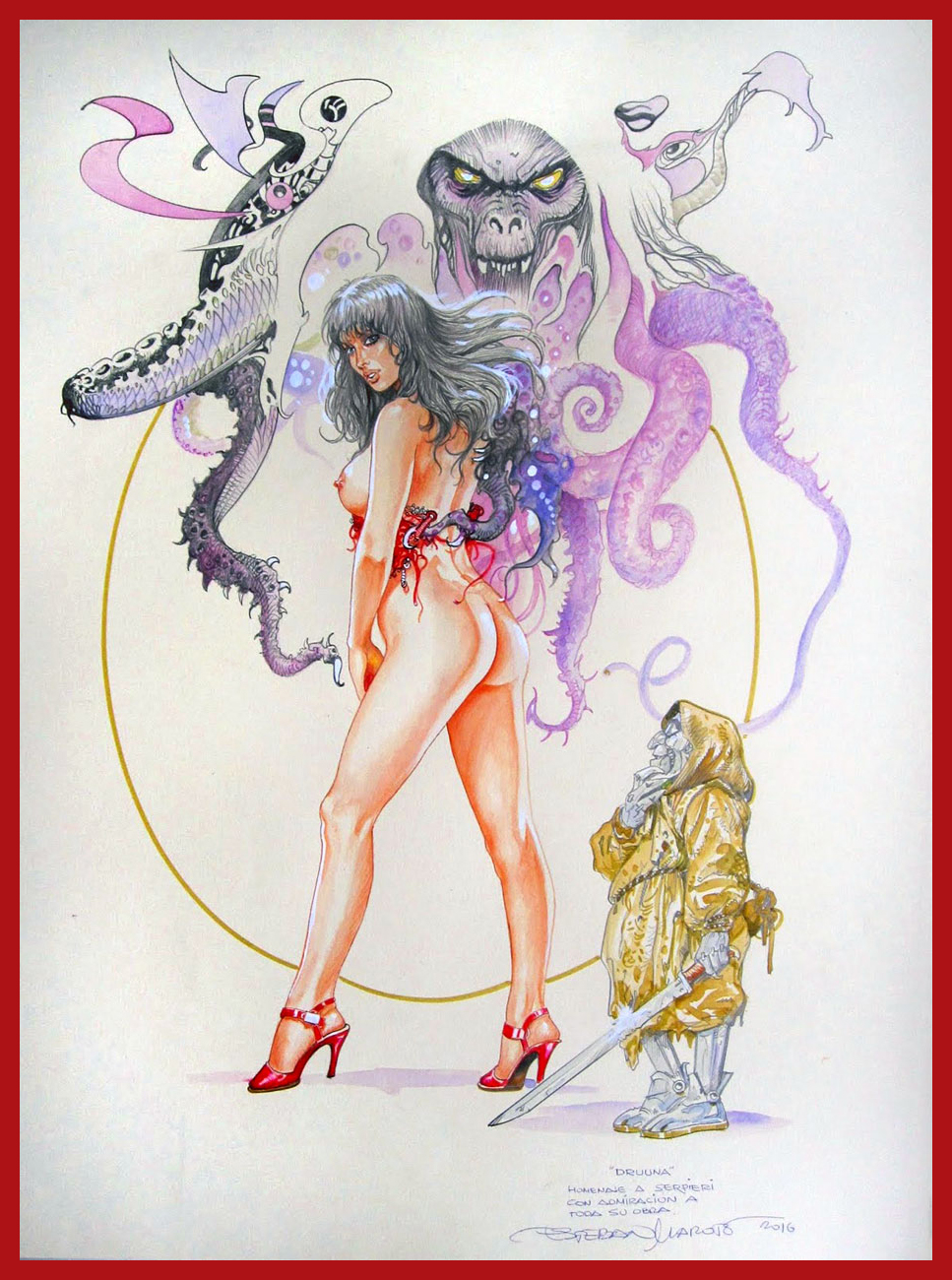
EstebenMaroto-Druuna-TentaclesA
Maroto’s hommage to Serpieri’s Druuna (see Tentacle Tuesday: tentacles that get in your face.)

Do visit Maroto’s website, tentacles abound (generally revolving around naked women).

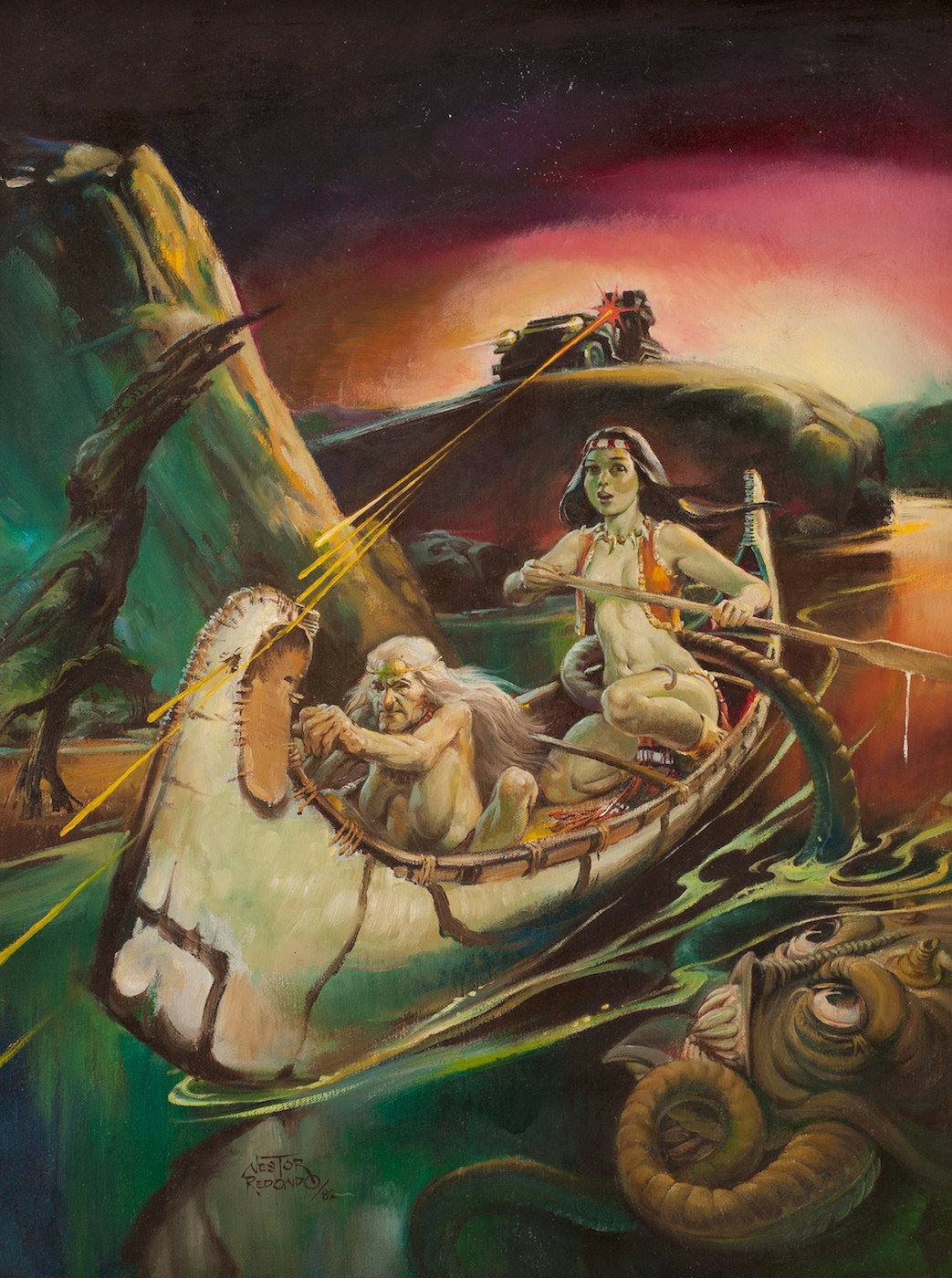
paintedNestor Redondo Painted Fantasy Cover Original Art
Is it redundant to have yet another illustration by Nestor Redondo? (I featured one in last week’s Tentacle Tuesday). Perhaps. But it has many intriguing details: the octopus is both scarily human and quite alien (also, in bad need of braces!), the young maiden looks far too young to be subjected to the lascivious caress of a tentacle, and the old witch’s breasts are… a strange combination of realistic and anatomically suspect.

paintedSanjulian
Illustration by Manuel Sanjulián, a Spanish painter and fellow Warren alumnus. Hey, this is shaping up into some sort of celebration of Spanish art. That’s all right with me.

JeffSlemon
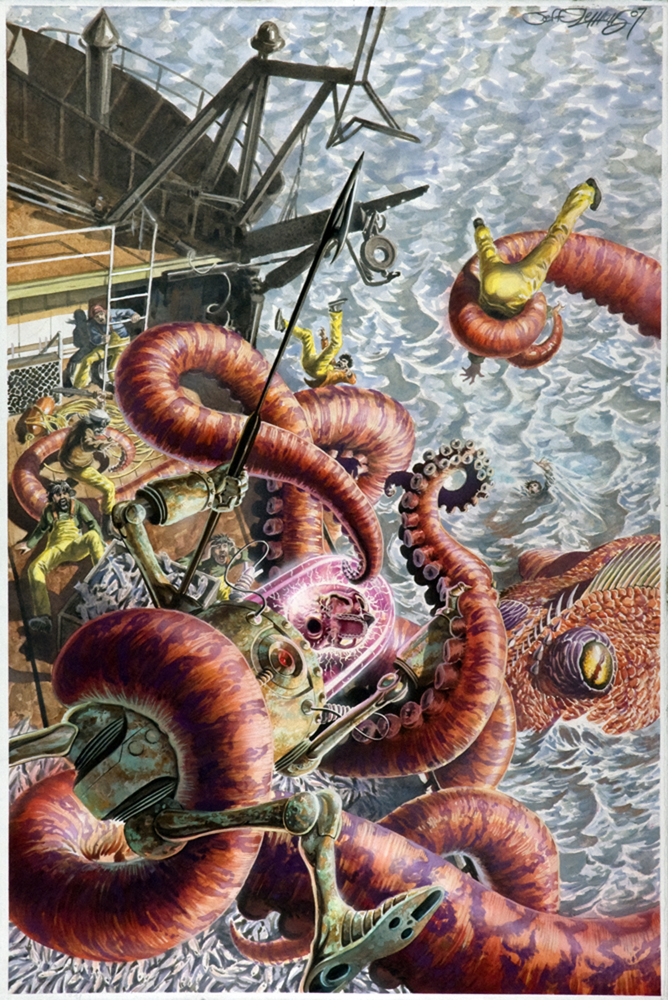
Cover for Robot 13 no. 1 (cover variant B), July 2009, art by Jeff Slemons.

While we’re at it, from the same artist, here’s his Elvis‘n’tentacles:

JeffSlemons-Elvis
Distinctly in the category of “why the hell not?”

Rocket Girls by Don Marquez
A Frazetta-ish painting titled Rocket Girls by Don Marquez, in which, as per the official description, “the girls meet the Tentacle Thing!” The Tentacle Thing has a bloodshot eye because he’s had too much bloody champagne.

…. preceded by “The Rocket Girls run into a thing that is all tentacles and eyeballs.

rocket-girls-watercolor-painting-don_1_4767bcb96df9be3d4328cfa7497c6767
The girls all look like clones… except for varying bust sizes. Marquez really went overboard with the one on the left, if you ask me – I’m surprised she can hold up a gun at all. The gals seem to be consumed in increasing order of bra size… that monster is a connaisseur.

And on that fitting note, happy celebrating!

~ ds
Treasured Stories: “The Locked Door!” (1973)

« Man’s constitution is so peculiar that his health is purely a negative matter. No sooner is the rage of hunger appeased than it becomes difficult to comprehend the meaning of starvation. It is only when you suffer that you really understand. » — Jules Verne

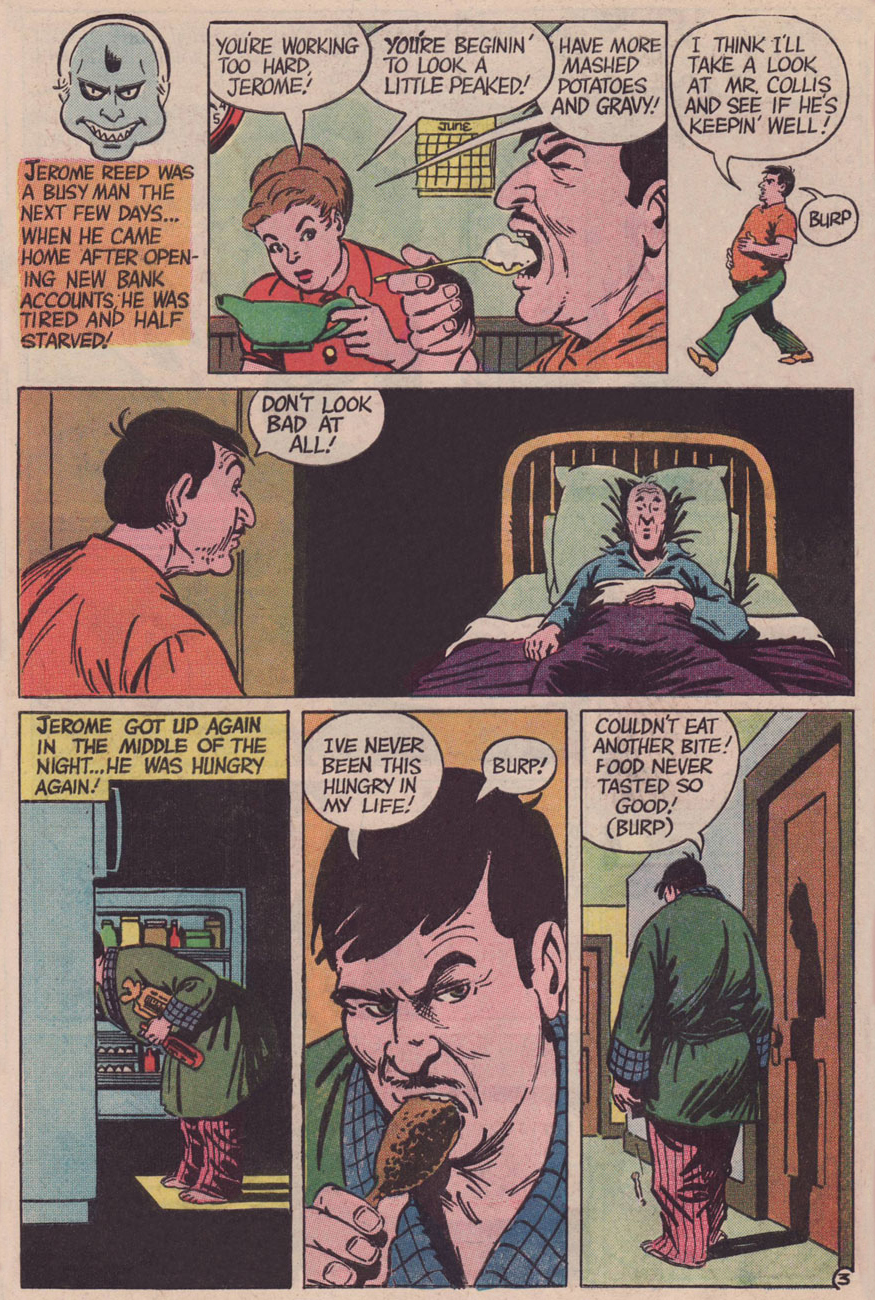
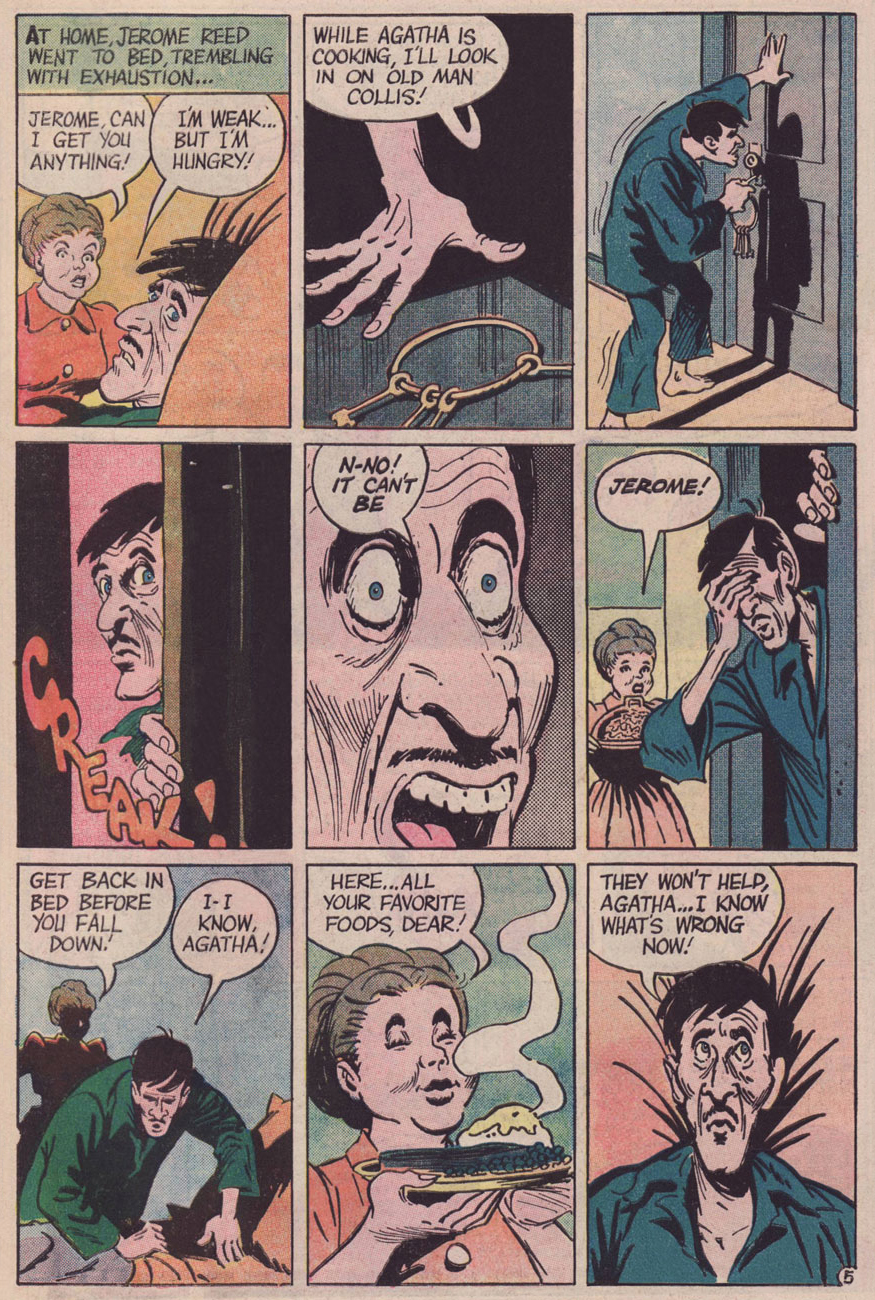
For my final post of the year (my co-admin ds yet holds one more Tentacle Tuesday instalment), I turn to crusty Joe Gill and a surprisingly cheerful tale of elder abuse (one of his pet topics, see The Night Dancer! for another example). Herein, a quite horrifying situation is leavened by Gill and his Billy  the Kid acolyte Warren Sattler‘s graceful, humorous handling… with the moral still clear. This is one of Sattler’s few forays into the spooky at Charlton, and I hope you’ll agree it’s worth the detour.

SattlerLocked01ASattlerLocked02ASattlerLocked03ASattlerLocked04ASattlerLocked05A

SattlerLocked06A
Despite the mere six pages allotted, The Locked Room! features a lot of story. Joe Gill typically wrote pages comprising five panels, which would translate to 30 panels for a six-pager. Sattler breaks down the script into 43 panels, so it could have been far longer. A jewel of elegant compression!

GhostManor17A
Tom Sutton’s humdinger of a cover gives away the plot, but no matter — it’s a striking, beautifully-coloured image. The rest of the issue’s nothing special: Joe Gill, Charles Nicholas and Vince Alascia’s The Truth in the Fire is yet another spin of the stale greedy-explorer-versus-native-god plot; Gill and Wayne Howard‘s Bury Me Deep! is saved by its light tone; Gill and Steve Ditko‘s Let the Buyer Beware, despite featuring Ditko in full-on goofy mode, is more-or-less standard voodoo stuff; but the humdrum outing is largely redeemed, in the end, by the cover tale. This is Ghost Manor no. 17 (January 1974, Charlton).

I love Gill’s use of the principle of communicating vessels as a means of poetic retribution. Or is it a feedback loop? I’m also very fond of Agatha’s characterization: she’s hardly the picture of evil, blandly accepting each new bend in the road as if morals never entered into the equation. But you just know that, once Jerome is laid to rest, she’ll simply find another man to feed and breezily carry on. In a sense, she’s the main character: doesn’t the whole thing hinge on her fine cooking?

-RG

Tentacle Tuesday: Inky Black and Snowy White

It’s not every day that Tentacle Tuesday lands on Christmas Eve! I hope you have pleasant plans for the night, if not involving an epic Christmas tree and impeccably-wrapped presents, then at least a lot of booze. In the meantime… I present you with this short and sweet gallery of classy black and white images by some quite well-known illustrators (with one foot, or more, in the comic world, this being, after all, a blog about comics).

BruceTimmSonjaA
Bruce Timm‘s portrayal of Red Sonja. Has he made her into a blonde? It’s possible. Blondes do have more fun… grappling with tentacles.

ArtofNestorRedondo
Illustration from The Art of Nestor Redondo (Auad Books, 2016). I can’t guarantee that these are indeed tentacles, and not sea serpents or something… but hopefully the spirit of festive generosity will ensure my audience forgives me.

Art by Virgil Finlay for the 1949 Memorial Edition of "The Ship of Ishtar" by A. Merritt
Including a Virgil Finlay damsel-with-tentacles in this post isn’t as much of a stretch as one could think – he has done *a few* comic stories, and besides surely influenced more than a generation of cartoonists and illustrators. This is a vision he created for the 1949 memorial edition of Abraham Merritt’s The Ship of Ishtar.

VirgilFinlay-octopus-tentacles
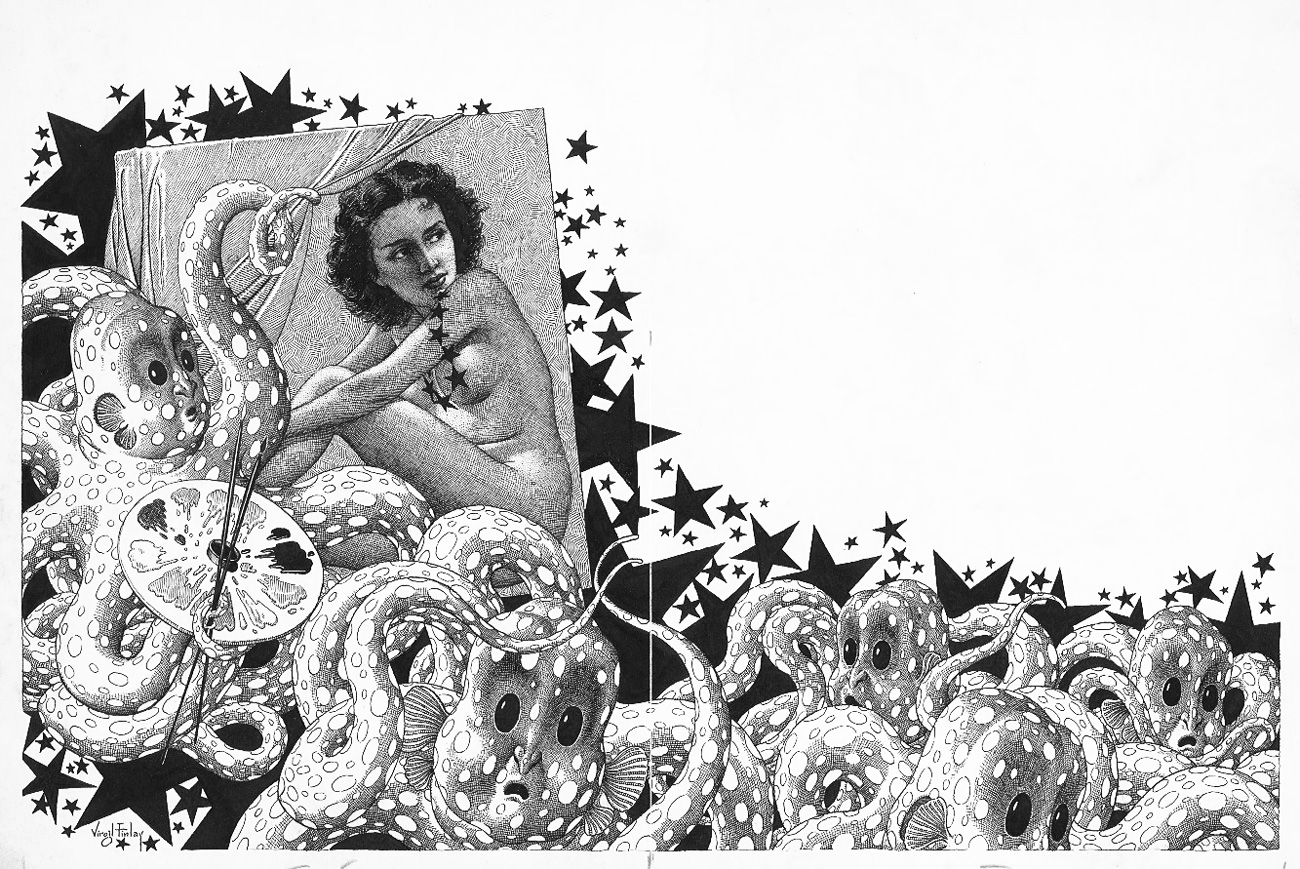
Another Virgil Finlay illustration with adorable octopuses (whose gills make them look rather like mushrooms with tentacles – not unheard of; this link, though awesome, is not for the faint-hearted*).

zak-17-cent-sss«Luxúria no fundo do mar», n.º 7, 15 junho 1976
Zakarella, a comics magazine launched in 1976 in Portugal, mostly re-published choice stories from Warren’s Creepy.  Zakarella herself was the Portuguese version of Vampirella, but considerably more twisted… or, rather, put into some rather fucked up situations and subjected to the perverted sexual whims of monsters from Hell and whatnot. Her stories were drawn by Roussado Pinto (under Ross Pynn) and illustrated by Carlos Alberto Santos. Please visit the blog Almanak Silva for a wittily-written history of Zakarella… or, if you don’t read Italian (personally, I used Google translate), just ogle the images. This is a panel from Luxúria no Fundo do Mar, published in Zakarella no. 7 (June 1976).

~ ds

*The article I linked to also contains this not entirely tentacle-related, but amazing (especially if, at heart, you’re a kid who’s into creepy things) explanation:

Dog Vomit Slime Mold: This creature isn’t technically a plant or a fungus, but it is one of the most fascinating creepy-looking things in nature. “It’s basically a giant amoeba,” Hodge says. “Usually, you can’t see an amoeba with the naked eye. But the dog-vomit is the size of a dessert plate.” She adds that she gets a lot of phone calls about the dog vomit slime mold, which often turns up in people’s garden mulch. “They look weird, and they freak people out.” she says. Even creepier, this huge single-celled blob can crawl. “They ooze around for a while, and then they convert themselves into spores,” Hodge says. “Although it’s not really a spore,” she adds, “because it hatches like an egg and a little amoeba crawls out.” That’s the point when I almost dropped the phone. But Hodge was nonplussed. She teaches a summer course about fungi, and she gives her students slime molds to take home and raise. “You can watch them just cruising around on the petri dish, eating oats.” Some of the students really bond with their slimy little pets, she says: “It’s my campaign to convert people to lovers of stinkhorns and slime molds.”

More Playboy Cartoons for a Festive Mood!

« … every idiot who goes about with a ‘Merry Christmas‘ on his lips should be boiled with his own pudding, and buried with a stake of holly through his heart. » — Charles Dickens, A Christmas Carol (1843)

Whoa, is the accursed Holiday Season upon us again already? Given the rather baffling (but greatly appreciated) popularity of our previous brochette of Christmas-themed Playboy cartoons, which took off in… April and just kept gathering steam, we’ve chosen to just go with the flow and present you with a sequel. We’ve had more time and opportunity to dig further, so we’ve cherry-picked a dozen, both naughty and nice, with plenty left over for next year. We’ve taken pains to include some of the worthy cartoonists who were somehow left out of last year’s legendary Playboy Cartoons for a Festive Mood.

Here we go, then. Season’s greetings and all that rot!

DediniXmasTreeA
One from adorable bon vivant Eldon Dedini (1921-2006), previously spotlighted here.

RowlandProvisionA
A late-career entry from Rowland Bragg Wilson (1930-2005), from Playboy’s January, 2002 issue.

SmilbySantaBagA
It was bound to happen: for a change, Santa decided to indulge in a little *receiving* of his own. This mutely eloquent cartoon from the pages of Playboy is by the steady hand of Smilby, pseudonym of American blues-loving Englishman Francis Wilford-Smith (1927-2009).

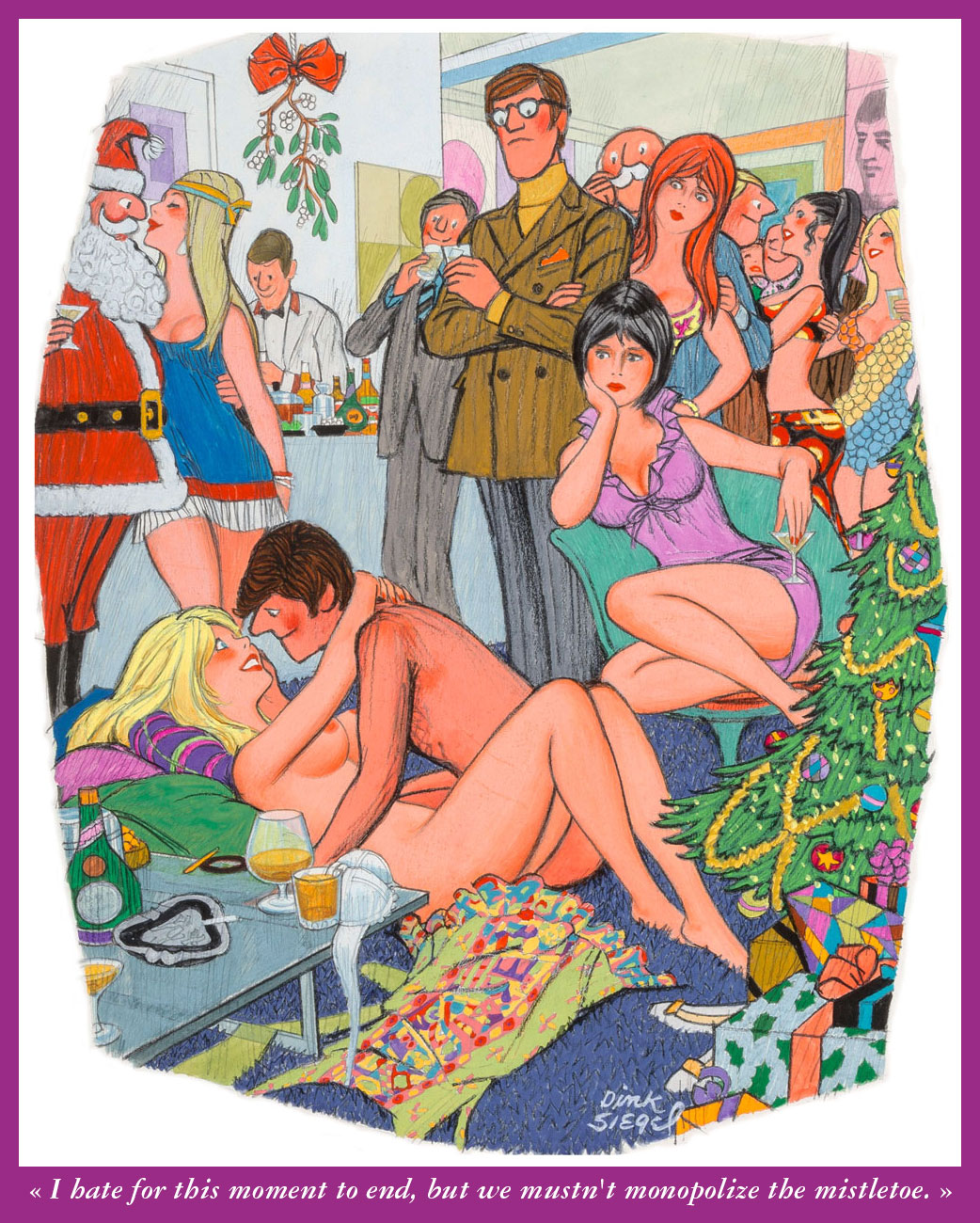
DinkMistletoeA
Here’s a Dink Siegel piece I’d saved for this occasion, once more featuring his “roommates”. It debuted in Playboy’s December, 1969 issue. Feast your jaded eyeballs upon our recent Dink Siegel spotlight right here.

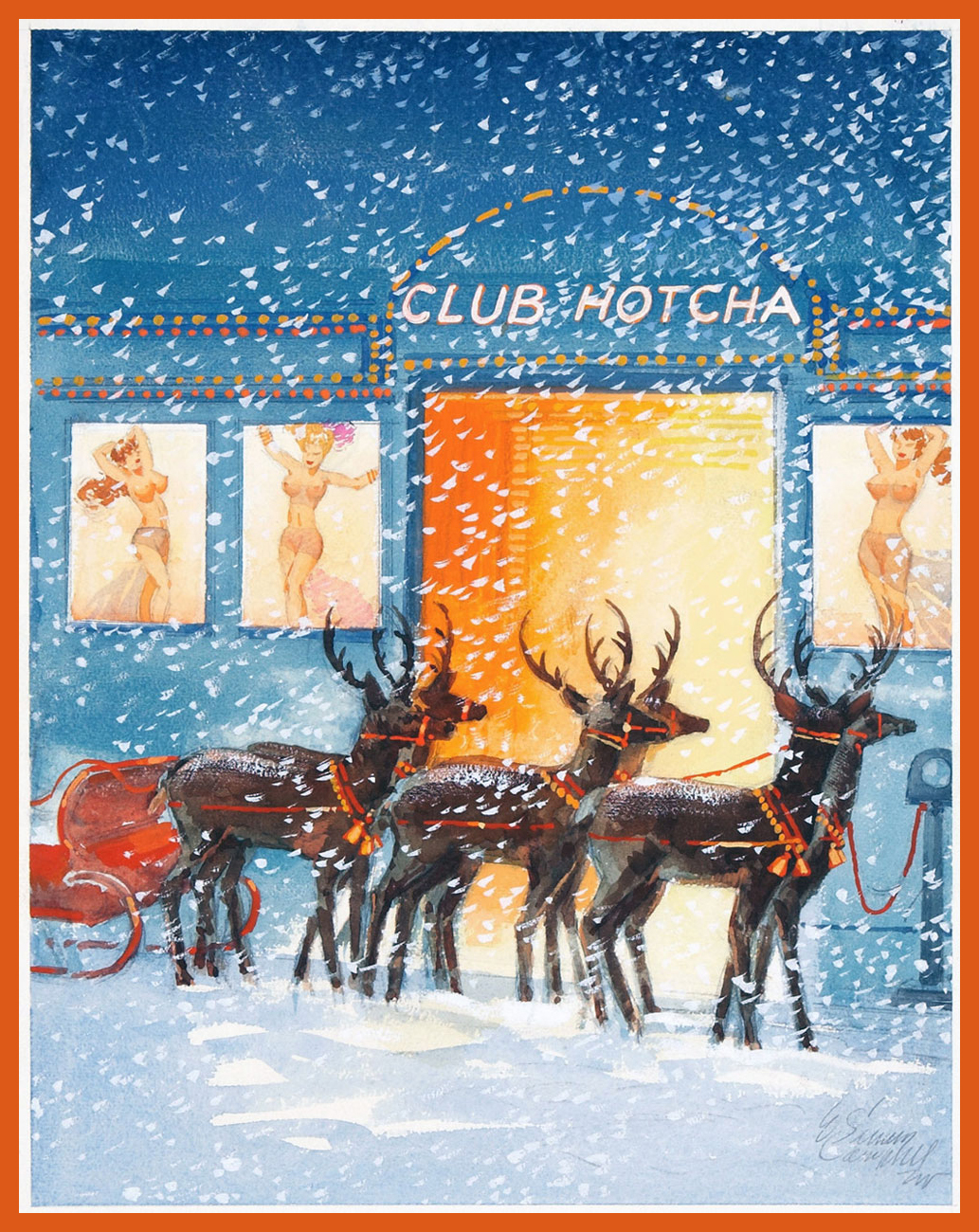
ESimsCampbellClubA
A lush yet understated œuvre by pioneering African-American genius Elmer Simms Campbell (1906-1971), from Playboy’s December, 1962 numéro.

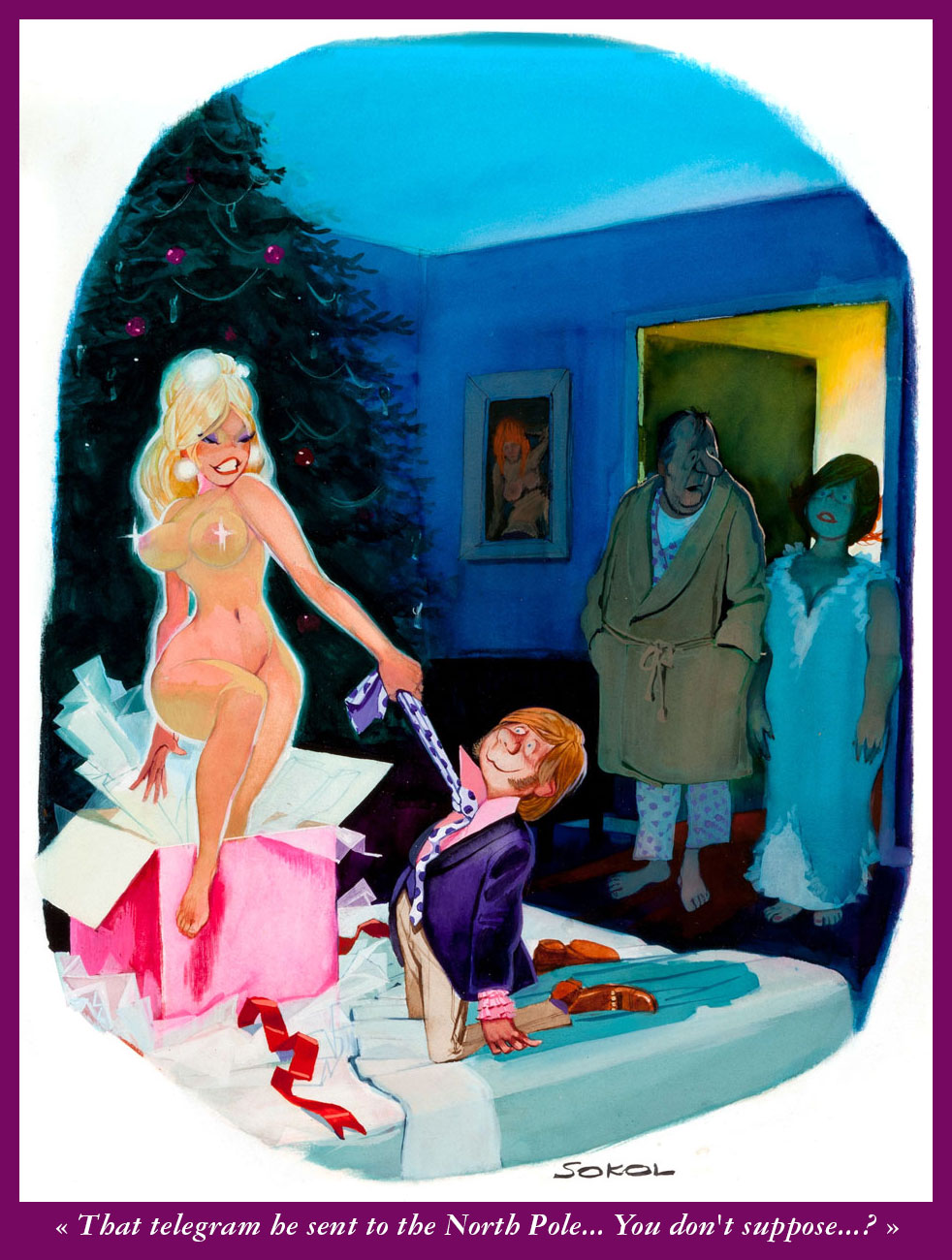
SokolTelegramA
Austrian künstlerisches Genie Erich Sokol (1933 – 2003), whose work, for my money packs the strongest erotic charge of all the Playboy cartoonists’, painted this marvel for the December, 1969 issue of Playboy.

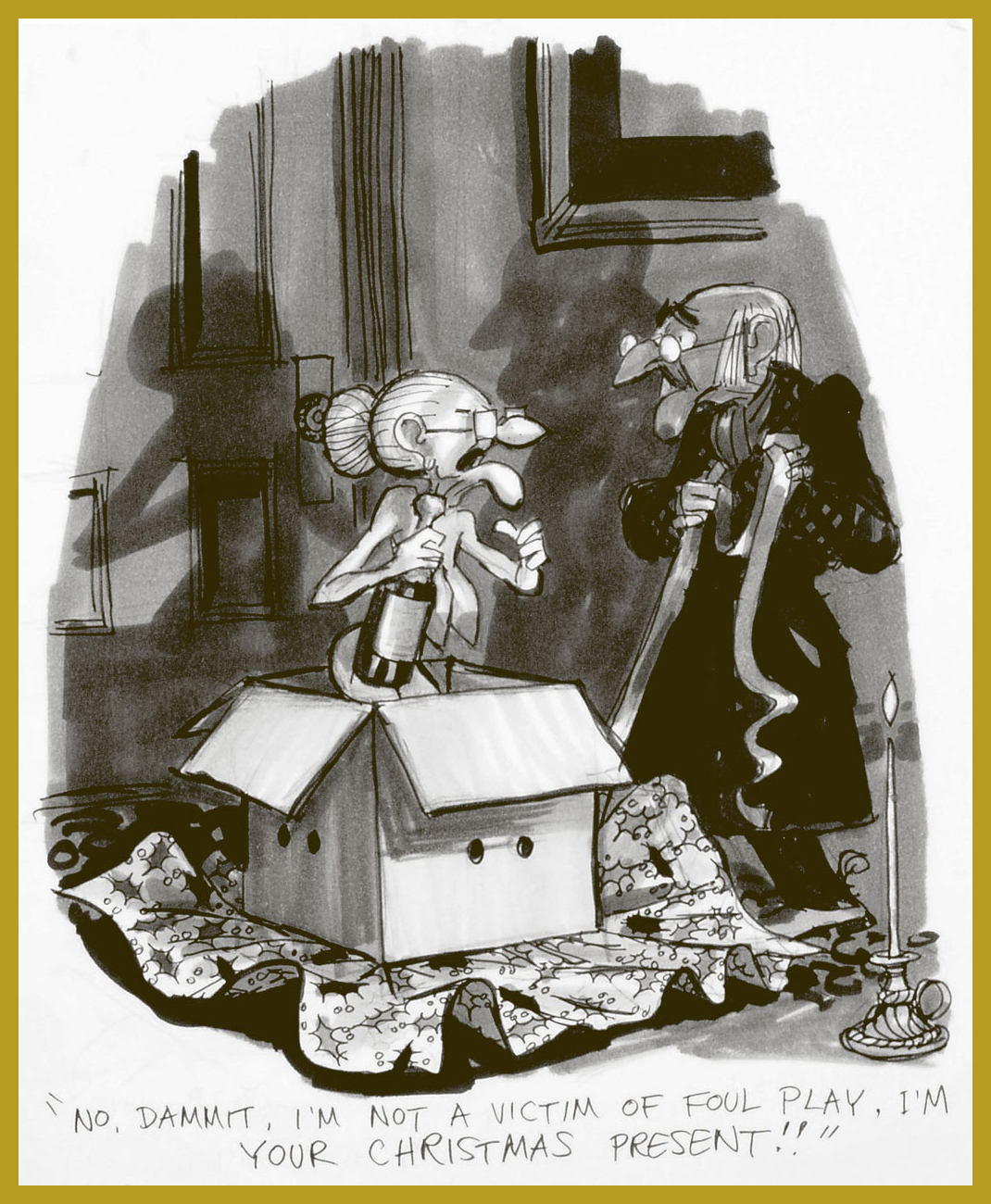
BuckBrownFoulPlayA
We couldn’t, in good conscience, leave out Buck Brown’s famously naughty ‘Granny’. This undated cartoon is likely a marker preliminary.

ThorneRosesA
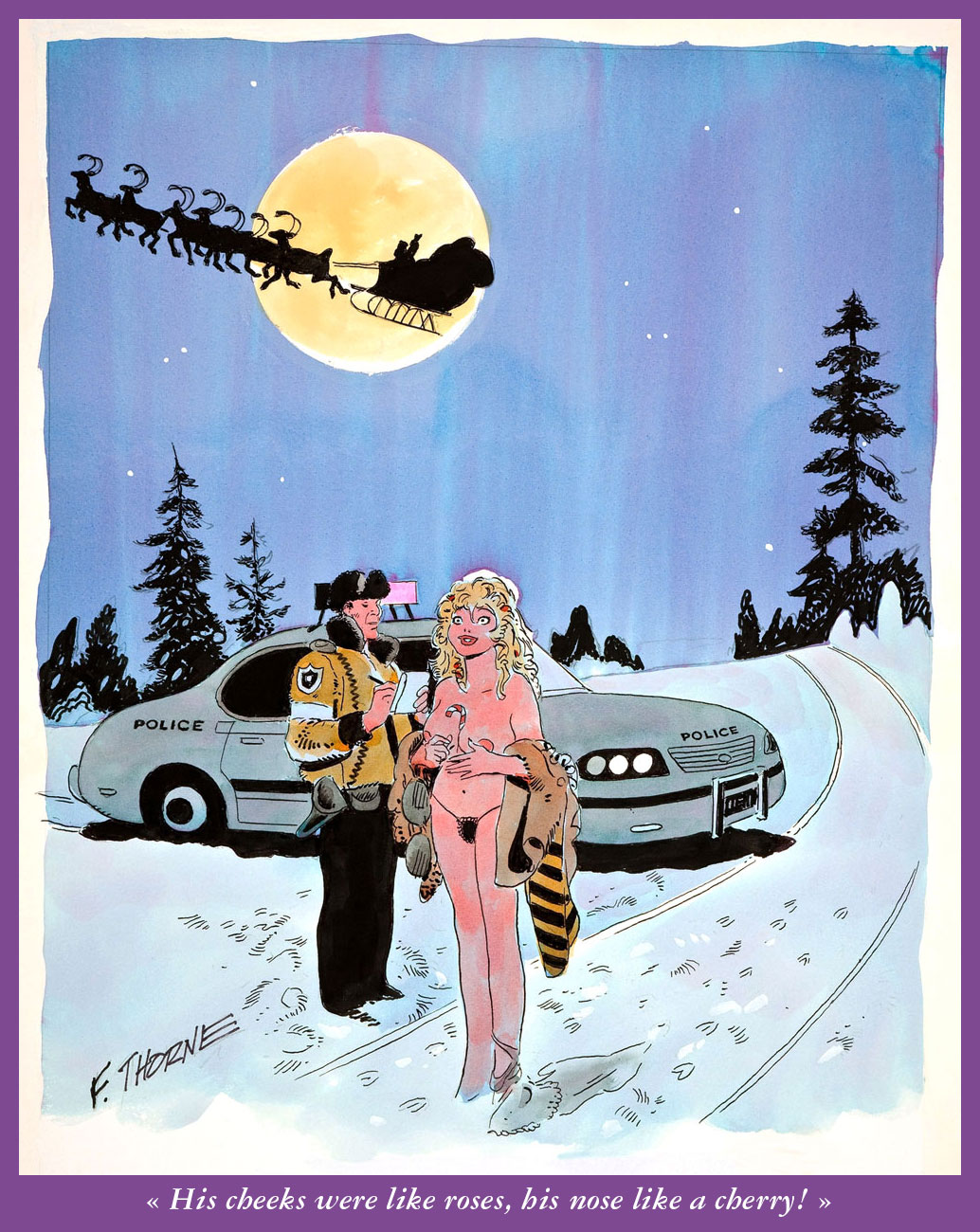
Noted comic book artist Frank Thorne provides this whimsical quote from Clement Moore’s perennial The Night Before Christmas, featuring a gorgeous aurora borealis night sky. The candy cane keepsake is a lovely signature, Not-so-Saint(ly)-Nick.

MikeWilliamsHoHoHoA
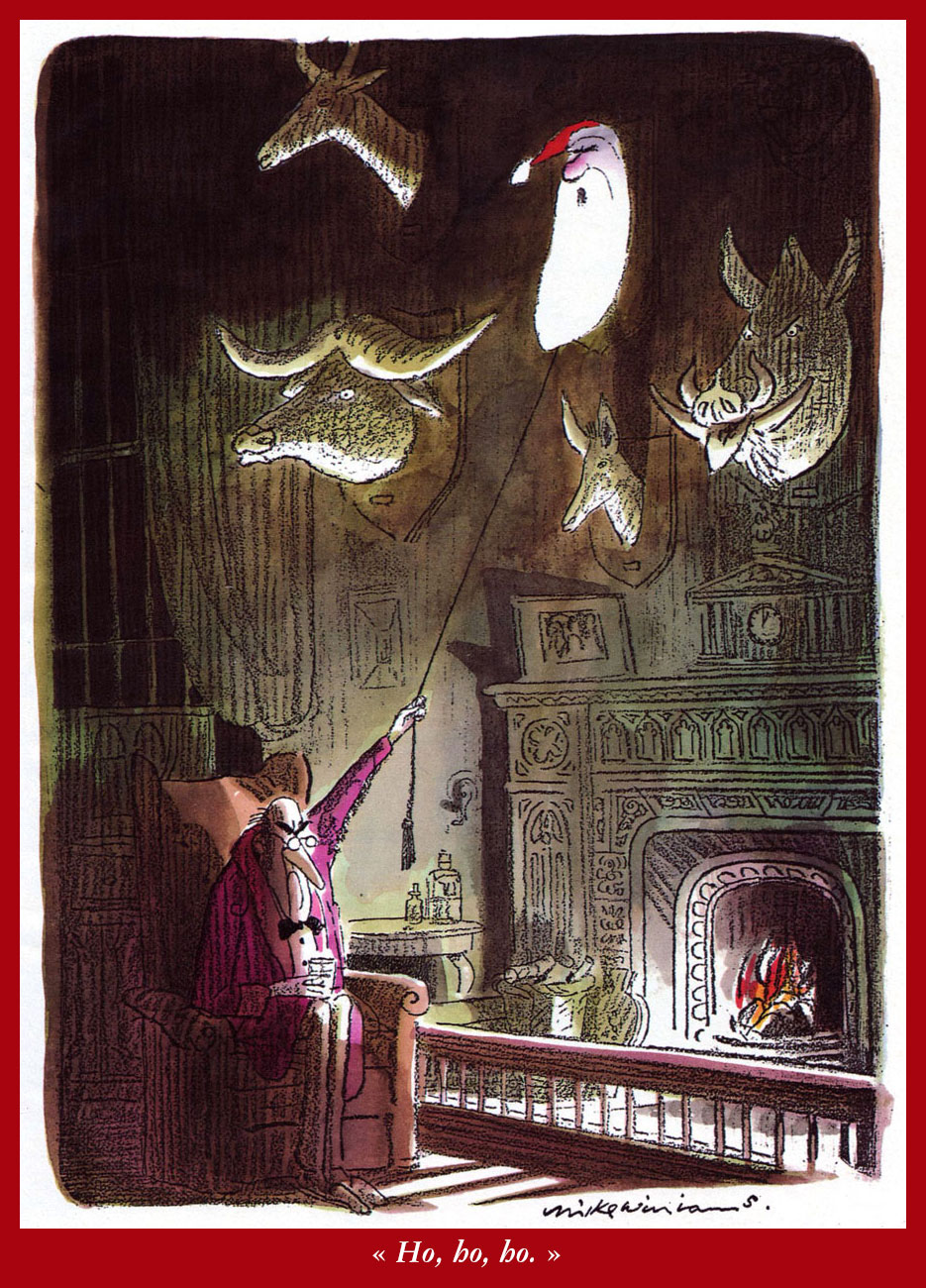
For a change of pace, here’s an unctuously cynical one from Liverpudlian stunner Mike Williams (b. 1940); from Playboy’s January, 1982 issue.

BuckBrownConcessionsA
A more colourful specimen of the lush artwork of Robert “Buck” Brown (1936 – 2007), another brilliant African-American whose Playboy work was but a single facet of his incisive, multifarious and socially-engaged œuvre.

SneydTinyTimA
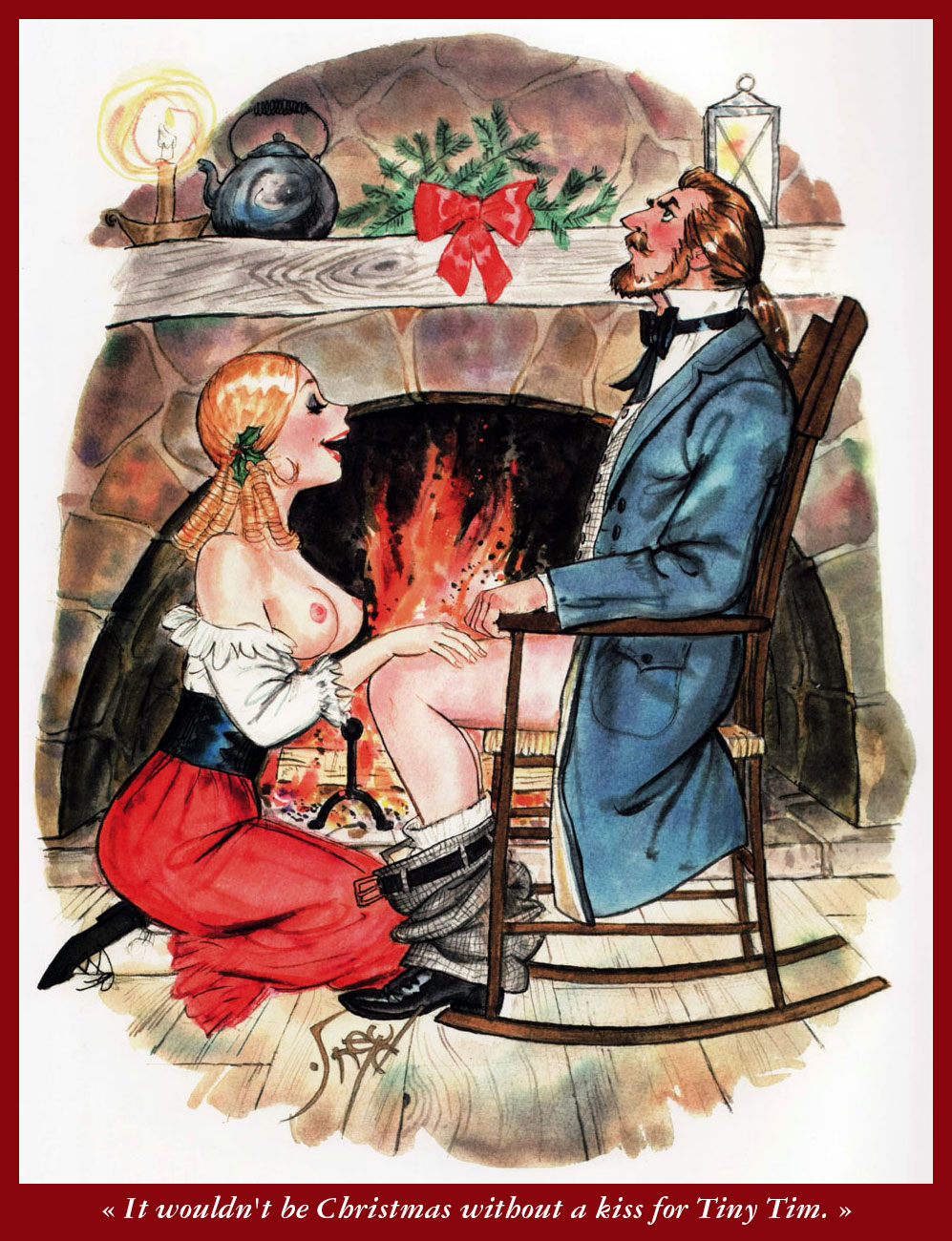
I must confess that my fellow Canadian Doug Sneyd‘s (b. 1931 in Orillia, ON, birthplace of Gordon Lightfoot and Mitch the Ferret) style isn’t really my cup of tea. But my partner ds enjoys his work, and that’s good enough for me.

GahanCloggingA
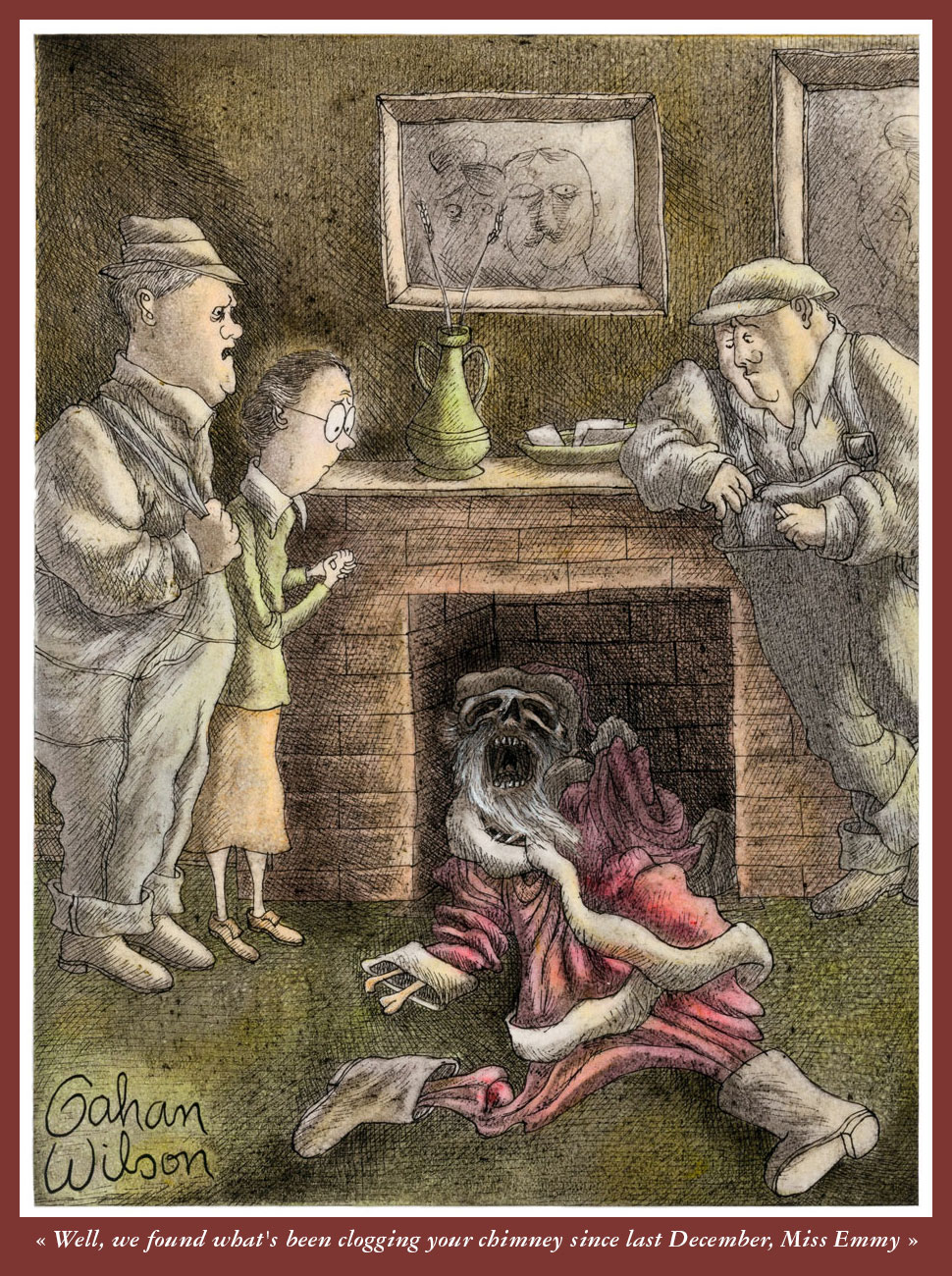
And last but not least, our dear Gahan Wilson, who just recently left us. Here’s our earlier salute to this macabre maestro. This bittersweet creation appeared in the October, 1964 Playboy.

-RG

Tippy Teen in “The Fright Before Xmas” (1967)

« … there arose such a clatter,
I sprang from my bed to see what was the matter.
Away to the window I flew like a flash,
tore open the shutters and threw up the sash. » ― Clement C. Moore, A Visit From St. Nicholas (1823)

Not too long ago, we glanced at the interesting case of Tower’s teen line, another instance of works insufficiently popular to be properly reprinted, yet still sought after by collectors and aficionados and consequently on the pricey side. And so it is within this limbo that Tippy Teen and Go-Go and Animal find themselves consigned, in the rather fine company of Sugar and Spike and Angel and the Ape. Let’s not strand them there for the duration, please.

So why do I consider Tippy Teen superior to Archie? For one thing, while there’s some underwhelming artwork to be found here and there (sorry, Doug Crane), there’s nothing dismal (no Al Hartley, no Dick Malmgren, no Gus Lemoine, no Stan Goldberg…), and the writing is generally superior, thanks to, among uncredited others, the great Jack Mendelsohn (recycling and updating his old scripts, but that’s not the end of the world).

Here’s a little seasonal piece I find quite witty and charming. The well-paced work of an anonymous scripter and my beloved Samm Schwartz, it appeared in Tippy Teen no. 18. The whole issue’s quite solid, and since it’s in the public domain, you can enjoy it right here.

SchwartzTippyXmas01ASchwartzTippyXmas02ASchwartzTippyXmas03ASchwartzTippyXmas04ASchwartzTippyXmas05ASchwartzTippyXmas06A

SchwartzTippyTeen18A
This is Tippy Teen no. 18 (March 1968, Tower). Cover artwork by Samm Schwartz.

Tippy18MonkeesPinupA
What kind of a grinch would I be if I failed to include the Monkees pin-up promised on the cover? I shudder to even entertain the notion. In the usual order, Messrs. Peter Tork, Mickey Dolenz, Davy Jones and Michael Nesmith.

-RG

Tentacle Tuesday: le mardi des tentacules, parbleu!

In my ceaseless quest for tentacles, once in a while, I return to a previous theme – in this case, the Franco-Belgian tradition of comics. To start at the beginning, visit Tentacle Tuesday, Franco-Belgian edition parts 1 and 2, and Tentacle Tuesday: Tentacules à la mode.

We start some 70-some years ago, with an issue of Bob et Bobette, a Belgian feature created by Willy Vandersteen in 1945. Well, to be more precise, the latter created Suske en Wiske — when the strip became popular in its native De Standaard (a Flemish daily newspaper), it was picked up by Tintin magazine, after Vandersteen agreed to modify it somewhat according to Hergé (who was the magazine’s artistic director) and his Ligne claire guidelines. The main characters were renamed – far from the last time that happened: in Britain, they were known as Spike and Suzy, and as Willy and Wanda in the United States.

BobetBobette-Lacitédespieuvres
Bob et Bobette no. 55: La cité des pieuvres (1947). Scripted by Jean-André Richard and illustrated by Robert Dansler, who was often known as Bob Dan. That lovely sepia paper… I can just smell it.

I’ve never read a whole album of The Extraordinary Adventures of Adèle Blanc-Sec, though I like its premise (an intrepid, independent héroïne? yes, please) and Jacques Tardi‘s art (depending; sometimes I love it, sometimes I’m indifferent, but it’s certainly good enough for purposes of following a story). Chalk it down to something I never got around to, I guess. Irritatingly, in 2010 we have been *ahem* ‘blessed’ with a movie based on this comic, directed by the ever sharp-witted Luc Besson (who royally fucked up a movie adaptation of Valérian et Laureline in 2017, so he seems to be making this into a specialty).

French-Tardi-lenoyeradeuxtetes
Le Noyé à deux têtes is the sixth volume of Les Aventures extraordinaires d’Adèle Blanc-Sec, a series by Jacques Tardi. In 1984, it was serialised in À suivre, a Franco-Belgian magazine, and collected as an album a year later (both by Casterman).

French-Tardi-lenoyeradeuxtetes-tentacules
A peek at the tentacles within.

I mentioned the comics magazine Le journal Tintin earlier – here’s a cover from its competitor, Spirou (Le journal de Spirou), published by Éditions Dupuis since 1938. The respective publishers (Raymond Leblanc for Tintin, and Charles Dupuis for Spirou) of these magazines had a gentleman’s agreement: an artist’s work could only be published in one or the other, never both. Incidentally, there was an interesting exception in the case of André Franquin, who moved his wares from Spirou to Tintin after a quarrel with its editor – and, contractually obligated to work for Tintin for five years, simultaneously continued to provide Spirou with stories.

Spirou1771BriceBoltA
Spirou no. 1771 (march 23rd, 1972), art by Puig. Brice Bolt, a feature launched in 1970, was soon abandoned after but two episodes (although to be fair, they were lengthy – the strip lasted until 1972)… from the sound of it, for being a little too modern for its time. After the publication of the first chapters, letters came in complaining that the story was too scary, the animals too monstrous, the illustration style too realistic. The “monstrous animals” included an army of giant crabs, a behemoth squid (just up our street!), colossal vampire bats, and ginormous Komodo dragons.

Valentin le vagabond was created by René Goscinny et Jean Tabary in 1962 for publication in Pilote. After 1963, Tabary carried on alone, scripting and illustrating all by his lonesome, Goscinny having his hands full with other projects. Valentin le vagabond et les hippies is the final story of this series, originally serialised in issues 709 to 719 in 1973.

Valentinlevagabond-Valentinetleshippies
Valentin le vagabond: Valentin et les hippies (Dargaud, 1974). Story and art by Jean Tabary.

ValentinHippiesA
An excerpt from Pilote no. 719 (1973). The tree is a hippie tree, as it was treated with LSD… now it’s got tentacles. Naturally.

The French are surely not immune from scatological humour. The Kaca fairy (I’ll give you three guesses for what “kaca” means in French) is a rather inept witch. She accidentally conjures up an octopus who’s a little too intent on being liked, and the rest of the comic deals with the attempts to whisk him away again.

FeeCaca-1
« Hurry up and make this monstrosity disappear! » « Yes, yes, I’m looking, but nothing works! » Panels from La fée Kaca (Humanoïdes Associés, 2007) by Florence Cestac.

FeeCaca-2
The octopus tries to convince everybody that they should allow him to stick (ha, ha) around – « for instance, I stick myself to the wall and leave you with all the room you need! ».

~ ds
Chew on This: Howard Cruse’s Bazooka Joe

« So to this my life has come: there’s meaning in a piece of gum » — Parthenon Huxley, Bazooka Joe

We recently lost another fine cartoonist in Howard Cruse (May 2, 1944 – Nov. 26, 2019), and while he’s most frequently celebrated for his pioneering work in Queer comix and his graphic novel Stuck Rubber Baby, I’m much fonder of his comparatively ‘lightweight’ humorous work. In other words, I’ll take the wacky short stories over the Ponderous Magnum Opus, thank you.

And things don’t get any lighter than Bazooka Joe, now do they?

In 1983, Howard Cruse was engaged by Topps to redesign Bazooka Joe and illustrate a new set of strips, the series’ first true update since co-creator* Wesley Morse‘s passing in 1963. Topps, figuring on more-or-less total turnover of its kiddie audience, had been rotating batches of strips every seven years, drawing on the vast hoard of unpublished strips left by Morse, and now and then hiring freelancers to pad out the lot.

CruseJoeInstruct01A
An unpublished Howard Cruse instructional comic, mid-1980s. Cruse recalled: « I always liked  this strip because it’s practically the only time I was invited to draw the character at a size large enough to allow some stylistic personality. » I added the colouring, just because.

CruseBazookaModelA
Howard Cruse Bazooka Joe model sheet, prepared for 1983 revamp.

CruseBazookaCastA
Cruse’s model sheet for the rest of the 1983-vintage cast.

CruseBazookaBrooklynA
Chameleonic cartoonist R. Sikoryak, who contributed gags to the second Cruise series, posits that « One of the pleasures of the traditional comic strip is the conciseness of words and pictures, and the Bazooka format takes this compression about as far as humanly possible. As with haiku, there is a great power in the constraints that must be respected in obeying a format. »

CruseBazooka83A
Samples of the 1983-84 vintage.

CruseBazookaPillowA
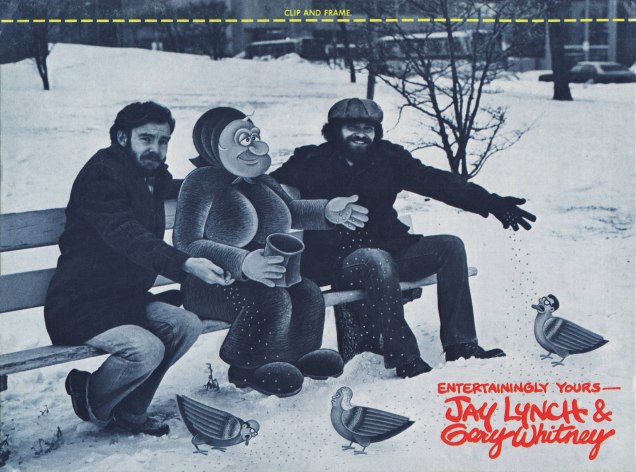
Jay Lynch explains: « Despite the brand managers and marketing companies responsible for the various revamps of Bazooka Joe over the years, and their valiant attempts to make the characters and the gags more ‘hip‘, I’ve always thought that the primary appeal of these tiny comics was their overall lameness. Back when I wrote Bazooka Joe, I’d usually start by going through turn-of-the-century joke books and rewriting the ancient quips to turn the 1908 ragtime aficionados into 1990’s heavy-metal enthusiasts… »

CruseSuggestionsA
Some thoughtful suggestions from Cruse for the 1988 crop.

CruseBazookaOriginalA
From my personal collection, original artwork supposedly from the 1983-84 batch… but something doesn’t add up. Incidentally, actual size is 3 x 3 5/8 inches.

ToppsCertificateA
The accompanying certificate of authenticity raises more questions than it answers. To wit, as Mr. Cruse elucidates: « When I was asked… to reconceive Bazooka Joe as a teenager and provide him with a new ‘gang‘, the only holdover from the earlier tykes… was Mort, the weird sidekick who wore a turtleneck pulled up to his eyes. Len [Brown] and Art Spiegelman… thought the ultra-lengthy turtleneck was a bit – in fact, was literally – over the top, though. So for my first series of strips the sweater’s collar was brought down below Mort’s chin… Apparently this change disturbed some nameless traditionalists at Topps, so when I was hired to draw a second batch of strips in 1988, the turtleneck was restored to its original position… » In that case, if my original is from the ’83-’84 series, why is Mort’s turtleneck in its traditional, and proper place?

CruseBazookaJerkA
Another certificate, this one appearing on the back of Bazooka Jerk (Garbage Pail Kids Giant Series Stickers no. 1, from 1986). Illustrated by Howard Cruse.

Then, in 1990, when the time came for another series, Topps opted to subcontract the work to a marketing company that dismissed Cruise’s work as « too goofy », according to Jay Lynch. Then Lynch, Pete Poplaski and Grass Green took up the gauntlet, which is a fascinating tale in itself… but one for another day.

If such lowly cartoon ephemera hold even the slightest sway over you, you’ll likely be very interested in Topps’ Bazooka Joe and His Gang (2013, Abrams ComicArts, edited by Charles Kochman), which proved an invaluable resource in cobbling together this post.

« Bazooka Joe has become the personification of the lowest form of humor. And this is why he’s one of the most widely known comics characters on the planet. Sure, the jokes were cornball. But that’s their appeal. » — Jay Lynch

-RG

*with Topps executive (and Golden Age comic book artist) Woody Gelman.

Tentacle Tuesday: Won’t Someone Think of the Children!?

« Make it a rule never to give a child a book you would not read yourself. » ― George Bernard Shaw

Indoctrinating children has to start early – if you want to make sure the aforementioned little ones will share your obsessions and spend their lives in a futile quest for the same peccadilloes you wasted your youth on, it’s best if you start proselytizing even before they can read. To that effect, quite a few authors of children’s comic books made sure to focus on cephalopods. I am happy to provide you with this abridged list of where to start when you need to convince some tot in your care that 1. octopuses are cool and 2. that they are entirely too intelligent and fascinating to ever be eaten.

Pages from Tomi Ungerer‘s Emile: The Helpful Octopus (first published in 1960):

EmileTheHelpfulOctopus-TomiUngerer

EmileTheHelpfulOctopus-TomiUngerer2

Pages from Octopus Escapes! (2018), written by Nathaniel Lachemeyer and illustrated by Frank W. Dormer:

OctopusEscapes--Nathaniel-Lachenmeyer2

OctopusEscapes--Nathaniel-Lachenmeyer

A page from Also an Octopus (2016), written by Maggie Tokuda-Hall and illustrated by Benji Davies:

AlsoAnOctopus

Page from Touchy the Octopus Touches Everything (2019), written by Amy Dyckman and illustrated by Alex Griffiths:

Touchy the Octopus Touches Everything

Before someone complains that this post doesn’t include any “real” comics (what kind of pedant are you, bubba?):

Dexter'sLaboratory16
Dexter’s Laboratory no. 16 (December 2000), pencilled by Genndy Tartakovsky and inked by Bill Wray.

Dexter'sLaboratory16-DeeDee'sPonyTale
Splash page from Dee-Dee’s Pony Tale, scripted by John Rozum, pencilled by John Delaney and inked by Jeff Albrecht. Did children really need to see a unicorn pony transformed into a three-headed Slavic dragon with tentacles? Well, yeah.

CartoonCartoons23
Cartoon Cartoons no. 23 (December 2003), cover by Bill Wray.

CartoonCartoons23-SunkenLeisure
Page from Sunken Leisure, scripted by Robbie Busch, pencilled by Stephen DeStefano and inked by Bill Wray.

Finally, as a treat for the adults in the audience, I’ll end on an uplifting note (quite necessary after all that carnage by Dexter et al.): a cartoon by Jüsp (who ist tot, which is to say is dead – he died in 2002), published in Die Woche, an German illustrated weekly newspaper published from 1898 to 1944.

OctopusHandshakeA

~ ds