« Take ’em from behind — best way to kill those slimy aliens! »
This Tentacle Tuesday takes us on a little trip to beautiful ol’ Albion, the land of Tharg the Mighty and « Harlem Heroes, an all-black sports team who played a futuristic airborne blend of basketball and football, obviously inspired by the movie Rollerball; Mach-1, a Six Million Dollar Man-style bionic hero; a revamped version of classic British stiff-upper-lip space hero Dan Dare; Flesh, in which time-travelling cowboys hunted dinosaurs to feed an overpopulated future society; and Invasion!, about the occupation of Britain by warlike Volgans from somewhere to the east, which played nicely into the growing fears of conflict with the Soviet Union. » (source: 40 years of 2000AD: looking back on the future of comic books) This may not sound like the Britain we know and love, but frankly it might be an improvement on today’s version of it.
The aforementioned Dan Dare got a Tentacle Tuesday all to himself, and I’ve used a couple of 2000 AD covers before, but these five are new to Who’s Out There (I don’t recycle material, other than in cases of dire emergency) – and watch out for the bonus inside story!
2000 AD prog no. 24 (August 1977), cover by Kevin O’Neill.2000 AD programme no. 36 (October 1977), cover by Lopez.2000 AD prog no. 255 (March 1982), cover by Ian Gibson.Judge Dredd has quite a hard time getting rid of overly clingy admirers… 2000 AD programme no. 310 (April 1983), cover drawn by Mike McMahon.2000 AD prog no. 1814 (January 2013), cover by Simon Davis. Retief, is that you? Click here to find more about what this cover is an homage to and what the original art looked like.
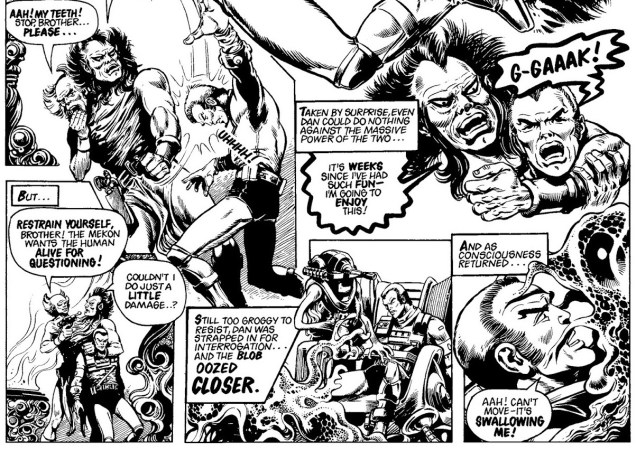
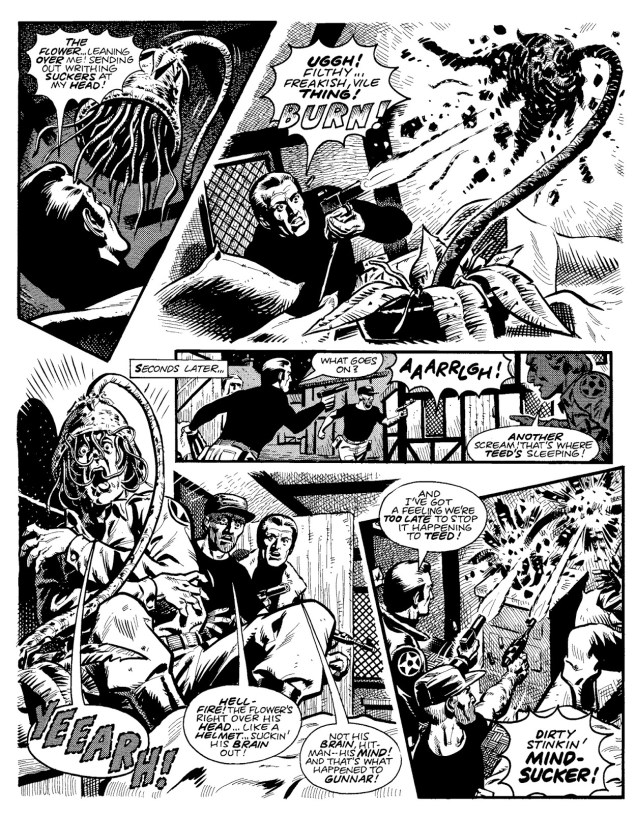
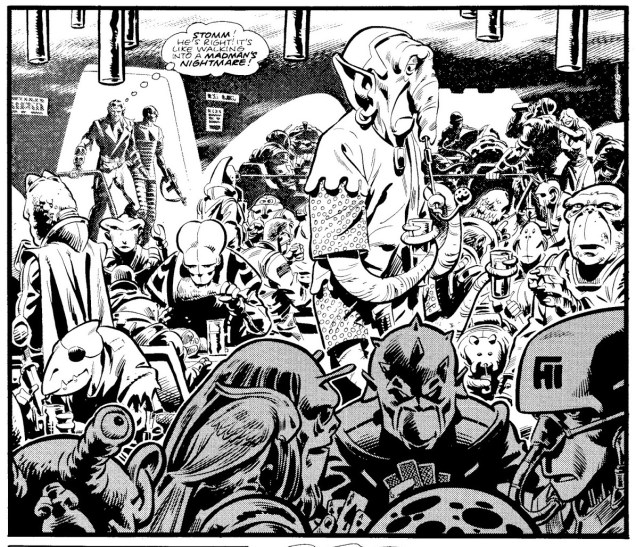
The following is from the story Food for Thought, scripted by Steve Moore and illustrated by Horacio Lalia, originally published in 2000 AD prog no. 26 (August 1977).
£ ds
* « You creeps must think I sailed through space on a synthi-biscuit! » (Judge Dredd in The Judge Child, Part 22 – Blind Hate!, printed in 2000 AD prog no. 177, September 1980.)
Due to unforeseen computer troubles (are those ever anticipated?), the program I was planning for today is postponed, as I don’t quite have access to the needed files. It’s Robin Bougie (Canadian “artist, writer, publisher and general sleaze visionary“) to the rescue! His film (maga)zine Cinema Sewer boasts a panoply of fun covers by a sturdy cadre of illustrators. To this I might add that this naughty publication doesn’t nearly receive all the lovin’ it deserves, so I’m all in favour of (well-earned) hype.
In case you’ve never heard of it, here’s a review by Richelle Charkot of a random issue (no. 28, if you should ask), which is representative of the whole series in general:
« Robin Bougie does it again with another enthralling and disgusting chapter in the Cinema Sewer series. This set of fascinating essays on cult films, genre films, vintage porn and their attendant subcultures is meticulously assembled as usual, with hand-written text and amazingly sultry illustrations largely written, drawn, laid out and published by Bougie himself. Cinema Sewer is so readable that it could potentially be quite easy to burn through, but thanks to Bougie’s wealth of dirty knowledge, there is plenty to *ahem* chew on, so you won’t destroy the issue too quickly. The zine covers everything from the life of pornographic photographer Johnny Castano (of which Bougie describes his work as “an artform”), to Lili Marlene, aka ‘The Forgotten Anal Princess’, with dozens and dozens of alt-cinema reviews to peruse through. As with its previous installments, Cinema Sewer is definitely an acquired taste, and many may be offended by Bougie’s tendency to be incredibly crass and fast and loose with colloquial genital terms that might unsettle some readers. But for those who are not weak of heart and possess a desire to learn, let this series be your quintessential guide to the underbelly of film. »
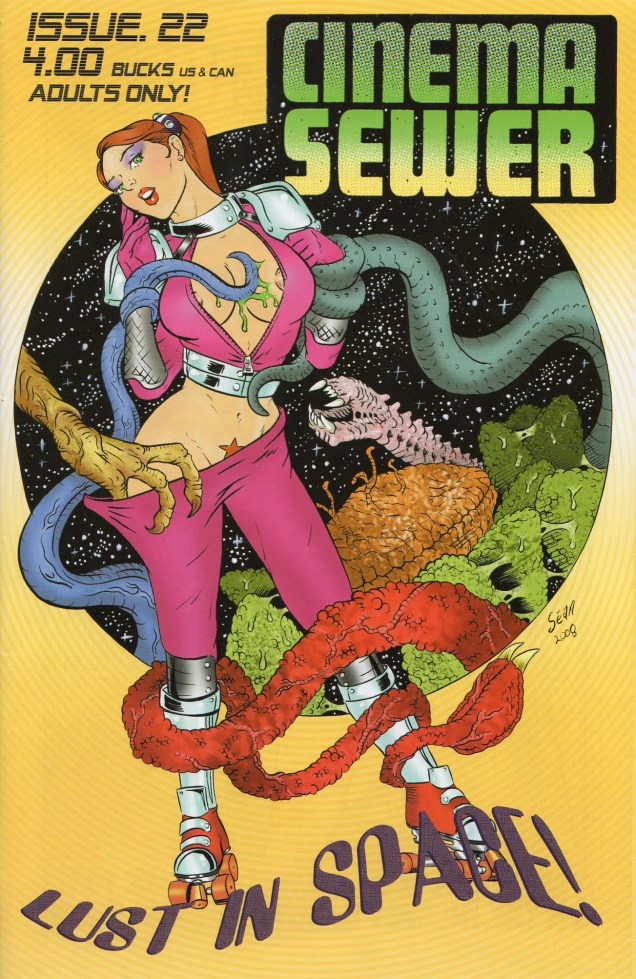
Cinema Sewer no. 16 (2005). Cover by Danny Hellman, who not only has a peculiar sense of humour (it’s a compliment, Danny!), but is also an excellent tour guide through the wilds of Brooklyn.Cinema Sewer no. 17 (2005), cover by Mike Hoffman. This scene raises far more questions than could possibly be answered.Cinema Sewer no. 22 (2009), with a cover by Sean Donahue. Her expression seems to be saying “ah, come on, you guys…” There’s some mysterious link between roller skates and tentacles – just take a gander at John Pound’s cover for Commies from Mars no. 3.Cinema Sewer no. 26 (2013), cover by Canadian comics artist James Stokoe. I find his work (and colours) to be a bit hit or miss, but I loved his (currently unfinished) Orc Stain and quite enjoyed Wonton Soup.Cinema Sewer no. 31 (2018). Cover by William Skaar, who clearly entertains a certain fondness for both tentacles and big-chested girls (just take a peek at his website or his Kickstarter project). Well, don’t we all? 😉
Greetings! I am on vacation this week – on vacation from work, that is, but never from tentacles! Stowed away on a tropical island (with a WiFi connection, ça va de soi), hoping to glimpse an octopus going about his business in the ocean, enjoying the tropical foliage… Speaking of the latter, some of the plants that grow around here are distinctly tentacular in nature.
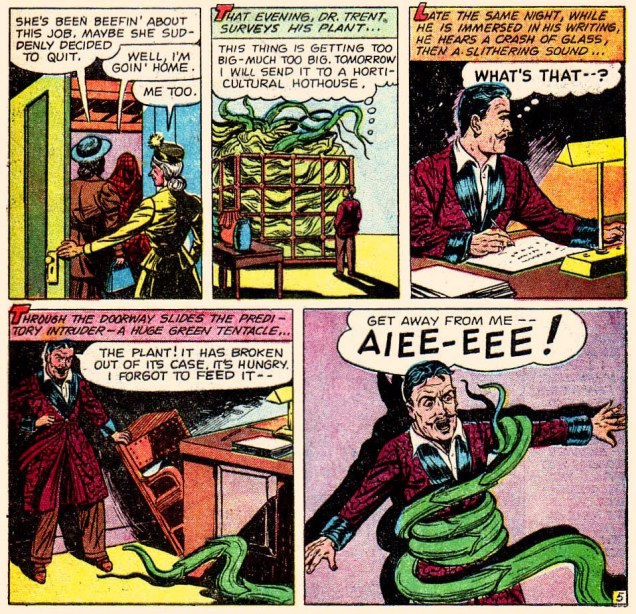
So you see, I really had very little choice in regards to the topic of today’s Tentacle Tuesday installment! I’ve decided to stick to the 40s and 50s, as there are really many more cannibal plants out there than one could possibly shake a stick at.
This installment of Red Comet is illustrated by Joe Doolin, and published in Planet Comics no. 14 (September 1941). Frankly, these things seem a little too bulky to carry about with you. Just imagine if somebody tried to walk around carrying a triffid.I believe the Red Comet had the ability to explode things with his mind, but clearly there were some restrictions.A page from an installment of Gale Allen and the Girl Squadron, illustrated by Fran Hopper. Gasp, a woman comics artist! A rare thing indeed, back in the Golden Age. Published in Planet Comics no. 28 (January 1944). Gale Allen ends up in this very position quite often, though tentacles aren’t always involved.
Incidentally, may I just point out that the Girl Squadron’s costumes (as they go on their intergalactic, dangerous missions) wouldn’t be out of place in a modern music video? Fran Hopper could draw cute girls with no trouble at all – and she also seemed aware that breasts are affected by gravity (but just a little bit, one wouldn’t want to be *too* realistic).
The ruler of Carnivoria not only has poor taste in titles (most lands are governed by meat-eaters of one kind or another – in that sense, Canada could be called Carnivoria with the same degree of accuracy), but also poor taste in clothing: is that goofy hat supposed to be regal?
For a chuckle, visit the post about Gale Allen And Her Girl Squadron on the Stupid Comics blog, featuring fun images like this one:
From the usual team: written by Douglas McKee and illustrated by Fran Hopper.
Eye candy for men *and* women readers! 😉
Back to tentacles… and on to Fred Guardineer, who also drew cuties of both sexes:
The Harp of Death! is illustrated by Fred Guardineer. Printed in Manthunt no. 7 (April 1948).Evil Guy has the body of an eagle (with hands and feet, though), and raises deadly cannibal plants that respond to whistling. Does that seem a tad… random to you?A page from Appetite for Death, drawn by Henry Kiefer. Published in Beware no. 12 (November 1954).There’s something distinctly wrong with the guy’s anatomy.
Today’s installment of Tentacle Tuesday provides us with another healthy dose of tentacles of a vegetal nature. With my co-admin RG’s blessing, I decided to be a little unorthodox and instead of my usual piecemeal approach, share one single story.
I must admit to having no rapport whatsoever with Star Trek – I did not watch the show as a child (or as an adult), and haven’t even managed to pick up characters, plot lines or cultural references from the surrounding atmosphere, aside from the stuff *everybody* knows.
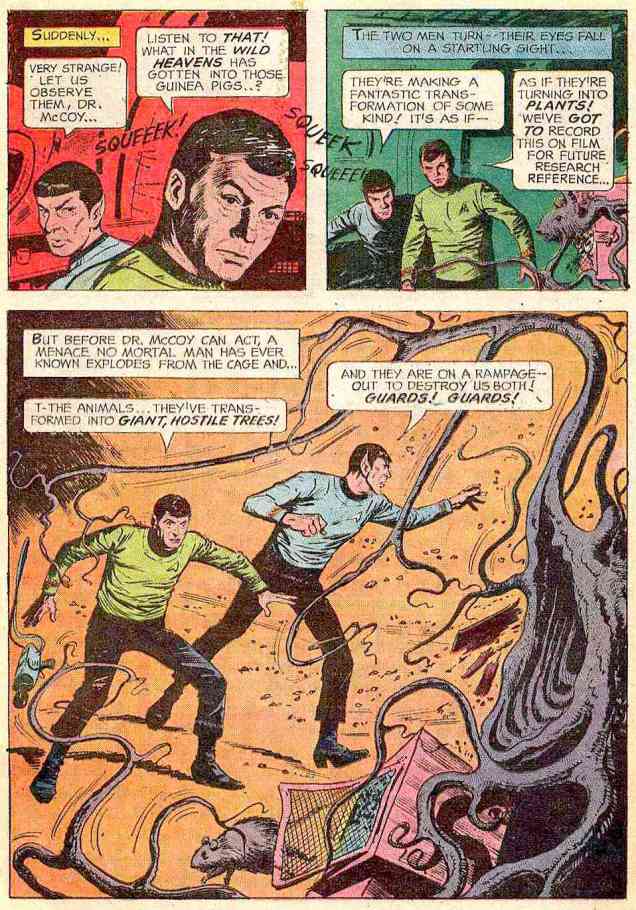
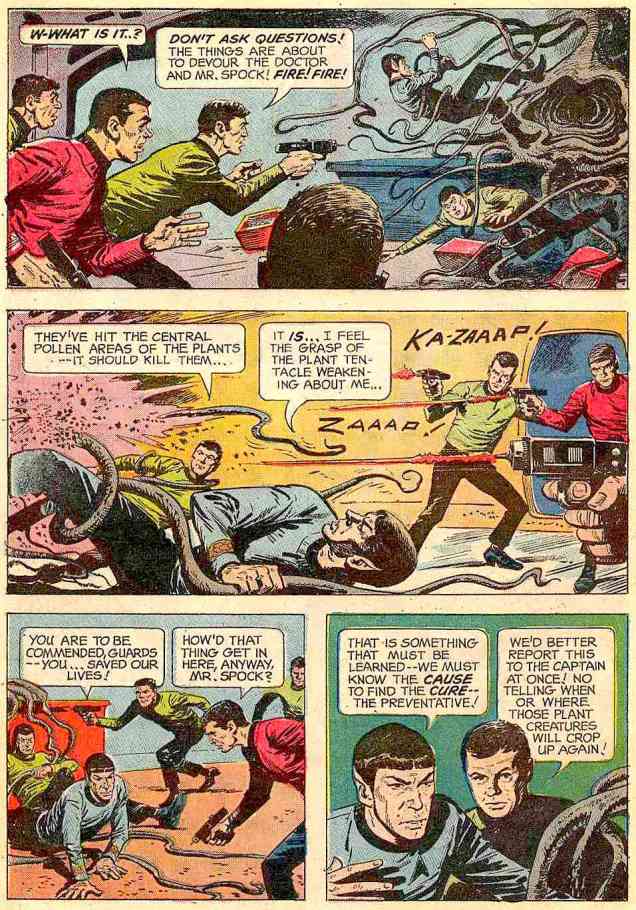
But The Planet of No Return (published in Star Trek no. 1 (October 1967, Gold Key), scripted by Dick Wood and illustrated by Nevio Zeccara) is a delight for any keen child who’s ever been mesmerized by the notion of a carnivorous plant and has carried that love through the years into adulthood. I’ll hold my hand up there! It’s also right in the sweet spot of a Venn diagram, the riveting intersection of “interested in Venus flytrap plants” and “fascinated with tentacles”. I’m not featuring the full story (you can read it here), preferring to tantalize my audience with the many tentacle-laden panels of grabby, aggressive human-devouring plants.
Incidentally, “cannibal plant” is a misnomer (shame on you, Pavel Chekov!) – cannibals involve individuals consuming individuals of the same species.
It all starts with some strange plant spores sucked in through the ship’s ventilation system while it’s drifting next to an unexplored planet…
The ship gets teleported to the planet to pursue their original exploration mission as planned… and get almost eaten by a tentacled “cannibal” (once again, not actually a cannibal) plant. A “giant plant tree”, strangely mobile, saves them from this worse-than-death fate… and turns out to have been Hunt, one of their teammates transformed into plant life by spores. No, I don’t know who Hunt is, either – he’s certainly not on the official Star Trek character list, introduced seemingly to be promptly killed after performing his heroic deed.
Well, okay, if the plant tried to eat a tree, maybe it is, technically, a cannibal.
The now four-people team (the fifth one, Hunt the tree, dies after his epic battle with the Cannibal Plant) continue further into the wilderness… and stumble across a village of sentient plants, who don’t take kindly to intruders. Geez, can you blame them?
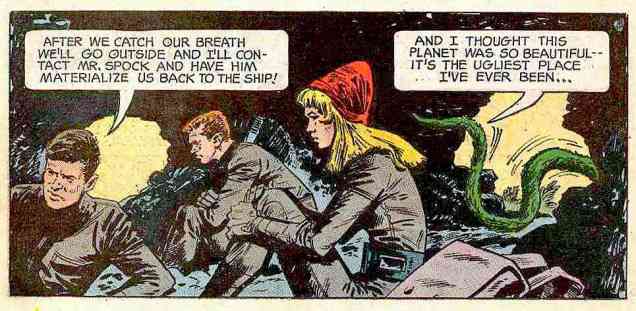
After shooting at (and presumably maiming) various denizens of the plant village, the humans retreat to a cave and conclude that this planet is ugly. Sentient plant life is not amazing enough for them, apparently. I suppose being part of Star Trek makes one really blasé about such things.
Janice Rand has it coming for being annoying and whiny…
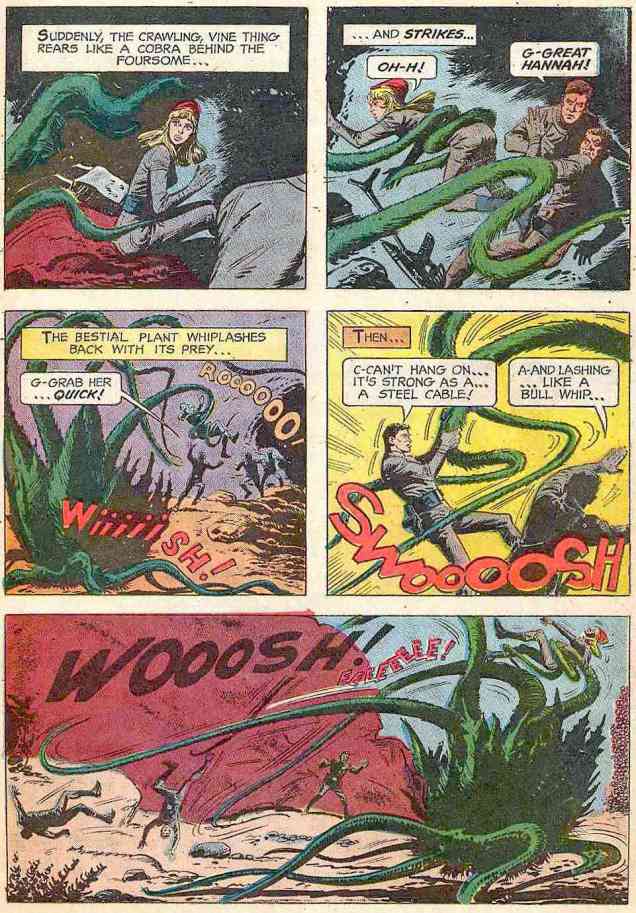
At this point, we’re more or less done with tentacles, but I can’t leave you on this cliffhanger (especially if you don’t have some time to waste reading a comic of questionable taste).
Here’s how it ends:
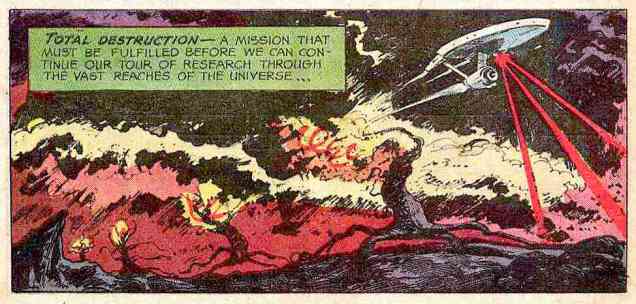
What does this “bestial plant” want with Janice? It wants to put her into a cattle pen, of course! Aiming to rescue her from its clutches, our intrepid explorers break into the pen, and, observing the landscape, conclude that the plants are raising dinosaur-like creatures who consume vegetable-type plants. «The lower plant life on their social scale are used as fodder… food for the beast creatures! Vegetable food!» Oh, and «The vegetables are alive – they’re making sounds also!» So sentient plants are farming animals whom they feed on other sentient plants. (At this point, I was muttering “what is wrong with this comic?”) It turns out that the superior plants eat the animals, who eat the inferior plants, and Janice is now one of the cattle, about to be sent into the giant trees-cum-slaughter-houses to be transformed into food. During the climax of the story, the slaughterhouse trees are blown to smithereens by Mister Spock and his laser beam destruct ray (it’s automatic, it’s systematic, it’s hydromatic), and everybody is teleported back into the relative safety of the ship. The surface of the planet (a.k.a. “hideous little globe”) is then obliterated by laser beams – just in case.
So how come only Hunt got transformed into a tree? Are we to assume that the other members of the team are immune?
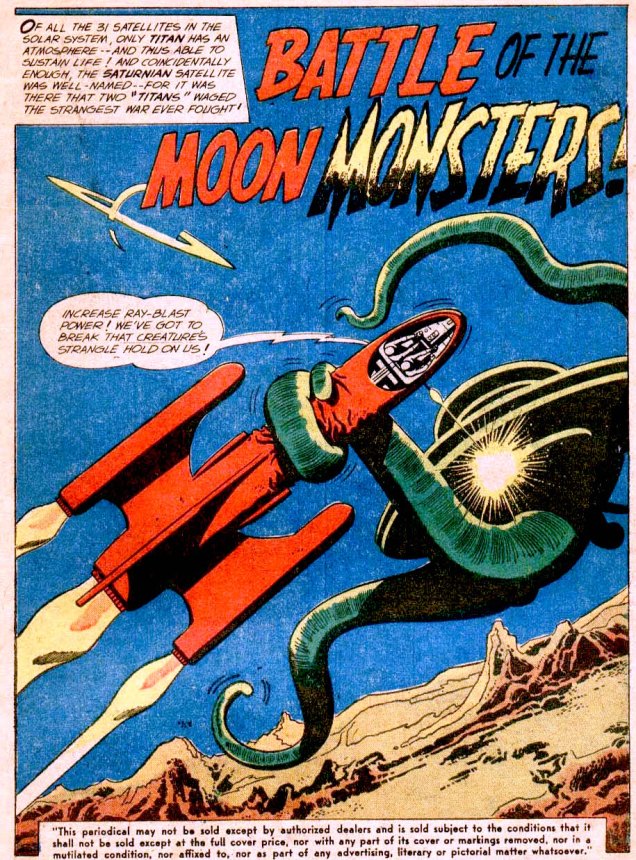
I think the most disappointing scientific discovery of recent years is that there appears to be no octopuses on the moon. Not one teensy-weensy tentacle was spotted by the lunar rovers (that we dispatched to the Moon for that very purpose, of course). But comics had led us to expect otherwise!
Mystery in Space no. 51 (May 1959), cover by Gil Kane.
The inside offers us even more tentacles:
Battle of the Moon Monsters! was scripted by Gardner Fox, pencilled by Carmine Infantino and inked by Joe Giella.
In the end, our protagonists realize that the tentacled monster is actually a spaceship, and one manned by humans, at that… after which both parties have a good laugh about having almost annihilated one another. A peculiar sense of humour, those astronauts.
A bit of comic relief…
Panels from the one-pager Outer Spacewith art by Bob White, printed in Archie’s Madhouse no. 21 (September 1962)
And back to our scheduled program of lethal, tentacle-sprouting monsters that attack the moment anyone sets foot on the moon.
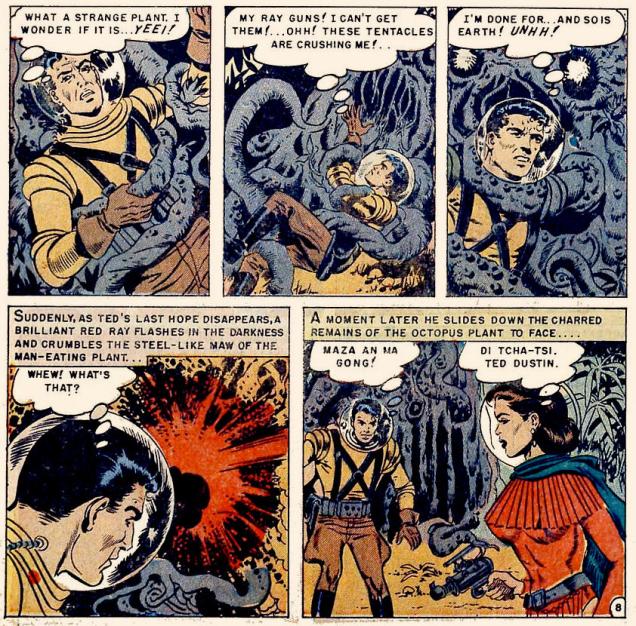
« Traveling at an incredible speed, the rocket reaches the moon in twenty three hours and lands in the gigantic crater… » And what is waiting for our hero, freshly stepped from his rocket? Funny you should ask… Page from Rocket to the Moon (1951 one-shot, Avon) scripted by Walter Gibson and illustrated by Joe Orlando.
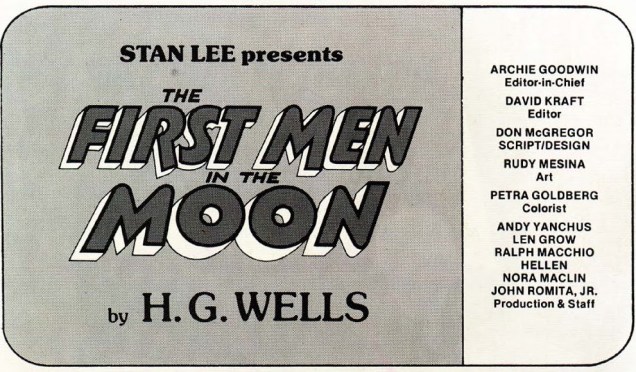
Here’s a good instance of the good folks at Marvel getting quite confused. The First Men in the Moon, published in 1901, was written by H. G. Wells. From the Earth to the Moon was written in 1865 by Jules Verne. Which one is this supposed to be an adaptation of, then? I can confirm that the vaguely ant-like creatures with tentacles are H. G. Wells’ creation. His Selenites are described as following: « They are vaguely similar to quasi-humanoid ants, about five feet tall, with a light physical constitution enclosed in an exoskeleton from which slender jointed limbs and whip-like tentacles protrude. »
Marvel Classics Comics no. 31 (1978), cover by Alan Weiss.
However, the first page of this comic informs us that…
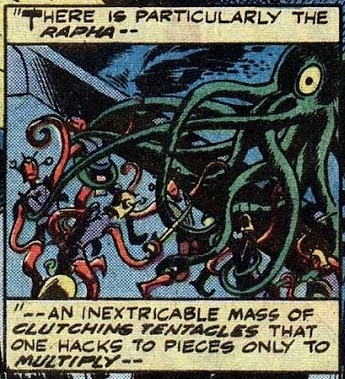
So I guess whoever laid out the cover screwed up. The insides, scripted by Don McGregor and drawn by Rudy Mesina, are considerably better drawn, and an unqualified tentacular treat.
I think the artist just wanted to draw tentacles, and this post is clearly not the place where he is likely to be judged for that little peccadillo.
Did this adaptation succeed in being faithful to and respectful of Wells’ influential novel? Well, not really, although an honest attempt was made. But I found that it focused far too much on the fight scenes, and left out quite a few complex nuances as well as skewing the philosophical underpinnings of The First Men in the Moon. That being said, if you like tentacles, I heartily recommend reading this issue. I cringe at the very idea of recommending something from the Marvel Classics line, but honestly must prevail. Really, it’s good fun. Take a look —
Did the artist go into tentacle overdrive? Oh boy, did he ever!
A favourite trope of tentacular obsession in comics is populating stories with monsters boasting exceptionally long arms (sometimes more than one pair) that they can wind around stuff with ease. In other words, monsters with tentacle forelimbs. You’d have to abstain from comics altogether to never encounter that of which I speak (or stick to slice-of-life comics, I guess). A little demonstration is in order.
Here’s a trick question: what kind of being lives on planet Octo? Duh: Octo-men! The following Flip Falcon story, illustrated by Don Rico (and not “Orville Wells”, despite claims to the contrary), was printed in Fantastic Comics no. 17 (April 1941).
Interesting that “dog” is used as a slur even on planet Octo, despite there clearly being no canines around.Nasty little brutes, aren’t they?
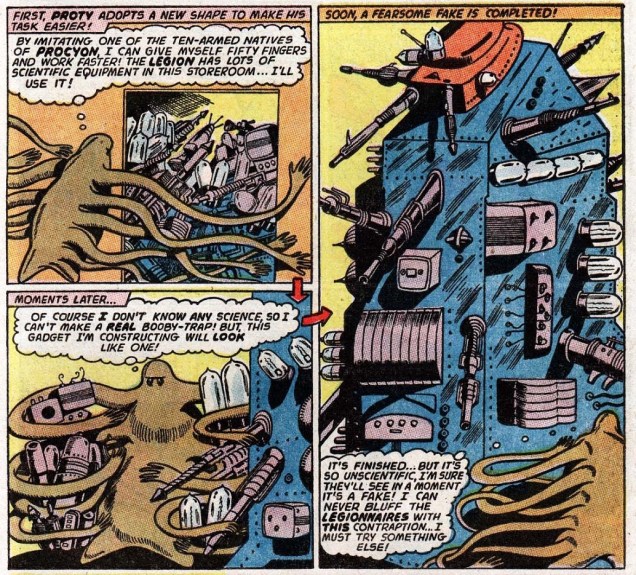
The Super-Tests of the Super-Pets! (scripted by Edmond Hamilton, penciled by John Forte and inked by Sheldon Moldoff) is every bit as goofy as it sounds. I actually enjoyed reading it, much to my own amazement. Anyway, while Proty II (Chameleon Boy’s pet) transforms into quite a few creatures to pass the super-test, he clearly favours tentacular forms (and who could blame him?) This was published in Adventure Comics no. 322 (July 1964).
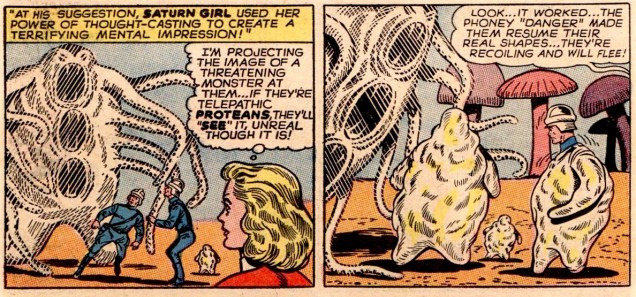
Speaking of Proty II and ectoplasm, a dozen issues later, the Legion decides to visit his home planet, which is just full of these jello-marshmallow doughboys, Protean citizens all. Part I: The Unknown Legionnaire and Part II: The Secret of Unknown Boy! (both parts scripted by Edmond Hamilton, penciled by John Forte and inked by Sheldon Moldoff) were published in Adventure Comics no. 334 (July 1965).
To terrify Proteans, whose appendages are borderline tentacles, Saturn Girl decides to conjure up a… monster with tentacles.In case you didn’t believe me that Proteans have “tentacles”.The shape-shifting Proteans turn into more streamlined versions of themselves, with more pronounced tentacles. I swear, everyone is obsessed.
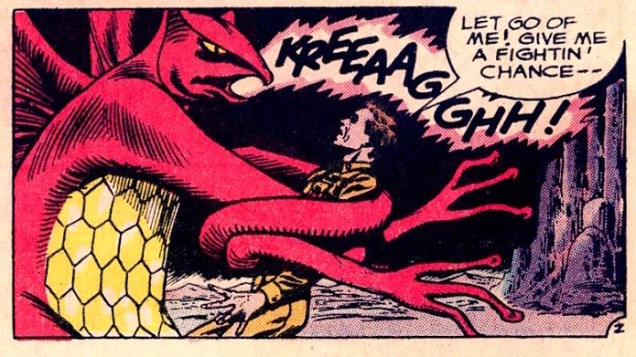
Next, I’d like to regale you with a fight scene illustrated by Murphy Anderson (yum!): Scourge of the Human Race!, scripted by Gardner Fox and published in Hawkman no. 15 (August-September 1966).
Isn’t it a lovely last panel?
If I Can’t Be Clark Kent… Nobody Can!, published in Action Comics no. 524 (October 1981), scripted by Martin Pasko, penciled by Curt Swan and inked by Frank Chiaramonte, offers us a nice helping of tentacles.
If I should see an octopus Lift its arms out of the sea Or see its shadow rising up Cross the rooftops above the streets I’d follow those dancing limbs To the spinning edge of the sky Where all the boats fall off the world Into the octopus’s eye
« You know, the dog food that Billy Jack loves! » — The Firesign Theatre
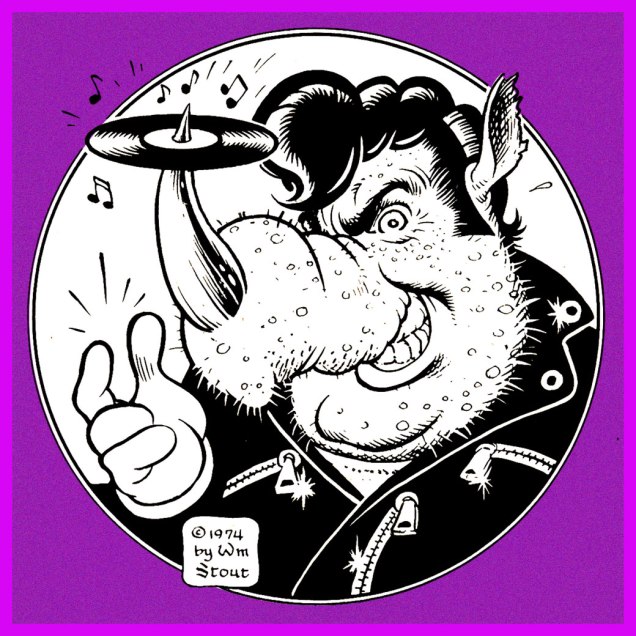
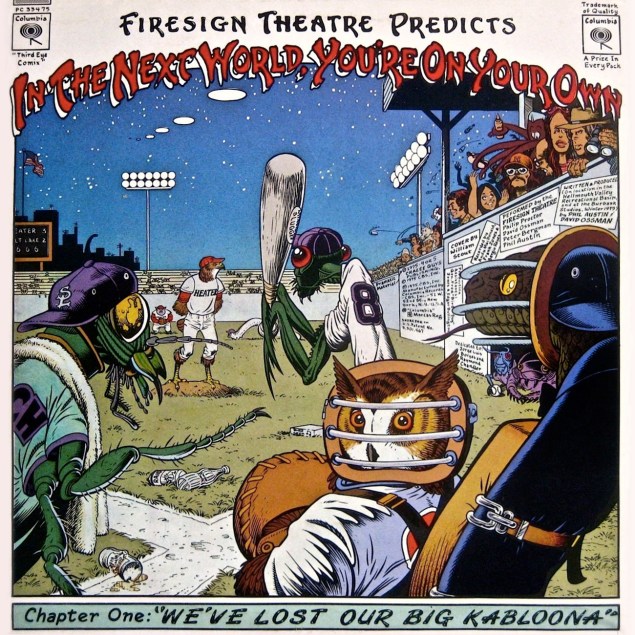
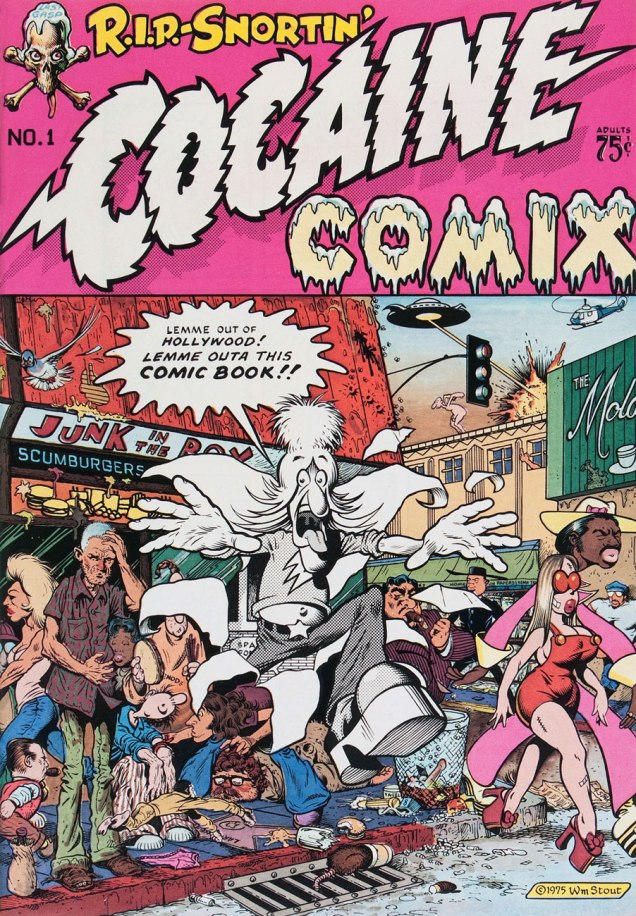
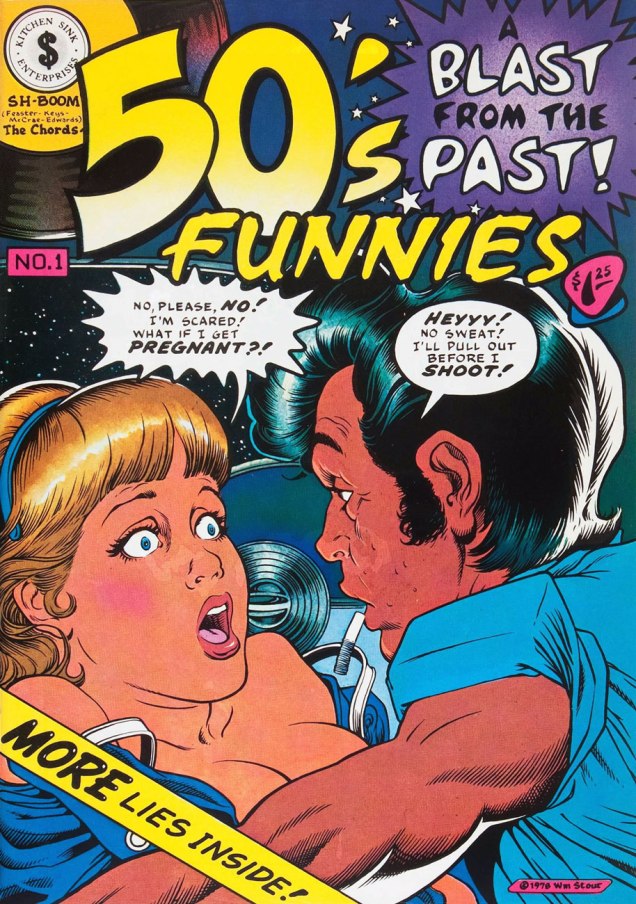
Ah, September the 18th. Today’s the birthday of the staggeringly accomplished William Stout (born in 1949), master of ancient reptiles, bootleg record covers, friend of The Firesign Theatre, former Russ Manning assistant (none but the best would do!), and I’ll spare you the illustrious details of his career in cinema. Still, let’s look around a bit, shall we?
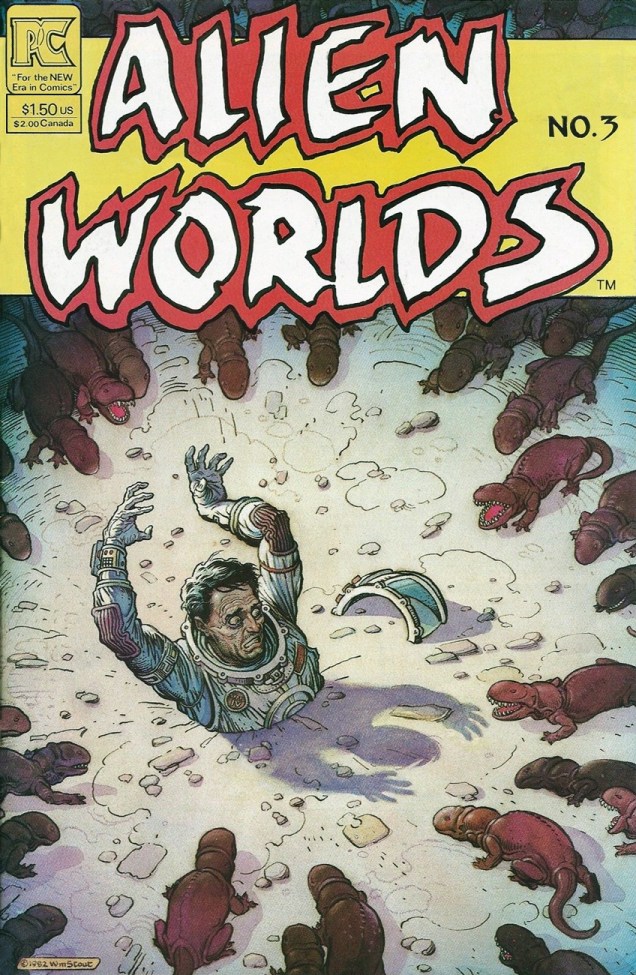
Here’s an unforgettable cover from Alien Worlds no. 3 (July, 1983, Pacific Comics). This scene gave me nightmares, and still raises a shudder. These critters look like a hybrid of a platypus and a piranha. Happy landings!Stout’s wonderful original logo for Rhino Records, circa 1974.
Speaking of ’74, isn’t that rhino a dead ringer for Swan’s oleaginous right-hand man, Philbin, from Phantom of the Paradise?
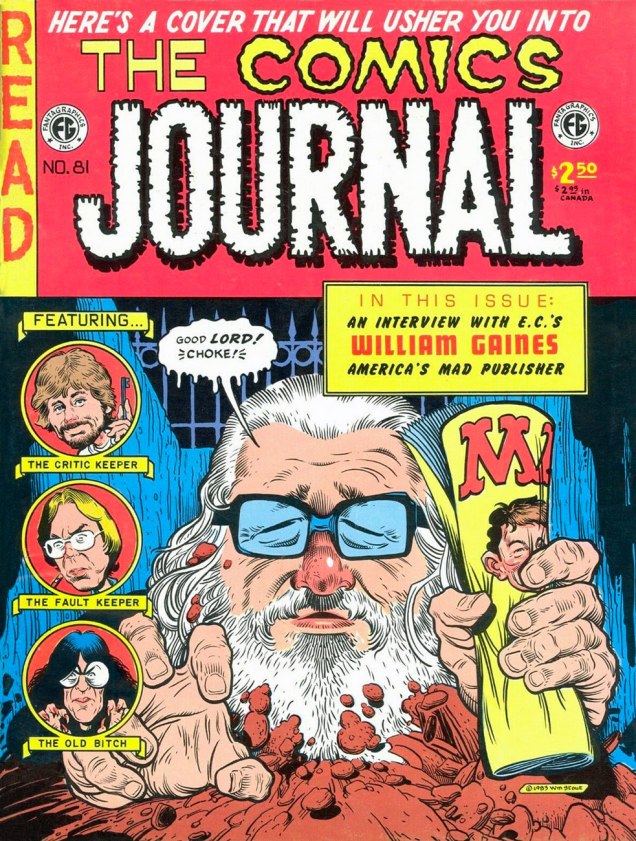
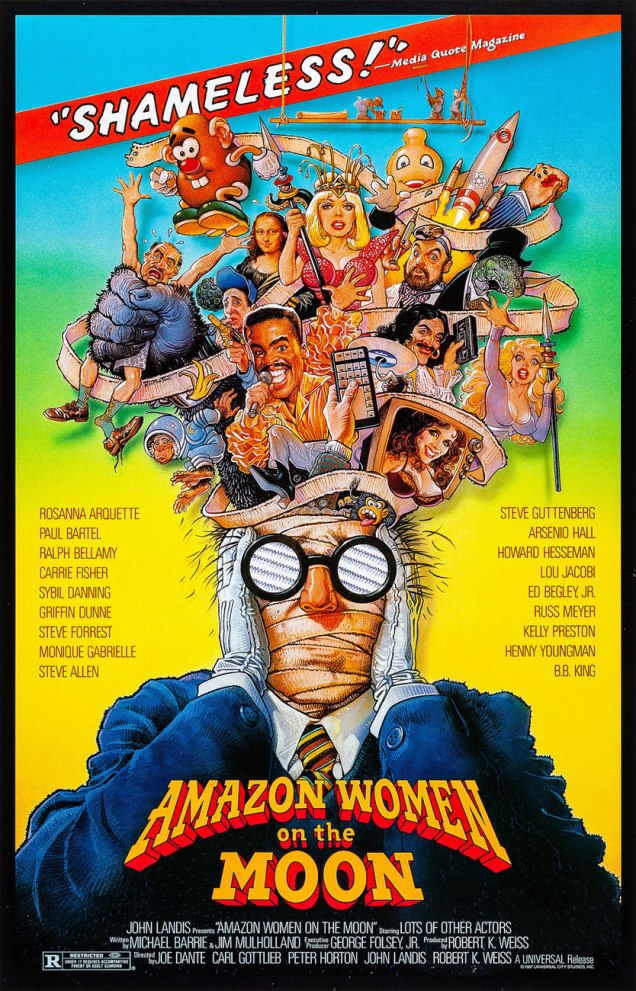
This is the back cover (the recto is equally sumptuous) for The Firesign Theatre‘s 1975 opus, In the Next World, You’re On Your Own, featuring a pair of classic sidelong suites, Police StreetandWe’ve Lost Our Big Kabloona.A clutch of underground classics? Sure. Here’s Cocaine Comix no. 1 (Feb. 1976, Last Gasp).Another number one (with a bullet, of course): 50’s Funnies no. 1 (1980, Kitchen Sink). More lies inside!A favourite page from Stout’s masterpiece (or certainly his great labour of love, at the very least): The Dinosaurs: A Fantastic New View of a Lost Era (1981, edited by Byron Preiss). This piece (the first he drew for the book) is entitled Hot Weather. « After lifting his head for air, he drank more and then wallowed his whole length and breadth into the ooze, vocalizing for the first time that day, and loudly. »Say hello to friendly Ed Gein. Weird Trips no. 2 (1978, Kitchen Sink). Please note the sinisterly customized Kitchen Sink Enterprises logo, Wrightson–brand coffee, and EC Comics narrator The Old Witch impishly peeking from a lower-right shelf. And yes, can’t go disemboweling your fellow man and woman without a copy of Gray’s Anatomy. Preparation is everything!Well, there never was any doubt that Mr. Stout was an EC Comics überfan. The Comics Journal no. 81 (May, 1983, Fantagraphics).I did bring up his Hollywood work, so here’s a sample. I wasn’t going to go with his the far-too-familiar Rock ‘n’ Roll High School poster… you all know it already, so where’s the fun in that? Of course, Joe Dante’s Amazon Women on the Moon again (1987) raises the eternal question: « Who made Steve Guttenberg a Star? »
And that’s Bill Stout for you: stunningly versatile, but always himself. Could any artist strive for more?
Sometimes I stumble upon a comic with a fight-to-the-death scene in which something-or-other- with-tentacles plays the role of a lethal enemy for our hero – but upon closer inspection, in turns out that the ferocious creature is… gosh-darned cute. I mean, how can you kill anything that has adorable whiskers, or tufted eyebrows like Oscar the Grouch?
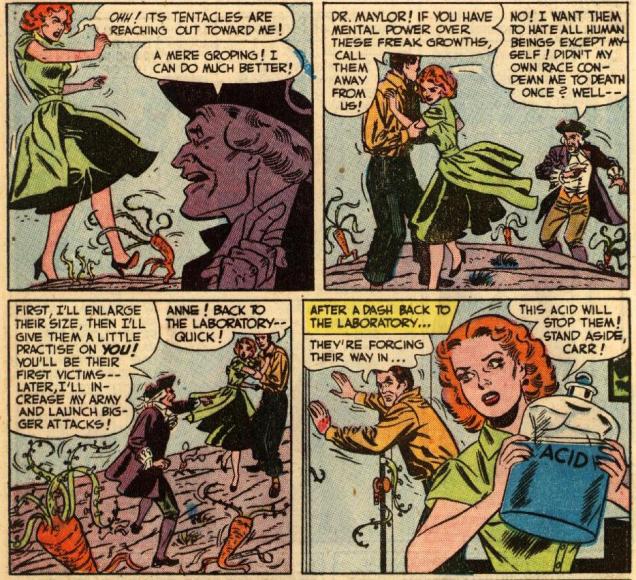
When your attackers are carrots with tentacles, and they really get on your nerves (although I think Ann is safer with them than with Dr. Maylor), I’d suggest throwing them into a nice big pot of soup, maybe… but if you please, do consider abstaining from flinging acid at them.
I do believe that prehensile vegetables fit into the category of “cute” – just look at their precious little root-legs! Page from Heroes Out of Time!, scripted by Manly Wade Wellman (hey, cool!), with some very stylish art by Bob Oksner on pencils and Bernard Sachs on inks, printed in Mystery in Space no. 3 (August-September 1951).
While we’re on that topic: things get delightfully wacky and madcap (not much) later in the story. Namely, Napoleon Bonaparte and Benjamin Franklin are summoned for help against the tentacled carrot-horde.
The Flaming Carrot would not be pleased by this massacre. If only to admire the art, you can read Heroes Out of Time!here.
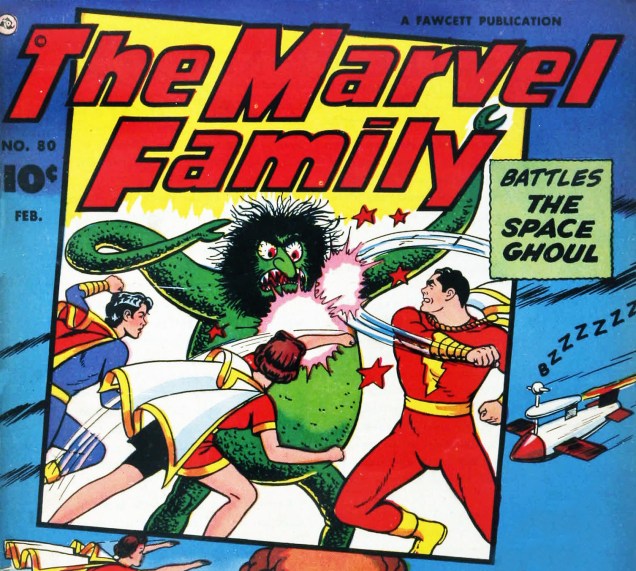
Thank you kindly for suppressing your urge to sock the creature sporting a unibrow and bloodshot eyes worthy of Christopher Lee; it’s also not his fault he got lumbered with such a shaggy wig.
Detail from the cover of The Marvel Family no. 80 (February 1953), pencils by C. C. Beck and inks by Pete Costanza.
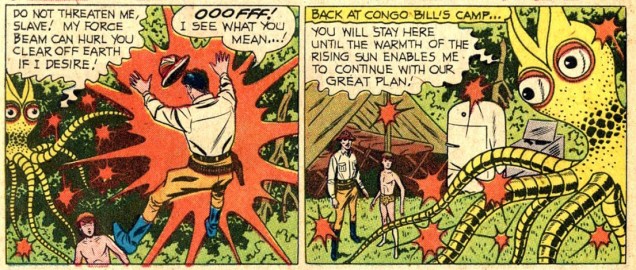
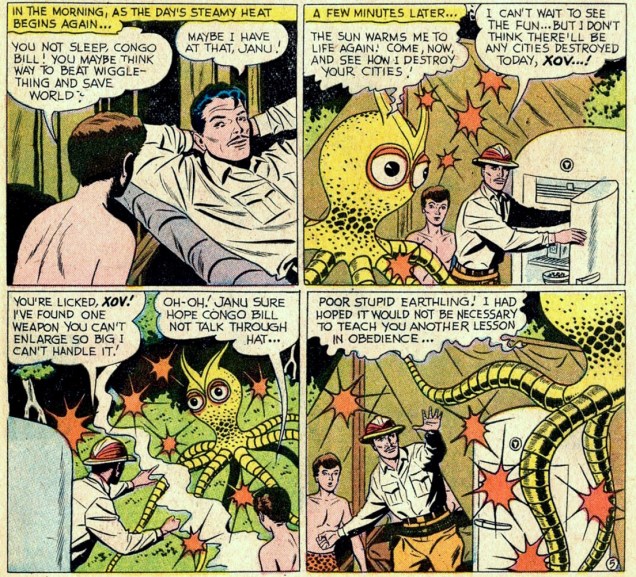
Have the goodness to think twice before pitching lethal ice cubes at an owl, even if it somehow grows metal tentacles and threatens to make mince-meat of humanity, because owls are the very cutest.
Panels from The Man-Ape Skin Diver!, scripted by Robert Bernstein and drawn by Howard Sherman, published in Action Comics no. 257 (October 1959).“Wiggle-thing”? Excuse me?
Pray, don’t kill anything that looks like it’s wearing a dragon wearing a really bad disguise, including a moustache that looks like a pile of hay.
A panel from Fate is the Killer (a preview of a Masters of the Universe story), scripted by Paul Kupperberg, pencilled by Curt Swan and inked by Dave Hunt, published as a promotional bonus in several DC titles cover-dated November, 1982.
If you would be so good as to spare the creature that looks like a mashup of a seal and a mole, especially if it gazes at you mournfully with world-weary sadness.
Masters of the Universe: The Vengeance of Skeletor! (1982), cover by Alfredo Alcala.
« J’fais dans la bande dessinée, qu’est bien plus pop que le ciné!* » — J.C. Forest (Une chanson, 1973)
On the eighty-ninth anniversary of his birth, let’s salute in passing one of the great pioneers of French comics, namely Jean-Claude Forest (Sept. 11, 1930 – Dec. 29, 1998), Barbarella’s creator, the man who, in the early 1960s, ushered strictly-for-kids bandes dessinées into decidedly more risqué and adult realms of eroticism, fantasy and fun.
Born on September 11, 1930 in the Parisian suburb of Le Perreux-sur-Marne, he passed away in 1998 at the age of 68, but not before leaving behind a body of work of breathtaking depth and variety. Barbarella aside (sorry, miss): Le Copyright (the springboard for Nikita Mandryka‘s Le Concombre masqué), Hypocrite, Mystérieuse matin midi et soir (his wild riff on Jules Verne’s L’île mystérieuse), Bébé Cyanure, Les Naufragés du temps (illustrated by Paul Gillon), Enfants c’est l’Hydragon qui passe… « et j’en passe », as they say.
Here are a few highlights to give you a sense of the man’s imagination, versatility and tremendous draftsmanship, in chronological order.
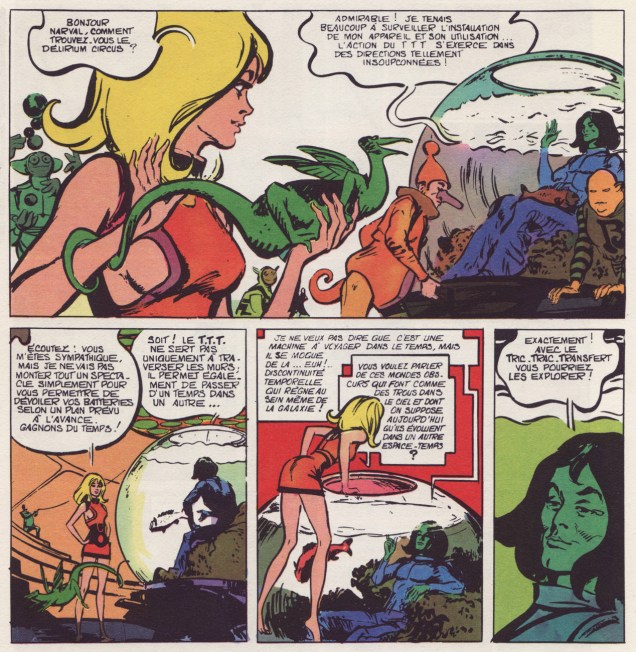
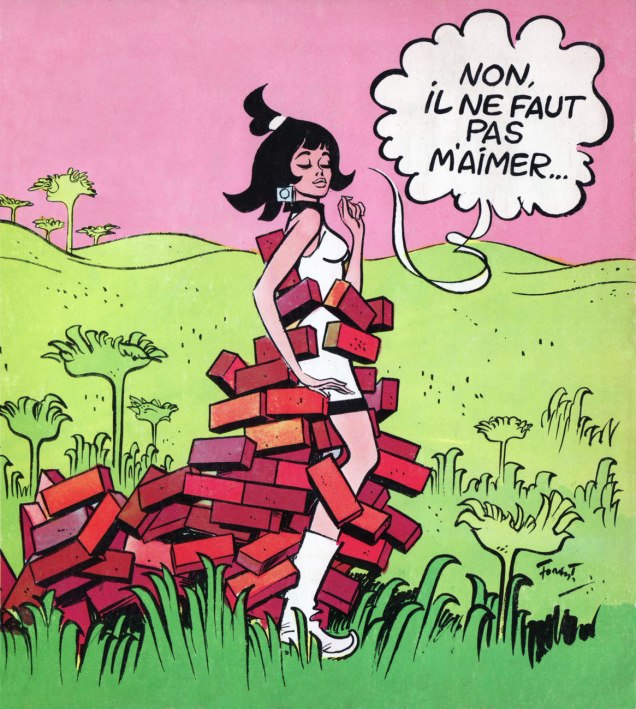
An excerpt is from Les colères du mange-minutes (1965-66), the second volume of Barbarella’s adventures. Yes, there was a film adaptation, but it’s, well, pretty vapid. Director Roger Vadim was kind of the Gallic John Derek; both were fair-to-middling directors whose chief talent was womanizing. Though one has to admit it *was* quite a talent.« No, you mustn’t love me… » Detail from the cover of giff wiff, revue de la bande dessinée no.22 (Dec. 1966), previewing its article on Forest’s 1965 experimental tv cartoon Marie Mathématique, which you can watch here. It features the dulcet tones of Le beau Serge, certainly one of the most overrated artistes of the 20th century. Too much competition to call the race to the bottom, though. 😉Born out of a misunderstanding between the editorial team of Pif Gadget and Forest, Mystérieuse matin midi et soir proved too labyrinthine for the magazine’s young readership, cost the publishers a bundle, and only two of its three parts appeared in Pif. Fear not, it was collected in album form the following year. This is a page from part 1, which saw print in Pif Gadget no. 111 (April, 1971).
A sequence from the rollicking N’importe quoi de cheval…, featuring Hypocrite, another of Forest’s spunky heroïnes. From Pilote Mensuel no. 6 (Dargaud, Nov. 1974).
A pair of pages from the melancholy, elegiac Enfants, c’est l’Hydragon qui passe « Children, there goes the Hydragon » (Casterman, 1984).
I’m sure it’s mere coincidence, but the boy, Jules, seems to be modelled after yet another Gainsbourg “muse”, pop nymphette Vanessa Paradis.
« It is not Frank Hampson’s original creation from the 1950’s Eagle, far from it. This is a different beast, featuring a harder man in a harsher world, a long way from the good-natured stoicism and stalwart, stiff upper lip of the original… »
(Garth Ennis in his introduction to Dan Dare: The 2000 AD Years)
Dan Dare, sort of the British answer to Buck Rogers, took his earliest space flight in the pages of the very first issue of Eagle, a now legendary British children’s comics periodical. He was created by illustrator Frank Hampson. From the day of its inception, Eagle was meant to perch on a high moral ground. Its founder, reverend John Marcus Harston Morris, an Anglican vicar, devised the Eagle in collaboration with Hampson (one of his parishioners, and a budding artist seeking fulfilling work) with a specific purpose in mind: a magazine that would hold itself to high standards of art and printing, but would stay away from violence and depravity, instead offering children wholesome characters they could use as role models. Aligned with that vision, Hampson’s Dan Dare stories were meticulously researched, based on a wealth of models (space ships, suits, and even a complete space station) and reference materials, including the services of Arthur C. Clarke as a science and plot advisor in the early days of the strip. Dan Dare‘s complex plots, witty dialogue and full-colour art guarantee that British children who lived through the 50s cherish their memories of this character.
1959 was the year of change – Morris resigned from the editor’s seat after bitter disputes with the bean-counters from Hulton Press (Eagle’s publisher at the time). Shortly after, the Eagle was taken over by Odhams Press, with the new owners objecting to the complexity of Dan Dare stories as well as the cost of Hampson’s studio. Hampson could not compromise his lofty standards and pursuit of perfection, and left. Things were never the same after that, with Dan Dare strips varying in format and quality until the series ended in 1967.
Fast forward to 1976. « A punk who has always written outrageously violent, scabrous satirical and often hilariously funny attacks on authority and the establishment» – which is to say, Pat Mills, a British freelance writer and editor – set out to create a science-fiction themed weekly publication, 2000 AD. With the aid of John Wagner as script advisor, presided over by John Sanders, the publisher, he decided to 1. develop a horror strip, which later became Judge Dredd; 2. revive Dan Dare, so that at least something about 2000 AD would have immediate public recognition. Oh, there were plenty of other strips in there, too, but that’s a topic for another conversation.
« 1976. I realize that the science fiction comic I’m creating, 2000 AD, needs a space hero. I think about bringing back Dan Dare – the publisher, John Sanders, is agreeable, he tells me not to worry about the original fans. I study the bound Eagle volumes. Artist Belardinelli submits a wild version on spec. At least it’s exciting and eye-catching and – most important – helps us over the poor quality paper. 2000 AD appears, it’s a success and Dan Dare is popular – about 3rd or 4th in the popularity charts. I don’t recall any critical letters apart from things along the lines of « my dad doesn’t like it, but I do ». And, sometimes, « my dad likes it, too ». Lots of criticism in the press, however, but we don’t care about annoying them. In fact we quite like it. » (From an article by Pat Mills, published in Spaceship Away: the Dan Dare Fan Magazine)
Okay, now that we have the backstory over with, on with the tentacled show!
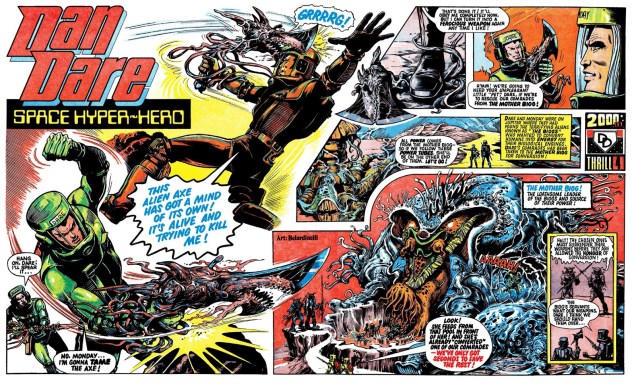
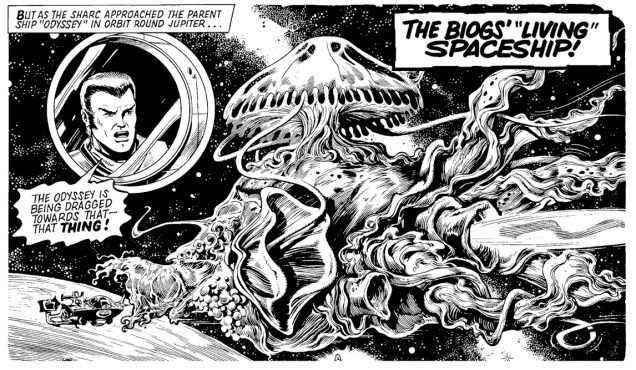
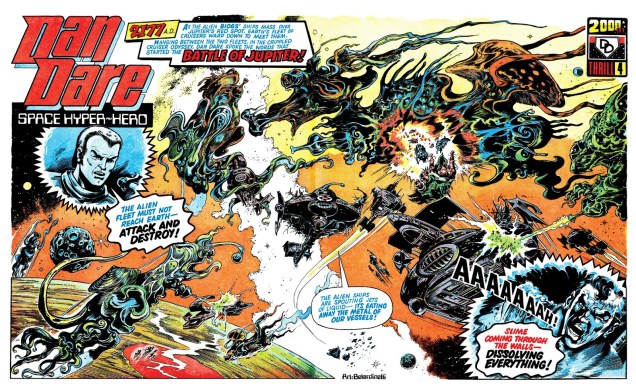
Dan Dare’s early 2000 AD adventures were drawn by Massimo Bellardinelli, who seems to take great delight in adding tentacles hither and thither. Are we expected to believe that every alien and every alien’s ship is be covered in them? Yes? Ah, okay. Please carry on.
The first, self-titled story, published in Programmes 1 to 11. Scripted by Ken Armstrong, Pat Mills and Kelvin Gosnell, and drawn by Massimo Belardinelli.
Hollow World, scripted by Steve Moore with art by Massimo Belardinelli, published in Programmes 12 to 23.
This cutie from Hollow World also wished to say “tally-ho!”:
Belardinelli’s style is often described as “hallucinatory”. Despite Pat Mills’ portrayal of his art as “eye-catching” (although even Mills thought that he made “the hero look awful”), his work on Dan Dare was not very popular. It’s also possible that readers were still sore about Dare’s sacrilegious resuscitation. All I can state with certainty is that it’s not really *my* cup of tea – I prefer my cuppa strong and dark, without excessive flourishes or hallucinations, thank you kindly. For those of you who agree, more… grounded times were coming: with Programme 28, Belardinelli switching over to drawing Harlem Heroes while Dave Gibbons took over Dan Dare, with an occasional hand from Brian Bolland.
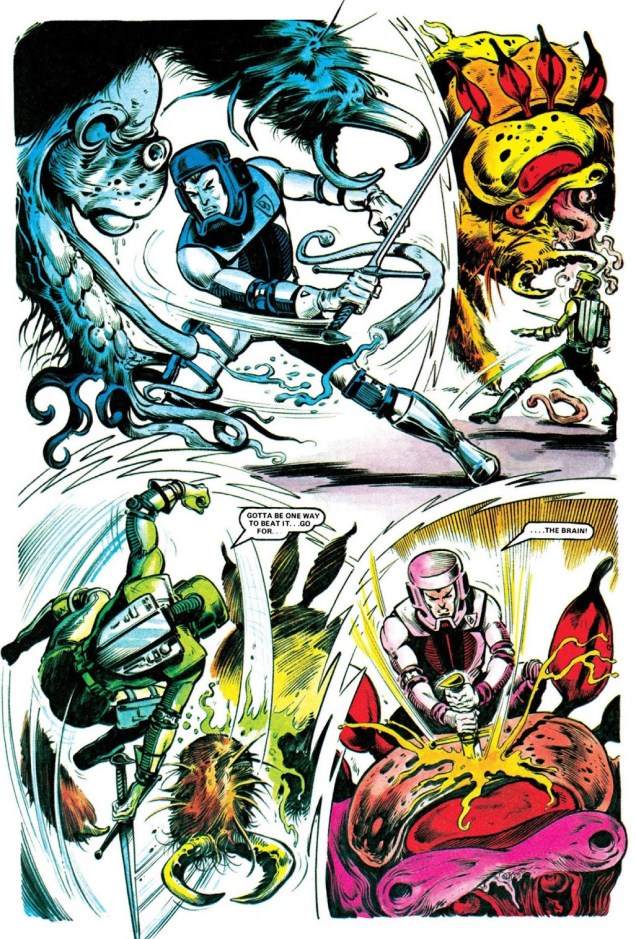
Greenworld, scripted by Gerry Finley-Day, art by Dave Gibbons and Brian Bolland., published in Programmes 34 and 35.
A little trek into the past, back to the hallucinatory tentacles: The Curse of Mytax, drawn by Massimo Belardinelli, published in 2000 AD annual 1978.
Oh Dan, where is your moral compass now? While I love the guys from 2000 AD to bits, I have to grudgingly admit that taking someone else’s character and modifying his raison d’être beyond all recognition is a tad uncouth (and certainly anti-authoritarian, which is, after all, Pat Mills’ leitmotif). Can you imagine how this trigger-happy Dan Dare apparition, some 25 years later, ruffled the feathers of readers who take their heroes seriously? (If we have any readers who have lived through this themselves, please chime in!)
« Indeed, the reader may be forgiven for thinking that the Lost Worlds sector is soon going to be a very quiet sector indeed, just because there’s not going to be much left of it. The frequency with each our heroes resort to violence – sudden, crushing, all-consuming, high-velocity violence that utterly obliterates whatever it’s unleashed upon – – is really quite spectacular. Unidentified species of dodgy appearance? Play safe, fry ’em. Giant-sized aquatic life form? Got to be worth a torpedo or two. Alien intruder? Give it loads. If things get sticky, just do the whole ecosystem. And you know those planet-busters we’ve got in the tail-fins…? »
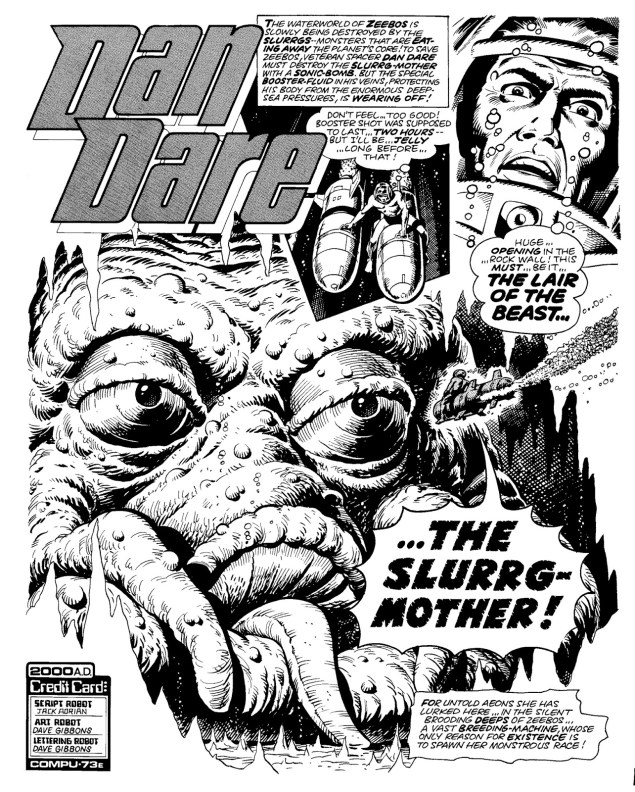
Waterworld, scripted by Chris Lowder (as Jack Adrian), with art by Dave Gibbons. Originally published in Programmes 56 to 60.
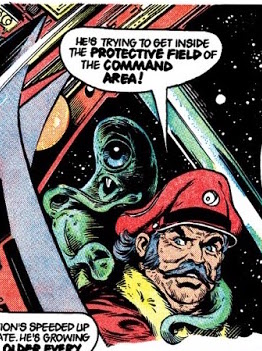
Does the Slurrg-Mother have tentacles? Such a silly question…Nightmare Planet, scripted by Chris Lowder (as Jack Adrian), art by Brian Lewis, published in Programmes 61 to 63.Ice Planet – they were really running the gauntlet of planets – is scripted by Gerry Finley-Day, with art by Dave Gibbons. Published in Programmes 64 to 66.Aww, freedom for the tentacled cutie!Garden of Eden is scripted by Chris Lowder with art by Dave Gibbons. Published in Programmes 67 to 72. Naturally, one doesn’t expect anything decent or god-fearing to come out of the Garden of Eden… and nothing does.
The sprawling Servant of Evil (scripted by Tom Tully and drawn by Dave Gibbons, published in Programmes 100 to 126) was the last Dan Dare story, one that wasn’t even finished. Was it too complex or morally ambiguous for readers of 2000 AD, or simply too rambling? Dan Dare’s exit was probably caused by the confluence of several factors – Dave Gibbons was leaving the strip to work on UK Marvel’s Dr. Who Weekly; the failing comic Tornado needed a new home within an established title, so 2000 AD needed to make room for it by pushing something else out; and let’s face it, Servant of Evil was dragging on, even though fans still bemoan the lack of closure from having all those plotline threads severed so abruptly.
Do you have a couple of hours to spare? You can actually read the full collection of 2000 AD Dan Dare strips here.

































 Who's Out There?