I’m on mini-vacation, away from all the big city violence, car noise and light pollution. One can actually see the stars out here! In honour of this mellow state of being, this Tentacle Tuesday is a friendly, gentle affair. It’s all about fishing and diving and, above all, chilling out with friends. (Sure, some folks almost get eaten, but it’s all in good fun.)
Oh, and my suggestion for summer reading (for people who are hard-pressed for time, but still want to impress others at the next cocktail party with their sparkling wit and erudition) is 20 Cool Octopus Facts.
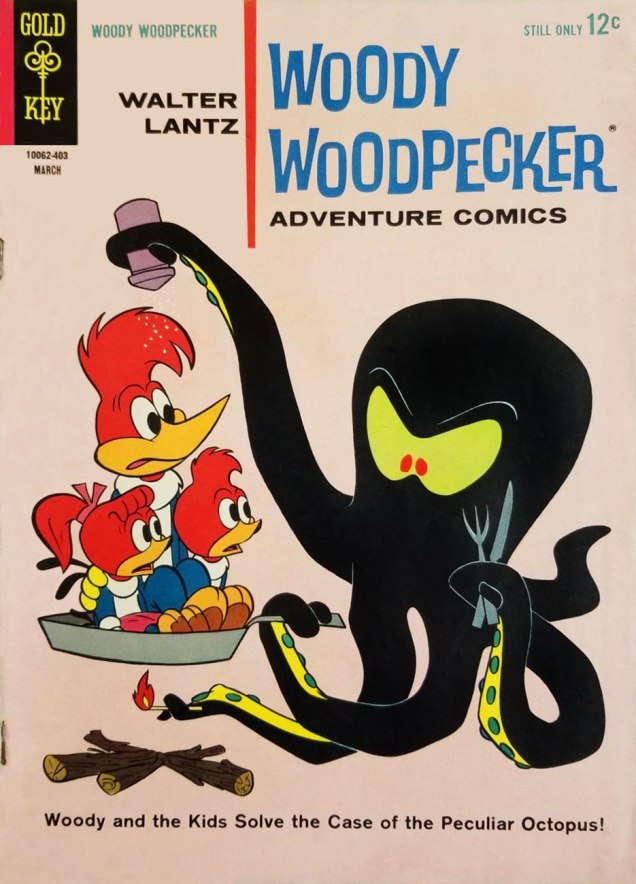
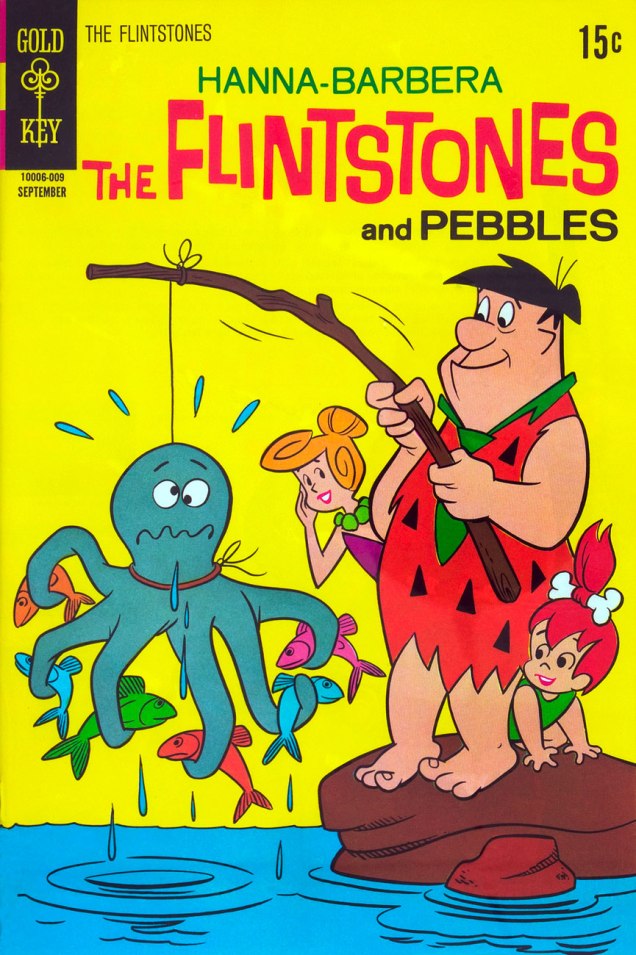
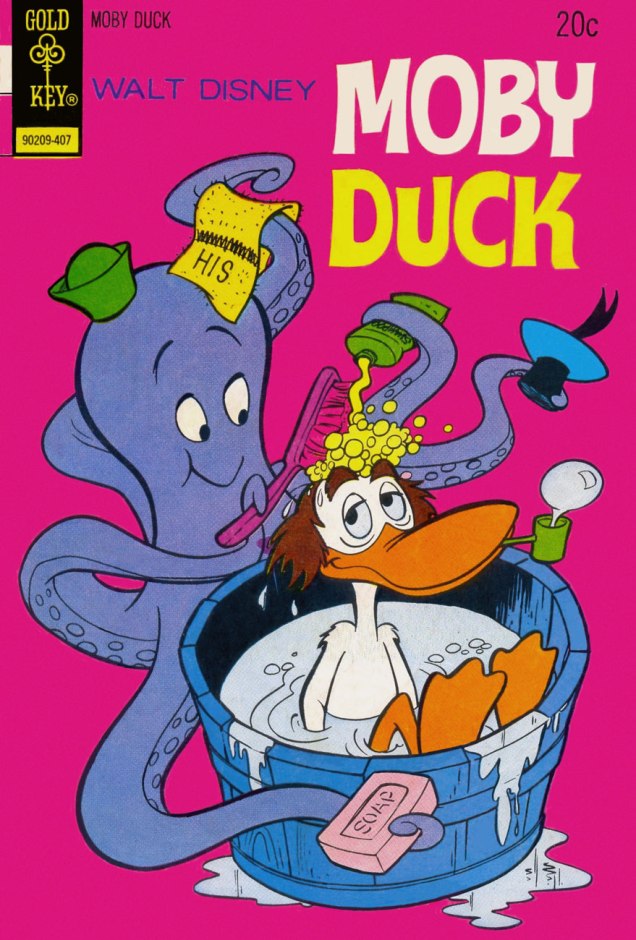
Walter Lantz Woody Woodpecker no. 79 (March 1964), cover by Phil De Lara.The Flintstones no. 60 (September 1970).Tweety and Sylvester no. 28 (January 1973).Moby Duck no. 14 (July 1974). Pencils by Pete Alvarado, inks by Larry Mayer.Woodsy Owl no. 6 (February 1975). Pencils by Paul Norris, inks by Larry Mayer.Yosemite Sam no. 43 (April 1977).Yosemite Sam no. 67 (July 1980).
Country Boy: What are you doing? City Boy: Drawing. Country Boy: Where are your guns? — Submitted by Steven Feinstein, 7, Philadelphia, PA (circa 1965)
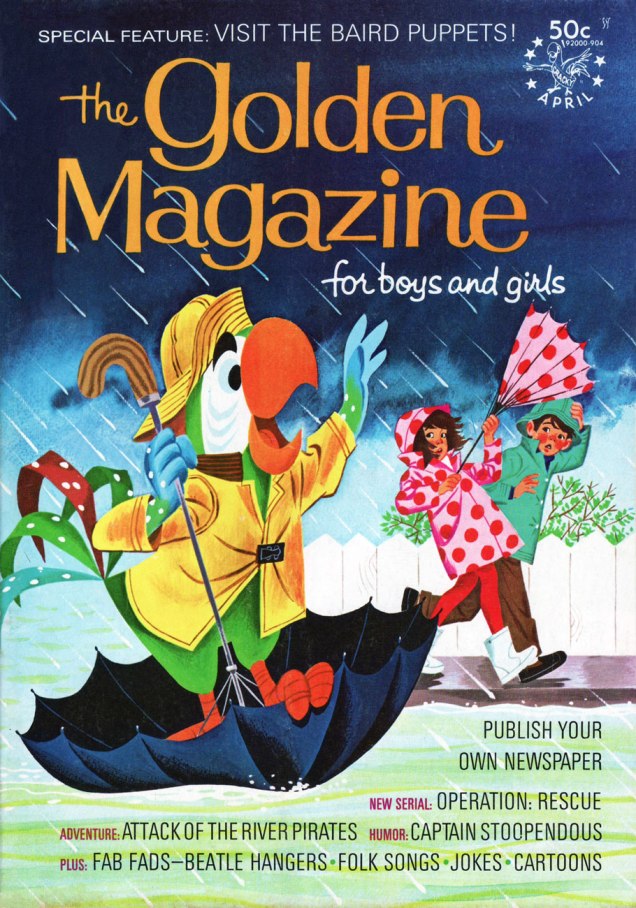
Cracky the parrot was introduced in the role of mascot for Western Publishing‘s general-interest kids’ mag The Golden Magazine (1964-71), which heavily drew upon the successful Jack and Jill (published since 1938 by The Saturday Evening Post Society) formula.
For much of its existence, The Golden Magazine thrived, having access to top creative talent from the Western publishing empire (Whitman, Gold Key, Golden Press, Golden Book Encyclopedia…)
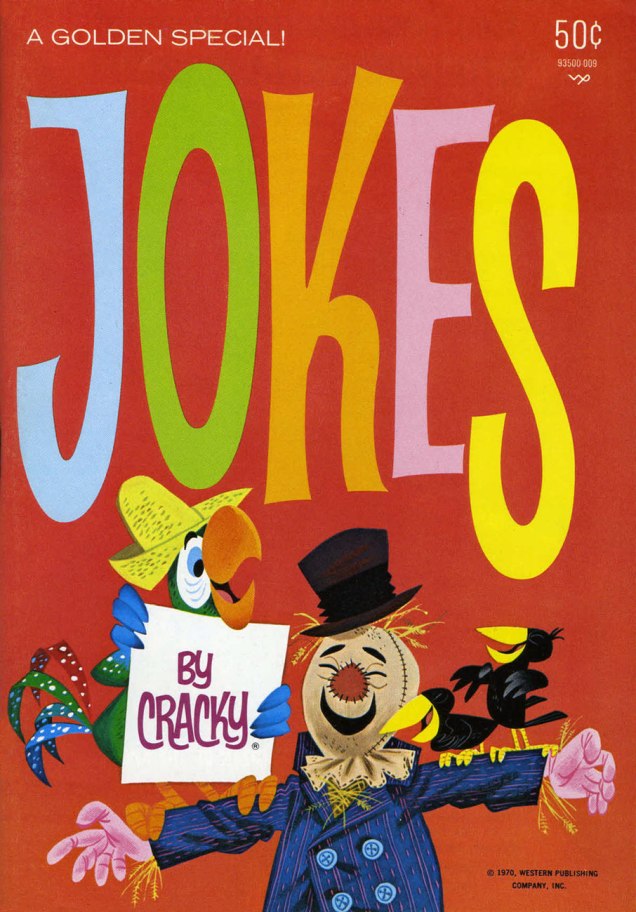
At first, Cracky stuck to sharing reader-submitted jokes. Then, around 1968, he began to show up on covers, generally depicted by versatile Canadian illustrator Mel Crawford (1925-2015). This is one such case, from April, 1969.In 1970, Cracky saw his old job expanded, branching out into two titles, Jokes by Cracky and Pencil Puzzle Fun, the latter outlasting its parent, The Golden Magazine. This is Jokes by Cracky no. 2 (1970); Cover art by Mel Crawford.Then, in 1972, it gets interesting: the lowly parrot mascot broke into comics.
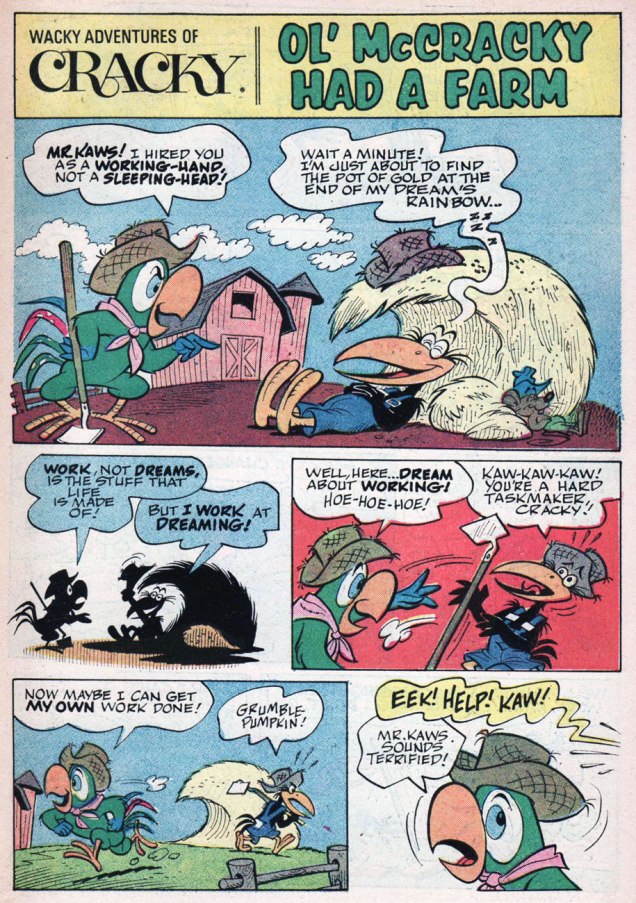
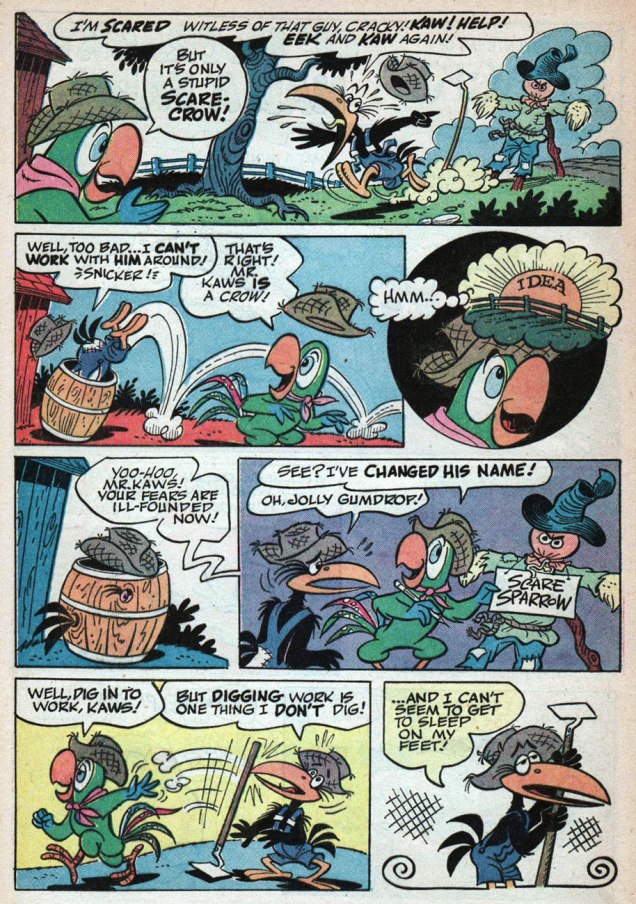
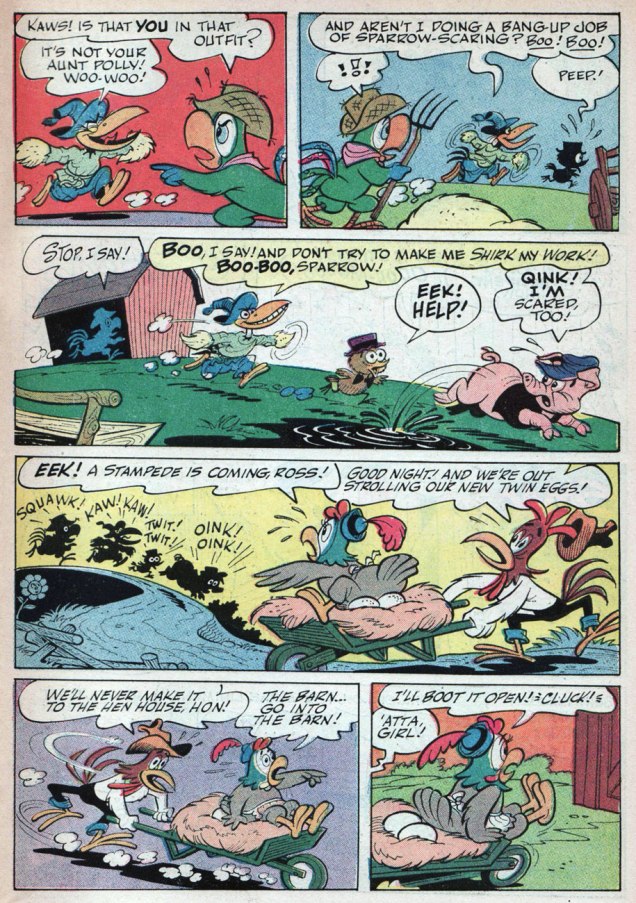
As Archie Comics had their Christian-zealot madman in Al Hartley, so did Western in the person of Vic Lockman. A significant difference, however, is that Hartley, despite quite stiff competition, is arguably the very worst Archie artist; he’s certainly got my vote [Seconded! ~ ds]. Lockman (1927-2016), a prolific but often terrible scriptwriter, was a terrific cartoonist, blessed with a gorgeously fluid line and exemplary design sense, lively and detailed. Here, then, is a story from Wacky Adventures of Cracky no. 3 (June, 1973). Script and art, including his distinctive lettering, by Mr. Lockman.
During the run of his comic book, Cracky (and sidekick Mr. Kaws) wore many hats: detective, inventor (presumably giving Lockman the chance to recycle some of his rejected Gyro Gearloose scripts), ship’s captain, escape artist, sheik… And yes, he did encounter some choice tentacles, but I leave it to my partner to conduct her own investigation. Lockman beautifully handled the first ten issues of WAOC; the instant he stepped away, the thing dissolved into tripe. Avoid accordingly.
Lockman, who seemed a loveable, well-meaning coot, was also twelve kinds of batty. Biblical Economics, anyone? For as full a picture as can be reasonably assembled, read Mark Evanier‘s fine, thoughtful obituary of Lockman.
Lockman was also among those sadly deluded souls (hello, Chuck Dixon) who tried to lay claim to the title of most published comics writer. Let’s face it: the most likely contenders (Joe Gill, Paul S. Newman, Gaylord DuBois) toiled in anonymity for most of their long careers.
In 1971, The Golden Magazine was sold (to The Saturday Evening Post Company!) and renamed, becoming Young World in 1972. Young World, in turn, got incorporated into Child Life in 1979, but that’s a story for another day. Many of TGM’s features were retained but slightly… tweaked. For instance, see who inherited Cracky’s old desk?
The Golden Age of comics proffered quite a lot of anthropomorphic animals to its readers. The stuff on offer ran the gamut of different definitions of humour, from inane slapstick to pleasant goofiness, all the way to batshit surrealism. There’s at least one common streak running through this zoological revelry – tentacles!
Our first exhibit is a charming comic from the 40s. Land of the Lost was a radio series broadcast from 1943 to 1948 on Mutual Broadcasting System and ABC, written, produced and narrated by Isabel Manning Hewson. Each episode started with the line « In that wonderful kingdom at the bottom of the sea… », and presented a new under-the-sea adventure of Isabel and Billy, two kids lucky enough to have an adorable avuncular fish for an underwater guide. (The fish was called Red Lantern, and was most notably voiced by Art Carney.) You can listen to an episode from 1945 here.
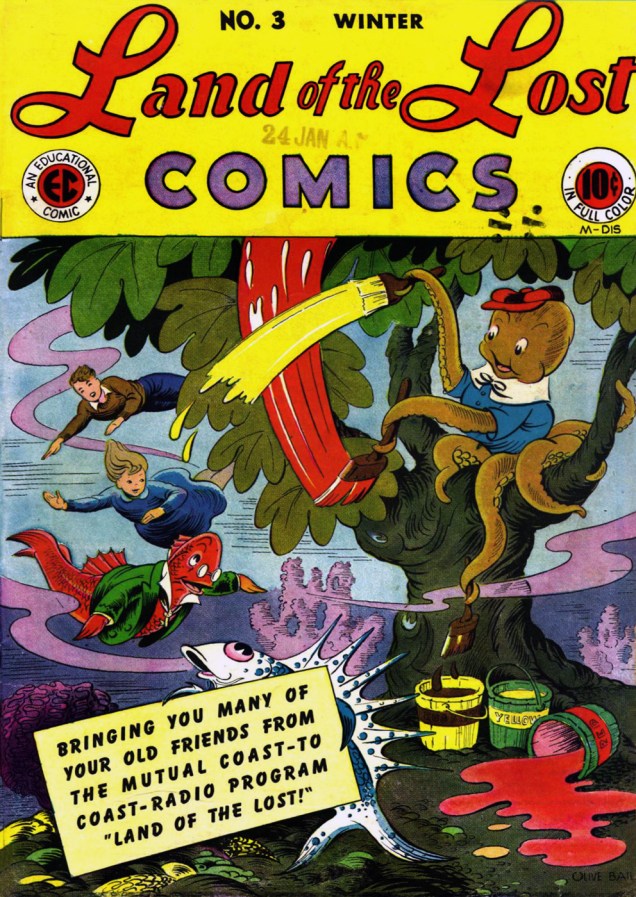
Coming back to our beloved cartoons: in 1946, EC Comics started publishing Land of the Lost Comics, a series that lasted for 9 issues. Hewson remained the writer, and the art was handled by Olive Bailey (not the Olive Bailey who helped crack Germans’ Enigma cipher machine in WWII.) The result was impressive: these comics are delectable, combining beautiful art with inventive plots that may be goofy, but have a solid internal logic. Hewson gave her sea-creatures vibrant personalities, and it’s so much fun to dive (not pun intended) into this world.
Land of the Lost Comics no. 3 (winter 1946), cover by Olive Bailey. Read the whole issue here… and then read other issues, too. Somebody needs to publish a collection of this stuff.
The following panels are from “Jack Frost“, scripted by Isabel Manning Hewson and drawn by Olive Bailey, published in Land of the Lost Comics no. 3.
Squidlet goes out of control, like all young octopuses are prone to doing.
Thank you, cool ladies, for all the fun!
Land of the Lost also became an animated cartoon as part of Famous Production Studios‘ Noveltoon series: Land of the Lost (1948), Land of the Lost Jewels (1950) and Land of Lost Watches (1951). I find the animation to be definitely subpar to the comics or the radio show, but I’ll let you judge for yourselves. (Jack Mercer is in it, albeit briefly!)
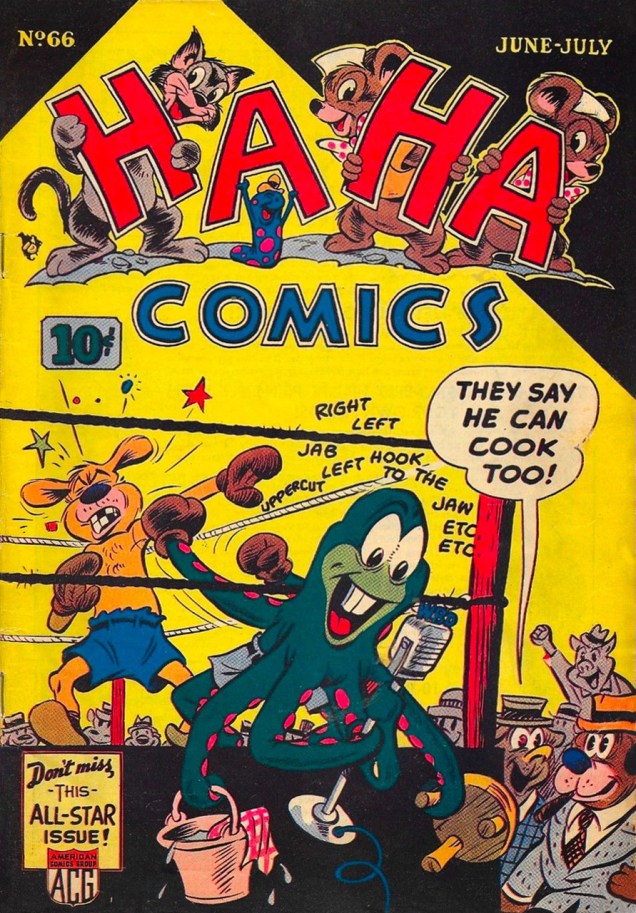
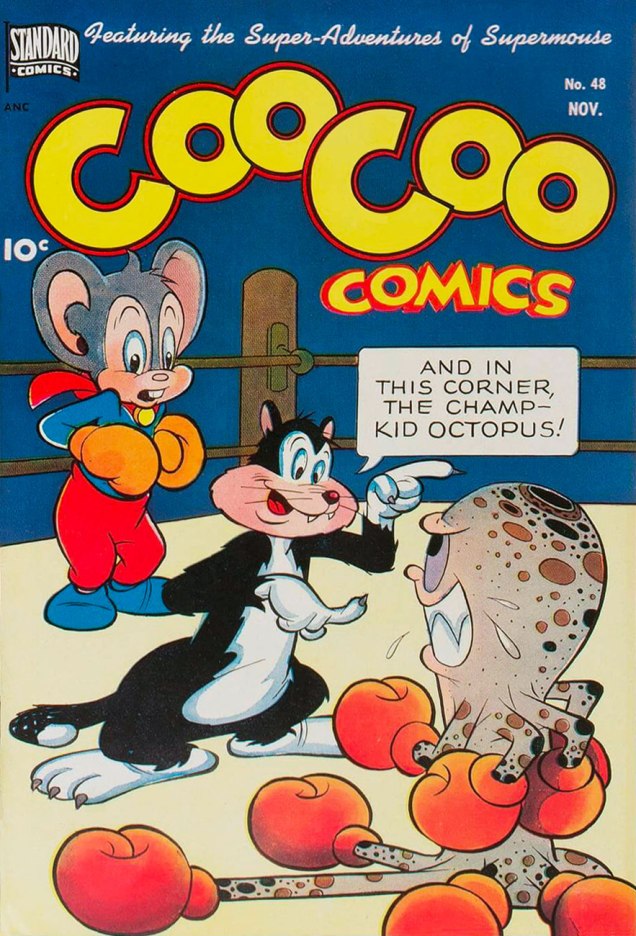
Did you know octopuses love to box? This implausible situation is definitely part of the lazy artist’s roster. To wit:
Ha Ha Comics no. 66 (June-July 1949), cover by Dan Gordon. It was really hard to find a scan of this issue in decent condition (thanks to co-admin RG), and comicbookplus doesn’t even have it in its database (you can read pretty much all the other issues of Ha Ha Comics, though).
Ha Ha Comics, a sister anthology of Giggle Comics, was published by ACG. (With issue #100, Ha Ha became Teepee Tim, going from animal hijinks to young Indian shenanigans for all of… three issues.) It’s quite a the playground of anything goes, but upon careful inspection, one easily finds good art shining among the dirt-pile of mediocrity, and diverting storytelling among hackneyed yarns.
Coo Coo Comics no. 48 (November 1949), cover by Carl Wessler. Published by Standard Comics under the imprint of Pines (from Ned L. Pines, publisher). Read the issue here (no tentacles whatsoever, though).
How many arms does the fellow up above have, nine? I suppose that’s why he’s the champ!
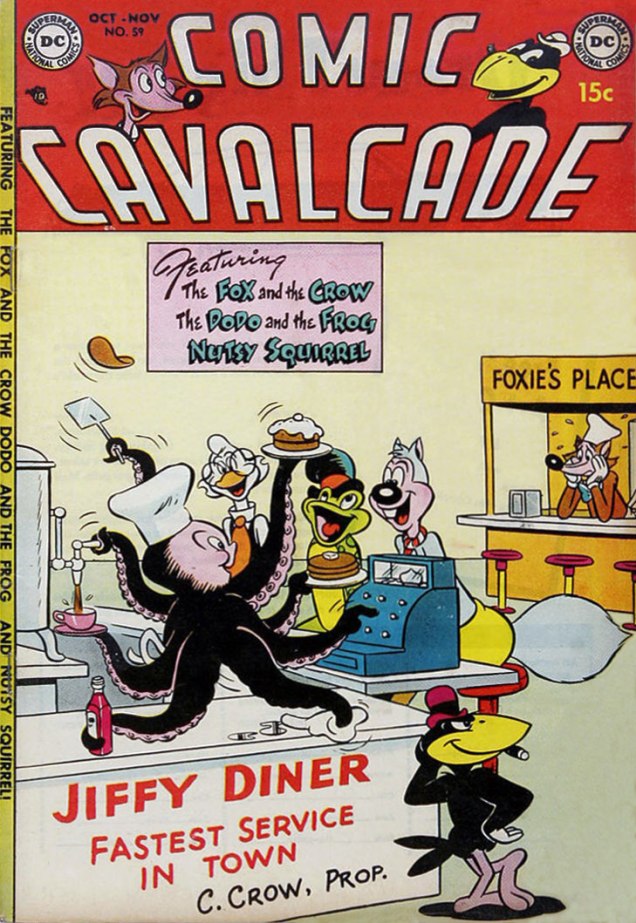
Comic Cavalcade went all funny-animals only with issue 30 (Dec-Jan 1948), when superheroes faded from popularity (oh man, that’s hard to imagine now, isn’t it?) It lasted until 1954, by which time it shrank from its original 96 pages to 76, however retaining its 15-cent cover price.
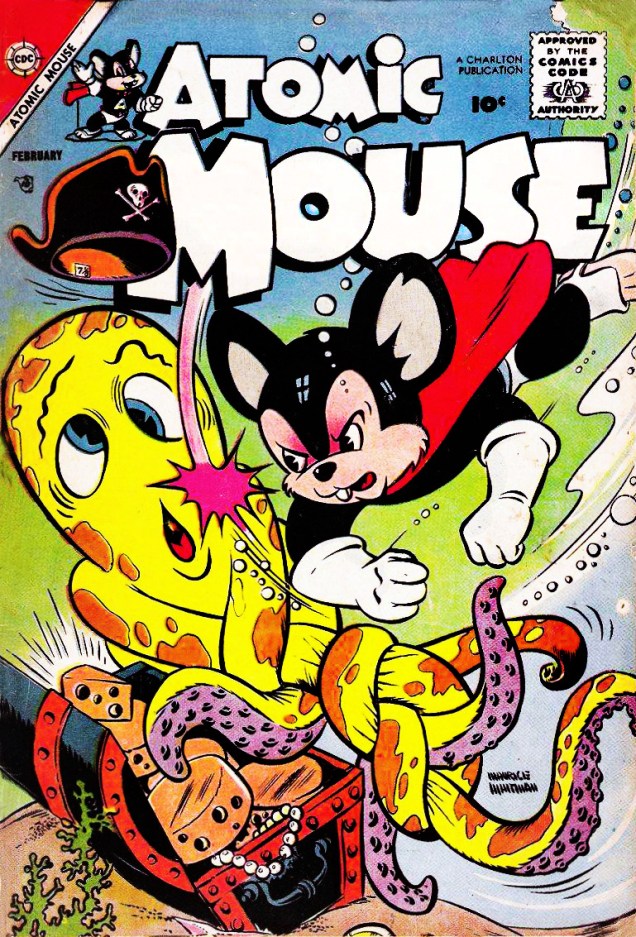
Comic Cavalcade no. 59 (Oct-Nov 1953), art probably by Rube Grossman. Read it here.Dinky Duck no. 10 (July 1954). WTF is a Dinky Duck? Terrytoons’ answer to Daffy Duck, says Toonopedia; or, tout simplement, a smaller-than-average duck. The poor duckling never caught on, but the cartoons did result in a comic series, published by Pines and then St. John.Atomic Mouse no. 25 (February 1958), cover by Maurice Whitman. Atomic Mouse was created in 1953 for Charlton Comics by Al Fago, their first animal superhero. The series was published for ten years (!), between 1953 and 1963, so it must have had at least a modicum of popularity.
Has this ever happened to you? You’re sailing along, just minding your business, concentrating on fishing or just taking a pleasure cruise, when suddenly you’re abruptly attacked by shifty tentacles. What do you do? Defend yourself with a tickle assault!
Page from “Little Dot Meets Uncle Gill”, printed in Little Dot no. 5 (Harvey, 1954). Art is by Steve Muffatti. Little Dot is never at loss in any situation, but I’m surprised the octopus isn’t covered in polka dots.Panel from “Little Dot Meets Uncle Gill”, printed in Little Dot no. 5 (Harvey, 1954). Art by Steve Muffatti. No harm done!
Some octopuses sneak onboard to be helpful…
Original art for a Felix the Cat Sunday comic strip from July, 1934. Art by Otto Messmer.
… And some are just pissed off about their dwindling food supply. (Or perhaps that fish was a personal friend.)
Marmaduke Mouse no. 2 (Summer 1946). Artist unknown.
If there’s any moral to these tales, it’s that fishing is hazardous business.
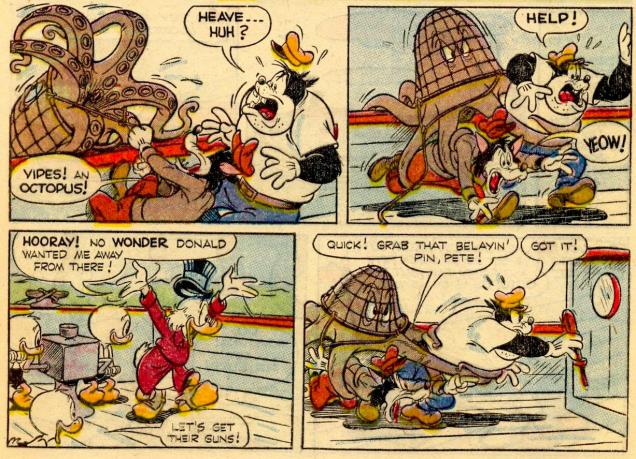
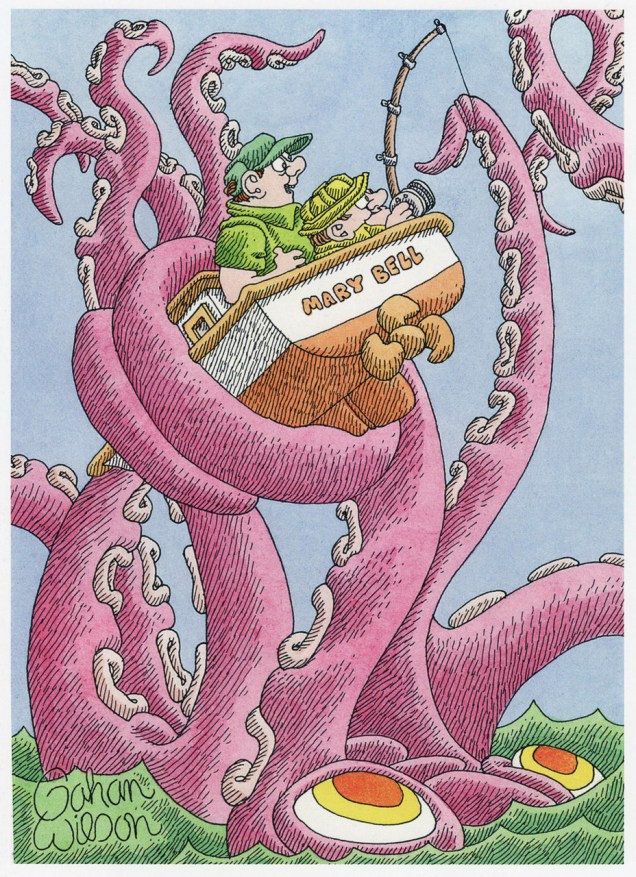
Walt Disney’s Donald Duck Beach Party no. 1 (July 1955). The story is “Sea Breeze Sailors”, scripted and drawn by Dick Moores.« Don’t let it get away! » Cartoon by Gahan Wilson.
« Sepulveda Von Lovely looks much better in a handlebar, if I do say so myself! » — ‘Bumps’ (2004)
Since the 1980s, when it came to carrying the torch of Good Duck Man supreme Carl Barks, there have been three clear contenders, namely Daan Jippes, Don Rosa and William Van Horn. All three are outstanding talents, and honestly, no single being can take the place of Barks. In the end, Van Horn is my pick, because he’s the most complete package*, possessing his own lively, economical style in both writing and drawing (and that includes his expressive lettering, a perennially underrated art form). His work is just a pure joy to read, while Jippes is arguably too close to the model and Rosa’s stories sometimes feel like continuity-saddled homework. Van Horn is a natural.
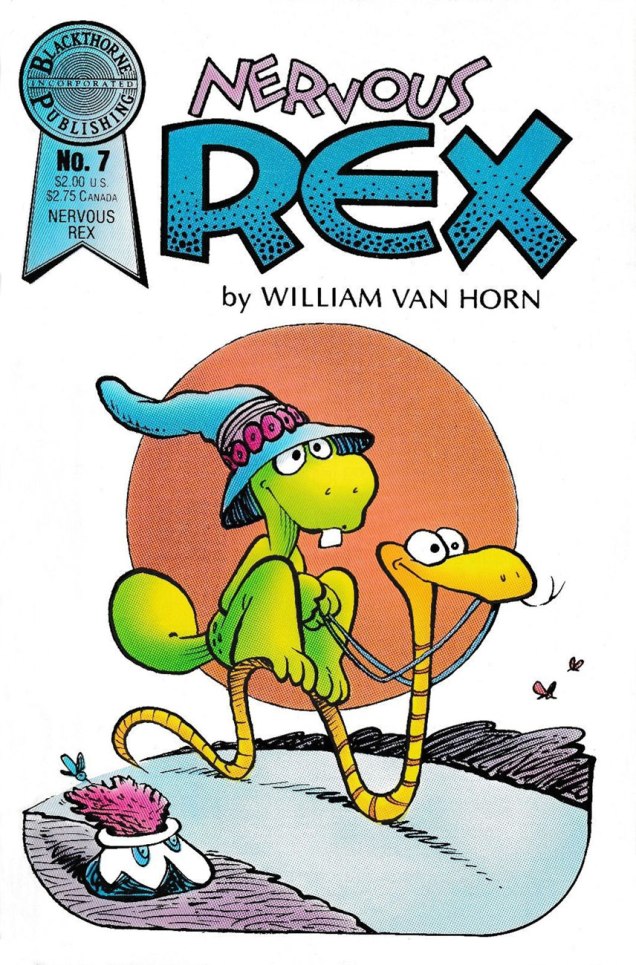
On the occasion of Mr. Van Horn’s eightieth birthday (he was born on February 15, 1939, and is thankfully still with us), here’s a modest Van Horn comics sampler, opening with his first comics series after decades of work in animation and children’s books, Nervous Rex, and continuing into his work for Danish Disney comics packager Egmont**.
From Don Markstein’s Toonpedia: « Cartoonist William Van Hornecreated the series, which lasted ten bimonthly issues (September, 1985 through March, 1987). Like Russell Myers, creator of Broom Hilda, he used a style clearly inspired by George Herriman’s Krazy Kat, without being a slavish imitation. Van Horn, who had made his living for decades in commercial art and children’s book illustration, had earlier come to the attention of the comics community with a couple of minor series in Critters, a funny animal anthology published by Fantagraphics Books. »
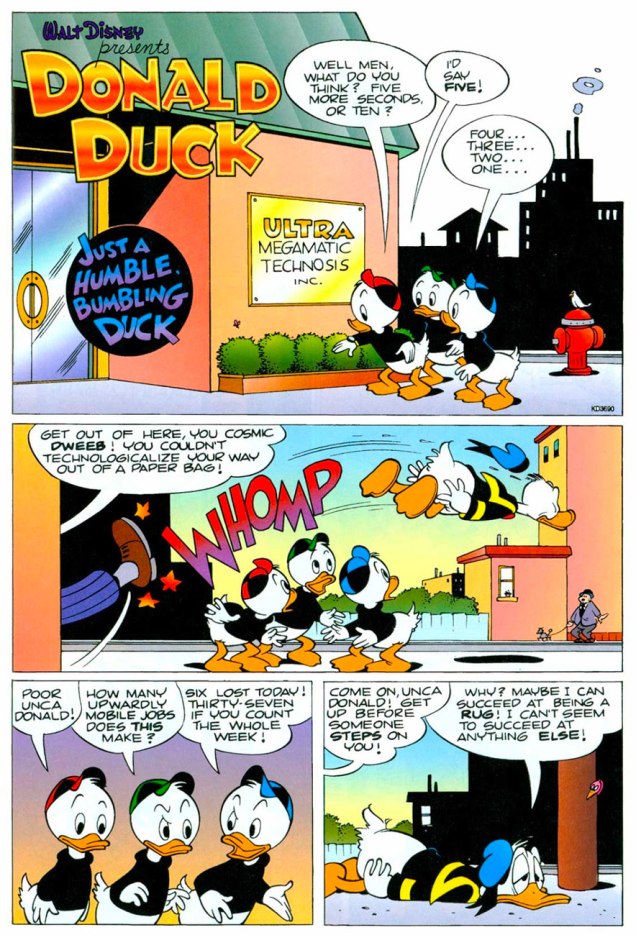
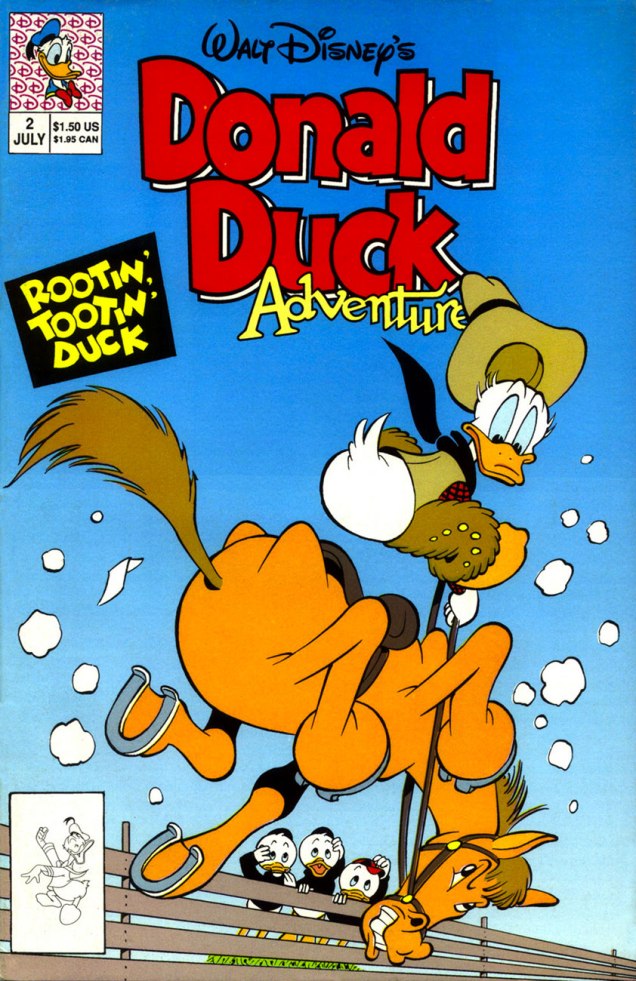
Here’s the opening of a twelve-pager, Just a Humble, Bumbling Duck, published in Walt Disney’s Donald Duck Adventures no. 13 (June, 1991). Written, drawn and lettered by Van Horn and coloured by Susan Daigle-Leach. Read the issue right here.Donald Duck Adventures no. 2 (July 1990, Disney), illustrating Van Horn’s “Rootin’, Tootin’ Duck”. Read it here. You can tell when a soul’s worked in animation. Nary a hint of stiffness.Donald Duck Adventures no. 18 (Nov. 1991, Disney), illustrating Van Horn’s “That Ol’ Soft Soap”. read it here.Walt Disney’s Comics & Stories no. 616 (Sept. 1997, Gladstone), featuring Van Horn’s “Catch of the Day”. Read it here.Uncle Scrooge no. 322 (Oct. 2003, Gemstone), illustrating Van Horn’s “The Utter Limits”. Read the issue here.Walt Disney’s Comics & Stories no. 655 (Apr. 2005, Gemstone), featuring Van Horn’s “Full Circle”. Read it here.Walt Disney’s Comics & Stories no. 680 (May 2007, Gemstone), featuring Van Horn’s “In a Minor Key”. Read it here.
A most joyous 80th anniversary to you, Mr. Van Horn! Fittingly, I leave the last word to our humble birthday boy: « Let’s create our own classics if we can… but heaven help us if we think we’re doing that. We should follow Barks’ lead and regard these stories as something to pay the rent and buy the pot roast. »
**speaking of Egmont, this sobering note from Van Horn, from a brief interview conducted by John Iatrou in 2010: « Disney comic books in North America have been virtually a dead issue (no pun intended) for over a decade, possibly two. Sales here hover around 4000 copies a month! This on a continent of over 350 million people! Egmont has never tried to publish here. They thought about it years ago and decided it wasn’t worth the effort. » So there you have it. Van Horn and Don Rosa have been producing their ducks for the European market, to be then reprinted, with piddling print runs, in North America. Nul n’est prophète en son pays… On the other hand, if you’ll forgive me for saying so, most European Disney comics are utter garbage, and have been for decades. If you like endless arrays of Donald as a superhero, Donald as Michael Jackson or Indiana Jones, Rappin’ Donald… you’ll be in hog heaven. “Opera Mundi crap“, we used to call it.
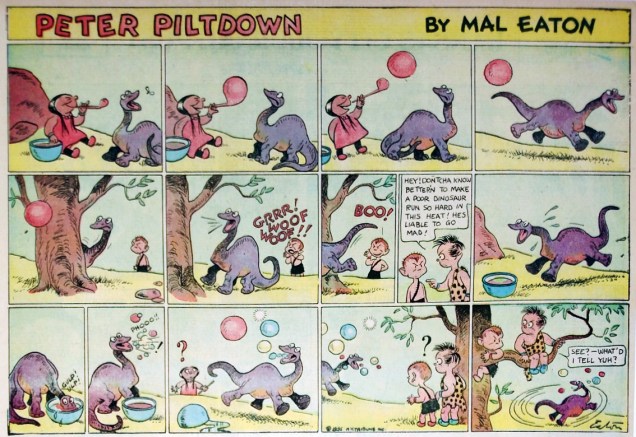
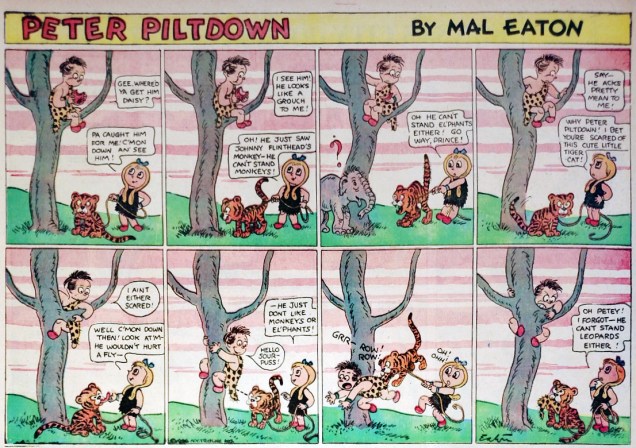
Newspaper strip Peter Piltdown was created by Mal Eaton (1902-1974) and debuted as a Sunday page on August 4th, 1935. Featuring a mischievous boy getting into trouble in some sort of prehistoric world (with a lot of indispensable modern conveniences – like earmuffs!), the strip seems to have lasted for quite a while, until the late 1960s. The reason I say “seems” is because not much is known about Eaton *or* the strip. With some difficulty I managed to find out that Malcolm Eaton was based in New York.
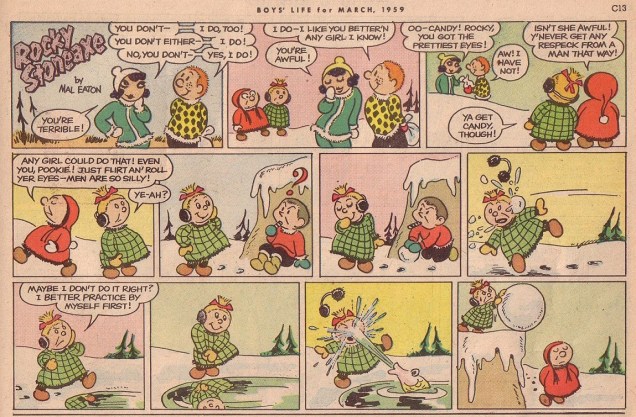
It doesn’t help that the strip changed titles several times. Starting out as Peter Piltdown, syndicated by Miller Services (a small Canadian newspaper syndicate that has since then been renamed into Canadian Artists Syndicate), it appeared as Pookie (Peter’s younger brother, whose antics had taken over the strip) in 1947 and 1948, and then migrated to the pages of Boys’ Life magazine as Rocky Stoneaxe.
Some comics are buried by the collective memory through sheer bad luck, some are rightly forgotten because they weren’t that good. It’s always exciting to unearth something obscure, but one has to ask if this excitement is justified, or whether whatever artifact of the past one has dug up is thrilling only because of a “I know what you don’t!” kind of show-off-manship. I do think Peter Piltdown is genuinely good. The art is manic – and dynamic – in a way that’s spontaneous and appealing. Eaton clearly liked to draw animals; they’re often a big part of the punch line, and they’re drawn lovingly, with great attention to detail and body language. Anyway, you be the judge!
From the small sample that’s findable online, I’d say that the period around the 1940s is the best; the art gets simpler later on. Here’s a selection of strips that I’ve succeeded in finding (and cleaned up somewhat) – they are in chronological order starting from 1943 and going up to 1959. Most of these are original art: three images are from the collection of gallery owner Rob Stolzer (the first two, as well as the Sunday strip in colour); the rest have been found on Heritage Auctions. The last three are scans from a newspaper.
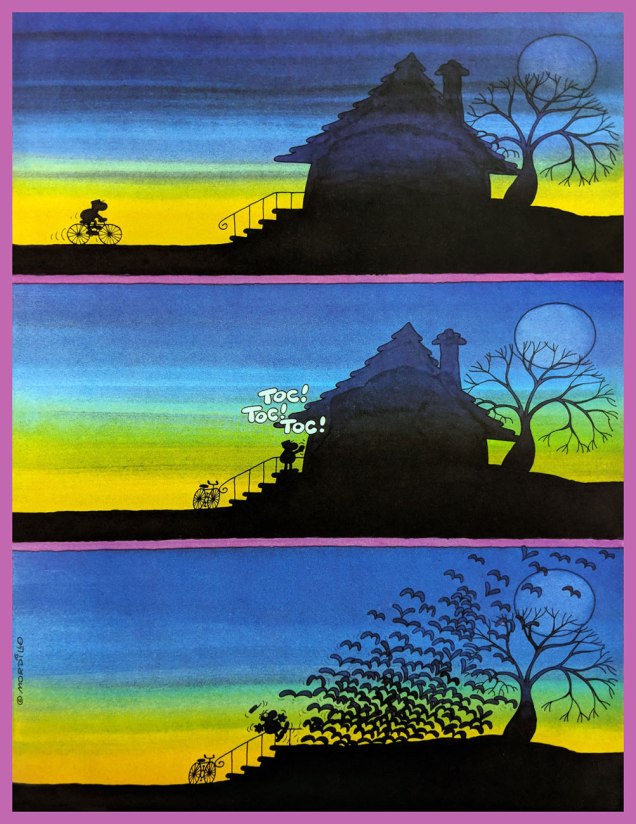
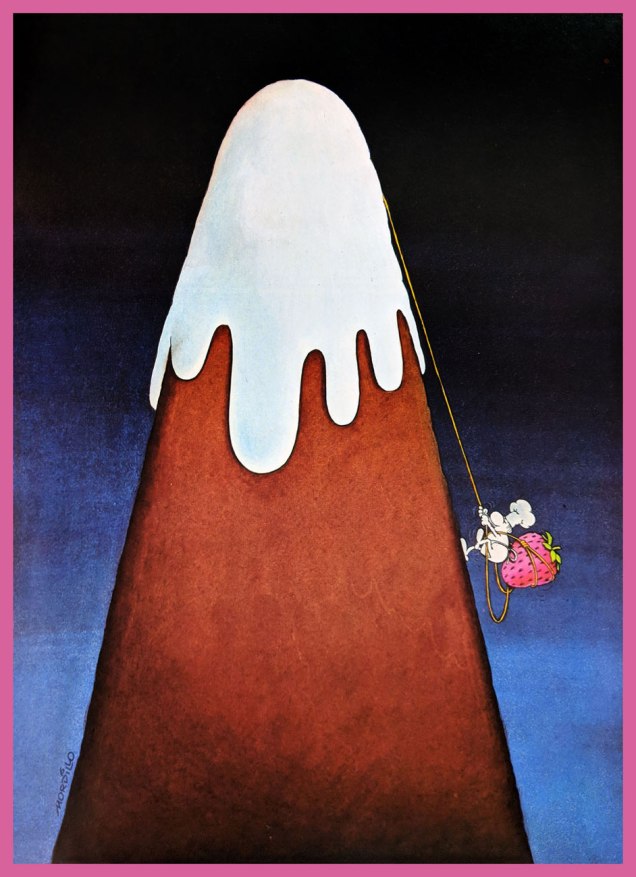
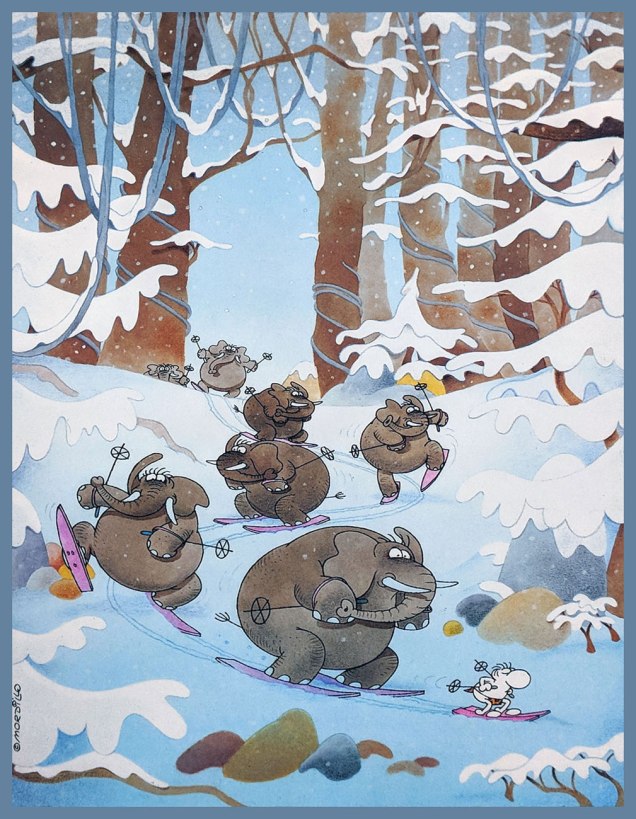
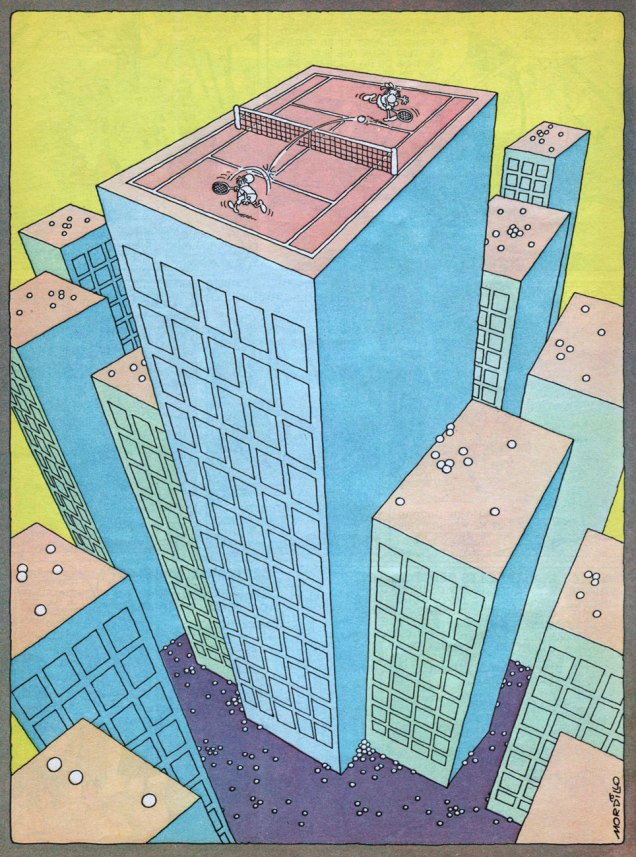
Guillermo Mordillo (1932 – 2019), known simply as Mordillo, was an Argentine artist of Spanish parentage. Through his long and productive career, he released more comic albums than you could shake a stick at… and at 86, was still active in the comics field. His easily recognizable style, love of bright colours and oft-surreal humour make his work memorable despite his persistent profligacy.
It would be impossible to provide an overview of his body of work in one post, but it is my pleasure to furnish a fun sampling of his œuvre. Most images below have been gleaned from Opus 5 (Glénat, 1984) and Safari (Glénat, 1990), unless indicated otherwise.
The following two images were scanned from early 1970s issues of Pif Gadget.
In the mid-70s, Mordillo’s cartoons were used by Slovenian artist Miki Muster to create Mordillo, a series of cartoon animations that ended up being 400 “episodes” long (for a total of 300 minutes – each episode is under a minute). These droll snippets were broadcast in over 30 countries between 1976 and 1981. Should you have a few minutes to spare for a chuckle or two, have a look at this video (recorded by somebody in Germany on VHS tape in the 90s and, many years later, uploaded to Youtube – what lovely, contorted pathways some of these things take).
« I prefer drawing to talking. Drawing is faster, and leaves less room for lies. » – Le Corbusier
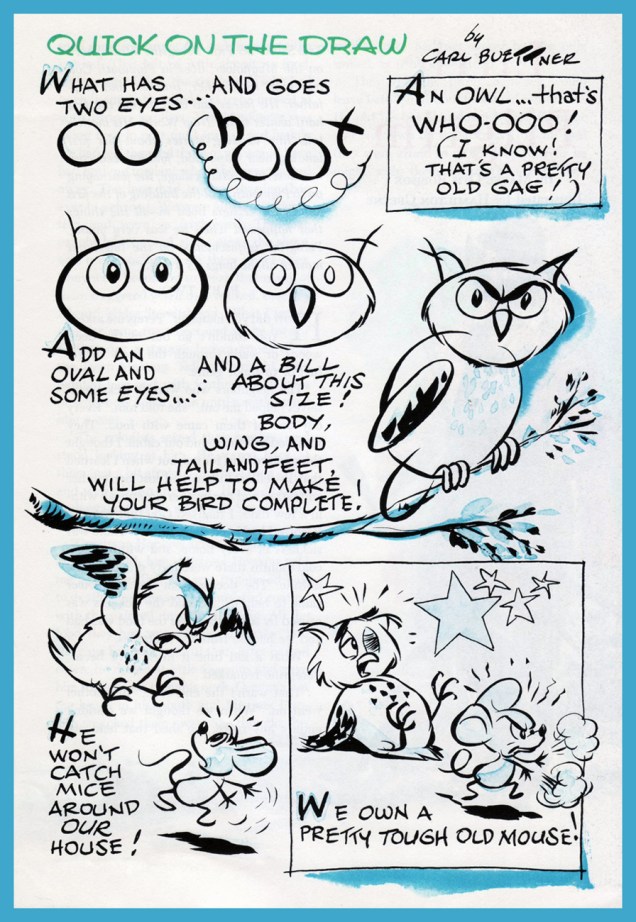
Carl Buettner (1905-1965) started out as an animator with Disney Studios and Harman-Ising Studio (founders of Warner Bros and MGM animation studios), then shifted to newspaper strips for a few years (Charlie McCarthy, 1938-40), then on to Western Publishing for the rest of his career, handling a bunch of Disney characters for Dell Comics (Joe Carioca, Bucky Bug, Dumbo The Flying Elephant, Bambi…) until the early 1950s, when he became editor of Western’s Little Golden Books line.
On the side, he kept his hand in with a nifty tutorial feature, “Quick on the Draw”, that ran in Western’s The Golden Magazine for Boys and Girls. Though he passed away early in 1965, Buettner’s QOTD ran well into the next year, since he was evidently working well ahead. The feature was then taken over by his fellow former Disney animator and scribbler Carl Fallberg (1915-1996). Fallberg spent most of his long career working on the scripting and story directing side, but he evidently kept his pencils sharp.
From Golden Magazine Vol. 2 No. 10 (October, 1965)From Golden Magazine Vol. 2 No. 11 (November, 1965)From Golden Magazine Vol. 4 No. 4 (April, 1967). Fallberg was a lifelong “narrow gauge” railroad enthusiast. His delightful Fiddletown and Copperpolis cartoons, published in Railroad Magazine in the late ’40s to the early ’50s, were collected in 1985 and still in print (and affordable!) to this day.From Golden Magazine Vol. 4 No. 9 (September, 1967)From Golden Magazine Vol. 4 No. 12 (December, 1967)
« On my entire street there were only two kids that went to high school… that was the equivalent in those days of making Phi Beta Kappa. »
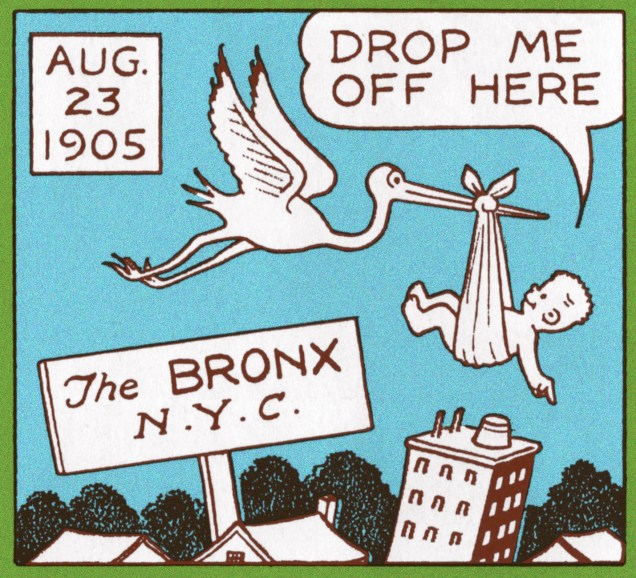
On this, the one-hundred and thirteenth birth anniversary of the oft-misunderstood Ernie Bushmiller (23 August 1905 – 15 August 1982), was I going to go through a veritable mountain of Nancy strips, naïvely hoping to pare it down just the one? No sir, not me. Life’s too short.
A tidy bit of autobiography from the pen of Mr. B.
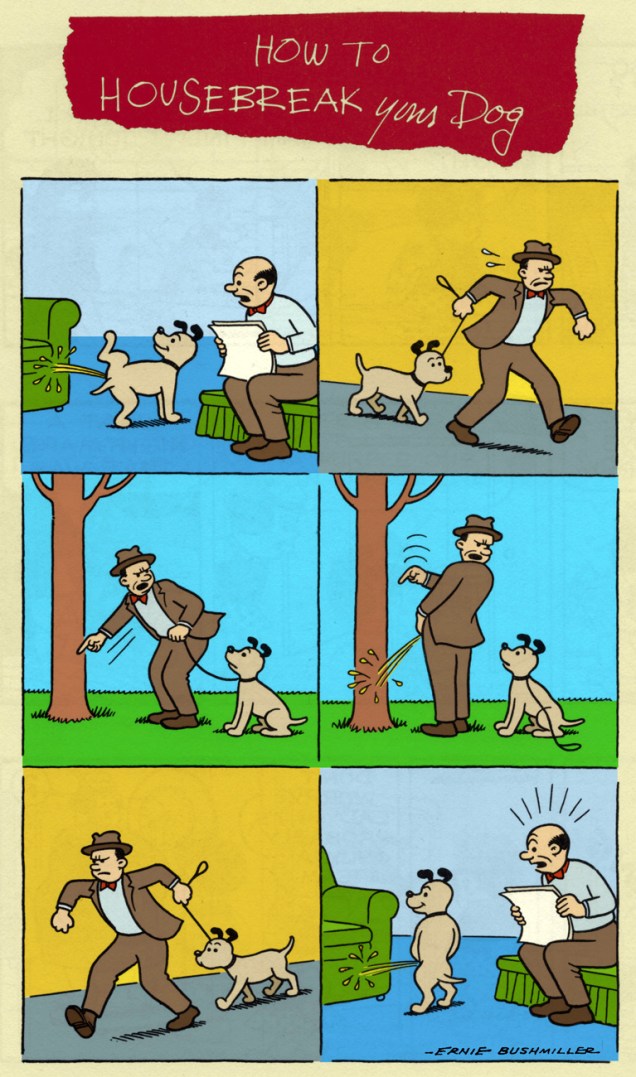
Instead, here’s an oddity that Ernie created, historians say, for the Dutch Treat Club* Yearbook (1961). Bushmiller referred to the often-imitated and bootlegged, now-famous cartoon as « the only dirty thing I ever did ».
I decided, a couple of years back, to colour the piece myself, and to restore Bushmiller’s signature. Can you believe the gall of some people? (Rhetorical question, I know.) Here at WOT, we firmly believe in proper authorial attribution.
Happy birthday, Mr. Bushmiller, and thanks for all the chuckles.
– RG
p.s. Thanks to Bushmiller scholar-cartoonist Mark Newgarden for doing the legwork as to provenance. I’m standing on the shoulders of giants, as usual! Oh, and since it’s quite relevant (and even if it wasn’t), if you’re a true-blue Bushmiller aficionado, you owe it to yourself to check out Messrs Paul Karasik and Newgarden’s « How to Read Nancy » (2017, Fantagraphics).
A portrait of Ernie from the brush of his esteemed colleague Frank Godwin.
*If you’re, er… qualified, it’s not too late to join the Dutch Treat Club!
So far, we’ve leaned heavily in the direction of the aggressive octopus, the hoggish, ill-mannered brute who grabs people without so much as a how-do-you-do. Even when the multi-tentacled beast has self-defence as an excuse, the gory results are often not for the weak-hearted. Yet, like any complex creature, it has many personality facets; let’s have a look at the friendly cephalopod, the octopus-next-door type, the one who’s willing to let you use its tentacles in lieu of swings and lend a feeler’d arm with your fishing.
In 1946, Belda Records came up with the concept of a “komic book & plastic record”. The series was called Talking Komics, promising (and delivering!) kids a “record-music-story-comic book” experience. There were 8 characters, one per book-cum-record, in all. Our friend the Lonesome Octopus is one, although he seems to be doing all right socially. The other 7 are Grumpy Shark, Happy Grasshopper, Chirpy Cricket, Flying Turtle, Blind Mouse, and in a slightly different vein, Enchanted Toymaker and Sleepy Santa.
The records were written & produced by Bob Bellem and narrated by Marvin Miller (a well-known voice actor – to name a few well-known shows, he was Robby the Robot in Forbidden Planet and in The Pink Panther Show he voiced the Inspector, Deux-Deux and the Commissioner), the music was composed & conducted by Frank Hubbel, and the comic was illustrated by Mel Millar, who may or not be Marvin’s brother. Cartoons were created for at least some of the records/comics (so it’s more like “record-music-story-comic-book-animation”) – some of them used to be findable on Youtube some time ago, but the years seem to have swept everything away.
Another octopus who kindly consented to let his tentacles be used as swings. He apparently sings, too!
Mutt and Jeff is a newspaper strip created by Bud Fisher in 1907, generally believed to be the first daily comic strip (or at least the first really successful one). It featured Augustus Mutt (the tall fellow swinging on the right tentacle), greedy and highly inventive (if not downright insane) with his parade of get-rich-quick schemes, and bald Jeff, his reluctant sidekick, whose sideburns would surely get him accepted as a hipster in these modern times. Go here to read an enthusiastic article about this cultural phenomenon, and here to read some comics.
Little boys who over-work an octopus are going to end up as his dinner, I say. Still, for the time being, here’s a sweet scene of inter-species coöperation.
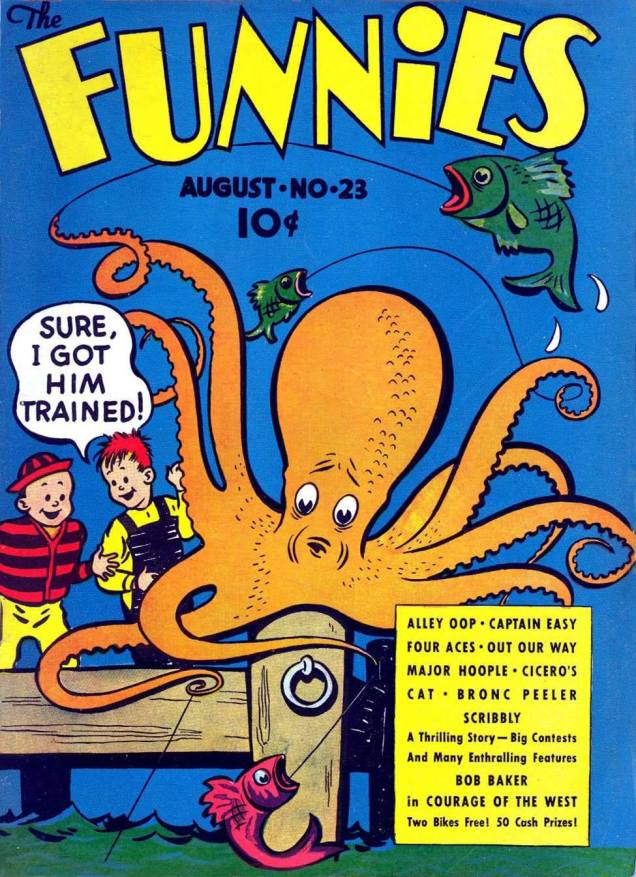
I sure hope that this octopus gets his share of fish at the end of the day! Also, wouldn’t it be more efficient to just grab the fish directly with tentacles instead of using man-made contraptions like fishing lines? This is The Funnies no. 23 (Dell, August 1938). Does anybody know the artist?
‘Orrible Orvie and Awful Annie will help us wrap up this Tentacle Tuesday. This octopus isn’t assisting the kids directly, but the kind smile on his, err, face radiates benevolence (well, not to the fishes, but one has to feed on *something*, right?)
This is The Little Monsters no. 41, 1977 – only three issues away from the series’ end (it ran from 1964 to 1978 for a total of 44 issues, plus a giveaway issue of March of Comics). Artist unknown.


























 Who's Out There?