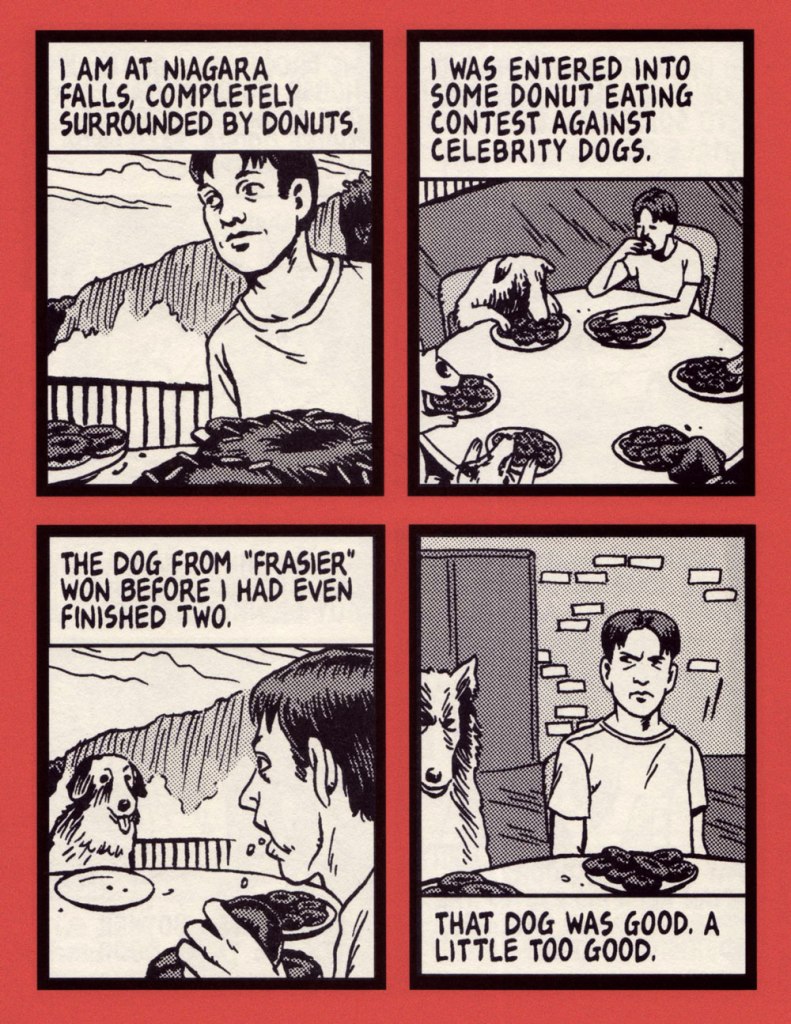
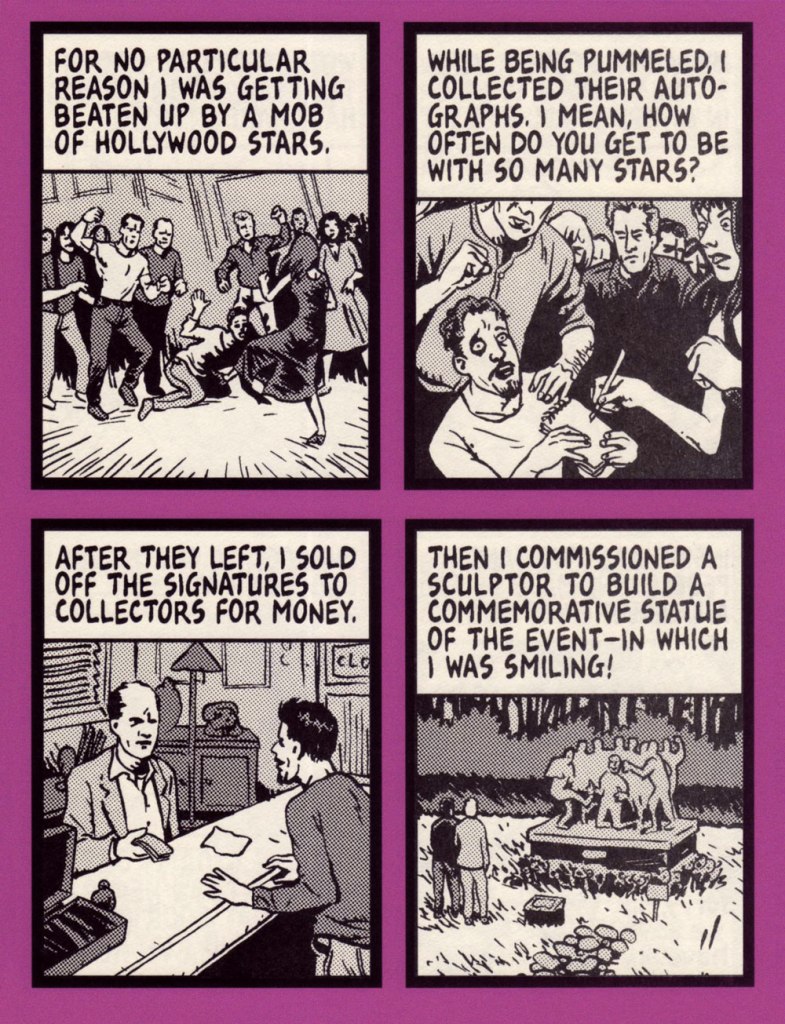
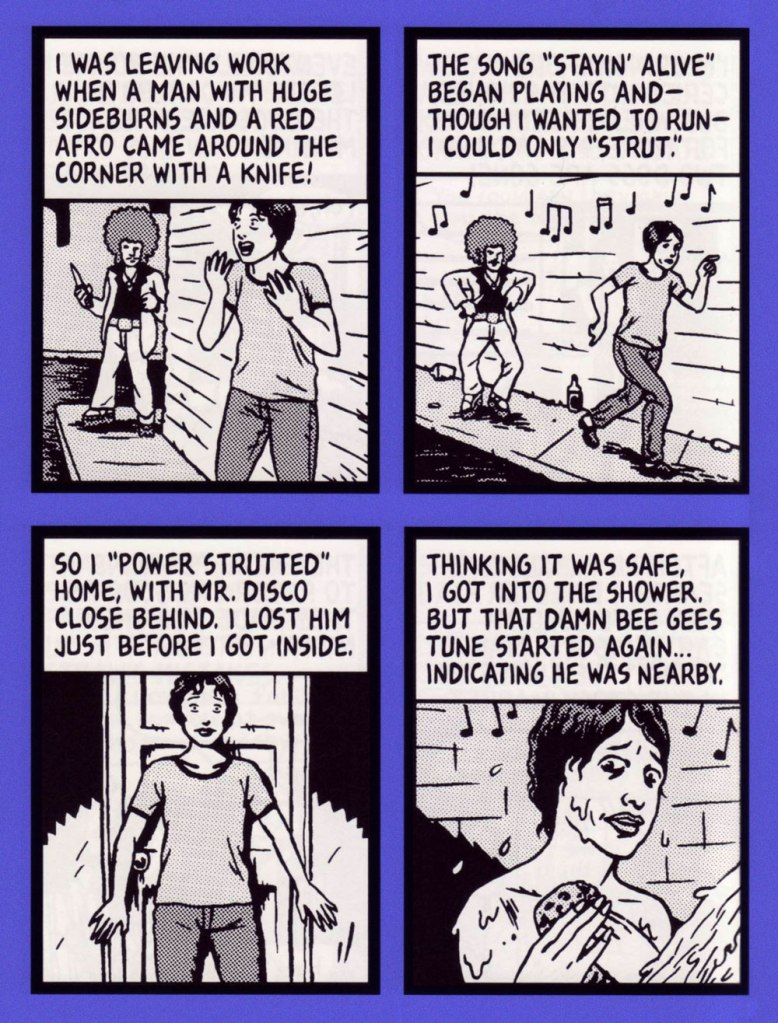
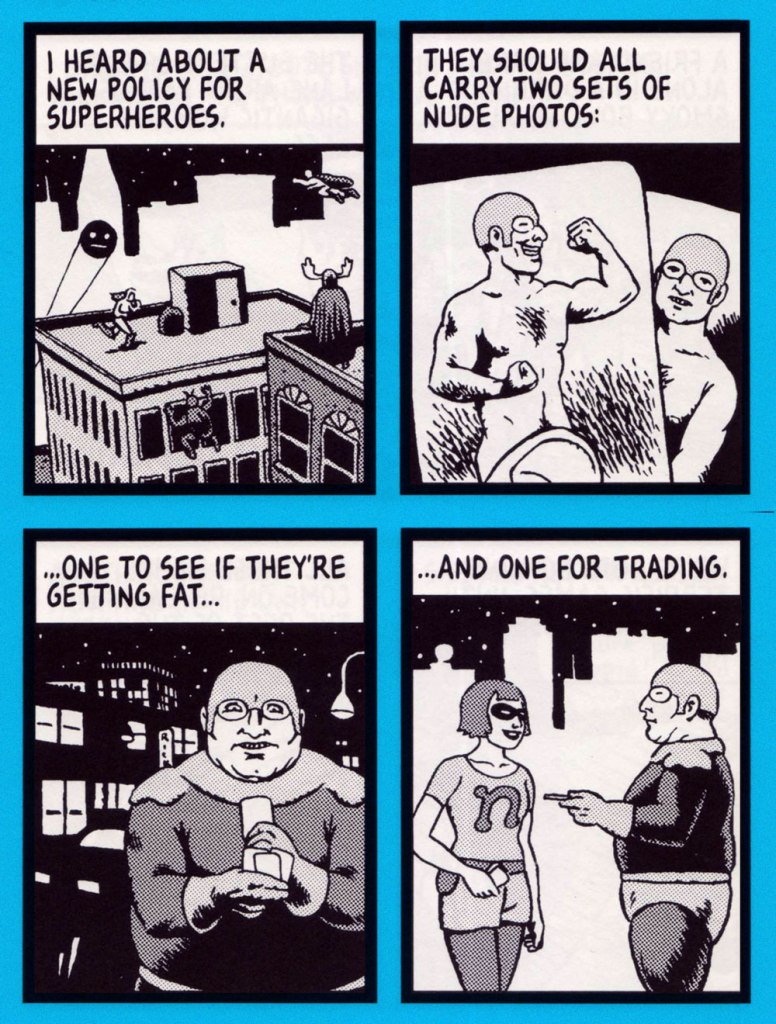
Richard Stine Strikes Sparks!

« Whoever digs Stine is out of his mind! Just how disturbed can Stine be? And who the heck understands his stuff? Not me. » — H.C., Hollywood (not an understanding sort)

I must open this post with a thank-you note to my past self, for picking up, decades ago and who knows where and on a whim, a somewhat pricey book by a cartoonist I’d never heard of, Richard Stine. Obviously, just because he was unknown to me doesn’t mean he’s not a known quantity. Let’s just say he has his devoted fans, and I quite understand their passion.

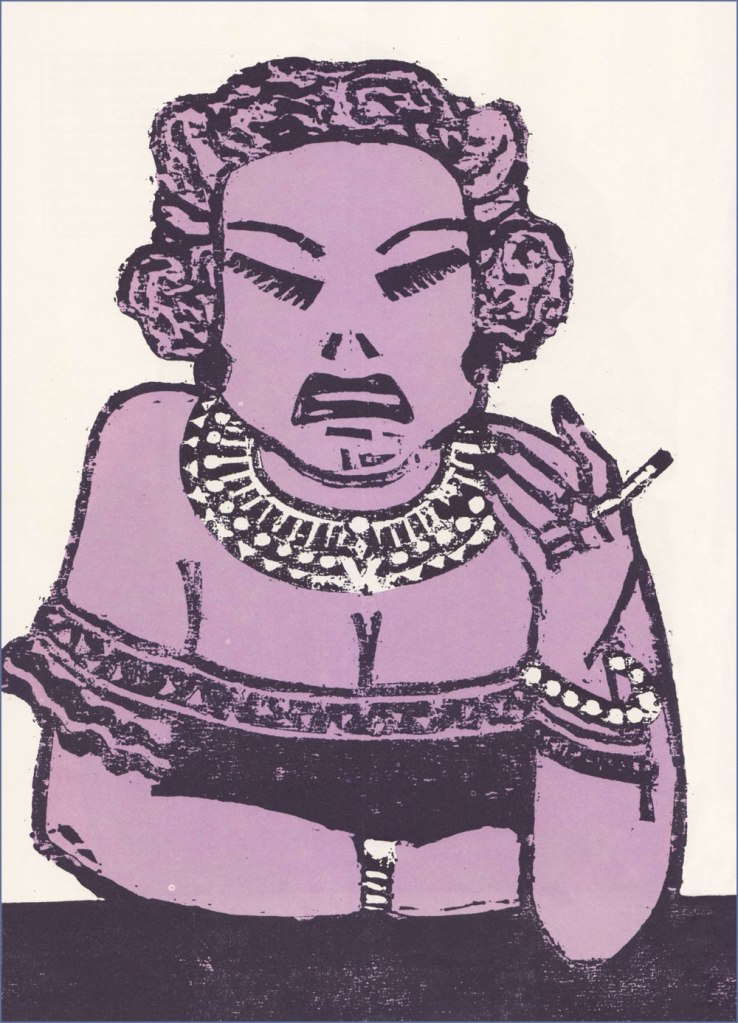
This is the book in question, Sparks by Stine (1982). It seems to have been intended for self-promotion (in the sense of seeking assignments, that is), given the inscription it bears: « THIS PORTFOLIO IS NUMBER ___ OF A SPECIAL FIRST EDITION PUBLISHED BY THE ARTIST ». Mine’s number 433, and the date of November 15, 1982 appears below Mr. Stine’s signature. I believe a paperback edition of Sparks — with a different, full-colour cover — was published a few years later. That one’s easier to get.
Excerpts from letters to the Los Angeles Herald Examiner, where most of the drawings in this book first appeared: « … just wonder in what kindergarten “Stine” studied drawing? And how much marijuana he smokes before dreaming up his alleged “cartoons”? » — R.K., Arkadia
A zinger of a riposte: « Even my children, aged five and three, understand Stine. Their reactions aren’t vehement, they enjoy the simple drawings. And they don’t even smoke marijuana! » — M.H., San Diego
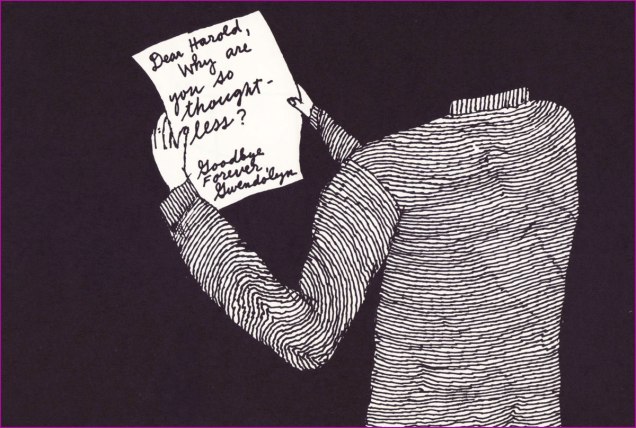
« … it is stupid, insipid, has no rhyme nor reason, and so very disgusting. His humor is indicative of a thoughtless mind. By the way — what DOES he use for brains? » — Ms. R., Los Angeles
« … Stine’s drawings do mean something — he shouldn’t have dropped out of art school in his first year. » — P.H., Hollywood
« I demand you review Stine’s employment, comparing his productivity with the detrimental effects of his abusive creations. » — R.W., staff writer, UCLA Daily Bruin
« … while you have one of the best, if not THE best cartoonist in the country, namely Karl Hubenthal, you also have one of the lousiest, if not THE lousiest cartoonist in the country, namely Stine. » — C.H., Glendale
« … will you PLEASE provide us with ” A key to the understanding of Stine” in the same way that the Rosetta Stone enabled us to “read” the Egyptian hieroglyphics. » — Mr. and Mrs. L.C., Los Angeles
« You’re wonderful! Only those living in ignorance fear your “message.” It’s like getting nasty for the first time: once you go through the one-way door, you’ll never be “nasty” again! I adore you. » — K.I., Venice

I won’t try to dig too deep into Stine’s oeuvre, as others — fellow blogger Ann Canright, for one — have already done a splendid job of it. What I have learned by now is that he was, circa « … a former cartoonist for the now-defunct Los Angeles Herald Examiner*, publisher of cards and author of two books… [then ] became a full-time painter. »

And thereby hangs a tale, as the saying goes:

« Five years ago I decided to go back to painting. I started really small because I was used to working that way for publishing », Stine said. « I was working with magnifying glasses on my head and thought, ‘I need to get up and breathe and walk.‘ »

He pushed away the 3-inch-by-3-inch canvases and liberated himself size-wise, design-wise and attitude-wise. He stretched a canvas that « was bigger and taller than me », he said, and immediately felt free. [ source ]

He had by then moved from California to Bainbridge Island, in Washington state. And then… on to New Zealand, homeland of his wife Margaret. « Richard, now in his 80’s is still experimenting, exploring and creating and boy does it show in his playful spirit. » [ source ]

-RG

*Do read the history of the LA Herald Examiner if you get the chance… gripping stuff, imho.

Maxine Always Has Her Mouth Open

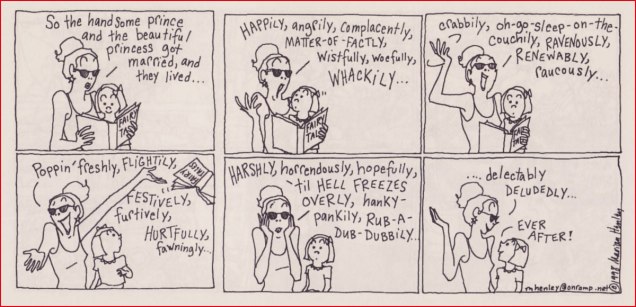
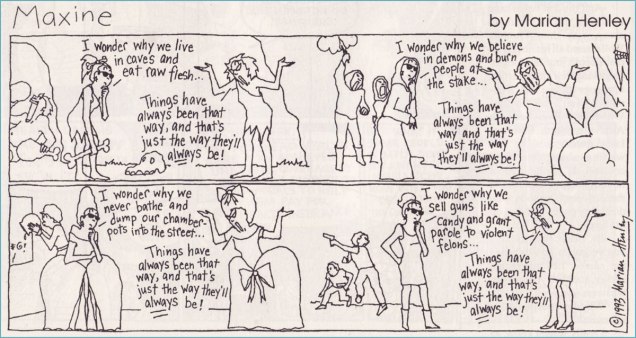
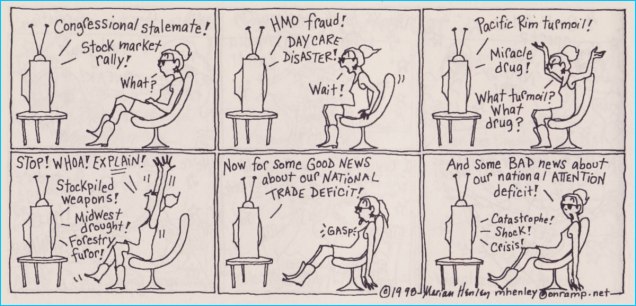
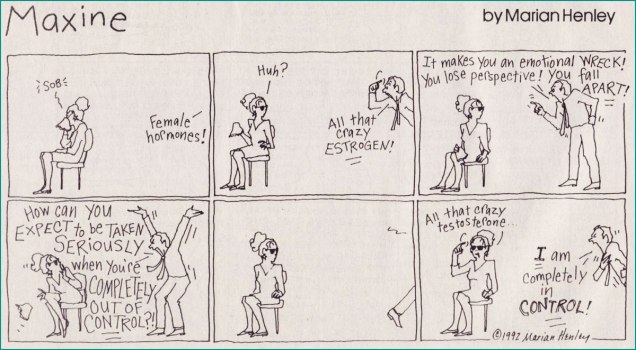
« From October 1981 until December 2002, Maxine appeared in a head-scratching combination of publications such as San Francisco Chronicle, Heavy Metal, MS, Glamour, Austin Chronicle, LA Weekly, Utne Reader, Asbury Park Press, MAD, Funny Times, and even a newsletter for Hawaiian polygamists. »

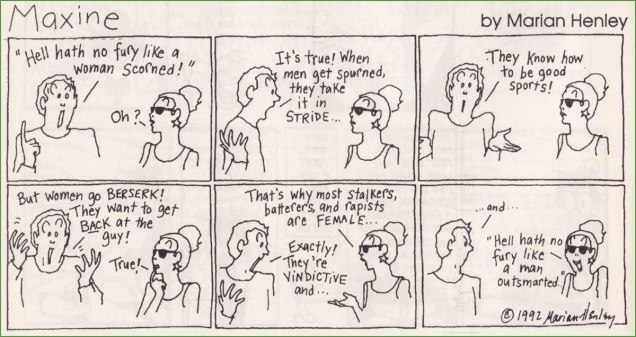
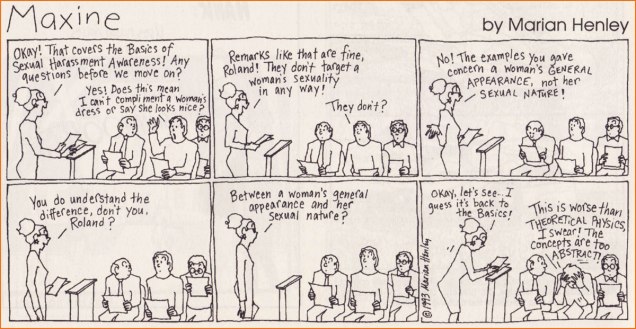
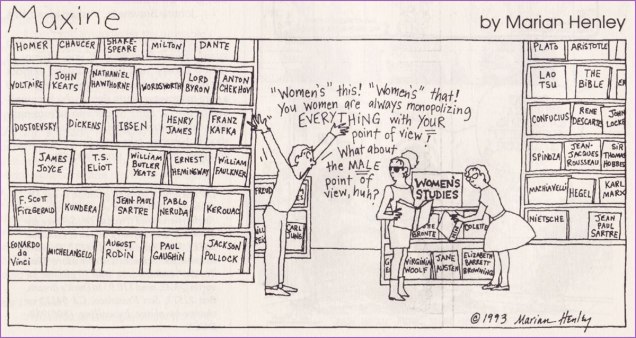
Marian Henley‘s Maxine naturally brings Nicole Hollander’s Sylvia to mind – two contemporary women cartoonists and their outspoken alter egos, both drawn in an idiosyncratic style that I imagine some found too sketchy, or too much of an acquired taste… to these imaginary straw men I’d recommend taking a closer look – Henley’s anatomy is impeccable, every character imbued with dynamic movement. Where Sylvia is a sort of seer, always at somewhat of a remove from emotional entanglements, Maxine is right in the middle of them like a cat tangled up in yarn, muddling through life’s chaos on her own terms (though sometimes dispensing advice to friends — ‘do as I say, not as I do!’)

A ‘Best Of’ collection of Maxine, published in 2002 by Taylor Trade Publishing. Hilariously, some have confused it with John Wagner’s Maxine, with much disappointment resulting. I guess these two target audiences have very little overlap. I also found myself counting Henley’s fingers — I think semi-unconscious defenses against AI are kicking in.

Maxine is a recent visitor to my brainscape – co-admin RG dragged out stacks of Comic Relief (‘The lighter side of life. Fewer calories than a newspaper, more laughs per pound.’, a monthly magazine published by Page One Publishers & Bookworks in California) from the 90s to look for something else, and that’s where the lovely choppiness of Henley’s art was pointed out to me. Sylvia is in too, incidentally. Here are some selections from 1991-1998. Crazy to contemplate that this was some 30+ years ago, yet the concerns expressed could have easily been a reaction to any recent morning’s news. Plus ça change, plus c’est la même chose….

Like any woman cartoonist worth her ink, Henley is into cats. In case this is news to some of other readers, men disliking cats out of all proportion is a waving red flag.

And the subsequent batch of strips feel so relevant to today that it pains me:

To wrap up on a more positive note (something sorely needed right now) —

This one is a sincerely sweet strip, a rarity in Maxine’s world.

~ ds

Grains of Golden Sand: P. Craig Russell’s Fantasies

In his introduction to Isolation and Illusion (2003, Dark Horse), a collection of short stories illustrated and sometimes scripted by Philip Craig Russell between 1977 and 1997, Will Pfeifer argues that ‘the key to Craig’s art – what really brings it to life – is the small stuff‘.

I would rephrase that to ‘personal stuff’. Russell’s own stories (such as Breakdown on the Starship Remembrance or La Sonnambula and The City of Sleep A Fragment of a Dream that appeared in Night Music no. 1 and no. 2 published by Eclipse Comics in 79 and 85) blew me away when I first encountered them. Imagine my initial enthusiasm when I finished reading them and anticipated exploring Russell’s bibliography… to find myself amidst seemingly endless comic book adaptations of Wagner and Mozart operas and traditional fairy tales. His work with Neil Gaiman did not spark any further curiosity on my part.* Artistically speaking, almost all Russell draws is impeccable, majestic, and ambitious in scope — but what is the pleasure in all this splendour without an emotional connection? Again and again he deploys a lush romantic carpet upon which innocent youths frolic… but it is a walk, alas, through a rose garden in which everything is scentless.

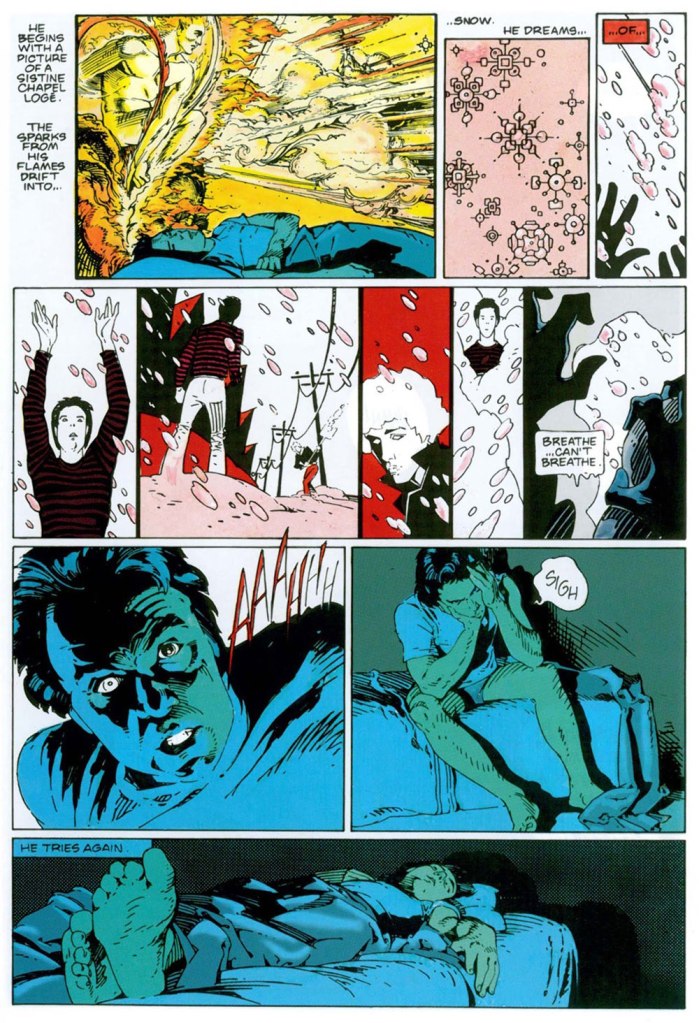
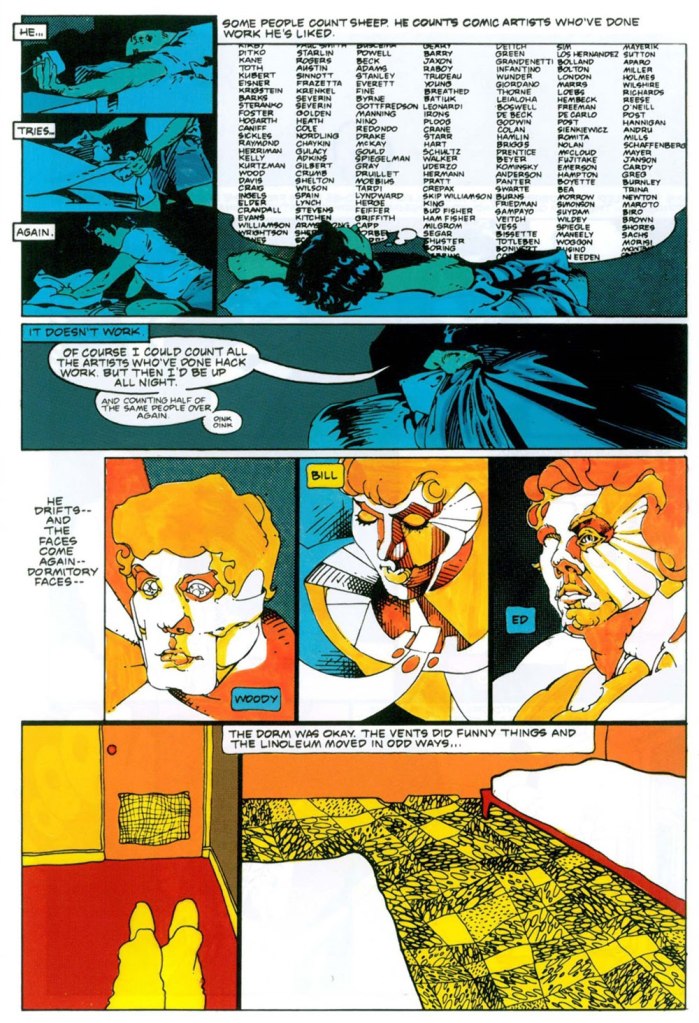
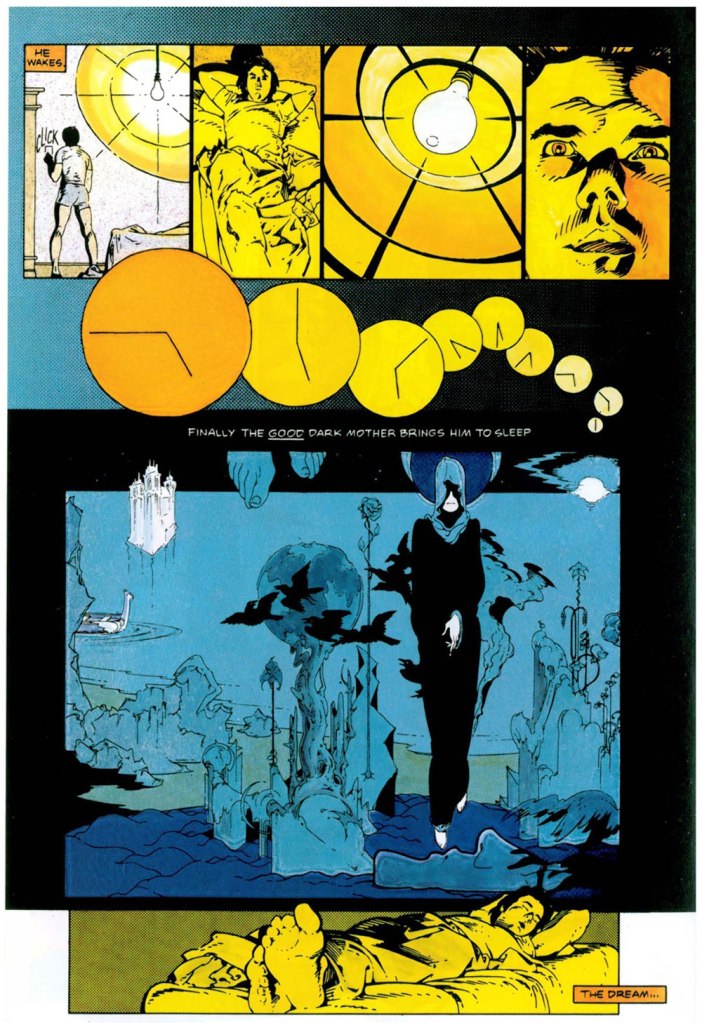
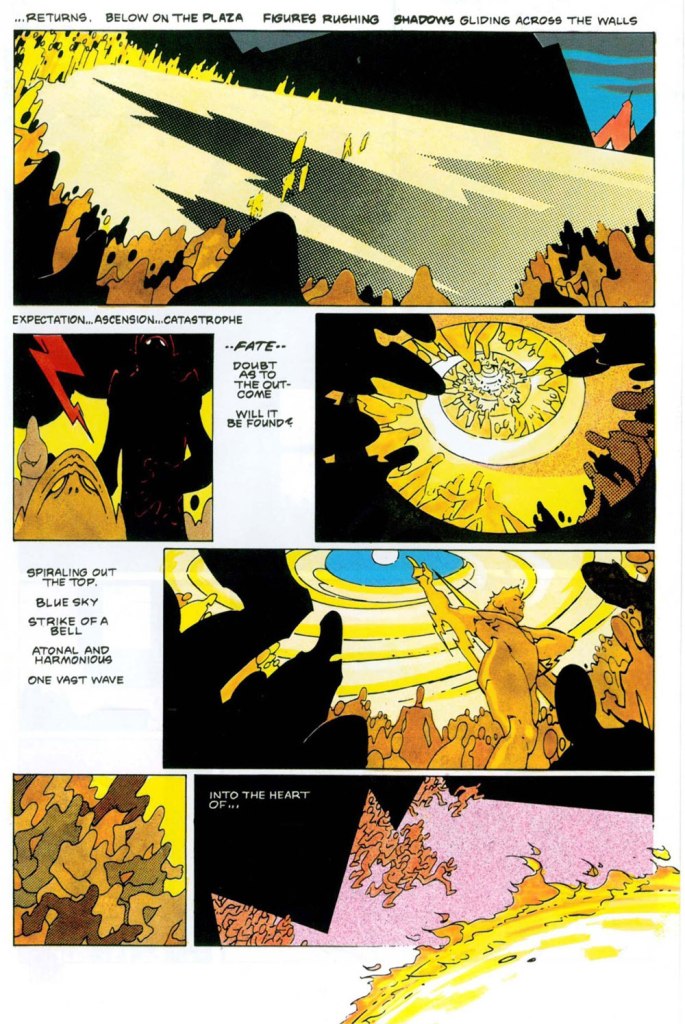
Today we’re running The Insomniac  (originally published in Night Music no. 1, February 1985), one of my favourite Russell stories. It also makes for a great showcase of his artistic abilities as well as his landmark celestial landscapes. His favourite main character, a wide-eyed young man, is present and accounted for, but he’s not nearly as doe-eyed as usual, instead presented as a squinty, vaguely nerdy type, with no classical musculature with a proud Roman profile in sight.

Russell explains: « The Insomniac was conceived in 1979 and realized in 1984. Its walking/dreaming shifts in tone enabled me to work in various visual styles. From the early 80’s sketchbook surrealism to record album covers to photorealism, it incorporated about 15 years of drawing into a 12-age story. »

There’s something Eddie Campbell-esque in these panels of everyday life… As for the aforementioned celestial landscapes, they bring to mind the music of Jon Lucien (for example).

~ ds

*This is not a pro-Neil Gaiman household, unless the cats are hiding their proclivities on that subject.

What’ll you have?: Barthelme and Chwast’s “Sam’s Bar”

« I don’t understand retiring. I don’t know what I’d do. I don’t play golf. I have to sit at a drawing table or else it’s a wasted day. The nature of the work can change here, but I have to be doing something, especially with my hands. » — Seymour Chwast

Nobody really expects those we deem “immortals” to actually live forever… but I suspect some part of us does, or at least hopes so.

From the perspective and pantheon of folks of a certain age and time — let’s say, people born in the 20th century — the ranks have been brutally thinned of late. To name but particularly long-lived visual art masters, recent years have claimed Al Jaffee, Gahan Wilson, Milton Glaser, Steve Ditko, Jean-Jacques Sempé, John Severin, Gene Deitch, Ken Bald

I haven’t yet reached that fateful age when reading the paper largely consists of scanning the obituary column to learn which of your friends (and possibly enemies) have died, but I fully grasp the concept… and shudder in sympathy.

And so on to my point: it’s easy to take genius (or mere talent, for that matter) for granted, and so I generally endeavour to salute valued creators while they’re still around, instead of paying belated lip service to their greatness once reminded of their existence by news of their passing.

For years, I’ve been meaning to devote a post to Seymour Chwast… and dragging my feet. He’s had such a long, inspiring — and daunting — career. But the other day, when Tony Bennett died, aged 96, I took it as a sign not to reserve my tribute for Mr. Chwast’s next birthday (that’s late next month). Here goes.

First, an amuse-gueule. This mute but highly rhythmical piece hails from issue 69 (October, 1977) of Push Pin Graphic, the fabled design studio’s showcase magazine. The issue’s theme is “House Nice”, parodying interior decorating fixture House Beautiful Magazine. Written and drawn by Mr. Chwast.

Design historian Steven Heller explains: « Push Pin’s principal cofounders, Seymour Chwast (b. 1931) and Milton Glaser (b. 1929), two native New Yorkers who met while attending Manhattan’s Cooper Union, brought distinct tastes and preferences — as well as chemistry — to their unique partnership. Chwast savored American comic strips and pop culture while Glaser studied etching in Italy and was passionate for Italian Renaissance painters. The former injected a cartoonist’s abandon into his artwork, the latter introduced a sublime elegance. Despite their formal differences, both shared the conviction that postwar design and illustration should not be limited to prevailing practices — either sentimental realism or reductive simplicity. They rejected rote methods and rigid styles while concocting incomparable ways of transforming old into new… »

The following encapsulates even more succinctly the duo’s boundless contribution: « Seymour Chwast and Milton Glaser are legendary graphic designers who founded Push Pin Studios, where they rebelled against the swiss style establishment – blending illustration with design. » [ source ]

Amen: from my standpoint as an art student back in the early 1980s, I’ll say one thing about Swiss design: that shit was oppressive.

To sidestep the perils of losing my way amidst such a gargantuan topic, I’ve opted to focus on a favourite entry in the Chwast œuvre.

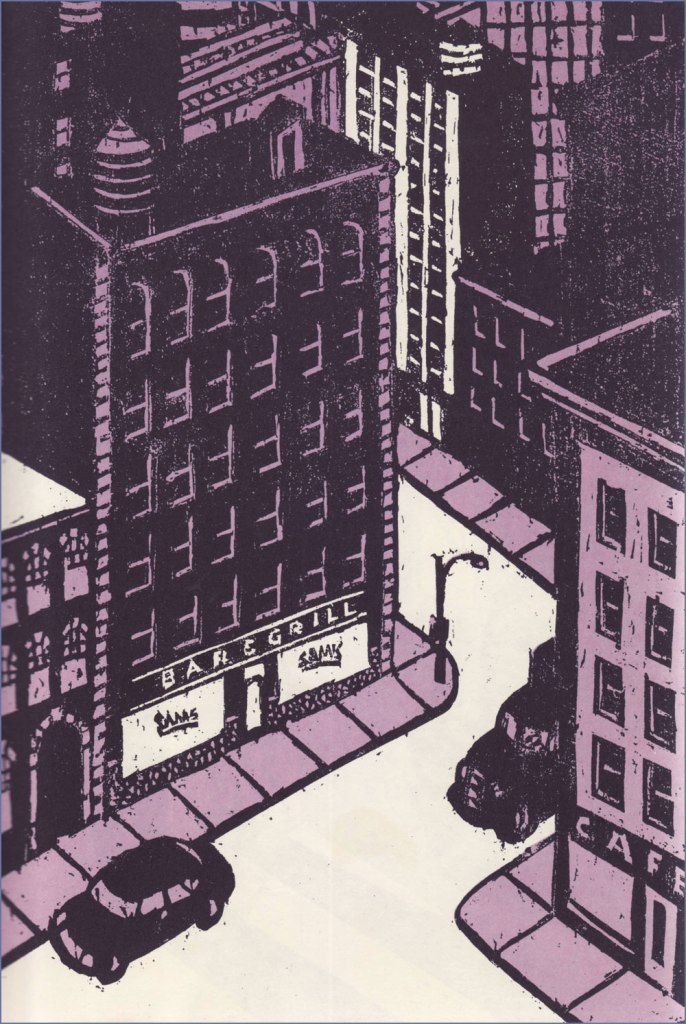
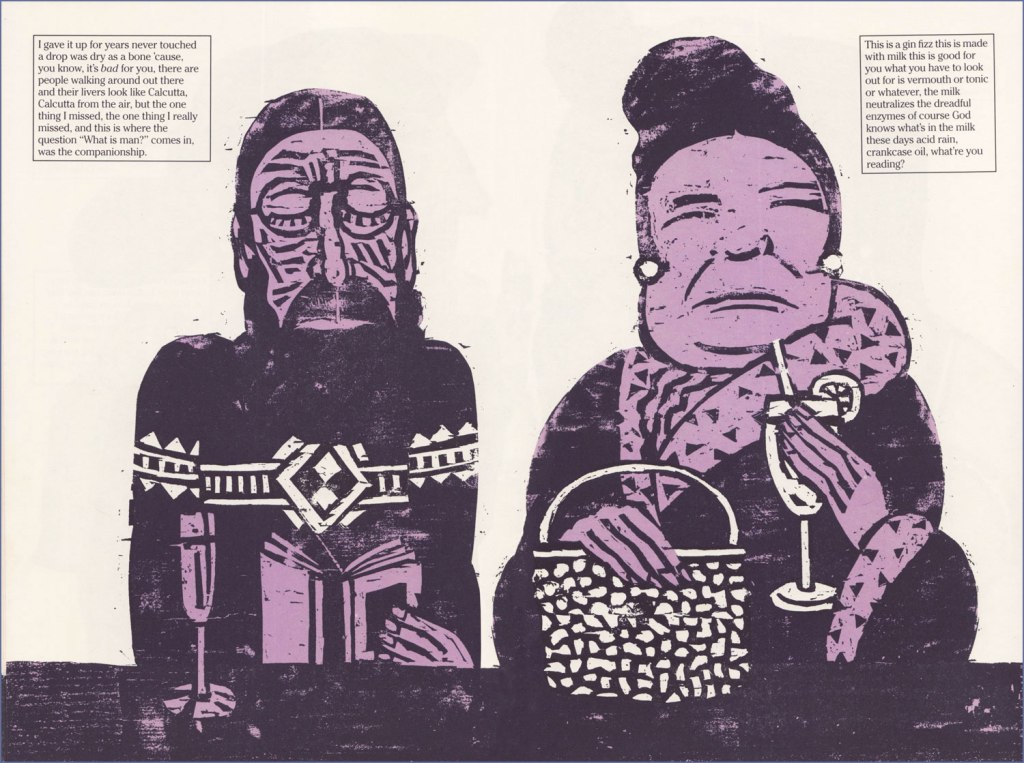
« Another of Chwast’s graphic stories is Sam’s Bar (Doubleday, 1987). Written by Donald Barthelme, it is also a total narrative and pictorial story. It captures in woodcut illustrations one night in a bar somewhere in America, people talking to each other and talking to themselves as the reader goes from one end of the bar to the other. » The book’s intriguing structure would have made it an ideal comic *strip*, in the literal sense.
Ellie says: « So I told the kid May 31, 1989, was the cutoff date, as of May 31, 1989 she’s off the payroll whether she’s finished goddamn college or has not she’s finished goddamn college. So she tells me she’s thinking of transferring to UCLA and that’s going to set her back two semesters. So she can get fencing. Where she is they don’t have fencing. I said I’ll rent you an Errol Flynn movie. »
Trish and Calvin.
Hal and Germaine.
Two lawyers, Mario and Saul. Someone ought to make a show about a lawyer named Saul.
The book’s handy endpapers, featuring “The Regulars at Sam’s Bar“.

I wouldn’t want to short-change Barthelme’s contribution… as a collaboration, this truly works a treat. Here’s an amusing passage I encountered on the subject of this routinely misunderstood author: « Donald Barthelme was, by his own design, a hard writer to categorize. Even at the height of his fame, in the late 70s and early 80s, there were readers who just didn’t get him, or suspected his work was a hoax or a joke they weren’t in on. At The New Yorker, where he was a regular contributor for decades, clerks in the library were expected to type up on index cards brief summaries of every article, fact or fiction, that appeared in the magazine. Barthelme’s cards sometimes contained just one word: “gibberish.” » [ source ]

One more for the road? I couldn’t leave out Chwast’s adorable cover illustration for issue 57 (Why People Keep Dogs) of Push Pin Graphic, from 1972.

Many happy returns and thanks for the inspiration, dear Mr. Chwast!

– RG

Other Folks’ Dreams: Jess Reklaw’s Slow Wave

« The man who never dreams, goes slowly mad. » — Thomas Dolby

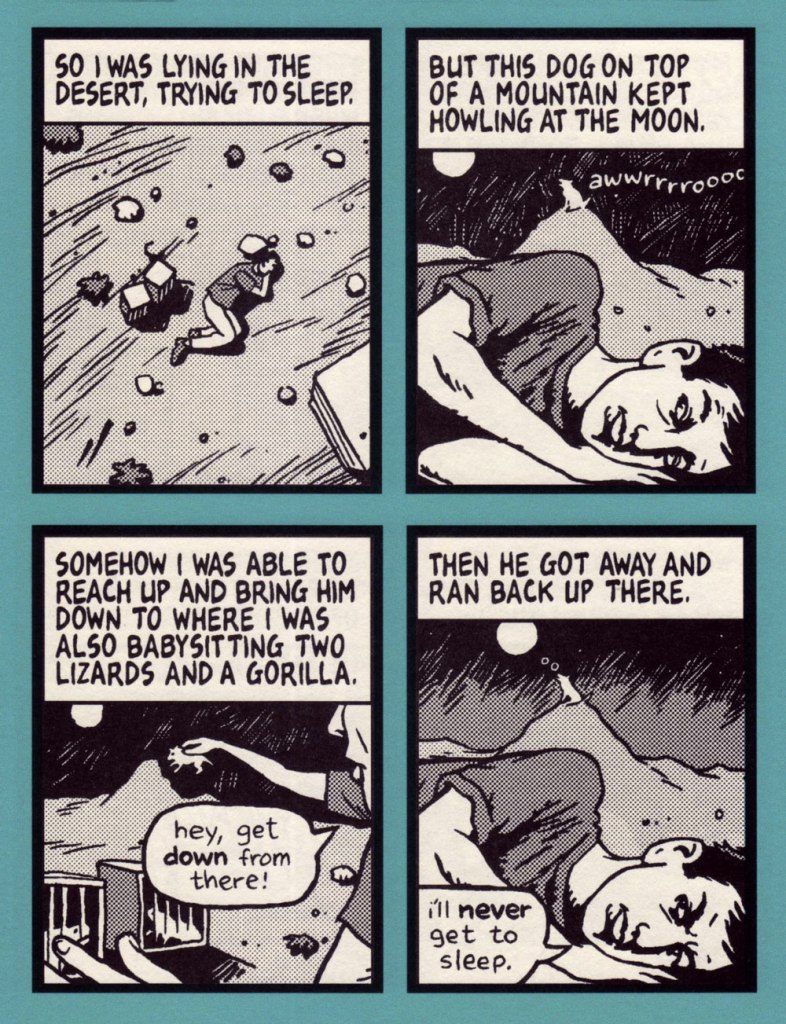
Jesse Reklaw‘s Slow Wave* (1995-2012) was both an early webcomic and a syndicated strip that ran in about a dozen alt-weeklies.

Here’s a historical rundown that Reklaw provided in 2005, musing on the feature’s genesis and its initial decade:

« While I was an undergraduate at UC Santa Cruz (1993-1995), website technology wobbled out into the world. Entrenched in the DIY zine community that had been liberated by cheap photocopies and desktop publishing, I became obsessed with this new independent media opportunity. With help from Ranjit Bhatnagar, I learned how to code HTML, and started an online art gallery at UCSC. I was juggling a double major in art and computer science, so it seemed like a natural fit.

Between classes (and math tutoring, and being an RA, and band practice), I was drawing comics. In order to focus on my drawing, I stopped writing my own material and instead asked friends for stories to draw: they could be anecdotes, fiction, dreams, whatever. All the stories were fun to draw, but I felt an immediate connection to the dreams. They had compelling imagery, their own logic, and a natural dada-like humor. Drawing them was like being there in the dream, experiencing the mind of the dreamer, but also realizing my own perceptions through theirs. It was like floating in that infinite reflection between two mirrors.

In 1995 I moved across the country to icy New Haven, Connecticut for graduate school. I also continued to draw comics, now exclusively dreams that I got from friends and family. I started posting the Slow Wave strip because I wanted regular, updated content for my personal website (called nonDairy.com back then). At the time, everyone was saying “Content is king.” I coded my pages in simple programs like notepad and simpletext (which I still use), building my site in secret, often in the empty hours between midnight and morning. I led a double life as a computer scientist and a cartoonist. Along with the site, I put up a website form to solicit more dream material. A few trickled in at first, but as the Web grew, this became the major source of dream submissions. After I’d drawn about twenty strips, I got the idea to submit them to weekly publications. I found the website of the Association for Alternative Newsweeklies, and discovered a wealth of newspaper addresses and contact info. They seemed to be served from a database, and you could view the records one screenful at a time. Not content to just copy down the information, I wrote a web-spider that downloaded every page, parsed the text from the HTML code, and “reverse engineered” the database for my own use. I sent out about sixty submissions, and was totally surprised to get picked up by two papers: The Rocket in Seattle (now out of business) and the Philadelphia Weekly (who dropped me after a month). It was encouragement enough to keep me going. I probably would have gotten bored with the web-only comic strip after a couple years. The internet had moved on from content anyway, and designers were more interested in animated GIFs and other dancing baloney.

I continued to self-syndicate, and was picked up by enough papers that it seemed possible to make a career out of it. I dropped out of grad school in 1998 (didn’t really like being a Yalie anyway), and started cartooning full time. I also had enough strips now that I thought there should be a Slow Wave book collection. I proposed the idea to a lot of comic book publishers, but had little luck there. I complained on my website about not being able to find a publisher, and within a week was contacted by Kendra Crossen Burroughs, an editor at Shambhala. Kendra had apparently been reading the strip online for a while, and convinced Shambhala there should be a book. Dreamtoons came out in 2000, collecting about two-thirds of the strips I’d drawn so far (not including the one above). Dreamtoons is currently out of print, but there’s lots of used copies floating around out there**. »

An example of how Reklaw sollicited thematic contributions to Slow Wave. It’s safe to suppose that none of the contact details are still relevant, except in dreams.
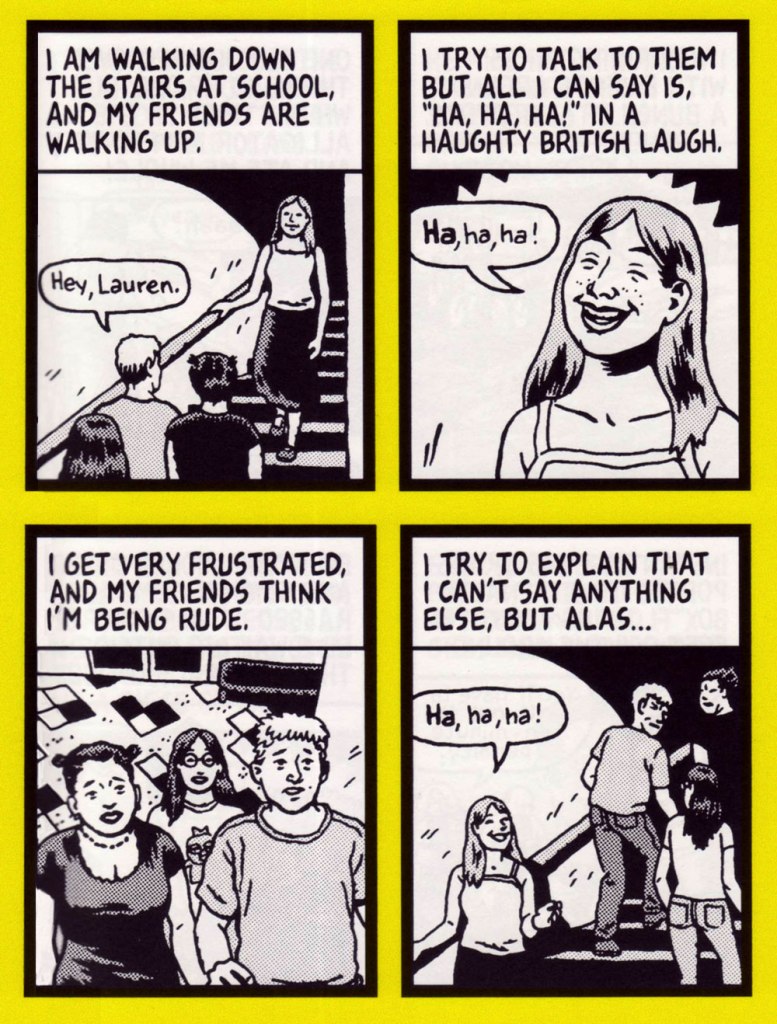
From a dream by Lauren Fowler.
From a dream by Connie Liu.
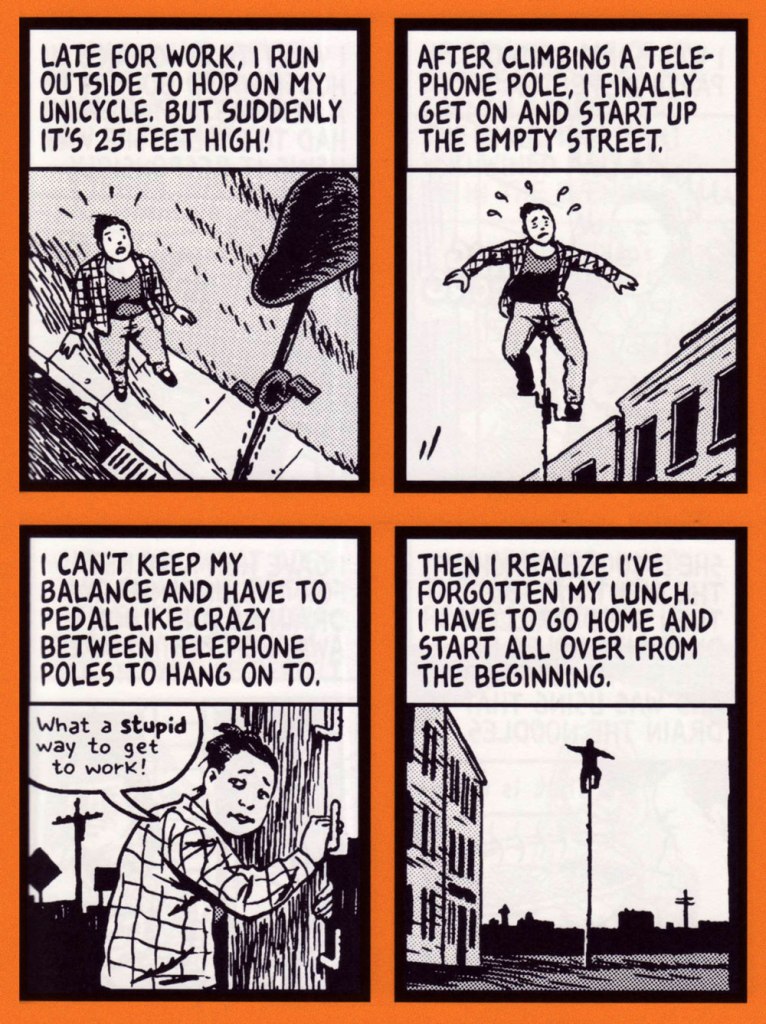
From a dream by DW Wissinger.
From a dream by K. L. Wanlin.
From a dream by Paul J. Lurie.
From a dream by Pierre Dalcourt.
From a dream by Isaac Cates.
From a dream by Liz Kuzmeski.
From a dream by Eli Bishop.
From a dream by Sinnicam NodNarb.
From a dream by Zach Archer.
From a dream by Ryan Budge.

In the ensuing years, poor Jesse’s had, even by cartoonist standards, a terrible time of it, besieged as he was by both physical and mental health challenges. It’s not much of a stretch to surmise that cartooning saved his life, and he’s hardly alone in this. Check out this sobering Comics Reporter interview, (circa 2014) and you’ll get some sense of what I’m alluding to.

-RG

*Slow-wave sleep (SWS) refers to phase 3 sleep, which is the deepest phase of non-rapid eye movement (NREM) sleep, and is characterized by delta waves (measured by EEG). Dreaming and sleepwalking can occur during SWS. SWS is thought to be important for memory consolidation [ source ]

**Nearly twenty years on, cheap copies are still bountiful.

Retief of the Mountain of Red Tape

Looking at my shelves, one would be inclined to believe that I am a huge Keith Laumer fan, which wouldn’t be really true. A few of these books have Richard Powers covers (always worth collecting, even if one is not particularly interested in reading the actual book), but the rest have mostly been purchased after I encountered Laumer’s Retief character… in comic book form.

Which is not to say that Laumer’s Retief series is not worth a read, especially if you like a satirical approach to bureaucracy with a geo-political bent. Jame Retief, diplomat for the Corps Diplomatique Terrestrienne*, is the pragmatic voice in an organization mostly focused on excessive paperwork, meaningless awards, and pompous exchanges (in proper attire, naturally) between planetary representatives, all of this governed by a complex system of protocols and other galimatias. Anybody who’s worked for any kind of big company will be able to relate. Laumer served a stint as a vice consul for the United States Foreign Service, so doubtlessly he accumulated a lot of material for this. The novels rarely ascend beyond amusing, though, and the funny bits sometimes feel like somebody’s trying to be Conscientiously Funny.

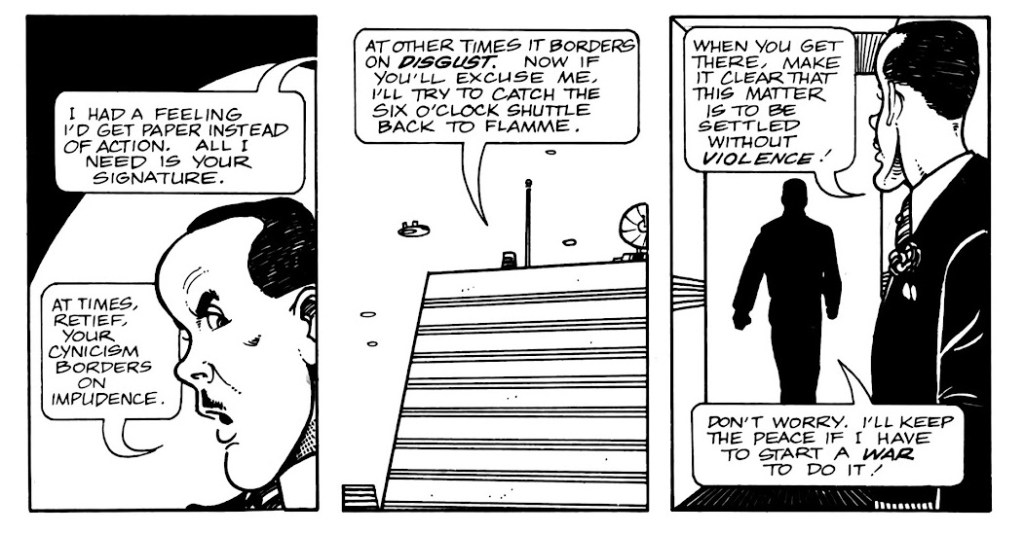
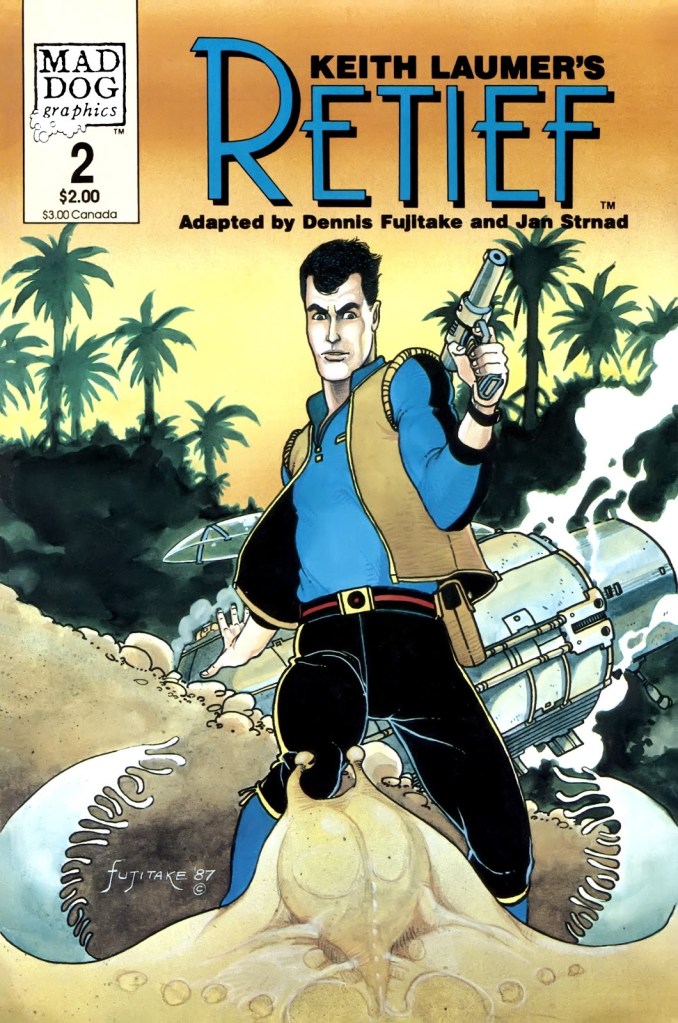
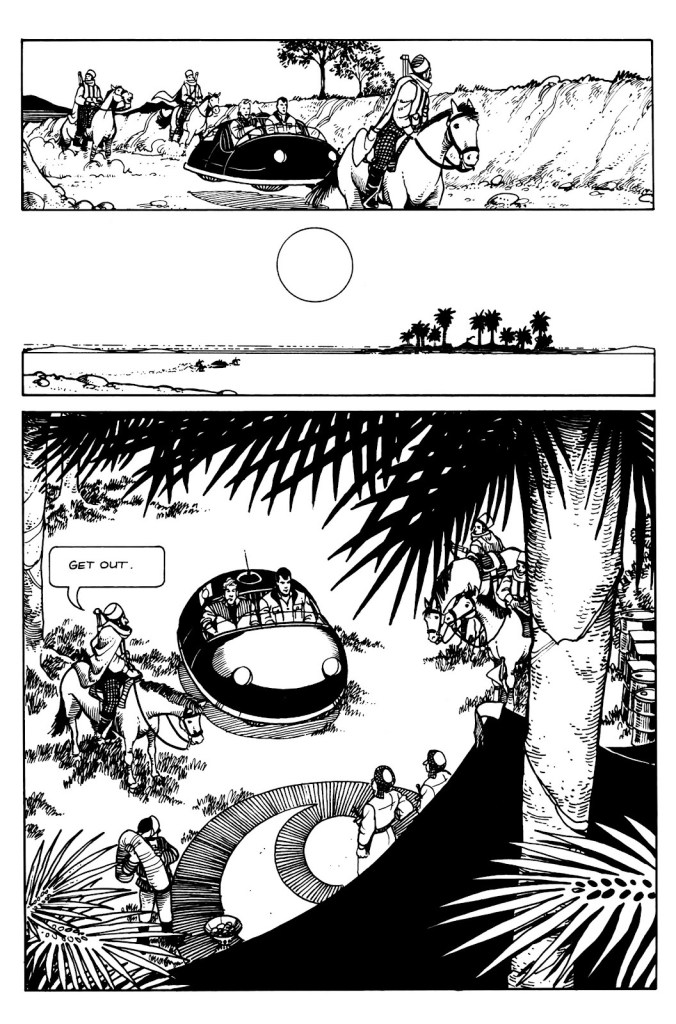
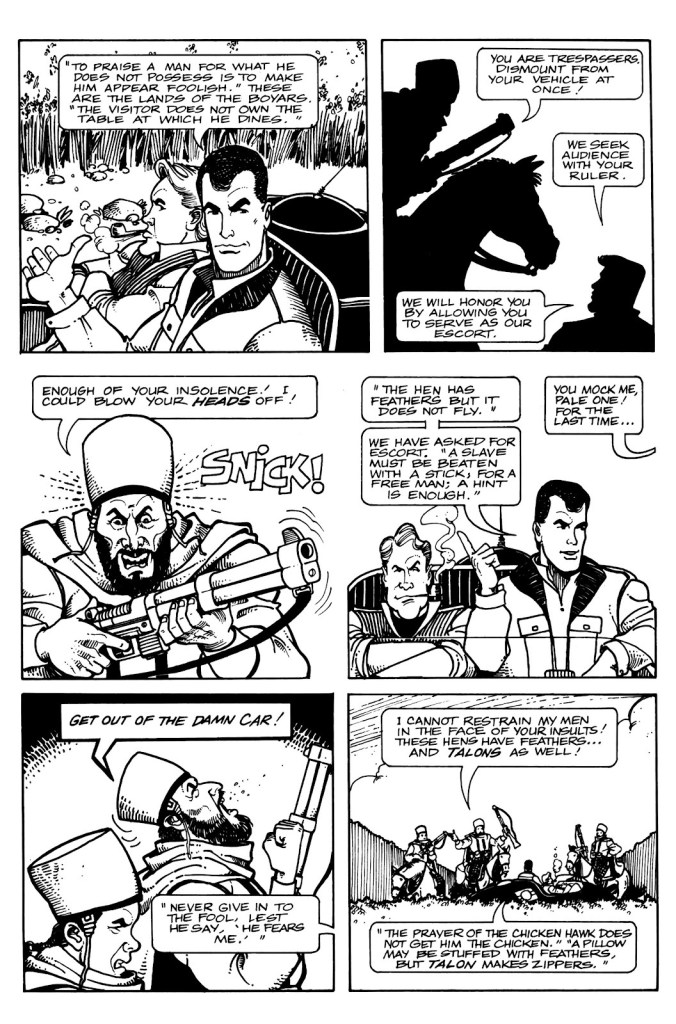
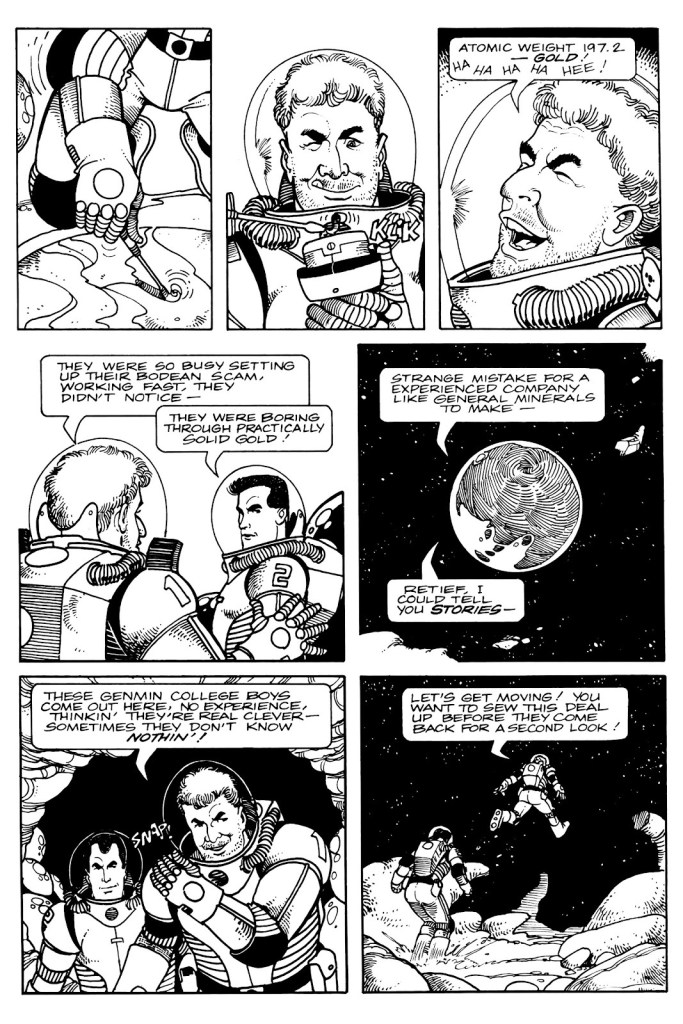
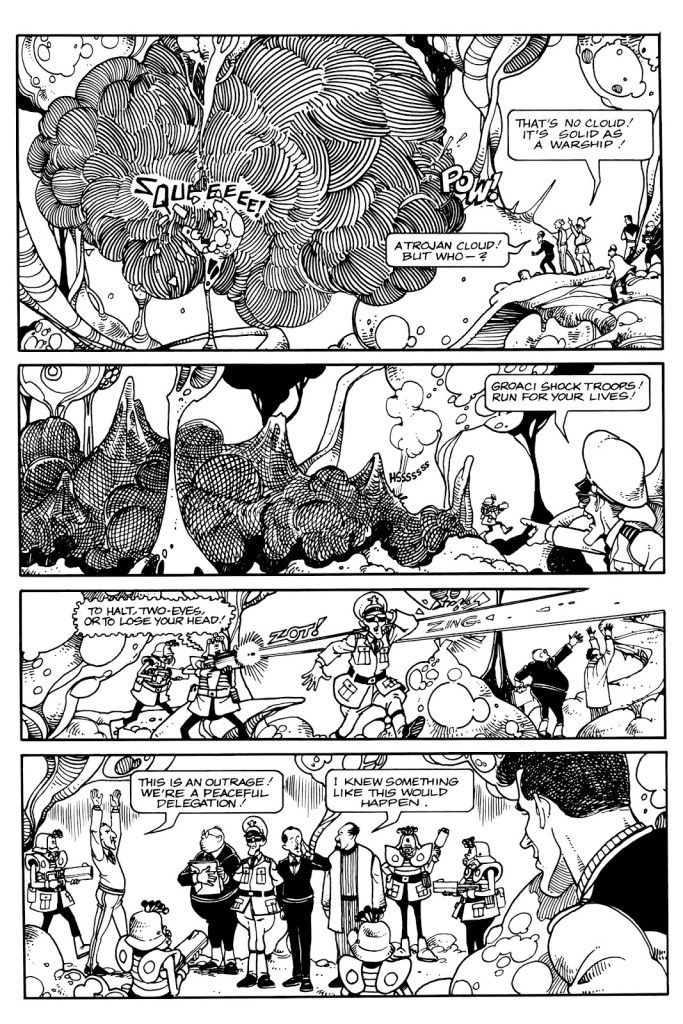
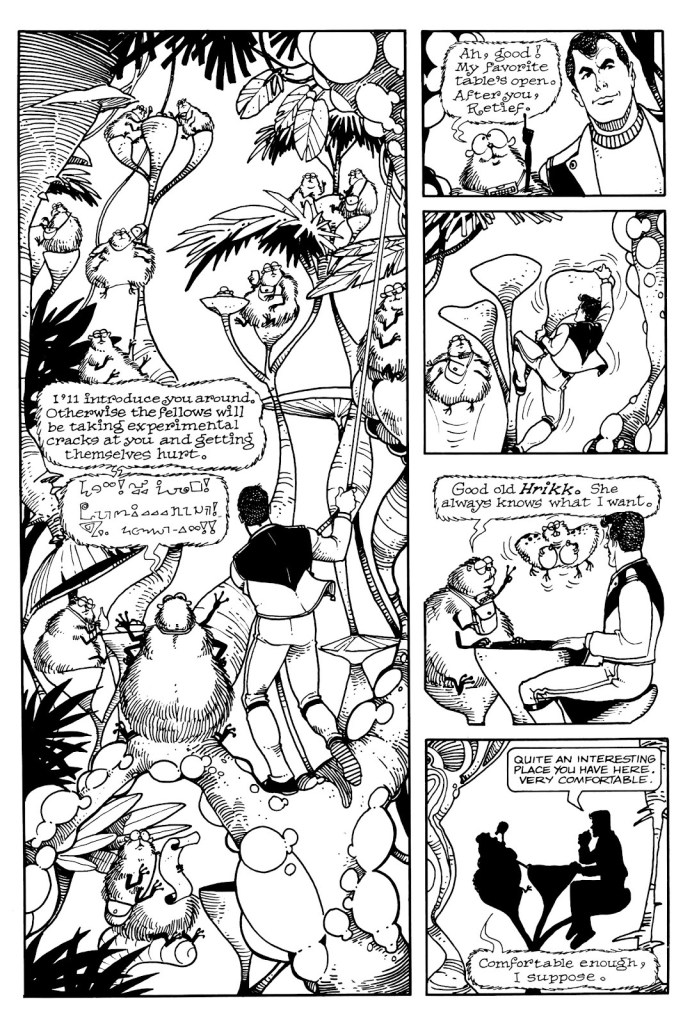
Writer Jan Strnad, who has a long list of credits under his belt, having worked for pretty much all major comic publishers as well as contributing articles to The Comics Journal and writing novels, and artist Denis Fujitake** adapted several Retief stories into comic book form in the late 80s. These were published by Mad Dog Graphics. This team did such a bang-up job that I by far prefer them to the Laumer material, and no small element of this adaptation’s success is the clean art by Fujitake that brings to vivid life these characters. There were 6 great issues overall (1987-1988), collected in 1990 into Retief!: The Graphic Album.

Let’s have a look at some of my favourite moments. All of the below are excerpts from Keith Laumer stories by Strnad and Fujitake, drawn by Fujitake, and lettered by Gary Kato.

Apparently Laumer himself has always pictured Retief as having dark hair, so one might even say that these comics are closer to his vision than, say, the covers of Retief novels published by Baen Books, where he’s a sort of ditsy blonde*** with a lot of guns and mostly undressed women. I own a few of these… and yuck, one might as well stick to the electronic version.

Keith Laumer’s Retief no. 1 (April 1987)
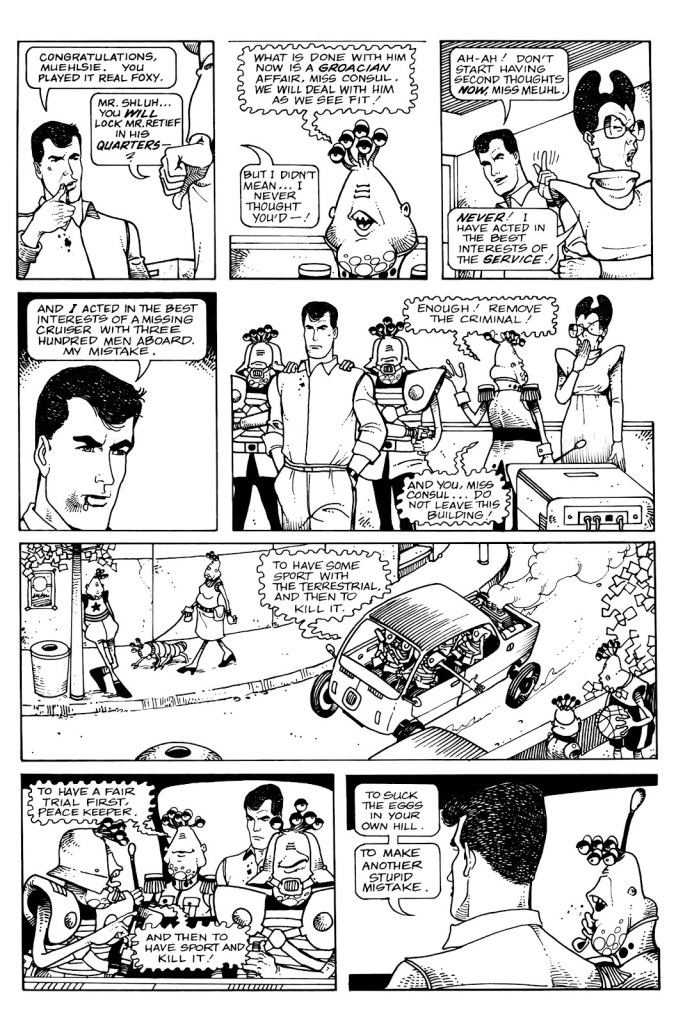
Page from Policy. Issue number 1 introduces us to the sneaky and unscrupulous Groaci, whose representative Mr. Fith has his fingers and 5 eye appendages in all pies. There are plenty of action scenes in Retief, but Fujitake’s art makes an even ordinary conversation fun to watch.
One of the closing pages from Policy, in which Miss Meuhl satisfyingly suffers a slight breakdown (when your values clash with reality, it’s generally an unpleasant process).
Keith Laumer’s Retief no. 2 (June 1987)
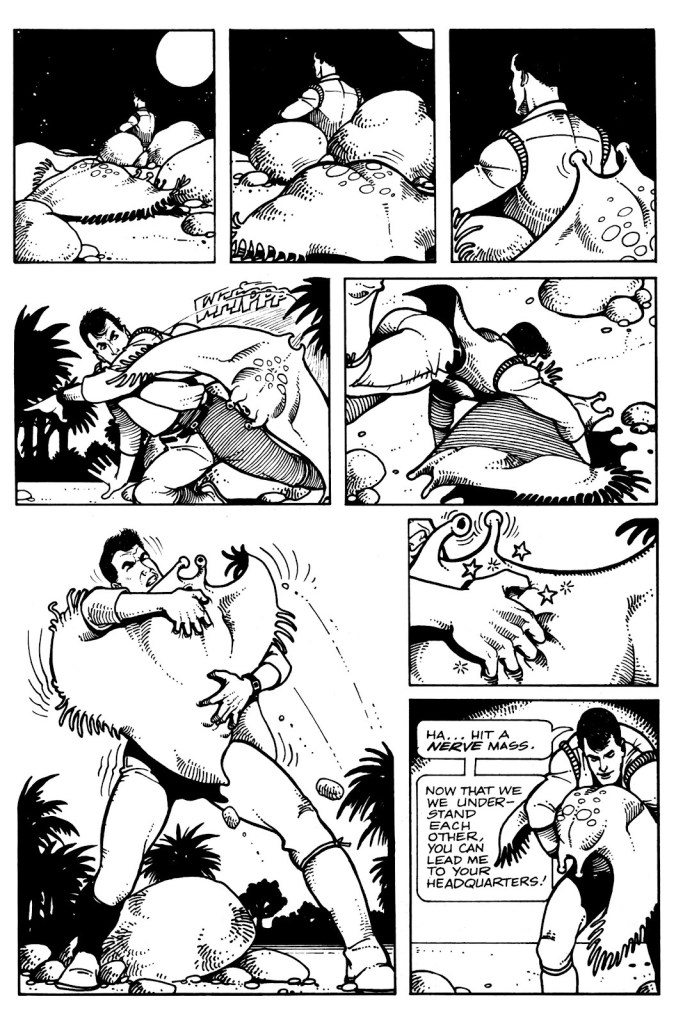
Shades of Brain Bats of Venus, anyone? Page from Sealed Orders, from issue no. 2.
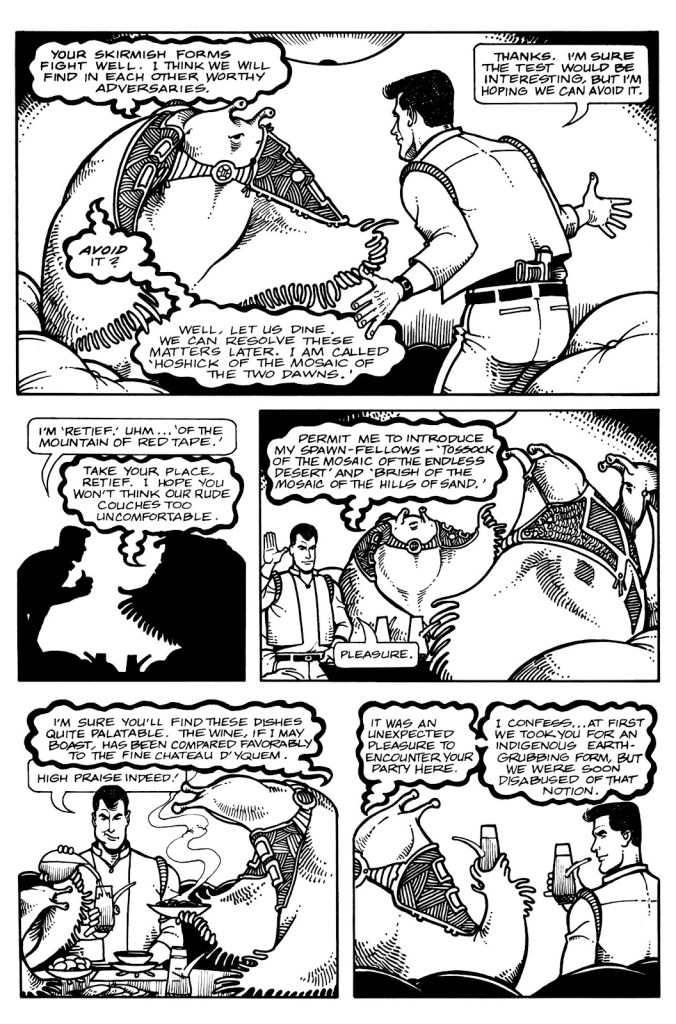
Another page from Sealed Orders, in which Retief is shown to be a bon vivant who can appreciate alien fare.
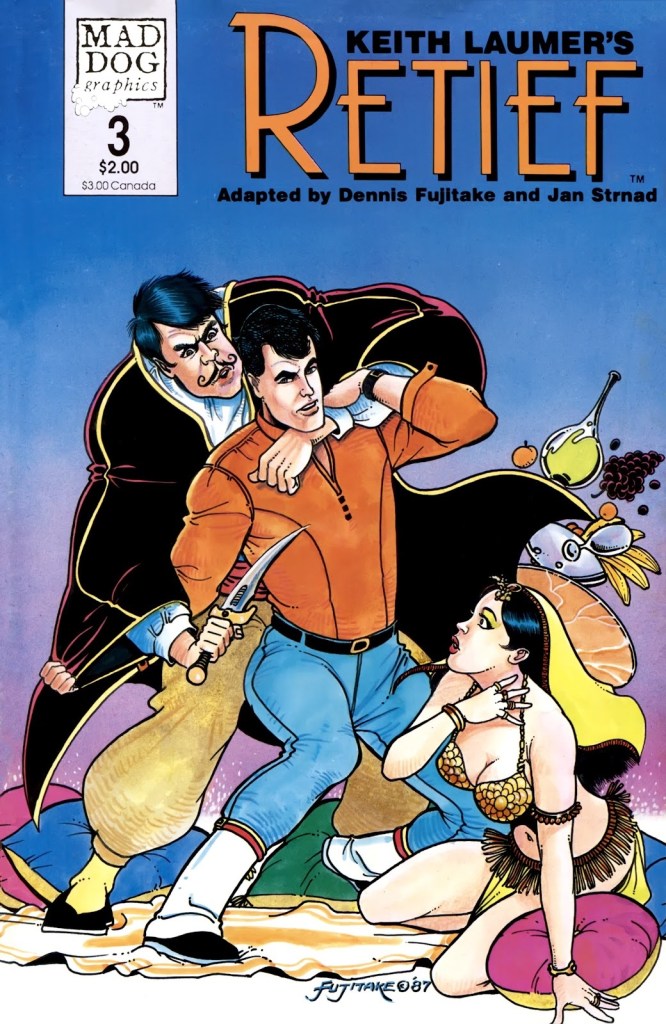
Keith Laumer’s Retief no. 3 (August 1987). One can’t say the series abounds with buxom women (or women at all, really – aside from the secretary who lost her marbles in the first issue), the Corps Diplomatique Terrestrienne is manned entirely by, well, men. Fujitake draws beautiful babes, though, few and far and between as they are.
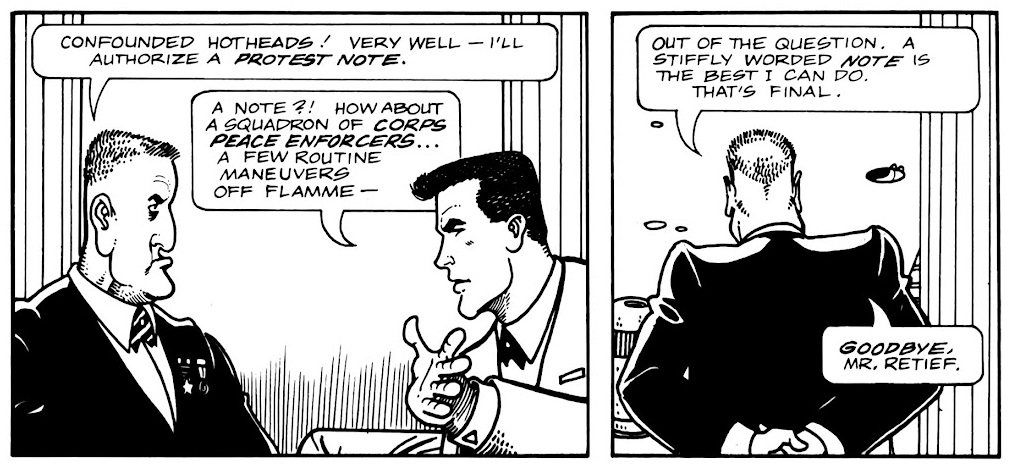
Page from Protest Note, published in no. 3. Retief visits a variety of environments, and Fujitake draws them all with equal conviction.
A fun page from Protest Note with some idiomatic banter.
Page from Saline Solution, published in Keith Laumer’s Retief no. 4 (October 1987). Retief may be a rather refined sort with a taste for fine wine and his own brand for diplomacy, but he does not hesitate to mingle with the plebeian masses – or side with the underdog, which Sam here is a representative of.
Page from Ultimatum, published in Keith Laumer’s Retief no. 5 (January 1988). It must have been a lot of fun to design aliens from a description in a short story, and give them speech bubbles to match (the advantage of hand lettering which, as mentioned previously, is handled by Gary Kato).
The pompous Mr. Magnan (the one in the sort-of baseball cap) has a long stick up his ass, but he’s not without charm, whereas Mr. Ambassador entirely deserves the rag in his mouth (and more).
Page from The Forest in the Sky, published in no. 6.
The hamster-like critters of The Forest in the Sky are adorable.. and voracious, especially their youth.

~ ds

* In French, ‘Terrestrienne’ is feminine (if it were an actual word… ‘Terrestre’ would be the right one) and ‘corps’ is masculine, so there’s a grammatical problem in its title.

** Strnad has also collaborated with Fujitake on Dalgoda, published by Fantagraphics from 1984–1986, which will be the subject of another post as soon as I reread the series. Any day now!

*** unsurprising, given that Baen’s Retief cover model was blue-eyed, blond 1980’s hunk Corbin Bernsen, whom you may recall from L.A. Law.

P.S. There is another comic adaptation from 1989, published by Malibu, with scripts by Bruce Balfour, pencils by Darren Goodhart, and inks by Alan Larsen. One word – ew.

Art by Darren Goodhart.

Singing Sad Wires of Council House Mystics*

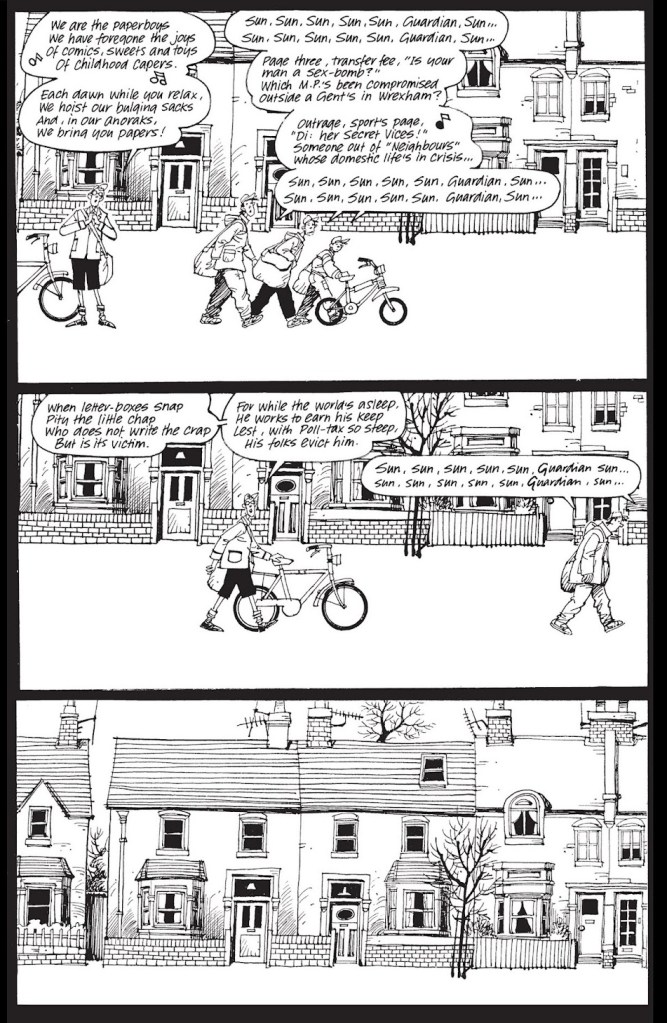
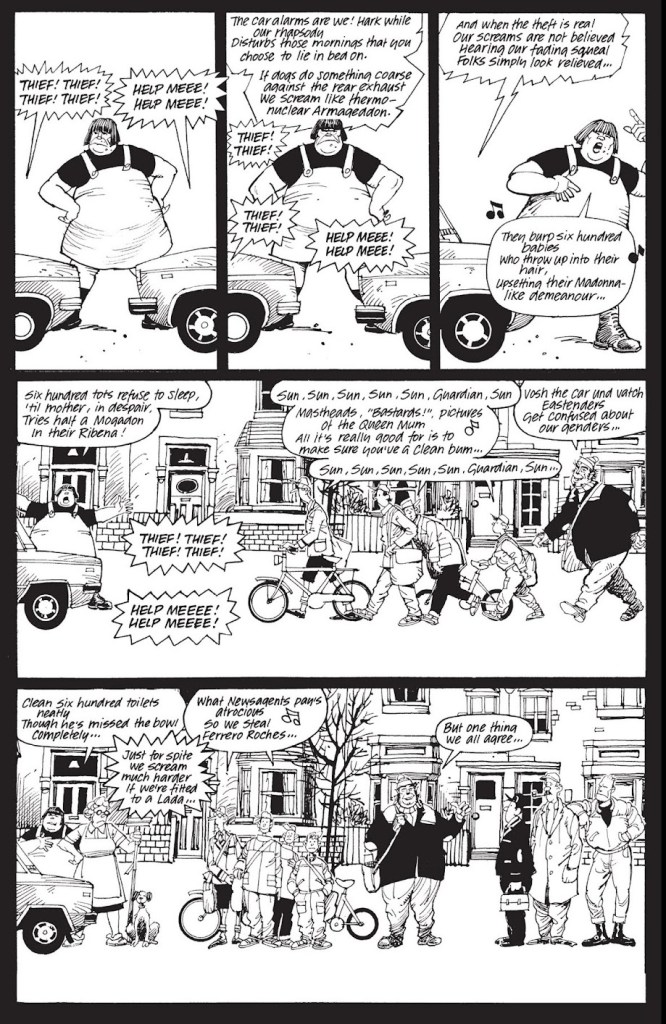
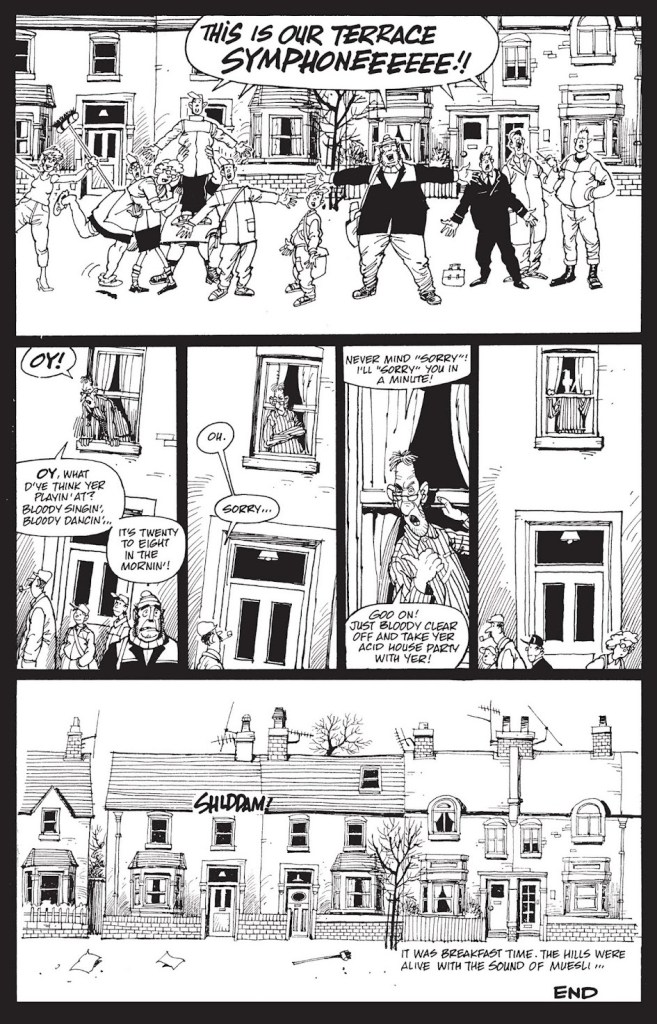
Something about the current spring weather, with its contrast between the warm wind perfumed with chlorophyll and the trash liberated from its snowy prison and strewn about artistically, reminded me of 6-page story Song of the Terraces. Originally published in A1 no. 4 (1990, Atomeka Press), it is officially part of Alan Moore and Steve Parkhouse’s Bojeffries Saga, and as such was also collected in the The Complete Bojeffries Saga published in 1992 by Tundra Press (and reissued in a new collection in 2013 by Top Shelf Productions).

I don’t know if it’s a universal rule, but it seems that people either love to read plays, or hate the very idea. I belong to the former category, and have happily spent my young years on a steady diet of plays. Sometimes these included musical interludes, and I was not in the slightest bit perturbed by being given basically lyrics with some details about the mood of the singers, but no melody.

Perhaps that is part of why I am so fond of Song of the Terraces, or perhaps it’s the familiarity of this scene – its row of lovingly depicted council houses (Parkhouse has a really lovely, fluid style) and its hodgepodge of denizens in various states of spiritual and physical dishevelment are part and parcel of British shows I’ve watched and loved. Be as it may, I find the following tremendously endearing.

This interlude features two characters from the mighty Bojeffries family line – Raoul (the werewolf) and powerful but lonely Ginda – but otherwise is not particularly linked to any storyline.

With apologies to Gilbert & Sullivan, no doubt! That and the sweet but scary ladies of Last of the Summer Wine.

I’ve talked about the Bojeffries Saga a bit in Tentacle Tuesday: Adventure and Levity, if you’d like to know more about its characters.

~ ds

*Time knows no limits for days such as these.

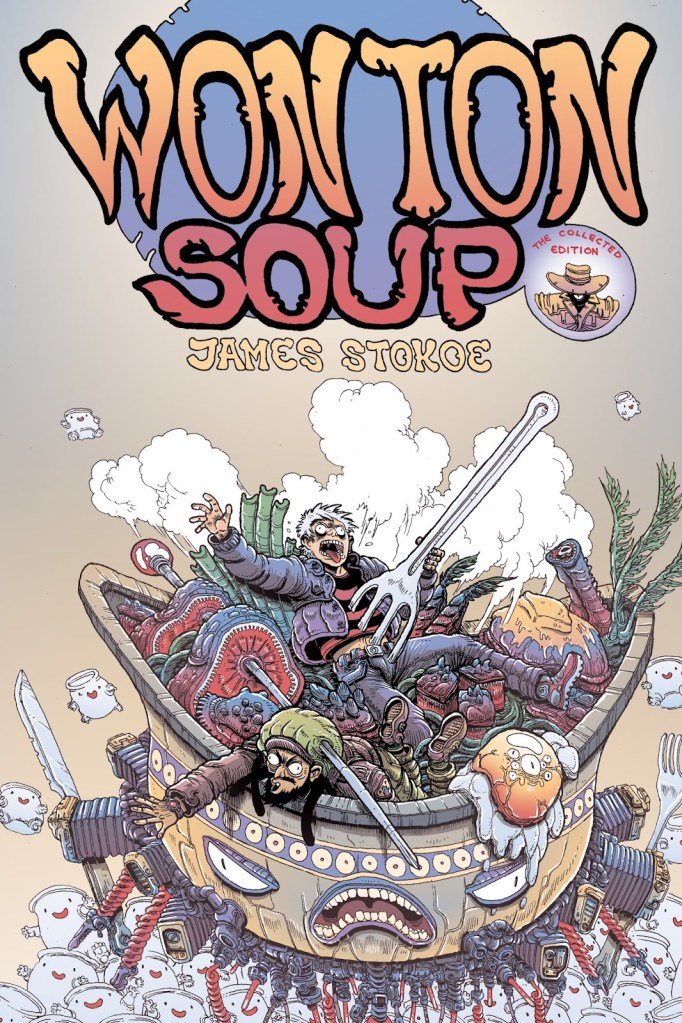
Out of a Frying Pan and Into the Fire: Wonton Soup

Today I’d like to feature a (chunk of) story by James Stokoe, a contemporary Canadian artist. As is the case in many instances, I discovered his work when I spotted Wonton Soup in an excellent comic book shop in Montréal (now, alas, permanently closed — we miss it and its kind owner). Wonton Soup is in black-and-white, which hides Stokoe’s strength (or weakness, depending on how you feel about this aesthetic) – his liberal use of bright colour gradients.

A splash page from Orc Stain, which currently stands at 7 issues, with more having been promised in 2015 and still eagerly awaited by fans of the series. It’s too bad, I’d love to know what happens to the protagonist…
Stokoe also often uses this combination of lime green and purple, anathema to some artists.

Unlike his close friend comics artist Brandon Graham, whose style is sort of graffiti-ish (not that all graffiti have the same art style, obviously), Stokoe favours tons of detail on everything. Given that he’s often drawing some sort of monster and colouring all of that in (what could be argued) rather garish fashion, the overall result often looks like somebody’s grotesque fever dream.

However, going back to his earlier work, one finds a more stripped-down style without the tons of cross-hatching. Case in point – the aforementioned Wonton Soup, published between 2007 and 2009, and collected into one book (Wonton Soup: Big Bowl Edition) in 2014.

The blurb on the back describes it as ‘[something] that can be pitched in high concept terms as Iron Chef meets John Carpenter‘s 70’s comedy Dark Star‘.

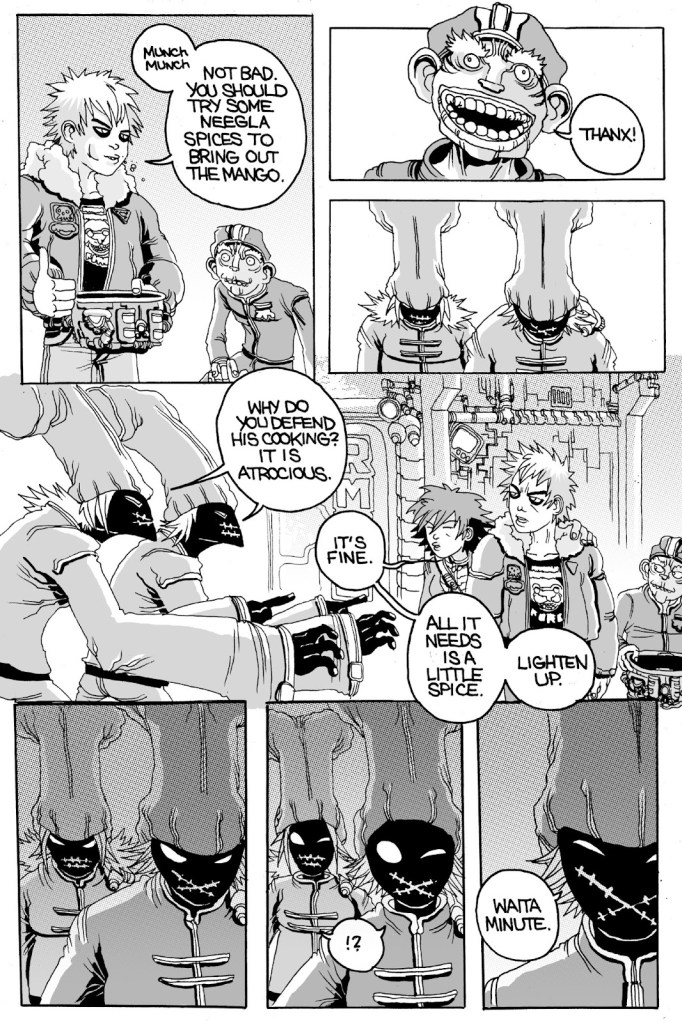
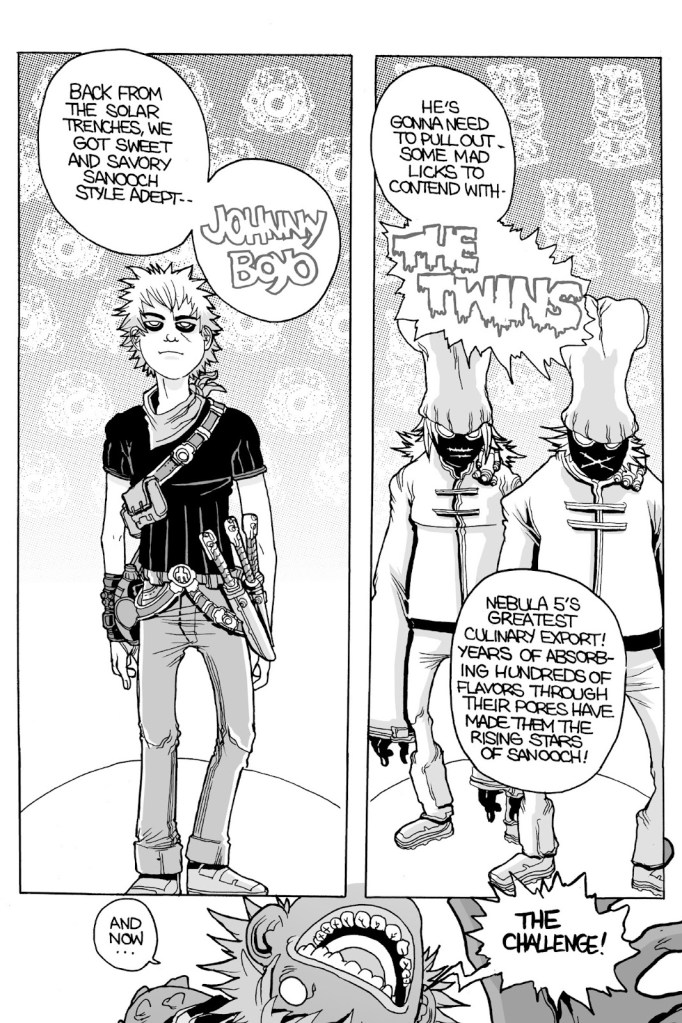
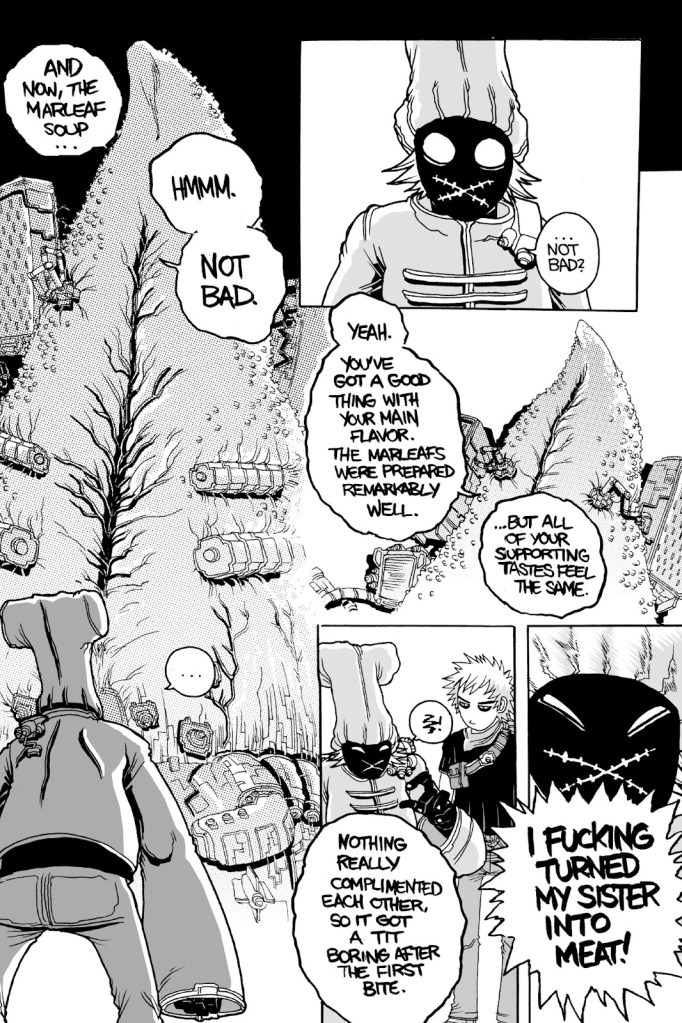
I love made-up food, which is something both Stokoe and Graham’s worlds are rich in, so of course this series was right up my alley of street snacks. Not all of it is great, and the sexual exploits of Deacon, the co-pilot of our ‘space trucker-cum-chef’ protagonist, can get weird, to say the least (I could live without the whole storyline about the sex bear, frankly), but it still makes for really fun reading. Here is my favourite chapter (quite abridged and subsequently summarized). Is this over-the-top? Absolutely. Having recently watched a few episodes of recent Iron Chef, though, I can say that the latter is more bombastic than a competition between a space trucker and hive mind Twingos from Nebula 5, with a giant omniscient tongue for a judge (a vast improvement over judges in Iron Chef, frankly — where do they find these people?)

It starts with Johnny Boyo visiting his old school for chefs, which he quit a year ago to travel and get a taste of what’s out there on other planets….

When he comes upon a student forcibly evicted from one of the kitchens for having prepared a particularly lacklustre mango chutney chili. Jonny catches the bowl that’s flung after the body and tastes the chili —

“I remember you!” exclaim the Twins.

First refusing to participate in the challenge, Johnny reconsiders (after some encouragement from his old teacher).

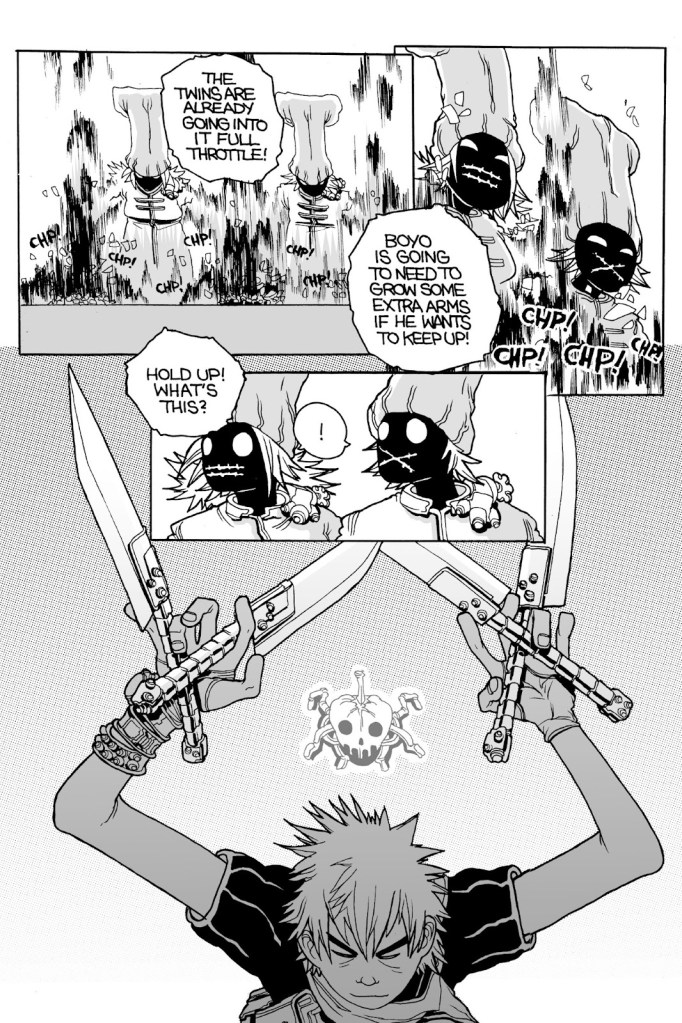
The Twins are faster and fancier, but Johnny has some tricks up his sleeve (or in his holster, at any rate).

One of the twins decides to sacrifice his delicious sister (years of food absorption through pores marinated her deliciously!), but does this help him overpower his adversary?

And there you have it. If you’re of the cross-section of people who love food, comics, and are not averse to vulgarity, I recommend giving this collection a go.

~ ds

Michael Dougan, From Houston to Tōno

« I’ve never been to Texas but I’ve heard Willie Nelson Sing. » — Mark Ballard

I’ve just heard of the recent, untimely passing of cartoonist Michael Dougan (1958-2023). Well, perhaps former cartoonist would be more accurate, but if so — he said his piece, made his mark, and moved on — and that’s cool. But can cartooning truly ever be left behind?

Dougan made his début in comics on the back cover of my very favourite issue of Weirdo, no. 17 (Summer 1986, Last Gasp), which also housed my pick for Robert Crumb‘s greatest short-form achievement, The Religious Experience of Philip K. Dick, and a cover among his finest *and* most provocative. See both story and cover here!
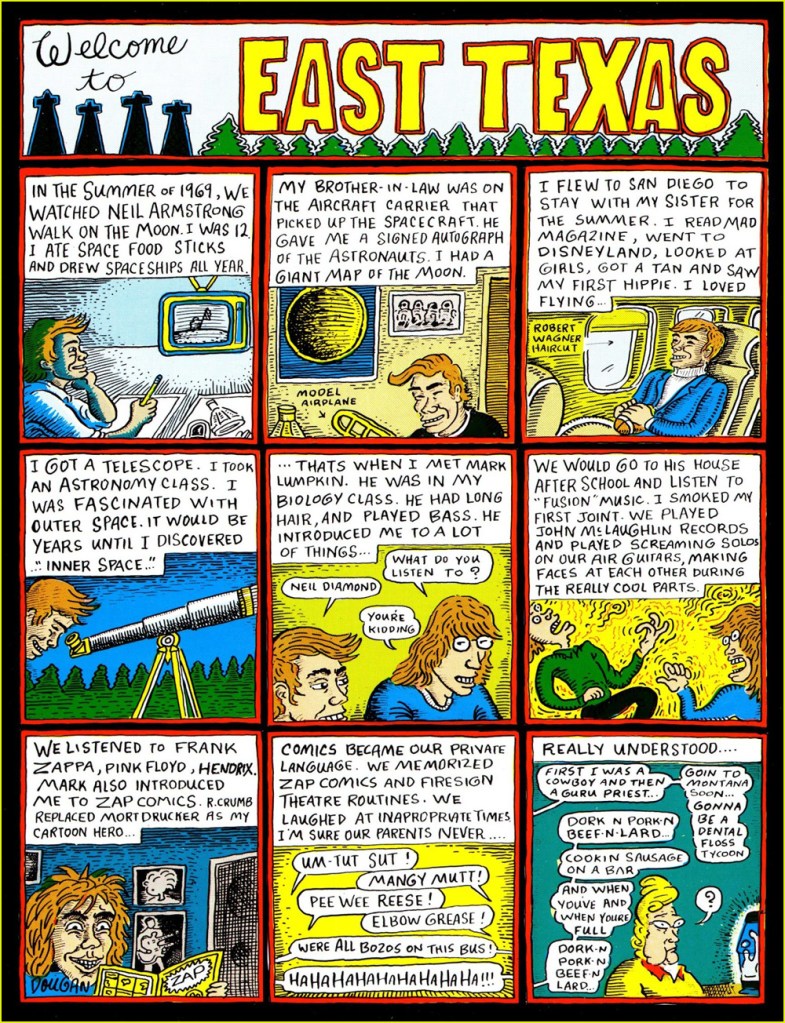
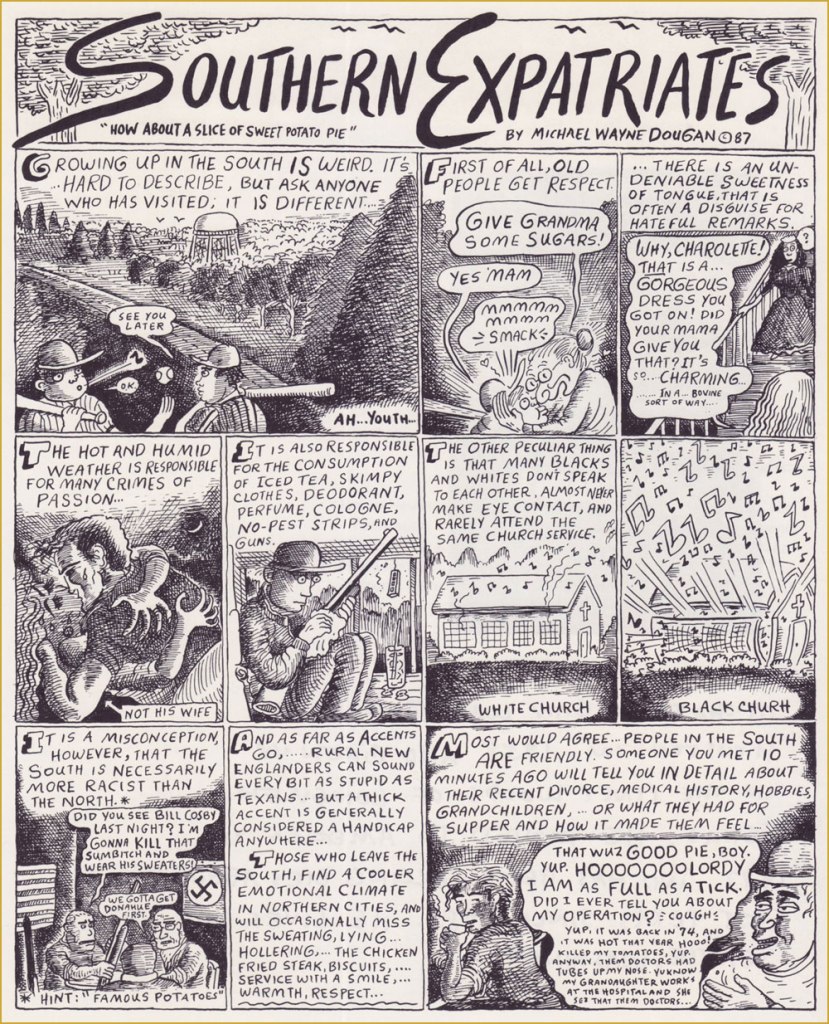
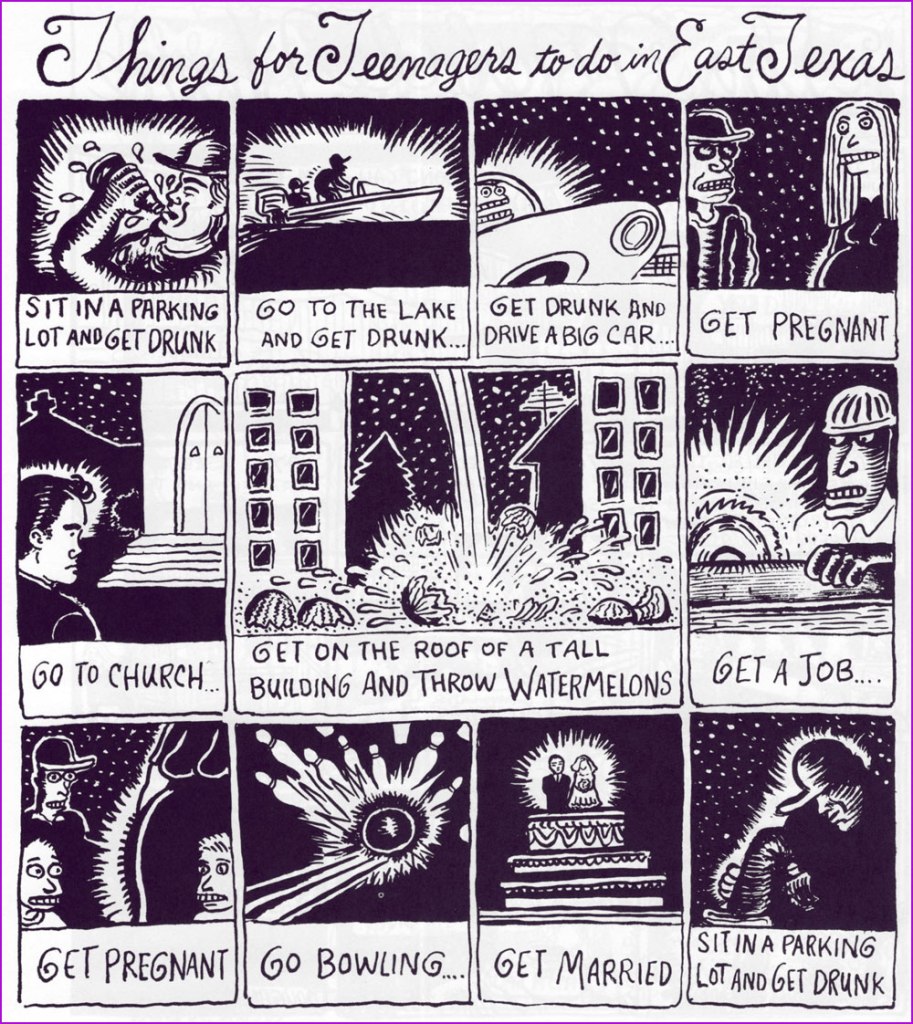
Dougan’s first collection appeared the following year, published by Seattle’s fabled The Real Comet Press. The back cover was festooned with eloquent-upon-eloquent quips from his peers. For instance, Gary Panter wrote: « Dougan’s work is clear and he is not afraid. He is a big storyteller and a good liar. In East Texas the wire fences, orange colored tufts of grass, pine trees, tire tracks, piles of wood, and water towers are the best parts. The stories are about human desperation, a funny kind of desperation, an air-conditioned kind of desperation. »

And here are a few excerpts from its pages:

Dougan’s second and final collection, from 1993, was published by Penguin, no less! It featured longer, more ambitious pieces.
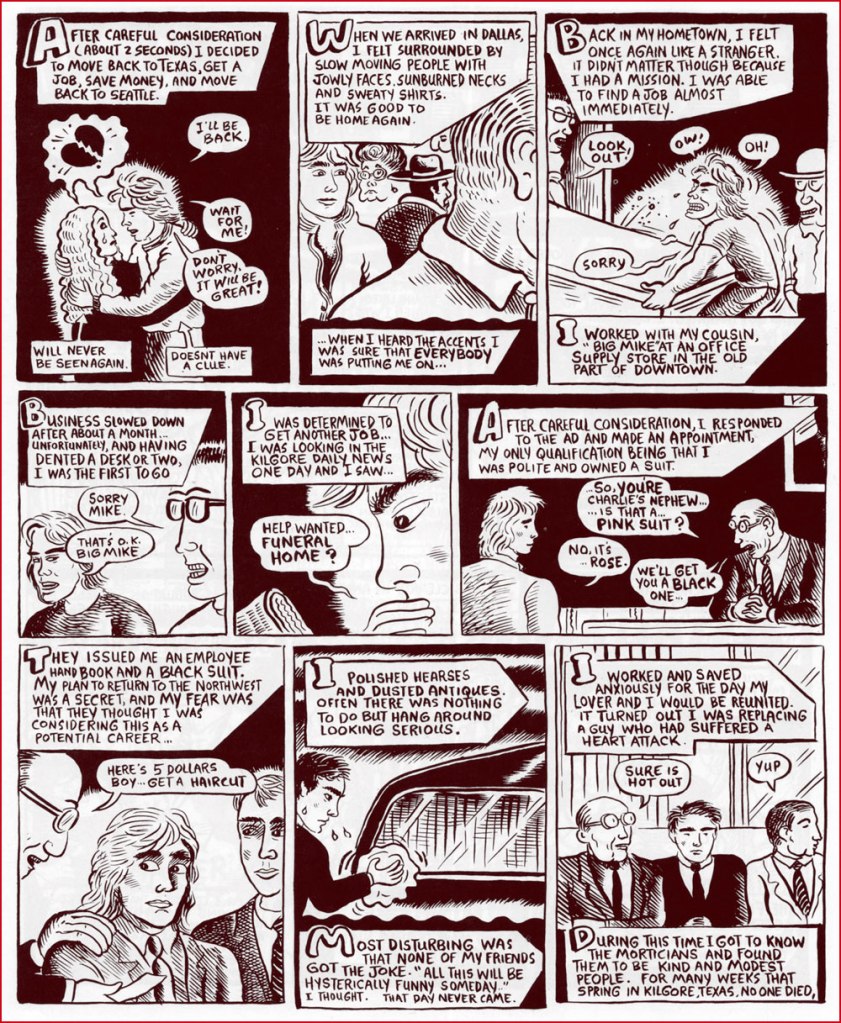
Kentucky Fried Funeral would have to be my first pick for Dougan’s masterpiece. Unfortunately, it’s around 20 pages long, so it was unfeasible to present it here. Still, here’s the opening splash.
A detail, perhaps, but worth noting, I think: Dougan preferred handling his own lettering, finding, like many a visual artist, the look and texture of mechanical text too… well, mechanical. Lovely!

In 2017, some twenty years after his last cartoon (that I’m aware of… Double Booked?, in Fantagraphics’ Zero Zero no.17, June, 1997) Michael and his wife moved to Japan and opened a café-restaurant. Read Michael’s own account of the saga.

This must be the place.
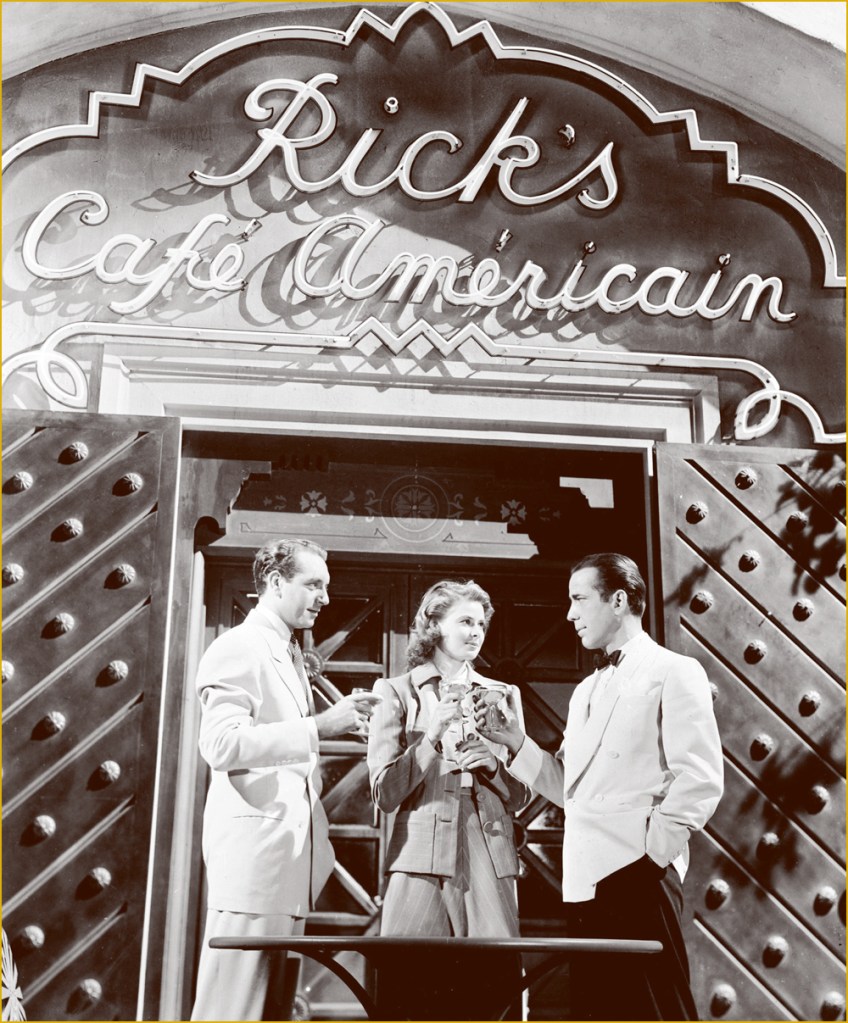
Of course, Dougan named his place after Bogie’s in Casablanca, but not without adding a couple of typos, for that modern touch.

Creative types often get restless, and Michael found himself a little niche answering people’s mostly, and sometimes incredibly, inane questions on Quora, with a potent mixture of withering sarcasm with a side of snide, all the while providing helpful information — whenever possible. Check out his feed, but let me caution you: it’s a bit of a frazzling rabbit hole (or warren, more accurately).

I’m hoping that, once news of Michael’s passing trickles over to his native land, that The Comics Journal will provide a detailed obituary of this notable artist. Farewell, Mr. Dougan.

Update: I see that TCJ has not let me down. Here’s their first piece in tribute to Michael. And this definitive oral history homage.

Further update: The Seattle Times has just published a moving obituary by his friend, former The Rocket Editor Charles R. Cross.

-RG

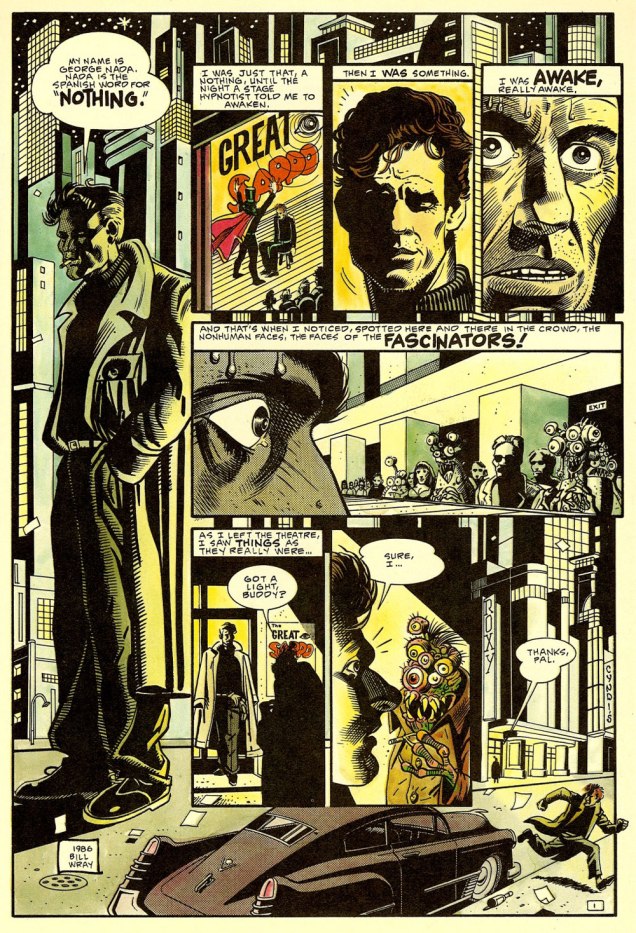
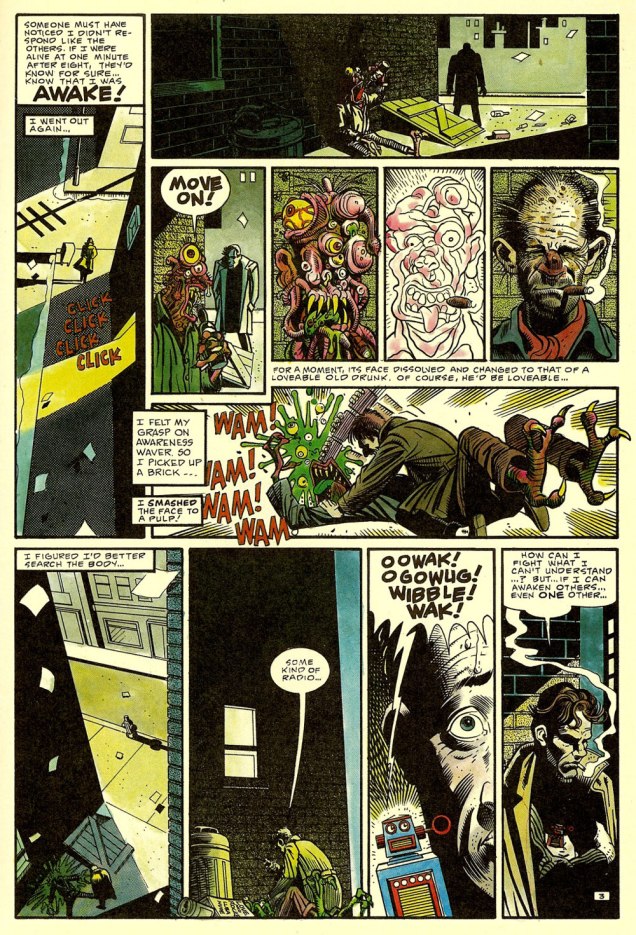
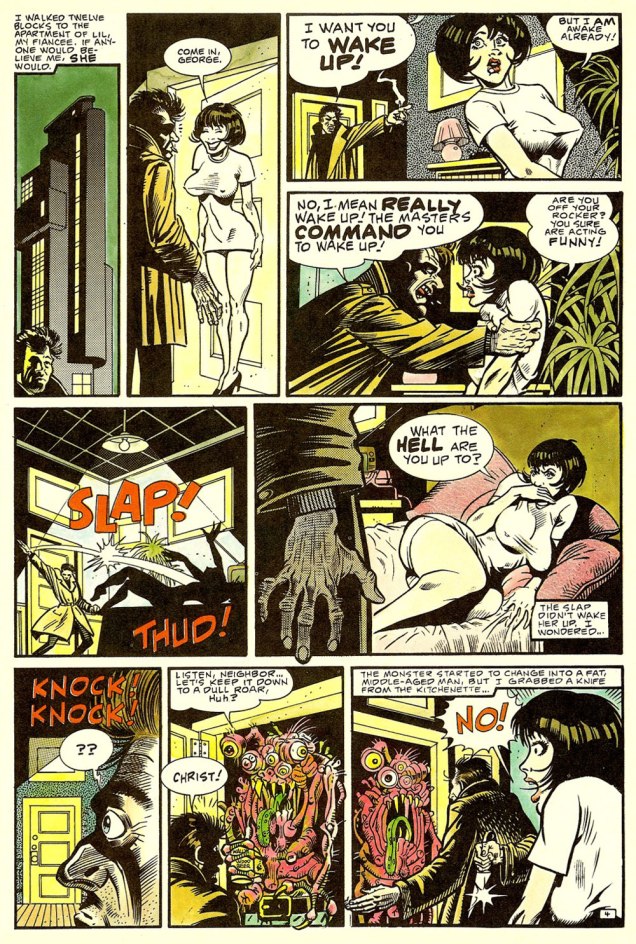
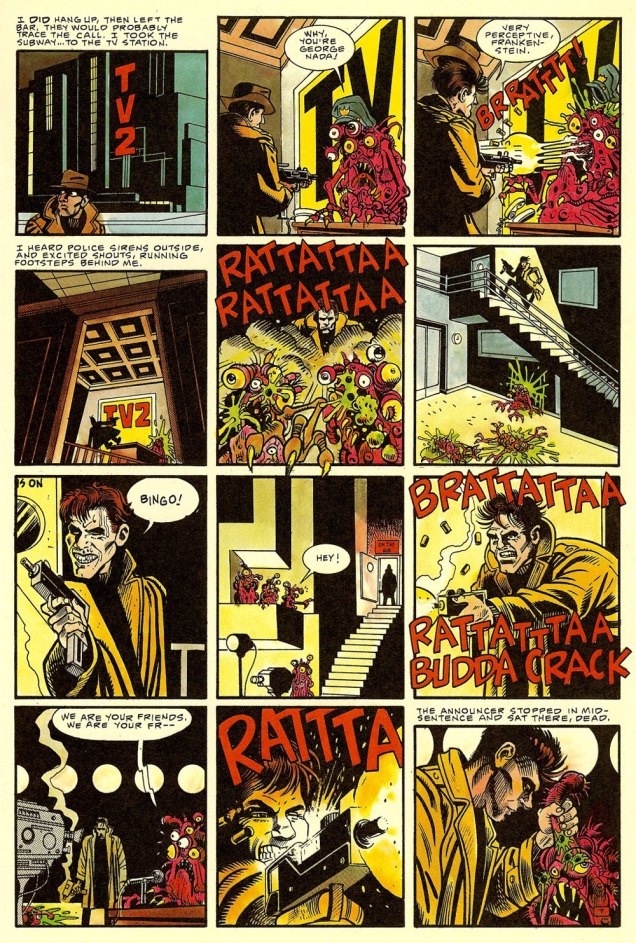
Hallowe’en Countdown VI, Day 2

« There is love in me the likes of which you’ve never seen. There is rage in me the likes of which should never escape. If I am not satisfied in the one, I will indulge the other. » ― Mary Shelley, Frankenstein

Today’s entry is a most idiosyncratic interpretation of the Modern Prometheus myth. Its essence was collected by that multitalented gentleman, David Greenberger, and saw print in the pages of his eclectic anthology Duplex Planet Illustrated. I asked David to tell us a bit more about the narrator, and he kindly obliged:

« I always had a wonderful time talking with Abe Surgecoff, who was incredibly good natured and would talk about anything, much of it not technically accurate in the real world, but was vivid to him even if it was being created as he spoke it.

He was a resident at the Duplex Nursing Home in Boston and I met him in 1979 when I took a job there as activities director (something I did until 1983 – a job I didn’t continue with – this was mostly a portal for me to have access to and friendships with people who were a couple generations older than me, and an area I became interested in exploring as an artist – hence taking that job.) »

« Frankenstein » originally appeared in Duplex Planet Illustrated no. 13 (July 1995, Fantagraphics).

My thanks to Mr. Greenberger for digging back into the memory banks for this one!

– RG