Justin Green’s Musical Legends

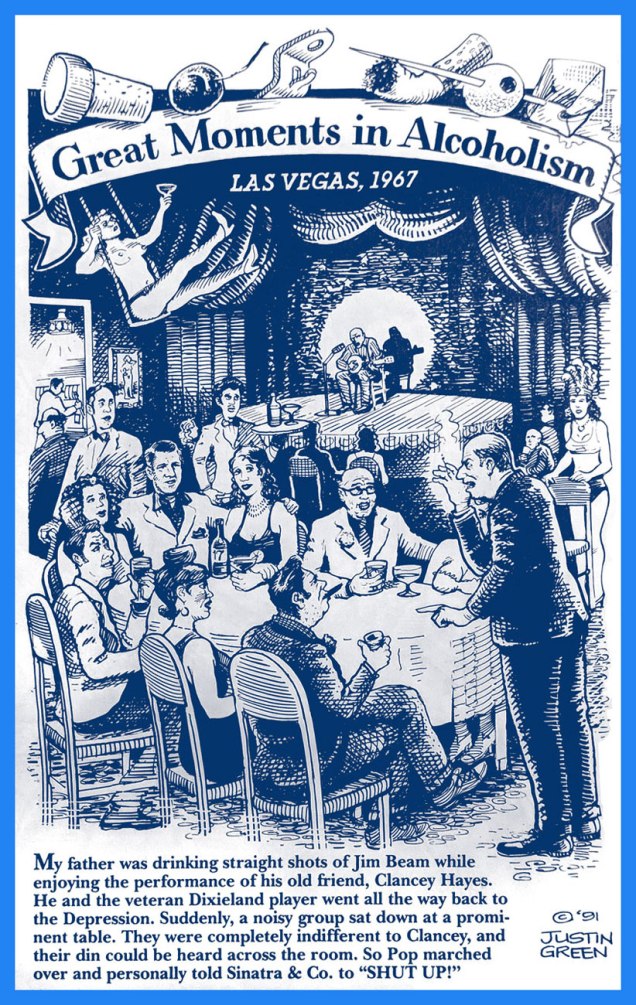
« My father had a lifelong interest in helping musicians. I even encountered his presence when reading the autobiography of Anita O’Day. She said that there was a real estate man in Chicago who always made sure her band had a place to stay. That was Pop. » – Justin Green

How did Justin Green, one of the Founding Fathers of the Underground Comix movement, wind up holding down a regular feature for a decade (1992-2002) in Tower Records‘ in-house magazine, Pulse!? The whole chain of events began with a strip about his dad’s drinking. Of course.

GreatMomentsA
« It was my father’s spirit that instigated this cartoon project…. this was ’91 (Blab No.6, Summer 1991, Kitchen Sink Press), and I was living in Sacramento. Mark Weidenbaum was then an editor at Pulse! Magazine, published and distributed by Tower Records, which had its headquarters in West Sacramento. He had just seen the piece when he found out I lived nearby. He wanted to explore the idea of an ongoing musical biography cartoon feature. »
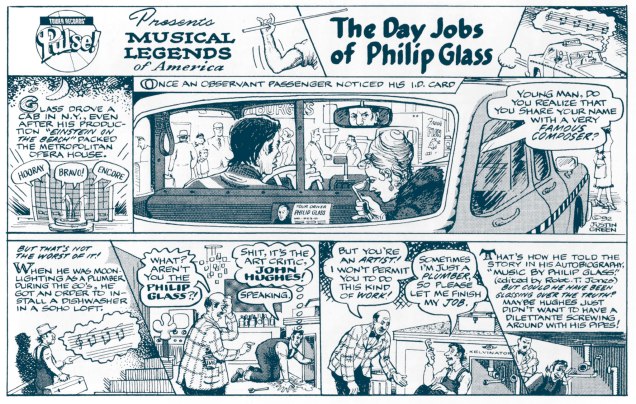
MusicalLegendsGlassA
The second instalment (April, 1992). A little Einstein on the Beach, anyone?
MusicalLegendElvisA
August, 1992. Elvis certainly had his faults, but racism or ingratitude were not among these.
MusicalLegendsGaryA
My own introduction to the Reverend’s music came, as it surely came to many others, through Jackson Browne‘s fine cover of his Cocaine (Running on Empty, 1977). « I was talking to my doctor down at the hospital. He said, ‘Son, it says here you’re twenty-seven, but that’s impossible — you look like you could be forty-five’. »
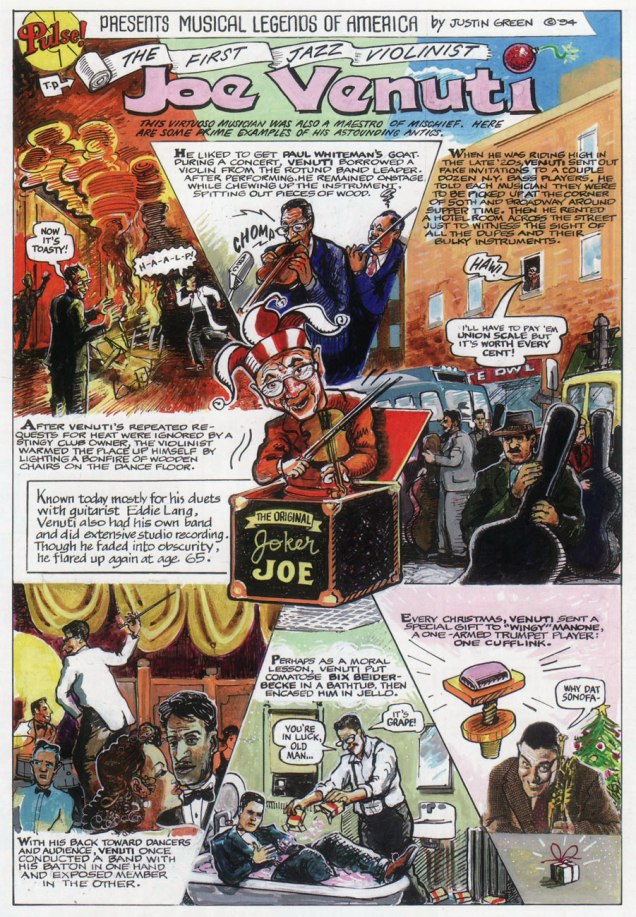
MusicalLegendsVenutiA
The strip frequently appeared in colour. Here’s my favourite example, from April, 1994. And here’s a fine Venuti performance. No, he wasn’t *always* joking.
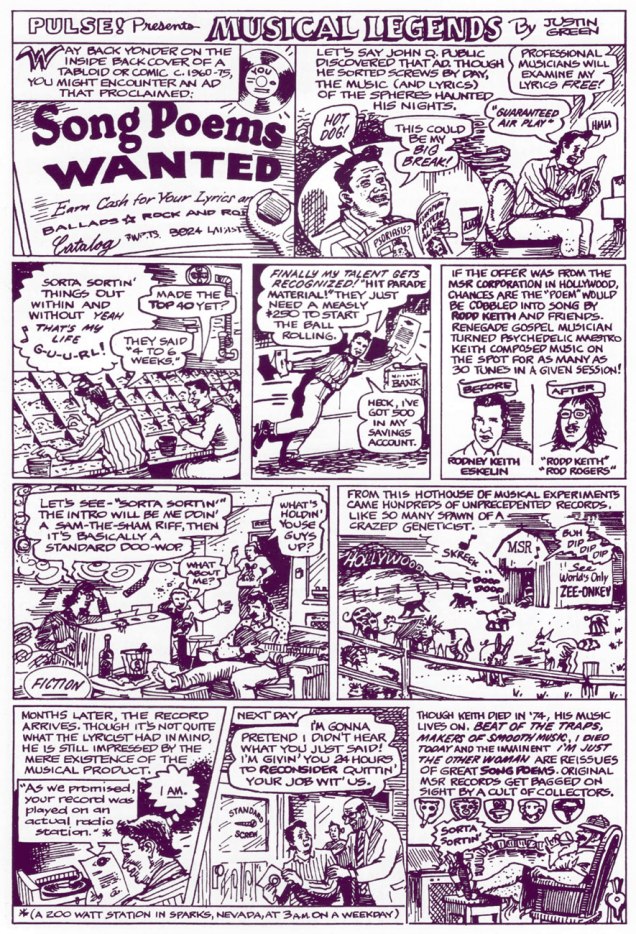
MusicalLegendsRoddA
Ah, Rodd Keith, the main man behind those infamous Song Poems ads, comic book fixtures in the 1970s. The weren’t a scam… not in the traditional sense. November, 1996. Lend your ear to his Ecstasy to Frenzy.

While Green isn’t a native virtuoso draftsman like, say, R. Crumb or Rick Griffin, and he’s only fair-to-middling when it comes to likenesses, he *is* a born storyteller, and that’s really what’s most needed for an endeavour of this nature. Compressing a lifetime, or at least a career, into a single-page strip (two at the most!) is remarkably tricky and demanding, and if it looks deceptively easy here, he’s succeeded.

In selecting strips for this post, I didn’t lean towards my own favourite musicians, opting instead for what I felt were the strongest pieces, regardless of topic. However, I’m reserving my very favourite for a special New Year’s Eve post. Hope you enjoyed these musical time capsules! If you did, you’ll be happy to learn that the fine folks at Last Gasp collected the set in 2003.

-RG

Treasured Stories: “The Servant of Chan” (1975)

« Followers in death: Attendants and relatives who were killed so they could be buried in the tomb with the person (normally someone very important or wealthy) who had died. » — The British Museum

Let’s face it, Gold Key’s would-be-spooky comics rarely lived up to their habitually fine painted covers (mostly courtesy of hard-working George Wilson, with Vic Prezio, Luis Domínguez, Jesse Santos or Jack Sparling occasionally chipping in); as with most things, there were exceptions: I’ve raved earlier about a particular issue of the generally ho-hum Grimm’s Ghost Stories, namely issue 26, boasting, along with the usual Paul S. Newman sleep aids, two excellent yarns from the undervalued Arnold Drake (co-creator of The Doom Patrol, Deadman, and the original Guardians of the Galaxy).

Ah, but today, we’re celebrating Drake’s co-conspirator, the prolific Argentine master (yes, another one) Luis Ángel Domínguez, reportedly born ninety-five years ago to the day (Dec. 5, 1923), and still among the living… as far as we know. I like to envision him warmly surrounded by several generations of loved ones and well-wishers, an impish gleam in his eye.

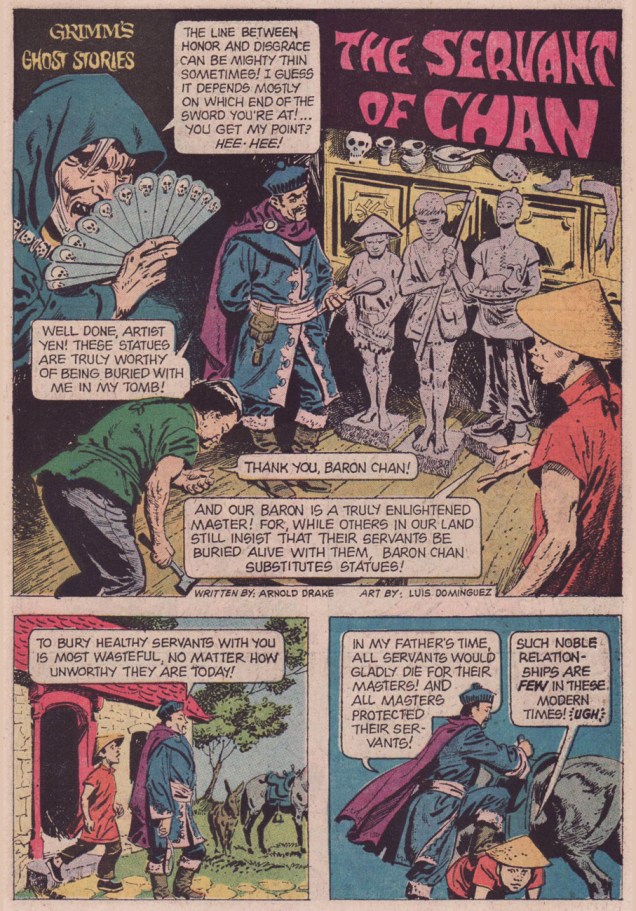
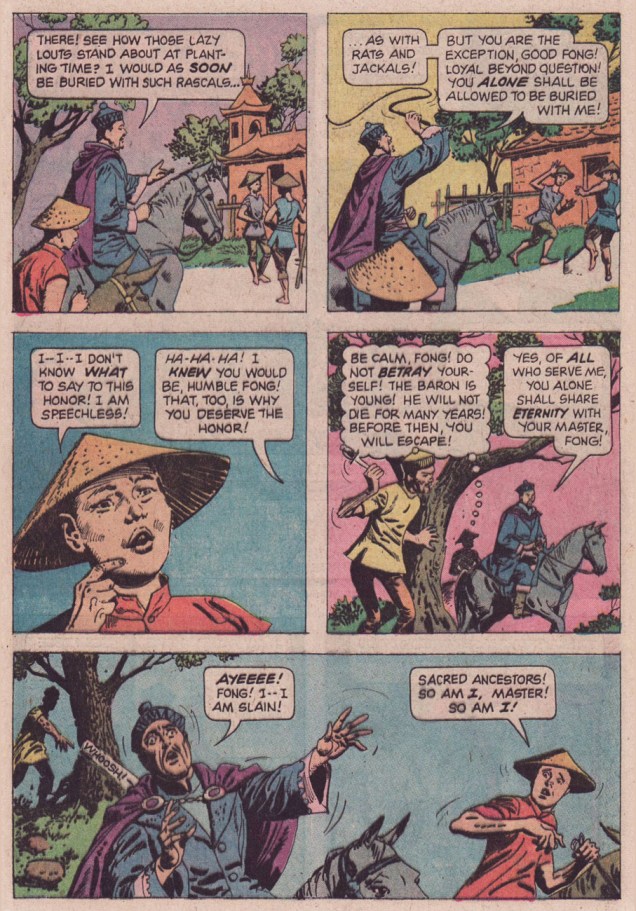
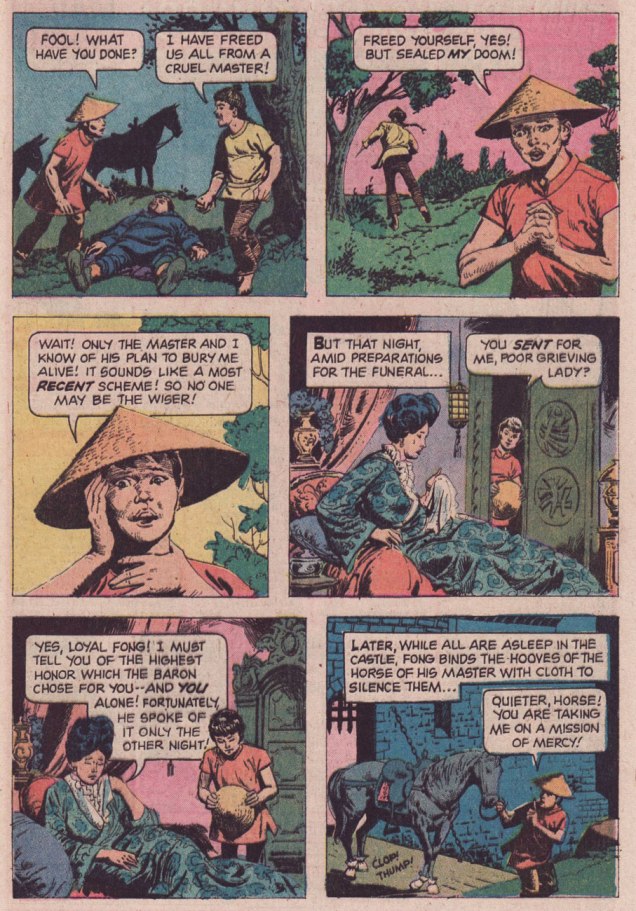
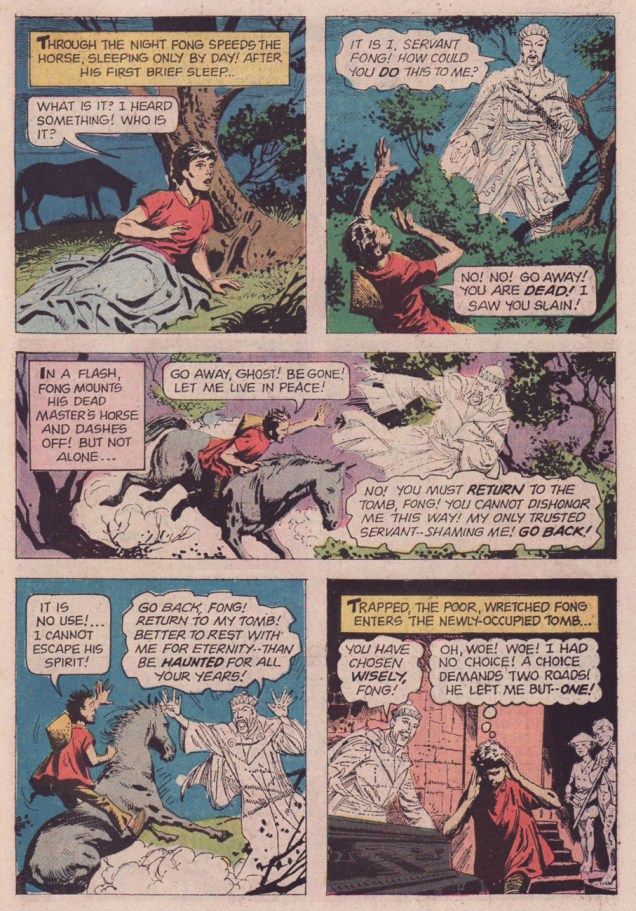
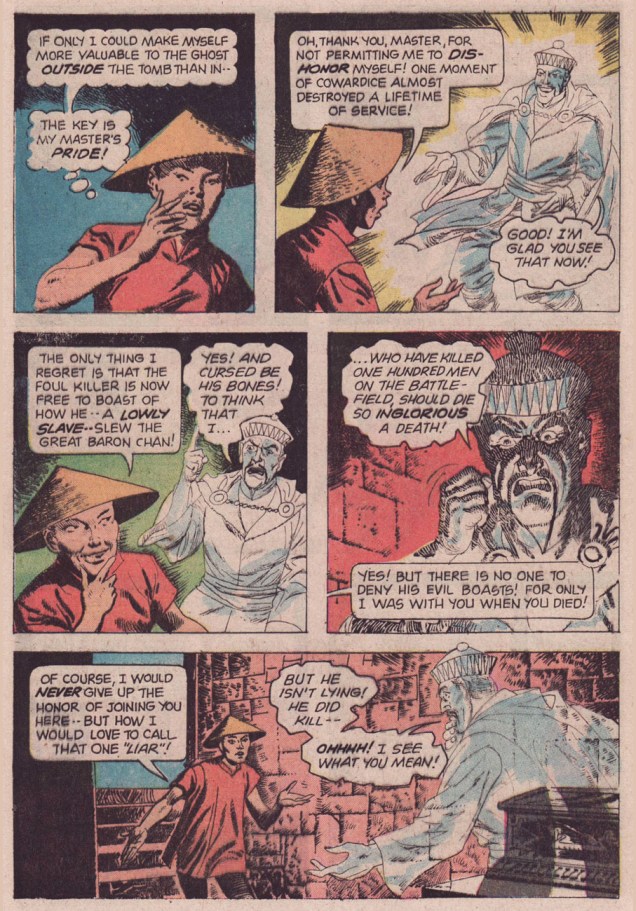
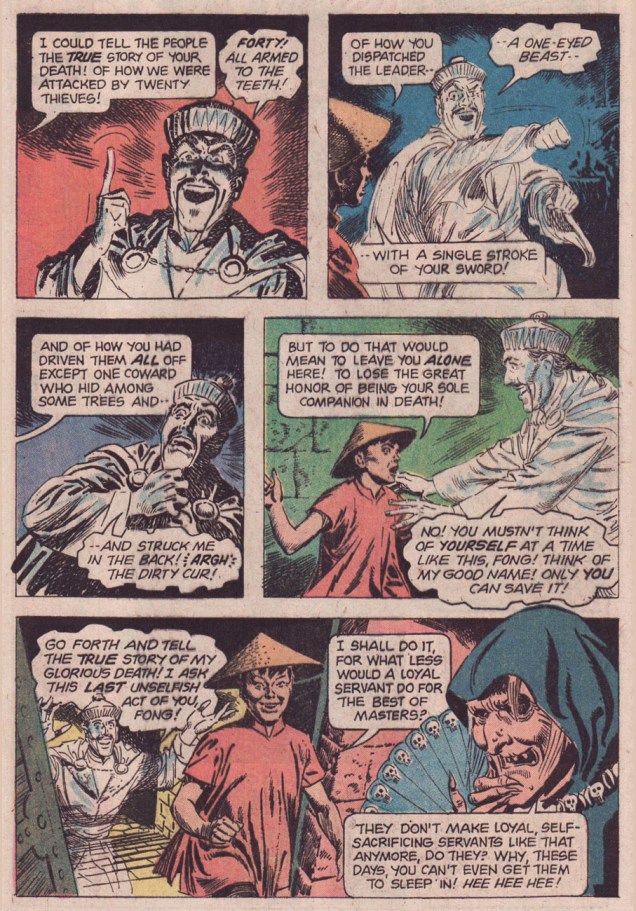
Without further foot-dragging, here’s a vintage tale of quick wits in ruling class hubris from beyond the grave, The Servant of Chan, by that dastardly duo, Drake and Domínguez.

ServantChan01AServantChan02AServantChan03AServantChan04AServantChan05AServantChan06A

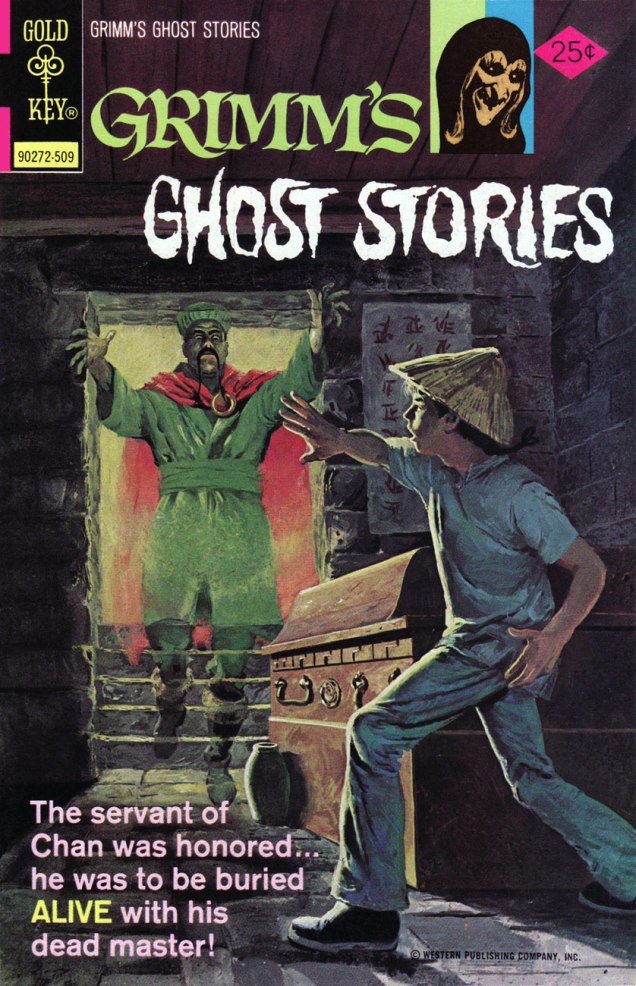
GrimmsGhost26CoverA
George Wilson’s cover highlights a dramatic scene from our little story. This is Grimm’s Ghost Stories no. 26 (Sept. 1975, Gold Key).

Some further details on historical context, from Ancient China for Kids (!):

« Slavery in ancient China was not a pleasant experience. The lives of slaves were filled with hardship. Many were abused. Many slaves were children.

Most people who were slaves worked in the fields, alongside of peasants. They did the same job, and had the same hours, and pretty much the same clothing and food, as free farmers. But they were not treated with the same respect given to farmers. Some slaves built roads. Some worked in government.

But slaves who worked for the emperor, the royal family, and sometimes the nobles, had the worst of it. They could only do what they were told to do. They were treated in any way that their master and his family felt like treating them. Many were treated with great cruelty. When their master died, they were killed, and buried with their master in his tomb, so they could continue to serve their master after his death. »

Brr. All the same, if you’ve enjoyed this yarn, check out Arnold Drake’s other contribution to this issue, The Anti-13, which we enthusiastically featured some time ago.

¡Feliz cumpleaños, Señor Domínguez… wherever you may be!

-RG

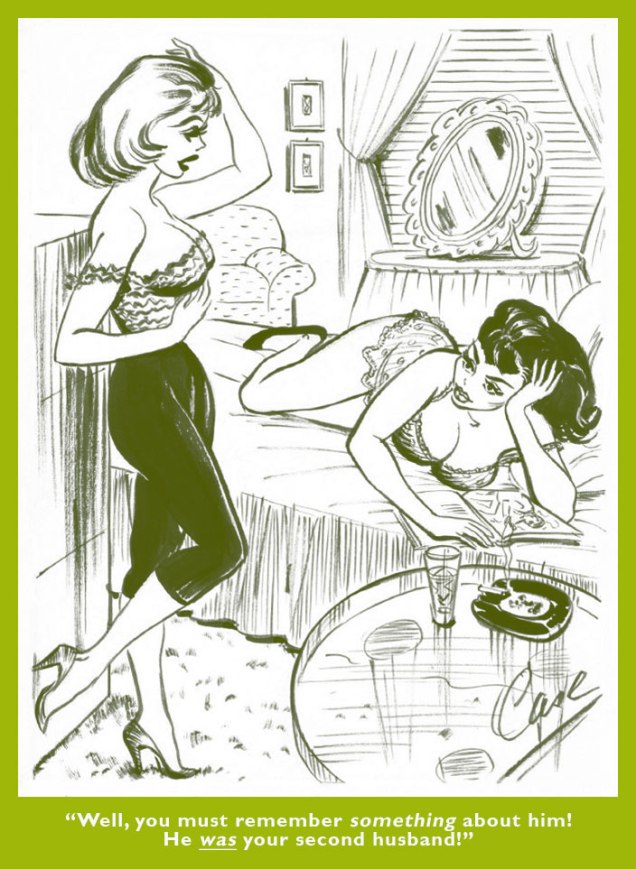
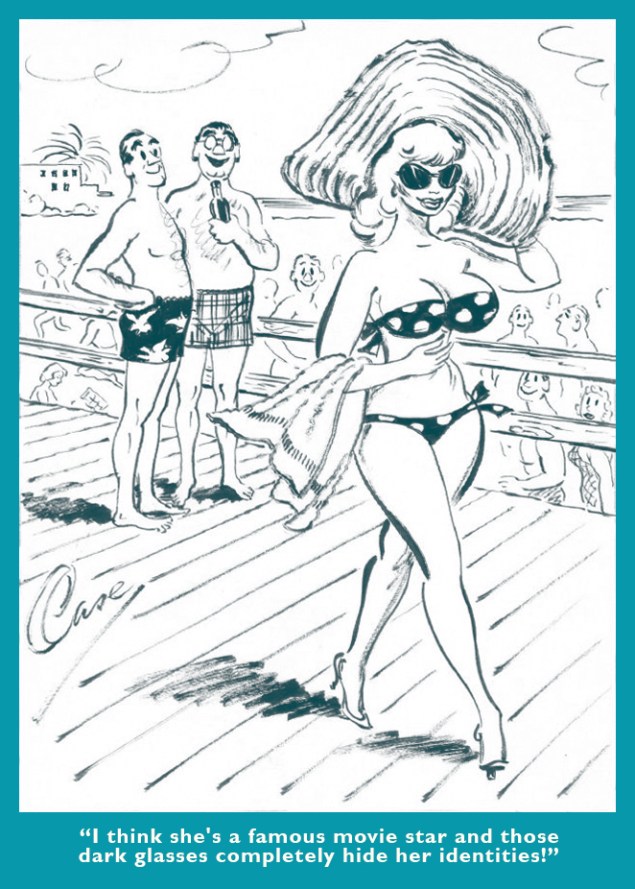
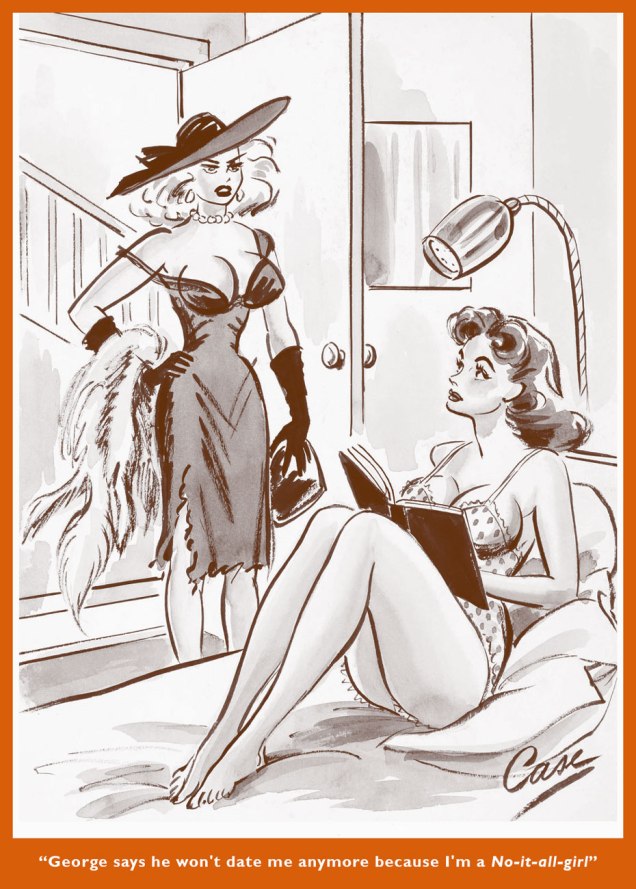
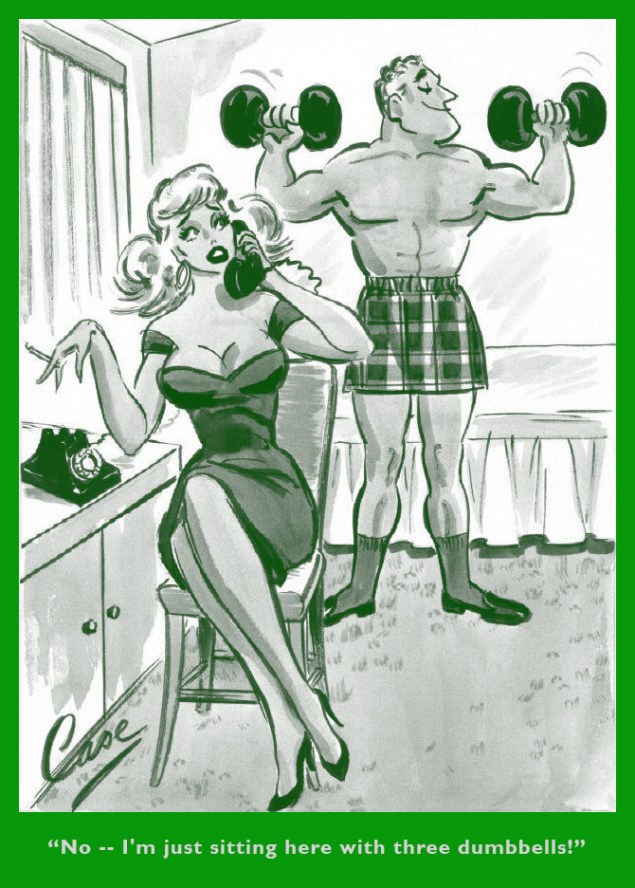
Helen Case: Girlie Cartoonist With a Twist

« At one time, I sold general cartoons to some of the men’s magazines, the girlies — until I went into a newsstand one day and looked at one. » — Betty Swords

If female cartoonists were fairly uncommon in the American mainstream magazine field for much of the twentieth century, they were doubly so within the so-called girlie mags.

« During the 1950s, Abe Goodman — brother of Marvel Comics publisher Moe ‘Martin’ Goodman — was the largest buyer of cartoons in the world. Publishing out of New York City under the Humorama banner, Goodman churned out scores of cheap digest-sized magazines boasting inventive titles like Romp, Stare and Joker that featured hackneyed jokes, cheesecake photos and the publications’ bread and butter, single panel pin-up cartoons.

These magazines were an unlikely proving ground for neophyte gag cartoonists as well as a welcomed alternative to the daily grind of comic book sweatshops. In the 1950s and 1960s, these digests featured the likes of Playboy’s Jack Cole, Archie’s Dan DeCarlo and glamour girl legend Bill Ward. »

While I can unreservedly recommend Alex Chun and Alex Covey’s The Pin-Up Art of Humorama (Fantagraphics, 2011), I’m frankly puzzled as to its wholesale snubbing of Helen Case, who might have brought a welcome bit of variety to the all-male revue. God knows some lesser lights did make the cut.

While feminist cartoonist Betty Swords would likely have dismissed Case’s protagonists the way she did Barbara Shermund‘s, as « gold diggers, dames — amateur prostitutes », Case’s cartoons (I’m afraid I don’t know whether she wrote and illustrated, or simply illustrated… at Humorama’s pauper’s rates, the former is somewhat preferable) provide a refreshing female perspective to the battle of the sexes. To quote Betty Swords again (from R.C. Harvey‘s excellent Insider Histories of Cartooning (2014, University Press of Mississippi): « I remember one editor who shuffled through my cartoons then tossed them on the desk and said, ‘You gal cartoonists are all alike — you don’t attack and hit hard enough! »

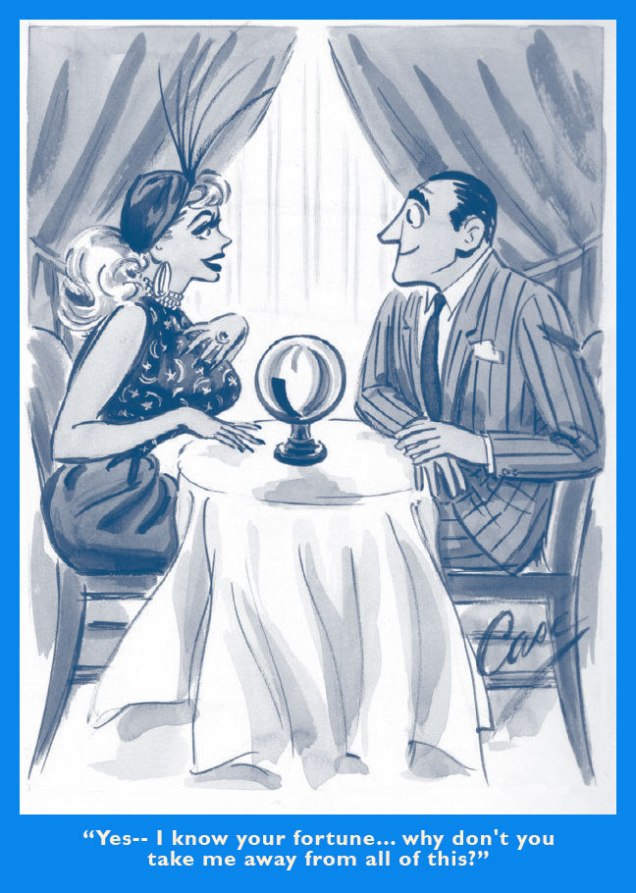
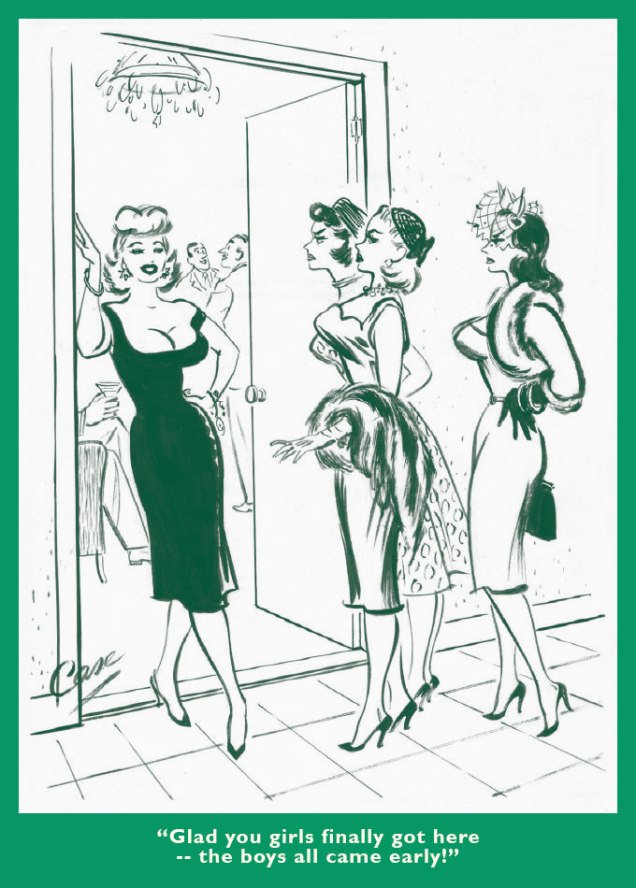
While scant information is available regarding Ms. Case (she appears to have lived in Kingston, New York in the early 1960s), at least online, much of her work survives, which surely has to count for something. We present some of the finer cuts, and if the gags aren’t transcendentally great, they are a brace o’ notches above the average knuckle-dragging drollery pervading the pages of Breezy, Snappy or Eyeful of Fun. Most of these gags were drawn and initially published (Humorama’s cheapskate policy was to print, reprint, and reprint again) between 1960 and 1964. Enjoy!

CasePlatonicACaseSecondHusbandACaseIdentitiesACaseNoItAllAHelenCaseDumbbellACaseFortunetellerACaseBathingSuitACaseBoysEarlyACaseNewRegulationsA

-RG

Dateline: Frontline – The Cary Burkett Interview, Part 2

« A reader has the right to ask for all the facts; he has no right to ask that a journalist or historian agree with him. » — Herbert Matthews

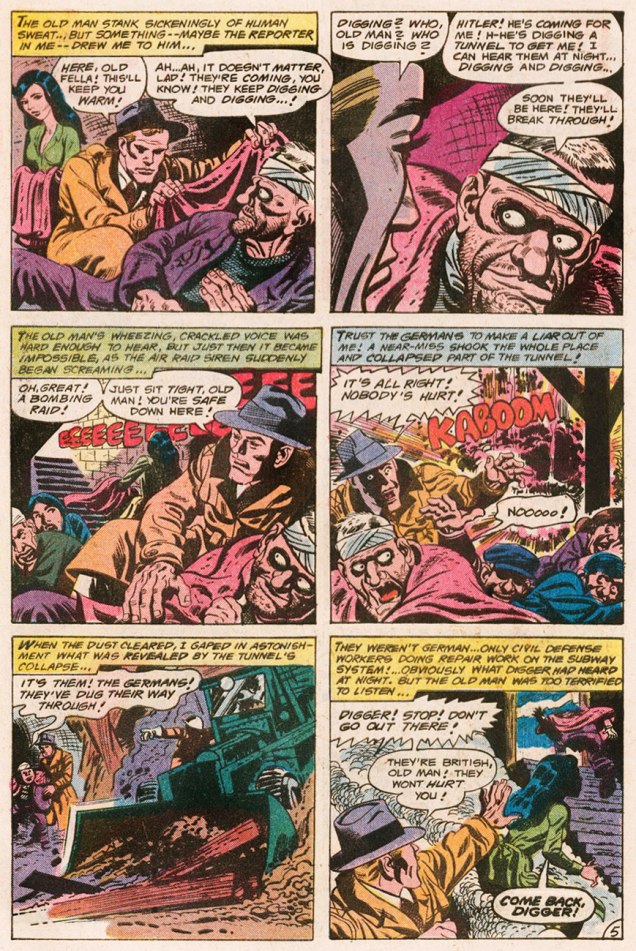
And we’re back with part two of our examination of Cary Burkett and Jerry Grandenetti‘s Dateline: Frontline (we’re not forgetting the famously-ambidextrous Ric Estrada, who took over illustrative duties in the second half of the series). In part one, Mr. Burkett graciously opened for us a window on the series’ genesis. In light of these privileged behind-the-scenes gleanings, as well as a reading of the series’ springboard text, Phillip Knightley’s The First Casualty, I formulated  a series of follow-up questions, of which we present the first half, along, of course, with Mr. Burkett’s insightful and modest responses, followed by chapter 2 of the first D:F trilogy.

Who’s Out There: Was there much deliberation on your part regarding the specific setting of the series?

Cary Burkett: I vaguely recall that in an early meeting with Paul Levitz we mentioned the possibility of setting the series during the Vietnam war. Or rather, I think he may have mentioned it. But I never had any interest in that from the beginning. That war was too close at the time, and I didn’t think I could do it. Research was a lot harder to do in those days, and I was too green as a writer to want to tackle that controversy.

If my memory is right, I think he left it up to me, and I very quickly settled on the World War II setting. There were a lot of reasons in my mind for that, including the wealth of research material available.

But the biggest thing was the fact that the U.S. started out as “neutral” in that war. I felt a story arc right away of a young reporter who began as a “neutral” observer, wanting to be an objective journalist, but over a series of events finding himself unable to keep from being drawn in and taking sides, despite his proclaimed neutrality.

At the time I didn’t know how long the series might last, but it was my intention to gradually move Wayne Clifford from a naïve journalist with laudable ideals into a conflicted character grappling with the very gray areas of war reporting and the messy questions of patriotism and propaganda.

WOT: In writing the series, did you ever find yourself at odds with the, er, ‘official record‘ of history?

CBI wouldn’t say that exactly. The truth is, I had only a sketchy knowledge of World War II history, and little idea of what the “official record” said. So I set about to educate myself.

One really good current documentary at the time was The World at War narrated by Laurence Olivier. I watched a number of episodes of that. What I realized from watching it was how much the history I had heard and read was centered on how the U.S. and England had won the war. This documentary was one of the first western pieces which really pointed out the importance of the Russian contribution.

That led me to other research and made me want to do a series of stories set in Russia. Of course, the insane difficulties of trying to report the truth during a war in the middle of Russia appealed vastly to me and provided a lot of opportunities for conflict on a lot of levels. I felt I barely scratched the surface in those Russia stories.

One thing about doing research; you start to get interested in all the little details. You want to include much more than you really can. You have to be careful to let the story reveal the details when it is important to the story, but not to let the research itself become the story.

I struggled with that in writing those Russia stories, because much of what I was finding out was really eye-opening to me. What I knew about the war in Russia I had learned mainly from watching Hogan’s Heroes. In that TV comedy, the Nazis all feared being sent to the Russian front, so you knew it was cold and terrible. But that’s about all I knew.

When I began to read about the scope of the tragedy and brutality of the war in Russia, I wanted to bring the reality of it into my stories. I wanted to shove it all in somehow. But my stories were a mere 6 pages long in each issue, so I had to just try to give little glimpses that implied a lot more.

Stephen King’s advice to writers is to “kill your darlings”, that is, to get rid of your pet favorite bits so they don’t bog down the story. Those Russia stories were ones where I felt I had to keep killing those “darlings” over and over.

WOT: Was there any friction with DC’s brass, or was the series too far under the radar for them to notice? If so, did that allow you more leeway?

CBWe were definitely way under the radar, but I don’t think that the stories would have caused any stir even if they had been noticed. I don’t think there was anything subversive or strongly controversial about them. They were different from the usual comic book war stories, but not in a way that would cause any issues.

The lead stories of the books featured Gravedigger, or later, The Unknown Soldier. These were the stories that were there to sell the book, and these would have gotten more scrutiny. They were the typical action-oriented comic book war stories, sometimes just a step away from fantasy. Sometimes not even a step.

With a long-running lead character in a war series, you have to be a bit looser with timelines in the war. I suppose it’s a convention of the genre that the character might pop up in Okinawa in one story, then many issues later have a story related to D-Day, even though D-Day would have happened well before Okinawa.

Maybe it’s because the main character was a journalist who was dedicated to getting the facts right, but I decided that my timeline was going to be accurate. The series would start with the U.S. as a neutral country, and we would later see the USA join the war, and all of the historical events would follow in the order they occurred.

WOT: Was the rotation of backup features decided from the start? Was it some sort of commercial compromise?

CBI don’t really know. I think the idea was mainly to have variety in the backups. It was a common template for older DC titles like Action Comics or Adventure Comics in the ‘60’s. One issue would have a Green Arrow backup, the next maybe Aquaman.

My own speculation is that as an editor, Paul was drawn to that kind of setup, and felt it gave the reader a little something extra. That’s just my own thought, he never told me that. But I know he was a comics fan, and I think he was glad to have a place where Enemy Ace could still fly through the pages of a DC Comic.

WOT: Given the wealth of material you dug up in the course of your research, it must have required considerable effort of concision to craft such spare chapters. Did you go through a lot of drafts?

I did struggle to find ways to get my stories into the six-page frame and did quite a few re-writes, trying to balance the pace so the story didn’t seem rushed but also had enough meat.

There were compromises, for sure. In what I considered to be one of the key stories, Clifford, still a neutral reporter, takes a rifle and kills an Axis soldier attempting to kill his English friend. I had been leading up to this decision since the beginning of the series. Here he is forced to admit that he is neither neutral nor objective as he thinks of himself.  I would have loved to have had a bit more room to let that sequence play out with more significance.

No doubt, I could have done a better job even in the space I had. In the end, I felt that it came out a bit weak and contrived.

WhoThereLogotype

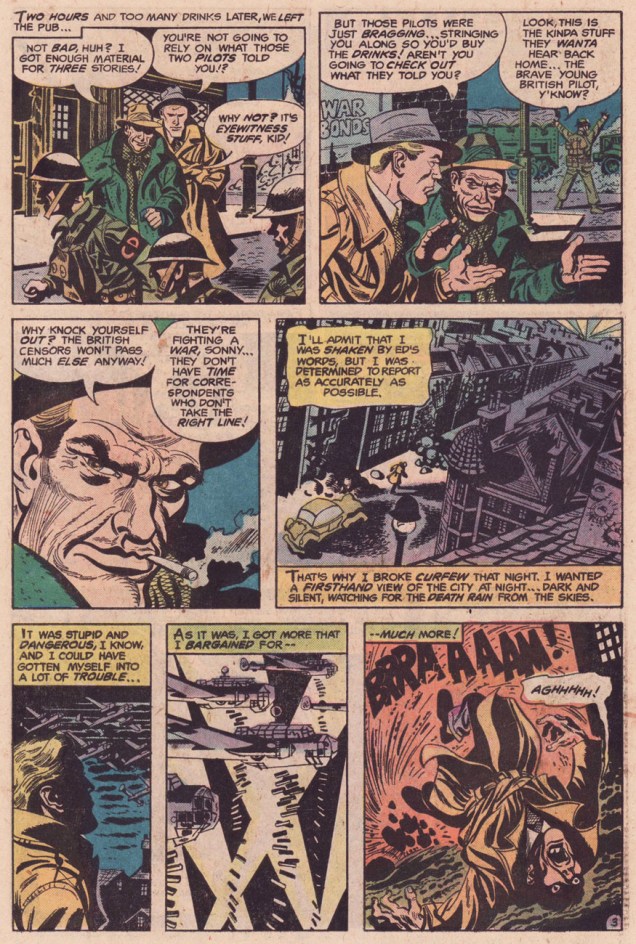
Now, let’s rejoin Wayne Clifford and his buddy Ed Barnes, who were, when we saw them last, off to the pub…
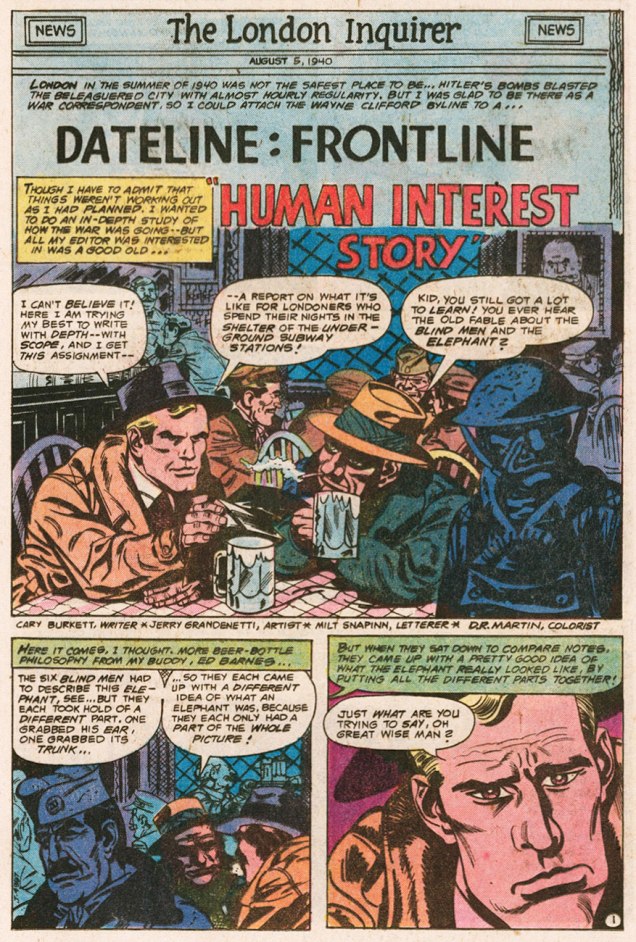
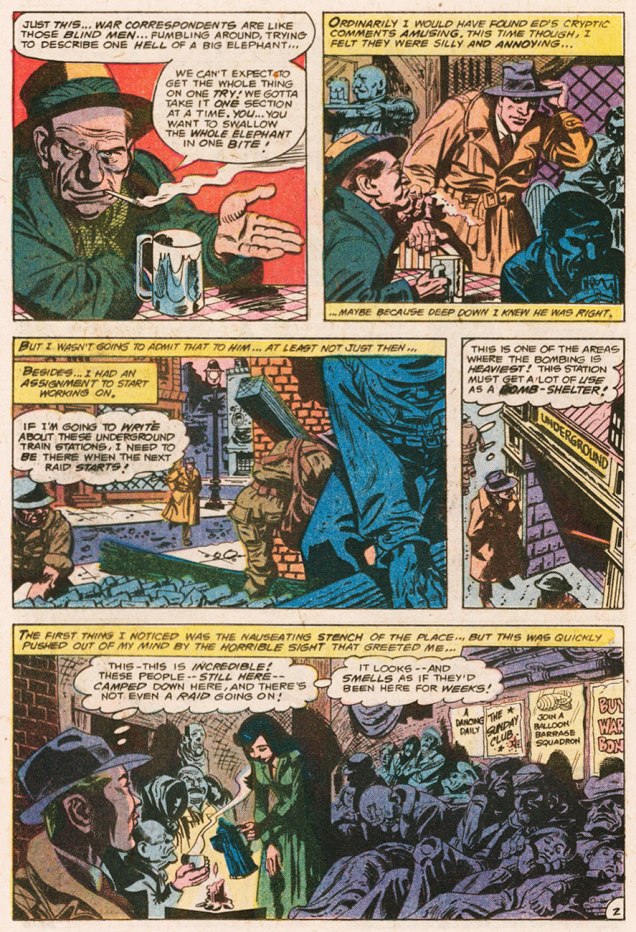
Dateline2London01ADateline2London02ADateline2London03ADateline2London04ADateline2London05ADateline2London06A

That’s it for now! Stay tuned for the conclusion of our talk with Cary Burkett, along with part three of Dateline:Frontline’s London trilogy.

-RG
Vic Prezio at Warren, Part Two

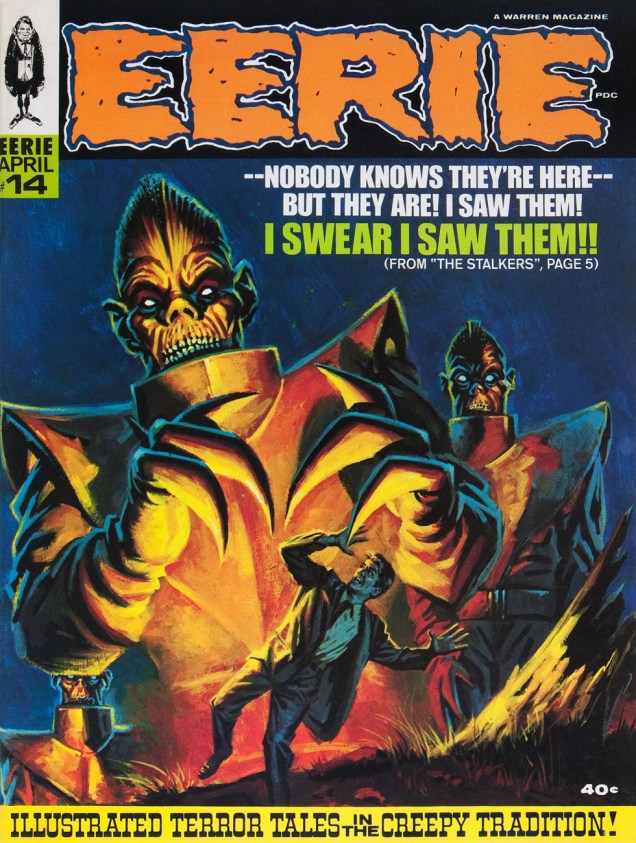
« These dreams? Hallucinations… or whatever you call them! It was on a business trip… in the middle of nowhere… I’ll never forget it! » — Alex Colby, who swears he saw them.

When people talk about Warren magazines cover artists, the name of Vic Prezio is rarely brought up. Well, someone has to, and it might as well be me. It doesn’t help that he only painted a handful of covers for Warren, but hell, I love them all in their pulpy glory.

Prezio is better known for his over-the-top men’s adventure magazine covers and, to a lesser extent, his Magnus: Robot Fighter covers for Gold Key. Mostly anonymous work, though. It’s a filthy business.

In Part One, we looked at Prezio’s Creepy Covers. As it’s « age before beauty », Cousin Eerie now gets his turn to bow.

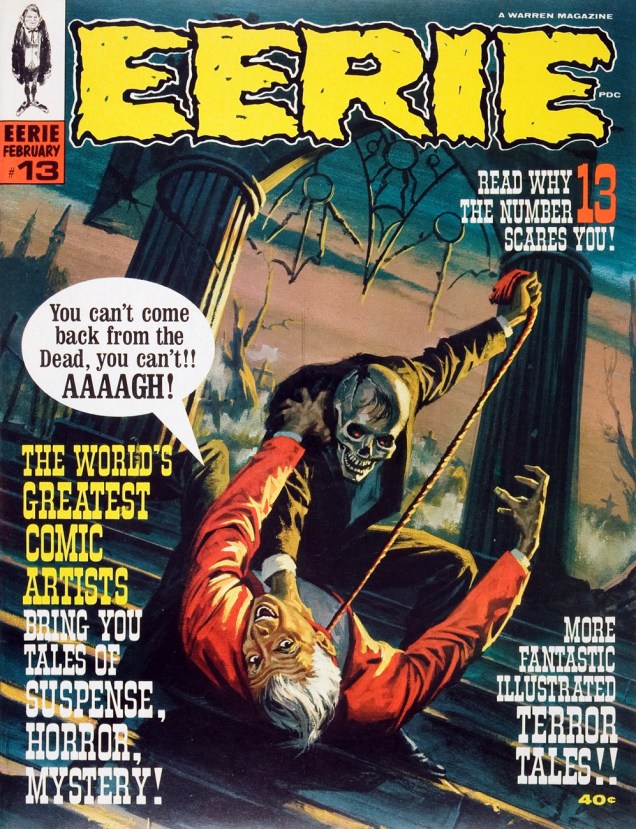
PrezioEerie13A
« Don’t you dare presume to tell me what I can and can’t do, Sheldon! » Some guys turn mean when their male pattern baldness spreads to their entire face.

An inspiring reminder of why you shouldn’t let the naysayers drag you down (even six feet under). Be all that you can be, on this side of the grave and beyond!

Eerie no. 13, Feb. 1968. This issue features an adaptation, by Russ Jones and Frank Bolle, of one of H.P. Lovecraft and August Derleth‘s posthumous (in H.P.’s case) collaborations, Wentworth’s Day, another emprunt from Christopher Lee’s Treasury of Terror (Pyramid Books, 1966).

Intrigued? Check it out here: http://thehorrorsofitall.blogspot.ca/2010/06/wentworths-day-hp-lovecraft.html

PrezioEerie14A
This alien encounter is *not* going to turn out all fuzzy-friendly.

Prezio’s painting conveys vividly the high paranoia of Archie Goodwin and Alexander Toth‘s The Stalkers, reprinted in this issue from Creepy no. 6, just a couple years old by then. Warren Publications were *not* in good shape at the time, having lost more of their key talent and left to the bare minimum of original material, including, thankfully, the covers. The out-of-left-field success of Vampirella would swoop in and save the enterprise in 1969. Close call!

PrezioEerie15A
Possibly the lesser entry amongst Prezio’s Warren pieces, but still an attractive cover, if not exactly terrifying. Somehow, it brings to mind Aurora model kit art more than it does a Warren cover (still, comparison to early-ish James Bama should hardly be considered a slag.)
PrezioEerie21A
« AAAAAAAAAGAH! What is it? » I’ve often pondered that very question myself, sometimes while perusing this “throbbing” issue.

Another striking (if a bit rushed-looking) Prezio cover, this time representing Slight Miscalculation by writer Bill Parente and artists Bill Fraccio and Tony Tallarico. The much-maligned Fraccio and Tallarico often worked together under the joint nom de plume of Tony Williamsune (it is said that Tallarico pulled most of the weight.)

Here’s a really nice job they created for issue 16 of Charlton’s Haunted (June, 1974.) I love the boldness of that heavy brush, swirly style: http://fourcolorshadows.blogspot.ca/2013/04/come-see-our-ghost-tony-williamsune-1974.html.

PrezioEerie22A
This time out, the cover story is H2O World by Larry Ivie, Al Williamson, and his Fleagle Gang acolyte and mentor Roy G. Krenkel, a reprint from Creepy no. 1 (1964).

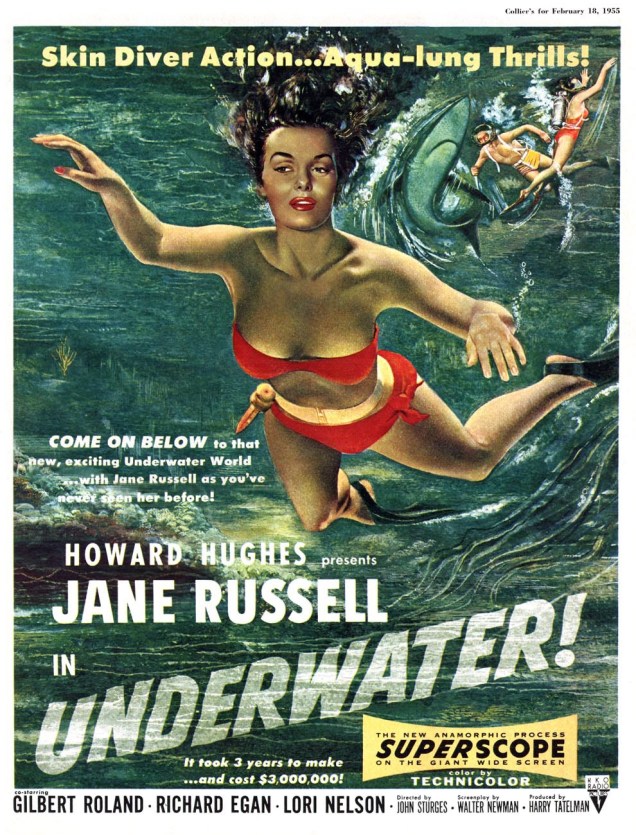
The girl looks familiar, though…

JaneRussell_Underwater 1955A
From a 1955 film poster…
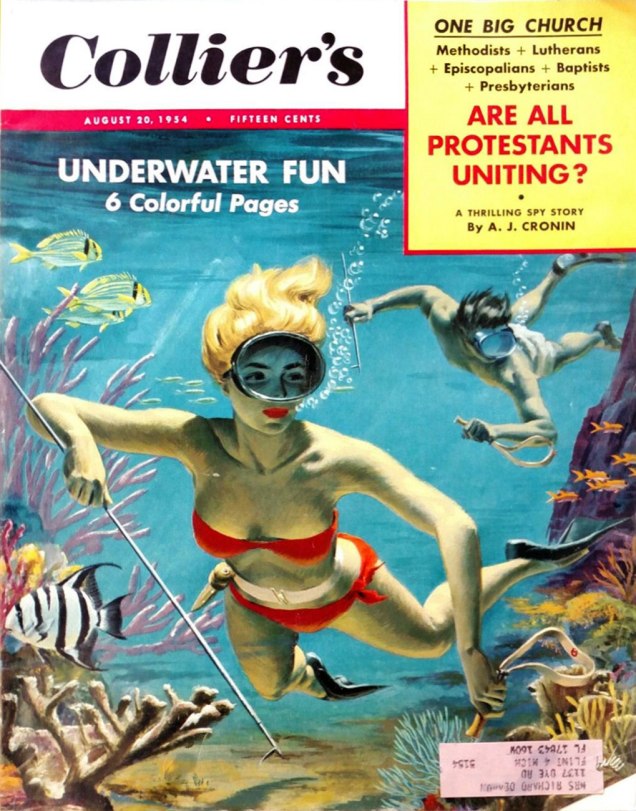
ColliersAug20_1954A
… itself swiping heavily from a 1954 Collier’s cover painted by Bill Baker. « You’ll find skin-diving now from Maine to California, wherever there is enough water for a person to plunge into. Divers, like the spearfishing pair on our cover, have made it America’s fastest-growing sport. » I’ll bet she’d rather dive with her husband, armed with a spear, than in the darkness with overly-friendly monsters.
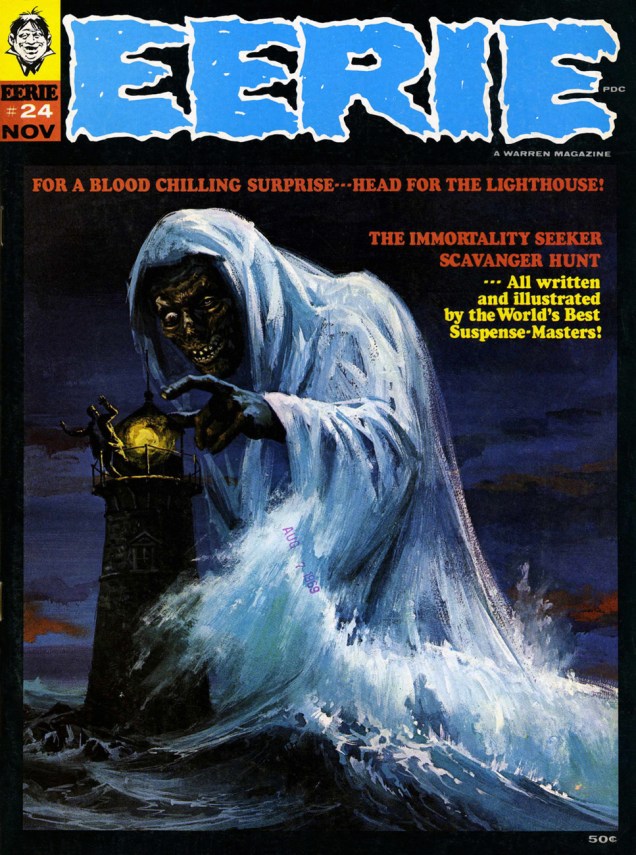
PrezioEerie24A
Prezio’s final Eerie cover (he would paint a couple of beauties for FMOF the following year), this lugubrious tableau from the bone-chilling month of November 1969, is likely my favourite Prezio. It illustrates Bill Parente and Michael Royer‘s Head for the Lighthouse!

Warren seemed, at this point, without a decent in-house copy editor. Witness the cover’s “Scavanger” Hunt, and inside, a story mistitled « The Wrong Tennant ».

Tennants
« Wrong Tennant? You don’t say! I’d read *that*! »

All tomfoolery aside, this wraps up our survey of Mr. Prezio’s work at Warren. Hope you enjoyed the ride!

-RG

Vic Prezio at Warren, Part One

« Stop that whimperin’, Emma — or I’ll lay into ya like a butcher in a cowpen! » — Raymond Marais, Rescue of the Morning Maid

The mysterious, but nonetheless well-remembered journeyman pulp illustrator, Vic Prezio, though chiefly associated with the infamous Men’s Sweat adventure magazines (« Weasels Ripped my Flesh! ») also produced notable work for Dell (The Outer Limits, Kona, Naza, Brain Boy, Frogmen…), Gold Key (Magnus, Robot Fighter) and Warren, and that’s just the tip of the iceberg. I did say he was a journeyman.

In all, Prezio produced, for the Warren Magazine line, six covers for Famous Monsters of Filmland, some of them classics, four for Creepy and six for Eerie. And that’s not all: Prezio painted a pair of covers for FMOF companion title Monster World (no. 2, Jan. 1965, and no. 4, June 1965); these would have been his earliest Warren contributions. Thanks to eagle-eyed Michael Prince for bringing these last to my attention!

Today, we’ll admire Uncle Creepy’s dodgy wares, and reserve Cousin Eerie’s mouldy goodies for part two. The FMOF issues regrettably fall outside our purview, but for the record, these are numbers 35, 36, 38, 39, 67 and 68. Check ’em out.

PrezioCreepy18A
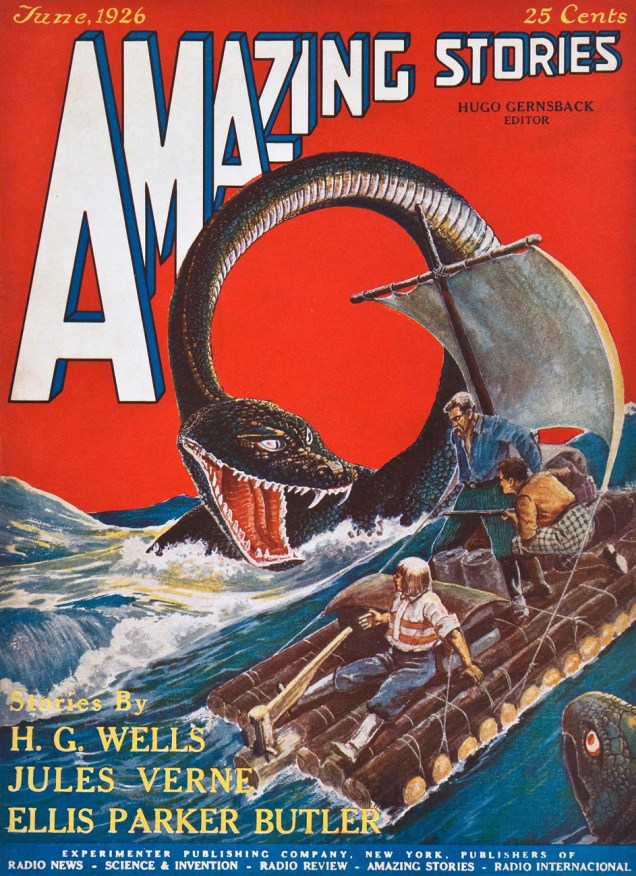
Oh, it’s just your lousy luck: you finally get your best girl alone on your raft, then along comes this humongous critter to put a damper on the romantic mood. Prezio brings the scene to life for issue 18 of Creepy (Jan. 1968)… but I can’t quite shake the feeling that said scene looks sort of familiar…
AmazingStoriesJune1926A
Ah, that must be it. I see there used to be two snakes involved.
PrezioCreepy19A
« I say, are you the chap that’s been short-sheeting my bunk every night? » 
Mr. Prezio’s nasty (in a good way) cover painting gives us a glimpse of Rudyard Kipling‘s (by way of Craig Tennis & Johnny Craig) The Mark of the Beast (1890), reprinted from Christopher Lee’s Treasury of Terror (Pyramid Books, 1966).
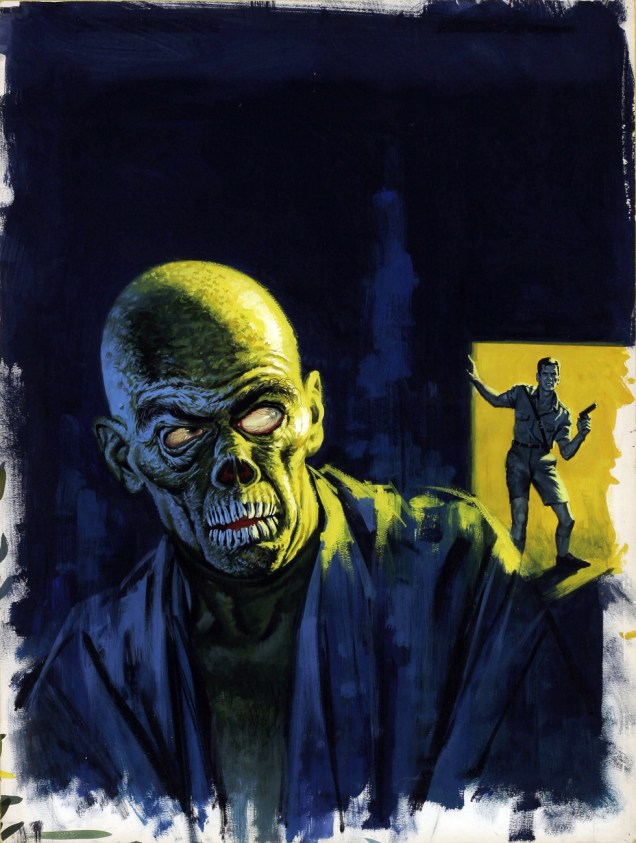
PrezioCreepy19ORIG_A
A look at the original painting, which thankfully survives. Can’t take such things for granted.
PrezioCreepy28A
« Good Lord! » I wonder what that ‘one thing’ is. Prezio’s cover for Creepy no. 28 (Aug. 1969) is based on Archie Goodwin and Dan Adkins‘ story The Doorway, reprinted in this issue. Read it here, if you must.
PrezioCreepy28ORIG_A
Some editorial second-guessing went on, as evidenced by the most consistent colour scheme of the original painting. It’s a great piece, so it works all the same.
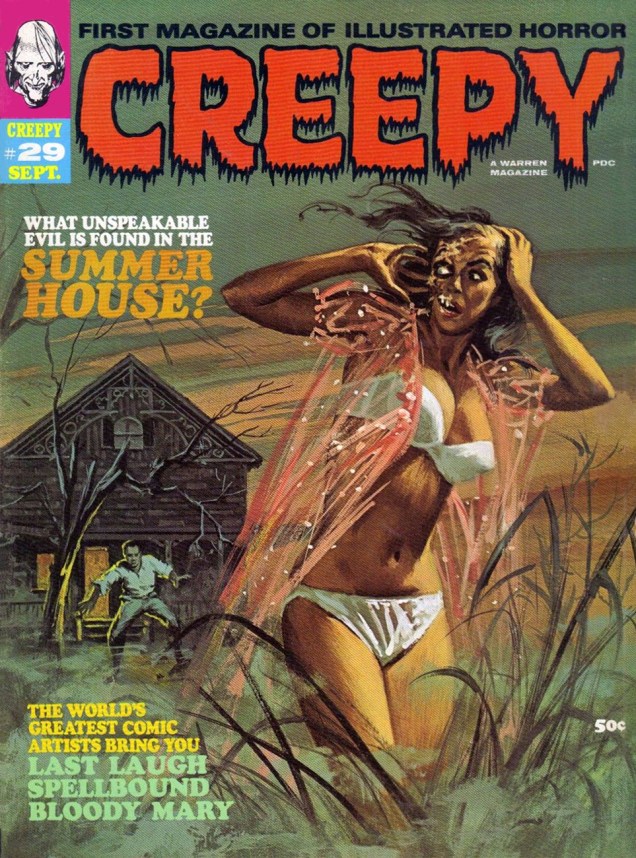
PrezioCreepy29A
« Come back, baby! Sure, my saliva’s a bit… corrosive, but you’ll get used to it! »
Vic Prezio’s twist on the then-prevalent gothic romance trope of the gorgeous, scantily-clad damsel-in-distress running away from some castle or mansion. This is Creepy no. 29 (Sept. 1969).
PrezioCreepy29ORIG_A
Now, Vic’s original painting: the image was flipped for publication (as if you couldn’t tell), which was probably a sound decision. Left to right motion is more visually natural and dynamic.

Well, that’s it for now. Next time, we’ll check out Mr. Prezio’s Eerie covers, so stay tuned.

-RG
Dateline: Frontline – The Cary Burkett Interview, Part 1

« All studies of propaganda tell what a powerful weapon it is; that since armies fight as people think, it is essential to control that thought. This means some form of managing the news, and the only question is the degree to which the news should be managed openly and the degree to which it should be managed subtly. » ― Phillip Knightley, The First Casualty: The War Correspondent as Hero, Propagandist, and Myth-maker from the Crimea to Vietnam

In most collectors’ lives, there’s a degree of more casual, automatic accumulation. Things you pick up for a song, just because the opportunity arises, and that you file away, planning half-heartedly to look them over when you find the time. As a devoted Jerry Grandenetti fan, I always pick up his work… but I favour some genres over others. Mr. G has crafted, for instance, a lot of war comics for DC over the years (1952-1984!), most of which I haven’t seen. For me, it’s always been about his horror/mystery work. So… I had picked up, somewhere along the line, a consecutive pair of issues of DC’s Men of War (26 issues, 1977-80), numbers 9 and 10, featuring the first two parts of a Dateline: Frontline backup sequence, « Bathtub Blues » and « Glory Soldier ». I was very, very impressed.

Now, most of DC’s war books were scripted by a small cadre of authors, namely the indefatigable Robert Kanigher, as well as Bob Haney, Ed Herron, Jack Miller… but mostly Kanigher. In the Seventies, things changed a bit, with solid help and variety coming from Frank Robbins and David Michelinie on The Unknown Soldier, for instance. I had encountered Cary Burkett’s name here and there, being a regular reader of Batman titles The Brave and the Bold and Detective Comics, where he scripted backups (Nemesis, Batgirl) and the occasional lead feature. But this was… different. Hard-hitting, quite free from convention, and damn well buried in the back of a second-tier war book.

I hunted down the rest of the D:F series, and my initial impression did not fade… quite the contrary, indeed. The third serial (MoW 21-23), set on the Russian front, actually brought some tears to my eyes. Why was this feature so little-known? Oh, I know… the usual reasons. But I wanted to find out more, and the next logical step was to reach out to the series’ surviving author, who was happy to oblige, to my delight. And so here we are. The stage is yours, Mr. Burkett.

Dateline: Frontline recollections, by Cary Burkett

« Paul Levitz was editor of a new war comic called ‘Men of War‘ featuring a character called ‘Gravedigger’.  He wanted to have backup stories in each issue, and he came up with the title ‘Dateline: Frontline‘ and the idea that it would feature a war correspondent as the main character. I was working as his assistant at the time (1976), and he asked me to do a series of 3 six-page stories.

He pointed me toward a book called ‘The First Casualty‘ by Philip Knightley. The title was inspired by a famous quote ‘The first casualty when war comes, is truth‘.  The book was a history of war correspondents from early days of reporting through the Vietnam War. It became a basis for the new comic series in terms of setting up the inner dilemma of the main character, which was how to report ‘the truth’ in time of war.

I chose to set the series in World War II and named the main character Wayne Clifford. My idea was that he would begin his career as a war correspondent being very idealistic and naïve. Over the series of stories, he would come face to face with wartime situations which challenged his assumptions about news reporting, war, ‘truth’ and about himself.

That, in a nutshell, was the core of the series.  I chose to set the narration in first person, which I guess is pretty much the standard in comics now, but was not common then.

After the first 3 stories, Paul asked me to continue the series. But we kept the idea that the series would be done in groups of 3 related stories.

I did a lot of research to depict true, historic wartime settings which I hoped would show more aspects of war than to just have the hero ‘fight the enemy’ and stop the Führer’s latest grand plan.

Paul had gotten Jerry Grandenetti to be the artist on the series from the very beginning. I admit, when I first heard this, it didn’t thrill me. I was not that familiar with Grandenetti’s work, but I had seen a few stories he had done and had been put off a bit by his strange, exaggerated style.

But when I saw his art for my first DF story, I realized why he was such a respected artist. His expressionistic kind of style emphasized certain qualities that gave a distinctive mood to the story.

But what I felt the most strongly was that Grandenetti understood how to make the story flow. If you could let yourself be drawn into the visual universe he created, it would come alive. The sequences of images he created would merge into one storytelling stream.

I didn’t know at the time that Grandenetti had worked on The Spirit with Will Eisner, but that strong storytelling aspect of his art was what I responded to most when I saw Jerry’s work on my stories.

My Dateline:Frontline stories were done ‘full-script’, meaning I wrote out full panel-by-panel breakdowns for the artist to follow. And I could see how Jerry would take my panel descriptions and make them flow into each other. If I was going for a specific kind of pace or mood with a sequence, Jerry immediately knew what I was after, and knew how to emphasize it visually.

I worked with very few artists who had Jerry’s instinctive grasp of this and his skill for executing it. »

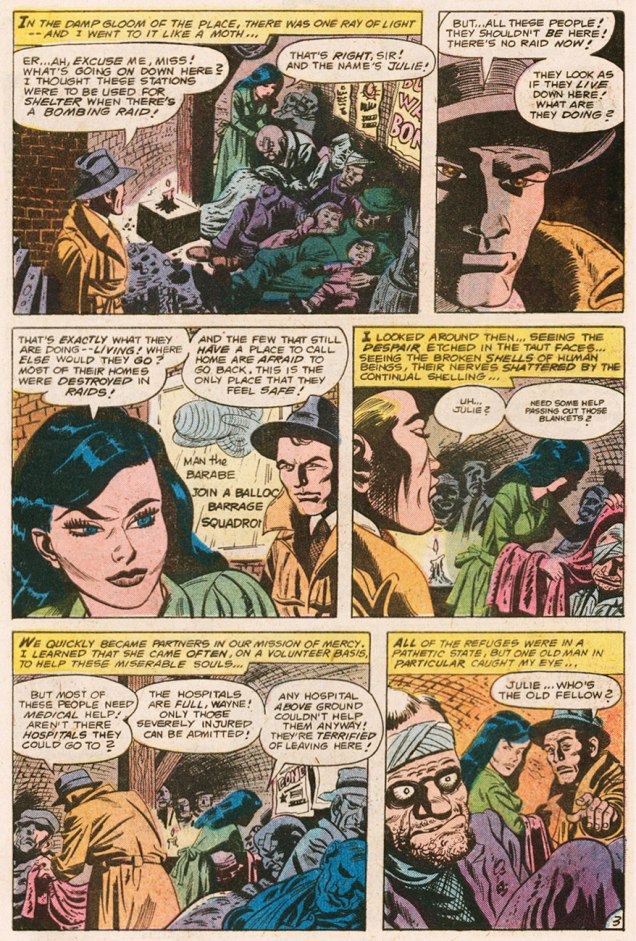
DatelineLondon01ADatelineLondon02ADatelineLondon03ADatelineLondon04ADatelineLondon05ADatelineLondon06A

Each Dateline: Frontline episode was conceived to stand on its own, but be part of a larger trilogy. This London entry, the series’ introduction, appeared in Men of War No. 4 (Jan. 1978). In part two of our talk with Cary Burkett, we’ll feature the second London chapter, « Human Interest Story » and our guest will generously answer some of WOT’s questions.

Incidentally, but not coincidentally, one hundred years ago today, on the 11th  of November, 1918, the Armistice of Compiègne was signed, formally ending the First World War. The event is commemorated each November 11 as Armistice Day or Remembrance Day.

Make-War-No-MoreA
This eloquent little tag appeared at the end of DC’s war stories, at least those edited by Joe Kubert, in the early 1970s.

Continue to Part 2 of the Cary Burkett interview.

-RG

Will Eisner’s The Spirit at Harvey and…

« It was long past midnight on a hot, wet June night many years ago… Central City lay choking for breath in an eerie fog… »

In this, part three of our chronicle following as we can the meandering and sometimes mystifying odyssey of Will Eisner’s The Spirit, we reach the most outré segments of the former Denny Colt’s road.

In a unique twist, The Spirit’s next residence, nearly a decade after his Fiction House run, had nothing at all to do with Will Eisner… in terms of securing his assent, that is.

It was down to the fabulously sketchy Israel Waldman, one of those fringe-dwelling characters who made the comics industry such a colourful snake pit. To quote the Grand Comics Database: « I.W. Publications (1958-1964) was part of I.W. Enterprises, and named for the company’s owner, Israel Waldman. Reportedly, Waldman came into possession of a printing company and among the assets were the production materials for several hundred comic books previously published by various publishers as well as a limited amount of previously unpublished material. Waldman equated possession of production materials as the right to reprint and I.W. became notable for publishing unauthorized reprints of other companies’ comics, often with new covers, as Waldman’s windfall did not often include the production materials for covers. The later half of the company’s existence, it published comics under the Super Comics name. Usually these companies were out of business, but not always. »

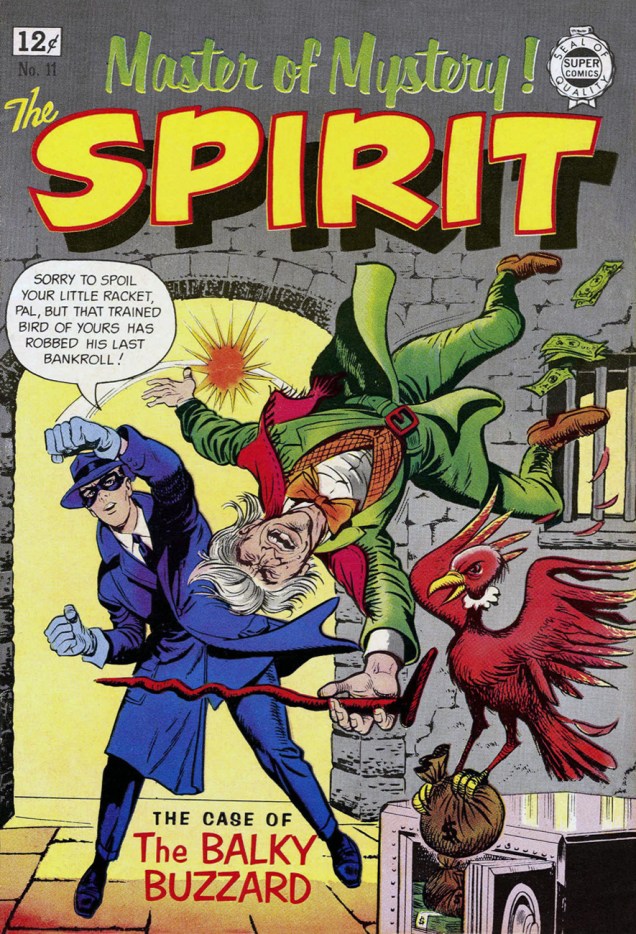
IWThe-Spirit11A
This is The Spirit no. 11 (1963), featuring The Man Who Killed The Spirit (Mar. 24, 1946), cover-featured The Case of the Balky Buzzard (Apr. 21, 1946), Carrion’s Rock (May 19, 1946), all scripted by Eisner, as well as Honeybun and Flatfoot Burns shorts. Cover by Joe Simon (“Joe, did you even read the story you’re depicting?“). This one was well worth one’s hard-earned twelve pennies. Read it here.
IWThe-Spirit12A
This is The Spirit no. 12 (1964), featuring, this time, a trio of WWII-era Spirit stories scripted by Manly Wade Wellman and Bill Woolfolk and illustrated by Lou Fine, rounded off with a pair of Flatfoot Burns shorts by Al Stahl . Cover again by Joe Simon. Read it here.

If memory serves, Waldman’s comics craftily bypassed the Comics Code (another exception!) and the newsstands, being exclusively sold in sealed bags of three in bargain-basement department stores. To bait the hook, Waldman paid top dollar for new cover artwork, approaching established pros like Ross Andru (who actually delivered some fun stuff, unlike his unforgivably atrocious turn as DC’s main cover artist in the late 1970s), John Severin, Jack Abel, and in these two cases, Jacob Kurtzberg‘s old partner, Joe Simon.

Unsurprisingly, Waldman skimped on all other materials, particularly the paper his comics were printed on, which means that I.W./Super Comics are pretty hard to come by these days in any kind of decent state, so they’re ironically pricey.

A few years later, Eisner struck a deal with another rascal (albeit one with cleaner fingernails), Alfred Harvey of Harvey Comics, Stan Lee‘s only credible competition in the credit-usurping, I created-the-Universe stakes. Again, two issues, but this time with some new Eisner material, including origin stories for The Spirit (his third, but definitive one), and his arch-nemesis Zitzbath Zark, which you may know as purple glove enthusiast The Octopus.

HarveySpirit1A
Harvey’s The Spirit no. 1 (Oct. 1966), featuring the new Origin of the Spirit by Eisner, and classics Lorelei Rox (Sept. 19, 1948), Two Lives (Dec. 12, 1948), Agent Cosmek/Visitor (Feb. 13, 1949), The Story of Rat-Tat the Toy Machine Gun (Sept. 4, 1949), Ten Minutes (Sept. 11, 1949), Thorne Strand (Jan. 23, 1949), Gerhard Shnobble (Sept. 5, 1948), all scripted by Eisner, save Ten Minutes, which hails from the mind of Jules Feiffer.
Spirit2A
Harvey’s The Spirit no. 2 (March, 1967) features the brand-new Octopus: The Life Story of the King of Crime and 2-pager The Spirit Lab, plus a generous helping of fine oldies, namely Plaster of Paris (Nov. 7, 1948), The Deadly Comic Book (Feb. 27, 1949), Rudy the Barber (Oct. 22, 1950), The Story of Sam, the Saucer That Wanted to Fly (Sept. 17, 1950), Sam Chapparell (Oct. 10, 1948), La Cucaracha (Nov. 19, 1950), The Halloween Spirit of 1948–Ellen Meets Hazel (Oct. 31, 1948), all scripted by Eisner… the book wraps up with a preview of the next issue, which never saw print. And so it goes…

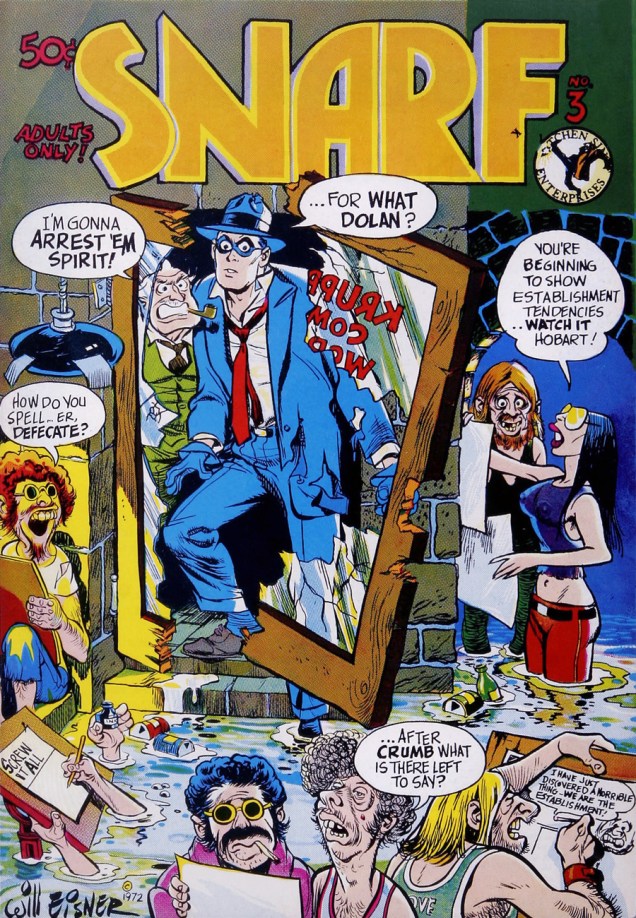
Mr. Eisner then finally had the good fortune to run into an honest man, who would prove in time to be his most steadfast ally: Mr. Denis Kitchen. Their first collaborations were a bit tentative, but quite sympathiques, with Eisner kind of slouching towards the Underground, his creation even cover-featured on Kitchen’s long-running humour anthology Snarf.

Snarf3EisnerA
This is Kitchen Sink Enterprises’ Snarf no. 3 (Nov. 1972), featuring an original Eisner cover.
SpiritKitchenSink1A
Another two-issue run! Kitchen Sink’s The Spirit no. 1 (Jan. 1973), featuring a new cover by Eisner, and precious relics Max Scarr’s Map (Apr. 14, 1946), Caramba (Nov. 10, 1946), Return to Caramba (Nov. 17, 1946), The Rubber Band (June 23, 1946), plus a few brand-new short pieces.
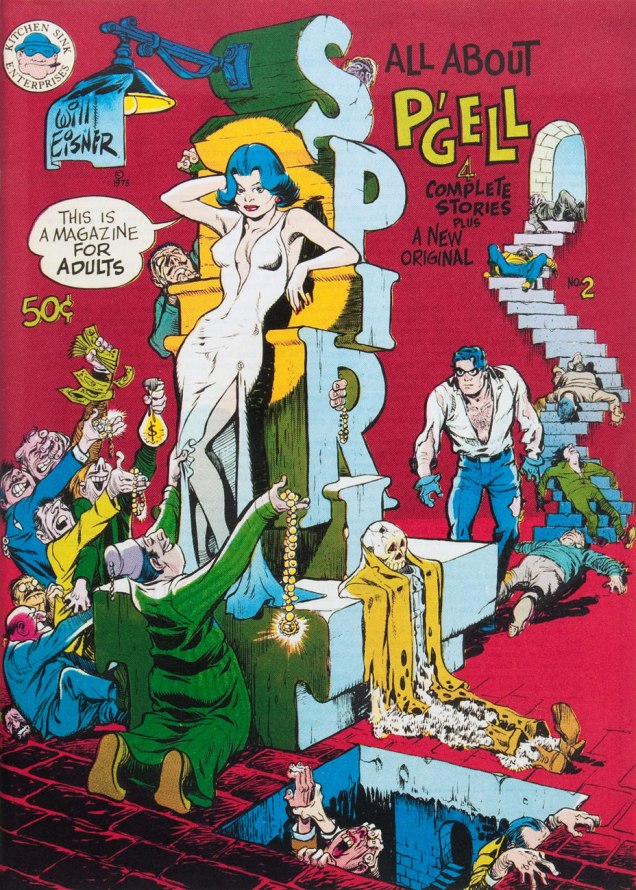
SpiritKitchenSink2A
Kitchen Sink’s The Spirit no. 2 (Nov. 1973), featuring a new Eisner cover, an original four-pager, The Capistrano Jewels, and, as boasts the cover, all about P’Gell, with Meet P’Gell (Oct. 6, 1946), The School for Girls?? (Jan. 19, 1947), Competition (Aug. 3, 1947) and The Duce’s Locket (May 25, 1947).

Next time out: some interesting times with Warren.

-RG

An Inconvenient Prescience: Harvey Pekar’s “Stupid Capitalists!” (2000)

« And it’s worse when I try to remember
When I think about then and now
I’d rather see it on the news at eleven
Sit back, and watch it run straight down »
Warren Zevon, Run Straight Down (1989)

Just a brief little post today, with a thought to our friends in the USA who have an important opportunity coming up tomorrow.

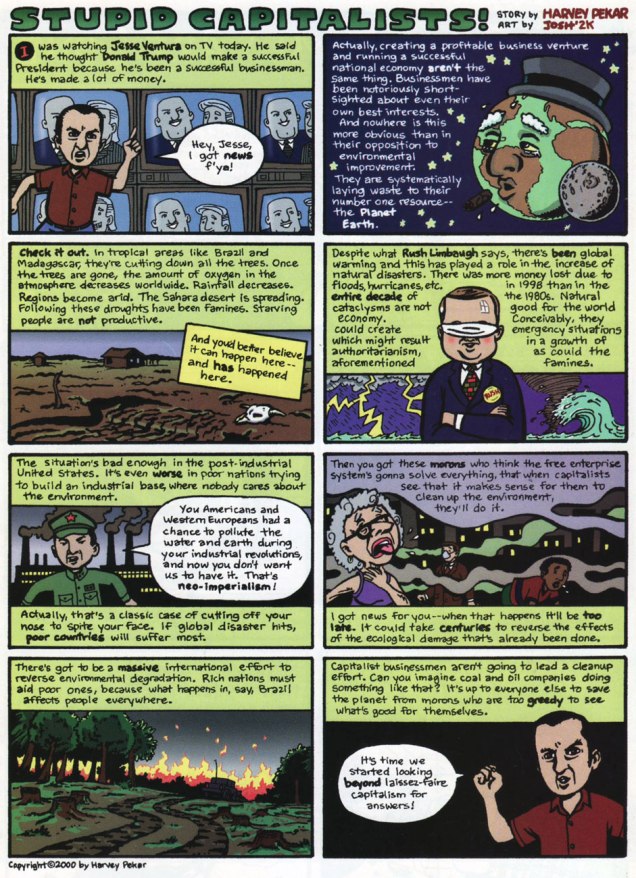
Despite the vividness of his ‘cranky old man’ image, Harvey Pekar (1939-2010) wasn’t some coot screaming at the kids to get off his lonke or ranting about aliens in the drinking water. He was a keen-eyed observer with astounding perspective. Witness this unnervingly accurate and oh-so timely piece from eighteen years ago. Illustrated by Josh Neufeld, it was published as the back cover of the one-shot American Splendor: Bedtime Stories (2000, Dark Horse, edited by Diana Schutz).

PekarCapitalistsAHigh time for a muzzling of a certain tiny fingered, Cheeto-faced, ferret wearing shitgibbon, wouldn’t you say? Make America Splendid again… do it for old Harv, do it for yourselves.

-RG
Hallowe’en Countdown II, Day 31

« Here, plainly, was a guy for whom cartooning held no mysteries. He was more than a master; he was a virtuoso, a source, an innovator whose style was completely natural and original and flexible enough to embrace dashed-off vulgarity and painstaking elegance, often in the same panel. » — Jim Woodring on Jack Davis

Here we are, coming to the end of our countdown (or count-up, depending on your point of view), and who better to convey the magic of Hallowe’en than the late, great Jack Davis (1924-2016)? Don’t answer that. 😉

DavisMonsterRallyA
Detail from Monster Rally (1959).

A 1959 collection of humorous horror songs by Alice Pearce and Hans Conried, Monster Rally (LPM/LSP-1923) sports a classic Davis painting – blending horror and humor into what amounts to a cutely-weird piece of art. Davis has mentioned that this scene is one he really enjoying doing and that he was quite pleased with. An ad for this album in issues of Famous Monsters of Filmland from back then read:

An insane and fantastically entertaining album featuring Hans Conried and Alice Pearce, singing and screaming ghoulish new songs like ‘Monster Rally’, ‘The Thing‘, ‘The Invisible Man‘, ‘Not of This Earth‘ and others. The album cover by Jack Davis is a masterpiece – suitable for framing.

[ Excerpted from Dick Voll‘s article Just for the Record: The LP Cover Art of Jack Davis (Fanfare no. 5, Summer 1983; edited and published by Bill Spicer). ]

And here are a mittful of extras, since I’m more inclined to treat than to trick on this special day.

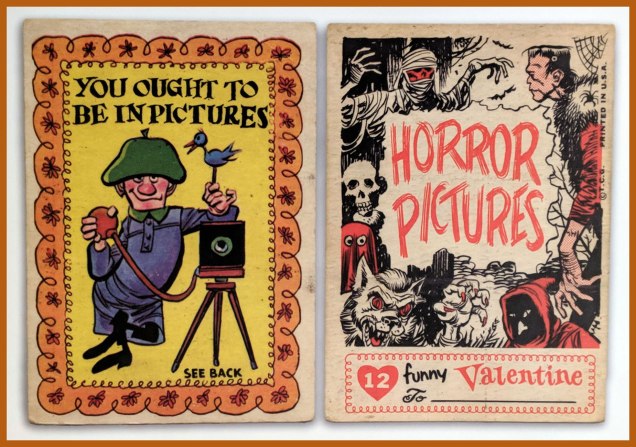
DavidHorrorPicsA
« From approximately ’59, Davis did a huge quantity of work for Topps Gum Co. Over the years, he did ‘Funny Monster Cards’, ‘Wanted Posters’, ‘Funny Valentines’, ‘Batty Book Covers’, ‘Wacky Packs’, ‘Silly Stickers’ as well as standard baseball and football tradings cards. » — Hank Harrison, The Art of Jack Davis (1986, Stabur Press). This, incidentally, is one of the ‘Funny Valentines’.

DavisSlimDracA

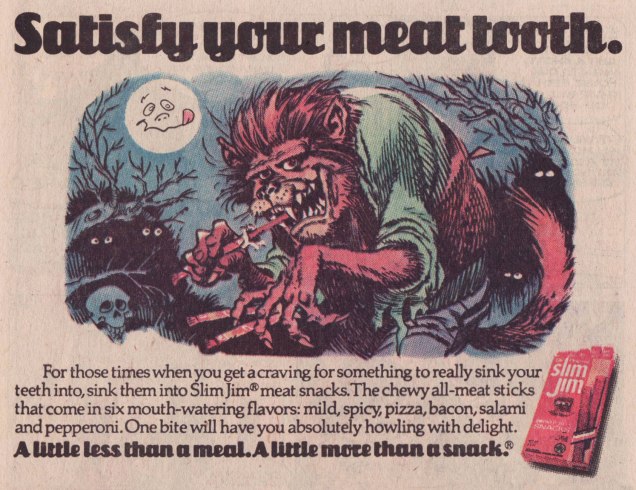
DavisSlimWolfA
Davis’ classic Slim Jim commercials of the late 1970s. Of course. Can you believe they ran these earlier… with the bold-type, all-caps slogan of WHAT TO SINK YOUR TEETH INTO WHEN YOU’RE HUNGRY AND YOU’RE NOT A WEREWOLF… but sans Davis art? Thankfully, some bright kid at the ad agency saw the opportunity and managed to be convincing enough.

In closing, thanks for bearing with all my divagations through this second edition of WOT’s Hallowe’en Countdown, and let me wish you a most spooky Hallowe’en, one and all!

-RG