Ross Andru, ‘Super Comics’ Cover Man

« It’s easy, from our 21st-century perspective, to condemn Waldman as nothing but a sleazy bottom-feeder eking out a precarious living by pirating the marginal dregs of an industry he was only peripherally a part of. » — Don Markstein

As some of you may have surmised from the title, this is a sequel to John Severin, ‘Super Comics’ Cover Man. Since I laid out the facts of the case in that previous entry, I refer you to it as an entrée en matière, an amuse-gueule.

It’s been suggested to me several times that I should devote some column space to Rostislav “Ross Andru” Androuchkevitch (though my co-admin ds certainly has, by dint of the man’s long stint on Bob Kanigher’s regressive Wonder Woman), but the trouble is, unlike the many of my generation who, presumably more through circumstance than discernment, imprinted on Andru and Gerry Conway*‘s The Amazing Spider-Man (1973-76), I had already lost all interest in Spidey after Steve Ditko‘s rightly acrimonious 1966 departure; I just wasn’t buying what they were selling.

My own, somewhat less agreeable run-in with Andru was through his ill-advised residency as DC’s principal cover artist (under “art director” Vinnie Colletta) paired up with Dick Giordano**, who reportedly slapped inks, and likely some coffee, on a few covers each day before catching his train to work.

However, as I always say, with a career that lengthy and prolific, there’s bound to be exceptions. Which brings me to a comment a dear friend and old comrade in ink-slinging made — just this week! — regarding an Andru cover I featured during last month’s Hallowee’n Countdown:

« Mmmm… that Ross Andru cover. Such a delightful classic! Who knew he was so good back then compared to his later work, which was pretty damn awful. »

So, like John Severin, Andru (with inking partner, for better — though mostly for worse — Mike Esposito in tow) was approached by Israel Waldman to gussy up his shoddy, oft-illegal reprints.

Redoubtable comics historian Don Markstein (1947-2012) did a breathtaking job of compiling a dossier of the whole I.W./Super Comics operation, complete with the cross-referencing of most — if not all — the ‘borrowed’ properties and personages. Essential reading if you’re at all intrigued by crafty reprobates of Waldman’s ilk.

This is Doll Man no. 11 (1963, Super Comics). Read it here!
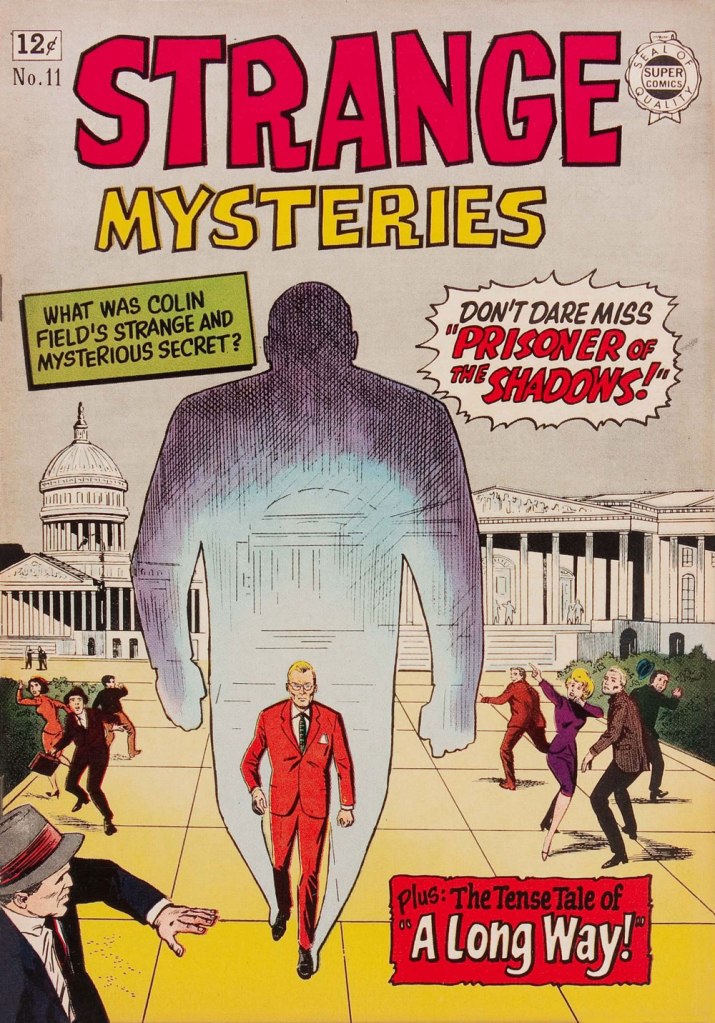
This is Strange Mysteries no. 11 (1963, Super Comics). Read it here! The 60s Marvel colouring gimmick of leaving the background grey to make the foreground figures stand out (not to mention spare much time and effort) leads me to think that resident Marvel hues-man Stan Goldberg (no Rube he) may have been moonlighting for Izzy Waldman.
This is Danger no. 12 (1963, Super Comics). Read it here!

Mr. Markstein on The Black Dwarf: « The first question, of any character, is — why? Putting on a bizarre outfit to battle crime on an unpaid, freelance, anonymous basis seems pretty strenuous, requiring strong motivation. But his isn’t much. He just hates crime, no particular reason cited.

Next, what’s with the name? He was shorter than average, but not so short he qualified as a Little Person. Santa Claus would reject him on sight. And would identifying himself as a dwarf instill fear in criminals, confer fighting prowess on himself, or in any other way be an asset in his war on evildoers? It just sends a message that he’s small, so the evildoers can probably beat him up. At least he made up for his shortcomings by packing a gun. »

This is Mystery Tales no. 16 (1964, Super Comics). Read it here!
This is Strange Planets no. 16 (1964, Super Comics). Read it here!
This is Danger no. 16 (1964, Super Comics). Read it here! I was tempted to quip that it takes tremendous chutzpah to hire the then-current Wonder Woman artist to illustrate a cover featuring one of her numerous knock-offs… but I’m pretty sure Waldman, hardly a comics insider, didn’t know and didn’t care.

Of this particular breed of characters, Markstein wrote: « Superheroes first turned up in American comic books just before World War II, and flourished during the early war years. Especially flourishing were a sub-species of superhero that wrapped themselves in the U.S. flag like a cheap politician. Inexplicably, these are referred to as “patriotic” heroes, indicating that wearing the flag like Captain Freedom or Miss Victory was deemed a mark of patriotism higher and more… »

This is Fantastic Adventures no. 16 (1964, Super Comics). Read it here!
This is Strange Mysteries no. 17 (1964, Super Comics). Read it here!
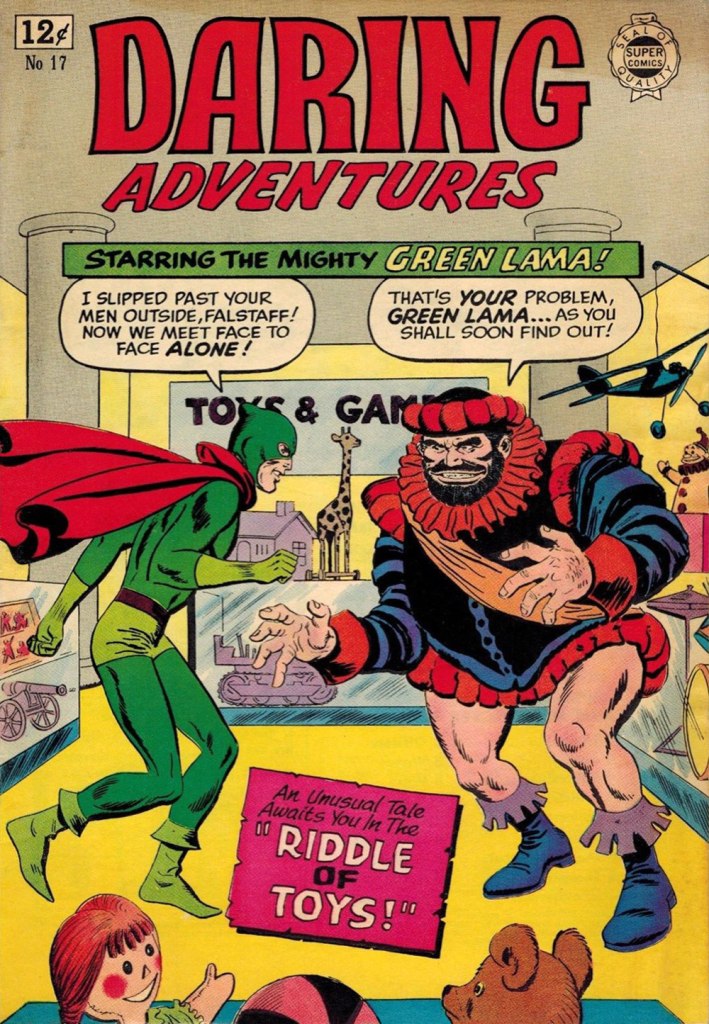
This is Daring Adventures no. 17 (1964, Super Comics). Read it here! « May I have this dance, Green Lama? » « Why, I thought you’d never ask, Falstaff! »
This is Police Trap no. 18 (1964, Super Comics). Read it here! In my opinion, this is one of the best-composed of Andru’s Super/I.W. covers: very nice sense of depth, though the effect would play out far better without the quite superfluous ‘We proudly present...’ blurb, which breaks the visual flow.
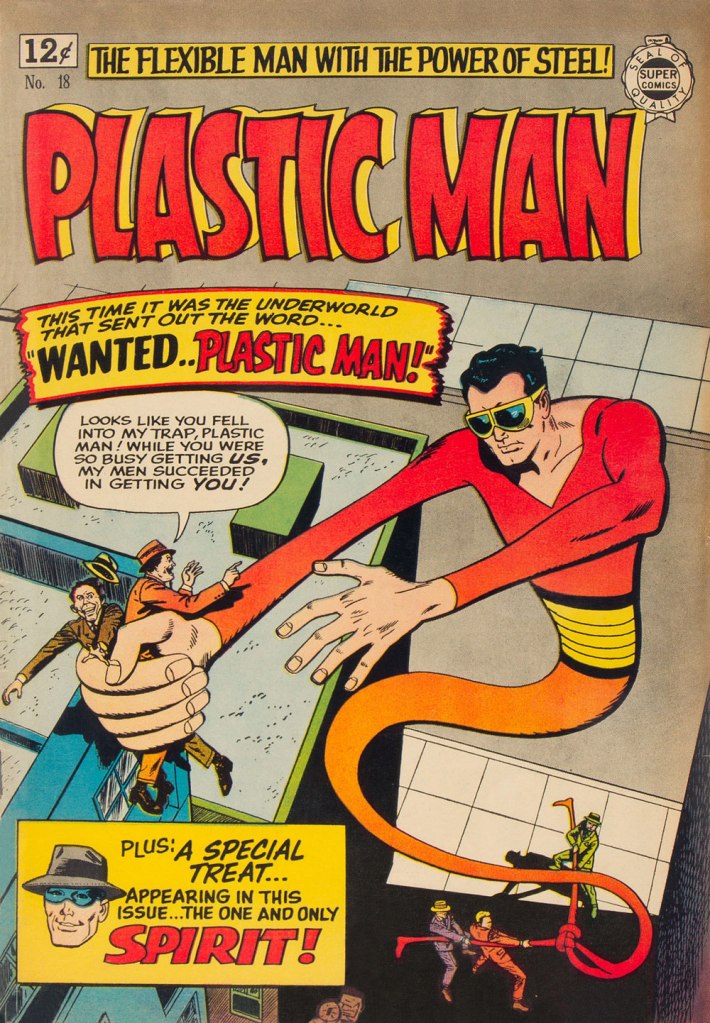
I think the guy on the left is a bit ticklish. This is Plastic Man no. 18 (1964, Super Comics). This is actually a pretty spiffy issue, featuring classic work by masters Jack Cole and Will Eisner. Read it here! DC, who owned the character — having bought it from its original publisher, Quality, when it left the field (along with Doll Man, Phantom Lady, Blackhawk…) — would resurrect Plas in 1966. That didn’t click. It wasn’t until the Steve Skeates / Ramona Fradon revival of 1976-77 that someone managed to grasp the appeal of Jack Cole’s unique creation. But again, sales were low. In 1980, Andru would again depict Plastic Man on Adventure Comics covers spotlighting Jean-Claude “Martin Pasko” Rocheford and Joe Staton‘s unfunny, misguided and mercifully brief run. And hey, if you’d always longed to see Andru’s version of Eisner’s The Spirit, this is all you get!

-RG

*Harlan Ellison on Conway, circa 1979: « I mean, the first time I met Gerry Conway, who the hell would’ve known that Gerry Conway would single-handedly ruin the entire comics industry. He’s a classic example of the deification of no-talent in all industries. He’s not good, but he has it in on Thursday. And that’s all they care about. You know, fill them pages. » [ source ]

**taking over from Mike Esposito and actually making him look good in comparison!
Hallowe’en Countdown IV, Day 15

« He was homicidal. He was a real nut, a really tooty-fruity nut… he killed for fun… now society is avenged… avenged avenged avenged… and minus expensive court costs too… » — writer-editor Al Hewetson loved ellipses

For a few years in the early 70s, longtime Atlas/Marvel production manager Sol Brodsky joined forces with canny schemer Israel Waldman in order to give monster mag publisher James Warren a good scare, and it worked. During its relatively brief existence (1970-75), brassy upstart Skywald Publications gave Warren pause and cause to nervously peer over his shoulder and strong incentive to improve his product, which was hardly at its peak in 1970.

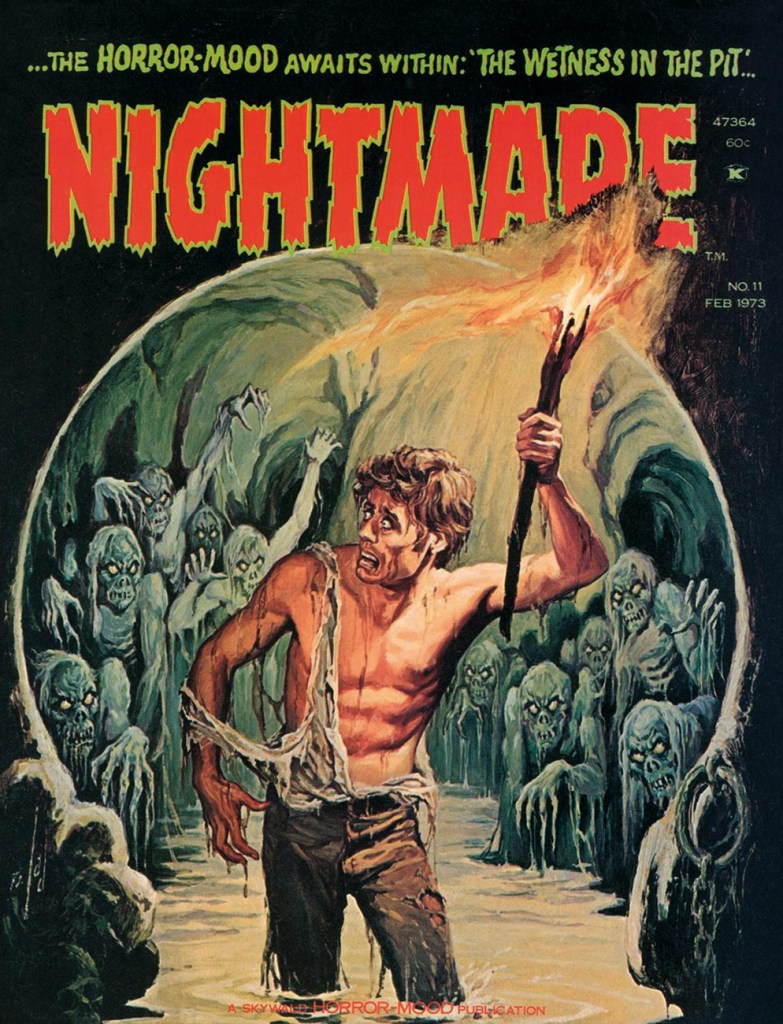
This is Nightmare no. 11 (February, 1973, Skywald). The spooky, claustrophobic cover is the brushwork of José Antonio Domingo, who also contributed a handful of painted covers to Marvel’s concurrent b&w magazine line.

By all means, do read this intriguing issue, which is available in its entirety right… here.

Oh, and why not? Here’s the finest of Domingo’s Marvel covers, à mon avis… despite the rather inept text placement.

This is Vampire Tales no. 2 (Oct. 1973, Marvel).

-RG

John Severin, ‘Super Comics’ Cover Man

« I got into the comic business the same way I got into the bubble gum business: somebody gave me a job. » — John Severin

I’ve said it before, and I still feel that way: If you’re going to discuss a career of such length, variety, depth and consistency as John Severin’s (from the late 1940s to the early 2010s!) it’s simply too easy to lose your way in the details, sidebars and bifurcations. Best to pick a small area and stick to it, particularly if you don’t have the luxury of endless pages to devote to the task.

Speaking of sidebars: In this forum, I keep returning to the topic of Israel Waldman and his dodgy, but mesmerizing publishing ventures. The many scattershot titles issued under the IW / Super Comics (1958-1964) banner were printed on shoddy paper (which makes them, nowadays, nearly impossible to find in any sort of decent shape), were sold outside the usual channels (in bags of three through department stores, and not the fancy ones at that), consisted of rather hoary, indifferently-packaged reprints… but foxy businessman Waldman didn’t scrimp on the one count that mattered: he shelled out top dollar to commission top talent to create attractive covers. That sweet old bait-and-switch.

Sure, some of these random assemblages of decaying pulp happen to be good comics, but given the nature of odds, it was bound to happen.

John Powers Severin, born ninety-seven years ago today (Dec. 26, 1921-Feb. 12, 2012), was part of Waldman’s cadre of cover artistes, and he delivered beautifully, as he always did, right to the end of his career.

Here, then, are some highlights of these little-seen Severin pieces. Happy birthday, Mr. Severin!

Blazing6guns16A
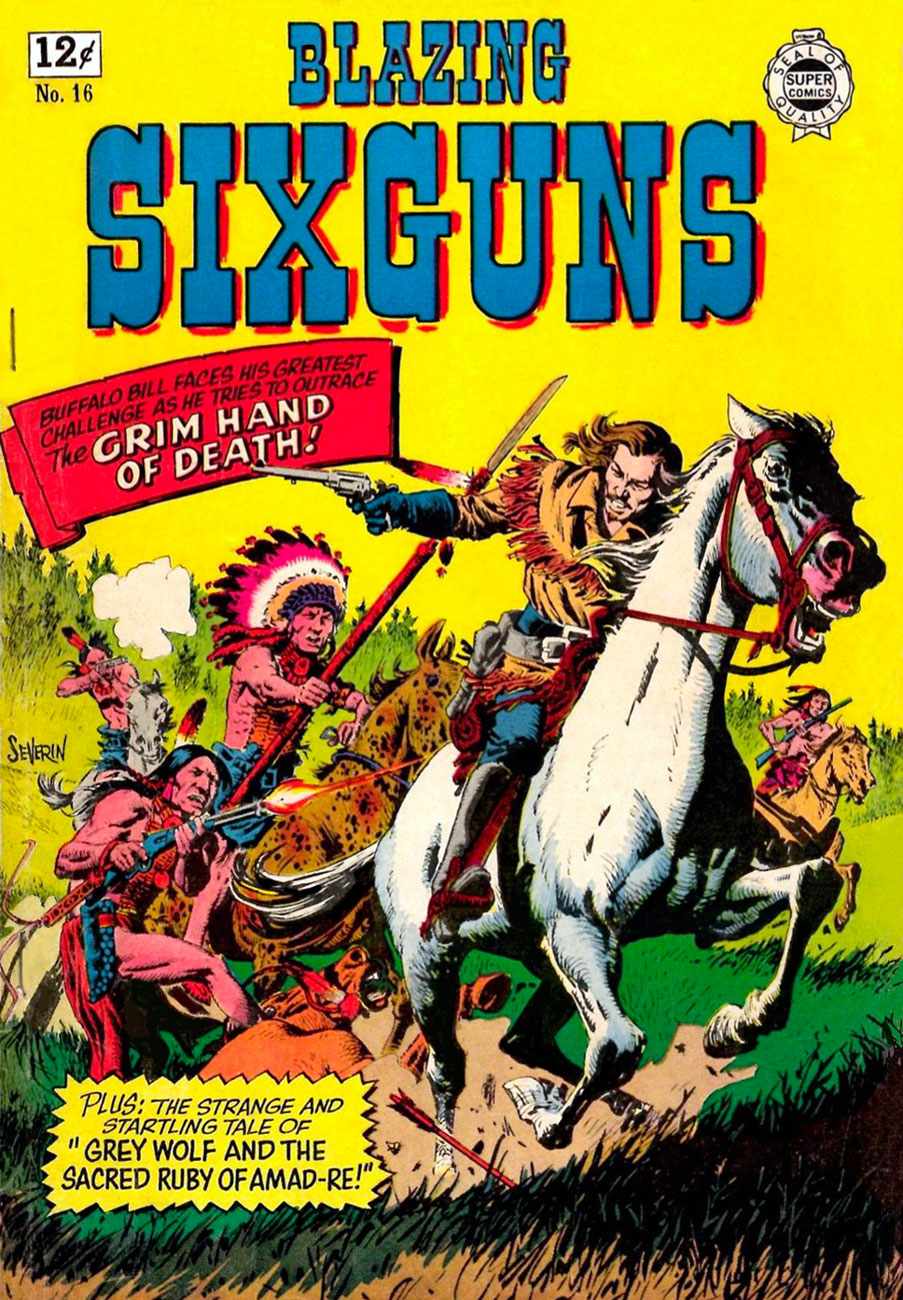
Blazing Sixguns no. 16 (1964), ten issues, 1958-1964. Read this issue here.

Danger10A
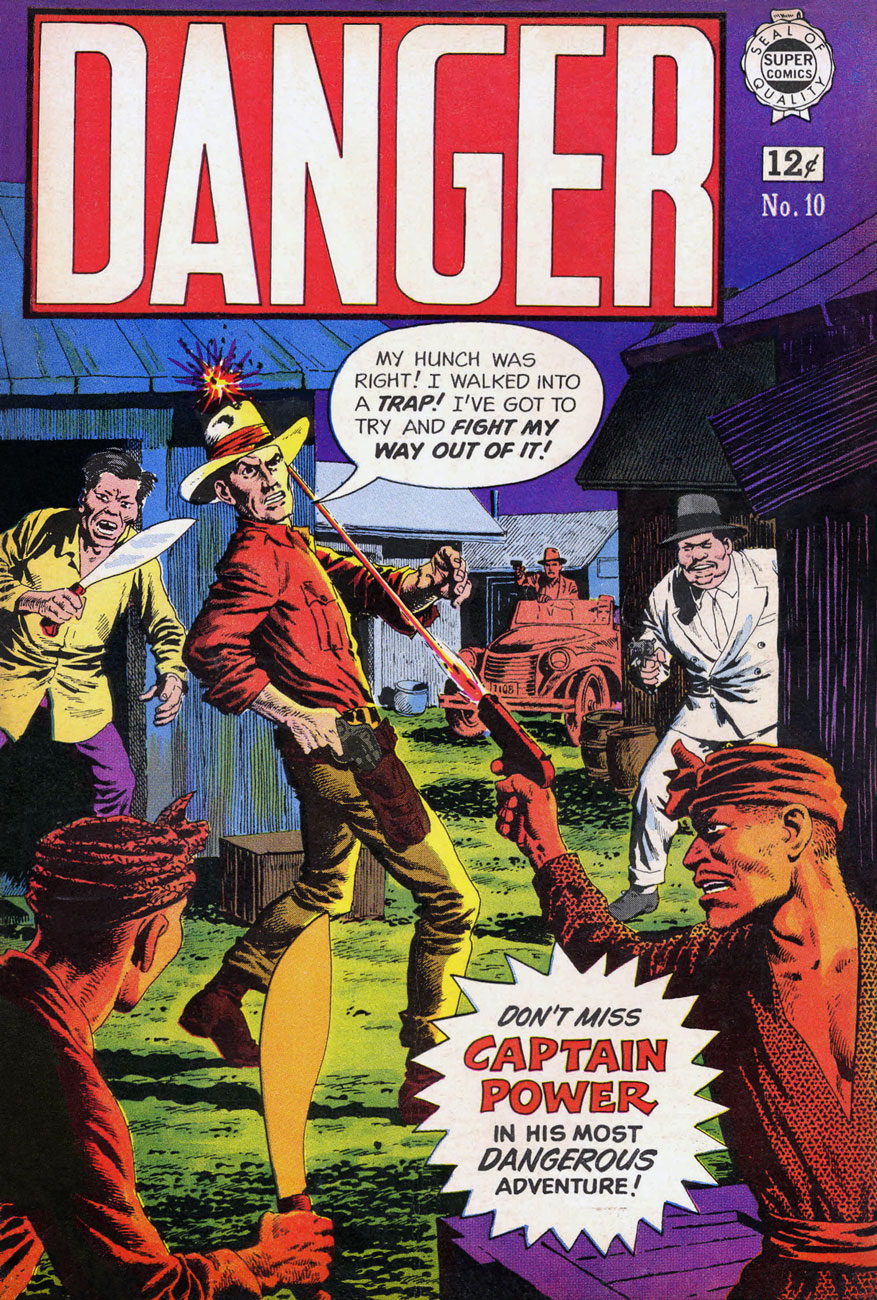
Here’s Danger no. 10 (1963), the first of  seven issues. Read it here.

FantasticAdv10A
This is Fantastic Adventures no. 10 (the first of seven issues, 1963-64). Read it here.

Gufighters18A
Looks like Marvel’s Kid Colt did a bit of moonlighting for Super Comics (as did king of all media Gabby Hayes!). This is Gunfighters no. 18, fifth and final issue of the series (1958-1964).

SilverKid01A
This is Silver Kid Western no. 1 (1958), first of two issues. Read it here.

Robin-Hood9A
This is Robin Hood no. 9 (1958),  third of five issues (1958-1964). Read it here.

Westerner17A
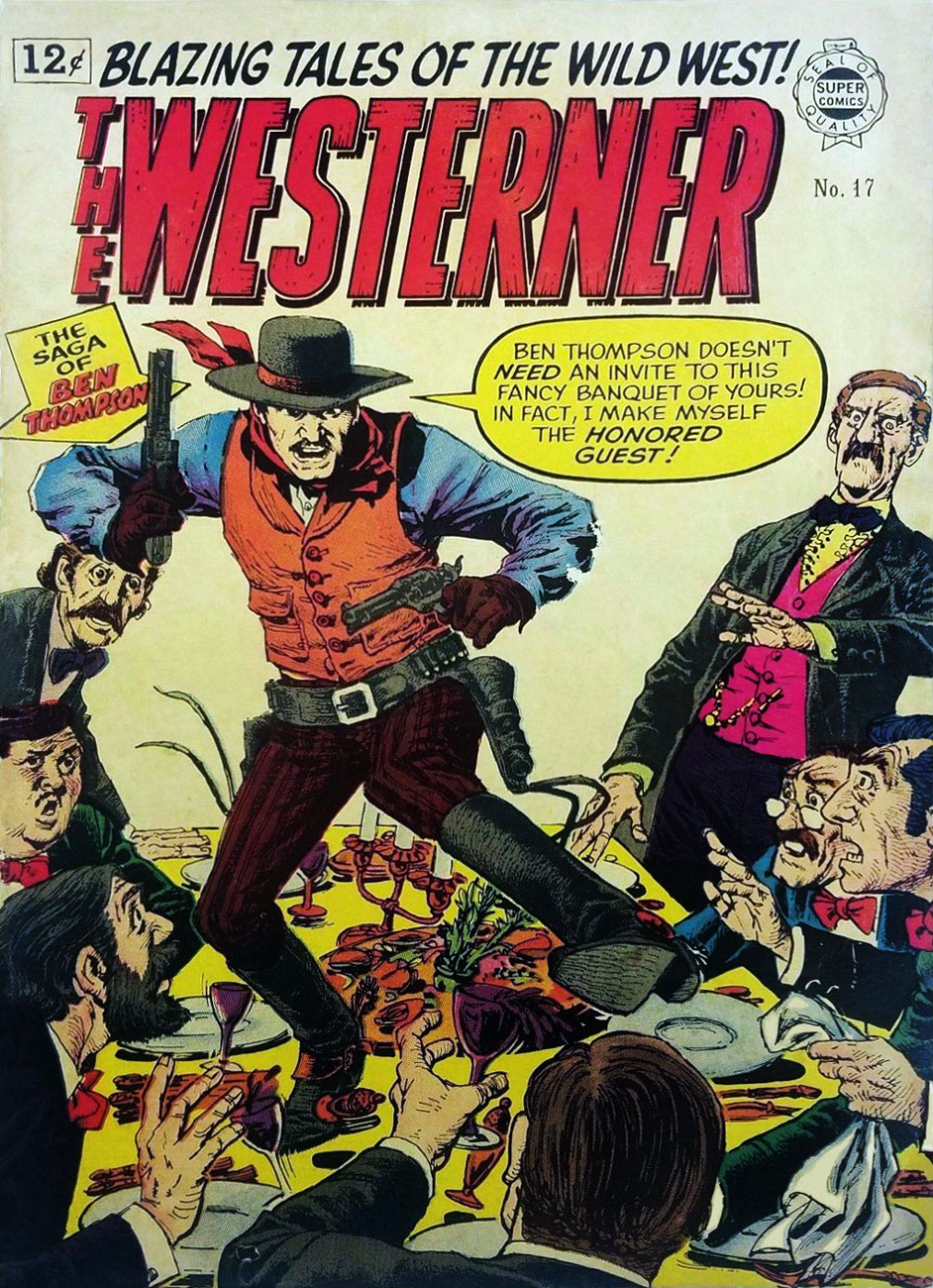
An alternative view of table étiquette from real-life figure Ben Thompson. This is The Westerner no. 17 (1964), third of three issues.

And if you’re hankering for more John Severin, check out our earlier post and/or this illuminating, life-spanning and definitive Comics Journal interview.

-RG

Will Eisner’s The Spirit at Harvey and…

« It was long past midnight on a hot, wet June night many years ago… Central City lay choking for breath in an eerie fog… »

In this, part three of our chronicle following as we can the meandering and sometimes mystifying odyssey of Will Eisner’s The Spirit, we reach the most outré segments of the former Denny Colt’s road.

In a unique twist, The Spirit’s next residence, nearly a decade after his Fiction House run, had nothing at all to do with Will Eisner… in terms of securing his assent, that is.

It was down to the fabulously sketchy Israel Waldman, one of those fringe-dwelling characters who made the comics industry such a colourful snake pit. To quote the Grand Comics Database: « I.W. Publications (1958-1964) was part of I.W. Enterprises, and named for the company’s owner, Israel Waldman. Reportedly, Waldman came into possession of a printing company and among the assets were the production materials for several hundred comic books previously published by various publishers as well as a limited amount of previously unpublished material. Waldman equated possession of production materials as the right to reprint and I.W. became notable for publishing unauthorized reprints of other companies’ comics, often with new covers, as Waldman’s windfall did not often include the production materials for covers. The later half of the company’s existence, it published comics under the Super Comics name. Usually these companies were out of business, but not always. »

IWThe-Spirit11A
This is The Spirit no. 11 (1963), featuring The Man Who Killed The Spirit (Mar. 24, 1946), cover-featured The Case of the Balky Buzzard (Apr. 21, 1946), Carrion’s Rock (May 19, 1946), all scripted by Eisner, as well as Honeybun and Flatfoot Burns shorts. Cover by Joe Simon (“Joe, did you even read the story you’re depicting?“). This one was well worth one’s hard-earned twelve pennies. Read it here.

IWThe-Spirit12A
This is The Spirit no. 12 (1964), featuring, this time, a trio of WWII-era Spirit stories scripted by Manly Wade Wellman and Bill Woolfolk and illustrated by Lou Fine, rounded off with a pair of Flatfoot Burns shorts by Al Stahl . Cover again by Joe Simon. Read it here.

If memory serves, Waldman’s comics craftily bypassed the Comics Code (another exception!) and the newsstands, being exclusively sold in sealed bags of three in bargain-basement department stores. To bait the hook, Waldman paid top dollar for new cover artwork, approaching established pros like Ross Andru (who actually delivered some fun stuff, unlike his unforgivably atrocious turn as DC’s main cover artist in the late 1970s), John Severin, Jack Abel, and in these two cases, Jacob Kurtzberg‘s old partner, Joe Simon.

Unsurprisingly, Waldman skimped on all other materials, particularly the paper his comics were printed on, which means that I.W./Super Comics are pretty hard to come by these days in any kind of decent state, so they’re ironically pricey.

A few years later, Eisner struck a deal with another rascal (albeit one with cleaner fingernails), Alfred Harvey of Harvey Comics, Stan Lee‘s only credible competition in the credit-usurping, I created-the-Universe stakes. Again, two issues, but this time with some new Eisner material, including origin stories for The Spirit (his third, but definitive one), and his arch-nemesis Zitzbath Zark, which you may know as purple glove enthusiast The Octopus.

HarveySpirit1A
Harvey’s The Spirit no. 1 (Oct. 1966), featuring the new Origin of the Spirit by Eisner, and classics Lorelei Rox (Sept. 19, 1948), Two Lives (Dec. 12, 1948), Agent Cosmek/Visitor (Feb. 13, 1949), The Story of Rat-Tat the Toy Machine Gun (Sept. 4, 1949), Ten Minutes (Sept. 11, 1949), Thorne Strand (Jan. 23, 1949), Gerhard Shnobble (Sept. 5, 1948), all scripted by Eisner, save Ten Minutes, which hails from the mind of Jules Feiffer.

Spirit2A
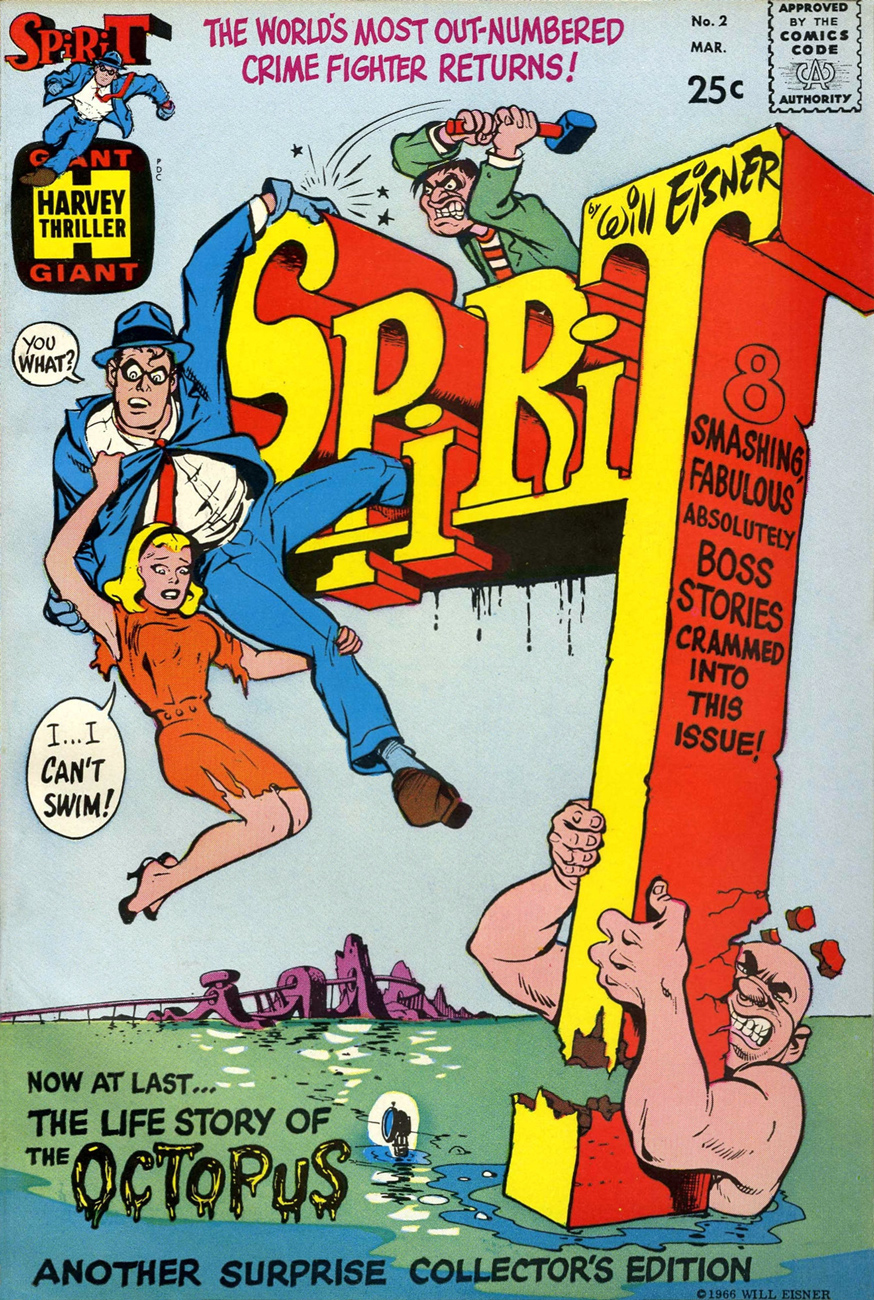
Harvey’s The Spirit no. 2 (March, 1967) features the brand-new Octopus: The Life Story of the King of Crime and 2-pager The Spirit Lab, plus a generous helping of fine oldies, namely Plaster of Paris (Nov. 7, 1948), The Deadly Comic Book (Feb. 27, 1949), Rudy the Barber (Oct. 22, 1950), The Story of Sam, the Saucer That Wanted to Fly (Sept. 17, 1950), Sam Chapparell (Oct. 10, 1948), La Cucaracha (Nov. 19, 1950), The Halloween Spirit of 1948–Ellen Meets Hazel (Oct. 31, 1948), all scripted by Eisner… the book wraps up with a preview of the next issue, which never saw print. And so it goes…

Mr. Eisner then finally had the good fortune to run into an honest man, who would prove in time to be his most steadfast ally: Mr. Denis Kitchen. Their first collaborations were a bit tentative, but quite sympathiques, with Eisner kind of slouching towards the Underground, his creation even cover-featured on Kitchen’s long-running humour anthology Snarf.

Snarf3EisnerA
This is Kitchen Sink Enterprises’ Snarf no. 3 (Nov. 1972), featuring an original Eisner cover.

SpiritKitchenSink1A
Another two-issue run! Kitchen Sink’s The Spirit no. 1 (Jan. 1973), featuring a new cover by Eisner, and precious relics Max Scarr’s Map (Apr. 14, 1946), Caramba (Nov. 10, 1946), Return to Caramba (Nov. 17, 1946), The Rubber Band (June 23, 1946), plus a few brand-new short pieces.

SpiritKitchenSink2A
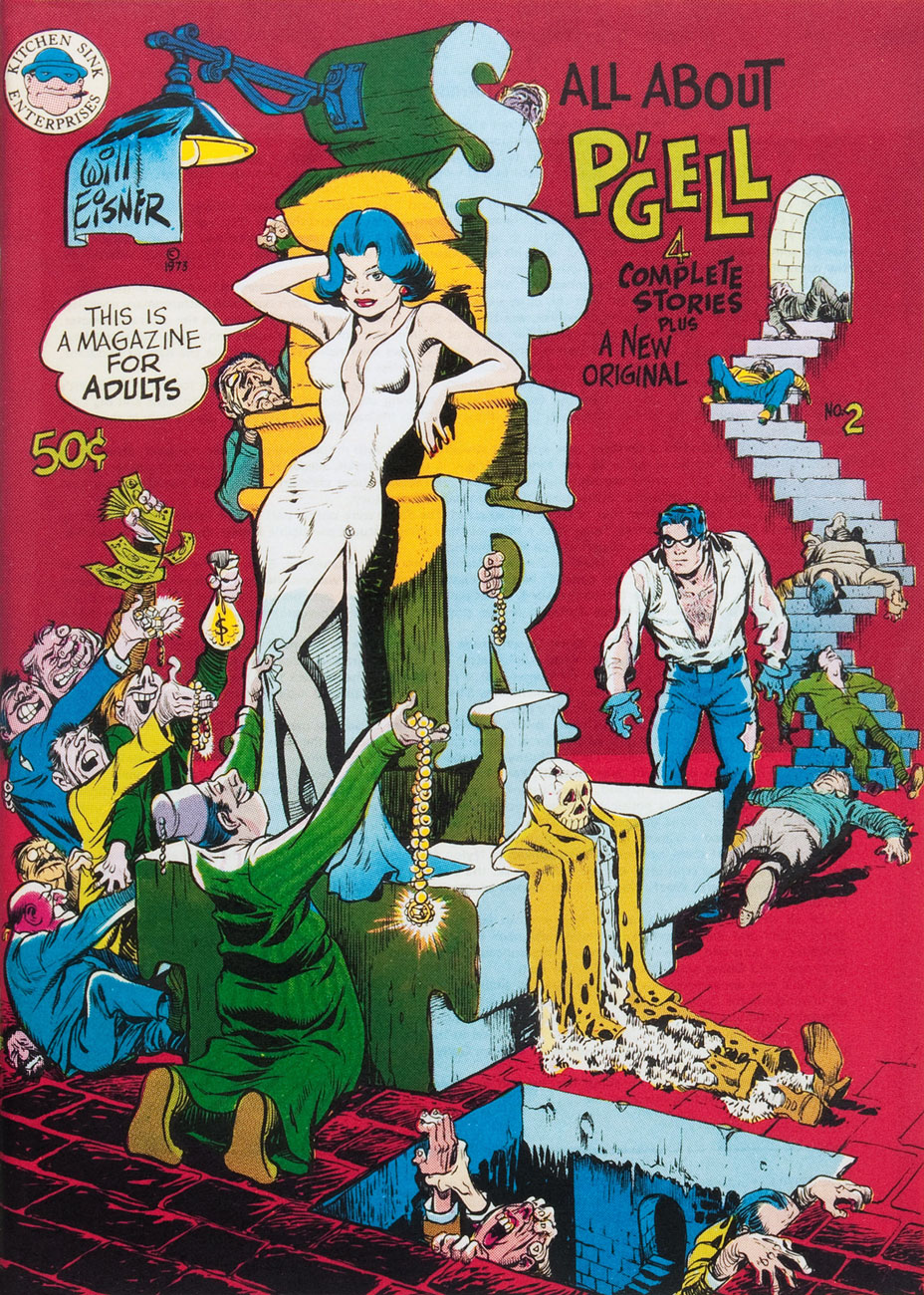
Kitchen Sink’s The Spirit no. 2 (Nov. 1973), featuring a new Eisner cover, an original four-pager, The Capistrano Jewels, and, as boasts the cover, all about P’Gell, with Meet P’Gell (Oct. 6, 1946), The School for Girls?? (Jan. 19, 1947), Competition (Aug. 3, 1947) and The Duce’s Locket (May 25, 1947).

Next time out: some interesting times with Warren.

-RG

Unexpected Delights: John Severin, 1971-72

« And you always get your finger in the frame* »

I’m inordinately fond of Marvel’s brief flirtation with “picture frame” covers, which lasted but a year, opening with books cover-dated November 1971, at the tail end of Stan Lee’s run as editor-in-chief, and fading away less than a year later during Roy Thomas’ tenure. Figures.

This period coincided with one of John Severin’s passages at Marvel. At the time, the self-proclaimed « House of Ideas » was endeavouring to flood the market with crap, aiming to force DC to overextend itself to retain its market share, and, reportedly, to drive Gold Key out of business. So Marvel let loose a torrent of unannounced and unnecessary reprints, at most commissioning new covers to sell the bill of goods.

Tactically, it was a tawdry page out of the infamous Israel Waldman* book: in the late 1950s to mid-60s, the canny cheapjack publisher issued a line of comics (IW/Super) reprinting material he owned and often didn’t, in the case of some of the more nebulous copyrights (namely Quality’s The Spirit, Doll Man and Plastic Man)… accidentally on purpose. Anyhow, Waldman paid a few handpicked freelancers top dollar (to get his money’s worth… I did say he was canny) to create enticing new covers to adorn his shoddy reprint rags. And I do mean rags: the paper stock used was even worse than the low industry standard… just try to find any IW comic book in decent shape nowadays!

Among the cover artists Waldman recruited were the Ross Andru / Mike Esposito team, Everett Raymond Kinstler, Jack Abel… and John Severin.

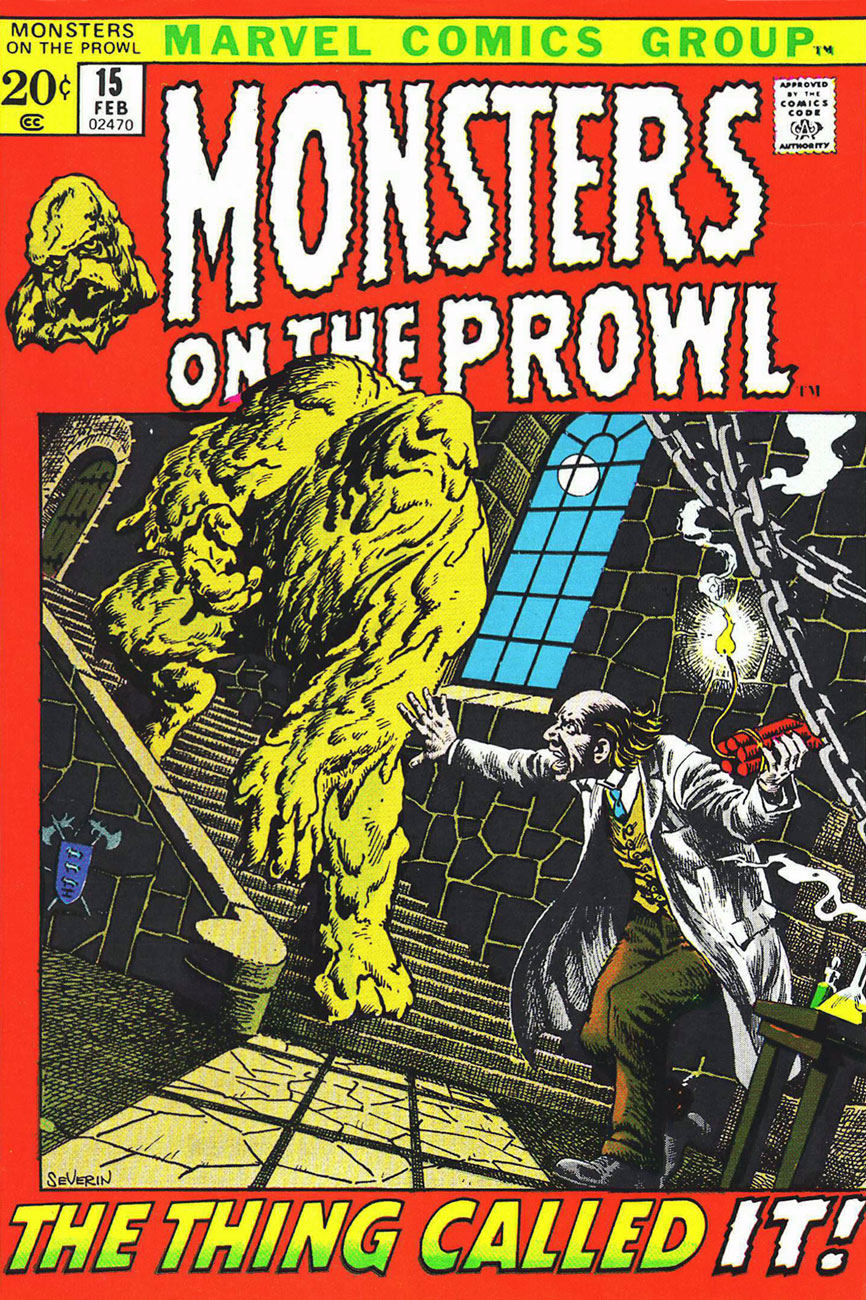
But getting back to 1971-72, here’s a chronological and alphabetical sampling of my favourite Severin turd-polishing covers from Marvel’s brief « picture frame » flirtation, out of the 35 or so he created solo at the time. Several of these are refreshingly uncluttered and moody… for Marvel.

TwoGunKid-101A

SeverinMOTP15A

Sgt-Fury98A
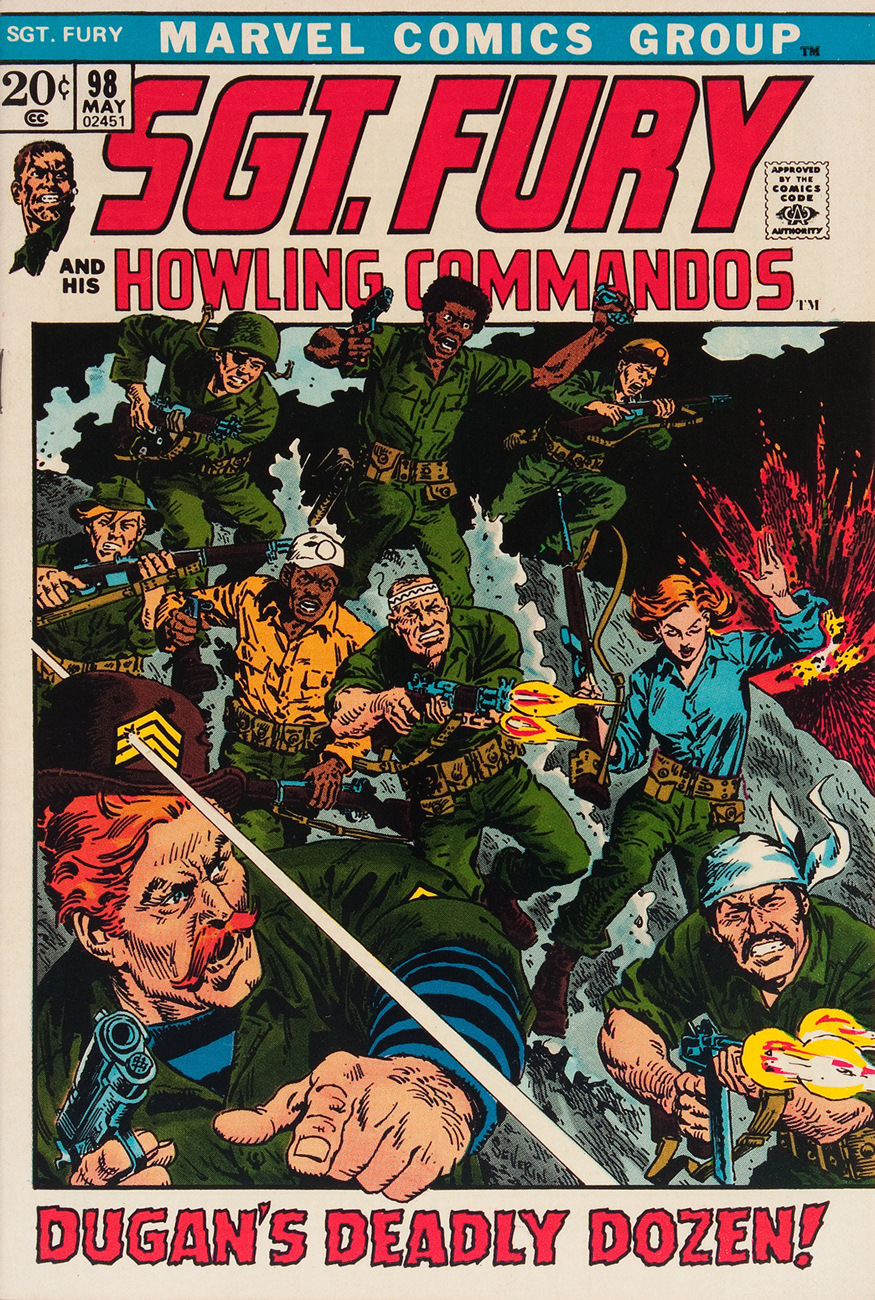
Someone at Marvel loved to rip-off the 1967 Lee Marvin-led epic “The Dirty Dozen“; probably Gary Friedrich. The very next month, the Deadly Dozen would team up with another Irishman stereotype to form “Combat Kelly and The Deadly Dozen”, I kid you not. Oh, and a diverse cast in a Marvel war comic? Oh, right, they’re ex-convicts… and they get slaughtered in the last issue. Oops.

TombOfDracula2A

WesternGunfighters9A

WhereMonstersDwell15AFear8A

MightyMarvelWestern17A
Ah, Severin’s Rawhide Kid. Don’t miss Severin and writer Ron Zimmerman’s brilliant and daring 2003 reboot of the Kid, “Slap Leather”.

Kull3A

*Del Amitri, “In the Frame” (1995)

**all about Marvel’s “picture frame” era: https://www.cbr.com/marvel-comics-picture-frame-cover-era/

***The gory details on the IW/Super story: http://toonopedia.com/iw-super.htm

-RG