« Well, she sneaks around the world from Kiev to Carolina She’s a sticky-fingered filcher from Berlin down to Belize She’ll take you for a ride on a slow boat to China Tell me, where in the world is Carmen Sandiego? »*
Today’s Tentacle Tuesday is for globe-trotters only – but don’t let this post give you an itch for actual travelling: that’s verboten right now.
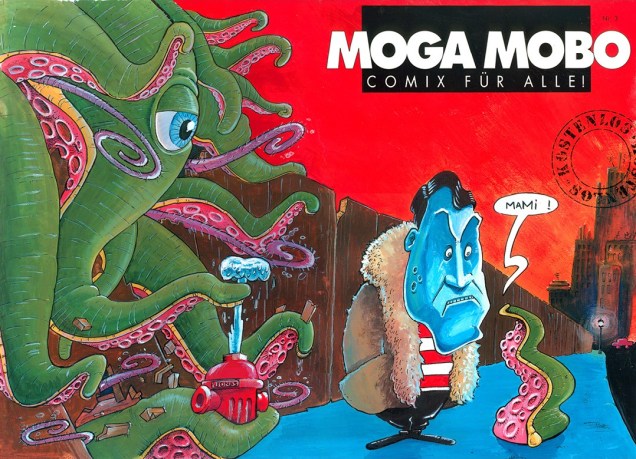
This Teutonic tentacled cutie appeared on the cover of Moga Mobo no. 3 (1995). The wraparound cover is the work ofJonas Greulich, one of the co-founders of this German comics magazine that began publication in 1994 (the other two artists involved are Titus Ackermann and Thomas Gronle).
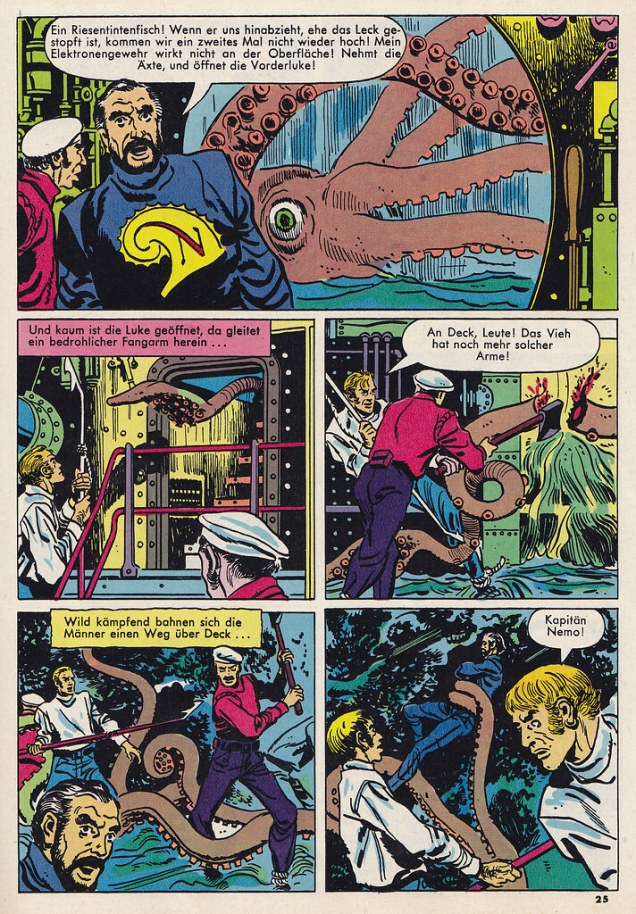
Speaking of German comics, does anybody know where this page and its German Captain Nemo come from?
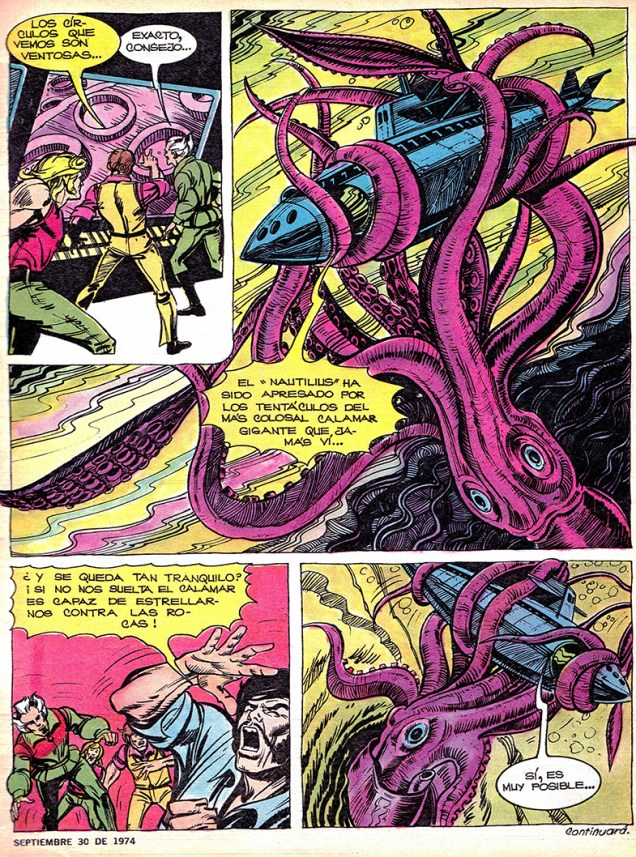
20.000 Leguas de viaje submarino was adapted by Héctor Oesterheld and illustrated by Roberto Regalado. This 23-page story was published in Argentine Billiken Magazine (Editorial Atlantida) in 1974. For those who can read Spanish or would just like to see more images, head over to this article.
One would be remiss in not paying at least a brief visit to Asia:
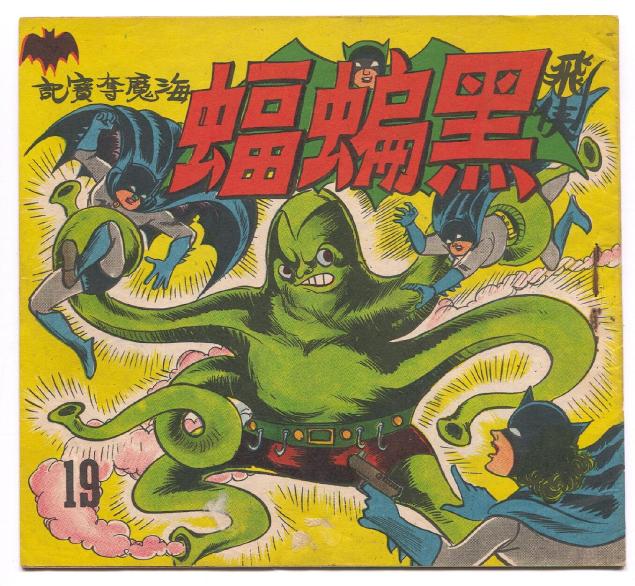
The cover of a comics anthology from Hong Kong, probably from the 1960s.
And back to Germany at a staggering speed (watch out for whiplash)!
Petzi is actually a translated version of a Danish character named Rasmus Klump, created by a husband-and-wife team Carla and Vilhelm Hansen in 1951. The adventures of the lovable bear cub were popular enough to be translated into many languages, but a hefty price had to be paid – namely, a name change. Rasmus became Petzi in French, German, Italian, Portuguese and Vietnamese, and I’m slightly amazed that such different countries could agree on one name. In English, you will no doubt be familiar with Barnaby Bear. This is Petzi no. 40 (July 2008), a reprint of older material published by Carlsen Comics.
∼ ds
* She’ll go from Nashville to Norway, Bonaire to Zimbabwe
Chicago to Czechoslovakia.. and back!
« Their bodies are mainly soft and pliant, with one major exception. In the centre of their web of tentacles lies a hard, sharp and murderous beak that resembles that of a parrot, is a tool for killing and dismembering prey… » (source)
When the story begs for an octopus intervention, artists can go the more-or-less realistic route, or take complete liberties with an octopus’ anatomy. Today I won’t talk about assorted tentacled zoological marvels one finds in comics – insert your choice of description into “… with tentacles”: dinosaurs, sharks, gorillas, robots, old hags, worms, bartenders, and so on. Yes, I can support my claims (email me if you want evidence… or just look through previous editions of Tentacle Tuesday).
Anyway, let’s say you want to draw a somewhat believable octopus – giant, sure, and plenty scary, but somewhat true to life. There’s a problem: frightening brutes generally have some sort of gaping maw, a set of incisors (preferably dripping with some revolting stomach acid), something they can visibly threaten the hero with. The octopus’ mouth is hidden under all that undulating mass of tentacles, pretty much where one would expect a normal creature’s anus to be, and definitely not next to his eyes. For that reason, in most octopuses sightings in comics, their mouths aren’t visible at all. But some artists, well, they want to have their cake and eat it, too. Here is a gallery of octopus mouths – we’ll start off with naturalistic ones, and make out way into that’s not how any of this works territory. I won’t include anything with a lamprey mouth, however.
Here’s the only clean attempt: the beast has a beak, there are no teeth in it, and the eyes are on the other sides of the octopus, where they’re supposed to be. Walter Simonson, you win this one!
Sword of Sorcery no. 5 (Nov-Dec 1973, DC), cover by Walter Simonson. Fafhrd, is that you?
In the next image, an attempt is made at something vaguely beak-like, but that dentition is definitely wrong. The octopus has some tiny teeth on its tongue which it uses to drill holes or scrape things out, and some razor-sharp hooks/teeth on its suckers, but nothing like normal teeth, which is why no octopus has ever needed dentures.
Doomsday In The Depths, scripted by Garder Fox and illustrated by Gil Kane, was published in Undersea Agent no. 6 (March 1967, Tower).
The other approach one could take is drawing something that looks like an especially irate parrot, but with tentacles. It is not entirely illogical, as the octopus’ mouth has been described as “similar to a parrot’s beak” by several people in the know.
Tentacles of Terror was published in Front Page Comic Book no. 1 (1945, Harvey). This page is drawn by Joe Kubert, at at least the signature attests to this – I admit I would have never guessed. There are much nicer Kubert tentacles over at Tentacle Tuesday Masters: Joe Kubert.
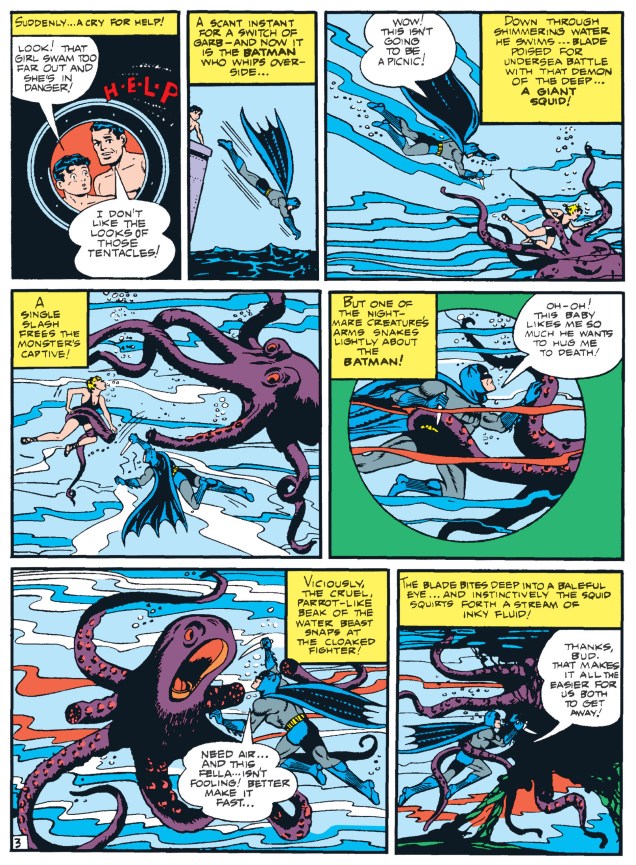
Batman recently had a whole Tentacle Tuesday to himself – here he is again, fighting a squid with very unsquid-like features. At first, he looks normal, but glance at the bottom of the left corner – how did he suddenly develop a beak where there was none to be seen several panels prior?
An excerpt from Four Birds of a Feather,Batman no. 11 (June-July 1942, DC), script by Bill Finger, pencils by Bob Kane (take that particular credit with a grain of salt), inks by Jerry Robinson, backgrounds and lettering by George Roussos.
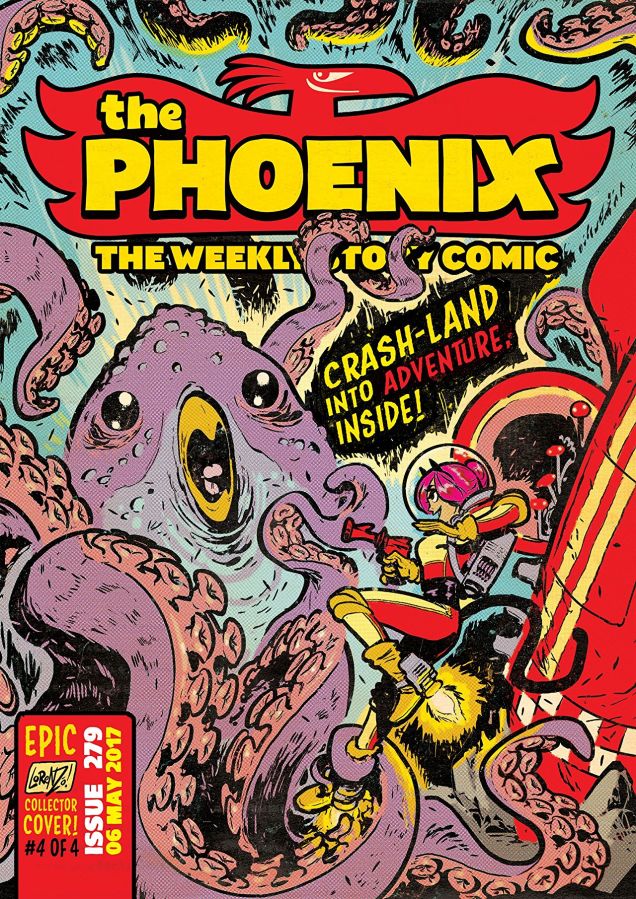
Continuing the beak-and-parrot theme…
The Phoenix no. 279 (May 2017). Can anyone identify the cover artist?
A final note to this conversation about octopuses’ mouths – should you locate an octopus, pleasedon’t put it on your face (or any other body parts).
« Even without the benefit of philosophical reflection, anyone who has spent some time in an enclosed space with an excited bat knows what it is to encounter a fundamentally alien form of life. » (Thomas Nagel, What is it like to be a bat?)
Bats and octopuses, now there’s a combination that doesn’t often occur in nature – while both are admirable, fascinating animals, they’re not linked by lifestyle or environment, and neither is the other’s prey. Batman, on the other hand, has definitely tangled with many tentacled monsters in his time (which proves that he’s not a bat). I’m sure today’s post didn’t unearth *all* the octopuses that Batman has had the pleasure of defeating, especially those of a more modern vintage (with mostly horrible art, which is why I’m not too worried)… but today’s selection, you will have to admit, is quite fair.
The Voyage of the First Batmarine!, scripted by Edmond Hamiton, pencilled by Dick Sprang and inked by Charles Paris, was published in Batman no. 86 (September 1954).
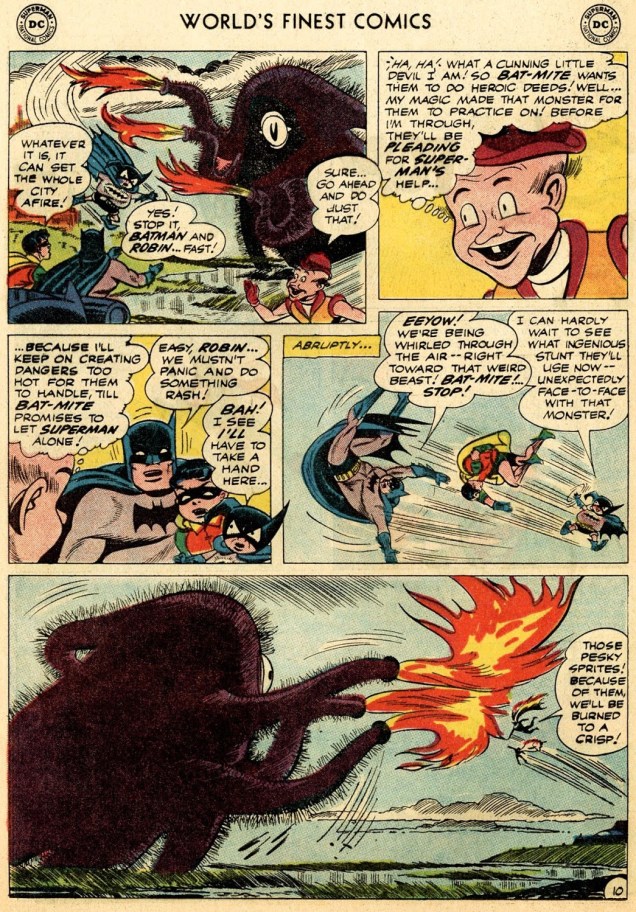
Bat-Mite Meets Mr. Mxyzptlk(he must be from Poland, with a name like that), scripted by Jerry Coleman, pencilled by Dick Sprang, and inked by Sheldon Moldoff, was published in World’s Finest Comics no. 113 (November 1960):
I totally squee-ed when I saw this panel.
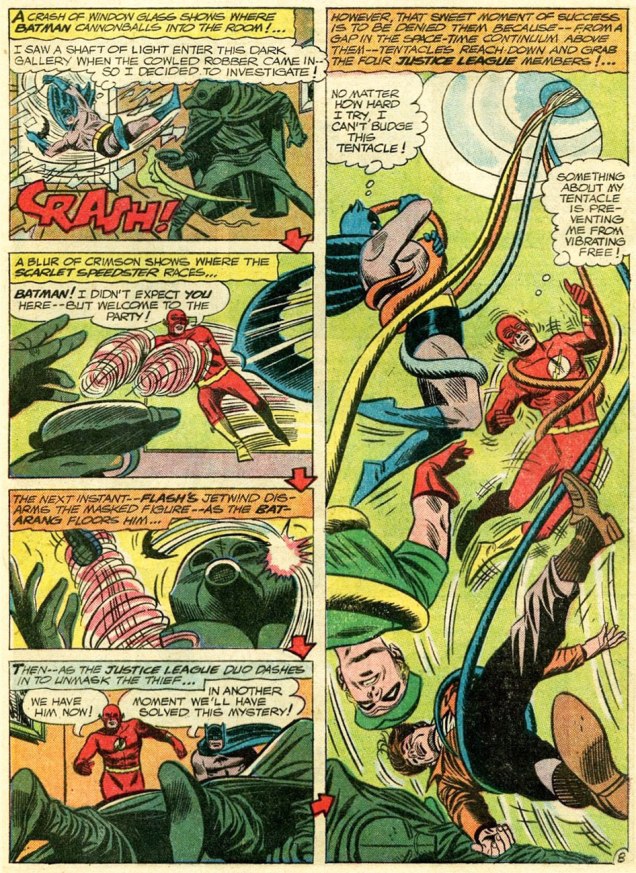
Justice League of America no. 27 (May 1964), with the cover pencilled by Mike Sekowsky and inked by Murphy Anderson:
The inside story, The “I” Who Defeated the Justice League! is scripted by Gardner Fox, pencilled by Mike Sekowsky, and inked by Bernard Sachs:
Batman no. 357 (March 1983). Cover pencilled by Ed Hannnigan and inked by Dick Giordano:
The cover story, Squid, is scripted by Gerry Conway, pencilled by Don Newton, and inked by Alfredo Alcala:
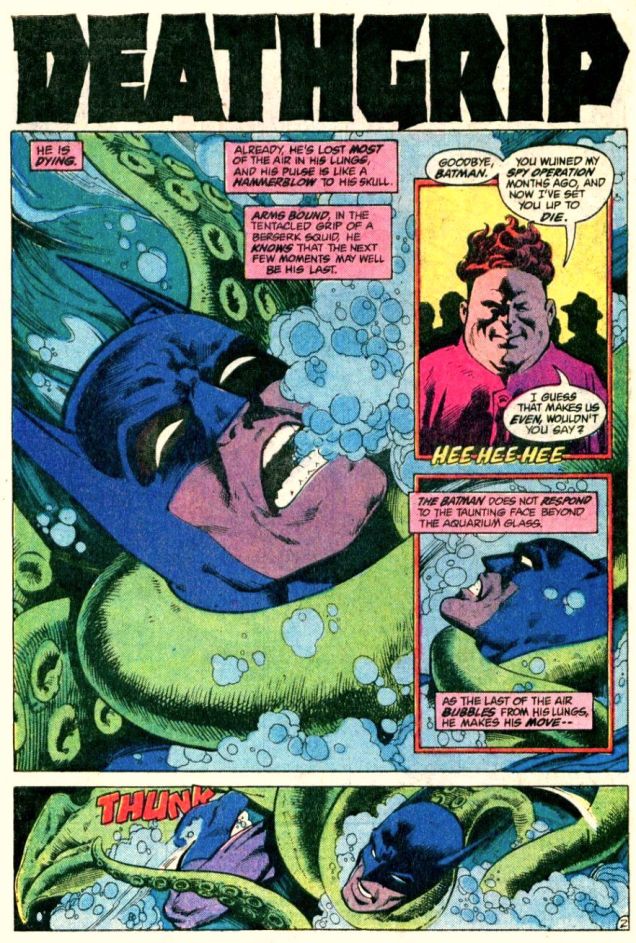
Since they threatened us with the continuation of the story, I followed up, and dug up more tentacles. Deathgrip, scripted by Gerry Conway, pencilled by Don Newton and inked by Dick Giordano, was published (as promised) in Detective Comics no. 524 (March 1983):
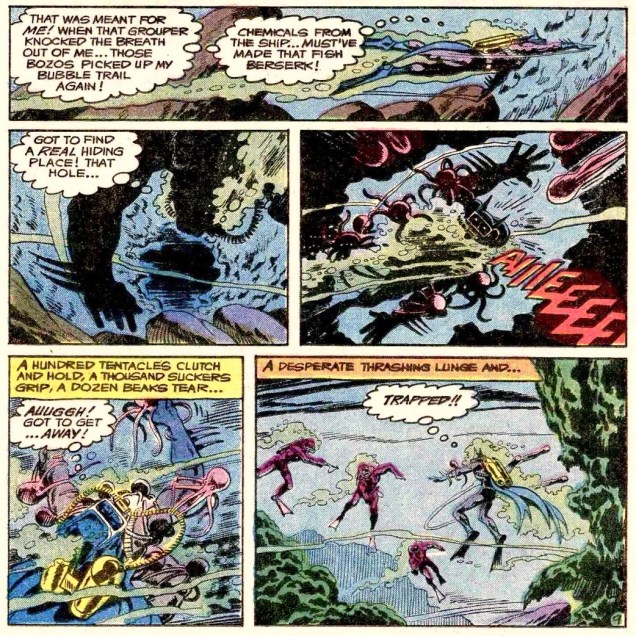
Enigma of the Death-Ship!, scripted by Bob Haney and illustrated by Jim Aparo, was published in The Brave and the Bold no. 142 (July-August 1978):
I mentioned modern comics, earlier – I’ve chosen two examples published relatively recently, with passable art.
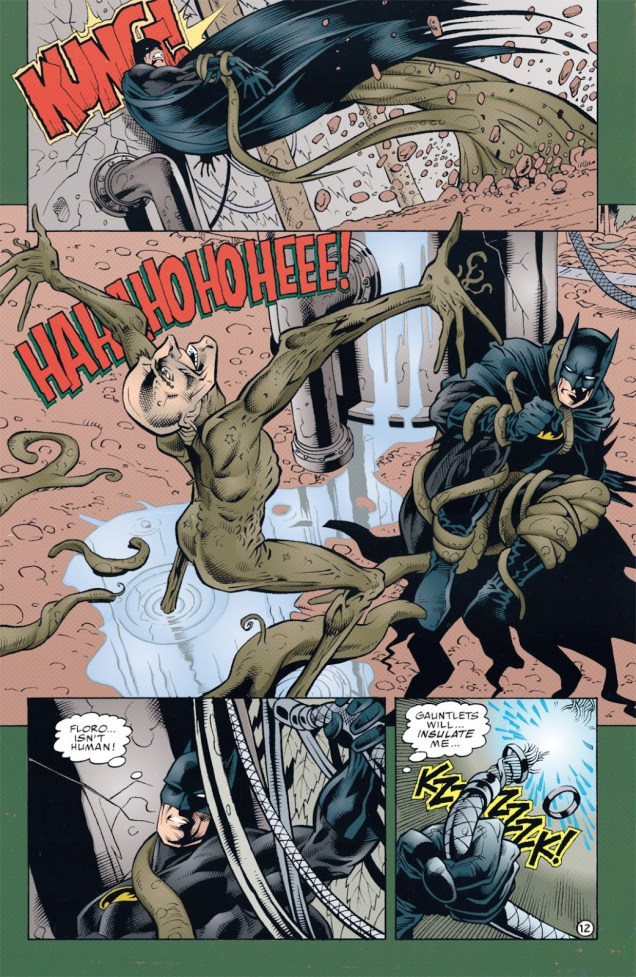
The pompously titled Leaves of Grass, Part 3: Comedown!, scripted by Alan Grant, pencilled by Dave Taylor and inked Stan Woch, was published in Batman: Shadow of the Bat no. 58 (January 1997):
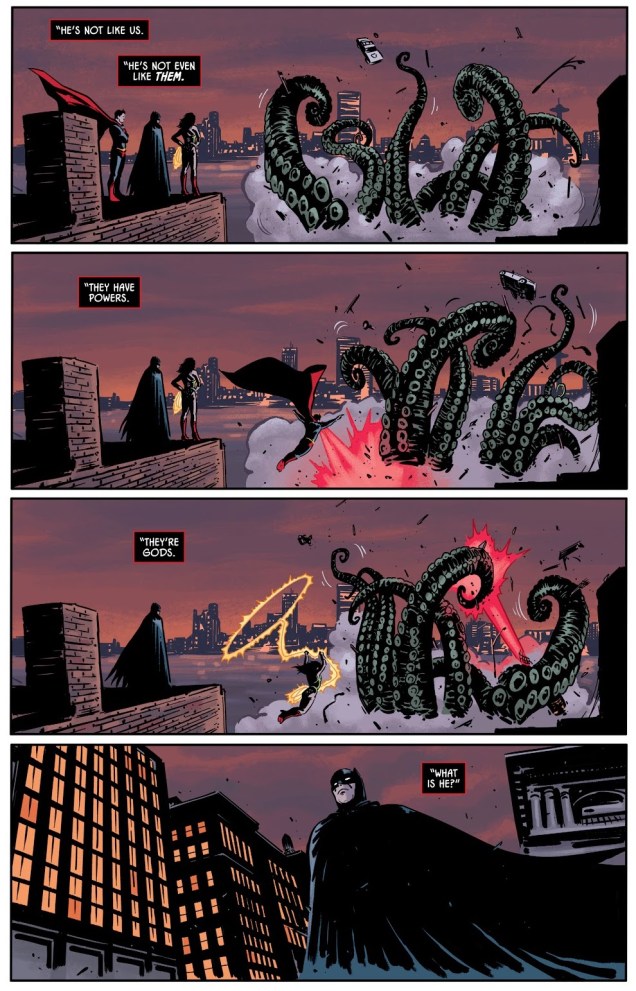
Knightmares, Part 4, scripted by Tom King and illustrated by Jorge Fornes, was published in Batman no. 66 (May 2019):
To conclude on a more pleasant note…
Tentacled Terror, number 8 in Topps‘ 1966 Batman ‘Red Bat’ trading card set, boasting painted artwork by Norman Saunders.
« Polar exploration is at once the cleanest and most isolated way of having a bad time which has been devised. » ― Apsley Cherry-Garrard, The Worst Journey in the World (1922)
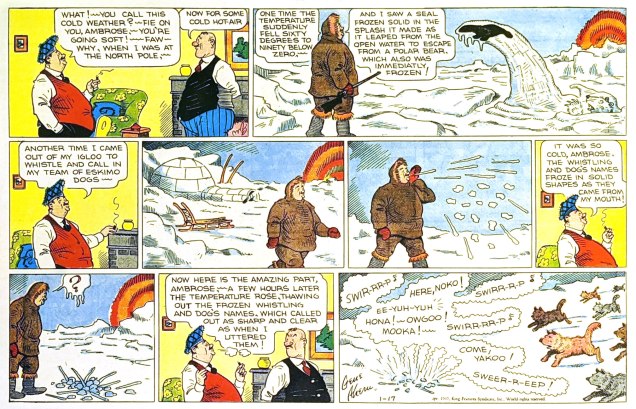
Gene Ahern‘s Room and Board (March 17, 1937, King Features).
Of course, it’s all piffle and bunk, but it brought to mind a passage from a favourite article on weather peculiarities in Siberia, Marcel Theroux‘s The Very, Very, Very Big Chill(published in Travel & Leisure in 2000):
« Local people told me that at minus 60 and below, a dense fog settles in the streets, and pedestrians leave recognizable outlines bored into the mist behind them. A drunkard’s tunnel will meander and then end abruptly over a prone body. At minus 72, the vapor in your breath freezes instantly and makes a tinkling sound called ‘the whisper of angels.’ »
Then I thought: « all very nice, but that makes for a rather meagre post »… so I decided to toss in a few bonus images featuring that venerable recurring motif… and got carried away.
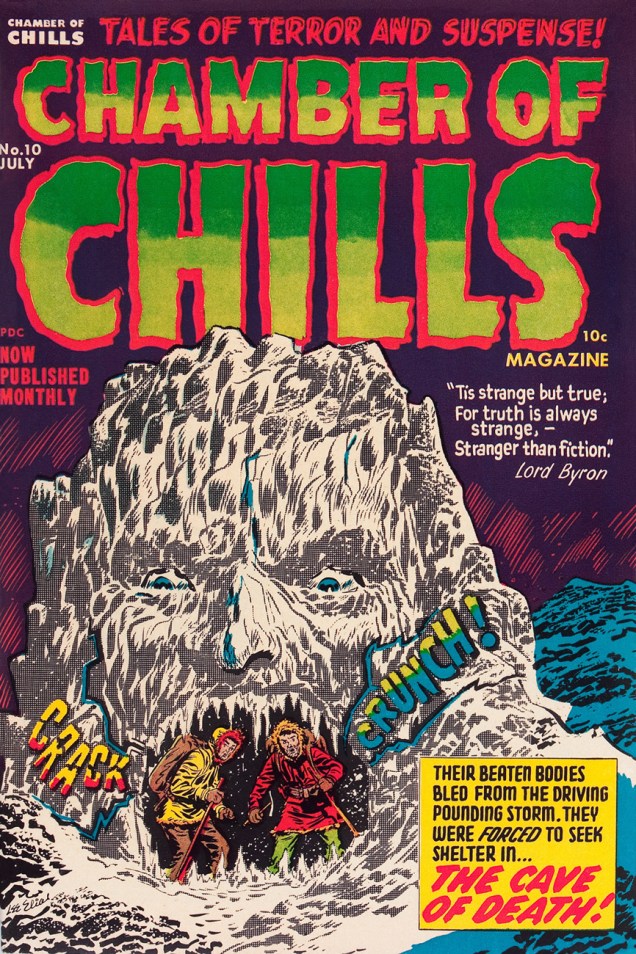
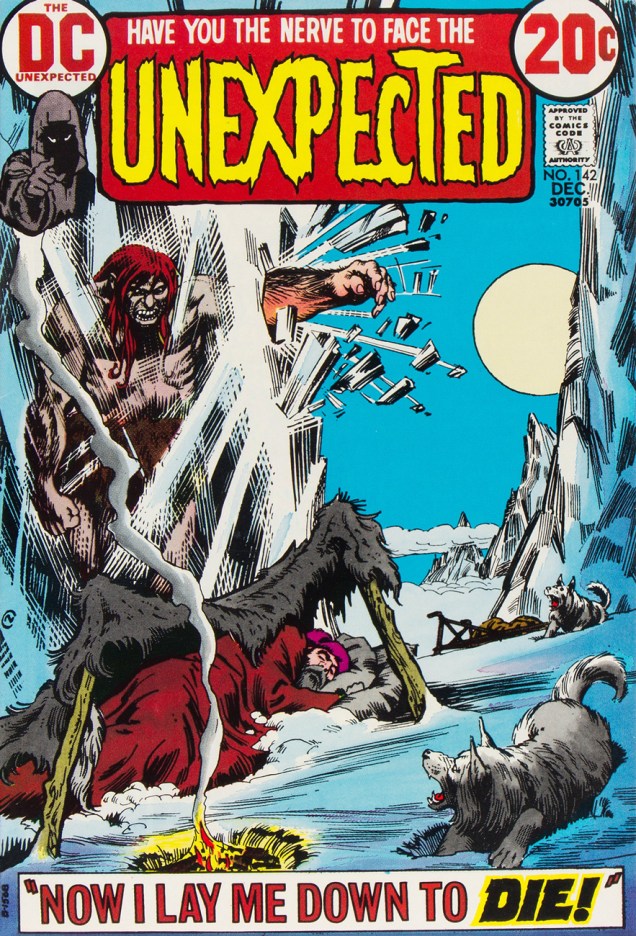
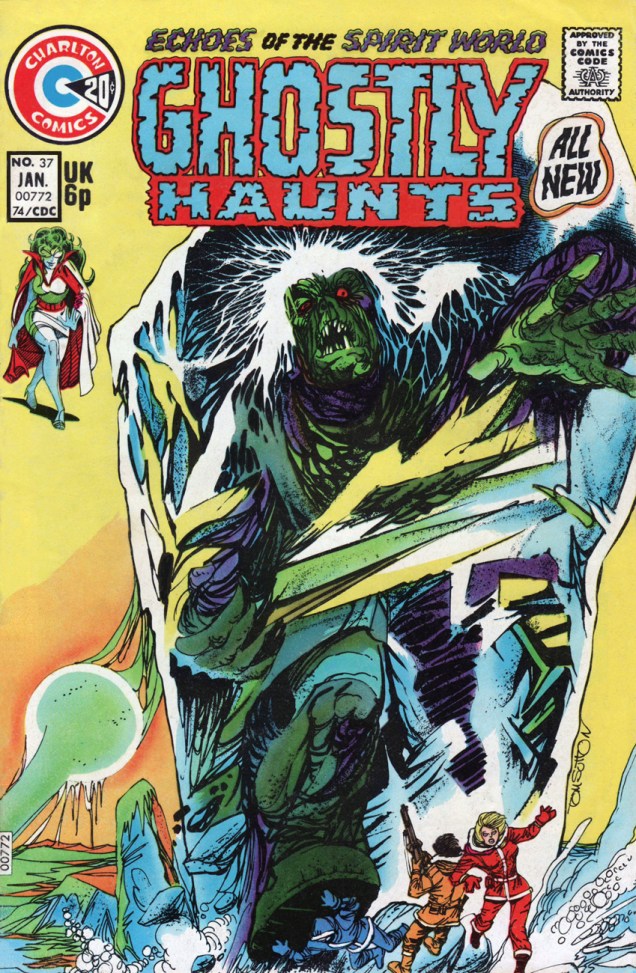
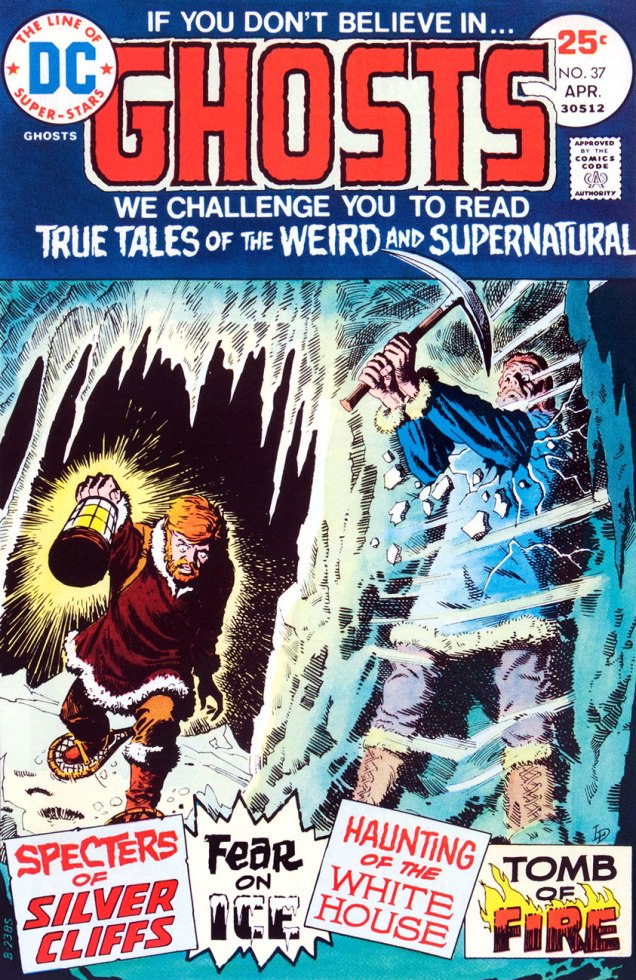
This is Astonishing no. 36 (Dec. 1954, Atlas), the title’s penultimate pre-Code issue… not that Atlas ever crossed the line into gruesome. The cover-featured yarn is The Man Who Melted!, an amusing load of utter rubbish you can read here. Cover art by Carl Burgos.This is Chamber of Chills no. 10 (May, 1974, Marvel), and most everything’s the same, save for the colour palette and the now-hostile expression on the caveman’s mug.And this is alsoChamber of Chills no. 10 (July, 1952, Harvey)… the original, whose title Harvey Comics left curbside for Marvel to recycle when they went all kid-friendly in the Comics-code-ruled Silver Age. Cover designed and art-directed by Warren Kremer and illustrated by Lee Elias. For some insight into these collaborators’ working methods on the horror titles, here’s our post on that very topic. Incidentally, what’s up with the hifalutin Lord Byron quote, Harvey folks? This wacky fare is quite plainly fiction… what’s your point? [Read it here.]This is Tales of The Unexpected no. 101 (June-July 1968, DC). Layout and pencils by Carmine Infantino, inks by George Roussos. Infantino, promoted the previous year to editorial director (he would soon rise to the rank of publisher), brought in the versatile Nick Cardy to serve as his right-hand man on the artistic front; together, they designed all of DC’s covers until both men stepped down in 1975.This is House of Mystery no. 199 (February, 1972, DC), illustrating Sno’ Fun! a rare (possibly unique, really) collaboration between Sergio Aragonés (script) and Wally Wood (pencils and inks). Cover designed by Infantino and Nick Cardy, pencilled and inked by Neal Adams and coloured by Jack Adler.This is Unexpected no. 142 (Dec. 1972, DC); cover art by Nick Cardy.This is Unexpected no. 147 (June, 1973, DC); cover art by Nick Cardy.This is Unexpected no. 150 (Sept., 1973, DC); cover art by Nick Cardy.« Hey, look! The critter is frozen whole… it’s in pretty good shape! » Tom Sutton vibrantly sells Joe Gill and Steve Ditko‘s cautionary tale of arctic drilling gone awry, The Ancient Mine. Also in this issue: Steve and Pete Morisi‘s Surprise!, and Gill and Fred Himes’ touching Pipe Dream. This is Haunted no. 37, (Jan., 1974, Charlton), presented by the publisher’s blue-skinned, green-haired answer to Nana Mouskouri, Winnie the Witch.« … that face haunts me… was it a man or a beast? » Ah, the Seventies. Left dazed and frazzled by his whirlwind life of slow-mo violence, glamorous excess and substance abuse, not to mention radiation poisoning, the inevitable occurs: The Hulk wanders onto the wrong set, as well as the wrong publisher’s! Against all odds, he handles the rôle with aplomb and commendable gravitas. A page from Gill and Ditko’s The Ancient Mine. Read it here!This is Ghosts no. 37 (April, 1975, DC), featuring Luis Dominguez‘s first (or many) cover for the title, a passing of the torch from Nick Cardy, who’d handled nearly every one of the preceding three dozen…. minus two: number 7’s cover was the work of Michael Kaluta and number 16‘s that of Jack Sparling.
Oh, and since I wouldn’t want any of you superhero aficionados to think I’m freezing you out, here’s another demonstration of Mr. Infantino‘s “encased in ice” idée fixe.
Mr. Freeze, who first popped up in Batman no. 121 in 1959, initially known as, er… Mr. Zero (Celsius, Fahrenheit or Kelvin?) before being revamped and renamed for the mid-60s Batman TV show, a makeover that carried over to the comics, but tragically didn’t include his outfit. This is Detective Comics no. 373 (March, 1968, DC); layout by Infantino, finishes by Irv Novick. [ read it here!]… and I can just about hear the « but what about Cap? » troops tromping down the hall, so…
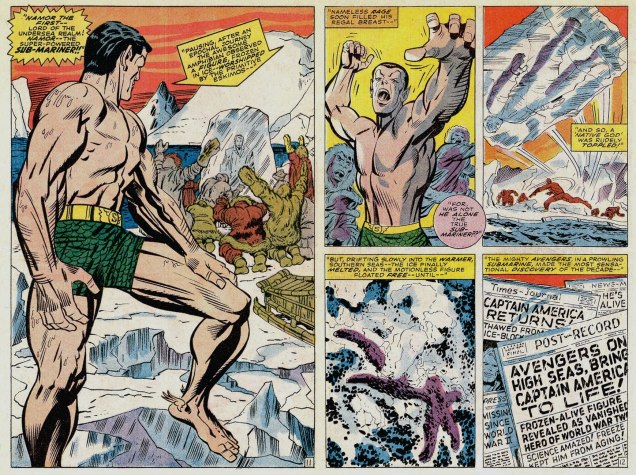
Namor goes all First Commandment on some poor Inuits (surely they’ve seen frozen bodies before?), displaying an unseemly level of insecurity for someone of his standing. This recap hails from King Kirby’s sensational feat of deadline rescue on the behalf of a tardy Jim Steranko (to be fair, it was worth the wait). George Tuska‘s inks are a surprisingly good fit! This is Captain America no. 112, Lest We Forget! (April 1969, Marvel). [ read it here!]My co-admin ds was just telling me yesterday about a client who, upon remarking to a succession of winter-kvetchers that actually, we’d had a pretty mild January, was invariably met with goggling bafflement, as if he’d just then grown a second head. In related news, it was just announced that said month of January was, indeed, the planet’s warmest on record. There is, naturally, an xkcd strip about this sort of circular denialism.
« It’s wisest always to be so clad that our friends need not ask us for our names. » — James Fenimore Cooper
(Being a compendium of fashion faux-pas and various sartorial eccentricities.)
Now here’s a figure shrouded in mystery (and little else): Captain Wizard, whose sole appearance was on the cover (and not enough of it) of Atomic Bomb no. 1 (Gerona/Jay Curtis, 1946), a scarce one-shot. Artist unknown, regrettably.
What are this intriguing man of (relative) mystery’s abilities, aside from autonomous flight, quasi-nudity, bountiful love handles and a snazzy roué moustache? Did he “scare straight” hapless criminals with his sweaty, virile bear hugs? Sigh… I fear we shall never truly know. He’s in the public domain, the gent’s overdue for a revival!
I suppose there are many ways to compete for the prized title of « Most outré criminal Batman and Robin have ever encountered » (awarded every other year in October at Gotham City Hall; call 608-555-1313 for reservations): powers, weapons, motivations, henchmen, moniker, targets, modus operandi…
The Killer Moth made his play for the brass ring by donning the most garish and unsightly garb imaginable. Here he is making his début in Batman no. 63 (Feb. 1951), The Origin of Killer Moth! This sorry buffoon’s inception is credited to Bill Finger, Dick Sprang and Lew Schwartz, presumably to dilute the blame.
Of course, it’s unfair of me to pick on Killer Moth’s costume. I’m sure he took full opportunity to hone and refine his look over the next couple of decades. Plenty of down time to mull things over at his leisure in the clink, right?
To precious little avail, apparently. Here he is a quarter century on, in Batman Family no. 10 (April, 1977); his wings have arguably been upgraded to a cape, but he’s still evidently daltonic. Cover by Bob Brown and John Calnan. Sadly, this was some of veteran Brown’s last published work; he passed away from leukaemia in January, 1977.
Another entry from the closet of shame. His Very Name Invokes Terror… among the dandies of the Serengeti, who blanch and quake at the notion of being seen in public with him. However, that headgear of his reportedly drove Sir Elton mad with envy.
Showcase no. 66 (Jan.-Feb. 1967), The Birth of B’wana Beast, pencilled (and possibly scripted, but who’d admit it?) by Mike Sekowsky and inked by George Roussos. Edited by George Kashdan… who was unceremoniously relieved of his editorial duties after a mere two Showcase issues, both featuring B’wana Beast.
With Jack Kirby and Steve Ditko having decamped (not to mention Stan futilely slouching towards Hollywood), Marvel in the early 70s had not only lost its visionary plotters, but also its ace character designers.
Also, after 30 years or so of men in suits and hats, it was deigned that the younger and hipper generation should have characters whose wardrobe bore at least a tangential relationship to its own.
Created for the 100th issue of Daredevil by scripter Steve Gerber and penciller Gene Colan (who ended his initial long run on the title with that issue; was Angar the final straw, or was it the even more wince-inducing toadying to Jann Wenner?), Angar the Screamer was, to quote the amaranthine words of Wikipedia, « … born in San Francisco, California. He became a hippie and a radical social activist. He volunteered for an experiment that endowed him with sonic powers that caused people to hallucinate. » Groovy. Perfect for… 1973?
If anything, we can be grateful that Angar’s colour scheme is relatively restrained. I suppose it makes sense for a flower child to opt for earth tones. This is the concluding, cliff-hanging panel from Mind Storm! (Daredevil no. 100, June, 1973). Pencils by Gene Colan, inks… nay, “embellishments” by John Tartaglione. Read that, er… masterwork right here.Poor DD’s saddled with calves thicker than his thighs. Cover art by Rich Buckler and Frank Giacoia, with the usual fussing and turd polishing by John Romita Sr..
This is Angar’s first cover appearance, Daredevil no. 101 (July 1973), in a tale that could only be called… Vengeance in the Sky With Diamonds!
There *are* indeed tentacles within, so you’ll likely encounter these, some enchanted Tentacle Tuesday…
« In almost every picture, Batman looks as if he has spent the day greasing the Batmobile and didn’t bother to clean up afterwards. There is a difference between shadowing and what looks like globs of dirt and grime. » — letterhack Bob Rozakis (Detective 420, Feb. 1972), as astute an art critic as he would prove a writer.
Think about it: from his initial appearance in 1939’s Detective no. 27, the Batman was always a bit of a shop product. While notorious deceiver and glory-hog Bob Kane (né Kahn, 1915-98) loved to slap his name on anything and everything, his principal talent was self-promotion. Kane’s Batman was mostly the work of far more talented ‘ghosts‘ such as Jerry Robinson, Dick Sprang, Bill Finger, George Roussos, Jack Burnley, Win Mortimer… and so on, for decades. It’s unlikely that anyone ever produced the artwork for a Batman story on their own (well, professionally), let alone wrote *and* drew one. In a nutshell, that’s the assembly-line style US funnybook industry.
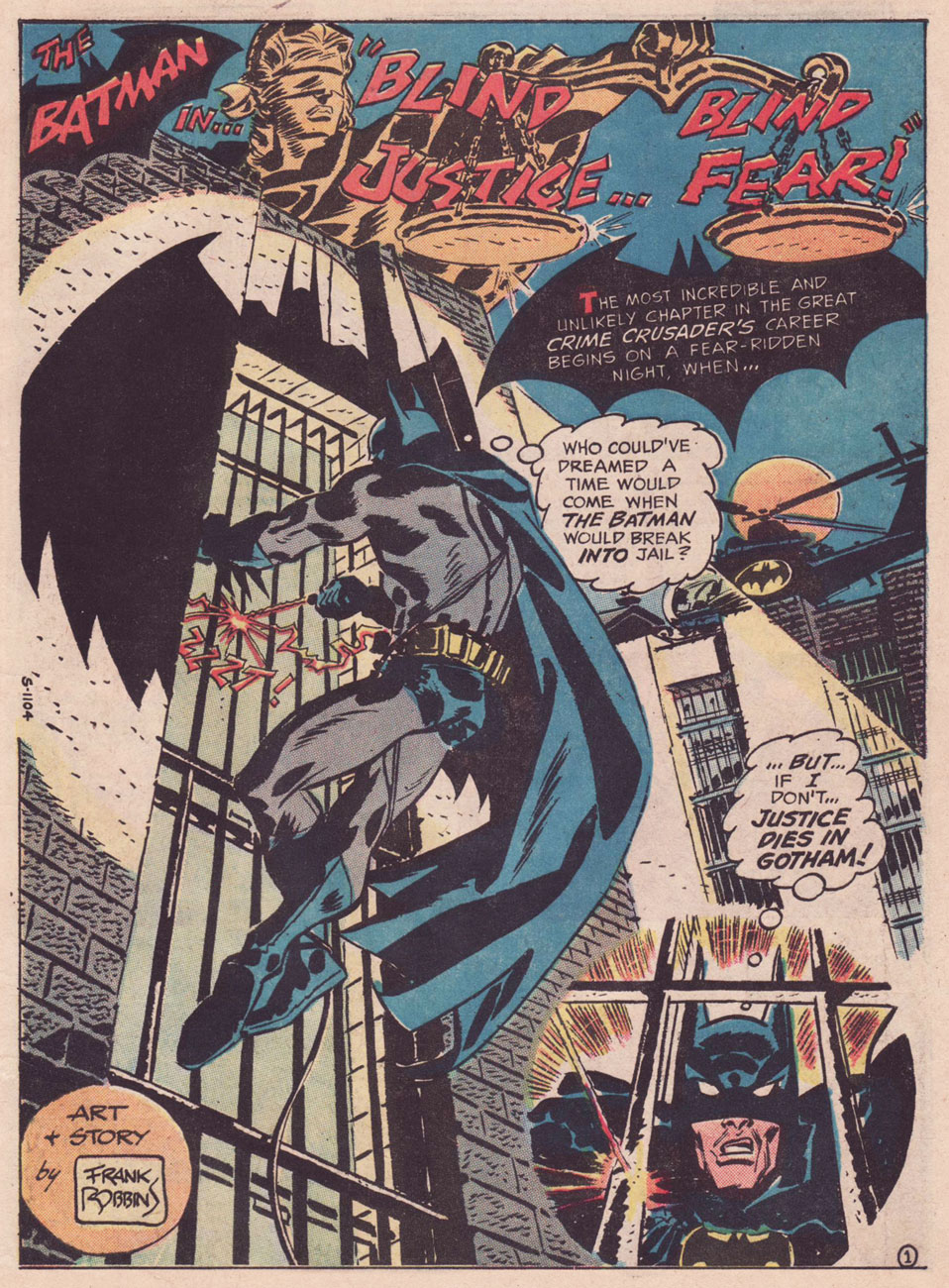
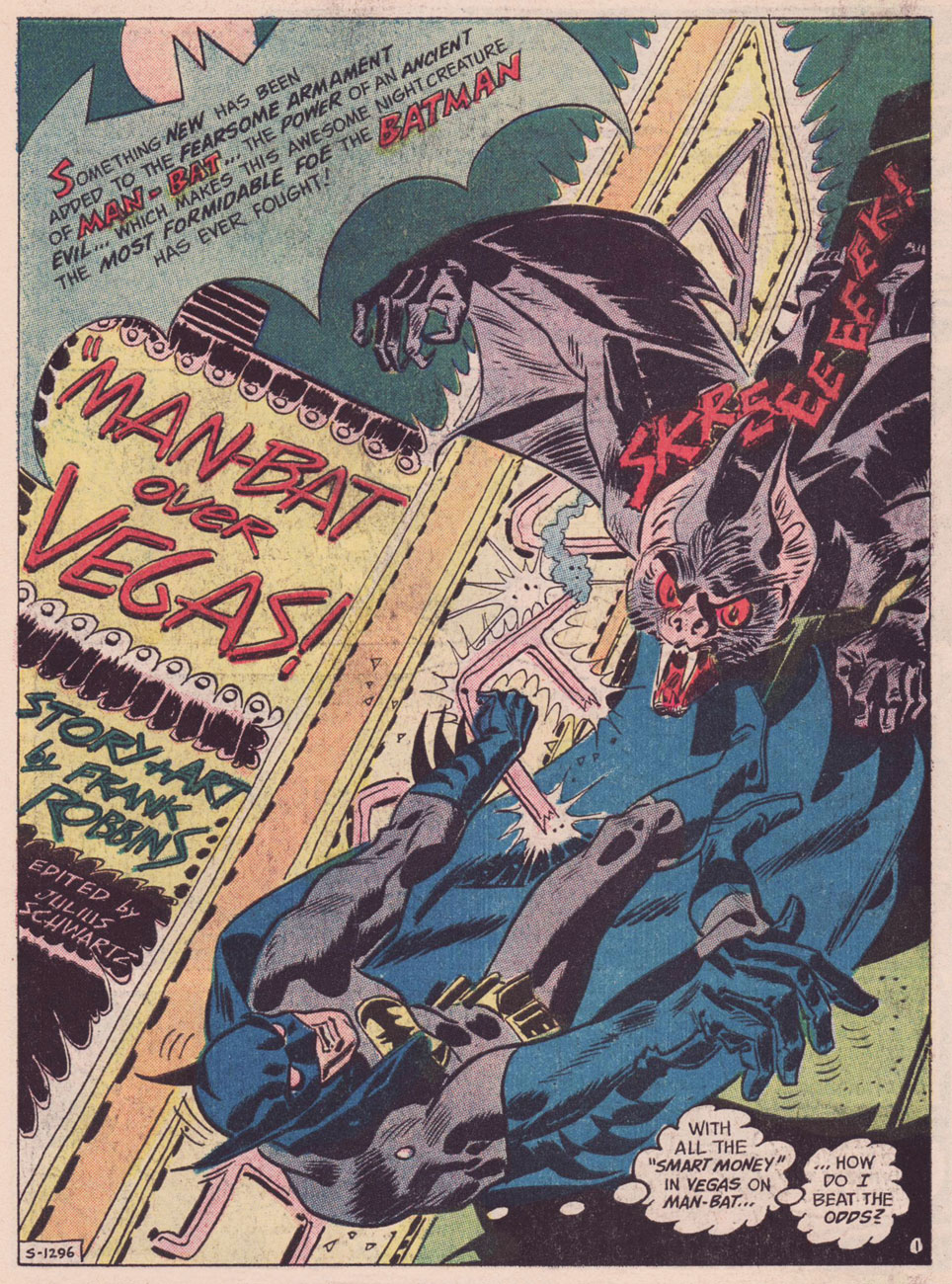
As far as the caped crusader is concerned, that state of affairs would briefly change with Detective no. 416 (cover-dated October, 1971): under a particularly clumsy Neal Adamscover, the lead story, Man-Bat Madness!, was scripted, pencilled, inked *and* lettered by Frank Robbins. He would produce four more solo Batman adventures: Forecast for Tonight — Murder! (Detective Comics no. 420, Feb. 1972); Blind Justice — Blind Fear! (Detective Comics no. 421, March 1972), Killer’s Roulette! (Detective Comics no. 426, Aug. 1972) and Man-Bat Over Vegas! (Detective Comics no. 429, Nov. 1972).
A sample from the first one-man Bat-Adventure, Detective no. 416‘s Man-Bat Madness! Robbins’ expertly fluid storytelling and confident spotting of blacks are well in evidence here.Opening splash from my pick of the solo Robbins Batman, Detective no. 421‘s Blind Justice — Blind Fear! [Psst! Read it here.]Those were the days of “relevance” in comics. The Attica Prison Uprising had just occurred…
Robbins had been scripting for DC since 1968 (starting right after the ignominious firing of many of their most seasoned writers… for presuming to request some social benefits after decades of loyal, and often forcibly exclusive, service*), but he didn’t get his brushes out until 1971, presumably wanting to draw his then-recent creation, Man-Bat** (Detective no. 400, June 1970).
After a final hurrah (script-only) with Batman 254‘s King of the Gotham Jungle! (Jan.-Feb. 1974), he was off to Marvel, where he did no writing, but illustrated tales of Morbius The Living Vampire, Dracula, Ghost Rider, The Legion of Monsters, Captain America, The Invaders, the Man From Atlantis, The Human Fly, Daredevil… generally while paired with inkers ranging from the decent (Frank Giacoia, D. Bruce Berry), to the inappropriate (Frank Springer) to the dismal (Frank Chiaramonte and… hello again, Vinnie). He walked away from the industry in the middle of a cliffhanger, after Daredevil no. 155‘s The Man Without Fear? (Nov. 1978). Beyond that, having endured far more than his share of fanboy sniping and editorial meddling, Robbins left comics forever, going off to paint in México. Wise man.
Robbins, as you may or may not know, was a truly polarising figure in 1970s comics. He was the bane of house-style loving fanboys, and it seems that anyone savvy enough to appreciate him at a tender age later became a cartoonist. The ample evidence (meaning far too much) witnessed on FB comics groups has led me to shrugging acceptance that most fanboys’ aesthetic sensibilities haven’t shifted an iota from when they were twelve… and won’t now or ever.
Another dodgy character encountered in recent years is the annoyingly common “I hated Robbins then, but I totally get him now” git, which brings to mind a certain science-fiction cliché.
« Yeah, we burned down his house, tarred and feathered him and ran him out of town… but looking back, he was a pretty swell guy! » Which stories are these? Find out at the end of the post.
Back to our regularly scheduled train of thought…
A sample from Detective Comics no. 420‘s Forecast for Tonight — Murder! Read it here, while you can.A moody teaser from Detective Comics no. 426‘s Killer’s Roulette!Peruse it here .The precarious opening splash from Detective Comics no. 429‘s Man-Bat Over Vegas! Play the odds right… here.
How I wish he’d gotten to illustrate his moody script for The Spook’s Master Stroke! (Batman no. 252, Oct. 1973), introducing my favourite Bat-villain, seldom-seen The Spook. He was difficult to write, so they killed him off after a handful of appearances.
While Robbins wasn’t my very favourite Bat-writer, (that honour goes to… David V. Reed), he generally delivered a solid tale… but when he was in full command, he was pretty top-notch.
-RG
*« Even though Fox has worked for several comic book publishers, he remains most associated with DC Comics, for whom he worked more than three decades. That collaboration came to an abrupt end in 1968. Fox had joined other comics writers like Otto Binder, John Broome, Arnold Drake, Bill Finger and Bob Haney, signing a petition to ask DC for more financial benefits, particularly regarding health insurance. Since the company regarded writers as expandable people they were all fired without mercy and replaced by more obedient newcomers. » [ Source ] (incidentally, Haney wasn’t fired… at least permanently)
**Neal Adams, having waited until everyone else in the room was dead (editor Julius Schwartz passed away in 2004), began to claim that Man-Bat had been his idea, with no-one’s help. Sorry, Neal, I think you’re a bit confused: you’re thinking of Valeria the She-Bat, and she’s all yours.
Mini-quiz answers: 1) Spores From Space (Mystery in Space no. 1, May 1951, DC); written by Gardner Fox and illustrated by… Frank Frazetta. 2) The Unknown Spaceman (Mystery in Space no. 11, Jan. 1953, DC); written by Gardner Fox and illustrated by Bob Oksner and Bernard Sachs; 3) I Created Sporr, the Thing That Could Not Die! (Tales of Suspense no. 11, Sept. 1960, Marvel); written by Stan Lee, art by Jack Kirby and Dick Ayers; 4) The Blip! (Tales to Astonish no. 15, Jan. 1961, Marvel); written by Stan Lee, art by Jack Kirby and Dick Ayers.
« When comics came along in the 1930s there was a talent pool waiting. And one reason is so many areas were closed to Jews. Colleges, advertising agencies, many of the corporations – the doors that were closed led to the one that was open. » — Jerry Robinson
It’s New Year’s Day, which means it’s also the titanic Sherrill David ‘Jerry’ Robinson‘s birthday. Born on the first of January in 1922, he left us not so long ago, on December 7, 2011. He played at the very least a strong rôle in the creation of Batman’s sidekick Robin, his foes the Joker and Two-Face, his butler Alfred Pennyworth… and much more. Naturally, since we’re entering the murky world of Bob Kane, the whole process is mired in controversy, conflicting accounts and perhaps a little fibbing from certain parties.
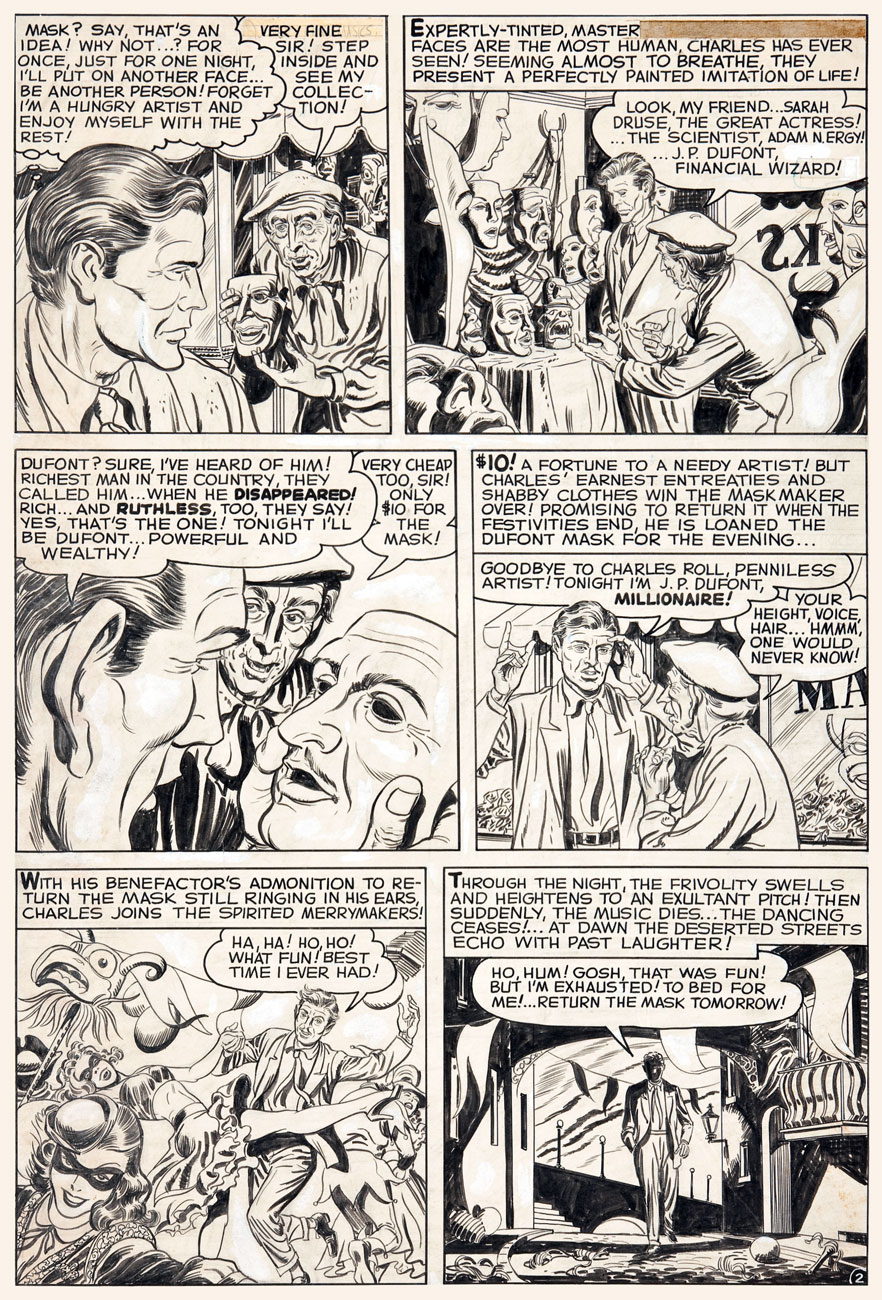
We won’t limit ourselves to the obvious Bat-imagery, which was mostly studio work anyway. Here, for instance, is a more obscure but purer œuvre, both pencilled and inked by Robinson: the original art from « Behind the Mask », page 2, originally printed in Atlas’ Marvel Talesno. 103 (Oct. 1951). Writer unknown.
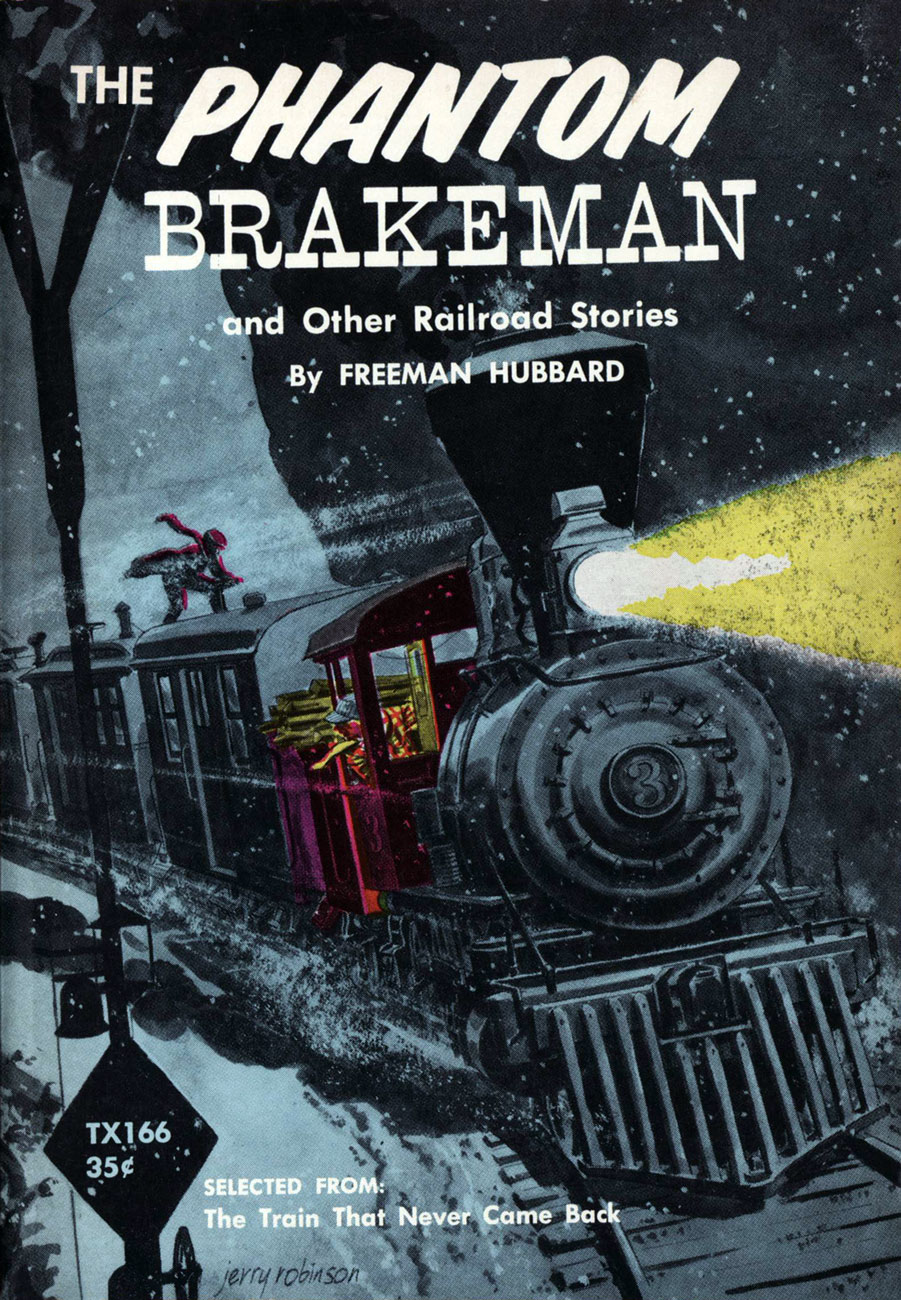
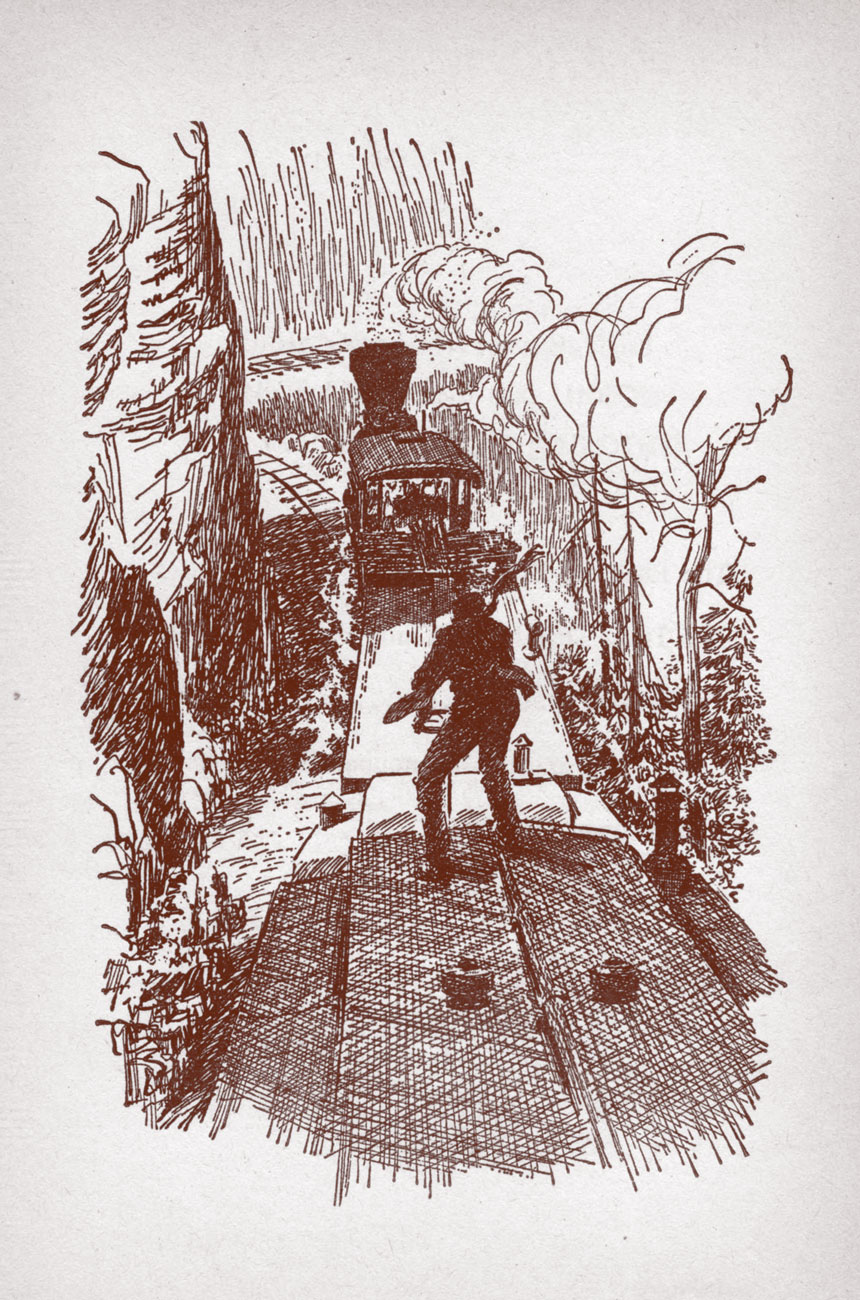
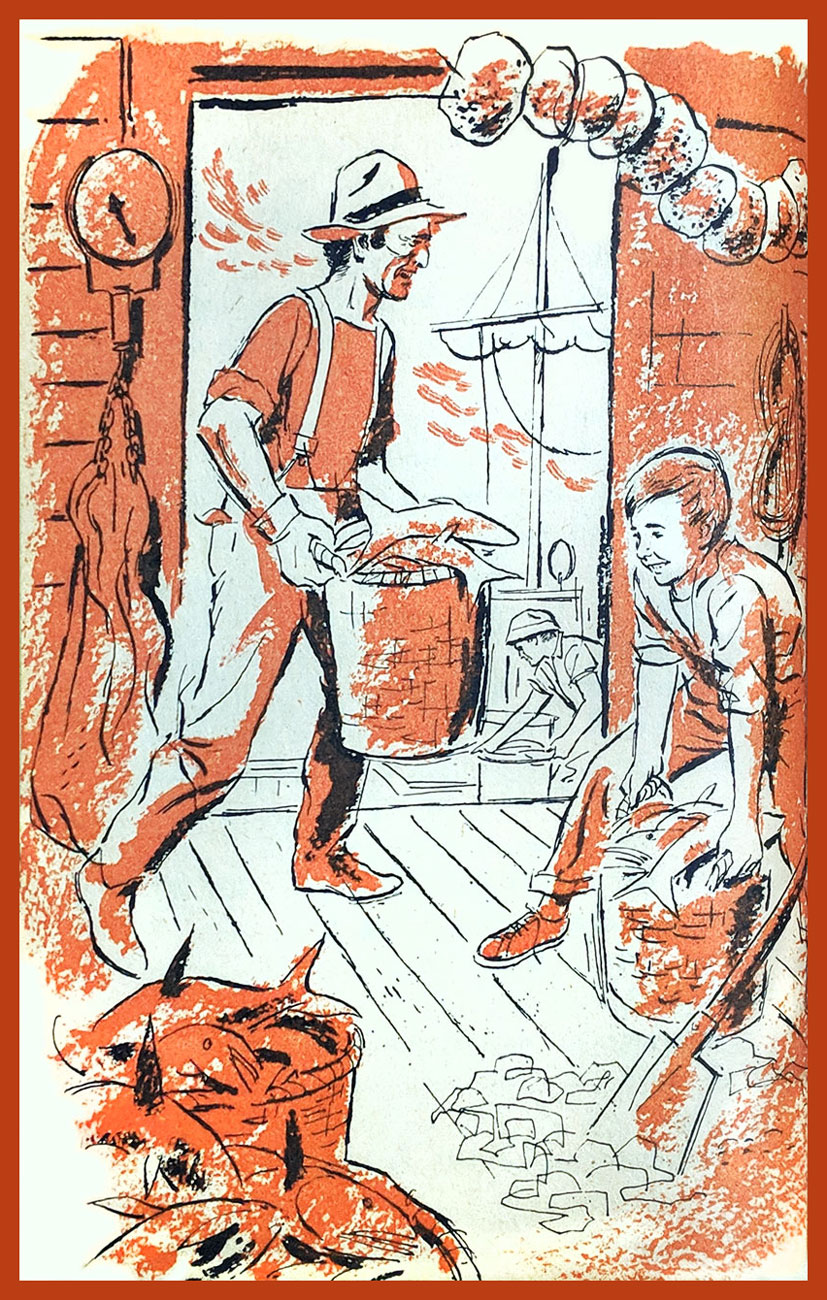
My earliest encounters with Mr. Robinson’s work were through a pair of books for young readers he illustrated in the late 1950s, in a beautifully free and expressive styles. Here’s the cover and one interior vignette from The Phantom Brakeman (1959, Scholastic), written by Freeman Hubbard, then editor of Railroad Magazine.
The following two pieces belong to Hurricane Luck (1959, Scholastic), written by Carl Carmer.
Spoiler alert: Peter does, in the end, win the Tarpon fishing contest.
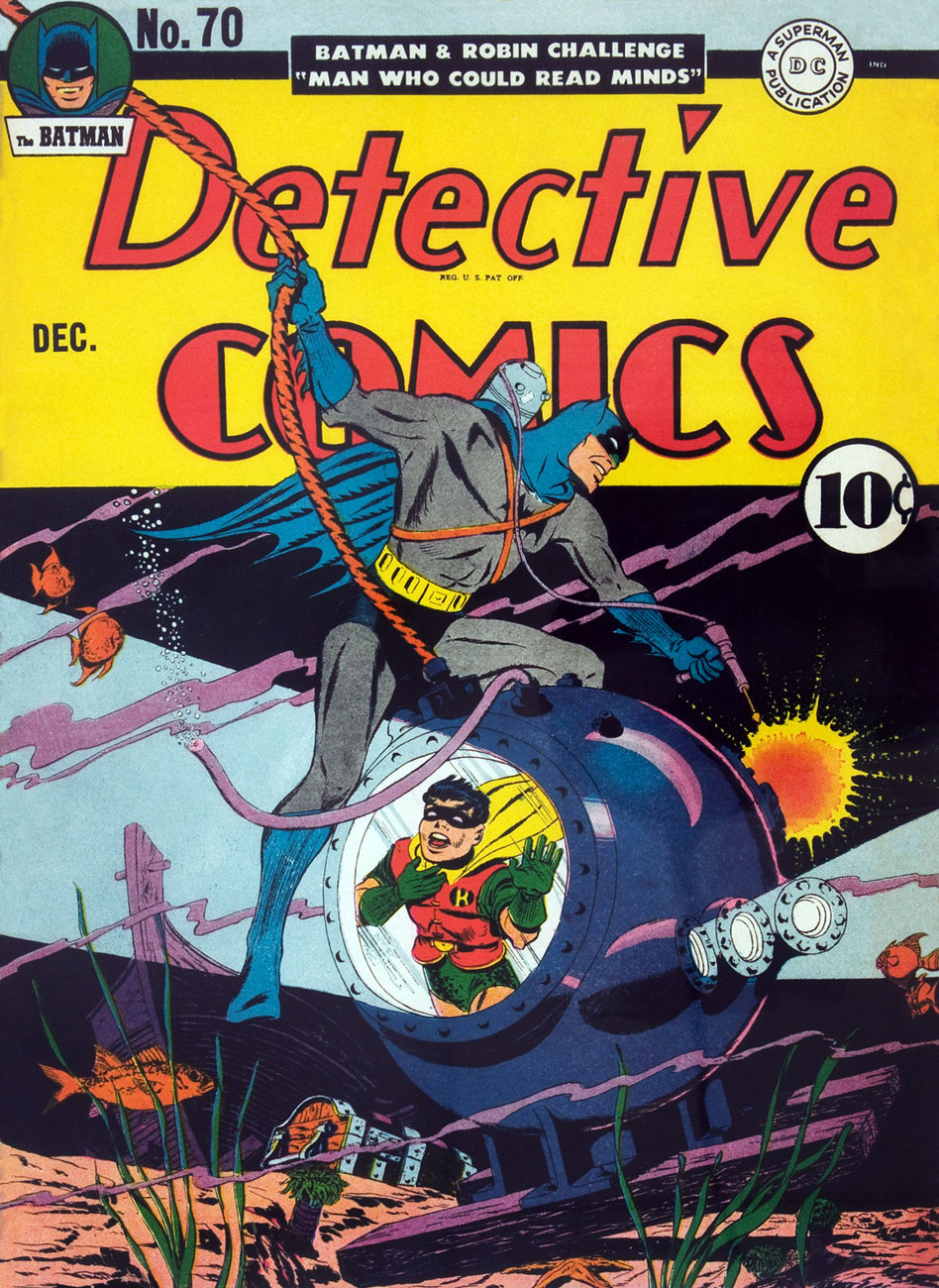
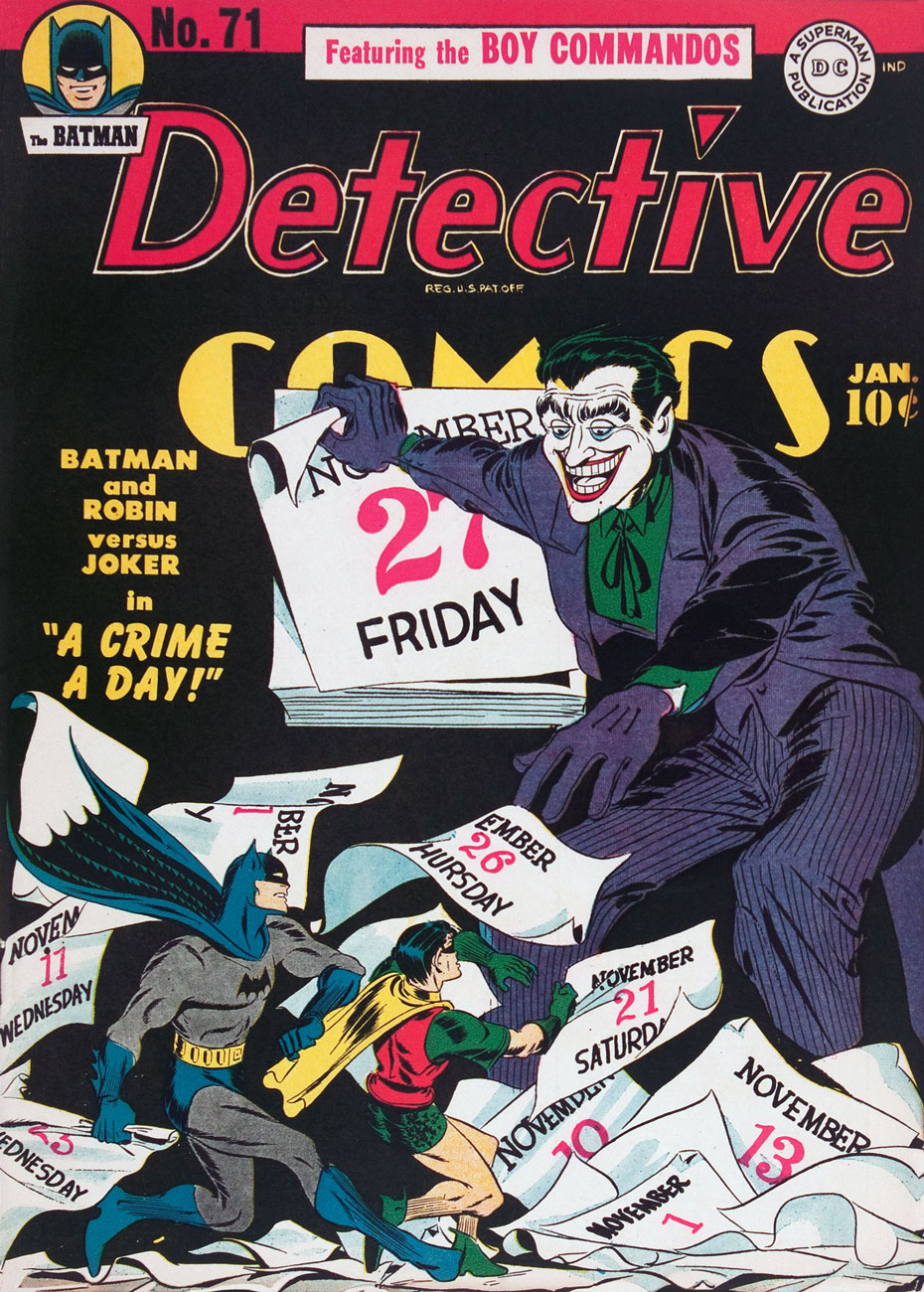
« What about Batman? », you might say. Okay, I admit I don’t have a prayer of getting away with a Jerry Robinson tribute devoid of the caped crusader and his trusty bird-themed sidekick, so here goes!
Detective Comics no. 70 (Dec. 1942). Pencils and inks by Robinson.
Detective Comics no. 71 (Jan. 1943). Pencils and inks by Robinson.
Sekowsky, born on November 19, 1923 (it was a Monday), was another of those precocious, tireless, versatile pioneers of the comic book industry, such as Joe Kubert, Carmine Infantino and Alex Toth. He started out with Timely Comics in 1941.
I’ve always enjoyed his mature style most, as it became more eccentric and more distinctive, without sacrificing an iota of storytelling and compositional ability. We’ll come back to the topic with some examples in tow, but for the present, here’s a select gallery of his covers over the years. I stayed away from the more obvious choices… we hardly need to revisit his introduction of the Justice League of America (Brave and the Bold no. 28, March 1960), for instance.
I’m reminded of an old joke (usually) told about Beethoven: « A tourist is sightseeing in a European city. She comes upon the tomb of Beethoven, and begins reading the plaque, only to be distracted by a low scratching noise, as if something was rubbing against a piece of paper. She collars a passing native and asks what the scratching sound is. The person replies, ‘Oh, that is Beethoven. He’s decomposing‘. » This jazzy Mike Sekowsky / Mike Peppe (attributed) cover tableau sadly doesn’t turn up in any of the inside tales. Typical. This is lucky issue 13 of Standard/Better/Nedor Comics’ Adventures into Darkness (Dec. 1953.) And if you’re in the proper mood, the whole thing’s available for your reading pleasure right here.
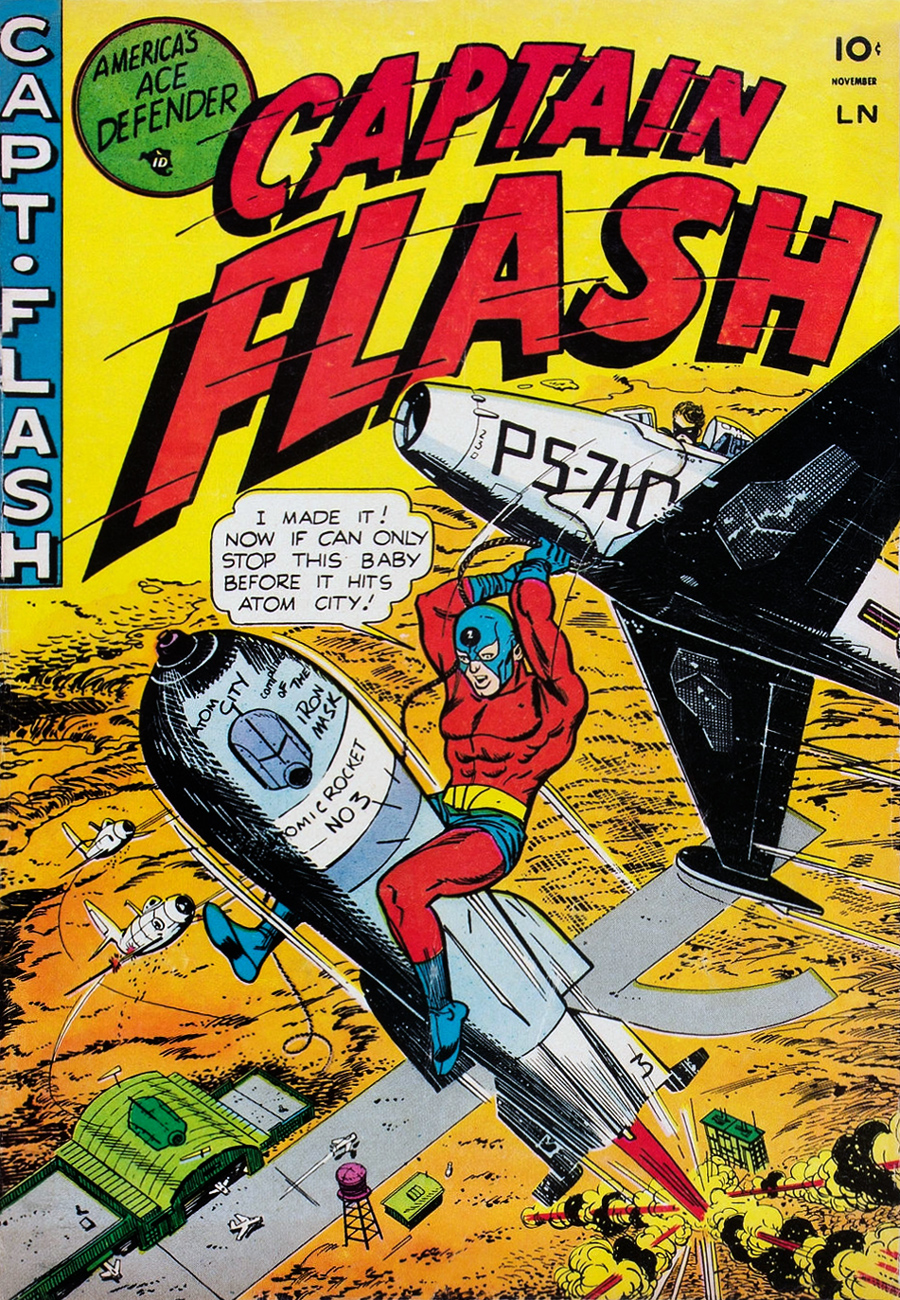
« Sorry, old buzzard! Pick on someone your own size! » One of the last new supermen of the Golden Age, the absurdly well-endowed Captain Flash came along just before the Code did, in November 1954. Captain Flash’s adventures were published by tiny Sterling Comics, which released a handful of titles in 1954-55 then vanished. Bad timing. Captain Flash gained his mighty powers through accidental exposure to cobalt rays, if you must know. Thrill to his heroics right here: http://comicbookplus.com/?dlid=17682
« Blazes! And if I remember my Bat-lore, that’s the flying bat-cave he’s using to charge that bank! Hit the brakes, stoop-skull! » Bob Haney and Mike Sekowsky bring the wacky to this issue of The Brave & Bold no. 68 (Oct/Nov. 1966), with the saga of “Alias the Bat-Hulk“! Script by Haney, pencils by Sekowsky, cover inks by Joe Giella and story inks by Mike Esposito. Gotta love the cackling peanut/rogues’ gallery!
I’ve always had a soft spot for Gardner Fox and Sekowsky’s JLA, but no-one else’s, really. Especially late in their run, when things got increasingly bizarre. This is Justice League of America no. 61 (March 1968). Cover by Sekowsky and Jack Abel.
Ah, the always fun “screw you, hero!” cover theme. This is Green Lantern no. 66 (January, 1969), pencilled by Sekowsky and inked by Murphy Anderson, an unusual but effective combo. Within, «5708 A.D. — A Nice Year to Visit — But I Wouldn’t Want to Live Then!» is scripted by John Broome, pencilled by Sekowsky and inked by Joe Giella.
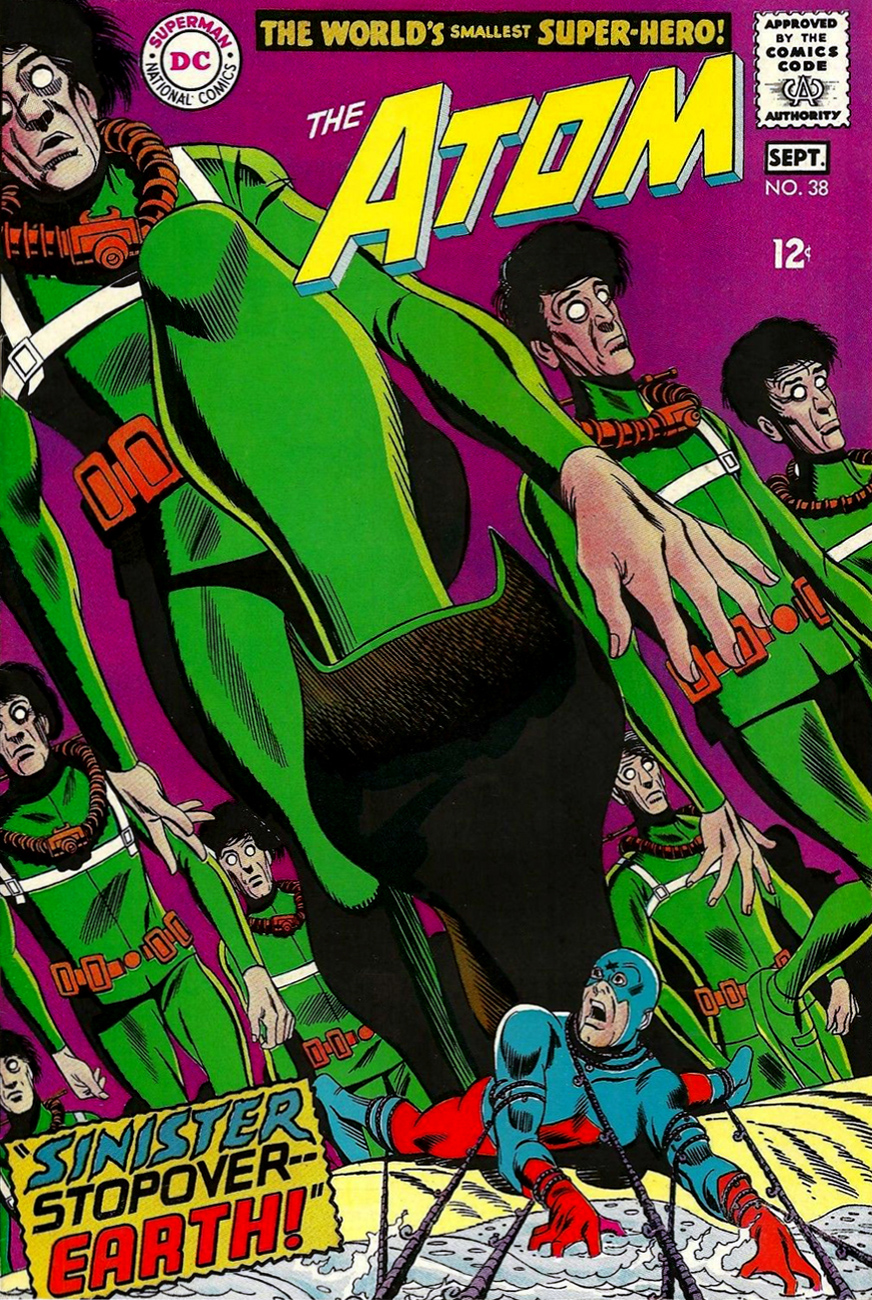
The final issue of the Atom as a solo book. He would team up with Hawkman for a few issues (with gorgeous Joe Kubert covers), but all in vain. The Atom no. 38‘s (Aug./Sept. 1968) « SinisterStopover… Earth! » is written by Frank Robbins, pencilled by Sekowsky and inked by George Roussos. Cover by Sekowsky and Jack Abel.
While newly-ensconced editorial director Carmine Infantino seemed to have boundless faith in Sekowsky in the late 1960s and early 1970s, pretty much every one of his creations and revamps turned out to be box office poison… but they were often bold, and certainly different. His take on Bob Kanigher and Ross Andru‘s Metal Men was odd, at times baffling, invigorating… and, at six issues, quite short-lived. This is Metal Men no. 38 (June-July 1969).
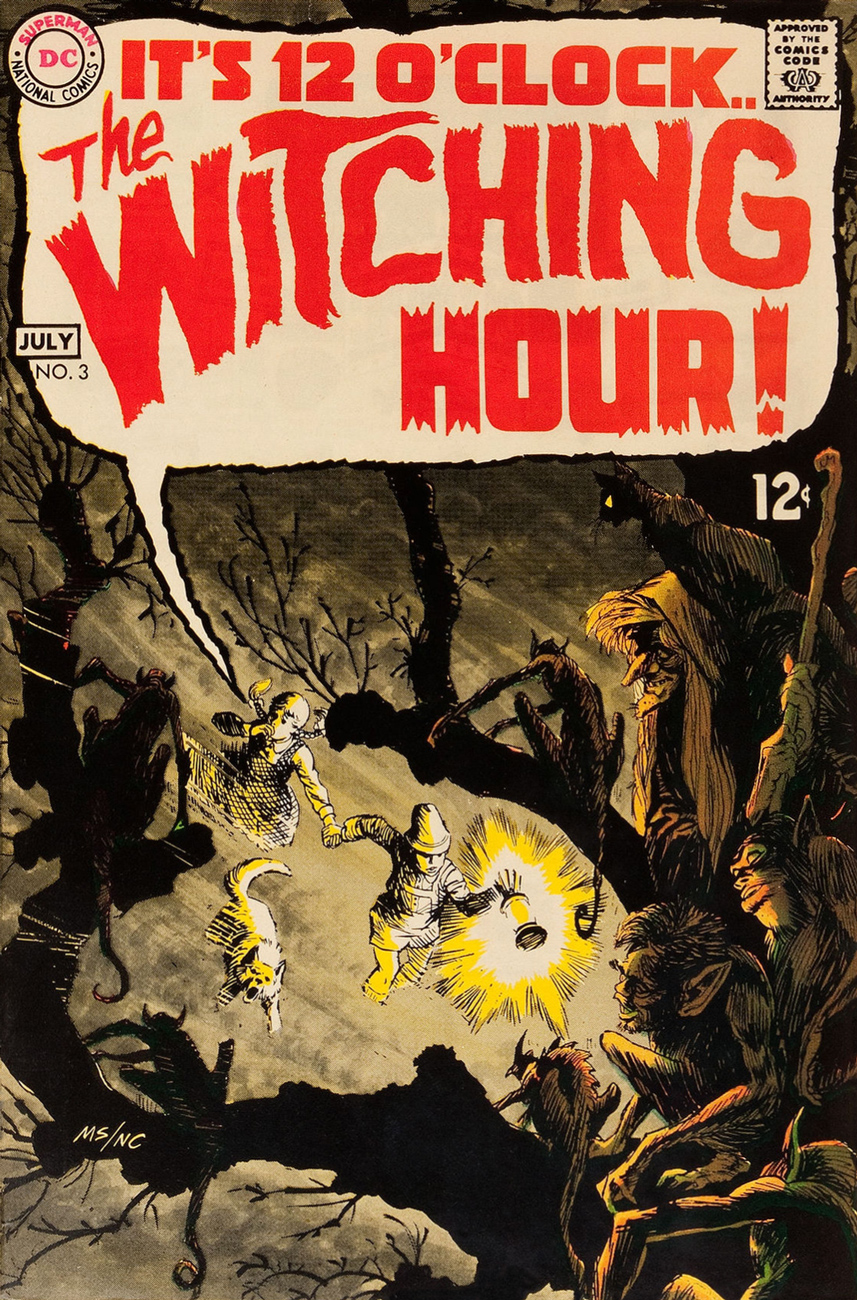
« Do we dare follow? Keep your distance now… don’t let it know you’re there! » Nick Cardy crafted the majority of DC’s The Witching Hour’s gorgeous early covers, some of his finest work. But… *this* understated beauty was pencilled by Sekowsky and inked by Cardy. The picturesque results are set in the selfsame 1930s Universal Studios backlot Balkans of the mind so dear to several generations of monster-loving artists and kids. This is The Witching Hour no. 3 (June-July, 1969.)
« Herbal tea. My own recipe. It’s added years to my life. May I offer you a cup? »
After producing some exceptionally solid fan art (chiefly for the long-lived Rocket’s Blast Comicollector (153 issues, 1961-1985), Arizona art teacher Don Newton made his jump into the pro leagues in 1974 with Charlton, where he got his chance to show off his considerable painting skills. After a handful of mystery stories, he took over Charlton’s version of Lee Falk and Ray Moore‘s The Phantom, which he drew for six issues (and one cover) before the title was cancelled… along with the rest of Charlton’s original comics line, really.
Newton’s original cover painting for issue 68 (December, 1975, Charlton) of The Phantom, illustrating the tale of The Beasts of Madame Kahn by Nicola Cuti and Newton.
Newton’s cover painting (in acrylics, if you must know) for the penultimate issue of The Phantom’s Charlton run, no. 73 (October, 1976), “The Torch”, written by Ben S. Parillo (alias Bill Pearson), pencilled and inked by Don Newton. The wizened mastermind is a fella who simply goes by the name of ‘Raven’.
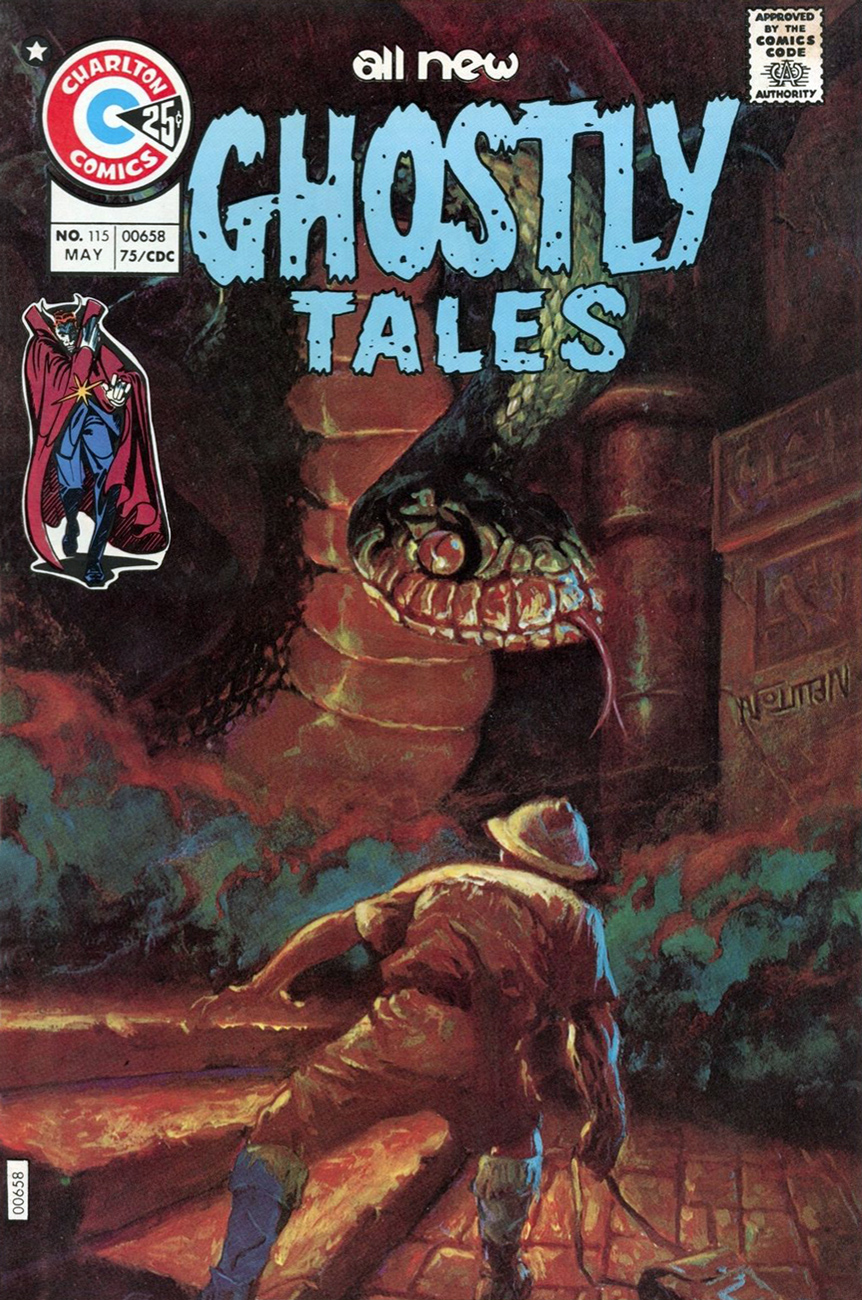
« How could a snake be alive here, buried deep in the earth for thousands of years? » Don Newton’s painting (Ghostly Tales no. 115, May, 1975) depicts a scene from Joe Gill and Steve Ditko’s “Wings of Death!”
« Turn her loose, Pike… I want to road-test the new talent! » Mr. Newton illustrates the Unknown Scribe and Demetrio Sánchez Gómez‘s biker operetta “Running Wild!”, from Teen Confessions no. 89 (June, 1975, Charlton.)
Newton would go on to DC (and a couple of brief dalliances with Marvel), illustrating Batman, Captain Marvel (er, “Shazam!”), Aquaman, Star Hunters, and The New Gods for DC, before being, all too soon, felled by a heart attack at the age of 49. Most of the time, though, he provided great art to ho-hum stories.
Against all odds, around 1982, scripter Gerry Conway, a name synonymous with half-assed, content-free hackwork since the early ’70s, actually blossomed into a decent writer. Fortuitously, while assigned to pencil Batman’s adventures in Detective Comics, Newton was paired with prolific* Filipino legend Alfredo Alcala, and the stars were in proper alignment. You won’t have to take my word for it, however. Feast your eyes on the palpable ambiance from the Conway-Newton-Alcala trio.
Picking up strands from Steve Englehart‘s run on the book (nos. 469–476, in 1977-78), creepy-but-buff scientist Hugo Strange returns to pester his murderer, crooked politician Rupert Thorne. Colourist Adrienne Roy’s hand is betrayed by the 100% magenta/30% black mix.
Well, I have to show Newton’s actual Batman, don’t I? His was one of the few characterizations that were physically believable. You could buy this guy as an acrobat, as a fighter *and* as detective. Alcala often overwhelms whomever he’s inking, but since Newton’s pencils were probably tight as a camel’s ass in a sand storm, both men’s contributions mesh splendidly with no loss of identity. Pages 2 and 7 from Detective no. 520 (Nov. 1982).
– RG
*How prolific was Alcala? « It is said that his fastest page rate was twelve pages in a nine-hour sitting. » And the scary thing is that it hardly ever looked rushed or less than committed, unlike the work of some other inkers we could name. What a guy.






























 Who's Out There?