Hallowe’en Countdown VIII, Day 7

« I prefer hallucinations ’cause they tend to make more sense than experience. » — Todd Rundgren

Today, I’m mixing things up a bit and heading over to Europe. We’ll be looking at various versions of « Le seuil du vide » (Threshold of the Void) a story by André Ruellan (1922-2016), aka Kurt Steiner.

At left, the original novel, published in 1956; at right, the comics adaptation, published in 1973. Believe it or not , both covers are the work of the same man, the prolific Michel Gourdon (1925-2011). He had a predilection for a palette of green and blue hues.

The plot, in a few broad strokes: Young painter Wanda Leibovitz comes to Paris, hoping to forget a romance gone wrong. At the train station, upon her arrival in town, Wanda encounters a mysterious old lady offering to rent her a room, but under certain conditions…

Basically, it’s the ‘New Bodies for Old’ plot, and it ends as bleakly as you might imagine. Ruellan/Steiner wasn’t the least bit afraid to probe the darkness. The victim’s innocence was no protection against the forces besieging her, to put it mildly.

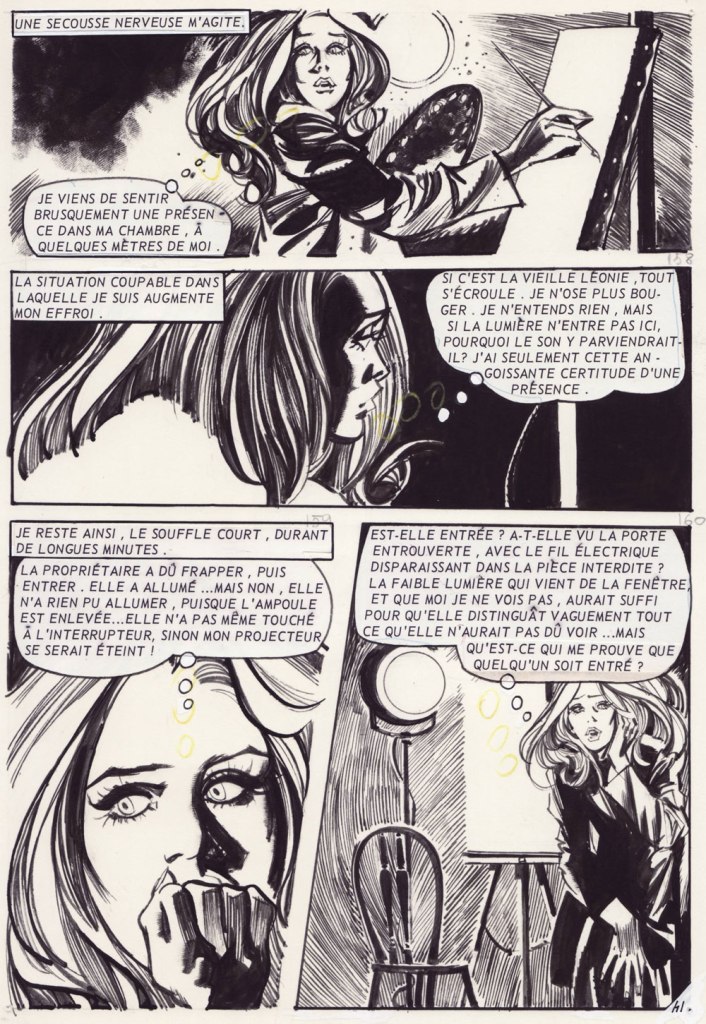
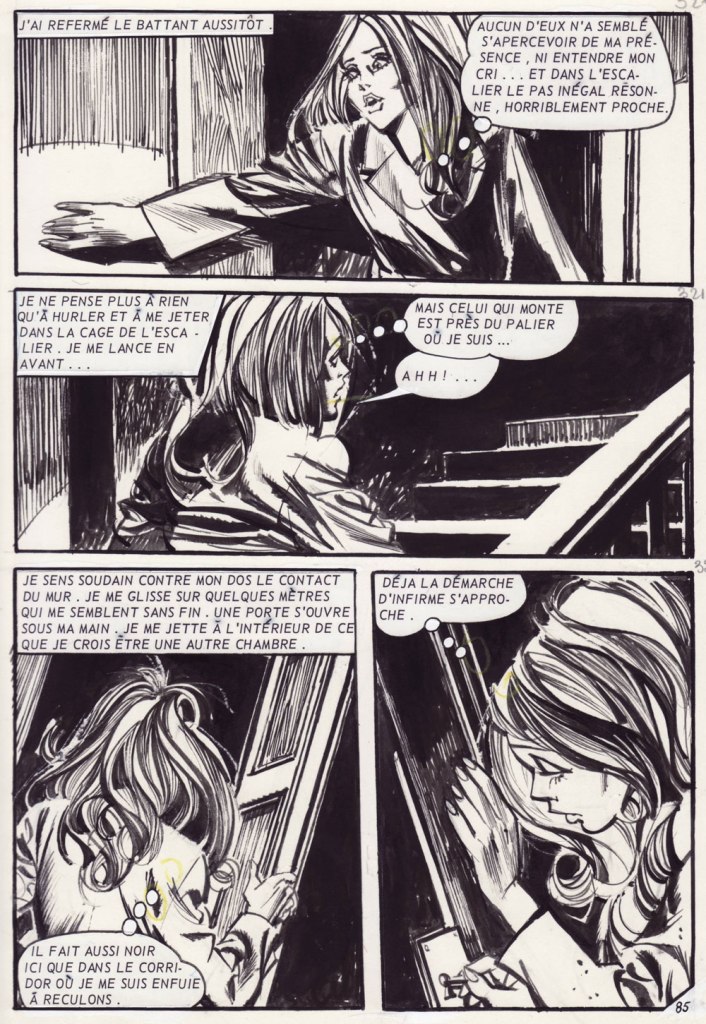
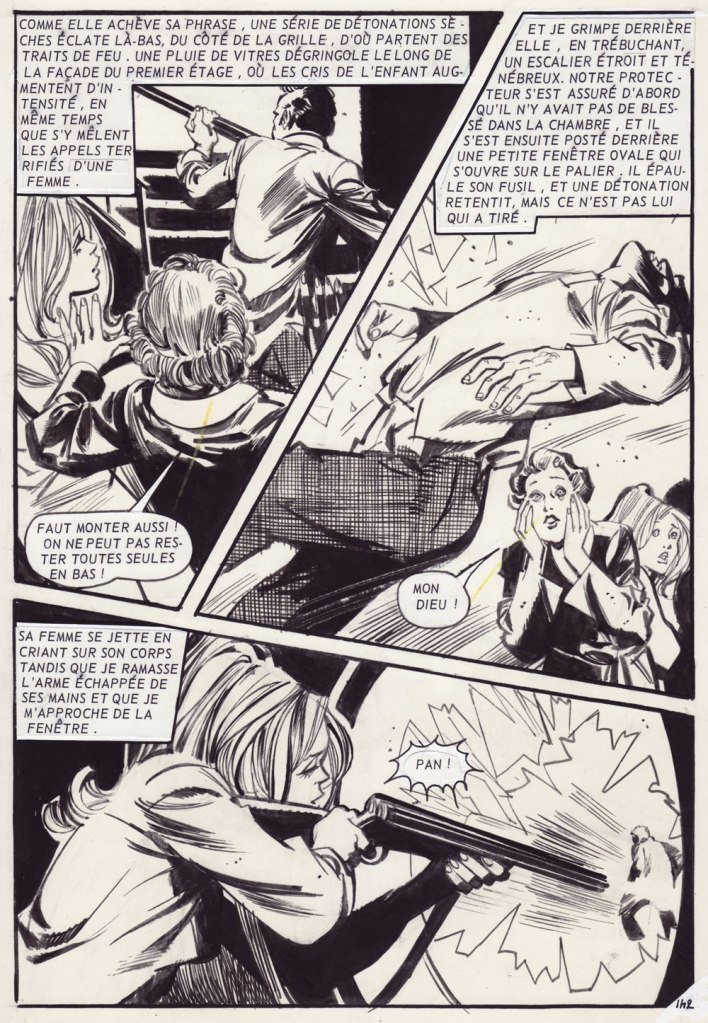
Here are a few interior pages from the Arédit adaptation, featuring art by Cándido Ruiz Pueyo.

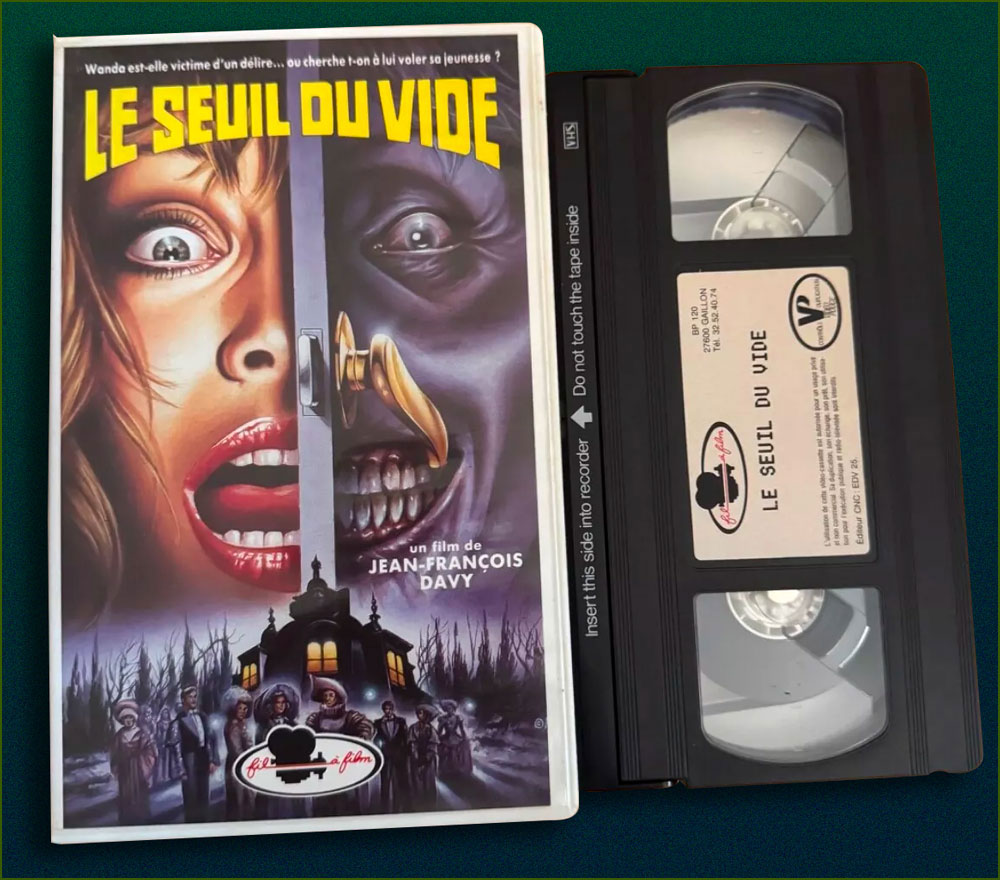
There was also a movie adaptation by an ambitious young filmmaker by the name of Jean-François Davy. This was his third try at getting a project off the ground and into cinemas, and his only horror film. They just weren’t making such films in France in those days — the iconoclastic Jean Rollin being the notable exception — in Belgium, sure, but not in France. It took some doing to get the project (barely) financed, lensed and distributed, and its director wound up turning to porn for the rest of his career — hilariously titled porn, to be fair.

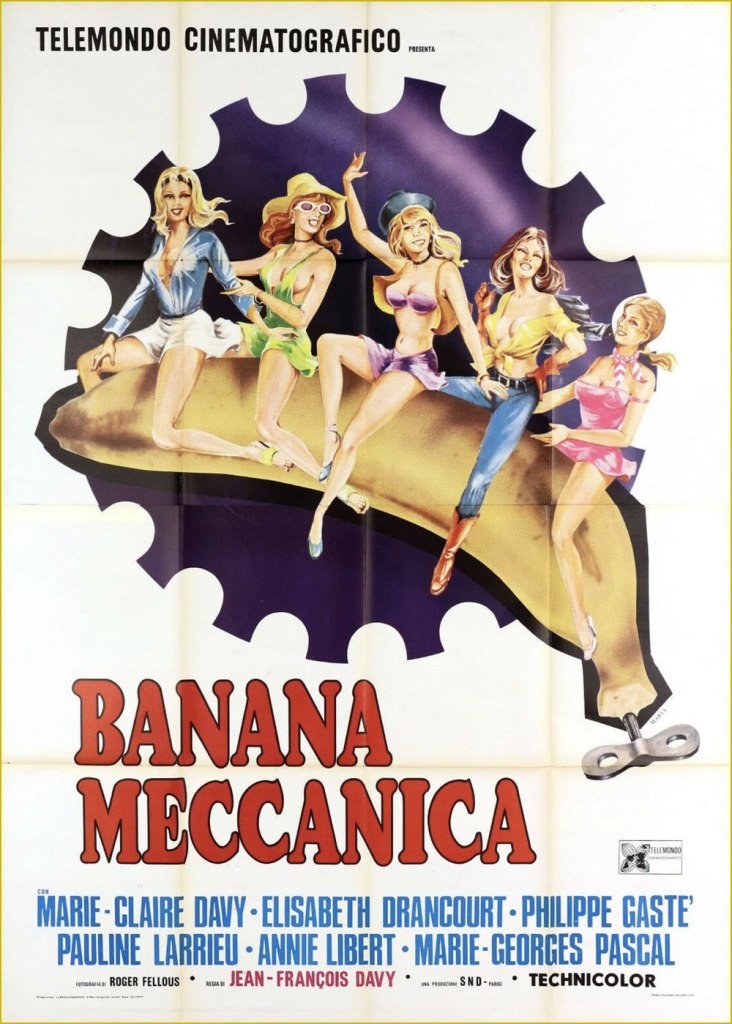
The film features such luminaries as Rififi‘s unforgettable Jean Servais, along with a non-coincidental cameo by (yet to be filmed) The Tenant author Roland Topor. Davy soon attained greater commercial success with his Bananes mécaniques, nominally a Clockwork Orange parody.

And here’s the VHS release, featuring the film’s original poster. Airbrush!
Bananes mécaniques’ Italian poster.

-RG

Hallowe’en Countdown VIII, Day 6

« Every poem should remind the reader that they are going to die. » — Edgar Allan Poe

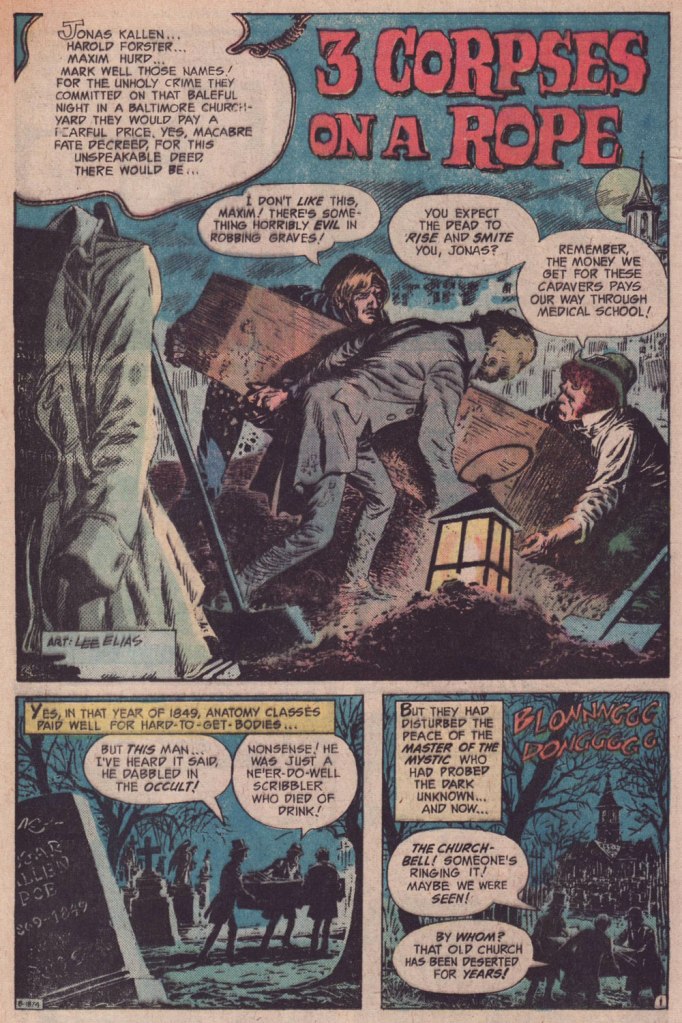
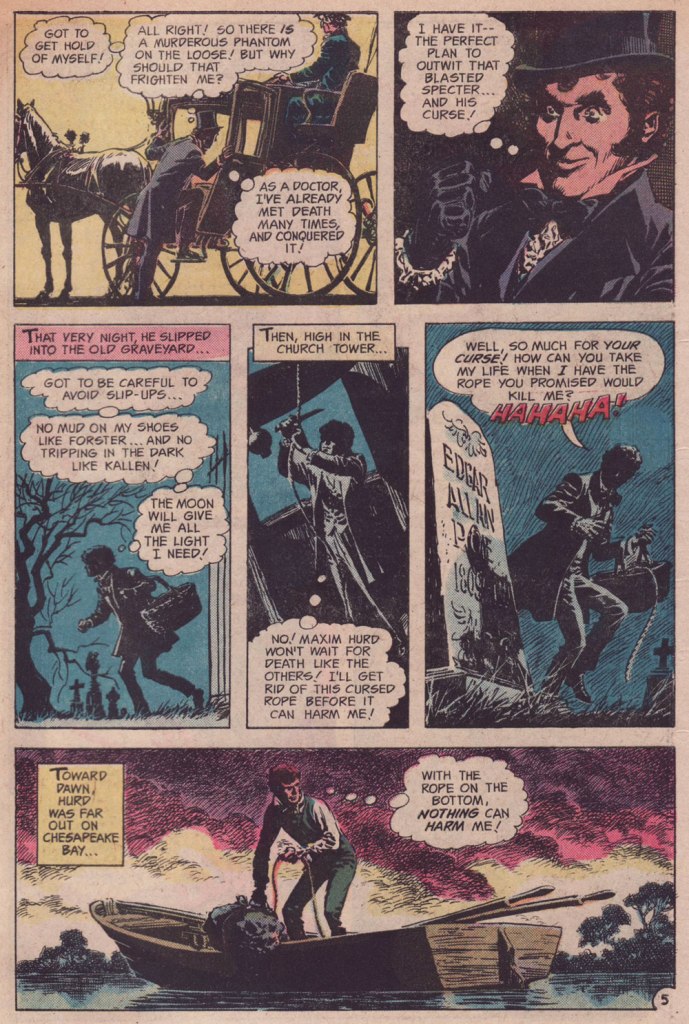
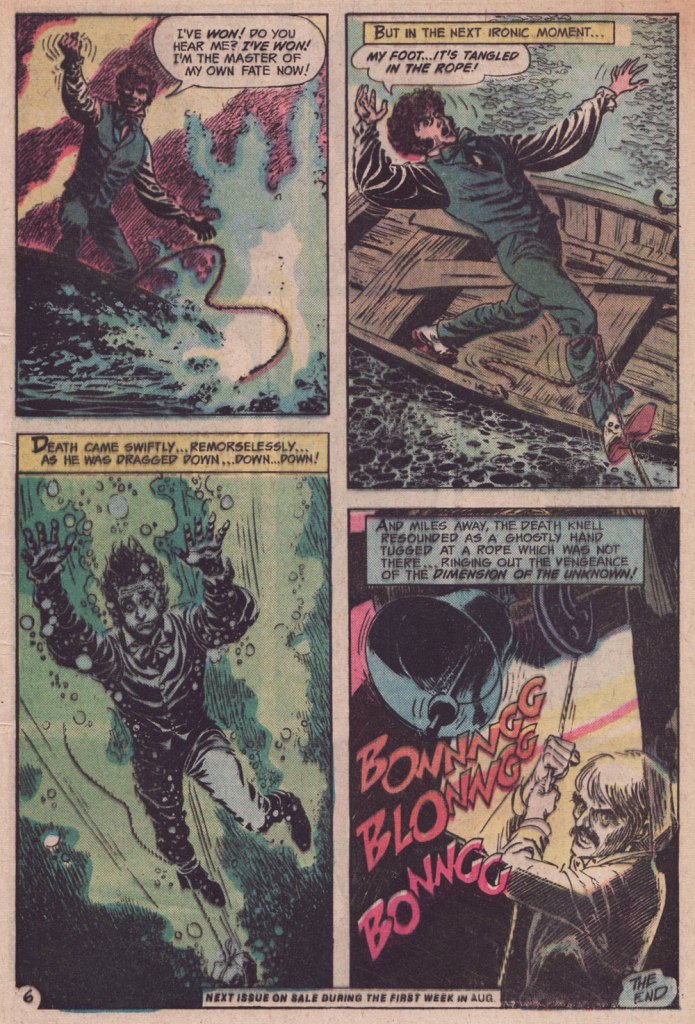
Ah, mixing fact with fiction — such an honoured tradition. In the mid-1970s, DC editor Murray Boltinoff (Ghosts, The Unexpected, The Witching Hour, Teen Titans, The Brave & the Bold) hit upon the notion of featuring historic writers encountering in daily life the supernatural object of their eventual inspiration.

Last year, I featured Bram Stoker‘s visit with a certain undead personage, The Most Fearful Villain of the Supernatural.

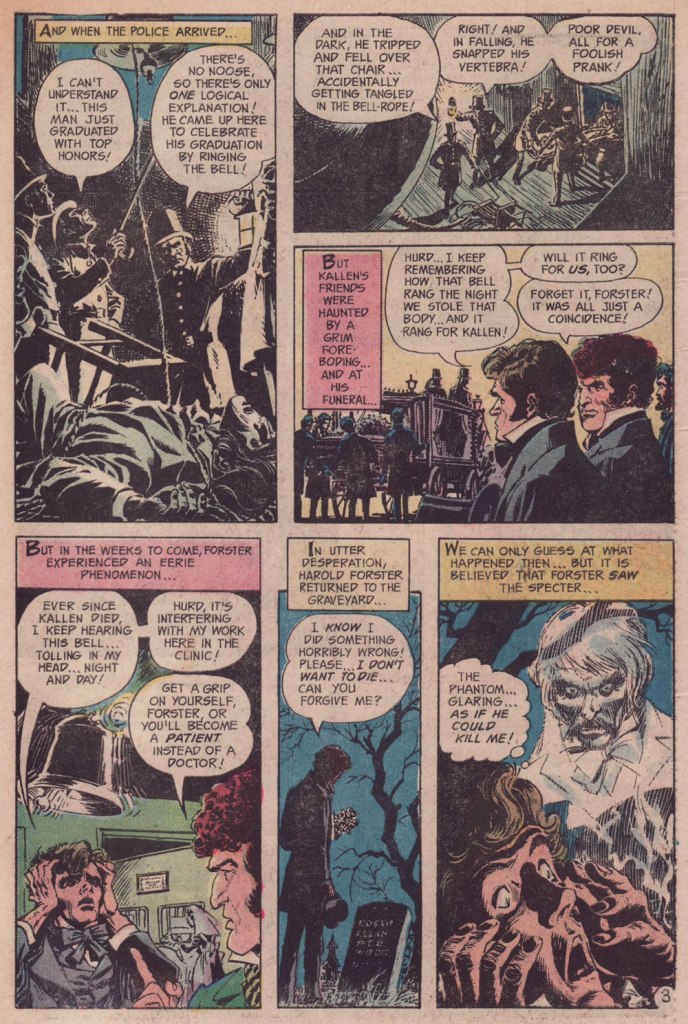
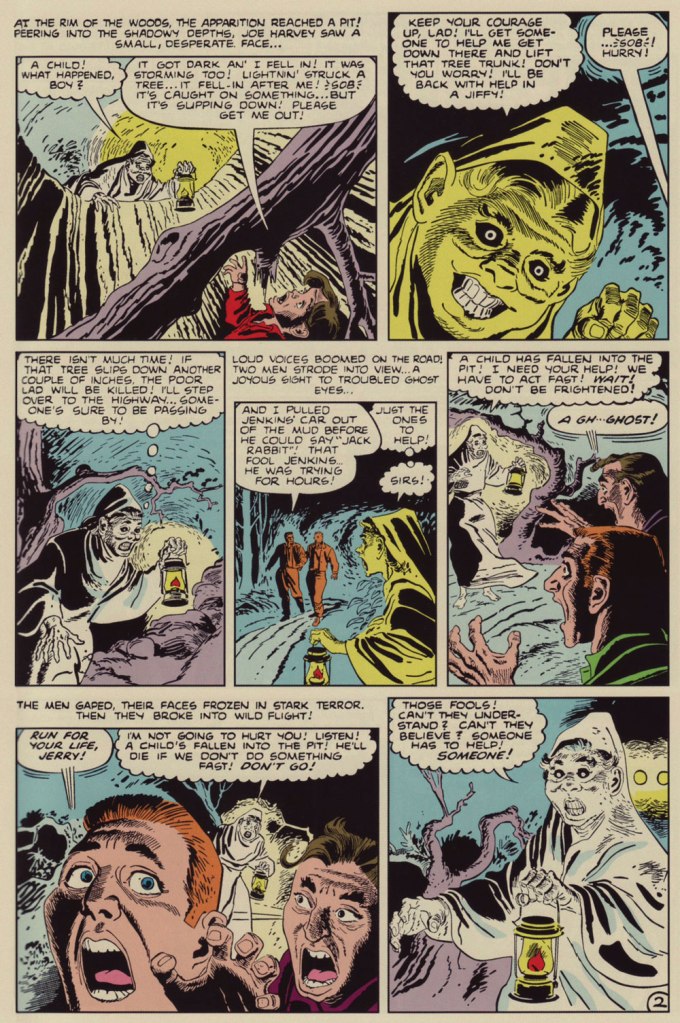
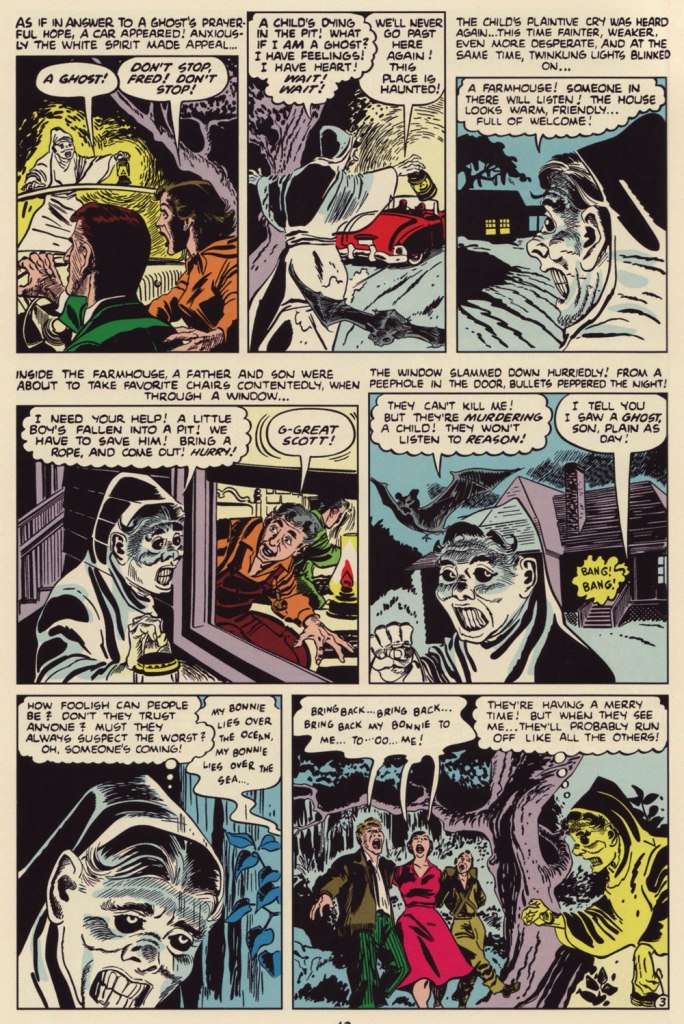
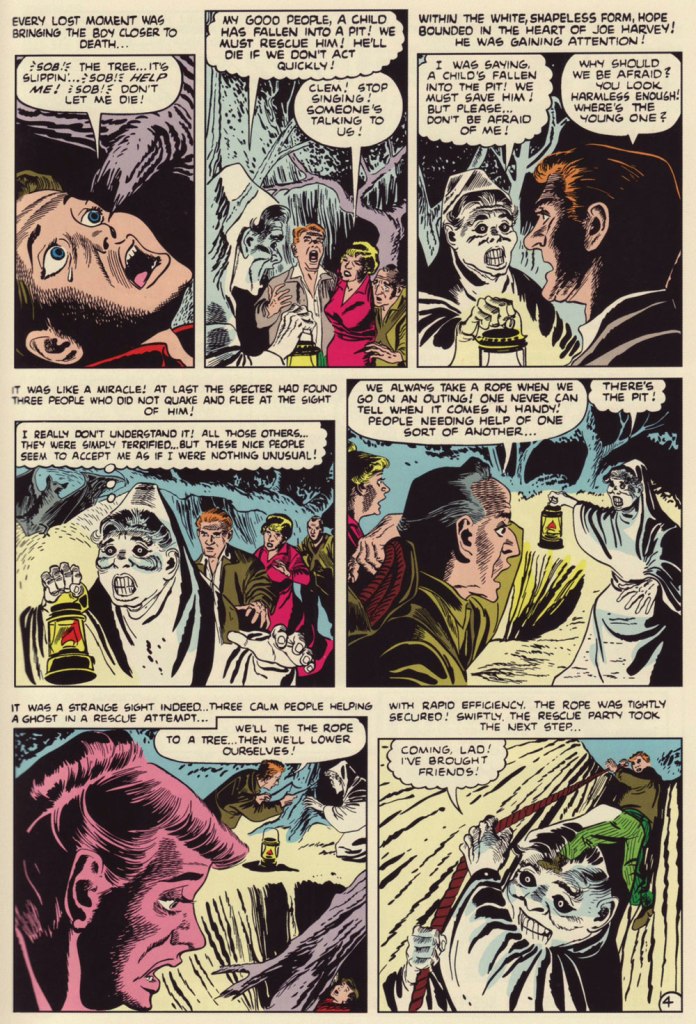
The formula was tweaked a bit for the Edgar Poe entry, in that the tale opens after Poe’s burial, and the late writer is not the protagonist. Read on!

3 Corpses on a Rope“, written by Carl Wessler and illustrated by Lee Elias, originally appeared in Ghosts no. 43 (Oct. 1975, DC).

If you ask me, despite his evident illustrative gift, Elias’ depiction of the revenant ends up looking more like Poe’s fellow Baltimorean John Astin, whom I envision starring in a one-man show entitled ‘An Evening With Edgar Allan Poe‘.

-RG

Hallowe’en Countdown VIII, Day 5

« It’s harder to not read “Nancy” than to read it. » — Wallace ‘Wally’ Wood

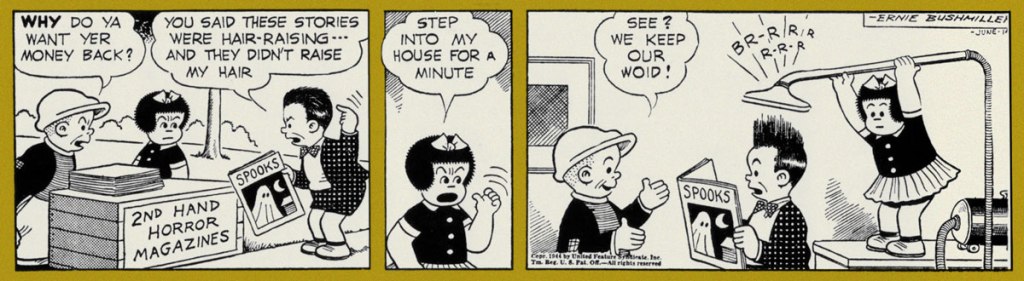
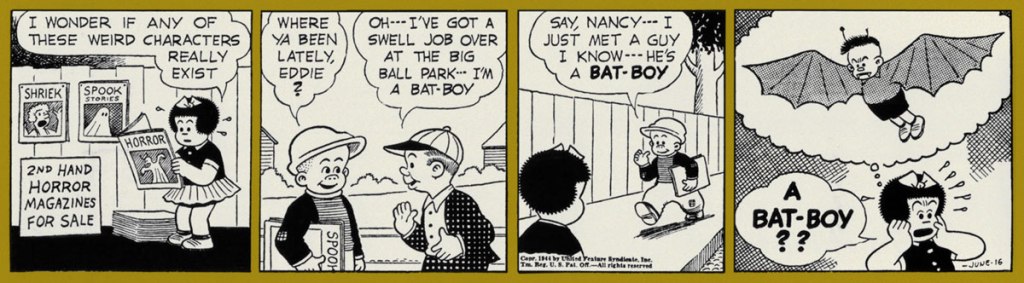
We’ve featured Nancy in a previous Hallowe’en Countdown, but it doesn’t quite count, as that was the mind-bending John Stanley mutation of Nancy — not that I adore one any less than the other. This time, we’ve gone with the real deal… which is still plenty odd, thank you.

June 12, 1944 Nancy daily.
June 13, 1944 daily.
June 14, 1944 daily.
June 15, 1944 daily.
June 16, 1944 daily.
June 17, 1944 daily.
And, skipping nearly a decade ahead… July 15, 1953 daily.

Those seeking further Bushmiller enlightenment could do worse than to check out Paul Karasik and Mark Newgarden‘s How To Read Nancy (2011) and Bill Griffith‘s Three Rocks — The Story of Ernie Bushmiller: the Man Who Created Nancy (2023).

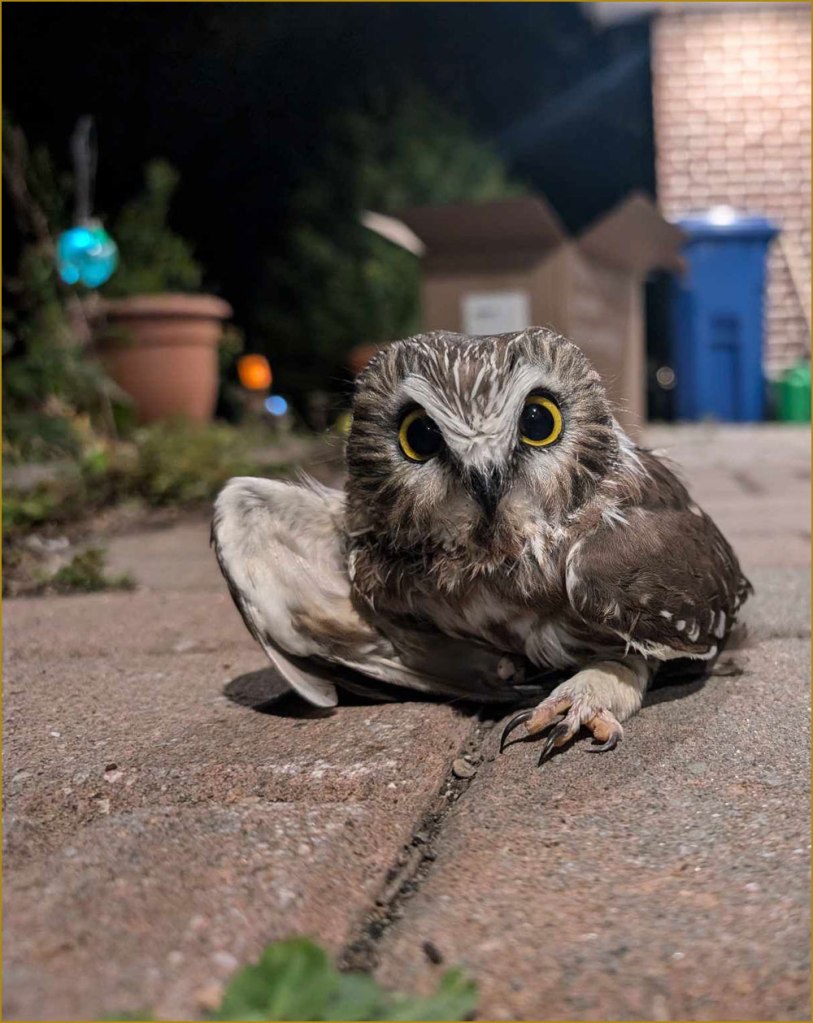
Speaking of owls: the other night, we were surprised (to put it mildly) to discover that one of our cats had brought home a feathered guest.

This is a Northern saw-whet owl, one of the smallest species of owls. Seeing she likely had a broken wing, we quickly called the local animal shelter, and the injured bird was picked up by the local wildlife authorities in the morning. She’ll be in good, caring hands.

-RG

Hallowe’en Countdown VIII, Day 4

« Innocence is a kind of insanity » — Graham Greene

I’ve always had a soft spot for Tony DiPreta’s striking style. When it came to Atlas’ material, it was generally a case of lousy writing and interesting art. But DiPreta could somehow lend credence to the dodgiest semblance of a plot, because he could smartly provide it with just the right tone. I’ve featured this unfairly obscure illustrator a couple times in the past, so you may want to start there: first, the sublimely ridiculous The Hidden Vampires, then the Tinseltown satire Skull-Face.

I was pleased, in reading a rare interview with the artist, to hear him confide that « In the 1950s I did some comic book work for Stan Lee and others. That was pre-Code horror stuff and I loved it. Some of the illustration I did for crime and horror stories in that period is among the best work I’ve ever done. » Amen!

Aside from an expensive, low print run ‘Marvel Masterworks’ hardcover, this story has never been accessibly reprinted. And so enjoy this scarce gem!

The original appearance: this is Journey Into Mystery no. 12 (Sept. 1953, Atlas). Cover art by Max «Carl Burgos » Finkelstein.

-RG

Hallowe’en Countdown VIII, Day 3

« If men had wings and bore black feathers, few of them would be clever enough to be crows. » (source)

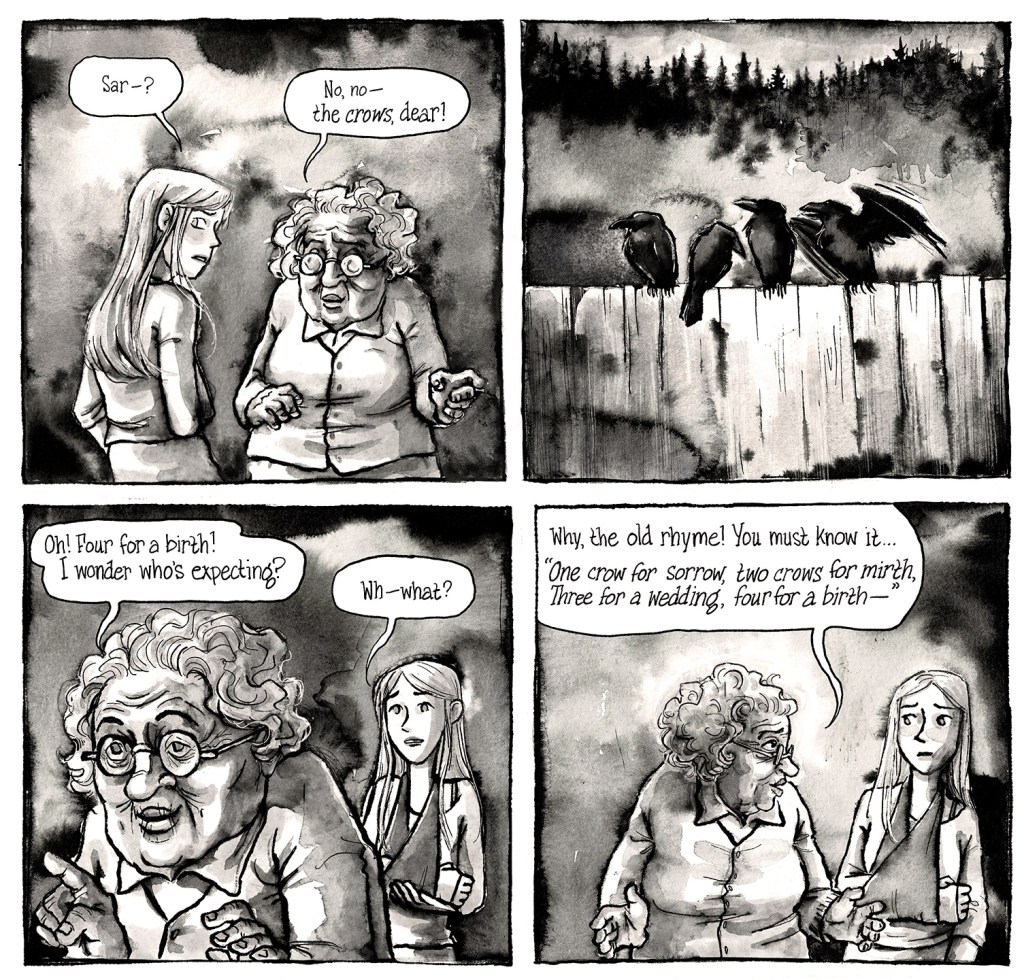
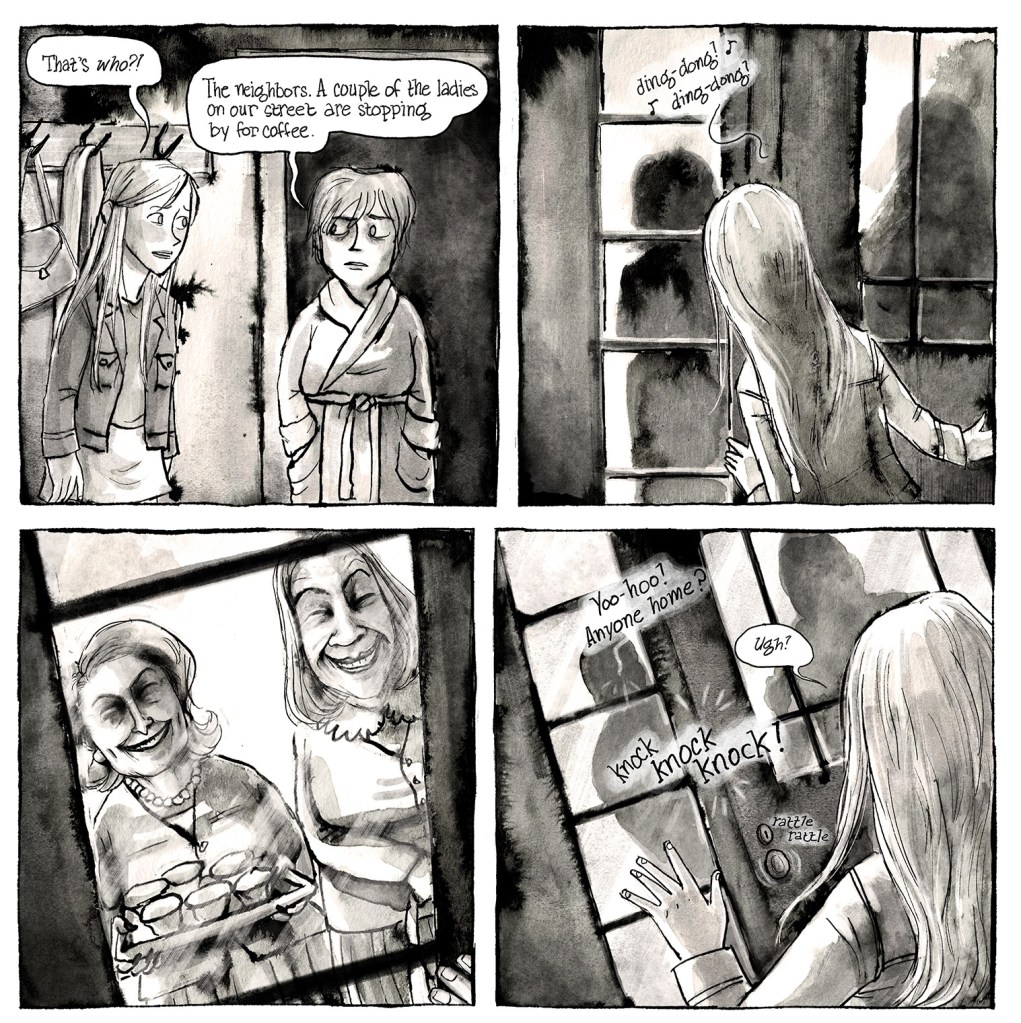
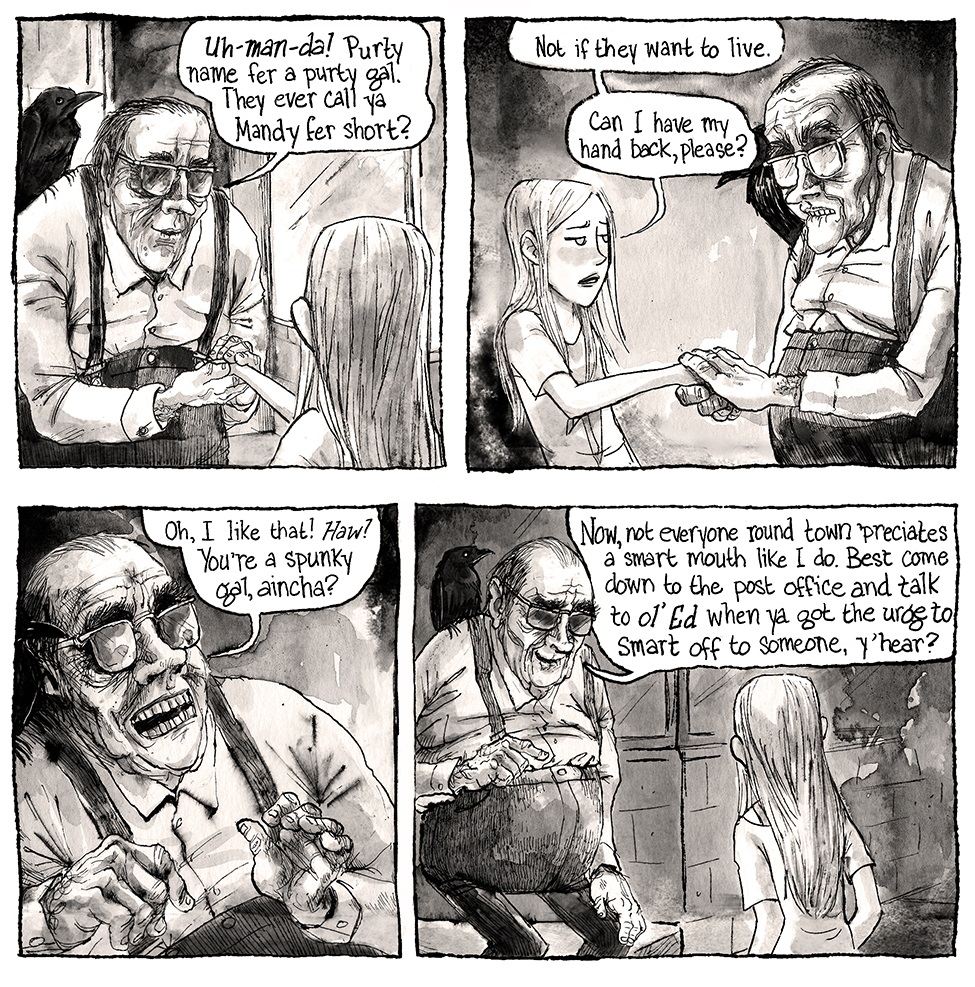
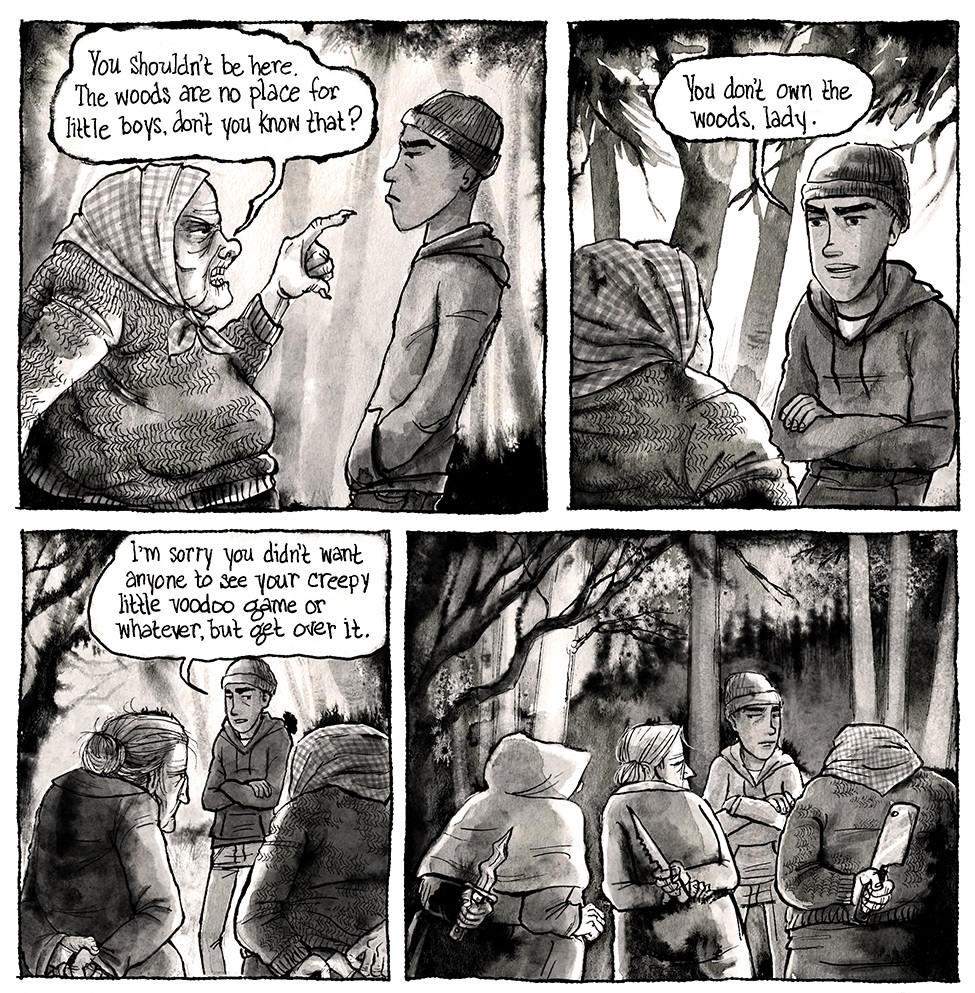
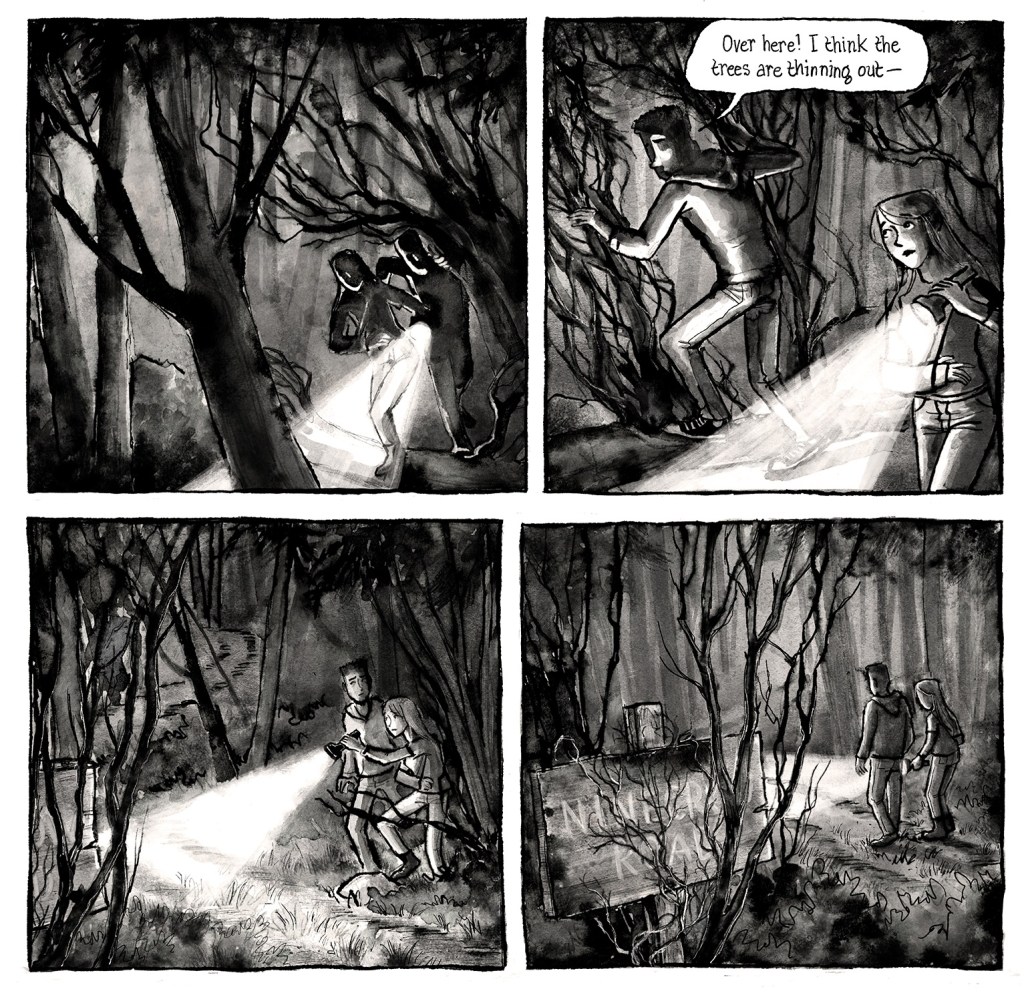
Today’s titillating offering deals in tropes that horror devotees will readily recognize – a Town with a Dark Secret ensnaring The Plucky Girl in its mysteries and underlying violence. Mysterious disappearances, the proverbial ageing small-town creep whose smile hides uncomfortable truths, oblivious locals… it’s been surely done before, yet the graphic novel Ninecrow by Dora M. Mitchell , initially posted as a biweekly webcomic that ran from 2020 to 2022, succeeds in creating an unnerving story out of these readily available narrative blocks.

Amanda, a teenager whose divorced mom relocates them to a town in the middle of nowhere (shades of Eerie Indiana et al.), does her best to adapt to her new life, but her new place of residence is, well… alarming in a number of ways.

Lovingly drawn in mostly black-and-white watercolours, Ninecrow offers the reader plenty of visual enjoyment peppered with hair-raising details faintly glimpsed in shadowy corners. The hand-lettering is also worth a mention, especially given that modern graphic novels often dispense with this element in favour of a computer-generated font. Both art and letters remind me of the tragically departed Patrick Dean, especially some of his work like Underwhelming Lovecraft Monsters.

Aside from its crow population, the town is also abundantly stocked with disquieting old people in various stages of brain fog. Aside from Amanda and a couple of others, everybody seems to be middle-aged going on ‘soon dead’, and not of the pleasant fluffy-grandparent variety, either.

I bought the print version of Ninecrow on Kickstarter because I much prefer reading books in a physical format (you can still buy the deluxe version on the publisher’s Etsy page), but you can still read the full thing story online on the website: https://ninecrowcomic.com/

Enjoy the traipse through the woods!

~ ds

Hallowe’en Countdown VIII, Day 2

« If he’s straightened out that overbite, I’ll kill him. » — Benjamin Franklin ‘Hawkeye’ Pierce

Like Hawkeye Pierce, Bob Oksner (1916-2007) was a gentleman who appreciated a cute overbite.

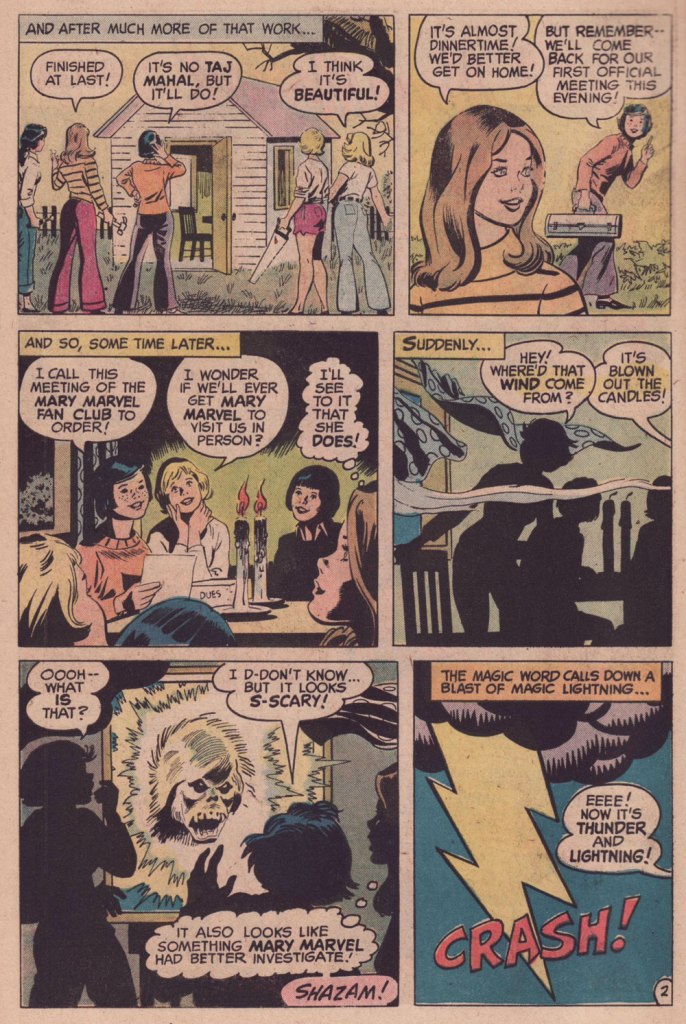
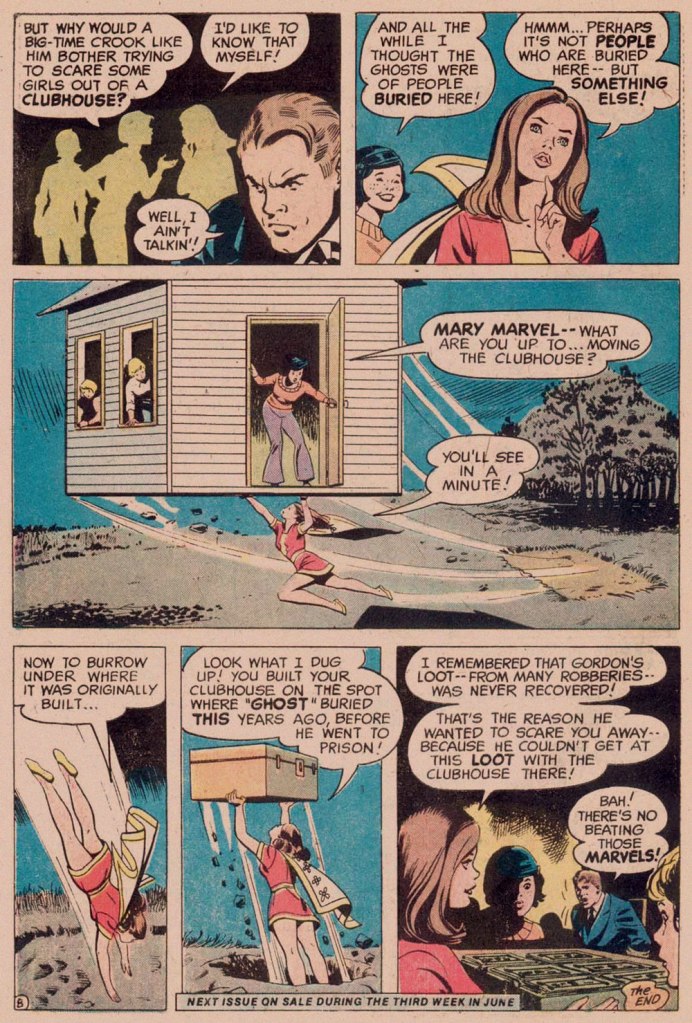
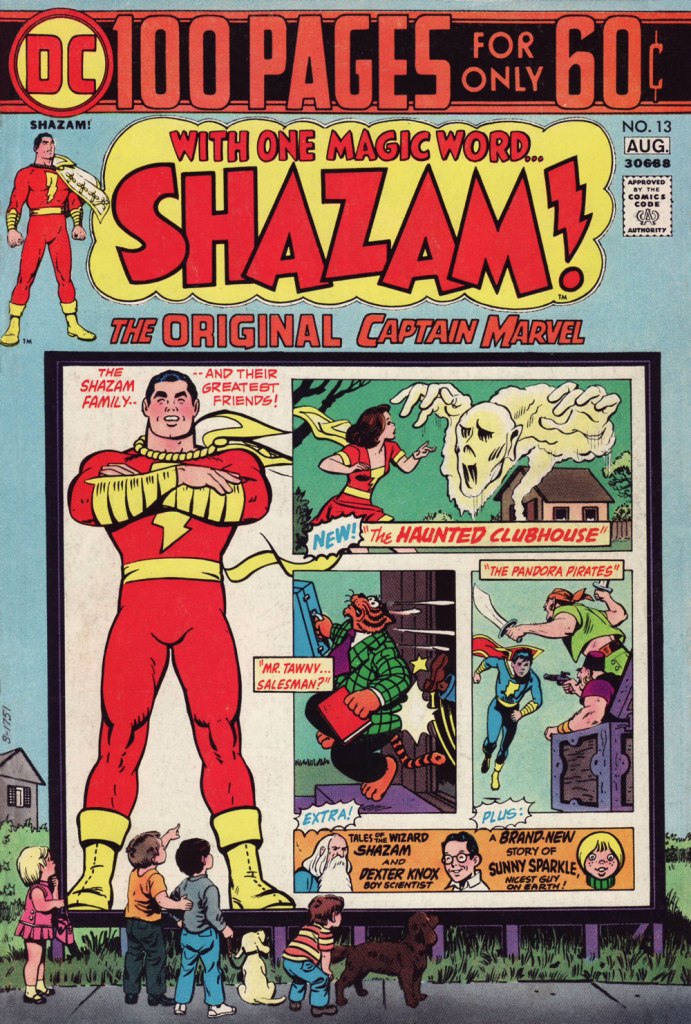
Here’s a seasonal Mary Marvel solo tale that originally saw print in the thirteenth issue of DC’s Shazam!, back in 1974. It was scripted by the erudite Edward Nelson Bridwell (1931-1987).

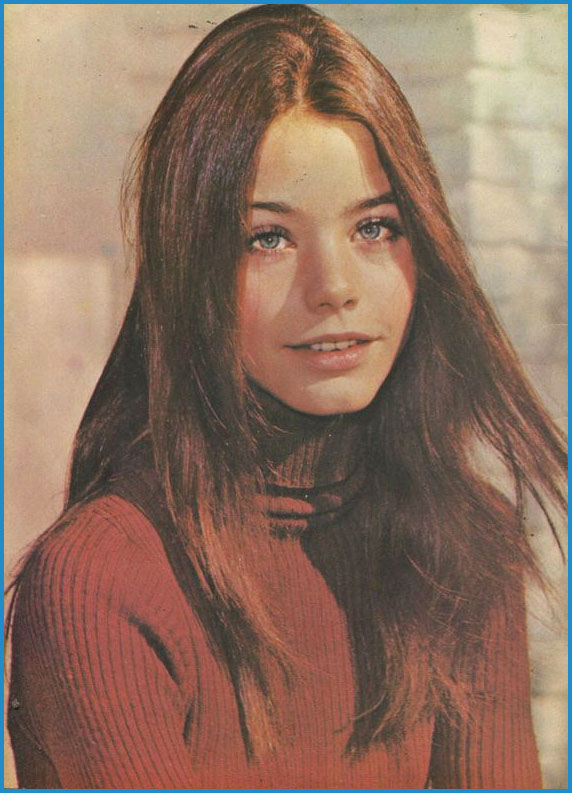
I can’t help but believe that Mr. Oksner might have modeled his Mary Marvel after model-actress and air harpsichordist Susan Dey. The flaw in that theory is that his girls had always looked like her — so it’s more of a case of Susan looking like an Oksner girl than the other way around.

« I fell in love with Laurie
on the Partridge Family
Yeah I stay up watching 70’s TV
And I get off on 70’s TV
» — John Easdale / Dramarama

This is Shazam! no. 13 (Jul.-Aug. 1974, DC). Cover art by Mr. Oksner.

-RG

Hallowe’en Countdown VIII, Day 1

« Daddy had an argument on Friday night, with a man from outer space. Daddy said, ‘I don’t care where you’re from, you’re in my parking space!’ » — Colin McNaughton

Here we are, against all odds, at the beginning of yet another edition of WOT?’s annual Hallowe’en Countdown… hope you enjoy the bumpy — that’s the spirit! — ride.

This time, our opening salvo comes courtesy of British illustrator-poet Colin McNaughton (born 1951). Though I’ve been known to haunt used bookstores whenever the occasion arises, I’ve but once encountered a single one of Mr. McNaughton’s productions, a couple of decades ago at that… which is odd, given his rather prodigious output: over seventy books! That said, my mama having raised no fool (my brother notwithstanding), I unerringly grabbed it.

As it happens, Wikipedia claims — though without any context or evidence — that « His most notable book is perhaps There’s an Awful Lot of Weirdos in Our Neighbourhood »… but I’ll accept it unless a stronger claim comes along. It’s a truly splendid tome.

Oh, and here’s the requisite snatch of (auto?) biography: « Growing up in his native England, the young Colin McNaughton had little indication that he would one day become an author-illustrator. There were no books at all in his parents’ home, he recalls, but there were always comics. These were his formative literature, and their slapstick humor has been a lasting influence. “I’ve been talking about the comic format for years,” he says. “It’s the modern way of telling stories for today’s children; it’s about movement, the step between film and the book.” »

I can live with that. enjoy!

There’s an awful lot of weirdos in our neighbourhood! Yes, there’s an awful lot of weirdos in our neighbourhood!
I know this physical wreck, who has a bolt through his neck! There’s an awful lot of weirdos in our neighbourhood!
And in an upstairs room, an old lady rides a broom! There’s an awful lot of weirdos in our neighbourhood.
A man lives on the square, when he’s in he isn’t there! There’s an awful lot of weirdos in our neighbourhood.
And that woman down the block, whose snaky hair’s a shock! There’s an awful lot of weirdos in our neighbourhood.
We’ve a strange old feller, with horns, down in the cellar! There’s an awful lot of weirdos in our neighbourhood.
There’s a guy who’s green and scaly, has webbed feet and sells fish daily! There’s an awful lot of weirdos in our neighbourhood.
And someone near the dairy, when the moon is out gets hairy! There’s an awful lot of weirdos in our neighbourhood.
Think I’ll leave this miscellanea, and return to Transylvania, ’cause there’s an awful lot of weirdos in our neighbourhood!

How about one more? One more it is!

Mum! The garden’s full of witches! Come quick and see the witches. There’s a full moon out, and they’re flying about, come on! You’ll miss the witches.

Oh, Mum! You’re missing the witches. You have never seen so many witches. They are casting spells! There are horrible smells! Come on! You’ll miss the witches.

Mum, hurry! Come look at the witches. The shrubbery’s bursting with witches. They’ve turned our Joan into a garden gnome. Come on! You’ll miss the witches.

Oh no! You’ll miss the witches. The garden’s black with witches. Come on! Come on! Too late! They’ve gone. Oh, you always miss the witches.

-RG

Thanks, Bernie: A Fine Pair From Mr. Mireault

This is a post I didn’t want to write — or rather, a post I didn’t want to write under the present circumstances. While I’ve known Bernie Mireault (June 27, 1961 – September 2, 2024) for a long time, I couldn’t presume to call him my friend. We were never particularly close, but we ran in similar circles for a time. Then our paths split, many years ago. But I always liked him and greatly admired and followed his work.

I remember him as a kind, generous, humble man, with a soothing voice and manner. And blessed — and cursed, I suppose — with massive, multifaceted talent. Now that he’s left this world, his memory and his work linger. Allow me to showcase a couple of my most treasured Mireaults.

« Though this is fictionalized science, it’s not science fiction. We’ve imagined some of the details, but the characters existed, and did and said (most of) the things you’ll read. » Two-Fisted Science: Safecracker (1997, General Tektronics Labs). Published in advance of the Two-Fisted Science anthology, in order to promote it. However, Bernie’s piece outshines everything else, if you ask me. For good or ill, cheap copies of the comic book are still handily acquired.

This is only (most of) a single chapter of Bernie’s contribution — which totals 30 pages! — but it’s fully enjoyable on its own. Script by Jim Ottaviani, pencils, inks and lettering by Mr. Mireault.

A bit of background about Mr. Lavatelli (1917-1998)…

Pray note Bernie’s clever nod to the great Harvey Kurtzman (top left).

Of course, working on a story starring genial genius Dr. Richard Feynman already gives you an edge, but Bernie was one of the few cartoonists who could breathe life into the drabbest of narratives. Non-fiction seems especially daunting for today’s cartoonists, for some reason.

For another facet of Mireault’s talent, and to highlight his peerless colouring chops, here’s my favourite of his too-few Dr. Robot stories, written, pencilled, inked, lettered *and* coloured by Mireault. To this day, insultingly cheap copies are plentiful. Less than the original cover price, for Pete’s sake.

Thanks, Bernie. I’m truly sorry things didn’t work out for you.

I was going to post something very brief this month, telling you what to expect from us in September, which is… nothing else. We’re busily preparing this year’s edition of our Hallowe’en Countdown — which will include some more Mireault, that’s all I can tell you for now. See you soon!

-RG

Alain Delon Did Not Drink Eau de Cologne*.

« Better to have a lousy character than no character at all. » — Alain Delon (Nov. 8, 1935 – Aug. 18, 2024)

Quite recently, we lost monstre sacré Alain Delon. He was a complicated man, a bit of a prickly bastard, but he sure made a lot of great movies*. But comics, you ask? Well, I’m sure he never asked for it, but like many a celebrity (Jean-Paul Belmondo, Ornella Muti…) his famous countenance was appropriated by those incorrigible rascals at Edifumetto and Ediperiodici.

So Alain Delon became… « Alain Velon, a billionaire playboy who lives on an island “a 3-hour flight from New York“. He spends his private life conquering women in a continuous stream even if he is already engaged to the film actress Lizzy Scarlett, but “due to his innate sense of justice” he periodically transforms into Playcolt, a sort of superhero. His enemy is Linda Darnel, also a billionaire: sadistic and fetishist, she turns into the anti-heroine Za the Dead. Another historical rival is the always sadistic but lesbian Mandrakka. »

Now don’t get me wrong: these are virtually unreadable, poorly drawn, sadistic, illogical, reactionary misogynistic claptrap. But the covers are fascinating in their gonzo way, randomly cobbling together purloined bits from famous likenesses to established logos. You’d think this brazen wave of wholesale filching would have led to swift and decisive legal action from several stars’ solicitors, not to mention Hugh Hefner’s… but it seems not. This was, after all, the Italy that gave us Silvio Berlusconi.

« To the Sound of Punches »; this is Playcolt Series II no. 9 (Nov. 1973, Edifumetto). Cover art by Carlo Jacono, a nice piece, but celebrity likenesses evidently weren’t among his strong suits.
« Crimes on the Emerald Coast »; this is Playcolt Series II no. 14 (Aug. 1973, Edifumetto). This one’s *possibly* the work of Alessandro Biffignandi… or his studio.
« The Golden Rain » (ahem); this is Playcolt Series II no. 23 (Dec. 1973, Edifumetto). Another Jacono, another botched likeness.
« The Divine Sadist »; this is Playcolt Series III no. 1 (July 1974, Edifumetto).
« Death laughs in Disneyland »; this is Playcolt Series III no. 11 (June 1974, Edifumetto).
« There’s a mess in the middle of the sea »; a 1980 Brazilian edition reprinting Playcolt Series III no. 18 (Sept. 1974) in Portuguese.
« The Flower Gang »; this is Playcolt Series III no. 22 (Nov. 1974, Edifumetto). I have no concrete evidence, but the technique displayed here reminds me strongly of British illustrator-cartoonist Ron Embleton (1930-1988), co-creator of Oh, Wicked Wanda! and illustrator of the immortal Captain Scarlet closing credits.
No need for a translation, is there? A 1980 Brazilian edition reprinting Playcolt Series IV no. 1 (Jan. 1975) in Portuguese.
« Operation Puzzle »; this is Playcolt Series IV no. 12 (Nov. 1975, Edifumetto). Cover painted by the prolific Emanuele Taglietti, who handled quite a few covers in this series. Here’s an impressive gallery of these.
« The White Shark »; this is Playcolt Series IV no. 35 (May 1976, Edifumetto). Sharks were all the rage that year.
« To Love a Hole »; a 1980 Brazilian edition reprinting Playcolt Series IV no. 2 (Jan. 1975). Dig that strategic blurb placement; the Italian edition was not so coy.
Clearly a reference to the previous year’s hit ‘erotic’ film, L’histoire d’O; this is Playcolt Series IV no. 27 (Jan. 1976, Edifumetto). It’s funny how the Delon photos used span his career up to that point, which yields visual whiplash when you go from the Delon of Plein Soleil to the jaded, grizzled one of, say, Monsieur Klein or La mort d’un pourri from one issue to the next.
« Terror in California »; this is Playcolt Series IV no. 44 (Oct. 1976, Edifumetto). The obligatory Jaws cash-in. Say what you will, those Italians didn’t miss a trick.

There was, concurrently, another Delon homage in Jean Ollivier and Raffaele Carlo Marcello‘s successful Docteur Justice, a humane but hard-hitting series about a physician and expert judoka who roams the globe’s trouble spots for the World Health Organization. There was even a film adaptation in 1975, with John Phillip Law essaying the title role… and co-starring Delon’s ex — and only — wife, Nathalie. Among Pif Gadget’s adventure series, it was only bested in popularity by the prehistoric blond heartthrob Rahan. I’ll tell you more about it one of these days.

-RG

*So claims the Russian pop song entitled Взгляд с экрана, and who are we to doubt it?

[ source ] And for those who like to dig a little deeper, here’s a most illuminating article on the subject.

**I recommend Adieu, l’ami, Red Sun — both co-starring Charles BronsonLa mort d’un pourri, Jean-Pierre Melville‘s Le Samouraï and Le cercle rouge, Plein soleil… as cinema’s first Tom Ripley.

Espiègles, impétueux: Dubout’s Impish Cats

« One cat just leads to another. » [source*]

Kitty butts are the ordre du jour.
Back of Bob Foster’s Myron Moose no. 1 (Myron Moose Comic Book Works, 1971); this art print was also released years later, as can be seen by the date on it.

We are technically a three-cat household — that’s how many cats we had decided we could comfortably handle. For a while we stuck to this number, and when one cat departed, another one would come to take his place. Then number four walked through the door — he was sort of a part-time cat, until he became decidedly one of ours. Well, four isn’t that much more work than three. When number five appeared, bedraggled, underfed and with a perpetually sad expression (‘he had that look you very rarely find — the haunting, hunted kind‘, to quote Tim Rice), we wanted to give him to a rescue society… and of course ended up keeping him.

Albert Dubout (born as lbert Dubout, 1905-1976), was primarily an illustrator of books (notably, his amical collaboration with French writer San-Antonio, many of whose novels proudly bore Dubout’s covers and inside illustrations), and, with equal talent, a cartoonist and poster designer (check out some of his film posters here), not to mention a calligrapher with a number of delightfully mellifluous signatures. His official website can be found here, in case you want to take a peek.

The following excerpts have been scanned from Les chats (Editions Hoebeke, 1999).

Although the topic is obviously inexhaustible, for some more fun cats, visit Off to the Isle of Cats — and Back by Teatime!, Commence by Drawing the Ears: Louis Wain’s Cats, Q: What’s Michael? A: Kobayashi’s Most Special Cat or Steig Swoops In: The ‘Epic in Jazz’ Cat Sextet.

This cover was published posthumouslyEdward Gorey submitted it in 1992, but another of his drawings was selected instead. Gorey, who died in 2000, was of course another one of those famous cat persons.

~ ds

*I don’t like Hemingway at all, but I do have a certain grudging respect for a man who kept some 40+ cats. Rhetorical question: are cats living at that high a density within one house really having a good time?