George Mendoza* does it again! I first stumbled upon Mr. Mendoza’s works through one of his collaborations, The Good Luck Spider: And Other Bad Luck Stories (1970, Doubleday), which was illustrated by the avuncular Gahan Wilson. Since I also happen to be a Mercer Meyer (last mentioned on this blog by ds in 2018!) fan, I did not tarry nor hesitate when I learned, a few years ago, of a dusty tome entitled The Crack in the Wall & Other Terribly Weird Tales (1968, The Dial Press).
Here’s a look at the book’s first yarn, The Devil’s Pocket, a sort of cautionary folk tale/urban legend.
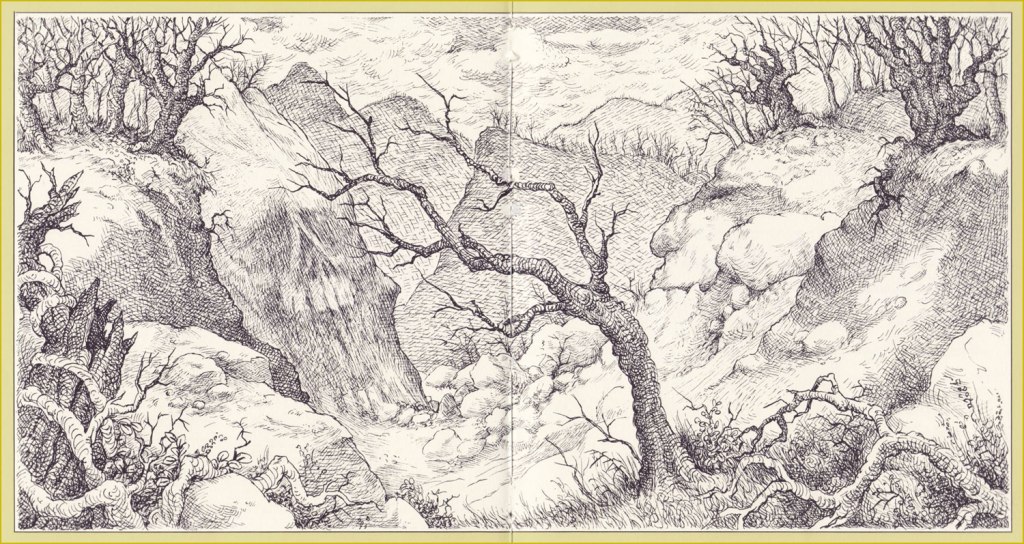
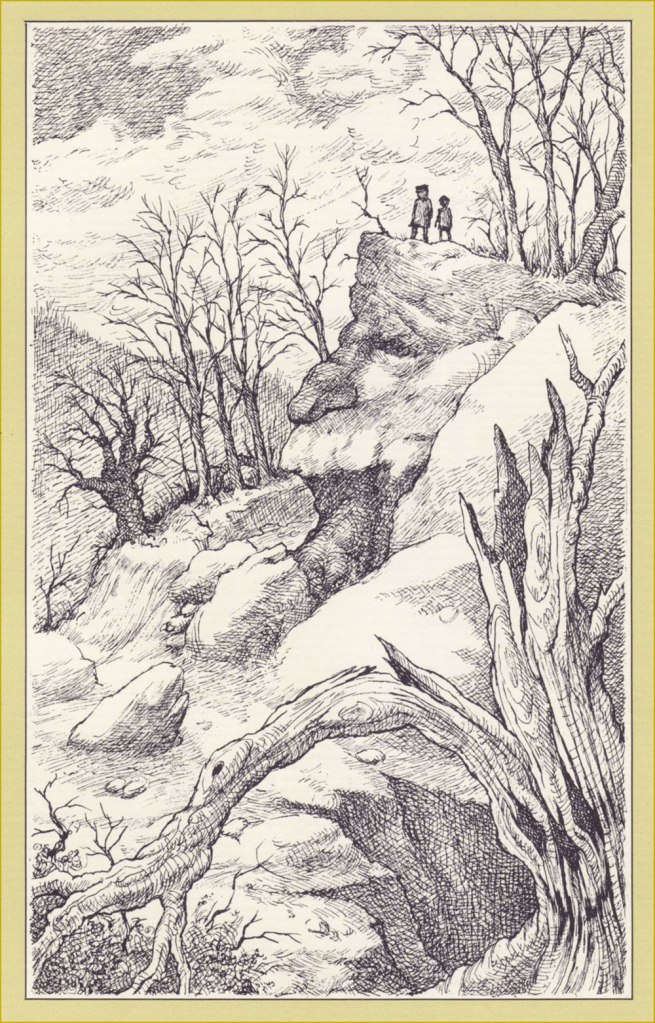
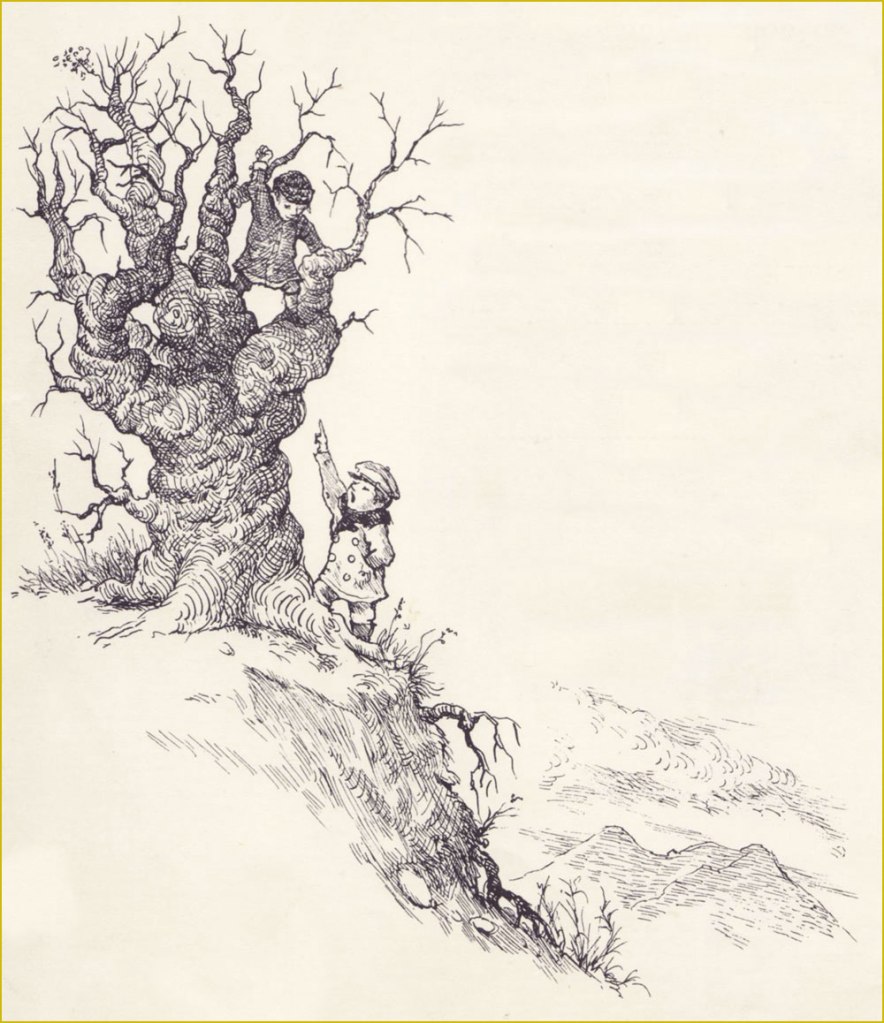
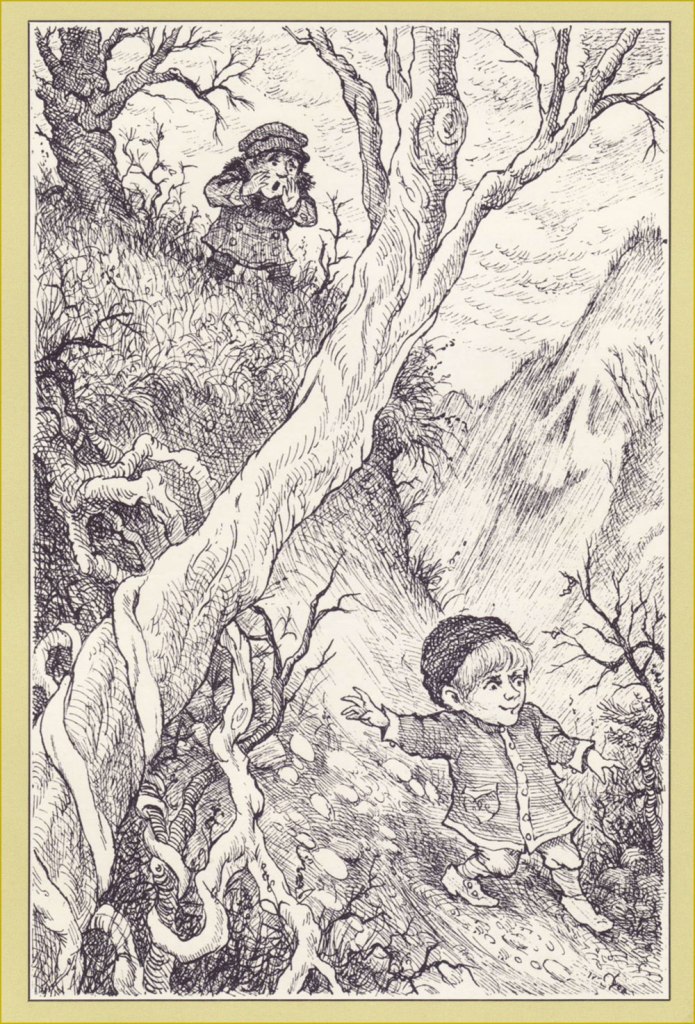
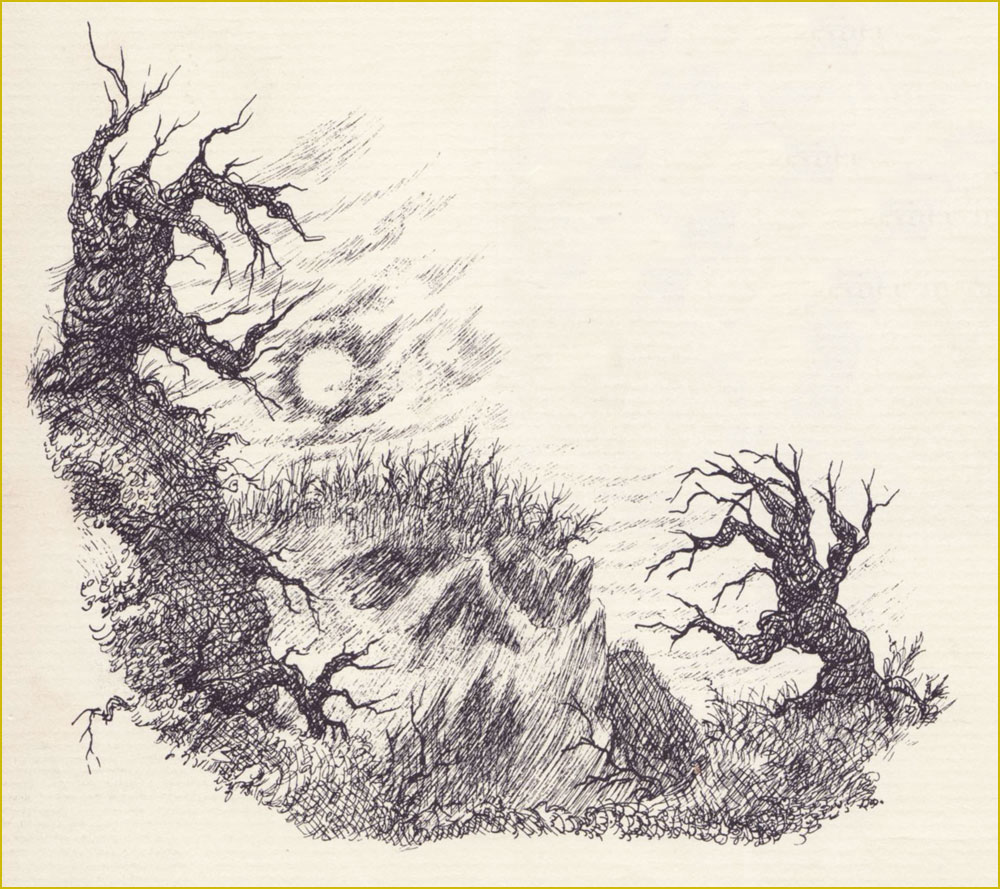
« It was an old, abandoned Vermont quarry, and the two brothers were forbidden to ever climb down into it or even go near it. » « … their father would look up under his glasses, and in his deepest voice he would say, “It’s the devil’s pocket — don’t ever throw a penny into it!” »« But the more stories the boys heard about the quarry, the more fascinated they became with the devil’s pocket. »Mercer Meyer’s uncanny ability to invest the inanimate with animist animosity is on virtuosic display here.« “I’m not afraid,” said Marty, looking down into the bottom of the quarry. “I’m going to throw a penny into it!” »« But it was too late. Marty was already running down the side of the quarry. » « I’m scared,” Marty whimpered, stuffing the penny into his pocket. “Let’s go home.” »« That night both boys had the same dream. They dreamed that the devil’s pocket was calling them, calling them to give back the penny. »« Perhaps it was only a dream, but when morning came, the two brothers found themselves huddled together in one bed, and the penny was gone! »And here’s the front cover of this delightful tome. It’s not cheap, but not entirely unaffordable, either.
-RG
*kudos to fellow blogger Antmusic for digging up as much as could be reasonably dug up about the elusive Mr. Mendoza.
«… devolving into a downright National Socialist muck of murderous paranoïa, a Lord of the Flies for our new century…»
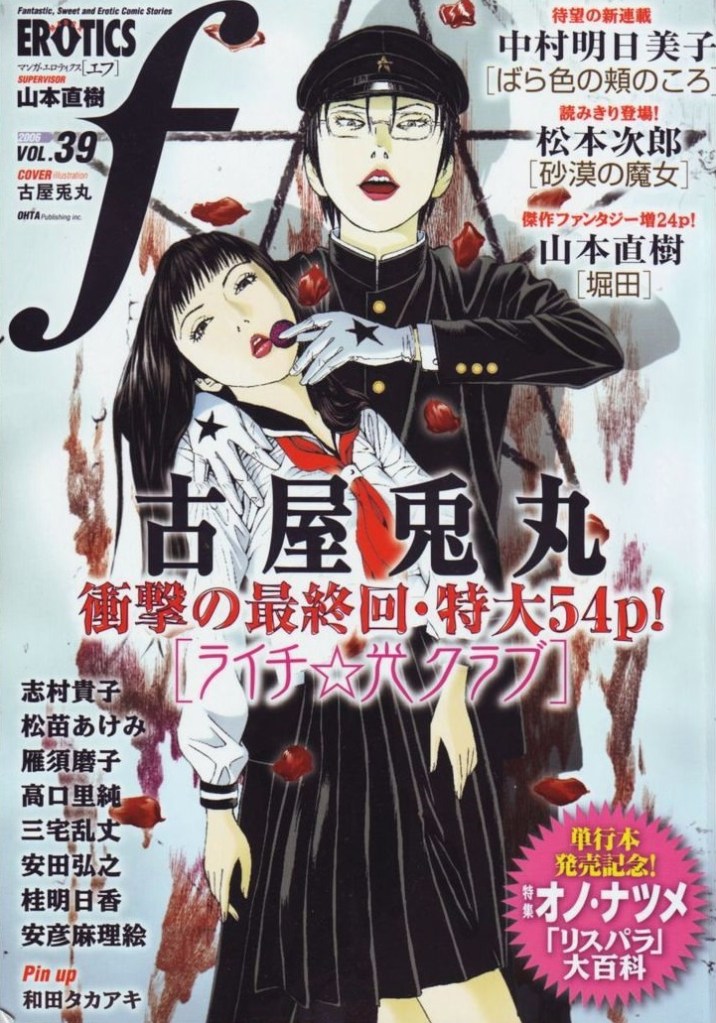
Lychee Light Club, aka Litchi Jirai Club (ライチ☆光クラブ), is a manga written and illustrated by Usamaru Furuya, who was smitten by a theatre play of the same name after watching it in 1985 as a high school student. Years later, he recreated it in manga form, albeit with a somewhat modified plot. It was serialized in Ohta Publishing’s Manga Erotics F* (May 7, 2005 – May 3, 2006). As for the play, it was directed by Norimizu Ameya** for the theatrical group Tokyo Grand Guignol (it’s funny to see the French ‘guignol‘ in this context).
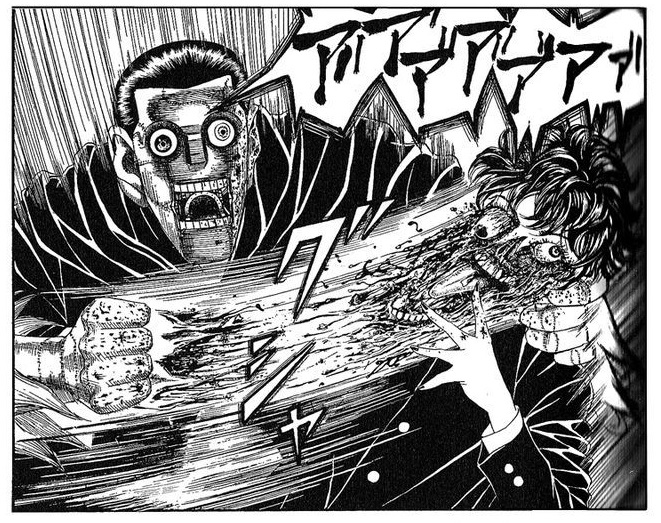
Lychee Light Club‘s over-the-top violence elicits the occasional chuckle (one of its characters dies from somebody pitching a toilet through his midsection), and more than one wince of discomfort, too, as its schoolkids maim, bash and burn their way through the story. The premise is simple – Lychee Light club (more of a cult, really) consists of eight barely-teenage boys who worship youth as the ultimate symbol of beauty (and, consequently, hate all things adult). They have nice digs where they spend all their time after school – an abandoned factory with plenty of dumped implements useful in their pursuit of the sadistic. They are led by the charismatic and cunning ‘Zera’ (actually, Tsunekawa from class 2), whose charm and fine features inspire blind devotion from his gang, not to mention occasional sexual favours.
To pursue their vision of eternal youth and a universal, if unfocused, lust for power, the posse builds a mostly robotic ‘thinking’ machine-cum-Frankenstein-monster, all metallic parts except for a human eye ‘borrowed’ from Zera’s number Eins, Niko. Zera informs his crew that he planted lychee seeds in a landfill three years ago… and now they have a forest of trees heavy with fruit at their disposal as fuel for Lychee, their mechanical prodigy. Apparently Zera is also a brilliant agriculturist, for lychee trees are notoriously slow to bear fruit, and three years later he’d have a forest of greenery at best. ***
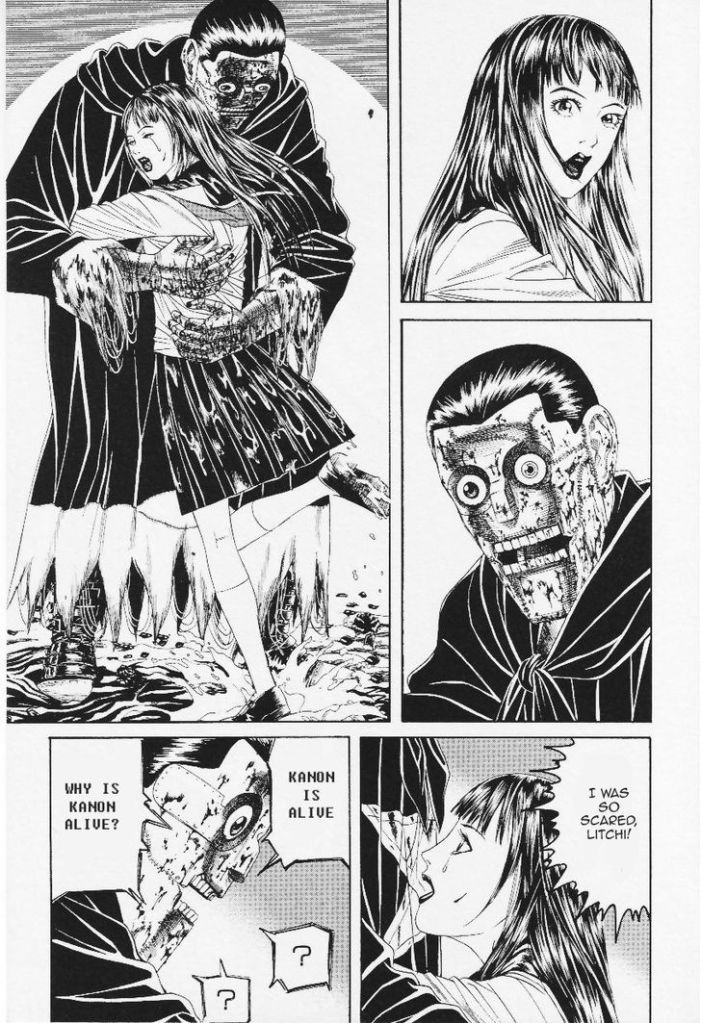
Lychee awakens! When questioned about why he is born, Lychee’s computer algorithm spits out that its mission is ‘to capture a girl’, so off he goes to kidnap many until he finds one beautiful enough to be their ray of light, eventually bringing Kanon, the female protagonist.
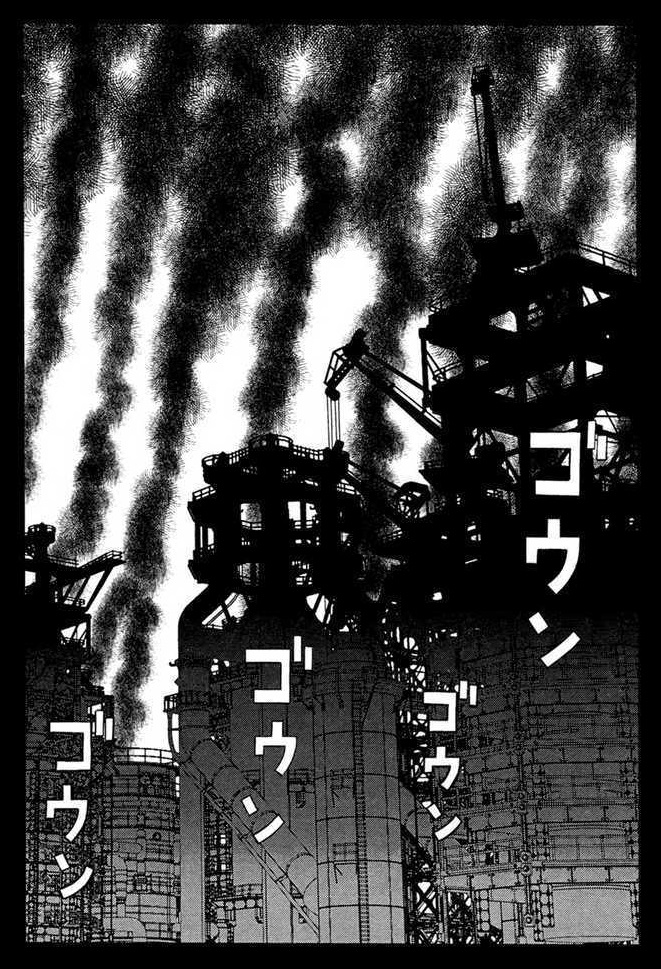
The story’s settings immediately plunge the reader into a kind of claustrophobia – filthy streets, a sooty factory, trashed cars — clearly an industrial town which doesn’t offer much hope for a better future. The boys’ lives outside the club are barely discussed, but the story hints that they all come from an uncomfortable family situation, though apparently they’re all ‘good kids’, as their maths professor incredulously notes before she is gleefully tortured and murdered.
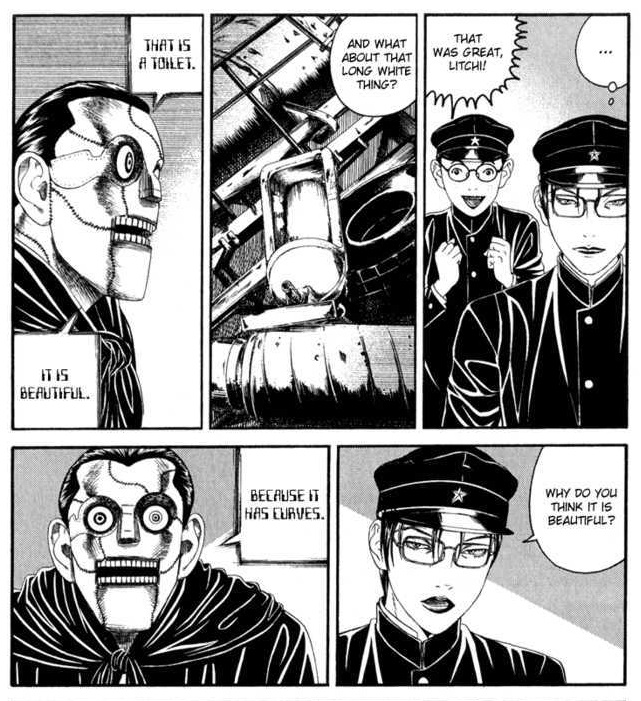
Don’t forget to read right to left! Much later, in a fit of poetic justice, Zera gets killed by a toilet with (doubtlessly) beautiful curves.
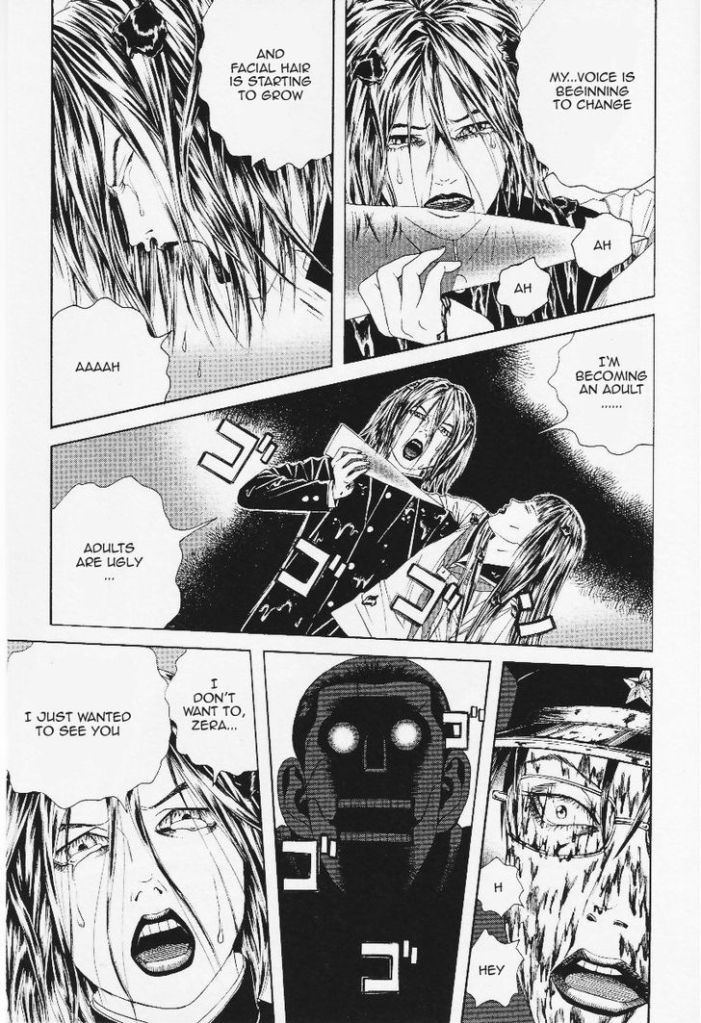
There is a strong current of body dysphoria running through Lychee Light Club, fitting for a set of characters so fixated by ‘beauty’. The megalomaniac Zera is obsessed with Elagabalus, a Roman teenage emperor known for his sexual decadence (apparently to the point of standing out for his outlandish vices among other Roman emperors centuries later, which is surely a feat of some kind, given what some of them got up to).
In a sort of Peter Pan/Neverland situation, the boys are nauseated by the sight of an adult woman’s body (her breasts are qualified as ‘repulsive, swollen lumps of fat’), and horrified by her ‘ugly’ innards, wondering whether their own organs are ugly, too (plot spoiler: they are, indeed). They obsess over Kanon, the eventual heroine of the story, because she’s soft and beautiful (but hasn’t turned into a woman yet). Kanon herself doesn’t want to grow up because she’s worried Lychee (at that point ‘humanized’ by her love) will reject her adult self.
All of them need to urgently get to therapy, but instead of that eyeballs are ripped out, innards (not to mention semen) are spilled, and the whole thing ends in an utter bloodbath, leaving the only ‘innocent’, Kanon, mourning Lychee, who is now more ‘human’ than the members of the Lychee Light club because he understands that murder is wrong. Reading this manga is a bit like observing a train wreck. Nothing in this story is nearly as profound as it pretends to be, and plot holes bloom much like lychee flowers — and yet its mostly naïve characters stick in one’s mind. Poor, poor children.
« …a mere plaything, having feelings! »
~ ds
* Speaking of the erotic… a quick perusal of blurbs quickly yields ‘Shocking, sexy and innovative, the Lychee Light Club is at the pinnacle of modern day Japanese seinen manga (young adult comics)‘, with which advertisement I have several bones to pick. ‘Sexy’ is an uncomfortable description of a manga with sadistic violence and heavily underage protagonists, though eroguro fans probably lap the former up. As for the ‘young adult comics’ bit, I’d like to submit a petition to stop assuming that stories about teenagers are meant to be necessarily read by teenagers. Should ‘old’ people read exclusively about the elderly? One can argue that adults aren’t so interested in reading about to-be-adults (my case in point, Wheel of Time book one, which I recently read, and whose adolescent protagonists were intensely annoying), but that speaks more to a lack of storytelling ability.
** Who’s had a wild enough (perhaps ‘unhinged’ would be a better description) life that he would merit an entire article by himself (see a summary here).
*** As far-fetched as this plot is is, the anime by the same name (loosely based on the manga) is hilariously goofy where the manga was highfalutin. Take the plot of episode number 6, in which ‘Some members of the club wonder if Lychee really only runs at lychee fruit and then offer him a peach. As he accepts it, they give various other foods and eventually Lychee develops culinary skills.’
I was recently asked to feature some more Archie artists (other, that is, than my perpetual favourites Samm Schwartz and Bobs Montana and White); while I suppose Orlando Busino (1926-2022) is perhaps an oddball choice to fulfill such a request, it’s his birthday today — he would be ninety-eight years old… but hey, ninety-five is still a pretty good run.
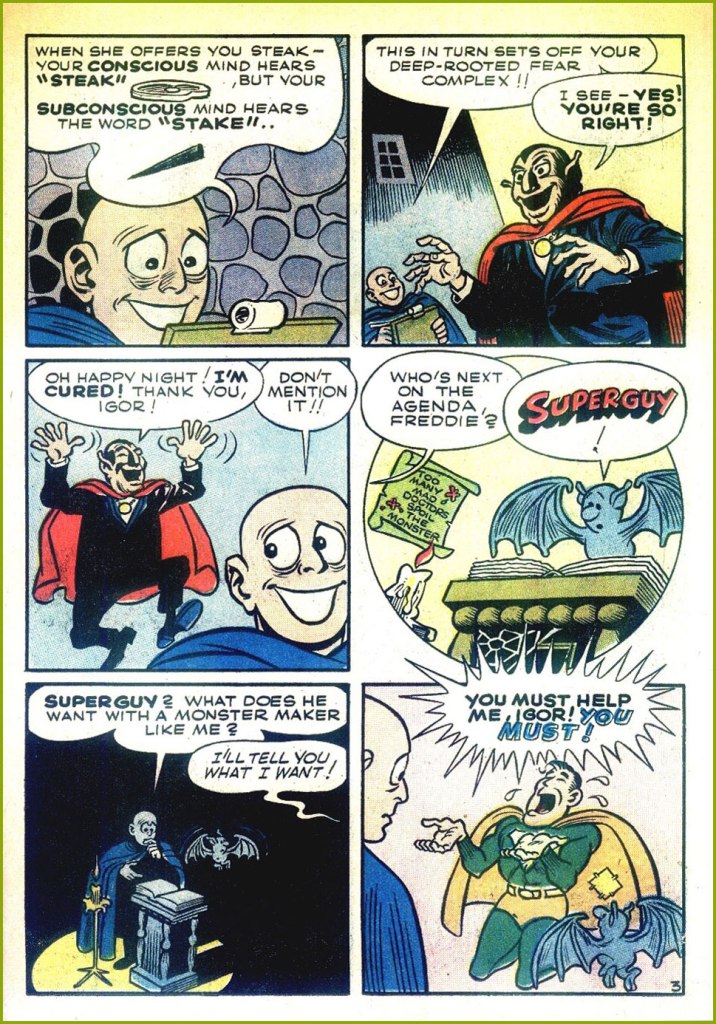
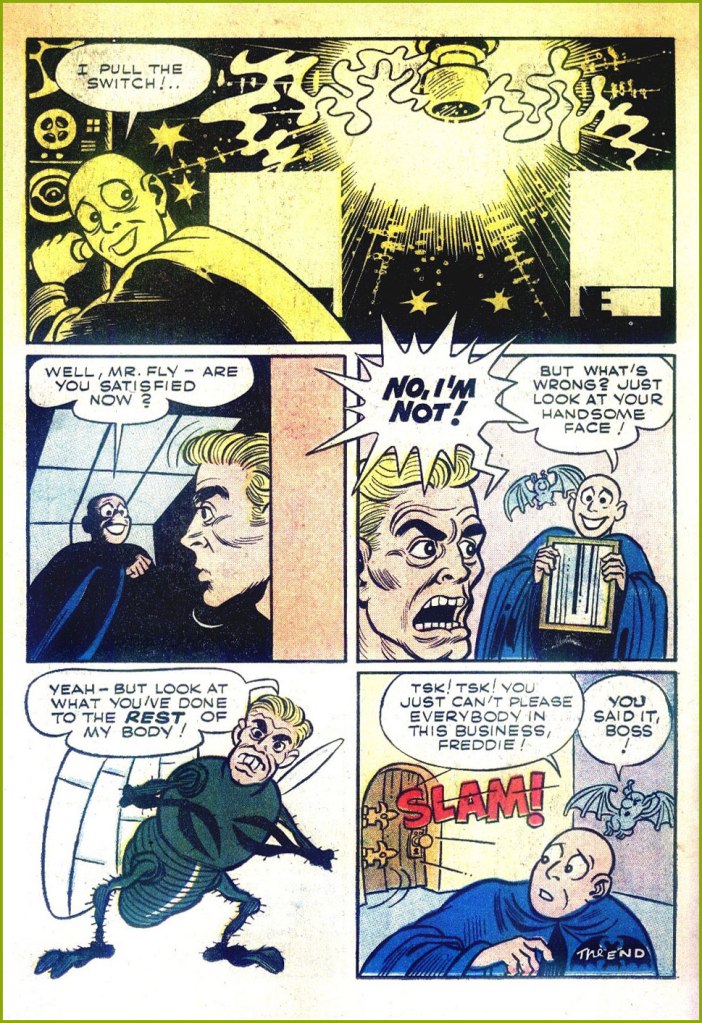
Mr. Busino passed but briefly — but oh so memorably — through the halls of Archie: from 1960 to 1962, before he understandably went off to greater success and better-paying gigs: The Saturday Evening Post, Reader’s Digest (I can confirm that they paid really good rates), McCalls, Good Housekeeping, Boys’ Life… you name it.
Mark Evanier recalls fondly that short Archie stint, where Busino was among the few artists allowed to work outside of the house style and march to his own tune: « I first became familiar with his work, as did my pal Scott Shaw!, during a brief period when Busino worked for the Archie people. His work appeared in Archie’s Madhouse and a wonderful, not-sufficiently-recognized comic book called Tales Calculated to Drive You…BATS. It was kind of like “What if Charles Addams had produced MAD?” Scott and I both remember exactly which newsstand we were patronizing in December of 1961 when we glimpsed the cover of Bats #3 and grabbed up our respective copies. » [ source ]
Signor Busino’s lovely cover for the first issue of Tales Calculated to Drive You Bats (Nov. 1961, Archie).
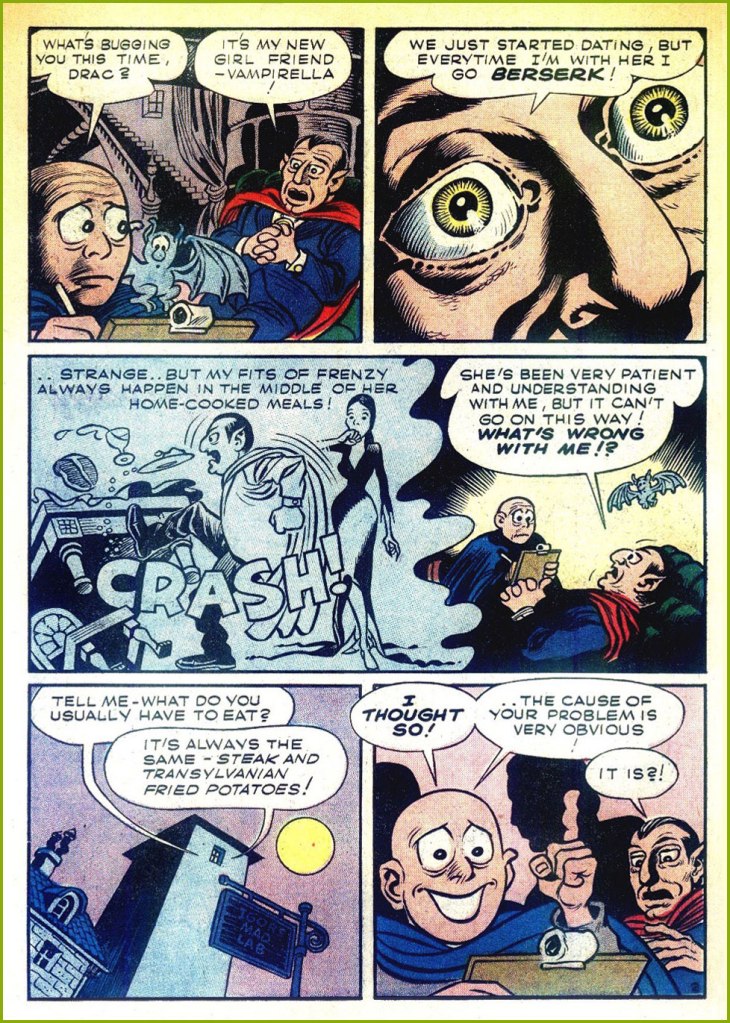
However, our featured tales hails from Tales Calculated to Drive You Bats no. 3 (Mar. 1962, Archie):
And here’s a little something extra from Archie’s Madhouse no. 14 (Aug. 1961, Archie).
Painting your nose the right shade of dill pickle green would also work.
« True terror is to wake up one morning and discover that your high school class is running the country. » — Kurt Vonnegut
Tonight, we’re slumming it up on the cheap side of the tracks. If you thought — and I quite understand you on that point — that Myron Fass’ Eerie Publications were scraping the bottom of the barrel for their market share, then you likely weren’t aware of his fellow cheapjack opportunist Stanley Morse. For a bit of background on Fass, check out these entries from previous countdowns: Hallowe’en Countdown II, Day 1; and Hallowe’en Countdown VI, Day 27… so I don’t have to repeat myself.
Furthermore, here’s my brief introduction to the dodgy wonders of Morse’s ‘Stanley Publications’. I recently came upon all the short-lived line’s covers and was struck by their certain je ne sais quoi. Doubting my senses a little, I queried ds, and she concurred: it’s raw, it’s primitive, but not devoid of a bizarre sort of charm.
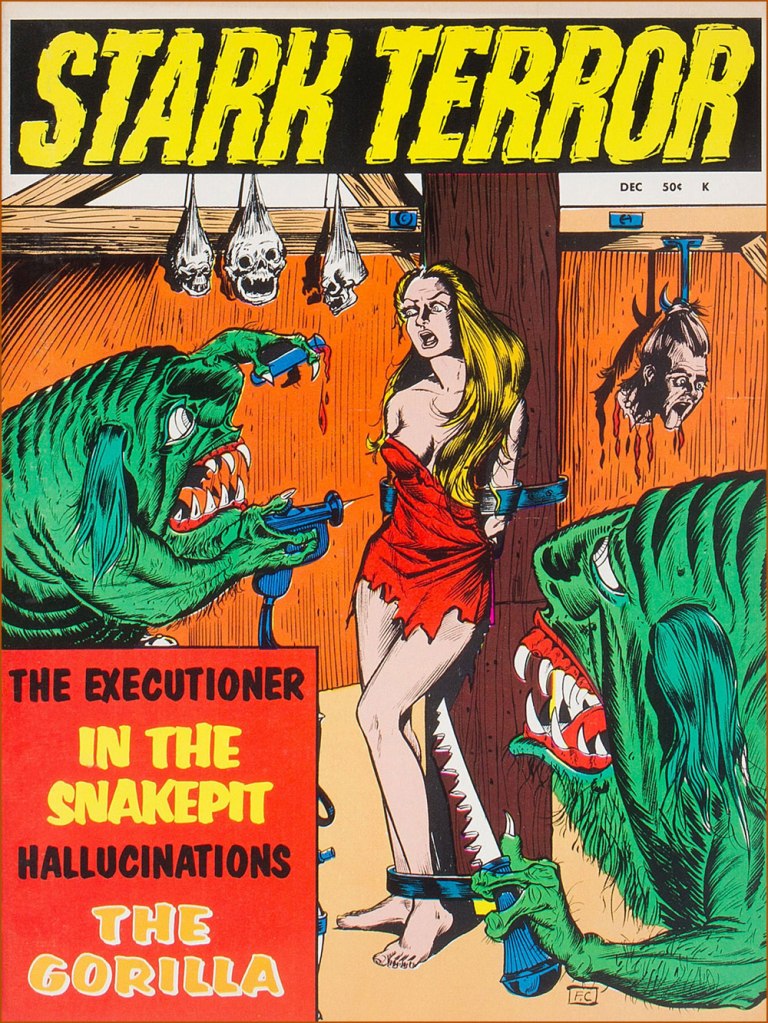
Here, then… is a gallery of the entire run of Stark Terror!
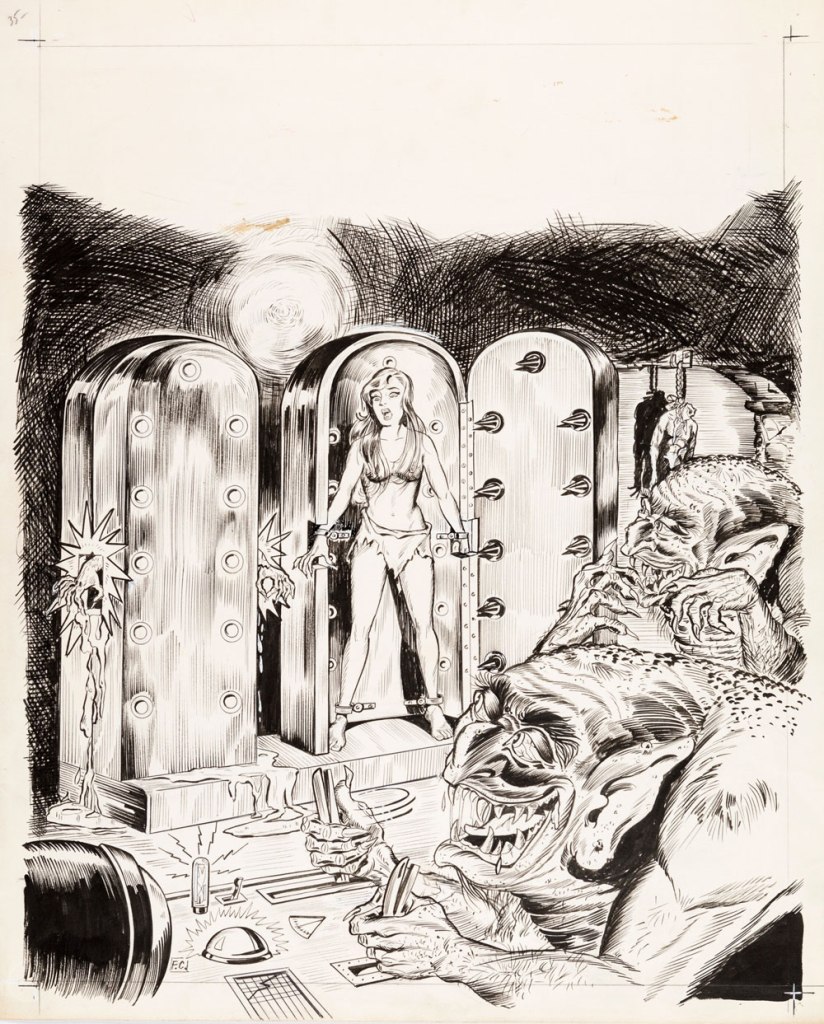
This is Stark Terror no. 1 (Dec. 1970, Stanley); cover art by Frank Carin (né Carino).This is Stark Terror no. 2 (Feb. 1971, Stanley); cover art by Carin.This is Stark Terror no. 3 (Apr. 1971, Stanley); cover art by Mexican illustrator Héctor Castellón .This is Stark Terror no. 4 (June 1971, Stanley); cover art by Carin.This is Stark Terror no. 5 (Aug. 1971, Stanley); cover art by Carin. Just in time for cancellation, a new logo, possibly by Ben Oda.As a bonus, here’s the surviving original art to the publisher’s Ghoul Tales no. 1 (Nov. 1970, Morse); artwork, again, by Mr. Frank Carin.
« Veteran genre-crosser Carin delivered this new-for-1970 cover, insinuating troll-like creeps into a mad-doctor/torture-chamber situation. (The published version contains a touch of self-censorship, obscuring one conspicuous element of nudity with layers of color.) Carin is an enigmatic figure in midcentury comics, traversing the idioms of Funny Animals, Good Girl Art, adventure, and lurid shock value. » [ source ]
« Poison’s not bad. It’s a matter of how much. » — Keith Richards
Regular readers of this blog will perhaps recall my fondness for those little Peter Pauper Press books of Mount Vernon, NY — at least those of the publisher’s halcyon years (1928-1981). I’ve cast a light on their edition of Ambrose Bierce’s The Devil’s Dictionary and, in the course of last year’s countdown, their Comic Epitaphs From the Very Best Old Graveyards.
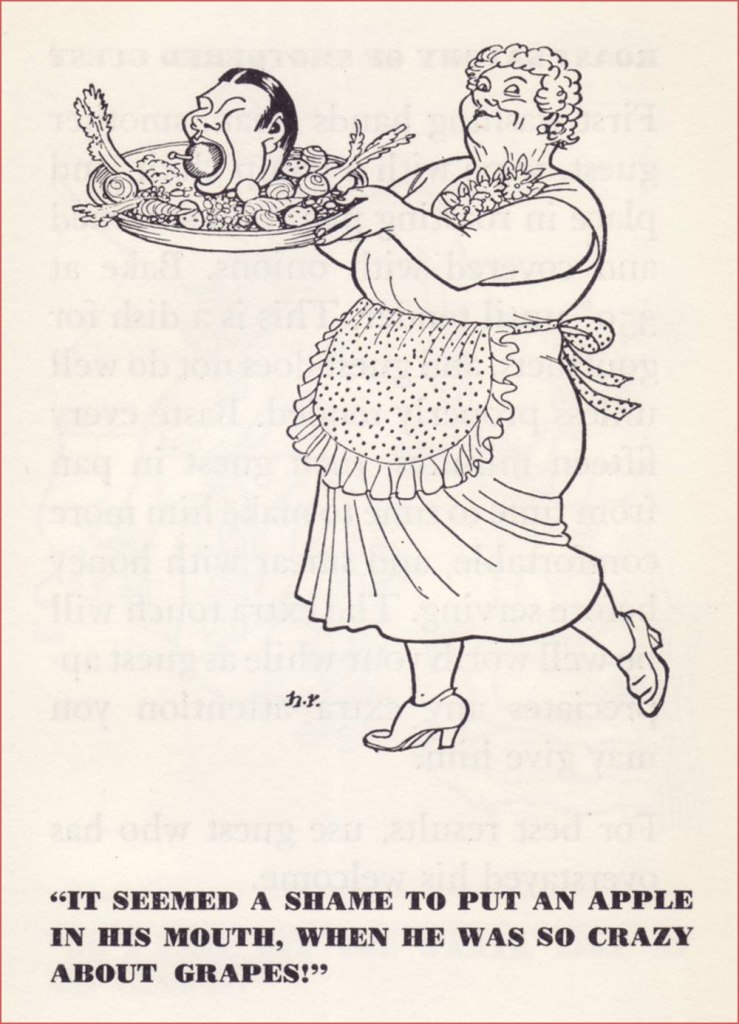
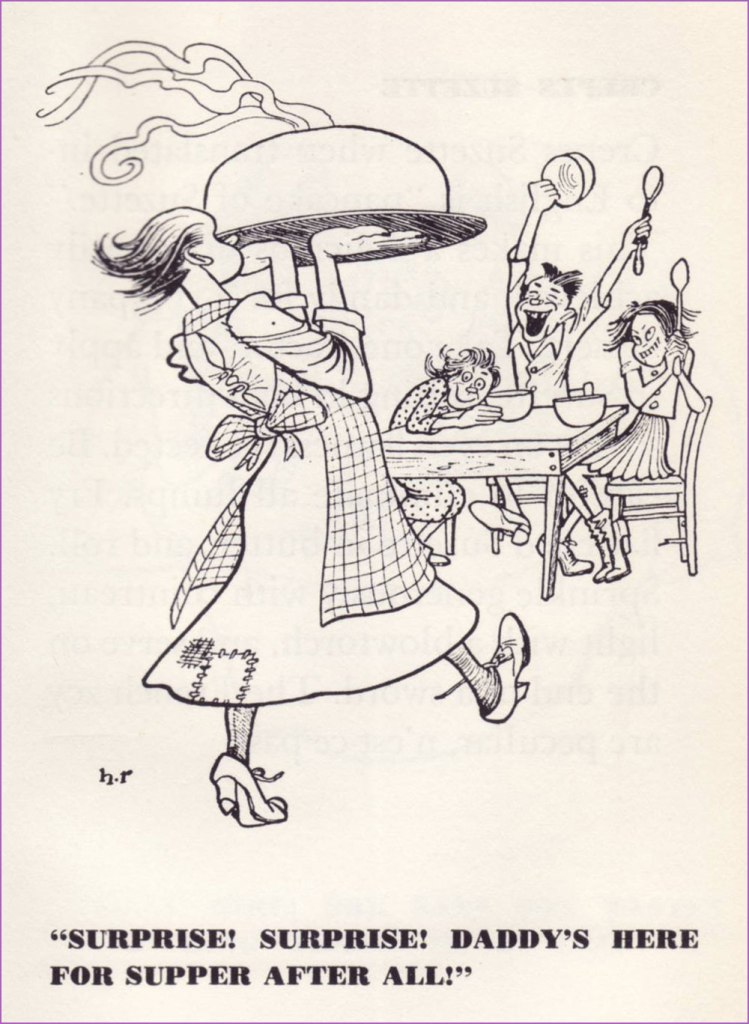
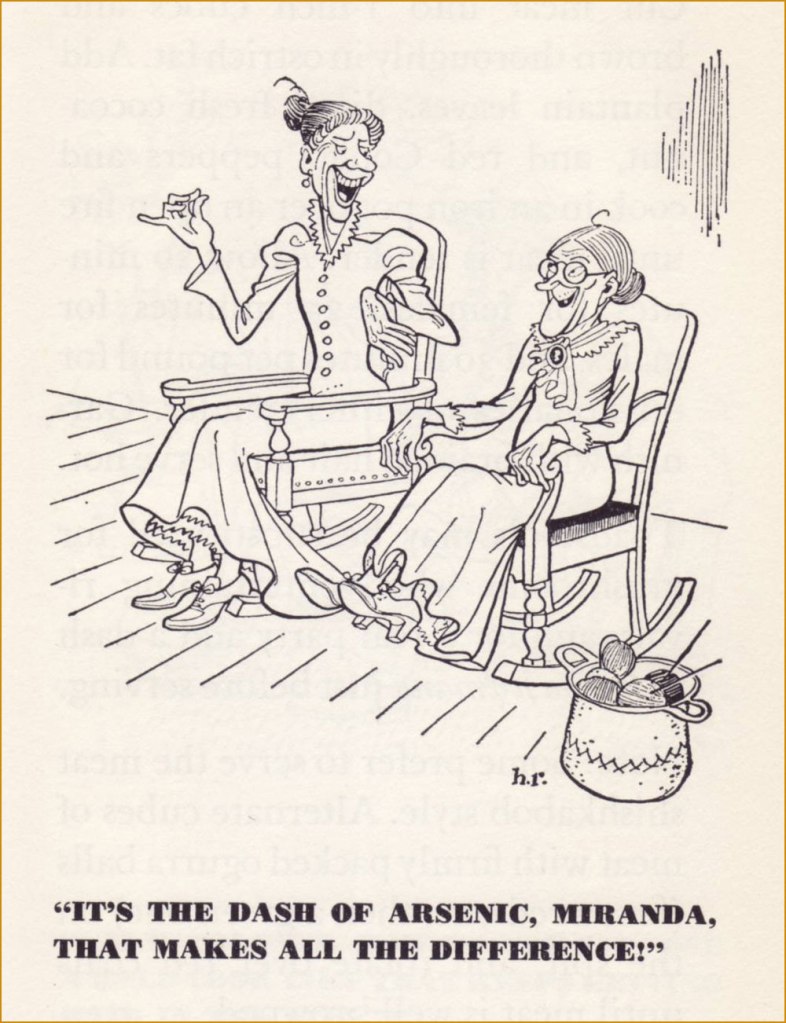
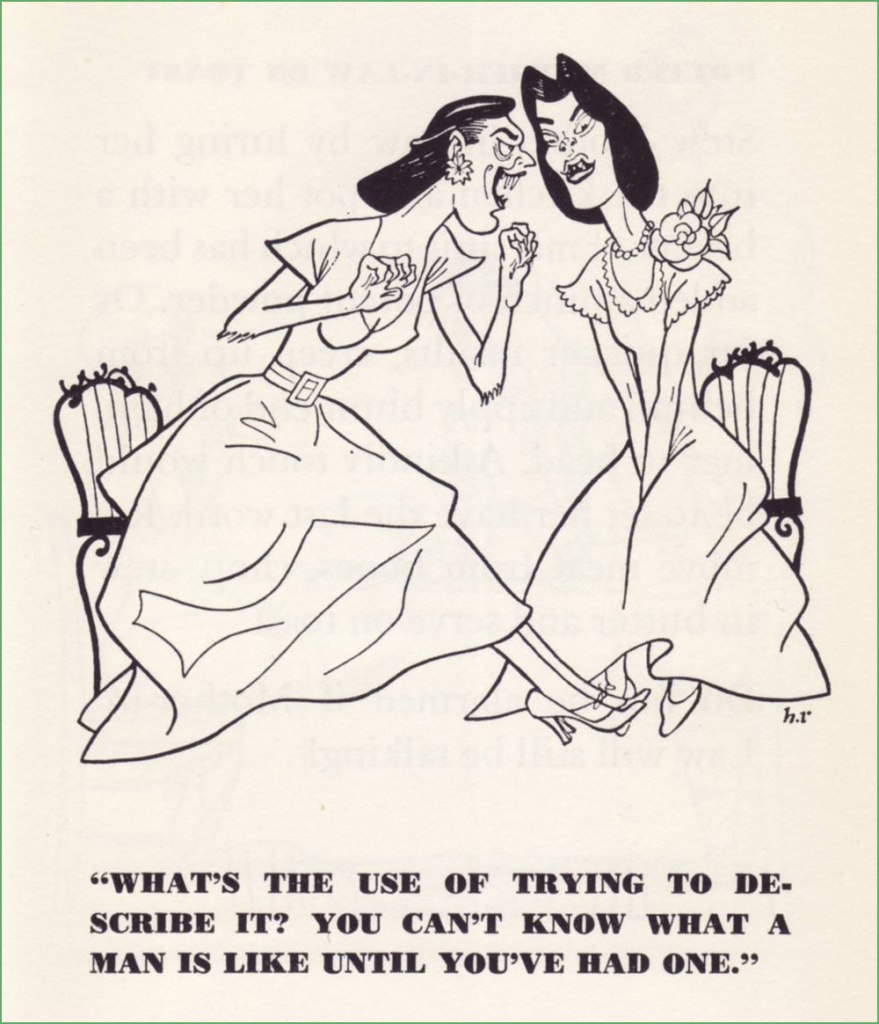
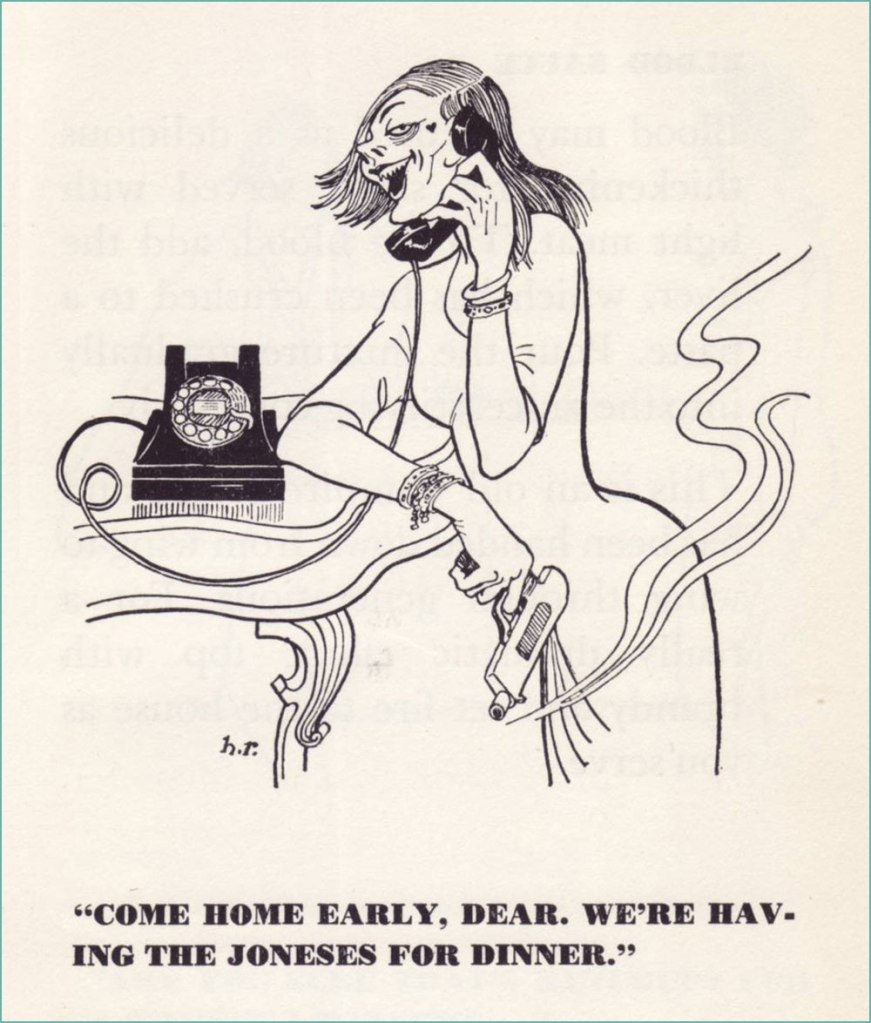
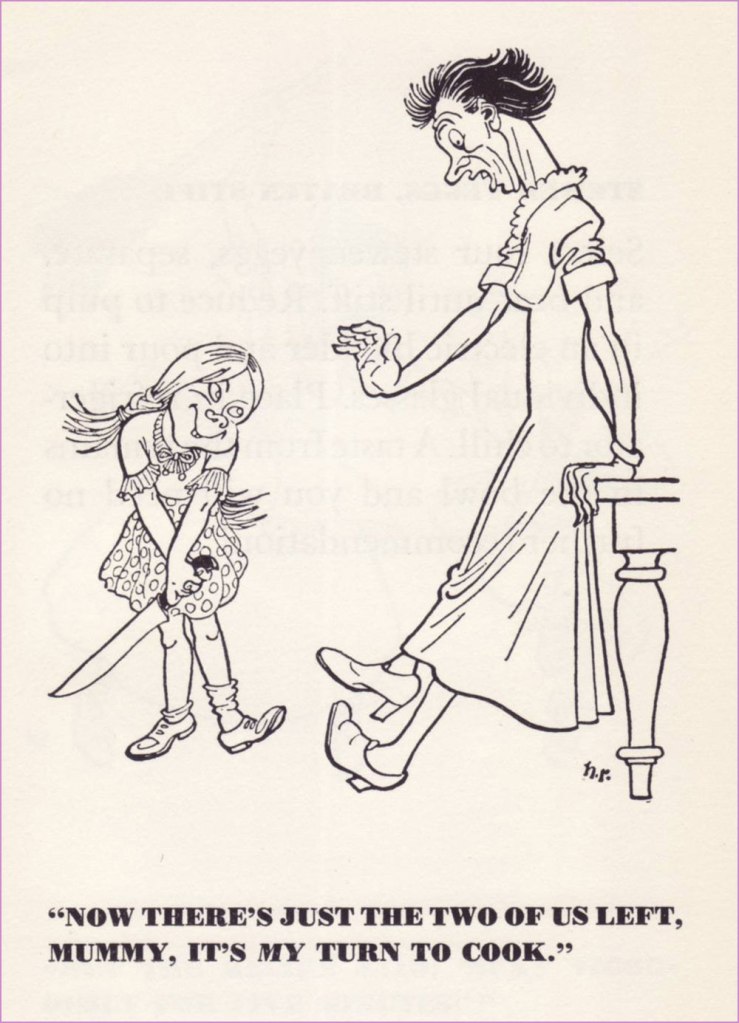
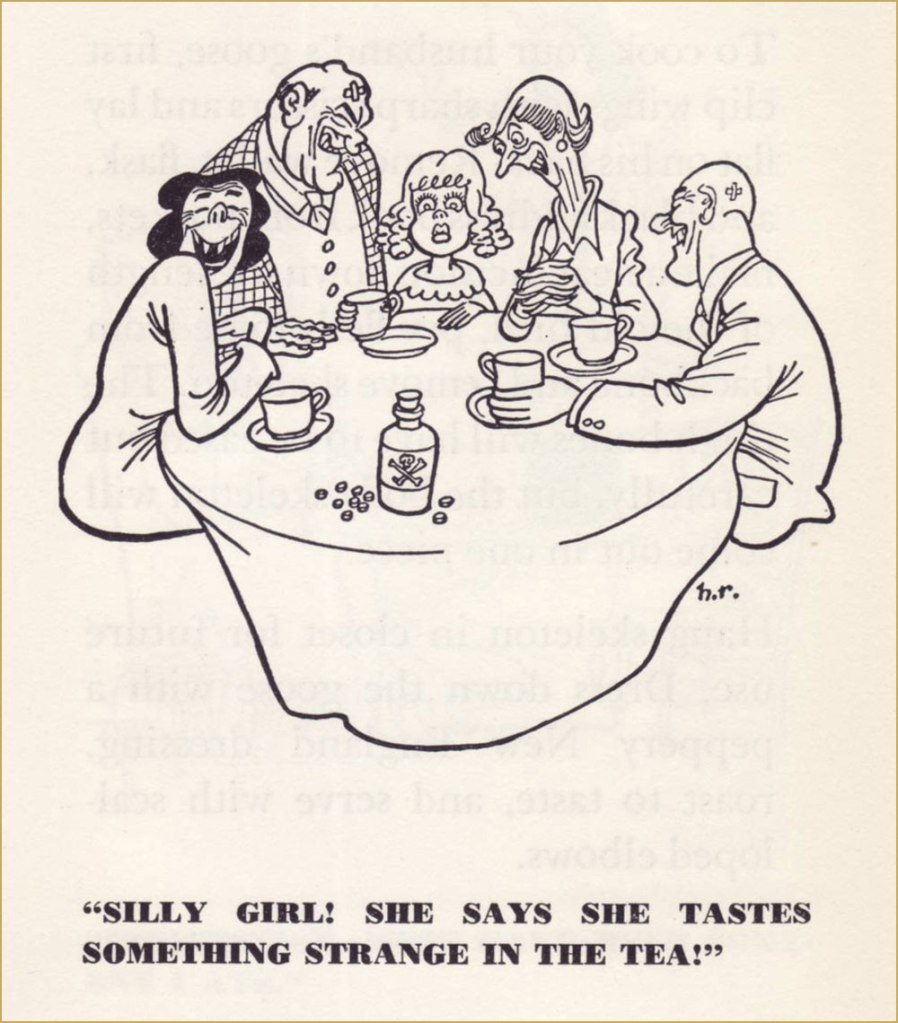
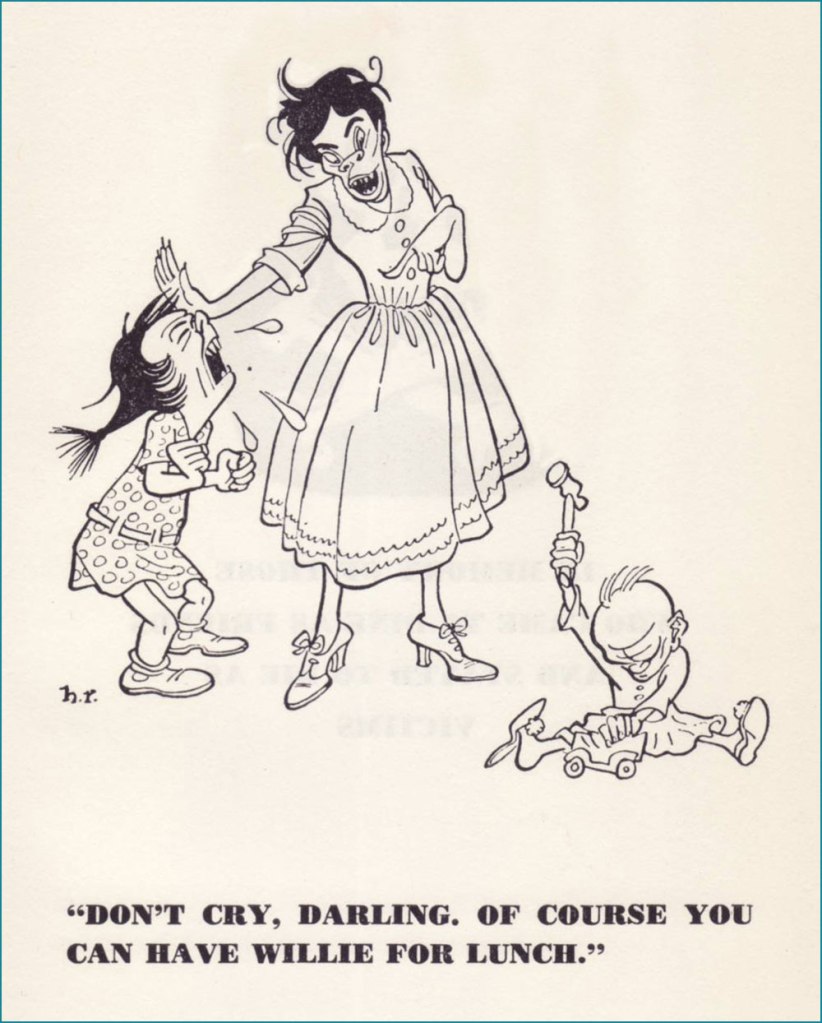
This time around, I’m tackling one of the rare and fairly expensive ones* — that I’m aware of — Cooking to Kill: the Poison Handbook (1951), which proposes « Comic recipes for the Ghoul, Cannibal, Witch & Murderer. Stewing and potting mothers-in-law. Tested recipes for spoiled brats, business rivals, and strayed lovers. »
« Anybody can kill vulgarly. But we should be above the brutal, the direct, the unappetizing approach. This little book will teach you to tickle the palates of your guests so that they will be happy to linger at your table, charmed to malinger, and grateful to take off for the Great Adventure with the taste of your superlative cooking still on their lips! » — from Prof. Ebezener Murgatroyd’s preface to his ‘gentle reader’.
The book is magnificently illustrated by Herb Roth (1887-1953), who spent much of his career toiling as H.T. Webster‘s assistant and ghost. Roth enjoyed a long association with the Peter Pauper Press, illustrating its very first two books, Faithless Sally Brown and Faithless Nellie Gray.
« Head Cheese garni à la Salomé » « Tomato Surprise (Asp in the Grass): this luncheon delicacy should be served only to ladies, as you will find their charming soprano shrieks particularly rewarding. »It’s hard to not think of Joseph Kesselring’s fabled Arsenic and Old Lace, written in 1939.« Walnut Balls: smash nuts with a hammer, fashion into balls and fry in deep fat until a golden brown. Delicious withcoq au vin. »« Chocolate Noose… will help you to execute a crime of considerable chic, and will add a je ne sais quoi to the court proceedings. »« Stuffed Spoiled Brat: select a fine specimen which has been spoiling for a good long time, and capture at opportune moment. » « Crêpes Suzette: take one tractor, and apply to Suzette, rolling in both directions so that an even flatness is achieved. Be careful to eliminate all lumps. Fry flattened Suzette in butter, and roll. Sprinkle generously with Cointreau, light with a blowtorch, and serve on the end of a sword. The French zey are peculiar, n’est-ce pas? »« Marinated Leeks: take a leek, marinate in French dressing, and combine with tender green peas. Serve with asparagus for a very special flavour. Sprinkle with cyanide for that final touch! »« Potted Mother-in-Law: stew Mother-in-law by luring her into the kitchen and pot her with a beaker of martinis to which has been added a pinch of potent powder. Or for quicker results, creep up from behind and apply blunt end of hammer to head. A kindly touch would be to let her have the last word. Remove meat from bones, chop, stew in butter and serve on toast. »This brings to mind those gleefully morbid rhymes about Little Willie, essentially the original Gashlycrumb Tiny. A sample: Willie saw some dynamite/Couldn’t understand it quite/Curiosity never pays/It rained Willie seven days.Why, some enterprising soul has even created these exclusive earrings! Just don’t sport them during the investigation and/or trial. Nobody likes a braggart.
-RG
*the single most sought-after PPP entry is without question Kathryn Paulsen‘s Witches’ Potions and Spells (1971). Just try getting your hands on a cheap copy!
« I prefer hallucinations ’cause they tend to make more sense than experience. » — Todd Rundgren
Today, I’m mixing things up a bit and heading over to Europe. We’ll be looking at various versions of « Le seuil du vide » (Threshold of the Void) a story by André Ruellan (1922-2016), aka Kurt Steiner.
At left, the original novel, published in 1956; at right, the comics adaptation, published in 1973. Believe it or not , both covers are the work of the same man, the prolific Michel Gourdon (1925-2011). He had a predilection for a palette of green and blue hues.
The plot, in a few broad strokes: Young painter Wanda Leibovitz comes to Paris, hoping to forget a romance gone wrong. At the train station, upon her arrival in town, Wanda encounters a mysterious old lady offering to rent her a room, but under certain conditions…
Basically, it’s the ‘New Bodies for Old’ plot, and it ends as bleakly as you might imagine. Ruellan/Steiner wasn’t the least bit afraid to probe the darkness. The victim’s innocence was no protection against the forces besieging her, to put it mildly.
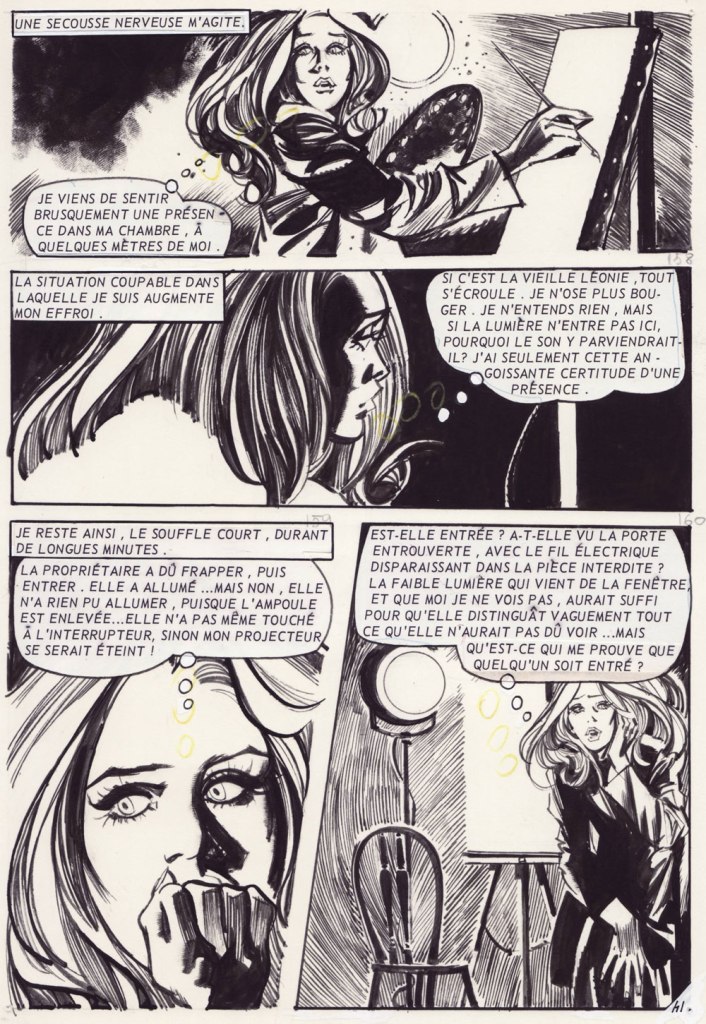
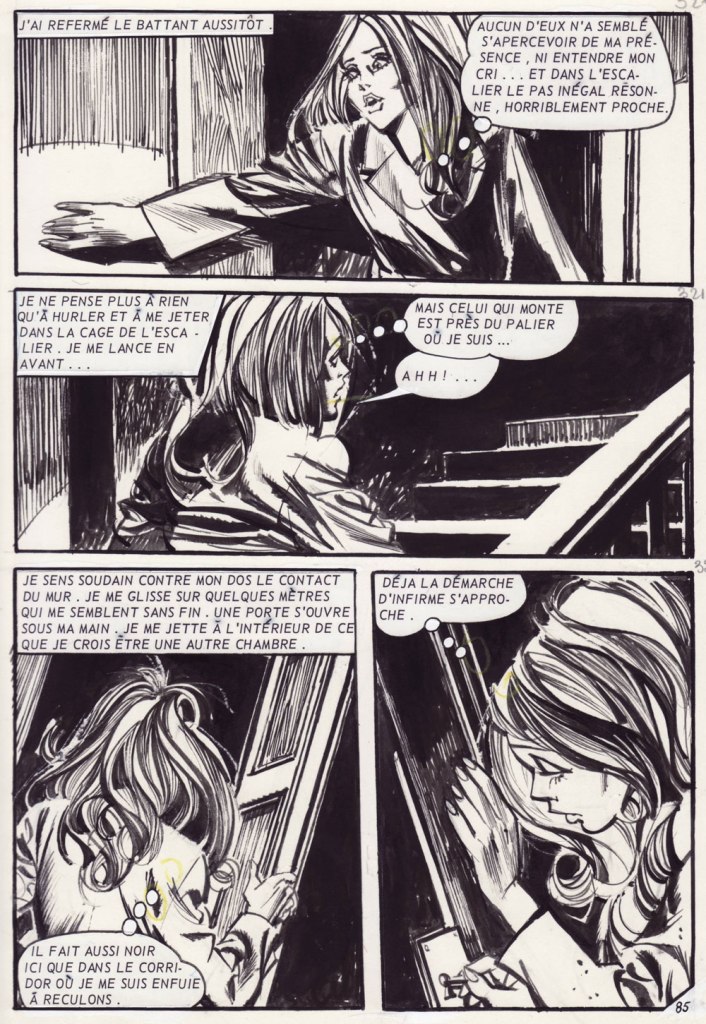
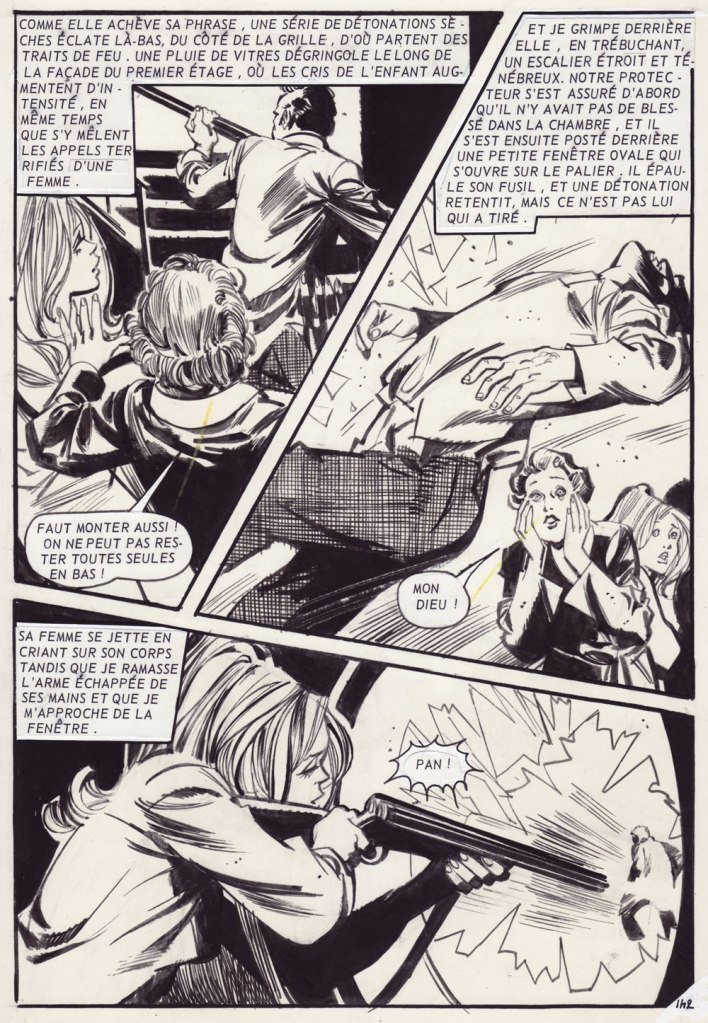
Here are a few interior pages from the Arédit adaptation, featuring art by Cándido Ruiz Pueyo.
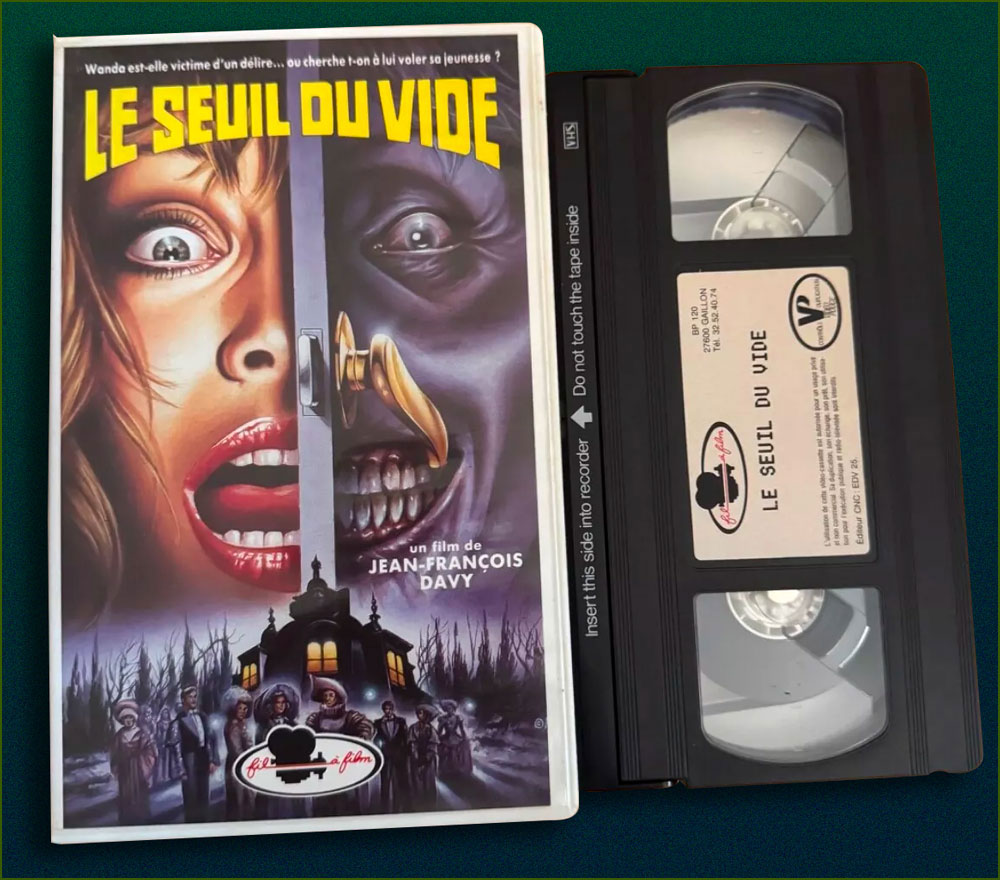
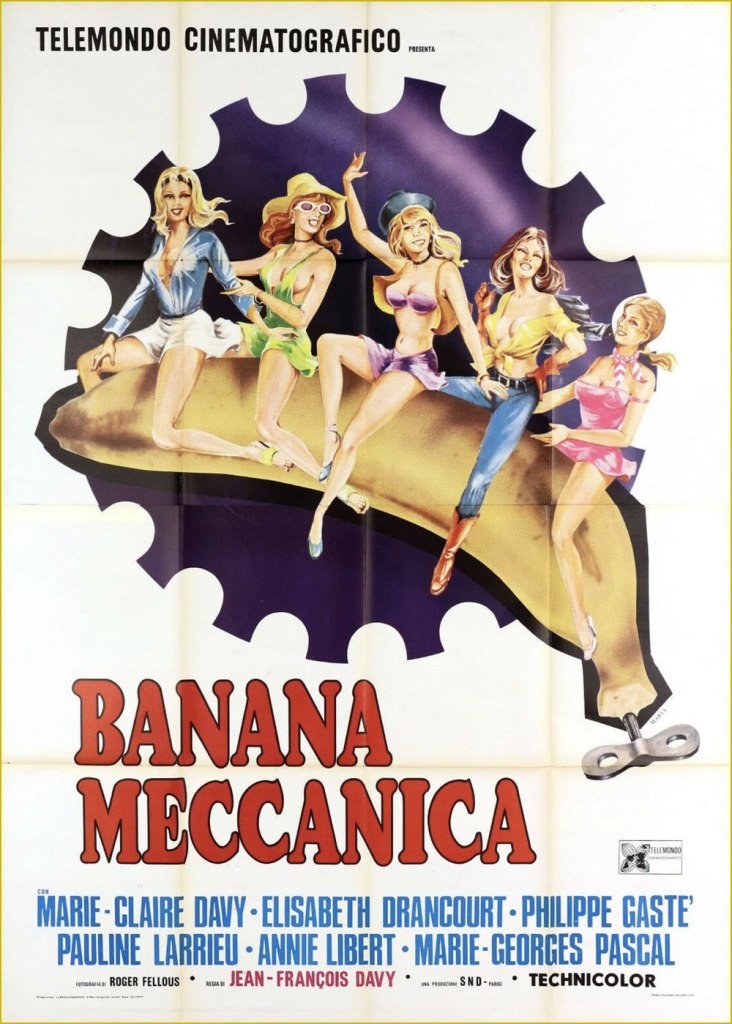
There was also a movie adaptation by an ambitious young filmmaker by the name of Jean-François Davy. This was his third try at getting a project off the ground and into cinemas, and his only horror film. They just weren’t making such films in France in those days — the iconoclastic Jean Rollin being the notable exception — in Belgium, sure, but not in France. It took some doing to get the project (barely) financed, lensed and distributed, and its director wound up turning to porn for the rest of his career — hilariously titled porn, to be fair.
The film features such luminaries as Rififi‘s unforgettable Jean Servais, along with a non-coincidental cameo by (yet to be filmed) The Tenant author Roland Topor. Davy soon attained greater commercial success with his Bananes mécaniques, nominally a Clockwork Orange parody.
And here’s the VHS release, featuring the film’s original poster. Airbrush!
« Every poem should remind the reader that they are going to die. » — Edgar Allan Poe
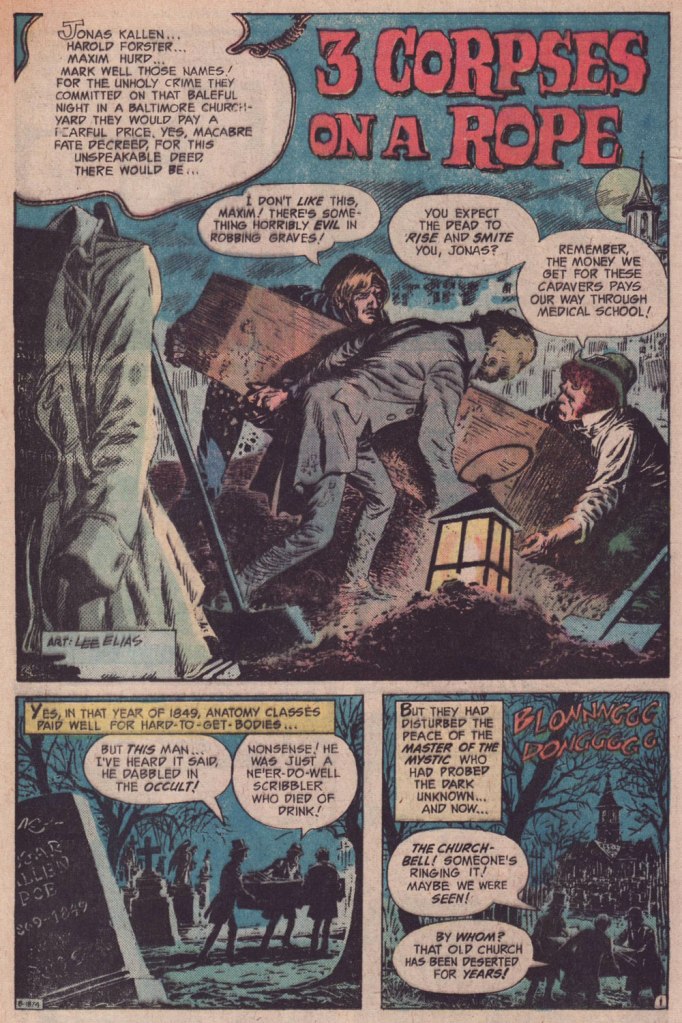
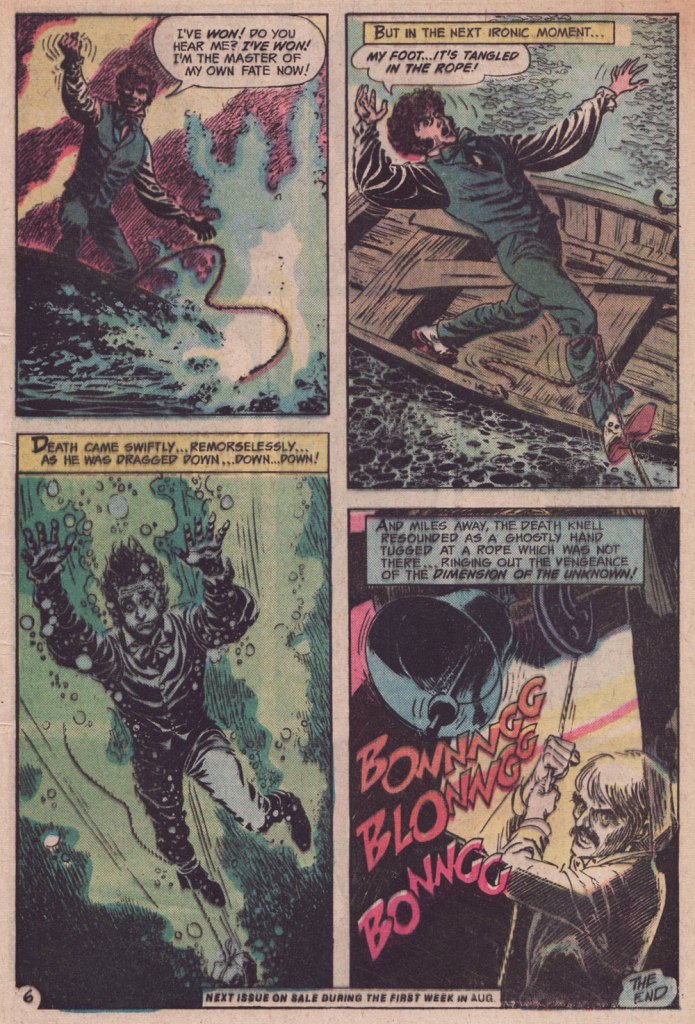
Ah, mixing fact with fiction — such an honoured tradition. In the mid-1970s, DC editor Murray Boltinoff (Ghosts, The Unexpected, The Witching Hour, Teen Titans, The Brave & the Bold) hit upon the notion of featuring historic writers encountering in daily life the supernatural object of their eventual inspiration.
The formula was tweaked a bit for the Edgar Poe entry, in that the tale opens after Poe’s burial, and the late writer is not the protagonist. Read on!
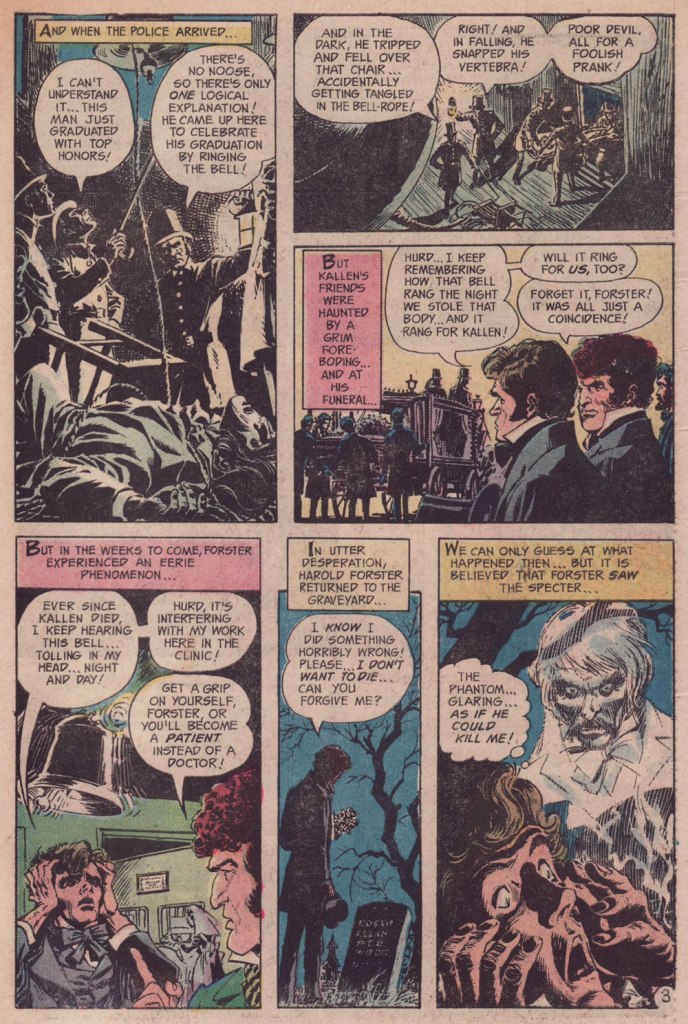
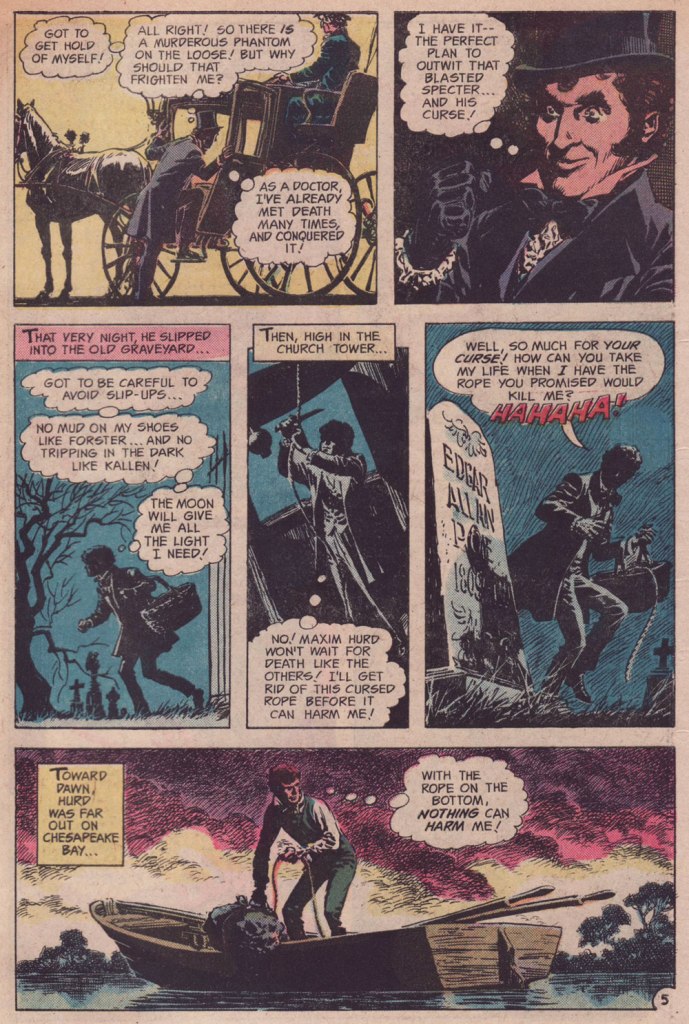
“3 Corpses on a Rope“, written by Carl Wessler and illustrated by Lee Elias, originally appeared in Ghosts no. 43 (Oct. 1975, DC).If you ask me, despite his evident illustrative gift, Elias’ depiction of the revenant ends up looking more like Poe’s fellow Baltimorean John Astin, whom I envision starring in a one-man show entitled ‘An Evening With Edgar Allan Poe‘.
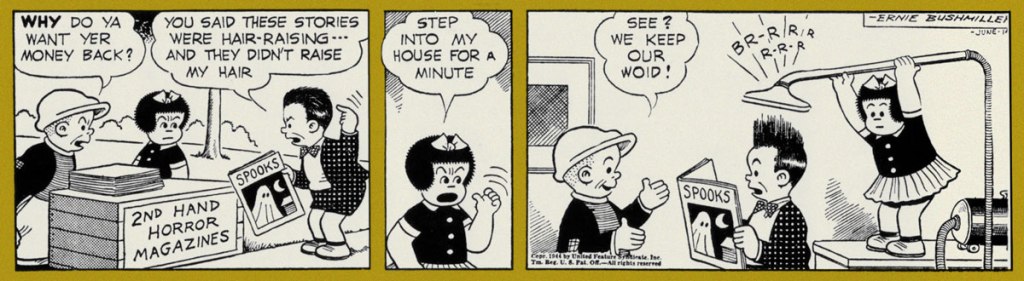
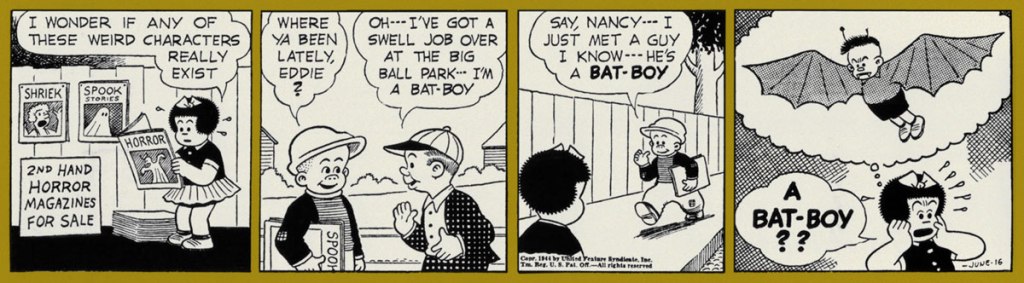
We’ve featured Nancy in a previous Hallowe’en Countdown, but it doesn’t quite count, as that was the mind-bending John Stanley mutation of Nancy — not that I adore one any less than the other. This time, we’ve gone with the real deal… which is still plenty odd, thank you.
June 12, 1944 Nancy daily.June 13, 1944 daily.June 14, 1944 daily.June 15, 1944 daily.June 16, 1944 daily.June 17, 1944 daily.And, skipping nearly a decade ahead… July 15, 1953 daily.
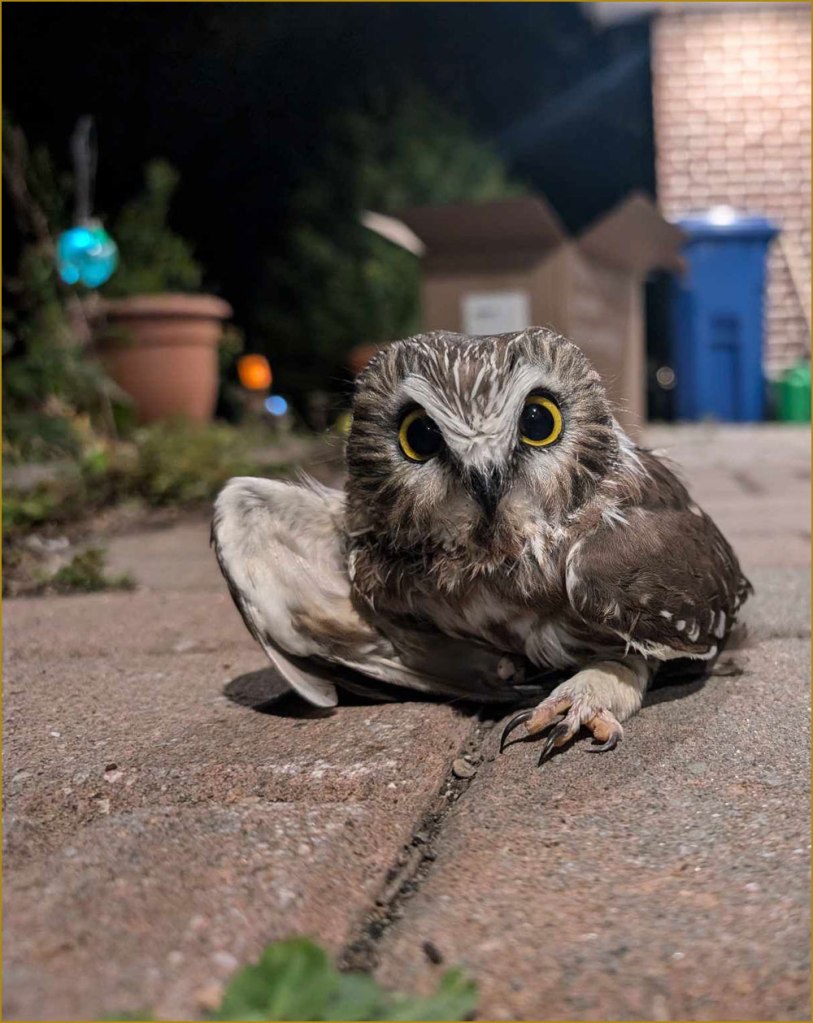
Speaking of owls: the other night, we were surprised (to put it mildly) to discover that one of our cats had brought home a feathered guest.
This is a Northern saw-whet owl, one of the smallest species of owls. Seeing she likely had a broken wing, we quickly called the local animal shelter, and the injured bird was picked up by the local wildlife authorities in the morning. She’ll be in good, caring hands.
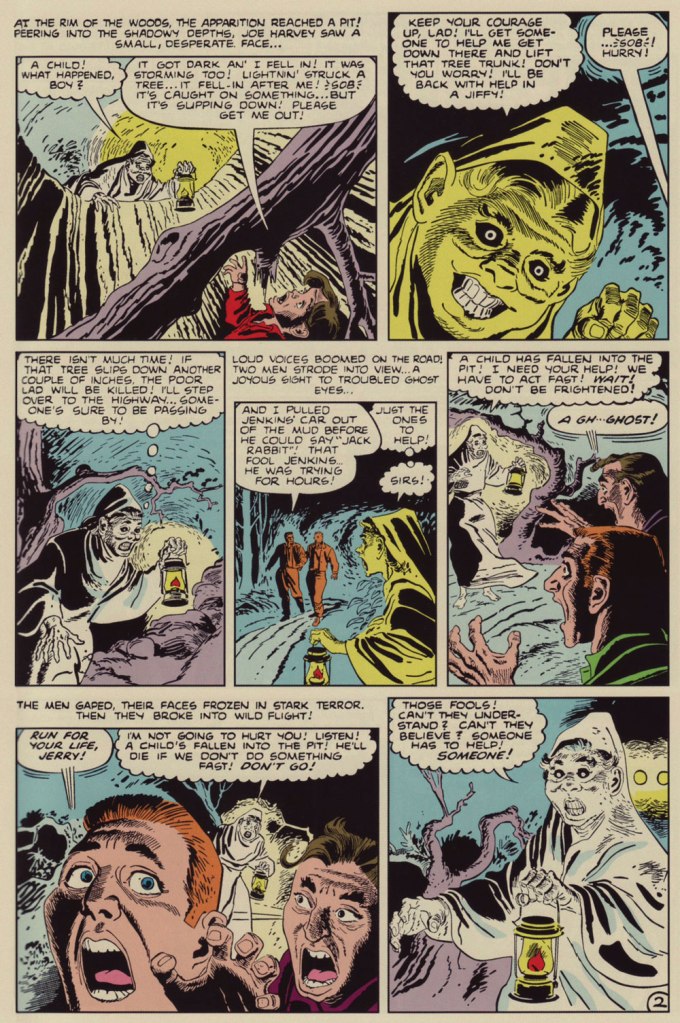
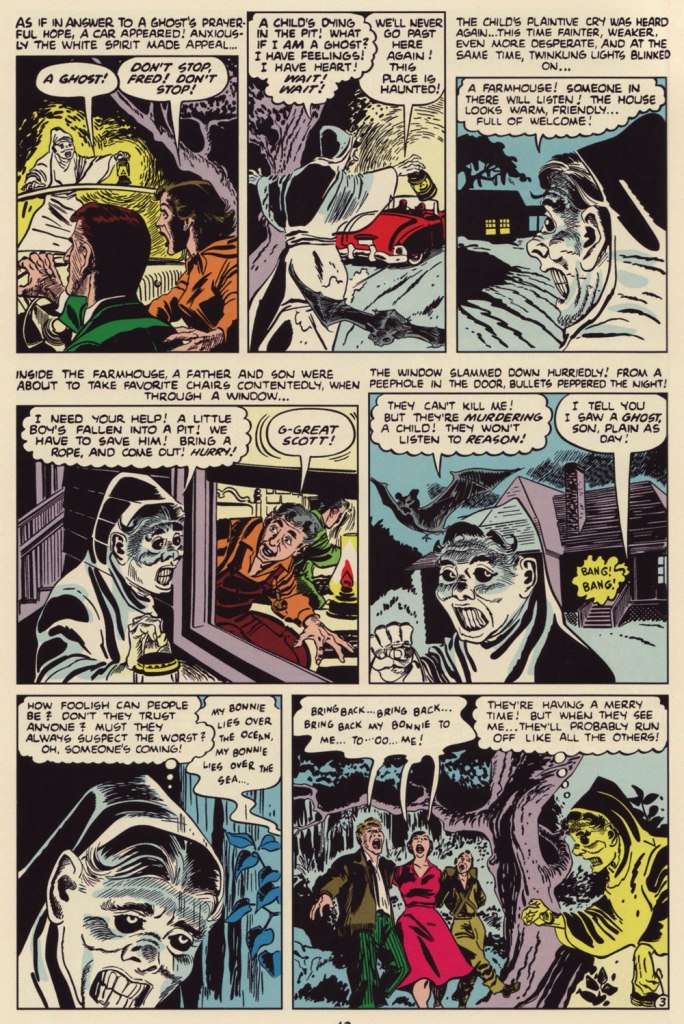
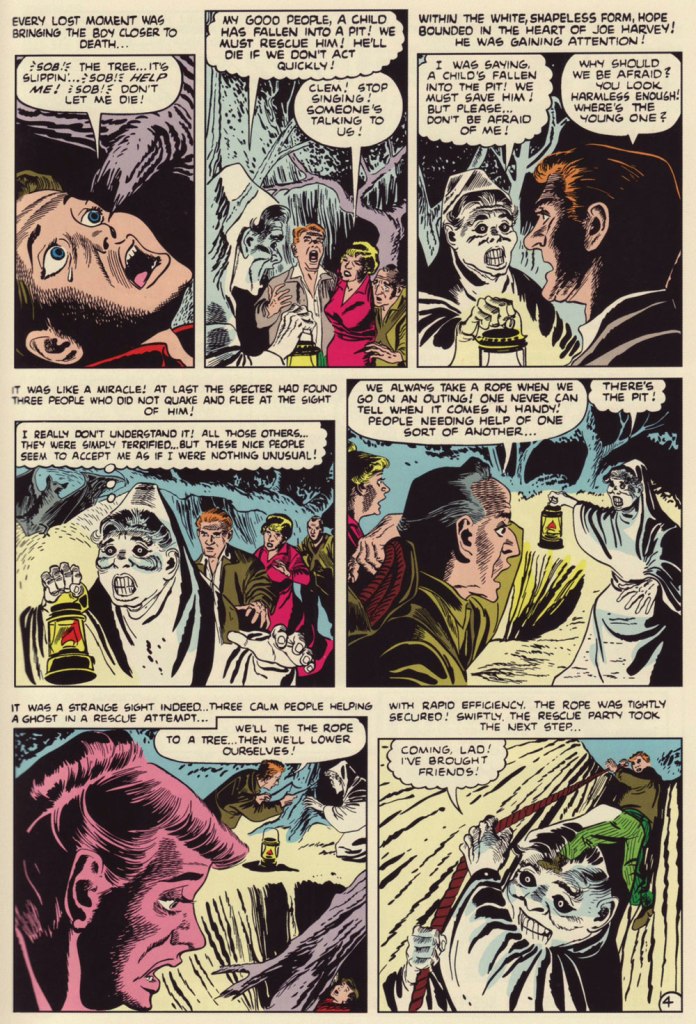
I’ve always had a soft spot for Tony DiPreta’s striking style. When it came to Atlas’ material, it was generally a case of lousy writing and interesting art. But DiPreta could somehow lend credence to the dodgiest semblance of a plot, because he could smartly provide it with just the right tone. I’ve featured this unfairly obscure illustrator a couple times in the past, so you may want to start there: first, the sublimely ridiculous The Hidden Vampires, then the Tinseltown satire Skull-Face.
I was pleased, in reading a rare interview with the artist, to hear him confide that « In the 1950s I did some comic book work for Stan Lee and others. That was pre-Code horror stuff and I loved it. Some of the illustration I did for crime and horror stories in that period is among the best work I’ve ever done. » Amen!
Aside from an expensive, low print run ‘Marvel Masterworks’ hardcover, this story has never been accessibly reprinted. And so enjoy this scarce gem!
The original appearance: this is Journey Into Mystery no. 12 (Sept. 1953, Atlas). Cover art by Max «Carl Burgos » Finkelstein.
« If men had wings and bore black feathers, few of them would be clever enough to be crows.» (source)
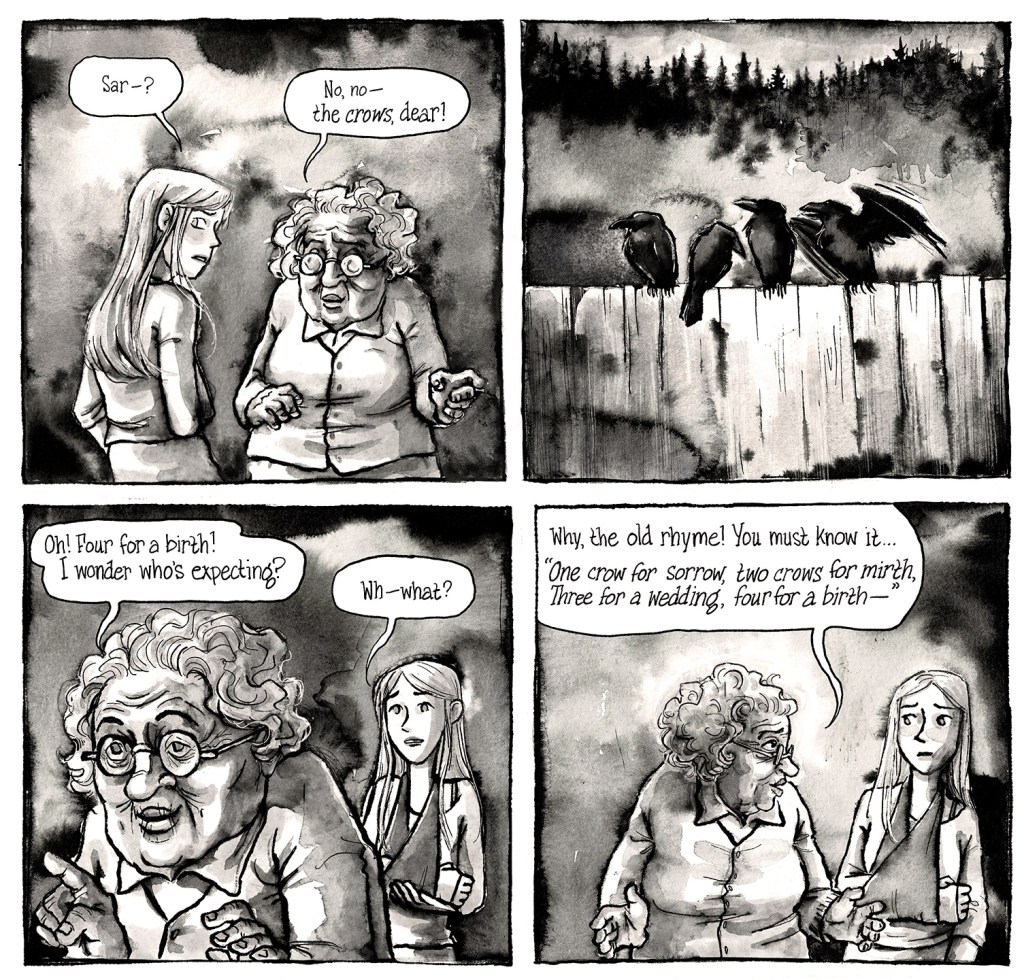
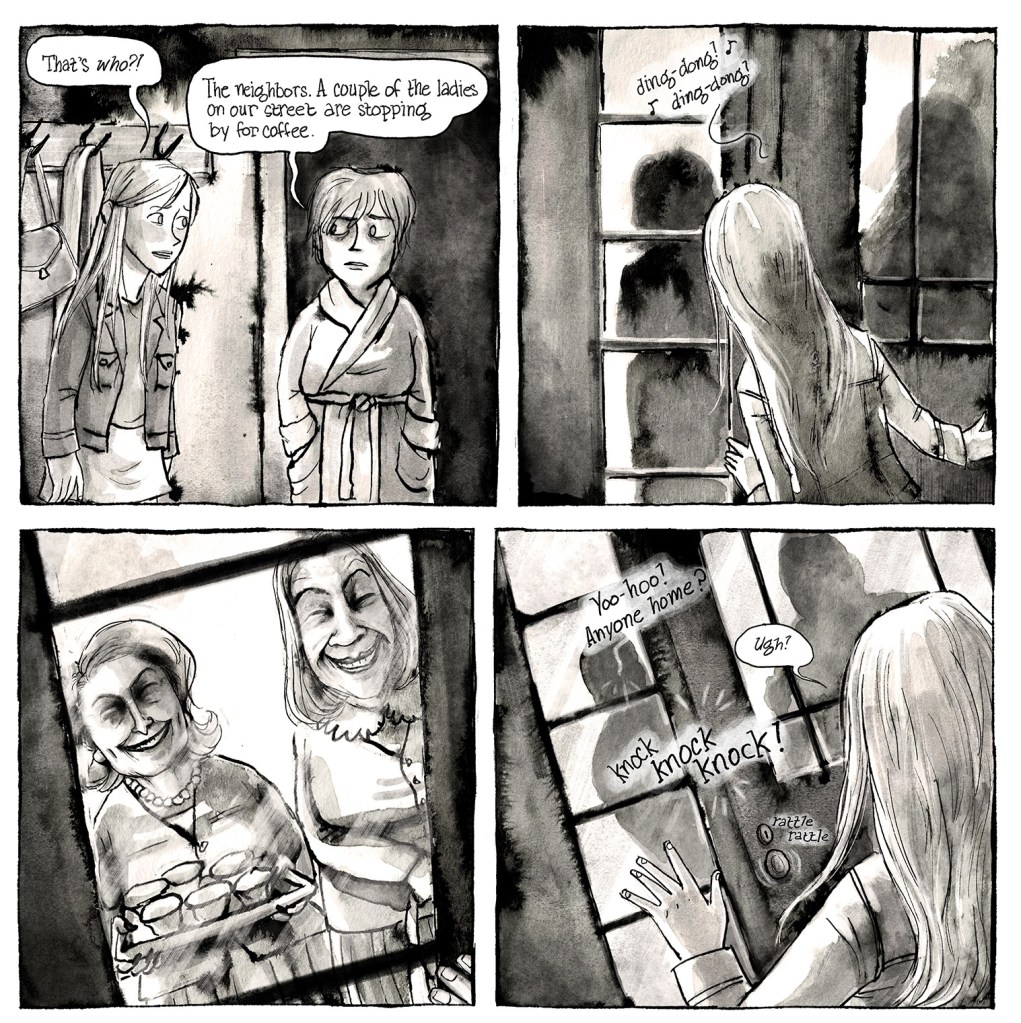
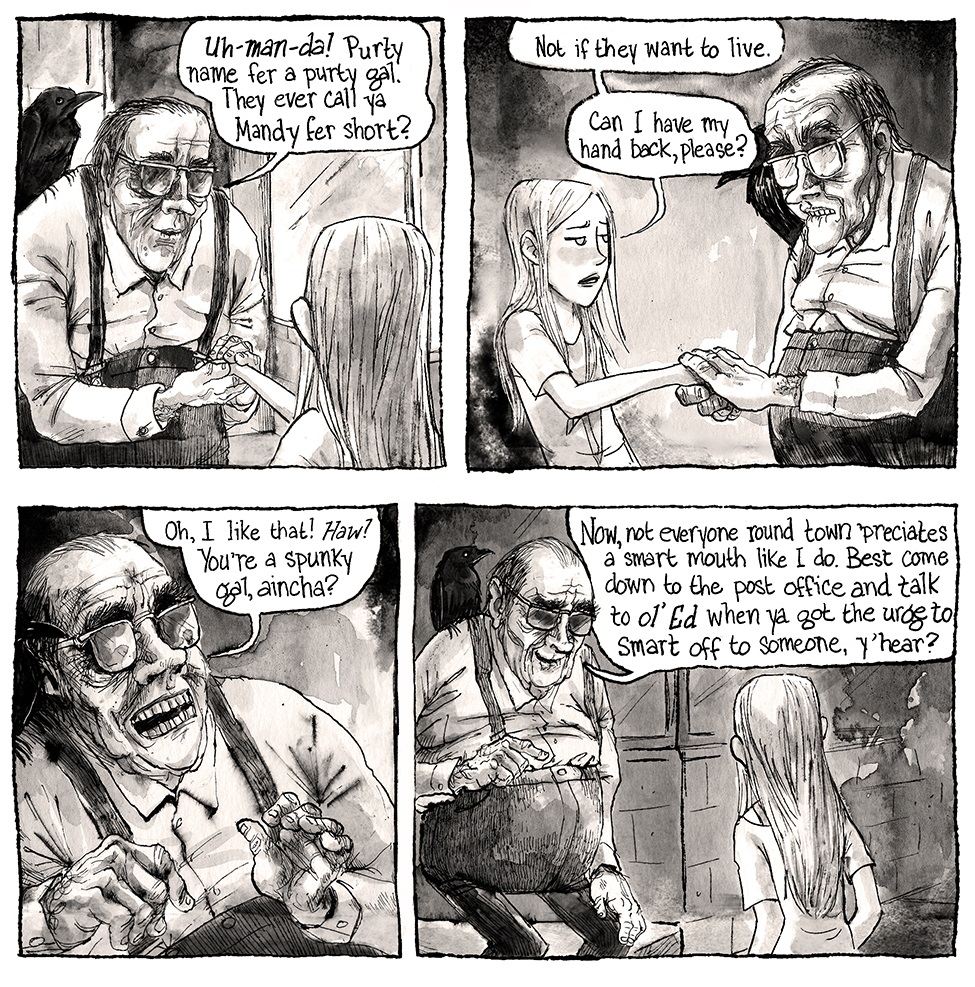
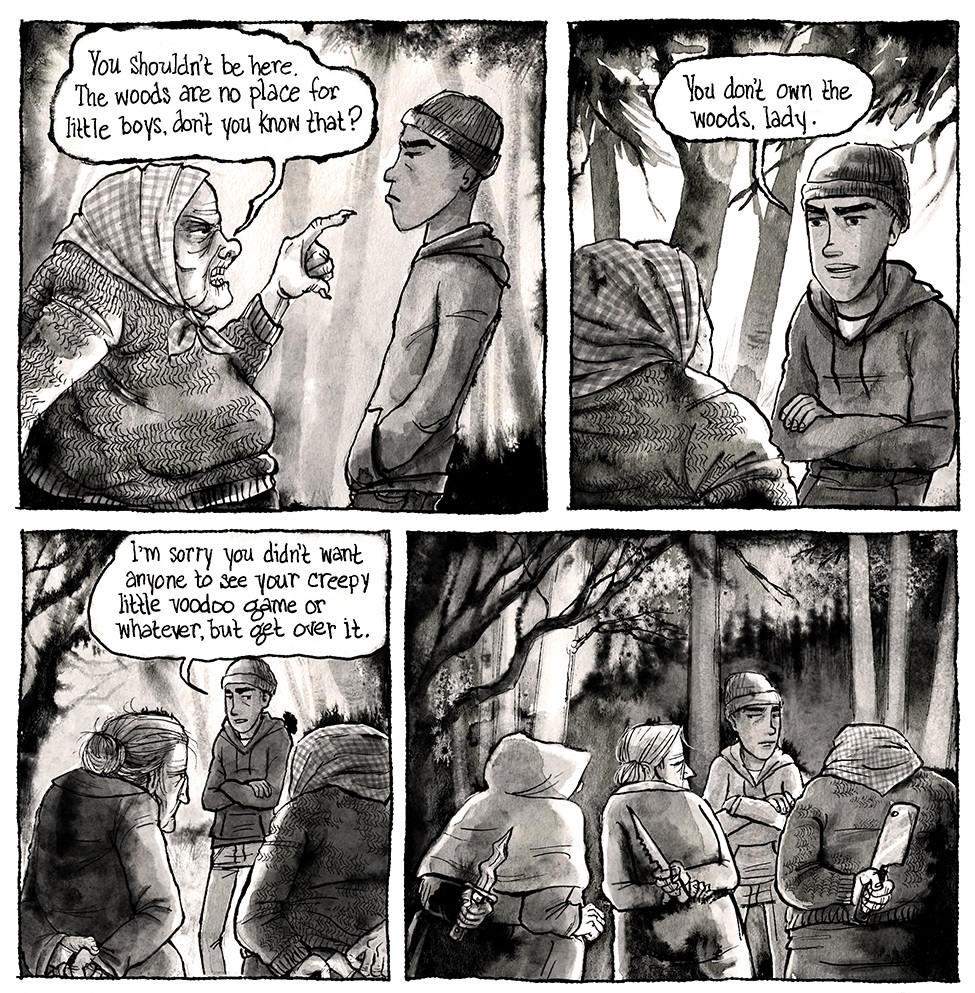
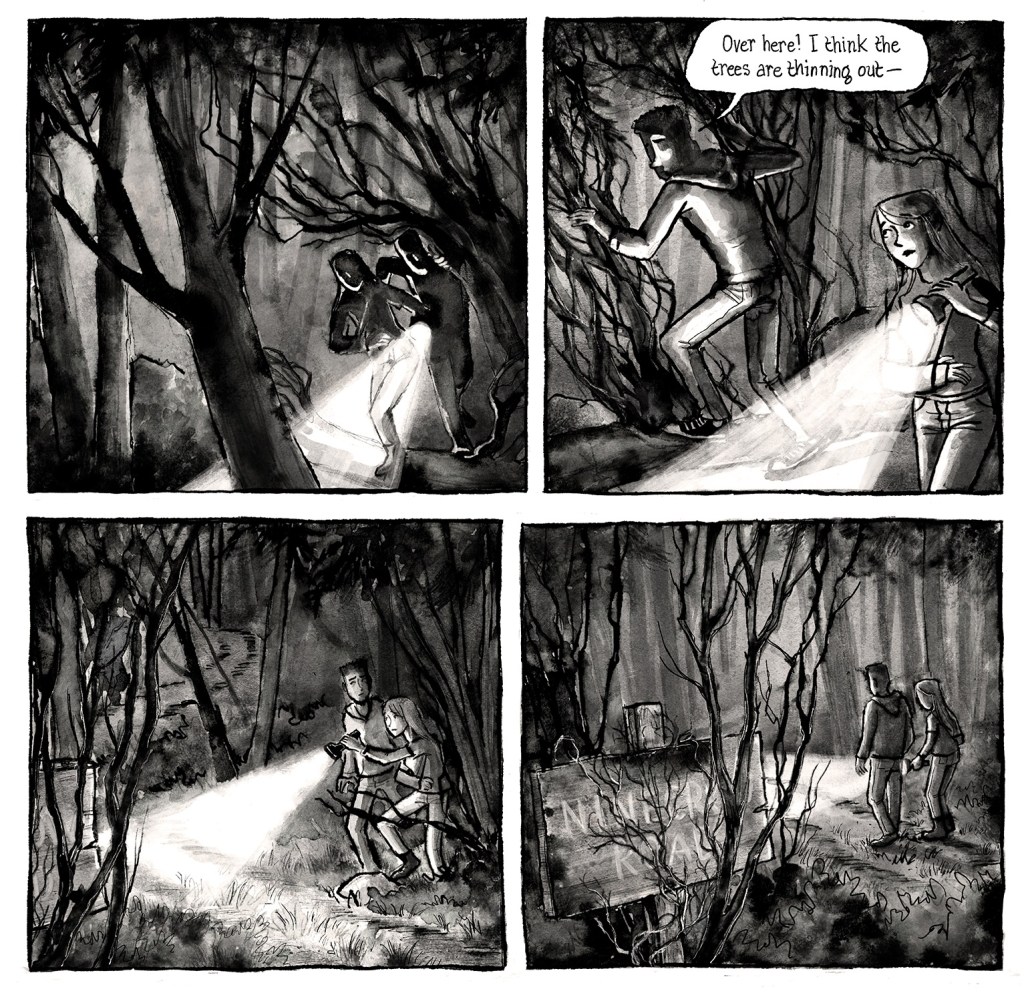
Today’s titillating offering deals in tropes that horror devotees will readily recognize – a Town with a Dark Secret ensnaring The Plucky Girl in its mysteries and underlying violence. Mysterious disappearances, the proverbial ageing small-town creep whose smile hides uncomfortable truths, oblivious locals… it’s been surely done before, yet the graphic novel Ninecrow by Dora M. Mitchell , initially posted as a biweekly webcomic that ran from 2020 to 2022, succeeds in creating an unnerving story out of these readily available narrative blocks.
Amanda, a teenager whose divorced mom relocates them to a town in the middle of nowhere (shades of Eerie Indiana et al.), does her best to adapt to her new life, but her new place of residence is, well… alarming in a number of ways.
Lovingly drawn in mostly black-and-white watercolours, Ninecrow offers the reader plenty of visual enjoyment peppered with hair-raising details faintly glimpsed in shadowy corners. The hand-lettering is also worth a mention, especially given that modern graphic novels often dispense with this element in favour of a computer-generated font. Both art and letters remind me of the tragically departed Patrick Dean, especially some of his work like Underwhelming Lovecraft Monsters.
Aside from its crow population, the town is also abundantly stocked with disquieting old people in various stages of brain fog. Aside from Amanda and a couple of others, everybody seems to be middle-aged going on ‘soon dead’, and not of the pleasant fluffy-grandparent variety, either.
I bought the print version of Ninecrow on Kickstarter because I much prefer reading books in a physical format (you can still buy the deluxe version on the publisher’s Etsy page), but you can still read the full thing story online on the website: https://ninecrowcomic.com/





































 Who's Out There?