Hallowe’en Countdown VI, Day 23

« It’s like driving a car at night. You never see further than your headlights, but you can make the whole trip that way. » — E. L. Doctorow

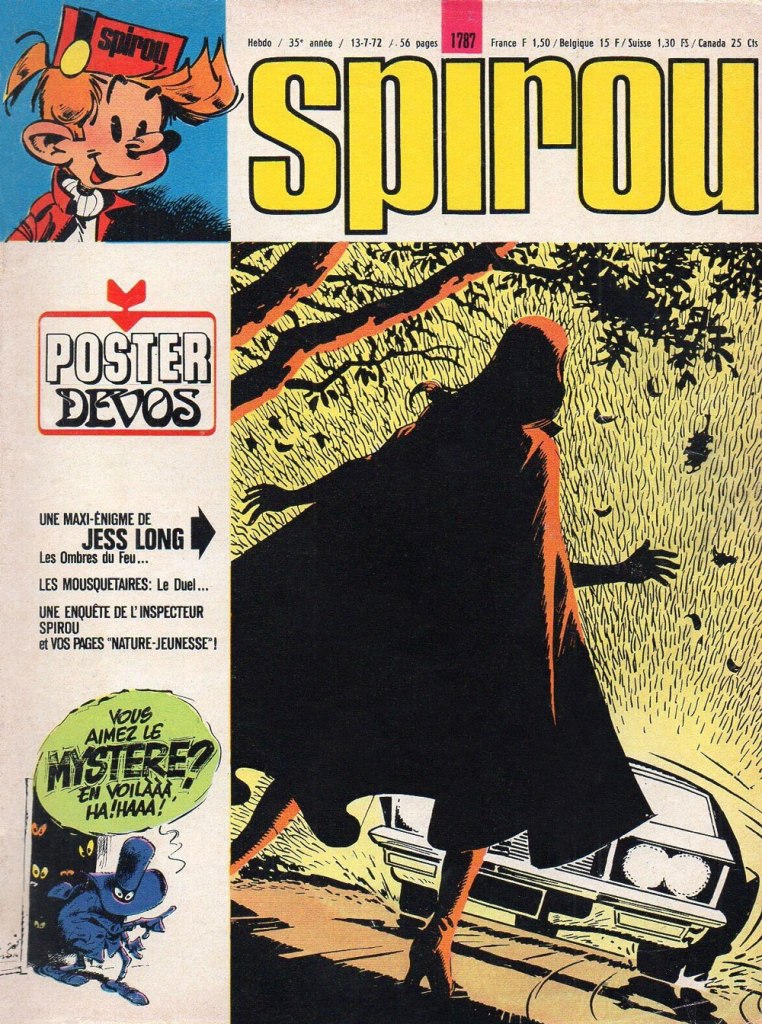
Once more rooting around Europe for properly atmospheric material, we unsurprisingly dig up some gold in Belgium, a land rife with longstanding traditions of the fantastic.

While there never were — if memory serves — any explicitly supernatural elements at play in Maurice Tillieux and Arthur Piroton‘s chronicles of FBI agent Jess Long’s colourful investigations, the creators used every opportunity to instill the oppressive fog of atmosphere.

While never a massive hit, the series had solid legs, lasting from its 1969 introduction in Spirou magazine, surviving Tillieux’s tragic demise in 1978 and finally coming to the end of its road with Piroton’s own passing in 1996.

Today, we feature excerpts from Jess Long’s sixth investigation, Les ombres du feu (‘Shadows of fire’), from 1972. Fasten your seatbelts!

Pretty good spotting, Agent Corey Hart!
The story runs fourteen pages, a bit long for our purposes… but I’m sure these highlights will properly convey its nocturnal essence.
This is Jess Long, Police spéciale no. 2 (1977, Dupuis), comprising the fifth and sixth adventures. For some reason, the publisher didn’t start collecting the series until 1976. In the end, twenty albums were issued, a fine run!
This is Spirou no. 1787 (July 13, 1972, Dupuis). Cover by Piroton, with a lower left vignette by André Franquin.
Another spooky Jess Long cover, this time it’s Spirou no. 1897 (Aug. 22 1974, Dupuis), with another Franquin comment.

I’ve heard that Piroton’s style was considered a bit too ‘American’ to be that popular in Europe. Amusingly, it looked like nothing published in American comics at the time — I’d say his approach was a throwback to a mix of Bernard Krigstein and, say, Alex Raymond in Rip Kirby and Secret Agent X9 mode.

Something else worth noting about the Tillieux-Piroton collaboration: while Tillieux was the complete package — writer and artist — he was essentially forced, by some disastrously myopic editorial decisions right from the top at Dupuis (a stubborn failure to grasp that not every cartoonist can be his own writer) Tillieux had to almost entirely give up drawing, even on his own series, Gil Jourdan, to take on writing duties for a great many features. But since he was, one might say, the “Anti-Stan Lee”, he painstakingly storyboarded each page of his scripts, acting not only as scenarist, but also as metteur en scène. Thankfully, some examples of these fascinating breakdowns have survived. Check out this one and especially that one. -RG

Hallowe’en Countdown VI, Day 22

« A black cat crossing your path signifies that the animal is going somewhere. » — Groucho Marx

Linda Turner, a.k.a. the Black Cat, made her debut in Pocket Comics no. 1 (Aug. 1941). She was first drawn (and probably written) by Al Gabriele. After passing through the hands of a few other artists (Pierce Rice, Arturo Cazeneuve, Jill Elgin…), she landed in Lee Elias‘ lap in the post-war years.

She was a stunt woman, and combined physical prowess with mental agility gleaned from her father, an amateur detective…. and fought crime in a glamorous and revealing black bodysuit.

A perfectly Hallowe’en-themed cover, this is Black Cat no. 14 (Nov. 1948, Harvey); cover (bearing his signature and everything!) by Lee Elias. Read this issue here!

Why waste a good title? As fashions changed in the comic book field, and superheroes — and heroines — lost ground to all manner of horrors, Black Cat, clearly a versatile and catchy moniker, switched hats and mission statements on a slew of occasions over the course of its healthy run. To wit:

BLACK CAT COMICS 1-15, 17-29
BLACK CAT WESTERN COMICS 16, 55-56
BLACK CAT MYSTERY COMICS 30-53, 57
BLACK CAT WESTERN MYSTERY 54
BLACK CAT MYSTIC 58-62
BLACK CAT 63-65

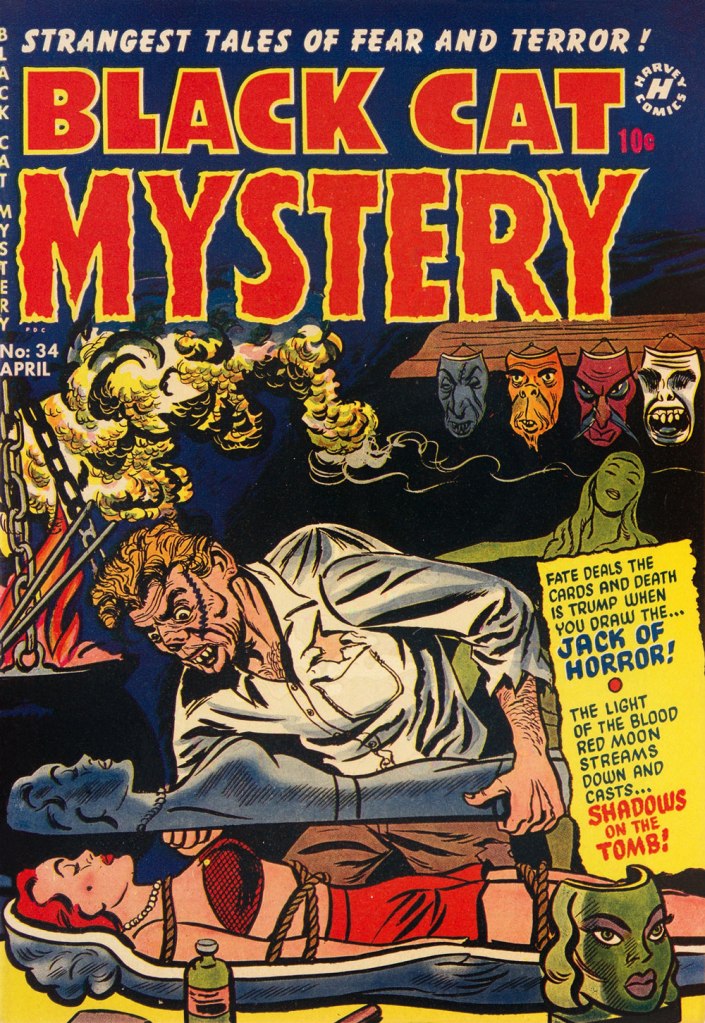
A man’s got to have a hobby. This is Black Cat Mystery no. 34 (Apr. 1952, Harvey). Cover artist regrettably unknown.

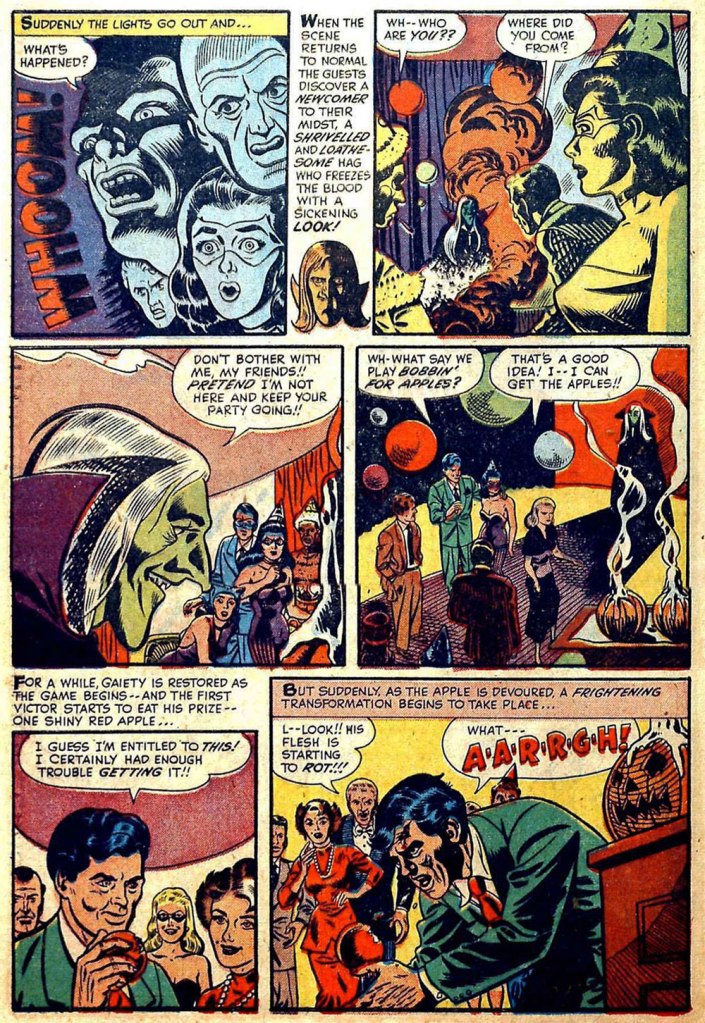
This issue happened to contain a lovely little Halloween tale:
Halloween Nightmare was pencilled by our pal Manny Stallman and (likely) inked by John Giunta. Scripter unknown, wouldn’t you know it?
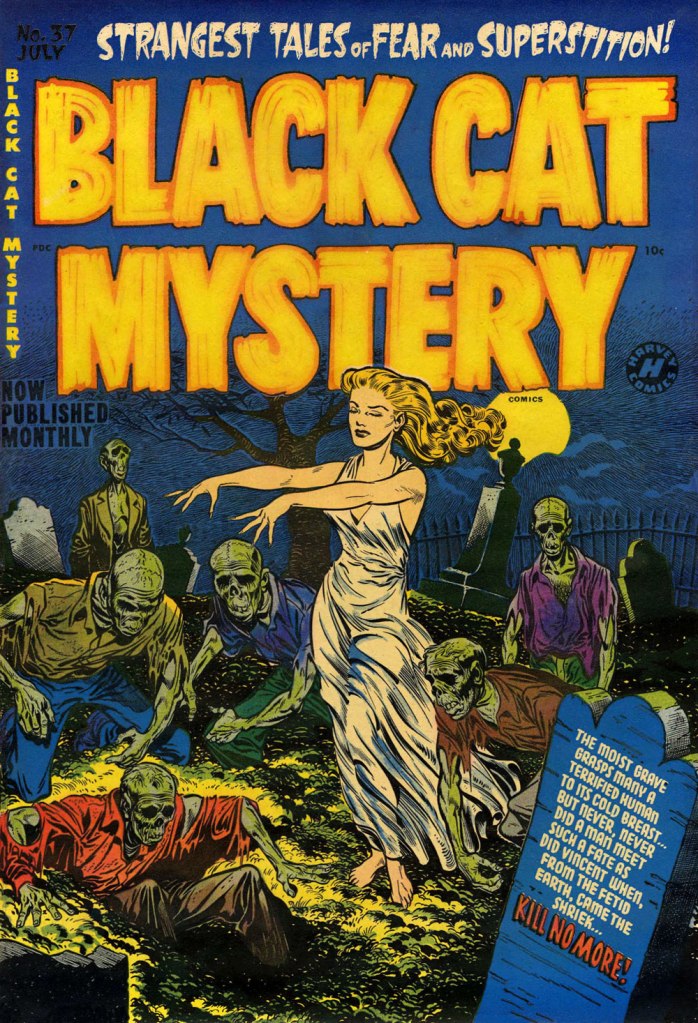
The series, whatever title it bore, featured scads of great covers. This is Black Cat Mystery no. 37 (July 1952, Harvey); cover art by Harvey art director and resident genius Warren Kremer. Read this issue here!
« Dear Lord, someone’s coming to rescue me! At long last… oh, it’s YOU. » Working from a Kremer layout, Mr. Elias brings us the darker flip side of the old desert island fantasy. This is Black Cat Mystery no. 48 (Feb. 1954, Harvey). Read it here!
And since we’re on the topic of black cats, meet our resident King o’ the Cats, Barnabas!

-RG (with a kind assist from ds)
Hallowe’en Countdown VI, Day 21

« Do not be a magician – be magic! » — Leonard Cohen

In the spirit of celebrating the spirit of Hallowe’en even from places it’s not traditionally celebrated, it’s now my turn — and my pleasure — to draw from the wondrous inkwell of Massimo Mattioli (1943-2019) and his finest creation, M Le Magicien, which ran, largely unappreciated, in the pages of France’s Pif Gadget from 1968 to 1973. My co-admin ds devoted, back in January, a post to the artist and his creation: Massimo Mattioli Mania: M le magicien, but I’d been reserving the rare but excellent ‘spookier’ M strips for this occasion. Mattioli would delve much, much further into the macabre, in the early 1980s, with his frankly excessive Squeak the Mouse. Ahem.

And now for the good stuff!

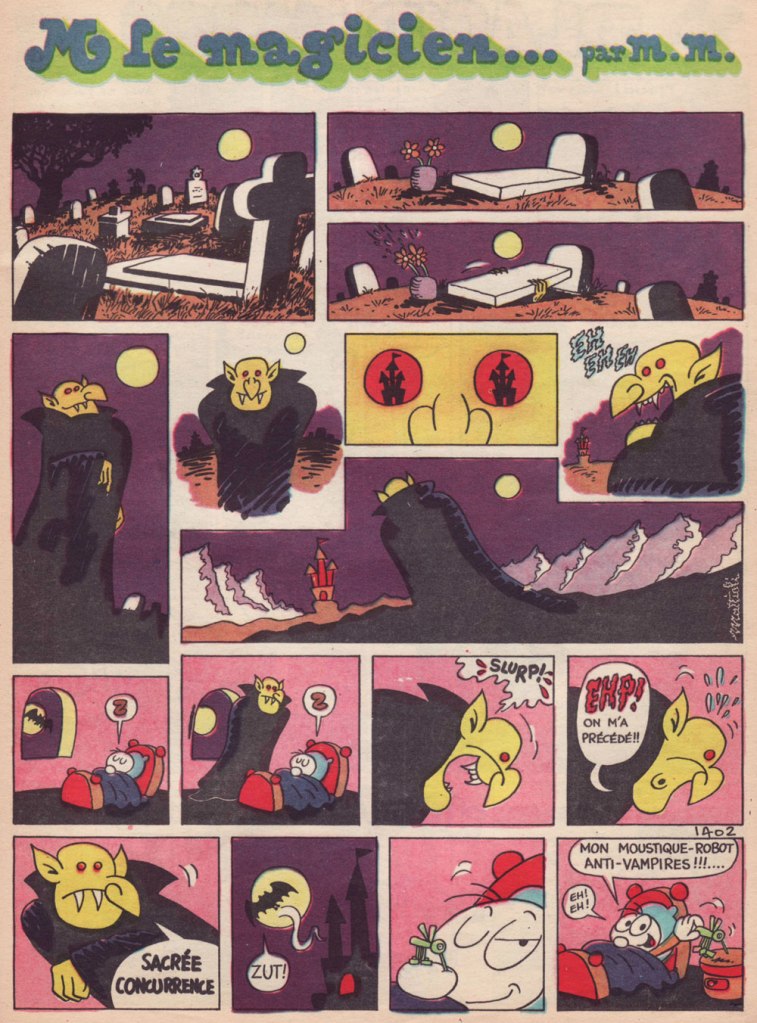
Why, hello, Nosferatu! Originally published in Pif gadget no. 164 (Apr. 1972, Vaillant). M’s robot mosquito discourages the blood-sucking competition.
This one also works for Fungus Fridays! Originally published in Pif gadget no. 205 (Jan. 1973, Vaillant). « I’m still myself! Monsters don’t exist! »
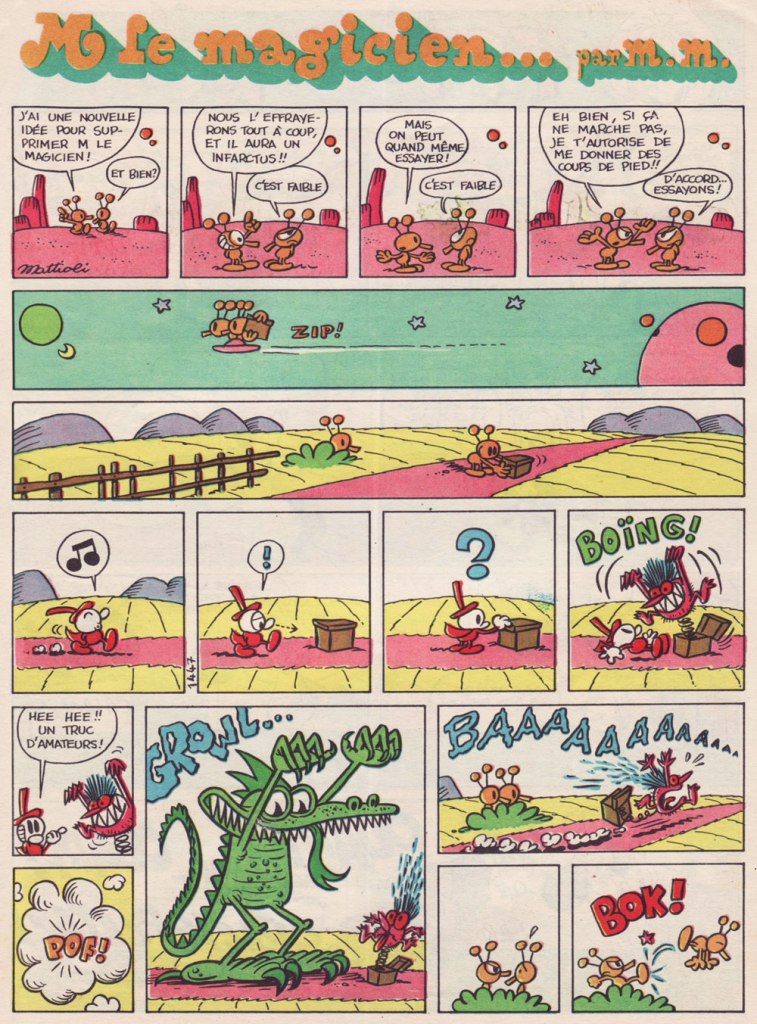
Originally published in Pif gadget no. 209 (Feb. 1973, Vaillant).
Originally published in Pif gadget no. 210 (Mar. 1973, Vaillant).

-RG

Hallowe’en Countdown VI, Day 20

« Think not because no man sees, such things will remain unseen.» — Henry Wadsworth Longfellow

Somehow, after yesterday’s rather epic (or at least time-consuming) post, I thought I’d breathe a little easier today, but no… these things have a way of imposing themselves, complications and all.

When I was a young collector, say under the age of fifteen, when I still gave a hoot about what comics were ‘worth’, financially speaking, I enjoyed leafing through the Overstreet Price Guide. Not so much out of greed, but rather of curiosity about the past. One title that piqued my imagination was Pines’ The Unseen. I mostly saw tiny, tantalising postage-stamp-size reproductions of its covers, but they lived up to my expectations. Lots and lots of talented folks toiling on the insides, too!

So I thought I’d collect them for your viewing pleasure, with two exceptions: the initial one, by Ross Andru, is kind of lame, so I’ll skip it; the final one, number fifteen, was featured in last year’s countdown.

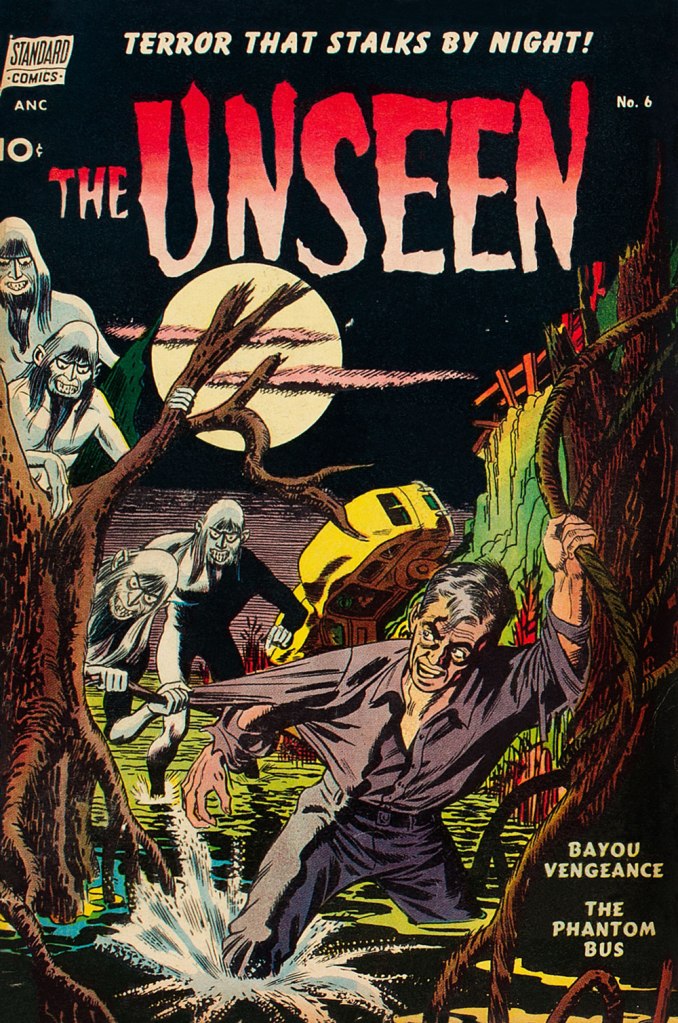
This is The Unseen no. 6 (Sept. 1952, Pines); cover by George Roussos. Read it here!
From the thumbnail version of this cover, I always wondered what ol’ Adolf Hitler had done (a rhetorical question) to be stalked by vampires. Seeing it full size, the question remains. This is The Unseen no. 7 (Nov. 1952, Pines); cover by John Celardo. Read it here!
This is The Unseen no. 8 (Jan. 1953, Pines); cover (possibly) by Nick Cardy. Read it here!
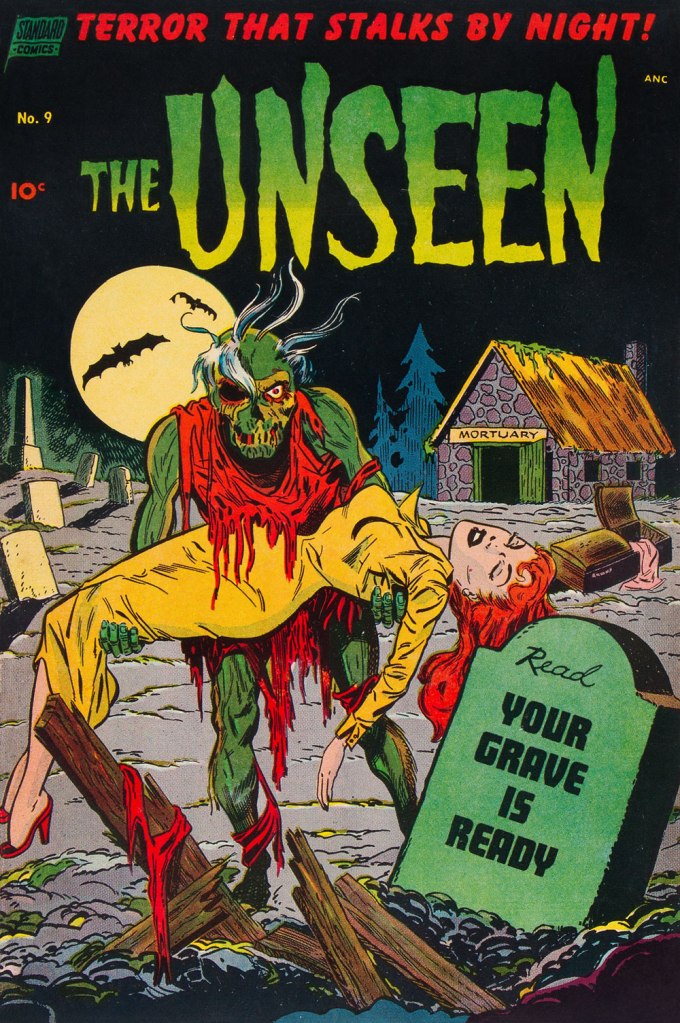
It’s the Combover Cadaver, run for your lives! This is The Unseen no. 9 (Mar. 1953, Pines); cover (possibly) by Art Saaf. Read it here!
The Spaghetti Mummy strikes! This is The Unseen no. 10 (May 1953, Pines); cover by Jack Katz. Read it here!
This is The Unseen no. 11 (July 1953, Pines); cover by the fascinating Jack Katz. Read it here!
This is The Unseen no. 12 (Nov. 1953, Pines); cover by Nick Cardy. Read it here!
Aw, that’s sweet. This is The Unseen no. 13 (Jan. 1954, Pines); cover by Alex Toth. Read it here!
Aw, give it a chance — try the cocktail, at least. This is The Unseen no. 14 (Mar. 1954, Pines); cover by Mike Peppe. Read it here!

-RG
Hallowe’en Countdown VI, Day 19

« — I don’t know about zombies, doctor. Just what is a zombie?
A ghost. A living dead. It’s also a drink. » — I Walked With a Zombie (1943)

Has any of the classic monsters undergone more radical changes over the past century than the lowly zombie? I believe my first encounter with the walking dead (in comics, that is) came through a reprint of a relatively obscure Archie GoodwinRocco Mastroserio story, the imaginatively titled Zombies!* (read it here!) from Creepy no. 17 (Oct. 1967, Warren); in it, uncle Archie schooled me about zombies’ aversion to salt and, it follows, sea water. Which I presume is what kept them cooped up on tropical islands.

Confirmation of this vulnerability came in what I consider the scariest scene in the uneven Kolchak: The Night Stalker TV series, from its second episode, the imaginatively titled The Zombie, wherein Kolchak does his level best, under trying circumstances, to pour salt down the throat of a massive, dormant-but-not-for-long zombie.

But the damage to zomboid tradition had already been inflicted, for better (my vote) or for worse, by George Romero‘s ravenous shamblers in 1968’s Night of the Living Dead. While I had no trouble accepting Romero’s savvy upgrade, I recall being offended by the cheesy, mindless, anything-goes approach adopted by Lucio Fulci in his imaginatively titled Zombie**, namely this sequence.

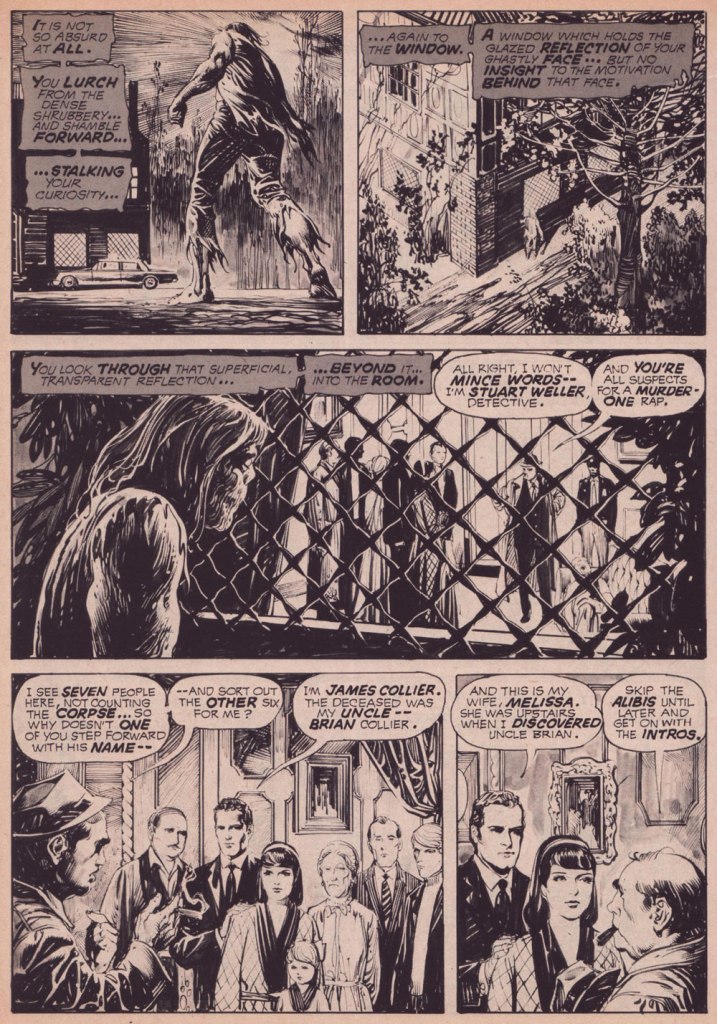
Marvel’s resident Zombie, Simon Garth, had débuted all the way back in 1953 (what is time, after all, to the living dead?) and Menace no. 5‘s imaginatively titled Zombie! (check it out here).

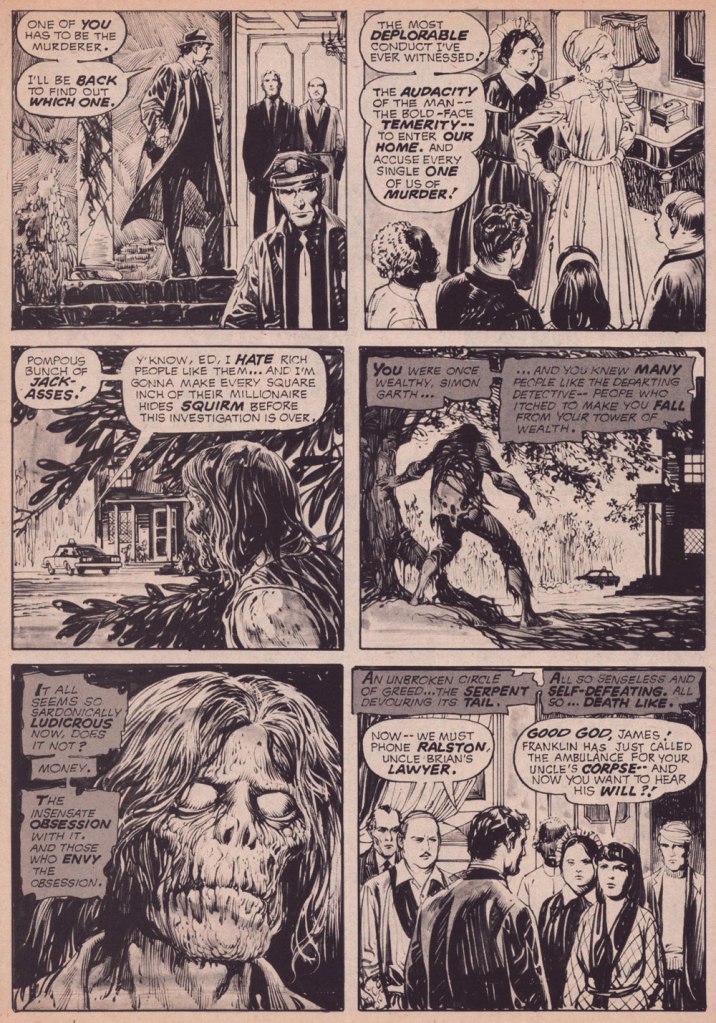
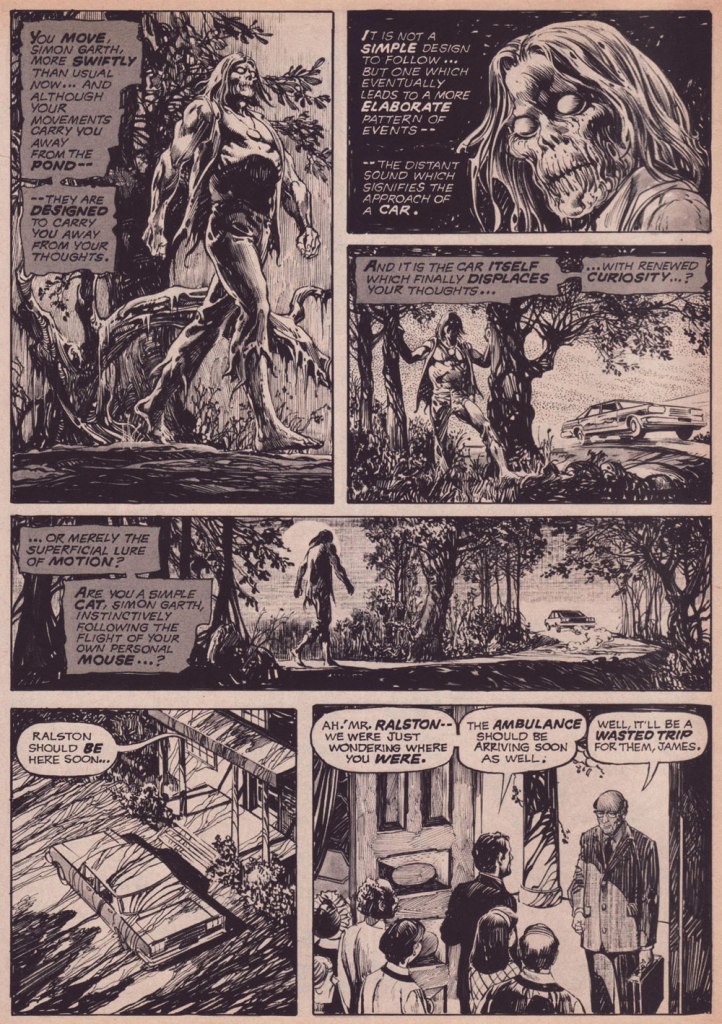
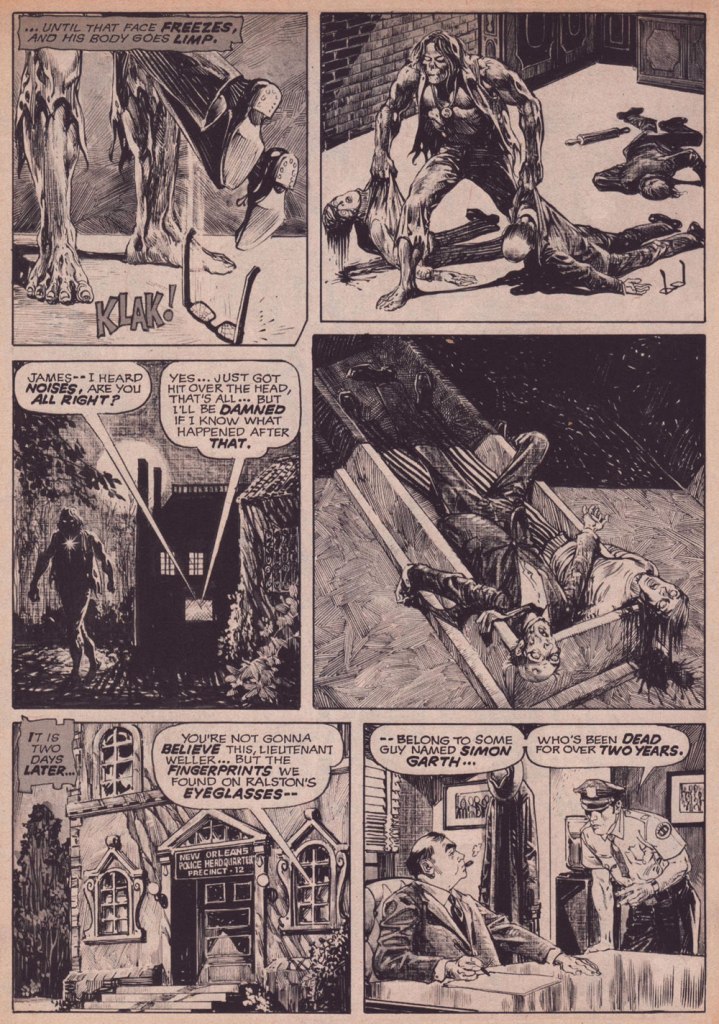
Aside from his Bill Everett-drawn premiere, I frankly have little use for the character, but I have a soft spot for this one story, intended as a time-buying fill-in for the feature’s regular team, writer Steve Gerber and Peruvian artist Pablo Marcos. It’s written by the often-interesting Doug Moench (Master of Kung Fu, Moon Knight) and illustrated by the masterful Alfredo Alcala, a sure consensus favourite around here. The plot itself is rather on the thin side, being one of those Agatha Christie’s Ten Little… er — And Then There Were None scenarios, with Garth mindlessly hovering around and peering in windows, until…

But the artwork is a delight. Like all of Marvel’s supernatural antiheroes (save the Man-Thing), Garth absurdly boasts the physique of a bodybuilder (despite being long dead and not eating anything), but at least Alcala truly knows his anatomy.

The original story is over thirty pages long, so I’m just providing highlights, including the conclusion, which is quite cute. While it must be incredibly hard to write mindless, invulnerable characters, Moench had a good punchline in mind all along.

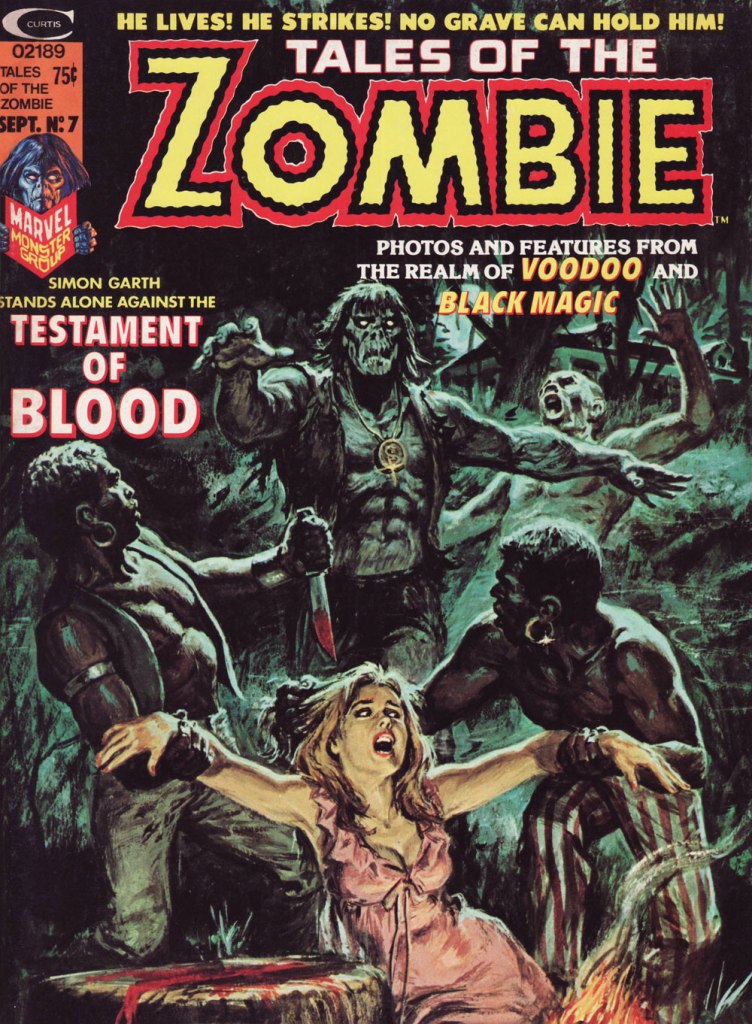
This is Earl Norem‘s cover for Tales of the Zombie no. 7 (Sept. 1974, Marvel).

-RG

*set in Brazil for the sake of the twist ending — not a bad one, either.
**To be fair, called Zombi 2 in Italy, since “Romero’s Dawn of the Dead (1978) was released in Italy as Zombi.” At least the Italians, as the French once did, understand that Zombi is the male, and Zombie the female of the, er… species. Or is it simply the plural?

Hallowe’en Countdown VI, Day 18

« Why does a silly bird go on saying “chiff-chaff” all day long? Is it happiness or hiccups? » — A. A. Milne

Greetings! I am very temporarily standing in for co-admin RG, who can probably use a break from his harrowing post-a-day schedule. Either that, or I muscled my way in after chaining him to the bathtub, your pick.

We have never talked about the adorable cartoonist Jack Kent (1920-1985) on WOT?. While he has illustrated some 40 children’s books, no humble achievement, his momentous oeuvre is surely the endearing King Aroo (from that intriguing class of literary creations ‘adored by the intelligentsia, but [that] bomb in popularity polls’*). Often our most cherished comics are considerably harder to discuss than something one holds less dear, and this is a prime example of that. Among worries of ‘would I able to do it justice? Would I be able to explain its charm?’, I have been postponing the conversation about King Aroo, Monarch of pocket-sized kingdom Myopia, to an indefinite, much later date.

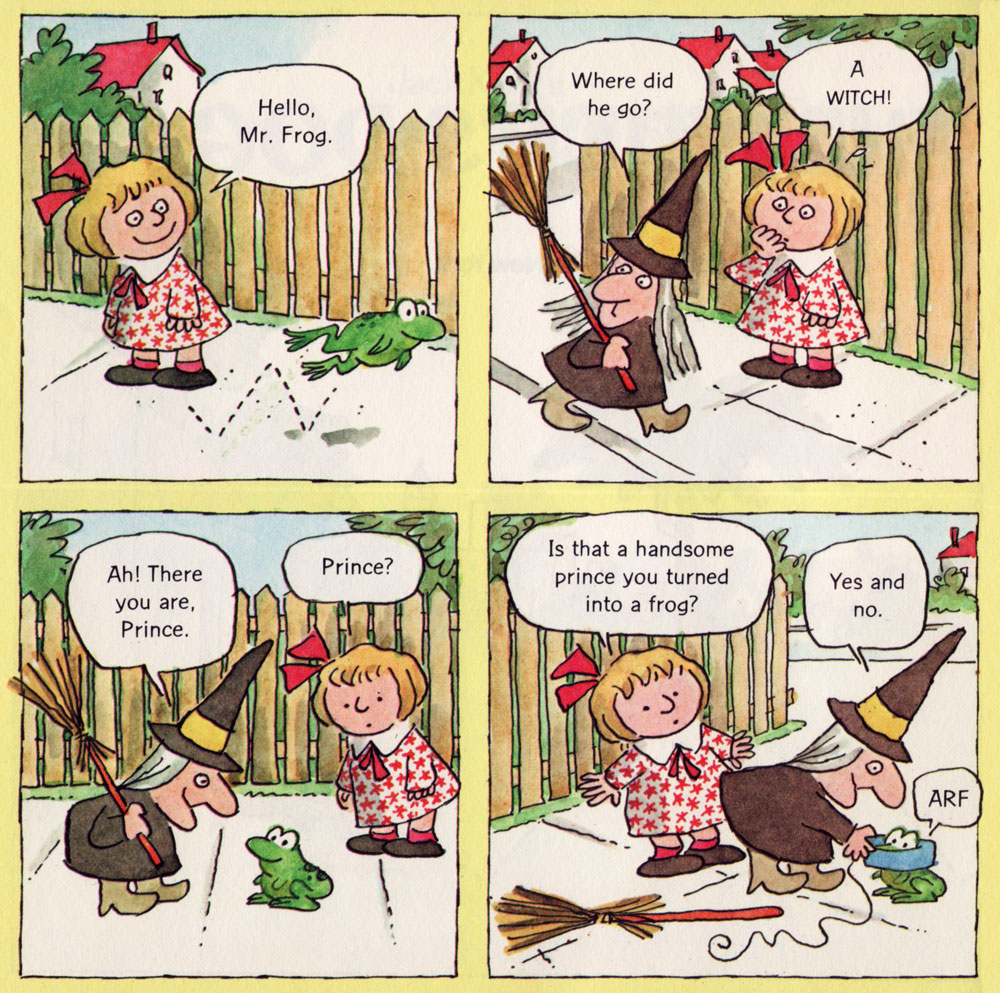
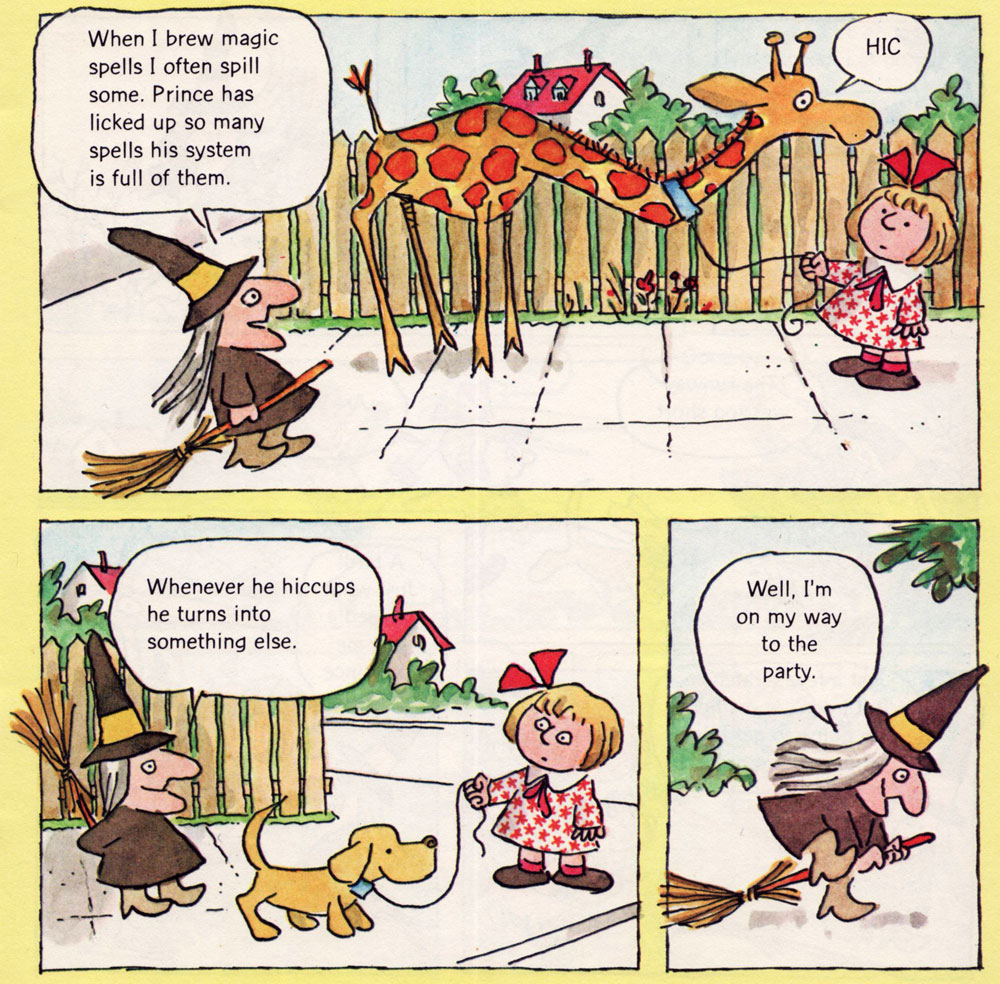
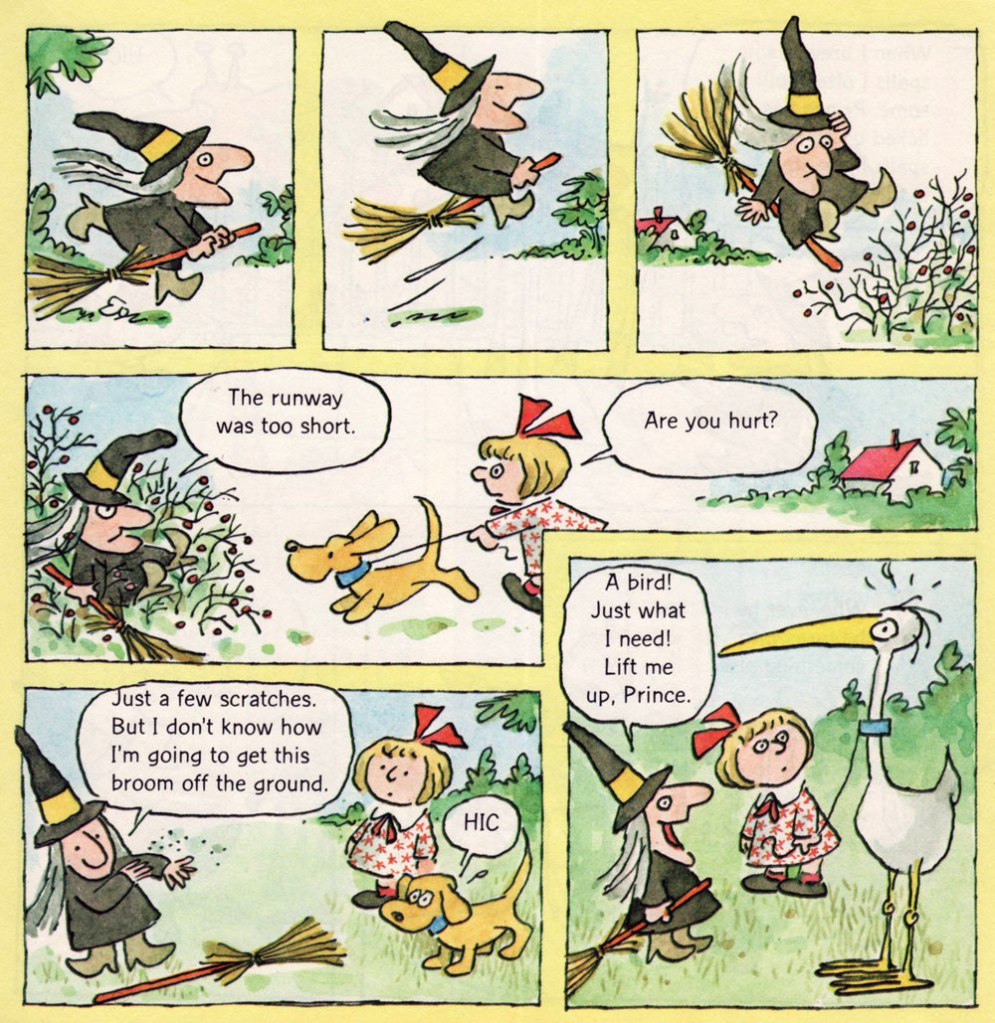
In the meantime, and since it is very much of the season, let us concentrate on the short, but no less lovable for its length, Cindy Lou and the Witch’s Dog, a children’s book (well, nearly more of a booklet) from 1978. Aside from the presence of a witch in the tale (as announced by the title), it also features hiccupping as a main plot point, a state of things close to my heart as I am quite prone to this affliction, though I fortunately do not undergo metamorphosis with each involuntary contraction of the diagram. Here’s a factoid of the day: the medical name for hiccup is singultus, from the Latin singult which means ‘to catch one’s breath while sobbing’. My grandmother always thought there was something profoundly wrong with me with all these hiccups… but then she was also convinced I’d grow up to be an alcoholic from sharing an occasional beer with my dad, so perhaps her forebodings can be dismissed.

Enjoy the following few pages (probably about a third of the story, so definitely more than just a sample).

Regretfully, we do not get to see what party the witch goes to.

Of course Prince’s collar magically adjusts to his neck, whether it’s the neck of a giraffe or that of a mouse.

Skipping a few pages to share this tree’o’cats, which neither RG nor myself could resist including:

~ ds

* Source

Hallowe’en Countdown VI, Day 17

« In this club all members are equal, be they of claw, talon or fang; skin, fur or scale; from grave, tomb or laboratory; if they slither, walk or crawl; if they breathe, gasp or do neither. No one monster will take precedence over another. » — Signed EATM Ghoul (Hon Sec)

Like many a horror fan of my generation, I grew up adoring Amicus Productions‘ films, particularly their multi-segment entries, known as Portmanteau movies. These include fine adaptations of Robert Bloch stories, generally scripted by the master himself: Torture Garden (1967), The House That Dripped Blood (1971) and Asylum (1973), and a pair of well-crafted adaptations of EC Comics, 1972’s Tales From the Crypt and 1973’s The Vault of Horror, which unveiled these classics to an eager new audience.

With 1974’s From Beyond the Grave, Amicus partners Milton Subotsky and Max Rosenberg found themselves a new wellspring in British author Ronald Henry Glynn Chetwynd-Hayes (1919-2001). While some consider 1981’s Chetwynd-Hayes portmanteau The Monster Club part of the Amicus œuvre, the company had been dissolved in 1975… but as the film was produced by Subotsky, the notion is not without merit.

And so… comics? Enter UK comics maven Derek ‘Dez’ Skinn. As Dez tells it:

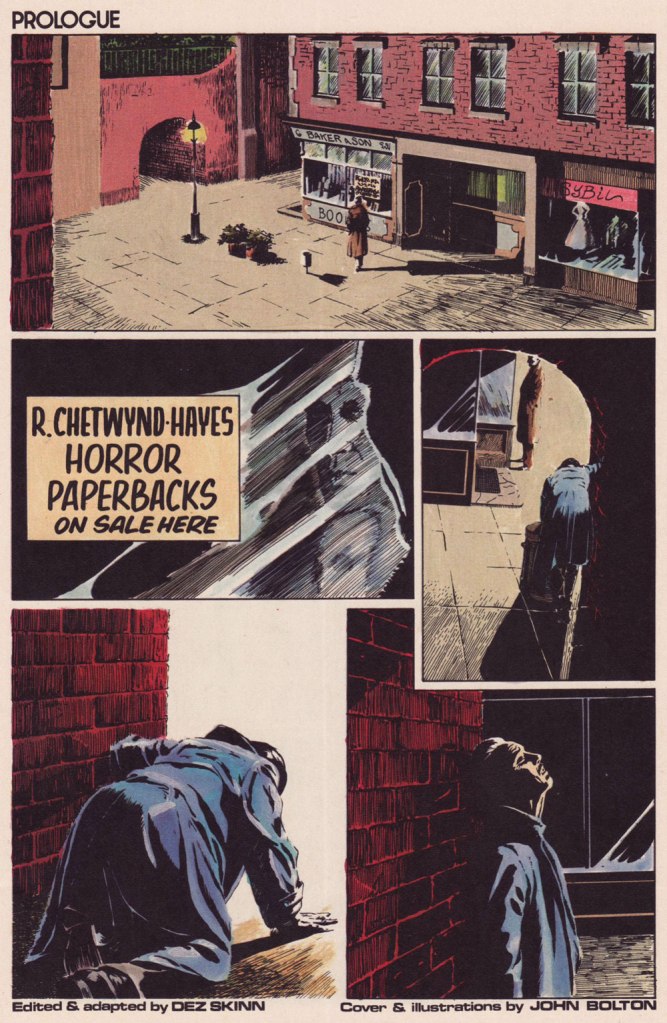
« Milton Subotsky, the London-based US powerhouse behind the horror film company Amicus Films, had always been madly envious that rivals Hammer had their own magazine and was constantly twisting my arm to work with him. When he got a distribution deal on R. Chetwynd-Hayes’ The Monster Club, he saw his chance. Actors including Vincent Price and John Carradine were signed up but there was no time to shoot any footage to promote the production at the Cannes Film Festival. So he called me up and asked if we could adapt the film into comic strip format, much like we’d done with Hammer, so that printed copies could be used to sell the film overseas at Cannes.

We only printed 1,000 copies of The Monster Club, making it an instant collectors’ item in fan circles! Adapting the film script myself, I assigned John Bolton to produce the 26 pages of artwork (although David Lloyd valiantly came in to handle one chapter because of the tight deadline). Targeted at an international audience of film buyers on lush glossy paper, it was surely the most inexpensive yet effective film promotion ever! » [ source ]

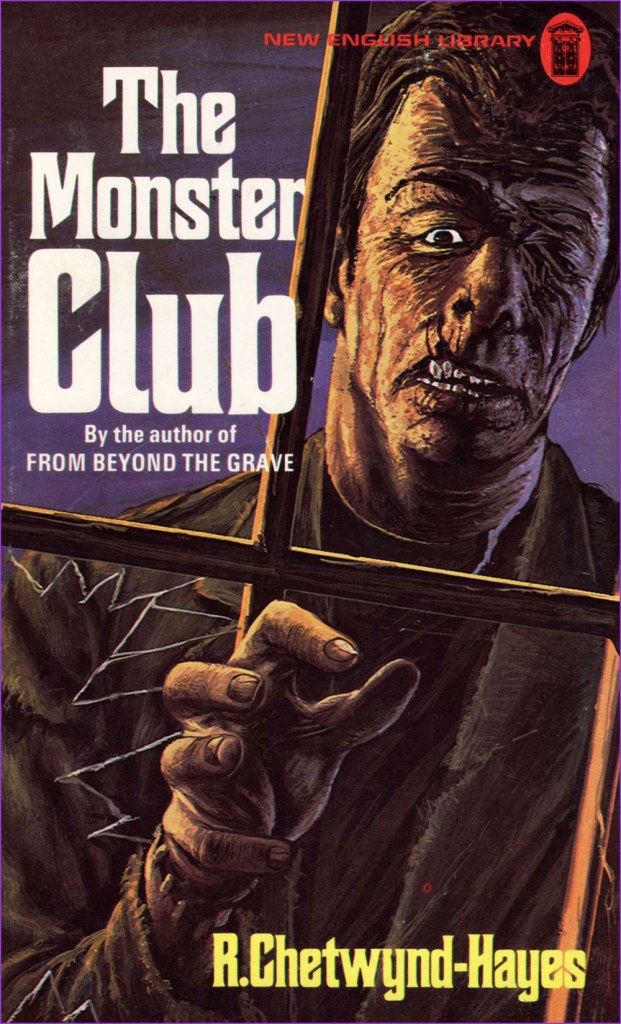
The cover of the original paperback edition (March 1976, New English Library). Would it have killed them to credit the cover artist, whose work is surely a strong selling point?

This material was reprinted (waste not, want not!) in Halls of Horror nos. 25 and 26 in 1983, then in North America, in a coloured version, in John Bolton’s Halls of Horror nos. 1 and 2 (both June 1985, Eclipse). And so here we are.

John Bolton’s (who else?) double spread cover painting.

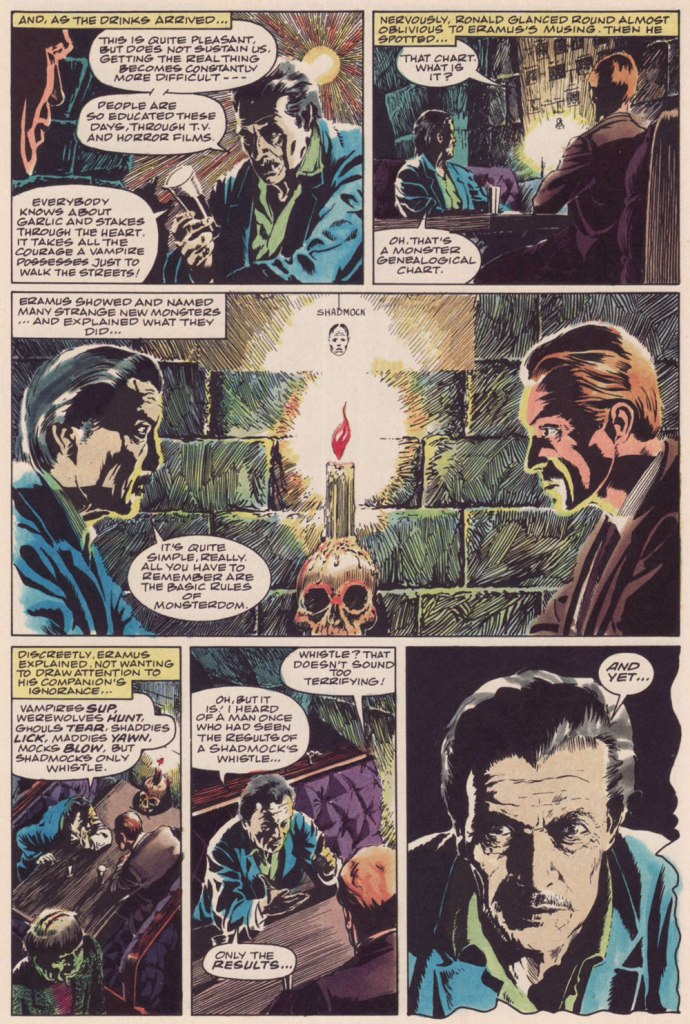
As far as the adaptation goes, I must confess I far prefer the witty linking bits to the stories proper.

Lest we forget, this version was coloured by Tim Smith.

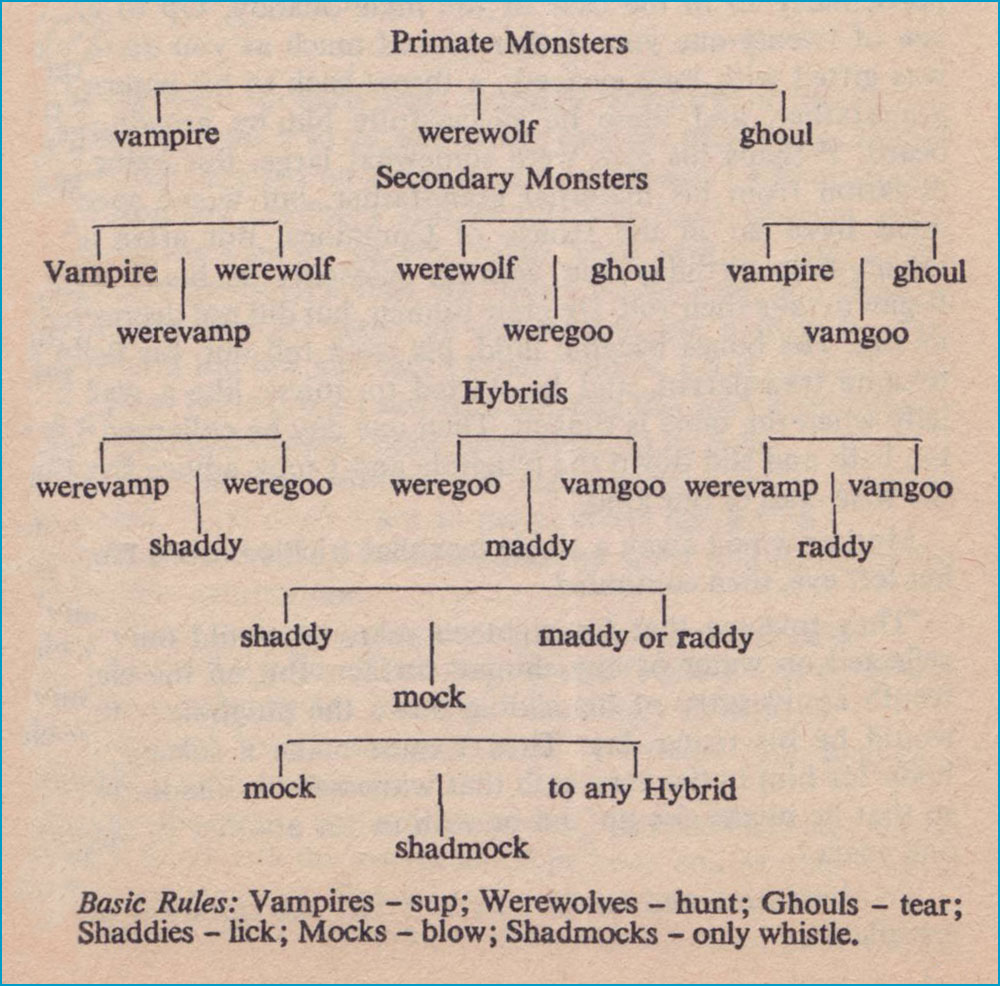
Among the most intriguing features of Chetwynd-Hayes’ book is his clever conceit of monsters forming an oppressed (by humanity) society with its own castes, hybrids, classifications and creeds. Here’s a most helpful table:

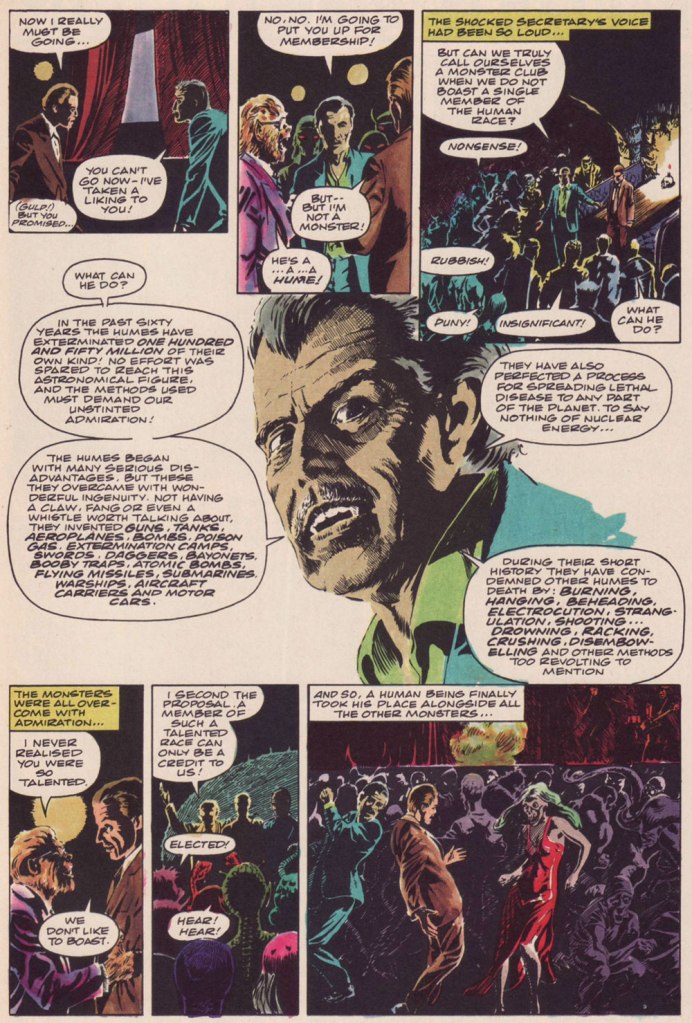
And the happy conclusion (after plenty of angst and grue in the stories). The movie’s better and the book better yet, but this was a worthwhile project and a fun curio.

This is The Ghoul, one of a set of specialty images Bolton created for the film’s promotion:

In closing, here’s a catchy musical number from the film, performed by one of my musical heroes, B.A. Robertson… not to be confused with T.M. Robertson, another favourite musician.

-RG

Hallowe’en Countdown VI, Day 16

« Trouble with you is the trouble with me / Got two good eyes but we still don’t see / Come round the bend, you know it’s the end / The fireman screams and the engine just gleams » — Robert Hunter

Better watch your speed.

Another quite slight tale, but I’ve always loved this one for its nocturnal, storm-tossed ambiance. And it takes considerable illustrative skill to bring to life such a compact vignette with clarity and visual interest. Especially while hobbled by pedestrian colouring and hazy printing.

While the scripter goes uncredited (though it’s presumably editor Murray Boltinoff), the artist is Rodolfo “Rudy” Florese (1946-2003); he was one of the band of solid Filipino craftsmen that brought extra style and diversity to the US Comics industry in the 1970s. The lion’s share of Florese’s American contribution went to DC’s Tarzan titles. Take it away, boys!

Yeah, that’s right: in such stories, Death always betrays himself by picking an oddball moniker like “Mort Todd” or some such dead giveaway. To be fair, Satan and Dracula also indulge in the corny practice. Dr. Shreck, anyone? Think it never happens in “real” life? Let us consider the case of smarmy Albertan reprobate Pierre Poilièvre, whose name basically translates as Pierre Pea-Hare.

The Roaring Coffin originally saw print in Ghosts no. 40 (July 1975, DC), which bore this enticing Luis Domínguez cover.

-RG

Hallowe’en Countdown VI, Day 15

« Brevity is the soul of lingerie. » — Dorothy Parker

Hey, it’s Saturday night, we let our hair down, and we’ve all — presumably — better things to do than to linger and moulder at the computer. Here, then are some lovely (under) things by Tentacle Tuesday Master Rich Larson, none of them featuring grasping octopodian appendages. I became aware of Mr. Larson‘s work through some fine covers and stories he illustrated for Charlton’s line of ghost comics in its 1970s heyday. After Charlton more or less gave up the ghost in 1976, he smartly forged his own singular path, generally in collaboration with the equally talented Steve Fastner.

Is everyone ready, then, for a visit to… the Haunted House of Lingerie?

Volume one’s recto.

And its verso.
Then came a sequel — thank goodness! Front…
… and back.
To give you a sense of the breakdown in tasks, here’s a sample of Mr. Larson’s pencils.

Your mileage may of course vary, but what I find most remarkable about Larson’s work is how its wit and joie de vivre, its good-natured enthusiasm, keep the results from ever seeming crass or tawdry, whatever the topic. Hats off, gentlemen.

-RG

Hallowe’en Countdown VI, Day 14

« Skepticism is the highest duty and blind faith the one unpardonable sin. » — Thomas Henry Huxley

Plot-wise, this one’s a trifle, a frothy bit of nonsense, I’ll happily concede. But it’s ornately illustrated by Joe Maneely, in that busy-but-clear, rough-but-assured, scratchily cartoonish fashion of his.

I don’t know about you, but if I’d just had a bona fide supernatural encounter, it’s unlikely that my next move would be to rush to the corner store to stock up on hokey monster comics. Unless I was thinking investment.

Hey, you know who our protagonist reminds me of? Marshall Teller’s sidekick, Simon Holmes, from outstanding early ’90s TV show Eerie, Indiana. See what I mean?

Meet Simon (Justin Shenkarow, later on Picket Fences) and Marshall (Omri Katz, seen soon after in Joe Dante‘s underappreciated Matinee).
I Was Locked in a… Haunted House! originally materialised in Uncanny Tales no. 7 (Apr. 1953, Atlas), and was reprinted in the somewhat more affordable Chamber of Chills no. 15 (Mar. 1975, Marvel). Cover art by Bill Everett, colours by Stan Goldberg.

While our featured tale is saddled with the hoariest of plots, what lends it some flavour, in my book, is its rampant self-referential hucksterism (hello, Stan!), to the point that it’s practically a five-page commercial for Atlas’ supernatural titles. Still, I like it — it’s a bit of novelty.

-RG