« If anything, I consider myself non-violent. I’m from the hippy era, peace, love, groovy. » — Rick James
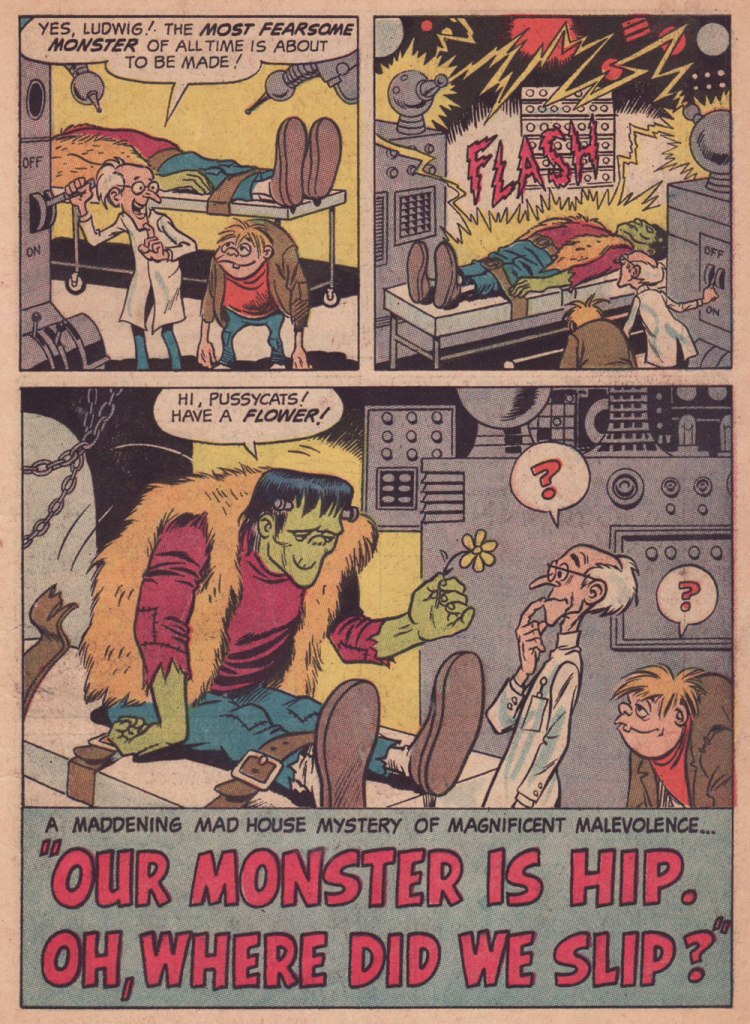
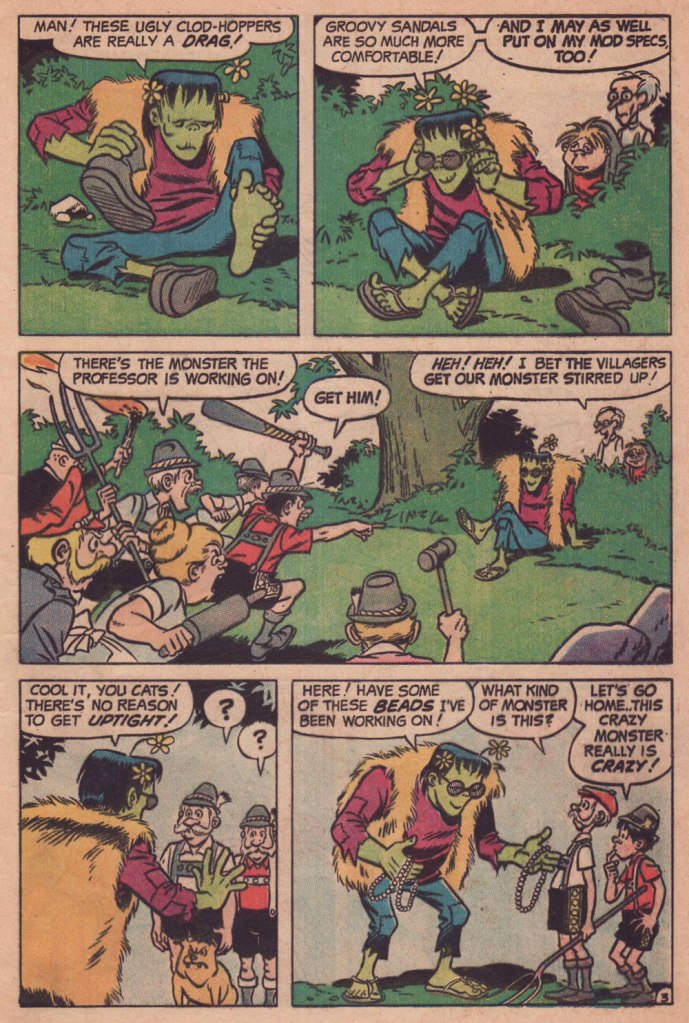
1968 wasn’t exactly a banner year for Harry Shorten and Wally Wood‘s Tower Comics (1965-69); Wood’s flagship title, T.H.U.N.D.E.R. Agents, was down to running a mixture of reprints and inventory, and a mere two issues were cover-dated 1968. A final number, the 20th, limped onto newsstands a full year after its predecessor.
So it’s understandable that Wood started casting around for plan B. He gave Archie a try. It didn’t take… surely his fellow Tower editor and Archie refugee Samm Schwartz must have tried to warn him. Oh well.
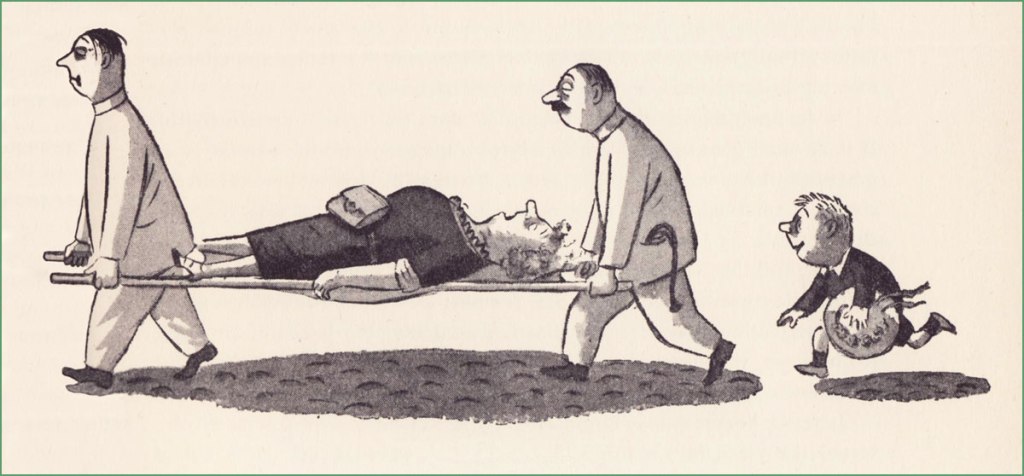
« Our Monster Is Hip. Oh, Where Did We Slip? », most likely scripted by Archie mainstay George Gladir (1925-2013), appeared in Archie’s Madhouse no. 64 (Oct. 1968).
As far as I know, this was the only story Wood drew for Archie Comics, at least in their usual humorous mode. In the ’70’s, he would provide finishes over Jack Abel‘s pencils on one story (« Devil Rider », Red Circle Sorcery no. 10, Dec. 1974) for the interesting but short-lived, Gray Morrow-directed Red Circle Comics Group, a more ‘mature’ Archie offshoot… and that’s it.
« I’d rather have my stuff in pulp magazines where people can see it than in a museum where they don’t. » — Lee Brown Coye
Despite the passing of nearly a century, a lot of Weird Tales (“The Unique Magazine”) illustrators are somewhat well-remembered today: Virgil Finlay for his stunning, eyesight-ruining pointillist technique, Margaret Brundage for the cheesecake, Hannes Bok — more pointillism – for his graphic invention…
My own favourites are inarguably the true-blue weirdos in the deck, Matt Fox and Lee Brown Coye (who, at five foot ten and 136 pounds when the Army deemed him unfit for service, kiddingly referred to himself as ‘Lean Brown Cow’); while Fox created a fine passel of WT covers, that frankly wasn’t Coye’s forte, though he did produce his share. In truth, the starkness of black and white was his element.
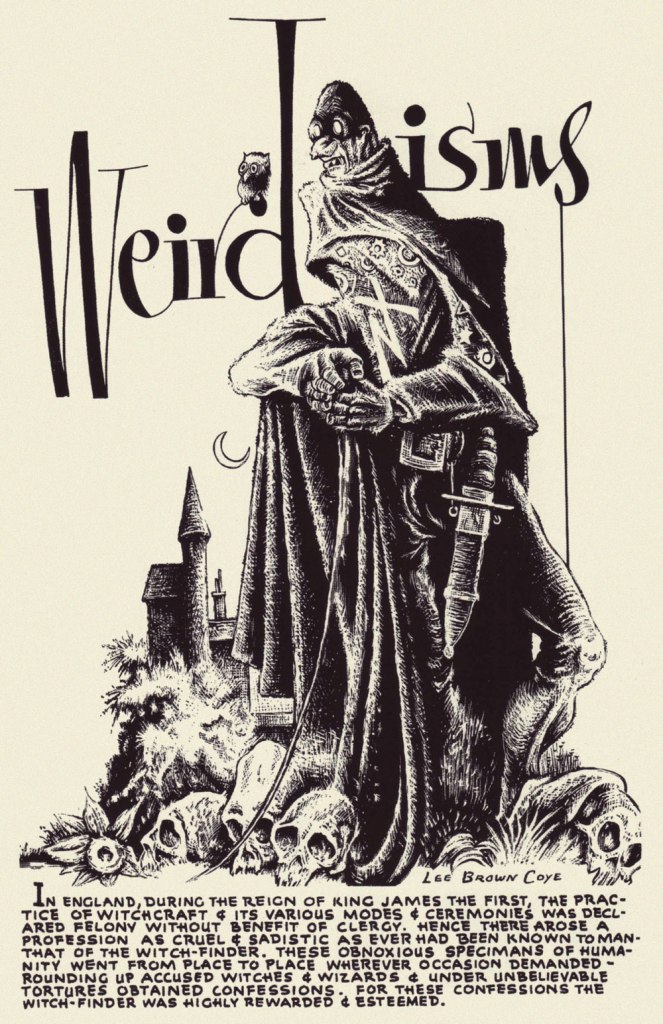
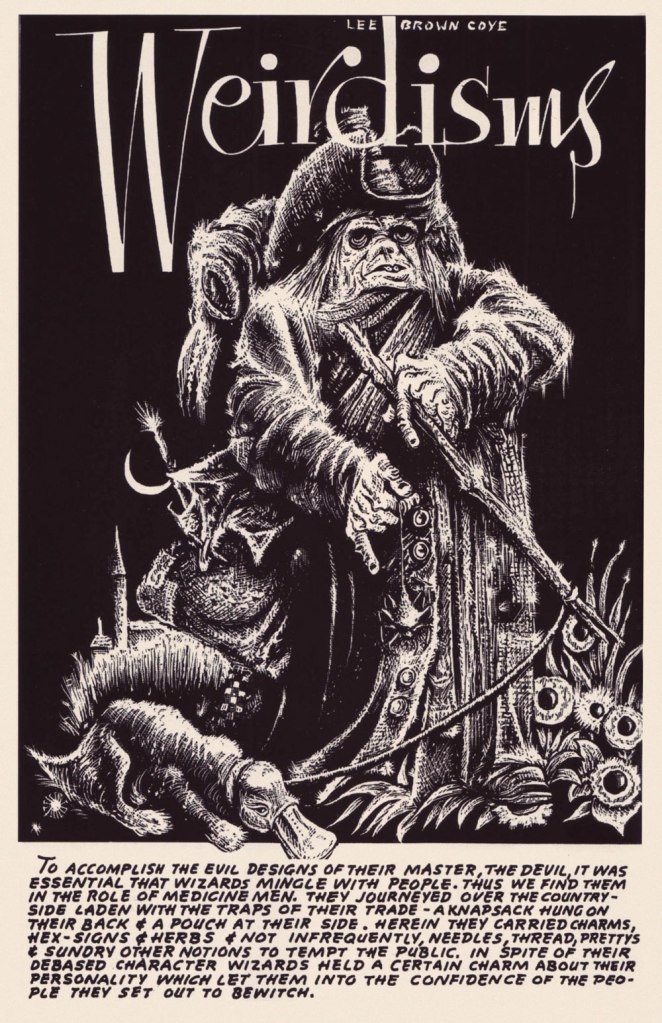
Now, I could go on quite a bit about Mr. Coye, but as I always do in such cases, I’ll sharpen my focus. So focus I shall: on Weirdisms, a semi-regular feature LBC enjoyed in the pulpy pages of Weird Tales for a couple of years, circa the late 1940s — a precursor, if you will, to Warren’s Creepy’s Loathsome Lore a couple of decades later.
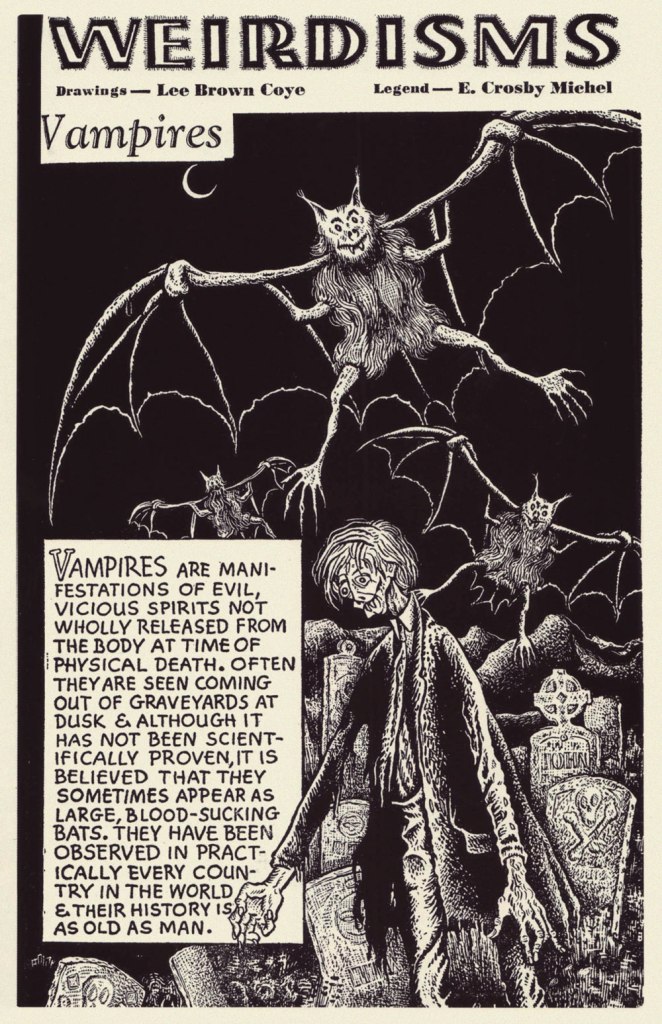
Such a striking composition! This is “Witch-finder”, from the November, 1949 Weird Tales.“Witchcraft”, from Weird Tales’ issue of September, 1948. Written by E. Crosby Michel.“Witch-finder Matthew Hopkins”, from the March, 1950 Weird Tales. If Vincent Price is a bit too arch and camp for your taste, check him out in Michael Reeves‘ brutal Witchfinder General (1968). “Imp” appeared in the January, 1949 issue of Weird Tales.“Medicine Men”, from Weird Tales’ March, 1949 edition. I’d surmise it unlikely for a platypus to wind up as a wizard’s pet… but it certainly works thematically.“Sabbat witches”, written by E. Crosby Michel, saw print in the May, 1948 Weird Tales.“Vampires”, from the July, 1947 issue of Weird Tales. Written by E. Crosby Michel.“Witches”, written by E. Crosby Michel, from Weird Tales’ January, 1948 issue.“Wizards and Witches”, from Weird Tales’ March, 1949 issue. I wonder whether their pet boar helps them locate and dig up delicious truffles.
Incidentally, I recommend to the interested Luis Ortiz’s fine Arts Unknown: the Life and Art of Lee Brown Coye (Nonstop Press, NY, 2005), as well as Pulp Macabre: The Art of Lee Brown Coye’s Final and Darkest Era (2015, Sacred Bones). Oh, and Matt Fox is finally getting his own deluxe monograph, which I preordered ages ago and is about to emerge, The Chillingly Weird Art of Matt Fox (2023, TwoMorrows); here’s a preview. I trust Rascally Roy Thomas won’t be ordering a copy.
« It is the job of thinking people not to be on the side of the executioners. » — Albert Camus
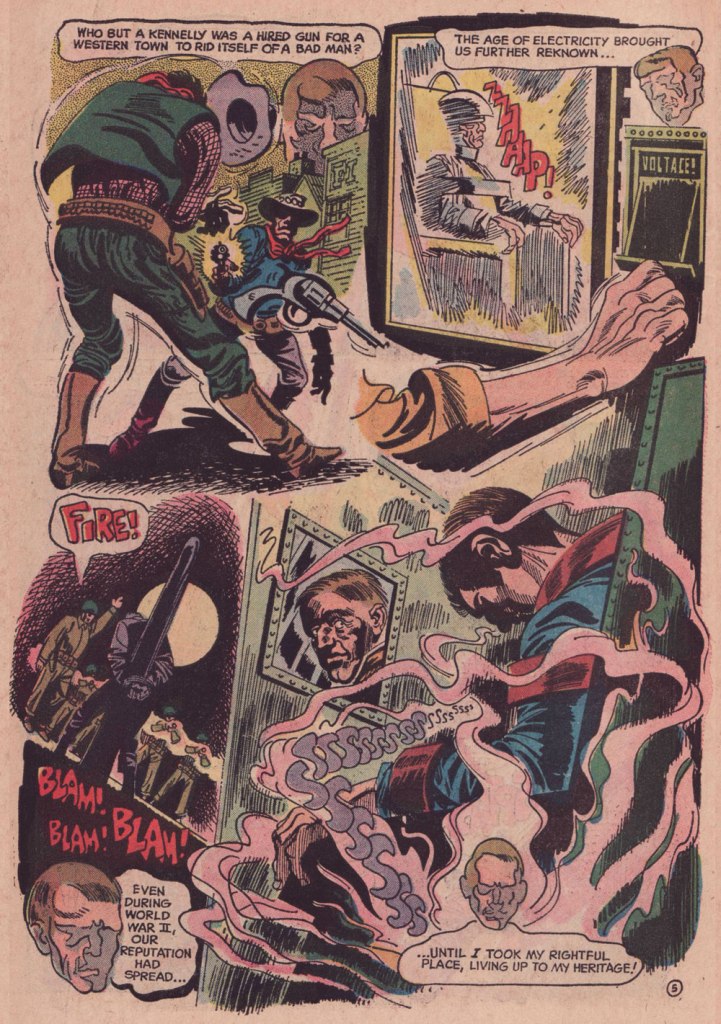
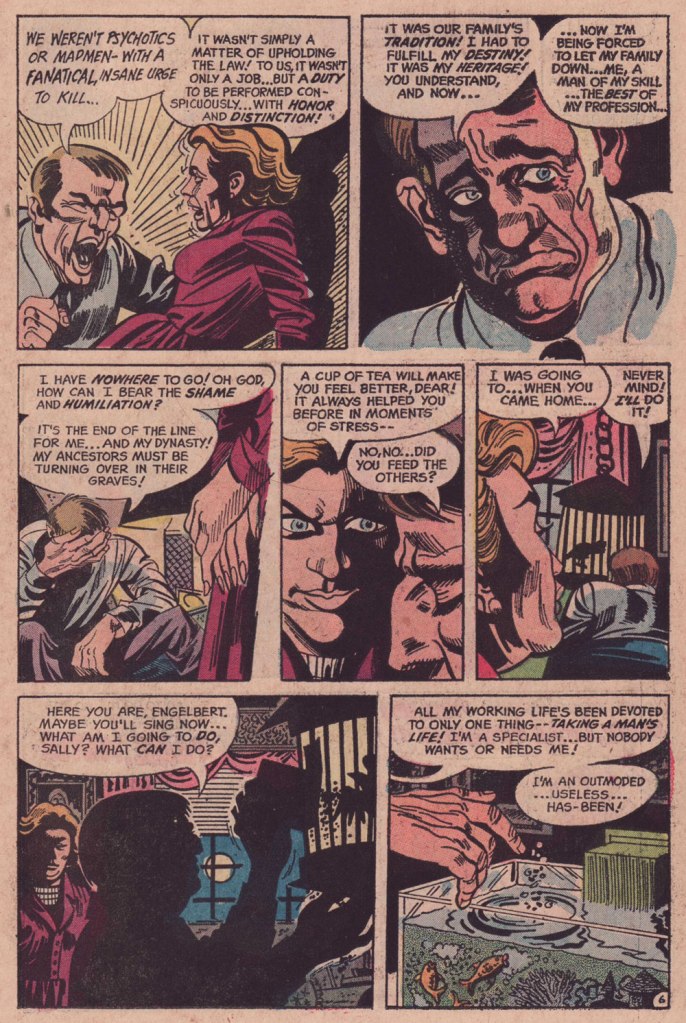
Another day, another executioner… funny how these patterns emerge unbidden.
Jerry Grandenetti, with his tenebrous depths and oppressive angles, is another artist I’ve always strongly associated with Autumn and Hallowe’en. While the greater part of his work at DC Comics was war fare for Bob Kanigher, my heart pounds for his spooky work for editor Murray Boltinoff‘s 70’s stable of titles (The Witching Hour, Ghosts, and The Unexpected).
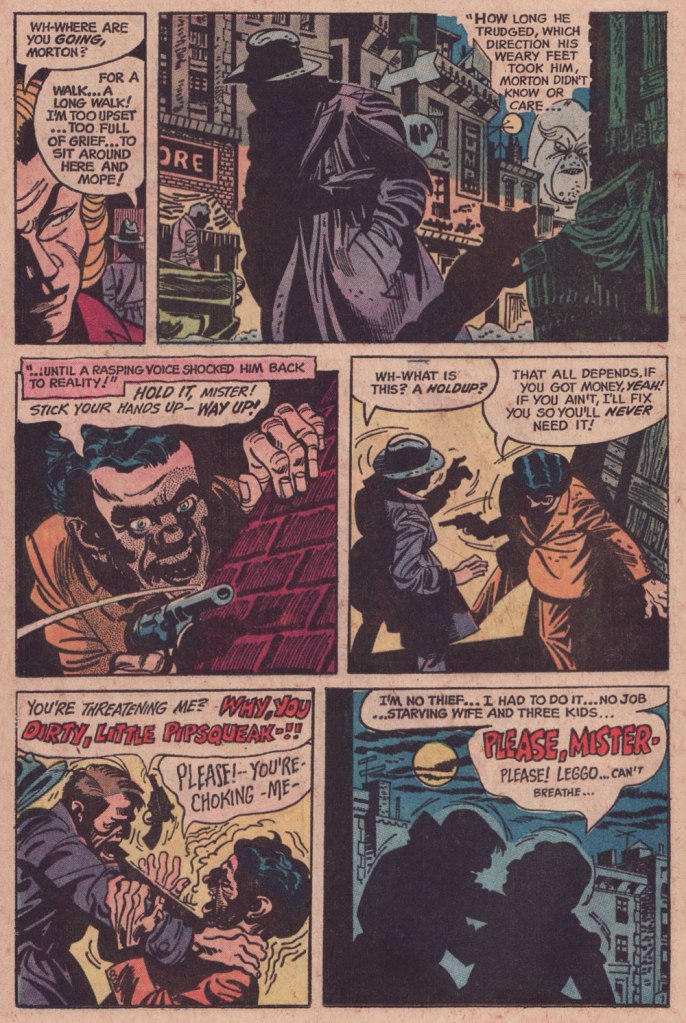
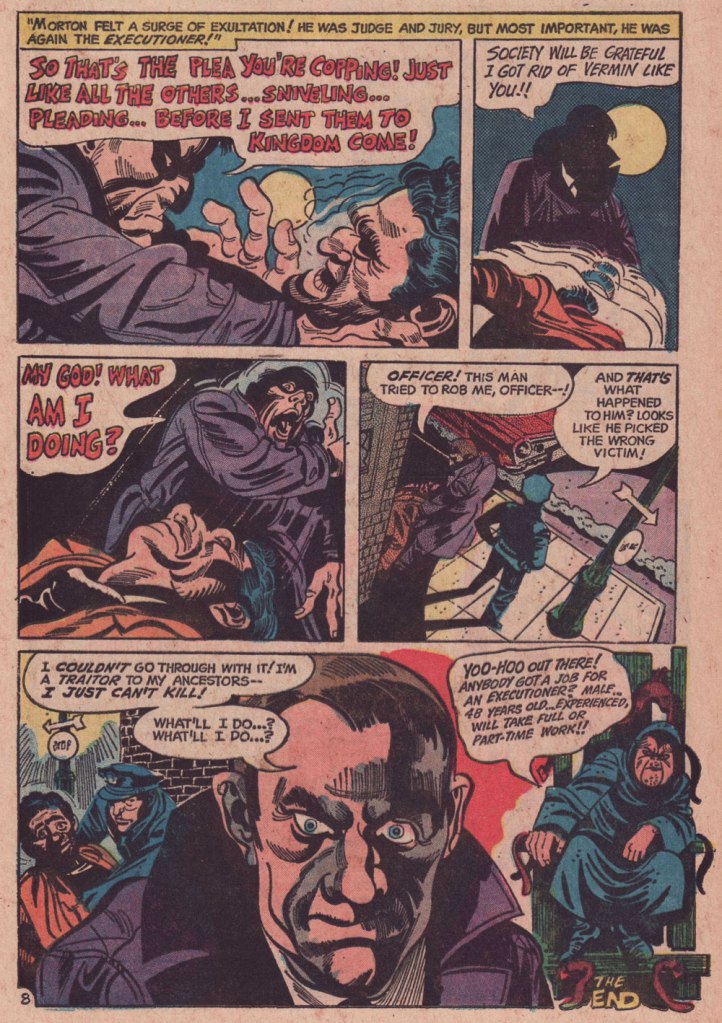
This particular tale marks a rare foray outside of the well-trod paths of formula and so-called ‘O. Henry’, or twist endings. Writer Bill Dehenny (an alias of editor Boltinoff’s, actually) ushers in midlife doldrums and attendant shades of moral grey, an unusually open, downright existential ending, elements scarcely encountered in DC ‘mystery’ comics of the era. Hell, there’s even a bird named Engelbert!
End of an Executioner was published in The Witching Hour no. 26 (Dec. 1972, DC), just after Brian Garfield’s Death Wish and well before Michael Winner’s film adaptation/distortion.
What’ll he do? Will he go the Bronson /Neeson vigilante route — or turn his back on the old family tradition?
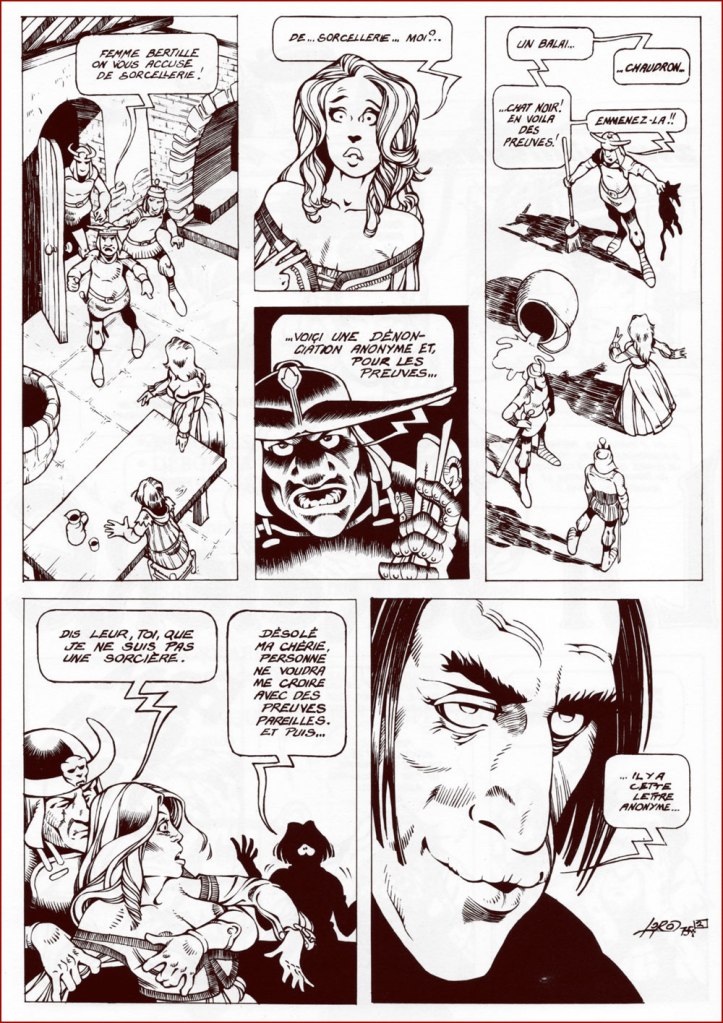
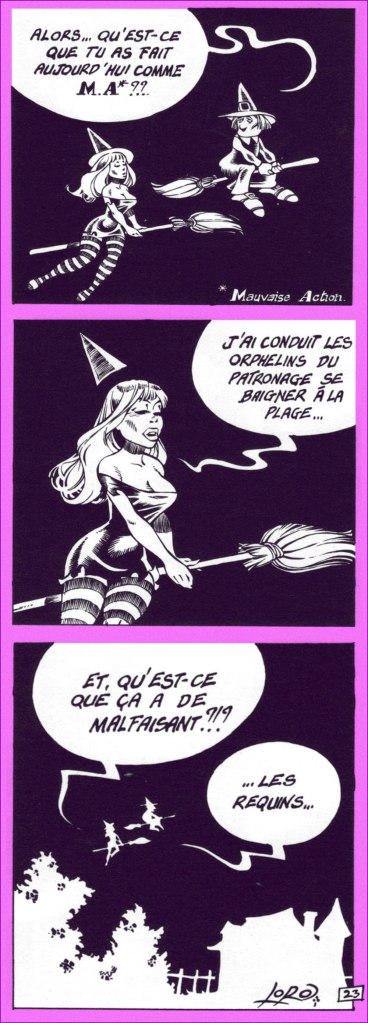
To be honest, while Loro’s artwork was often inspired, Déboires’ gags mostly fell flat; I presume that the creators had no idea how hoary these monster jokes had become, not having been exposed to the likes of Famous Monsters of Filmland, Topps’ ‘You’ll Die Laughing‘ card set, Mad, Cracked, Sick… and all the glut of parody mags. However, Loro was for a time — and right from the start — editor of the French edition of Warren’s Creepy, which was, imho, superior to the original thanks to better printing and, most significantly, its brand-new, first-rate documentary material created by Midi Minuit Fantastique alumni, replacing Warren’s cool, but repetitive in-house Captain Company adverts.
Here are the strips I consider standouts. Just a few years on, Loro would attain his peak with the early cases of gumshoe Abel Dopeulapeul, whom we’ve featured a few years back. Contrast and compare!
Volume one of Déboires d’outre-tombe (1981, Éditions du Cygne).Volume two of Déboires d’outre-tombe (1982, Éditions du Cygne).« You can tell a good workman by his tools!!! »Loro was clearly catching a lot of Hammer films of the era.The plot, in a nutshell: Bertille constantly henpecks her husband because of his general rakishness and lack of gainful employment. Oh, but he’s found a job, he claims. Just then, she’s anonymously denounced as a witch. « I told you, Bertille. You see… I’ve found some work. »« So, what have you done today as a bad action? » « I took the orphans from the youth club to the beach for a swim… » « And what’s so evil about that? » « The sharks… »
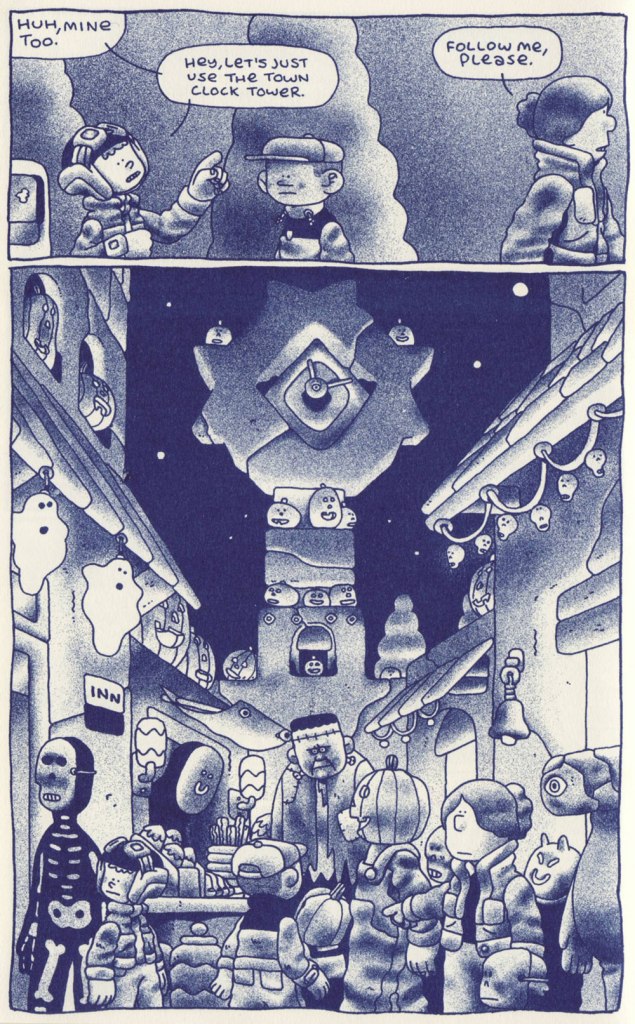
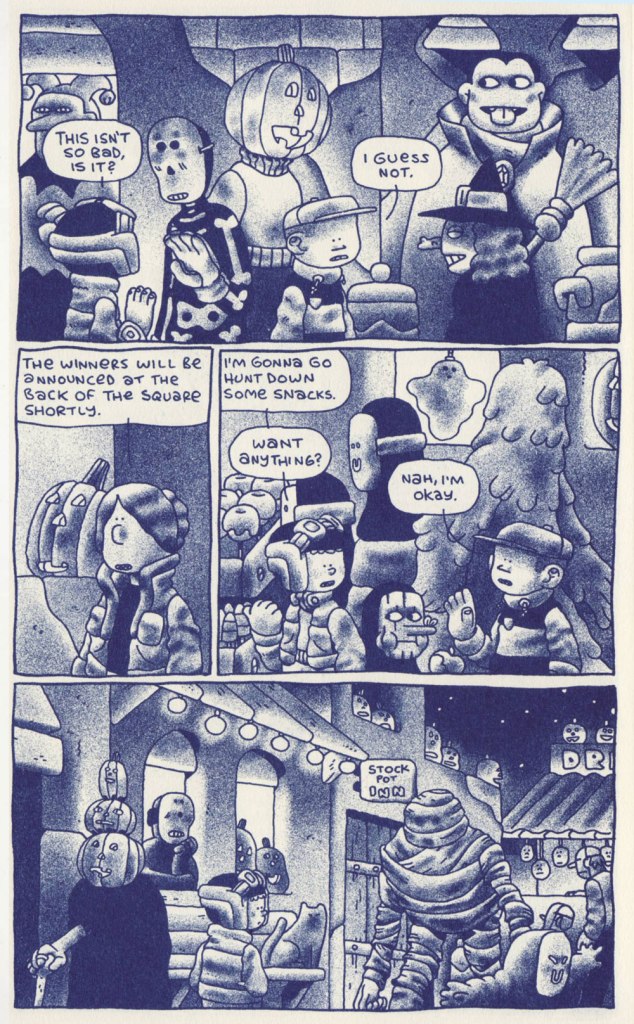
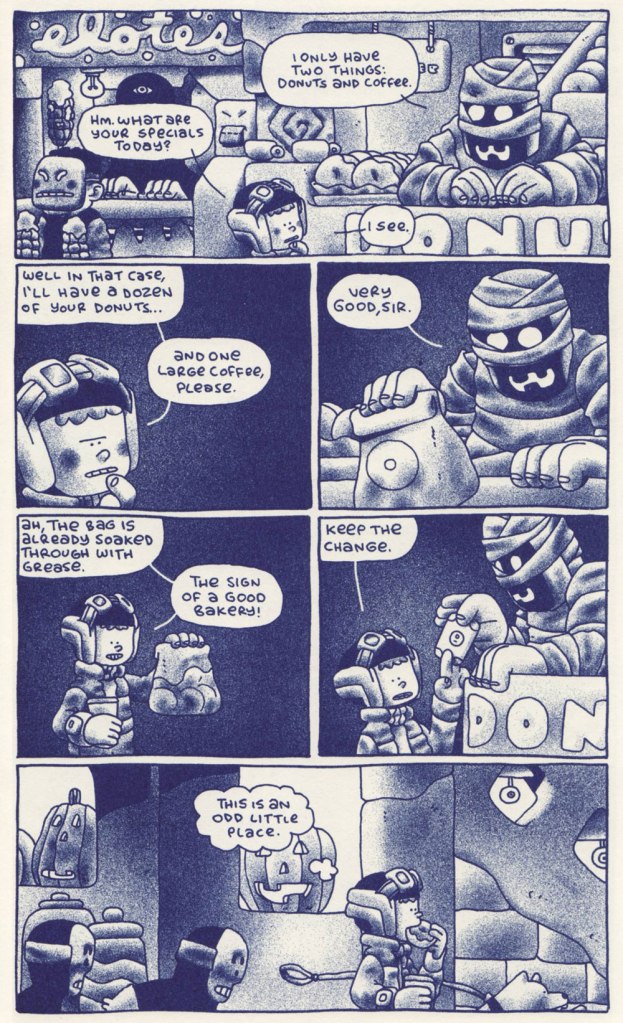
If you remember my enthusiastic blabbering about Ben Sears (see Convivial Meals, Spirited Skirmishes: Ben Sears’ Double+ Adventures if you don’t!), you may recall that I mentioned some self-published short stories featuring a trash cleanup robot, a cat and a bird. After writing that initial post, I ordered a few of these comics from Sears’ website, whatever was available at the time. Two of these stories are perfectly appropriate for Halloween (as a matter of fact, they’re now being touted as a Halloween Three Pack). Here are a couple of pages, then, from Petroleum Spirit Daze and The Sweeper & the Graveyard Shift, and after you’re done with soaking up some of that fog-bound atmosphere, head over and purchase a couple for yourself (as a matter of fact, I ordered a few more… writing for this blog is clearly detrimental to my budget, alas).
First up is Petroleum Spirit Daze. It’s quite short, so it was a bit difficult to choose some pages without revealing the plot, but I think the following give a good sense of the story’s expert cocktail of spooky shenanigans tempered with the spirit of adventure and a solid moral compass. Like most Sears narratives, this one would surely interest kids (thanks to the young protagonist as well as easy, evenly-paced storytelling) and unjaded adults alike. Personally, I think Halloween is best appreciated through the eyes of somebody who can still marvel at some bat-shaped shadows or a lit-up pumpkin.
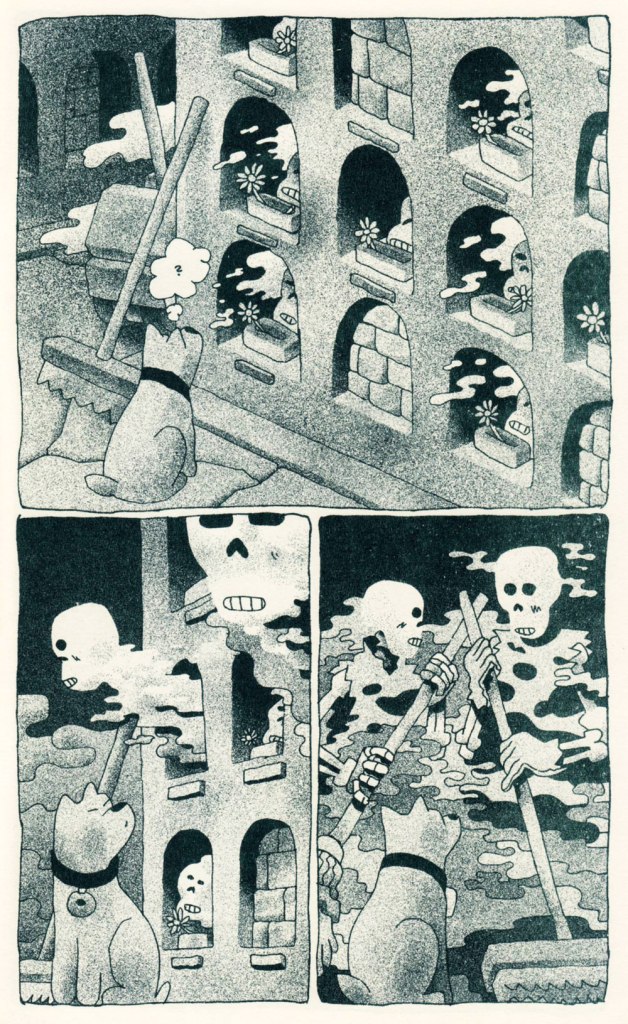
The second offering today is mute, The Sweeper & the Graveyard Shift, 2021. « The Sweeper gang has relocated to Bolt City, and added a new member: Rocky the dog. Their first job is to clean the run-down cemetery outside of town. What will they find after the gates close and the sun goes down? » As with a lot of Ben Sears offerings, I kind of want to inhabit that world, where one can roam with an animal-and-robot crew, all corners are pleasingly rounded (even furniture – no more bruises when accidentally crashing into a sharp corner!), and ghosts float about after midnight to ensure their graveyard is properly cleaned.
« I didn’t say she was dead, I said I killed her. » — Barnabas Collins
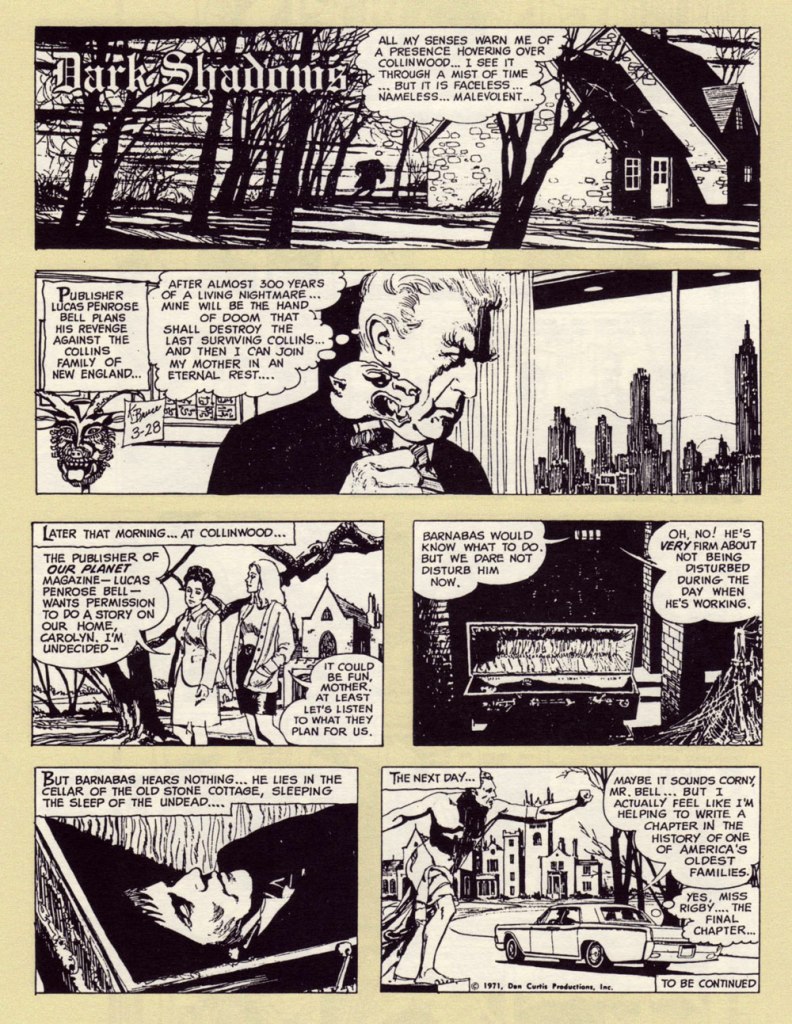
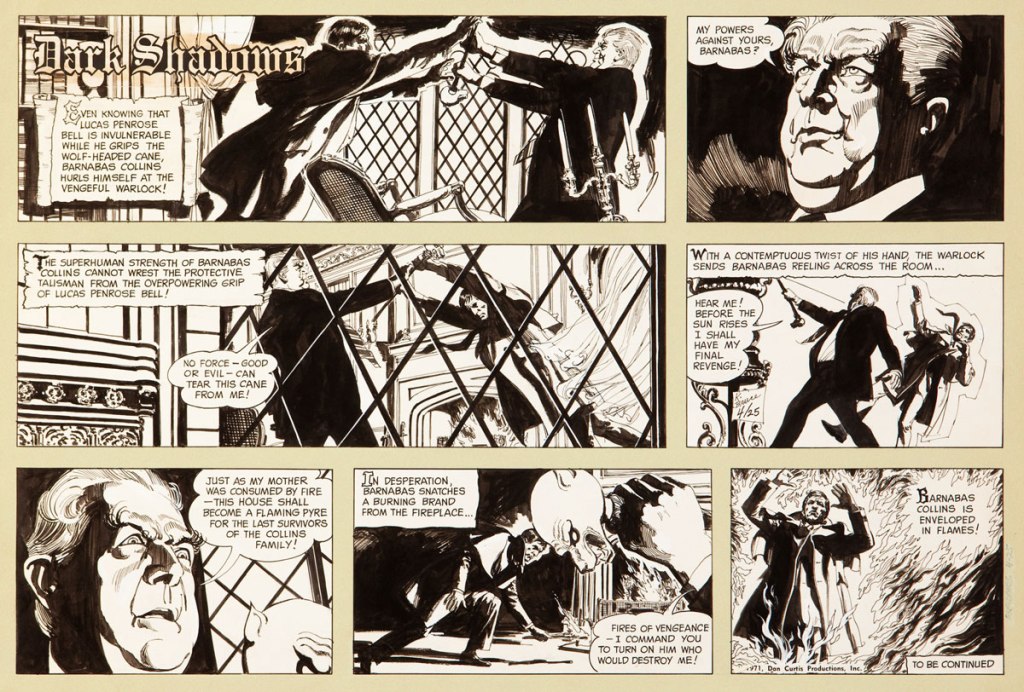
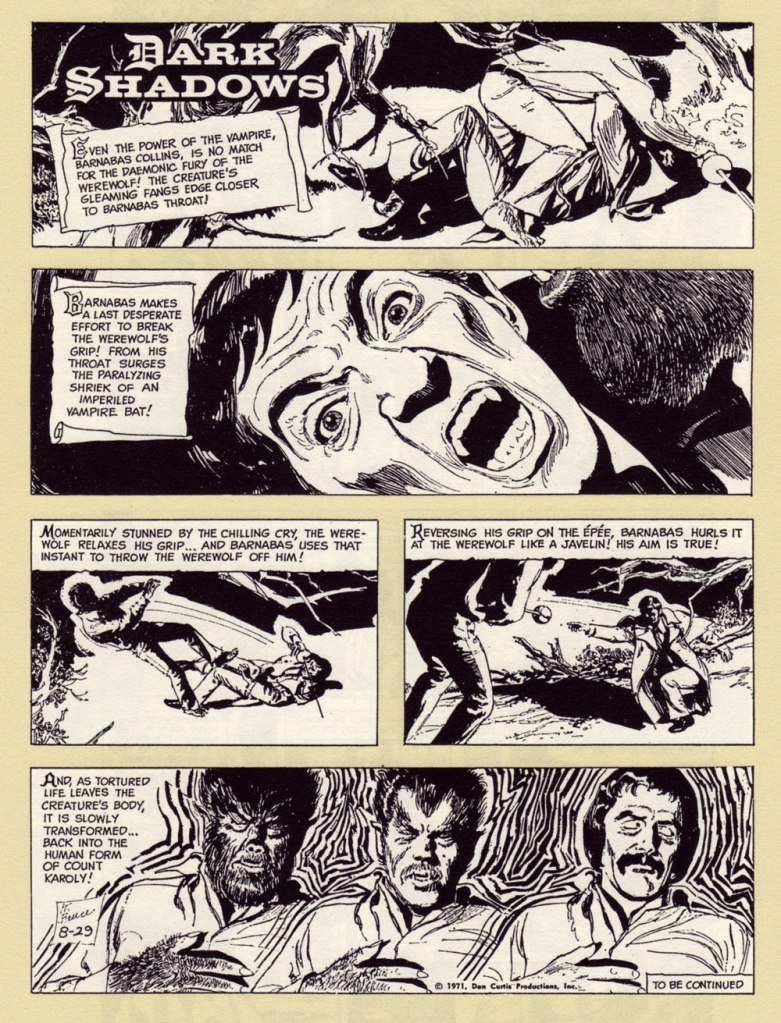
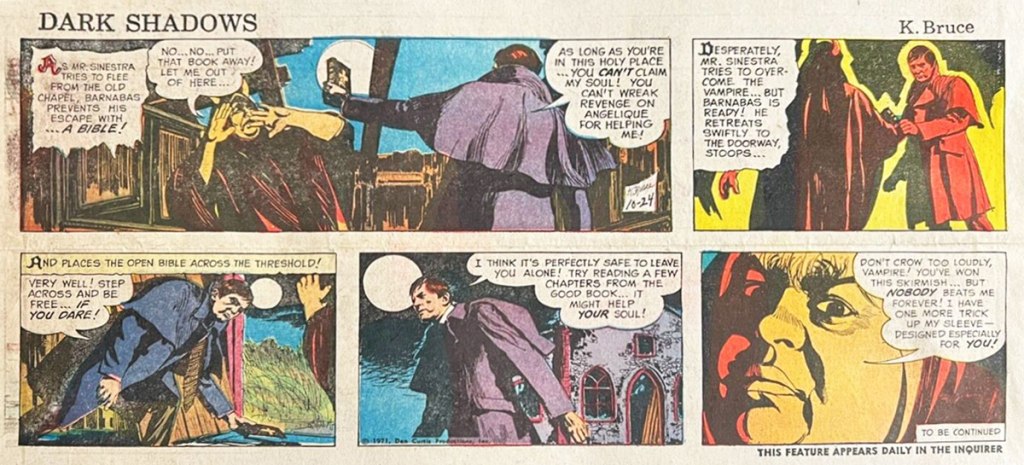
… and speaking of that tormented bloodsucker, Mr. Barnabas Collins — mentioned in passing just yesterday — here’s a look at the short-lived (fifty-two contracted-for weeks, just like Daniel Pinkwater and Tony Auth’s Norb) syndicated strip that appeared at the tail end of Dan Curtis‘ preeminent supernatural soap opera‘s run (1966-71). The strip was likely scripted — at least in part — by Little Abner creator Al Capp‘s prolific brother Elliot Caplin (who also had a hand in the creation of Russell Myers’ Broom Hilda around the same time!)
Dark Shadows, the comic strip, was illustrated by veteran cartoonist Kenneth Bald (1920-2019), who’d worked for Fawcett, ACG and Atlas before judiciously decamping to the more rewarding and respectable milieu of syndicated newspaper strips, first with Judd Saxon (1957-1963) and then with Doctor Kildare (1962-1984).
The March 28, 1971 strip. While I’m not inclined towards photo-aided realism in comics, Bald was such a master of the mise-en-scène — that is to say layout and pacing, that he rarely failed to draw me in, as opposed to, say, more acclaimed photo reference addicts such as Al Williamson or Gray Morrow. April 25, 1971.June 6, 1971.July 11, 1971.August 29, 1971.
December 12, 1971. Richard Howell explains: « The Dark Shadows strip also invoked a very unusual use of coloring techniques (for the Sunday instalment), which eschewed a realistic look in favor of underscoring the strip’s mood (including a meaningful experimentation with color knock-outs done in harmonious gradations in the same color families). The first two Sundays were colored by Bald himself, who gave it up due to dissatisfaction after seeing the printed versions, and the extensive amount of time it took him to achieve the color effects he wanted. »
Here’s a trio of examples as they showed up in (news)print.
May 2, 1971.September 26, 1971.October 24, 1971.In 1996, the strip was collected in more than satisfactory fashion by Pomegranate Press — colour might have been financially prohibitive — in no small part thanks to superb documentary material provided by Ken Bald and cartoonist and longtime DS fan Richard Howell. An actual fan, unlike, say, Tim Burton*.
-RG
*despite getting a free pass to see it, the abomination that was Burton and Depp’s franchise-murdering Dark Shadows (2012) made me want to scream for a refund. Or the perpetrators’ heads on spikes.
The 1965-1975 decade sure provided popular culture with a generous array of unforgettable vampires, among them Barnabas Collins (1967), Count Chocula (1971), Con Von Count and Blacula, both 1972… and of course the ever-playful Count Morbida (1974).
Five years to the day, we have been granted (mercy me!) another audience with that most colourful of neck-nibblers — do watch out, he’s quite a tricky one!
An earlier, darker (so to speak) version of Morbida, which appeared in Dynamite no. 5 (Nov. 1974, Scholastic). All text by Linda Williams Aber and illustrations by Arthur Friedman.The Count tries his hand at operating a fruit stand in Dynamite no. 21 (March 1976, Scholastic).Morbida went to the hop in Dynamite no. 24 (June 1976, Scholastic), cover-featuring Elvis the Pelvis.This lovely Holiday greeting card was provided with Dynamite no. 30 (Dec. 1976, Scholastic). The Count is all at sea in Dynamite no. 33 (March 1977, Scholastic), which cover-featured The Captain and Tennille!This sheet of party stickers was throw in with Dynamite no. 12 (June 1975, Scholastic), which cover-featured the good Count.
« Insanity is believing your hallucinations are real. Religion is believing that other peoples’ hallucinations are real. » — Dan Barker
When they talk about ‘adult comics’, they mean this — as opposed to ‘comics for randy teenage boys’. By ‘this’, I refer to adaptations of slow-burning psychological horror (or ‘anguish’, really) novels. These weren’t often about literal demons and ghouls, they were about people slowly but surely losing their grip on reality, through natural circumstances or, in a yet more sinister vein, the process of being gaslit by malevolent parties.
These comics are often extremely understated, and I stayed well away from them as a kid, not that I would have understood what they were about. Returning to them, I’ve come to appreciate their low-key, droning power of fascination.
This is Hallucinations no. 2 (Sept. 1969, Arédit). Cover artist unknown. The prolific horror and SF writer André Caroff was a nom de plume of André Carpouzis.This is Hallucinations no. 6 (Sept. 1970, Arédit). The splendid cover painting is the work of Carlo Jacono (thanks for the ID, Caspar!) and the insides by prolific Spanish cartoonist Adolfo Buylla (1927-1998), who contributed to Gold Key’s spooky titles in the 1970s. Marc Agapit was one of the literary pseudonyms used by Adrien Sobra (1897-1985). This is Hallucinations no. 10 (July 1971, Arédit). Cover artist unknown. Maurice Limat (1914-2002) was another busy — but sometimes excellent — writer of SF, crime and horror.
Batelier de la nuit (“Night Boatman”) was also illustrated by Mr. Buylla. Here’s a pair of moody pages involving — of course — hallucinations.
This is Hallucinations no. 12 (Nov. 1971, Arédit). Cover artist unknown. The series must have met with some success, as its publishing frequency increased from quarterly to bi-monthly. I swear I recognise that style; around 1980, I had a European sticker album of spooky scenes that this artist illustrated. I’ll dig it up yet…
A decade ago, I got my hands on some original art from issue 53 of Hallucinations, “L’orgue de l’épouvante” (“Organ of Terror”, 1975), illustrated by Belgian cartoonist Jean Pleyers, and adapted from Jean Murelli’s novel.
Since I own only six pages of the 200+ tale, I have no solid idea what’s going on, but it’s intriguing. I’ve spotted a cheap copy and should soon be able to fill in the blanks. Here’s a plot blurb: « Reporter Luc Rohard is a hardcore skeptic who refuses to view his colleague Vérac’s disappearance in supernatural terms. His investigation leads him to a small village in which has retired sinister doctor Domitis. Is the latter a mad criminal who’s lost his mind in the course of obscure experiments on the human mind, or…? But who shall ever know the truth about the Vampire of the abbey and his troubling companion? » Cover painting by Michel Gourdon (1925-2011).
« Physics should represent a reality in time and space, free from spooky action at a distance. » — Walter Isaacson
Who’s my favorite Batman foil? Why, The Spook, of course! A brilliant and patient (but twisted, natch) planner, engineer, escape artist and… businessman Val Kaliban was a most worthy opponent for the Batman in detective mode. Let’s sneak a gander at his earliest and most significant appearances.
This is Detective Comics no. 434 (Apr. 1973, DC). A middling cover, certainly not Michael Kaluta‘s best Batman cover… nor his worst. I mean, what’s Batman’s left leg doing exactly?
Here’s a fun sequence from the issue’s The Spook That Stalked Batman, scripted by Frank Robbins, pencilled by Irv Novick and inked by Dick Giordano.
This is Detective Comics no. 435 (June-July 1973, DC); an okay cover by Dick Giordano.Ah, finally… The Spook gets a cover worthy of his mettle. This is Batman no. 252 (Oct. 1973), cover design by Carmine Infantino, pencils and inks by Nick Cardy, and lettering by Gaspar Saladino (well worth mentioning!)
A pair of pages from the issue:
This is Batman no. 276 (June 1976, DC). For the first time, someone other than his creator, Mr. Robbins, handles The Spook. Fortunately, it was talented scribe David Vern (writing as David V. Reed), quite possibly my favourite Batman writer. A fine, moody cover by Ernie Chan.The Spook’s following appearance, in which Dick Giordano demonstrated he could come up with a crappy Andru-Giordano cover… all on his own. This is Detective Comics no. 488 (Feb.-Mar. 1980, DC).
The Spook’s Death Sentence for Batman, written by Cary Burkett, pencilled and inked by the splendid team of Don Newton and Dan Adkins, was a worthy send-off for this fine character. Beyond that… I don’t much care. The Spook is a difficult personage to write for, but he got three solid writers to chronicle his exploits, and that suits me just fine.
My curiosity about this title was piqued at an early age, when tiny-but-alluring reproductions of some of its covers ran in editions of The Overstreet Comic Book price guide.
Here they all are, nice and big and colourful. Oh, and you can read them all here for free!
This is Adventures Into Darkness no. 5 — the first issue — don’t ask — (Aug. 1952, Standard). Cover by George Roussos (1915-2000).This low-key entry is Adventures Into Darkness no. 6 (Oct. 1952, Standard). Cover by George Roussos. Though unspectacular, this theme would be taken up and imitated (with variations) a bunch of times, which goes to demonstrate some folk’s morbid fear of marriage.This is Adventures Into Darkness no. 7 (Dec. 1952, Standard). Cover by the remarkably driven Jack Katz (b. 1927)… a most interesting man.This is Adventures Into Darkness no. 8 (Feb. 1953, Standard). Cover by future Charlton Comics pillar Rocco “Rocke” Mastroserio, already showing his tremendous potential as a cover creator. One of my all-time favourite bloggers (et cetera!) Jason Willis, loved this cover so much that he used it to create a bonafide animated commercial for the issue! Bless you, Jason!This is Adventures Into Darkness no. 9 (Apr. 1953, Standard). Cover artist unknown… and what’s going on here? Did the femme fatale turn her unsuspecting victim into a werewolf, or did she doom him with a deadly dose of acid or some other poison?This is Adventures Into Darkness no. 10 (June 1953, Standard). Cover by Ross Andru… possibly my very favourite cover of his — lord knows he dragged his reputation through forty miles of bad road with his dire late 1970s work at DC.This is Adventures Into Darkness no. 11 (Sept. 1953, Standard). And we’re back to Mr. Roussos, who provides more of a crime comic cover this time around. Still grisly, though!This is Adventures Into Darkness no. 12 (Dec. 1953, Standard). Cover by Mike Sekowsky… those cute little caps the mine demons are wearing are a bit of a Sekowsky trademark.
We skip over issue thirteen, not through superstition, but because it’s already been featured in our Mike Sekowsky spotlight — and with good cause, as it’s a spiffy one!
And finally, this is Adventures Into Darkness no. 14 (June 1954, Standard). Cover tentatively attributed to Ross Andru.
A fifteenth (well, eleventh, really) issue had been in the offing, but as censorship tore the comics industry apart in 1954, plans to publish it were abandoned… which brings us full circle to one of our earliest countdown posts on that very topic.