Treasured Stories: “I Wonder Who’s Squeezing Her Now?” (1979)

« When a man steals your wife, there is no better revenge than to let him keep her. » — Sacha Guitry

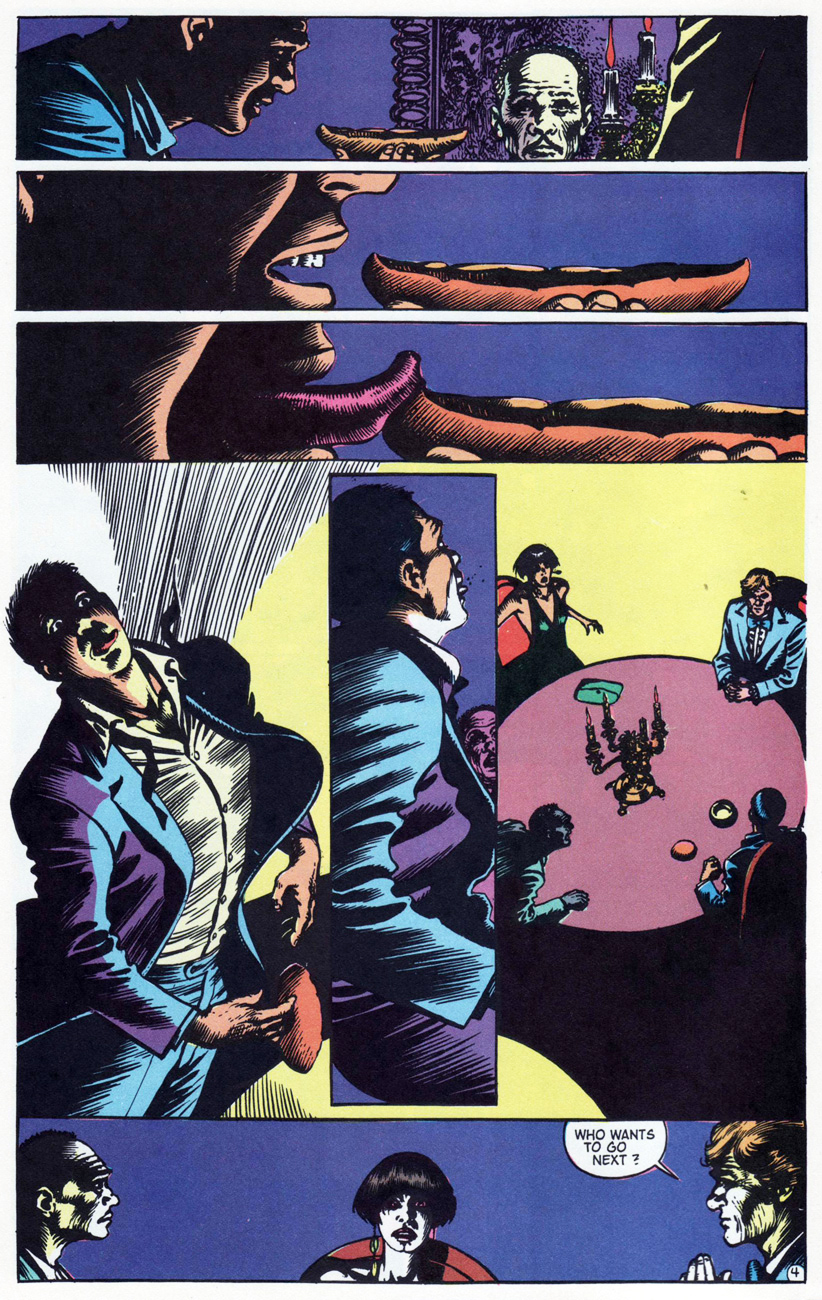
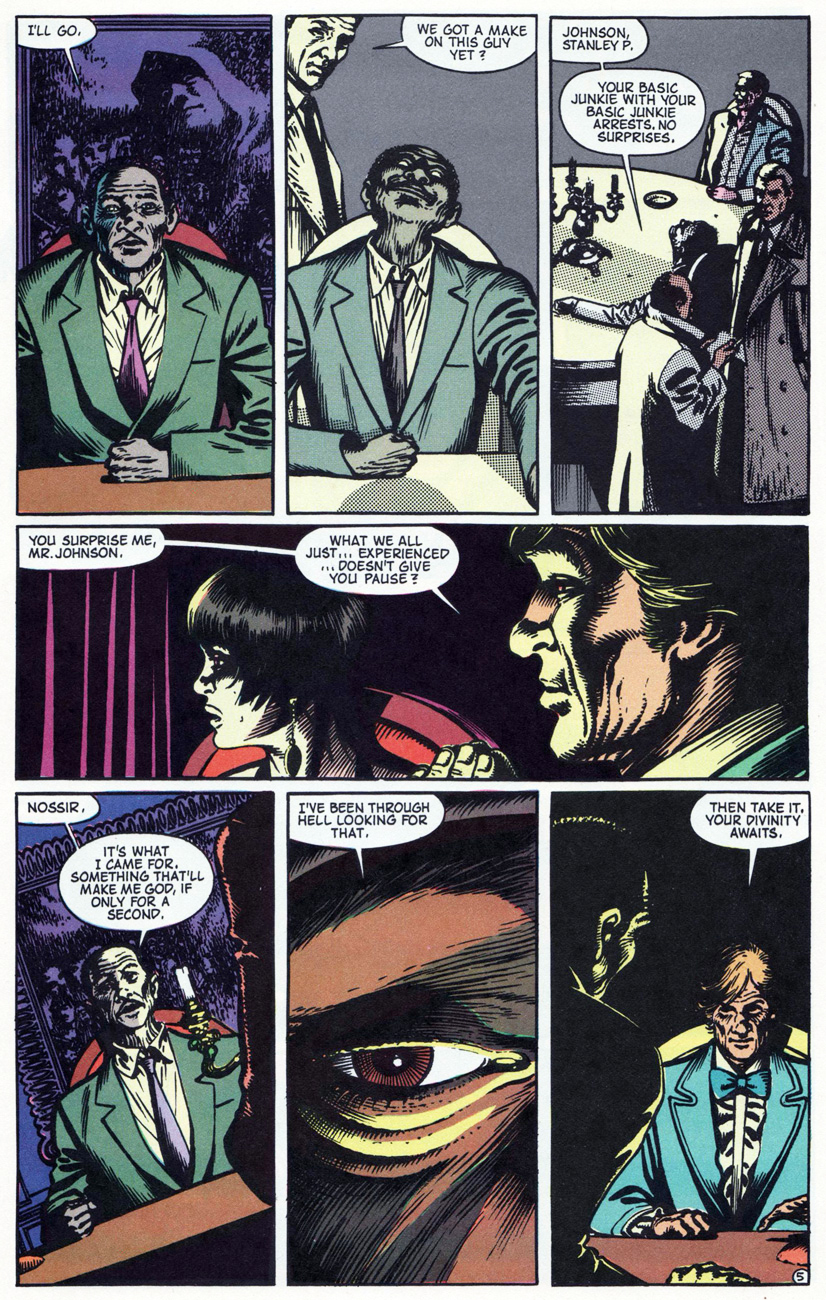
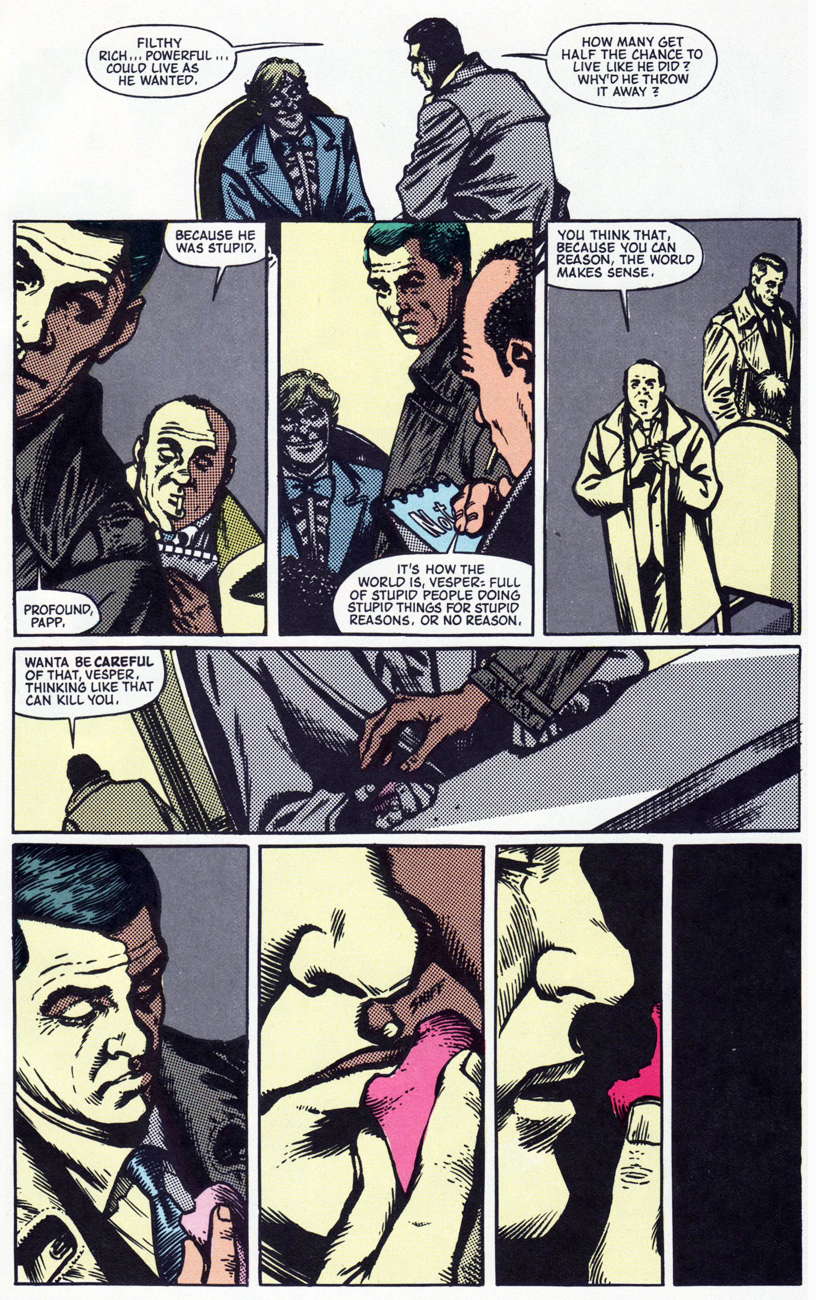
Here’s my contender for the most adult thing ever published in a Warren Magazine, as opposed to adolescent. It was also Wally Wood’s final significant contribution to his bibliography (though it was created around 1971); by the time of its belated publication Wood’s work had degenerated into depressing, crude porn before he tragically took his own life in November, 1981. As Witzend sadly proved, most comics creators, when handed a creative carte blanche, would merely regurgitate the same old thing they were doing for the mainstream, but with the addition of tits and/or gore. This, however, whilst featuring a generous dollop of T&A, is another breed of beast. It was published, of all places, in Warren’s SF anthology 1984 (issue 5, Feb. 1979). Go figure.

IWonderWho01AIWonderWho02AIWonderWho03AIWonderWho04AIWonderWho05AIWonderWho06AIWonderWho07AThe marvellous Bhob Stewart queried Nick Cuti about the story during a roundtable gathering of former Wood assistants in Derby, Connecticut, in July 1985. The discussion later appeared in Against the Grain: MAD Artist Wallace Wood, edited by Stewart (2003, TwoMorrows Publishing)

Bhob: You worked on “Last Train to Laurelhurst“? [the story’s original title]
Cuti: « As a matter of fact, I’m in it on the opening page. That’s me — right there [points to foreground figure in splash.] I used to wear muttonchops in those days. We wrote that together; Woody came up with the basic storyline, and I wrote a lot of dialogue. I hated his ending. I said, ‘Woody, you really ought to change the ending.’ The ending was that the guy blasted his faithless wife and her lover and then walked away. I said, ‘Gee, that’s what he’s intending to do in the very beginning. There’s no switch at the end. If you change it around somehow, it would make it a little bit more surprising.’ So he went home and rewrote the ending. I thought that the ending he came up with was far superior and made it a really brilliant story, to really tell you what life can be like.

Ernie Colón did the pencils. It was Woody’s idea, and I wrote some of the script, I don’t know how much because we used to toss things back and forth all the time when I was at the studio.It was for a magazine called Pow that never came to be. [Jim] Warren had approached Wood to do an adult humor magazine which would have had serious stories, very sexy, something that adults would enjoy reading. Unfortunately, Woody and Warren had diametrically opposed personalities, and they couldn’t seem to get together on it.

There was a funny story: Ernie had done the pencils with a soft pencil, and Woody and I were wondering what the heck we could do to make sure it didn’t get smudged. I was very carefully going over the pencils with an eraser to get out the smudges. I came in the next day with the pencils and said, ‘I found the perfect way to avoid smudging the pencils.’ Woody said, ‘What?’ And I said, ‘I sprayed them.’ Woody’s face dropped, and he almost reached over the strangle me before I stopped him and said, ‘Hey, Woody, I’m only kidding!’ [laughter] Because when you spray something, you can’t erase the pencils any more. You would have ink and pencil on the same paper. He almost had a heart attack right there; his mouth dropped open, and he said, ‘Oh, no!’ Then he started laughing after I told him it was only a joke. Later, when I walked into the house, and Marilyn said, ‘Oh, Woody, Nick’s here. You know, the fellow who sprays all your pencils?’ Obviously, he had thought enough of the joke to tell her about it. »

Speaking of Pow, here’s a cover sketch Wood did in 1971.WallyWoodPowRoughAAn adult humour magazine? I guess they hadn’t quite settled on the tone.

-RG

Treasured Stories: “American Squalor” (1988)

« People think the show gave Letterman an opportunity, but they don’t see the table with 10 guys in shorts wearing baseball caps pitching jokes for things for him to say. They don’t see the index cards that say: ‘Ask this first.’ It’s all spelled out for him, and everything is pre-interviews. He’s basically had to be this hand puppet, with everybody’s hands up his butt to tell him what to say and do. » — Joyce Brabner on David Letterman

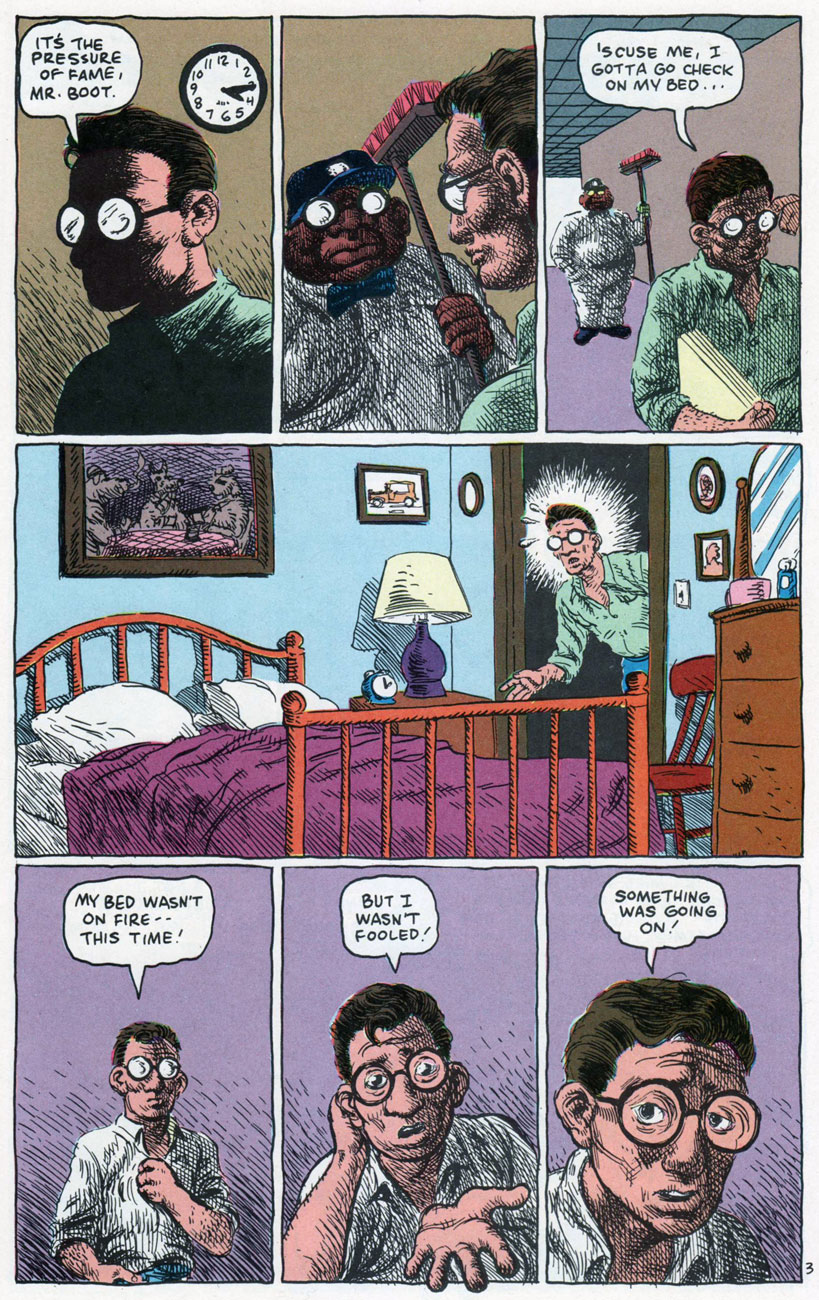
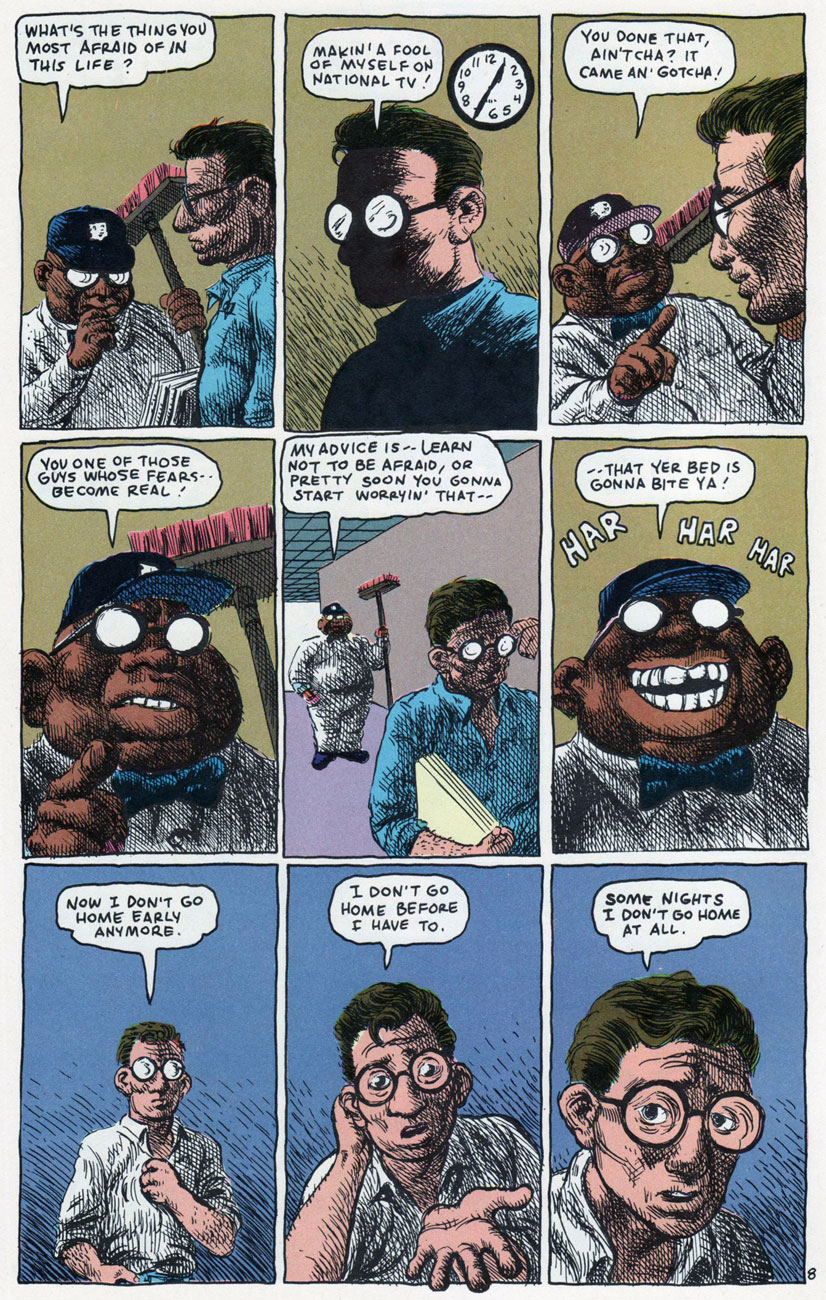
We already snuck a peek at the darker side of DC Comics’ short-lived ’80 mirage Wasteland (18 issues, 1987-89), but the title’s modus operandi was variety… within a set format. Here’s another highlight from one of the earliest and strongest issues, before its co-authors The Second City comedy legend Del Close and Grimjack co-creator John Ostrander lost the plot, interest, or both. This is American Squalor (Wasteland no. 3, Feb. 1988, DC Comics). The underrated Don Simpson, the Wasteland bullpen’s utility player, its most versatile and loyal member, gets to strut his stuff, albeit in a lovely Crumb ersatz, down to the lettering.

« Our next guest works as a file clerk at a Cleveland hospital… »

AmSqualor01AAmSqualor02AAmSqualor03AAmSqualor04AAmSqualor05AAmSqualor06AAmSqualor07AAmSqualor08AAmSqualor09A

What I find so impressive about this story is the scope of its ambition, fulfilled on several unlikely levels: it achieves success as a parody, a pastiche, a tribute, and as its own, standalone bit of workaday folk philosophy. Clearly, calling upon the trappings and rhythms of Crumb and Pekar’s American Splendor was just the starting point.

I’d love to track down (Close’s old Second City colleague) the Severn Darden monologue Close claims to have used as a springboard, but not everything was dutifully recorded for “posterity” in those days…

« I loved Harvey. He was a wonderful guest. The kind you don’t see anymore. The only real problem with Harvey was my immaturity. » — David Letterman

-RG

Treasured Stories: «Tex’s Bad Dream or ‘The Egg Lady’s Revenge’» (1988)

« You really saw that things were not at all what was portrayed in the mass media… at least not in our neighborhood. It was just a conclusion that most of the kids of that age came to, that things were extremely corrupt. » — Spain Rodriguez

While plenty of cartoonists trod the path of autobiography before him, it took Manuel ‘Spain’ Rodriguez (1940-2012) to truly show how it should be done: here at last was a genuine full-blooded practitioner, hardly content to merely observe from the sidelines, blending with the wallpaper. Lover, brawler, consummate graphic storyteller: a scarce combination indeed.

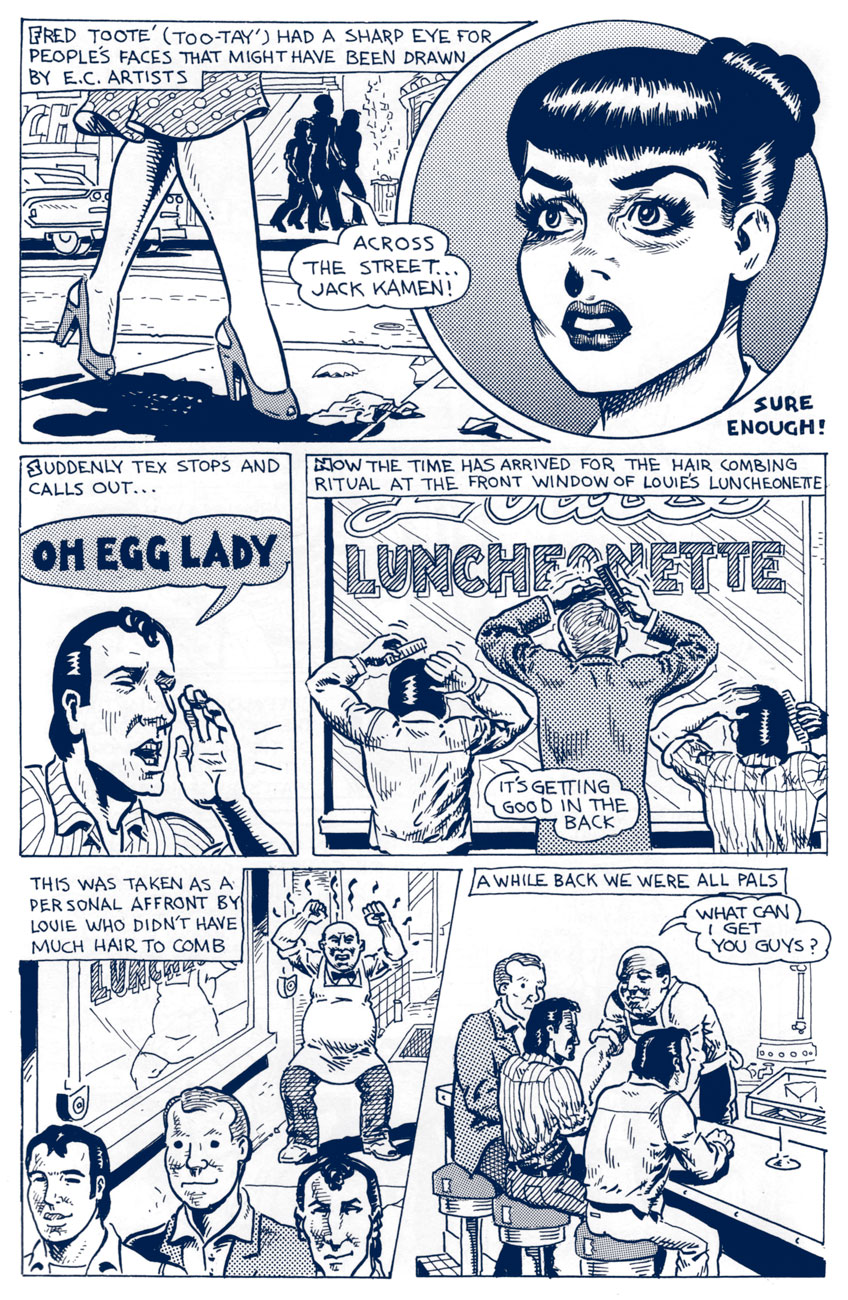
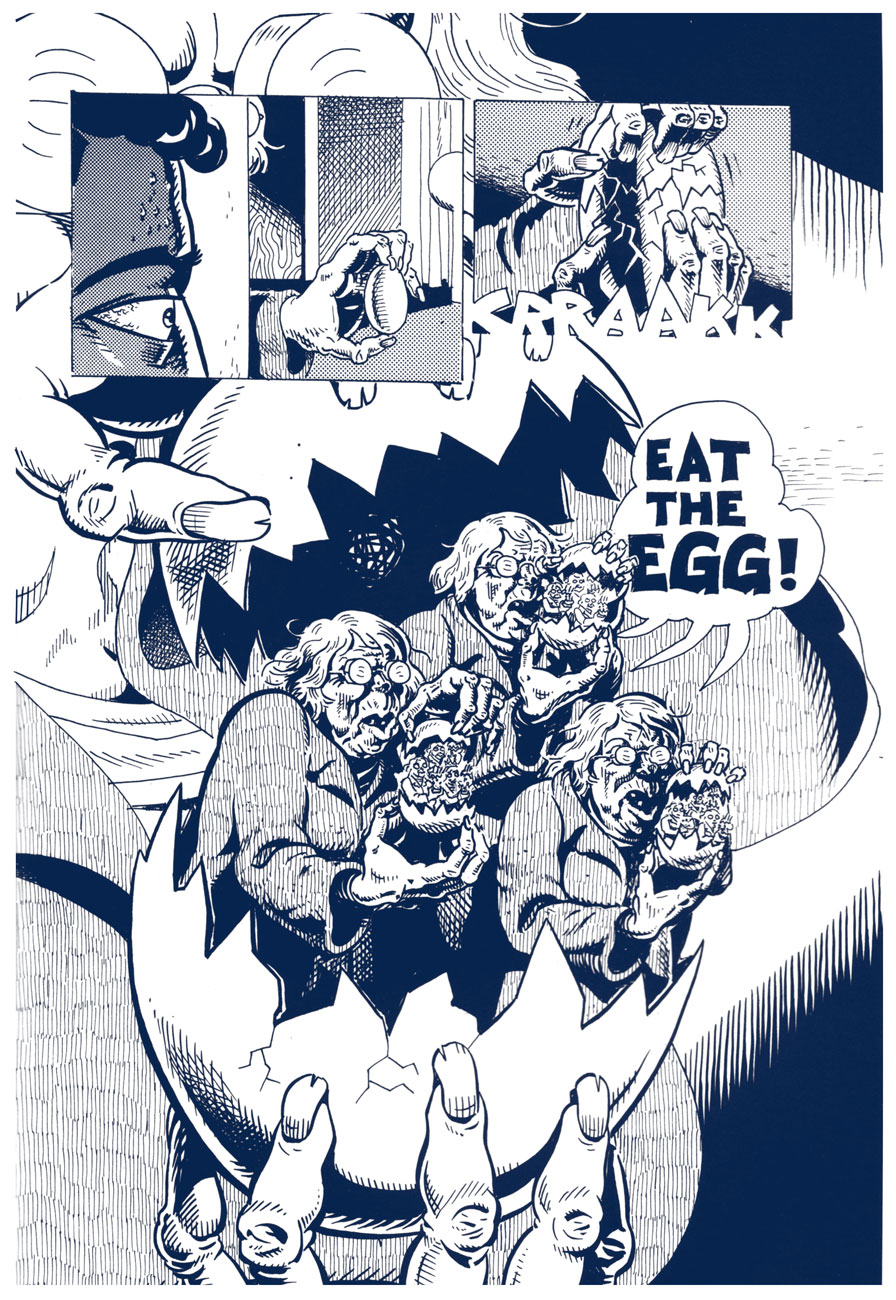
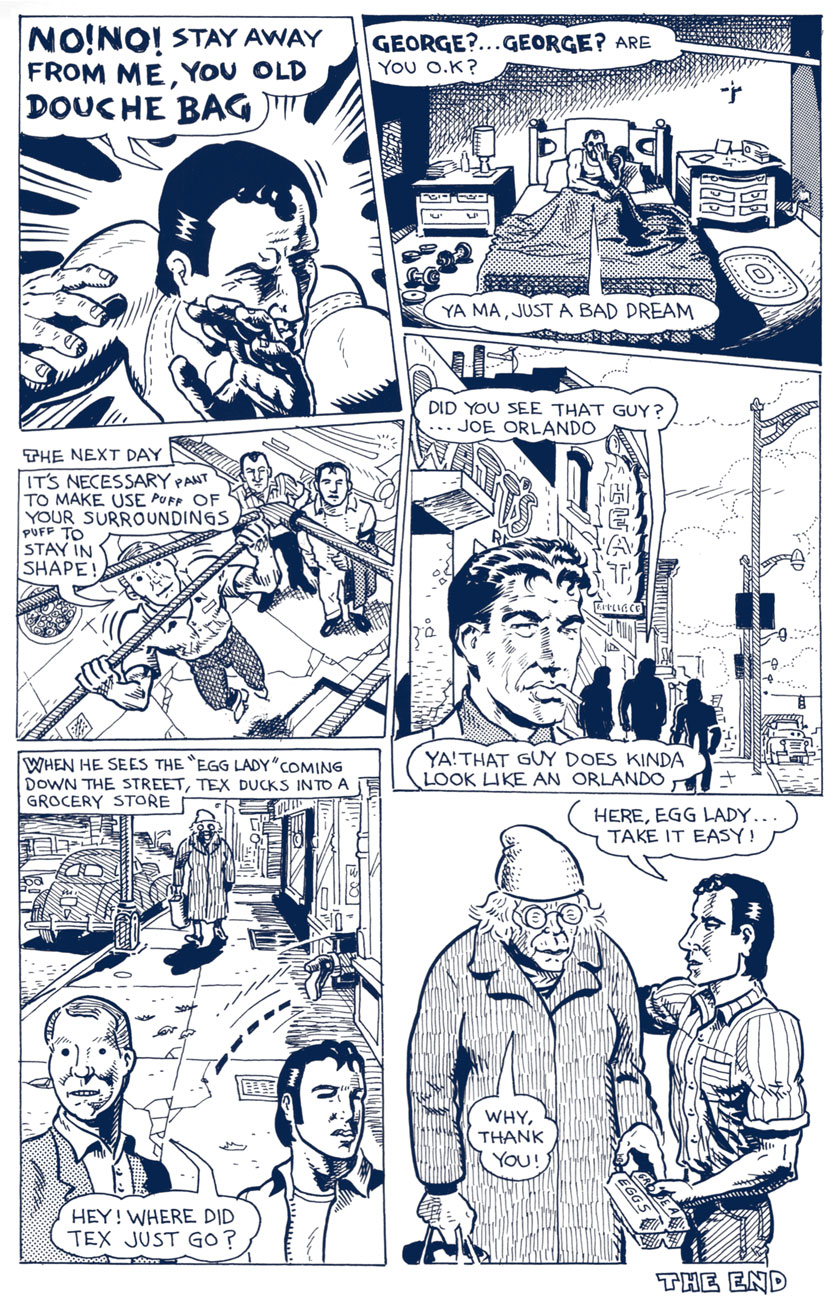
The following tale belongs to a cycle recounting the exploits and insights of The North Fillmore Intelligentsia, Spain’s closest compadres in Buffalo of the 1950s. Tex’s Bad Dream… originally appeared in Blab! No. 3 (Sept. 1988, Kitchen Sink Press); indeed, Spain’s recollections became, over time, the sole reason to purchase the once-excellent Blab! Mercifully, most of these were collected, in their usual exemplary fashion, by Fantagraphics, as Cruisin’ With the Hound (2012). You’ll still be lacking the mysteriously-omitted, quite essential « How I Almost Got Stomped to the “Still of the Night” by the “Five Satins » (Prime Cuts No. 2, Mar. 1987, Fantagraphics), which you can find in another Spain anthology, My True Story (1994, Fanta again).

In the meantime, enjoy, with my compliments, this true-life tale of original EC Fan-Addicts, facial restructuring, cautionary dreams, isometrics and pork sandwiches.

spainegg01aspainegg02aspainegg03aspainegg04aspainegg05aspainegg06aspainegg07aspainegg08a

-RG

Treasured Stories: “The Night Dancer!” (1972)

« If i should sleep with a lady called death… » – E.E. Cummings

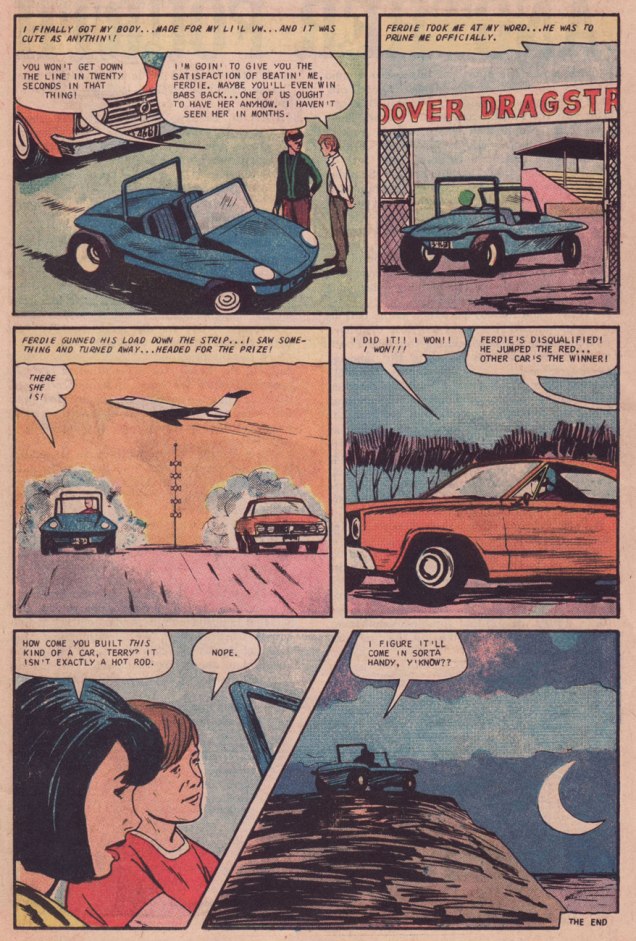
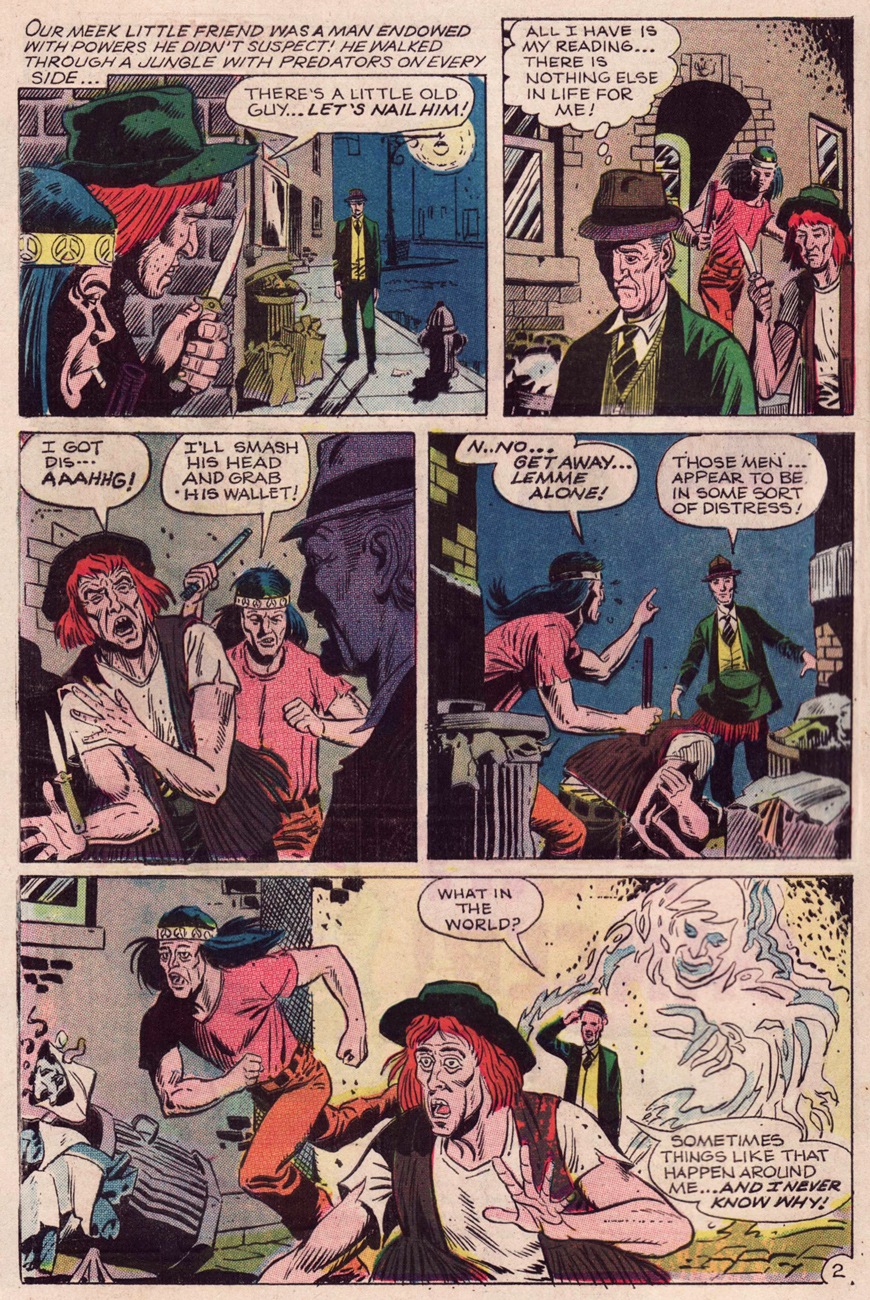
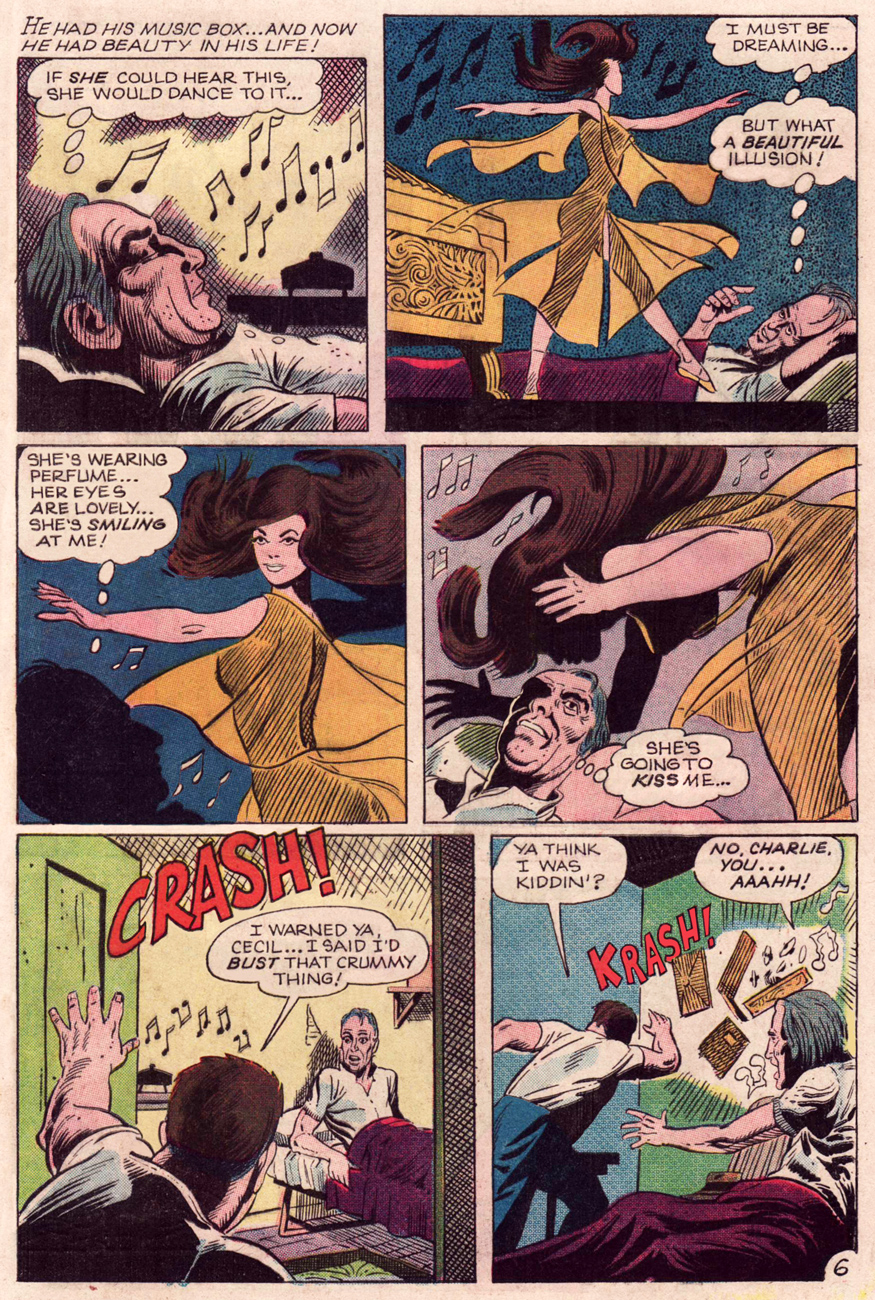
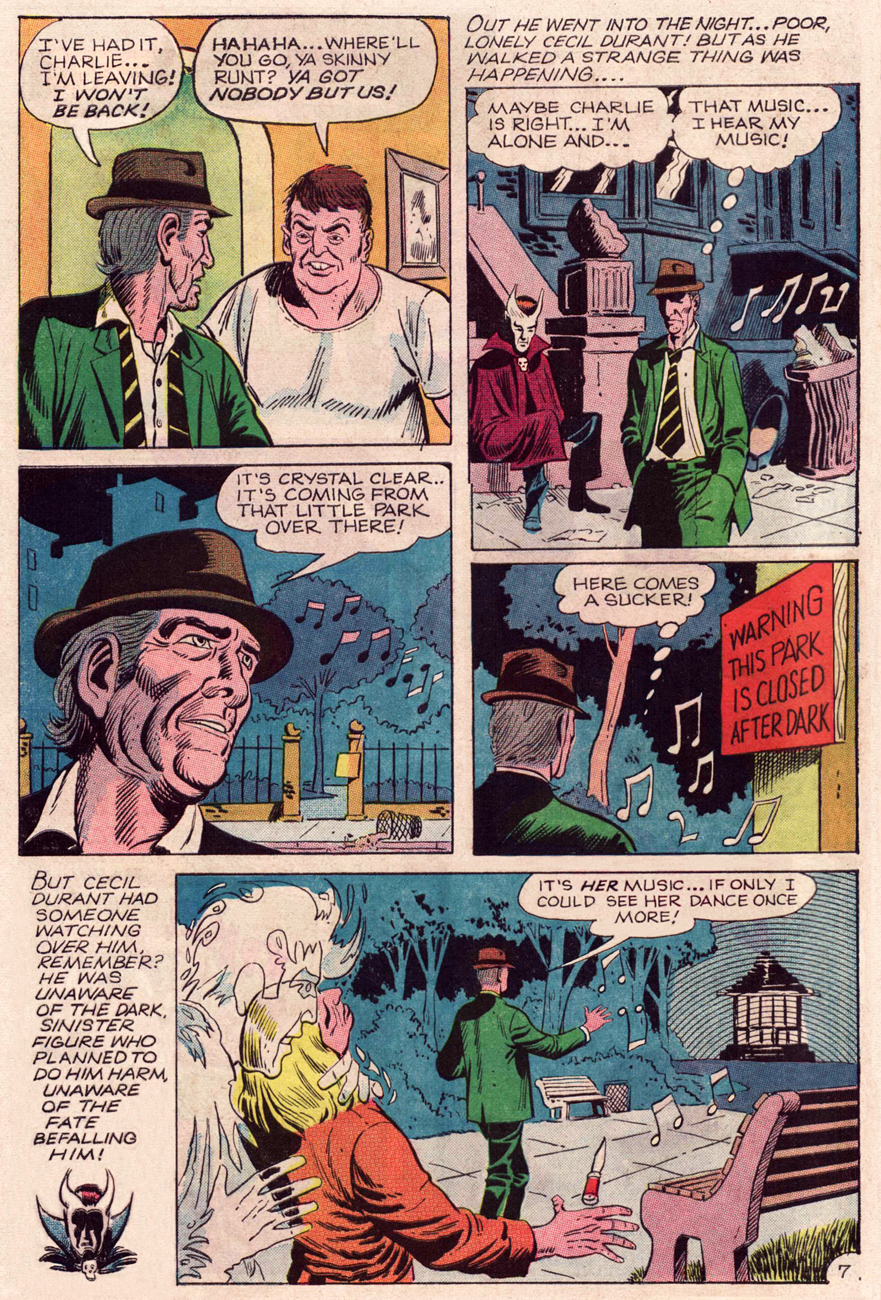
This time out, I’ve plucked a delicate story that’s resonated with me since our first encounter… somehow, the tragic plight of a lonely, vulnerable old man touched me deeply, even if I couldn’t have been more than ten years old when first I read it.

In the intervening years, witnessing the rise of elder abuse, the growing fragility of my own parents, and the sometimes desperate loneliness of acquaintances, old friends and strangers alike, Joe Gill and Don Perlin‘s The Night Dancer! (Ghostly Tales no. 99, Nov. 1972, Charlton) has steadily gained in poignancy. Its spirit, theme and mood remind me of some very fine tales by Joseph Payne Brennan*, who conveyed all too convincingly the quiet desperation of a near-destitute life lived with scant hope or companionship.

On a more cheerful note, it happens that (okay, it’s no accident) ‘Dauntless’ Don Perlin celebrates his eighty-ninth anniversary on this very day. While he’s most appreciated for his runs on Werewolf By Night, Ghost Rider, Moon Knight (his co-creation with writer Doug Moench) and The Defenders at Marvel Comics, I steadfastly cling to the notion that his finest efforts were brought to bear on hot rod and ghostly yarns for Charlton at the dawn of the 1970s. Judging by the results, I’d venture that he’s especially inspired by adventures set in the American Southwestern desert country. I’ll return to this topic in due time and present my case.

Without further tarrying ‘n’ foot dragging, meet our hapless protagonist, Cecil Durant… and his tormentors and benefactors.

PerlinDancer01APerlinDancer02APerlinDancer03APerlinDancer04APerlinDancer05APerlinDancer06APerlinDancer07APerlinDancer08A

While Mr. Perlin never became a superstar (and I suspect it never was his goal), the longevity of his career is easily explained: solid craft, excellent storytelling skills, a clean, unfussy line, and of course that supreme asset: reliability. Incidentally, co-credited Howard Perlin was Don’s young son, who was helping dad out around the studio that day.

Yom hu’ledet sameach, Mr. Perlin… and many happy returns!

– RG

*particularly The Way to the Attic (1967) and Mrs. Clendon’s Place (1984)

Treasured Stories: “Foo Goo” (1987)

« But observers say it is unlikely to slow down the consumption of fugu* »

DC’s Wasteland** (1987-89) was, to my mind, the publisher’s finest-ever horror anthology… for a handful of issues. While the experiment lasted but a couple of years, and it was mercifully, if a little late, put out to pasture.

To compensate for the usually uneven, often random nature of anthologies, the book was to be scripted by just two writers (John Ostrander and the fascinating Del Close) and illustrated by a carefully-picked skeleton crew of artists, namely George Freeman, David Lloyd, William Messner-Loebs and Don Simpson. Perhaps the vetting process wasn’t sufficiently thorough, though, because Freeman dropped out after a mere seven issues and one more cover, and Lloyd followed suit before the year was through. With proper bullpen substitutions, things might have run smoothly, but of all the ringers brought in, only Ty Templeton rose to the challenge, his sneakily clean-cut style providing ideal contrast and tension to issue 11’s nasty tale of Dissecting Mister Fleming, sadly the series’ final flash of brilliance… with seven dead horse issues left to flog.

But those early issues were, for the most part, quite glorious. Simpson and Lloyd landed the lion’s share of the very best tales, Simpson because he was most versatile, and Lloyd since he excelled at instilling the bleakest, most unsettling ambiances.

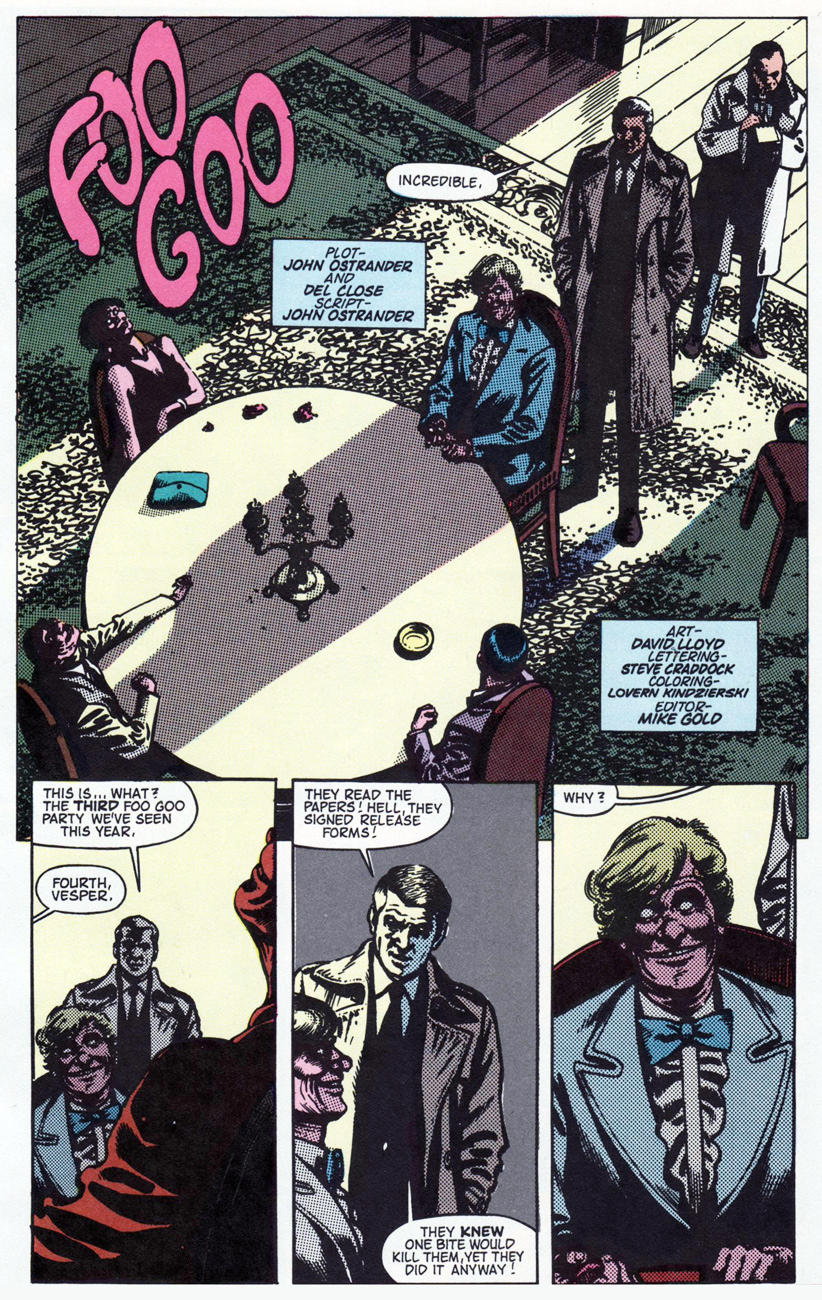
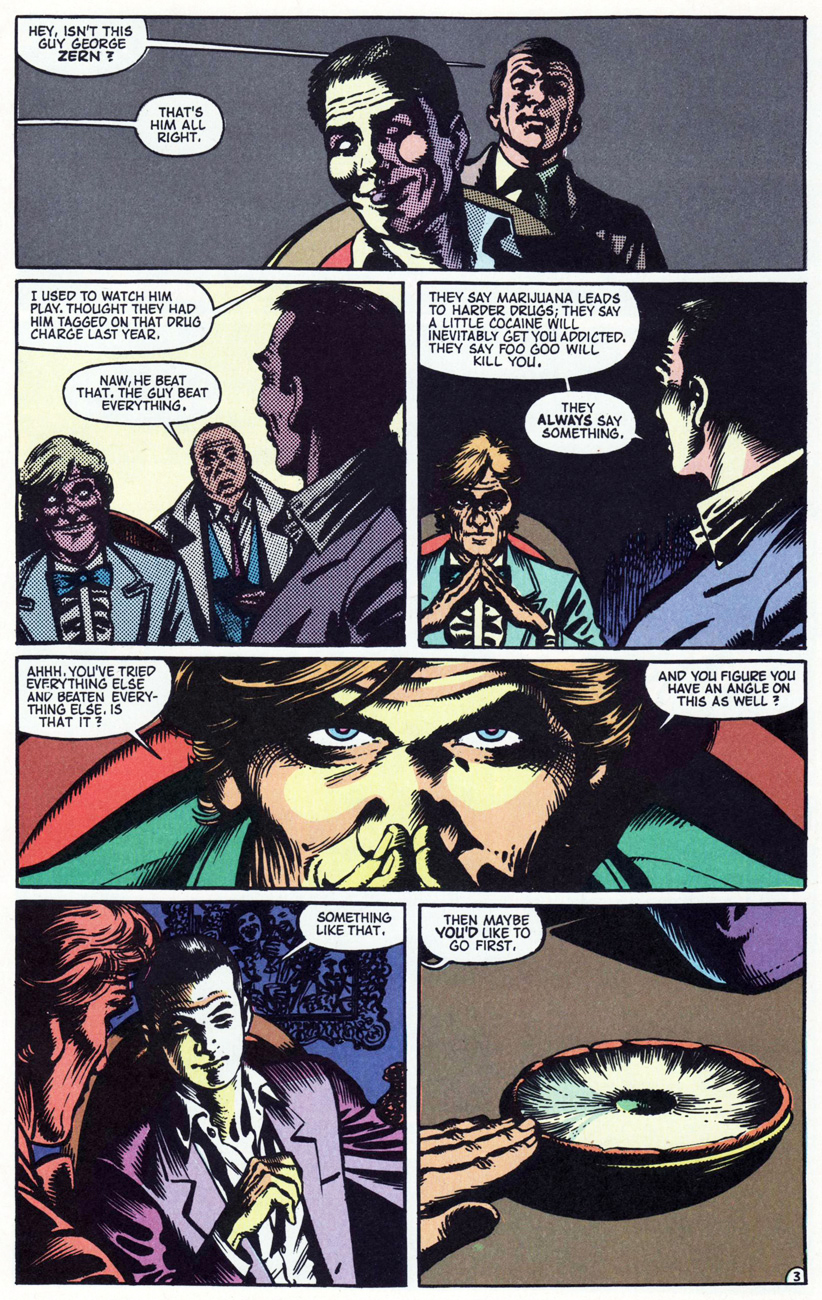
Today, we present Wasteland’s opening salvo, Foo Goo (Wasteland no.1, Dec. 1987, DC), by Ostrander, Close and Lloyd. Bon appétit!

FooGoo01AFooGoo02AFooGoo03AFooGoo04AFooGoo05AFooGoo06AFooGoo07AFooGoo08AFooGoo09A

The title, despite denoting a fictive species of fungus, is clearly a reference to the virulently-toxic liver of the globefish, pufferfish, or fugu… which is also, of course, a costly delicacy. It merely needs to be expertly prepared.

I first came upon this intriguing factoid in 1975, when a famous Kabuki performer, Bandō Mitsugorō VIII, presumed he could beat the odds. « In January 1975, Bandō visited a Kyoto restaurant with friends and ordered four portions of fugu kimo, the liver of the fugu fish, a dish whose sale was prohibited by local ordinances at the time. Claiming that he could survive the fish’s poison, he ate the livers and died after returning to his hotel room, after seven hours of paralysis and convulsions. »

-RG

*”Japanese Actor Poisoned“, The Leader-Post (Regina, SK), Jan. 20, 1975
**Not to be confused with the national capital of the United States of America

Treasured Stories: “August Heat” (1973)

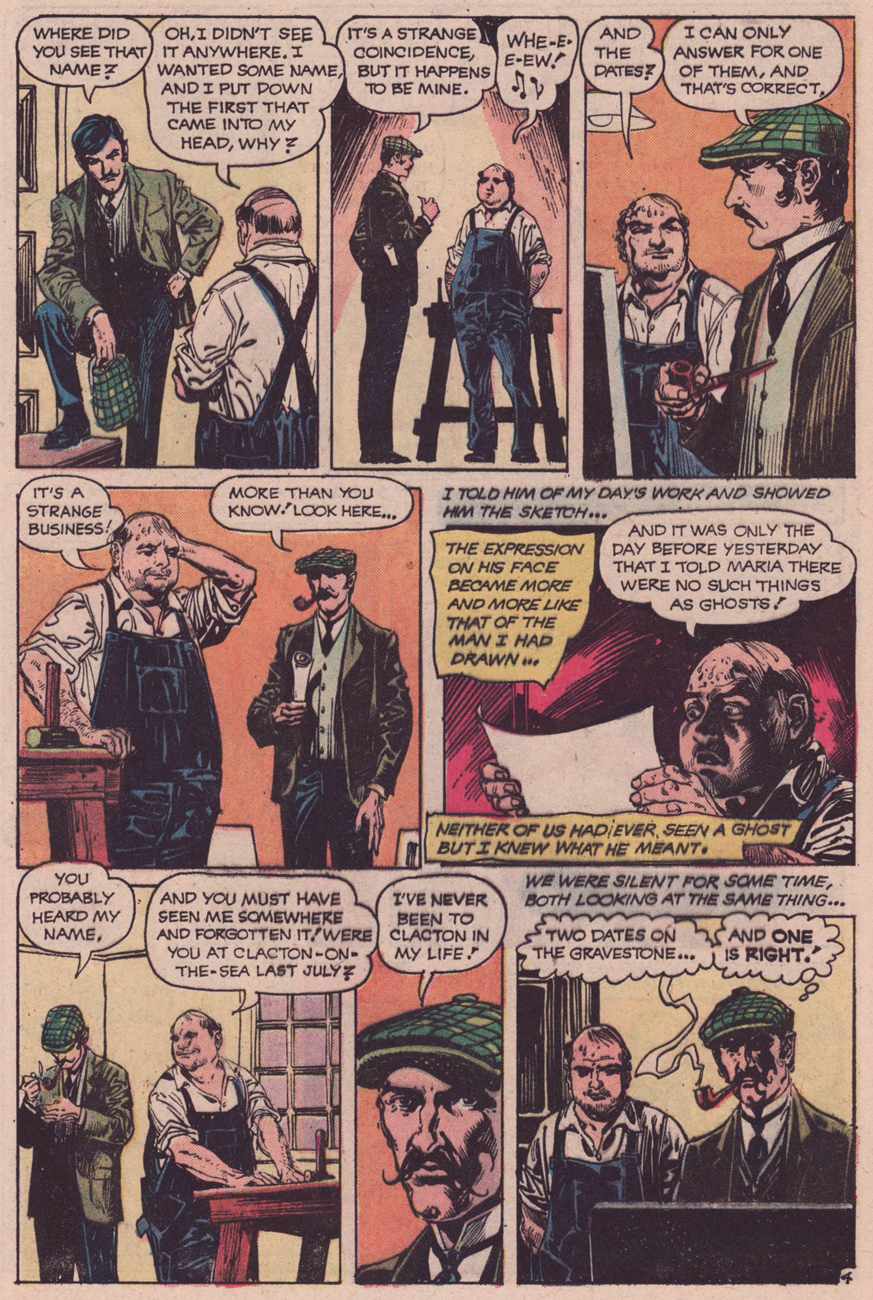
« Neither of us had seen a ghost, but I knew what he meant. »

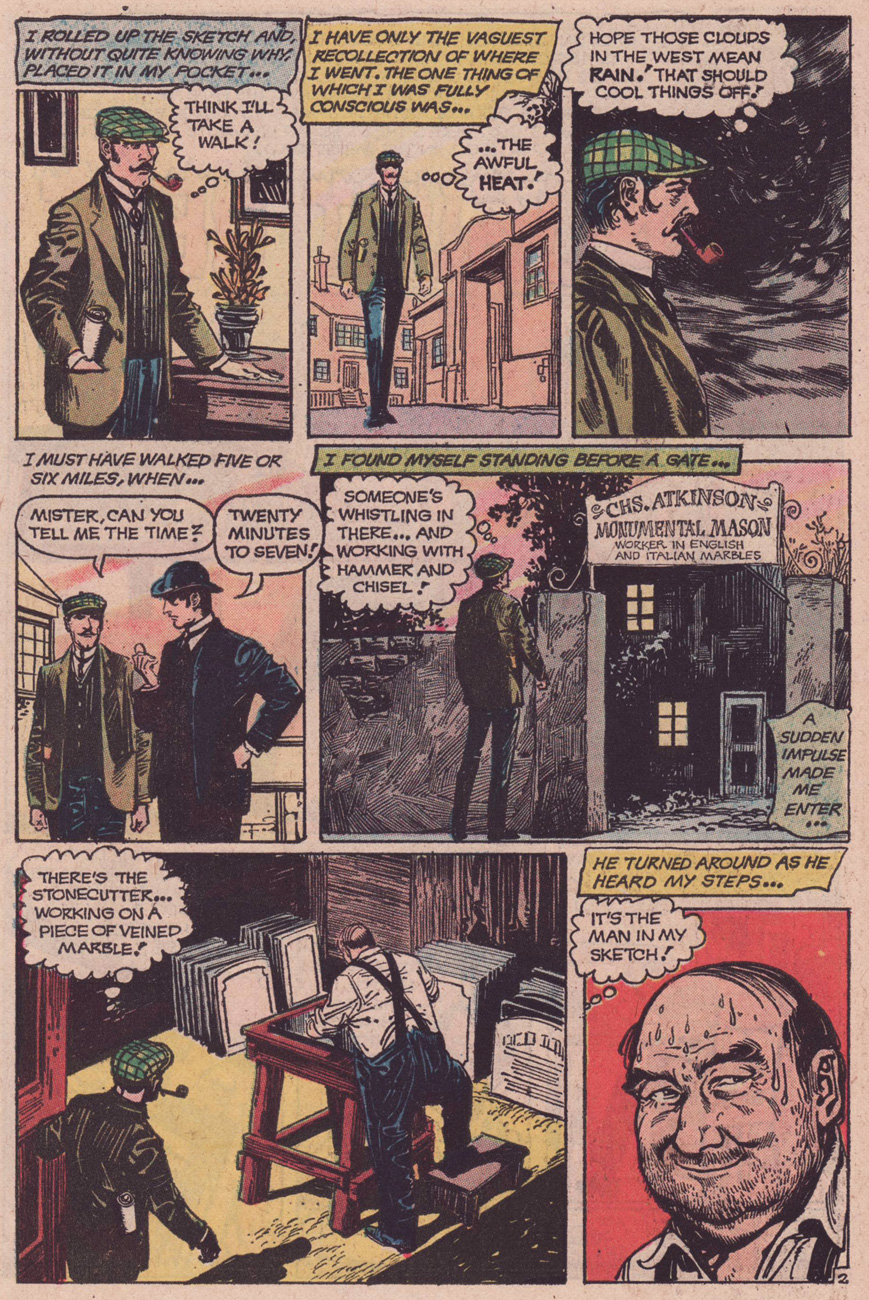
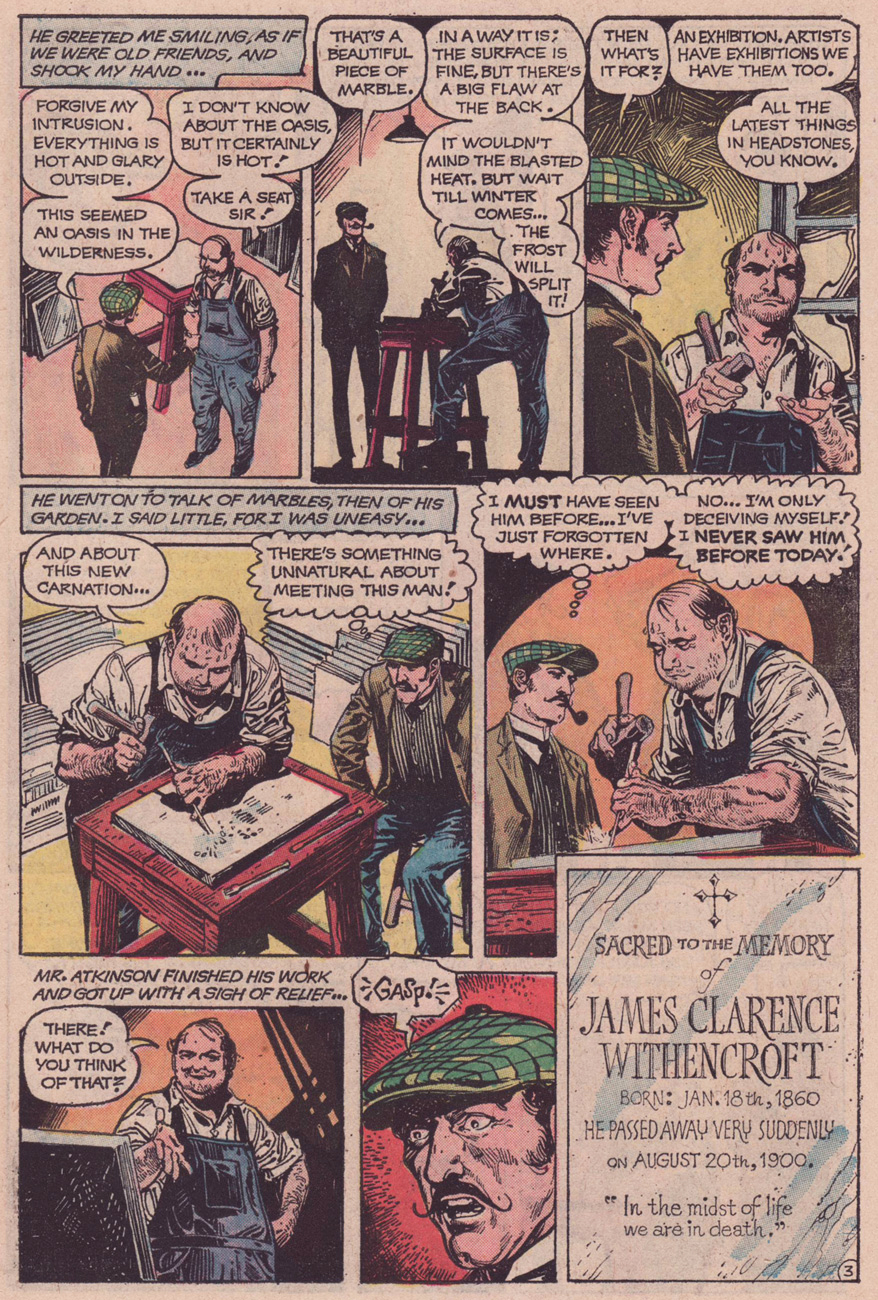
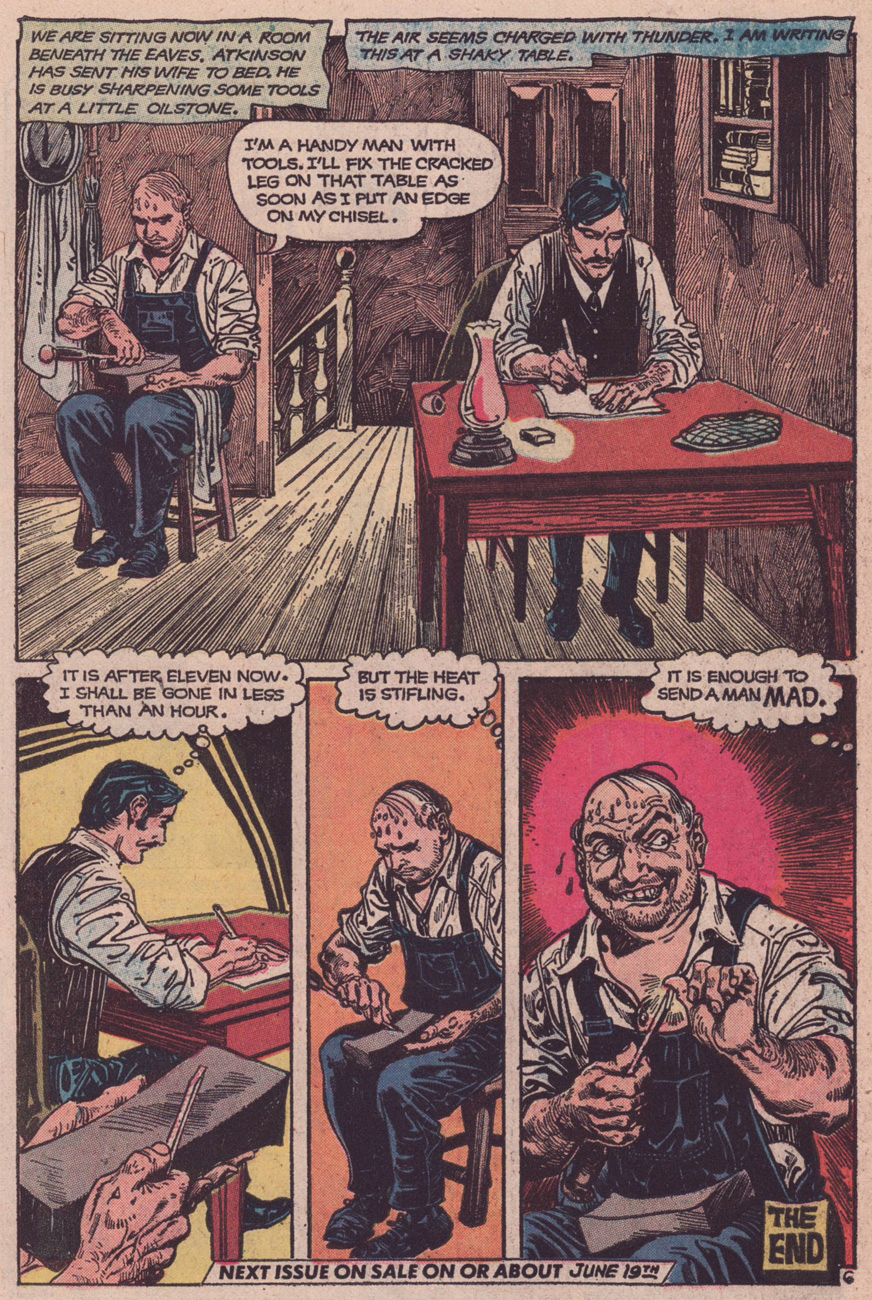
I had planned to feature quite another tale this week, but seeing as we are in the torrid grip of quite the heat wave, I opted in the end for something more topical I’d been saving on the back burner.

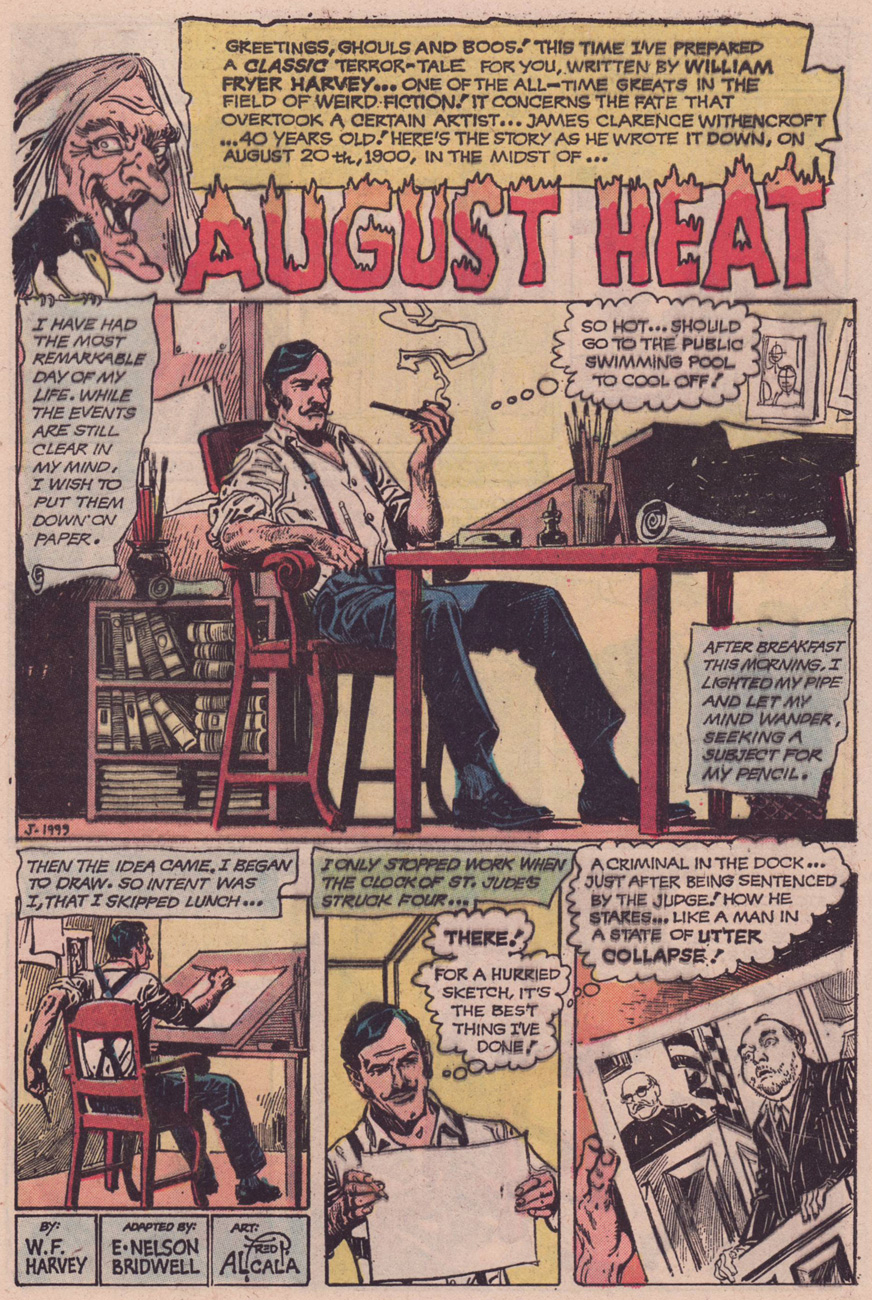
Edward Nelson Bridwell (1931–1987) is one of those scarcely noticed but greatly accomplished figures of American comics. At DC from the mid-1960s to the end of his life, he edited, wrote, packaged and compiled his heart out. Most impressive, in my view, were his erudition and discerning eye for a fine short story.

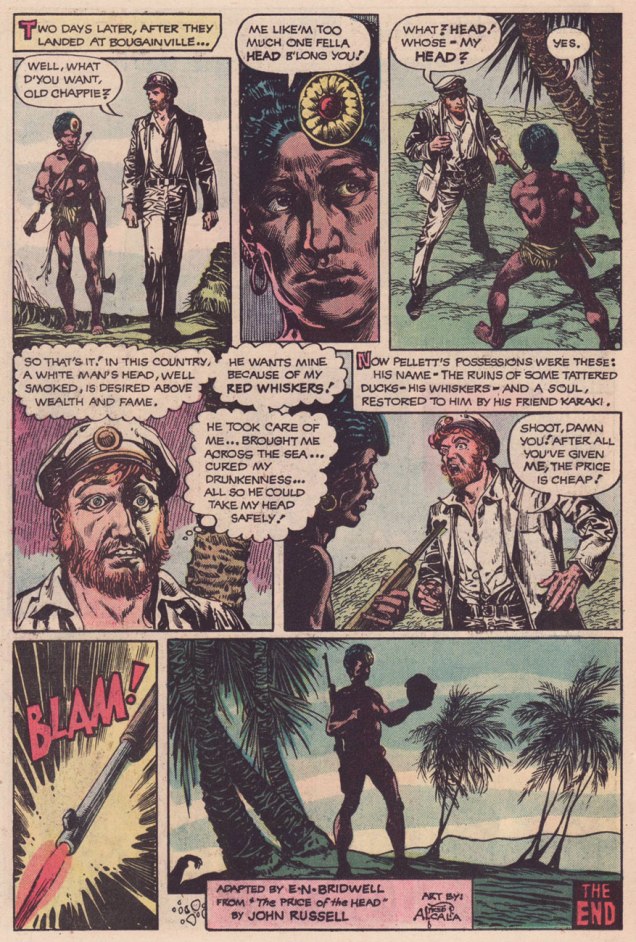
There’s always a blessed but mostly-powerless minority of comics creators that endeavours to improve the unwashed readership’s minds… nearly never at Marvel, most often at DC. In the mid-1970s, while working as Joe Orlando‘s editorial assistant, Bridwell adapted three excellent, but highly unconventional vintage spooky tales, as far afield as imaginable from the usual EC-by-homeopathy fare his boss favoured. These were William Fryer Harvey‘s August Heat (Secrets of Sinister House no. 12, July 1973), Ambrose Bierce‘s The Man and the Snake (Secrets of Sinister House 14, October 1973) and John Russell’s The Price of the Head (Weird Mystery Tales no. 14, Oct.-Nov. 1974); all three were splendidly brought to visual glory by WOT favourite Alfredo Alcala (1925-2000). All three are moody slow burners, with much introspection and little action.

On this scorching day (currently a sticky 35°C /95°F in Montréal, Canada) you’ll forgive me for not waiting until August to share this dark beauty with you.

AlcalaAugustHeat01AAlcalaAugustHeat02AAlcalaAugustHeat03AAlcalaAugustHeat04AAlcalaAugustHeat05AAlcalaAugustHeat06A

DominguezSOSH12A
August Heat was the issue’s cover feature. Illustration by Luis Domínguez.

As evidence of Mr. Bridwell’s skill as an adapter, feel free to read the full (yet quite brief) text of August Heat. Or listen to one its several fine radio adaptations, the choice is yours:

The 1945 version on Suspense, starring Ronald Colman (presented by the Roma Wine Company of Fresno, California). Suspense’s 1948 remake or the 1956 Sleep No More adaptation, recited by Nelson Olmsted.

Oh, and in case you’re curious, here’s a peek at the picturesque English resort of Clacton-on-Sea:

Clacton-on-Sea

– RG

Treasured Stories: “The Mine’s All Mine” (1972)

« That’s funny… I didn’t leave the lantern lit… wonder if anybody’s in there? »

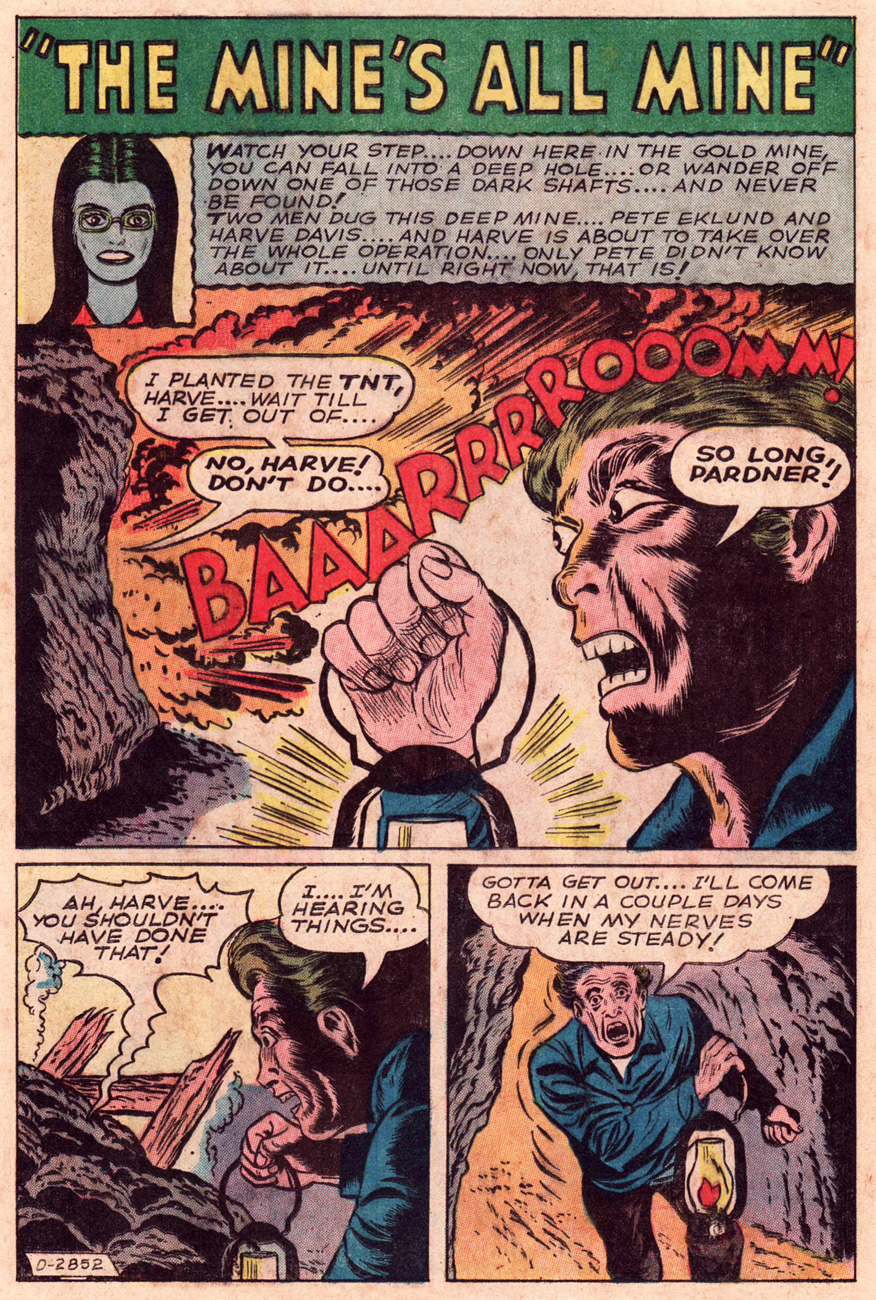
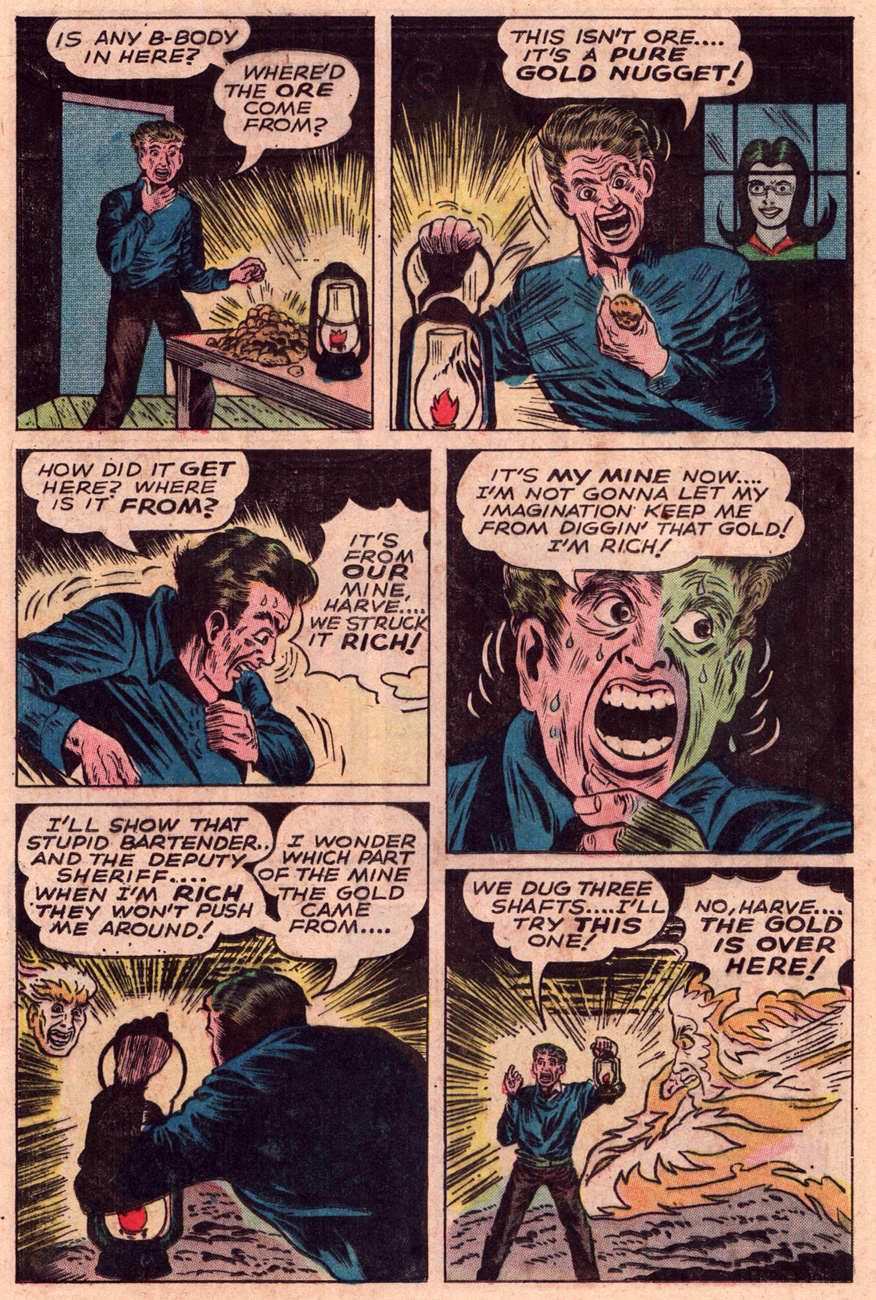
In 1972, Golden Age journeyman cartoonist Stanley Josephs Aschmeier (1912-1992) wrapped up his career in comics with a single tale for Charlton, a publisher he’d briefly worked for two decades prior*, pre-Code. Yet earlier, at DC, he’d had a hand in creating Johnny Thunder and Thunderbolt (1939) and Dr. Mid-Nite (1941), the original sight-impaired costumed hero.
While Aschmeier’s already-manic drawing style hadn’t changed much in the intervening years, the industry certainly had, which made him a man well out of time. Still, as with his peer, sudoriparous Rudy Palais‘ final work for Charlton, the nervous energy and artistic freedom yielded something unusual and charming. While this sort of semi-primitive outsider approach decidedly isn’t for everyone, it’s a breath of fresh air. I found it unsettling and baffling when I first encountered it all those years ago, and it hasn’t lost its jolt, unlike many fan favourites I could name.

Without further preamble, here’s Joe Gill and Stan Asch (his abridged nom de plume)’s tale, from Ghostly Haunts no. 27 (Nov. 1972, Charlton.)

MineAllMine01A

MineAllMine02A
By this point, Aschmeier had evolved (or devolved) a highly stylized, woodcut-like approach. Bizarre as it may be, it sure works for me. That’s one of my favourite things about Charlton: leave your “house style” at the door!

MineAllMine03AMineAllMine04A

MineAllMine05A
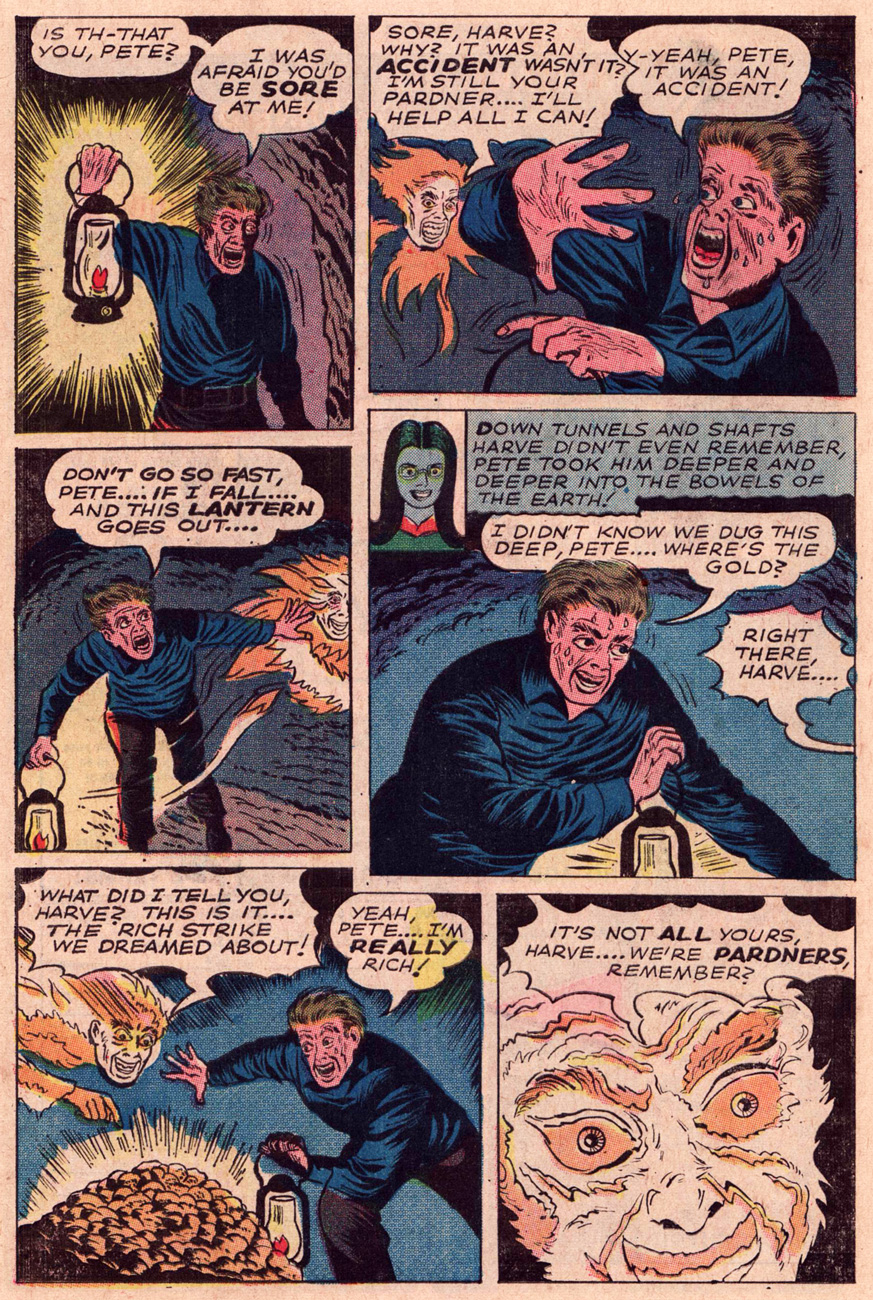
Note Aschmeier’s interesting depiction of a revenant, quite unlike Steve Ditko’s lime green, vaporous wraiths or Pat Boyette’s rotting cotton shamblers. Pete Eklund’s shade is more akin to a dancing flame, an electric apparition.

MineAllMine06A

MineAllMine07A
Here’s a guy who *really* gets it!
That final panel is one of the most unhinged I’ve had the pleasure of encountering.

As for the story, it’s the soul of the thing: to my mind, what made writer Joe Gill’s work special was his common-sense response to the meagre number of available plots: when the mood struck him, he focused on ambiance, tone and character, as he does here.

I love that our protagonist, Harve Davis, is so shiftless, so insignificant, that the reader can’t even be bothered to hate him: throughout the story, we witness his well-earned unpopularity, and what a shabby and piteous creature he is. He murdered the only man who gave him the time of day, and he was too dense and self-absorbed to be anything but resentful of it. I do feel that the tale’s very construction supports this view: it opens on the commission of his crime, and the aftermath is a fateful tumble of dominos.

NanaA
And yes, the story is narrated by Winnie the Witch, the Nana Mouskouri of the ghostly storyteller set. Many have noted the resemblance.

*For stylistic comparison, take a gander at a 1944 Mr. Terrific tale by Mr. Aschmeier, and some of his crime comics work from Lawbreakers Suspense Stories no. 14 (Sept. 1953, Charlton), featuring three Aschmeier-illustrated pieces, Flight!, The Green Light and The Face in the Glass. Enjoy!

– RG

Treasured Stories: “The Organist and the SS” (1972)

« They were bitter, war-weary men and the old woman’s music was comforting — perhaps too comforting… »

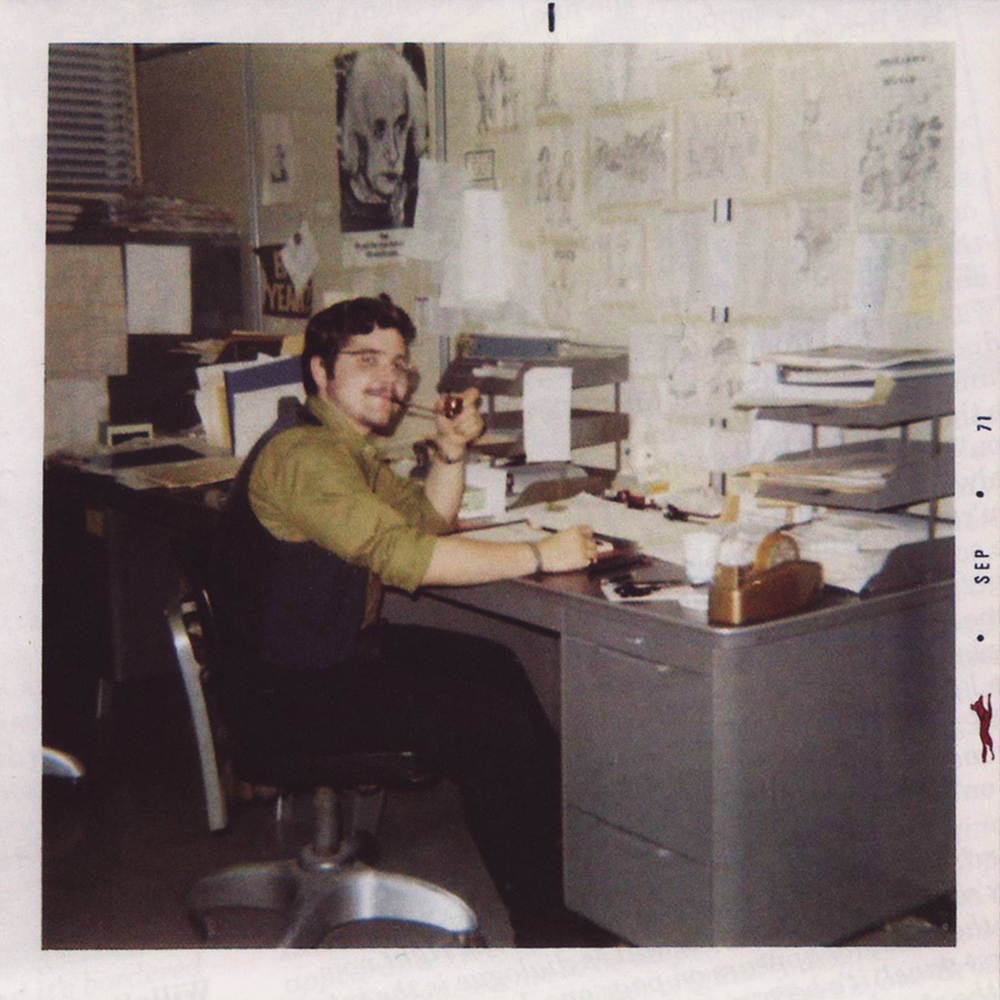
Writer and occasional penciller William ‘Willi’ Franz (born 1950) broke into the comics industry at the tender age of 15, selling his first script to Charlton editor Dick Giordano in 1966.

WilliPolaroidA
Will Franz, September 1971. A photo « …taken at the Manhattan insurance company where I worked as an accounting technician. My wall is covered with cartoons I made of various office friends and personnel. » Source: Will Franz and Charlton Spotlight.

While best known for his fruitful collaborations with his mentor, the great Sam Glanzman (1924-2017), namely The Iron Corporal, The Devil’s Brigade and most enduringly The Lonely War of Willy Schultz, Franz also scattered a few gems that the light has mostly missed.

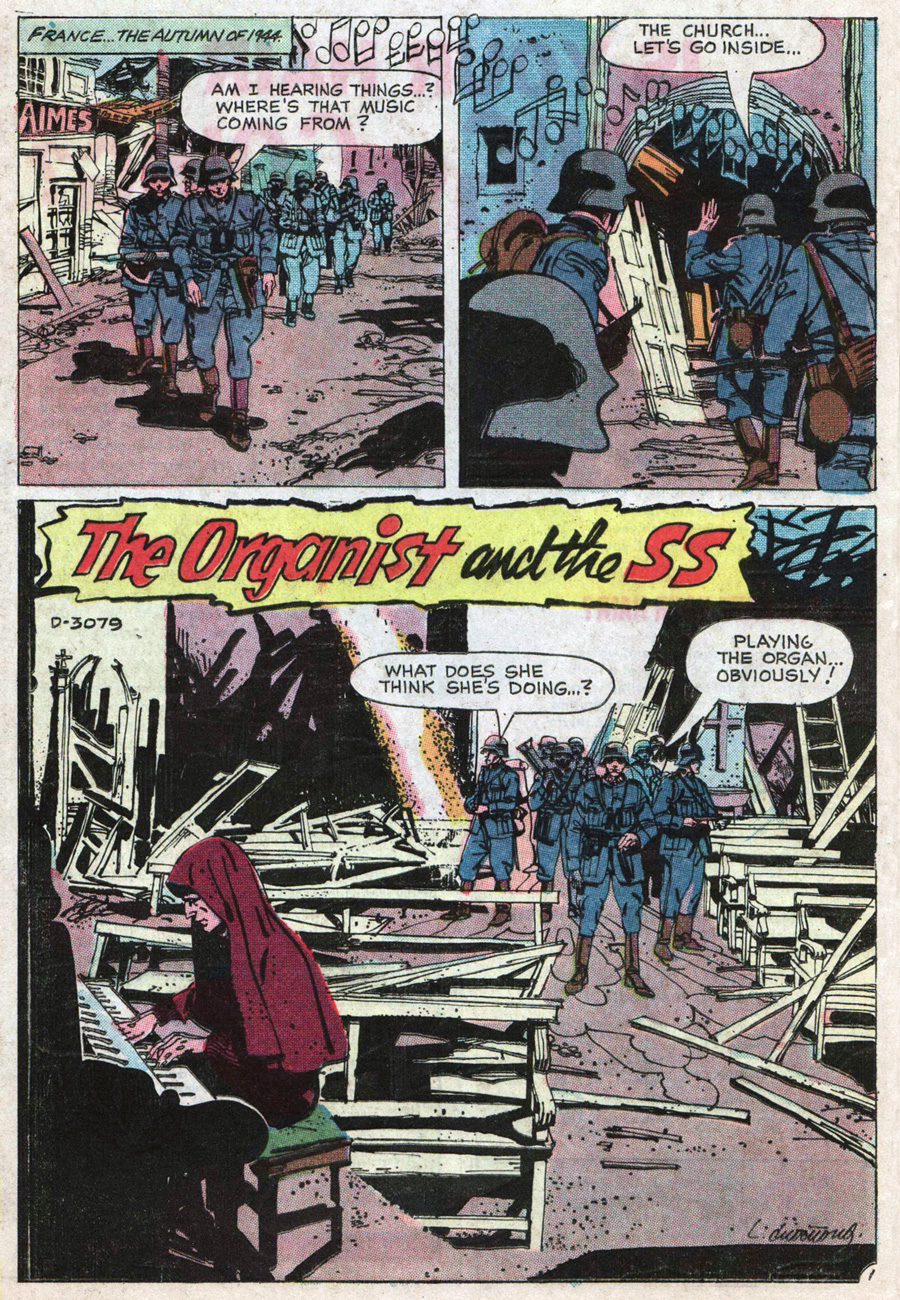
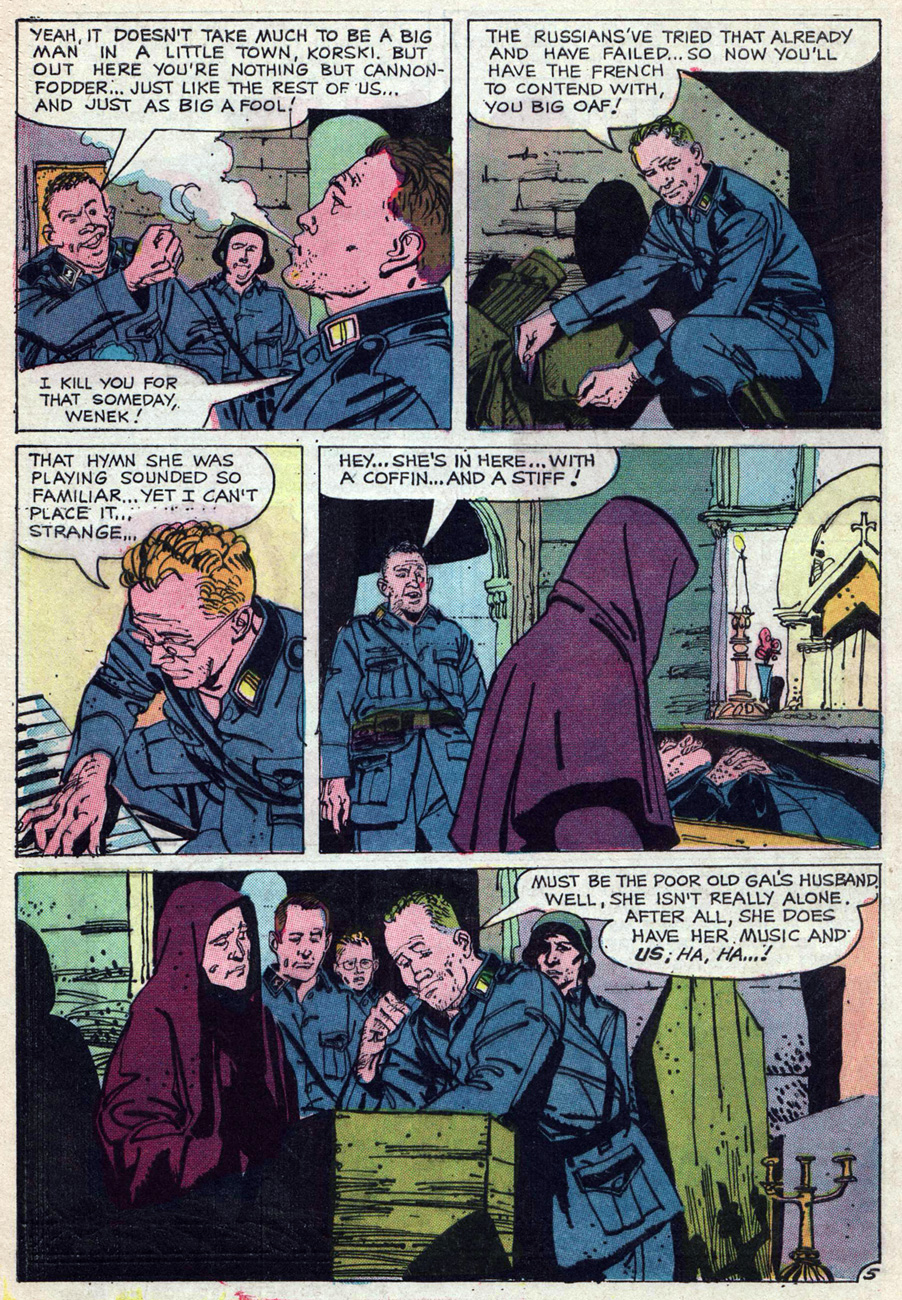
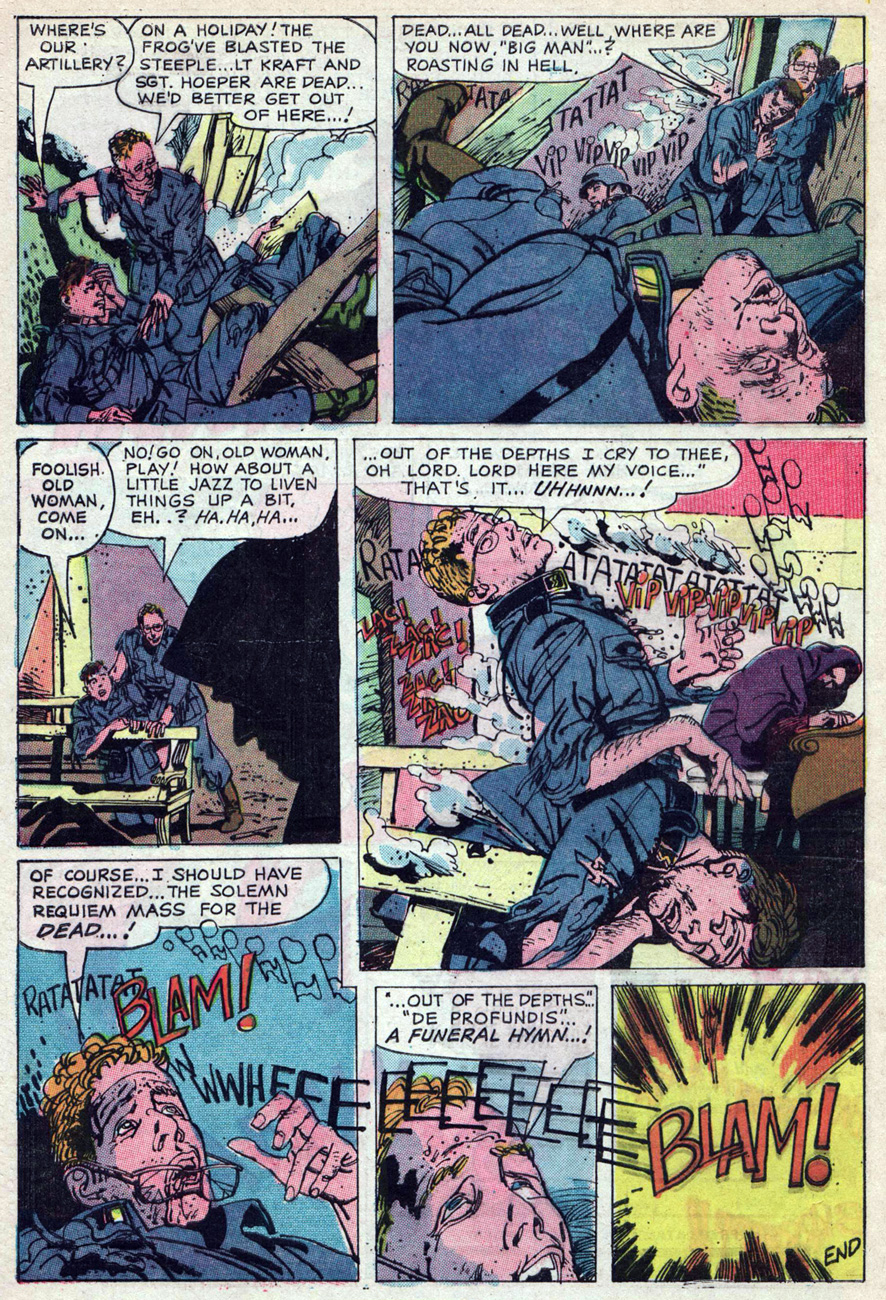
My favourite among these has to be his final story for Charlton, The Organist and the SS, published in Attack no. 8 (Nov. 1972). Franz’s bleak, nuanced and markedly pacifist tales had drawn the military’s ire, back in the late ’60s, and this somber little piece of doom might have, too, if anyone had been paying attention.

As Franz recalls in a 2015 interview with Richard Arndt, published in Charlton Spotlight no. 9 (Winter-Spring 2015-2016):

« I was told that a lot of Charlton sales were on military bases. They were a staple on Army bases. I, and my stories, were dropped in 1969, out of the blue. Things were heating up in Vietnam.

I was blacklisted at Charlton because a guy had put my name and stories down as one of the reasons he registered as a conscientious objector. I found out other people were throwing my name around. Someone in the army apparently said that my stuff, maybe like [Archie] Goodwin’s stuff, was too blood and guts. It was going to make soldiers *not* want to kill the gooks. The army can’t have that! »

Well, evidently Charlton (presumably managing editor George Wildman, bless his heart) let Will sneak back into the fold, if briefly, after the heat was off, otherwise I’d be writing about some other topic entirely.

Without further preamble, please savour this pitch-black, existentialist play of war and death, but mind the thorns.

OrganistSS01AOrganistSS02AOrganistSS03AOrganistSS04AOrganistSS05AOrganistSS06AOrganistSS07AOrganistSS08A

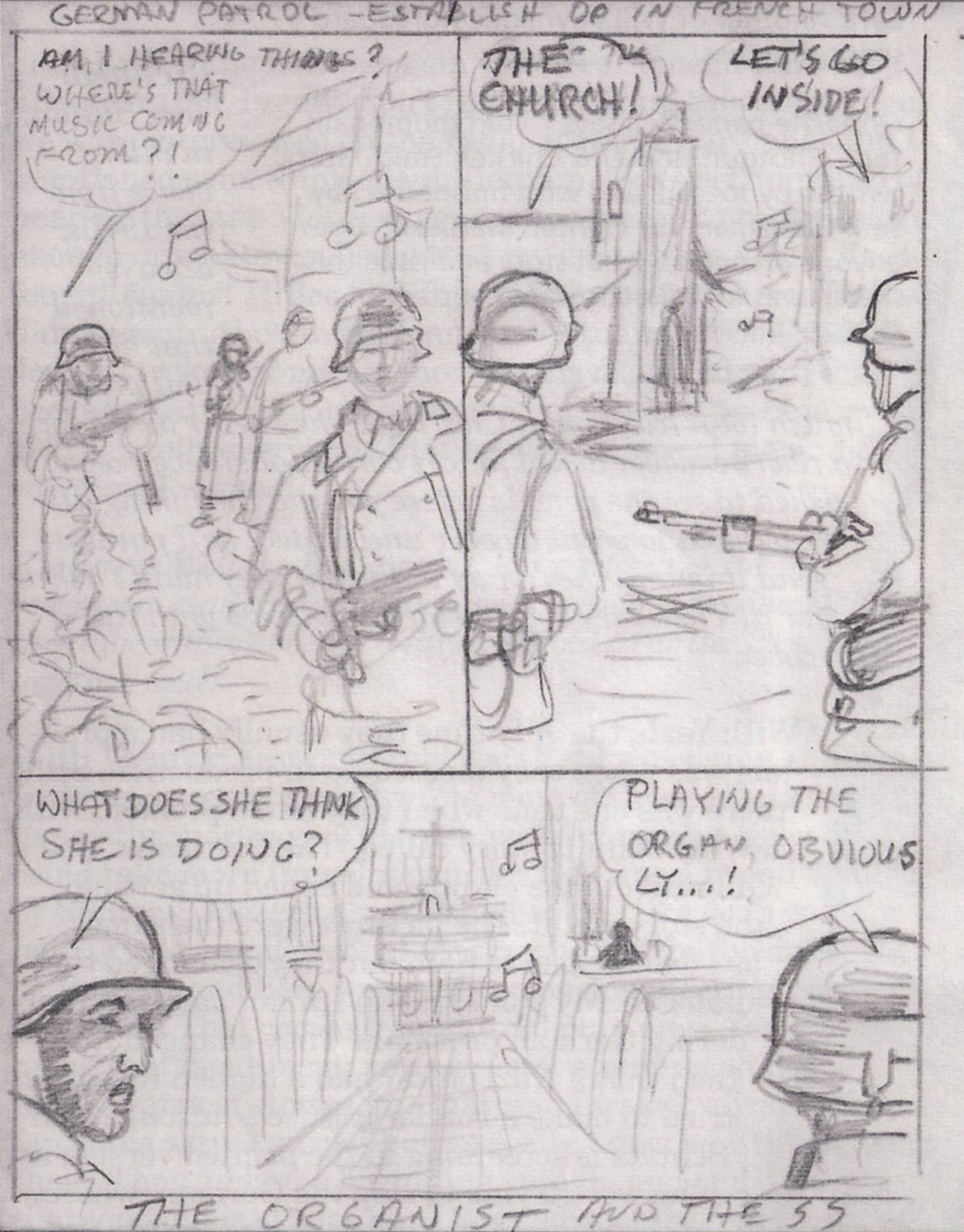
OrganistWilliLayout
Will’s layout for the opening splash of our story. It’s always a treat to see what liberties the illustrator takes… or doesn’t.

This issue is chock-full of arrivals and departures: it opens with a story from new recruit Warren Sattler, trying his hand at a few short mystery and war stories before he found his niche in excellent collaborations with Joe Gill on Billy the Kid and Yang; next up is Jack Keller, who was winding up his comics career, what with Charlton’s remaining pair of hot rod books, Drag ‘n’ Wheels and Hot Rods and Racing Cars, soon to be scrapped. He would move, appropriately enough, to making a living selling cars. Finally, Argentine ace Leo Duranoña (b. 1938) was just passing through Charlton, crafting a handful of finely-hewn tales before moving on to DC and Warren… among others.

-RG

Treasured stories: “Abide With Me” (1975)

« She stared at Douglas… at this man she had judged to be an ideal mate… yet he had this very fatal flaw. »

Even to the occasional reader of mystery or ghost comic books from the late 60s to early 80s, the absurdly narrow range of plot variations must have been glaringly obvious. Same goes for any genre, of course…

For instance, at DC, mainstays Jack Oleck and Carl Wessler drove the same hoary scenarios into the old sod with numbing insistence (editor Joe Orlando‘s insistence, presumably): the greedy nephew murdering his rich, elderly uncle, the avaricious white explorer / big game hunter / mercenary purloining the sacred idol and incurring its terrible vengeance, the bank robber on the lam getting his ironic comeuppance, satanists vs werewolves vs vampires vs witches and so on… Still, the occasional inspired yarn did crop up, often to the outraged bafflement of readers.

On the other hand, Charlton was the field’s top producer of ghost stories, wisely keeping away from Marvel and DC’s spandex preserve. While one hears (correctly) about artistic laisser-faire attracting maverick stylists, Charlton’s ace in the hole, and the backbone of its comics line, was the remarkably prolific and versatile writer Joe Gill (1919-2006). Unlike his counterparts at DC, Warren, and most famously EC Comics before them, Gill rarely resorted to the O. Henry “twist” ending. An overplayed strength becomes a weakness, and so the “sting in the tail” soon was anything but. Having to write most of Charlton’s line, Gill could afford to experiment and improvise. Fact is, he pretty much had to. In my view, Gill’s work stands out from most of his peers’ in that it seems nourished by high and extensive erudition. When a Gill character discusses business deals or the combustion engine, it’s not just hot air and a family-size tub of Fluff.

Here’s a favourite of mine, a tale scripted by Gill and illustrated by Sururi Gümen (1920-2000). It appeared in Ghost Manor no. 23 (May, 1975, Charlton). The nearest it skirts a ghost story is when Regina says « I… I’ve heard that people who die unhappily haunt the place where they die! »

Abide1AAbide2AAbide3AAbide4AAbide5AAbide6AAbide7A

I love how Abide With Me carves out its own niche between romance and horror without calling upon any of these genres’ habitual devices. It’s like a well-played game of chess, a philosophic two-character play, a gravesite deliberation. Hope you’ve enjoyed it too!

– RG