Back in August, I promised to follow Tentacle Tuesday: Dark Horse, Pt. 1 with another instalment of cephalopod material issued by this publisher. The time, as they say, has come! While I’m not always on board with the comics they opt to publish (rarely, I might even say), I do like today’s selections.
Dark Horse obtained the licence to produce James Bond comics in 1992. The result is a number of series and stand-alone comics – Serpent’s Tooth was the first, a three-part miniseries. The following two pages are from Serpent’s Tooth Part III: Mass Extinction, scripted by Doug Moench and illustrated by Paul Gulacy, published in James Bond 007: Serpent’s Tooth no. 3 (February 1993).
You decide for yourself which James Bond this is .
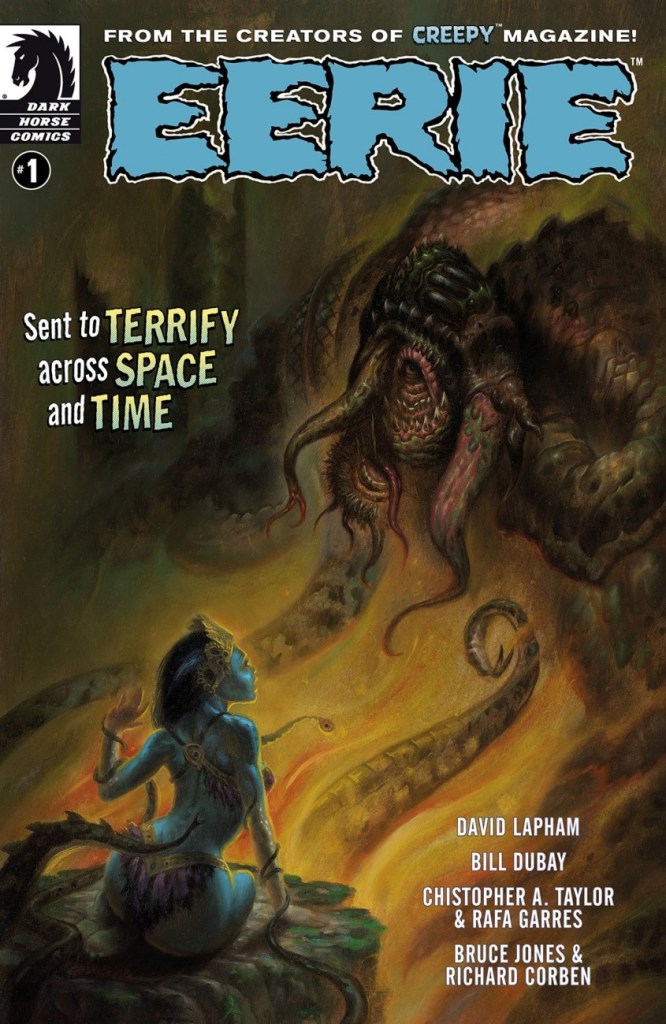
In 2007, Dark Horse stepped into a partnership with New Comic Company, who had earlier acquired from Warren the rights to Creepy and Eerie. The result was the gradual publishing of ‘archival’ hardcover collections of all issues of Creepy and Eerie magazines. In 2009, DH launched the ‘new’ Creepy Magazine, which mostly featured new stories, sprinkled with the odd reprint. A revived Eerie soon joined it.
Dark Horse’s revival of the classic Warren magazine is a mixed bag – this issue for instance, features several new stories and a reprint from 1970 (Life Species by Bill DuBay). This is Eerie no. 1 (July 2012). Cover by Jim Pavelec.
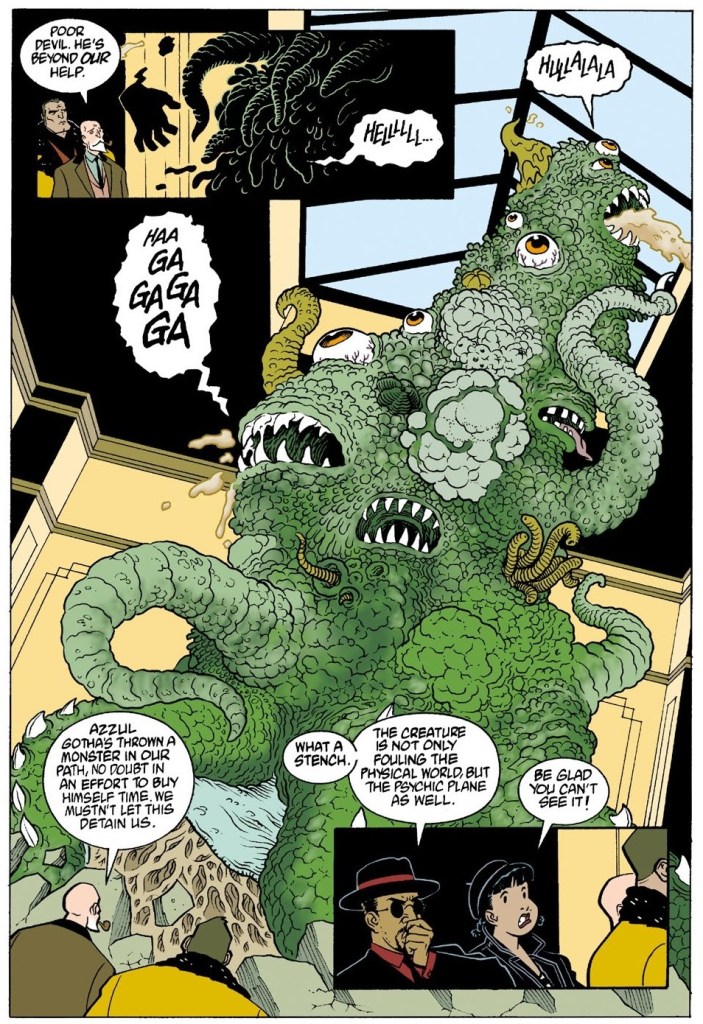
The next story is Tentacle Master Mike Mignola‘s ‘Champion of the Worms‘, which held my lazy interest for a few pages… until I found out that it’s actually quite good. What a pleasant surprise for one who had such low expectations! It also brims over with tentacles. The following three pages are from ZombieWorld: Champion of the Worms (October 1997), scripted by Mignola and illustrated by Pat McEown.
Not everybody can boast to such a classy octopus hat!
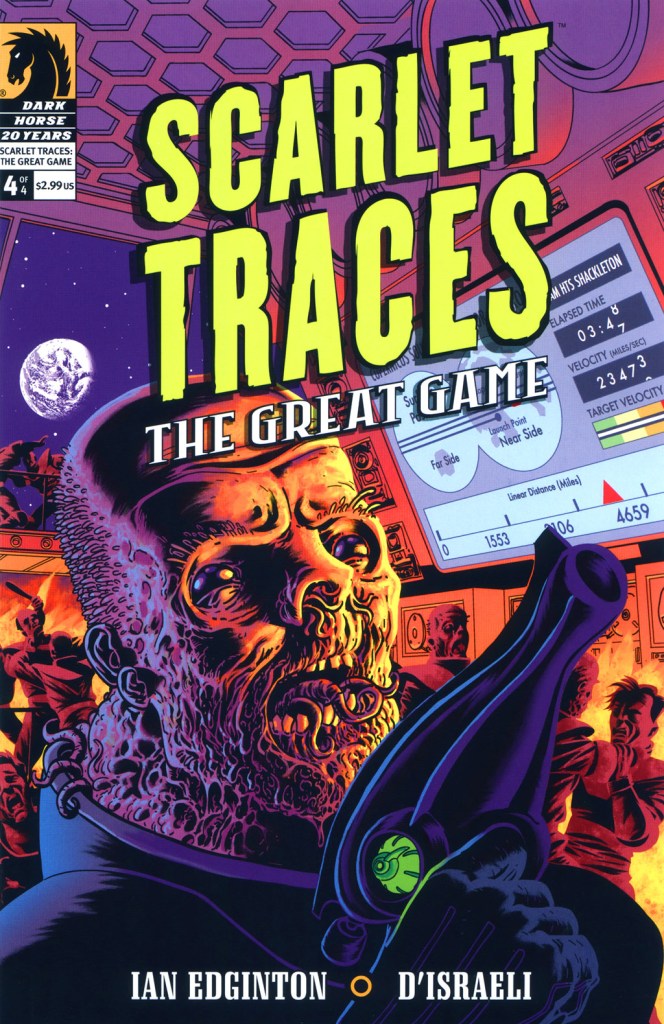
Last but not least… Scarlet Traces is a sort of sequel to Ian Edginton and D’Israeli‘s adaptation of H. G. Wells‘ The War of the Worlds, with heavy Dan Dare and Doctor Who references. This story wears its Englishness on its sleeve!
Scarlet Traces: the Great Game no. 4 (October 2006). Art by British artist D’Israeli, whose real name is actually Matt Brooker.
« A kryptonian octosaur — the most fearsome creature of my long-dead home planet — here — on earth! »
Since Batman was already awarded a Tentacle Tuesday back in April (see Tentacle Tuesday: All Aboard the Batmarine!), it is time to allocate one to the other superhero that crops up all the freaking time, namely good old “Supes” (for those who are on familiar terms with him). I won’t hide from you that I have very little interest in the adventures of the aforementioned character, but I made a pledge to follow tentacles wherever they may lead me. The octopus of comics demands sacrifices!
The Man of Steel. The Last Son of Krypton. The Son of Jor-El. Metropolis’ favorite son. The Man of Tomorrow. Champion of the Oppressed. The Big Blue Boy Scout. The iconic Cape. The definitive Flying Brick. The Big Good of The DCU. The Superhero.
First, we have a number of inside pages of varying interest, depicting tentacles both organic and mechanical —
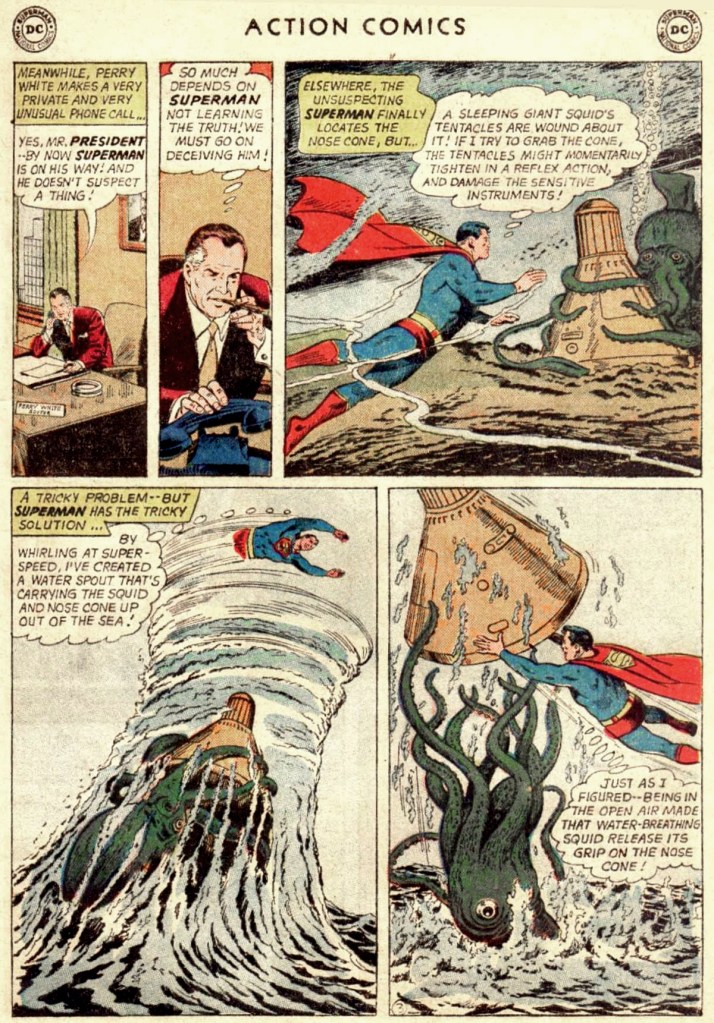
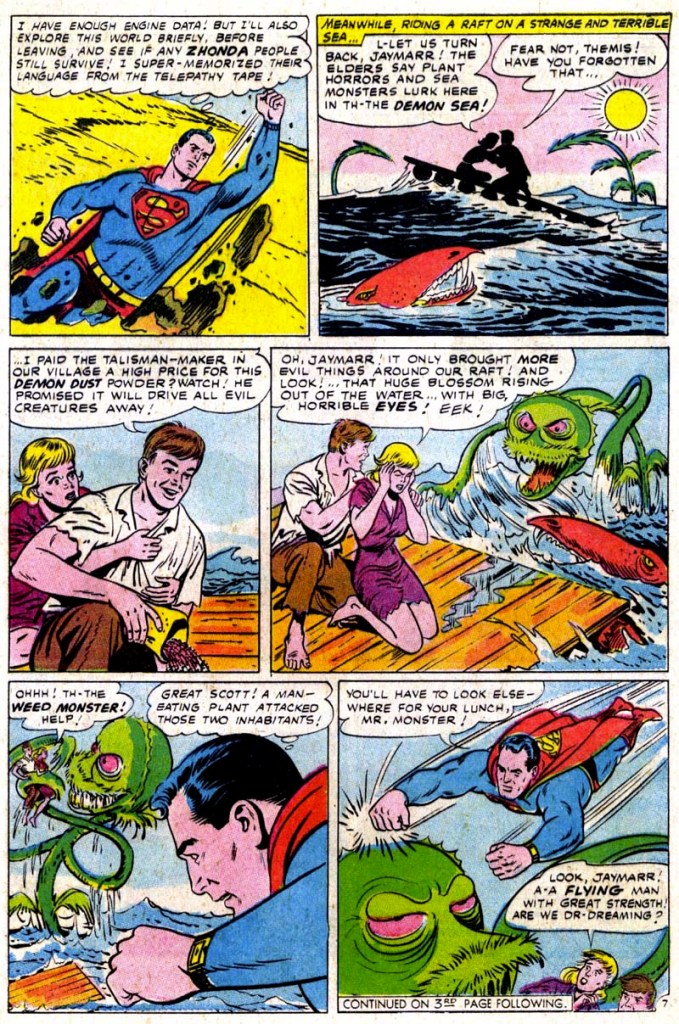
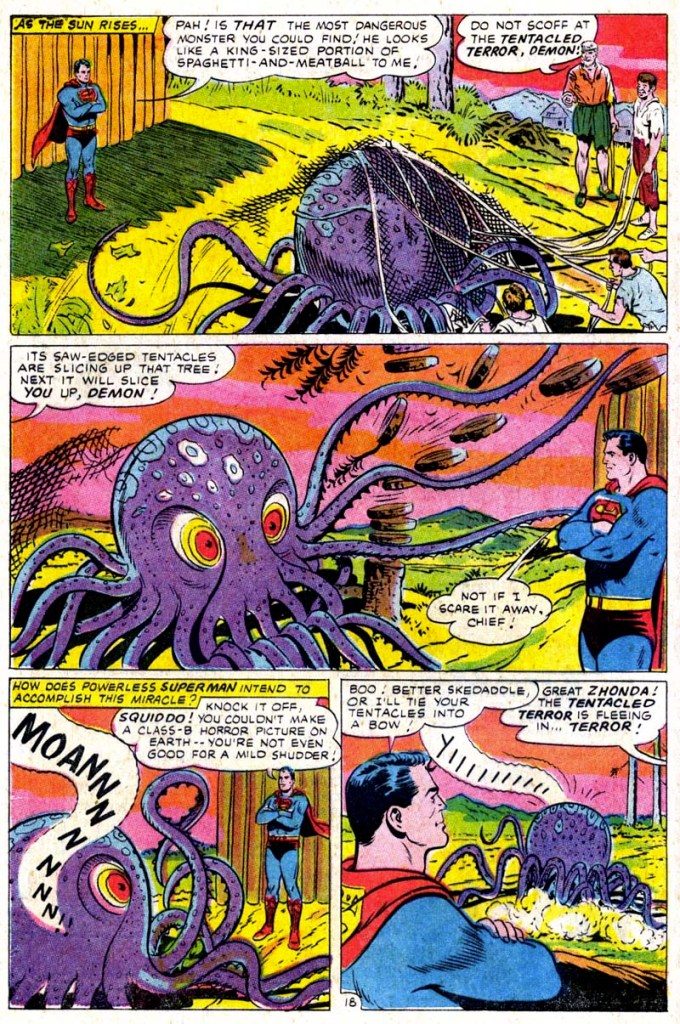
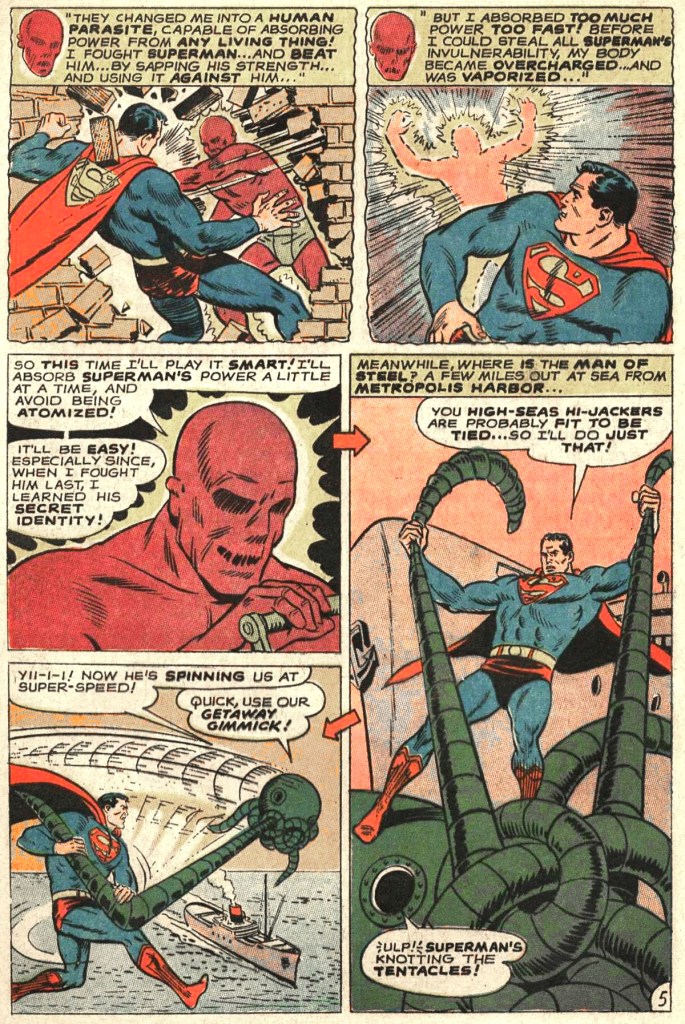
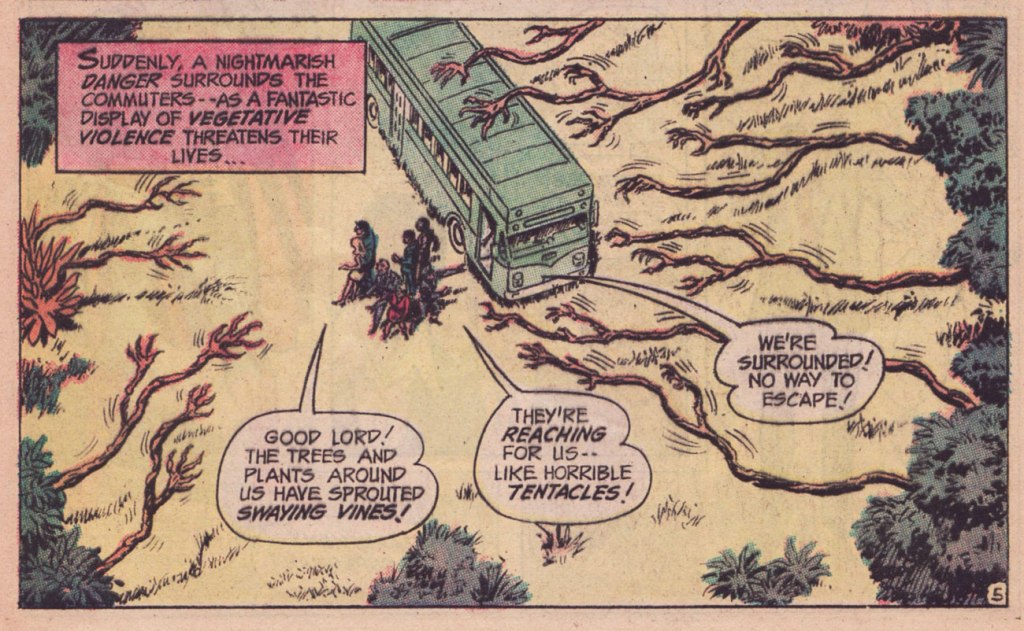
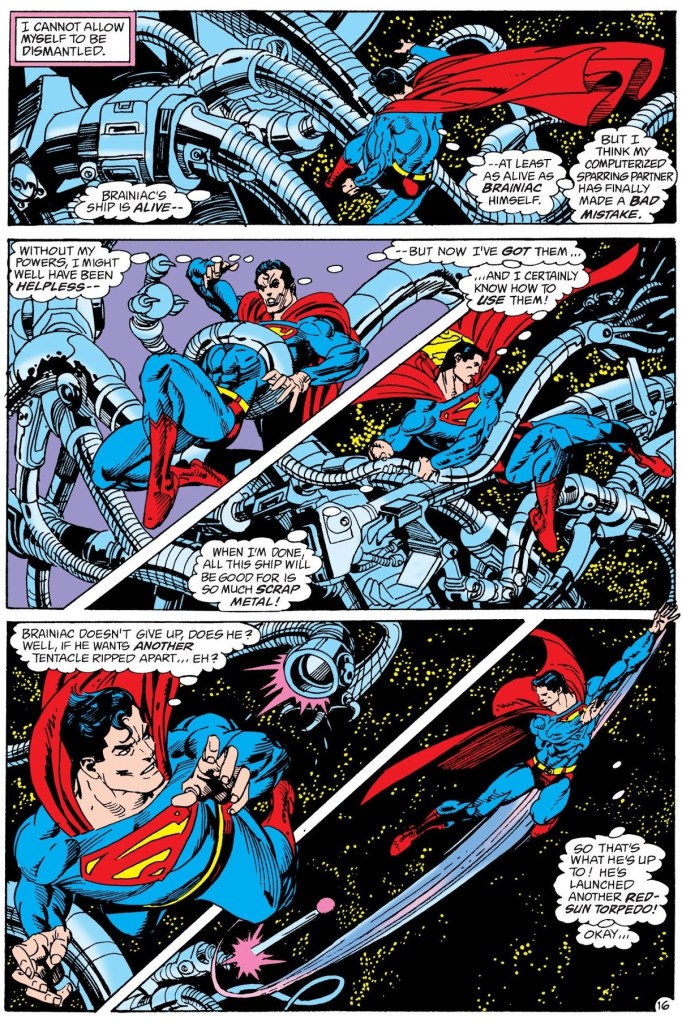
A page from The Superman Super-Spectacular!, scripted by Edmond Hamilton, pencilled by Curt Swan and inked by George Klein, was published in Action Comics no. 309 (February 1964).A page from The Demon Under the Red Sun!, scripted by Otto Binder and illustrated by Al Plastino, was published in Superman no. 184 (February 1966).The Demon Under the Red Sun!, part two. Superman wields his rapier-like wit to defeat the poor beastie. This was years before the Flying Spaghetti Monster!A page from The Power of the Parasite, scripted by Jim Shooter and illustrated by Al Plastino, was published in Action Comics no. 361 (March 1968).A panel from The Monster Who Unmasked Superman!, scripted by Cary Bates, pencilled by Curt Swan and inked by Murphy Anderson, was published in Action Comics no. 431 (January 1974).The Monster Who Unmasked Superman!: aggressive tentacle grabbery ensues.Page from Balance of Power!, scripted by Len Wein, pencilled by Dick Dillin and inked by Dick Giordano, was published in Justice League of America no. 111 (May-June 1974).A page from …With But a Single Step!, scripted by Marv Wolfman and illustrated by Gil Kane, was published in Action Comics no. 545 (July 1983).
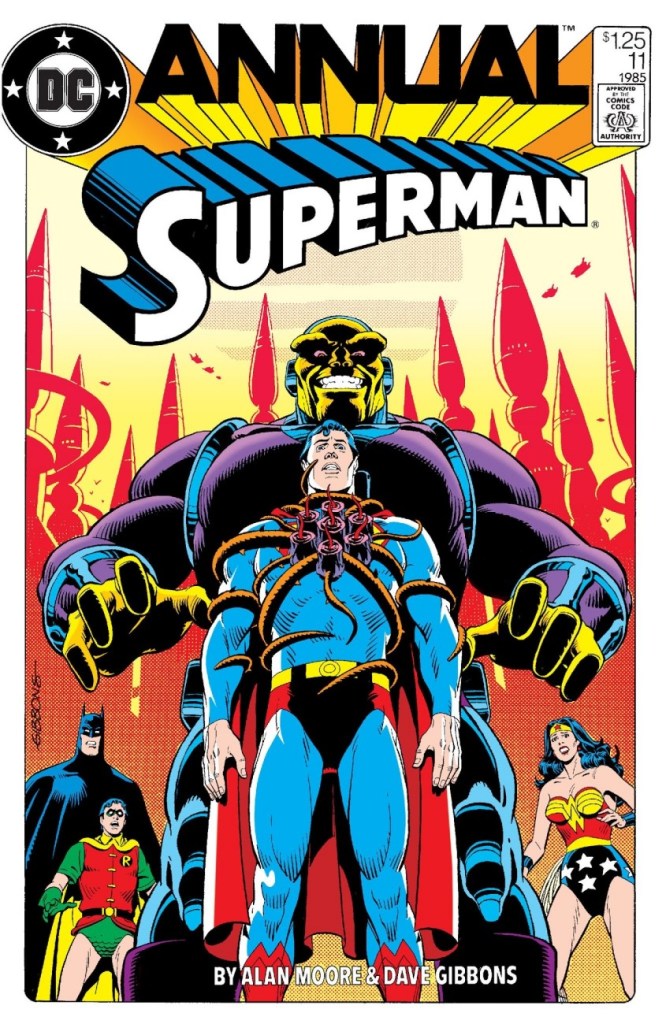
As a tastier, second part of our programme, I offer you an intriguing cover by Dave Gibbons:
Superman Annual no. 11 (September 1985)
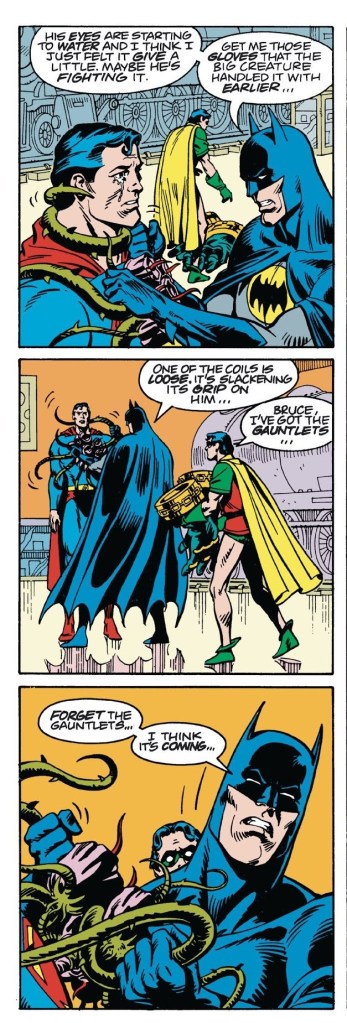
And a page (or three) from what co-editor RG calls “the ultimate Superman story” (and I will absolutely take his word for it) — For the Man Who Has Everything… scripted by Alan Moore and illustrated by Dave Gibbons.
The tentacle mantle is taken up by other characters — pesky, clingy little buggers, aren’t they? « It’s called a Black Mercy. It’s something between a plant and an intelligent fungus. It attaches itself to its victims in a form of symbiosis, feeding from their bio-aura. Why, it gives them their heart’s desire…. », explains Mongul, the ‘benefactor’ who got Superman into this spot of trouble.
Mongul gets his comeuppance! And his heart’s desire of world domination, courtesy of the Black Mercy.
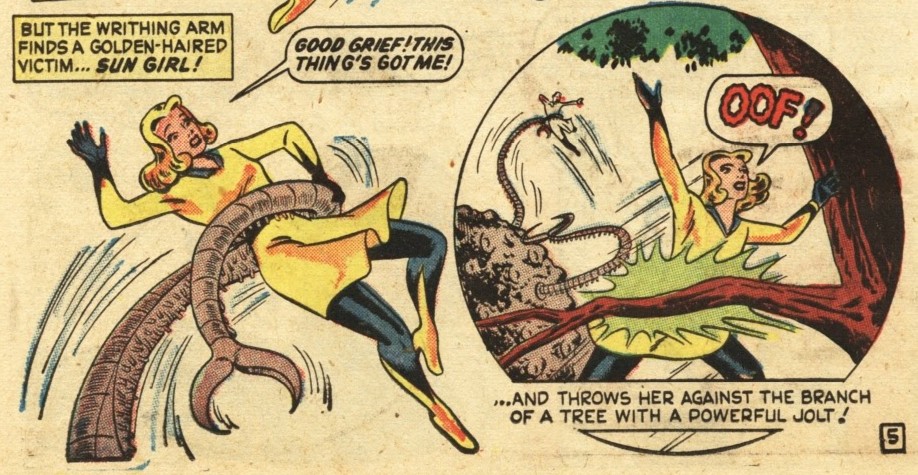
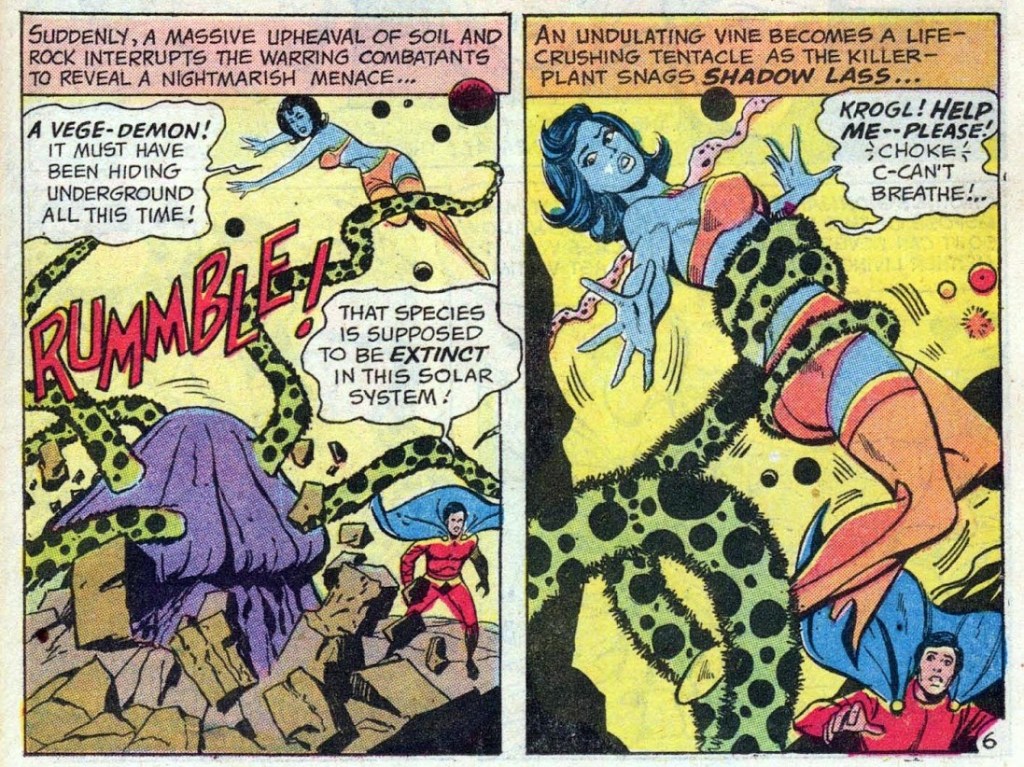
It occurs to me that I haven’t focused on the good old mademoiselle-embraced-by-tentacles cliché in a while. If today has a further theme, it’s of women (both human and alien) being grabbed by the midriff. Polka-dotted tentacles in a swamp and furry tentacles on Venus, whether they’re latching on to a humanoid woman with four breasts or a blue-skinned Talokian, all basically behave the same way.
As usual, this is a chronological progression that takes us from early Golden Age days all the way to mid flamboyant 80s.
The Robot Masters of Venus, illustrated by Max Plaisted (of Spicy Mystery fame!), was published in Exciting Comics v. 1 no. 3 (June 1940, Pines).
The Vengeance of the Space Monster!, pencilled by Ken Bald and inked by Syd Shores (both names are, however, guesses), was published in Marvel Mystery Comics no. 90 (February 1949, Atlas).
I agree that having one’s ribcage crushed does not help with breathing, but still, I am not sure why Shadow Lass is choking on the panel on the right when the vege-demon has her by the midriff.
War of the Wraith-Mates!, scripted by Cary Bates, pencilled by George Tuska and inked by Vince Colletta, was published in Superboy no. 183 (May 1972, DC).
For a little variety, I’m also including the following warrior vixen as a pleasant exception to the rule – she is not only not being grabbed, but also has an octopus for an obedient pet.
Girl on Octopus by Brian Lewis, painted sometime in the mid 1970s.
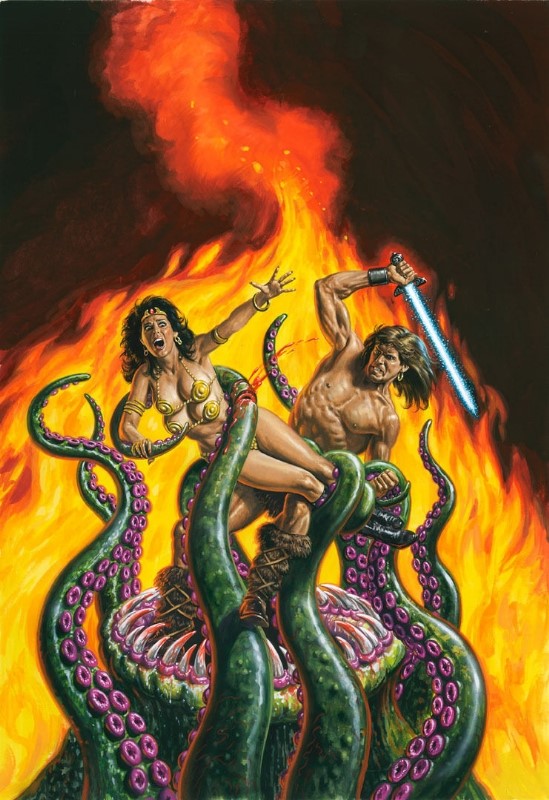
Our next stop is a proposed illustration for the 1984 movie The Warrior and the Sorceress, painted by Bob Larkin. The movie in question (which I have never seen) is apparently “noted chiefly for containing extensive nudity and violence and for being one of the more extreme examples of the sword-and-sorcery genre. It is also considered by some to be a cult classic.“
The sorceress has 4 breasts – a logistical nightmare when selecting a bikini, no doubt.
As… questionable… as this is, the illustration that was chosen in the end is in a whole other class of cheesiness. The sorceress has also died her hair blonde, presumably because she wants to have (even more) fun! We also lost the cephalopod, unfortunately, but the maxim “one can’t have everything” comes to mind – and David Carradine in a pearly loincloth is plenty.
Art by Joanne Daley, who at least makes some sort of attempt at designing a functional four-breast-bra.
After *that*, the following cover looks quite humdrum by comparison. It’s difficult to imagine how Red Sonja will extricate herself from this situation…
Red Sonja no. 5 (January 1985, Marvel). The cover is by Pat Broderick.
Incidentally, there are tons of Red Sonja cover with tentacles, mostly of recent vintage, and most of them are ugly as sin. This one is decent:
The cover art for Red Sonja no. 21 (April 2007, Dynamite). This is a variant cover by Roberto Castro.
Wasting the wide range of my xeno-tech training on a home office job was like putting a carpenter in charge of the psycho-ward. Like any fish out of water, I didn’t fit in. Bureaucracy said I didn’t belong.
So they finally shipped me out.
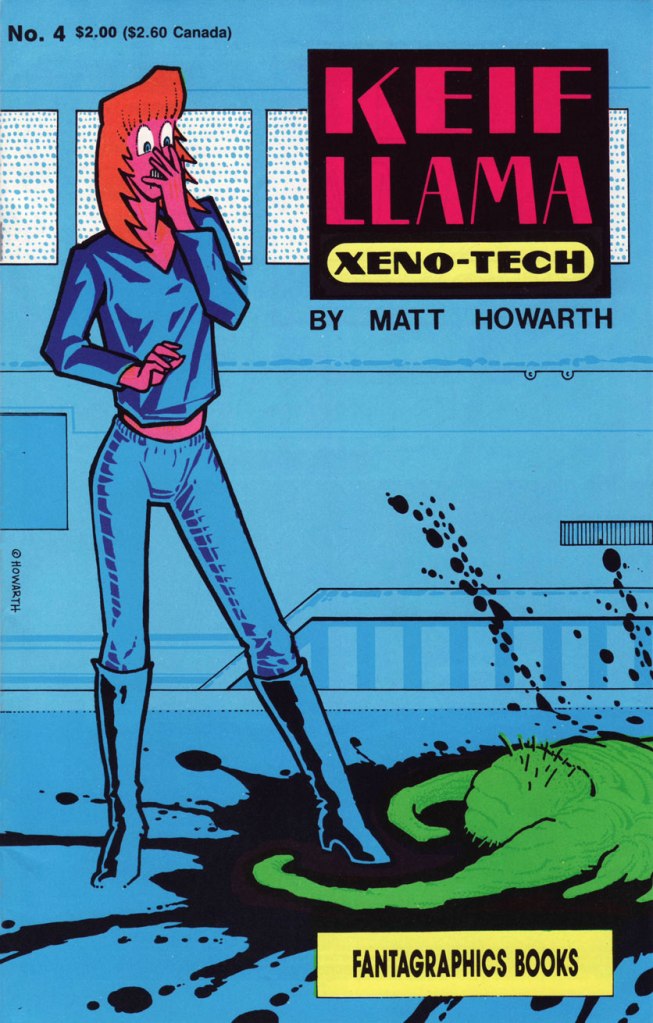
‘Murder on the O’Brien Express‘, published in Keif Llama – Xeno-Tech no. 4
« The ability to think like another species is a rare and galactically valuable gift. Those who are capable of it are called xenotechs. »
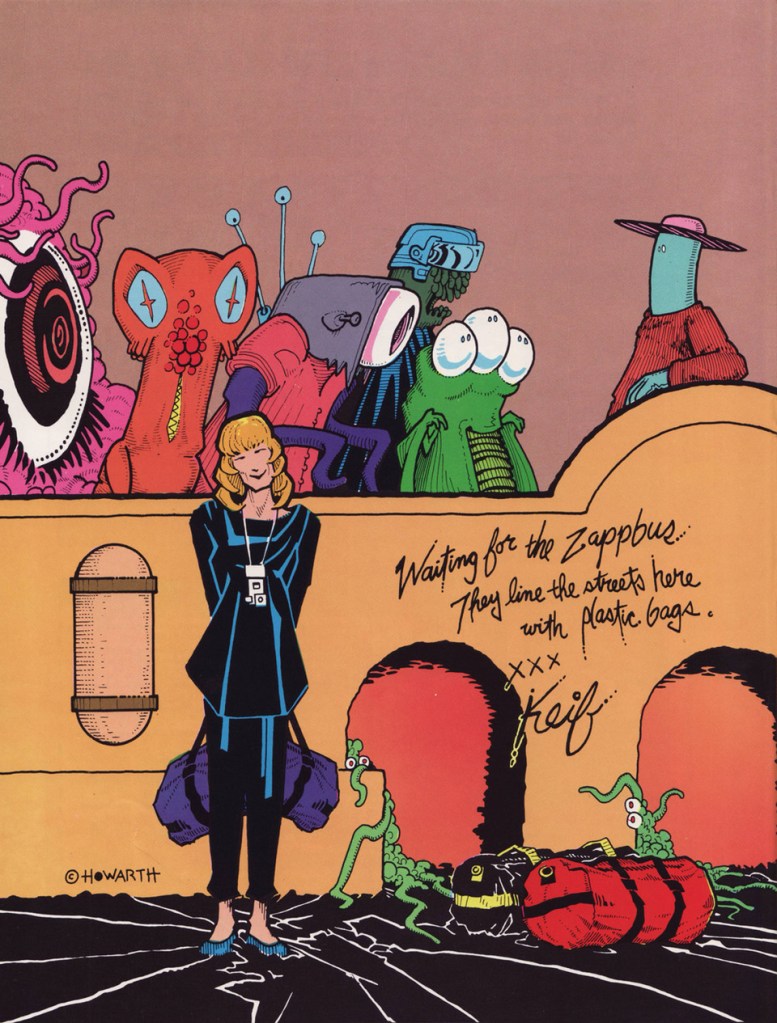
Technically, Kēif Llama (pronounced keef yamma) is a government official specializing in communication with alien species. Off record, she tends to poke her nose into beehives, and wards off attempts to deter her from doing so until she gets to the bottom of whatever’s happening, often pursuing the investigation far beyond formal confed business. When the government wants her to provide an quick’n’easy solution, or to hush things up, she kicks up a well-justified fuss. For this reason, despite being a top-notch xeno-tech, the planets to which she gets sent are further and further away from civilized life, the missions assigned to her increasingly inconsequential. Inconsequential to the government, that is – following the thread of a seemingly random event, Llama often stumbles upon some serious plot, often than not concocted by some evil corporation (and occasionally supported by the government itself).
The back cover of Particle Dreams no. 1 (October 1986, Fantagraphics).
Her name is probably a sly wink to Keith Laumer, a sci-fi/fantasy writer whose Retief series is about a diplomat solving alien conflicts on various planets. Except that Retief always comes out with his nose clean and his credentials reinforced by his success. Llama, on the other hand, stumbles through the puzzling and melancholy worlds she’s banished to with an increasing sense of despondence and powerlessness. She often lacks information to make informed decisions, though not through lack of trying; and in this universe of shades of grey, it is often unclear which is right and which is wrong. Saving one alien life can lead to a whole planet perishing. Overlooking a minor detail means disaster, and when hindsight is 20/20, her burden of guilt is heavy to bear.
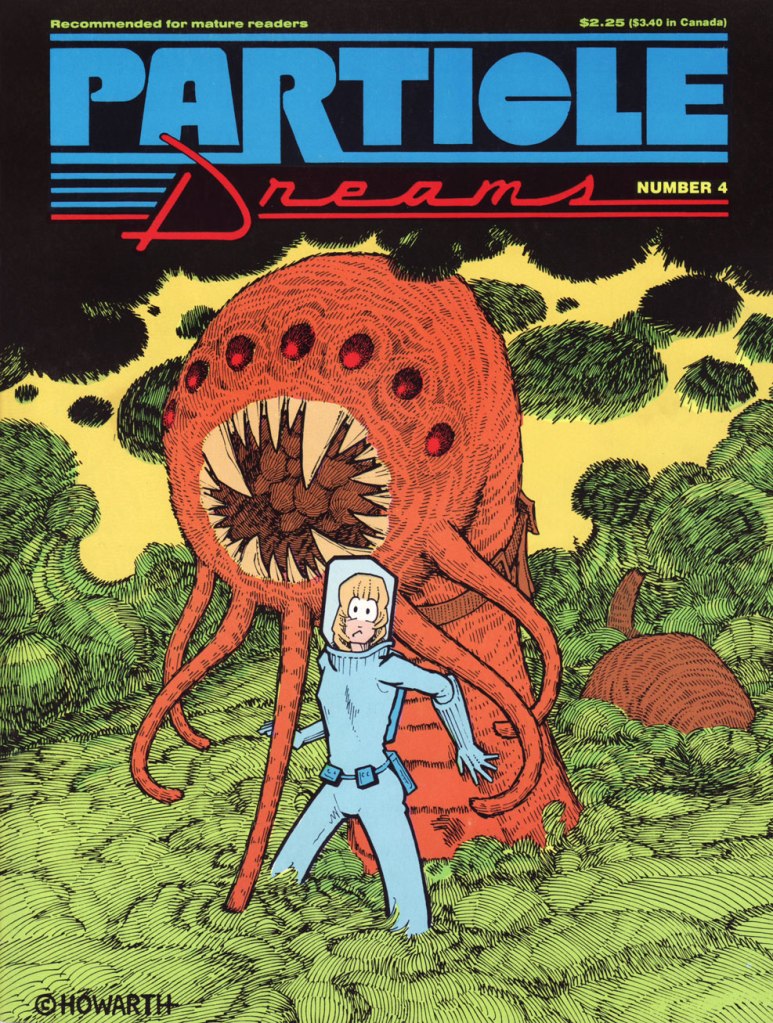
Particle Dreams no. 4 (June 1987, Fantagraphics).
In FF1986: Keif Llama, Lars Ingebrigtsen, who likes this series with a few reservations, argues that “The stories are problematic. More than a few of them end with a sense of “Huh? That’s the end? Did I miss something?” And most of them feature a genocide of some sort or another. After a while, it starts grating on you.” I would respectfully disagree: these stories are a bit like a slice of life. Sometimes we start in the middle of something that’s already under way, and sometimes we get but a small glimpse of some larger, out-of-reach picture. Not everything gets explained, but that’s not because Howarth couldn’t tie the ends of this plot together: he’s our guide through strange worlds, but even a guide doesn’t know everything. This is *excellent* science-fiction, as far as I’m concerned, imaginative and wide of scope. And Llama does have her moments of triumph (made more precious by their rarity), when she manages to outwit the fools, the bureaucrats, the religious fanatics whose actions would lead to a destruction of a precarious ecological balance or a grave injustice. Howarth’s hallmark humorous winks are scattered throughout the stories, giving the readers a welcome respite from the frequently heavy subject matter.
But more importantly, it’s those ‘problematic’ – whether downright cryptic or just lacking closure – endings that make Kēif Llama into a truly striking body of work. Depressing, it can certainly be (thus the importance to not binge-read your way through these comics, assuming you get your hands on a bunch of them at the same time). Yet as we accompany Llama on her ‘journey of discovery’ that leads her (and us) through a maze of corrupt (or just so weary they can’t be bothered) officials, profit-hungry conglomerates, macho idiots who can’t bear to take orders from women, and alien locals who mostly want to be left alone or refuse to explain their culture to an ‘ugly and smelly’ human, the weight of the universe Howarth has created settles squarely on our shoulders, and keeps us pinned until some uncomfortable truths are faced, commonly held beliefs are unravelled, and a few tears are shed. Happy endings often come at a heavy sacrifice.
Page from Particle Dreams no. 4 (June 1987, Fantagraphics).
On a lighter note, fans of Matt Howarth will indubitably have noticed the abundant presence of tentacles in all of his series. Howarth is exceptionally good at drawing aliens: tangible, ‘believable’ aliens who come in a staggering variety of shapes and sizes, and rarely look like some Earth animal with extra appendages (something artists of more limited imagination resort to quite a lot).
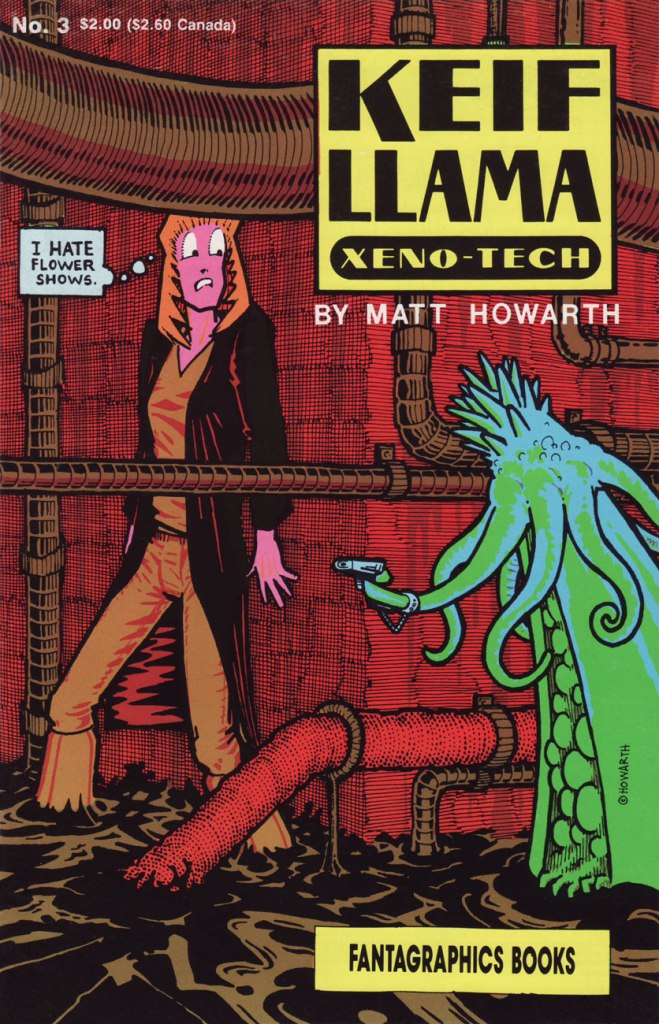
Patience, published in Particle Dreams no. 6 (November 1987, Fantagraphics).Keif Llama – Xeno-Tech no. 3 (November 1988, Fantagrahics).A page from The Thorn Beneath the Rose, published in Keif Llama – Xeno-Tech no. 3 (November 1988, Fantagraphics).
A small-time sheriff, alien as he may be, summarizes the type of thanks Llama frequently gets in this tirade: « You’re an ambulatory disaster area, Llama. Smuggling fiascos, international incidents, they can’t even ship you to the frontier without trouble following you. You’re in transit to Edison-Blue, Llama. I don’t want you or your bad luck in my town any longer than is painfully necessary. »
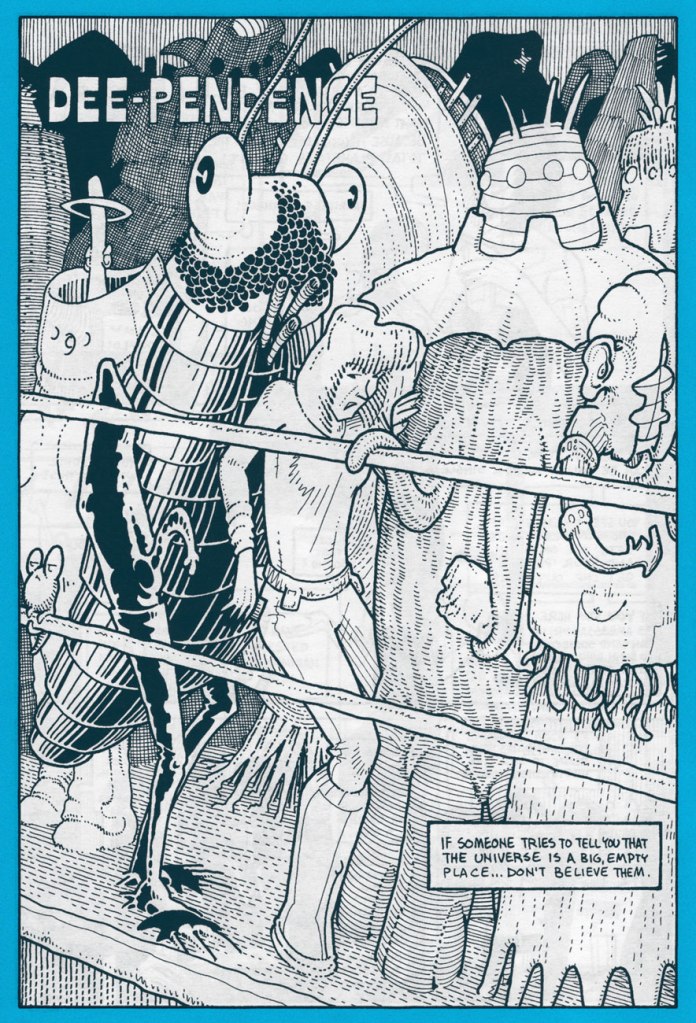
Keif Llama – Xeno-Tech no. 4 (December 1988, Fantagraphics).A page from Down and Out There, published in Keif Llama – Xeno-Tech no. 5 (January 1989, Fantagraphics).Page from Dee-Pendence, published in Keif Llama Xenotech vl 2. no. 3 (December 2005, Aeon).
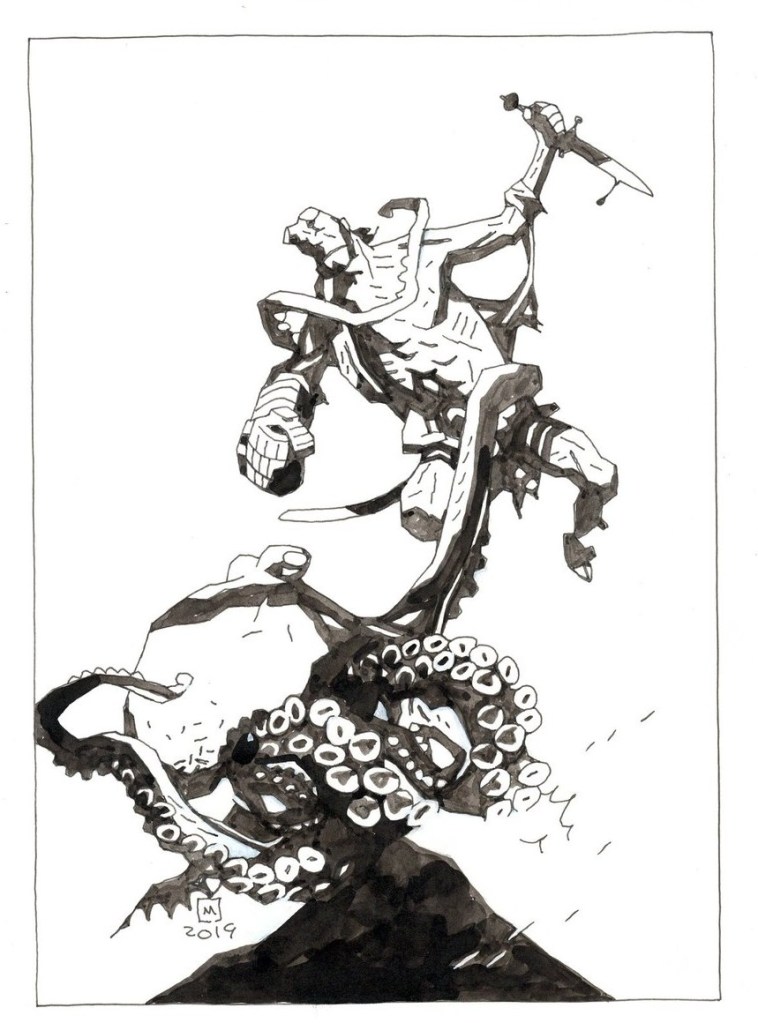
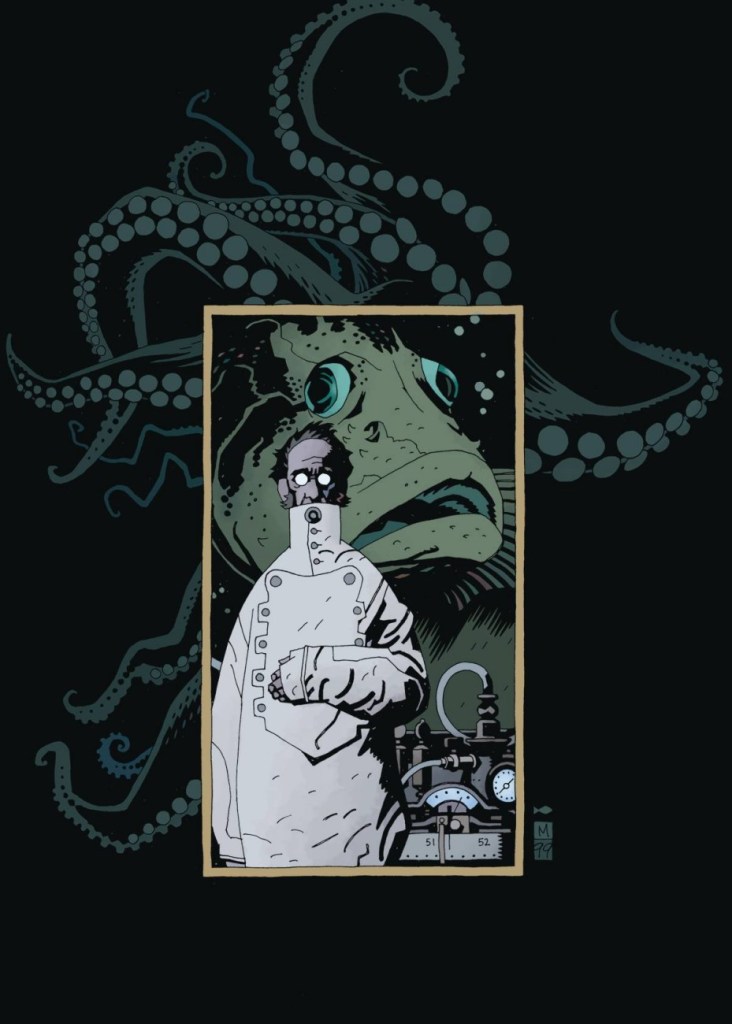
« Because sometimes, for whatever reason, you just want to draw an octopus. » — Mike Mignola, June 2019
I would say that this Tentacle Tuesday feature was started for a similar reason – sometimes one just needs to gather tentacled material, to share it more efficiently with like-minded weirdos.
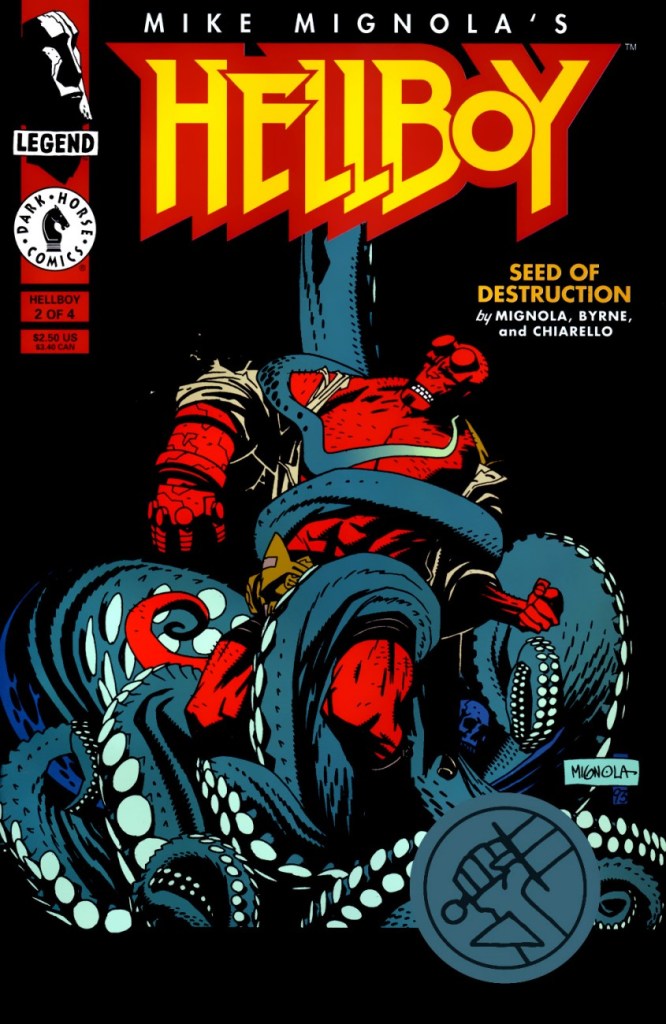
The back cover of Hellboy: Seeds of Destruction no. 2
I don’t imagine writer and comics artist Mike Mignola (most notably, creator of Hellboy and its spin-off B.P.R.D.) needs much of an introduction – he’s fairly ubiquitous in mainstream culture, and his style has been aped by many, which according to the proverb is the most sincere form of flattery. I was aware of this already, and yet was staggered by the sheer number of copycats I stumbled across while seeking out materials for this post.
I also started suffering from tentacle fatigue: as much as I love octopuses, seeing dozens upon dozens of fairly similar images made me weary. Mignola draws tentacles well, but he also draws them very, very often, and he also likes to revisit scenes already depicted. The result is a sprawling mess of sketches, variant covers and spin-offs of spin-offs… perhaps not inappropriate, come to think of it. This particular octopus has far more than just eight limbs!
Enjoy this barrage of Mignola tentacles, just make sure you’re in the proper mood for them 😉
Hellboy: Seeds of Destruction no. 2 (April 1994).
Page from Hellboy: Seeds of Destruction no. 3 (May 1994).
Sketch from June 2019.
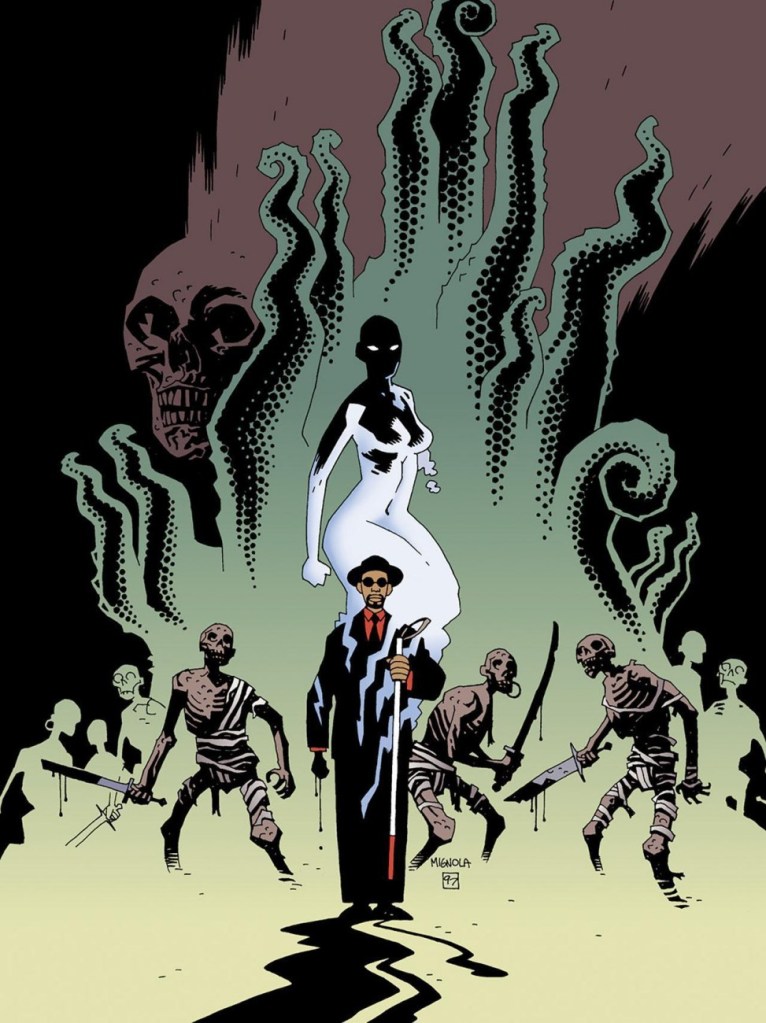
ZombieWorld: Champion of the Worms no. 2 (October 1997)
No post of this nature would be complete without featuring, in some form or other, H.P. Lovecraft, arguably the father of our modern obsession with tentacles. On that topic, I am linking to an excellent article about Mignola’s relationship with the creator of the Cthulhu Mythos (be warned that it’s in French, sorry!)
Art for the cover of Dark Horse Presents no. 142 (April 1999). Mignola made Lovecraft look downright dignified and borderline handsome, which is quite a feat, considering the latter’s unusual physiognomy.
Mignola revisited this very scene for his cover of Children of Lovecraft, and anthology of (non-comics) stories ‘inspired’ by Lovecraft (September, 2016). This was also published by Dark Horse.
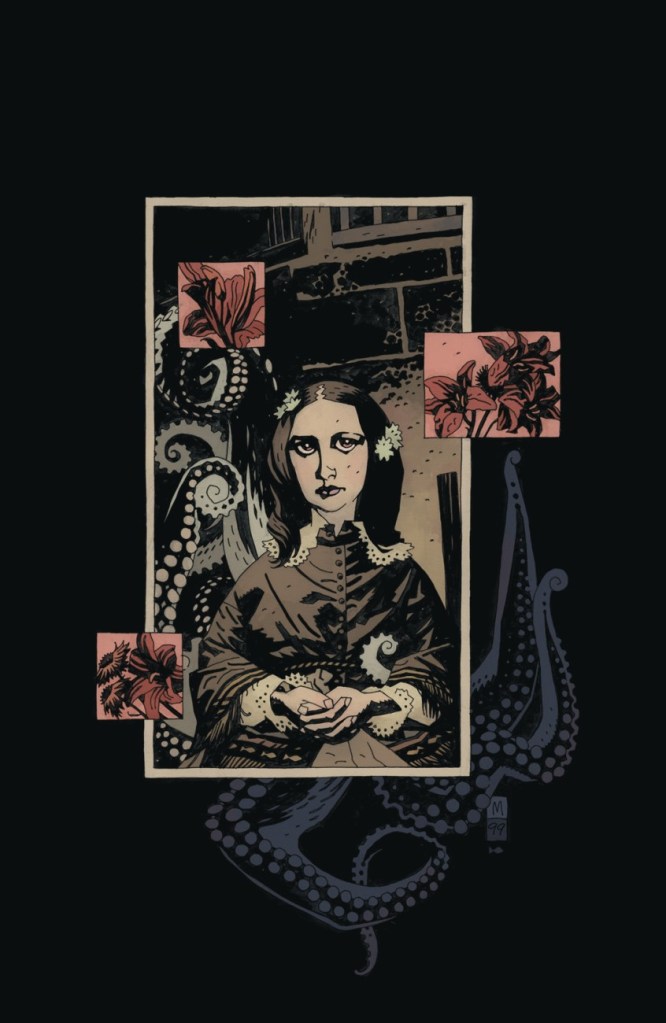
More Victorian England and Lovecraftian archetypes can be found within the pages of Jenny Finn:
Artwork for Jenny Finn no. 1 (June 1999).
Back cover artwork for Jenny Finn Messiah no. 1 (2005).
Even Batman, in Mignola’s hands, gets tentaclefied!
A page from Batman: Legends of the Dark Knight no. 54 (November 1993).
Batman: The Doom That Came to Gotham no. 2 (November 2000).
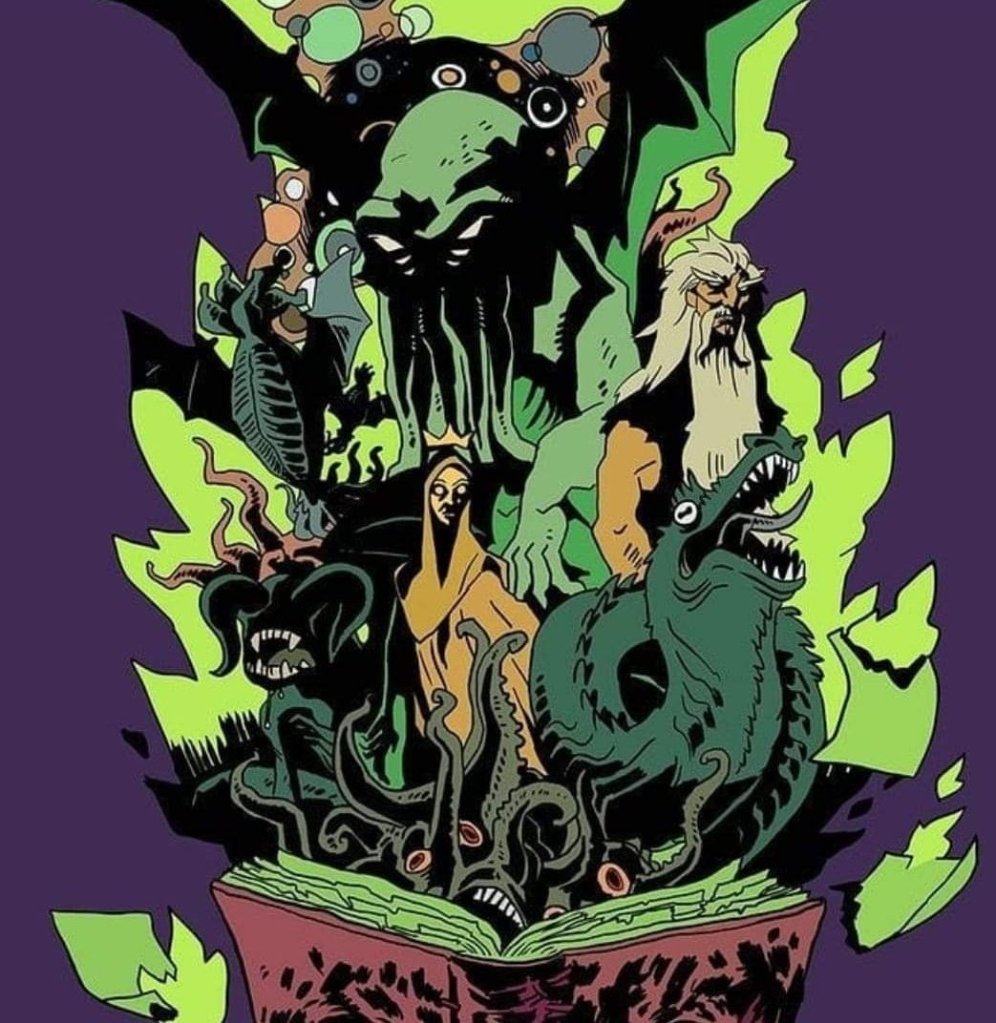
As a final note, I’d like to officially make a moue of distaste at people who share art without attribution, or without bothering to ascertain its source. To wit: a pair of images that are widely shared as Mike Mignola artwork… except that it isn’t by him at all, just by someone drawing in a similar style. Instagram and Pinterest are breeding grounds for such deplorable artistic credit robbery.
The following two illustrations are by Malaysian artist Daryl Toh.
« Down metal snake corridors Steely grey engines hum for nobody but me No sound comes from the sea above me No messages crackles through the radio leads They’ll never know, never no never How strange life in dark water can be… »*
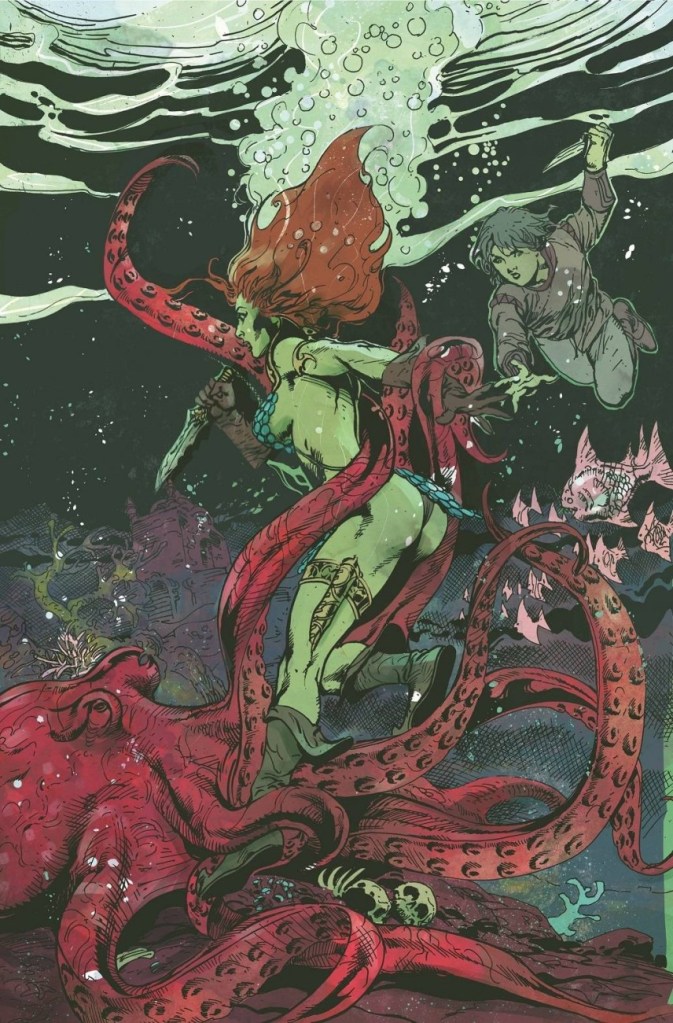
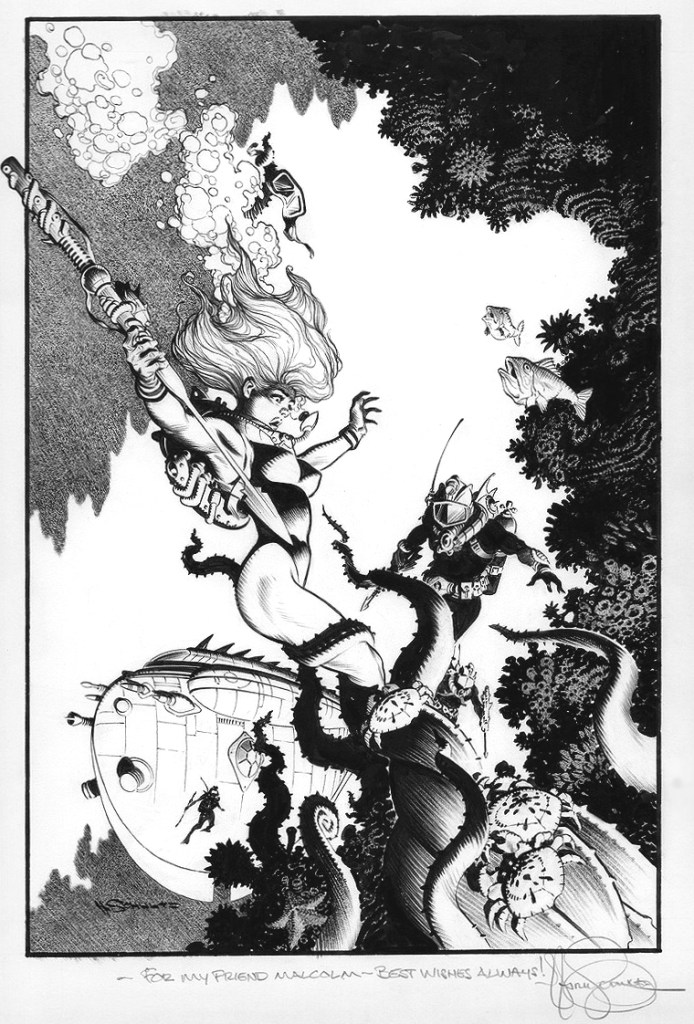
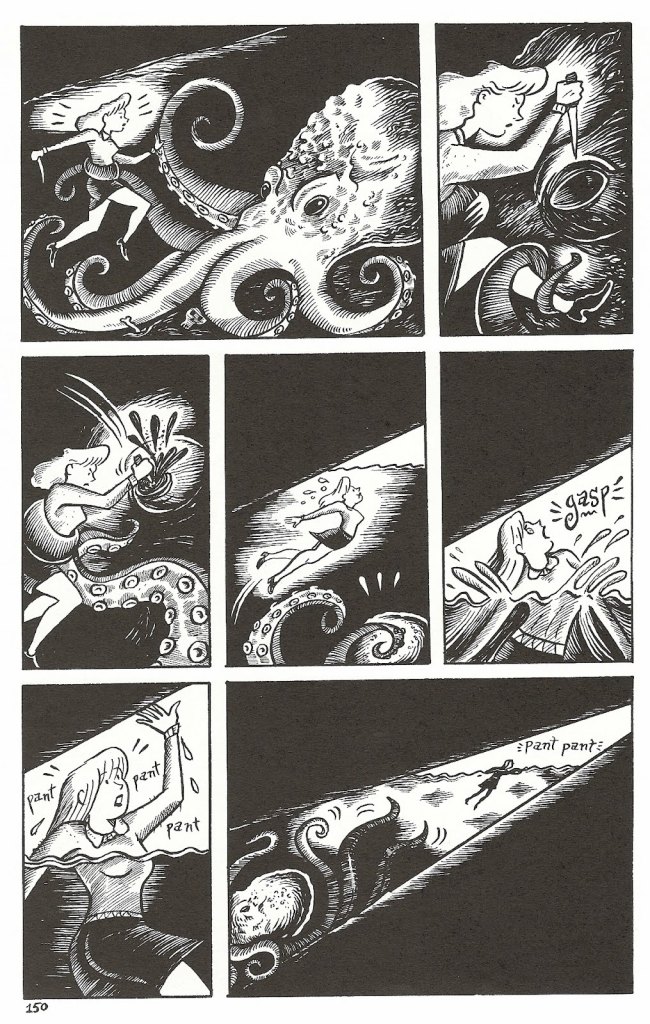
Now that we’re finally enjoying proper autumnal weather – which is to say, grey, rainy and beautiful – my thoughts turn to the dark and the wet. Aquatic octopus scenes fit this mood beautifully: those mute scenes where characters are as if frozen in the clutches of a gargantuan octopus. In which overeager octopod grabbers get ferociously punished for their ill-advised enthusiasm, winding up, more often than not, on the wrong end of a sharp… implement.
Original art by Mark Schultzintended for the Subhuman paperback collection (which, as far as I know, never saw print):
A few pages from Richard Sala‘s Mad Night (2005, Fantagraphics):
This book features not one, but two epic battle scenes with an octopus!
A painting by Vic Prezio, created for the front cover of a 1962 issue of Man’s Escape:
« Adults are just outdated children. » — Dr. Seuss
While some are of the opinion that children should be seen but not heard (and preferably not seen), others coo mindlessly over every mollycoddled tot. I think the truth lies somewhere in the middle, and today I’ll concentrate on courageous, plucky children who are not afraid of diving head first into adventure.
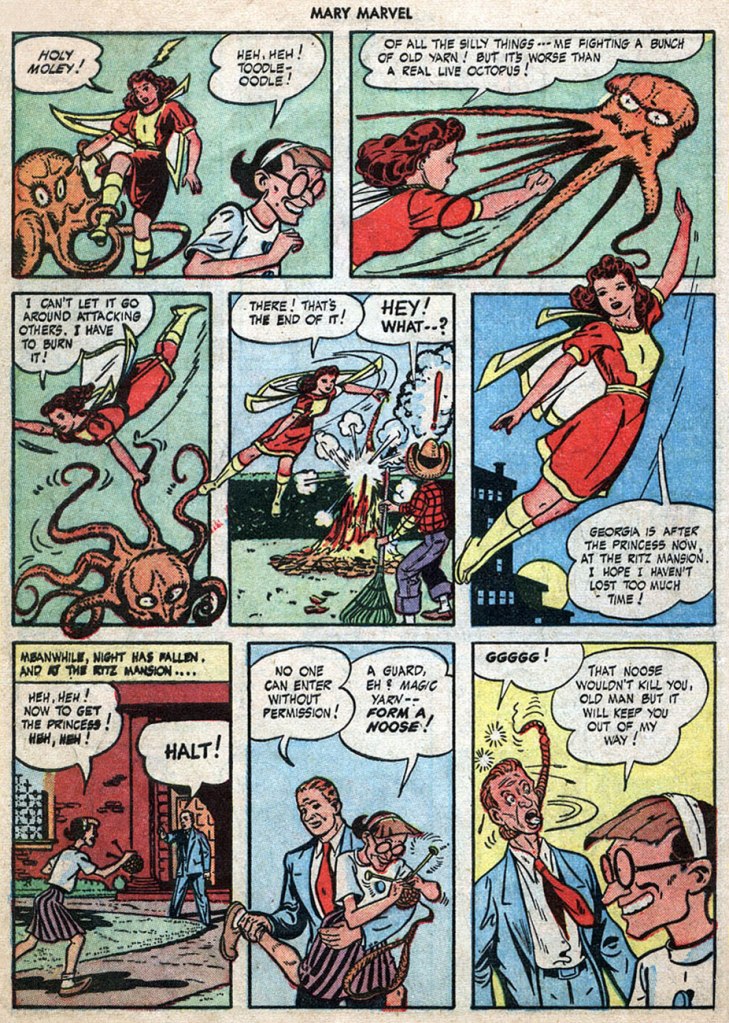
The Magic Yarn, published in Mary Marvel no. 2 (June 1946, Fawcett), was scripted by Otto Binder and drawn by Jack Binder. This immensely entertaining story about an old bat with dreams of world domination involves an octopus, some bondage (of course!), and lots of knitting. (Read it here)
Moving on to actual (rather than knitted) octopuses, here’s the original art from On the Bottom of the Sea, published in Little Max no. 16 (Harvey, April 1952). The story artist may be uncredited on GCD, but we know that it’s Al Avison 😉
The Little Wise Guys tangle with an ornery cephalopod. Giggles ensue! This is Daredevil Comics no. 111 (June 1954, Lev Gleason), with a cover is by Charles Biro. The cover story is Scarecrow’s Lucky Blunder, scripted by Charles Biro and illustrated by Ralph Mayo.
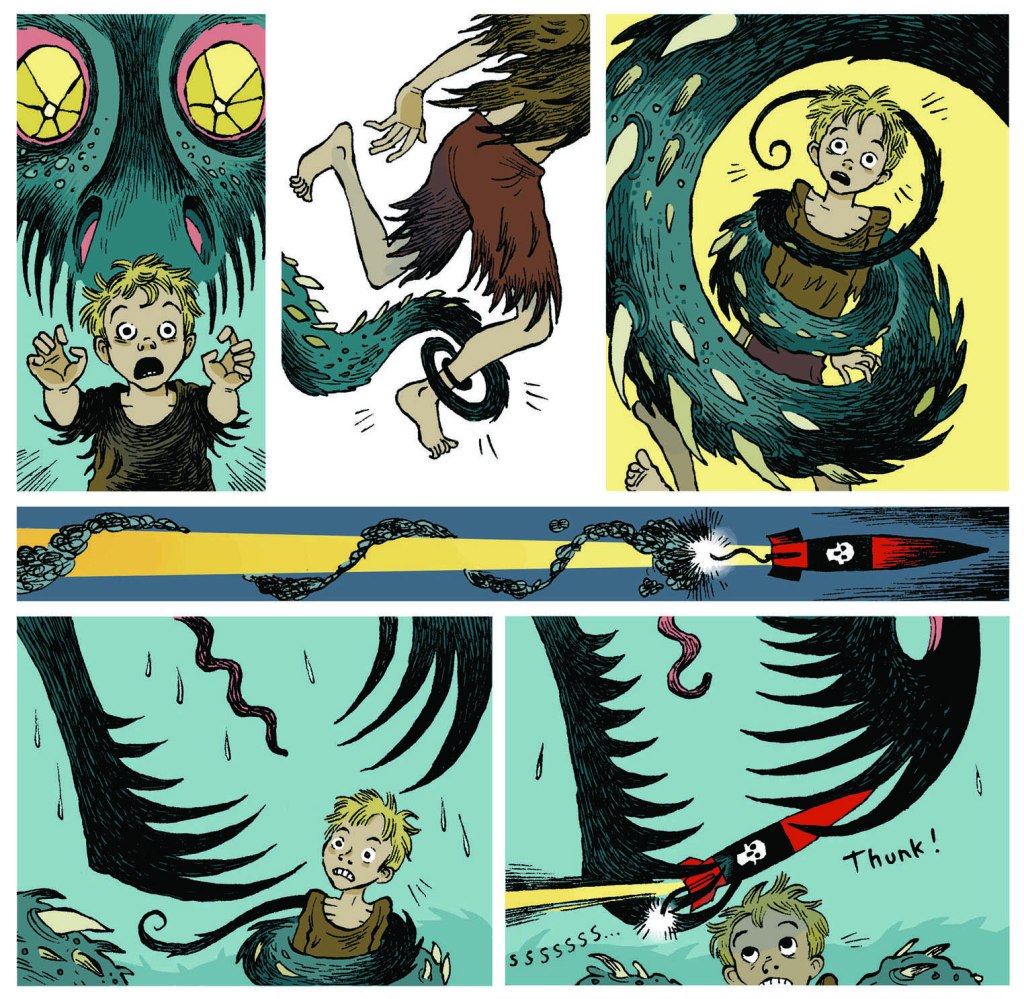
Finally, making an epic effort to wrench myself away from the tender embrace of the Golden Age, I’ll accelerate a little too much and end up in all the way in 2015. Here’s a page from Scarlett Hart: The Tentacles of Terror by Thomas Taylor and Marcus Sedgwick.
“Man is a rope stretched between the animal and the Superman–a rope over an abyss. A dangerous crossing, a dangerous wayfaring, a dangerous looking-back, a dangerous trembling and halting.”
– Friedrich Nietzsche
Superheroes come in all shapes and sizes, and for every successful superhero remembered throughout the ages, there’s probably about a hundred forgotten characters of varying degrees of goofiness. Periodically, some artist or writer digs up one of them from the deep recesses of time, dresses him in a new frock and plugs him into the modern era of Internet and cellphones, with almost universally lacklustre results.
I like to contemplate these bold strangers in their natural habitat — Golden Age comics! And for a 40s superhero, there is simply no better way to demonstrate super powers and a nimble brain than a friendly tussle with a cephalopod.
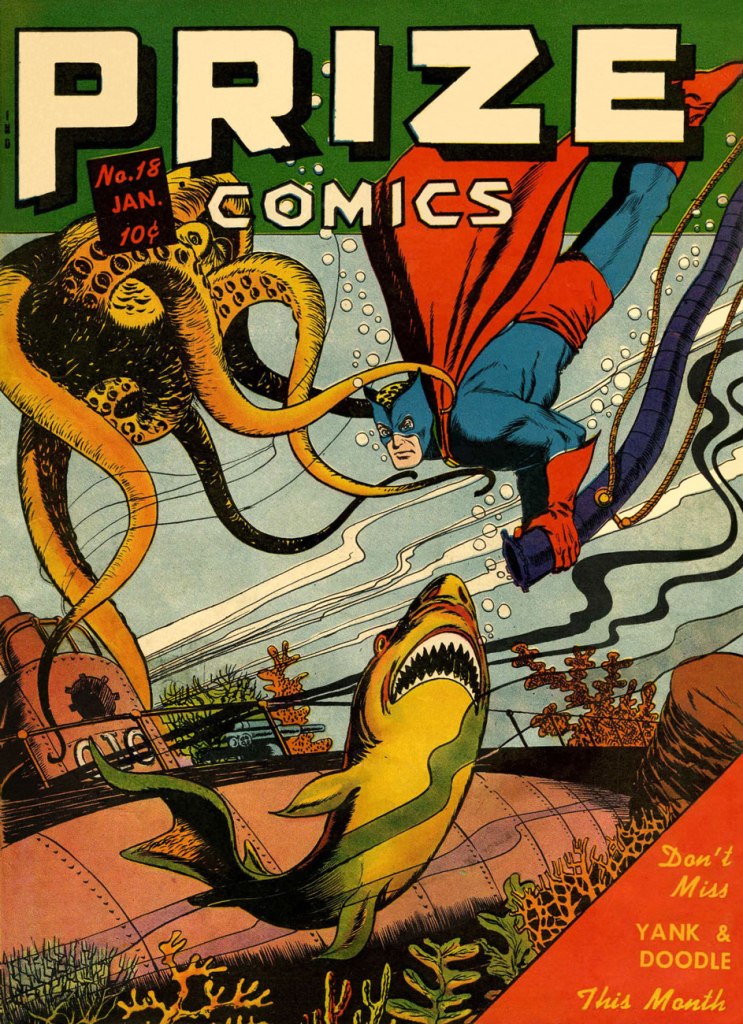
The Black Owl, clad in a red-and-blue costume with some odd leopard-print swimming cap… oh, sorry, that’s his blond hair:
Prize Comics no. 18 (January 1942). Cover by Jack Binder.
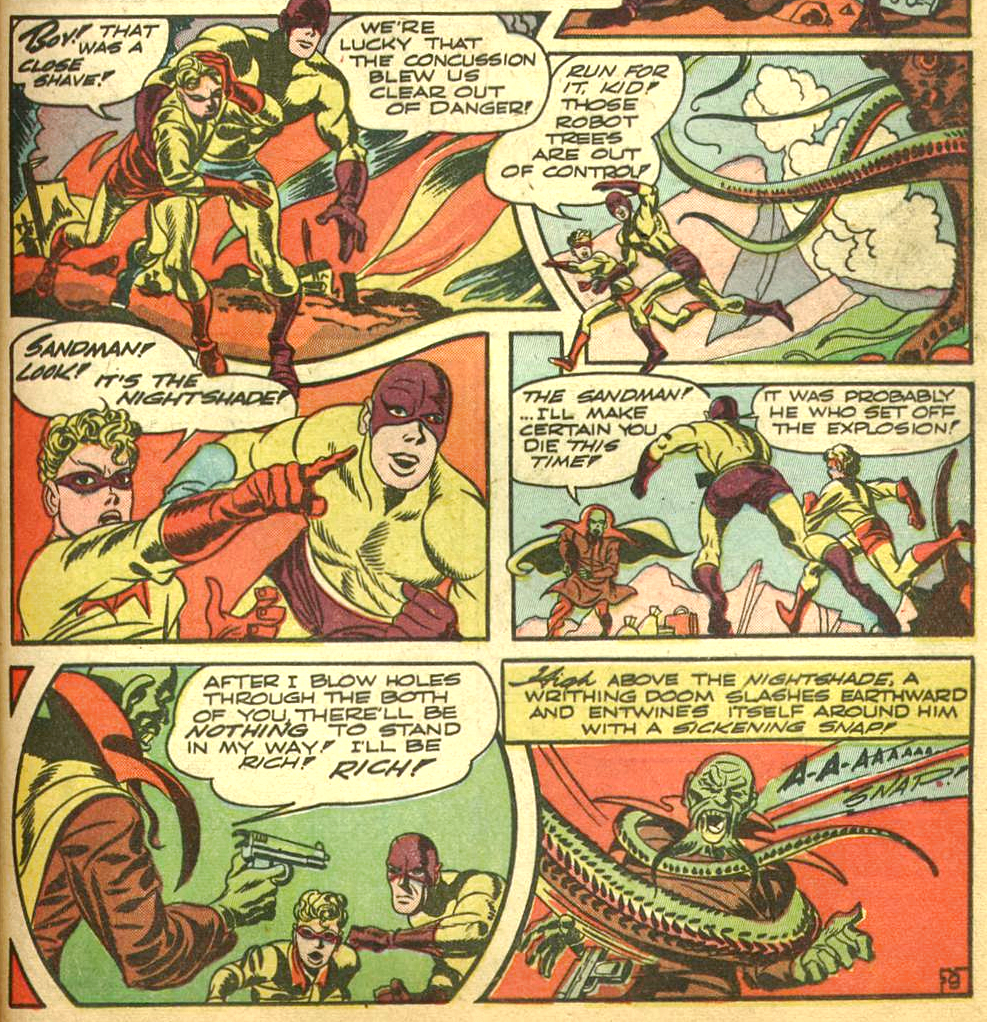
The Sandman… oh shoot, which one? Remember we have both feet firmly planted in the 40s in this post. This Sandman is Wesley Dodds, created by artist Bert Christman and writer Gardner Fox. Accompanied by his sidekick Sandy, this superhero-cum-detective wielded a special gun that could put criminals to sleep or act as a sort of truth serum.
The Adventure of the Magic Forest, published in World’s Finest Comics no. 6 (Summer 1942, DC), was scripted by Jack Kirby (Tentacle Tuesday Master!), pencilled by the King and inked by Joe Simon.
You’re not convinced that those are tentacles? Shame on you. Take a gander at this:
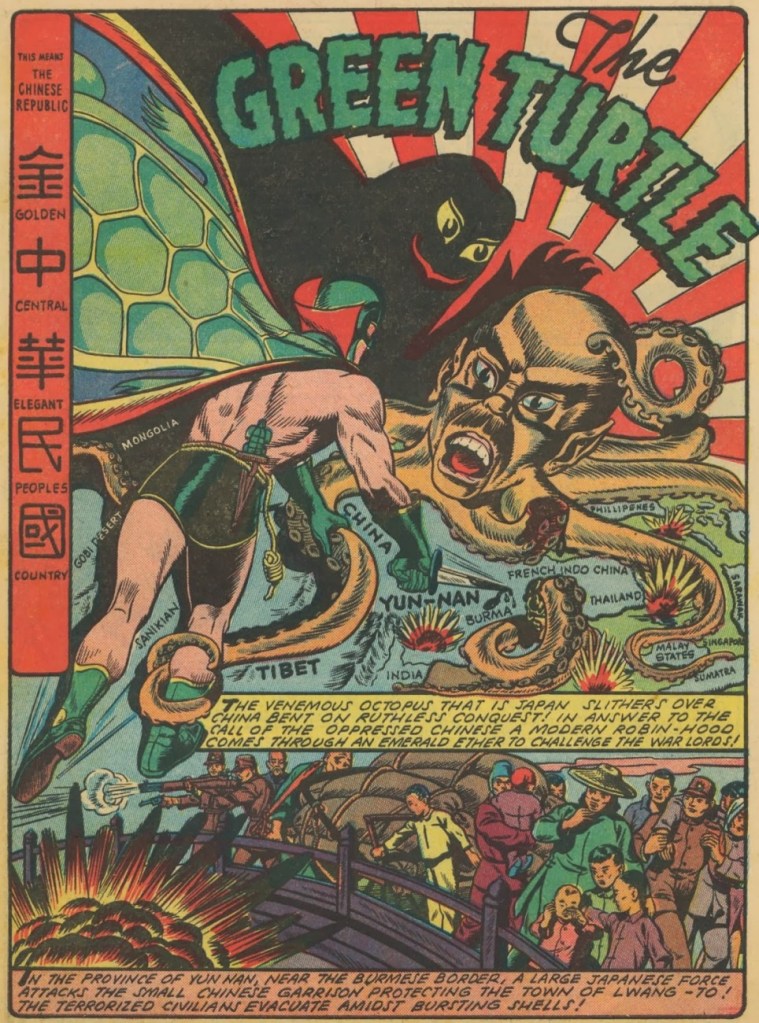
The next superhero (technically with no super powers, but managing beautifully all the same thanks to his lightning-fast reflexes and superior fighting skill) is my personal favourite Green Turtle, a Chinese superhero who fought against Japanese invaders in WWII. Unfortunately, the publisher wouldn’t let creator and artist Chu Fook Hing make his creation obviously Chinese, so the Green Turtle was never seen without a mask. It’s okay, we can read between the lines!
This Green Turtle adventure was scripted and illustrated byChu F. Hing and published in Blazing Comics no. 1 (June 1944, Rural Home). With apologies to our Japanese readers.
Magno the Magnetic Man has, believe it or not, magnetic powers (though I imagine it’s not helping him much in this particular skirmish). He’s irresistible to women (maybe they have metal parts?), impervious to harm, and is accompanied by his side-kick Davey, whom he periodically magnetizes to ensure that the little whippersnapper also has access to magnetic powers.
Super-Mystery Comics vol. 5 no. 4 (February 1946, Ace Magazines). Cover by the sudorific Rudy Palais.
The thing kept coming. “Die, die!” Parke screamed, his nerves breaking. But the thing came on, grinning broadly. “I like quiet protoplasm,” the thing said as its gigantic mouth converged on Parke. “But I also like lively protoplasm.” It gulped once, then drifted out the other side of the field. — excerpt from The Last Weapon by Robert Sheckley
I Am the Living Ghost!, illustrated by Steve Ditko, was published in Tales of Suspense no. 15 (Mar. 1961, Marvel). I came across a reprint of this story while looking for Draculian tentacles (which you can see in Tentacle Tuesday: Dracula Drops In).
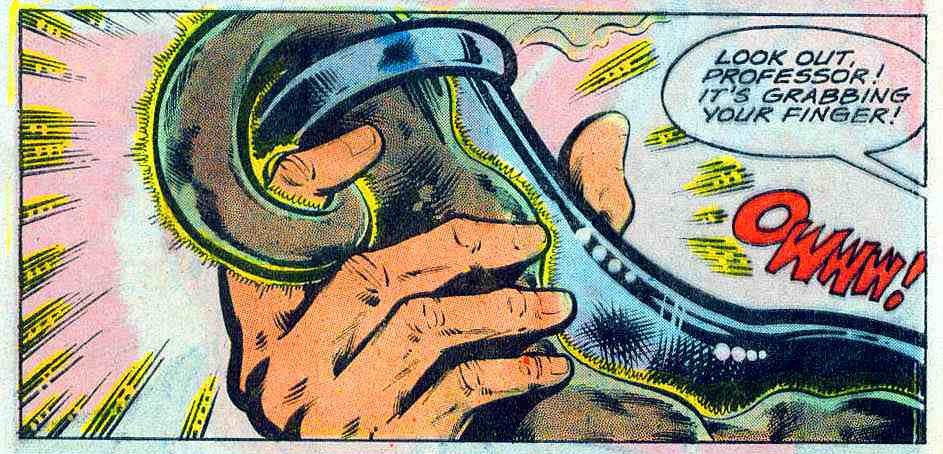
Call it goo, label it as a giant amoeba, christen it ectoplasm or protoplasm, but when it starts crawling your way, do remember to beat a hasty retreat.
Oh, yeah, and keep your fingers away from it, too.
Coo! this page has everything: a prehensile amoeba, tentacled plants, aliens with cephalopod appendages…
Spawn of Venus was scripted by Bill Gaines and Al Feldstein, and illustrated by the latter. It was published in Weird Science no. 6 (Mar.-Apr. 1951, EC).
… but it’s the amoeba that’s of current interest to us (yes, the one devouring everything in its path, including dawdling professors).
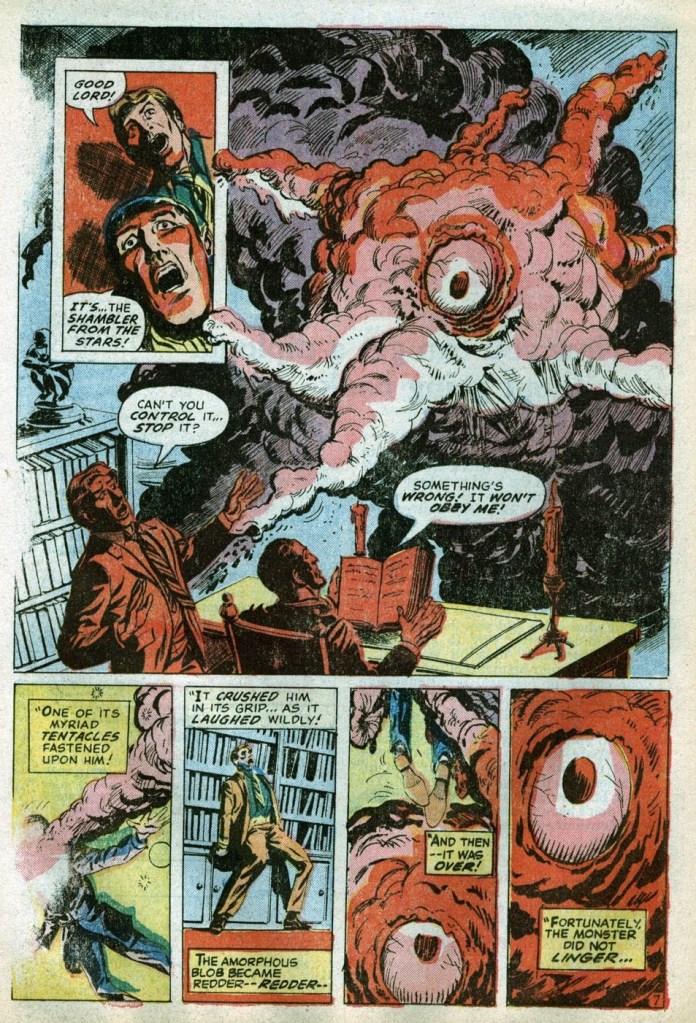
Continuing our literary delusions, a peek at the adventures of a ‘star vampire’, from a (somewhat lackluster) comic book adaptation of a Robert Bloch short story:
The Shambler from the Stars!, based on a story by Robert Bloch, was adapted by Ron Goulart, pencilled by Jim Starlin and inked by Tom Palmer. It was published in Journey into Mystery no. 2 (Feb. 1973, Marvel). An amorphous red blob is not a dog to be ordered around, which explains the poor results.
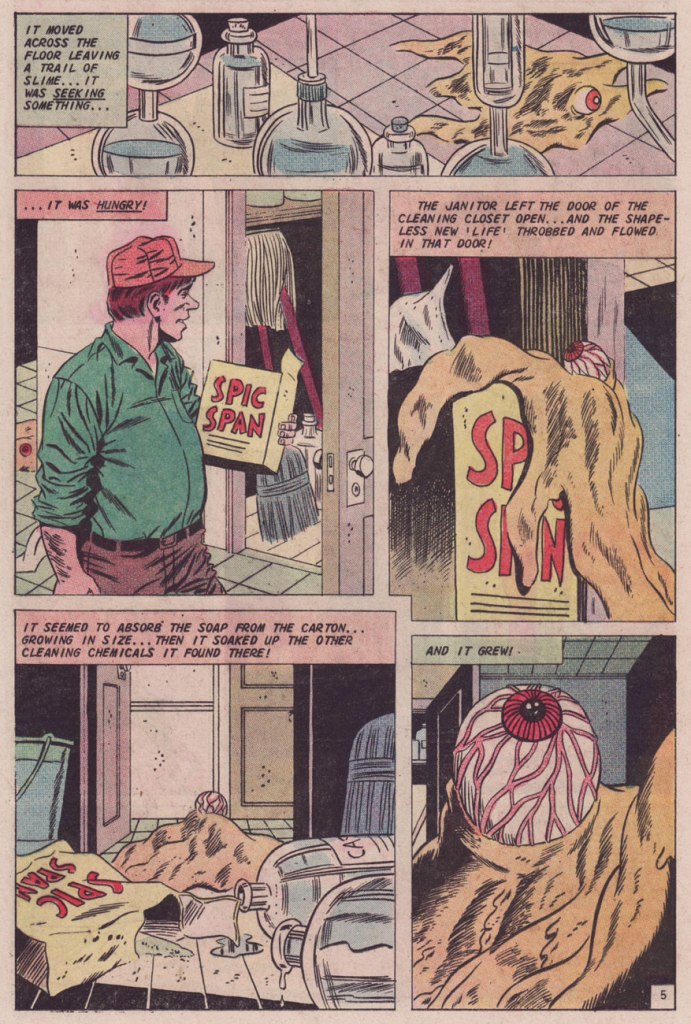
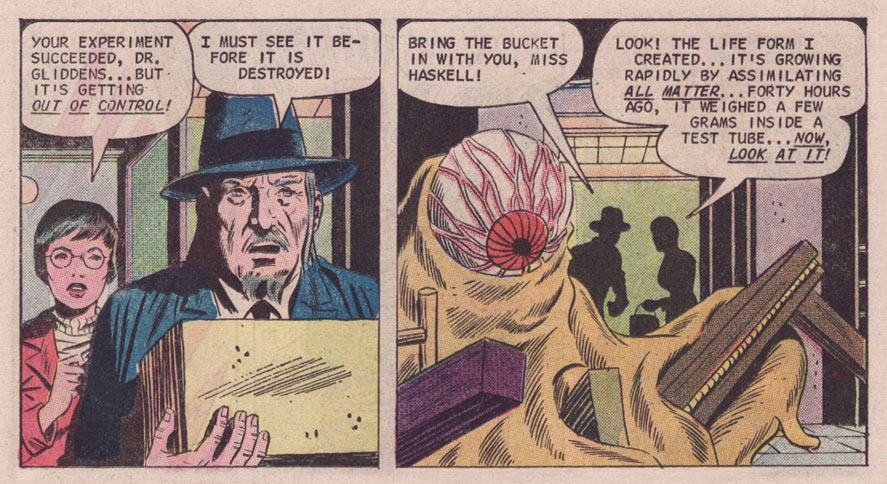
If a tentacled amoeba is scary, just think of how startling it is to run into an amoeba with a single bloodshot eyeball (that feeds on soap, among other things).
A page from Creator of Life, published in Ghost Manor no. 11 (Apr. 1973, Charlton). This story was written by Joe Gill and illustrated by Charles Nicholas and Wayne Howard.
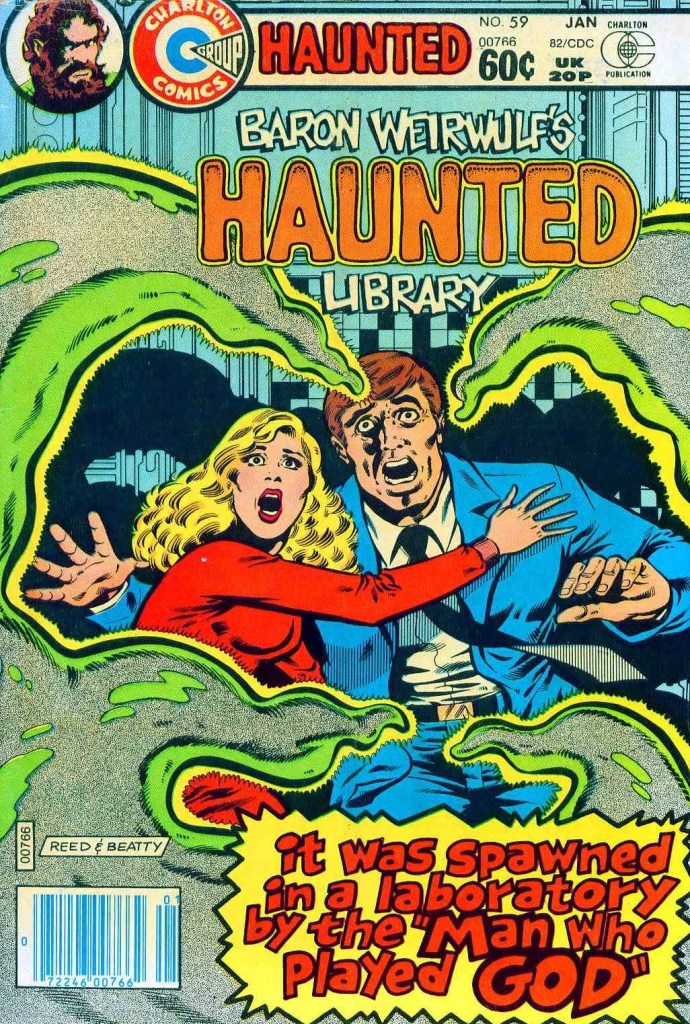
An eyeball in a turtleneck! Scary stuff.
Haunted no. 59 (January 1982), pencilled by Dan Reed and inked by John Beatty.
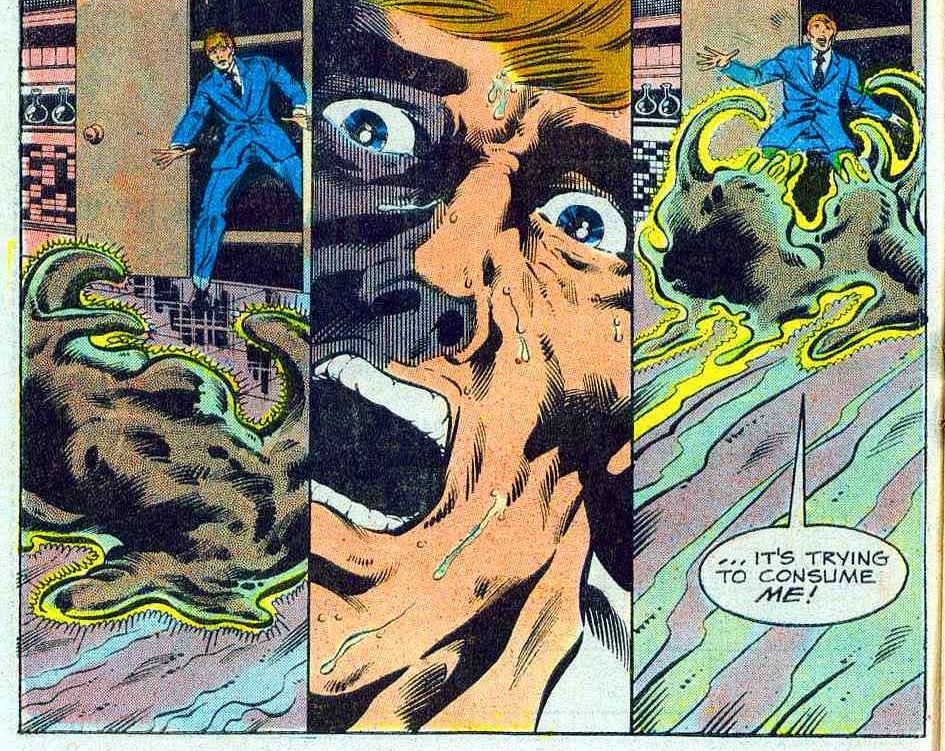
Not only does this monstrosity go after the scientist, instead of pursuing his absurdly attractive assistant…
The Man Who Played God was scripted by Joe Gill (again), pencilled by Dan Reed and inked by John Beatty.
But she’s also the one who saves the situation. Joe Gill, ladies and gentlemen!
I love his tough-guy stance at the end. He surely would have punched the amoeba out, if only the meddling female hadn’t interfered!
« Well, she sneaks around the world from Kiev to Carolina She’s a sticky-fingered filcher from Berlin down to Belize She’ll take you for a ride on a slow boat to China Tell me, where in the world is Carmen Sandiego? »*
Today’s Tentacle Tuesday is for globe-trotters only – but don’t let this post give you an itch for actual travelling: that’s verboten right now.
This Teutonic tentacled cutie appeared on the cover of Moga Mobo no. 3 (1995). The wraparound cover is the work ofJonas Greulich, one of the co-founders of this German comics magazine that began publication in 1994 (the other two artists involved are Titus Ackermann and Thomas Gronle).
Speaking of German comics, does anybody know where this page and its German Captain Nemo come from?
20.000 Leguas de viaje submarino was adapted by Héctor Oesterheld and illustrated by Roberto Regalado. This 23-page story was published in Argentine Billiken Magazine (Editorial Atlantida) in 1974. For those who can read Spanish or would just like to see more images, head over to this article.
One would be remiss in not paying at least a brief visit to Asia:
The cover of a comics anthology from Hong Kong, probably from the 1960s.
And back to Germany at a staggering speed (watch out for whiplash)!
Petzi is actually a translated version of a Danish character named Rasmus Klump, created by a husband-and-wife team Carla and Vilhelm Hansen in 1951. The adventures of the lovable bear cub were popular enough to be translated into many languages, but a hefty price had to be paid – namely, a name change. Rasmus became Petzi in French, German, Italian, Portuguese and Vietnamese, and I’m slightly amazed that such different countries could agree on one name. In English, you will no doubt be familiar with Barnaby Bear. This is Petzi no. 40 (July 2008), a reprint of older material published by Carlsen Comics.
∼ ds
* She’ll go from Nashville to Norway, Bonaire to Zimbabwe
Chicago to Czechoslovakia.. and back!





































 Who's Out There?