May the gentleman octopus grant you a Happy New Year!
Greetings, pretty cephalopods and cephalopodettes! This is the last Tentacle Tuesday of the year, and as is my custom, I return to a sub-topic close to my heart: women entangled in tentacles. Nothing crass, mind you – we have our standards!
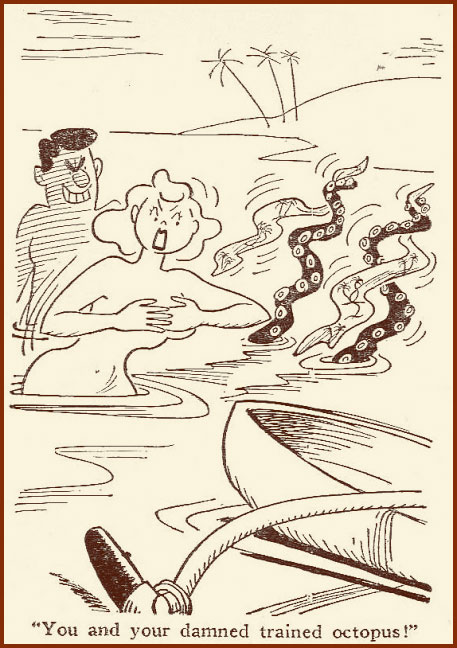
Original art for a cartoon published in Wham! (December 1954, Wolf Books). Art by George Wolfe. I imagine the three guys whose arms are grabbing her colliding with one another in the door frame…
As the signature attests, the artist is George Wolfe (1911 – 1993), who has had an illustrious, though mostly forgotten, career as a magazine cartoonist with published work in Esquire, Saturday Evening Post, New York Herald Tribune, etc. He also had a few syndicated comic strips under his belt, as well as winning several prestigious awards (namely, the Reuben, the highest award of the cartooning profession). Touring Tessie, created by Wolfe for Wolf Books (has a nice ring to it, doesn’t it?), was the so-called hostess of this magazine, and its main attraction. Do yourself a favour and head over to The Wolves of Broadway VII: The Alpha Female to peruse more Tessie cartoons and learn more about just what kind of gal she was.
Tessie is one again getting entangled in the clutches of an octopus… this time a more literal interpretation.
The image used for the cover of Wham! (April 1954, Wolf Books). Another trained octopus – working for his own account and calling the shots!
From the cartoony to a more realistic approach –
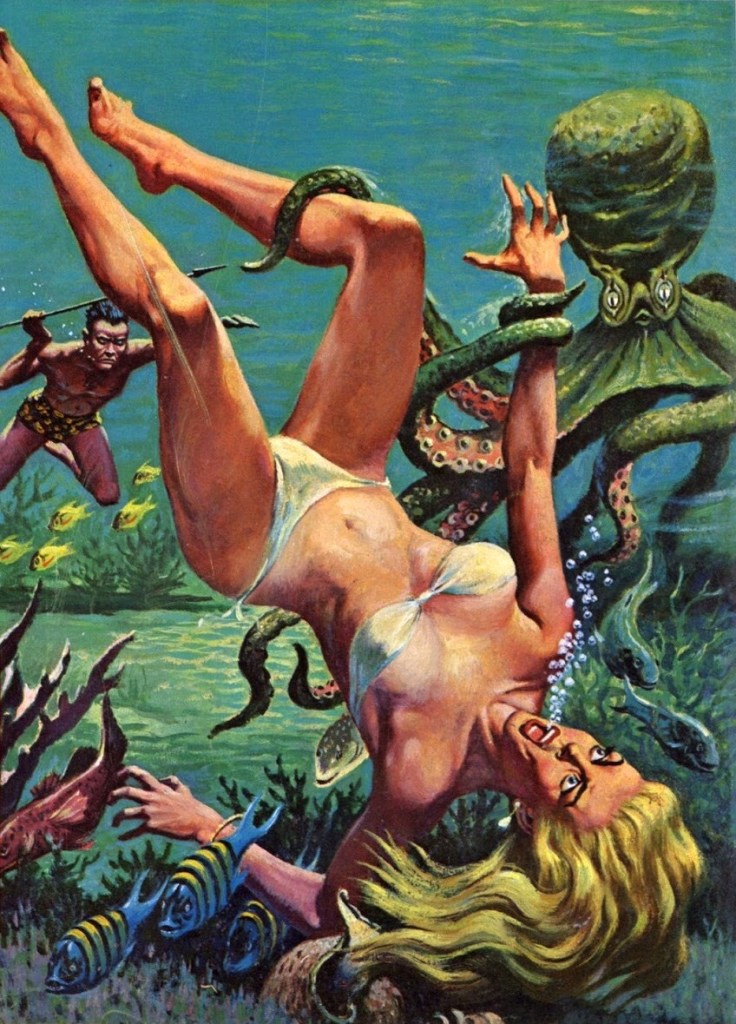
Detail from the original cover art of Bold Men vol. 5, no 2 (March 1961, Cape Magazine Management). Bold Men is an “interest magazine focusing on pictorials and adventure stories”, explains mycomicshop.com, but with this issue featuring stories like How Nazi Bormann’s Cruel Lust will Betray Him! and The Deadly Blonde Witch of Waikiki! , I’m not sure that “bold” is the right word here.
The following three covers are from Storie Blu, an Italian erotic, science-fiction comics series published by Ediperiodici (also known as ErreGI), Edifumetto’s main competitor in the adult comics sector. Ediperiodici disseminated a huge number of erotic series running the gamut from A all the way to B in terms of genre: erotic… horror, western, spy, jungle, military, fantasy, etc. If you want to get an idea of what the stuff looked like, take a peek at Lucifera, Maghella (in-house favourite) or Messalina.
Storie Blu ran between 1979 and 1990, for a respectable 122 issues and two supplements (click here for a full list in Italian).
Storie Blu no. 28 (1983, Ediperiodici). Psycho-monsters, announces the cover!
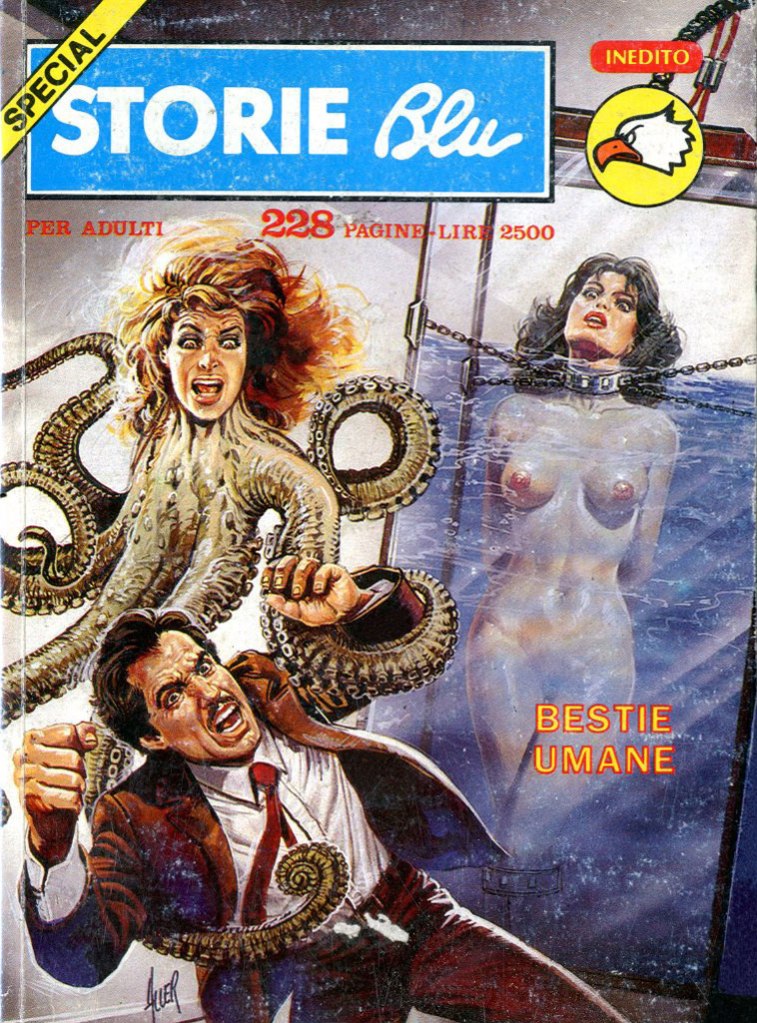
Storie Blu no. 39 (1983, Ediperiodici). This cover is a good example of the “what the hell is going on here” approach Italian erotica often prefers – RG commented that the tentacled female must be the guy’s ex-wife, and his current wife is in the fish-tank. Anything’s possible! Cover is by Giovanni Alessandri (not the grammarian from the 16th century, as you may have initially thought!), who went under Aller.
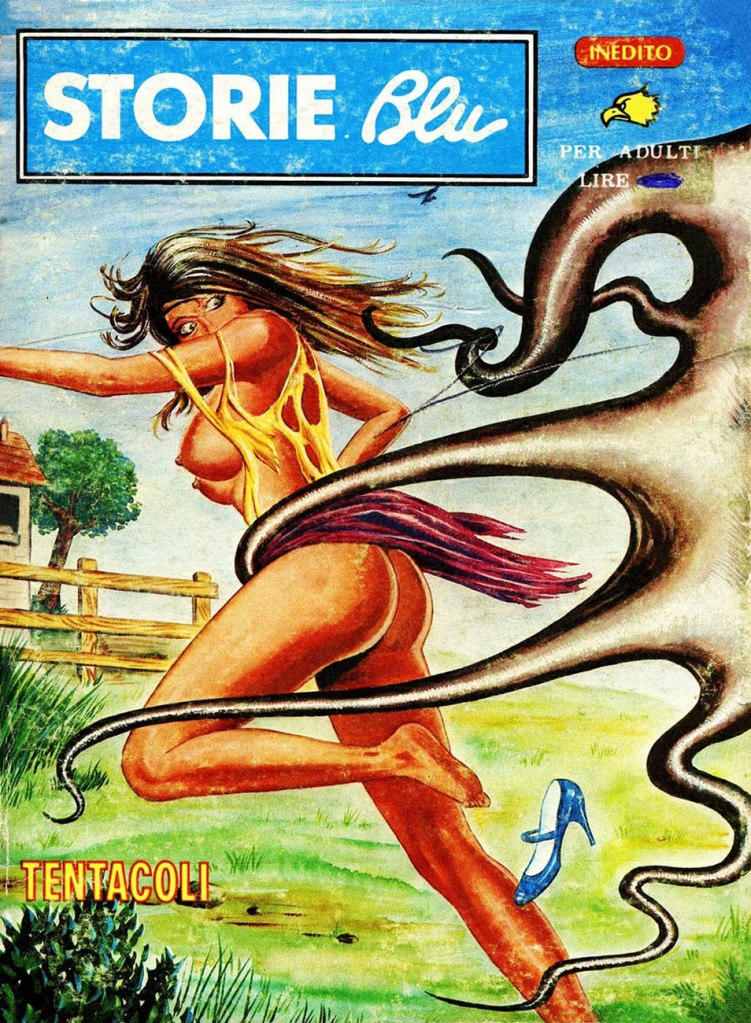
Storie Blu no. 81 (1986, Ediperiodici). The cover story was scripted by Carmelo Gozzo and illustrated by Alberto Giolitti (who, I believe, also drew this cover) – you can read a synopsis and take a look at some art here.
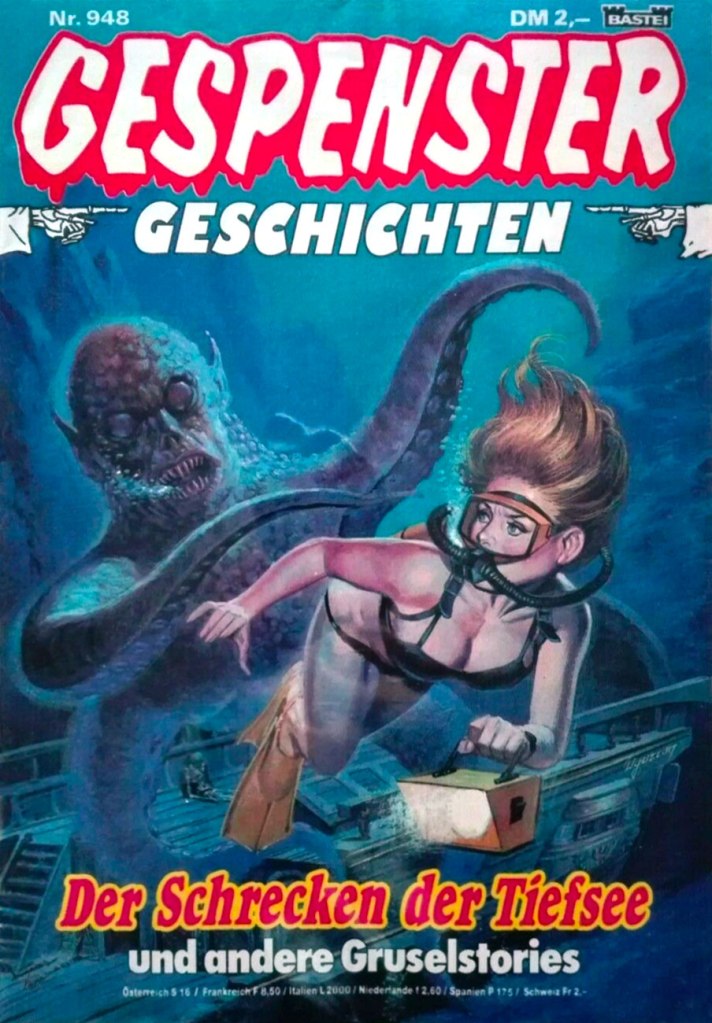
Moving on to another European country… Gespenster Geschichten‘s sister publication Spuk Geschichten already has a Tentacle Tuesday: A Torrent of Teutonic Tentacles.
Gespenster Geschichten no. 948 (1991, Bastei Verlag). Cover by Turkish painter/illustrator Ugurcan Yüce, who moved to Germany in his 30s and contributed quite a lot of covers to publishing house Bastei Verlag, which published (and continues to) many highly successful popular pulp and comic series.
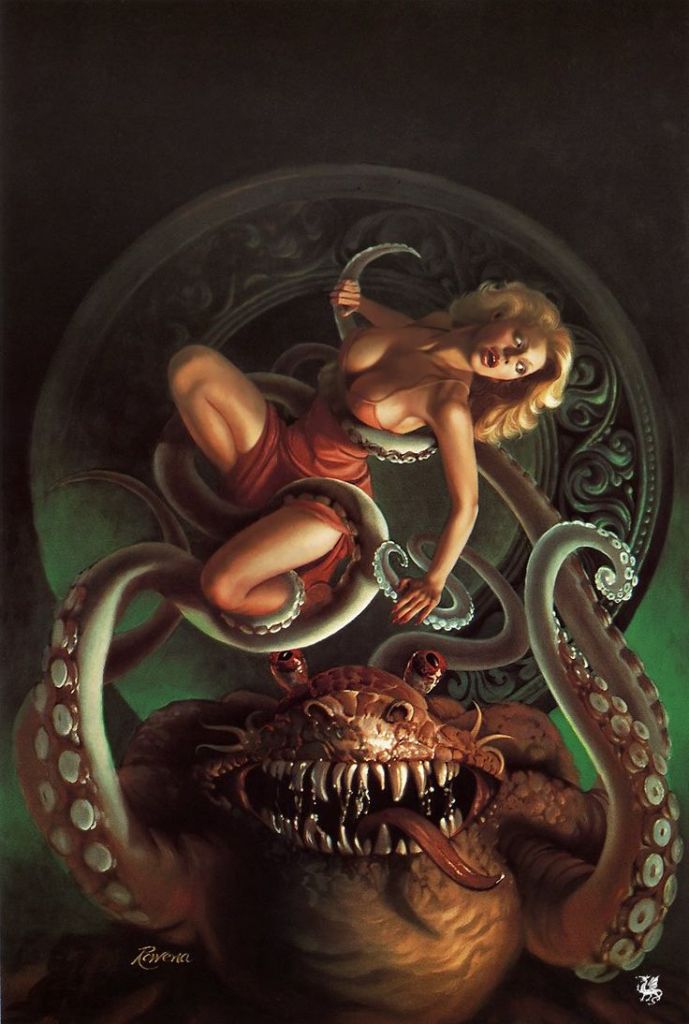
Just one more for the road, what do you say?
Painting by Rowena Morrill (whose name appropriately sounds like something out of some fantasy novel). This has been used as a cover for a German edition of Creepy… but I prefer to provide it sans captions or logos.
« Aren’t we forgetting the true meaning of Christmas. You know, the birth of Santa? » – Matt Groening
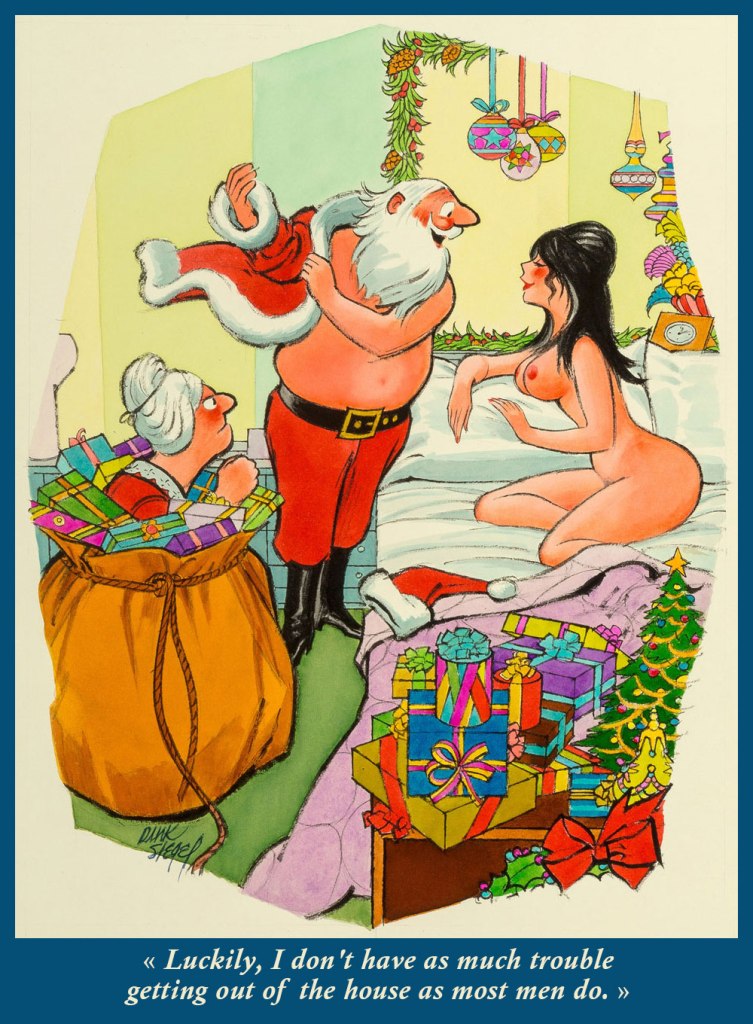
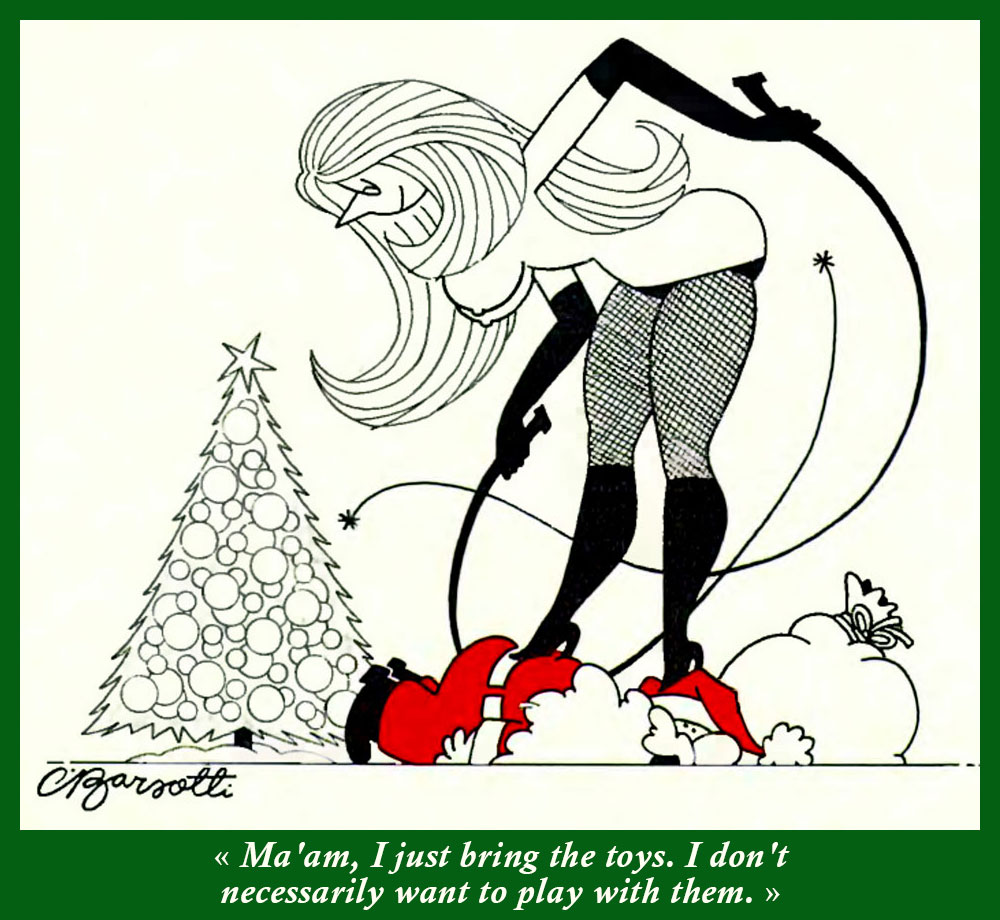
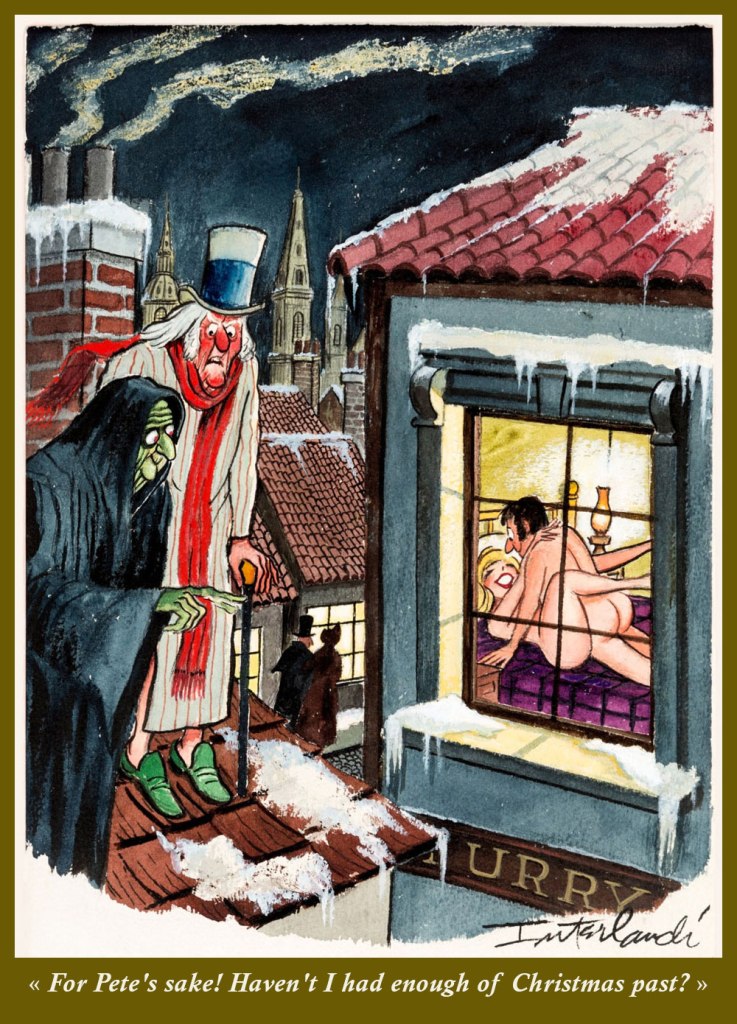
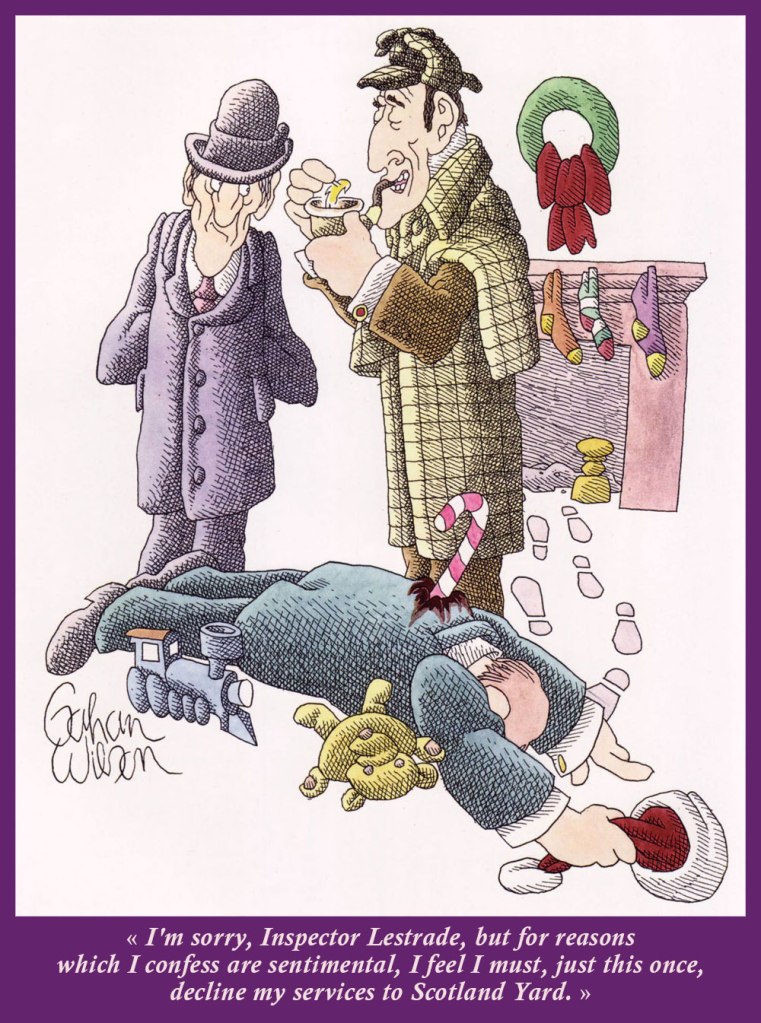
We’re back with another piping hot batch of Holiday cartoons from the pages of Playboy. I have striven mightily to represent most of the big guns (Kiraz and Smilby are among the missing — better luck next year, gents!) whilst keeping it to a tidy, cherry-picked dozen. One can only take so many ‘Randy Santa’ gags, even when they’re lavishly illustrated… that’s only a fraction of the culling process.
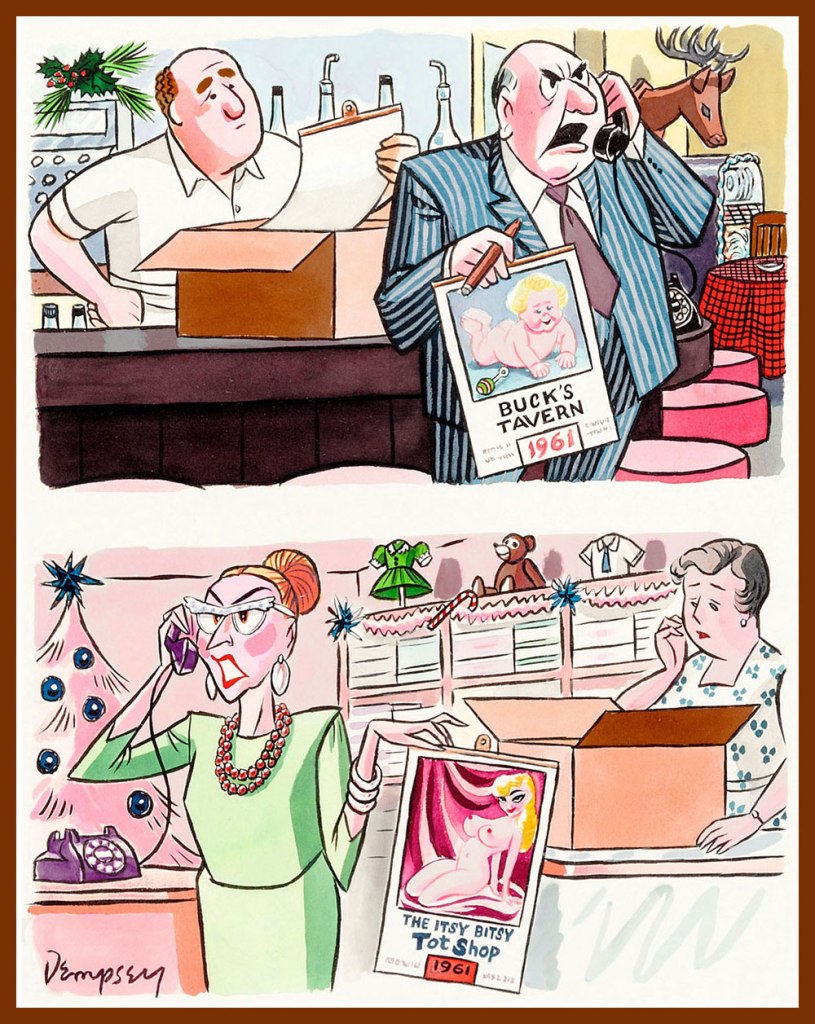
An early one by John Dempsey (1919-2002); it appeared in Playboy’s January, 1961 issue (what gave it away?)
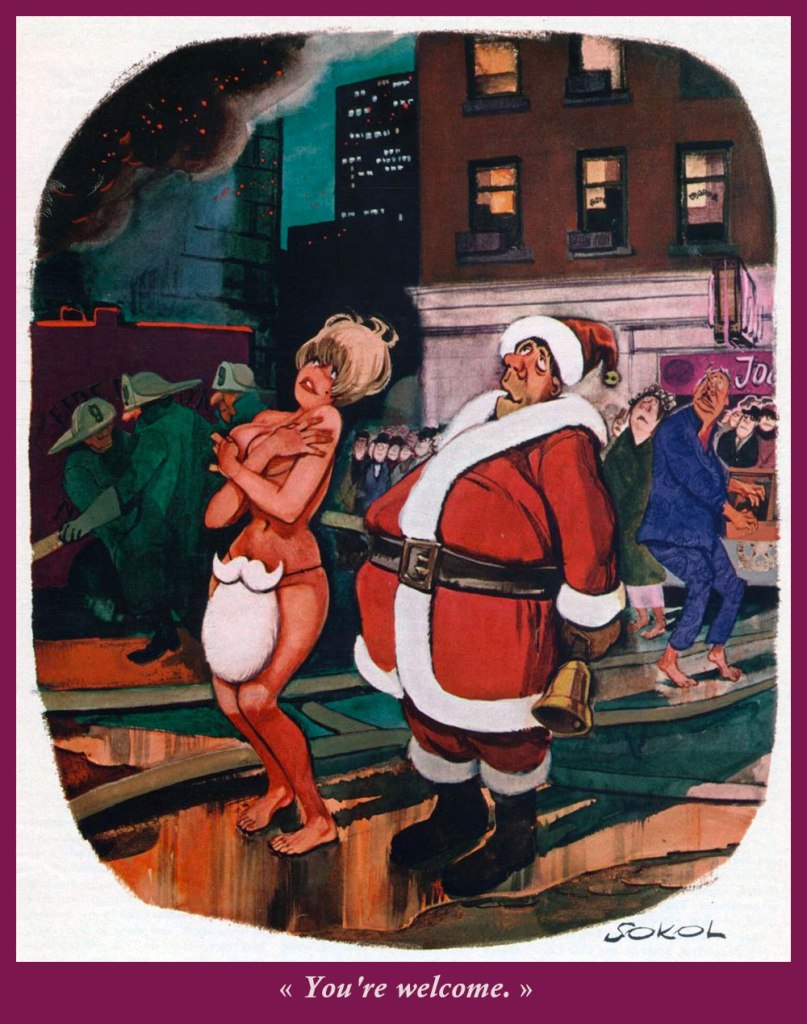
Austrian master Erich Sokol (1933-2003) shared his playful erotic visions with the readers of Playboy from 1958 to 1975, when he returned to his homeland, and again from 1992 until his passing. This one’s pleasantly gentle and understated.
Readers of this blog will already know that Leo ‘Dink’ Siegel (1910-2003) is a favourite of mine. I showcased some of his Playboy work last year in Dink Siegel’s Swingin’ Roommates. Now *this* particular bit of impending marital strife and comeuppance appeared in the January, 1972 issue of the magazine.
Mighty Texan Rowland B. Wilson (1930-2005) was a dazzlingly-skilled illustrator and animator, as evidenced by this late-70s piece. His association with the magazine was long and fruitful. To wit, « on the day of his death, a sketch for a new Playboy cartoon still lay on his drawing board. »
Second only to Saucy Santa jokes were the Scrooge sex jokes. But Eldon Dedini (1921-2006) really nails this one, from the pages of Playboy’s December, 1980 edition. And for your further edification, here’s my co-admin ds’ fond salute to this lovely, talented man.
Sure, we love Bernard Kliban (1935-1990)’s cats, but I’m frankly more partial to his anarchic, surreal, free-form wit. This sweet slice of… well, just desserts saw print in Playboy’s December, 1981 delivery.
Hardly-frosty Ontarian Doug Sneyd (1931–) has his go at Charles Dickens’ moral fable, with pretty solid (or so Ebezener hopes!) results. Mr. Sneyd knows his antiques, that’s evident.
Dog aficionados everywhere best know Charles Barsotti(1933-2014) for his canine cartoons. This habitué of The New Yorker magazine (from 1970) also created several comics strips, was cartoon editor of The Saturday Evening Post, and generally a hard-working, genial man of tremendous talent. This lovely panel was buried near the back of Playboy’s December, 1982 issue.
Phil Interlandi (1924-2002) sold his first cartoon to Playboy in 1955, just a couple of years into the magazine’s existence. He soon had earned his permanent spot in the roster. Here he contributes his bit of Dickensian sauciness to the canon.
Among the Playboy cartoonists, Gahan Wilson (1930-2019) surely was the one most left to his own devices, and wisely so. He created scores of gleefully macabre Christmas cartoons for the magazine, but this one’s a real standout. Every element counts. Exemplary cartooning from the December, 1987 Playboy. And beware — more Gahan awaits you here.
Certainly a cut above the usual ‘Lascivious Saint Nick’ fare, this lush piece by Robert ‘Buck’ Brown came along in Playboy’s December, 1988 issue. Pray note the fretful reindeer peering over the roof’s edge. That’s cartooning!
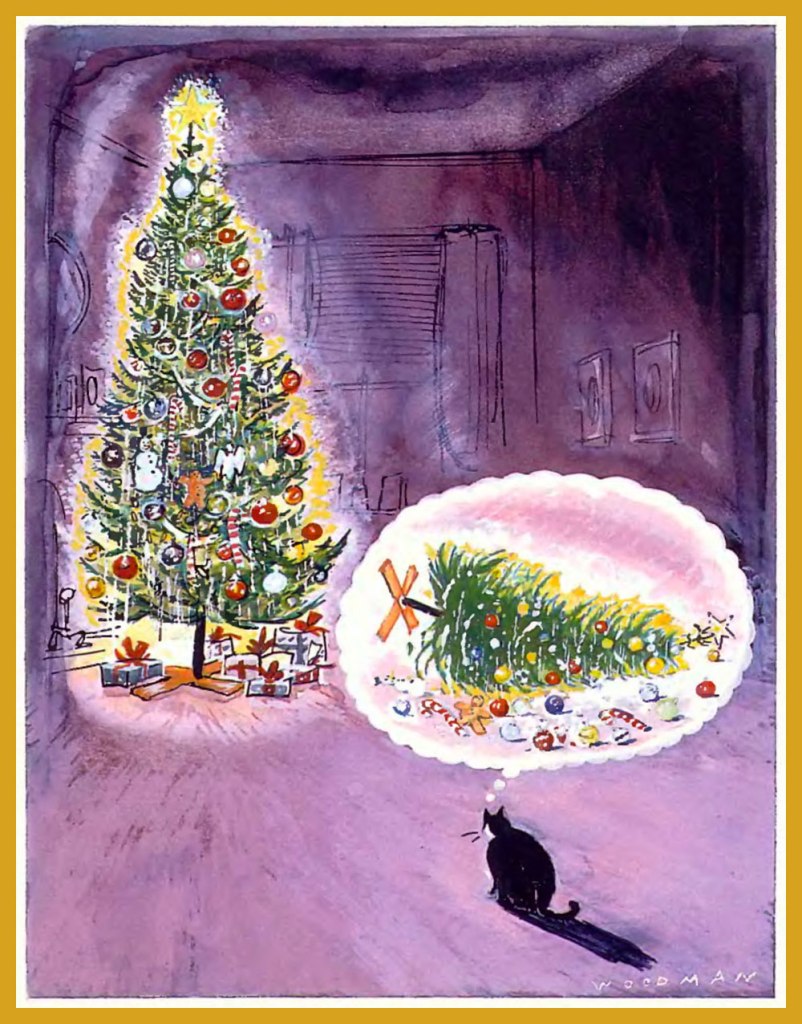
While he’s mostly renowned for his work in The New Yorker (which continues to this day), Bill Woodman (1939 –) also contributed (this beauty, among others) to Playboy. From the December, 1988 issue. Yeah, our cats too.
And that’s our crop for this year… hope your holidays are bright and merry, under the circumstances. Joyeux Noël, one and all!
« In my youth I thought of writing a satire on mankind! but now in my age I think I should write an apology for them. » — Horace
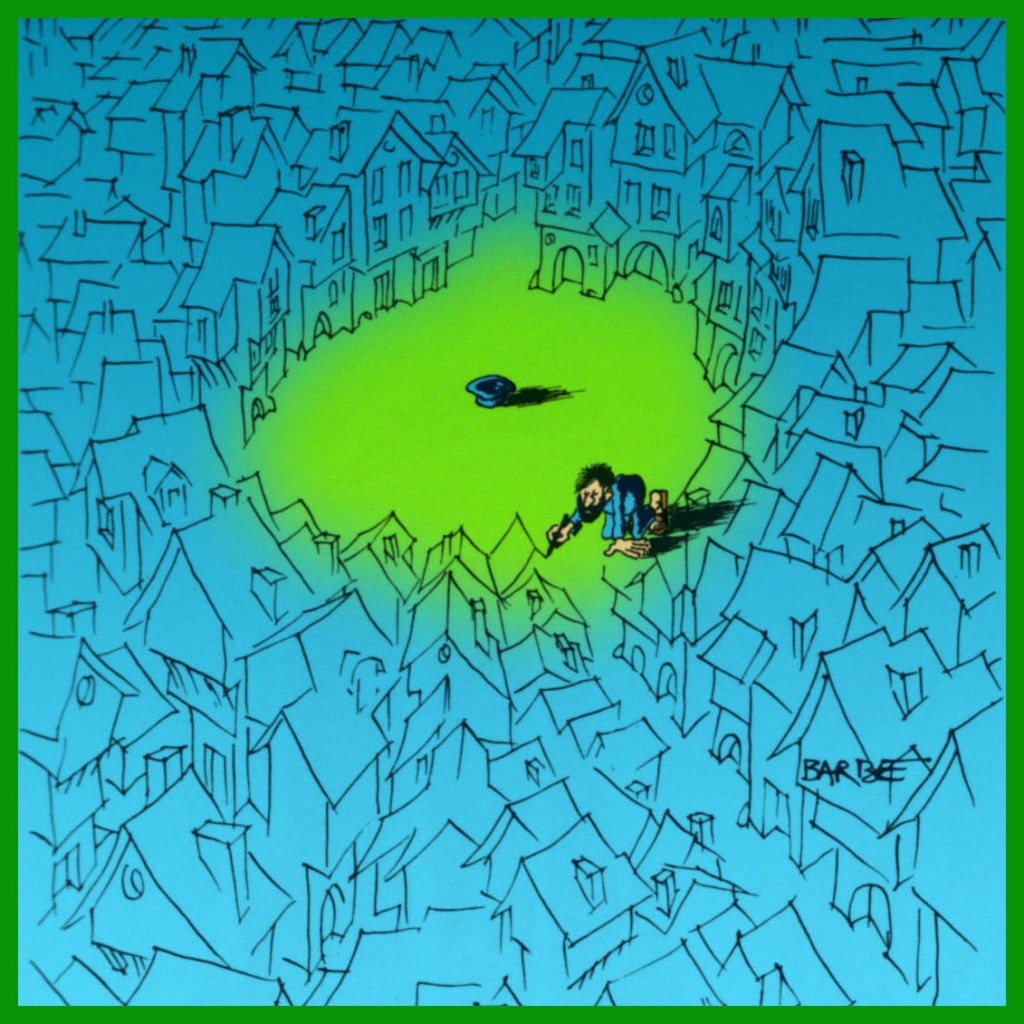
Cartoonist and illustrator André-François Barbe (1936-2014) was born in Nîmes, France.
After an abortive stint in the French air force, he spent a few years fiddling around in Air France’s employ. His earliest professional drawings saw print in the venerable Le Rire (1894-1971) in 1958. After a few years of tentative, but increasingly encouraging results, he finally made his decisive move in 1965, joining the shaky ranks of full-time cartoonists.
Fittingly, Barbe was an unabashedly chatty man in person… while his work scarcely required words.
A self-portrait of the bewhiskered (of course!) young artiste at his easel.
Remember how deep our television sets used to be?
This one anticipates a similar concept later mined by his Argentine contemporary, Guillermo Mordillo. To wit, check out co-admin ds’ Mordillo gallery… you’ll know just which cartoon I mean.
Like Gerard Hoffnung before him, Barbe was a connaisseur of classical music. He would frequently return to this theme.
By the early 1970s, Barbe was increasingly devoting his pen and his interest to erotic subjects, and that’s the work he’s most associated with. Though that material held greater commercial clout, the work remained flawlessly executed and formally explorative… at least at first. Then, I’d argue that it became a bit of a cul-de-sac. Personally, I’ve always found it a bit chilly in its execution, quite a liability for erotica. Your kilométrage may vary.
Speaking of distances, Barbe was always a bit of a routard, an adventurous traveller. Here’s one instance of particular interest:
In the 1980s, on the initiative of his brother Michel Barbe, a history and geography teacher in Marseille, he took part in a conference given by Haroun Tazieff on the subject of volcanism. Owing to the quality of his drawing skill, he was allowed to accompany, in 1982, an exploratory scientific journey to the volcanic region of the Djibouti Rift. This expedition, led by Lucy co-discoverer Maurice Taieb, enlisted 32 professors who explored the basalt flows in the Assal Lake depression.
-RG
*a handy description I’ve rifled from the ever-erudite Jacques Sternberg.
« The world dies over and over again, but the skeleton always gets up and walks. » — Henry Miller
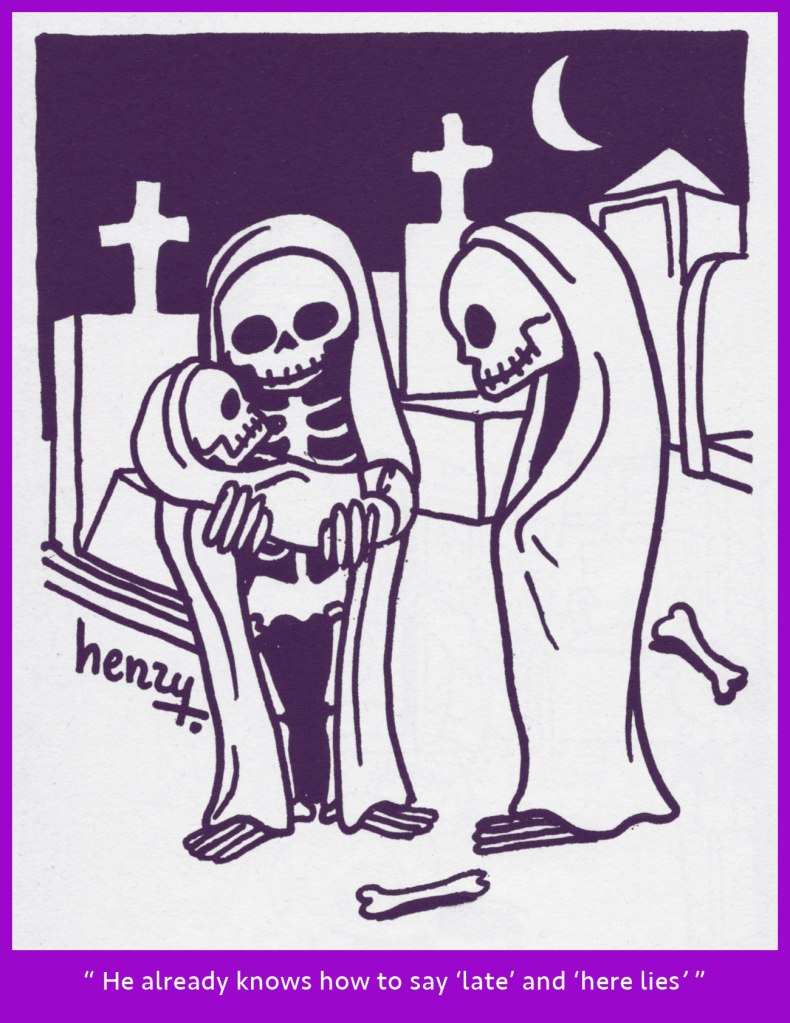
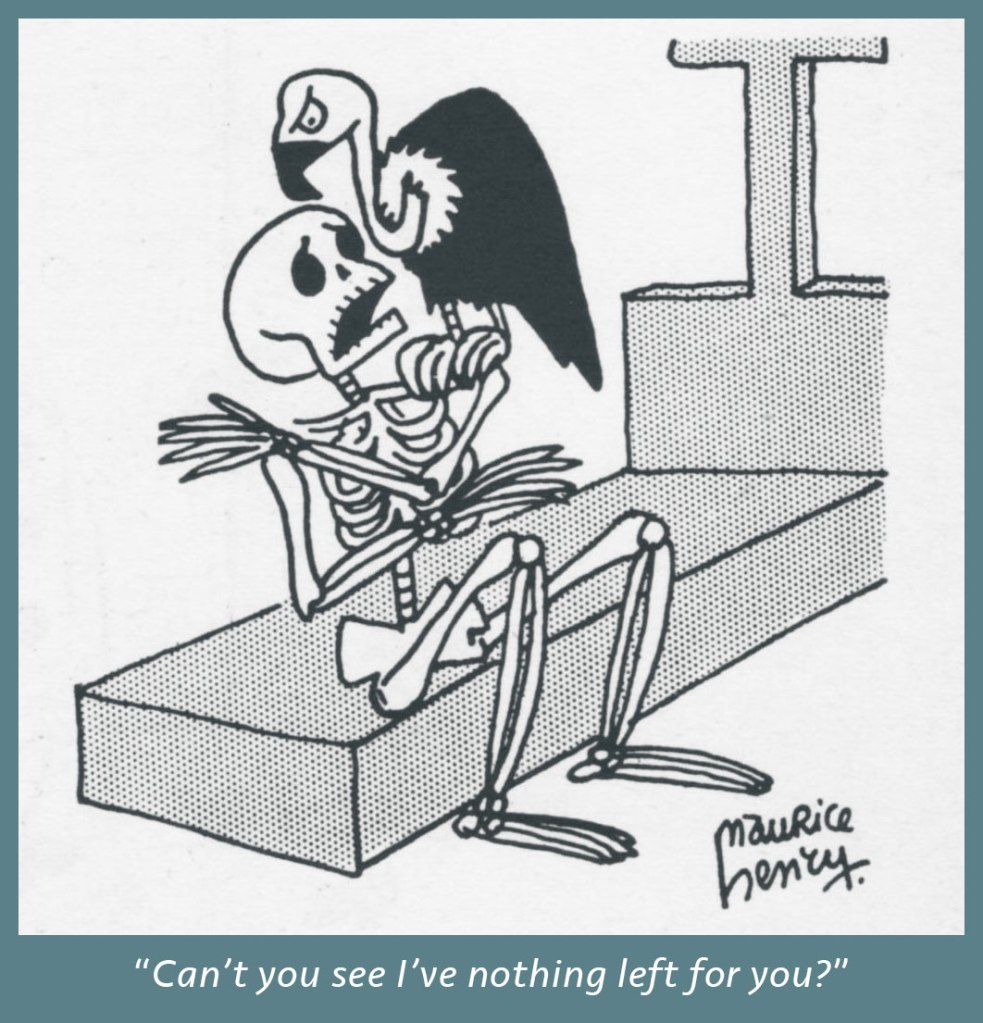
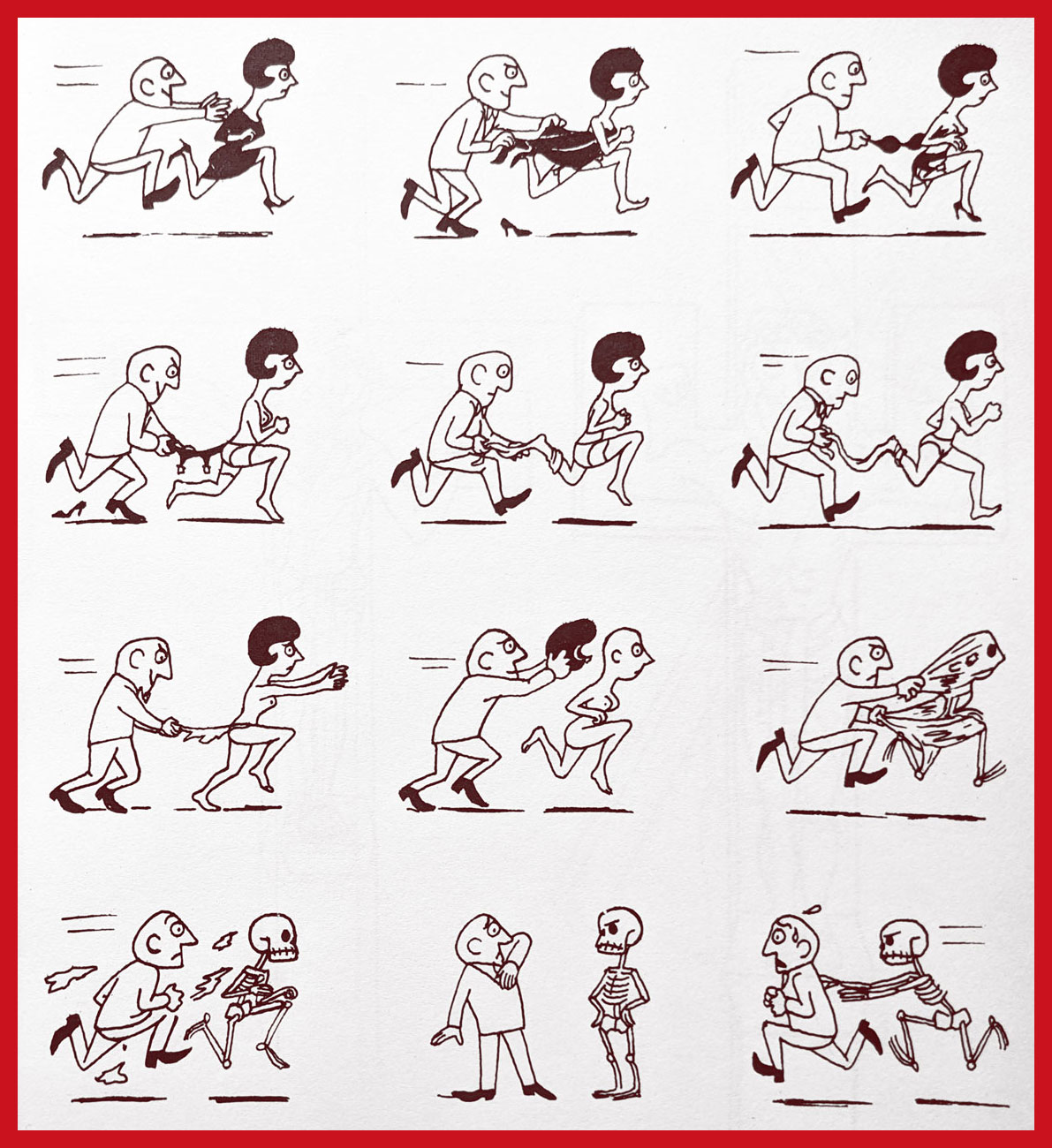
A few months back, while assembling a post about polymorphic French surrealist Maurice Henry (1907-1984), I marvelled and chuckled at his multitude of skeleton-themed cartoons. I made a mental note to devote a Hallowe’en post to them… and that memo only floated to the top of my consciousness a couple of days ago. Just in time!
(1935)
(1936)
(1938)
(1940)
(1941)
(1947)
(1950)
(1950)
(1958)
This one doesn’t feature skeletons, but I had to include it, given how stunningly *dark* it is for its (or any) era… can you imagine something like this published in the USA in… 1935? For more context, here’s the Bluebeard ditty.
In closing, and just for kicks: sixteen faces of the playfully photogenic Monsieur Henry. This one-man assembly featured on the back cover of Maurice Henry 1930-1960 (1961, Jean-Jacques Pauvert), a remarkable collection.
Trust me, I’m only scratching the surface of this man’s genius. If you’ll bear with me, we’re not done with him.
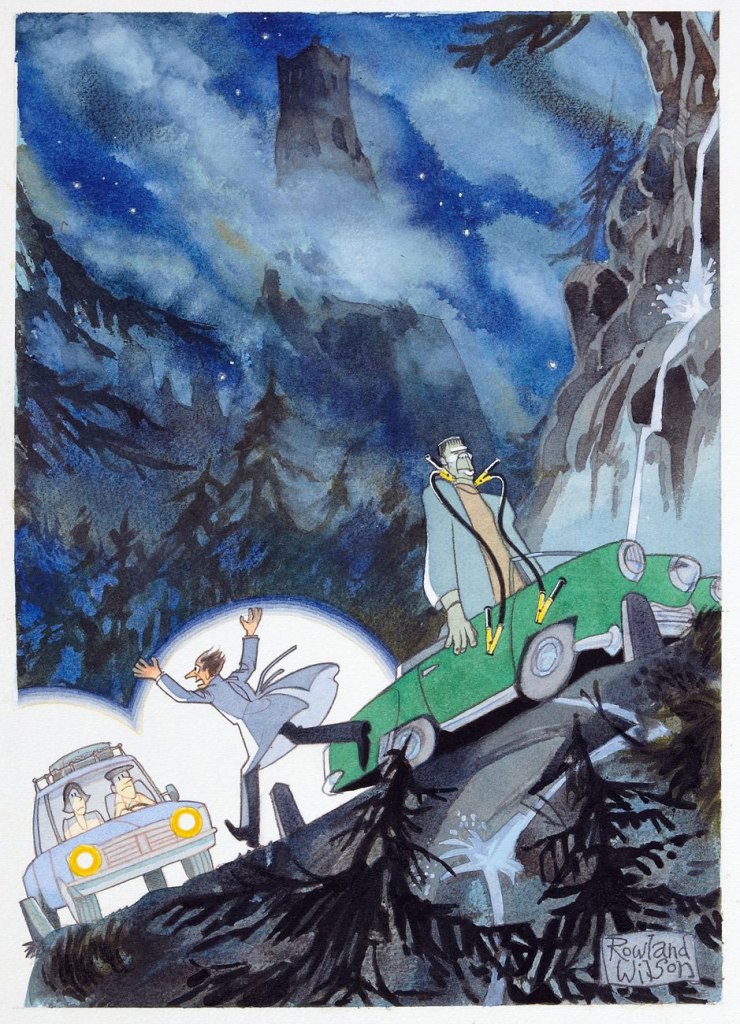
« Stop! Please, I need a jump start! » — the good doctor F.
From the pages of Playboy (Oct. 1990), a seasonal (well, soon to be!) cartoon by Texan Rowland Bragg Wilson (1930-2005).
You have to expect these things whilst motoring through the Carpathians.
In addition to his magazine work (the cream: Playboy, Esquire, The Saturday Evening Post, Collier’s, The New Yorker), Wilson made his mark in the animation field with Schoolhouse Rock! (with Phil Kimmelman & Associates) then as a concept designer with Disney Studios (The Little Mermaid, The Hunchback of Notre Dame, Hercules, Tarzan…). Quite the impressive waybill.
One more, on the same classic theme? Sure.
This one goes: « If I can bring this lovely creature to life, she will bring me lasting immorality! », and it appeared, of course, in Playboy (Nov. 1981). Ah, the difference one letter makes!
« It did not occur to me that I might be a writer until I flunked out of my first year as a chemistry major, and found work as an apprentice writer of Volkswagen ads. » — Peter Carey
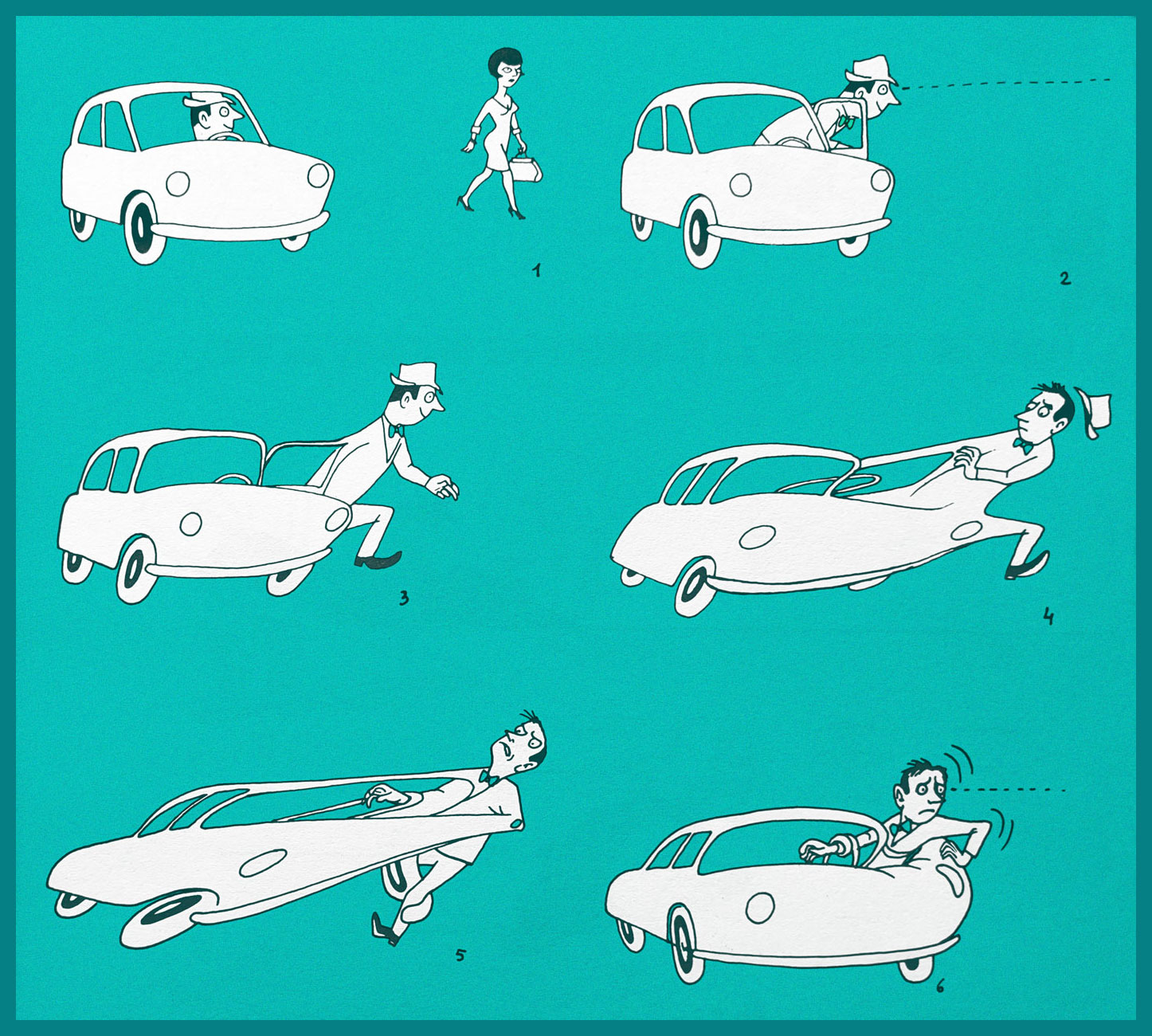
Until the Beetle hit the market, automotive marketing copy was full of bluster, and the images (often illustrated) were flights of fancy, emphasizing low, long lines and a fantasy lifestyle.
The clean, simple photography on a white background that emphasized the Beetle’s compact, practical form may seem commonplace these days, but it was a revolution in a world where Americans grew up obsessed with muscle cars, horsepower, and tire smoke. Making the car small, when the convention was to make it fill the page, was also novel. The simplistic approach to design and layout was totally contrary to the advertising conventions of the time. [ source ]
While I object to the misuse of the rather pejorative “simplistic” to denote what is instead commendably strippeddown, uncluttered, or if one must, ‘simple‘… that’s the gist of it. After all, these folks are gearheads, not graphic designers.
One of the lesser-known components of the long-running campaign was a nifty 1967 promotional book that was graciously given away by one’s friendly Volkswagen dealer.
They gathered all the big guns and asked them to think small. Illustration by Charles Addams.
Let’s take a look inside.
One by perennial bon vivantEldon Dedini, working one of his pet motifs, but with his customary panache. Under Eldon’s pen, the car’s lines acquire a lusty fluidity.
A beauty by local favourite Virgil Partch (1916-1984). Such a graceful line the man had. Simple… not simplistic!
Don’t be confused: like the Porsche and the Corvair, the VW Beetle’s trunk is located in the front of the vehicle. Cute details: the booted husband’s still-smoking pipe and his glasses remain in the garage. VIP delivers, as usual. Read how he met his demise.
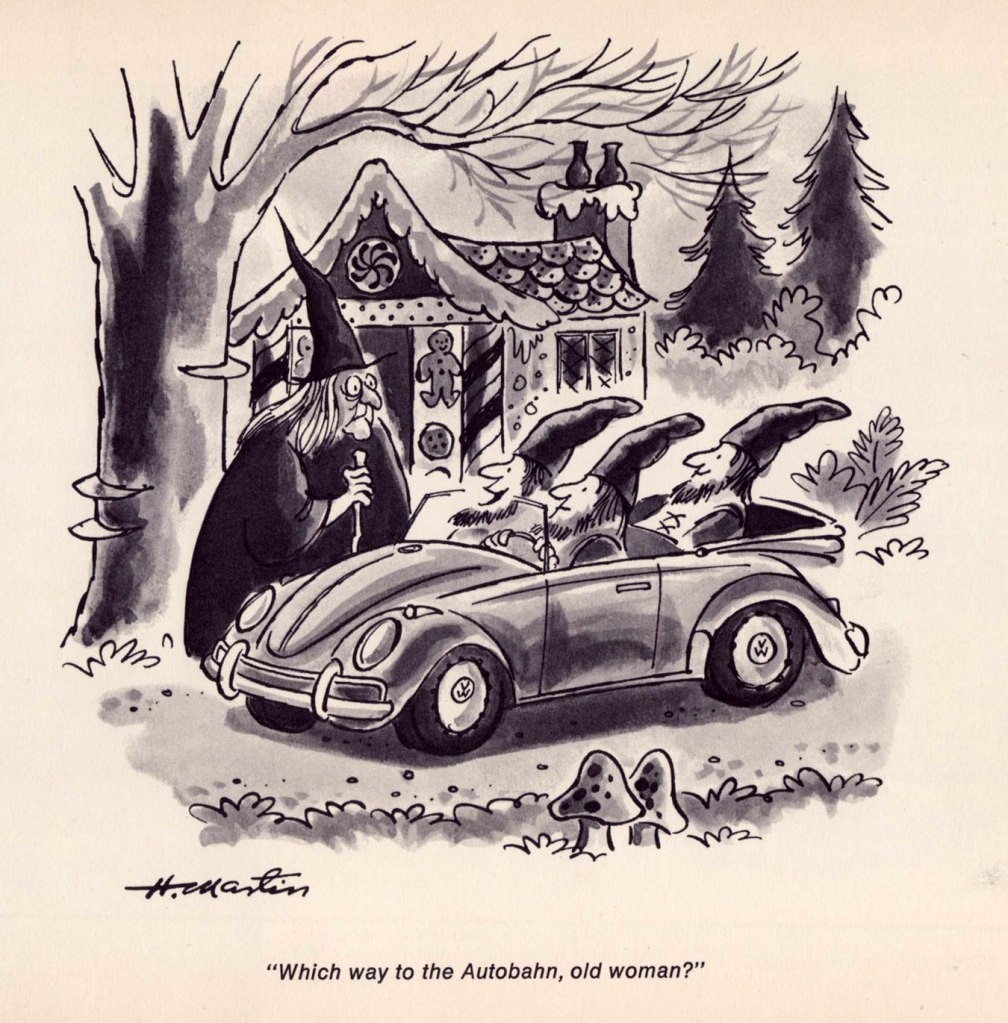
An adorable entry from long-time The New Yorker cartoonist Henry Martin, who passed away last June at the age of 94. I can just hear the German accent.
Another Playboy regular, Phil Interlandi (1924-2002) stretches out a bit, and very successfully at that.
One from the book’s royal guest, Charles Addams (1912-1988). It’s a fine joke, but I find that many people don’t get it; it would have benefitted from a more vertical composition. Still, trust Uncle Fester to know what’s going down.
A second dose of Mr. Addams. I wasn’t going to say no to a giant mutated toad and toadstool. Here’s our earlier sampler of his macabre wit, from (un)naturally, our first Hallowe’en Countdown.
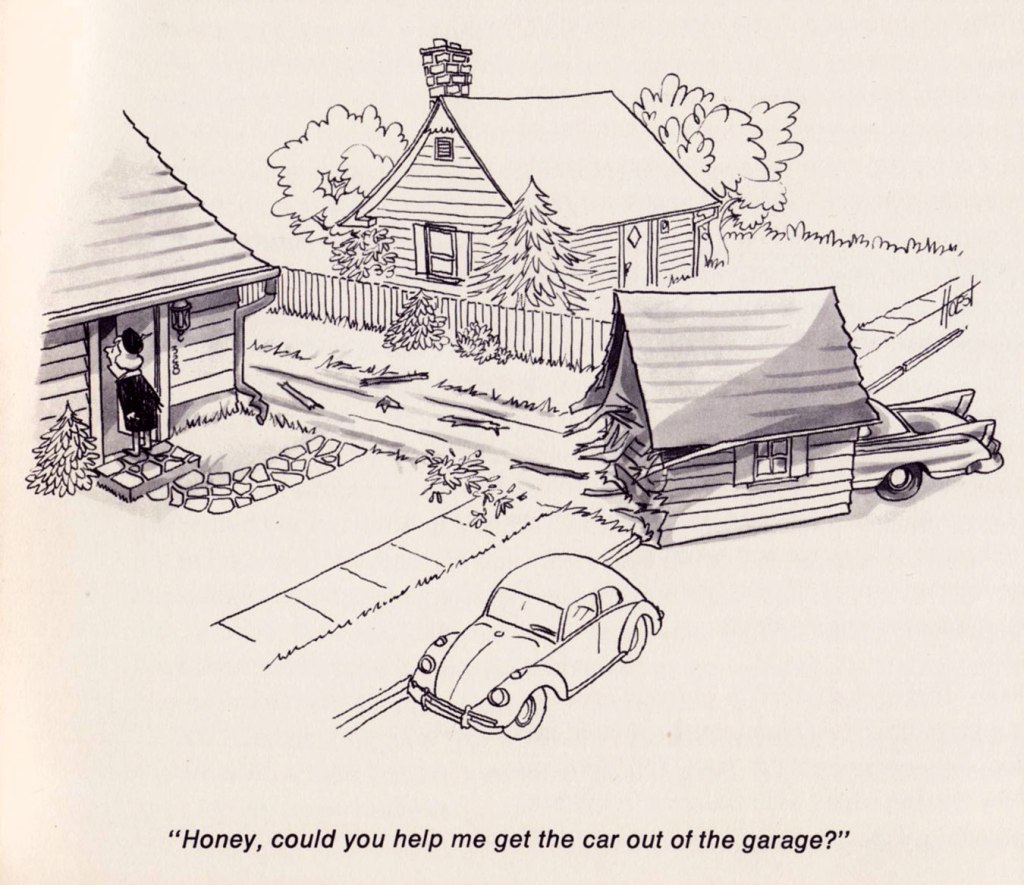
The couple of decades he spent drawing his successful syndicated strip about unceasing marital strife, The Lockhorns (whose début came the following year!) have perhaps dimmed the critical reputation of William ‘Bill’ Hoest (1926-1988). But he was quite good, when given a chance to stretch out a bit. It’s been since proven that women are the better drivers, incidentally.
And finally, a bat-entry from John Gallagher (1926-2005), a then-ubiquitous panel gag cartoonist in many of the biggest names in magazines: Collier’s, The Saturday Evening Post, Look, True… I love the absurd size ratio between the members of The Dynamic Duo. That’s one sidekick you could accidentally kick aside!
« Wherever despotism abounds, the sources of public information are the first to be brought under its control. Where ever the cause of liberty is making its way, one of its highest accomplishments is the guarantee of the freedom of the press. » — Calvin Coolidge
Ah, the pitfalls of anchoring yourself to the news cycle: given the shocking news, last week, of the impending, unjustified closure of one of the greatest American journalistic institutions, the independent military daily newspaper The Stars and Stripes (founded in 1861!). I was all set to cobble together a series of posts showcasing the work of S&S’s greatest cartoonists, but then the massively unpopular decision was just as abruptly reversed. For now.
So I’ll stick to one post for the nonce (Shel and Tom will have to wait) and feature one of history’s greatest soldier cartoonists, William Henry “Bill” Mauldin (1921-2003), twice recipient of the Pulitzer Prize (1945, 1958), the Legion of Merit… and a host of other distinctions, both military and civilian.
Our baby-faced artist photographed during WWII.
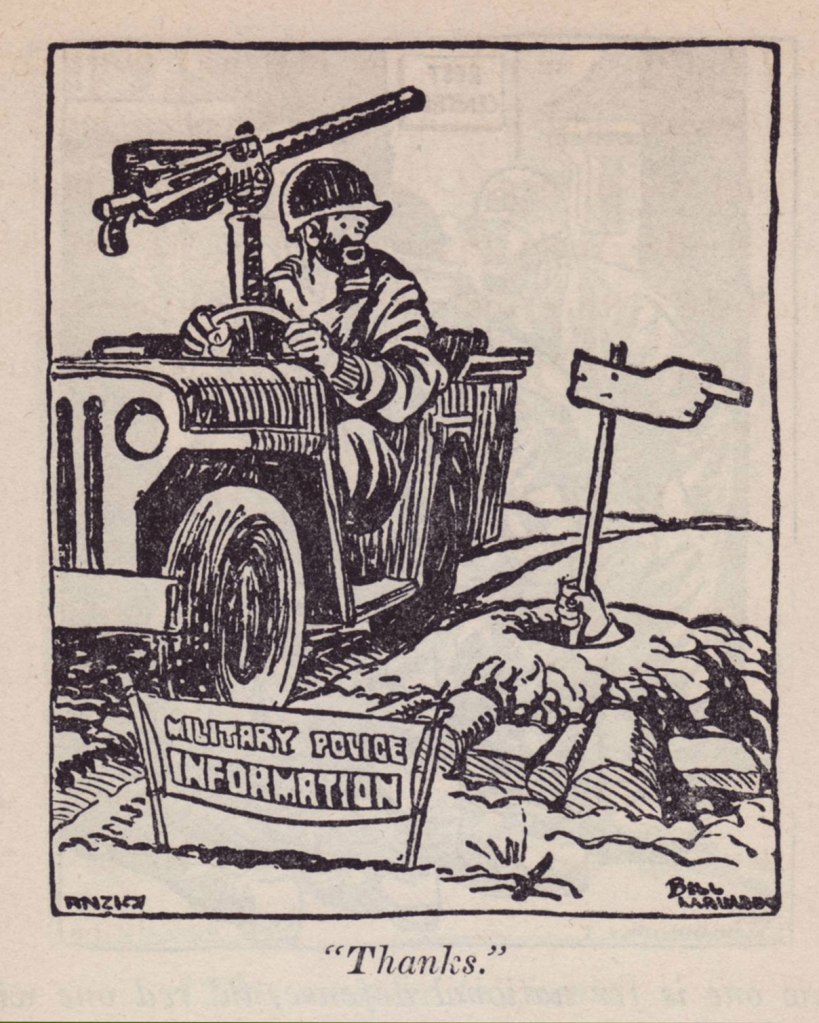
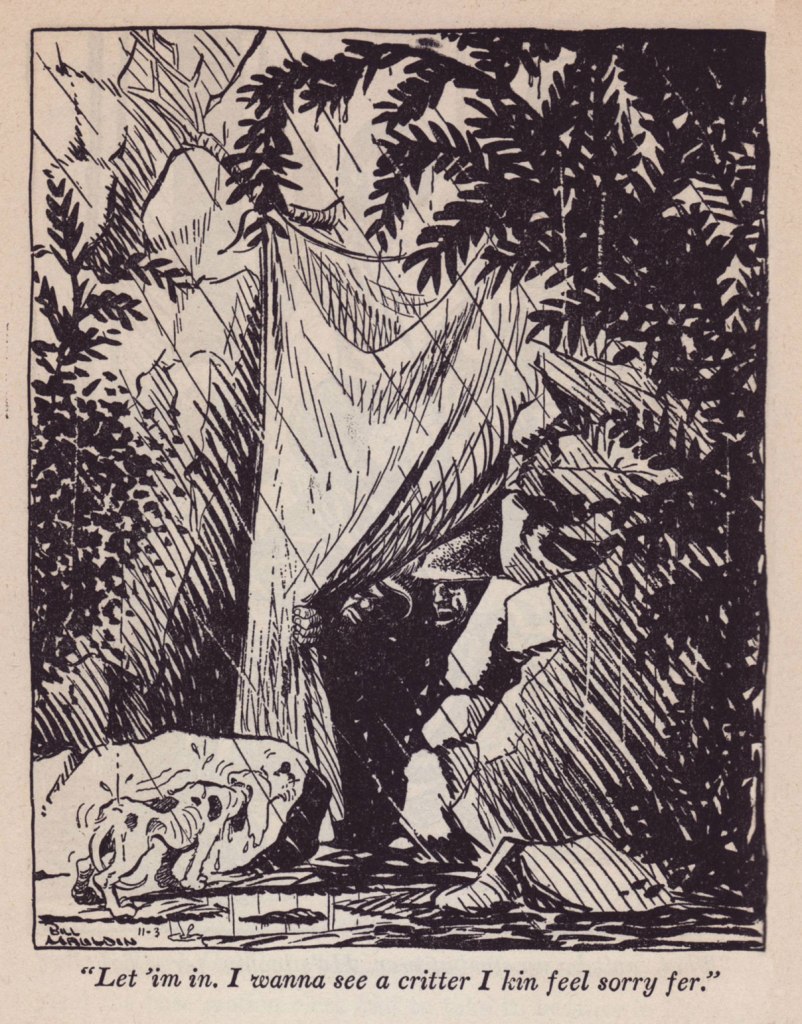
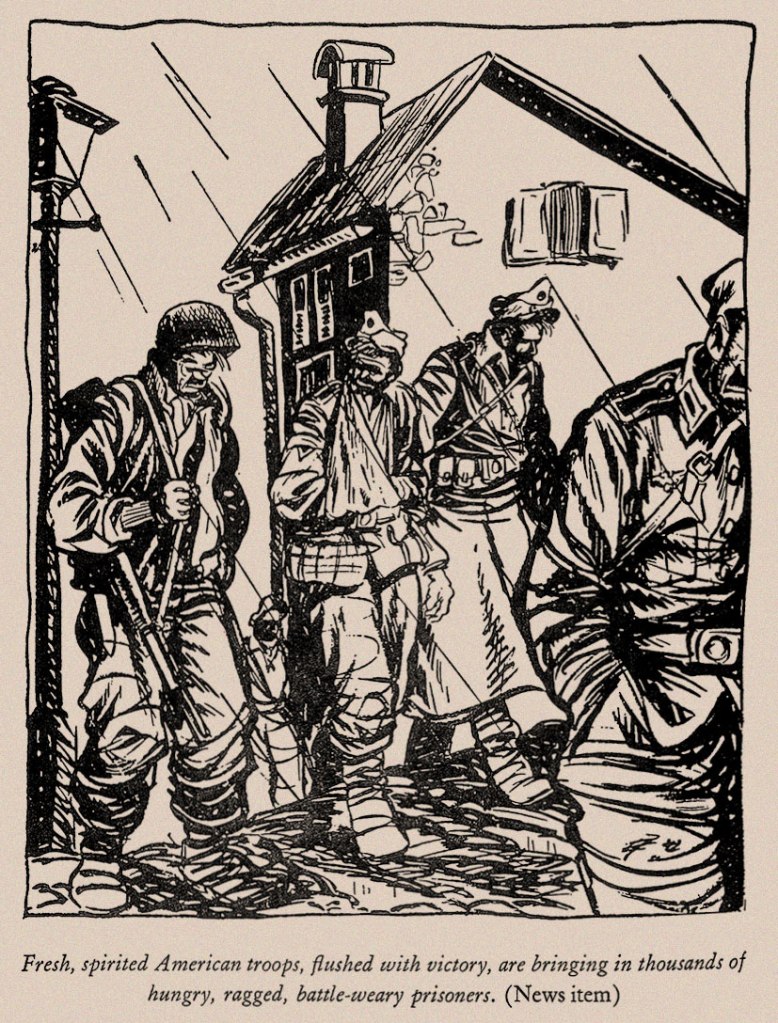
With but a single exception, the following are samples from his essential Up Front collection (1945), which Mauldin humbly opens with: « My business is drawing, not writing, an this text is pretty much background for the drawings. »
But such a background! Mauldin is, naturally, funny and insightful, but there’s much to learn therein, not merely about men in war, but just about everything under the sun. While so many nowadays mix up freedom and privilege, it’s good to be gently reminded of the high price of both.
« Until some intelligent brass hat repaired a big brewery in Naples and started to send beer to Anzio, the boys at the beach-head were fixing up their own distilleries with barrels of dug-up vino, gasoline cans, and copper tubing from wrecked airplanes. The result was a fiery stuff which the Italians called grappa. The doggies called it ‘Kickapoo Joy Juice’, and took the name from the popular ‘Li’l Abner’ comic strip which Stars and Stripes printed daily. It wasn’t bad stuff when you cut it with canned grapefruit juice. »
Mauldin’s biographer, Todd DePastino, wrote, in his Bill Mauldin: A Life Up Front: « First published on October 13, 1944, this cartoon made the 23-year-old Bill Mauldin the youngest Pulitzer Prize winner in history. Both he and his editors at Stars and Stripes were astonished by the selection, which did not seem to them particularly noteworthy. »
For a deeper dive into Mauldin’s war through the eyes of his ragged infantrymen, scrounge yourself a copy of Fantagraphics’ glorious Willie & Joe: The WWII Years (2008).
In closing, shall we hear from another president?
« I have great respect for the news and great respect for freedom of the press and all of that. » — Donald J. Trump
« The man who cannot visualize a horse galloping on a tomato is an idiot. » ― André Breton
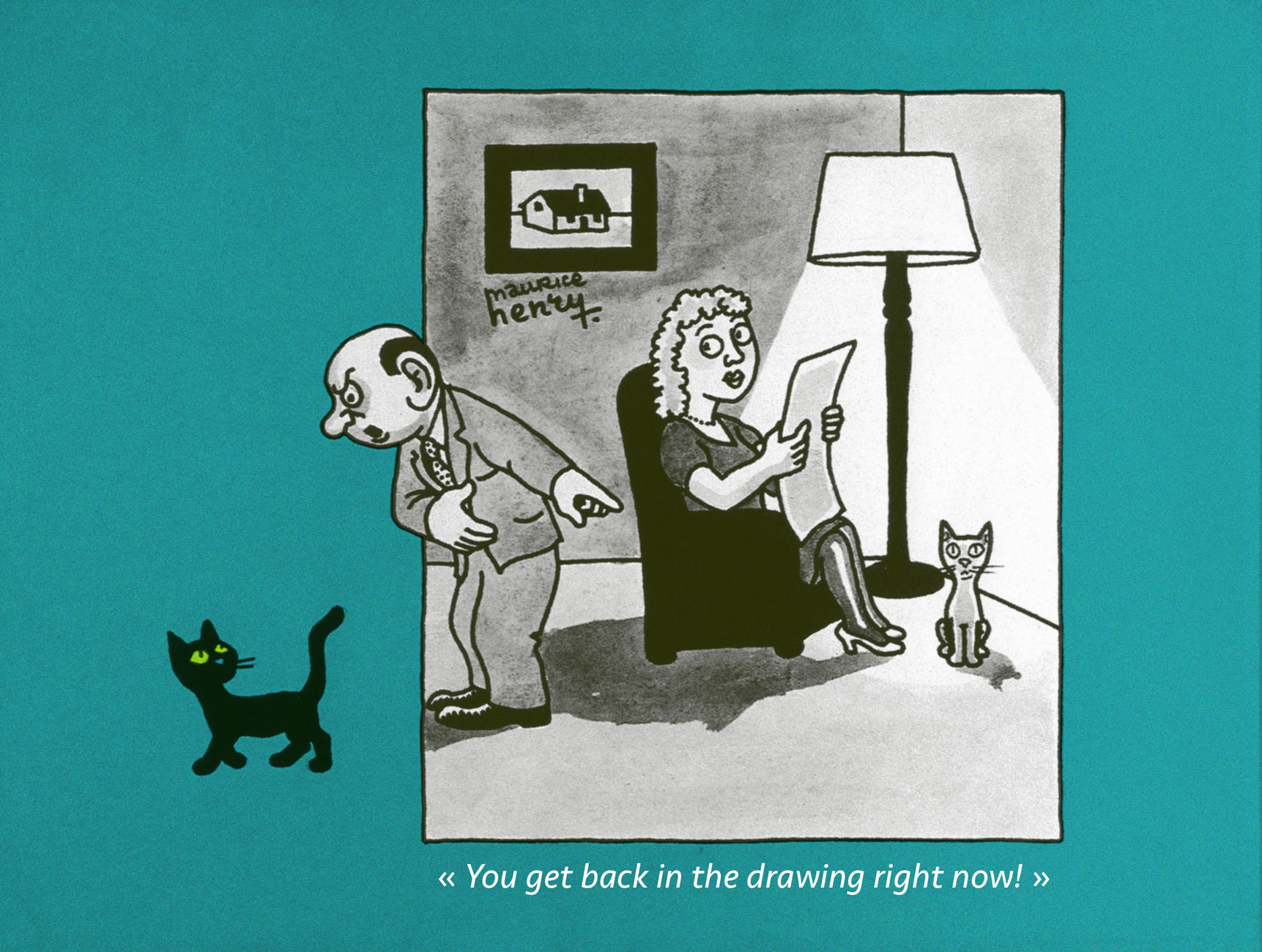
What is one to do, in a mere blog post, with a polymorphous artist such as Maurice Henry (1907-1984)?
Here’s a handy bit of compressed biography, from his Lambiek page:
Henry was a French painter, poet, filmmaker, as well as a cartoonist. Between 1930 until his death, he published over 25,000 cartoons in 150 newspapers and a dozen books. His cartoons were generally surrealistic and satirical.
In 1926, he co-founded the magazine Le Grand Jeu with René Daumal, Roger Gilbert-Lecomte and Roger Vaillard, with whom he formed the “Phrères simplistes” collective. Henry provided poems, texts and drawings, while also making his debut as a journalist in Le Petit Journal.
He left Le Grand Jeu in 1933 to join André Breton’s group of Surrealists and their magazine Surréalisme au service de la Révolution. He also worked with the artist and photographer Artür Harfaux on the screenplay of twenty films, including ones starring the comic characters ‘Les Pieds Nickelés’ and ‘Bibi Fricotin’. Maurice Henry spent the final years of his life making paintings, sculptures and collages. He passed away in Milan, Lombardy, in 1984.
The answer? My default solution, which is to focus on some small parcel of the much greater whole. A number of Henry’s works bear revisiting (for instance, Les métamorphoses du vide [1955], a truly groundbreaking picture book about the world of dreams; À bout portant [1958], a collection of literary portraits; or Les 32 positions de l’androgyne [1961, also issued in the US in 1963], a chapbook of… gender recombinations) and deserve a turn in the spotlight.
To quote co-anthologists Jacques Sternberg and/or Michael Caen in their indispensable Les chefs-d’oeuvre du dessin d’humour (1968, Éditions Planète, Louis Pauwels, director):
Surrealism — he was part of the group before 1930 — left its mark on him and it’s because he was already well-cultured as he launched his career that he was among the first, in the desert that was the publishing world of the 1930s, to attempt unusual drawings calling upon often startling ingredients, such as poetry, black humour, the fantastic and the absurd. He caused no less of a surprise by doing away with captions, at a time when bawdy jabbering was the fashion all over. In short, Maurice Henry was indisputably a pioneer of that grey and stinging brand of humour that would explode like an H-bomb some fifteen years later.
A lovely bit of conceptual humour from 1938. A rare one bearing a caption, but the joke called for it. At this early stage, you won’t be wrong to point out a certain stylistic debt (it’s the roundness and simplicity of line!) to his contemporary and compatriot Jean Effel. Henry was indeed a fan. Do check out my co-admin ds’ fine post spotlighting the good Monsieur Effel.
An example of what enlightened creators such as Henry were fighting for: making room for cartoons that weren’t just about the cheap chuckles. Consider, for instance, the existential plight of the Minotoreador . Published in K. Revue de la poésie no. 3 (“De l’humour à la terreur”, May 1949).
The Military, Government, Constabulary and Clergy were favourite targets, naturally. When it was (barely) tolerated. It helped to be ambiguous, even if one wasn’t ambivalent (1951).
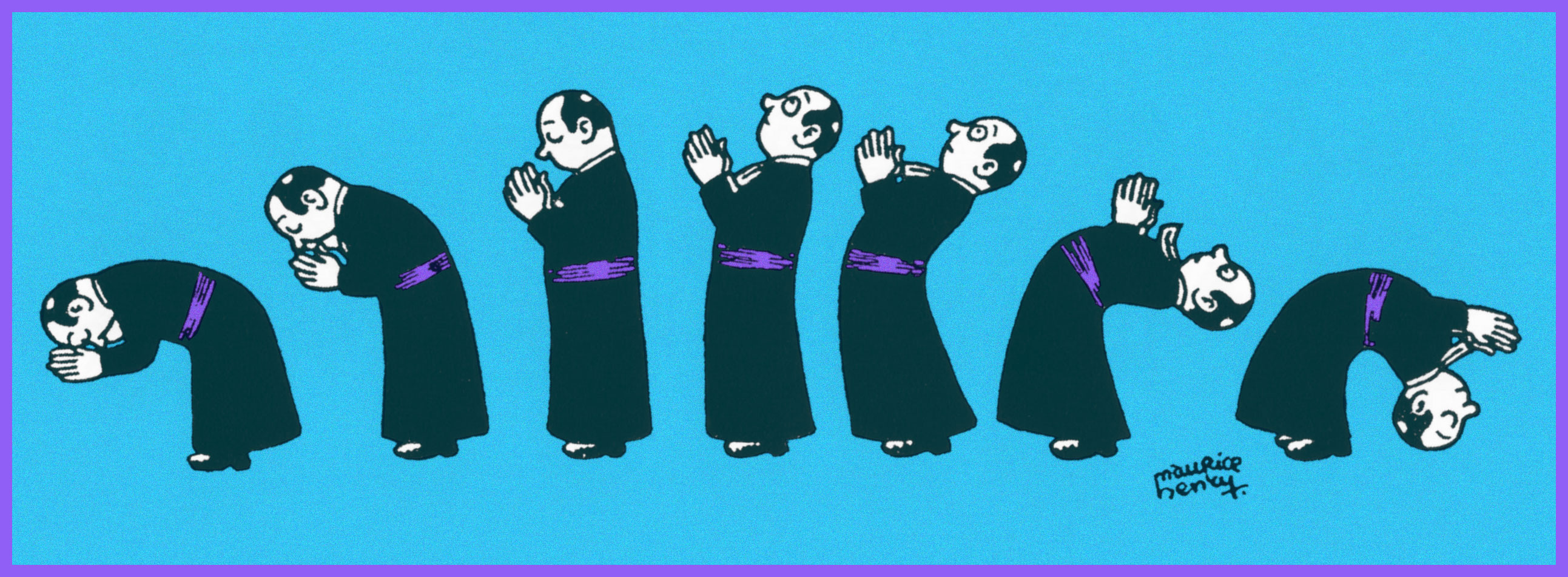
Here’s one for the clergy; though mocking, it’s hardly what you’d call hostile. From the first issue of epochal surrealist magazine Bizarre (1955-1968).
Yes, it’s Card Sharp Jesus entertaining, confounding (and possibly fleecing) his disciples. Note the ace up his right sleeve (1941).
Walking on water was clearly just the beginning (1948).
Henry’s Jesus seems like a swell fellow, really. A bit on the roguish side, which is fine by me (1958).
See? A case of a joke’s that’s more than a half-century old still finding echoes in the present day. Cover from The Darkness‘ prophetic 2019 album, Easter Is Cancelled.
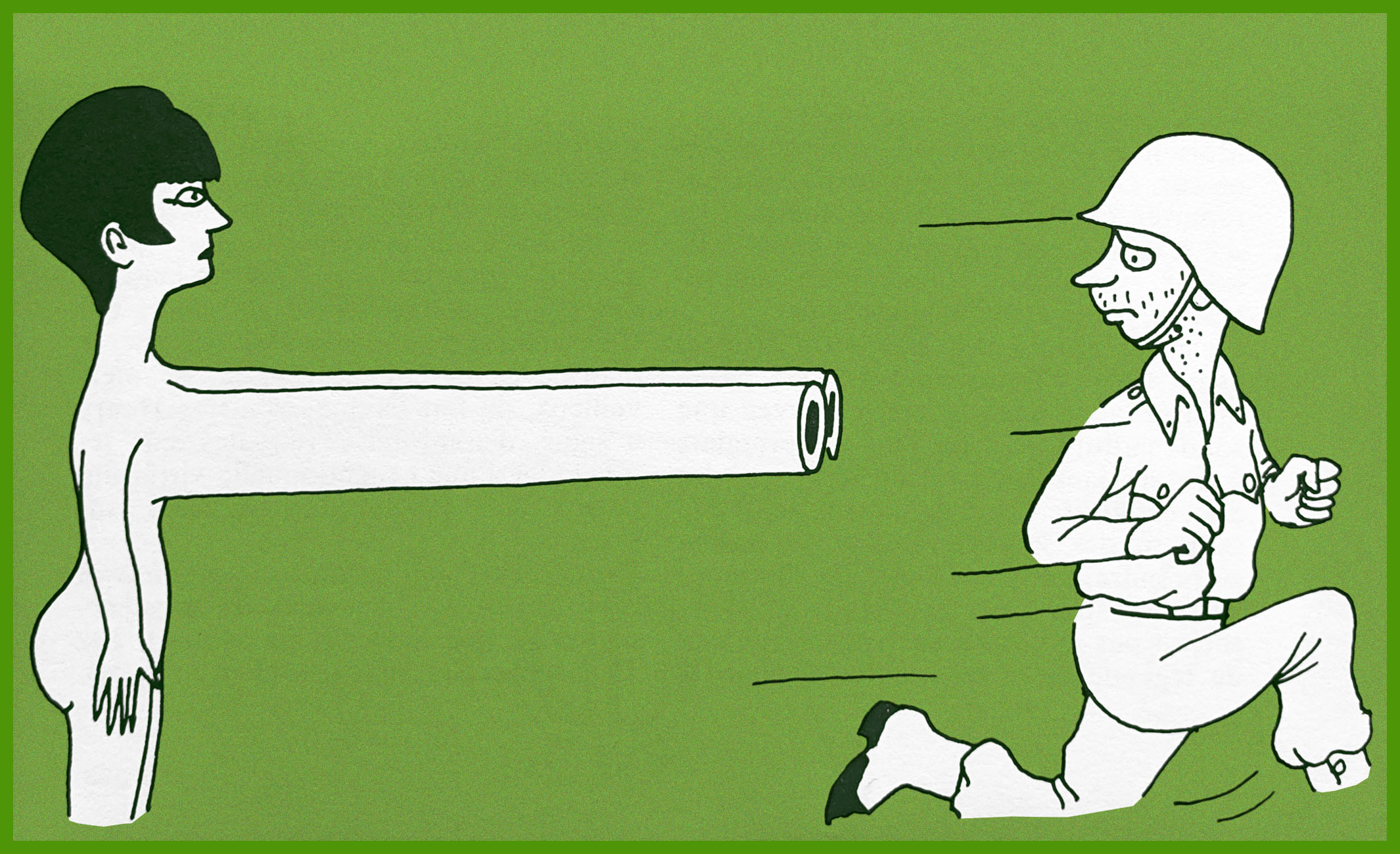
That soldier’s scared yet dismayed expression brings to mind Futurama’s hapless Philip J. Fry.
That’s one relaxed elephant.
Another illusion shattered.
The little hand wave at the end really makes this one.
The artist in 1935, photographed by his friend and frequent co-conspirator Arthur Harfaux.
« Octopuses have a lot in common with other species that are known to thrive in cities—not only can they use human-made structures for shelter, but they’re highly adaptable and good at problem solving. So maybe we’re justified in adding to our list of neighbours, next to the raccoon at the sliding glass patio door and the coyote in the halo of the street lamp, the octopus casting its appraising eye from under the sunken hull of a rowboat. » |source|
Octopuses in a mundane, urban setting? Address yourself to Gary Larson!
As promised a couple of weeks ago, we’re back with another Larson-copia of tentacles! Pt. 1 can be found here. Again, thanks to co-admin RG for all the scanning and colouring work.
If you think we’re somewhat stretching the definition of “tentacle”, I think the husband’s, err, feet definitely qualify.
Incidentally, one the world’s largest sea creatures is the lion’s mane jellyfish, whose tentacles are the longest of them all (they can attain lengths up to 37 metres or 120 feet).
Letting us know what we’re in for straight away, even the cover of the fourth Far Side collection features a tentacle.
∼ ds
Some content on this page was disabled on June 3, 2022 as a result of a DMCA takedown notice from Gary Larson. You can learn more about the DMCA here:
« The observer, when he seems to himself to be observing a stone, is really, if physics is to be believed, observing the effects of the stone upon himself. » — Bertrand Russell
Irv Phillips‘ (1904-2000) Mr. Mum was a comic strip that ran between 1958 and 1974 (at which point both author and alter ego took their well-earned retirement), attaining a quite considerable level of popularity, thanks its appearance in over 180 newspapers in 22 countries or so. The pantomime approach certainly helped sell it abroad. The titular character is a bystander, an eternal witness to… everything and especially anything.
In an interview published in Cartoonist Profiles no. 4 (Fall, 1969; Jud Hurd, editor), we learn that Phillips « ... has been an actor, a violinist, a Hollywood script writer, the Humor Editor of ‘Esquire’ magazine, a playwright, as well as a very successful syndicated cartoonist. » He goes on to reveal that « I didn’t draw until I became Humor Editor of Esquire Magazine in my thirties. I used to make little rough sketches to try to illustrate gags that I had written for the various Esquire cartoonists. I would take these sketches in to Dave Smart, the founder and publisher of Esquire, and together we would make the choices as to which cartoonist would handle one idea best, which man would be best suited to another idea, etc. It seems that these little sketches sort of intrigued Dave for a while and finally he said, ‘Why don’t you try to draw?’ »
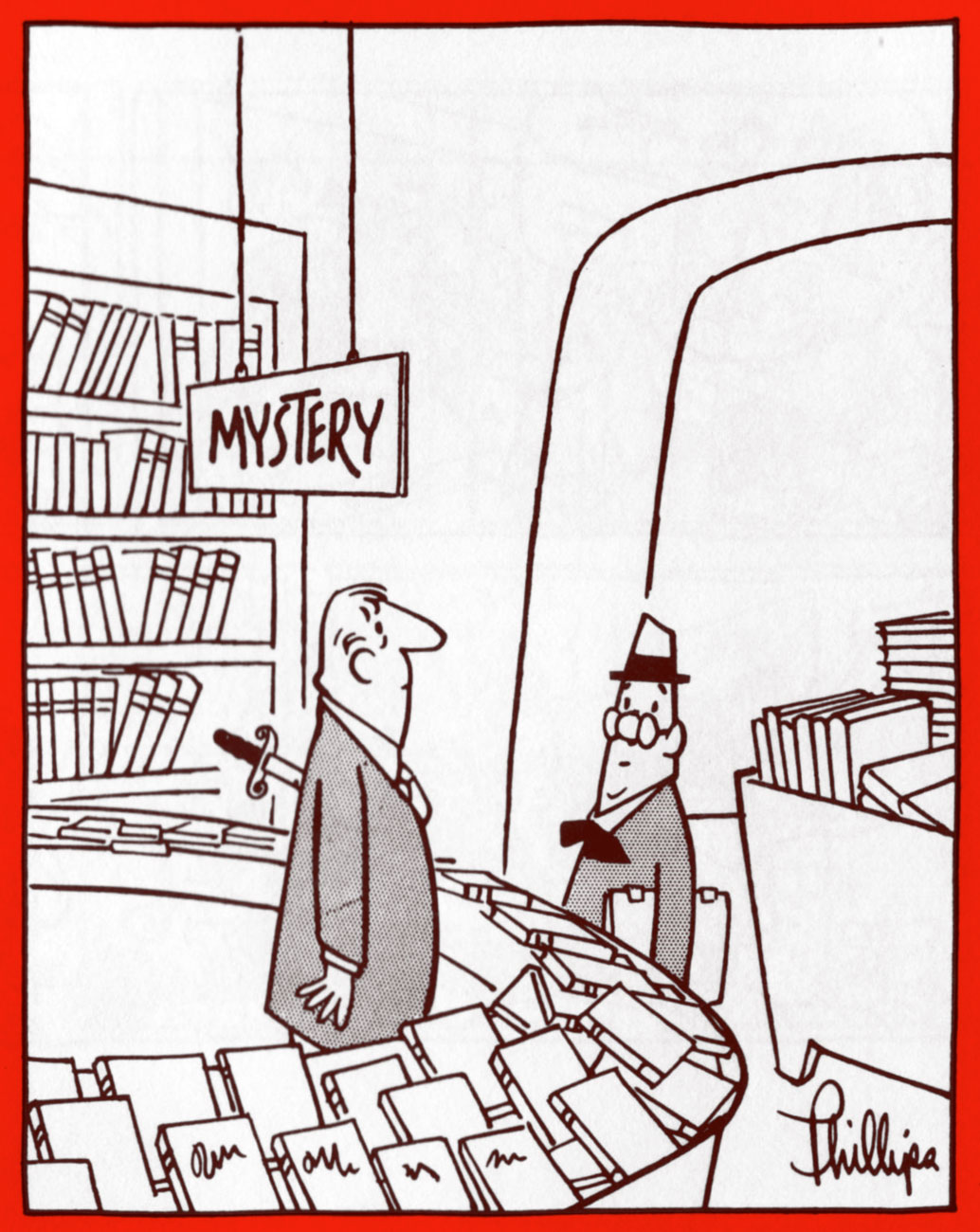
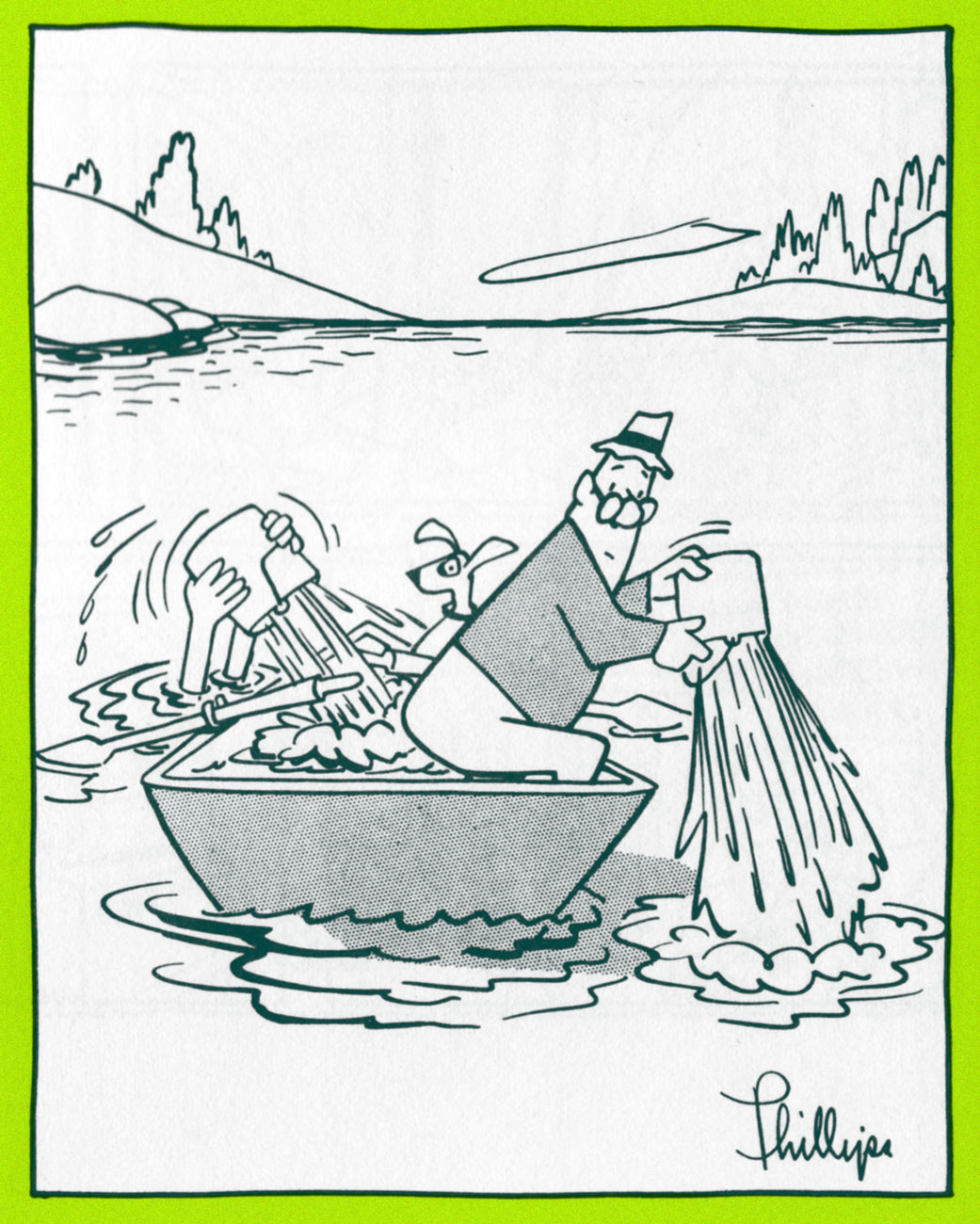
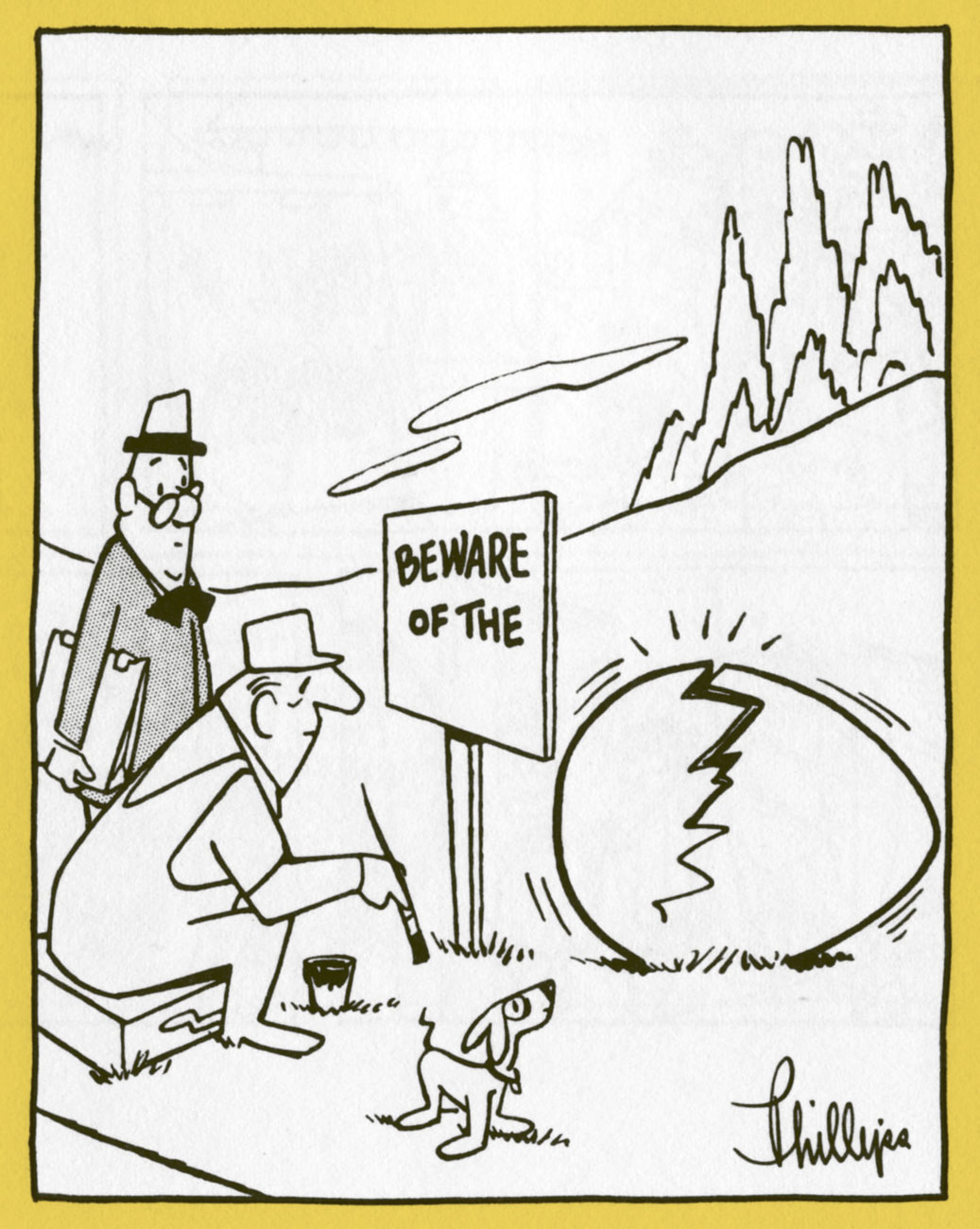
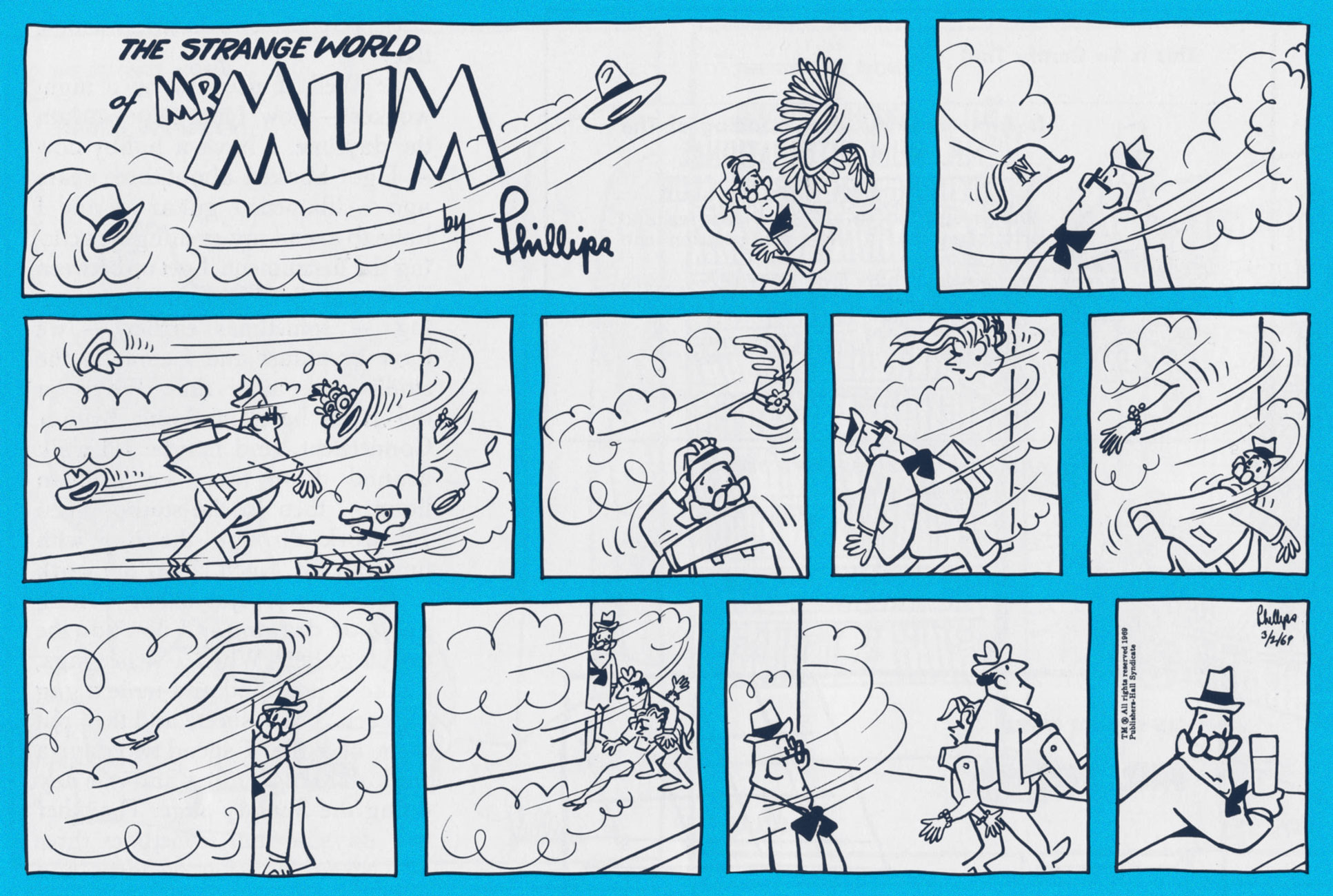
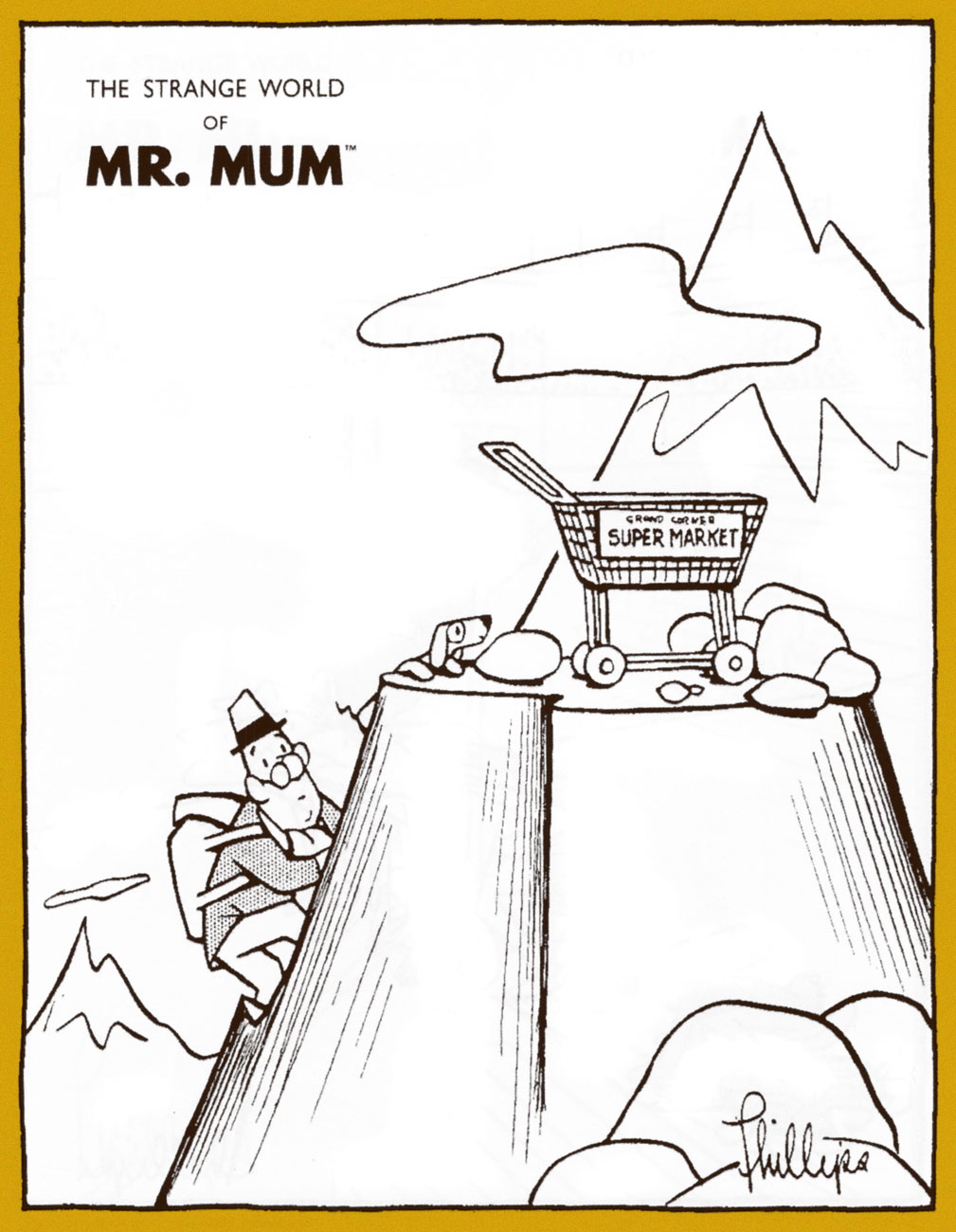
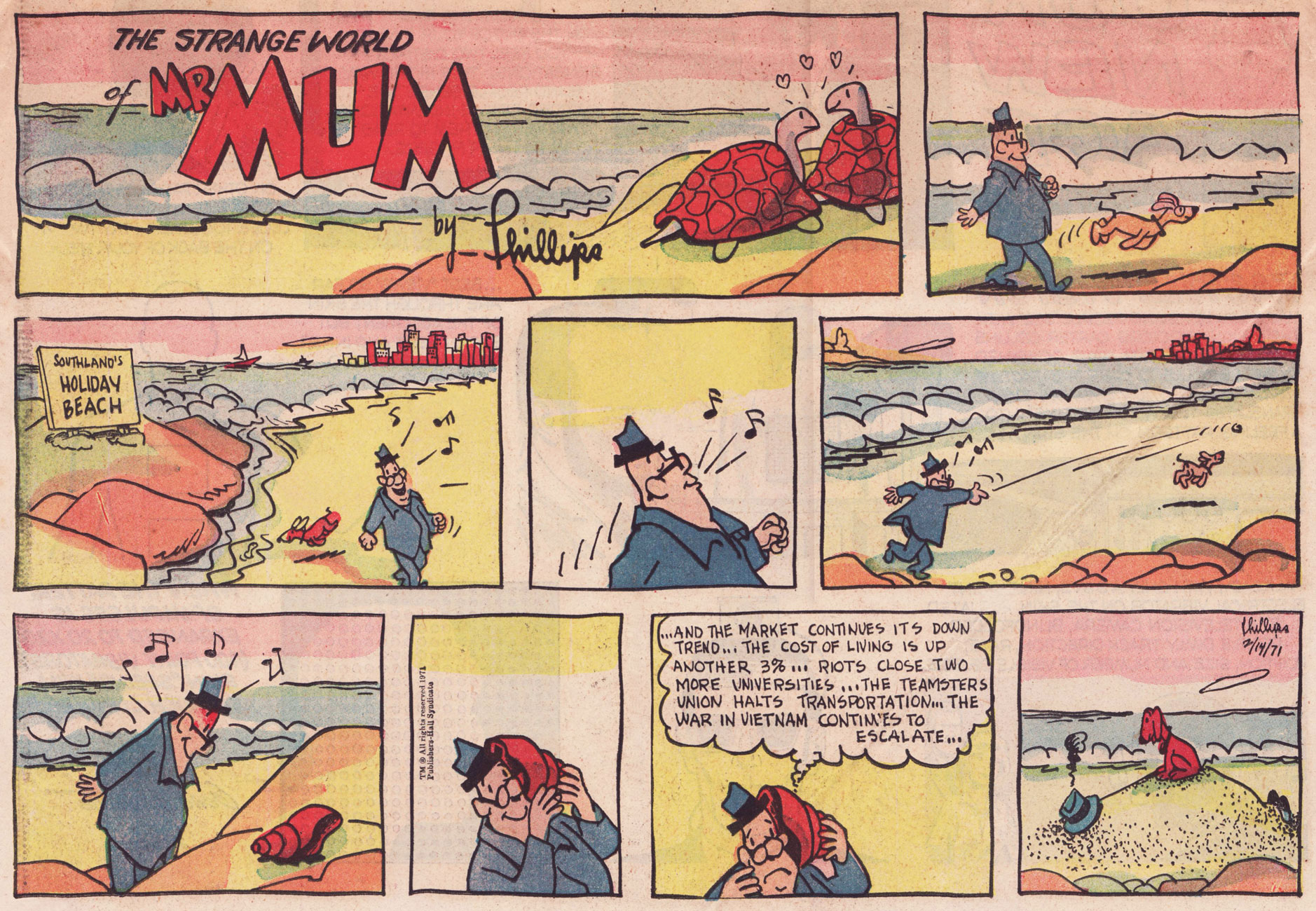
While Phillips’ style is deceptively rudimentary (but still distinctive), it’s evident that his years as a gag man taught him the fundamentals: economy, clarity and substance. Here are a few samples drawn from a variety of sources:
The Valentine’s Day Sunday of 1971, as it appeared in print. There’s always something to fret about, isn’t there?
The lone Mr. Mum original piece in my collection, it’s the June 10, 1965 daily. It was a Thursday. The artwork is surprisingly large, at 22 x 28,5 cm (8,75″ x 11″). Note the little bit of halftone film stranded outside the frame.
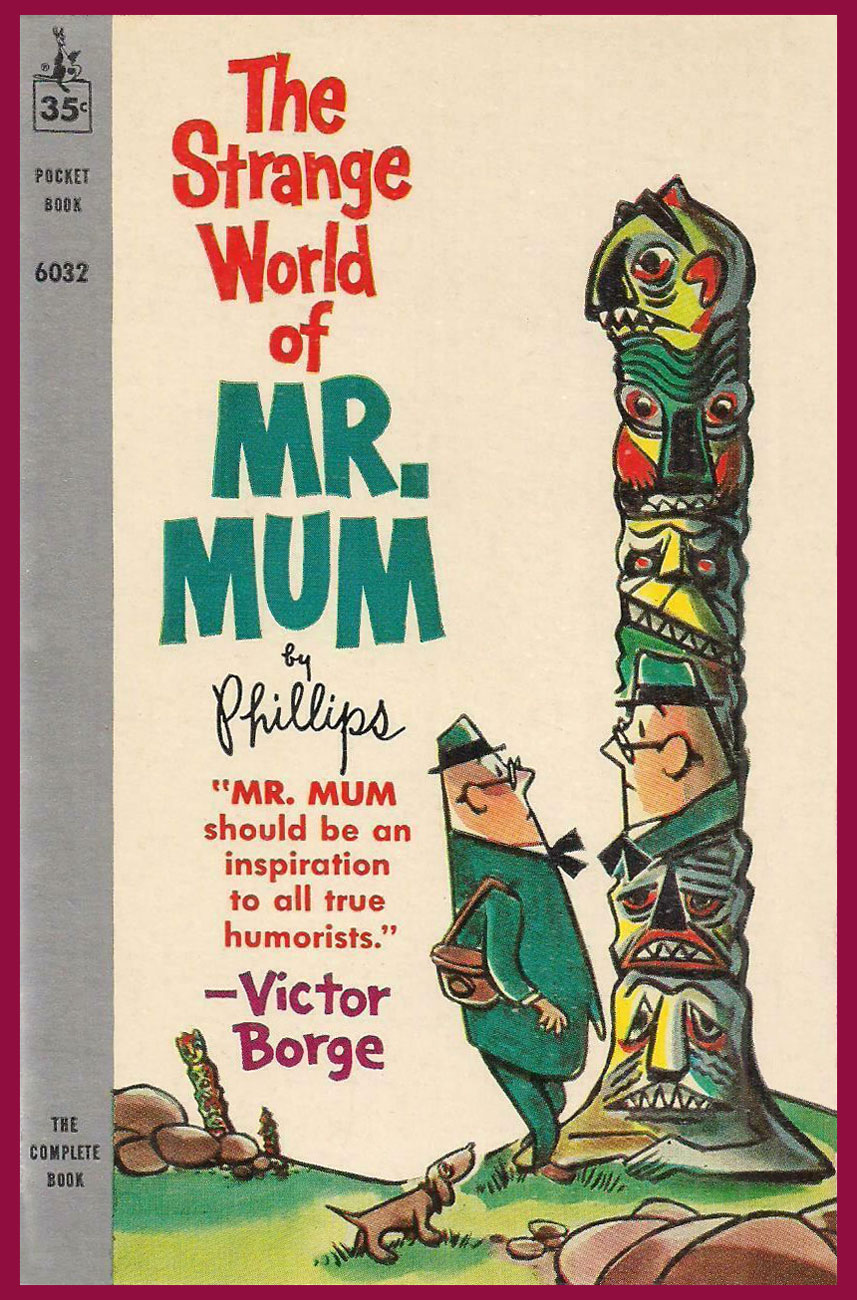
During the strip’s run, three collections appeared: this is the first, published in 1960 by Pocket Books.
Issued in 1965 by G. P. Putnam’s Sons, this is the second and finest of the collections, its format comfortably allowing the presentation of dailies (two to a page) and Sunday strips. Hell to scan from, though.
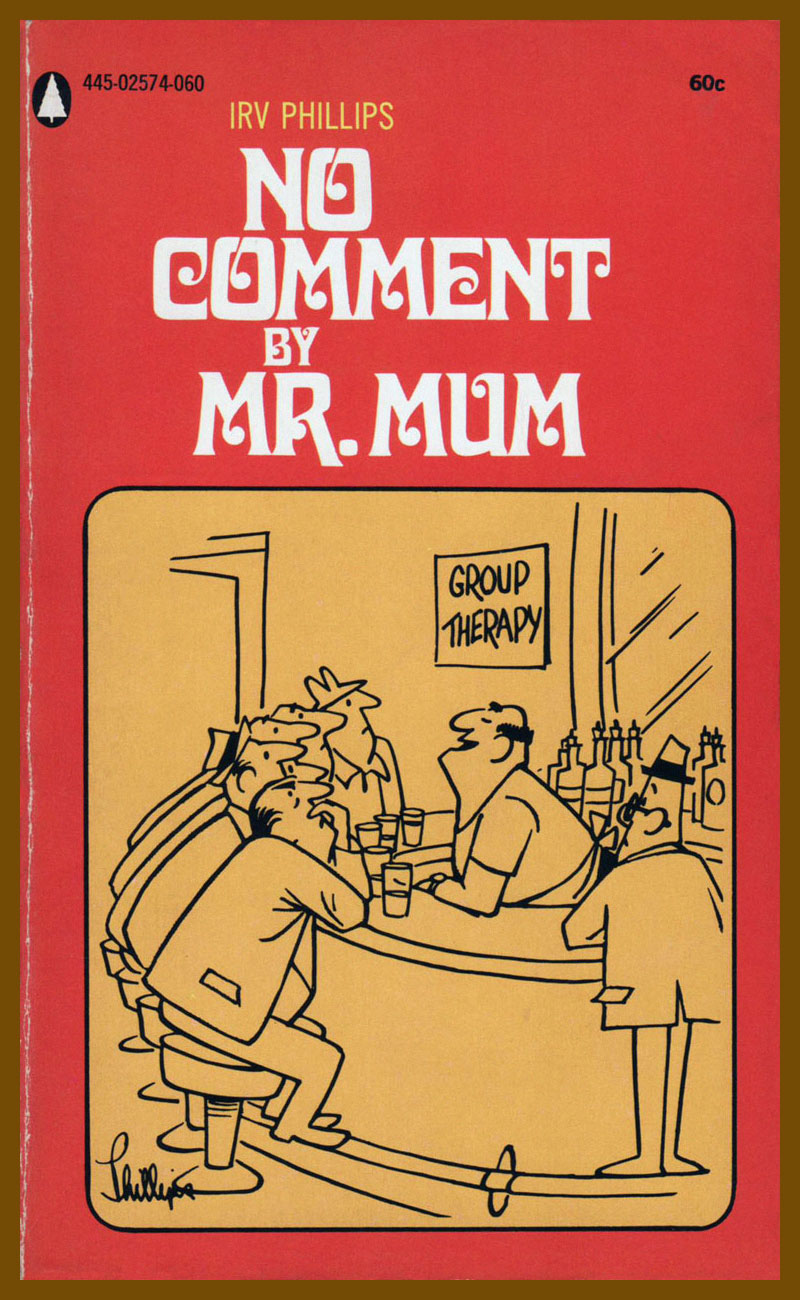
Finally, The Popular Library brought us the third collection, 1971’s No Comment by Mr. Mum. A slim, unprepossessing volume, it’s nonetheless filled to the brim with great picks.
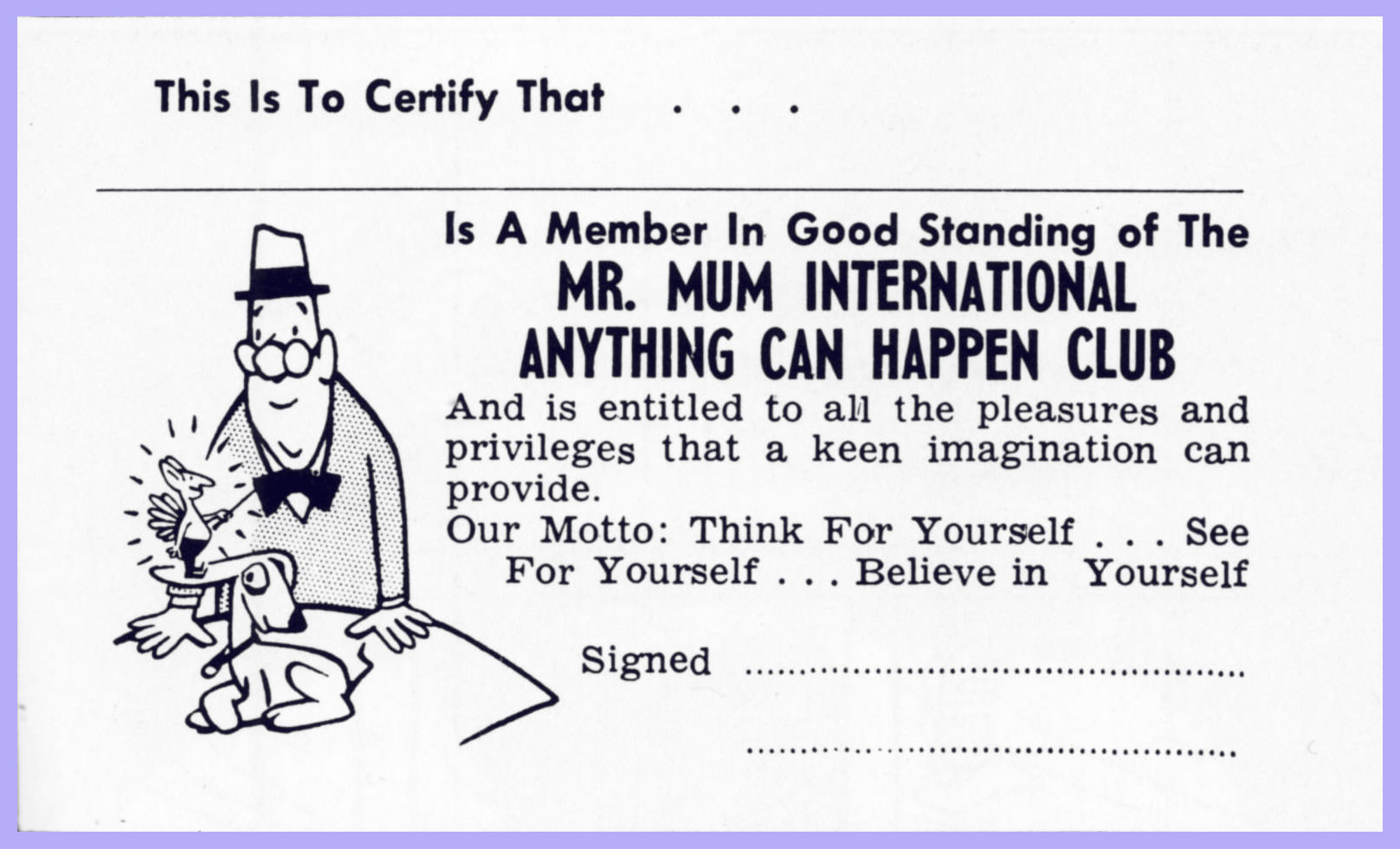
A sample of a card he has given people who have sent him ideas. Phillips said: « Most of the fan mail seems to come from intellectuals and children. When people send in ideas, I send them the card, write them a letter, and if I use the idea, I send them a signed original. »
The Mum aficionado will seek sustenance wherever he can find it, but it helps that in this century, a pair of easy-to-find, affordable print-on-demand collections have seen the light of day. They are Classic Mr. Mum Volume 1 (2010, iUniverse) and The Strange World of Mr. Mum (2011, Empty-Grave Publishing).
One unexpected hurdle that stands in the way of a Mr. Mum revival is that an overwhelming number of Phillips’ originals repose in one man’s private collection. Not to put too fine a point on it, painter Andrew Massullo, though evidently a man of discernment, is hogging all the Mr. Mum original art. In a profile that appears in the San Francisco Chronicle’s website, SFGate, he reveals the appeal and the breadth of his collection:
Mr. Mum Cartoon Collection by Irving Phillips How many: 1,385 –
« It’s like potato chips, you can’t just have one. » Why? The deadpan humor and the beautiful drawing.
« They remind me of my childhood. » From? From his estate and eBay. Any more? « No, I have all I want. »
Ah, that’s probably why I managed to snag one for myself. Let’s hope Andrew, if someone should make the request, will be open to the idea of a definitive Mr. Mum collection. I heartily concur with Mr. Massullo’s verdict on the addictive power of the strip. It vividly brings to mind the québécois adage « Le plaisir croît avec l’usage. » The deeper one delves into Mr. Mum’s oddly comforting universe, the more one appreciates the depth of his brilliance. For a start, scope out this fine selection of strips on Ger Apeldoorn’s ever-excellent blog The Fabulous Fifties. And while you’re at it, sneak a peek at my Christmas-themed ode to this loveable bystander.



































 Who's Out There?