So the Square Says to the Triangle, ‘That’s No Lady, That’s My Wife!’

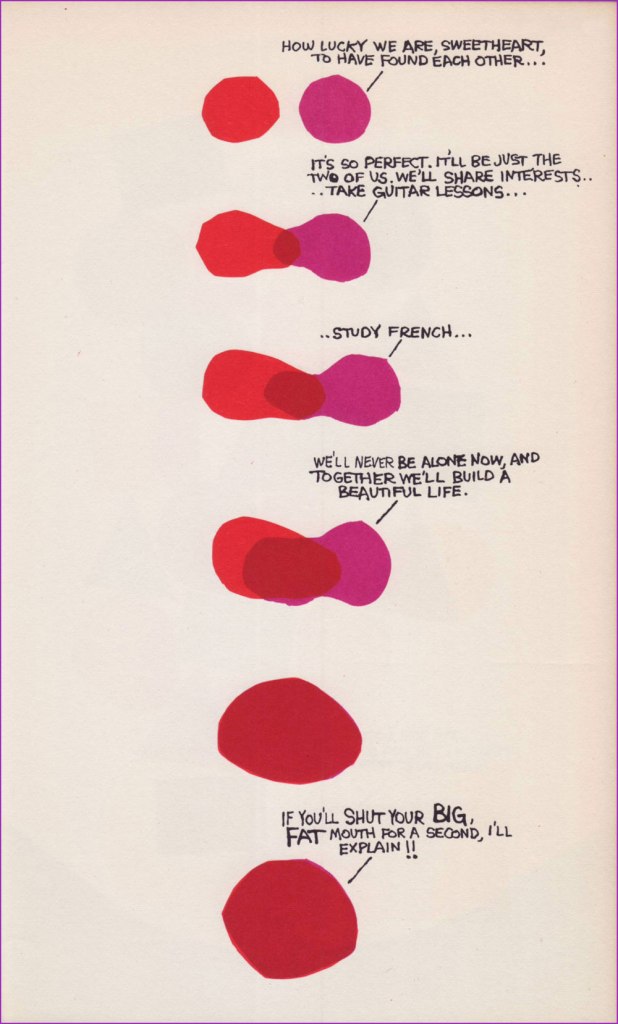
Inhabiting the same topography and timeline as Jules Feiffer‘s Village Voice strips, Bill Manville’s Saloon Society, and, dare I say, even Rod McKuen’s youthful reminiscences, The Conformers by Jack Wohl* (‘who has been, at various times, a child, a larger child, a musician, a composer and creative consultant and art director for our advertising agencies‘, helpfully notes the blurb on the back) is a charming little book with colourful squares and circles for characters. Like many other publications whose existence I previously ignored, I found it in a used bookstore that assigned it the somewhat random price of seven dollars, 41 cents, which was pretty good, considering that the employees probably didn’t know what it was or how to price it.**

Published in 1960, the book consists of ‘shapes cut out of colored paper with scissors‘, cheekily described in the introduction by Roger Price*** as Wohl’s psychiatrist’s idea. These blobs may be firmly situated in NYC’s Greenwich Village, but no matter how technologically advanced we get, most human preoccupations are the same some 60+ years later… so most readers will be able to effortlessly recognize themselves in the lives of Harriet (red circle), Howard/Herbie (purple square) or Arthur (green square).

TOGETHERNESS 1
THE LOGICAL MIND
PRACTICALITY
FREE SPEECH
C’EST LA GUERRE
MOMENT OF TRUTH
PLANNED PARENTHOOD

~ ds

* Definitely not the American far-right conspiracy theorist, fraudster, and convicted felon.

** No shade is intended towards used bookstores in general, which are places I love being in, but this particular bookstore has staff that seem to wildly overprice most things without consideration for their condition or the simple question of ‘who in their mind would buy this at that price?‘.

*** As the author of Droodles, Price was particularly well positioned to write an introduction to The Conformers.

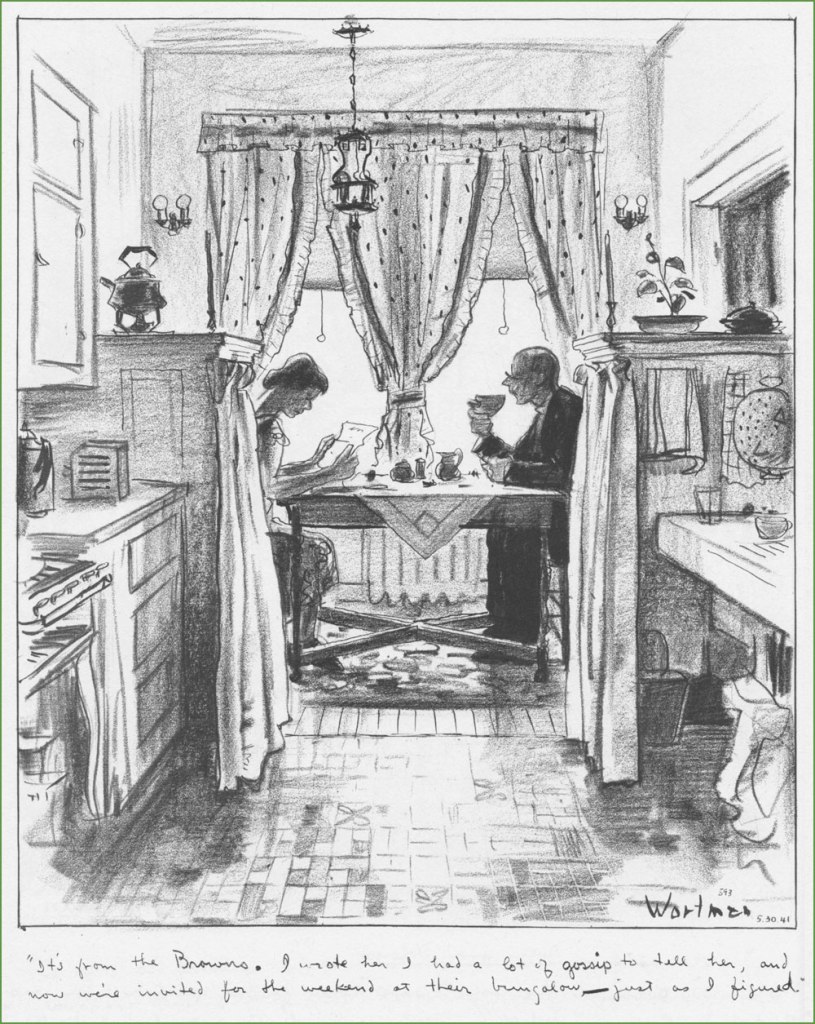
A Fading Presence of Lived Memories: Denys Wortman’s New York

« I can’t decide whether to give up peanut butter on account of its calories, or to eat it on account of its vitamines… »

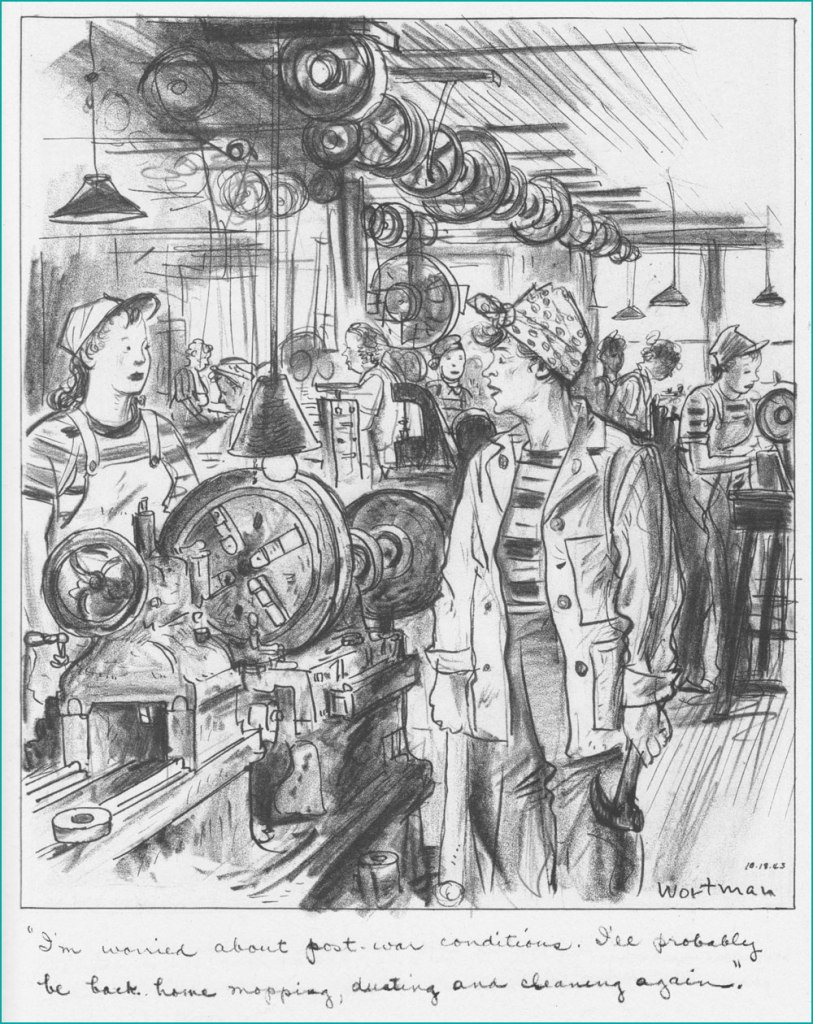
When it comes to what Amazon loosely classifies as ‘literary graphic novels’ (very much a meaningless category), it’s rare for me to stumble across something completely unfamiliar on a bookstore shelf, unless of course it’s something hot off the press. Denys Wortman’s New York: Portrait of the City in the 30s and 40s (Drawn & Quarterly*, 2010), which I spotted in the well-stocked The Comic Hunter (Moncton, Canada), looked unfamiliar and intriguing. 

The edition I purchased is from 2010; I wasn’t able to find out when this one, with an arguably more striking cover, was published. This illustration had the caption of ‘If I have to come down to buy them, you’ll have to come down on your prices’, and was drawn on August 30th, 1948.

I’d never heard of Wortman, but just a quick skim through this volume showed that he clearly had an amazing ability to evoke a certain place and time, and fill it up with characters so real that one wouldn’t be surprised to run into them on the street. Nostalgia for a place one never experienced is a recurring feature of the human mind – Wortman’s New York is one I am familiar with from books and movies, and that faded away long before I was born. One would also be remiss in failing to express admiration for DW’s living, breathing linework. His attention to the minutest details are used to recreate scenes from lives of people who certainly didn’t have an easy time of it, yet still inspire a sort of familiar comfort almost a hundred years later.

To get some bibliographical stuff out of the way (for a full story, I shall direct you to the website maintained by Wortman’s eighth son), Denys Wortman was born in 1887 and died in 1958 at 71. Among other things, he also drew Metropolitan Movies, a comic strip that ran between 1924 and 1954 and is mostly remembered (if that’s the right term here) for two of its characters, a couple of cheerful vagrants named Mopey Dick and the Duke.  

It was a tad difficult to decide which pages to feature, so I tried to go for a variety of scenery. Wortman must have been a Gerald Kersh character to possess such an intimate knowledge of all these industries, markets, streets, and types of human beings… I invite you to a bit of time travel.

« In art school days there was much talk about “character,” but I feel there was a small amount of misapprehension mixed up with its interpretation. I could not see then and I can’t now why a man with a lot of whiskers has any more character than one who is clean-shaven. Nevertheless I would prefer to draw the former. And I would prefer to draw him after he has lived long enough for Experience to have etched lines in his face — the more the better. Because the more lines and markings he has in his face the more chance I have of finding ones that I can match with lines on my paper to help create the illusion that the face I am drawing has bones under the skin, that the eyes are seeing things, that the mouth is speaking, and that the man has a soul. »

It must be mentioned that these drawings have been rescued from the mists of forgetful time by WOT favourite James Sturm (see Free Inside Package: James Sturm’s The Cereal Killings (1992-95)), who hunted down Wortman’s son and his astonishingly large, apparently languishing archive of his dad’s illustrations.

I’ll end this with a great quote from the foreword to Denys Wortman’s New York, written by Robert W. Snyder

« You can still see traces of Wortman’s New York in crowded Manhattan side streets, spirited New Deal Murals, and soaring skyscrapers**. Harder to find are the feelings and lived memories of this place. The sailors and their sweethearts who strolled the boardwalks of Coney Island are now, in their eighties, a fading presence. To understand them, and how they lived in a city that inspired hope and fear, idealism and wisecracks, solidarity and individuality, there is no better place to look than a Denys Wortman cartoon. »

~ ds

* I tend to not like what D&Q publishes, but this is another pleasant exception to the rule (here’s the original exception).

** This immediately comes to mind.

Hallowe’en Countdown VII, Day 12

« There are no innocent bystanders… what are they doing there in the first place? » — William S. Burroughs

I’ve sung the praises of The American Bystander before, and I do believe it could still use whatever publicity it can get. And so here are some choice excerpts from the magazine’s Hallowe’en-themed issue — no. 13 (naturally), Fall 2019… starting with its unfathomably gorgeous double-spread by Armando Veve.

The editor wrote: « Some of our covers are so good they could conjure an entire book, and when Armando Veve delivered his art, a whole story blossomed in my brain. This wired witch is speeding to her digs downtown, a well-appointed brownstone on West 11th between Bleeker and West 4th. She received the deed some years ago from a grateful secretary of state Seward, in exchange for “Mr. Stonewall Jackson’s unfortunate accident.” More recently, she’s occupied herself by magically manipulating the stock market; she delights in dropping enormous, anonymous college scholarships into the laps of earnest high school Wiccans. Most afternoons she can be found at Tartine, eating pastries and slipping love potions into unsuspecting patrons’ teacups. She agrees that the neighborhood isn’t what it used to be but — being 227 — knows it never was. »
Horror is around all the year ’round… we just celebrate it more fervently in the Fall. A strip by Brandon Hicks.
I certainly hope that’s not Joltin’ Joe DiMaggio‘s spectre on the right, since he couldn’t handle that scene in real life. A cartoon by Matt Percival.
I love that extra second-level chuckle (hint… ‘spell’). A cartoon by The New Yorker cartoonist Mick Stevens.
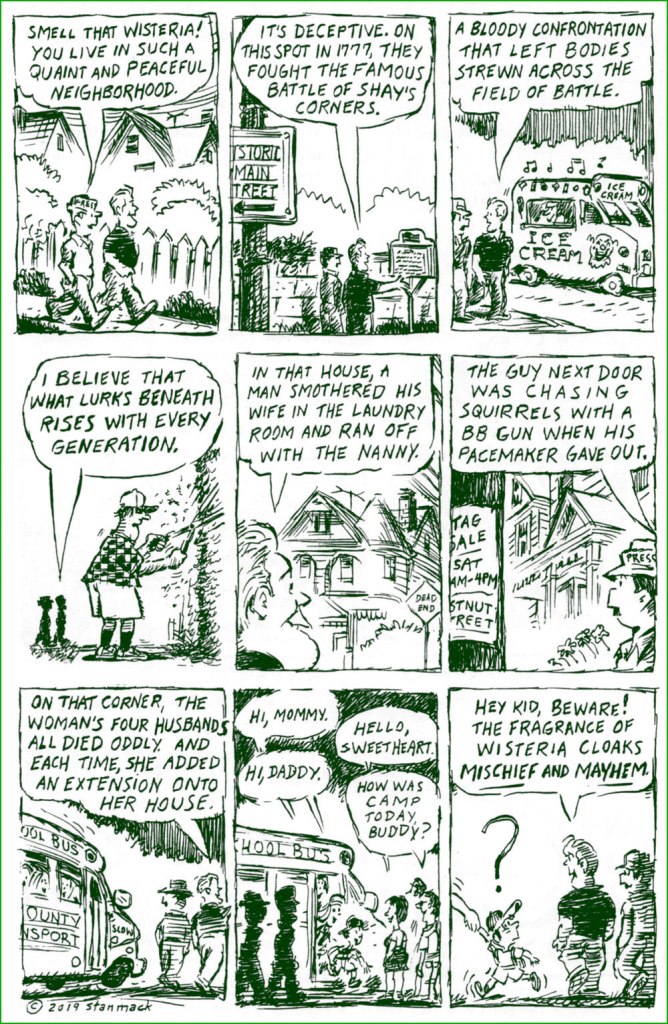
A low-key guide to lethal passion in the suburbs from WOT? favourite Stan Mack. And I’m with the squirrels; that neighbour got what he deserved.
The kids’ grapevine is utterly unforgiving. If you’re very fortunate, your ill repute will turn over with the next generation. A strip by Jim Siergey (b. 1949).

-RG

Plaudits to the Popkin, Glory to the Derrière!

Today’s post is dedicated to shapely posteriors, a particularly estival apparition. Cleavages can be admired year-round, but butts tend to put up an appearance during the season of bumblebees, swim-suit malfunctions, and summer dresses blown about by a warm breeze. There’s no need to take sides in the old battle of boob-man-vs-butt-man (which also entirely ignores the preferences of lesbians etc.), each shall have their day!

« It isn’t often one sees a bowler these days. » A cartoon by Peter Arno published in The New Yorker on August 9th, 1952. The asses may be hidden, but we know they’re there!
« Where the hell where you when I was down here skindiving? » There are many theories about a mermaid’s anatomy, and this particular interpretation opted to emphasize her butt cheeks. This is a Playboy cartoon by Arv Miller, published in May 1957.
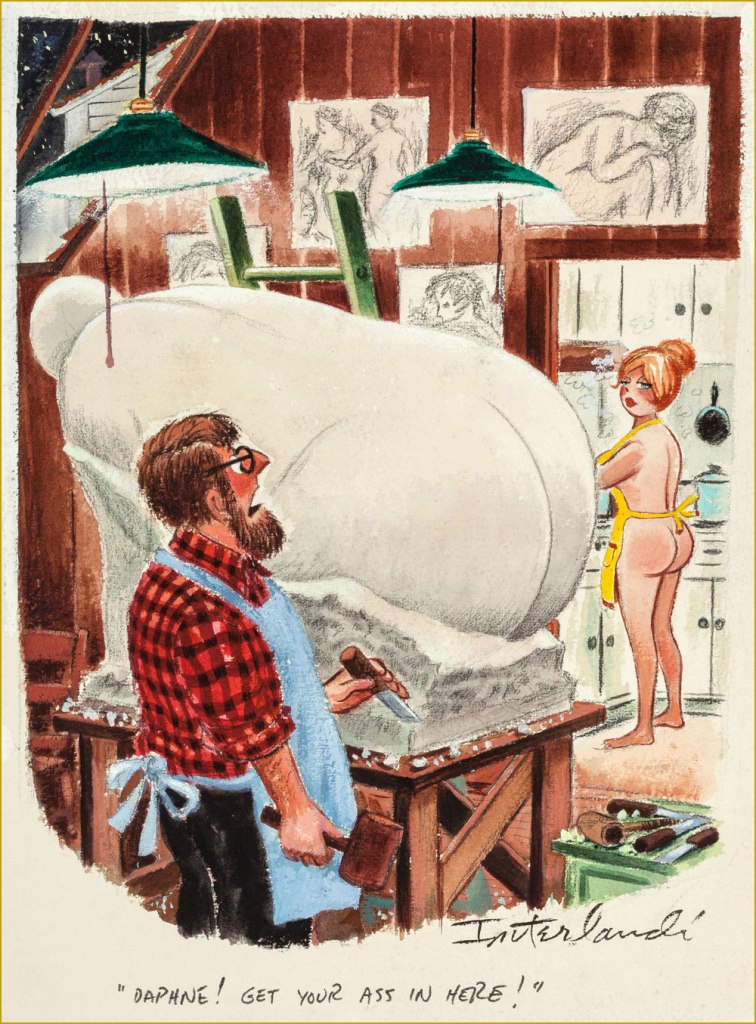
Cartoon by Phil Interlandi (1924-2002), a frequent contributor to Playboy.
Another one by Mr. Interlandi.
Playboy cartoon by Austrian-born Erich Sokol (1933-2003). The secretary could consider no longer choose her undergarments according to the calendar…
Cartoon by Donald Gordon Addis (1935 – 2009), who created several syndicated newspaper strips. He was staunchly anti-religious and a prominent member of the Freedom From Religion Foundation, the latter releasing a retrospective of his work in 2019, Cartoons for the Irreverent.
Presumably I couldn’t get away with a post about asses without featuring some spanking scene. Cartoon by British cartoonist Michael ffolkes 1925-1988, who contributed to a variety of British and American newspapers and magazines and also illustrated an impressive number of children’s books (with a particular proclivity for Roald Dahl ones).
Cartoon by Alden Erikson, about whom not much is known.
« Today We Will Examine the Primary Male Erogenous Zones, Thanks to Dr. Simpson of the Social Sciences Department » . Another cartoon by Erikson, published in September 1966. I had to include a male ass for variety!
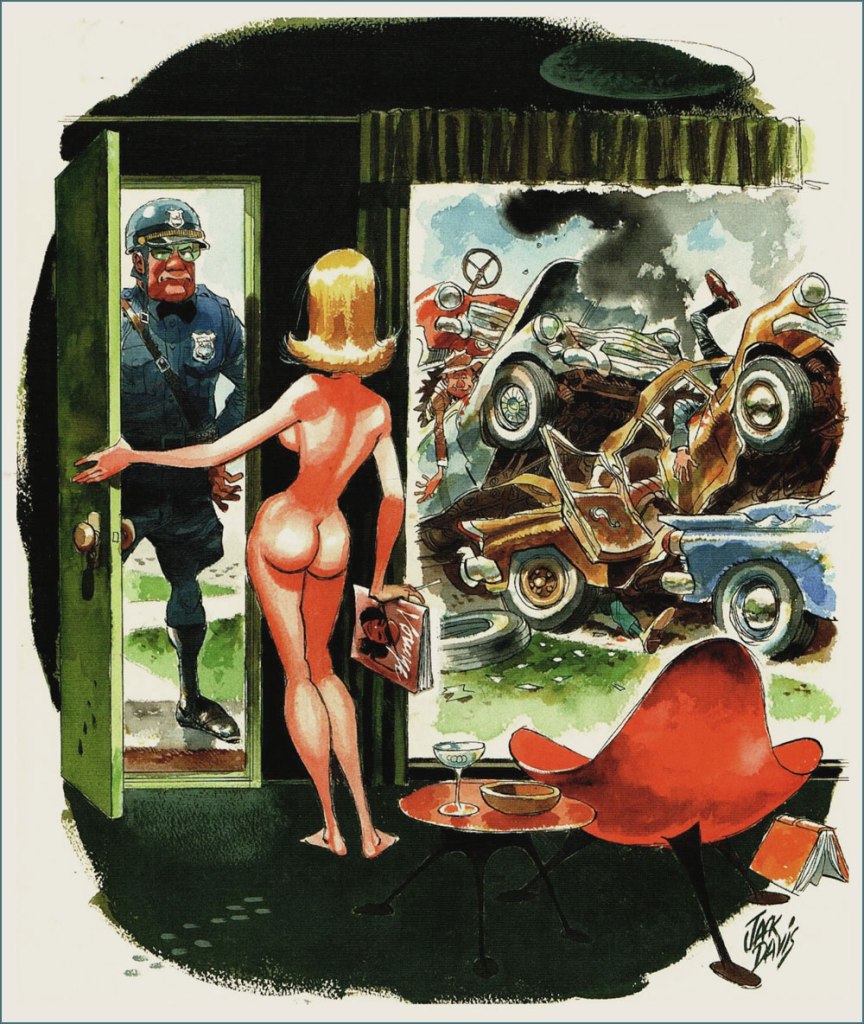
« Yes? » by Jack Davis, a WOT favourite and for that reason, a category of his own.

And one last cartoon for good measure, all the way from the early 1900s —

Wardrobe malfunctions are such classic fodder for cartoons. Maladresse translates to something like “faux-pas, blunder”.

~ ds

Have You Seen My Flare Gun? Buddy Hickerson’s The Quigmans

« And what can you say about Buddy Hickerson that hasn’t already been confessed in court? » — a 1992 blurb

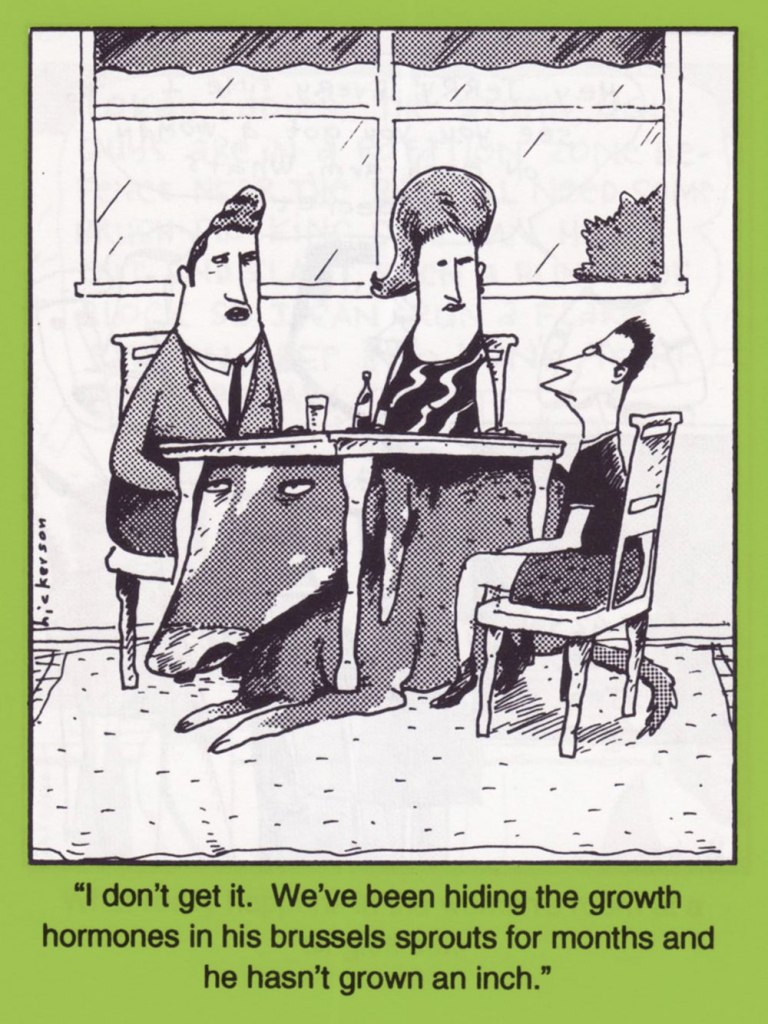
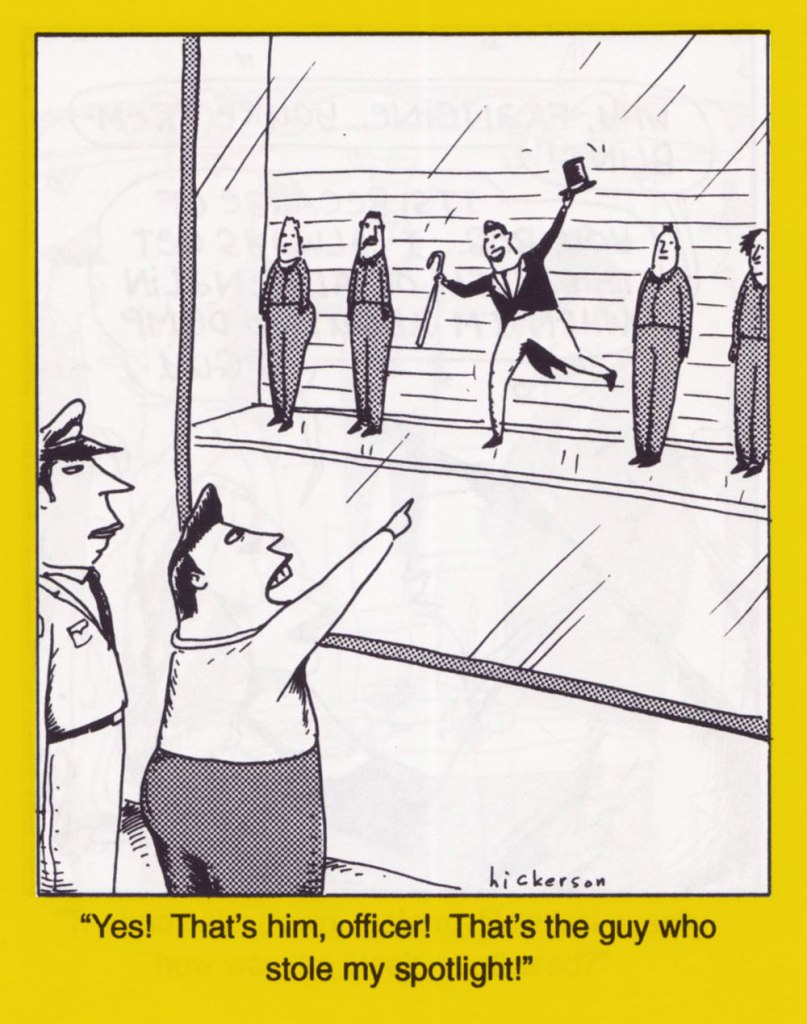
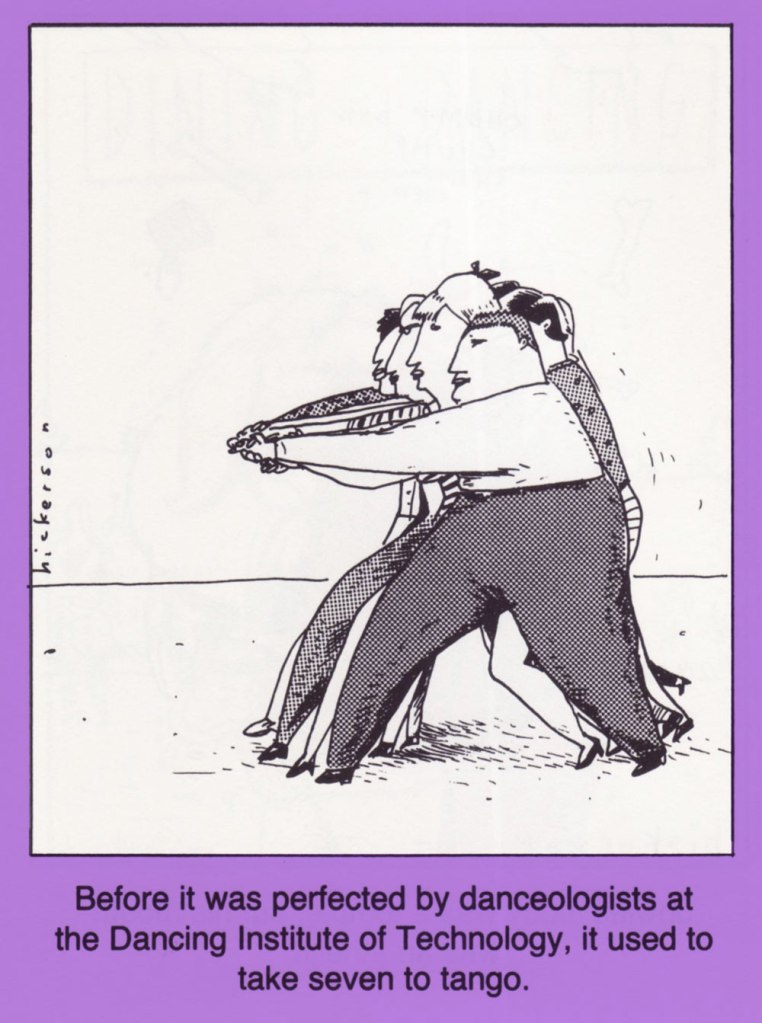
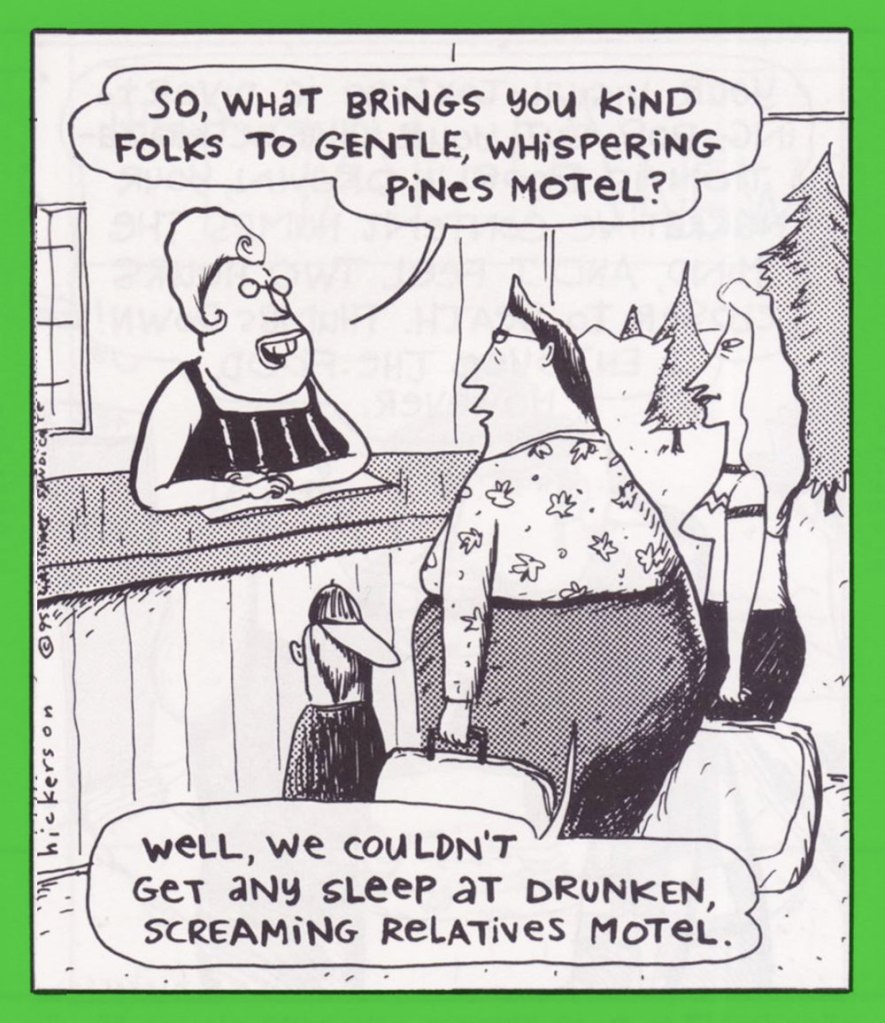
While the 1980s mega-popularity of Gary Larson’s The Far Side (1979-1995) led to a plague of mostly feeble imitations, it more significantly contributed to the acceptance of a greater range of humour (and drawing styles*) in a staid syndicated strip industry sorely in need of a vigorous shakeup. While Dan Piraro‘s Bizarro (1985–) is the clear winner among those that followed Larson’s path — no small thanks to an original vision and drawing chops to kill for — I’ve always had a soft spot for one of the also-rans, Buddy Hickerson’s The Quigmans.

While Hickerson wasn’t a consistent gagman to rank with the cartoon gods, he scores points aplenty for trying and the intermittent spark of genius. And I dug his ‘melted in the sun’ aesthetic, echoes of which seeped into the mainstream. I mean, consider the likes of Beavis and Butthead (1993) and Duckman (1995), merely to skim the greasy surface.

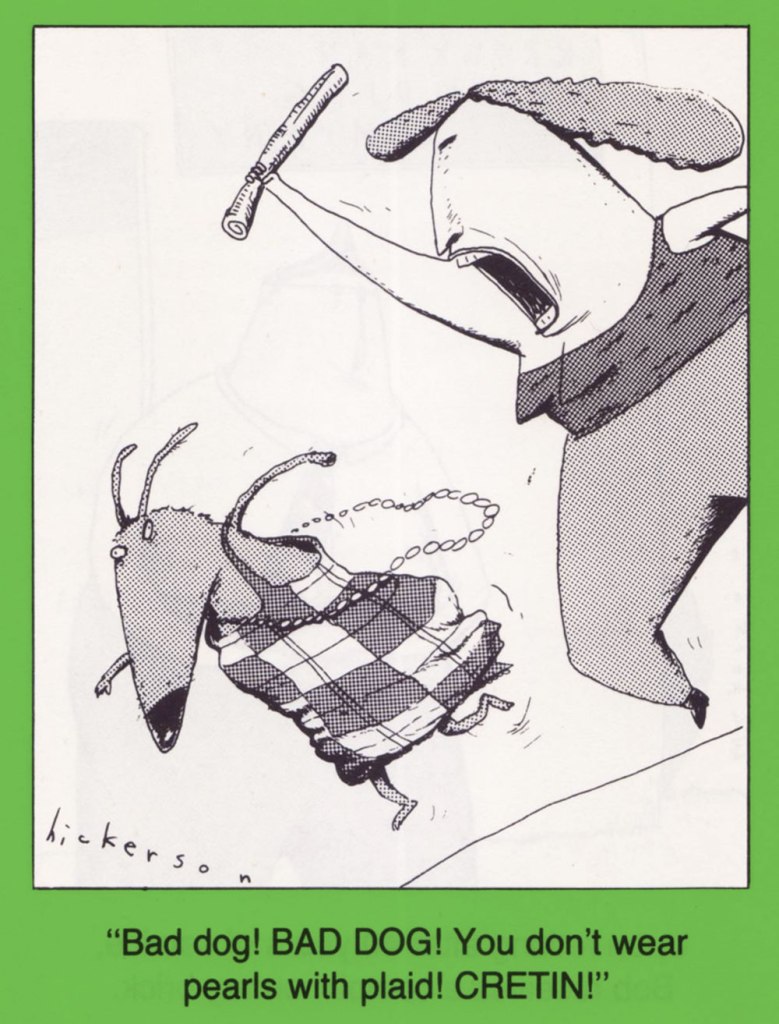
Anyhow, here’s a sampler of my favourite Quigman misadventures.

This reminds me, though less fatally, of a particular scene from John WatersSerial Mom.
Careful, child: that’s just Ethan Hawke wants you to do!
It is indeed! Deliriously tawdry stuff.
My first car was a baby blue Ford Pinto — though not haunted, to my regret!
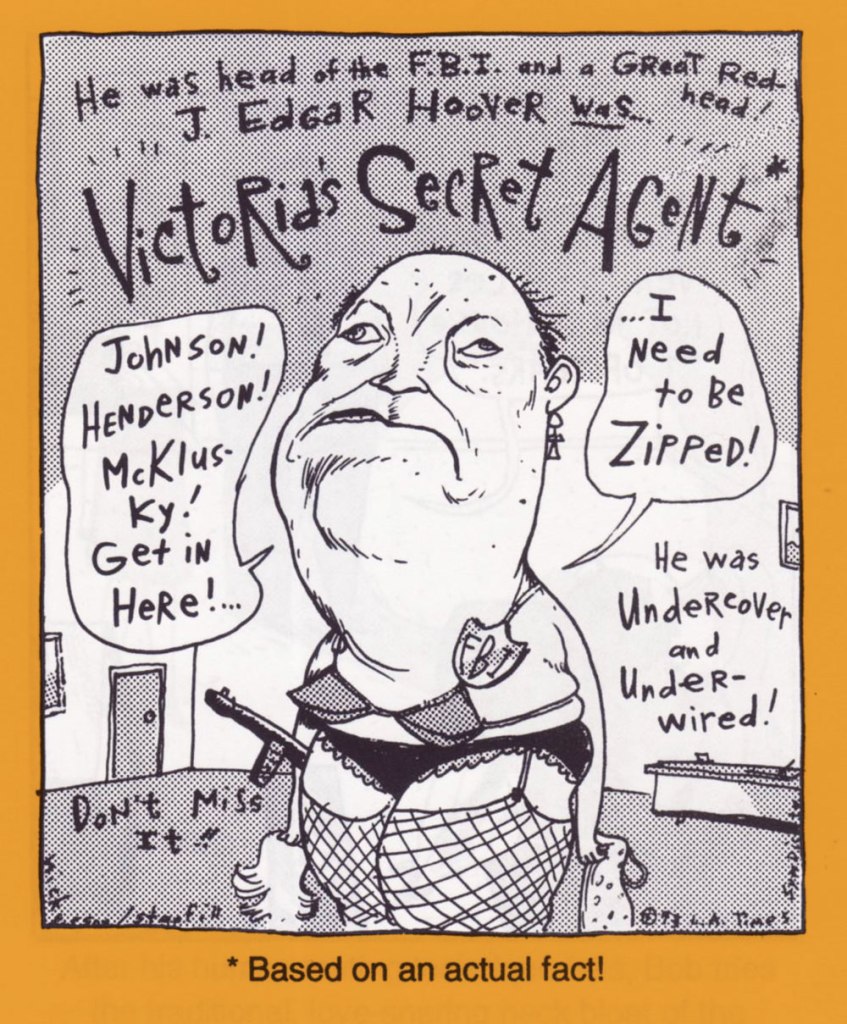
This one’s for you, Barney. For those of you who need context: Jeff Rebozo; Henry Kissinger… and, dammit, Watergate!

Four Quigmans collections have, to my knowledge, been issued:

The Quigmans (1992, Tor Books)
The Quigmans (1990, Harmony Books)
Love Connection! (1992, Harmony Books)
and Tunnel of Just Friends (1996, Four Walls Eight Windows).

I’m happy to say he’s still active and has remained true to his vision; check him out at (of course) his official website.

-RG
*though we can’t not mention such trailblazers as Lynda Barry, Matt Groening, Gary Panter and even David Lynch in such a context. The 1980s weren’t altogether a cultural wasteland, after all.

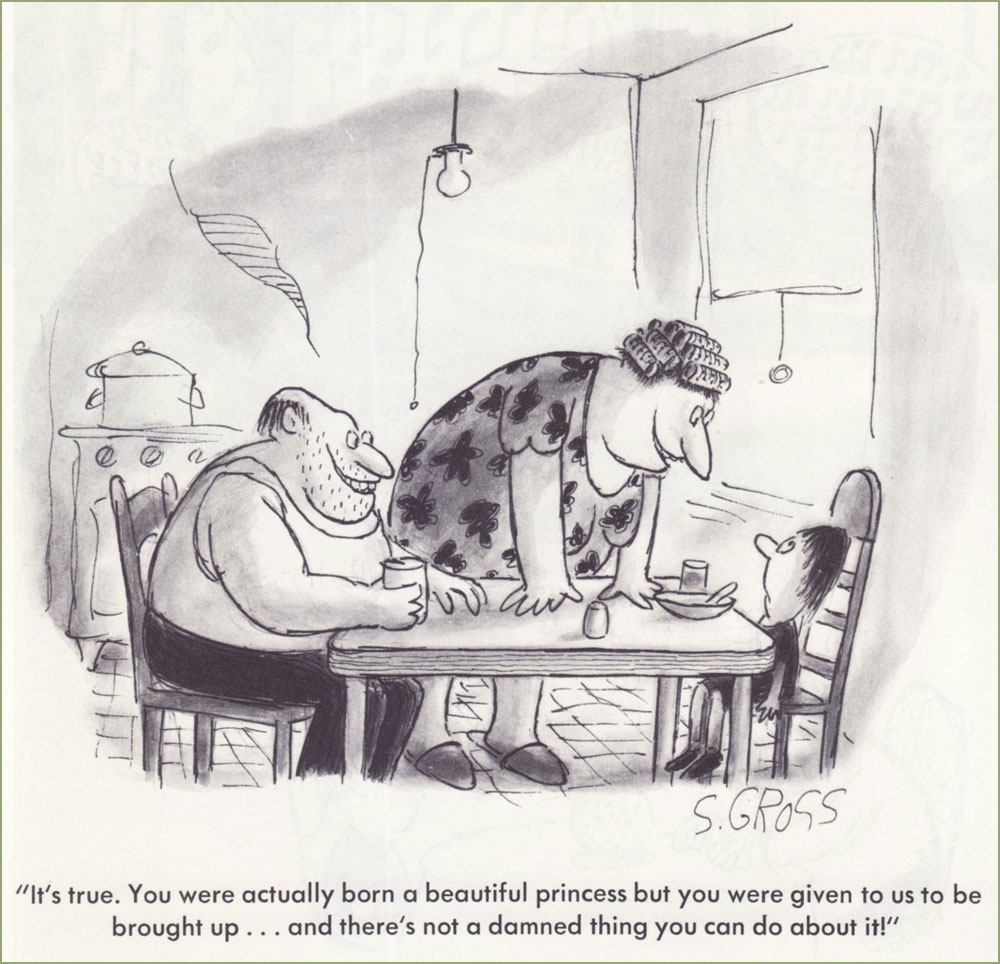
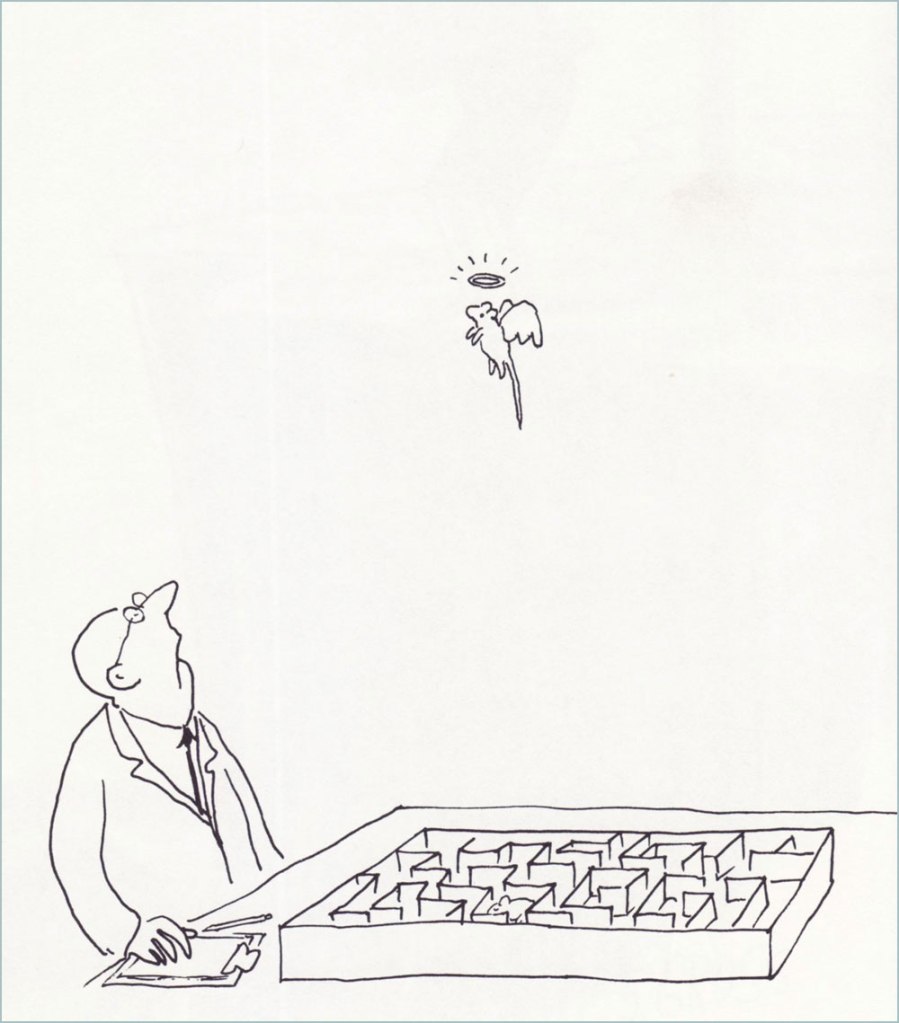
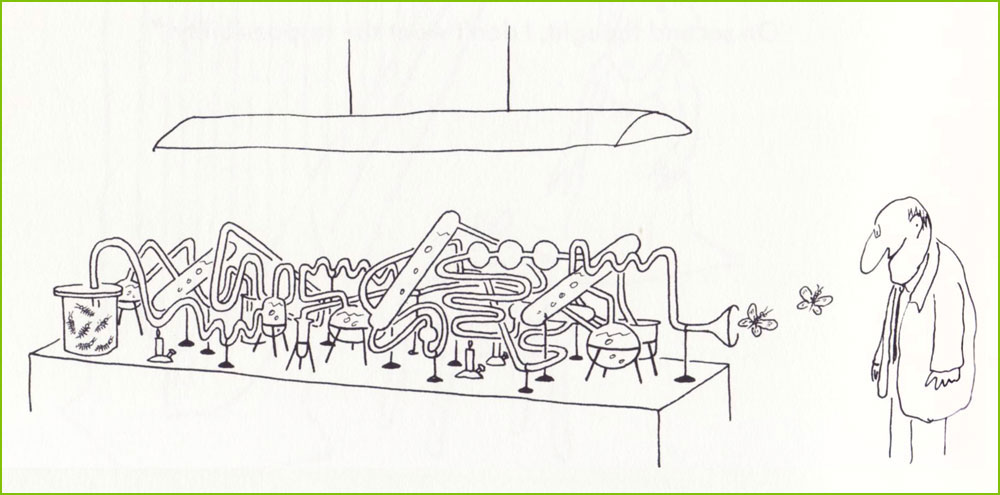
Brilliance by the (Sam) Gross

« … while there are lines of taste that many cartoonists will not cross, Mr. Gross leaped over them, doused them with gasoline and lit them on fire, cackling as he did. » — Daniel E. Slotnik, from Gross’s NYT obit.

A couple of weeks ago, we lost yet another of our remaining cartooning titans, hardly a surprising turn of events given the march of time… but this growing void diminishes and impoverishes both the field and the world.

Gross has been eulogised all over the place, notably in obituaries in the New York Times and The New Yorker, his Lambiek entry is lovingly detailed, so there are precious few blanks left to fill in.

All this adulation and appreciation… and yet, all of his books are out of print, so far as I can ascertain. While this does not bode well, I like to think that some savvy publisher will soon make use of Gross’ fastidiously organised files, reportedly comprising over thirty thousand individual cartoons.

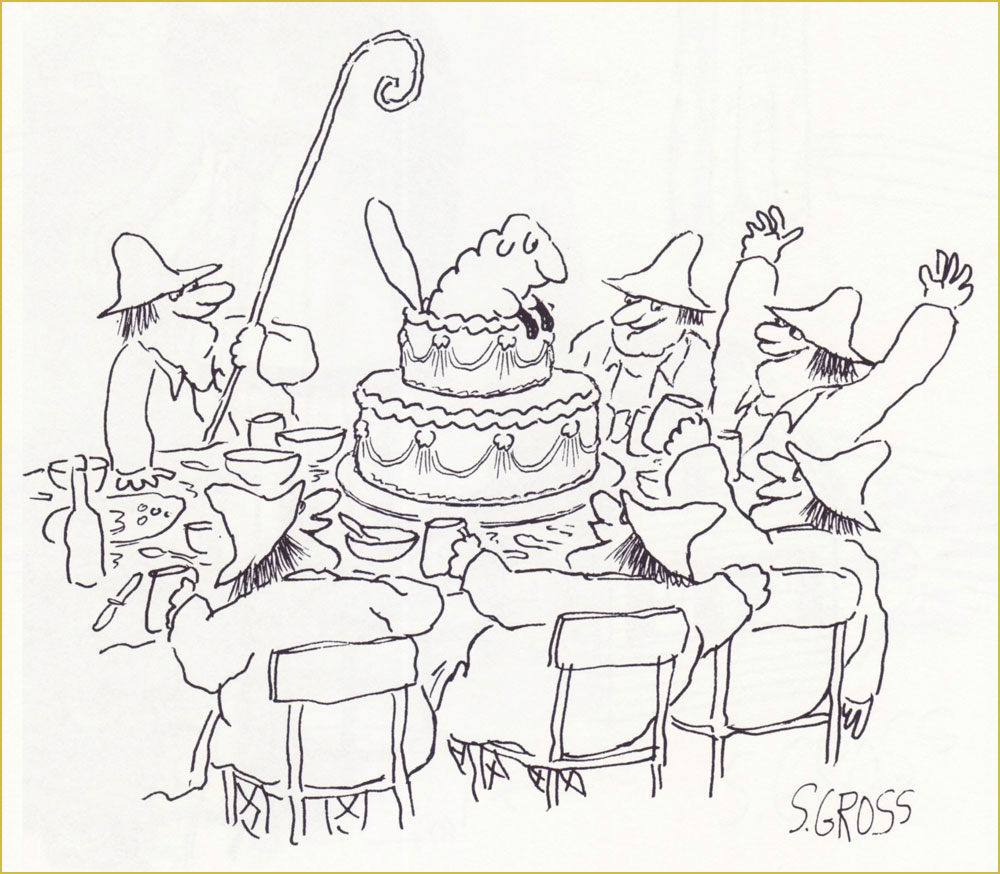
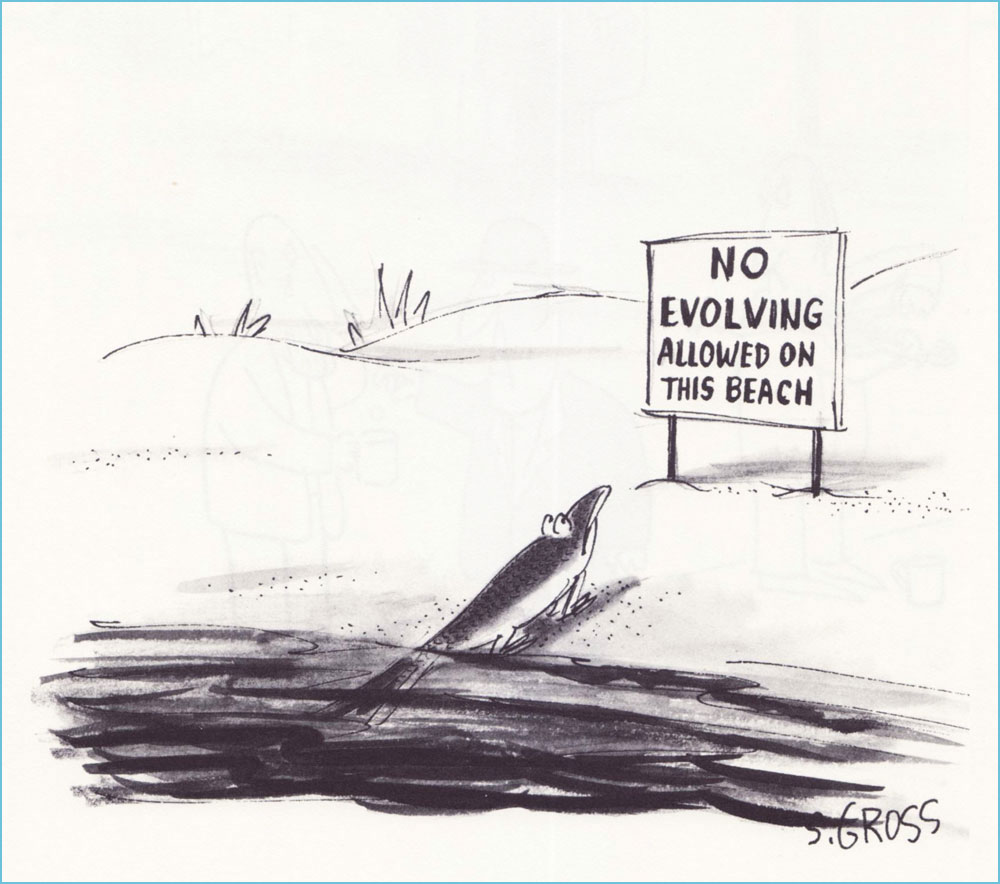
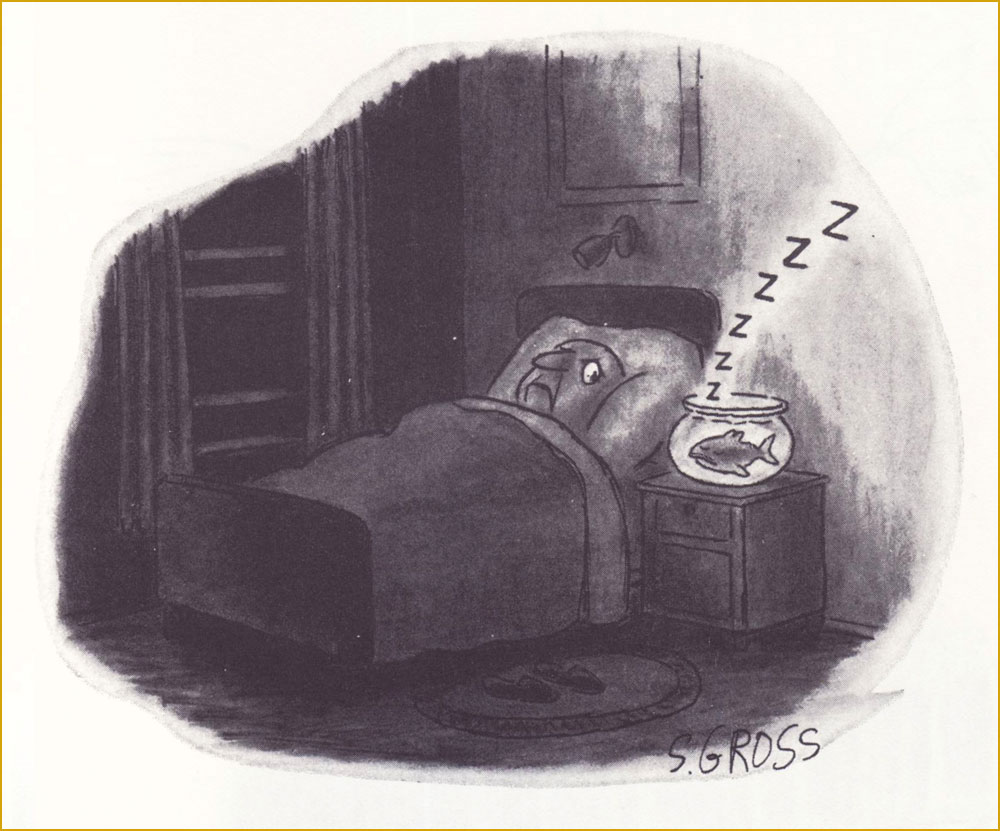
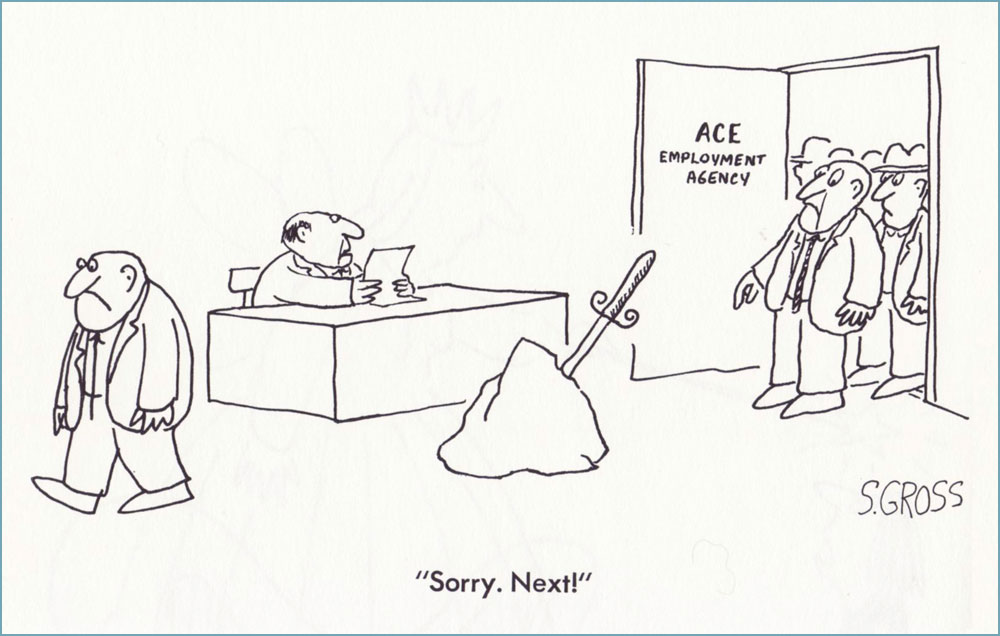
For this small homage, I’ve pulled some of my favourites from his most famous (the most infamous being We Have Ways of Making You Laugh: 120 Funny Swastika Cartoons*), 1977’s I Am Blind and My Dog is Dead. Picking favourites is plenty laborious enough, I wasn’t going to slog through seven decades of material, indeed not.

Originally published in Saturday Review.
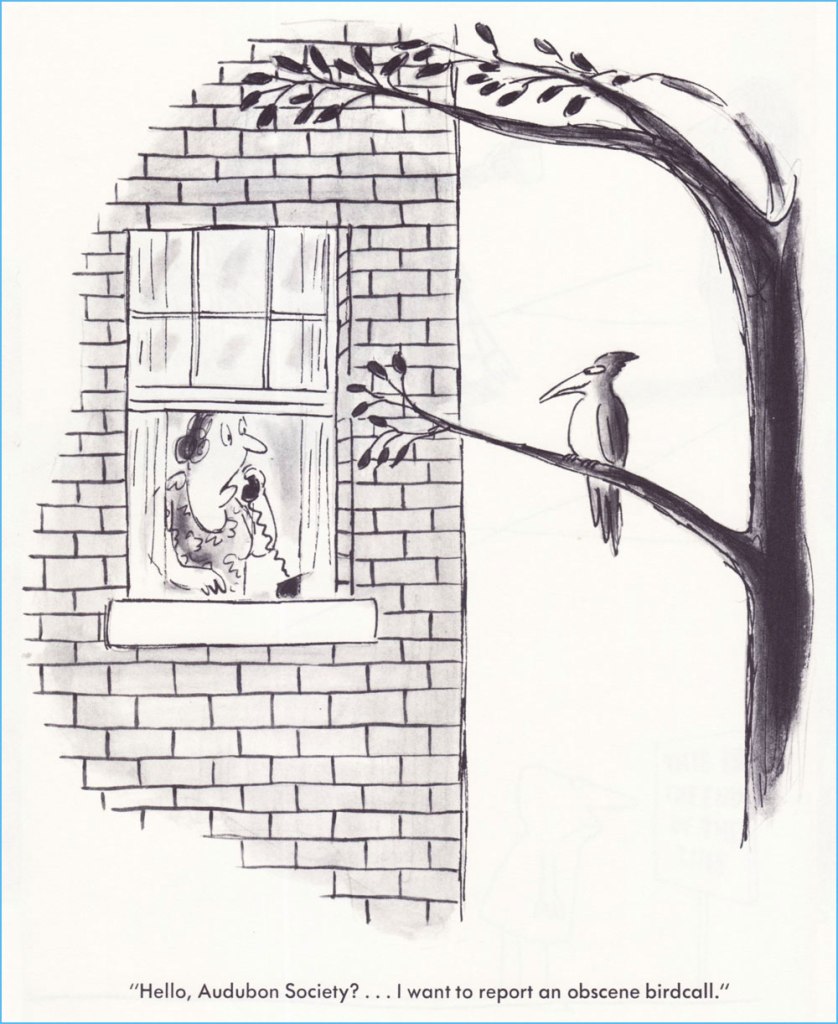
The only way this could have been funnier is if it had been published in the Audubon Society’s magazine… which did publish several of his cartoons — but not this one.
Originally published in Saturday Review.
One of the great perks of Gross’ range is that this cartoon can be viewed as totally cute and innocent or you’re-going-straight-to-hell filthy.
It’s a fairly safe bet that this particular beach is in Florida.
I was thinking that this one could have just as well been a Charles Addams cartoon… then recalled that Gross, early in his career, actually sold gag ideas to The New Yorker for Addams to illustrate. This one, interestingly, saw print in Ladies’ Home Journal.
Our most recent entry appeared in the pages of The American Bystander no. 3 (Fall, 2016), where he held his own reserved nook, ‘Sam’s Spot‘. Bless ’em.

In closing, this fabulous anecdote from his National Lampoon colleague Larry “Ratso” Sloman:

« After five years, I left the Lampoon and a new executive editor took over. He called Sam into his office. “From now on, I want pencil sketches from all the artists before they do anything,” he told Sam.

“Pencils! Cartoonists don’t do no stinkin’ pencils. Rodrigues will tell you to go fuck yourself rather than show you a pencil,” Sam said. “Oh, and by the way, you can go fuck yourself.” His tenure as cartoon editor was finished. But the funny thing is, Sam was still selling cartoons to the Lampoon long after that editor had been penciled out of his own job. »

-RG

*From Gross’ first-rate 2011 Comics Journal interview, conducted by Richard Gehr: « His doorbell sports an old family name because he doesn’t want to be hassled by anyone who might have been offended by his 2008 book We Have Ways of Making You Laugh: 120 Funny Swastika Cartoons. »

Doug Sneyd’s Upturned Noses

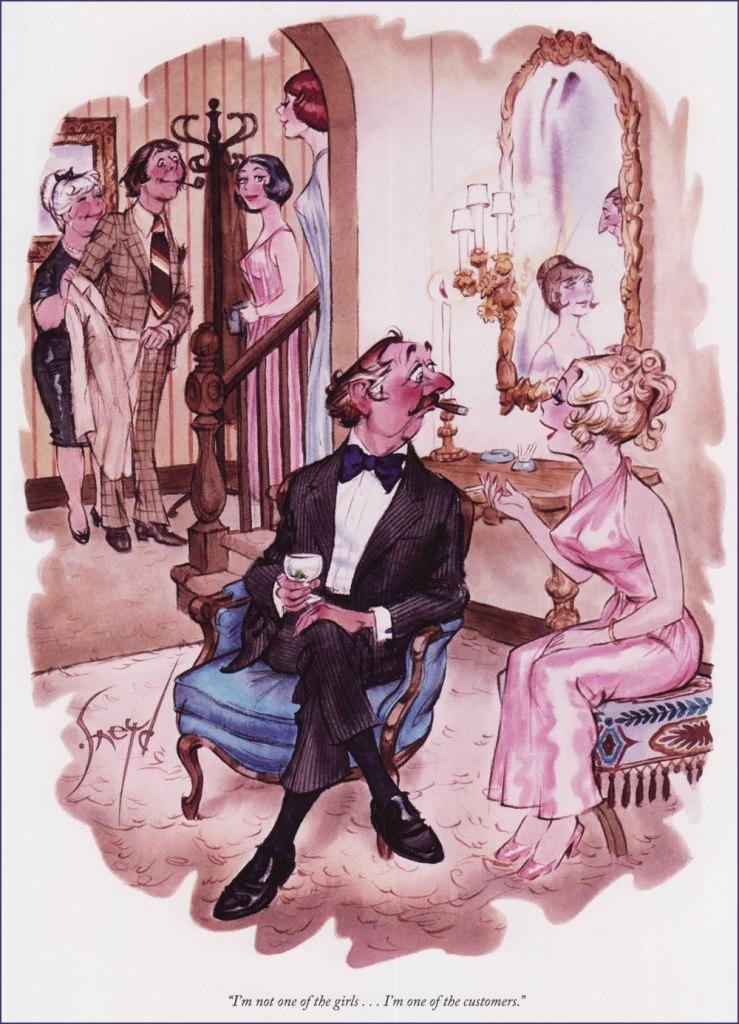
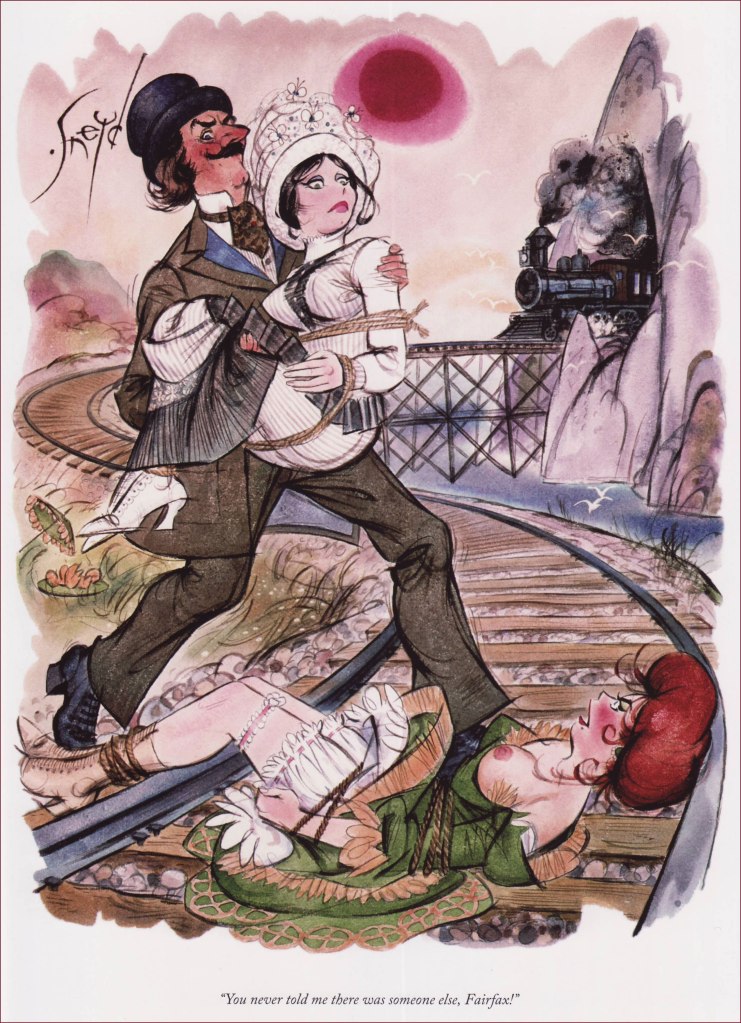
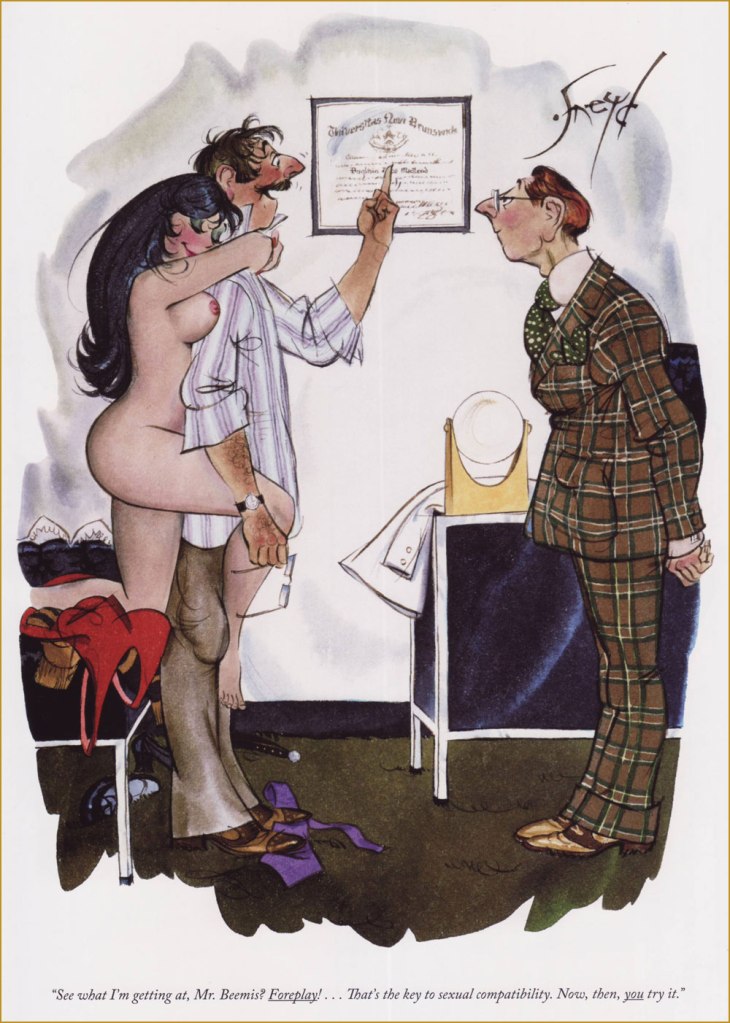
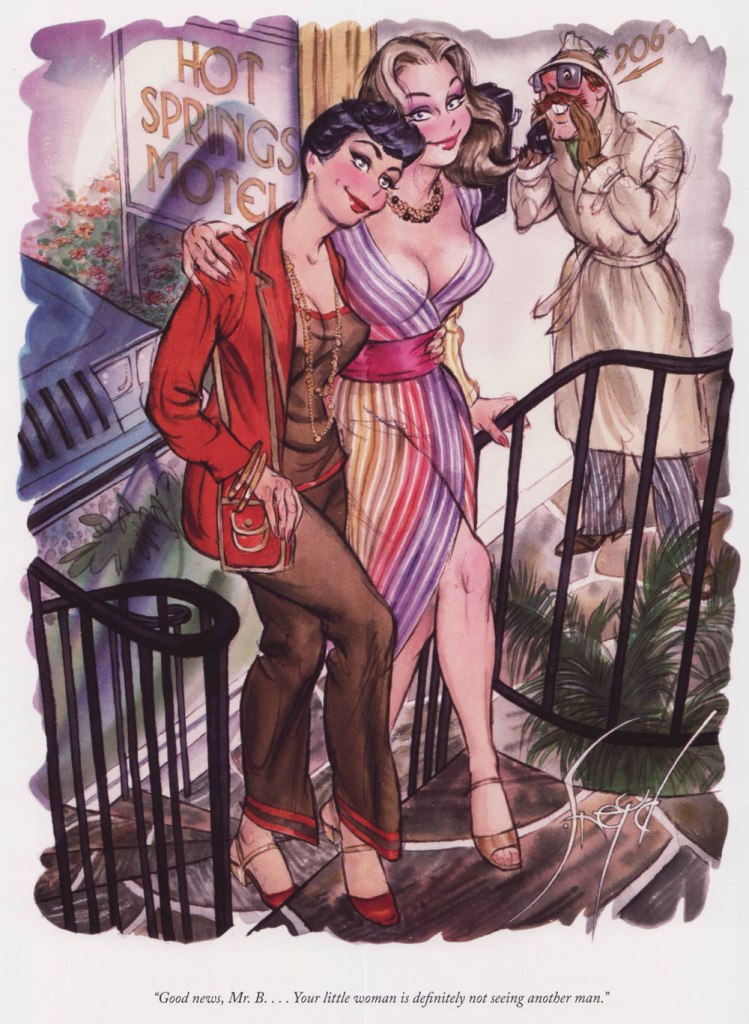
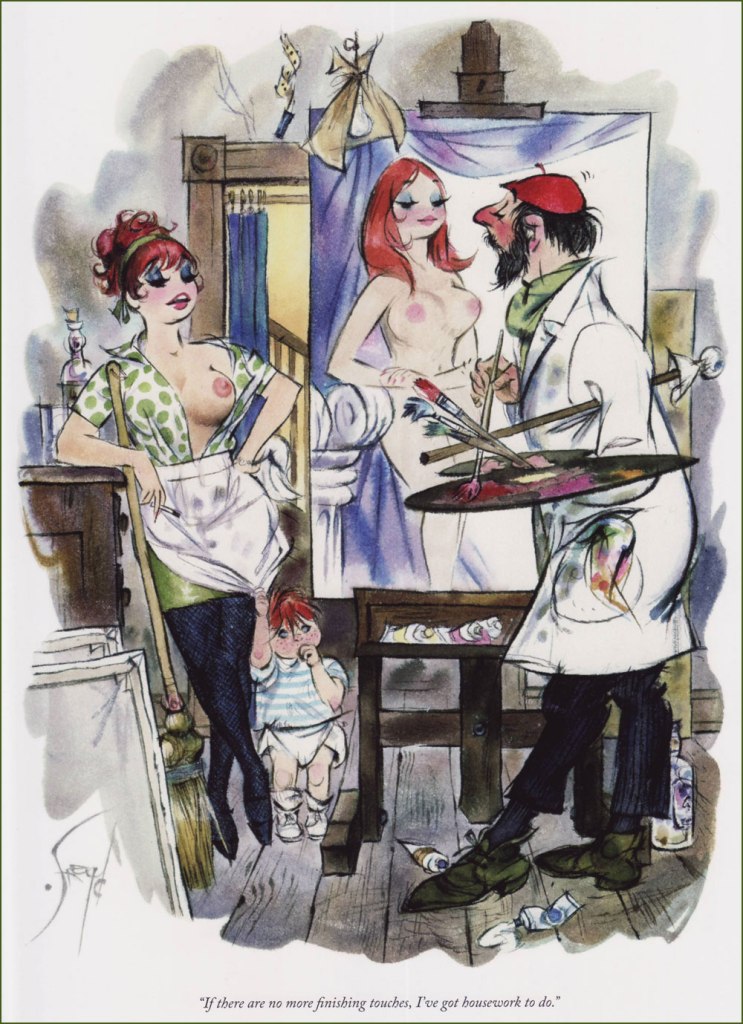
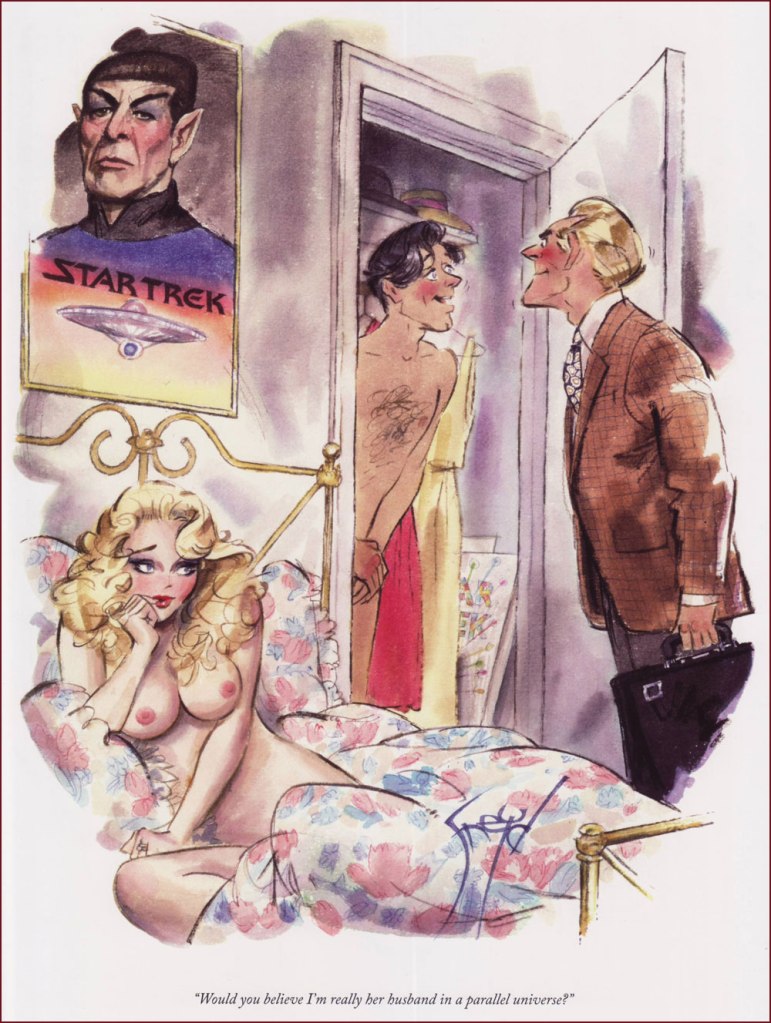
You probably remember Ontarian artist Doug Sneyd from Playboy magazine (well, those of you who read it for the cartoons!), which he began drawing for in 1964. Co-admin RG is distinctly not a fan… and as for me, well, it depends on my mood. I like his watercolour technique, and the way he draws noses and mouths* somewhat less so. There is such a bevy of wonderful Playboy artists that one is a bit spoiled for choice (for a few favourites, see previous posts, for example Happy Birthday to Eldon Dedini, Don Madden’s Luxuriant Oasis of Dames and Dogs, or Dink Siegel’s Swingin’ Roommates), but one can always use some more cheesecake.

Somehow I ended up with The Art of Doug Sneyd: A Collection of Playboy Cartoons (2016, Dark Horse Books) without even noticing. Like most similar monographs, it’s now out of print, so one could perhaps consider it an investment of sorts! Canada is proud of Sneyd, who was born in Guelph, Ontario and spent most of his time in NYC-wannabe Toronto – a bunch of his cartoons are included in the National Archives of Canada, thirty of them from Playboy.

Here are a few examples from the aforementioned collection – I tried to go for a combination of the visually interesting** with a decent gag. It can perhaps be argued that all such cartoons can’t age well by virtue of their very nature, but many have passed through decades with considerably more dignity and grace than Sneyd’s. I suppose it depends on whether the jokes is at the expense of the woman involved and whose side the sympathies lie. Anyway, here we go!

« Bah! » — our old fiend (and dashing all-Canadian villain) Snidely Whiplash would never sink so low!
This one is my favourite, because the therapist/professor looks really likable and goofy, and the girl seems to be genuinely floating on cloud nine.
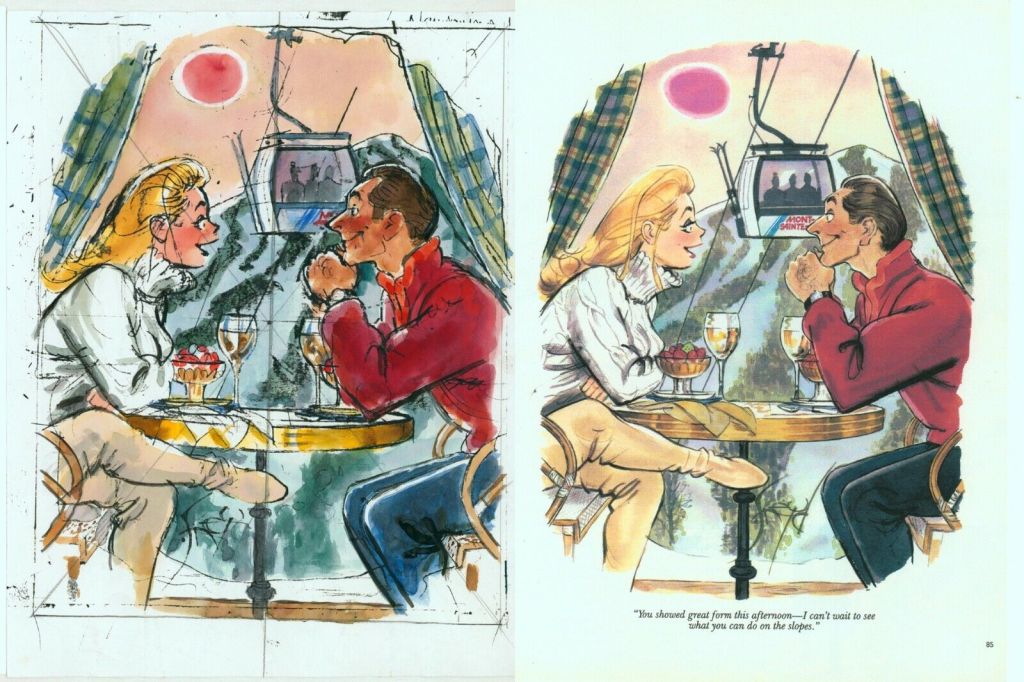
A comparison between the preliminary sketch and the final rendition. This strip from 1997 has a cute story – Sneyd used the backdrop of Mont-Sainte-Anne (a ski resort in the Laurentians) for this cartoon since he had recently visited it. When the cartoon was published, the management of the resort was apparently quite enchanted to get this free publicity.

~ ds

* Speaking of wide ‘fish’ mouths and no noses, I generally prefer Erich Sokol.

** I distinctly object to the claim that ‘he is by far the best cartoonist Playboy magazine has seen‘ (source), and scoff in dismay at the idea that ‘all [of his cartoons] are beautifully drawn, richly colored, and very very funny, and each one is an exceptional work of art‘ (introduction to The Art of Doug Sneyd by Lynn Johnston — pushing Canuck solidarity quite a bit too far.

Update: Mr. Sneyd « … died on January 21, 2025 at Soldiers’ Memorial Hospital in Orillia. »

Bernard Aldebert: A Survivor’s Return

Like many a bibliophile, I enjoy browsing shelves in a used bookshop without any particular goal or author in mind. On one of my last forays, I found the following book:

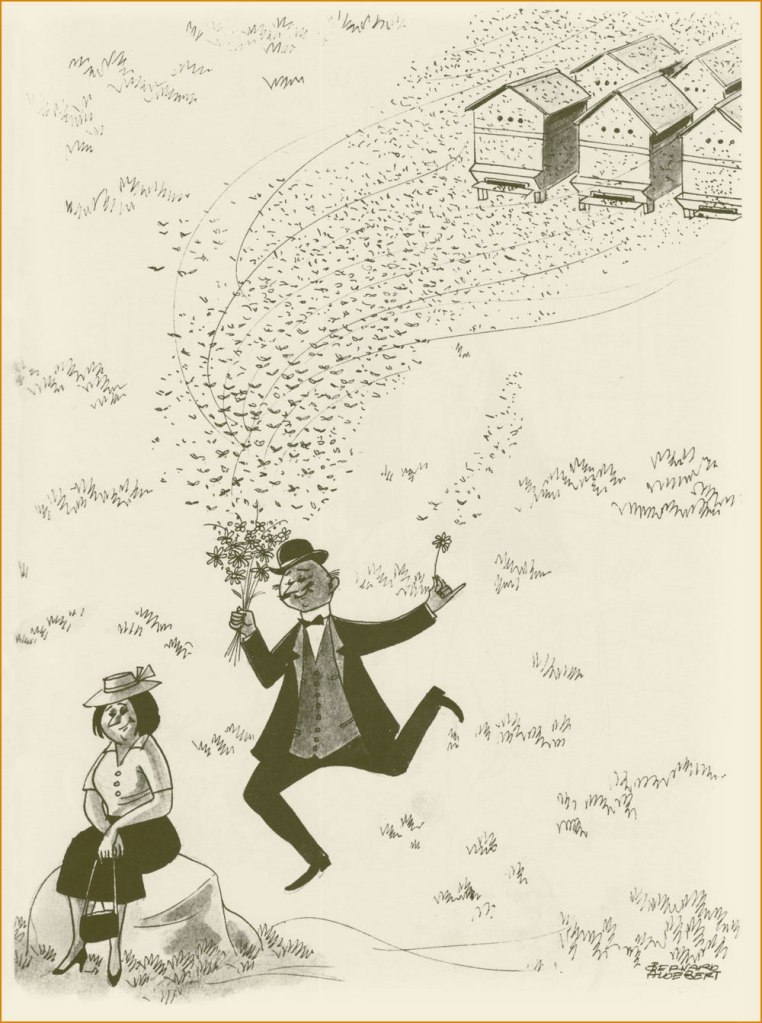
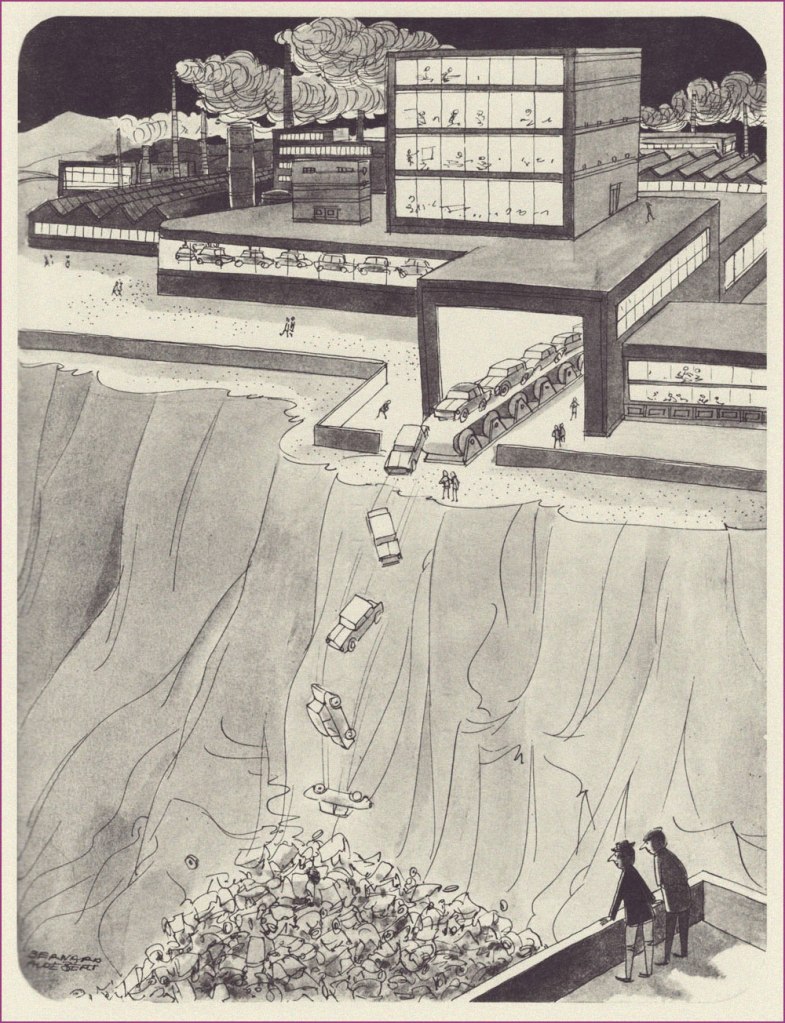
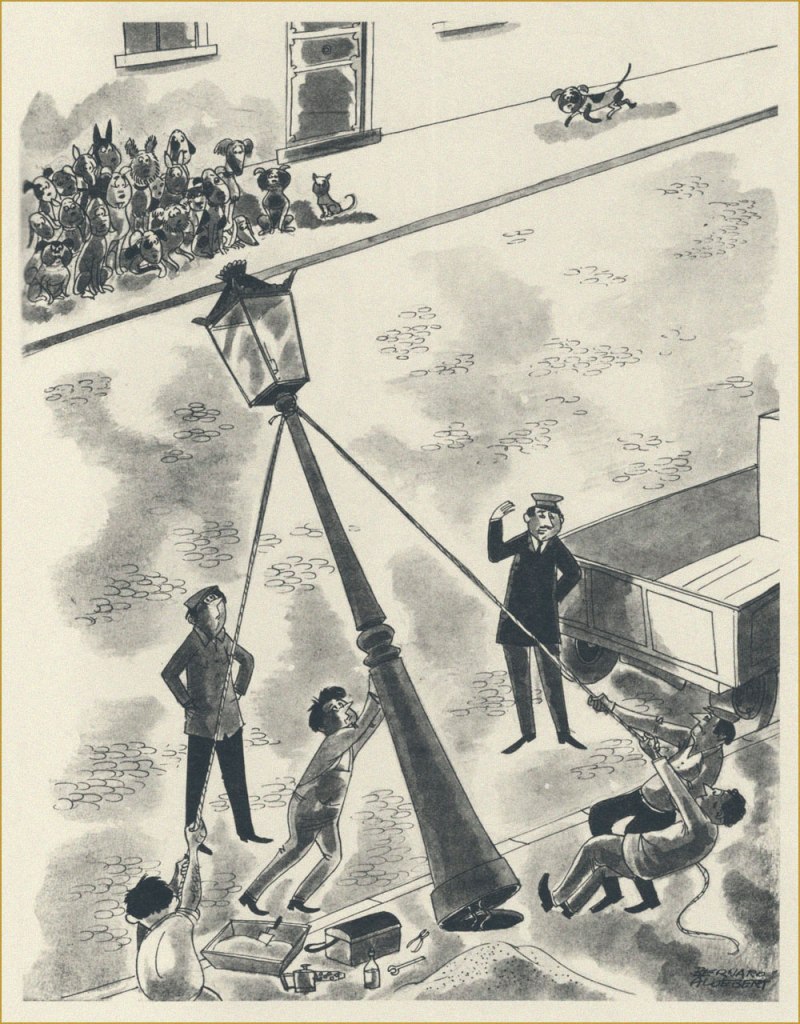
I had never heard of Aldebert (at that point I was under the misapprehension that ‘Bernard’ was his first name, and ‘Aldebert’ his family name), and the jokes were a bit hit-or-miss, but more than just a few charming cartoons lay within… certainly enough to pick up this book from 1970 for the impressive sum of 12 dollars.

Jean Bernard-Aldebert (1909-1974) was a French illustrator with an interesting, if not devoid of tragedy, life. He started drawing for various satirical publications early on, at 19, and for some fifteen years his career was gradually gaining in traction, his cartoons appearing in such weeklies as in Ric et Rac, Marianne and L’os à mœlle. In 1944, this came to an abrupt halt when he was arrested and deported to a German concentration camp (one of the worst, and the last one to have been liberated by the Allies – Mauthausen) for having depicted Hitler as a chimpanzee in one of his caricatures. Miraculously, he survived, and even set his experiences down on paper – these 50 drawings were published as the album Chemin de Croix en 50 Stations in 1946.

After his return to France, he moved away from satire and caricature (frankly, who could blame him?) and onto more humorous publications like Paris Pin-Up and Fou rire, also illustrating many posters and ads, and drawing two comic strips for Ici Paris (Adonis and GIgolette).

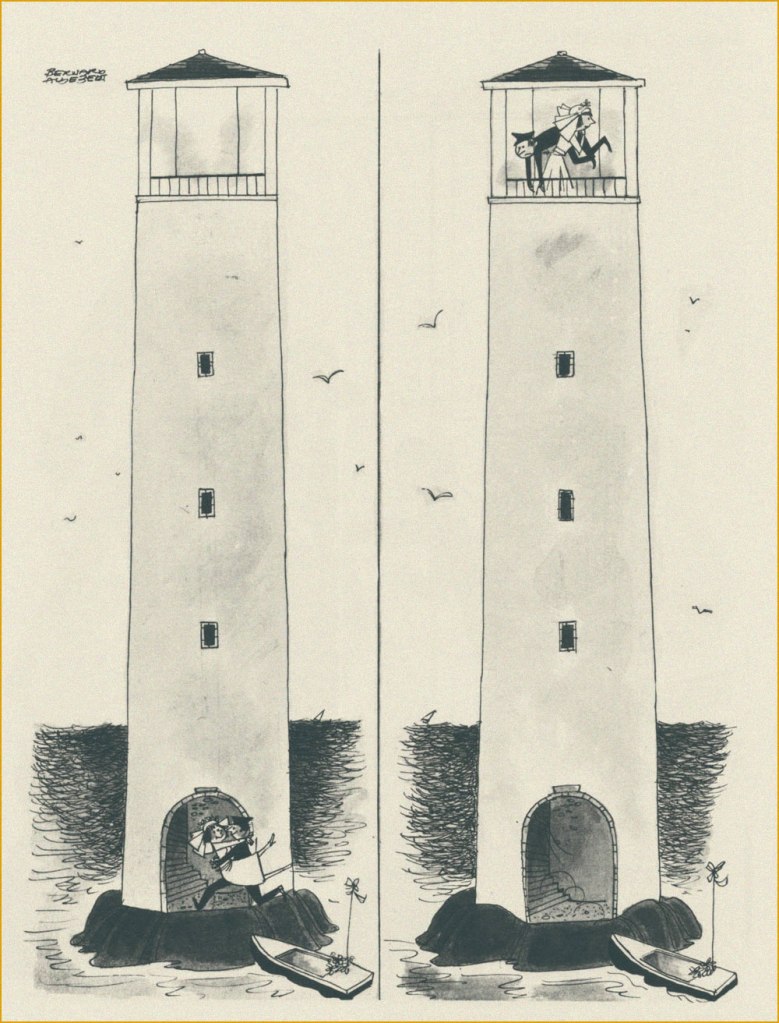
This seemed appropriate, given that spring is clearly in the air!
Bernard-Aldebert might have moved away from satirizing serious topics, but it doesn’t mean he lost his sense of observation of the ludicrous aspects of life.
« If you had just a little imagination, you’d come to the beach! » This is my favourite cartoon from this collection.
If people still had to use a sickle, maybe fewer lawns would be tragically over-mown.
I don’t know what year this haunting photograph is from, but I think we can all agree that these eyes look like they’ve seen too much.

~ ds

Rowland Emett’s Ramshackle Poesy in Motion

« The whistle of the old steam trains … could conjure up visions of bleak distances with one solitary wail. » — M.C. Beaton

A couple of years back, I gave our readers an introductory sample of the genius (hardly too strong a word in his case) of Rowland Emett (1906-1990), and vowed I would return with a fuller, more lingering look.

Since I got the biographical trimmings out of the way that time, today, I’ll merely offer you an even dozen of my favourites.

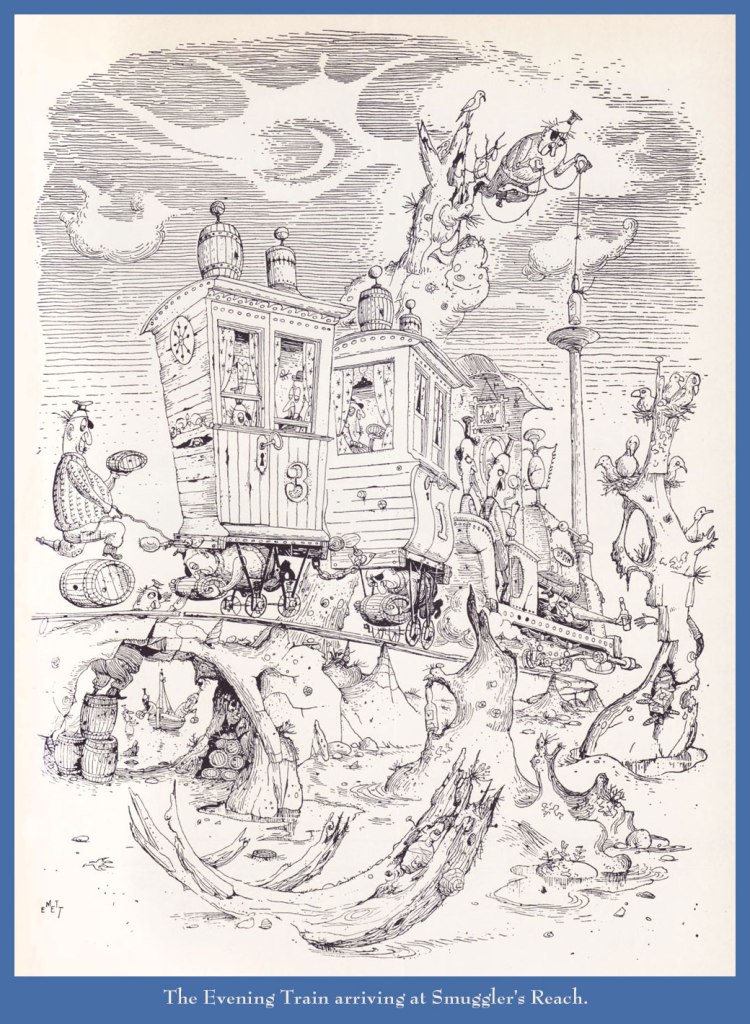
Can’t tell a trébuchet from a catapult from a ballista? This handy guide will steer you right!
Prof. Lightning’s moniker is evidently well-earned.
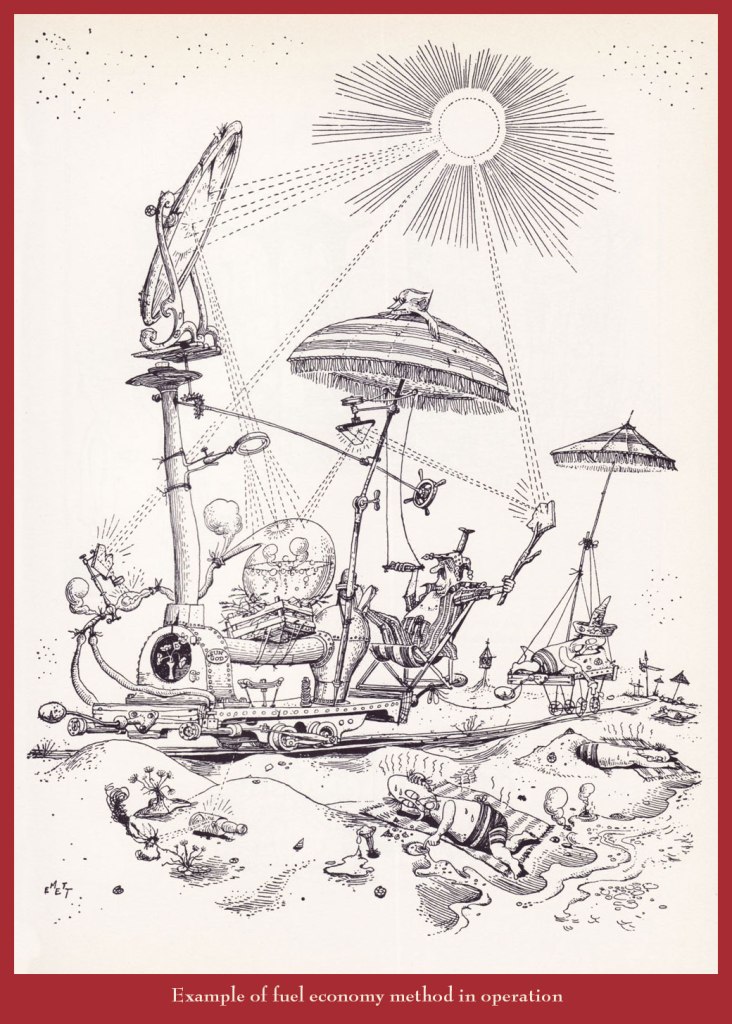
Another inventive step in the harnessing of solar power.
While this particular train route sadly does not exist (as an editor once wrote, “the great Emett, whose crazy world seems so much saner than our own…”), there are some lovely birding tours available throughout that green and pleasant land, from Land’s End to John o’Groats.
Said nationalisation took place in 1948. Here’s a bit of background on that historic endeavour.

-RG
America’s ‘Most Visible Cartoonist’, Jim Benton

« I’m not saying I’m cool. That’s your job. » — Happy Bunny

When it comes to Jim Benton‘s work, it seems I got in on the ground floor, thanks to a friend’s shrewdly chosen gift of the man’s first cartoon collection, ‘Dealing With the Idiots in Your Life‘, twenty-nine years ago this Christmas. Yikes!

In a way, Benton’s nearly too obvious a subject for a post: his work is everywhere you turn, but such a large audience seems to have been reached at the cost of relative anonymity. In other words, people know his work, but they may not know his name. I’m sure his name does, however, enjoy some currency with a couple of generations of younger readers familiar with his Dear Dumb Diary (nearly 10 million sold!) and Franny K. Stein (over five million sold) series.

Given his intimidatingly formidable output, I’ll stick to material from his first collection, which I like best anyhow… which is not to say, echoing what all and sundry tell Sandy Bates in Stardust Memories, that I strictly prefer “the early, funny ones“. Mr. Benton is possibly even funnier — or at least more sophisticated — today than he was at the dawn of his career, but these early cartoons are less ubiquitous than this century’s crop.

At this stage, Benton’s style — both in concept and execution — still wore some heavy influences, namely that of Bernard Kliban.
It wouldn’t surprise me one bit if this cartoon had near-universal appeal, given the fearful hold of cognitive dissonance: after all, most of us think others have a tenuous grasp on reality.
Cute Citizen Kane reference.
A timeless and oddly poignant state of affairs.
Some of you will likely have occasion to muse over this very question during the Holidays.
This one’s *very* Kliban-esque.
In this one, I see a bit of his fellow Scholastic alum Tom Eaton‘s touches. All for the good.
More Kliban (surely intentional!) but with sprinklings of Nicole Hollander and perhaps Scott Adams.
Taking Will Rogers’ famous bon mot to its, er… logical conclusion.
Here’s a jolly one for the season.

In closing, a bonus one from quite recent days. While I’m less fond of the digital tablet aesthetic of his latest work, his writing has acquired some even sharper edges. Sadly, this strip will likely be relevant only to medieval citizens of the German town of Hamelin, right?

For more Benton, right from the source, note the address: https://www.instagram.com/jimbentonshots/

-RG