Jean Cézard and Arthur le fantôme

Writer-Artist-Colourist Jean Cézard ( Jean César), born March 23, 1924 in the small French village of Membray, saw a ghost in his room when he was ten years old. In the morning light, the spectre turned out to be naught but one of his mom’s blouses, but the seed was sown: the incident would inspire his most famous creation, Arthur le fantôme justicier.

Arthur first manifested himself (though still invisible!) in issue 449 of comics weekly Vaillant (December 20, 1953). The editorial team realizing the character’s vast potential and charm, Arthur then returned with issue 451 (January 3, 1954), this time fully visible (when he so desired) and he was set for the afterlife. After his creator’s 1977 passing, Arthur’s adventures continued for a time in lesser hands, but really, Cézard was irreplaceable.

Arthur was Cézard’s favourite series to work on, because he could set the little revenant’s* adventures anywhere and any when, and he certainly did.
Arthur2A
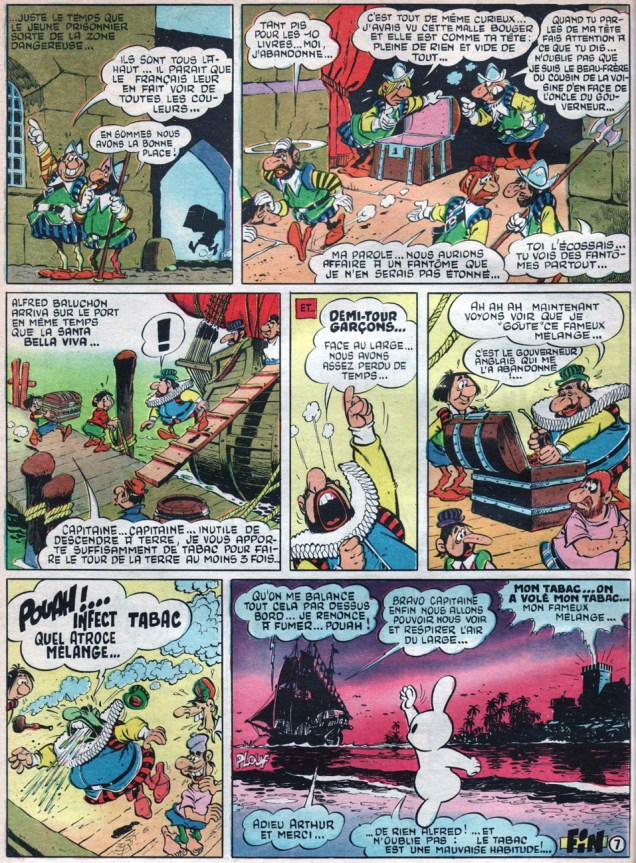
It’s all but impossible to single out an absolute favourite Cézard page, but then again, I’m not held to such arbitrary limitations. Here’s the closing page of Un fameux coup de tabac, from Pif Gadget no. 33 (i.e. Vaillant no. 1271, October, 1969) Those colours!
Arthur3A
And here we have a true splash by Jean Cézard. I wanted to showcase his astonishing aptitude for rendering castles (haunted or otherwise), not to mention complex action scenes. Arthur le fantôme et les nuisances was published in Pif Gadget no. 113 (Vaillant no. 1350, April, 1971).
Arthur1A
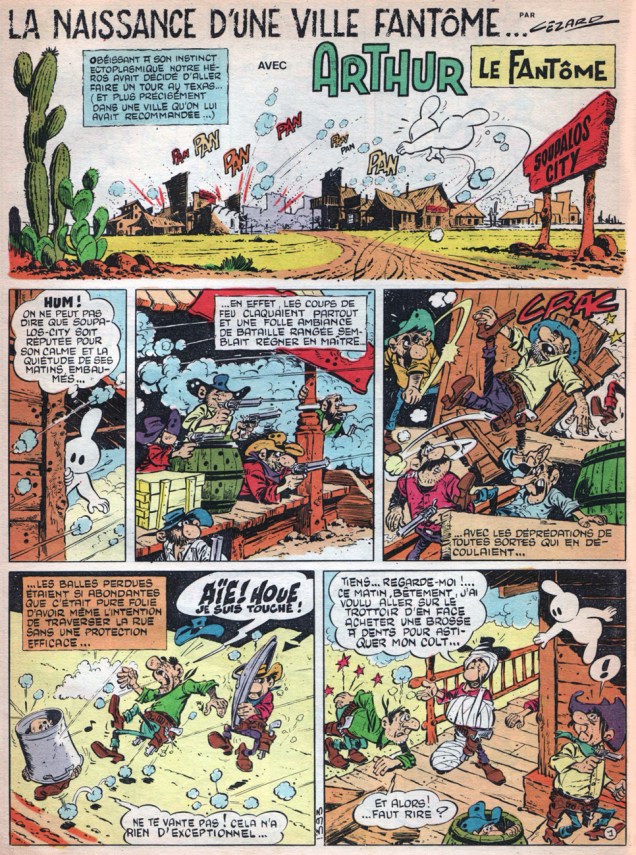
La naissance d’une ville fantôme (“Birth of a Ghost Town”), set of course in the American West (ah, ces Français et leur ‘Far West’) ran in issue 155 of Vaillant’s successor Pif Gadget in February, 1972.
ArthurBainA
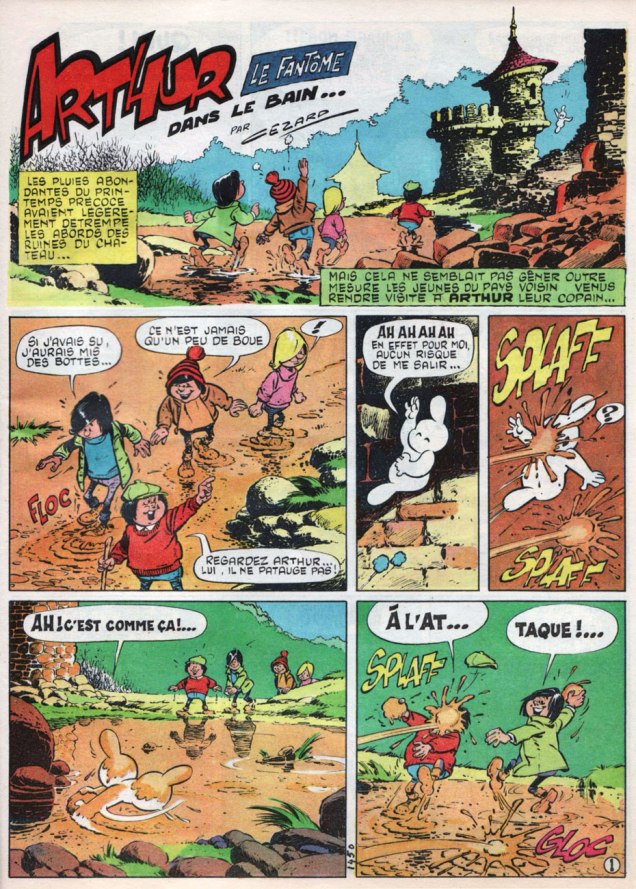
Dans le bain… (“In the Bath…”) ran in Pif Gadget no. 212 (March, 1973). By this point, at its peak, with a print run of 540,000 copies, Pif Gadget sold more than its three main competitors (Pilote, Tintin and Spirou) … combined. Then somebody got greedy, with the usual results.
ArthurPoche9A
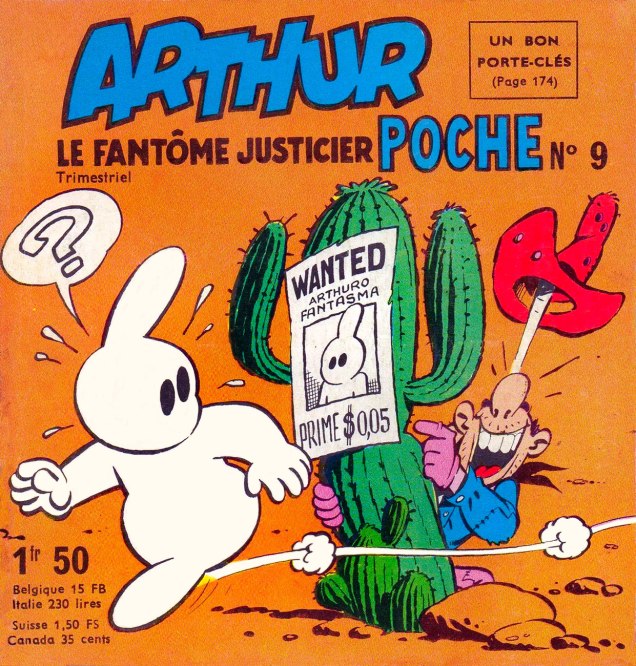
Should anyone wonder whether Cézard could also handle a less crowded, sparer layout, his covers for Arthur Poche should settle the issue. This is Arthur Poche no. 9 (July, 1966).
Arthur11A
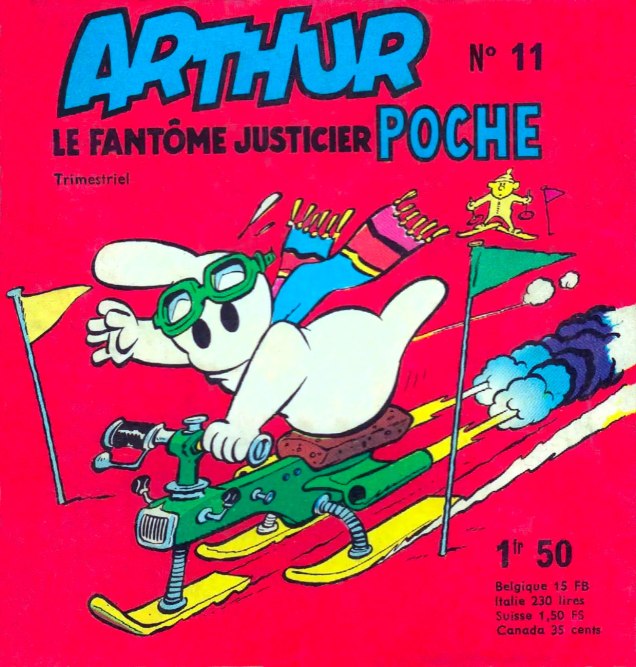
While Cézard was quite a fast worker (in a given month, he could produce around 20 pages, which means, in his case, writing, pencilling, inking, lettering *and* colouring), when it came to the half-comics, half games pocket-sized quarterly Arthur Poche, he merely provided covers. The Arthur material therein was the work of Cézar-trained Michel-Paul Giroud. This is Arthur Poche no. 11 (January, 1967).
ArthurPoche12A
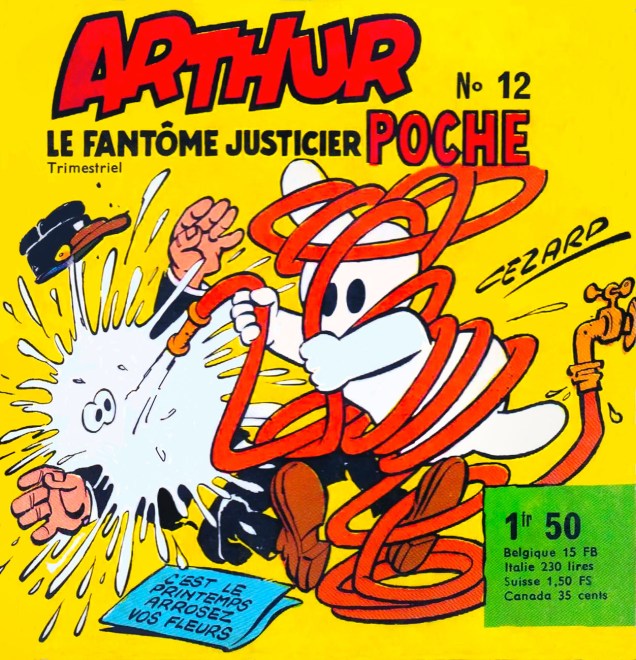
This is Arthur Poche no. 12 (April, 1967).
ArthurPoche23A
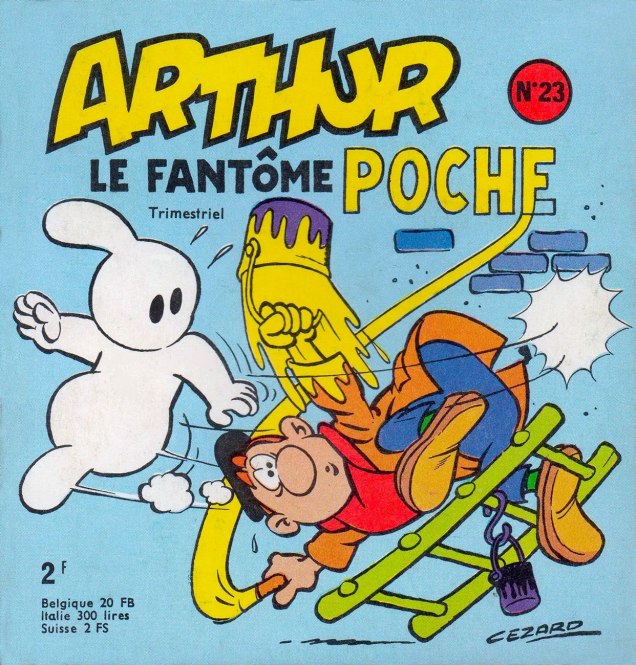
This is Arthur Poche no. 23 (January, 1970)

Les Éditions Toth, an ambitious Parisian publisher, set out to restore and reprint the works, but after five volumes (2002-2006), the enterprise seems to have stalled. However, another specialty publisher, Éditions du Taupinambour, picked up the gauntlet and published all of Cézard’s Pif Gadget Arthur stories (1969-77) in 13 volumes. That leaves, it seems, a gap of five years or so.

In closing, an anecdote about the loneliness of the long-distance cartoonist, told by Pif’s finest editor-in-chief Richard Medioni (1947-2016) in his definitive chronicle of Vaillant’s rise and fall, Mon camarade, Vaillant, Pif Gadget : l’histoire complète, 1901-1994 (2012, Vaillant Collector): « So I begin to read the episode that Jean has brought — when an author hands me his new pages, I necessarily read them in his presence, because I’m eager to read them, of course, but also out of respect for the work accomplished — and I admire it.

As I read on, Cézard comments here and there… when I laugh, he smiles. Sometimes, he points out a detail in the drawing that I missed… he never ceases to observe me and appears satisfied when I react as he had hoped.

Suddenly, it dawns upon me just how important such a session is to him. I bring up the notion and he explains:

“I spend days at my drawing table, alone, without a soul to appreciate my toil. And it’s a lot of time. No-one to give me a sense of what works and what doesn’t, what will bring a laugh and what will fall flat. So, when I come here, in seeing your response, I get that indispensable connection with my audience…” »

-RG

*Arthur, unlike, say, Casper, isn’t the shade of some dead child: his parents made him the old-fashioned way.

Al Jaffee: Snappy Answer to Many a Stupid Question

« Whose birthday is it today, does anyone know? »

This year, spring officially begins on March 20th, so it’s still a few days away… but the vernal bevy of birthdays has already started. Al Jaffee is still our first Spring Birthday Boy – he was always precocious, you know! Born in 1921 on March 13th, he turns 98 today, and that’s a truly impressive age, even for the oldest working cartoonist. Break out the bubbly!

Take my hand as we gallop through Jaffee’s career at a fast clip. In chronological order, then…

AlJaffee-Humbug-painmedication
Original art for “Pain Relief Speed Test On Actual People In Actual Pain“, published in Humbug no. 7 (February 1958).

The New York Herald Tribune Syndicate published Tall Tales from 1957 to 1963. Al Jaffee came up with the idea of this strip’s format (one vertical panel for dailies, and a series of vertical panels for Sundays) when he was in financial straits – its unorthodox configuration ensured that newspaper editors would be able to squeeze it in *somehow*.

AlJaffee-Tall-Tales-1960-03-13
Sunday Tall Tales strip from 1960.

Visit The Fabulous Fifties blog for more – the amazing Ger Apeldoorn has scanned tons of Tall Tales from old newspapers, a monumental (and much appreciated) endeavour.

AlJAffee-Tall-Tales-1961-03-12
Sunday Tall Tales strip from 1961.

« The world is full of bloviators. And this kind of stuff, when there’s someone on the public scene who’s really going beyond his duties as a politician or a religious leader or a sportsman, he’s fair game. The main thing is to keep your eyes and ears open and when you hear something that’s clearly baloney, such as “eight out of 10 doctors smoke Chesterfield cigarettes” – these are ads that actually ran! One of the tobacco companies had the nerve to claim that doctors prefer their cigarettes. So it’s easy to shoot down that kind of bull. But you do it with a gentle hand, you don’t preach and say “tobacco kills! How can these doctors do that?!” No, you just go them one step further and say, “In addition to eight out of 10 doctors smoking this brand of cigarette, in their time off, they each drink a gallon of bourbon, which also has health benefits. » |source|

AlJaffee-GetMad-picturepostcard
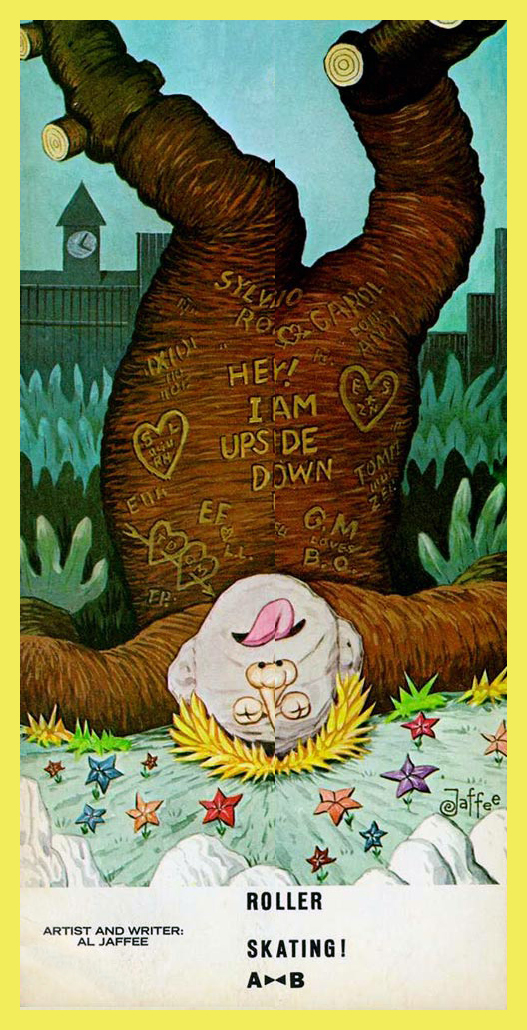
« Thanks a lot for ignoring my recent request for a house call, Doc! You saved me ten bucks!! It went toward the funeral!!! » Now, isn’t this a happy vernal scene? (Look at the pretty flowers!) Al Jaffee painted this “Get Mad” picture postcard for publication in The Worst From Mad no. 12 (1969).
AlJaffee-Mad-SnappyAnswers
First edition of Mad’s Al Jaffee Spews Out More Snappy Answers to Stupid Questions, (Signet, February 1972).

« I’m not an educator or a preacher. I think the important thing, in my line of work anyway, is that you’re helping the reader to think for himself. It’s not just about getting a chuckle from them. When you expose hypocrisy or nonsense or plain ol’ stupidity, you want to do it in a way that makes the reader connect the dots. Don’t tell the joke, just hint at the joke. If you over-explain it, it’s no good. » /source/

AlJaffee-Esquire
This painting (layout by Harvey Kurtzman, art by Al Jaffee) was designed to accompany an Esquire article from April 1972 about Elaine’s, a hip restaurant in NYC that was known for attracting writers, actors, and other prominent New Yorkers. Incidentally, Elaine Kaufman, the owner of this establishment, was a barrel of laughs (I’m not saying that sarcastically, either). « Kaufman was known for not mincing her words, for booting less-favored customers to seat new arrivals and for forbidding hamburgers to be served in her restaurant. She was once arrested after a physical altercation with a visiting Texan. Elaine also once had a fist fight with the actress Tara Tyson, and also chased away the notorious paparazzo Ron Galella by hurling two garbage can lids at him and exclaiming, “Beat it, creep… you’re bothering my customers”. » Ah, the people you knew at Elaine’s
AlJAffee-MadLookatTVCommercial
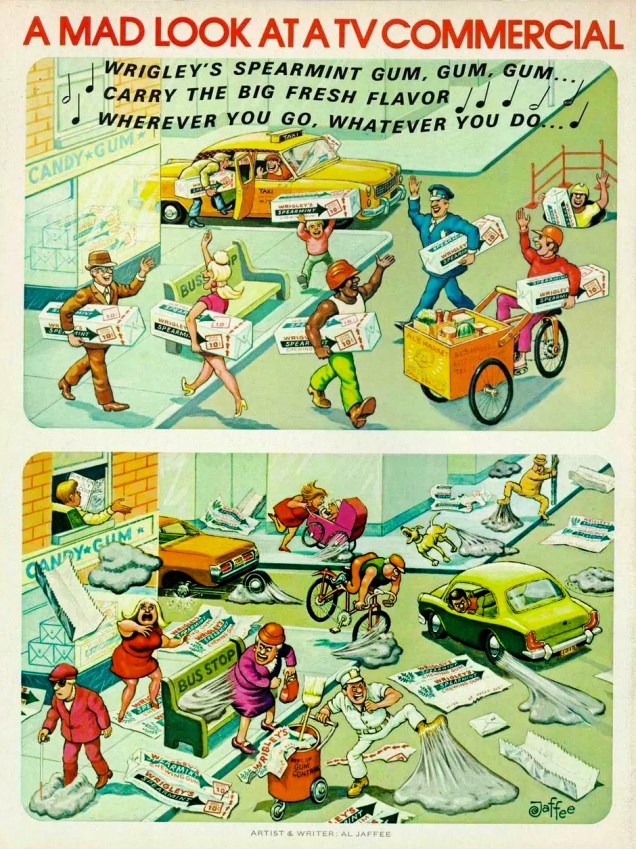
The back cover of Mad no. 170 (October 1974), “A Mad Look at a TV Commercial“.

You might be wondering if Mr. Jaffee’s art and wit were any good much later in his career, say in the 90s. Stupid question, bub. Of course they were!

AlJaffee-RestaurantSurvivalGuide
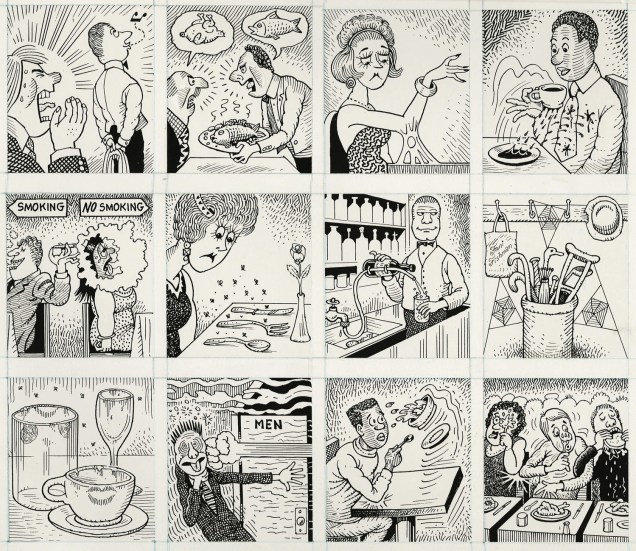
Original art from Mad’s Restaurant Survival Guide (Mad no. 300, January 1991).
AlJaffee-stupidanswers
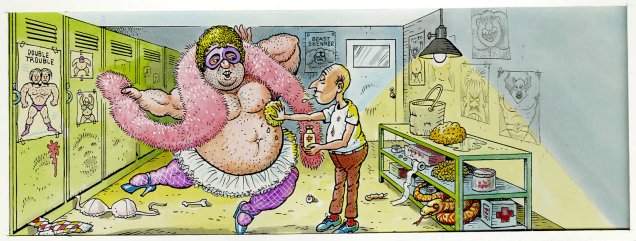
Art from a 1998 issue of Mad Special illustrating yet another round of Snappy Answers to Stupid Questions. When I said ’round’, I meant it: these are stupid questions asked at a wrestling programme. This one was probably “does this pink boa make me look fat?”

Have you ever wondered what Al Jaffee is like in person? Here’s your chance to find out:

“But you haven’t even mentioned MAD fold-ins!”, you might exclaim in dismay. Hey, I’m not gonna repeat myself… visit A MAD Dash… Inside for that and more Jaffee silliness.

Oh, fine, you guys. Just one, though, ’cause otherwise we’ll be here for another couple of hours, and frankly I’ve got hungry cats to feed.

AlJaffee_foldin_mad216
What new way are people falling head over heels these days?, published in Mad no. 216 (July 1980).

You say you’re having trouble folding your screen? Geez, do we have to do *all* the work around here?

AlJaffee_Foldin_Mad216A

Many happy returns, Mr. Jaffee! <3<3<3

AlJaffee-Joyce
Mr. Jaffee and his wife Joyce in 2016, when he was but 95 years old. When he once quipped «Serious people my age are dead», he meant it as gospel. 😉

~ ds


Edward Gorey: An Author Who Went for a Walk

« Painstaking drawings with an eloquent orchestration of hatchings and tickings, marvelous details of period and setting, a narrative that leapfrogs from the precise to the unexplained, a tone of vague delights in both visual and linguistic oddities. » — ‘Mr. Earbrass Jots Down a Few Visual Notes: The World of Edward Gorey’ by Karen Wilkin (1994)

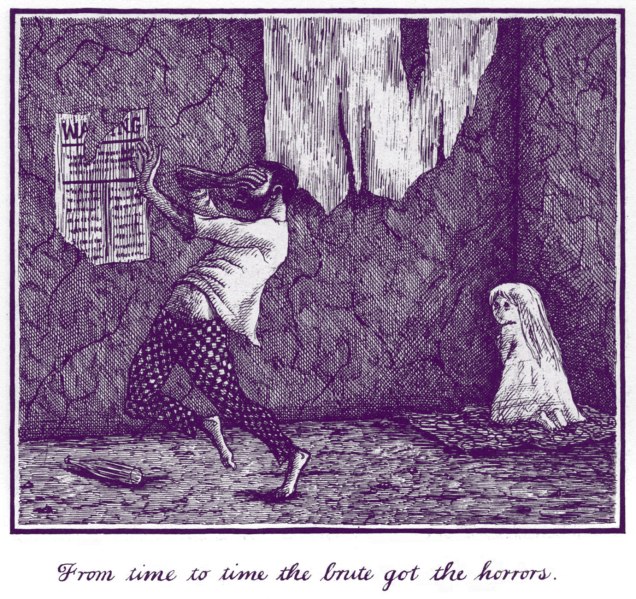
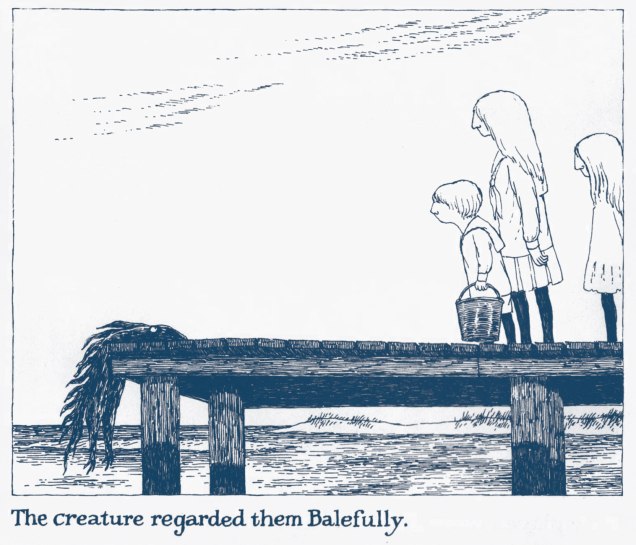
So very much has already been written and said, in all media, about Edward St. John Gorey (February 22, 1925 – April 15, 2000) that there seems little of substance to add. As his work’s ultimate appeal rests in its enduring, expertly wrought sense of mystery, it should be in the Master’s spirit to show rather than tell. Consequently, here’s a gallery of favourite extracts from Gorey’s voluminous œuvre. I’ve omitted both my personal pick, The Willowdale Handcar or  The Return of the Black Doll (1962) and the too-obvious-by-half The Ghashlycrumb Tinies or After the Outing (1963), the former because I’m planning to examine it more leisurely in the future, while the latter… still manages to squeak in, after a fashion. See our bonus at the end.

GoreyGuestA
The Doubtful Guest (1958).
GoreyHaplessA
The Hapless Child (1961).
GoreyWugglyA
The Wuggly Ump (1963).
GoreyOsbickA
The Osbick Bird (1970).
GoreySummonsA
The Disrespectful Summons (1971).
GoreyNosebleedA
The Glorious Nosebleed (1975).
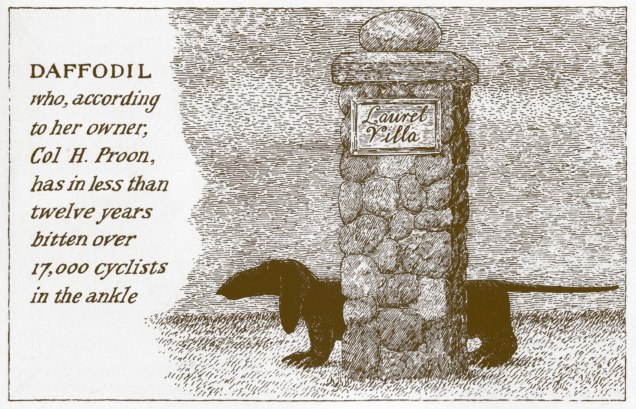
GoreyDaffodilA
The Broken Spoke (1976).
GoreyInsectesA
The Broken Spoke (1976).
GoreyLoathsomeA
The Loathsome Couple (1977).
Gorey&amp;Guest
The author and his creature in New York City, 1958.
GoreyNothingA
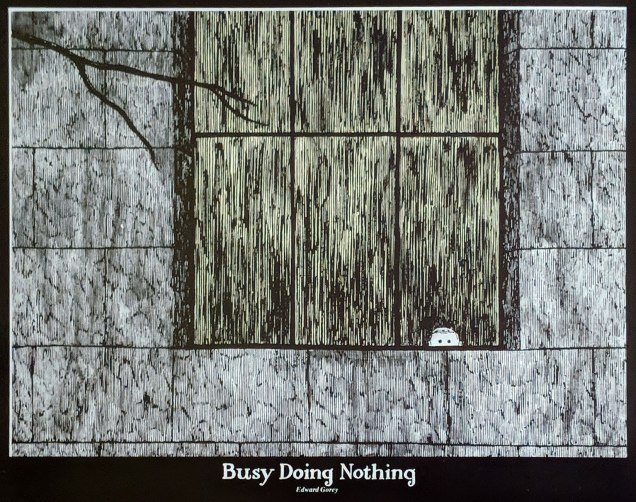
Bonus bits: An entry from The Ghashlycrumb TiniesN is for Neville, who died of ennui ») turned up, of all places, in Byron Preiss‘ splendid The Beach Boys (1979), which chronicled the band’s history up to that point through reams of quotations and illustrations, matching a gazillion visuals artists with a favourite BB tune. Gorey’s entry (reprinted and détournée with the author’s consent) was the setup for a dyptich. It provides a visual for Busy Doin’ Nothing (1968) one of Brian Wilson‘s finest compositions from his years in the wilderness; well before Seinfeld, it’s a song about nothing, set to a lilting bossa beat. Hey, get the mug!
SimonsonGoreyA
I generally have little use for Walt Simonson‘s work, which I find overly-mannered and illegible, but I give him full marks here for wit, creativity and musical discernment. His contribution to Byron Preiss’ book focused on Brian Wilson’s bucolic I Went to Sleep (also 1968), a companion to Busy Doin’ Nothing and a fascinating miniature that gives a sense of Brian’s eventual creative direction had he not been forced to stick with the tried-and-true, official Beach Boys sound to this day. Simonson does a very effective Gorey pastiche, don’t you think?

« You know, the kids had quarrelled, so they’re taken off to see a corpse, which is decayed and completely hanging. It was parody. » — Gorey, interviewed by Clifford Ross (1994)

Oh, and if you should find yourself in the vicinity of in Yarmouth, Massachusetts, do drop by the Edward Gorey House!

-RG

The Unassuming Brilliance of William Van Horn

« Sepulveda Von Lovely looks much better in a handlebar, if I do say so myself! » — ‘Bumps’ (2004)

Since the 1980s, when it came to carrying the torch of Good Duck Man supreme Carl Barks, there have been three clear contenders, namely Daan Jippes, Don Rosa and William Van Horn. All three are outstanding talents, and honestly, no single being can take the place of Barks. In the end, Van Horn is my pick, because he’s the most complete package*, possessing his own lively, economical style in both writing and drawing (and that includes his expressive lettering, a perennially underrated art form). His work is just a pure joy to read, while Jippes is arguably too close to the model and Rosa’s stories sometimes feel like continuity-saddled homework. Van Horn is a natural.

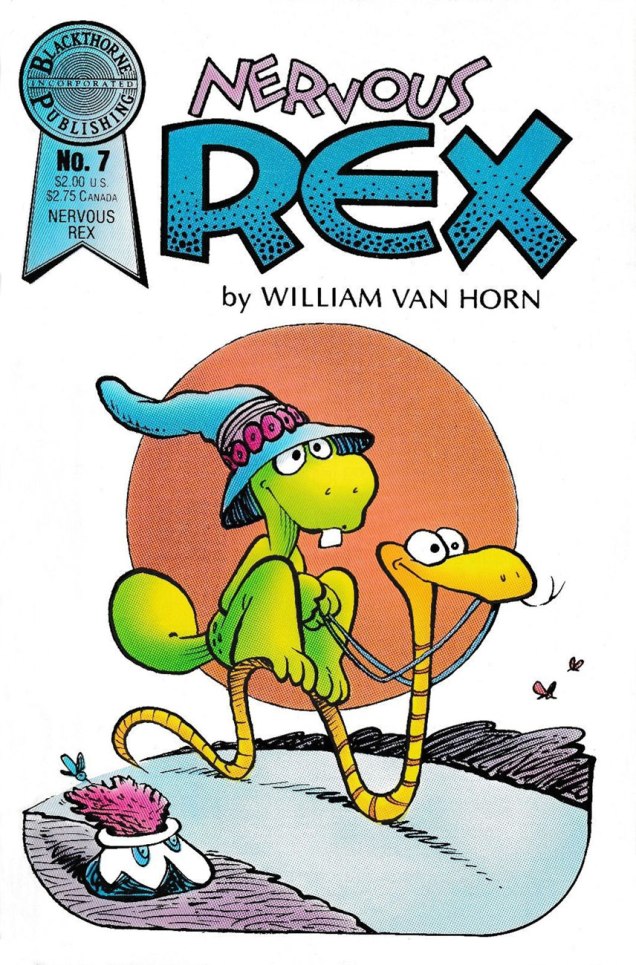
On the occasion of Mr. Van Horn’s eightieth birthday (he was born on February 15, 1939, and is thankfully still with us), here’s a modest Van Horn comics sampler, opening with his first comics series after decades of work in animation and children’s books, Nervous Rex, and continuing into his work for Danish Disney comics packager Egmont**.

NervousRex4A
From Don Markstein’s Toonpedia: « Cartoonist William Van Horne created the series, which lasted ten bimonthly issues (September, 1985 through March, 1987). Like Russell Myers, creator of Broom Hilda, he used a style clearly inspired by George Herriman’s Krazy Kat, without being a slavish imitation. Van Horn, who had made his living for decades in commercial art and children’s book illustration, had earlier come to the attention of the comics community with a couple of minor series in Critters, a funny animal anthology published by Fantagraphics Books. »

NervousRex7A

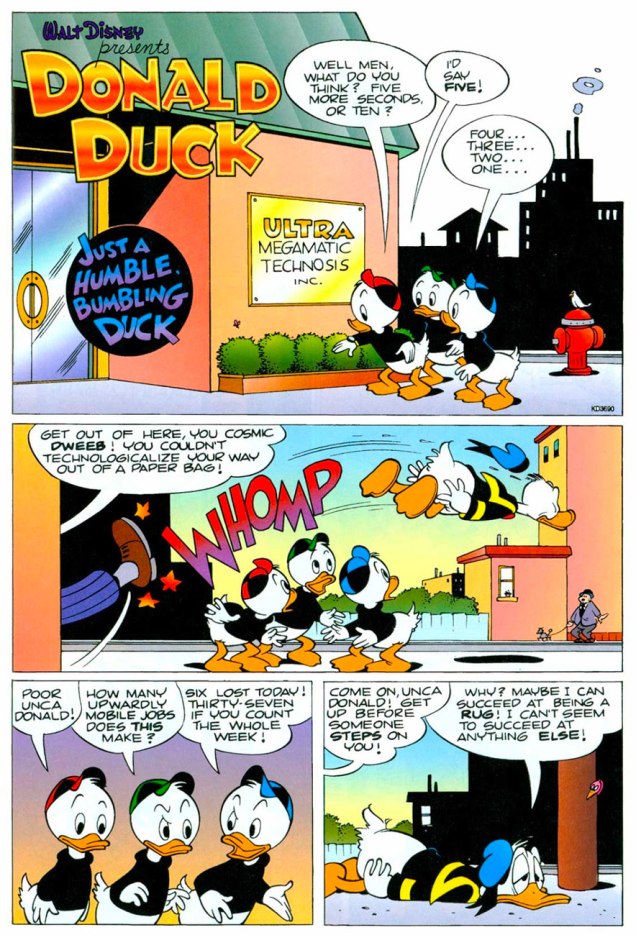
VanHornBumblingWDC&amp;S651A
Here’s the opening of a twelve-pager, Just a Humble, Bumbling Duck, published in Walt Disney’s Donald Duck Adventures no. 13 (June, 1991). Written, drawn and lettered by Van Horn and coloured by Susan Daigle-Leach. Read the issue right here.
VanHornDDA2A
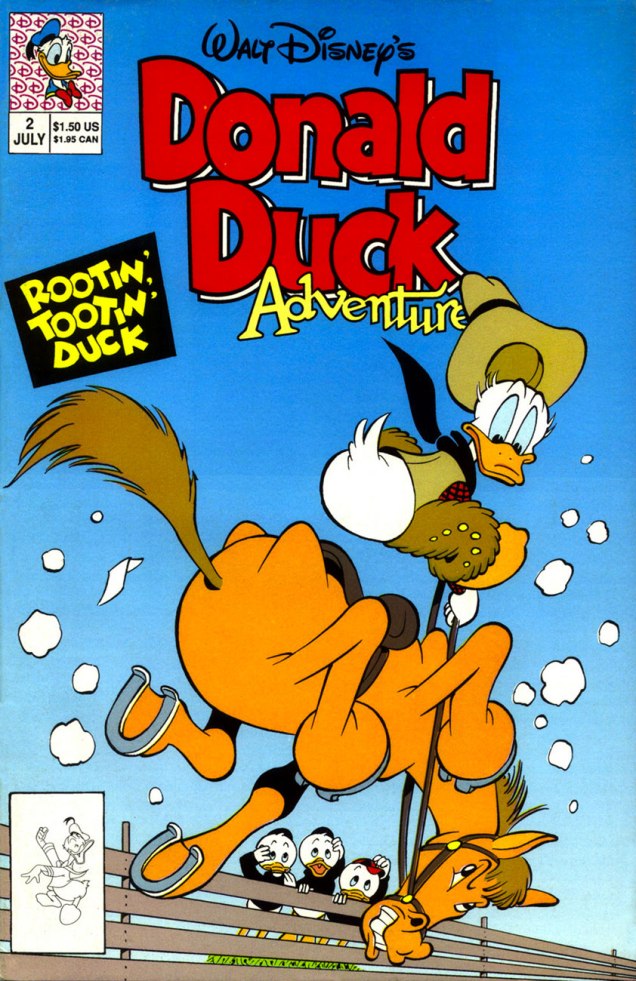
Donald Duck Adventures no. 2 (July 1990, Disney), illustrating Van Horn’s “Rootin’, Tootin’ Duck”. Read it here. You can tell when a soul’s worked in animation. Nary a hint of stiffness.
VanHornDDA18A
Donald Duck Adventures no. 18 (Nov. 1991, Disney), illustrating Van Horn’s “That Ol’ Soft Soap”. read it here.
VanHornWDC&amp;S616A
Walt Disney’s Comics & Stories no. 616 (Sept. 1997, Gladstone), featuring Van Horn’s “Catch of the Day”. Read it here.
UncleScrooge322A
Uncle Scrooge no. 322 (Oct. 2003, Gemstone), illustrating Van Horn’s “The Utter Limits”. Read the issue here.
VanHornWDC&amp;S655A
Walt Disney’s Comics & Stories no. 655 (Apr. 2005, Gemstone), featuring Van Horn’s “Full Circle”. Read it here.
VanHornWDC&amp;S680A
Walt Disney’s Comics & Stories no. 680 (May 2007, Gemstone), featuring Van Horn’s “In a Minor Key”. Read it here.

A most joyous 80th anniversary to you, Mr. Van Horn! Fittingly, I leave the last word to our humble birthday boy: « Let’s create our own classics if we can… but heaven help us if we think we’re doing that. We should follow Barks’ lead and regard these stories as something to pay the rent and buy the pot roast. »

– RG

*it’s pronounced Pah-kawje

**speaking of Egmont, this sobering note from Van Horn, from a brief interview conducted by John Iatrou in 2010: « Disney comic books in North America have been virtually a dead issue (no pun intended) for over a decade, possibly two. Sales here hover around 4000 copies a month! This on a continent of over 350 million people! Egmont has never tried to publish here. They thought about it years ago and decided it wasn’t worth the effort. » So there you have it. Van Horn and Don Rosa have been producing their ducks for the European market, to be then reprinted, with piddling print runs, in North America. Nul n’est prophète en son pays… On the other hand, if you’ll forgive me for saying so, most European Disney comics are utter garbage, and have been for decades. If you like endless arrays of Donald as a superhero, Donald as Michael Jackson or Indiana Jones, Rappin’ Donald… you’ll be in hog heaven. “Opera Mundi crap“, we used to call it.

Peter Tork, Man of Music… and of Comics

« I know she’s having a fit, she doesn’t like me a bit, no bird of grace ever lit on Auntie Grizelda » — Diane Hildebrand / Jack Keller, 1966

Now’s the time to wish Peter Halsten Thorkelson, he of the open, Nordic look, a most joyous 77th birthday, regardless of what Your Auntie Grizelda may think!

Pete was born in Washington, D.C. on February 13, 1942, which makes him the doyen of the group. Like Mike “Wool Hat” Nesmith, he was a musician first, likely the group’s most instrumentally proficient. Peter wound up auditioning for the tv show after his name was suggested by Stephen Stills, who wasn’t quite right for the part… but definitely a good sport.

Peter and his fellow Monkees were featured in their own Dell comic book (is there any greater honour?), which lasted from March, 1967 to October, 1969, seventeen issues in all (with some reprinting.) That was one of Dell’s few savvy moves in their waning days, and one of their few readable titles outside John Stanley‘s output.

FawcetteMonkeesIdea2A
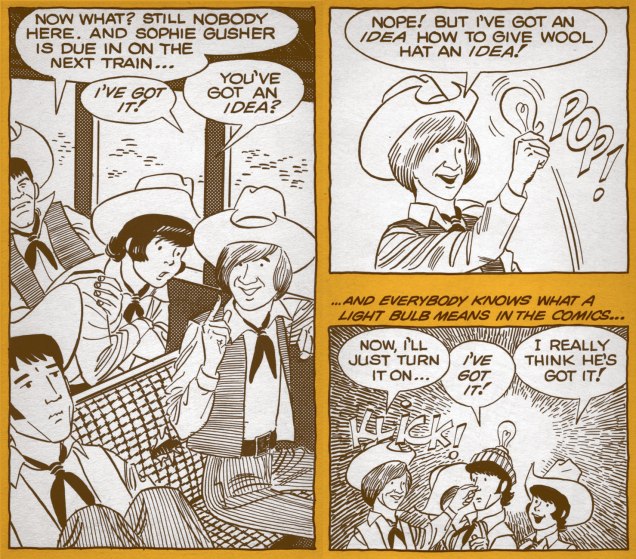
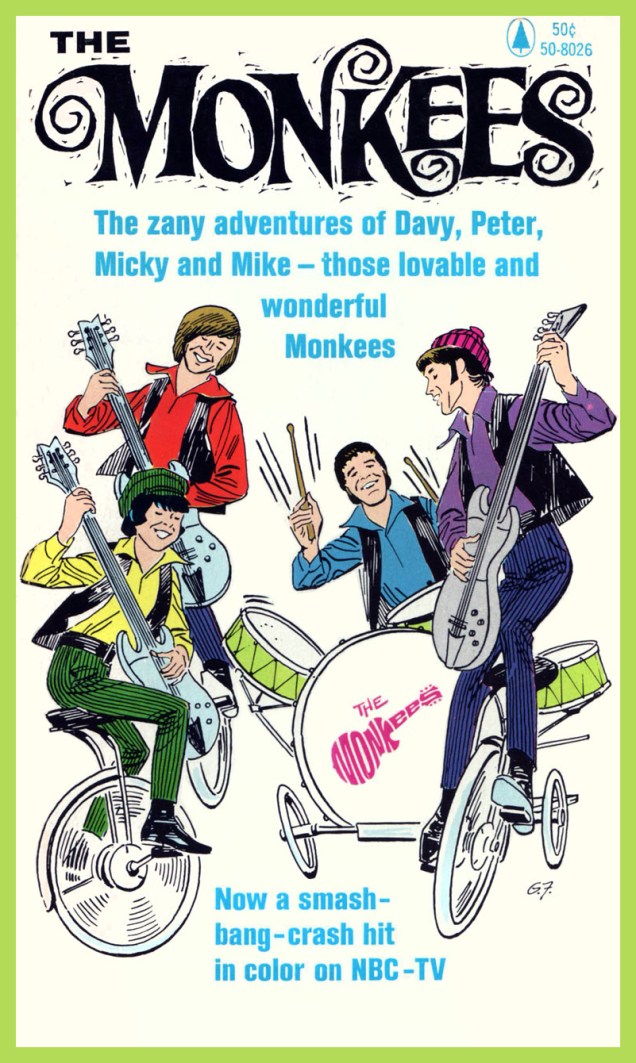
Peter the muse. From ‘Way-Out’ West, The Monkees (1966, Popular Library). See below!
FawcetteMonkeesCoverA
This cute lil’ volume contained a bunch of fun (what else) Monkees romps written by Howard Liss and ably illustrated by Eisner- Iger Studio veteran Gene Fawcette.
DelboMonkeesBeezleA
José Delbo‘s splash page from Beezle, Beezle, Who’s Got the Beezle?, The Monkees no. 8 (Jan. 1968, Dell). Scripter unknown… but he’s pretty good.
Monkees3A
The issue in question: The Monkees no. 8 (Jan. 1968, Dell)
Monkees4A
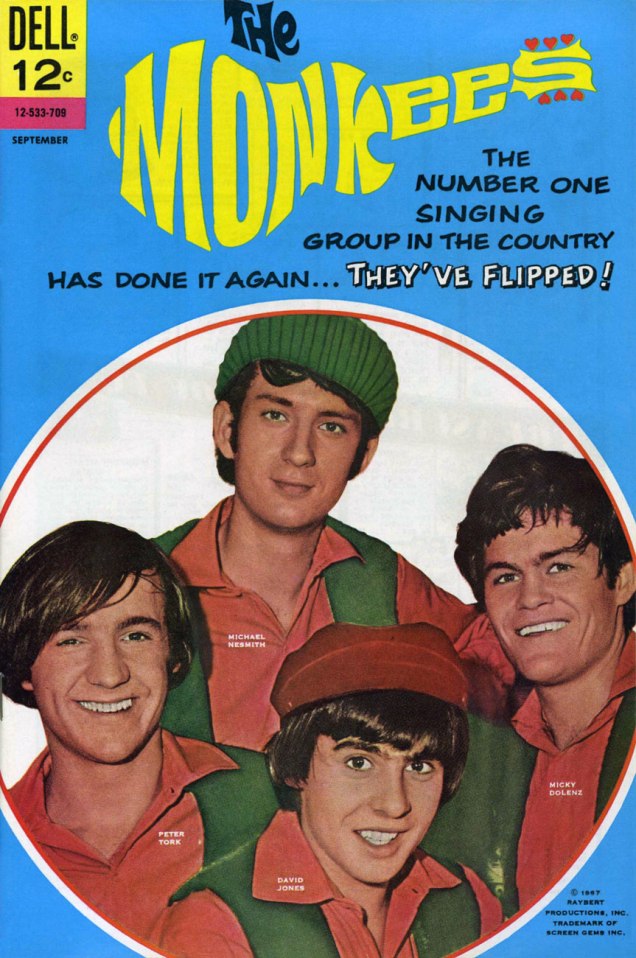
The Monkees no. 4 (Sept. 1967, Dell)
Monkees14A
The Monkees no. 14 (Oct. 1968, Dell)
ClowesGrizeldaA
Ah, but Dan Clowes has known it all along! From Eightball no. 13 (Apr. 1994, Fantagraphics)

Update: Peter Tork passed away on Thursday, February 21, 2019, barely a week beyond his 77th birthday. Au revoir, Peter!

-RG

Edgar Allan Poe: Immortality Is but Ubiquity in Time*

« Be silent in that solitude
    which is not loneliness — for then
the spirits of the dead who stood
    in life before thee are again
in death around thee — and their will
shall then overshadow thee: be still. »
— Edgar Allan Poe (1829)

It was on this day, two hundred and ten years ago, that the great writer, poet and posthumous master of all media Edgar Poe (Jan. 19, 1809 – Oct. 7, 1849) was born in Boston, Massachusetts. I’ll spare you the usual biographical details, widely available elsewhere, and we’ll concentrate on his unflagging ubiquity in the medium of comics.

Poe’s literary reputation was in tatters in America, thanks to a rash of hatchet jobs and dismissals, some of the most vicious from the pen of one Rufus Griswold, the very worm he’d named his literary executor (!), as well as such notables as Ralph Waldo Emerson and T.S. Eliot… while his renown was undimmed in Europe, particularly in France (in no small part owing to Charles Beaudelaire’s legendary translations), rehabilitation at home slowly came as the 20th century crept along, but it was likely the publication of Arthur Hobson Quinn’s definitive Poe biography, in 1941, that sealed the deal and opened the floodgates.

spiritushera
Top two tiers from page 2 of The Spirit‘s August 22, 1948 episode. Layout by Will Eisner, pencils and inks by Jerry Grandenetti. As Dave Schreiner puts it: « Grandenetti captures the asthenic look of Roderick Usher that Poe described. The man is a decadent waif; insular, fragile, high-strung, possibly in-bred. »

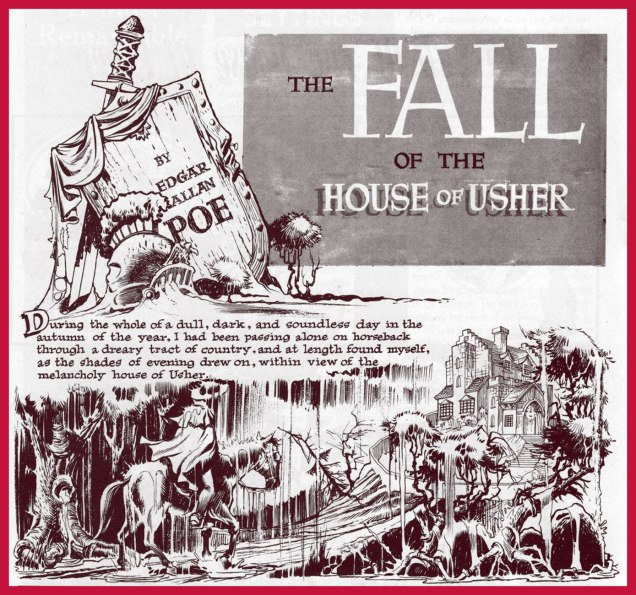
Classics Illustrated publisher Gilberton was first out of the gate with Poe adaptations, at first tentatively with a pair of poems (Annabel Lee, then The Bells)**, then more substantially with The Murders in the Rue Morgue, in Classic Comics no. 21 3 Famous Mysteries (July, 1944), sharing the stage with Arthur Conan Doyle and Guy de Maupassant. Read it here. Pictured below is Classics Illustrated no. 84 (June 1951, Gilberton), cover by Alex A. Blum. Read the issue here.

classicillustrated84goldbuga
A relevant passage from Simon Singh‘s fascinating (if you’re into that sort of thing… and I hope you are) The Code Book: The Secret History of Codes and Code-Breaking (1999): « On the other side of the Atlantic, Edgar Allan Poe was also developing an interest in cryptanalysis. Writing for Philadelphia’s Alexander Weekly Messenger, he issued a challenge to readers, claiming that he could decipher any monoalphabetic substitution cipher. Hundreds of readers sent in their ciphertexts, and he successfully deciphered them all. Although this required nothing more than frequency analysis, Poe’s readers were astonished by his achievements. One adoring fan proclaimed him ‘the most profound and skilful cryptographer who ever lived’. In 1843, keen to exploit the interest he had generated, Poe wrote a short story about ciphers, which is widely acknowledged by professional cryptographers to be the finest piece of fictional literature on the subject. The Gold Bug tells the story of William Legrand, who discovers an unusual beetle, the gold bug, and collects it using a scrap of paper lying nearby. That evening he sketches the gold bug upon the same piece of paper, and then holds his drawing up to the light of the fire to check its accuracy. However, his sketch is obliterated by an invisible ink, which has been developed by the heat of the flames. Legrand examines the characters that have emerged and becomes convinced that he has in his hands the encrypted directions for finding Captain Kidd’s treasure. »
crandalltelltale2a
A page from EC Comics great Reed Crandall‘s exemplary adaptation of Poe’s The Tell-Tale Heart, from Creepy no. 3 (June, 1965). While Crandall’s work is outstanding, scripter-editor Archie Goodwin tried to ‘improve’ upon Poe by tacking on a tacky ending, a nasty habit he would indulge in again on subsequent adaptations, notably issue 6’s The Cask of Amontillado!. Read The Tell-Tale Heart. And don’t miss The Cask…, if only for the artwork.
creepy70a
In the mid-70s, Warren would devote two full issues of Creepy to Poe adaptations; issue 69 (Feb. 1975), featured The Pit and the Pendulum, The Fall of the House of Usher, The Premature BurialThe Oval Portrait, MS Found in a Bottle!, Facts in the Case of M. Valdemar; issue 70 (Apr. 1975) comprised The Murders in the Rue Morgue, Man of the Crowd, The Cask of Amontillado!, Shadow, A Descent into the Maelstrom! and Berenice
All stories were adapted, with far greater respect than Mr. Goodwin seemed capable of, by Rich Margopoulos, and illustrated by a host of artists. The project was edited by Bill DuBay, and the cover painting is by Ken Kelly.
isidromontesberenicesplasha
Isidre Monés‘ fabulous opening splash from Creepy no. 70‘s Berenice. Read the story in full here.
wrightsondescenta
« The rays of the moon seemed to search the very bottom of the profound gulf; but still I could make out nothing distinctly, on account of a thick mist in which everything there was enveloped, and over which there hung a magnificent rainbow, like that narrow and tottering bridge which Musselmen say is the only pathway between Time and Eternity. » In 1976, a peak-form Berni Wrightson got out his brushes and paint tubes for a heartfelt portfolio of Poe-inspired oils. A sensitive and subtle sense of colour was among Wrightson’s chief assets; it’s a shame we didn’t see more of it. I opted to feature my favourite piece from the lot, A Descent Into the Maelström, but by all means feast your eyes on the whole shebang.
rudymesinapita
In 1976, Marvel Comics set out to make their mark on the classics… with dubious, but predictable results. It wasn’t what their zombie readership had clamoured for. Here’s the best page (art by Rudy Mesina) from Marvel Classics Comics no. 28, The Pit and the Pendulum (1977), featuring three tales adapted by scripter Don McGregor, and including future superstar Michael Golden‘s abysmal professional début on yet another helping from The Cask of Amontillado, where he demonstrates how he believes wine is to be drunk just like Pepsi. See what I’m griping about here.
poeenchantinglove2a
Think Poe’s all about the horror? Think again! You don’t become a household name by putting all your eggs in the same basket. Meet Edgar ‘Eddie’ Allan Poe, romantic leading man. “Based on actual records…” and sanitized beyond recognition. Given that Virginia and Edgar were first cousins and that they married when she was thirteen, you can see how absurd this strip is. Read the full tale of romance and pathos right here. The Beautiful Annabel Lee appeared in Enchanting Love no. 2 (Nov. 1949, Kirby Publishing). Writer unknown, art by Bill Draut and Bruno Premiani.
skotolsenpoea
Kubert School alum Skot Olsen‘s cover illustration for the revised and expanded second edition (July, 2004) of Graphic Classics‘ Poe compendium.
elderravena
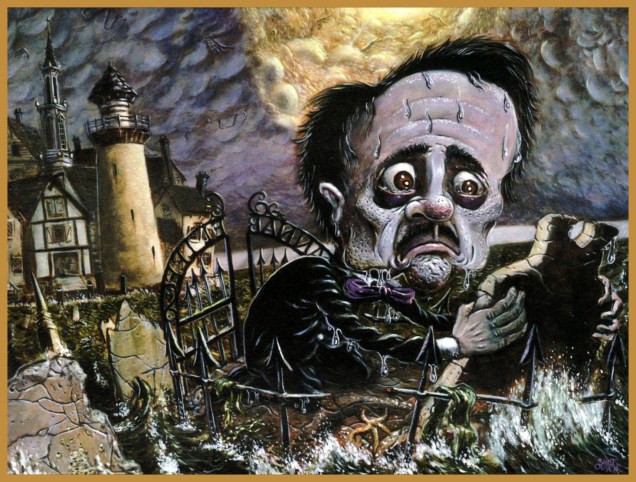
As with, say, Elvis or H.P. Lovecraft, when both legend and œuvre reach a certain tipping point of iconic fame, one can bend and twist the concepts any which way and they’ll still be recognizable. Here’s a panel from Harvey Kurtzman and Will Elder‘s faithful-in-its-fashion take on The Raven, from Mad no. 9 (Feb.-Mar. 1954, EC).
twofistedpoea
Michael Kupperman strikes again. From Snake ‘n Bacon’s Cartoon Cabaret ( 2000, HarperCollins)
snifter2a
Hot off the presses! It’s Edgar Allan Poe’s Snifter of Terror no. 2 (Nov. 2018, Ahoy), featuring a collaboration between Rachel Pollack and the fabulous Rick Geary. Don’t miss it! Oh, and if the pose looks familiar, you’re thinking of this.

Whew — that’s it for now. In closing, I must bow and salute before the gargantuan endeavour accomplished by Mr. Henry R. Kujawa on his truly indispensable blog, Professor H’s Wayback Machine. Thanks for all the heavy lifting, Henry. I get exhausted just thinking about it.

Tintinabulate on, Mr. Poe — wherever you are!

-RG

*my thanks to Herman Melville for those words of wisdom.
**and thanks to the aforementioned Mr. Kujawa for that precious scrap of arcane lore.

Just a Humble Boy From Tupelo, Mississippi

« When I was a boy, I always saw myself as a hero in comic books and in movies. I grew up believing this dream. » – Elvis Aaron Presley (1935 — ?)

Today, somewhere, the King of Rock ‘n’ Roll celebrates his eighty-fourth birthday, be he alive, dead or undead, he lives on. And never forget: Elvis is everywhere!

mod1a
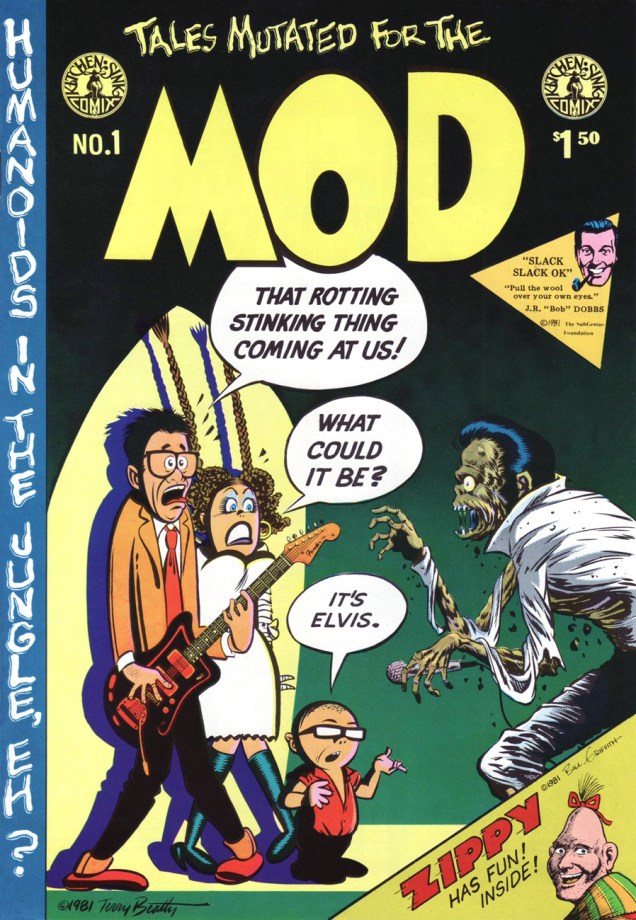
A most salty salute to the King of Rock ‘n’ Roll on his birthday! Compared to earlier decades, the 1980’s (and on!) were not kind to the anthology comic book. Thankfully, the meagre rewards and resounding indifference weren’t enough to quite dissuade some foolhardy souls from giving the format a go. But the fanboys wanted spandex, they wanted continuity and they soon wanted their « decompressed storytelling ». Bah. 
In 1981, Kitchen Sink Comix published the lone issue of Terry Beatty‘s labour of irradiated passion, Tales Mutated for the Mod. (June, 1981). Unlike John Byrne and others’ unceasing and pointless ‘tributes’ to Fantastic Four No. 1, this cover version of Harvey Kurtzman‘s Mad No. 1 is fiendishly clever. Kudos, Mr. Beatty!
panterelviszombiesa
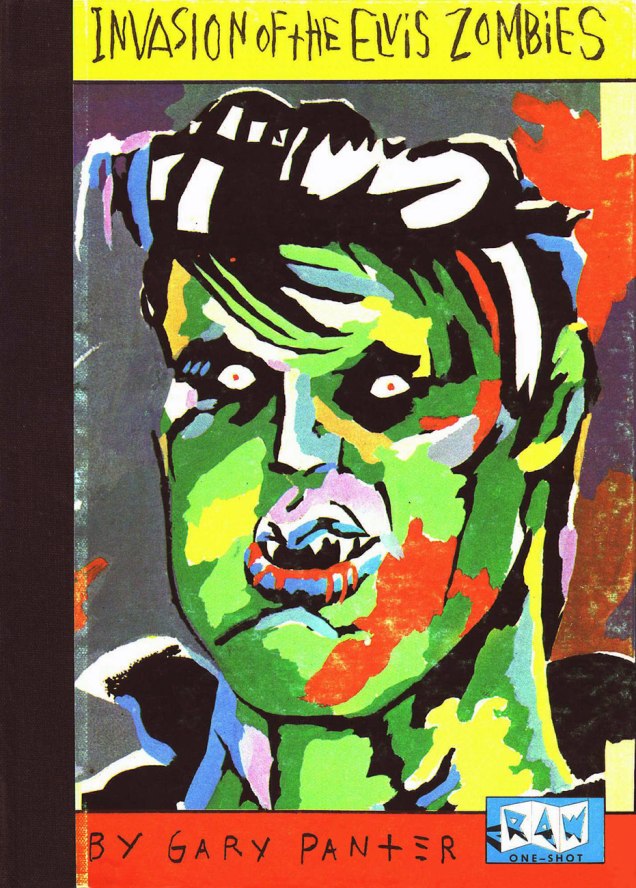
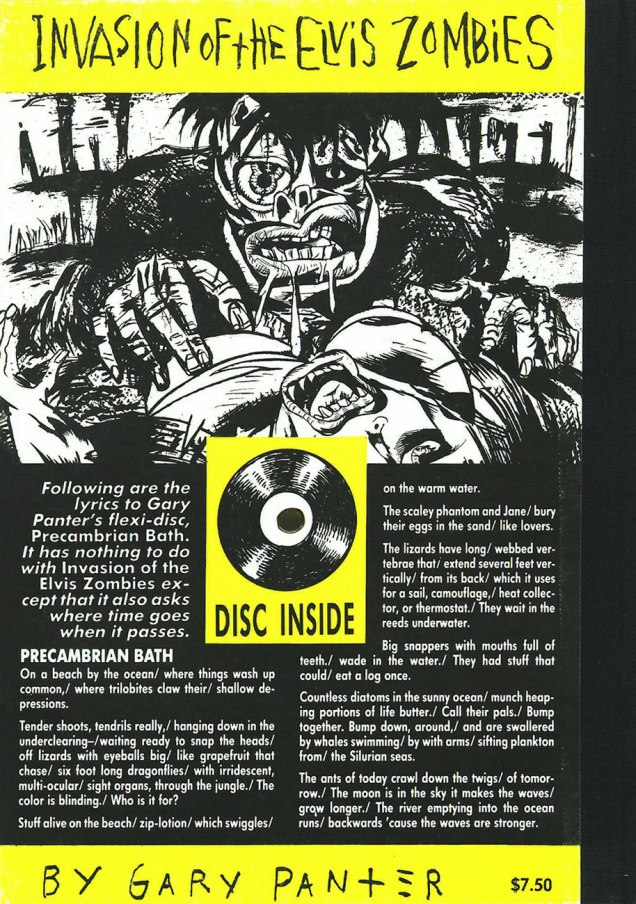
Gary Panter crafted this loving tribute in 1984, a one-shot published by RAW. Such heady stuff was well ahead of its time!
elviszombiesbacka
The back cover… this beats Power Records‘ meek offerings flat!
heartthrobs95a
The oft-inaccurate Grand Comics Database really fumbles it this time: the instantly-recognizable icon on the right is, according to them… Fabian. Dopes. Hamilton, Ontario’s Win Mortimer (1919-1998), inducted into the Joe Shuster Hall of Fame in 2006, drew this cover for DC’s Heart Throbs no. 95 (April-May 1965); given the time period and The Pelvis’ shirt, he would presumably be shooting the dire Paradise, Hawaiian Style. If you’re of a mind to commemorate the King’s anniversary with one of his mid-60s cinematic offerings, better opt for the far finer Tickle Me (1965).
elviseeriea
His (alleged) paper boy claims, and I do want to believe him, that the Big E has peacefully decamped to the quietude of Eerie, Indiana. Looking good, Big E!

-RG

The Many Lives of Jerry Robinson

« When comics came along in the 1930s there was a talent pool waiting. And one reason is so many areas were closed to Jews. Colleges, advertising agencies, many of the corporations – the doors that were closed led to the one that was open. » — Jerry Robinson

It’s New Year’s Day, which means it’s also the titanic Sherrill David ‘Jerry’ Robinson‘s birthday. Born on the first of January in 1922, he left us not so long ago, on December 7, 2011. He played at the very least a strong rôle in the creation of Batman’s sidekick Robin, his foes the Joker and Two-Face, his butler Alfred Pennyworth… and much more. Naturally, since we’re entering the murky world of Bob Kane, the whole process is mired in controversy, conflicting accounts and perhaps a little fibbing from certain parties.

Robinson went on to, well, several brilliant careers. In the 1950s, he worked as an instructor at New York City’s School of Visual Arts, where he mentored and considerably influenced a young Steve Ditko (among many others); he had a hand in several successful newspapers strips; served as president of the National Cartoonists Society (1967-69) and of the Association of American Editorial Cartoonists (1973-75); he lobbied hard for cartoonists’ rights, helping Superman creators Jerry Siegel and Joe Shuster obtain long-denied compensation and credit; he wrote, in 1974, The Comics: An Illustrated History of Comic Strip Art. And this is but a sprinkling of highlights…

RobinsonBehindMaskA
We won’t limit ourselves to the obvious Bat-imagery, which was mostly studio work anyway. Here, for instance, is a more obscure but purer œuvre, both pencilled and inked by Robinson: the original art from « Behind the Mask », page 2, originally printed in Atlas’ Marvel Tales no. 103 (Oct. 1951). Writer unknown.
PhantomBrakemanCoverA
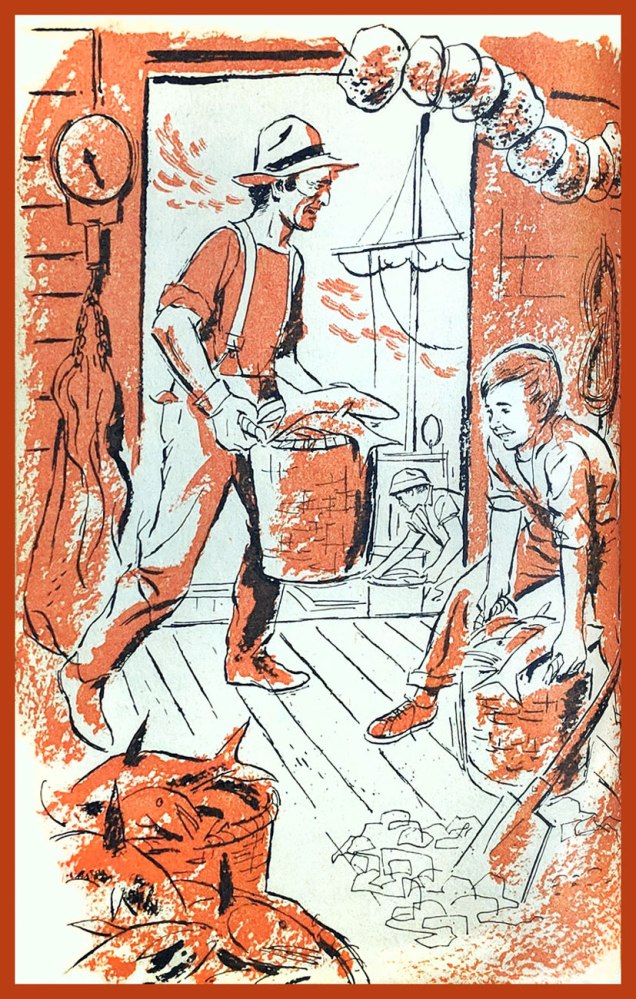
My earliest encounters with Mr. Robinson’s work were through a pair of books for young readers he illustrated in the late 1950s, in a beautifully free and expressive styles. Here’s the cover and one interior vignette from The Phantom Brakeman (1959, Scholastic), written by Freeman Hubbard, then editor of Railroad Magazine.

PhantomBrakemanIlloA

HurricaneLuck01A
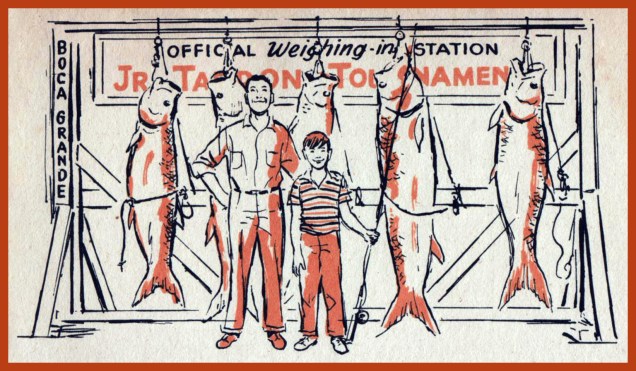
The following two pieces belong to Hurricane Luck (1959, Scholastic), written by Carl Carmer.
HurricaneLuck02A
Spoiler alert: Peter does, in the end, win the Tarpon fishing contest.

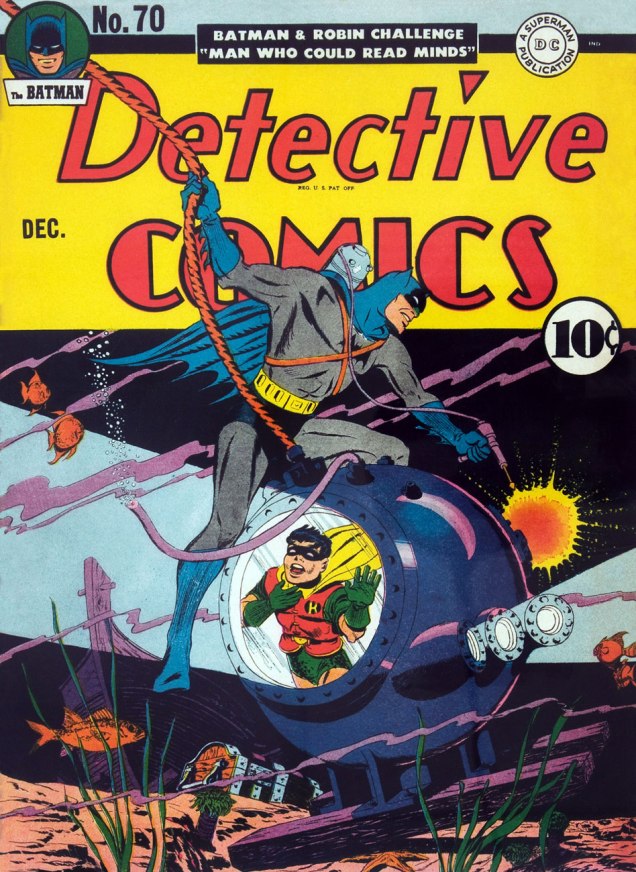
« What about Batman? », you might say. Okay, I admit I don’t have a prayer of getting away with a Jerry Robinson tribute devoid of the caped crusader and his trusty bird-themed sidekick, so here goes!

Detective70A
Detective Comics no. 70 (Dec. 1942). Pencils and inks by Robinson.
Detective71A
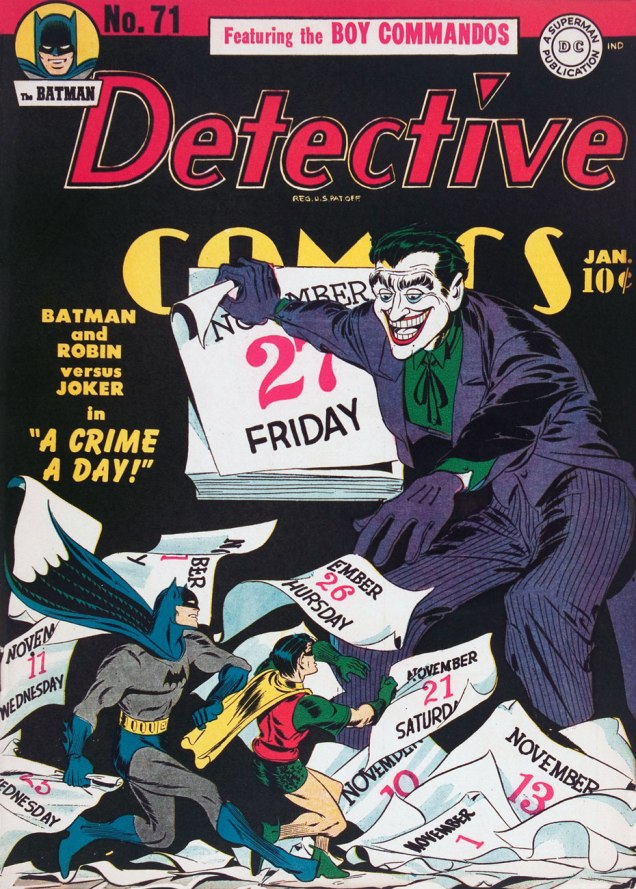
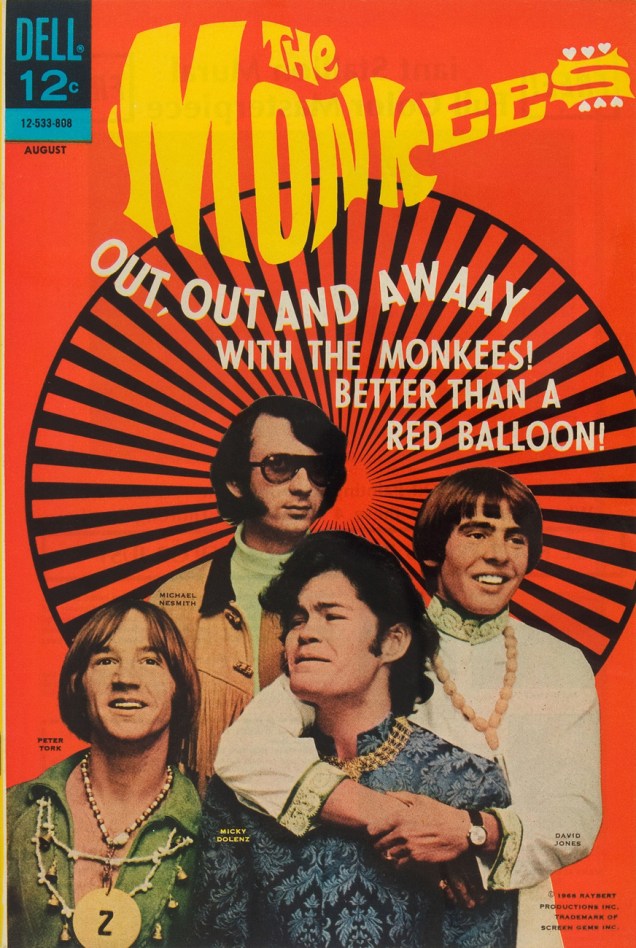
Detective Comics no. 71 (Jan. 1943). Pencils and inks by Robinson.

-RG

The Old Year’s Final Boarding Call

« On New Year’s Eve the whole world celebrates the fact that a date changes. Let us celebrate the dates on which we change the world. » — Akilnathan Logeswaran

Earlier this month, as we showcased Justin Green’s Musical Legends, I mentioned that I was reserving one of the strips for a special occasion, and it has come.

JustinGreenLastTrainA
Originally published in the December, 2001 issue of Pulse!

« Shedding light on past and present musicians — and there are countless possibilities — is  a real challenge. But when it works, the comic vision can change the listening experience. » Justin Green, from his Authoroonist Acknowledgements & Apologies (2004).

This entry stands out from its brethren in that the artist was personally involved in, or more precisely a witness to, the events depicted. In addition, no famous or semi-famous musical figure occupies the spotlight; instead, we get a gentle, low-key, soulful anecdote.

Who’s Out There has had a good year, and so we thank all of you readers around the world (and I do mean around the world: according to WordPress’ statistics, comics fans visited us from a whopping eighty-three countries these past twelve months) and wish each of you a wonderful, or at the very least better, year 2019.

-RG

John Severin, ‘Super Comics’ Cover Man

« I got into the comic business the same way I got into the bubble gum business: somebody gave me a job. » — John Severin

I’ve said it before, and I still feel that way: If you’re going to discuss a career of such length, variety, depth and consistency as John Severin’s (from the late 1940s to the early 2010s!) it’s simply too easy to lose your way in the details, sidebars and bifurcations. Best to pick a small area and stick to it, particularly if you don’t have the luxury of endless pages to devote to the task.

Speaking of sidebars: In this forum, I keep returning to the topic of Israel Waldman and his dodgy, but mesmerizing publishing ventures. The many scattershot titles issued under the IW / Super Comics (1958-1964) banner were printed on shoddy paper (which makes them, nowadays, nearly impossible to find in any sort of decent shape), were sold outside the usual channels (in bags of three through department stores, and not the fancy ones at that), consisted of rather hoary, indifferently-packaged reprints… but foxy businessman Waldman didn’t scrimp on the one count that mattered: he shelled out top dollar to commission top talent to create attractive covers. That sweet old bait-and-switch.

Sure, some of these random assemblages of decaying pulp happen to be good comics, but given the nature of odds, it was bound to happen.

John Powers Severin, born ninety-seven years ago today (Dec. 26, 1921-Feb. 12, 2012), was part of Waldman’s cadre of cover artistes, and he delivered beautifully, as he always did, right to the end of his career.

Here, then, are some highlights of these little-seen Severin pieces. Happy birthday, Mr. Severin!

Blazing6guns16A
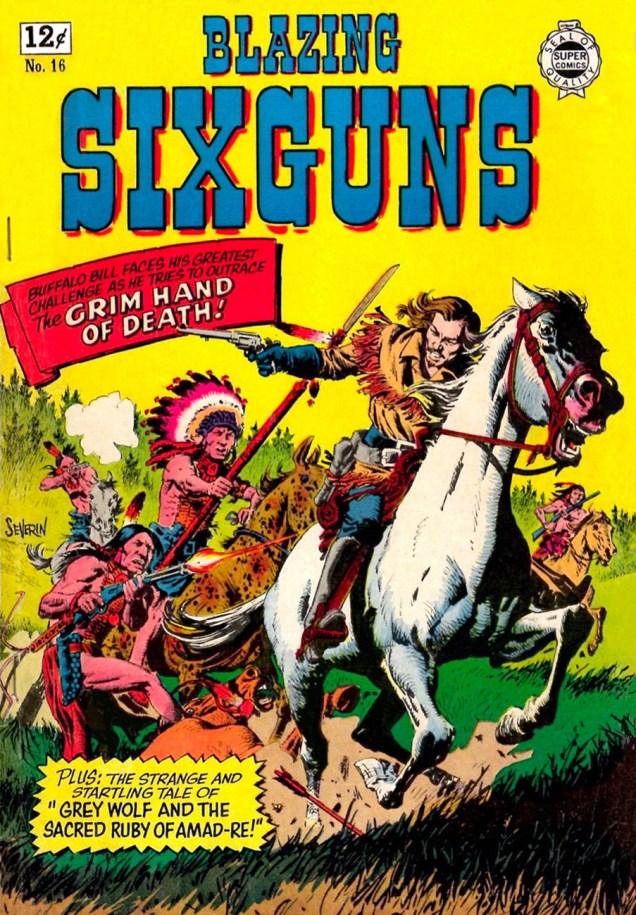
Blazing Sixguns no. 16 (1964), ten issues, 1958-1964. Read this issue here.
Danger10A
Here’s Danger no. 10 (1963), the first of  seven issues. Read it here.
FantasticAdv10A
This is Fantastic Adventures no. 10 (the first of seven issues, 1963-64). Read it here.
Gufighters18A
Looks like Marvel’s Kid Colt did a bit of moonlighting for Super Comics (as did king of all media Gabby Hayes!). This is Gunfighters no. 18, fifth and final issue of the series (1958-1964).
SilverKid01A
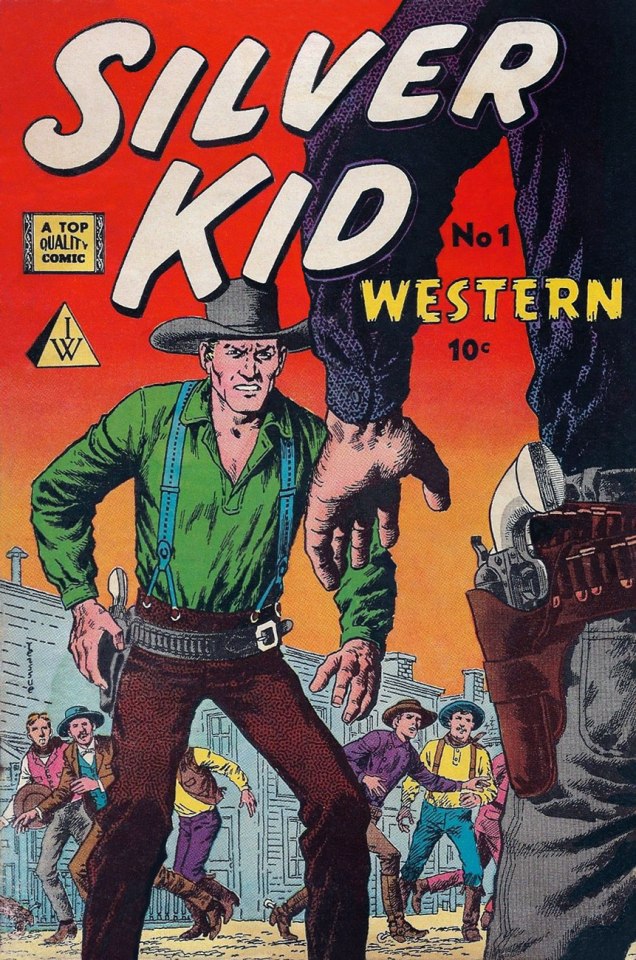
This is Silver Kid Western no. 1 (1958), first of two issues. Read it here.
Robin-Hood9A
This is Robin Hood no. 9 (1958),  third of five issues (1958-1964). Read it here.
Westerner17A
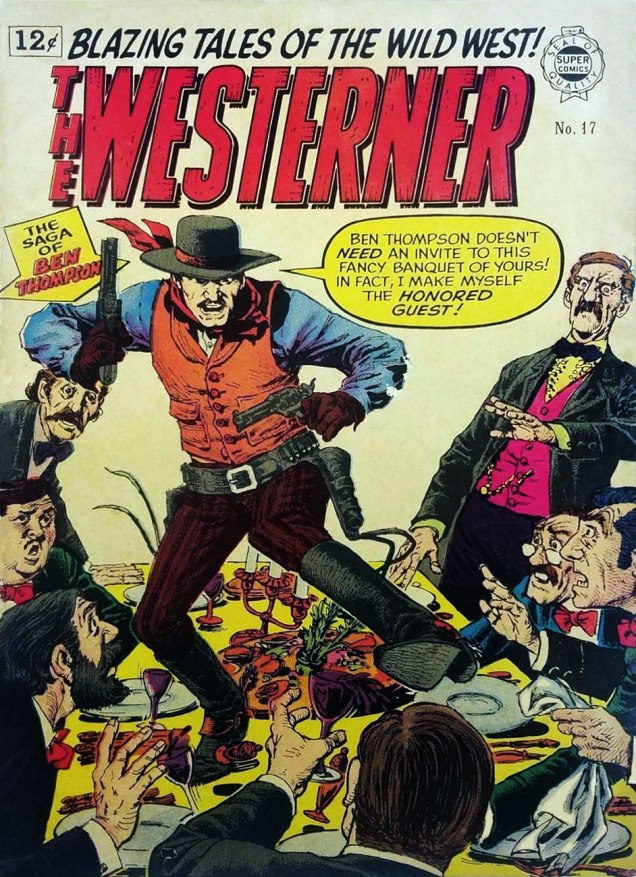
An alternative view of table étiquette from real-life figure Ben Thompson. This is The Westerner no. 17 (1964), third of three issues.

And if you’re hankering for more John Severin, check out our earlier post and/or this illuminating, life-spanning and definitive Comics Journal interview.

-RG