« Apparently, no one could credit such a grotesque being with any sense of kindliness, and so the wounded monster limped along his way, his hatred of humanity grew in proportion to his size. »
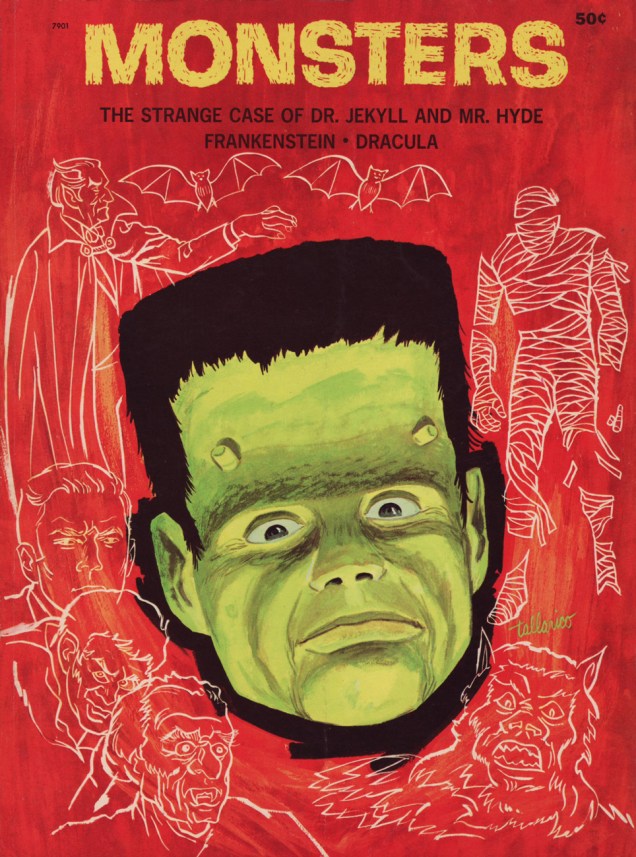
Unleashed upon the world in 1965 by Wonder Books, this generously-illustrated volume of classic adaptations is a collaboration between fellow prolifics Walter Brown Gibson (1897 – 1985), the writer most closely associated with Street & Smith’s The Shadow, and artist Tony Tallarico, a journeyman who produced a bounty of work, as artist and packager, for just about every publisher in the business… save DC and Marvel, and who, upon leaving the mainstream comics field in the mid-1970s carved out a lucrative little niche for himself putting together scads of illustrated books, mostly for children, on just about every subject under the sun.
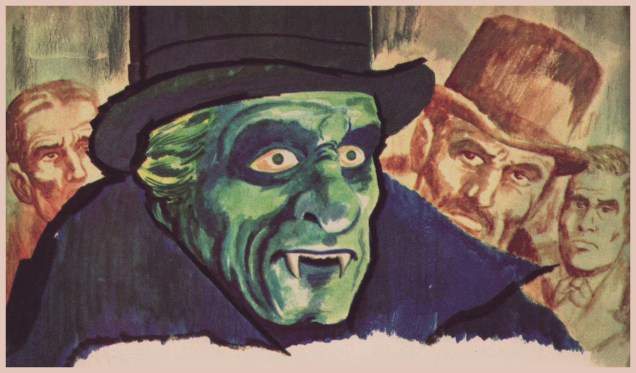
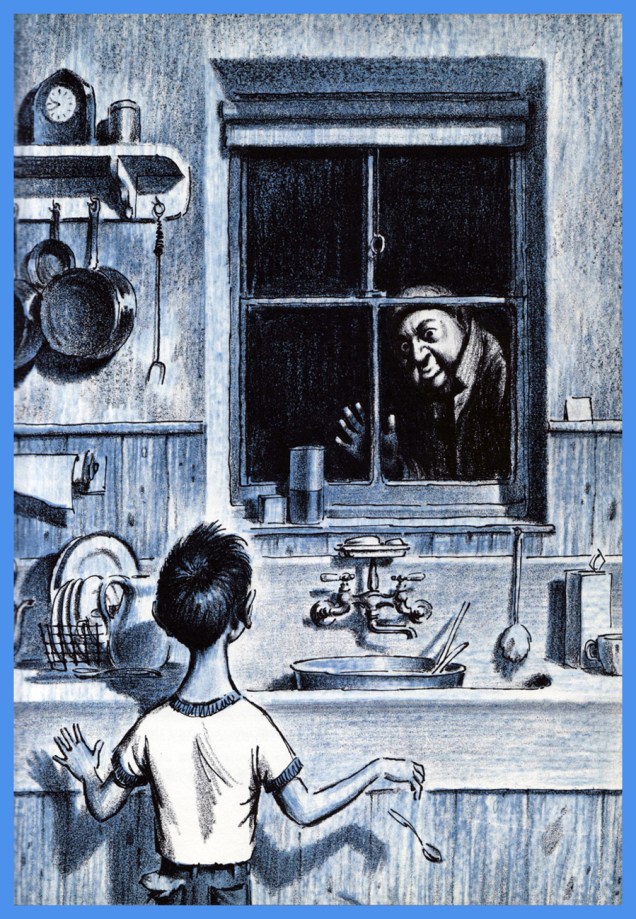
« Dracula’s form had materialized now, His long-nailed fingers were gripping the window bars, and the mist had become a swirl of moths behind him. »« The man’s ugly, fiendish look chilled Enfield, but the crowd threatened the ruffian, who finally said that his name was Hyde… »
Tallarico would, the following year, revisit some of the fiends depicted here for a short-lived but infamous trio of series for Dell: Dracula, Frankenstein and Werewolf. Ah, but don’t be so dour: it’s just light, campy fun.
« Be silent in that solitude which is not loneliness — for then the spirits of the dead who stood in life before thee are again in death around thee — and their will shall then overshadow thee: be still. »
— Edgar Allan Poe (1829)
It was on this day, two hundred and ten years ago, that the great writer, poet and posthumous master of all media Edgar Poe (Jan. 19, 1809 – Oct. 7, 1849) was born in Boston, Massachusetts. I’ll spare you the usual biographical details, widely available elsewhere, and we’ll concentrate on his unflagging ubiquity in the medium of comics.
Poe’s literary reputation was in tatters in America, thanks to a rash of hatchet jobs and dismissals, some of the most vicious from the pen of one Rufus Griswold, the very worm he’d named his literary executor (!), as well as such notables as Ralph Waldo Emerson and T.S. Eliot… while his renown was undimmed in Europe, particularly in France (in no small part owing to Charles Beaudelaire’s legendary translations), rehabilitation at home slowly came as the 20th century crept along, but it was likely the publication of Arthur Hobson Quinn’s definitive Poe biography, in 1941, that sealed the deal and opened the floodgates.
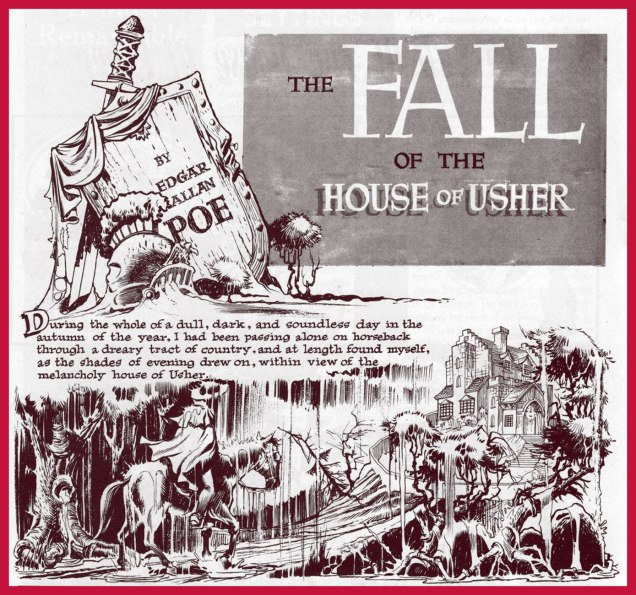
Top two tiers from page 2 of The Spirit‘s August 22, 1948 episode. Layout by Will Eisner, pencils and inks by Jerry Grandenetti. As Dave Schreiner puts it: « Grandenetti captures the asthenic look of Roderick Usher that Poe described. The man is a decadent waif; insular, fragile, high-strung, possibly in-bred. »
Classics Illustrated publisher Gilberton was first out of the gate with Poe adaptations, at first tentatively with a pair of poems (Annabel Lee, then The Bells)**, then more substantially with The Murders in the Rue Morgue, in Classic Comicsno. 21 – 3 Famous Mysteries (July, 1944), sharing the stage with Arthur Conan Doyle and Guy de Maupassant. Read it here. Pictured below is Classics Illustratedno. 84 (June 1951, Gilberton), cover by Alex A. Blum. Read the issue here.
A relevant passage from Simon Singh‘s fascinating (if you’re into that sort of thing… and I hope you are) The Code Book: The Secret History of Codes and Code-Breaking (1999): « On the other side of the Atlantic, Edgar Allan Poe was also developing an interest in cryptanalysis. Writing for Philadelphia’s Alexander Weekly Messenger, he issued a challenge to readers, claiming that he could decipher any monoalphabetic substitution cipher. Hundreds of readers sent in their ciphertexts, and he successfully deciphered them all. Although this required nothing more than frequency analysis, Poe’s readers were astonished by his achievements. One adoring fan proclaimed him ‘the most profound and skilful cryptographer who ever lived’. In 1843, keen to exploit the interest he had generated, Poe wrote a short story about ciphers, which is widely acknowledged by professional cryptographers to be the finest piece of fictional literature on the subject. The Gold Bug tells the story of William Legrand, who discovers an unusual beetle, the gold bug, and collects it using a scrap of paper lying nearby. That evening he sketches the gold bug upon the same piece of paper, and then holds his drawing up to the light of the fire to check its accuracy. However, his sketch is obliterated by an invisible ink, which has been developed by the heat of the flames. Legrand examines the characters that have emerged and becomes convinced that he has in his hands the encrypted directions for finding Captain Kidd’s treasure. »A page from EC Comics great Reed Crandall‘s exemplary adaptation of Poe’s The Tell-Tale Heart, from Creepyno. 3 (June, 1965). While Crandall’s work is outstanding, scripter-editor Archie Goodwin tried to ‘improve’ upon Poe by tacking on a tacky ending, a nasty habit he would indulge in again on subsequent adaptations, notably issue 6’s The Cask of Amontillado!. Read The Tell-Tale Heart. And don’t miss The Cask…, if only for the artwork.In the mid-70s, Warren would devote two full issues of Creepy to Poe adaptations; issue 69 (Feb. 1975), featured The Pit and the Pendulum, The Fall of the House of Usher, The Premature Burial, The Oval Portrait, MS Found in a Bottle!, Facts in the Case of M. Valdemar; issue 70 (Apr. 1975) comprised The Murders in the Rue Morgue, Man of the Crowd, The Cask of Amontillado!, Shadow, A Descent into the Maelstrom! and Berenice; All stories were adapted, with far greater respect than Mr. Goodwin seemed capable of, by Rich Margopoulos, and illustrated by a host of artists. The project was edited by Bill DuBay, and the cover painting is by Ken Kelly.Isidre Monés‘ fabulous opening splash from Creepyno. 70‘s Berenice. Read the story in full here.« The rays of the moon seemed to search the very bottom of the profound gulf; but still I could make out nothing distinctly, on account of a thick mist in which everything there was enveloped, and over which there hung a magnificent rainbow, like that narrow and tottering bridge which Musselmen say is the only pathway between Time and Eternity. » In 1976, a peak-form Berni Wrightson got out his brushes and paint tubes for a heartfelt portfolio of Poe-inspired oils. A sensitive and subtle sense of colour was among Wrightson’s chief assets; it’s a shame we didn’t see more of it. I opted to feature my favourite piece from the lot, A Descent Into the Maelström, but by all means feast your eyes on the whole shebang.In 1976, Marvel Comics set out to make their mark on the classics… with dubious, but predictable results. It wasn’t what their zombie readership had clamoured for. Here’s the best page (art by Rudy Mesina) from Marvel Classics Comicsno. 28, The Pit and the Pendulum (1977), featuring three tales adapted by scripter Don McGregor, and including future superstar Michael Golden‘s abysmal professional début on yet another helping from The Cask of Amontillado, where he demonstrates how he believes wine is to be drunk just like Pepsi. See what I’m griping about here.Think Poe’s all about the horror? Think again! You don’t become a household name by putting all your eggs in the same basket. Meet Edgar ‘Eddie’ Allan Poe, romantic leading man. “Based on actual records…” and sanitized beyond recognition. Given that Virginia and Edgar were first cousins and that they married when she was thirteen, you can see how absurd this strip is. Read the full tale of romance and pathos right here. The Beautiful Annabel Lee appeared in Enchanting Loveno. 2 (Nov. 1949, Kirby Publishing). Writer unknown, art by Bill Draut and Bruno Premiani.Kubert School alum Skot Olsen‘s cover illustration for the revised and expanded second edition (July, 2004) of Graphic Classics‘ Poe compendium.As with, say, Elvis or H.P. Lovecraft, when both legend and œuvre reach a certain tipping point of iconic fame, one can bend and twist the concepts any which way and they’ll still be recognizable. Here’s a panel from Harvey Kurtzman and Will Elder‘s faithful-in-its-fashion take on The Raven, from Madno. 9 (Feb.-Mar. 1954, EC).Michael Kupperman strikes again. From Snake ‘n Bacon’s Cartoon Cabaret ( 2000, HarperCollins)Hot off the presses! It’s Edgar Allan Poe’s Snifter of Terror no. 2 (Nov. 2018, Ahoy), featuring a collaboration between Rachel Pollack and the fabulous Rick Geary. Don’t miss it! Oh, and if the pose looks familiar, you’re thinking of this.
Whew — that’s it for now. In closing, I must bow and salute before the gargantuan endeavour accomplished by Mr. Henry R. Kujawa on his truly indispensable blog, Professor H’s Wayback Machine. Thanks for all the heavy lifting, Henry. I get exhausted just thinking about it.
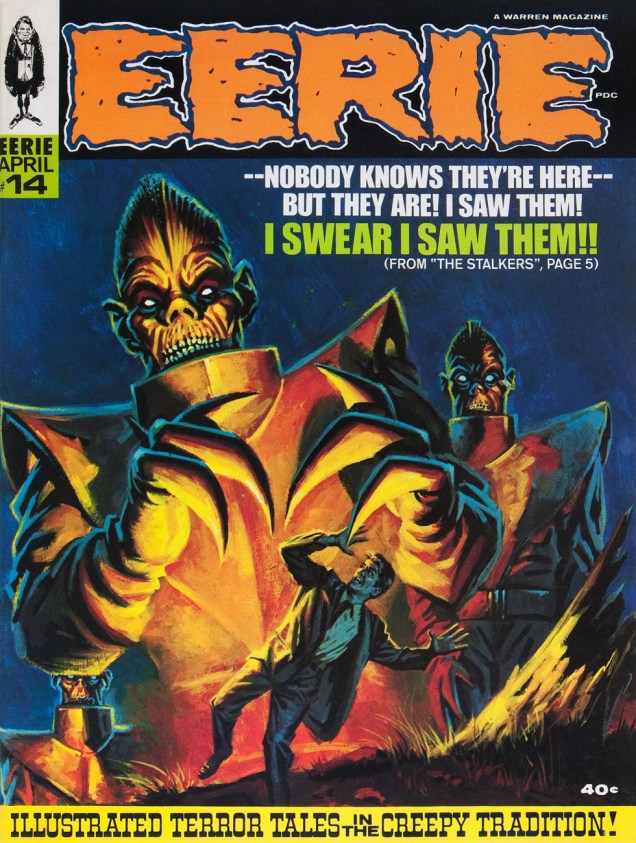
« These dreams? Hallucinations… or whatever you call them! It was on a business trip… in the middle of nowhere… I’ll never forget it! » — Alex Colby, who swears he saw them.
When people talk about Warren magazines cover artists, the name of Vic Prezio is rarely brought up. Well, someone has to, and it might as well be me. It doesn’t help that he only painted a handful of covers for Warren, but hell, I love them all in their pulpy glory.
Prezio is better known for his over-the-top men’s adventure magazine covers and, to a lesser extent, his Magnus: Robot Fighter covers for Gold Key. Mostly anonymous work, though. It’s a filthy business.
In Part One, we looked at Prezio’s Creepy Covers. As it’s « age before beauty », Cousin Eerie now gets his turn to bow.
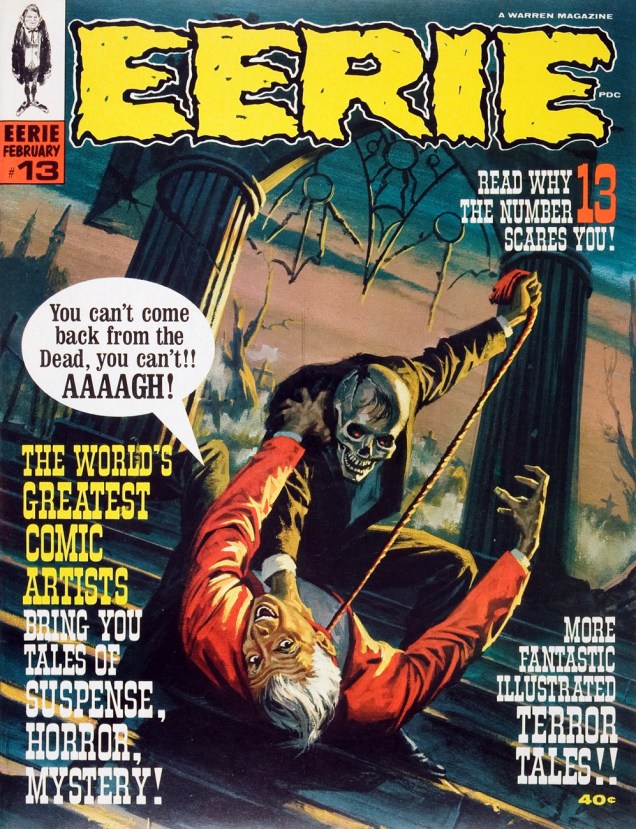
« Don’t you dare presume to tell me what I can and can’t do, Sheldon! » Some guys turn mean when their male pattern baldness spreads to their entire face.
An inspiring reminder of why you shouldn’t let the naysayers drag you down (even six feet under). Be all that you can be, on this side of the grave and beyond!
This alien encounter is *not* going to turn out all fuzzy-friendly.
Prezio’s painting conveys vividly the high paranoia of Archie Goodwin and Alexander Toth‘s The Stalkers, reprinted in this issue from Creepy no. 6, just a couple years old by then. Warren Publications were *not* in good shape at the time, having lost more of their key talent and left to the bare minimum of original material, including, thankfully, the covers. The out-of-left-field success of Vampirella would swoop in and save the enterprise in 1969. Close call!
Possibly the lesser entry amongst Prezio’s Warren pieces, but still an attractive cover, if not exactly terrifying. Somehow, it brings to mind Aurora model kit art more than it does a Warren cover (still, comparison to early-ish James Bama should hardly be considered a slag.)« AAAAAAAAAGAH! What is it? » I’ve often pondered that very question myself, sometimes while perusing this “throbbing” issue.
Another striking (if a bit rushed-looking) Prezio cover, this time representing Slight Miscalculation by writer Bill Parente and artists Bill Fraccio and Tony Tallarico. The much-maligned Fraccio and Tallarico often worked together under the joint nom de plume of Tony Williamsune (it is said that Tallarico pulled most of the weight.)
This time out, the cover story is H2O World by Larry Ivie, Al Williamson, and his Fleagle Gang acolyte and mentor Roy G. Krenkel, a reprint from Creepy no. 1 (1964).
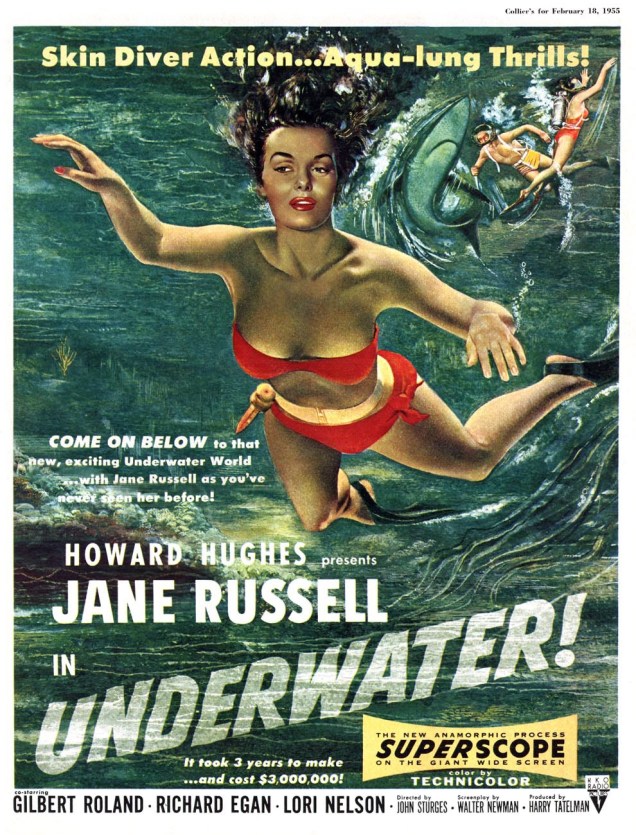
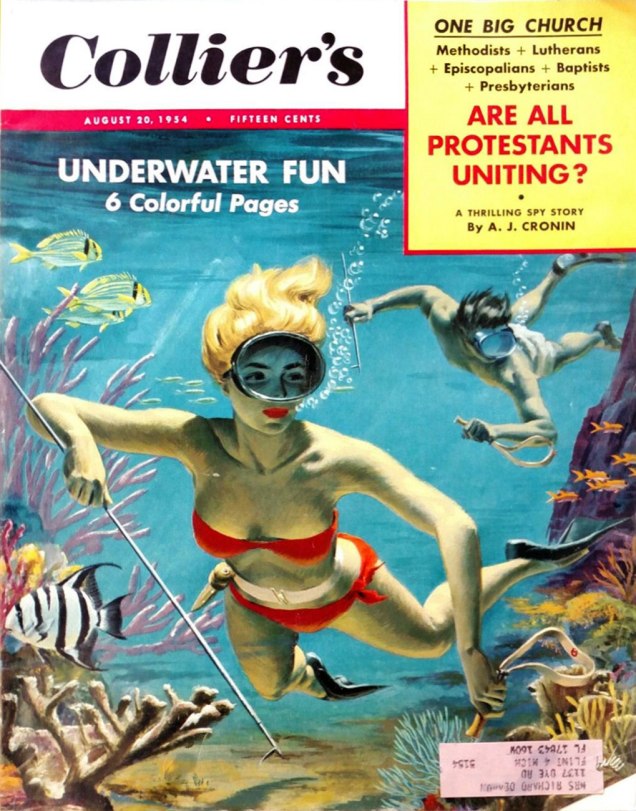
The girl looks familiar, though…
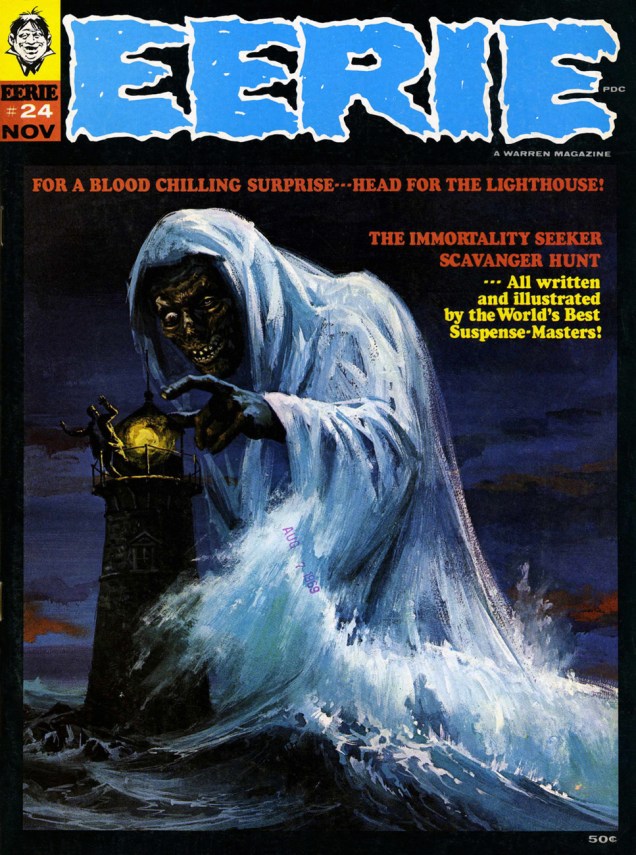
From a 1955 film poster…… itself swiping heavily from a 1954 Collier’s cover painted by Bill Baker. « You’ll find skin-diving now from Maine to California, wherever there is enough water for a person to plunge into. Divers, like the spearfishing pair on our cover, have made it America’s fastest-growing sport. » I’ll bet she’d rather dive with her husband, armed with a spear, than in the darkness with overly-friendly monsters.Prezio’s final Eerie cover (he would paint a couple of beauties for FMOF the following year), this lugubrious tableau from the bone-chilling month of November 1969, is likely my favourite Prezio. It illustrates Bill Parente and Michael Royer‘s Head for the Lighthouse!
Warren seemed, at this point, without a decent in-house copy editor. Witness the cover’s “Scavanger” Hunt, and inside, a story mistitled « The Wrong Tennant ».
« Wrong Tennant? You don’t say! I’d read *that*! »
All tomfoolery aside, this wraps up our survey of Mr. Prezio’s work at Warren. Hope you enjoyed the ride!
« Stop that whimperin’, Emma — or I’ll lay into ya like a butcher in a cowpen! » — Raymond Marais, Rescue of the Morning Maid
The mysterious, but nonetheless well-remembered journeyman pulp illustrator, Vic Prezio, though chiefly associated with the infamous Men’s Sweat adventure magazines (« Weasels Ripped my Flesh! ») also produced notable work for Dell (The Outer Limits, Kona, Naza, Brain Boy, Frogmen…), Gold Key (Magnus, Robot Fighter) and Warren, and that’s just the tip of the iceberg. I did say he was a journeyman.
In all, Prezio produced, for the Warren Magazine line, six covers for Famous Monsters of Filmland, some of them classics, four for Creepy and six for Eerie. And that’s not all: Prezio painted a pair of covers for FMOF companion title Monster World (no. 2, Jan. 1965, and no. 4, June 1965); these would have been his earliest Warren contributions. Thanks to eagle-eyed Michael Prince for bringing these last to my attention!
Today, we’ll admire Uncle Creepy’s dodgy wares, and reserve Cousin Eerie’s mouldy goodies for part two. The FMOF issues regrettably fall outside our purview, but for the record, these are numbers 35, 36, 38, 39, 67 and 68. Check ’em out.
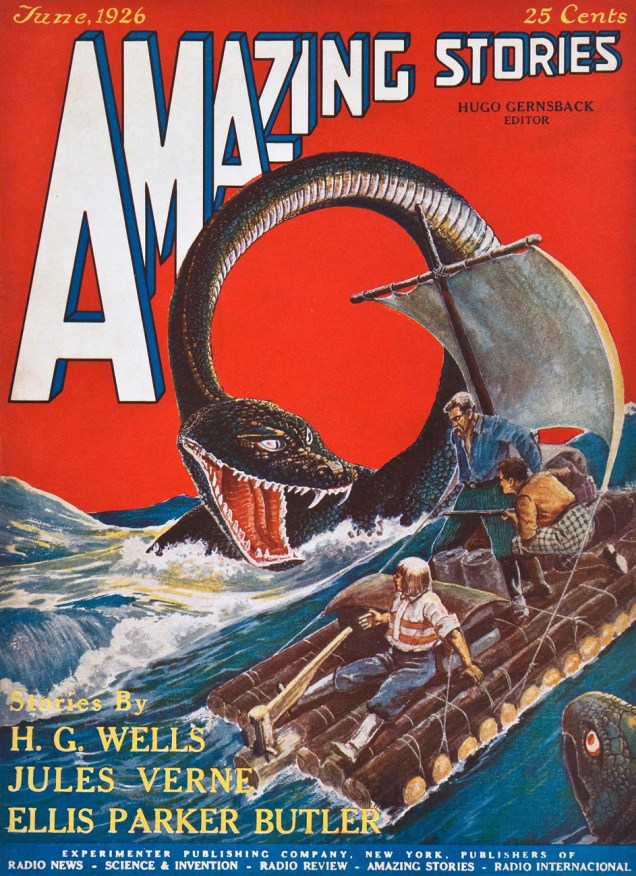
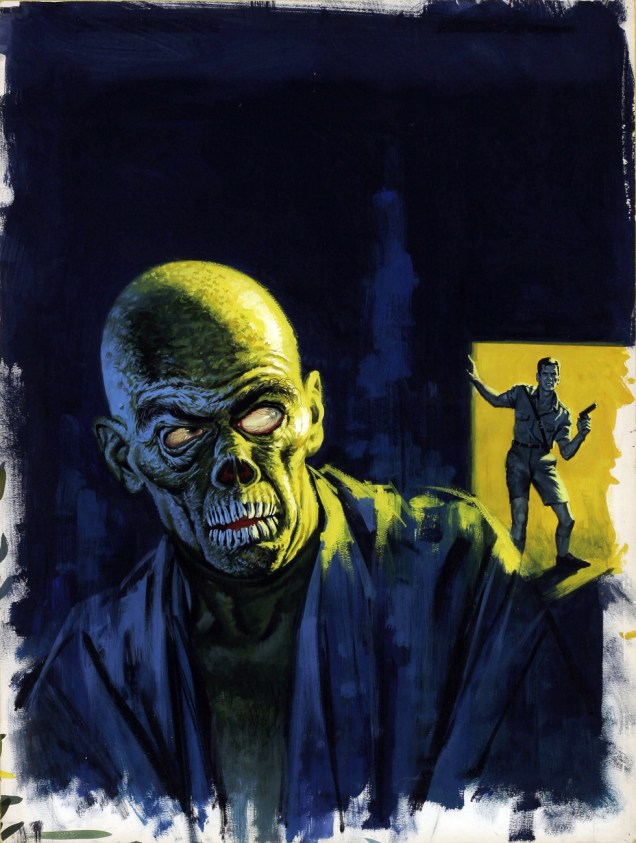
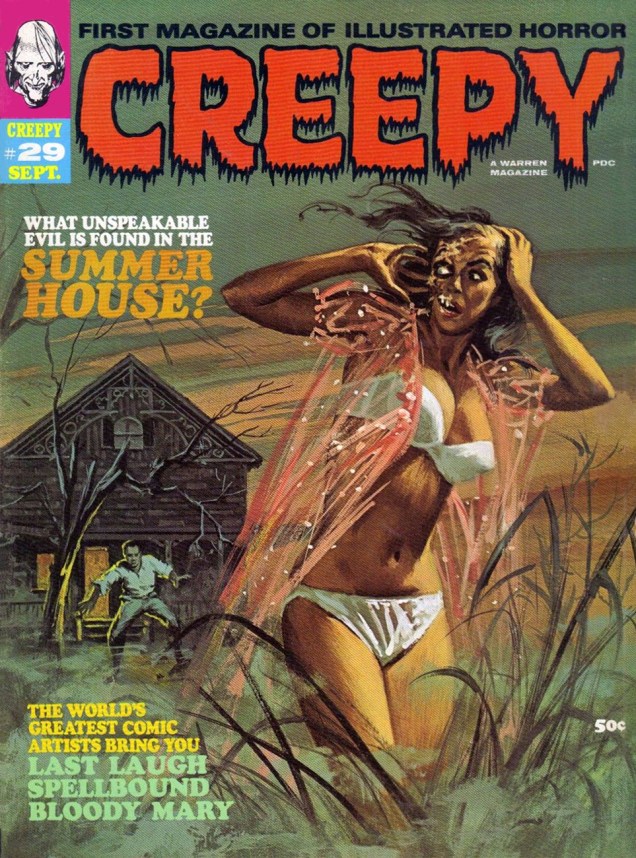
Oh, it’s just your lousy luck: you finally get your best girl alone on your raft, then along comes this humongous critter to put a damper on the romantic mood. Prezio brings the scene to life for issue 18 of Creepy (Jan. 1968)… but I can’t quite shake the feeling that said scene looks sort of familiar…Ah, that must be it. I see there used to be two snakes involved.« I say, are you the chap that’s been short-sheeting my bunk every night? » Mr. Prezio’s nasty (in a good way) cover painting gives us a glimpse of Rudyard Kipling‘s (by way of Craig Tennis & Johnny Craig) The Mark of the Beast(1890), reprinted from Christopher Lee’s Treasury of Terror (Pyramid Books, 1966).A look at the original painting, which thankfully survives. Can’t take such things for granted.« Good Lord! » I wonder what that ‘one thing’ is. Prezio’s cover for Creepy no. 28 (Aug. 1969) is based on Archie Goodwin and Dan Adkins‘ story The Doorway, reprinted in this issue. Read it here, if you must.Some editorial second-guessing went on, as evidenced by the most consistent colour scheme of the original painting. It’s a great piece, so it works all the same.« Come back, baby! Sure, my saliva’s a bit… corrosive, but you’ll get used to it! » Vic Prezio’s twist on the then-prevalent gothic romance trope of the gorgeous, scantily-clad damsel-in-distress running away from some castle or mansion. This is Creepy no. 29 (Sept. 1969).Now, Vic’s original painting: the image was flipped for publication (as if you couldn’t tell), which was probably a sound decision. Left to right motion is more visually natural and dynamic.
« No matter what scientists say, lumbermen of the West insist that the monster exists… Believe it or Not! » — the standard Ripley’s line, from The Beast of the Humboldt
In the early 1960s, former industry leader Dell Publishing suffered a crushing blow when Western Publishing, who had been producing Dell’s comics for them since 1938, decided to handle their own distribution, which left Dell with, well… just about zilch*. But that’s neither here nor there.
Dell had opted out of the Comics Code Authority, and Western’s subsequent comics, under the Gold Key banner, also enjoyed that advantage, not that they abused the privilege much, though the exceptions are among the finest comic books ever issued: Ghost Stories No.1 and the one-shot giant Tales From the Tomb, both from the phenomenal mind of John Stanley and published by Dell in the fall of 1962.
By the mid-1960s, Warren Magazines had pounced through the loophole of the magazine format, unregulated by the Code, to bring back monsters forbidden under the CCA’s rule. Gold Key required no such stratagem.
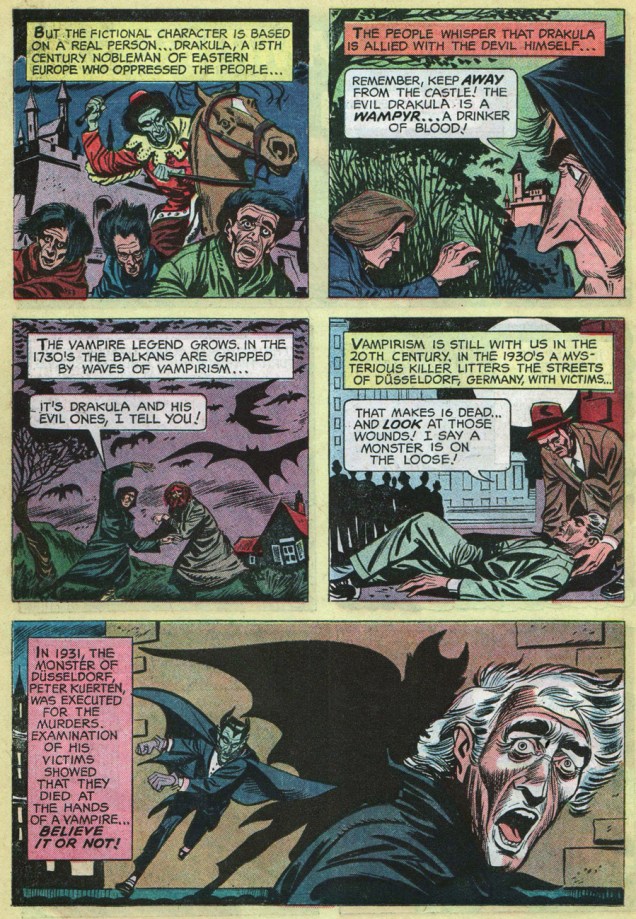
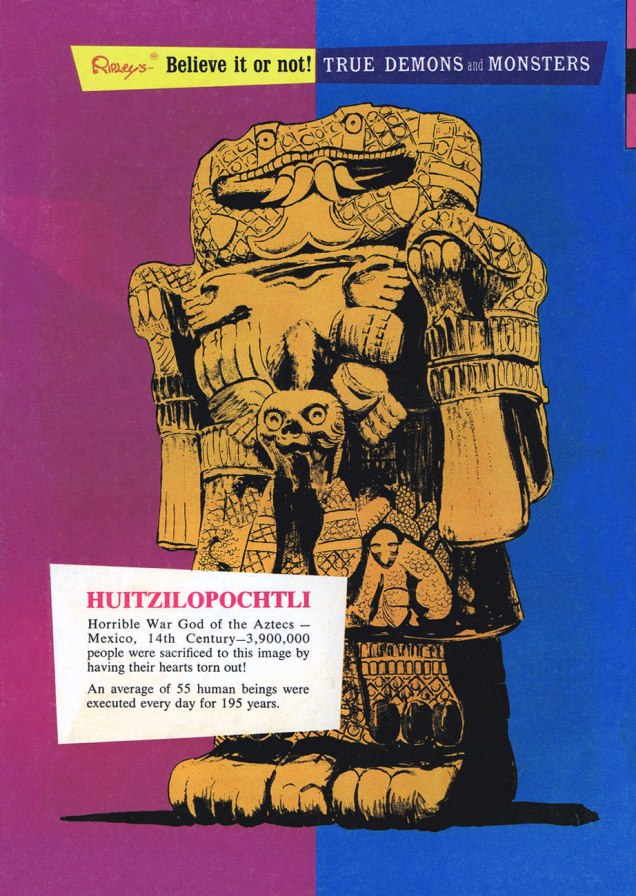
At first, GK’s long-running (1965-1980, 94 issues) Ripley’s Believe It or Not! * couldn’t decide on a focus: 14 of its initial 26 issues were devoted to « True Ghost Stories », two related « True War Stories », two shared « True Weird Stories », and six tackled « True Demons and Monsters ». With issue 27, the title stuck to ghosts, if not to the strict truth.
This is an excerpt from Ripley’s Believe It or Not! no. 4 (April, 1967), featuring the work of the much underrated Joe Certa (1919-1986), who began his comics career in the mid-1940s, working in just about every genre for a score of publishers, settling with Gold Key in the mid-60s and staying on until his retirement in 1980. He’s most remembered for his co-creation (with writer Joseph Samachson) of, and lengthy stint on J’onn J’onzz, the Martian Manhunter (1955-68), as well as for drawing every single issue of Gold Key’s loose adaptation of television’s first supernatural soap, Dark Shadows (35 issues, 1969-76). By this time, Certa’s style had evolved from a fairly mainstream style to a wonderfully blocky, angular and shadowy style that left him ill-suited to the depiction of standard superheroics… but prepared him well for moodier fare.
Issue 4’s front cover. Most of them featured often-splendid paintings by George Wilson, Jack Sparling or Luis Angel Dominguez, but the occasional effective photo cover crept in.Here’s a harsh factoid that makes vampires seem cuddly by comparison.
– RG
*the one priceless creative asset that Dell managed to hold onto was John Stanley, not that they appreciated him. When he left the industry, it wasn’t with a carefree grin and a spring in his step.
** « Ripley’s Believe It or Not! is a franchise, founded by Robert Ripley, which deals in bizarre events and items so strange and unusual that readers might question the claims. The Believe It or Not panel proved popular and was later adapted into a wide variety of formats, including radio, television, comic books, a chain of museums and a book series. »
« Certain types of stories make perfect television fare. In the realm of the ghost story, however, I think the printed page has some advantages and I want you to discover them. When you read, you can be alone — absolutely alone. » — Alfred Hitchcock (but likely Robert Arthur in his name and place.)
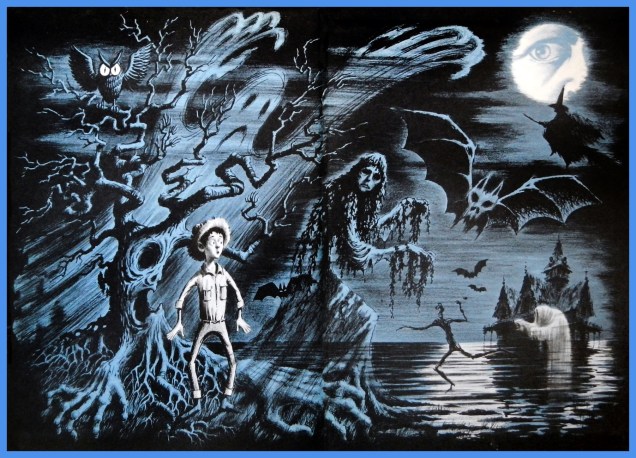
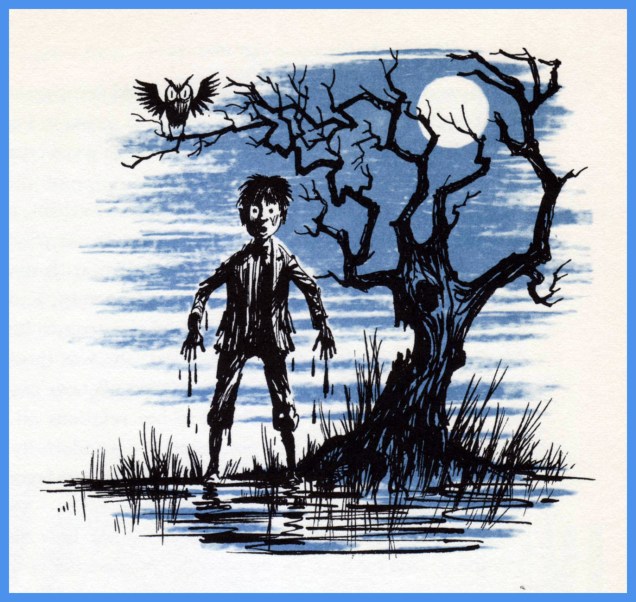
Today, we feature Fred Banbery’s fabulously detailed and, well, haunting illustrations for « Alfred Hitchcock’s Haunted Houseful ».
Haunted Houseful’s endpapers, a summary of much of what lurks within its pages.
Frederick Ernest Banbery (1913-1999) was perhaps the definitive Paddington Bear portrayer, but for me, it’s his Hitchcock-related work that truly sings. He illustrated three Random House Hitchcock books for younger readers: Haunted Houseful (1961), Ghostly Gallery (1962), and Solve-Them-Yourself-Mysteries (1963), plus the covers of a handful of Hitch paperback short story collections. These books can still be had surprisingly cheap to this day (I just checked eBay, and it holds), so keep an eye out. Every picture’s a gem, to say nothing of the stories!
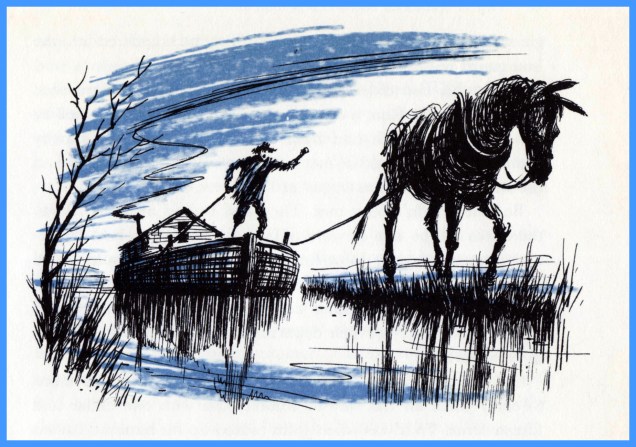
A scene from Manly Wade Wellman‘s « Let’s Haunt a House ». Dollars to doughnuts that’s not an actual ghost.From Constance Savery’s « The Wastwytch Secret »From Walter R. Brooks’ oft-anthologized «Jimmy Takes Vanishing Lessons »
And finally, two illustrations from Louise and Donald Peattie‘s « The Mystery in Four-and-a-Half Street ». Is that powerfully moody or what?
My wife said something about my « stretching the definition of comics » with this one, but, honestly, thanks to the cartoony style, this feels more authentically like comics to me than, for instance, most comics painted in a self-consciously ‘realistic’ style (think Alex Ross, Jon J. Muth or Kent Williams), not that I’m disparaging that approach… it’s just not my thing.
« Despite his actions, there is to me a sadness about Dracula, a brooding, withdrawn unhappiness. He is in this world, but he is not of this world. He is a demon, but he is above all a man. » — Christopher Lee, from his foreword.
In 1966, Russ Jones (Creepy Magazine’s founding editor) sold Ballantine Books on an « Illustrated comic strip » (redundant, I know… the term ‘graphic novel’ had yet to be coined) adaptation of Bram Stoker‘s notorious Dracula, first published in 1897. For this purpose, Jones assembled the team of writers Otto Binder and (future The Love Boat scripter) Craig Tennis and illustrator Alden McWilliams (Rip Kirby, work for Warren, Gold Key, Archie and DC).
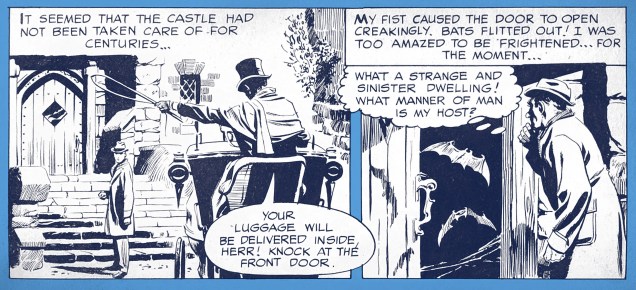
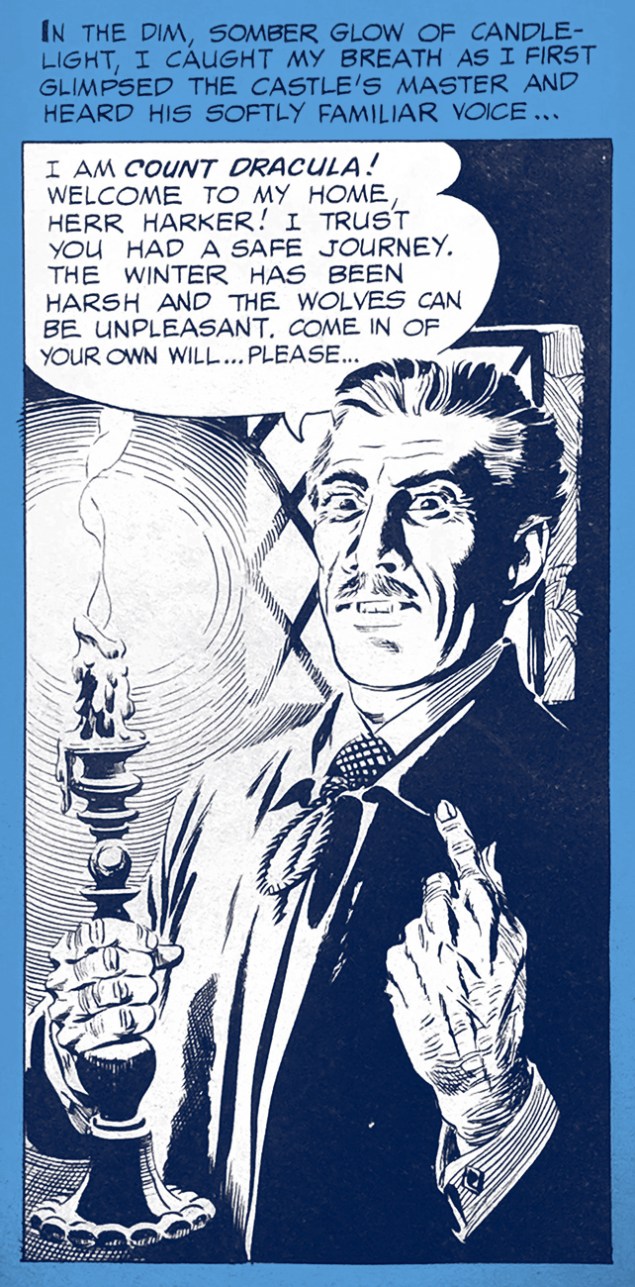
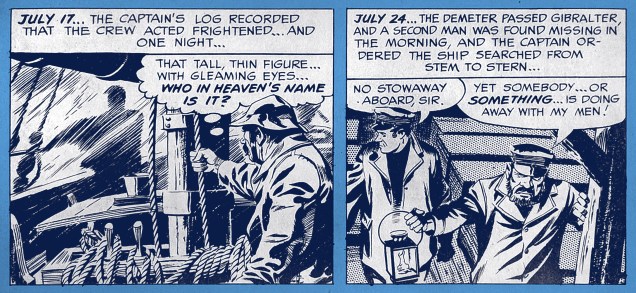
The story’s opening splash. The choice of Alex Raymond disciple McWilliams to bring visual life to this literary chestnut may not have been a daring one, but it certainly was a solid one.Jonathan Harker’s journey ends at Castle Dracula.A certain sanguinary nobleman introduces himself.A snapshot from The Demeter’s doom-laden journey to England.McWilliams has no difficulty in conveying the more… erotic facets of Stoker’s novel.
« … it was a balled-up thing… like an empty wrapper thrown carelessly aside… but somehow still recognizable as having once been human… »
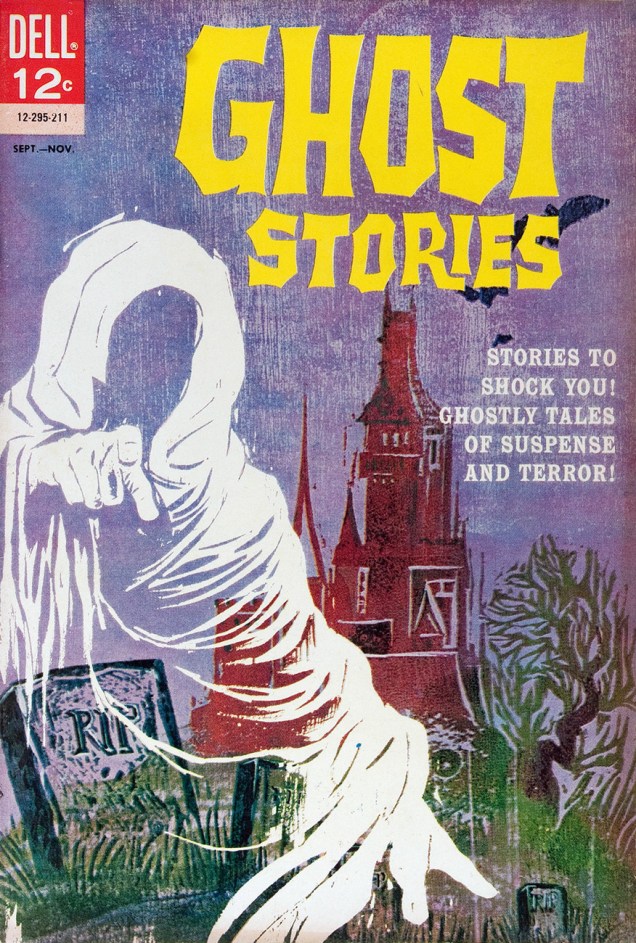
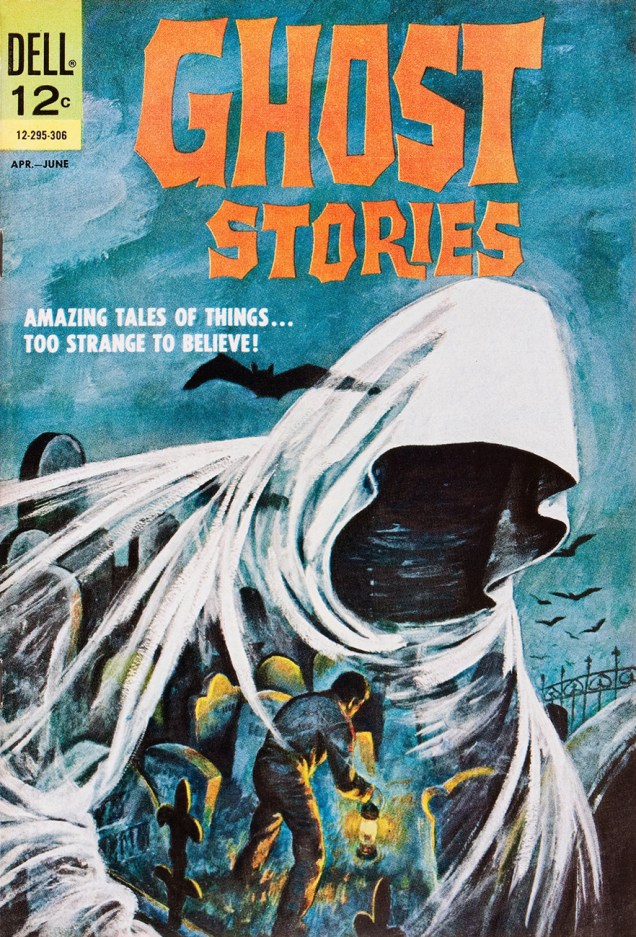
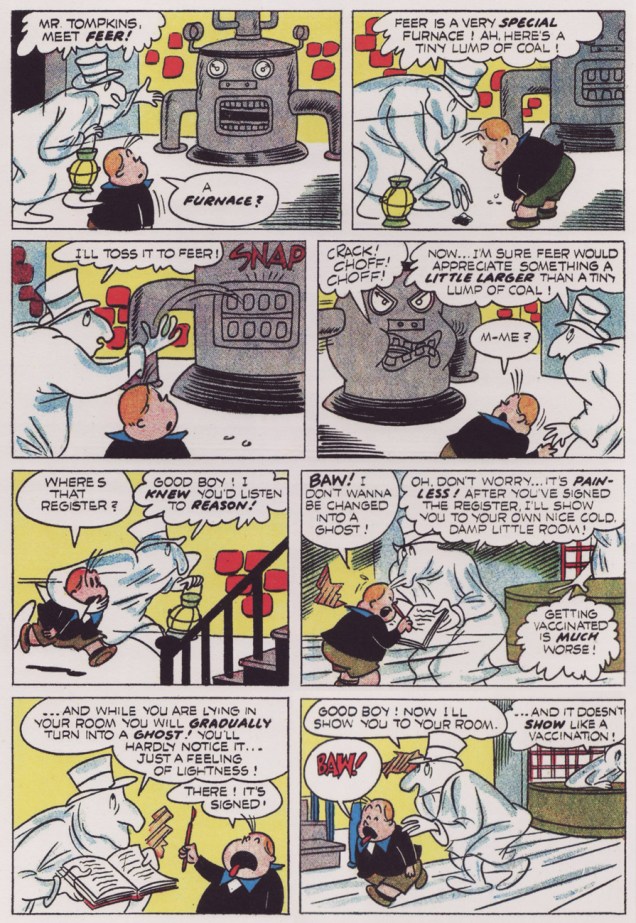
Dell’s Ghost Stories (1962-1973, with issues 21 to 37 lazily and straight-up reprinting numbers 1 to 16… with a single, perplexing exception, the all-new, surprisingly decent issue 35, late in 1972) were quite tame, trifling stuff, with one notorious bright spot: the première issue, entirely written by John Stanley (1914-1993) and comprising, amidst other excellent short pieces, what’s possibly the most nightmarish tale to see print up ’til then in American comics (particularly all-ages comics!), « The Monster of Dread End ». It represented the kind of material few comics publishers could have gotten away with at the time, save, ironically, one of the squeaky-clean stalwarts (Dell, Gilberton, Gold Key…) that opted out of the industry’s recently-instituted governing censorship board, the Comics Code Authority. Their reasoning was that, having never published anything objectionable to begin with, they were unlikely to head down that sordid path in the future.
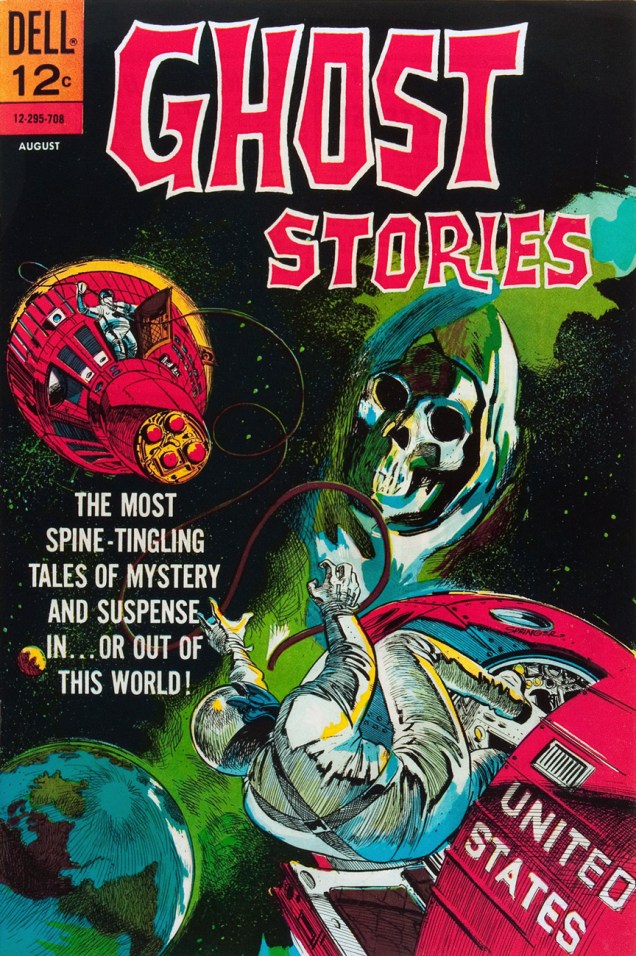
Journeyman cartoonist Frank Springer (1929-2009) provided some decent artwork through most of the book’s run, but as he didn’t have much to work with, script-wise (Carl Memling was no substitute for Mr. Stanley), the end result remains underwhelming. Looking at the bright side, he did provide a couple of quite alluring covers, the final, non-painted entries in our select little gallery.
If you haven’t already made its acquaintance, treat yourself to the nerve-tingling Number One, available gratis under the auspices of the fine folks at comicbookplus.com. Love the semi-woodcut technique used on the cover by the Unknown Artiste.Ghost Stories no. 3 (April-June 1963). Cover artist unknown.Ghost Stories no. 10 (April-June 1965). Cover artist unknown.Ghost Stories no. 19 (August 1967). Cover and interiors by Frank Springer.Ghost Stories no. 31 (January 1972). Cover and interiors by Frank Springer, price and indicia aside, a facsimile of issue 11 (July-September 1965). My own tepid introduction to the series.
Welcome to the entertaining world of science-fiction/fantasy of the 60s! If you’re an admirer of extravagant creatures with improbable anatomy, or a fan of twisted stories that take questionable leaps of logic to arrive to an implausible conclusion, willkommen.
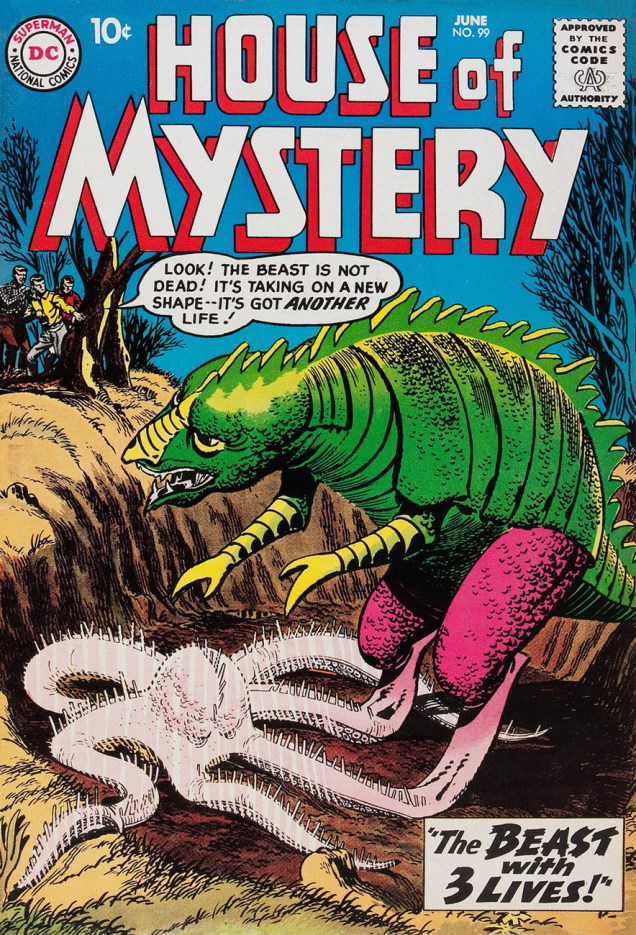
However, if, like me, you tend to root for strange creatures (most of which didn’t want to be discovered in the first place), tread gently. If there’s one pattern in House of Mystery stories, it’s that the “monsters” (that fly in from space/emerge from the sea/crawl out of the depths of the earth/are born in fire/whatever else we can think of) get slain, more often than not, by well-meaning people… or not-so-well-meaning people who are afraid of anything that looks different. If they somehow manage to escape getting shot or bombed out of existence, they’re buried under a convenient avalanche or volcanic eruption.
House of Mystery no. 99, June 1960. Art by Bernard Baily. Yep, the Beast gets killed by the military. It’s sad to think that our reaction to a friendly shape-shifting alien would be “kill first, ask questions later”… but it sadly rings true.
I know that it’s Tentacle Tuesday and everything’s possible, but… this? An octopus with spines on his tentacles (very conveniently placed, I might add) and the puffy eyes of a career alcoholic? A parrot-dragon with opposable thumbs?
House of Mystery no. 113 (1961), pencils by Dick Dillin, inks by Sheldon Moldoff and letters by Ira Schnapp. Err, guys… I don’t think either of these two monsters is all that interested in you, seeing as they both seem to be screaming in horror/pain. If the octopus is Water-Beast, the parrot must be Land-Beast – such wit! I would have gone with “pink thing” and “green bird thing”.
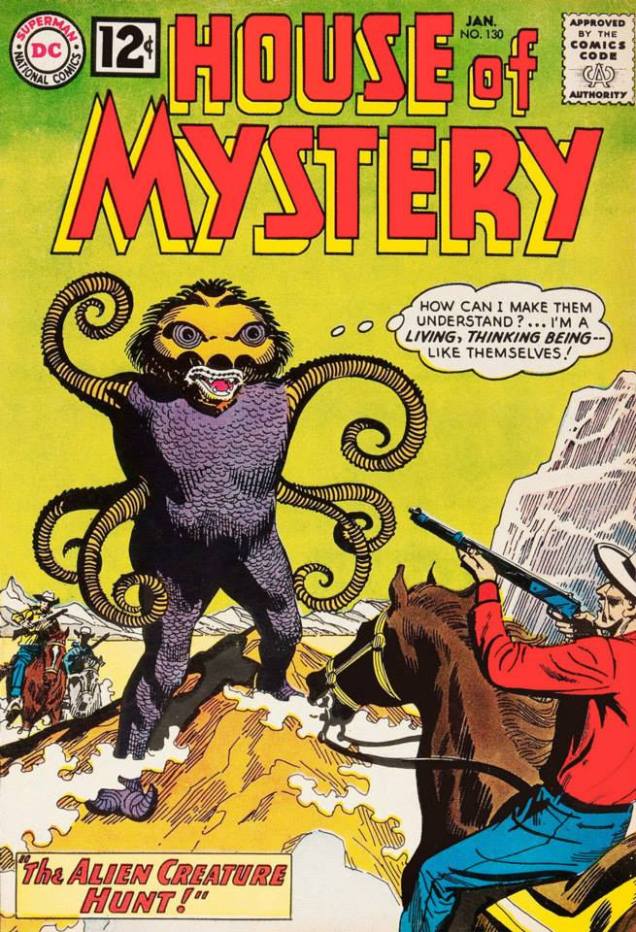
As Tentacle Tuesday continues, we are once again confronted with a situation where misunderstanding between species leads to needless conflict. Shoot first, sort it out later, is the mantra of any red-blooded man! I’m sorry, am I being a tad unsubtle?
House of Mystery no. 130, January 1963. Cover by George Roussos.
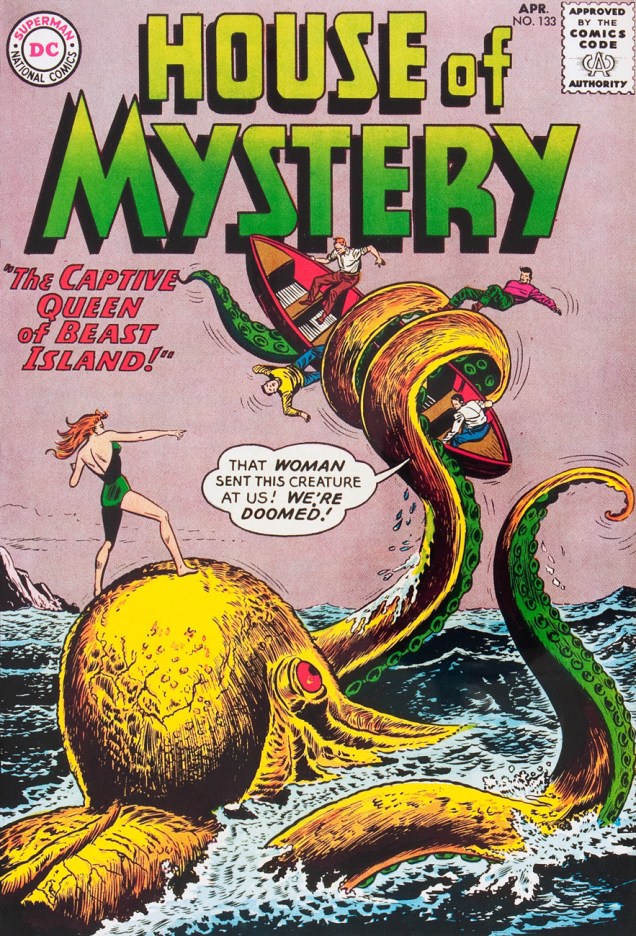
Some guys land on an island patrolled by creatures controlled by a beautiful woman. Well, there’s no need to quarrel, they can talk it out, right?
House of Mystery no. 133, April 1963. Pencils by Dick Dillin, inks by Sheldon Moldoff, letters by Ira Schnapp.
Okay, the woman seems to be friendly. So far, so good.
Art by Howard Sherman.
So perhaps everyone can go on their merry way and leave the island and its creatures alone? No, it’s not enough to just kill them. Oops! The whole fucking island explodes to smithereens when the guys detonate some explosives in a cavern and thus trigger an underwater eruption. I mean, the real threat to these “nice” people was the evil guy trying to gain control of the beasts, but do they try to attack *him*? Nah, they focus on killing the octopus, instead! And the giant armadillo! And the furry rhinoceros!
« And soon, Beast Island sinks beneath boiling, steaming waters… », the omniscient narrator tells us. « The island is gone now – and so are the terrible things that walked on it, flew over it — and swam around it! » The power-grabbing asshole is okay, though – he escaped just fine!
There’s plenty more tentacles in House of Mystery – to which we will no doubt return.
I’d like to bring to your attention that on March 22nd, 1914, more than a hundred years ago, John Stanley, American cartoonist and comic book writer extraordinaire, was brought into this world. He died in 1993 at age 79, but he left an undeniable mark on this world. (At least I hope it’s an indelible one.)
I won’t talk about his artistic parcours, as people far more erudite than I have already done it. For an enjoyable gallop through Stanley’s multi-faceted and staggeringly productive career, head over to the Comics Journal and read an excellent article by Frank Young. Want to read some stories (and have a few hours, if not days, to spare?) Visit Stanley Stories, a truly impressive blog by the same Frank Young, who scanned tons of comics and perceptively analyzed them for our great enjoyment.
Me, I’m just an devotee who likes to curl up and read his comics. I’ll share some images. The art is by John Stanley, unless otherwise specified.
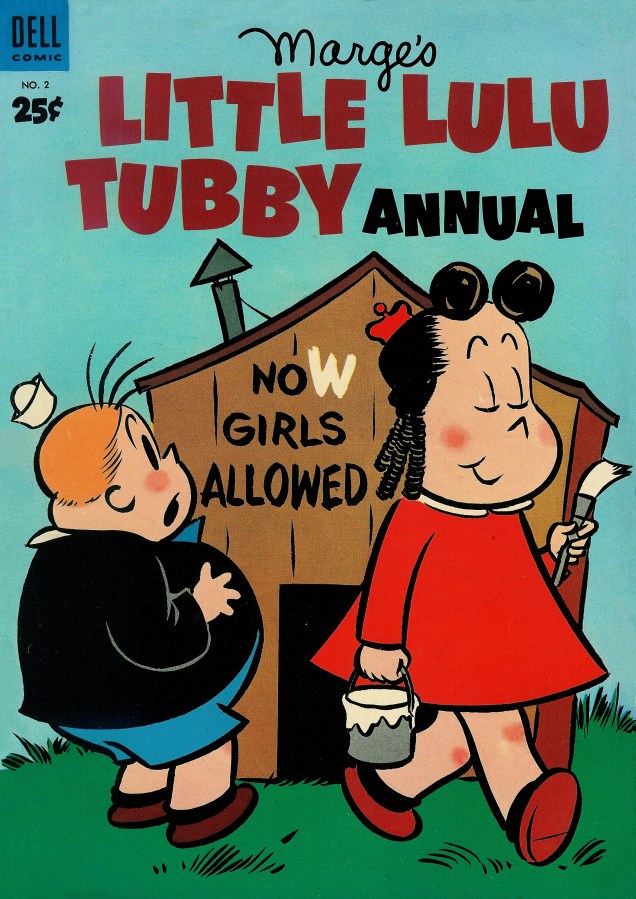
Marge’s Little Lulu no. 10 (April 1949). I recommend « John Stanley: Giving Life to Little Lulu » by Bill Schelly, published in Fantagraphics in 2017, which pieces together Stanley’s transformation of Little Lulu into the beloved, iconic figure she is today. I’ve never felt the need to have female characters to relate to, yet Lulu’s a great role-model for mischievous little girls who can pitch a mean snowball as well as any boy!Marge’s Little Lulu Tubby Annual no. 2, March 1954. Cover by Irving Tripp from a layout by Stanley. Tubby’s series is an offshoot of Lulu’s.Page 8 from « Guest in the Ghost Hotel », from Tubby no. 7 (January-March 1954). Looking for ghosts, ghouls and monsters? Look no further than Stanley comics.John Stanley took a stab at Krazy Kat stories when Dell revived the comic in 1951. Krazy Kat Comics lasted for 5 issues (presumably poor sales doomed it), all published in the same year. This is Krazy Kat no. 1, 1951.How do Beatniks while away the hours? They compose nonsensical poetry, noodle it out… and dig girls, of course. Kookie was John Stanley’s creation; the series was written and laid out by him. Unfortunately, it was very short-lived, running for a grand total of 2 issues. This is Kookie no. 1, February-April 1962. The handsome painted cover is by Bill Williams from a layout by Stanley. You can read the issue here.Dunc And Loo no. 6, April-June 1963. Cover by Bill Williams from a layout by Stanley.Lou (of Dunc & Lou) was apparently destined to be a newspaper strip, but never made it.Melvin Monster no. 2, July-September 1965.O.G. Whiz no. 1, February 1971.An inside page of O.G. Whiz, with very typical madcap Stanley action.It’s not all fun, though: « The Monster of Dread End », written by John Stanley for Ghost Stories no. 1 (Dell, September-November 1962), is genuinely scary. Art by Ed Robbins.
And I haven’t even mentioned Stanley’s Nancy, nor her friend (and my favourite character) Oona Goosepimple. Next time… pick yourself up a copy of Drawn & Quarterly’s Nancy: The John Stanley Library, and happy reading!
































 Who's Out There?