Q: What’s Michael? A: Kobayashi’s Most Special Cat

« Michael is, simply put, Japan’s version of Garfield, Heathcliff and Krazy Kat all rolled into one. » — Wizard: The Guide to Comics*

* I actually disagree with all three comparisons, aside from the fact that the first two comics are also about orange cats, but this is the review Dark Horse used to promote the series.

What’s Michael? (ホワッツマイケル? in Japanese) is a comic series by Makoto Kobayashi about a cat named Michael who goes about his cat life in a pretty standard way. He spends most of the day snoozing, has distinct food preferences, and likes to meow loudly at night while courting his favourite cat lady. One would not be entirely unjustified in thinking that cat lovers will read any old comic that prominently features felines (I have occasionally been guilty of that myself!), but I am convinced that there’s something special about this series.

One of the things that makes it so endearing is that Kobayashi has a very good grip on feline body language, making it fun to follow even the poorest excuse for a plot, like for instance Michael contemplating which cozy enough spot to select for a nap. That being said, he doesn’t limit himself to realistic cat situations, often featuring cats acting like (very goofy) people, parodying human and feline at the same time.

Natural cat body language… and different ways in which cats just can’t bend, cheerfully pointed out.

Some readers are more interested in the outlandish stories, of which there are many (ranging from cat parodies of various movies to plain weirdness), some develop a soft spot for the recurring human (or semi-human) characters. Michael himself switches owners like switching gloves, depending on the needs of the story, and there is not much continuity. Kobayashi’s ideas can be a little hiss or miss, but there’s something here for everyone… provided you like felines, of course… adventures of a vampire count who is scared of cats are side-by-side with wacky cat food commercials, depictions of everyday life of various cat-besieged country bumpkins alternate with cat street gang rumbles, and all of that is sprinkled with humans-as-pets interludes. And, naturally, our ordinary yet handsome tabby Michael drinks, sleeps and plays alongside Popo, his wife, their kittens, and a rotating cast of other cats (Catzilla comes to mind!) and the poor, often put-upon dog nicknamed Bear.

The Count’s quest for a pretty neck to bite is, as always, thwarted by Michael or one of his relatives.
Michael, Popo and their kittens on the prowl for a soft spot for a snooze.
One of the strip’s running jokes is that Michael passionately hates Morning Cat canned food, and will go to ridiculous lengths to avoid eating it.

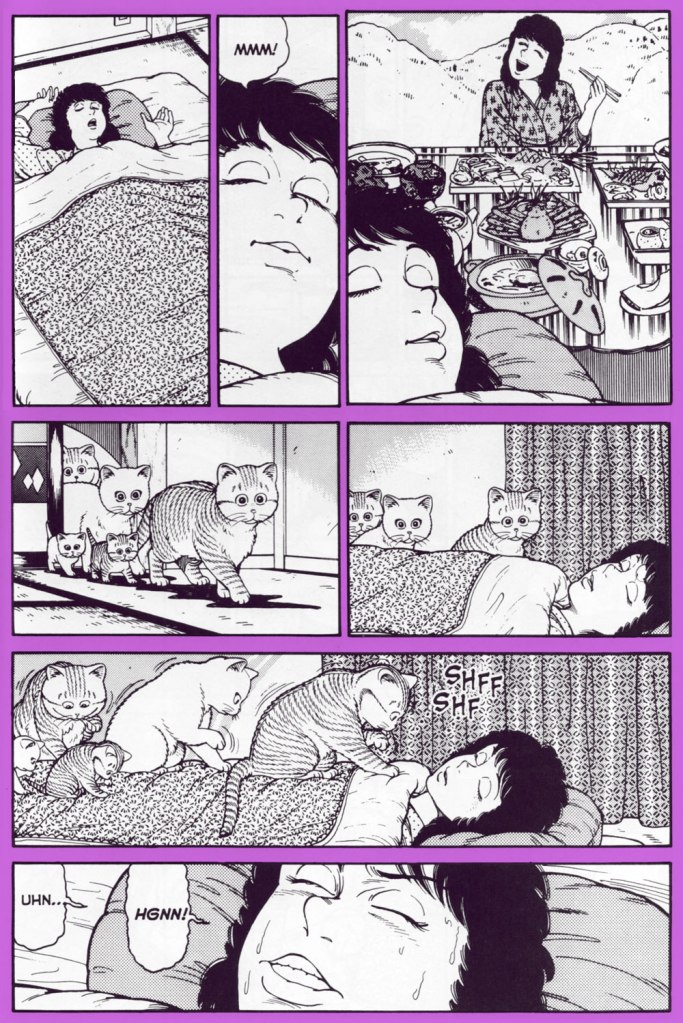
The following sequence illustrates one of Kobayashi’s favourite tricks, namely to start off with more-or-less normal cat behaviour and veer off into an unexpected direction:

As you have probably noticed, Kobayashi often opts for exaggeration when it comes to people’s facial expressions, which sometimes leads to results that are more grotesque than funny. He also enjoys drawing pretty women, but that is more obvious elsewhere, for instance in his series Club 9 (Dark Horse has published 3 volumes of that and abandoned the project before the story’s end, much to my annoyance).

In Japan, What’s Michael? was published in the weekly magazine Morning starting in 1984, and it even won the Kodansha Manga Award in 1986. There seems to also have been quite a few collections released.

One of the Japanese editions of volume 1 and 2.
Cover of another collection from 1987; Bear likes to sit and watch cats playing.

In 1988, its popularity was also rewarded with a 45-episode anime which was also broadcast in Italy and Spain (at least according to a Russian article I found). The following is the cover of a collection of these episodes, as far as I could ascertain:

In the US, it was published by Dark Horse‘s manga imprint. I am not entirely sold on the translation (the aforementioned country bumpkins, for instance, talk as if they were in a cheesy would-be Western written by somebody who has no understanding of the genre), and it also bothers me that the comics were published in the standard American left-to-right reading direction. I think it is a relatively recent phenomenon to leave manga as it was drawn when translating it into European languages – audiences have become more refined.
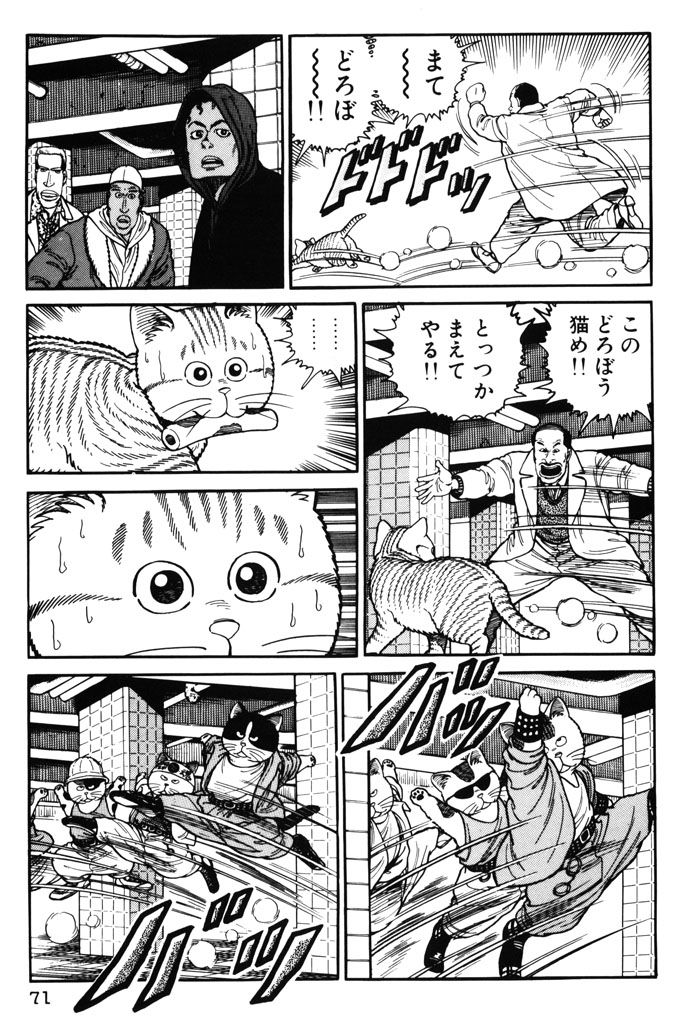
An example of the story going interestingly off the rails, in the proper right-to-left format.

Apparently there are stories that have never been translated, as they were deemed unfit for Western audiences (those intrigue me, yet my knowledge of Japanese is nil!), but those that were selected by whomever is in charge of these decisions have been collected in 11 volumes, published between 1997 and 2006. Most of them are quite out of print by now; I managed to gather all eleven over the years, though while writing this post I discovered that Dark Horse has decided to rescue this series out of its out-of-print-darkness and re-publish the works in two 500-page volumes. Am I going to purchase those? Yes, of course, as there is bonus material involved! Though the wrong reading direction remains wrong, alas.
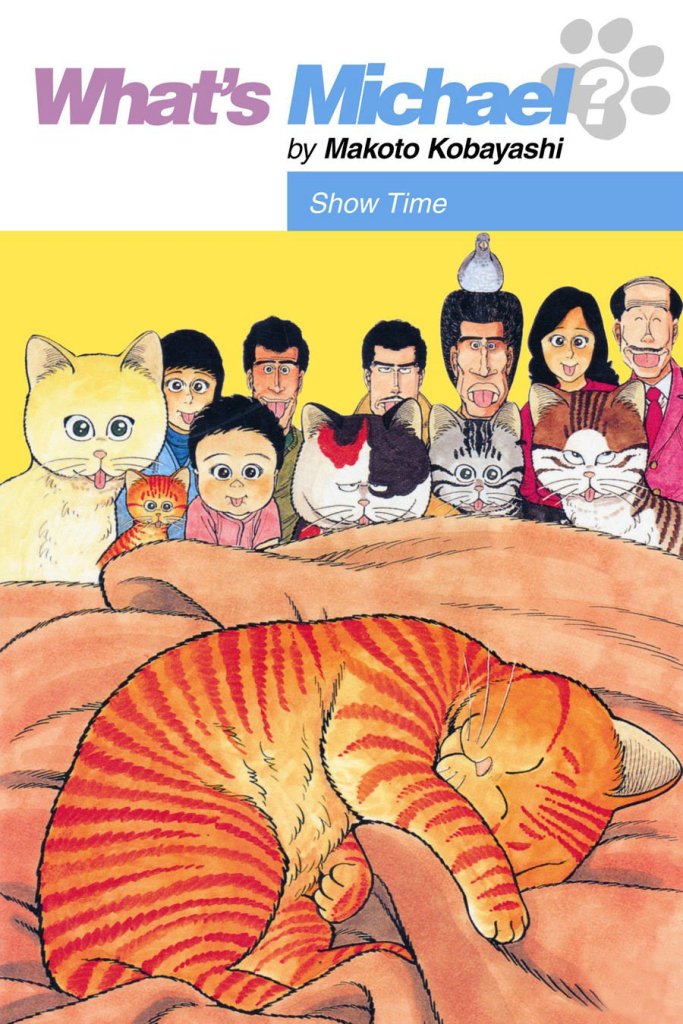
Volume 8 of Dark Horse’s initial What’s Michael? run.

I enjoyed reading a review of the first volume of the reissue on Al’s Manga Blog, and maybe you will, too: What’s Michael? Fatcat Collection Vol 1.

~ ds
Tentacle Tuesday: Treehouse of Tentacular Horror

Treehouse of Horror episodes are easily my favourite Simpsons material, and not just because Hallowe’en is the most interesting ‘holiday’ of the year (in my hardly humble opinion). Of course, abandoning the pretence of any continuity makes for entertaining, anything-goes storytelling, but what I find especially appealing is that these little gems take the Simpsons’ brand of humour, admittedly already somewhat dark, and kick it up a notch all the way into full-blown black humour and gore.

The comic books series of the same name continued this tradition, offering readers a fun grab bag of horror and science fiction film parodies, literary references and just plain madcap-yet-macabre nonsense. Not all stories are good; plots vary widely in quality, and even a good plot falls flat in the hands of an artist lacking the expertise to pull it off. However, through the years (there are 23 issues of total, published between 1995 and 2017) a number of illustrious comic artists and writers have contributed their talents to this misshapen, haphazardly hammered treehouse.

You will not be too surprised to hear that a number of stories included tentacles, be it in a secondary capacity or featured front and centre. The quotidian presence of aliens Kang and Kodos ensures that, but there are also a number of plant and chest hair tendrils, Homer-as-octopus, Cthulhu guest appearances and god knows what else. The following is by no means an exhaustive list; I have striven to include a bit of everything. Two stories have made it into previous Tentacle Tuesdays (see Tentacle Tuesday Masters: Hilary Barta and Tentacle Tuesday: tentacles, some fresh, some older than time).

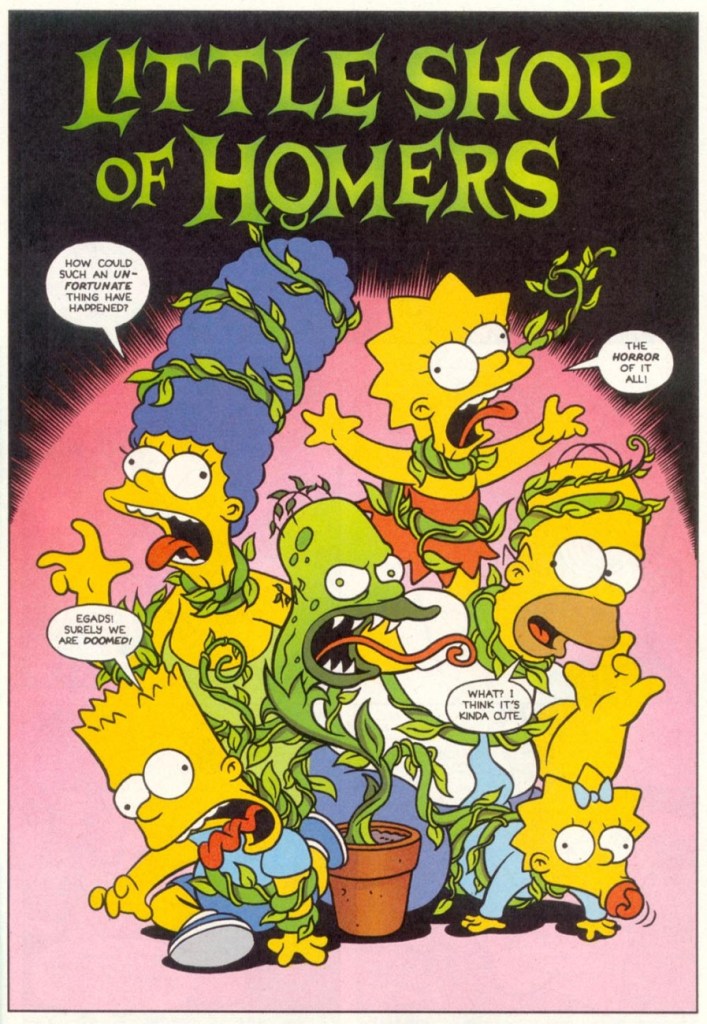
We start with Treehouse of Horror number one and its parody of a Little Shop of Horrors.

Little Shop of Homers, scripted by Mike Allred and pencilled by Luis Escobar and Bill Morrison, was published in Treehouse of Horror no. 1 (October 1995).

The cover of number two features… err, is that Kang or Kodos? with tentacles in full display. You may insert a ‘all aliens look alike’ joke here, to be fair, these two can mostly be told apart by their voice, Kang’s being deeper.

Treehouse of Horror no. 2 (September 1996). Cover by Bill Morrison, who, incidentally, is the co-founder of Bongo Comics and creator of Roswell: Little Green Man.

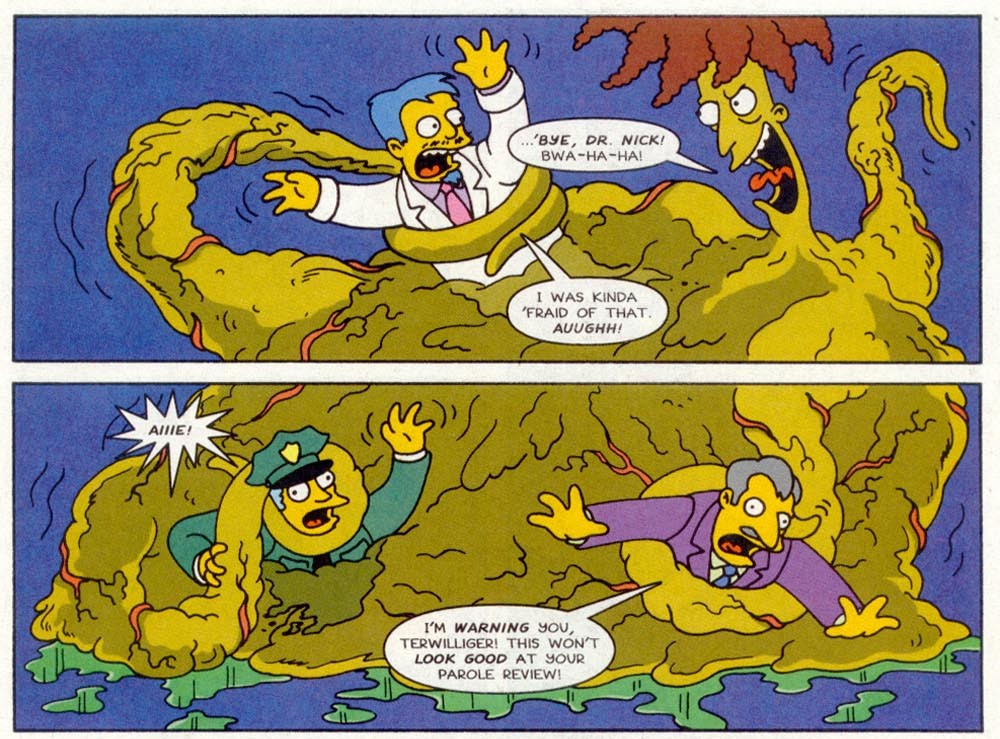
The insides offer us the tentacles of Sideshow Bob, whose transformation into a blob is distinctly cephalopodian in nature.

Sideshow Blob! was scripted by Paul Dini and illustrated by Bill Morrison and Tim Bavington.

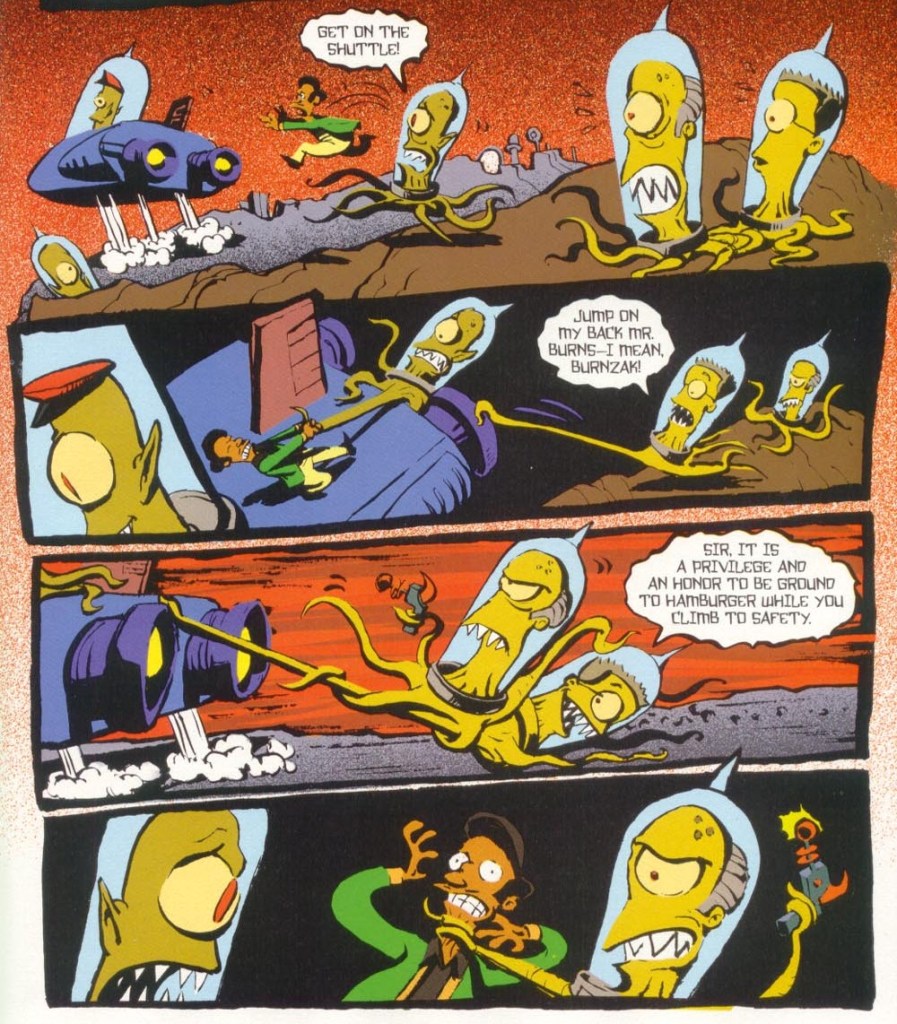
Skipping over a few tentacle-less issues (for shame!), we arrive at number five, in which Mr Burns and Smithers, having been turned into Rigellians, demonstrate a proficient use of tentacles for their god-intended purpose, namely grabbing and choking.

Apu on Rigel 7, written and illustrated by Doug TenNapel, was published in Treehouse of Horror no. 5 (September 1999). I’d like to say a few words about TenNapel, here: my first encounter with his sense of humour was through the video game Earthworm Jim, which has retained a special place in my heart though I last played it some twenty years ago. I’ve read some of his graphic novels, and though I was mostly underwhelmed, TenNapel’s wild imagination was a pleasure. Having said that, his politics and beliefs have led him to gradually transforming into a judgmental asshole, which is completely at odds with the empathy he displays in his comics.

Leaving Kang and Kodos behind for now, we can play the game ‘option A or option B’: if somebody was forcing you to choose between having a third eye or tentacles instead of hands, which would you go for?

Treehouse of Horror no. 9 (September 2003); cover by Bill Morrison. Here we see how Homer has opted for the more destructive, tentacle-hands choice.

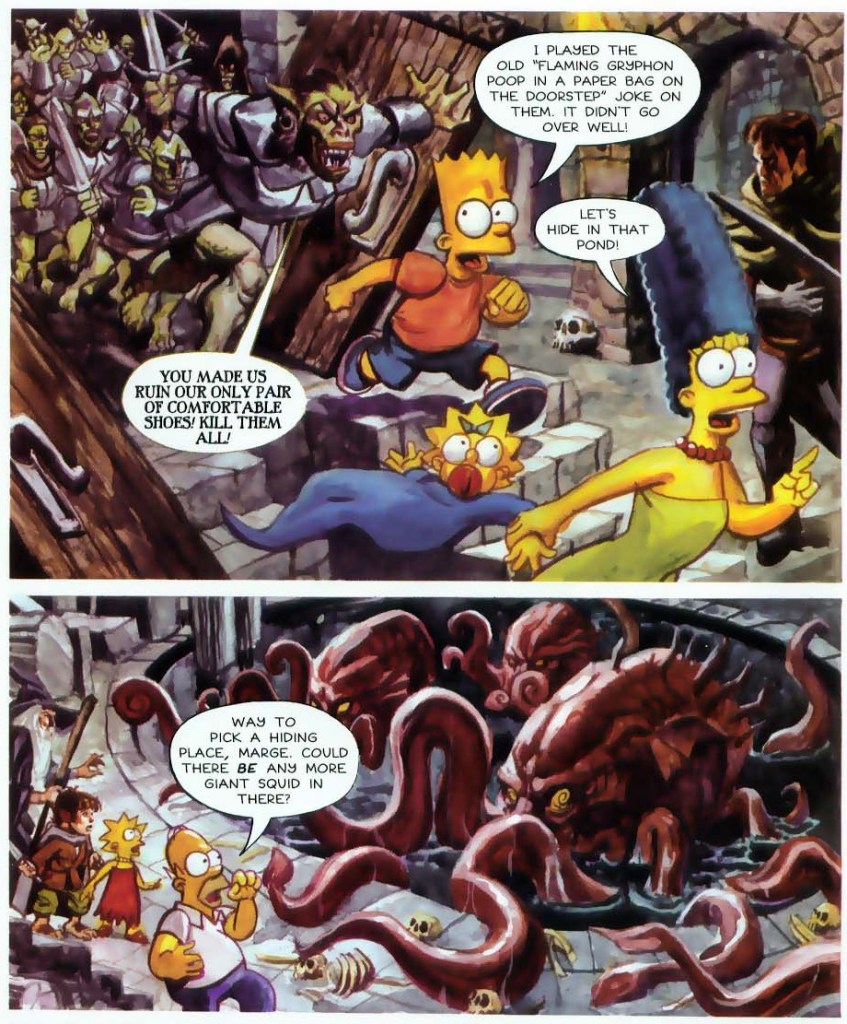
The following, incredibly boring parody of LOTR at least offers one genuine octopus, perhaps supposed to be the Watcher in the Water.

Ring Around the Simpsons, scripted by Ian Boothby and illustrated by Dan Brereton.

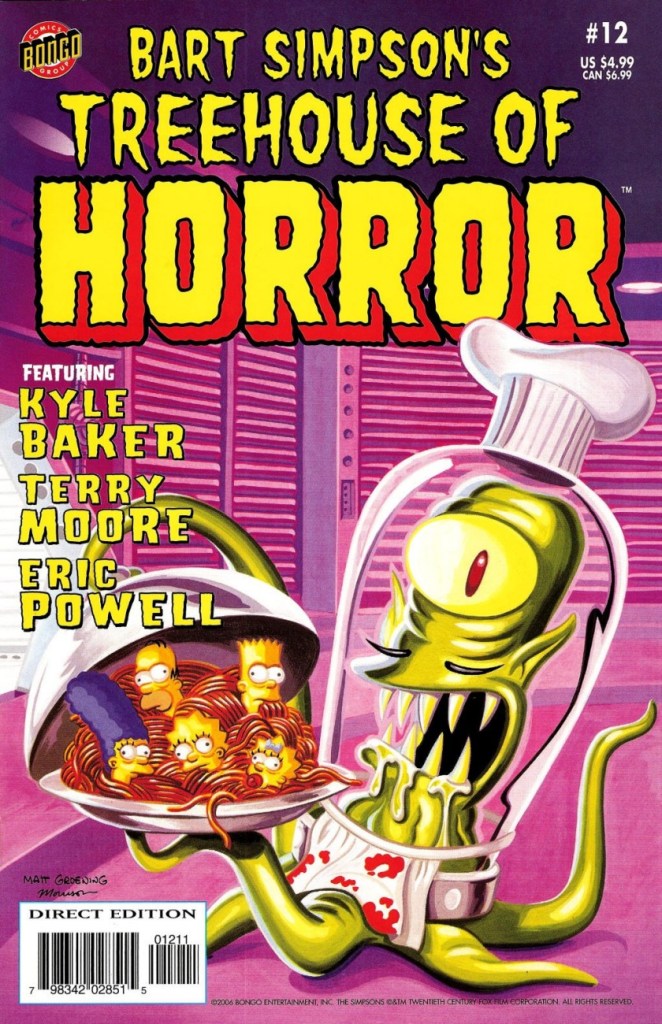
The following cover is Kodos (or Kang? sorry, guys) again, which I’m including because I like it…

Treehouse of Horror no. 12 (September 2006). Cover by Bill Morrison.

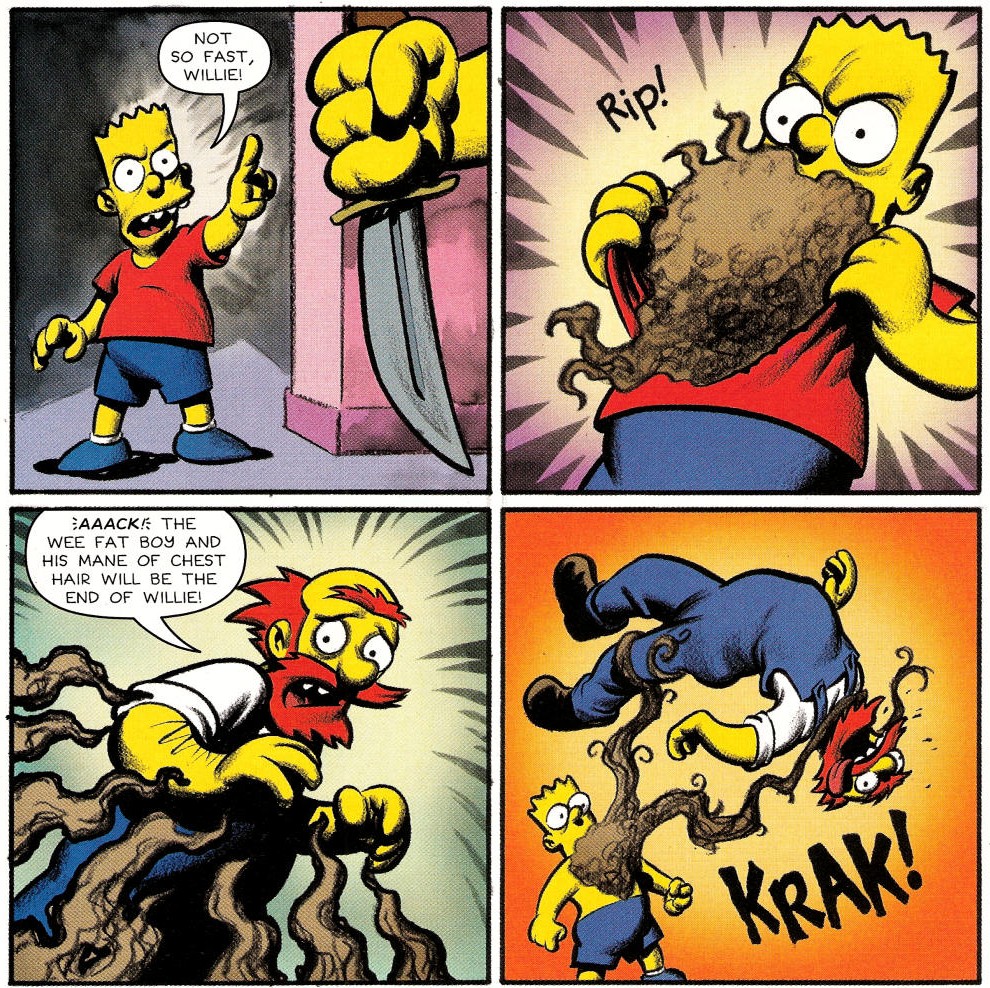
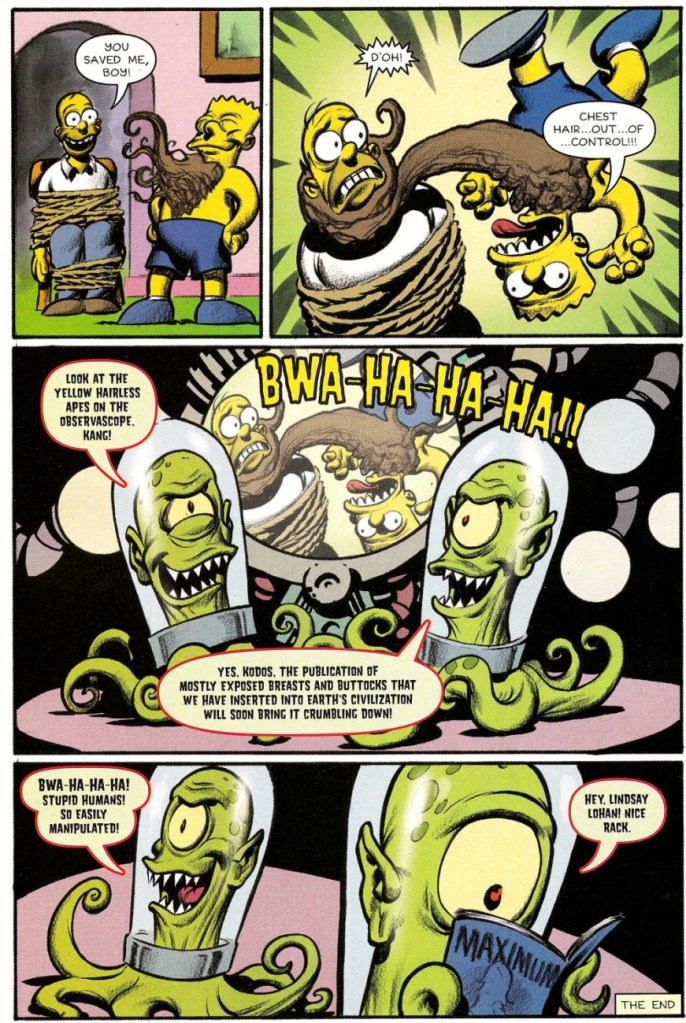
… and because one of its stories featured a somewhat original interpretation of tentacles: chest hair!

Willie: Portrait of a Groundskeeper was written and illustrated by Eric Powell.
Aliens’ penchant for busty human females is one of those mysteries of life…

One of my favourite tropes, octopus-in-the-library (wait… it’s not actually a trope, but it should be!), is aptly used in number thirteen:

Prop, Prop, Whiz, Whiz!, scripted by Ian Boothby and Pia Guerra, pencilled by Pia Guerra and inked by Terry Austin, was published in Treehouse of Horror no. 13 (September 2007).

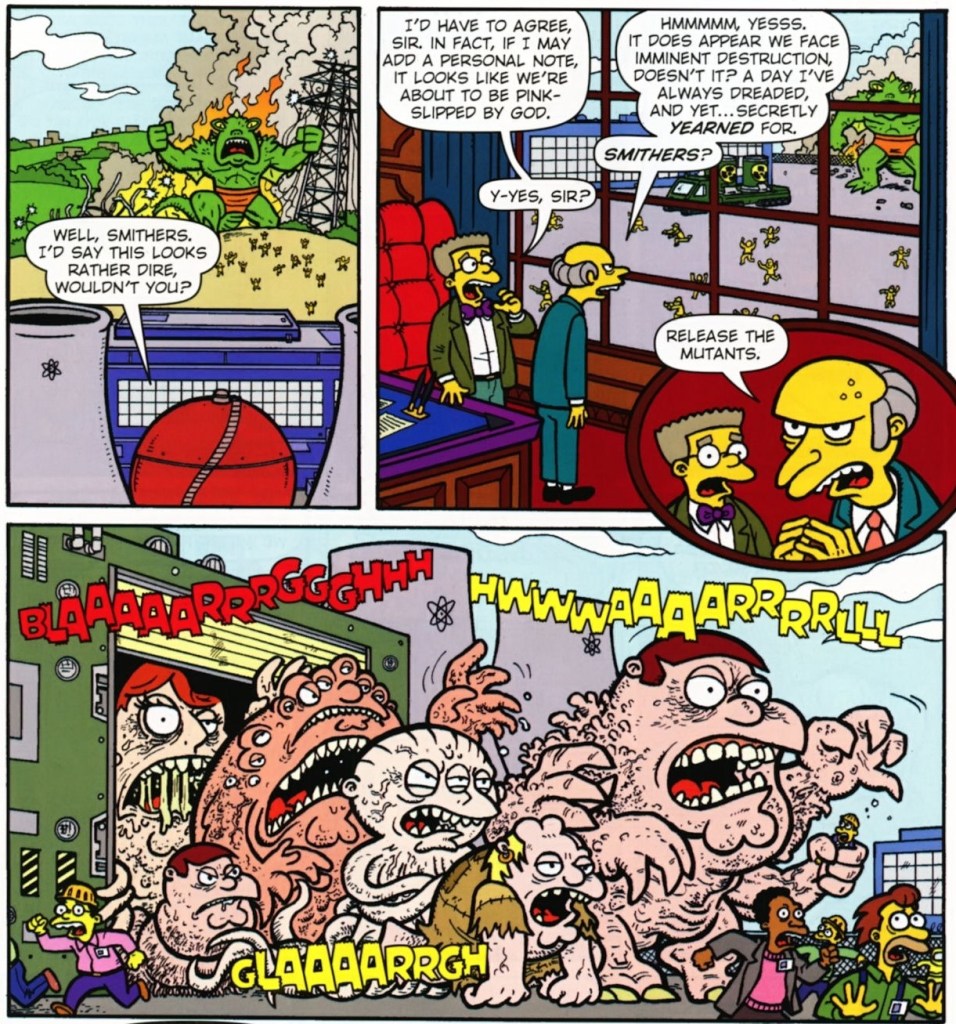
Mutants with tentacles traipse on in number sixteen…

I Screwed Up Big-Time and Unleashed the Glavin on an Unsuspecting World!, scripted and illustrated by Evan Dorkin, was published in Treehouse of Horror no. 16 (September 2010).

… and plant tentacles rear their acquisitive little tendrils again in number eighteen.

Treehouse of Horror no. 18 (September 2012). Cover by Tentacle Tuesday Master Hillary Barta!

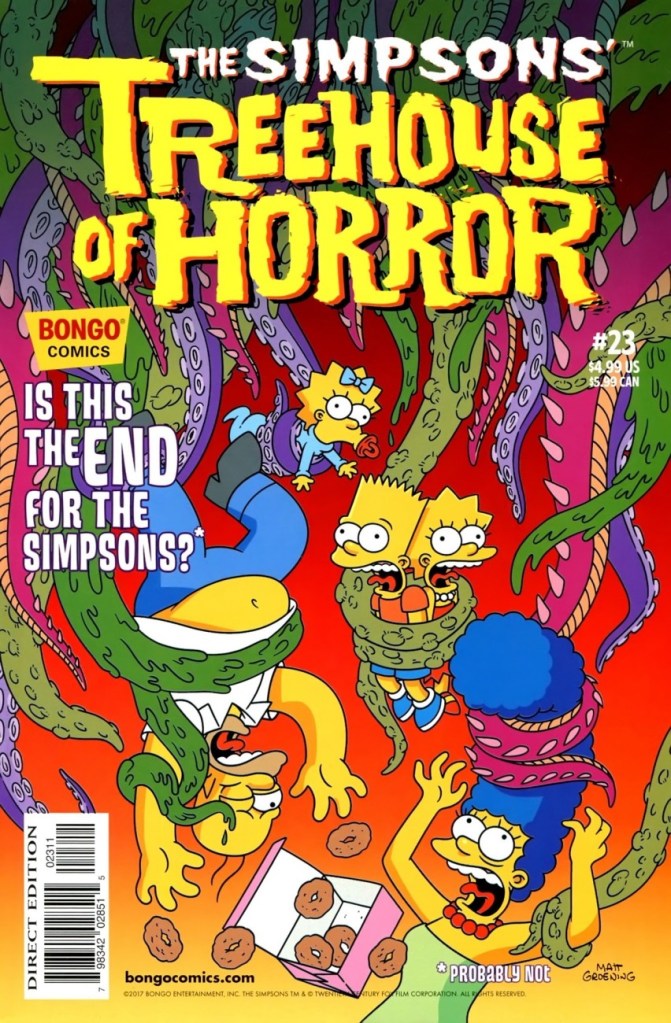
Finally, the last (alas!) cover of this series feature tentacles a’plenty! What a great note to end this on.

Treehouse of Horror no. 23 (September 2017). Cover pencilled by Jason Ho and inked by Mike Rote.

~ ds
Tentacle Tuesday: Octopus Cameo*

*No, I am not referring to the popular company that lets customers hire favourite ‘stars’ to record personalized videos; a month ago, I didn’t even know this existed, and my life has not been improved by this knowledge.

Sometimes an octopus stays politely in the background, waving hello shyly from behind a rock, or waiting for a dance invitation like a bashful kid at a high-school dance (do they still have these?) I never know where to use these covers; their tentacled nature is undeniable, but their octopuses are so peripheral to the main story that they tend to be overlooked when I am in search of a unifying theme for a post.

cam·e·o/ˈkamēˌō/

a small character part in a play or movie, played by a distinguished actor or a celebrity.

a piece of jewellery, typically oval in shape, consisting of a portrait in profile carved in relief on a background of a different colour.

I’m not sure this counts as a “portrait in profile”, but I will happily accept it as a cameo.

All right, on to the comics…

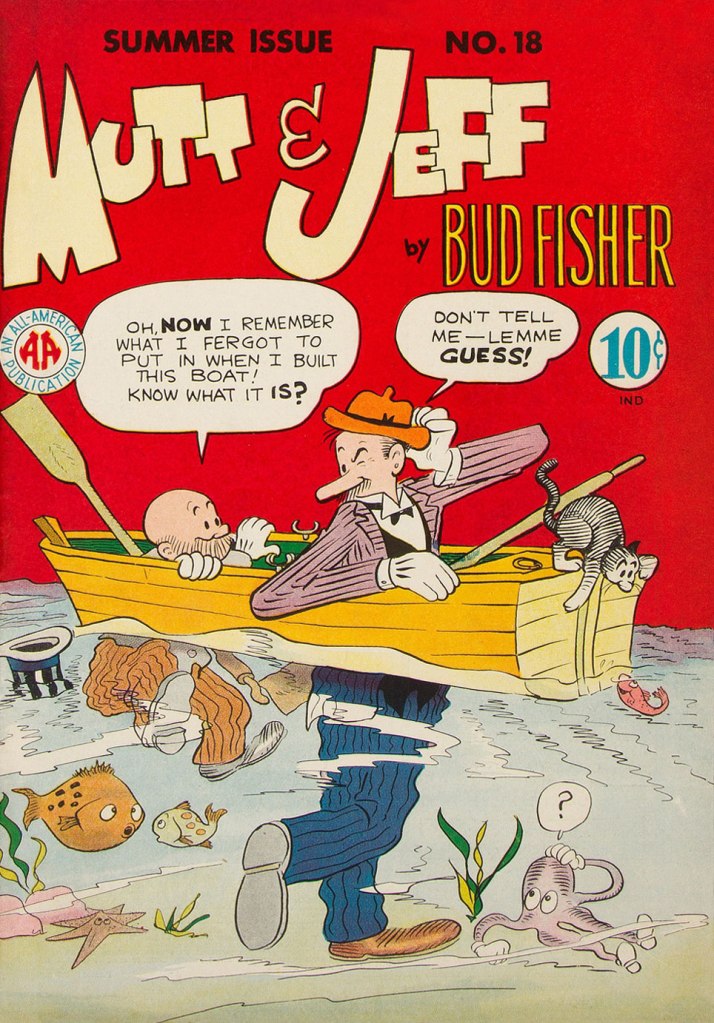
Mutt & Jeff no. 18 (Summer 1945, All-American). Cover is by Sheldon Mayer. So the octopus has only four tentacles, but he’s a cutie!

Mutt & Jeff have already been part of a Tentacle Tuesday line-up, but the main interest here is Sheldon Mayer, a big favourite at WOT. Don’t believe me? Set your orbs on Yesterday’s Tomorrow’s Teenagers: Sheldon Mayer’s Sugar and Spike.

Life with Archie. no 41 (September 1965, Archie). Cover by Bob White.

Co-admin RG rounded up quite a few of his favourite Bob White covers in Bob White, Forgotten Archie Artist and More Bob White, Lost Archie Artist – I highly recommend to have a look at both posts!

Treasure Chest vol. 22 no. 9 (December 1966, George A. Pflaum). Cover by Reed Crandall. This cover is of course dedicated to Jules Verne.

Treasure Chest, a long-running catholic publication we mention routinely though not too often (for details, see co-admin RG’s Hallowe’en Countdown IV, Day 24), runs the gamut from informative to fun, sometimes both at the same time. There are occasional clunkers (like the admittedly rather entertaining multi-part story I am currently reading about Godless Communism), but overall it’s well worth picking up, should some issue catch your eye.

Can you spot the octopus, right there in the window? He’s all set to escape, I think. Bonus: bats! As the top says, this is a strip from June 1970, scripted by Brant Parker and Johnny Hart, with art by Parker. These two have created The Wizard of Id in 1964, so this strip has been around for quite a while…

I originally had in mind happy, frolicking octopuses for this post, so here is one instance of just that. As a matter of fact, his smile is somewhat unnatural and more of a rictus, but I don’t want to be picky…

Bunny no. 14 (March 1970, Harvey). Cover by Hy Eisman. More (dubious) puns than one can shake a stick at… it’s almost like reading a Piers Anthony novel.

I’ll quote from Don Markstein’s excellent summary of this hare-brained comic series: « Bunny was aggressively, even obsessively trendy. Even at the time, it seemed to lay on the love beads and “psychedelic” display lettering a bit thick. […] But she owed her painfully discordant Sixties-ness to nobody. […] It’s as if her entire raison d’être was to parody the decade of student activism and radical youth fashions, even while living it. To make matters worse, this teenage girl comic was edited, written and drawn by middle-aged men who were probably, like most middle-aged men, unable to communicate with their own daughters. To vary the dialogue, in which everything that wasn’t “groovy” was “outasight”, they made up their own slang. Things could also be “zoovy” or “zoovers” or even, in extreme cases, “yvoorg” — which was obviously “groovy” spelled backward, but no hint was ever given as to how it might be pronounced. »

~ ds

Tentacle Tuesday: Tender Tendrils of Vernal Bloom

« Is the spring coming? » he said. « What is it like? »
« It is the sun shining on the rain and the rain falling on the sunshine… » | Frances Hodgson Burnett, The Secret Garden

Having been meaning for a while now to concentrate on tentacled plant life, I was hitherto stopped by the idea that it’s somewhat unseemly to talk about flora when most of our readership is buried in snow and ice. But now, well! – today was the first day of the year suitable for wearing shorts, and green shoots are popping up wherever one’s gaze happens to land.

We have waited for quite a long time before co-admin RG managed to get his hands on this issue… and it turned out that the insides vary from ‘lacklustre’ to ‘wow, that’s ugly!’ Still, the wonderful, striking cover makes it worth owning, I believe.

Horror: The Illustrated Book Of Fears no. 2 (February 1990, Northstar). Cover by Mark Bernal.

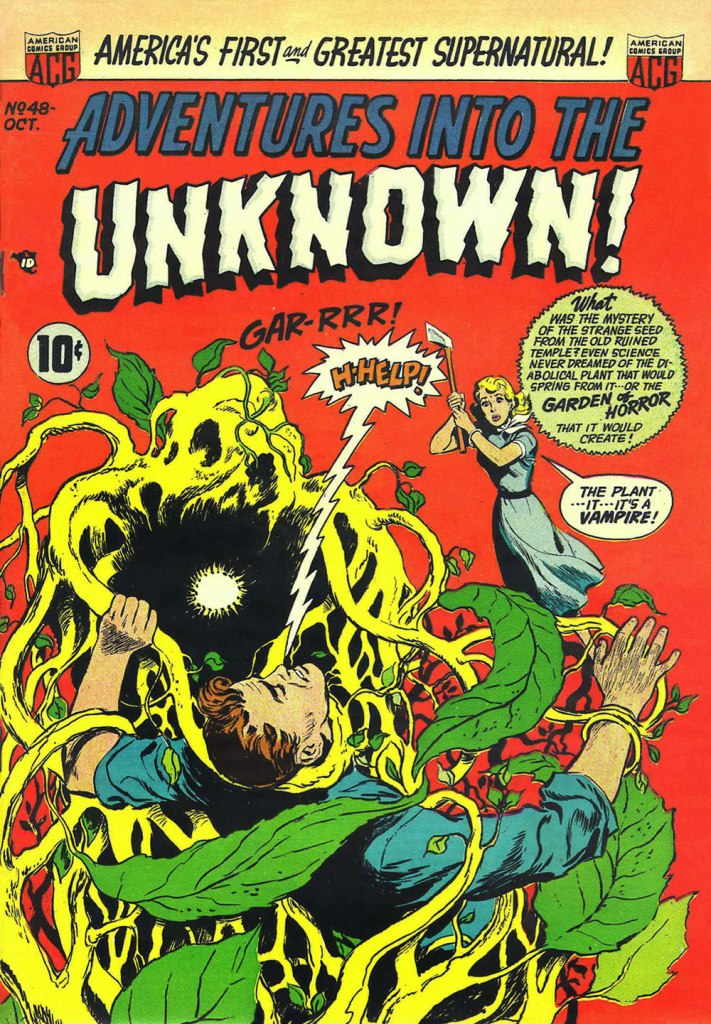
ACG got its tentacle parade in Tentacle Tuesday: ACG’s Adventures Into the Tentacles, but as usual, some material didn’t quite fit the theme, and I saved the following cover for a more appropriate occasion. This, I do believe, is the moment.

Adventures into the Unknown no. 48 (October 1953, ACG), cover by Ken Bald.

Speaking of adventures, let’s delve into Strange Adventures for a bit. The following story has a rather peculiar plot – « Star Hawkins is down on his luck and has to pawn Ilda, his robot secretary. Luckily, Star is hired to locate a fugitive who’s thought to be hiding on Vesta, an asteroid mining settlement, in the Red Jungle. But with a little tracking skill and the help of the creepy vegetation of the Red Jungle, he nabs the fugitive, gets his prisoner, and gets Ilda back from the pawn shop, promising never to pawn her again. »

Page from The Case of the Martian Witness!, scripted by John Broome, pencilled by Mike Sekowsky and inked by Bernard Sachs, published in Strange Adventures no. 114 (March 1960, DC).

Here’s another Earthman (who has dreamed of this moment, by his own admission!) struggling with some coquettish plant tentacles that just want to be friends.

A page from Super-Athlete from Earth!, scripted by Gardner Fox, pencilled by Gil Kane and inked by Bernard Sachs, published in Strange Adventures no. 125 (February 1961, DC).

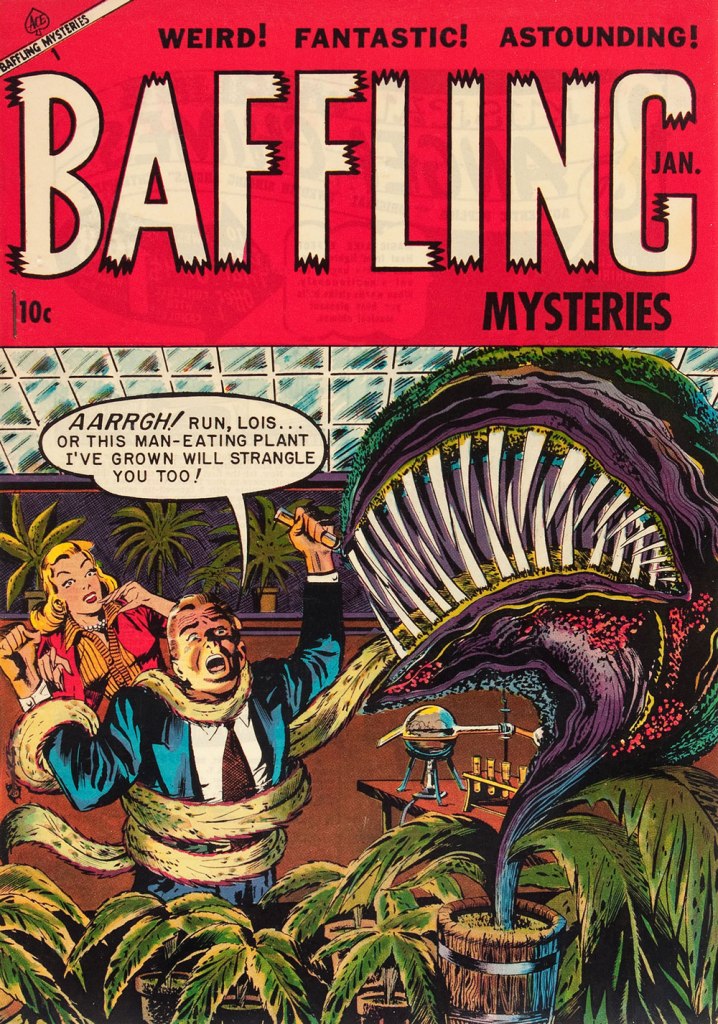
The next thing after adventures is, naturally, mysteries. If they’re strange, puzzling mysteries, even better… what’s that word I’m looking for… ah, yes: baffling! Another day, yet another ravenous man-eating plant.

Baffling Mysteries no. 19 (January 1954, Ace Magazines). Cover is presumed to be by George Roussos. I think strangulation is not even the worst option here.

One more happy tromp through the jungle? Sure, why not!

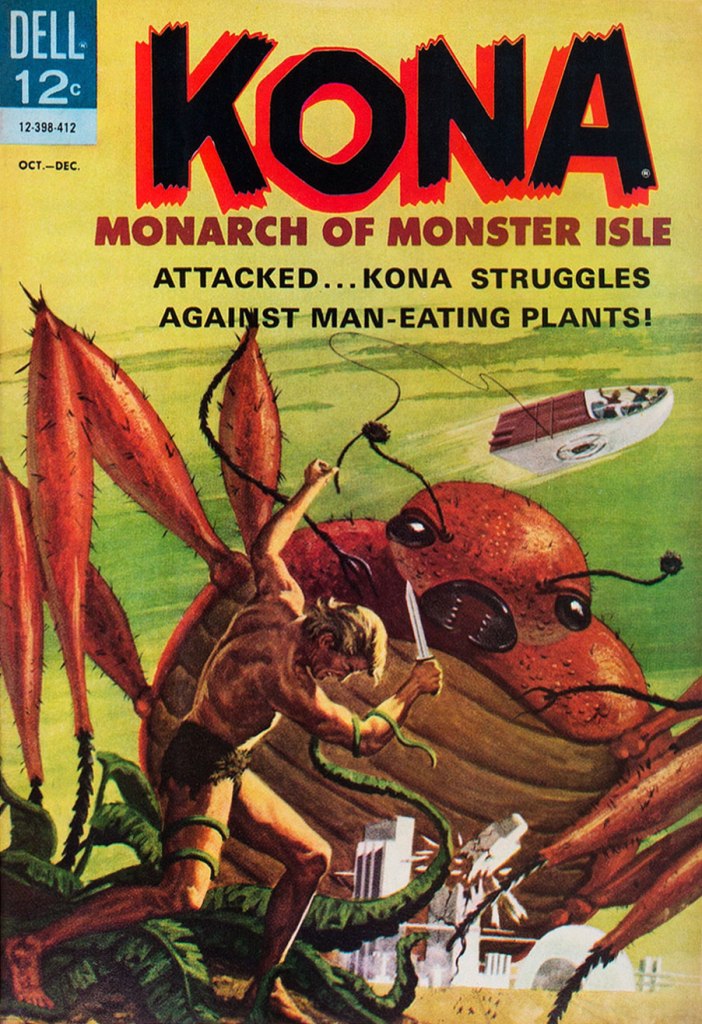
Kona no. 12 (October-December 1964, Dell). Cover by Vic Prezio. This giant ant-crab (?) is but one in a long line of supersized animal threats Kona has had to defeat.

The following image was originally created as a cover for House of Mystery no. 251 (1977, DC), but was nixed in favour of another, Neal Adams-penned illustration, which we’ve already featured in a previous post (Tentacle Tuesday: Plants Sometimes Have Tentacles, Too). I prefer this gruesome version (complete with skeleton being digested!… also more detail, more dynamic layout and better anatomy of all involved), pencilled by José Luis García-López and inked by Bernie Wrightson.

Happy gardening to all! And have a look at last spring’s tentacled plant post Tentacle Tuesday: Spring Has Sprung… Its Snare! while you’re at it!

🌱 ds

Tentacle Tuesday: The Whole Merry Menagerie

The tentacled well of funny animal insanity from the Golden Age is nearly bottomless. Just when I think I’ve more or less covered it all, some new goofy octopus cover that I have never seen before pops up, or an unhinged inside story swims by and waves a cheerful ‘hi there!’ with a free tentacle.

Never mind Mickey Mouse, Donald Duck, or Bugs Bunny. We have Supermouse, Dizzy Duck, and Hoppy the Marvel Bunny! Oh, and also the absurdly (even by funny animal standards) named Peter Porkchops.

This page from a Supermouse story was published in Coo Coo Comics no. 41 (September 1948, Pines Publishing); artist unfortunately unknown. For more (perfectly aptly titled) Coo Coo Comics, visit Tentacle Tuesday: Ha-Ha and Coo-Coo With Frolicsome Animals.

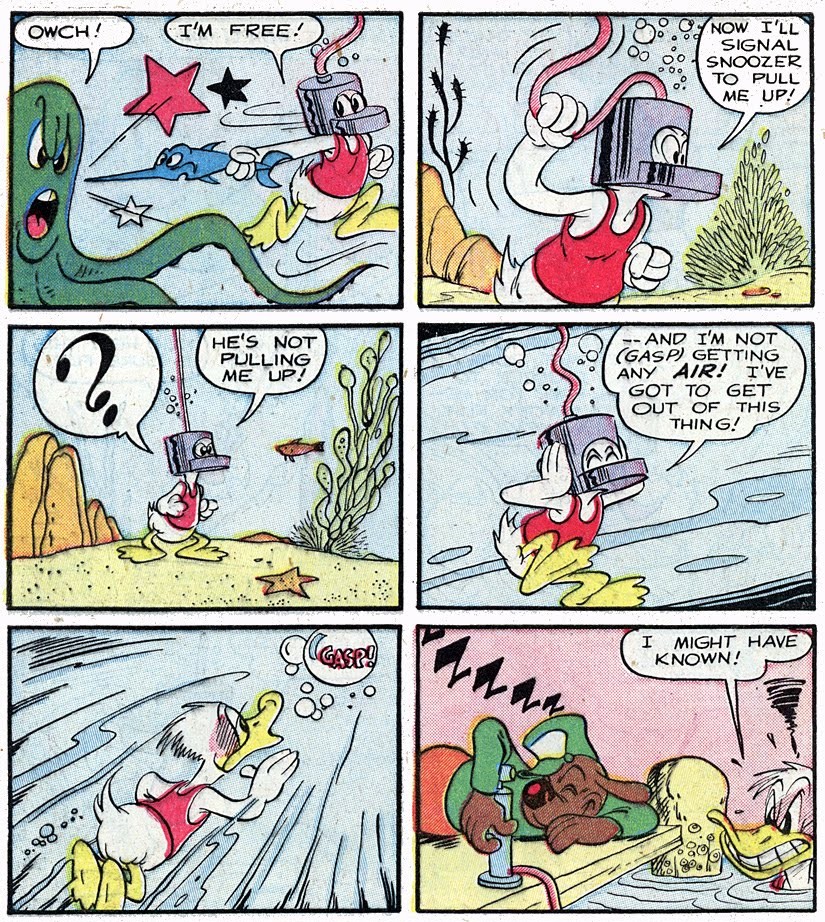
Next up, two pages from The Daffy Diver, published in Dizzy Duck no. 32 (November 1950, Standard Comics), artist once again unknown:

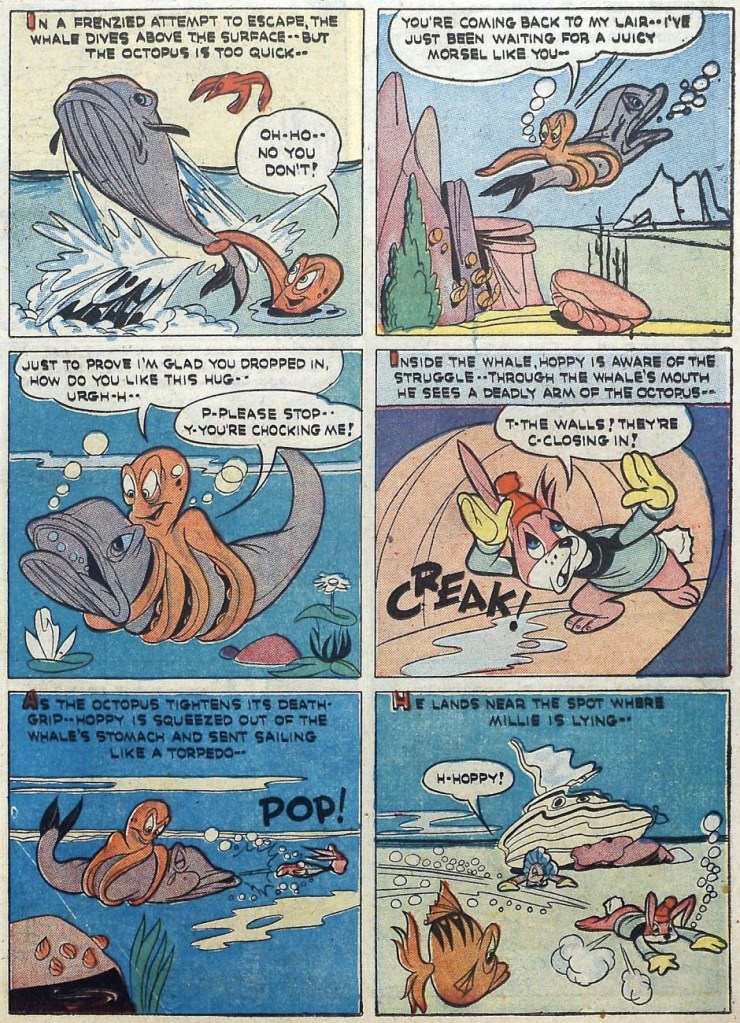
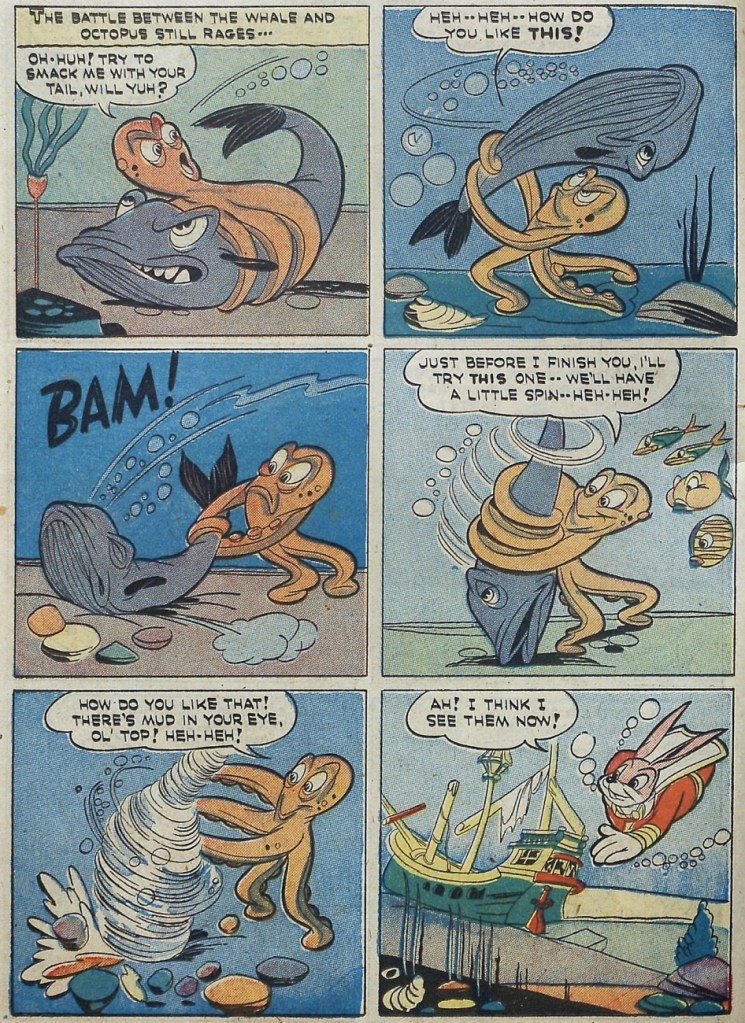
I promised some bunny action – but not the kind that springs immediately to mind! Enjoy this 2-page tentacled tussle in this Hoppy the Marvel Bunny story illustrated by Chad Grothkopf and published in Fawcett’s Funny Animals no. 5 (April 7th, 1943, Fawcett).

For dessert, two covers, because a man does not live on inside pages alone!

National Comics no. 70 (February 1949, Quality Comics). Cover by Gill Fox.
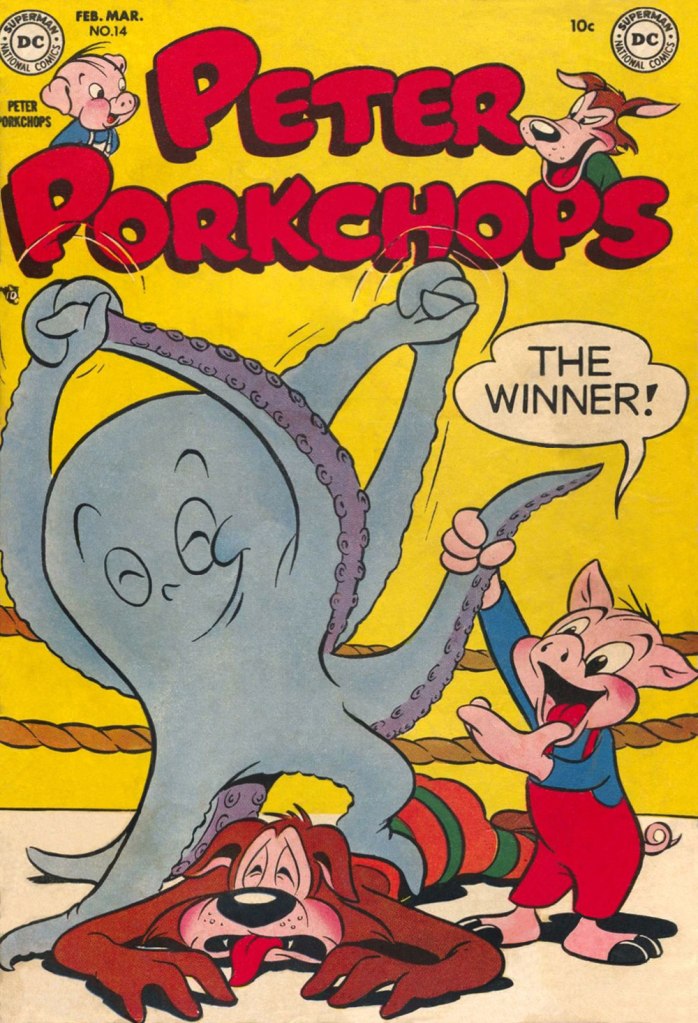
Peter Porkchops no. 14 (February-March 1952, DC); cover by Otto Feuer.

~ ds
Tentacle Tuesday: Lurkers in the Newsprint

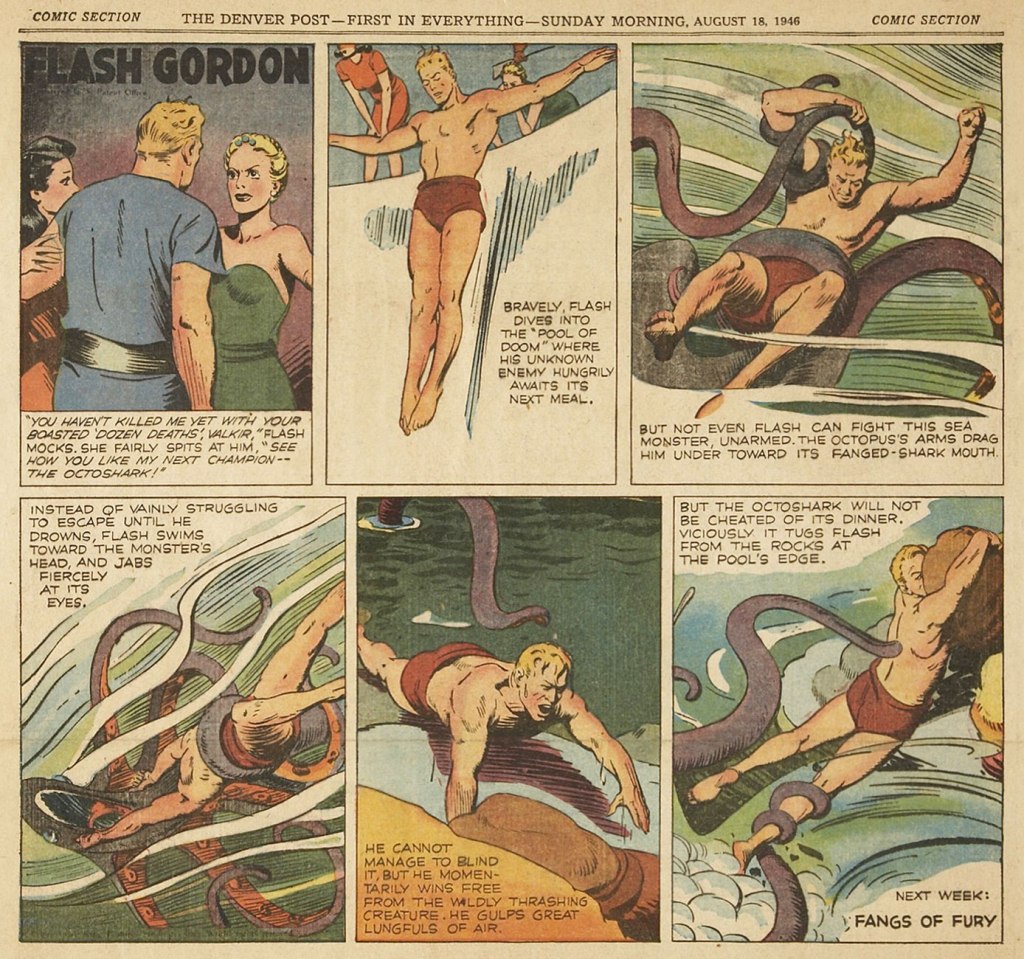
Greetings, tentacle aficionados! Phew, this post started out as just a couple of images and spun somewhat out of control. My thanks to co-admin RG for cleaning up, re-arranging and even colourizing the following scans and photographs. Today we gaze at cephalopod apparitions in newspapers strips from the 40s and 50s. There are actually few things I like better: there is something comforting about the smell of an old newspaper (even if we have to imagine it!), the aesthetic appeal of yellowed paper, the concerns of imaginary characters who lived so long ago and yet who seem so close to us. Irrelevant to the modern age? Not at all. Look past the technological trimmings and you’ll find people who have lived and loved and struggled much like we do today. On a lighter note, the techniques of fighting off tentacles haven’t changed much, either!

Flash Gordon, created in 1934 by Alex Raymond for King Features Syndicate to compete with the Buck Rogers newspaper strip, was immensely popular, witnessed by both its longevity – the strip continued all the way into 2003 – and multiple licensed products on offer for starry-eyed kids who wanted a spaceship or ray gun to call their own. Raymond left in 1944 to join the US Marines, and Austin Briggs, who up to that point was drawing the Flash Gordon dailies (introduced in 1941 to capitalize on the popularity of Raymond’s Sunday strips), switched to drawing Sundays, the dailies now cancelled. The following is from August 18th, 1946, art by Austin Briggs.

In 1951, King Features reinstated the Flash Gordon dailies and put Dan Barry in charge, famously assisted by Harvey Kurtzman and Harry Harrison on scripts, and a bevy of ghost-drawing writers.

The following are two Flash Gordon dailies from 1954. These reprints hail from Flash Gordon: Dan Barry Vol. 2: The Lost Continent, which collects dailies from October 26th 1953 to October 29th 1955.

Frank Robbins created Johnny Hazard for King Features Syndicate in 1944. What I find impressive is that the strip continued, with no other writers or artists involved, all the way until 1977 – contrast that with other newspaper adventure strips from around that time. Robbins must have been a powerhouse. To quote from the no-longer-updated (its creator, Donald Markstein, died in 2012), but still kindly maintained by relatives Toonopedia, « … Unlike many fictional two-fisted adventurers, [Johnny Hazard] matured — not as quickly as real people, but after a third of a century or so, he was quite gray at the temples. And a third of a century was as long as the strip ran. It was popular enough at first, and ran far longer than most post-war adventure strips, but the times were against it. Newspaper editors were more interested in daily gags than continuous stories, and Johnny Hazard succumbed to the trend in 1977. Robbins went to work for DC Comics, where he drew Batman, and Marvel, where he drew The Invaders, and never again created his own feature. » Eventually, Robbins is said to have retired, moved to Mexico, and devoted himself to painting – where he remained his death in 1994. This daily is from July 1951.

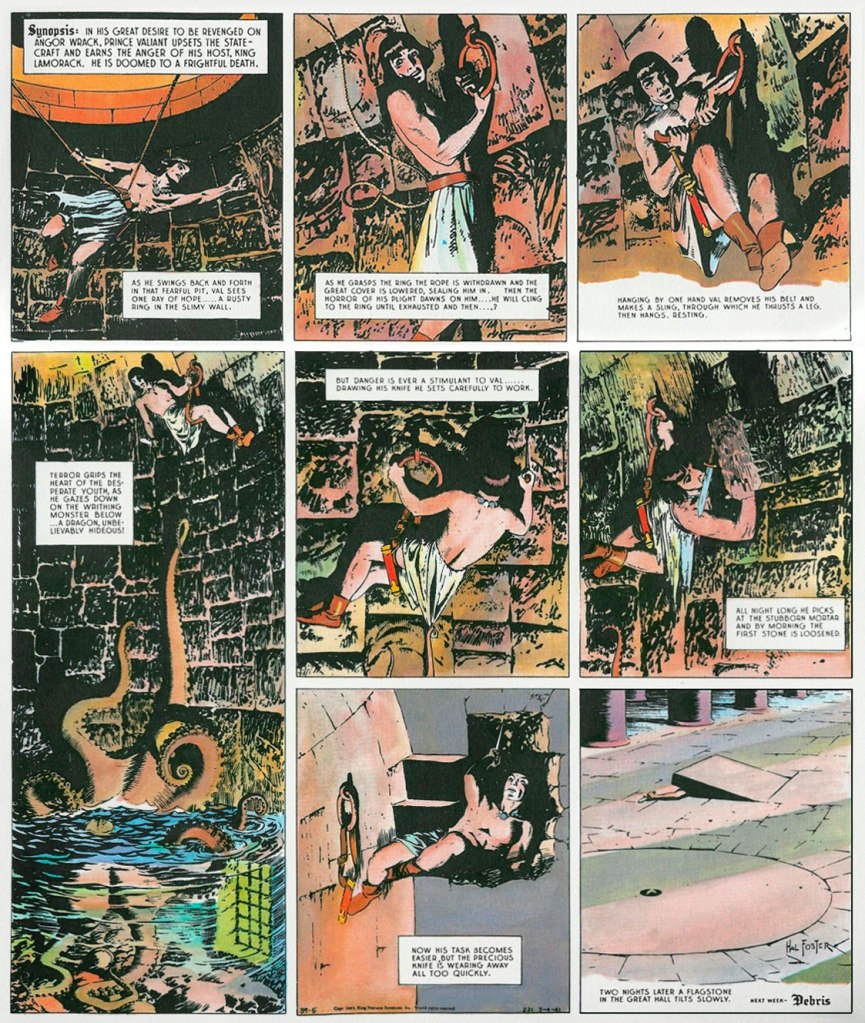
Prince Valiant is one of those newspaper strips institutions that most readers will have heard of, though some, kind of like me, may be uncertain about about the who, the when, and the hows of it. It was created by Canadian Hal Foster (1892-1982) – who, while illustrating the Tarzan newspaper strip (more about this a little further down!), developed a craving to work on his own oeuvre. He pitched his medieval adventure idea to William Randolph Hearst, who was so impressed that he even gave Foster ownership of the strip. It’s still ongoing (after a little more than 4000 Sundays!) This magnum opus has been credited with plenty, as the « greatest contribution to English literature in the past hundred years », « the pinnacle of comic strip adventure storytelling »,  and so on. I feel a little bad for being bored to tears by it, but as the Russians say, ‘и на старуху бывает проруха‘, more-or-less directly translated ‘even a crone can blunder’, or in other words, even Homer nods. The following Sundays are from April-May 1941 – spending two nights in a well, instead of trying to fight off the octopus, is an interesting approach, and I’m sure both man and animal were immensely frustrated.

I promised to say more about Tarzan – ah, the very, very long-running Tarzan strip. Started in 1929 with an adaptation of Edgar Rice BurroughsTarzan of the Apes illustrated by the aforementioned Hal Foster, syndicated by the United Feature Syndicate, it went on (and on…) all the way until 1995, with quite the cast of different artists over the years. The following Sunday is from the Burne Hogarth years, and is part of a story cycle called Tarzan and N’ani, which was published between December 14th 1947 and May 9, 1948. As for Hogarth, he seemed to hold the distinction of being the only artist with two runs on Tarzan: he drew the strip from 1937 to 1945, and again from 1947 to 1950.

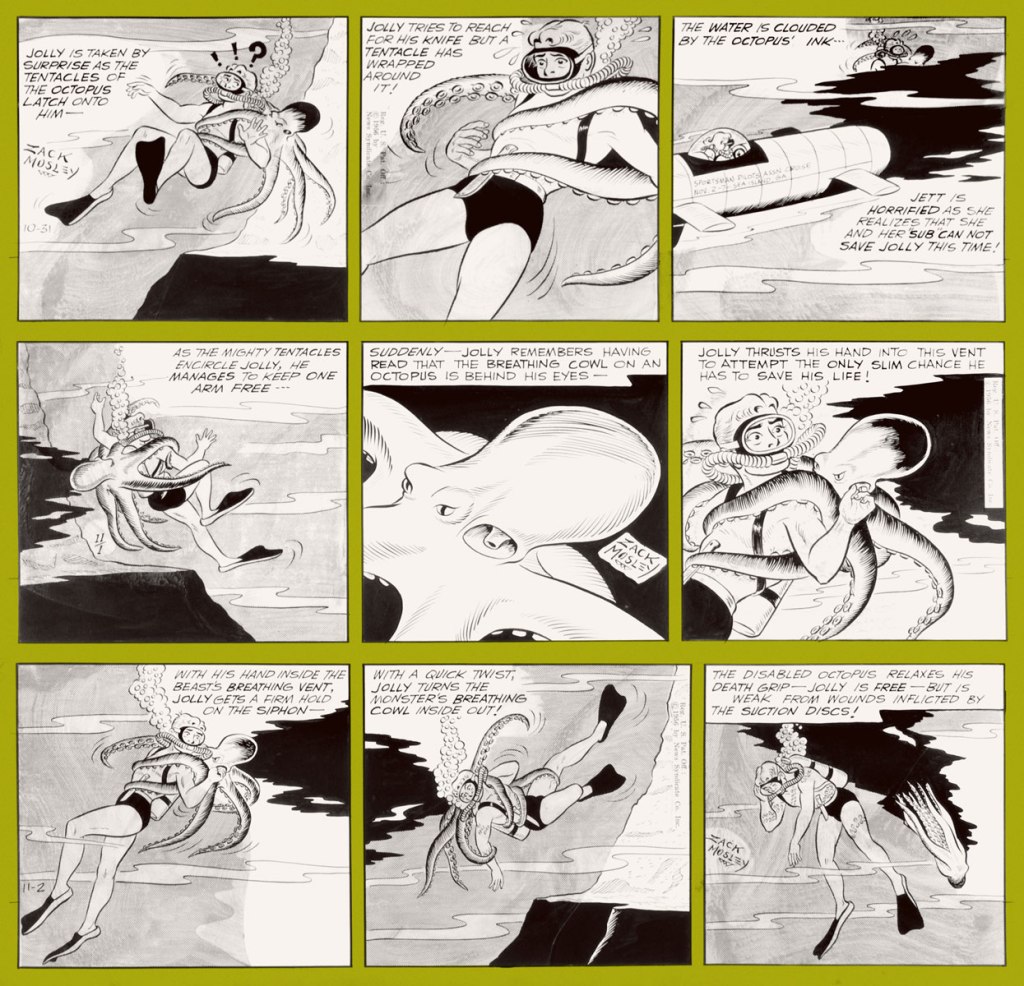
The Adventures of Smilin’ Jack, distributed by the Chicago Tribune Syndicate, ran from 1933 to 1973. I know that doesn’t sound as impressive because all strips discussed so far had crazily long runs, and yet: Smilin’ Jack, as it came to be called a little later on, lasted a good fifty years, which is partially explained by this strip’s motley cast of endearing supporting characters, but also by the realism with which Jack’s flying adventures were depicted – Zack Mosley, the creator, was an aviation enthusiast and licensed pilot with a true love of everything aeroplane. The following three dailies are from November 1956. You’ll be happy to learn that Mosley, upon retiring at 67, spent the rest of his days flying his own plane.

Created by George Shedd, a former Al Capp assistant, for the Post-Hall Syndicate, Marlin Keel ran between 1953 and 1954. Very little information about it survives – from what I understood, Shedd first wrote and drew this newspaper strip by himself, and later relinquished the illustration to assistants. Most notable (and what seems to be motivating rare collectors) is the involvement of Alvin Carl Hollingsworth (1928-2000), one of the few African-Americans working in the field at the time, who started by helping out (not sure to what degree) and became the official illustrator of Markin Keel towards the end of its run. Hollingsworth, who’s often mentioned as Joe Kubert‘s classmate at NYC’s High School of Music & Art – a fact that, albeit cool, underplays Hollingsworth’s talent and career – seems to have always maintained an interest in painting. Later in life, in the 1970s, he abandoned the comics field in favour of becoming a (fine) painter – you can see some of his paintings here. This is the original art for a 1954 Sunday strip.

The octopus may be off-camera, but my appreciation of Bob Montana made me include this strip in today’s roster. That’s right, it’s not my fault! This is an Archie daily from July 24th, 1953.

I hope you enjoyed this walk down history’s lanes and byways!

~ ds

Tentacle Tuesday: Hand Me My Helmet, Harry

The first helmets were used by Assyrian soldiers in 900 B.C., and they were made of thick leather and bronze to protect the head from blunt objects, swords and arrows during combat. Research shows that helmets can significantly reduce the severity of injuries sustained from head trauma. That’s why it’s so important to always wear a helmet when taking part in a potentially dangerous activity.

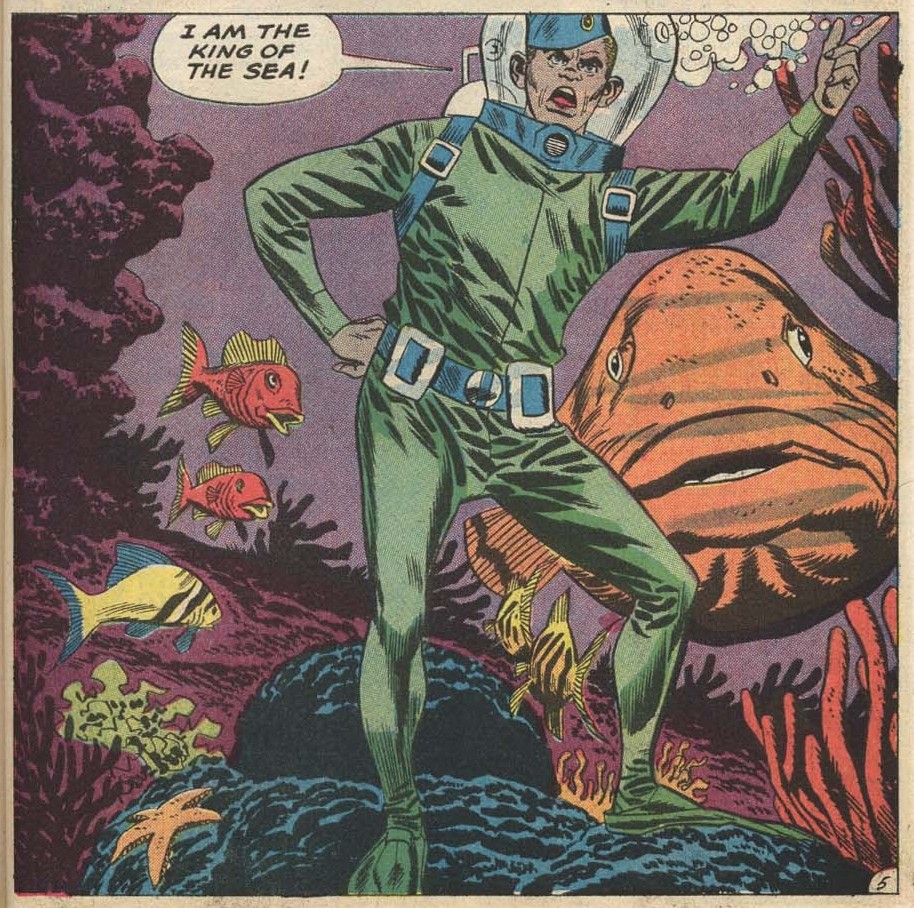
You may argue that helmets are just a way to be able to breath underwater, a compromise between the bulky scaphandre (less elegantly ‘diving suit’ in English) and the scuba diving mask. Breathing, ha, that’s just a distraction to the real purpose of a helmet during an octopus encounter: it makes the diver’s head look a little like an octopus’ head, thus confusing him and giving a much necessary advantage.

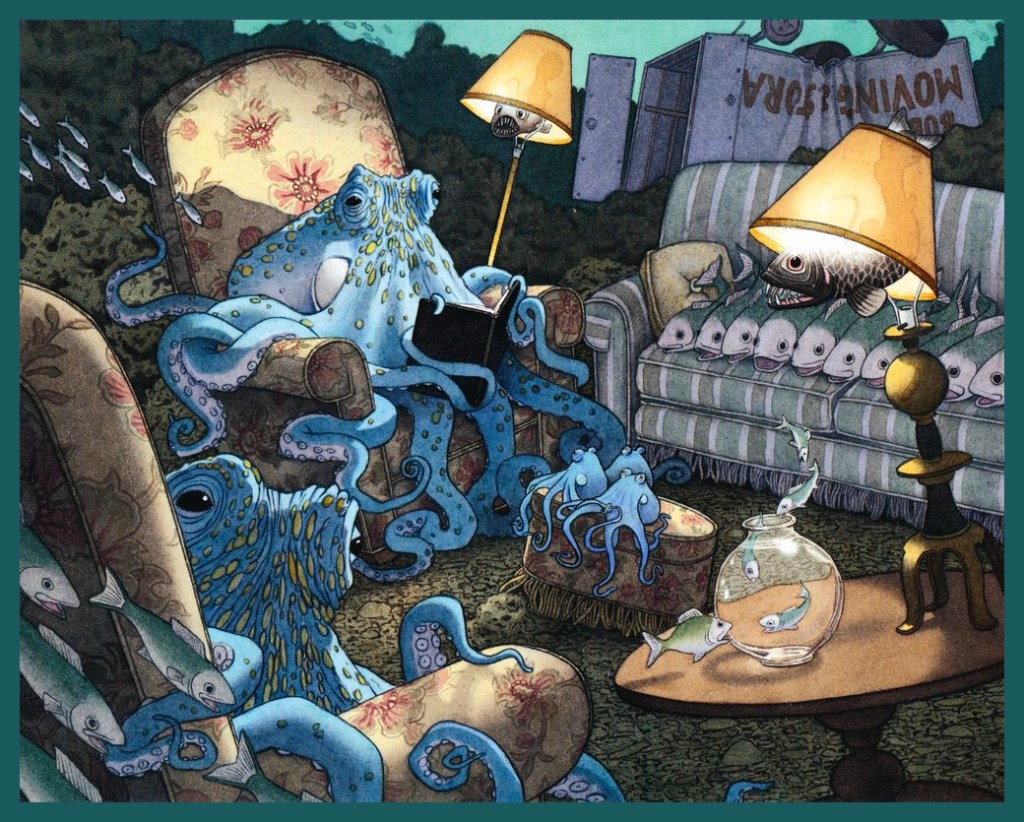
Install yourself comfortably following the example of this happy family of cephalopods, and let’s have a look…

I first encountered David Wiesner when I bought his Mr. Wuffles! book on a whim (it had cats!), but Flotsam, a collection of underwater life illustrations published in 2006, is also clearly of some interest.

Out first helmet of the day is a reasonable imitation of a diving suit! The following page is from Prisoner of the Undersea World!, scripted by Gardner Fox, illustrated by Sid Greene, and published in Strange Adventures no. 155 (August 1963, DC).

I am not sure how he could drink and eat without taking his helmet off, and taking it off would surely mean drowning – luckily, the frogs were smarter than him!

I am pleased to report that not only did the octopus come out of that encounter in one piece, no frog denizens were seriously harmed, either (which makes this tale pretty special, since human heroes tend to go and annihilate anything they don’t understand).

Actual attempts at establishing communication? Colour me impressed!

Our second is a helmeted beauty (albeit twisting in a way that isn’t anatomically feasible) and some of her teammates from U.N.D.E.R.S.E.A. (or United Nations Department of Experiment and Research Systems Established at Atlantis).

Undersea Agent no. 2 (April 1966, Tower Comics), pencilled by Mike Sekowsky and inked by Frank Giacoia.

The cover story is rife with tentacles, but unfortunately doesn’t feature the scene depicted above at all.

Panel from The Return of Dr Fang, scripted by D. J. Arneson, pencilled by Ray Bailey and inked by Sheldon Moldoff.

On the other hand, Buried Under the Sea, a fun read nicely illustrated by Mike Sekowsky on pencils and Joe Giella and Frank Giacoia on inks, has plenty of sea-helmets… but no cephalopods. One can’t have everything, alas!

One easily understands why she made it onto the cover of the comic!

From helmets that are actually connecting to some diving equipment and oxygen canisters, we move on to ones which are just like an upside-down fish bowl somehow magically sitting on the wearer’s shoulders. Style always takes priority over silly things like actually being able to breathe. For more Adam Strange, scoot over to Tentacle Tuesday: Tangles with Adam Strange!

DC Super Stars no. 8 (October 1976, DC), cover by Ernie Chan (signing as Ernie Chua). This issue features a bunch of reprints, mainly reprinted stories from Mystery in Space.

Speaking of Mystery in Space, no. 21 (August-September 1954) has a very appropriate story… proving that the ol’ anti-cephalopod helmet can be used out of water. This is a page from Interplanetary Merry-Go-Round, scripted by Otto Binder and illustrated by Sy Barry… who’s still with us and about to celebrate his 93rd birthday!

Maybe the Martian monster is going ‘beserk’ (sic) because it’s a sentient creature who’s been chained and used for the amusement of stupid crowds?

~ ds

Tentacle Tuesday: Unpopular Mechanacles

Greetings, tentacle lovers! After a hearty breakfast of cephalopod pancakes (no octopuses harmed), one can sit down with a quiet cup of tea and enjoy today’s crop of mechanical tentacles.

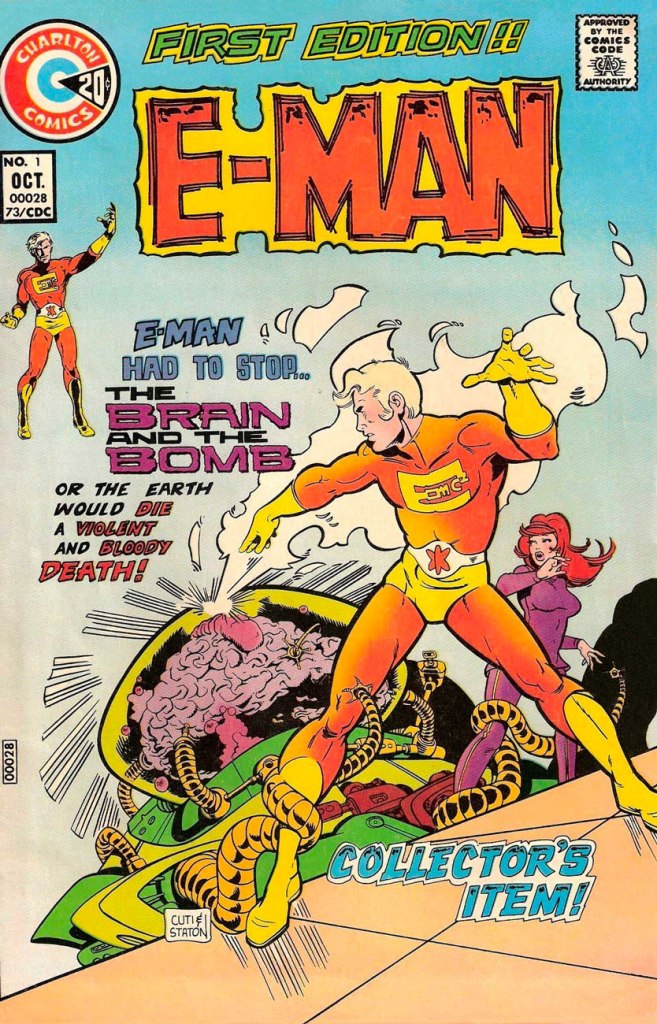
I tend to follow a chronological order, so our first is E-Man no. 1 (October 1973, Charlton Comics). The cover aside, these images have been taken from a recent reprint, which accounts for the somewhat garish colours. I am hardly a fan of Joe Staton, so this is starting off on a somewhat less aesthetically pleasing foot, but mechanical tentacles are en flagrant délit in the cover story. Besides, E-Man has a certain innocent charm.

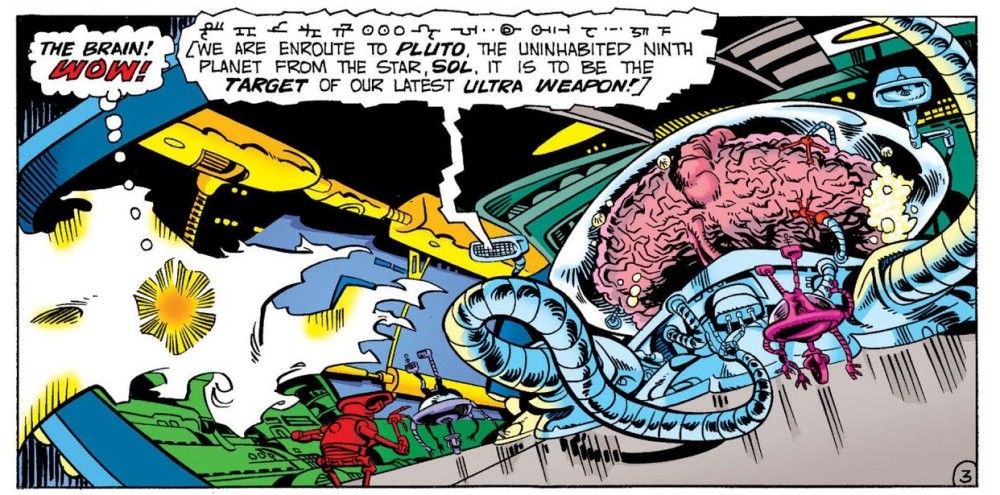
The cover story is The Beginning, scripted by Nicola Cuti and illustrated by Joe Staton:

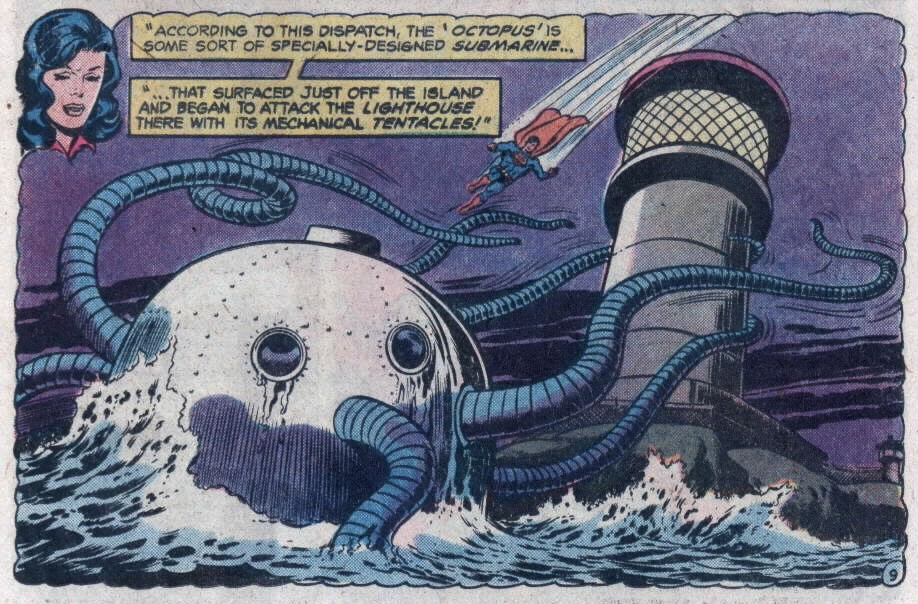
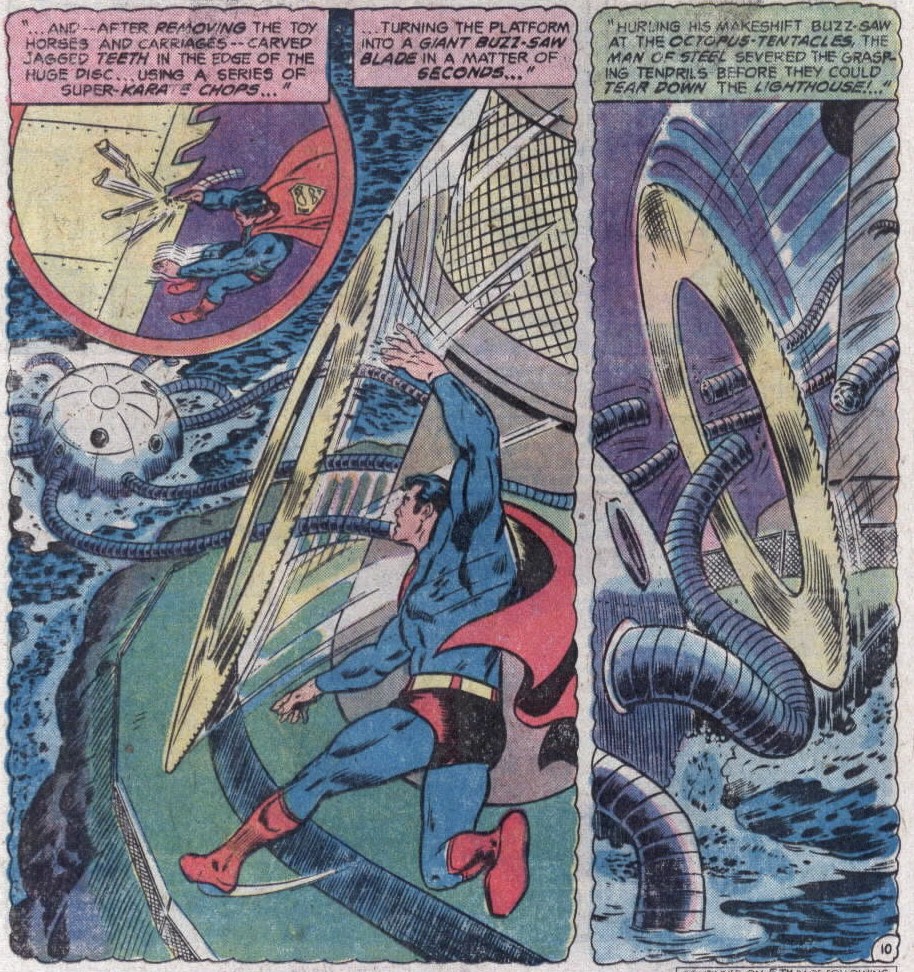
Going towards a much darker note (both in terms of printing and content – and to be honest, I by far prefer this dark-ish colour palette to the rainbow of E-Man colours), here is The Absolute Power-Play of the Parasite!, scripted by Martin Pasko, pencilled by Curt Swan, and inked by Frank Chiaramonte, and published in Superman no. 320 (February 1978, DC):

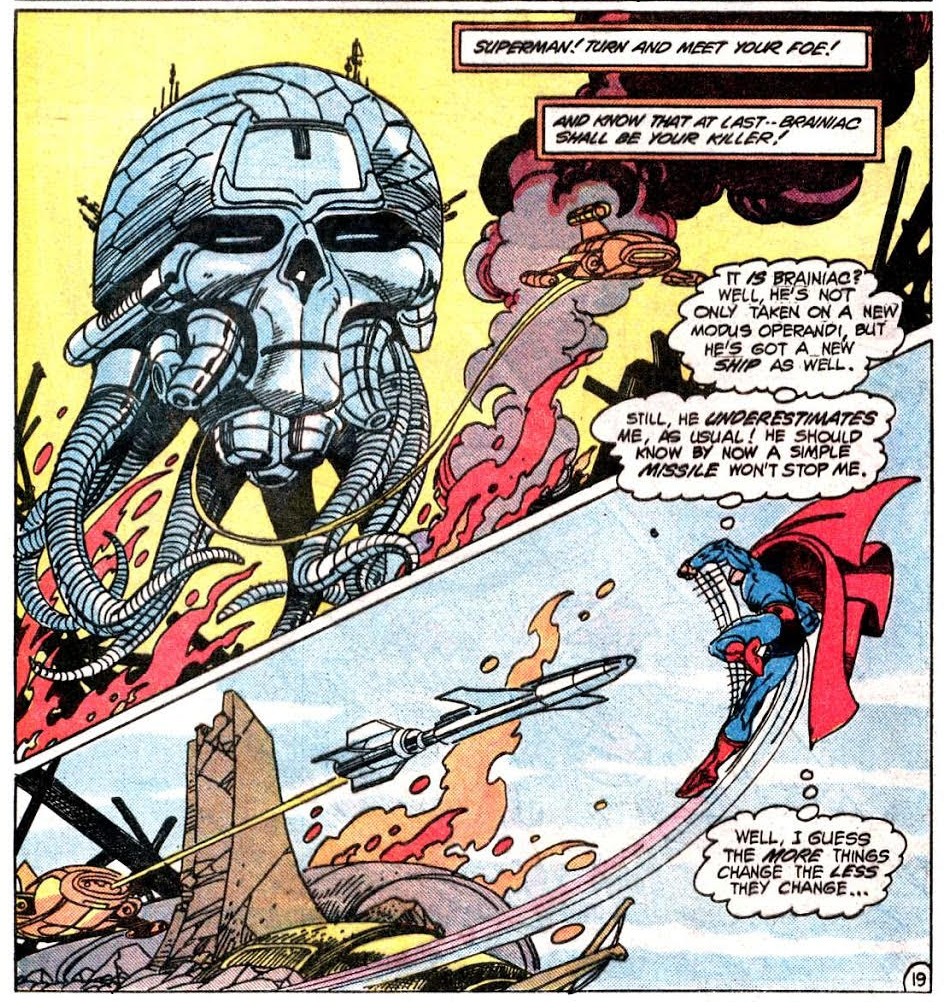
Next, dramatic Rebirth!, scripted by Marv Wolfman and drawn by Gil Kane (Tentacle Tuesday Dabbler!), published in Action Comics no. 544 (June 1983, DC):

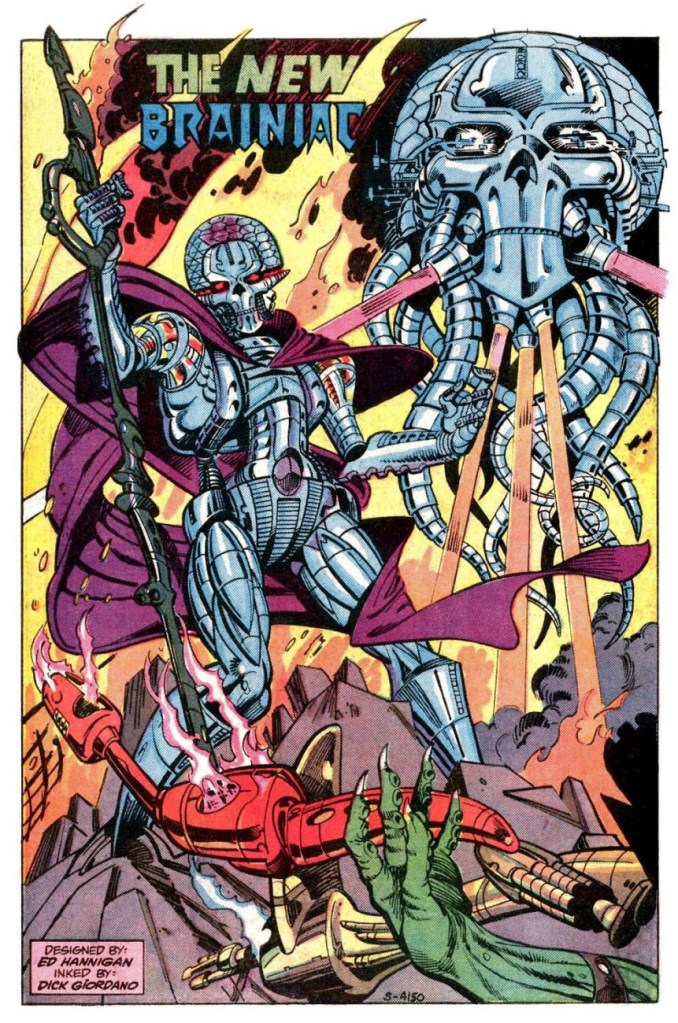
There’s even a sort of pin-up in that issue: The New Brainiac, pencilled by Ed Hannigan and inked by Dick Giordano.

So much flair and poise!

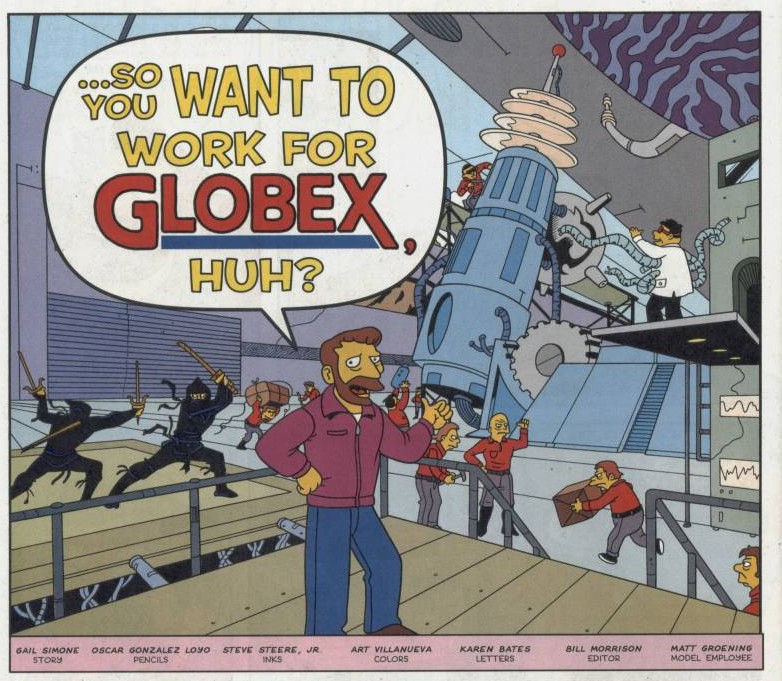
In a previous post (Tentacle Tuesday: Mechanical Tentacles) I promised that I would stick to but a few instances of Doctor Octopus and ne’er again return to him. However, I would like to point out this familiar fellow in the lab coat (top right):

…So You Want to Work for Globex, Huh?, scripted by Gail Simone, pencilled by Óscar González Loyo and inked by Steve Steere Jr., was published in Simpsons Comics no. 66 (January 2002, Bongo). Sometimes Simpsons comics are real fun to read, and this is one of those instances.

~ ds

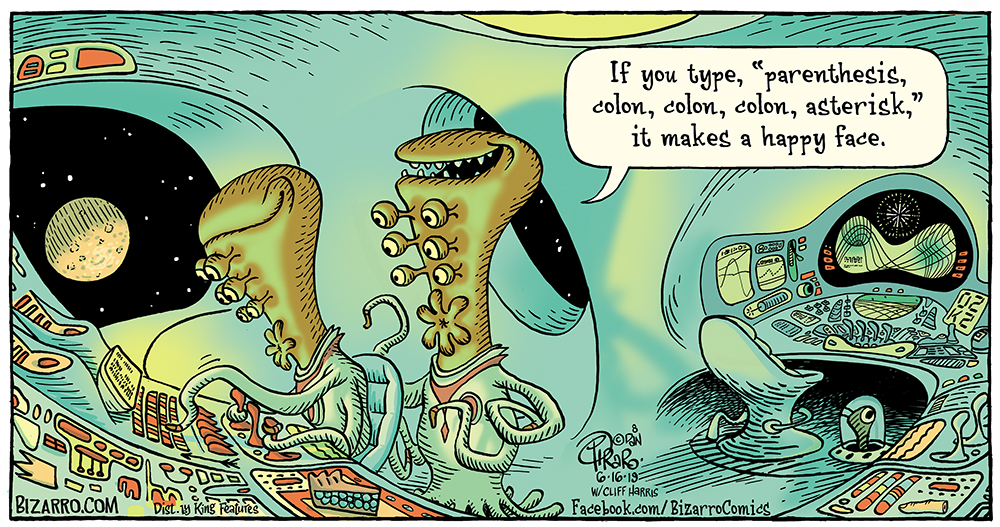
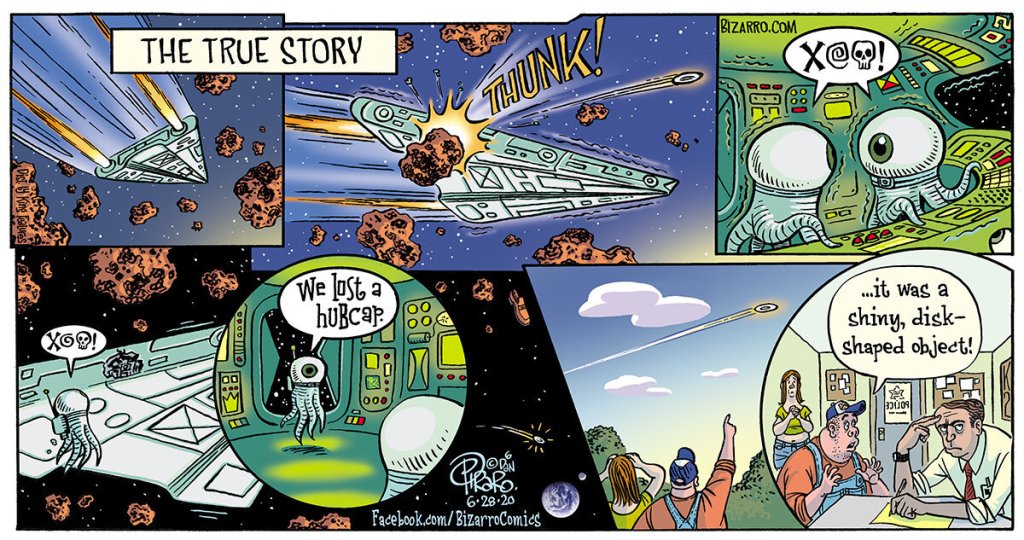
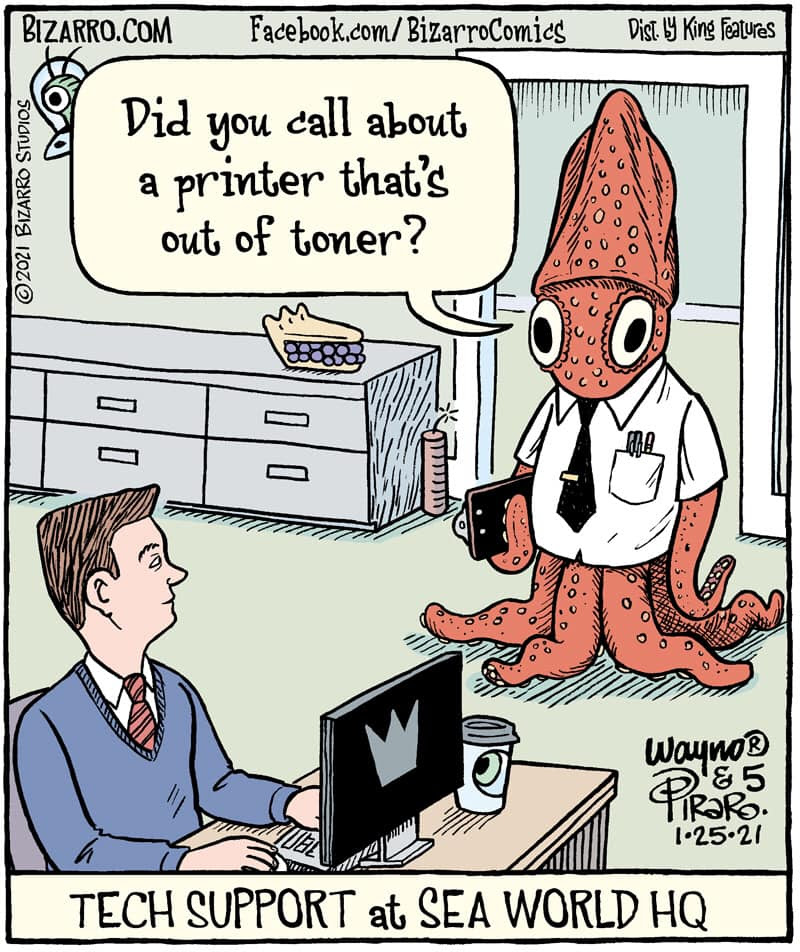
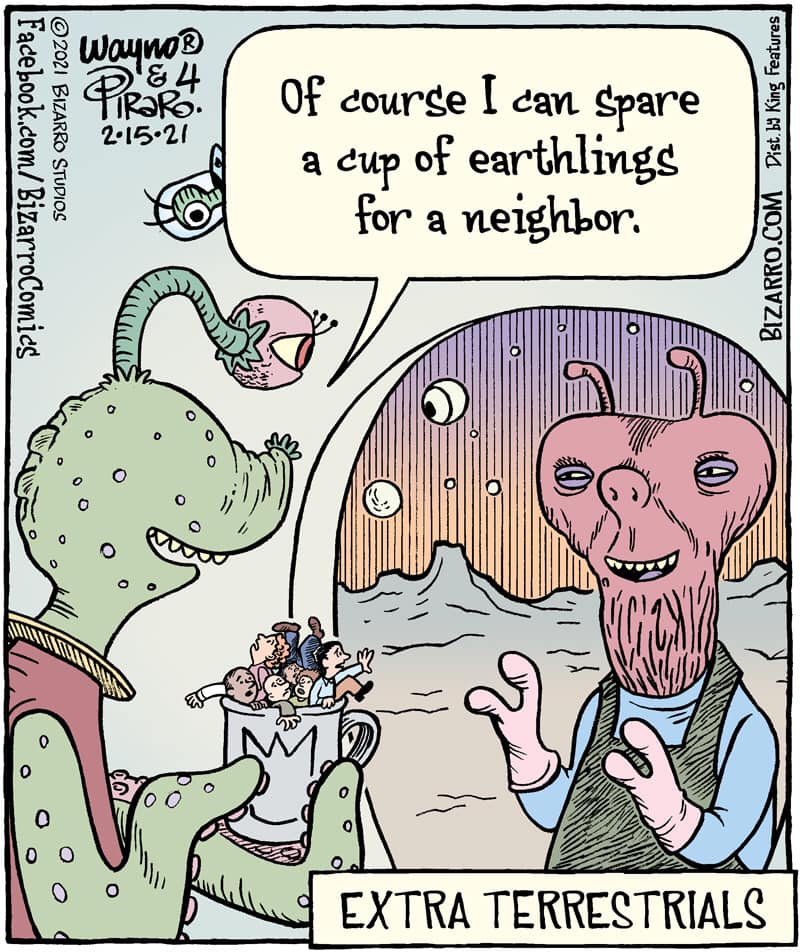
Tentacle Tuesday: That Bizarro Look in Your Eye

Today’s Tentacle Tuesday is a continuation of previous post that’s close to my heart. In a little less than a year, I have accumulated a new batch of tantalizing tentacles from the pens and minds of that intrepid team, Wayno and Dan Piraro. The initial post can be found here: Tentacle Tuesday: Let’s Get Bizarro. The loveliest thing is that some of these are from 2021 – I am not taking for granted the fact that these guys just keep going on, with no loss in quality, year after year. Without further delay…

First, some Dan Piraro Sundays – Wayno has been part of the team since 2018, but only on the dailies.

And now, on to the aforementioned dailies! Wayno straddles the line between continuing the Bizarro aesthetic and keeping his own drawing style beautifully, I think.

As a bonus, 3 older Piraro dailies, artfully collated by co-admin RG. Wouldn’t you like to hang this in your home? I know I would.

~ ds

Herluf Bidstrup: The Goal of Satire Is to Speak the Truth

I’d like to talk about Danish Herluf Bidstrup (1912 – 1988), yet another talented artist of some renown during his lifespan, but who soon sank into the oblivion of time. His wild popularity in the Soviet Union at the height of his artistic prowess not only resulted in honourable mentions in various works of Russian literature, but also in the printing of a bevy of collections both old and new. He has also received numerous awards from the USSR (most notably, the Lenin Peace Prize – a bit of a contradiction in terms – and the Order of the Red Banner of Labour). Now he’s forgotten by most everyone… except by Russians, who still carry a torch for his cartoons, and publish new collections of his work to this day. He produced around five thousand cartoons during his lifetime, so there’s certainly plenty of material to collect!

In Moscow, circa 1953.

The openly anti-fascist Bidstrup had been contributing humorous drawings to various publications since 1935, but he truly found his voice in the underground (and illegal) newspaper, Land og folk, the offshoot of Denmark’s (also illegal) Communist party, which Bidstrup joined in 1943. While his work was also appreciated and published in East Germany, his obvious political stance significantly limited the scope of what could be printed. It even affected his career in his home country, as Denmark was economically dependent on then-Fascist Germany. Bidstrup himself considered that he was most accurately represented in the Soviet press, not only before and during WWII, but also after the war. In 1953, in a letter to his friend Soviet journalist Mikhail Kosov, translator of his work and main enthusiast, he wrote that « all Soviet anthologies which we have prepared together are a hundred times better than collections published in other countries… in the German version, I become more and more of a harmless humourist, and a completely toothless satirist. »

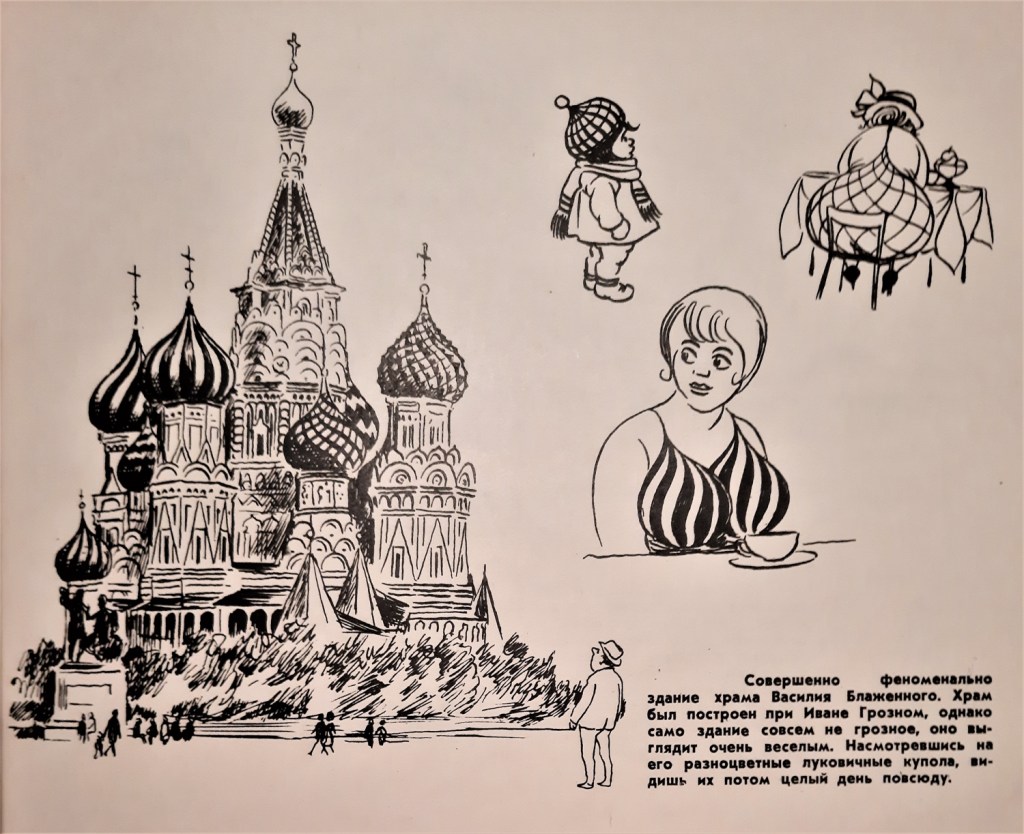
Bidstrup’s sketch of the Cathedral of Vasily the Blessed.

In a sense, Bidstrup can be compared to his contemporary, French artist Jean Effel (also a favourite of Soviet citizens): both were openly communists whose work confronted social injustice and inequality. But at the end of the day, artists aren’t much remembered for their ‘social conscience’: it’s their keen eye for everyday detail and sense of humour that allows cartoons to pass unscathed through decades, to touch and amuse us some seventy years on. In that sense, Bidstrup’s cartoons are arguably more ‘dated’, more tied to his politics than Effel’s, which perhaps explains why one encounters mentions of the latter a little more often. Still, there’s plenty there to admire and chuckle at.

Bidstrup Herluf: Drawings (2017, Mesheriakov Publishing House); such a nice shade of green.

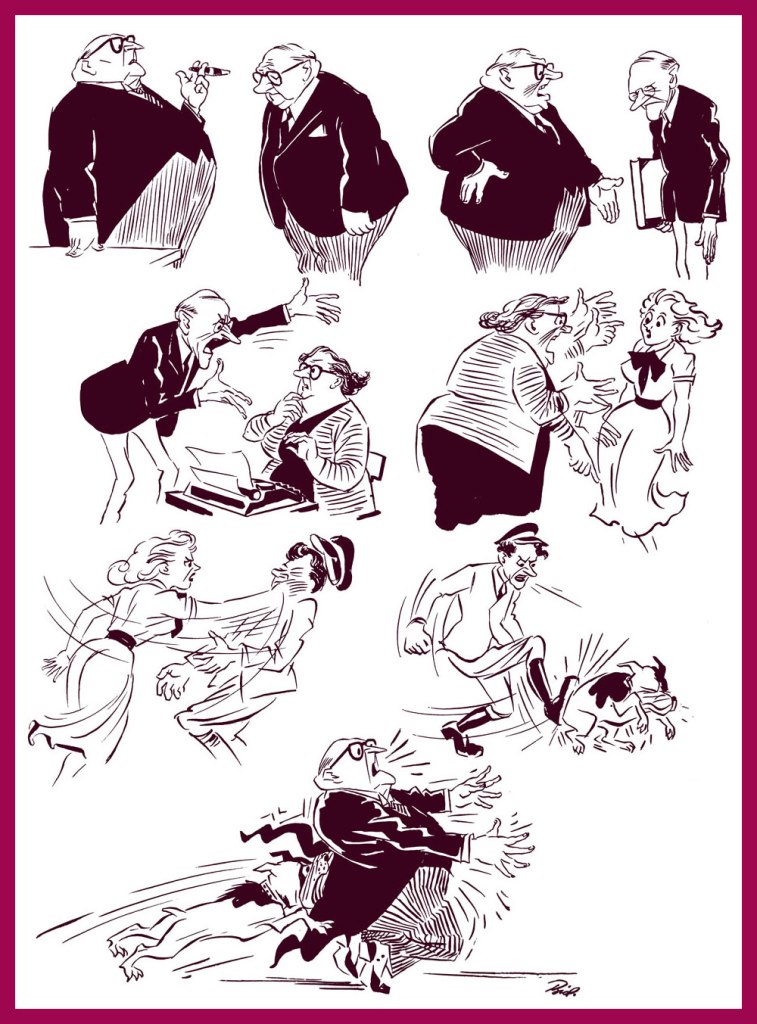
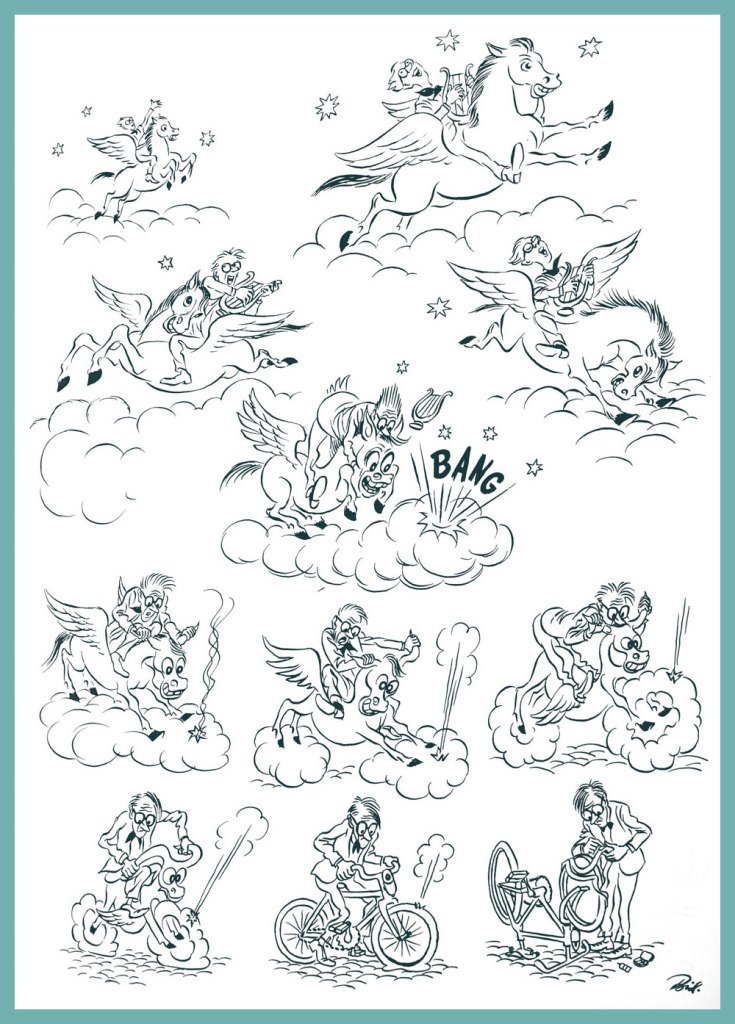
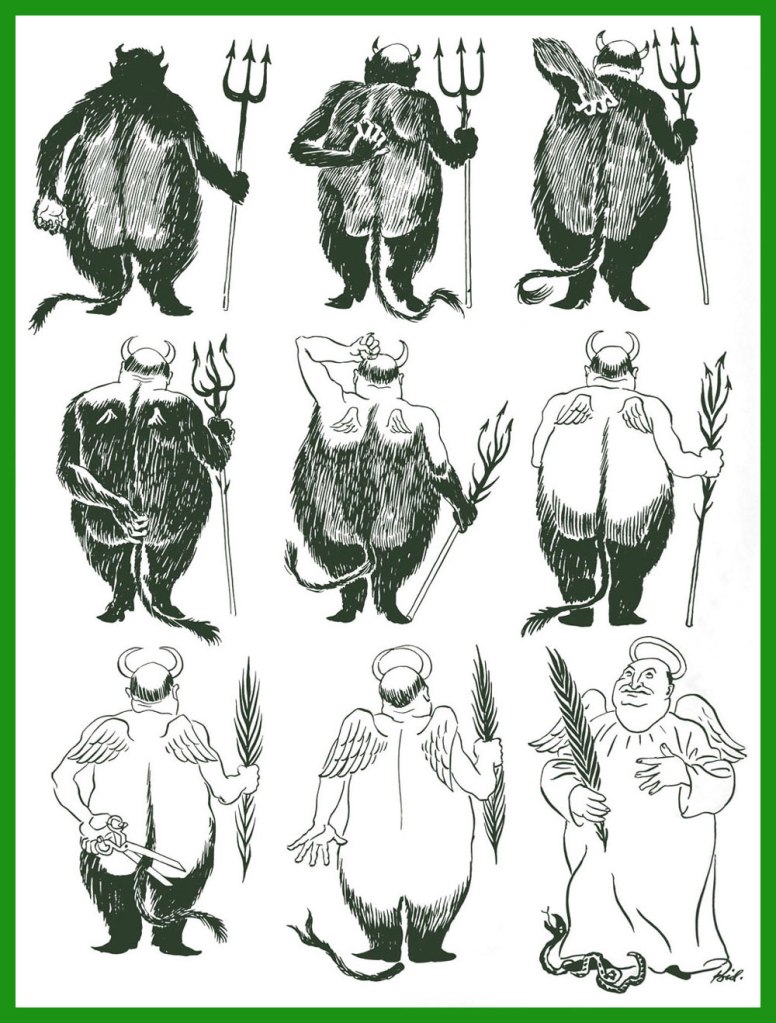
The following images have been selected from the collection seen above and kindly scanned and framed by co-admin RG.

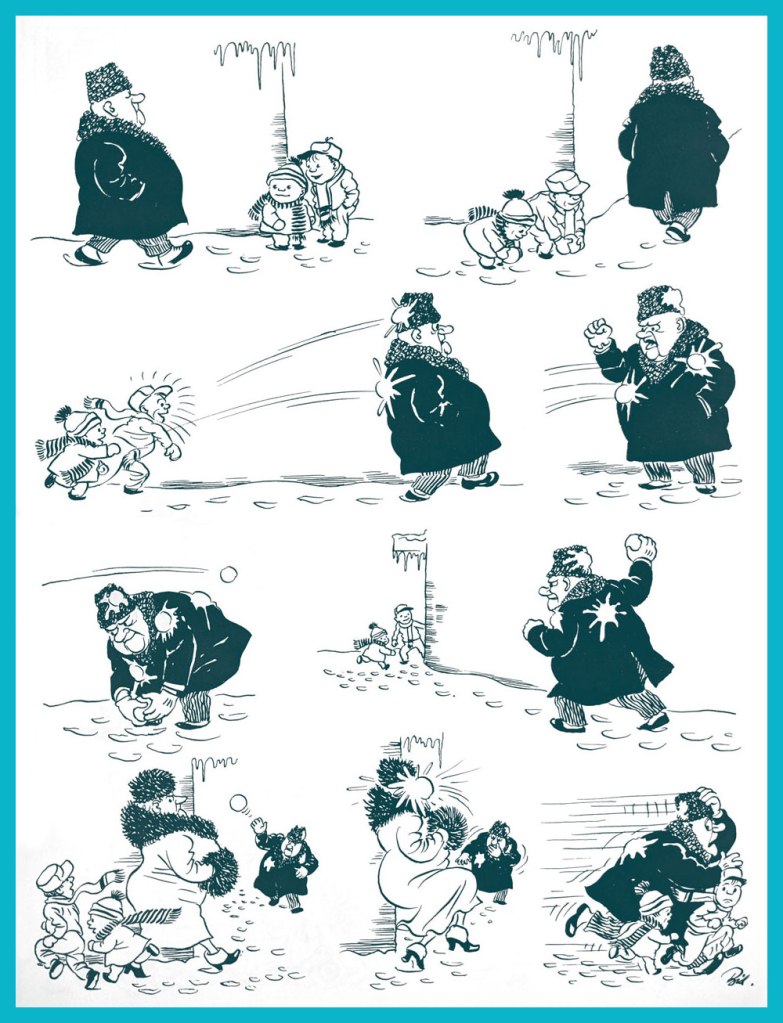
«The circle closes.»
« On the wings of Pegasus. »
« Amateur photographer »
« Self-criticism »
« Direct hit »
« Life’s journey »
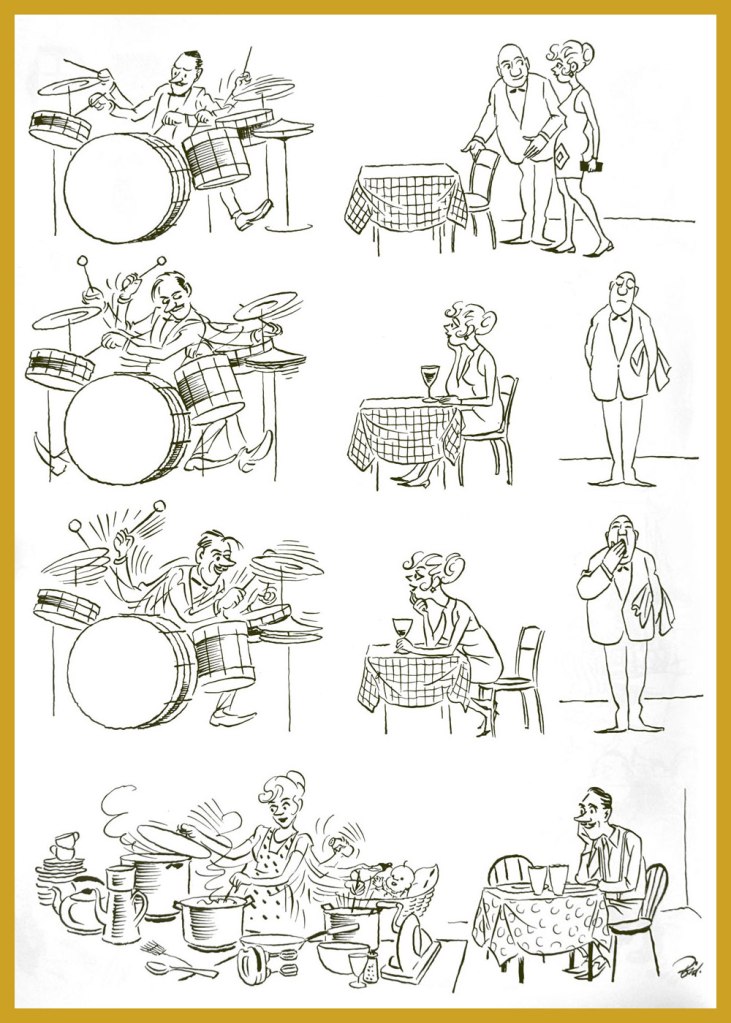
« Wife of a jazzman »
« Solitude »
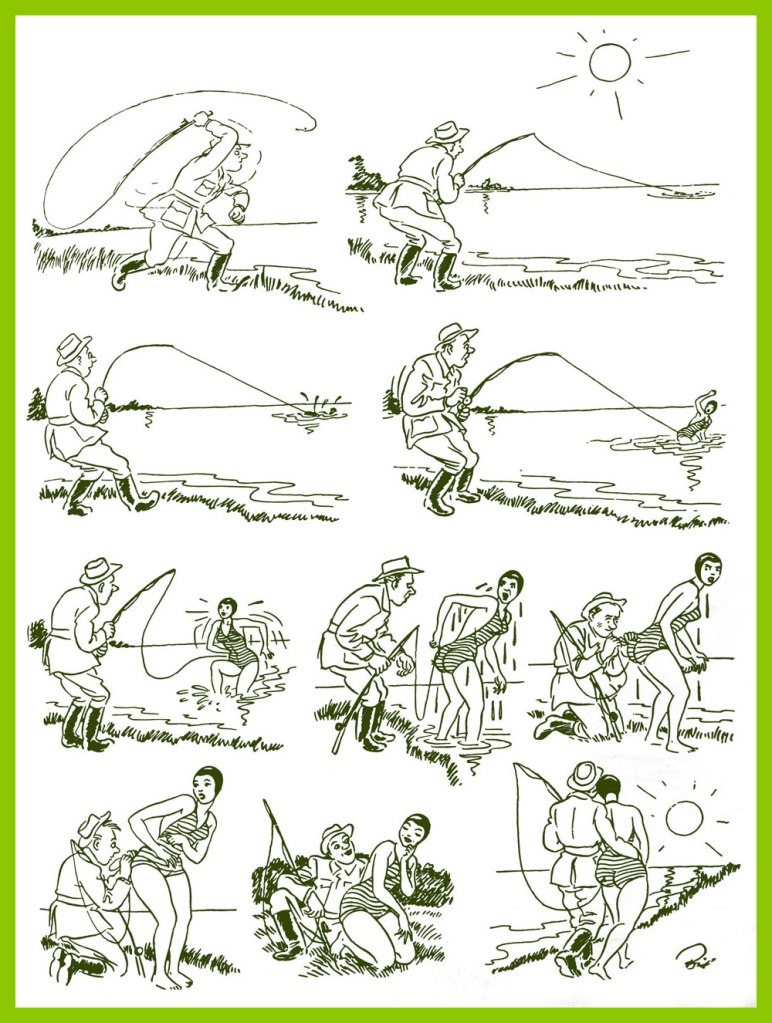
« Fished out »
«The mirror of the soul »
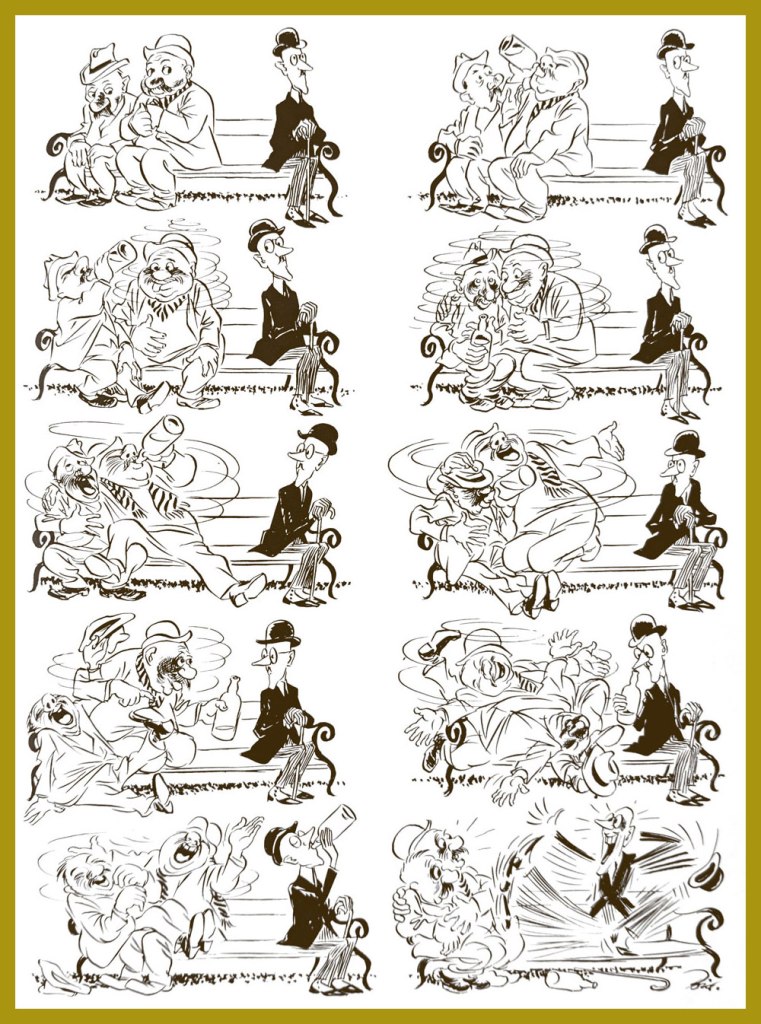
« An extended game »
« A perfect example »

Finally, here is a charming cartoon that Soviet animation director Lev Atamanov produced in collaboration with Bidstrup during one of his many visits to the USSR.

I hope your enjoyed this walk down history’s lane. And if you’d like to see more, while Herluf Bidstrup may be relatively obscure, you can still see a nice collection of his cartoons here and here.

~ ds