Hallowe’en Countdown V, Day 15

« Get ready for the future: it is murder. » — Leonard Cohen

Since Hallowe’en isn’t as widely celebrated in Europe — Ireland and the rest of the U.K. aside, obviously — as it is in North America, it’s not always evident and easy to keep the countdown truly international. No worries: in such a situation, I’m no stickler — I’ll take the spirit of the law over its letter.

The first (and until now, only) time I posted about Thomas Ott, I wound up with a contender for least-popular post in this blog’s history. Have I learned my lesson? Heavens, no. I live, perhaps naïvely, in the belief that our audience has grown in the interim, and that said audience is ever more attuned and receptive to our quirks.

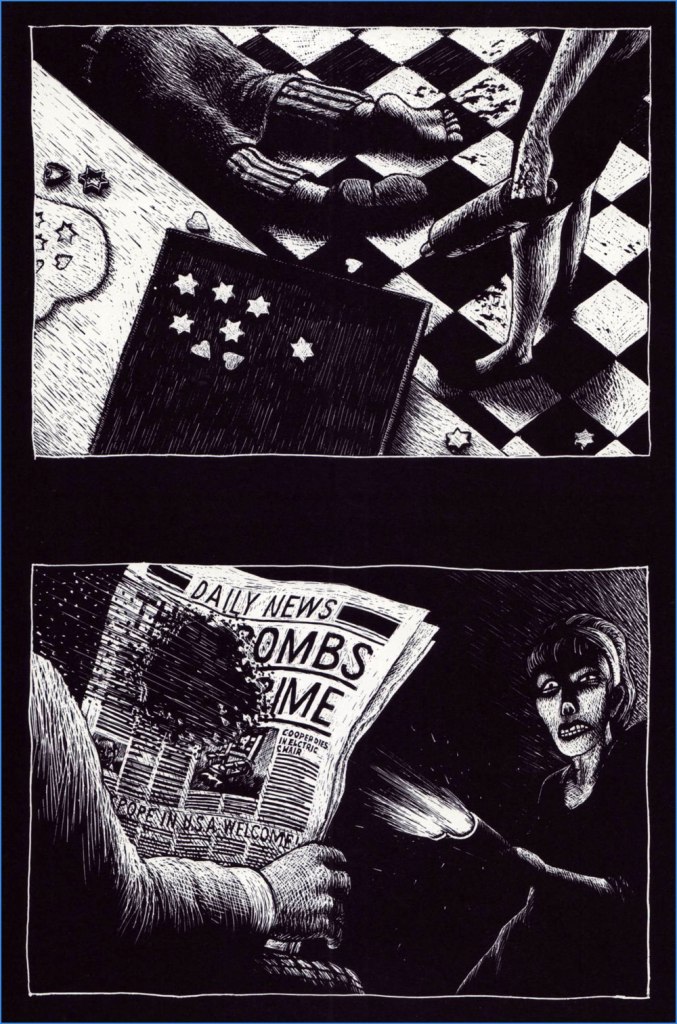
Here, then, is some gallows humour from Mr. Ott. Don’t try this at home, unless…
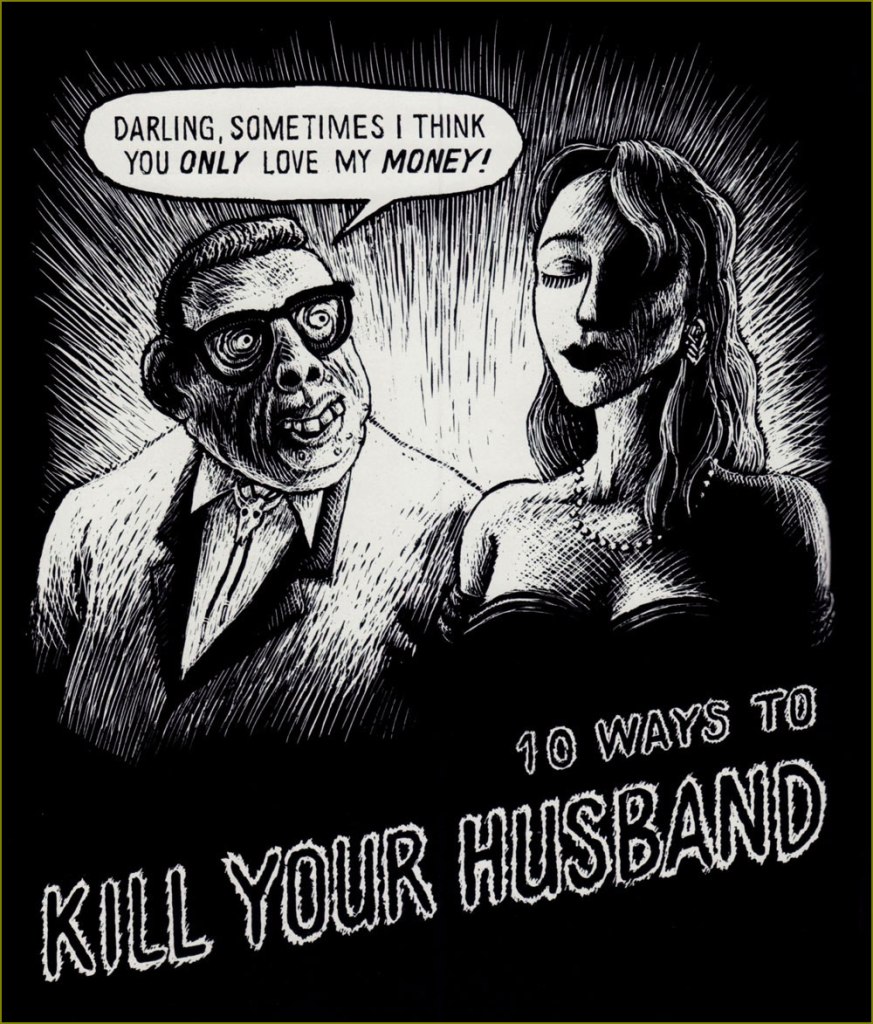
Top: The Night Porter, anyone?
Er… Top: Deadly Weapons, anyone?
Originally published in Tales of Error (Oct. 1989, Edition moderne, Switzerland). Yes, a book in English by a German-speaker from a Swiss publisher with a French name.
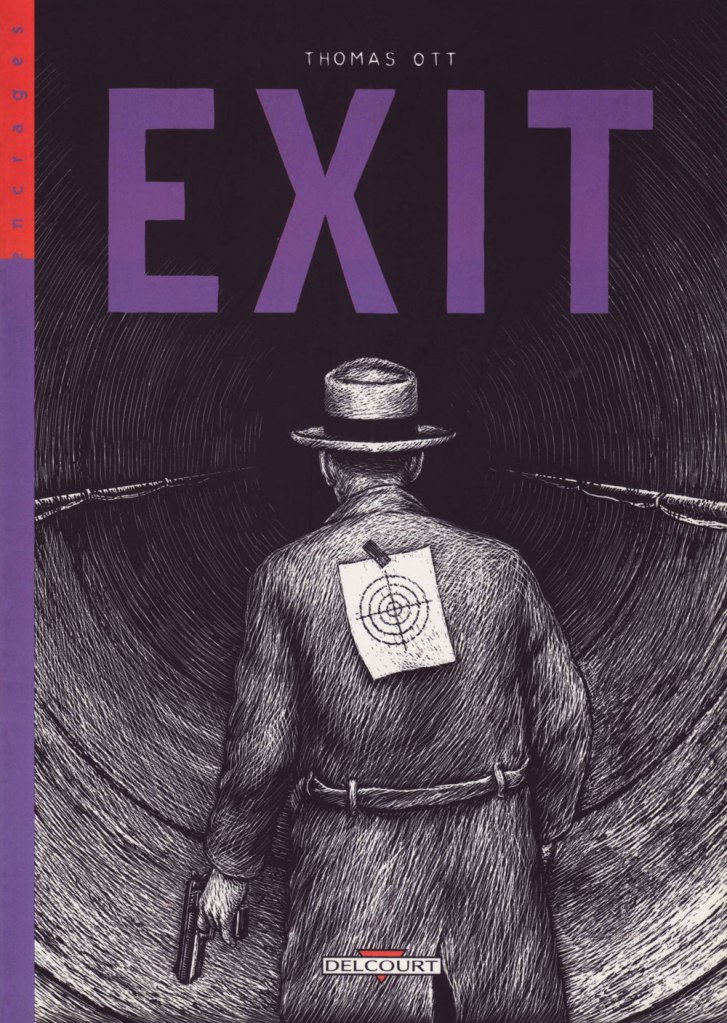
The Exit collection (Sept. 1997, Delcourt) gathers the essential bits of Ott’s first three albums (Tales of Error, Greetings from Hellville and Dead End), as well as some new pieces.

For more poisoned goodies from Mr. Ott, just plod your carcass over to his official website.

-RG
Hallowe’en Countdown V, Day 14

« Upon its head, with red extended mouth and solitary eye of fire, sat the hideous beast whose craft had seduced me into murder, and whose informing voice had consigned me to the hangman. » — The Black Cat (1845)

What can I tell you about the legendary English cartoonist and bon vivant Hunt Emerson — born in 1952 in Newcastle and still devilishly active these days — that he can’t tell you in his own words?

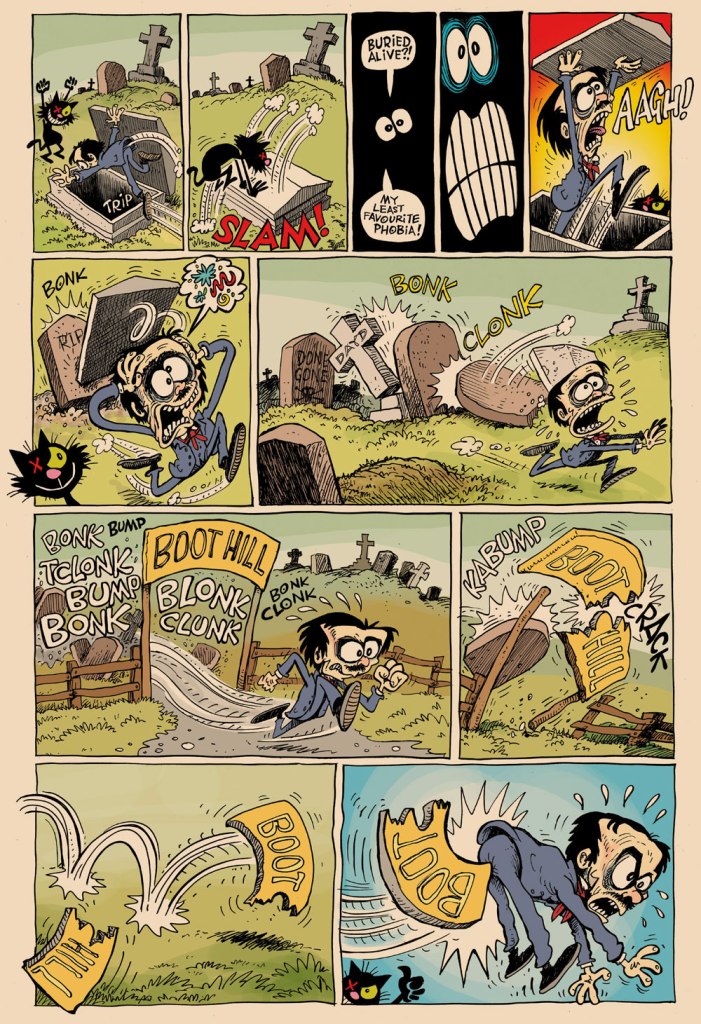
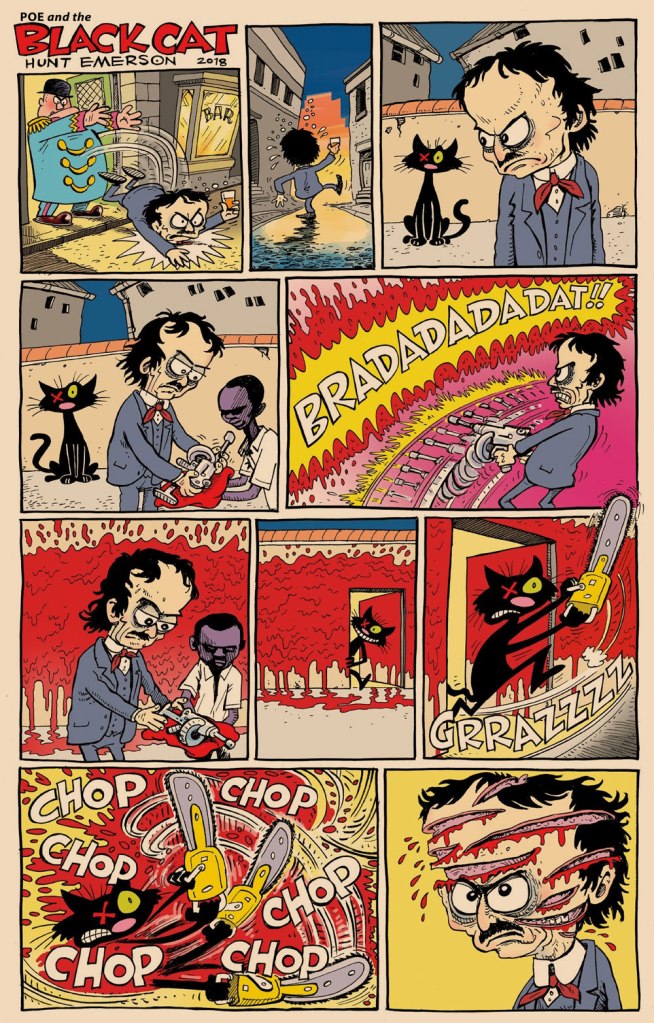
Mr. Emerson has recently (and I do mean recently!) contributed a series of hi-concept short strips to Ahoy Comics’ gamut-running Poe-themed humorous horror anthology. Taking his place in a thematic thread that includes Tom and Jerry, Antonio ProhíasSpy vs Spy, Brian McConnachie and Warren Sattler‘s Kit ‘n’ Kaboodle, Massimo Mattioli‘s Squeak the Mouse* and Simpsons cartoon-within-a-cartoon Itchy and Scratchy, Emerson merrily escalates the hostilities launched in Poe’s The Black Cat, with Poe himself in the rôle of the narrator. Assume the position!

Originally published in Edgar Allan Poe’s Snifter of Terror no. 2 (Nov. 2018, Ahoy).
Originally published in Edgar Allan Poe’s Snifter of Terror no. 4 (Jan. 2019, Ahoy).
Originally published in Edgar Allan Poe’s Snifter of Terror no. 5 (Feb. 2019, Ahoy).
You’ll get all these, and plenty more besides, in Edgar Allan Poe’s Snifter of Terror Volume 1 (Oct. 2019, Ahoy), collecting the title’s first six issues. Cover art by Richard Williams, with a title logo by Todd Klein.

-RG
* not, by a long shot, Mattioli’s best work. *That* would be, without question, his nonpareil M le magicien (1968-73).

Hallowe’en Countdown V, Day 13

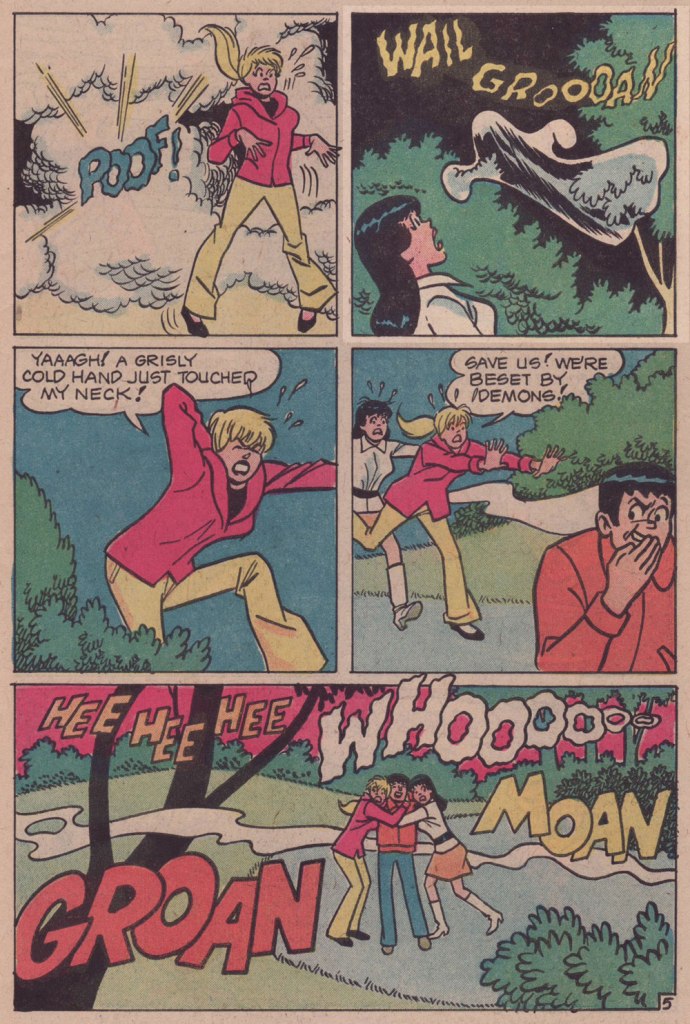
« How could you be so sure? … they could be real! » — Reggie Mantle, believer

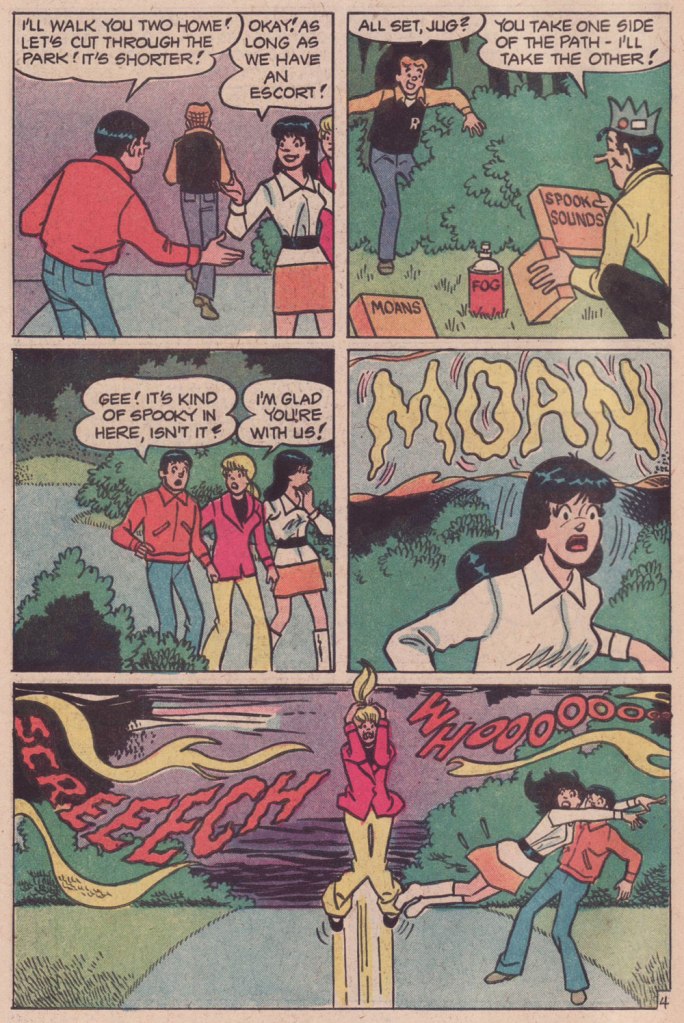
Sure, it’s a hoary ol’ plot, used both to comedic and dramatic effect a gazillion times, but… as is often the case, the plot is more or less accessory. I always enjoy an Archie comics story that reminds us that these kids have known one another forever (from their perspective — not in the sense that they’ve been around since the 1940s, that’s too metatextual). With Archie for the most part being someone things happen to, as opposed to a catalyst — one who sets events into motion, I’m rather more interested in the adversarial (and sometimes collaborative) relationship between Reggie and Jughead… when it’s properly explored.

As with the previous Samm Schwartz story I spotlighted, Tee for Three, Dilton’s garage plays a key part. Intriguing…

Beasties of the Night originally appeared in Jughead no. 279 (Aug. 1978, Archie). It was scripted by Frank Doyle (1917-1996).

-RG

Hallowe’en Countdown V, Day 12

« After that I never saw him again. He became the ‘phantom’ artist, whereabouts unknown! » — Bhob Stewart

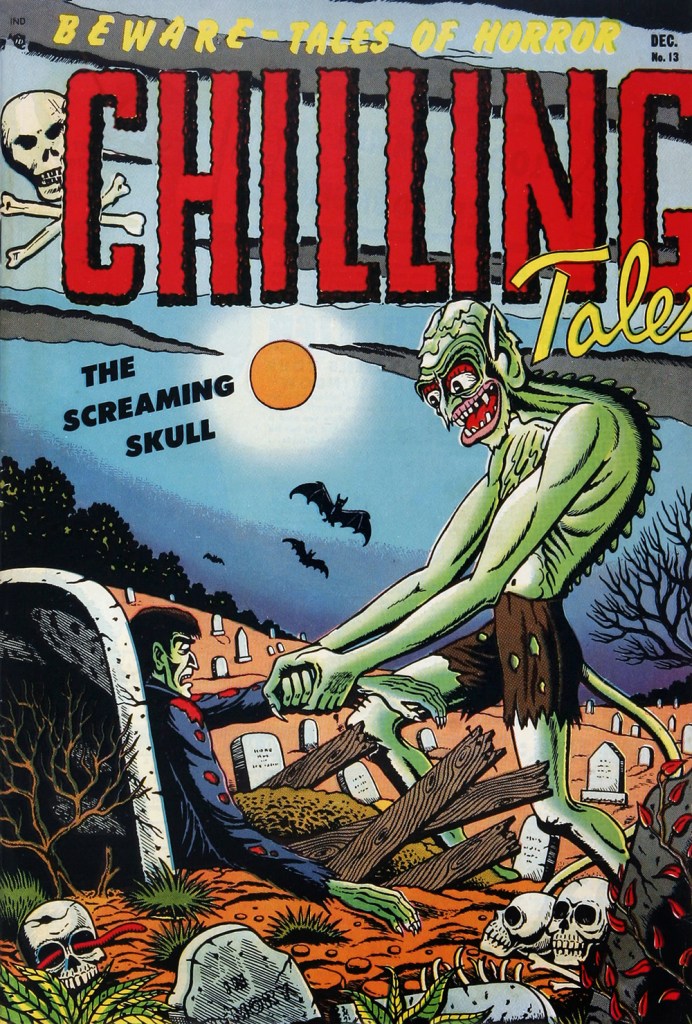
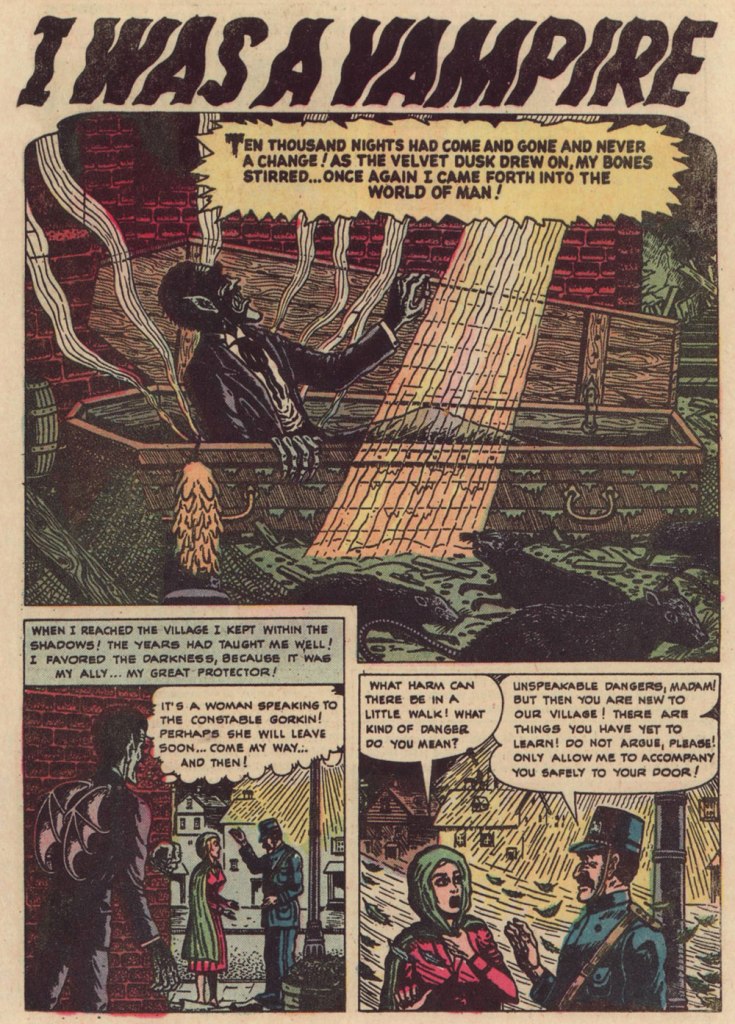
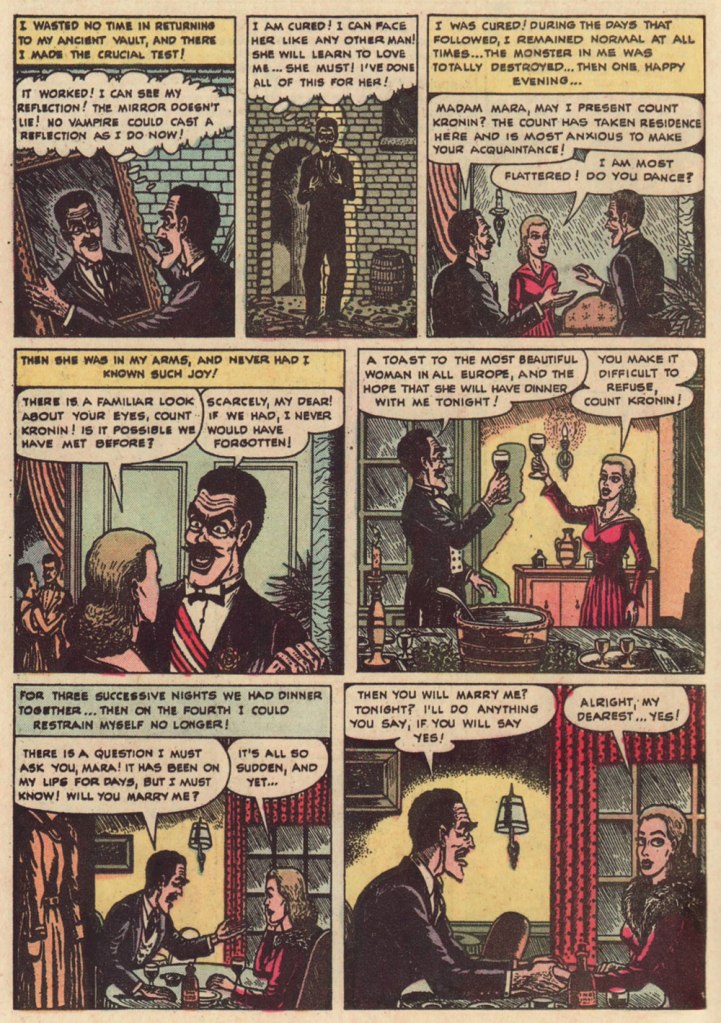
Hello again. Last year, I touched upon the stint that Matt Fox (1905-1988) did as an occasional and unappreciated inker at Marvel in the Silver Age. While he’s assured a sort of immortality for the eleven winningly oddball covers he painted for Weird Tales, he also left his distinctive and lasting mark on horror comics of the 1950’s. Let’s give the old burying grounds the once-over, shall we?

This is Chilling Tales no. 13 (Dec. 1952, Youthful), actually the title’s début, as it picks up its numbering from Beware. In addition to its cover, the issue features within a rare Fox story, The Hand of Glory. Read it here… at your own peril! (just kidding, it’s all perfectly safe).
This is Chilling Tales no. 15 (Apr. 1953, Youthful). What in tarnation is going on here?
This is Chilling Tales no. 17 (Oct. 1953, Youthful). Incidentally, this title was edited (anonymously) by Sally the Sleuth creator Adolphe Barreaux.

Here’s one of Fox’s all-too-infrequent forays between comic book covers. This one appeared in Uncanny Tales no.6 (March 1953, Atlas). Writer unknown… though that’s no great loss to history.

From the Tomb editor Peter Normanton, in the lumberingly-titled The Mammoth Book of Best Horror Comics, astutely noted that:

« There is an air of disquiet to his vision, yet it charms through a surreptitious blending of the primitive with the mockingly insane. His characters border on the lunatic, seemingly at home in his landscapes, concealing a darkness corruptive of the soul. »

And I leave the final word to my trusted accomplice ds, who observed that:

« I find that the art of Matt Fox reminds me of Terrance Lindall… Both can create disquieting monsters with eyes that speak of inner torment, reminiscent of Christian Art (mostly Spanish, I believe) from a few centuries ago. »

-RG
Hallowe’en Countdown V, Day 11

« We see light, not dark. But it is in the dark that we feel goblins and ghosts. » — Rex Brandt

The ever-creative Tom Eaton‘s Oliver Cool (1975-79) always reserved a special treat for Hallowe’en. In past countdowns, I’ve shared the first (1975) and second (1976) entries devoted to the beloved occasion, and here is the final pair.

From Young World Volume 14 no. 8 (Oct. 1977, The Saturday Evening Post Company).
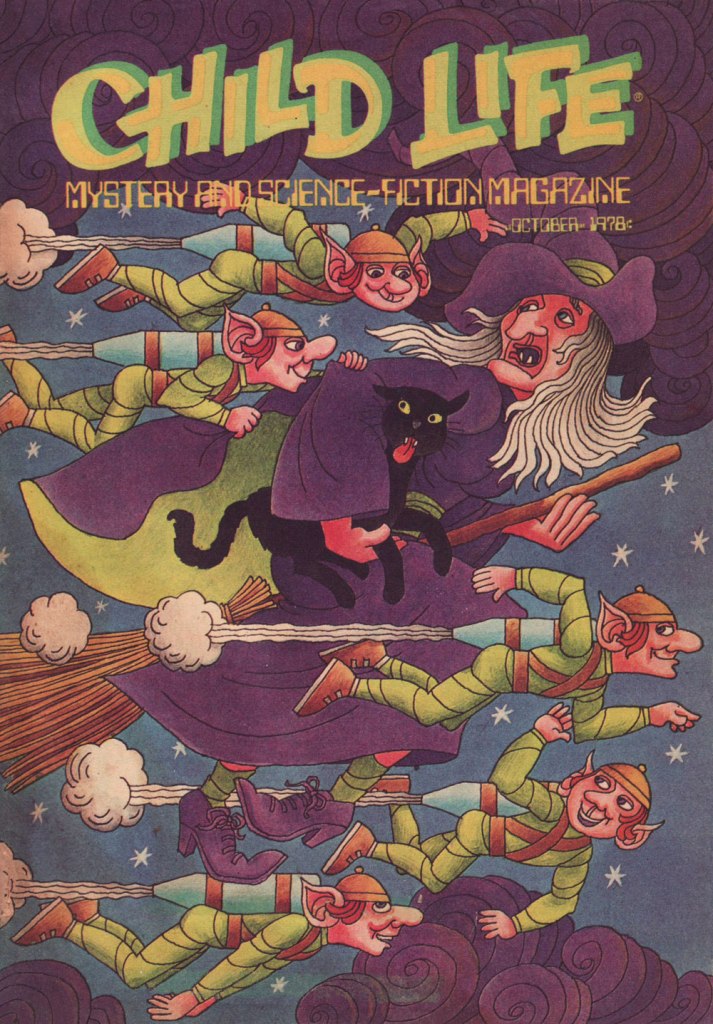
Eaton’s Fizz & Farra In the Year 2250 strip ran concurrently in Young World’s sister publication, Child Life. This seasonal cover by Arthur Wallower was simply too good not to include.
From Young World Volume 15 no. 8 (Oct. 1978, The Saturday Evening Post Company).
As a bonus, here’s one item some of you monster kids may fondly remember: Monster Stand-Up Greeting Cards (1980, Scholastic). Pricey these days, from the look of it.

-RG

Hallowe’en Countdown V, Day 10

« Ghost stories … tell us about things that lie hidden within all of us, and which lurk outside all around us. » — Susan Hill

We’ve once before turned our attention upon Dell’s Ghost Stories, an anthology title with such an incredible first issue (written and directed by John Stanley) that all the subsequent ones whither in the long shadow it casts. In recent years, I’ve somewhat softened my stance on these sequels, taking into account that nothing could measure up to Stanley’s work on numero uno — and accordingly judging them on their own merits.

As a kid, I didn’t think too highly of Frank Springer (1929-2009), being primarily familiar with his inks over Frank Robbins on The Invaders (too sloppy, and no substitute for Robbins inking himself, which never happened at Marvel anyhow). Down the line, I ran into some of his earlier work (Phoebe Zeit-Geist, The Secret Six, The National Lampoon, Dial H for Hero and sundry items for Dell) and grew to appreciate his strengths.

Now, Ghost stories was interesting as a ‘horror’ (in the very limited Silver Age/Comics Code in full force sense) anthology, in that the vast majority of the stories were, after that peerless first issue, the work of one single artist (Gerald McCann, after contributing a couple of page to number one, handled issues 2-5, with a couple of filler pages thereafter, then Springer took over for 6-20, the rest of the run consisting of reprints, with the unexpected exception of no. 35).

Here then is what’s likely my favourite Springer Ghost Story: A Room with a Dreadful Secret.

This is Ghost Stories no. 14 (June 1966, Dell). Cover by Springer.

-RG
Hallowe’en Countdown V, Day 9

« I don’t know what the hell I published.
I never read the things.
» — Stanley P. Morse

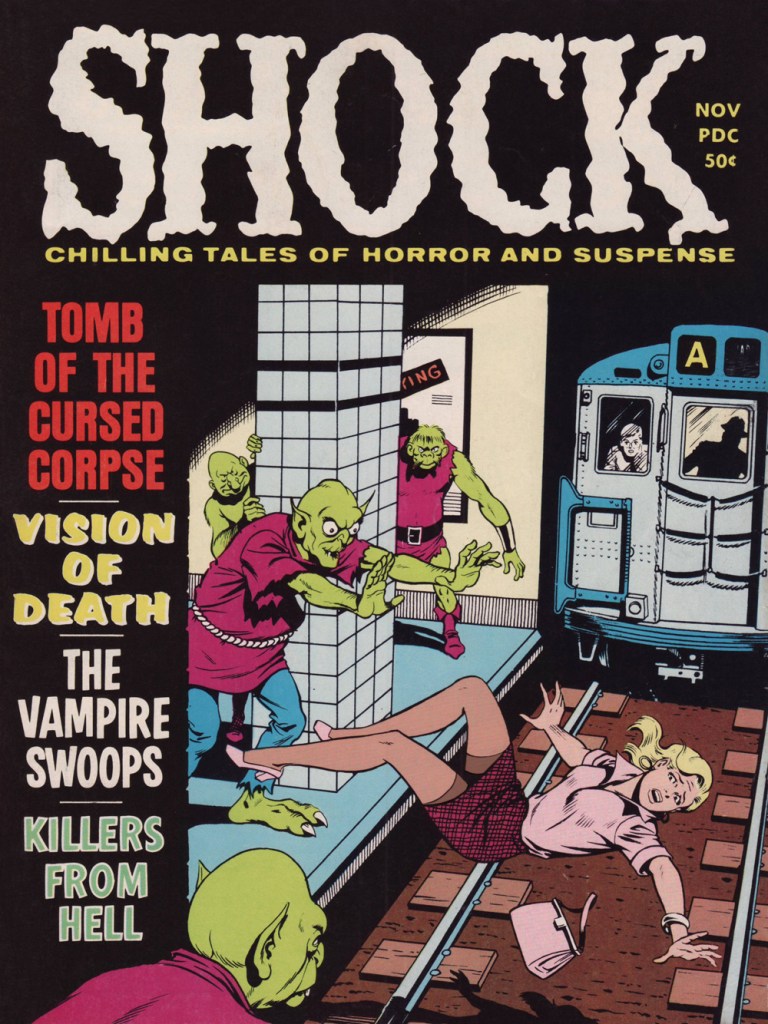
In the sinister wake of Warren Publishing‘s success with Creepy, Eerie and Vampirella, old-school fly-by-night 1950s comics publisher Stanley P. Morse (Aragon Magazines, Gillmor Magazines, Medal Comics, Media Publications, S. P. M. Publications, Stanmor Publications, and Timor Publications…) dusted off some of his old pre-Code chillers in the late 1960s and early 1970s in black and white magazines such as Shock (15 issues), Chilling Tales of Horror (11 issues), Ghoul Tales (5 issues) and Stark Terror (5 issues). It certainly wasn’t all junk: after all, Morse had published Weird Tales of the Future and Mister Mystery, with their Basil Wolverton and Bernard Baily classics…

Unlike Eerie Publications’ grey-toned and blood-and-gore-ified reprints, these are, as far as I know, unretouched, not to mention decently printed.

This is Shock Vol. 2 no. 5 (no. 10, November, 1970, Stanley Morse). Edited by Theodore S. Hecht.

Maybe it’s just me, but isn’t Kurt Schaffenberger just about the unlikeliest pick of cover artist for a pre-code horror anthology? Sure, he fit in nicely with ACG’s gentle moral fable aesthetic, but aren’t you just expecting the Man of Steel or The Big Red Cheese to swiftly sweep in, catching the damsel-in-distress before the A Train smooshes her?

To wit: one of Kurt’s fun ACG covers, this is Unknown Worlds no. 43 (Oct.-Nov. 1965, ACG).

-RG

Hallowe’en Countdown V, Day 8

« So, you see the little snot on the right side, move it two inches to the left and add a little bit of green gleam to it. » — Mark Newgarden, doing some art direction

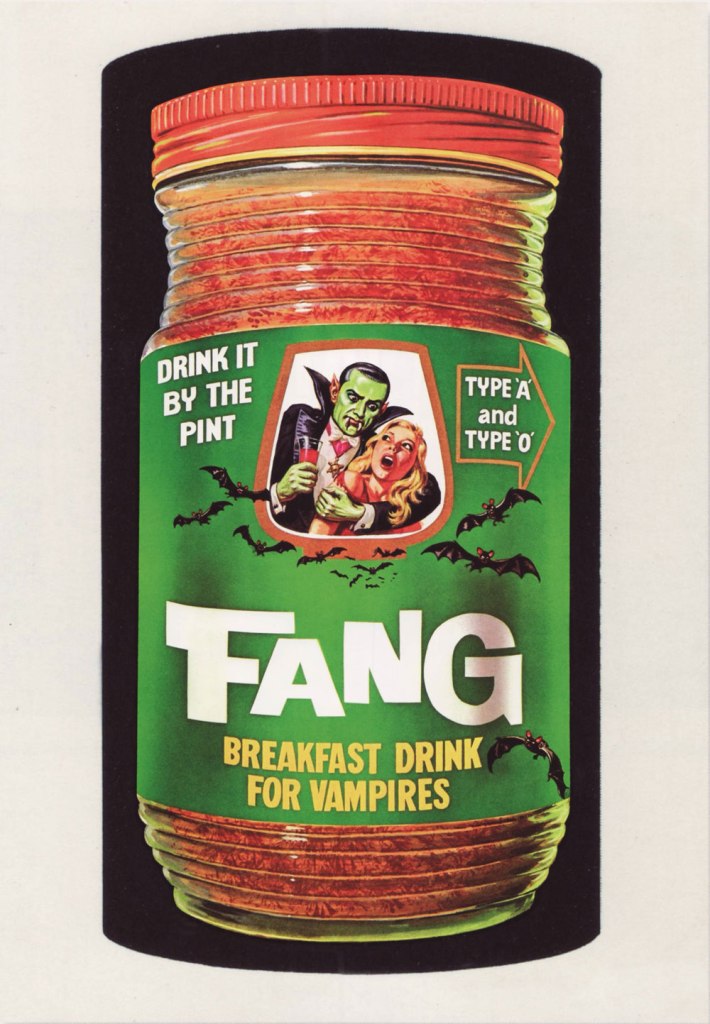
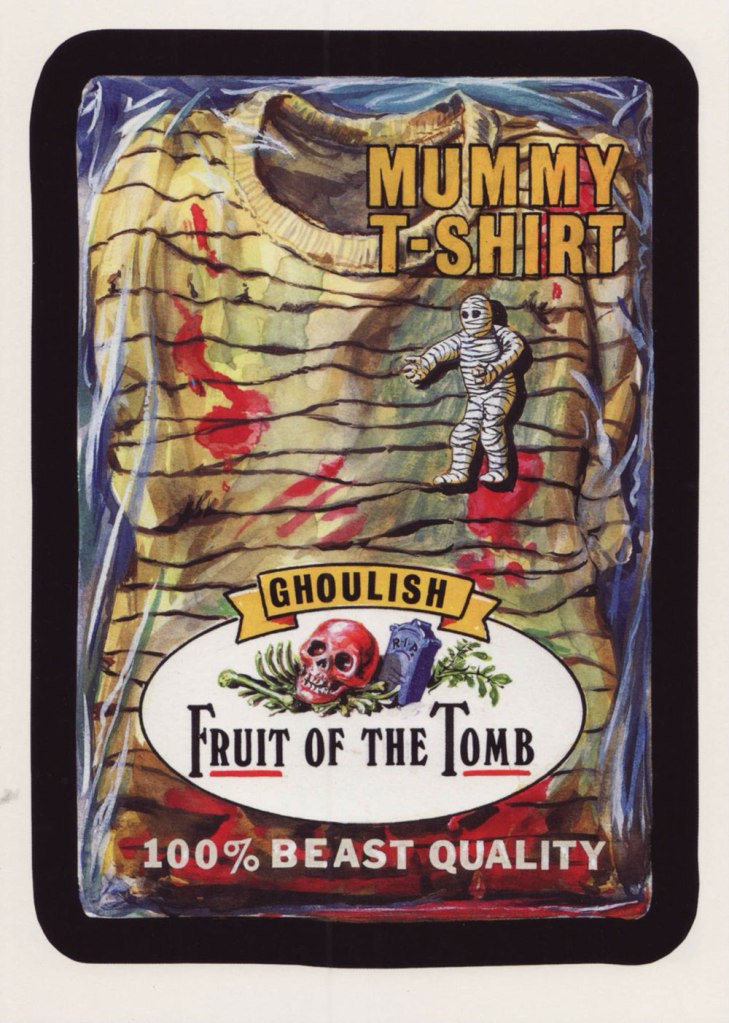
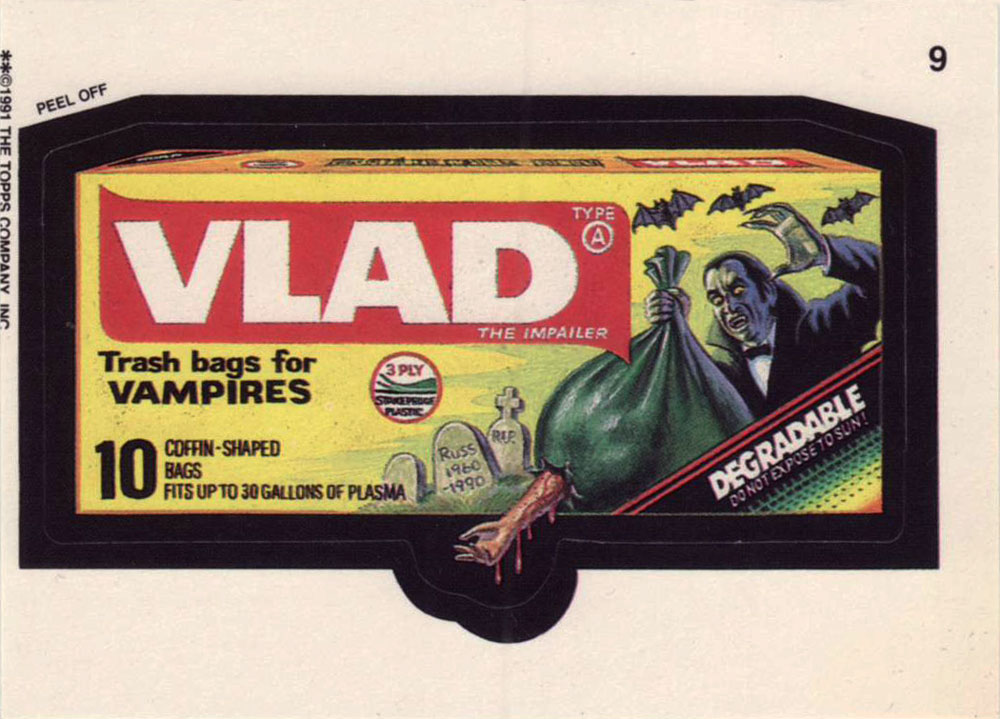
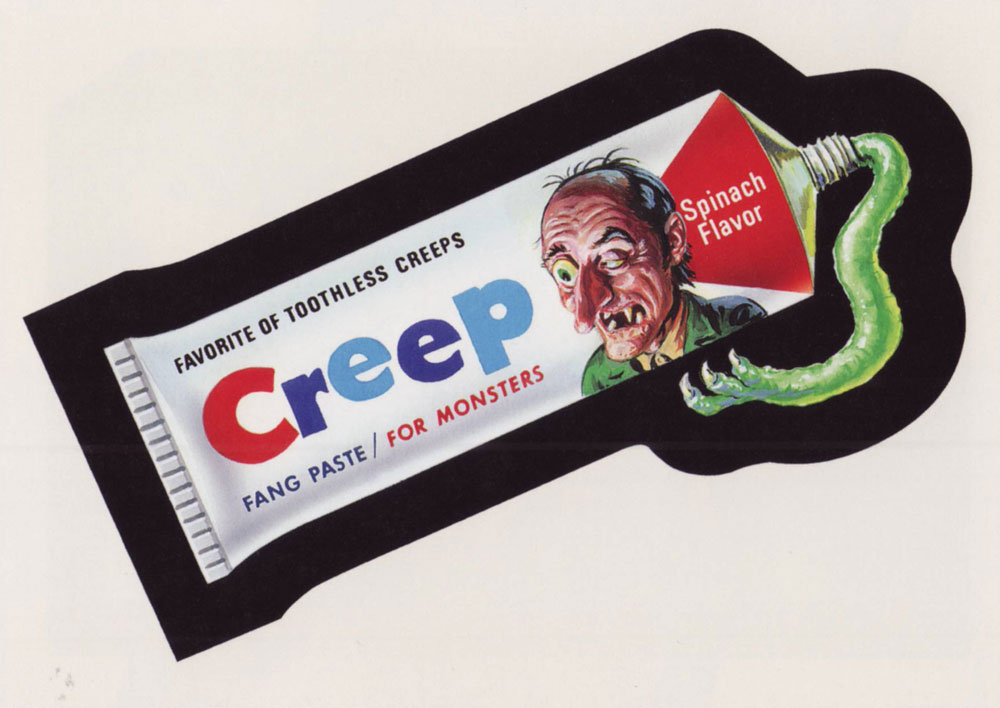
I can’t help it, Wacky Packages are such a Hallowe’en-friendly endeavour that I keep returning to their fertile soil. First, during our initial edition and again in the second. Just consider some of the who’s who talent embroiled in dreaming up these humble stickers: Art Spiegelman, Norm Saunders, Bill Griffith, Jay Lynch, Mark Newgarden, John Pound, Drew Friedman, Tomas Bunk, Tom Sutton

A Norman Saunders beauty from Series 12 (1975, Topps). And just what is wrong with spinach, pray tell? 😉
If this one looks sharper than you’d expect, it’s because it’s shot from a larger version of the Wacky card that Norman Saunders (re)painted for Topps’ Wacky Posters series, circa 1973.
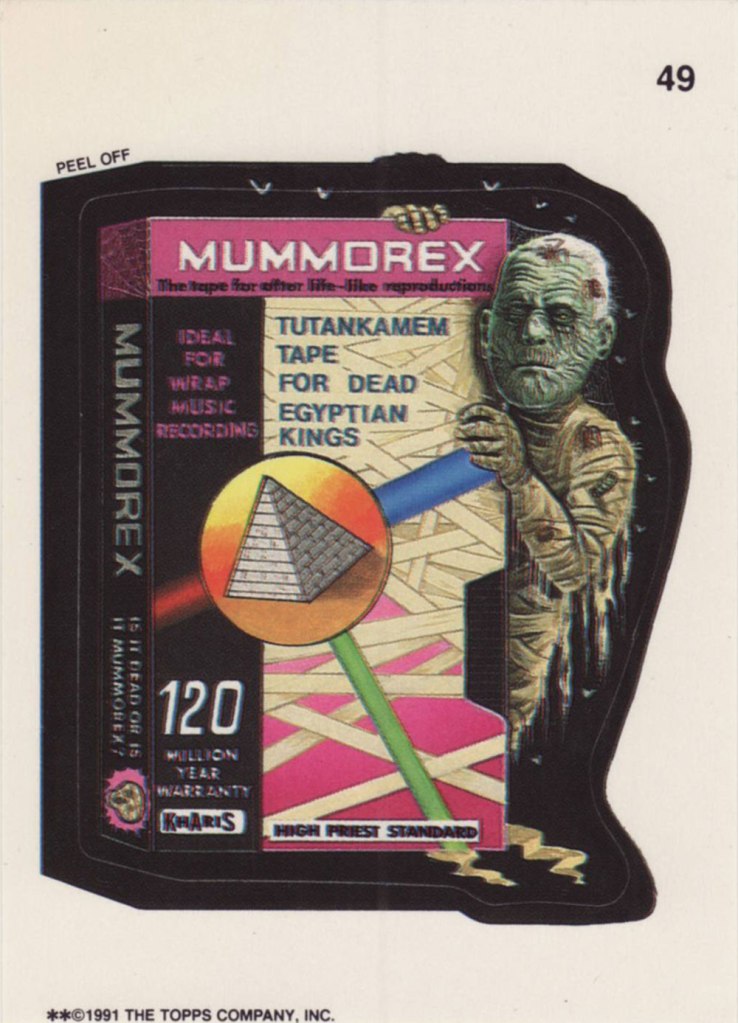
Ladies and gentlemen, Drew Friedman! « In 1991, I was creating many concept sketches and pencil drawings for the TOPPS company, including for their latest set of the hugely popular sticker series “Wacky Packages”. Mark Newgarden was the editor and art director for the 1991 series, and the writers for the card fronts included Newgarden, Jay Lynch, Jordan Bochanis, John Mariano and myself. I drew about 22 tight pencil images which would (with one exception) be painted by the illustrator Patrick Pigott. » If you enjoy being privy to an artist’s creative process, by all means do yourself a favour and feast your peepers on this gallery of Friedman’s roughs, finishes, used and unused pieces. In this (mummy) case, it’s Friedman pencils, finished art by Tomas Bunk.
From the 6th Series (1974, Topps). Most likely painted by Norm Saunders.
From the 8th Series (1974, Topps)… though mine’s a 1980’s reprint. Painted by Norm Saunders.
From the lucky 13th Series (1975, Topps). Another fine Saunders vintage. Topps would find Mr. Saunders most difficult to replace.
From the 1985 Series. Artist unknown.
From the 1991 Series. Painted by Patrick Pigott.

-RG

Hallowe’en Countdown V, Day 7

« If someone tries to tell you that the universe is a big, empty place… don’t believe them. » — Kēif Llama

Haunted houses in space? Why not? They’re just about everywhere else!

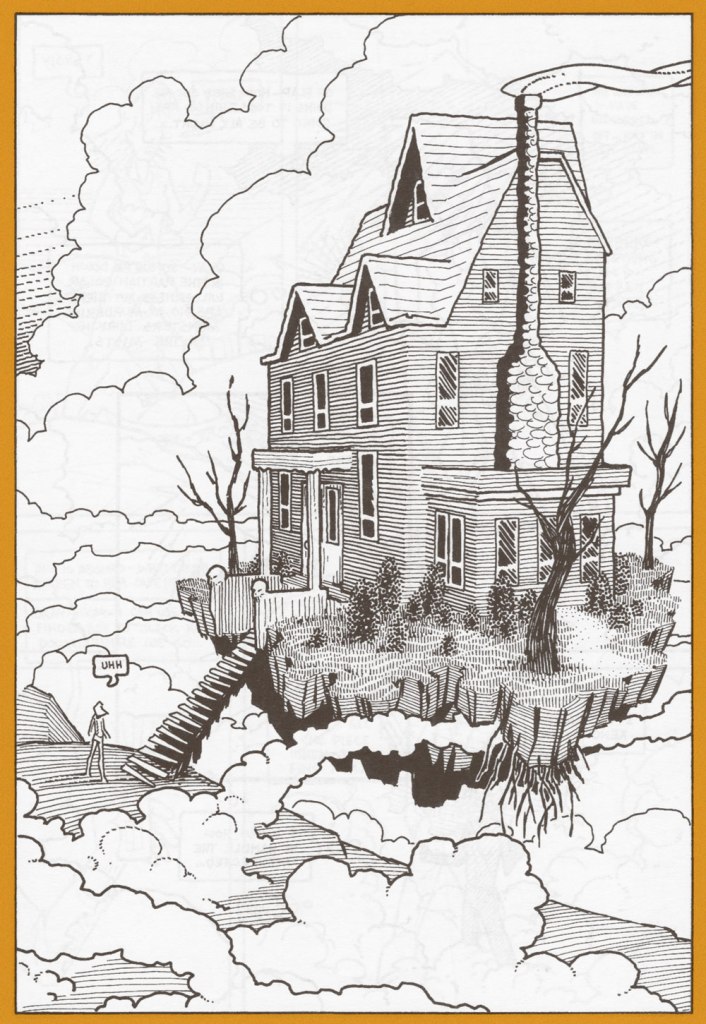
Matt Howarth‘s heroïne Kēif Llama (pronounced keef yamma) has already been bestowed an exhaustive spotlight by my partner ds, so I shan’t rehash what she said. But since there are no tentacles involved in this case, I feel I’m on safe ground to take a peek at the spookiest bits of one of our favourite Xenotech’s startling interstellar encounters.

This is Keif Llama Xenotech Vol. 2.4 (Jan. 2006, Mu Press/Aeon), and despite what some have claimed, *not* a reprint of the also-recommended Fantagraphics series bearing the same name and logo.
For once, someone was thoughtful enough to provide stairs for those of us still subject to the law of gravity.
… then you will die. Sounds reasonable.
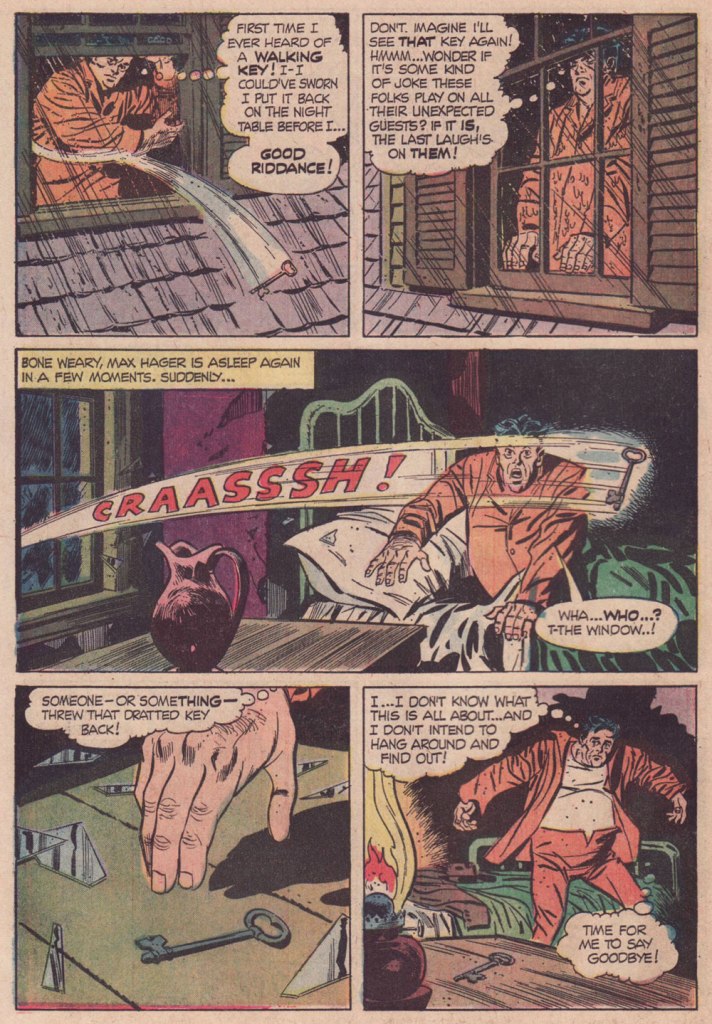
An earlier recorded instance of a Haunted House in Space, from It’s Midnight… the Witching Hour no. 14 (Apr.-May 1971, DC). Layout by Carmine Infantino, pencils and inks by Neal Adams — both presumably drawing closely on Al Williamson‘s opening splash for the cover story (right down to the deer!), which you can read here!

-RG

Hallowe’en Countdown V, Day 6

« There’s money, all right! I quoted Mrs. Tarrent a hundred slugs for this trip and she never batted a tonsil! » — Ken Shannon’s on the job.

Reed Crandall (1917-1982), one of the final additions (mid-1953… late in the ballgame!) to EC Comics’ immortal roster, previously spent most of the Golden Age years (1941-53) exclusively working for Quality Comics, and it was only when the publisher began to scale back its output, in 1953, that Crandall began to look elsewhere for additional work. After EC, he would make landfall at George A. Pflaum’s Treasure Chest of Fun & Fact, a story we’ve touched upon earlier this year.

Hard-boiled private eye (was there any other kind?) Ken Shannon was introduced in Quality’s Police Comics with issue 103 (Dec. 1950), and right away grabbed the cover spot (dethroning Plastic Man, no less!), which he doggedly retained to the bitter end, namely Police’s final bow, issue 127 (Oct. 1953). Concurrently, Shannon’s investigations were spun off into his own book, over the course of ten issues (Oct. 1951 to Apr. 1953).

Shannon certainly had his share of unusual cases to puzzle out, and here are the spookiest!

This is Ken Shannon no. 3 (Feb. 1952, Quality). From what I’ve seen and heard, these babies are scarce.
The cover story’s introductory splash. Read the entire issue here!
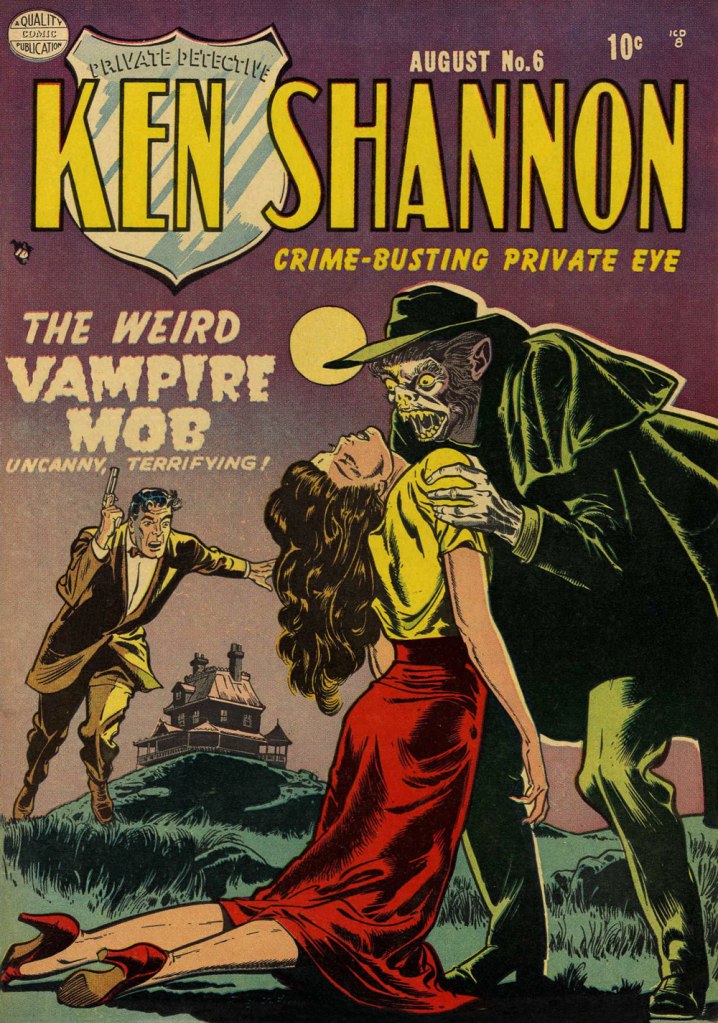
This is Ken Shannon no. 6 (Aug. 1952, Quality). Read the entire issue here!
And this is Ken Shannon no. 7 (Oct. 1952, Quality). Read the entire issue here!

-RG