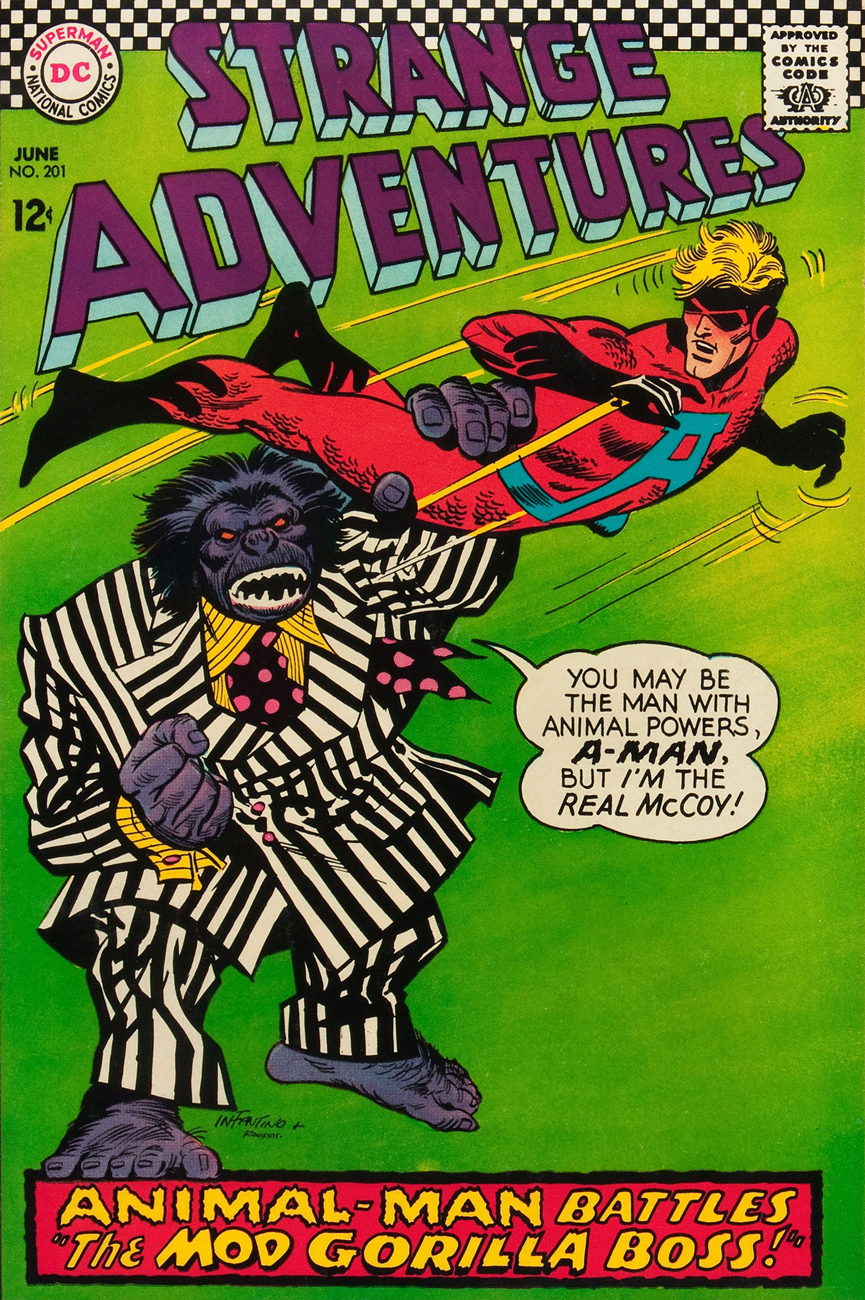
Treasured Stories: “Sorry, Wrong Dimension” (1965)

« All realities, all dimensions are open to me! » — Prince

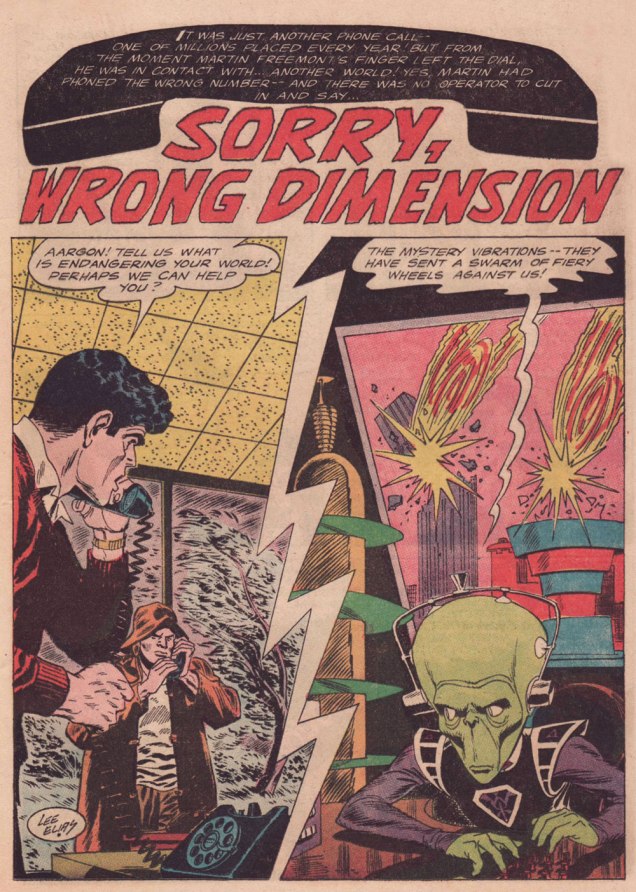
Growing up, Lee Elias (1920-1998) never was a particular favourite of mine. A handful of stories in DC’s mystery titles aside — and I’ve grown to love those — I probably came across his work for Marvel’s Human Fly series, and I was always disappointed when Elias, not my beloved Frank Robbins, turned up in the credits. For the record, Elias drew ten of the nineteen HF issues, and Robbins drew six, plus five covers.

Over time, I noticed his gloriously gruesome cover work with art director-designer Warren Kremer for Harvey’s Pre-Code Horror titles of the early 1950s. His work on DC’s Adam Strange in the mid-1960s is best forgotten — there is only one Adam Strange, and it’s Carmine Infantino‘s (with trusty inker Murphy Anderson along for the Zeta Beam ride, of course). However, I adore Elias’ brief run (with writer Dave Wood) on Ultra the Multi-Alien, the splendidly wacky feature that replaced Adam Strange in Mystery in Space (issues 103 to 110, 1965-66).

As a treat, here’s one of those Ultra covers.

This is Mystery in Space no. 108 (June 1966, DC), illustrated by Murphy Anderson. On this cover, Ultra has always reminded me of Men Without Hats‘ main man, Ivan Doroschuk. Well, Pop Goes the World!
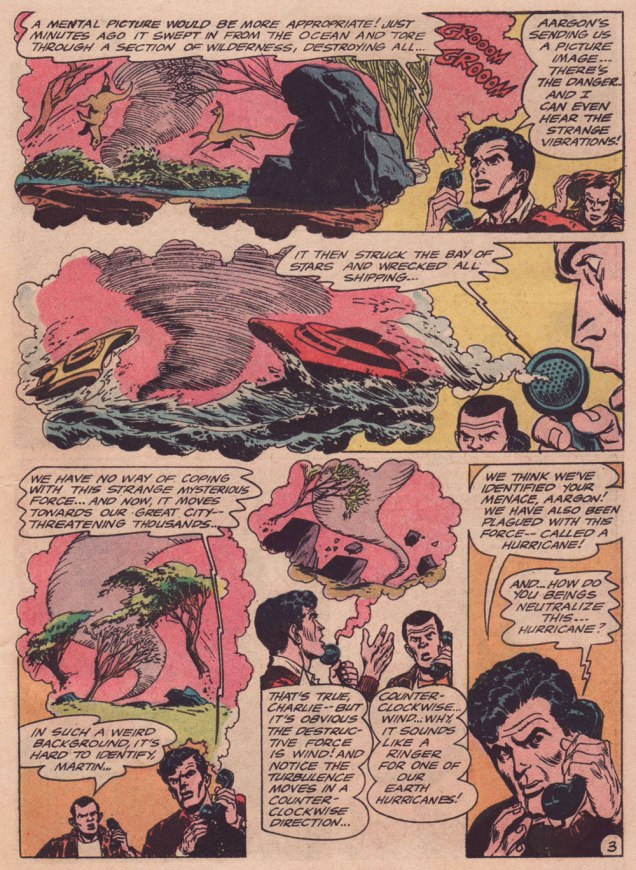
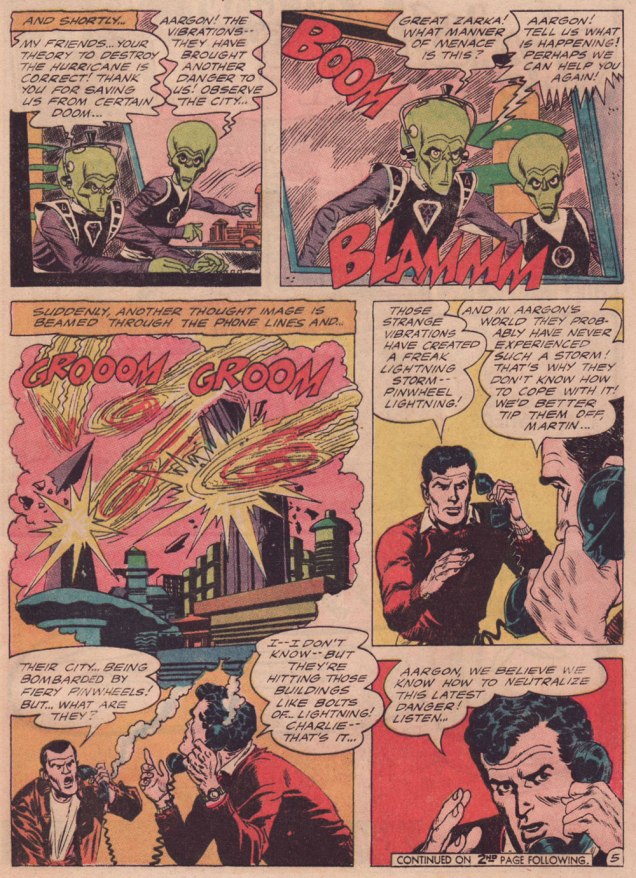
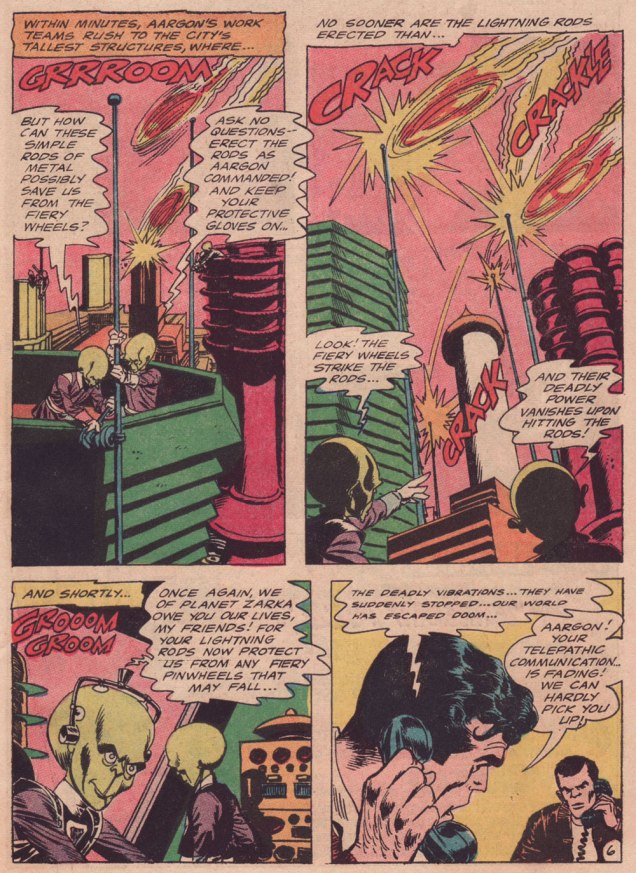
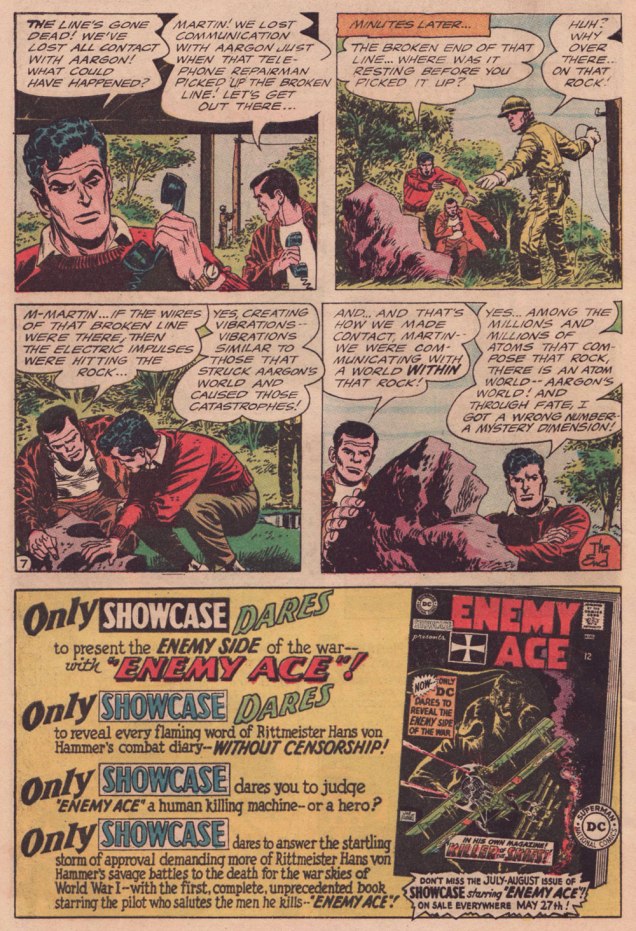
Originally published — writer uncredited — in Strange Adventures no. 178 (July 1965, DC). Its title is a clever twist on Lucille Fletcher‘s 1943 radio play — and Agnes Moorehead tour de force — ‘Sorry, Wrong Number‘, which Orson Welles praised as “the greatest single radio script ever written“.

I’ve left in the ad, because… Enemy Ace, Robert Kanigher and Joe Kubert‘s finest hour!

Why am I so fond of this particular story? It’s the little things: for once, a story in a Jack Schiff-edited title makes some semblance of adhering to scientific — or at least science-fictional — principles; here, Elias designed an alien race that, given their grumpy, unprepossessing mugs, would typically have been cast as villains, but instead turn out perfectly honourable; the story’s human protagonists give aid to strangers in need, never asking for a thing in return: no Zarkan mineral rights, no salacious dirt on J’onn J’onzz, just selfless dedication to doing the right thing and the satisfaction of averting a crisis. How refreshingly old-fashioned, a cooling balm for these harrowing times.

-RG

p.s. my partner ds should return to our blog soon… she’s at present battling a mild case of writer’s block, so I’m filling in.
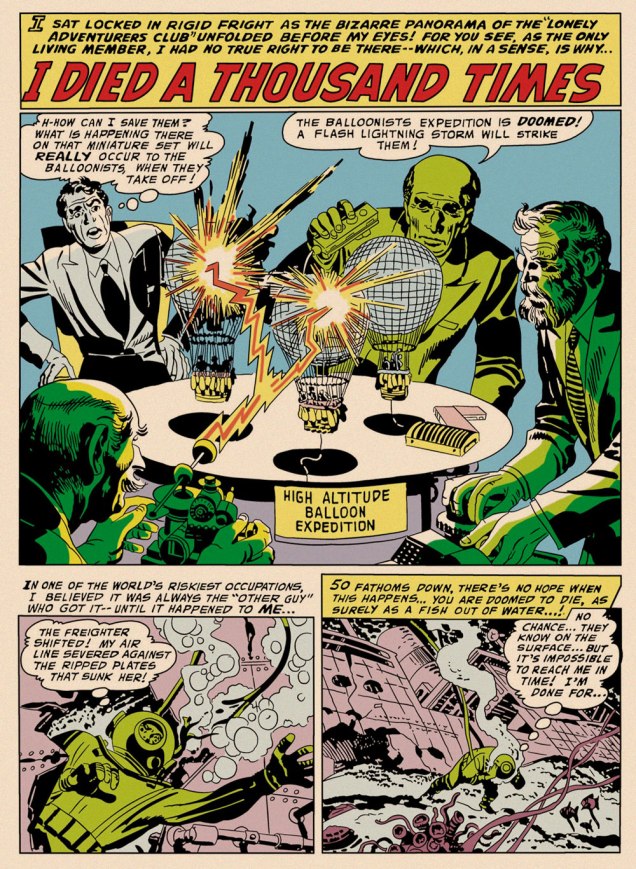
Jack Kirby’s ‘I Died a Thousand Times’

« Great Scott! What a mess! Did we walk away from that? » — Rocky Davis

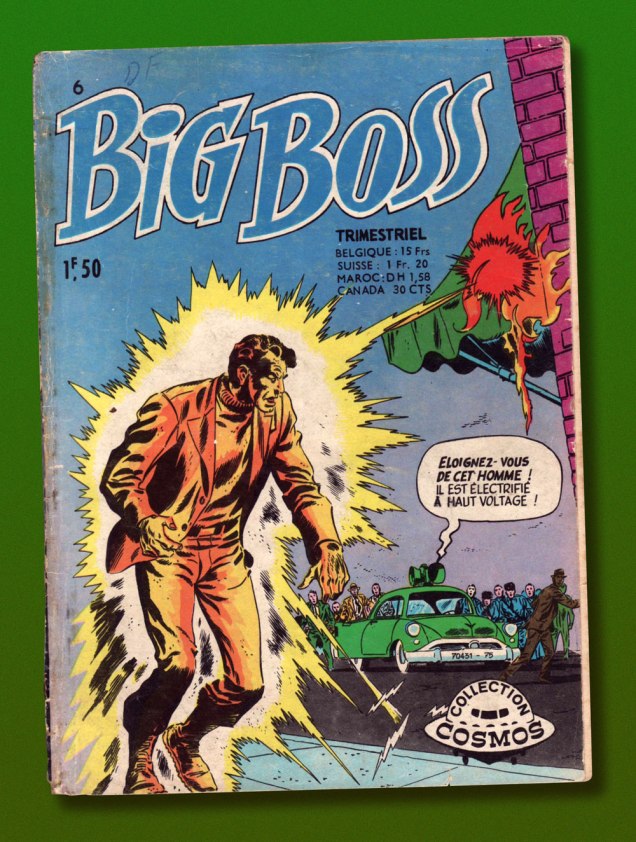
A couple of years after our big move, I’m still going through boxes, here at WOT? Headquarters. The other day, I came upon a stack of the long-running French anthology digest Big Boss (and its sidekick series, ‘Big Boy’), acquired who knows when and where… but surely for a song. Big Boss and ‘Big Boy’ (the quotation marks were part of the title!) were a most affordable source of vintage second-tier DC material like Roy Raymond, TV Detective; J’onn J’onzz, Martian Manhunter; Detective Chimp… and standalone tales from My Greatest Adventure, Tales of the Unexpected, House of Mystery and House of Secrets… essentially infamous editor Jack Schiff‘s row to hoe in the DC plantation.

This is Big Boss no. 6 (Oct. 1971, Arédit-Artima); cover by Ruben Moreira.

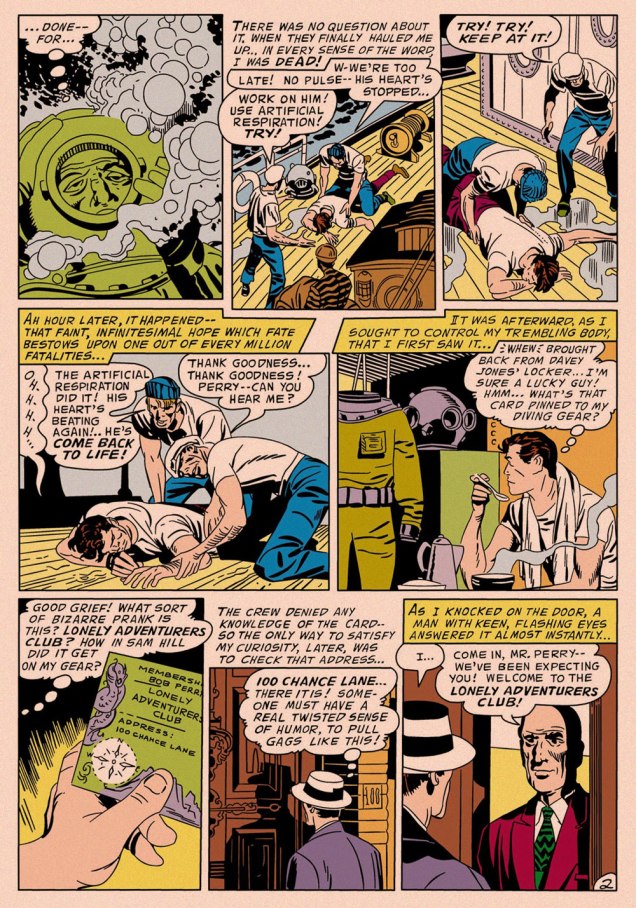
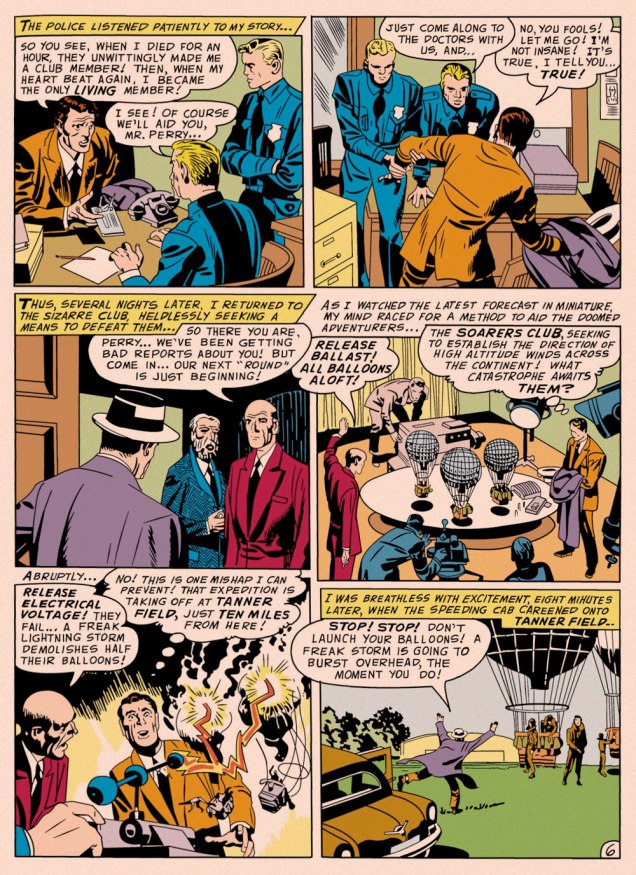
One might be inclined to say that, with its themes of adventurers cheating death or living on borrowed time, I Died a Thousand Times inspired Kirby’s Challengers of the Unknown, except that Ace, Rocky, Prof and Red had burst into print a few months earlier. Suffice it to say that they sprang from the same fertile well. It’s always intriguing to observe how the particular seed of an idea can be grown in a myriad of directions.

If you’ll forgive me the intrusion, this is how the opening panel appeared in the Big Boss reprint. In order to make things more readable in the digest format — and in black and white — Arédit‘s in-house art department routinely reframed and even augmented the artwork, with varying degrees of competence and success. This is one of the more accomplished efforts.

The story’s writer is unknown (though it features a most Kirbyesque plot); it was pencilled and likely inked by King Kirby, and originally appeared in My Greatest Adventure no. 16 (July-Aug. 1957, DC); edited by Whitney Ellsworth; Jack Schiff; Murray Boltinoff and George Kashdan… let’s just say DC *was* a tad heavy on the management side in those days.

Though Kirby’s standalone short stories of this period are as charming and inventive as you’d expect, this modest trove of material has by and large been neglected. While a handful of these tales (The Thief of Thoughts; The Creatures from Nowhere!; The Cats Who Knew Too Much!; The Man Who Betrayed Earth; The Negative Man; and The Stone Sentinels of Giant Island) were semi-randomly reprinted in the early 1970s when DC had lots of pages to fill, this one didn’t resurface in North America until 2011’s pricey-then-and-pricier-now hardcover Jack Kirby Omnibus no. 1.

– RG

Hallowe’en Countdown VII, Day 9

« The last I saw of Count Dracula was his kissing his hand to me, with a red light of triumph in his eyes, and with a smile that Judas in hell might be proud of. » — Bram Stoker

Comics fans of my generation might be forgiven for not fully appreciating Lee Elias‘ artistic assets if they encountered him, say, in Mystery in Space when he took over its lead feature, Adam Strange, from visionary Carmine Infantino. The series was mercifully soon discontinued, the victim of a game of editorial musical chairs designed to save the Batman titles, then — believe it or not — facing cancellation thanks to Jack Schiff‘s mismanagement.

So Schiff and Julius Schwartz traded workloads, Infantino grudgingly took over the Bat, and disaster was averted. But Adam Strange was the casualty.

While I do have a soft spot for Elias’ work on Ultra, the Multi-Alien (in Mystery in Space) and Eclipso (in House of Secrets), it wasn’t until I found out about his earlier, far edgier pre-Code shenanigans at Harvey Comics (with art director/designer/co-conspirator Warren Kremer) and, more directly and subtly his handful of stories for editor Murray Boltinoff‘s spooky titles (Ghosts, The Unexpected, The Witching Hour) in the 1970s, that I came to discern his light.

Boltinoff wisely played to Elias’ strengths in interests, handing him historical gothics to play with, and he delivered some of the finest work of his career.

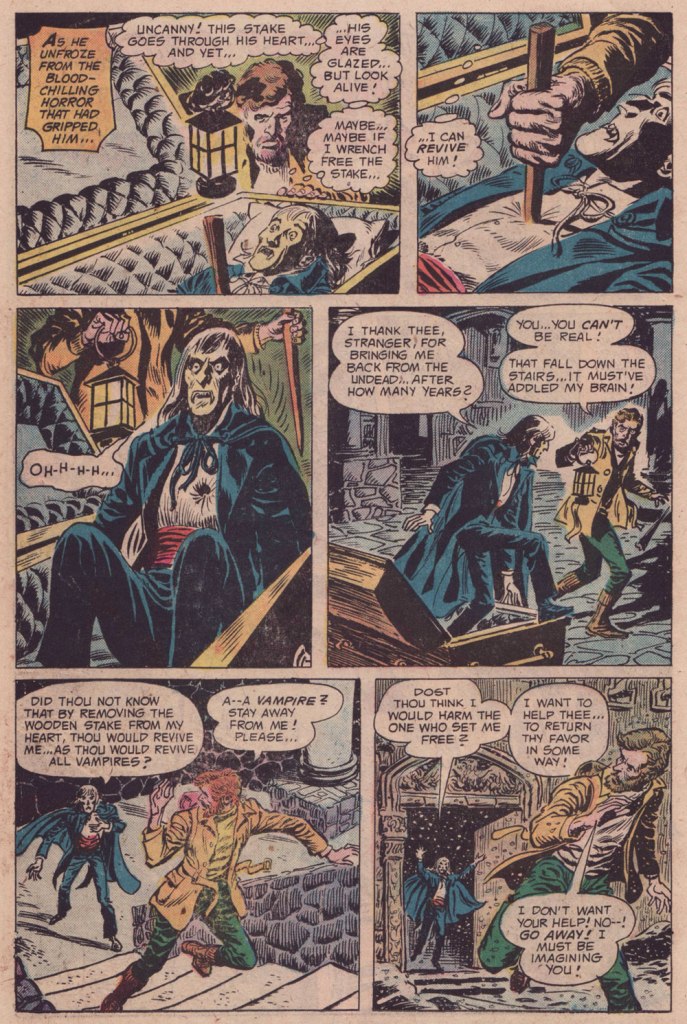
Written by George Kashdan, The Most Fearful Villain of the Supernatural was published in Ghosts no. 50 (Nov.-Dec. 1976, DC).

Editor Boltinoff had this amusing idée fixe, commissioning purported ‘true’ stories wherein famous authors were “inspired” to pen their immortal works by some supernatural encounter earlier in life. From what I recall, Mary Shelley, Charles Dickens, Robert Louis Stevenson and — in this case — Bram Stoker were among the elected.

-RG

The Case of the Cackling Conjurer!

« Never keep up with the Joneses. Drag them down to your level. » — Denis Charles Pratt (1908-1999)

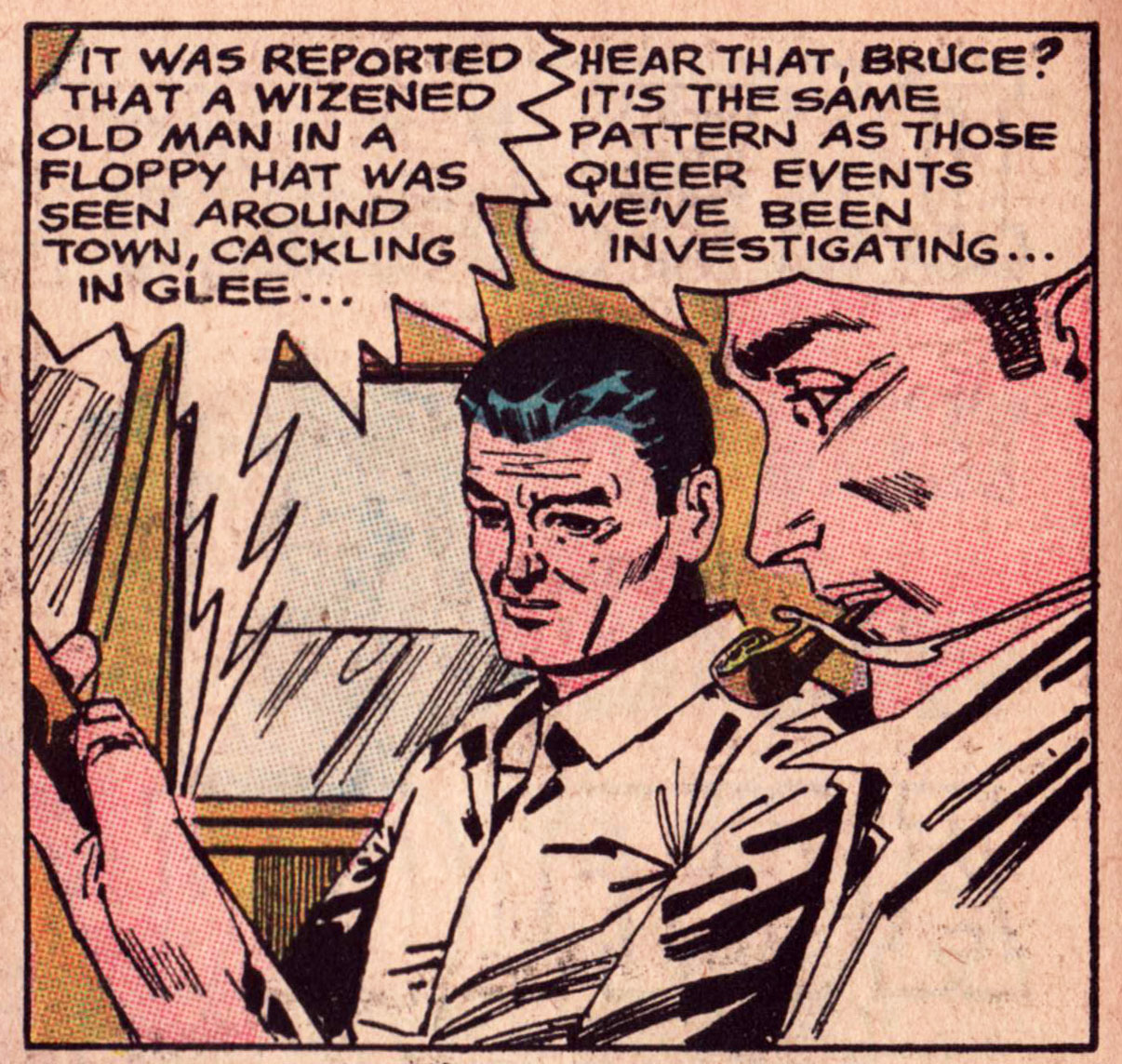
Longtime companions Bruce and Alex, who spend their days tracking down and investigating “queer events”, presumably for a guide they’re putting together, happen to drive near Oakville, where a gleeful oldster is on a tear.

BailyQueer1A

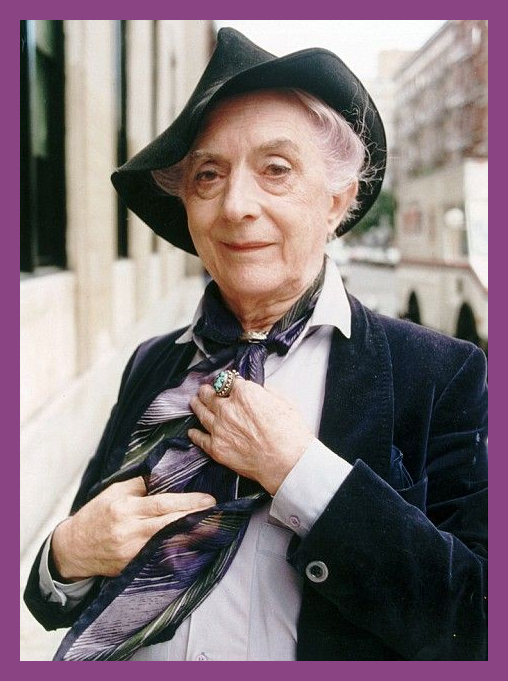
I’m thinking Quentin Crisp, because his fellow raconteur and bon vivant Sir Noël Coward wasn’t especially into large, floppy hats.

QuentinCrispA
« The very purpose of existence is to reconcile the glowing opinion we hold of ourselves with the appalling things that other people think about us. » — Quentin Crisp ( Denis Charles Pratt)

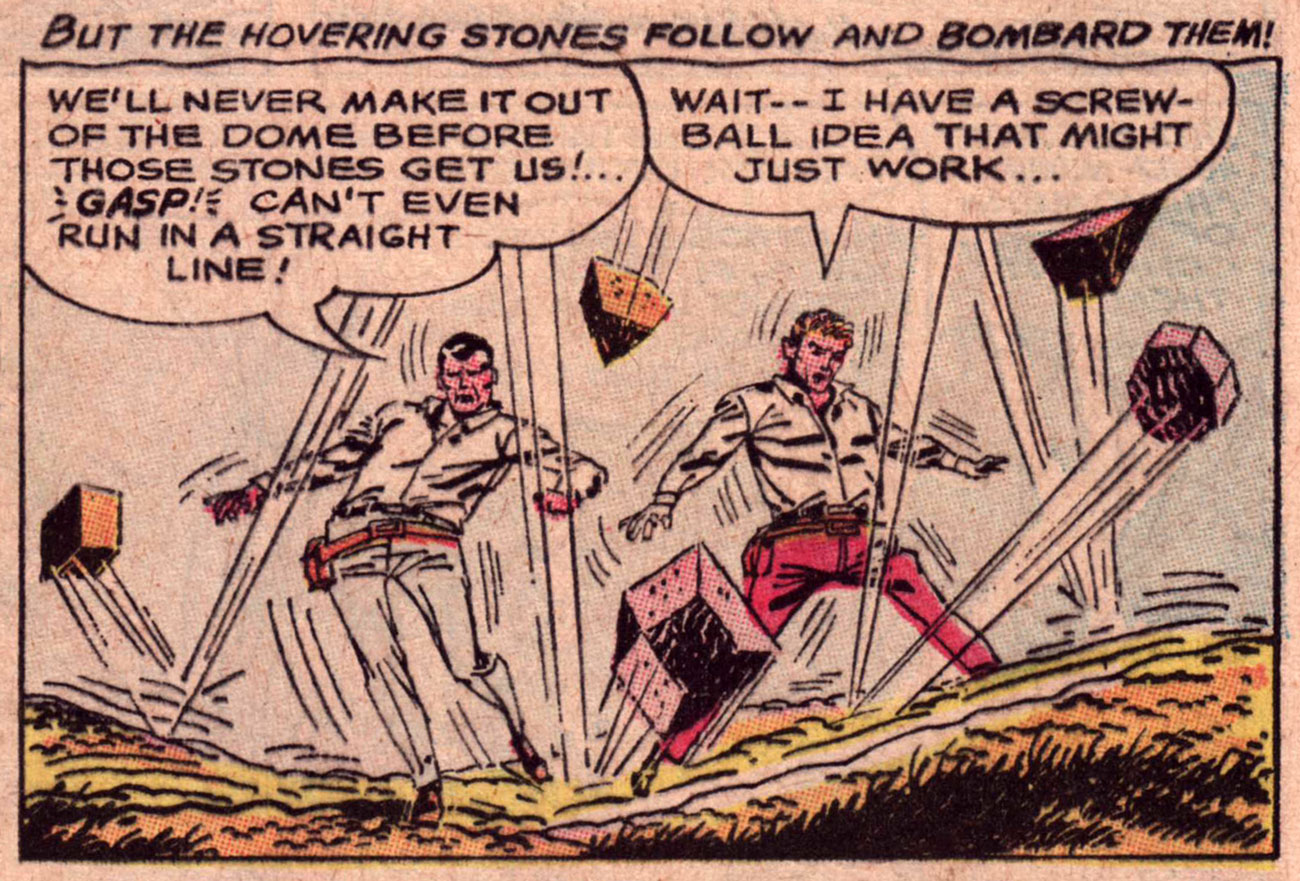
BailyStraightLineA
You don’t say, Bruce! Let’s face it, screwball ideas hardly ever fail to bear fruit in these zany yarns.

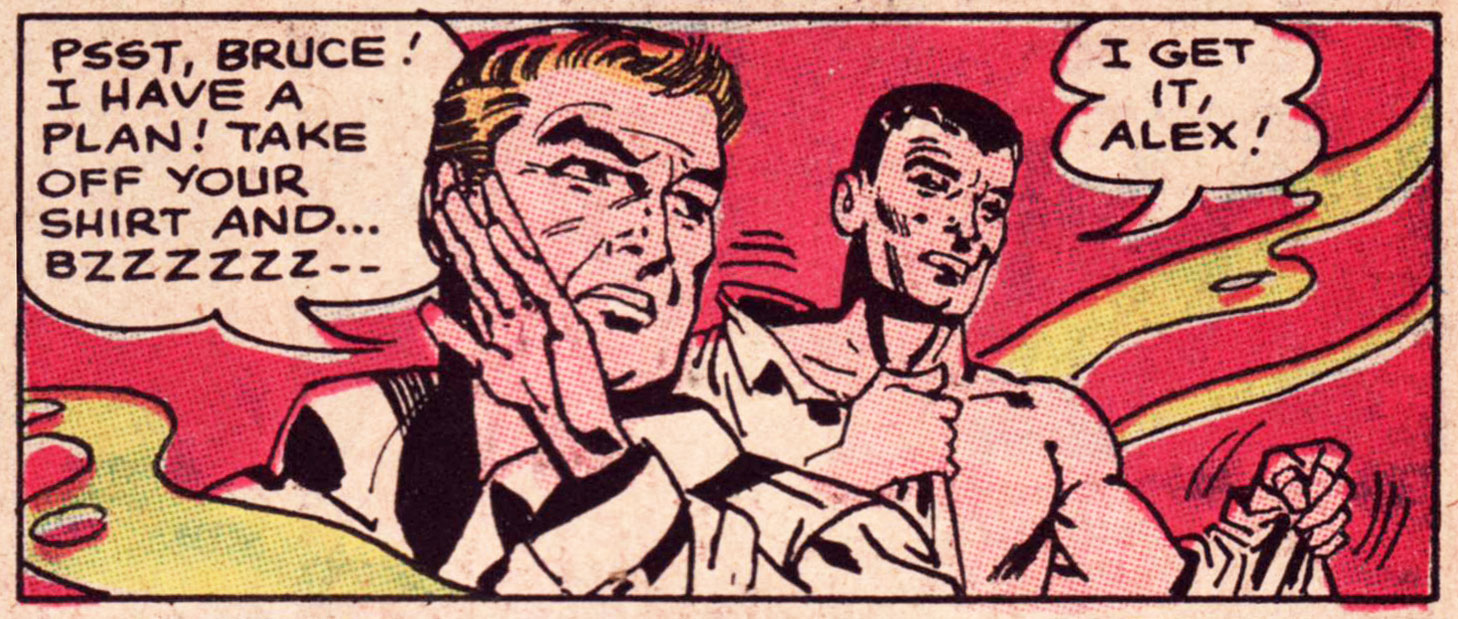
BaileyQueer2A
More action-packed merriment with Bruce & Alex, roving queerness inquirers!

Alex has a plan, and Bruce grasps instantly what Bruce has in mind. It’s like they’ve done this before. Somehow, Alex’s brainstorms always involve Bruce disrobing, and, judging from his expression, he’s unfailingly eager to comply.

This saga is that of The Cackling Conjurer (Strange Adventures no. 201, June 1967, DC), writer regrettably unknown, art by that magnificent oddball Bernard Baily. Edited, of course, by Jack Schiff; he may have screwed DC out of Jack Kirby’s talent throughout the 1960s, and nearly drove the Batman titles over the cancellation cliff, but he certainly produced some perversely entertaining crap. Incidentally, Schiff retired from comics two issues after this one, but surely that’s mere coincidence.

StangeAdventures201A
As you can see, the rest of the issue was quite mundane and utterly devoid of eccentricity. Cover by Carmine Infantino and George Roussos. That’s a rather… intimate hold the Mod Gorilla Boss has on Animal-Man, don’t you think?

– RG