Urban Legend Fun: The Spider in the Hairdo

« We are all susceptible to the pull of viral ideas. Like mass hysteria. Or a tune that gets into your head that you keep humming all day until you spread it to someone else. Jokes. Urban legends. Crackpot religions. Marxism. No matter how smart we get, there is always this deep irrational part that makes us potential hosts for self-replicating information. » — Neil Stephenson
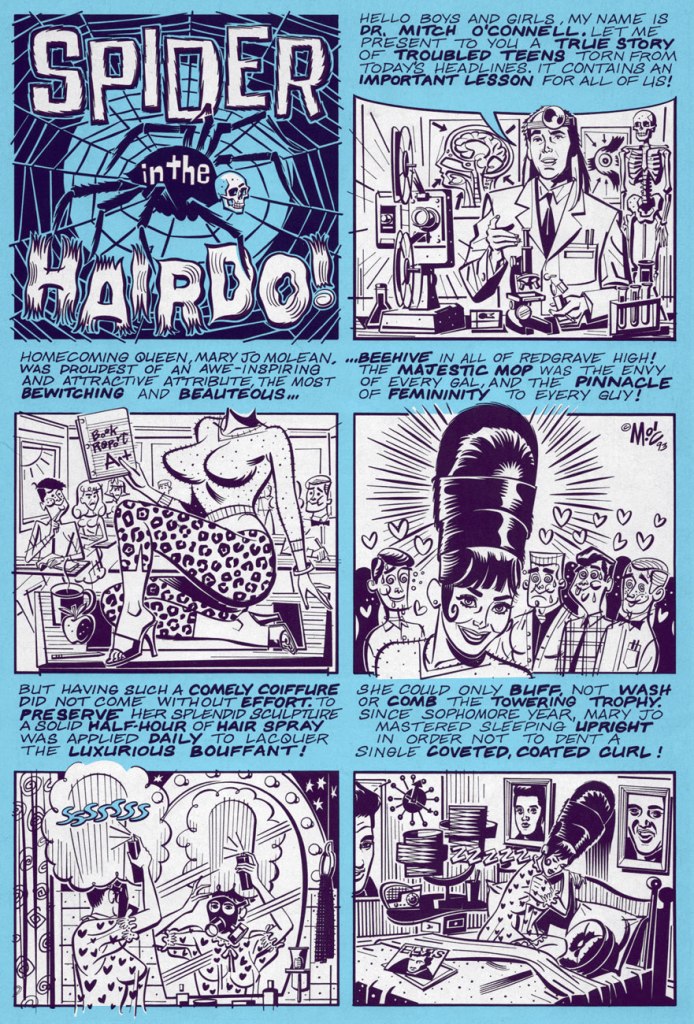
True story! It happened to a friend of a friend of a relative of an acquaintance of the hairdresser of the nephew of the uncle of the garage mechanic of the girdle maker of a cousin of a U.F.O. abductee ex-classmate of my brother’s. Or so he obliquely claimed under hypnotic regression.

Apparently, this tale gave rise (I know, I know) to a variant called The Cucumber in the Disco Pants.

And remember, always check with Snopes.com before propagating dubious claims.

Spider in the Hairdo! is a juicy excerpt from Dark Horse’s one-shot Urban Legends no. 1 (June, 1993). Adaptation by the self-proclaimed « World’s Best Artist », Mitch O’Connell. I can think of far less worthy candidates for the position.

Should you be craving more from Dr. Mitch, here’s where to go for your fix: www.mitchoconnell.com.

And if, like me, you can’t get enough of such urban folklore, check out any of Jan Harold Brunvand’s score of splendidly compelling books on the subject. When it comes to urban myths, Dr. Brunvand is the authority.

MitchGirl'sHeadA

As a bonus, here’s Arthur Adams‘ slightly subsequent take on the same myth, published in DC/Paradox Press’ inaugural entry in its ‘Big Book of…’ series, The Big Book of Urban Legends (1994).
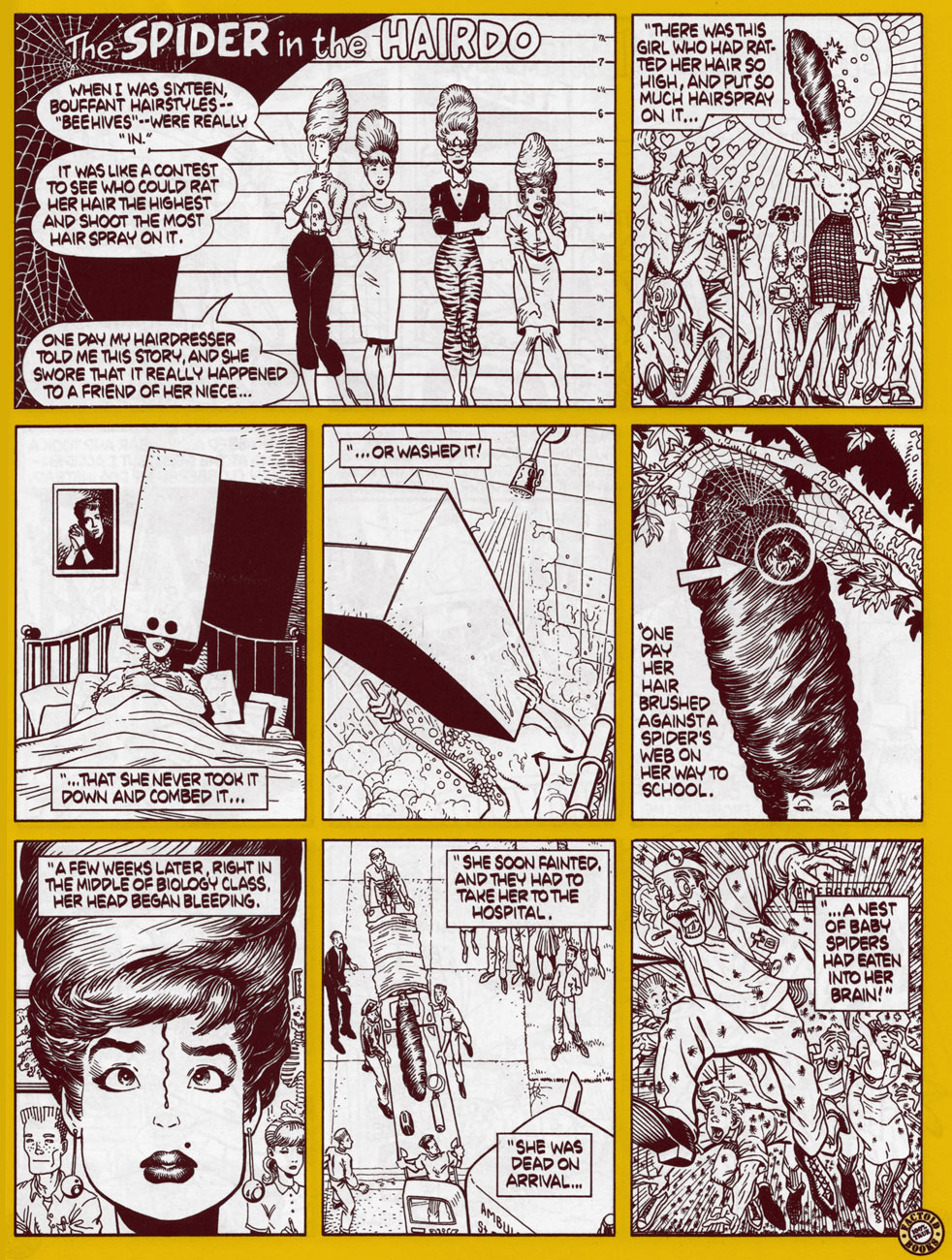
SpiderHairdoArtAdamsA

By their very nature, the Big books (seventeen in all) tended to be pretty hit or miss, not, for once, because of the writing, but chiefly due to the evident paucity, in the current comics industry, of artists versatile enough to credibly depict low-key, quotidian, humorous or historical situations. Is it counterintuitive, or fitting, that artists on the cartoonier end of the scale (Rick Geary, Roger Langridge, Gahan Wilson, Hilary Barta, Ty Templeton, Danny Hellman, Sergio Aragonés…) tended to fare best in producing this type of « documentary » work? I haven’t quite made up my mind. All I know is that the superhero specialists and photo tracers just brought embarrassment upon themselves *and* the unfortunate reader.

– RG

Tentacle Tuesday: a visit to the House of Mystery

Welcome to the entertaining world of science-fiction/fantasy of the 60s! If you’re an admirer of extravagant creatures with improbable anatomy, or a fan of twisted stories that take questionable leaps of logic to arrive to an implausible conclusion, willkommen.

However, if, like me, you tend to root for strange creatures (most of which didn’t want to be discovered in the first place), tread gently.  If there’s one pattern in House of Mystery stories, it’s that the “monsters” (that fly in from space/emerge from the sea/crawl out of the depths of the earth/are born in fire/whatever else we can think of) get slain, more often than not, by well-meaning people… or not-so-well-meaning people who are afraid of anything that looks different. If they somehow manage to escape getting shot or bombed out of existence, they’re buried under a convenient avalanche or volcanic eruption.

HouseOfMystery99
House of Mystery no. 99, June 1960. Art by Bernard Baily. Yep, the Beast gets killed by the military.  It’s sad to think that our reaction to a friendly shape-shifting alien would be “kill first, ask questions later”… but it sadly rings true.

TentacleTuesdayIcon

I know that it’s Tentacle Tuesday and everything’s possible, but… this? An octopus with spines on his tentacles (very conveniently placed, I might add) and the puffy eyes of a career alcoholic? A parrot-dragon with opposable thumbs?

HouseofMystery113
House of Mystery no. 113 (1961), pencils by Dick Dillin, inks by Sheldon Moldoff and letters by Ira Schnapp. Err, guys… I don’t think either of these two monsters is all that interested in you, seeing as they both seem to be screaming in horror/pain. If the octopus is Water-Beast, the parrot must be Land-Beast – such wit! I would have gone with “pink thing” and “green bird thing”.

TentacleTuesdayIcon

As Tentacle Tuesday continues, we are once again confronted with a situation where misunderstanding between species leads to needless conflict. Shoot first, sort it out later, is the mantra of any red-blooded man! I’m sorry, am I being a tad unsubtle?

HouseofMystery130
House of Mystery no. 130, January 1963. Cover by George Roussos.

TentacleTuesdayIcon

Some guys land on an island patrolled by creatures controlled by a beautiful woman. Well, there’s no need to quarrel, they can talk it out, right?

HouseOfMystery133
House of Mystery no. 133, April 1963. Pencils by Dick Dillin, inks by Sheldon Moldoff, letters by Ira Schnapp.

Okay, the woman seems to be friendly. So far, so good.

HouseofMystery133TheCaptiveQueenofBeastIsland
Art by Howard Sherman.

So perhaps everyone can go on their merry way and leave the island and its creatures alone? No, it’s not enough to just kill them. Oops! The whole fucking island explodes to smithereens when the guys detonate some explosives in a cavern and thus trigger an underwater eruption.  I mean, the real threat to these “nice” people was the evil guy trying to gain control of the beasts, but do they try to attack *him*? Nah, they focus on killing the octopus, instead! And the giant armadillo! And the furry rhinoceros!

« And soon, Beast Island sinks beneath boiling, steaming waters… », the omniscient narrator tells us. « The island is gone now – and so are the terrible things that walked on it, flew over it — and swam around it! » The power-grabbing asshole is okay, though – he escaped just fine!

There’s plenty more tentacles in House of Mystery – to which we will no doubt return.

~ ds

Tentacle Tuesday: Mechanical Tentacles

Mechanical tentacles! Cephalopod monsters communicating by mental telepathy! Even Jimmy Olsen playing the part of a monster in an alien horror movie! Yes, it’s all this and more in this Tentacle Tuesday post (after which I’ll quit bugging you with various cephalopods until next Tuesday).

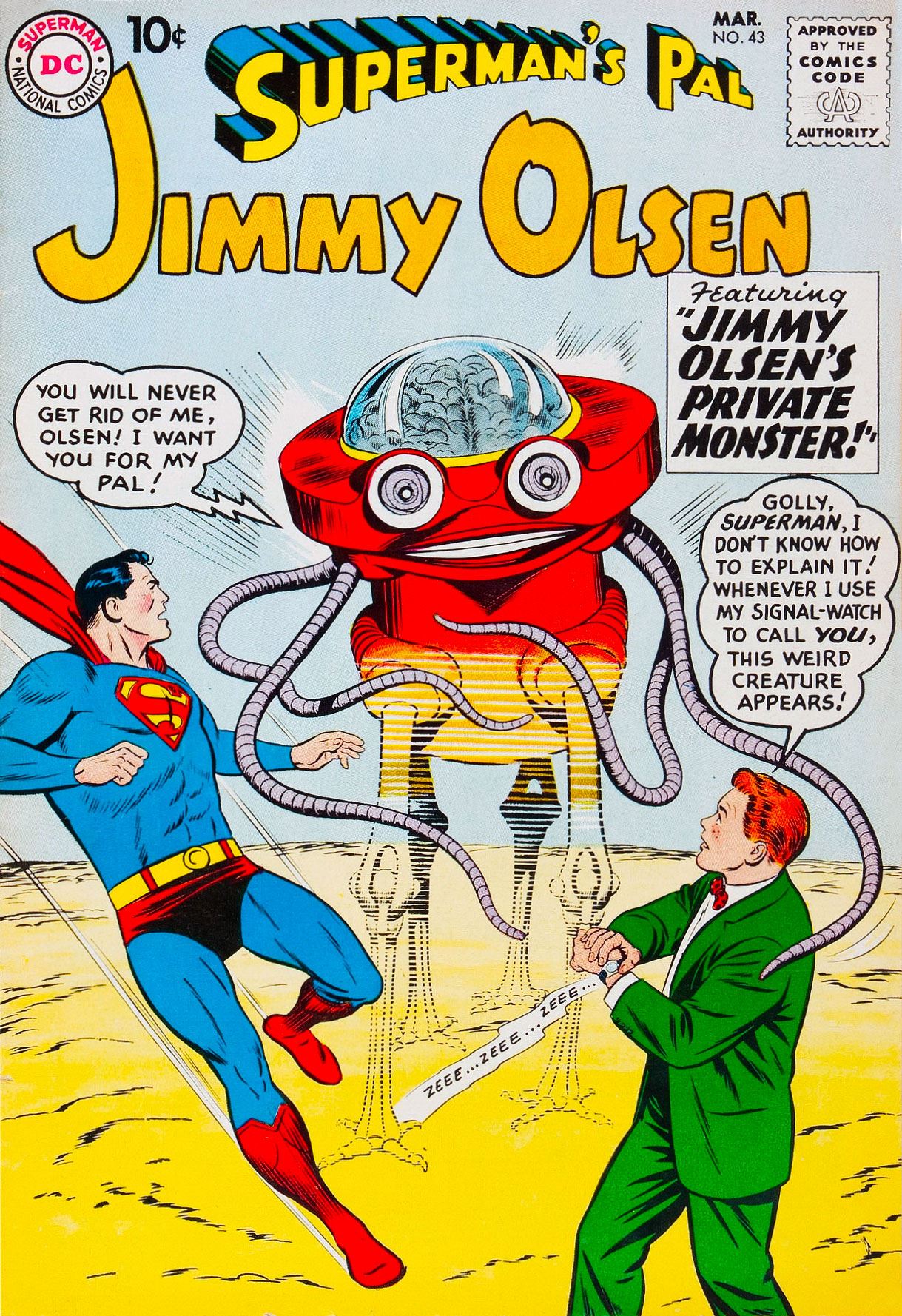
Superman'sPalJimmyOlsen43
There’s nothing quite as annoying as someone who wants to be your friend against your wishes. Superman’s Pal, Jimmy Olsen no. 43 (March 1960), pencils by Curt Swan and inks by Stan Kaye.

Head over to the Fourth Age blog for a further discussion (with pictures!) of the cover story from this issue, “Jimmy Olsen’s Private Monster!”, written by Jerry Siegel (ahem…) and illustrated by the aforementioned Curt Swan (pencils) and John Forte (inks).

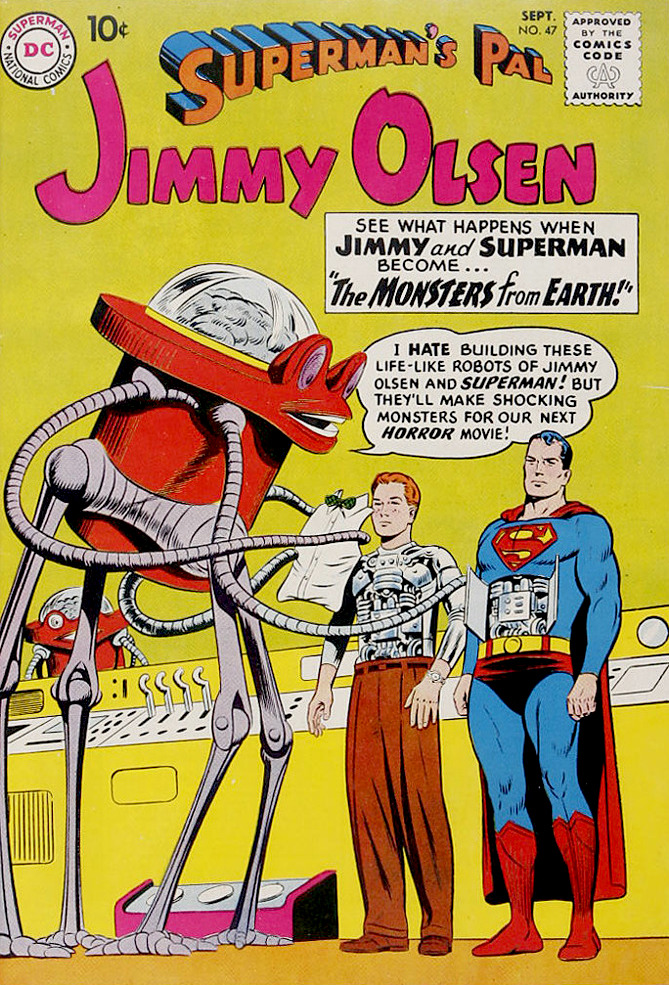
The two-eyed, many-tentacled mechanized wonder appears again in Superman’s Pal, Jimmy Olsen no. 47 (September 1960):

Superman'sPalJimmy Olsen47
It’s the same cast: pencils by Curt Swan and inks by Stan Kaye; letters by Ira Schnapp.
JimmyOlsen47panel
Freaking cute.

TentacleTuesdayIcon

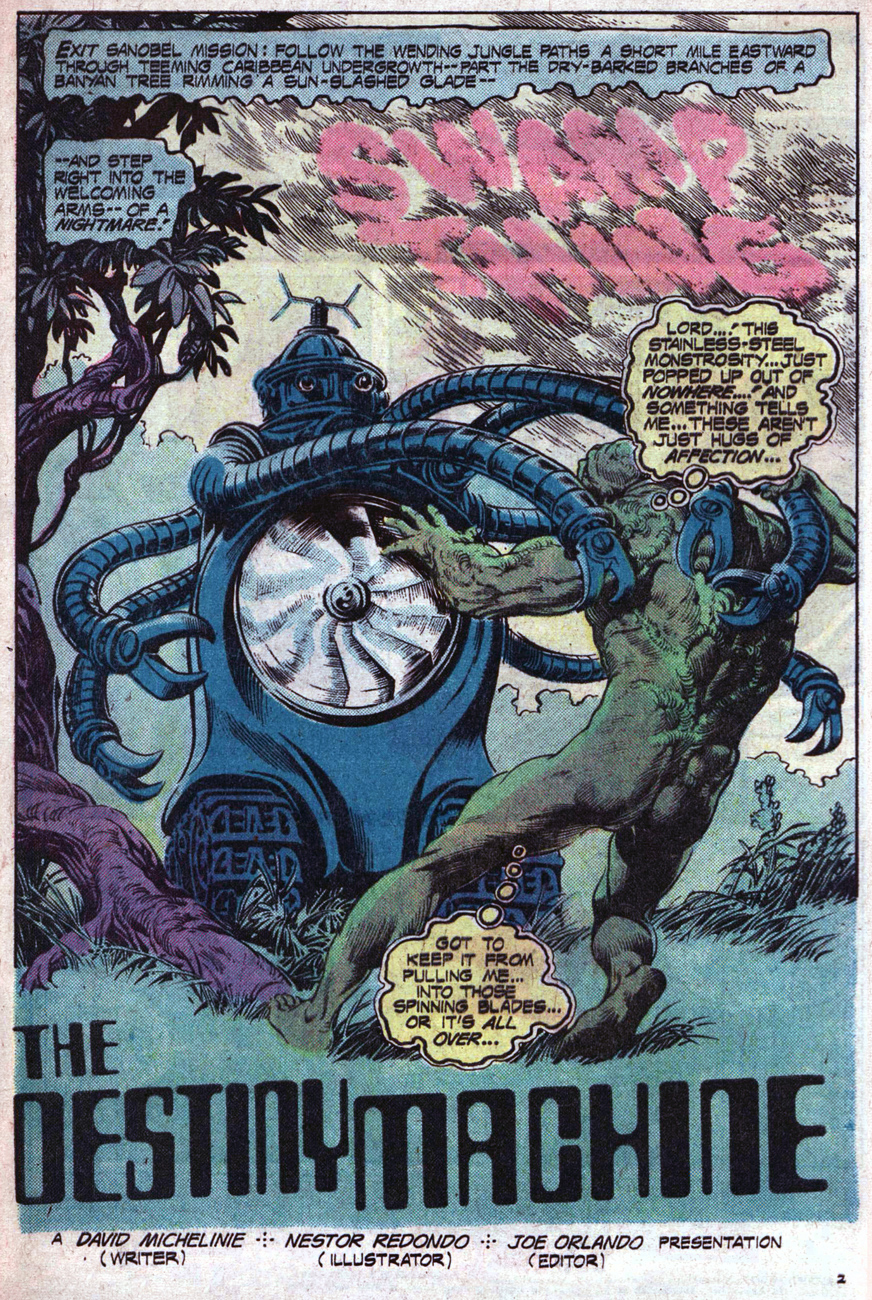
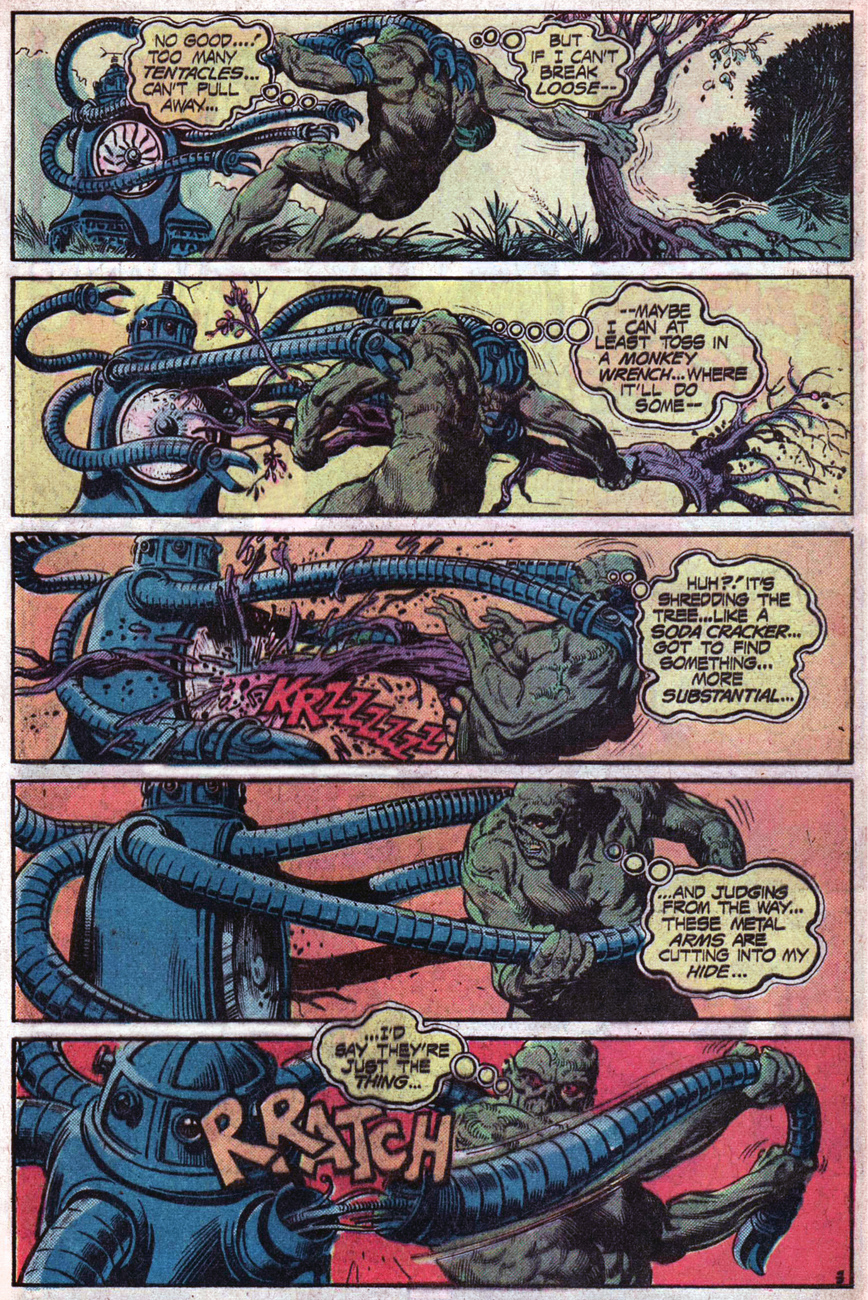
In a similar line of thought (but some 15 years later), a more steampunk relative of the creature above appears in Swamp Thing.

Swampy17SplashA
Swamp Thing no. 17 (July-August 1975). In case the credits are too small to read, script by David Michelinie, pencils and inks by Nestor Redondo, colours by Tatjana Wood, letters by Marcos Pelayos.

And here’s a peek at the glorious (I’m a fan of Redondo) inside:

Swampy17B
« But destroying that thing doesn’t answer the questions it brought up… like what a stainless-steel octopus is doing in the middle of a jungle… » That’s an excellent question – but destroying this mechanized, tentacled abomination was still a good idea, answers or no.

TentacleTuesdayIcon

Here’s another file for our records of Tentacular fascination: the Boy Commandos’ intrepid gang of feisty moppets, tired of fighting Nazis, switch it up by doing battle with some tentacled robots.

BoyCommandos7
Boy Commandos no. 17 (September-October 1946). Cover by Jack Kirby.

TentacleTuesdayIcon

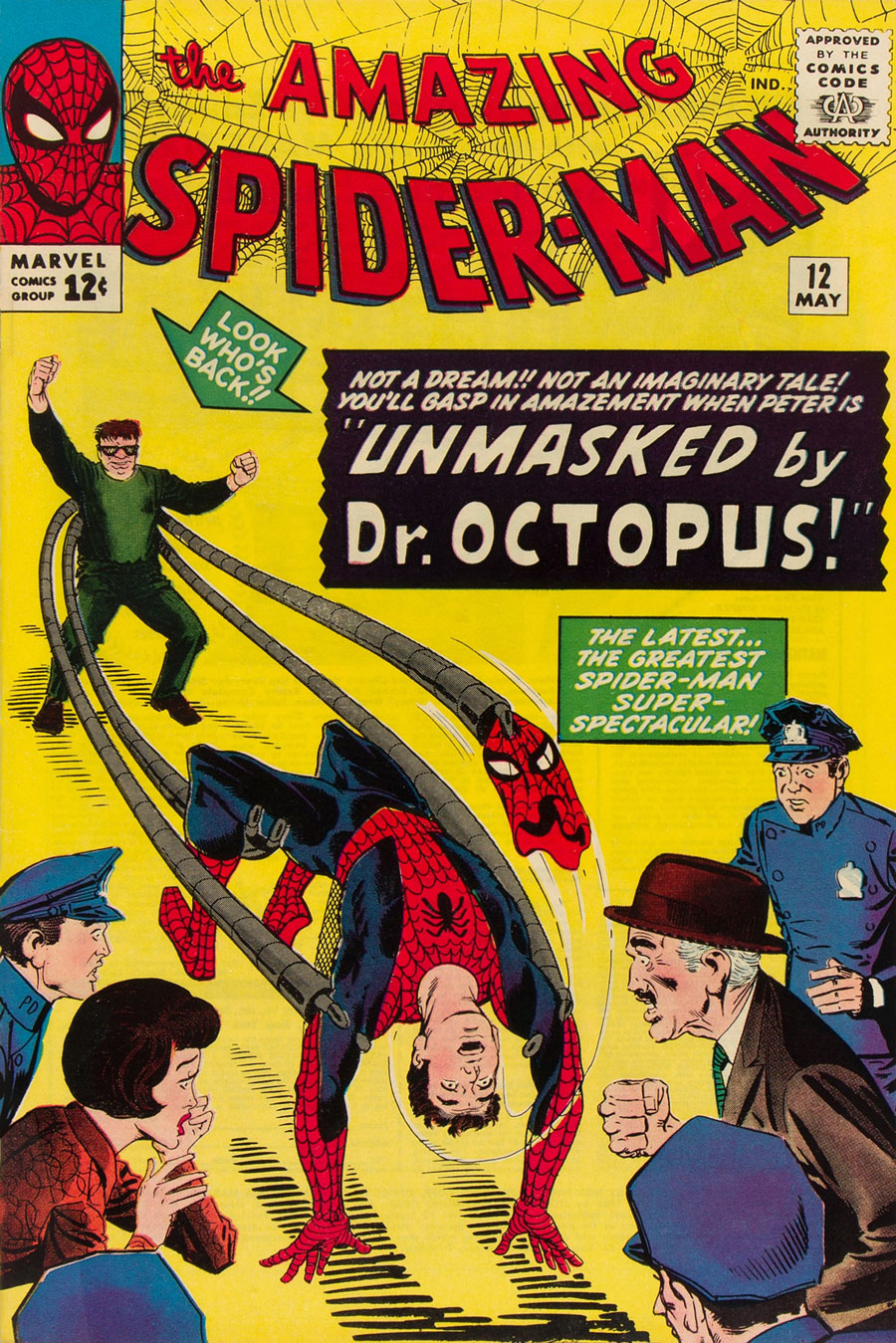
I couldn’t very well have a mechanically-minded Tentacle Tuesday without mentioning Dr. Octopus, one of Spider-Man’s most famous foes! Otto Gunther Octavius, a.k.a. Dr. Octopus, a.k.a. Doc Ock was created by Steve Ditko, and first appeared in The Amazing Spider-Man no. 3 (July 1963). Obviously I could feature a gallery of Dr. Octopus tentacles as long as your arm (pardon the confused anatomical terminology on my part), but I’ll limit myself to a couple.

First, The Amazing Spiderman no. 12 (May 1964), cover by Steve Ditko. The “Look who’s back!!” caption pointing to the Doc is rather mystifying, given that he was there in the previous issue.

ASM12A

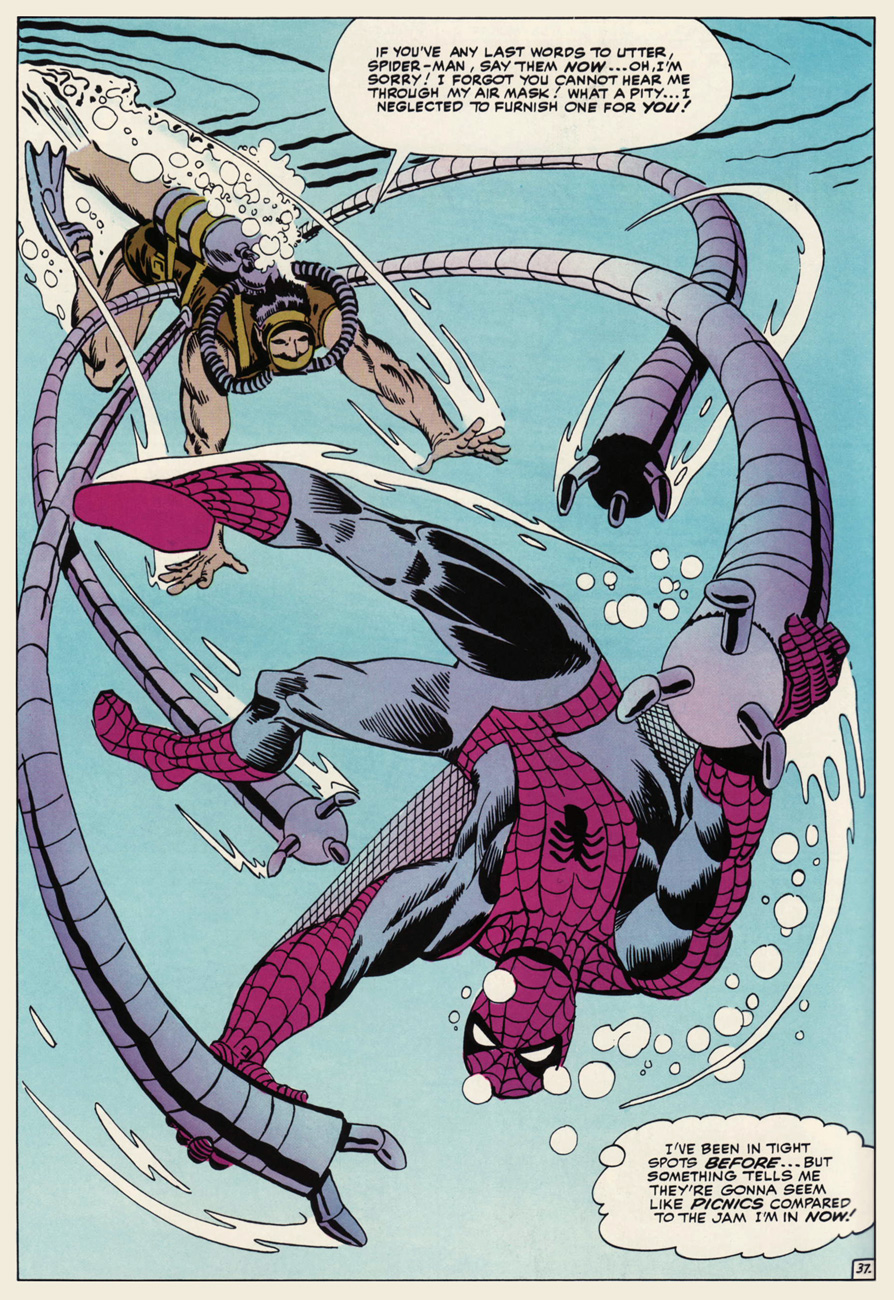
Second, an underwater scene, because what element more appropriate for tentacles? Kudos to Doc Ock for making his perfectly watertight.

TheAmazingSpiderManAnnual1
JFC, does this guy ever shut up? Especially given that Spiderman can’t even hear him? Splash (no pun intended) page from The Amazing Spider-Man Annual no. 1 (September 1964), with art by Steve Ditko.

Dr. Octopus’ metallic appendages, resistant to radiation and of great strength and agility, were originally attached to a harness…. but became fused to his body after an explosion involving radioactivity (what else?) They were surgically removed, but he could now control them telepathically from a distance. Spooky.

TheAmazingSpider-Man25
Poor Spider-Man is always getting attacked by tentacles, even when Doc Ock isn’t around! These belong to a robot built by a “nutty professor” to trap anything spider-related. A prize will go to the perceptive reader who can tell us how many tentacles this thing possesses – like, a million, would be my guess. The Amazing Spider-Man no. 25 (June 1965); cover by Steve Ditko.
Maker:S,Date:2017-8-29,Ver:6,Lens:Kan03,Act:Lar02,E-Y
Smythe’s robot in action, ensnaring Parker instead of the spider he’s holding in a globe (and nobody but us readers knows why!) J. Jonah Jameson, publisher of Daily Bugle, watches enthusiastically from the sidelines.
SpideyFeelersA
Okay, maybe the robot doesn’t have as many tentacles as the cover seemed to suggest. Here’s Spidey hotly pursued by Mr. Jameson, whose maniacal glee is a little scary. (I will readily admit I partially chose this panel because of Parker’s jiggly butt).

~ ds

Jonah Hex’s Bumpy Friday the Thirteenth

« Whut in the ding-dong? »

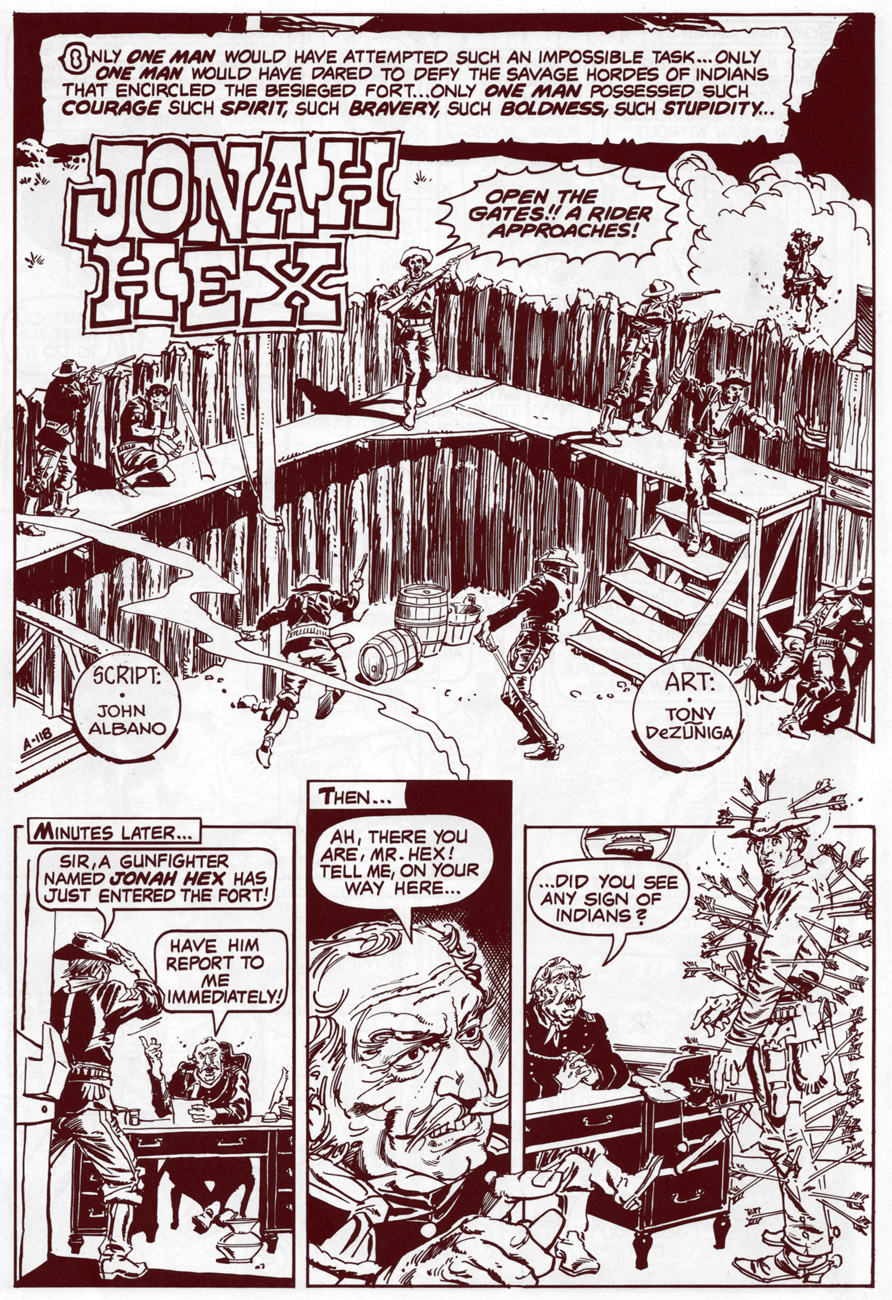
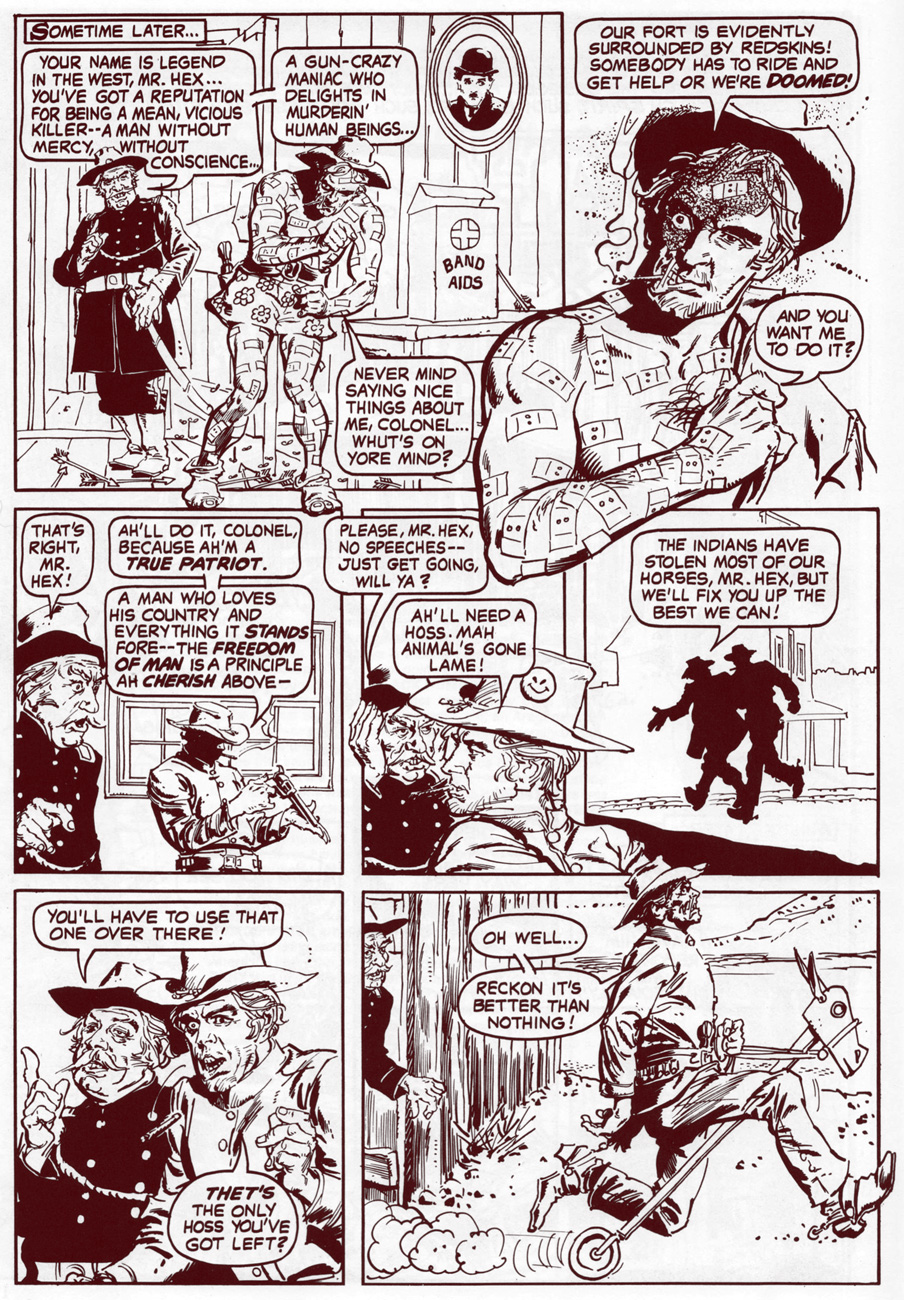
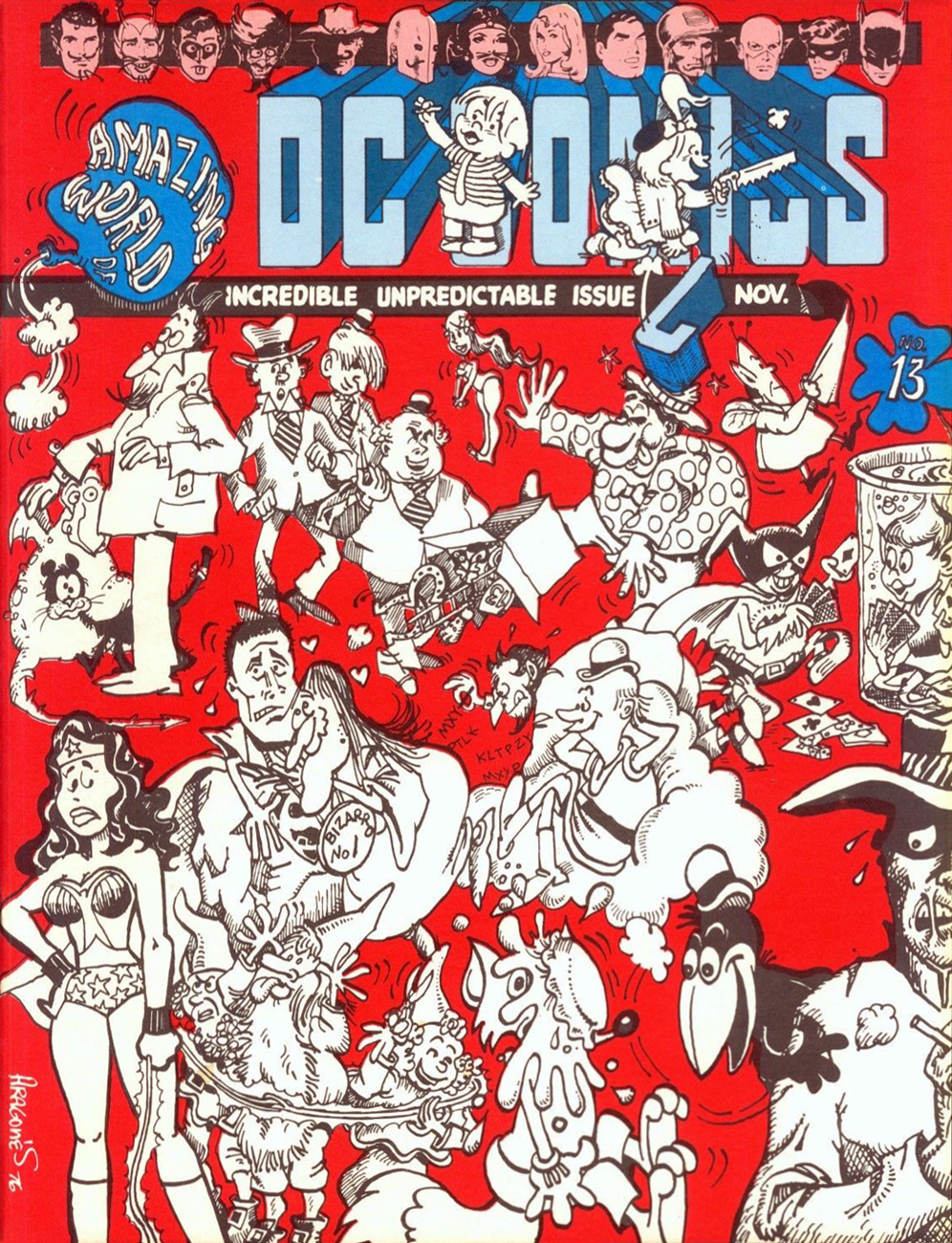
Jonah Hex originators John Albano (1922-2005) and Tony DeZuniga (1941-2012) take the piss out of their boy in a little tale that was, according to Paul Levitz, intended for a (self) parody title provisionally titled Zany (having cycled through the tentative monikers Black Humor and Weird Humor), and that never saw the light of day… This feature was the only one completed for the abortive endeavour, and it saw print in the Plop!-themed issue of The Amazing World of DC Comics (October, 1976), its thirteenth, of course. Incidentally, Plop!’s own cancellation was announced in that very issue of AWODCC. Bummer.

HexSpoof1AHexSpoof2A

HexSpoof3A
Why, yes… now that you mention it, an ice-cold root beer *would* be nice.

HexSpoof4A
« Lying out in the ‘dessert‘ », Jonah? That was either a root-beer float mirage or a careless letterer’s oversight.

I would be earning myself a sound flogging if I didn’t share Sergio Aragonés‘ adroitly-done cover, so here it is.

AmazingWorldDC13A

-RG
Water Is Life: OMAC versus The Ocean Stealers (1975)

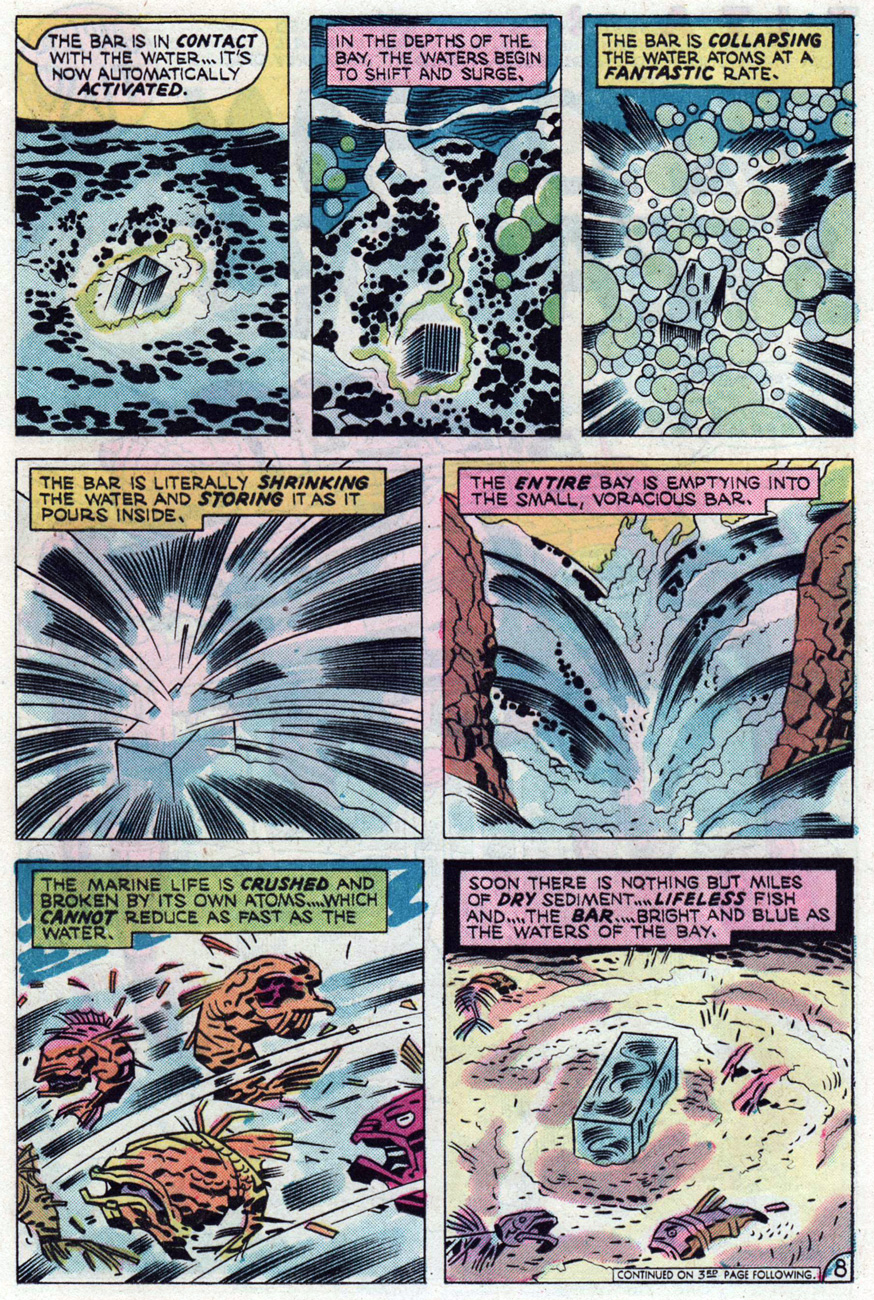
« The marine life is crushed and broken
by its own atoms — which cannot reduce
as fast as the water. »

I’ve been sitting on this particular entry awhile, having realized that the most opportune time to share it would be today, March 22, which happens to be World Water Day*.

In comics, few if any creators have generated so many explosive, pulse-pounding images as did Jack Kirby (1917-1994). And yet… this solemn, understated scene has likely haunted me most of all. The visuals are splendid, sure, but it’s the nature of the situation, the conceptual ramifications of the thing, that make it stick.

Omac7A

This splash appeared near the opening of OMAC’s final adventure, one that pitted him against Sandor Skuba, a rogue genius seizing and hoarding the planet’s water in view of controlling humanity. Threat-wise, all the adversaries that the One Man Army Corps had tangled with were mere preludes to this impressive madman. As Kirby left DC before he could wrap up the storyline as he intended, no-one walks away from this skirmish**, notwithstanding the final panel, subsequent revivals and reboots and corruptions of Kirby’s ideas by (inevitably) lesser hands and minds (and conversely bigger egos).

Omac7CoverA
This is OMAC no. 7 (Sept.-Oct. 1975) and « The Ocean Stealers! », scripted, pencilled and edited by Jack Kirby, inked and lettered by D. Bruce Berry.

Omac7Page1A
Could that unseen appendage be Adam Smith‘s « invisible hand of the market » ?

Omac7Page7A
And here’s how it’s done.

Omac7Page8A
In light of the current practices of certain corporations, notably the Swiss transnational Nestlé, Kirby was sadly prescient and clear-eyed again. As evidenced by recent events, given the technological means, today’s robber barons would not hesitate.

OmacWharoomA
Writer and comics historian Mark Evanier, who spent some years as Kirby’s assistant in the ’70s, writes, in his foreword to the DC’s exemplary reprint collection Jack Kirby’s OMAC: One Man Army Corps (2008): « So consider this fair warning: the last issue comes to a whiplash-inducing sudden stop. Jack had been setting up something big for number 9, but since he was gone and there wasn’t going to be a number 9, a new last panel (not by Kirby) was inserted to remove the immediate cliffhanger.» … a panel created, at that, with the finesse of 10-year-old unburdened by a sense of pacing. “Wharoom” to you too.

-RG
*Don’t buy the duplicitous hype, though! A perfect example of the fox guarding the henhouse.

**more accurately, everyone is stranded in limbo.

Tentacle Tuesday: Pirates and Treasure, oh my

Where there be pirates, there be treasure; where there be treasure, there be a displeased octopus, irritable after being roused by some foolish fortune-hunter. I’d like to dedicate this Tentacle Tuesday to the murderous marauders who, in bold search for immeasurable treasure, have to tackle tentacles (and survive, hopefully).

WeirdTerror2
Weird Terror no. 2, November 1952. Cover by H.C. Kiefer. Note the dead pirate’s hook embedded in the diver’s shoulder, while the former’s other hand is severing his umbilical cable…  I think the octopus is the least of this treasure-hunter’s worries.  By Weird Terror standards, this cover is actually pretty tame; this green octopus is not responsible for Fredric Wertham‘s nightmares.

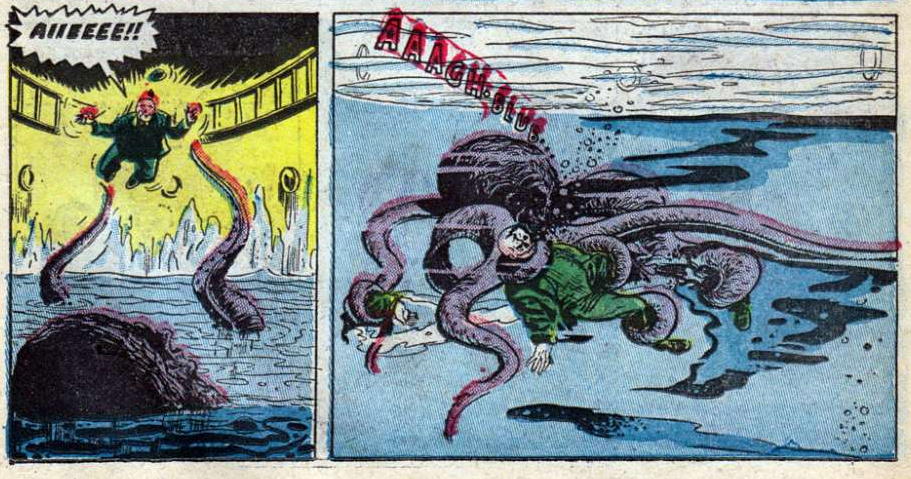
Any octopus action inside, you may ask? Just two panels.

WeirdTerror2Panel
AAAGH-BLUB! Panels from « Wrath of Satan », pencilled by John Belcastro and inked by Joe Galotti.

TentacleTuesdayIcon

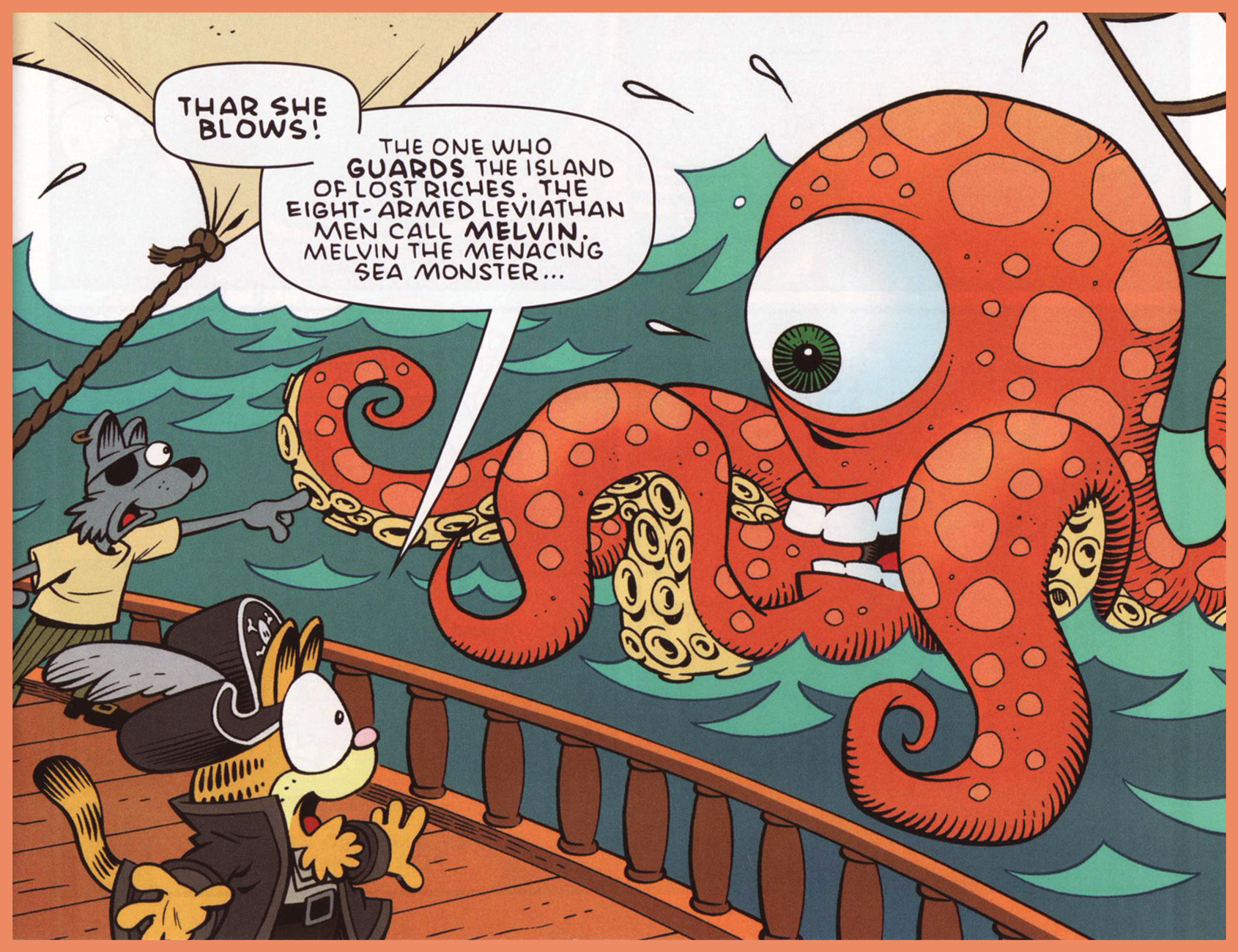
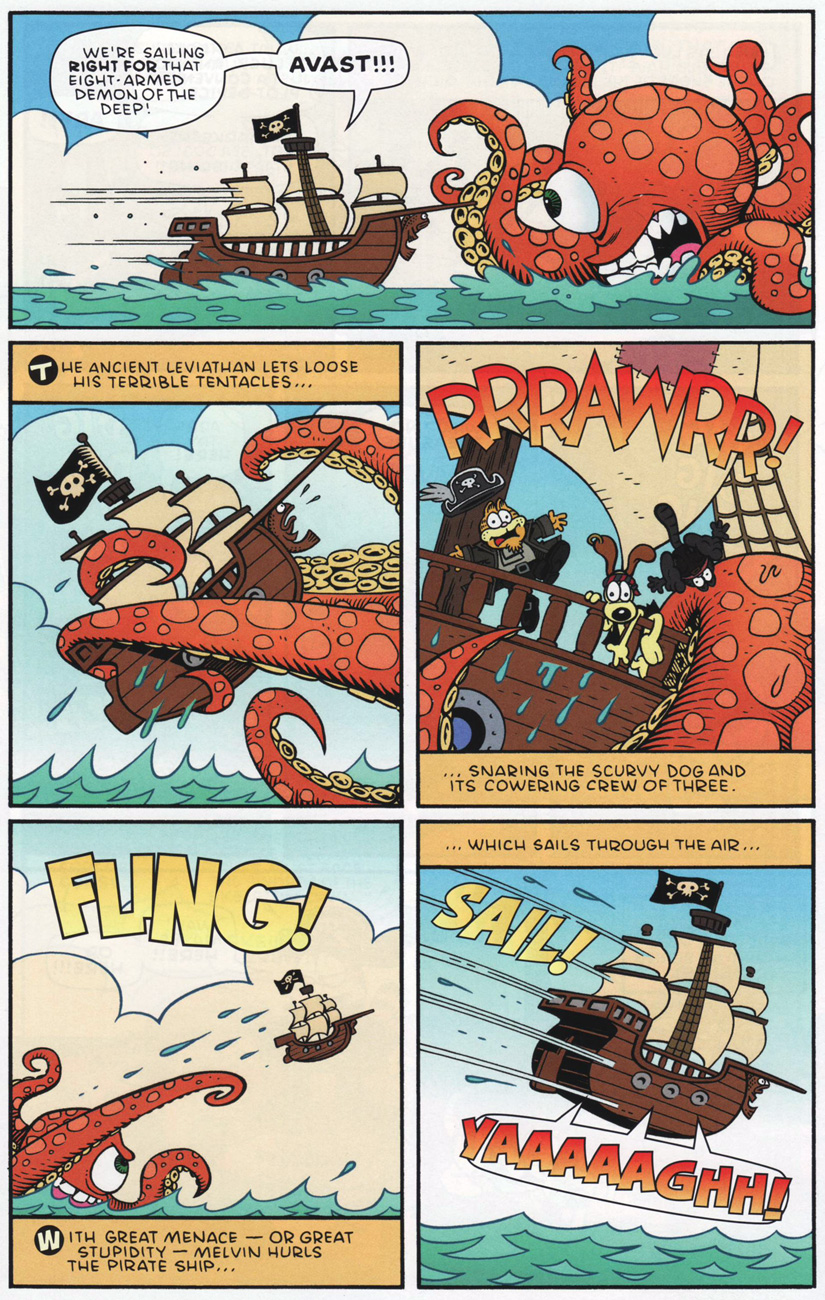
I never thought I’d be posting something Garfield-related, but in Roger Langridge‘s hands, even the insipid orange cat acquires some charm.

LangridgeGarfield2A
A panel from « Pirate Cat », written by Scott Nickel and illustrated+lettered by Roger Langridge, published in Garfield no. 34: His 9 Lives Part 2, (KaBOOM!, February 2015).

Melvin the Menacing Sea Monster isn’t just a pretty eye; he’s got at least one excellent pitching arm, too.

LangridgeGarfield1A

All this proves is that there’s a simple solution to an inane plot and pedestrian characters: hire Langridge to illustrate your story, and it will magically transform into a fun yarn.

TentacleTuesdayIcon

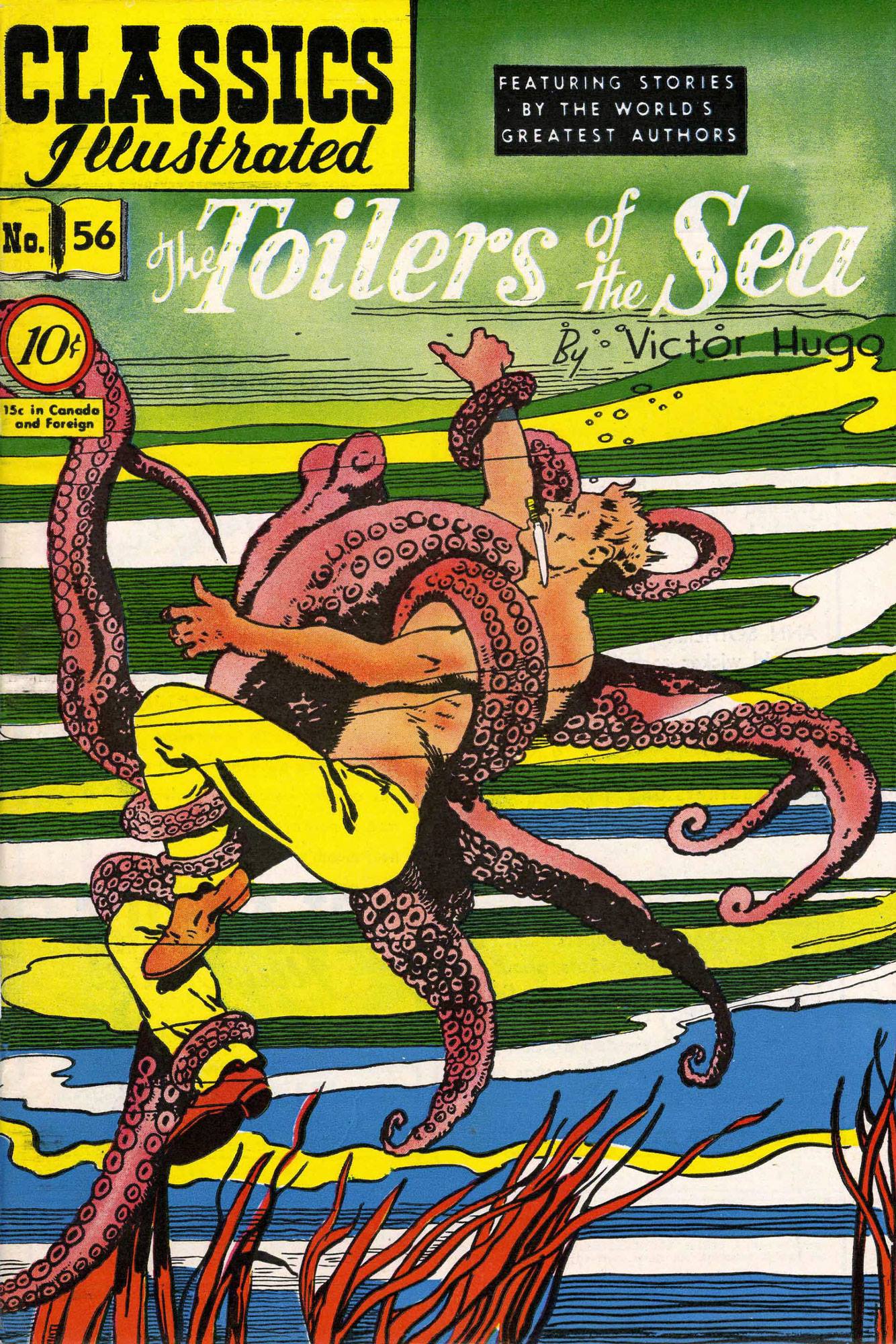
Our next selection doesn’t technically feature pirates, but it features sailors, Spanish smugglers, swindlers and cheats, as well an epic battle with an octopus and stolen treasure buried at the bottom of the sea, so it damn well qualifies.

ClassicsIllustrated56
Classics Illustrated no. 56, February 1949; cover by August M. Froelich. For one thing, I never knew Victor Hugo had written anything squid-related. As it turns out, Toilers of the Sea (French: Les travailleurs de la mer) is a novel from 1866. How educational! Classics Illustrated was created by Russian-born Albert Kanter (1897-1973), who wanted to use the power of comics to introduce young readers to “great literature” that they might not otherwise have deigned to read. “Classic Comics” began publication in 1941, with the name of the series changed to “Classics Illustrated” in 1947. The series lasted until 1971 for a total of 169 issues; various other companies reprinted its titles. I don’t know whether this series really made a difference in the edification of youth, but many of its issues are highly collectible, anyway.

TentacleTuesdayIcon

As a little bonus, here’s a cover that’s somewhat lacking in swashbucklers, but boasts some decent treasure and (quintessential ingredient) some tentacles.

AdventuresofRedtheWonderDog42
If Rex the Wonder Dog (created by Robert Kanigher and Alex Toth) can ride horses, show off as an expert bullfighter, use cameras, defeat a Tyrannosaurus Rex and swing on ropes (among his many other accomplishments), I don’t see why he wouldn’t be able to effortlessly fend off some pink tentacles. This is The Adventures of Rex the Wonder Dog no. 42 (Nov.-Dec. 1958). The cover is by Gil Kane on pencils, Bernard Sachs on inks, and Jack Adler on tones and colours.

~ ds

“I’m sixty-three now, but that’s just 17 Celsius”*: Happy Birthday, Stephen Bissette!

BissetteEEEE_A
A panel from « Return of the Swamp Beast! », story by Jane and Bob (RL) Stine, art by Stephen R. Bissette, originally published in Weird Worlds no. 3 (Oct. 1979, Scholastic.) This is the colour version from the one-shot Bissette & Veitch’s Fear Book (April, 1986, Eclipse.) Colours by Brendan McDonough.

Ah, that old Earth’s taken another whirl, and so today, the wonderful Stephen Bissette, that most erudite master of terror *and* one of the truest, most steadfast gentlemen the medium has known, observes another birthday. He first breached this plane of existence in the wilds of Vermont some sixty-odd years ago today, on March 14, 1955. Let’s wish him all the best, shall we?

ST19A

The original art of this silk-spewing splash was reportedly acquired, by proxy, by erstwhile Calvin Klein Jeans model Brooke Shields. I like to envision it occupying a place of honour in the dining room of her favourite mansion. Or perhaps in the bedroom, right above the headboard?

This is from Saga of the Swamp Thing no. 19 (December, 1983, DC.) Quite respectably co-plotted and scripted by Martin Pasko (with Mr. Bissette), this predates epochal game-changer The Anatomy Lesson, but the Bissette/Totleben dream combo was already scorching eyeballs, en attendant Mr. Alan Moore’s accession.

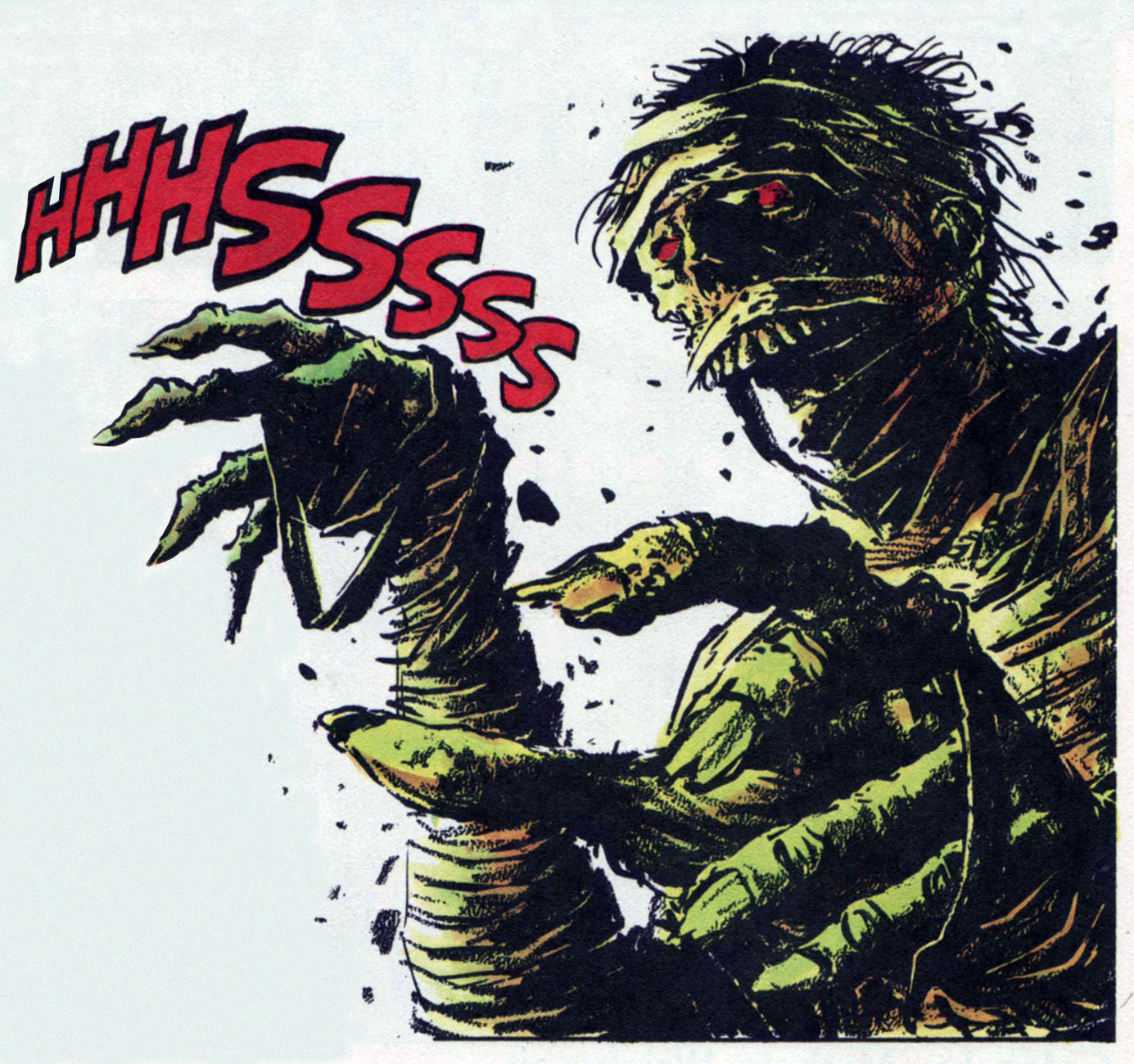
BissetteMummyCutoutA
Newlyweds Rich and Jamie meet this dusty fellow, for the first and final time, in Egyptian Graffiti, story by Jane and Bob Stine, art by Stephen R. Bissette, originally published in Weird Worlds no. 2 (March 1979, Scholastic), also collected in Bissette & Veitch’s Fear Book , with colours by Michele Wrightson.

-RG

*George Carlin may have said that, or something to that effect. Who knows, these days?

Tentacle Tuesday: Superheroes in Octopus-land

In this installment of Tentacle Tuesday, we shall bear witness to a somewhat surprising facet of superhero life: superheroes sometimes struggle with tentacles, too.

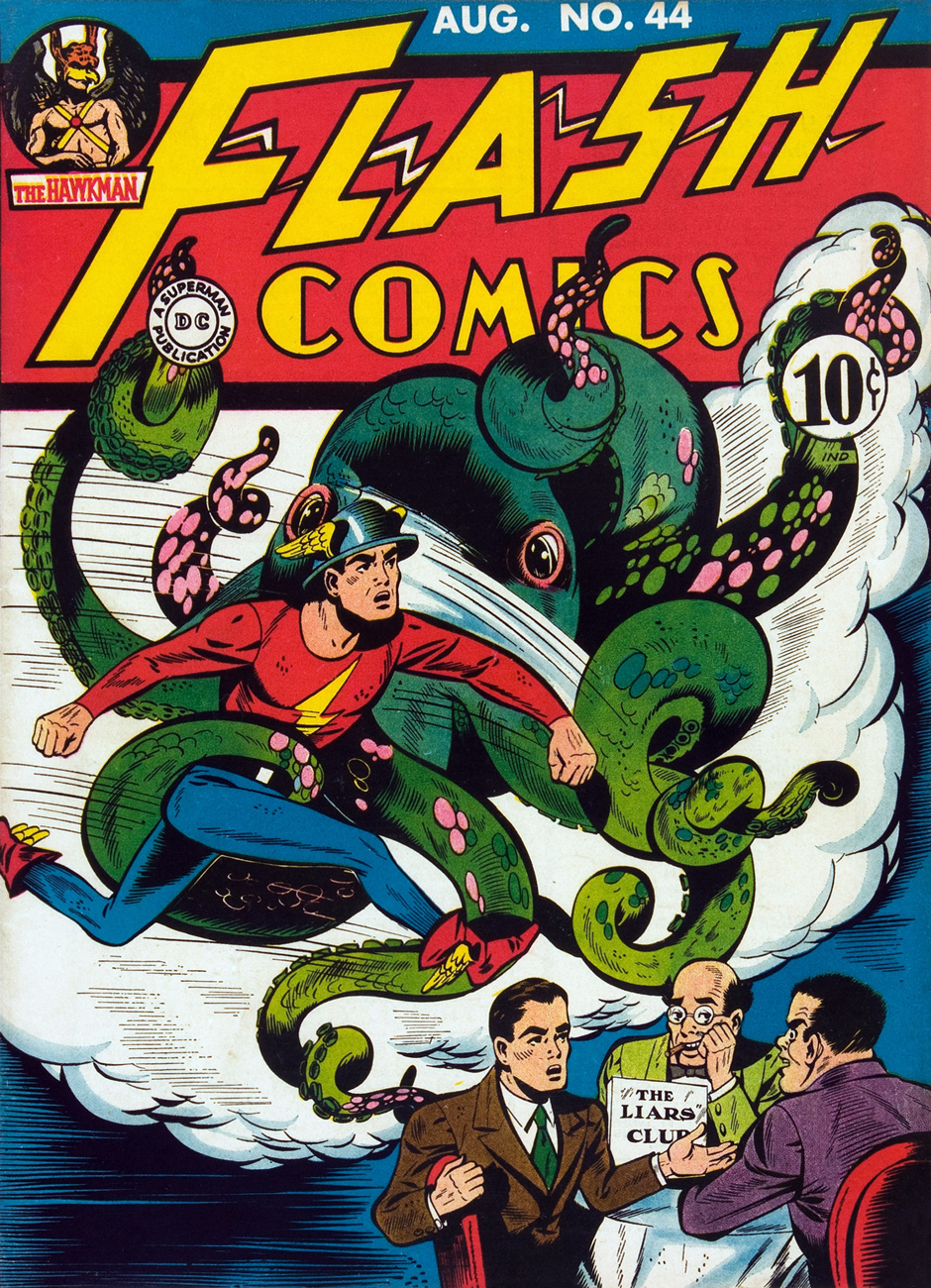
To kick off the festivities (and to respect a chronological order of creation and publication), here’s The Flash narrating a story of woe, his almost-deadly encounter with a green monstrosity (Judging by its coquettish pink tentacles, the monster wanted to woo him, not snuff him out.)

FlashComics44A
Flash Comics no. 44, 1943. Cover by Lou Ferstadt (1900-1954), and here’s a bit of trivia: in addition to being a comics artist, he was a muralist, creating works for the RCA buildings and the 8th Street Subway station in NYC.

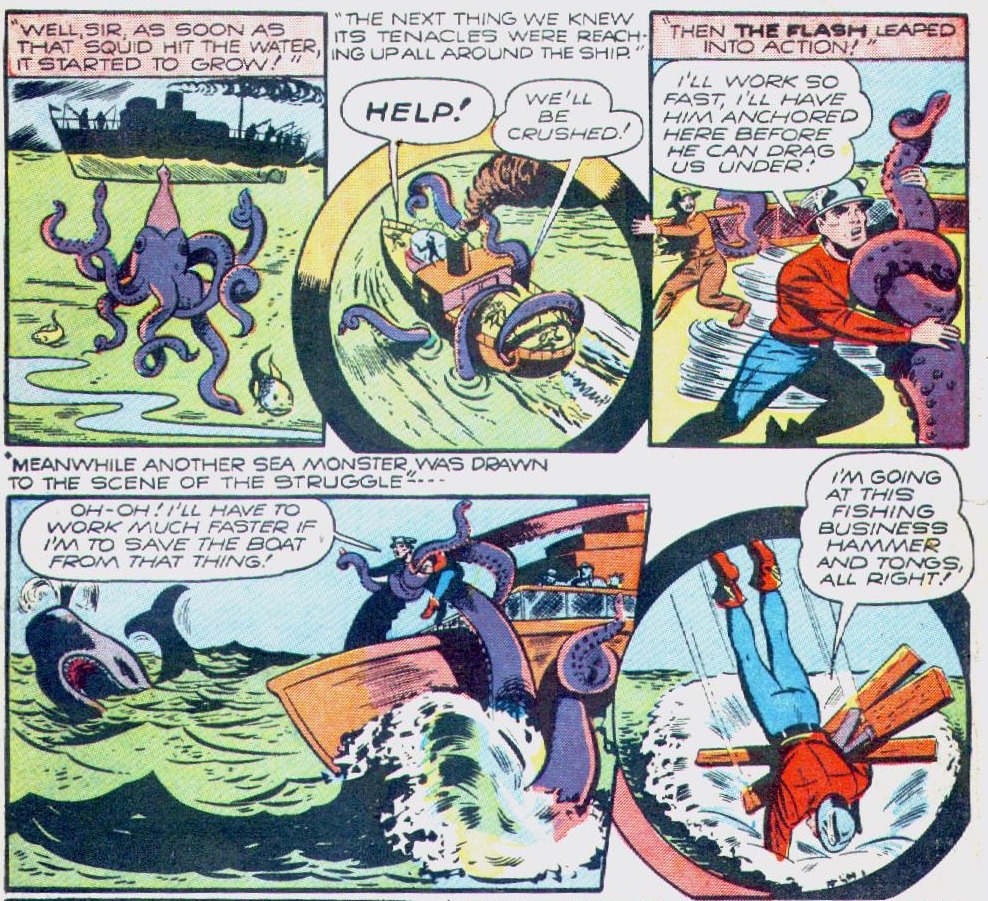
« The Liar’s Club », scripted by Gardner Fox and drawn by Lou Ferstadt, concerns itself with three men (one of whom is Jay Garrick, secretly The Flash) holding a fibbing contest to determine who can tell the biggest Flash-whopper.

FlashComics44Panel
Sadly, this tale was not the winner in the contest.

The Flash may have been embroiled in some purely imaginary tentacles, but his Earth-One counterpart’s teenage sidekick (it’s complicated), Kid Flash, encountered the real deal.

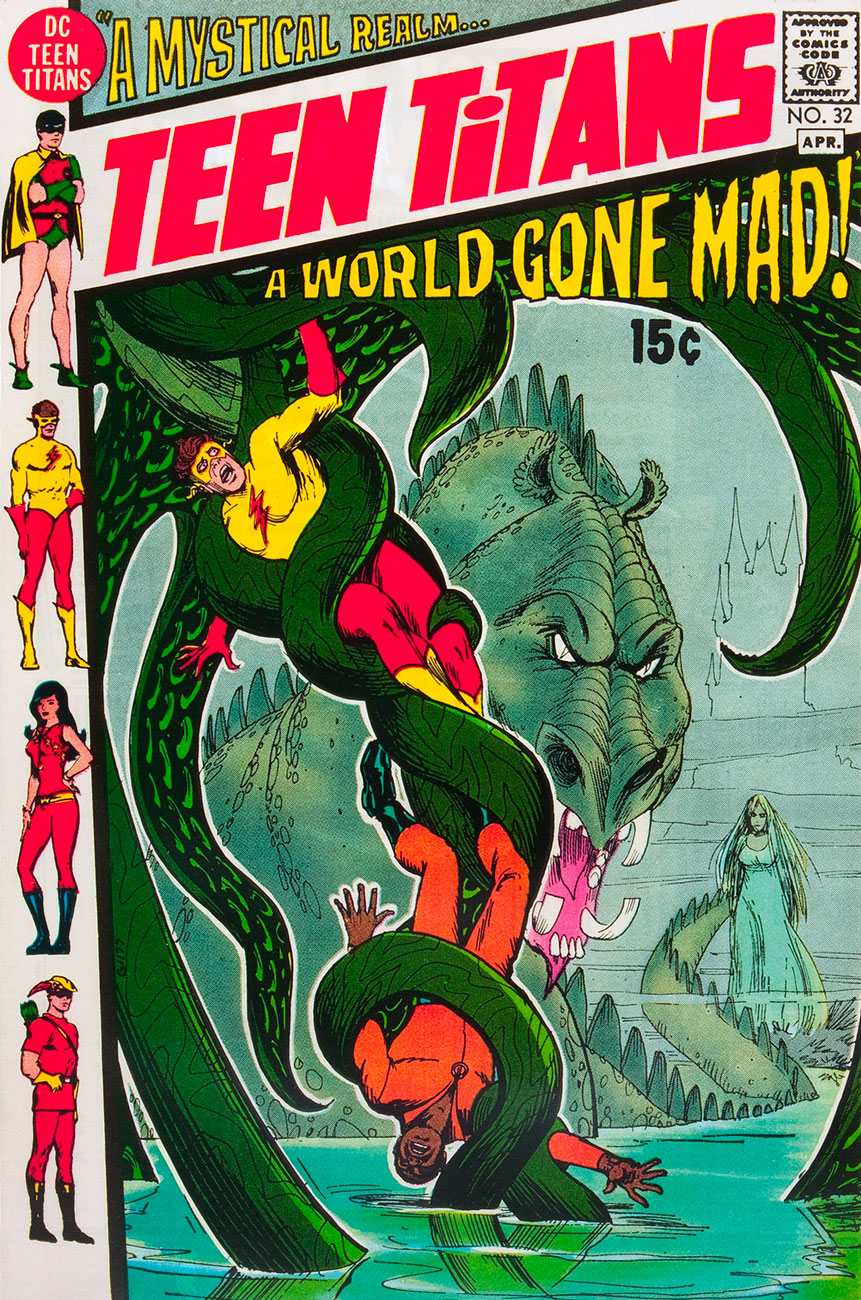
TeenTitans32A
Teen Titans no. 32, March-April 1971. Drawn by Nick Cardy.

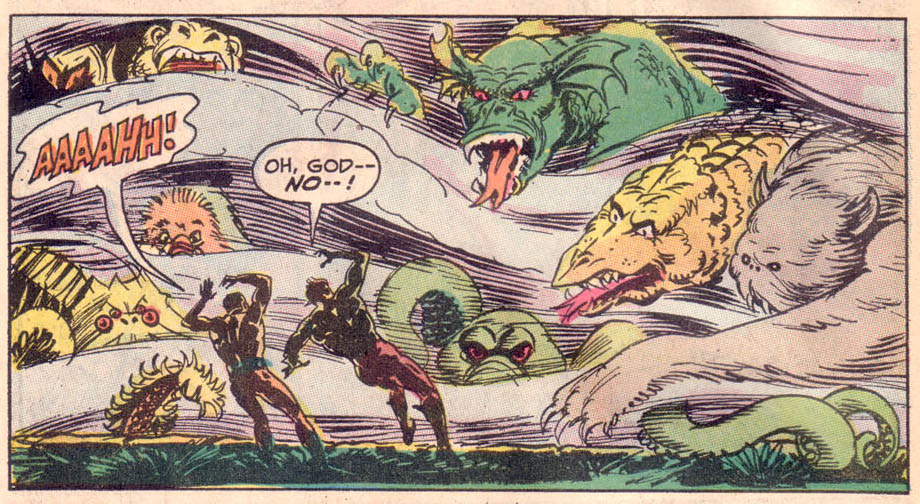
« A Mystical Realm, A World Gone Mad », scripted by Steve Skeates and drawn by Nick Cardy, is actually a pretty good read (with good art!), and I don’t even like superheroes. Just check out the beautiful results of a time travel experiment going wrong (when does one ever go right?), including the evil red eyes of a glaring octopus:

TeenTitans32Panel

TentacleTuesdayIcon

If we throw a whole bevy of superheroes at a tentacled monster, are they going to fare any better?

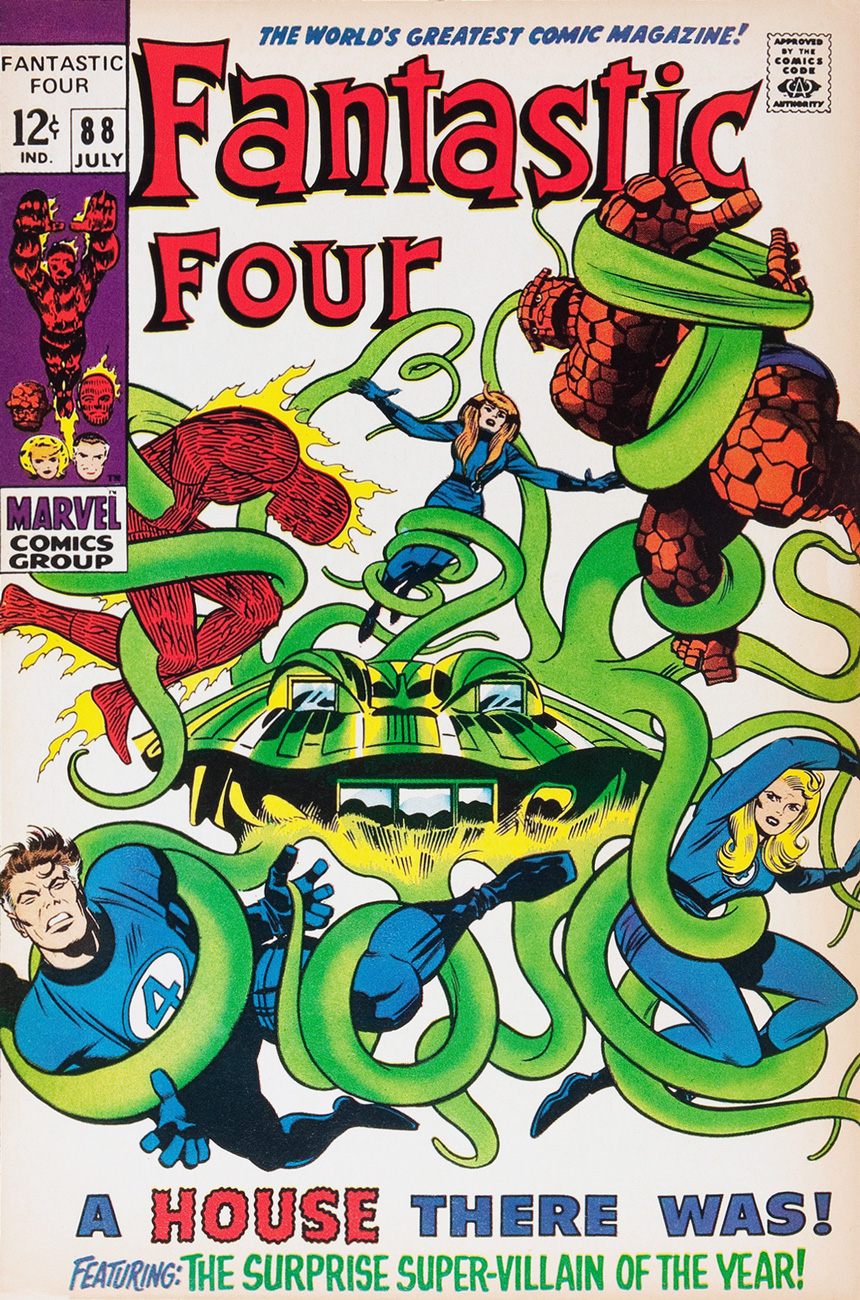
FantasticFour88A
Fantastic Four no. 88, 1969. Pencils by Jack Kirby, inks by Joe Sinnott, letters by Sam Rosen. However… A house there was. Tentacles there weren’t.

This cover promises lots of tentacular fun. Instead of that, the Fantastic Four (and an infant) go looking for a new residence, something quiet and secluded – and the house that’s offered to them by a real estate agent appears to be haunted. At the very least, it causes migraines, gradually makes its inhabitants go blind, and shoots stun bolts out of its walls. The usual crap. I don’t want to tell you which super-villain is behind this mischief, but I will, however, point out that the bastard doesn’t have tentacles. Not even one. And neither does his lousy house.

TentacleTuesdayIcon

The Flash is small fry, the Fantastic Four are mincemeat, but let’s see how Superman, the most superhero-like superhero of them all, fares when confronted with tentacles.

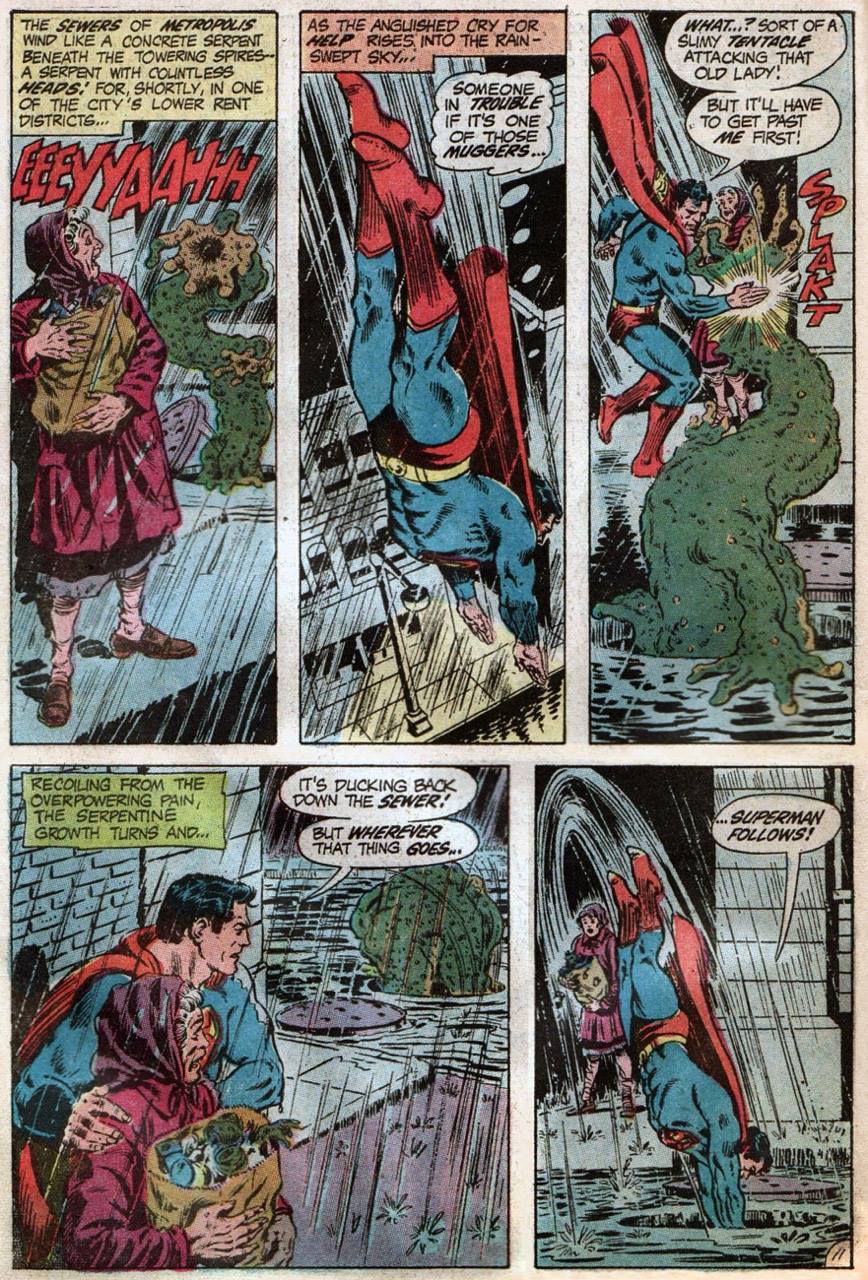
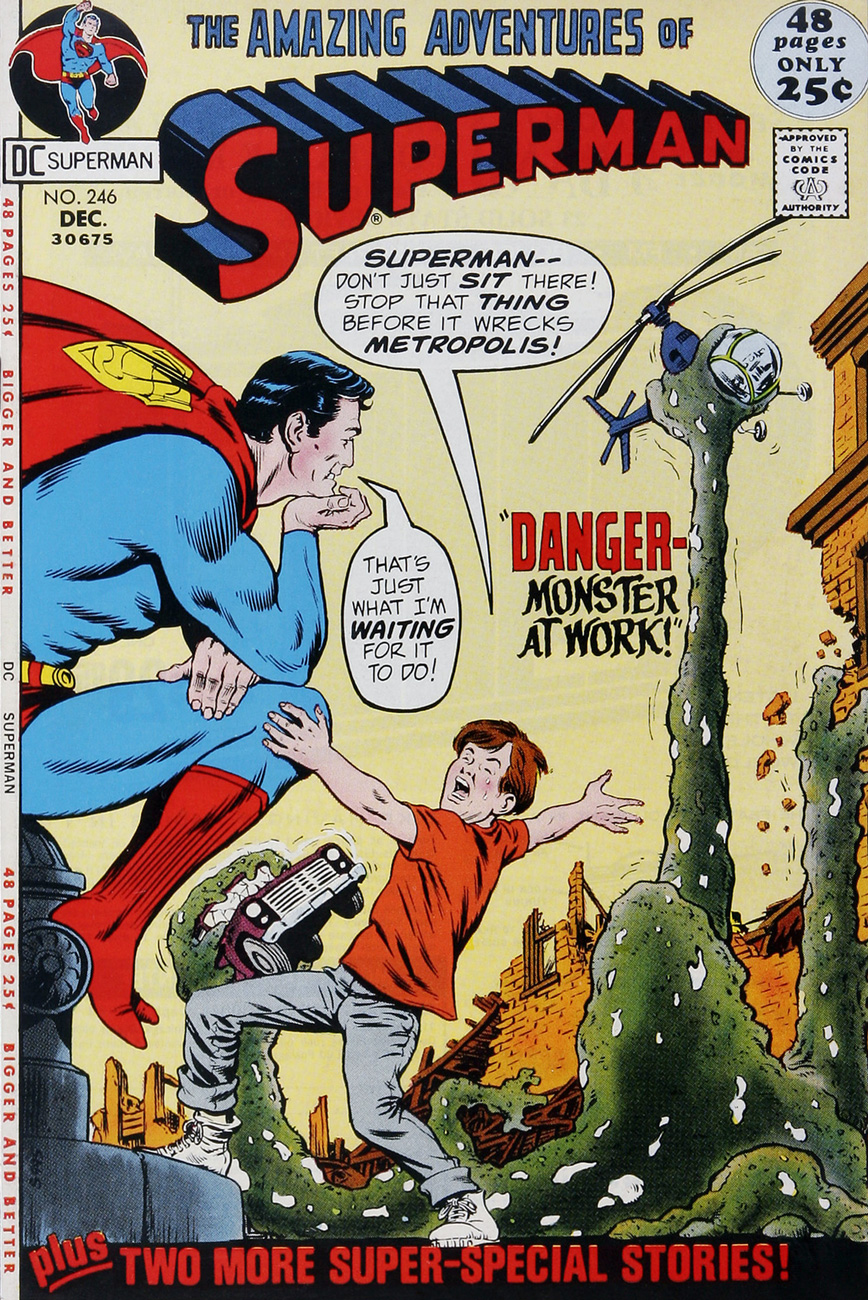
In “Danger — Monster at Work!”, the villain is a protoplasmic glob: some algae mutates after a lab accident and becomes an out-of-control, garbage-devouring, tentacled monster. Now, trash disposal is important, but when Superman realizes that everything on earth is impure to some degree, he has to stop the seaweed monstrosity before “it cleans Metropolis right off the map!”

Superman 246MonsteratWork
This story was published in Superman no. 246 (December 1971), with a script by Len Wein, pencils by Curt Swan and inks by Murphy Anderson.

Incidentally, there *is* actually an algae farm that’s suspended over a highway in Geneva, Switzerland that gobbles up CO2 produced by car engines. I hope they’re keeping a close eye on it…

Superman246CoverA
Tentacles? Well, “grasping appendages” anyway – let’s be generous. Superman no. 246, December 1971; pencilled by Curt Swan, inked by Murphy Anderson.

TentacleTuesdayIcon

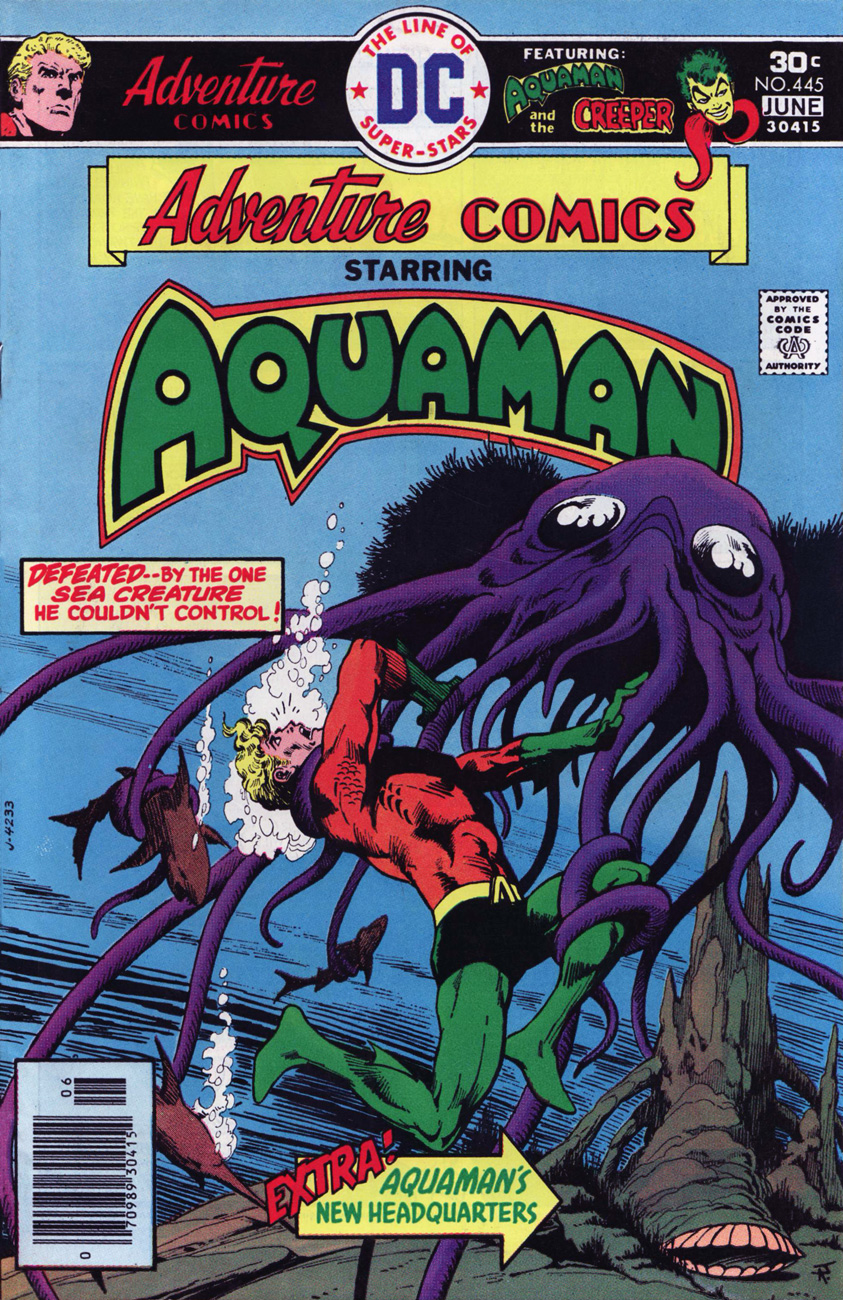
How about if we take a superhero who’s quite at ease with water, who can breathe H2O and communicate with sea life?

“Nope, sorry, still gonna gobble you.”

Adventure445A
Adventure Comics no. 445 (May 1976). Cover by Jim Aparo, with colours by Tatjana Wood.

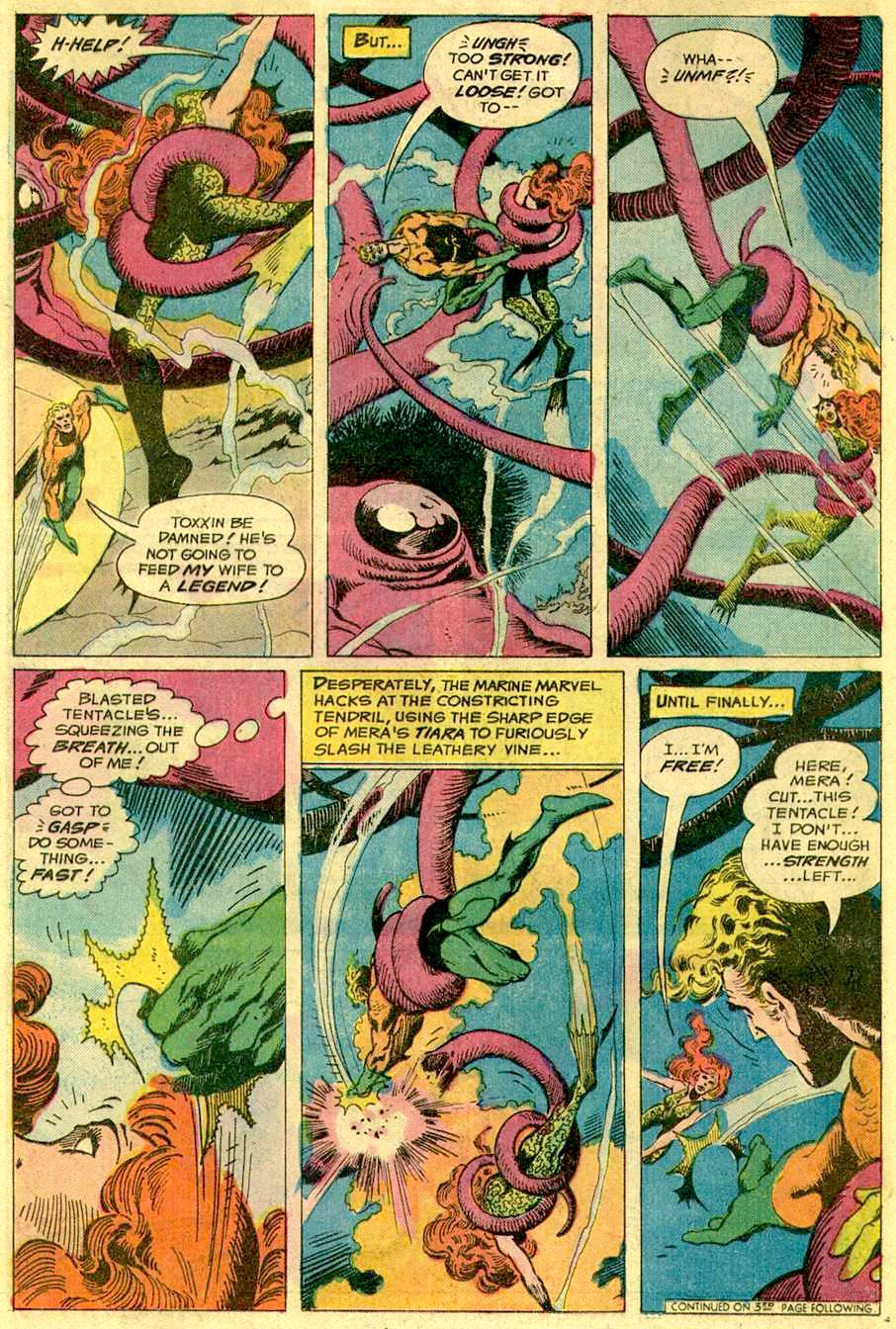
AdventureComics445Panel
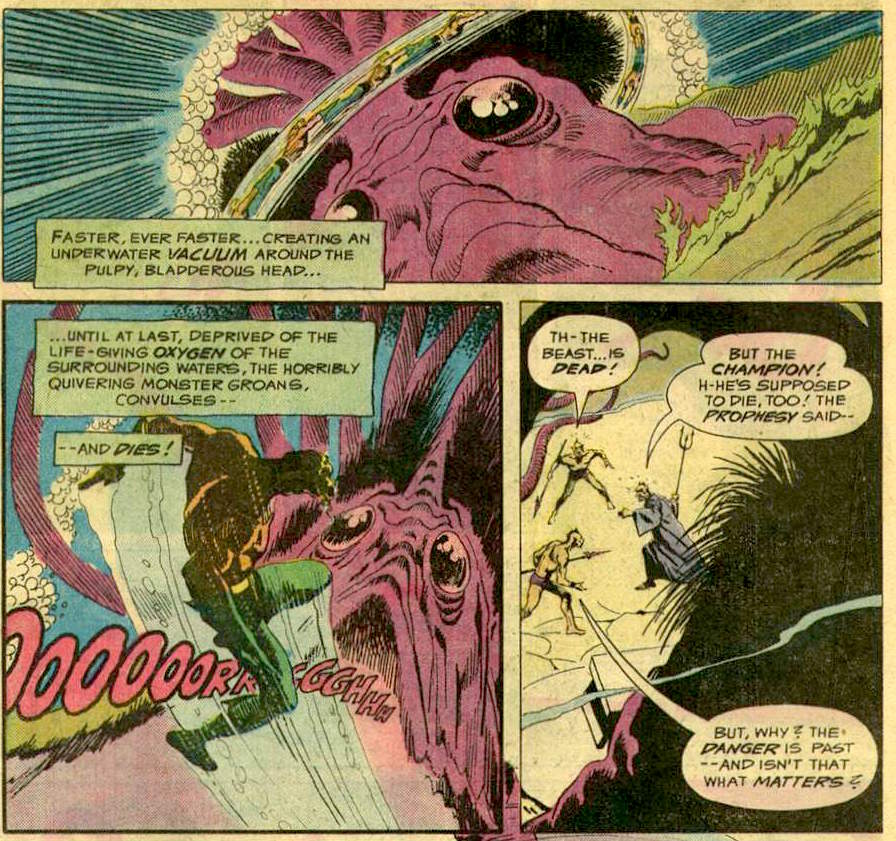
This imposing figure of an octopus (even though he’s referred to as a “plant-thing” by Aquaman) is Krakor, the tentacled antagonist from “Toxxin’s Raiders” – the cover story written by Paul Levitz & David Michelinie and drawn by Jim Aparo.

Oh, no! What is our hero going to do? Why, dispatch the octopus in the most far-fetched manner possible, of course!

AdventureComics445Death

In conclusion, no superhero is immune from a harrowing encounter with a tentacled creature… but sadly, the latter is more often than not annihilated in the struggle. Next time, I’ll make sure to present you with some material in which the octopus gets the upper hand, so to speak!

~ ds

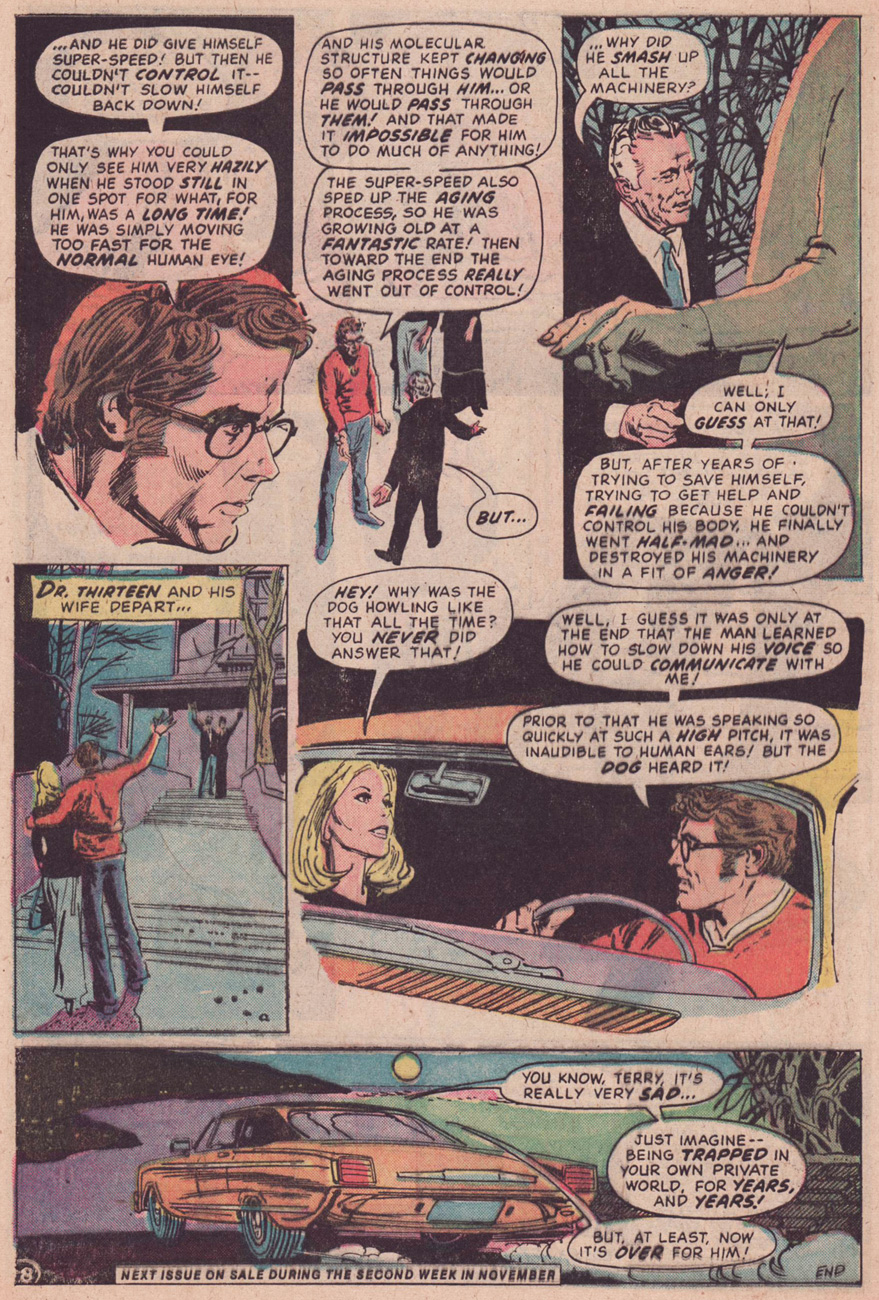
Steve Skeates’ “… and the Dog Howls Through the Night!” (1974)

« Who’d ever believe a story like that? »

On this fine day, we pay tribute to shifty scribe Chester P. Hazel (who sometimes goes by the unlikely nom de plume of Steve Skeates). It is whispered that Stephen, along with his nefarious twin Warren Savin, first invaded this plane of existence on January 29, 1943. That would make him/them/it seventy-five earthly rotations old, should these windblown tattles hold any credence.

Happily, in this case, picking out a Skeates favourite to share was no ordeal: I’d been meaning for some time to shine a light on one of his neglected gems, one that salt-rubbingly ran without proper attribution in The Phantom Stranger no. 34 (Dec. 1974-Jan. 1975, DC Comics.)

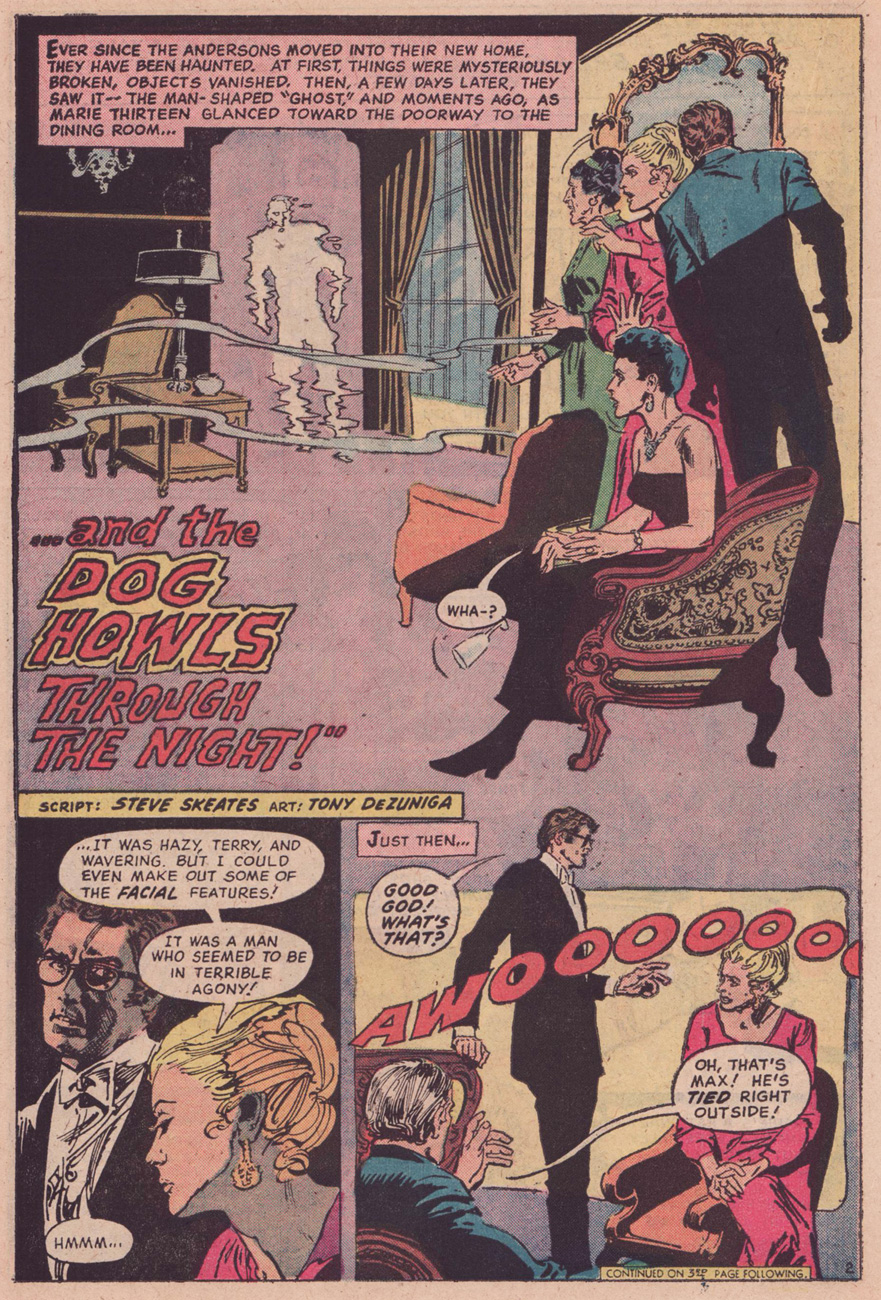
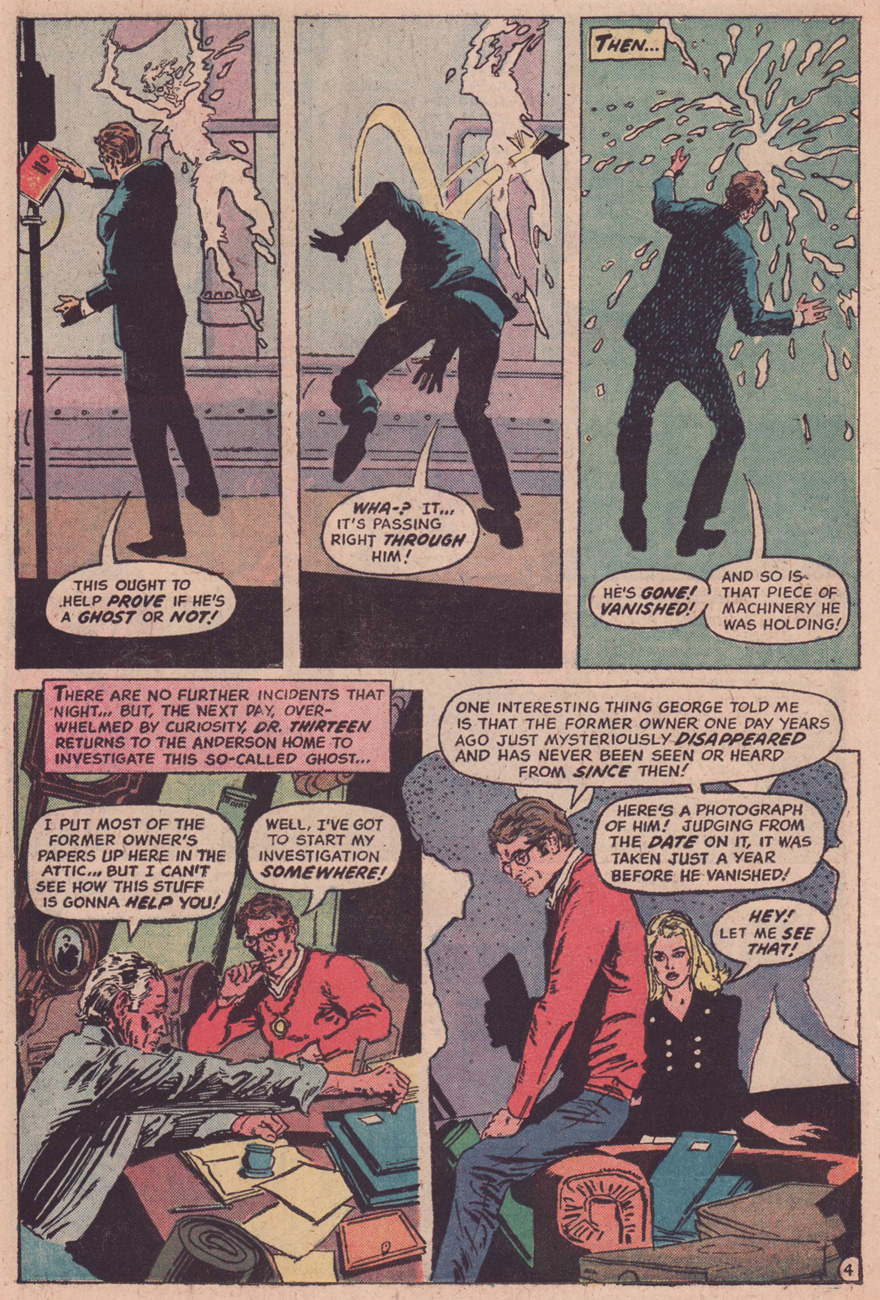
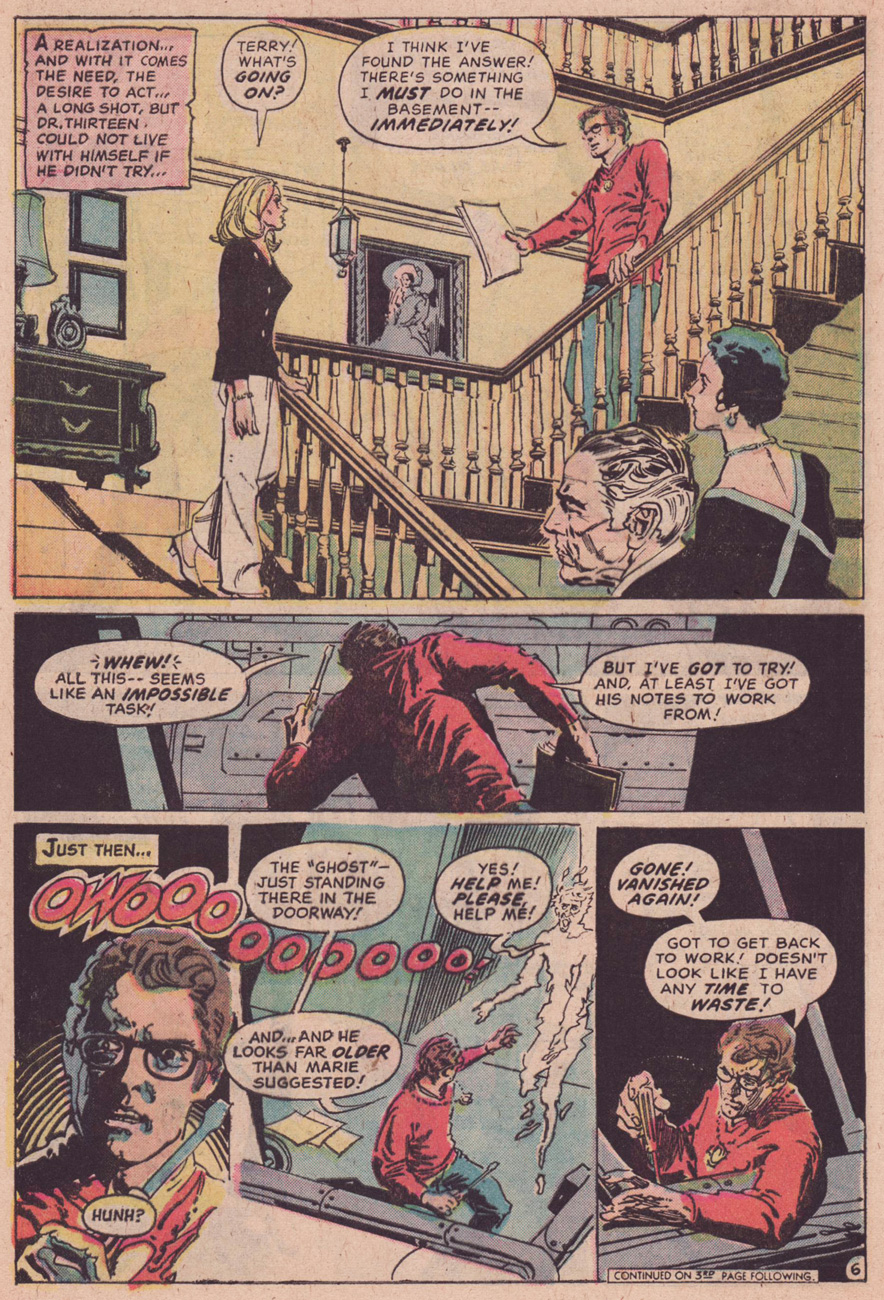
The cases of Dr. Terrance Thirteen, ghost breaker, must have been easier to write back in the 1950’s, when DC Comics’ default setting in its mystery titles was to explain away the supernatural element before the curtain call. DC’s resident skeptic first shared his insights in Star Spangled Comics, his feature lasting from issue 122 (November, 1951) to issue 130 (July, 1952). He then moved to The House of Mystery for a handful of appearances, then faded away. He returned to action, along with his also long-dormant colleague  and foil The Phantom Stranger, in 1969’s Showcase no. 80. In the Supernatural Seventies, all poor Dr. Thirteen could do is vainly and stubbornly play the cards of reason and logic against a house deck stacked to inevitably favour the uncanny and the unreal. He was doomed to be a comic book version of The X-Files’ Dana Scully, Fritz Leiber‘s Norman Saylor (Conjure Wife, 1943) or Night of the Demon‘s Dr. John Holden, all skeptics coming off as hopelessly obdurate and clueless in light of the “facts”.

Sounds like today’s so-called post-fact world… in which we need true skeptics (as opposed to deniers) and cool, rational minds more than ever.

Anyway, it wasn’t the first time wily Skeates had faced such a storytelling impasse: he’d had to ring the changes on pacifist character Dove (of Steve Ditko’s eternally squabbling Hawk & Dove) within a universe of hard-slugging super vigilantes.

Dr. Thirteen bounced around various DC titles in the early-to-mid 70s. This is the series’ last bow in the back pages of The Phantom Stranger, and ironically its finest hour, alongside the penultimate entry, The Ghosts on the Glasses, which ran in Adventure Comics no. 428 (August, 1973.) In both cases, the inspired artwork is that of Filipino master Tony DeZuñiga (1932 – 2012), who was clearly in his element.

DrThirteen1ADrThirteen2ADrThirteen3ADrThirteen4ADrThirteen5ADrThirteen6ADrThirteen7ADrThirteen8A

A character likens the dead scientist’s ill-fated velocity experiments to comic book character The Flash… but it’s a cinch that what the impish* Mr. Skeates really had in mind was Virgil “Guy” Gilbert, aka Lightning, whose début, The Deadly Dust! he had scripted back in 1965 (T.H.U.N.D.E.R. Agents no. 4, April 1966). Here’s a relevant excerpt, featuring art by Mike Sekowsky and Frank Giacoia.

LightningA

In closing, a biographical blurb from DC’s T.H.U.N.D.E.R. Agents Archives, circa 2002: « A native and longtime resident of the Empire State, Steve Skeates began his work in comics as an assistant editor at Marvel Comics in 1965 – a job which he quickly abandoned in favor of writing comics as a full-time freelancer. Over the next twenty years he did work for nearly every major comics publisher, including DC, Marvel, Charlton, Tower, Warren, and Gold Key. Since leaving mainstream comics in the mid-1980s, he has worked as a reporter, bartender, and Zamboni operator, as well as publishing his own comics titles, which he continues to do from his home base in Fairport, New York. »

Happy birthday, Mr. Skeates, and thanks for everything!

-RG

*I mean to refer to Mr. Skeates’ undisputed status as King of the unofficial inter-company crossover. Naughty!

In Memory of Mike Sekowsky

Sekowsky, born on November 19, 1923 (it was a Monday), was another of those precocious, tireless, versatile pioneers of the comic book industry, such as Joe Kubert, Carmine Infantino and Alex Toth. He started out with Timely Comics in 1941.

I’ve always enjoyed his mature style most, as it became more eccentric and more distinctive, without sacrificing an iota of storytelling and compositional ability. We’ll come back to the topic with some examples in tow, but for the present, here’s a select gallery of his covers over the years. I stayed away from the more obvious choices… we hardly need to revisit his introduction of the Justice League of America (Brave and the Bold no. 28, March 1960), for instance.

AdventuresDarkness13A
I’m reminded of an old joke (usually) told about Beethoven: « A tourist is sightseeing in a European city. She comes upon the tomb of Beethoven, and begins reading the plaque, only to be distracted by a low scratching noise, as if something was rubbing against a piece of paper. She collars a passing native and asks what the scratching sound is. The person replies, ‘Oh, that is Beethoven. He’s decomposing. » This jazzy Mike Sekowsky / Mike Peppe (attributed) cover tableau sadly doesn’t turn up in any of the inside tales. Typical. This is lucky issue 13 of Standard/Better/Nedor Comics’ Adventures into Darkness (Dec. 1953.) And if you’re in the proper mood, the whole thing’s available for your reading pleasure right here.

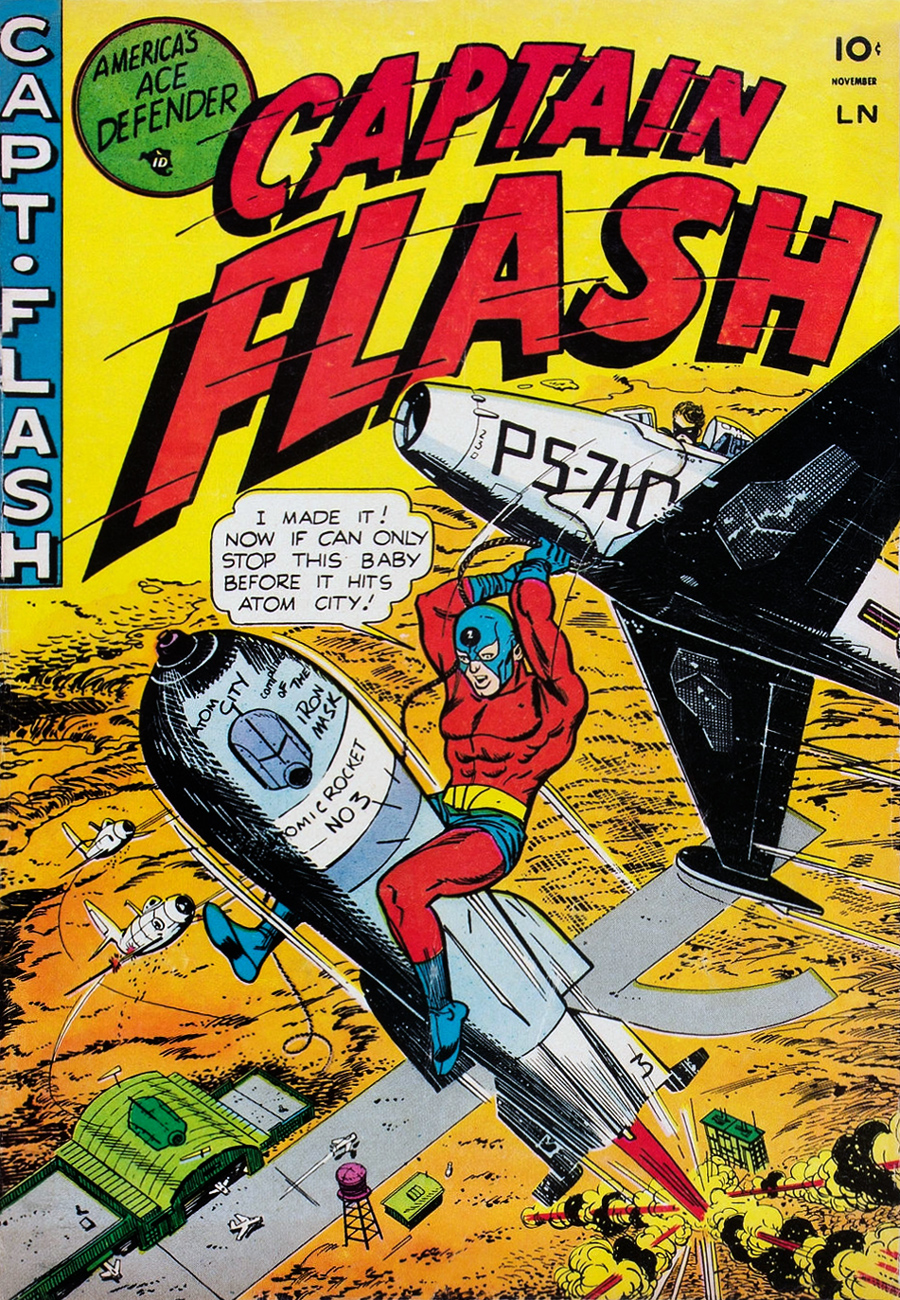
Captain-Flash1A
« Sorry, old buzzard! Pick on someone your own size! » One of the last new supermen of the Golden Age, the absurdly well-endowed Captain Flash came along just before the Code did, in November 1954. Captain Flash’s adventures were published by tiny Sterling Comics, which released a handful of titles in 1954-55 then vanished. Bad timing. Captain Flash gained his mighty powers through accidental exposure to cobalt rays, if you must know. Thrill to his heroics right here: http://comicbookplus.com/?dlid=17682

B&B68A
« Blazes! And if I remember my Bat-lore, that’s the flying bat-cave he’s using to charge that bank! Hit the brakes, stoop-skull! » Bob Haney and Mike Sekowsky bring the wacky to this issue of The Brave & Bold no. 68 (Oct/Nov. 1966), with the saga of “Alias the Bat-Hulk“! Script by Haney, pencils by Sekowsky, cover inks by Joe Giella and story inks by Mike Esposito. Gotta love the cackling peanut/rogues’ gallery!

JLA61A
I’ve always had a soft spot for Gardner Fox and Sekowsky’s JLA, but no-one else’s, really. Especially late in their run, when things got increasingly bizarre. This is Justice League of America no. 61 (March 1968). Cover by Sekowsky and Jack Abel.

GL66A
Ah, the always fun “screw you, hero!” cover theme. This is Green Lantern no. 66 (January, 1969), pencilled by Sekowsky and inked by Murphy Anderson, an unusual but effective combo. Within, «5708 A.D. — A Nice Year to Visit — But I Wouldn’t Want to Live Then!» is scripted by John Broome, pencilled by Sekowsky and inked by Joe Giella.

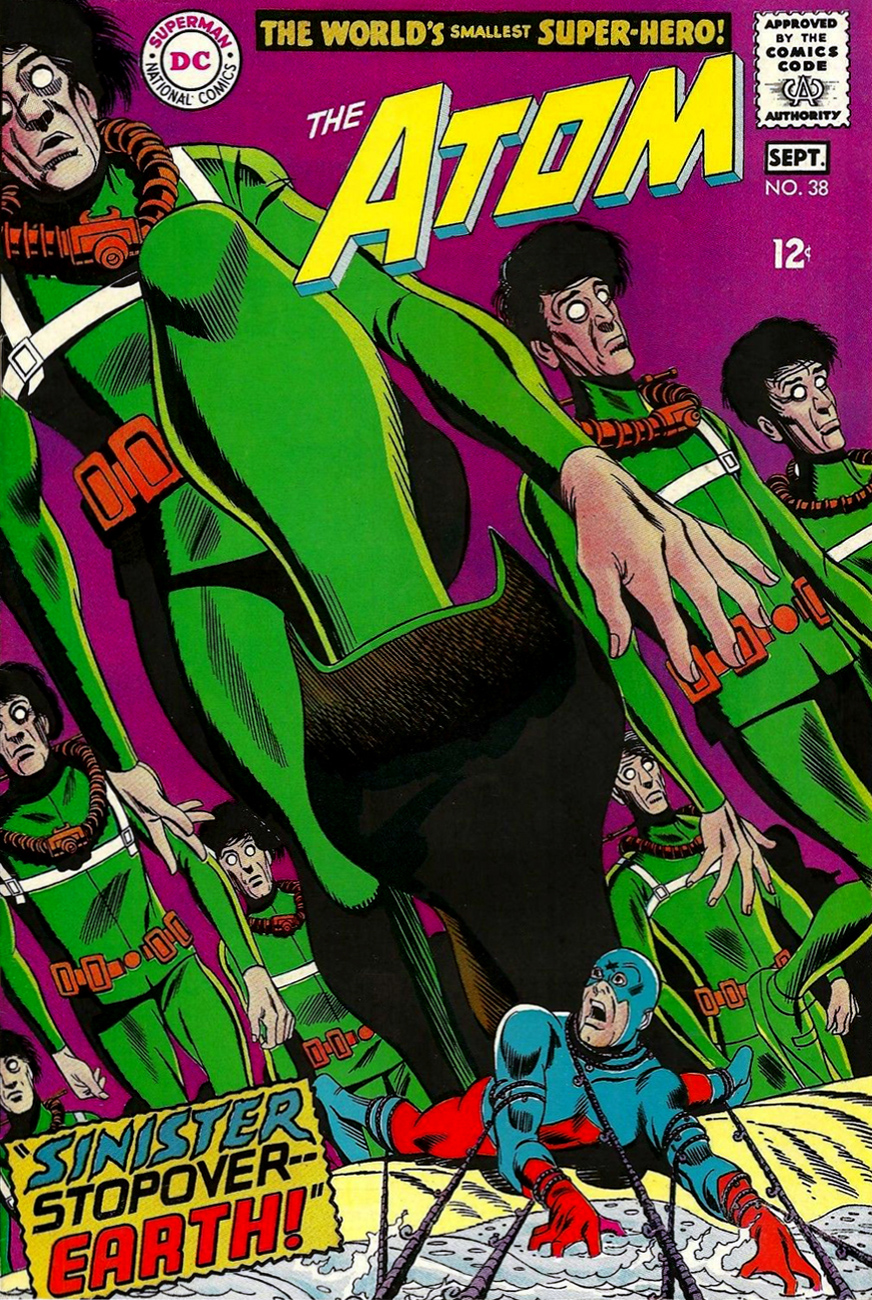
Atom38A
The final issue of the Atom as a solo book. He would team up with Hawkman for a few issues (with gorgeous Joe Kubert covers), but all in vain. The Atom no. 38‘s (Aug./Sept. 1968) « Sinister StopoverEarth! » is written by Frank Robbins, pencilled by Sekowsky and inked by George Roussos. Cover by Sekowsky and Jack Abel.

MetalMen38A
While newly-ensconced editorial director Carmine Infantino seemed to have boundless faith in Sekowsky in the late 1960s and early 1970s, pretty much every one of his creations and revamps turned out to be box office poison… but they were often bold, and certainly different. His take on Bob Kanigher and Ross Andru‘s Metal Men was odd, at times baffling, invigorating… and, at six issues, quite short-lived. This is Metal Men no. 38 (June-July 1969).

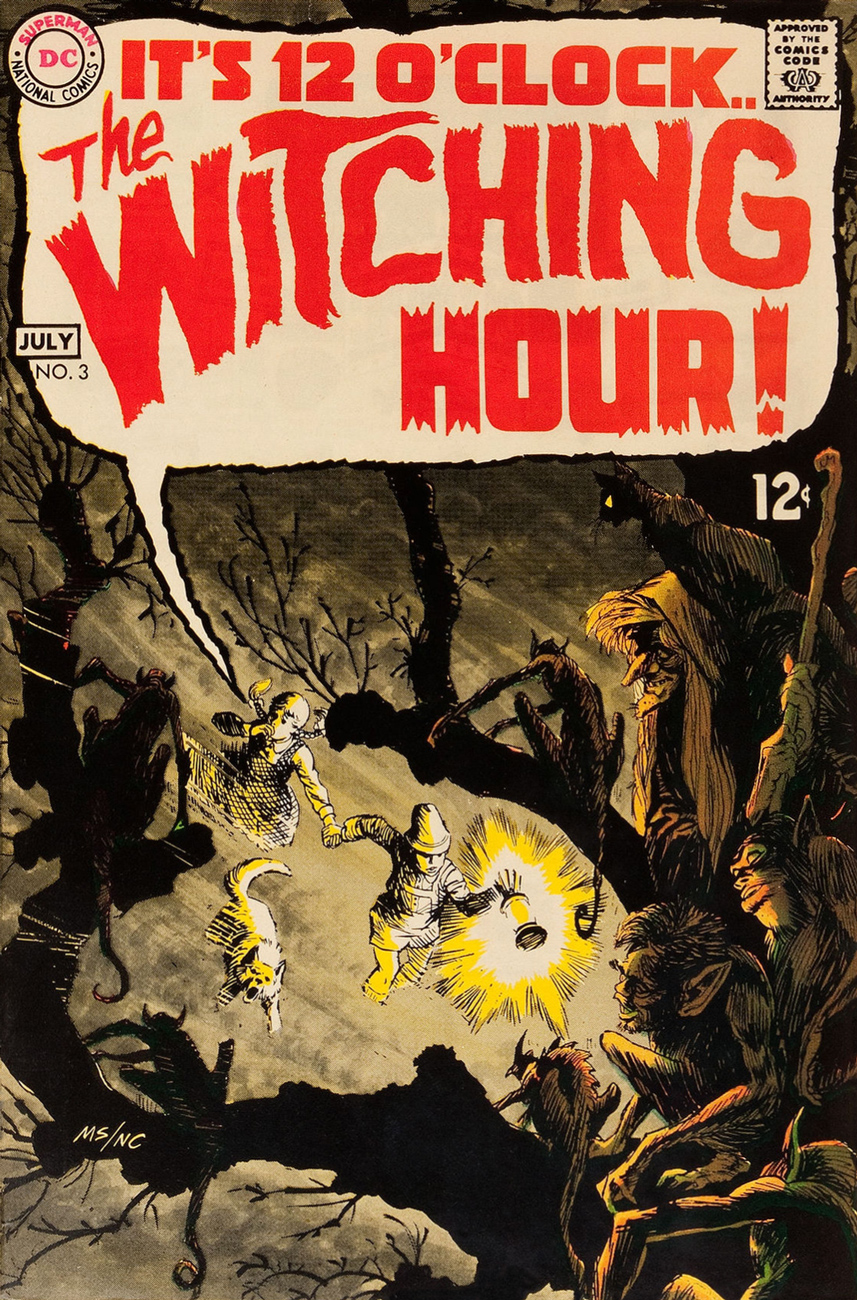
WH3A
« Do we dare follow? Keep your distance now… don’t let it know you’re there! »
Nick Cardy crafted the majority of DC’s The Witching Hour’s gorgeous early covers, some of his finest work. But… *this* understated beauty was pencilled by Sekowsky and inked by Cardy. The picturesque results are set in the selfsame 1930s Universal Studios backlot Balkans of the mind so dear to several generations of monster-loving artists and kids. This is The Witching Hour no. 3 (June-July, 1969.)

– RG