Panning the murky old print stream for the odd glimmering nugget
They Called It… The Golden Age!
That’s the period opening with the advent of the first comic books, in the early 30s, and ending with the release of Showcase no. 4 in 1956 (introducing the new Flash), which signals the passage to the next era, the Silver Age, of course.
« When comics came along in the 1930s there was a talent pool waiting. And one reason is so many areas were closed to Jews. Colleges, advertising agencies, many of the corporations – the doors that were closed led to the one that was open. » — Jerry Robinson
It’s New Year’s Day, which means it’s also the titanic Sherrill David ‘Jerry’ Robinson‘s birthday. Born on the first of January in 1922, he left us not so long ago, on December 7, 2011. He played at the very least a strong rôle in the creation of Batman’s sidekick Robin, his foes the Joker and Two-Face, his butler Alfred Pennyworth… and much more. Naturally, since we’re entering the murky world of Bob Kane, the whole process is mired in controversy, conflicting accounts and perhaps a little fibbing from certain parties.
We won’t limit ourselves to the obvious Bat-imagery, which was mostly studio work anyway. Here, for instance, is a more obscure but purer œuvre, both pencilled and inked by Robinson: the original art from « Behind the Mask », page 2, originally printed in Atlas’ Marvel Talesno. 103 (Oct. 1951). Writer unknown.My earliest encounters with Mr. Robinson’s work were through a pair of books for young readers he illustrated in the late 1950s, in a beautifully free and expressive styles. Here’s the cover and one interior vignette from The Phantom Brakeman (1959, Scholastic), written by Freeman Hubbard, then editor of Railroad Magazine.
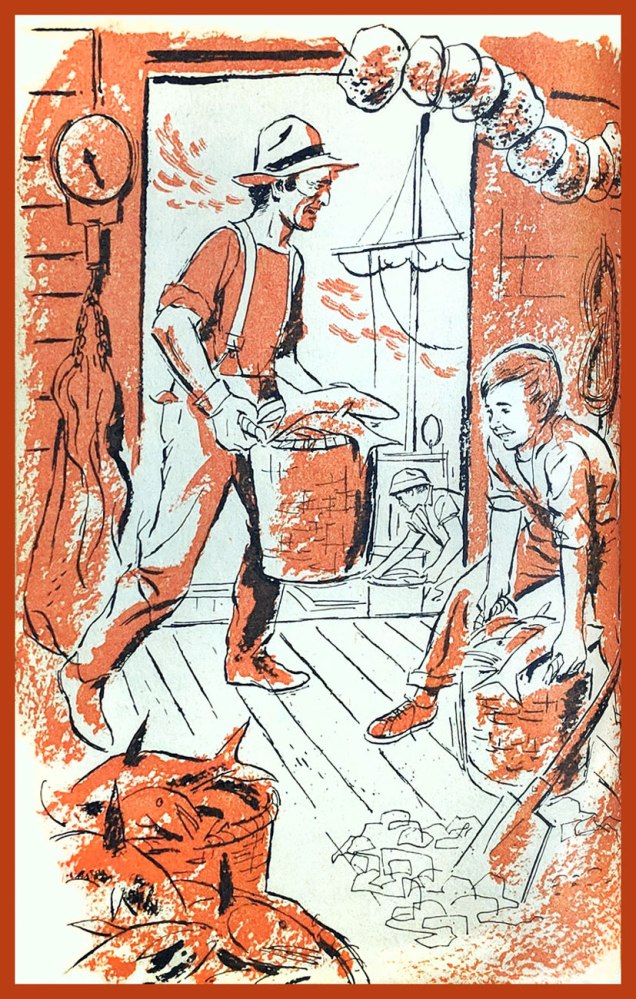
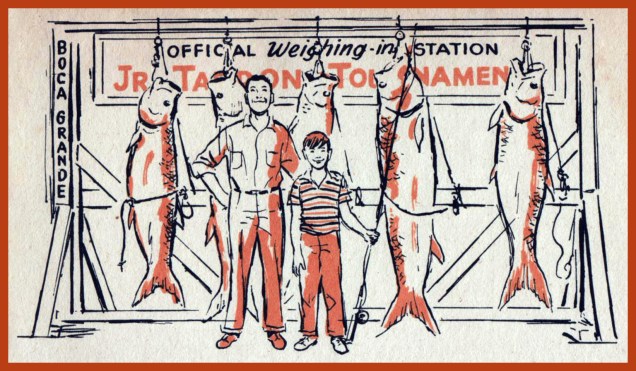
The following two pieces belong to Hurricane Luck (1959, Scholastic), written by Carl Carmer.Spoiler alert: Peter does, in the end, win the Tarpon fishing contest.
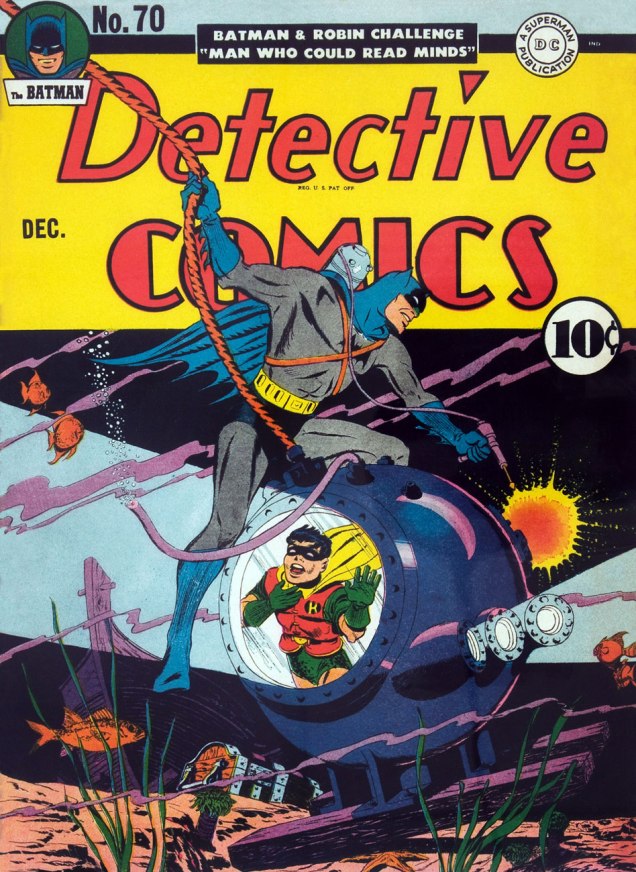
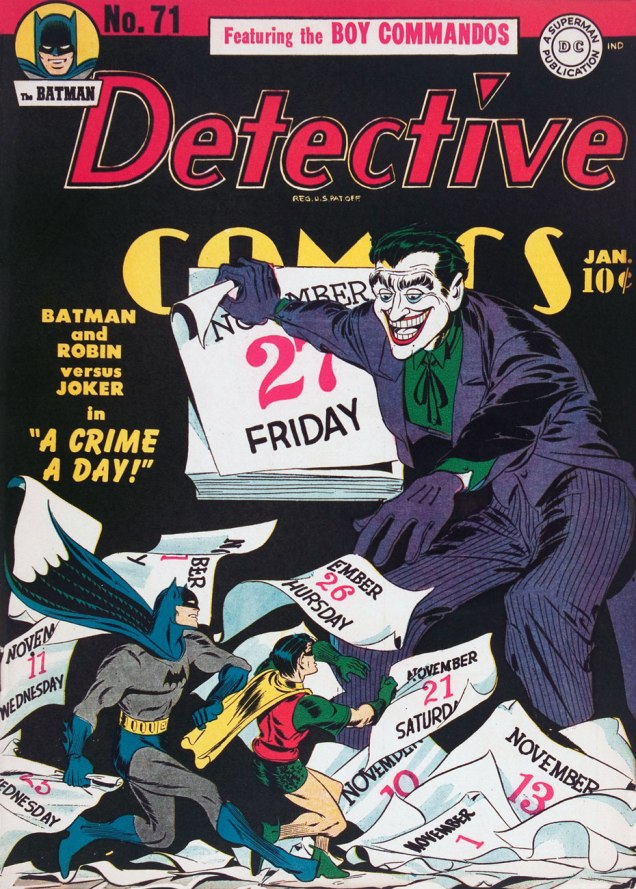
« What about Batman? », you might say. Okay, I admit I don’t have a prayer of getting away with a Jerry Robinson tribute devoid of the caped crusader and his trusty bird-themed sidekick, so here goes!
Detective Comics no. 70 (Dec. 1942). Pencils and inks by Robinson.Detective Comics no. 71 (Jan. 1943). Pencils and inks by Robinson.
« I got into the comic business the same way I got into the bubble gum business: somebody gave me a job. » — John Severin
I’ve said it before, and I still feel that way: If you’re going to discuss a career of such length, variety, depth and consistency as John Severin’s (from the late 1940s to the early 2010s!) it’s simply too easy to lose your way in the details, sidebars and bifurcations. Best to pick a small area and stick to it, particularly if you don’t have the luxury of endless pages to devote to the task.
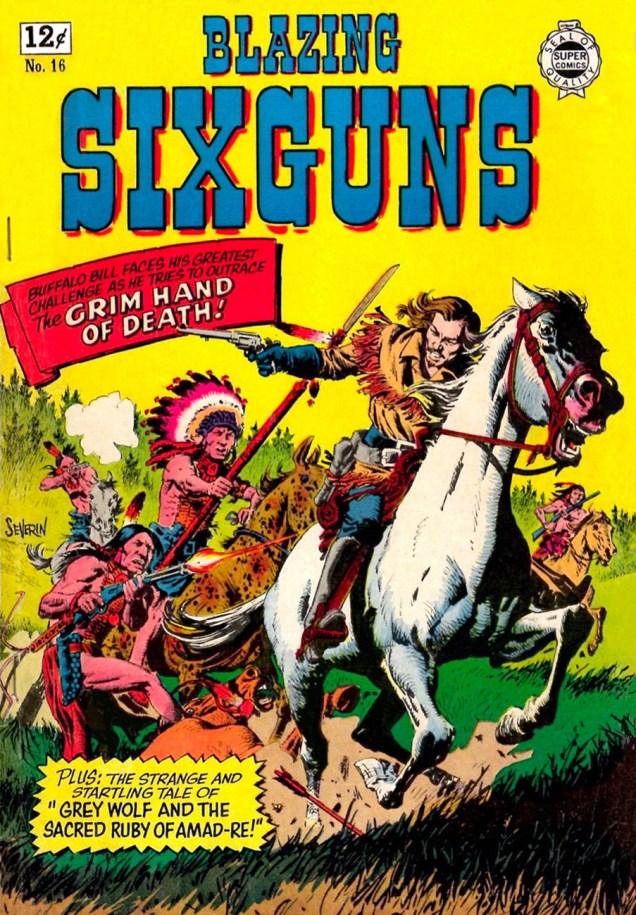
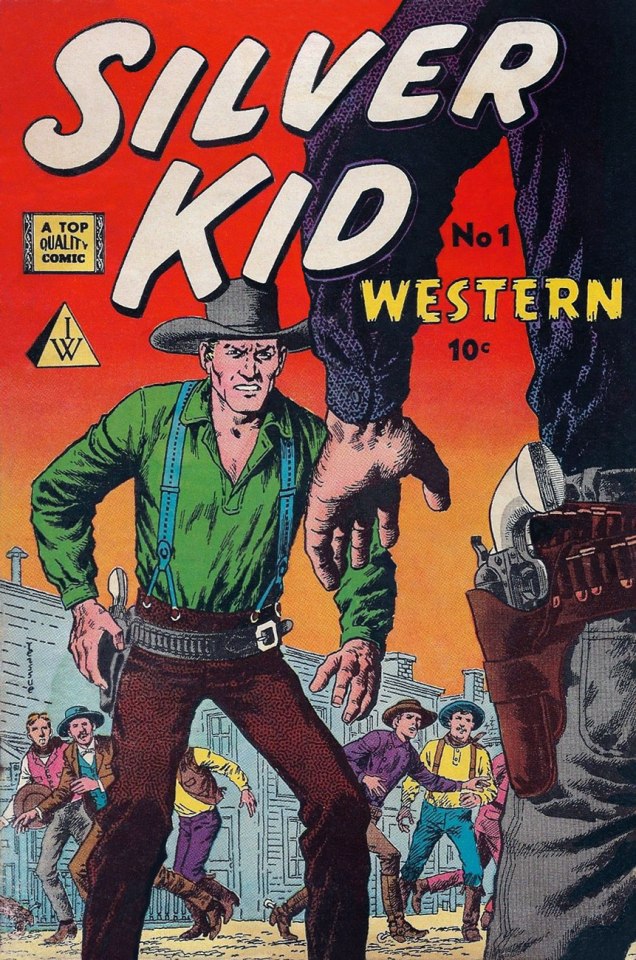
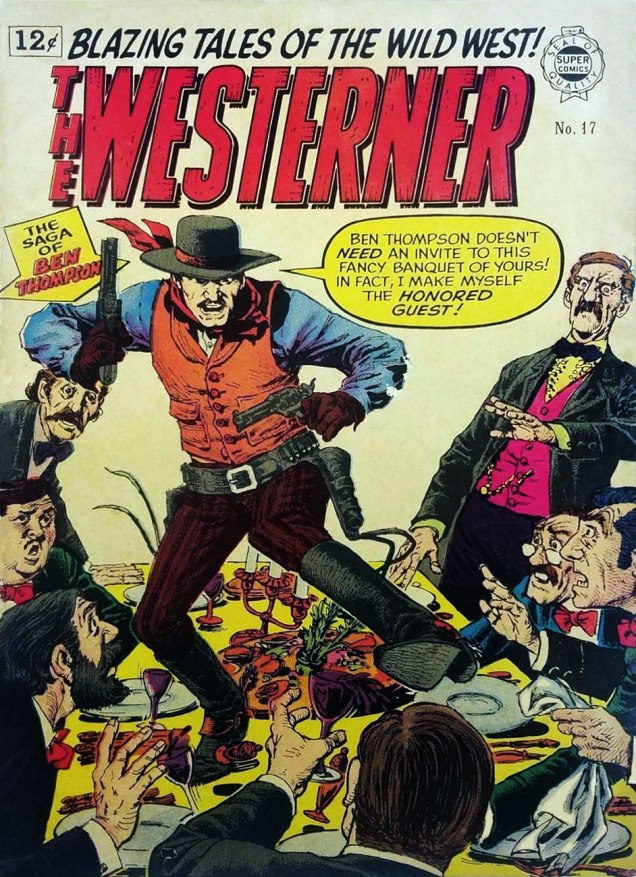
Speaking of sidebars: In this forum, I keep returning to the topic of Israel Waldman and his dodgy, but mesmerizing publishing ventures. The many scattershot titles issued under the IW / Super Comics (1958-1964) banner were printed on shoddy paper (which makes them, nowadays, nearly impossible to find in any sort of decent shape), were sold outside the usual channels (in bags of three through department stores, and not the fancy ones at that), consisted of rather hoary, indifferently-packaged reprints… but foxy businessman Waldman didn’t scrimp on the one count that mattered: he shelled out top dollar to commission top talent to create attractive covers. That sweet old bait-and-switch.
Sure, some of these random assemblages of decaying pulp happen to be good comics, but given the nature of odds, it was bound to happen.
John Powers Severin, born ninety-seven years ago today (Dec. 26, 1921-Feb. 12, 2012), was part of Waldman’s cadre of cover artistes, and he delivered beautifully, as he always did, right to the end of his career.
Here, then, are some highlights of these little-seen Severin pieces. Happy birthday, Mr. Severin!
Blazing Sixgunsno. 16 (1964), ten issues, 1958-1964. Read this issue here.Here’s Dangerno. 10 (1963), the first of seven issues. Read it here.This is Fantastic Adventuresno. 10 (the first of seven issues, 1963-64). Read it here.Looks like Marvel’s Kid Colt did a bit of moonlighting for Super Comics (as did king of all media Gabby Hayes!). This is Gunfightersno. 18, fifth and final issue of the series (1958-1964).This is Silver Kid Westernno. 1 (1958), first of two issues. Read it here.This is Robin Hoodno. 9 (1958), third of five issues (1958-1964). Read it here.An alternative view of table étiquette from real-life figure Ben Thompson. This is The Westernerno. 17 (1964), third of three issues.
« Christmas, Christmas, Christmas, Christmas makes me happy I love Christmas cold and grey, I love it sweet and sappy Says crazy kissin’ Cousin Flo: ‘Let’s break out the mistletoe’ »
The heart-warming cover of that Four Color no. 201, 1948. Art by Walt Kelly. Check out the adorable moon-jumpin’ cow in the top left corner!This is the back cover of Dell’s Four Color no. 302 (Santa Claus Funnies), 1950. Such warm colours. Art by Canadian Mel Crawford, who worked on various Dell publications in the 1950s (such as Howdy Doody, Mr. Magoo, and Four Color Comics) to later become an accomplished watercolours/acrylics painter.
« Christmas, Christmas, Christmas, Christmas out the waz Christmas, Christmas, Christmas, Christmas up the schnozz Come all ye faithful, don’t be slow It’s Christmas time, you can’t say no»
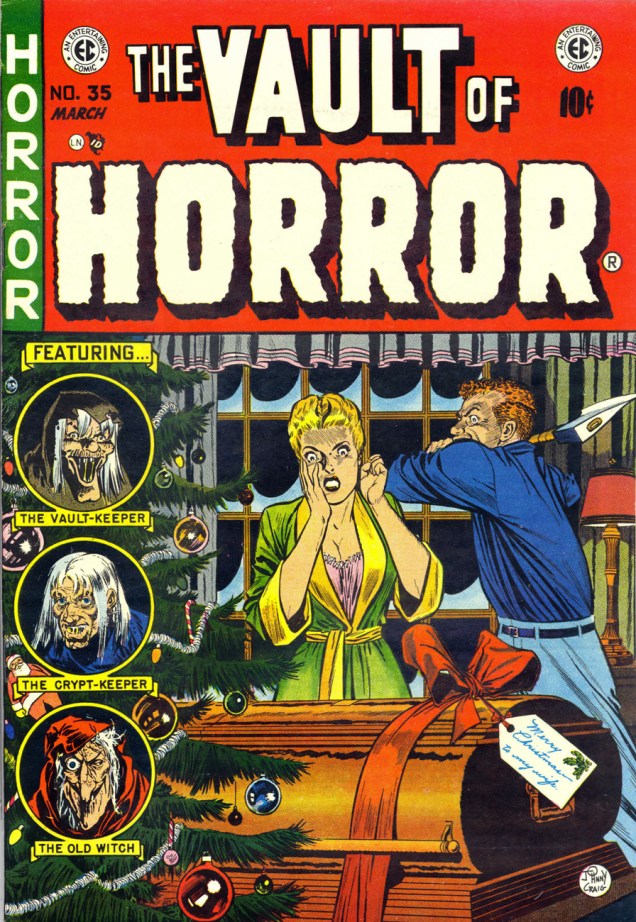
Creepy no. 68 (January 1975), cover by Ken Kelly. “House’ and “about” don’t rhyme, but it’s the season to forgive. I like how Santa appears to be bawling in frustration.Vault of Horror no. 35 (EC, 1954), cover by Johnny Craig. Maybe open the lid of the coffin first, dumbass?
« Momma wants a kitchen sink And daddy wants a stiffer drink Grandma wants us to cut the crap Grandpa wants a nice long nap »
Illustration by Richard Thompson. Who else wants some Festive Dietetic Crackers? I’d definitely sit with the mouse.
« Christmas, Christmas, Christmas, Christmas everywhere Christmas, Christmas, Christmas, Christmas pullin’ out my hair Shoppers lined up out the door Traffic backed up miles and more It’s Christmas time, so what the heck Let’s go spend the whole paycheck »
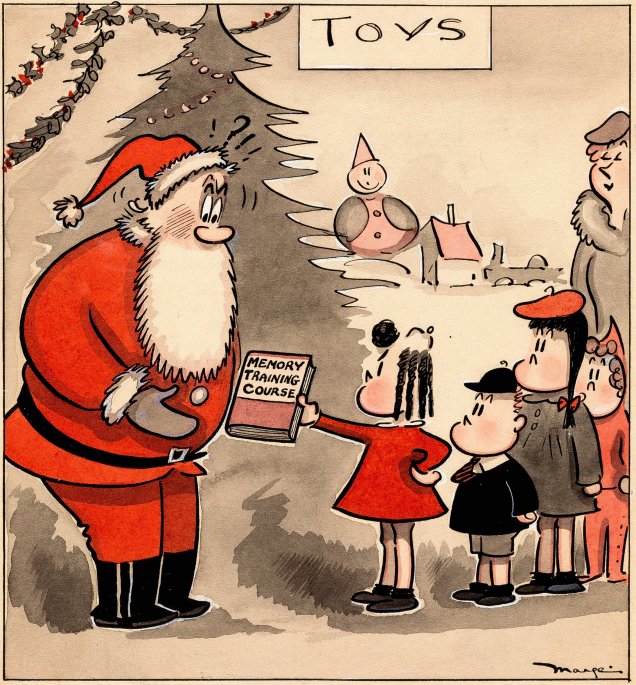
A Little Lulu cartoon by Marge Buell (Saturday Evening Post, 1944).From the pleasantly warped mind of Hilary Barta with a fond tip of the Santa hat to old Uncle Salvador, obviamente. Да да да!
« Deck the halls, it is the season We don’t need no rhyme or reason It’s Christmas time, go spread the cheer Pretty soon gonna be next year»
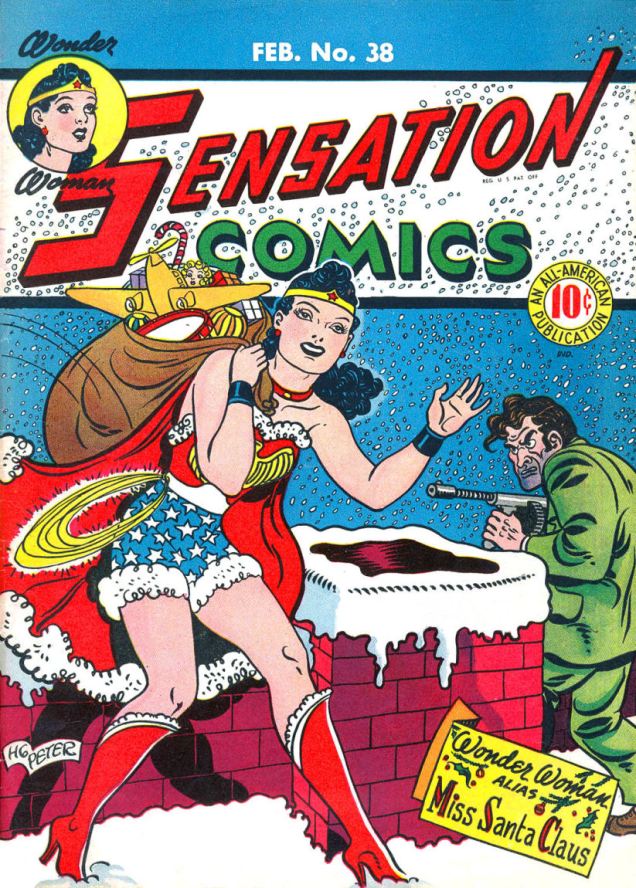
Sensation Comics no. 38 (1945), cover by H.G. Peter.Original art for a Christmas card of Little Orphan Annie by Harold Gray. Just some 70 years ago, right?
For today’s Tentacle Tuesday post, I’d like to highlight some comic book artwork from the Golden Age, which is to say the period between the early (or late, depending on who you ask) 1930s and 1956, the year Showcase #4 was published, heralding the new era of superhero comics. (Our other TT post dedicated to the Golden Age was about Planet Comics; visit it here).
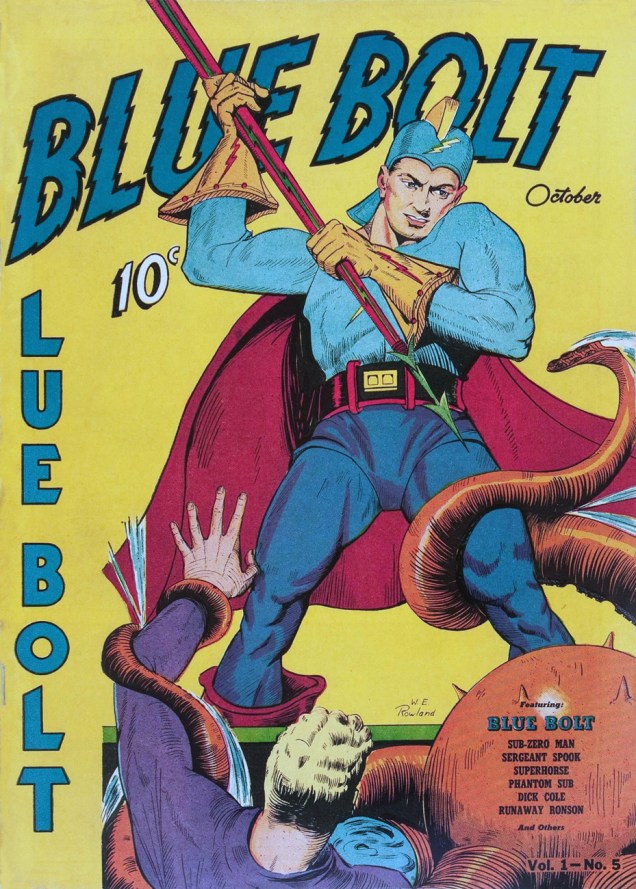
Blue Bolt vol. 1 no. 5 (October 1940), cover by W. E. Rowland. The series was created by Joe Simon, who promptly enlisted Jack Kirby’s help. This cover story, «War in the Fourth Dimension», is by the Simon-Kirby team. Read the issue here.
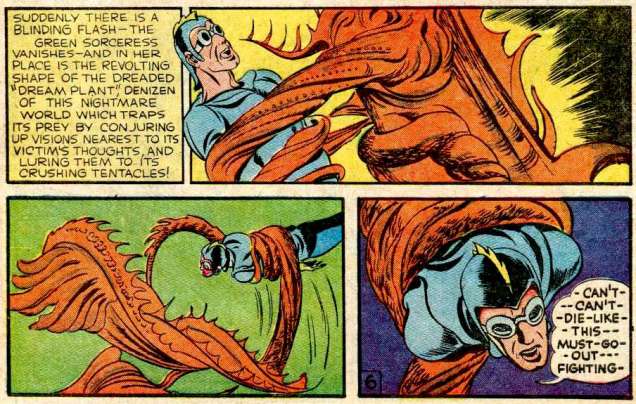
The Blue Bolt gets tangled up in quite a few (crushing, of course) tentacles. Art by Jack Kirby.
And a few pages later….
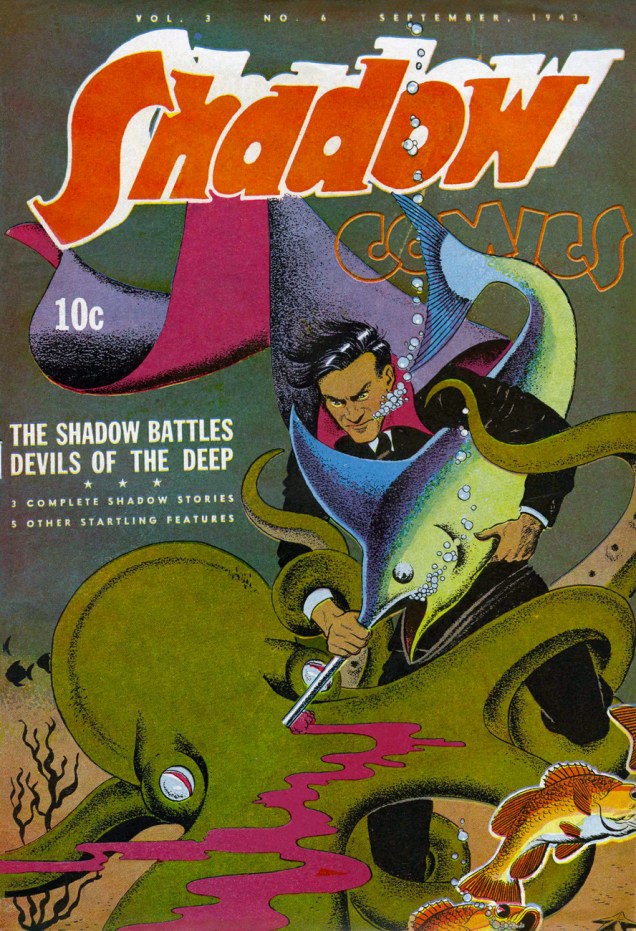
It might be surprising to see the Shadow in the grip of an octopus, but there’s probably not that many creatures he *hasn’t* grappled with!
When a radio show was introduced in 1930 to boost the sales of Detective Story Magazine, the company (Street & Smith Publications) wasn’t expecting its freshly-minted narrator, The Shadow, to hog the limelight – but that he did, as listeners found this sinister character far more compelling than the stories he was narrating.
Shadow Comics vol. 3 no. 6 (September 1943), cover by Vernon Greene. Just imagine the possible drama of this cover – the swordfish is actually the octopus’ friend, but he’s forced to become an instrument of his death by the merciless Shadow (only he would descend to the depths of the ocean to fight “devils” in full suit-and-cape regalia).
As his fans kept requesting copies of The Shadow magazine (which didn’t even exist at the time), Street & Smith obliged and The Shadow Magazine was born in 1931. The Shadow’s step-father is Walter B. Gibson, writing under the pen-name of Maxwell Grant. He wrote « more than 300 novel-length » Shadow stories to meet the demand of a public greedily clamouring for its hero, although at some point several writers were hired to lighten Gibson’s ridiculous workload. The Shadow soon slunk beyond the confines of pulp novels and into comics: a syndicated daily newspaper comic strip (written by Gibson and illustrated by Vernon Greene), preceded (by a month) by a comic book published by Street & Smith, which was supposed to attract a younger audience to pulp magazines (101 issues, from 1940 to 1949).
Shadow Comics vol. 5 no. 5 (August 1945), cover by Charles Coll. Everybody is making puppy eyes at the Shadow, but will he choose the pretty girl or the pretty octopus?
Speaking of heroes, Wiki calls The Shadow « a film noir antihero in every sense »; now, I’ll concede the film noir, but I’ll balk at calling him an anti-hero, at least in this incarnation, as *that* term is defined as « a character who lacks conventional heroic qualities such as idealism, courage, and morality », all of which The Shadow has abundant reserves of. He’s a bit laconic and brusque with this conspirators, but that’s understandable when he had to destroy peace-threatening crime rings and bring brilliant crime-perpetrators to ruin at least twice a month.
Who’s that handsome guy shooting commercials for Crackety-Wackett Cereal? Why, it’s Lars of Mars, the debonair Martian! In between fighting his communist arch-enemy (it was the 50s, what can I say?) and robots harassing women, Lars likes to relax by grappling with tentacled creatures.
This lovely cover is Lars of Mars no. 11 (July-August 1951), painted by Allen Anderson (or Norman Saunders, according to another source, though Anderson seems likelier). What’s inside? Jerry Siegel scripts and Murphy Anderson art (and one story by Gene Colan). Yummy!
Lars of Mars was created by Siegel in 1951 for Ziff-Davis. There are only two issues (bizarrely numbered 10 and 11). The art for Lars of Mars, done by Murphy Anderson, is very nice indeed, but you don’t have to take my word for it. Feast your orbs on the first two delightfully nonsensical LoM stories on Pappy’s Golden Age blog.
Now, is that any way to address a many-tentacled creature?
« Scarlet’s adventures are never run-of-the-mill. Instead she enters into every phase of American life – whether on the baseball field or in a night club – always finding a way to help her clients, aid the forces of law and order… and bring plenty of thrills and laughs to her readers. » Apparently « every phase of American life » includes being on the ocean’s floor, trying to stab an octopus with only 5 arms. Hmm…
Harvey Comics Hits no. 59, 1952. Art (probably) by Al Avison. Interestingly, the fish is nibbling on the hand of the monster, when it could be partaking of the delicious flesh of the blub-guy. Tales of the Invisible reprints a bunch of Scarlet O’Neil stories from Black Cat, topped off with an introduction titled « Meet Russell Stamm » (the creator).
Incidentally, Invisible Scarlet O’Neil is supposed to be the first heroine with superpowers (well, one superpower: invisibility).
If I may be excused for going off-tentacle-topic, « Blood of a Monster », the title story that takes up half of this issue, is surprisingly good (though it doesn’t really contain tentacles aside from a minor mention of cephalapoda at the beginning). The art (by the aforementioned Russell Stamm) is moody and quite unhinged in places.
I enjoyed « Grave of Greed », the second half of the issue, even more, because it involves mushroom picking as part of the plot!
Read the full issue here – it’s worth the detour, I think!
Stay tuned for our next Tentacle Tuesday post! In the meantime, visit our previous TTs (we’re getting to have quite a backlog) for your tentacle fix.
« It was long past midnight on a hot, wet June night many years ago… Central City lay choking for breath in an eerie fog… »
In this, part three of our chronicle following as we can the meandering and sometimes mystifying odyssey of Will Eisner’s The Spirit, we reach the most outré segments of the former Denny Colt’s road.
In a unique twist, The Spirit’s next residence, nearly a decade after his Fiction House run, had nothing at all to do with Will Eisner… in terms of securing his assent, that is.
It was down to the fabulously sketchy Israel Waldman, one of those fringe-dwelling characters who made the comics industry such a colourful snake pit. To quote the Grand Comics Database: « I.W. Publications (1958-1964) was part of I.W. Enterprises, and named for the company’s owner, Israel Waldman. Reportedly, Waldman came into possession of a printing company and among the assets were the production materials for several hundred comic books previously published by various publishers as well as a limited amount of previously unpublished material. Waldman equated possession of production materials as the right to reprint and I.W. became notable for publishing unauthorized reprints of other companies’ comics, often with new covers, as Waldman’s windfall did not often include the production materials for covers. The later half of the company’s existence, it published comics under the Super Comics name. Usually these companies were out of business, but not always. »
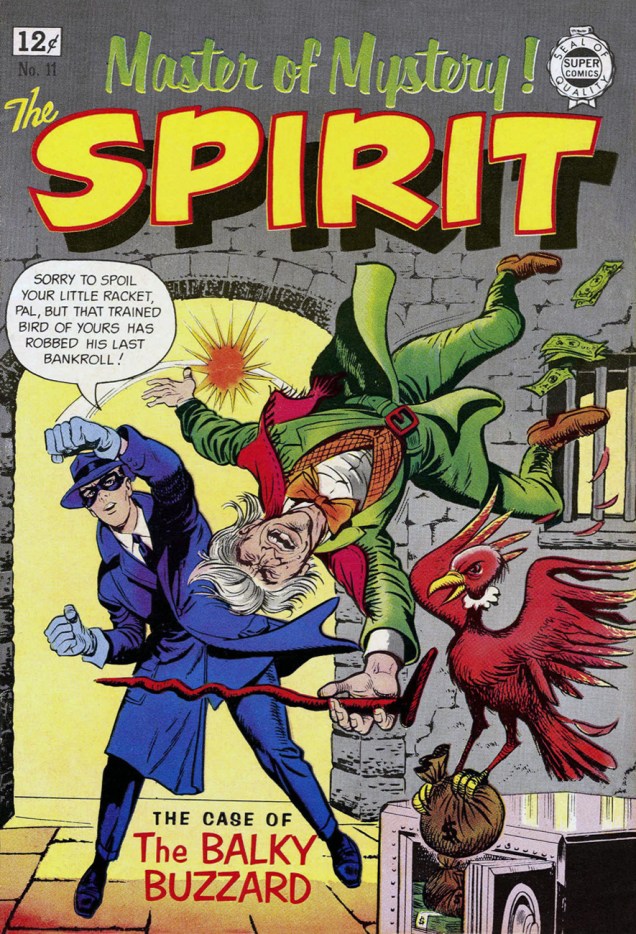
This is The Spiritno. 11 (1963), featuring The Man Who Killed The Spirit(Mar. 24, 1946), cover-featured The Case of the Balky Buzzard (Apr. 21, 1946), Carrion’s Rock (May 19, 1946), all scripted by Eisner, as well as Honeybun and Flatfoot Burns shorts. Cover by Joe Simon (“Joe, did you even read the story you’re depicting?“). This one was well worth one’s hard-earned twelve pennies. Read it here.This is The Spiritno. 12 (1964), featuring, this time, a trio of WWII-era Spirit stories scripted by Manly Wade Wellman and Bill Woolfolk and illustrated by Lou Fine, rounded off with a pair of Flatfoot Burns shorts by Al Stahl . Cover again by Joe Simon. Read it here.
If memory serves, Waldman’s comics craftily bypassed the Comics Code (another exception!) and the newsstands, being exclusively sold in sealed bags of three in bargain-basement department stores. To bait the hook, Waldman paid top dollar for new cover artwork, approaching established pros like Ross Andru (who actually delivered some fun stuff, unlike his unforgivably atrocious turn as DC’s main cover artist in the late 1970s), John Severin, Jack Abel, and in these two cases, Jacob Kurtzberg‘s old partner, Joe Simon.
Unsurprisingly, Waldman skimped on all other materials, particularly the paper his comics were printed on, which means that I.W./Super Comics are pretty hard to come by these days in any kind of decent state, so they’re ironically pricey.
A few years later, Eisner struck a deal with another rascal (albeit one with cleaner fingernails), Alfred Harvey of Harvey Comics, Stan Lee‘s only credible competition in the credit-usurping, I created-the-Universe stakes. Again, two issues, but this time with some new Eisner material, including origin stories for The Spirit (his third, but definitive one), and his arch-nemesis Zitzbath Zark, which you may know as purple glove enthusiast The Octopus.
Harvey’s The Spiritno. 1 (Oct. 1966), featuring the new Origin of the Spirit by Eisner, and classics Lorelei Rox (Sept. 19, 1948), Two Lives (Dec. 12, 1948), Agent Cosmek/Visitor (Feb. 13, 1949), The Story of Rat-Tat the Toy Machine Gun (Sept. 4, 1949), Ten Minutes (Sept. 11, 1949), Thorne Strand (Jan. 23, 1949), Gerhard Shnobble (Sept. 5, 1948), all scripted by Eisner, save Ten Minutes, which hails from the mind of Jules Feiffer.Harvey’s The Spiritno. 2 (March, 1967) features the brand-new Octopus: The Life Story of the King of Crime and 2-pager The Spirit Lab, plus a generous helping of fine oldies, namely Plaster of Paris (Nov. 7, 1948), The Deadly Comic Book (Feb. 27, 1949), Rudy the Barber (Oct. 22, 1950), The Story of Sam, the Saucer That Wanted to Fly (Sept. 17, 1950), Sam Chapparell (Oct. 10, 1948), La Cucaracha (Nov. 19, 1950), The Halloween Spirit of 1948–Ellen Meets Hazel (Oct. 31, 1948), all scripted by Eisner… the book wraps up with a preview of the next issue, which never saw print. And so it goes…
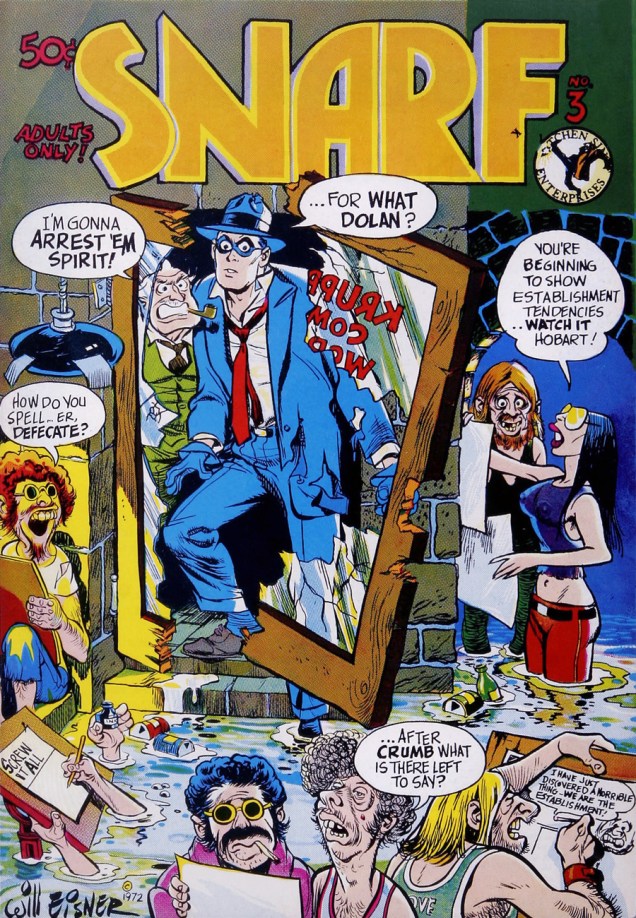
Mr. Eisner then finally had the good fortune to run into an honest man, who would prove in time to be his most steadfast ally: Mr. Denis Kitchen. Their first collaborations were a bit tentative, but quite sympathiques, with Eisner kind of slouching towards the Underground, his creation even cover-featured on Kitchen’s long-running humour anthology Snarf.
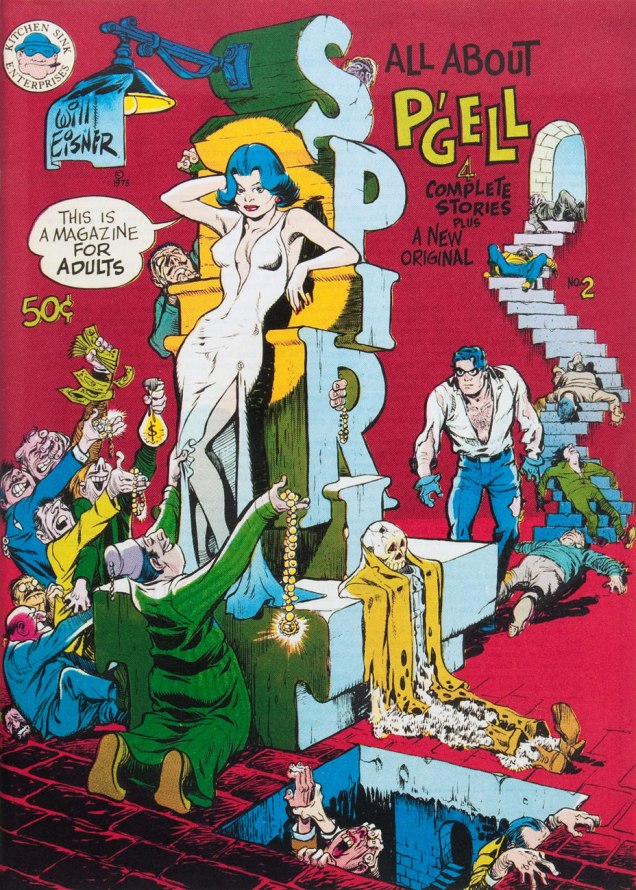
This is Kitchen Sink Enterprises’ Snarfno. 3 (Nov. 1972), featuring an original Eisner cover.Another two-issue run! Kitchen Sink’s The Spiritno. 1 (Jan. 1973), featuring a new cover by Eisner, and precious relics Max Scarr’s Map (Apr. 14, 1946), Caramba (Nov. 10, 1946), Return to Caramba (Nov. 17, 1946), The Rubber Band (June 23, 1946), plus a few brand-new short pieces.Kitchen Sink’s The Spiritno. 2 (Nov. 1973), featuring a new Eisner cover, an original four-pager, The Capistrano Jewels, and, as boasts the cover, all about P’Gell, with Meet P’Gell (Oct. 6, 1946), The School for Girls?? (Jan. 19, 1947), Competition (Aug. 3, 1947) and The Duce’s Locket (May 25, 1947).
Next time out: some interesting times with Warren.
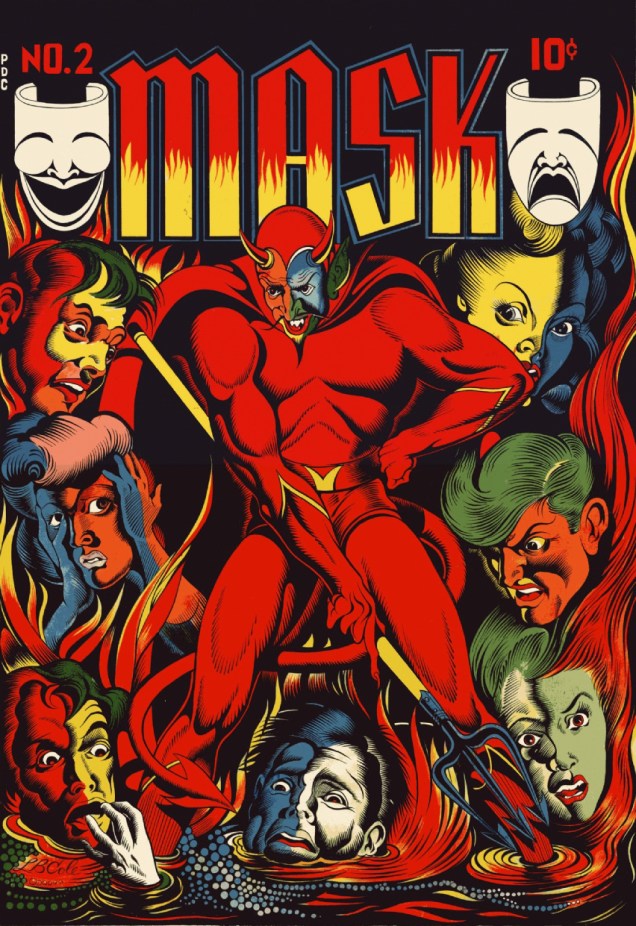
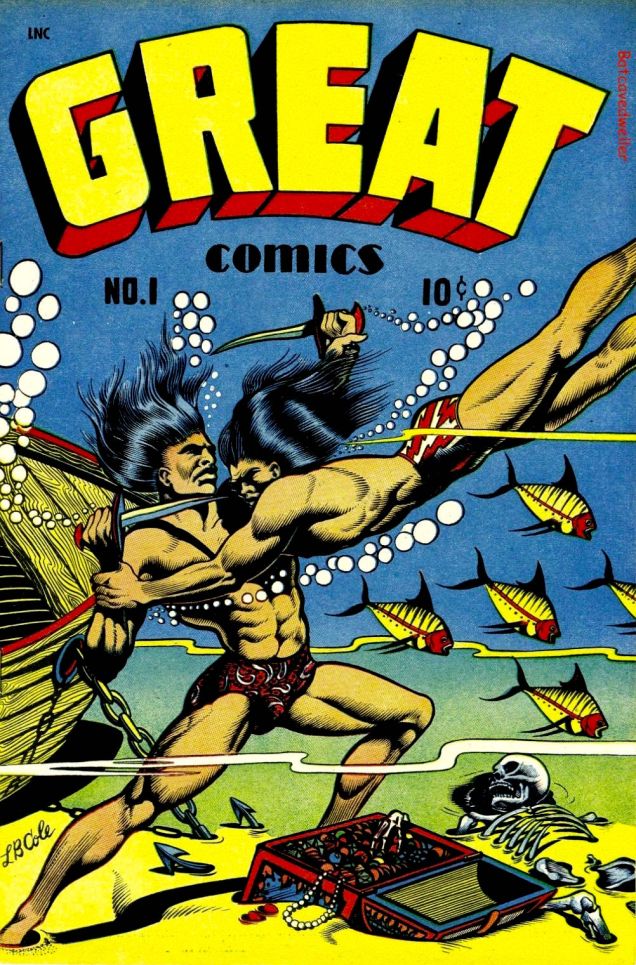
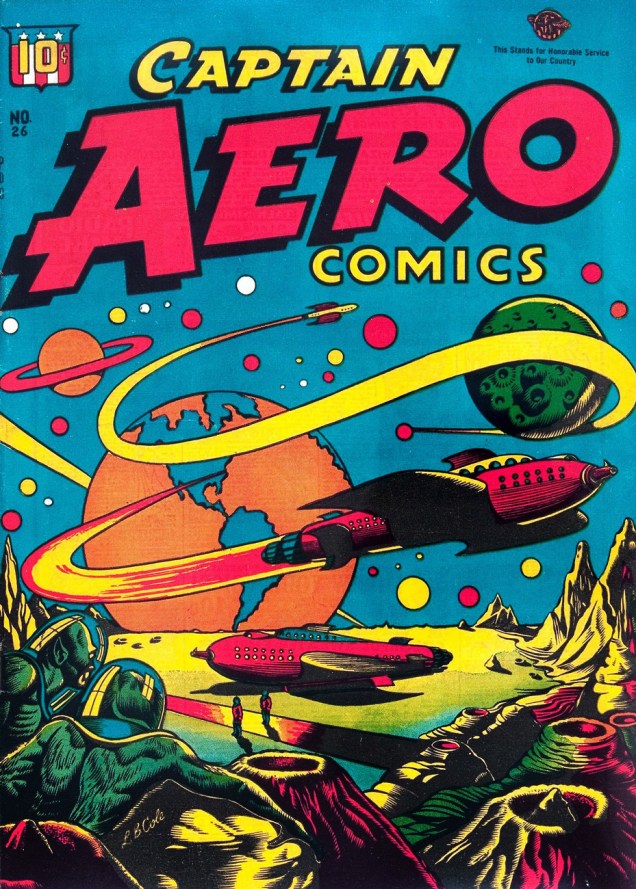
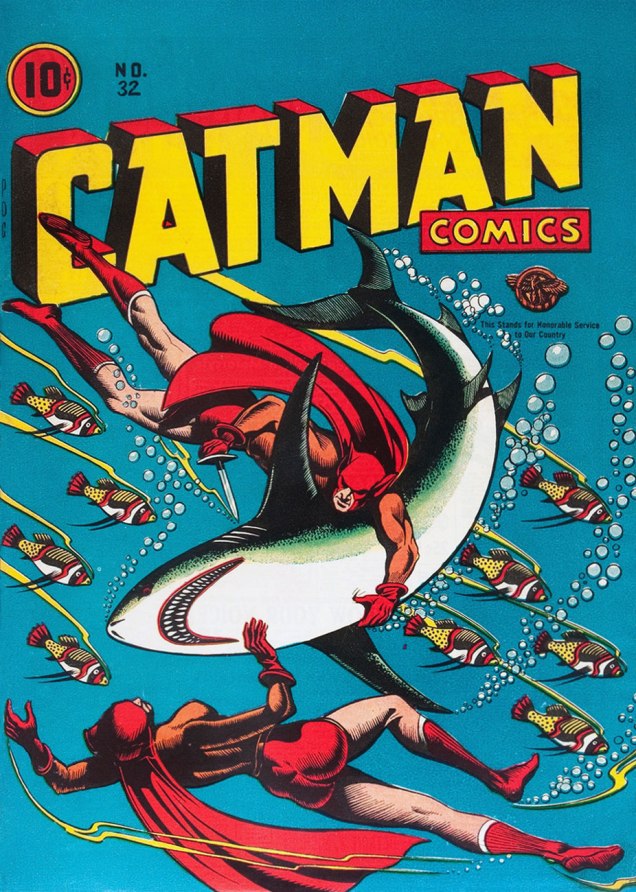
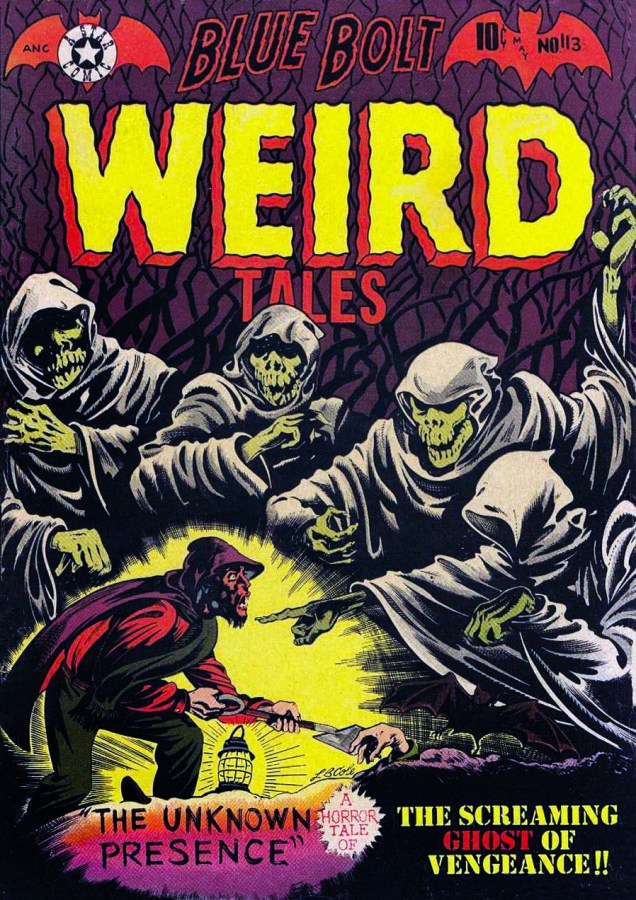
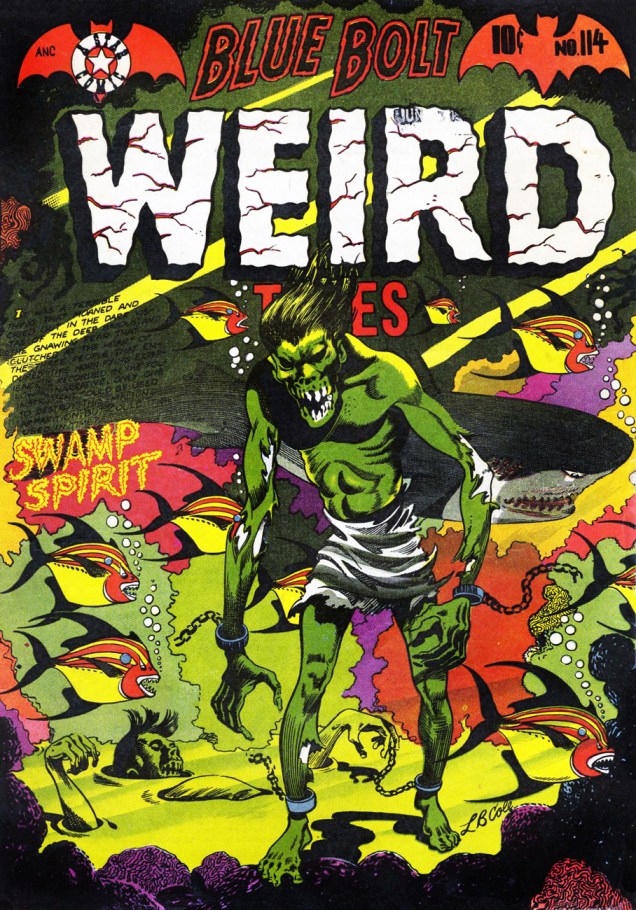
There’s probably no need to write a panegyric on Leonard Brandt Cole, 1918-1995. (But did you know he had a doctorate in anatomy and physiology?) The first thing that springs to mind is his use of primary colours over frequently black backgrounds, what he referred to as “poster colours”. Indeed, most L.B. Cole covers would, and occasionally do, make great posters. Going into biographical detail, one might also mention his publishing company, Star Publications, founded in 1949 and singled out in Fredric Wertham’s 1954 exposéSeduction of the Innocent for the “grisly” nature of its published horror titles. Then there’s his work as art director and editor at Dell in the early 1960s… but as usual, I’ll let others get to the nitty-gritty of his life and career. Here are some of my very favourite L.B. Cole covers, in chronological order.
Mask Comics no. 2, April-May 1945 (Rural Home). Read it here. The classically-oriented study of human expressions had me smitten even before I noticed the devil’s muscular thighs.Great Comics no. 1, 1945 (Novack Publishing). Read it here.
« An avid science fiction fan, Cole was known for slipping in sci-fi elements even when they weren’t appropriate, such as rocket ships and ray guns appearing on the covers of Captain Flight Comics and Contact Comics. Both titles were supposed to be devoted to contemporary aviation. » (source) Fuck being appropriate, I say!
Captain Aero Comics no. 26, August 1946 (Continental Magazines). Read it here. This is like a Soviet poster in overdrive.Cat-Man Comics no. 31, June 1946 (Continental Magazines). A great scene, isn’t it? Though shoddily printed, the tension of the moment comes through loud and clear, and I love the dots of snow in the darkness. Cat-man isn’t to be confused with Catman, a supervillain and enemy of Batman (first appearance in Detective Comics in 1963). Catman: a professional trapper of jungle cats turned to crime for the usual reason (i.e. boredom) after procuring himself a costume made out of ancient African cloth (?!) Cat-man: raised by a tigress to be an upstanding member of society and scourge of criminals, with 9 lives, super-strength and night vision at his disposal. The moral – be kind to tigers! Read the issue here.Cat-Man Comics no. 32, August 1946 (Continental Magazines). Cat-Man (created by Irwin Hasen), usually paired up with sidekick Kitten (created by Charles M. Quinlan), a former circus acrobat. That’s them frolicking underwater on this cover – tigers love water, by the way. This is the last issue of Cat-Man, so Kitten, who was 11 years old when her association with son-of-tigress began, is at her shapeliest. Mr. Cole wasn’t well-versed in anatomy for nothing. Read it here.“Into its gurgling ghastliness goes Peep… sailing blithely in the rocket car...” I somehow imagine that read out loud with a British accent. And yes, there’s a character named “Peep” in the story. Jeep Comics no. 3, March-April 1948 (Spotlight Publishers). Read the issue here.Guns Against Gangsters vol. 1 no. 6, July-August 1949 (Premium). Read the issue here. Another cover with that blue-green-yellow gradation, and while I love these colours together, it’s the cartoony shark that gets my vote (and sympathy). Sadly, when one pits a woman in high heels and a miniskirt against a huge shark, the latter will always lose.Blue Bolt no. 105, April-May 1950 (Star Publications). I can’t resist the combination of a dragon/bird flown straight out of a Slavic fairy-tale with stylish space opera.Blue Bolt Weird Tales of Terror no. 113, May 1952 (Star Publications). A genuinely spooky cover.Blue Bolt Weird Tales of Terror no. 113, August 1952 (Star Publications). « It was a terrible thing that moaned and cried out in the dark vistas of the deep bayous… » This cover is busy, no doubt about it, but I think it works. That slow, grotesque shuffle through water… brrr! Say what you will about L.B. Cole’s style or his propensity for using reds and greens, but the guy knew what he was doing.
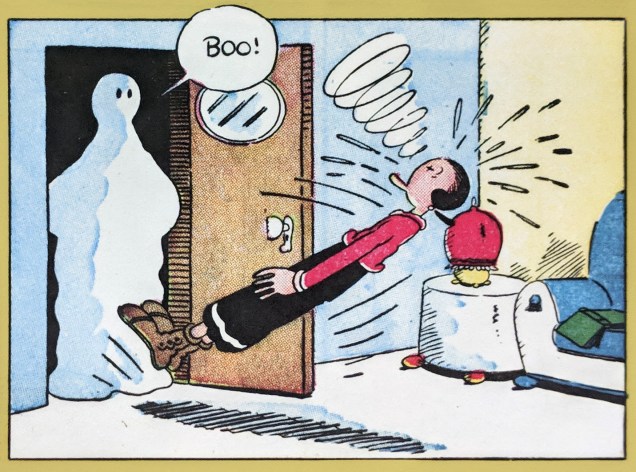
« Greetings, friends. Did we catch any of those horrible ghosts in my famous ghost traps? » – J. Wellington Wimpy, up to no good as usual
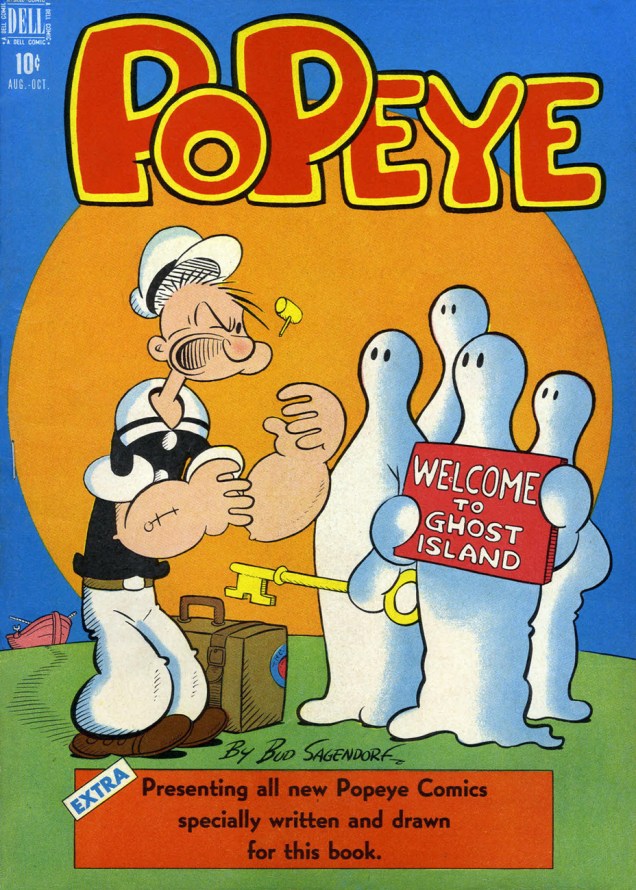
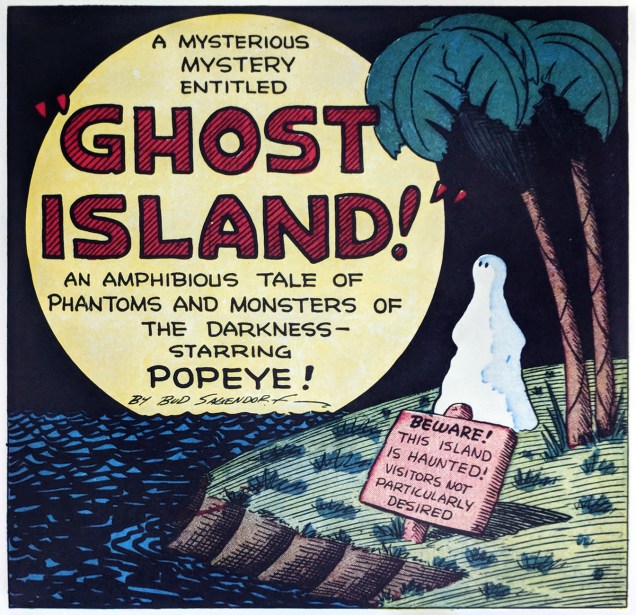
I absolutely adore how, in Popeye the sailor’s salty vernacular, revenants are referred to as « ghosks ». Aww… Let’s meet a few of these spooks, who most often, to this reader’s regret, turn out to be mere goons in sheets. Oh well.
This is Popeye no.3 (Aug.-Oct. 1948, Dell). As the cover states, story and art by Bud Sagendorf, Thimble Theatre creator Elzie Segar‘s assistant and eventual successor.Here, then, a few highlights from Popeye 3’s cover story.
Crude but effective.The facts speak for themselves.
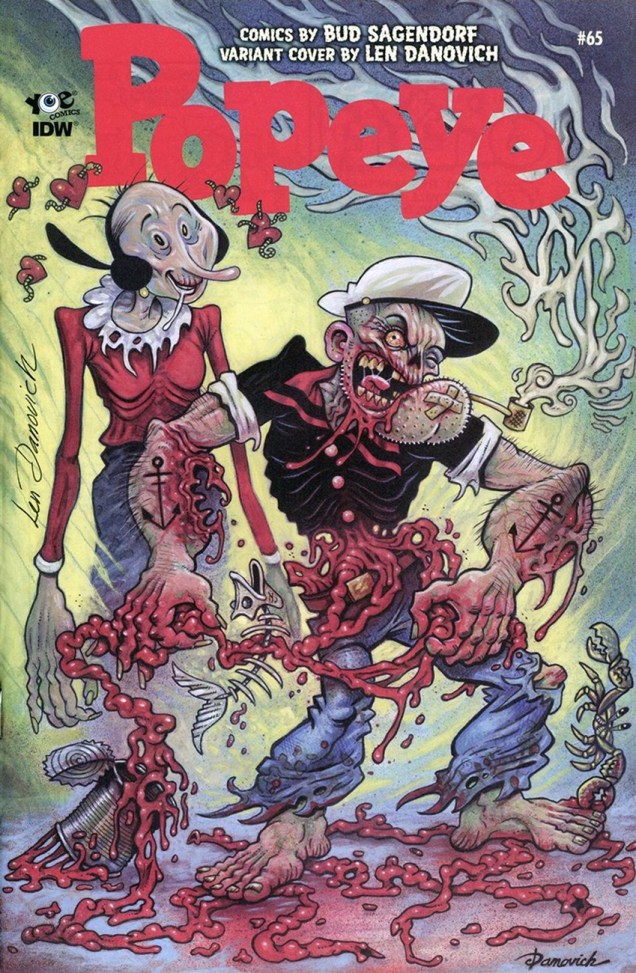
Dell published 65 issues of Popeye, then Gold Key took over… long story. This is Gold Key’s second issue, Popeye the Sailor no. 67 (Jan. 1963). Say, is that Patcheye’s Ghosk? Well, blow me down, it is! Story and art presumably by Forrest Cowles “Bud” Sagendorf. In a rather more modern, yet still topical… vein, here’s Len Danovich‘s striking variant cover to the most recent issue of IDW’s Classic Popeye (no. 65, Dec. 2017), quite a rarity and now commanding some rather formidable prices, from what I’ve observed. Is this to be the final issue of Classic Popeye, now that the end of the Dell run has been reached? Nearly a year on, the question still remains. Mr. Yoe?
« It was the town dandy! That spiffy cigar-store indian! Within the impact of a second I knew what I had to do! » – Ron gets it wrong.
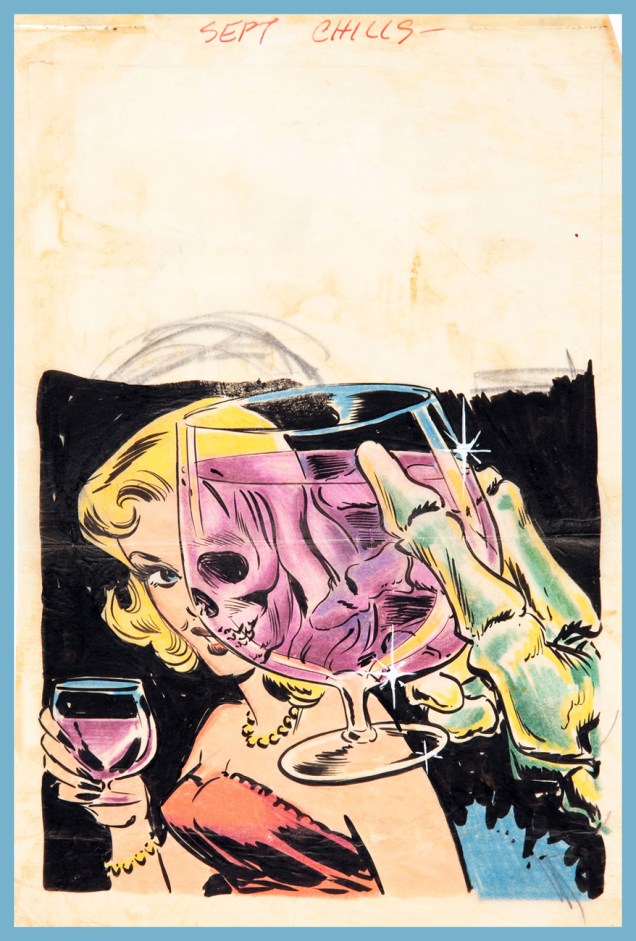
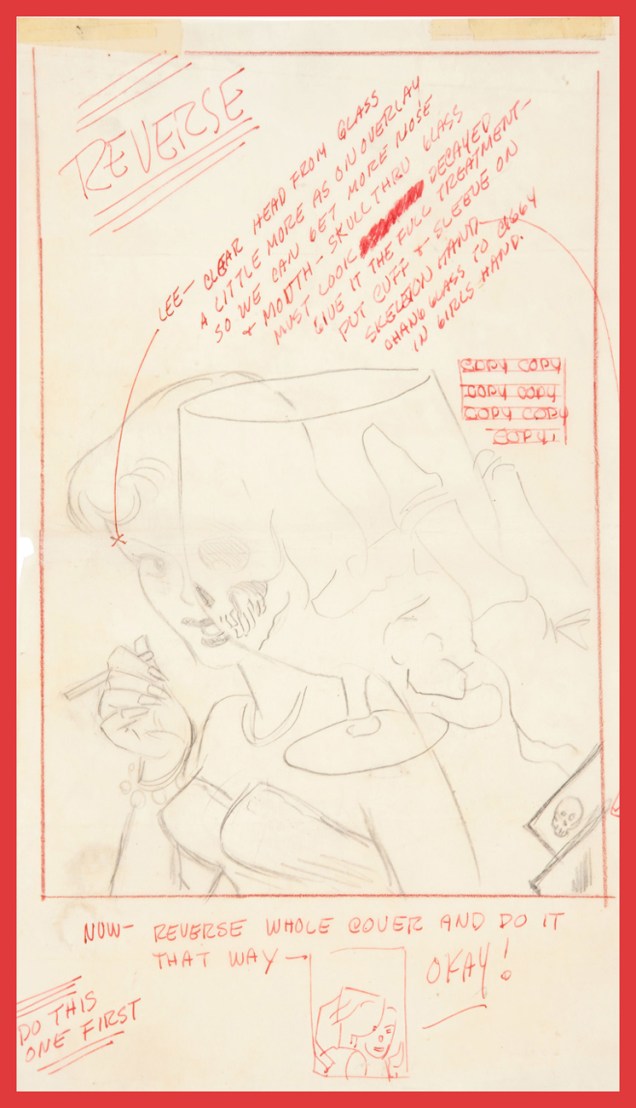
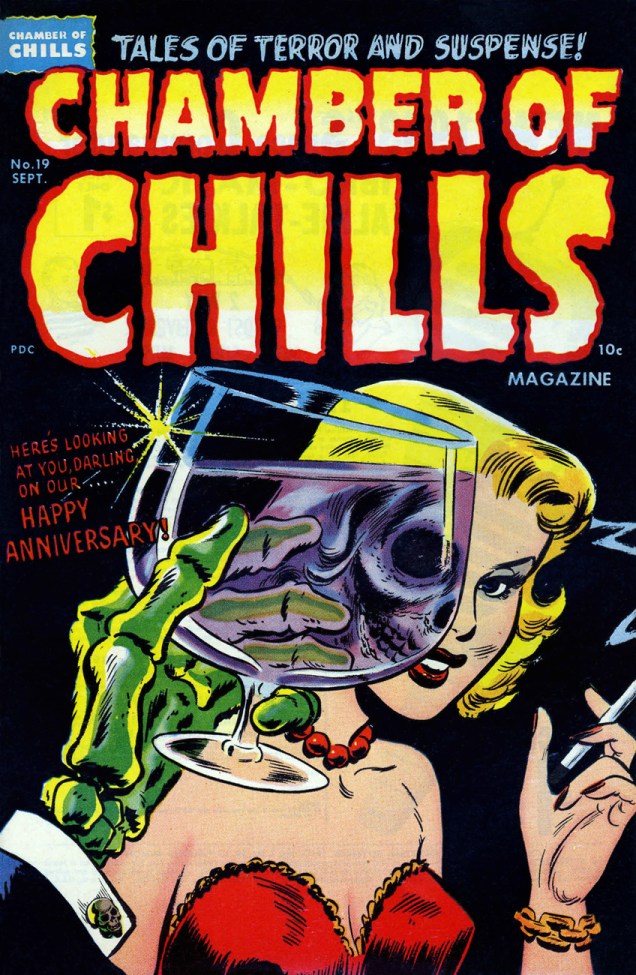
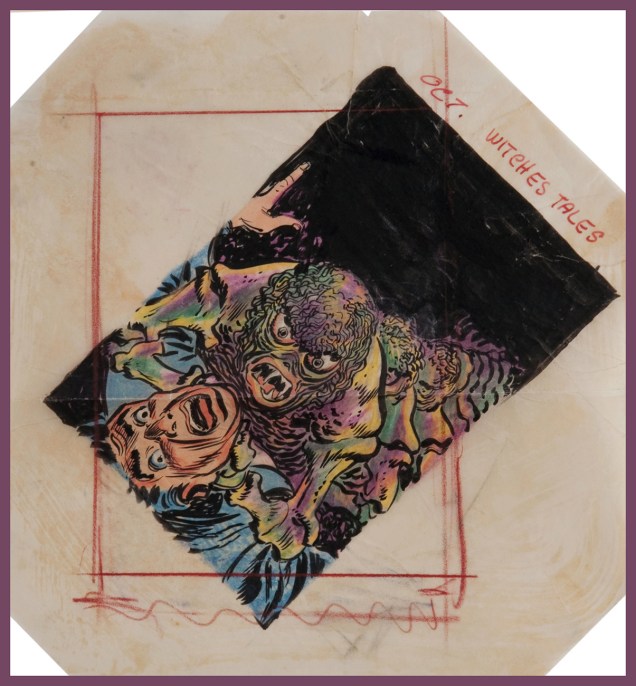
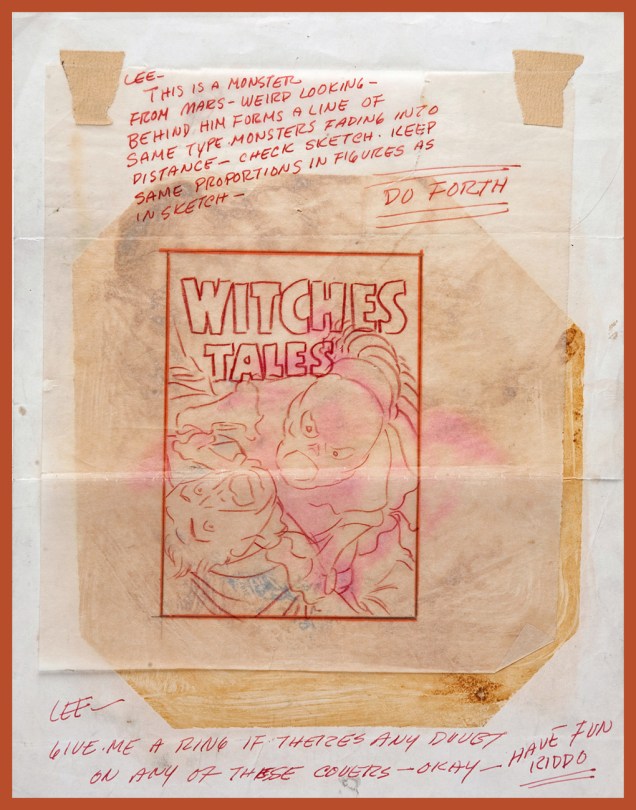
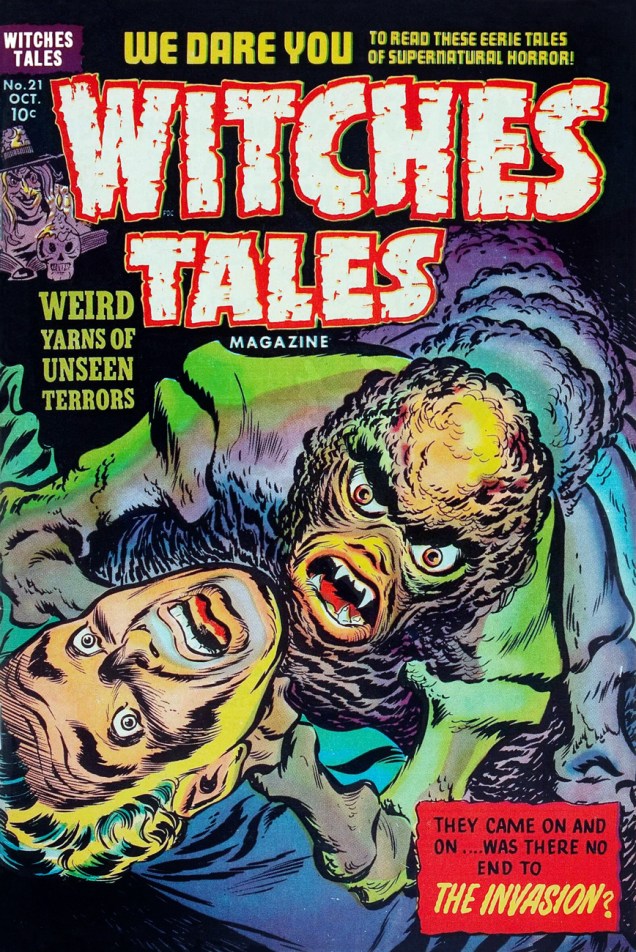
It’s become a historical footnote that, before fully settling into their (for a time) winning formula of lighthearted, cartoony monomania with Casper, Richie Rich, Little Dot and their ilk, Harvey Comics had published, pre-Code, some of the most, er… transgressive horror comics in the field. And before he settled down to designing and pencilling the lion’s share of Harvey Comics‘ admittedly inventive and arresting covers, art director Warren Kremer had fulfilled many of the same in-house duties in the more daring and diverse pre-Code years. A remarkably inventive and versatile artist, Kremer’s true worth has historically been obscured by his retiring, behind-the-scenes status, as well as the Harvey family’s plantation mentality. Today, let’s take a peek at the nuts and bolts of his collaborative partnership with cover artist Lee Elias, who would go on to become one of DC’s most straight-laced artists (though his talent remained undimmed.) It would seem, and it’s quite understandable, that a lot of artists who’d merrily produced horror comics in the early 1950s got burned by the ensuing censorious witch hunt / backlash… and became quite timid thereafter.
Warren Kremer’s original cover sketch and colour guide.… and his instructions to the final artist, in this case Lee Elias.As it appeared in print, this is Chamber of Chills Magazine no. 19 (Sept. 1953.) Marvel borrowed the title in the 1970s… Harvey clearly had no further use for it.
Another one? But of course!
Kremer was evidently a believer in the « tilt the drawing to make it more dynamic » rule of layout (as DC’s Carmine Infantinonotoriously was)Kremer to Elias, again. An illustrator is quite blessed indeed when he gets to work with such a talented, insightful and friendly art director.Elias’ finished version, as it appeared on the stands. This is Witches’ Tales Magazine no. 21 (Oct. 1953).
« Give men an alluring woman stronger than themselves to submit to and they’ll be proud to become her willing slaves. » (William Moulton Marston, co-creator of Wonder Woman)
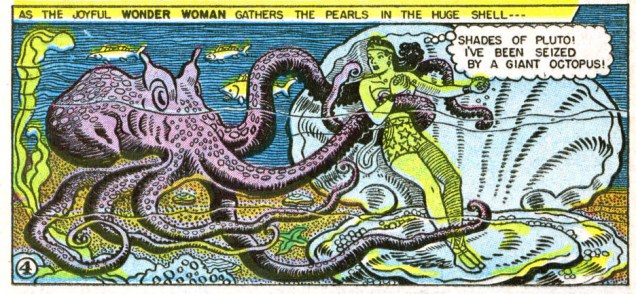
We might all happily to submit to Princess Diana of Themyscira, but *she* occasionally has to submit to tentacles, although of course she always manages to fend them off. Might this be a metaphor for unnecessarily grabby male hands? I’m not here to psychoanalyze (that was Marston’s job!), just to celebrate Tentacle Tuesday. Lots of versions of Wonder Woman have grappled with tentacles… but no adventures are more entertaining than the ones depicted by the formidable Harry Peter!
Without further ado, today’s roster of tentacles – whether they’re attached to a Neptunian fish or sprout out of a mad doctor’s ectoplasm.
Page from “The Tigeapes of Neptunia“, scripted by Joye Murchison (the first female writer of superhero comics) and drawn by Harry Peter, published in Wonder Woman no. 15 (Winter 1945). Read the issue here.Page from “The Drugged WAC”, scripted by Joye Murchison and drawn by Harry Peter, published in Wonder Woman no. 18 (July-August 1946). Read the issue here.
The following panels are from from “Three Secret Wishes!“, written by Robert Kanigher and drawn by Harry Peter. The story was published in Wonder Woman #81 (April 1956). The whole issue is fun, actually, largely thanks to the gorgeous art – read it here.
« Got to get into my pajamas… quickly! Got to… oh, Lord… NO! »
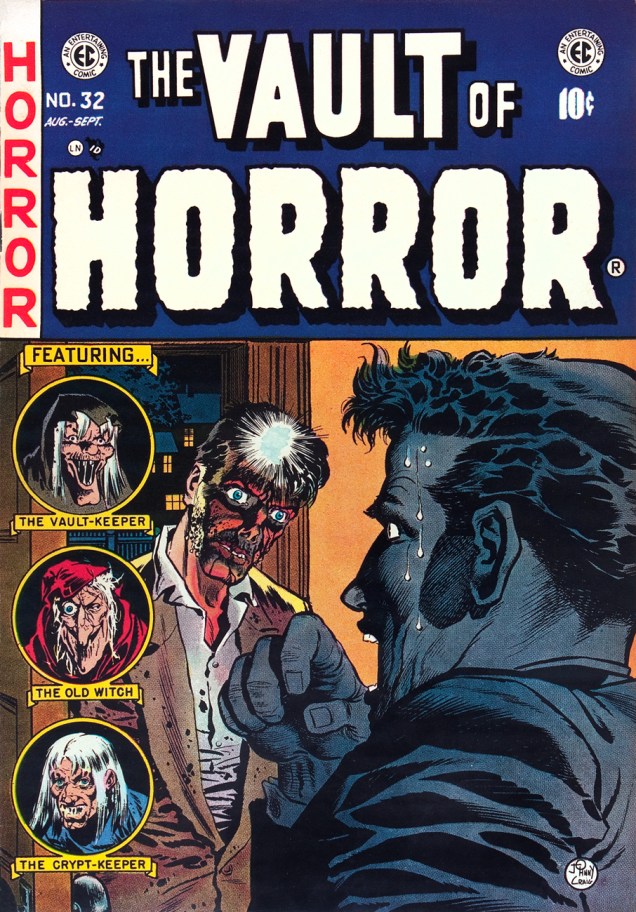
High time for some grue! I couldn’t reasonably be expected to shy away from EC’s 50s horror line, now could I? Of Entertaining (formerly “Educational”) Comics’ infamous/legendary trio of “New Trend” horror anthologies, The Vault of Horror surely was the finest. The deciding factor? The meticulous editorship, writing and artwork of Johnny Craig. While Tales From the Crypt and the The Haunt of Fear fed us a steady diet of Jack Davis, ‘Ghastly’ Graham Ingels and *choke* Jack Kamen (grandfather of the Segway, incidentally), with the fourth tale generally handled by Reed Crandall, Joe Orlando or George Evans, or if you got *really* lucky with your dime, Bernie Krigstein, things got stale. It didn’t help that the writing of the Bill Gaines / Al Feldstein duo, despite sporadic excellence, was quite formulaic and oh-so-verbose. Things got kind of claustrophobic for the artists. The Vault of Horror was different enough: Johnny Craig took care of the opening story, and wrote it himself, sparely and with great intelligence. A true breath of fresh air, though I’ll admit it’s an odd thing to say about EC’s gory tales.
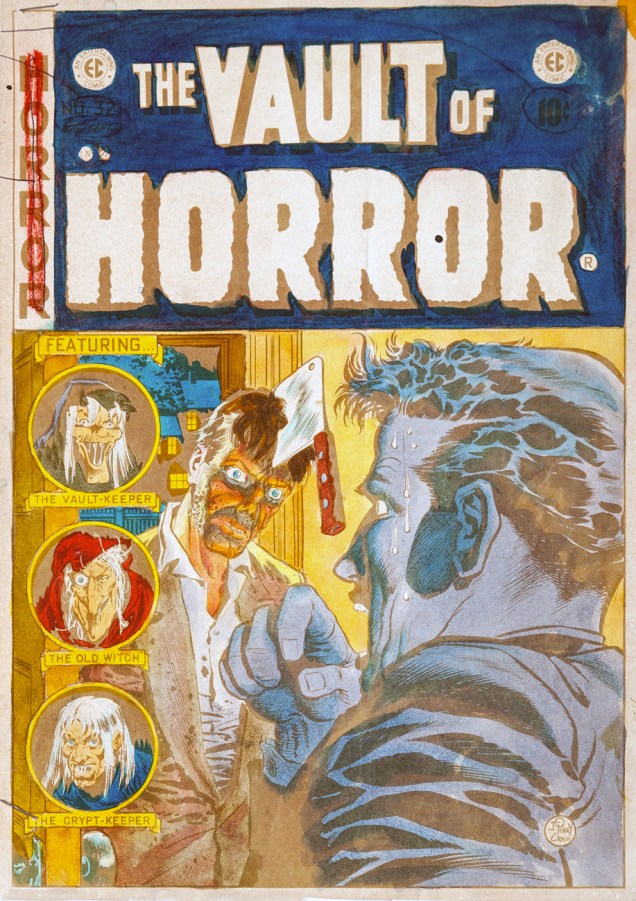
This particular cover (depicting a scene from Al Feldstein and Jack Davis’ « Out of His Head ») wasn’t originally slated for publication this way: EC’s attorney wisely insisted that it be toned down. The original version had appeared in house ads, so astute readers knew what they were missing.
To give you a sense of how far along things went before the punch was pulled, here’s the original, circa 1953, Silverprint cover proof in its original version, before being altered for publication. The proof was shot from the original negatives, with the image area reduced to printed size. Marie Severin used watercolours to specify the ink colours to be used.
Finally, the version below was recoloured (from cool to warm!) for Russ Cochran‘s deluxe hardcover reprint set of the 1980s and retained for subsequent Gladstone and Gemstone reprints.



























 -RG
-RG Who's Out There?