I’ve always been fond of this oddball little ad, which appeared in mid-70s comic books (in this case, a late 1974 DC 100-pager). It certainly demonstrates the considerable influence that pioneers such as Thimble Theatre creator Elzie Segar had on many an underground cartoonist.
If the advertised products had been iron-ons (à laRoach Studios*) instead of finished t-shirts, they’d be easier to find today. The Mickey Rat shirt is still being produced these days, though likely a grey market item… same as it ever was. On the other hand, I can find neither hide nor hair of the Hebrew Shazam shirt. Anyone? (2025 update: it’s available again here! A grateful tip of the hat to eagle-eyed reader Michael C. Rookard,)
A bountiful spread from The Natural Trading Company’s Mail-Order Catalog, which proposed T-Shirts – Posters – Art Prints – Buttons – Records – Comics… count me in!« Pinball Wizzard, you say? »
Here’s a bit of background on the Crazy World shirt, designed by (or swiped from) John Van Hamersveld, the genius behind the unforgettable The Endless Summermovie poster: « The face emblazoned across the chest of Mick Jagger in a 1972 New Musical Express feature on the Rolling Stones had a rich history according to its creator. The iconic image was the product of a mescaline and marijuana jag, after which Van Hamersveld was left with the enduring image of a man’s face with a big, toothy, wide smile. From a portrait of Jimi Hendrix he had made in 1968, Van Hamersveld came up with the Johnny Face logo the following year, which he used for promoting his own work. »
And there’s Mick, just like the man said.One of the current offerings. Oh, definitely a bootleg.
For me at least, it’s hard to look at Johnny Face without seeing in it echoes of The Face of Steeplechase, Coney Island’s widely-grinning mascot.
Trivia time: can you name the infamous individual behind the 1966 demolition of the beloved Steeplechase amusement park? Find the answer here.
As for the artist who crafted the Natural Trading Company ad, I was drawing a blank until a few years ago, when the wonderful Jay Lynch (1945-2017) kindly lifted the veil on that particular mystery: Jerry Kay was the stylish culprit. Much appreciated, Mr. Lynch!
– RG
*not to be confused with the originalRoach Studios, of course…
« You’ve got his likeness emblazoned onto
the top of a tin box Perfect big heart
perfect blue eyes
perfect teeth and
perfectly flowing locks » — The Motorz, ‘Bobby Sherman Lunchbox’
It’s birthday number seventy-six for singer, actor, songwriter, Charlton comics star and all-around swell guy Robert Cabot “Bobby” Sherman, Jr. (born July 22, 1943).
This is Bobby Sherman no. 1 (Feb. 1972). Story and art by the much-maligned Tony Tallarico. You know what, though: he’s alright in our book. One of these days, we’ll make our case.
His Getting Together co-star, Wes Stern, also celebrates his birthday this Thursday, July 25. He’ll be seventy-two. You may remember Wes from his recurring rôle as Brenda Morgenstern’s shy, foot-fetishist beau Lenny Fiedler on Rhoda (early on, before the show utterly went South).
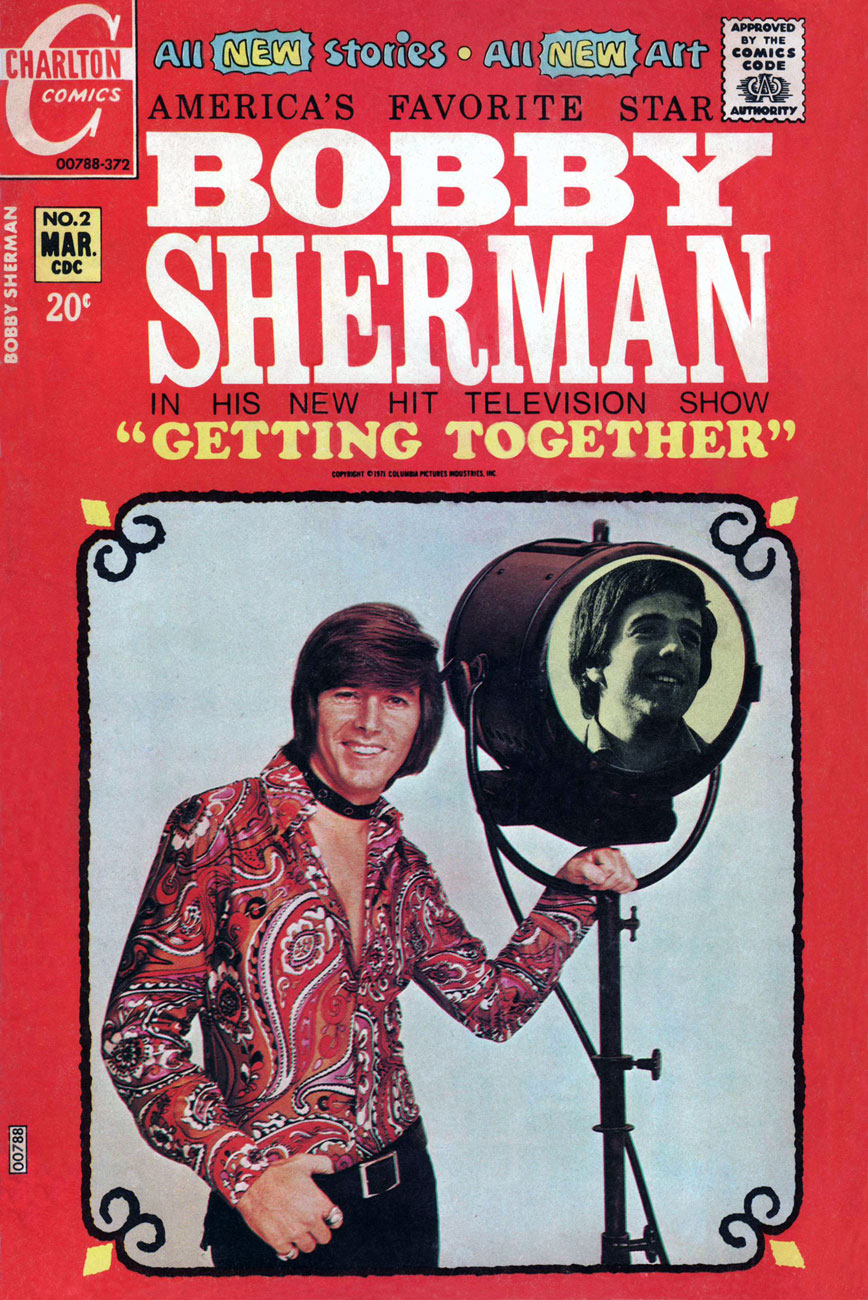
This is Bobby Sherman no. 2 (Mar. 1972). Story and art by Mr. Tallarico.
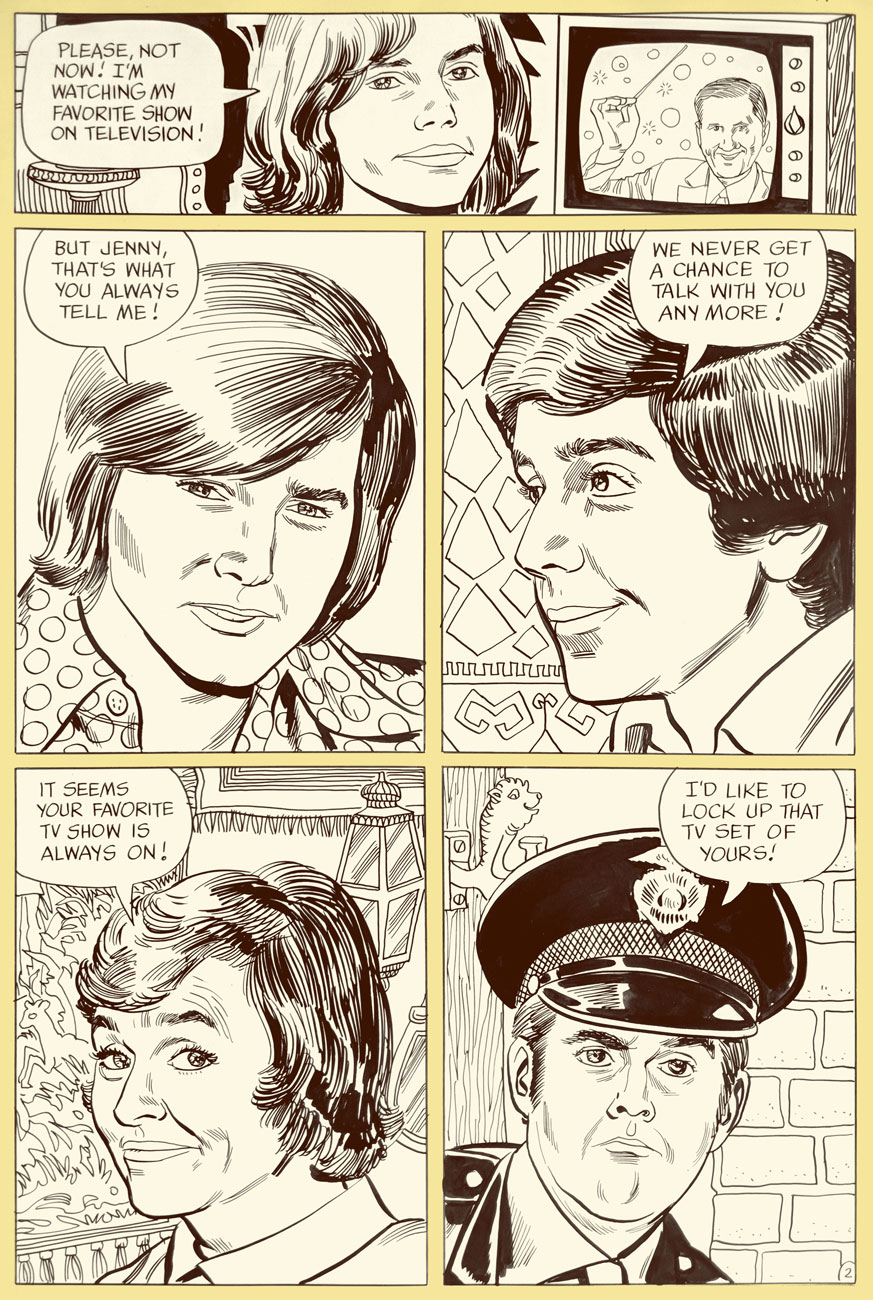
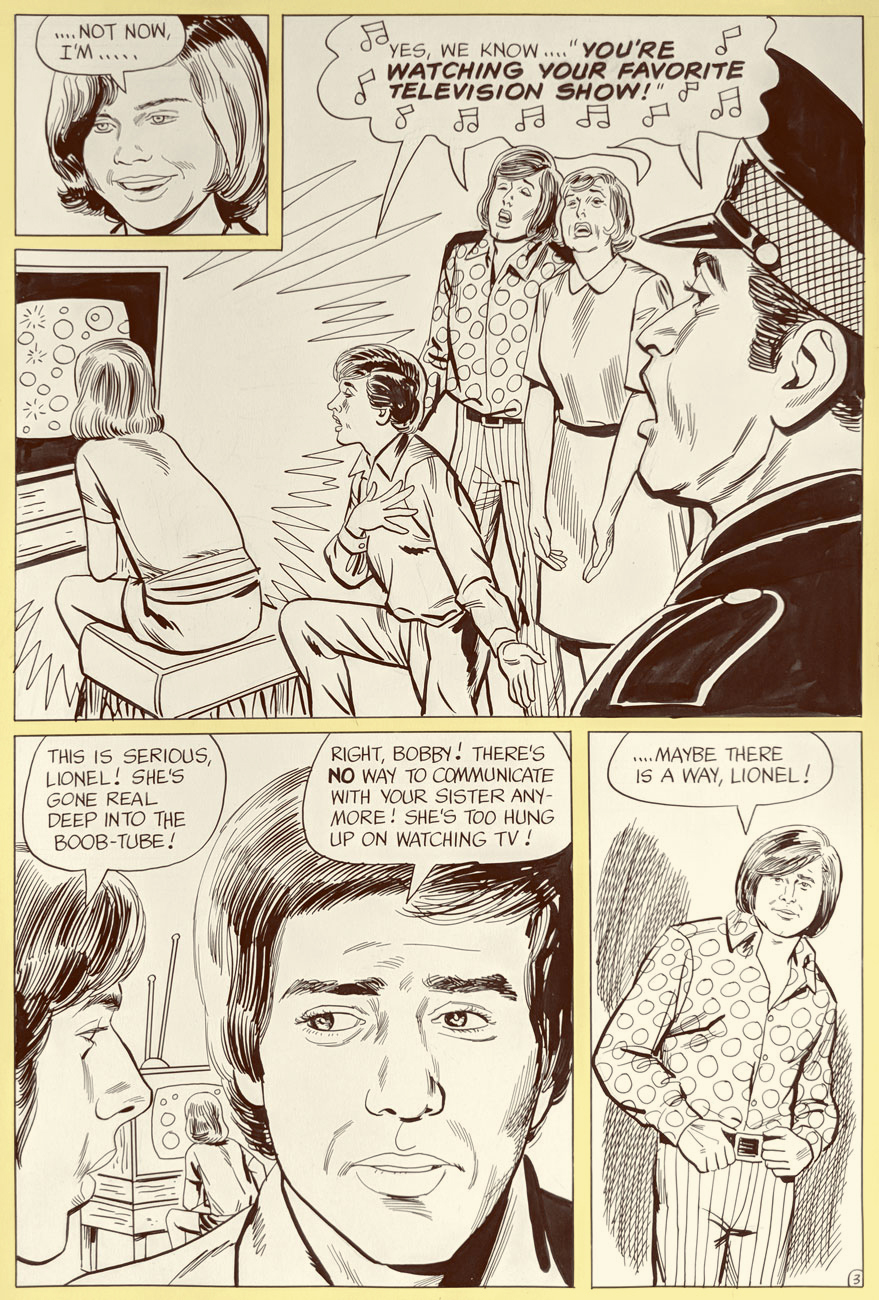
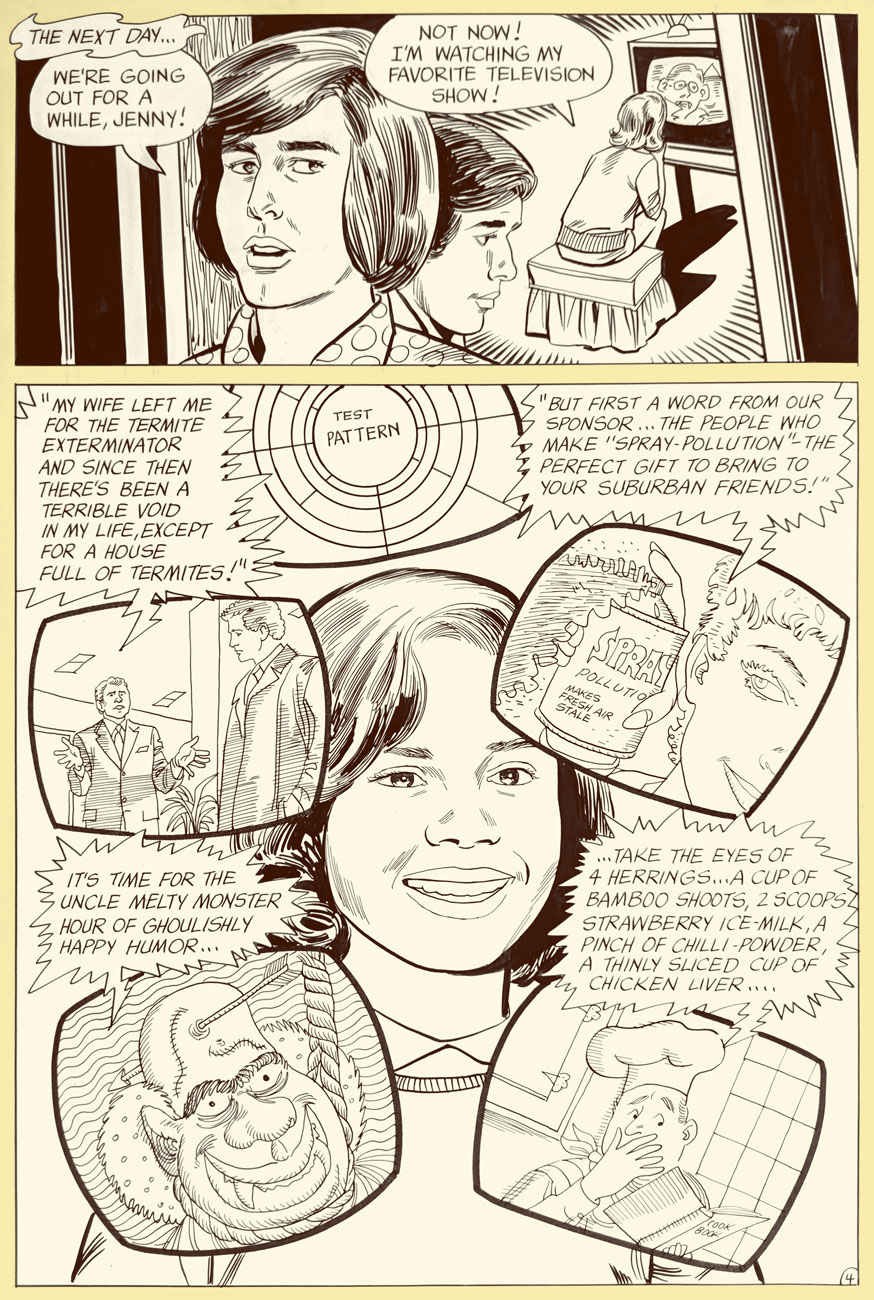
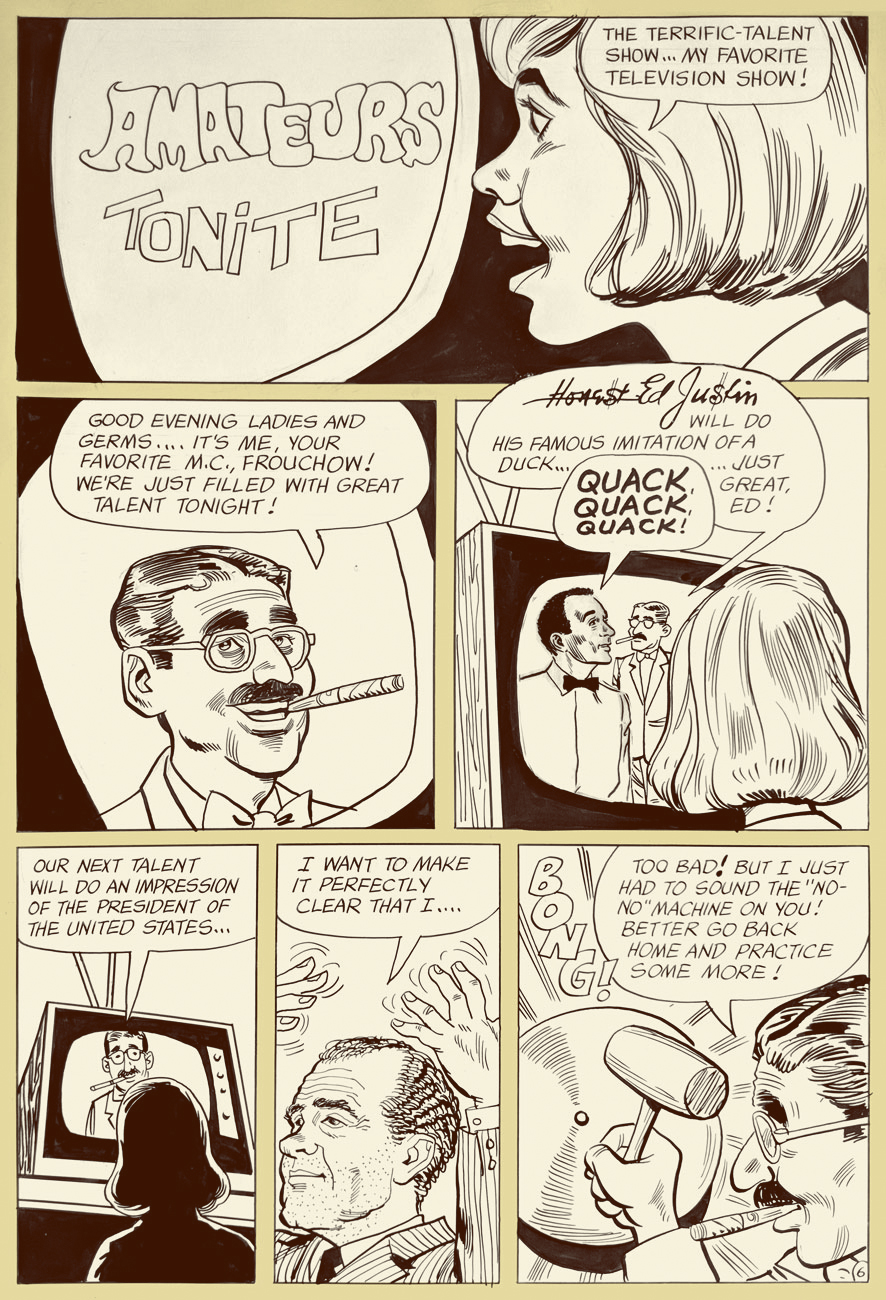
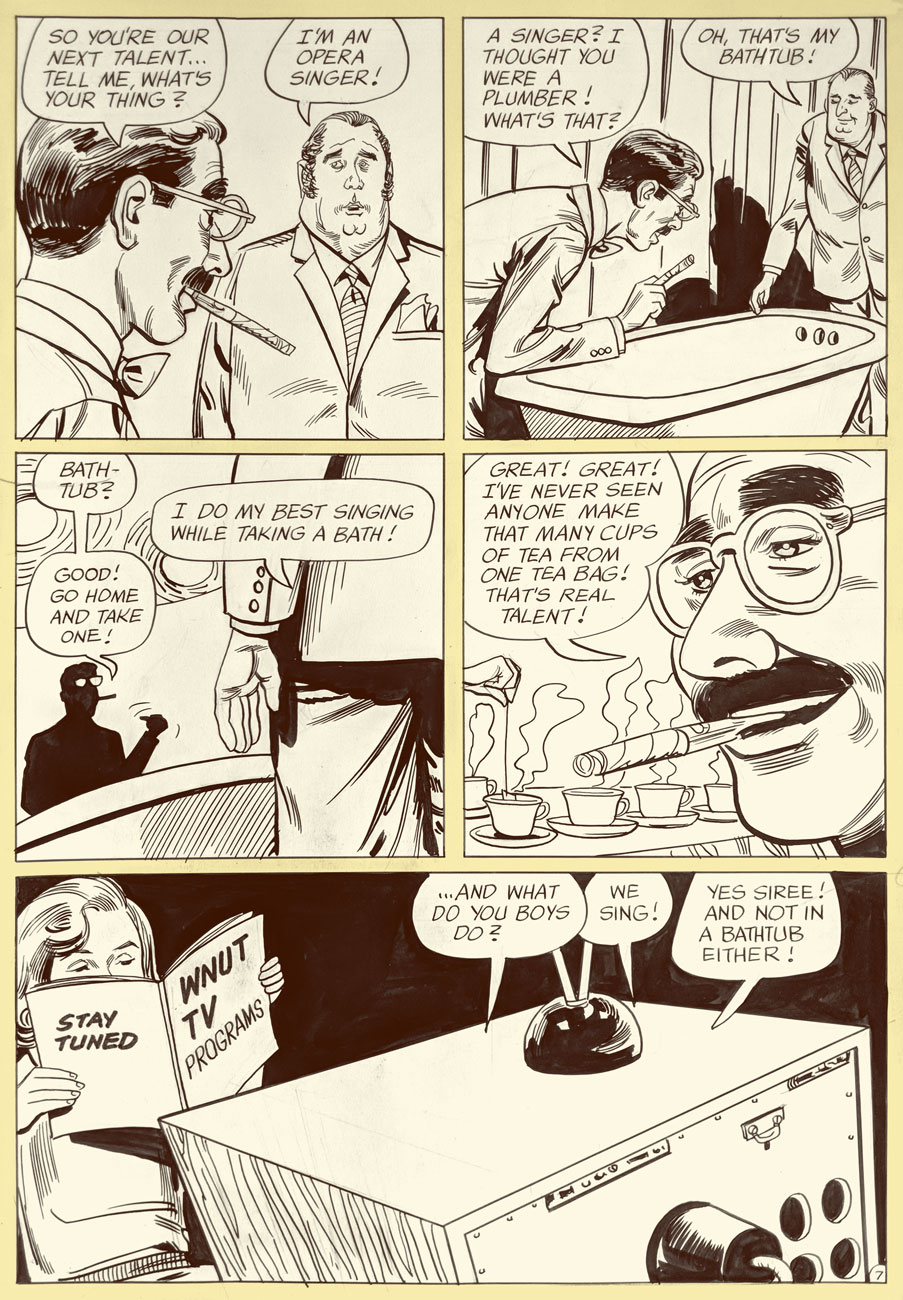
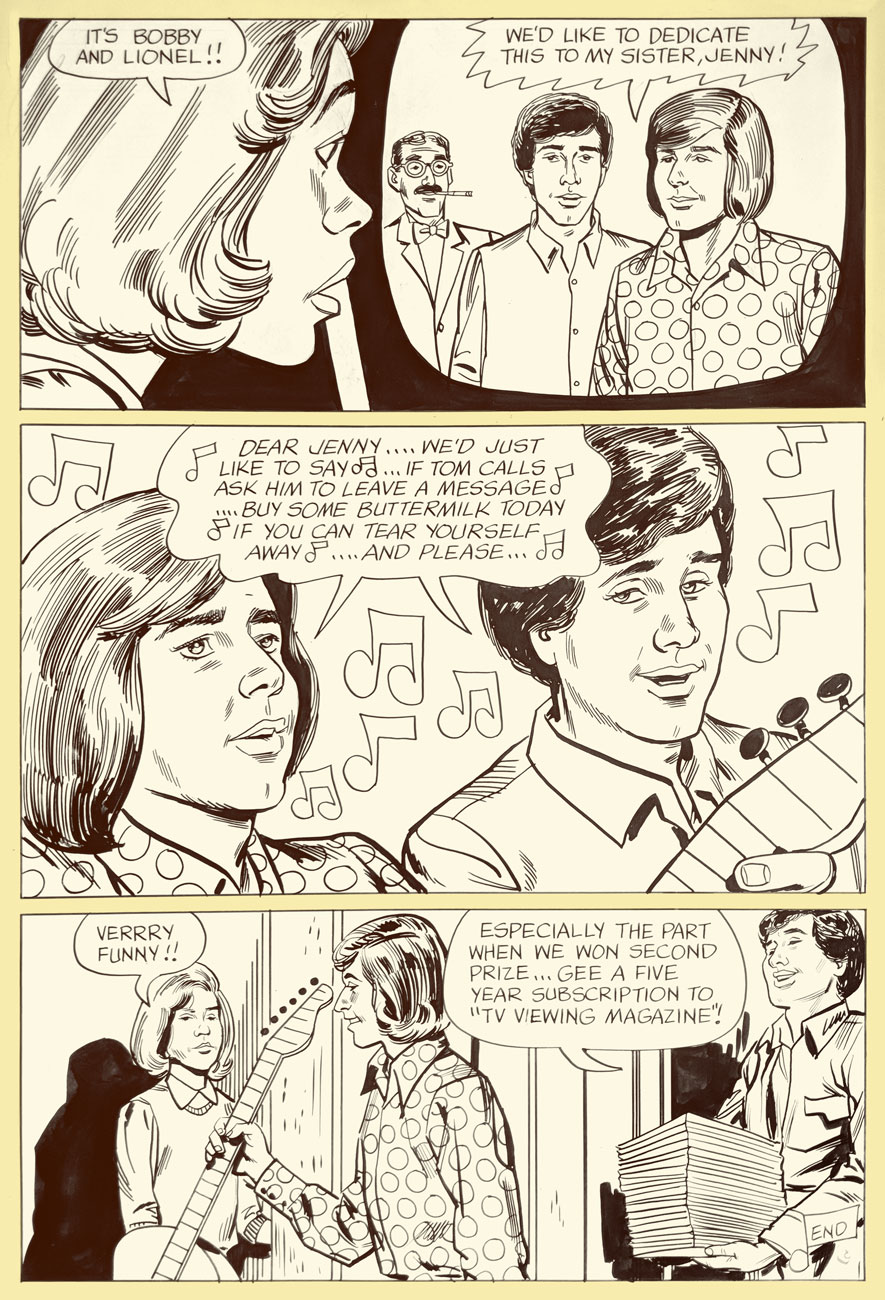
Bobby and Wes had the singular honour of starring in seven issues of their own Charlton comic book (February to October 1972). Our excerpt is number 2’s « A Guide to TV? », written and illustrated by Tony Tallarico and shot from the original art. Good-natured fun, especially when the Getting Together cast of characters is around. In the 1971 Fall season, the snappy little show was off to a promising start, but found itself, in the eleventh hour, scheduled against the powerhouse tv hit of 1971, Norman Lear’s abrasive All in the Family, and that was all she wrote.
Ah, back in those innocent days when watching seven hours of TV was the stuff of humorous exaggeration. Now (depending on how it’s defined and whom you ask) it’s *below* the daily average.
Inside joke alert: “Honest Ed Justin” alludes to one of Bobby’s songwriting partners, Ed Justin. Here’s one of their musical collaborations. And, hey, two posts in a row featuring Tricky Dick cameos… I’m on a roll! Incidentally, ‘Amateurs Tonight” predates The Gong Show by nearly half a decade. Was Chuck Barris perchance a Charlton reader?
But that’s all water under the bridge. By the mid-70s, Bobby basically walked away from the grind of public life, and the odd tour or charity event aside, he’s been volunteering with the LAPD, training recruits in first aid, CPR, and so forth. A solid citizen, no irony or sarcasm intended.
One more?
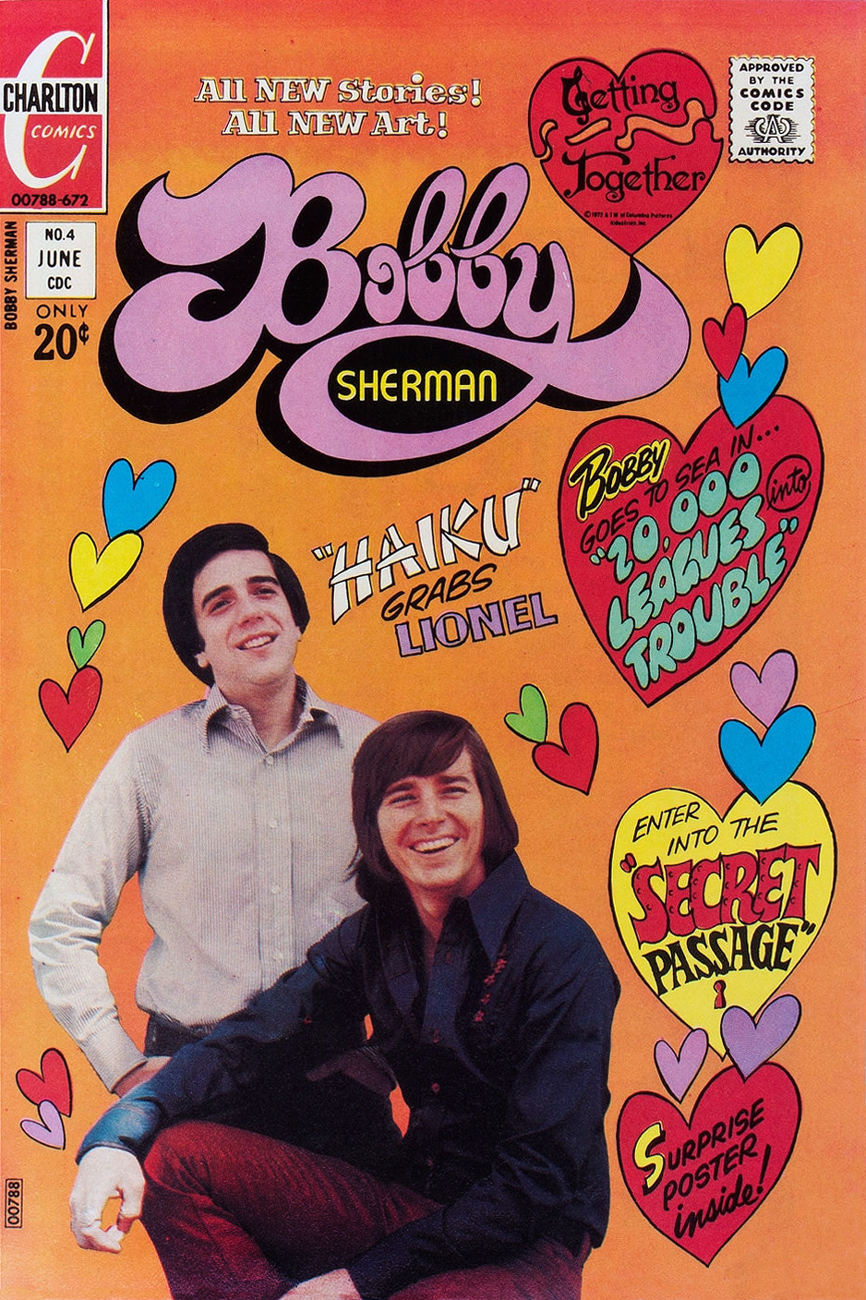
This is Bobby Sherman no. 4 (June, 1972). M. Tallarico strikes again!
Once again, we wish the most joyous of birthdays to Bobby and Wes!
« I say let the world go to hell, but I should always have my tea. » — Fyodor Dostoyevsky
A colleague at work labelled me a “tea whore” the other day. I don’t think that’s an official expression (though apparently one can purchase tea mugs with this message), but I’ll take that as a badge of honour. And therein lies my similarity to my beloved octopods: they never say no to a nice cup of tea, either. Evidence, you may ask? I’ve a-plenty of it. Pour yourself a steaming cup of oolong and join me!
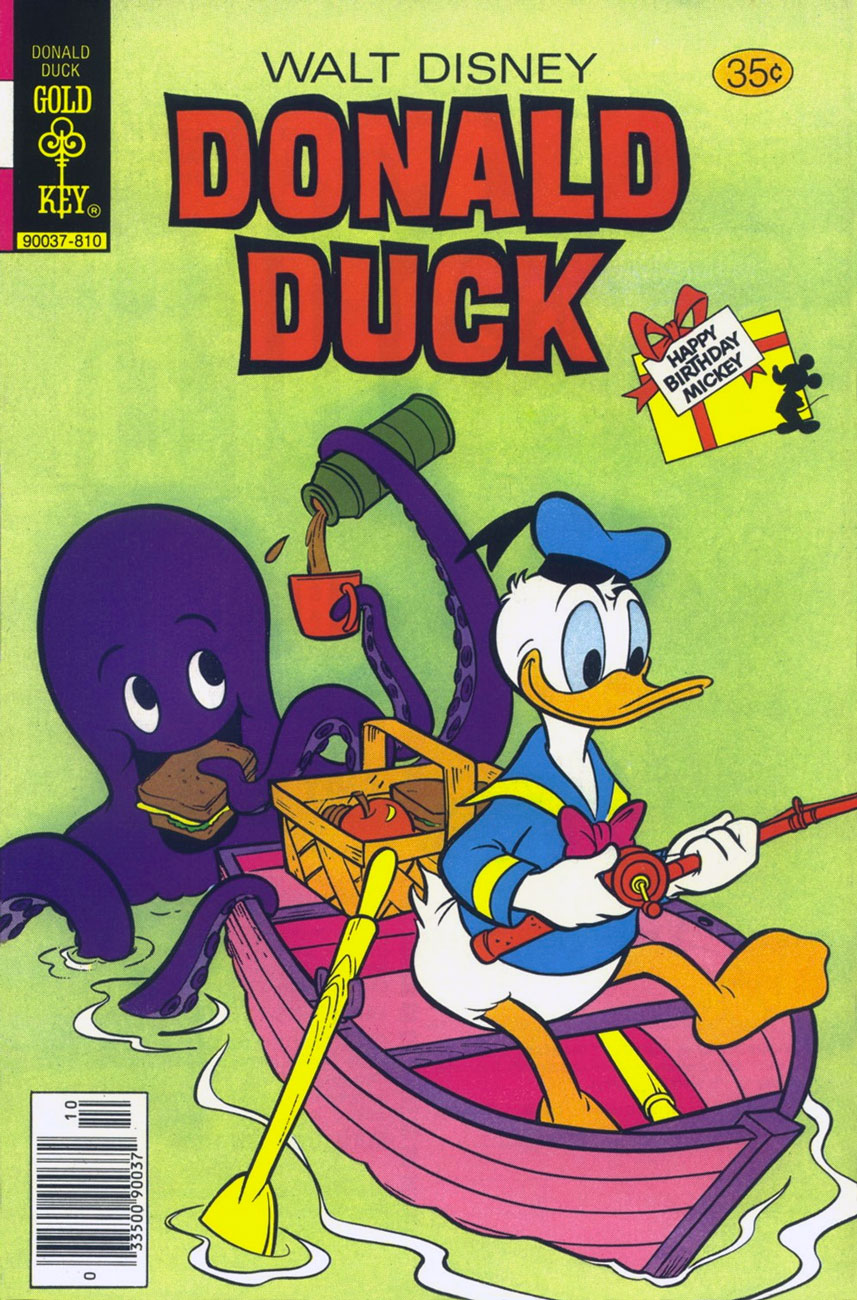
Donald Duck no. 200 (October 1978), cover by Larry Mayer. Incidentally, he has already been part of a Tentacle Tuesday.
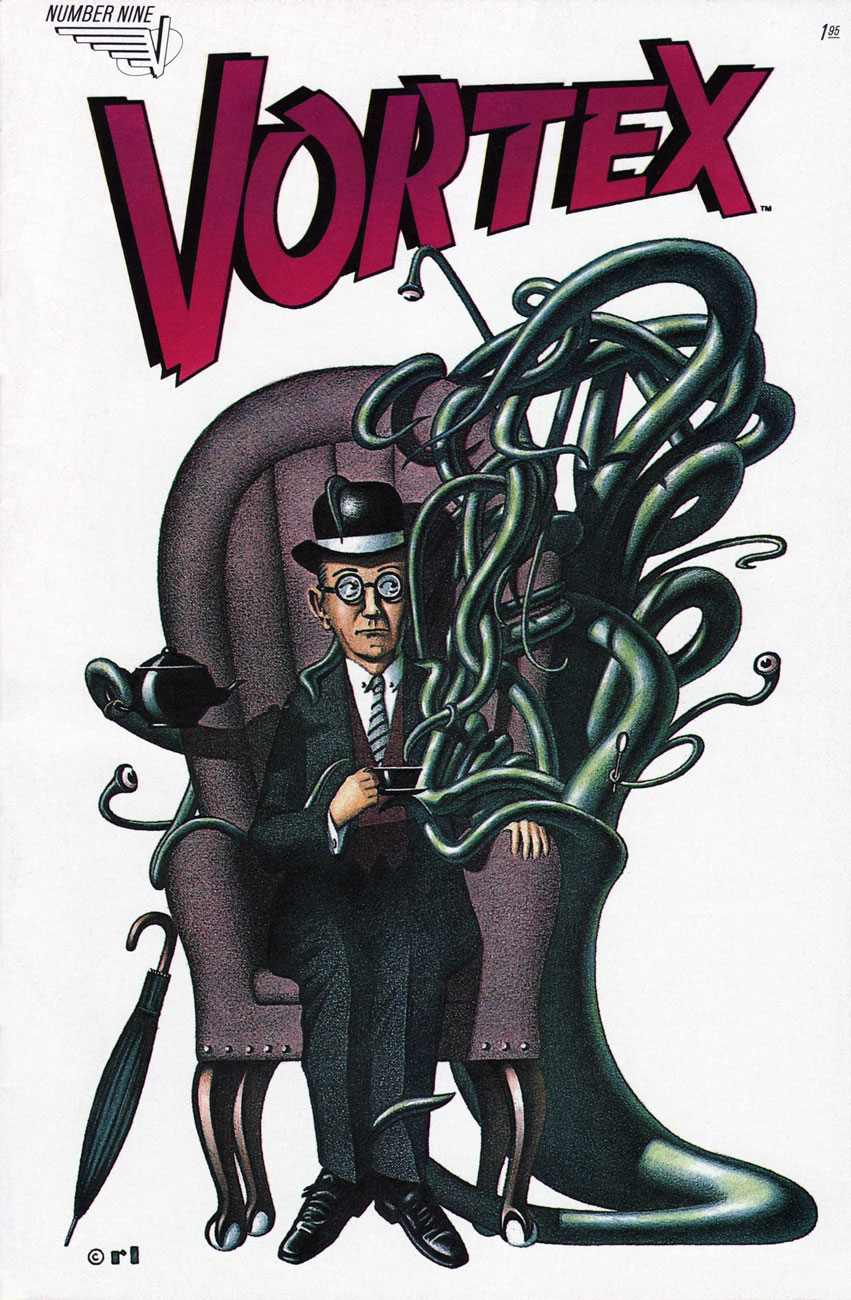
Surprise: this quintessentially British scene (an umbrella, a cup of tea and a suitably meek accountant) is brought to you by a Canadian comic! This is Vortex no. 9 (May 1984), cover by Ron Lightburn. Vortex was one Canadian Vortex Comics’ titles. Some interesting stuff was published by these guys: Matt Howarth’s Those Annoying Post Bros and Savage Henry, Los Bros Hernandez’s chunk of Mister X, Ted McKeever’s Transit, Chester Brown’s Yummy Fur…
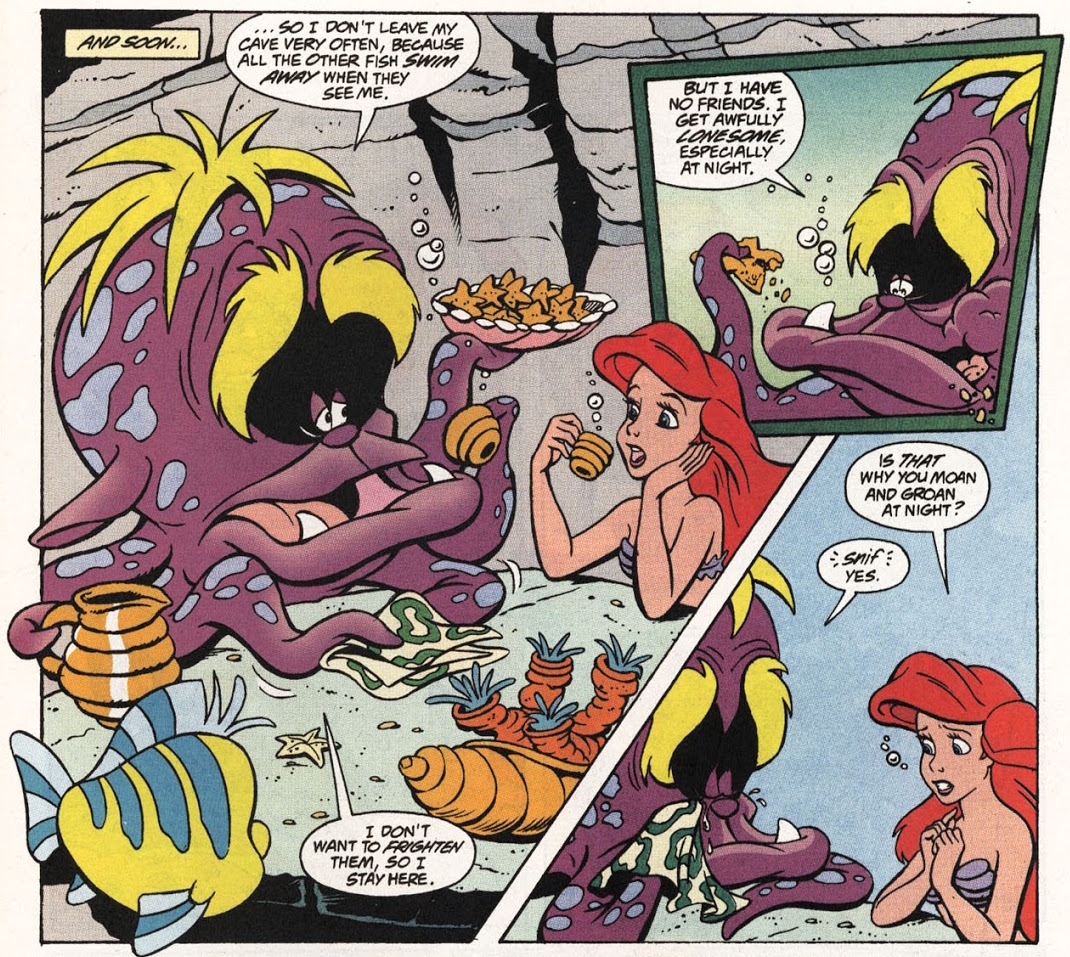
The following pages are from Disney’s The Little Mermaid no. 10 (June 1995). No, no, stick around, it’s worth it. You can read the full issue here.
So far so good, even though this begs some questions (such as “how do you pour a cup of tea underwater?”) But the following dialogue suggests that things other than tea-drinking were on the mind of *this* octopus:
You know how all this ends, don’t you? That’s right:
I tried to make this a purely innocent post, but things didn’t pan out.
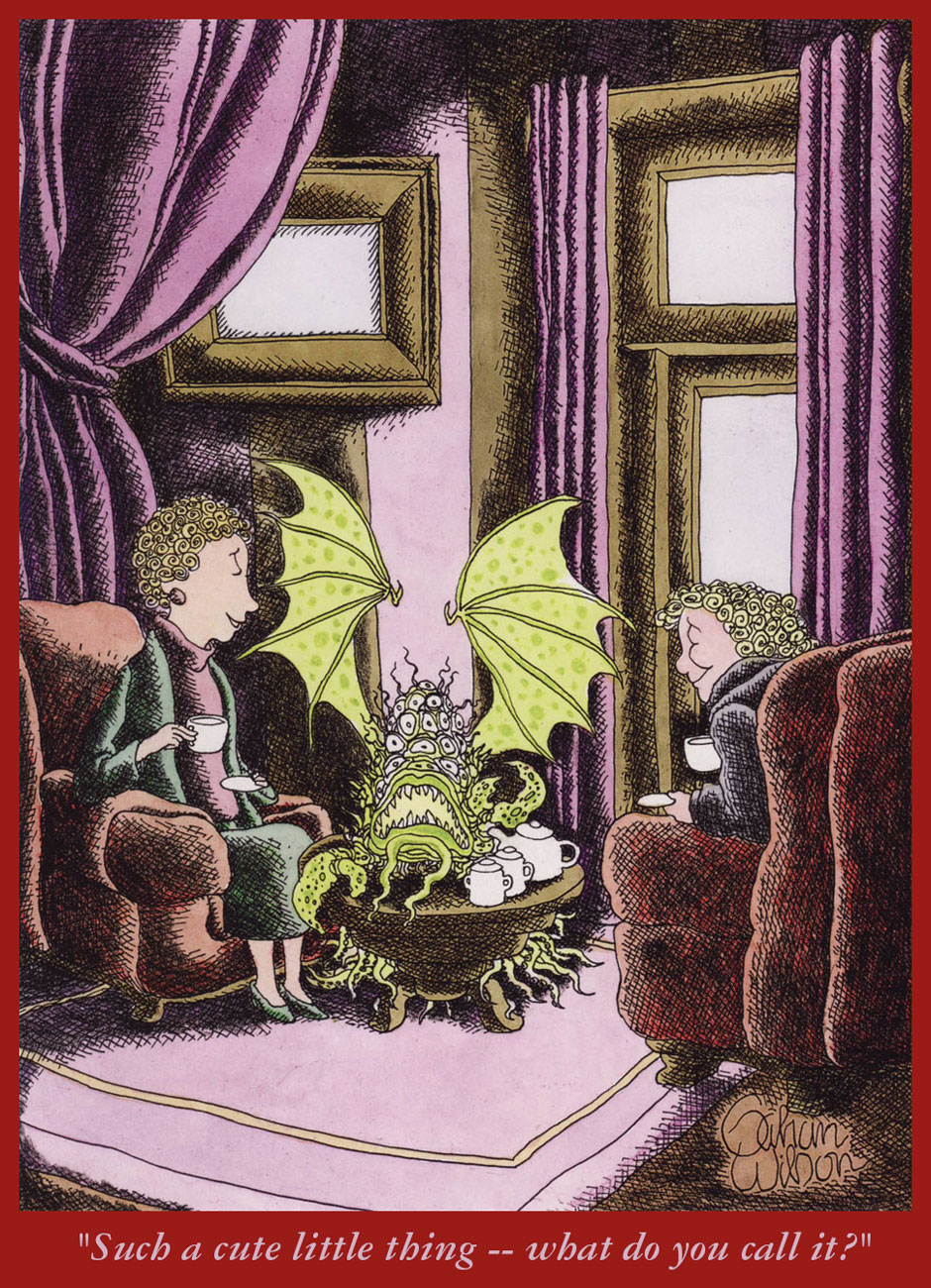
Gahan Wilson is always, always good and ready for tentacles. (By the way, he is financially struggling and has dementia, which is both stupefying and depressing. I never cease to be amazed at how someone with such a wide-ranging and fruitful career can end up impoverished… His family raised enough money on GoFundMe – for now – to take care of him, but you should still visit that page for recent pictures and updates about his health.)
Cartoon by Gahan Wilson, published in Playboy’s August 2006 issue.
In 1986, British cartoonist David Leach unleashed Psycho Gran upon an unsuspecting world. The « five-foot high, mauve-haired, bespectacled psychotic granny with a pan-dimensional, sentient handbag called Percy, a flying dog called Archie and a pathological loathing of rudeness » first appeared in British children’s comic Oink!, where she lingered for 15 issues, pummeling purse snatchers, clobbering office workers and disciplining rampaging monsters until 1988. In 2011, she came back – her hair more purple than ever, her lust for authoritarianism unabashed – and is currently involved in a four-part mini-series.
And she’s drinking tea with Mr. Cthulhu. I’m jealous.
« We all have grannies. I think there’s something wonderfully exciting, mischievous and dangerous about them, or was that just mine? They’re old and they’re the mum of your mum, plus they spoil you rotten, but they can also tell you what to do, like your own mum does! That seemed so strange when I was a kid, the idea that they could boss not only you but also your mum or dad around. And I think we’re all a little scared of the elderly, no one likes to think that one day they’ll be old themselves, I think we resent them for showing us what we’re going to become. Psycho works because she looks frail and yet she’s super strong and batty. She’s the classic sheep in wolf’s clothing. And there’s something funny about an old granny being lethal and crazy to boot, especially since usually the elderly are portrayed as figures of fun to be mocked and laughed at. » (Look Out, Britain! Psycho Gran is Back!)
And by the way, I wasn’t exaggerating about Psycho Gran’s passion for control (and tea).
Drink tea with your octopus today… and if you don’t have an octopus, borrow one from a friend. I don’t have a dirigeable (that would be a zeppelin for younger people in the audience) , but I manage. Toodle-oo!
The cover for the 2016 calendar of Otto and Victoria, an adorable steampunk couple created by Brian Kesinger. These two were featured earlier in Tentacle Tuesday: Adopt an Octopus Today!
« Until now Mr. Cookie Monster refused to talk about the matter because his mouth was full, and it’s not polite to talk with your mouth full. » — Guest Star Robert McNeil
With the venerable MAD Magazine (1952-2019) bowing out after sixty-seven years, and kid’s educational show Sesame Street (singalong time!) about to hit the half-century mark, it seems à propos to salute one of the geniuses their respective histories share, Jack Davis (1924 – 2016)… rather than mire ourselves in the inevitable stack of lachrymose paeans to Harvey Kurtzman’s long-lost progeny.
So, are you in need of a bit of cheering up after a down-in-the-dumps day? Take a stroll down friendly Sesame Street with sweet Mr. Davis! Now isn’t this a place where you’d care to linger a spell?
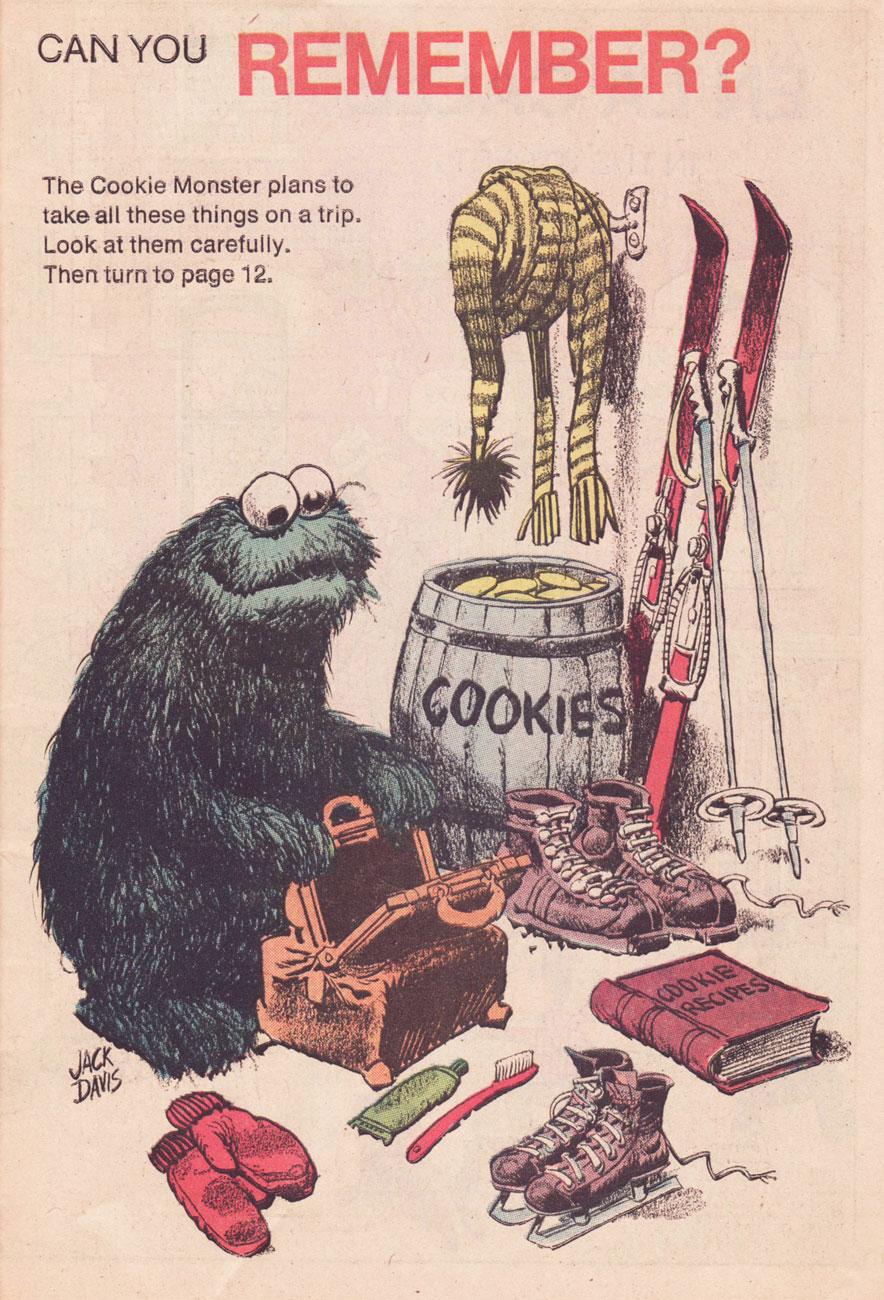
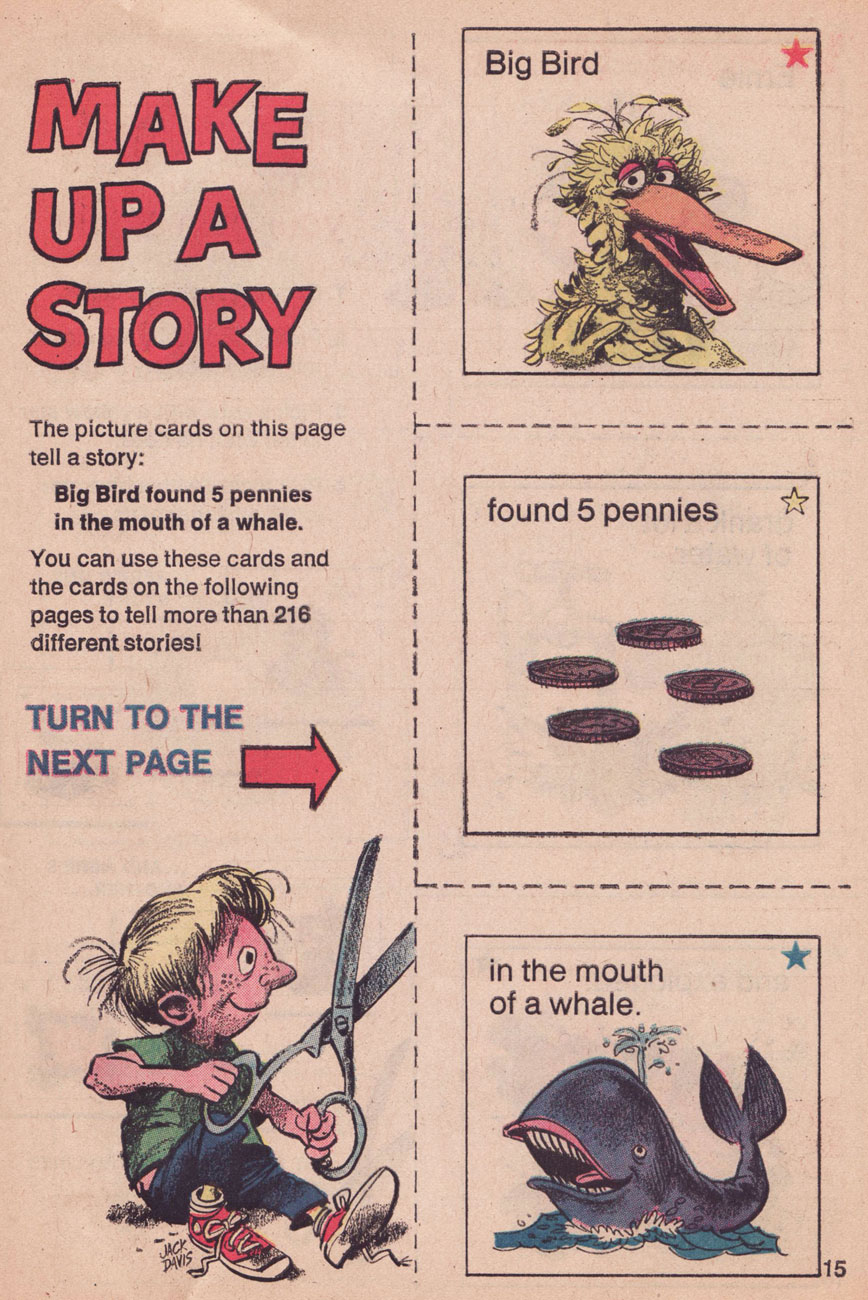
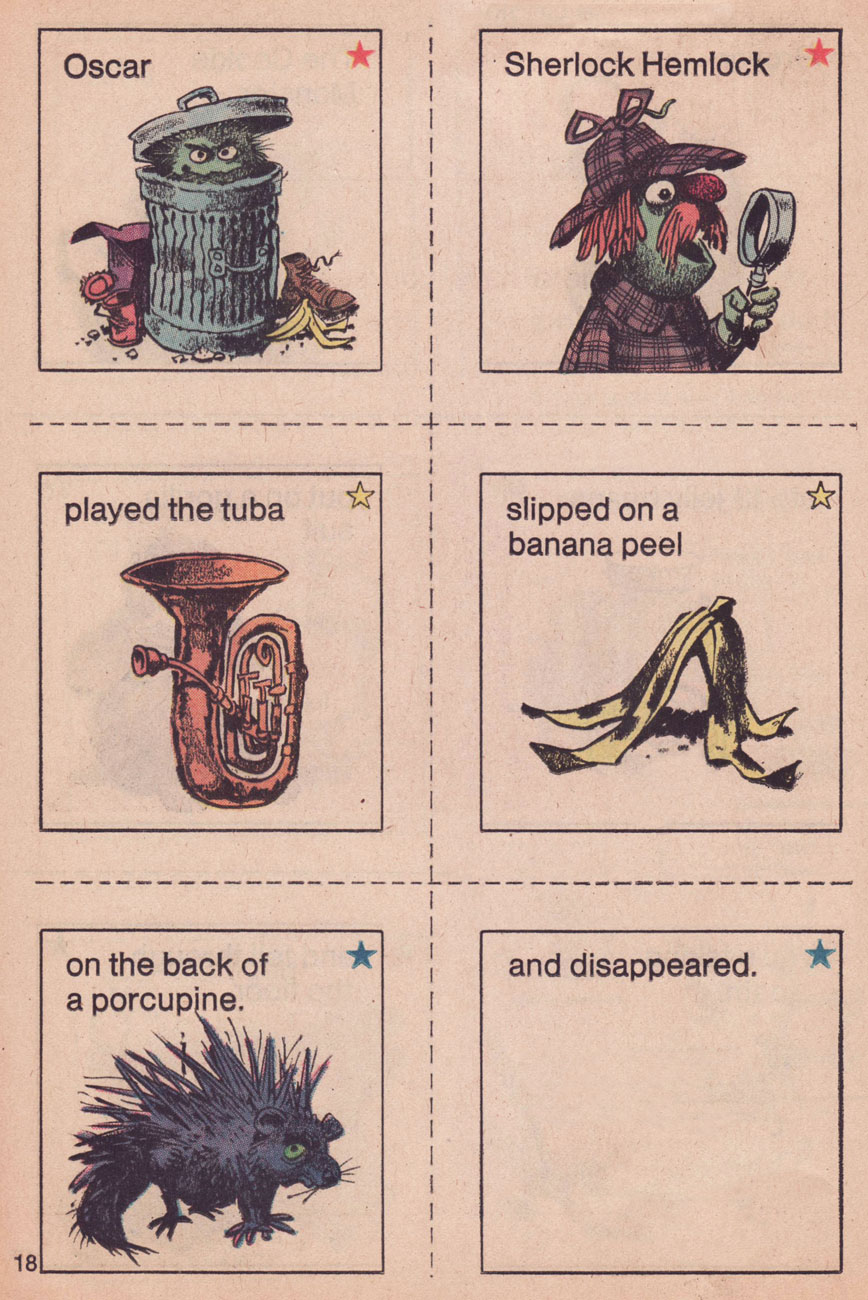
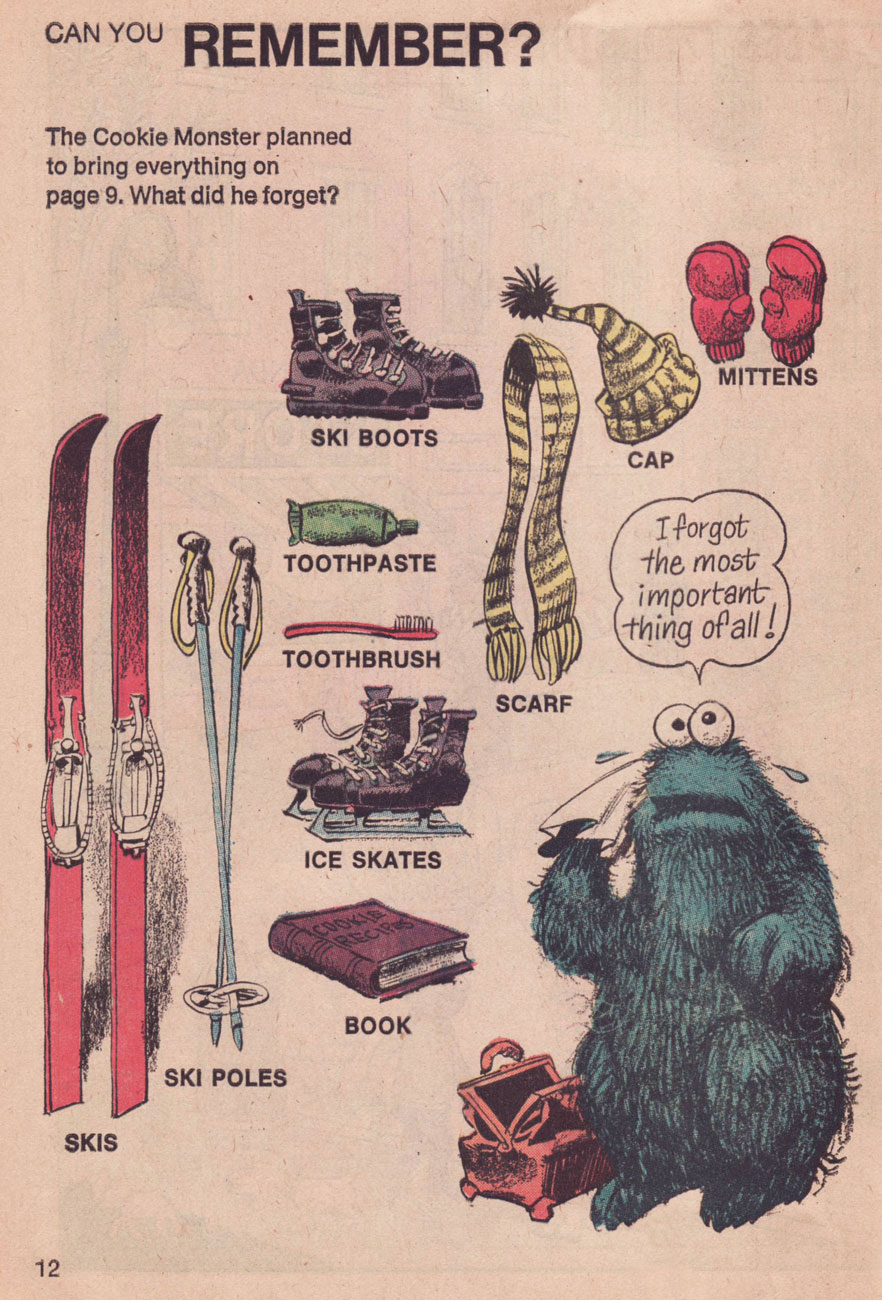
A lovely excerpt from the Sesame Street Annual (1972, Dell); according to the table of contents, it teaches ‘Planning’. Don’t worry, I won’t leave you in the lurch: the answers are at the end of this post. You’re welcome!
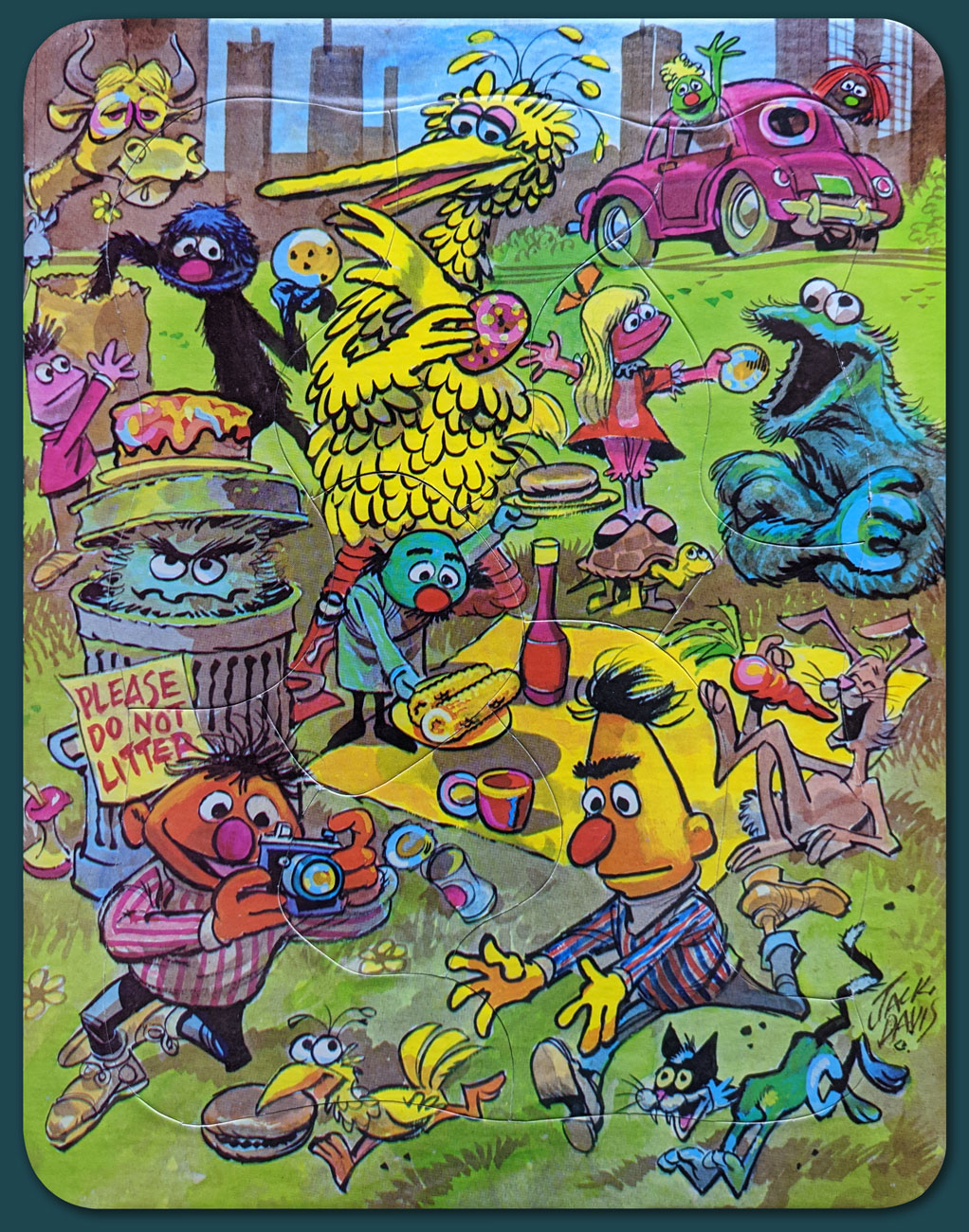
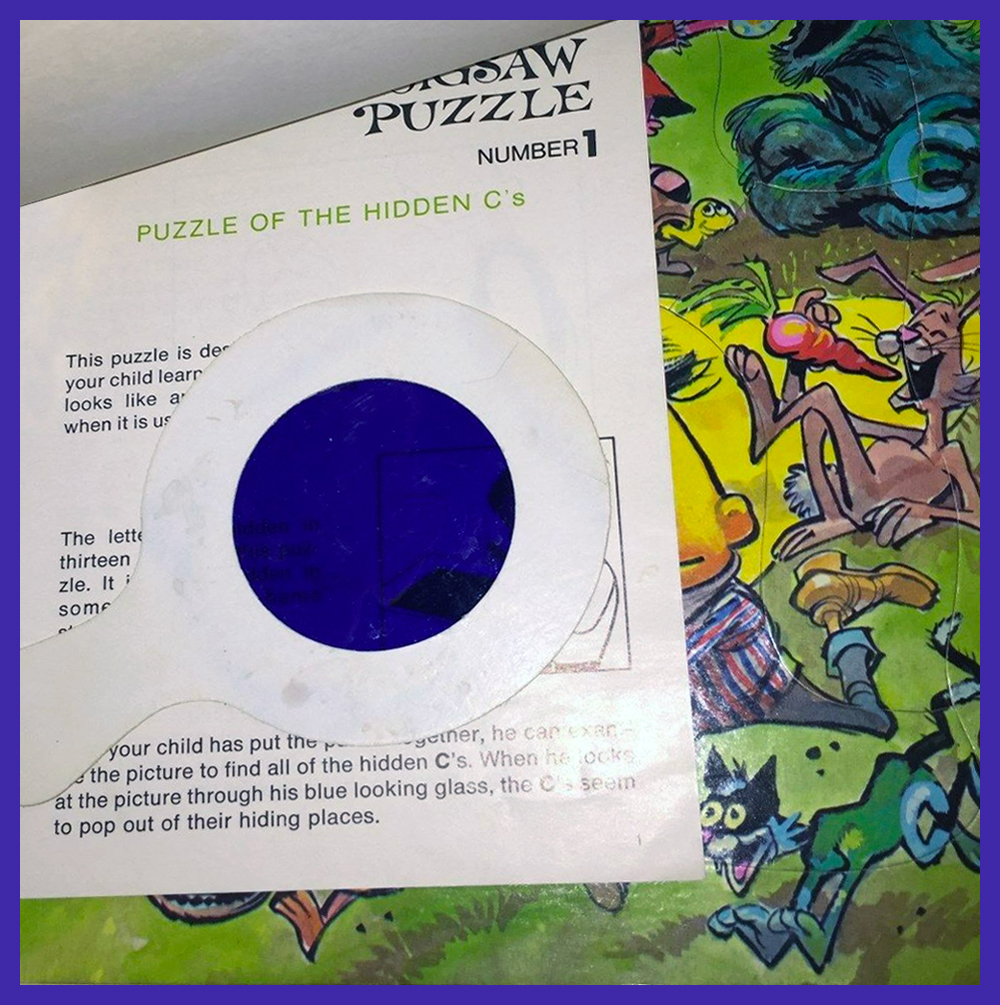
It’s a sunny day indeed when genial Jack Davis’ long legs come striding down Sesame Street! The series was called Sherlock Hemlock’s Hidden Answer Jigsaw Puzzles, and this is number one, The Puzzle of the Hidden C’s. Well, don’t just stand there gaping, how many can *you* spot, wise guy?
Spaghetti and chaos are on the menu in this scene that Davis was commissioned to create in 1971, early in the rise of the Muppet empire. This is number 2, The Puzzle of the Hidden S’s.
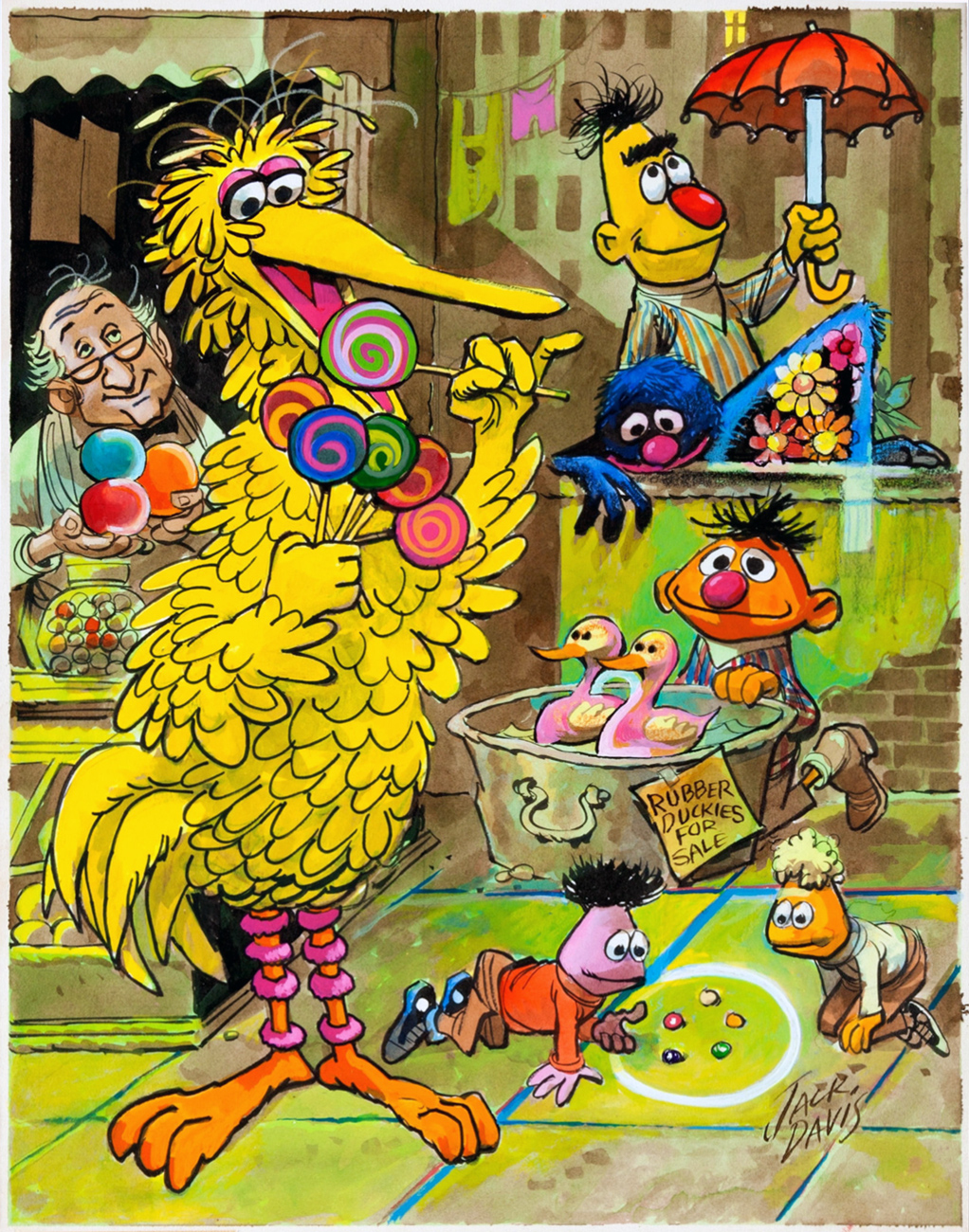
This is number 3, The Puzzle of the Hidden Numbers. Each puzzle was packaged with a blue transparency “looking glass”, which could be used to discover hidden shapes in the picture. I’m afraid I don’t have one to spare, so you’ll have to procure your own.
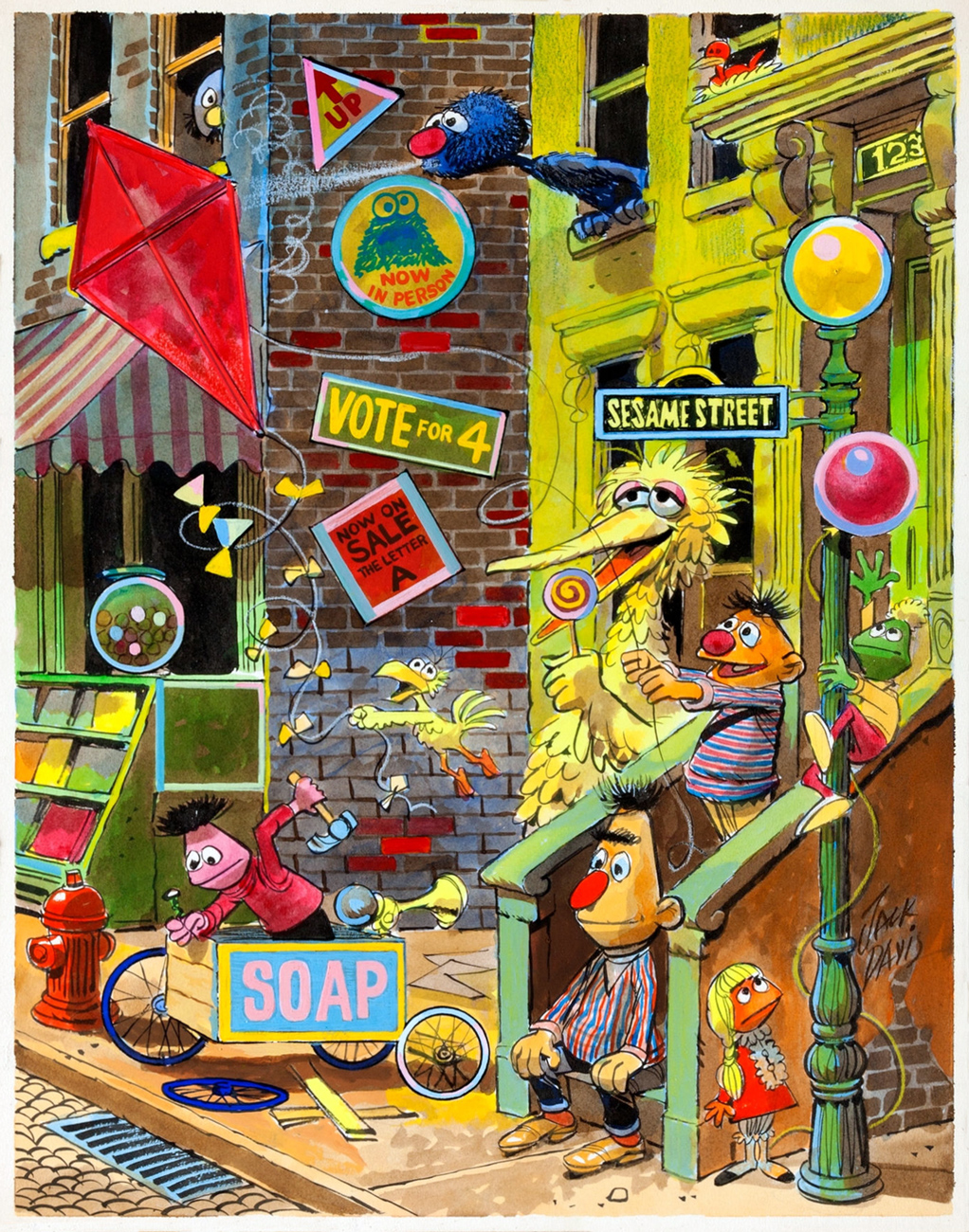
And here’s number four of the puzzle illustrations Mr. Davis created for Educational Toys’ Sherlock Hemlock’s Hidden Answer Puzzle series. This is número 4, The Puzzle of the Hidden Shapes… you know what to do next!
Here’s the aforementioned [Yves Klein] blue looking glass you’ll need.
Another Davis-illustrated exercise in fun from the 1972 Sesame Street Annual, which also features some gorgeous contributions from Mel Crawford and Davis’ fellow Usual Gang of Idiots member, Al Jaffee. This one teaches, again according to the “Parents’ Guide to Contents”, “Pre-reading skills”.
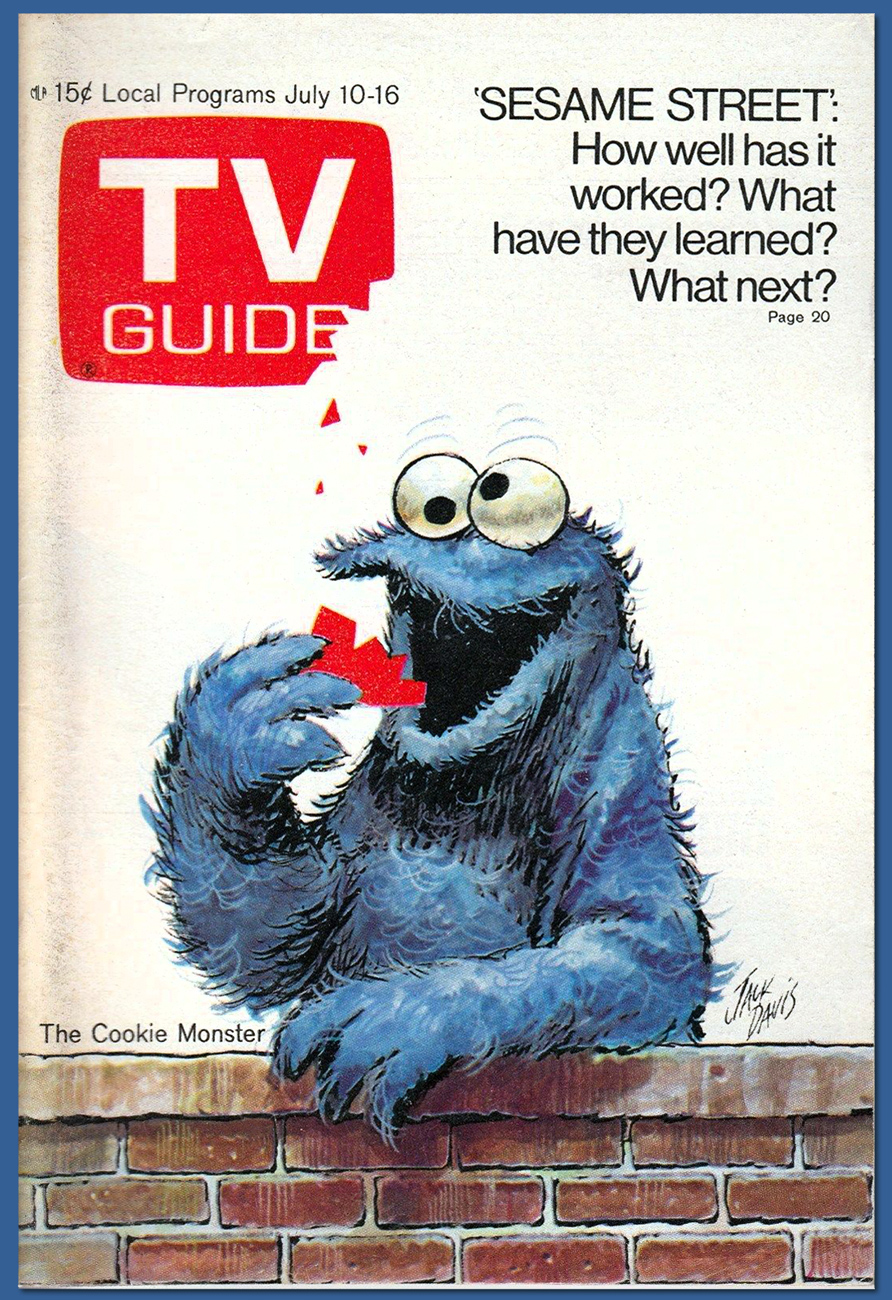
As one of America’s most distinctive and deservedly successful illustrators, Davis created scores of splendid TV Guide covers, and he was uniquely well suited for this one. This is the July 10, 1971 issue. I never would have figured the mag’s logo to be edible, but then the Cookie Monster’s idea what’s fit to eat is pretty liberal.
A very early Davis Sesame Street illustration initially used in The Sesame Street Learning Kit (Children’s Television Workshop, 1969); the show made its début on November 10, 1969, on the about-to-expire National Educational Television network. A merger soon turned the NET into the Public Broadcasting Service, which Sesame Street, now in its 49th season, calls home to this day.
And here’s your answer. Thanks for playing along!
In case one of you experts is wondering, I did leave out, deliberately, Davis’ single meatiest contribution to the show’s canon: The 1972 Sesame Street Calendar (which I look forward to reusing in 2028), twenty-five pages of pure Davis, including thirteen particularly lush watercolours. In order to do it justice, it’ll require at least one post of its own.
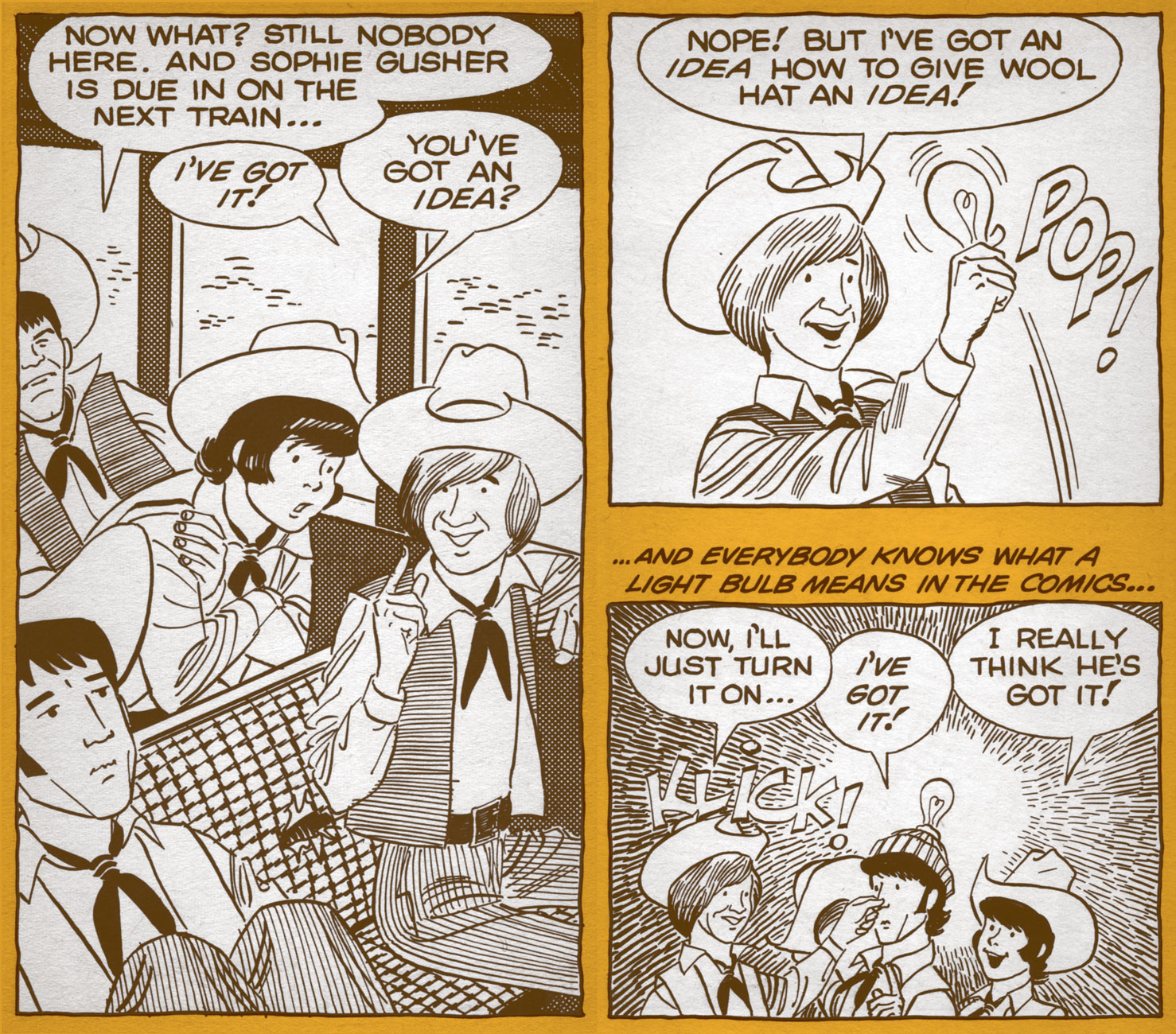
Pete was born in Washington, D.C. on February 13, 1942, which makes him the doyen of the group. Like Mike “Wool Hat” Nesmith, he was a musician first, likely the group’s most instrumentally proficient. Peter wound up auditioning for the tv show after his name was suggested by Stephen Stills, who wasn’t quite right for the part… but definitely a good sport.
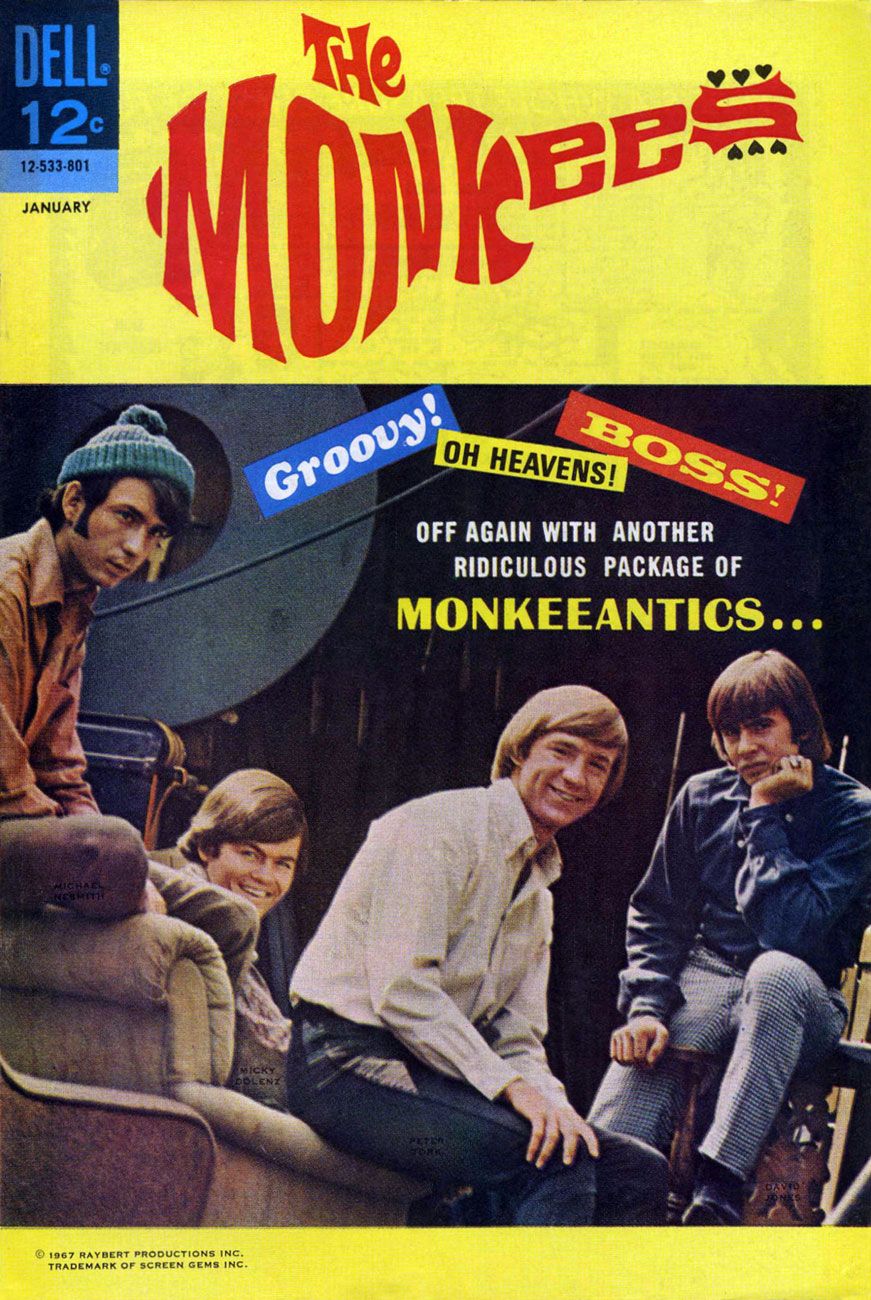
Peter and his fellow Monkees were featured in their own Dell comic book (is there any greater honour?), which lasted from March, 1967 to October, 1969, seventeen issues in all (with some reprinting.) That was one of Dell’s few savvy moves in their waning days, and one of their few readable titles outside John Stanley‘s output.
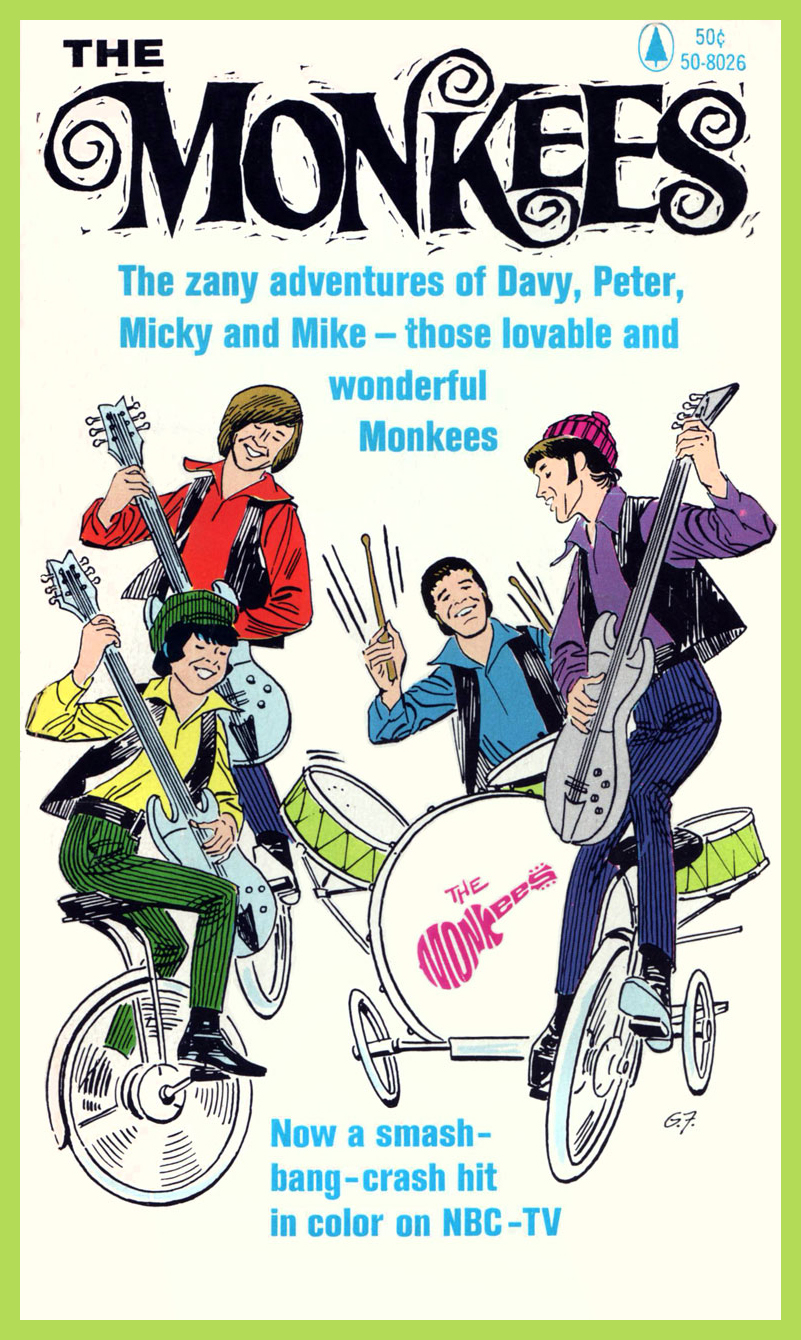
Peter the muse. From ‘Way-Out’ West, The Monkees (1966, Popular Library). See below!
This cute lil’ volume contained a bunch of fun (what else) Monkees romps written by Howard Liss and ably illustrated by Eisner- Iger Studio veteran Gene Fawcette.
José Delbo‘s splash page from Beezle, Beezle, Who’s Got the Beezle?, The Monkees no. 8 (Jan. 1968, Dell). Scripter unknown… but he’s pretty good.
The issue in question: The Monkees no. 8 (Jan. 1968, Dell)
The Monkees no. 4 (Sept. 1967, Dell)
The Monkees no. 14 (Oct. 1968, Dell)
Ah, but Dan Clowes has known it all along! From Eightball no. 13 (Apr. 1994, Fantagraphics)
Update: Peter Tork passed away on Thursday, February 21, 2019, barely a week beyond his 77th birthday. Au revoir, Peter!
« Speaking of winners, I’ve got Zwellyn Zablow of 11 West Second Street in Freeport, New York, who saw me at the Rockefeller Center dance. I want you to check in at Murray Hill 85-700. Anyway, MU-700 within the next ten minutes… »
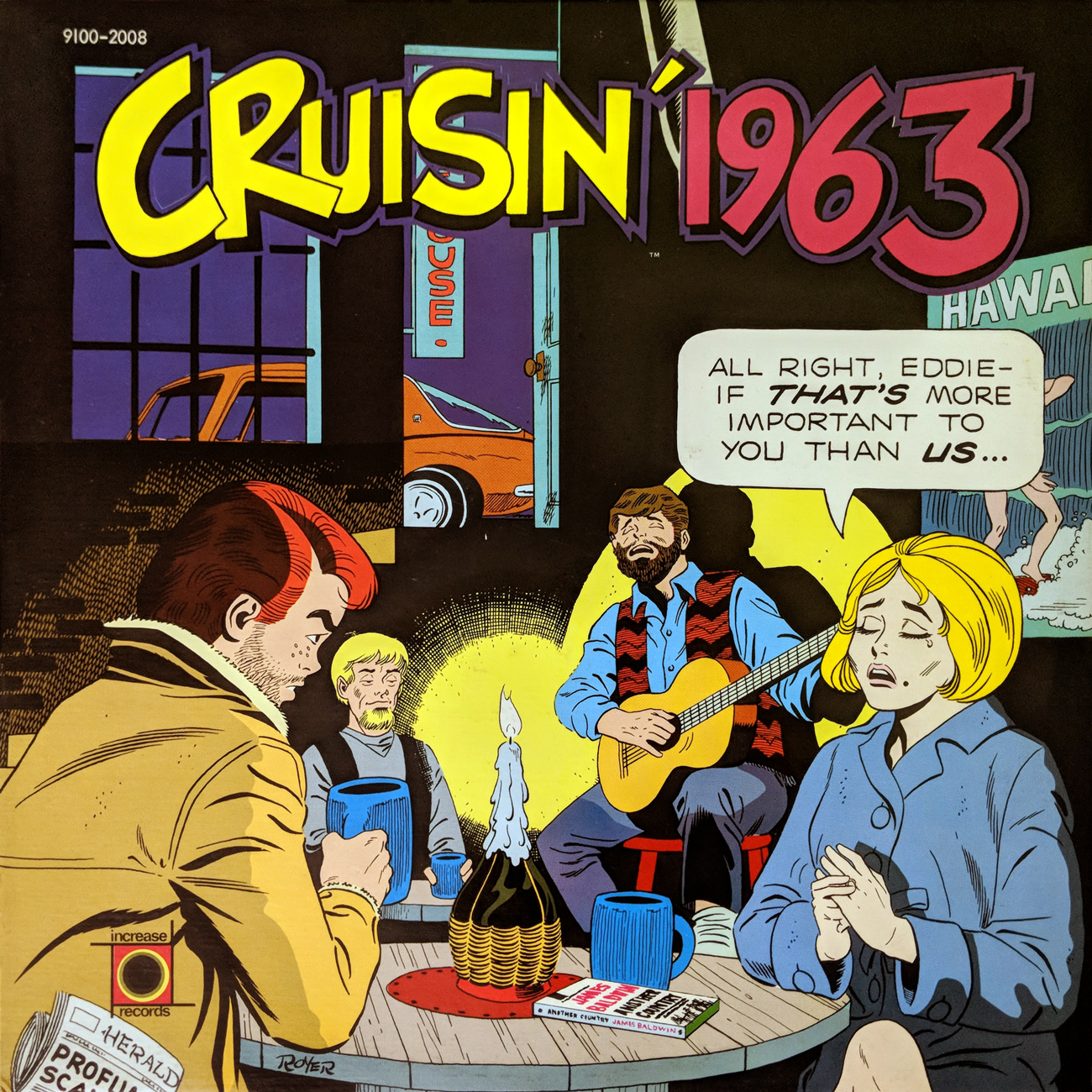
Read the liner notes, or hear Cruisin’ 1962 in its entirety right here… while you can!
Read the liner notes, or hear Cruisin’ 1963 in its entirety here!
Read the liner notes, or feast your ears on Cruisin’ 1964 pronto… here!
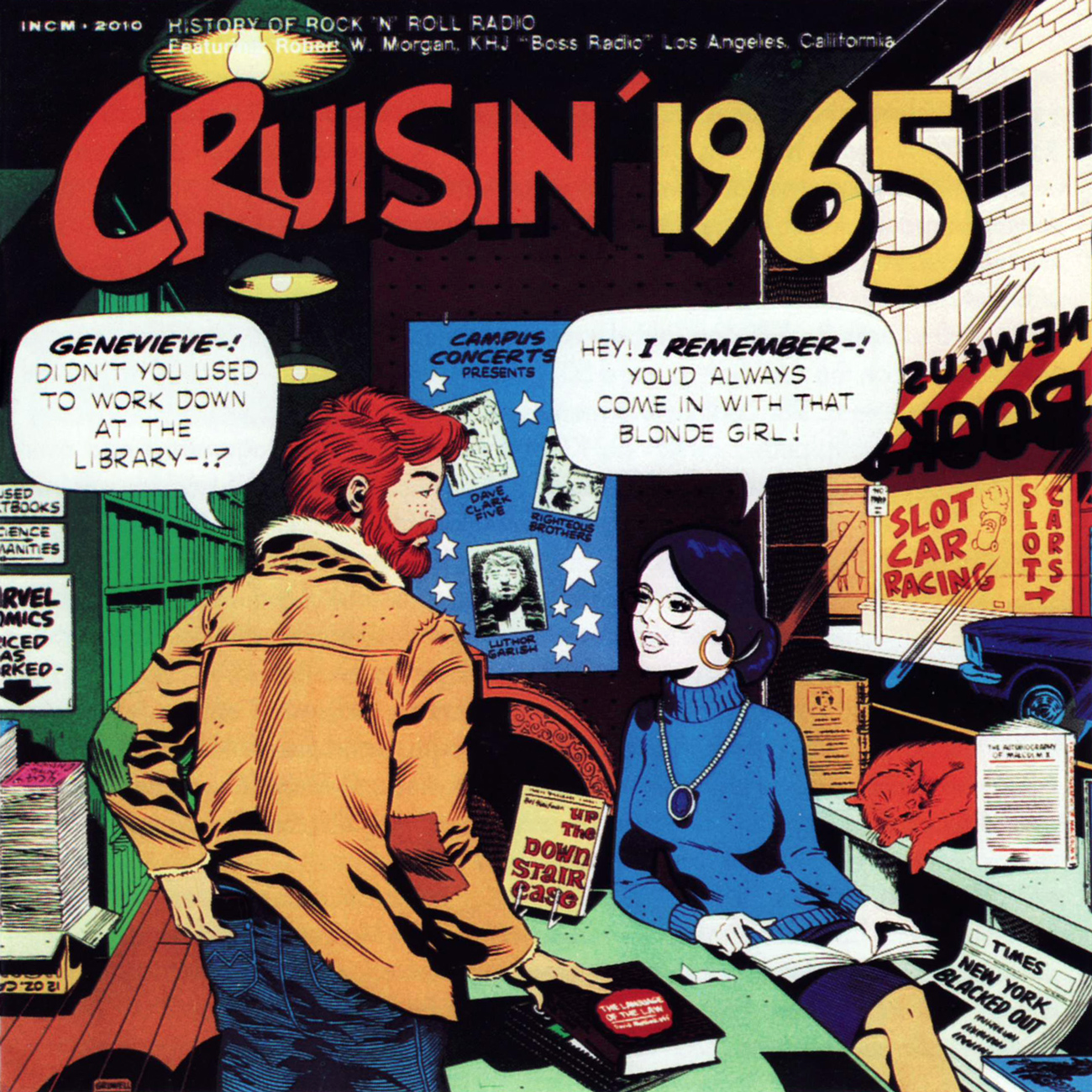
Read the liner notes, then grind your teeth in frustration at Cruisin’ 1965‘s absence on YouTube. Happy update: here is it now for your listening pleasure!
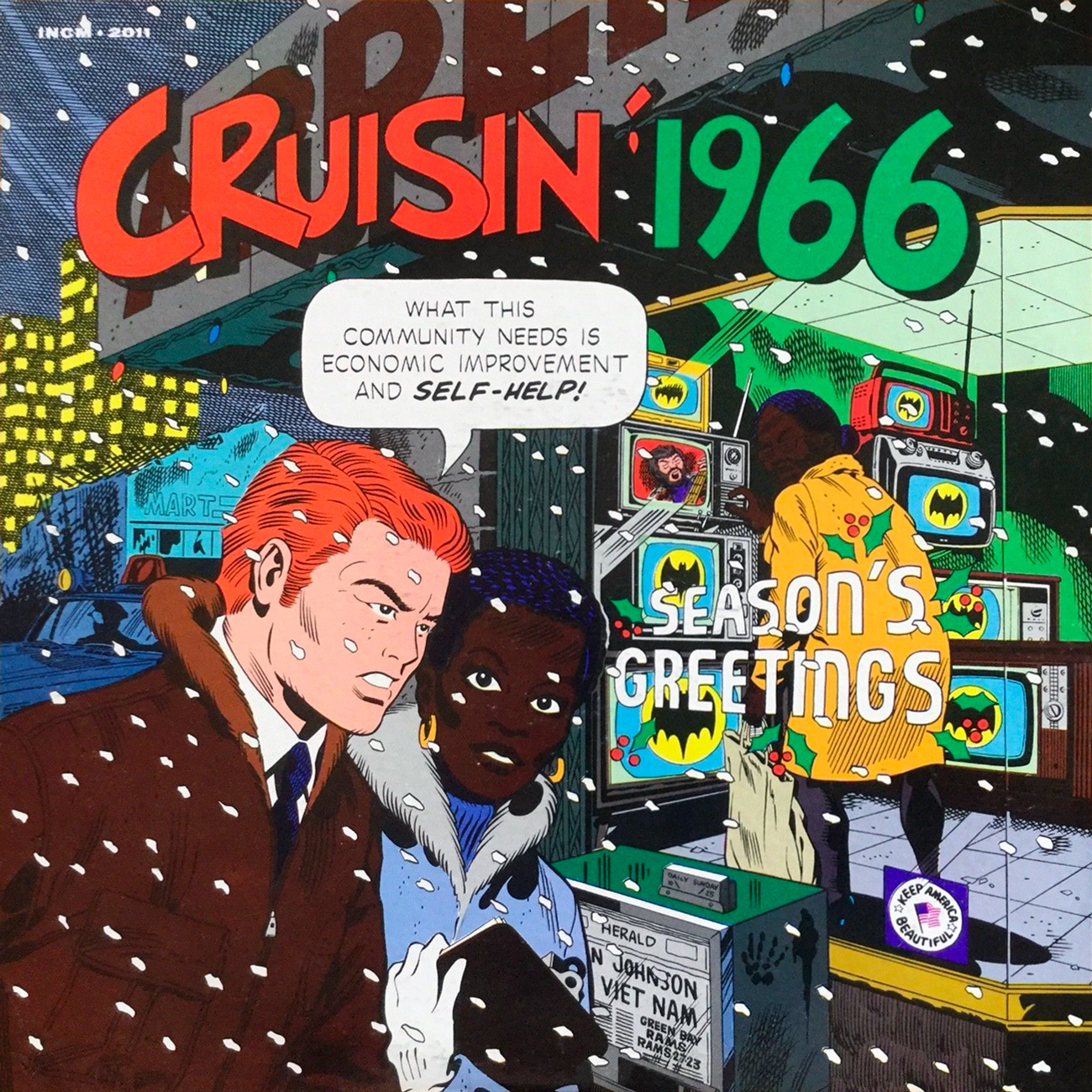
Read the liner notes, and/or listen to Cruisin’ 1966 in its entirety here!
Now then, here’s part two of our exclusive conversation with Mr. Mike Royer, picking up the thread from where we left off in Part One.
Michael Royer: Richard, you asked « How were you selected? » Well, I’d been working with Paul, and apparently he liked what I did on the Mormon history slides, so he asked me if I would do the ‘final art’ and all the research and everything on the covers, and the last time I saw Paul, before the second batch, that started with The Cruisin’ Years, that had the tickets on the table, and the picture of… I don’t know if it was Eddie in uniform or not… but whatever, that was when Howard Silver of Increase Records decided to do more for the line. And continue the series.
WOT: Right.
MR: And from that point on, all of the writing, and all the ideas, were totally mine.
WOT: I figured it would happen at some point…
MR: I think the ideas might have been a collaboration between Jacobs and Gruwell, but one of the reasons Howard Silver asked me « Do we need to contact Paul Gruwell? », and I said « Nope, you have no reason in the world to contact Paul. »
WOT: Cut out the middleman!
MR: I’m the guy who Paul used to introduce at parties as « This is the man who *inked* my Cruisin’ covers. »
WOT: Oh, boy. Okay.
MR: “Up yours, pal!”
WOT: Oh, this is gold, thank you!
MR: So I said « We don’t need him! », you know, and so all the rest of the albums after that were mine. And there are two covers that were done for a packaging, done for big box stores, that would have had either two or six cds in a tall case…
WOT: I remember those. ‘Longboxes’, shoplifting deterrents of the early cd era.
MR: … and one of them, Eddie is saying « We’ll be late for something at the theater » and Peg is saying « … but, but, the Beatles are on Ed Sullivan tonight! » So they were done to fit in the chronology of the covers. When he said « I’d like to start over with 1968 », and I said, « Well, I don’t wanna do the Woodstock. »
MR: « I don’t want Peg to have a kid from her serviceman, who obviously… died in service. »
WOT: Right.
MR: So I, and you’ve probably seen it, the cover is in front of a theater showing 2001: A Space Odyssey. Eddie discovers Peg there, as one of the Vietnam Widows for Peace. So now we know what happened to the serviceman that she ultimately married.
MR: ’cause I think, uh, the shot of Eddie and the musician with the beard…
WOT: Luthor, yes.
MR: … in college, and he’s got a newspaper clipping taped to his lamp that says « Peg marries… » somebody.
WOT: « Kevin Buchanan III » … he appears to be a society boy.
MR: I don’t know if you have all of them…
WOT: As far as I know.
MR: And of course, I continued, on all of the covers, to introduce a little bit… of tension.
WOT: Do tell.
MR: ’cause there’s some in every cover, sometimes it’s subtle, sometimes it’s overt. But I believe I did through… what year is the Kent State thing?
WOT: Let’s see… 1970. Eddie’s talking with his boss about it.
MR: Peg says « That’s okay, because Mike wants to give me another tennis lesson. »
WOT: Well, another “lesson”, at any rate. Whether it’s tennis remains to be seen. She’s got the racket, but…
MR: So… I can say all those new covers were made… the one previous to that is where they’re at Niagara Falls, and he’s talking about things could happen at his firm, and she’s saying « But Eddie, *I* might want a career! » And I enjoyed doing that cover, because I just wanted to do her standing there at the little motel sink in her slip.
MR: … and of course, being male and having to draw female forms, I made sure that her skirt was blowing in the wind… and in her little tennis outfit in the next year.
MR: We did, uh, let’s see: there was The Cruisin’ Years, which re-established the whole series. And then, starting with ’68 through ’70.
MR: Okay, I did two ‘Cruisin’ With‘… the second one, I guess it was never published…
WOT: Ah, right.
MR: … or produced, or released. And it was just another… let’s see: Porky Chedwick has got her in a poodle skirt and they’re dancing, right?
WOT: Yeah, that’s it.
MR: Okay, the next one was outside on a city street, and in the brick building behind them you see the silhouette of a disc jockey, and the broadcast booth at a radio station, I think the sign is on the roof. And Peg is protesting something. She’s got a banner, and Eddie and she are arguing about something. Ah, I only have a copy of my rough on that, or my comp. And of course there’s more detail on her than on him. I enjoyed drawing her. That last ‘Cruisin’ With’ I thought was much better than the first one I did, for cover art.
WOT: (laughs) exactly.
WOT: Is Cruisin’ a frequently-evoked topic by your fans?
MR: Every once in a while, it’s funny… for years, once in a blue moon, somebody would say something about Cruisin’. But I was in Charlotte, just… less than two weeks ago.
WOT: Right.
MR: … and I swear, a dozen or more people talked to me about the Cruisin’ covers at my table. Maybe that’s because there’s a new series of Cruisin’ albums… with art that I don’t like.
WOT: Oh, I don’t like it either: it looks like, and likely is, clip art.
MR: I don’t know who’s producing it. I don’t think it’s Howard Silver.
WOT: It’s called “The Cruisin’ Story“, it’s out of England, and it’s just a series of run-of-the-mill compilations, without the defining radio program concept.
MR: Howard Silver ran Increase Records. I don’t know if he bought out Increase and that was [Ron] Jacobs’ company or not. He’s in Hawaii now, last I heard. Jacobs [Indeed he was, but Mr. Jacobs passed away in 2016].
I’d like to bring to your attention that on March 22nd, 1914, more than a hundred years ago, John Stanley, American cartoonist and comic book writer extraordinaire, was brought into this world. He died in 1993 at age 79, but he left an undeniable mark on this world. (At least I hope it’s an indelible one.)
I won’t talk about his artistic parcours, as people far more erudite than I have already done it. For an enjoyable gallop through Stanley’s multi-faceted and staggeringly productive career, head over to the Comics Journal and read an excellent article by Frank Young. Want to read some stories (and have a few hours, if not days, to spare?) Visit Stanley Stories, a truly impressive blog by the same Frank Young, who scanned tons of comics and perceptively analyzed them for our great enjoyment.
Me, I’m just an devotee who likes to curl up and read his comics. I’ll share some images. The art is by John Stanley, unless otherwise specified.
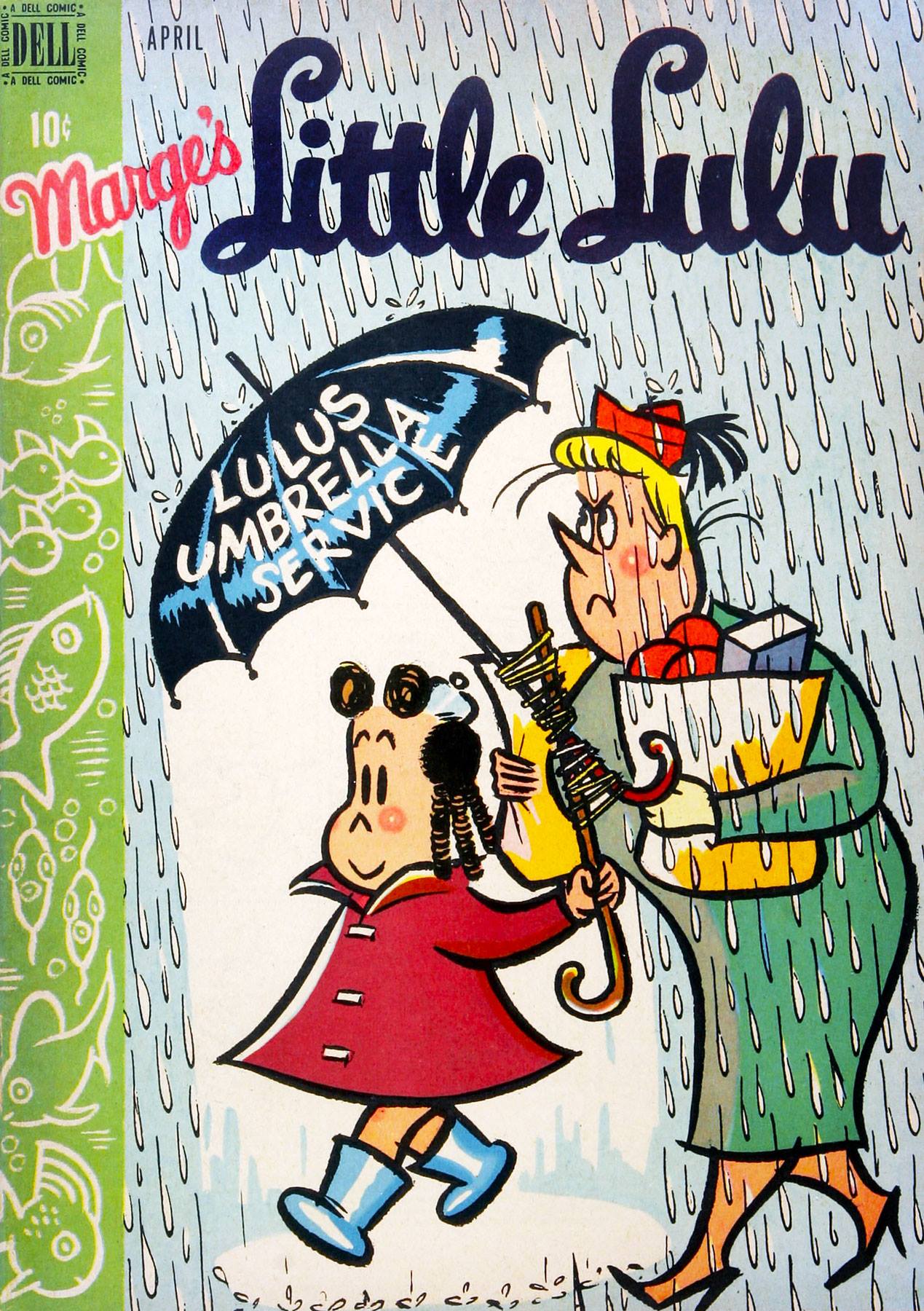
Marge’s Little Lulu no. 10 (April 1949). I recommend « John Stanley: Giving Life to Little Lulu » by Bill Schelly, published in Fantagraphics in 2017, which pieces together Stanley’s transformation of Little Lulu into the beloved, iconic figure she is today. I’ve never felt the need to have female characters to relate to, yet Lulu’s a great role-model for mischievous little girls who can pitch a mean snowball as well as any boy!
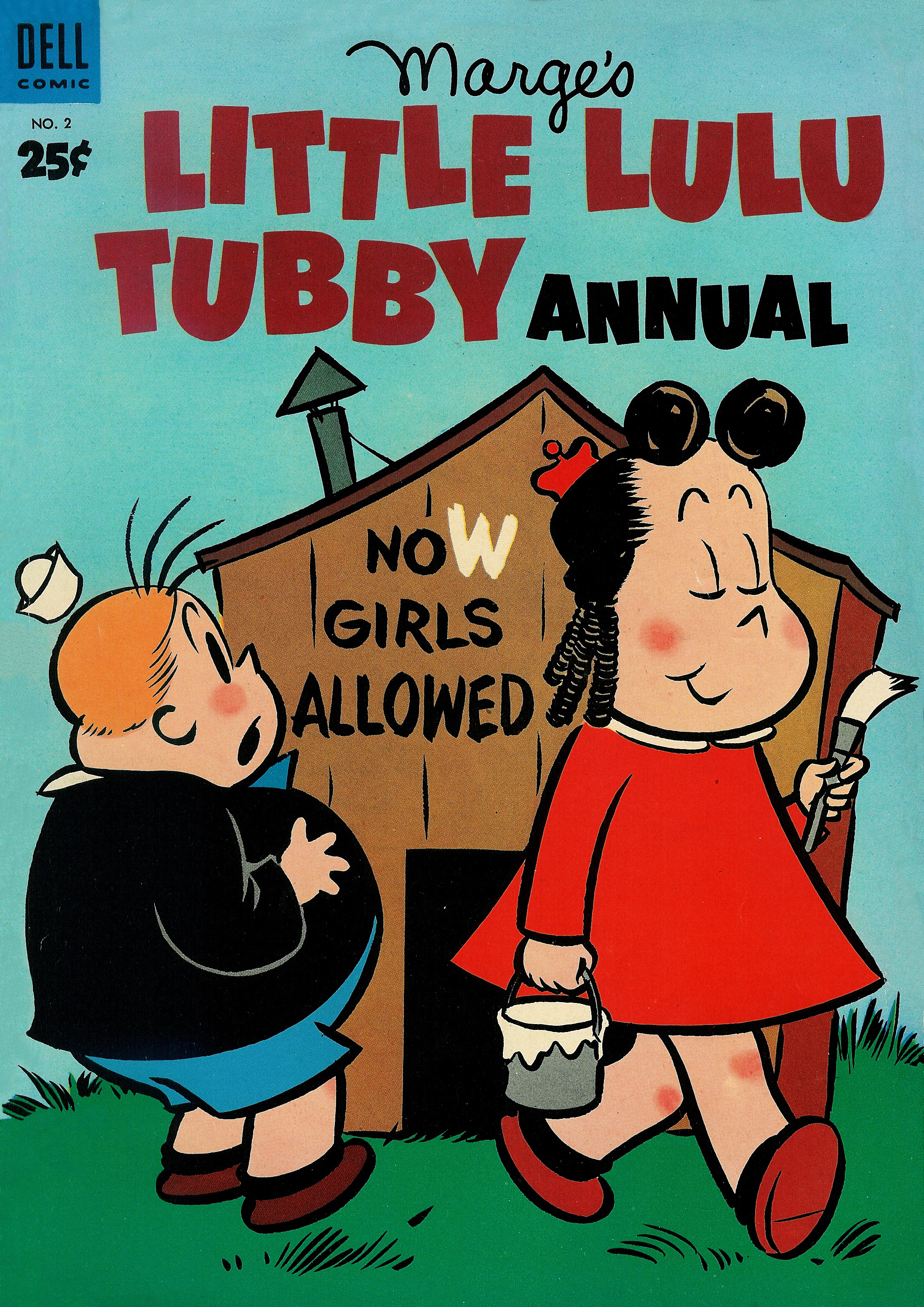
Marge’s Little Lulu Tubby Annual no. 2, March 1954. Cover by Irving Tripp from a layout by Stanley. Tubby’s series is an offshoot of Lulu’s.
Page 8 from « Guest in the Ghost Hotel », from Tubby no. 7 (January-March 1954). Looking for ghosts, ghouls and monsters? Look no further than Stanley comics.
John Stanley took a stab at Krazy Kat stories when Dell revived the comic in 1951. Krazy Kat Comics lasted for 5 issues (presumably poor sales doomed it), all published in the same year. This is Krazy Kat no. 1, 1951.
How do Beatniks while away the hours? They compose nonsensical poetry, noodle it out… and dig girls, of course. Kookie was John Stanley’s creation; the series was written and laid out by him. Unfortunately, it was very short-lived, running for a grand total of 2 issues. This is Kookie no. 1, February-April 1962. The handsome painted cover is by Bill Williams from a layout by Stanley. You can read the issue here.
Dunc And Loo no. 6, April-June 1963. Cover by Bill Williams from a layout by Stanley.
Lou (of Dunc & Lou) was apparently destined to be a newspaper strip, but never made it.
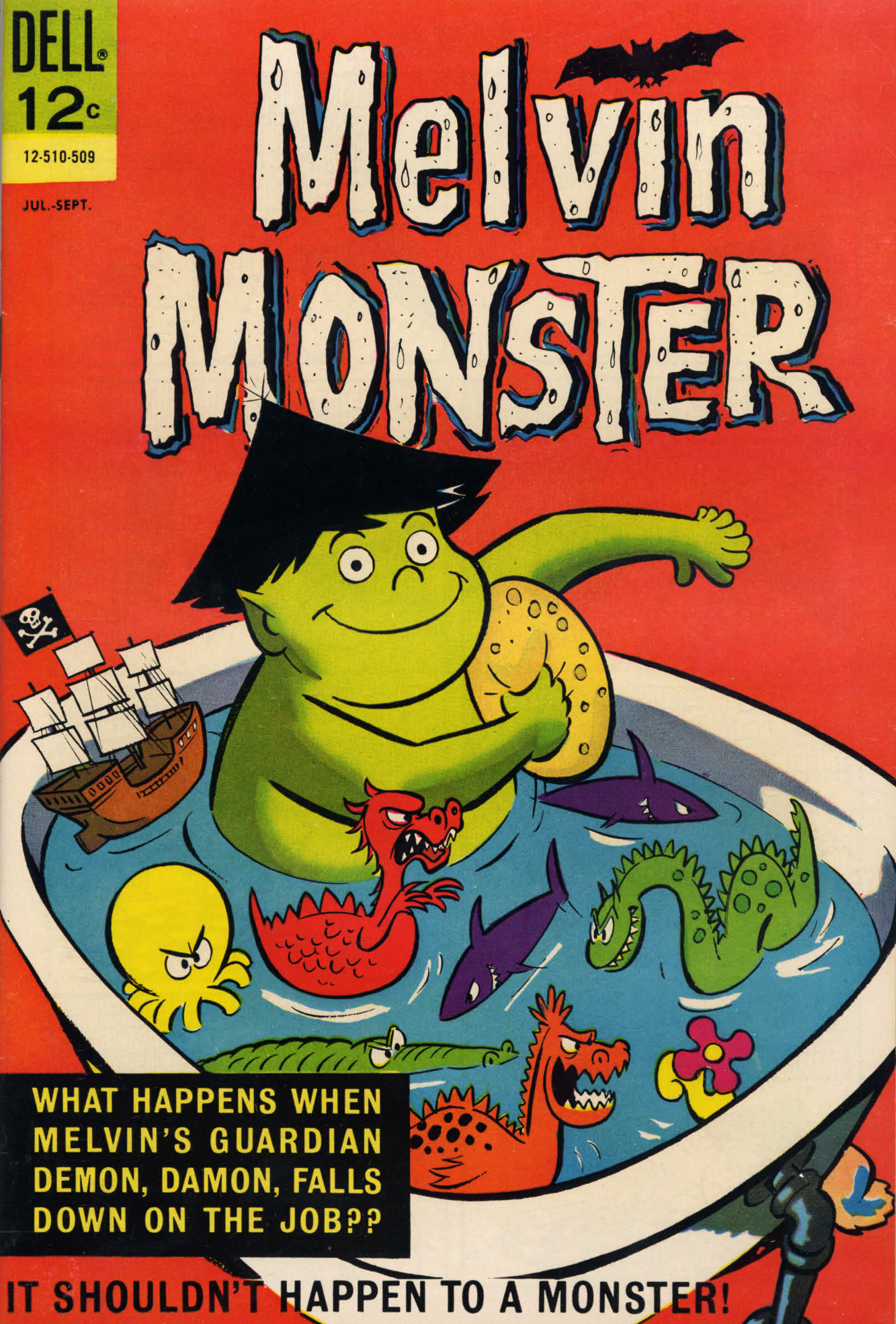
Melvin Monster no. 2, July-September 1965.
O.G. Whiz no. 1, February 1971.
An inside page of O.G. Whiz, with very typical madcap Stanley action.
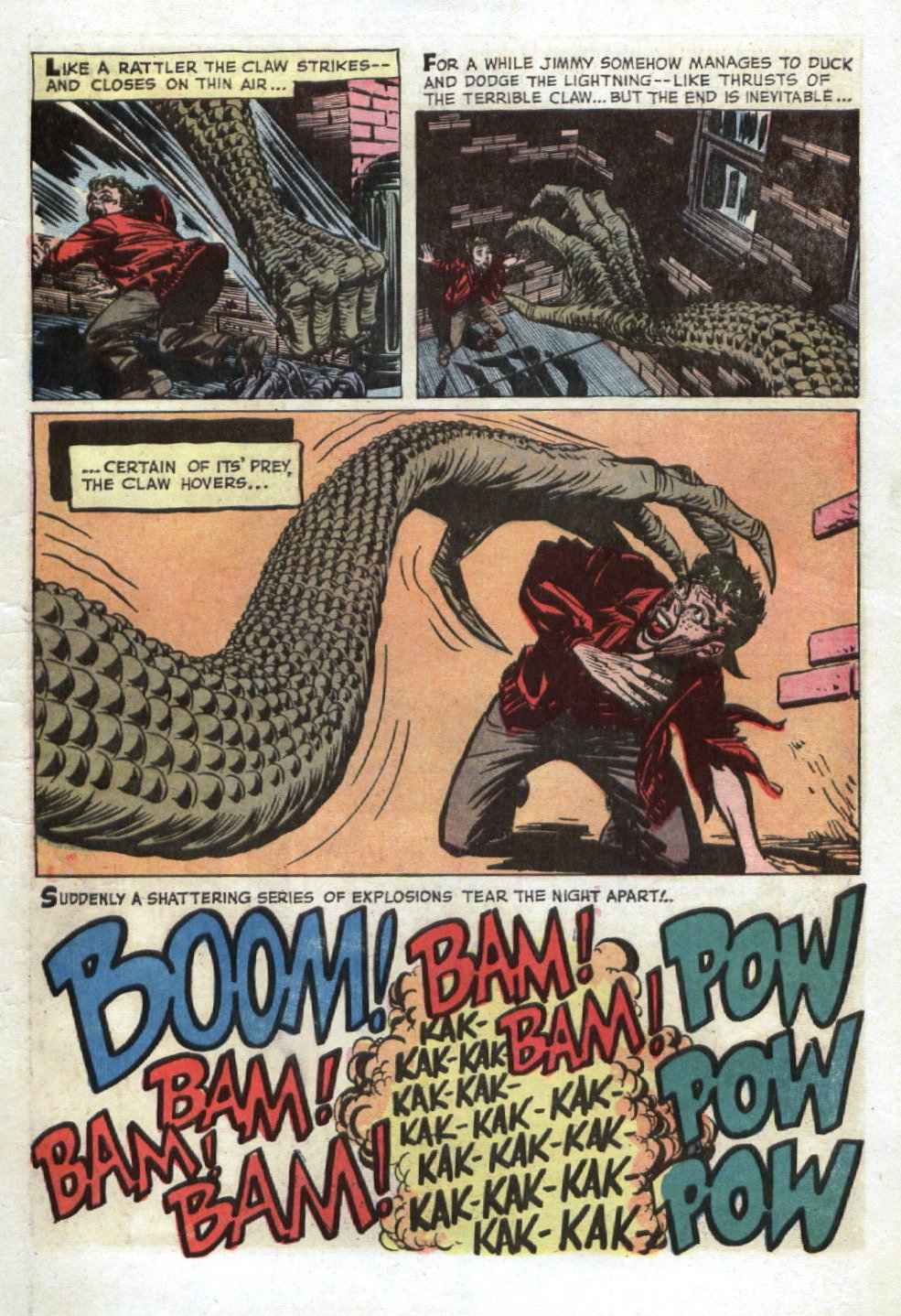
It’s not all fun, though: « The Monster of Dread End », written by John Stanley for Ghost Stories no. 1 (Dell, September-November 1962), is genuinely scary. Art by Ed Robbins.
And I haven’t even mentioned Stanley’s Nancy, nor her friend (and my favourite character) Oona Goosepimple. Next time… pick yourself up a copy of Drawn & Quarterly’s Nancy: The John Stanley Library, and happy reading!
I’d like to wish a loud and boisterous (or quiet and dignified, depending on what he prefers) birthday to Roger Langridge, who’s a jolly good fellow (which nobody can, or will, deny). If you’re looking for a reason to celebrate something on the 14th of February, but hate the Cheez Whiz of Valentine’s Day, this could be it!
Here are some of my favourite Langridge moments, by no means an exhaustive list, but hopefully a fun one.
The cover Roger Langridge created for The Comics Journal no. 284, July 2007. Orbis terrarum est mei! (Which, as far as I can figure it out, means “the world is mine”.) A bored-looking Fin Fang Foom (he must not like flowers) presides over assorted Langridge characters frolicking in the windows below. Note the malevolent nun (Knuckles!) in the middle window.
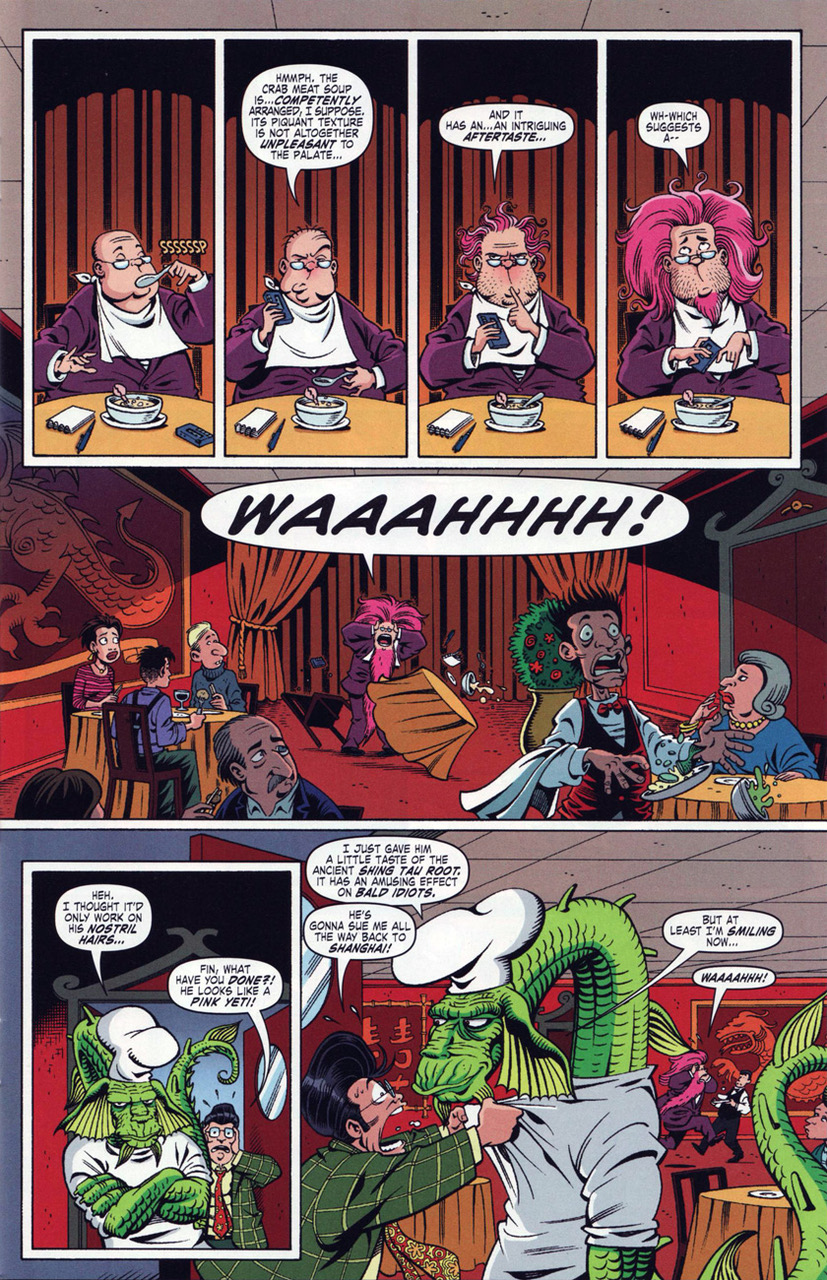
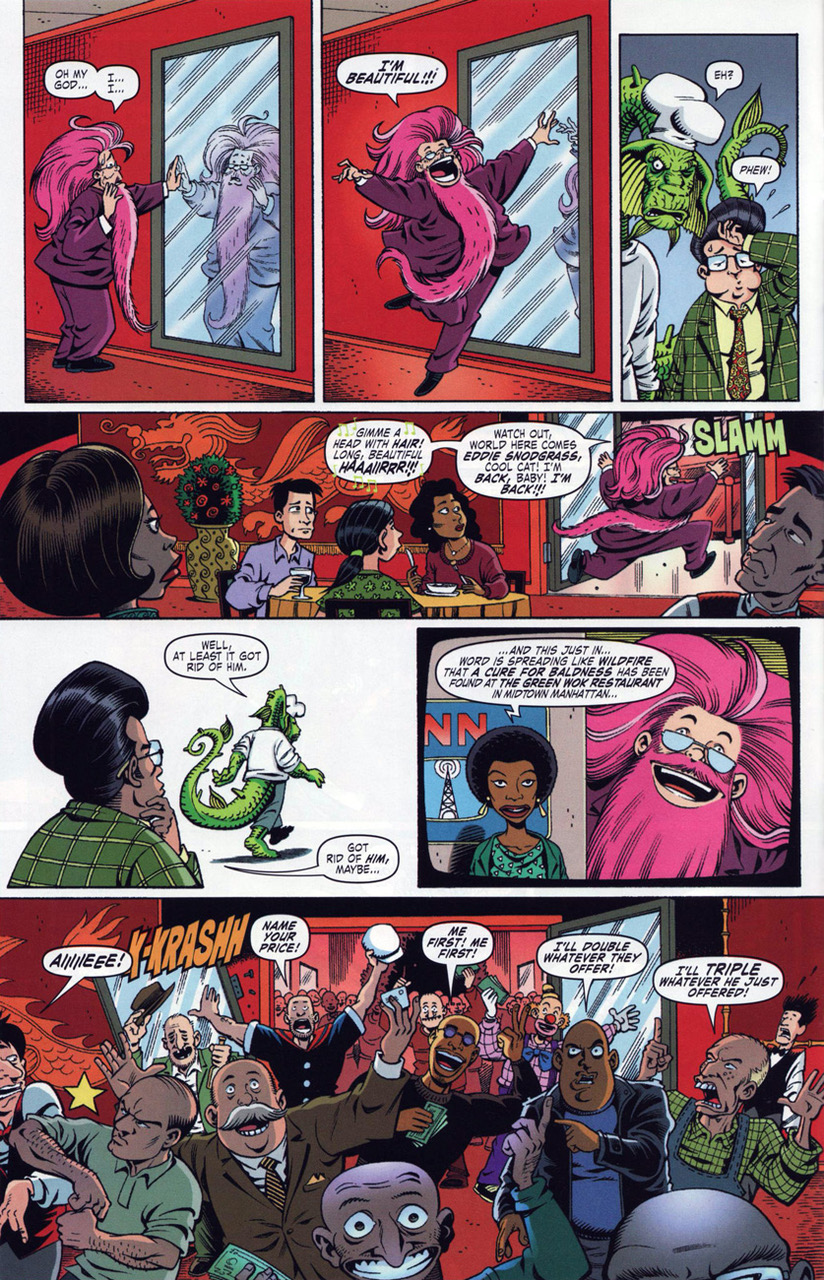
From « The Bald Truth » by Scott Gray and Roger Langridge, published in Fin Fang Four Return (Marvel, 2009), a hilarious – yet heart-warming – one-shot comic. “There was a time when giants walked the Earth! Monstrous creatures! Products of science gone mad!!! FIN FANG FOOM! ELEKTRO! GOOGAM! GORGILLA! Once they were great and terrible, and all trembled in their wake! Now, reduced to human size, they must live in the modern world and earn a buck. So what happens when the freakish foursome tries to play nice?” You can ignore the typical over-the-top Marvel description with lots of exclamation marks; this comic is surprisingly subtle. In 2012, Langridge decided he didn’t want to do work for Marvel anymore.
« The Bald Truth » by Scott Gray and Roger Langridge, published in Fin Fang Four Return (Marvel, 2009). The moral of the story, as summarized by Fin himself: « Men need to grow brains, not hair. »
Our man of the hour has also written and drawn quite a few stories for « children », most of them published by KaBoom!, or their tot-friendly division, Boom!. I think there should be a special category for books that are fun for children, but even more entertaining for their parents (or the nulliparous amongst us). For instance, are the Muppets purely child-fare? Sure, little ones enjoy their madcap, sometimes surreal humour, but adults are often as smitten by it, if not more. I think it takes a special talent and superior intelligence to write stories that appeal to youngsters, but are complex enough to give their older relatives something to chew on. Throw a spirited sense of humour into the mix, and you’re all set.
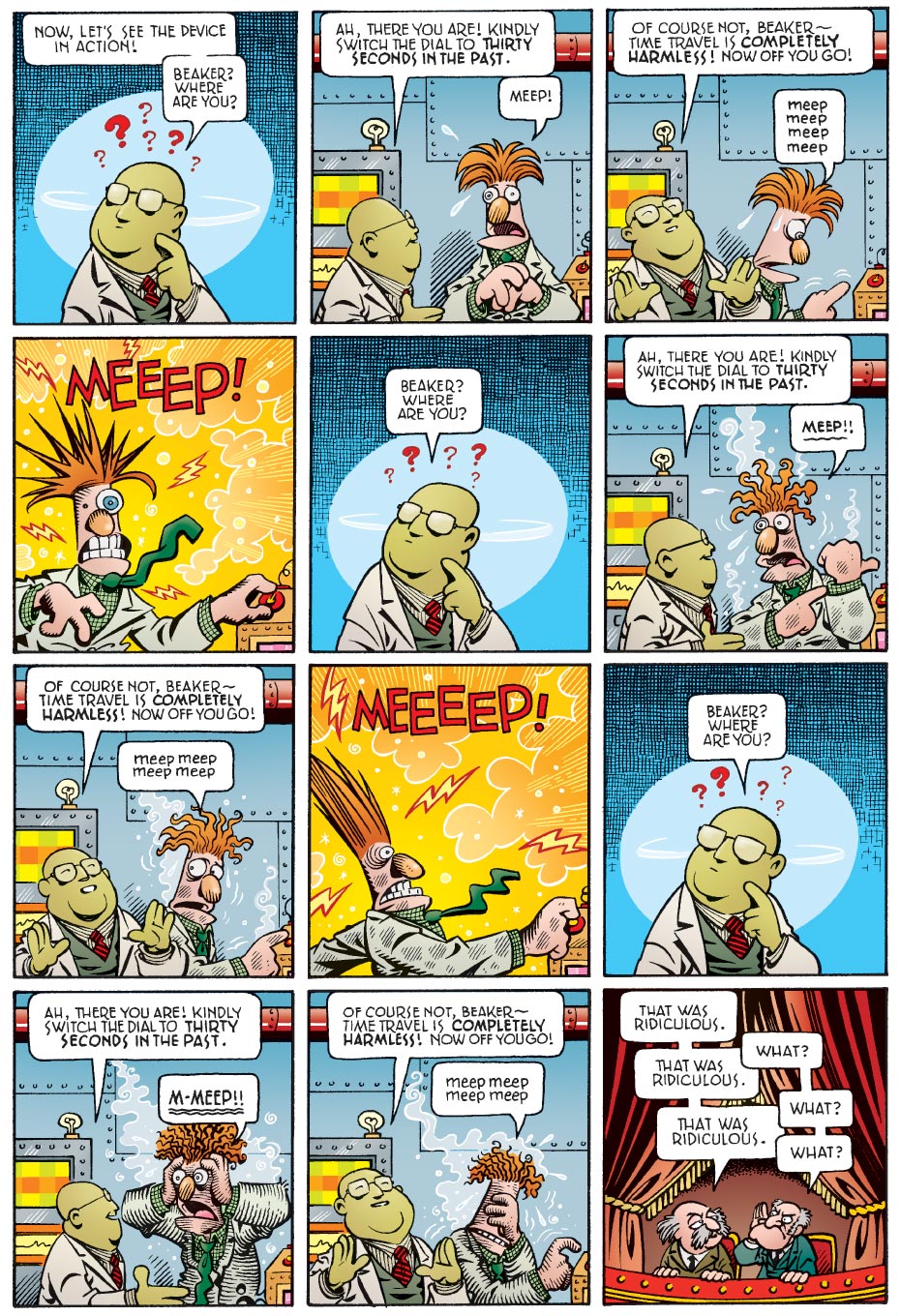
Roger Langridge’s wonderful sense of humour is particularly suited for the comic book version of The Muppet Show, which he wrote and illustrated for BOOM! Studios starting in 2009 for a total of 15 (magnificent, by the way) issues.
To quote a perceptive review by Ryan Dosier (read it here),
« Once again, Langridge has beautifully captured the unhinged feeling that each of us enjoyed watching on the original Muppet Show. Zaniness reigns supreme, random Muppets hang out backstage, and we can once again feel like the show never ended. Roger Langridge has captured the Muppet spirit of writing in a way that is more than reminiscent of the Jerry Juhl days of The Muppet Show. He has a complete grasp on every character. Everything in the comic works, and it’s because of the quality of the writing that this is true. When there are, not one, but five chances for Fozzie to deliver a pun-filled monologue (each in a different comedic style) and hit each one out of the park (relatively speaking), you know the writing is top-notch. »
I don’t normally buy Disney products – Disney bought the Muppets intellectual properties from the Jim Henson company in 2004, but I made an exception and purchased The Muppet Show Omnibus (2014), and I am not regretting this decision.
This wasn’t the last time Langridge worked with the Muppets.
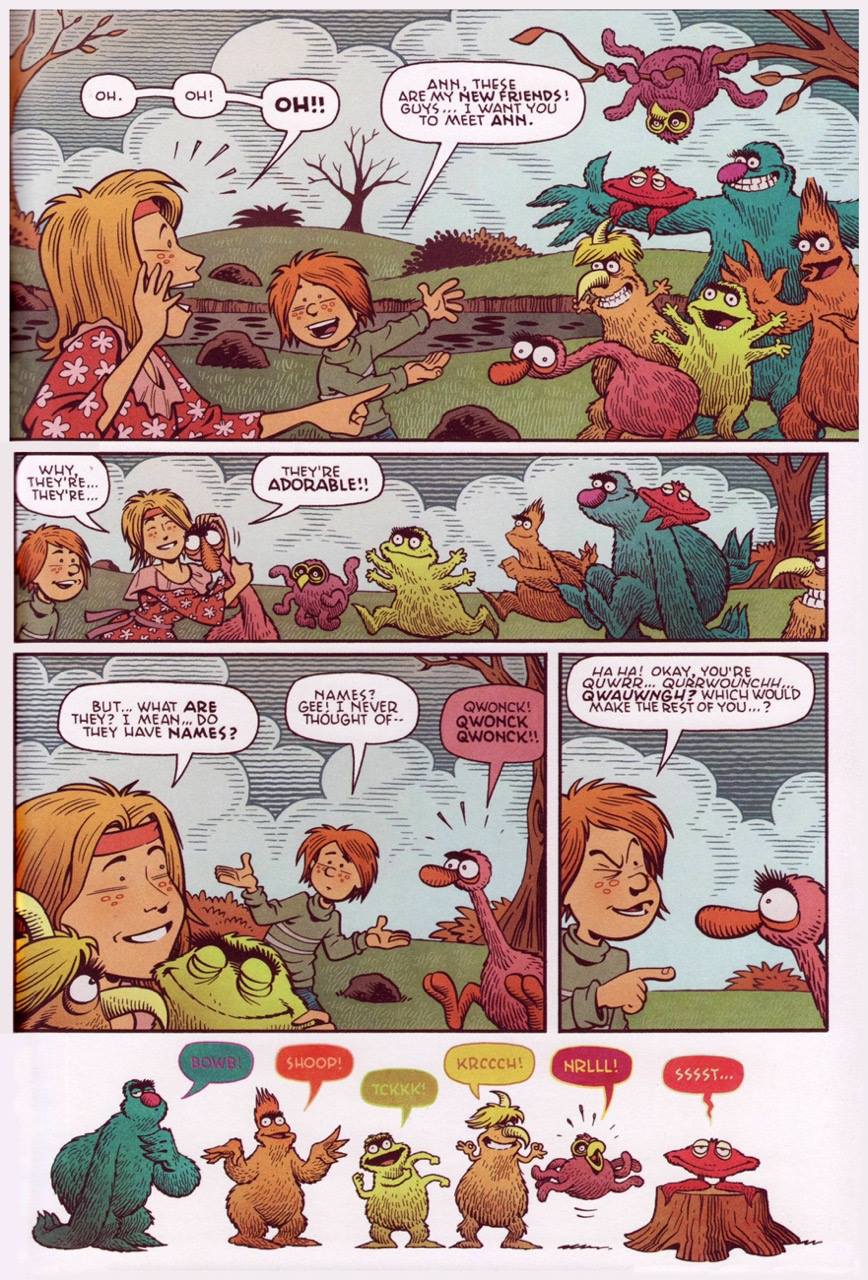
Jim Henson’s The Musical Monsters of Turkey Hollow, October 2014, published by Archaia. This is based on a lost television special originally written by Jim Henson and Jerry Juhl (respectively, producer and head writer of The Muppet Show) and (lovingly) adapted by Langridge for comic book form. Henson and Juhl wrote the script in 1968 (Henson was inspired by some footage he had taken of his daughters scampering through some trees during what must have been a particularly magical October), but nobody was interested in actually filming it, and so the story languished in the Jim Henson Company Archives until now. Langridge was a natural fit for this project, given that he had been the writer and main illustrator of Boom! Studios’ excellent The Muppet Show comics between 2009 and 2012.
Among more recent adventures undertaken by Mr. Langridge and his lucky readers is Snarked!, his take on Lewis Carroll’s topsy-turvy world, Abigail & the Snowman, and the Baker Street Peculiars, written by him but illustrated by someone else. All of the aforementioned comics are life-affirming *and* vocabulary-expanding.
Snarked! no. 5, February 2012. « Presenting a fresh and incredibly modern “Langridge” spin on an already-warped classic, SNARKED starts here in an epic adventure featuring the Red Queen’s children, Princess Scarlett and her baby brother Rusty, as they set out in search of the missing Red King. And who better to help guide the way than the Walrus and the Carpenter from THROUGH THE LOOKING GLASS. » (description from publisher) Snarked! is also published by Kaboom.
From Snarked! no. 11, August 2012. Would a child be able to appreciate the concept of “Aunt Fanny’s Leather Euphonium”? I don’t think so. An euphonium is a musical instrument, by the way, similar to a tuba in appearance.
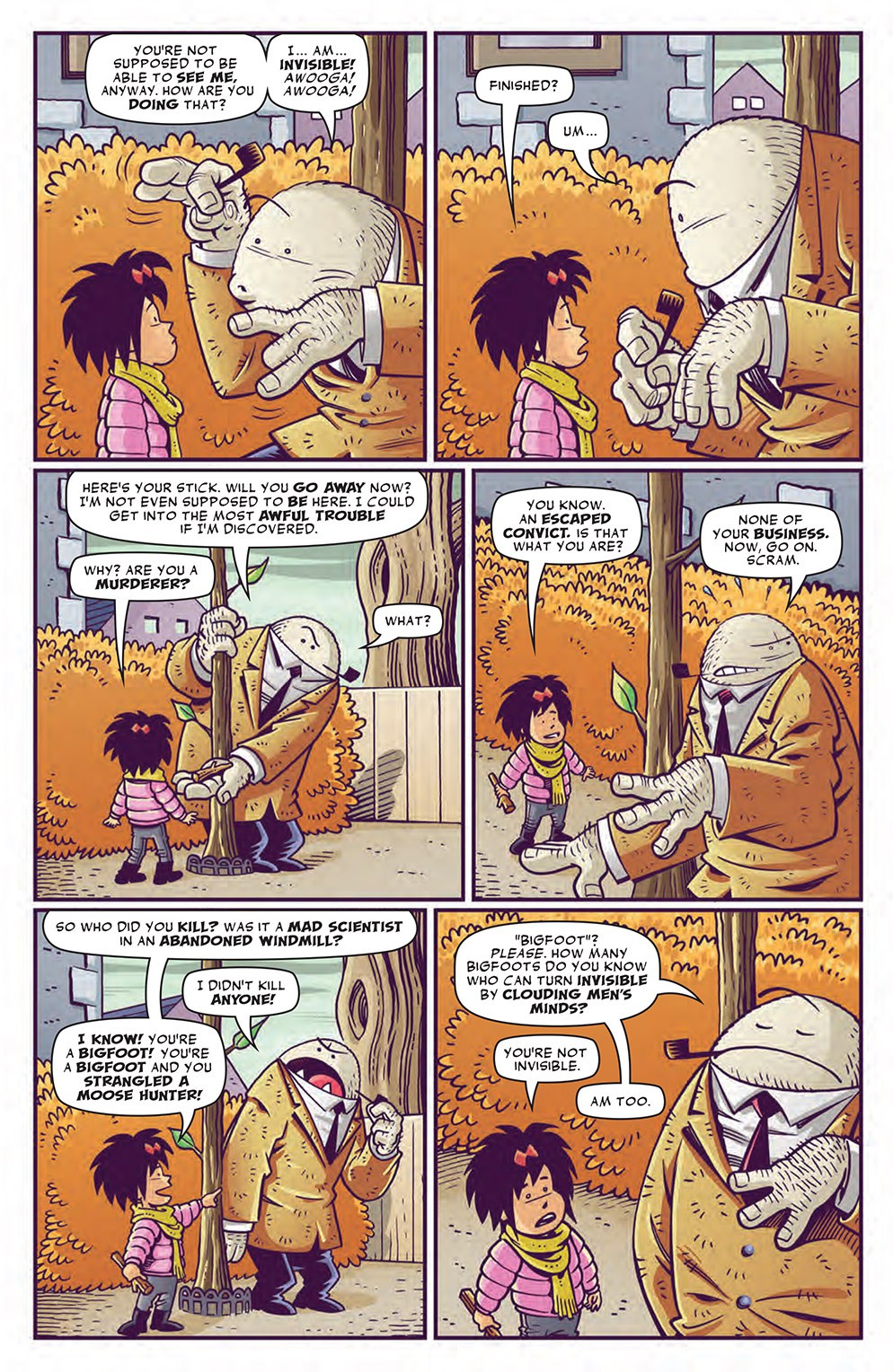
Page from Abigail and the Snowman no. 1, December 2014, published by KaBoom!. Claude is an erudite yeti on the run from evil scientists who want to continue experimenting on him.
Abigail and the Snowman no. 4, March 2015. Yetis run better without shoes, that’s why the car is gaining on them.
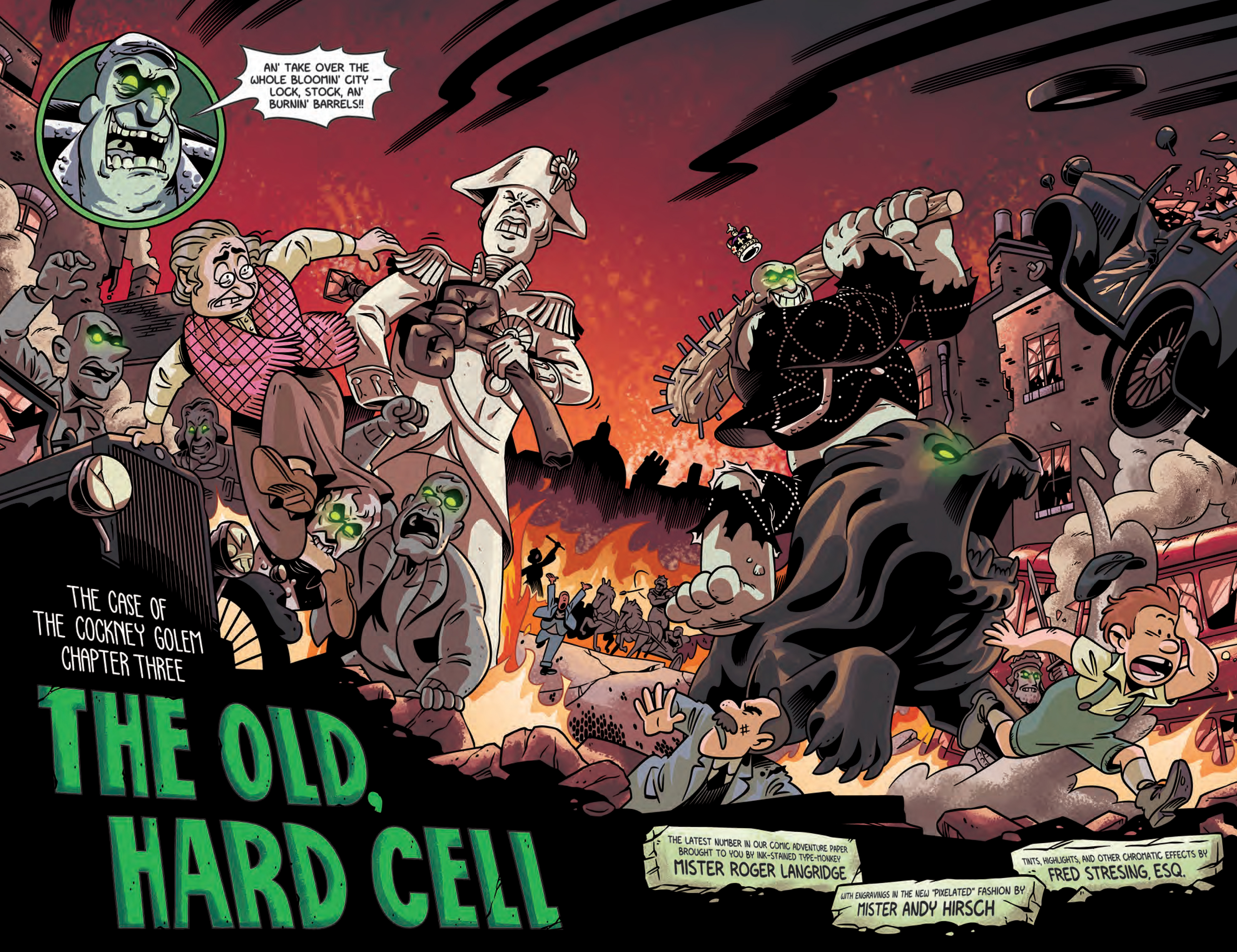
A splash page The Baker Street Peculiars no. 3, May 2016. Written by Langridge and illustrated by Andy Hirsch, with colours by Fred Stresing. Langridge-the-writer sometimes get paired with people who couldn’t draw if their life depended on it, and it’s a hideous waste of talent. Hirsch’s art is not quite as distinctive, but it fits the story well.
Wishing Mr. Langridge many happy returns, many productive collaborations, and above all the time and financial support he needs to pursue his solo projects.
« In the big wrinkled world, it would be like looking for a straw in a needle stack…»
Based upon, but with savvy improvements, Peter Sellers‘ Inspecteur Jacques Clouseau from the popular series of films launched with 1963’s “The Pink Panther“, the animated Inspector and the titular feline (who first appeared in the opening credits of the film) were spun off into a pair of successful series of animated shorts. Produced by DePatie-Freleng Enterprises, these series have earned their place as highlights of 1960s animation, though the competition was pretty toothless, compared to prior decades.
As for funnybooks, Gold Key’s “The Pink Panther and the Inspector” title was a solid success, lasting 84 issues (73 under the GK imprint, then 11 more under Whitman, 1971-1984), leading to a solo spinoff for The Inspector (19 issues, 1974-78). This is surprisingly witty stuff, written and drawn with assurance and verve. Comic strip great Warren Tufts (creator of Casey Ruggles) was reportedly involved, though when it comes to Gold Key and Dell, credits are at best sketchy.
This is issue 2 of The Inspector (Oct. 1974, Gold Key.)
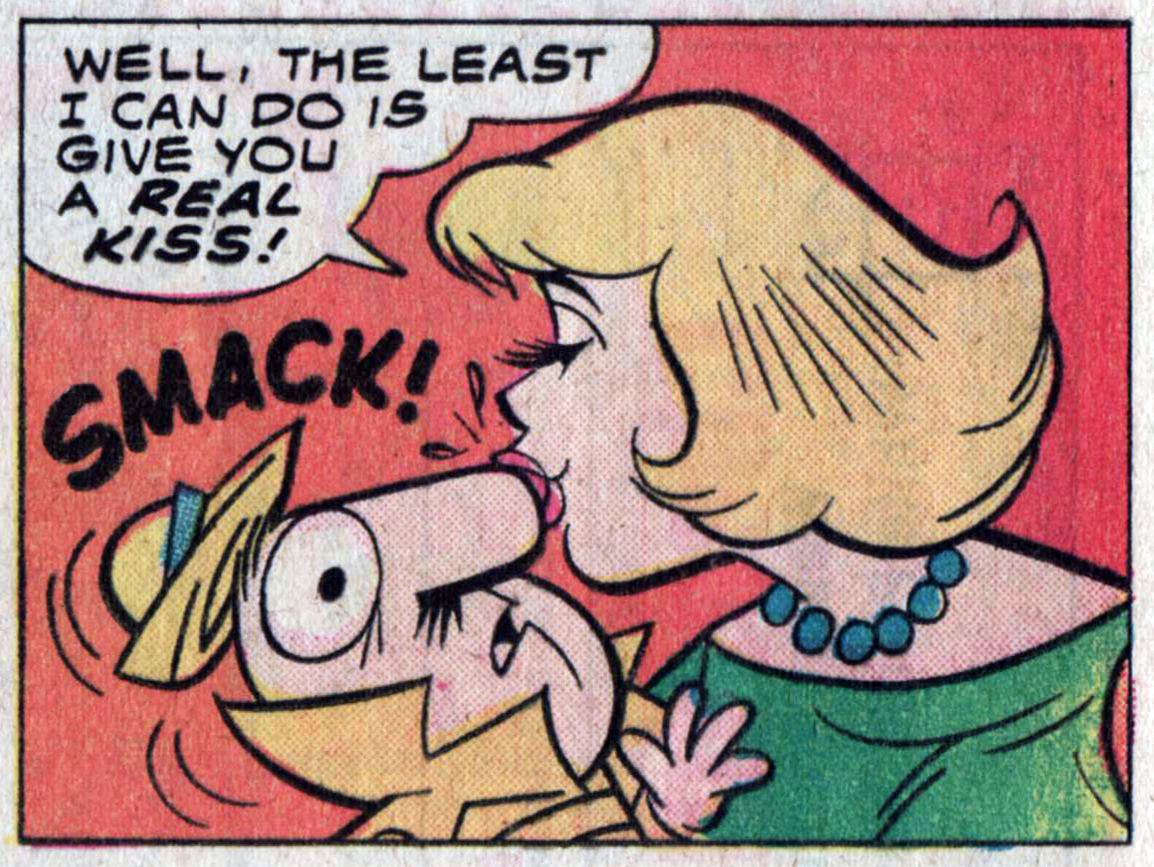
Speaking of the « Case of the Stolen Kiss », here’s a rather… daring public display of affection! This being Gold Key, the material was not submitted for approval to the industry’s censorship body, the Comics Code Authority.
« One of these days, some driver will run me off the road… just because his chick recognizes me! »
You may have heard the news… sorry to be the bearer of sad tidings if you haven’t. David Cassidy, who rose to fame as The Partridge Family tv show’s Keith Partridge in 1970, has passed away on November 21, 2017, at the age of 67. If this makes you want to pull out your old PF records and read some comics while grieving your lost innocence, let me help you with a word of warning: Charlton published two separate series based on the exploits of the acclaimed teen idol and his boob tube kith and kin, and they’re hardly in the same league. The Partridge Family (21 issues, March 1971 – November 1973), was utter dreck, the handiwork of infamous photo tracer and corner cutter Don Sherwood. The other, David Cassidy (14 issues, February 1972 – September 1973), was an altogether racier breed of cat, thanks to the lush artwork of the truly underrated Turkish-born master Sururi Gümen (1920-2000), who toiled anonymously for many years on the long-running Kerry Drake comic strip (there’s a special pit in hell reserved for folks like Alfred Andriola), but also produced some very fine work for Charlton. More on that later!
David Cassidy no. 4 (June 1972, Charlton Comics.)
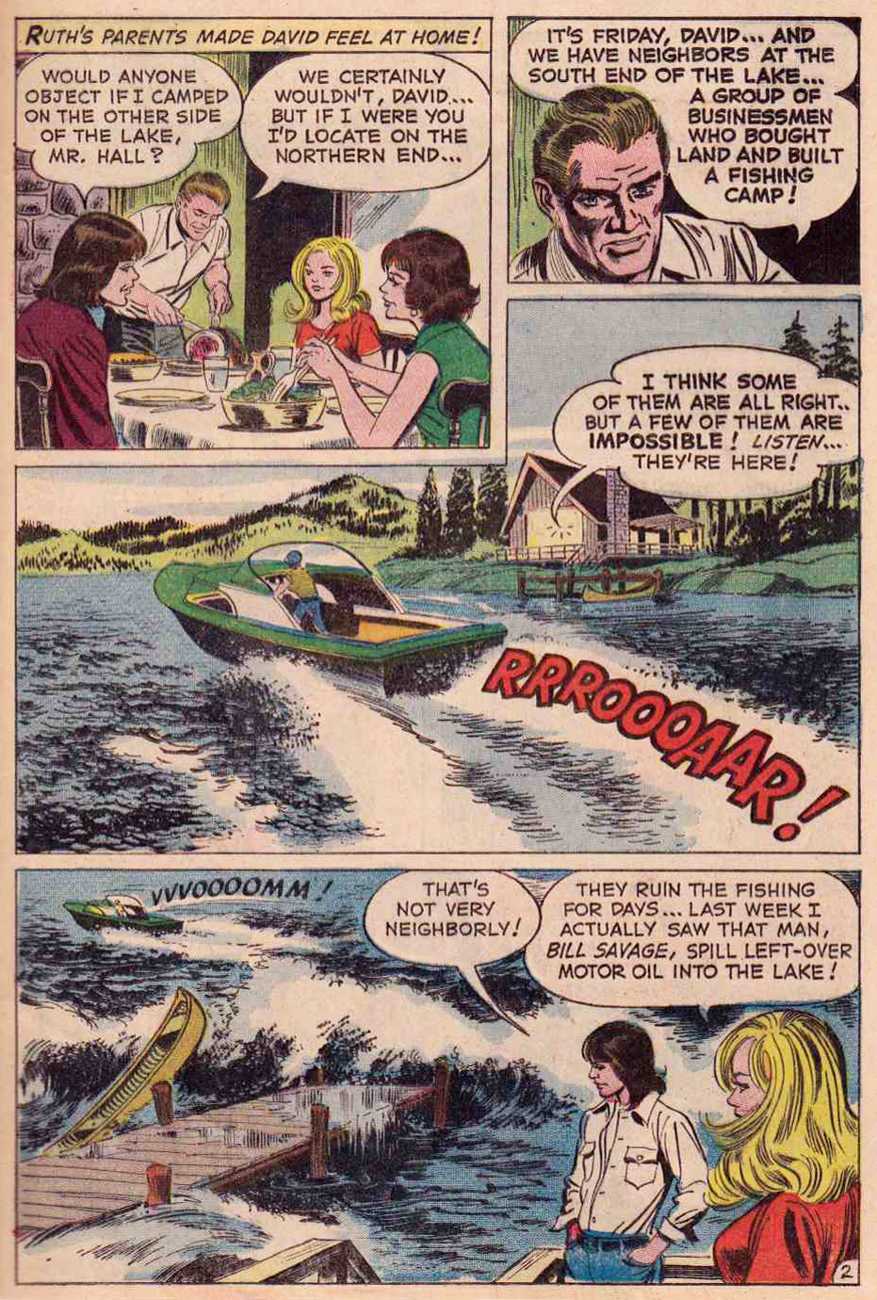
A sample from This Was Paradise from David Cassidy no. 3 (May 1972, Charlton Comics), presumably written by Joe Gill and definitely illustrated by Sururi Gümen. According to his son, illustrator-filmmaker-actor Murad, «… it was Charlton – and David Cassidy comics – that sent my sister to college.»
A moody one from David Meets His No. 1 Fan!, the other story from David Cassidy no. 3 (May 1972, Charlton Comics), also scripted by Joe Gill and illustrated by Sururi Gümen.

































 Who's Out There?