Basil Wolverton’s Mystic Moot and His Magic Snoot

« I think the most gruesome thing in life is people — if they let themselves go. I’ve been letting myself go for years, and I’m beginning to feel gruesome. I want to entertain and communicate. I don’t want to hurt anyone’s feelings, but I have to be honest — like that old baseball umpire — and call ’em like I see ’em. My drawings aren’t as bad as the models themselves. » — Basil Wolverton

Here at WOT? headquarters, we’re both card-carrying, fervent Basil Wolverton* fanatics, but we haven’t devoted the column space commensurate with our affection for his work. Why? Because Wolverton, despite toiling in underpaid obscurity for most of his career and inevitably never becoming a household name, was always a critic and historian’s darling, insofar as there was a scholarly press to express its appreciation. Things began to turn around in the early 1970s, just in time.

Whatever subject or genre he put his hand to, Wolverton’s singular style shone through, and not as a handicap: his funnies were hilarious, his horror was harrowing… but they were distinctly from that same, most gifted of hands.

The artist at work (presumably) on his caricature of Red Skelton, circa 1949.

Most of Basil’s humour work was (with the partial exception of Powerhouse Pepper, 1942-49) relegated to ‘filler’ features, generally hidden gems glittering in the mediocre midst of loads and loads of higher-profile rubbish. Don’t just take my word for it: here’s a typical example of the sorry setup.

Quite recently, I was delighted to learn of the existence of a sublime collection of vintage Wolverton humour, namely Scoop Scuttle and His Pals: The Crackpot Comics of Basil Wolverton (April 2021, Fantagraphics), assembled and restored by Mr. Greg Sadowski, a man of impeccable credentials, taste and talent, who brought to bear his usual diligent care in researching, editing, designing and producing this tome, as he has before with his two volumes of Wolverton’s biography, Creeping Death From Neptune and Brain Bats of Venus, as well as exemplary monographs of Bernard Krigstein, Alex Toth, et al.

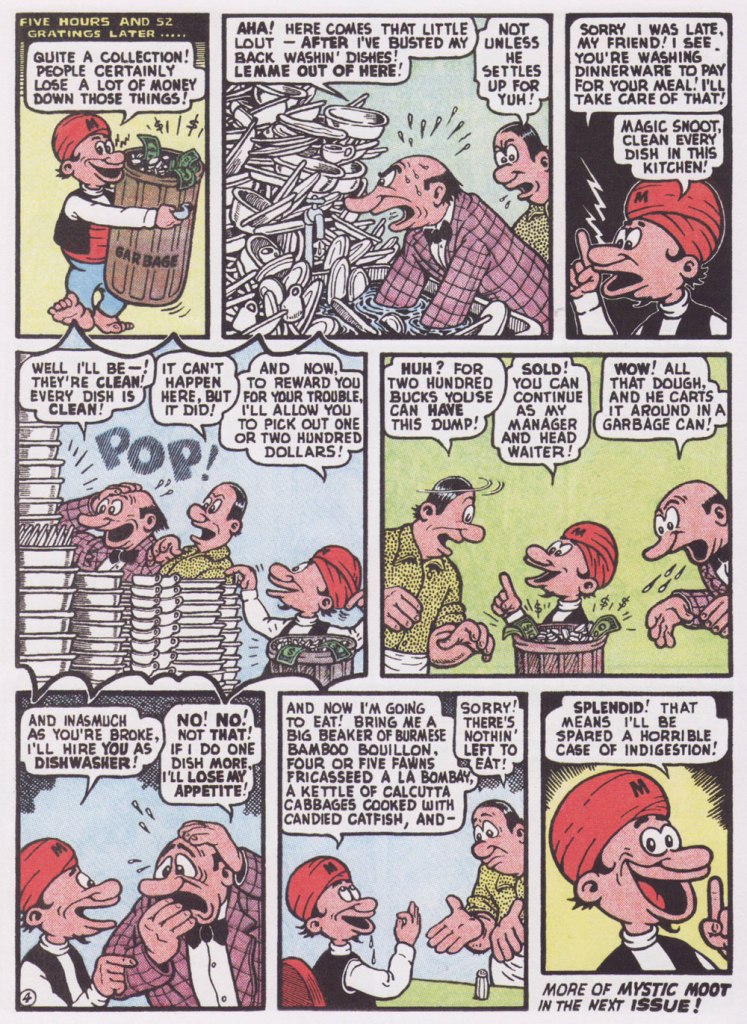
From this thrilling new assemblage, I’ve picked a pair of short samples, both featuring my favourite Wolverton protagonist, Mystic Moot (and his Magic Snoot). Sadowski informs us that:

« In July 1945, editor Virginia Provisiero invited the artist to submit ideas for a four-page ‘magic or mystic character’. He responded with Champ Van Camp and his Magic Lamp, but the editor suggested ‘a weird magician who had hocus-pocus powers instead of this lamp and genie affair‘. Wolverton hit the bull’s-eye with his second try, Mystic Mose and his Magic Nose, though Managing Editor Will Lieberson came up with a catchier moniker. »

Historian Henry Steele, in his indispensable overview of Wolverton’s career (published in Bill Spicer‘s blandly-titled but most excellent Graphic Story Magazine‘s issues 12 and 14, circa 1970-71), eloquently describes Mystic Moot as :

« Basically a kindly and almost simple soul, he is eternally cheerful and never at a loss. He is perennially helping others, usually unfortunate nobodies liked the jobless glutton, the bankrupt small businessman, the farmer with no crop, the henpecked husband, intimidated lumberjacks and prospectors, widows, orphans and kindred down-and-outers. He uses his magic powers only in the most haphazard ways, and never relies on them on his own behalf unless it is absolutely necessary.

Perhaps because of the passive Eastern philosophy of its subject, Mystic Moot strikes one as being the most minor key of all Wolverton’s features — which, while it implies difference, does not mean inferiority in any sense. »

Originally published in Comic Comics no. 2 (May 1946, Fawcett).

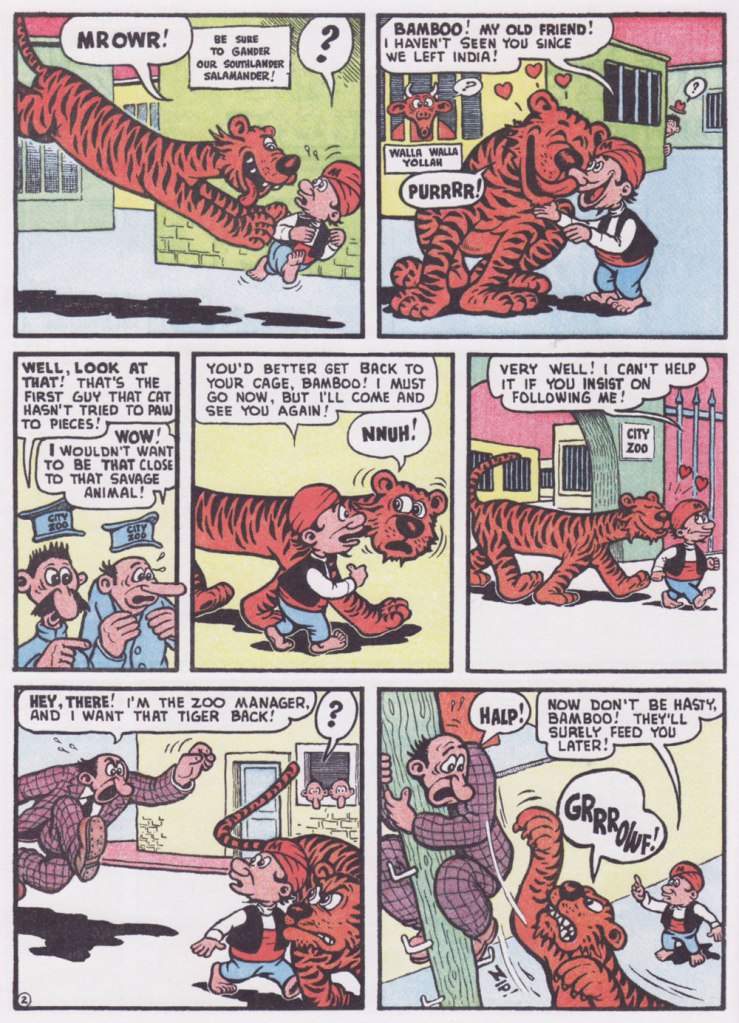
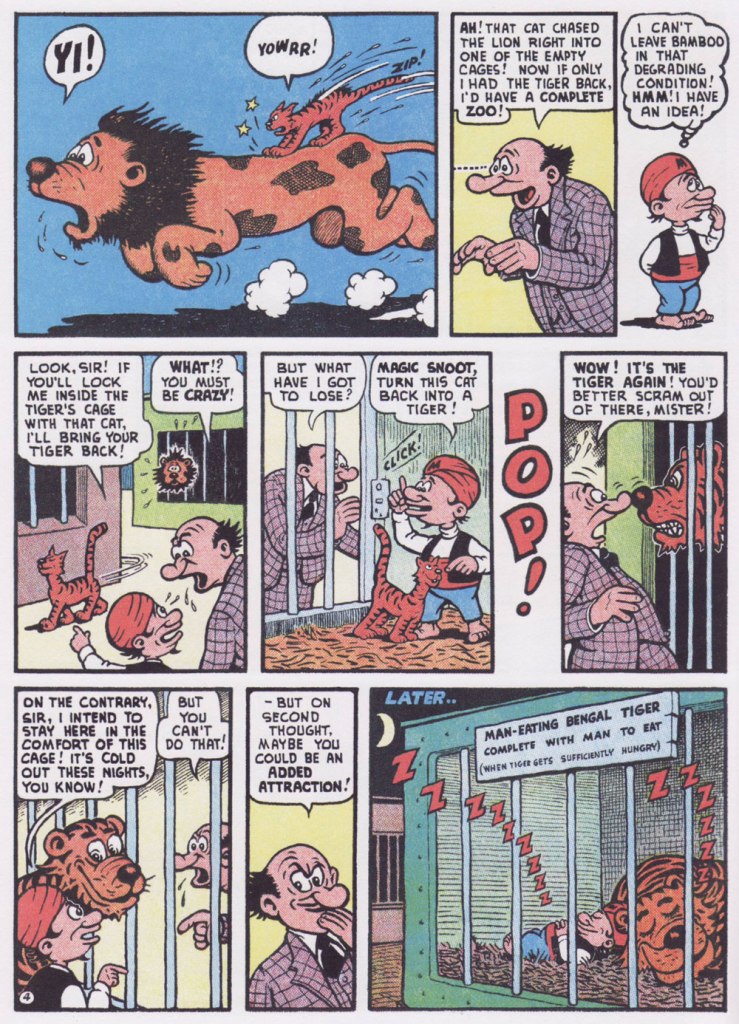
Here’s one for my fellow animal lovers out there!
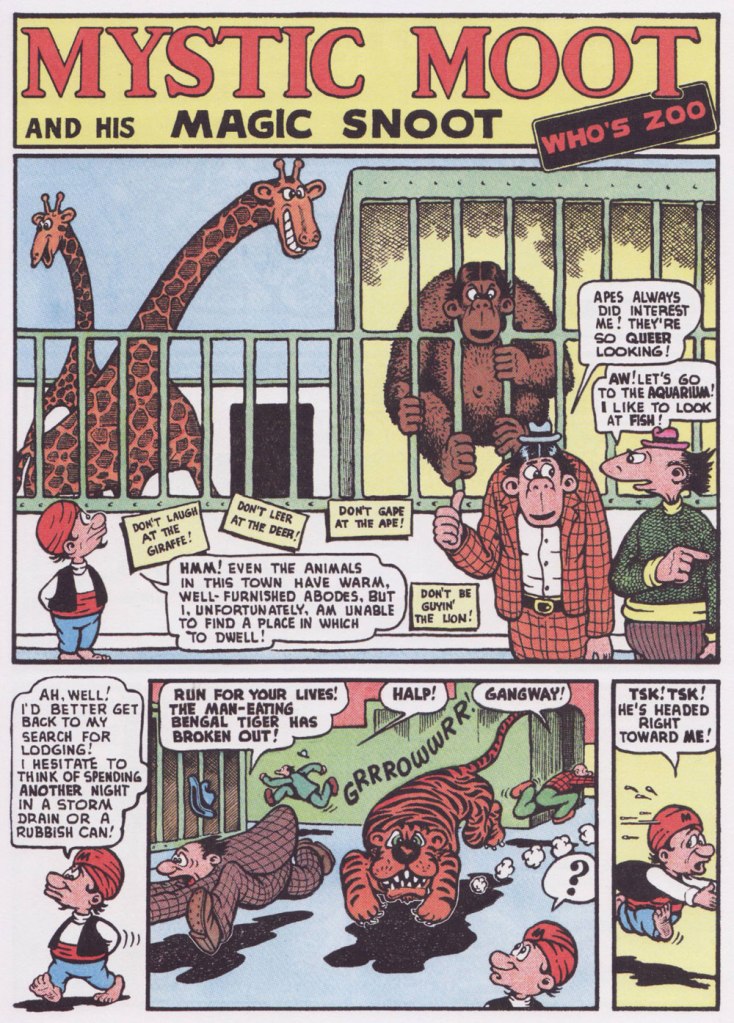
Originally published in Comic Comics no. 7 (Oct. 1946, Fawcett).

-RG

*He’s a Tentacle Tuesday Master, I’ll have you know!
Tentacle Tuesday Masters: Mal Eaton — Peter Piltdown Goes Fishing!
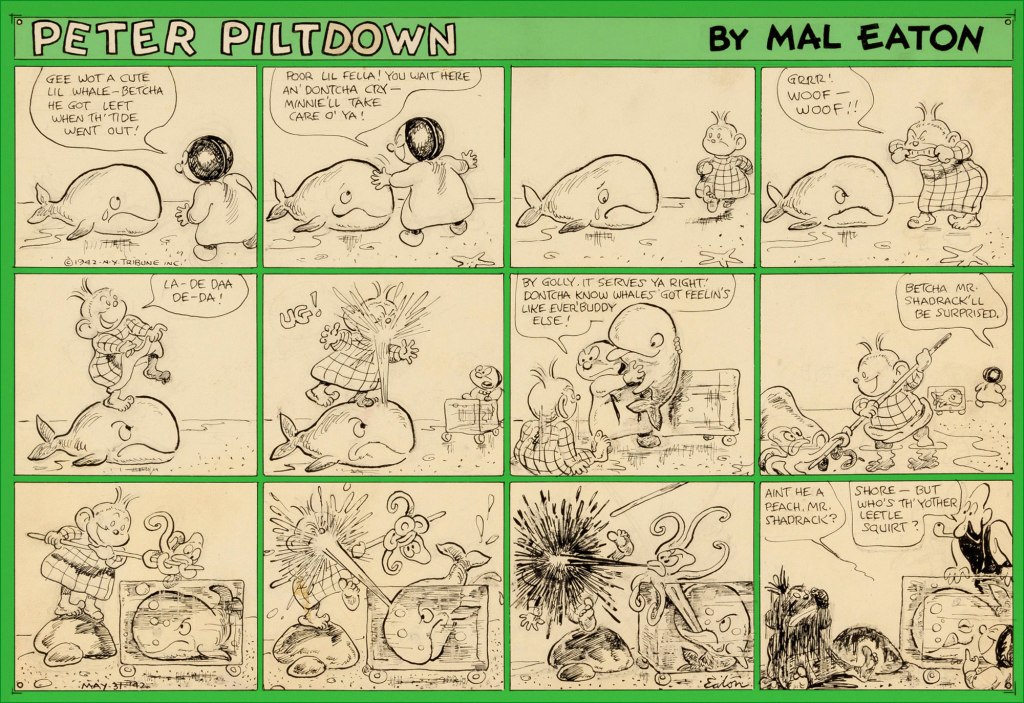
It’s time for a Peter Piltdown Tentacle Tuesday! We have previously written about Peter Piltdown, Mal Eaton’s nearly forgotten strip, but a few Sundays were kept in reserve for very obvious (tentacular!) reasons. Given the paucity of these strips, I am truly amazed that the original art of four octopus strips is available online. Eaton has a great ease with depicting flexible, expressive tentacles, so I am very pleased to be able to raise him to the rank of a 🐙Tentacle Master🐙!

Without further ado (just a little side note: these images were found on Heritage Auctions – I am not lucky enough to own any Mal Eaton art, or at least not yet!) …

May 31st, 1942. I didn’t know that whales ate octopus, but apparently they do – ‘the majority of toothed whales will eat whale food species such as squid, octopus, crustaceans and fish.
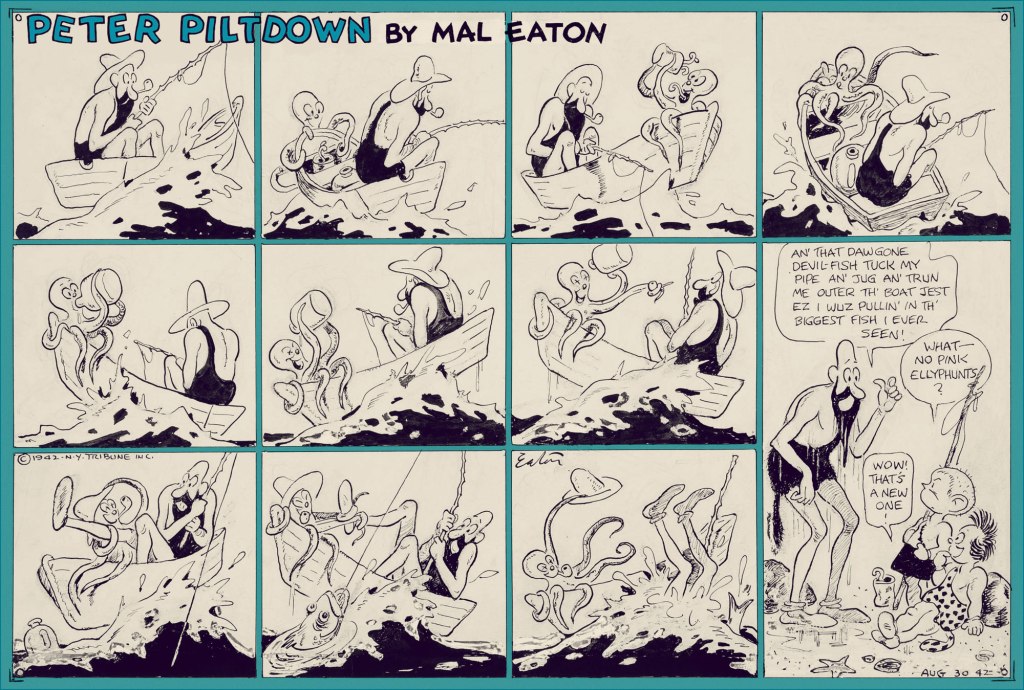
August 30th, 1942. This octopus knows how to live it up! This strip makes up for the unfortunate end of the member of his species in the previous one.
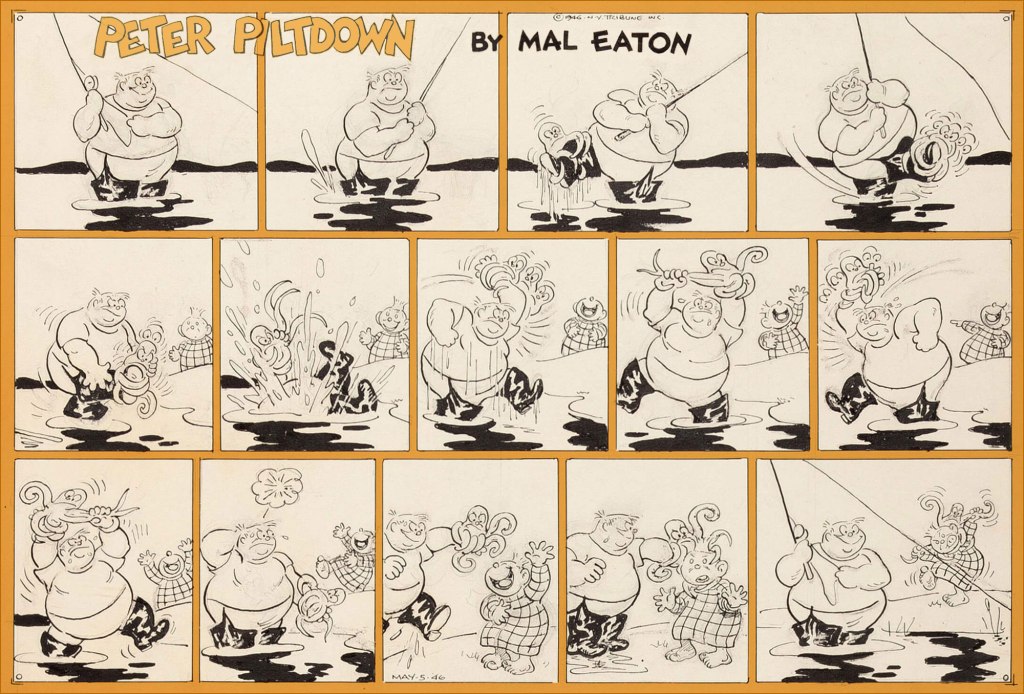
May 5th, 1946. I don’t know what the octopus wanted the man’s leg for in the first place, but he sure looks peeved by this whole interaction. These fishing bouts are just fraught with octopus danger…
… even if the danger is sometimes imaginary. August 18th, 1946.

Speaking of day-dreaming, I like to fantasize that Mal Eaton had a whole octopus-centric strip, and that one day somebody is going to unearth it and publish a beautiful collection. In the meantime, I’d happily settle for another volume of Jack Kent’s King Aroo

~ ds

Tentacle Tuesday: Welcome to Bermuda Square!

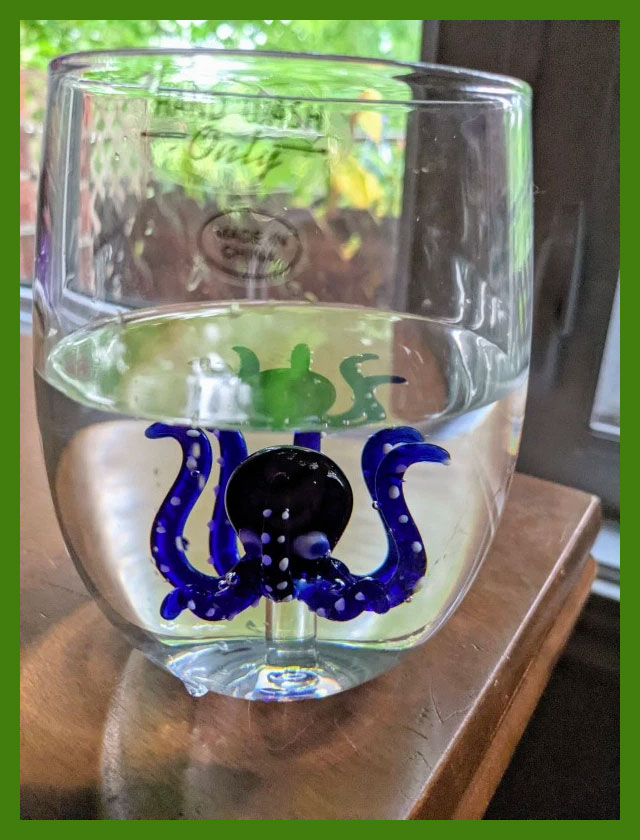
Greetings, tentacle aficionados! First of all, I’d like welcome this new octopus into our household, courtesy of a gift from my mom:

Isn’t he cute?

I felt like going with something more modern this week, though given that the last TT was set in the 60s, that still leaves a healthy 40-50 years to choose from.

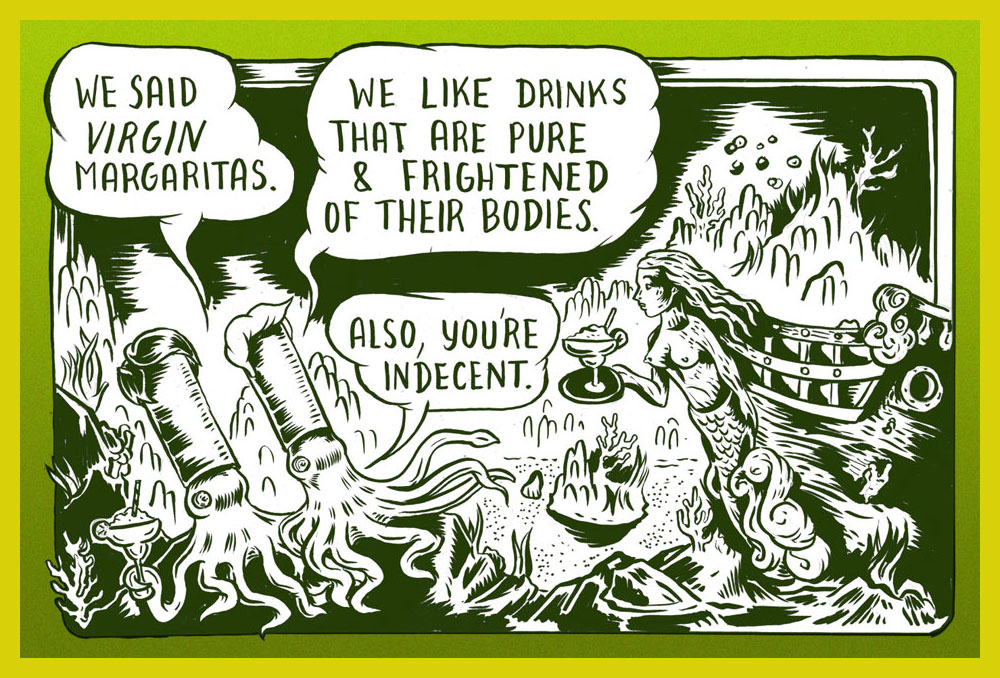
Ali Fitzgerald’s Bermuda Square waved its first ‘hi there!’ on May 16th, 2016 in the The Cut, one of New York Magazine‘s website-only divisions describing itself as ‘a site for women who want to view the latest fashion trends; read provocative takes on issues that matter, from politics to relationships; follow celebrity style icons; and preview new products.‘ I don’t believe Bermuda Square fits that neatly into any of these categories, though Iris the octopus is unarguably stylish, and politics and relationships are definitely involved. Does she and her siren friends ever try out some new face cream, or weighs the pros and cons of that foundation one sees ads for absolutely everywhere? Who knows – Bermuda Square strips only live behind The Cut’s pretty rigid paywall (not that I object to writers and illustrators actually being paid, but I would much rather buy a collection of strips than a subscription to an online-only lifestyle magazine – call me old-fashioned).

Fitzgerald describes the world her comics are set in as “a feminist enclave where everyone can co-exist” and a “delicate ecosystem”. It’s a fully fleshed world, with intricate plot lines tracking relationships between characters and some class warfare, since underwater denizens aren’t at all immune from pettiness or envy. « It’s segmented like New York: There is Astora, a Manhattanite underwater mer-city where Margox imagines building a life, and Orchid Island, which resembles a not entirely gentrified Brooklyn or Queens. Solanas Village is a ‘70s-style, separatist female commune on a rocky shore, while the social, watery Tidelands are like a club where everyone mingles. If a sailor stays too long in Bermuda Square, he goes to (and dies in) the Ghost Vortex… » 

The following excerpts have been lovingly coloured by co-admin RG.

First-ever strip, with a lovely abundance of tentacles!

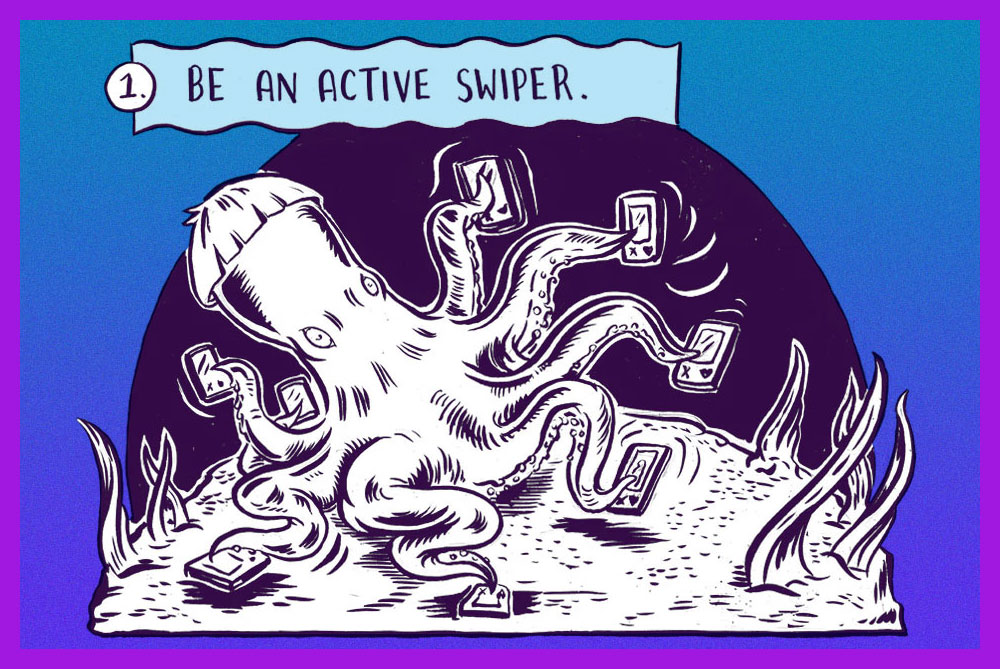
Iris the sex-positive octopus gives tips for using Tinder.

Ali Fitzgerald, who currently lives in Germany, has also worked for The New Yorker, and in 2018 Fantagraphics published her memoir, Drawn to Berlin: Comic Workshops in Refugee Shelters and Other Stories From a New Europe.

You can also have a look at her Hungover Bear strip, created for McSweeney’s.

~ ds

Tentacle Tuesday: Tentacles Aren’t So Bad, My Old Fruit*

« The land of embarrassment and breakfast. » Julian Barnes

Ah, yes, it’s time to paddle once again to British shores, after fortifying myself with a few dainty tea sandwiches. In rough chronological order…

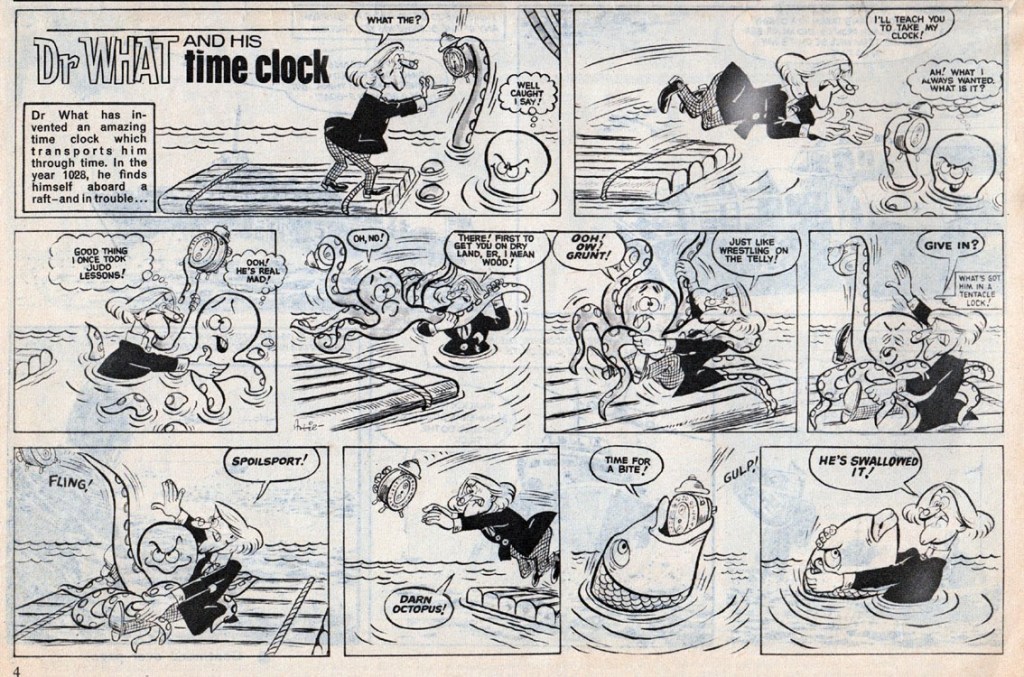
Here is a Dr What and His Time Clock strip I found on the excellent Blimey! The Blog of British Comics. I’ll quote Lew Stringer, its author, who is a lot more knowledgeable about British comics than I’ll ever be: «... a weekly humour-adventure serial that ran in Boys’ World in 1964, published by Odhams. The hairstyle and clothing of the character is obviously based on that of the first Doctor as portrayed by William Hartnell. Here’s the episode from Boys’ World Vol. 2 No. 33, dated 15th August 1964. The art is by Artie Jackson, who later drew Danger Mouse (preceding the TV cartoon of the same name/concept) for Smash! in 1966. Jackson also drew many of the Danny Dare strips for Wham! »

Dr What and His Time Clock strip from August 1964, drawn by Artie Jackson.

In case you didn’t know, a beano is British slang for a noisy festive celebration, or, in other words, some sort of a party. Biffo the Bear is not my favourite character from this very long-running publication (started in 1938, still ongoing), but I really like the way this octopus is drawn.

Beano no. 1435 (January 17th, 1970, D.C. Thomson). Cover by David Sutherland.
Chips from March 10th, 1973. The cover is drawn by Mike Lacey, son of adventure strip artist Bill Lacey.

Scream Inn, written and illustrated by Brian Walker, was a beautifully-drawn strip published in Shiver and Shake (and, later, Whoopee!). The location: a hotel run by ghosts. The premise: these ghosts delighted in playing pranks on humans, and offered a million pounds to anybody who would manage to stay at their hotel for an entire night. Readers were invited to suggest what type of person could make it through the night (and were granted a one quid reward if their suggestion made it into a story).

In this one, a friendly octopus is borrowed to terrify a clown:

Scream Inn page published in Whoopee! from June 4th, 1977.

Cookie’s many-tentacled friend Olly makes another appearance a month later, this time used to spook “Jake the Peg with an extra leg”.

Scream Inn detail published in Whoopee! from July 16th, 1977.

Incidentally, isn’t this a nice header?

Elephant on the Run ran in Cheekly Weekly and was drawn mostly by Robert Nixon, with some other artists occasionally filling in. This strip boasted a pleasantly surreal premise: the elephant, Walter, is being relentlessly pursued by a mysterious man in a plastic mac… and suffering from a bad case of amnesia after an unfortunate circus act mishap, he has no idea why he’s being hunted, or what the man wants from him. Still, he runs! Both of them donning a range of improbable costumes to fake each other out – as in the following strip, in which Walter dresses, among other things, as a one legged pirate to elude detection. This sort of wackiness is why I love British comics.

This instalment of Elephant on the Run was published in Cheeky Weekly of November 25th, 1978 and is drawn by Robert Nixon. Look inside this issue here.

I hope you enjoyed this foray into British tentacles! There are plenty more of that stuff in our archives – or go rummaging through the whole British category in THE SUN NEVER SETS ON THE BRITISH EMPIRE!

~ ds

*paraphrasing from ‘Pimlico’ by David Devant & His Spirit Wife. Here are these joyous goofballs:

Q: What’s Michael? A: Kobayashi’s Most Special Cat

« Michael is, simply put, Japan’s version of Garfield, Heathcliff and Krazy Kat all rolled into one. » — Wizard: The Guide to Comics*

* I actually disagree with all three comparisons, aside from the fact that the first two comics are also about orange cats, but this is the review Dark Horse used to promote the series.

What’s Michael? (ホワッツマイケル? in Japanese) is a comic series by Makoto Kobayashi about a cat named Michael who goes about his cat life in a pretty standard way. He spends most of the day snoozing, has distinct food preferences, and likes to meow loudly at night while courting his favourite cat lady. One would not be entirely unjustified in thinking that cat lovers will read any old comic that prominently features felines (I have occasionally been guilty of that myself!), but I am convinced that there’s something special about this series.

One of the things that makes it so endearing is that Kobayashi has a very good grip on feline body language, making it fun to follow even the poorest excuse for a plot, like for instance Michael contemplating which cozy enough spot to select for a nap. That being said, he doesn’t limit himself to realistic cat situations, often featuring cats acting like (very goofy) people, parodying human and feline at the same time.

Natural cat body language… and different ways in which cats just can’t bend, cheerfully pointed out.

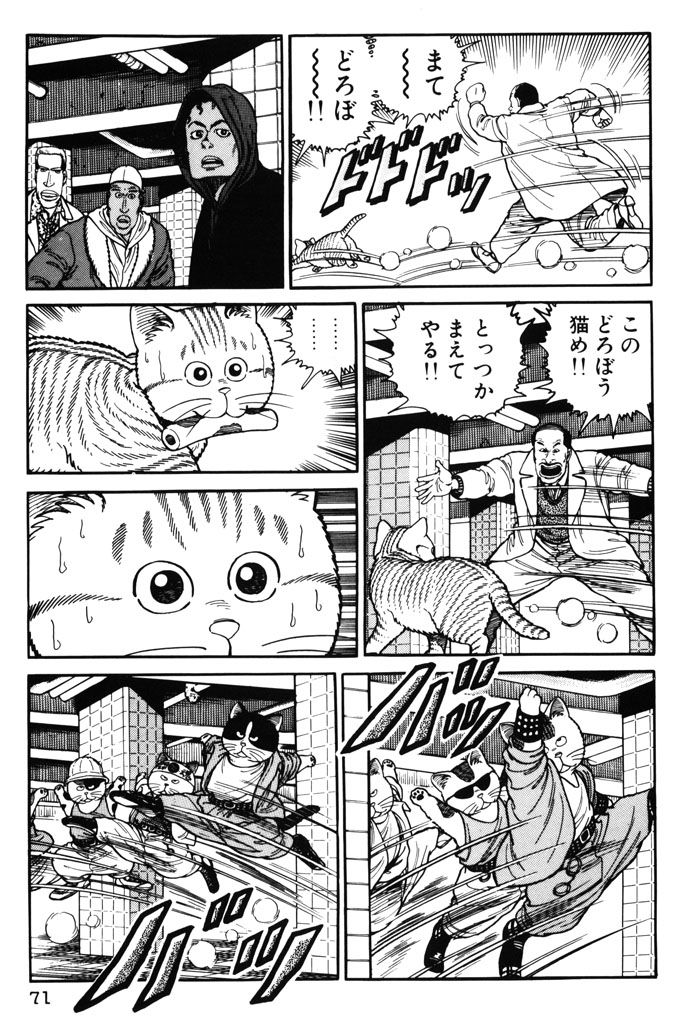
Some readers are more interested in the outlandish stories, of which there are many (ranging from cat parodies of various movies to plain weirdness), some develop a soft spot for the recurring human (or semi-human) characters. Michael himself switches owners like switching gloves, depending on the needs of the story, and there is not much continuity. Kobayashi’s ideas can be a little hiss or miss, but there’s something here for everyone… provided you like felines, of course… adventures of a vampire count who is scared of cats are side-by-side with wacky cat food commercials, depictions of everyday life of various cat-besieged country bumpkins alternate with cat street gang rumbles, and all of that is sprinkled with humans-as-pets interludes. And, naturally, our ordinary yet handsome tabby Michael drinks, sleeps and plays alongside Popo, his wife, their kittens, and a rotating cast of other cats (Catzilla comes to mind!) and the poor, often put-upon dog nicknamed Bear.

The Count’s quest for a pretty neck to bite is, as always, thwarted by Michael or one of his relatives.
Michael, Popo and their kittens on the prowl for a soft spot for a snooze.
One of the strip’s running jokes is that Michael passionately hates Morning Cat canned food, and will go to ridiculous lengths to avoid eating it.

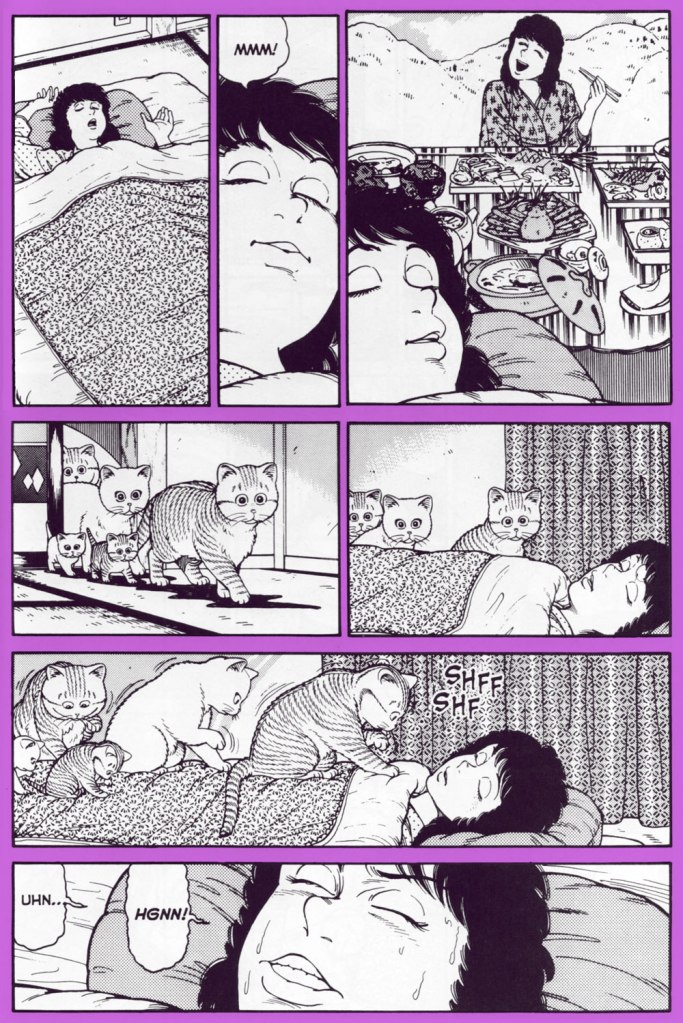
The following sequence illustrates one of Kobayashi’s favourite tricks, namely to start off with more-or-less normal cat behaviour and veer off into an unexpected direction:

As you have probably noticed, Kobayashi often opts for exaggeration when it comes to people’s facial expressions, which sometimes leads to results that are more grotesque than funny. He also enjoys drawing pretty women, but that is more obvious elsewhere, for instance in his series Club 9 (Dark Horse has published 3 volumes of that and abandoned the project before the story’s end, much to my annoyance).

In Japan, What’s Michael? was published in the weekly magazine Morning starting in 1984, and it even won the Kodansha Manga Award in 1986. There seems to also have been quite a few collections released.

One of the Japanese editions of volume 1 and 2.
Cover of another collection from 1987; Bear likes to sit and watch cats playing.

In 1988, its popularity was also rewarded with a 45-episode anime which was also broadcast in Italy and Spain (at least according to a Russian article I found). The following is the cover of a collection of these episodes, as far as I could ascertain:

In the US, it was published by Dark Horse‘s manga imprint. I am not entirely sold on the translation (the aforementioned country bumpkins, for instance, talk as if they were in a cheesy would-be Western written by somebody who has no understanding of the genre), and it also bothers me that the comics were published in the standard American left-to-right reading direction. I think it is a relatively recent phenomenon to leave manga as it was drawn when translating it into European languages – audiences have become more refined.

An example of the story going interestingly off the rails, in the proper right-to-left format.

Apparently there are stories that have never been translated, as they were deemed unfit for Western audiences (those intrigue me, yet my knowledge of Japanese is nil!), but those that were selected by whomever is in charge of these decisions have been collected in 11 volumes, published between 1997 and 2006. Most of them are quite out of print by now; I managed to gather all eleven over the years, though while writing this post I discovered that Dark Horse has decided to rescue this series out of its out-of-print-darkness and re-publish the works in two 500-page volumes. Am I going to purchase those? Yes, of course, as there is bonus material involved! Though the wrong reading direction remains wrong, alas.

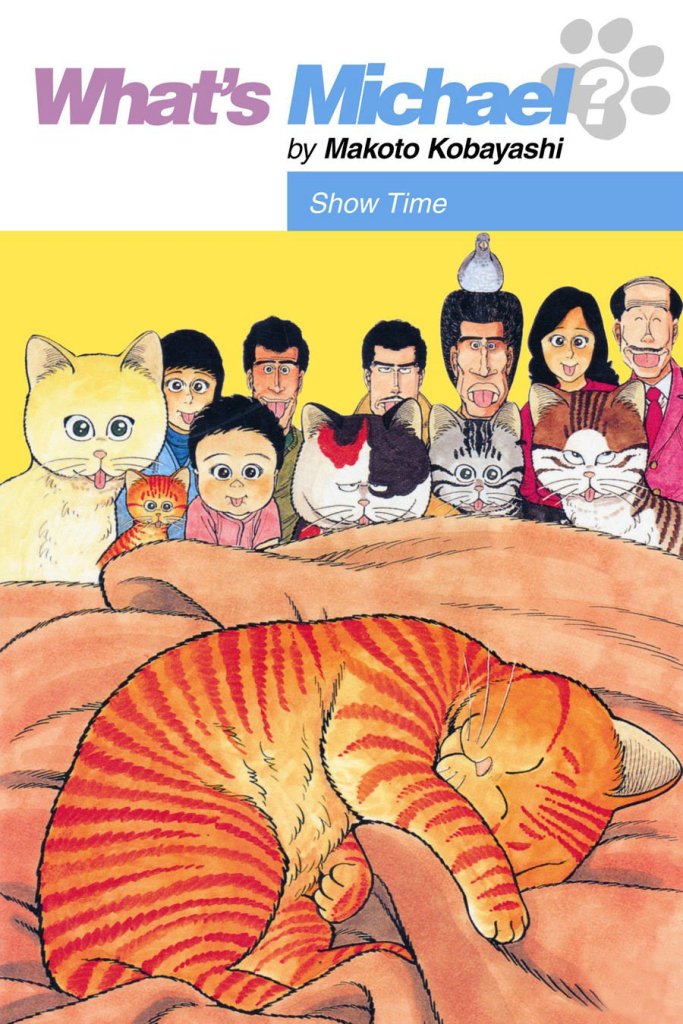
Volume 8 of Dark Horse’s initial What’s Michael? run.

I enjoyed reading a review of the first volume of the reissue on Al’s Manga Blog, and maybe you will, too: What’s Michael? Fatcat Collection Vol 1.

~ ds

Tentacle Tuesday: The Whole Merry Menagerie

The tentacled well of funny animal insanity from the Golden Age is nearly bottomless. Just when I think I’ve more or less covered it all, some new goofy octopus cover that I have never seen before pops up, or an unhinged inside story swims by and waves a cheerful ‘hi there!’ with a free tentacle.

Never mind Mickey Mouse, Donald Duck, or Bugs Bunny. We have Supermouse, Dizzy Duck, and Hoppy the Marvel Bunny! Oh, and also the absurdly (even by funny animal standards) named Peter Porkchops.

This page from a Supermouse story was published in Coo Coo Comics no. 41 (September 1948, Pines Publishing); artist unfortunately unknown. For more (perfectly aptly titled) Coo Coo Comics, visit Tentacle Tuesday: Ha-Ha and Coo-Coo With Frolicsome Animals.

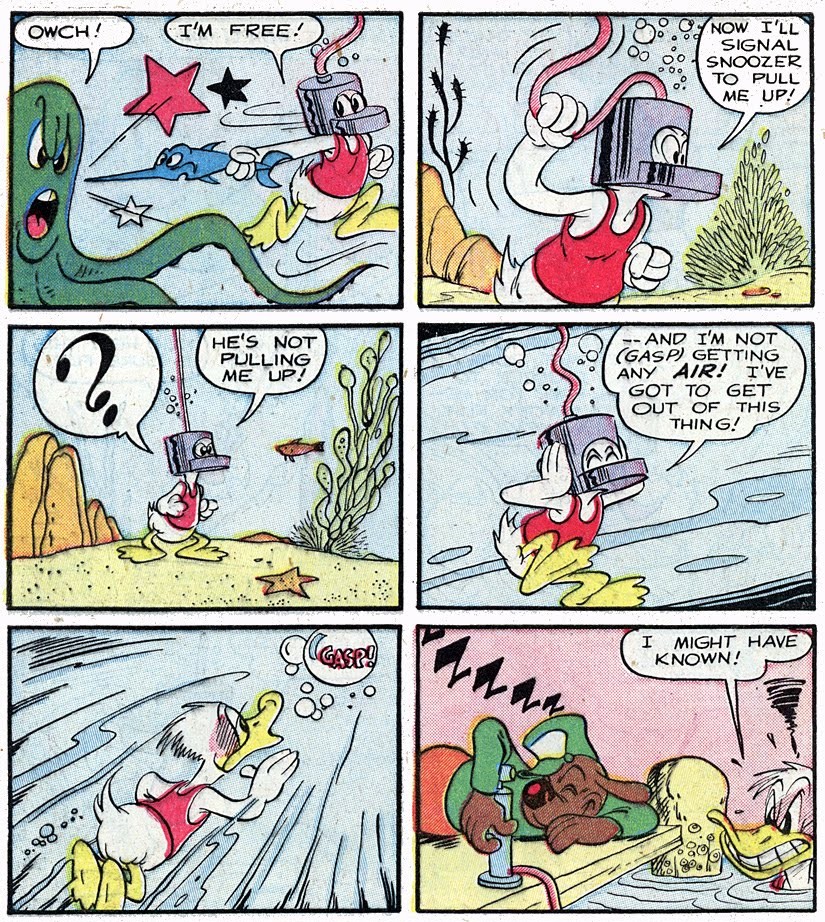
Next up, two pages from The Daffy Diver, published in Dizzy Duck no. 32 (November 1950, Standard Comics), artist once again unknown:

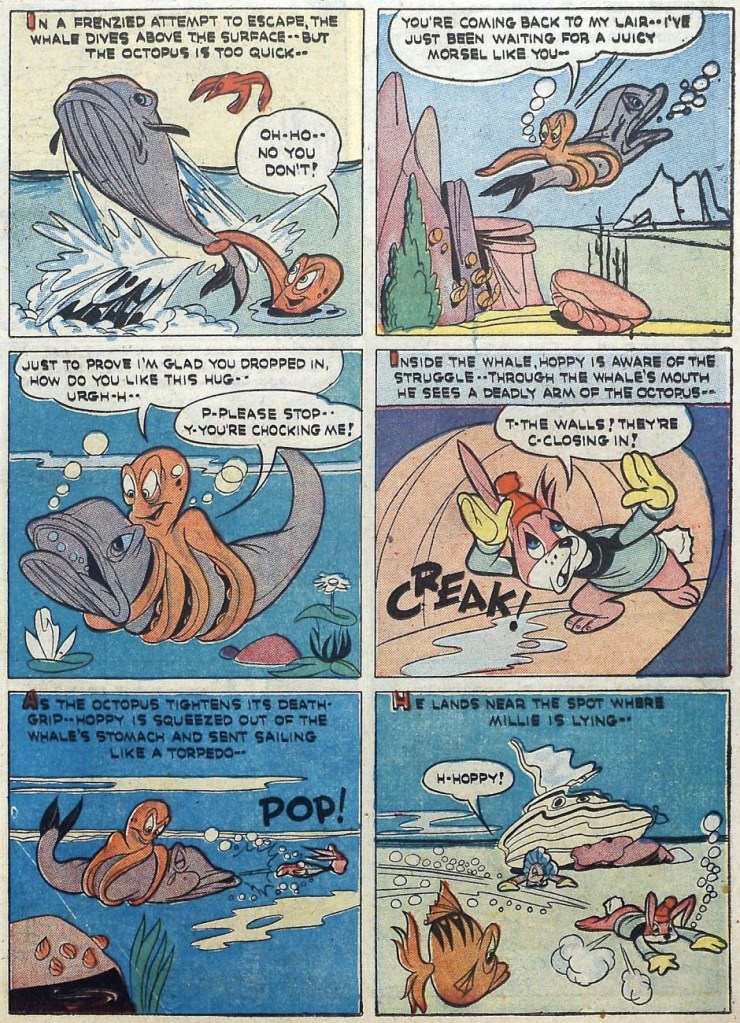
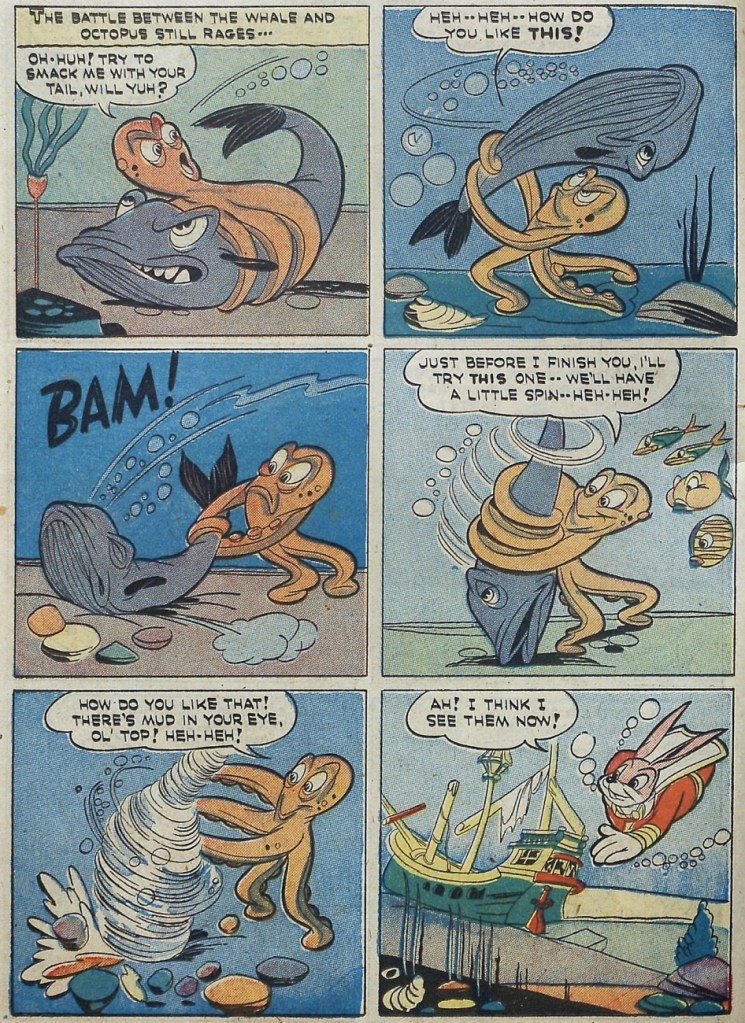
I promised some bunny action – but not the kind that springs immediately to mind! Enjoy this 2-page tentacled tussle in this Hoppy the Marvel Bunny story illustrated by Chad Grothkopf and published in Fawcett’s Funny Animals no. 5 (April 7th, 1943, Fawcett).

For dessert, two covers, because a man does not live on inside pages alone!

National Comics no. 70 (February 1949, Quality Comics). Cover by Gill Fox.
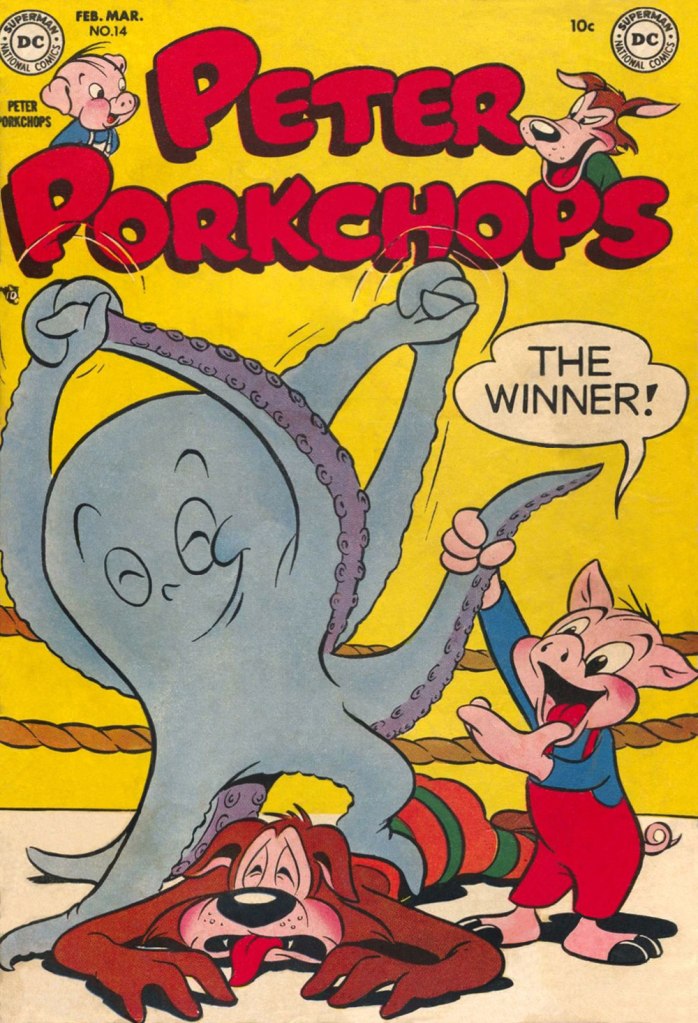
Peter Porkchops no. 14 (February-March 1952, DC); cover by Otto Feuer.

~ ds

Off to the Isle of Cats — and Back by Teatime!

« It’s no good trying to teach people who need to be taught. » — Aleister Crowley

You may have happened across our earlier post on that astounding but tragically short-lived touche-à-tout, Gerard Hoffnung (1925-59). Well, here’s a look at another facet of the man’s work, crafted this time in tandem with, of all people, the definitive-but ambivalent biographer of opprobrious occultist and Ozzy song subject Aleister Crowley, namely the intriguing John Symonds (1914-2006). Come to think of it, the affiliation makes impeccable sense, and it proceeds swimmingly.

In an era where it often seems that those rare adults who yet read do so at toddler-ish levels, it’s easy to forget how many so-called children’s books of yore had plenty to offer the refined adult mind. Here, then, are some highlights from Messrs. Hoffnung and Symonds’ 1955 opus, The Isle of Cats.

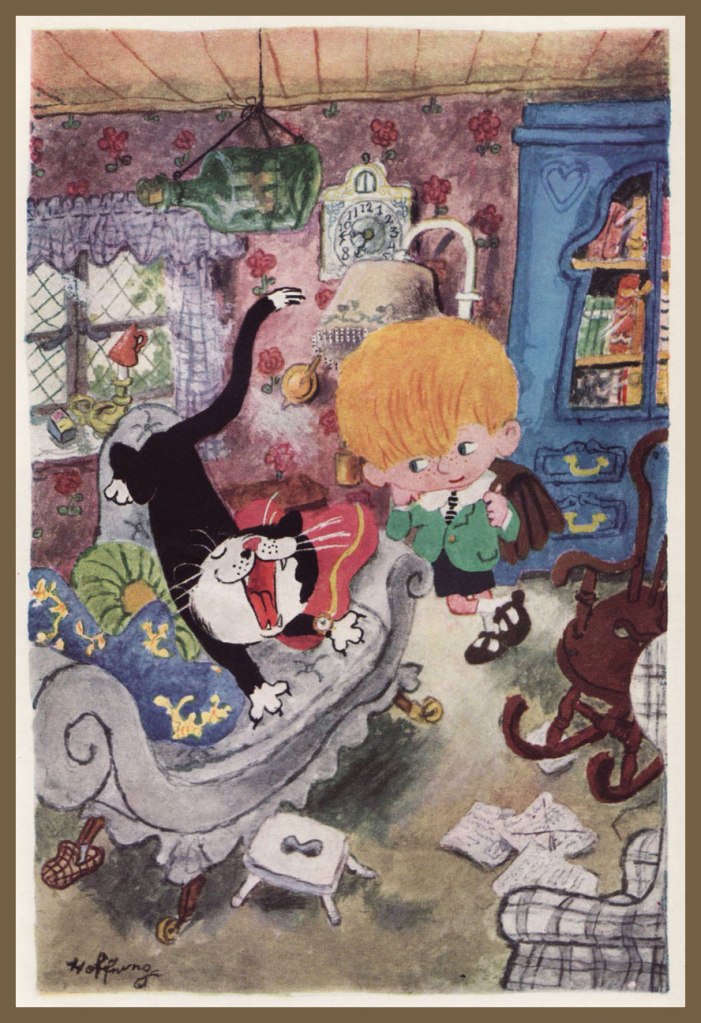
« He closed his eyes, yawned, arched his back and began to dig his claws in and out of the sofa. Uncle Tom was no ordinary cat, for he could tell the time, look through a telescope (keeping one paw over the other eye, of course), beat up an egg, steer a raft, smoke a pipe and do many other things. »
« He’s the Mayor, » whispered Uncle Tom to Gabby, « so be nice to him. »
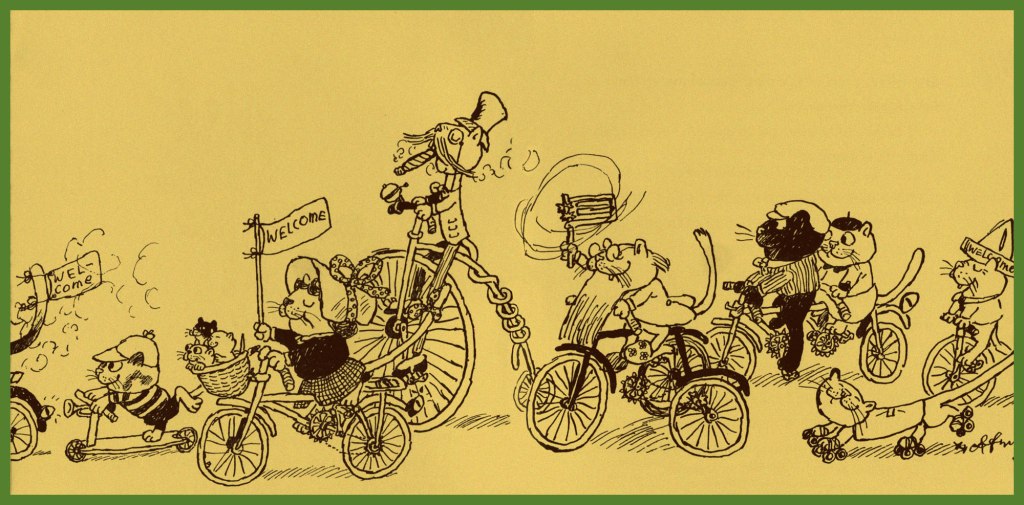
« He was still saying thank you as he and Uncle Tom were being driven away in the Mayor’s car, followed by various cats on bicycles, tricycles and penny-farthings. »
The wrestling bout pitting Tim the Terror (left) against The Furry Fury (right). Things end with a crash when Tim lets go.
« The Hall of Fame contained the portraits of the island’s most celebrated cats. »
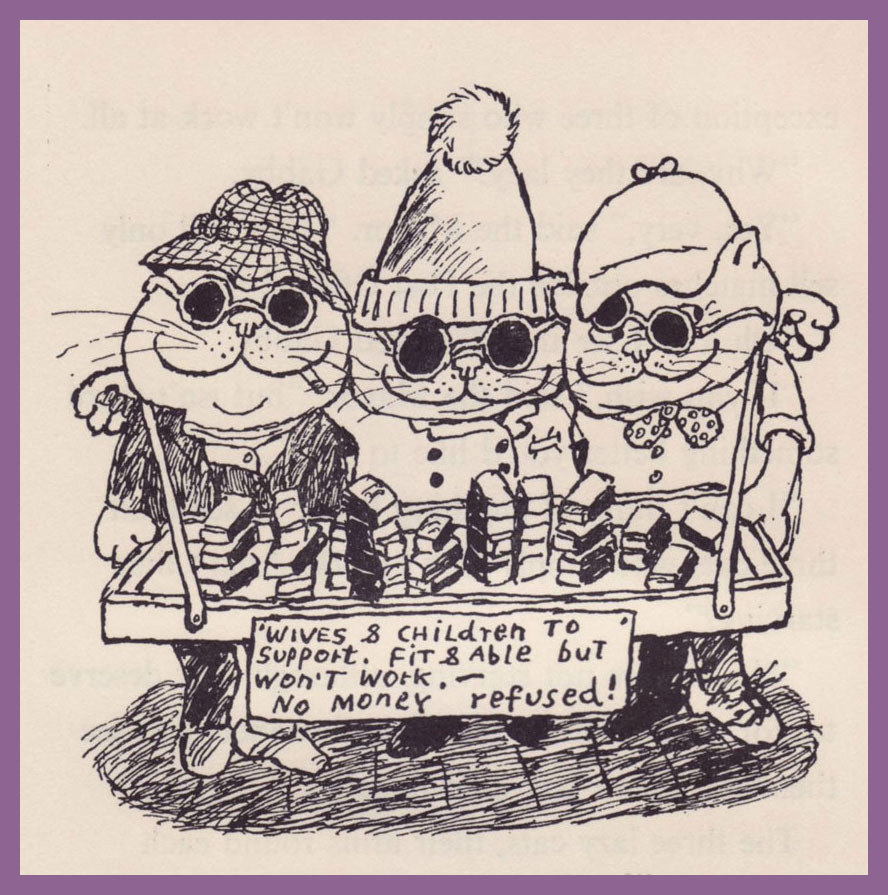
« There were portraits of lots of other famous cats, including Martha who had seven hundred and forty nine children, six hundred and eighty three of whom survived, and were now working hard as tram-drivers, crossing-sweepers, lamp-lighters, pastry-cooks and so forth, with the exception of three who simply won’t work at all. »
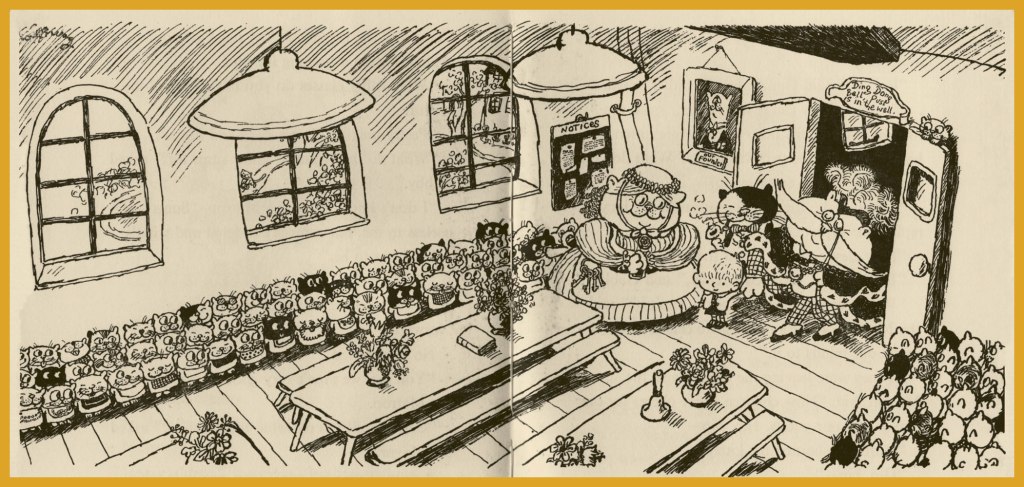
« At the Orphanage, all the kittens were lined up on either side of the Great Hall, looking as good as gold, their hankerchiefs sewn to their shirts, close enough to their noses to blow into them. »
« Just then they sailed over the madhouse and saw some cats standing on their heads, waving their legs in the air. »
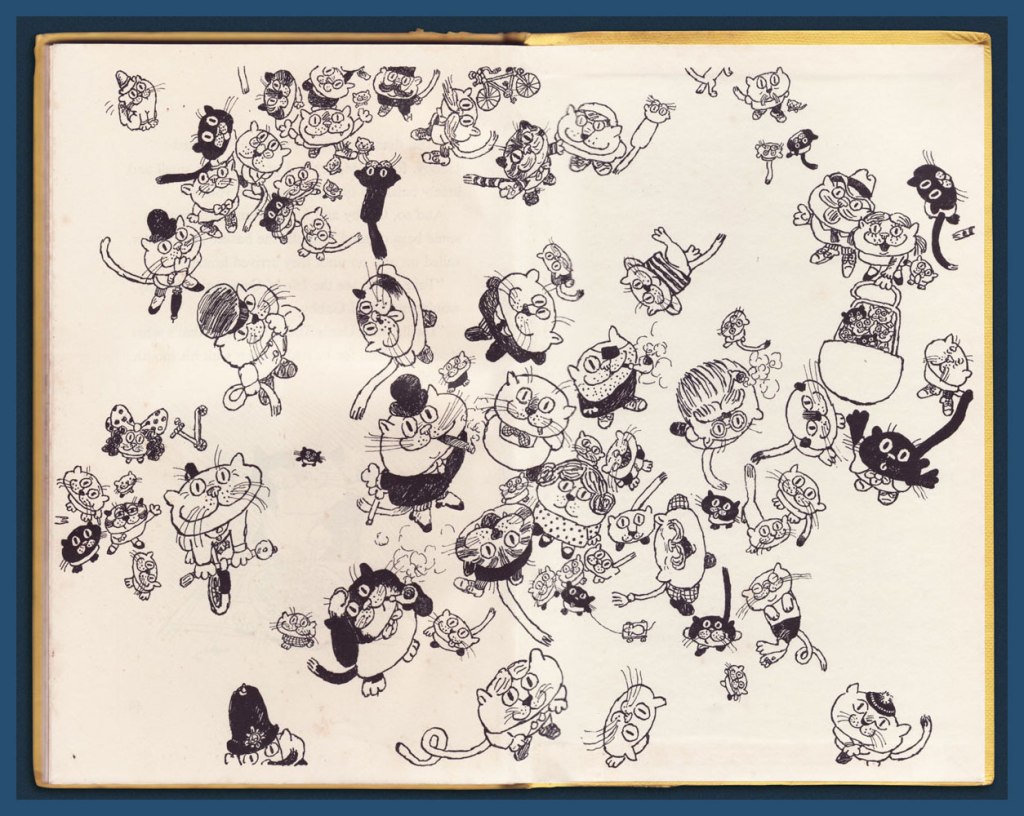
The book’s endpapers illustration, granting the reader a lofty view from the Mayor’s hot air (of course) balloon.

As a bonus, for the finale, here’s the poster Hoffnung was commissioned to illustrate for the classic, Brexit-anticipating 1949 Ealing Studios comedy Passport to Pimlico. [ watch the trailer! ]

Hoffnung’s loving widow, Annetta, wrote, in her 1988 biography of Gerard: « As he sat at his drawing board, increasingly involved and complicated fantasies tumbled from Gerard’s pen onto the paper. In 1949 came perhaps the most intricate of all, a drawing for the poster advertising a popular film of the day, Passport to Pimlico. I do not have the original design but it is unlikely to have been larger than 12″ x 15″, and to squeeze so much into so little space is no mean achievement. » I couldn’t find a trace of this image online, so I’m providing a nice ‘n’ large scan for you. Eat your heart out, Will Elder!

-RG

Hallowe’en Countdown IV, Day 14

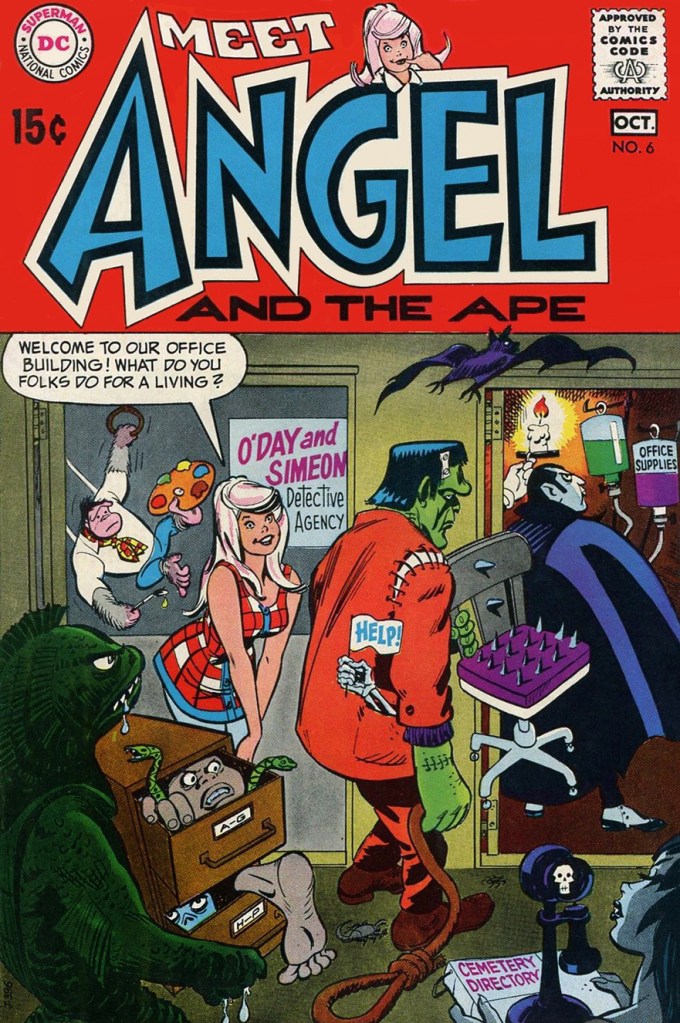
« Listen, Angel! If they’re out of bananas… I’ll meet you at the corner fruit stand! »

Today, let’s combine our general theme with a celebration of the birthday of one of comics’ great, yet perpetually underappreciated talents: Bob Oksner (October 14, 1916 – February 18, 2007), DC’s go-to humour and good girl art guy. Can you beat that? Didn’t think so.

Bob had a winning penchant for mixing monsters and babes, and for this, he’s earned our lifelong gratitude.

This is Angel and the Ape no. 6 (Sept.-Oct. 1969, DC), featuring The Robbing Robot and The Ape of 1,000 Disguises! (Would You Believe Four?), wittily written by John Albano, lusciously pencilled by Oksner, and creamily inked by Wallace “Wally” Wood. Truly swoon-inducing stuff. Edited by Joe Orlando (that explains all the monsters!), with a cover by Oksner.

You might say Angel and the Ape exist in an awkward sort of limbo: popular enough for the back issues to be kind of pricey, but not popular enough to have been reprinted (eight issues, including their Showcase appearance, ideal for a trade paperback, hint, hint).

So what else has Mr. Oksner cooked up over the years? Keeping to our theme, here are a few highlights, but first, a handy bio:

This piece appeared in The Adventures of Jerry Lewis no. 73 (Nov.-Dec. 1962, DC).
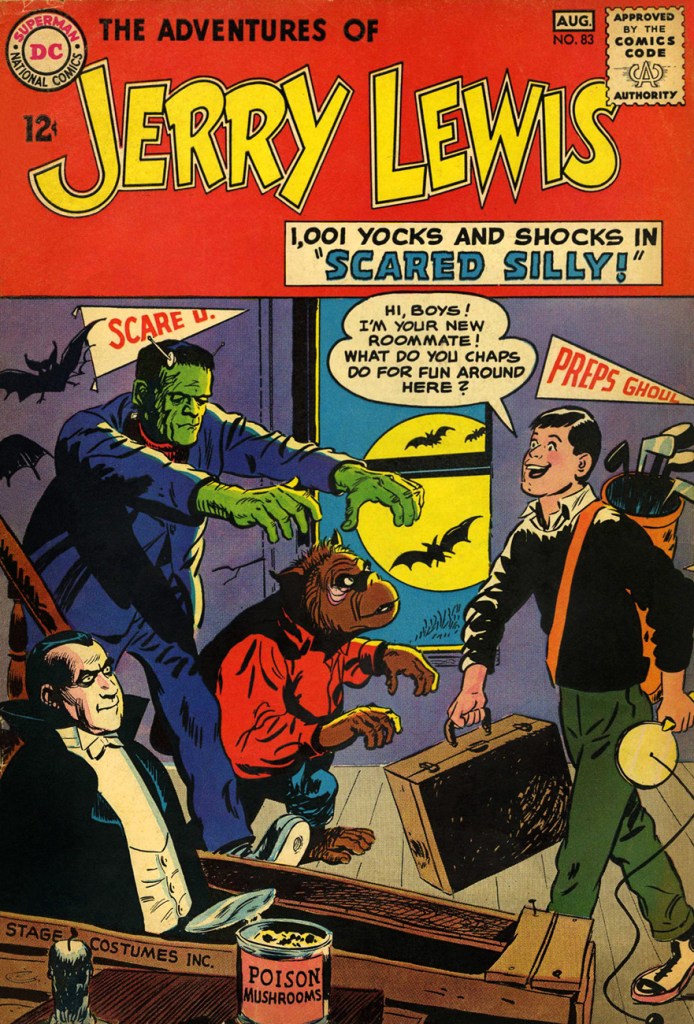
The is The Adventures of Jerry Lewis no. 83 (July.-Aug. 1964, DC). Formerly The Adventures of Dean Martin & Jerry Lewis… of course. The book (under both titles) featured some lovely artwork from Owen Fitzgerald, Mort Drucker and of course Oksner… but it was no Sugar and Spike. Still, it had its audience, long-lasting as it was (124 issues… Jerry wasn’t just big in France!)
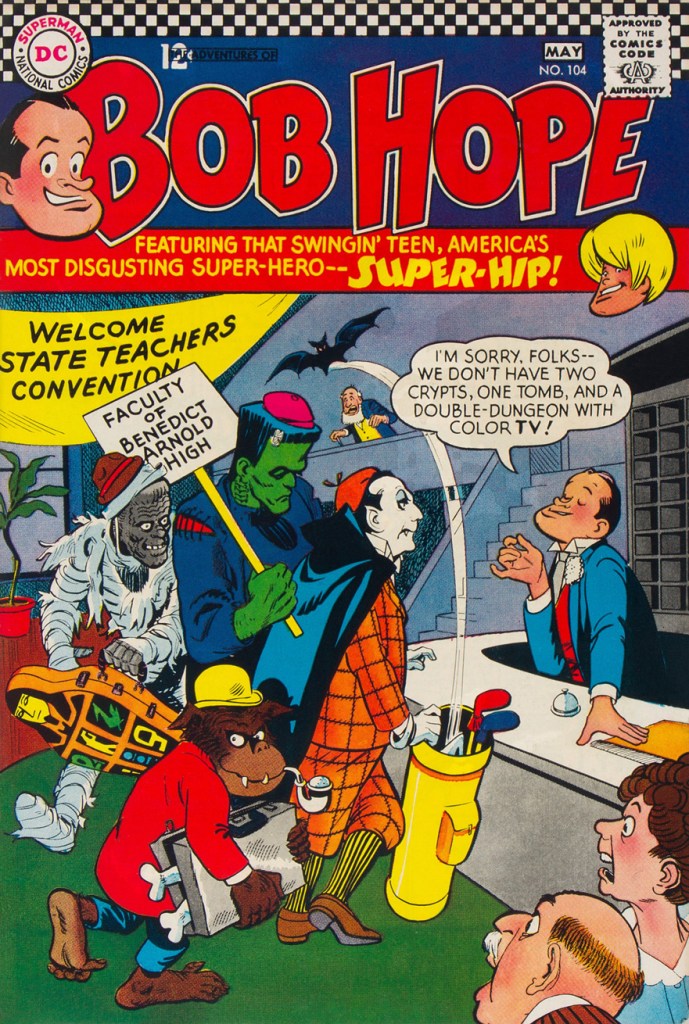
This is The Adventures of Bob Hope no. 104 (Apr.-May 1967, DC). DC’s celebrity-licensed humour titles followed a parallel course: fading sales led to their nominal stars being more or less sidelined in their own book in favour of increasingly outlandish supporting casts.
An inside page from that issue. Good-looking comics… but they weren’t particularly witty, which can be a bit of a drawback. Arnold Drake was the writer, and while he could be pretty damn funny, it just didn’t work here. Still, you can bet that it was still more amusing than Milton Berle’s comic book.
1940s teenager Binky was pulled out of mothballs in the late 60s (ten years elapsed between issues 60 and 61). A moderate success (especially given it mostly consisted of slightly updated reprints), it returned to oblivion after another twenty-two issues, though the first seven bore some rather fine Oskner cheesecake covers. This is Leave It to Binky no. 67 (June-July 1969, DC).
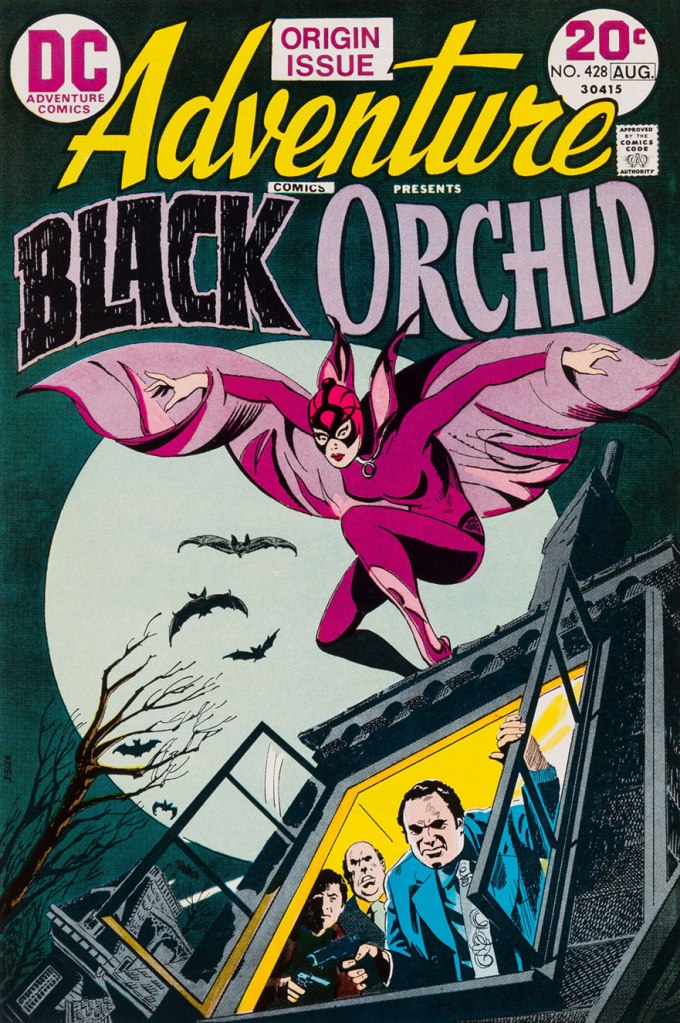
Finally, for a touch of the more ‘realistic’ Oksner style, here’s his cover introducing Sheldon Mayer‘s marvellously-mysterious Black Orchid. This is Adventure Comics no. 428 (July-Aug. 1973, DC). She deserved far more than a mere three-issue run!

-RG

Hallowe’en Countdown IV, Day 11

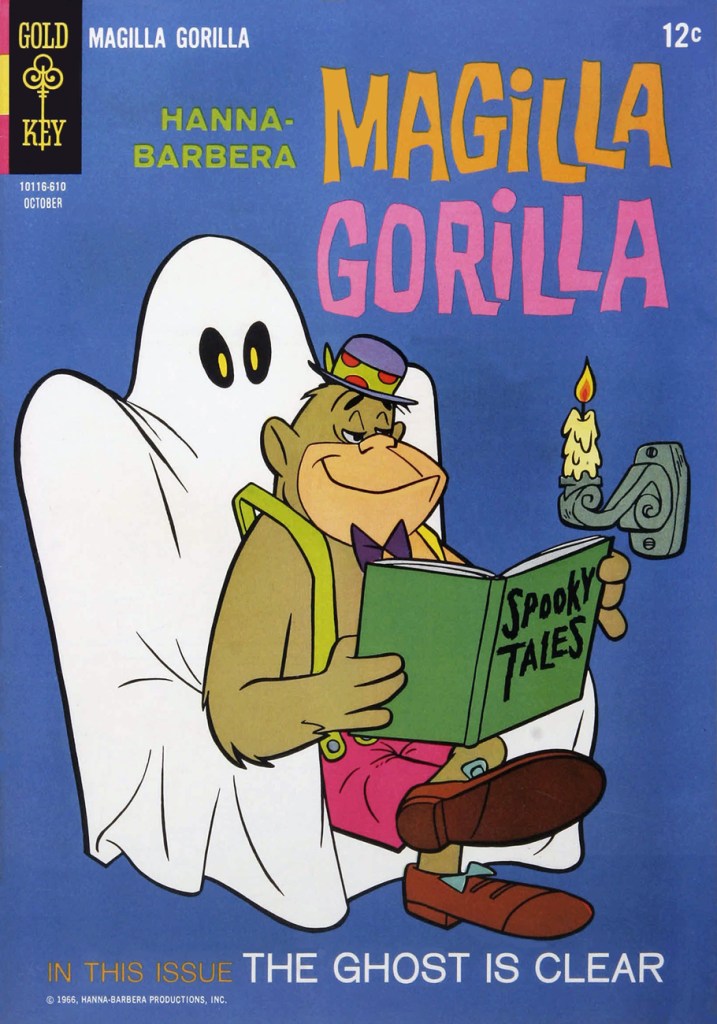
« Take our advice, at any price, a gorilla like Magilla is mighty nice. Gorilla, Magilla Gorilla for sale! »

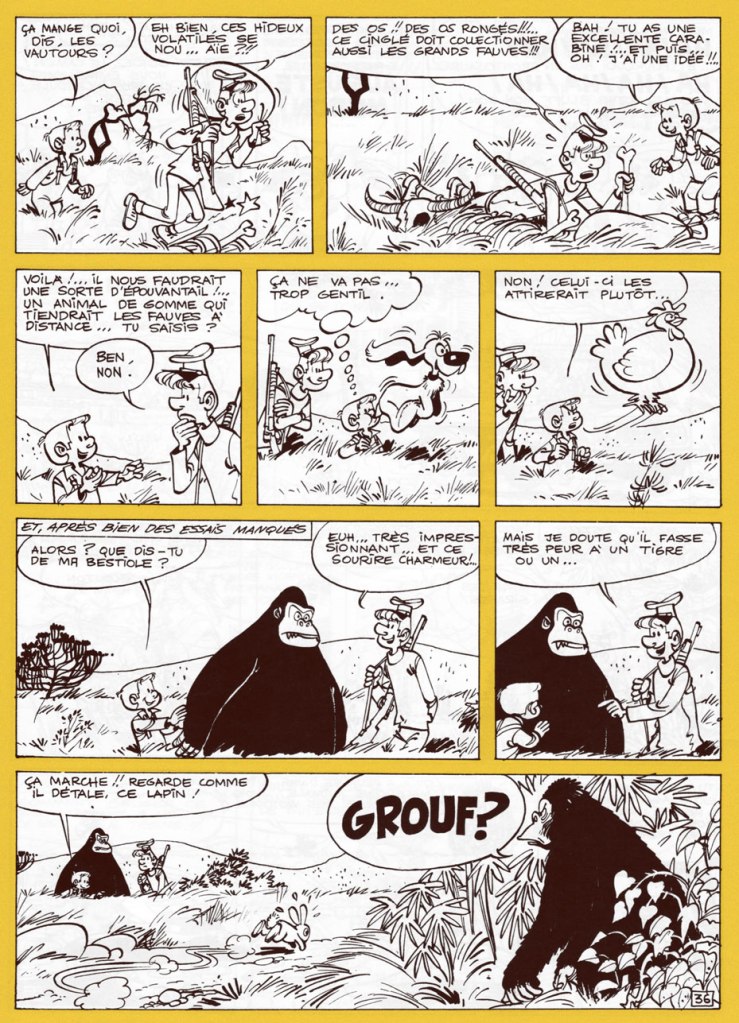
Seems you just can’t unnerve a guy (let alone an ape) who takes fright fables so lightly. I mean, look at that blasé expression! Perhaps he needs some spookier tales.

This is Magilla Gorilla no. 9 (Oct. 1966, Gold Key). Cover artist unknown…certainly a ghost.
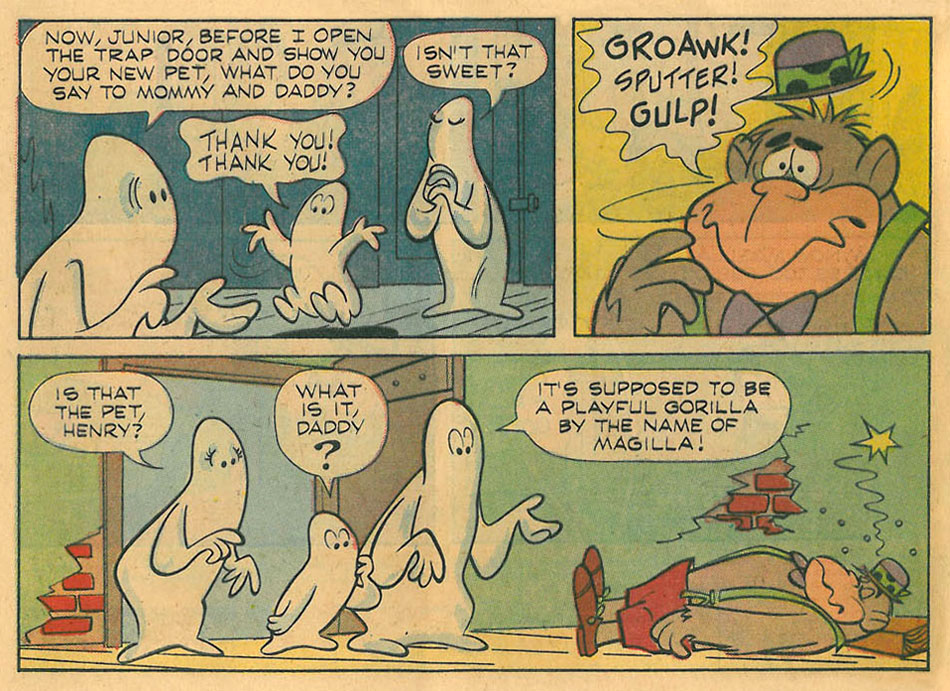
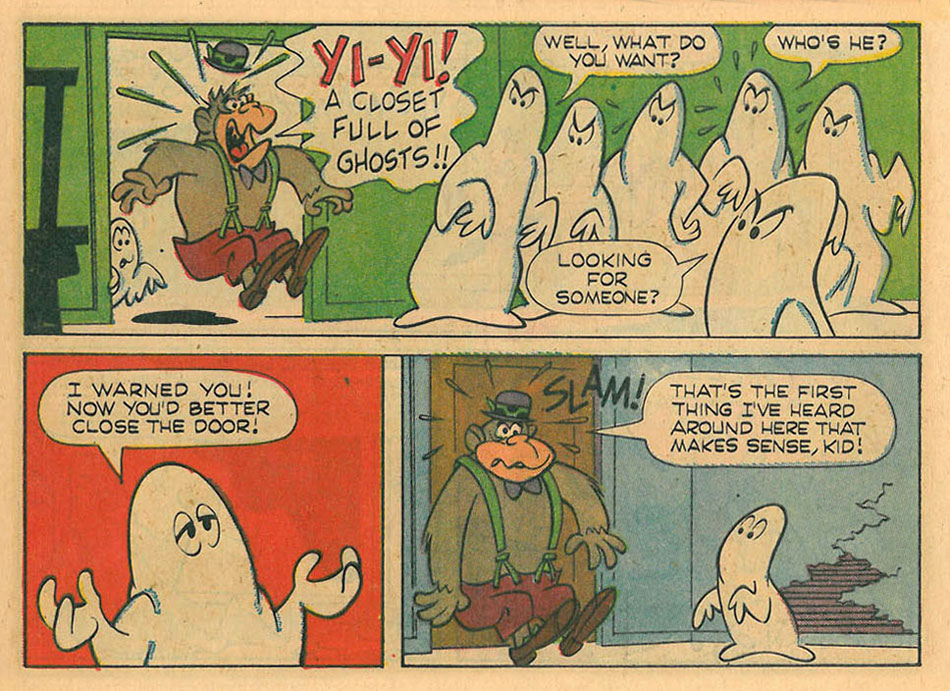
Unfortunately, the title story — and the rest of the issue — are nothing to get excited about. Nicely flowing, on-model animation-style artwork, but the stories…
Still, here’s the highlights reel. Strictly kid stuff… but did it truly need to be? A little subversion goes a long way.
In Yiddish, a megillah is a long tedious or embroidered account, from the Hebrew megillah, a story written in a scroll. One episode has Magilla saying, “Such a megillah over a gorilla. [ source ]

« We’ll try again next week. »

In other, loosely-related news, and in the spirit of the seemingly undying nature of pop culture icons (even minor ones)…

José Adílson Rodrigues dos Santos (born September 2, 1958), is a retired Brazilian heavyweight boxer. He scored 61 knockouts with 43 of those coming under 5 rounds. Rodrigues currently resides in São Paulo, São Paulo, where he is being treated for Alzheimer’s disease originating from dementia pugilistica. His nickname in Brazil, Maguila, comes from the cartoon Magilla Gorilla.

The gajo should have really sold the concept, and fought in a too-small bowler hat and green suspenders.

-RG

Éric et Artimon: Some Choice Bubblegum!

« Flattery is like chewing gum. Enjoy it but don’t swallow it. » — Hank Ketcham

Going way back: When I was a wee lad (still in the single digits), my mother would accompany me to our area’s oldest and finest bookstore (Chicoutimi’s long-gone Librairie régionale). At the time, I had been purchasing bound collections of Belgian bédé publisher’s Spirou, the earlier the better. Even at that tender age, I held the conviction that things had already peaked.

A friendly employee ushered us into the restricted area of the bookstore’s top floor, a vast warehouse I never got a tour of… but it was immense! I was led to an aisle where, high above, dozens of older Spirou collections were kept, dating all the way back to 1962. I can afford to be specific, because I bought the oldest issue they had on hand (Album Spirou no. 84). At ten dollars a pop, they were reasonably-priced, but still costly for a child with a 1970s-scale allowance. For my parents, a reliable source of ideal birthday and Christmas gifts, however!

It was in their pages (no. 90, see below!) that, along with the established Spirou magazine series (Spirou et Fantasio, Boule et Bill, Buck Danny, Benoît Brisefer, Tif et Tondu, Gil Jourdan…), I encountered scads of unfamiliar entries. Of these, an early album caught mid-tale one that truly stuck with me through decades and therefore is the object of today’s post.

This is Album Spirou no. 90 (Sept. 1963, Dupuis), collecting the bédé weekly’s issues n° 1316 to 1328. Cover by André Franquin, depicting a scene from a Spirou adventure, the troubled production that was QRN sur Bretzelburg (under its original title, QRM sur Bretzelburg).

I’d be squandering time and space to retrace Belgian master Willy ‘Will’ Maltaite‘s biography, as Lambiek covers the topic in great detail and with the requisite visual profusion.

In short, though, here’s what’s relevant in this case: from 1949 to 1987 (with a pause between ’59 and ’63), Will illustrated the adventures of Tif et Tondu, characters owned by Éditions Dupuis, its publisher. Still, he longed to draw characters of his own, which wasn’t an idle whim, given that most of his colleagues and collaborators did just that, enjoying more latitude and far greater financial rewards. In 1962, he got the chance to try his hand at an original series, Éric et Artimon, conceived with versatile scripter-cartoonist Raymond Antoine, alias Vicq. And the result was outstandingly charming, light-hearted and hilarious.

The 1976 (and only, so far) edition of Toute la gomme. Still, I'm grateful for its existence: I was finally able to read the whole story, though without colour.
The 1976 (and only, so far) edition of Toute la gomme. Still, I’m grateful for its existence: I was finally able to read the whole story, though without colour.

A mere two long adventures (44 pages each) were produced (Le tyran en acier chromé, 1962, and Toute la gomme, 1963, plus a six-pager, Et mine de rien, in 1967), and Dupuis never bothered to collect or reprint them. Instead, well down the pike, two separate, smaller publishers licensed the rights and issued small black and white runs of, respectively, Toute la gomme (Espace Édition, 1976) and Le tyran… (Magic Strip, 1983).

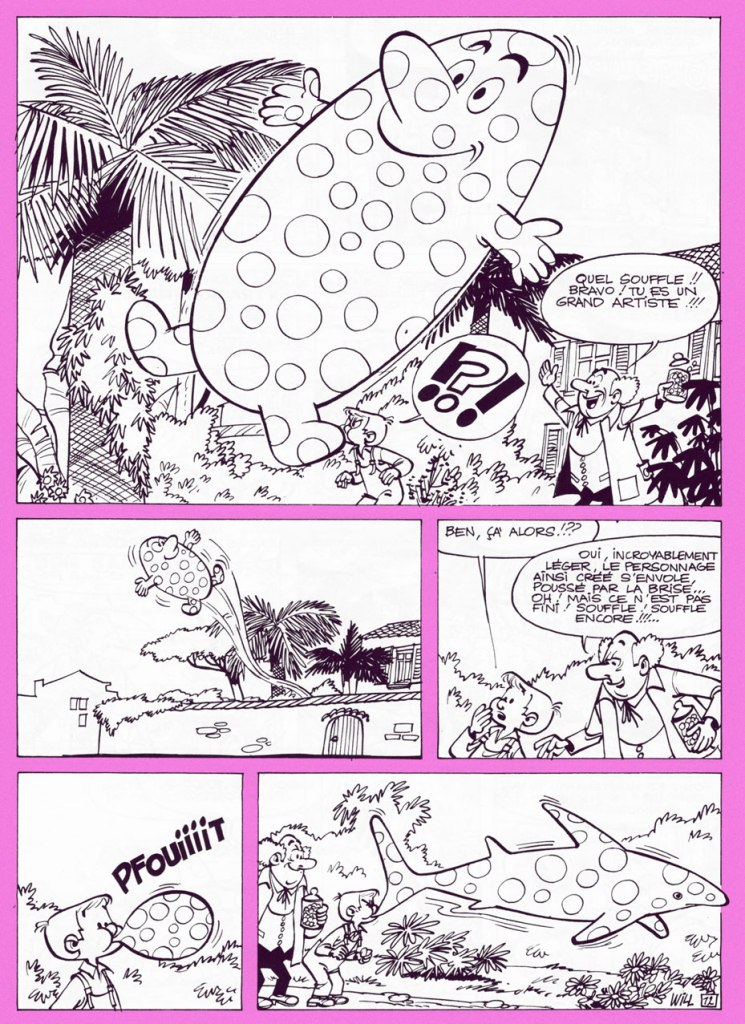
Candy aficionado Éric visits his main supplier, loveable eccentric Monsieur Grosoison, at his confiserie ‘Au bambin vorace’ (‘The Voracious Toddler’). The old man, also a brilliant inventor, shows off his new creation to his best and most loyal customer. The stuff’s not only downright magical, it’s also exquisitely delicious.
« Such lungs! Bravo! You are a great artist! »
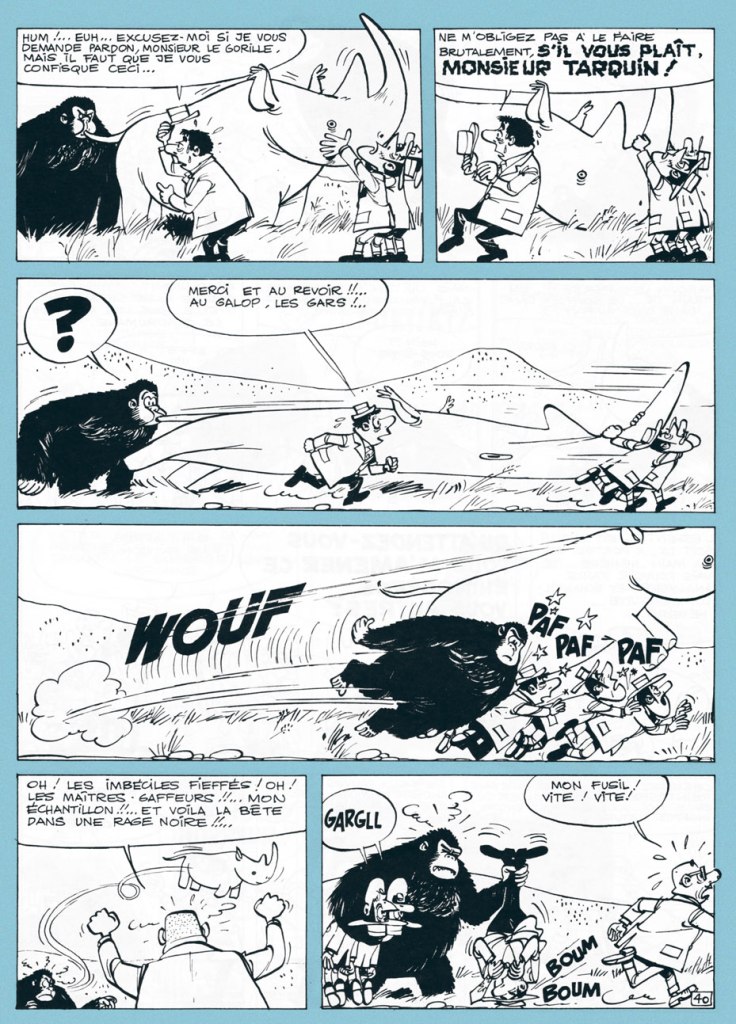
However, Tarquin doesn’t like his good-natured fun interrupted.
The back cover of Espace’s Toute la gomme, wherein Éric employs ingenious means to escape a rooftop.
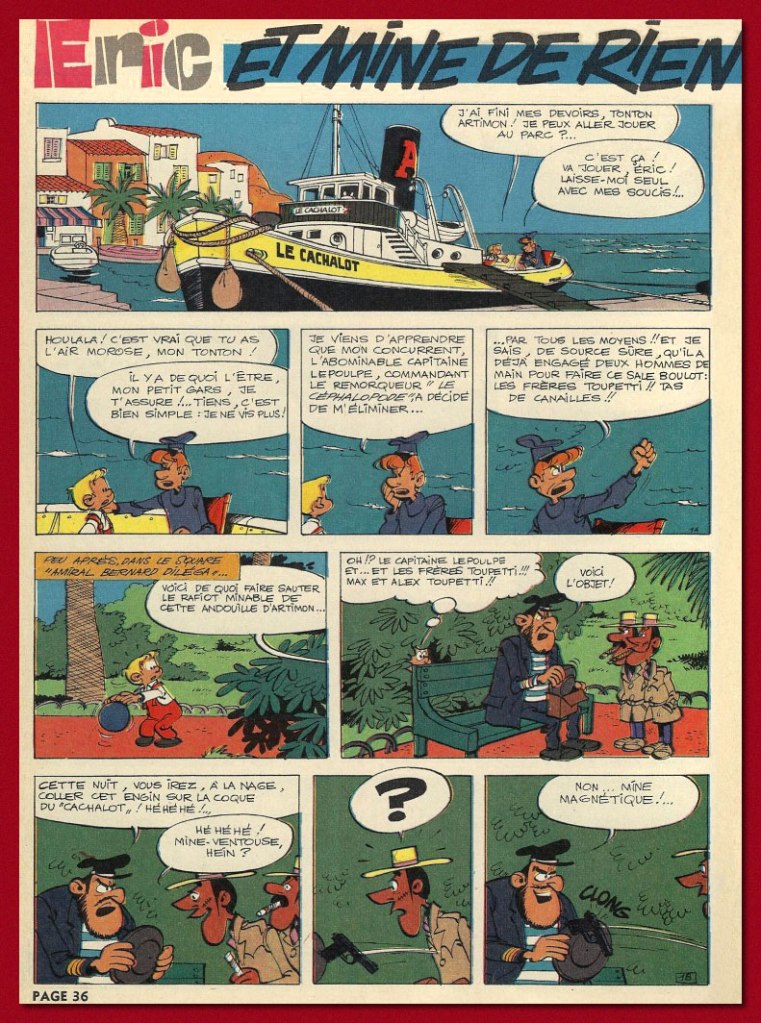
The opening page to the short concluding episode of the boy and the captain’s adventures, Et mine de rien (Spirou n° 1506, 1967).
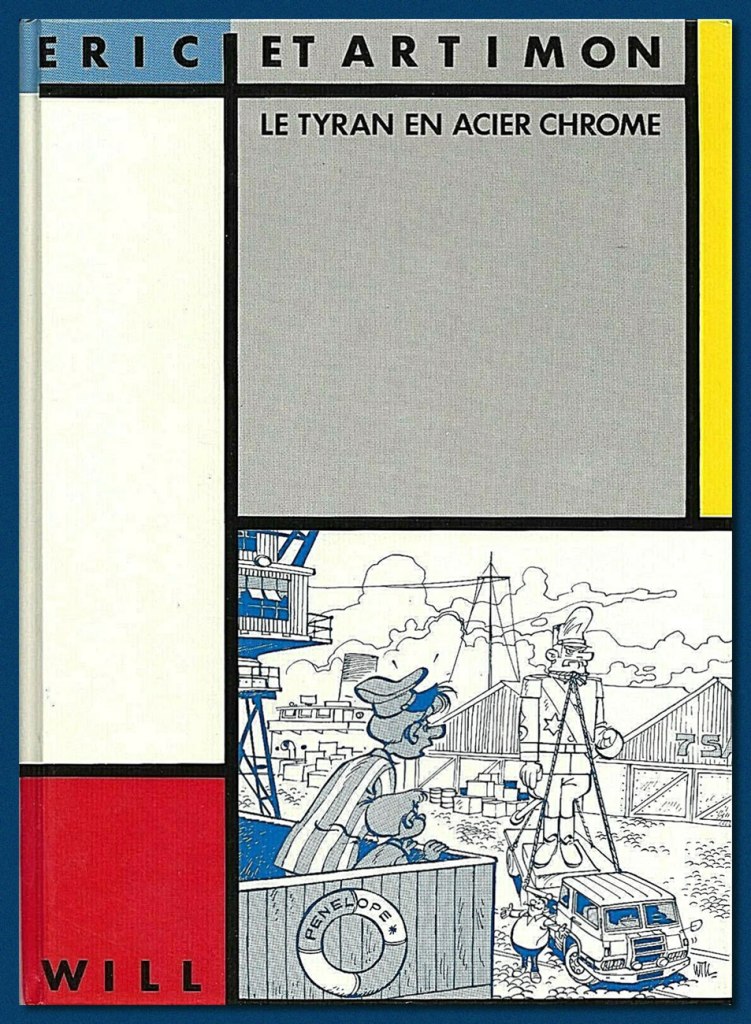
And here’s the fancy 1983 edition of Le tyran en acier chromé, scarce and fairly pricey nowadays, unlike Toute la gomme.
Thankfully, Éric et Artimon haven’t been entirely forgotten, despite the shabby treatment they received at the hands of their original publisher. Here’s a signed lithograph produced in the early 1990s by Belgian bookstore Chic-Bull. Note the fancy silver ink on the statue. Mine’s number 48!

I’ll be spotlighting Will’s other creator-owned series, Isabelle, at some point during this year’s Hallowe’en Countdown!

-RG