« You’re sure you want to spend the night out there? »
As an avid backyard camper, this effectively chilling cover by the versatile Argentine Luis Dominguez never failed to bring a pleasant tingle of dread. It has that quality of a silent, slow-motion nightmare. Barely-glimpsed but eerily tangible horrors shambling your way… and you can hardly move, helpless but with all senses on edge. Eek.
Though it came late in Carmine Infantino‘s tenure, one can safely assume that DC’s publisher and his adjutant, art director Nick Cardy, had a hand in the cover’s layout. It certainly does tick Carmine’s boxes of « Leave Room for the Kids » and « Make It More Mysterioso. »
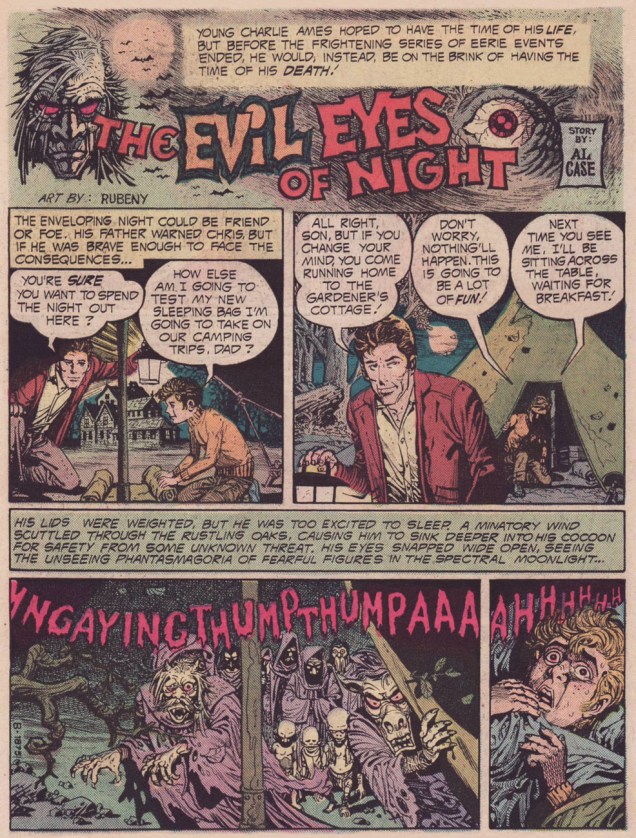
DC’s The Unexpected no. 166, (July 1975). The moody featured story, The Evil Eyes of Night, scripted by Al Case (one of editor Murray Boltinoff‘s several noms de plume) and illustrated by an inspired Ruben Yandoc, doesn’t betray or squander the promise proffered by the cover, though it hardly proceeds as one might presume. This isn’t The Expected, after all…
I do believe that Yandoc did his own lettering, as it’s a consistent element across his American output. That’s always a plus, an added touch of personality. Love those sinister onomatopoeia!
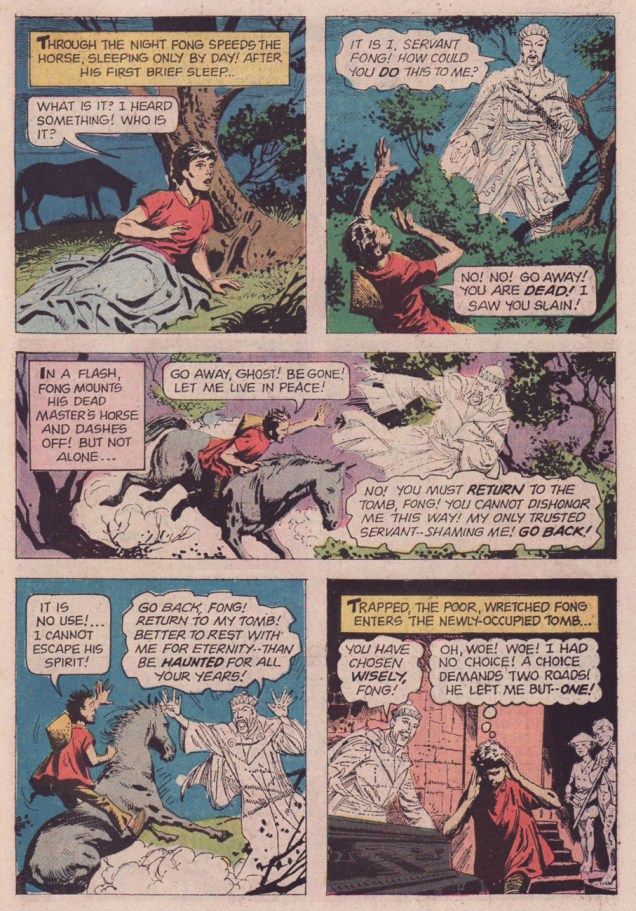
« Followers in death: Attendants and relatives who were killed so they could be buried in the tomb with the person (normally someone very important or wealthy) who had died. » — The British Museum
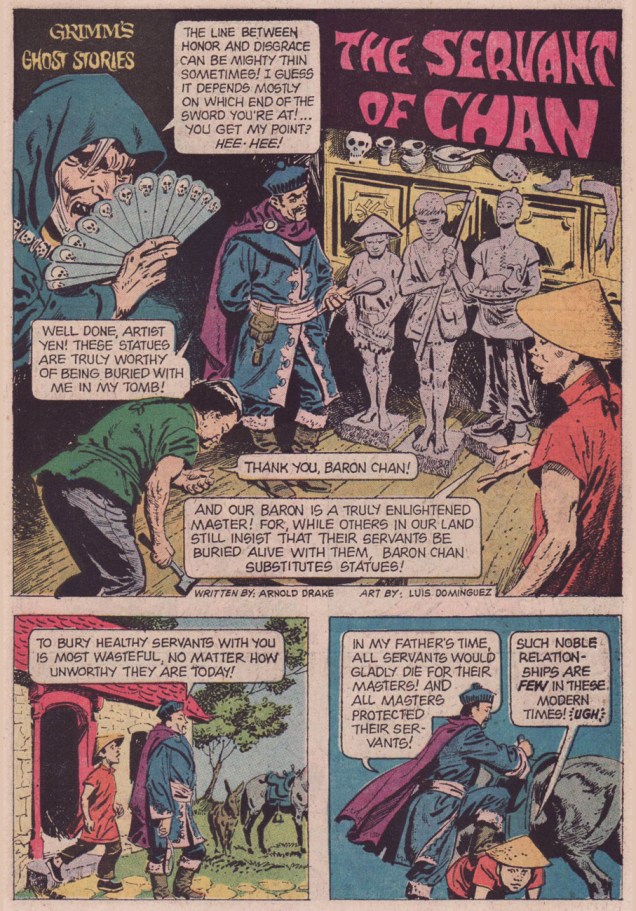
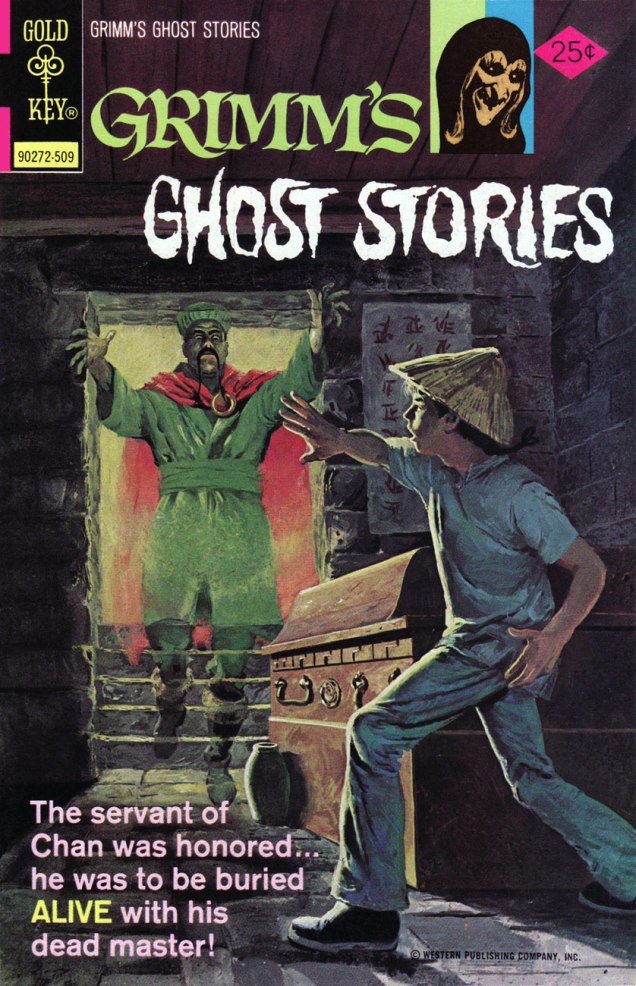
Let’s face it, Gold Key’s would-be-spooky comics rarely lived up to their habitually fine painted covers (mostly courtesy of hard-working George Wilson, with Vic Prezio, Luis Domínguez, Jesse Santos or Jack Sparling occasionally chipping in); as with most things, there were exceptions: I’ve raved earlier about a particular issue of the generally ho-hum Grimm’s Ghost Stories, namely issue 26, boasting, along with the usual Paul S. Newman sleep aids, two excellent yarns from the undervalued Arnold Drake (co-creator of The Doom Patrol, Deadman, and the original Guardians of the Galaxy).
Ah, but today, we’re celebrating Drake’s co-conspirator, the prolific Argentine master (yes, another one) Luis Ángel Domínguez, reportedly born ninety-five years ago to the day (Dec. 5, 1923), and still among the living… as far as we know. I like to envision him warmly surrounded by several generations of loved ones and well-wishers, an impish gleam in his eye.
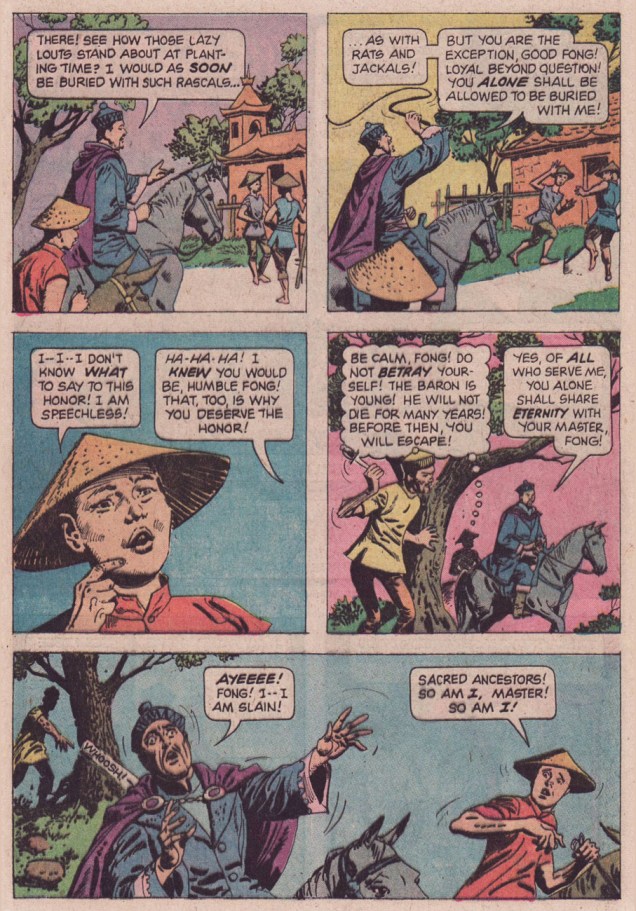
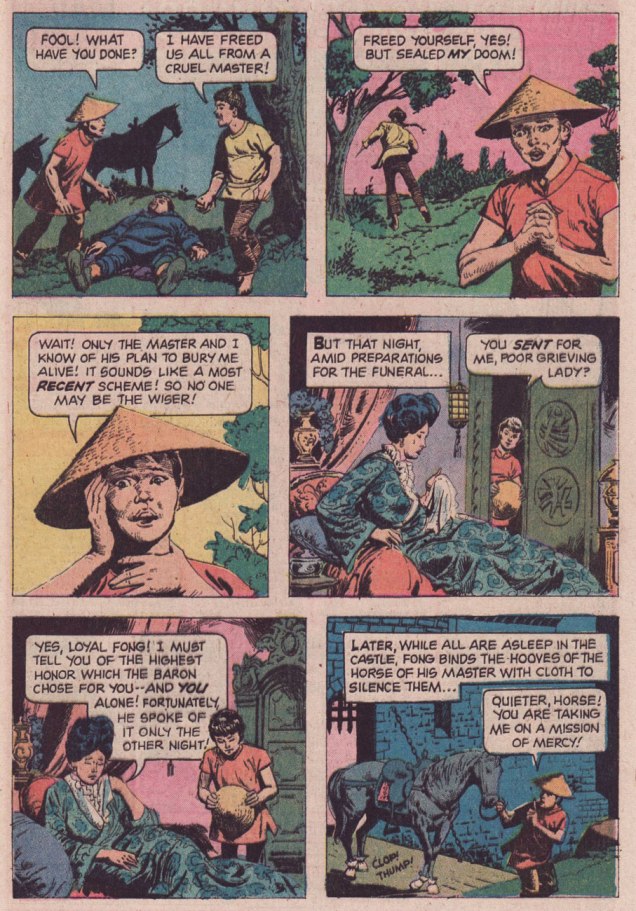
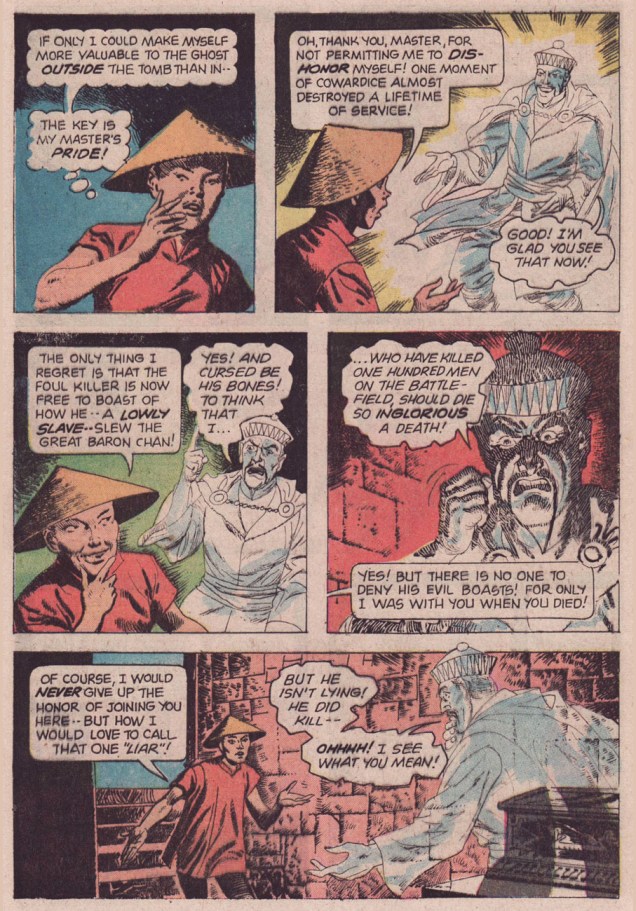
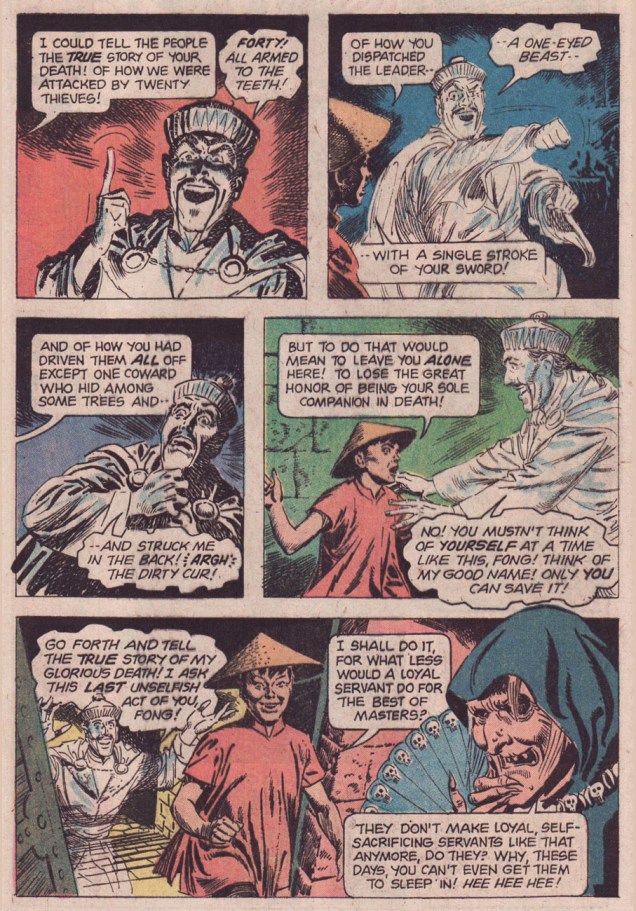
Without further foot-dragging, here’s a vintage tale of quick wits in ruling class hubris from beyond the grave, The Servant of Chan, by that dastardly duo, Drake and Domínguez.
George Wilson’s cover highlights a dramatic scene from our little story. This is Grimm’s Ghost Stories no. 26 (Sept. 1975, Gold Key).
« Slavery in ancient China was not a pleasant experience. The lives of slaves were filled with hardship. Many were abused. Many slaves were children.
Most people who were slaves worked in the fields, alongside of peasants. They did the same job, and had the same hours, and pretty much the same clothing and food, as free farmers. But they were not treated with the same respect given to farmers. Some slaves built roads. Some worked in government.
But slaves who worked for the emperor, the royal family, and sometimes the nobles, had the worst of it. They could only do what they were told to do. They were treated in any way that their master and his family felt like treating them. Many were treated with great cruelty. When their master died, they were killed, and buried with their master in his tomb, so they could continue to serve their master after his death. »
Brr. All the same, if you’ve enjoyed this yarn, check out Arnold Drake’s other contribution to this issue, The Anti-13, which we enthusiastically featured some time ago.
¡Feliz cumpleaños, Señor Domínguez… wherever you may be!
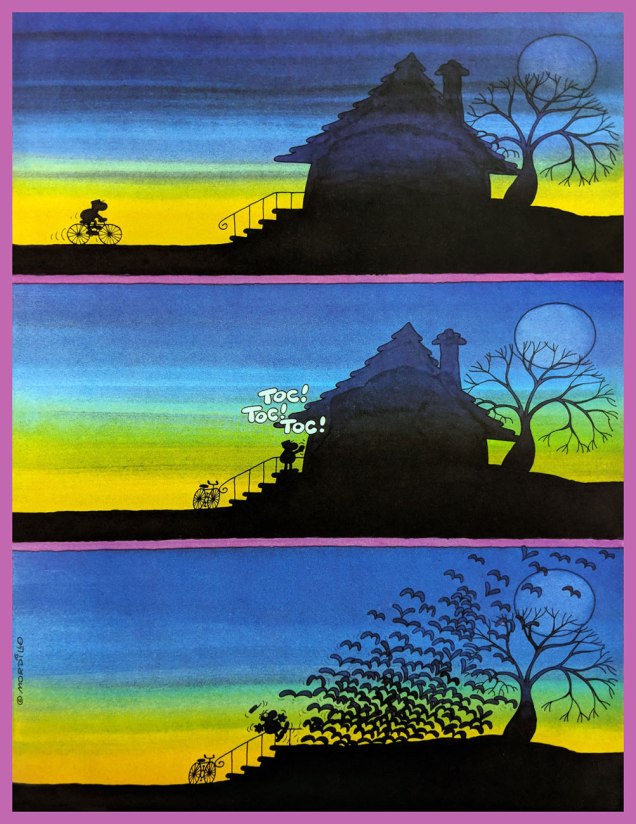
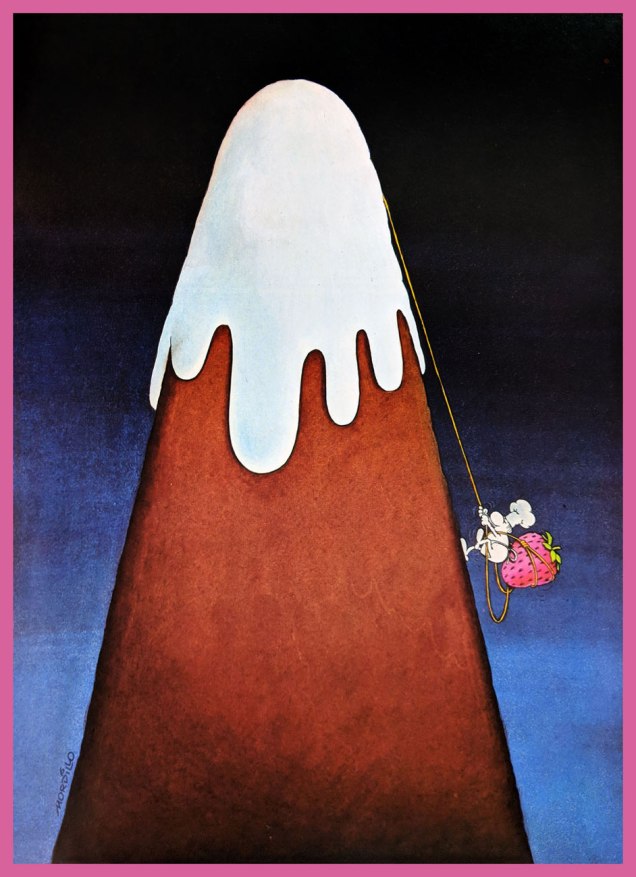
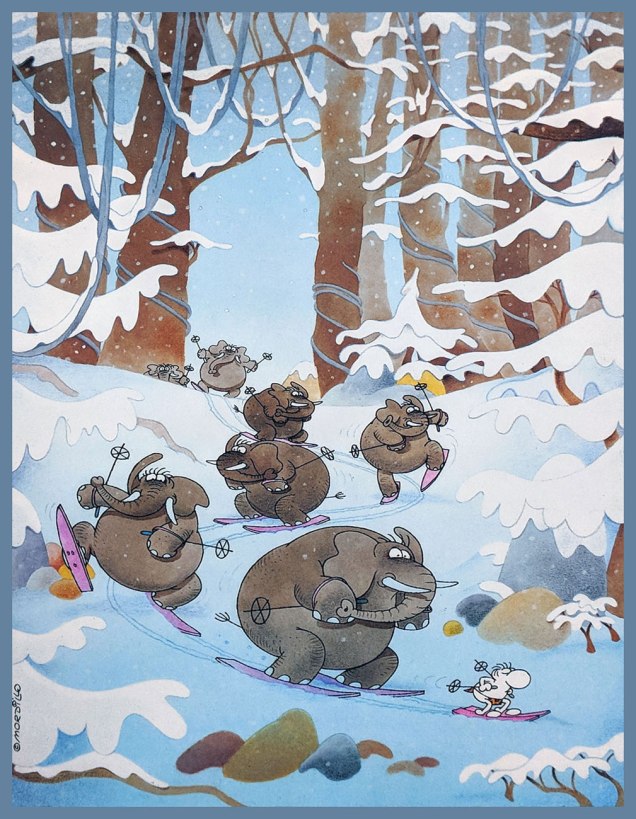
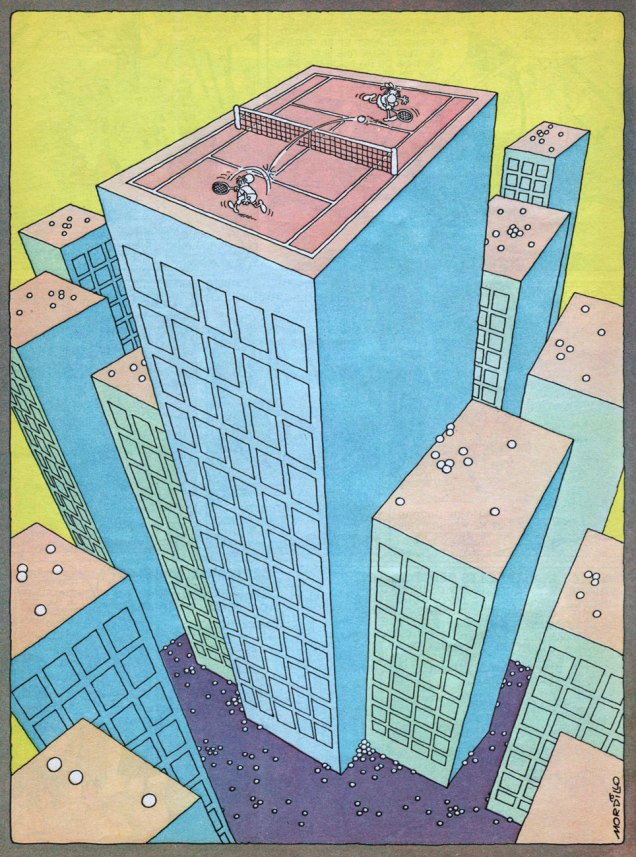
Guillermo Mordillo (1932 – 2019), known simply as Mordillo, was an Argentine artist of Spanish parentage. Through his long and productive career, he released more comic albums than you could shake a stick at… and at 86, was still active in the comics field. His easily recognizable style, love of bright colours and oft-surreal humour make his work memorable despite his persistent profligacy.
It would be impossible to provide an overview of his body of work in one post, but it is my pleasure to furnish a fun sampling of his œuvre. Most images below have been gleaned from Opus 5 (Glénat, 1984) and Safari (Glénat, 1990), unless indicated otherwise.
The following two images were scanned from early 1970s issues of Pif Gadget.
In the mid-70s, Mordillo’s cartoons were used by Slovenian artist Miki Muster to create Mordillo, a series of cartoon animations that ended up being 400 “episodes” long (for a total of 300 minutes – each episode is under a minute). These droll snippets were broadcast in over 30 countries between 1976 and 1981. Should you have a few minutes to spare for a chuckle or two, have a look at this video (recorded by somebody in Germany on VHS tape in the 90s and, many years later, uploaded to Youtube – what lovely, contorted pathways some of these things take).
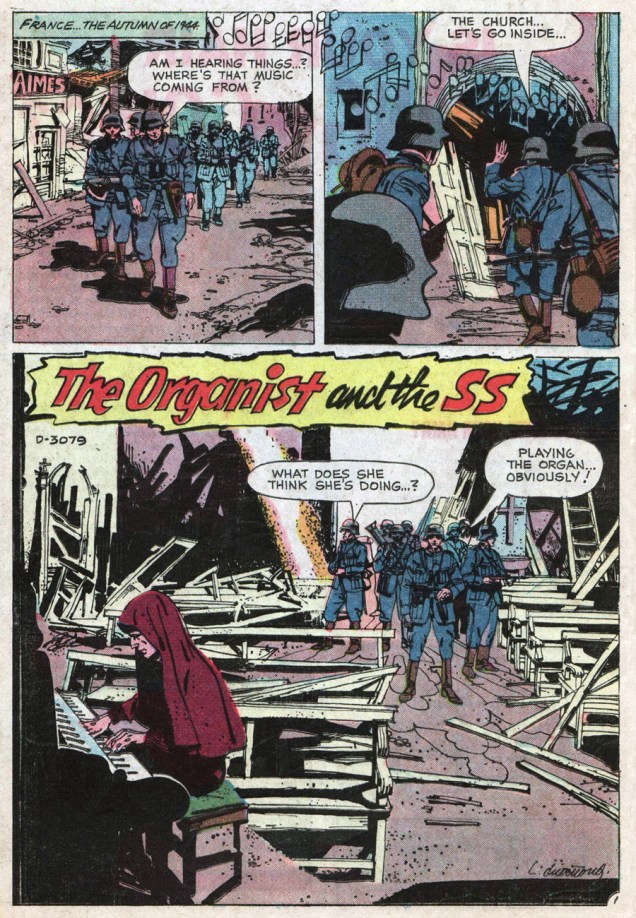
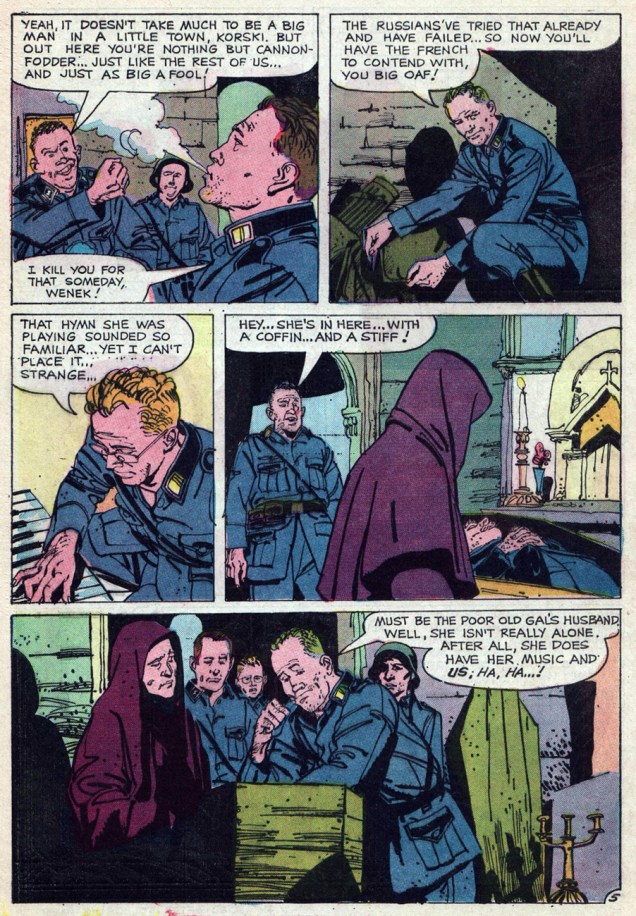
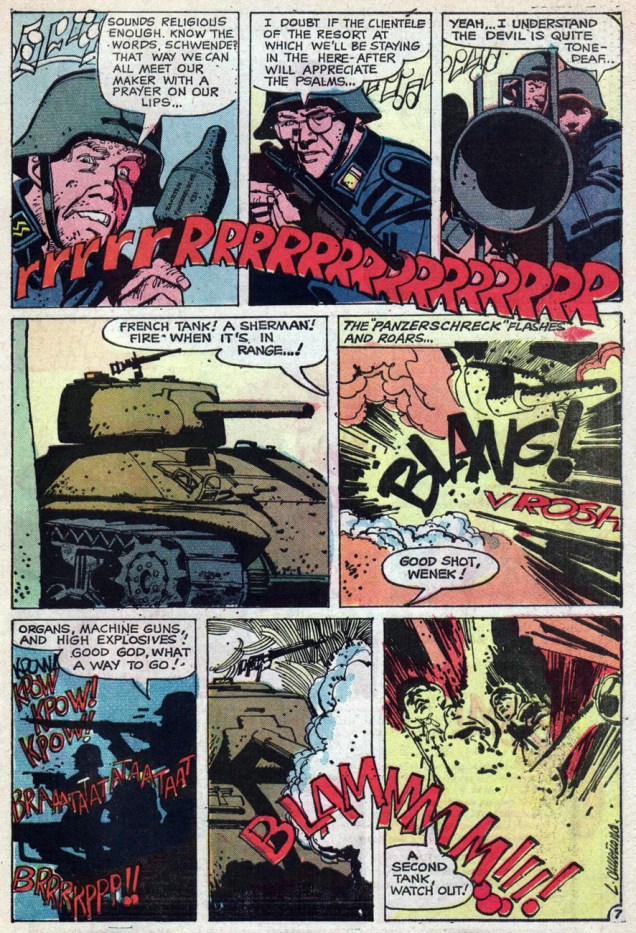
« They were bitter, war-weary men and the old woman’s music was comforting — perhaps too comforting… »
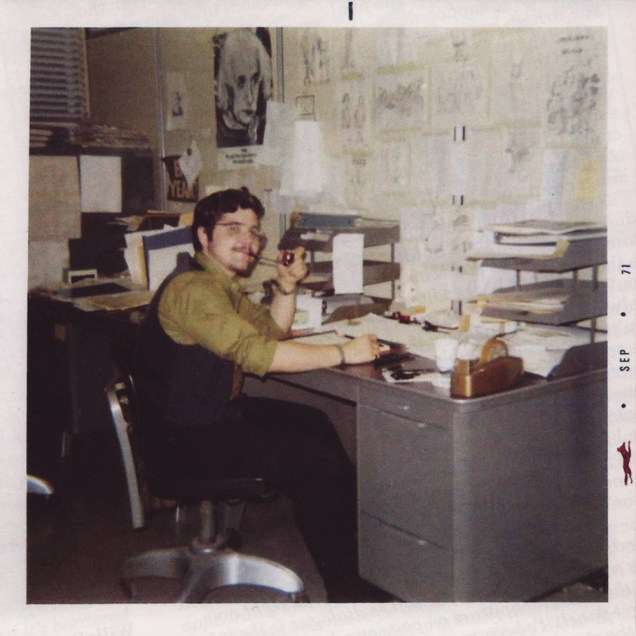
Writer and occasional penciller William ‘Willi’ Franz (born 1950) broke into the comics industry at the tender age of 15, selling his first script to Charlton editor Dick Giordano in 1966.
Will Franz, September 1971. A photo « …taken at the Manhattan insurance company where I worked as an accounting technician. My wall is covered with cartoons I made of various office friends and personnel. » Source: Will Franz and Charlton Spotlight.
While best known for his fruitful collaborations with his mentor, the great Sam Glanzman (1924-2017), namely The Iron Corporal, The Devil’s Brigade and most enduringly The Lonely War of Willy Schultz, Franz also scattered a few gems that the light has mostly missed.
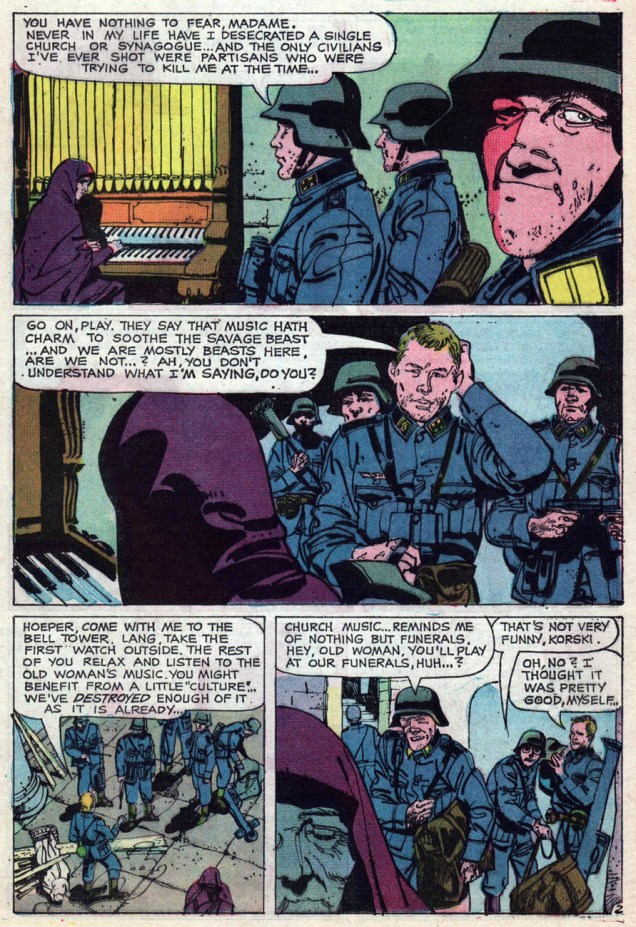
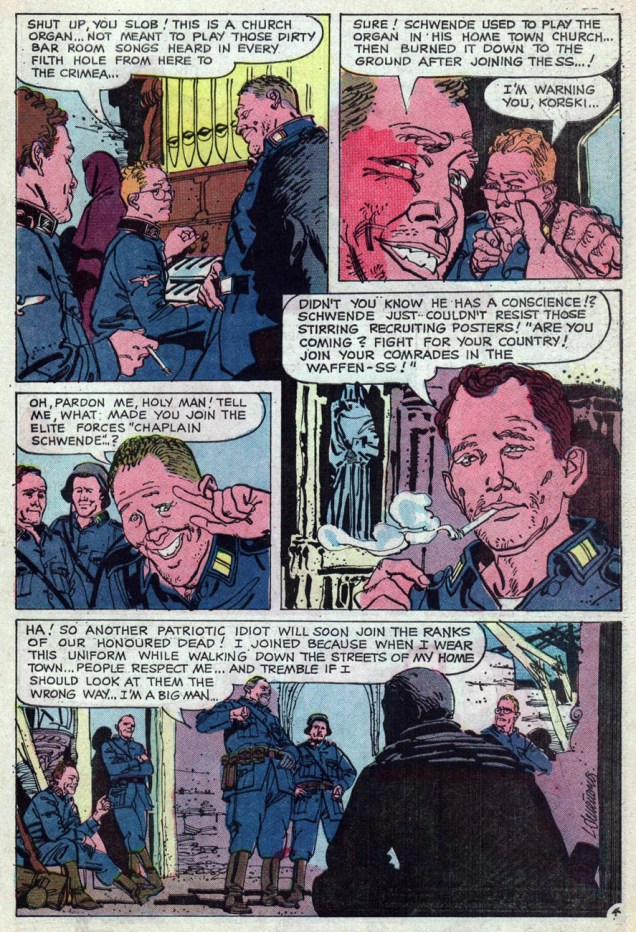
My favourite among these has to be his final story for Charlton, The Organist and the SS, published in Attackno. 8 (Nov. 1972). Franz’s bleak, nuanced and markedly pacifist tales had drawn the military’s ire, back in the late ’60s, and this somber little piece of doom might have, too, if anyone had been paying attention.
As Franz recalls in a 2015 interview with Richard Arndt, published in Charlton Spotlight no. 9 (Winter-Spring 2015-2016):
« I was told that a lot of Charlton sales were on military bases. They were a staple on Army bases. I, and my stories, were dropped in 1969, out of the blue. Things were heating up in Vietnam.
I was blacklisted at Charlton because a guy had put my name and stories down as one of the reasons he registered as a conscientious objector. I found out other people were throwing my name around. Someone in the army apparently said that my stuff, maybe like [Archie] Goodwin’s stuff, was too blood and guts. It was going to make soldiers *not* want to kill the gooks. The army can’t have that! »
Well, evidently Charlton (presumably managing editor George Wildman, bless his heart) let Will sneak back into the fold, if briefly, after the heat was off, otherwise I’d be writing about some other topic entirely.
Without further preamble, please savour this pitch-black, existentialist play of war and death, but mind the thorns.
Will’s layout for the opening splash of our story. It’s always a treat to see what liberties the illustrator takes… or doesn’t.
This issue is chock-full of arrivals and departures: it opens with a story from new recruit Warren Sattler, trying his hand at a few short mystery and war stories before he found his niche in excellent collaborations with Joe Gill on Billy the Kid and Yang; next up is Jack Keller, who was winding up his comics career, what with Charlton’s remaining pair of hot rod books, Drag ‘n’ Wheels and Hot Rods and Racing Cars, soon to be scrapped. He would move, appropriately enough, to making a living selling cars. Finally, Argentine ace Leo Duranoña (b. 1938) was just passing through Charlton, crafting a handful of finely-hewn tales before moving on to DC and Warren… among others.
Today we talk about an artist who had an asteroid dedicated to him! (27178) Quino was discovered in 1999.
Quino is the nom de plume of Joaquín Salvador Lavado, an Argentine cartoonist born in 1932 and still with us today (currently 85 years old, for those in the audience who aren’t too good at mathematics). He’s best known for his character Mafalda (heroine of a self-titled comic strip), a lively and precocious 6-year old girl who sought to change the world for the better (but hated soup – how can anyone improve the world without soup?) This comic strip, which ran from 1964 to 1973, is said to have been influenced by Schulz’s Peanuts – for instance, Umberto Eco made that comparison in 1968 – but it makes me think more of Bushmiller’s Nancy. Comparisons aside, I heartily recommend it.
You won’t be surprised to find out that Quino wrote in Spanish – being Argentine and all – but some of his strips, notably Mafalda, have been translated into a variety of languages… by which I mean mostly French. I was harbouring the hope that this great artist had been able to reach many countries with his art, but it seems that his non-Mafalda cartoons (and he’s done quite a few after he quit Mafalda in 1973) aren’t really available in languages other than Spanish or French. As consolation, it seems that at least Mafalda was a big hit in not only Latin America, France and Québec, but also Asia, even meriting a translation into Chinese.
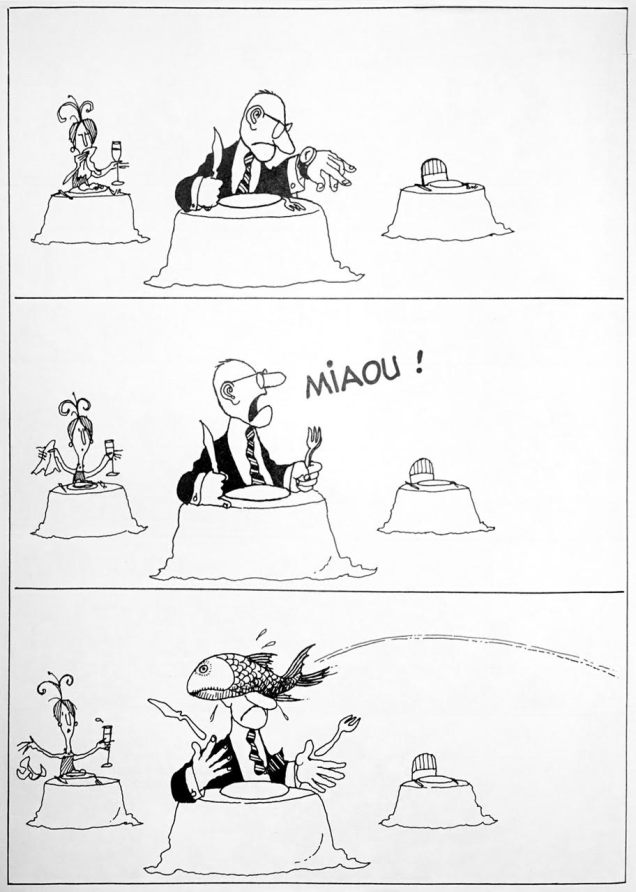
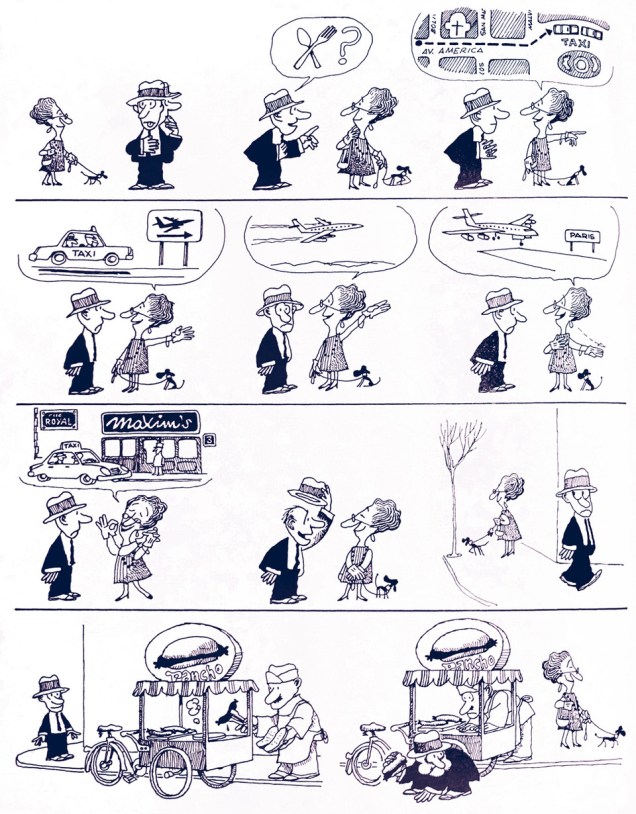
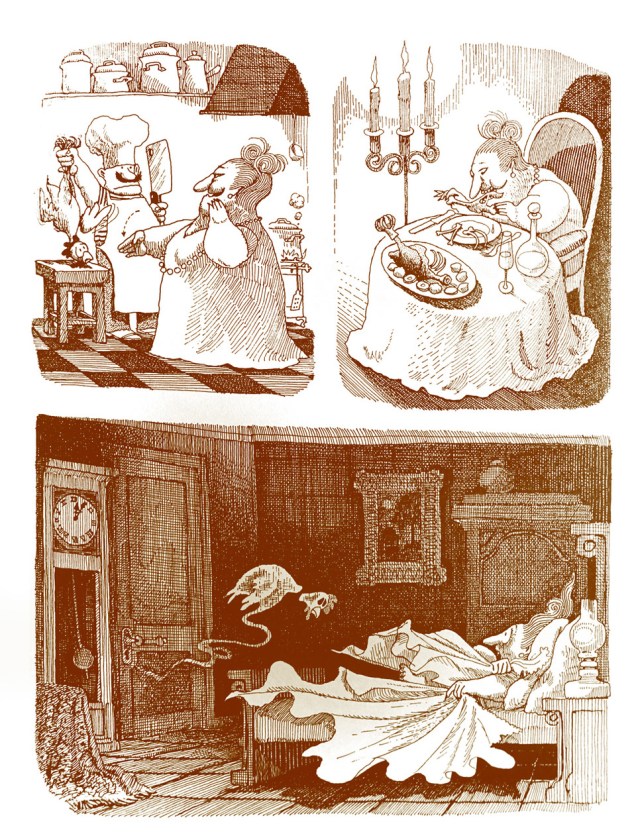
The following three comics were scanned from Manger, quelle aventure! (eating, what an adventure) published in 2016 by Glénat. I was looking for something mute but amusing to sidestep linguistic barriers, and I hope that these qualify. Check out Quino’s beautifully squiggly, decorative lines!
« What’s that noise comin’ up from the cellar? It’s the restless bones of Boris and Bela* »
It’s a cinch that William Henry Pratt, back when he was eking out a living in Canada, digging ditches or driving a truck, never suspected that his name, his stage name that is, would still elicit shivers of recognition long after his passing. Here we are, a whole hundred and thirty years past his birth, in Camberwell, South London, on Wednesday, November 23, 1887.
From his ascent to stardom in the early 1930s until his passing in 1969, he certainly lived to see his likeness appear in a bewildering array of toys and games and bedsheets and mugs and a zillion knicknacks and gewgaws, a parade that continues to this day. But he was likely never represented more consistently and abundantly than he was in comic books.
Here, the Monster meets his… inspiration, in « Boris Karload, Master of Horror ». Dick Briefer‘s Frankenstein is a definite highlight of the Golden Age of comics. This is Frankenstein no. 11 (Jan.-Feb. 1948, Prize Comics). Read it here: http://comicbookplus.com/?dlid=39937 And if you, er… dug that, treat yourself to Craig Yoe‘s selection of Briefer’s rendition(s) of the Famous Monster. It’s a great package, and Mr. Yoe can always use the money… to unleash further wonders.
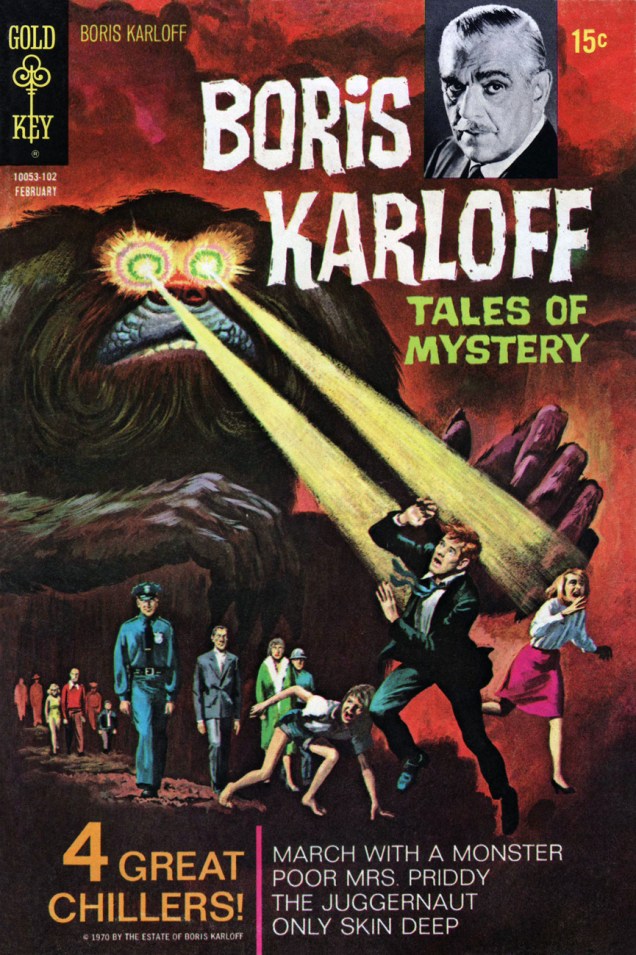
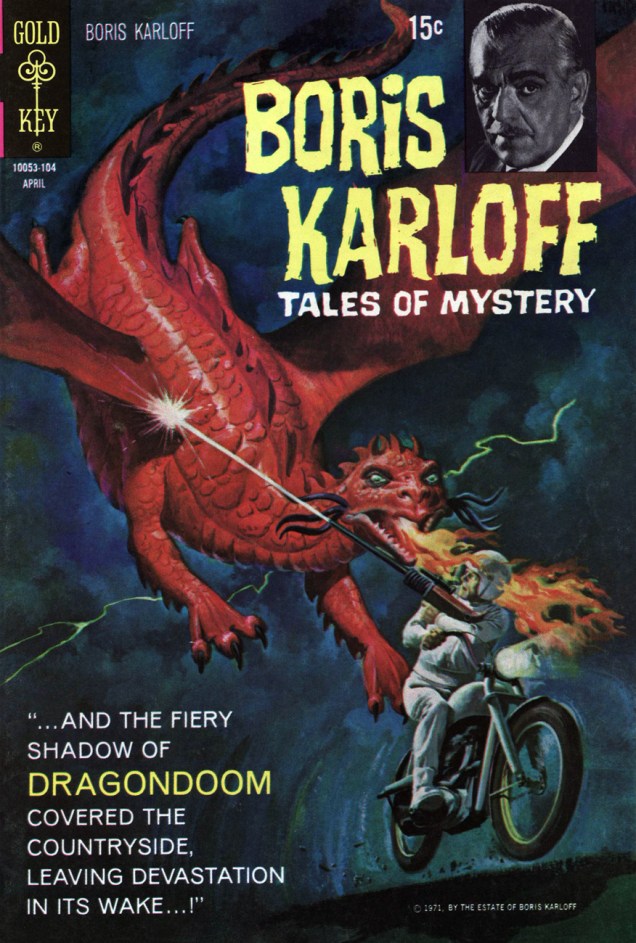
Here’s a gallery of cover highlights from Gold Key Comics’ long-running Boris Karloff Tales of Mystery (95 issues, 1962-80).
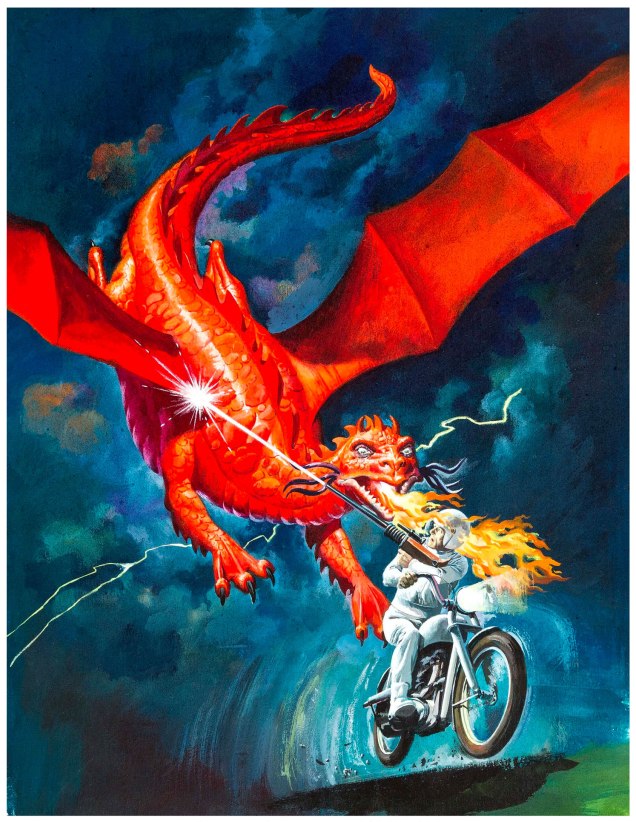
Before there was called Boris Karloff Tales of Mystery, there was, for two issues, Thriller, based on the by-then-cancelled NBC series. Gold Key were often quite slow in making their licensing moves. The TV Thriller was often terrifying (“Pigeons From Hell”, “The Hungry Glass”…), but the comic book never scaled such heights, even sans the emasculating influence of the Comics Code Authority.« You know that one sideways glance from that bug-eyed banshee can turn your brains to prune-whip! » Boris Karloff Tales of Mystery no. 33 (Feb. 1971), Cover painted by George Wilson, illustrating Len Wein, Tom Gill and John Celardo’s March with a Monster.« I’m being scorched by something that shouldn’t even exist! » A laser cannon-equipped Evel Knievel tussling with a badass reptilian nightmare? That’s the Seventies for you. Gold Key’s mystery comics were generally pretty tame fare, but their covers, such covers! This one’s painted by Saint George Wilson. Boris Karloff Tales of Mystery no. 34 (April 1971.) You just know that Dragondoom is written by Lein Wein, because its damsel-in-distress shares his wife’s name, Marvel and DC colourist Glynis.A look at Mr. Wilson’s original painting gives us an idea of just how much was lost in the transition from brush to print. Sometimes it’s better *not* to know.« Feast your eyes upon them, mortal! Do they satisfy your appetite for witchcraft? Hee Hee! » Wayne Howard conjures up some decent monsters inside, but Psychotomimetic George Wilson, who painted this mind-melting cover, shows how it’s *really* done. Boris Karloff Tales of Mystery no. 43 (Oct. 1972.)« The car — being sucked in by this blasted fetid swamp! Goodbye car… goodbye, convention! » Roadside George Wilson strikes again! Boris Karloff Tales of Mystery no. 49 (March 1973.)
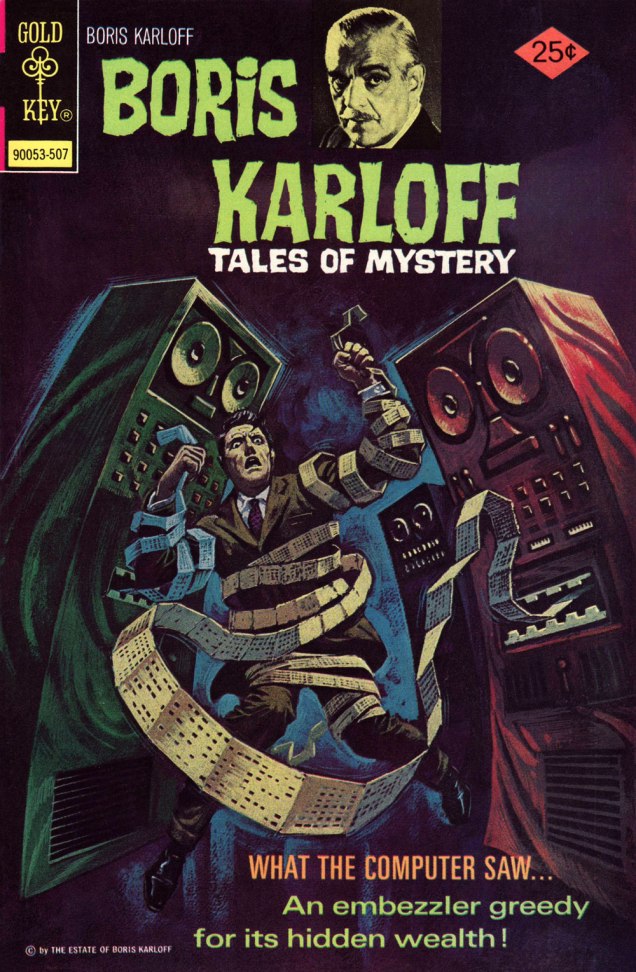
« These computer cards are wonderful… almost as if they were alive! They tell me everything! » Boris Karloff Tales of Mystery no. 62 (July 1973). Luis Angel Dominguez‘s painted cover depicts a scene from Arnold Drake‘s witty It’s in the Cards.
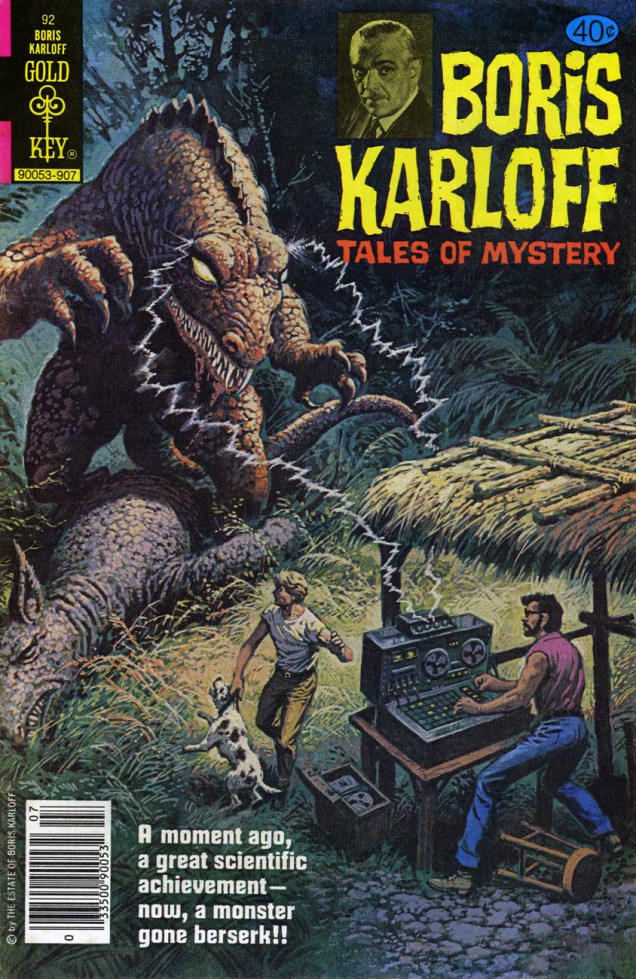
« G-g-get away, B-Bobby! There’s a living horror out there! » « Aww, gee, dad! I’m sorry about that! It’s just my sea monster! » Meet The Mail-Order Monster, a gem from an uncredited scripter (likely Arnold Drake, if the sparkling wit is any indication), and illustrated by Ed Robbins. It’s a fabulously wacky yarn, combining to fine effect good old Sea-Monkeys (brine shrimp, really) and a generous sampling of Ray Bradbury’s Boys! Raise Giant Mushrooms in Your Cellar! This is Boris Karloff Tales of Mystery no. 65 (Dec. 1975), edited by Paul Kuhn. Also within: Don’t Put It on Paper, another of the handful of jobs José Luis García-López did for Gold Key, before settling down at DC later that year. The plot is basically that of Clark Dimond/Terry Bisson & Steve Ditko’s The Sands That Change! (Creepy no. 16, Aug. 1967, Warren), but with a much gentler outcome.« But — why would anyone create something so — so terrifying? » One thing you can nearly always count on in any given issue of BKToM: “scientific” experiments always go awry, and they nearly always yield rampaging monsters. Fitting! Luis Angel Dominguez provides this electrifying cover for issue no. 92 (July, 1979.) The man had such a peerless colour sense.
Let’s reserve our closing words for the man (monster) himself: « Certainly I was typed. But what is typing? It is a trademark, a means by which the public recognizes you. Actors work all their lives to achieve that. I got mine with just one picture. It was a blessing. »
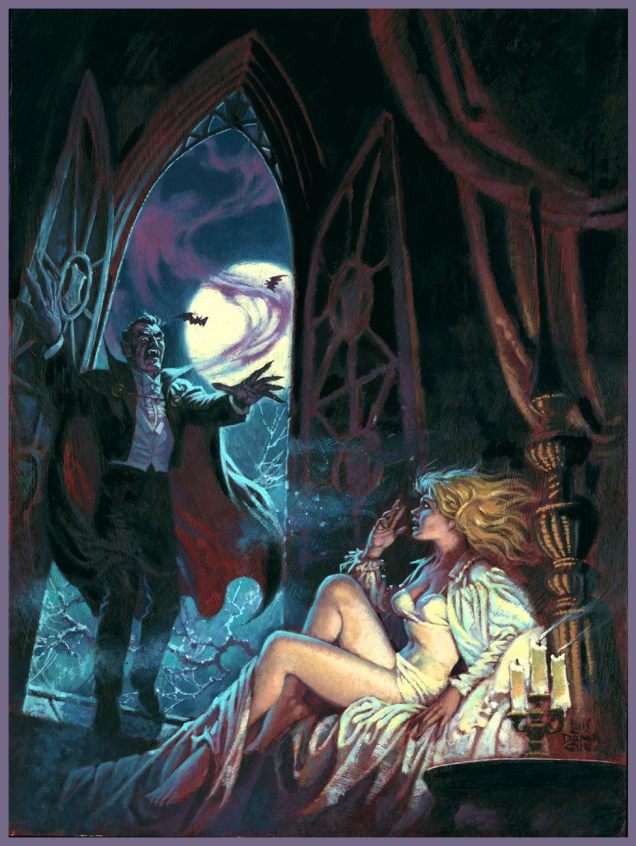
« No, obese one. I am not dead… not in a manner you would comprehend. »
Here we present Luis Angel Dominguez’s (born 1923, Argentina) splendiferous cover painting for Marvel’s Dracula Lives no. 5 (March, 1974). Pure velvety ambiance.
… and the printed version, bogged down with the usual Marvel ’nuff said (as if) hard sell copy. Now you know what you were missing. Sorry about that… it can be disconcerting.
To give credit where credit is due, the colour reproduction is fairly faithful (as these things go) and quite a bit of detail is retained. That hardly ever happened!
In the early 1970s, despite the western genre’s waning prospects in comics, DC found itself with a surprise hit in John Albano and artist Tony DeZuniga‘s antihero Jonah Hex, thanks to a healthy infusion of grit and spaghetti sauce. The battle-scarred Civil War veteran first reared his memorably homely puss in All-Star Western no. 10 (Feb.–Mar. 1972), which soon changed its title to Weird Western Tales with issue 12 to better accommodate its new star.
WWT’s reliably great covers probably didn’t hurt sales. Most of them were the work of Argentine Luis Dominguez, in tandem with the all-star design team of publisher Carmine Infantino, art director Nick Cardy and production manager / colourist Jack Adler. These covers all possess that elusive allure of « Mysterioso », as Infantino termed it.
This is Weird Western no. 25 (Nov.-Dec. 1974), featuring Showdown with the Dangling Man. Script by Michael Fleisher, art by Noly Panaligan.
« Do not come to Transylvania unless you are prepared for the gravest of terror! »
Always one of DC’s underdog mystery titles, Weird Mystery Tales was actually more consistent than its sister titles. Its relative lack of success was perhaps due to its original host, Destiny, being a bit of a flat tire. He was replaced with Eve (you know, Cain, Abel…) with this issue.
Still, the entire run is worth seeking out, thanks to contributions from Jack Kirby (okay, leftovers, but delicious leftovers from the unpublished second issue of his Spirit World magazine), Sheldon Mayer, Robert Kanigher, Steve Skeates, Alfredo Alcala (his and E. Nelson Bridwell’s adaptation of John Russell’s The Price of the Head is my pick for the title’s finest moment; it appears in this issue), Frank Robbins, Ruben Nunag Yandoc, Michael Wm. Kaluta… hey, it’s an anthology: you *know* the list goes on and on.
This is Weird Mystery Tales no. 14 (October-November, 1974). Cover by Luis Dominguez. Mute terror… isn’t it more effective?











 ~ ds
~ ds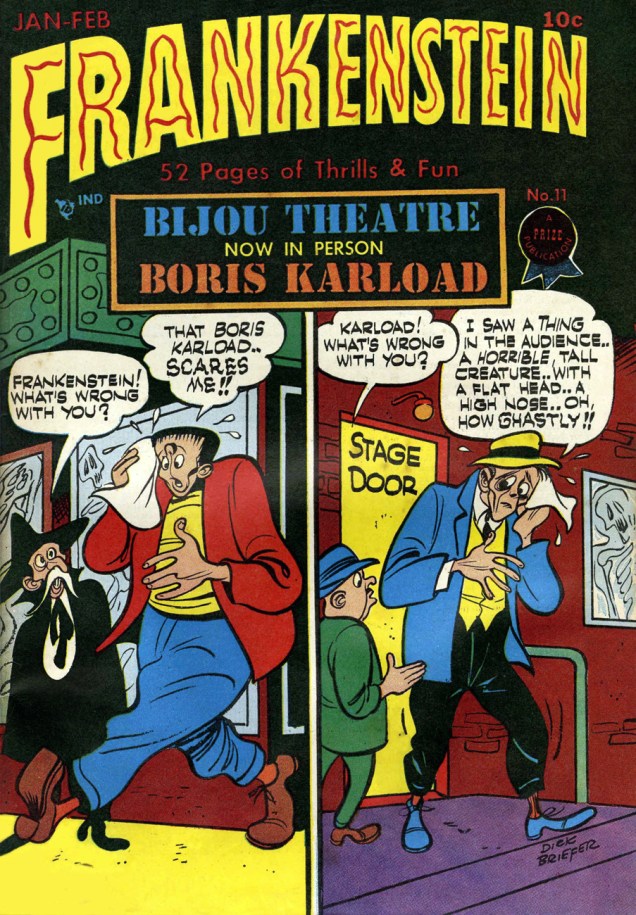




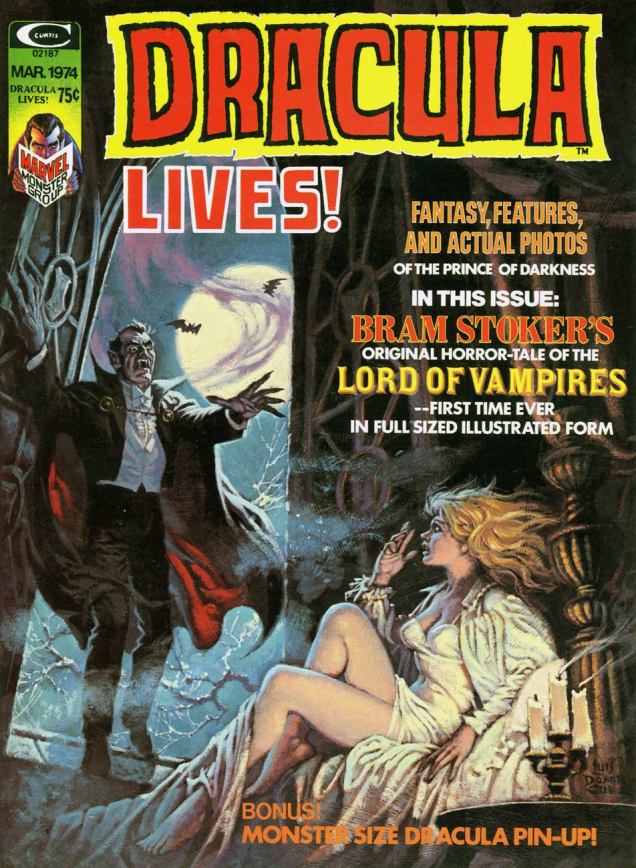 To give credit where credit is due, the colour reproduction is fairly faithful (as these things go) and quite a bit of detail is retained. That hardly ever happened!
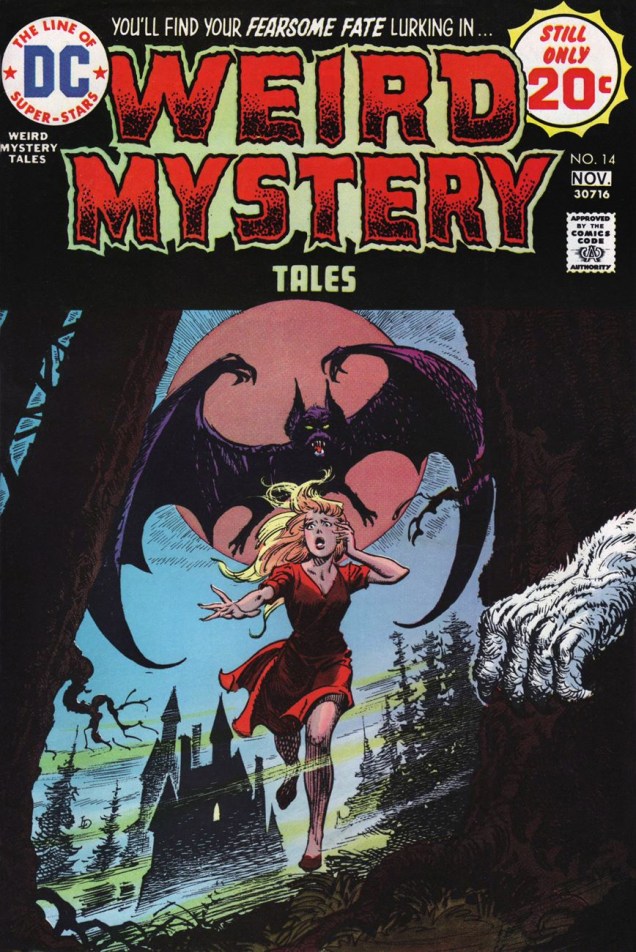
 Who's Out There?