Charles Rodrigues’ Pantheon of Scabrous Humour

« He works at night, which is fitting, since some of his best cartoons deal with the dark side of the psyche. A classic black humorist, he rummages around in violence, insanity, perversion, bigotry and scatology, looking for what he needs to create the typical Rodrigues effect: wild laughter with a cringe of repulsion. » [source]

Charles Rodrigues (1926-2014) is an American cartoonist of Portuguese descent. Fantagraphics published two collections of this work, and their blurb describes him as « the sick mind behind some of the most outrageous, inventive, and offensive cartoons ever to appear in mass circulation magazines, including Stereo Review, Playboy and (from its very first issue) the National Lampoon. » One of these books collects his one-panel cartoons, and is titled Gag On This: The Scrofulous Cartoons of Charles Rodrigues. Scrofulous, in case you didn’t know, means something like ‘morally contaminated’.
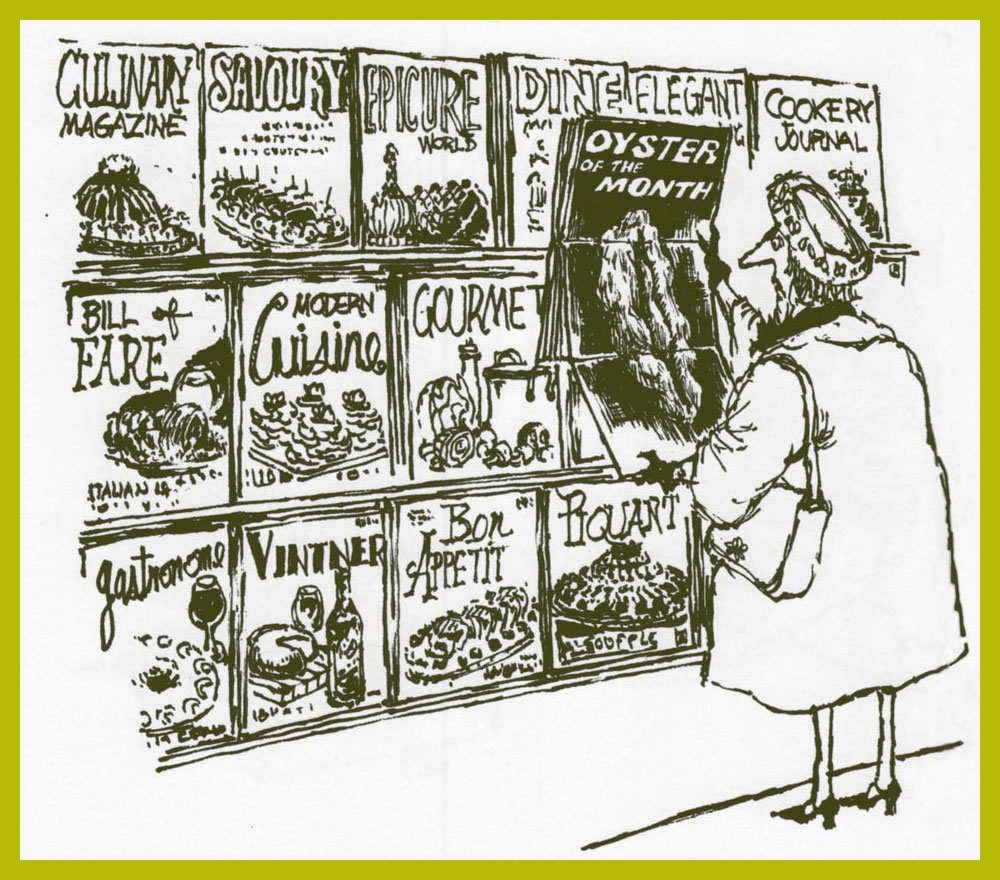
So it will come as no surprise that this post might provoke a few pouts of distaste. On the other hand, I am hoping that it will also elicit some chuckles.

I remember my reaction at first reading Chuck Palahniuk’s 2005 short story ‘Guts‘ (if unfamiliar but curious, read it here, at your own peril) and feeling a sort of amazed astonishment about how far the author was willing to go. ‘He’s not really going to go there, is he? Oh wow, he actually went that far.’

Well, reading Charles Rodrigues can be compared to that – at least in the slightly surreal surprise one feels when the gag winks at the reader, and trots happily across the invisible line nobody talks much about (but that we all know is there). If there’s a joke to be made, it doesn’t matter that it lies in the territory of the distinctly distasteful, Rodrigues will go for it with all arms blazing and nail it. Reading Guts is arguably an uncomfortable experience; reading a Rodrigues comic is wickedly entertaining… or incredibly offensive, depending on what floats (or sinks) your boat. He stuns the reader with a hilarious and crass barrage of absurdities reliant on scatology, taboos, and general indecency and sleaze. No one is safe – not the handicapped, nor the elderly; he flings dirt with equal aplomb at the women’s liberation front, gays and blacks, the terminally ill, rock stars, lepers, single mothers and ugly children, conjoined twins and cannibals — and this parade is only starting, chum.

Now I didn’t head into this with a desire to showcase the most stomach-churning of Rodrigues cartoons. This selection is based on a simple premise: some of my favourite instances of his sacrilegious* sense of humour. Gross-out gags and crudeness are actually really easy to come by, and often incredibly stupid — I worry about people who think a guy getting hit in the balls is hilarious. But I hope that this post demonstrates that in this case, there is a keen intelligence and a writer’s talent at work.

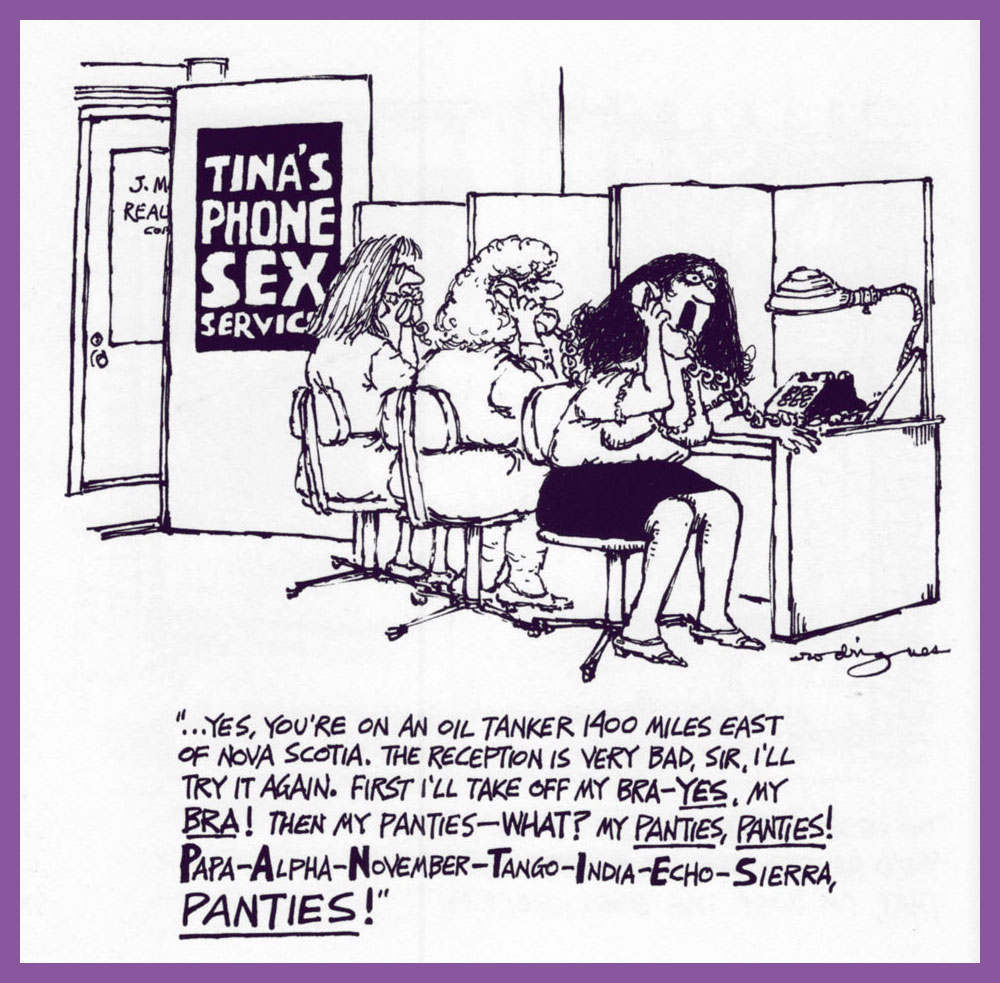
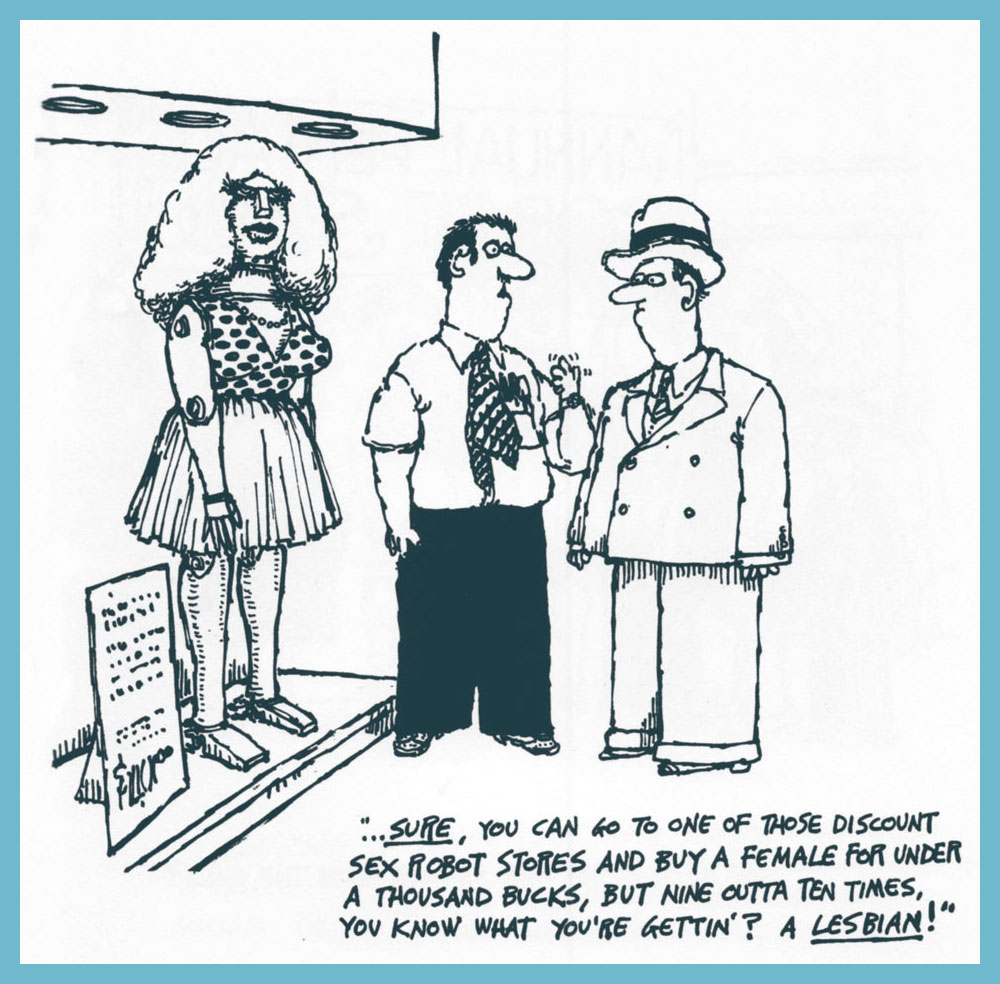
The following single-panel cartoons have been collected in Gag On This: The Scrofulous Cartoons of Charles Rodrigues.

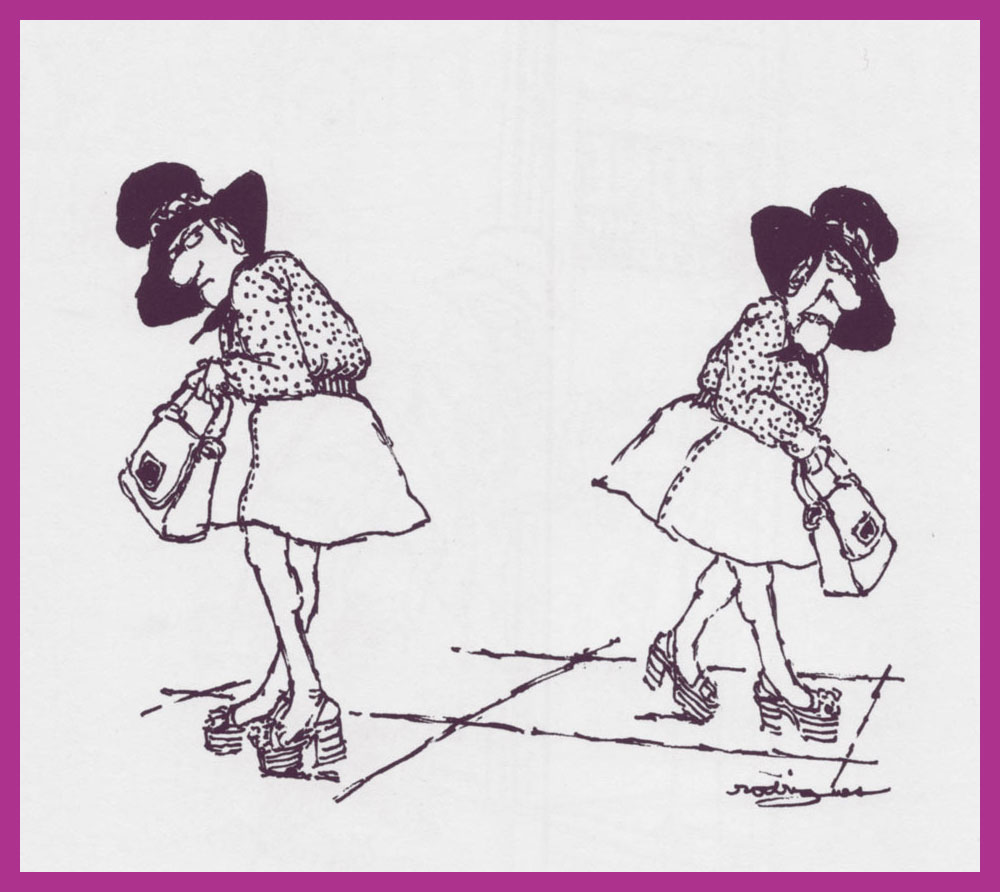
« Cartoonists can look upon his work with a kind of awe. His staggering is perfection, his actors expressive, his architecture and perspective masterful. But I’ve heard more than one layperson comment that his work looked rough and unpolished. I beg to differ. His line was thick, lumpy and bled right into the very fiber of the paper, but it is controlled and deliberate. This was a craftsman in charge of his medium. » Bob Fingerman, from the introduction to Ray and Joe: The Story of a Man and His Dead Friend and Other Classic Comics.
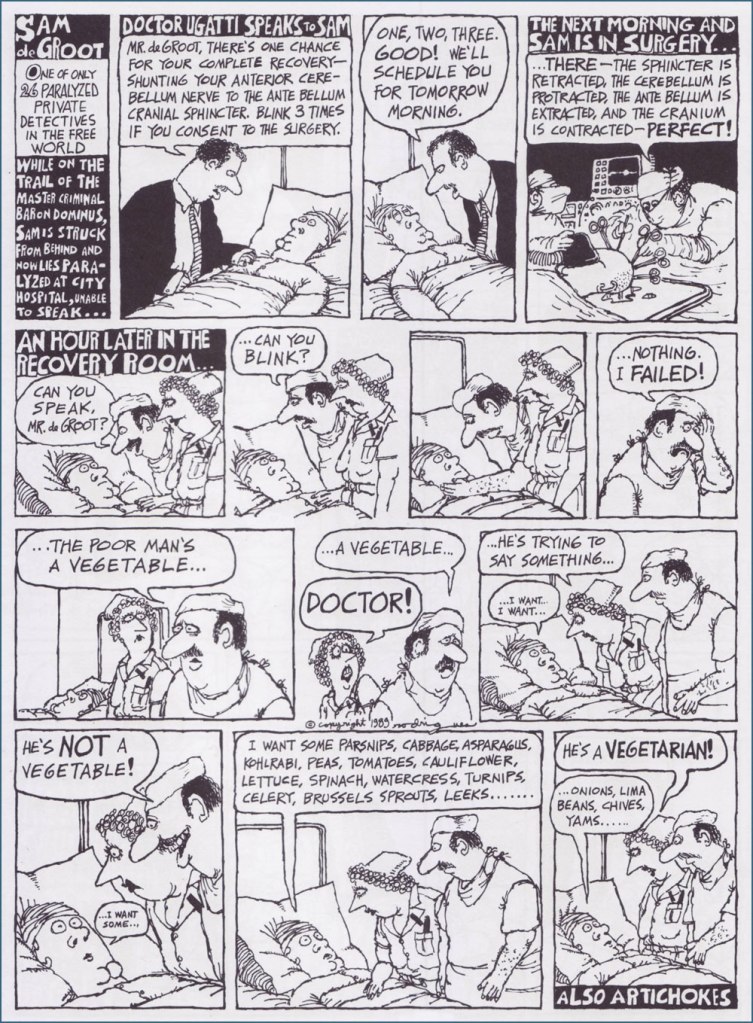
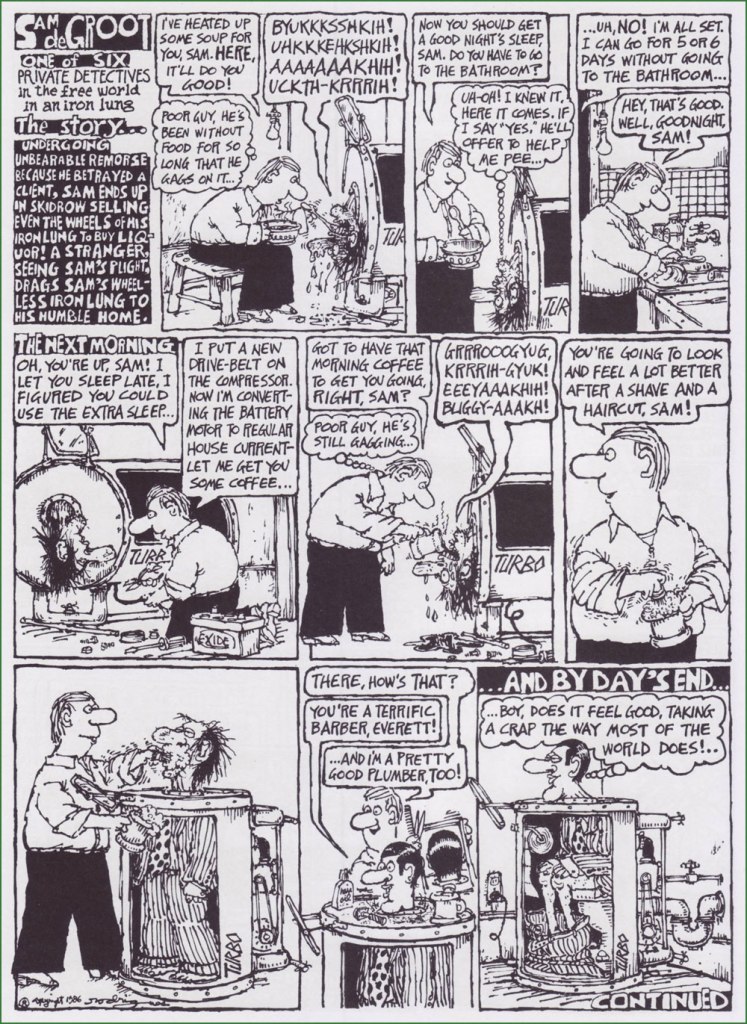
While his panel cartoons hit hard and fast, when given the space to develop a longer story, Rodrigues takes the time to set up things up for maximum… nastiness, with every gag flowing the most naturally in the world into an even more over-the-top one. The following pages are excerpted from Ray and Joe: The Story of a Man and His Dead Friend and Other Classic Comics, which had been my first exposure to Rodrigues’ work, which « boggled the mind and challenged all sense of decency and propriety ». What can I say? I found it in a now-defunct comic bookstore, looked through a few pages and immediately purchased it.
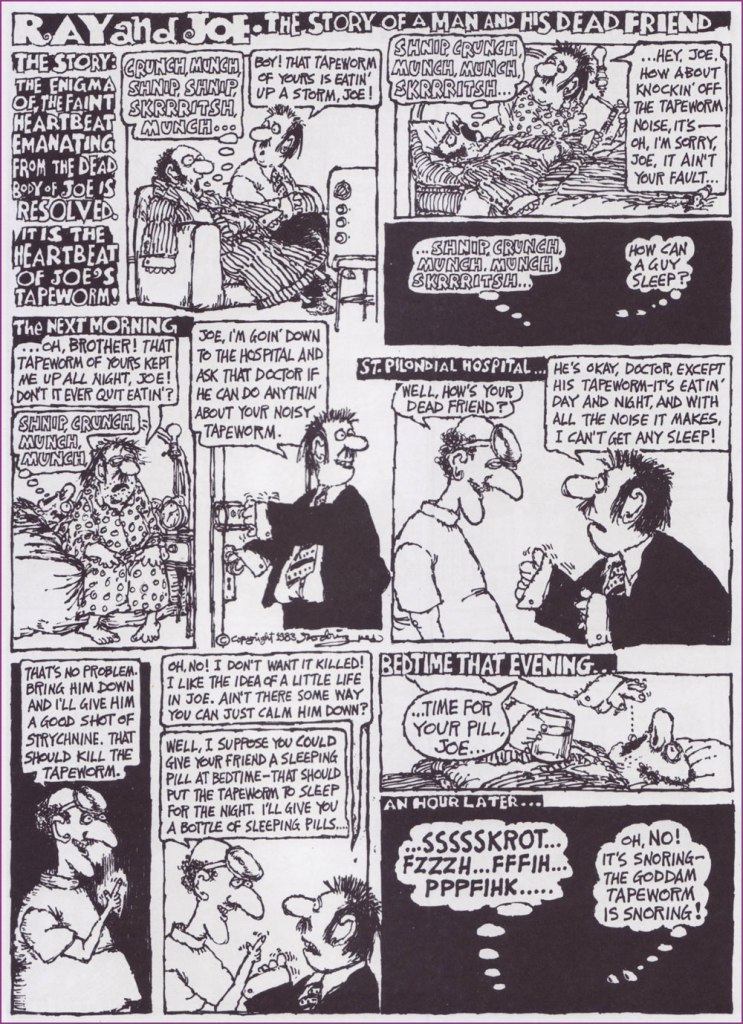
Page from The Story of a Man and his Dead Friend, in which Ray’s friend Joe dies, and Ray decides to keep his corpse around because he’s lonely without him (Joe is embalmed to avoid unpleasant odours and whatnot, which leads to its own set of scatological issues).
Page from Sam DeGroot: The Free World’s Only Private Detective in an Iron Lung Machine. Sam is on skid row after a series of misfortunes, but is picked up by a kind-hearted civilian (who turns out to be fattening him up to be eaten later on).
Sam is being successfully fattened up (Everett the cannibal is a very talented cook!), although in this panel Everett rescinds his evil man-eating ways, set on the right path by one of those door-to-door priests seeking to convert more sheep for his flock.
From the iron lung and into the hospital bed! Sam starts a new phase in his life (and ends up being literally able to talk out of his ass through an enema tube, but that comes later).

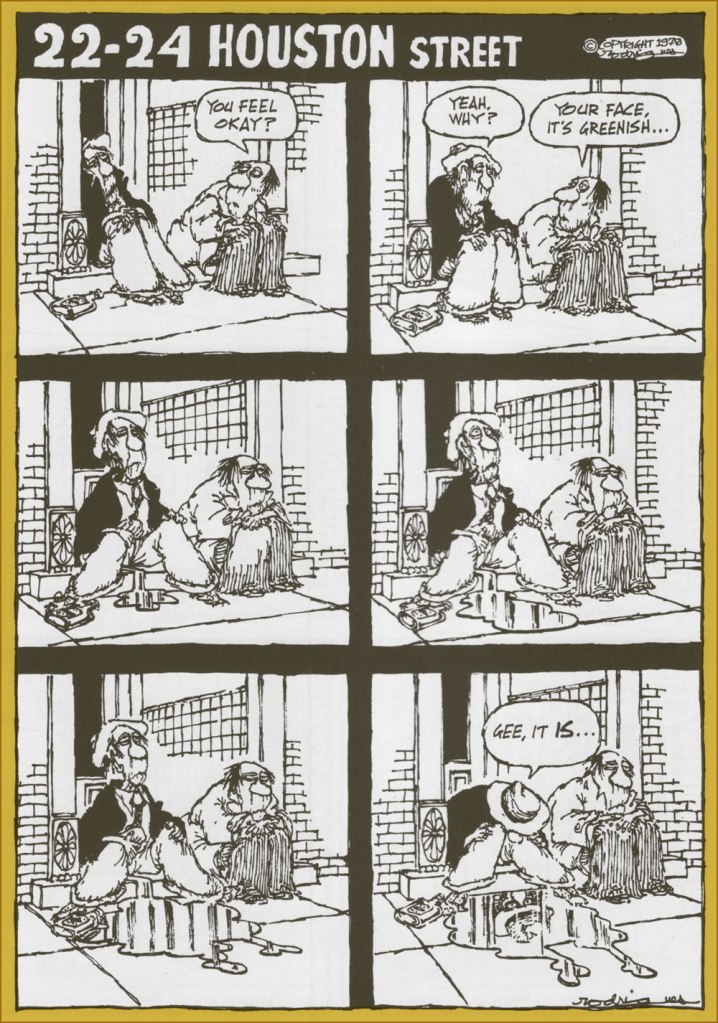
I’ll wrap this with an unrelated one-pager which somehow seems appropriate in this pandemic new year –
~ ds

*Interestingly, Rodrigues was actually a fairly religious, politically conservative man.
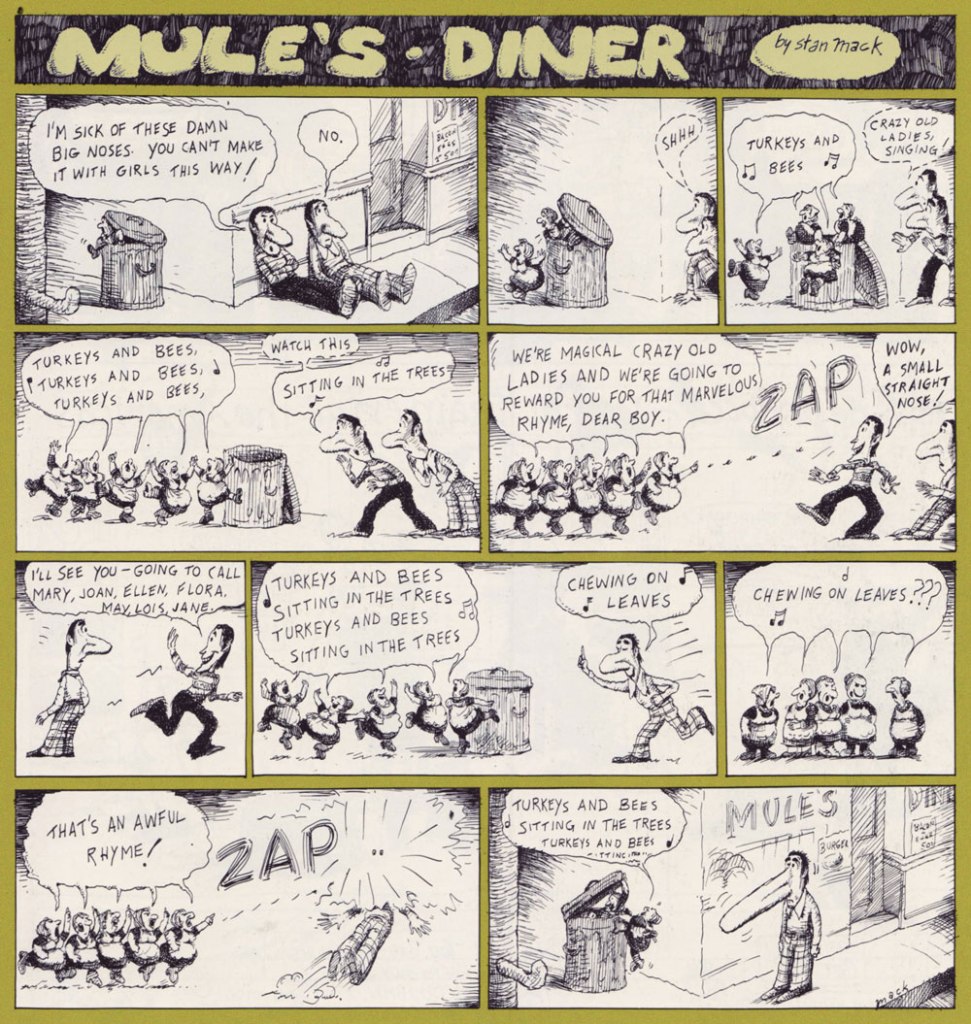
Your Usual Corner Table at Mule’s Diner

« There’s a safety in thinking in a diner. You can have your coffee or your milkshake, and you can go off into strange dark areas, and always come back to the safety of the diner. » — David Lynch

My relationship with the National Lampoon has always held a strong element of contention: in my view, for every brilliant strip or feature, there’s some deplorably juvenile shock-for-shock’s-sake fratboy dross. But the good stuff, even if it doesn’t always outweigh the bad, is still worth tracking down… and sharing!

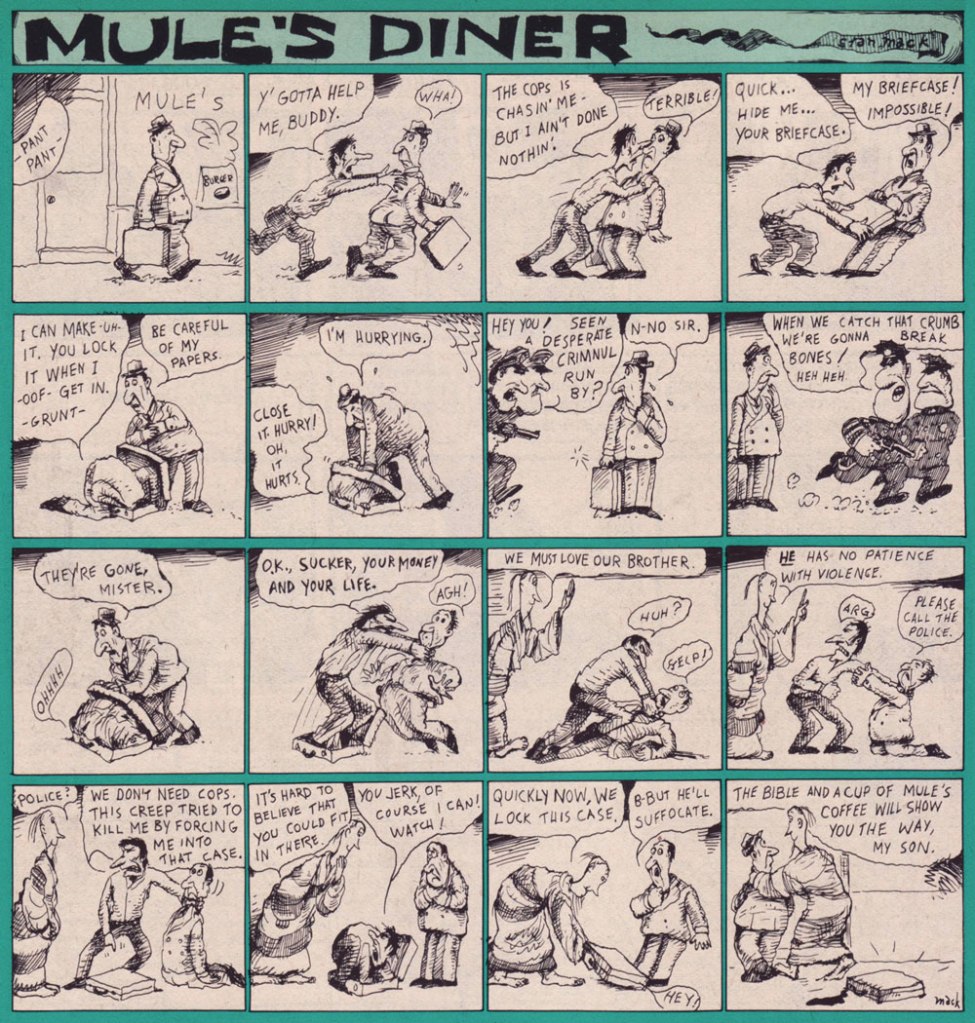
While Stan Mack is most celebrated for his impressive comics reportage (an area explored in this previous post), I’m just as taken with his earlier endeavour, the surreal Mule’s Diner, sporadically published in the Lampoon during the magazine’s heyday (the first half of the 1970s).

In his history of the magazine, Drunk Stoned Brilliant Dead (2010, Abrams — now also a film!), Mack’s cartooning colleague, Rick Meyerowitz, wrote of him admiringly:

« In Mule’s Diner, surrealism was dished up with the coffee, or maybe it was the coffee. Stan invited the Lampoon’s readers to sit and have a cup and listen to a story. Dine at Mule’s and you’ll find yourself ruminating on some fantastic little morsel for days afterward. The stories, like the ink, are indelible. Read a few now and see if there is another artist who has cross-hatched his way this deep inside parts of your head you didn’t even know you had.

Stan misses nothing. It’s only after looking at the picture he drew of you that you notice you’ve been missing a button on your coat. I saw him interview a politician in a crowded convention hall. He looked the man right in the eye while he wrote down verbatim what the guy said, and drew his portrait without even once looking at the 2×3 inch pad he held in his right hand. The portrait looked like the guy, too. That’s talent! »

Originally published in National Lampoon vol. 1 no. 24 (March 1972).
Originally published in National Lampoon vol. 1 no. 27 (June 1972).
Originally published in National Lampoon vol. 1 no. 34 (Jan. 1973).
Originally published in National Lampoon vol. 1 no. 39 (June 1973).
Originally published in National Lampoon vol. 1 no. 46 (Jan. 1974).
Originally published in National Lampoon vol. 1 no. 53 (Aug. 1974).
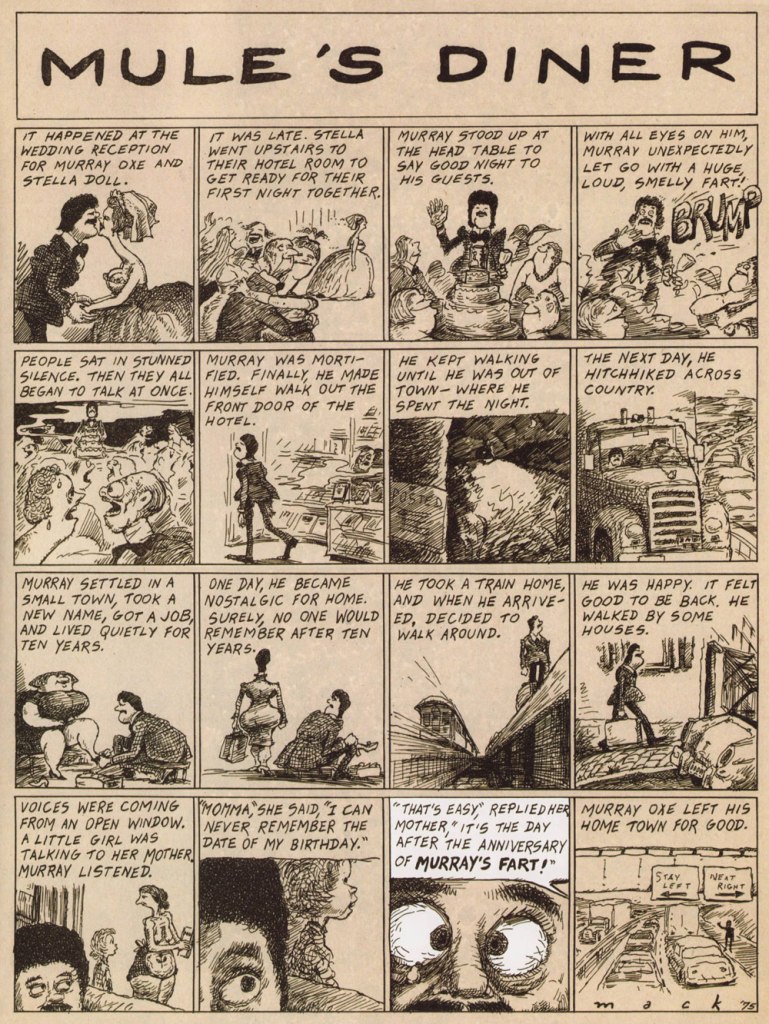
And the most famous of the lot — the tragic saga of Murray’s fart, from National Lampoon vol. 1 no. 68 (Nov. 1975);
The handsome auteur, sans moustache, displays his best side. Photo by Sylvia Plachy.

-RG

Some of Life’s Darkest Moments

« This kind of accuracy, continued long enough, can ruin a man who is constructed as I am. I want to be pretty. I want to eliminate facts and fill up the gap with charm. » — Samuel Clemens, writing to a friend of a pen sketch sent to him by young admirer H.T. Webster

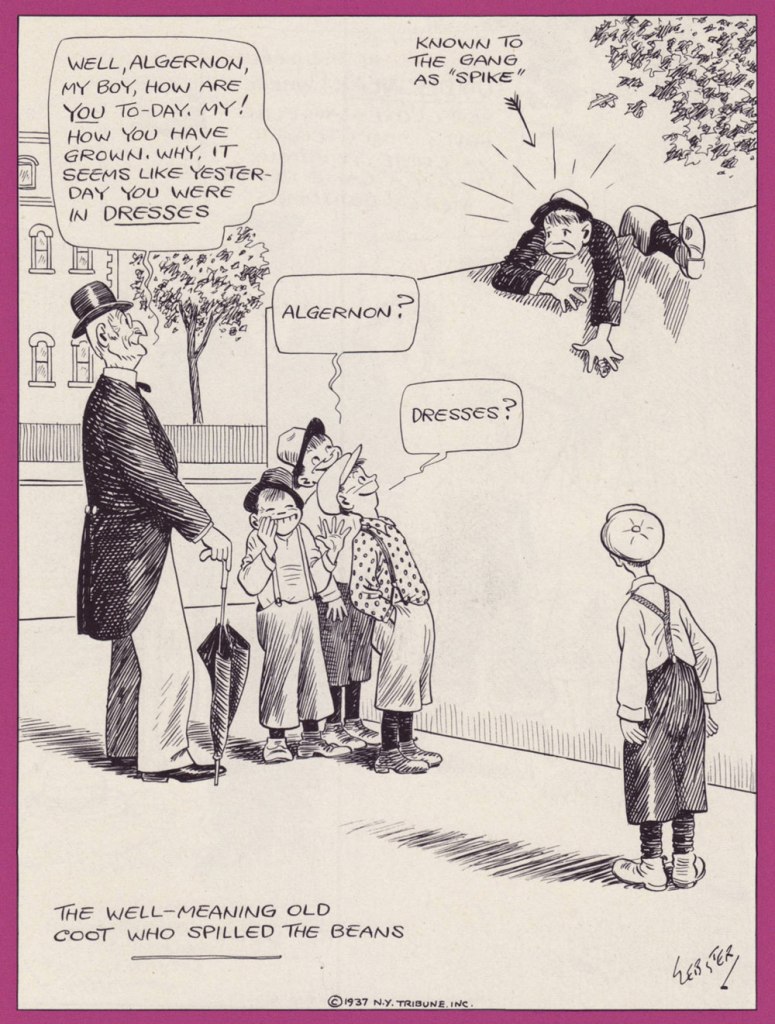
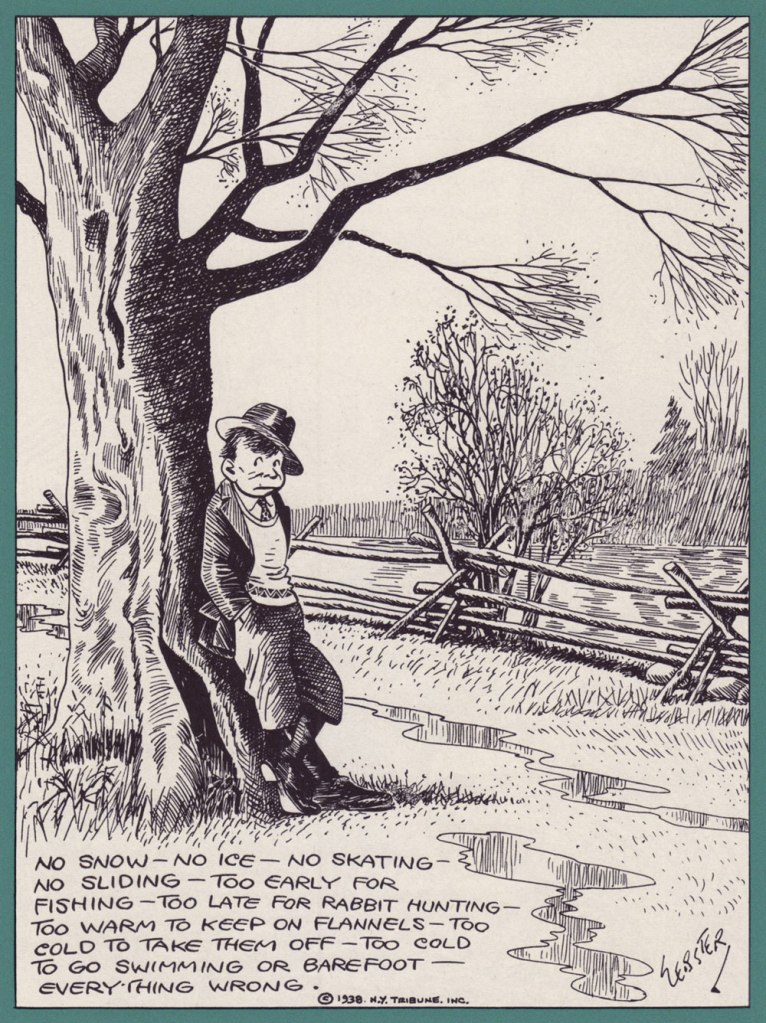
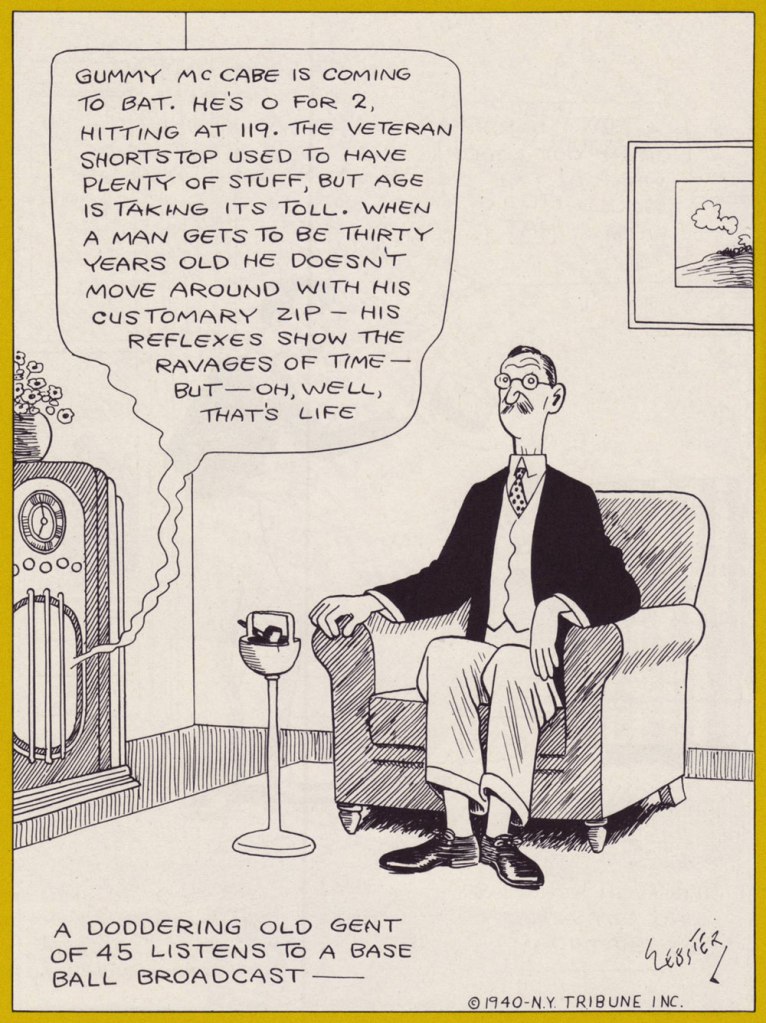
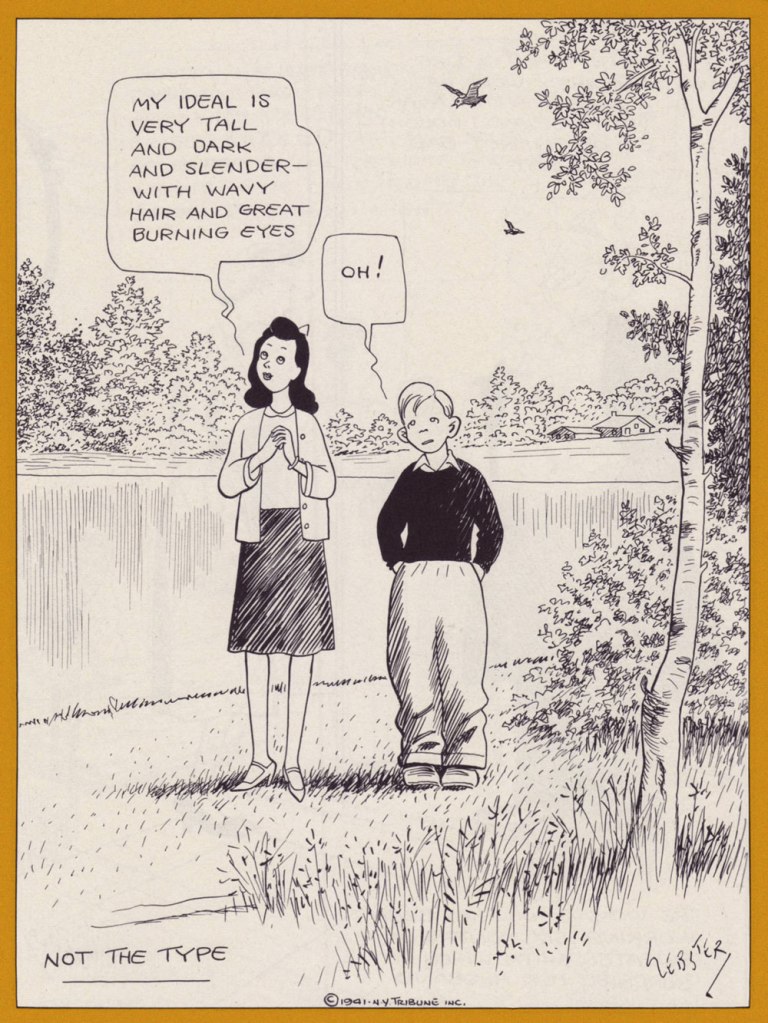
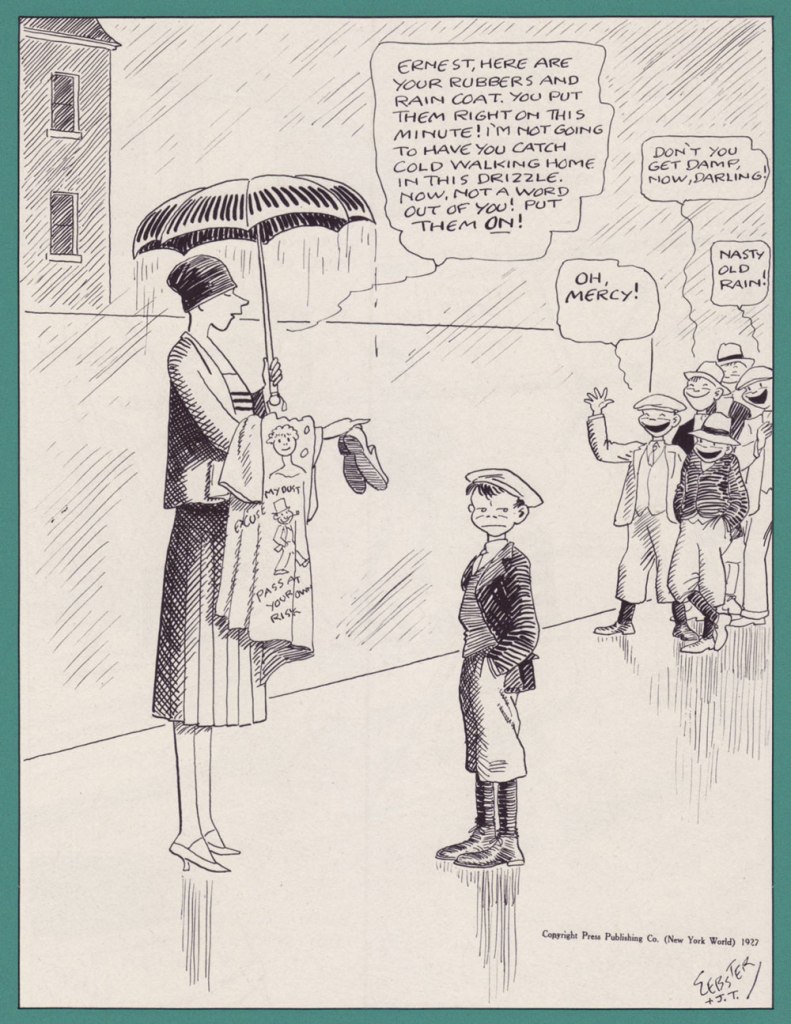
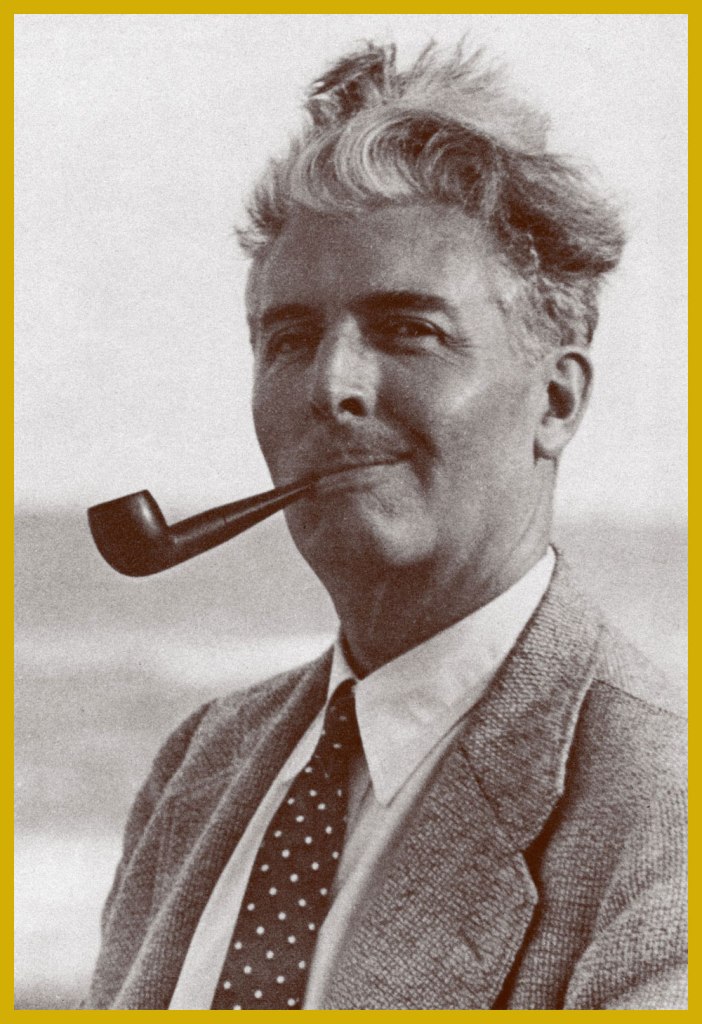
I had originally set out to write (and I may yet) of pioneering newspaper cartoonist (and honorary Southpaw*) Harold Tucker “Webby” Webster‘s most famous feature, The Timid Soul (starring Caspar Milquetoast, his contribution to the English language), but I noticed that Atlas Obscura had beaten me to the punch, and quite honourably at that.

Thankfully, it’s fair to say that Webster (1885-1952) had plenty more arrows in his quiver. According to a 1945 Time Magazine profile of the artist (who was even featured on the cover!):

« H. T. Webster has learned to slice and serve his generous chunks of U.S. life methodically. Caspar (The Timid Soul) appears Sundays and Mondays. The pitilessly fanatic and bad-mannered bridge players run Fridays. Boyhood’s lovingly elaborated triumphs (The Thrill That Comes Once in a Lifetime) and defeats (Life’s Darkest Moment) appear on Saturdays and Tuesdays. Thursdays bring How to Torture Your Husband (or Wife). On Wednesdays, in The Unseen Audience**, he pokes a sharp-pointed stick at radio—which of all mixed blessings most needs satirizing, and gets it least. Webster, in fact, is possibly radio’s most effective critic. »

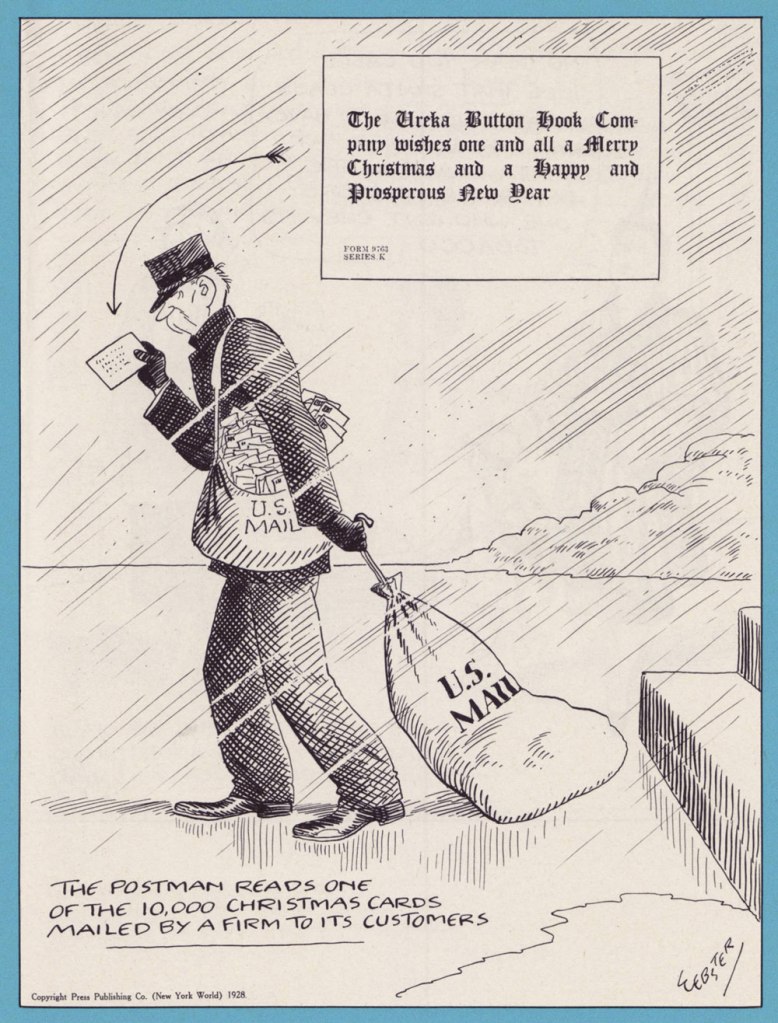
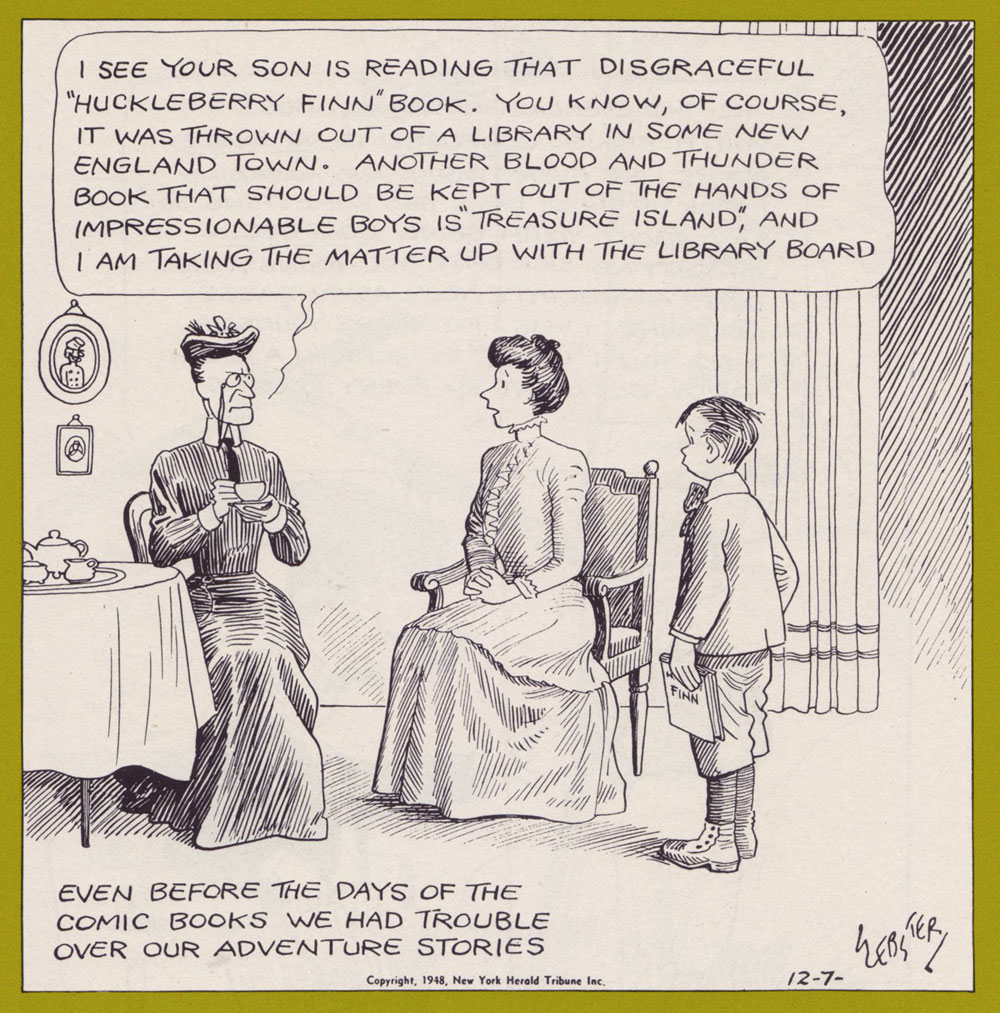
Honestly, they’d each be rewarding choices, but I’ve opted, on this occasion, to draw from the cool, sombre well of Life’s Darkest Moment.

A glimpse at the infancy of spam.
Up here in Canada, we recently had a bit of a furore over a sanctimonious (yet deceitful) fusspot spearheading the destruction of a bunch of graphic novels. Oh, and speaking of Robert Louis Stevenson, tomorrow’s his birthday, number one hundred and seventy one!
Then as now, one can generally rely on the news to be dire.
Another entry in our collection of Legendary Cartoonists With a Great Tousled Head o’ Hair.
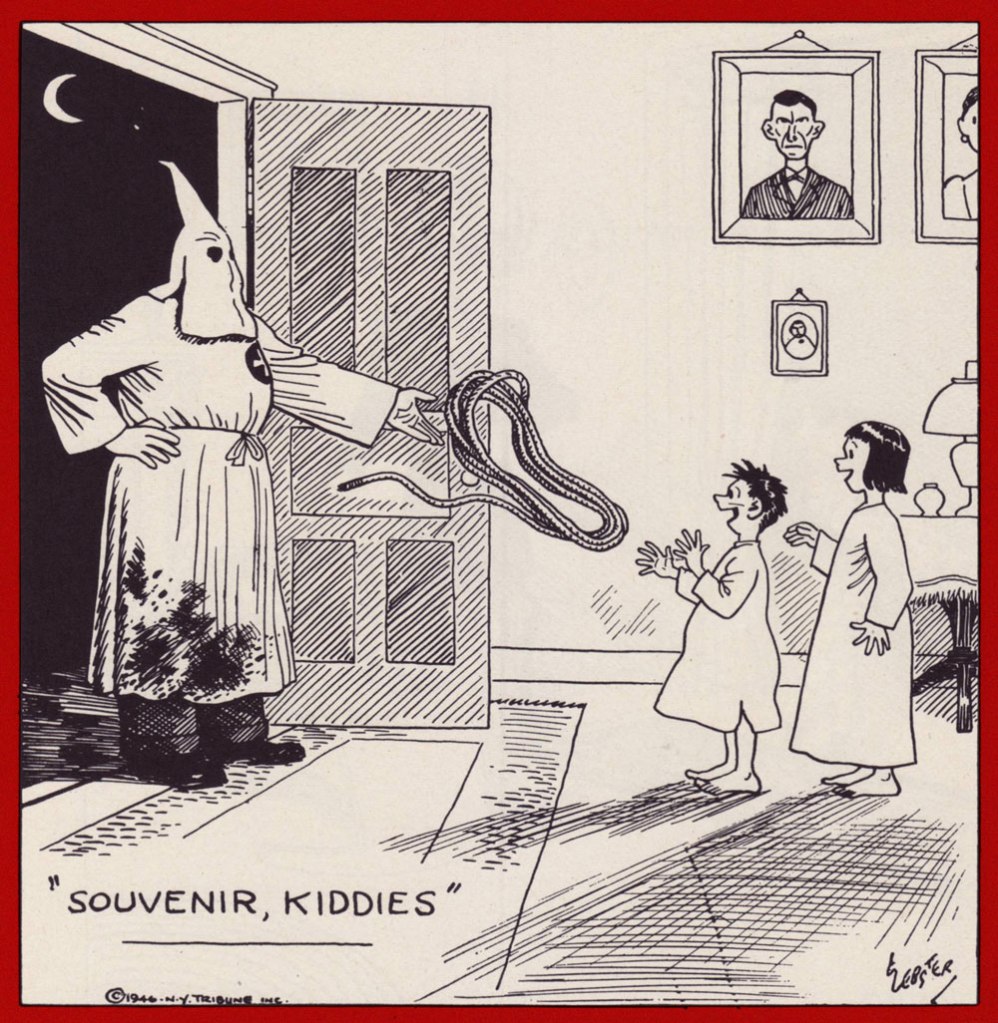
And just so you don’t conclude that Webster’s work was all about, and just about ‘poking gentle fun at life’s little foibles‘, here’s what has to be the darkest, most brutally scathing political cartoon*** I’ve ever seen come out of the mainstream US press (circa 1946!). Incidentally, Webster was a Republican. The original art of this masterpiece resides in the permanent collection of The Library of Congress, right where it belongs.

-RG

*“For many years no one but his close friends knew of an acute arthritis which in 1927 cost him the use of his right hand. In three months he trained himself not only to write, but to draw, left-handed.” — Philo Calhoun in Biographical Sketch, The Best of H.T. Webster (1953, Simon and Schuster).

**In 1948, The Unseen Audience won him a Peabody Award for distinguished service to radio!

***He “… returned to Chicago, where he spent three years drawing front-page political cartoons for the Chicago Inter-Ocean, prompting one politician to introduce a bill in the state legislature forbidding unflattering cartoons.” (it didn’t pass.)

Hallowe’en Countdown V, Day 17

« Dreams surround our desires with ugliness and dread. » — Mason Cooley

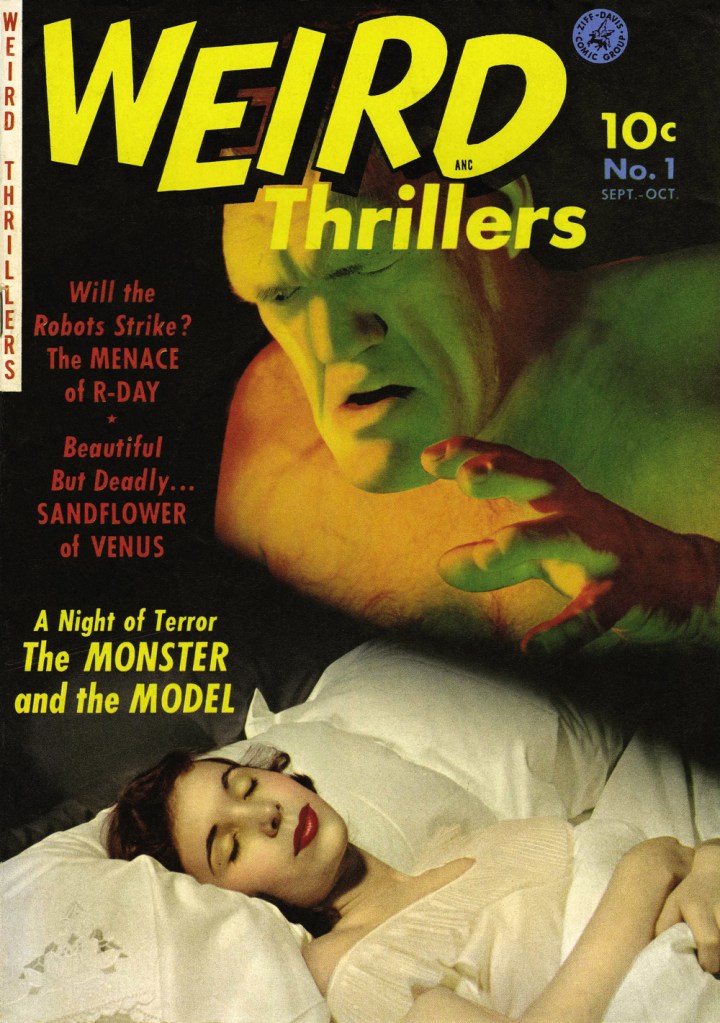
As everyone knows, the early fifties were a more innocent and wholesome era, when the average bobbysoxer would swoon away the nights with fantasies of dishy teen idol Rondo Hatton. I mean, just look at her blissful expression!

This is Weird Thrillers no. 1 (Sept. 1951, Ziff-Davis). Disappointingly, given the cover’s promise, the issue comprises mostly science-fiction and crime stories.

Surprisingly, the cover scene does, for once, occur within!

The opening pages from our cover tale, The Monster and the Model, pencilled by future Rip Kirby artist John Prentice. The entire issue is available for your perusal, legally and gratis, right here!
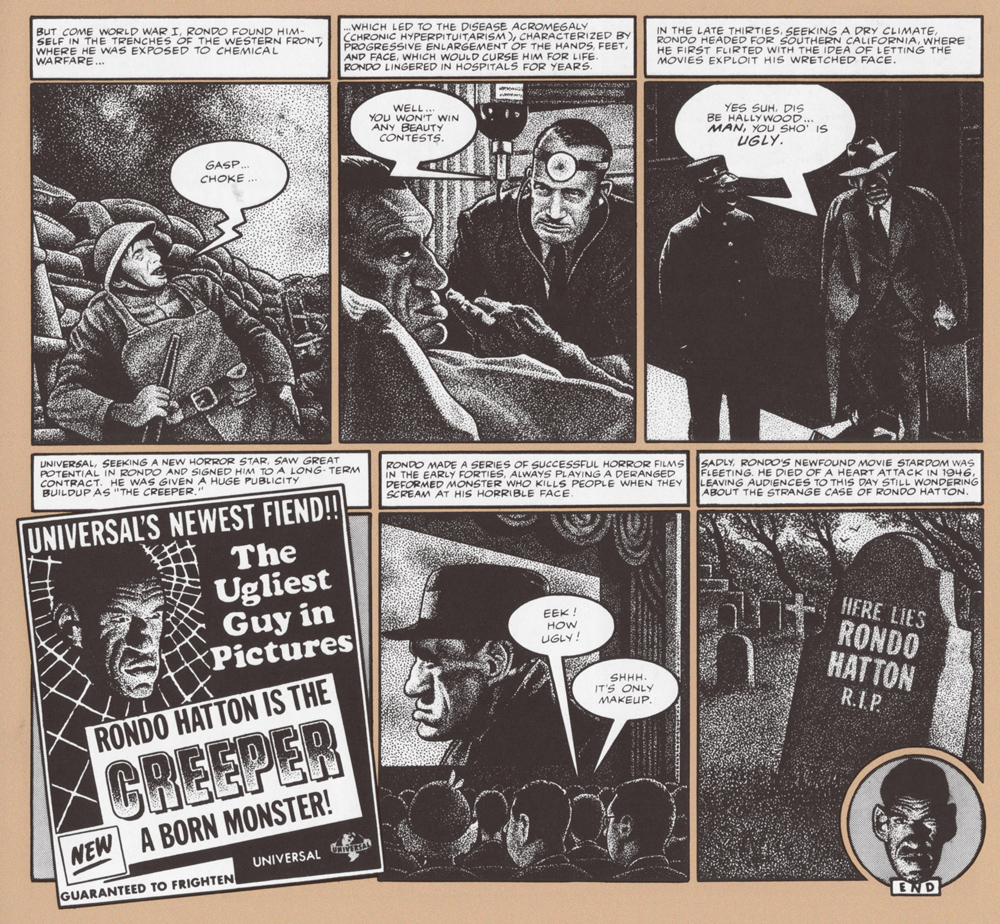
“So, who is this Rondo guy?”, you may ask. Before Mr. Hatton became a household name, got an award named after him and was the subject of his own book-length biography (Beauty Within the Brute), cartoonist Drew Friedman, ahead of the curve as usual, was endeavouring to preserve from oblivion the unfortunate man’s memory… in his own sardonic way.

One more for the road?

Originally published in Raw no. 8 (Sept. 1986, Raw Books). You may have heard of some other folks tragically afflicted with acromegaly.

-RG

Hallowe’en Countdown V, Day 16

« The whole planet reeks of mysticism without revelation. » — Dan Simmons

Last May, when I showcased Joe Maneely‘s Atlas cover art (see Joe Maneely, Atlas of Versatility), I intentionally left out his pieces for the horror titles, knowing them worthy of some attention of their own, an ideal topic for the Hallowe’en countdown. Besides, it took some pressure out of the selection process if I could save one whole genre for a rainy day — and today’s most certainly that day!

This is Mystic no. 7 (Mar. 1952, Atlas); colours by Stan Goldberg.
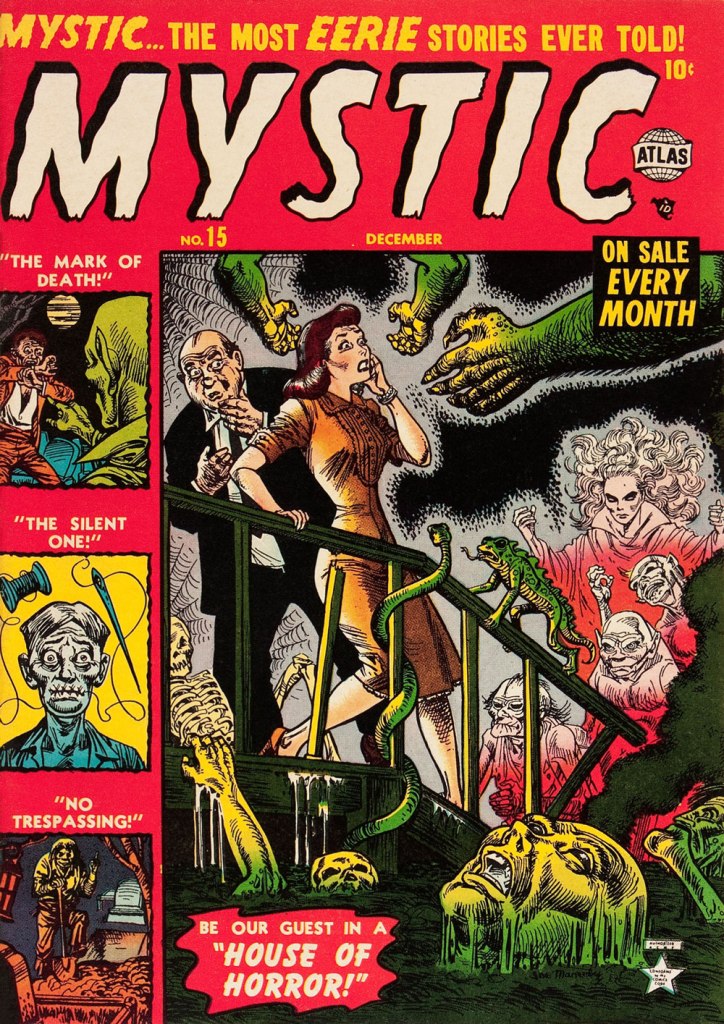
This is Mystic no. 15 (Dec. 1952, Atlas); colours by Stan Goldberg.

“Mystic” is evidently one of Marvel’s pet titles: the title was first used by Timely in 1940-42, then again in 1944-45; once more, most successfully in this Atlas horror series, for 61 issues from 1951-57. And lately in 2009 and 2011. I’ll bet that tradition’s not yet done with, but why on earth?

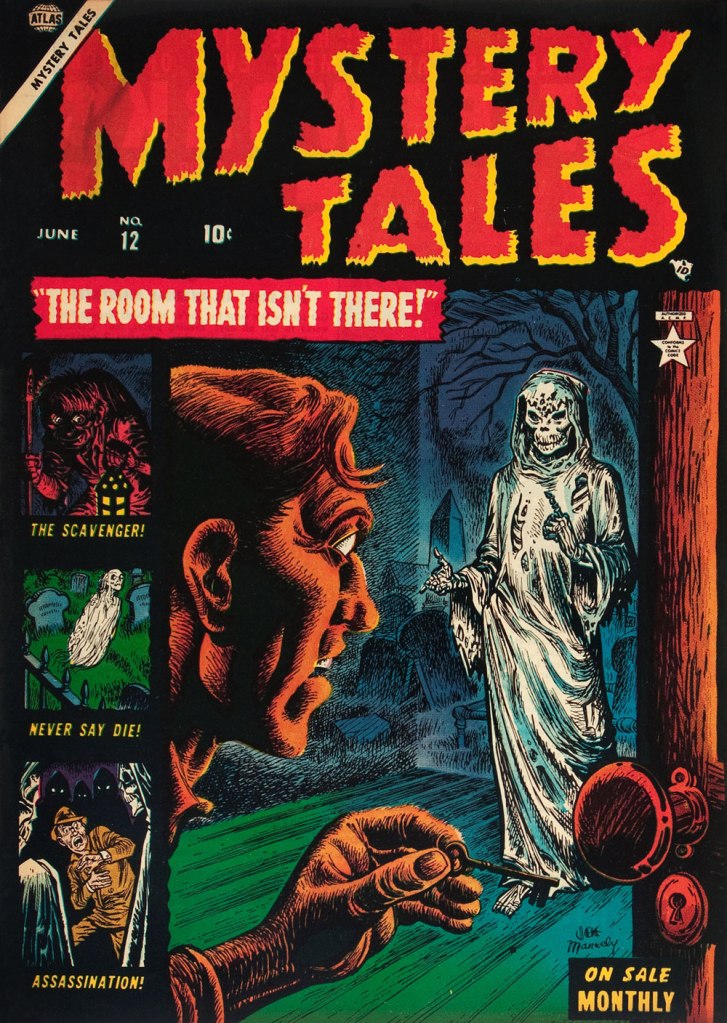
This is Mystery Tales no. 12 (June 1953, Atlas); colours by Stan Goldberg.
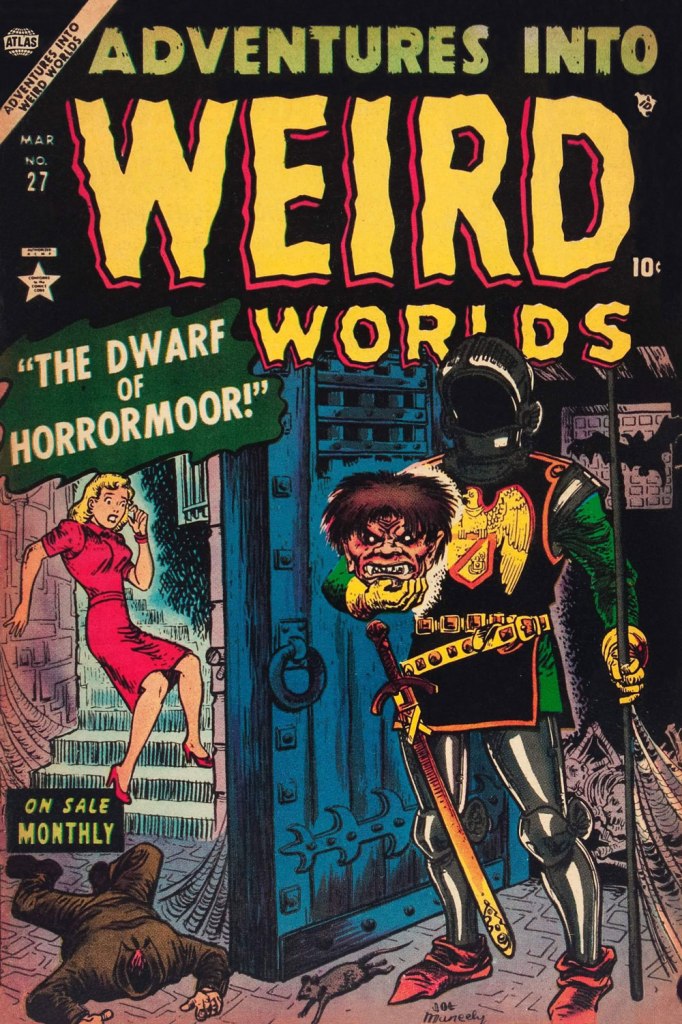
This one’s got it all! Here’s Adventures Into Weird Worlds no. 27 (Mar. 1954, Atlas); colours by Stan Goldberg.
This is Mystic no. 29 (Apr. 1954, Atlas); colours by Stan Goldberg. Maneely’s Atlas horror covers generally distinguished themselves by their goofiness.
Begging the question: What’s worse than having two left feet? Having three left hands, apparently. This is Riot no. 3 (Aug. 1954, Atlas); colours by Stan Goldberg.
This is Mystery Tales no. 24 (Dec. 1954, Atlas); colours by (need you ask?) Stan Goldberg. While I make no bones about my disdain for Goldberg’s work at Archie, he was a superb colourist in the 1950s. In terms of legibility, Atlas’ busy covers had to be quite a challenge to pull off, and he did it again and again.

-RG

Hallowe’en Countdown V, Day 14

« Upon its head, with red extended mouth and solitary eye of fire, sat the hideous beast whose craft had seduced me into murder, and whose informing voice had consigned me to the hangman. » — The Black Cat (1845)

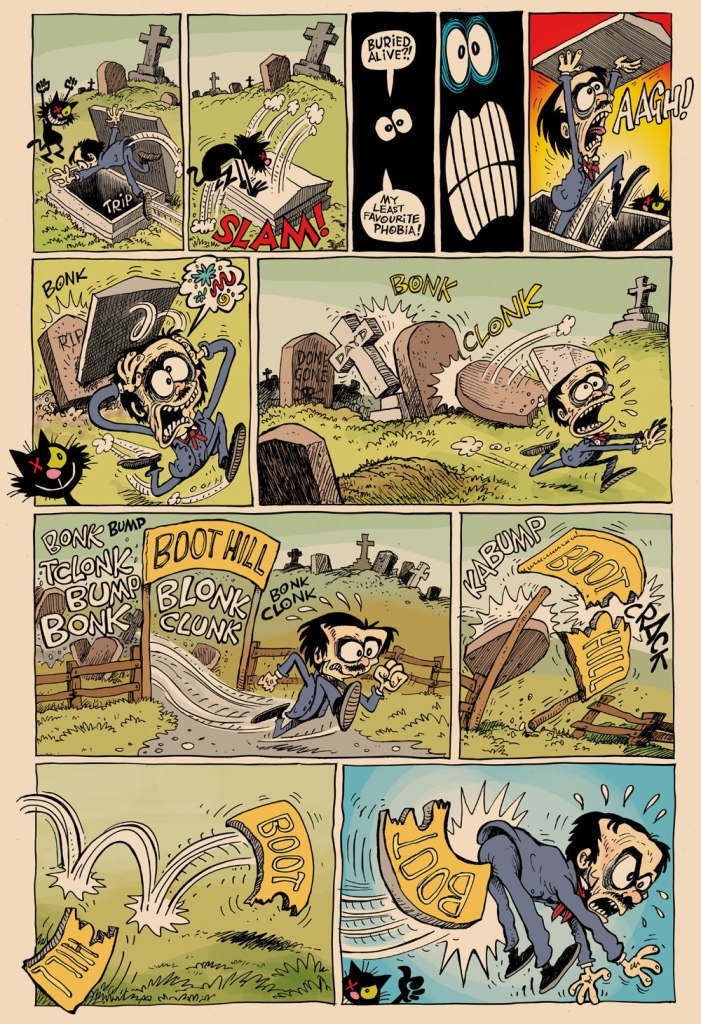
What can I tell you about the legendary English cartoonist and bon vivant Hunt Emerson — born in 1952 in Newcastle and still devilishly active these days — that he can’t tell you in his own words?

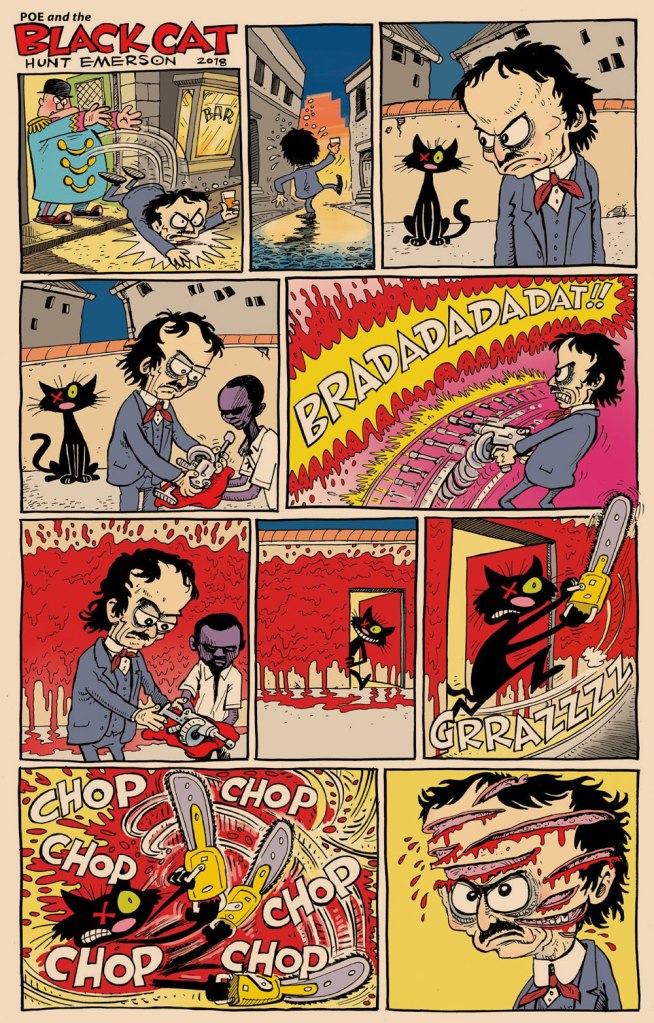
Mr. Emerson has recently (and I do mean recently!) contributed a series of hi-concept short strips to Ahoy Comics’ gamut-running Poe-themed humorous horror anthology. Taking his place in a thematic thread that includes Tom and Jerry, Antonio Prohías‘ Spy vs Spy, Brian McConnachie and Warren Sattler‘s Kit ‘n’ Kaboodle, Massimo Mattioli‘s Squeak the Mouse* and Simpsons cartoon-within-a-cartoon Itchy and Scratchy, Emerson merrily escalates the hostilities launched in Poe’s The Black Cat, with Poe himself in the rôle of the narrator. Assume the position!

Originally published in Edgar Allan Poe’s Snifter of Terror no. 2 (Nov. 2018, Ahoy).
Originally published in Edgar Allan Poe’s Snifter of Terror no. 4 (Jan. 2019, Ahoy).
Originally published in Edgar Allan Poe’s Snifter of Terror no. 5 (Feb. 2019, Ahoy).
You’ll get all these, and plenty more besides, in Edgar Allan Poe’s Snifter of Terror Volume 1 (Oct. 2019, Ahoy), collecting the title’s first six issues. Cover art by Richard Williams, with a title logo by Todd Klein.
-RG

* not, by a long shot, Mattioli’s best work. *That* would be, without question, his nonpareil M le magicien (1968-73).

Hallowe’en Countdown V, Day 8

« So, you see the little snot on the right side, move it two inches to the left and add a little bit of green gleam to it. » — Mark Newgarden, doing some art direction

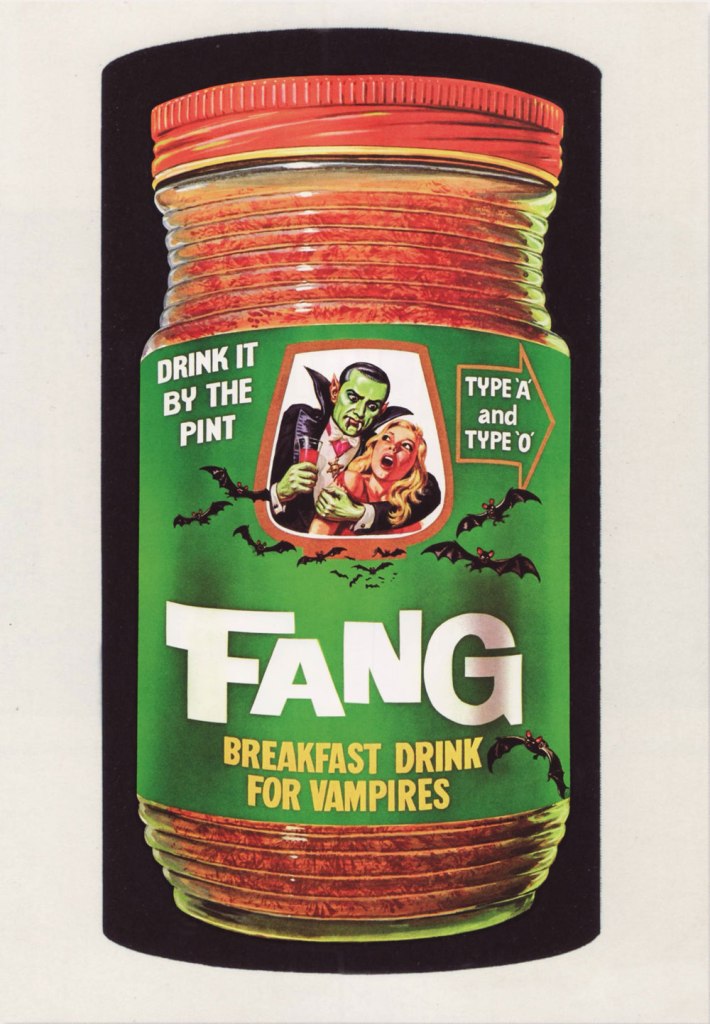
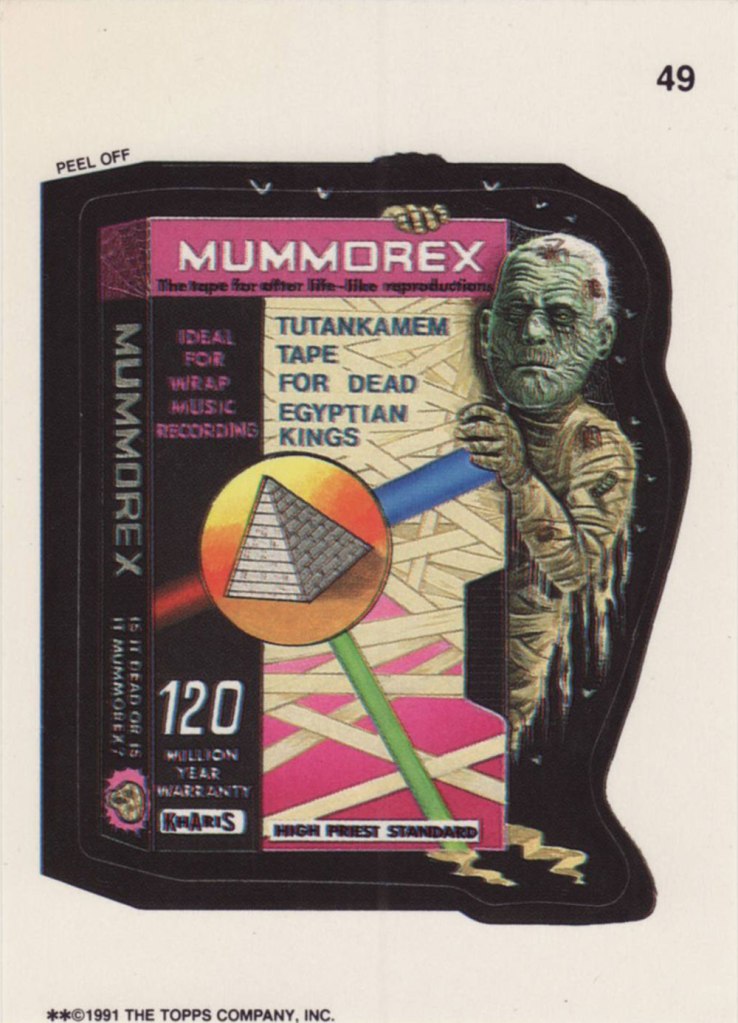
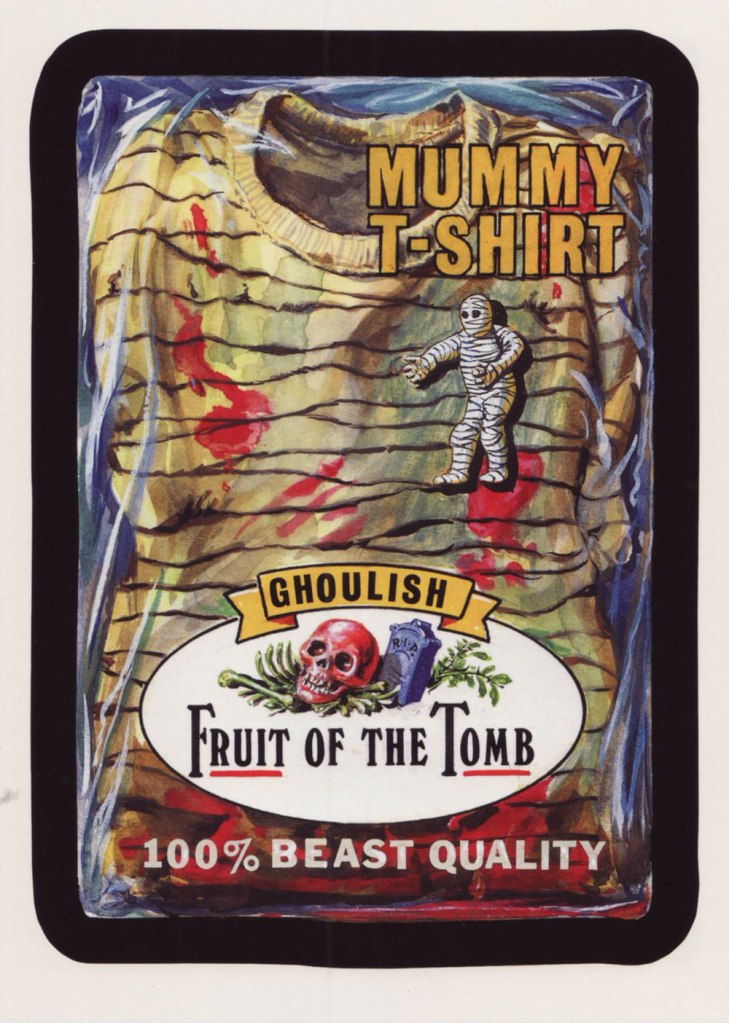
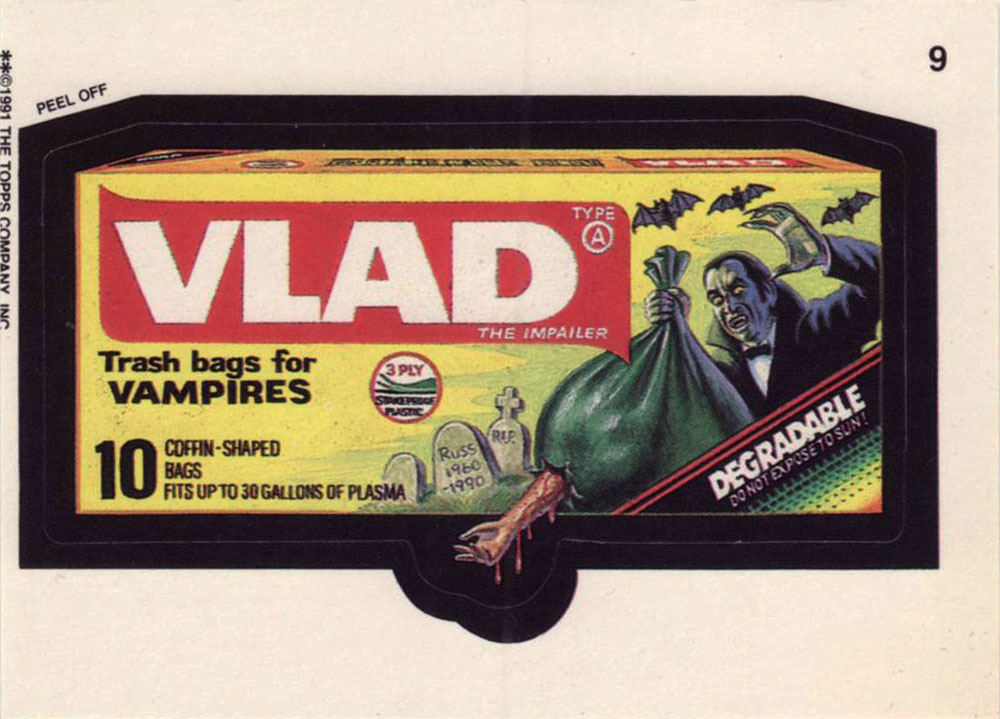
I can’t help it, Wacky Packages are such a Hallowe’en-friendly endeavour that I keep returning to their fertile soil. First, during our initial edition and again in the second. Just consider some of the who’s who talent embroiled in dreaming up these humble stickers: Art Spiegelman, Norm Saunders, Bill Griffith, Jay Lynch, Mark Newgarden, John Pound, Drew Friedman, Tomas Bunk, Tom Sutton…

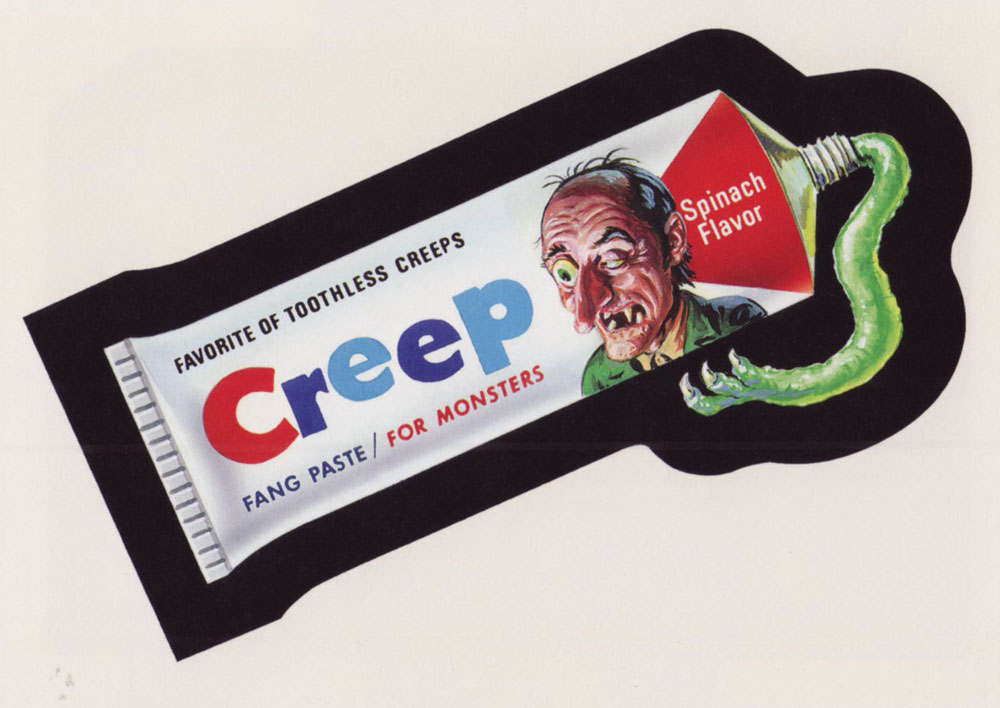
A Norman Saunders beauty from Series 12 (1975, Topps). And just what is wrong with spinach, pray tell? 😉
If this one looks sharper than you’d expect, it’s because it’s shot from a larger version of the Wacky card that Norman Saunders (re)painted for Topps’ Wacky Posters series, circa 1973.
Ladies and gentlemen, Drew Friedman! « In 1991, I was creating many concept sketches and pencil drawings for the TOPPS company, including for their latest set of the hugely popular sticker series “Wacky Packages”. Mark Newgarden was the editor and art director for the 1991 series, and the writers for the card fronts included Newgarden, Jay Lynch, Jordan Bochanis, John Mariano and myself. I drew about 22 tight pencil images which would (with one exception) be painted by the illustrator Patrick Pigott. » If you enjoy being privy to an artist’s creative process, by all means do yourself a favour and feast your peepers on this gallery of Friedman’s roughs, finishes, used and unused pieces. In this (mummy) case, it’s Friedman pencils, finished art by Tomas Bunk.
From the 6th Series (1974, Topps). Most likely painted by Norm Saunders.
From the 8th Series (1974, Topps)… though mine’s a 1980’s reprint. Painted by Norm Saunders.
From the lucky 13th Series (1975, Topps). Another fine Saunders vintage. Topps would find Mr. Saunders most difficult to replace.
From the 1985 Series. Artist unknown.
From the 1991 Series. Painted by Patrick Pigott.

-RG

A Most Instructive Visit to the Meyerowitz Aviary

« When birds burp, it must taste like bugs. » — Calvin

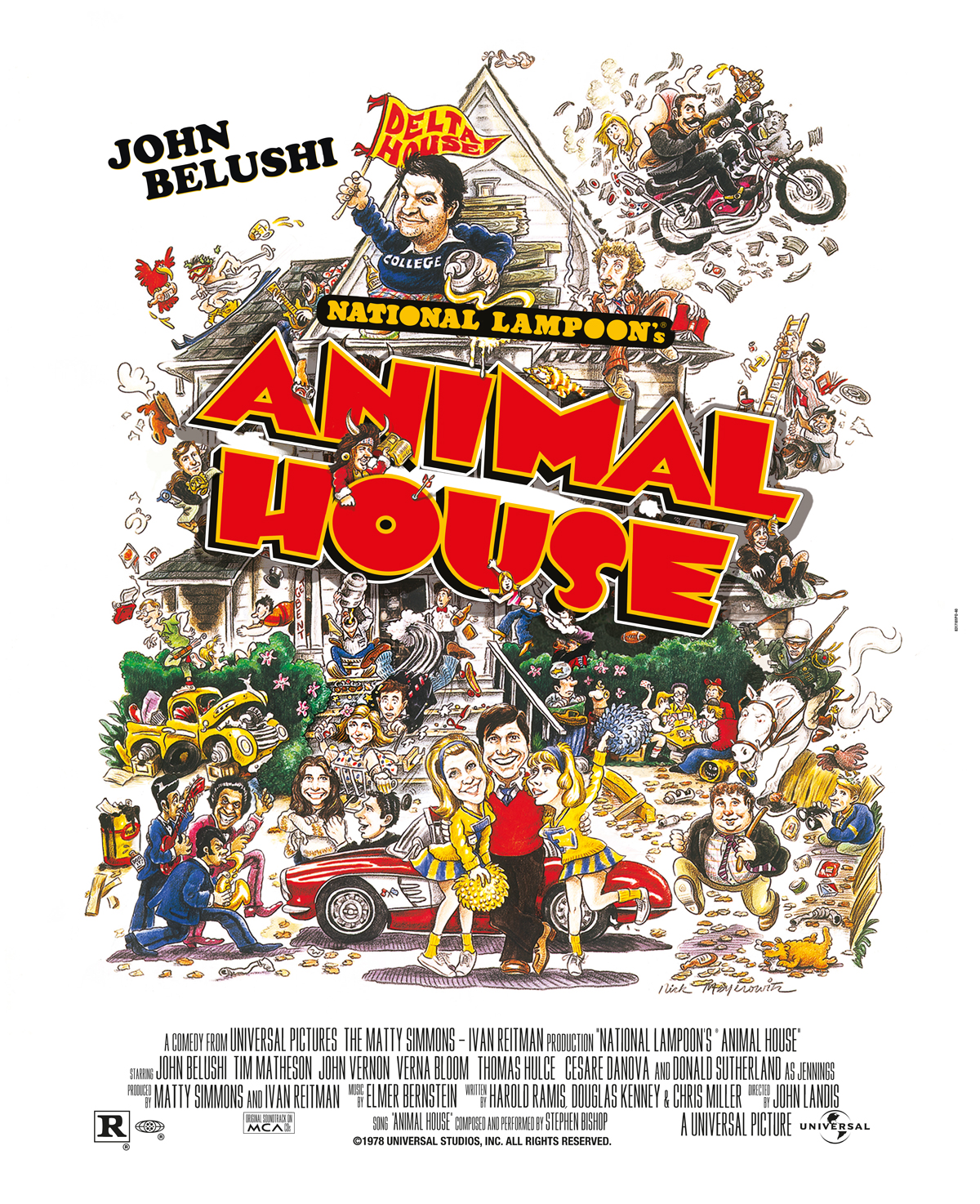
Like John James Audubon (and Roger Daltrey, in his own inimitable fashion), Rick Meyerowitz (b. 1943, The Bronx, NY) clearly loves to draw birds. Mayerowitz, among numerous other career highlights, was a prolific National Lampoon contributor (he even authored the mag’s definitive insider history, Drunk Stoned Brilliant Dead, published in 2010). At the very least, you may be familiar with his Animal House poster [ have a gander at that portfolio! ]

In 1973, he gave us Birds of Israel (included at the end of this post); farther along, he (with his frequent collaborator, Montréal-born writer Sean Kelly) gave us a look at The Birds of Summer, (2007, The New York Times). And in 2016, these ardent but irreverent crypto-ornithologists were at it again with Odd Birds, which added in excess of one hundred and fifty fascinating new species to the tally. However, Meyerowitz only illustrated a handful (but such a handful!), which I present to you here. Still, how I would love to behold his depictions of, for instance: The Three-Day Lark; the Venomous Spite; the Oblivious Walking Jay; the Perpetual Jackhammer; the Yellow-Bellied Stool Pigeon; the Groveling Wince; the Hoodwinked Bagholder; the Celibate Tot-Fondler; Zimmerman’s Cryptic Drone; the Barecheeked Thongbird; the Bald-Faced Lyre; the Fact-Spinning Mockingbird; the Screaming Scarlet Manager; the Gulf Coast Petrel Dumper; Oscar’s Pink-Bottomed Boychick; the Crapulous Binge; the Free-Screech Owl… or the Swaggering Gut-Sucker! Man, this project needs to go the full book route.

THE RAVING HOMELAND JINGO: « This recently introduced European species is often mistaken (by itself) for native American. It proudly displays its red neck, white knuckles, and bluenosed morality, kept aloft by drafts of hot air. The Jingo emits gruesome shrieks in defense of its territory against the occasional Left-Winged News Hawk. The Jingo is anatomically anomalous, in that its testicles are located in its cranium, and its brains are safely secured behind and exceptionally tight sphincter. »
« The all-too-common Back Lot Goose, with its natural prey, the Wide-eyed Chippy. »
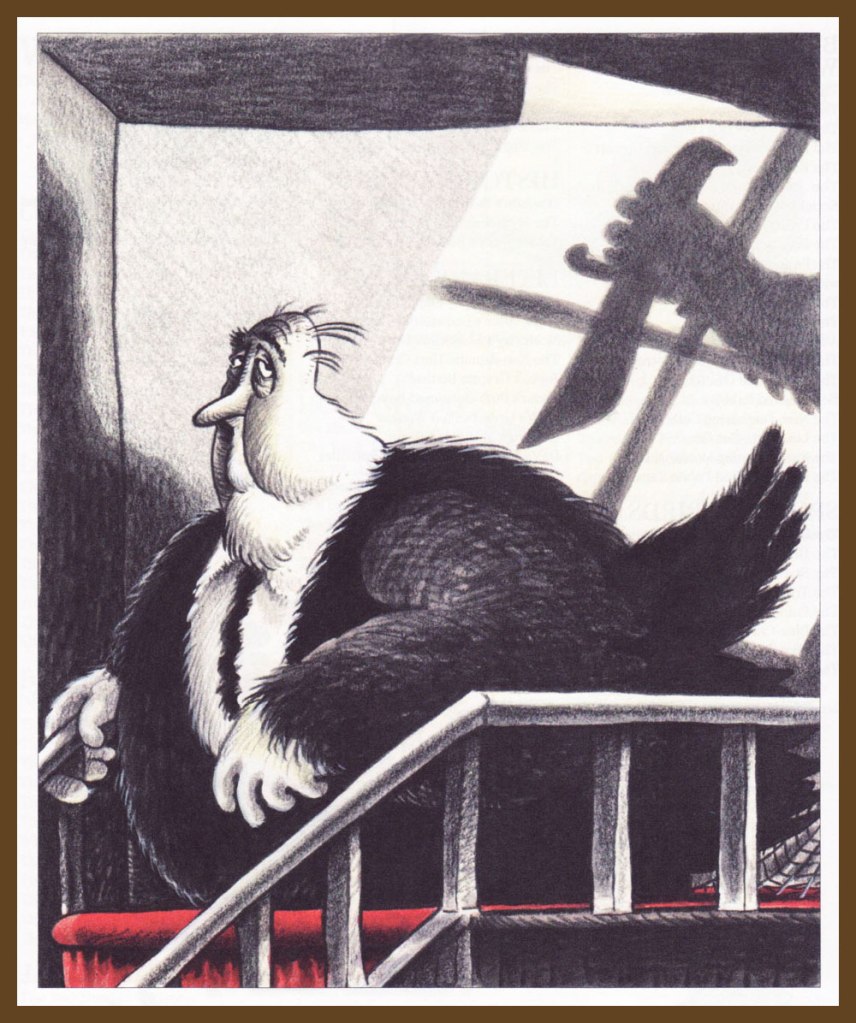
Meet HITCHCOCK’S MacGUFFIN — « An Old World species, introduced to California: a plump, lugubrious bird given to stealthy silences, sudden shrieks, and terrifying displays. Its diet consists of red herrings and snakes in the grass. Despite its reputation, has laid the occasional egg. Sometimes mistaken for Hammett’s Maltese Falcon; not to be confused with any of Spielberg’s Mawkish Cliff Hangers. »
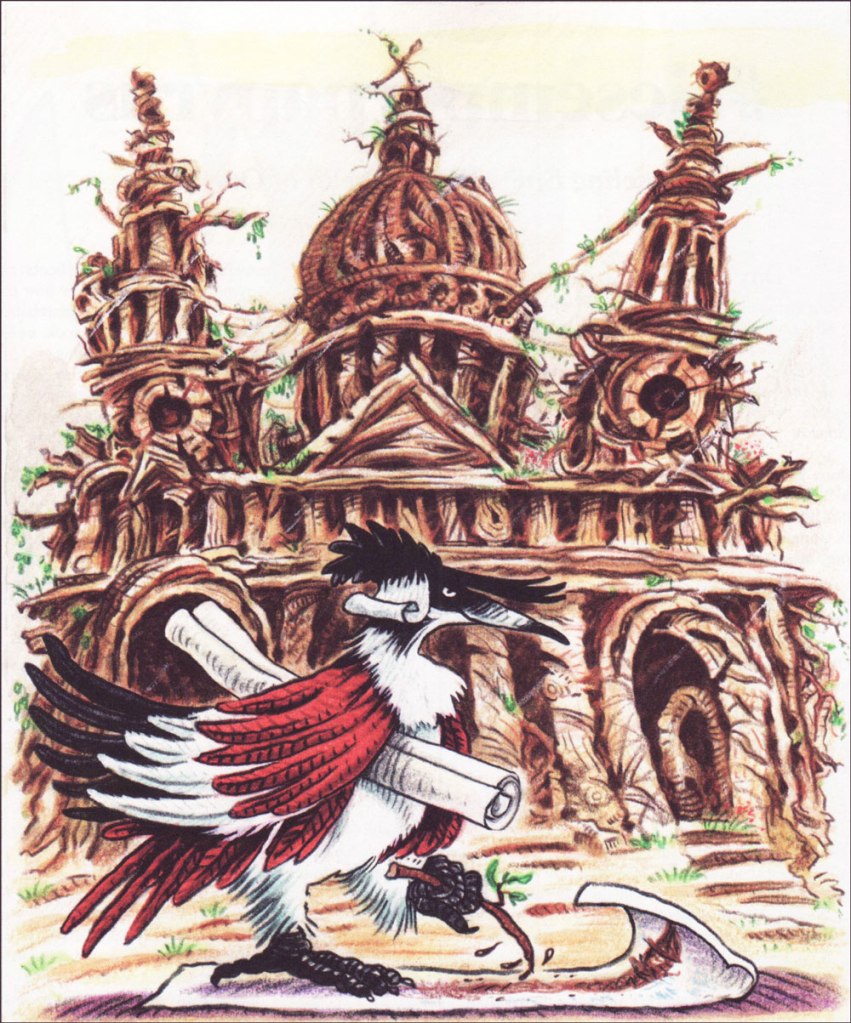
THE CHRISTOPHER WREN: « Like the Francis Drake, the Dean Swift and the Florence Nightingale, this bird prefers a cold, damp, dreary environment such as the city of London, England, in which the Christopher Wren constructs nests of preposterous design, monumental size, and no apparent use. (This species is not related to the similarly named Christopher Robin, native to the Hundred Acre Wood in East Sussex.) »
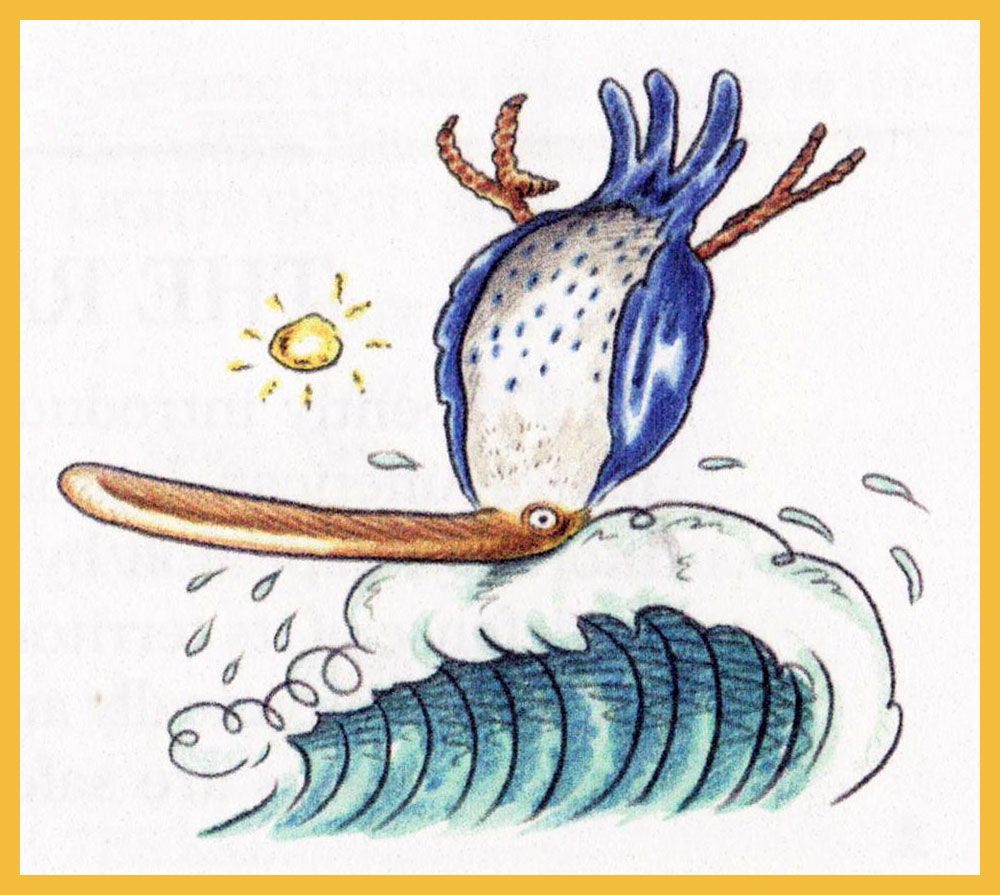
« A Malibu Shack-Crasher. » Well, everybody knows that the bird is the word!
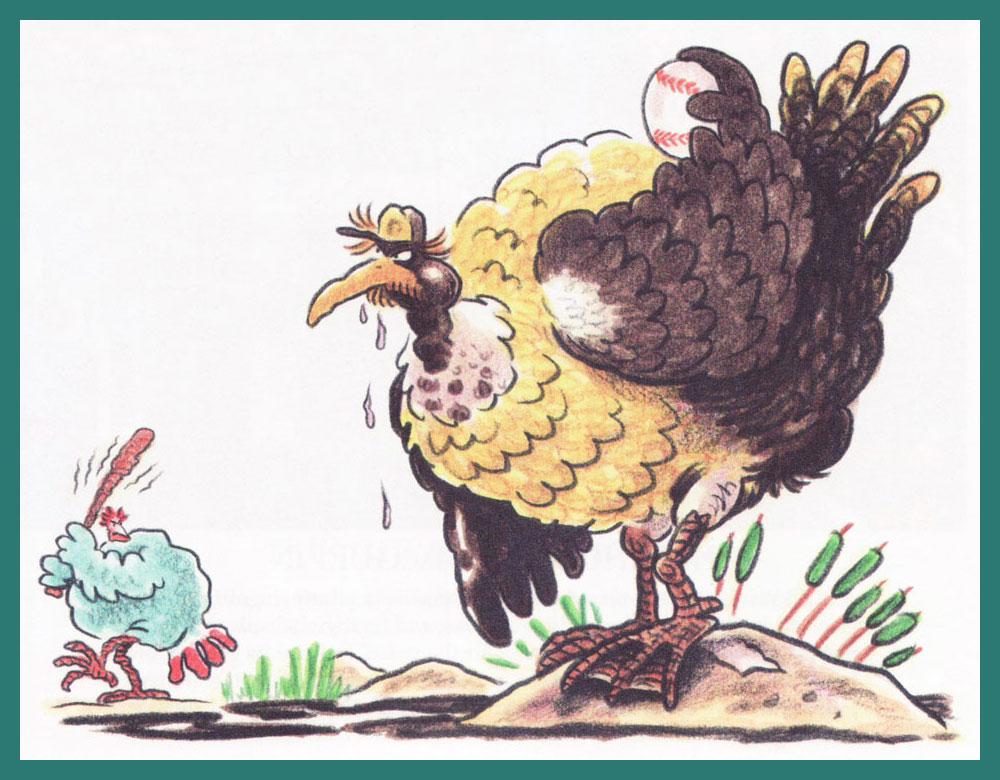
« A grizzled Hoary-Headed Junk Chucker faces down a Stat-Grubbing Peckerhead. »
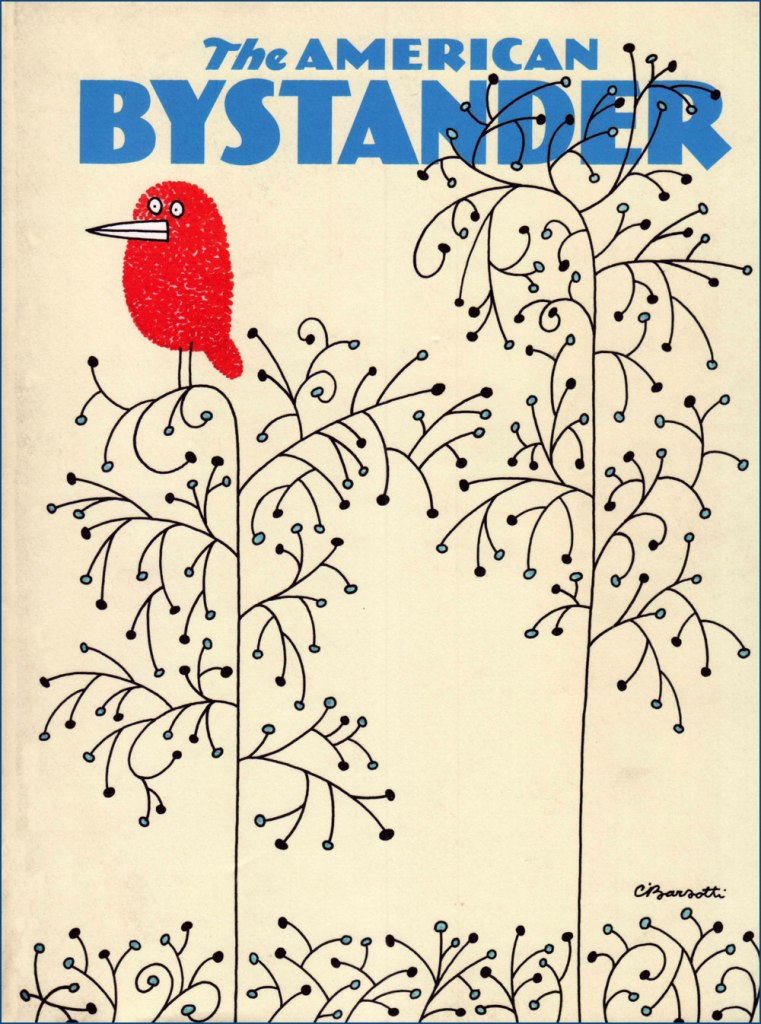
These cartoons appeared within the pages of The American Bystander no. 2 (Spring 2016), bearing this soothing cover by the esteemed Charles Barsotti (1933-2014). Do check out and lend your support to the Bystander, which has most deservedly been deemed “The last great humor magazine“.
Where the good Mr. Meyerowitz seems to have first hatched his theme: Birds of Israel, from The National Lampoon Encyclopedia of Humor (1973, edited by Michael O’Donoghue).

-RG

Tentacle Tuesday Masters: Sergio Aragonés

I was startled to discover that after several years of WOT blogging, we still have no post dedicated to Sergio Aragonés. Perhaps this is in part because his art is ubiquitous – throughout his long career, he has contributed manifold pages to various DC publications, created an enduring barbarian parody, scripted and drawn (mostly solo but also in collaboration) an impressive number of mini-series published by Fantagraphics, Dark Horse and Bongo Comics, produced various comic-con paraphernalia, etc. And this is not to mention his lasting contributions to Mad Magazine (which I did discuss, though not at length, in A MAD dash… inside) – something in the magnitude of twelve thousand gags spread over 57 years and 491 issues of Mad.

A sequence from A Mad Look at Sharks from Mad no. 180 (January 1976, EC).

He’s also a charming, universally-liked man whose bigger-than-life persona has ensured that his participation in anything is always surrounded by fun anecdotes. It is my great pleasure to share this abridged compendium of Aragonés tentacles, of which there are many, as he enthusiastically added them into doodles and margins with great glee (and, as we know, « he has quite literally drawn more cartoons on napkins in restaurants than most cartoonists draw in their entire careers *», so just imagine how many tentacles are scattered throughout his work).

*according to Al Jaffee.

Room 13 one-pager, scripted (and edited) by Joe Orlando. This was published in House of Mystery no. 190 (Jan-Feb 1971, DC).

Incredibly, we still haven’t written a post dedicated to the great Plop! (this post is starting to sound like a to-do-in-the-nearest-future list), though Hallowe’en Countdown III, Day 30 did include a story from number 1. Plop!, “The New Magazine of Weird Humor!“, certainly included a lot of cephalopods in its 24 issues and I will doubtlessly get around them one of these days. In the meantime, here’s a very appropriate page from Plop! no. 16:

This closing page of Plop! no. 16 (September 1975, DC) was scripted by Steve Skeates.

Galloping forward through some twenty years, we briefly land at Marvel, namely these two pages from Groo the Wanderer no. 98 (February 1993, Marvel), co-plotted and scripted by Mark Evanier.

Sergio Aragonés Funnies, published between 2011 and 2014 by Bongo Comics, boast 12 issues of really enjoyable, remarkably varied material. For those who may think that Aragonés is one-trick pony who can only do ‘silly’ humour, this series offers many auto-biographical stories, some of them surprisingly poignant and heart-felt. Not to say that it’s not devoid of humour – the more serious stuff (including social criticism in the form of animal parables) is nestled among pages of slap-stick humour and imaginative goofiness, from one-pagers to longer stories that take most of an issue to develop. Aragonés also shares some background on his approach to stories, allowing us to peek into his imagination and possibly answer that hackneyed question that plagues all manner of writers, ‘where do you get your ideas from?’ If an anthology of Funnies is ever published, I’ll happily purchase it.

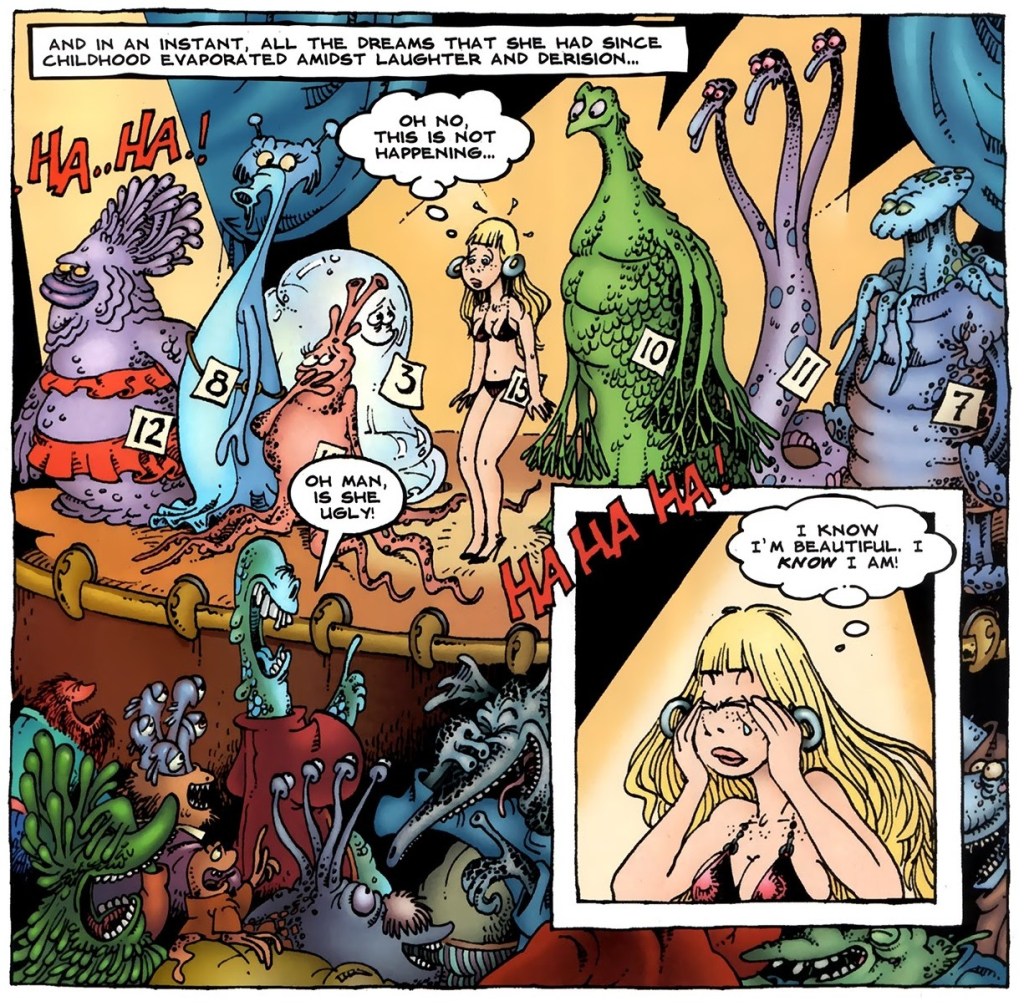
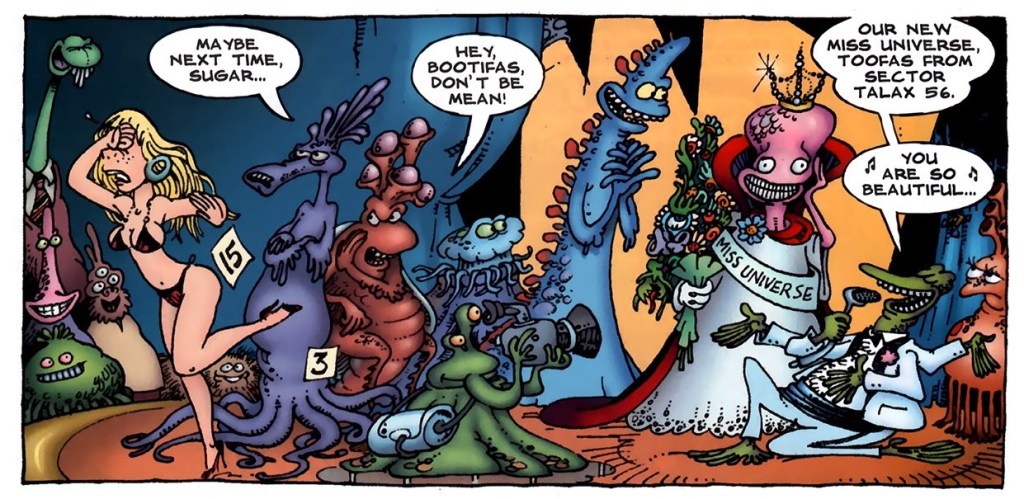
Excerpts from Kira and the Beauty Contest, published in Sergio Aragonés Funnies no. 2 (August 2011, Bongo Comics):

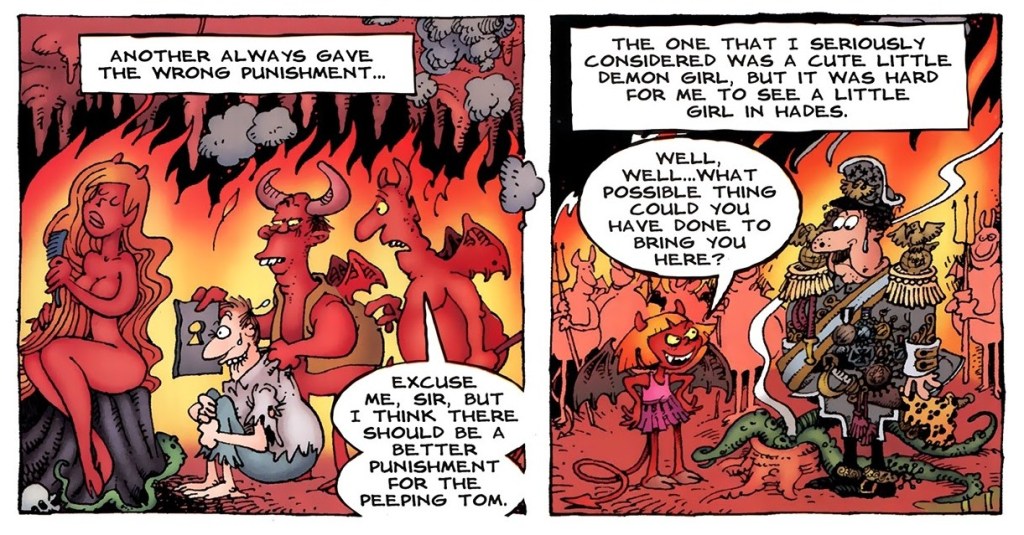
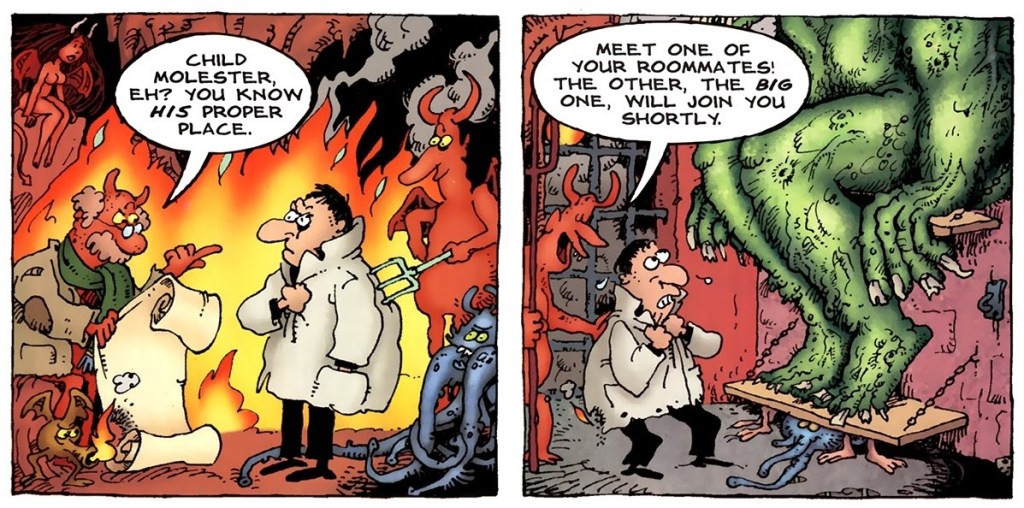
Panels from Sergio’s Inferno, published in Sergio Aragonés Funnies no. 3 (September 2011, Bongo Comics):

Finally, a panel from the back cover of Sergio Aragonés Funnies no. 10 (October 2013, Bongo Comics). Nevermind what the joke is, I just really like that octopus (as well as his other sea friends).

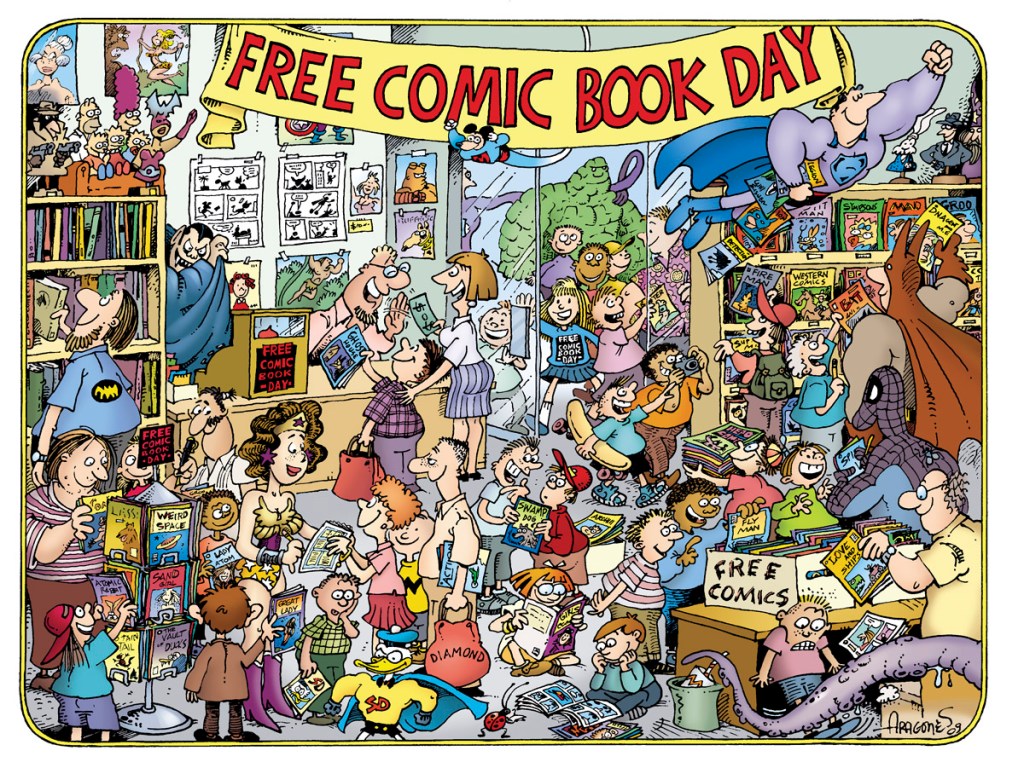
I mentioned materials related to Comic-Cons, so I would be amiss to not include at least one image of something vaguely related!

This design was created for the ‘Free Comic Book Day Commemorative Artist T-shirt’ in 2010.

I’ll end this post with a classic Aragonés anecdote, as told by Mark Evanier. This happened while these two were participating in filming The Half-Hour Comedy Hour television show for NBC in 1983, on which the model Jayne Kennedy was a guest. [source]

« This was one of the most beautiful women in the world. And she wore this dress that was very revealing, so much so the censors wouldn’t let us put her on the air in it without adding some material. So we’re all talking to her, the writers and whoever, just in awe of this woman. And Sergio comes walking in looking like a homeless person, carrying his portfolio. And Jayne sees him and she shouts, ‘Sergio!’ and she runs over and starts kissing him passionately.

They’d worked together before, it turned out. But Johnny Carson comes walking out into the hallway and he thinks Jayne Kennedy is being sexually assaulted by a homeless person in the NBC hallways. He came over to make sure she was okay. She said it was fine, that she knew him, and I said, ‘It’s okay, he’s a cartoonist.’

So Johnny gives that classic look and he says, ‘I knew I should have taken up drawing.’ » 

~ ds

With the Magic Words, ‘Hey Look!’

« Hey, Look! is essential reading for any cartoonist. » — the late and much-missed Patrick Dean, who truly knew what he was talking about.

Sometimes I think of a post topic and dismiss it with a ‘nah, too obvious’… but on some of my brighter days, I run the idea past my wife, who provides a welcome reality check: ‘Obvious to whom?‘, she asks. Well, there’s been a collected edition… which has been out of print for most of the nearly thirty years since it hit the stands. Fair enough.

As I’ve been lately foraging through the crumbling back pages of Golden Age humour comics (see my previous post), it would be negligently immoral for me to pass over one of the crown jewels of the genre, the era and the medium.

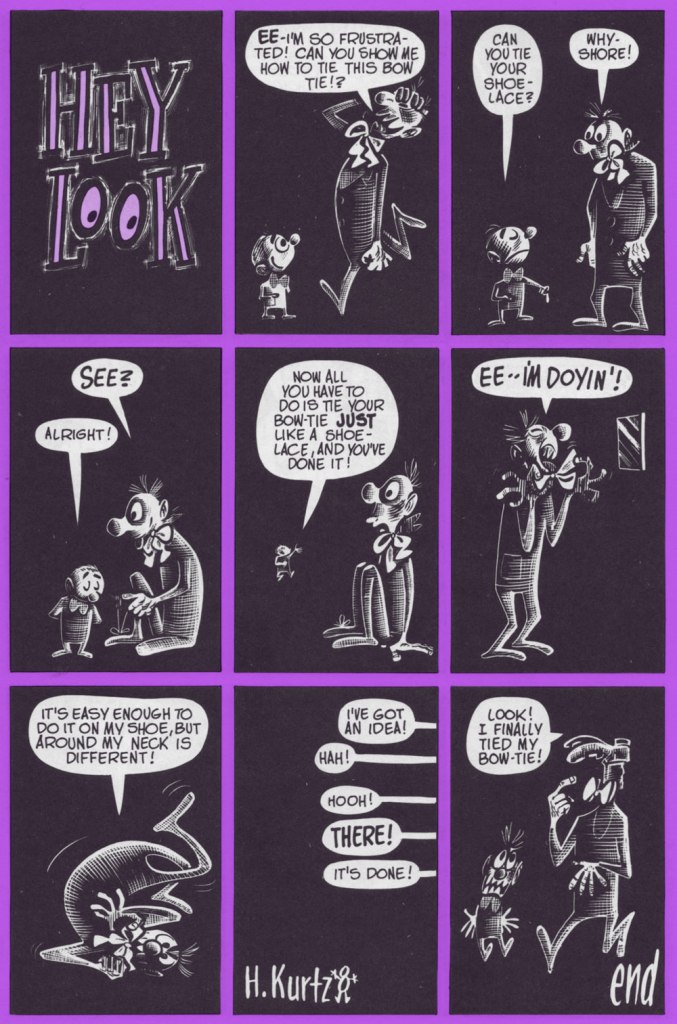
One* of the redeeming features of Marvel’s overwhelmingly crass Dynamite (magazine) rip-off, Pizzazz, was its reprinting of a handful of Harvey Kurtzman‘s majestic Hey Look! strips. Of course, it made perfect economic sense: grab some already (and barely)-paid-for, all-but-forgotten ‘filler’ from the 1940s, slap some new colour on ‘em, and wham! One less egg to fry.

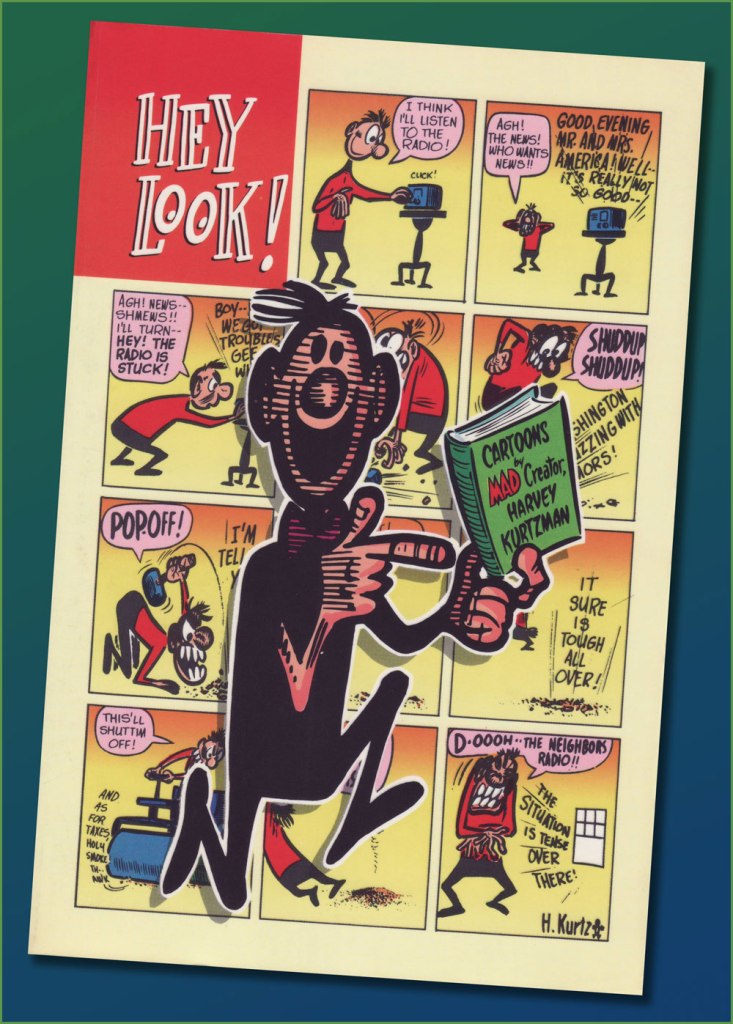
Here’s the collection in question. Published in 1992 by the venerable Kitchen Sink Press, it has yet to be improved upon. In addition to all the Hey Look! strips, it includes an unsurprisingly excellent introduction by the erudite John Benson, and further sweetens the pot with Kurtzman’s other Timely features of the era, namely Genius, Egghead Doodle and Potshot Pete. The latter is particularly worth a look-see.
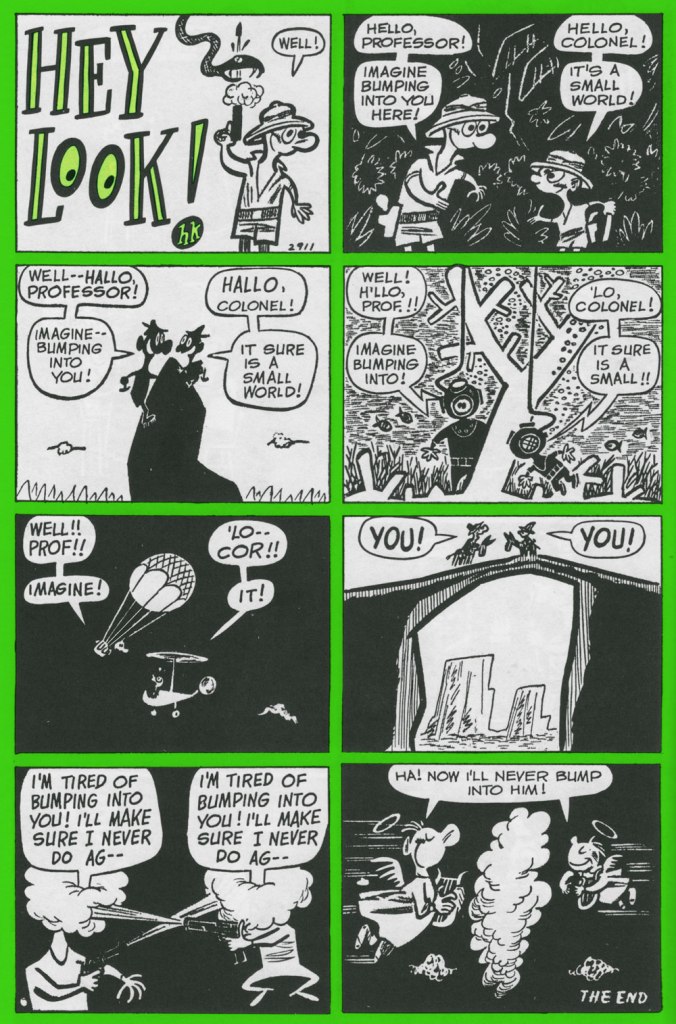
The earliest Hey Look! strips are cute and of some historical significance, but rather scattershot and tentative. Here’s roughly where Kurtzman starts to really, and consistently, cook. Originally published in Gay Comics no. 33 (Aug. 1948, Timely).
« Plus ça change, plus c’est la même chose. » — Jean-Baptiste Alphonse Karr, circa 1848. Clearly, listening to the news has never brought much comfort to one’s mind and soul. Originally published in Gay Comics no. 34 (Oct. 1948, Timely).
Mr. Kurtzman was ahead of the game, anticipating the superhero genre’s dark turn of the mid-80s and beyond, and pointing out its inherent fascism. Already a bit too close too home at the time of its creation, this piece languished in limbo until its publication in 1966 in a limited-edition portfolio.
Originally published in Nellie the Nurse no. 16 (Dec. 1948, Timely).
Originally published in Hedy Divine no. 30 (Dec. 1948, Timely).
Originally published in Joker no. 35 (Jan. 1949, Timely).
Originally published in Millie no. 16 (Feb. 1949, Timely). Always experimenting: dig here Kurtzman’s elegant use of the scratchboard technique.
Originally published in Nellie the Nurse no. 19 (Apr. 1949, Timely). With the miniaturisation of electronics, and cameras in particular, there’s (of course) been an opposing movement toward huge telephoto lenses. Read into it what you will.
I was, and remain, especially fond of this one, originally published in Gay Comics no. 37 (Apr., 1949) and reprinted in Pizzazz 15 (Dec. 1978)… the one with the Battlestar Galactica cover. ‘Cabazziz’ is made up, but Podunk has roots.
Originally published in Patsy Walker no. 22 (May 1949, Timely). Incidentally, generic ‘teen’ humour character Patsy Walker has since (circa 1976) been refashioned and recycled, in the tried-and-true ‘waste not, want not’ Marvel manner, into a superheroine, Hellcat. Sheesh.

-RG

*one other was Jon Buller‘s riotously surreal Bob the Blob in The Great American Comic Strip Catastrophe.