One might call the illustrator and comics artist Kellie Strøm a bit of a cosmopolitan – born in Denmark, he grew up in Ireland and, in adulthood, made London his place of residence. He has accomplished much, but seemingly obtained little recognition for it – his graphic novel (The Acid Bath Case, 1992, published by Kitchen Sink), a collaboration with Stephen Walsh, seems to have been lost in the rivers of time, despite being a striking showcase of Strøm’s black-and-white, precise-yet-graceful style. He also has a great eye for colour, as becomes evident from a quick glance at Star Wars comics he’s illustrated (but does anybody read Star Wars comics?), or, in a much more pleasant and hopefully longer-lasting and farther-reaching vein, his paintings for children’s books.
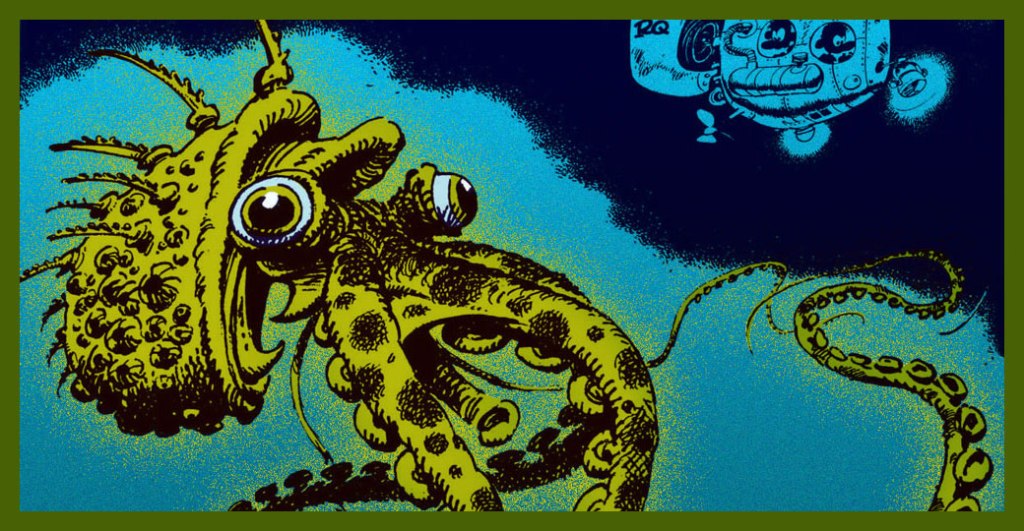
A panel from The Acid Bath Case (1992, Kitchen Sink). These may not be tentacles per se, but as far as I’m concerned, they qualify!
Personally, I have a soft spot for his illustrations in glorious full colour – I believe that it’s a rare skill to be able to use a full rainbow palette and not end up with gaudy or downright ugly results. Let’s have a look!
That thing is soon growing up to be a tentacled monstrosity, but right now it’s all pretty colours!
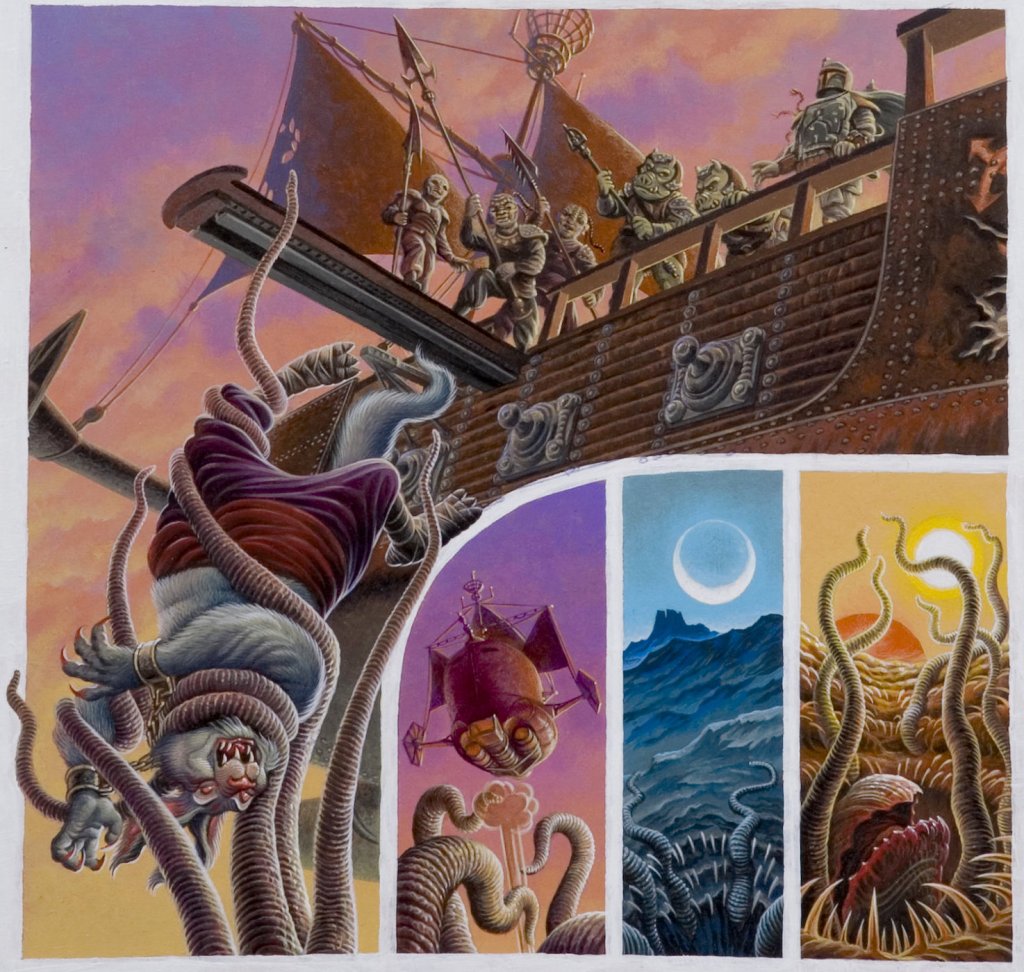
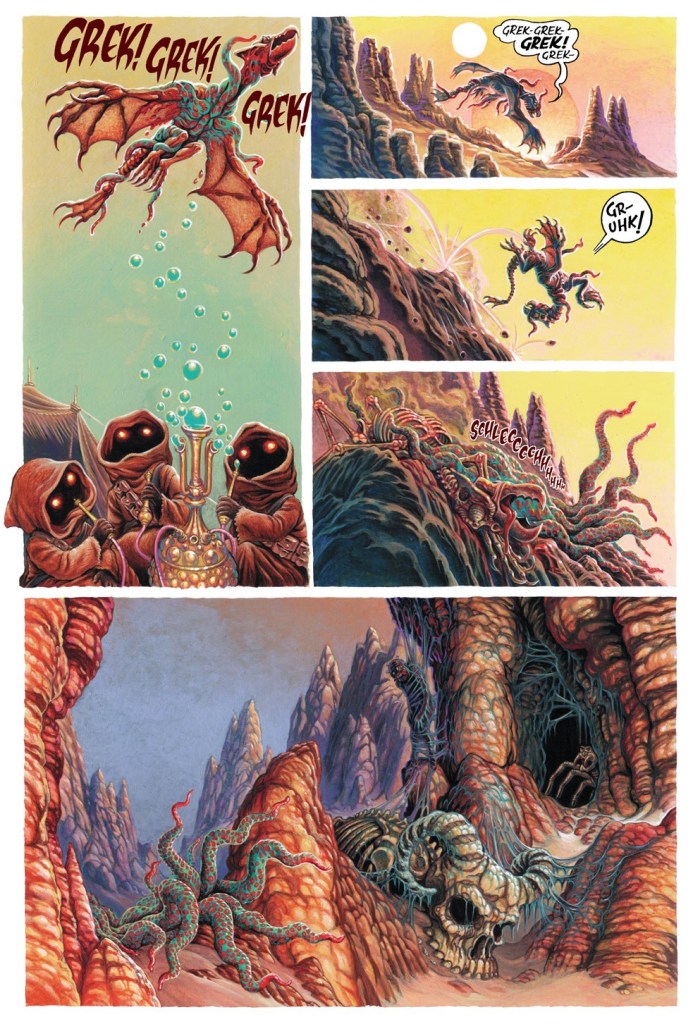
The following are pages from Fortune, Fate, and the Natural History of the Sarlacc, written by Mark Schultz and published in Star Wars Tales no. 6 (2000, Dark Horse). Watch an unfortunate victim plunge into the gullet of a merciless tentacled beast!
For comparison purposes: this is the original art…
And the following are pages from the printed comic:
I also mentioned Strøm’s career as an illustrator in children books. The results are beautiful, and, I sincerely hope, well-remunerated.
Panels from Het Zeemans – ABC (2008, Rubinstein Publishing) – or, in other words, Sailors’ ABC:
I didn’t have the heart to remove the copyright from this image! Visit Strøm’s website here. Look how many delightful tentacles one can squish into one panel!
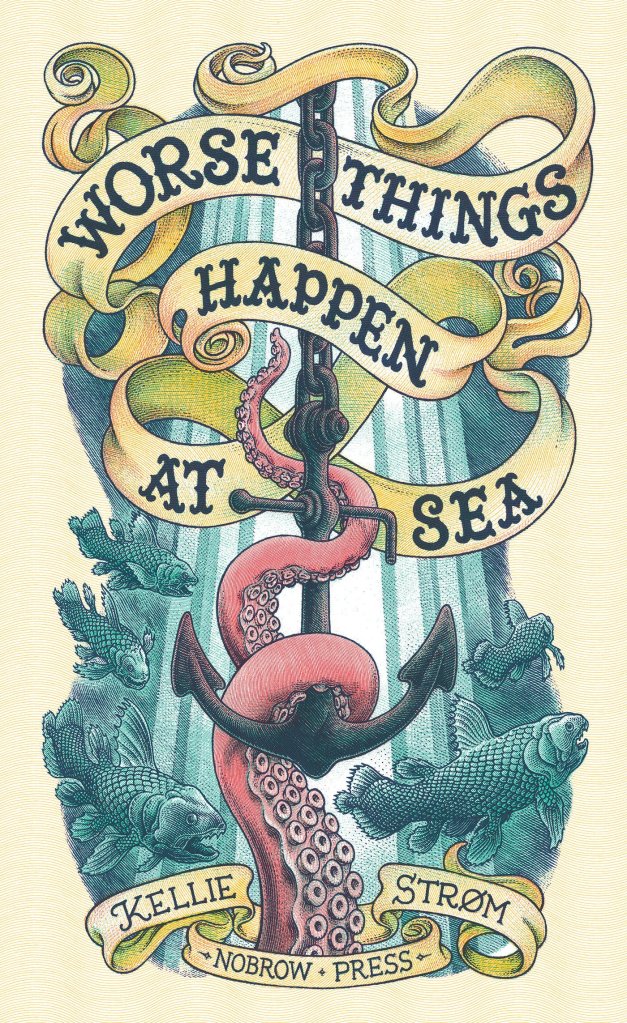
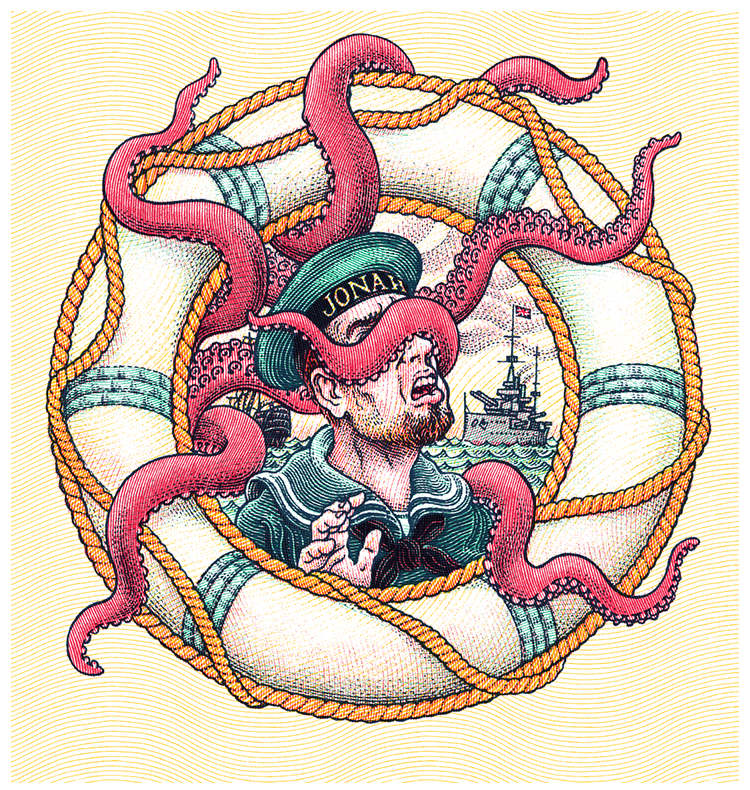
2014 saw the release of the tentacle-wealthy Worse Things Happen at Sea(Nobrow Press), in which « historical ships are attacked, enveloped and engorged by monstrous sea creatures surfacing from the deepest depths of the darkest oceans. » Must be Strøm’s Nordic roots re-surfacing, though apparently he cannot swim!
I’d like to thank my Italian collega for making sure this title was in impeccable Italian, and for not backing away slowly when I asked her, completely out of the blue and without context, how to say “pardon my tentacle”. Most people would have run.
Welcome to our Latin Tentacle Tuesday! Poor Italy is the brunt of quite a few jokes, and even most positive articles about it are nothing but shallow fluff designed to sell airplane tickets and inspirational posters about food and love. All I can say is that Italians love their tentacles as much as any other hot-blooded nation. 😉
Più was a comics magazine licensed from Pif Gadget in 1982. Just like its fountainhead, Più offered a gadget with every issue, which, as I understand from nostalgic posts about it on various blogs, was a prime selling point among its young and enthusiastic clientele. As for comics, reprints of some French comics straight from Pif’s pages were rounded out with fresh Italian material. Given that Pif was publishing quite a few Italian artists at that time, this only seems fair! And on the subject of the latter, co-admin RG, whom I may call a Pif historian with no fear of controversy, has written a number of posts about the writers and artists featured within Pif Gadget’s pages during its heyday… a good place to start digging in is my favourite of these posts, Jean Cézard and Arthur le fantôme.
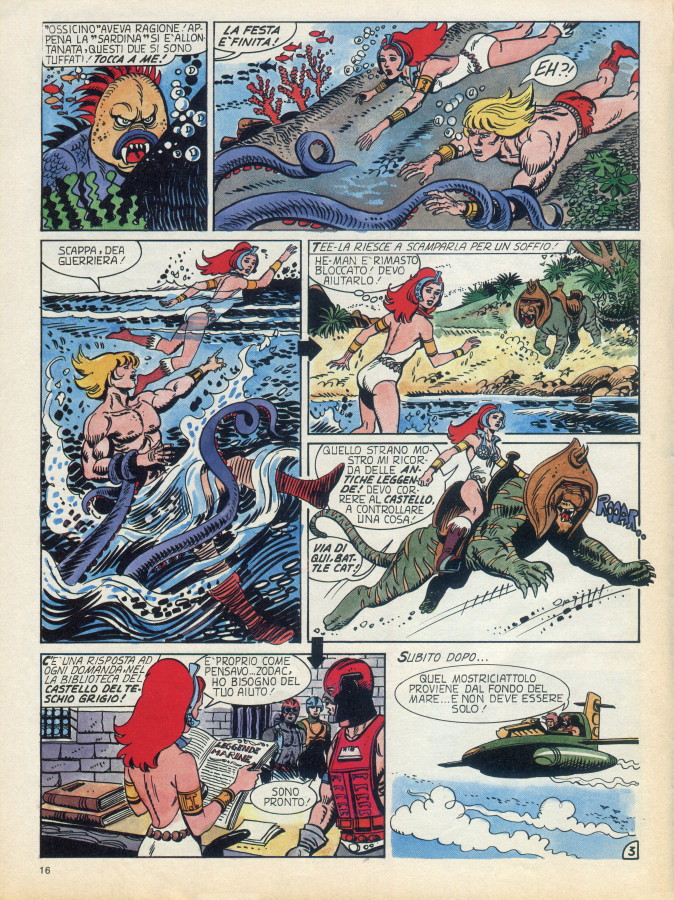
Moving on: the following Masters of the Universe pages are from Negli Oceani di Eternia, published in Più no. 76 (March 1984, Editoriale Domus).
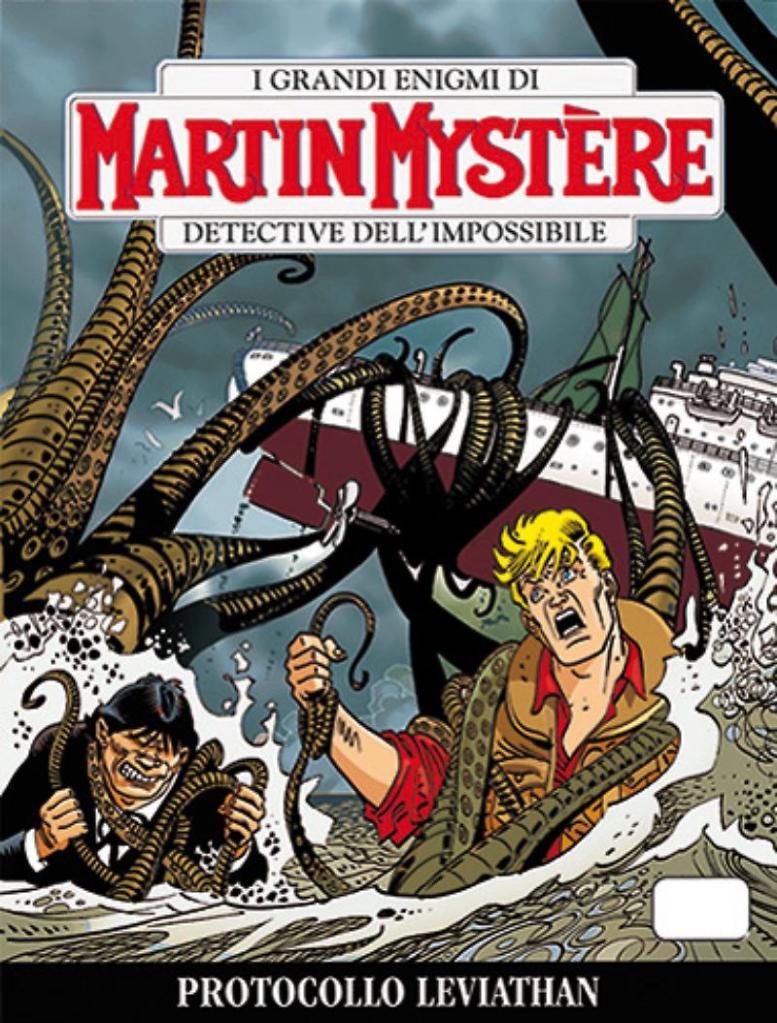
Created by writer Alfredo Castelli and artist Giancarlo Alessandrini, Martin Mystèreis an exceedingly popular comic book series (as a matter of fact, the best selling comic book in Italy – in case you’re wondering what that means, around 20 thousand copies a month)*. Its title comes from the eponymous main character, Martin Jacques Mystère, the usual walking collection of tropes: good looking art historian, archaeologist-anthropologist à la Indiana Jones, collector of rare objects, and so on. No self-respecting adventurer goes around without a sidekick, and Mystère’s assistant is Java, an amazingly strong, quite mute Neanderthal man (speaking of tropes, that one is a doozy). One might also say that he’s quite international: an Italian-created American character with a French name who lives in New York City and frequently helps its finest to elucidate crimes…
*I stand corrected by one of our readers, who pointed out that Italy’s most popular comics series is Tex, which sells around 200 thousand copies a month (compared to Martin Mystère’s 20 thousand). Thanks, Darko!
Martin Mystère no. 103 (October 1990). Cover by Giancarlo Alessandrini.
Martin Mystère no. 328 (August 2013). Cover by Giancarlo Allesandrini.
This series started in 1982, and is still around, so you can just imagine how many tentacles Martin has tangled with in some 378-odd issues. Yet high-res images are scarce online, so I asked co-admin RG to whip up this nifty collage of some of his tentacular exploits:
Issues no. 163, no. 181, no. 237 and no. 297, with covers by Giancarlo Allesandrini.
Our next (and last stop) is another very popular series, Zagor. Its beginnings go all the way to 1962 (ancient, no doubt), when editor/writer Sergio Bonelli and artist Gallieno Ferri banded together to concoct a comic book series.
Its protagonist Zagor, or Patrick Wilding, is another American. If Martin Mystère represented the suave, erudite adventurer-about-town, Zagor is a kind of avenger-slash-protector, of the “be peaceful or I’ll beat the crap out of you” school. His origin story makes for rather uncomfortable reading: after tracking down massacring a whole family branch of Abenaki Indians to avenge his parents’ death and realizing that he made a boo-boo (by finding evidence that his father was a murdering, power-abusing sadist who was killed purely in retribution for his criminal acts… which is another can of worms), he decides to redeem his sins by ensuring peace between different Indian tribes and trappers by whatever means necessary.
Zagor no. 42 (December 1968), illustrated by Gallieno Ferri and written by Guido Nolitta (Sergio Bonelli’s nom de plume).
Inside art from Zagor no. 42, illustrated by Gallieno Ferri and written by Guido Nolitta.
His sidekick? Chico, a walking stereotype down to his full name (Chico Felipe Cayetano Lopez Martinez y Gonzales) whose presence is played for some mean laughs. «He is short, fat, extremely clumsy and voracious, corrupt, boastful, but also likeable.» Um, yeah, that sounds likeable, all right. If you’re thinking that Chico is also obsessed by food (he’s Mexican and fat, right?) and that it gets him into all sorts of stupid peril, you are perfectly correct. Gordo, this is not.
Interestingly, Zagor is most popular outside of his native Italy. Specifically, he retains popularity in the former Yugoslavian republics (Bosnia, Herzegovina, Slovenia, Croatia, Serbia…) and Turkey. Stories continue to be published in Italian up until this day, but from what I’ve been able to gather, the books sell at a much brisker pace once they’re translated to languages spoken by inhabitants of the aforementioned countries.
Zagor no. 626 (September 2017). Cover by Alessandro Piccinelli. Okay, so those are not tentacles per se, but it says TENTACOLI! right on the cover, so I’m not arguing.
Zagor no. 662 (September 2020). Cover by Alessandro Piccinelli.
« My imagination grew wilder, the most unexpected associations flared up in my mind, and as I kept trying, the reception room kept filling with strange objects. Many of them were born, apparently, out of the subconscious, the brooding jungles of hereditary memory, out of primeval fears long suppressed by the higher levels of education. They had extremities and kept moving about, they emitted disgusting sounds, they were indecent, they were aggressive and fought constantly. I was casting about like a trapped animal. All this vividly reminded me of the old cuts with scenes of St. Anthony’s temptations. » [source]
Today’s topic does not involve a man becoming a cockroach: that has been discussed often enough. My current area of interest concerns the many strange and striking ways in which a living form becomes a completely different form under the influence of a supernatural power or its natural inclination, of witchcraft or the whimsy of a writer whose imagination flares up much like it did for poor A. I. Privalov, depicted above trying to create a a sandwich and a cup of coffee and ending up with a roomful of horrors…
This strange creature surely illustrates the perils of getting stuck mid-metamorphosis!
The Doom Patrol no. 95 (May 1965). Cover by Bob Brown. While transforming into god-knows-what, Dr. Sven Larsen is careful to preserved his impeccably coiffed chevelure. Perhaps he inspired Ted Baxter.
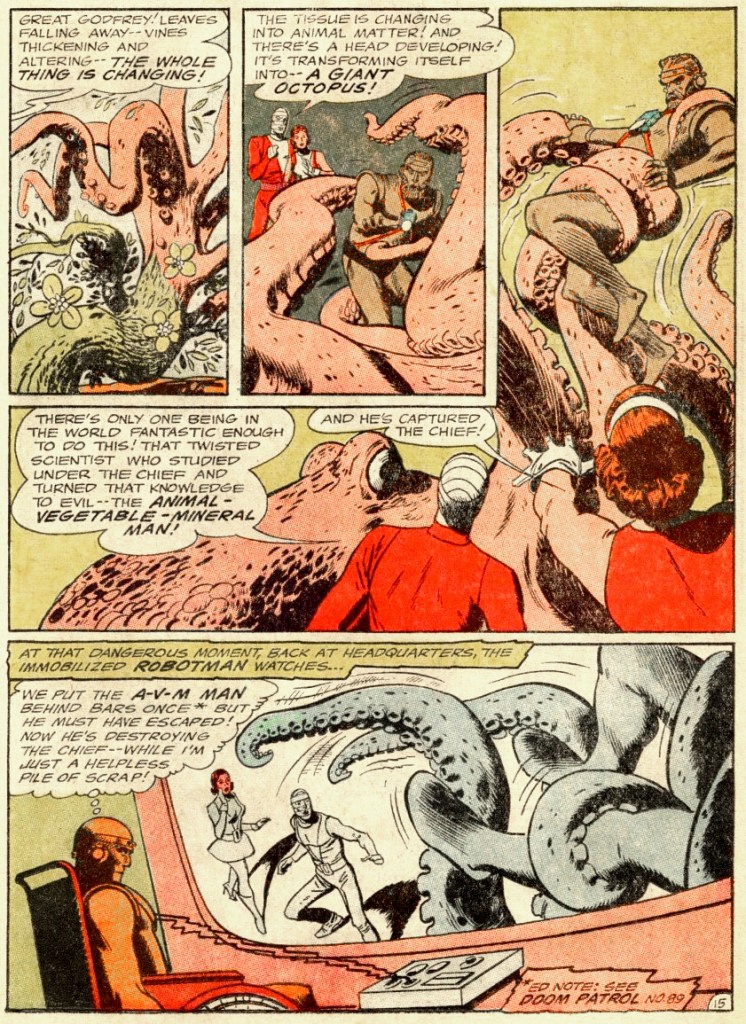
In Return of the Animal-Vegetable-Mineral Man, scripted by Arnold Drake and illustrated by Bruno Premiani, the Doom Patrol battle a scientist crazed with power-lust (while dealing with trouble of their own, like being unable to control their powers – it was apparently decided that a scientist who can become anything he likes is not interesting enough).
That this AVM (animal, vegetable, mineral) man decided to transform into an octopus will not surprise regular readers of Tentacle Tuesday: we know that the octopus is the most perfect form there is!
In the rest of the story, AVM also transforms himself into electric eels, tungsten birds, a building-tall neanderthal man, liquid mercury, a grizzly bear, etc., but it’s all a bit of a let-down after the giant octopus, if you ask me.
I’ll continue with this rather evocative cover by Bernie Wrightson, in which we get a preview peek at a gruesome scene just a few seconds before it actually happens.
House of Mystery no. 204 (July 1972). Cover by Bernie Wrightson.
It all starts with a nasty dream of cranberry jelly…
… and ends with an unwelcome transformation of future bride into hungry monster. In this case, a pretty girl is not so much like a melody, but yet another helping of aforementioned cranberry jelly… perhaps I should have kept this story until Christmas.
All in the Family was scripted by Mary Skrenes and Bernie Wrightson; illustrated by Bernie Wrightson.
If this story of transmogrification made your teeth itch, just have a gander at the following histoire d’amour…
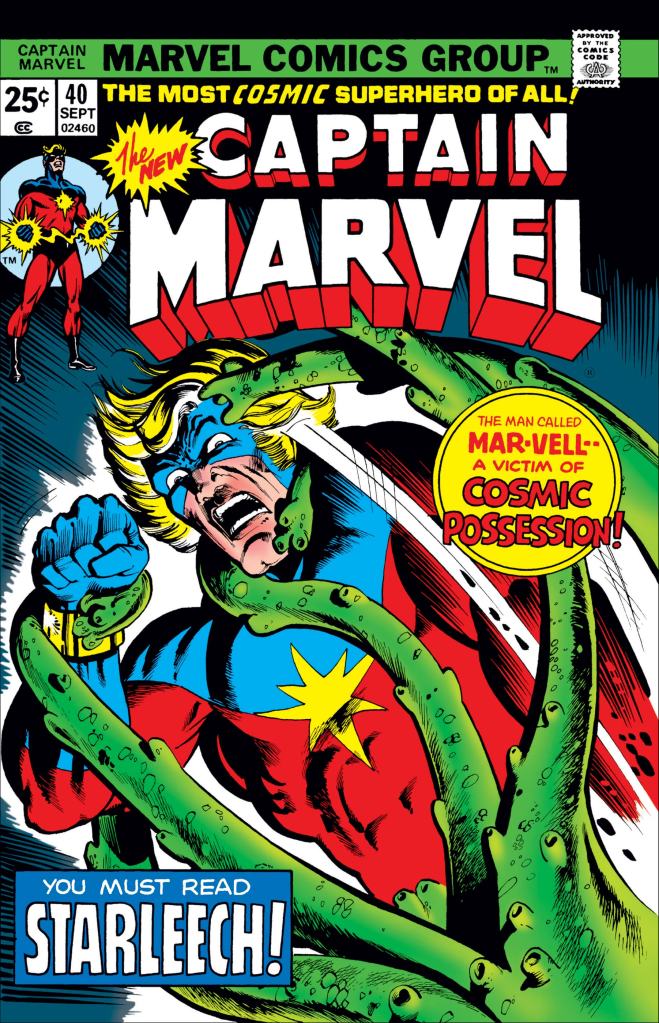
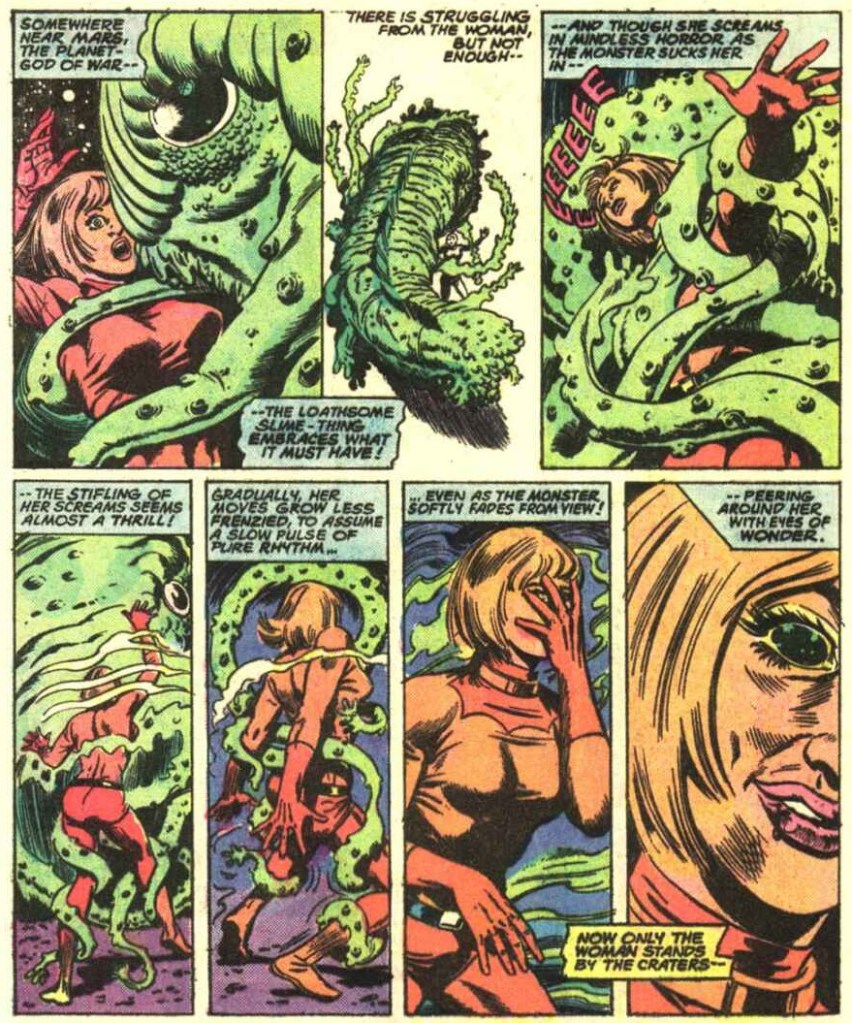
Captain Marvel no. 40 (September 1975). Cover pencilled by Al Milgromand inked by Klaus Janson.
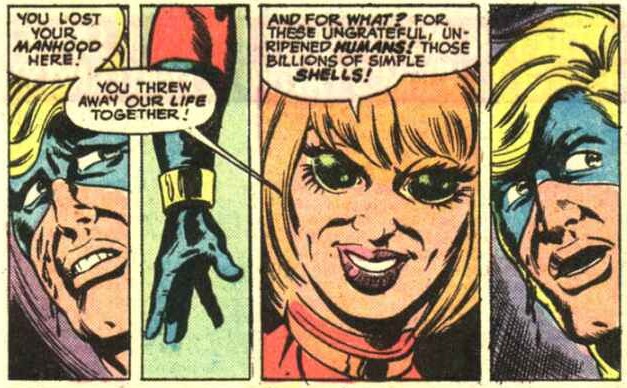
No, hold your horses, I’m not implying anything untoward about Captain Marvel. That thing he’s tangled up with is his lover (or should I say ex-lover) Una. Just a little case of demonic possession!
Um, those are not “eyes of wonder”, more like a demented gaze.
Will Captain Mar-vell be able to kill the woman he loves, even if she’s more of a shell inhabited by a tentacled psychic monstrosity, and despite having lost his manhood, whatever that was?
Stay put for the exciting finale of Rocky Mountain ‘Bye! was scripted by Steve Englehart and Al Milgrom, pencilled by Milgrom, and inked by Al McWilliams!
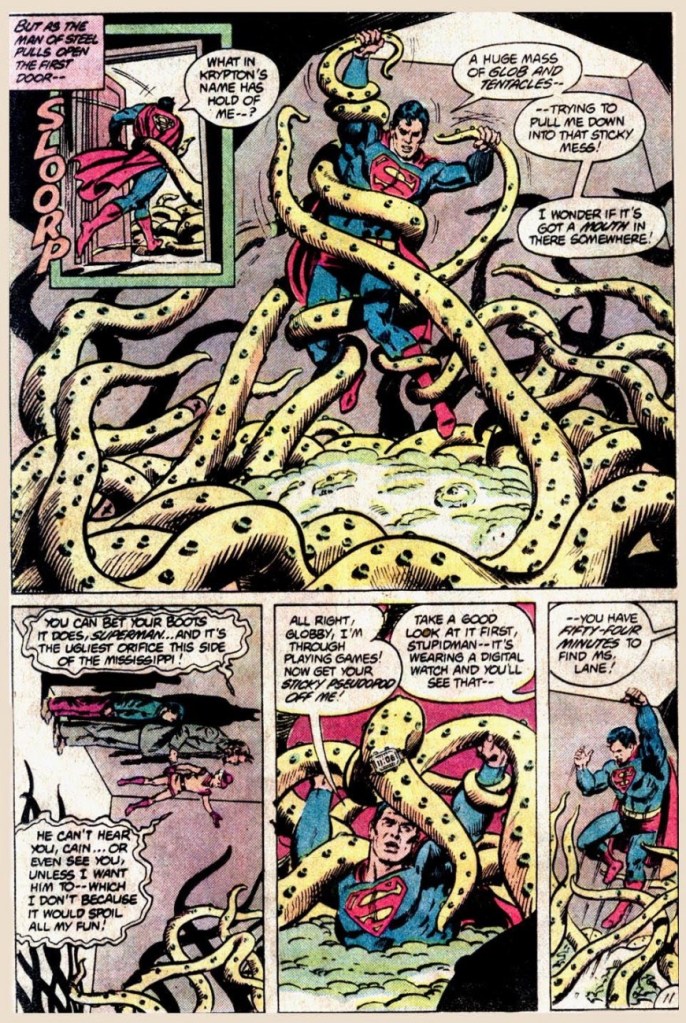
What do we have here? A harmless trick-or-treating kid transformed by Mr. Mxyzptlk into a malefic octopus? It’s business as usual for Superman in this goofy tale (who, incidentally, was the star of Tentacle Tuesday: It’s a Bird! It’s a Plane! It’s a Tentacle!) I’m sure most children would relish the opportunity to become an actual ghost or werewolf…
But I am not convinced that anybody would want to be transformed into, err, “Globby”.
Nothing as stylish as an octopus with a digital watch.
These pages were from The Haunting Dooms of Halloween!, scripted by Dan Mishkin, pencilled by Curt Swan and inked by Tony de Zuñiga, published in DC Comics Presents no. 53 (January 1983).
… in which we continue our exploration of tentacles slithering their way into Franco-Belgian comics!
In an orderly fashion, please.
The other day, a friend heartily recommended a certain movie to me, pointing out that it was ‘ancient’ and therefore probably available online for free. When I checked the year, it turned out to have been from 1995 which, excuse me, hardly qualifies as prehistoric. What can be considered ‘old’, then, people in their early thirties will ask? Why, this magazine cover, for instance.
Le Petit journal illustré (May 21st, 1922). The bottom says “a drama at the bottom of the sea”, with details of how a diver was attacked by an octopus and cannot get out his knife to fight against his repellent aggressor.
Skipping some thirty years ahead, I believe we’re still in “old” territory.
A page from « Zette reporter : Aventure en Pacifique », published in Lisette n° 38 (September 16th, 1956). Script by François Drall, illustration by Yvan Marié. The girls, after witnessing a fight between a giant shark and octopus, now seek to escape the clutches of the victor’s eight appendages.
Lisette was a comics magazine specifically aimed at female readership (to be more precise, it was marketed to girls between 7 and 15 years old). The interesting part is that it often featured articles about traditionally men-dominated careers, some of which had only been very recently accessible to women… for instance, an interview with Anne Chopinet (one of first women accepted in l’École polytechnique) and a reportage on women air pilots back when this was an almost exclusively man-only club.
Moving on to further, more energetic octopus-evading tactics… we have Bob Morane, originally a hero harking from adventure books written by prodigiously prolific Belgian novelist Henri Vernes, and published by Belgian éditeurMarabout. The number of adventures Morane has lived through is rather staggering: around 200 novels + about 80 comics albums. Now there’s a challenge for the serious collector!
Original art fromBob Morane et l’oiseau du feu(1960). Illustrated by Dino Attanasio.
Scripted by Antoine Raymond (a.k.a. Vicq), illustrated by Will, 1962.
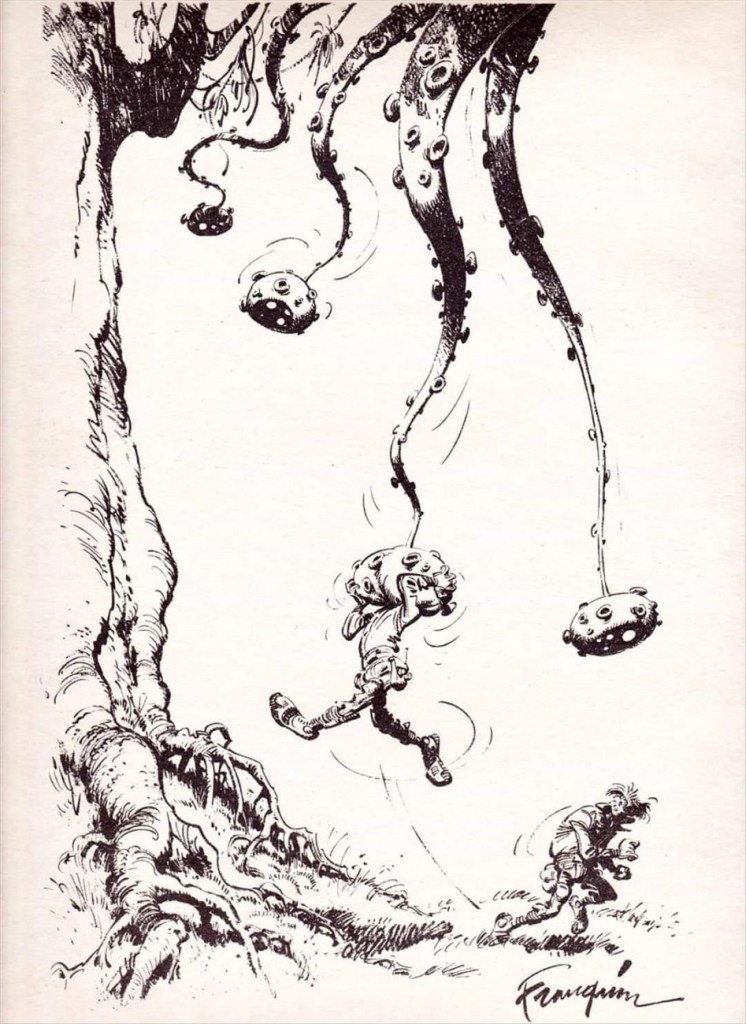
Co-admin RG called André Franquin‘s œuvre “an embarrassment of riches” in his Faites gaffe, monsieur Franquin! post. I thoroughly agree, and am very pleased to report (though this is in no way surprising) that tentacles are part of his vast répertoire.
Pages from what’s collectively known as Idées noires (Franquin’s Last Laugh in English). These dark strips and cartoons were Franquin’s « l’humour du désespoir », the humour of despair, and appeared in Le trombone illustré (Spirou’s magazine supplement) in 1977 and, with the discontinuation of the latter, moved to Fluide Glacial until 1983.
I’d better stop here. After all, I wouldn’t want to go as far as ‘modern’ times… say, from the 90s and onward, although it’s scary to think that was still 30 years ago!
Back in August, I promised to follow Tentacle Tuesday: Dark Horse, Pt. 1 with another instalment of cephalopod material issued by this publisher. The time, as they say, has come! While I’m not always on board with the comics they opt to publish (rarely, I might even say), I do like today’s selections.
Dark Horse obtained the licence to produce James Bond comics in 1992. The result is a number of series and stand-alone comics – Serpent’s Tooth was the first, a three-part miniseries. The following two pages are from Serpent’s Tooth Part III: Mass Extinction, scripted by Doug Moench and illustrated by Paul Gulacy, published in James Bond 007: Serpent’s Tooth no. 3 (February 1993).
You decide for yourself which James Bond this is .
In 2007, Dark Horse stepped into a partnership with New Comic Company, who had earlier acquired from Warren the rights to Creepy and Eerie. The result was the gradual publishing of ‘archival’ hardcover collections of all issues of Creepy and Eerie magazines. In 2009, DH launched the ‘new’ Creepy Magazine, which mostly featured new stories, sprinkled with the odd reprint. A revived Eerie soon joined it.
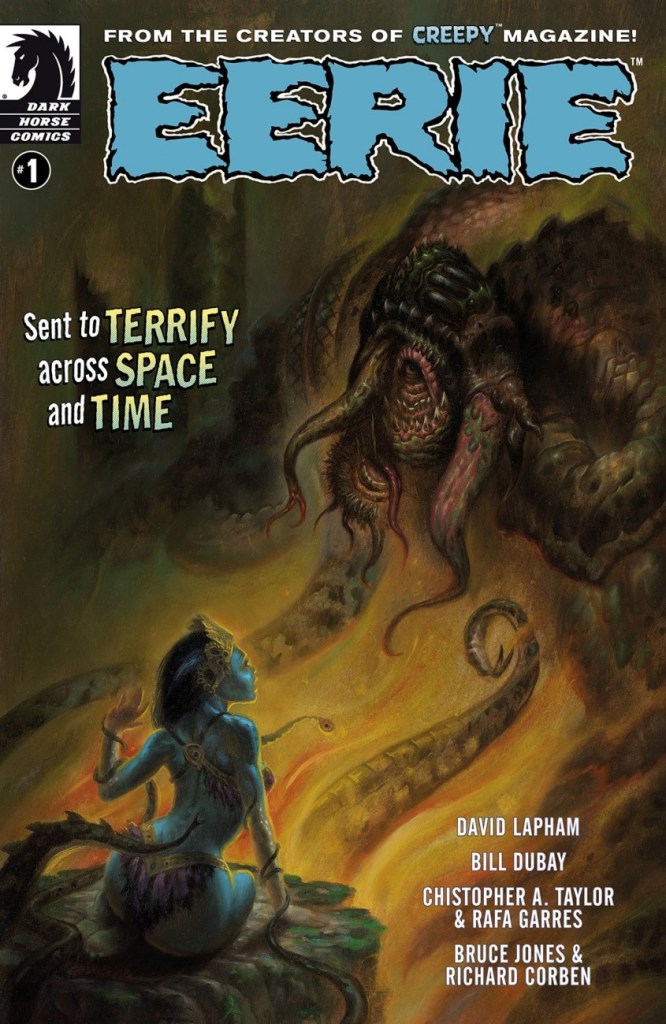
Dark Horse’s revival of the classic Warren magazine is a mixed bag – this issue for instance, features several new stories and a reprint from 1970 (Life Species by Bill DuBay). This is Eerie no. 1 (July 2012). Cover by Jim Pavelec.
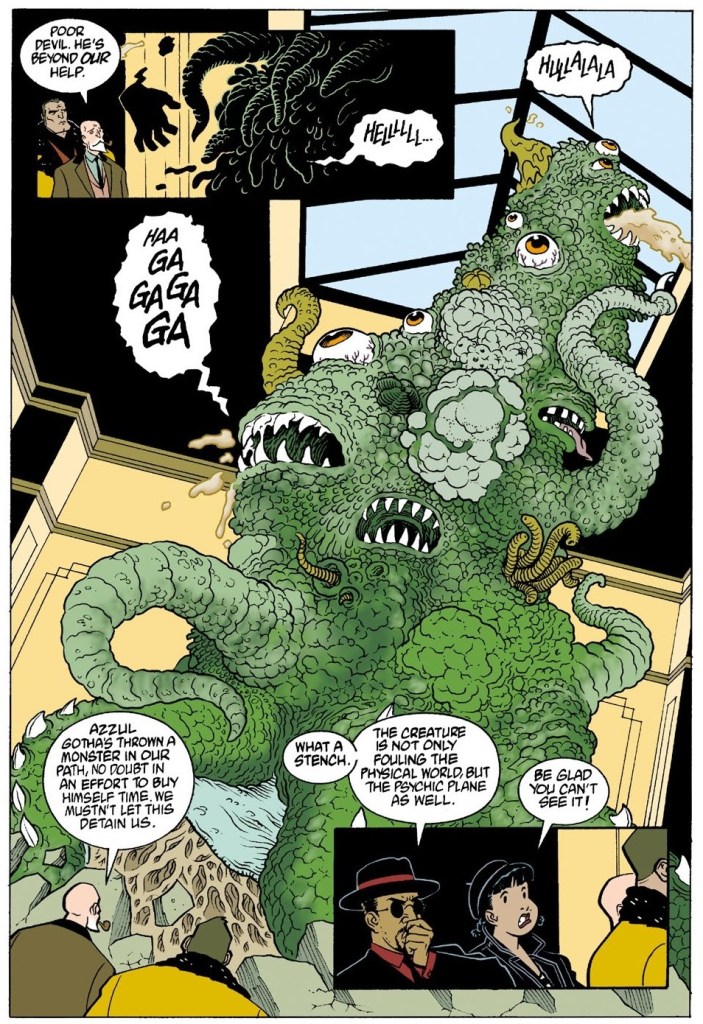
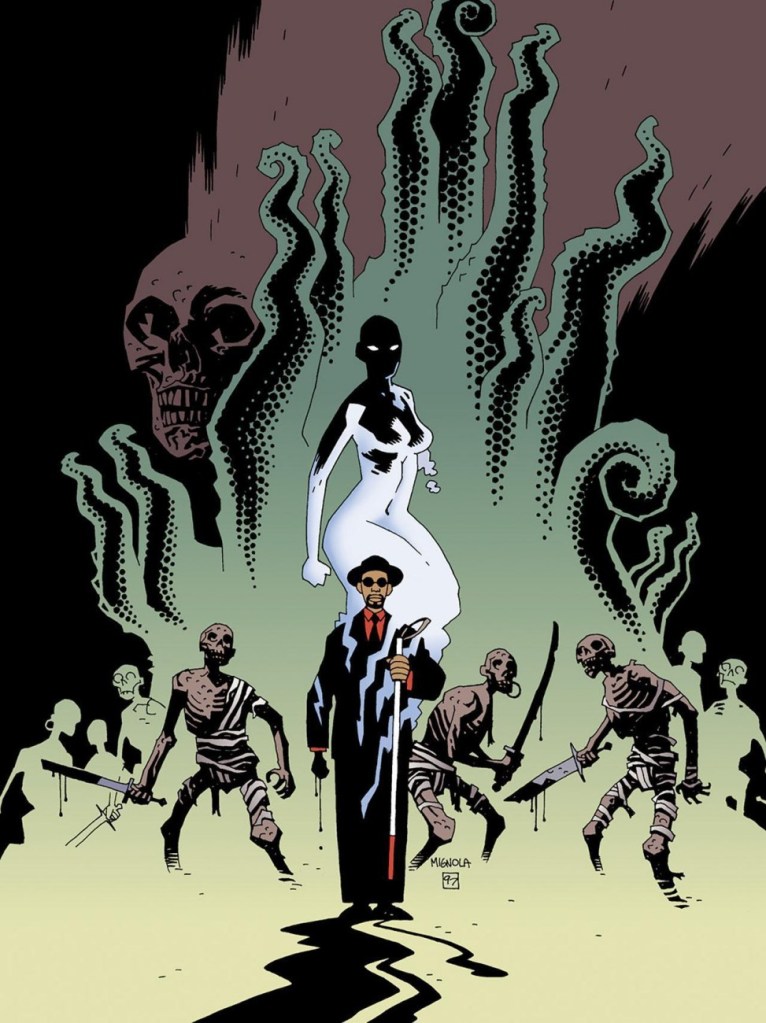
The next story is Tentacle Master Mike Mignola‘s ‘Champion of the Worms‘, which held my lazy interest for a few pages… until I found out that it’s actually quite good. What a pleasant surprise for one who had such low expectations! It also brims over with tentacles. The following three pages are from ZombieWorld: Champion of the Worms (October 1997), scripted by Mignola and illustrated by Pat McEown.
Not everybody can boast to such a classy octopus hat!
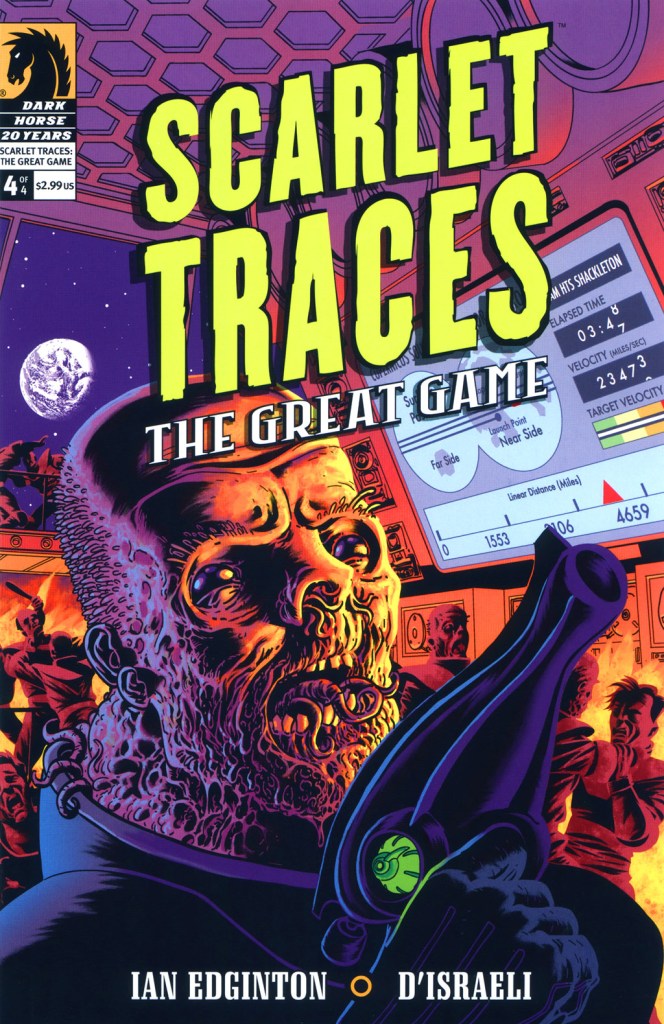
Last but not least… Scarlet Traces is a sort of sequel to Ian Edginton and D’Israeli‘s adaptation of H. G. Wells‘ The War of the Worlds, with heavy Dan Dare and Doctor Who references. This story wears its Englishness on its sleeve!
Scarlet Traces: the Great Game no. 4 (October 2006). Art by British artist D’Israeli, whose real name is actually Matt Brooker.
« A kryptonian octosaur — the most fearsome creature of my long-dead home planet — here — on earth! »
Since Batman was already awarded a Tentacle Tuesday back in April (see Tentacle Tuesday: All Aboard the Batmarine!), it is time to allocate one to the other superhero that crops up all the freaking time, namely good old “Supes” (for those who are on familiar terms with him). I won’t hide from you that I have very little interest in the adventures of the aforementioned character, but I made a pledge to follow tentacles wherever they may lead me. The octopus of comics demands sacrifices!
The Man of Steel. The Last Son of Krypton. The Son of Jor-El. Metropolis’ favorite son. The Man of Tomorrow. Champion of the Oppressed. The Big Blue Boy Scout. The iconic Cape. The definitive Flying Brick. The Big Good of The DCU. The Superhero.
First, we have a number of inside pages of varying interest, depicting tentacles both organic and mechanical —
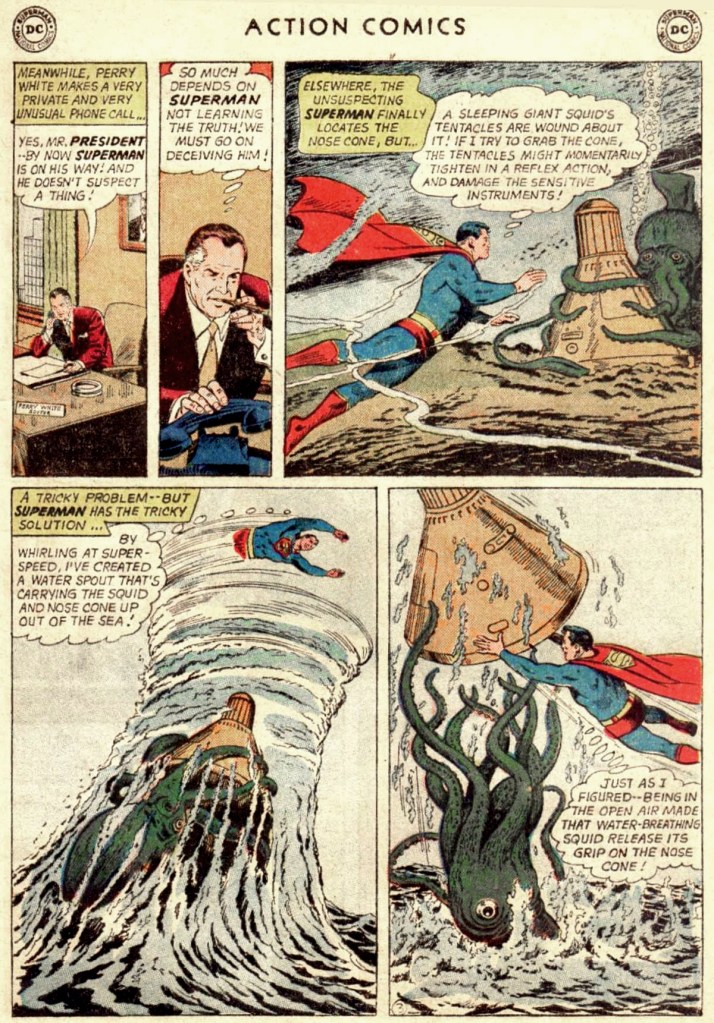
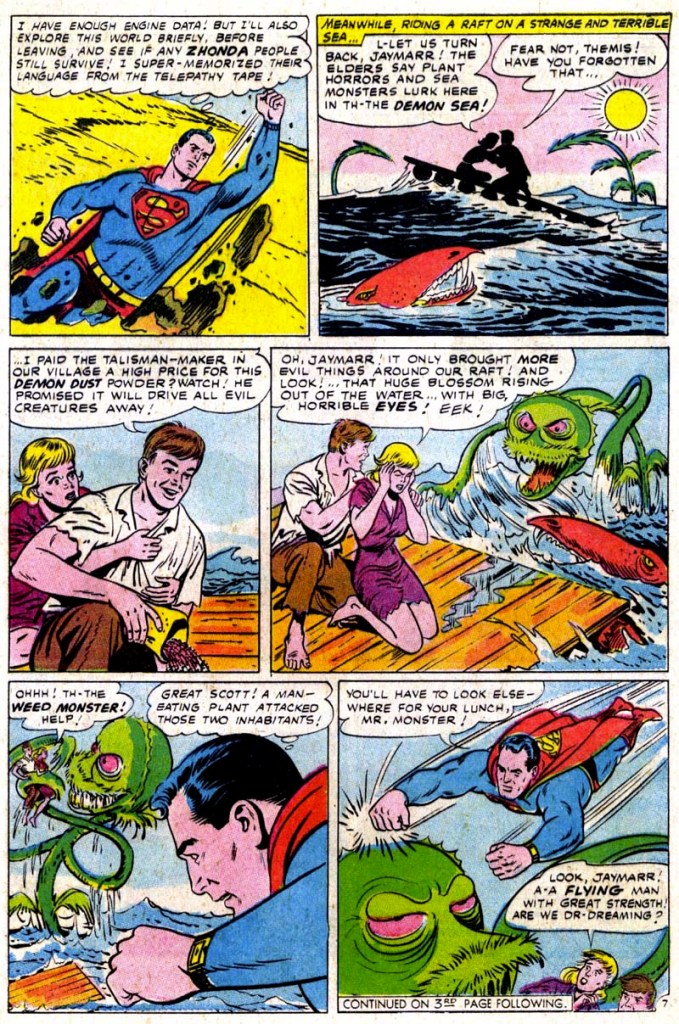
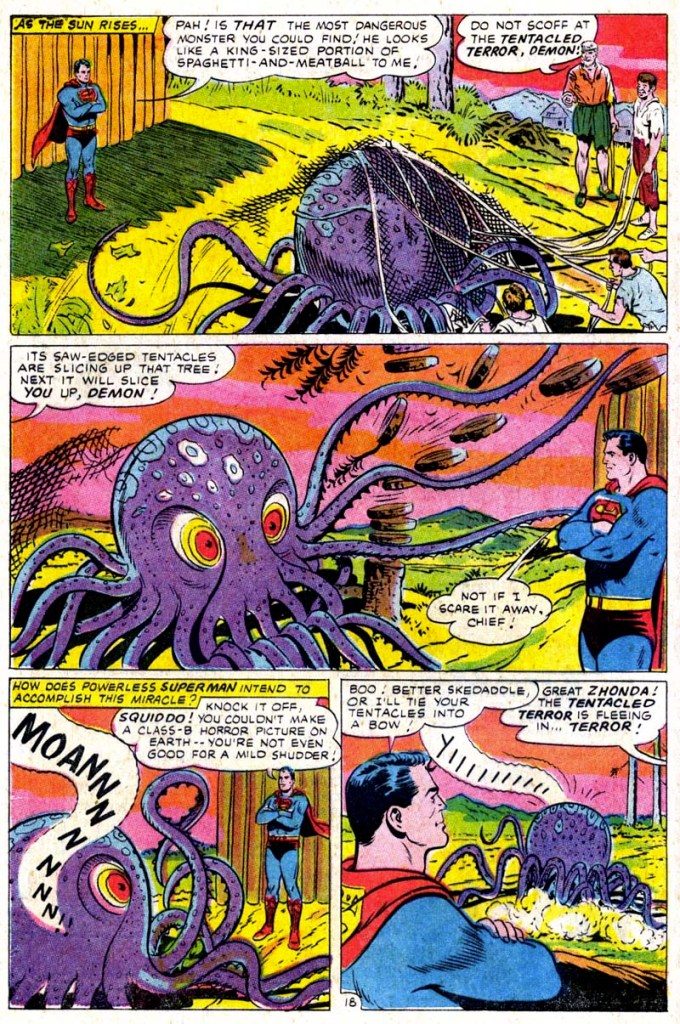
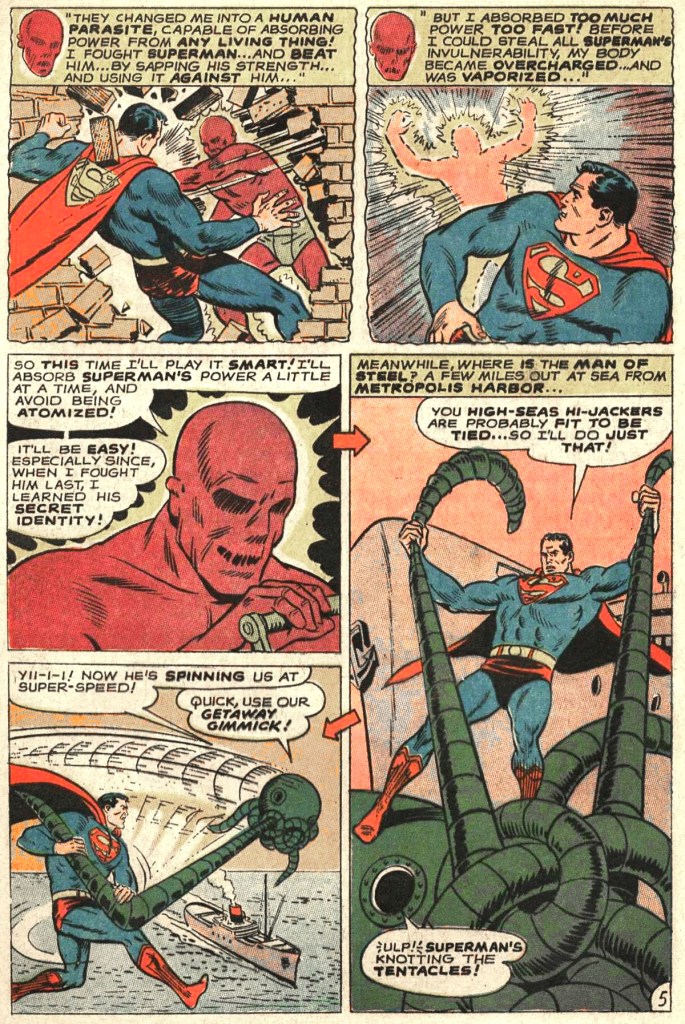
A page from The Superman Super-Spectacular!, scripted by Edmond Hamilton, pencilled by Curt Swan and inked by George Klein, was published in Action Comics no. 309 (February 1964).A page from The Demon Under the Red Sun!, scripted by Otto Binder and illustrated by Al Plastino, was published in Superman no. 184 (February 1966).The Demon Under the Red Sun!, part two. Superman wields his rapier-like wit to defeat the poor beastie. This was years before the Flying Spaghetti Monster!A page from The Power of the Parasite, scripted by Jim Shooter and illustrated by Al Plastino, was published in Action Comics no. 361 (March 1968).A panel from The Monster Who Unmasked Superman!, scripted by Cary Bates, pencilled by Curt Swan and inked by Murphy Anderson, was published in Action Comics no. 431 (January 1974).The Monster Who Unmasked Superman!: aggressive tentacle grabbery ensues.Page from Balance of Power!, scripted by Len Wein, pencilled by Dick Dillin and inked by Dick Giordano, was published in Justice League of America no. 111 (May-June 1974).A page from …With But a Single Step!, scripted by Marv Wolfman and illustrated by Gil Kane, was published in Action Comics no. 545 (July 1983).
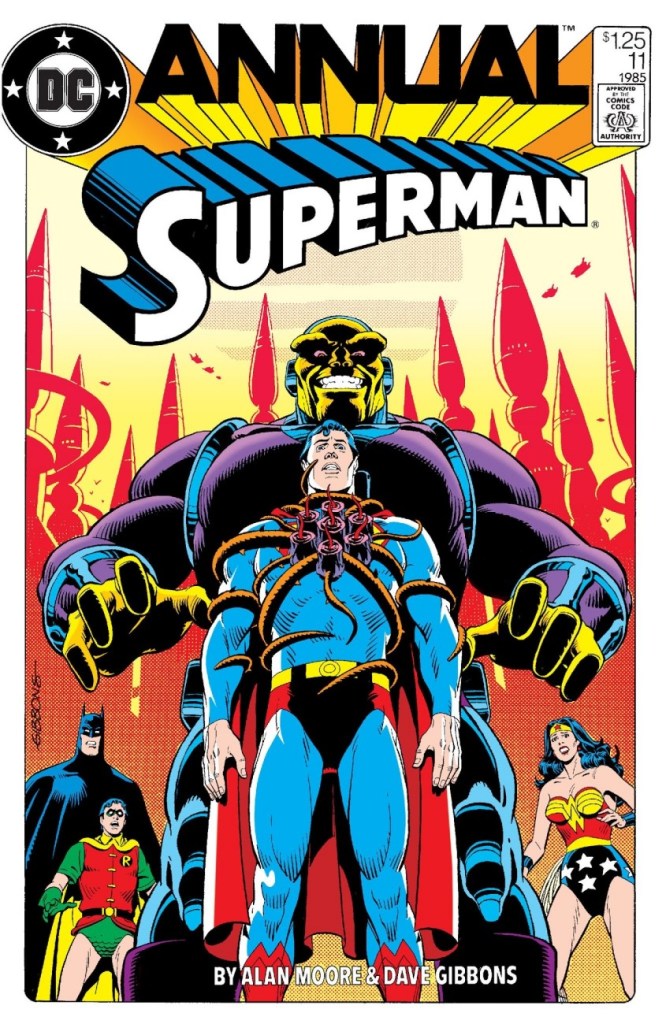
As a tastier, second part of our programme, I offer you an intriguing cover by Dave Gibbons:
Superman Annual no. 11 (September 1985)
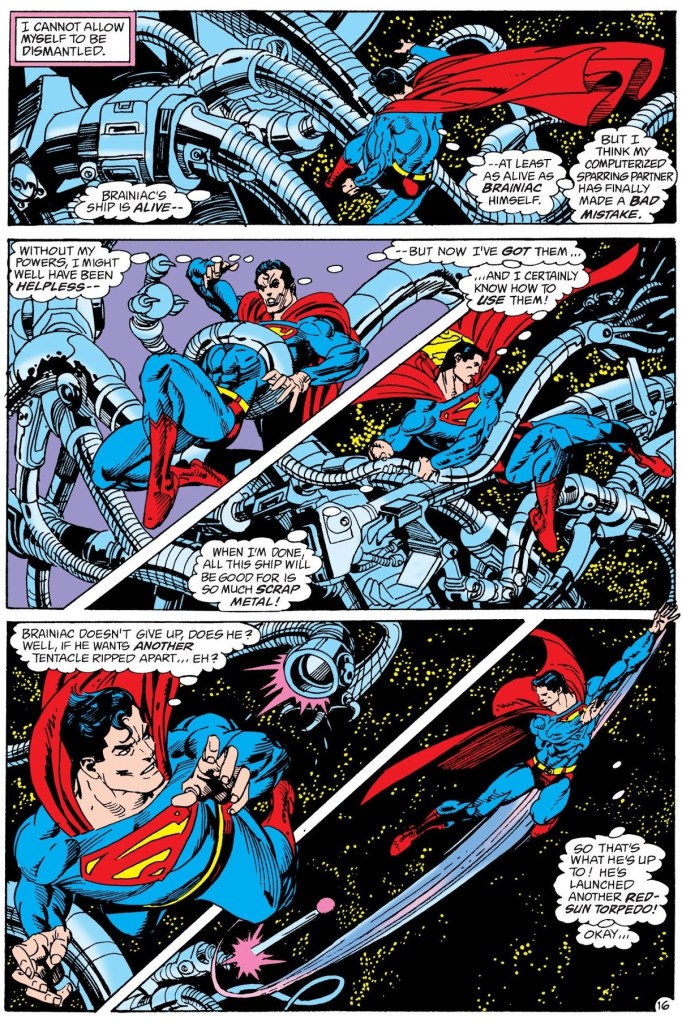
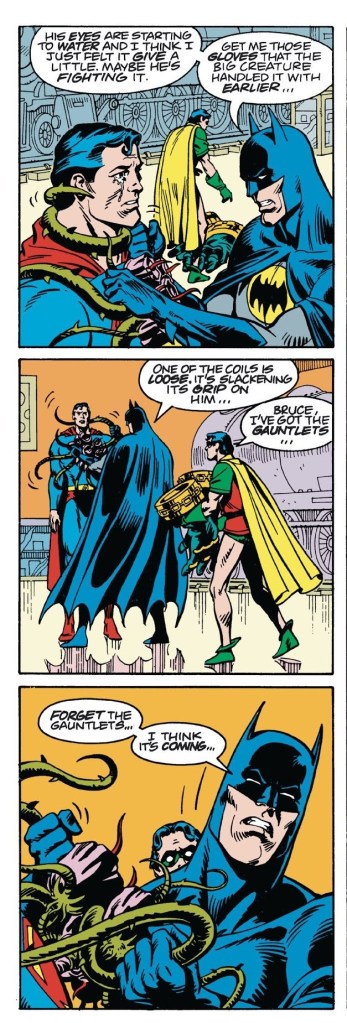
And a page (or three) from what co-editor RG calls “the ultimate Superman story” (and I will absolutely take his word for it) — For the Man Who Has Everything… scripted by Alan Moore and illustrated by Dave Gibbons.
The tentacle mantle is taken up by other characters — pesky, clingy little buggers, aren’t they? « It’s called a Black Mercy. It’s something between a plant and an intelligent fungus. It attaches itself to its victims in a form of symbiosis, feeding from their bio-aura. Why, it gives them their heart’s desire…. », explains Mongul, the ‘benefactor’ who got Superman into this spot of trouble.
Mongul gets his comeuppance! And his heart’s desire of world domination, courtesy of the Black Mercy.
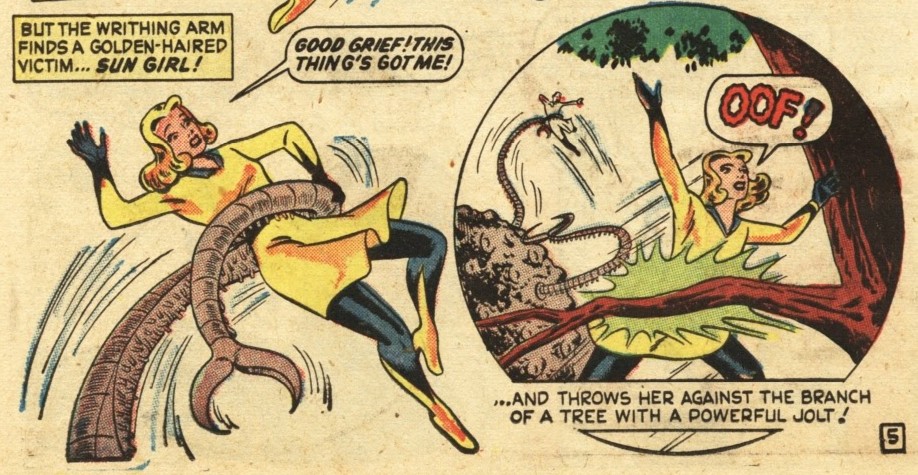
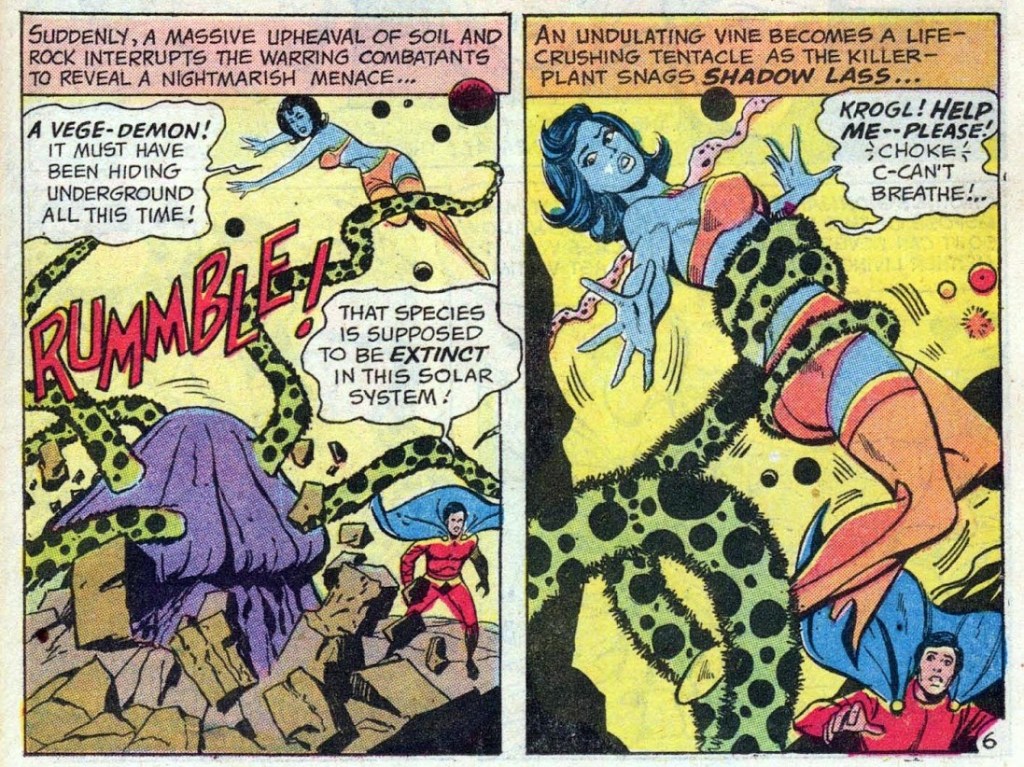
It occurs to me that I haven’t focused on the good old mademoiselle-embraced-by-tentacles cliché in a while. If today has a further theme, it’s of women (both human and alien) being grabbed by the midriff. Polka-dotted tentacles in a swamp and furry tentacles on Venus, whether they’re latching on to a humanoid woman with four breasts or a blue-skinned Talokian, all basically behave the same way.
As usual, this is a chronological progression that takes us from early Golden Age days all the way to mid flamboyant 80s.
The Robot Masters of Venus, illustrated by Max Plaisted (of Spicy Mystery fame!), was published in Exciting Comics v. 1 no. 3 (June 1940, Pines).
The Vengeance of the Space Monster!, pencilled by Ken Bald and inked by Syd Shores (both names are, however, guesses), was published in Marvel Mystery Comics no. 90 (February 1949, Atlas).
I agree that having one’s ribcage crushed does not help with breathing, but still, I am not sure why Shadow Lass is choking on the panel on the right when the vege-demon has her by the midriff.
War of the Wraith-Mates!, scripted by Cary Bates, pencilled by George Tuska and inked by Vince Colletta, was published in Superboy no. 183 (May 1972, DC).
For a little variety, I’m also including the following warrior vixen as a pleasant exception to the rule – she is not only not being grabbed, but also has an octopus for an obedient pet.
Girl on Octopus by Brian Lewis, painted sometime in the mid 1970s.
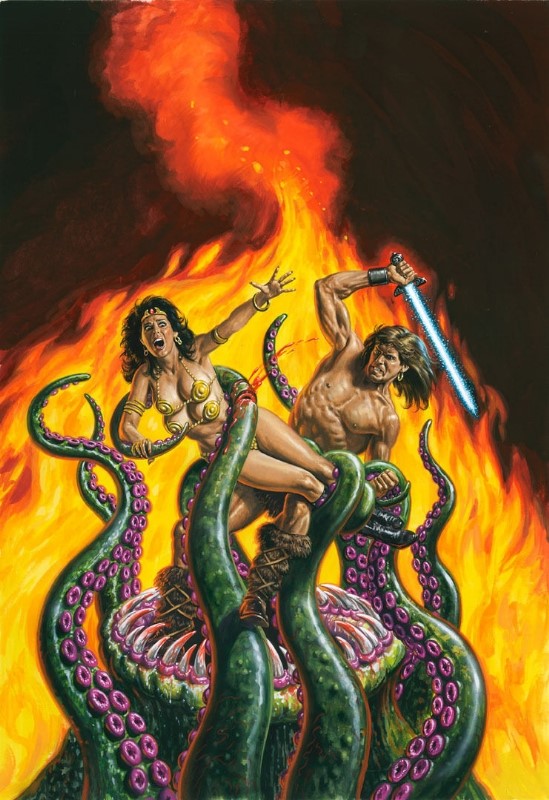
Our next stop is a proposed illustration for the 1984 movie The Warrior and the Sorceress, painted by Bob Larkin. The movie in question (which I have never seen) is apparently “noted chiefly for containing extensive nudity and violence and for being one of the more extreme examples of the sword-and-sorcery genre. It is also considered by some to be a cult classic.“
The sorceress has 4 breasts – a logistical nightmare when selecting a bikini, no doubt.
As… questionable… as this is, the illustration that was chosen in the end is in a whole other class of cheesiness. The sorceress has also died her hair blonde, presumably because she wants to have (even more) fun! We also lost the cephalopod, unfortunately, but the maxim “one can’t have everything” comes to mind – and David Carradine in a pearly loincloth is plenty.
Art by Joanne Daley, who at least makes some sort of attempt at designing a functional four-breast-bra.
After *that*, the following cover looks quite humdrum by comparison. It’s difficult to imagine how Red Sonja will extricate herself from this situation…
Red Sonja no. 5 (January 1985, Marvel). The cover is by Pat Broderick.
Incidentally, there are tons of Red Sonja cover with tentacles, mostly of recent vintage, and most of them are ugly as sin. This one is decent:
The cover art for Red Sonja no. 21 (April 2007, Dynamite). This is a variant cover by Roberto Castro.
Wasting the wide range of my xeno-tech training on a home office job was like putting a carpenter in charge of the psycho-ward. Like any fish out of water, I didn’t fit in. Bureaucracy said I didn’t belong.
So they finally shipped me out.
‘Murder on the O’Brien Express‘, published in Keif Llama – Xeno-Tech no. 4
« The ability to think like another species is a rare and galactically valuable gift. Those who are capable of it are called xenotechs. »
Technically, Kēif Llama (pronounced keef yamma) is a government official specializing in communication with alien species. Off record, she tends to poke her nose into beehives, and wards off attempts to deter her from doing so until she gets to the bottom of whatever’s happening, often pursuing the investigation far beyond formal confed business. When the government wants her to provide an quick’n’easy solution, or to hush things up, she kicks up a well-justified fuss. For this reason, despite being a top-notch xeno-tech, the planets to which she gets sent are further and further away from civilized life, the missions assigned to her increasingly inconsequential. Inconsequential to the government, that is – following the thread of a seemingly random event, Llama often stumbles upon some serious plot, often than not concocted by some evil corporation (and occasionally supported by the government itself).
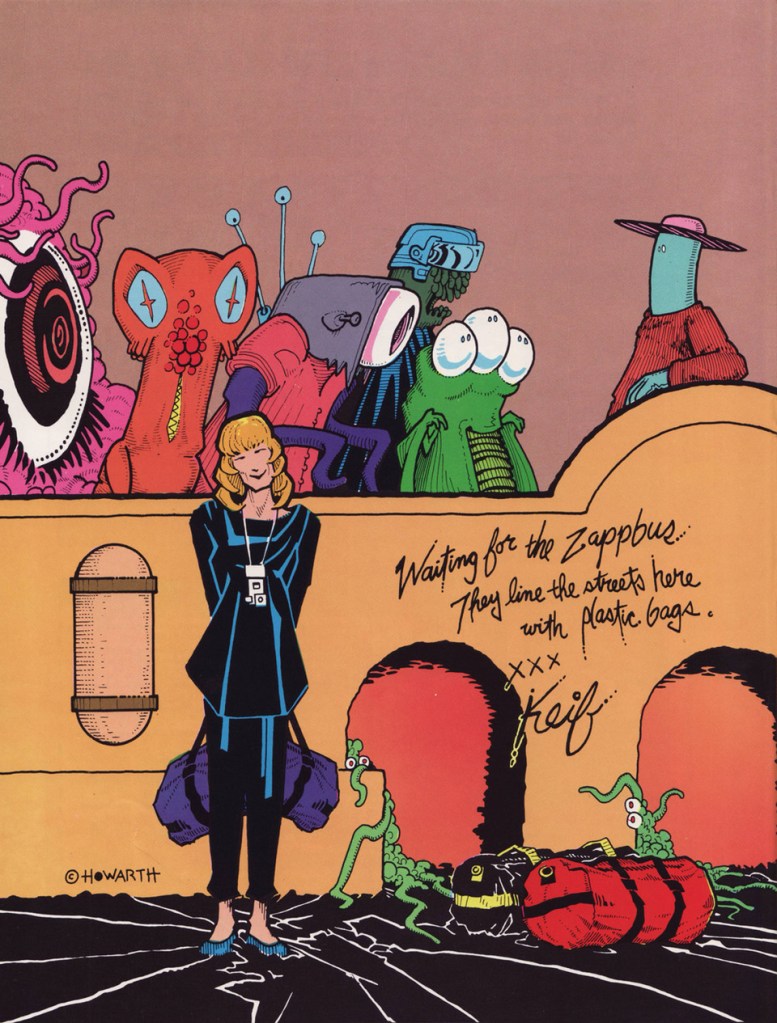
The back cover of Particle Dreams no. 1 (October 1986, Fantagraphics).
Her name is probably a sly wink to Keith Laumer, a sci-fi/fantasy writer whose Retief series is about a diplomat solving alien conflicts on various planets. Except that Retief always comes out with his nose clean and his credentials reinforced by his success. Llama, on the other hand, stumbles through the puzzling and melancholy worlds she’s banished to with an increasing sense of despondence and powerlessness. She often lacks information to make informed decisions, though not through lack of trying; and in this universe of shades of grey, it is often unclear which is right and which is wrong. Saving one alien life can lead to a whole planet perishing. Overlooking a minor detail means disaster, and when hindsight is 20/20, her burden of guilt is heavy to bear.
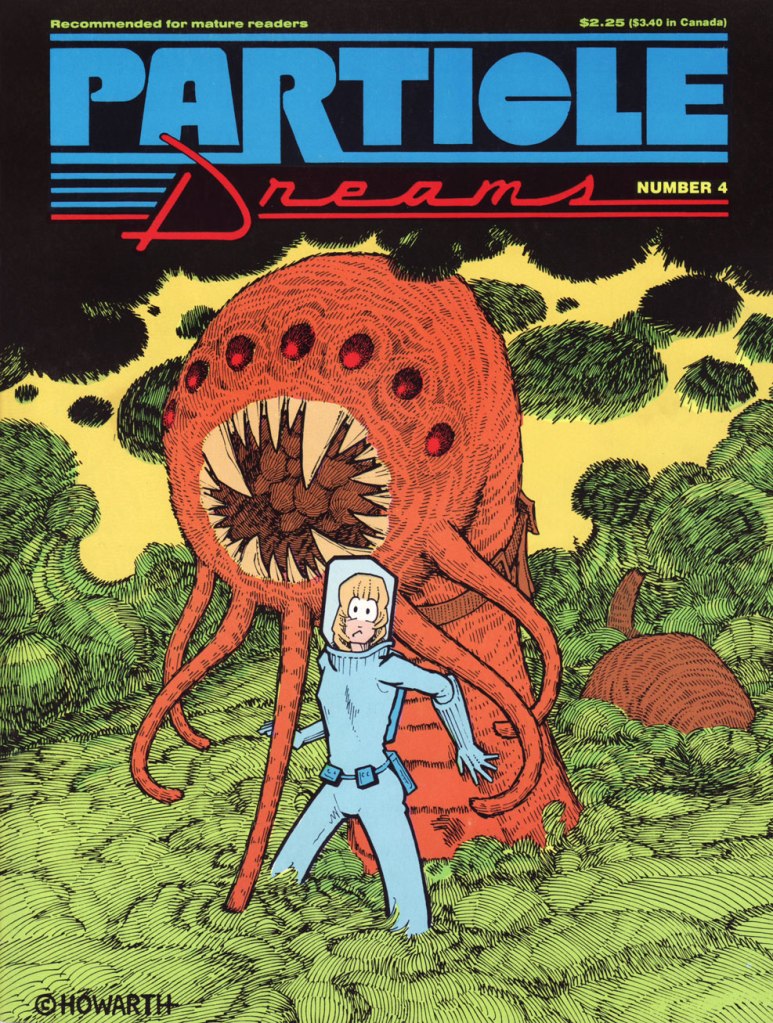
Particle Dreams no. 4 (June 1987, Fantagraphics).
In FF1986: Keif Llama, Lars Ingebrigtsen, who likes this series with a few reservations, argues that “The stories are problematic. More than a few of them end with a sense of “Huh? That’s the end? Did I miss something?” And most of them feature a genocide of some sort or another. After a while, it starts grating on you.” I would respectfully disagree: these stories are a bit like a slice of life. Sometimes we start in the middle of something that’s already under way, and sometimes we get but a small glimpse of some larger, out-of-reach picture. Not everything gets explained, but that’s not because Howarth couldn’t tie the ends of this plot together: he’s our guide through strange worlds, but even a guide doesn’t know everything. This is *excellent* science-fiction, as far as I’m concerned, imaginative and wide of scope. And Llama does have her moments of triumph (made more precious by their rarity), when she manages to outwit the fools, the bureaucrats, the religious fanatics whose actions would lead to a destruction of a precarious ecological balance or a grave injustice. Howarth’s hallmark humorous winks are scattered throughout the stories, giving the readers a welcome respite from the frequently heavy subject matter.
But more importantly, it’s those ‘problematic’ – whether downright cryptic or just lacking closure – endings that make Kēif Llama into a truly striking body of work. Depressing, it can certainly be (thus the importance to not binge-read your way through these comics, assuming you get your hands on a bunch of them at the same time). Yet as we accompany Llama on her ‘journey of discovery’ that leads her (and us) through a maze of corrupt (or just so weary they can’t be bothered) officials, profit-hungry conglomerates, macho idiots who can’t bear to take orders from women, and alien locals who mostly want to be left alone or refuse to explain their culture to an ‘ugly and smelly’ human, the weight of the universe Howarth has created settles squarely on our shoulders, and keeps us pinned until some uncomfortable truths are faced, commonly held beliefs are unravelled, and a few tears are shed. Happy endings often come at a heavy sacrifice.
Page from Particle Dreams no. 4 (June 1987, Fantagraphics).
On a lighter note, fans of Matt Howarth will indubitably have noticed the abundant presence of tentacles in all of his series. Howarth is exceptionally good at drawing aliens: tangible, ‘believable’ aliens who come in a staggering variety of shapes and sizes, and rarely look like some Earth animal with extra appendages (something artists of more limited imagination resort to quite a lot).
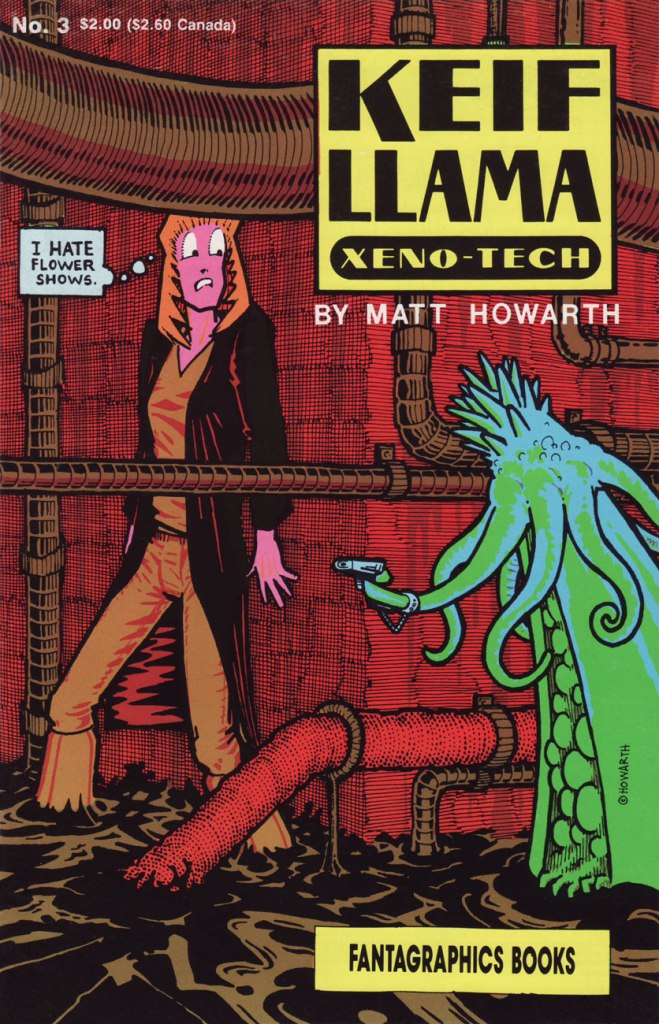
Patience, published in Particle Dreams no. 6 (November 1987, Fantagraphics).Keif Llama – Xeno-Tech no. 3 (November 1988, Fantagrahics).A page from The Thorn Beneath the Rose, published in Keif Llama – Xeno-Tech no. 3 (November 1988, Fantagraphics).
A small-time sheriff, alien as he may be, summarizes the type of thanks Llama frequently gets in this tirade: « You’re an ambulatory disaster area, Llama. Smuggling fiascos, international incidents, they can’t even ship you to the frontier without trouble following you. You’re in transit to Edison-Blue, Llama. I don’t want you or your bad luck in my town any longer than is painfully necessary. »
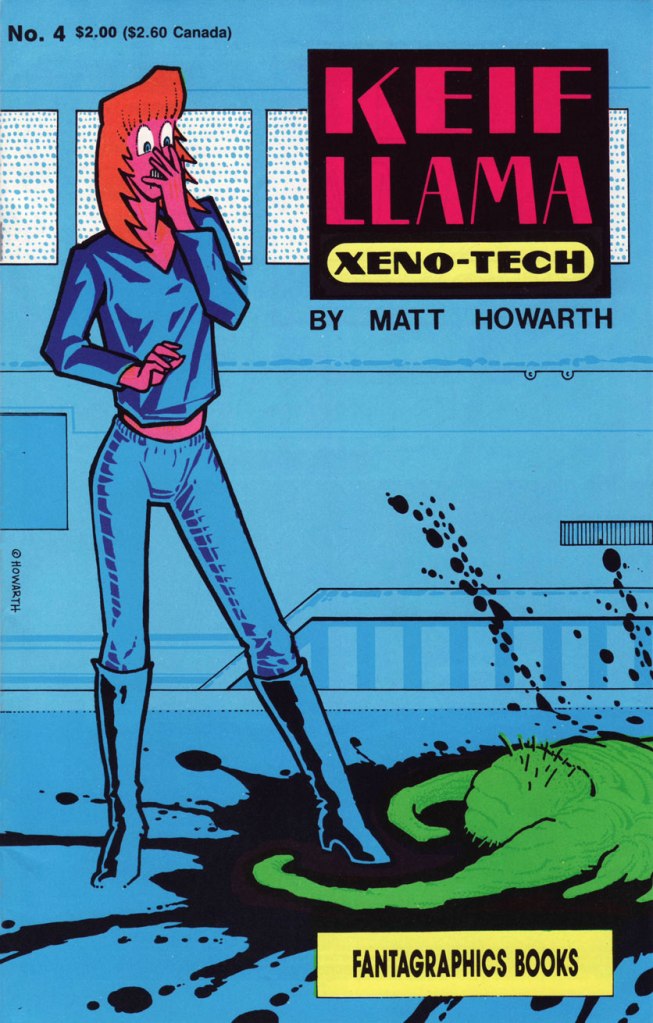
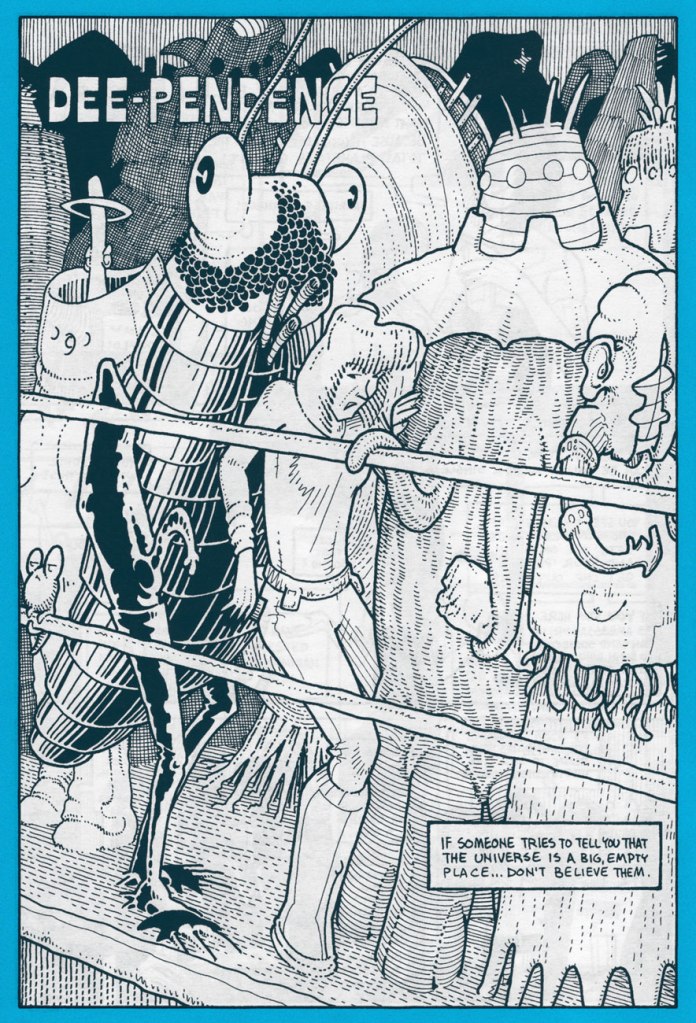
Keif Llama – Xeno-Tech no. 4 (December 1988, Fantagraphics).A page from Down and Out There, published in Keif Llama – Xeno-Tech no. 5 (January 1989, Fantagraphics).Page from Dee-Pendence, published in Keif Llama Xenotech vl 2. no. 3 (December 2005, Aeon).
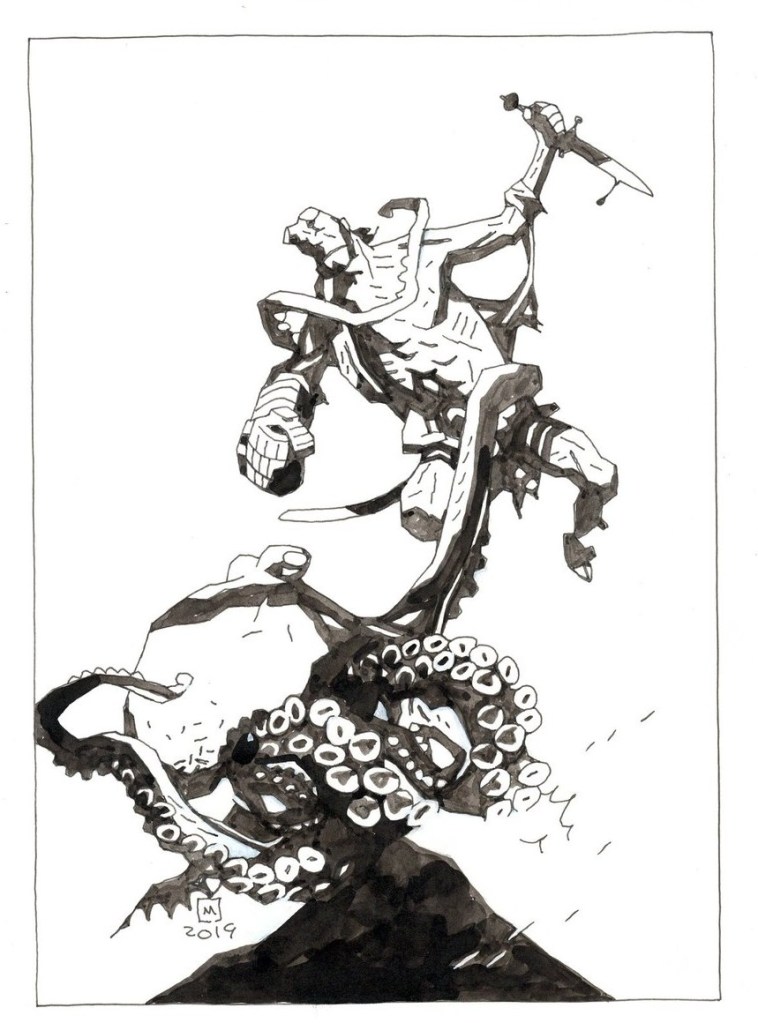
« Because sometimes, for whatever reason, you just want to draw an octopus. » — Mike Mignola, June 2019
I would say that this Tentacle Tuesday feature was started for a similar reason – sometimes one just needs to gather tentacled material, to share it more efficiently with like-minded weirdos.
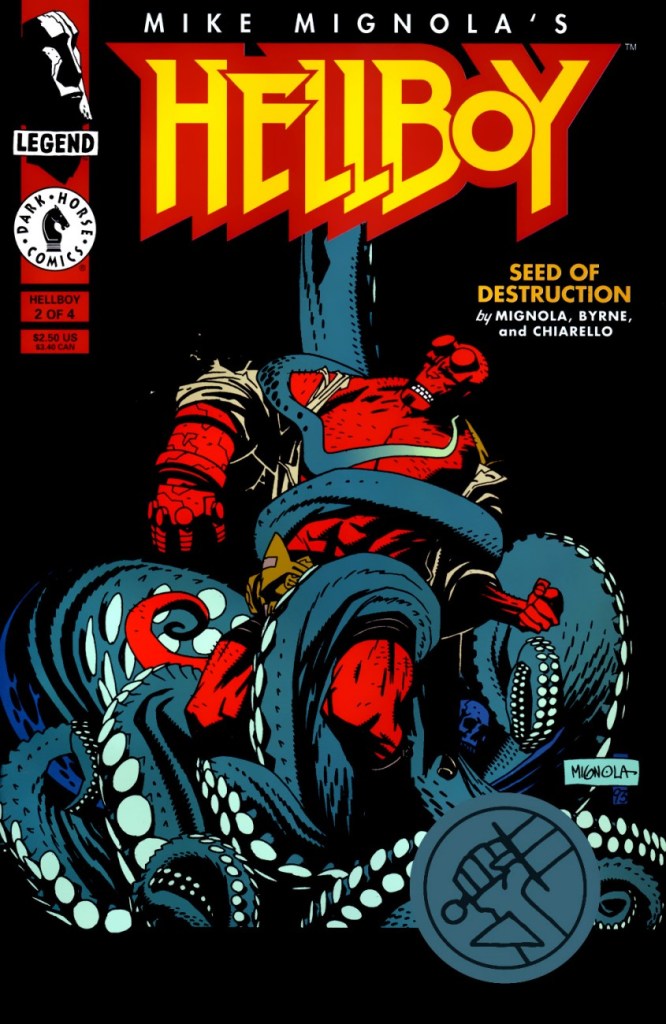
The back cover of Hellboy: Seeds of Destruction no. 2
I don’t imagine writer and comics artist Mike Mignola (most notably, creator of Hellboy and its spin-off B.P.R.D.) needs much of an introduction – he’s fairly ubiquitous in mainstream culture, and his style has been aped by many, which according to the proverb is the most sincere form of flattery. I was aware of this already, and yet was staggered by the sheer number of copycats I stumbled across while seeking out materials for this post.
I also started suffering from tentacle fatigue: as much as I love octopuses, seeing dozens upon dozens of fairly similar images made me weary. Mignola draws tentacles well, but he also draws them very, very often, and he also likes to revisit scenes already depicted. The result is a sprawling mess of sketches, variant covers and spin-offs of spin-offs… perhaps not inappropriate, come to think of it. This particular octopus has far more than just eight limbs!
Enjoy this barrage of Mignola tentacles, just make sure you’re in the proper mood for them 😉
Hellboy: Seeds of Destruction no. 2 (April 1994).
Page from Hellboy: Seeds of Destruction no. 3 (May 1994).
Sketch from June 2019.
ZombieWorld: Champion of the Worms no. 2 (October 1997)
No post of this nature would be complete without featuring, in some form or other, H.P. Lovecraft, arguably the father of our modern obsession with tentacles. On that topic, I am linking to an excellent article about Mignola’s relationship with the creator of the Cthulhu Mythos (be warned that it’s in French, sorry!)
Art for the cover of Dark Horse Presents no. 142 (April 1999). Mignola made Lovecraft look downright dignified and borderline handsome, which is quite a feat, considering the latter’s unusual physiognomy.
Mignola revisited this very scene for his cover of Children of Lovecraft, and anthology of (non-comics) stories ‘inspired’ by Lovecraft (September, 2016). This was also published by Dark Horse.
More Victorian England and Lovecraftian archetypes can be found within the pages of Jenny Finn:
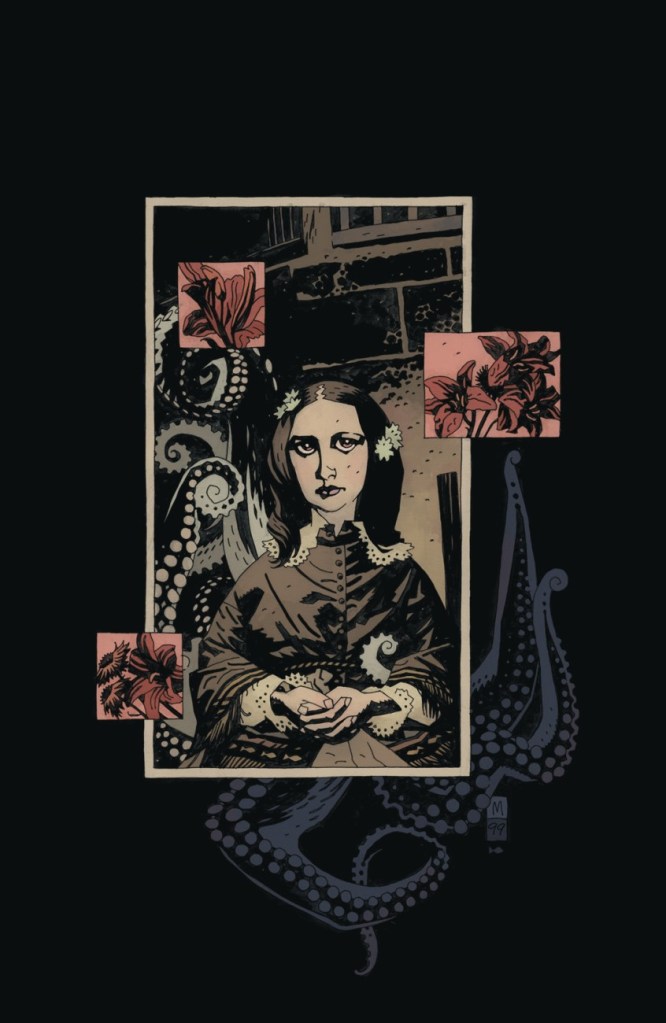
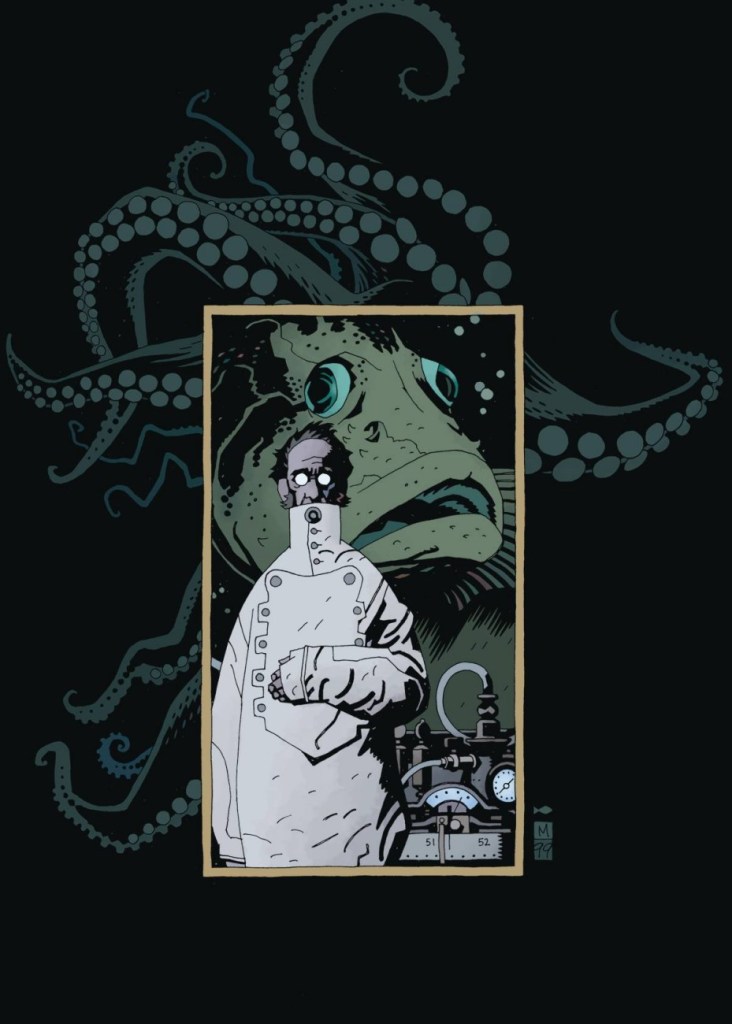
Artwork for Jenny Finn no. 1 (June 1999).
Back cover artwork for Jenny Finn Messiah no. 1 (2005).
Even Batman, in Mignola’s hands, gets tentaclefied!
A page from Batman: Legends of the Dark Knight no. 54 (November 1993).
Batman: The Doom That Came to Gotham no. 2 (November 2000).
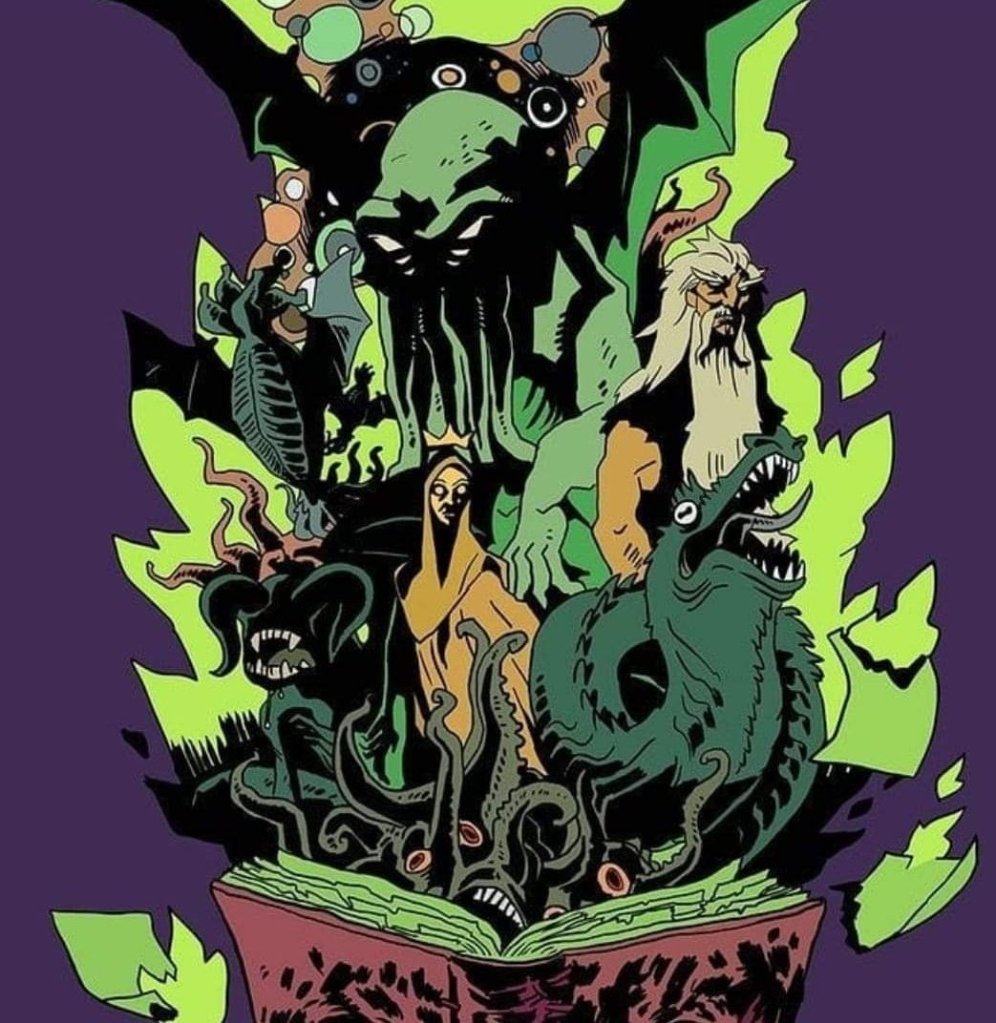
As a final note, I’d like to officially make a moue of distaste at people who share art without attribution, or without bothering to ascertain its source. To wit: a pair of images that are widely shared as Mike Mignola artwork… except that it isn’t by him at all, just by someone drawing in a similar style. Instagram and Pinterest are breeding grounds for such deplorable artistic credit robbery.
The following two illustrations are by Malaysian artist Daryl Toh.
« Down metal snake corridors Steely grey engines hum for nobody but me No sound comes from the sea above me No messages crackles through the radio leads They’ll never know, never no never How strange life in dark water can be… »*
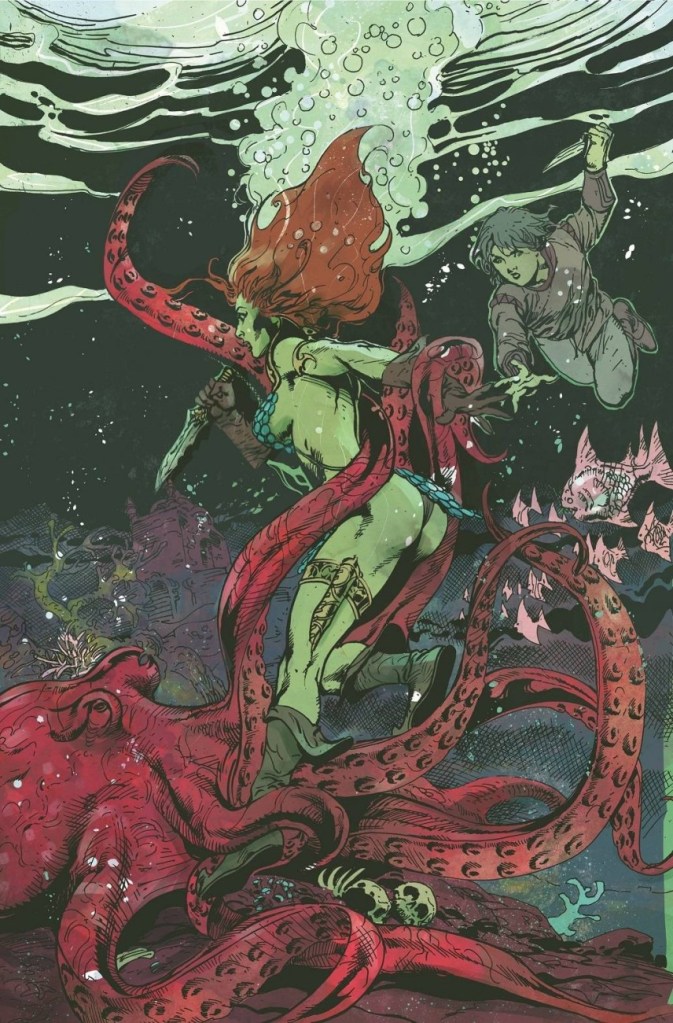
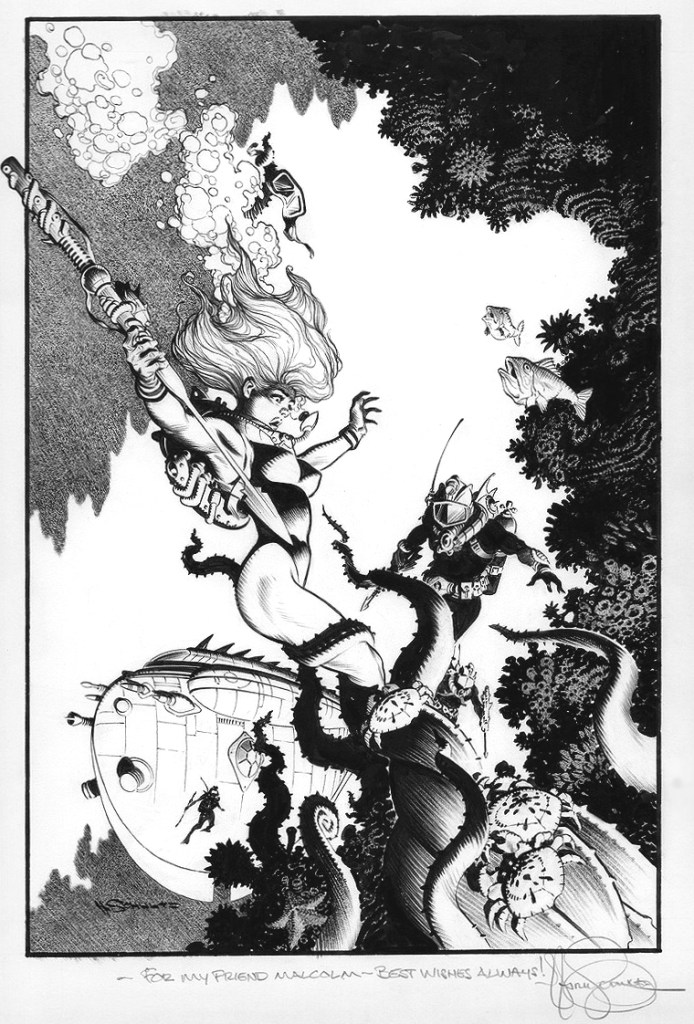
Now that we’re finally enjoying proper autumnal weather – which is to say, grey, rainy and beautiful – my thoughts turn to the dark and the wet. Aquatic octopus scenes fit this mood beautifully: those mute scenes where characters are as if frozen in the clutches of a gargantuan octopus. In which overeager octopod grabbers get ferociously punished for their ill-advised enthusiasm, winding up, more often than not, on the wrong end of a sharp… implement.
Original art by Mark Schultzintended for the Subhuman paperback collection (which, as far as I know, never saw print):
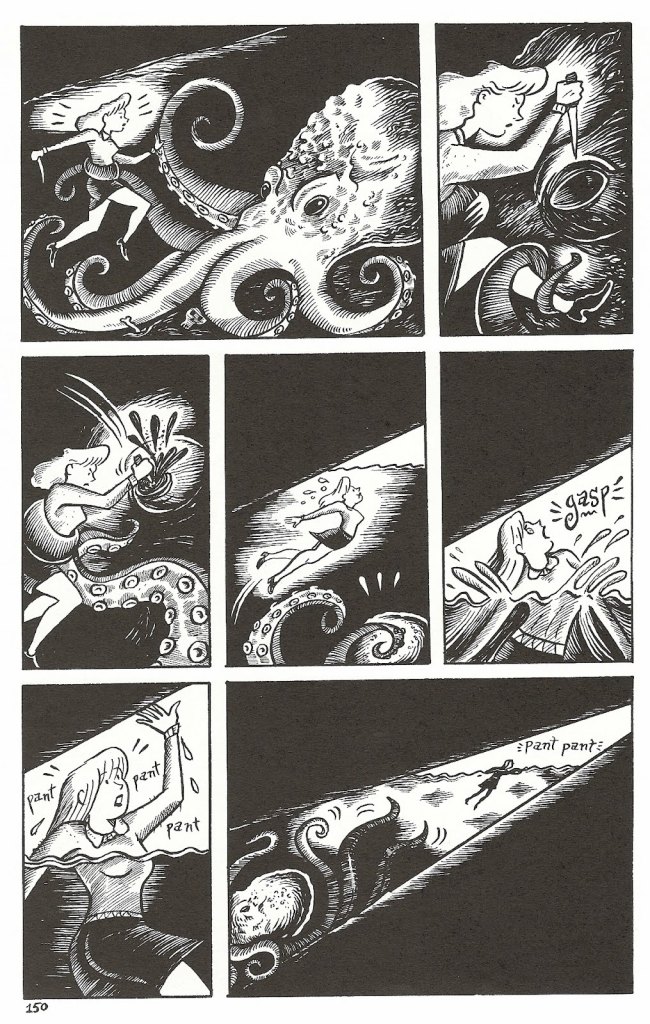
A few pages from Richard Sala‘s Mad Night (2005, Fantagraphics):
This book features not one, but two epic battle scenes with an octopus!
A painting by Vic Prezio, created for the front cover of a 1962 issue of Man’s Escape:










































 Who's Out There?