Mike Royer’s Cruisin’ Years: the Interview, part 1

« This isn’t just nostalgia. It’s history! »

Today, Michael Royer (born June 28, 1941), who surely needs no introduction around these parts, celebrates birthday number seventy-seven, and on this special occasion, we have a treat, both for the great man and for the rest of us: part one of an interview Mr. Royer granted us, conducted just a few days ago.

As you can imagine, Mr. Royer has spent decades answering the same queries about his work with Jack Kirby and with Russ Manning, so that’s quite a well-trod line of investigation. We like to approach things a bit differently here at WOT; having long been intrigued by Mr. Royer’s evocative series of LP covers for the Cruisin’ anthology series, beginning in the late 1960s, and frustrated by the lack of solid information concerning said contribution, I figured I’d take a hand, and reached out to Mr. Royer.

If you’re unfamiliar with the Cruisin’ Series, here’s the pitch: « Cruisin’ is a year-by-year recreation of pop music radio during the years 1956 through 1962 [the years of 1955 and 1963-1970 were produced later]. Each album is not just a collection of the top pop music of a particular year, but a total recreation by a top disk jockey (of that year) doing his original program over a major pop music station. That means actual commercials, promotional jingles, sound effects, newscast simulations and even record hop announcements in addition to the original records themselves. »

« Cruisin’ producer Ron Jacobs monitored thousands of feet of tape, travelled over 10,000 miles and rooted through forgotten files and cluttered basements for old commercials, station promos and jingles. »

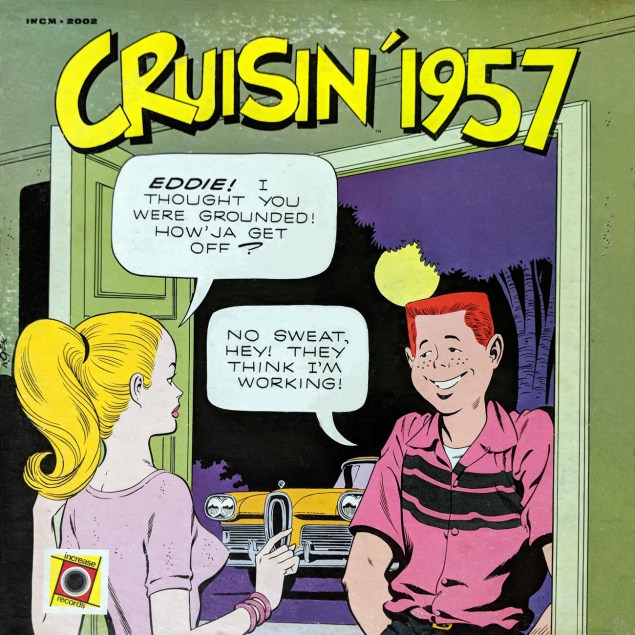
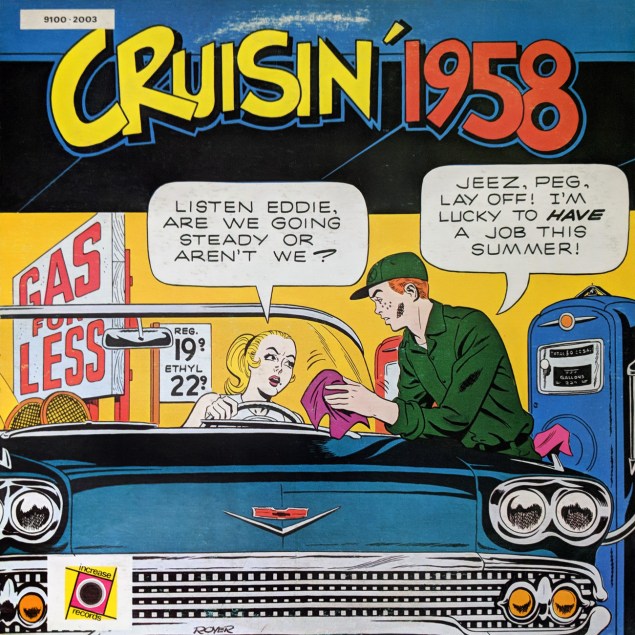
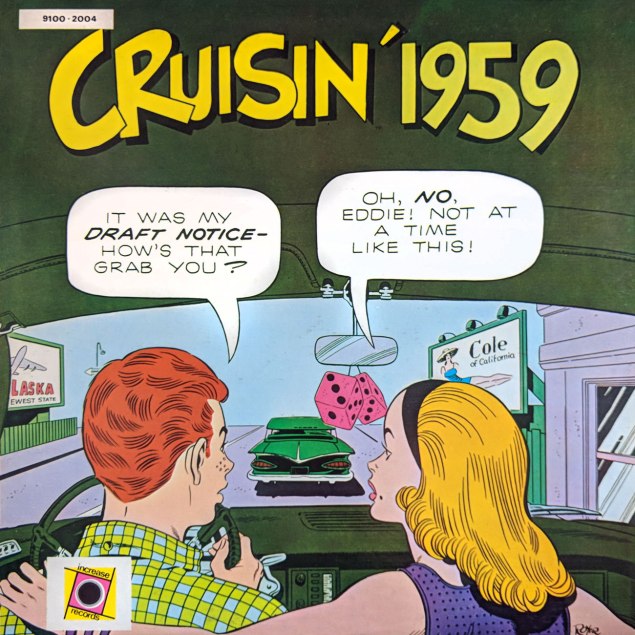
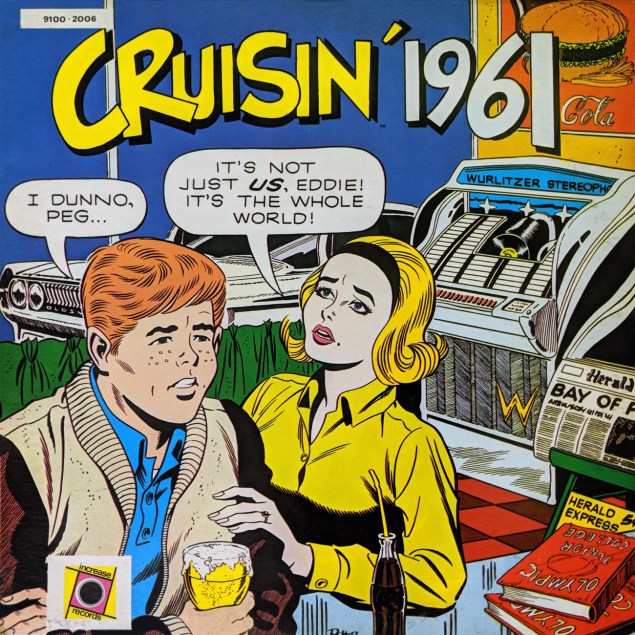
« What’s so special about these album covers? », you may ask. I’d posit that they’re unique in the sense that, while they each work as standalone pieces, together, they form a quite impressive comic strip, one in which a year or so elapses between panels. Just about every detail has its place, imparting information plainly or quite subtly. Characters come and go, years apart, sometimes entirely offstage, often never speaking a word. It’s graphic storytelling at its finest. And the LPs are pretty spiffy too.

Now that you’re up to speed, shall we begin? Mr. Royer and I spoke on Tuesday, June 26, 2018, and he was most generous with his time and his recollections. I assure you that the minutes simply fly in such gracious company.

RoyerCruisin'55A
Read the liner notes, or hear Cruisin’ 1955 in its entirety here!
RoyerCruisin'56A
Read the liner notes, or hear Cruisin’ 1956 in its entirety here!
RoyerCruisin'57A
Read the liner notes, or hear Cruisin’ 1957 in far less that its entirety here. Sorry!
RoyerCruisin'58A
Read the liner notes, or hear Cruisin’ 1958 in its entirety here!
RoyerCruisin'59B
Read the liner notes, or hear Cruisin’ 1959 in its entirety here!
RoyerCruisin'60A
For this entry’s cd reissue, the cover artwork was inadvisably cropped, quite obscuring the political differences between Kevin Buchanan III (front) and Eddie (in uniform). Mr. Royer’s least favourite cover, incidentally. Read the liner notes, or hear Cruisin’ 1960 in its entirety here!
RoyerCruisin'61A
Read the liner notes, or hear Cruisin’ 1961 in its entirety here! And remember, « If you say ‘Woo Woo Ginsburg’ with your order, you get another Ginsburger free of charge! »

Who’s Out There: Mr. Royer, How did you happen to be selected for the job in the first place?

Michael Royer: In 1966, I was working for Grantray-Lawrence Animation on the Marvel Superheroes limited animation cartoon series. And I believe that a man named Paul Gruwell… If you look at the record album, he’s listed in there as the art director… I’m listed as the artist and they misspelled my name.

WOT: Of course. We’ll set that straight.

MR: Paul was one of the guys working on the series and I did some work with him on an outside project he was doing, where he was doing… I guess you could call them slide shows, on the history of the Mormon church.

I was working on these things, and he knew someone at the record company who had this idea for the history of rock ‘n’ roll. And for the life of me, I can’t remember what the young man’s name was. But he’s the cover of one of the records, where he’s coming out of the backroom, through the beads [Cruisin’ 1967]. It’s like a head shop, or something…

WOT: Would that be Ron Jacobs? He was the producer.

MR: Yeah, yeah.

MR: So, anyway, the first batch of covers that went through, I believe, 1968… and the last cover had Peg and Eddie, who were reunited, with her little boy from her fist marriage. And they’re in the front seat of a van, in a traffic jam leaving Woodstock. That cover was never printed.

WOT: No wonder I’ve never seen it!

MR: Anyway, the covers that I did, how many was it? ’54 through…

WOT: Fifty-five. ’55 through ’70, plus one that’s “The Cruisin’ Years”…

WOT: How much latitude/wiggle room were you given? Were research materials provided or not? Were specific cultural signifiers specified, or did you get to pick (or a mix of both)?

MR: Anyway, on those ones that I did in the late Sixties, early Seventies, Paul Gruwell gave me little three-or-four square inch thumbnails… on the covers that he wanted me to do. All I got was his, in my opinion, so-so little thumbnails, which I guess gave him the reason to call himself ‘art director’…

WOT: I was going to ask if he could draw.

MR: I had to do all the research. Each cover had to feature certain items that definitely said that it was that year. Like newspaper headlines, magazine covers…

WOT: Movie marquees…

MR: … automobiles, and I had to look up all that. I went to the library, as we didn’t have “online” then. Ah, on one of the covers where I need the dash, I believe, of a ’57, or ’58 Chevy, I had to go to a used car lot in South East Los Angeles, and with my Polaroid camera, I asked these two big guys in their double-breasted suits if I could, uh, photograph the interior of one of their cars, and they looked at me like… « Okay, white boy, you’re crazy if you wanna shoot it, but we’ll let ya, you know. »

WOT: People do like those odd requests.

MR: It was very interesting researching the cars, and making sure that, even if they were shown from the basement [Cruisin’ 1963], out parked at the curb…

WOT: They had to be accurate.

MR: … you could still tell that it was a Studebaker. You know, and the jukebox had to be, I believe the Wurlitzer that was in places in that year [Cruisin’ 1961]. And so I did all of that. So all of the research materials were not provided by anyone other than me, and the special cultural signifiers had to be newspaper headlines, uh, I think the one where Peg and Eddie are in the basement [Cruisin’ 1963] café, and the Studebaker’s up on the street, there’s a newspaper that says something about “Cuban Missile Crisis” [Cruisin’ 1961 and The Bay of Pigs. 1963’s headline was the Profumo Scandal]

MR: It’s so long since I’ve looked at these, Richard.

Our interview continues in Part Two!

-RG
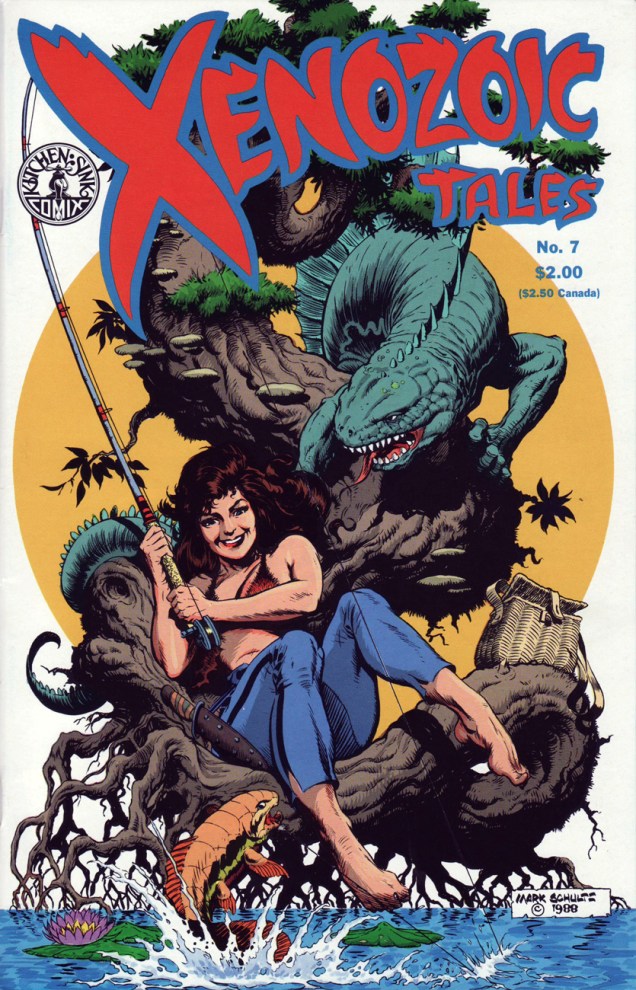
One Summer Solstice at the Old Fishing Hole…

« I had me a scientific career before… ah… circumstances forced me to take up fishin’… »

In case it’s escaped anyone’s notice, summer’s officially arrived.

Xenozoic7A

This is Xenozoic Tales no. 7 (Oct. 1988, Kitchen Sink), a series that presented, wonder of wonders, a post-apocalyptic future that wasn’t strictly doom and gloom. Cover by Mark Schultz. This issue features « The Growing Pool », written and drawn by Schultz, and “Crossed Currents”, written by Schultz and illustrated by Steve Stiles.

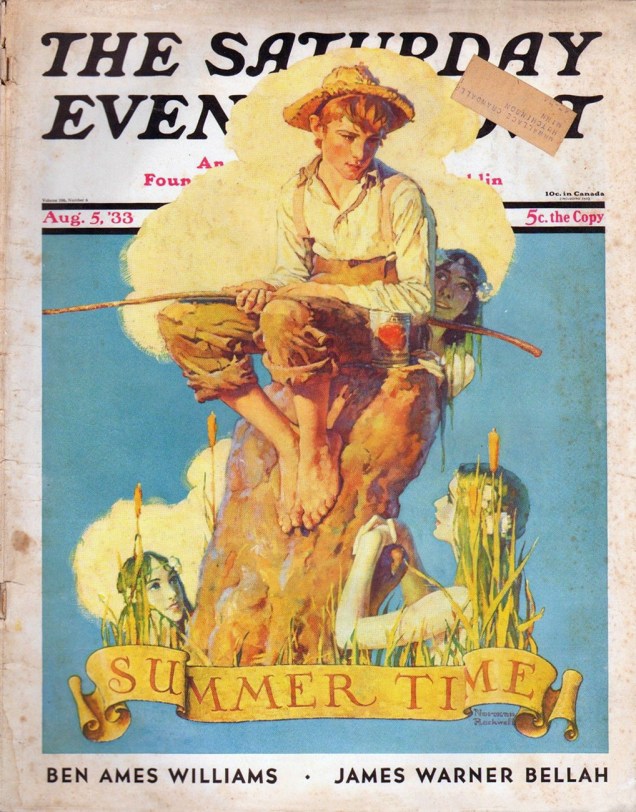
The lady is Hannah Dundee, and she may soon have to share her lunch. Something tells me this illustration is a pastiche of some The Saturday Evening Post-type cover.. there’s something charmingly old-fashioned about it, and I don’t mean Cambrian Age old.

SaturdayPostSummertime1933A
You know, that sort of thing. The Saturday Evening Post‘s August 5, 1933 cover by… who else? Norman Rockwell.
HannahPterodactylA
It’s the new falconry! Xenozoic Tales’ coexistence of humans and dinosaurs is not your run-of-the-mill anachronism: this is the world of tomorrow, not yesterday’s. This striking portrait of Ms. Dundee was conceived as a t-shirt design in the late 1980s. I should still have mine stashed somewhere…

– RG

The Observant Ambulations of Julius Knipl, Real Estate Photographer

« This peephole was smeared when I moved in »

CheapNoveltiesCoverA
« A RAW One-Shot » (1991, Penguin Books)

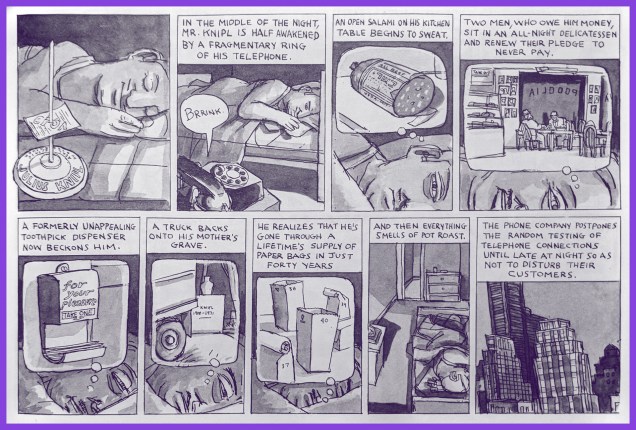
Originally appearing in alternative weekly The New York Press in the late 1980s, Ben Katchor’s Julius Knipl, Real Estate Photographer belongs to that most exotic breed of comic strips, those that suddenly awake the mind to the medium’s grand possibilities. Said experience can be abrupt and dizzying, but in this particular instance, it’s soothing and bittersweet, full of rightful yearning for things that possibly were or surely should have been, glimpsed in a daydream by the low flame of the fantastic mundane.

Mr. Katchor (born November 19, 1951 in Brooklyn, New York) is blessed with a vision of startling depth and singularity. By its nature and scope, it’s not everyone’s thing, but the rest of us likely wind up as lifelong admirers, and isn’t that just the ideal audience?

Much has been written elsewhere, often brilliantly, about Mr. Katchor and his œuvre; it’s work of a calibre to inspire theses, dissertations and papers, so I’ll mostly stick to presenting some samples. The passionate plaudits these strips have inspired tend to obscure the fact that most people just haven’t had the pleasure, or at least the opportunity, of encountering such rich material.

These vignettes were collected in 1991 as Cheap Novelties: The Pleasures of Urban Decay. Oddly enough, it was the only one of Katchor’s books to go out of print… the situation was remedied in 2016 by Montréal’s Drawn & Quarterly, who brought it back in a lovely hardcover edition.

KatchorCheapNovelties031A
While on vacation, my accountant fell in love with a hot sauce manufactured on the small Caribbean island of Dominica. He’s since devoted considerable energy to renewing his stock of the stuff, which has involved much international horse trading.
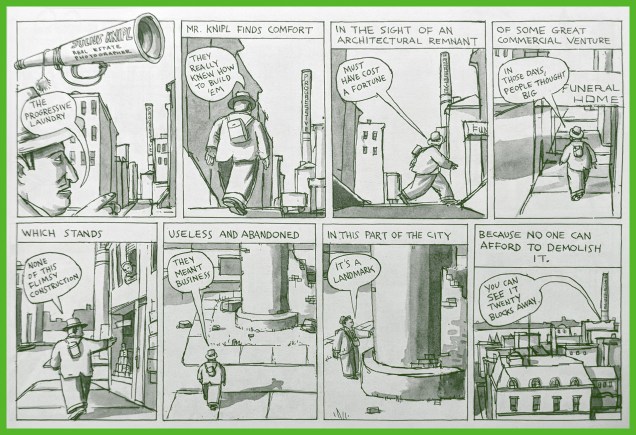
KatchorCheapNovelties043A
Montréal has its share of architectural remnants of bygone commercial enterprise; arguably, the most famous is the “Giant Milk Bottle“, but no, it isn’t full of milk.
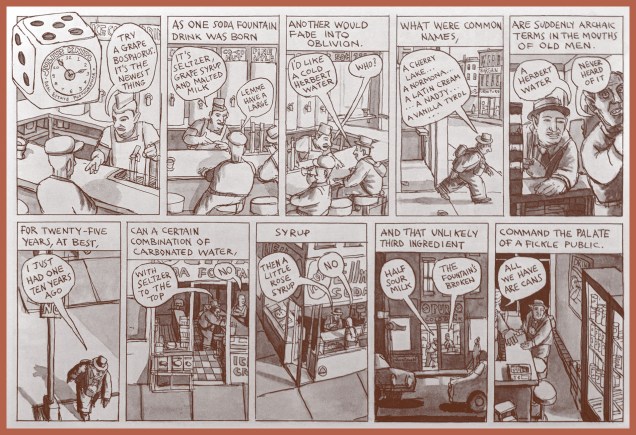
KatchorCheapNovelties051A
This melancholy vignette ties in quite nicely with a recent piece from Atlas Obscura noting the fading lingo and diminishing rôle of the soda jerks of New York City. Read it over a mug of murk with a choker hole.

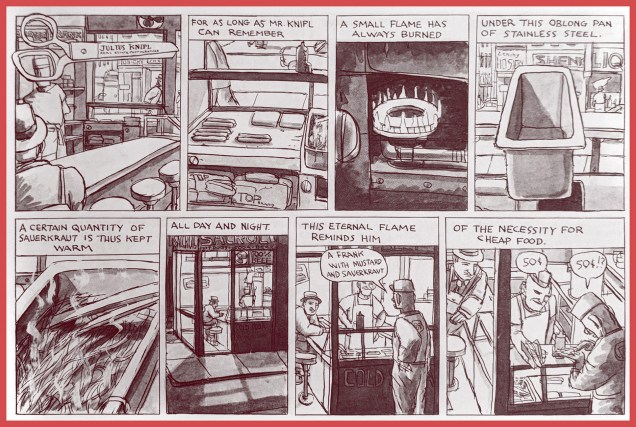
KatchorCheapNovelties063AKatchorCheapNovelties073AKatchorCheapNovelties079A

From the collection’s back cover blurb: « In a vast and shadowy city of old skyscrapers, neglected warehouses, juice stands, and coffee shops, Julius Knipl, a rumpled, middle-aged man in a suit and hat, wanders the streets photographing buildings and pondering the details: the scent of the past that seeps into the present; the ghosts of other values and culture embedded in the urban landscape; people and behaviors almost gone that linger on. He sees what others overlook, a Borscht-belt Buster Keaton. »

Ben-Katchor
The esteemed Mr. Katchor.

-RG

The Expanding Ego Theory: Neal Adams at 77

« Now at this age, I look back and oh, Adams is probably one of the worst things that happened to the medium, when I look at it historically. » – Darwyn Cooke (2004)

On his 77th birthday, the legendary Neal Adams must surely look back on his storied career and radiantly beam (‘gloating’ is for lesser beings). Still, with all he’s accomplished (and with such brio!) in the fields of graphic storytelling, advertising, physics, the theatre and geology, who could find it in his heart to blame him? With so much to celebrate, let’s just stick to the highlights, shall we?

HeartThrobs120A
Why is the nasty little dude threatening the giantess? Why, Neal, why? Well, I suppose that is some people’s idea of romance. This is Heart Throbs no. 120 (June-July, 1969), edited by Joe Orlando.
AdamsAvengers95SplashA
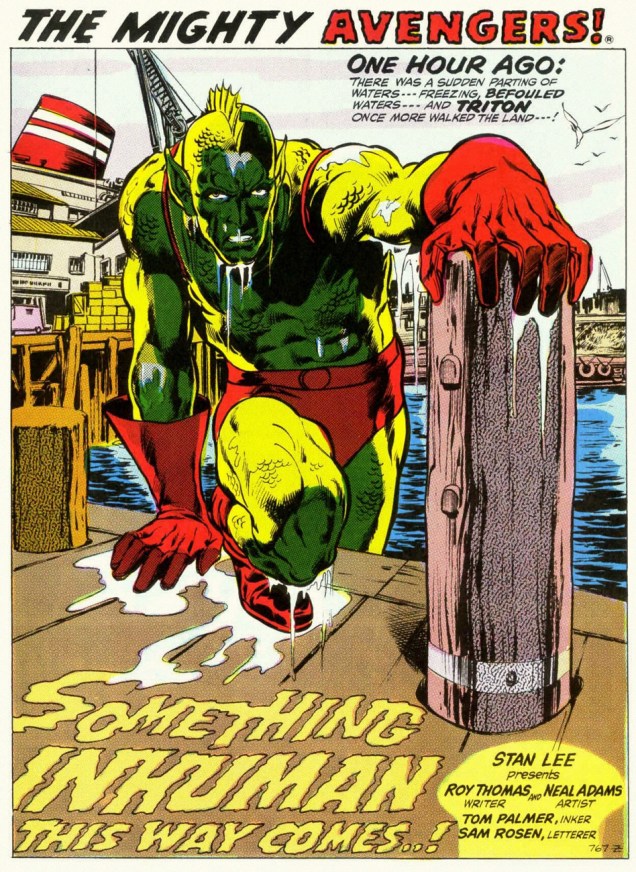
I don’t know if you’ve ever pulled yourself out of the water onto a dock, but that… is not the way to do it. One might argue that Triton is an Inhuman, and as such, gravity and anatomy are trifles unworthy of his kind. From Avengers no. 95 (Jan. 1972, Marvel), a chapter in the “Kree-Skrull War”, cobbled together by Roy Thomas from discarded Kirby plot effluvium and Jerome Bixby and Otto Klement’s Fantastic Voyage.
AdamsGL_Flash226A
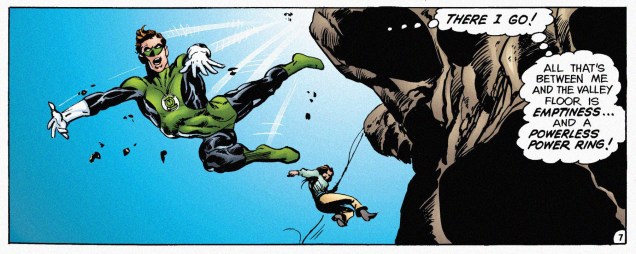
Ah, Neal Adams. He who brought naturalism and realism to comics. A panel from “The Powerless Power Ring!”, a Green Lantern backup strip from Flash no. 226 (March 1974, DC Comics.)
Jason-BrownA
Neal’s influence can’t be overstated, and not only in the fields of comics and geology. Here’s US figure skater Jason Brown‘s poignant tribute to that very Green Lantern tale, presented to warm applause at the 2014 Winter Olympics in Sochi. As Neal is fond of saying to any cartoonist he encounters, « You are all my children! »*
AdamsGrandFunkA
A concert poster reproducing Our Neal’s gatefold art for Grand Funk‘s 1974 LP, All the Girls in the World Beware!!! (which incidentally features their finest original composition, imho, Bad Time) Despite the difficult assignment, Neal comes through with flailing biceps and chicken legs; thank goodness his caricature chops are equal to his grasp of earth sciences. Curiously, half the groupie throng seems to be cloned from a particularly manic Marsha Brady, and most of the rest from Carol Burnett.
Grand_Funk_Nude_1973
They’re an American Band. From left to right: Don Brewer (he of the competent drum work), Mark Farner (he of the wild, shirtless lyrics), keyboardist Craig Frost (Homer didn’t rate him), and of course Mel Schacher (he of the bong-rattling bass.) One may wonder just who those guys in the poster are supposed to be.
SuperHeroDigestA
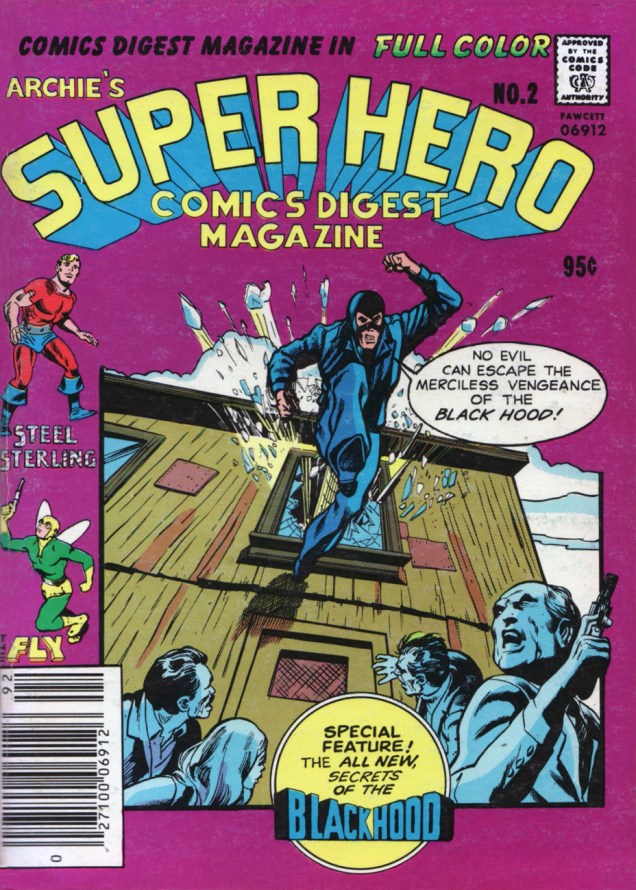
Faceplant time, or The perils of drawing comics whilst grabbing lunch, getting a massage on 52nd, or simply resting on your laurels. How does this cover make any sense? Just picture the scene from another angle, or if someone tried to build a model of it. Archie’s Super Hero Comics Digest Magazine no. 2 (1979 edition.)
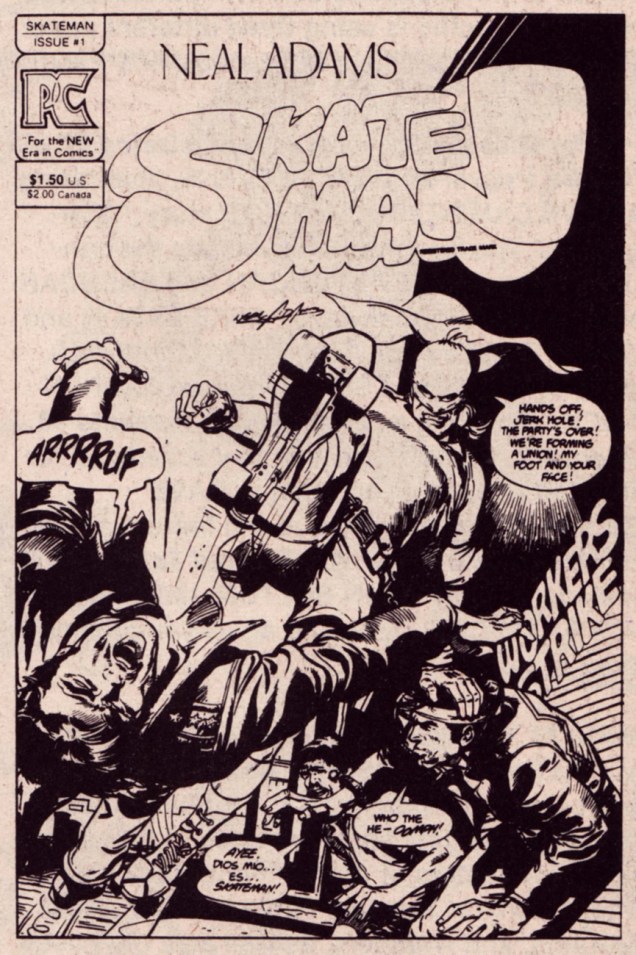
Skateman1
As legendary as his renditions of established characters are, it is with his own creations that Neal Adams’ true legendary status rests: fabled names, always spoken in hushed awe, such as Ms. Mystic, Samuree, Cyberad, Crazyman, Megalith, Valeria the She-Bat… and of course Skateman, Jason Brown’s childhood idol. Here’s his premiere (and dernière) issue, published in November 1983 by Pacific Comics.
SkatemanA
And here’s a mock-up of the same cover. I’ll go to my grave wondering why they chose to run the cover sans this piquant, vernacular-rich dialogue, which would have shown once and for all that Neal the writer was every bit the equal of Neal, the artiste. Eat your heart out, Noël Coward!
Crazyman1A
Neal applies his Midas touch to another original creation: Crazyman! Double bag several copies of this number one, someday it’ll put your kids through college. It even comes with an embossed cover! By then, Adams was drawing donkey teeth on everyone, evidently his shorthand for “hilarious”. April 1992, Continuity Comics. You know, “The other superhero company”!

– RG

*as recounted by Yanick Paquette

Free Inside Package: James Sturm’s The Cereal Killings (1992-95)

« You cannot work with men who won’t work with you. » — John Harvey Kellogg

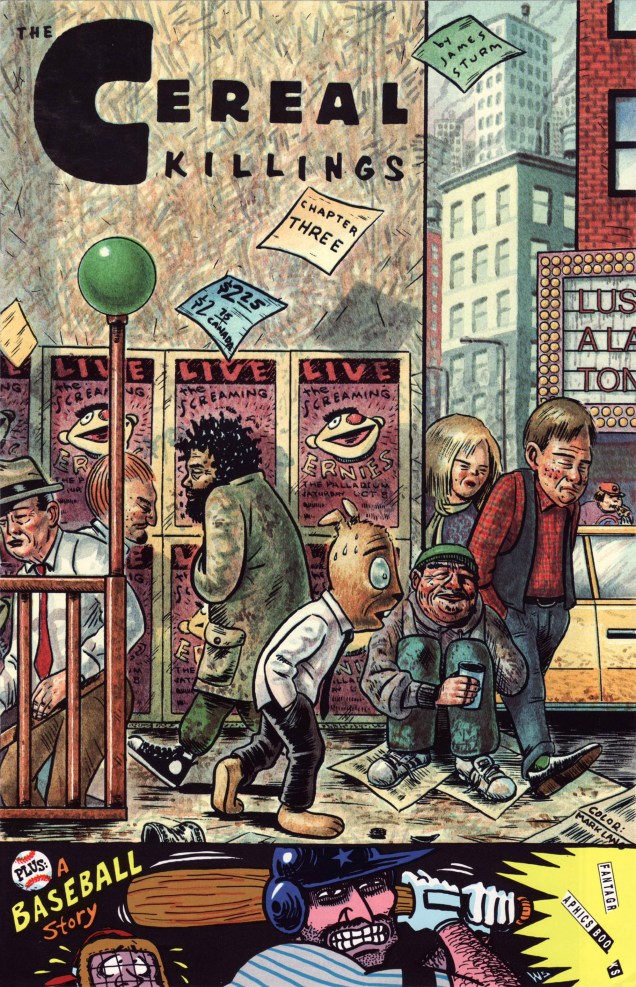
Before he created his justly celebrated The Golem’s Mighty Swing, wrote the mini-series Fantastic Four: Unstable Molecules, or co-founded The Center for Cartoon Studies, James Sturm (b. 1965) committed to paper and ink a mind-expanding, if little-noticed, saga entitled The Cereal Killings, complete in eight issues and published by Fantagraphics between 1992 and 1995. Sturm valiantly struggled through ocular problems during that period, undergoing no less than three retinal operations, leaving him with one good eye.

CerealKillings3A
The Cereal Killings no. 3 (Sept. 1992), colours by Mark Lang. Hey, I’d pay good money to see The Screaming Ernies perform. I’d settle for a t-shirt!

Sturm dug well beyond the shallow pun of the title and implacably hauled it to its logical conclusion. TCK has been likened to a Watchmen with a cast of funny animal cereal mascots, and that’s not that far off the mark. But beyond its conceptual debt to Alan Moore’s superhero deconstruction, Sturm’s story actually takes aim at more adult concerns and issues, made all the more harrowing and poignant by how psychologically credible his cast of cereal pitchmen and acolytes is. Corporate malfeasance, petty theft, betrayal, bitterness, grandiloquence, blind ambition, dementia, remorse… and wisdom. You name it, it’s all there, in a gripping, kaleidoscopic and haunting narrative.

CerealKillingsVerso2A
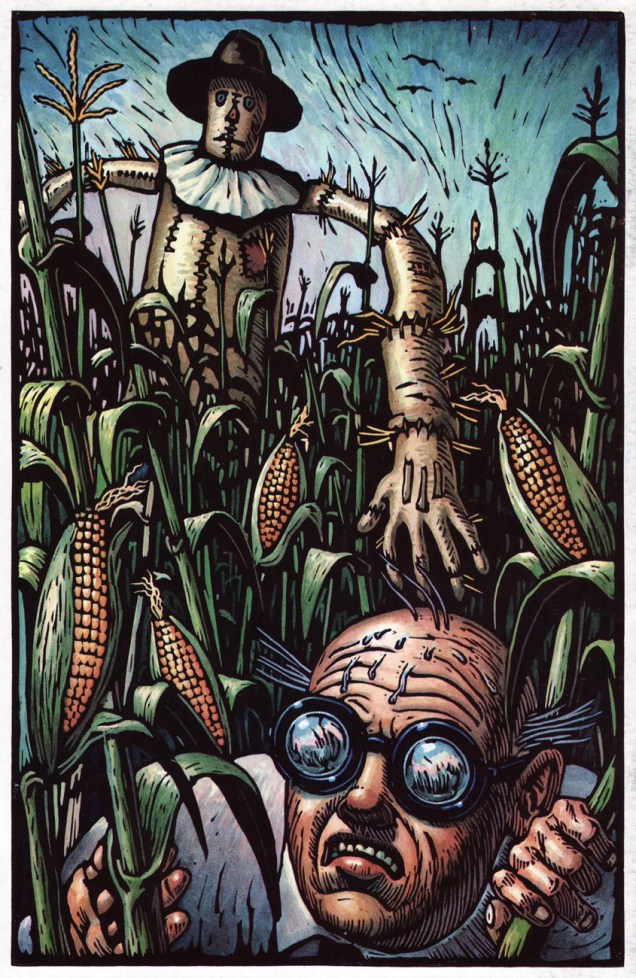
Sturm, Fantagraphics & Co. made splendid use of the entire, (actual) ad-free magazine to flesh out the concept. This is Mark Lang’s gorgeous depiction of The Scarecrow and Carbunkle. These are our good guys, appearances notwithstanding.
CerealKillingsVerso3A
Issue 3’s back cover provides a helpful look at our cast of characters.
Cereal4A
This is the cover of TSK no. 4, featuring Schmedly the Elephant, who wishes he *could* forget. Colour by Mark Lang.

CerealKillings8P5A

CerealKillings8aA
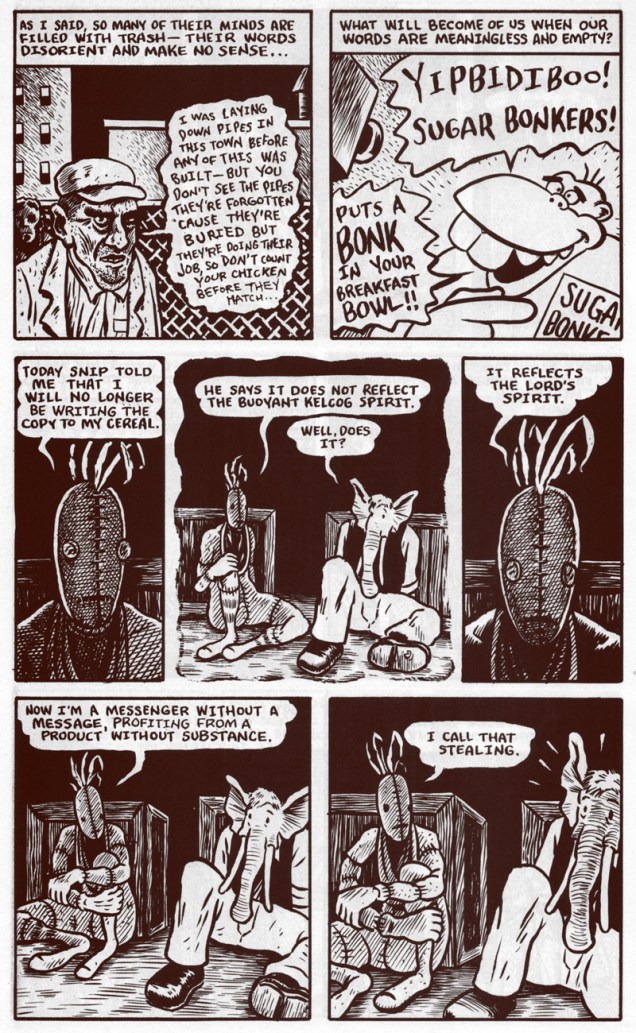
A crucial flashback scene from the eighth, and ultimate, issue (Jan. 1995). It would appear that The Scarecrow is a stand-in for cereal giant Kellogg’s founder, John Harvey Kellogg.

« It’s the present! It’s nostalgia! It’s a crispy non-sweetened comix story that doesn’t get soggy in milk! And remember — product is sold by weight, not volume. Some unsettling may occur. »

The series has never been collected or reprinted, so you’ll have to do the work… I think I noticed a torrent file somewhere. Sturm at one point intended to issue a revised collected edition, but has apparently changed his mind since. That’s no way to treat one’s masterwork, neglected as it may be.

-RG
Urban Legend Fun: The Spider in the Hairdo

« We are all susceptible to the pull of viral ideas. Like mass hysteria. Or a tune that gets into your head that you keep humming all day until you spread it to someone else. Jokes. Urban legends. Crackpot religions. Marxism. No matter how smart we get, there is always this deep irrational part that makes us potential hosts for self-replicating information. » — Neil Stephenson

True story! It happened to a friend of a friend of a relative of an acquaintance of the hairdresser of the nephew of the uncle of the garage mechanic of the girdle maker of a cousin of a U.F.O. abductee ex-classmate of my brother’s. Or so he obliquely claimed under hypnotic regression.

Apparently, this tale gave rise (I know, I know) to a variant called The Cucumber in the Disco Pants.

And remember, always check with Snopes.com before propagating dubious claims.

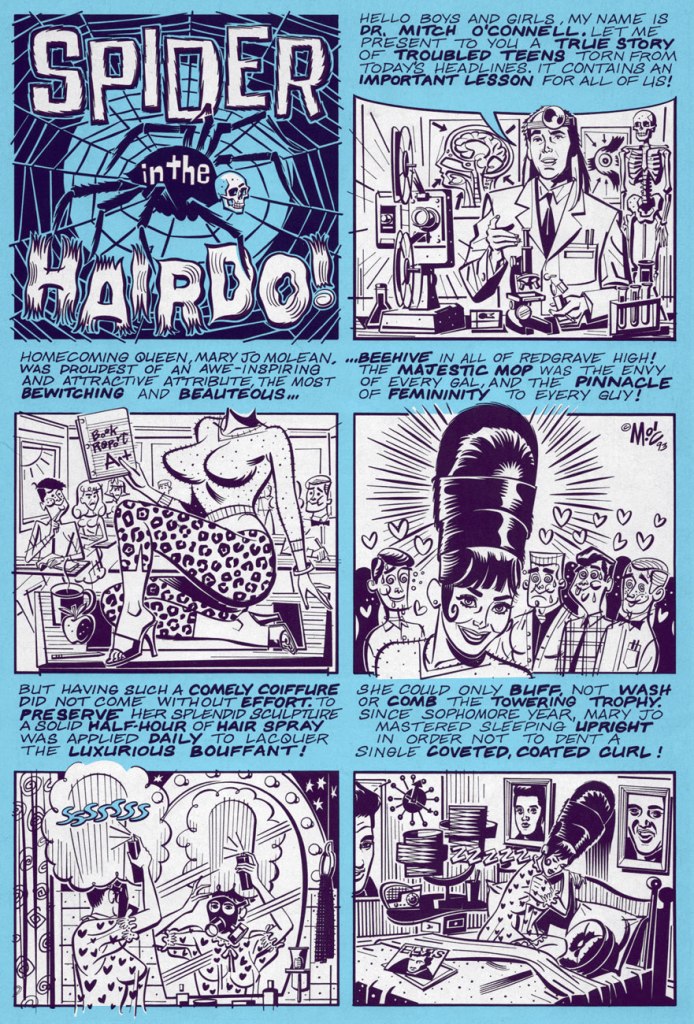
Spider in the Hairdo! is a juicy excerpt from Dark Horse’s one-shot Urban Legends no. 1 (June, 1993). Adaptation by the self-proclaimed « World’s Best Artist », Mitch O’Connell. I can think of far less worthy candidates for the position.

Should you be craving more from Dr. Mitch, here’s where to go for your fix: www.mitchoconnell.com.

And if, like me, you can’t get enough of such urban folklore, check out any of Jan Harold Brunvand’s score of splendidly compelling books on the subject. When it comes to urban myths, Dr. Brunvand is the authority.

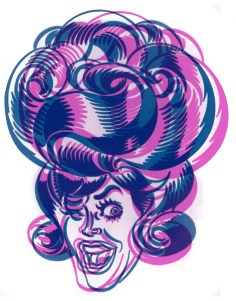
MitchGirl'sHeadA

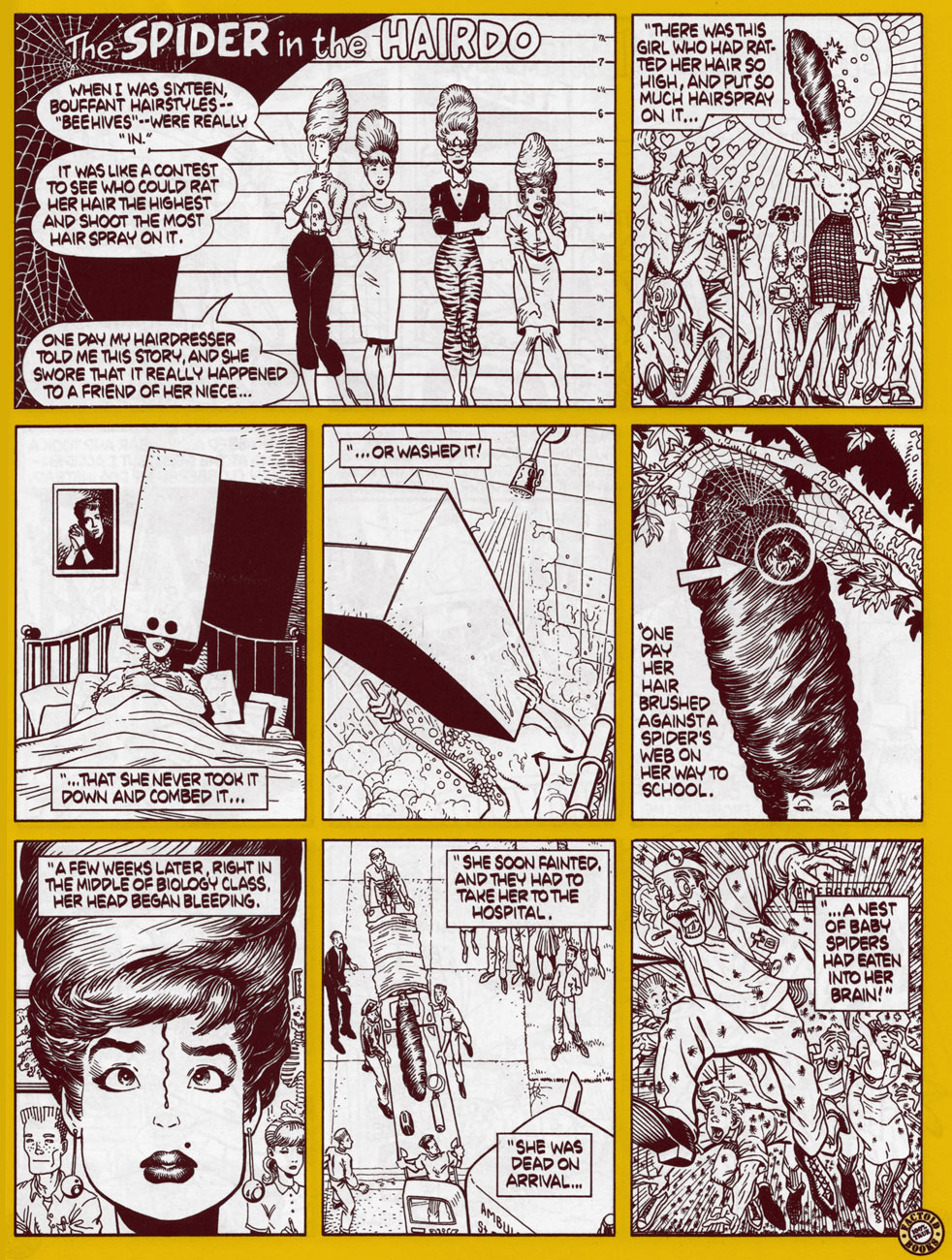
As a bonus, here’s Arthur Adams‘ slightly subsequent take on the same myth, published in DC/Paradox Press’ inaugural entry in its ‘Big Book of…’ series, The Big Book of Urban Legends (1994).

SpiderHairdoArtAdamsA

By their very nature, the Big books (seventeen in all) tended to be pretty hit or miss, not, for once, because of the writing, but chiefly due to the evident paucity, in the current comics industry, of artists versatile enough to credibly depict low-key, quotidian, humorous or historical situations. Is it counterintuitive, or fitting, that artists on the cartoonier end of the scale (Rick Geary, Roger Langridge, Gahan Wilson, Hilary Barta, Ty Templeton, Danny Hellman, Sergio Aragonés…) tended to fare best in producing this type of « documentary » work? I haven’t quite made up my mind. All I know is that the superhero specialists and photo tracers just brought embarrassment upon themselves *and* the unfortunate reader.

– RG

Joyeux anniversaire, Gilbert Shelton!

« … and now for some of that fun we promised you! Trained chihuahas! Car races! A couple of inspirational documentaries! And a quiz show! Hallelujahgobble! Hallelujahgobble! »

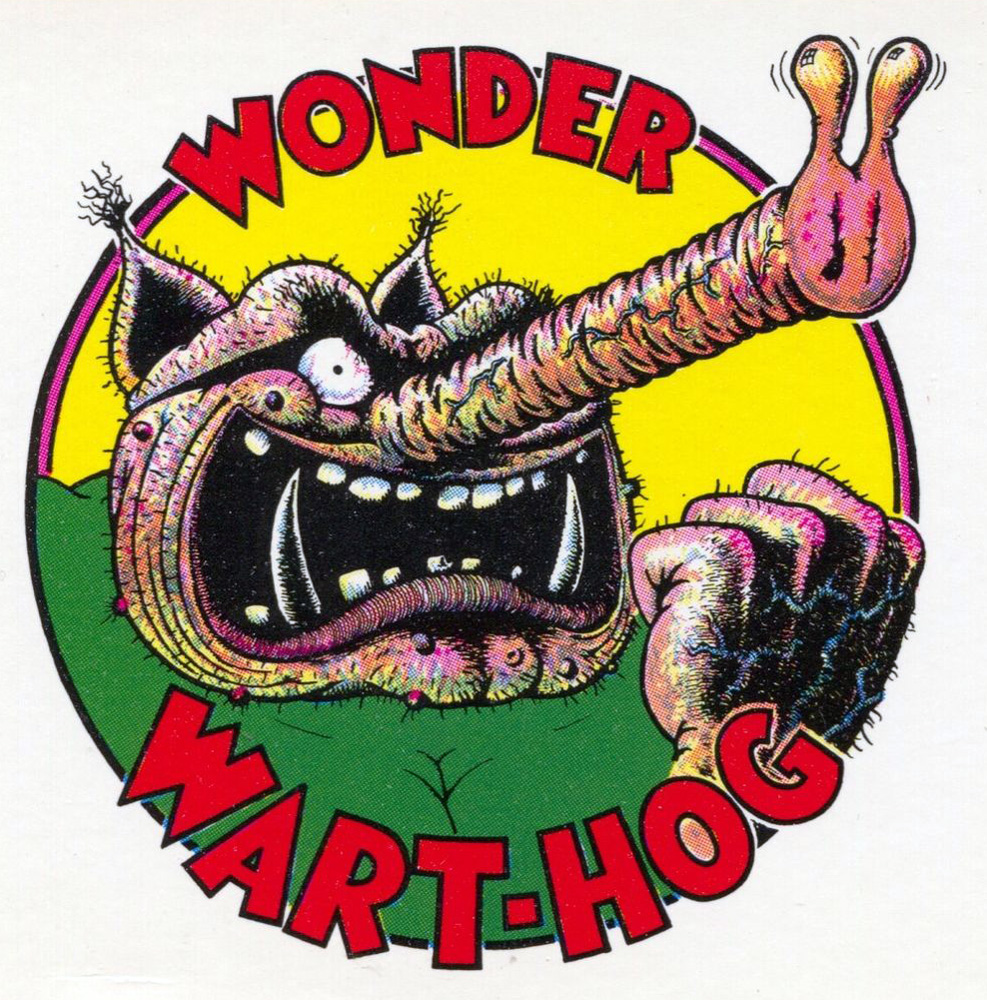
For my money, there’s no funnier man in comics, at least on such a consistent, sustained level, as the extraordinary Gilbert Shelton (born May 31st, 1940, in Houston, TX, which makes him 78 today). Sure, he’s slowed down some since 1959 (the year he foisted upon the world the Wonder Warthog), but the quality of his output has not decreased one iota (quite the contrary, in fact!) It may well be that the secret of his longevity lies in his choice of collaborators, but as far as I’m concerned, that’s just another facet of his talent. I’ll (mostly) let the man’s work speak for itself. Brace yourselves for the ride, here we go!
SheltonWWHPostcardA
Enter a caption
WonderWartHogSaysA
Yeah, that old hippie shit’s totally dated; this has nothing to do with American’s current socio-political situation. Well, it would be nice if Amtrak’s trains ran a bit closer to schedule. This ran as the back cover of « Wonder Wart-Hog and the Nurds of November: Gilbert Shelton’s Exciting Cartoon Novel of Election-Year Politics, International Nuclear Terror, Professional Football, Science Fiction, Motorcycle and Auto Racing, Pestilence, Famine, Economic Collapse and Romantic Love. » (1980, Rip Off Press)
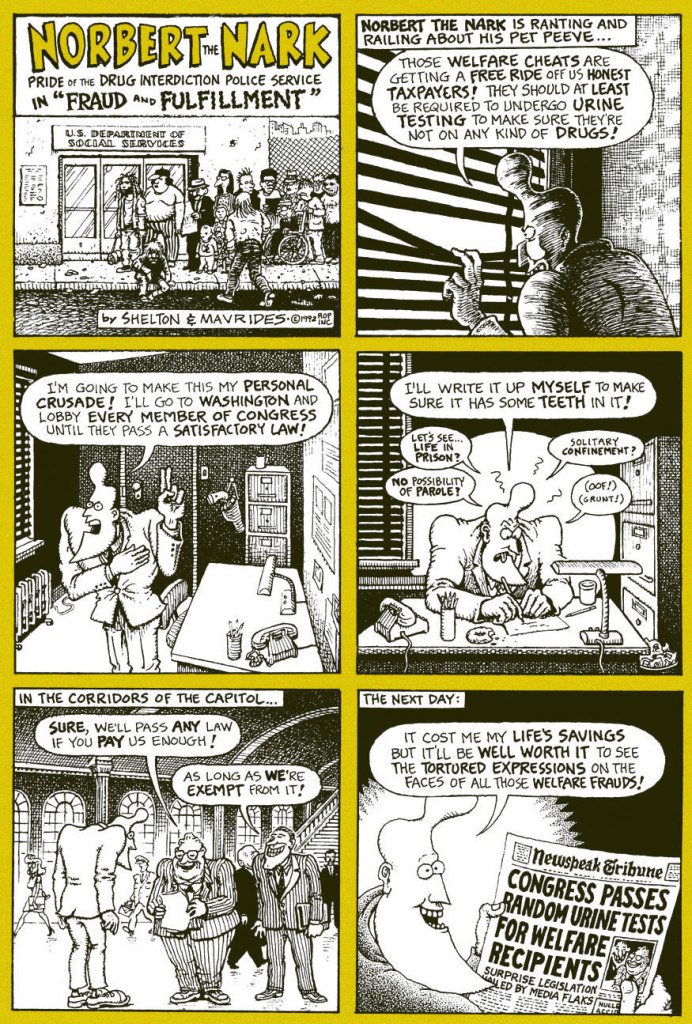
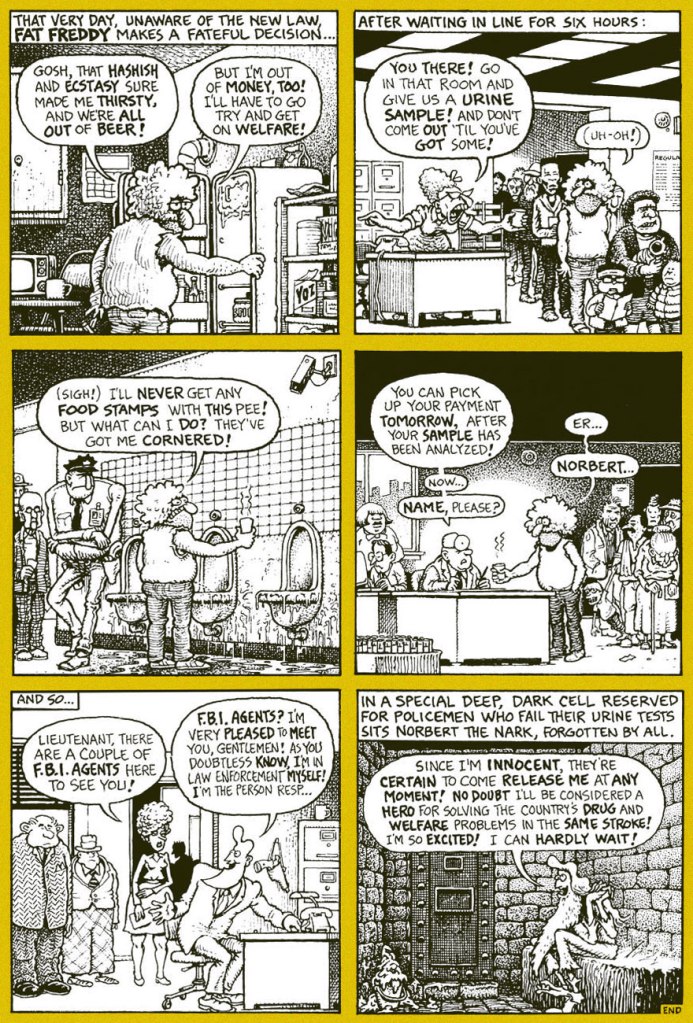
The Brothers’ none-too-effective nemesis Norbert the Nark in the spotlight. From The Fabulous Furry Freak Brothers no. 12 (1992, Rip Off Press).
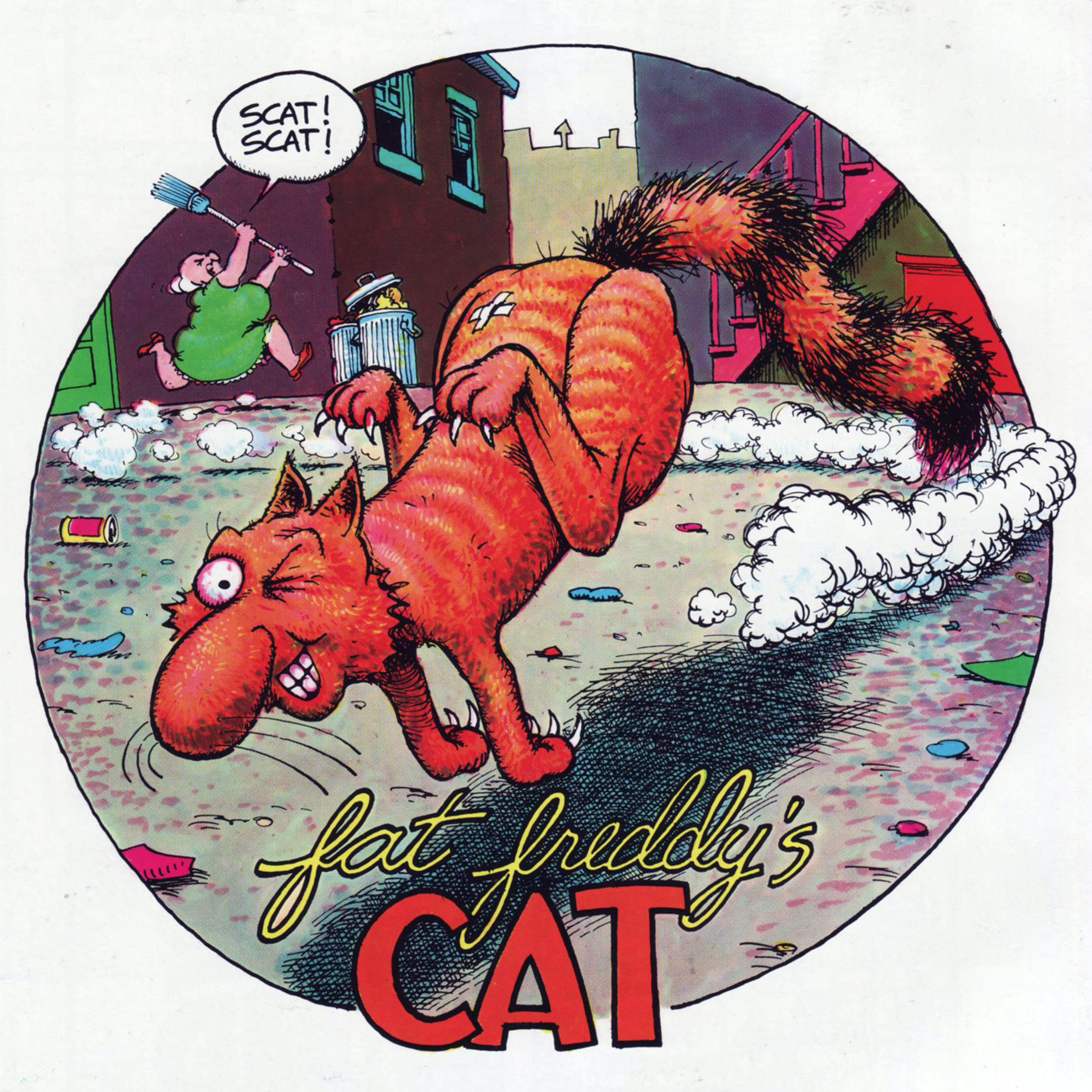
Fat Freddy’s such a good little Suzie Homemaker. Another piece from The Fabulous Furry Freak Brothers no. 12 (1992, Rip Off Press). FatFreddyCatCameoAFatFreddyScat1A
FatFreddyScat2A
The toilet-training method reportedly works, but it helps to have more than one toilet available. From Fat Freddy’s Cat no. 7 (1993, Rip Off Press)
NotQuiteDead2
NotQuiteDead01
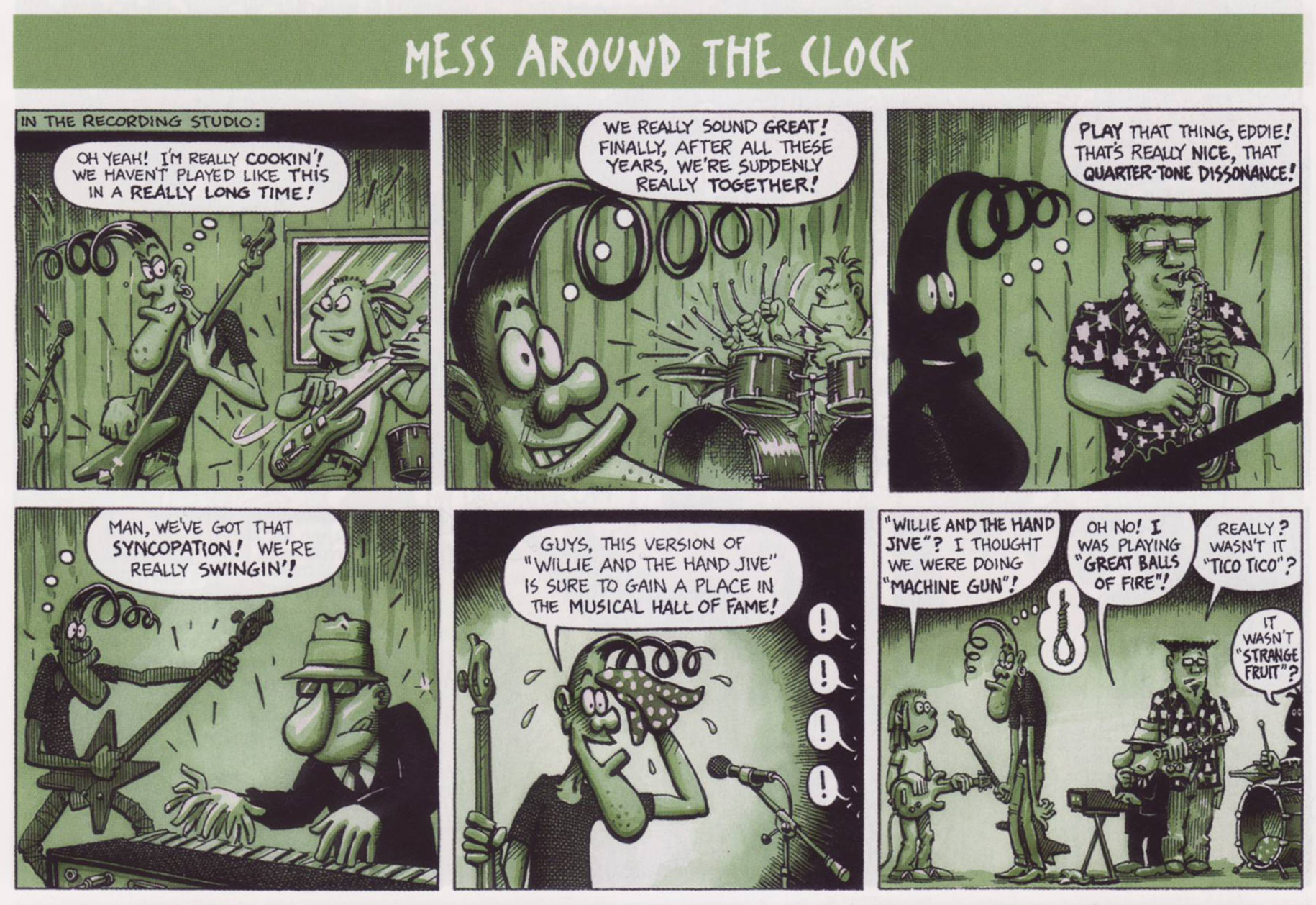
Shelton’s most recent major creation, circa 1988-89, is Not Quite Dead, “the world’s oldest and least successful Rock ‘n’ Roll band”. So far, we’ve been treated to six issues, and the latest, “Last Gig in Shnagrlig” (2009), is quite the epic! A fruitful collaboration with French bédéiste Denis Lelièvre, alias Pic. These vignettes hail from Not Quite Dead no. 5 (2005, Knockabout)
GilbertSheltonPortrait
Aw, ain’t he adorable, and don’t you just wanna slip the birthday boy a big ol’ sloppy smooch? Photo by Christophe Prébois.
Speaking of collaborators, though it’s none of their birthdays, let’s give a salty salute to Shelton compadres-in-crime Tony Bell, Joe E. Brown Jr., Dave Sheridan, Paul Mavrides and Pic. Did I forget anyone? -RG

Couch Surfing With Drew Friedman

« I find television very educating. Every time somebody turns on the set, I go into the other room and read a book. » ― Groucho Marx

In the mid-90s, the always-discerning masterminds* at Rhino Records (they had, after all, picked William Stout to design their logo, back in 1974) called upon master satirist, caricaturist and of course pointillist Drew Friedman (1958-) to gather some perennial favourites on his old couch for the purposes of a three-volume compilation.

FriedmanTubeTunes1A
In the usual order: Dan Winkless as Drooper of the Banana Splits (bass), Henry Winkler as Arthur ‘The Fonz’ Fonzarelli, Jean Stapleton and Carroll O’Connor as Edith and Archie Bunker, Jimmie Walker as James ‘J.J.’ Evans, Jr., and David Cassidy as Keith Partridge, who seems peeved at being crowded off the couch.

In this second entry in the trilogy, Mr. Friedman seems a bit out of his element, as drawing purdy gals and conventionally handsome men is hardly his forte. But he aces Gabe Kaplan, as you’d hope and expect. Judging from his expression, Gabe appreciates it.

FriedmanTubeTunes2A
In the usual order: Lynda Carter as Wonder Woman, Gabriel Kaplan as Gabe Kotter, Tom Selleck as Thomas Magnum, Soleil Moon Frye (hippie parents, anyone?) as Penelope “Punky” Brewster, and Farrah Fawcett (Fawcett-Majors at the time) as Jill Munroe.

This time, our artiste ably succeeds where he faltered earlier: he has no difficulty capturing the likenesses of Ms. Anderson and (5x so far) Mrs. Collins.

FriedmanTubeTunes3A
In the usual order: Loni Anderson as Jennifer Marlowe, Ted Danson as Sam Malone, Gavin MacLeod as Captain Merrill Stubing, Don Johnson as Detective James Crockett, and Dame Joan Henrietta Collins as Alexis Carrington.

From volume 3’s liner notes: « The 1980s may well be remembered as the final decade of the television theme song. The disturbing trend of the ’90s seems to be the elimination of the title song in preference of an additional minute of commercial airtime – a sad state of affairs for fans of the opening anthem. »

Maybe it’s all for the better: I’d rather have an additional hour of commercial airtime than be subjected again to the opening jingle of, say, Charles in Charge. You have been warned.

– RG

*That is, before the Warner group’s « total and depressing takeover of Rhino in the early 2000s ».

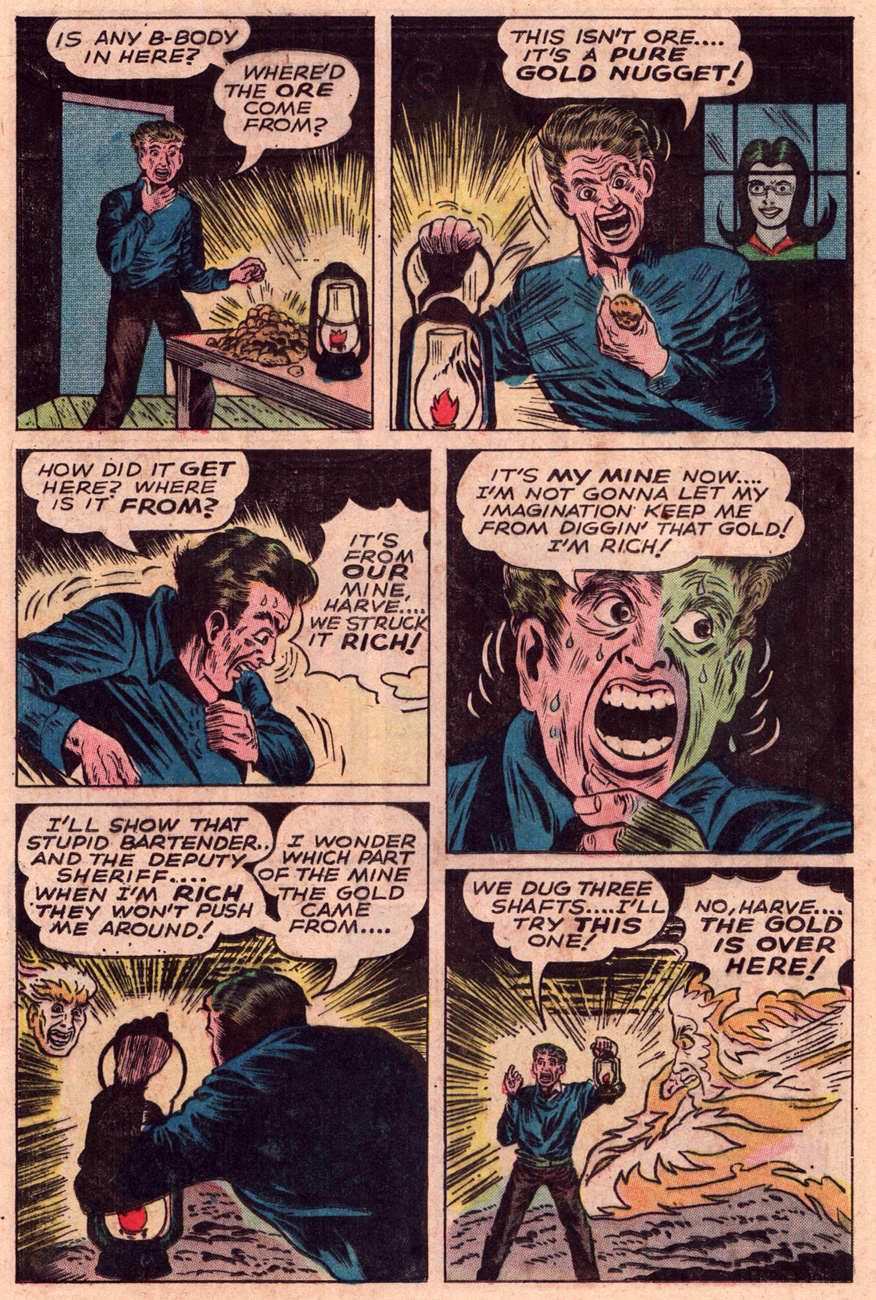
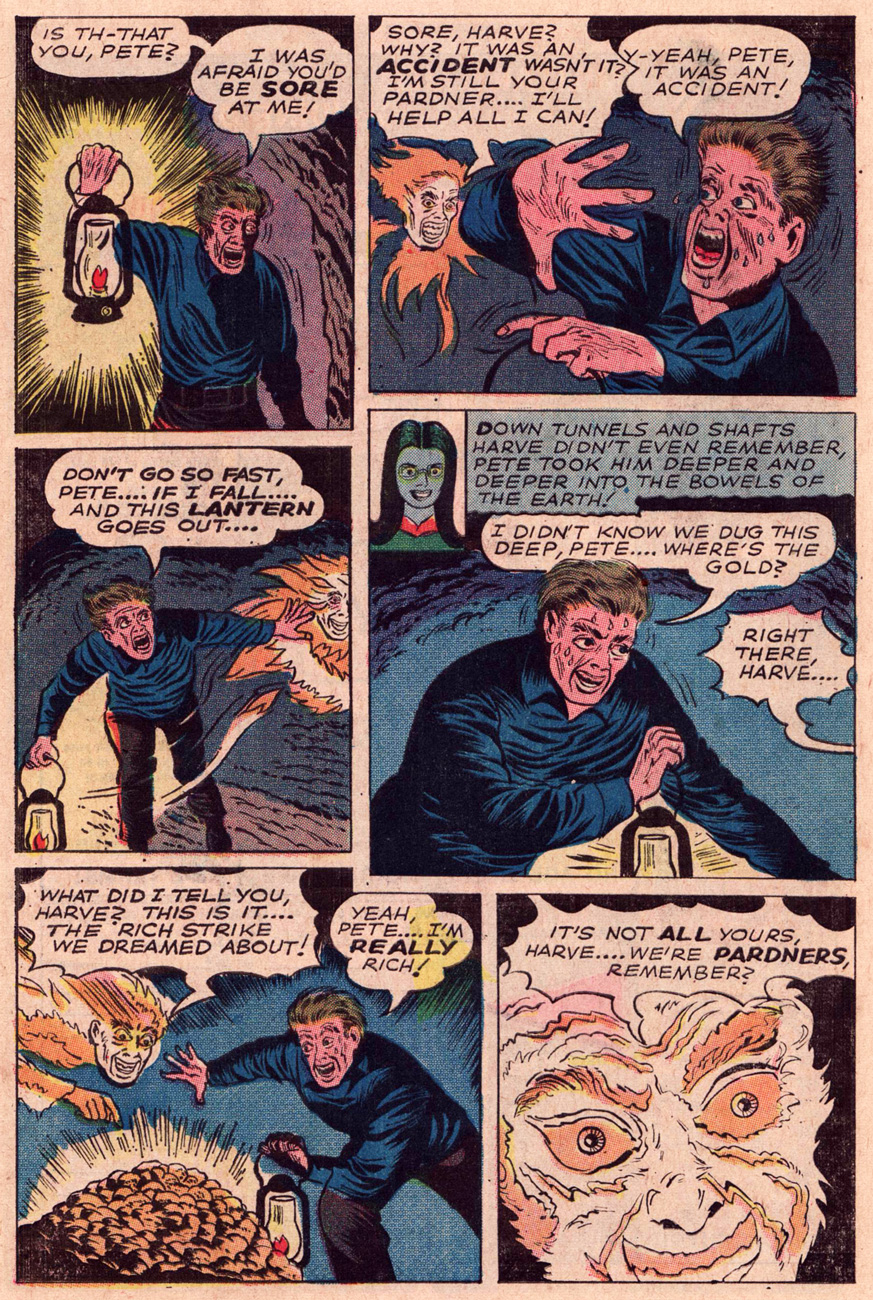
Treasured Stories: “The Mine’s All Mine” (1972)

« That’s funny… I didn’t leave the lantern lit… wonder if anybody’s in there? »

In 1972, Golden Age journeyman cartoonist Stanley Josephs Aschmeier (1912-1992) wrapped up his career in comics with a single tale for Charlton, a publisher he’d briefly worked for two decades prior*, pre-Code. Yet earlier, at DC, he’d had a hand in creating Johnny Thunder and Thunderbolt (1939) and Dr. Mid-Nite (1941), the original sight-impaired costumed hero.

While Aschmeier’s already-manic drawing style hadn’t changed much in the intervening years, the industry certainly had, which made him a man well out of time. Still, as with his peer, sudoriparous Rudy Palais‘ final work for Charlton, the nervous energy and artistic freedom yielded something unusual and charming. While this sort of semi-primitive outsider approach decidedly isn’t for everyone, it’s a breath of fresh air. I found it unsettling and baffling when I first encountered it all those years ago, and it hasn’t lost its jolt, unlike many fan favourites I could name.

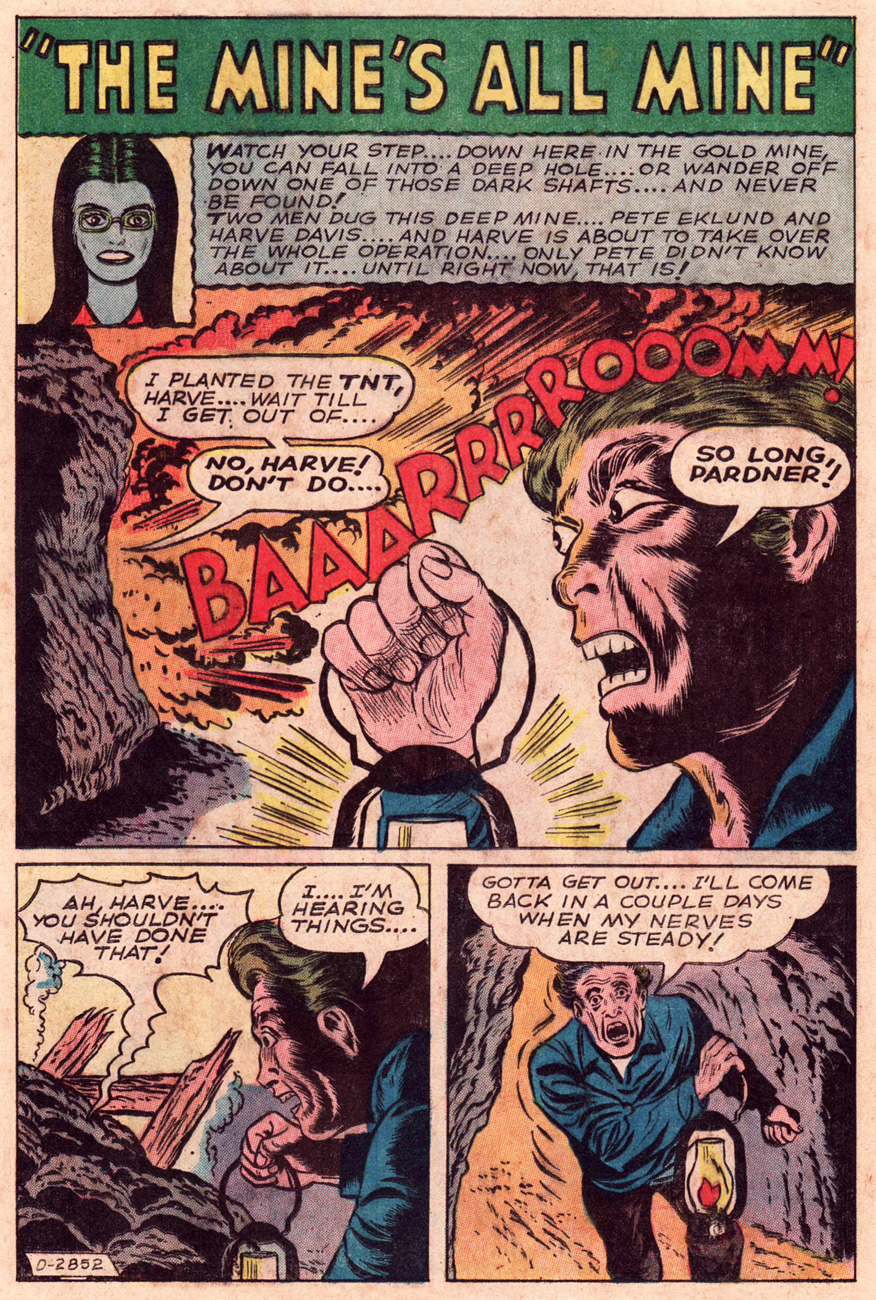
Without further preamble, here’s Joe Gill and Stan Asch (his abridged nom de plume)’s tale, from Ghostly Haunts no. 27 (Nov. 1972, Charlton.)

MineAllMine01A

MineAllMine02A
By this point, Aschmeier had evolved (or devolved) a highly stylized, woodcut-like approach. Bizarre as it may be, it sure works for me. That’s one of my favourite things about Charlton: leave your “house style” at the door!

MineAllMine03AMineAllMine04A

MineAllMine05A
Note Aschmeier’s interesting depiction of a revenant, quite unlike Steve Ditko’s lime green, vaporous wraiths or Pat Boyette’s rotting cotton shamblers. Pete Eklund’s shade is more akin to a dancing flame, an electric apparition.

MineAllMine06A

MineAllMine07A
Here’s a guy who *really* gets it!
That final panel is one of the most unhinged I’ve had the pleasure of encountering.

As for the story, it’s the soul of the thing: to my mind, what made writer Joe Gill’s work special was his common-sense response to the meagre number of available plots: when the mood struck him, he focused on ambiance, tone and character, as he does here.

I love that our protagonist, Harve Davis, is so shiftless, so insignificant, that the reader can’t even be bothered to hate him: throughout the story, we witness his well-earned unpopularity, and what a shabby and piteous creature he is. He murdered the only man who gave him the time of day, and he was too dense and self-absorbed to be anything but resentful of it. I do feel that the tale’s very construction supports this view: it opens on the commission of his crime, and the aftermath is a fateful tumble of dominos.

NanaA
And yes, the story is narrated by Winnie the Witch, the Nana Mouskouri of the ghostly storyteller set. Many have noted the resemblance.

*For stylistic comparison, take a gander at a 1944 Mr. Terrific tale by Mr. Aschmeier, and some of his crime comics work from Lawbreakers Suspense Stories no. 14 (Sept. 1953, Charlton), featuring three Aschmeier-illustrated pieces, Flight!, The Green Light and The Face in the Glass. Enjoy!

– RG

Bang, bang, the mighty fall!*

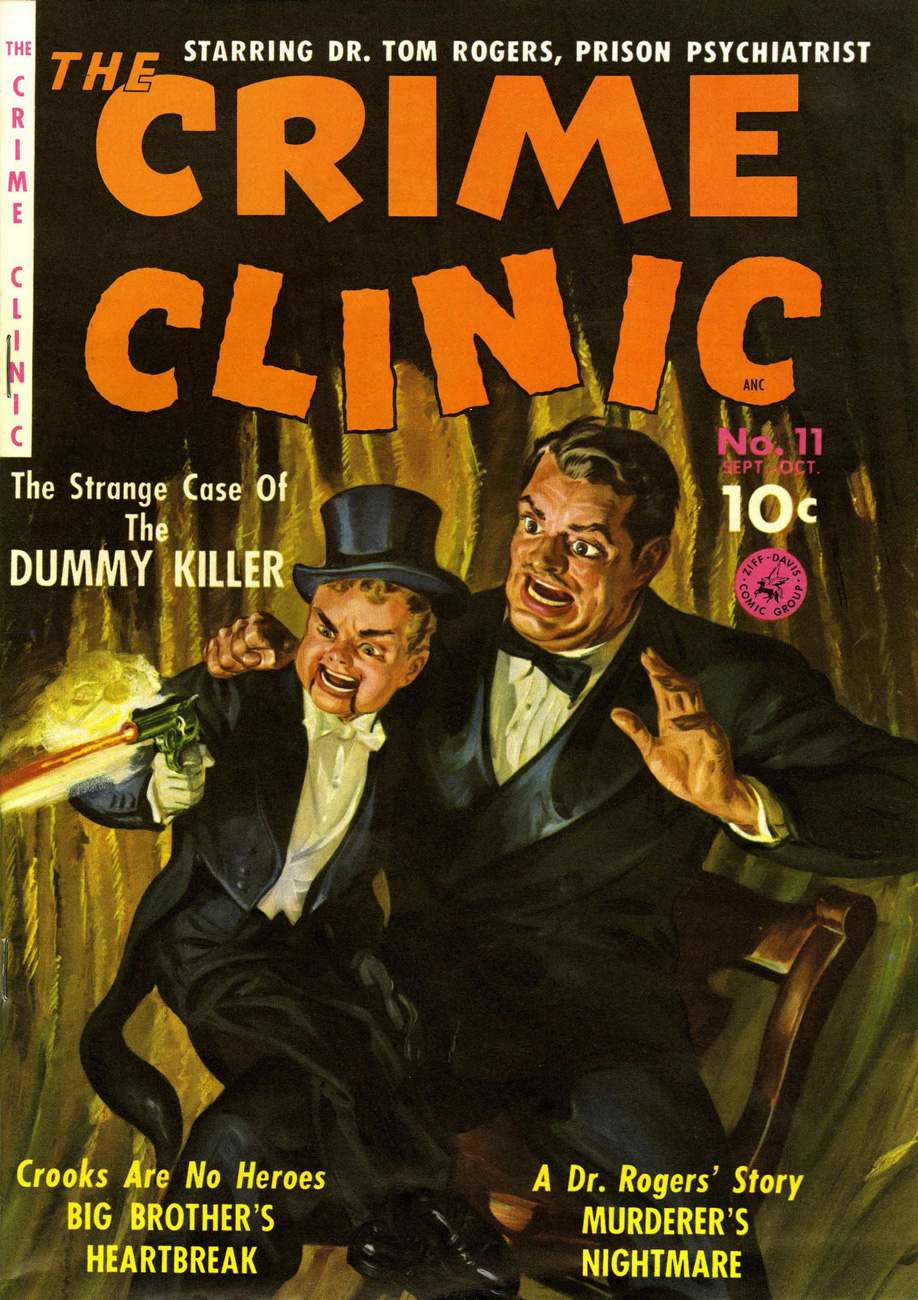
« Now, Carlos — put that gun away! »
« Why, Fernando, I thought
I’d start the show with a bang! »

CrimeClinic11A

That guy in the audience with the irritating donkey laugh is finally getting his. This unforgettable cover is the work of the peerless Norman Saunders, whose long and prolific career blazed its way through pulps, comic books, slicks, men’s adventure magazines, paperbacks, trading cards… you name it!

This is Ziff-Davis’ The Crime Clinic no. 11 (actually its second issue, September-October 1951). And for once, the inside story kind of matches the cover mayhem.

But don’t simply take my word for it, read it here: http://comicbookplus.com/?dlid=8545

-RG

*a fond tip of the top hat to the great B.A. Robertson.