« It’s easy, from our 21st-century perspective, to condemn Waldman as nothing but a sleazy bottom-feeder eking out a precarious living by pirating the marginal dregs of an industry he was only peripherally a part of. » — Don Markstein
As some of you may have surmised from the title, this is a sequel to John Severin, ‘Super Comics’ Cover Man. Since I laid out the facts of the case in that previous entry, I refer you to it as an entrée en matière, an amuse-gueule.
It’s been suggested to me several times that I should devote some column space to Rostislav “Ross Andru” Androuchkevitch (though my co-admin ds certainly has, by dint of the man’s long stint on Bob Kanigher’s regressive Wonder Woman), but the trouble is, unlike the many of my generation who, presumably more through circumstance than discernment, imprinted on Andru and Gerry Conway*‘s The Amazing Spider-Man (1973-76), I had already lost all interest in Spidey after Steve Ditko‘s rightly acrimonious 1966 departure; I just wasn’t buying what they were selling.
My own, somewhat less agreeable run-in with Andru was through his ill-advised residency as DC’s principal cover artist (under “art director” Vinnie Colletta) paired up with Dick Giordano**, who reportedly slapped inks, and likely some coffee, on a few covers each day before catching his train to work.
However, as I always say, with a career that lengthy and prolific, there’s bound to be exceptions. Which brings me to a comment a dear friend and old comrade in ink-slinging made — just this week! — regarding an Andru cover I featured during last month’s Hallowee’n Countdown:
« Mmmm… that Ross Andru cover. Such a delightful classic! Who knew he was so good back then compared to his later work, which was pretty damn awful. »
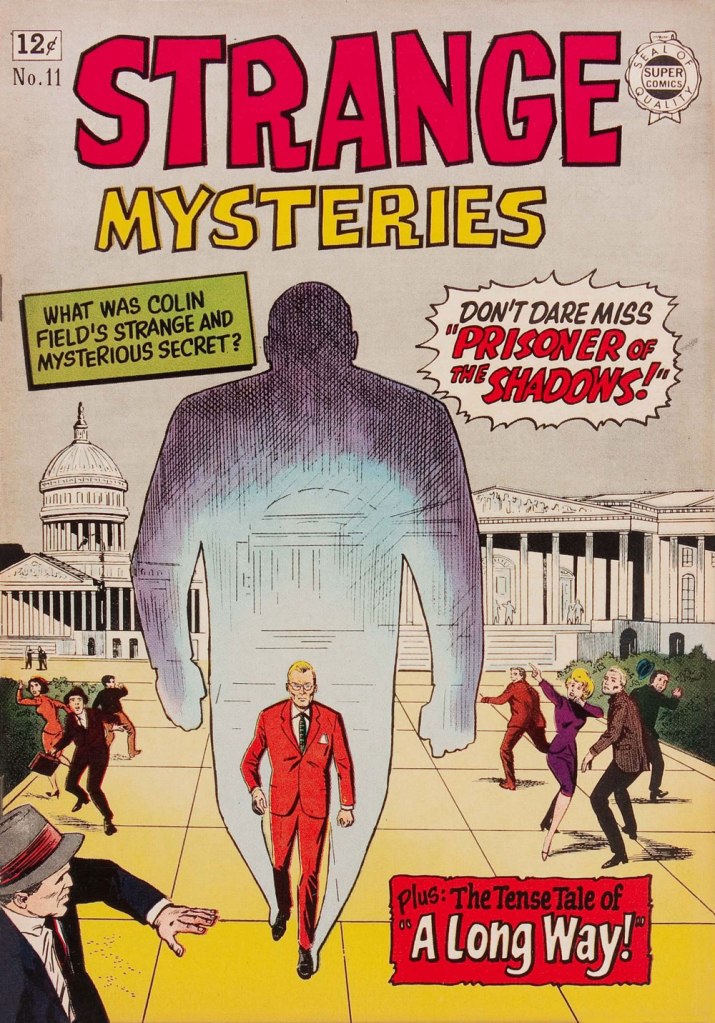
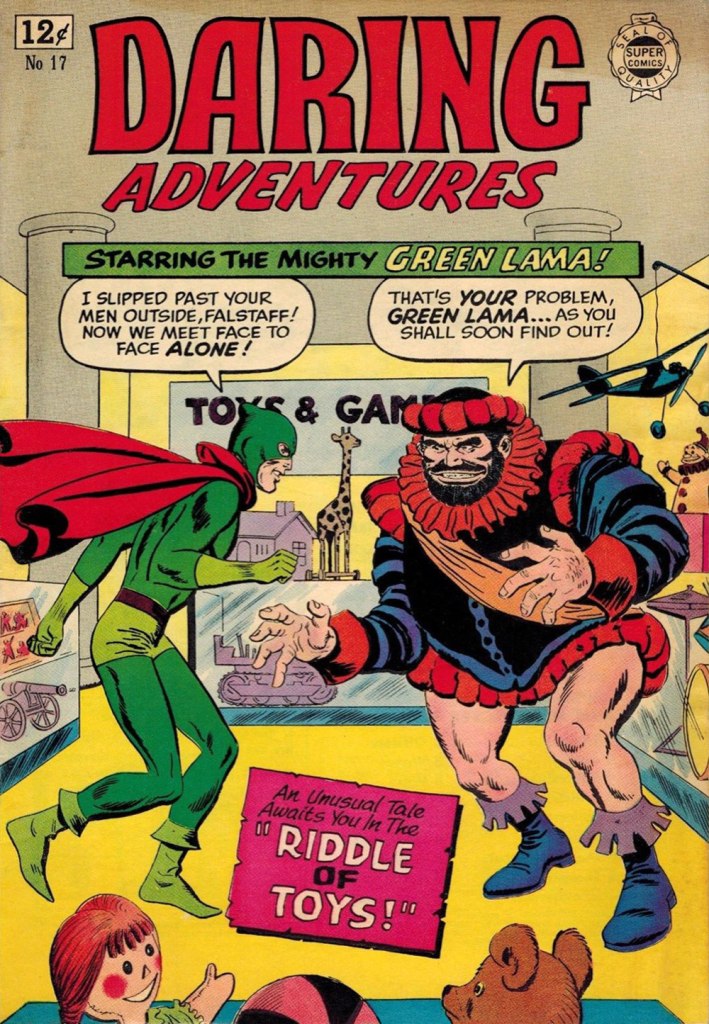
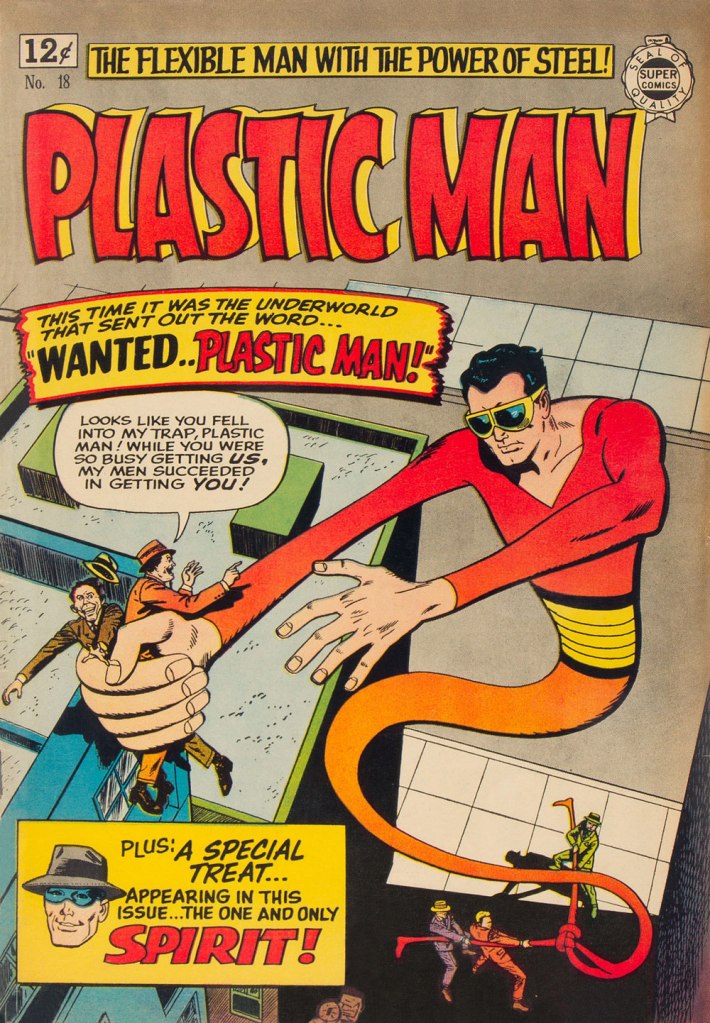
So, like John Severin, Andru (with inking partner, for better — though mostly for worse — Mike Esposito in tow) was approached by Israel Waldman to gussy up his shoddy, oft-illegal reprints.
Redoubtable comics historian Don Markstein (1947-2012) did a breathtaking job of compiling a dossier of the whole I.W./Super Comics operation, complete with the cross-referencing of most — if not all — the ‘borrowed’ properties and personages. Essential reading if you’re at all intrigued by crafty reprobates of Waldman’s ilk.


Mr. Markstein on The Black Dwarf: « The first question, of any character, is — why? Putting on a bizarre outfit to battle crime on an unpaid, freelance, anonymous basis seems pretty strenuous, requiring strong motivation. But his isn’t much. He just hates crime, no particular reason cited.
Next, what’s with the name? He was shorter than average, but not so short he qualified as a Little Person. Santa Claus would reject him on sight. And would identifying himself as a dwarf instill fear in criminals, confer fighting prowess on himself, or in any other way be an asset in his war on evildoers? It just sends a message that he’s small, so the evildoers can probably beat him up. At least he made up for his shortcomings by packing a gun. »


Of this particular breed of characters, Markstein wrote: « Superheroes first turned up in American comic books just before World War II, and flourished during the early war years. Especially flourishing were a sub-species of superhero that wrapped themselves in the U.S. flag like a cheap politician. Inexplicably, these are referred to as “patriotic” heroes, indicating that wearing the flag like Captain Freedom or Miss Victory was deemed a mark of patriotism higher and more… »



-RG
*Harlan Ellison on Conway, circa 1979: « I mean, the first time I met Gerry Conway, who the hell would’ve known that Gerry Conway would single-handedly ruin the entire comics industry. He’s a classic example of the deification of no-talent in all industries. He’s not good, but he has it in on Thursday. And that’s all they care about. You know, fill them pages. » [ source ]
**taking over from Mike Esposito and actually making him look good in comparison!
 Who's Out There?
GASP65
I read Markstein’s account of the IW/Super Comics. Where I lived in Northeastern Pennsylvania, those comics popped up in the mid-’60s at a store whose name I have forgotten but that was kind of like the Dollar Stores of today.
One day I walked in, and there were stacks of these weird comic books that obviously contained older material. And they were brand new but only 5¢ each.
I got to buy comics with all these weird characters, my faves being Doll Man, Plastic Man, the Spirit, and the inimitable Phantom Lady. All for a nickel!
Keep on Keepin’ on!
NEAL
LikeLike
Hi Neal –Though I was too young at the time, I can just envision which store in my hometown must have carried ‘Super Comics’ bags; they were in their decline by the time I began collecting, but I do recall them having Gold Key 3-fer bags… the only place that ever did in my area. Anyway, it was S.S. Kresge’s (of the Jupiter/K. Mart family of stores). I remember well the wooden floors and restaurant counter, drinks in paper cups in metal holders.
Anyway, it’s great that you had the chance to peruse them outside of their bags and pick and choose… and at that low, low price!
Cheers — Richard
LikeLike
Man, that remark by Ellison… It’s like his opinions make himself a little dizzy, at least when it comes to comics. Did a riff in a Comics Journal interview shitting on Don Heck by name. Except he had someone else entirely in mind.
Same interview includes some actual slander re Michael Fleisher who then had the chutzpah to sue.
So the industry was destroyed (maybe) by just one so-so writer. Unrelated fun fact: Conway went on to have a much more successful career in Hollywood than Ellison.
Anyway, Andru.
He unusually dependent on his inker because his pencils were…
Well, that brings to the Bill Everett story.
He was assigned an Andru job to ink. He was so pissed at the work involved (probably recalling his prior job on Andru in which he essentially redrew the story, treating the pencils as breakdowns) that he lazily yet understandably inked every line and squiggle.
The “redrawn”story was a Spider-Man fill-in that ran where I can’t remember, maybe an issue of Marvel Super-Heroes or Amazing itself.
The trace job, so to speak, was Marvel Feature #1.
Andru’s breakdowns and story telling was better than the average journeyman.
LikeLike
Hi Hart! You wrote:
>Man, that remark by Ellison… It’s like his opinions make himself a little dizzy, at least when it comes to comics. Did a riff in a Comics >Journal interview shitting on Don Heck by name. Except he had someone else entirely in mind.
Indeed. If memory serves, he was actually aiming for Sal Buscema.
> Same interview includes some actual slander re Michael Fleisher who then had the chutzpah to sue.
That was odd, in a sense, because the comments were clearly meant as a compliment. Guess we know why Fleisher never did — to my knowledge — write humour.
>So the industry was destroyed (maybe) by just one so-so writer.
He sure wasn’t alone in his mediocrity! But yeah, his 70s work is pretty dire, and he occupied a lot of space. I recall how unreadable (or should I say ‘unsubstantial’) his ‘Conway’s Corner’ titles were at DC. Often a waste of good artwork, too. I mean Garcia-Lopez and Wood, for instance.
> Unrelated fun fact: Conway went on to have a much more successful career in Hollywood than Ellison.
In New York, you mean! 😉 Anyway, that’s not much of a barometer of quality. Conway was certainly more personable, ingratiating and willing to play the game than Ellison was… which would be true, I’ll grant, of just about *anyone*. That said, Conway became a surprisingly (to me, at any rate) decent writer in the 1980s, and his work on Law & Order: Criminal Intent was of a high calibre, which you couldn’t say about the TV scripting of most of his comics contemporaries (Wein, Wolfman, Chaykin, to name but a handful).
>Anyway, Andru.
>He unusually dependent on his inker because his pencils were…
That’s something I’ve always been fascinated by. The balance shifts from artist to artist, and that’s great. Ditko, for one, just blocked figures in, leaving himself some fun with the inks. Solid breakdowns, but just enough to be able to confidently finish in ink. I heard about Joe Sinnott bitching about having to ink Ditko late in the game (on a Chuck Norris comic, I think it was) because of the extra detailing work involved. The antithesis of Kirby, for instance.
>Well, that brings to the Bill Everett story.
>He was assigned an Andru job to ink. He was so pissed at the work involved (probably recalling his prior job on Andru in which he >essentially redrew the story, treating the pencils as breakdowns) that he lazily yet understandably inked every line and squiggle.
>The “redrawn”story was a Spider-Man fill-in that ran where I can’t remember, maybe an issue of Marvel Super-Heroes or Amazing >itself.
You were right: Marvel Super-Heroes no 14, “The Reprehensible Riddle of the Sorcerer”. Interesting looking combo!
> The trace job, so to speak, was Marvel Feature #1.
Ah, I’d never seen that one (the closest thing in my collection is issue 3, with the same creative lineup)
> Andru’s breakdowns and story telling was better than the average journeyman.
Oh, agreed; it’s largely Esposito’s finishes I didn’t care for, and of course Andru’s understandable latter-day descent into mercenary hackdom. Understandable because, throughout his career, he tried to break free of the limited possibilities of the established industry ghetto… but probably wasn’t much of a businessman. That would leave anyone but the sunniest utterly disillusioned.
Thanks for another stimulating bit of commentary, Hart!
LikeLike
That Defenders job is the last time Everett inked Andru. You can see all the work he put into the Spider-Man job.
LikeLike