« I tell ya, Spirit… this neighborhood is like a lit firecracker… »
I’m surprised that it took us this long to get to Will Eisner and his signature creation, The Spirit. Is it perhaps too obvious a topic? Nah. Though the ink and the pixels may flow, and even if everyone and his chiropractor has already waxed rhapsodic about old Will, the subject retains its depths of evergreen freshness.
For most generations of cartoonists, Eisner is an irresistible influence. My own initial encounter came in the early 1970s, when I glimpsed ads for Warren’s Spirit reprints in the rear section of Famous Monsters of Filmland. And then I was introduced to his groundbreaking style and storytelling approach… only it wasn’t, in this case, quite his.
In 1975, I had stumbled upon a Dutch collection of WWII-era Spirit newspaper strips (The Daily Spirit, Real Free Press, 1975-76… a publication designed by none other than Joost Swarte), and I was captivated… by the ghost work of no less than Plastic Man creator Jack Cole!
« You can do that in a comic strip? » was my general feeling as a ten-year-old aspiring cartoonist. From The Spirit daily strip, January 3, 1942 (scripted by Manly Wade Wellman, illustrated by Jack Cole).
I won’t go over the action-packed history of the character… what I’ll focus on here instead is inextricably linked to Eisner’s terrific business acumen: having held onto his character’s ownership, he could shop him around the publishing world, a process still unfolding to this day, well beyond his own passing.
The Spirit, that well-travelled rascal, has witnessed his exploits bearing many a publisher’s imprint, from Quality to Fiction House, through I.W. (naughty, naughty!), Harvey, Kitchen Sink, Warren, and DC… so far. And the coolest thing is that Eisner was along for most of the ride, creating glorious new cover visuals for the venerable archives.
Today, we’ll focus on Quality’s output (1942-50), which alone was contemporary to the strip’s tenure. About half of it was Eisner, but I’m no purist: the man hired some of the finest ghosts in the medium’s history, when it came to both story and art. To name but a few favourites: Manly Wade Wellman, Jerry Grandenetti, Jules Feiffer, Wally Wood…
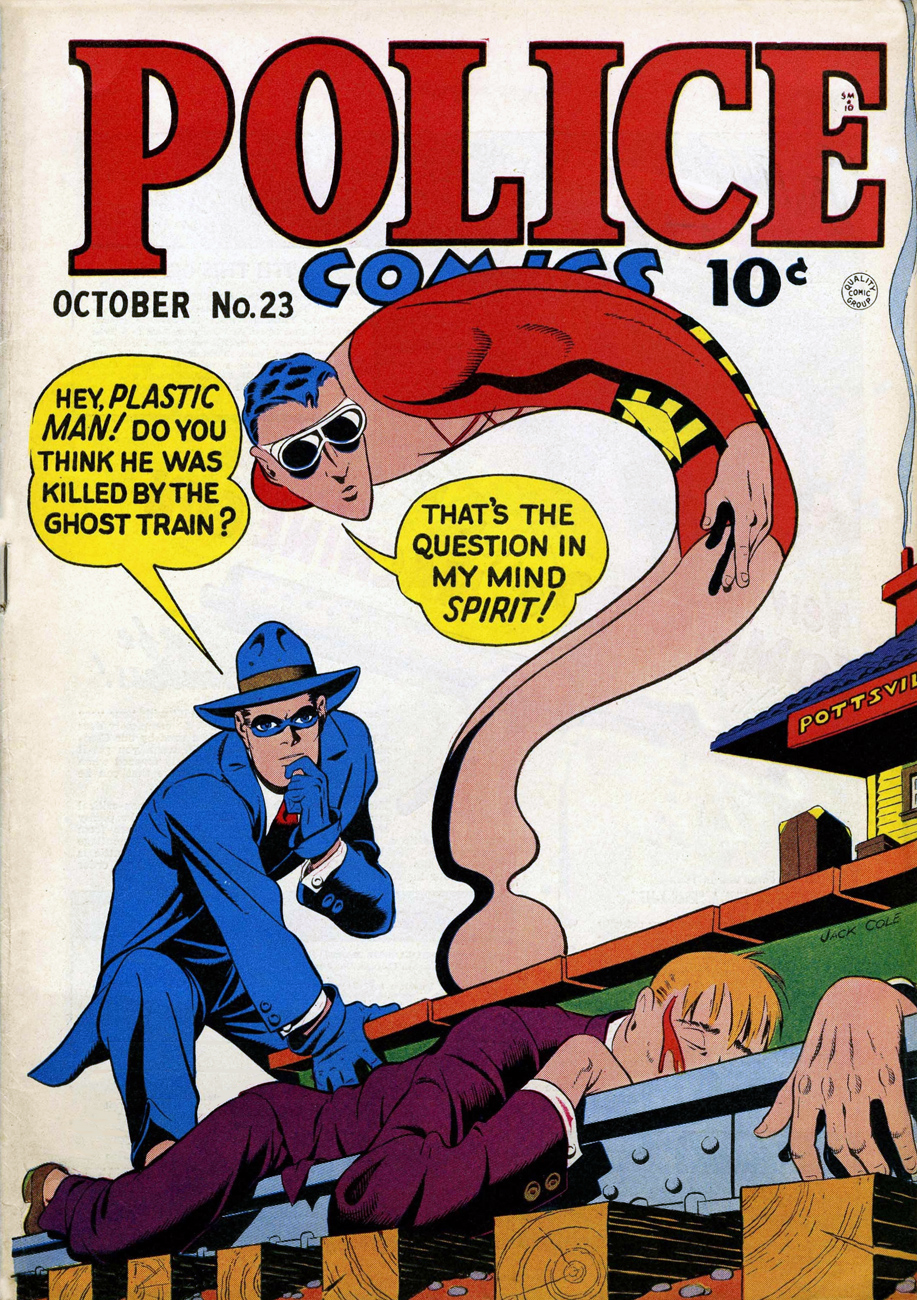
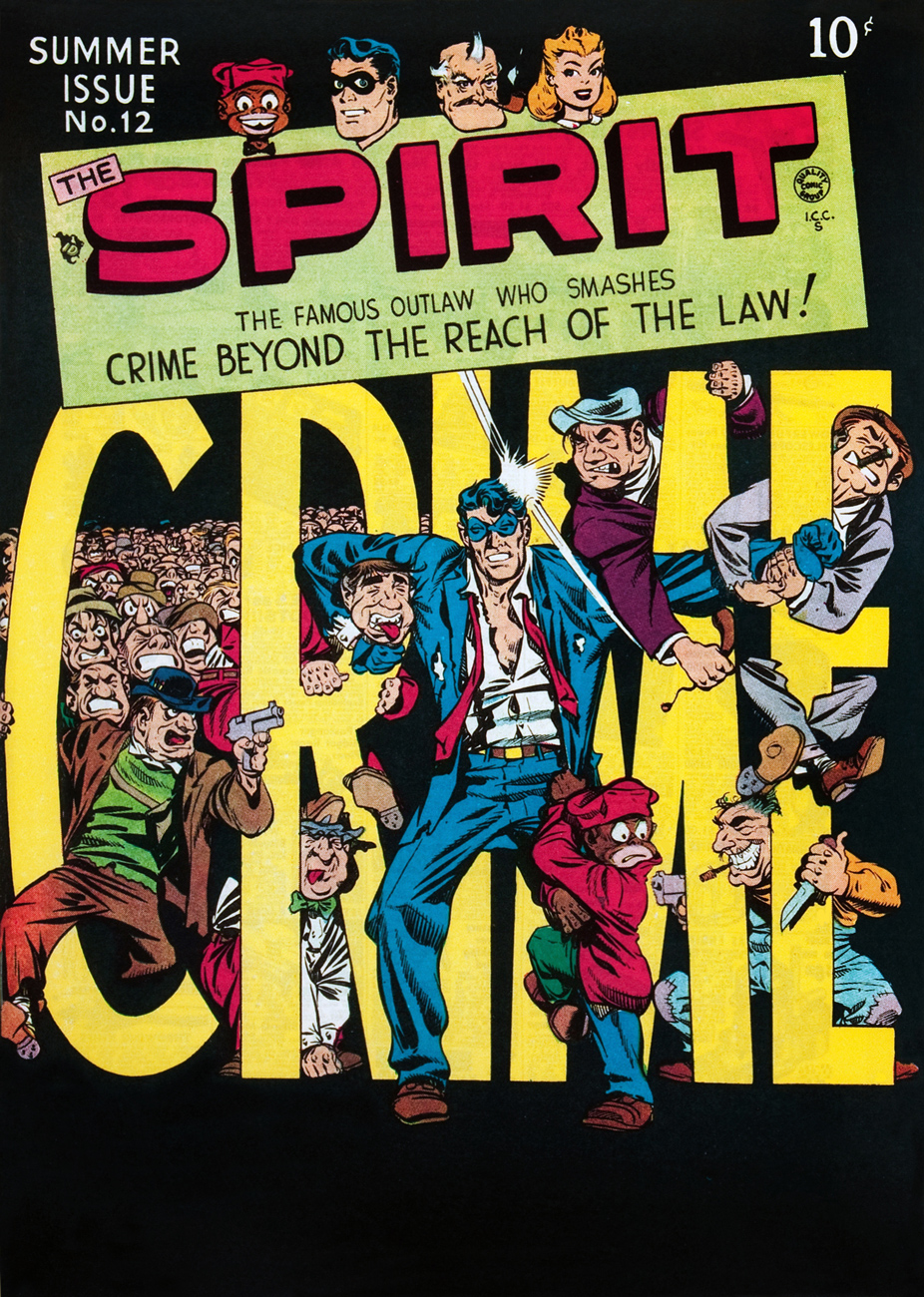
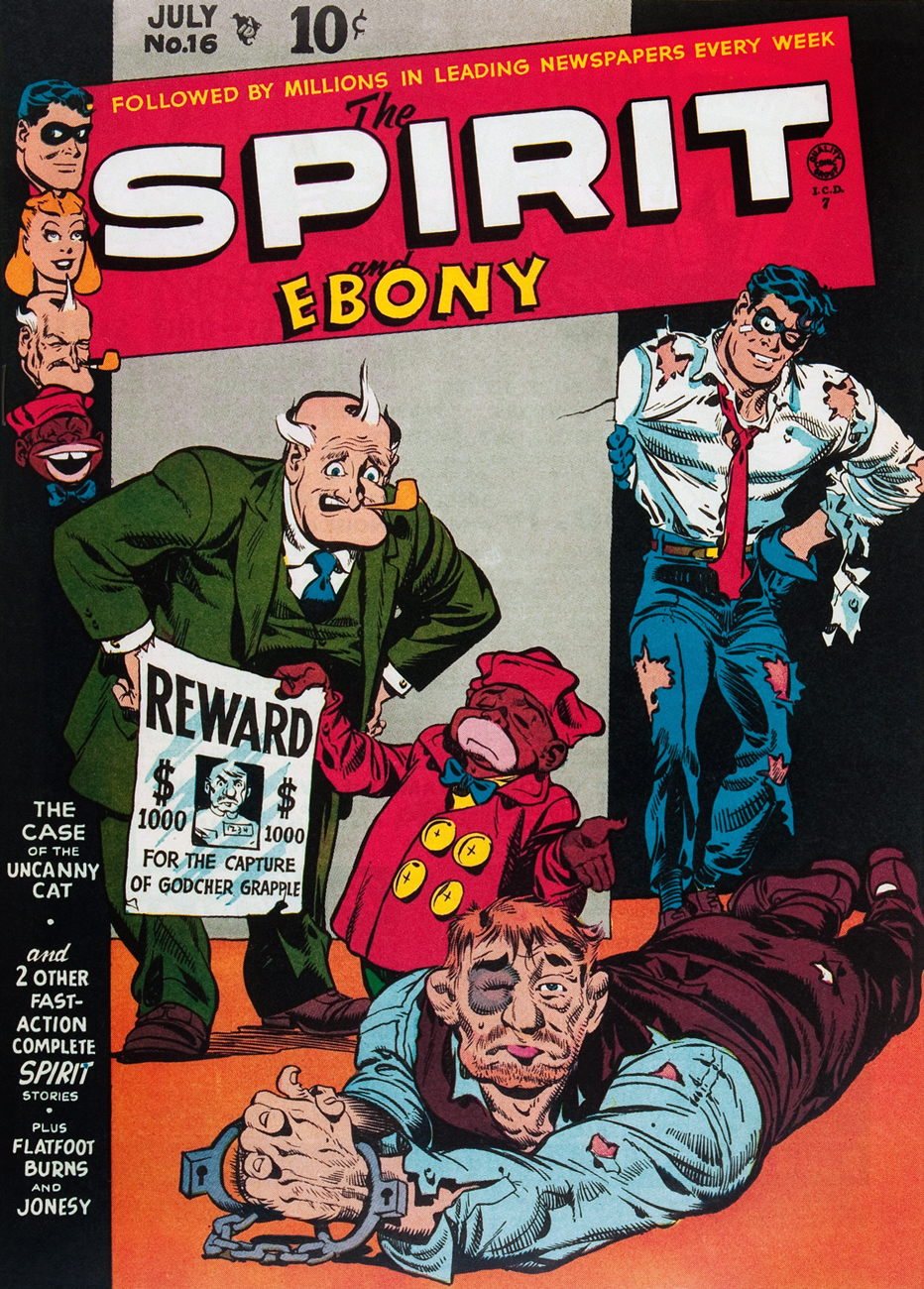
Speaking of Jack Cole… before he got his own title, The Spirit was featured for a couple of years in Quality’s Police Comics anthology. He occasionally ran into his fellow headliner, Plastic Man. This is Police Comics no. 23 (October, 1943). Cover by Jack Cole. Read this issue here.This is The Spirit no. 12 (Summer 1948), cover by Eisner, and featuring a bunch of Manly Wade Wellman / Lou Fine Spirit tales, which is to say “Eye, Feets, and Lock” (August 12th, 1945), “The Case of the Missing Undertaker” (September 30, 1945), “Skelvin’s School for Actors” (November 18, 1945), “The Whitlock Diamond Caper” (June 24, 1945) and “Nitro” (October 21, 1945).This is The Spirit no. 13 (Autumn, 1948), cover by Eisner, and gathering a clutch of Wellman / Fine outings, i.e. “Mr. Martin’s Pistols” (September 23, 1945), “Red Scandon” (June 3, 1945), “The Strange Case of the Two $5.00 Bills” (December 9, 1945), “Mr. Exter” (May 27, 1945) and “Vaudeville Vinnie” (November 4, 1945).Another high-wire master class in design and tension from Mr. Eisner. This is Quality Comics’ The Spirit no. 14 (Winter, 1948), featuring reprints of Spirit adventures (“The Alibi Factory“, “The Kuttup Shop“, “Prominent Executives Vanish“, “The Masked Magician“, “Belle La Trivet“) from 1945, written by Chapel Hill‘s foremost scribe, Manly Wade Wellman, and illustrated by Lou Fine and the Quality shop.This is The Spirit no. 15 (Spring, 1949), cover by Eisner, and gathering a bouquet of Wellman / Fine offerings, namely “Rosilind Ripsley” (June 10, 1945), “Madame Lerna’s Crystal Ball” (September 16, 1945), and “The Case of the Will O’Wisp Murders” (November 5, 1944).This is The Spirit no. 16 (Autumn, 1948), boasting an Eisner cover and rounding up a rogues’ gallery of Spirit exploits scripted by Bill Woolfolk: “The Case of the Uncanny Cat” (October 8, 1944) and “Jackie Boy” (September 9, 1944) and Manly Wade Wellman: “The Case of the Headless Burglar” (September 24, 1944), all pencilled by Lou Fine.I’ll bet Dolan could kick himself if he wasn’t so tidily trussed up. Fooled by a pretty… er, face again. This is The Spirit no. 20 (April 1950), featuring “The Vortex” (September 8, 1946); “The Siberian Dagger” (January 27, 1946); “Magnifying Glasses” (May 26, 1946), plus a couple of Flatfoot Burns stories by Al Stahl. Cover by Will Eisner, and a gold star and a hearty round of applause for the colourist.
As for the insides… I’m tickled to inform you that all of Quality’s issues of The Spirit are available gratis on comicbookplus.com. Enjoy!
– RG
p.s. For more (much more!) of Will Eisner’s famous creation, just click on the umbrella category, THAT’S THE SPIRIT!
I don’t necessarily like to contemplate this fact of life, but octopus flesh gets eaten a lot (in some countries more than others). However, comic artists are mostly a classy lot: they tend to like cephalopods, so it’s not too often that one runs across a depiction of them as a foodstuff. An octopus slashed in battle is one thing, but disgraced and transformed into a dish? What kind of person would want to illustrate *that*? Perverts, that’s who!
These bold souls who have drawn the forbidden, mentioned the unmentionable, shall surely be punished by the Elder Gods.
Let’s have a cautious peek (don’t forget to leave a sacrifice at the altar of the Octopus God, however).
Zoot no. 5 (December 1993, Fantagraphics). Cover by Roger Langridge.
Originally called “Ernie” (the name of its main character), the strip was renamed “Piranha Club” presumably because it’s a much catchier title. No, or few, pirañas are involved, but you are guaranteed to encounter Quacko the Human Duck, his wife the Bearded Lady, Effie (who often cooks octopus, much to the dismay of her husband), Bob the zombie, and a host of other irrelevant and quirky characters. Who’s responsible for all this mayhem? Bud Grace, the creator of this strip. If you haven’t heard of Piranha Club, slither over here.
Delicious in Dungeon Vol. 3 (November 2017). This manga series by Ryōko Kui involves a few characters tromping around a dungeon, consuming all and any monsters they find within. “Slimes, basilisks, and even dragons… none are safe from the appetites of these dungeon-crawling gourmands!“
Octopus pie, again? Is it as inedible as tuna casserole, the frequent butt of jokes in all sorts of sitcoms? This is Mom’ Homemade Comics no. 1, October 1969, cover (and everything else) by Denis Kitchen. Visit Comixjoint for the riveting tale of how this underground classic came to be published, as well as a review of its three issues.
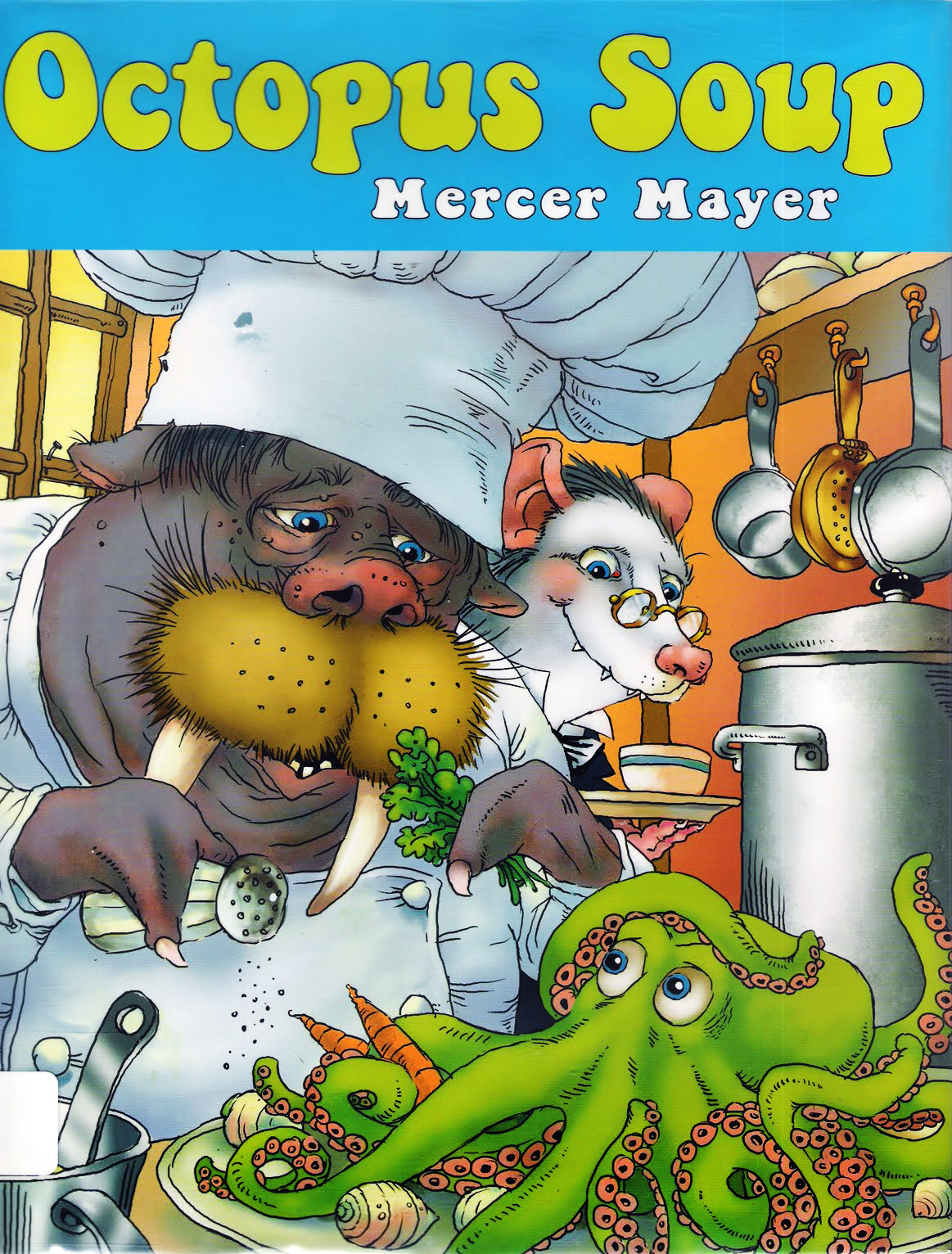
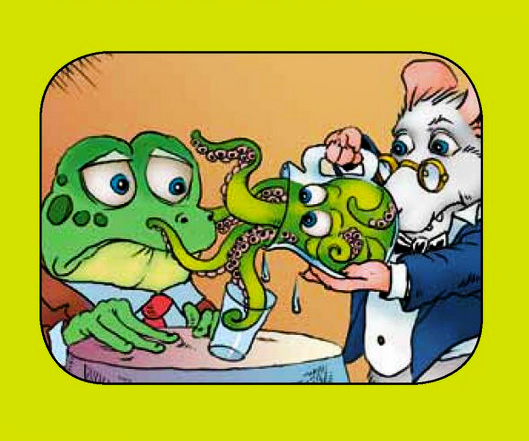
Octopus Soup by Mercer Mayer (2011, Two Lions). Technically a book for kids, but I’d highly recommend it for octopus lovers of any age.
Another peek at Octopus Soup…
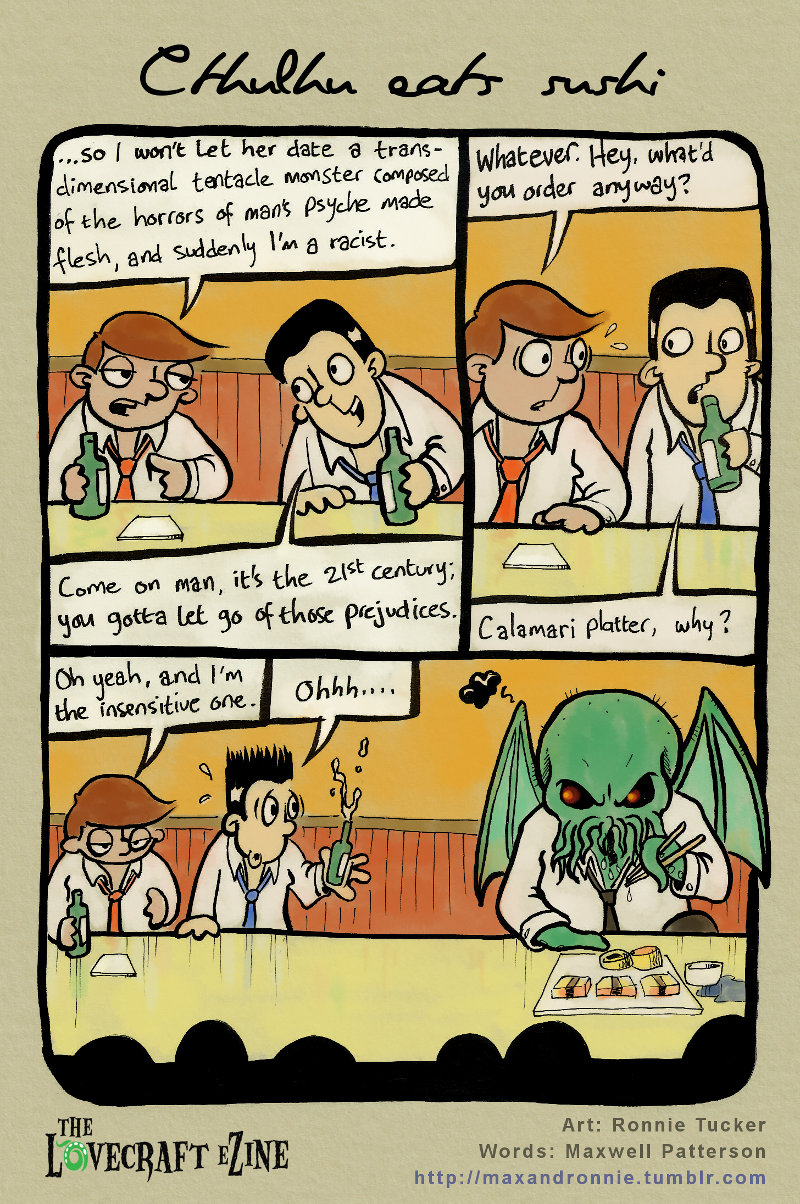
Cthulhu Does Stuff no. 4, by Ronnie Tucker and Maxwell Patterson. Visit their website.
« But observers say it is unlikely to slow down the consumption of fugu* »
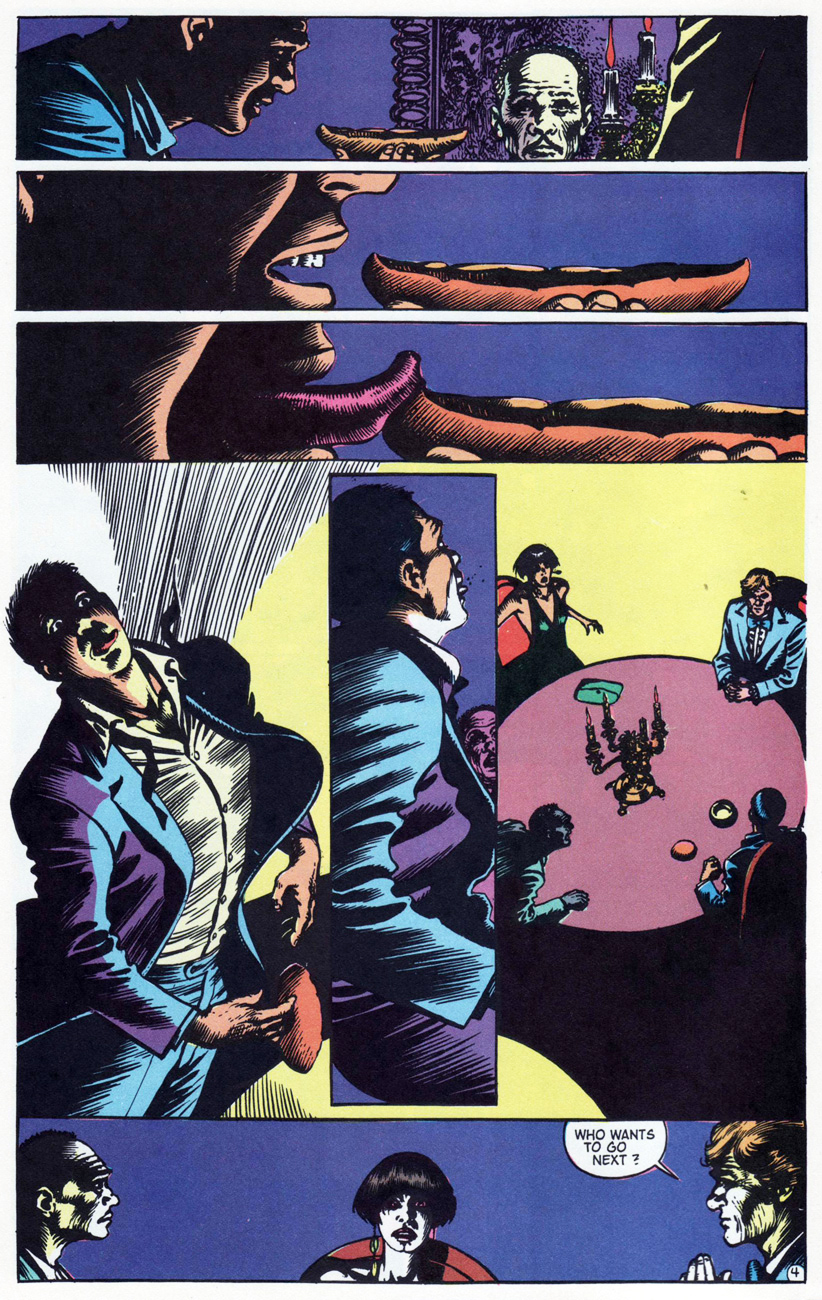
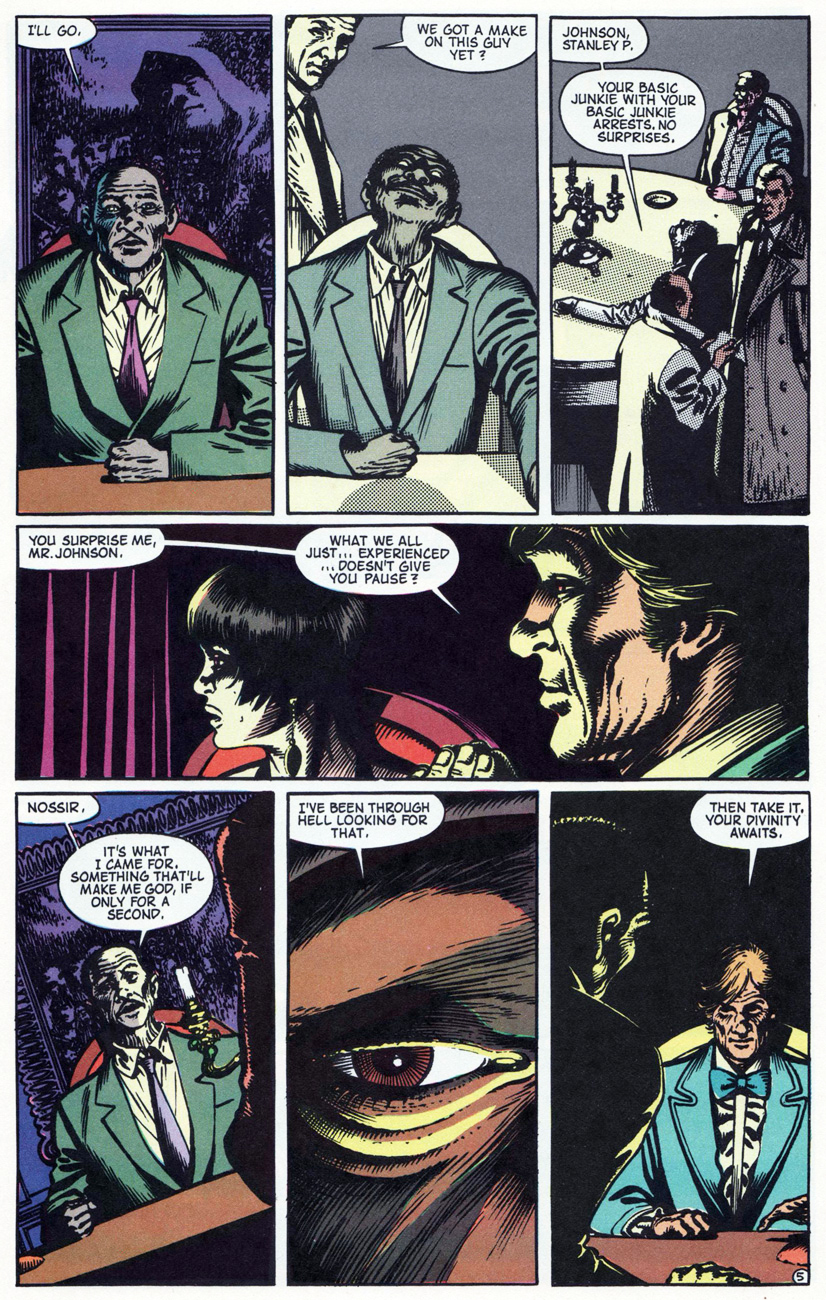
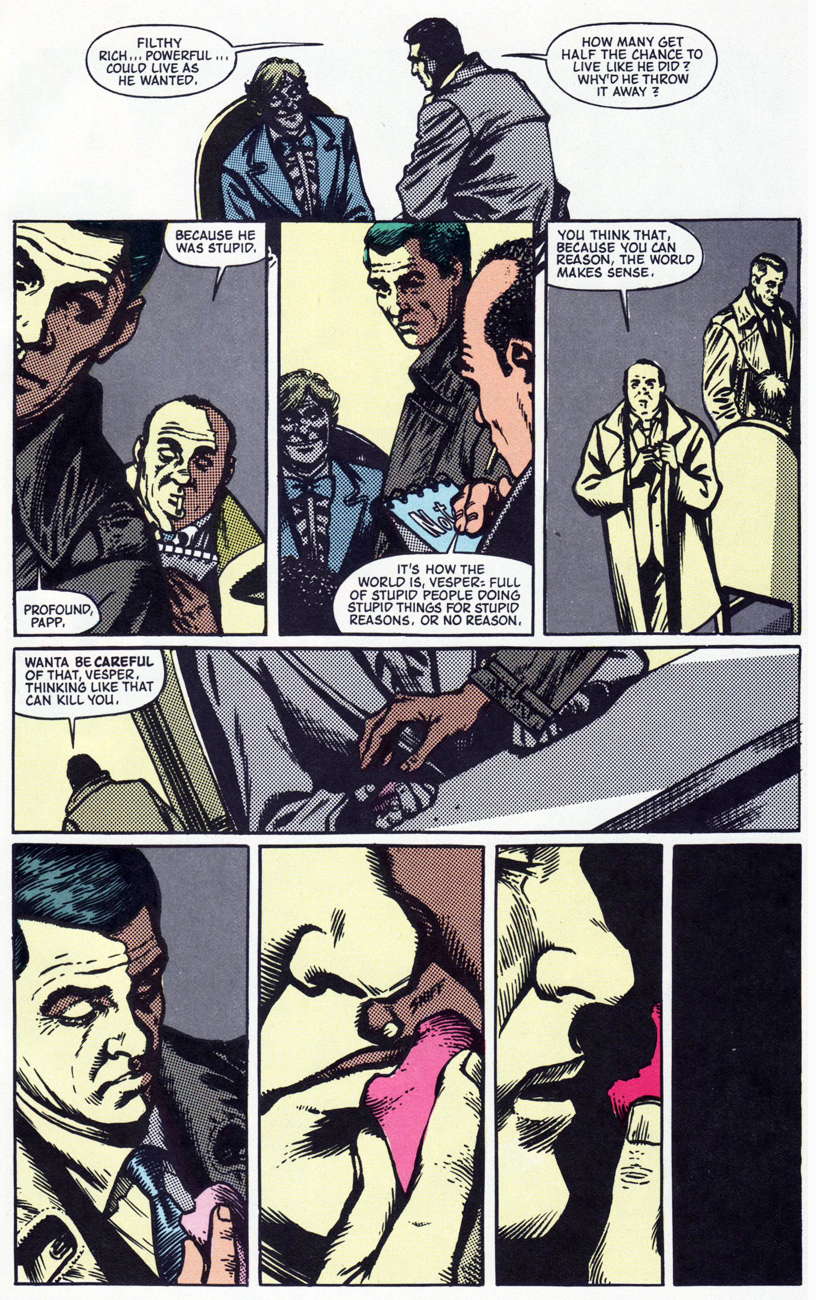
DC’s Wasteland** (1987-89) was, to my mind, the publisher’s finest-ever horror anthology… for a handful of issues. While the experiment lasted but a couple of years, and it was mercifully, if a little late, put out to pasture.
To compensate for the usually uneven, often random nature of anthologies, the book was to be scripted by just two writers (John Ostrander and the fascinating Del Close) and illustrated by a carefully-picked skeleton crew of artists, namely George Freeman, David Lloyd, William Messner-Loebs and Don Simpson. Perhaps the vetting process wasn’t sufficiently thorough, though, because Freeman dropped out after a mere seven issues and one more cover, and Lloyd followed suit before the year was through. With proper bullpen substitutions, things might have run smoothly, but of all the ringers brought in, only Ty Templeton rose to the challenge, his sneakily clean-cut style providing ideal contrast and tension to issue 11’s nasty tale of Dissecting Mister Fleming, sadly the series’ final flash of brilliance… with seven dead horse issues left to flog.
But those early issues were, for the most part, quite glorious. Simpson and Lloyd landed the lion’s share of the very best tales, Simpson because he was most versatile, and Lloyd since he excelled at instilling the bleakest, most unsettling ambiances.
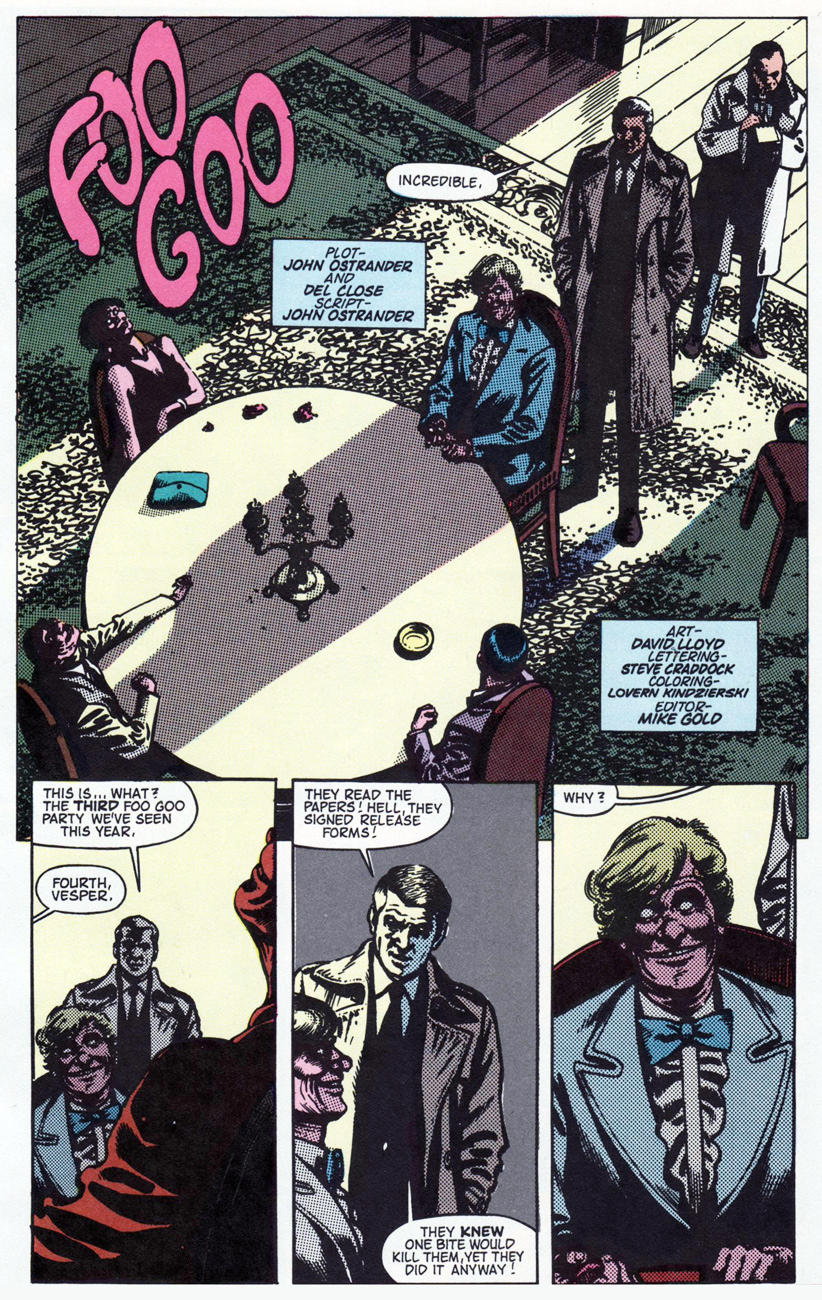
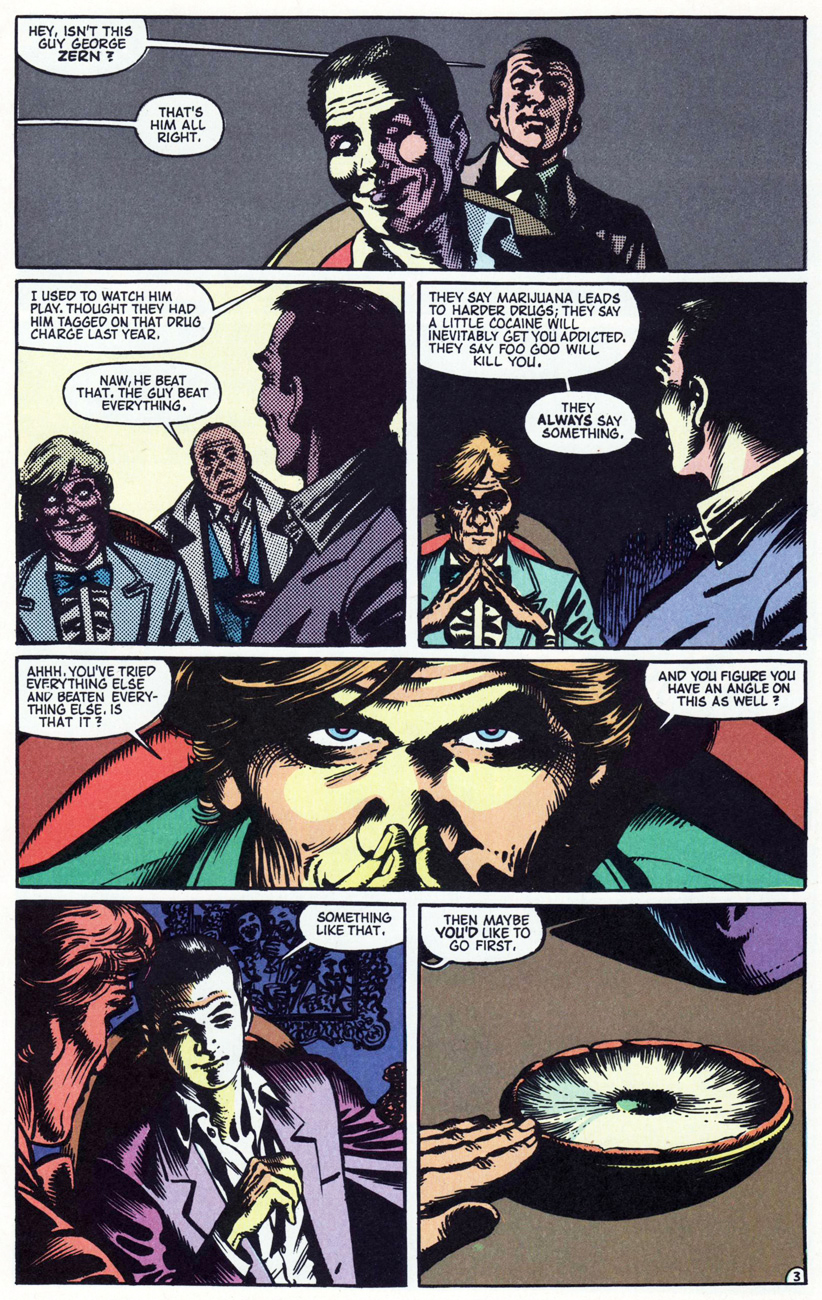
Today, we present Wasteland’s opening salvo, Foo Goo (Wasteland no.1, Dec. 1987, DC), by Ostrander, Close and Lloyd. Bon appétit!
The title, despite denoting a fictive species of fungus, is clearly a reference to the virulently-toxic liver of the globefish, pufferfish, or fugu… which is also, of course, a costly delicacy. It merely needs to be expertly prepared.
I first came upon this intriguing factoid in 1975, when a famous Kabuki performer, Bandō Mitsugorō VIII, presumed he could beat the odds. « In January 1975, Bandō visited a Kyoto restaurant with friends and ordered four portions of fugu kimo, the liver of the fugu fish, a dish whose sale was prohibited by local ordinances at the time. Claiming that he could survive the fish’s poison, he ate the livers and died after returning to his hotel room, after seven hours of paralysis and convulsions. »
-RG
*”Japanese Actor Poisoned“, The Leader-Post (Regina, SK), Jan. 20, 1975
**Not to be confused with the national capital of the United States of America
« And by the way, did I see you without a Pookie Snackenberg button? »
Concluding our exclusive conversation with Mr. Mike Royer, picking up the thread from where we left off in Part Two. And don’t forget to begin with Part One.
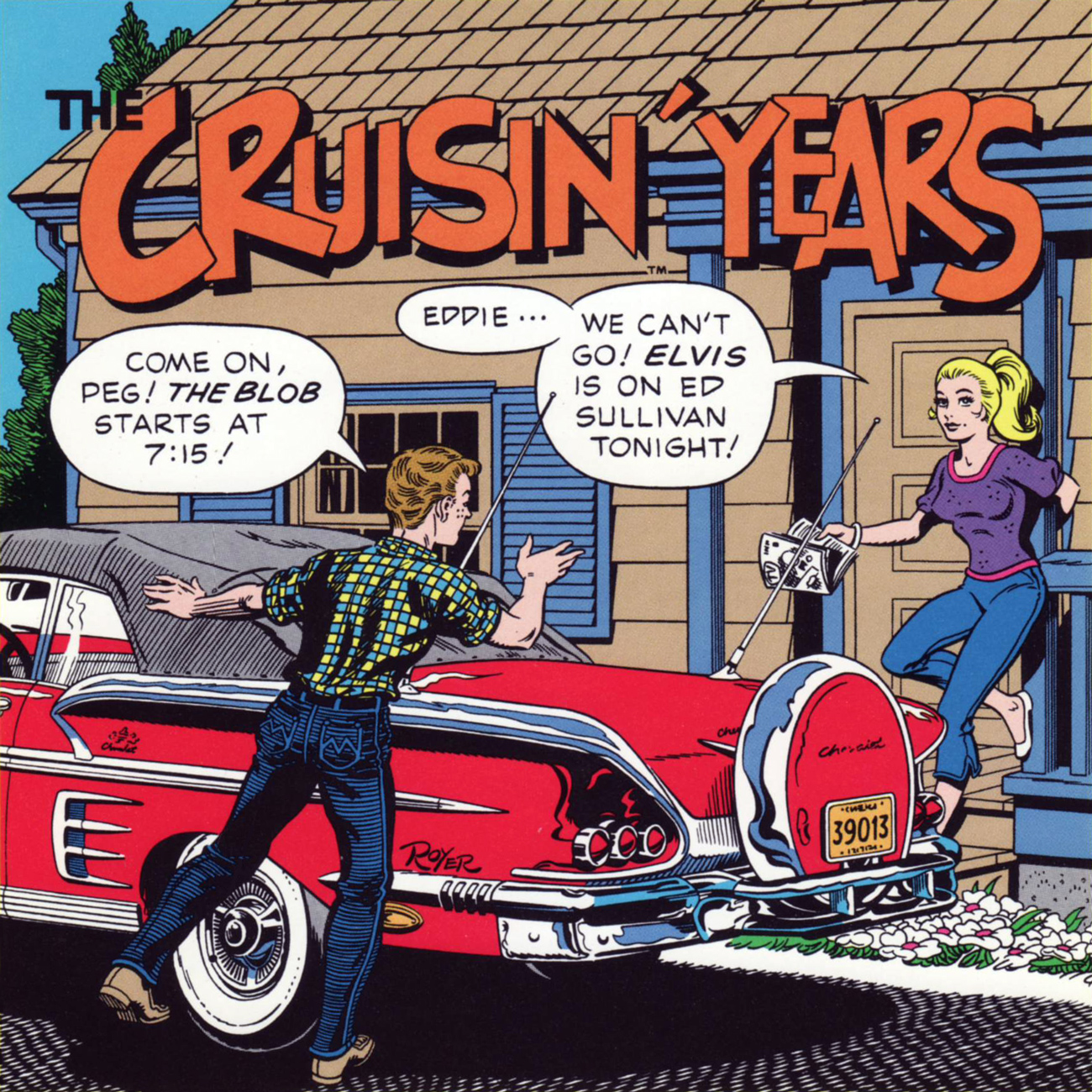
This illustration served double duty, first as a sampler released with the second batch of Cruisin’ albums in 1972, then on a box set collecting Cruisin’ 1955-56-57.
Historical research in those days wasn’t as tidy and simple… and so here, either Peggy’s lying or… Elvis Presley’s third and final appearance on Sullivan’s show was on January 6, 1957. And The Blob wasn’t released until September 10, 1958. Well, Peg?
Royer’s new illustration for the third and final box set, the one gathering Cruisin’ 1961-62-63, issued in 1992.
WOT: Are you happy with the overall work?
Michael Royer: I would say… two-thirds of the covers, I’m really pleased with. I can look at them and pickle the living daylights out of them. The Cruising’ Years… I look at it, and some of the proportions bother me. The scrapbook is too small, compared to the photo on the desk, and other little things that, if I were gonna do that again, I would adjust those sizes. But then again, that’s the impression I get, I guess, that’s important.
WOT: True.
MR: The one where Peggy sees Eddie behind her in a car at the drive-in is my least favorite of all of them.
WOT: Do tell.
MR: Because Paul had given me an impossible thumbnail. To make it work, so that they were all on the same planet… Ah, it’s really easy to lay out something and have two cars and the drive-in theatre lot, and not worry about if they’re on the same plane, if they’re seen from the same point of view… and so to do that and make it work… I still look at that and I get disappointed.
MR: I really like the one where he’s outside and it’s snowing.
WOT: And he’s with a black lady? That’s 1966.
MR: The black lady is looking at him… kind of suspiciously, and it may have something to do… because he’s in her neighborhood. I’m trying to remember if his early career at the law firm was dealing with…
WOT: Social issues?
MR: And I can’t remember, every tv screen’s got the same thing on it. Is it the Batman logo?
WOT: Confirmed. You were right on the money.
MR: Here we are, all the Cruisin’ cds. They have changes on them. Okay, let’s see. ’55 was the first one.
WOT: Actually, from what I’ve read, ’55 was actually done later, part of the second batch produced [in January, 1972].
MR: Yes, it was added in, and I don’t care for that one. I really like ’56, only because in retrospect, I look at it and it speaks to me. ’57, okay. ’58, only because of the subject matter and Paul’s layout… ’59 is the one where I went to South East Los Angeles, to the car lot that had the dashboard. It had to be that, after so many years, if anybody had one, they just had to go “heyyy!“, you know.
MR: 1960 is… not as bad as I remember! At least I made his layout work…
WOT: That’s good news.
MR: And ’61, is, yeah, they’re about the break up. And Cruisin’ ’62 is.. ha. They *are* breaking up. No, I guess it was a three year breakup, okay?
WOT: (laughs) Okay!
MR: ’63, they’re in the coffee shop, and that’s the Studebaker… now waitaminit, what’s the one on… that’s not a Studebaker on ’61, that’s an Olds, so the Studebaker’s on ’63.
MR: ’64, there’s the announcement: “to wed Kevin Buchanan III…” And ’65 is ten years later, and it’s the same girl that was working at the library, but she’s gotten a little prettier.
WOT: No kidding? Subtle bit of continuity.
MR: And there’s Luthor on the board in the background… his concert, “New York Blacked Out” headlines, Up the Down Staircase… okay, ’66: oh yeah, “What this community needs is economic improvement and self-help!” Ah, yeah, all the TVs except one had Batman, and one of ’em has Luthor on it, singing.
MR: And ’67, that’s the one with Ron Jacobs coming out of the… through the beads in the back. And golly, it’s Genevieve again. Mmm!
WOT: The librarian from ’55!
MR: That’s her.
MR: And ’68 was the first one *after* The Cruisin’ Years. Ah, there it is; I should have them in the order they were released. So we redid 1968, “Vietnam Widows for Peace“, and I kinda liked the way that turned out. It was fun researching all of the fashions and things!
WOT: Good, because research wasn’t always a simple task.
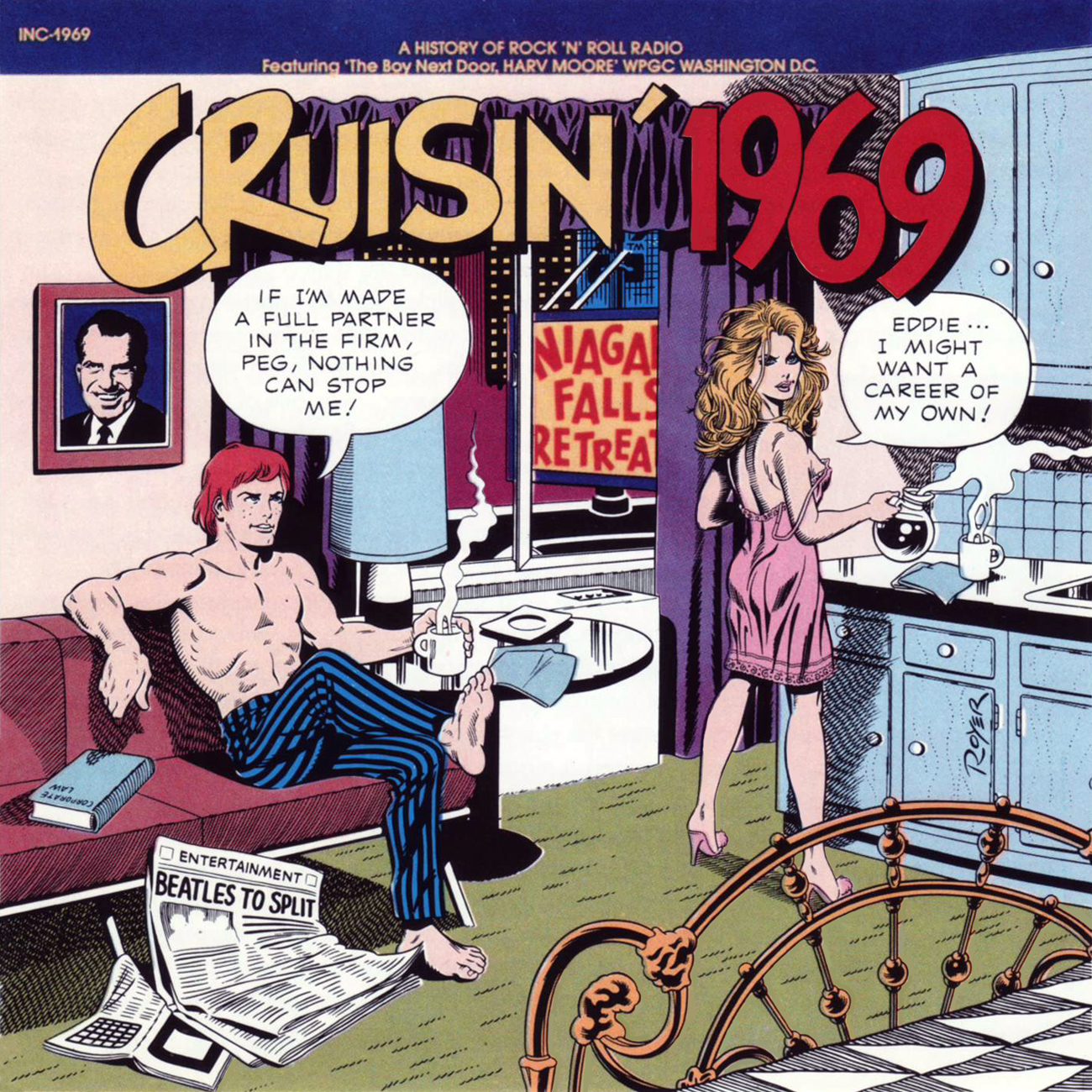
MR: Ah, ’69, on their honeymoon, Niagara Falls Retreat; Newspaper headline: “Beatles to Split” “Eddie, I might want a career of my own“… I just sold the comp to that, I think in Charlotte.
WOT: Oh, wow. So I am being timely here.
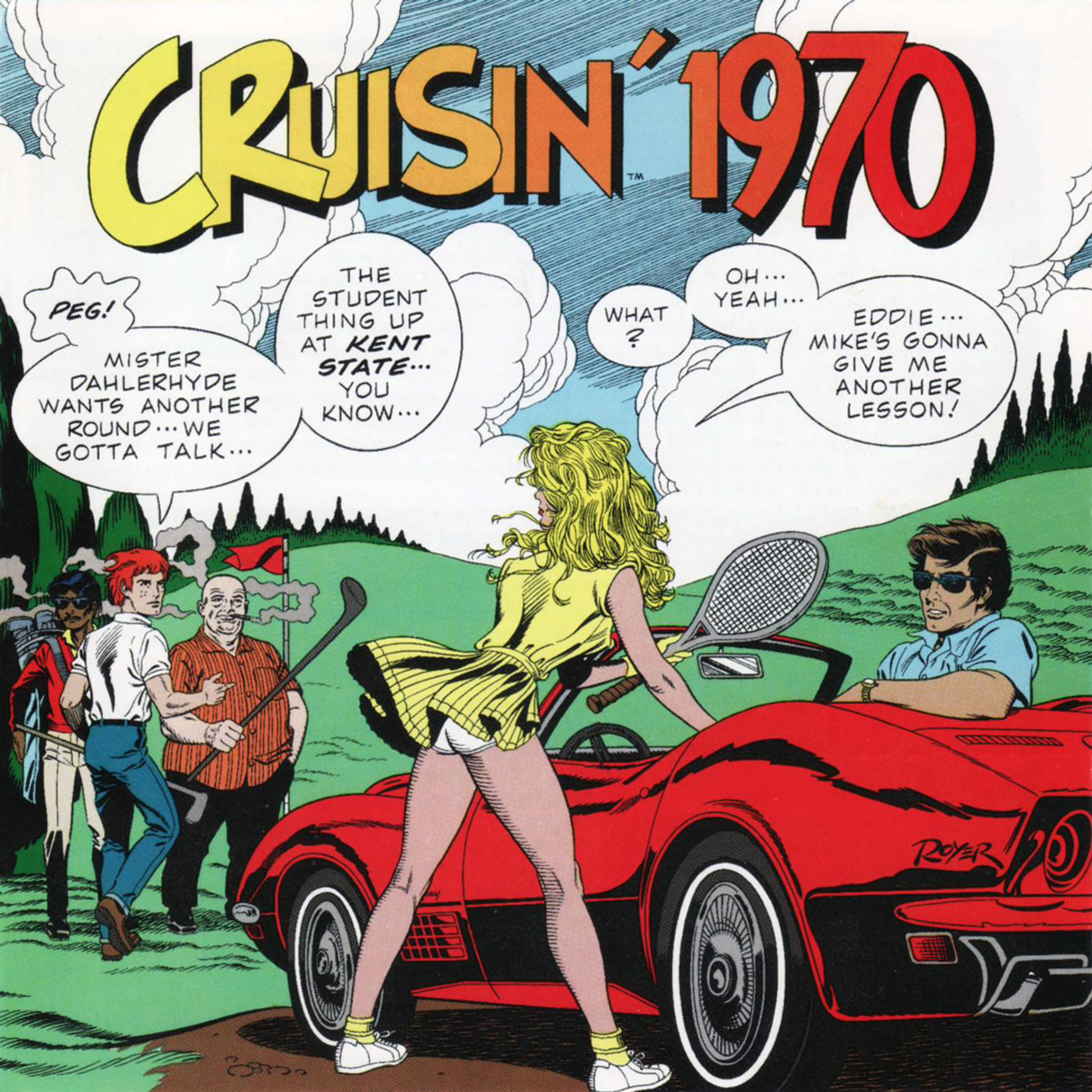
MR: 1970: “Mike’s gonna give me another lesson”. I put myself in there, uh… idealized.
WOT: (laughs) So that’s what it is, then?
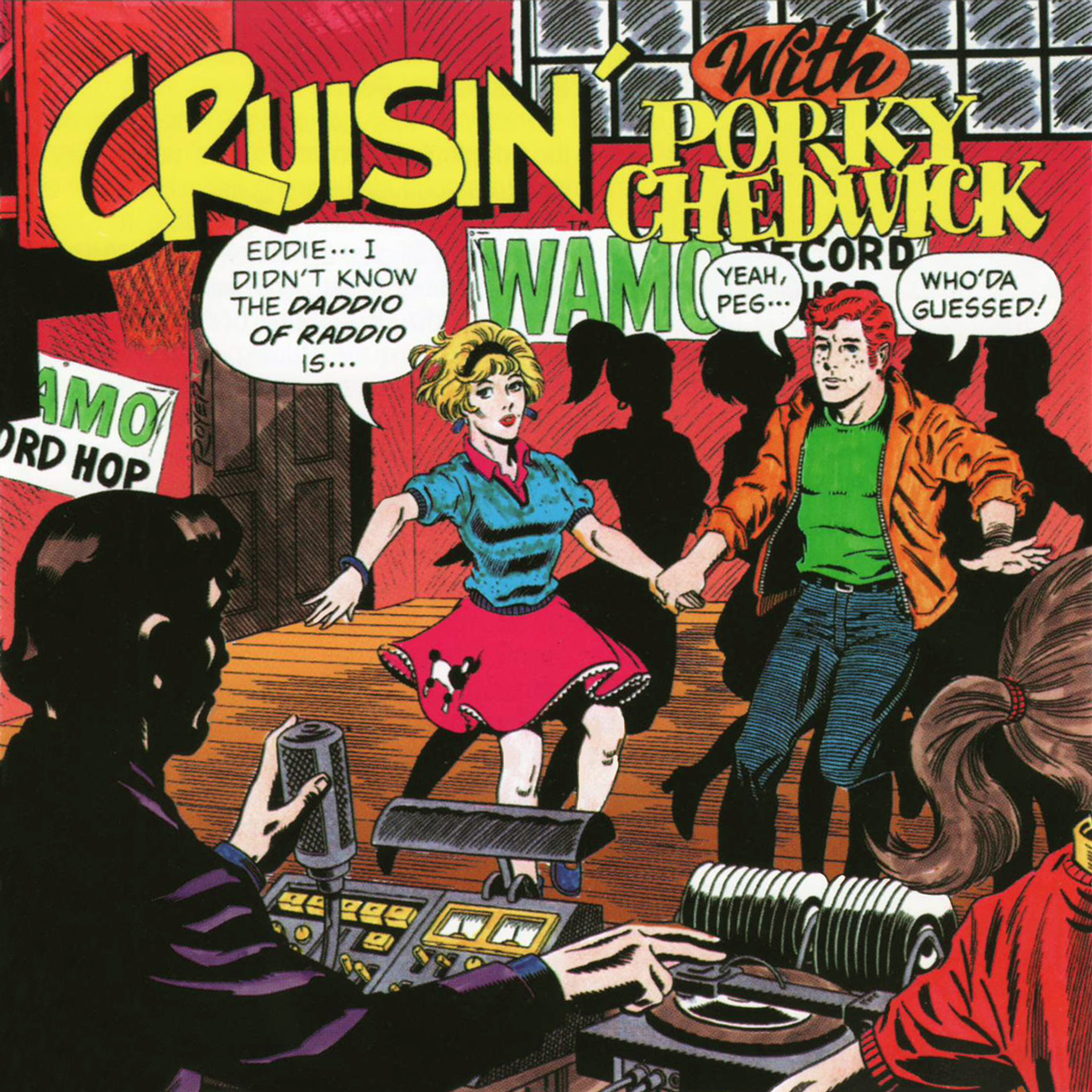
MR: And then there’s the Porky Chedwick, and somewhere in here… the Cruisin’ boxes. Whoa! There are… three of them.
WOT: What are they?
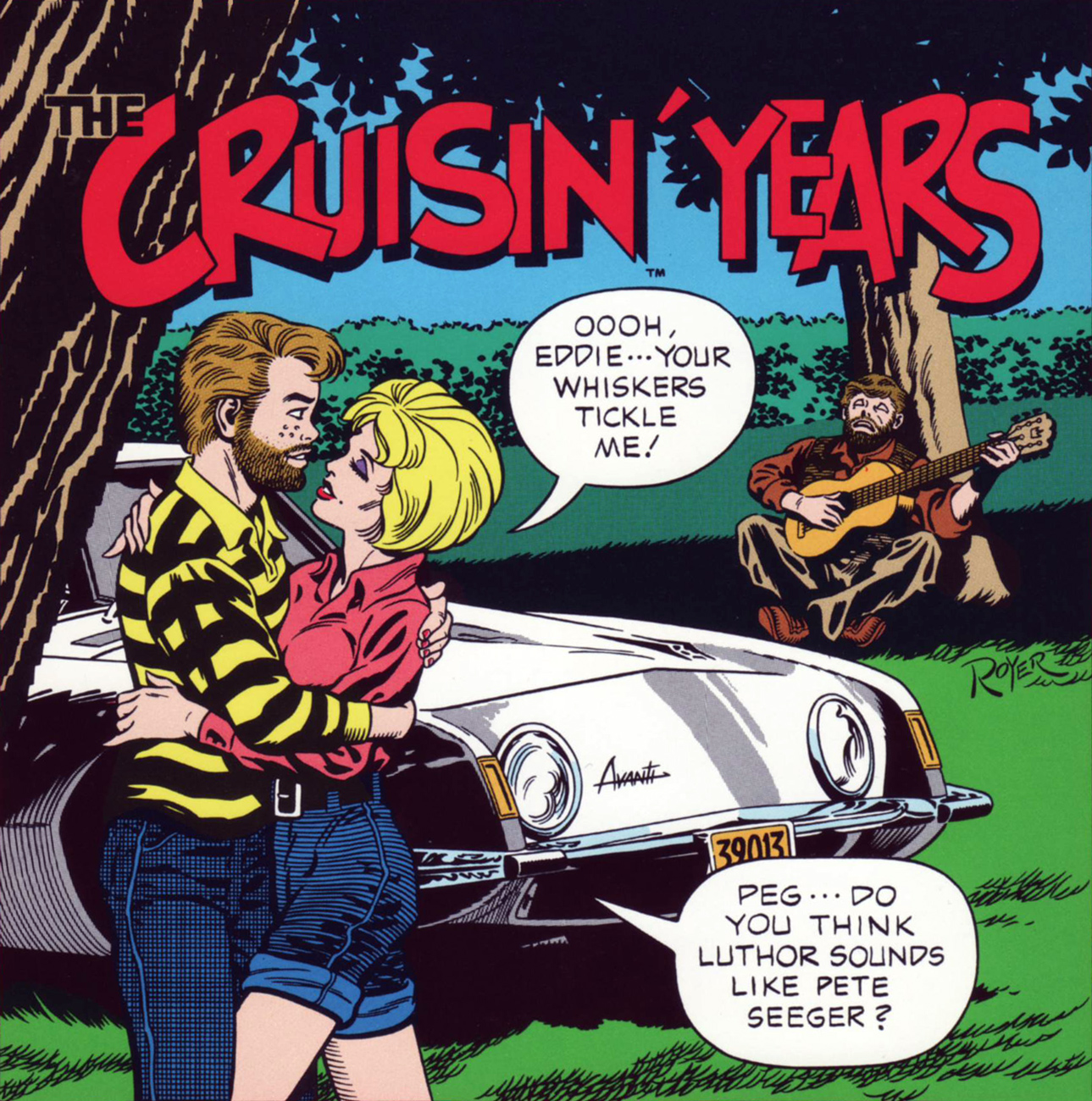
MR: The first box set has ’55, ’56 and ’57, and has the Cruisin’ Years cover, with the Peg and Eddie photographs, and the scrapbook, and the concert tickets and so on. The next one is ’58, ’59 and ’60, and that one is, Eddie is next to his Chevrolet with the tire kit on the bumper, and he goes “Come on, Peg! The Blob starts at 7:15!” “Eddie… we can’t go! Elvis is on Ed Sullivan tonight!”
WOT: Poor girl’s chained to her TV!
MR: And the last box set was ’61, ’62 and ’63, and Eddie’s got the beard that he’s wearing in the college one, and Luthor’s leaning against a tree, and she says: “Oooh, Eddie… your whiskers tickle me!” and he says: “Peg… do you think Luthor sounds like Pete Seeger?”
WOT: These two were always moving in separate directions.
MR: Always! And so I wrote ’68, ’69, ’70, The Cruisin’ Years, and Porky Chedwick. And if I could the long box artwork, and one of the last ones I did, which I believe was gonna be another Cruisin’ Years, and it’s probably the sexiest Peg I ever did…
WOT: Aw…
MR: It’s Peg and Eddie… oh my God… *two* of them. I might have done another big box, because they’re at the beach, she’s in a bikini, and it’s another tension-filled thing…
WOT: Her bikini?
MR: Oh, he’s saying: “Who’s this Buchanan the third?“, so that fits in the chronology somewhere. And the last one would precede their wedding, it’s where they’re on a bridge, in New York City, it’s a big closeup, they’re dressed to the nines, he’s in… could have been a tux, she’s in a sexy evening gown. And leaning on the rail, exposing her… attributes. The program was for a big Broadway hit of ’69, and he’s got his finger under his collar, kinda saying something to the effect of: “You know, Peg, there’s something I should have asked you… a long time ago“. It’s the proposal cover, you know.
Now I don’t know if that was ever produced. I also did another cover, which I know was not produced, and it was a Cruisin’ Christmas Album.
WOT: Whoa.
MR: And I actually drew my living room, in the house I had in Simi Valley [California] and Eddie, in his Santa Claus outfit is putting presents under the Christmas tree in the center of the room. And Peg is coming down the stairs in her sexy négligé, with her robe blowing open…
WOT: That’s his present.
MR: ’twas drafty in the house that night. And she’s got a plate, and she’s saying: “Oh, Santa… don’t forget your milk and cookies!” So it’s the only cover in the series without any tension.
WOT: Or the most tension, depending on how you look at it.
MR: I think we discussed doing ’71, but figured that there wasn’t enough happening that year to make an interesting cover, or the songs were too new in the late ’80s to get clearances or rights on them, you know.
WOT: Things have changed quite a bit… even the cd reissues are significantly different from the LPs. Reissuing certain pop-song heavy tv shows has proven quite a financial ordeal in some cases because of astronomical increases in the cost of music rights.
For that reason, the Cruisin’ LPs each have a few more songs than the cds, even if the opposite should be true, if only in terms of storage capacity.
MR: They lost rights, and stuff like that.
WOT: People didn’t know back then what was to come, obviously. The Cruisin’ series came out at just the perfect time, and I think it was quite visionary to decide to preserve, or recreate, what must have seemed at the time a very recent piece of the past.
MR: I wish that I had not given all of my vinyl discs to my first… son-in-law… and replaced them all with the CDs before I realized that there were the differences.
WOT: Not to mention the size of the artwork and quality of reproduction.
MR: Once the series was over, I sold Ron Jacobs all of the originals. And I kind of regret that in a way, because I could sell them for a lot more today than I did, in the early ’90s, to him.
WOT: Sigh. They’re heirlooms.
MR: I don’t know why I didn’t think to pull these things off the shelves and look at them before we talked.
WOT: Ah, it’s okay. In fact, it’s probably better: I got your spontaneous responses out of it.
MR: Actually.. overall, I’m more proud of them than I am disappointed. And the things that disappoint me, I can point out why and it doesn’t necessarily mean that it excuses the problems…
MR: Oh, and there was also a full-page ad… that was in Billboard. Peg and Eddie are sitting in the front seat of… probably a 1955 or 56, I think Ford convertible. I cannot remember.
WOT: On the contrary, you clearly remember plenty! (laughs)
MR: I’ve got it somewhere out in the garage, in one of the custom filing cabinets I had made that I call “Mike’s Life in a File Cabinet“.
The ad in question, from the July 11, 1970 issue of Billboard Magazine. Make a wish!
WOT: I think that I think this series is a great artistic success. When people see these volumes individually, they work as snapshots… but put them together, and you realize that there’s so much happening between the panels.
MR: Yeah, it does tell a story!
WOT: It’s beautiful storytelling, and I think, one of your crowning achievements.
MR: You know, it’s funny: the early covers were put into two books. The first one was a… I don’t know if it was a hardcover, it was a oversized, glossy trade paperback called The Album Cover Album [original edition 1977], and it says: “Paul Gruwell, art director, art by Mike Noyer“.
WOT: Oh, lovely. They got one name right.
MR: And the second book they were in, which I didn’t bother to buy, because all they listed was the Art Director. I wasn’t even listed.
WOT: This kind of thing, which I’ve noticed also, is what prompted me to get in touch with you. And I think we’ve done our bit here to help set the record straight. Thank you so much, Mr. Royer!
MR: You’re welcome, Richard. Have a great day!
WOT: You’ve certainly done your part in it!
Read the liner notes, or hear Cruisin’ 1967 in its entirety here!
Read the liner notes, or hear Cruisin’ 1968 in its entirety here!
Read the liner notes, or hear Cruisin’ 1969 in its entirety here!
Read the liner notes, it’ll have to do for now; regrettably, Cruisin’ 1970 isn’t currently available on YouTube! What is this world coming to?
At this time, Cruisin’ With Porky Chedwick would appear to be the final entry in the series (1995). Listen to the whole platter right here.











 Who's Out There?