Having long followed the man’s career, briefly met him and heard him speak, I’m convinced that he deserves every accolade he receives, and I know all this attention won’t even go to his head for, in addition to his staggering talent, the man just radiates patience and kindness.
In 2006, he was concluding a talk in Montréal by taking some questions from the audience, and an old lady asked an incredibly basic one… that most would have dismissed or shrugged off with a « how can you not know that already? ». But no, he gently responsed to her query in the most illuminating way, elevating the moment to the delight of everyone in the audience, including, of course, the lady with the question.
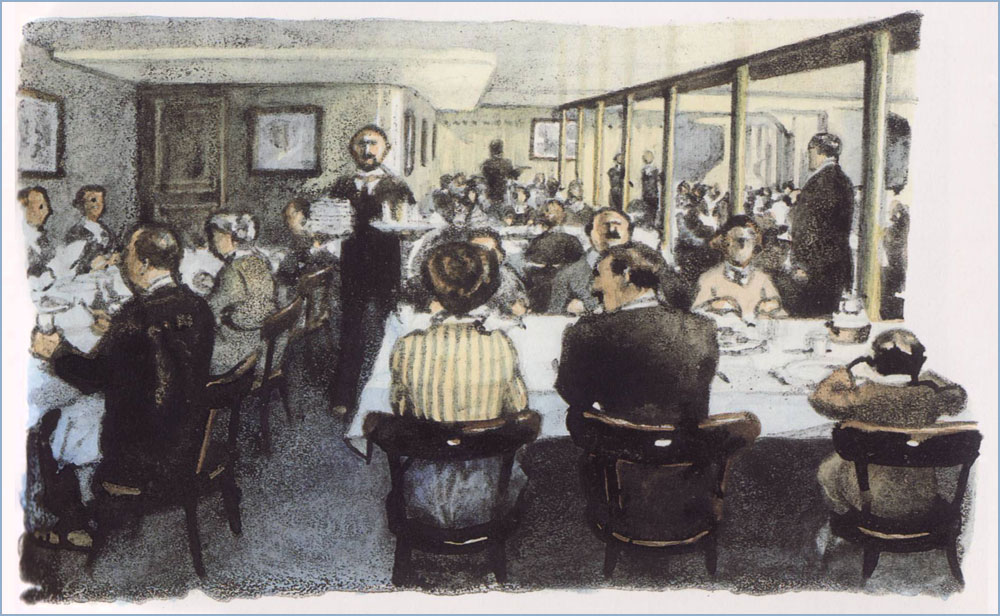
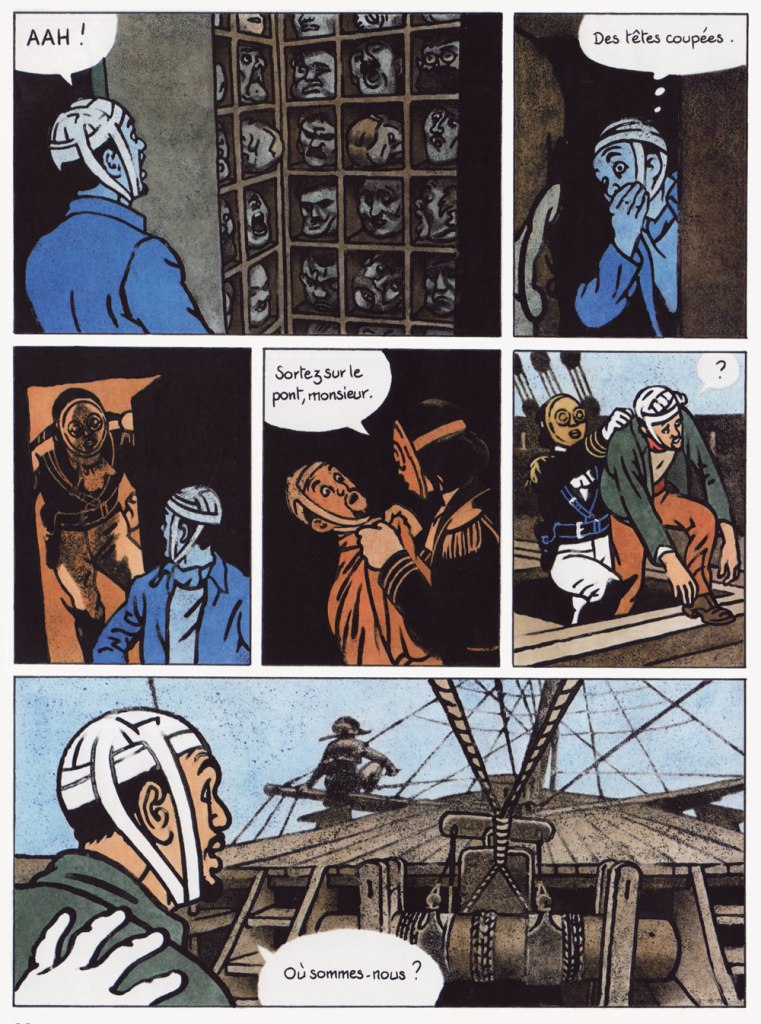
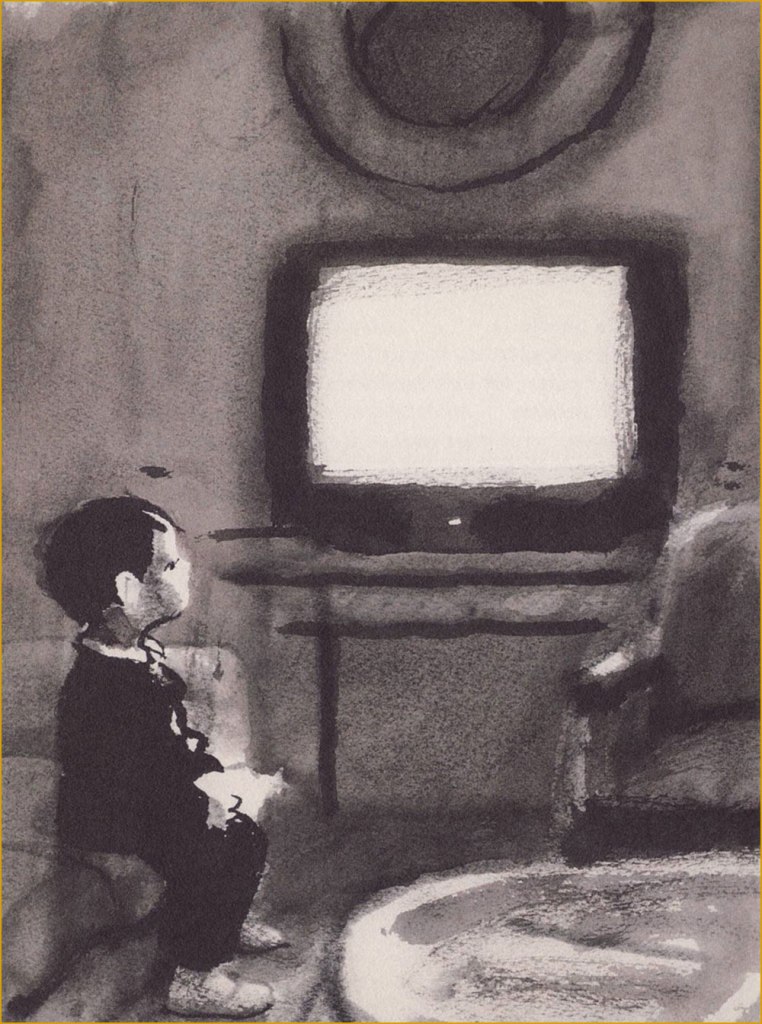
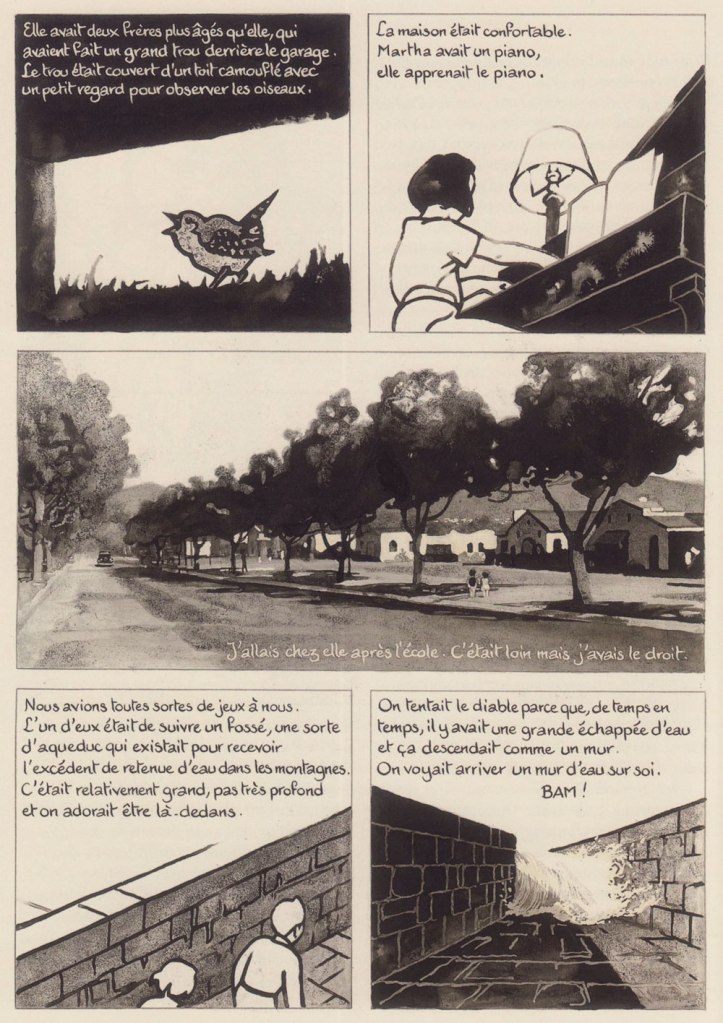
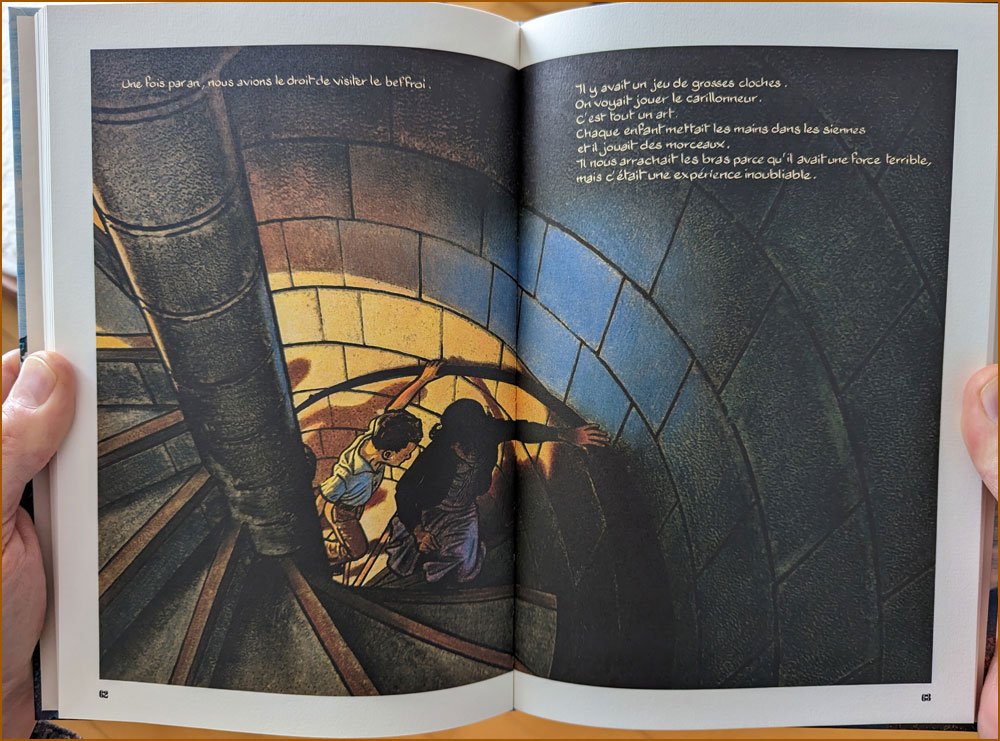
A 1997 illustration created for an issue of long-running (1971-) bright kids’ magazine Okapi on the theme of The Titanic. This shows the doomed ship’s third class restaurant.A sequence from the album that first brought Guibert to prominence, La fille du professeur, a collaboration with Joann Sfar, whose script won the 1997 René Goscinny award at the Angoulème festival. Note the remarkable fluidity and animation of the choreography. A sequence from his wild collaboration with WOT? favourite David B., 1999’s Le capitaine écarlate (The Scarlet Captain), which fancifully thrusts real-life author Marcel Schwob (1867-1905) amidst the lunatic fray.The pirate ship, travelling through the sky on its own wave, is trapped betwixt an airship and the grappling hooks of the Parisian police posted on the Eiffel tower. Of course.Here’s a glimpse into Guibert’s working method, two panels from Le capitaine écarlate: « Inking the pencils is always a problem: it’s even nonsensical to have to draw the same thing twice! Generally, the inking stiffens the drawing, since the pencilling stage is allusive and the inking stage is descriptive. So I try to do the opposite: I settle all the drawing problems in pencil and then, I put my page over a light table in order to reinvent the drawing in pen, leaving out a lot of the details. But that’s just a last resort. It’s hard to be quick and spontaneous while trying to convey subtle things. Ideally, I’d love to do without pencilling, but I need it to nuance my drawing. » (from a talk with Hugues Dayez published in La nouvelle bande dessinée, 2000, Éditions Niffle)A page from his probable magnum opus, La guerre d’Alan, in which he recounts visually the real-life recollections of an American exile he met by chance in 1994 on the Île de Ré. This part of the saga is available in English as Alan’s War. Here, a bunch of malnourished GIs hike for an hour for a steak meal provided by a lumberjack. For Alan, coming from a family of modest means, it was his first time eating steak. « Observe, improve yourself, fill up your noggin! » is the crux of his advice to young cartoonists. Leading by example, he’s constantly observing and rarely stops drawing. Thankfully, some collections of Guibert’s sketches have seen print, and they’re delightful. Here are some samples from Le pavé de Paris (Oct. 2004, Futuropolis), which is the exact size of a Parisian cobblestone, just like those lobbed at the police by demonstrating students during the tumultuous events of May 1968.I’m in awe at his ability to discern and render infinitely delicate shifts and nuances of colour and tone, especially in low light.« Drawing allows you to tear off pieces of reality and to take them home. In my notebooks, I know that the most beautiful drawings, the most vibrant ones, are those I did in places or before people that I want to keep near me. »« This is why my notebooks are so precious to me: they are riddled with accidents and unrepeatable little things. And while I practically can’t bear to open one of my published books, I often find myself checking out my notebooks. »A page, drawn in 1999 and intended for L’enfance d’Alan. Guibert initially planned to cover his friend’s life in order, but postponed the childhood part, since he possessed fuller documentation of Alan’s war years. In the end, this page didn’t make the cut, which gives you some idea of the very high standards Guibert sets for himself.L’enfance d’Alan appeared in 2012, and was followed in 2016 by Martha & Alan; like the rest of the Alan Cope memoirs, they were published by L’Association. The lion’s share of what’s kept me this long from showcasing one of my very favourite cartoonists: most of it is virtually impossible to scan, unless I’m willing to destroy the spine of some often rare, precious — and treasured! — volumes.
The world of tentacles is colourful and varied – and very much multi-lingual. For those of our readers who have no access to comics in French (or any idea where to start looking for them), we present this gallery of Gallic comics. For an earlier peek into ze tentacules, visit part I – Tentacle Tuesday: The Franco-Belgian Edition. In case you’re wondering what the heck are Franco-Belgian comics, An Introduction to Franco-Belgian Comics gives a good overview.
Sans plus tarder…
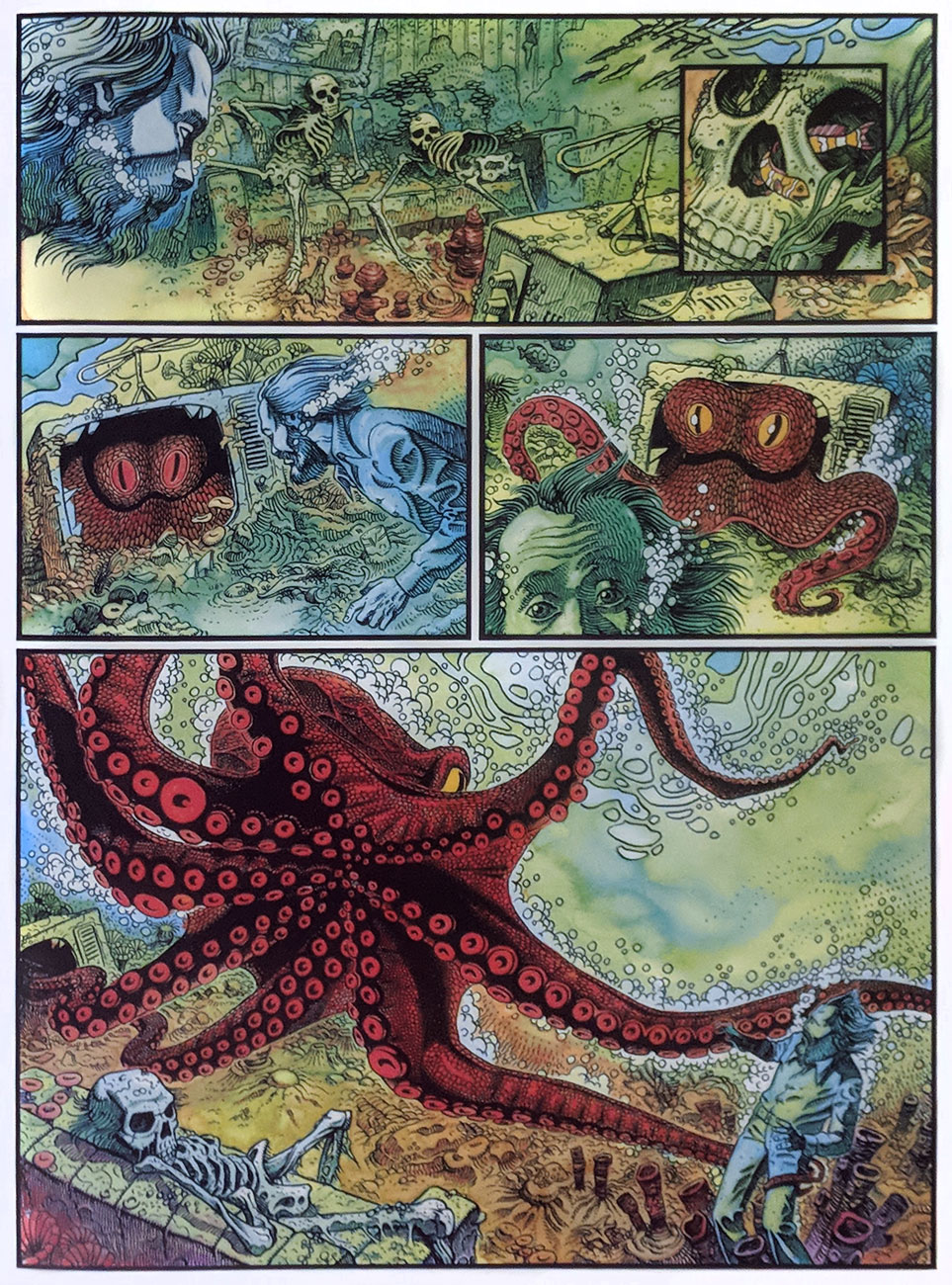
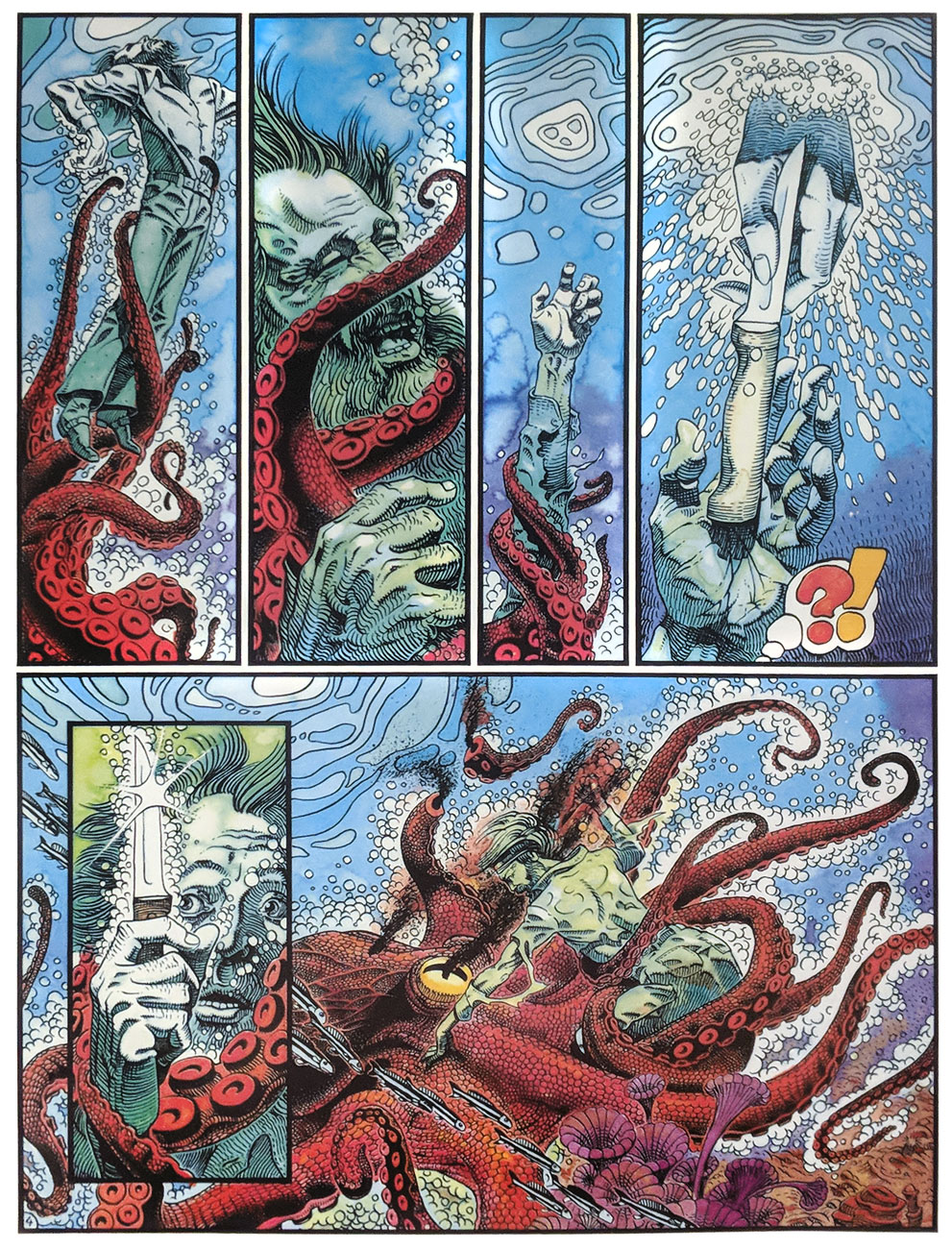
What a glorious scene! In this dream sequence, Philippe Caza’s protagonist (clearly a stand-in for himself) battles an octopus that wanted an easy meal and suffered the consequences. This story is called Épaves, which translates in much-more-prosaic-in-English to “shipwrecks”. It was part of Caza’s Scènes de la vie de banlieue cycle, published between 1975 to 1979. Visit Philippe Caza’s Surreal Suburbia for more information.
Caza draws tentacles often and with pleasure. You can keep your Moebius.
Going into slightly less obscure waters, we have a page from Joann Sfar‘s « Petit vampire» series, its 7 volumes published between 1999 and 2005. I deem it somewhat less obscure because part of it has actually been published in English, and that’s how success is measured these days, right? Only the first 3 volumes of Little Vampire have been translated, but that’s better than nothing. In France, Petit vampire is pretty popular, so much so that it has been made into an animated series.
The following page hails from Volume 4: Petit vampire et la maison qui avait l’air normale, or Little Vampire and the House That Seemed Normal, published by Delcourt in 2002.
Here’s a rough translation of the text: « On the road, the soldiers had slaughtered everything they encountered. The Menitsnik, below, was hearing the sound of their boots. He was hearing the explosions. And for once, he wasn’t indifferent, for he knew that this army was heading towards his home. The soldiers began to descend into the lake. One by one, they were crushed by the tentacles. The Menitsnik was crazed with anger because the more soldiers he killed, the more there were to kill. »
Speaking of Sfar, I’ll mosey along to the Donjon series (Dungeon in English), created by Sfar and Lewis Trondheim. The latter is another not-to-be-missed artist on the Franco-Belgian comics scene, at the very least because he’s one of the founders of L’Association. To explain:
« L’Association is a French publishing house which publishes comic books. It was founded in May 1990 by Jean-Christophe Menu, Lewis Trondheim, David B., Mattt Konture, Patrice Killoffer, Stanislas, and Mokeït. L’Association is one of the most important publishers to come out of the new wave of Franco-Belgian comics in the 1990s, and remains highly regarded, having won numerous awards at the Angoulême International Comics Festival. They were among the first to publish authors such as Joann Sfar and Marjane Satrapi, and also are known for publishing French translations of the work of North American cartoonists like Julie Doucet and Jim Woodring. »|source|
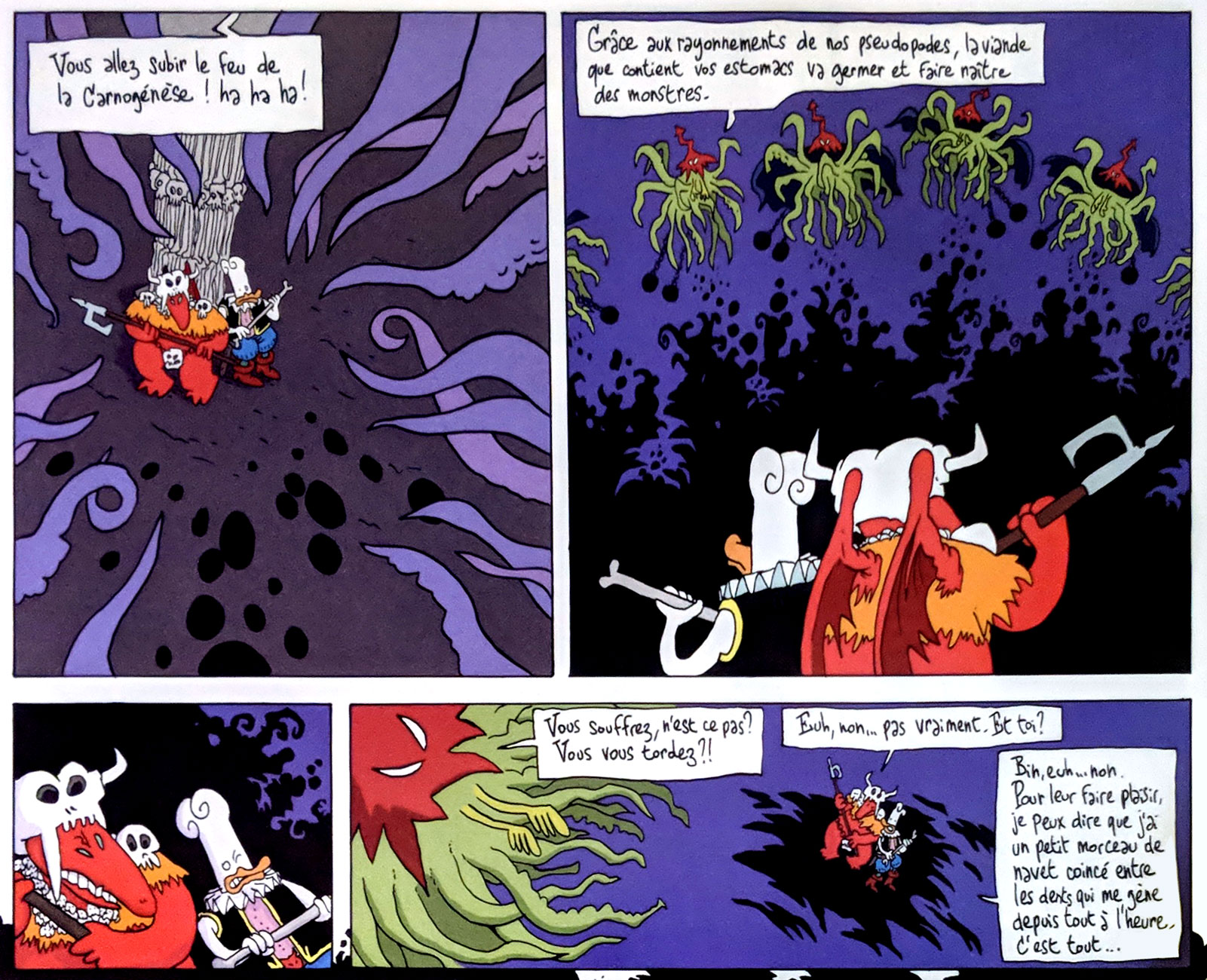
Excerpt from Donjon Zénith: Cœur de canard (Delcourt, 1998), written by Sfar and Lewis Trondheim and illustrated by Trondheim.
I only stumbled upon Donjon, a sort of tongue-in-cheek parody of role-playing games, recently. It has a sprawling structure consisting of 5 sub-divisions into stories tied by a common theme – originally the authors were aiming to release 300 volumes (with the help of many contributing artists floating around L’Association), with 36 volumes published so far. It’s more than a handful for someone who’s just starting to read the stuff… but the world is compelling, with a rich array of appealing (if flawed) characters and a complex mythology. It may technically be a parody, but the stories are poignant and imaginative, the language is delightfully playful. Some of the themes are surprisingly dark… this is far from being another dumb Dungeons and Dragons spoof.
Page from Donjon Zénith: Coeur de canard (Delcourt, 1998), written by Sfar and Lewis Trondheim and illustrated by Trondheim. This volume is full to the gills with tentacles, thanks to the Cthulhian overlords (in pointy red hats) who want to take over the Dungeon.
« I am Octo! The chicken-octopus ninja!!»
Panel from Donjon: La Princesse des barbares (Delcourt, 2000), written by Sfar and Lewis Trondheim and illustrated by Trondheim.
Our last entry is from Valérian and Laureline, the stunningly influential French comics series created by writer Pierre Christin and artist Jean-Claude Mézières that director Luc Besson besmirched, besmeared and befouled. It can also be noted that a variety of movies “borrowed” from V & L’s rich science-fiction lore, most notably the Star Wars franchise. Should I be happy that more people now know about this series now that a shitty movie “based” on it came out? Nope, sorry. Besson claims to have fallen in love with Valérian et Laureline when he was 8 years old, but with Valerian and the City of a Thousand Planets he demonstrated quite thoroughly that he doesn’t understand the characters in the slightest and is only capable of seeing science-fiction through the lens of chintzy special effects designed to wow idiots.
To which I’ll add that Valérian kind of transcends the science-fiction genre – or perhaps I should say that it’s science-fiction as it was originally meant to be, as an exploration of the possibilities of external and internal worlds. (Technologically upgraded cowboys shooting each other with laser guns in primitive, shallow battles between good and evil? We’ll leave that to crappy movie directors, thanks.) Its plots are elaborate (but they never defy their own internal logic), its characters complex but immensely likable.
In 2007, the series got renamed Valérian and Laureline for its 40th birthday, and I’m glad they renamed it, as Laureline is an integral part of both its appeal and its popularity. She’s every bit as intelligent and determined as her companion, and is certainly no maiden in distress, often sizing situations up quicker than Valérian and subsequently pointing him in the right direction.
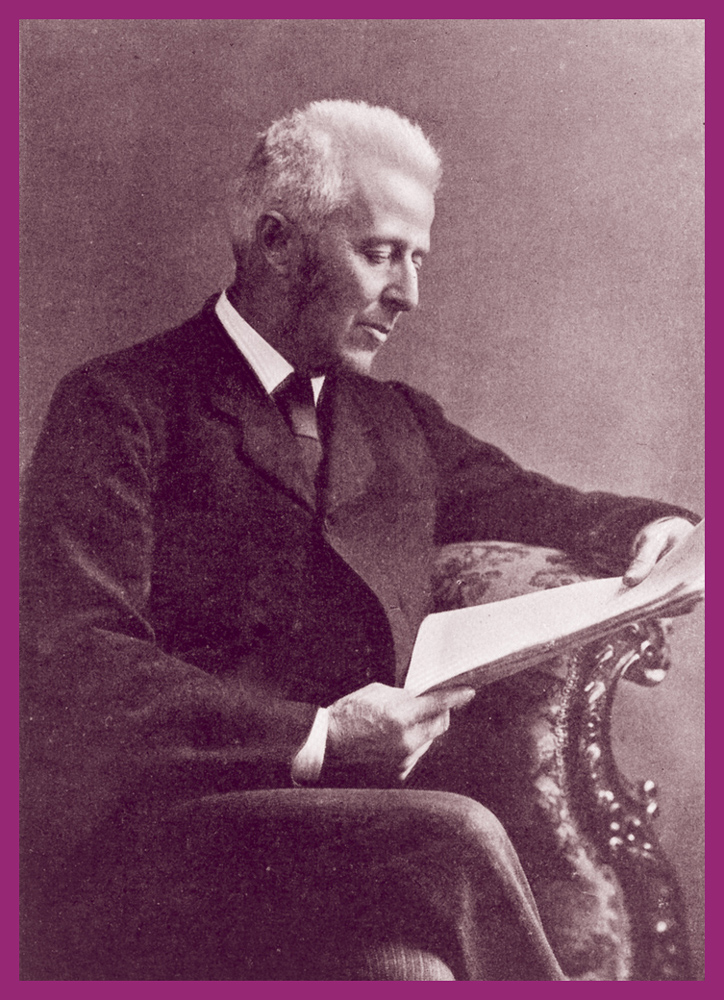
« In medical practice it is inevitable to observe the details. »
– Dr. Joseph Bell
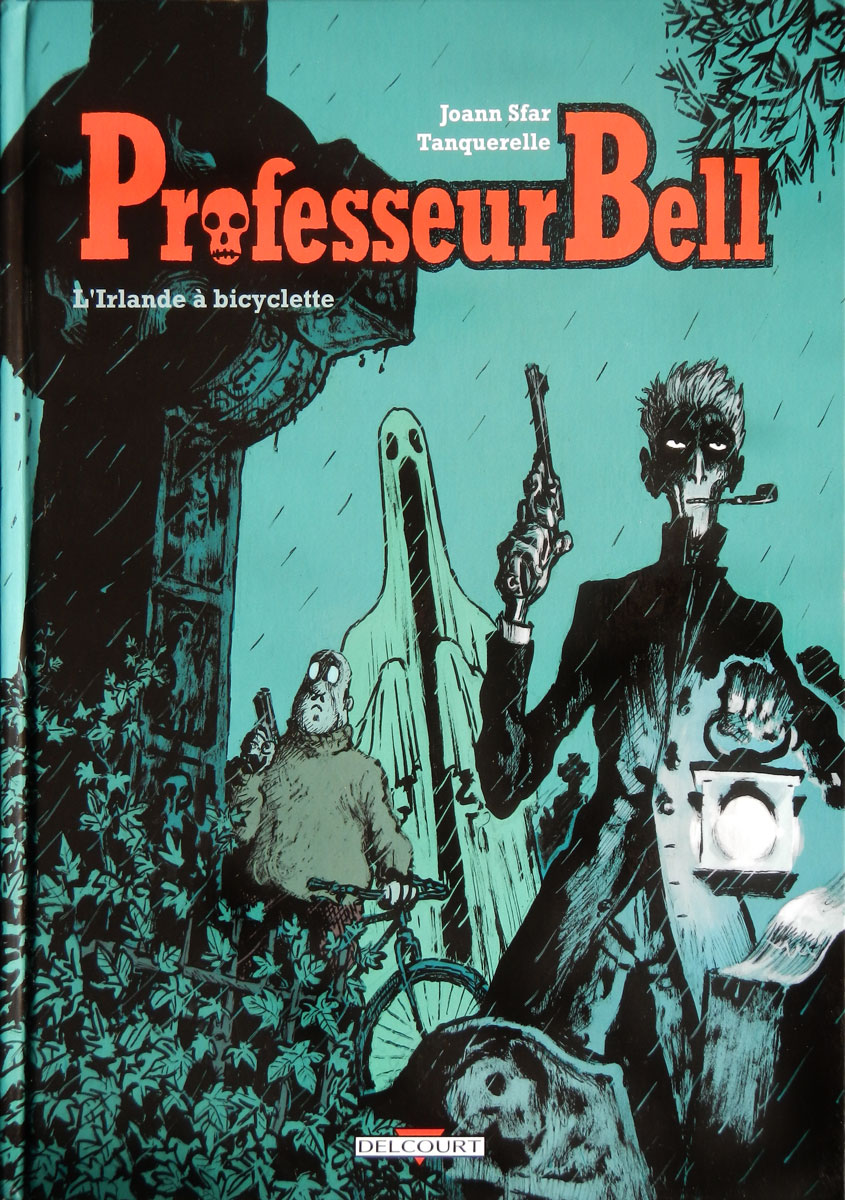
From France, then, we have the now-whimsical, now-terrifying exploits of Professeur Bell, somewhat loosely based on Joseph Bell, a lecturer at the medical school of the University of Edinburgh, who was Arthur Conan Doyle‘s teacher and the alleged real-life inspiration for Sherlock Holmes.
The good (actual) Dr. Bell. He’s only pretending to read.
Joan Sfar wrote and drew the first two entries in the series, but struggled to achieve the more realistic and detailed style he’d set for himself. With the third volume, he was joined by the skillful and versatile Hervé Tanquerelle, who handled the art chores from then on. A smooth transition.
Sfar has been invoking a marvellously complex and nefarious universe surrounding a « hero » with an increasingly slippery grasp on morality and reality. Heck, even Frank Belknap Long‘s Hounds of Tindalos got a surprise look-in. Recommended.
Published so far in French, Italian, German and Polish…
« L’Irlande à bicyclette » is the fifth and latest in the series, published in 2006. Ahem, fellas… it’s been *quite* a while. La suite, s’il vous plaît?
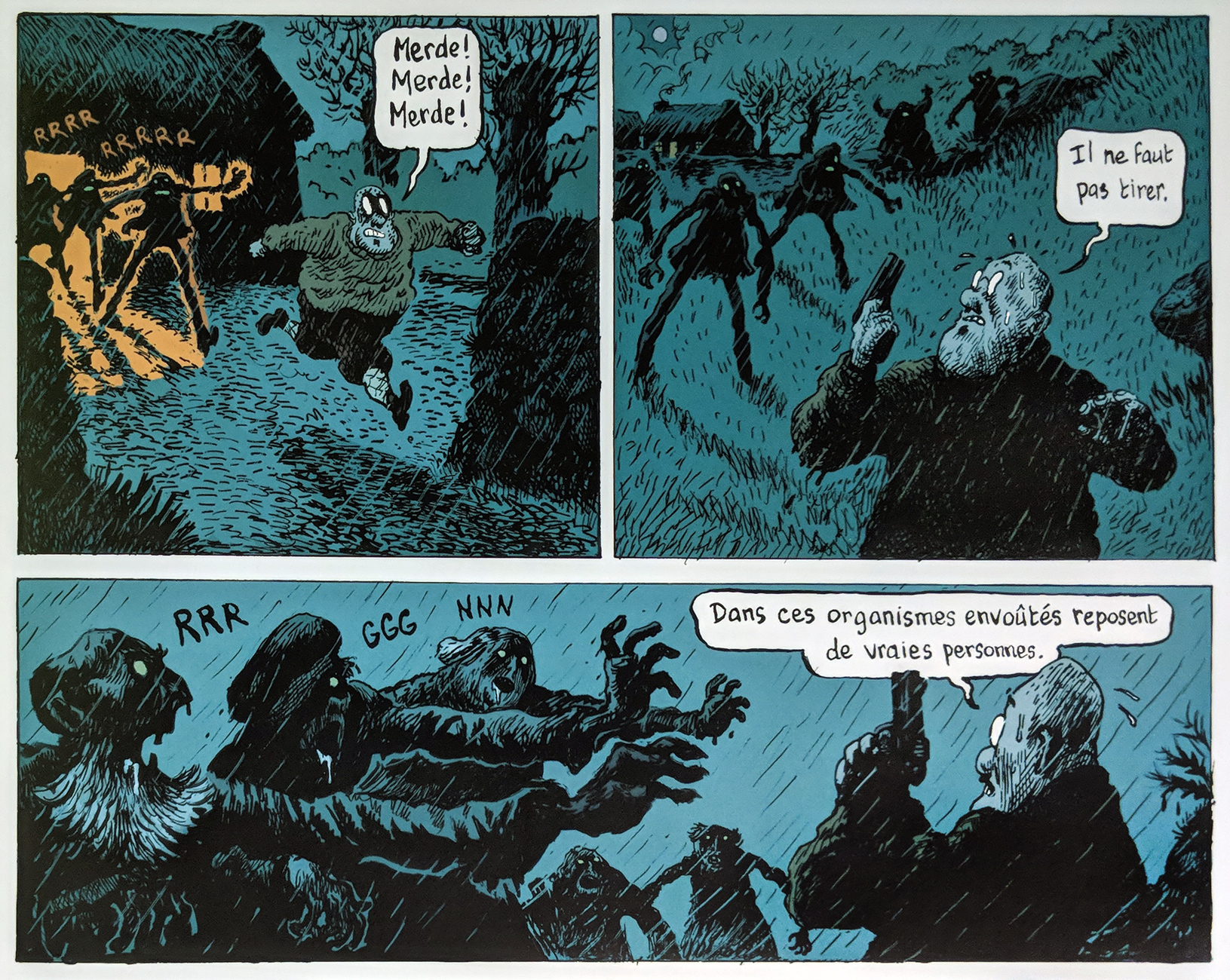
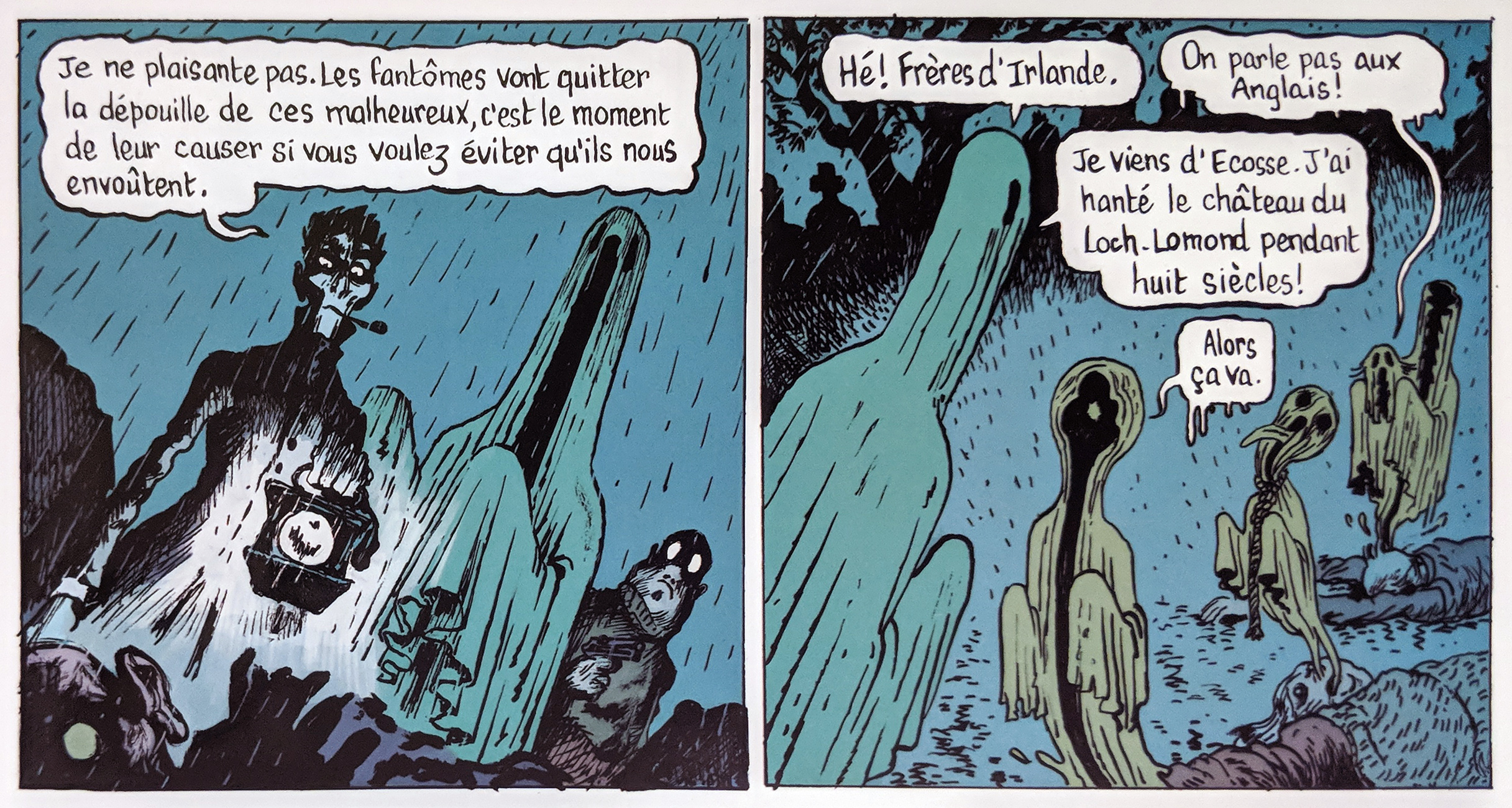
Intrigued, as you should be (you do have a pulse, right?)… care for a few furtive glances between the covers?
I’m not going to waste my breath trying to explain. Just dig that mood.











 Who's Out There?