« I opened my magazine (What did you see?) / I saw Mr. France (What did he have?) / A girl on each shoulder (What else?) / And one in his pants » — 10cc, Sand in My Face (1973)
You may think of this post as a companion piece, a spinoff of its predecessor. I’d had for some time, in the back of my mind, the notion to showcase some obscure French ‘human sculpture’ ads, but it needed more. Comments on the previous post provided the spark.
Is there a more classic “humble immigrant makes good in the USA” yarn than that of Angelo Siciliano, born in 1892 in the tiny Italian town of Acri? The Smithsonian has told the full, colourful story, so I’ll spare you a rehashing of it.
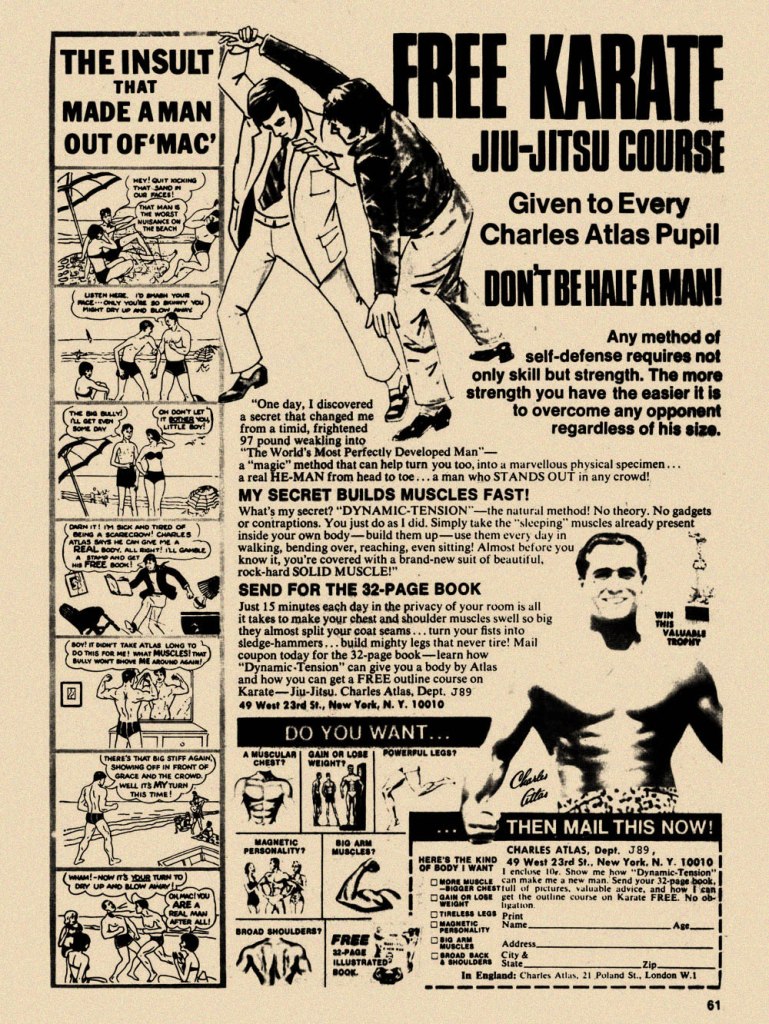
Let’s just say that young Siciliano worked hard to overcome adversity and redeem his puny physique, and the rest is the stuff of legend. The principles of ‘dynamic tension‘ and his immortal moniker aside, Angelo’s finest brainstorm was to employ the lowly but then-ubiquitous medium of comic books to introduce his product and its natural audience to each other. Let’s take the tour!
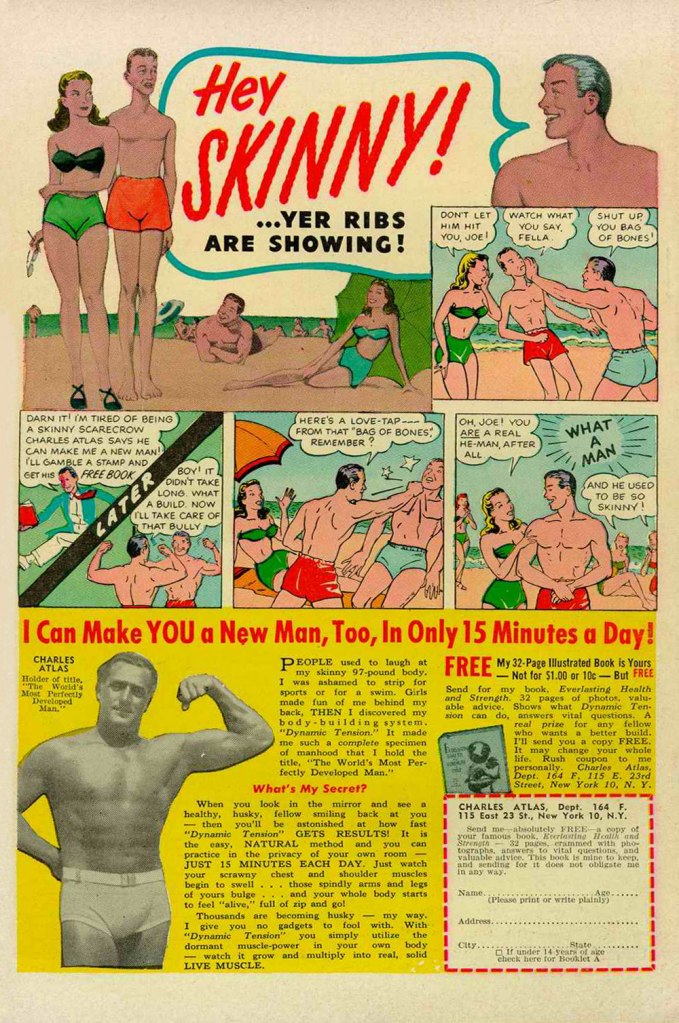
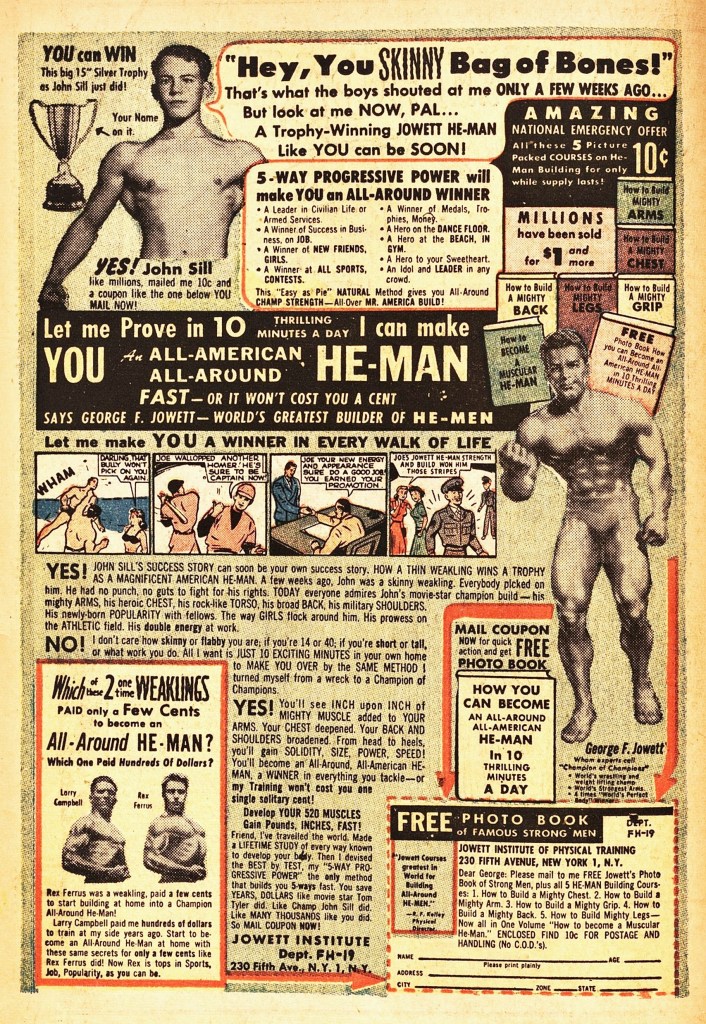
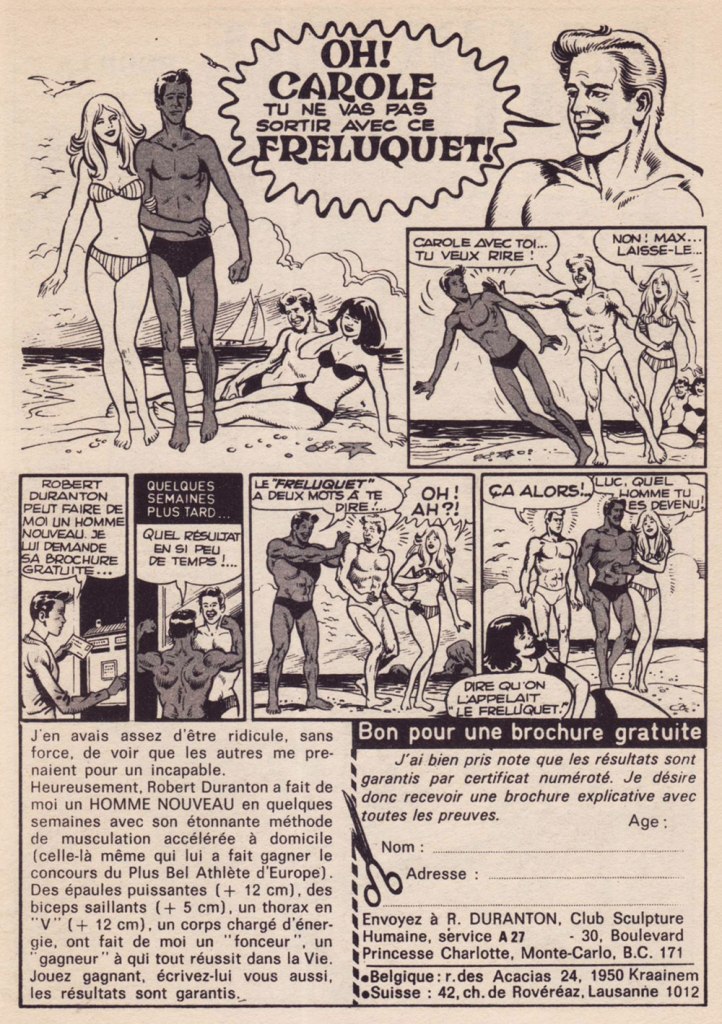
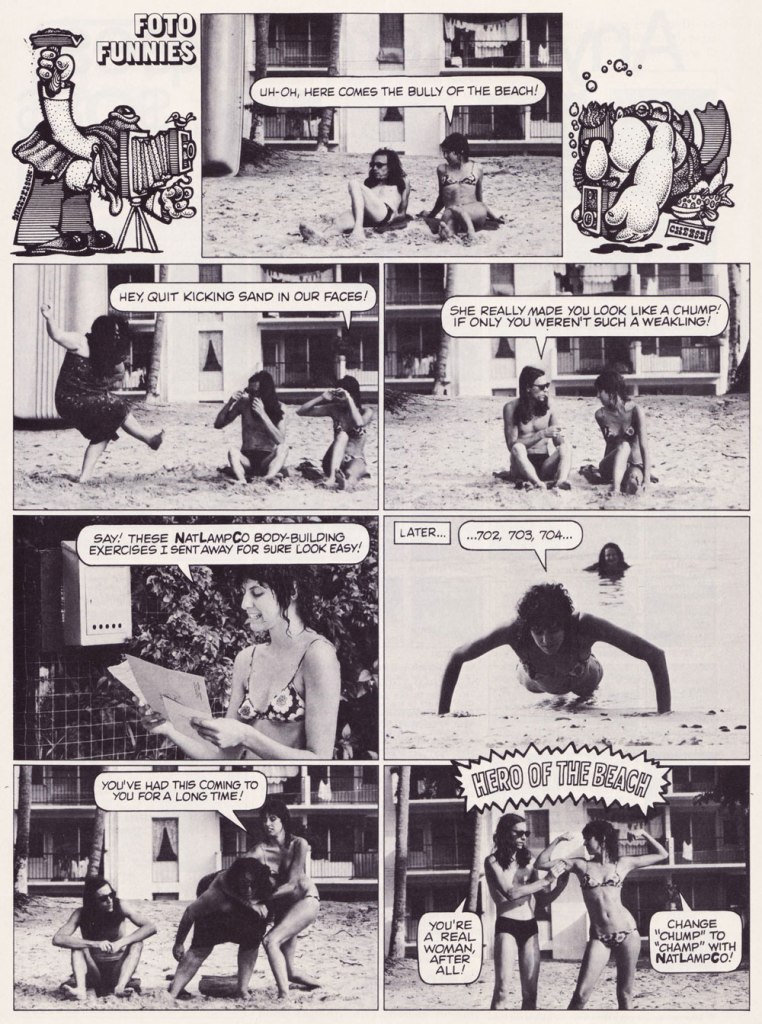
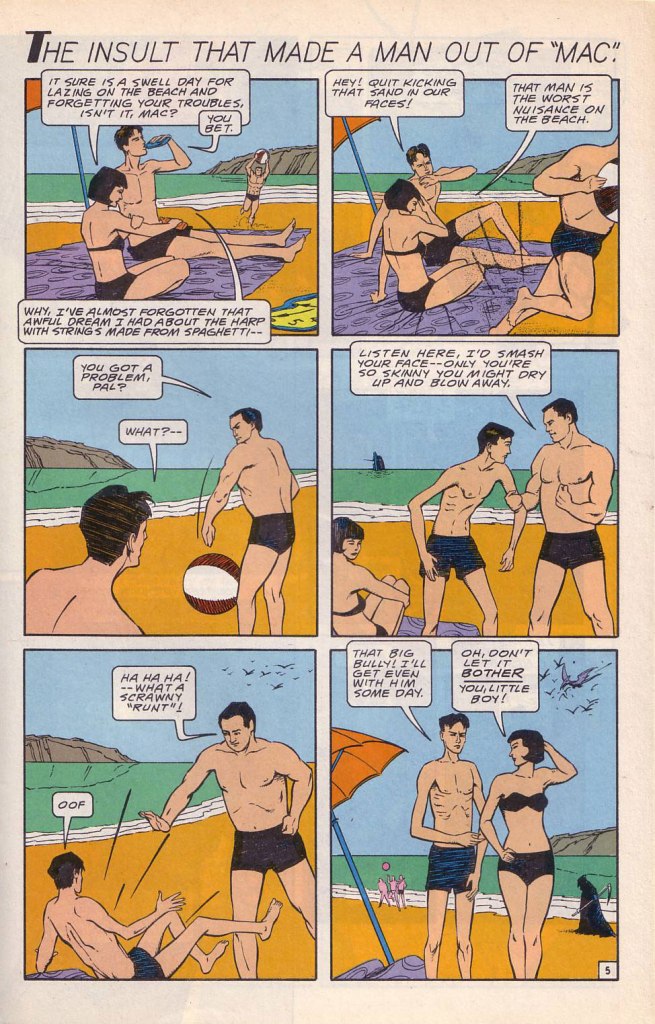
While the Charles Atlas ads began running in the 1930s, this is probably their classical expression. This one saw print as the back cover of Mad no. 14 (Aug. 1954, EC). Its opening insult even inspired Miles Heller’s 1995 salute to the great old comic book ads, Hey Skinny!There was inevitably fierce competition in the self-improvement field. This entry, from the U.S. Nature Products Corp., appeared in Stan Lee’s oh-so-macho Man Comics no. 10 (Oct. 1951, Atlas).Lots and lots of copy — but the all-important cartoon hook is present and accounted for. From the pages of Firehair no. 9 (Fall 1951, Fiction House). The Jowett Institute of Physical Training wants you to get buff! To be fair, George F. Jowett got there first.This is surely the definitive version, with the unforgettable tag line and ‘hero of the beach’ conclusion. I pulled this one from The Witching Hour no. 25 (Nov. 1972, DC), which hit newsstands just a few months before Mr. Atlas passed away, aged 80, on Christmas Eve. I can’t help being amused: French publisher Arédit, whose digest-sized collections of (mostly) reprints of US comics proudly bore the tag « Comics for adults », featured very few outside ads… and those were almost exclusively for self-defense and body-building systems. Here’s a sample trio. This one appeared in Maniaks no 4 (Fall, 1971). This title featured reprints of DC Silver Age ‘humour’ comics… all but the only actually funny one (that would be Sugar and Spike, of course).Oh, I’m sure the ERB Estate got their cut. And who might that R. Duranton fellow be? Four times Mr. France, for one thing! Here he appears with Louis de Funès in a famous scene from Le Corniaud, a 1965 farce starring beloved stars André Bourvil / De Funès and directed by Gérard Oury. This one’s from Kamandi no. 4 (Summer 1976, Artima), which featured reprints of various 60s and 70s DC adventure comics. It was an affordable way to catch up on material one might have missed — or couldn’t afford!This refreshing gender-switched lampoon comes from the pages of National Lampoon no. 26 (May, 1972), the ‘Men!’ issue, guest-edited by Anne Bats, No other credits, dammit. The opening page (of four) of Steve Skeates and Sergio Aragonés‘ wacky satire, from the pages of Plop! no. 2 (Nov.-Dec. 1973, DC). There have been truly countless spoofs of the Atlas adverts… most of them quite dire. Once more, I’ll spare you.By the mid-1970s, with America in the kung-fu grip of martial arts fever, it’s understandable that many a young man was envisioning Bruce Lee‘s lithe, compact physique as an alternative to the hulking musclemen of yore. The Charles Atlas company tried to cover all bases with this ad; from — speaking of old-time musclemen — Doc Savage no. 2 (Oct. 1975, Marvel).
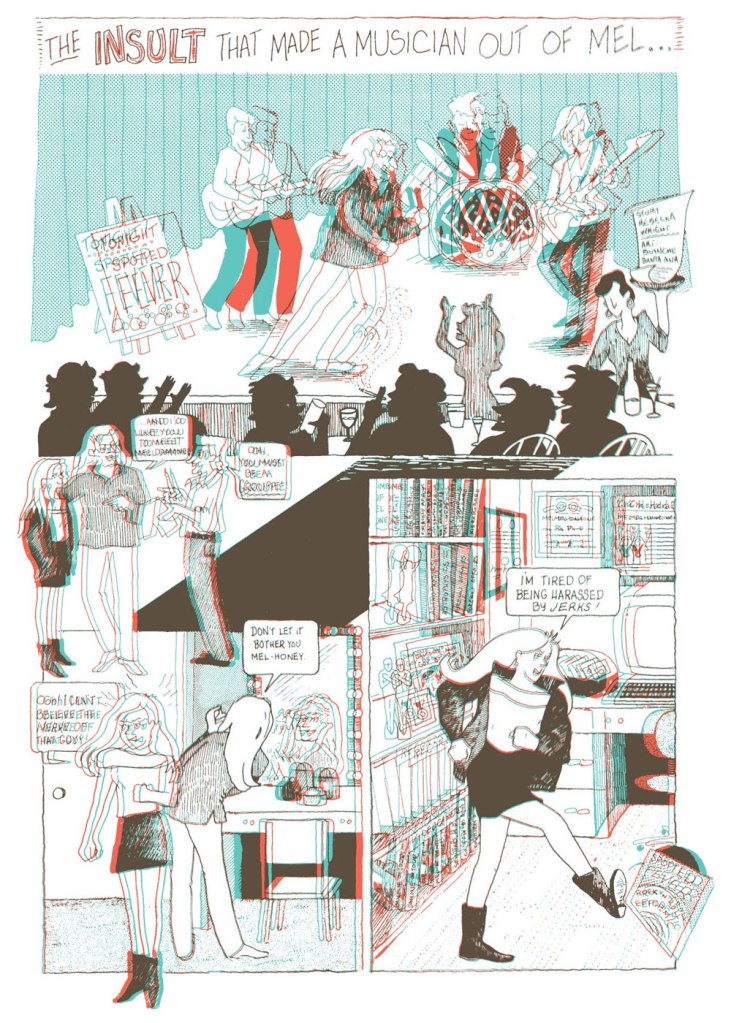
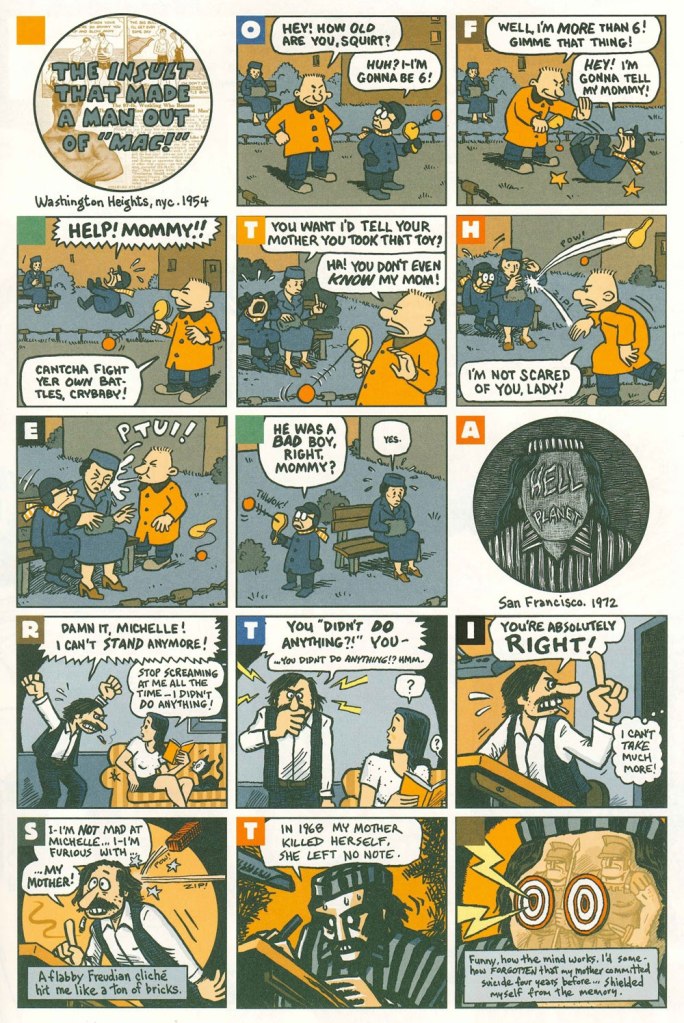
Ah, yes — those days when ‘Bruce‘ was the stereotypical gay name. From the ‘Playboy Funnies’ section of the magazine’s November, 1977 issue.And for something a bit off the beaten path: this is The Insult That Made a Musician Out of Mel, scripted by Rebecka Wright, illustrated by Blanche Santa Ana, with 3-D effects by Ray Zone, from Wimmen’s Comix no. 12 (Nov. 1987, Renegade Press), edited by Angela Bocage and Rebecka Wright.Does this look familiar? This is the first page of Flex Mentallo’s origin tale, as it appeared in Doom Patrol no. 42 (Mar. 1991, DC), written by Grant Morrison, with art by Mike Dringenberg and Doug Hazlewood. I have no idea whether Atlas had a sense of humour, but his successors sure didn’t, as evidenced by the lawsuit they filed against DC Comics over this clear — if brazen — case of satire. I much prefer the TV show version of Flex, I confess.Peter Kuper deftly used the cliché to take a jab at George Bush Sr.’s image and the first Gulf War. Dated and irrelevant? Trying to prove your ‘manhood’ remains distressingly au courant… just consider these two schmucks, to cite but one recent example. And hey, here’s “Stormin’ Norman lying on T.V.” From Bleeding Heart no. 1 (Winter 1991-92, Fantagraphics).Art Spiegelman digs deeper and makes more discerning use of the raw materials at hand with The Insult that Made a Man out of “Mac!”, first previewed in The Virginia Quarterly Review and then collected in Breakdowns Portrait of the Artist as a Young %@?*! (Oct. 2008, Pantheon).
« Even as a youngster reading 2000 AD from its first issue in 1977, it was clear that Brian’s artwork was special. It was the perfect mixture of American-inspired dynamism, a British sense of the absurd, and avant-garde European SF imagery, rendered in meticulous, almost inhumanly perfect linework. It was a deeply seductive style… » — David Roach
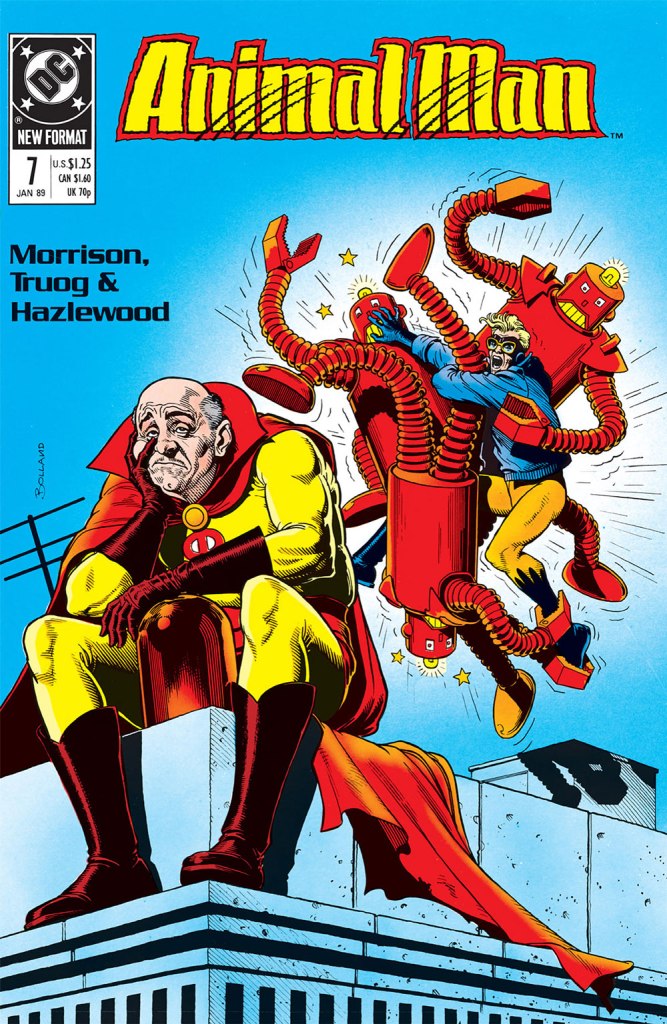
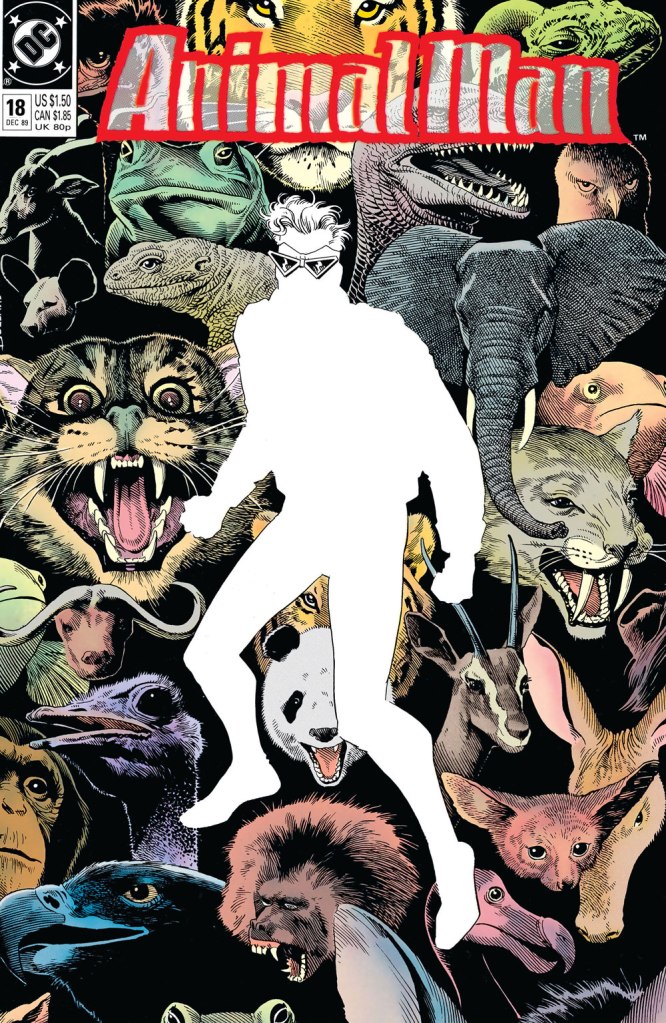
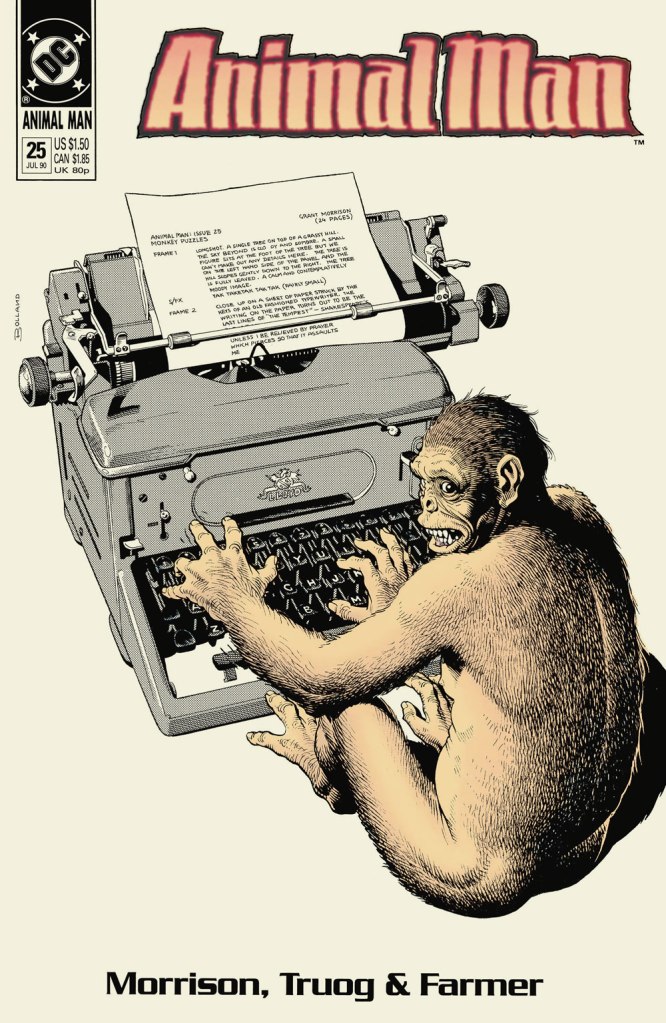
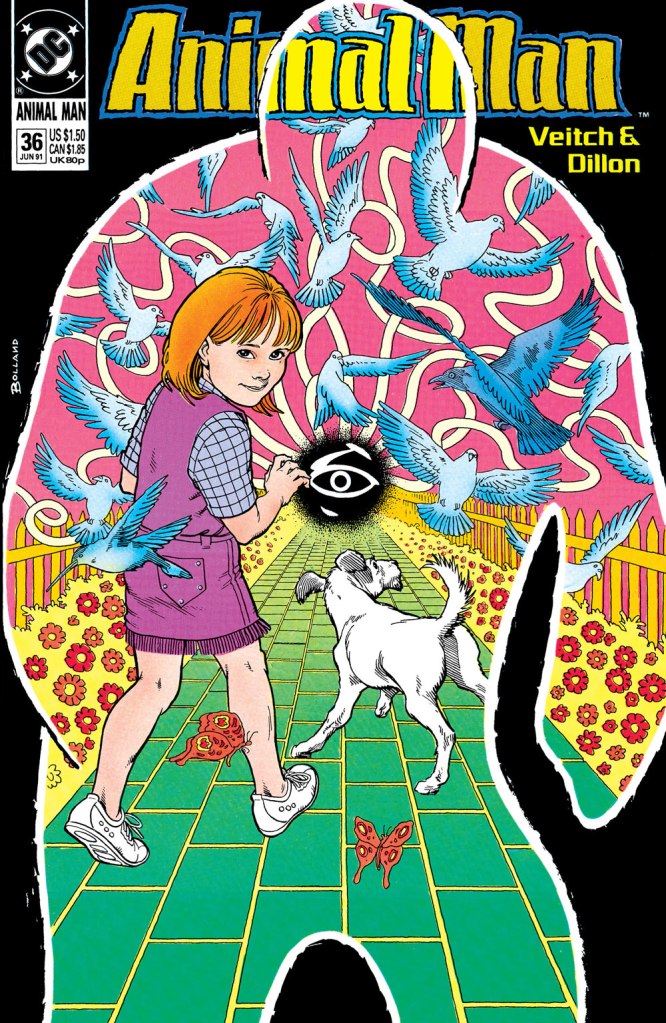
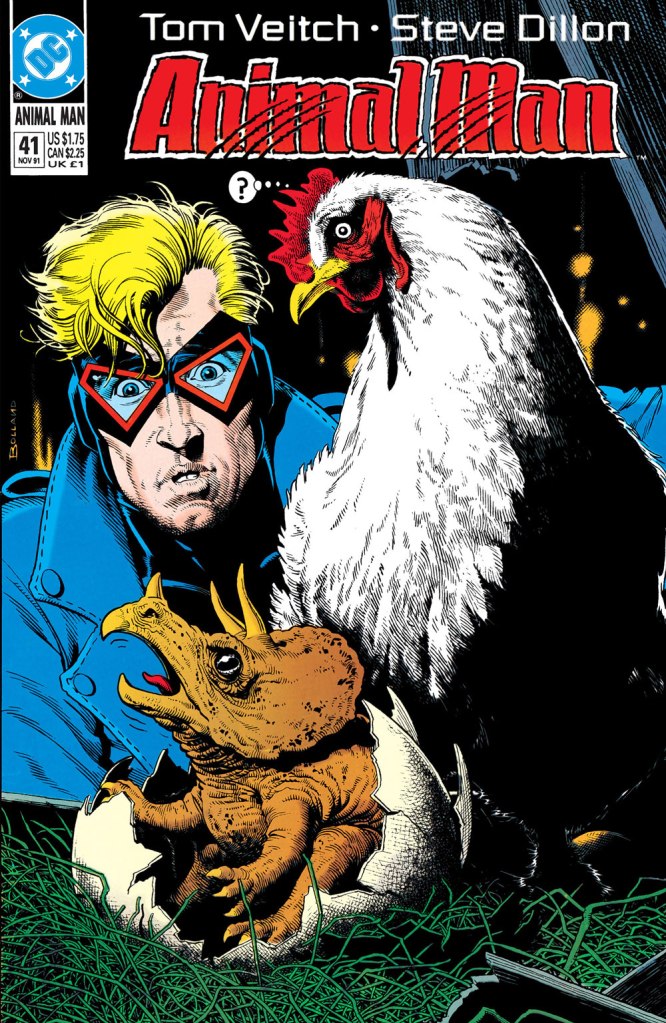
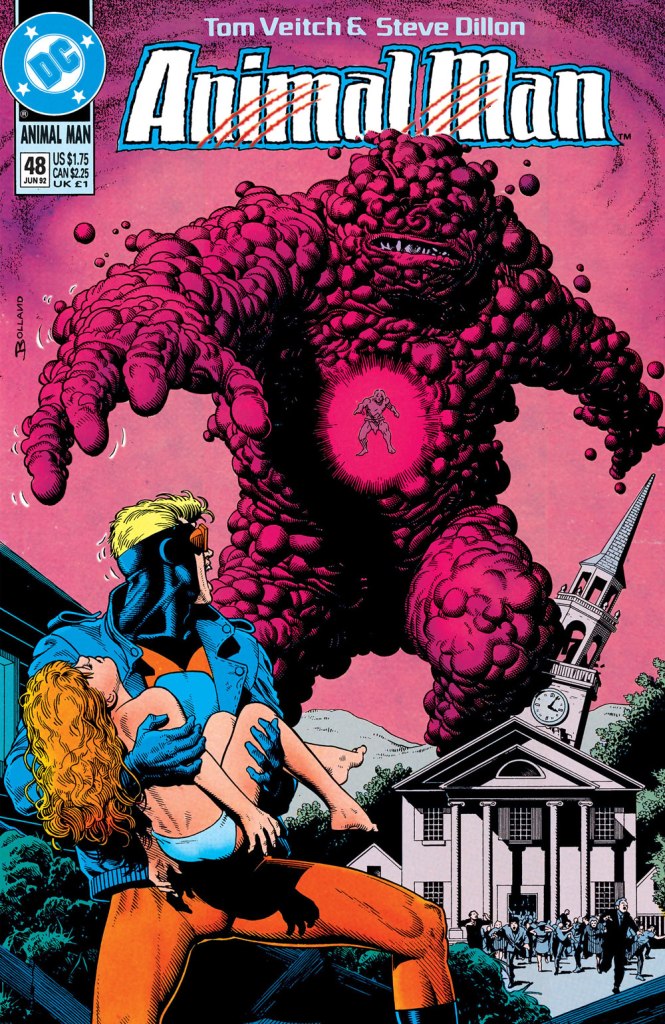
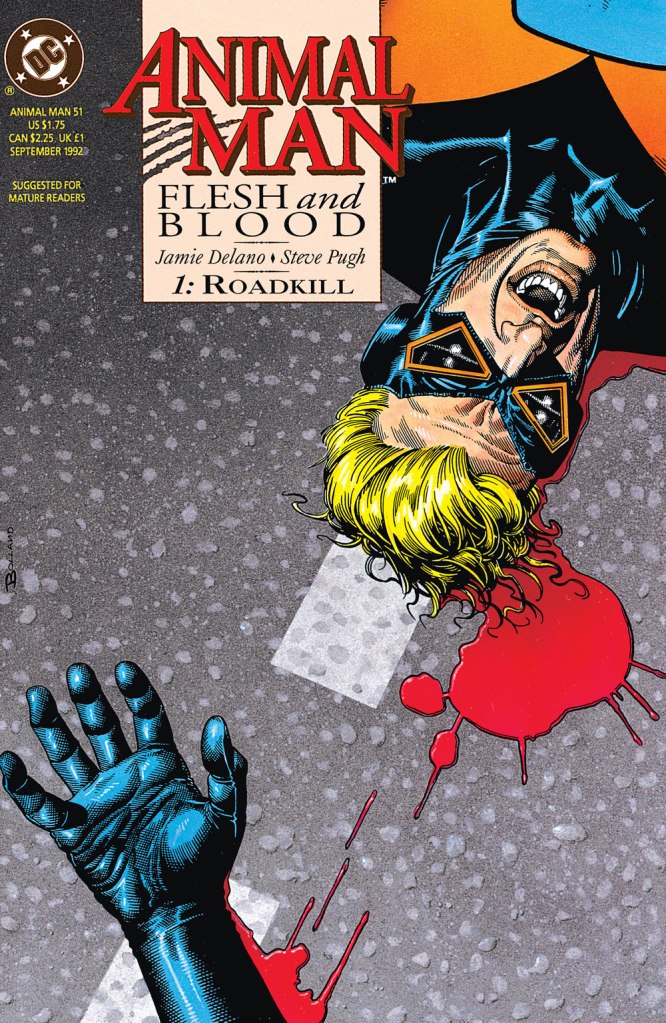
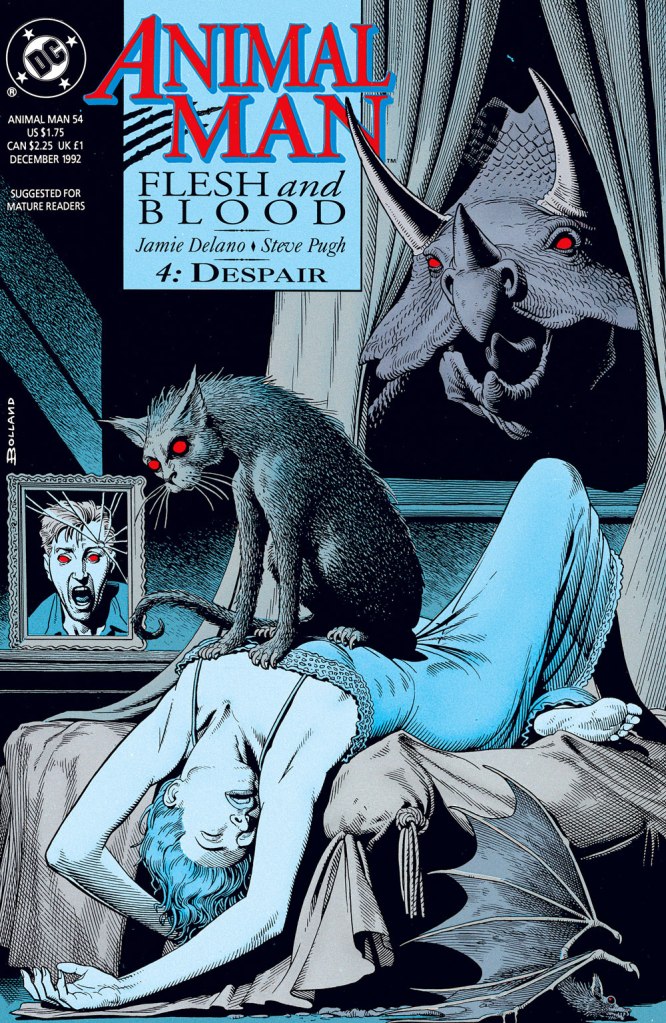
As far as I can tell, everyone loves Brian Bolland‘s (b. 1951) work. It’s sophisticated in design yet direct, highly detailed yet clean as a whistle *and* neat as a pin, technically adept, varied but unfailingly his. As a sequential cartoonist, he can be a bit stiff, but as a cover artist, he’s pretty untouchable. For about a second and a half, I was tempted to spotlight his work in our Hot Streak! category, but that would have been absurd, such is Bolland’s high level of consistency and volume of work. So I’ll “merely” feature an even dozen of his Animal Man covers (out of a total of 64, 1988-1993).
After Alan Moore made an unexpected splash with his work on Swamp Thing, the folks at DC scrambled, in ‘have you got a sister?‘ fashion, to strip-mine the UK’s writerly talent pool. In came Grant Morrison, Neil Gaiman, Pete Milligan, Jamie Delano, Garth Ennis, Warren Ellis, and so on…
For the cockiest of these writers, the typical bravura move was to prove their commercial acumen by revamping the most obscure existing character they could think of* (typically, characters DC’s then-editors had never heard of); in Gaiman’s case, it was Sheldon Mayer’s Black Orchid**, and in Morrison’s, Animal Man. As minor characters (a lesson learned from Alan Moore’s Watchmen), these heroes could be subjected to numberless and unceasing torments and humiliations at the writer’s whim.
Created by writer Dave Wood and illustrator Carmine Infantino, Animal Man was introduced, sans costume at first, presumably as he was intended as a one-off, in DC’s long-running SF anthology Strange Adventures no. 180 (Sept. 1965). First known as A-Man, he gained his superhero togs in his third appearance, Strange Adventures no. 190 (July 1966). After a mere five appearances in SA, he virtually vanished… until the second ‘British Invasion‘.
This is Animal Man no. 5 (Winter 1988, DC); logo by Todd Klein. In this celebrated issue, Grant Morrison mashes up the Bernie Krigstein segments of Harvey Kurtzman‘s Bringing Back Father! (Mad no. 17, Nov. 1954, EC) and Alan Moore and Don Simpson‘s In Pictopia! (Anything Goes! no. 6, Dec. 1986, Fantagraphics) then anoints the ointment onto a Wile E. Coyote/Jesus avatar. This is Animal Man no. 7 (Jan. 1989, DC). Bolland’s tonal versatility is a tremendous boon, his superpower, if you will. He brings to this cover a deft comic touch intended, but sadly lacking from the inside story. This is Animal Man no. 18 (Dec. 1989, DC), a clever reverse-emphasis homage to one of the great covers of the 1960s, Carmine Infantino (designer) and Neal Adams (penciller-inker)’s Strange Adventures no. 207 (Dec. 1967, DC), winner of the 1967 Alley Award for best cover of the year. This is Animal Man no. 24 (June 1990, DC). Bolland has a ball redrawing classic Silver Age covers… including issues of Brother Power the Geek, The Inferior Five and Swing With Scooter! The central figure is an old Justice Society foe, the Psycho-Pirate (Mark II in this case), created in 1965 by Gardner Fox and Murphy Anderson. The GCD notes: « Cover prominently features several of the key comics that established the concept of the multiverse (The Flash no. 123, Green Lantern no. 40, Justice League of America no. 21). » Oh, you thought *Marvel* had come up with the ‘Multiverse‘? It’s high time you met Hugh Everett. And while we’re on the subject, here’s a touching song his son wrote about him.This is Animal Man no. 25 (July 1990, DC), a sharp illustration of that old favourite, the Infinite monkey theorem. First writer switch! Morrison out, Milligan in. This is Animal Man no. 28 (Oct. 1990, DC). Back to front: the Notional Man (with the forceps), the Front Page, Animal Man, and Nowhere Man (as in…)A bold change of pace, this is Animal Man no. 36 (June 1991, DC). Milligan out, Veitch in. This is Animal Man no. 41 (Nov. 1991, DC). This is Animal Man no. 48 (June 1992, DC). At the centre of the gloopy pink monster hovers snappy dresser and fellow animal-powered justicer B’wana Beast. This is Animal Man no. 49 (July 1992, DC).Veitch out, Delano in, and a layout change to boot. This is Animal Man no. 51 (Sept. 1992, DC). By now, it’s pretty much a straight horror title.This is Animal Man no. 54 (Dec. 1992, DC), a striking homage to Henry Fuseli‘s immortal painting, The Nightmare.
-RG
*To be fair, their first eighty-five choices likely had proved unavailable.
**Mayer had asked that his 1970s creation, The Black Orchid, never be given an origin or have her mystery dispelled. Gaiman just aped what Mr. Moore had done (but brilliantly) with Swamp Thing… and made her a literal plant. Bah.













 Who's Out There?