Espiègles, impétueux: Dubout’s Impish Cats

« One cat just leads to another. » [source*]
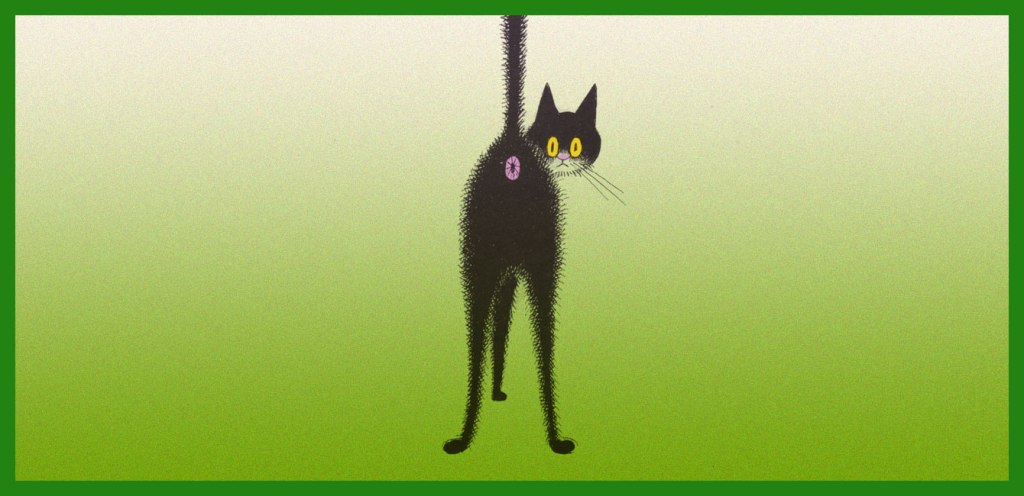
Kitty butts are the ordre du jour.
Back of Bob Foster’s Myron Moose no. 1 (Myron Moose Comic Book Works, 1971); this art print was also released years later, as can be seen by the date on it.

We are technically a three-cat household — that’s how many cats we had decided we could comfortably handle. For a while we stuck to this number, and when one cat departed, another one would come to take his place. Then number four walked through the door — he was sort of a part-time cat, until he became decidedly one of ours. Well, four isn’t that much more work than three. When number five appeared, bedraggled, underfed and with a perpetually sad expression (‘he had that look you very rarely find — the haunting, hunted kind‘, to quote Tim Rice), we wanted to give him to a rescue society… and of course ended up keeping him.

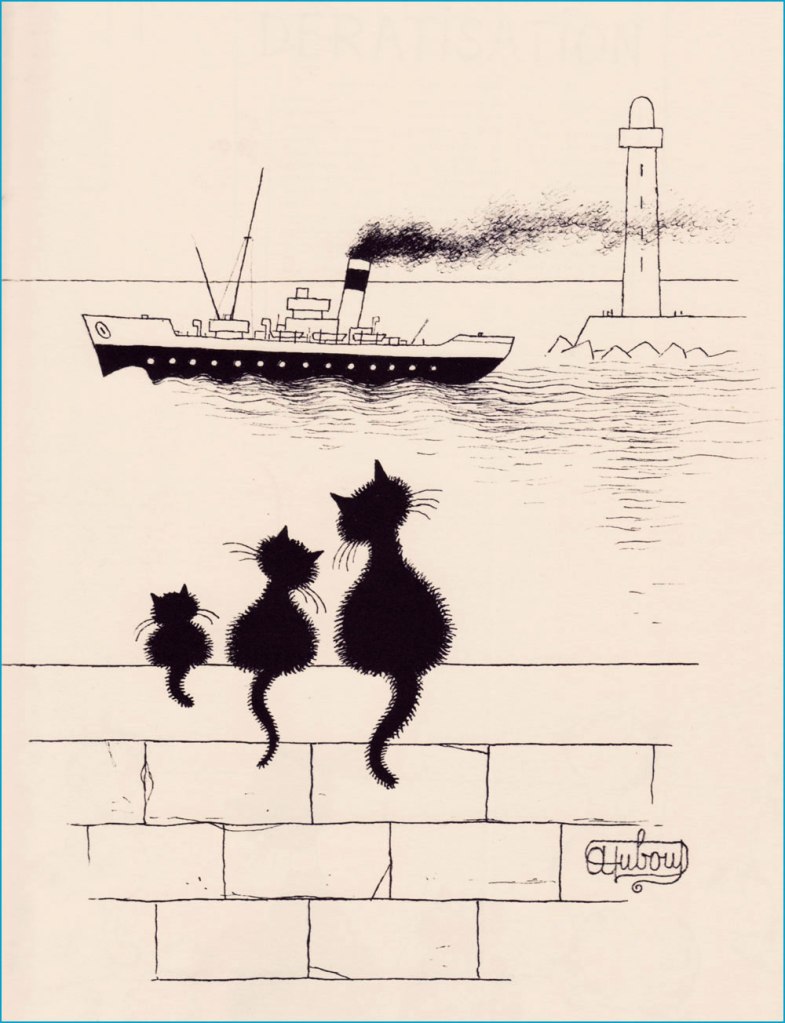
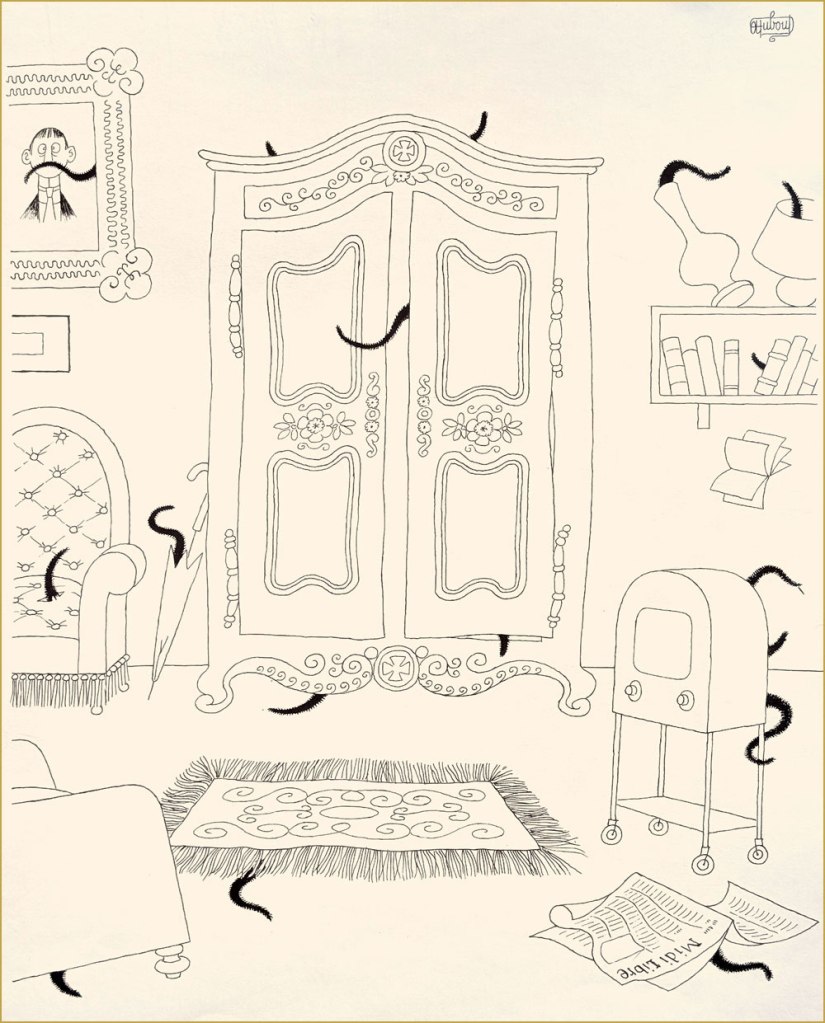
Albert Dubout (born as lbert Dubout, 1905-1976), was primarily an illustrator of books (notably, his amical collaboration with French writer San-Antonio, many of whose novels proudly bore Dubout’s covers and inside illustrations), and, with equal talent, a cartoonist and poster designer (check out some of his film posters here), not to mention a calligrapher with a number of delightfully mellifluous signatures. His official website can be found here, in case you want to take a peek.

The following excerpts have been scanned from Les chats (Editions Hoebeke, 1999).

Although the topic is obviously inexhaustible, for some more fun cats, visit Off to the Isle of Cats — and Back by Teatime!, Commence by Drawing the Ears: Louis Wain’s Cats, Q: What’s Michael? A: Kobayashi’s Most Special Cat or Steig Swoops In: The ‘Epic in Jazz’ Cat Sextet.

This cover was published posthumouslyEdward Gorey submitted it in 1992, but another of his drawings was selected instead. Gorey, who died in 2000, was of course another one of those famous cat persons.

~ ds

*I don’t like Hemingway at all, but I do have a certain grudging respect for a man who kept some 40+ cats. Rhetorical question: are cats living at that high a density within one house really having a good time?
Hallowe’en Countdown III, Day 14

« It’s well we cannot hear the screams we make in other people’s dreams. » — Edward Gorey

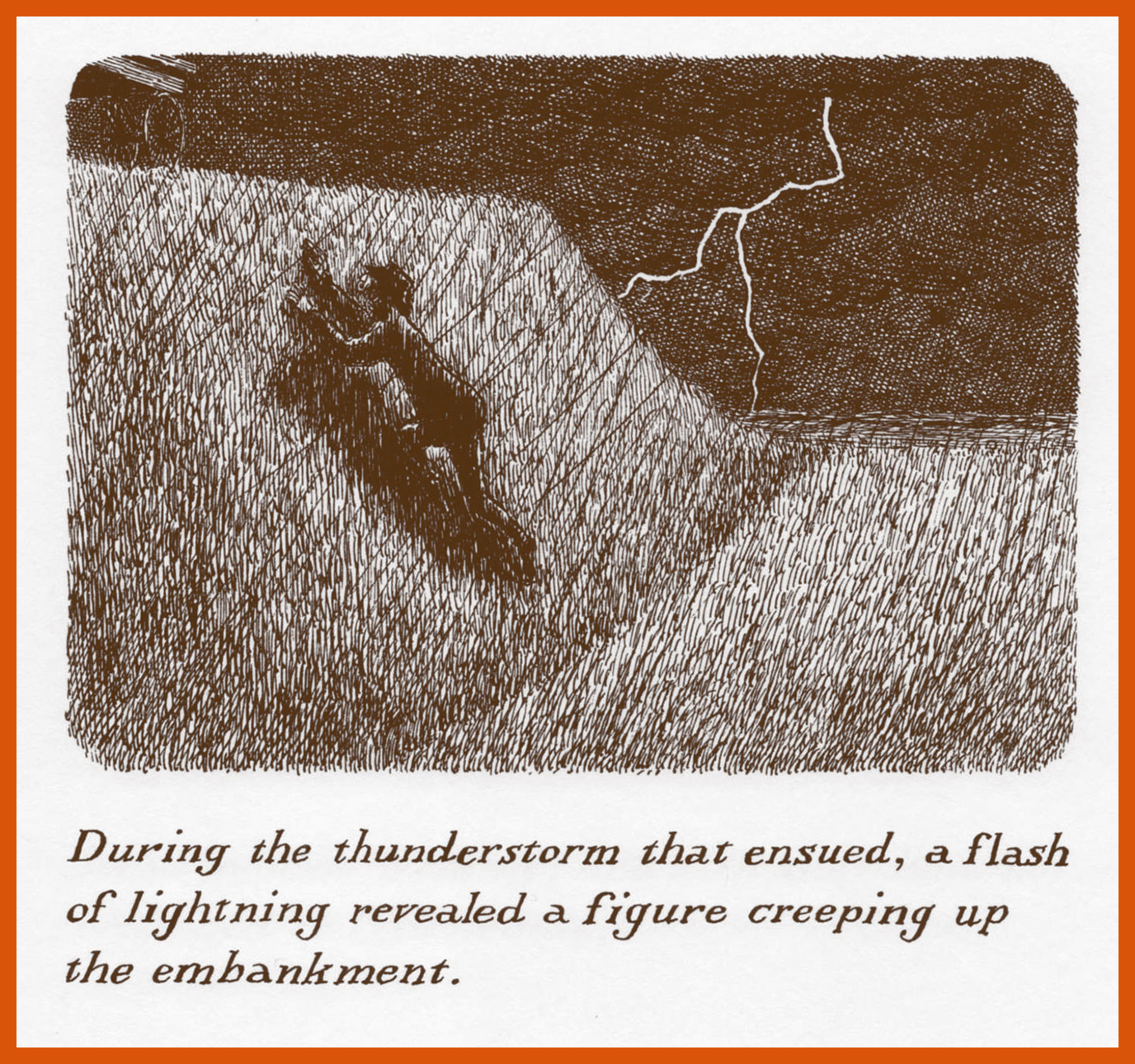
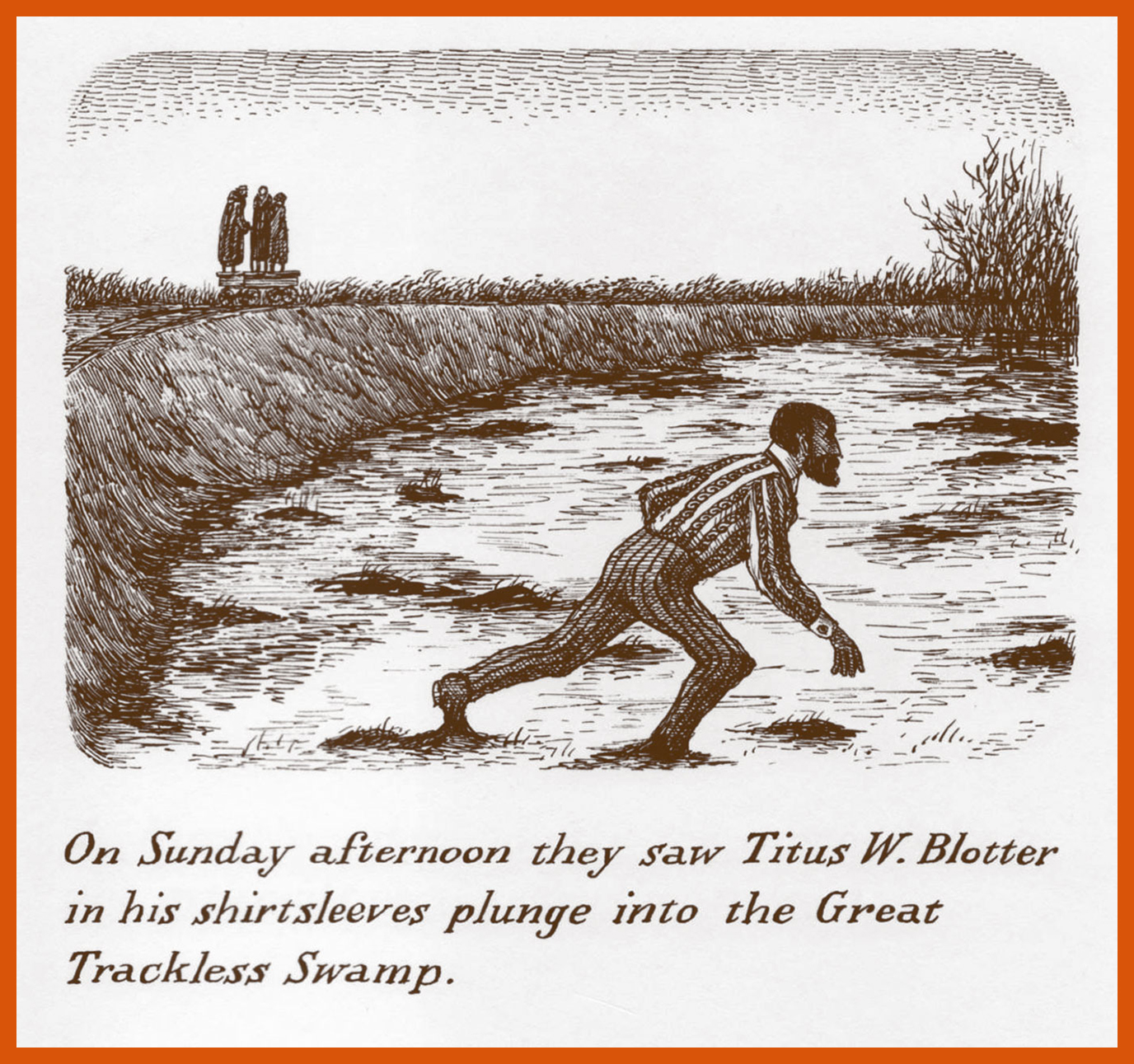
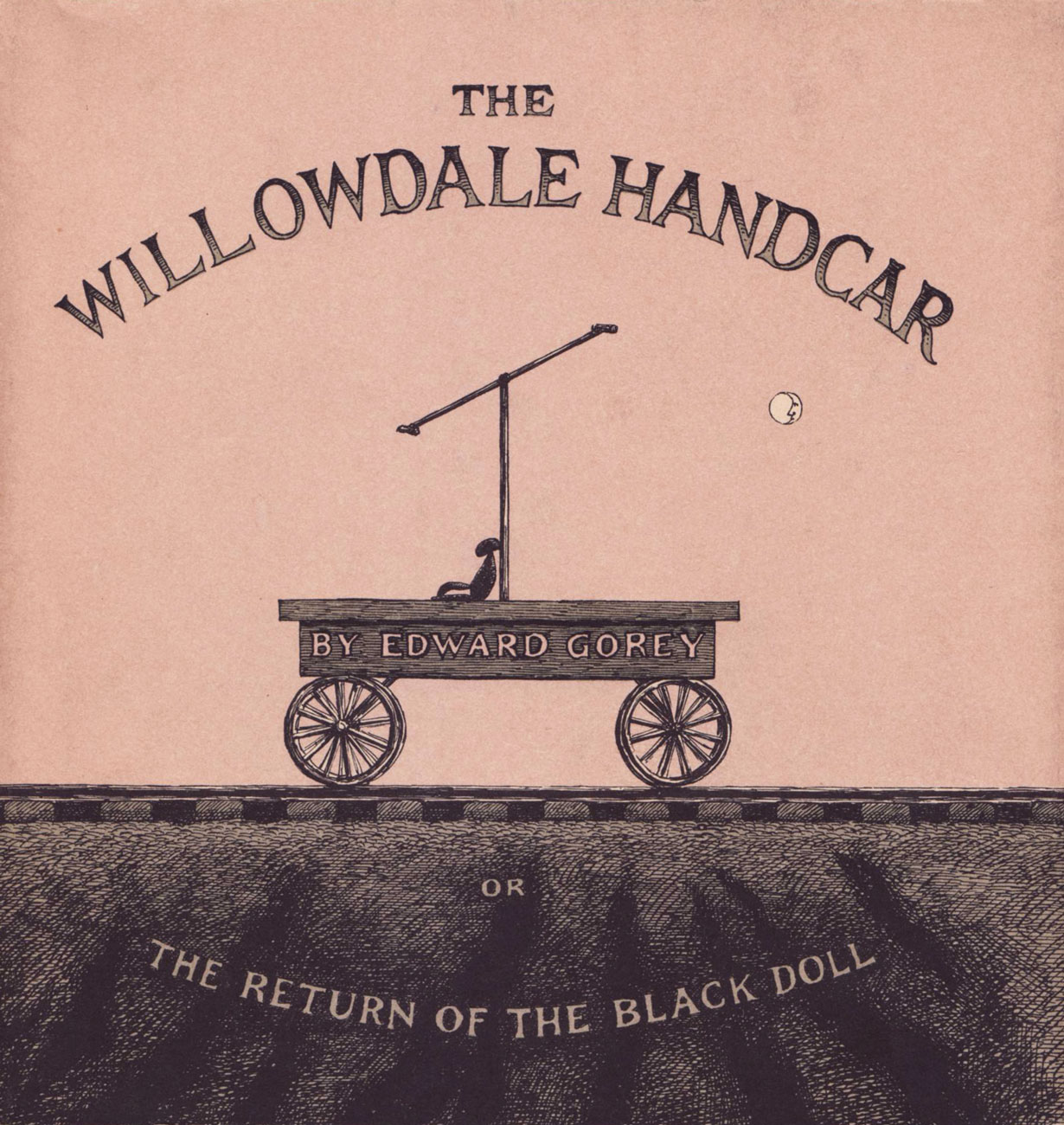
It was inevitable that the eminent Edward St. John Gorey (1925 – 2000) would grace my Hallowe’en countdown… but surely I deserve credit for holding out until midway through the third edition. Instead of the excellent but overexposed The Gashlycrumb Tinies, here’s an excerpt from what is, to my mind, his most ominous tale, The Willowdale Handcar or The Return of the Black Doll (1962), « In which three Pilgrims find mystery abort peril and partake of religious community. And the discerning Reader discovers Meaning in their Progress. » Last February, when I noted Mr. Gorey’s birthday (see that post here), I pledged to return to this specific work, and I wasn’t speaking with a forked tongue… at least not that time.

Gorey’s work largely remains open to interpretation, whether it’s stating something of import or just being coy. Still, not wishing to deprive anyone of the thrill of discovery, I’ve excluded the tale’s beautiful concluding panel. The entire story (I’ve provided seven of its thirty illustrations, not counting the cover) is available separately or as part of the classic 1972 collection Amphigorey (in the company of fourteen of his other works).

GoreyHandcarFrontAGoreyHandcar01AGoreyHandcar02AGoreyHandcar03AGoreyHandcar04AGoreyHandcar05AGoreyHandcar06AGoreyHandcar07A

In closing, a quote from the man that sums up the essence and appeal of this « at once deeply vexing and utterly hilarious, darkly mysterious and amusingly absurd* » yarn:

« All the things you can talk about in anyone’s work are the things that are least important…. You can describe all the externals of a performance – everything, in fact, but what really constitutes its core. Explaining something makes it go away, so to speak; what’s important is what’s left over after you’ve explained everything else. »

And if you should find yourself in Cape Cod, Massachusetts, don’t pass up the chance to visit Gorey’s house! http://www.edwardgoreyhouse.org/

– RG

*sez his publisher, accurately.

Edward Gorey: An Author Who Went for a Walk

« Painstaking drawings with an eloquent orchestration of hatchings and tickings, marvelous details of period and setting, a narrative that leapfrogs from the precise to the unexplained, a tone of vague delights in both visual and linguistic oddities. » — ‘Mr. Earbrass Jots Down a Few Visual Notes: The World of Edward Gorey’ by Karen Wilkin (1994)

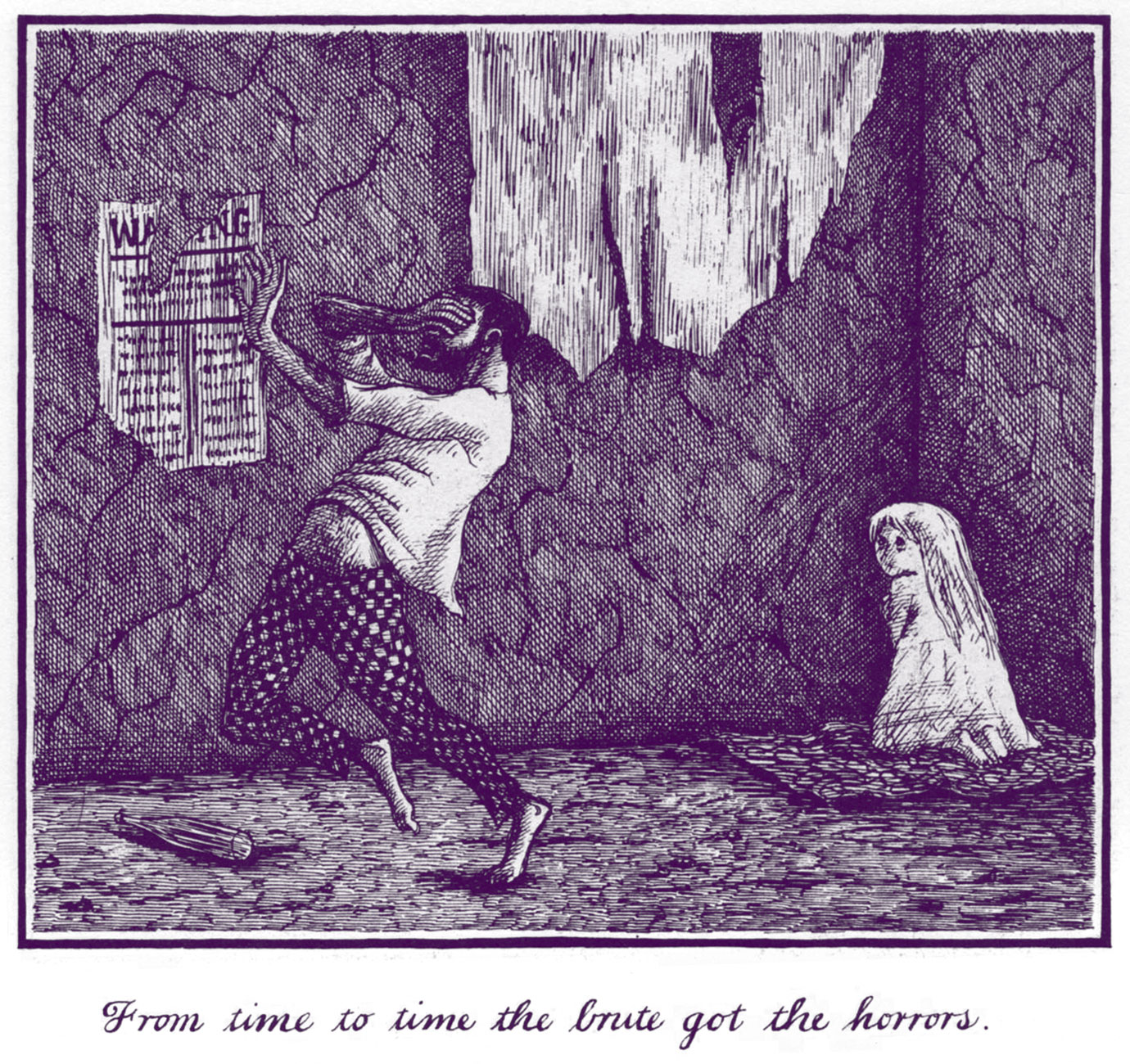
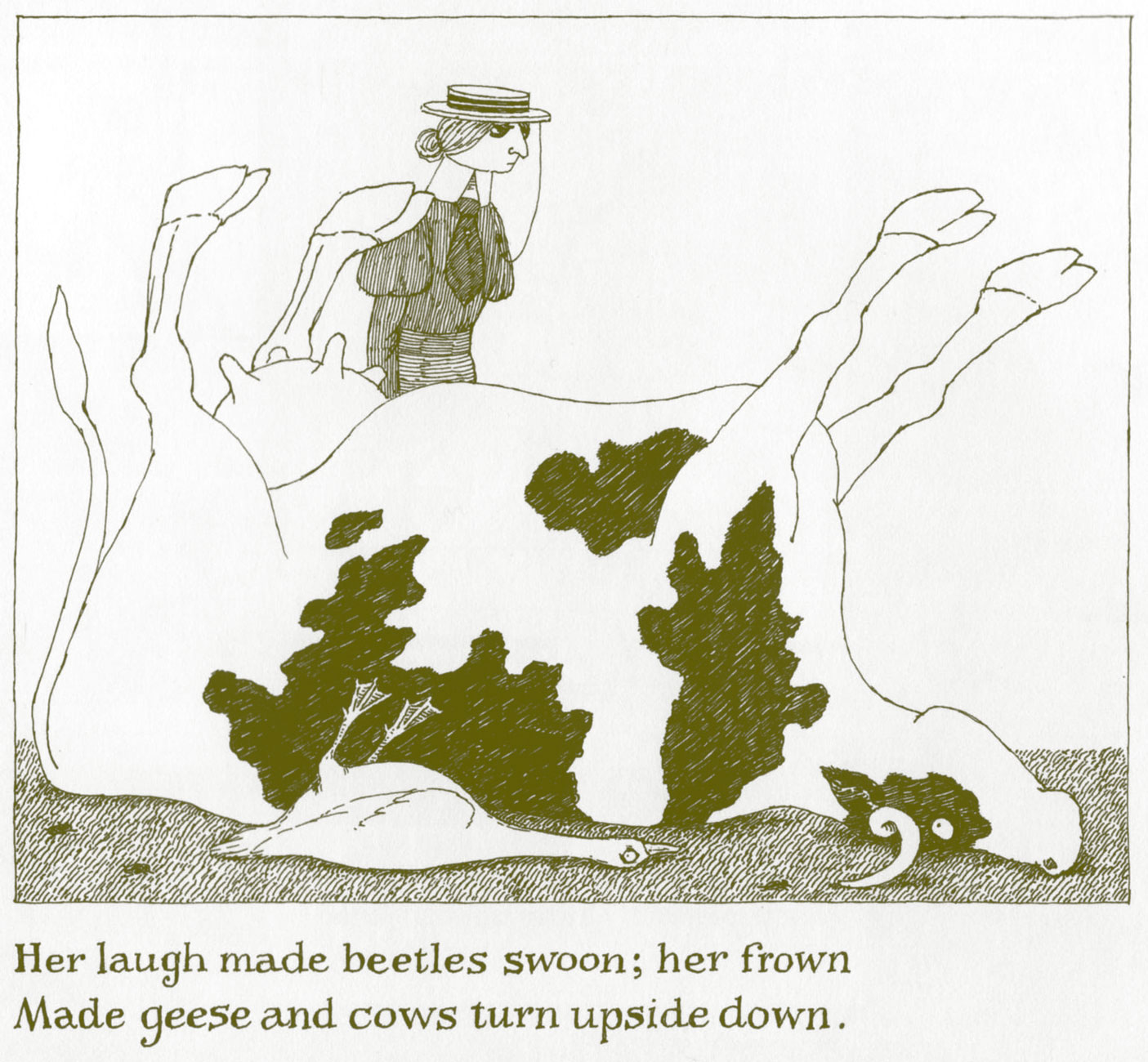
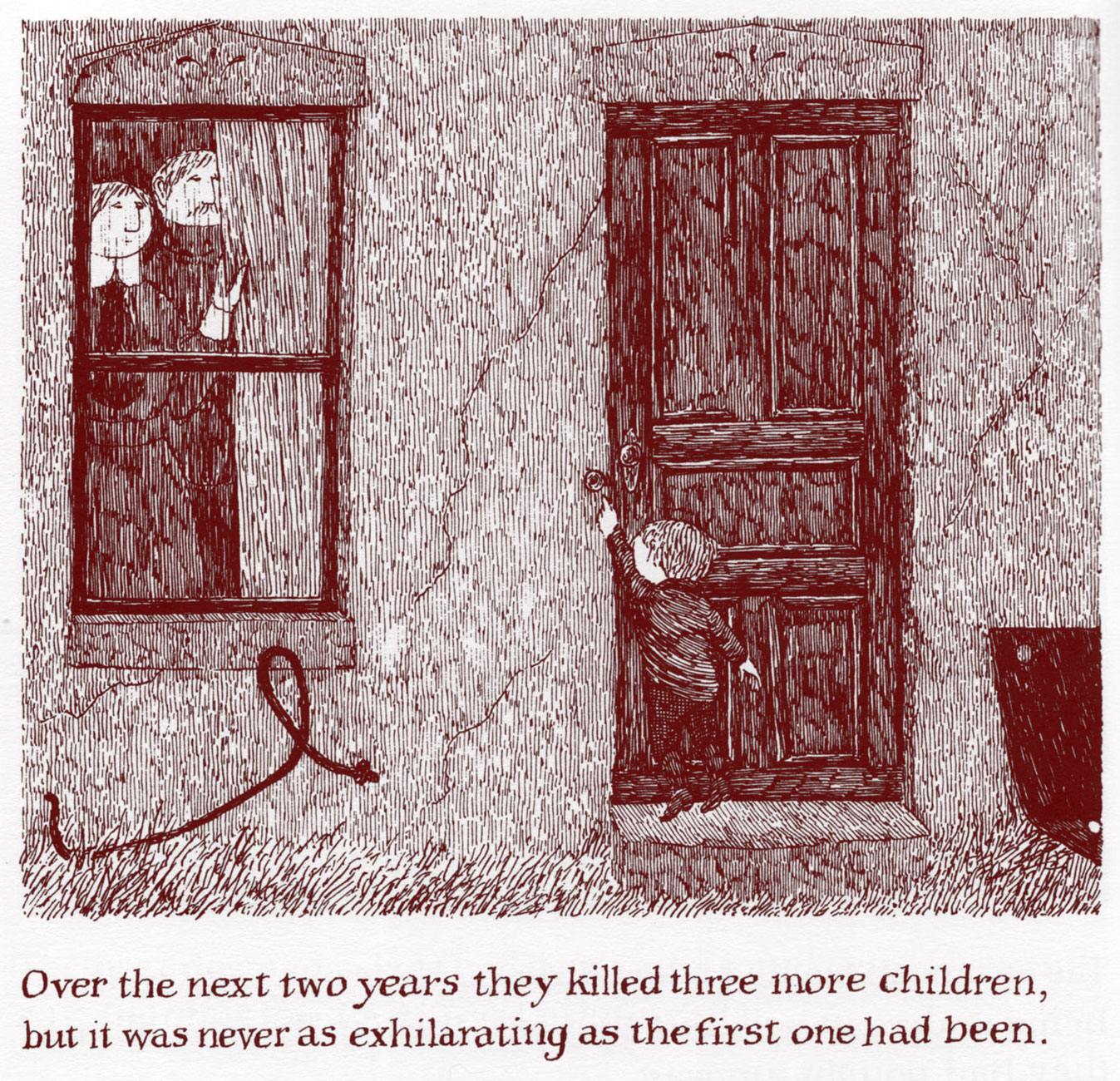
So very much has already been written and said, in all media, about Edward St. John Gorey (February 22, 1925 – April 15, 2000) that there seems little of substance to add. As his work’s ultimate appeal rests in its enduring, expertly wrought sense of mystery, it should be in the Master’s spirit to show rather than tell. Consequently, here’s a gallery of favourite extracts from Gorey’s voluminous œuvre. I’ve omitted both my personal pick, The Willowdale Handcar or  The Return of the Black Doll (1962) and the too-obvious-by-half The Ghashlycrumb Tinies or After the Outing (1963), the former because I’m planning to examine it more leisurely in the future, while the latter… still manages to squeak in, after a fashion. See our bonus at the end.

GoreyGuestA
The Doubtful Guest (1958).

GoreyHaplessA
The Hapless Child (1961).

GoreyWugglyA
The Wuggly Ump (1963).

GoreyOsbickA
The Osbick Bird (1970).

GoreySummonsA
The Disrespectful Summons (1971).

GoreyNosebleedA
The Glorious Nosebleed (1975).

GoreyDaffodilA
The Broken Spoke (1976).

GoreyInsectesA
The Broken Spoke (1976).

GoreyLoathsomeA
The Loathsome Couple (1977).

Gorey&Guest
The author and his creature in New York City, 1958.

GoreyNothingA
Bonus bits: An entry from The Ghashlycrumb TiniesN is for Neville, who died of ennui ») turned up, of all places, in Byron Preiss‘ splendid The Beach Boys (1979), which chronicled the band’s history up to that point through reams of quotations and illustrations, matching a gazillion visuals artists with a favourite BB tune. Gorey’s entry (reprinted and détournée with the author’s consent) was the setup for a dyptich. It provides a visual for Busy Doin’ Nothing (1968) one of Brian Wilson‘s finest compositions from his years in the wilderness; well before Seinfeld, it’s a song about nothing, set to a lilting bossa beat. Hey, get the mug!

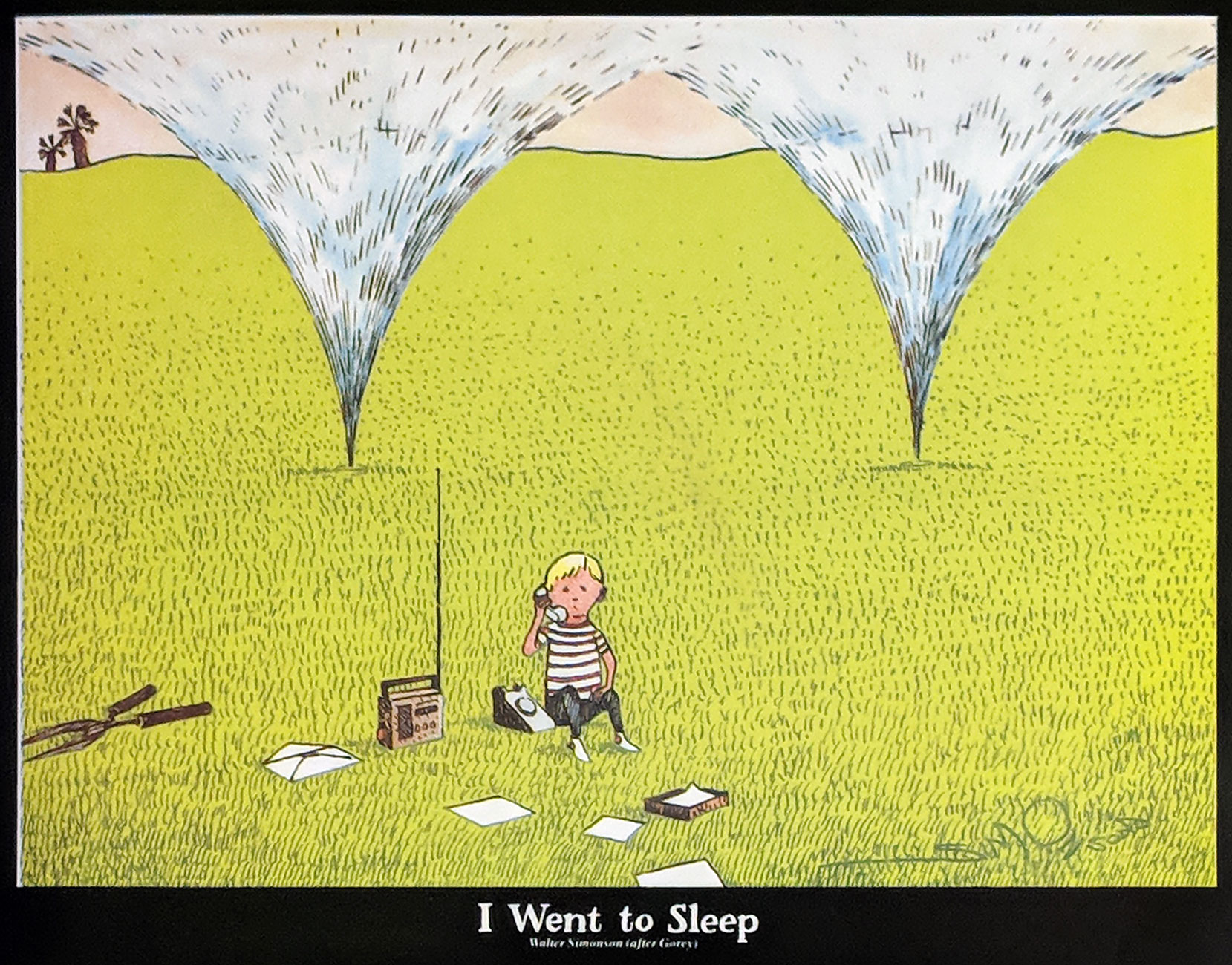
SimonsonGoreyA
I generally have little use for Walt Simonson‘s work, which I find overly-mannered and illegible, but I give him full marks here for wit, creativity and musical discernment. His contribution to Byron Preiss’ book focused on Brian Wilson’s bucolic I Went to Sleep (also 1968), a companion to Busy Doin’ Nothing and a fascinating miniature that gives a sense of Brian’s eventual creative direction had he not been forced to stick with the tried-and-true, official Beach Boys sound to this day. Simonson does a very effective Gorey pastiche, don’t you think?

« You know, the kids had quarrelled, so they’re taken off to see a corpse, which is decayed and completely hanging. It was parody. » — Gorey, interviewed by Clifford Ross (1994)

Oh, and if you should find yourself in the vicinity of in Yarmouth, Massachusetts, do drop by the Edward Gorey House!

-RG