Tentacles have always been omnipresent in comics, but there’s been a true explosion of tentacular material in recent years. Sadly, the quantity is inversely proportional to the quality, and the comics market seems to be flooded with covers so aesthetically unappealing that I can’t bring myself to feature them. Still, I’ve been accumulating covers from 21st century – here are a few that I can get behind, albeit half-heartedly.
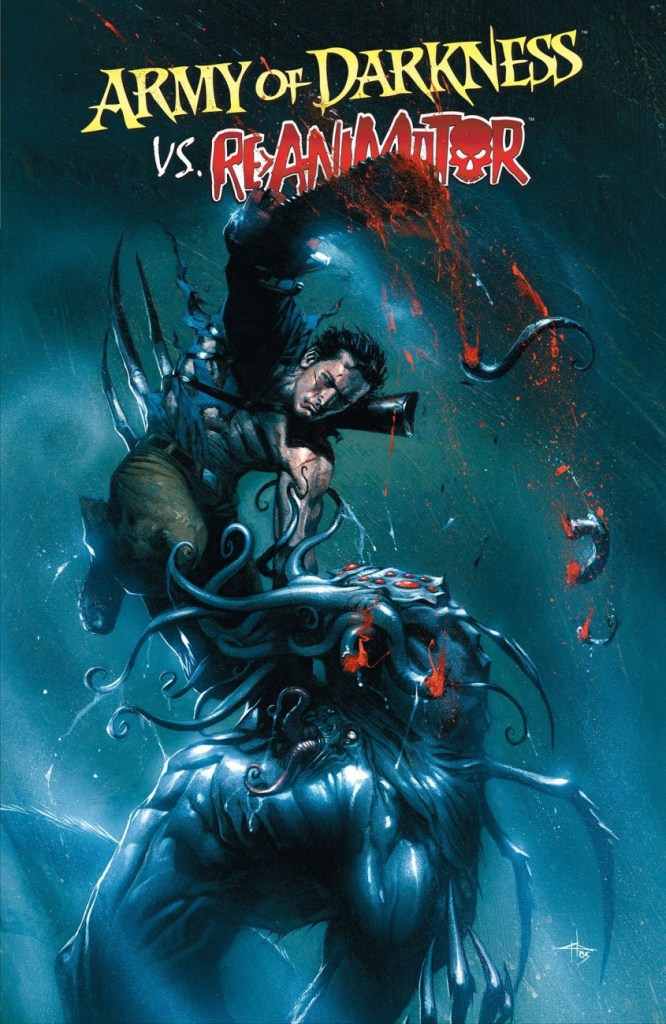
Army of Darkness vs. Re-Animator! (October 2006, Dynamite Entertainment). Cover by Canadian comics artist Nick Bradshaw.
As any story loosely based on an H. P. Lovecraft character (in this case Herbert West) and featuring a crossover as the main point of interest (in this case, West is fighting Ash Williams from the Evil Dead series), this is, not to put too fine a point to it, crap.
Great Pacific no. 16 (July 2014) – variant cover by Charles Paul Wilson III.
Great Pacific has been lauded as an interesting comic with a powerful message of environmental preservation, but this is the only cover I kind of like, the others being distinctly on the ugly side (albeit abounding with tentacles). I see comics as a great merging of words and images, so when the pictorial side leaves so much to be desired, my interest in reading the story is nil — I’ll go read a book instead.
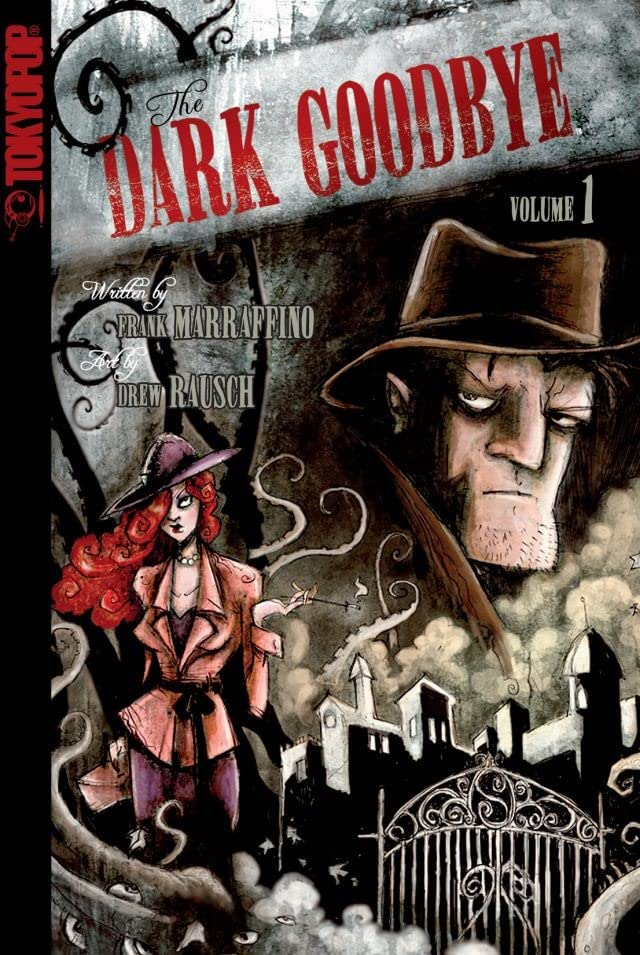
I had low expectations for Professor DarioBava, but this was surprisingly a rather fun read, despite its extremely derivative nature, abounding, as publicity promised, naked women, monsters, exorcisms and lesbian scenes involving a nun in lingerie.
The art is not great but quite serviceable, involving a murky but non-offensive palette with some colour pops.
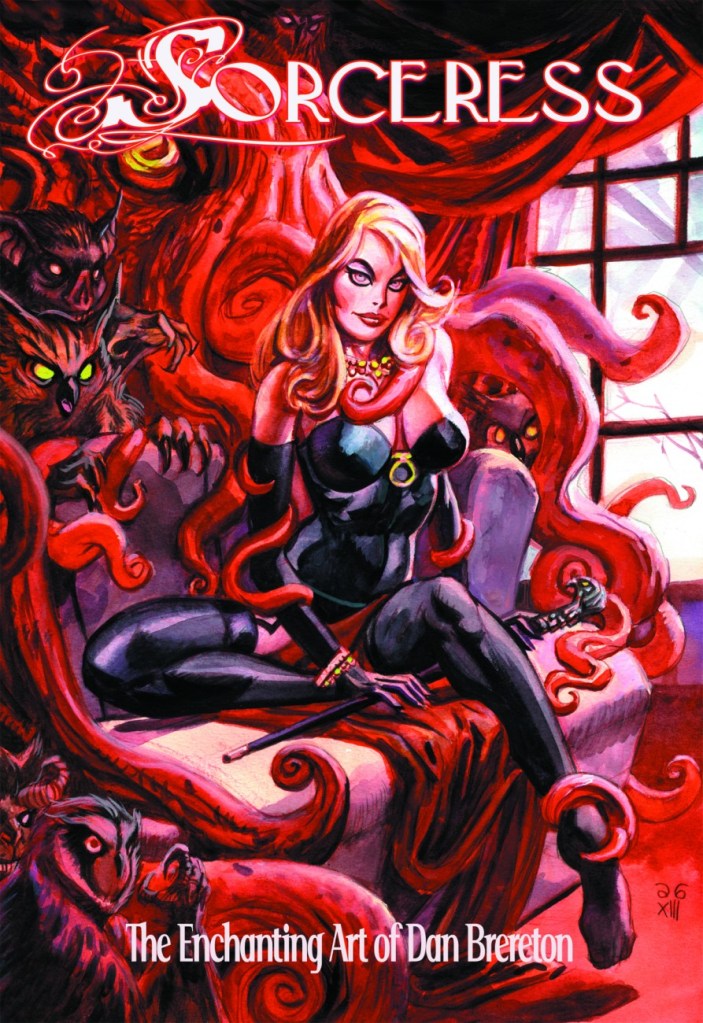
A collection ofDan Brereton art, published in November 2013 (Little Eva Ink).
I can actually say that I like Brereton’s painted and colourful style (co-admin RG demurs on that point), and as he seems to quite enjoy painting tentacles, his art will surely crop up again in one of my posts.
« The beginning of wisdom is to call things by their proper name. » — Confucius
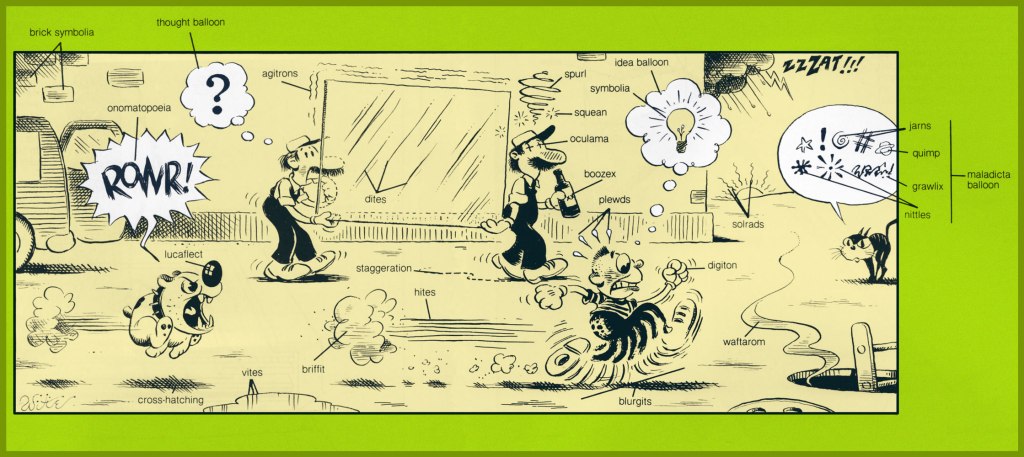
To a bibliophile, shelf space is precious. In recent years, I’ve happily purged my library of many a bulky and obsolete reference tome. With the sheer mass of information that’s migrated online, it’s frequently far simpler to tap a few key words than to scan the shelves in order to pull out and peruse some quaint and curious volume of forgotten lore. Frequently — but not always. One significant exception is my copy of What’s What, accurately touted as « a visual glossary of everyday objects — from paper clips to passenger ships ». Obviously, it covers the expected doohickeys and other dinguses, contraptions and doodads, esteemed constituents of our flora and fauna… but, on occasion, it drifts deep into left field, and that gives it spice. To wit, its entry on cartooning:
Cartooning: Many one-panel cartoons use captions or labels below the illustration for dialogue or explanation. Those appearing on the editorial pages of newspapers are called editorial or political cartoons and usually feature an exaggerated likeness, or caricature, of some well-known figure, as the main character. Comics, or comic books, use cartooning throughout. A complete shericasia, or shallop, is used by a cartoonist to depict a complete swing at an object, be it a golf ball or another person.
This most edifying illustration was the work of Mike Witte (b. 1944), who later chucked this charming infusion of the old ‘big foot’ school of cartooning to settle into an in-demand but pasteurised version of Ralph Steadman‘s style (itself, I would argue, a more grotesque version of Ronald Searle‘s approach). Still, bully for him — it’s a hard business to earn a proper living in. Sure, the classic big foot tradition already had a modern master in Elwood Smith… but the more the merrier! (and speaking of Onomatopeia…)
Mort Walker‘s Beetle Bailey Sunday strip from July 9, 1978, a most judicious choice, was dissected.
Here’s my well-thumbed, yellowing copy of What’s What: it’s the first book trade edition (Nov. 1982, Ballantine), copies of which, or the updated edition, circa the early 1990s, can still be obtained dirt cheap. And “Nose leather?” Awww.
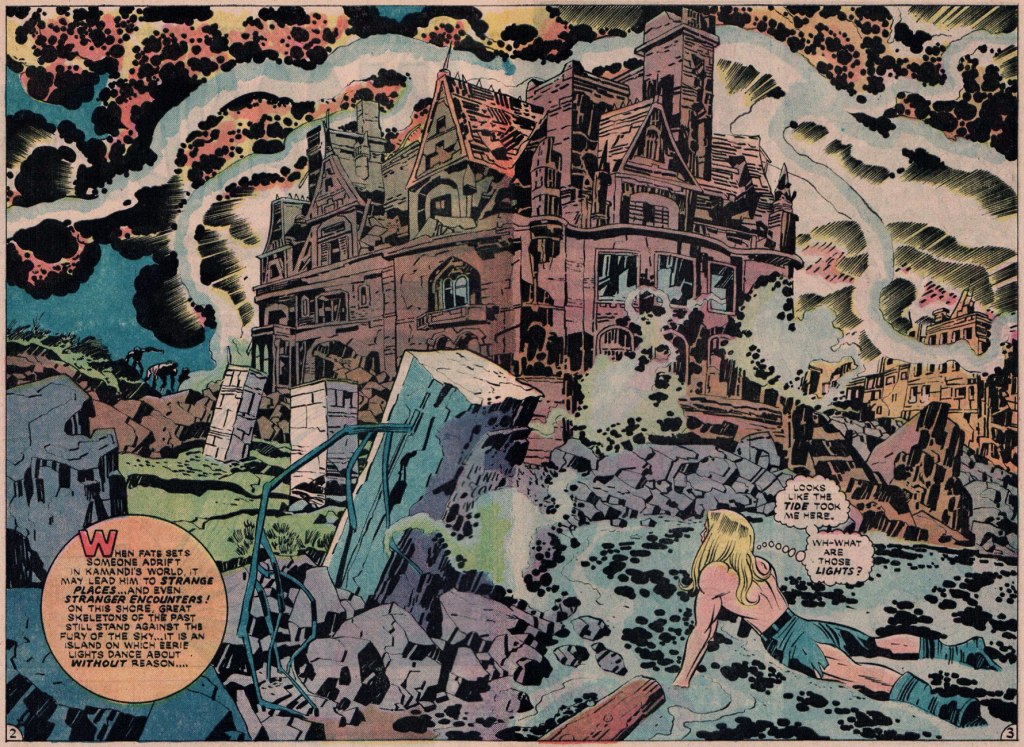
To this array of clever cartooning terms, we simply must remedy one omission, and it’s a crucial one: Kirby Krackle!
A page from Nazi “X” (Captain America no. 211, July 1977, Marvel) with the wild and wooly Arnim Zola – the Bio-Fanatic – flexing his mental muscles. Written, pencilled and edited by Jack Kirby, inked and lettered by our dear Mike Royer, and coloured by Glynis Wein.
Another example, to make sure everyone gets it straight? The sky’s ablaze with Kirby Krackle in this ominously magnificent splash from Kamandi no. 24 (Dec. 1974, DC) and its tale of The Exorcism! Written, pencilled and edited by Jack Kirby, inked and lettered by Douglas Bruce Berry, and most likely coloured by Jerry Serpe.
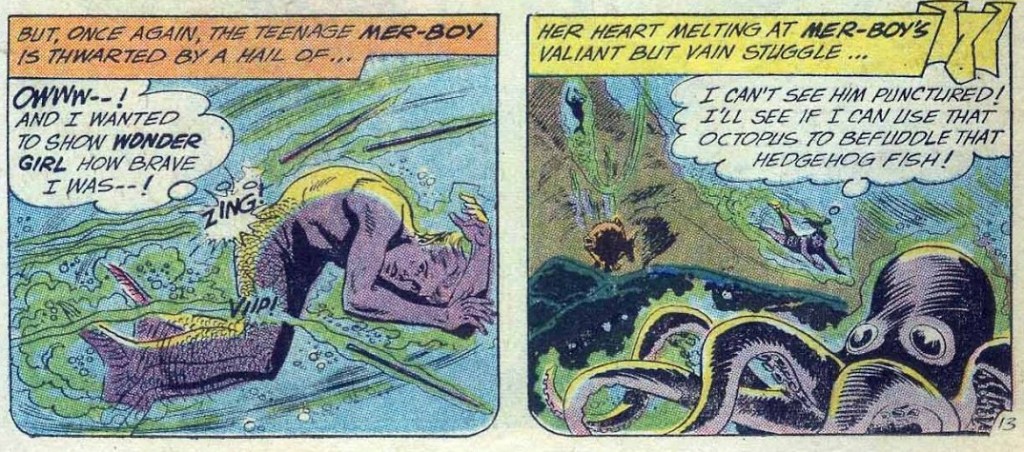
« Mer-Boy! You’re making me angry! »« You’re beautiful when you’re angry! »
Today’s batch of tentacles all come from the heads and hands of one team: scripts by Robert Kanigher, pencils by Ross Andru and inks by Mike Esposito. I make no secret of my dislike for Kanigher scripts when there are women involved*, but the Andru & Esposito team deliver some very nice art to go with the dubious plotting. Besides, we are concentrating on tentacles… though I can’t promise an occasional plot-jab. 🙄
*My complaints about his scripts are two-fold: that his plots make precious little sense is one, but that sort of nonsense is often fun to read, as long as one doesn’t take it seriously. However, the barrage of misogyny, not so much. I go on about it in some length in Don’t Let a Mysogynist Plan Your Wedding: Robert Kanigher and Wonder Woman’s Utterly Unsuitable Suitors, but if you need an immediate example, here are some example of great art and scripting claptrap. I just chose a random, non-tentacle issue from that era… the following panels are from The Cave of Secret Creatures, published in Wonder Woman no. 116 (August 1960).
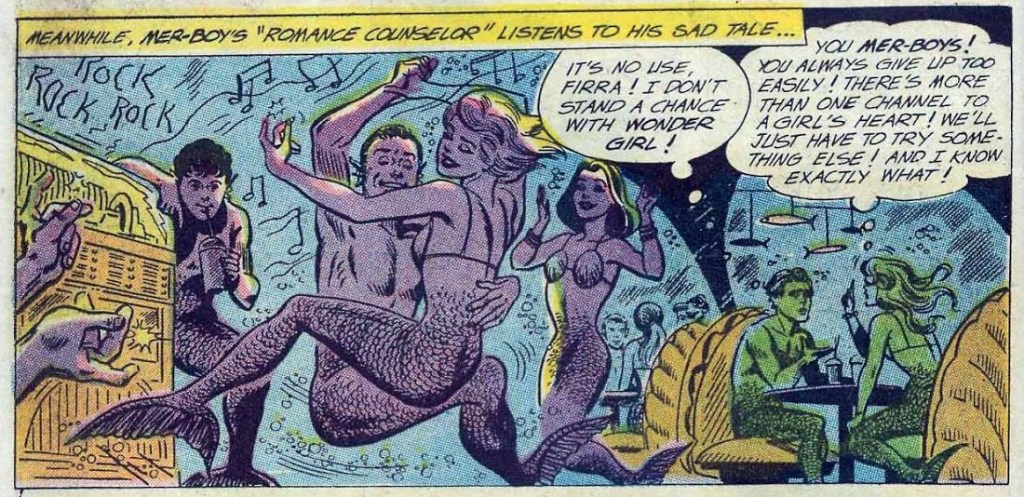
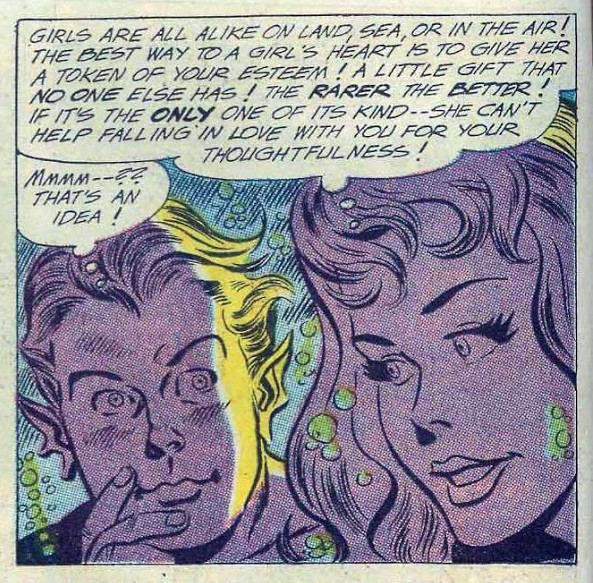
The pretty mermaid’s suggestion is to make Wonder Girl jealous by inviting her to a party and then proceeding to ignoring her altogether. Monumentally stupid? Yes. Is Firra being obtuse on purpose? It’s very possible. Remove the fantastical monsters and the whole superpowers thing, and these stories will read like a hackneyed romance comic.
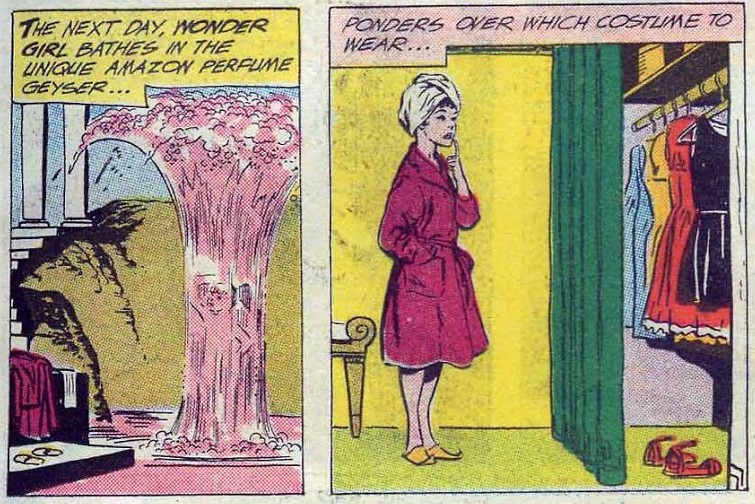
What’s the point of bathing in perfume (yikes, by the way) before going to an underwater party?
More bad advice from the mermaid. Have you ever heard ANY girl say that “girls are all alike”?
It’s too bad, because it’s really fun to spend some time with this underwater society of mer-teenagers hanging out, drinking seaweed sundaes, and gossiping.
A page from Mer-Boy’s Secret Prize!, published in Wonder Woman no. 119 (January 1961).
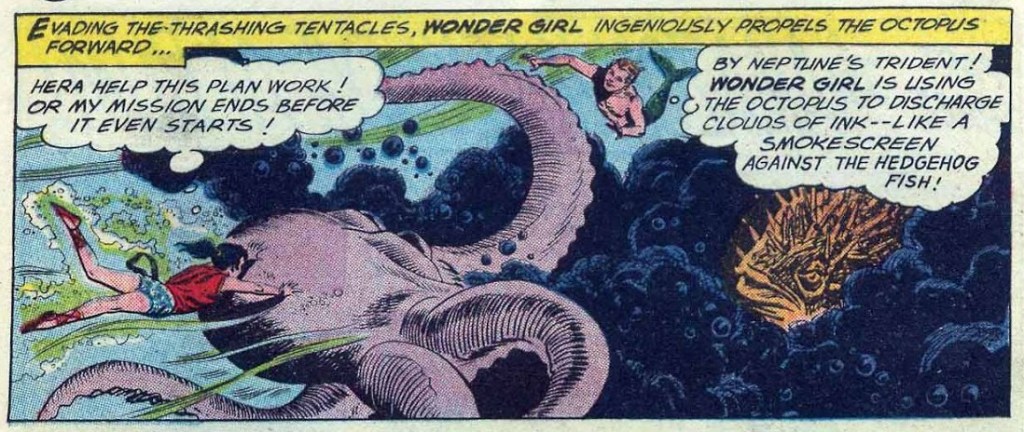
Anyway, I promised you some tentacles, and by Jove (or by Hera!) I shall deliver. Between issue no. 112 and issue 126, Wonder Girl (occasionally her grown-up counterpart, Wonder Woman) has fought more octopuses than one can shake a stick at.
Restraining order, anyone?
The reason for that is simple – the daft Mer-Boy (and the adult Mer-Man) is a frequent plot hinge of these stories, either harassing Wonder Girl for a kiss, quarrelling with her other (equally daft) suitors, or being in desperate need of rescuing when his imbecilic antics land him (yet again) in hot water. I guess that’s one thing I can say about the plotting – at least WG is not a damsel in distress… And I by far prefer him to Steve Trevor (the other suitor who often comes up in these things), whose behaviour is exemplified in, for instance, Wonder Woman no. 127 (January 1962) – he tricks Wonder Woman into agreeing to marry him by faking a serious wound, complains about the food she cooks for him, and then flies into a murderous rage when she takes off from their honeymoon to stop a nuclear missile. (Oh, and it was all a dream, by the way!)
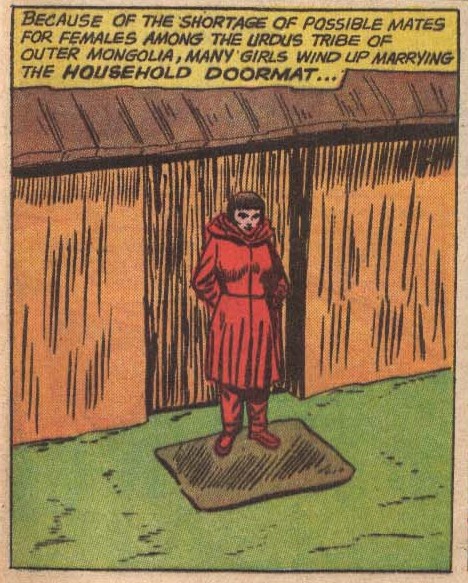
As if to emphasize the retrograde nature of these comics, each issue we are treated to a “marriage around the world” page detailing strange customs. For example, from Wonder Woman no. 128 (February 1962):
Artist unknown. I tried finding out if this was true and could find nothing at all, so the author of this was either talking out of his ass, or has special connections with Urdu tribes… Better to marry a doormat than to become one, I guess?
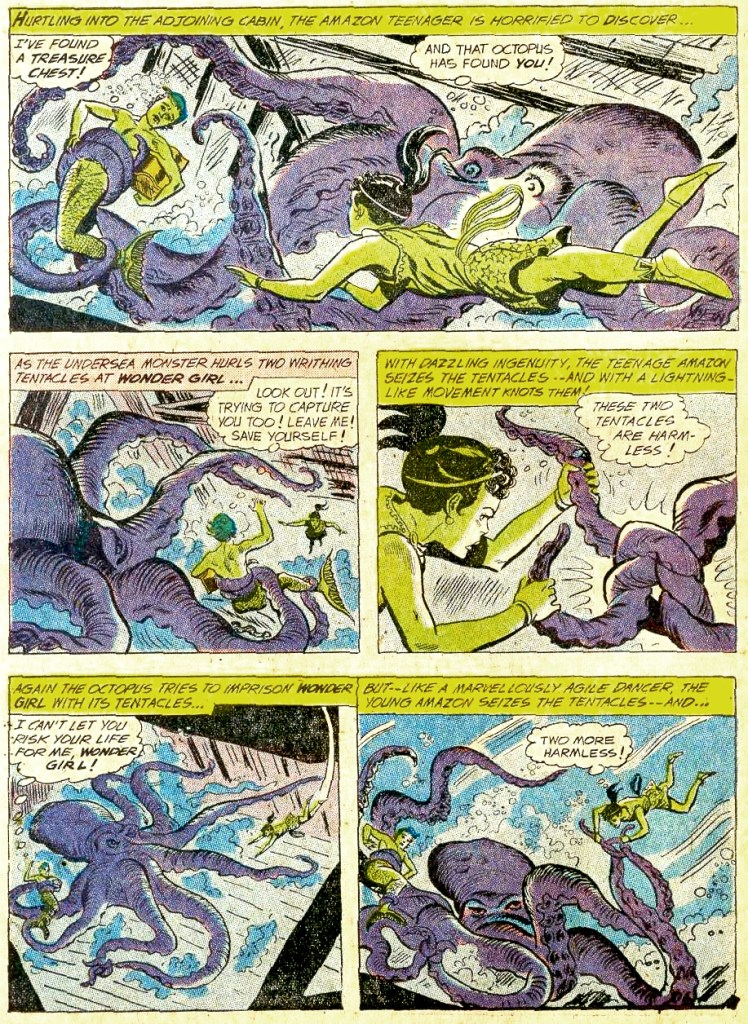
Page from The Chest of Monsters!, published in Wonder Woman no. 112 (February 1960). “Having to rescue Mer-Boy yet again”, part 300.
Page from Mer-Boy’s Undersea Party, published in Wonder Woman no. 115 (July 1960). Um, yes, rescuing Mer-Boy again.
Pages from Wonder Woman’s Impossible Decision, published in Wonder Woman no. 118 (November 1960). Oh, now it’s Steve who’s having problems, for a little variety!
In case you’re wondering what the Impossible Decision is, Wonder-Woman has to choose which of her suitors to save. Personally, I would let both of them plummet.
In a previous story, Wonder Woman has to choose between saving Steve or saving a whole world, so I think she’s no stranger to fucked-up situations, thanks to Mr. Kanigher.
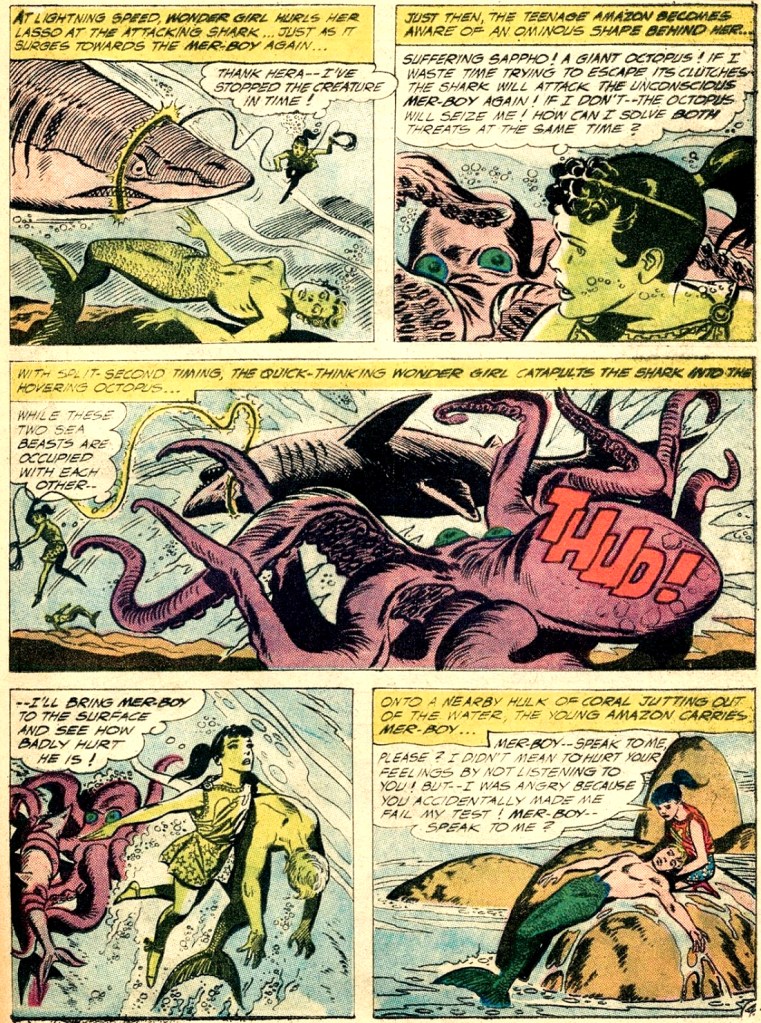
Two excerpts from Amazon Magic-Eye Album! published in Wonder Woman no. 123 (July 1961)Admiring the action from a polite distance, Mer-Boy is useless as usual.
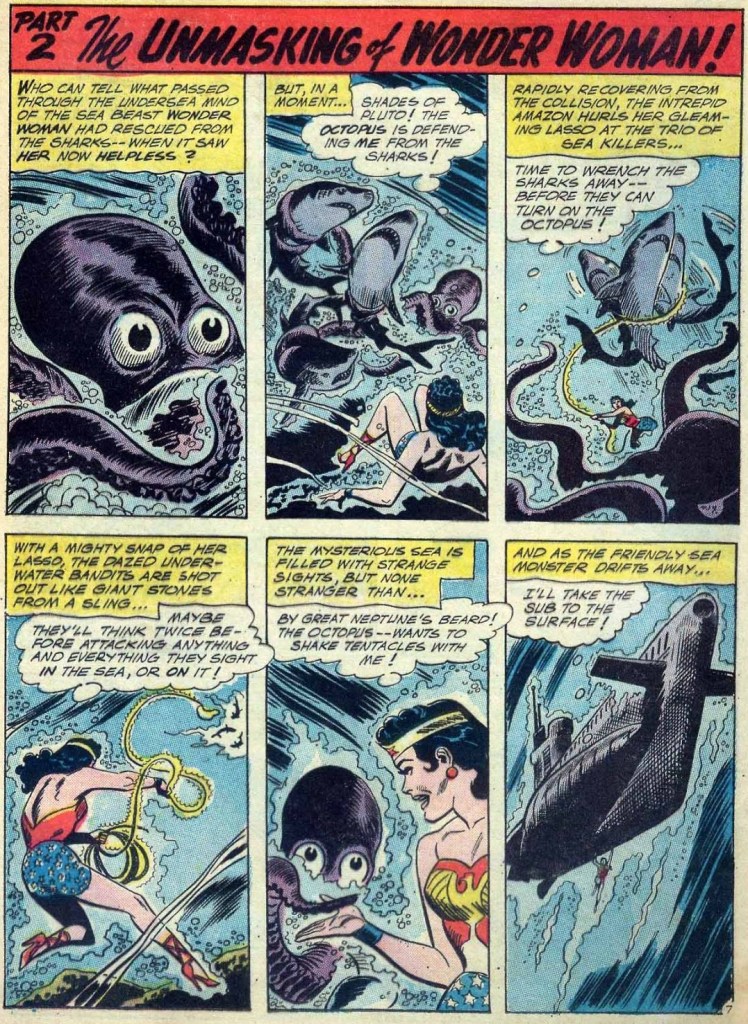
A page from The Unmasking of Wonder Woman! This story was published in Wonder Woman no. 126 (November 1961).
After Wonder Woman rescues the octopus from some bloodthirsty sharks, they become friends! Perhaps because for once, no suitor is involved.
« If you’re going to be a sinner, be the best sinner on the block. » — Anton Szandor LaVey
I’m afraid the appeal of Archie Goodwin’s (1937-1998) writing has always escaped me. As you’d expect with a career as busy and prolific as his was, there are notable exceptions*. But I think, as is often the case in comics, he gets a lot of credit for tepid, formulaic writing that happens to be masterfully illustrated. You know, like just about every story from the early Creepy and Eerie (Goodwin was editor and principal writer of the Warren line for its first four years or so) with their groan-inducing ‘shock’ endings: “But I’m a vampire, and we don’t like competition around here!” or “We ghouls don’t cotton much to werewolves!” or “You’ve guessed my secret too late — I’m a witch!” or “For I am… Death!“
On the other hand, he was a fine editor and, by all accounts, a terrific human being. In 2013, Mark Evanier put it this way: « At a time when some editors in comics were notorious for treating their freelancers with disrespect and yelling, Goodwin had a sterling reputation. He always would. Archie was nice. He was honest. »
It is to his great distinction that even such divisive, eternally-acerbic figures as Jim Shooter (« First and foremost, everyone loved Archie. Archie had a manner about him that you just couldn’t not like him. While he was tough as nails, and he was probably the best that passed through this business, he managed to do it without offending anyone. He managed to be respected and remain friends with everyone and do his job. ») and Alex Toth (« None of us were working there [at Warren ] for the money, because there wasn’t much. We were working there to work with Archie. ») reserved naught but effusive praise for the man.
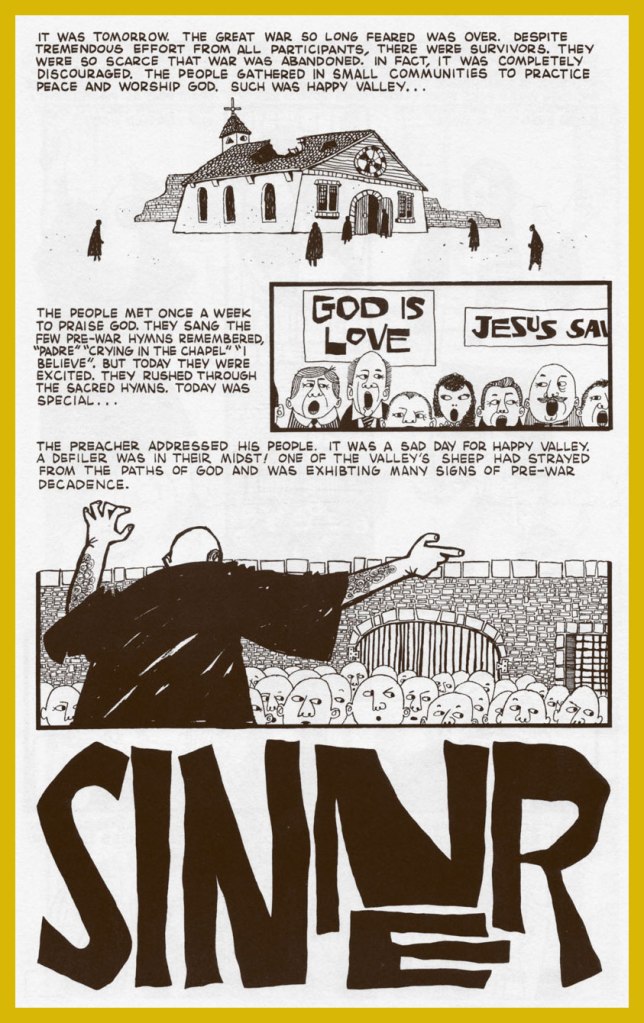
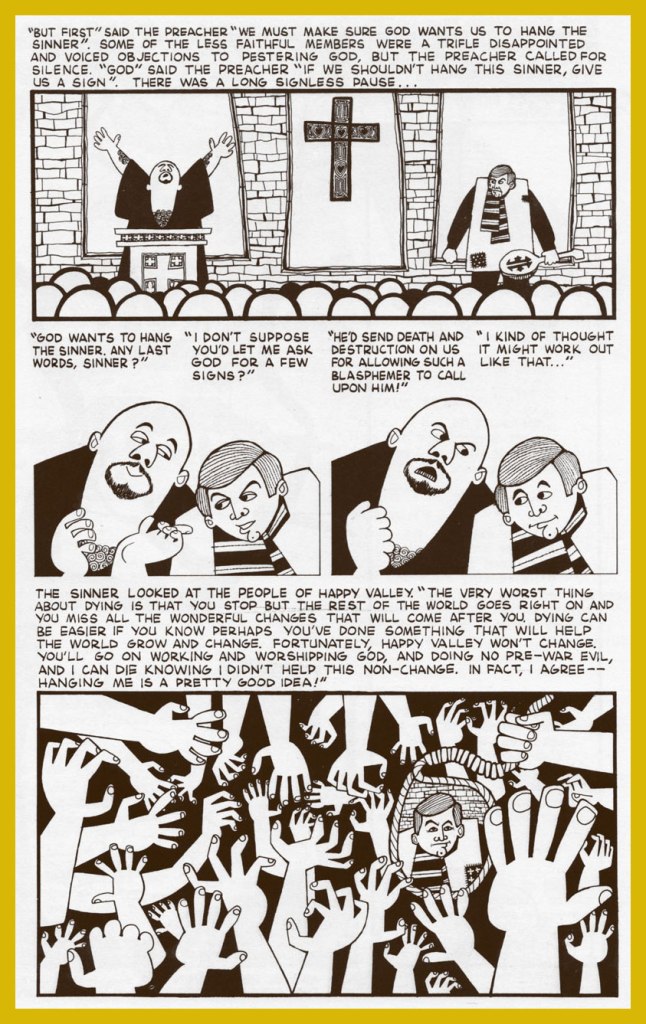
But you know what I really like about Archie? His drawing, which was all-too-rarely showcased. While he did adjoin thumbnails layouts to his scripts, Goodwin’s drawings rarely appeared in print, aside from some jokey editorial asides at Marvel in the 1980s. Here’s Sinner, written and illustrated by Goodwin, from Wally Wood’s prozine Witzend no. 1 (Summer 1966).
Sinner would be reprinted a few times, notably in the second issue of Marvel’s Heavy Metal knockoff Epic Illustrated (Summer, 1980), edited** by Goodwin. Marvel had passed on the Métal Hurlant licensing rights and, when Heavy Metal proved a smash hit, launched their ersatz. Such is the way of Marvel.
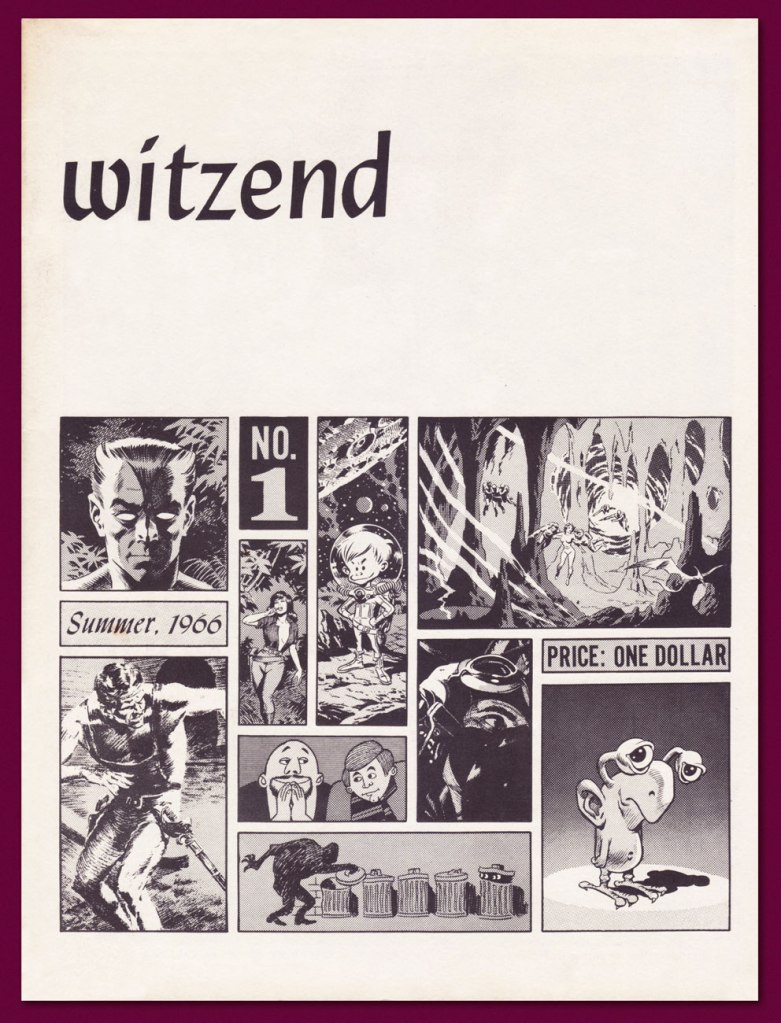
This is Witzend no. 1, featuring a splendid cover layout by Goodwin…. it’s harder than it looks, especially when it looks this good… and given the relatively primitive means employed. I tell you, Archie missed his calling.
Goodwin’s, adobe, clean line and silhouette graphic approach has always reminded me of this fine album cover from a few years earlier, which is to say 1963. It was designed by A&M Records art director Peter Whorf (yes, the legendary Whipped Cream & Other Delights cover was also one of his).
Despite all this, Archie Goodwin’s greatest claim to fame simply has to be the tremendous legwork he did as Nero Wolfe’s assistant.
« Archie Goodwin’s first prose story was published by Ellery Queen’s Mystery Magazine, which warned him he could not use Archie Goodwin as a pen name because it was a Rex Stout character in the Nero Wolfe books. According to Goodwin’s wife Anne T. Murphy, the magazine’s editors ‘then were so delighted when he wrote back to say that it was his real name that they used the anecdote as the introduction to the story, which ran in the July 1962 issue.’ »
-RG
*Notable exceptions: The Success Story, with art by Al Williamson (Creepy no. 1, 1964) has actual bite. Despite its rote-EC-revenge-from-beyond-the-grave finale, it’s a bitter parody of real-life comic-strip parasites such as Don Sherwood (Dan Flagg, The Partridge Family) and Alfred Andriola (Kerry Drake). There’s the tragically moving Island at World’s End, illustrated by Gray Morrow (Eerie no.4, July 1966). And a handful of inspired little tales that truly fired up the creativity of a freshly-emancipated Steve Ditko: Collector’s Edition (Creepy no. 10, Aug. 1966); Second Chance! (Creepy no. 13, Feb. 1967); Deep Ruby! (Eerie no. 6, Nov. 1966); and my very favourite, Room With a View (Eerie no. 3, May 1966… their first collaboration!). If anyone’s interested, the Goodwin-Ditko outings have been handsomely collected in Creepy Presents: Steve Ditko (2013, Dark Horse).
It must be said that Goodwin knew how to match a plot with the proper illustrator. As he explained, « I always tried to write the stories for individual artists. Sometimes, I’d ask them if there was a certain setting or a certain kind of story they were interested in, and I also knew what they did best. » It’s a shame that, overall, the stories themselves were so timid and unambitious, so mired in the glories of the past. Some people can’t help pulling their punches, I suppose.
**To give you a fair idea of Marvel’s delusions of corporate grandeur at the time, Epic Illustrated no. 2‘s convoluted and deceptive editorial credits read thus: Stan Lee (editor); Archie Goodwin (editorial director); James Shooter (consulting editor); Marian Stensgard; Louise Jones; Larry Hama; Ralph Macchio (editorial); Roy Thomas (contributing editor); Maggie Thompson (contributing editor); Don Thompson (contributing editor). Dollars to doughnuts that Goodwin and Louise Jones did all the actual work.
May the gentleman octopus grant you a Happy New Year!
Greetings, pretty cephalopods and cephalopodettes! This is the last Tentacle Tuesday of the year, and as is my custom, I return to a sub-topic close to my heart: women entangled in tentacles. Nothing crass, mind you – we have our standards!
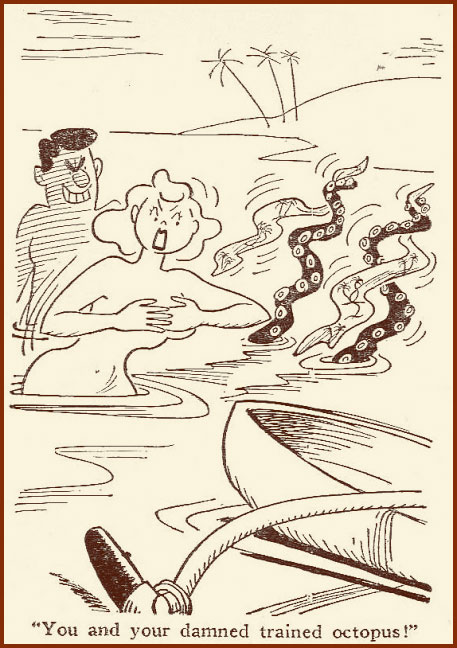
Original art for a cartoon published in Wham! (December 1954, Wolf Books). Art by George Wolfe. I imagine the three guys whose arms are grabbing her colliding with one another in the door frame…
As the signature attests, the artist is George Wolfe (1911 – 1993), who has had an illustrious, though mostly forgotten, career as a magazine cartoonist with published work in Esquire, Saturday Evening Post, New York Herald Tribune, etc. He also had a few syndicated comic strips under his belt, as well as winning several prestigious awards (namely, the Reuben, the highest award of the cartooning profession). Touring Tessie, created by Wolfe for Wolf Books (has a nice ring to it, doesn’t it?), was the so-called hostess of this magazine, and its main attraction. Do yourself a favour and head over to The Wolves of Broadway VII: The Alpha Female to peruse more Tessie cartoons and learn more about just what kind of gal she was.
Tessie is one again getting entangled in the clutches of an octopus… this time a more literal interpretation.
The image used for the cover of Wham! (April 1954, Wolf Books). Another trained octopus – working for his own account and calling the shots!
From the cartoony to a more realistic approach –
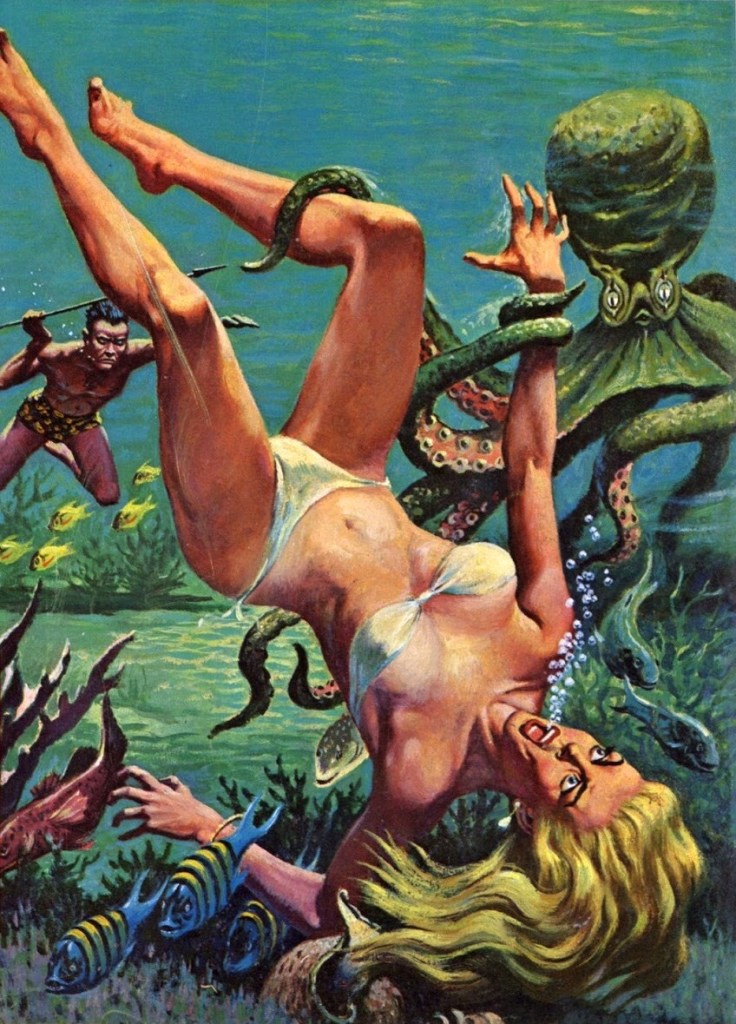
Detail from the original cover art of Bold Men vol. 5, no 2 (March 1961, Cape Magazine Management). Bold Men is an “interest magazine focusing on pictorials and adventure stories”, explains mycomicshop.com, but with this issue featuring stories like How Nazi Bormann’s Cruel Lust will Betray Him! and The Deadly Blonde Witch of Waikiki! , I’m not sure that “bold” is the right word here.
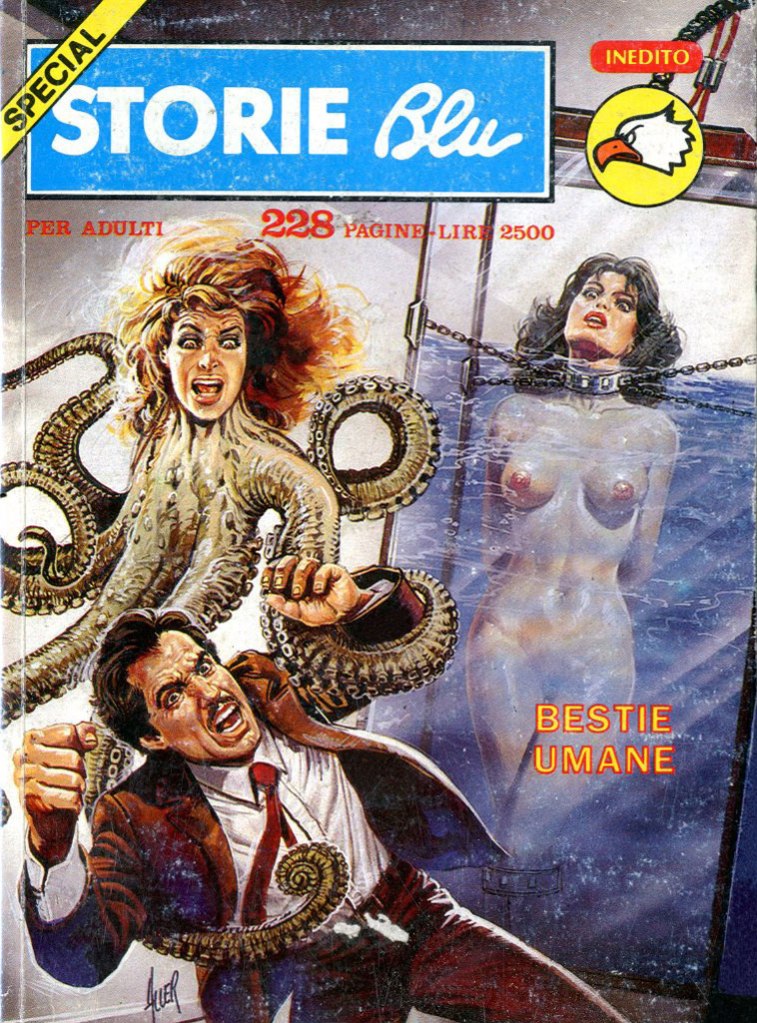
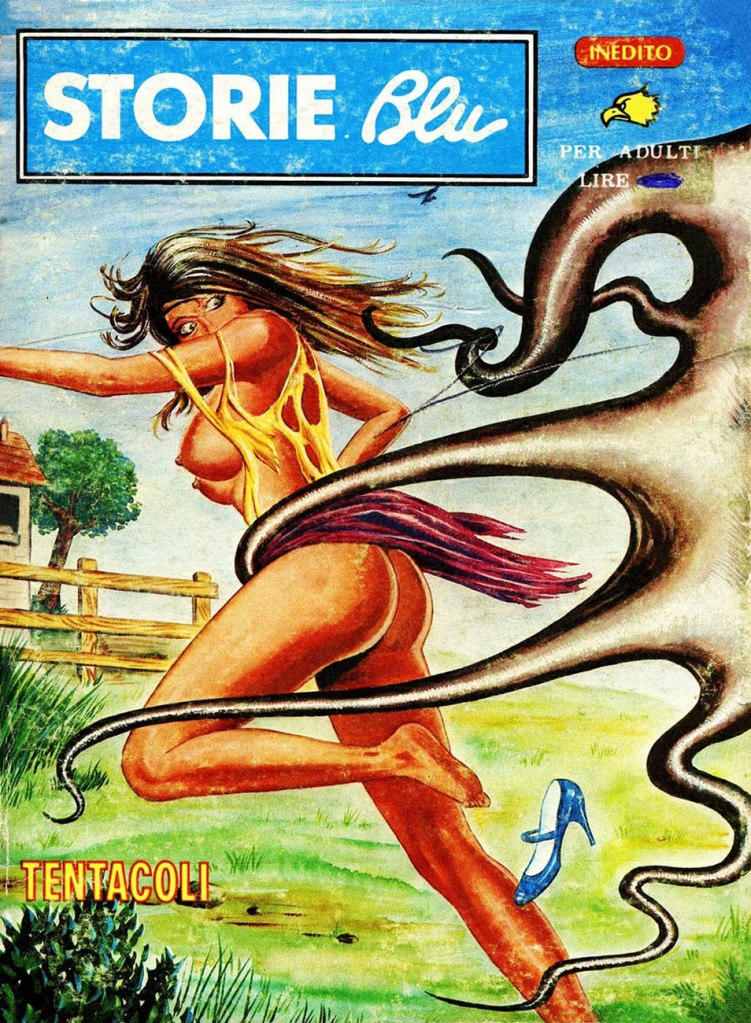
The following three covers are from Storie Blu, an Italian erotic, science-fiction comics series published by Ediperiodici (also known as ErreGI), Edifumetto’s main competitor in the adult comics sector. Ediperiodici disseminated a huge number of erotic series running the gamut from A all the way to B in terms of genre: erotic… horror, western, spy, jungle, military, fantasy, etc. If you want to get an idea of what the stuff looked like, take a peek at Lucifera, Maghella (in-house favourite) or Messalina.
Storie Blu ran between 1979 and 1990, for a respectable 122 issues and two supplements (click here for a full list in Italian).
Storie Blu no. 28 (1983, Ediperiodici). Psycho-monsters, announces the cover!
Storie Blu no. 39 (1983, Ediperiodici). This cover is a good example of the “what the hell is going on here” approach Italian erotica often prefers – RG commented that the tentacled female must be the guy’s ex-wife, and his current wife is in the fish-tank. Anything’s possible! Cover is by Giovanni Alessandri (not the grammarian from the 16th century, as you may have initially thought!), who went under Aller.
Storie Blu no. 81 (1986, Ediperiodici). The cover story was scripted by Carmelo Gozzo and illustrated by Alberto Giolitti (who, I believe, also drew this cover) – you can read a synopsis and take a look at some art here.
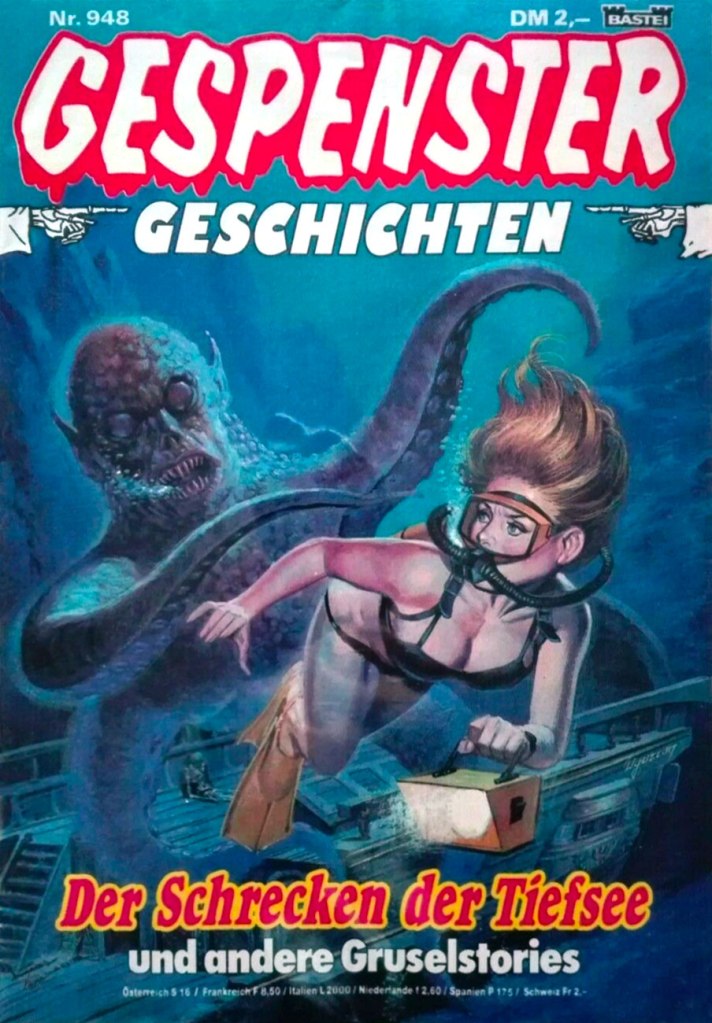
Moving on to another European country… Gespenster Geschichten‘s sister publication Spuk Geschichten already has a Tentacle Tuesday: A Torrent of Teutonic Tentacles.
Gespenster Geschichten no. 948 (1991, Bastei Verlag). Cover by Turkish painter/illustrator Ugurcan Yüce, who moved to Germany in his 30s and contributed quite a lot of covers to publishing house Bastei Verlag, which published (and continues to) many highly successful popular pulp and comic series.
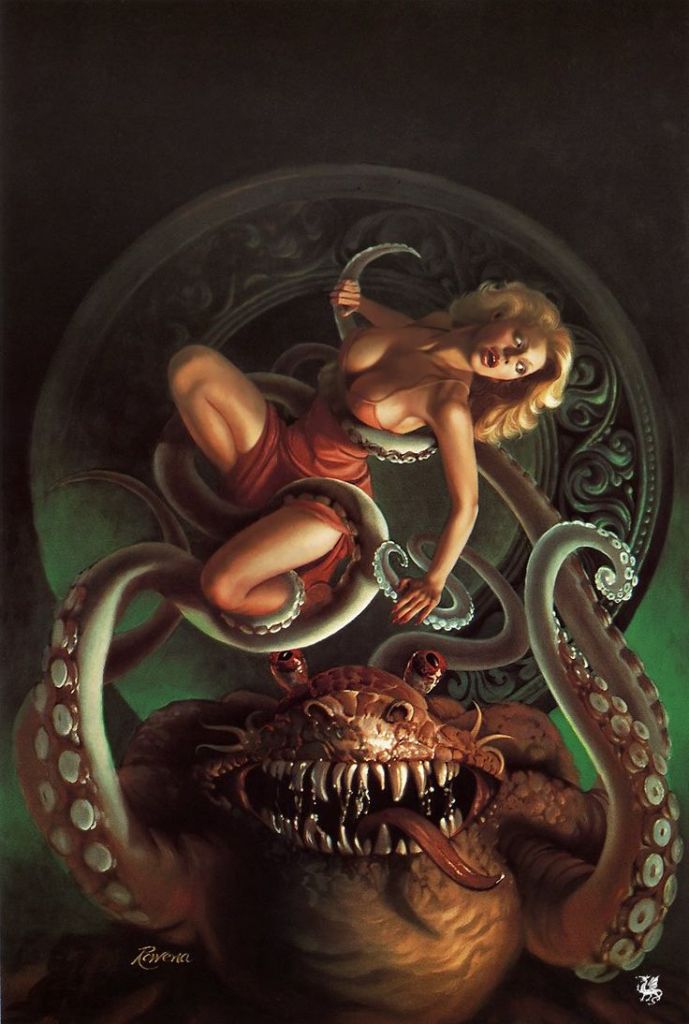
Just one more for the road, what do you say?
Painting by Rowena Morrill (whose name appropriately sounds like something out of some fantasy novel). This has been used as a cover for a German edition of Creepy… but I prefer to provide it sans captions or logos.
« You better watch out, you better not cry, better not pout, I’m telling you why —Santa Claus is coming to town. » — Haven Gillespie
Taking stock, I can’t help feeling that the singular Rick Geary (b. 1946) is a creative force that’s taken for granted. He’s been consistently chugging along at a dizzyingly high level of erudite inspiration and craft since the mid-70s. His work has been recompensed and saluted several times (an Inkpot from the San Diego Comic-Con in 1980; a Magazine and Book Illustration Award in 1994 and a Graphic Novel award in 2017, both from the prestigious National Cartoonists Society…) yet he’s remained kind of a well-kept secret, a cartoonist’s cartoonist. Even as he turned up in countless anthologies, in most cases, it felt as if he didn’t quite belong, didn’t exactly jibe with the respective audiences of, say, Dark Horse Presents or Pulse (on the other hand, High Times wasn’t a bad fit!).
Still, it’s fair to say that his following is one quite discrete from the comics mainstream. The Geary devotee must ever remain vigilant, for one never can anticipate his next move.
Which brings me to The American Bystander, which Newsweek deemed « The last great humor magazine », and to which Geary has been contributing since its second issue… and for once, it feels like home.
The Bystander, according to Wikipedia…
… features contributions from many notable comedy writers, illustrators and cartoonists. The Bystander is designed to provide a classic print humor magazine experience similar to that delivered by National Lampoon, SPY, Harold Hayes-era Esquire and many others in the pre-internet era. Yet according to The New York Times, The American Bystander “does not just belong to the tradition of defunct magazines like The National Lampoon and Spy. Its nostalgic, lightly witty style evokes influences that have been dead even longer, like the raconteur Jean Shepherd and the sophisticated stylist Robert Benchley.”
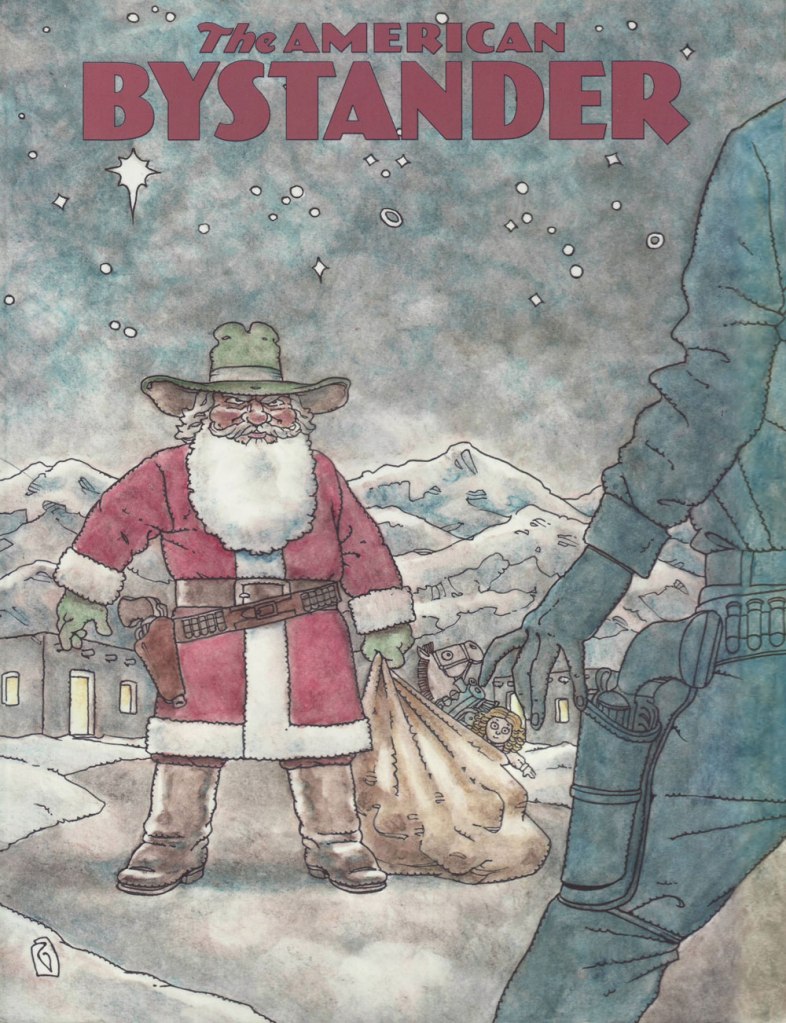
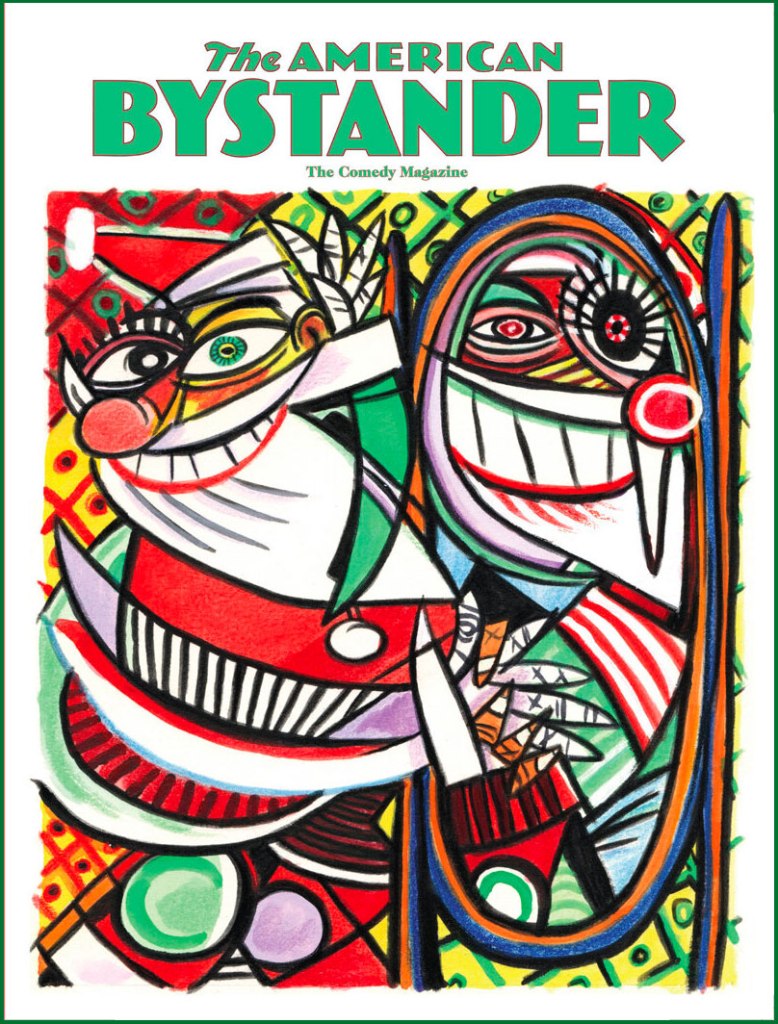
Mr. Geary’s magnificent cover for The American Bystander no. 9 (Fall, 2018). « Have Gun, Will Travel — Wire Santa, North Pole »
The Bystander‘s editor-publisher, Michael Gerber, exults: « In addition to his civilian fans, Rick Geary is one of those illustrators that other illustrators love, and I am with them all 100%. This drawing, entitled ‘New Mexico Christmas’, appeared in my inbox mere moments after I’d given Rick the assignment — which is why editors love him, too! »
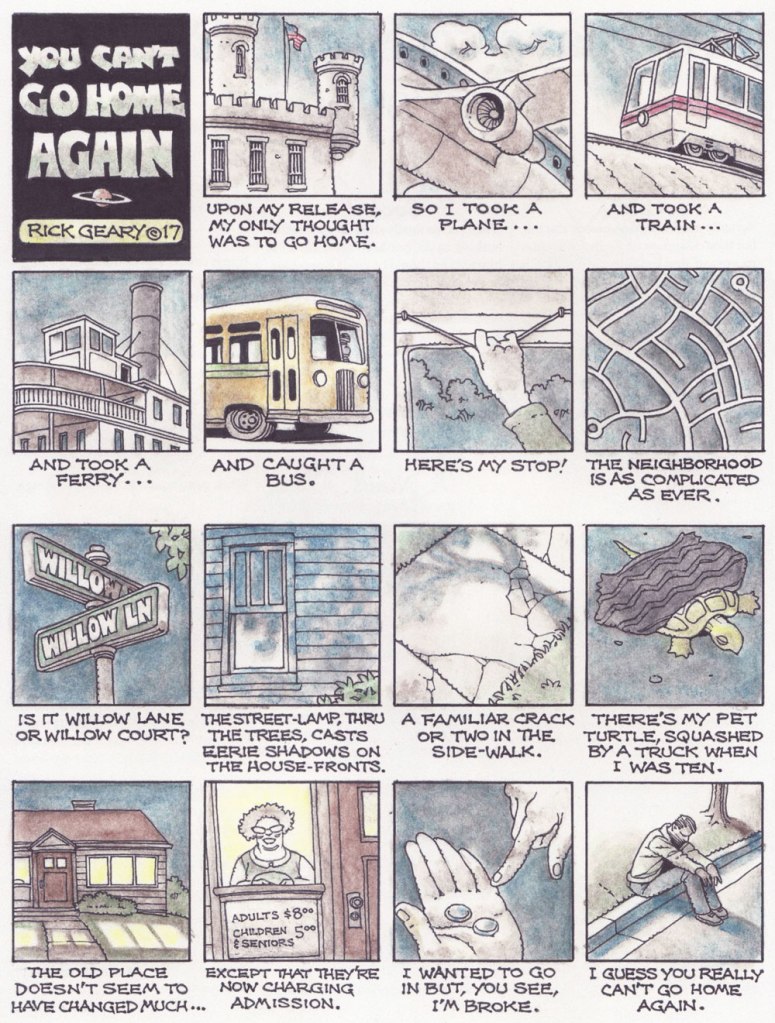
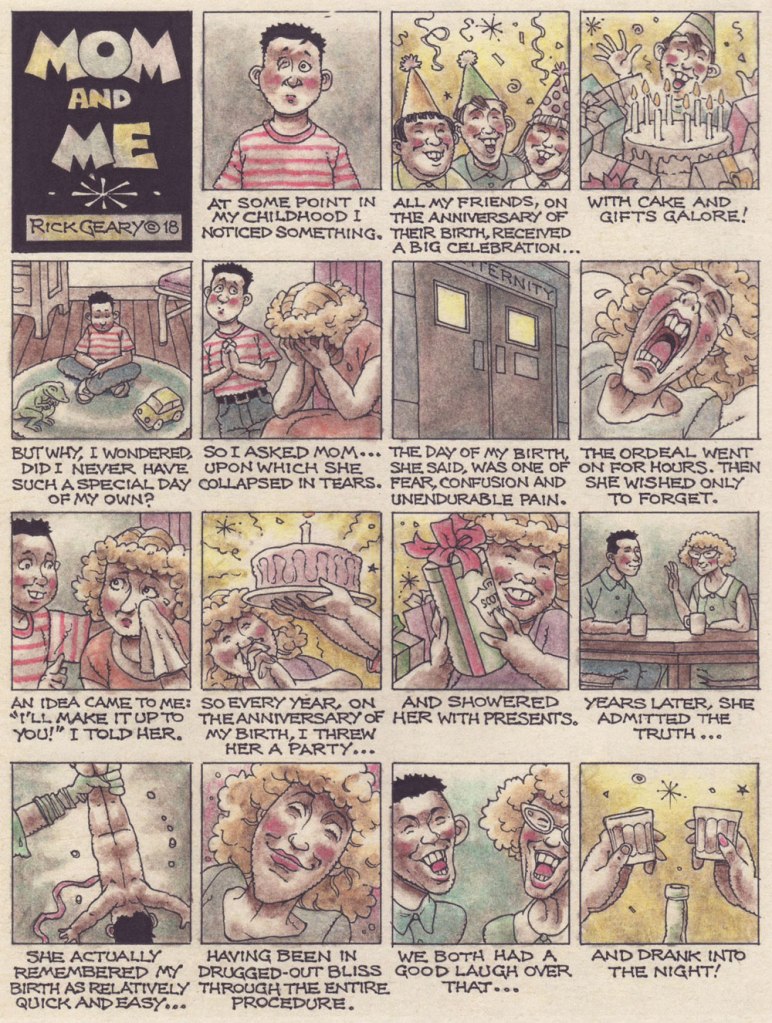
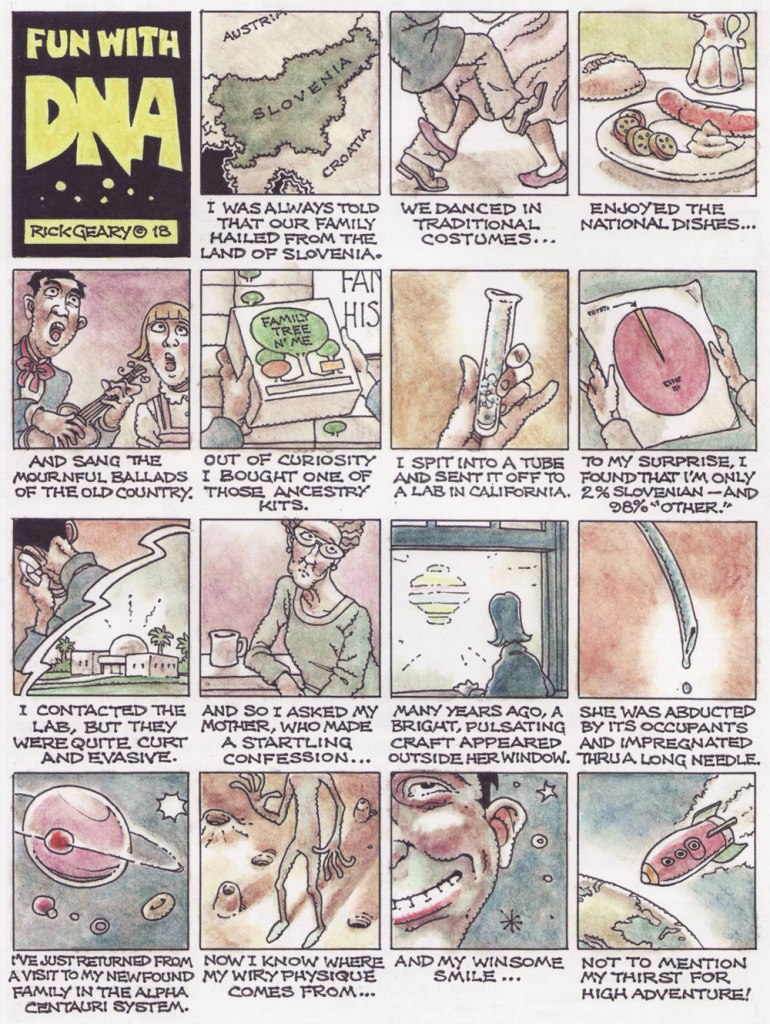
While this ever-industrious auteur has produced graphic novels galore in the glorious Geary fashion, I remain fondest of his short-form pieces. Here’s a choice handful plucked from Bystander issues.
From The American Bystander no. 7 (Winter 2017).
From The American Bystander no. 8 (Summer 2018).
From The American Bystander no. 9 (Fall 2018).
From The American Bystander no. 10 (March 2019).
And while ’tis the Season, I would be remiss in neglecting to mention that TAB’s latest issue no. 18, is hot off the presses. More details here. And should you crave to sample the goods… gratis — that option’s on the table as well!
This is The American Bystander no. 18, boasting this festive cover by Rick Meyerowitz.
That said, Happy Holidays, everyone. Be merry but above all be safe!
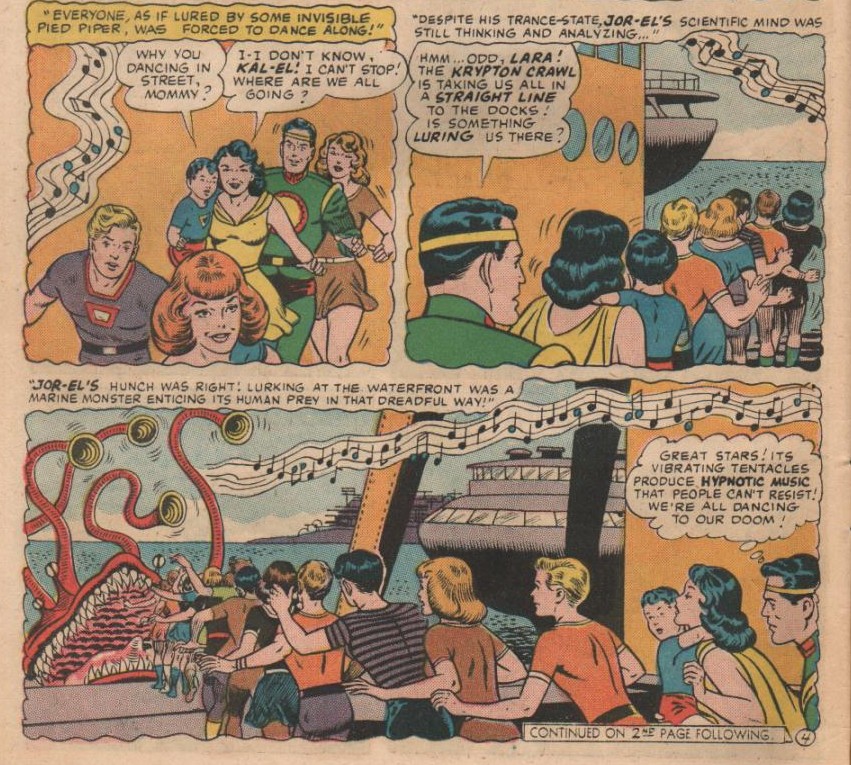
« The vibrating tentacles produce hypnotic music that people can’t resist! »
This is the last Tentacle Tuesday before Christmas, so wishing all of our lovely readers a splendid (and safe) evening, whether you celebrate Christmas specifically, something else altogether, or nothing at all.
As far as I’m concerned, one of the most important components to creating a holiday mood (aside from being with my family, of course) is music. If it’s played by an octopus, so much the better – and one not? Having a lot of arms is surely handy for playing many instruments at the same time. One must say this is a musical edition of Tentacle Tuesday – so put on a record, preferably of the old-school vinyl variety, and swing your tentacles (or whatever appendage you do possess) along!
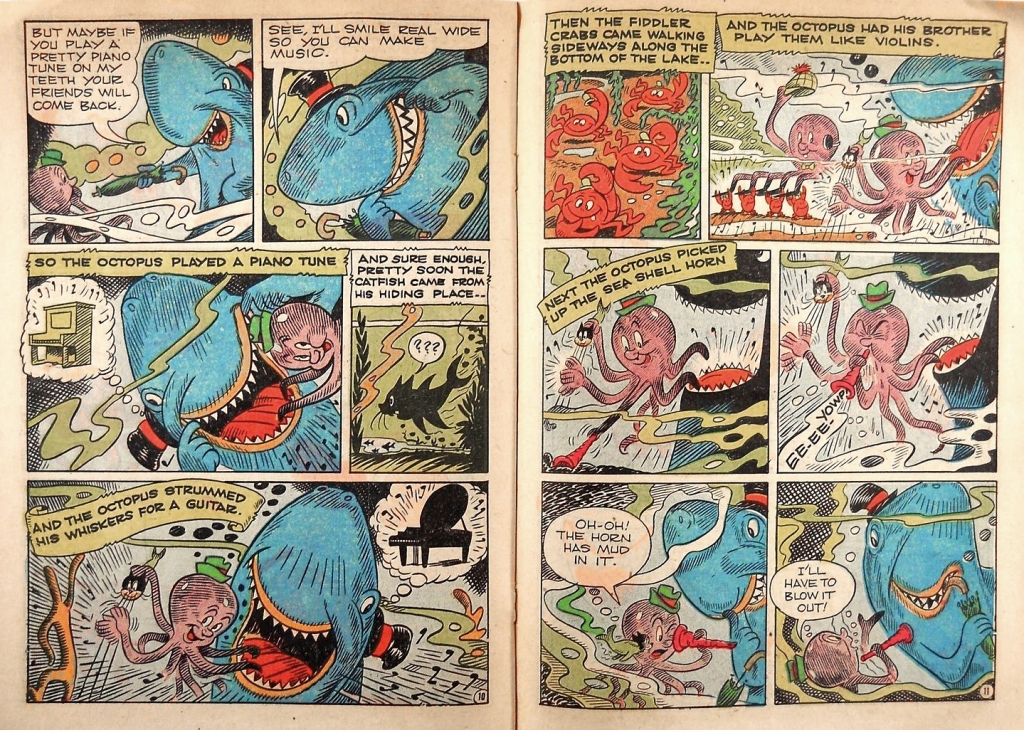
Grumpy Shark (1946, Belda Record & Publ. Co.) Written by Bob Bellemand illustrated by Mel Millar, this comic is part of the Talking Komics series issued by Belda Record & Publishing Co., in which a record was sold alongside the comic to delight both eyes and ears of its young audience. I didn’t know octopuses had whiskers – live and learn!
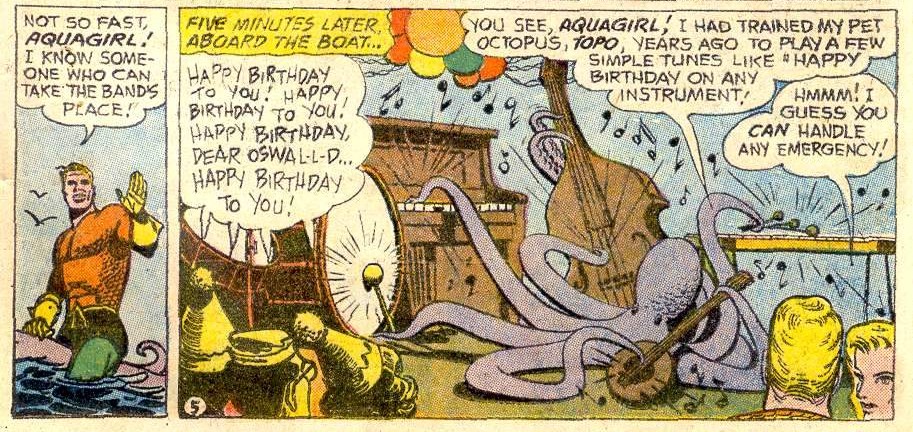
These panels, which I have been seeing all over the place with no attribution of artist or issue number (tssk, tssk) are taken from Aquaman Meets Aquagirl!, scripted by Robert Bernstein and illustrated by Ramona Fradon, and published in Adventure Comics no. 266 (November 1959, DC). Of course Topo, Aquaman’s pet octopus, is adorable as well as talented, and probably deserves his own post… but in the meantime, he has to share space with Aquaman’s other tentacled encounters.
Speaking of Topo… he’s been getting some attention recently, and unsurprisingly his musical talent is involved:
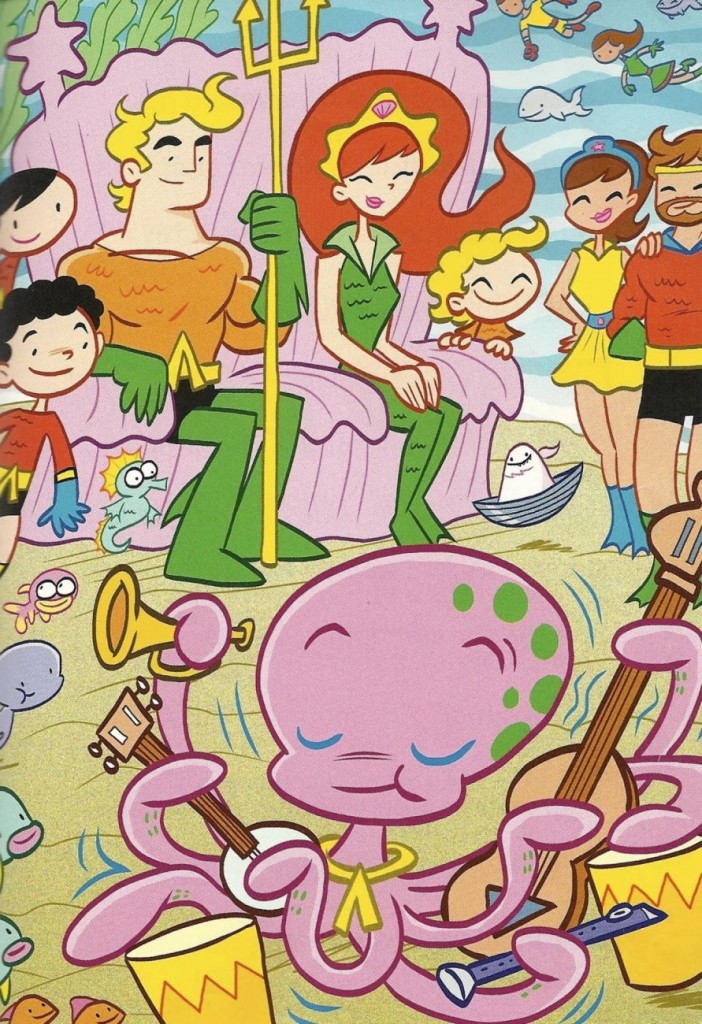
Page from Heroes of the High Seas (January 2011, Picture Window Books), scripted by J.E. Bright and illustrated by Art Baltazar. « Capstone Publishers and DC Comics have joined forces to produce a new children’s books series, DC Super-Pets. The series will focus on the super-powered pets of heroes like Superman, Aquaman, Wonder Woman, Batman, and Green Lantern… »
Page from The Swinging Superman!, scripted by Otto Binder, pencilled by Curt Swan and inked by George Klein, and published in Superman’s Pal, Jimmy Olsen no. 88 (October 1965, DC).
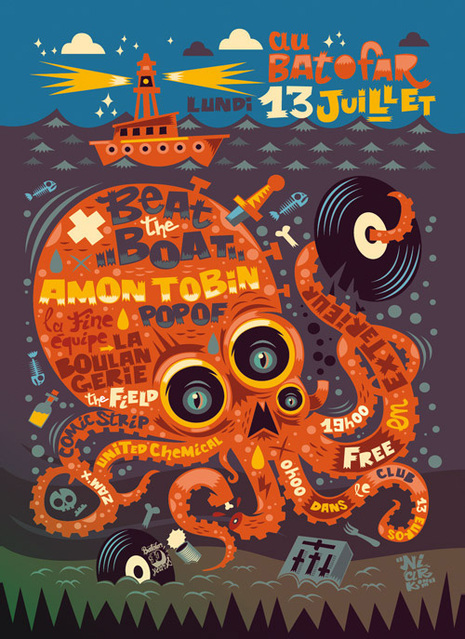
And to prove that octopuses dig LPs, too, I’ll include this nifty poster:
Poster by Sébastien Feraut (known as Niark1), a French illustrator. Visit his website!
On a connected subject, I heartily recommend this Soviet cartoon, which involves all manner of sea-creatures (yes, including several octopuses!) playing all sorts of instruments – don’t worry, it has subtitles in English.
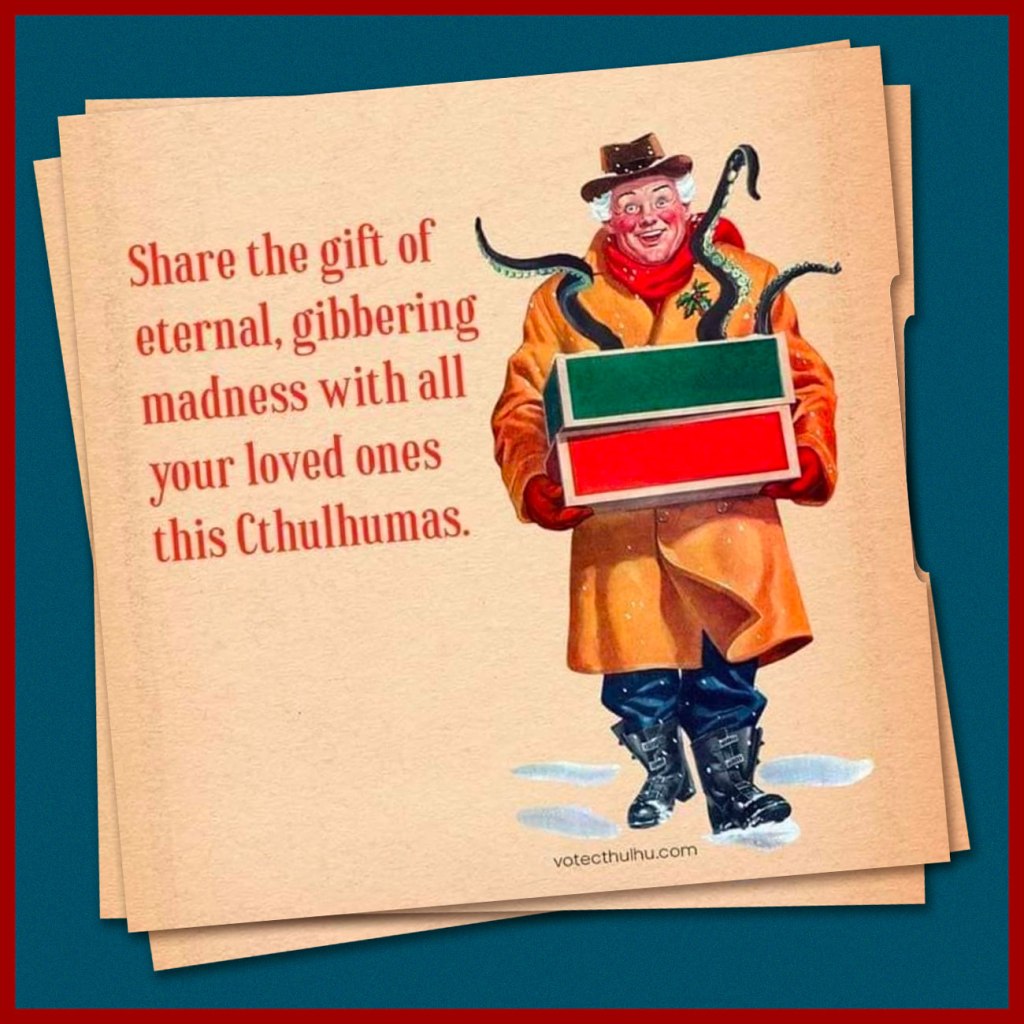
And finally — hope you’ve remembered to mail out all your Unholiday cards! Never forget that the ever-vigilant Cyäegha has its eye on you! [ artist unknown… so far ]
« Aren’t we forgetting the true meaning of Christmas. You know, the birth of Santa? » – Matt Groening
We’re back with another piping hot batch of Holiday cartoons from the pages of Playboy. I have striven mightily to represent most of the big guns (Kiraz and Smilby are among the missing — better luck next year, gents!) whilst keeping it to a tidy, cherry-picked dozen. One can only take so many ‘Randy Santa’ gags, even when they’re lavishly illustrated… that’s only a fraction of the culling process.
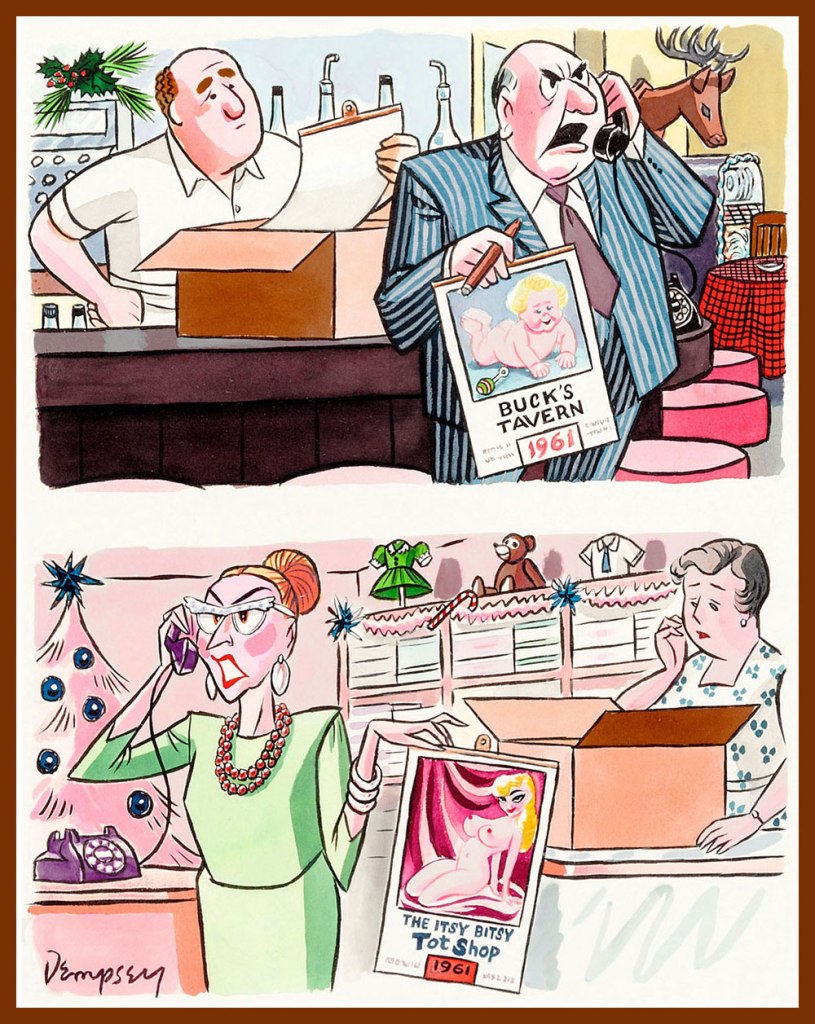
An early one by John Dempsey (1919-2002); it appeared in Playboy’s January, 1961 issue (what gave it away?)
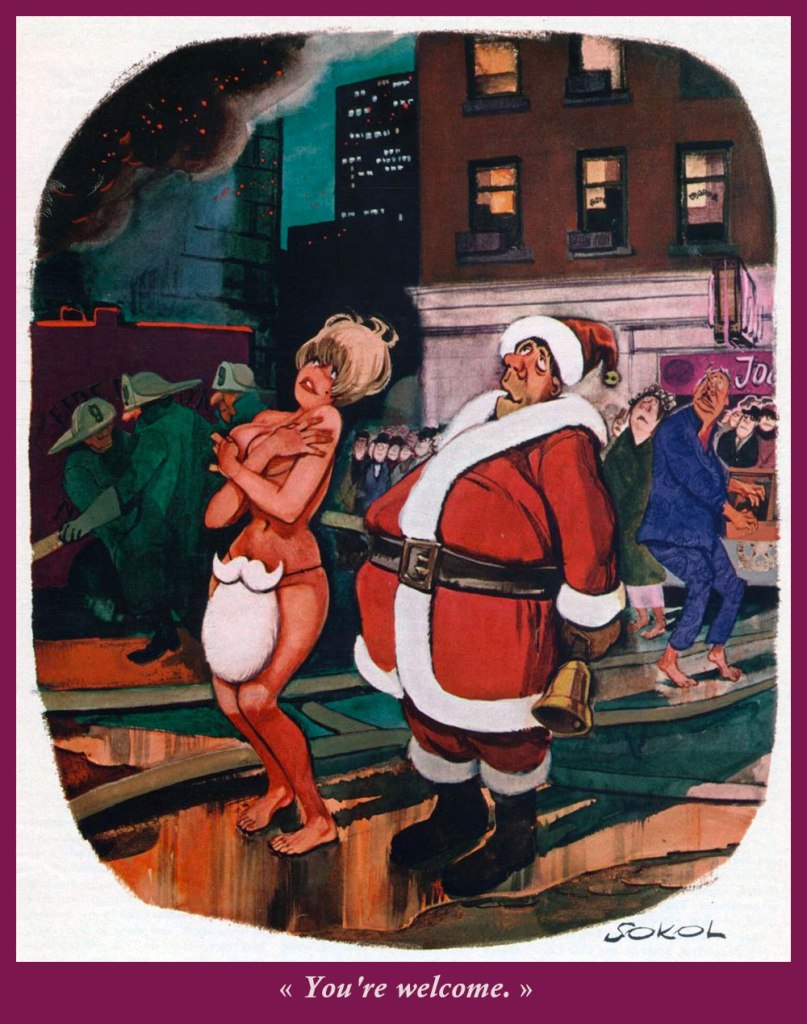
Austrian master Erich Sokol (1933-2003) shared his playful erotic visions with the readers of Playboy from 1958 to 1975, when he returned to his homeland, and again from 1992 until his passing. This one’s pleasantly gentle and understated.
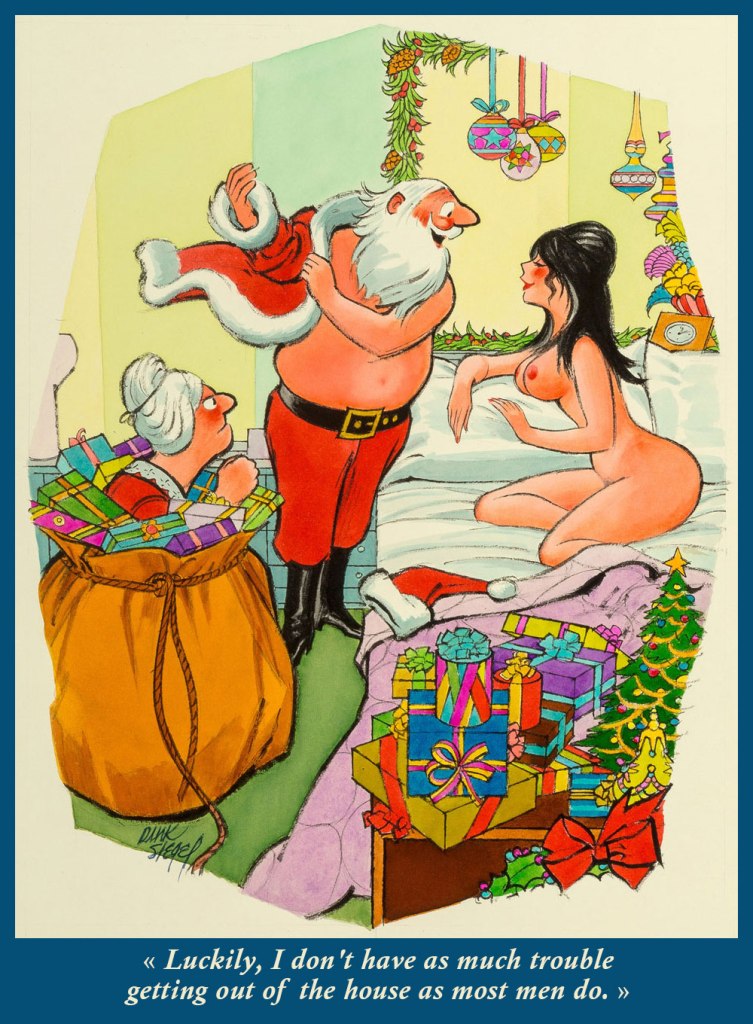
Readers of this blog will already know that Leo ‘Dink’ Siegel (1910-2003) is a favourite of mine. I showcased some of his Playboy work last year in Dink Siegel’s Swingin’ Roommates. Now *this* particular bit of impending marital strife and comeuppance appeared in the January, 1972 issue of the magazine.
Mighty Texan Rowland B. Wilson (1930-2005) was a dazzlingly-skilled illustrator and animator, as evidenced by this late-70s piece. His association with the magazine was long and fruitful. To wit, « on the day of his death, a sketch for a new Playboy cartoon still lay on his drawing board. »
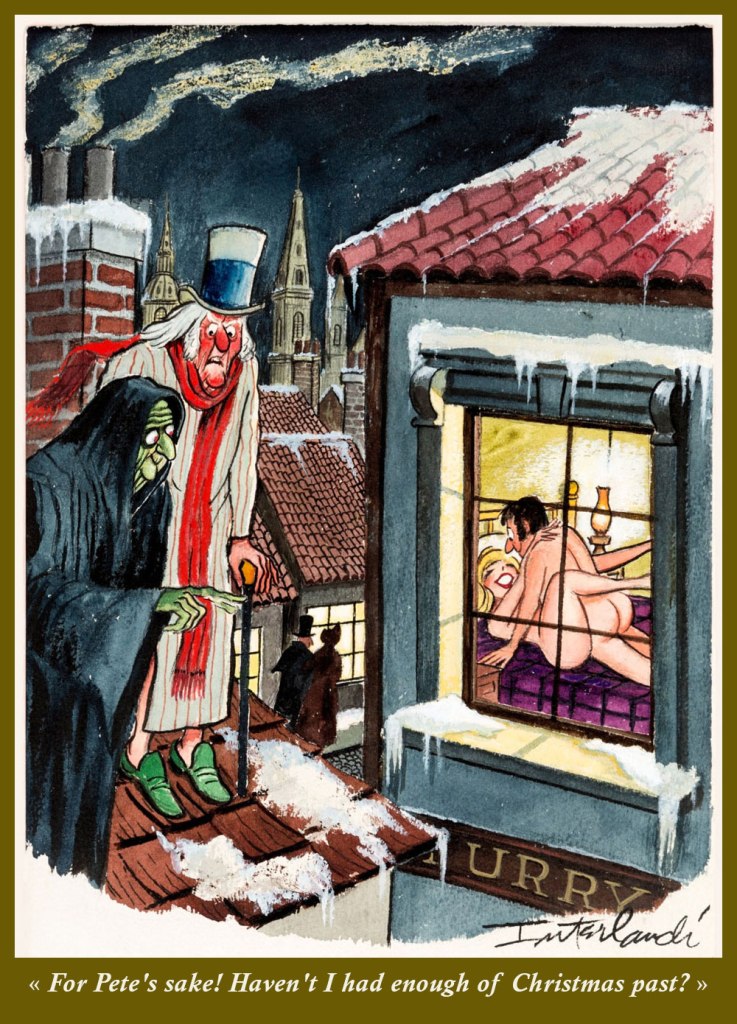
Second only to Saucy Santa jokes were the Scrooge sex jokes. But Eldon Dedini (1921-2006) really nails this one, from the pages of Playboy’s December, 1980 edition. And for your further edification, here’s my co-admin ds’ fond salute to this lovely, talented man.
Sure, we love Bernard Kliban (1935-1990)’s cats, but I’m frankly more partial to his anarchic, surreal, free-form wit. This sweet slice of… well, just desserts saw print in Playboy’s December, 1981 delivery.
Hardly-frosty Ontarian Doug Sneyd (1931–) has his go at Charles Dickens’ moral fable, with pretty solid (or so Ebezener hopes!) results. Mr. Sneyd knows his antiques, that’s evident.
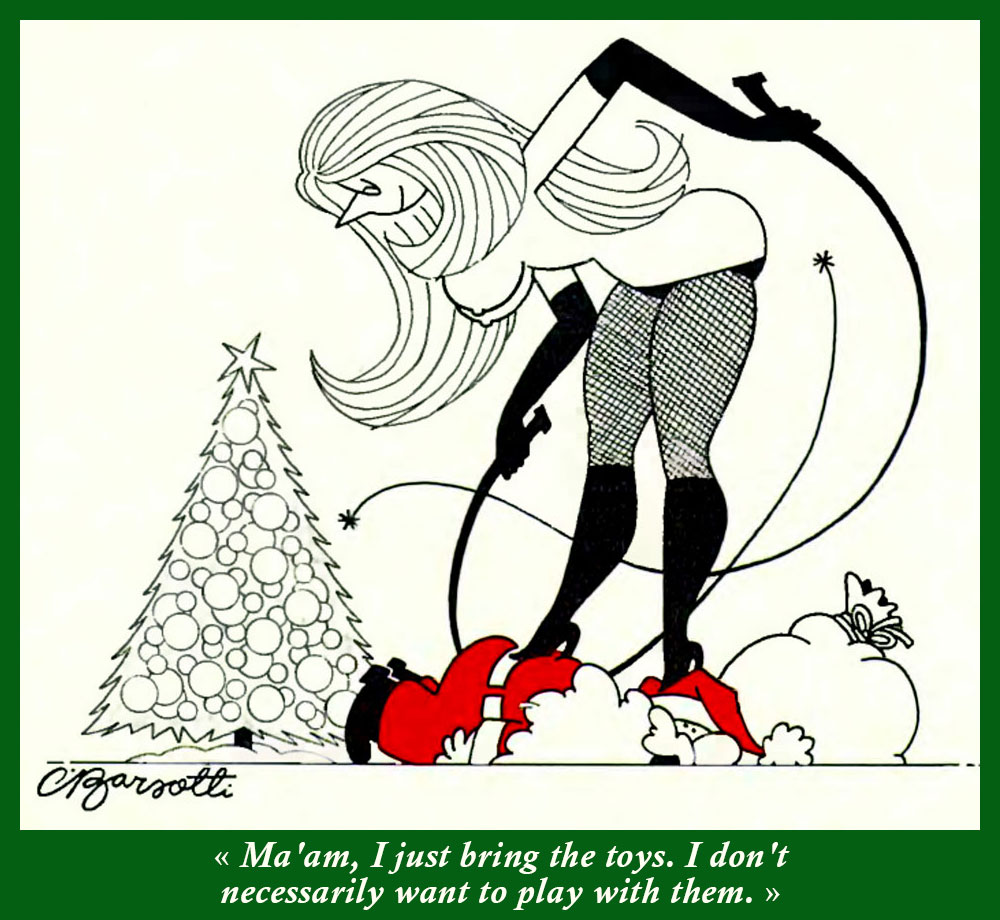
Dog aficionados everywhere best know Charles Barsotti(1933-2014) for his canine cartoons. This habitué of The New Yorker magazine (from 1970) also created several comics strips, was cartoon editor of The Saturday Evening Post, and generally a hard-working, genial man of tremendous talent. This lovely panel was buried near the back of Playboy’s December, 1982 issue.
Phil Interlandi (1924-2002) sold his first cartoon to Playboy in 1955, just a couple of years into the magazine’s existence. He soon had earned his permanent spot in the roster. Here he contributes his bit of Dickensian sauciness to the canon.
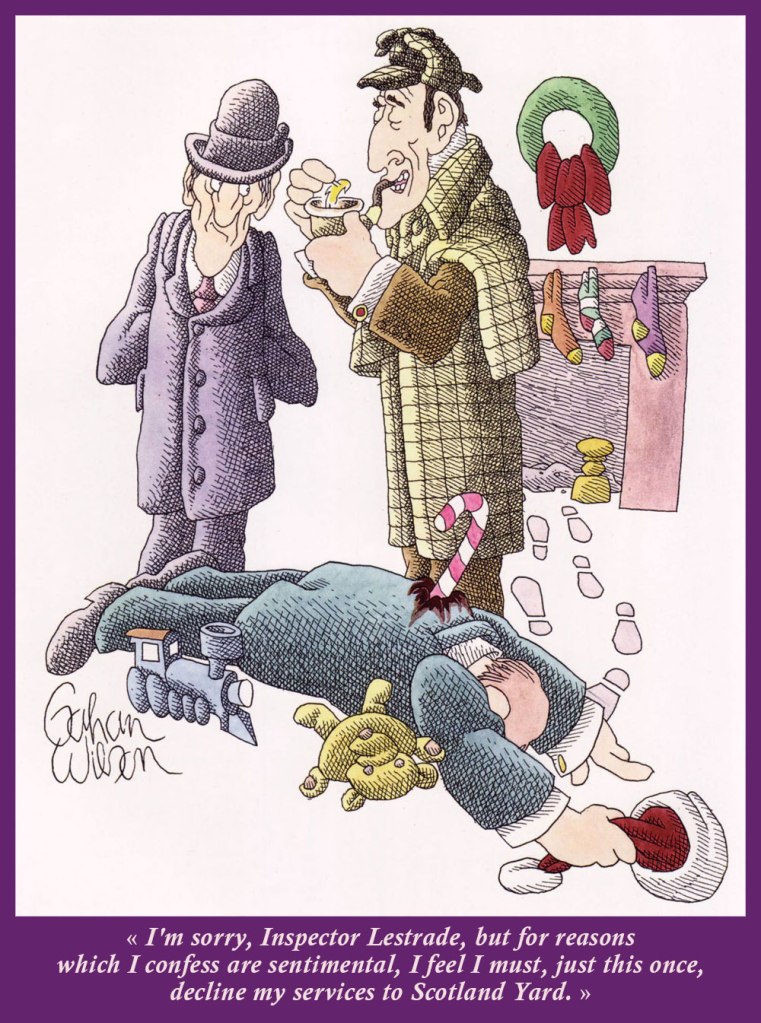
Among the Playboy cartoonists, Gahan Wilson (1930-2019) surely was the one most left to his own devices, and wisely so. He created scores of gleefully macabre Christmas cartoons for the magazine, but this one’s a real standout. Every element counts. Exemplary cartooning from the December, 1987 Playboy. And beware — more Gahan awaits you here.
Certainly a cut above the usual ‘Lascivious Saint Nick’ fare, this lush piece by Robert ‘Buck’ Brown came along in Playboy’s December, 1988 issue. Pray note the fretful reindeer peering over the roof’s edge. That’s cartooning!
While he’s mostly renowned for his work in The New Yorker (which continues to this day), Bill Woodman (1939 –) also contributed (this beauty, among others) to Playboy. From the December, 1988 issue. Yeah, our cats too.
And that’s our crop for this year… hope your holidays are bright and merry, under the circumstances. Joyeux Noël, one and all!
Today’s TT is like one of those 5$ grab bags: you don’t exactly know what you’re going to get, but there will at least one thing you’ll find amusing! Unless the store has cheapened out and stuffed it with nonsense nobody in their right mind would want. This offering, on the other had, is full of our favourite artists, and is not nearly as disparate as I first thought 😉
I don’t always have an over-arching idea for a post, inevitably ending up with plenty of odds and ends that don’t neatly fit into any one category. Actually, some of those “scraps” are the most enjoyable finds for me.
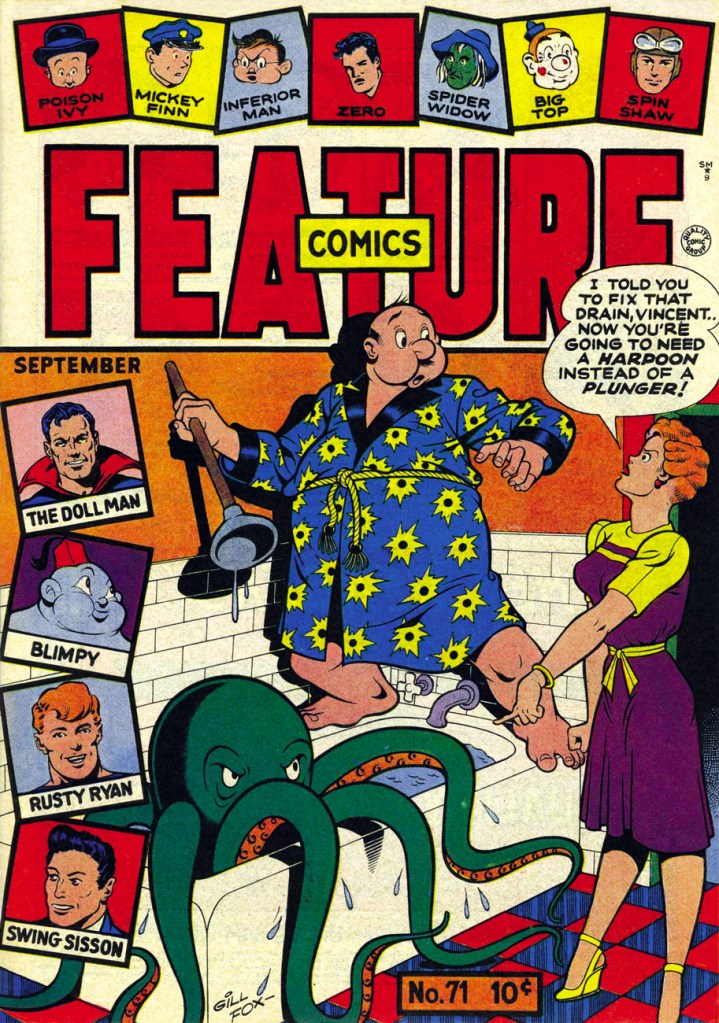
Feature Comics no. 71 (September 1943, Quality Comics). Cover by Gill Fox. The octopus-in-plumbing theme is an oldie-but-goodie; the undaunted housewife may yet regret her cavalier attitude towards the tentacled one, who probably wants to move in with his family.
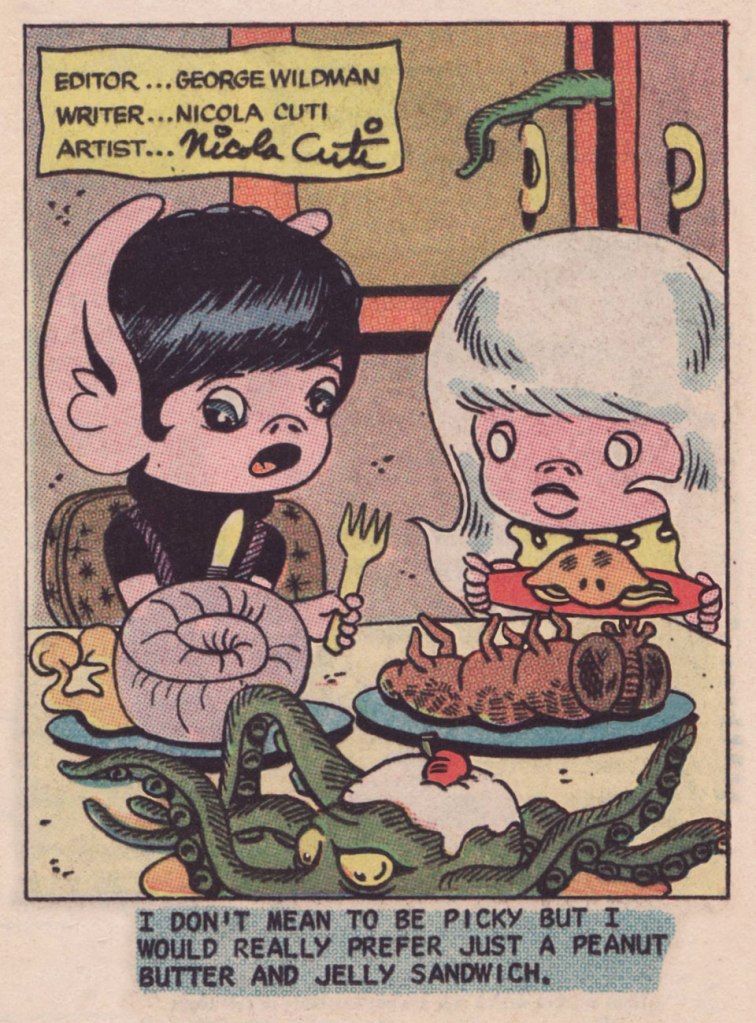
Nicola Cuti‘s Weirdlings was a charming little ‘filler’ gag page designed and drawn by him. This one was published in Haunted no. 14 (Sept. 1973, Charlton). I think the octopus, that appears to be still alive, would also prefer a good old PBJ sandwich.
Archie’s Pal Jughead no. 77 (October 1961). Cover by, dare I say legendary, Samm Schwartz; revisit (or discover!) some of the nicest covers he has drawn for Archie Comics in co-admin RG’s post.
« She kept her ears permanently tuned to the chicken voices outside, so knew immediately when a coyote had crept into the yard, and barrelled screaming for the front door before the rest of us had a clue. » ― Barbara Kingsolver
Given how muted the holiday season is likely to be for most of us, and in light of how much our readers appear to enjoy our past Christmas offerings — (all year long!), I’d thought I’d get an early start on the festivities.
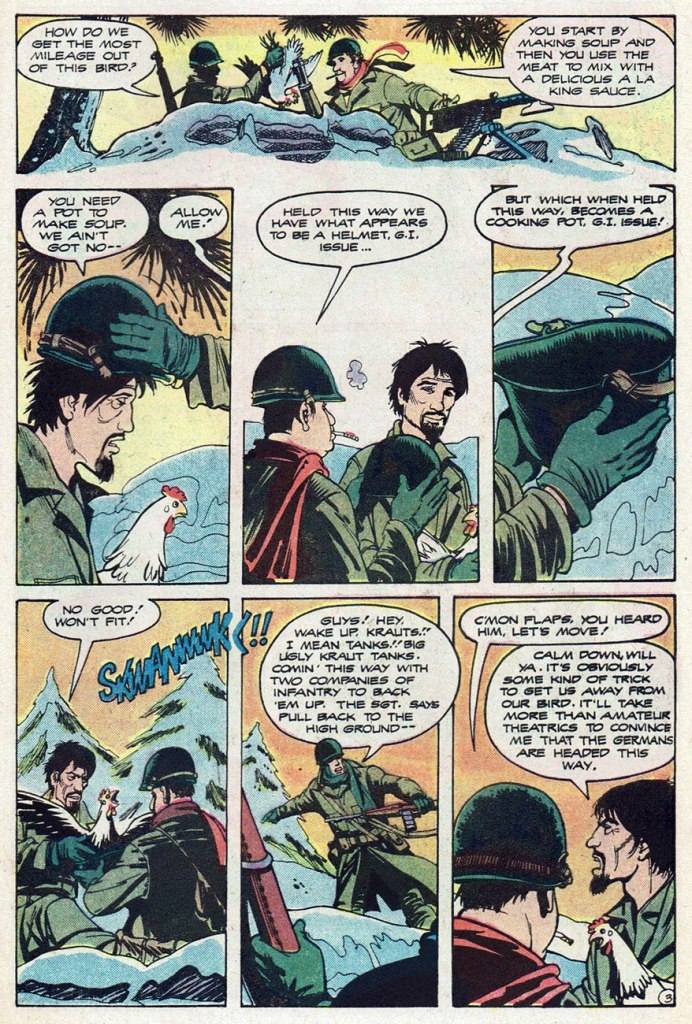
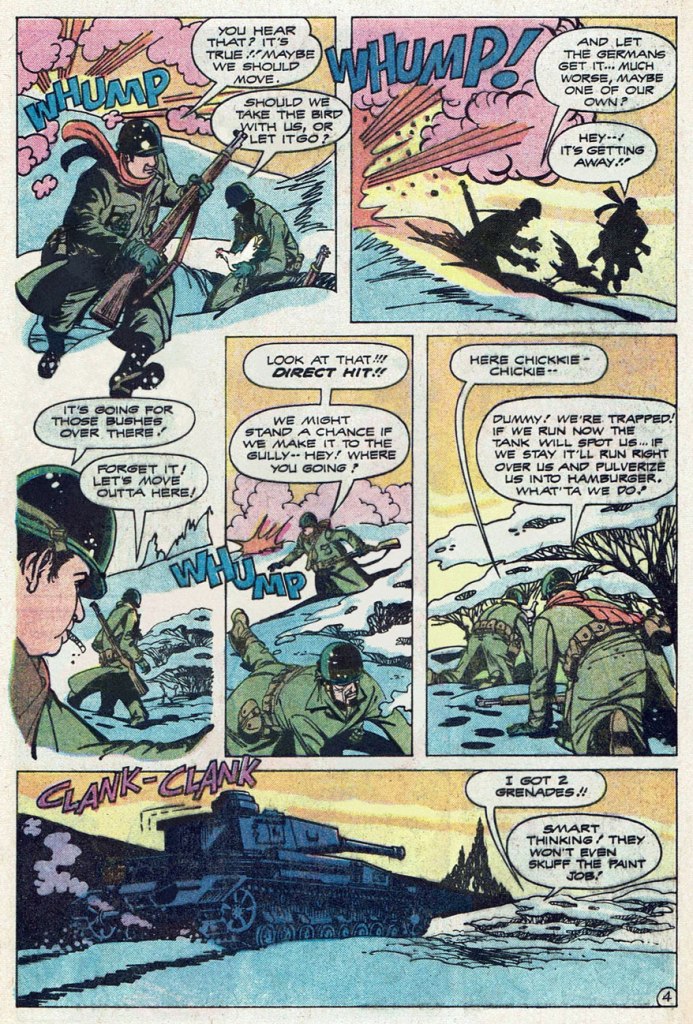
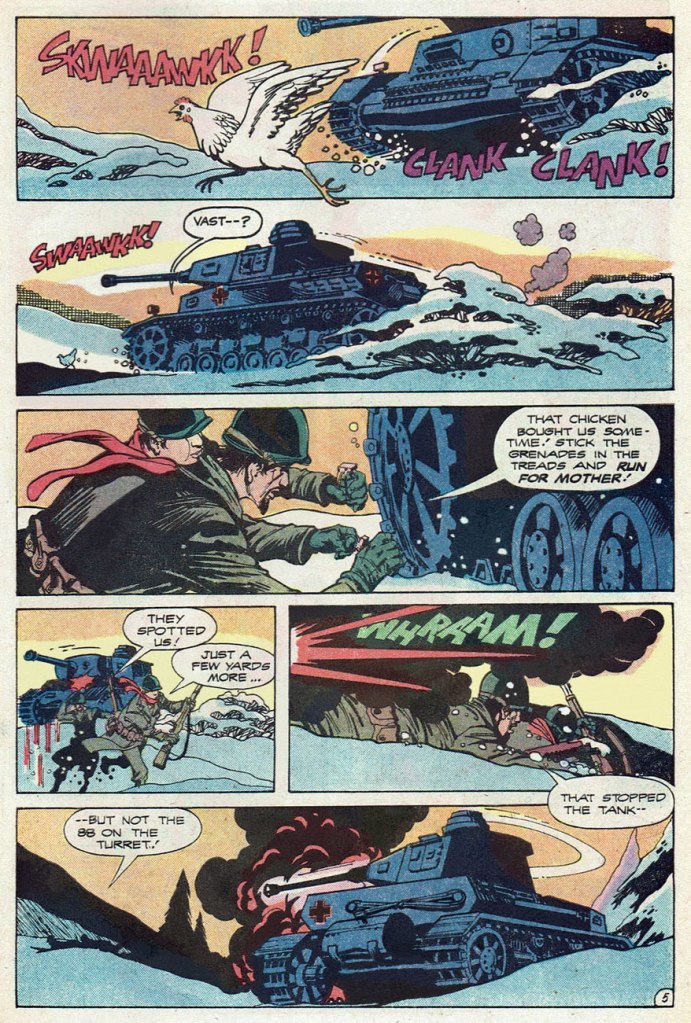
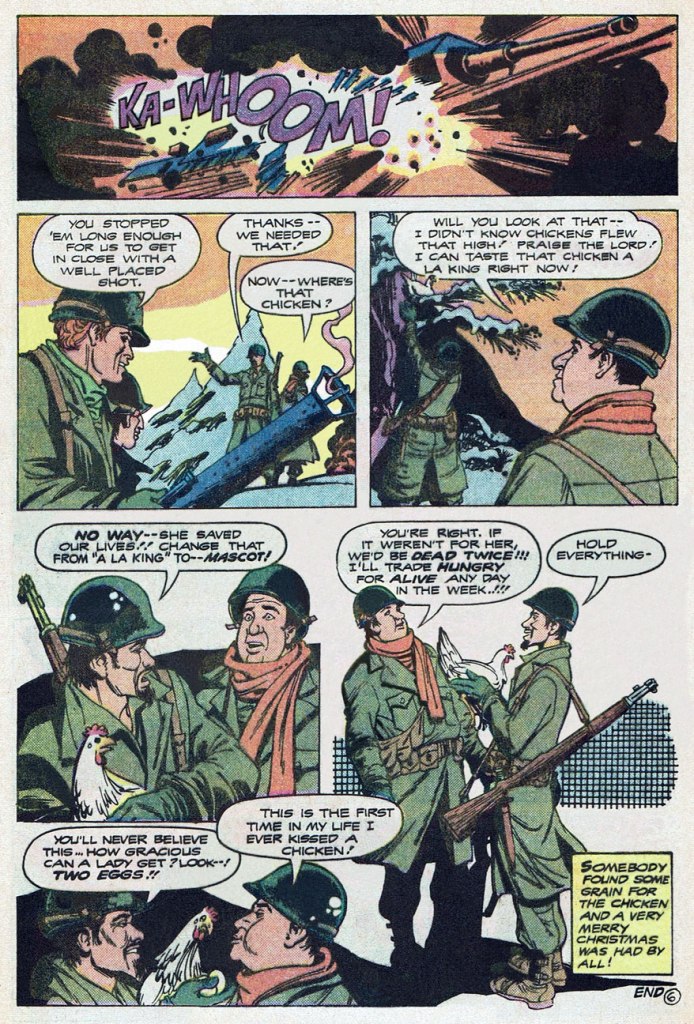
Here’s a fine, but truly obscure little Christmas fable. It was buried in the back of an issue of The Unknown Soldier, at a time when the DC war line was well into its final decline.
… as much of a ‘very merry Christmas’ one may possibly enjoy in the midst of war, far from home and loved ones, at any rate. I would have enjoyed seeing more of those two kind-hearted doofuses, Burf and Flaps… and their chicken mascot. I wonder what name they would have given her…
According to editor Paul Levitz, Christmas Dinner‘s script had been purchased six or seven years earlier by his predecessor Archie Goodwin but had lain fallow in the interim. It was written by one Janus Mitchell (his sole credit in comics, but we may be in the presence of pseudonymous shenanigans) and was finally assigned for illustration to Teny Henson (often credited in the US as ‘Tenny Henson, as he is here), one of my favourite creators from the ranks of the Filipino Komiks community. In America, Henson’s work mostly appeared in DC publications for about a decade (1974-83), beginning with the plum commissions of inking a returning Sheldon Mayer (post-cataract surgery) on his Rudolph the Red-Nosed ReindeerLimited Collectors’ Edition giants, and inking Ramona Fradon‘s pencils on DC’s underrated second revival of Plastic Man for a pair of issues. All in all, Teny flew under the fanboy radar, chiefly providing artwork for mystery and war short stories, and always at a high level of craft and inspiration.
I love the economy and precision of his line, his limpid storytelling, and his mastery of an aesthetic merrily at play in the sweet spot between the cartoonish and the representational. Fittingly, he went on to work in the animation field.
This is The Unknown Soldier no. 237 (Mar. 1980, so on the stands in Dec. 1979, DC), picking up its numbering from the venerable Star-Spangled War Stories; cover, of course, by Mr. Joe Kubert, though by no means among his finer moments — that ‘Nazis in ambush’ formula was getting pretty long in the tooth by then.
























 Who's Out There?