Happy Birthday to Eldon Dedini

Amidst all the (justified) doom and gloom that this week has brought us, there is one bright spot that comes just in time to save this week from being a complete downer. It’s Eldon Dedini’s birthday! (He was born in 1921, on June 29th.) Yes, I know that he died in 2006… but his joyous, delightfully hedonistic art lives on. As a Russian whose father once started a rowdy party because it was Mozart’s birthday, I claim the privilege of celebrating Dedini’s jour de naissance by raising my glass of rosé (satyr-approved, of course) in his honour.
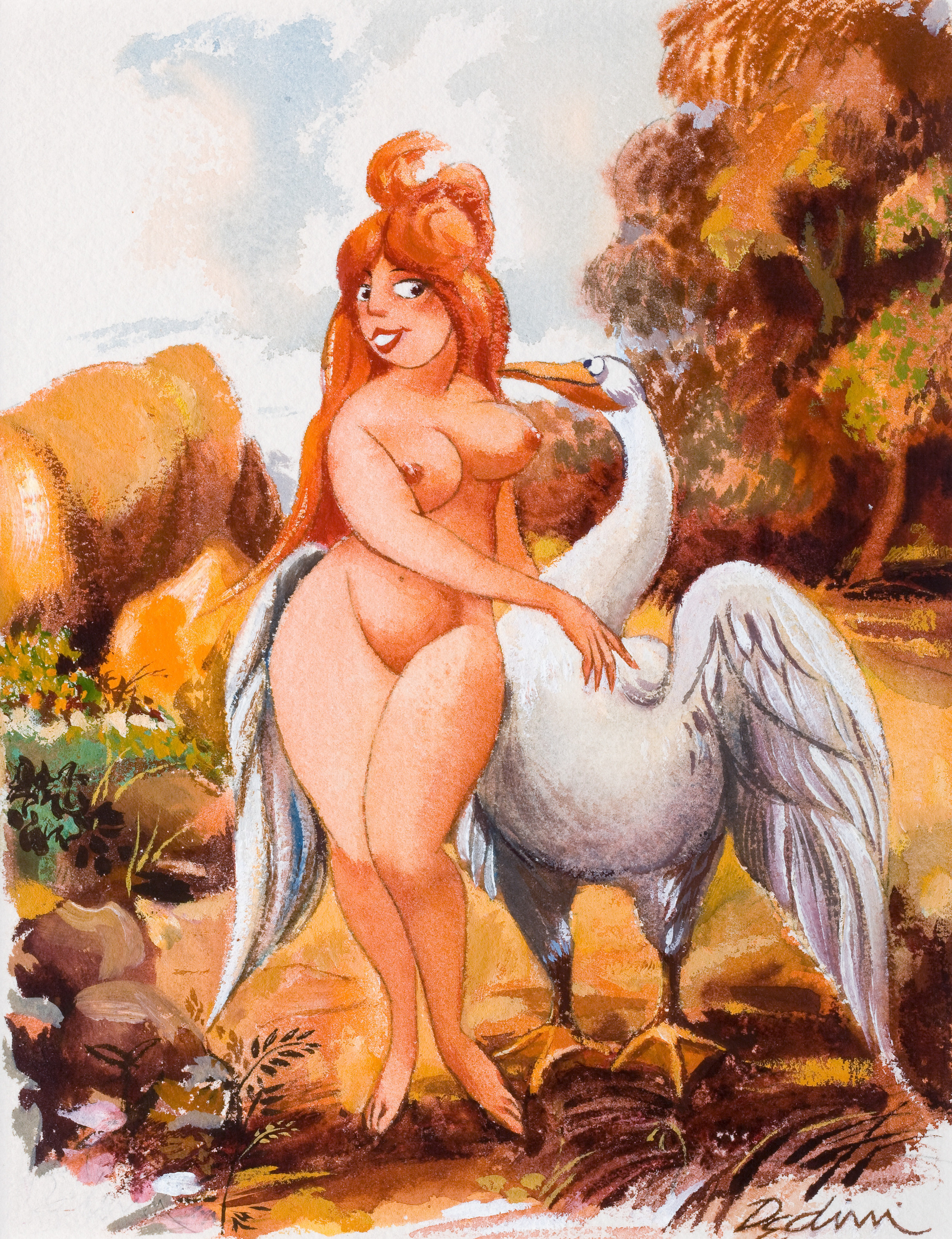
Dedini-Swan
“That’s all very well for you, but I’m the one who’ll have to sit on the eggs”.

He was one of Gus Arriola’s closest friends. To quote Arriola, «calling Eldon a cartoonist just christens the tip of an impressive iceberg. Beneath the surface is a superb painter, a remarkably inventive illustrator, philosopher, and humorist—a keen observer, revealing life’s little truths with his unerring brush. His chief reward was the viewer’s invariable burst of laughter. He was a walking repository of eclectic knowledge about art, history, jazz, wine—you name it. I gave up using my encyclopedia on a subject search: it was faster to pick up the phone and call Eldon.» By the way, I pulled this quote out of a R.C. Harvey article published in the Comics Journal titled “Viewing Life Through a Twinkle”, which gives you an idea of what a fun read it is.

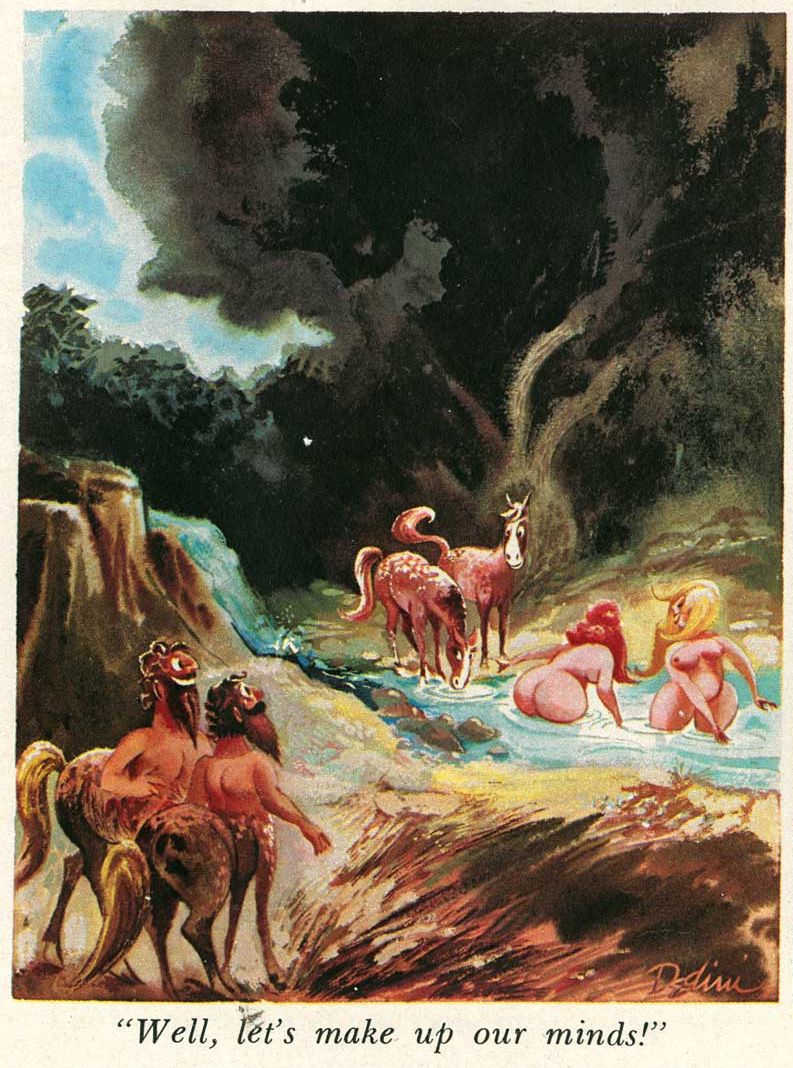
The first thing that comes to mind when one thinks of Dedini is merrily frolicking satyrs, closely followed (or preceded) by unapologetically buxom women, all of this merry crowd looking to have some fun of the most basic kind. It’s not all randy woodland gods, though; there’s also room for lascivious gnomes, salacious wolves and whatever other lechery comes to mind. (Most of these were published in Playboy Magazine.)

Dedini-Satyr-Balzac
« Remember what Balzac said – ‘it is easier to be a lover than a husband for the simple reason that it is more difficult to be witty every day than to say pretty things from time to time.‘ »
Dedini-MakeUpOurMinds
Ooh, tough choice.
Dedini-MushroomScene
« Either we start pushing birth control or we’re going to be up to our asses in little people. »

DediniWolfA« But will you love me when I’m old and gray? » From Playboy’s August, 1971 issue.
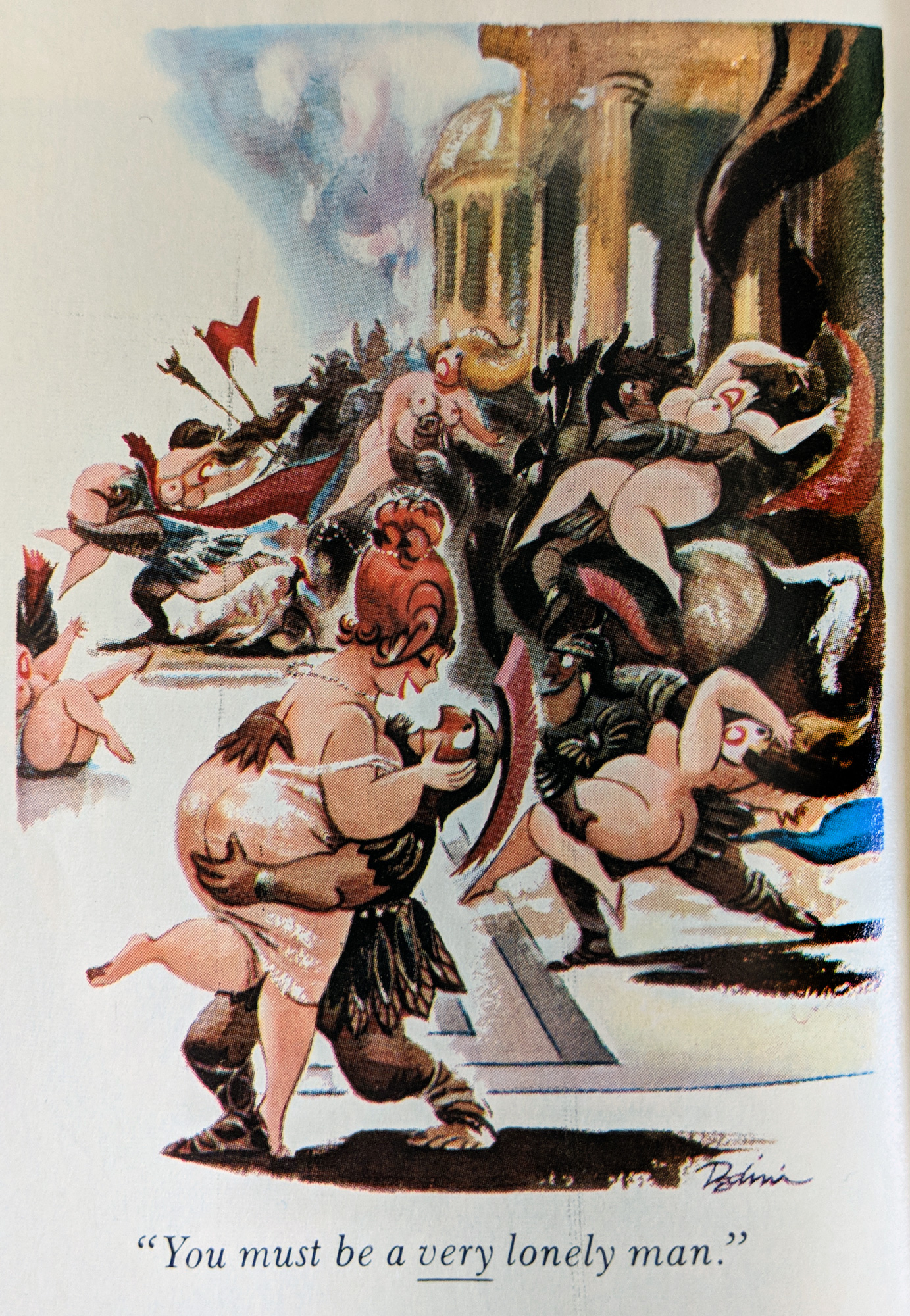
Dedini-LonelyMan
Nothing like taking the proactive role, huh?

Although it’s easy to be blown away by Dedini’s take on Grecian and Roman mythology – I think fabled creatures gave him an easy outlet for his joie de vivre – he could seemingly draw anything he wanted to, stunning forest landscapes or historical costumes, capturing carpet textures, clothing accessories or musical instruments with equal ease.
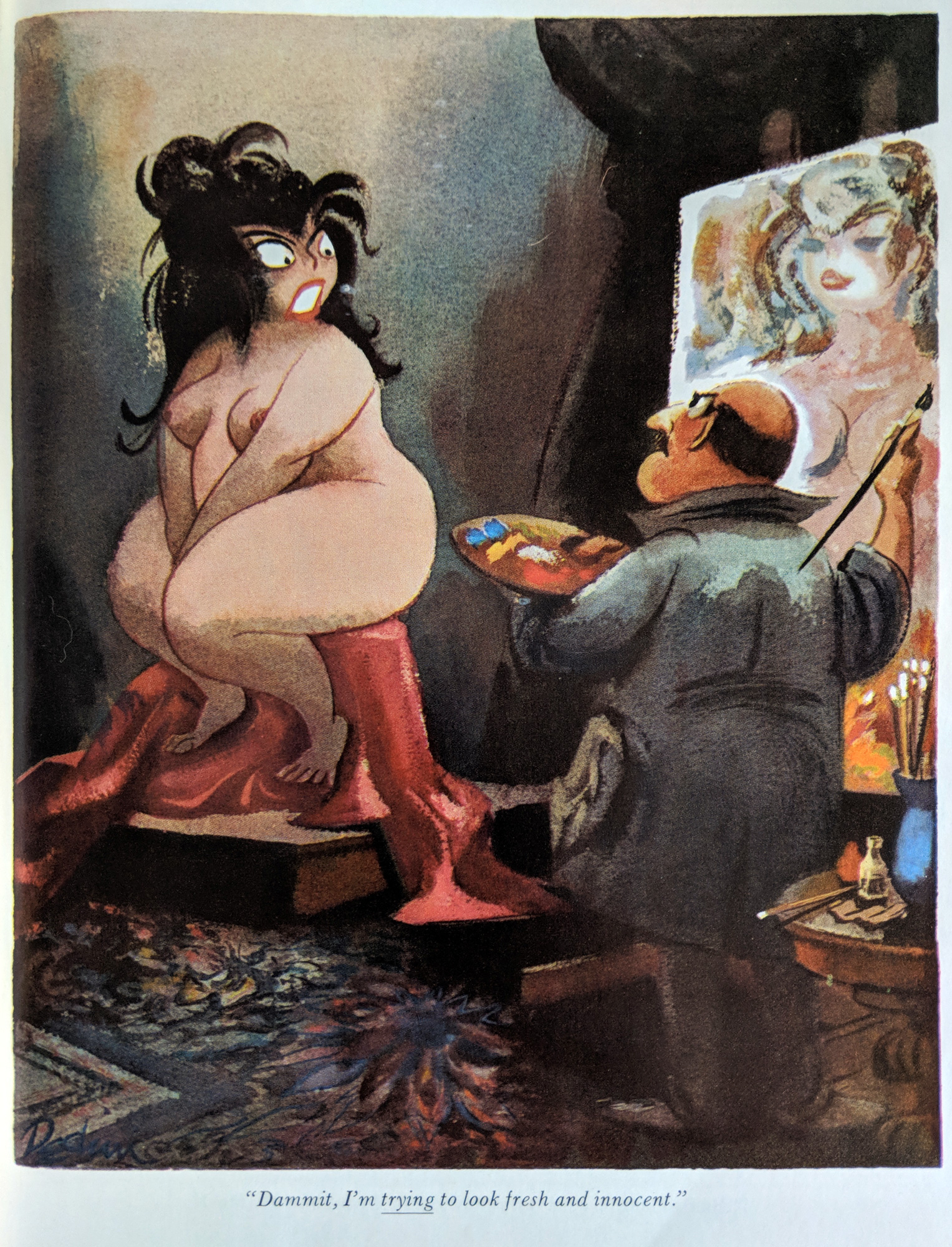
Dedini-FreshandInnocent

Dedini-ThunderWoman

Dedini-RockBand
« Well, I guess it goes to prove that not all God’s children got rhythm. » Note the name of the band, which made me snort into my tea.


Dedini-Religion
Whatever religion *that* is, I want to join it!

To wrap up, here’s a sweet anecdote from the aforementioned Viewing Life Through a Twinkle:

During an intermission at one year’s Festival, Dedini and some other PBL members went up on stage to have their photograph taken. Duke Ellington was still on stage, seated at the piano, putting eye drops in his eyes. When Dedini was introduced as “a cartoonist who sometimes draws jazz cartoons,” Ellington got up and, without saying a word, pulled out his wallet and started looking through it as he meandered, aimlessly, around the platform. Finally, he found what he was looking for, a folded up magazine clipping. He carefully unfolded it and spread it out on the piano: it was a cartoon Dedini had done for Collier’s. The cartoon depicted two Russians in Red Square, one of whom is obviously a dealer in blackmarket phonograph records: he has opened his coat to show the other fellow the record that he has tucked inside, saying, “ … Cootie Williams, trumpet; Johnny Hodges, alto sax; Barney Bigard, clarinet; Harry Carney, baritone sax; Duke Ellington, piano …” Said Dedini: “Ellington loved that cartoon because when he toured Russia the people of Russia loved his music, but they couldn’t buy the records.” For years thereafter, Ellington sent Dedini a Christmas card. “I have about twenty,” Dedini said. “He sends them in June.”

~ ds
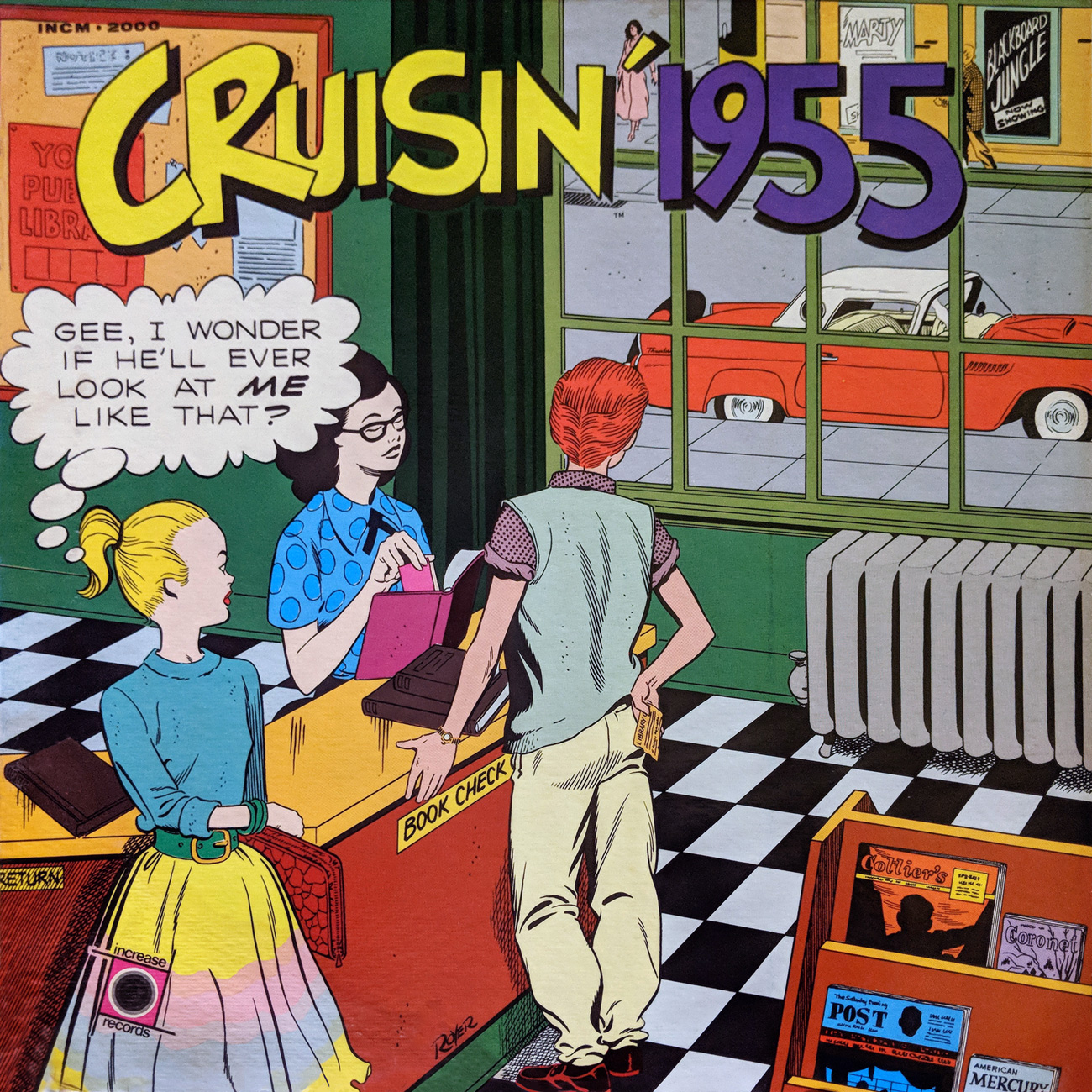
Mike Royer’s Cruisin’ Years: the Interview, part 1

« This isn’t just nostalgia. It’s history! »

Today, Michael Royer (born June 28, 1941), who surely needs no introduction around these parts, celebrates birthday number seventy-seven, and on this special occasion, we have a treat, both for the great man and for the rest of us: part one of an interview Mr. Royer granted us, conducted just a few days ago.

As you can imagine, Mr. Royer has spent decades answering the same queries about his work with Jack Kirby and with Russ Manning, so that’s quite a well-trod line of investigation. We like to approach things a bit differently here at WOT; having long been intrigued by Mr. Royer’s evocative series of LP covers for the Cruisin’ anthology series, beginning in the late 1960s, and frustrated by the lack of solid information concerning said contribution, I figured I’d take a hand, and reached out to Mr. Royer.

If you’re unfamiliar with the Cruisin’ Series, here’s the pitch: « Cruisin’ is a year-by-year recreation of pop music radio during the years 1956 through 1962 [the years of 1955 and 1963-1970 were produced later]. Each album is not just a collection of the top pop music of a particular year, but a total recreation by a top disk jockey (of that year) doing his original program over a major pop music station. That means actual commercials, promotional jingles, sound effects, newscast simulations and even record hop announcements in addition to the original records themselves. »

« Cruisin’ producer Ron Jacobs monitored thousands of feet of tape, travelled over 10,000 miles and rooted through forgotten files and cluttered basements for old commercials, station promos and jingles. »

« What’s so special about these album covers? », you may ask. I’d posit that they’re unique in the sense that, while they each work as standalone pieces, together, they form a quite impressive comic strip, one in which a year or so elapses between panels. Just about every detail has its place, imparting information plainly or quite subtly. Characters come and go, years apart, sometimes entirely offstage, often never speaking a word. It’s graphic storytelling at its finest. And the LPs are pretty spiffy too.

Now that you’re up to speed, shall we begin? Mr. Royer and I spoke on Tuesday, June 26, 2018, and he was most generous with his time and his recollections. I assure you that the minutes simply fly in such gracious company.

RoyerCruisin'55A
Read the liner notes, or hear Cruisin’ 1955 in its entirety here!

RoyerCruisin'56A
Read the liner notes, or hear Cruisin’ 1956 in its entirety here!

RoyerCruisin'57A
Read the liner notes, or hear Cruisin’ 1957 in far less that its entirety here. Sorry!

RoyerCruisin'58A
Read the liner notes, or hear Cruisin’ 1958 in its entirety here!

RoyerCruisin'59B
Read the liner notes, or hear Cruisin’ 1959 in its entirety here!

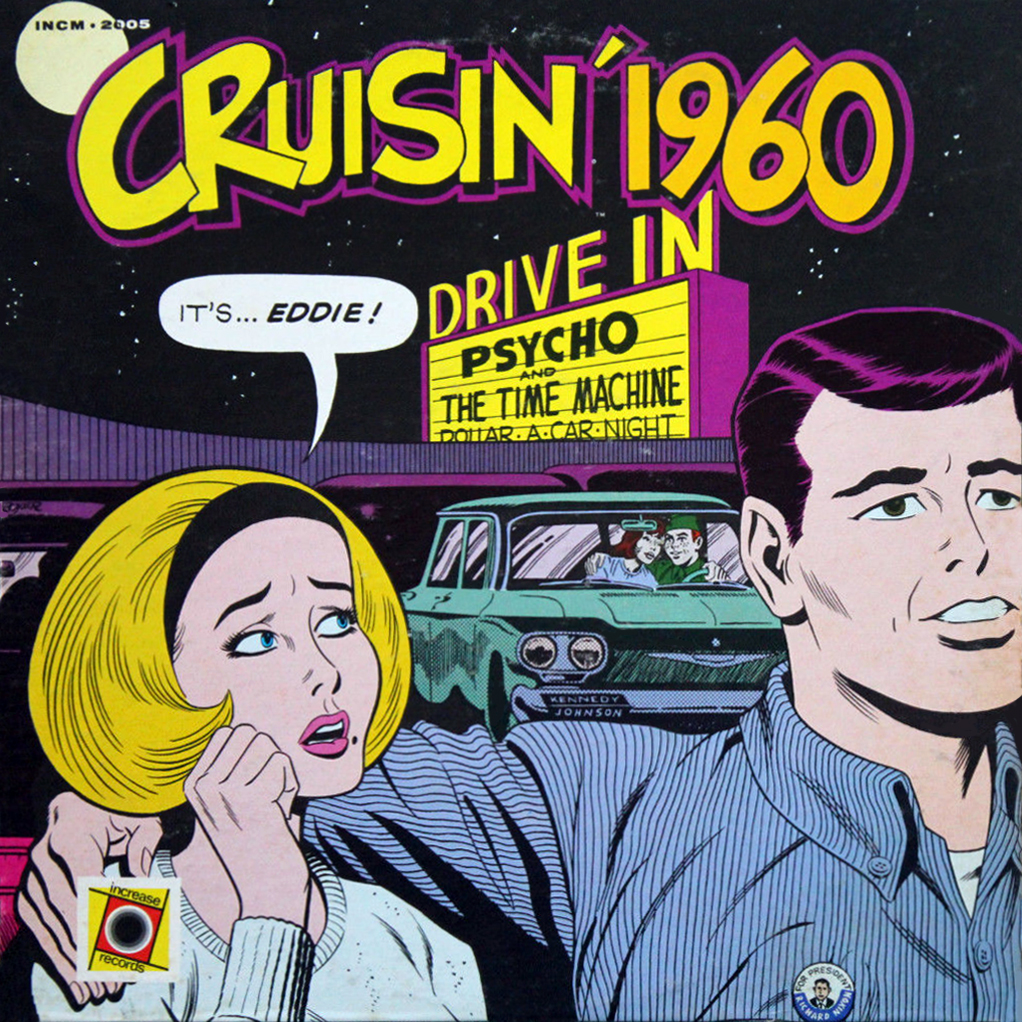
RoyerCruisin'60A
For this entry’s cd reissue, the cover artwork was inadvisably cropped, quite obscuring the political differences between Kevin Buchanan III (front) and Eddie (in uniform). Mr. Royer’s least favourite cover, incidentally. Read the liner notes, or hear Cruisin’ 1960 in its entirety here!

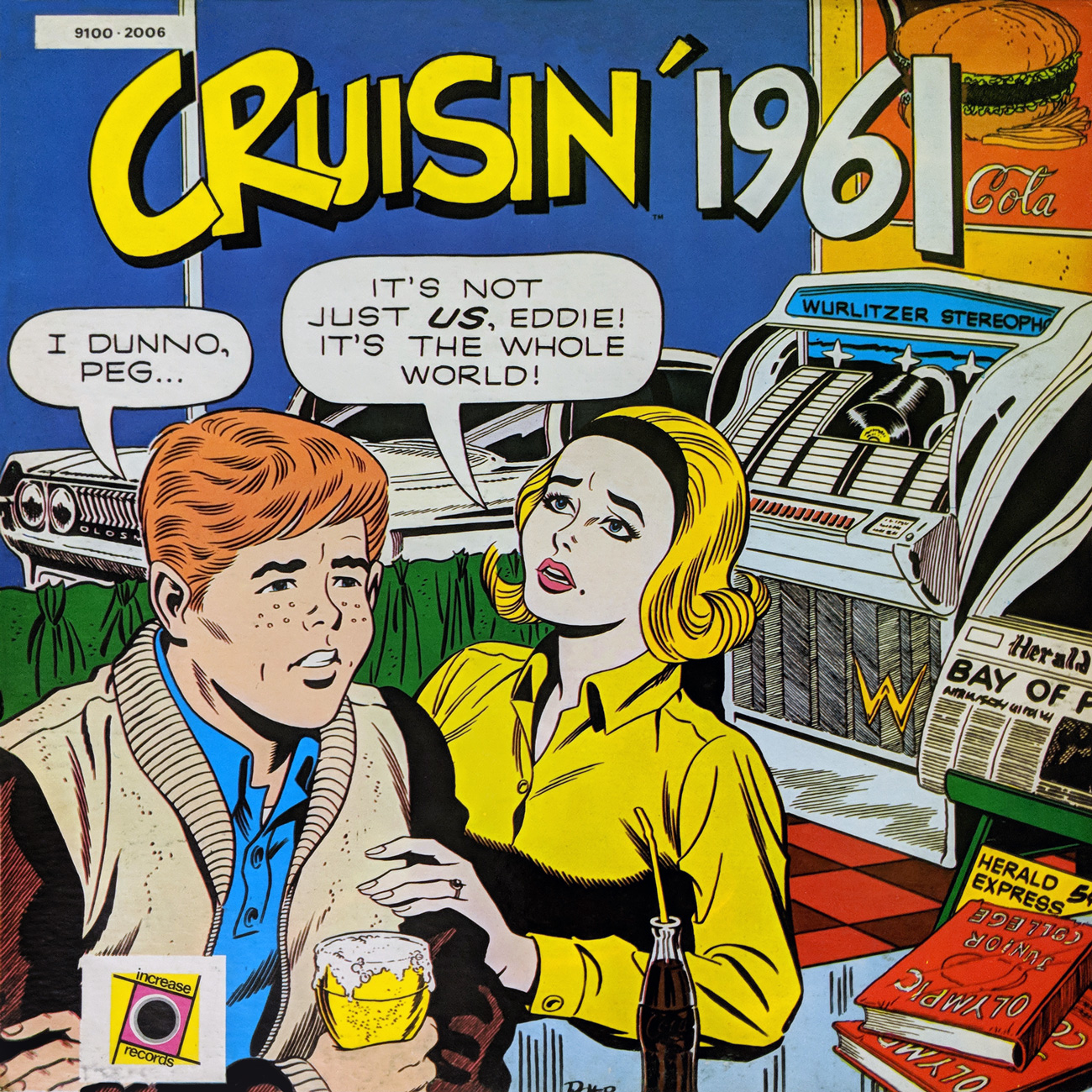
RoyerCruisin'61A
Read the liner notes, or hear Cruisin’ 1961 in its entirety here! And remember, « If you say ‘Woo Woo Ginsburg’ with your order, you get another Ginsburger free of charge! »

Who’s Out There: Mr. Royer, How did you happen to be selected for the job in the first place?

Michael Royer: In 1966, I was working for Grantray-Lawrence Animation on the Marvel Superheroes limited animation cartoon series. And I believe that a man named Paul Gruwell… If you look at the record album, he’s listed in there as the art director… I’m listed as the artist and they misspelled my name.

WOT: Of course. We’ll set that straight.

MR: Paul was one of the guys working on the series and I did some work with him on an outside project he was doing, where he was doing… I guess you could call them slide shows, on the history of the Mormon church.

I was working on these things, and he knew someone at the record company who had this idea for the history of rock ‘n’ roll. And for the life of me, I can’t remember what the young man’s name was. But he’s the cover of one of the records, where he’s coming out of the backroom, through the beads [Cruisin’ 1967]. It’s like a head shop, or something…

WOT: Would that be Ron Jacobs? He was the producer.

MR: Yeah, yeah.

MR: So, anyway, the first batch of covers that went through, I believe, 1968… and the last cover had Peg and Eddie, who were reunited, with her little boy from her fist marriage. And they’re in the front seat of a van, in a traffic jam leaving Woodstock. That cover was never printed.

WOT: No wonder I’ve never seen it!

MR: Anyway, the covers that I did, how many was it? ’54 through…

WOT: Fifty-five. ’55 through ’70, plus one that’s “The Cruisin’ Years”…

WOT: How much latitude/wiggle room were you given? Were research materials provided or not? Were specific cultural signifiers specified, or did you get to pick (or a mix of both)?

MR: Anyway, on those ones that I did in the late Sixties, early Seventies, Paul Gruwell gave me little three-or-four square inch thumbnails… on the covers that he wanted me to do. All I got was his, in my opinion, so-so little thumbnails, which I guess gave him the reason to call himself ‘art director’…

WOT: I was going to ask if he could draw.

MR: I had to do all the research. Each cover had to feature certain items that definitely said that it was that year. Like newspaper headlines, magazine covers…

WOT: Movie marquees…

MR: … automobiles, and I had to look up all that. I went to the library, as we didn’t have “online” then. Ah, on one of the covers where I need the dash, I believe, of a ’57, or ’58 Chevy, I had to go to a used car lot in South East Los Angeles, and with my Polaroid camera, I asked these two big guys in their double-breasted suits if I could, uh, photograph the interior of one of their cars, and they looked at me like… « Okay, white boy, you’re crazy if you wanna shoot it, but we’ll let ya, you know. »

WOT: People do like those odd requests.

MR: It was very interesting researching the cars, and making sure that, even if they were shown from the basement [Cruisin’ 1963], out parked at the curb…

WOT: They had to be accurate.

MR: … you could still tell that it was a Studebaker. You know, and the jukebox had to be, I believe the Wurlitzer that was in places in that year [Cruisin’ 1961]. And so I did all of that. So all of the research materials were not provided by anyone other than me, and the special cultural signifiers had to be newspaper headlines, uh, I think the one where Peg and Eddie are in the basement [Cruisin’ 1963] café, and the Studebaker’s up on the street, there’s a newspaper that says something about “Cuban Missile Crisis” [Cruisin’ 1961 and The Bay of Pigs. 1963’s headline was the Profumo Scandal]

MR: It’s so long since I’ve looked at these, Richard.

Our interview continues in Part Two!

-RG

One Summer Solstice at the Old Fishing Hole…

« I had me a scientific career before… ah… circumstances forced me to take up fishin’… »

In case it’s escaped anyone’s notice, summer’s officially arrived.

Xenozoic7A

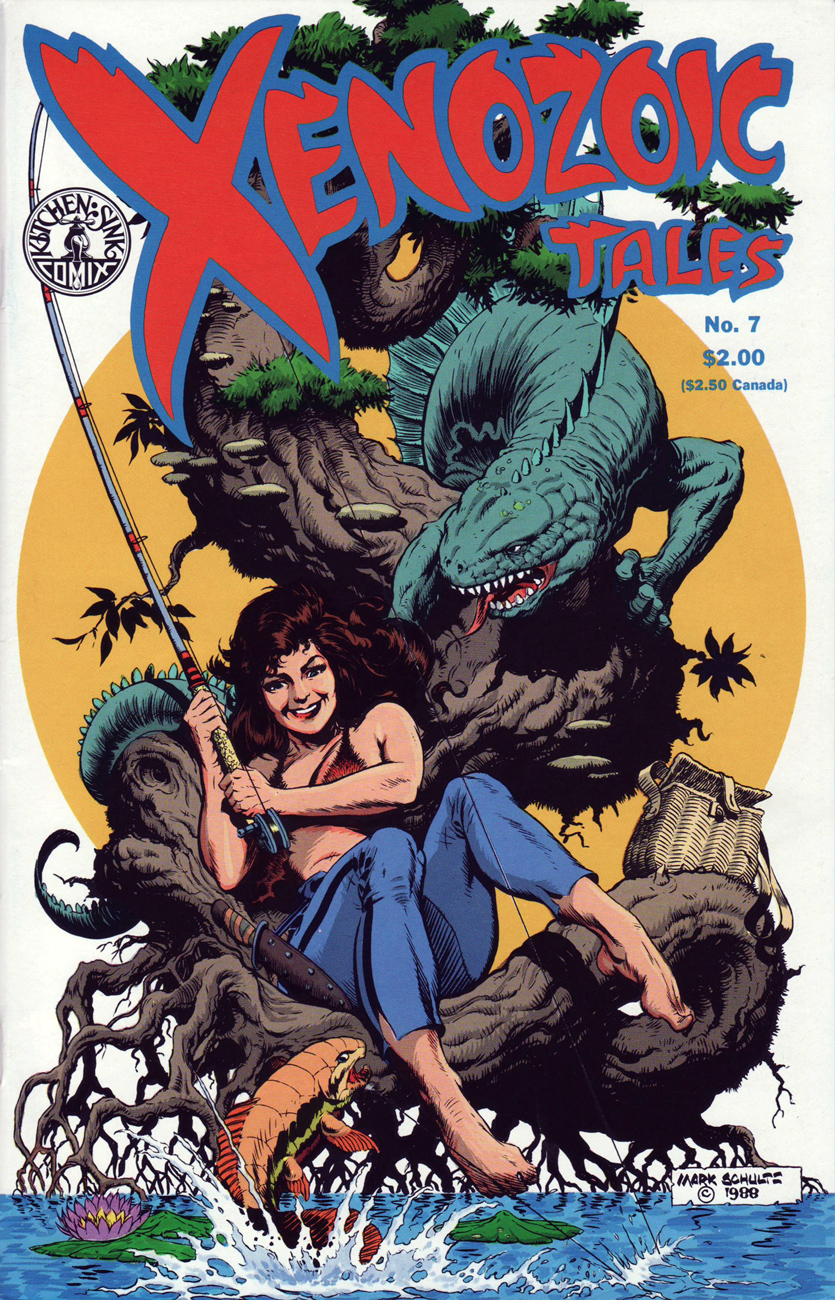
This is Xenozoic Tales no. 7 (Oct. 1988, Kitchen Sink), a series that presented, wonder of wonders, a post-apocalyptic future that wasn’t strictly doom and gloom. Cover by Mark Schultz. This issue features « The Growing Pool », written and drawn by Schultz, and “Crossed Currents”, written by Schultz and illustrated by Steve Stiles.

The lady is Hannah Dundee, and she may soon have to share her lunch. Something tells me this illustration is a pastiche of some The Saturday Evening Post-type cover.. there’s something charmingly old-fashioned about it, and I don’t mean Cambrian Age old.

SaturdayPostSummertime1933A
You know, that sort of thing. The Saturday Evening Post‘s August 5, 1933 cover by… who else? Norman Rockwell.

HannahPterodactylA
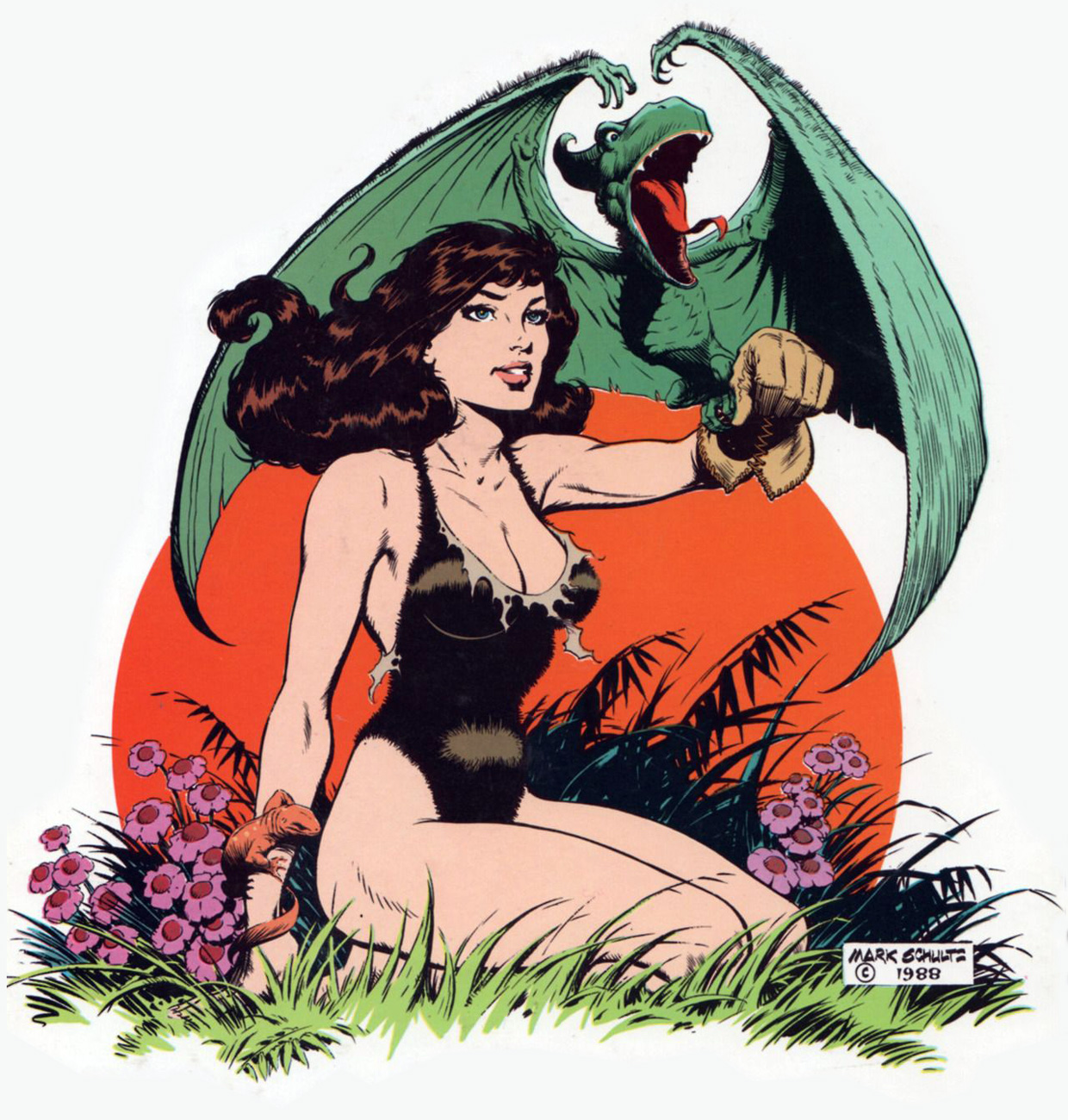
It’s the new falconry! Xenozoic Tales’ coexistence of humans and dinosaurs is not your run-of-the-mill anachronism: this is the world of tomorrow, not yesterday’s. This striking portrait of Ms. Dundee was conceived as a t-shirt design in the late 1980s. I should still have mine stashed somewhere…

– RG

The Expanding Ego Theory: Neal Adams at 77

« Now at this age, I look back and oh, Adams is probably one of the worst things that happened to the medium, when I look at it historically. » – Darwyn Cooke (2004)

On his 77th birthday, the legendary Neal Adams must surely look back on his storied career and radiantly beam (‘gloating’ is for lesser beings). Still, with all he’s accomplished (and with such brio!) in the fields of graphic storytelling, advertising, physics, the theatre and geology, who could find it in his heart to blame him? With so much to celebrate, let’s just stick to the highlights, shall we?

HeartThrobs120A
Why is the nasty little dude threatening the giantess? Why, Neal, why? Well, I suppose that is some people’s idea of romance. This is Heart Throbs no. 120 (June-July, 1969), edited by Joe Orlando.

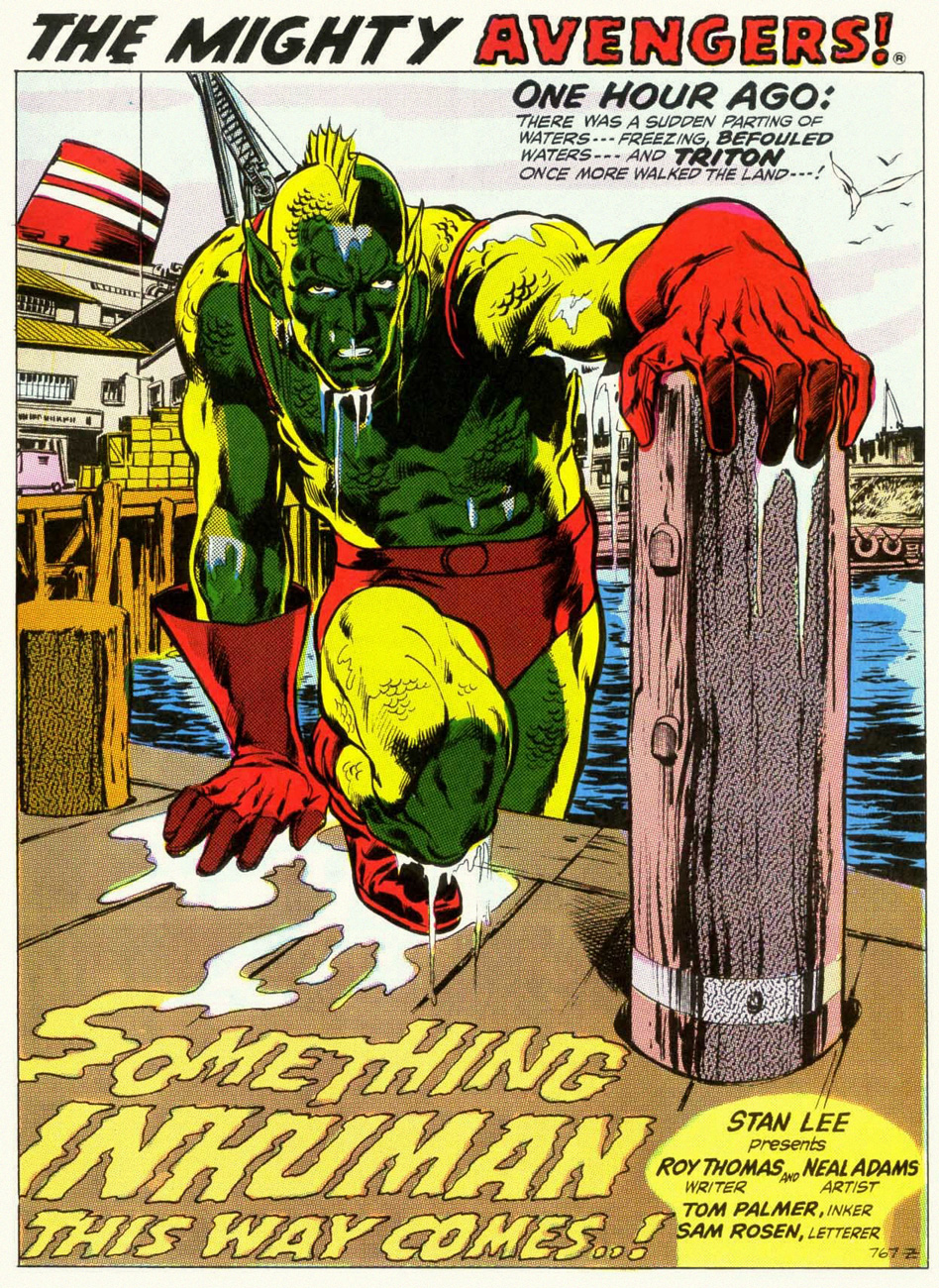
AdamsAvengers95SplashA
I don’t know if you’ve ever pulled yourself out of the water onto a dock, but that… is not the way to do it. One might argue that Triton is an Inhuman, and as such, gravity and anatomy are trifles unworthy of his kind. From Avengers no. 95 (Jan. 1972, Marvel), a chapter in the “Kree-Skrull War”, cobbled together by Roy Thomas from discarded Kirby plot effluvium and Jerome Bixby and Otto Klement’s Fantastic Voyage.

AdamsGL_Flash226A
Ah, Neal Adams. He who brought naturalism and realism to comics. A panel from “The Powerless Power Ring!”, a Green Lantern backup strip from Flash no. 226 (March 1974, DC Comics.)

Jason-BrownA
Neal’s influence can’t be overstated, and not only in the fields of comics and geology. Here’s US figure skater Jason Brown‘s poignant tribute to that very Green Lantern tale, presented to warm applause at the 2014 Winter Olympics in Sochi. As Neal is fond of saying to any cartoonist he encounters, « You are all my children! »*

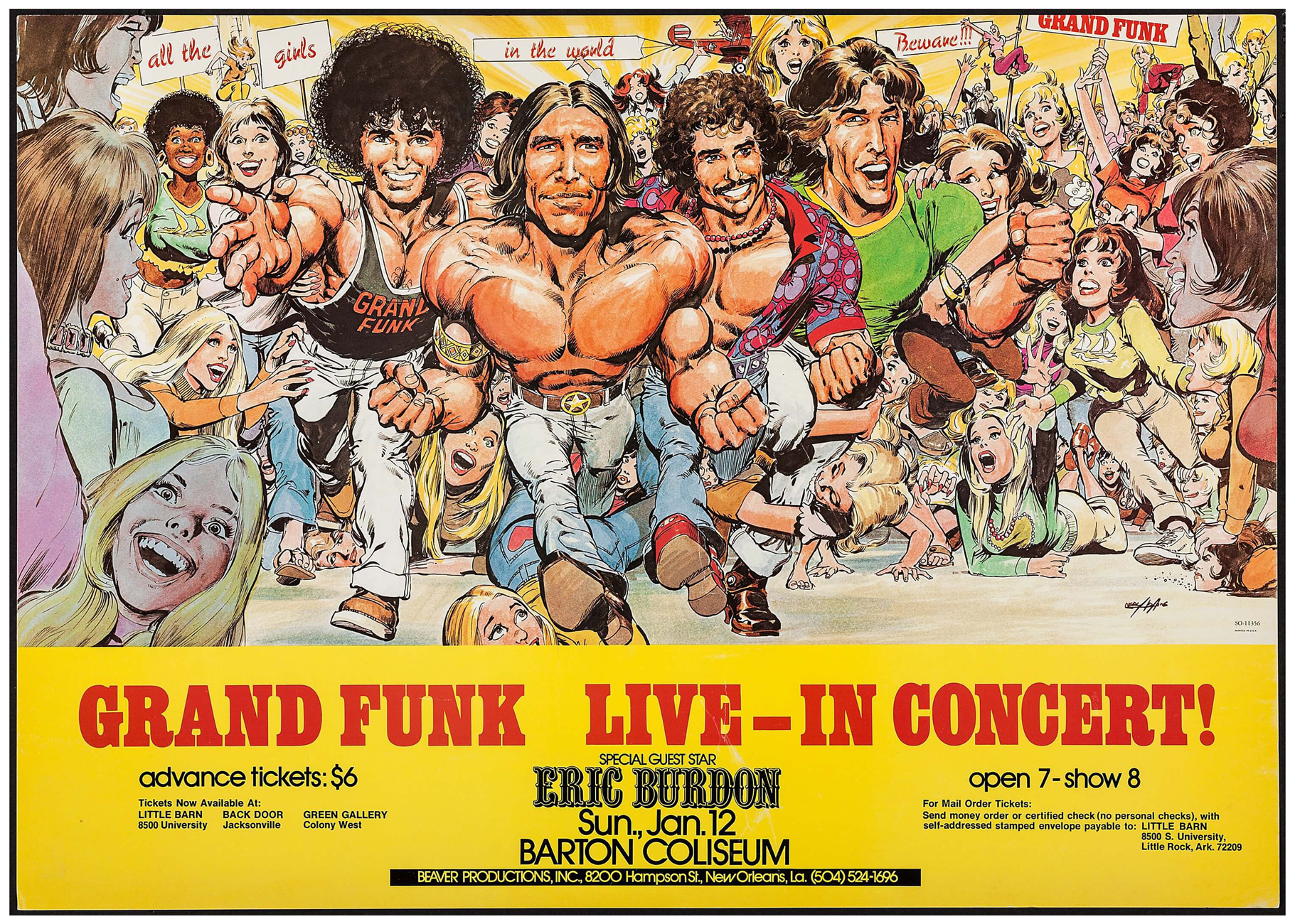
AdamsGrandFunkA
A concert poster reproducing Our Neal’s gatefold art for Grand Funk‘s 1974 LP, All the Girls in the World Beware!!! (which incidentally features their finest original composition, imho, Bad Time) Despite the difficult assignment, Neal comes through with flailing biceps and chicken legs; thank goodness his caricature chops are equal to his grasp of earth sciences. Curiously, half the groupie throng seems to be cloned from a particularly manic Marsha Brady, and most of the rest from Carol Burnett.

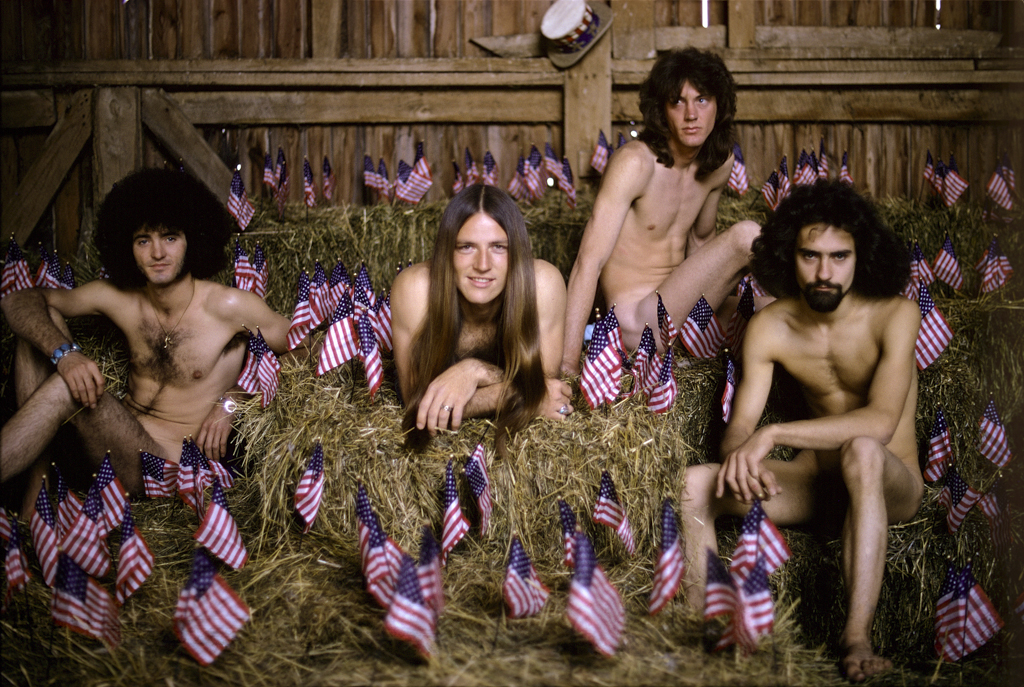
Grand_Funk_Nude_1973
They’re an American Band. From left to right: Don Brewer (he of the competent drum work), Mark Farner (he of the wild, shirtless lyrics), keyboardist Craig Frost (Homer didn’t rate him), and of course Mel Schacher (he of the bong-rattling bass.) One may wonder just who those guys in the poster are supposed to be.

SuperHeroDigestA
Faceplant time, or The perils of drawing comics whilst grabbing lunch, getting a massage on 52nd, or simply resting on your laurels. How does this cover make any sense? Just picture the scene from another angle, or if someone tried to build a model of it. Archie’s Super Hero Comics Digest Magazine no. 2 (1979 edition.)

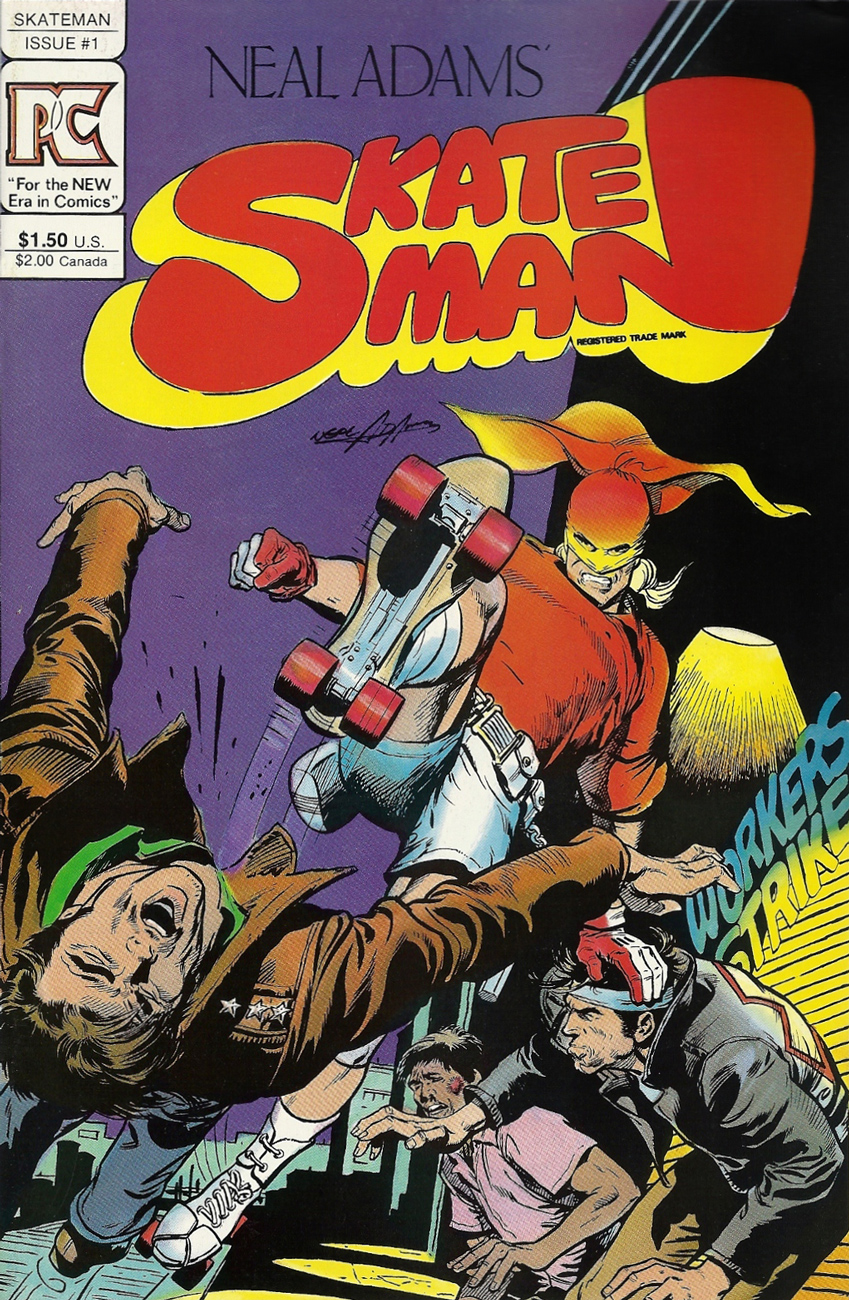
Skateman1
As legendary as his renditions of established characters are, it is with his own creations that Neal Adams’ true legendary status rests: fabled names, always spoken in hushed awe, such as Ms. Mystic, Samuree, Cyberad, Crazyman, Megalith, Valeria the She-Bat… and of course Skateman, Jason Brown’s childhood idol. Here’s his premiere (and dernière) issue, published in November 1983 by Pacific Comics.

SkatemanA
And here’s a mock-up of the same cover. I’ll go to my grave wondering why they chose to run the cover sans this piquant, vernacular-rich dialogue, which would have shown once and for all that Neal the writer was every bit the equal of Neal, the artiste. Eat your heart out, Noël Coward!

Crazyman1A
Neal applies his Midas touch to another original creation: Crazyman! Double bag several copies of this number one, someday it’ll put your kids through college. It even comes with an embossed cover! By then, Adams was drawing donkey teeth on everyone, evidently his shorthand for “hilarious”. April 1992, Continuity Comics. You know, “The other superhero company”!

– RG

*as recounted by Yanick Paquette

Happy Birthday, Charles Clarence Beck!

« It’s difficult to know just what to make of C.C. Beck. He’s crusty and curmudgeonly in the Cleveland Armory mold. He’s virulently opinionated, yet insists that he doesn’t take himself seriously. His aesthetics are inflexible if not reactionary, and not entirely consistent at that. He also happens to be one of the most endearing and original cartoonists ever to breathe life into a super-hero.“*

Charles Clarence Beck was born on June 8th, 1910 and left this world in 1989. The world is a stodgier place without him!

Tawny-CaptainMarvelAdventres79
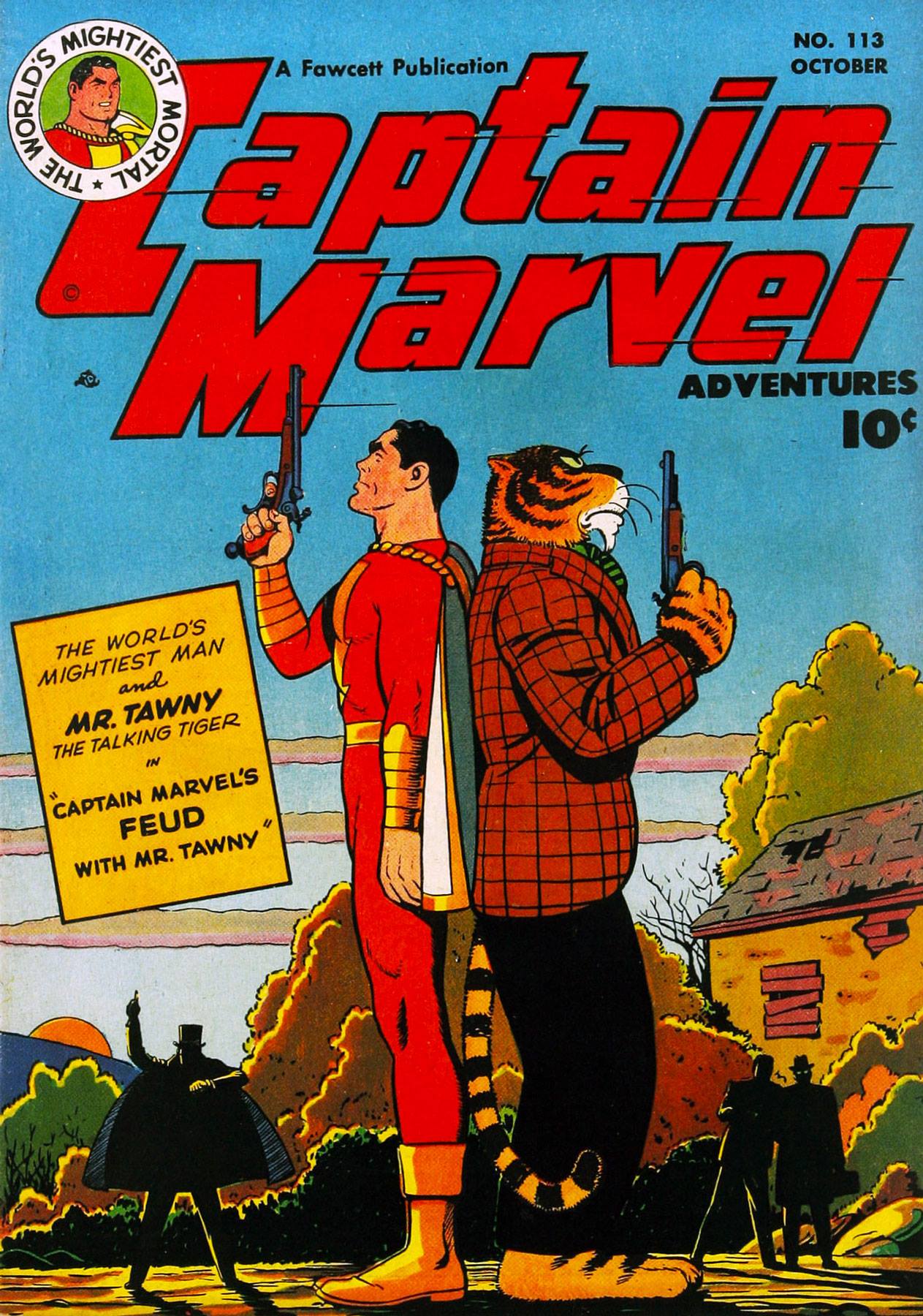
My favourite of Otto Binder/C.C. Beck’s characters – Tawky Tawny, the well-mannered, reasonable, tweed-wearing tiger. Sweet Tawny first appeared in Captain Marvel Adventures #79 (December 1947), as a talking tiger who longed for a life as a normal, suit-wearing, polite member of society. He also really likes ice cream. This panel is from “Mr. Tawny’s Personality Peril”, a story by the Binder and Beck team, published in Captain Marvel Adventures #115 (December 1950).

Here are a few covers which showcase A) C.C. Beck’s stylish art B) the lovely goofiness of it all. To quote the man, « When Bill Parker and I went to work on Fawcett’s first comic book in late 1939, we both saw how poorly written and illustrated the superhero comic books were. We decided to give our reader a real comic book, drawn in comic-strip style and telling an imaginative story, based not on the hackneyed formulas of the pulp magazine, but going back to the old folk-tales and myths of classic times. » Well, to be honest, aside from the so-called Greek origins of Captain Marvel (“Shazam”, the catalyzing cry which allows ordinary Billy Batson to transform into his superhero alter-ego, stands for “Solomon, Hercules, Atlas, Zeus, Achilles, Mercury”), there’s little in these stories that evokes classic folk tales *or* mythology. I know the Ancient Greeks were into some kooky shit, but I don’t recall any myopic worms with a Napoleon complex nor talking tigers in suits. Ultimately, Captain Marvel comics are family fun. “Old-fashioned” values are the backbone of these stories: friendship, loyalty, kindness to those weaker (or stupider) than us. If that sounds boring, it isn’t. Beck had a cartoony style that make his stories fucking adorable, especially when coupled with the often surreal and delightfully wacky plots.

“Quote! Mr. Tawny is not a tiger – he’s a worm! Unquote!”

CaptainMarvelAdventures113
At first glance, this cover is celebrating the beauty of autumn; upon a closer inspection, it turns out that it has much darker overtones – two faceless guys in the background, clearly following some nefarious plan to break up Tawny and Captain Marvel’s friendship (how dare they!) and a creepy boarded-up house. This is Captain Marvel Adventures #113 (October, 1950), cover by C. C. Beck. Read “His Feud With Mr. Tawny” (scripted by Otto Binder, illustrated by C.C. Beck), which is finally not at all gruesome, just heart-warming, here.

C.C. Beck co-created Captain Marvel with writer Bill Parker in 1939. The Big Red Cheese made his first stellar appearance in Whiz Comics #2 (cover date February 1940), published in late 1939. Captain Marvel was a huge hit, and so Fawcett put out a number of spin-off comic books – as for Beck, he opened his own comic studio in 1941 that provided most of the artwork in the Marvel Family line of books.

« Special! Baby dinosaurs! New! Different! Be the envy of your friends! »

CaptainMarvelAdventures123
Captain Marvel Adventures #123, 1951. Did you know that dinosaurs apparently wag their tails like dogs to express their affection? No? Head over here.

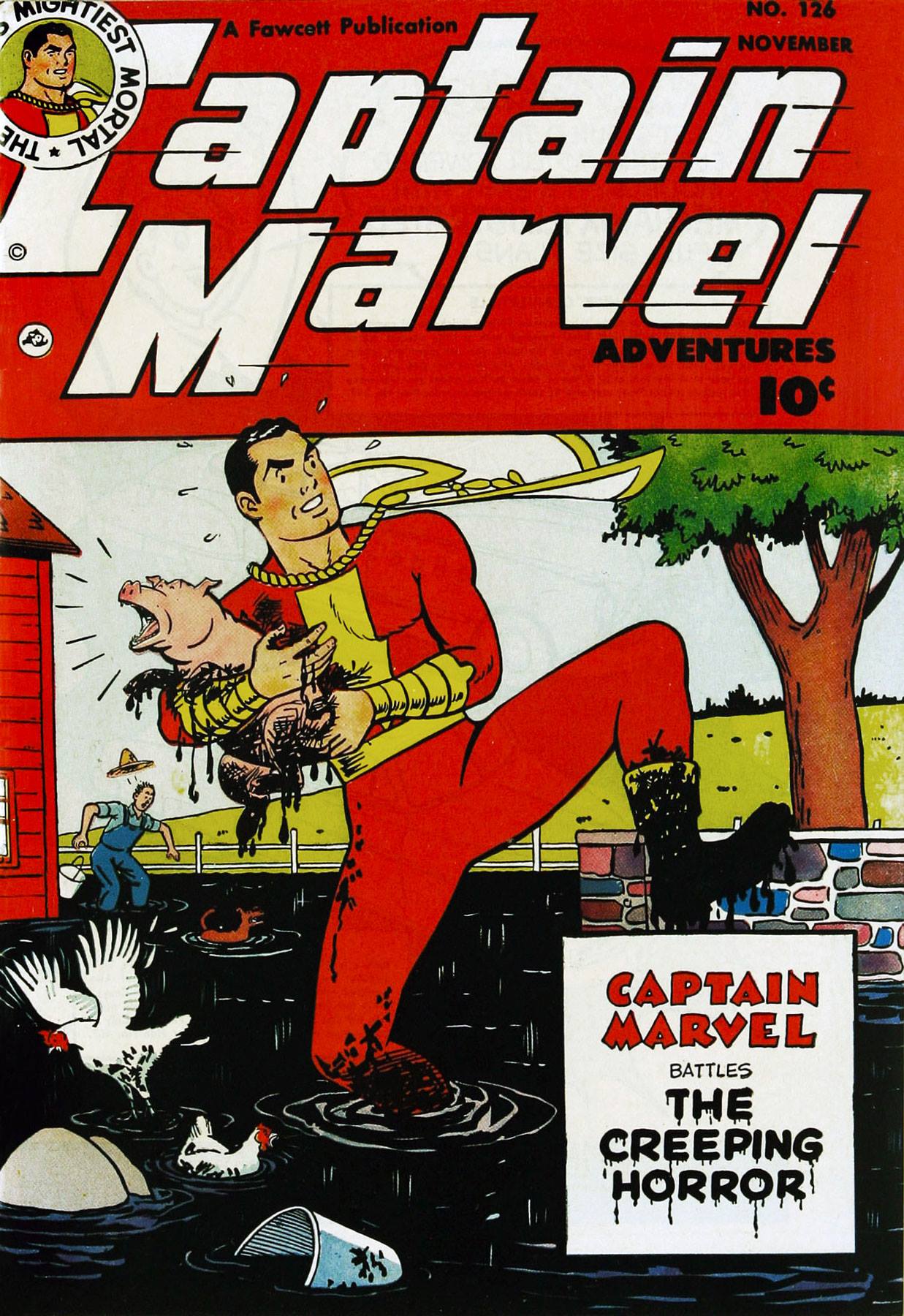
« Wait! This isn’t oil! It’s dense, black and real sticky! »

CaptainMarvelAdventures126
Don’t let go of that piglet, Captain Marvel! Pigs’ reputation for loving mud may be well deserved, but no self-respecting swine wants to be dropped into black, sticky goo. This is Captain Marvel Adventures #126 (November 1951), cover by C.C. Beck. The cautionary cover tale, Captain Marvel and the Creeping Horror, was written by Otto Binder and pencilled by C.C. Beck (with inks, tentatively, by Pete Costanza).

« Did you hear that, ma? We’re on another – uh – world! Ma, aren’t you scared? »
« Land sakes, pa, why get scared? At least my wash will dry nice and fast with two suns shining down! »

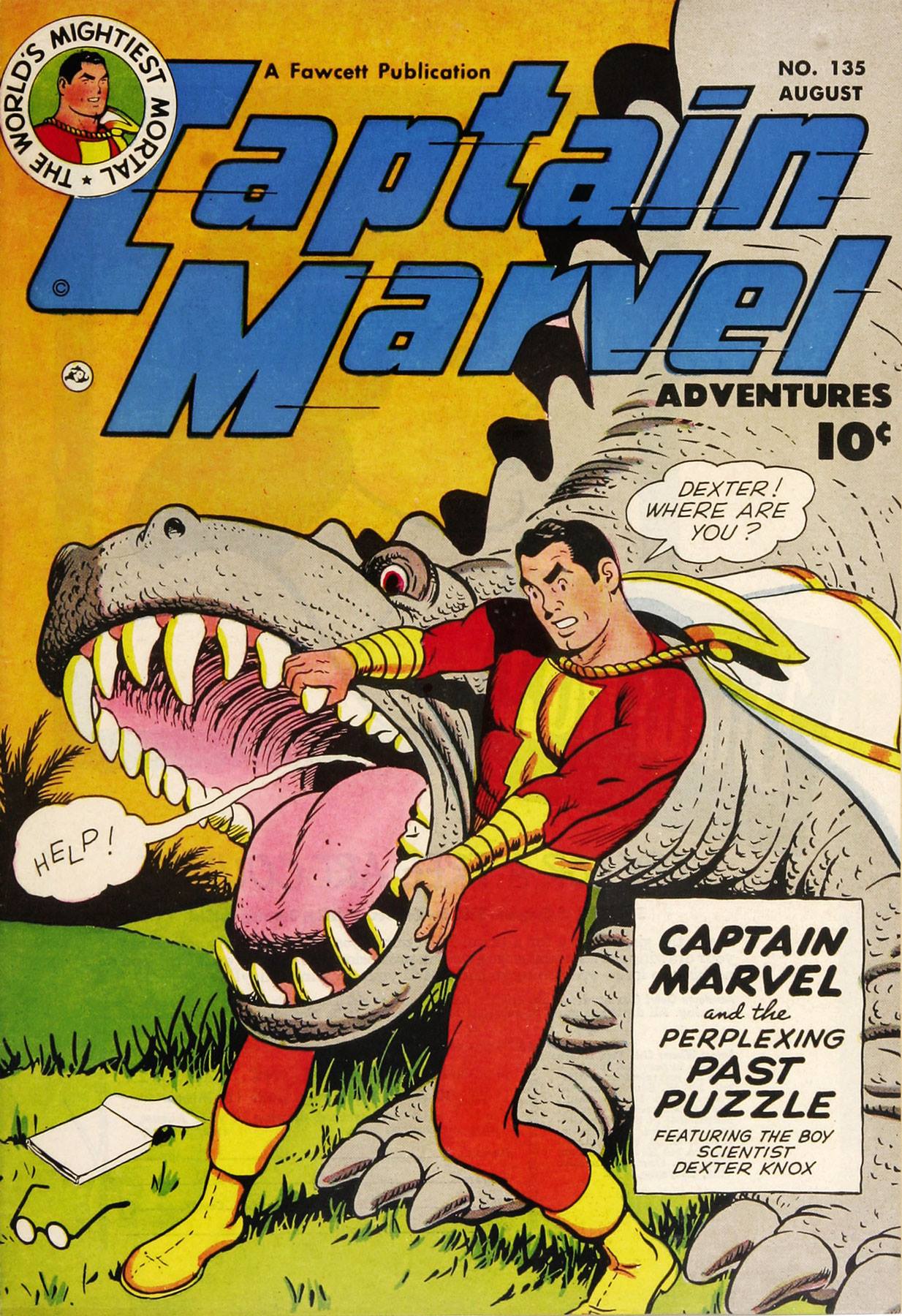
CaptainMarvelAdventures135
Captain Marvel Adventures #135 (August 1952); cover by C.C. Beck.

IGN ranked Captain Marvel as the 50th greatest comic book hero of all time. You know how they qualified it? “Times have changed, and allegiances with them, but Captain Marvel will always be an enduring reminder of a simpler time.” If there’s one thing I hate, it’s people who assume that generations before theirs were naïve or that the world was a “simpler” place (take a peep in any good history book and see if that was the case). This kind of condescension poisons any compliment.

C._C._Beck_1982
C.C. Beck in 1982. He kinda looks like my physics teacher from high school!

BillyBatson'sBadDream1982
Doctor Sivana comes out with his whole family to taunt Billy! Says Beck, “The publisher also once wanted to drop Sivana, claiming the old rascal was becoming a more interesting character than Captain Marvel. The editors paid no attention to so silly an order and kept him alive and cackling.”

There’s a beautifully conducted interview with Beck by Tom Heintjes, published in Hogan’s Alley. I highly recommend it. Heart-breakingly, Heintjes explains in the introduction that “when Beck died of renal failure on November 23, 1989, my inability to complete a book celebrating Beck’s life and career—to my mind, one of the most commercially and aesthetically successful in the entire history of comic books—was a source of acute regret.

~ ds

*Gary Groth’s introduction to an interview with C.C. Beck published in Comics Journal #95 (February 1985) and conducted in 1983.

Joyeux anniversaire, Gilbert Shelton!

« … and now for some of that fun we promised you! Trained chihuahas! Car races! A couple of inspirational documentaries! And a quiz show! Hallelujahgobble! Hallelujahgobble! »

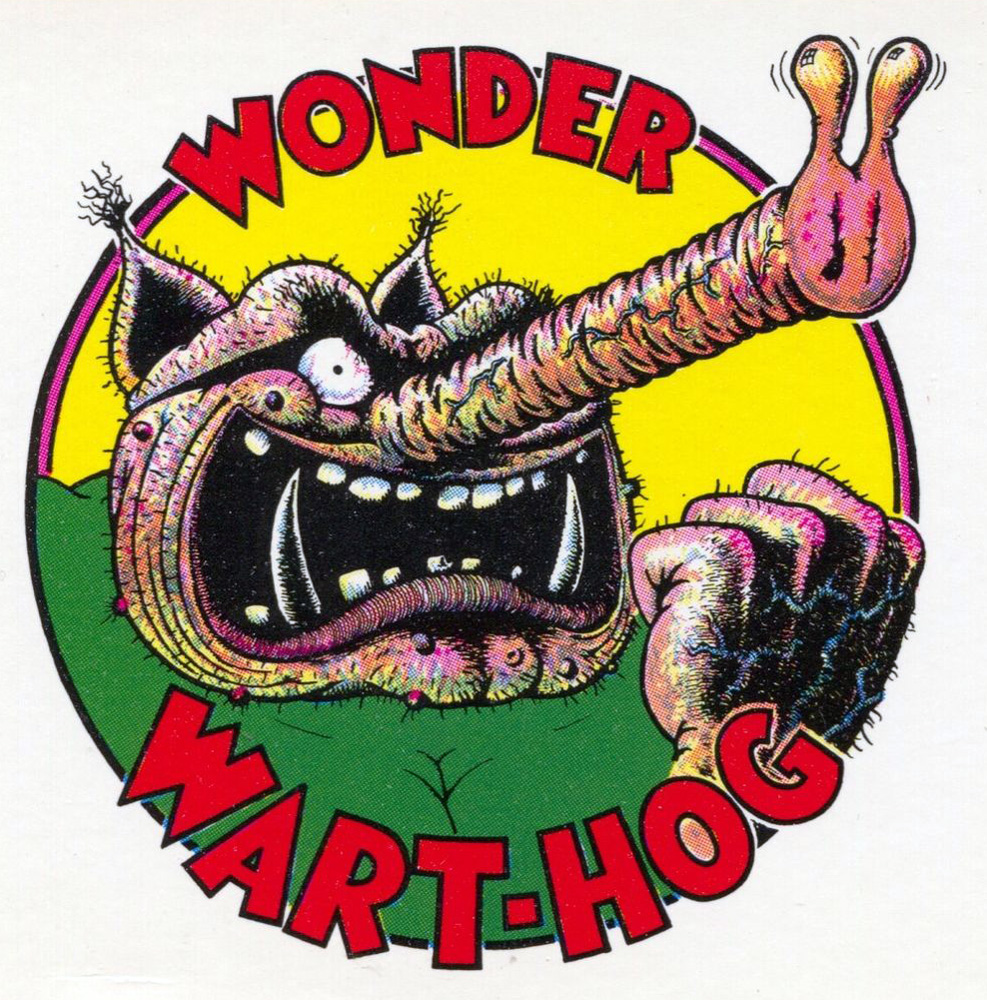
For my money, there’s no funnier man in comics, at least on such a consistent, sustained level, as the extraordinary Gilbert Shelton (born May 31st, 1940, in Houston, TX, which makes him 78 today). Sure, he’s slowed down some since 1959 (the year he foisted upon the world the Wonder Warthog), but the quality of his output has not decreased one iota (quite the contrary, in fact!) It may well be that the secret of his longevity lies in his choice of collaborators, but as far as I’m concerned, that’s just another facet of his talent. I’ll (mostly) let the man’s work speak for itself. Brace yourselves for the ride, here we go!
SheltonWWHPostcardA
Enter a caption
WonderWartHogSaysA
Yeah, that old hippie shit’s totally dated; this has nothing to do with American’s current socio-political situation. Well, it would be nice if Amtrak’s trains ran a bit closer to schedule. This ran as the back cover of « Wonder Wart-Hog and the Nurds of November: Gilbert Shelton’s Exciting Cartoon Novel of Election-Year Politics, International Nuclear Terror, Professional Football, Science Fiction, Motorcycle and Auto Racing, Pestilence, Famine, Economic Collapse and Romantic Love. » (1980, Rip Off Press)
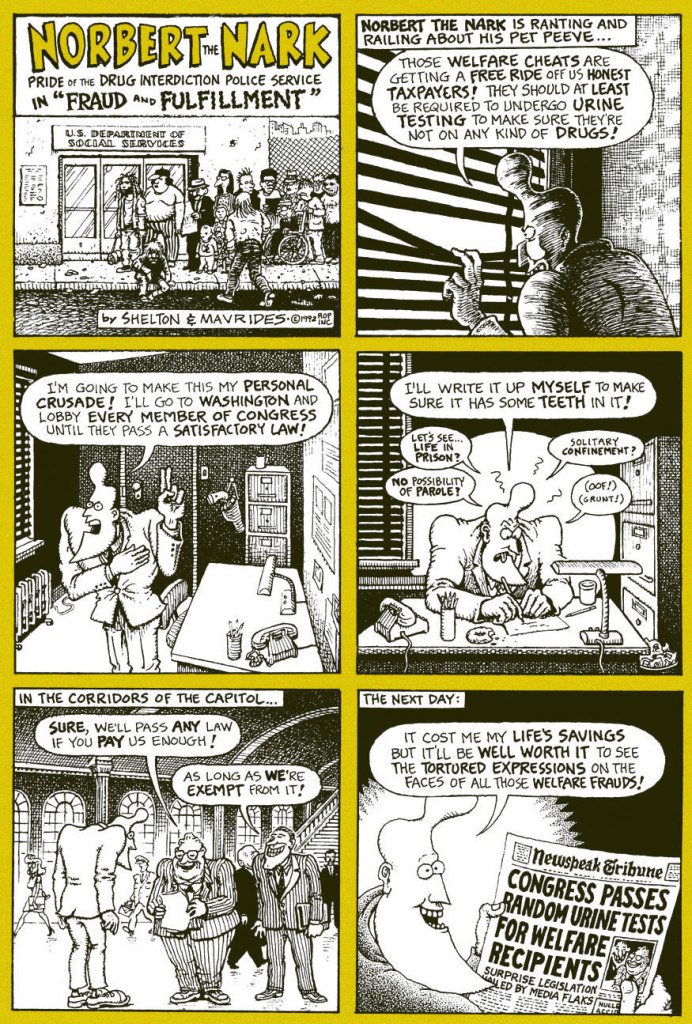
The Brothers’ none-too-effective nemesis Norbert the Nark in the spotlight. From The Fabulous Furry Freak Brothers no. 12 (1992, Rip Off Press).
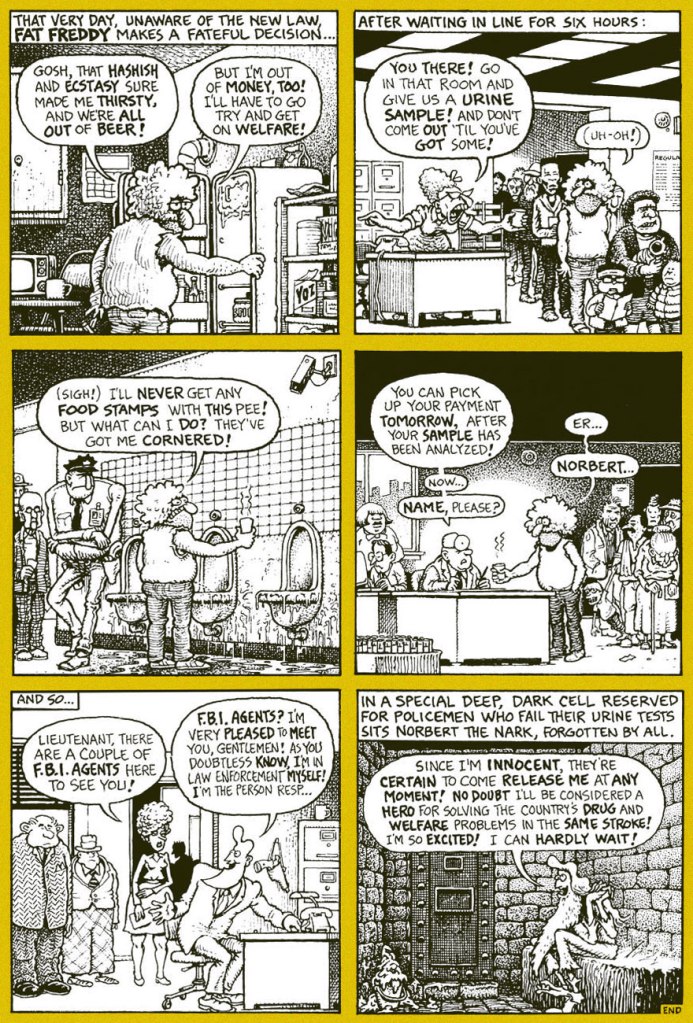
Fat Freddy’s such a good little Suzie Homemaker. Another piece from The Fabulous Furry Freak Brothers no. 12 (1992, Rip Off Press). FatFreddyCatCameoAFatFreddyScat1A
FatFreddyScat2A
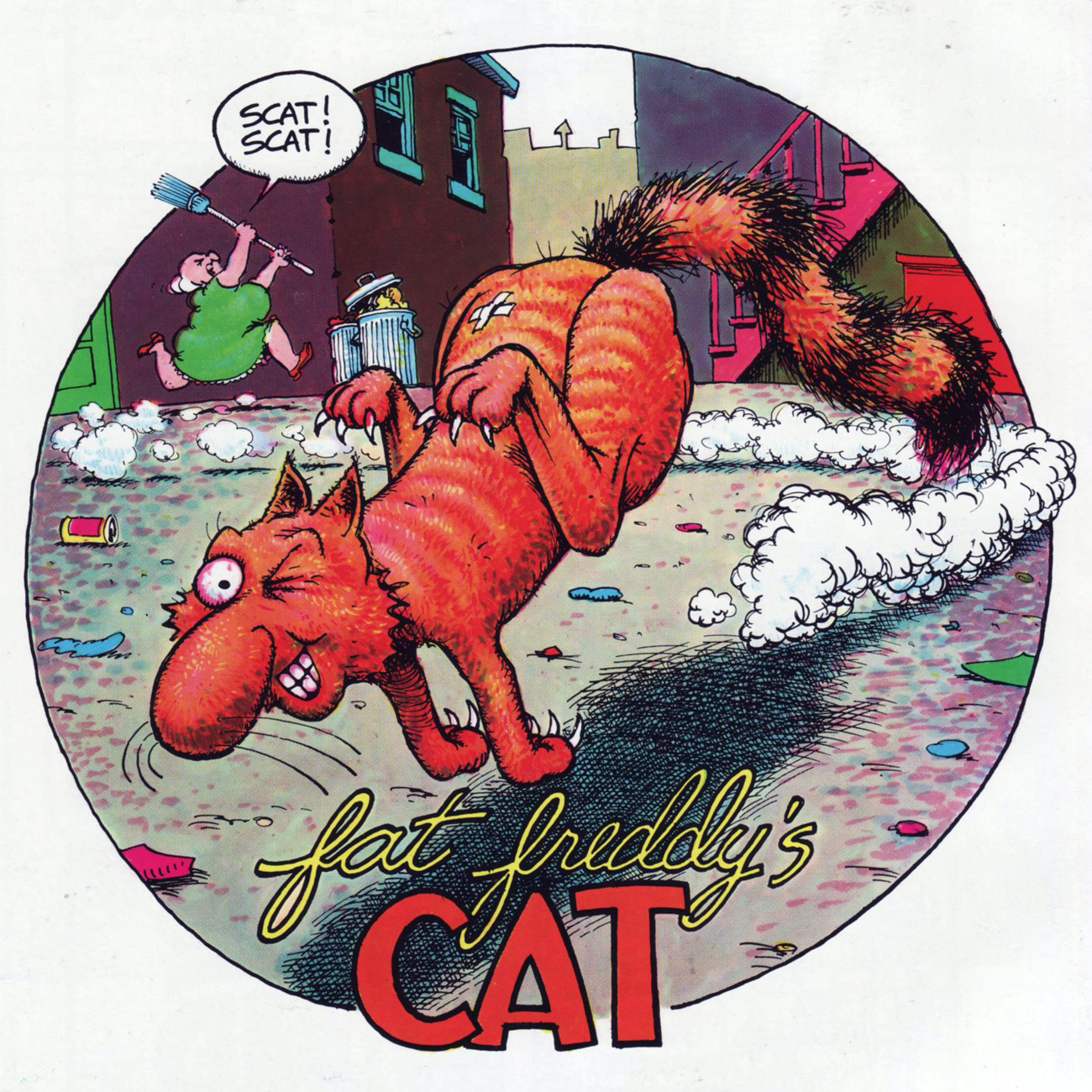
The toilet-training method reportedly works, but it helps to have more than one toilet available. From Fat Freddy’s Cat no. 7 (1993, Rip Off Press)
NotQuiteDead2
NotQuiteDead01
Shelton’s most recent major creation, circa 1988-89, is Not Quite Dead, “the world’s oldest and least successful Rock ‘n’ Roll band”. So far, we’ve been treated to six issues, and the latest, “Last Gig in Shnagrlig” (2009), is quite the epic! A fruitful collaboration with French bédéiste Denis Lelièvre, alias Pic. These vignettes hail from Not Quite Dead no. 5 (2005, Knockabout)
GilbertSheltonPortrait
Aw, ain’t he adorable, and don’t you just wanna slip the birthday boy a big ol’ sloppy smooch? Photo by Christophe Prébois.
Speaking of collaborators, though it’s none of their birthdays, let’s give a salty salute to Shelton compadres-in-crime Tony Bell, Joe E. Brown Jr., Dave Sheridan, Paul Mavrides and Pic. Did I forget anyone? -RG

Growing Old Gracelessly With Broom-Hilda

« Modern technology has tripled the life expectancy of the professional insulter »

It was forty-eight years ago today, which is to say Thursday, April the 20th, 1970, when a certain short, dumpy, cheap-cigar-chomping 1500-year-old green witch first crash-landed into the funny pages, though we wouldn’t know she was green until that Sunday.

BroomHildaCastA
The cast’s principal players: Broom-Hilda, Gaylord Buzzard and Irwin Troll. Colour by Barbara Marker.

Russell Myers‘ (born October 9, 1938 in Pittsburg, Kansas, and still with us) Broom-Hilda has been easy to take for granted… it’s never been a trendy strip, but it’s always had its adherents, a somewhat enlightened, or at least less dim than average, passel of loonies, to which I proudly belong.

BroomHildaGopherA
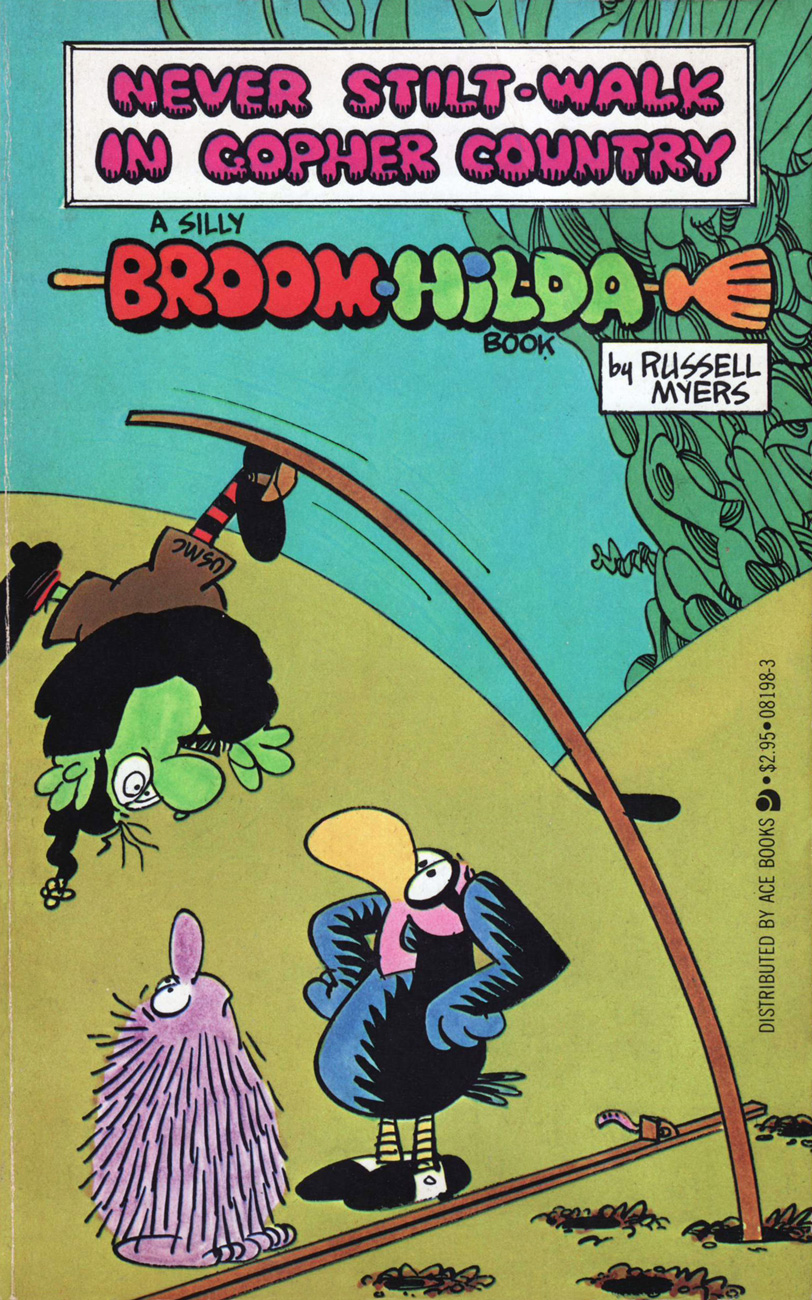
One of my favourite B-H collections… an oversize one-shot issued in 1978. And don’t let the subtitle throw you: *all* Broom-Hilda books are profoundly silly.

BroomHildaNeighborA
An undated strip from 1970.

BroomHildaOrchidsA
Grelber always gets the last laugh. August 17, 1973. Bet you never knew that Grelber shared a genteel hobby with Nero Wolfe.

IrwinTrollDiary
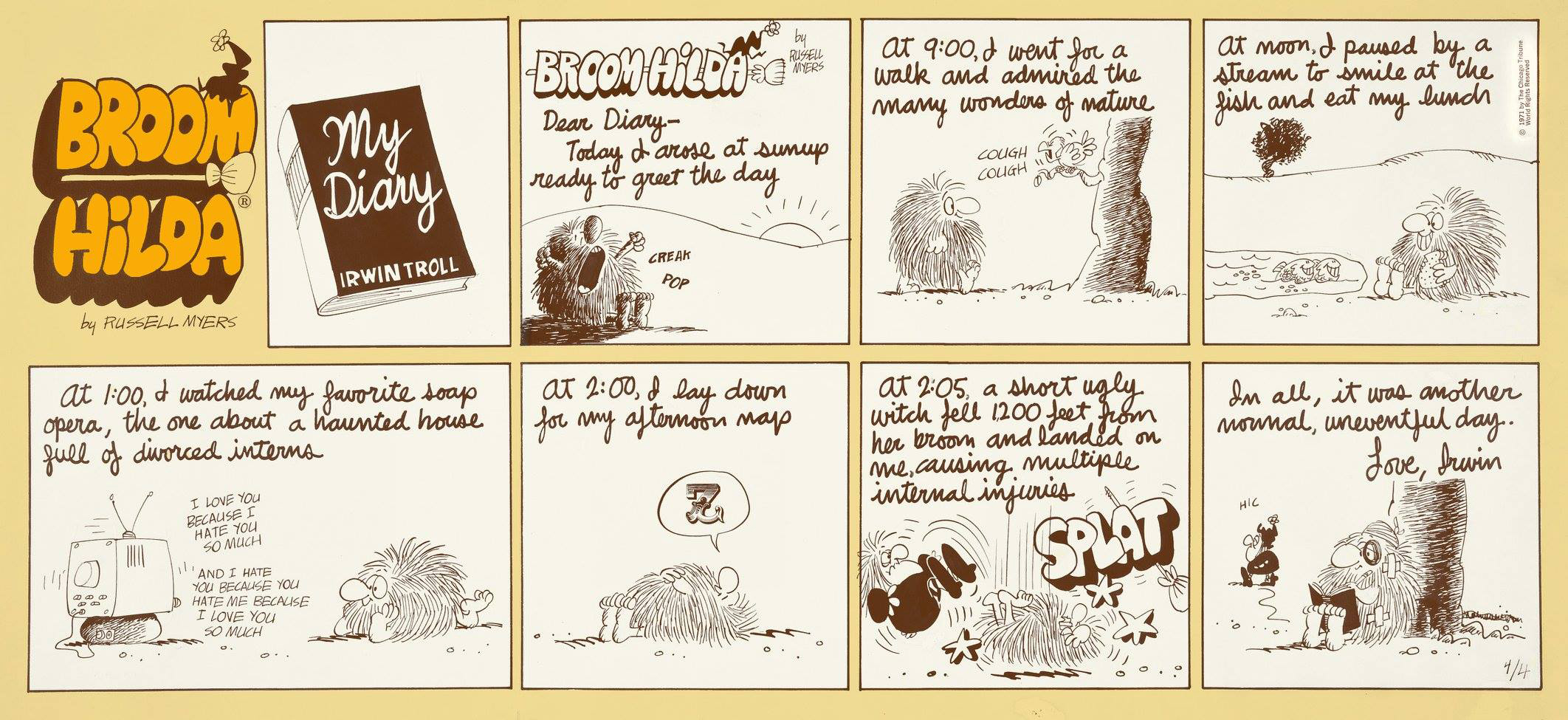
This Sunday strip comes from just about a year into the run, April 4, 1971, back when Broomie still was allowed to enjoy all of her little hobbies. A day in the life of the resilient Irwin Troll, Mother Nature’s Personal Friend.

BroomHildaCoffeeA
Low-key and surreal, the March 11, 1974 strip. Pour me a cup of that jaunty java!

BroomHildaNewspaperA
Wise words from the strip’s resident intellectual, Gaylord Buzzard (Sept. 13, 1973)

Over the long years, the changing times and the powers-that-be had Broomie clean up her act, stripping her of her beloved vices one after the other. Well, she’s held on to her gluttony and lust, but no longer indulges her passion for third-rate tobacco and beer. Still, since there was so much more in the strip’s DNA, the eschewing of Broomie’s low-down habits was not fatal.

RussellMyersA
The author as he appeared in 1985’s Broom-Hilda Book One (and only), in the “Blackthorne’s Comic-Strip Preserves” series. « To retain this standard of madness requires a good deal of sane and sensible methods. The gags don’t just occur to Russell; he creates them. Like all humorists, he observes where others only look. Others see a man going through a revolving door, Russell sees a man stuck in a revolving door. Perverse, perhaps, but perversity is the trigger of humor. Why else do we laugh at a man stepping into a manhole? »

But how I miss that nasty no-goodnik Grebler!

Grelber
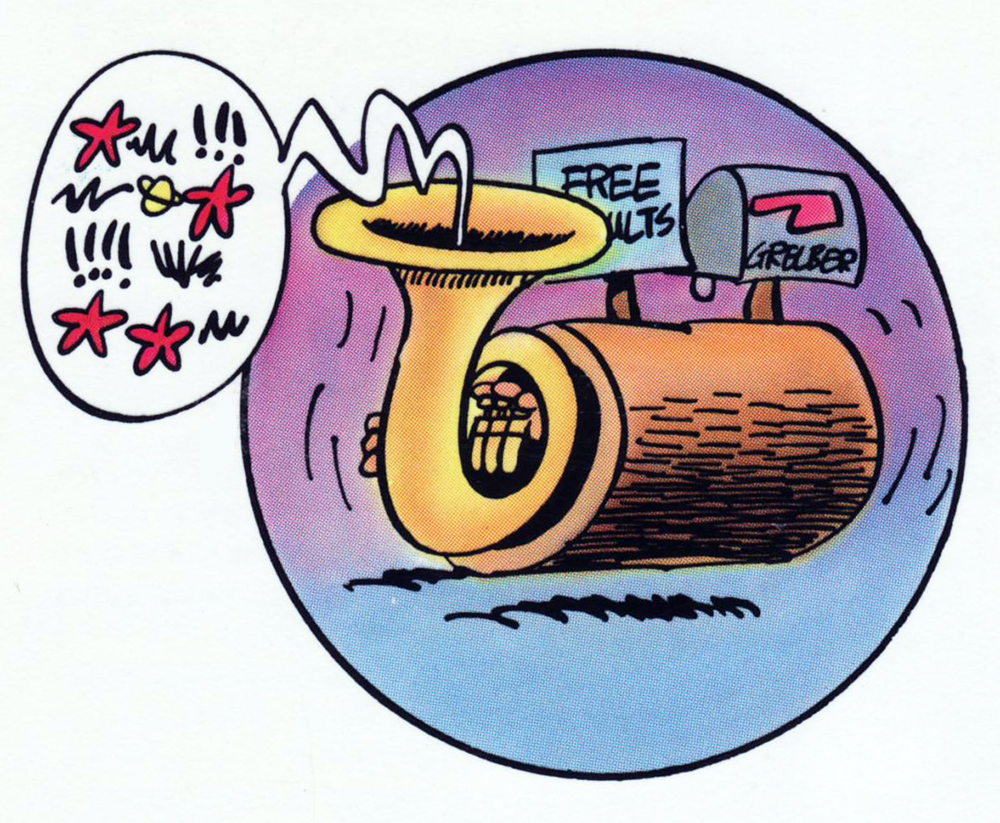
Music has its charms, even Grelber music.

Keep up with the current state of Broom-Hilda: https://www.seattlepi.com/comics-and-games/fun/Broom_Hilda/ 

-RG

“Reality is an illusion, albeit a persistent one”*

« Once there was a fellow and his name was Buzz
He was just a rookie cop, just a baby Fuzz
He patrolled the Sunset Strip
in the land of the free
and the home of the hip
He protected you and me
until he met a girl called Alice D

Alice was the girl that all the hippies dread
And they called her Sweet Alice the Head
Alice it was plain to see was full of pot and STD
She’d attract a great big crowd
because her inner peace was much too loud »
Biff Rose, “Buzz the Fuzz” (1968)

This day in history: On April 16, 1943, the hallucinogenic effects of LSD were discovered.

Here’s an account of the event, from the folks at History.com:

In Basel, Switzerland, Albert Hofmann, a Swiss chemist working at the Sandoz pharmaceutical research laboratory, accidentally consumes LSD-25, a synthetic drug he had created in 1938 as part of his research into the medicinal value of lysergic acid compounds. After taking the drug, formally known as lysergic acid diethylamide, Dr. Hofmann was disturbed by unusual sensations and hallucinations. In his notes, he related the experience:

« Last Friday, April 16, 1943, I was forced to interrupt my work in the laboratory in the middle of the afternoon and proceed home, being affected by a remarkable restlessness, combined with a slight dizziness. At home I lay down and sank into a not unpleasant, intoxicated-like condition characterized by an extremely stimulated imagination. In a dreamlike state, with eyes closed (I found the daylight to be unpleasantly glaring), I perceived an uninterrupted stream of fantastic pictures, extraordinary shapes with intense, kaleidoscopic play of colours. After some two hours this condition faded away. »

After intentionally taking the drug again to confirm that it had caused this strange physical and mental state, Dr. Hofmann published a report announcing his discovery, and so LSD made its entry into the world as a hallucinogenic drug. Widespread use of the so-called « mind-expanding » drug did not begin until the 1960s, when counterculture figures such as Albert M. Hubbard, Timothy Leary and Ken Kesey publicly expounded on the benefits of using LSD as a recreational drug. The manufacture, sale, possession, and use of LSD, known to cause negative reactions in some of those who take it, were made illegal in the United States in 1965.

AlbertHofmann
The genial Dr. Hofmann.

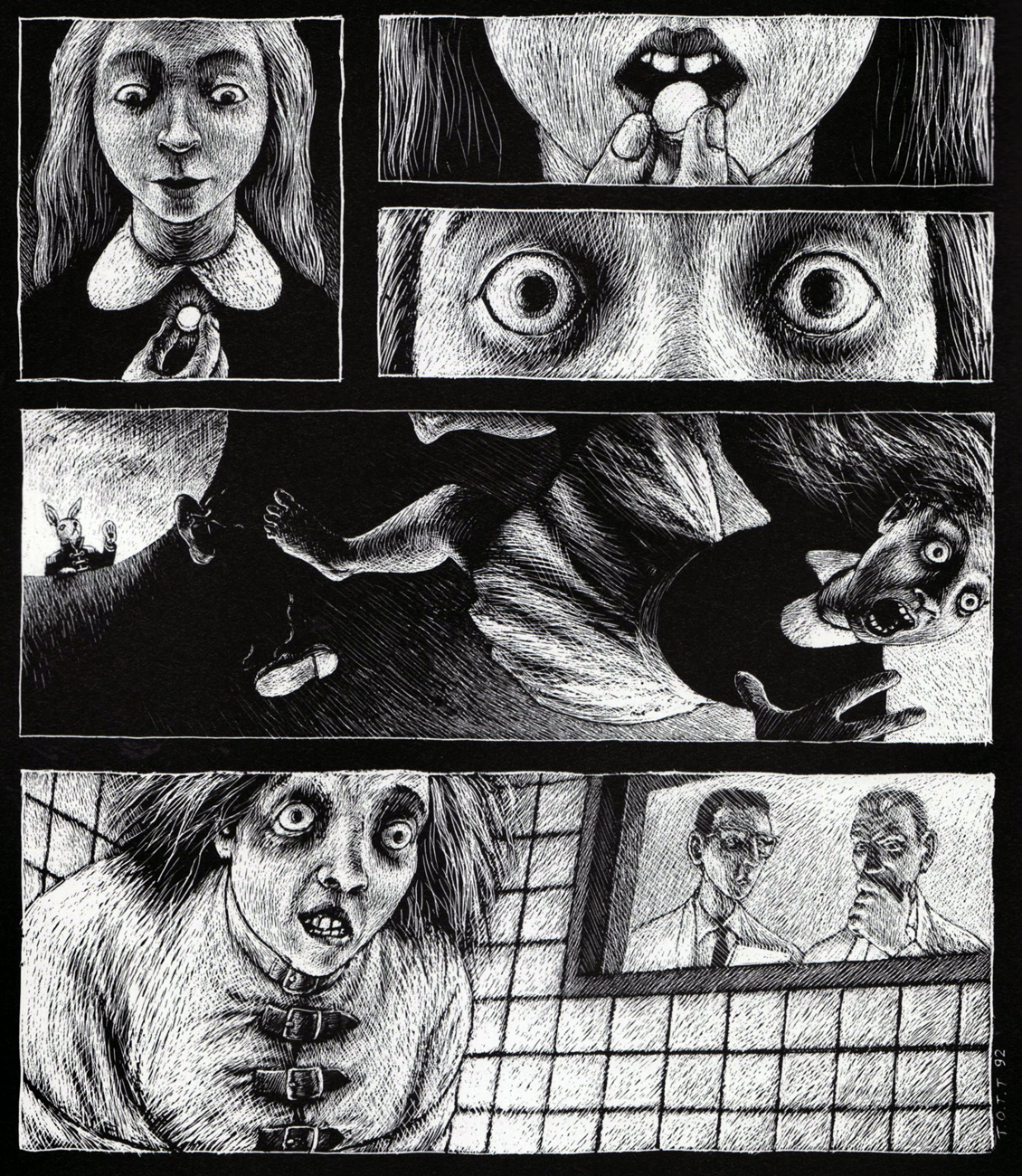
As a little digestif for the history lesson, here’s a poisoned bonbon from Thomas Ott (b. 1966, Zurich… a mere 76 km from Basel!), a proven meister of both comics storytelling and of the singularly exacting technique of scratchboard. This is Ott’s highly condensed and updated version of Lewis Carroll’s Alice’s Adventures in Wonderland, “Alice”, from 1992. I wouldn’t advise its use in preparing a book report.

OttAliceA

Just this once, inquisitive English-speakers won’t be left out in the cold or reaching for their translation dictionaries, as Ott’s work is mostly mute, the only text appearing incidentally on newspapers, signs and assorted objects, and in English at that.

Ott’s chosen milieu is the perpetual nighttime of American film noir (which in turn comes from the French roman noir, a term first used in the 1700s to describe British gothics, becoming synonymous, in the 20th century, with bleak crime novels), so the headlines and billboards are in Inglés. In addition to the classic noir recipe, the Swiss artisan injects a discreet but usually lethal dose of his quite sardonic wit.

– RG

*another fine quip from Albert Einstein.

Happy birthday, John Stanley!

I’d like to bring to your attention that on March 22nd, 1914, more than a hundred years ago, John Stanley, American cartoonist and comic book writer extraordinaire, was brought into this world. He died in 1993 at age 79, but he left an undeniable mark on this world. (At least I hope it’s an indelible one.)

I won’t talk about his artistic parcours, as people far more erudite than I have already done it. For an enjoyable gallop through Stanley’s multi-faceted and staggeringly productive career, head over to the Comics Journal and read an excellent article by Frank Young. Want to read some stories (and have a few hours, if not days, to spare?) Visit Stanley Stories, a truly impressive blog by the same Frank Young, who scanned tons of comics and perceptively analyzed them for our great enjoyment.

Me, I’m just an devotee who likes to curl up and read his comics. I’ll share some images. The art is by John Stanley, unless otherwise specified.

StanleyMarge'sLittleLulu10
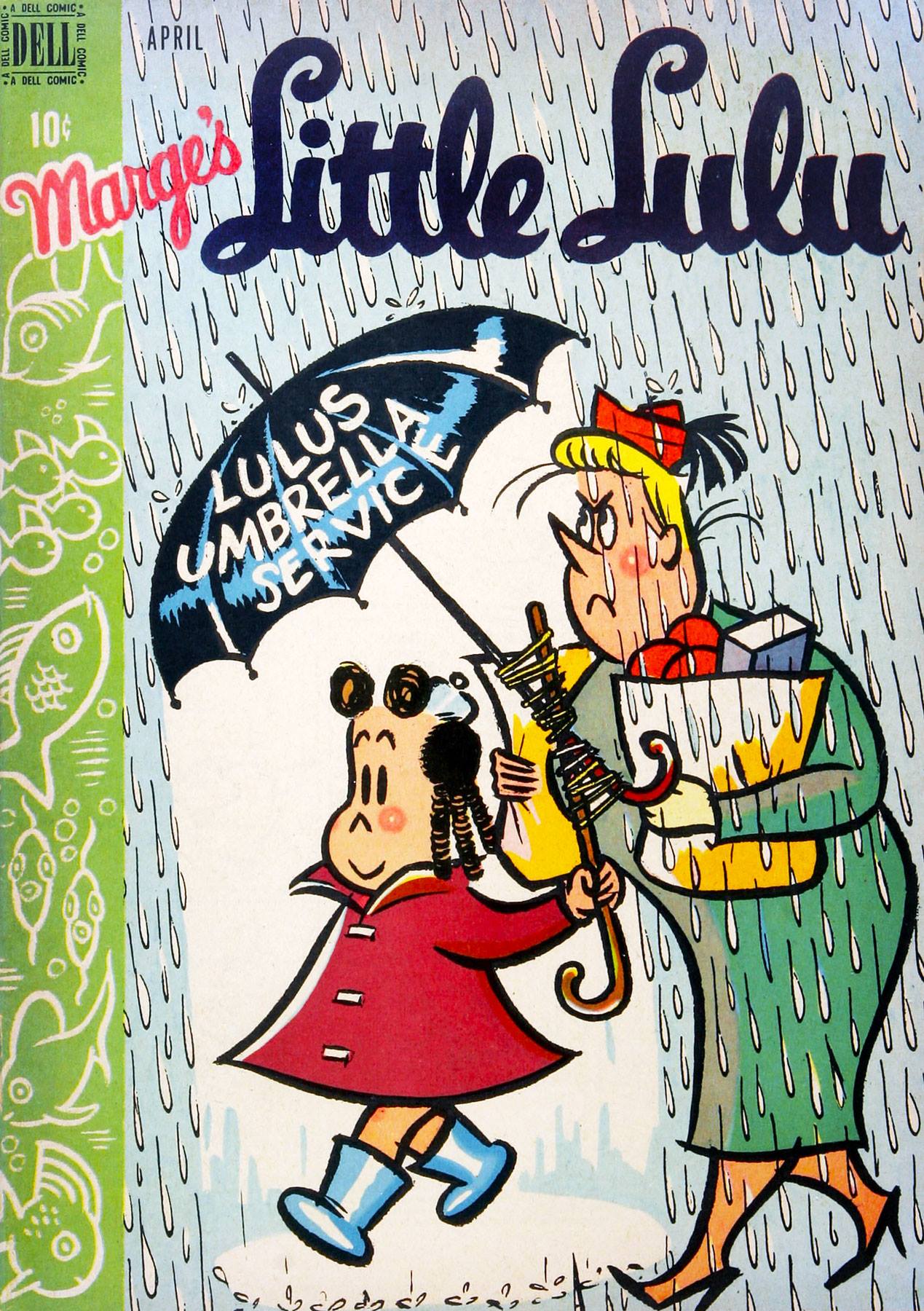
Marge’s Little Lulu no. 10 (April 1949). I recommend « John Stanley: Giving Life to Little Lulu » by Bill Schelly, published in Fantagraphics in 2017, which pieces together Stanley’s transformation of Little Lulu into the beloved, iconic figure she is today.  I’ve never felt the need to have female characters to relate to, yet Lulu’s a great role-model for mischievous little girls who can pitch a mean snowball as well as any boy!

StanleyLittleLulu32.jpeg
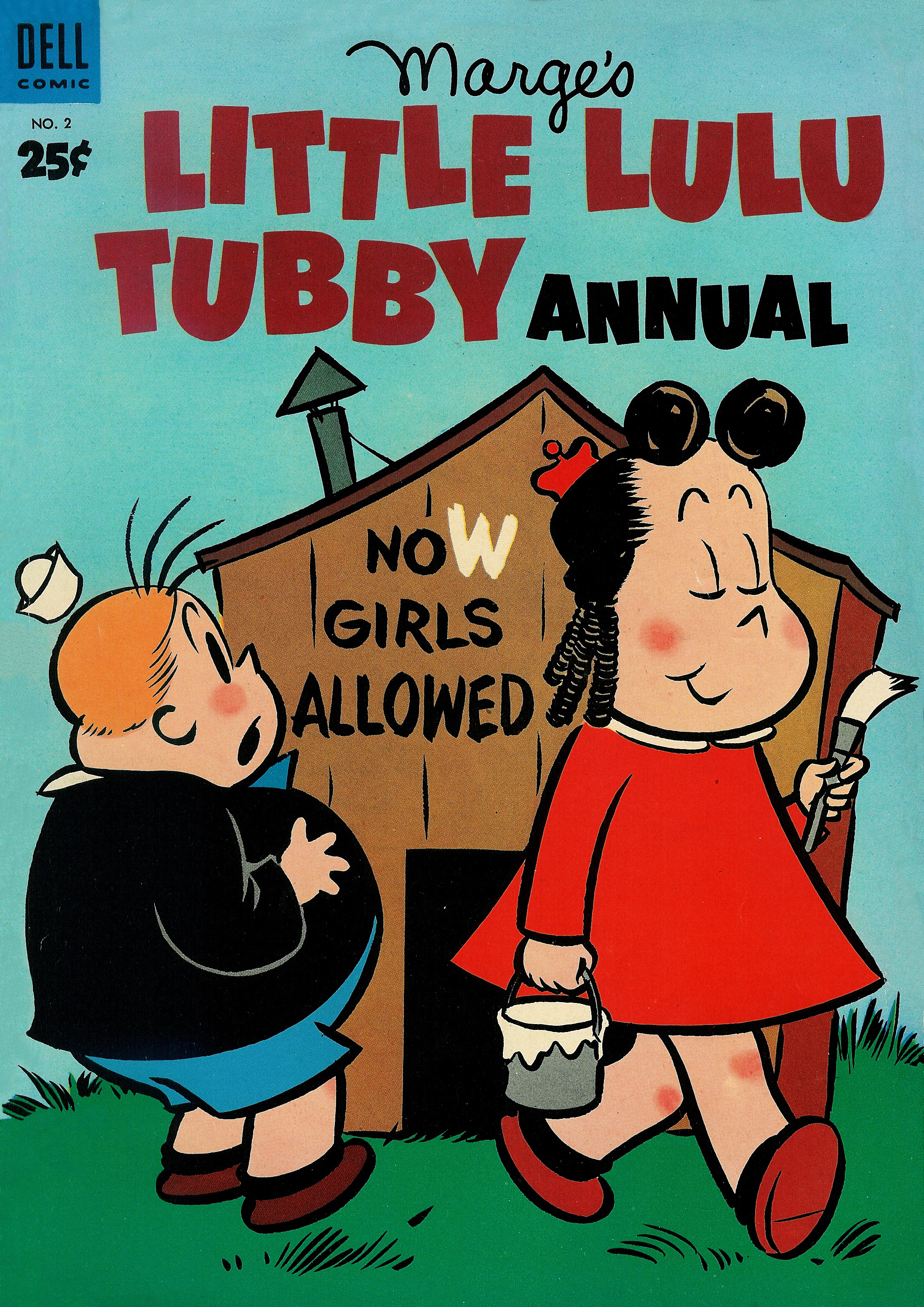
Marge’s Little Lulu Tubby Annual no. 2, March 1954. Cover by Irving Tripp from a layout by Stanley. Tubby’s series is an offshoot of Lulu’s.

StanleyTubbyFeerA
Page 8 from « Guest in the Ghost Hotel », from Tubby no. 7 (January-March 1954). Looking for ghosts, ghouls and monsters? Look no further than Stanley comics.

StanleyKrazyKat
John Stanley took a stab at Krazy Kat stories when Dell revived the comic in 1951. Krazy Kat Comics lasted for 5 issues (presumably poor sales doomed it), all published in the same year. This is Krazy Kat no. 1, 1951.

StanleyKookie1
How do Beatniks while away the hours? They compose nonsensical poetry, noodle it out… and dig girls, of course. Kookie was John Stanley’s creation; the series was written and laid out by him. Unfortunately, it was very short-lived, running for a grand total of 2 issues. This is Kookie no. 1, February-April 1962. The handsome painted cover is by Bill Williams from a layout by Stanley. You can read the issue here.

StanleyDuncandLoo6
Dunc And Loo no. 6, April-June 1963. Cover by Bill Williams from a layout by Stanley.

StanleyTeenageDunc
Lou (of Dunc & Lou) was apparently destined to be a newspaper strip, but never made it.

StanleyMelvinMonster2
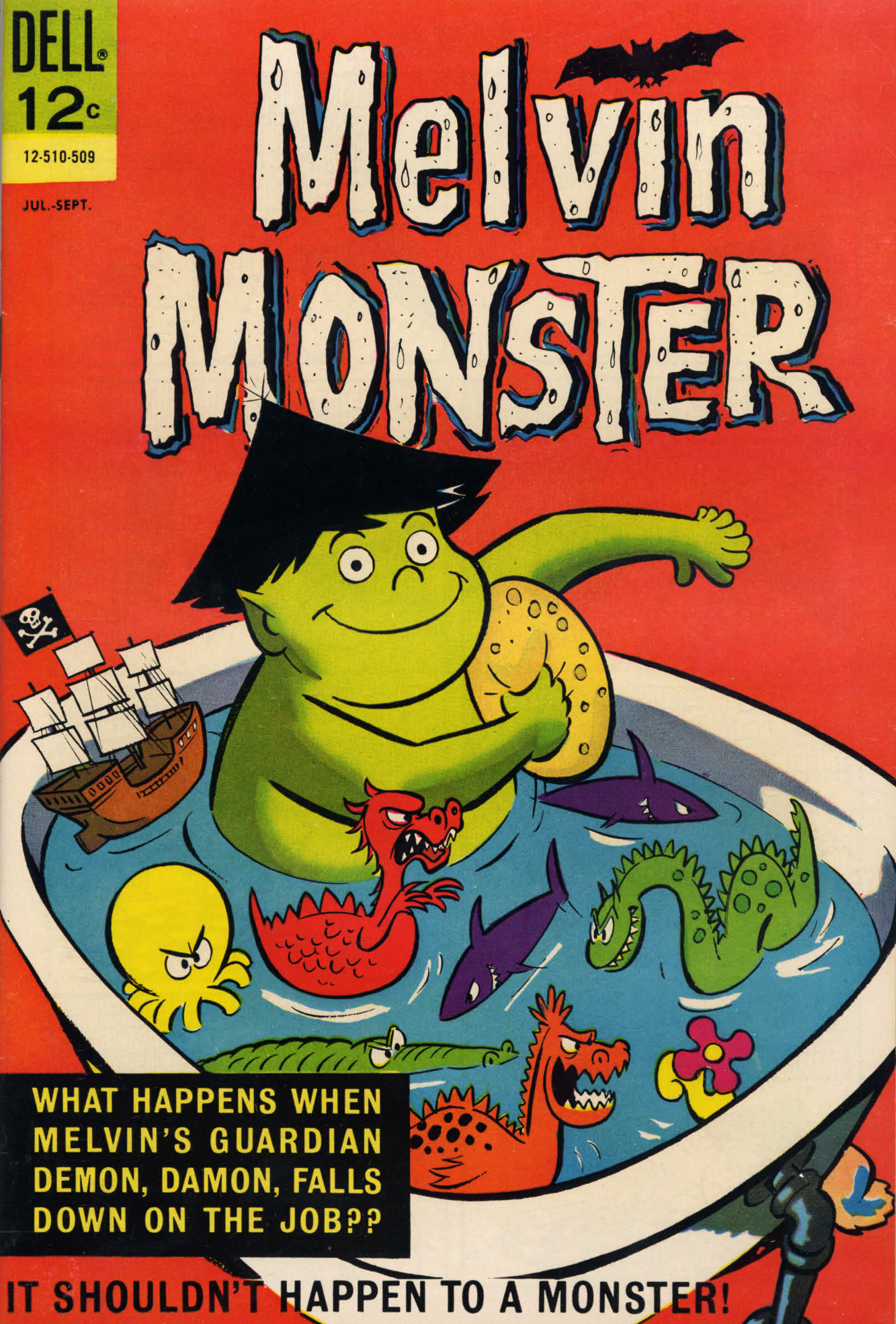
Melvin Monster no. 2, July-September 1965.

StanleyO.G.Whiz1
O.G. Whiz no. 1, February 1971.

StanleyOGWhiz
An inside page of O.G. Whiz, with very typical madcap Stanley action.

StanleyMonsterofDreadEnd
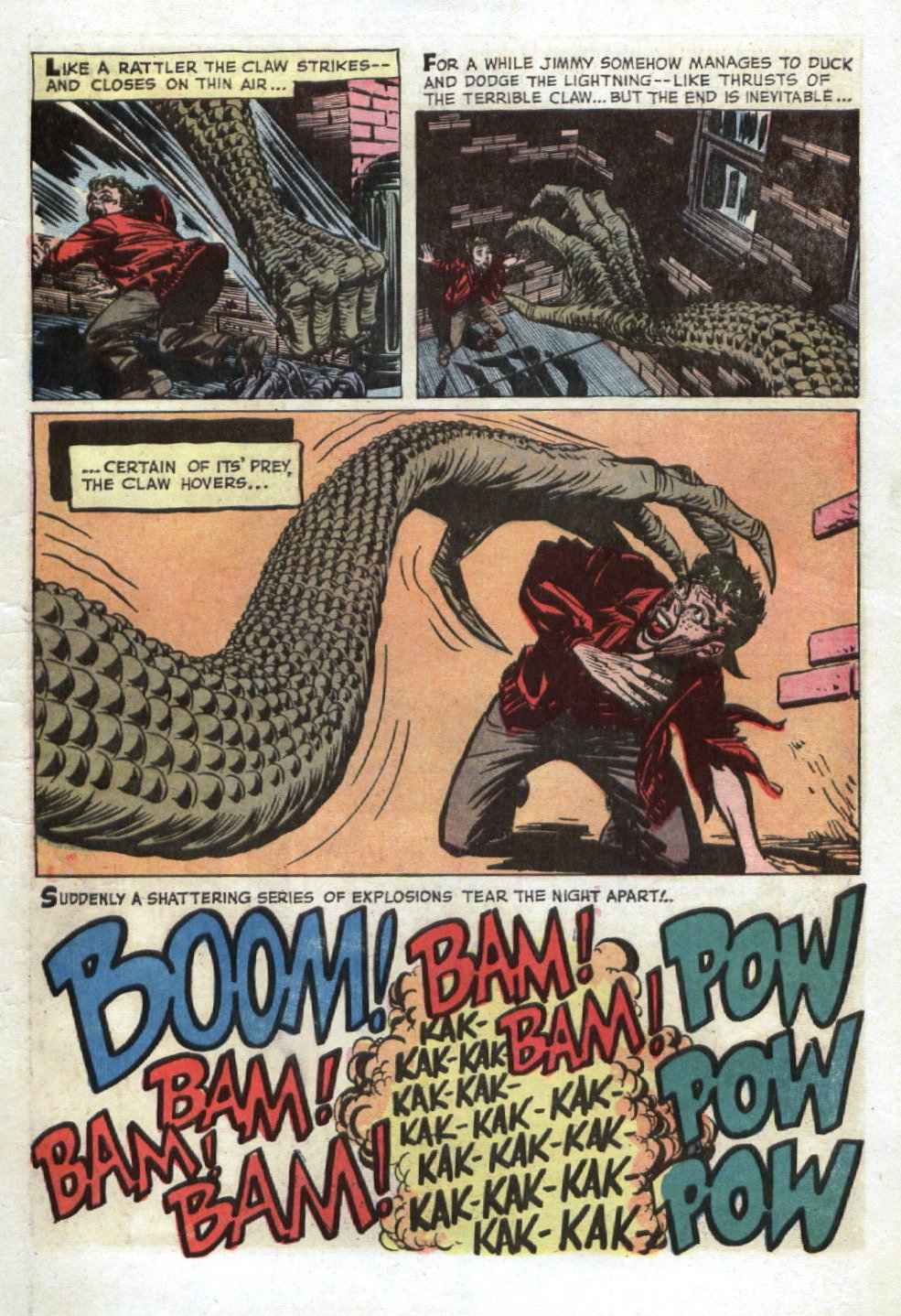
It’s not all fun, though: « The Monster of Dread End », written by John Stanley for Ghost Stories no. 1 (Dell, September-November 1962), is genuinely scary. Art by Ed Robbins.

And I haven’t even mentioned Stanley’s Nancy, nor her friend (and my favourite character) Oona Goosepimple. Next time… pick yourself up a copy of Drawn & Quarterly’s Nancy: The John Stanley Library, and happy reading!

StanleyMelvinMonster1
From Melvin Monster no. 1 (April-June 1965).

~ ds
Water Is Life: OMAC versus The Ocean Stealers (1975)

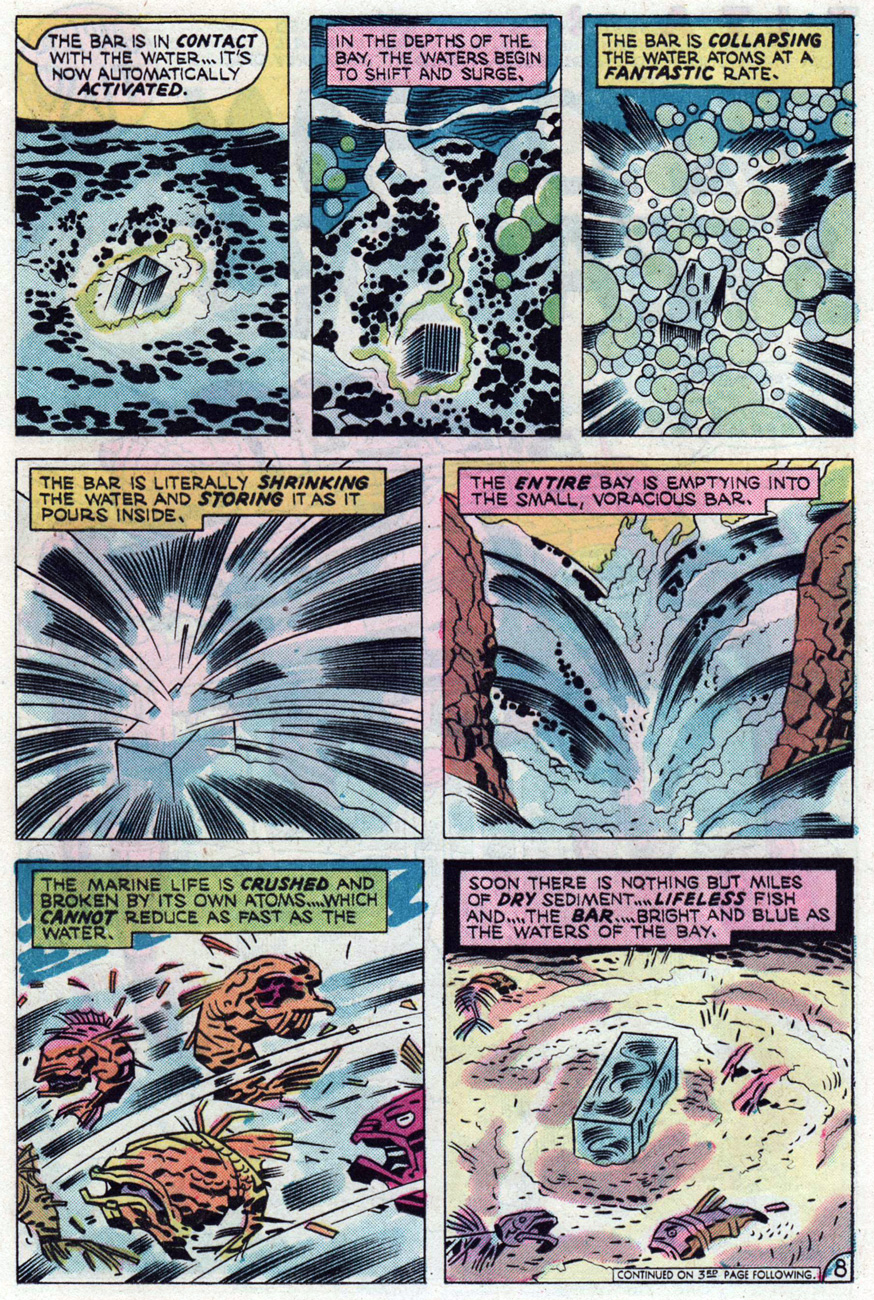
« The marine life is crushed and broken
by its own atoms — which cannot reduce
as fast as the water. »

I’ve been sitting on this particular entry awhile, having realized that the most opportune time to share it would be today, March 22, which happens to be World Water Day*.

In comics, few if any creators have generated so many explosive, pulse-pounding images as did Jack Kirby (1917-1994). And yet… this solemn, understated scene has likely haunted me most of all. The visuals are splendid, sure, but it’s the nature of the situation, the conceptual ramifications of the thing, that make it stick.

Omac7A

This splash appeared near the opening of OMAC’s final adventure, one that pitted him against Sandor Skuba, a rogue genius seizing and hoarding the planet’s water in view of controlling humanity. Threat-wise, all the adversaries that the One Man Army Corps had tangled with were mere preludes to this impressive madman. As Kirby left DC before he could wrap up the storyline as he intended, no-one walks away from this skirmish**, notwithstanding the final panel, subsequent revivals and reboots and corruptions of Kirby’s ideas by (inevitably) lesser hands and minds (and conversely bigger egos).

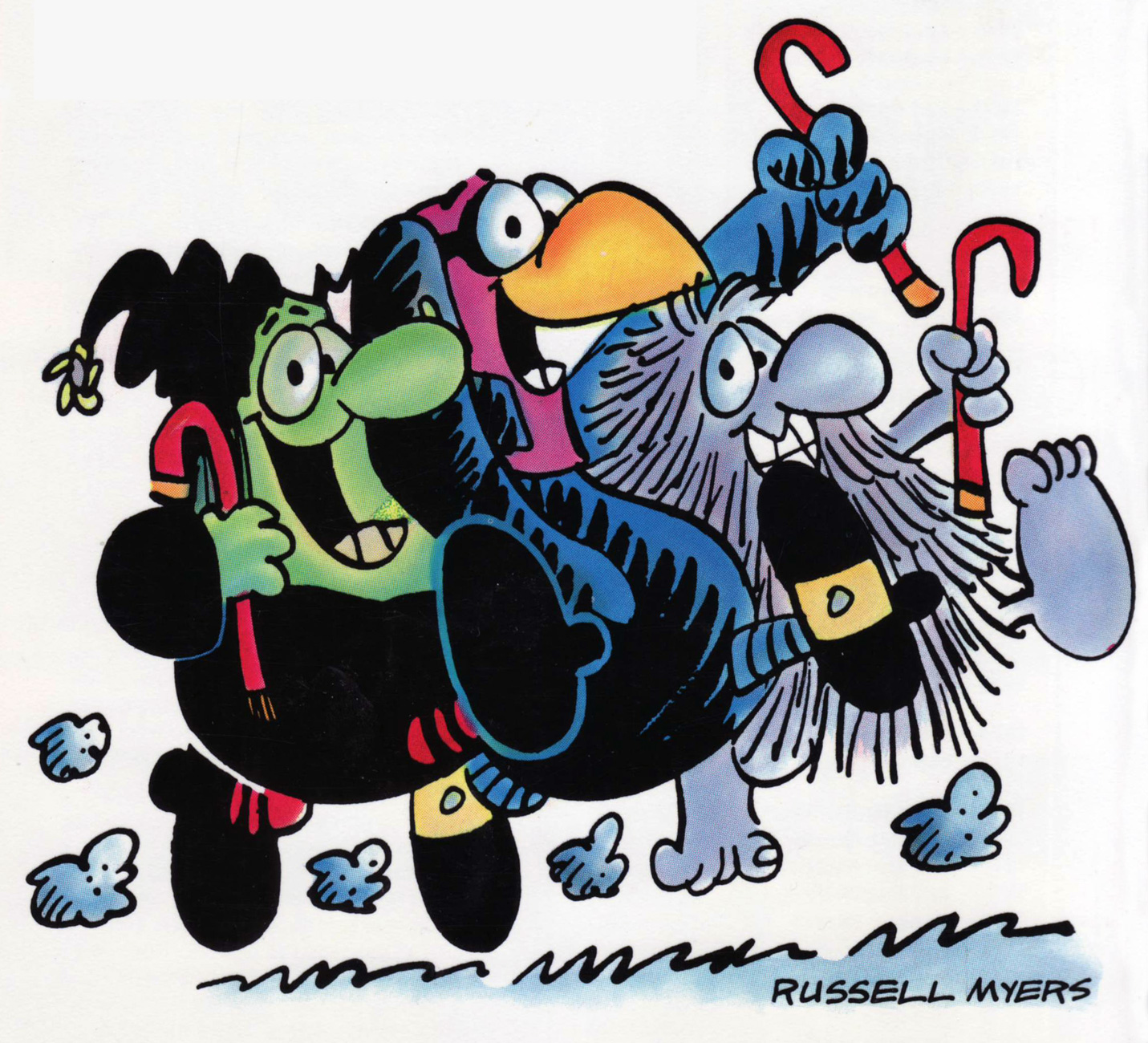
Omac7CoverA
This is OMAC no. 7 (Sept.-Oct. 1975) and « The Ocean Stealers! », scripted, pencilled and edited by Jack Kirby, inked and lettered by D. Bruce Berry.

Omac7Page1A
Could that unseen appendage be Adam Smith‘s « invisible hand of the market » ?

Omac7Page7A
And here’s how it’s done.

Omac7Page8A
In light of the current practices of certain corporations, notably the Swiss transnational Nestlé, Kirby was sadly prescient and clear-eyed again. As evidenced by recent events, given the technological means, today’s robber barons would not hesitate.

OmacWharoomA
Writer and comics historian Mark Evanier, who spent some years as Kirby’s assistant in the ’70s, writes, in his foreword to the DC’s exemplary reprint collection Jack Kirby’s OMAC: One Man Army Corps (2008): « So consider this fair warning: the last issue comes to a whiplash-inducing sudden stop. Jack had been setting up something big for number 9, but since he was gone and there wasn’t going to be a number 9, a new last panel (not by Kirby) was inserted to remove the immediate cliffhanger.» … a panel created, at that, with the finesse of 10-year-old unburdened by a sense of pacing. “Wharoom” to you too.

-RG

*Don’t buy the duplicitous hype, though! A perfect example of the fox guarding the henhouse.

**more accurately, everyone is stranded in limbo.