Roaming the Snowy Trails With Gité

« Silence is a still noise. » — Josh Billings

Given the context of pointless and (self-) destructive trade wars currently raging, I thought I’d focus on a topic closer to home, and befitting the season: we’ve received some 85 cm (33 inches) of snow in the past week or so, which makes it ideal snowmobile weather, as these things go.

While there’s been a vibrant comics scene in Québec for just about as long as there have been comics, financial viability has always been a problem. Magazines would pop up like mushrooms after a rain, only to vanish just as suddenly after a few issues. It probably didn’t help that Québécois bédéistes were generally far less interested in producing the next Blondie than they were longing to be the next Crumb.

And so, the best gig around turned out to be Perspectives, a general interest magazine (1959-1982) bundled into weekend editions of several of Québec’s major newspapers (La Presse, Le Soleil, Dimanche-Matin…) in largely distinct versions, which makes collecting them a most daunting task. It’s worth noting that the editorial content, not merely the cartoons and comic strips, were of a very high calibre. After profiling his colleague and predecessor André Montpetit a while back, it’s now time to turn the spotlight upon Gité, born Jean Turgeon (1952-2014).

Do you Snowmobile? « I snowmobile! »; If this traditional wintery scene evokes for you peace and serenity, then you’ve never seen… a snowmobile! This simple machine possesses the gift of turning the quietest of areas into a noisy corner of hell. Unless you can’t bear the silence of our countryside…; In that case, become a snowmobiler… you only need a little snow… not *too* much, though!
You have chosen your snowmobile… and your outfit… think of the essentials.; Stop, listen, look.; Don’t neglect the comfort of your passagers: « Darling, I’m falling! Hiiiik! »; Have you properly read the repair manual?
Beware of the frost. « Say, daddy! How come it’s frozen solid in mid-air… it defies the law of gravity! » « The law of gravity? That must also be frozen! »; … and of the thaw. « Where am I? »; Especially if you’re an inveterate daredevil!; while the more sedentary type…; And if it breaks your heart to put away your snowmobile for the summer…; « And so long live the snowmobile! As for me, I’m off to Miami... »

It seems to me that making a lot of noise and hitting absurdly excessive speeds are the prime draws of their ‘sport’ to a significant portion of fervent snowmobilers. Back in the 1970s, these vehicles were rather comically wheezy, but now can reach speeds far in excess of what a regular automobile can legally — or otherwise — hit on the highway, never mind the Autobahn. I remember one holiday season, not so long ago, when one of my clients topped himself on his snowmobile, leaving behind a tearful wife, three young children, and a couple of rudderless businesses. While someone *did* think of electric — and therefore quieter — snowmobiles (and Jet-skis), they pulled the now-usual arrogant move (think OceanGate and SpaceX) of paying plenty of attention to investors and waving off due process, the scientific method and their engineers, leading to a predictable fiasco.

A note on Gité’s technique, as he recounts it in an interview conducted — in the nick of time! — for Jean-Dominic Leduc and Michel Viau‘s Les années Croc (2013):

« I had developed a technique, during the Perspectives era, that I was probably the only illustrator to use. I first created an illustration in pencil, which I then photographed on a giant machine, as a photostat. I then applied colours in markers with my fingertips, which created a sort of stained glass effect in terms of luminosity. Sometimes you can even see my fingerprints… That technique was not only arduous, but also dangerous. It was really toxic, I was literally ripping off the skin of my fingers. No wonder I got sick a few years later! That method left no room for error. »

Here are a couple more Gité strips from the pages of Perspectives:

« Not so Dumb », from Perspectives vol. 16 no. 37 (Sept. 14, 1974); the sign reads “Mean Dog”.
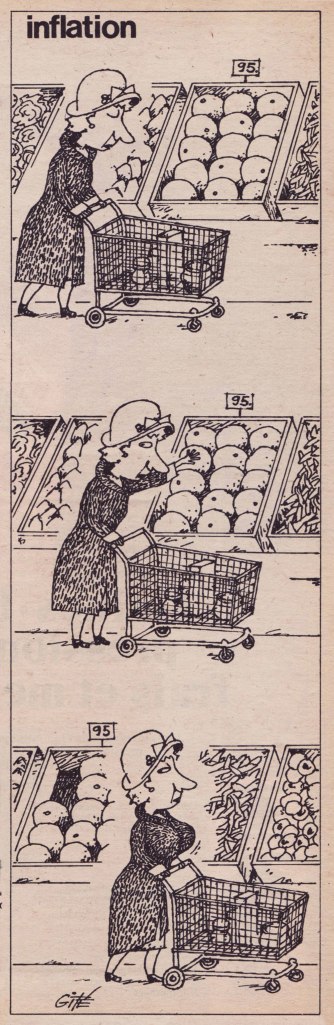
« Inflation », a forever relevant strip that appeared in Perspectives vol. 17 no. 7 (Feb. 15, 1975).
A sample Perspectives cover, this one featuring national treasure Robert Charlebois, at the time but a single decade into his spirited musical career.

Then came Croc, handily Québec’s most accomplished and successful humour mag (1979-1995, 189 issues), more National Lampoon than Mad, at least in the beginning. Gité produced quite a score of tremendous Croc covers — possibly the epitome of his œuvre — and I was planning on devoting a post to that lovely lot… but discovered that Gité’s colleague and close friend Guy Badeaux, aka Bado, had beaten me to the idea by over a decade. Feast your peepers on his savvy selections!

Ah, but he missed this one, Gité’s first! This is Croc no. 4 (Jan. 1980); despair not, doomsayer: the end may *yet* be nigh!

-RG

Behind the Scenes, Back in the Day

« Television is like the invention of indoor plumbing. It didn’t change people’s habits. It just kept them inside the house. » — Alfred Hitchcock

A little while back, I chanced upon a handsome, lavishly-illustrated brochure (undated, but from 1976 or so) promoting the services of a Montréal television production company, which leads into this little history lesson.

JPL Productions Inc. was a subsidiary of Télé-Métropole*, Canada’s first private French-language television network. In 1965, France-Film president and Télé-Métropole founder Joseph-Alexandre DeSève sagely ensconced political cartoonist, illustrator, art director, television director, watercolourist… and even co-star of a timeless, Oscar-winning Norman McLaren short film, Jean-Paul Ladouceur (1921-1992) at the head of the newly-constituted ad production arm of his television operation. This was an era in which you might actually find bonafide creatives in positions of influence, before the age of financial ‘diversification’ and conglomerates** unleashed its full toxic bloom and creatives were henceforth sidelined and supplanted by bean counters.

Over time, JPL expanded the scope and range of its activities. I hardly need to go into details: that is precisely this publication’s purpose.

JPLFrontispiceA
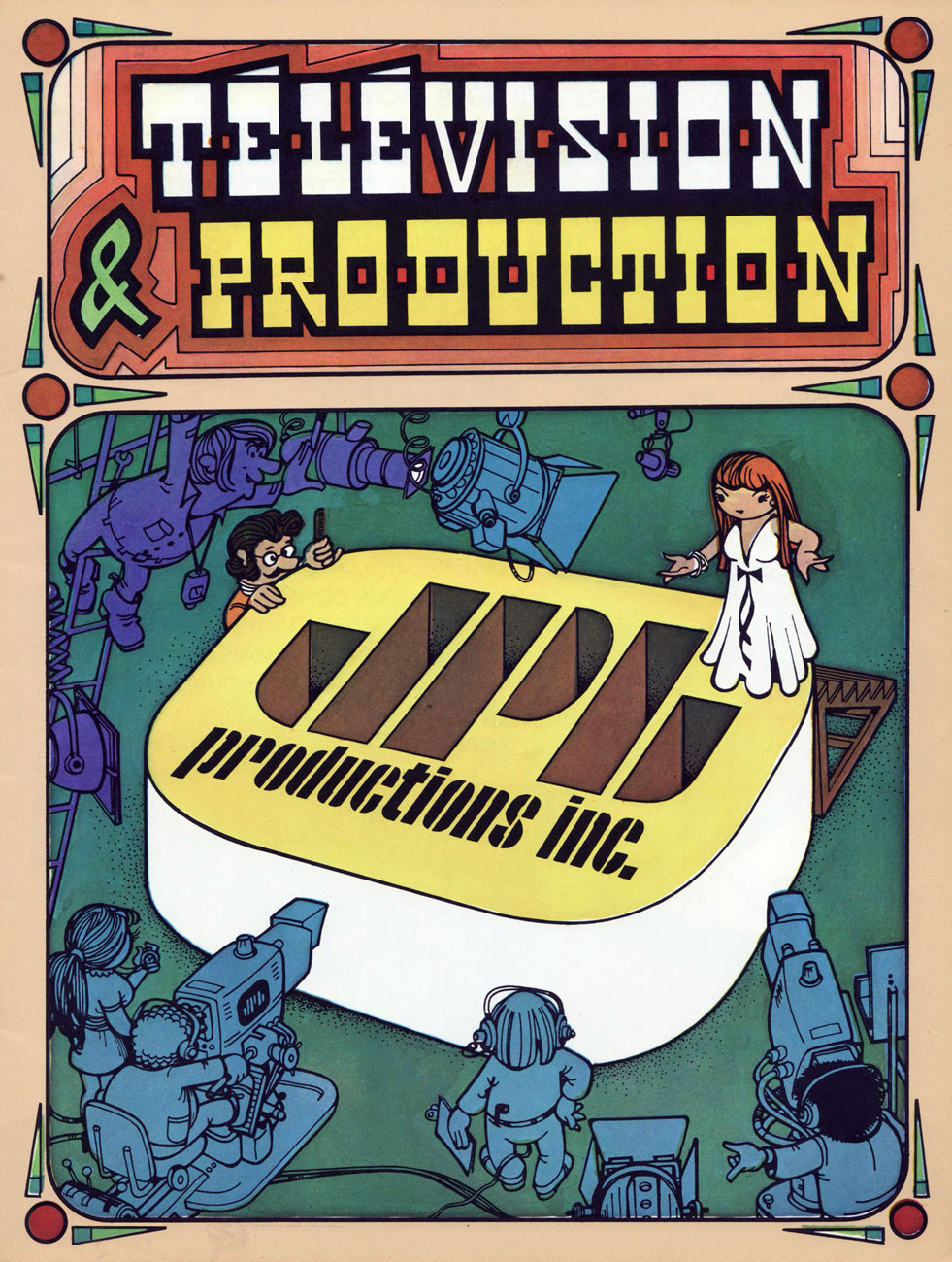
The front cover. All artwork (uncredited… for shame!) by Bernard Groz.

JPLPrésenteA
JPL himself provides the introduction: « To tell you about us, to speak of our people, our accomplishments, our equipment, we told ourselves: “it can’t be done without images”. And so, this illustrated brochure. JPL Productions Inc. is a subsidiary of Télé-Métropole Inc., the largest private enterprise television station in America. We produce advertisements, documentaries, industrial films, feature films, slideshows, soundtracks, printed matter, soundtracks, etc.. We hope that the following pages will give you a sense of the scope of our business. Our illustrator could not include each member of our personnel in his drawings. He had to leave out 250 of them. When we speak of ourselves, we say that we are producers, designers, publicists, advertisers, creators, communicators, propagandists, persuaders, as well as a whole range of ‘-lists’ and ‘-ers’. Without doubt and without false pride we are right. But we… prefer to think of ourselves, first and foremost as makers of amazement. » Phew!

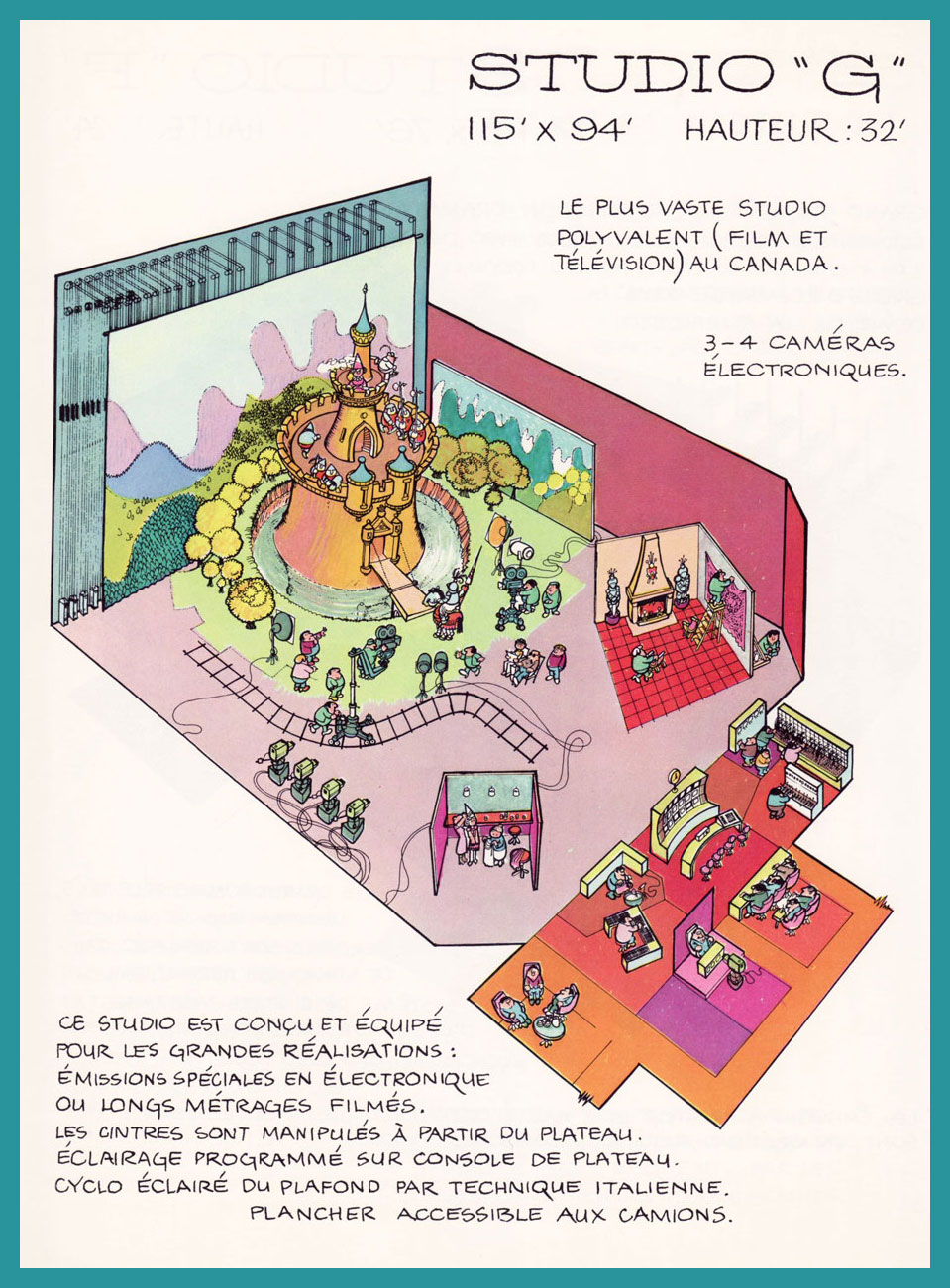
JPLStudioG_A

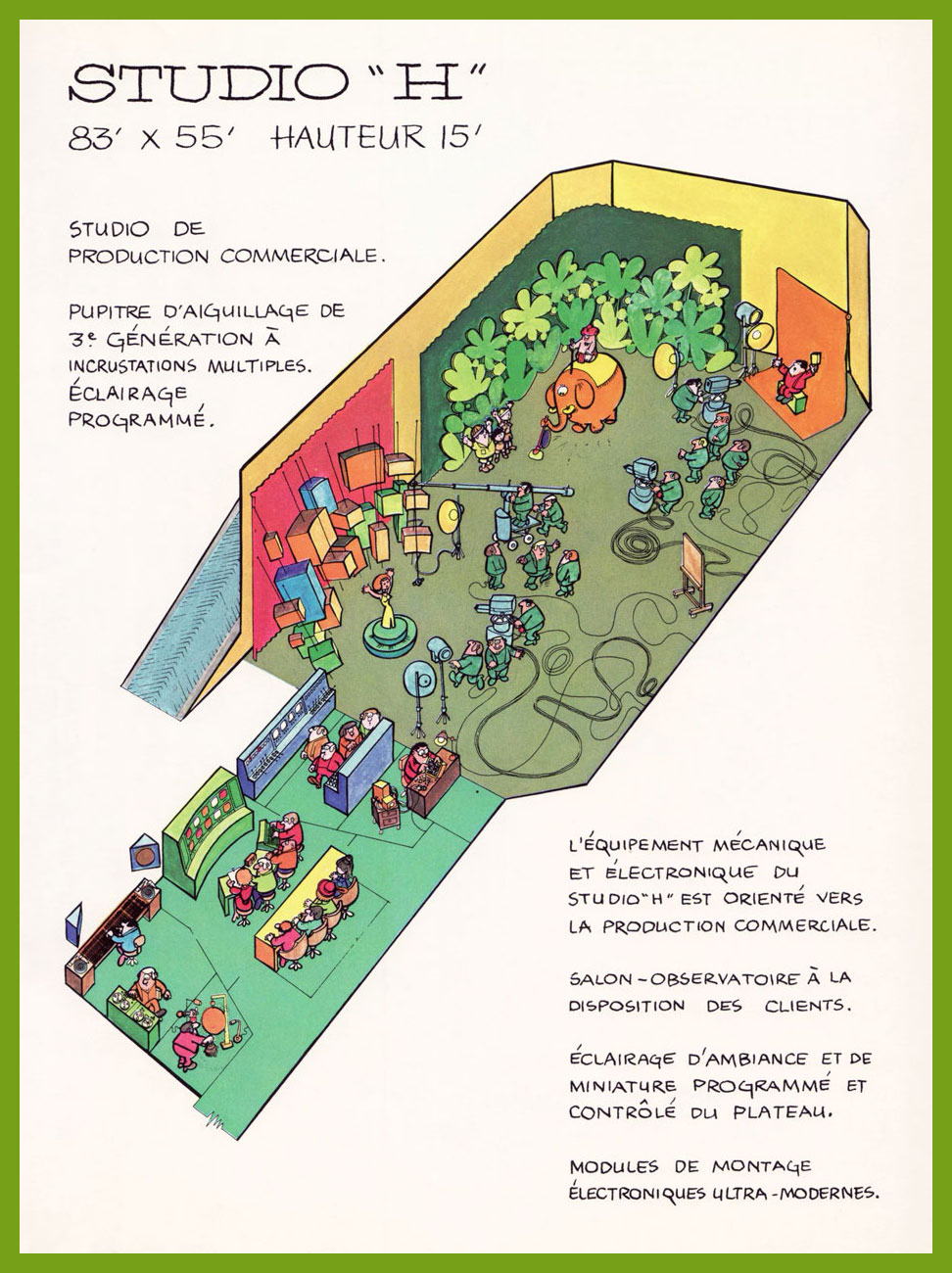
JPLStudioHA
An elephant running a vacuum cleaner? I’d like to see that commercial.

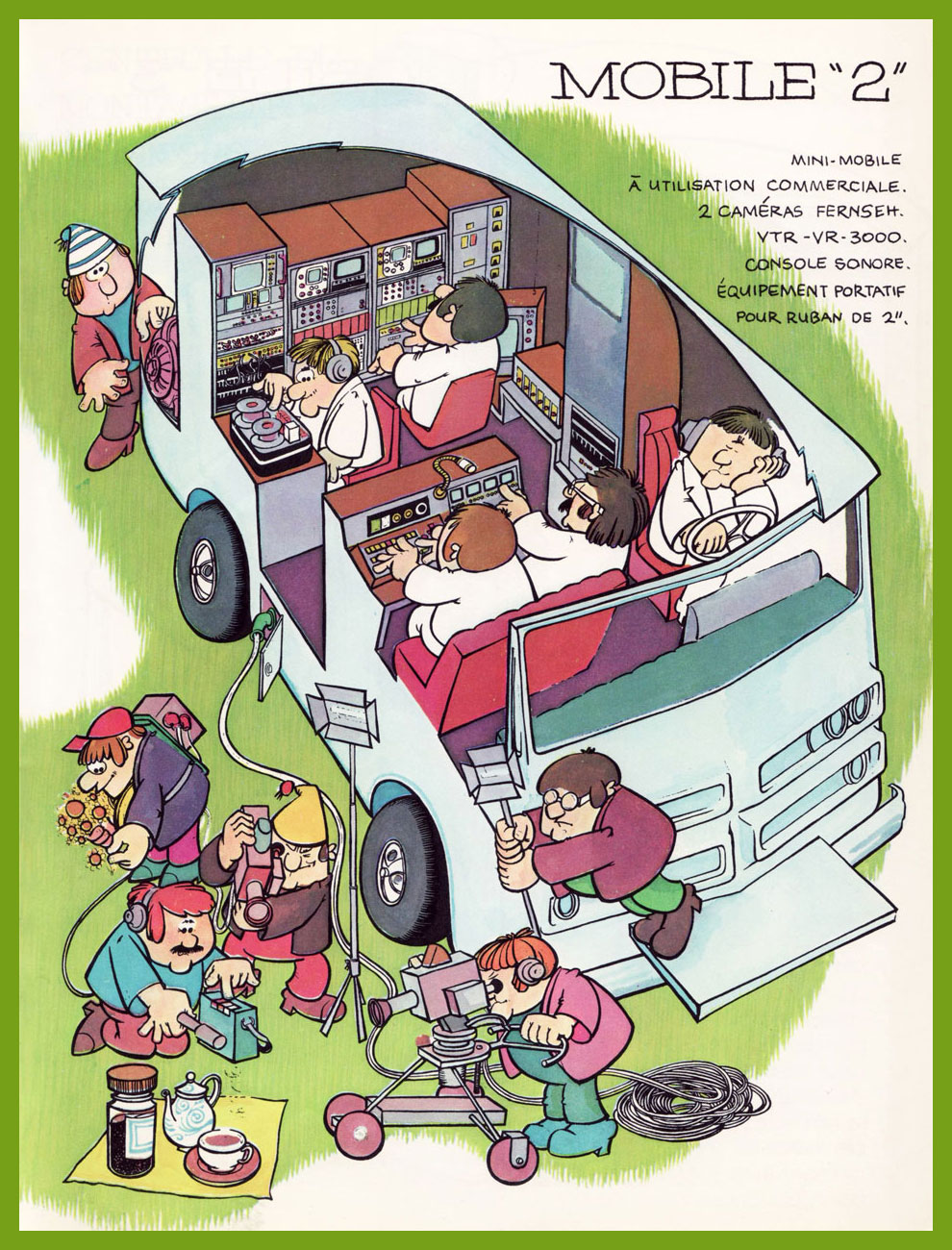
JPLMobile1AJPLMobile2A

JPLStudiosSonA
Four Sound Studios. Here and there, Groz threw in recognizable figures. In this one, the pianist (and the bandleader) are the talented Georges Tremblay, who composed and performed many a memorable (and often surprisingly elaborate) theme for Télé-Métropole’s émissions. To wit, the network released an LP’s worth of them, Les thèmes du 10. Here’s one, La couleur du temps, written for… the weather bulletin.

JPLScéniqueA
Stage Services: workshops, studios, salons.

CapitaineBonhommeA
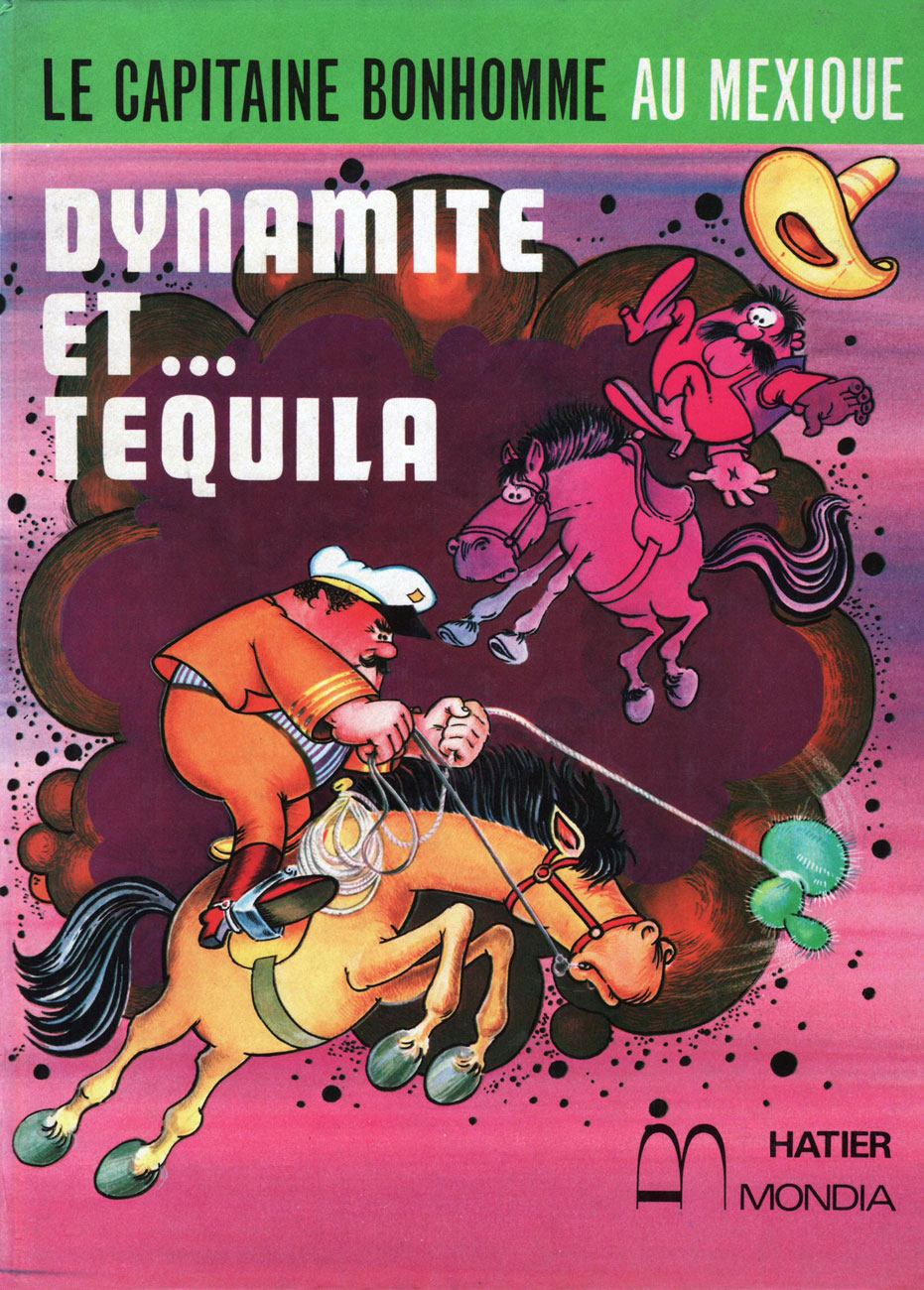
Front cover of Le Capitaine Bonhomme au Mexique: Dynamite et… Tequila (1973, Hatier/Mondia); scripted by the Capitaine himself, ace raconteur Michel Noël (1922-1993) and illustrated by Bernard Groz. How much of Renaissance man was the Capitaine? Here’s his astounding biography (in French).

CapitaineMexique01A
Dynamite et Tequila‘s opening page. The beloved Capitaine Bonhomme, a Télé-Métropole fixture introduced in 1962, would follow his creator throughout his life. He was yarn-spinner in the grand old Münchausen / McBragg tradition, and his wide-ranging popularity in Québec has endured largely because he never patronized his audience and, as with much of the richest grade of humour, his wooly accounts were sprinkled with witticisms and allusions whose meaning(s) suited both juvenile and adult sensibilities. Here he is during a 1988 talk show appearance.

-RG

*« Present at the February 19, 1961 inauguration were Montréal’s Archbishop, Paul-Émile Léger, the city’s mayor, Jean Drapeau, and the Prime Minister of Québec, Jean Lesage, who declared that television has « great power, and therefore great responsibility. » Chew on that, Stan Lee fans!

**After mobster and parking lot maven Emmanuel “Manny” Kimmel inherited the assets of his partner Abner “Longie” Zwillman (“the Al Capone of New Jersey“) upon the latter’s death, he continued his plans for legitimization and diversification. After The Kinney Parking Corporation acquired a chain of funeral homes, Kimmel soon entrusted the business dealings to a canny young undertaker named Steve Ross. « Ross diversified into businesses that had no visible connection to the already odd marriage of caskets and parking spaces. He bought office cleaning services, DC Comics (publishers of Superman), MAD Magazine, and a talent agency. In 1969 Ross made a daring bid for Warner Brothers, the film studio and record company. » « Kinney acquired Warner for $400 million. » Quotes from William Poundstone‘s captivating Fortune’s Formula (2005).

And that, children, is how The Mob bought DC Comics. I always chuckle when fanboys claim, without a shred of evidence, that Charlton Comics (owned by the Santangelo family) were ‘mobbed up’. I guess to some people, it’s only the Mob if it’s eye-talian.

Le Printemps and Its Perils

« It’s spring fever. That is what the name of it is. And when you’ve got it, you want—oh, you don’t quite know what it is you do want, but it just fairly makes your heart ache, you want it so! » — Mark Twain

André Montpetit (1943-2012) was a prodigiously talented québécois cartoonist and illustrator who, after wowing the public and his peers in the late 1960s and early 1970s, essentially turned on his heels and walked away from it all. Was it fear of success, fear of failure, self-loathing, self-respect or something else that prompted his slow fade? Hard to tell.

In the meantime, here’s a seasonally sardonic piece he produced in 1971. It saw print in the March 20, 1971 issue of Perspectives, a supplement bundled with each Saturday edition of Québec’s Le Soleil daily newspaper from 1959 to 1982.

MontpetitPrintemps01A
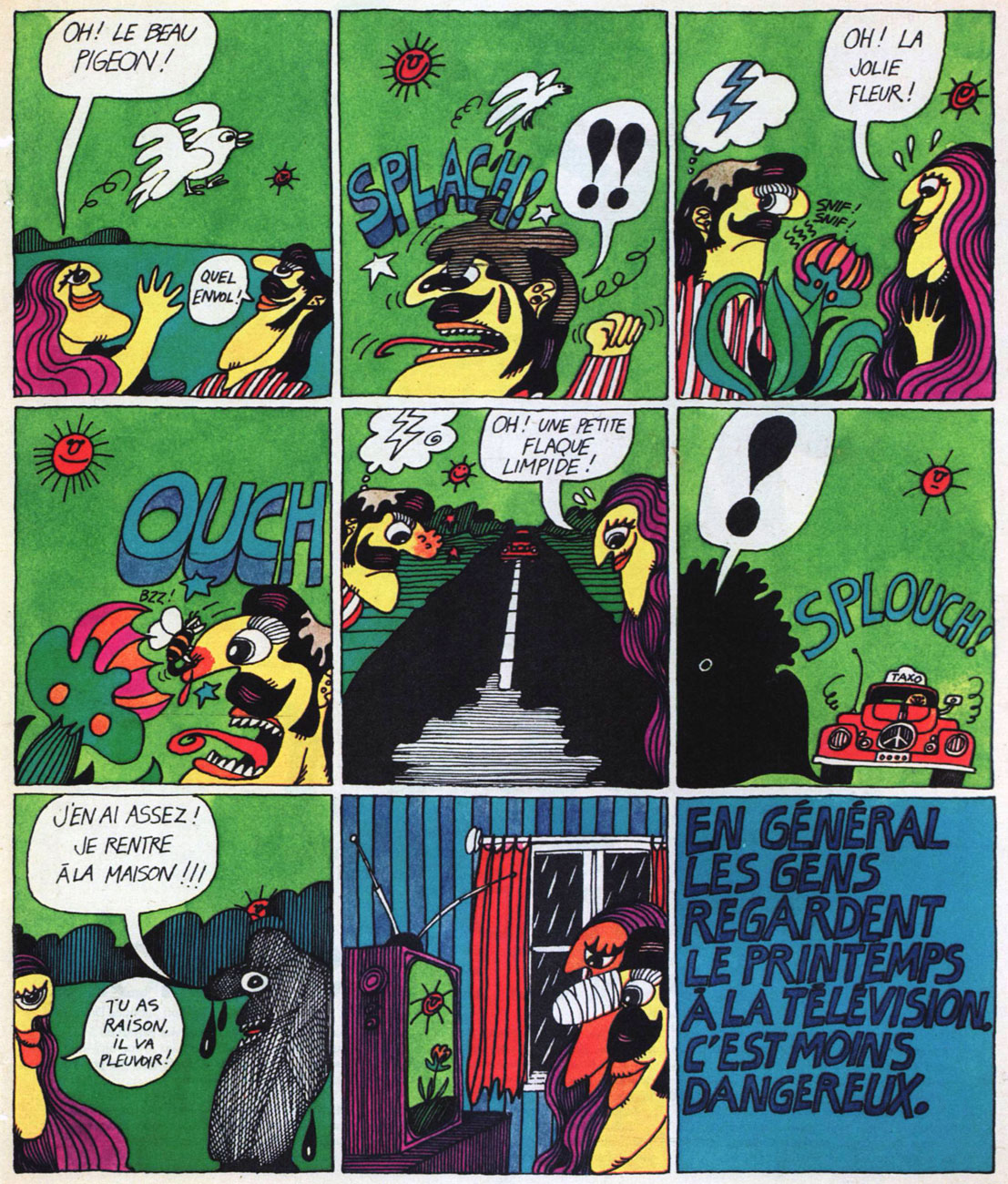
The sun appears… the birds return… the flowers grow back… the beasts awaken… the city has an air of joy… it’s the season of love. « Let us go contemplate the marvels of nature! »

MontpetitPrintemps02A
« Oh, the beautiful pigeon! » « Oh, such a pretty flower! » « Oh! A small, limpid puddle! » « I’ve had enough! I’m going home!!! »  « You’re right. It’s going to rain! » IN GENERAL, PEOPLE WATCH THE SPRING ON TELEVISION. IT’S LESS DANGEROUS.

In recent years, writer-director Saël Lacroix endeavoured to put together a documentary to assemble and organize the known facts and to fill in some of the blanks of Montpetit’s troubled career and existence. The result, Sur les traces d’Arthur (aka Tracing Arthur) was released in 2016. Watch the trailer here.

-RG

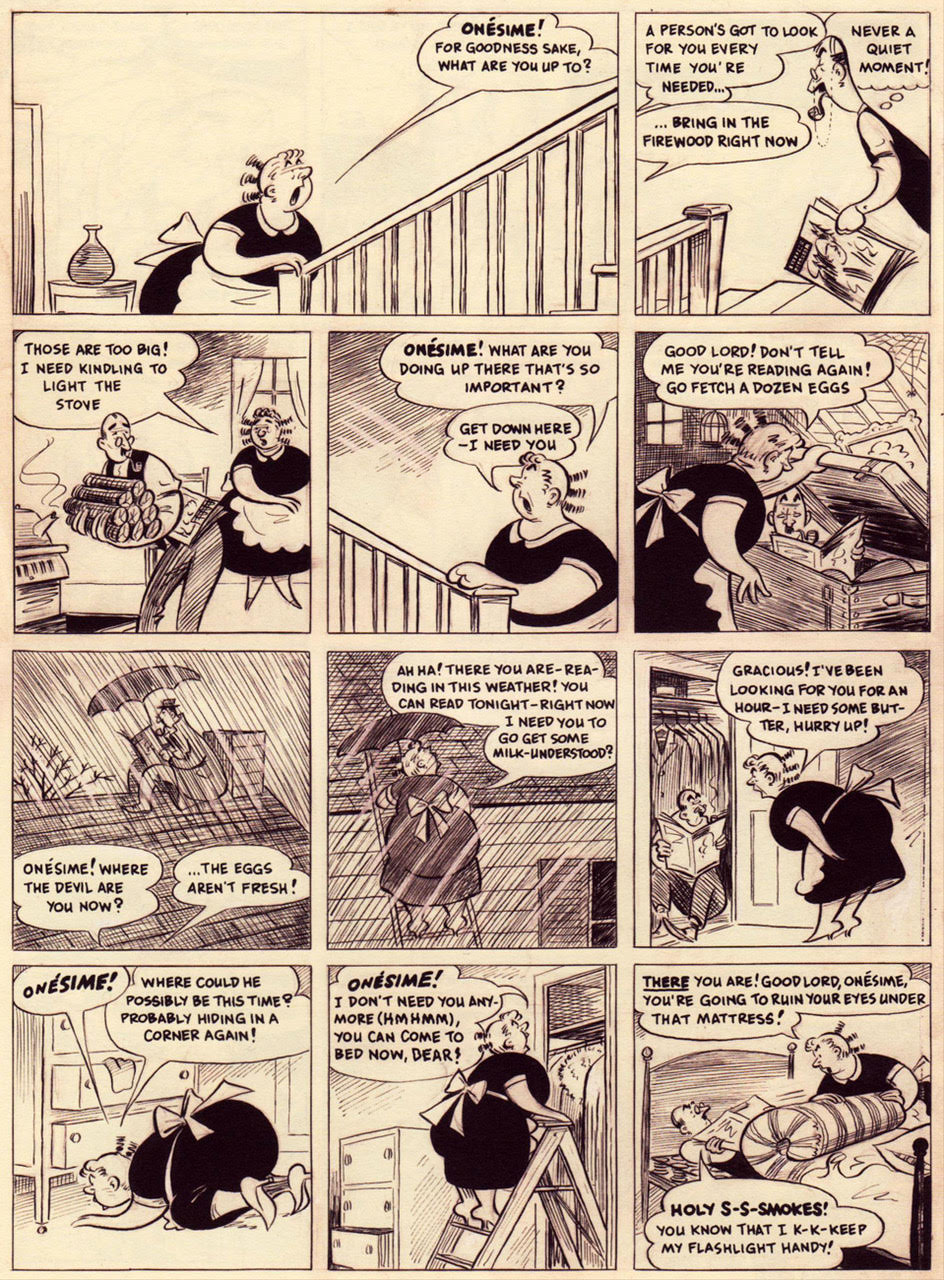
“You’re going to ruin your eyes under that mattress!”

In 1943, Albert Chartier, a French-Canadian cartoonist and illustrator (and commonly accepted as the father of Québec’s “bande dessinée“), was offered the chance of creating his own comic strip for the “Bulletin des agriculteurs” (Farmers’ Bulletin). Thus began Onésime, Chartier’s most popular and enduring œuvre.

Onésime was the perfect strip for the Bulletin’s audience: inspired by life in rural areas of Québec (in particular, picturesque Saint-Jean-de-Matha), it was a charming chronicle of the countryside. It lasted all the way until 2002 (it is said that four generations of Québecois learned to read with Onésime!), and reflected the changes in Quebec’s social landscape, making it a priceless historical document as well an as excellent comic.

AlbertChartierOnesime

This strip (originally published in November 1959) was scanned from Drawn & Quarterly #5 (August 2003). As far as I know, D&Q’s 47 pages of “Albert Chartier – a Retrospective” is the only existing English version of Onésime (the French-to-English translation is credited to Helge Dascher; the redrawn letters, to Dirk Rehm).

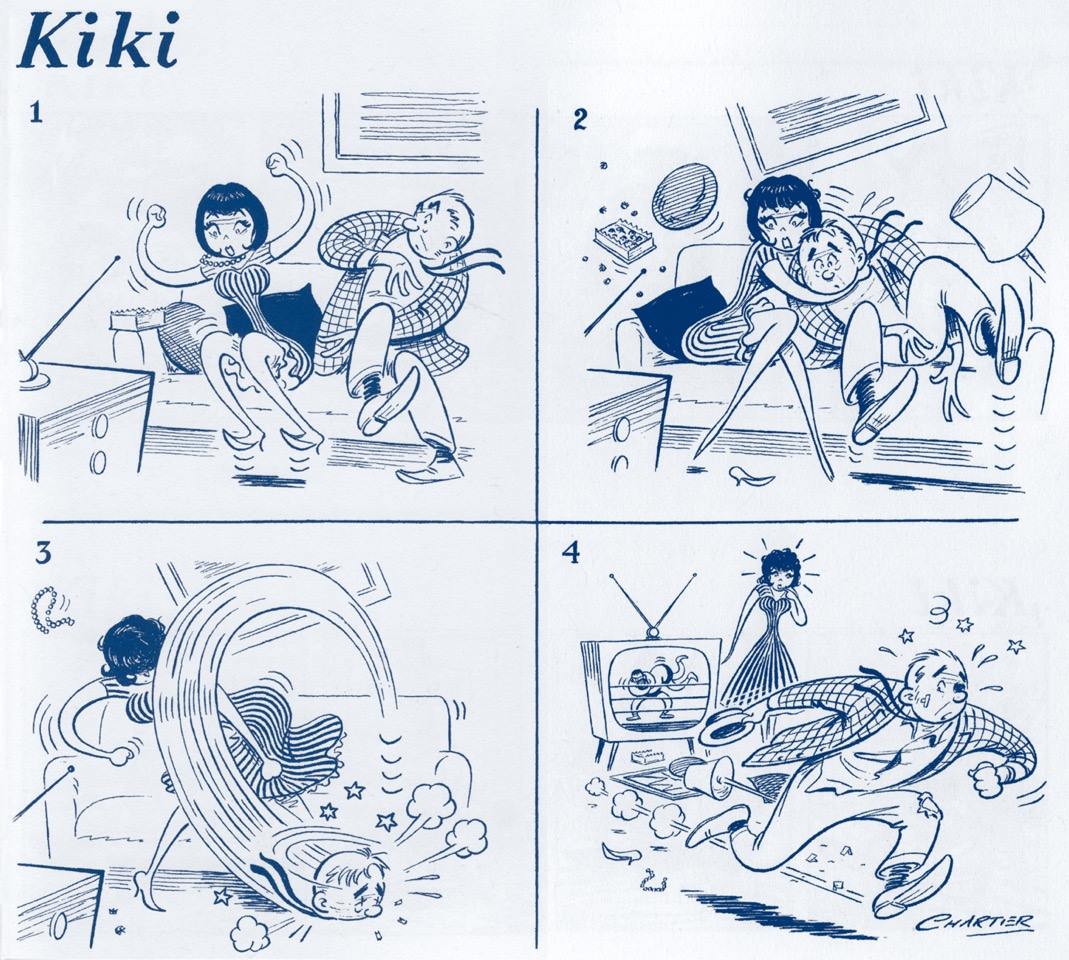
While Onésime is Chartier’s best known work, here’s something that’s even harder to come by for your enjoyment – a strip in which Kiki gets carried away. You can meet Kiki in “Une piquante petite brunette” (roughly translated to “a spicy little brunette”), a beautifully done, quite entertaining collection of previously unpublished Chartier strips about a young woman’s adventures (Les 400 coups, 2008).

ALbertChartierKiki.jpg

~ ds