Hallowe’en Countdown III, Day 5

« … his appreciation for city life was such that when I was a little girl and we would be going on walks, he would periodically draw my attention to the colorful and interesting patterns created by garbage strewn about on the streets, or by dilapidated storefronts with their torn-off signs. » — Gina Kovarsky on her father’s perspective

Funny how history works: for every world-famous New Yorker cartoonist, there’s another who’s just about been forgotten, yet is every bit the equal of his more celebrated colleague.

Anatol Kovarsky (born in Moscow in 1919, lived and thrived to the impressive age of 97) began working for the New Yorker in 1947, who published his cartoons and cover illustrations until 1969, when the man turned his full attention to painting.

KovarskyBunkA
This specific piece first saw print in The New Yorker in 1956, and was collected later that year as part of the classic Kovarsky’s World (Alfred A. Knopf).

For further reading, here’s a pair of excellent articles on the esteemed Mr. K:
http://michaelmaslin.com/inkspill/anatol-kovarsky-still-drawing-after-all-these-years/
and http://coyleart.typepad.com/coyleart/2007/08/anatol-kovarsky.html

-RG

Hallowe’en Countdown III, Day 4

« ... and suddenly, an ordinary business day becomes a day of horrible visions… »

When he was introduced in 1951 (Star Spangled Comics no. 122), Dr. Terrance Thirteen was a perfect fit for the DC universe: a skeptic who, in the nominally-rational world he inhabited, got to elucidate and debunk all sorts of mock-supernatural shenanigans. When the ghost-breaker made his return in the late 60s (as a foil to his also-returning contemporary The Phantom Stranger), however, the world had changed. The editorial balance had shifted in favour of the mystical, and Dr. 13 wasn’t as fortunate as the kids from Scooby Doo: he now faced bonafide manifestations from the beyond, but he wouldn’t have any of it, becoming a blind, overbearing ideologue in the vein of filmic non-believers Dana Andrews in Night of the Demon (aka Curse of the Demon) or the fabulous Peter Wyngarde in Night of the Eagle (aka Burn, Witch, Burn… adapted from Fritz Leiber’s Conjure Wife).

And things got worse and worse over the years; by now Dr. 13 is treated as a joke and a punching bag (even Matt Howarth blew it, a rare misfire), but that’s the general climate in the modern mainstream: most long-running characters, even the heroes, with a scientific background (Henry Pym, Reed Richards, Tony Stark et al) are frequently depicted as arrogant, misguided and often downright insane.

For a brief time in the early 1970s, Dr. 13 was handled by a sympathetic and skillful writer who understood what the man stood for and what made him tick. For a full example, check out our earlier post on another Dr. 13 case, … and the Dog Howls Through the Night! (1974).
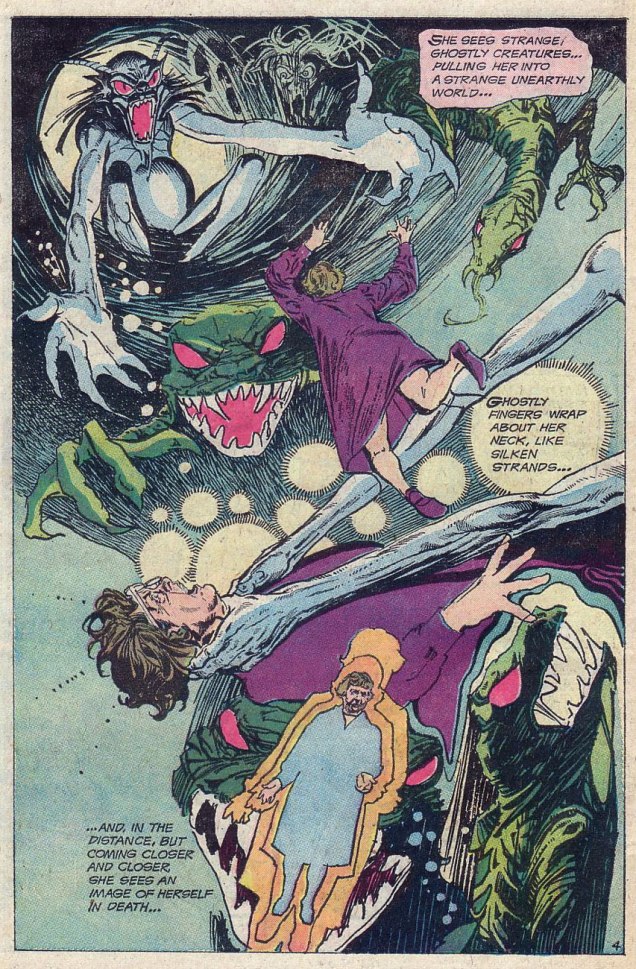
DeZuniga13Glasses05ADeZuniga13GlassesA
Scripter Skeates stated, a few years ago: « I quite like this story, especially the beautiful psychedelic scary artwork DeZuniga provided (an artist I very much enjoyed working with; he also illustrated a number of my Supergirl tales), plus the ending in which I somehow decided to treat this yarn as though it were a cautionary tale, the lesson learned being that one shouldn’t commit murder! For the longest time a copy of this comic wasn’t in my collection , but a couple of years ago I came upon a copy at a convention — the price-tag was a bit high due to the origin story that’s also in there! When I told my wife I had shelled out forty bucks for a comic with a story of mine in it that didn’t even have credits on it, she concluded that I was the one who was quite definitely insane!! »

-RG

Hallowe’en Countdown III, Day 3

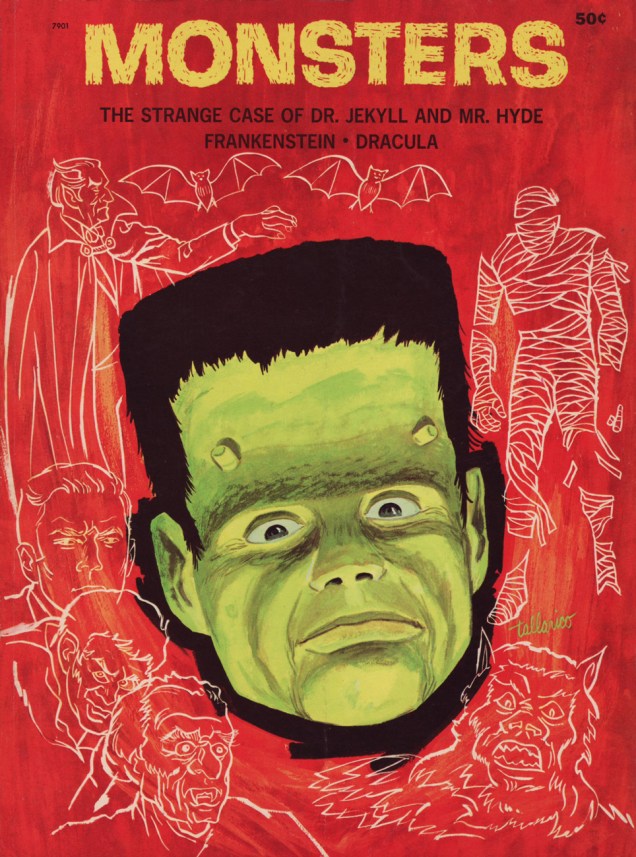
« Apparently, no one could credit such a grotesque being with any sense of kindliness, and so the wounded monster limped along his way, his hatred of humanity grew in proportion to his size. »

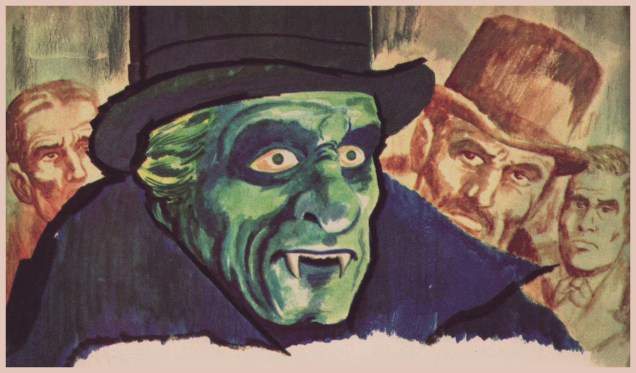
Unleashed upon the world in 1965 by Wonder Books, this generously-illustrated volume of classic adaptations is a collaboration between fellow prolifics Walter Brown Gibson (1897 – 1985), the writer most closely associated with Street & Smith’s The Shadow, and artist Tony Tallarico, a journeyman who produced a bounty of work, as artist and packager, for just about every publisher in the business… save DC and Marvel, and who, upon leaving the mainstream comics field in the mid-1970s carved out a lucrative little niche for himself putting together scads of illustrated books, mostly for children, on just about every subject under the sun.

MonstersTallaricoA

TallaricoDracA
« Dracula’s form had materialized now, His long-nailed fingers were gripping the window bars, and the mist had become a swirl of moths behind him. »
TallaricoHydeA
« The man’s  ugly, fiendish look chilled Enfield, but the crowd threatened the ruffian, who finally said that his name was Hyde… »

Tallarico would, the following year, revisit some of the fiends depicted here for a short-lived but infamous trio of series for Dell: Dracula, Frankenstein and Werewolf. Ah, but don’t be so dour: it’s just light, campy fun.

-RG

Hallowe’en Countdown III, Day 2

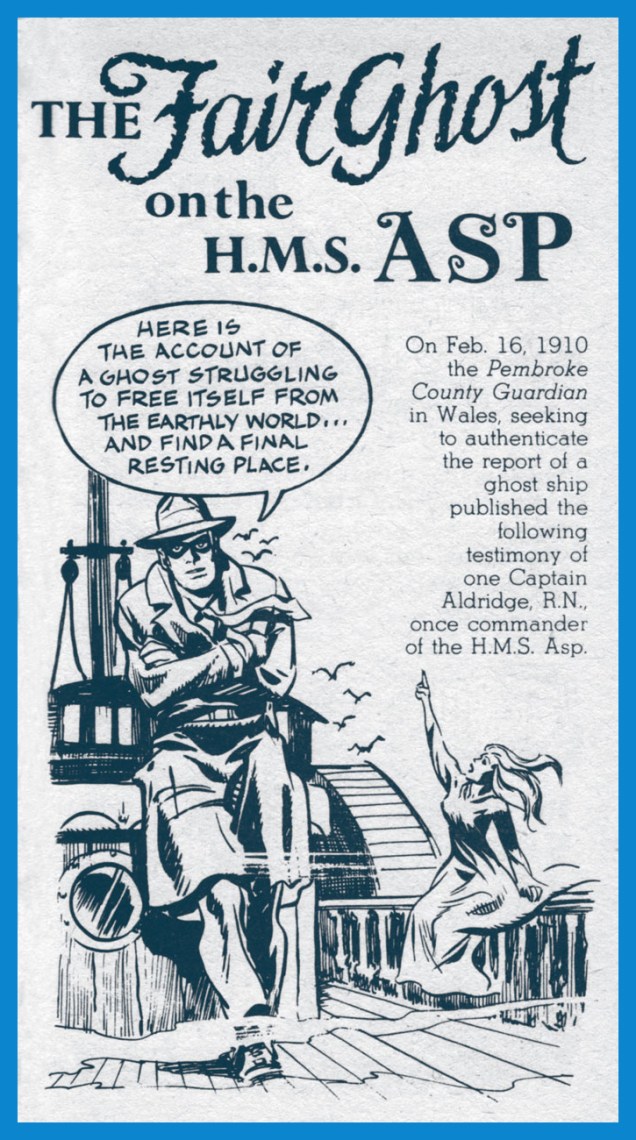
« In June, 1913, the family moved out in terror! … they simply abandoned the house in the Midlands. There is no record of successors. If you are looking to rent a house, cheap… it may still be there! »

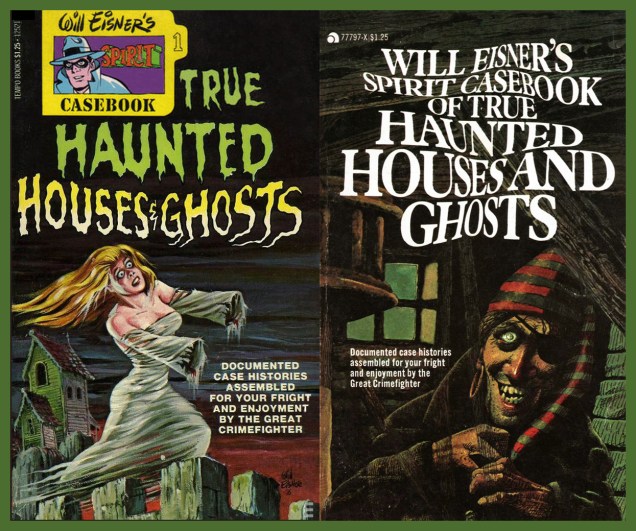
On this second day of our Hallowe’en countdown, let’s peer through the mists of time at 1976, when Will Eisner was still experimenting with marketing formats for comics-type material. This was still a couple of years before his A Contract With God and Other Tenement Stories (1978) appeared. During that period and beyond, Eisner was throwing a lot of material at the wall, in the finest exploitation tradition, hard on the heels of every bankable trend: Will Eisner’s Gleeful Guide to the Quality of Life, 101 Outerspace Jokes, Will Eisner’s Gleeful Guide to Communicating With Plants, Will Eisner’s Gleeful Guide to Living With Astrology, 300 Horrible Monster Jokes… and it wasn’t all good, as you can imagine.

This 160-page paperback from 1976 is arguably the cream of that crop; an easy choice for those of us who value Eisner’s expert hand at setting a shadowy mood.

SpiritCasebook2A

EisnerSpiritGhostsVersoA
Mr. Eisner’s original back cover.

Publisher Tempo Books seems to have had limited faith in the sales appeal (too gruesome?) of the original cover, as a variant edition was issued in short order, bearing a fine, but non-Eisner cover. Can anyone identify the artist?

EisnerHouseGhostAEisnerHMS_AEisnerInmate23AEisner5thAvenueA

-RG

Tentacle Tuesday: Ladies Kinda, Sorta in Peril

Behold! I return to a topic close to my heart, as close as tentacles are close to human flesh in this post! Namely, PG manifestations of shokushu goukan. But I wouldn’t like you to think that I’m one-track minded: today’s crop has its share of fantasy scenes, scantily-clad women who are about to be even further undressed, but! it also includes panoramas of serious (and unsexy) struggle, tongue-in-cheek héroïnes quite nonplussed by their predicament, tentacles overpowering female protagonists despite their superpowers, etc.

Without further ado, I give you… damsels in tentacular distress.

Cover art by Bernie Wrightson for Nightmare Theater issue 3 (Chaos Comics 1997
Cover painted by Bernie Wrightson for Nightmare Theater no. 3 (Chaos Comics, 1997).
Cavewoman- Pangaean Sea #4 by Budd Root
Cover from Pangaean Sea no. 4 (Basement Comics, 2000); art by Budd Root, the owner of this publishing company.
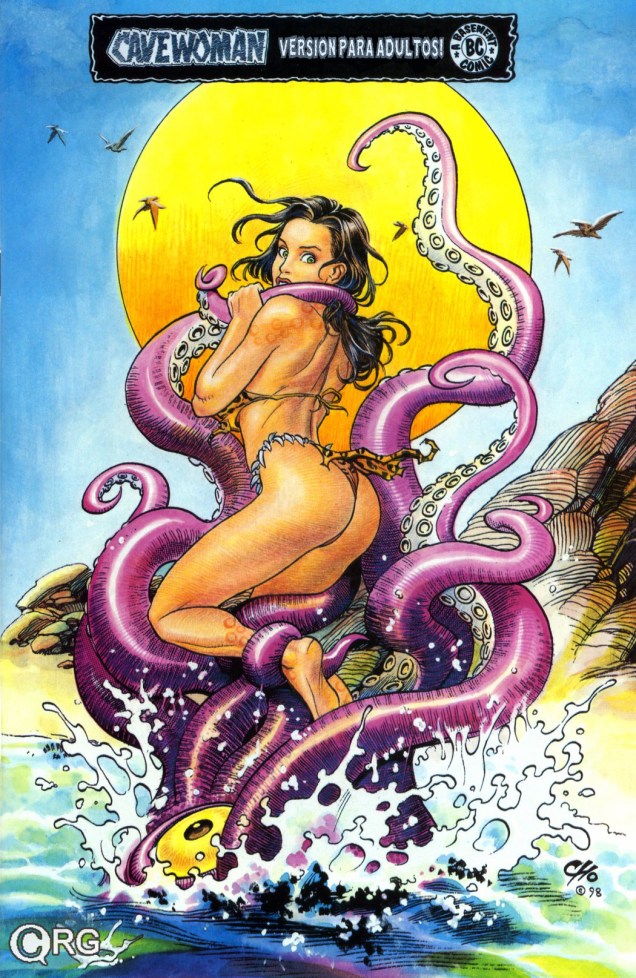
Jungle Tales of Cavewoman #1
Another one from Basement Comics: Jungle Tales of Cavewoman no. 1 (1998), variant cover by Frank Cho. It will come as a surprise to no-one that Cavewoman was created by the aforementioned Budd Root. Cavewoman is Meriem Cooper (I suppose calling her Myriam was too staid). I stumbled upon this amusing quote from Root recently, who said that Meriem was « patterned after pretty much all the women I really respect. She’s got a body with kind of a Little Annie Fannie face with Danni Ashe’s boobs and Nina Hartley’s butt. » No comment.

The maiden doesn’t always need to be rescued, nor does she necessarily *want* to be ravished – here’s a look at some heroines standing their ground against tentacular invasion.

JillThompson-thetrueAmazon
Page from Wonder Woman: The True Amazon (DC, 2016) by Jill Thompson. I wasn’t much impressed by this graphic novel, but I loved Beasts of Burden, a collaboration between Thompson and writer Evan Dorkin.
PremianiMGA81A
My Greatest Adventure no. 81 (August 1963), art by Bruno Premiani.
Brüno-Lorna
Or you can resort to other, more… creative… means for getting out of the octopus’ embrace. Pages from Lorna: Heaven is Here (Treize Étrange, 2006) by Brüno.

I promised you superheroines, and by Jove, you shall get some!

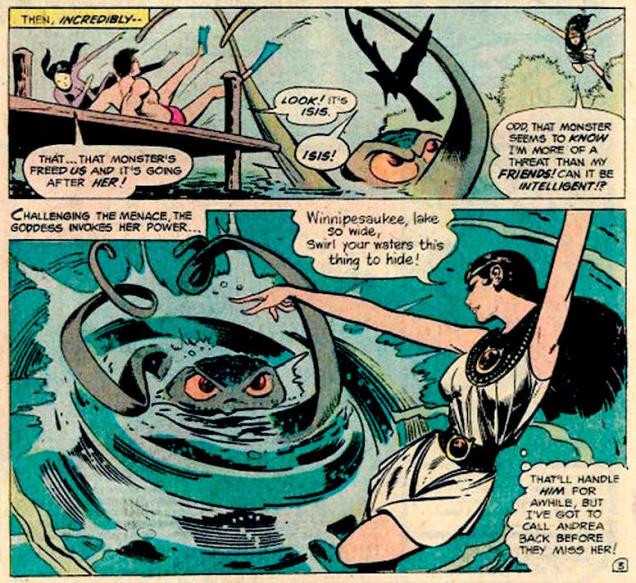
Isis#4-DC
Isis no. 4 (April-May 1977), pencilled by Mike Vosburg and inked by Dick Giordano. Isis clearly used to be a ballerina…. or the artists have a knack for awkward anatomy.
Isis#4-octopus
Treasure of Lost Lake is scripted by Jack C. Harris, pencilled by Mike Vosburg and inked by Vince Colletta. I honestly can’t recommend this story to you – the art is about as good as the storytelling, which is not a compliment to either.
Spectacular Spider-Man #75-
Page from Ferra Naturae, scripted by Bill Mantlo, penciled by Al Milgrom and inked by Jim Mooney, published in Spectacular Spider-Man no. 75 (February 1983).   Obviously many have grappled with Dr. Octopus’ tentacles… but I think this particular scene is worthy of inclusion in this post.

If you’d like more women-tangled-in-tentacles in your life, there’s a number of previous posts you can visit – She Was Asking for It!, Foul as Sewer Slime!, Warren and its Many TentaclesThe PG-13 Edition, and of course the NSFW Edition. You can also visit the backlog of Tentacle Tuesday posts.

Until next Tuesday!

~ ds