Hallowe’en Countdown III, Day 14

« It’s well we cannot hear the screams we make in other people’s dreams. » — Edward Gorey

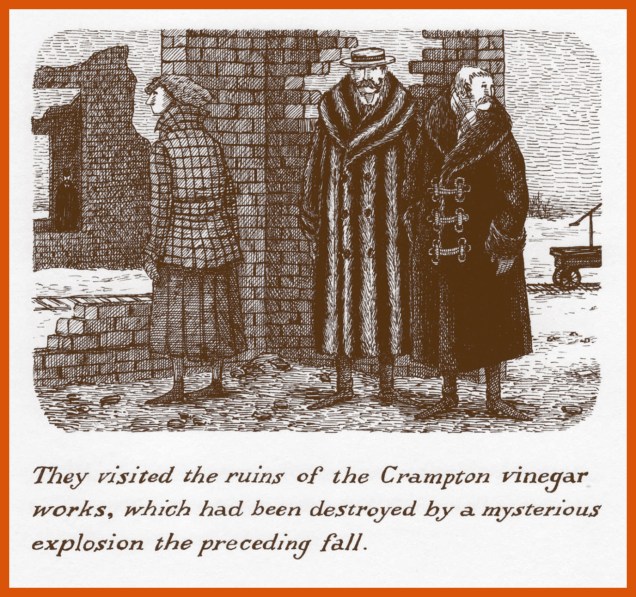
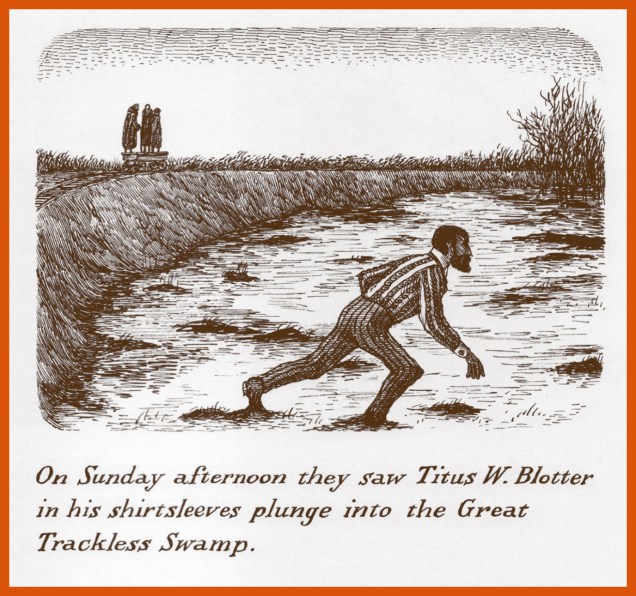
It was inevitable that the eminent Edward St. John Gorey (1925 – 2000) would grace my Hallowe’en countdown… but surely I deserve credit for holding out until midway through the third edition. Instead of the excellent but overexposed The Gashlycrumb Tinies, here’s an excerpt from what is, to my mind, his most ominous tale, The Willowdale Handcar or The Return of the Black Doll (1962), « In which three Pilgrims find mystery abort peril and partake of religious community. And the discerning Reader discovers Meaning in their Progress. » Last February, when I noted Mr. Gorey’s birthday (see that post here), I pledged to return to this specific work, and I wasn’t speaking with a forked tongue… at least not that time.

Gorey’s work largely remains open to interpretation, whether it’s stating something of import or just being coy. Still, not wishing to deprive anyone of the thrill of discovery, I’ve excluded the tale’s beautiful concluding panel. The entire story (I’ve provided seven of its thirty illustrations, not counting the cover) is available separately or as part of the classic 1972 collection Amphigorey (in the company of fourteen of his other works).

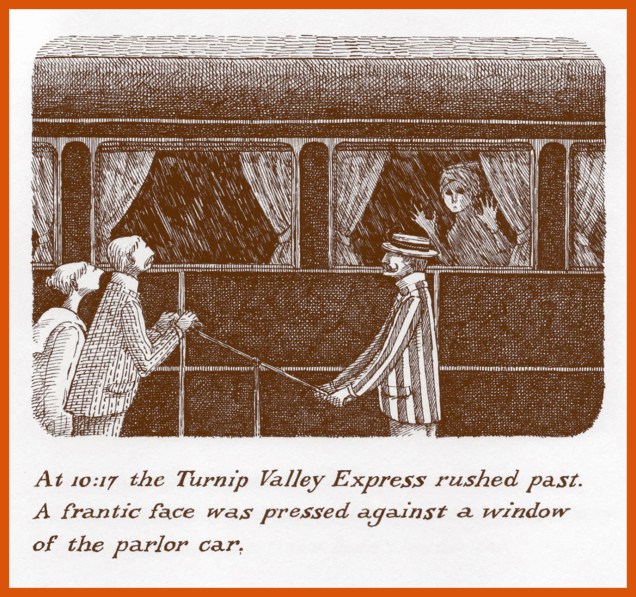
GoreyHandcarFrontAGoreyHandcar01AGoreyHandcar02AGoreyHandcar03AGoreyHandcar04AGoreyHandcar05AGoreyHandcar06AGoreyHandcar07A

In closing, a quote from the man that sums up the essence and appeal of this « at once deeply vexing and utterly hilarious, darkly mysterious and amusingly absurd* » yarn:

« All the things you can talk about in anyone’s work are the things that are least important…. You can describe all the externals of a performance – everything, in fact, but what really constitutes its core. Explaining something makes it go away, so to speak; what’s important is what’s left over after you’ve explained everything else. »

And if you should find yourself in Cape Cod, Massachusetts, don’t pass up the chance to visit Gorey’s house! http://www.edwardgoreyhouse.org/

– RG

*sez his publisher, accurately.
Hallowe’en Countdown III, Day 13

« Here’s to the thugs and maniacs who fill each book with concepts so damnable, so putrescent, that they make the EC horror magazines of yore seem like mere cocktail napkin doggerel. I salute you. Now I’m going to take a bath in quicklime. » — Harlan Ellison toasts Death Rattle (1986)

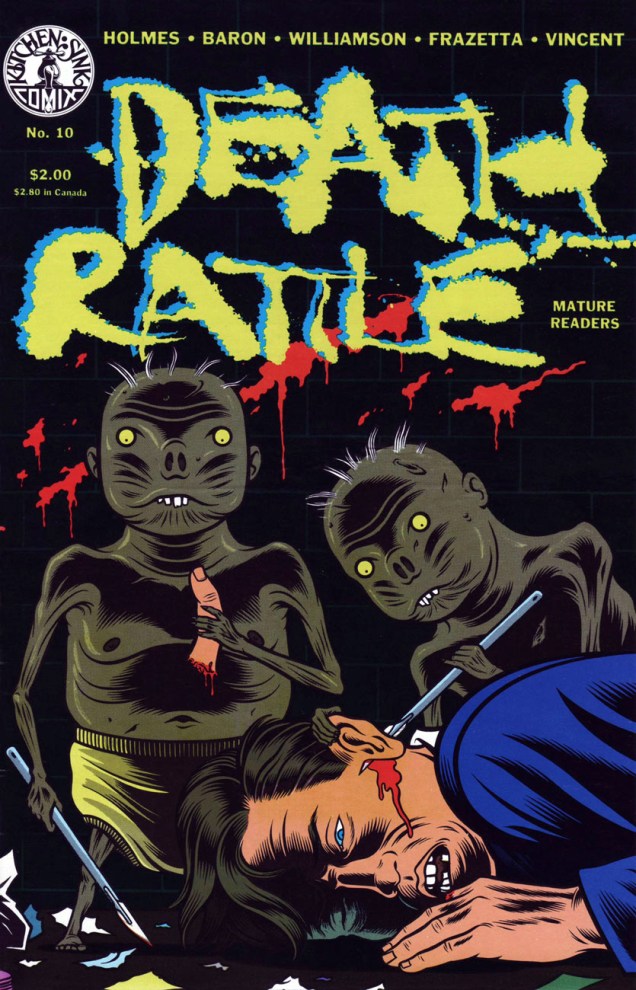
In the 1980s, with the Comics Code Authority in its death throes, you’d think horror comics would have made a massive comeback. Well, they did… and they didn’t. Since there had been plenty of black and white magazines to operate outside of the Code’s restrictions, bringing bloodshed and mayhem to colour comics made the much-anticipated liberation a bit of a non-event. For my money, the truly interesting horror material opted for different approaches, now more experimental, then rather whimsical, at times clinical, sometimes abstract. Underground comix publisher Kitchen Sink, surviving thanks to its eclectic spirit, revived its early 70s horror anthology in 1985, an adventure that this go-round lasted eighteen issues and unleashed cutting-edge, nostalgic, shiver-inducing, thought-provoking and gut-busting efforts by such talents as Richard Corben, Rand Holmes, P.S. Mueller, Jack Jackson, Stephen Bissette, Mark Schultz (his Xenozoic Tales were introduced in Death Rattle 8, in 1986), and, on this unsettling cover, Charles Burns.

BurnsRattle10A
This is Death Rattle no. 10 (April 1987, Kitchen Sink). Cover by Charles Burns, coloured by Pete Poplaski.

Before this cover, and speaking of clinical horror, Burns had earlier provided one of Death Rattle’s most harrowing gut-punches in issue one’s Ill Bred: a Horror Romance. I wouldn’t want to give away too much, but here are a few samples from this queasy masterpiece of gender fluidity, body horror and (justified) insect fear, seemingly inspired in equal parts by David Cronenberg films, Japanese art prints and Burns’ personal demons. Not for the queasy, but peruse it here if that ticks any of your happy boxes.

BurnsIllBred01ABurnsIllBred02ABurnsIllBred03A

– RG

Hallowe’en Countdown III, Day 12

« Egad! This looks like it’s straight out of a horror movie! »

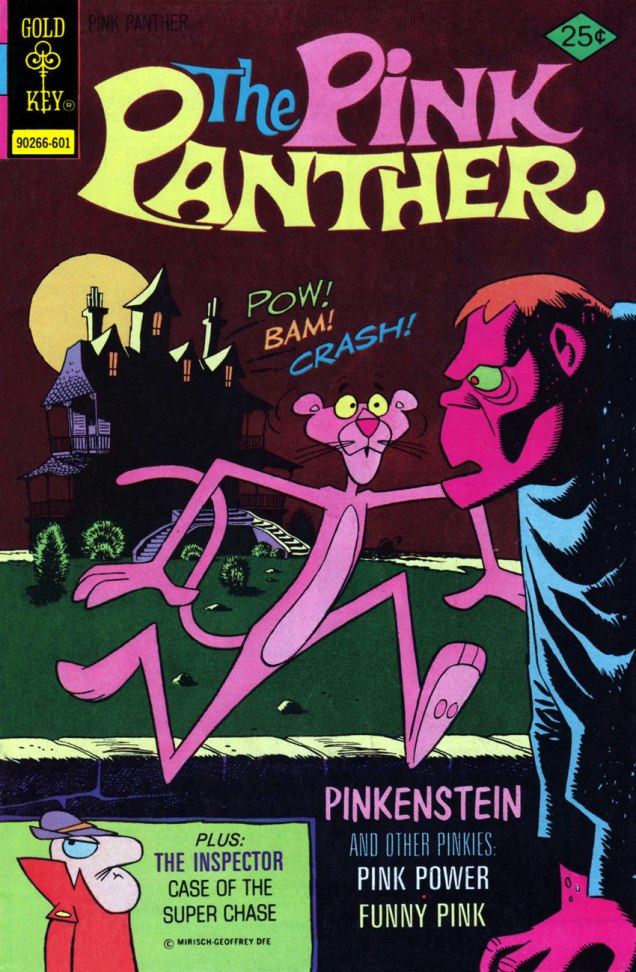
How deep and searing a trace the Universal Monsters cycle has left on popular culture: you see its mark on everything from literature to breakfast cereal. It’s nothing new in the cartoons, of course: Warner Bros, with the Looney Tunes, had their lugubrious fun with, for instance, Boris Karloff and Peter Lorre archetypes. So it’s no great shock to eventually witness DePatie-Freleng‘s The Pink Panther getting in on the monstrous act.

PinkensteinA
Nice bit of mood setting, isn’t it? This hails from The Pink Panther no. 31 (January, 1976). This being Gold Key, writer and artist uncredited and unknown. Any ideas?
PinkPanther31A
The issue in question… interesting colouring touch, most likely accidental: the only white space on the entire cover is the “PINK POWER” title.

Incidentally, we’ve checked out The Inspector in an earlier post.

– RG 


Hallowe’en Countdown III, Day 11

« Is it true your first concert is going to be at a cemetery? »

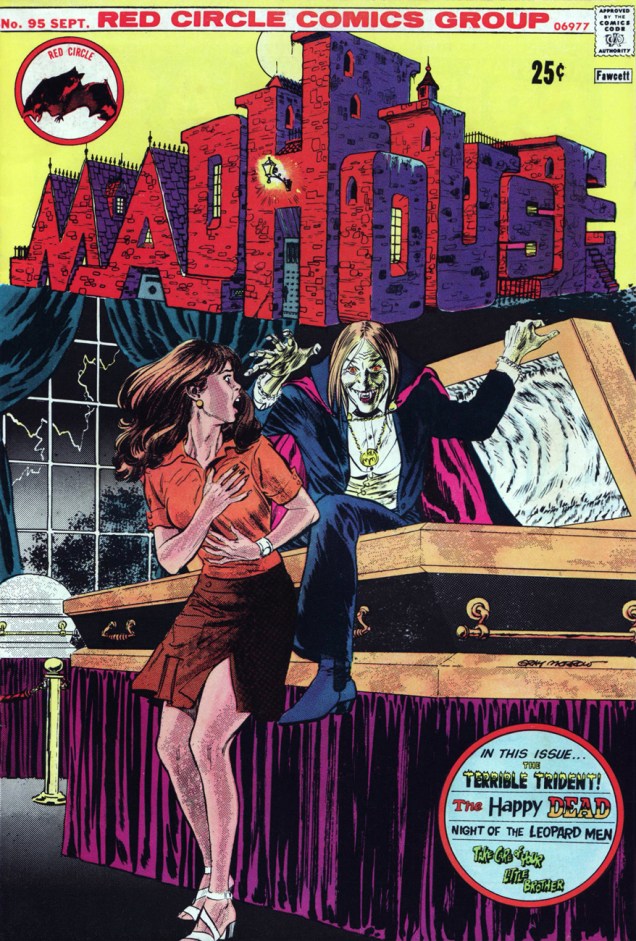
By the summer of ’74, the Archie brass was getting sick of those no-account Didit Brothers (You know, Dan, Dippy, Dick and Clyde) and their groupie Fran the Fan, so the Madhouse Glads were tossed out on their collective ear in favour of… a horror anthology. It made sense: in the 1970s, there was considerable overlap (largely female, but not exclusively) among readers of, say, The Witching Hour, Betty and Me, and Romantic Story.
Madhouse95A
The final fate of Fran the Fan? This is Mad House no. 95 (Sept. 1974, Archie); cover art by Gray Morrow. Read the issue here.

It’s fair to assume they were envisioning a companion title for their Chilling Adventures in Sorcery / Red Circle Sorcery. This was something different for Archie, all right: they sought out top talent, but in a fairly consistently sober visual style. Gray Morrow‘s photo-based approach was the baseline, and small wonder: he was the editor. The bulk of the stories was penned by Marvin Channing, and while the ‘twist’ endings weren’t exactly fresh, some of these tales were surprisingly nasty and nihilistic.

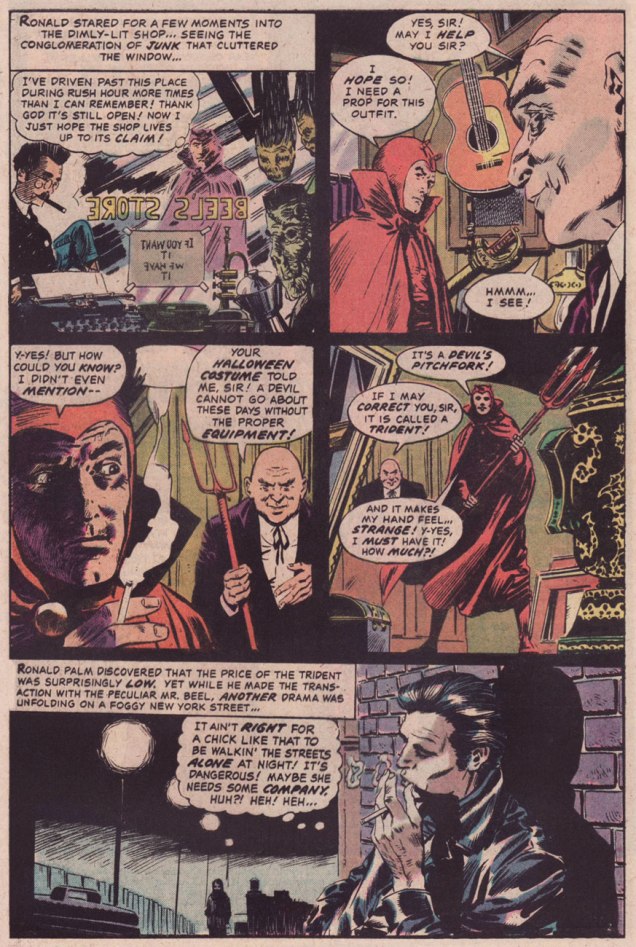
AlcazarTrident02A
Page two from The Terrible Trident!, written by Don Glut and illustrated by Vicente Alcazar.
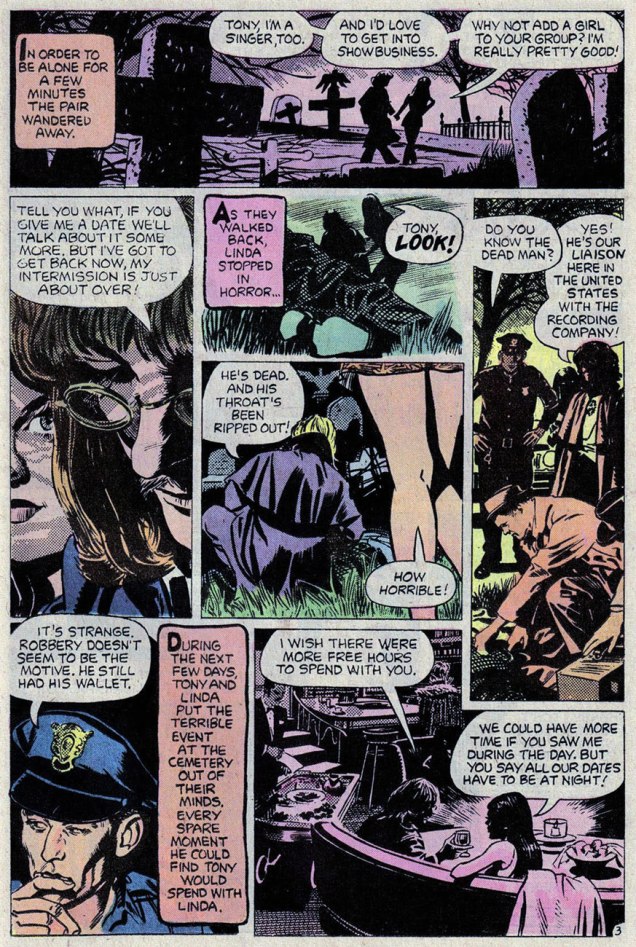
WildeyHappyDead03A
Page three from the cover story, The Happy Dead. Written by Marvin Channing and illustrated by Doug Wildey. Whoever handled the colouring here was smart and discerning.

However, this version of Madhouse lasted but three issues before the book was returned to its original, pre-Glads format. Sorcery endured for nine issues, the first three done in the Archie house style, with narration by Sabrina, the Teenage Witch. By the end of 1974 (with a book cover-dated February, 1975), the experiment was over. But these things come in cycles, don’t they? Witness the recent Afterlife With Archie… which incidentally reprinted much of this material.

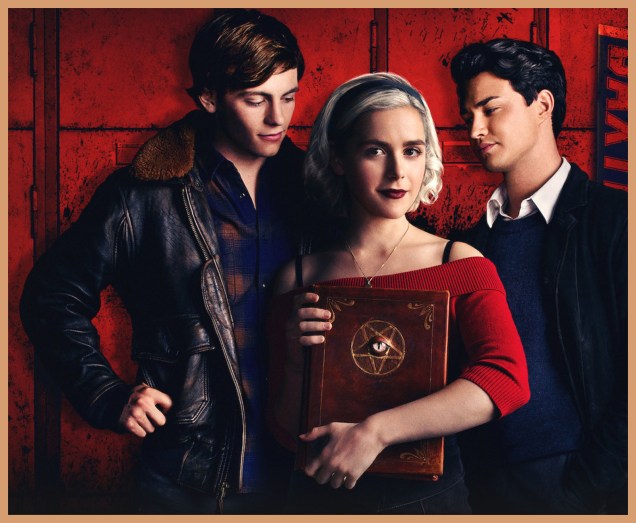
SabrinaA
And in other media, amidst the current glut of Archie product, one finds a direct scion of a timid, decades-ago exploration, Netflix’s Chilling Adventures of Sabrina.

– RG

Hallowe’en Countdown III, Day 10

« Behind every tree there’s a new monster. » — Todd Rundgren

Now how can you go wrong with a genre-melding title like this? Did publisher Hillman Periodicals decide it was entirely too much of a good thing, and nip it in the bud? Who wrote and drew the darn thing? Nearly seventy years on, these are not easily-answered questions.

Monster-Crime1A

Anyway, the lone, unnumbered issue of Monster Crime Comics rolled off the presses in the fall of 1952, it’s a pretty scarce item, as they say in the trade, and it features the sordid tales of The Crutch to Paradise, Another Hallowe’en, The Boss of Ice Alley, Oregon Tiger, The Canvas Tomb, The Cold Doorstop, and The Two-Legged Newspaper.

« A low print run and high price for the time (15 cents!) combined to make this one-shot among the rarest of the era’s crime comics, with perhaps 20-100 copies surviving. The over-the-top cover contributes to the book’s fame, particularly because it has nothing to do with the contents. Pre-Code crime comics from Hillman, possibly printed to clear out a backlog before the publisher ended its comics lineup a few months later. » [ source ]

– RG

Hallowe’en Countdown III, Day 9

« I hear they’ve hired a skeleton crew to take over the night shift. »

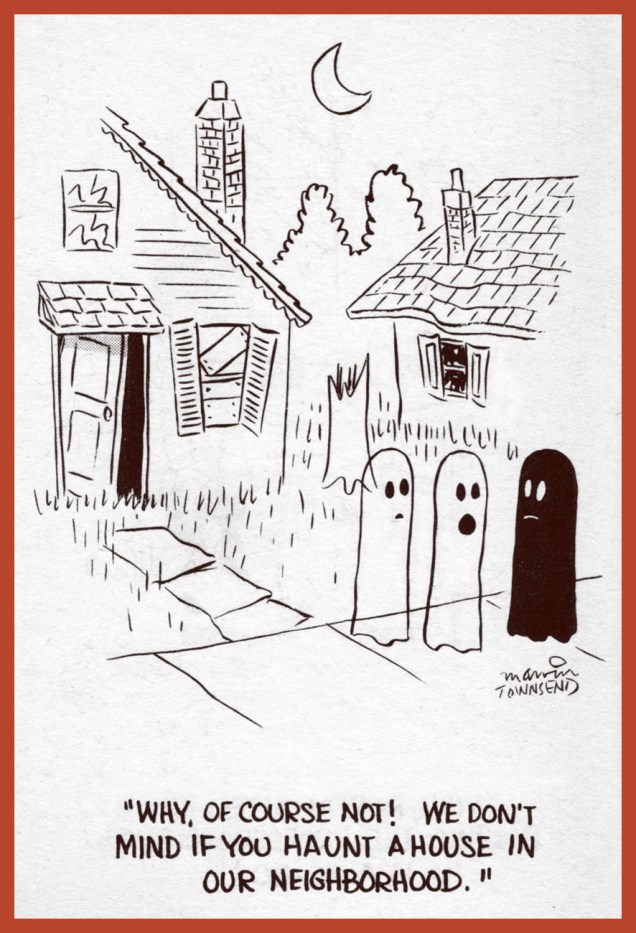
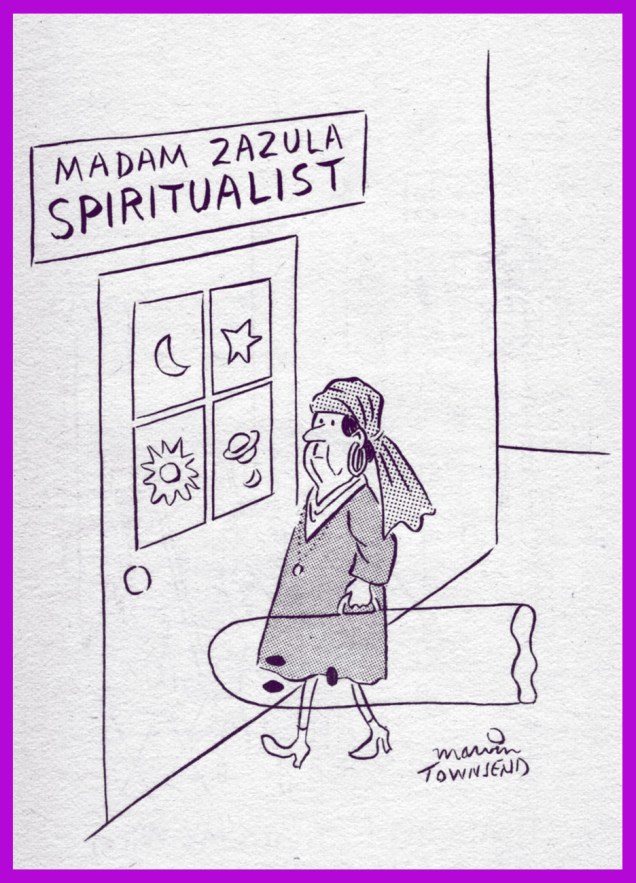
Published in 1971 by, of all entities, the Xerox Corporation, under its Xerox Education Publications banner, this oddball little volume is pretty high on charm. Its author, Kansas City cartoonist Marvin Townsend (1915-1999), placed his gags all over the place, high and low, from slicks to religious publications to pulps (including Amazing Stories and Argosy), to girlie digests such as Charlton’s Cartoon Spice, created several running strips, including the Ali feature for the long-running (1946-72) Catholic comic book Treasure Chest (of Fun & Fact). Let’s not forget that Townsend was in fine company there: contributors to TC over the years include Murphy Anderson, Reed Crandall, Graham Ingels, Fran Matera, Jim Mooney, Joe Orlando and Joe Sinnott. In the lean years of the Silver Age, it was ‘any port in a storm’, and any reliable source of income and exposure was the freelancer’s boon. Same as it ever was.

GhostlyGhastlyA

TownsendGuestSpeakerA
It’s hard to imagine today’s church being this open to airing and considering the opposing view.
TownsendArkA
All aboard for Noah’s Same-sex Ark cruise!

TownsendBlackATownsendDeadLetterA

TownsendScooterA
I love that kid’s steadfast nerve and adaptability. 

TownsendZazulaA

For a further sampling of these Ghostly Ghastly Cartoons, glide on over to this blog entry: http://neatocoolville.blogspot.com/2007/10/ghostly-ghastly-cartoons.html. Fret not, I kept the overlap to a strict minimum.

– RG

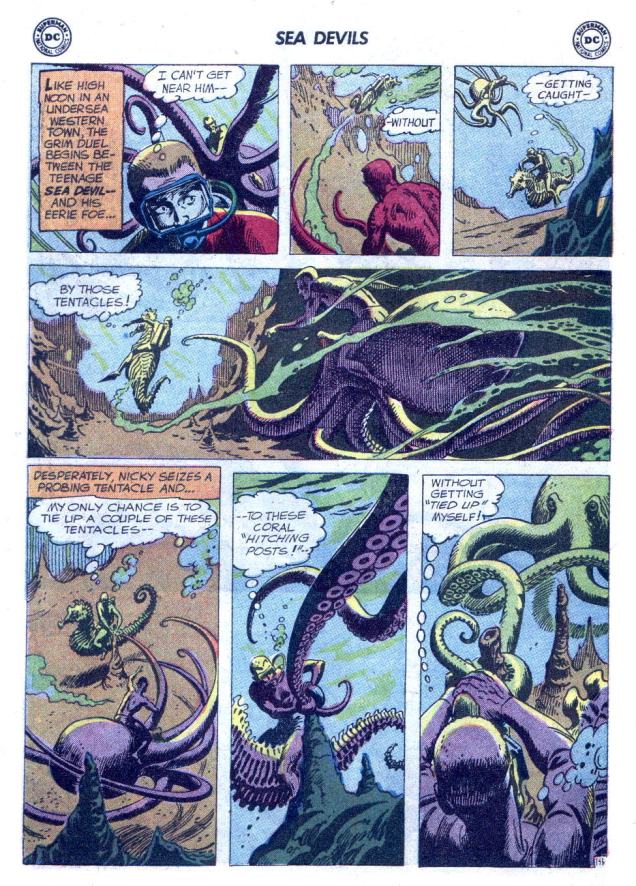
Tentacle Tuesday: Ahoy, Sea Devils!

« The tentacles are like steel vises, Dane! Can’t break their hold!

*Heh, heh* Try harder — HARDER! »

Greetings! I have just come back from a vacation, and I’m too tired to ramble on the way I usually do. Fortunately, if an image is worth a thousand words, this post is equivalent to a decent novella. Here’s what you need to know about the Sea Devils, here’s our take on the wonderful artist Russ Heath, as well as my complaint about Robert Kanigher’s scripts. Okay, we’re all set now!

SeaDevils-1
Sea Devils no. 1 (September-October 1961). Cover by Russ Heath.
SeaDevils1
The Sea Devils vs. the Octopus Man! is scripted by Robert Kanigher and illustrated by Russ Heath.

The same team returns to tentacles with Sea Devils no. 6:

RussHeath-seadevils6
The Flame-Headed Watchman!, scripted by Robert Kanigher and drawn by Russ Heath, was published in Sea Devils no. 6 (July-August 1962).

RussHeath-SeaDevils6-2-FlameHeadedWatchman

Now we unfortunately have to leave Heath behind and walk over to the territory of Howard Purcell, whose art is not nearly as striking, but still quite serviceable.

HowardPurcell-SeaDevils17
Sea Devils no. 17 (May-June 1964), cover by Howard Purcell.
SeaDevils17-ImpossibleSeaMonsters
The Impossible Maritime Menaces is scripted by Arnold Drake, penciled by Howard Purcell and inked by Sheldon Moldoff.
SeaDevils19
Sea Devils no. 19 (September-October 1964), cover by Howard Purcell. Is it just me or does the guy on the left look like a Ditko villain?
SeaDevils19-SeaDevilRobots
The Sea-Devil Robots is penciled by Howard Purcell and inked by Sheldon Moldoff.
SeaDevils21A
Sea Devils no. 21 (January-February 1965), cover by Howard Purcell.

The Forty-Fathom Doom!, scripted by Jack Miller, penciled by Howard Purcell and inked by Sheldon Moldoff, boasts quite an assortment of tentacles:

SeaDevils21-TheFortyFathomDoom2
Everybody is almost in identical position as on the cover – but the octopus has lost his baby blues and gained a pair of poached eggs.

SeaDevils21-TheFortyFathomDoom3

SeaDevils21-TheFortyFathomDoom4

And, in case you’re wondering where that quote at the top of this post comes from… The ‘heh, heh’-ing octopus is Dr. Quad.

SeaDevils21-TheFortyFathomDoom

~ ds

Hallowe’en Countdown III, Day 8

« You look a sorry sight, John! »

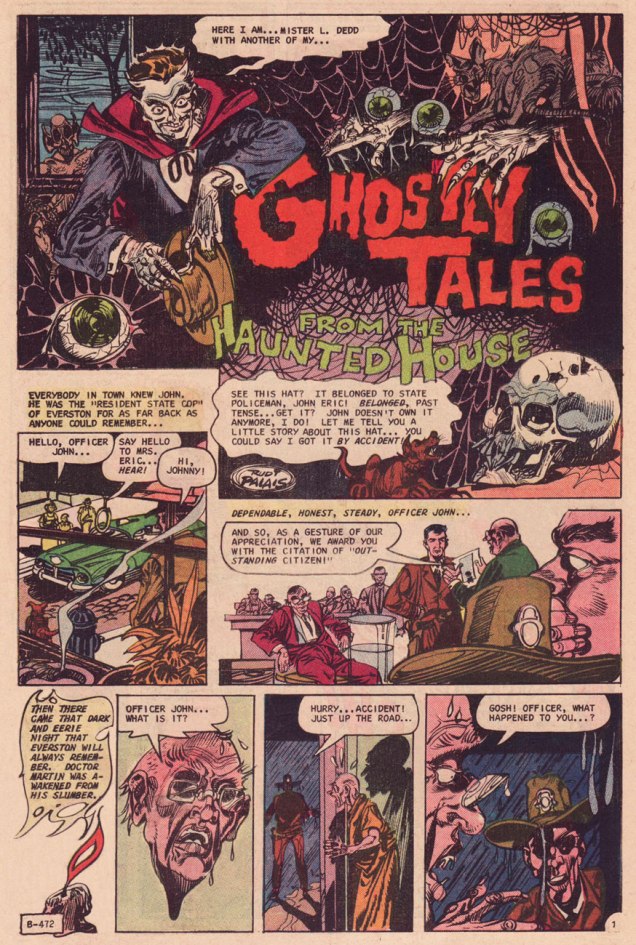
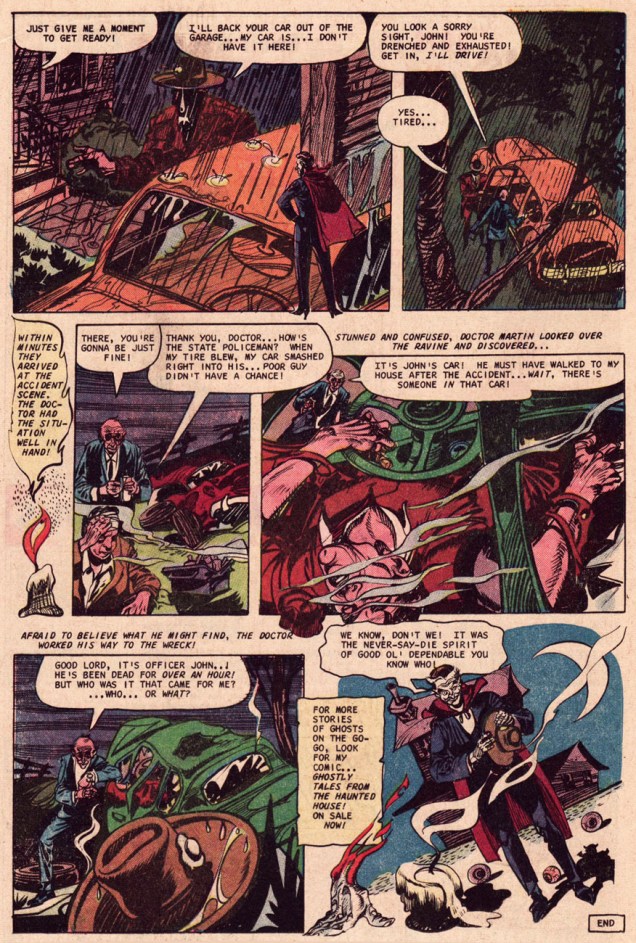
Golden Age pioneer Rudy Palais (1912-2004) wound down his career in comics with a smattering of terror tales for Charlton between the late 60s and the mid-70s. It’s a shame he didn’t do more, because his highly-stylized approach fit right into the Charlton non-mould. The inaugural issue of The Many Ghosts of Dr. Graves (May, 1967) features a pair of remarkable Palais two-pager sweatfests. Here’s one of them, a simple story effectively told, and wherein Ghostly Tales host Mr. L. Dedd plugs his own book.

PalaisGraves01A

PalaisGraves02A
Check out the sizzling stiletto heels Mr. Dedd’s sporting in the first panel!

– RG 

Hallowe’en Countdown III, Day 7

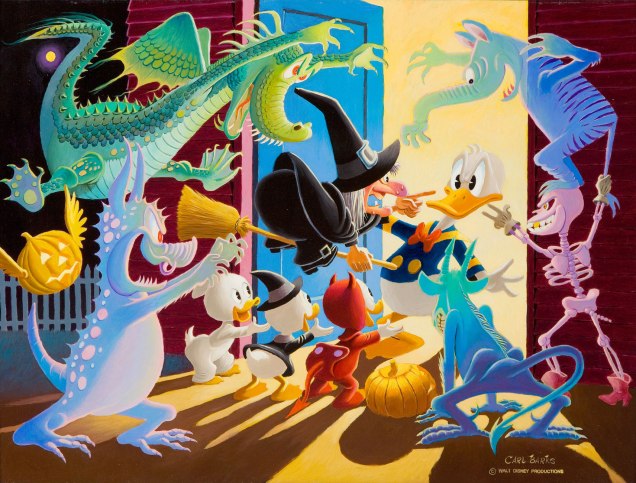
« Phooey on trick or treaters! This year I’M going to have all the fun — play the tricks and eat the candy myself! » — foolish words from Donald

Whoa, lots of action for poor Unca Donald this Hallowe’en, some of it possibly malevolent. Best hand out the treats and be generous, to be on the safe side.

BarksHalloweenDuckburgA

This lovely painting entitled Halloween in Duckburg was created in 1973 by the incomparable Carl Barks, aka The Good Duck Man. It’s based on his cover for Walt Disney’s Donald Duck no. 26 (Dell Comics, Nov. 1952), which in turn was based upon the Disney cartoon short Trick or Treat.

BarksDonaldDuck26A

Watch it here… while you still can.

As a bonus, here’s a nice Donald mask (not that Donald… right colour, but too scary) for your trick or treating purposes, from the same issue’s back cover.

DonaldDuckMaskA

– RG

Hallowe’en Countdown III, Day 6

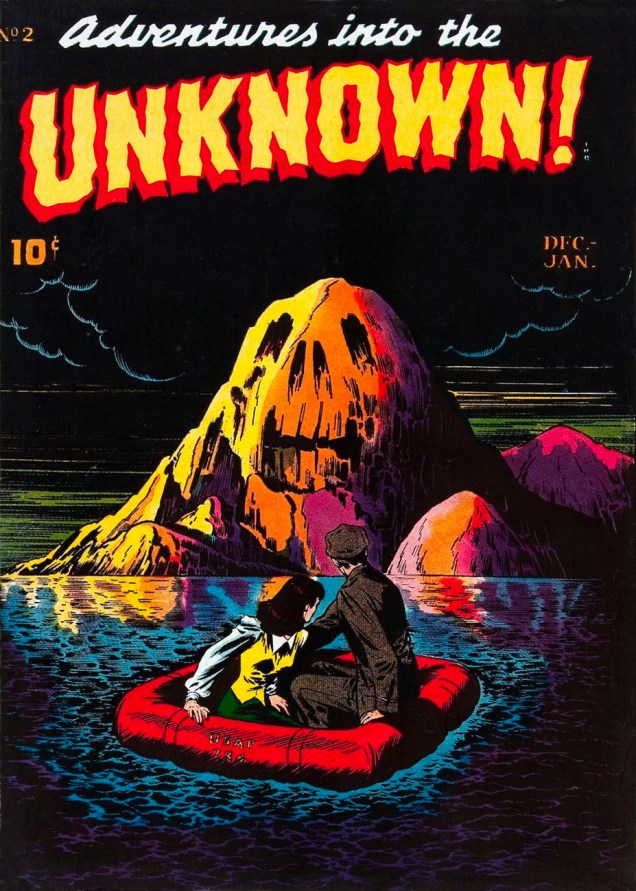
« Spine-chilling tales of suspense, horror, and the supernatural—prepare yourself for Adventures into the Unknown! »

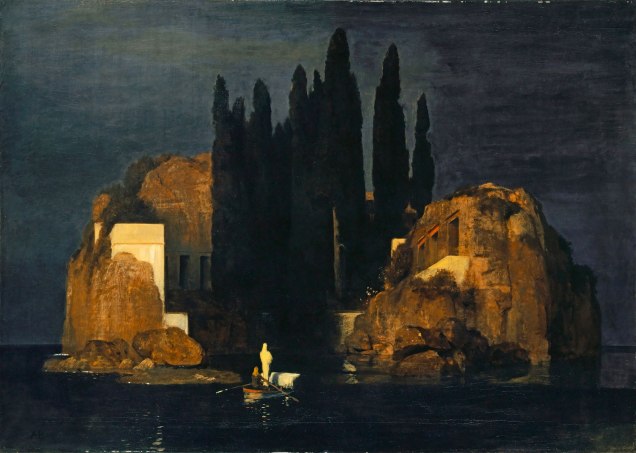
This American Comics Group (ACG) entry is generally considered the first title fully committed to the supernatural genre in the history of US comics. And this arresting, Isle of the Dead-styled tableau graces the cover of the title’s second issue (December, 1948). Art by Edvard Moritz. Most of the stories were scripted by horror legend and H.P. Lovecraft disciple Frank Belknap Long (read his The Hounds of Tindalos and forfeit your soul!) Speaking of which, the entire issue’s contingent of chills and thrills is available right here for your pleasure and leisure.

ACGAdvUnknown02A
This is Adventures Into the Unknown! no. 2 (Dec. 1948 – Jan. 1949, ACG).
BöcklinIsle1880A
As I was saying, Arnold Böcklin‘s Isle of the Dead painting, in its original version… of several.

This painting also inspired a quite fine Val Lewton / Mark Robson / Boris Karloff motion picture bearing the same name (1945). Watch the trailer, why don’t you.

« Kill, puppets, Kill! » — Turgot, the Puppet Master, never one to mince words.

– RG