« Most magazines have peak moments. They live on, they do just okay, or they die. ‘The New Yorker’ has had a very different kind of existence. » — David Remnick
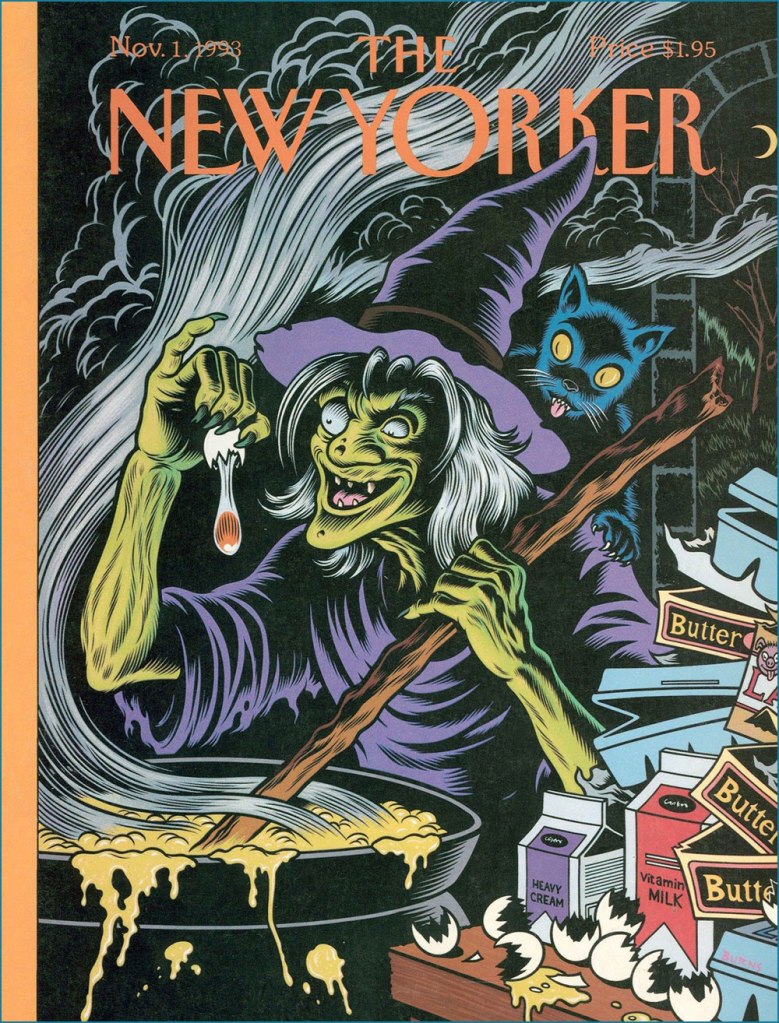
Oh, Françoise. It’s funny — while researching this post, I consulted, among other sources, Françoise Mouly‘s Covering the New Yorker (2000, Abbeville Press). When it came to whittling down my choices to a manageable handful, I realised that the magazine’s long-time ‘art editor’ and I must have fundamentally divergent tastes, for we concurred on but a single entry, one that mostly made the cut so I could include something moderately modern. That would be Charles Burns‘ Strange Brew… which Mouly art-directed.
To be fair, I already knew that the lady and I didn’t see eye to eye. In two words… no, make that one: ‘Tomine‘, I find her taste lacking. It’s not that The New Yorker doesn’t frequently boast outstanding covers; given the depth of the talent pool at its disposal, how could it be otherwise? But like many other fabled institutions, it just isn’t what it once was.
That said, few topics capture cartoonists’ (or should I posh up and say ‘illustrators’?) fancy more than that of Hallowe’en. Check out these beauties Françoise didn’t rate!
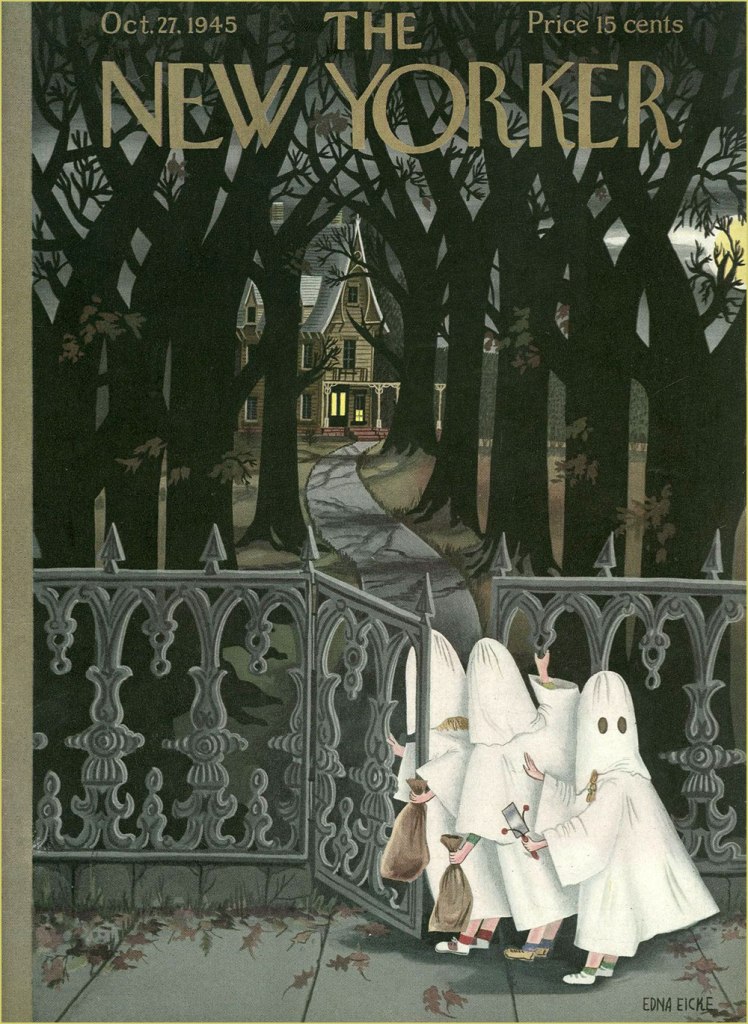
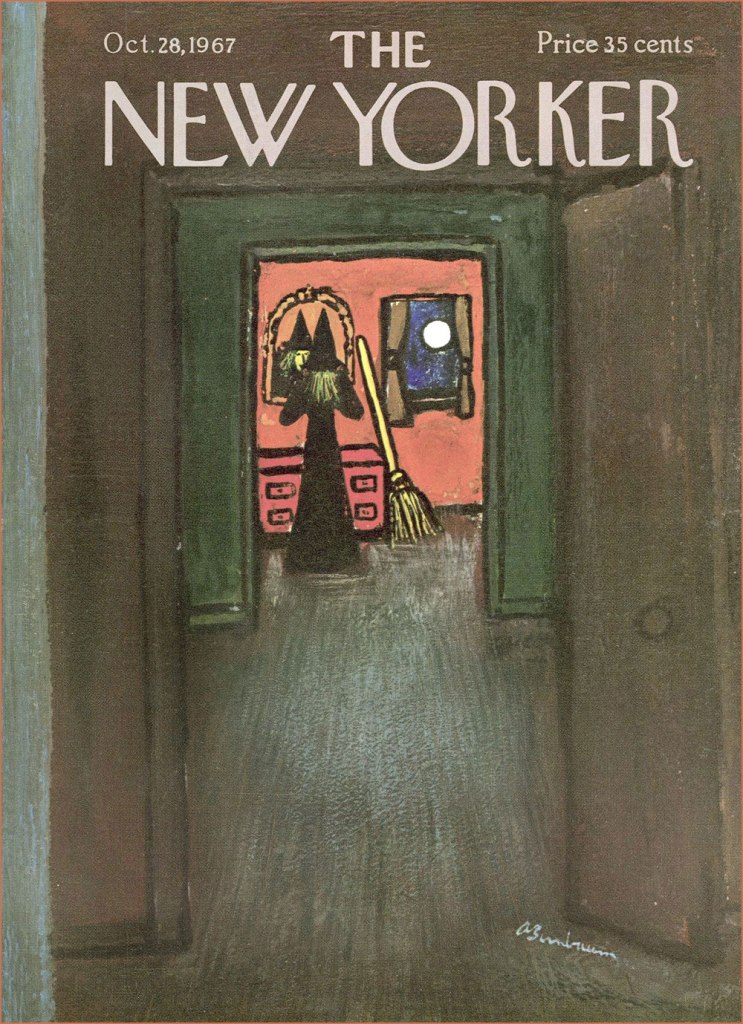
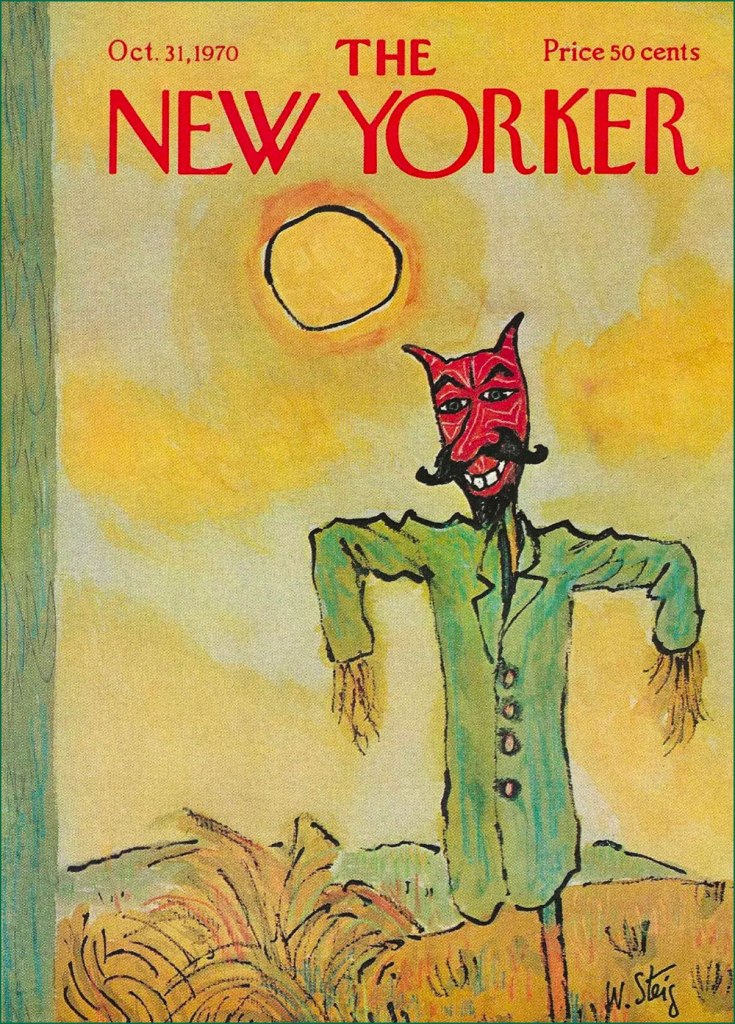
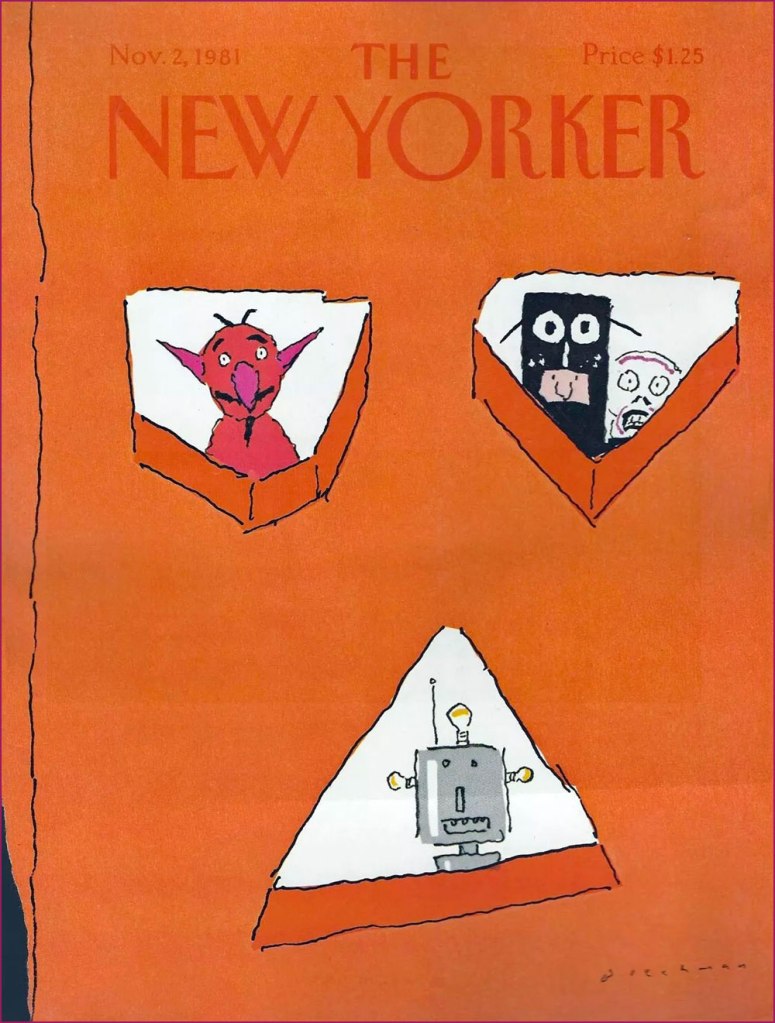
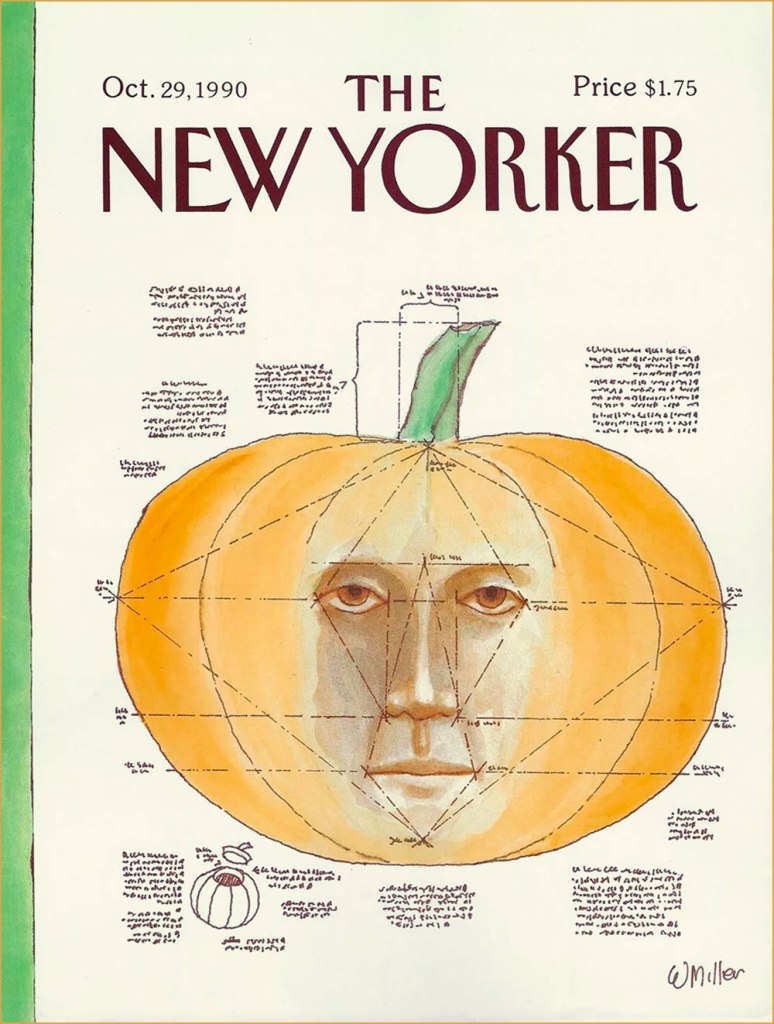
Mysteriously, this one came out nearly a month after Hallowe’en. Most topical and too good to waste? The attack on Pearl Harbor was just around the corner, and with it the beginning of America’s official involvement in WWII. But Bogeyman Adolf was already weighing on countless people’s minds. Cover by Rea Irvin.A moody one by Edna Eicke (1919-1979), this was the Oct. 27, 1945 issue.Another one by Rea Irvin, one of the magazine’s co-founders and its first art editor.This stunning mixed media beauty is one of versatile Laura Jean Allen’s sixteen covers for The New Yorker. Check out more of her work here.A special night requires special preparation! A fetchingly low-key scene from the agile brush of Abe Birnbaum (1899-1966); he painted nearly 200 New Yorker covers, and judging from this one, it’s easy to see why.This one just fills me with glee — and a soupçon of melancholy. It’s not even nocturnal, and yet just exudes Hallowe’en spirit! It’s by the mighty William Steig (1907-2003). For more Steig wizardry, check out our jazzy entry Steig Swoops In: The ‘Epic in Jazz’ Cat Sextet.This one’s by the marvellous Robert Blechman (born 1930 and still with us).A true delight from the pen of Arnie Levin (born 1938). Check out this fine interview with the man.No assortment of New Yorker Hallowe’en covers would be complete without at least one contribution from Charles Addams. I resisted the urge to include more, leaving myself the option of an eventual solo exhibition for the master.A helpful tutorial from Warren Miller (born 1936).This, obviously, is Charles Burns‘ Strange Brew. That is *not* a vegan brew.
« The only escape from the miseries of life are music and cats » – Albert Schweitzer
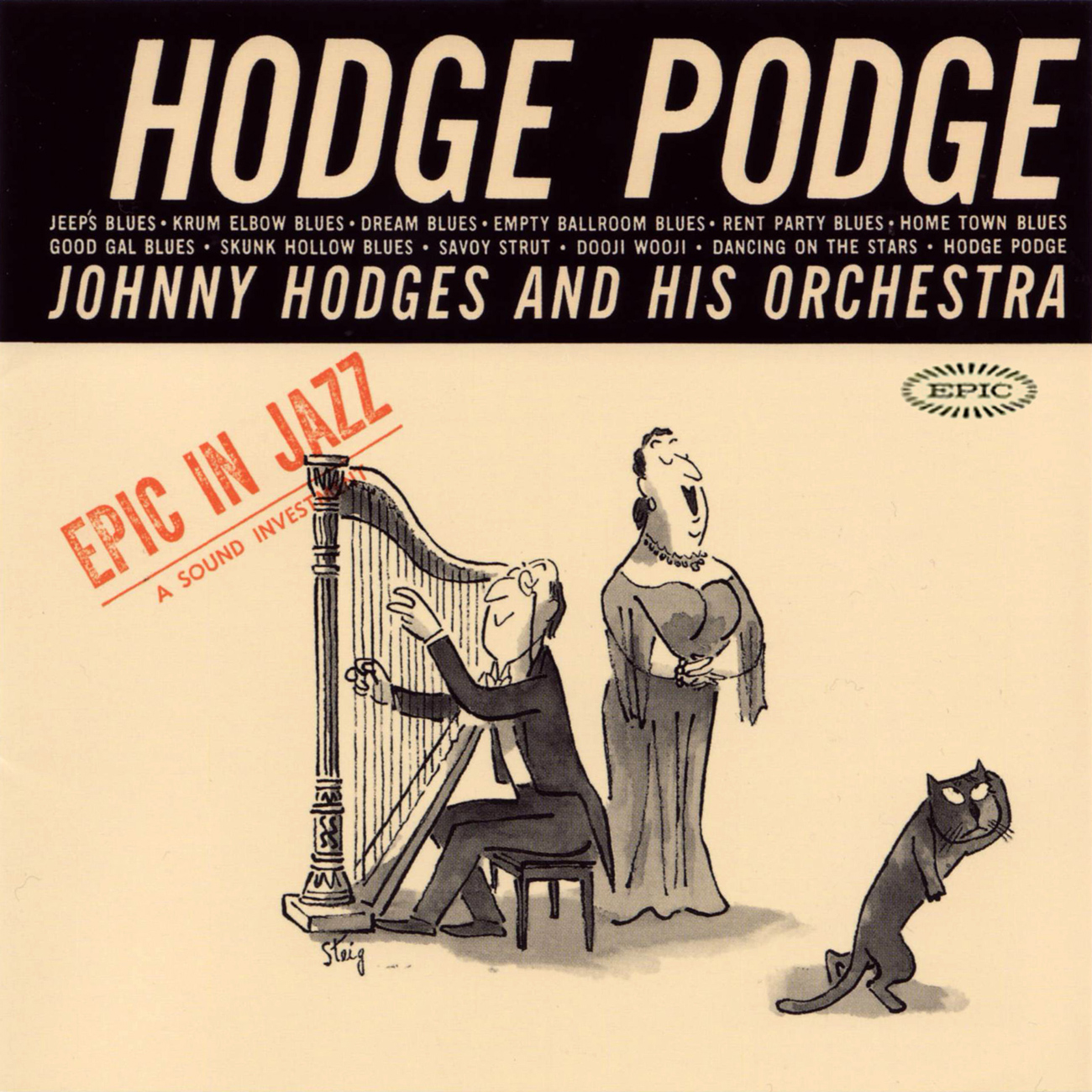
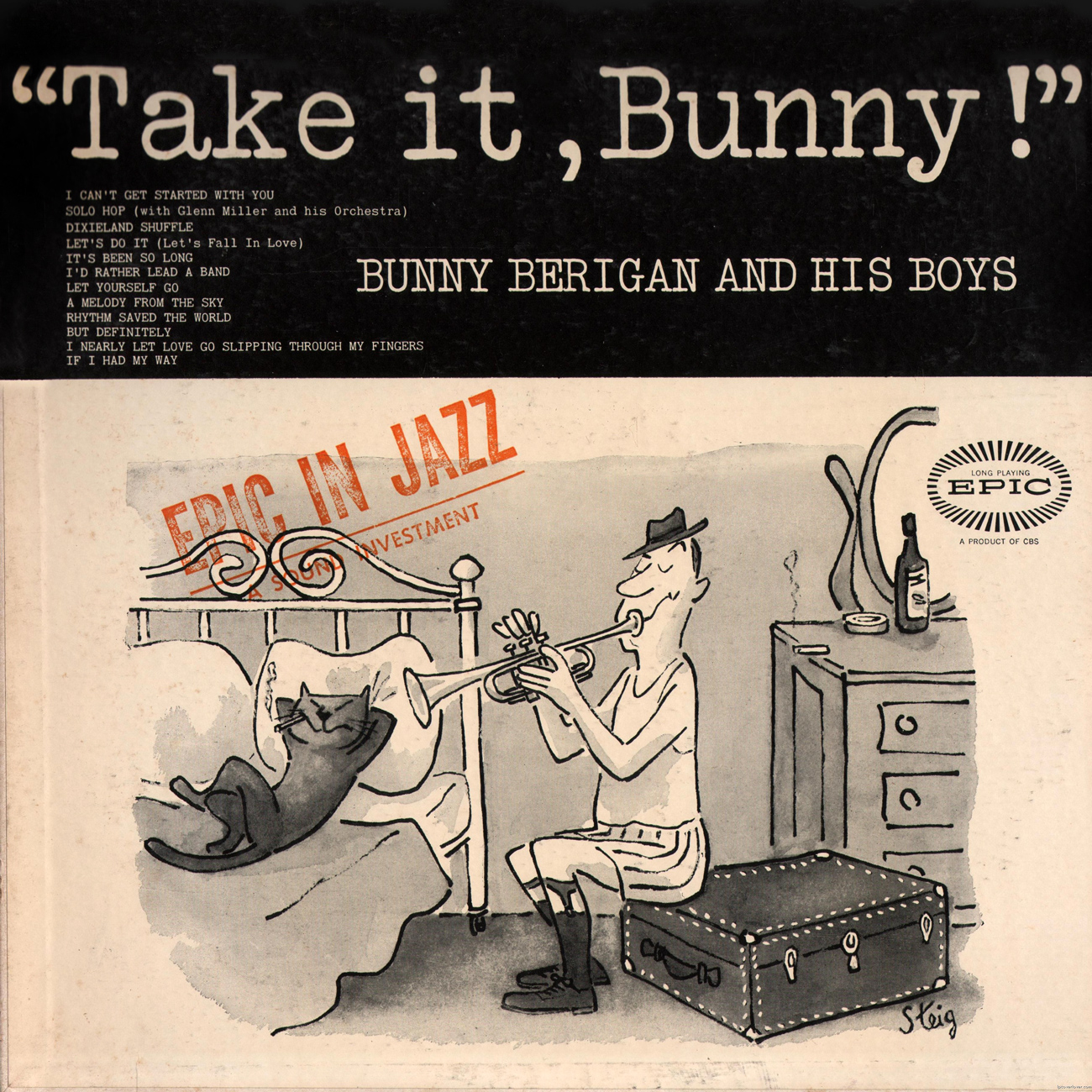
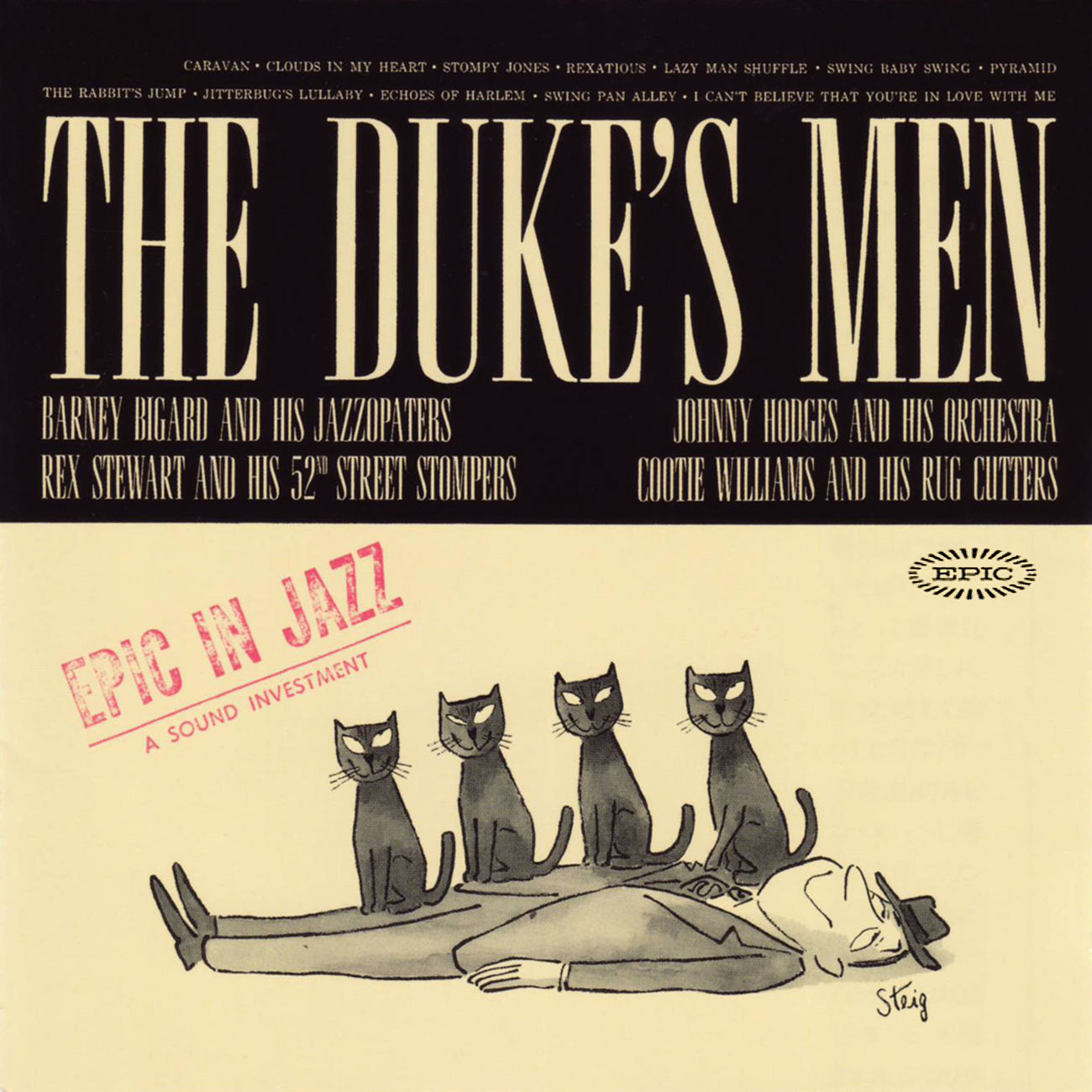
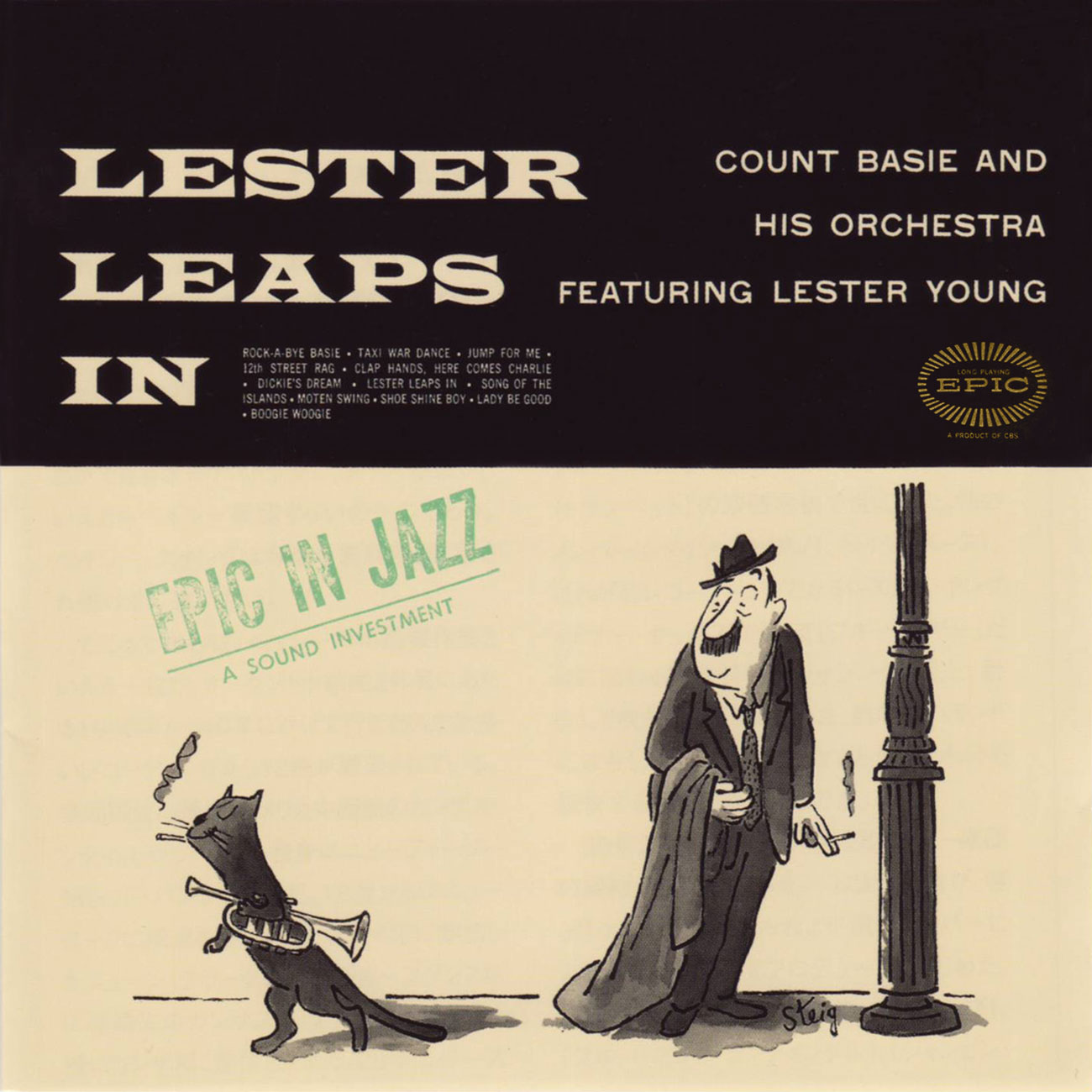
In the mid-50s, New Yorker cartoonist (and children’s book author, sculptor and Orgone Box owner) William Steig (1907-2003) was called upon to throw together some illustrations for Epic Records’ “Epic in Jazz” LP series, which featured classic 30s recordings from the likes of Johnny Hodges, Chu Berry, Count Basie, Barney Bigard and Cootie Williams. One might safely opine that the good Mr. Steig outdid himself. You be the judge.
John Cornelius “Johnny” Hodges (1906 – 1970) was a saxophone giant of the big band era, and closely associated to Duke Ellington’s band. This 1955 compilation gathers some key recordings from the mid-to-late 30s, including Rent Party Blues, Skunk Hollow Blues and Dooji Wooji.
Bobby Hackett (1915-1976) was a trumpet, cornet and guitar player who performed with Benny Goodman and Glenn Miller’s bands. Among my very favourite of his recordings are some he made in the 1950s with trombonist supreme Jack Teagarden. There was tremendous musical and personal camaraderie between these two.
Trumpeter Roland Bernard “Bunny” Berigan (November 2, 1908 – June 2, 1942) had, according to Al Rose, the custom of carrying « several packages of chewing gum in his pocket, not because he was addicted to the vigorous mastication of chicle. He had an even more practical use for the stuff. He’d put three or four sticks of gum in his mouth as we approached a boîte with liquor in mind. Once inside, we’d sit at the bar and order our drinks. Then he’d excuse himself, promising to come back in a moment. He would walk purposefully off, to the men’s room I assumed incorrectly. Early on I discovered that what he was doing was finding the jukebox, putting a wad of Wrigley’s Doublemint through the coin slot, then pushing the slide in to assure the device’s inoperability for at least as long as we’d be there enjoying our drinks. He’d return to the bar secure and relaxed in the knowledge that our ears wouldn’t be assaulted by bad music. »
The great Rex Stewart recalls Chu: « Chu Berry was a big bear of a man and, as a matter of fact, he resembled a great big teddy bear. He was always in good humor and never had an unkind word to say about anyone. His given name was Leon Berry, his home town was Wheeling, West Virginia, and he hove onto the Harlem scene with his tenor saxophone. While he lived, he loved the life of a musician, late to bed and even later to rise. His favorite hangouts were Tillie’s Chicken Shack on Lenox Avenue and the Victoria Cafe on Seventh Avenue, where they used to serve good barbecue. Later he’d frequent the Woodside Hotel along with the fellows with Count Basie’s band when they lived there. Chu loved to talk, drink and eat, and if he could do all three while playing he was in his particular seventh heaven. »
« Probably no other band has brought such fame to sidemen as the Duke Ellington band », sagely states Shirley Hoskins Collins in the liner notes of this peerless LP showcasing four of the Duke’s finest acolytes: Barney Bigard, Rex Stewart, Cootie Williams and Johnny Hodges.
If I need to tell you who Count Basie and Lester Young are, you need to treat your ears to some fine vintage jazz, pronto.
These sets were reissued over the years, often with bland photo covers (oh, the infamy!), but Sony Japan has done right by the series a few years ago, reissuing it on cd while retaining the essence of its visual allure and, in most cases, adding four tracks of the same calibre and vintage to each disc.
Did I mention that Cab Calloway and Dizzy Gillespie are also in attendance? Sorry, it must have slipped my mind, what with all the excitement and bathtub gin.
« My neighbours listen to good music whether they like it or not. » – Unknown







 Who's Out There?