« ffor I haue seyn of a ful misty morwe ffolowen ful ofte a myrie someris day. » — Geoffrey Chaucer, Troilus and Criseyde
You see, there were these two competing comics publishers…
… which is to say DC Thomson and the dystopian-monikered International Publishing Corporation (IPC); between them, they dominated the UK comics market. By the late 1970s, said market had surpassed circulation of ten million copies, its rosiest sales outlook ever.
To be perfectly cynical, the rival publishers’ editorial vision was mostly to copy one another’s successes. Same mouldy old dough.
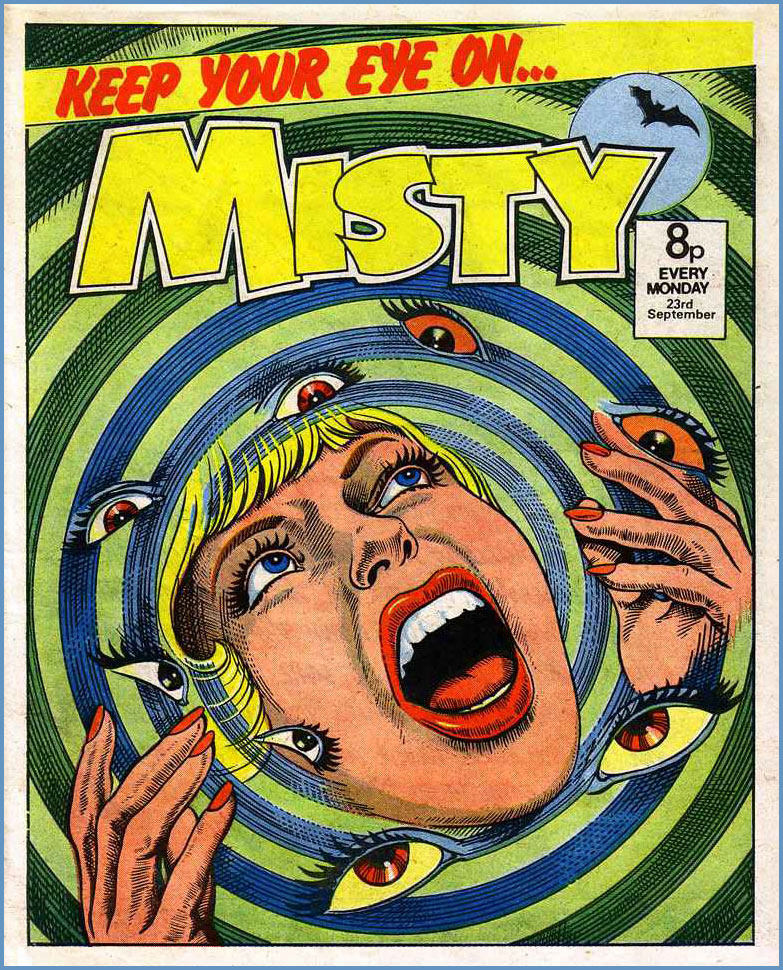
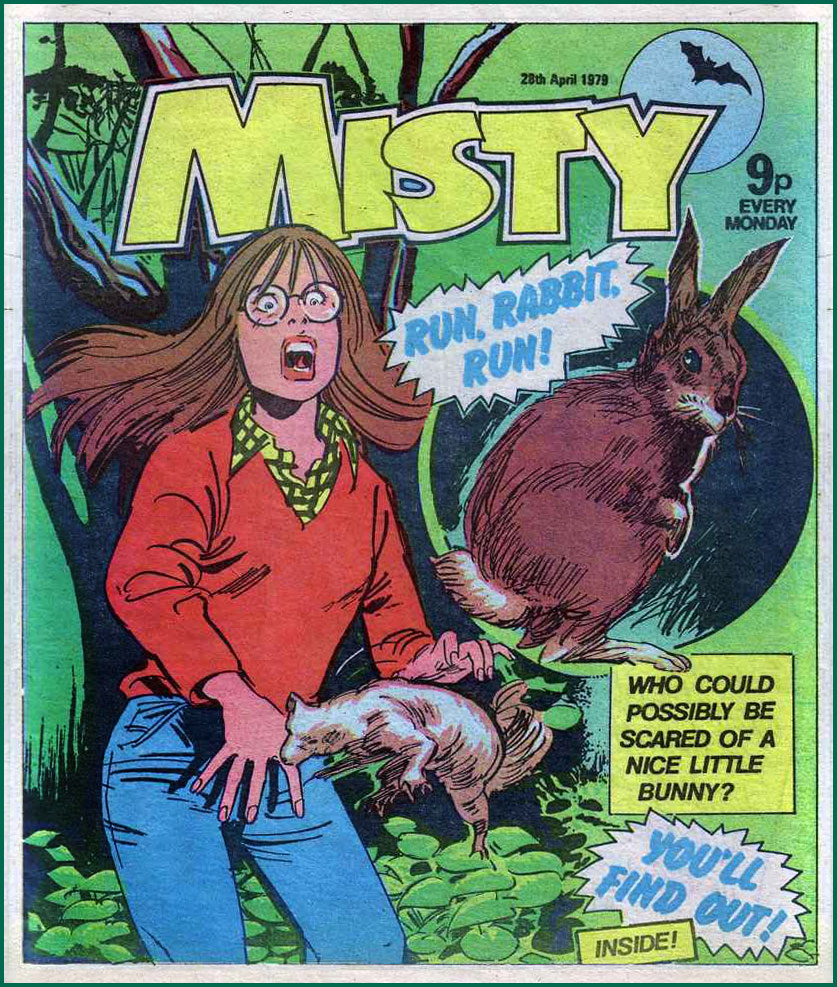
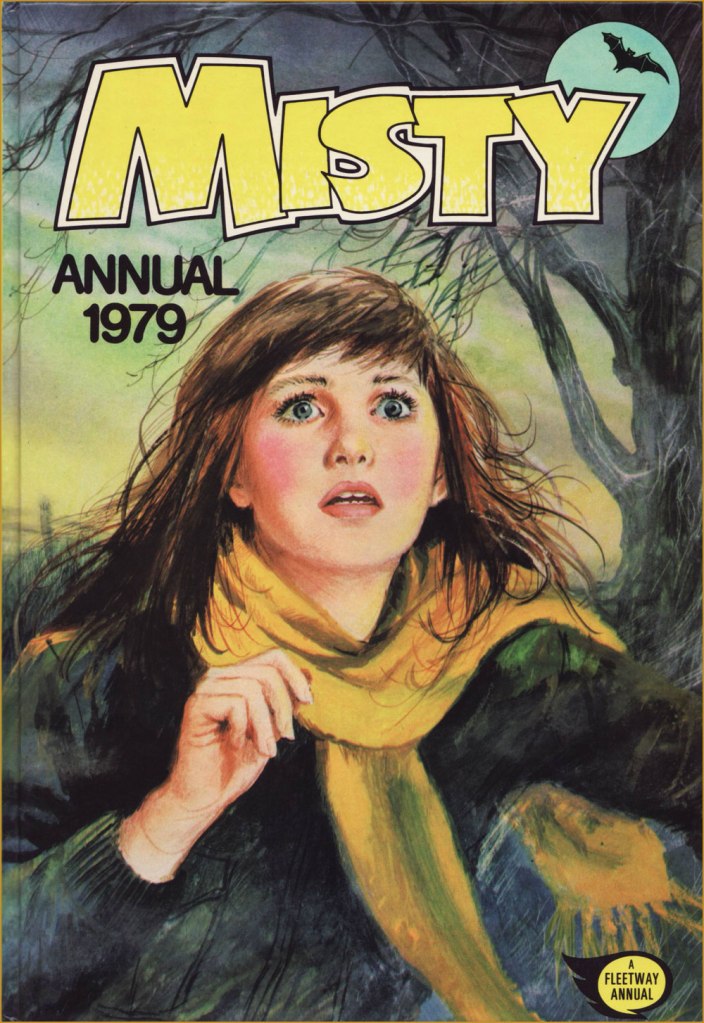
In 1977, « Freelance writer Pat Mills had an idea for a girls’ horror comic* that would use his 2000 AD approach — longer stories, bigger visuals, with adaptations of stories from big name writers… Misty was about to be born. »
This, of course, is the Stan Lee version of an ‘idea’, for what IPC was commissioning, and Mills was providing, was a copy of DC Thomson’s existing Spellbound. However, since Mills was asking for a piece of the pie, he was sacked before the new magazine’s launch, and replaced with a perhaps more pliable sancho.
In terms of timing, Spellbound happened to cease publication (after 69 issues) just a few weeks before its clone’s launch. For its part, Misty lasted 101 issues before being folded** into the more reliably successful Tammy; a common practice in England for underperforming magazines that still have a following. After all, Spellbound, upon its own cancellation, had been whisked into Debbie.



And here’s a short story.


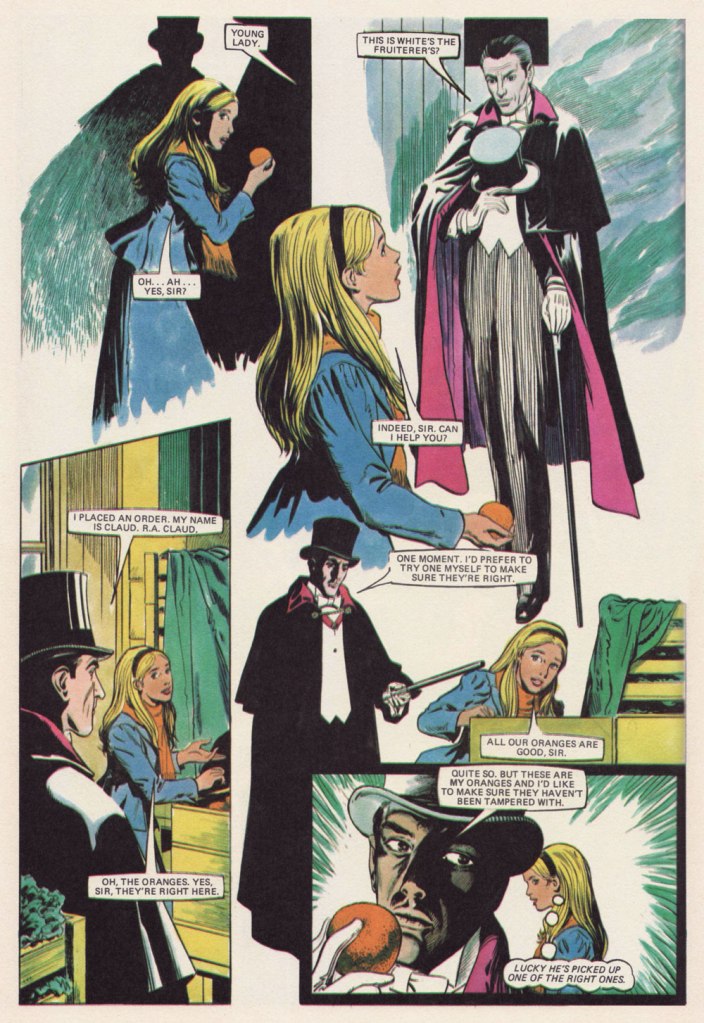

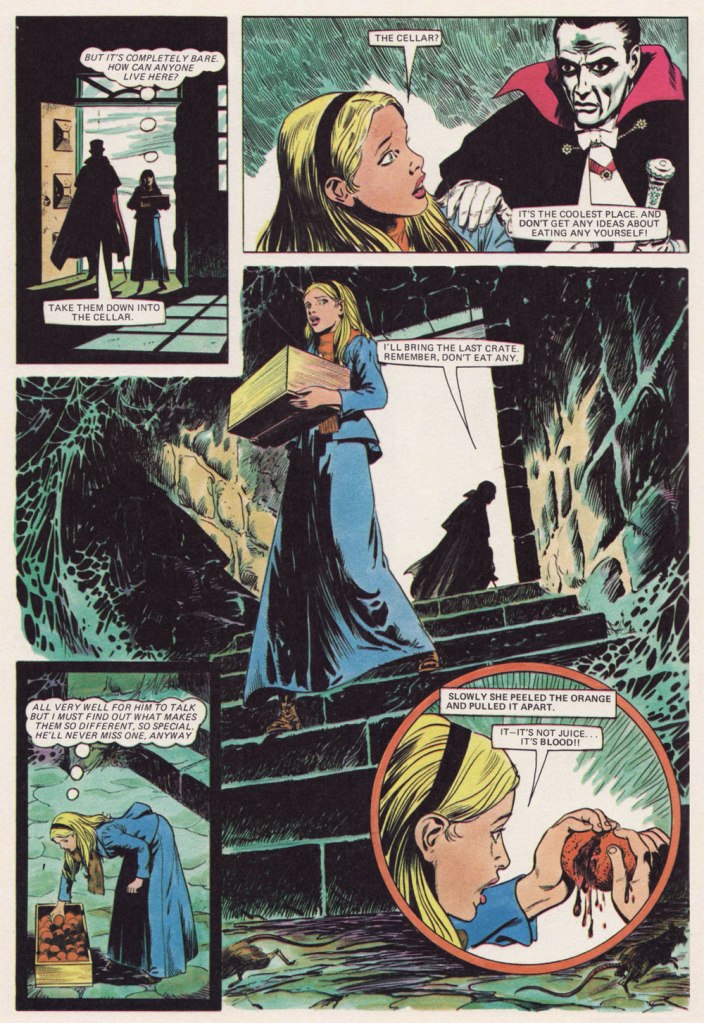
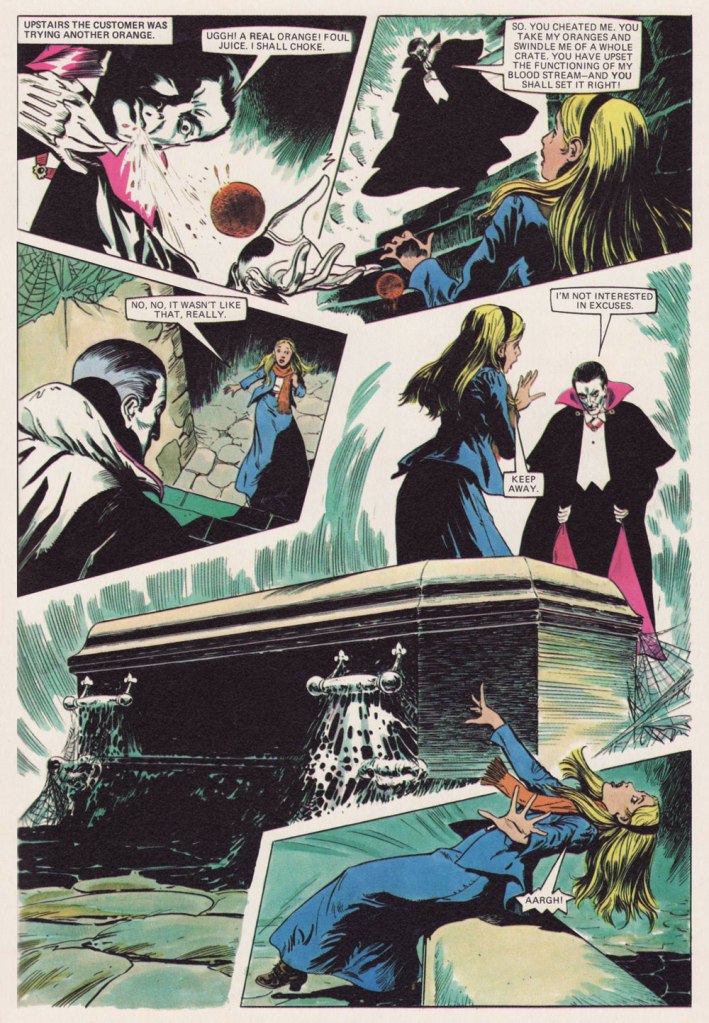
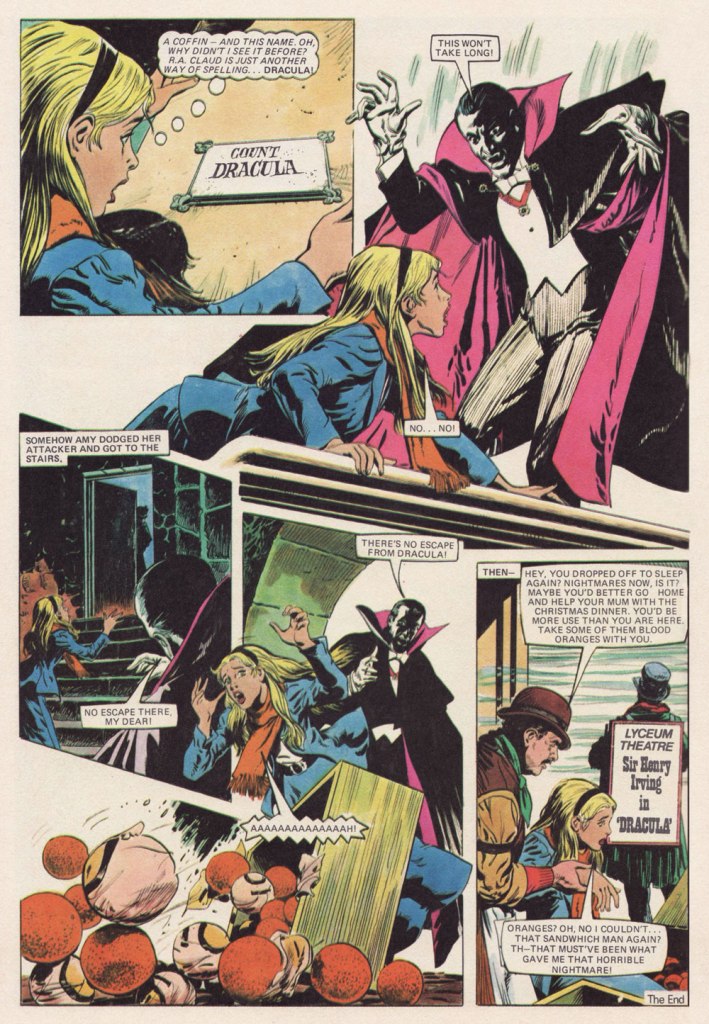
Dr. Julia Round recalls, in her foreword to Misty: 45 Years of Fear (2023, Rebellion): « Misty is perhaps best remembered for its one-shot stories, which were vicious cautionary tales in which characters would be brutally punished for a mistake or misdeed. There was a strong sense of dramatic irony in these stories — wishes backfire, magical items that are gained dishonestly turn on the owner, and unkindness to animals or nature sees girls transformed into bugs or plants. » This particular example is gentler, obviously.
-RG
*It’s worth noting — with a shudder — that UK comics were both stringently gender *and* genre specific.
** « Most titles were folded when they got down to about 200,000 sales. They said is was not viable, but can you imagine now, having a circulation of 200,000? » — Wilf Prigmore
 Who's Out There?