Hallowe’en Countdown VIII, Day 11

« … devolving into a downright National Socialist muck of murderous paranoïa, a Lord of the Flies for our new century… »

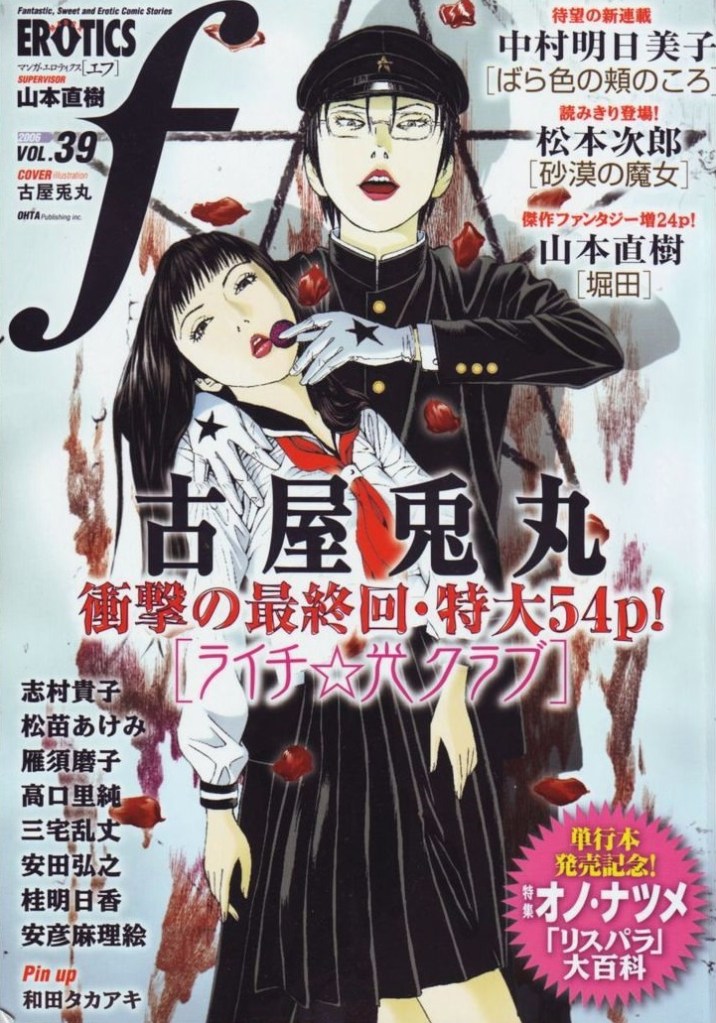
Lychee Light Club, aka Litchi Jirai Club (ライチ☆光クラブ), is a manga written and illustrated by Usamaru Furuya, who was smitten by a theatre play of the same name after watching it in 1985 as a high school student. Years later, he recreated it in manga form, albeit with a somewhat modified plot. It was serialized in Ohta Publishing’s Manga Erotics F* (May 7, 2005 – May 3, 2006). As for the play, it was directed by Norimizu Ameya** for the theatrical group Tokyo Grand Guignol (it’s funny to see the French ‘guignol‘ in this context).

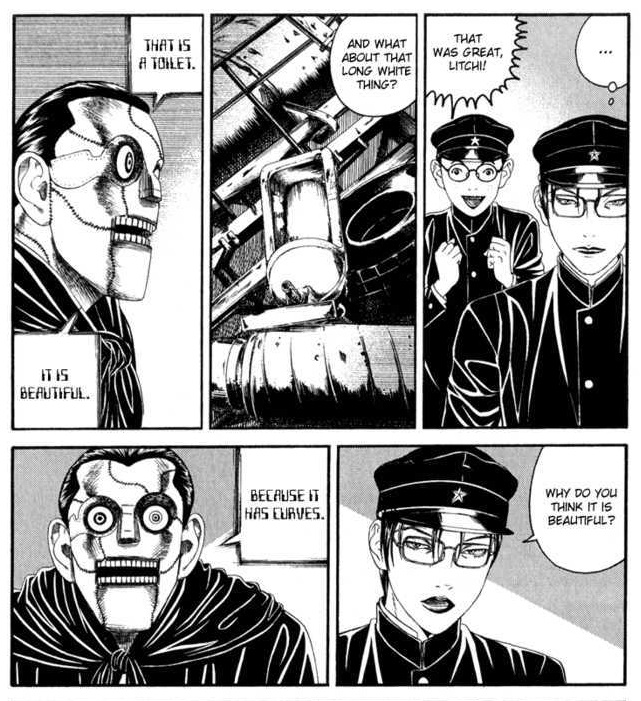
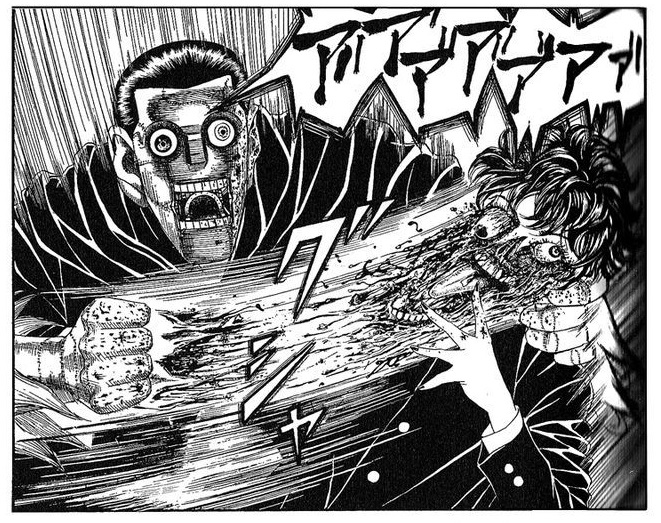
Lychee Light Club‘s over-the-top violence elicits the occasional chuckle (one of its characters dies from somebody pitching a toilet through his midsection), and more than one wince of discomfort, too, as its schoolkids maim, bash and burn their way through the story. The premise is simple – Lychee Light club (more of a cult, really) consists of eight barely-teenage boys who worship youth as the ultimate symbol of beauty (and, consequently, hate all things adult). They have nice digs where they spend all their time after school – an abandoned factory with plenty of dumped implements useful in their pursuit of the sadistic. They are led by the charismatic and cunning ‘Zera’ (actually, Tsunekawa from class 2), whose charm and fine features inspire blind devotion from his gang, not to mention occasional sexual favours.

To pursue their vision of eternal youth and a universal, if unfocused, lust for power, the posse builds a mostly robotic ‘thinking’ machine-cum-Frankenstein-monster, all metallic parts except for a human eye ‘borrowed’ from Zera’s number Eins, Niko. Zera informs his crew that he planted lychee seeds in a landfill three years ago… and now they have a forest of trees heavy with fruit at their disposal as fuel for Lychee, their mechanical prodigy. Apparently Zera is also a brilliant agriculturist, for lychee trees are notoriously slow to bear fruit, and three years later he’d have a forest of greenery at best. ***

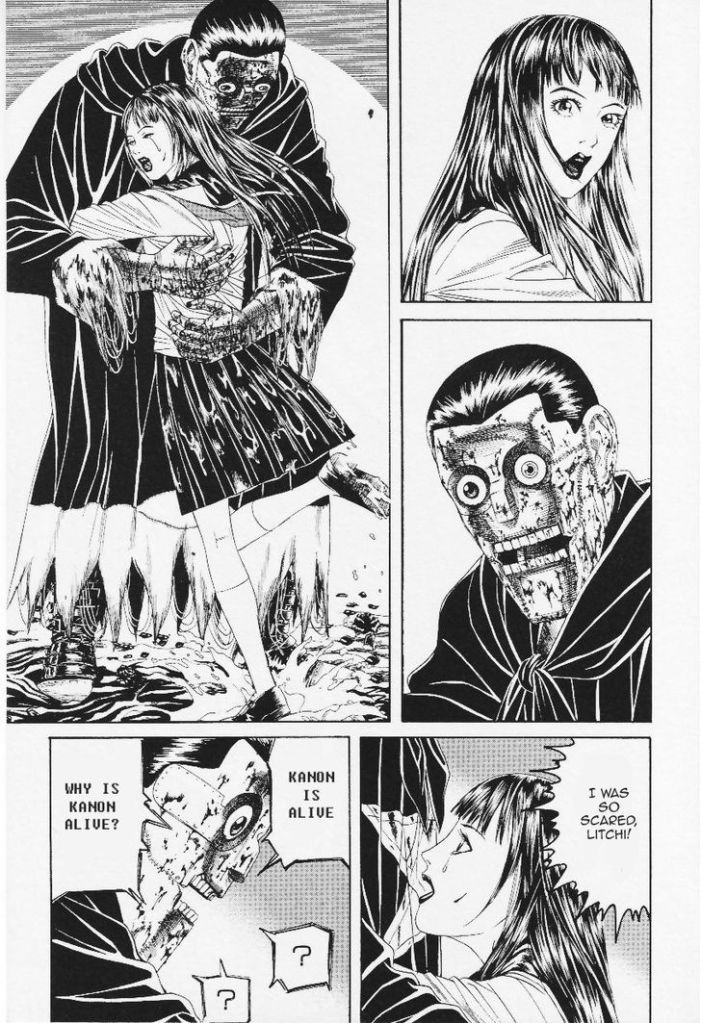
Lychee awakens! When questioned about why he is born, Lychee’s computer algorithm spits out that its mission is ‘to capture a girl’, so off he goes to kidnap many until he finds one beautiful enough to be their ray of light, eventually bringing Kanon, the female protagonist.

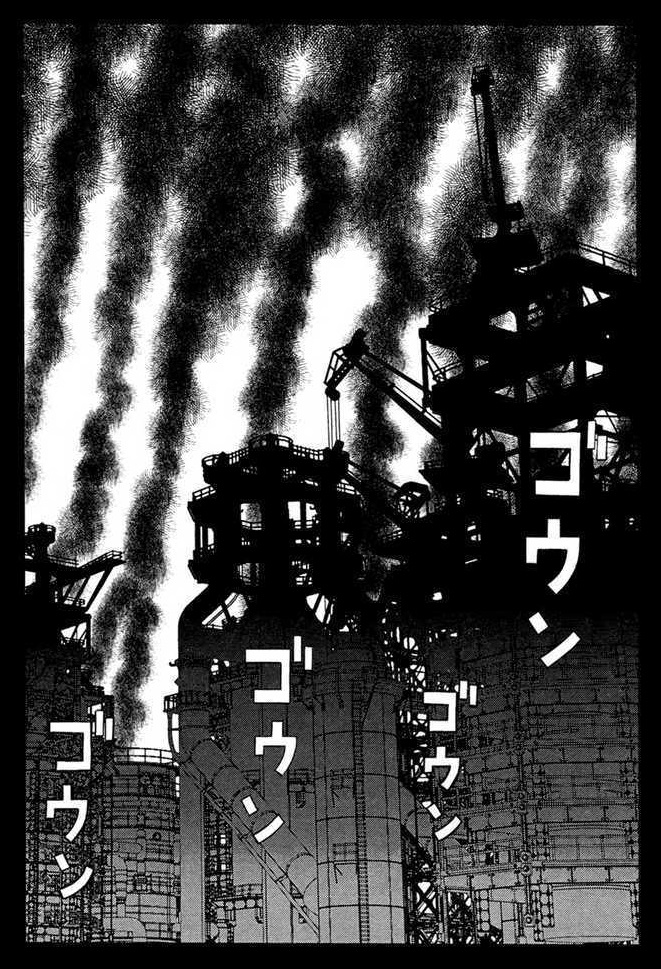
The story’s settings immediately plunge the reader into a kind of claustrophobia – filthy streets, a sooty factory, trashed cars — clearly an industrial town which doesn’t offer much hope for a better future. The boys’ lives outside the club are barely discussed, but the story hints that they all come from an uncomfortable family situation, though apparently they’re all ‘good kids’, as their maths professor incredulously notes before she is gleefully tortured and murdered.

Don’t forget to read right to left! Much later, in a fit of poetic justice, Zera gets killed by a toilet with (doubtlessly) beautiful curves.

There is a strong current of body dysphoria running through Lychee Light Club, fitting for a set of characters so fixated by ‘beauty’. The megalomaniac Zera is obsessed with Elagabalus, a Roman teenage emperor known for his sexual decadence (apparently to the point of standing out for his outlandish vices among other Roman emperors centuries later, which is surely a feat of some kind, given what some of them got up to). 

In a sort of Peter Pan/Neverland situation, the boys are nauseated by the sight of an adult woman’s body (her breasts are qualified as ‘repulsive, swollen lumps of fat’), and horrified by her ‘ugly’ innards, wondering whether their own organs are ugly, too (plot spoiler: they are, indeed). They obsess over Kanon, the eventual heroine of the story, because she’s soft and beautiful (but hasn’t turned into a woman yet). Kanon herself doesn’t want to grow up because she’s worried Lychee (at that point ‘humanized’ by her love) will reject her adult self. 
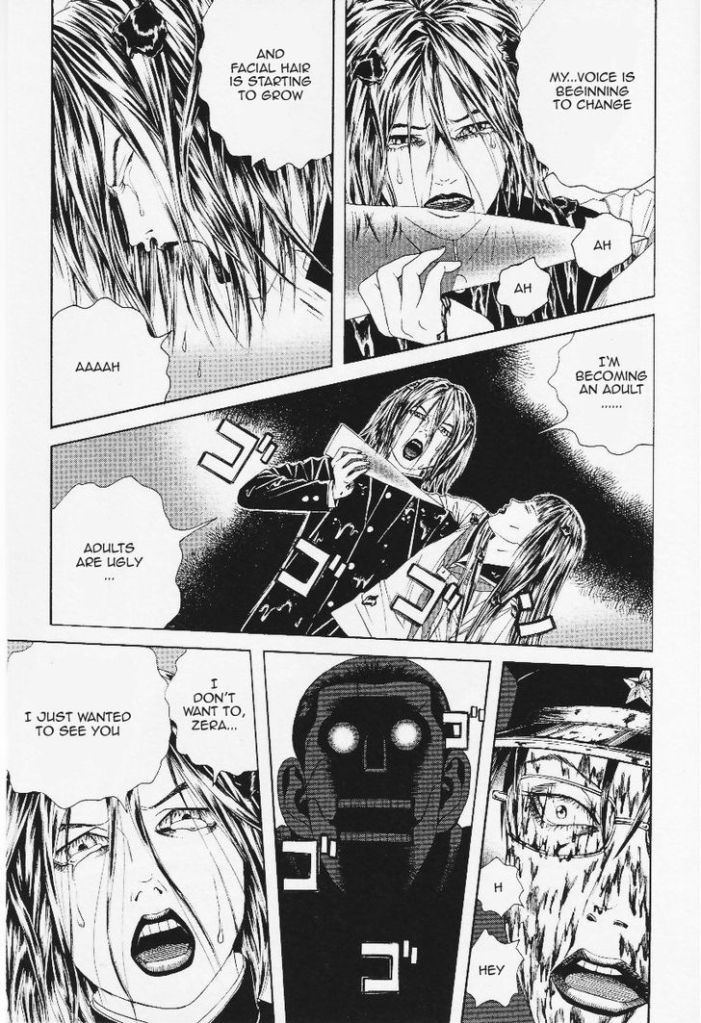
All of them need to urgently get to therapy, but instead of that eyeballs are ripped out, innards (not to mention semen) are spilled, and the whole thing ends in an utter bloodbath, leaving the only ‘innocent’, Kanon, mourning Lychee, who is now more ‘human’ than the members of the Lychee Light club because he understands that murder is wrong. Reading this manga is a bit like observing a train wreck. Nothing in this story is nearly as profound as it pretends to be, and plot holes bloom much like lychee flowers — and yet its mostly naïve characters stick in one’s mind. Poor, poor children.
« …a mere plaything, having feelings! »

~ ds

* Speaking of the erotic… a quick perusal of blurbs quickly yields ‘Shocking, sexy and innovative, the Lychee Light Club is at the pinnacle of modern day Japanese seinen manga (young adult comics)‘, with which advertisement I have several bones to pick. ‘Sexy’ is an uncomfortable description of a manga with sadistic violence and heavily underage protagonists, though eroguro fans probably lap the former up. As for the ‘young adult comics’ bit, I’d like to submit a petition to stop assuming that stories about teenagers are meant to be necessarily read by teenagers. Should ‘old’ people read exclusively about the elderly? One can argue that adults aren’t so interested in reading about to-be-adults (my case in point, Wheel of Time book one, which I recently read, and whose adolescent protagonists were intensely annoying), but that speaks more to a lack of storytelling ability.

** Who’s had a wild enough (perhaps ‘unhinged’ would be a better description) life that he would merit an entire article by himself (see a summary here).

*** As far-fetched as this plot is is, the anime by the same name (loosely based on the manga) is hilariously goofy where the manga was highfalutin. Take the plot of episode number 6, in which ‘Some members of the club wonder if Lychee really only runs at lychee fruit and then offer him a peach. As he accepts it, they give various other foods and eventually Lychee develops culinary skills.’

Q: What’s Michael? A: Kobayashi’s Most Special Cat

« Michael is, simply put, Japan’s version of Garfield, Heathcliff and Krazy Kat all rolled into one. » — Wizard: The Guide to Comics*

* I actually disagree with all three comparisons, aside from the fact that the first two comics are also about orange cats, but this is the review Dark Horse used to promote the series.

What’s Michael? (ホワッツマイケル? in Japanese) is a comic series by Makoto Kobayashi about a cat named Michael who goes about his cat life in a pretty standard way. He spends most of the day snoozing, has distinct food preferences, and likes to meow loudly at night while courting his favourite cat lady. One would not be entirely unjustified in thinking that cat lovers will read any old comic that prominently features felines (I have occasionally been guilty of that myself!), but I am convinced that there’s something special about this series.

One of the things that makes it so endearing is that Kobayashi has a very good grip on feline body language, making it fun to follow even the poorest excuse for a plot, like for instance Michael contemplating which cozy enough spot to select for a nap. That being said, he doesn’t limit himself to realistic cat situations, often featuring cats acting like (very goofy) people, parodying human and feline at the same time.

Natural cat body language… and different ways in which cats just can’t bend, cheerfully pointed out.

Some readers are more interested in the outlandish stories, of which there are many (ranging from cat parodies of various movies to plain weirdness), some develop a soft spot for the recurring human (or semi-human) characters. Michael himself switches owners like switching gloves, depending on the needs of the story, and there is not much continuity. Kobayashi’s ideas can be a little hiss or miss, but there’s something here for everyone… provided you like felines, of course… adventures of a vampire count who is scared of cats are side-by-side with wacky cat food commercials, depictions of everyday life of various cat-besieged country bumpkins alternate with cat street gang rumbles, and all of that is sprinkled with humans-as-pets interludes. And, naturally, our ordinary yet handsome tabby Michael drinks, sleeps and plays alongside Popo, his wife, their kittens, and a rotating cast of other cats (Catzilla comes to mind!) and the poor, often put-upon dog nicknamed Bear.

The Count’s quest for a pretty neck to bite is, as always, thwarted by Michael or one of his relatives.
Michael, Popo and their kittens on the prowl for a soft spot for a snooze.
One of the strip’s running jokes is that Michael passionately hates Morning Cat canned food, and will go to ridiculous lengths to avoid eating it.

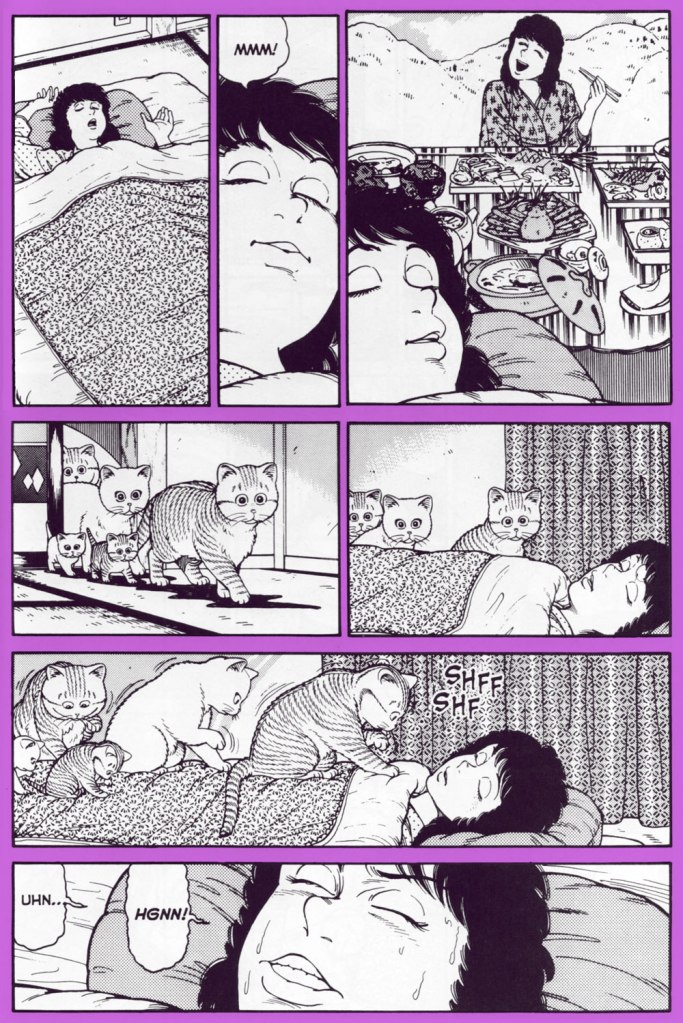
The following sequence illustrates one of Kobayashi’s favourite tricks, namely to start off with more-or-less normal cat behaviour and veer off into an unexpected direction:

As you have probably noticed, Kobayashi often opts for exaggeration when it comes to people’s facial expressions, which sometimes leads to results that are more grotesque than funny. He also enjoys drawing pretty women, but that is more obvious elsewhere, for instance in his series Club 9 (Dark Horse has published 3 volumes of that and abandoned the project before the story’s end, much to my annoyance).

In Japan, What’s Michael? was published in the weekly magazine Morning starting in 1984, and it even won the Kodansha Manga Award in 1986. There seems to also have been quite a few collections released.

One of the Japanese editions of volume 1 and 2.
Cover of another collection from 1987; Bear likes to sit and watch cats playing.

In 1988, its popularity was also rewarded with a 45-episode anime which was also broadcast in Italy and Spain (at least according to a Russian article I found). The following is the cover of a collection of these episodes, as far as I could ascertain:

In the US, it was published by Dark Horse‘s manga imprint. I am not entirely sold on the translation (the aforementioned country bumpkins, for instance, talk as if they were in a cheesy would-be Western written by somebody who has no understanding of the genre), and it also bothers me that the comics were published in the standard American left-to-right reading direction. I think it is a relatively recent phenomenon to leave manga as it was drawn when translating it into European languages – audiences have become more refined.

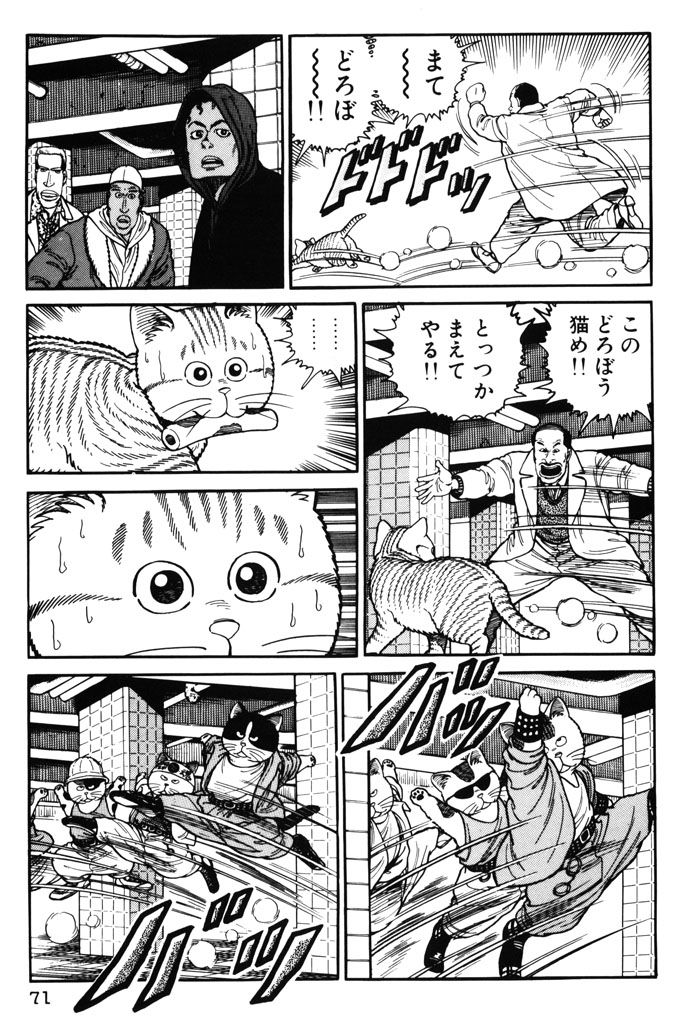
An example of the story going interestingly off the rails, in the proper right-to-left format.

Apparently there are stories that have never been translated, as they were deemed unfit for Western audiences (those intrigue me, yet my knowledge of Japanese is nil!), but those that were selected by whomever is in charge of these decisions have been collected in 11 volumes, published between 1997 and 2006. Most of them are quite out of print by now; I managed to gather all eleven over the years, though while writing this post I discovered that Dark Horse has decided to rescue this series out of its out-of-print-darkness and re-publish the works in two 500-page volumes. Am I going to purchase those? Yes, of course, as there is bonus material involved! Though the wrong reading direction remains wrong, alas.

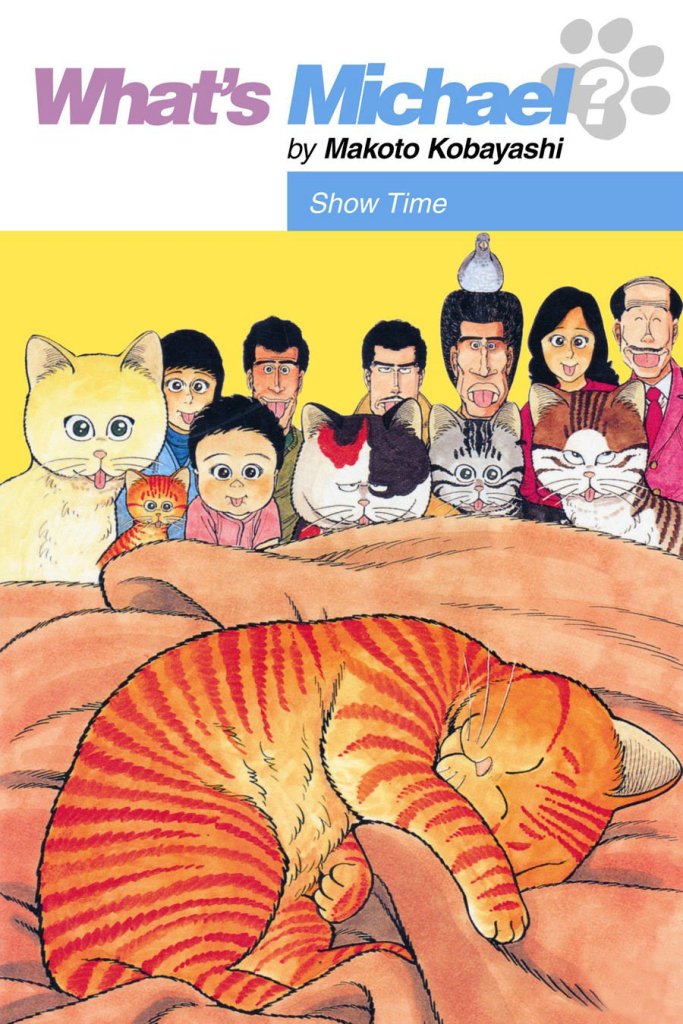
Volume 8 of Dark Horse’s initial What’s Michael? run.

I enjoyed reading a review of the first volume of the reissue on Al’s Manga Blog, and maybe you will, too: What’s Michael? Fatcat Collection Vol 1.

~ ds